Back Issues [Sci-Fanuary]: The Fly: Outbreak #1-5


January celebrates two notable dates in science-fiction history: “National Science Fiction Day” on January 2 to coincide with the birth of world renowned sci-fi writer Isaac Asimov, and 12 January being when Arthur C. Clarke’s HAL 9000 was created. Accordingly, I dedicate January to celebrating sci-fi in all its forms.

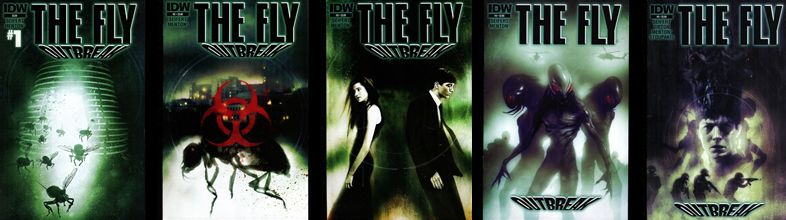
Writers: Brandon Seifert and Denton J. Tipton – Artists: mention3 and David Stoupakis

Story Title: “The Book of Transgenesis”
Published:
March 2015

Story Title: “Quarantine”
Published:
April 2015

Story Title: “Metamorphosis”
Published:
May 2015

Story Title: “All Hell Breaks Loose”
Published:
June 2015

Story Title: “The Book of Revelation”
Published: July 2015

Quick Facts:
Published by IDW Comics, this five-issue miniseries does what director David Cronenberg and star Jeff Goldblum could not by continuing the lauded world of The Fly (1986) and its under-rated sequel, and impressed with its respect to the source material and atmospheric artwork.

The Review:
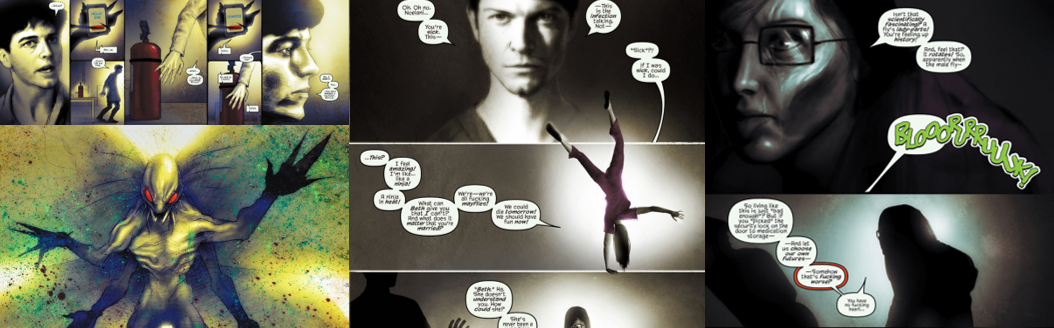
The Fly: Outbreak picks up some years after The Fly II (Walas, 1989) to find Martin Brundle now a certified PhD and still working on his father’s Telepods. Specifically, Martin has been trying to cure (or at least regress) the fly genes he transferred into his devious adopted father, Doctor Anton Bartok. Despite his genius, Martin is frustrated by failure and intimate probing from his assistant, Noelani Tanaka, who questions why he doesn’t want to have children. This sore subject rears its head later that night while Martin’s celebrating his anniversary with his wife, Beth Logan, who attempts to spice things up with sadomasochistic sex toys. Martin angrily stops this bizarre sexy time when Beth refuses to use protection but, while he insists he’s trying to protect her from his “buggy genes”, Beth takes this as a rejection and bitterly criticises him for putting barriers between them. To make things worse, Martin’s experiments “upregulated” Bartok’s insect genes, transforming him into a monstrous (if strangely beautiful) winged man-bug that rampages through the facility. Though he rejects Bartok as his father, Martin insists on confronting him, using a handy-dandy translator pad to communicate with the mutated industrialist. When Martin’s efforts to reason with the Bartockfly fail and result in bystanders being either melted by its “vomit drop” or sprayed with strange spores, Martin flees, resulting in Bartock being gunned down and Martin being covered in spores. Exposed to an unknown transgenic disease, the Army places Martin, Noelani, and the others under quarantine on North Brother Island for observation. Though Doctor Mayweather and Major Vurvin allow Martin to research the disease, the whole thing is classified so he must hack the computer system to give Beth an update.
When Bartock infects a bunch of people, a guilt-ridden Martin desperately searches for a cure.

Although Martin could reproduce the gene swapping solution from The Fly II, he refuses to sacrifice another healthy soul and largely blames himself for the infection (as do the other patients). After nine days processing everything, Noelani finally confronts Martin and he explains that he assumes the disease will manifest similar to how his father mutated. Indeed, over several days, the infected sprout coarse hairs and become euphoric, manic, and increasingly sexual alongside developing superhuman strength, stamina, and an inflated, erratic self-esteem. When Noelani interrupts Martin’s latest call to Beth (where she whips out a vibrator and starts making a show of herself!), Martin is horrified when she comes on to him and reveals she’s been infected. When he rejects her, Noelani spitefully manhandles him, berating Martin for ignoring her, forcing him to subdue her with an electric shock. Beth keeps her libido in check long enough to be devastated when a guilt-ridden Martin tells her he must focus on finding a viable cure, eventually administrating lithium pills to Noelani to calm her “unipolar mania”. Haunted by dreams of his failure, the city being overrun by Brundleflys, and the personification of his guilt and inner demons (the “Martinfly”), Martin works tirelessly, berating himself for his lack of answers and the rapidly degenerating infected. Martin’s horrified to witness this as an outsider, seeing the likes of Doctor Ross brutalise themselves rather than transform into an inhuman fly-thing, and begrudgingly taking them off their medication so the infected won’t be rational enough to take such drastic measures. When Martin refuses to use the gene swap cure or let the infected commit suicide, the increasingly spiteful Noelani gives him a first-hand instruction on fly anatomy and mating rituals and…somehow…inadvertently gives Martin the solution he’s been searching for.
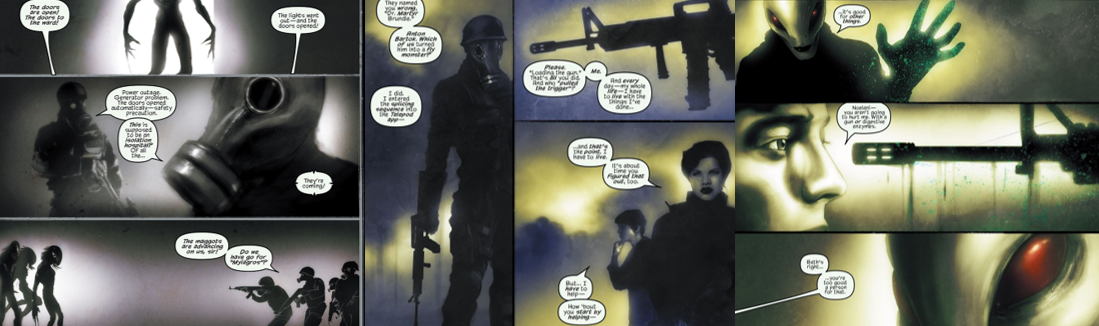
When the fly-things go on a rampage, Beth tries to help but Noelani has other ideas.

However, when Martin advises using the bodies of organ donors as donor material, Dr. Mayweather and Major Vurvin immediately shoot the suggestion down since thousands of people are waiting for those healthy organs. They also angrily chastise Martin and his father for being irresponsible mad scientists who tainted science with their reckless, crackpot ideas. Although it goes against their every instinct, Dr. Mayweather and Major Vurvin order the infected to be destroyed before they can reach their final forms, only for them to hatch from their cocoons. Drinking himself into a stupor, a depressed and remorseful Martin watches as soldiers are attacked by the fly-things, which resemble the Bartockfly and easily dispose of the troops with their superior strength, wings, and acidic spit. Martin’s stunned when Beth arrives to help disguised herself as a solder, only for Martin’s nightmare to become reality as the fly-things escape the facility. Although Martin begs Beth not to shoot the fly-things (reasoning that they’ll eventually die anyway) as they were once human, she ignores him since she was the one who activated Martin’s gene swap programme and is just as guilty of mutating Bartock as he is. When they reach the dock, Martin refuses to leave and their argument about this exacerbates when Noelani (now a surprisingly loquacious and attractive alien-like humanoid) asks them to get her to the mainland. When Martin convinces her that she could be “patient zero” of a wider fly epidemic, Noelani threatens to first shoot and then melt Martin if he doesn’t perform the gene swap on her. When Martin refuses, Noelani threatens Beth and, consumed by guilt for ignoring his wife and causing Noelani’s condition, Martin acts as her donor and fires up the Telepods.
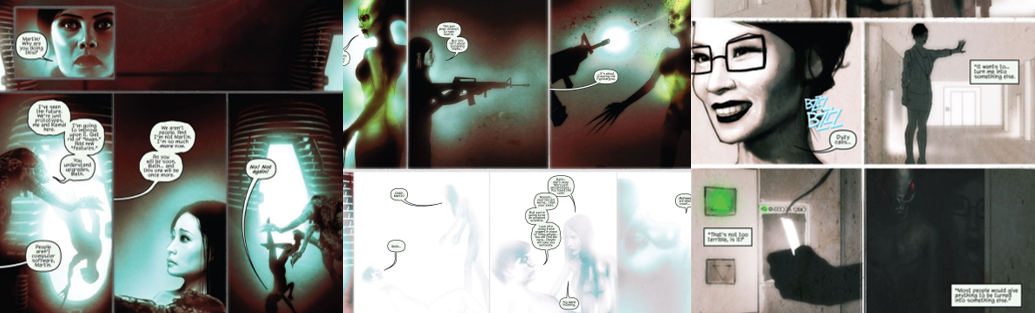
Noelani manipulates Martin and Beth to finally be recognised for her genius.

Noelani emerges whole and human while Martin regresses to the monstrous Martinfly, now psychotic and intelligent enough to speak. Martinfly immediately scoops up Noelani and considers ripping her limb from limb or digesting her a piece at a time. Amazed to find he can fly, Martinfly soars into the sky and sees the chaos he’s causes. Noelani successfully appeals to Martin’s humanity and he lets her go to help, ripping apart the fly-things and even saving Dr. Maywather. However, his animalistic side soon takes hold, pushing Noelani to encourage Beth to destroy him before it’s too late since Martin “likes being a monster” and no one would ever volunteer to restore him. Martinfly returns to the Teleport lab with one of the fly-things, now determined to perfect the breed, much like his father tried to do, by splicing Noelani and the creature into one. Beth saves Noelani and traps Martinfly in a Telepod before freeing the fly-thing, gunning it down and trusting Noelani to do the same for her after she voluntarily enters the other Telepod. Emerging as a glorious Fly Queen, Beth is horrified to find the restored Martin fatally impaled in the Telepod. Beth realises all-too late that Noelani was somehow responsible for this and takes a shot to the head. As he apparently dies, Martin provides Noelani with the key to solving the outbreak (“[using] fresh organs in place of living people”), finally acknowledging her as he passes. Several years later, Noelani has earned her doctorate and apparently become a principal figurehead of Bartock Industries, twisting Martin’s creed (“Words are just words. Actions are what count”) into her mission statement. It’s also shown that she has one of the fly-things in captivity, though there’s no hint as to why.

Final Thoughts: 
Considering how big a fan I am of the entire Fly concept, especially the remake and its sequel, I was massively disappointed by The Fly: Outbreak. On paper, the idea has a lot of promise, especially as the films never delivered on the idea of a fully grown, human/fly hybrid with wings and all that. To be fair, this was never the intention as the creatures were grotesque abominations, but there’s still an appeal in seeing a more fully formed hybrid. I also liked the idea of Martin being wracked by guilt for the state he left Bartock in and wishing to cure his surrogate father, despite his monstrous actions, without sacrificing another healthy life. This guilt consumes Martin as he knows that Bartock is suffering because of his genes, the same warped DNA that keeps him from impregnating his wife and spawning another genetic anomaly. This could’ve been a very harrowing character arc for Martin as he embraces his monstrous side once more and finally purges himself of his curse, and his guilt, to lead a normal, happy life and the ghost of this idea is peppered throughout the story, but it takes a backseat to Martin’s marital issues. While Martin and Beth had a very passionate relationship in The Fly II, I (like Noelani) never pegged her for a closeted sexual predator! Beth is so fucking horny that she disregards Martin’s concerns about contraceptives, decides the best way to take her husband’s mind off his guilt and the rapidly declining state of the infected is to play with herself over a video call, and routinely snaps at him for caring more about her safety (and his work) than her libido. It’s a very strange decision to characterise Beth this way and I’m not sure I like it as she wasn’t this sexually aggressive in The Fly II, so it feels odd. I think it would’ve been far more fitting to have her be upset because she wants children and Martin’s reluctant rather than having her strap him down and stuff a ball gag in his mouth!
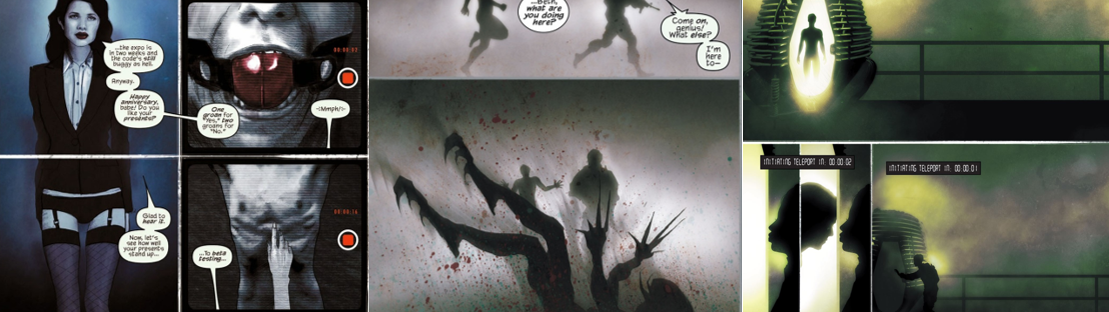
Some bizarre characterisations and atrocious artwork make this an incoherent and ugly read.

This might not have been so bad if the artwork was coherent. While “mention3” and David Stoupakis do an excellent job capturing the likenesses of Eric Stoltz, Daphne Zuniga, and Lee Richardson, most other characters are hidden behind ironically bug-like gas masks and others appear like lifeless marionettes. Again, this might’ve been acceptable if either artist could draw a background! Almost every panel is framed against indistinct darkness or a murky mess of blacks, greys, and greens, making it very difficult to decipher where the characters are. The Telepod lab, for example, appears to exist in a misty void, the facility is a foggy mess, and the grounds look like they’re in the midst of an atomic explosion! It’s truly a horrendous comic to look at and I really struggled to get a sense of the space and time passing, especially in “Metamorphosis”, where the story bounces from place to place and apparently ahead in time without warning. The art is much better when depicting the fly-things but even they are a mess at times, often appearing blurred and warped so it’s hard to make out individual features. Oddly, despite Martin comparing the infected to his father, these fly-things are strong, healthy, and far more beautiful than Brundlefly and Martinfly. They can think and talk with far more logic and intelligence than they displayed during their metamorphosis, fly, and rip limbs and heads off with ease. The fly-things appears more like aliens, depicted as beautiful, elegant humanoid creatures rather than misshapen atrocities, assumedly because the disease somehow improved the mutation process (though it’s hard to tell as Martin offhandedly suggests the fly-things have a short lifespan). The image of a swarm of fly-things descending on the military should have been a powerful and horrifying visual but, instead, it’s a nightmarish blur of colours and nonsense and barely a footnote in the story since it’s more concerned with the quarantine procedure and Noelani’s ambitions.
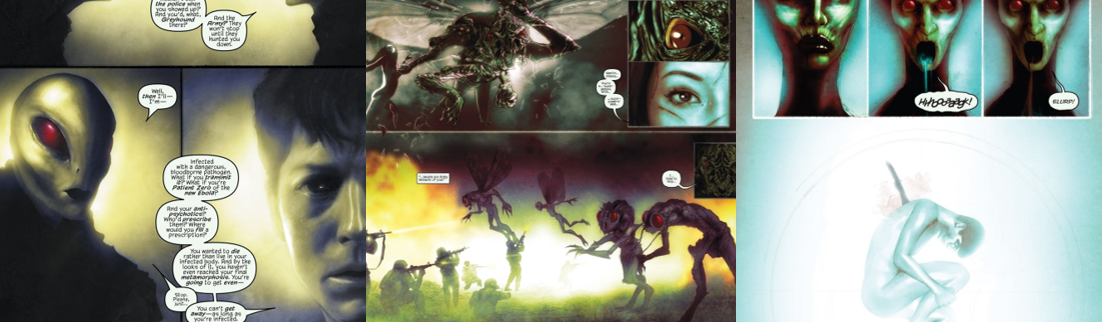
It’s honestly difficult to tell what’s happening in this disappointing mess of a story.

I could forgive all of this if The Fly: Outbreak stuck the landing, but it really doesn’t. Things made a twisted sense right up to “The Book of Revelation”, where it all goes downhill. Noelani threatening Martin and Beth eats a lot of panels and Martin’s transformation back into Martinfly isn’t as exciting as it could’ve been as, for some inexplicably reason, he can talk but loses his humanity and compassion. While I liked the call-back to Brundlefly’s insane plot to create the “ultimate family”, it wasn’t worth tarnishing Martin’s characterisation, especially as he was seen as virtuous (if more aggressive) when he first became Martinfly. Again, maybe I could forgive this is the rest of the finale made sense, but it really doesn’t. Beth becomes a gorgeous Fly Queen (despite Bartock being horrifically mutated by the same gene swap process) only to immediately be executed by Noelani. Martin returns to normal but is somehow impaled on…something…inside the Telepod. Beth accuses Noelani of this but it’s not clear how she would’ve done it, or even why. Martin apparently dies and gives Noelani to chance to cure the others, but it’s implied she imprisoned the fly-things instead? It’s a really confusing and messy end that drags the entire story down and I still don’t understand why the fly-things turned out how they did or what the hell was going on with the ending, or Noelani. Sadly, The Fly: Outbreak is not a story I’d recommend unless you really hated Martin and Beth and want to see them bastardised and tarnished by this incoherent, ugly mess. This could’ve been a fun story of a Brundlefly outbreak and Martin having to reconcile his guilt and his mutation to get some closure. But, instead, it’s a confusing, hideously realised story that disappointed me in basically every aspect.

My Rating:

Rating: 1 out of 5.

Terrible

Do you think I was too harsh on The Fly: Outbreak or do you agree that it’s an ugly, incoherent mess? Were you also disturbed by Martin and Beth’s relationship woes? Did you also find the fly-things oddly designed or did you like seeing them flying about? Can you explain to me what the hell happened in the ending? Would you like to see more comic books continuing the Fly story? How are you celebrating sci-fi this month? Like the review and leave a comment below, check out my other sci-fi content, and donate to my Ko-Fi to support more reviews like this.

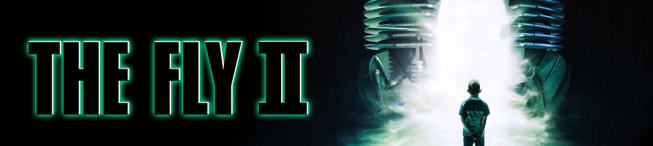
Movie Night [Sci-Fanuary]: The Fly II


January celebrates two notable dates in science-fiction history: “National Science Fiction Day” on January 2 to coincide with the birth of world renowned sci-fi writer Isaac Asimov, and 12 January being when Arthur C. Clarke’s HAL 9000 was created. Accordingly, I dedicate January to celebrating sci-fi in all its forms.


Released: 10 February 1989
Director: Chris Walas
Distributor: 20th Century Fox

Budget: $12.5 million
Box Office: $38.9 million
Rotten Tomatoes Scores: 32% / 24%

Quick Facts:
Following David Cronenberg’s celebrated body horror reinterpretation of George Langelaan’s 1957 short story, Mick Garris repeatedly tried to pen a sequel to the 1986 hit under incredible studio pressure. Chris Walas, who created the gruesome special effects for the first film, helmed the sequel, and Keanu Reeves reportedly turned down the lead role. Though The Fly II was widely criticised (despite its impressive effects) and a third film fell through, the story continued in a 2015 comic book.

The Review:
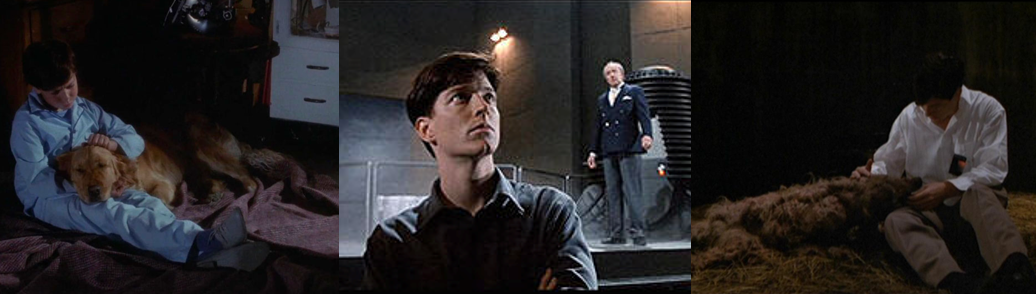
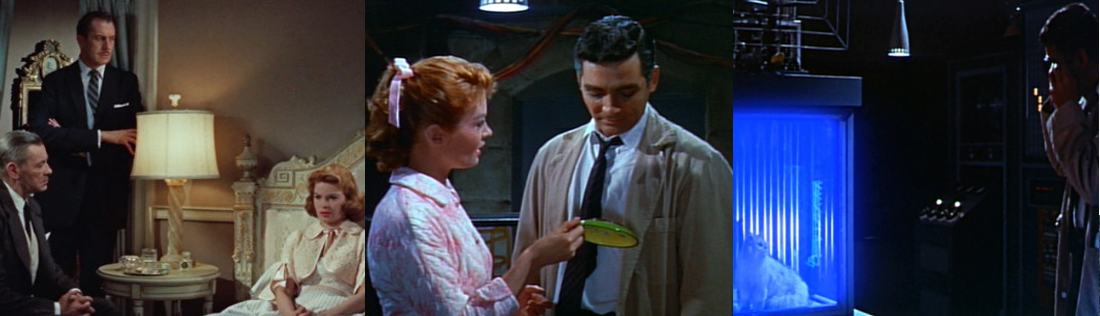
If you thought watching a nightmare sequence of Veronica “Ronnie” Quaife (Geena Davis) suffering a gruesome childbirth in the previous film was bad, The Fly II doubles down by depicting another, very real birth, which convinced Davis to skip the film. Despite everything, Ronnie (Saffron Henderson) opted not to have an abortion, presumably out of her love for the tragically doomed Doctor Seth Brundle (Jeff Goldblum) and also because the deceptive Anton Bartok (Lee Richardson) gave her some assurances about the birth. As Brundle worked for Bartok Industries, it makes sense that Bartok would claim the miraculous (if flawed) Telepods, but he reveals his true colours early on when he has Doctor Jainway (Ann Marie Lee) remove the distraught Stathis Borans (John Getz) from the birth and watches on dispassionately as Ronnie dies delivering a ghastly little larval sac containing her son, Martin. With his staff watching behind two-way mirrors, Bartok observes Martin’s rapid growth, the result of his father’s unique genetic malformation, which also sees his DNA contain dormant mutated cells. Young Martin (Matthew Moore) grows at an accelerated rate and boasts a photographic memory and advanced intellect, though he never sleeps and the staff quickly become exasperated with him. Bartok encourages Martin to think of his as his dad and has Dr. Jainway and Doctor Frank Shephard (Frank Turner) administer regular placebos to placate him while they monitor his development. Even as a youngster, Martin (Harley Cross) questions these shots, which are clearly haphazardly administered, and is infected by an insatiable yearning for knowledge and curiosity. Martin constructs a fun little helmet for himself that foreshadows his later fly form and reprograms his access to the Bartok laboratory as easily as he solves mazes.

Brundle’s genetically altered son is drawn into completing his father’s work with the Telepods.

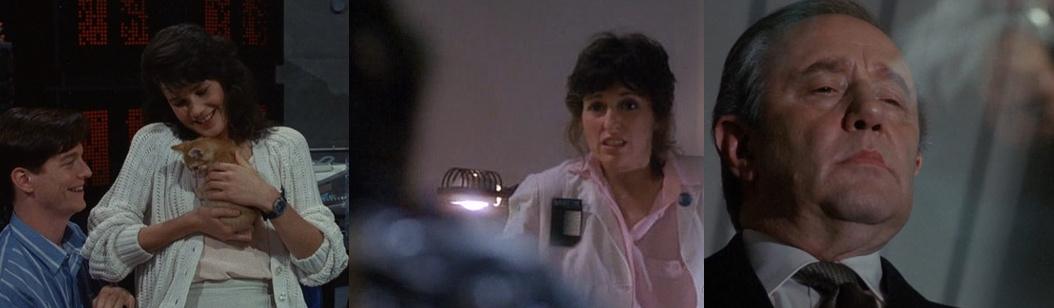
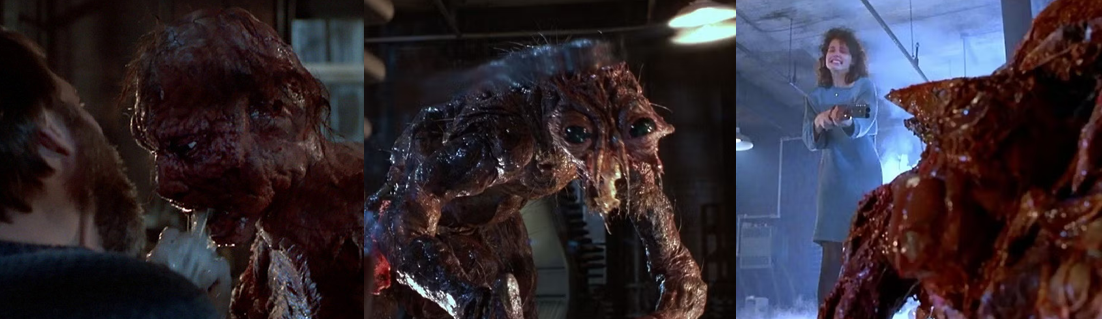
While exploring, Martin befriends a Golden Retriever (Unknown) and shares his fears of dying comparatively young because of “Brundle’s Accelerated Growth Syndrome”. Martin also sees his father’s Telepods for the first time. However, while Seth solved the issue that caused the machines to rip living tissue inside out, the Telepods are damaged and they destroy everything sent through them. Despite the best efforts of Doctor Trimble (William Taylor) and the others, the Telepods are next to useless and Martin is horrified when his dog is reduced to a rabid, grotesque monster by the process. On his fifth birthday, the physically adult Martin (Eric Stoltz) finally gets his privacy when a seemingly remorseful Bartok gifts him a home off site and asks him to help with the Telepods. Though reluctant, Martin’s won over by a deleted scene of his father, who talks about how the Telepods “improved” him. While working late, Martin seemingly solves the problem on a whim, successfully teleporting a telephone, and excitedly searches for some organic material to test. He bumps into beautiful data filer Beth Logan (Daphne Zuniga) and is inspired to teleport her cactus, though is ashamed and embarrassed when the machine still struggles with organic matter. Luckily, Beth’s won over by Martin’s boyish looks and awkward charm and agrees to help with the problem. Martin finally feels a human connection after five years in a clinical environment, only to be taunted by Bartok’s depraved head of security, Scorby (Garry Chalk). Beth encourages Martin to come out of his shell and invites him to a party elsewhere in the office, where he overhears talk of a malformed creature kept under observation and is distraught to find it’s his dog. Heartbroken, Martin lashes out at Beth, assuming she knew of the animal, and mercifully puts his friend out of his misery in a truly heart wrenching scene.

While Beth isn’t much but a pretty face, the villains are theatrically despicable.

After having grieving, Martin invites Beth back to the lab to apologise and impresses her by showing that he cracked the Telepods in very much the same way his father did: by admiring the “beauty of the process”. Relieved to make amends with Martin, and to be gifted a cute little kitten (Unknown), Beth takes their relationship to the next level (a somewhat questionable act considering Martin’s still technically five years old…) However, Martin’s puzzled when a wound from a routine injection gone wrong becomes alarmingly infected and explores options to cure his condition with the Telepods, discovering (much like his father) that he can substitute his mutated genes for healthy ones by sacrificing a life. While working, Martin’s confused when he suddenly can’t reach Beth and she’s transferred to another building. Thanks to his genius, Martin patches through to Beth’s boat house and is infuriated to learn that Bartok deceived him again and placed cameras in his home. Oddly, Scorby reveals this by handing Beth video footage of them having sex, something he really didn’t need to do but then The Fly II isn’t exactly subtle about how devious and evil its antagonists are. Dr. Jainway and Dr. Shephard are constantly scowling at Martin or talking down to him and Bartok openly discusses his plans to study Martin once his transformation kicks in, which happens at an alarming rate once Martin discovers the hidden cameras. Upon viewing footage (that shouldn’t technically exist) of his father’s deterioration, Martin confronts Bartok, hurt to see the man he loved as a father figure so cold-hearted and dispassionate about encouraging his transformation and using his unique genetic material (alongside the Telepods) to be at the forefront of a “new age” for the world.

Martin’s transformation ramps up by the end, creating a monstrous fly/human hybrid.

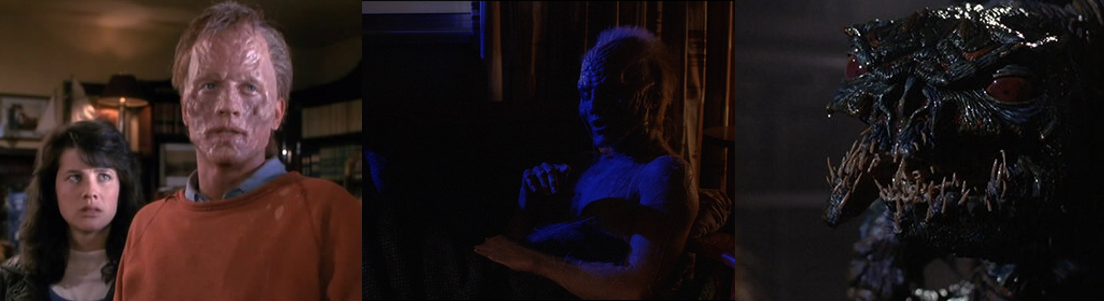
Enraged, Martin showcases superhuman strength and speed as he flees the complex, his face noticeably growing tumours that are disappointingly second rate compared to the first film. After begging for Beth’s help, Martin seeks out Stathis, who has become a drunken, cantankerous, crippled recluse who vehemently refuses to help them and openly mocks Martin. When Martin forces his way into his home (an opulent abode I assume Bartok paid for to keep Stathis quiet), Martin learns of his father’s fate and adamantly refuses to utilise the Telepods to cure himself at the cost of another. Stathis begrudgingly sends the two on their way and, despite him experiencing bouts of despair, Martin’s demeanour turns to spite and arrogance as his condition worsens. As a natural born genetic anomaly, Martin’s transformation is far less ghastly than his father’s (though he still pops out his eyeball for some fun body horror) as he forms a cocoon, one Bartok gleefully watches over after Beth calls him in desperation. Bartok’s elation turns sour when Dr. Trimble reveals Martin boobytrapped the Telepods and things go even worse when “Martinfly” bursts from his cocoon and goes on a rampage. Bartok’s intentions couldn’t be more explicitly evil. While he talks of ending concepts like surgery with the Telepods and advancing science and medicine with the machines and Martinfly’s unique biology, it’s clear he’s primarily interested in profit and power. He visibly scoffs at Martin’s affection for him during their confrontation and thinks nothing of manipulating the boy-man into doing his dirty work, focused entirely on the big picture and willing to sacrifice anyone, even his closest supporters, to get what he wants.

The Fly II abandons all subtlety for a grotesque gore-fest in the finale.

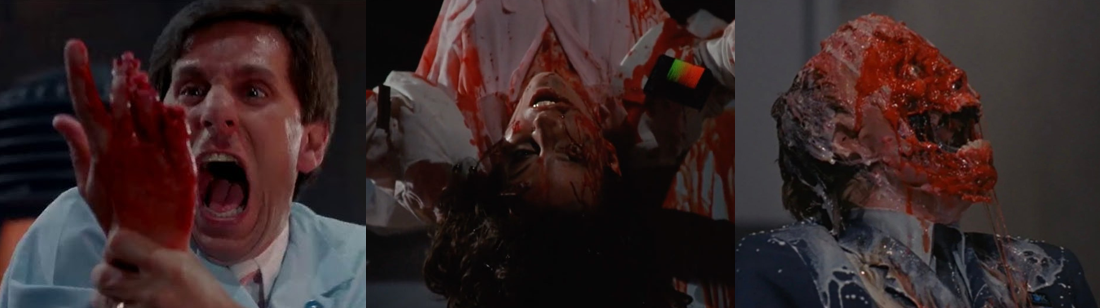
While Martin’s physical transformation is nowhere near as gruelling or disturbing as Seth’s, with the make-up effects being more subtle and oddly incorporating webbing, his demeanour noticeably changes much like his father’s. Martin goes from rage to anguish to smugness across a few scenes, embracing his transformation even as Beth is horrified by it. It’s quite rushed as most of the film prior depicts Martin as an aloof and unique but otherwise healthy young man, so I think it might’ve been better to start his metamorphosis a bit sooner just to see how it changes him physically and emotionally. Martin forces a large cocoon to expediate his transformation and emerges not as a sickly, asymmetrical monster wracked with pain and struggling to survive but as a monstrous, four-armed brute at the peak of his strength. Martinfly is large, powerful, and quick, easily manhandling his prey, fleeing to the rafters, and navigating the facility’s ginormous ventilation shafts. Like his father, Martinfly retains a degree of intelligence, certainly enough to tell friend from foe and to drag Dr. Shephard’s dead body around to unsuccessfully use his key card. While the Martinfly puppet and animatronic are impressive, The Fly II abandons all the subtlety and emotional nuance of the last film to present a monster movie finale, with Martinfly strangling Dr. Shephard to death, breaking Scorby’s spine and tossing him like a sack of potatoes, and absolutely wrecking a poor, unassuming security guard (Pat Bermel) with his projectile “vomit drop”. The corrosive “fly vomit” melts this dude’s face to a screaming, steaming, skeletal mess (“Medical emergency”, indeed!) and leaves him shrieking on the floor as a barely breathing corpse. Another security guard (Andrew Rhodes) gets his head (and body) crushed by an elevator thanks to Martinfly, meaning The Fly II certainly focuses more on gore and a hefty body count by the finale.

Martinfly’s gruesome rampage sees him returned to normal and Bartok receive his just deserts.

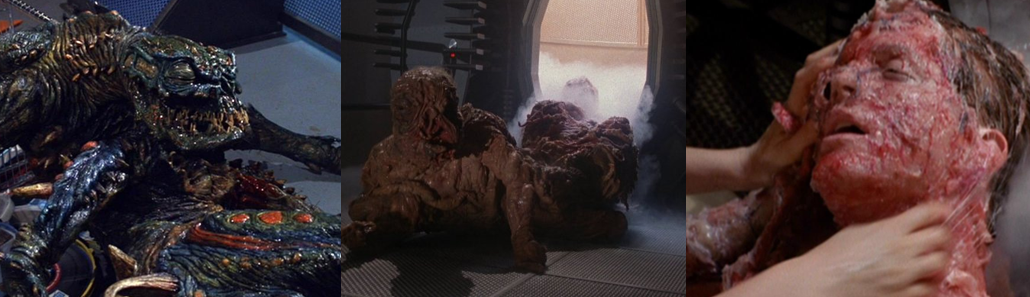
Though he insists on capturing Martinfly alive for further study, Bartok’s not a complete fool. He has the Telepod lab sealed, keeps Beth as leverage, and orders Scorby and his men to cover every possible entrance. Naturally, Martinfly easily gets the drop on them and murders them in gleefully disturbing ways, pausing only to pet a dog (Unknown) and share a glance with the horrified Beth. While Beth showed some moxie when they first met and is a pretty face who offers Martin nothing but love and support, she’s easily overpowered by even Bartok when she wrestles with him over Scorby’s pistol and is basically here just to look good and scream when heads burst like water balloons. She has a touching romance with Martin but it’s a shadow of what Ronnie and Seth had in the first film. Martinfly dwarfs Brundefly, though, being a hulking, malicious monster driven to avenge himself on those who’ve wronged him and cure his condition. While Bartok threatens to shoot Beth and even blasts Martinfly a couple of times, the guy’s one monologue away from being a moustache-twirling James Bond villain and completely underestimates Martinfly’s durability and cunning. Martinfly grabs Bartock, forces him to input the Telepod code (fittingly enough, “DAD”), and muscles him into a Telepod, encouraging Beth to initiate his gene-swapping program. Despite Bartok’s protestations, Beth complies just as Bartok’s back-up arrives, successfully achieving what Seth couldn’t and swapping Bartok’s healthy genes for Martinfly’s mutated ones. This sees Bartok reduced to a misshapen, maggot-like mess and Martin fully restored (if covered in disgusting goop). Fittingly, the Bartok-Thing is placed into the same dungeon as Martin’s dog and left to endure an agonised existence as another failed experiment of the Telepods.

Final Thoughts:
I feel like I’ve ragged on The Fly II a bit more than I intended. It’s not as good as the last film, that’s for sure, but I think it’s better than many realise. Much of the plot is essentially the same, with a genius scientist struggling with a genetic abnormality trying to perfect teleportation, embarking on a romance along the way and transforming into a hideous creature by the end. However, The Fly II is definitely much more of a monster movie, especially in the finale, and has little of the same disturbing subtext of the last film. I guess it could be read as an AIDS allegory as Martin suffers for the sins of his father much like someone who’s HIV positive, but much of this subtlety is swept aside in favour of a deception so obvious it’s almost explicit and some delicious gore. Eric Stoltz does his best, portraying Martin as brilliant but shy and awkward, but pales in comparison to Jeff Goldblum and only really shines during his “I’m getting stronger!” speech. I majorly crushed on Daphne Zuniga as a kid and she’s still gorgeous now, but there’s not much for Beth to do here, meaning the villains steal the show with their smarmy, conceited, and unashamedly evil depictions. The late Lee Richardson seems to be relishing the role, tackling it was a theatrical glee that makes Bartok a truly despicable character. While I found Martin’s transformation lacklustre compared to the last film (the cocoon, especially, feels very cheap and rushed), I do have a soft spot for Martinfly. A powerful and nigh-unstoppable man/fly monster, Martinfly is the stuff of nightmares and yet seems more ungainly than Brundlefly as the creature is perhaps a bit overdesigned and veers too far into the monstrous. Still, The Fly II is a decent enough epilogue to the first film (if you can forgive the plot hole concerning Ronnie’s abortion) and has a lot of gruesome moments for gore fans even if it is a much weaker film overall that Cronenberg’s masterpiece.

My Rating:

Rating: 4 out of 5.

Great Stuff

Do you also consider The Fly II to be under-rated and unfairly forgotten? Did you enjoy Eric Stoltz’s performance or do you agree that he struggled compared to Jeff Goldblum? Were the villains a bit too obvious and one-dimensional for you or did you like seeing them be unapologetically awful? Are you a fan of the monstrous Martinfly or do you think it was over designed? Would you like to see another film set in this continuity? How are you celebrating sci-fi this January? Leave a like and comment below with your feedback, check out my other sci-fi reviews, and donate to my Ko-Fi to suggest other sci-fi movies for me to the site.

Movie Night [Sci-Fanuary]: The Fly (1986)


January celebrates two notable dates in science-fiction history: “National Science Fiction Day” on January 2 to coincide with the birth of world renowned sci-fi writer Isaac Asimov, and 12 January being when Arthur C. Clarke’s HAL 9000 was created. Accordingly, I dedicate January to celebrating sci-fi in all its forms.


Released: 15 August 1986
Director: David Cronenberg
Distributor: 20th Century Fox

Budget: $9 to 15 million
Box Office: $60.6 million
Rotten Tomatoes Scores: 93% / 83%

Quick Facts:
A reinterpretation of George Langelaan’s 1957 short story and a remake of Kurt Neumann’s 1958 sci-fi classic, The Fly was surreptitiously produced by comedy legend Mel Brooks, featured creature effects by Chris Walas, Inc., and almost starred Pierce Brosnan or John Malkovich. Though a sequel and stage play followed, Cronenberg’s proposals for another follow-up never materialised, despite Jeff Goldblum’s enthusiasm.

The Review:
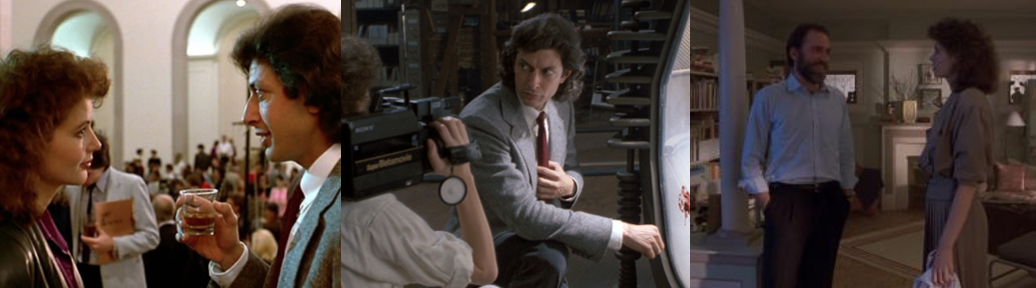
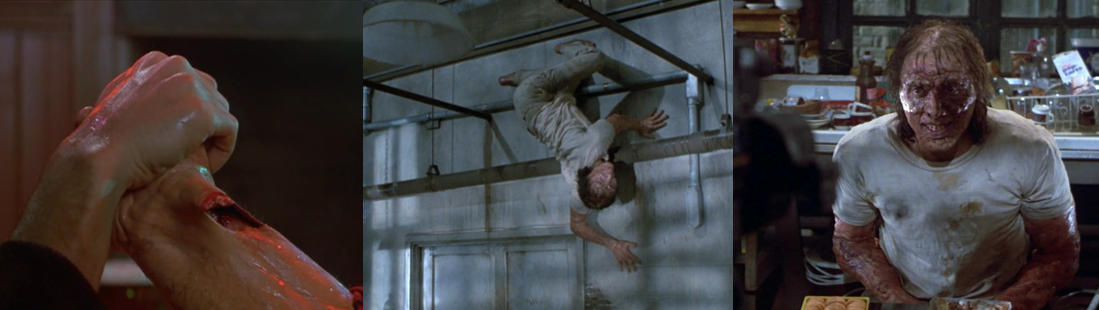
I think it’s fair to say that, for shy, insecure recluse Seth Brundle (Jeff Goldblum), meeting Veronica “Ronnie” Quaife (Geena Davis) at a Bartok party was love at first sight. Cradling a glass of Scotch and claiming to be working on something that’ll “change the world and human life as we know it”, Brundle is excited to discuss his work with the beautiful Ronnie, misreading her interest as anything other than a story for Particle Magazine since, by his own admission, he “doesn’t get out much”. Equally, I think it’s fair to say that Ronnie’s intrigued by Brundle’s doe-eyed naivety; she later admits that he’s “very cute”, indicating that she was attracted to him despite his somewhat bumbling nature and acute travel sickness. This, and the perception that Brundle is a harmless cook, drives her to visit his isolated laboratory/apartment, housed within a rundown building in what looks like a pretty rough area of town (red flags if I ever saw them). Once there, Ronnie immediately regrets her decision upon seeing Brundle’s sparse apartment, which is the furthest thing from a clinical, scientific setup you can imagine. Brundle, however, is a closet showman as he tries to impress with his piano skills and introduces her to his revolutionary Telepods. While Ronnie’s unimpressed by the “designer phonebooths”, Brundle’s extremely protective of them, even the “clunky” prototype, since he literally cobbled them together from bits and pieces of other Bartok technology. Yet, Brundle isn’t some hack or fraud; Stathis Borans (John Getz) later reveals that Brundle has a distinguished scientific career and almost won the Noble prize for Physics at just twenty-two! It seems, then, that Brundle is being unnecessarily humble regarding the Telepods, which he controls via a simple computer interface and voice recognition software and which are apparently so efficiently designed that they cause no power drain to his apartment or the immediate area.

While Brundle and Ronnie grow closer and solve the Telepod enigma, Stathis threatens their relationship.

Ronnie, however, is incredibly sceptical of Brundle’s claims to be able to teleport inorganic matter between Telepods. However, when she witnesses it after seductively handing over her stocking, Ronnie immediately recognises that they’re an exciting scientific breakthrough and begins grilling Brundle, causing him to panic when he realises that he’s misread the signs and prematurely revealed his project. Thus, Brundle’s relieved when the creepy, condescending Stathis dismisses Ronnie’s account, initially believing Brundle’s a “con man” before spitefully running with the article after the two become lovers. Brundle offers Ronnie the chance to follow his work more closely, eager to publish a complete record of his world-changing invention and, intrigued, she agrees. However, ever the curious journalist, Ronnie questions the teleportation process, so Brundle naturally demonstrates the system’s fatal flaw by teleporting a baboon (because I guess lab rats or rabbits are too hard to come by!) While Ronnie is horrified when the process turns the baboon inside out, Brundle is both grief-stricken and enraged by the continued failure, blaming himself for the flaw since the computer is only following his commands. Luckily, he gets an intense and passionate sermon on the “flesh” when Ronnie, smitten by his intellect and drive, seduces him. This sexual escapade inspires Brundle to realise that the computer is being too analytical about organic matter, so he excitedly rewrites his program and is elated when the second baboon is successfully teleported. While Brundle and Ronnie celebrate and begin a whirlwind romance, the jealous Stathis descends into a malicious tantrum, angrily confronting Ronnie and threatening to expose Brundle’s work just to get back at them. Ronnie’s forced to pay her editor and former lover a late-night visit to try and reason with him, leaving poor Brundle to drink himself into a stupor. Drunk, believing Ronnie is cheating on him, Brundle spontaneously decides to teleport himself, completely unaware that a seemingly harmless housefly has snuck into the machine with him.

Brundle undergoes a slow but horrific transformation after a teleportation mishap.

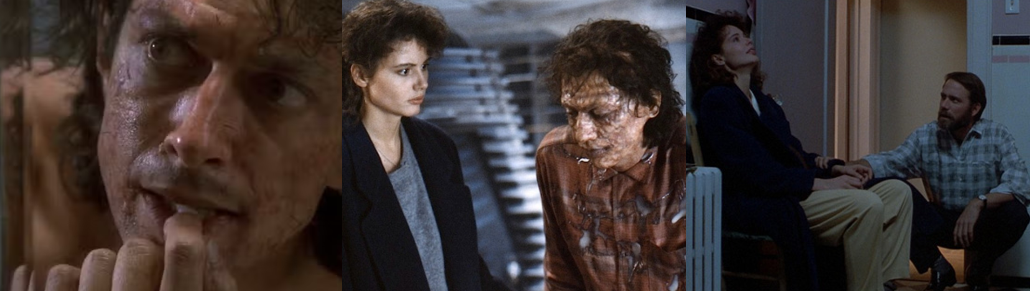
Though Ronnie allays his fears regarding Stathis, she’s alarmed to learn about this and relieved to find he’s unharmed. Her relief turns to amazement when Brundle immediately undergoes physical changes, suddenly becoming far stronger, having more stamina, and being more excitable than ever, After being physically exhausted by his sexual appetite and discovering coarse hairs on his back, Ronnie reacts with horror when Brundle suddenly urges her to undergo the process, believing the Telepods purified his genes and made him superhuman, only to lash out with anger and take to the streets to find someone more willing, leaving her devastated. Brundle impresses barfly Tawny (Joy Boushel) with his gruesome physical strength and Telepods, though he’s further frustrated when she also refuses to use the machines and when Ronnie reveals that he’s sprouting insect hairs. Drunk on his newfound physical strength and ignoring Ronnie’s concerns about his health and erratic behaviour, Brundle throws her out in a rage, only to beg her to visit him some time later, his condition having noticeably deteriorated. After realising Ronnie was right when his fingernails fall off, Brundle is horrified to discover that his Telepods spliced him and the fly on a molecular level and surmises that the foreign DNA is manifesting as a “bizarre form of cancer” that’s causing gruesome tumours and decay. Terrified, Ronnie begs Stathis for help, those he’s disgusted upon viewing footage of the rapidly worsening Brundle, whose despair is replaced by a manic glee as he finds he can scale walls and vomit a corrosive enzyme to eat, now excited to be transforming into a unique lifeform he dubs “Brundlefly”. Though Brundle’s mental health degenerates alongside his body and he laments his declining humanity, he works tirelessly on a solution using his Telepods, only to be wracked by agonising spasms and to realise his only viable option is to sacrifice a healthy life. Ronnie’s nightmare only worsens when she finds she’s pregnant and, fearful that the baby could be contaminated by Brundle’s mutated genes, struggles with telling the increasingly monstrous and animalistic Brundle of her plans for an abortion.

Brundle’s initial delight at his superhuman abilities soon turns to despair and madness.

The Fly is very different from the original film, and the source material, replacing concerns about nuclear annihilation with a very blatant AIDS analogy and marrying the fear of scientific curiosity with the tragedy of watching a loved one succumb to a cancerous disease. For me, The Fly is one of the quintessential examples of how to do a remake as it takes the basic premise of the book and adds a new spin to it, modernising it and recontextualising its themes into an unforgettable, tragic sci-fi body horror piece. The Fly takes itself very seriously, showcasing Brundle’s mental and physical decline in gruesome and uncomfortable detail, so much so that Cronenberg famously cut a scene where Brundle beat a cat/baboon hybrid to death as audiences lost sympathy for him. While it’s admittedly odd that Brundle cobbled together his Telepods largely by himself, operates in a less than sterile environment, and uses baboons as test subjects, his eccentric and secretive nature speaks to these decisions. These are also early warning signs that Brundle isn’t quite prepared for how dangerous his Telepods can be. Not only were they not calibrated to handle living tissue, they also can’t comprehend the presence of two lifeforms, essentially killing Brundle during his first jaunt since what emerges is an “insect… who dreamt he was a man… and loved it!” Brundle’s pained soliloquy about “insect politics” is easily one of the film’s most emotional and horrifying moments, largely because The Fly does such a great job building the romance between Brundle and Ronnie. It helps that Goldblum and Davis were dating at the time, but their characters have great chemistry together, with Brundle finally having someone to talk to and be open with and Ronnie excited to be at the forefront of a scientific breakthrough and involved with such a passionate and selfless man.

The squeamish need not apply for The Fly, which is a masterpiece of body horror!

It’s thus even more tragic and horrifying to see Brundle go from an eccentric, loveable goof to a conceited, temperamental jerk and a broken, literal shell of his former self. At first, Brundle’s excitement at reaching his physical potential is infectious but, when he subscribes his condition to the purifying nature of the Telepods, be becomes uncharacteristically violent. Brundle’s mood swings only increase as he deteriorates; he constantly goes from despair, to anger, to sarcastic acceptance even when collecting his decaying body parts. Brundle initially tries to put a positive spin on his condition by urging Ronnie to document his fly-like abilities, before becoming resentful of Ronnie’s frequent absences and trashing his apartment during one of his many outbursts. Brundle noticeably struggles to maintain his logic, reason, and humanity as his body hideously warps, barely holding onto himself long enough to warn Ronnie to stay away for her own safety. However, when he learns that she’s pregnant, Brundle sees the unborn child as potentially the last link to his humanity. Rather than stumbling around with a big fly head, Goldblum endures a horrific physical transformation that is brought to life through top-notch make-up and prosthetics and showcases his deterioration in multiple stages. At first, things aren’t so bad with a few extra hairs, skin blotches, and bad hygiene but, within about a week, Brundle struggles to stand and his skin is covered in disgusting boils. The foreign DNA essentially turns him into a living, slowly decaying cocoon, at first bestowing him with the proportional strength of a fly and then crippling him with pain as the mutation grows more severe. Brundle loses his fingernails, his teeth, his ear, and his penis (judging from his ghastly medicine cabinet); his fingers and toes fuse together; and his speech is so badly distorted that his computer doesn’t recognise him. All throughout Brundle’s transformation, he’s pained by a growth on his side, which another deleted scene reveals birthed a gruesome, fly-like appendage! Brundle loses the ability to properly digest food, using “vomit drop” to liquify sugary treats, and is eventually reduced to a rotten, limping, tumour who’s barely recognisable as a man in a startling gruesome analogy for the AIDs epidemic, the aging process, and cancer.

Brundle’s final, monstrous transformation leaves him a mangled mess of meat and tragedy.

After a horrifying nightmare about her baby, Ronnie pleads with Stathis to help her and he takes her for an abortion since she refuses to risk giving birth. Desperate for a part of himself to live on, Brundle pleads with her to keep the baby but, when she refuses, he’s forced to bring the distraught and terrified Ronnie to his lab. Barely able to speak, Brundle explains his insane plan to teleport himself, Ronnie, and their unborn child and fuse them together into one body, his warped mind seeing this as the only way for them to be together as the “ultimate family”. Though Stathis bravely tries to stop Brundle, he ends up getting his hand and foot melted by vomit drop, though his harrowing moment is merely the appetiser for The Fly’s most impressive and unsettling scene. While fighting off Brundle, Ronnie dislodges his jaw, kickstarting Brundle’s final, gruesome metamorphosis as his sickly shell splits, his flesh tears to ribbons, and his eyes explode as the sickly, gangly Brundefly emerges! Driven only by his insane plan to undo his condition, the “Spacebug” launches Ronnie into a Teleport, activates the sequence, and settles his into another Telepod. However, the horribly injured Stathis fires a shot that shorts out Ronnie’s Telepod. Enraged, Brundefly smashes his way out, only for the countdown to complete and the Telepod to activate! As Howard Shore’s haunting score rises to a crescendo, the Telepod deposits Brundlefly, now little more than a howling, mangled mess of meat, piping, and machinery. Barely breathing, clearly wracked with agony, the twisted Brundlefly/Telepod-thing crawls along on pure instinct. Traumatised and wary, Ronnie grabs Stathis’s gun to defend herself but is crippled by heartache at the sight of what’s left of her lover. With the last vestiges of his strength and humanity, Brundlefly weakly presses the gun to his bulbous forehead. Though Ronnie hesitates, struggling to kill the man she loves, Brundlefly emits a heart wrenching groan and silently pleads to have his torment ended and, more on instinct than anything, Ronnie fires, atomising Brundlefly’s head and causing what’s left of him, and his tormented lover, to collapse to the floor.

Final Thoughts:
I was way too young to watch The Fly when I first saw it, and yet it didn’t traumatise me like other horror films back then. There are many reasons why The Fly is so well regarded, even when it first released, and I largely credit The Fly for being one of a handful of movies that made me appreciate the beauty of practical effects, prosthetics, and animatronics. Brundle’s physical and mental decline is disturbing to witness, with him becoming this monstrous, pain-wracked hunchback who grows increasing volatile as his humanity is stripped away. This final transformation into Brundlefly remains as captivatingly horrific as ever, with the sickly, almost alien creature being unpleasant to look at and yet deeply sympathetic, especially when he’s mewling on the ground after being spliced with the Telepod. Add to that the horrifying maggot birth sequence and you have a movie that largely cemented David Cronenberg as the king of body horror. Cronenberg’s visuals are even more potent when you watch The Fly as an allegory for sexually transmitted diseases, a plot point just as prominent in this first-class remake as the dangers of meddling with science and which works so well because of the chemistry between the leads. Brundle and Ronnie make an adorable pair, a couple you really root for due to their undeniable chemistry, and Stathis makes for a despicably loathsome third wheel. The fact Stathis becomes someone to root for by the finale is almost as unsettling as seeing him get dissolved by fly vomit since he’s such a vile creep, but it speaks to how well-written The Fly is that every character is so well rounded. The Fly may very well be the quintessential Jeff Goldblum performance as he throws his all into the role, enduring unimaginable discomfort to showcase Brundle’s declining state and being the perfect mixture of lovable goof, erratic jerk, and enraged monster. I don’t think it’s hyperbole to say that The Fly has aged beautifully and is just as impactful and emotional now as it ever was, especially for me, and it remains one of my all-time favourite movies of any genre…and the standard bearer for how good remakes can be!

My Rating:

Rating: 5 out of 5.

Fantastic

Are you a fan of this gruesome remake of The Fly? Did you enjoy the ways it reinterpreted the book, or do you think it strayed too far from the original text? Were you invested in the romance between Brundle and Ronnie? What did you think to the horrific make-up effects and Brundle’s mental and physical deterioration? Is The Fly your favourite remake? Would you like to see a new adaptation of Langelaan’s book? How are you celebrating all things sci-fi this January? Leave a like and a comment with your thoughts, go check out my other sci-fi reviews, and donate to my Ko-Fi to suggest other sci-fi movies for me to cover.

Movie Night [Sci-Fanuary]: Return of the Fly


January celebrates two notable dates in science-fiction history: “National Science Fiction Day” on January 2 to coincide with the birth of world renowned sci-fi writer Isaac Asimov, and 12 January being when Arthur C. Clarke’s HAL 9000 was created. Accordingly, I dedicate January to celebrating sci-fi in all its forms.


Released: 22 July 1959
Director: Edward Bernds
Distributor: 20th Century Fox

Budget: $225,000 (estimated)
Box Office: Unknown
Rotten Tomatoes Scores: 36% / 26%

Quick Facts:
Following the surprising success of Kurt Neumann’s ambitious 1958 adaptation of George Langelaan’s 1957 short story, the studio rushed a sequel into production with a lower budget and shooting in outdated black-and-white. $25,000 of the budget went to returning actor Vincent Price, potentially affecting the revised practical effects, though the barely related follow-up was deemed to be far worse overall.

The Review:
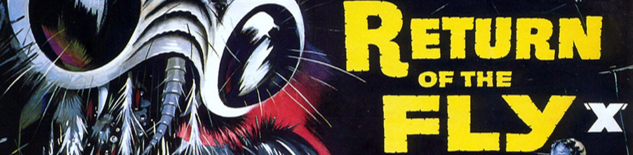
Return of the Fly immediately loses points by being filmed in black-and-white. While I have nothing against a good, grainy, black-and-white horror flick, this was the age of Technicolor, where black-and-white was not only a step backwards but almost an insult, especially as the first film was in colour, so Return of the Fly looks cheap and dated as a result. The film opens with Hélène Delambre (formally Patricia Owens) dead, apparently so haunted by the ghastly accident that cost her ambitious husband, scientist André Delambre (formally David “Al” Hedison) his life, that she was consumed by anguish. André’s devoted brother, François Delambre (Vincent Price), is especially heartbroken as he’d harboured a deep love for Hélène and stepped in to help raise her son, Philippe Delambre (Brett Halsey), as a surrogate father (and potentially married Hélène following André’s death). Alongside the sadly absent Inspector Charas (formally Herbert Marshall), who’s replaced by Inspector Beecham (John Sutton), François covered up the gruesome truth of André’s final days, which have long concerned the now-adult Philippe. Desperate for answers, Philippe begs François to tell him what happened and he reluctantly relates how André, consumed by scientific passion and curiosity, accidentally transformed himself into a bizarre human fly using his “Disintegrator-Integrator”, a potentially world-changing invention left in shambles after André destroyed it to avoid others suffering his fate. Intrigued by his father’s work and seeking to vindicate him, having become a keen scientist himself, Philippe vows to rebuild the machine and perfect his father’s dream, though François strongly advises against it and even refuses to bankroll him with what’s left of the Delambre wealth, believing André meddled in things man should leave alone.

Philippe looks to complete his father’s work, unaware he’s working with an industrial spy!

Undeterred, Philippe returns to his childhood home alongside his friend, Alan Hinds (David Frankham), who agrees to assist him and even waves off a salary to be part of the project and co-own it once they’ve changed the world. Both are quite taken by Philippe’s beautiful childhood friend, Cecile Bonnard (Danielle De Metz), who’s largely just here to be a pretty face, scream when she sees something awful, and babble in French about their childhood. Philippe and Alan quickly rebuild the Disintegrator-Integrator and successfully test it on inanimate objects. They also program it to “store” disintegrated objects to be reintegrated later (apparently a workaround for them only having one chamber), though they encounter a bizarre defect where the machine enlarges living organisms. It doesn’t take long for François to discover their progress and be coerced into aiding them, financially and with his knowledge, to keep Philippe from selling his half of the family company for additional funds (though François continues to oppose the project). Although disheartened that he effectively has to threaten his beloved uncle and encouraged by their progress, Philippe has no idea that Alan is secretly Ronald Holmes, an industrial spy looking to sell the secrets of the Disintegrator-Integrator to the unscrupulous Max Barthold (Dan Seymour) for an even greater profit. Having fled England for crimes so terrible he would be hanged if caught, Alan frantically overpowers Inspector Evans (Pat O’Hara) and sends him through the machine, only to produce a dead body with the hands and feet of a guinea pig and a guinea pig with human hands! After killing the animal and disposing of the body with Max’s help, Alan’s confronted by Philippe, who becomes concerned by his friend’s suspicious nature, only to be easily forced into the machine at gun point alongside a fly, which Alan spitefully tosses in with Philippe since he knows he’s deathly afraid of the insects.

Philippe goes on a rampage as a comical fly-thing, but is ultimatley restored to normal.

François arrives too late to help, taking a surprisingly non-fatal bullet to the gut and collapsing upon seeing Philippe emerge as a grotesque human/fly hybrid (Ed Wolff) with an enlarged and disappointingly comical head, stumpy fly leg, and claw-like arm. Like before, Philippe’s head is transposed onto the tiny fly, which buzzes around the laboratory begging for help before being captured (rather roughly) by Inspector Beecham so they can restore Philippe. Unfortunately, the fly-headed Philippe flees into the night and the police struggle to find him; they even threaten to kill him if he won’t come peacefully. Somehow, the fly-Philippe knows to head to Max’s funeral parlour and throttles him with his augmented strength. Conveniently, Alan shows up shortly after and gets his neck brutally crushed by the fly creature. When François hears of this, he worries that his nephew has already been consumed by the “murderous brain of the fly!” but Philippe apparently has enough of his humanity left to stumble home and collapse in Cecile’s bedroom. Despite still being injured, François helps Inspector Beecham get the fly-Philippe and his insect counterpart into the Disintegrator-Integrator and successfully restores his nephew, sparing him the same fate as his father. While I cut The Fly a lot of slack, it’s difficult to do the same for its sequel, primarily because the enlarged fly head looks so goofy. It’s technically impressive, I guess, but it’s too big and cartoony and makes it too obvious that it’s just a man in an uncomfortable headpiece. Return of the Fly has a higher body count than the first film, which is nice, but Philippe isn’t as interesting as his father. He lacks André’s boundless charisma and enthusiasm and his desire to recreate his father’s work seems paper thin, at best. It might’ve been better if it was Alan pushing Philippe to do this and if Philippe was somewhat reluctant. I also don’t get why the filmmakers didn’t just recast Inspector Charas or bring back Herbert Marshall as Inspector Beecham fulfilled essentially the same role and it was weird seeing a third party be aware of the awful fly experiment.

Final Thoughts:
While it has some flaws and has largely been surpassed by the 1986 remake, The Fly was still a fun, classic sci-fi film and a stirring cautionary tale about the mysteries of science. Return of the Fly hits many of the same story beats as its predecessor, focusing on a budding scientist seeking to make a historic breakthrough and being undone by that same technology, but Philippe wants to vindicate his father by completing his work; the benefits to humanity are merely a bonus. While Cecile is a pretty face, she and Philippe lack the same loving (if corny) relationship as his parents; indeed, they are never explicitly stated to be a couple by the end. Return of the Fly focuses more on the devious Alan, who plots to steal the Disintegrator-Integrator and is willing to kill for a profit. Having befriended Philippe, Alan knows how best to spite him and is perfectly positioned to manipulate him, a faulty plot point considering he stood to greatly profit from Philippe’s work. Vincent Price tries his best to elevate the material, but he doesn’t get much to work with and the effects are laughable compared to the last film (which didn’t exactly set a high bar!) Return of the Fly devolves into a simple monster movie when the fly-Philippe goes on a rampage, one that makes little sense as I have no idea how it knew to target Max and it’s still odd that the transformed people retain their intellect. You’re not missing much if you skip Return of the Fly, but I guess it’s an interesting coda for those who wanted to see more after watching the first film, but I’d be lying if I said it was a worthy follow-up.

My Rating:

Rating: 2 out of 5.

Could Be Better

Were you also disappointed by Return of the Fly or do you think it’s surprisingly good? Did you also think the enlarged fly head looked too goofy to be horrifying? Do you think the film wasted Vincent Price’s talents and agree that Philippe wasn’t as interesting as his father? Were you disappointed that so much of the film focused on Alan’s nefarious scheme? Would you like to see a new adaptation of The Fly and how are you celebrating the sci-fi genre today? Leave a like and comment below with your thoughts, check out my other sci-fi reviews, and donate to my Ko-Fi to suggest other sci-fi movies for the site.

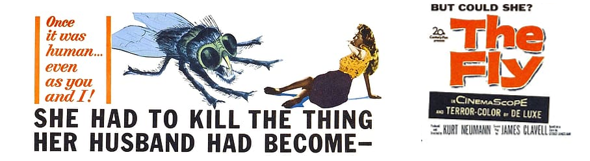
Movie Night [Sci-Fanuary]: The Fly (1958)


January celebrates two notable dates in science-fiction history: “National Science Fiction Day” on January 2 to coincide with the birth of world renowned sci-fi writer Isaac Asimov, and 12 January being when Arthur C. Clarke’s HAL 9000 was created. Accordingly, I dedicate January to celebrating sci-fi in all its forms.


Released: 16 July 1958
Director: Kurt Neumann
Distributor: 20th Century Fox

Budget: $350,000
Box Office: $1.7 million (or $3 million)
Rotten Tomatoes Scores: 95% / 71%

Quick Facts:
A relatively faithful adaptation of George Langelaan’s 1957 short story, The Fly saw star David Hedison struggle with the ambitious and surprisingly terrifying practical effects as much as co-star Vincent Price struggled with the film’s iconic final moments. Regarded as a sci-fi classic, The Fly spawned a couple of sequels and a widely praised remake in 1986.

The Review:
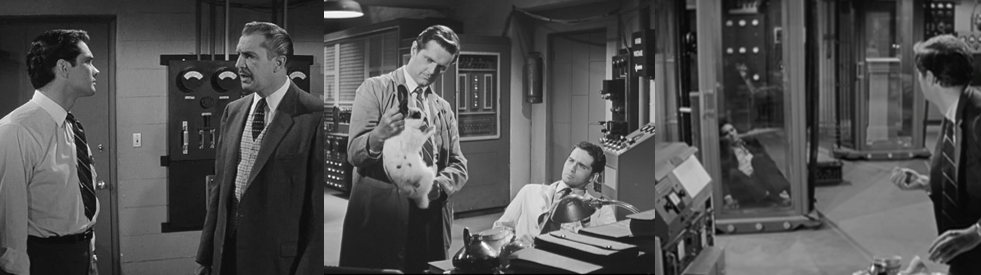
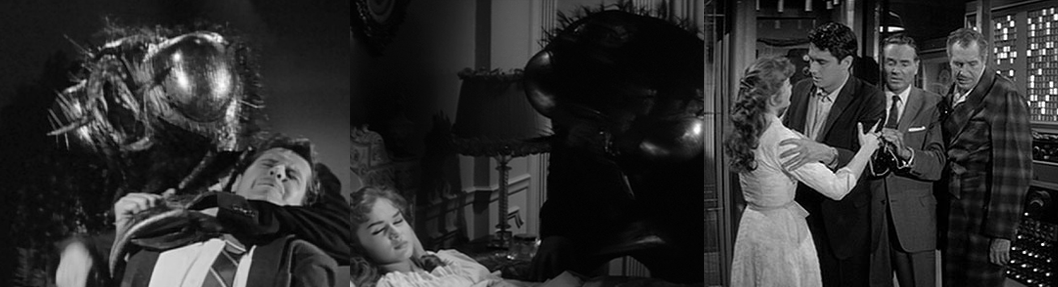
Set in Montreal, Quebec, The Fly opens with all the major action having already taken place and aspiring scientist André Delambre (Al Hedison) crushed by a hydraulic press at his family factory. His equally wealthy brother, François Delambre (Vincent Price), is shocked by this but knocked for a loop when André’s beautiful wife, Hélène Delambre (Patricia Owens), confesses to killing her husband. Stoic and apparently remorseless, Hélène openly admits to the act, refusing to paint herself as a “murderess” as André willingly placed himself under the hydraulic press but confessing to activating the machine twice to crush his head and arm. Having adored his brother, his curious young nephew, Philippe Delambre (Charles Herbert), and having secretly been in love with Hélène for years, François is desperate to know why she’s saying such awful things and to get to the truth of the matter. François aids Inspector Charas (Herbert Marshall) in this endeavour, eager to understand why Hélène is so desperate to find and kill a white-headed fly. As Hélène faces either hanging for murder or being committed to an asylum on the grounds of insanity, François pretends to have captured the fly and threatens to give it to Inspector Charas unless Hélène tells the truth. This breaks Hélène’s crazed demeanour and she reveals she’s been pretending to be mad to protect Philippe. Assuming that François has seen the truth of the fly he’s supposedly caught, Hélène agrees to tell him and Inspector Charas the whole story, meaning most of The Fly is framed as flashback to a couple of months ago, when the Delambres’ were a healthy and happy family very much in love and enjoying the opulence of their home.

Hélène shares a fantastical story of her ambitious husband’s incredible new invention…

Back then, the charming André was a loving, if reclusive, scientist who spent days in his basement laboratory working away but always greeted his wife and son with a smile. One day, André bounded from his lab and eagerly brought Hélène to witness his latest, greatest creation: the “Disintegrator-Integrator”. Hélène watches in amazement as André’s machine teleports a plate from one glass chamber to another and shares his elation in the potential applications of the machine, which promises to solve world hunger and change concepts of transport. Unfortunately, André’s delight quickly turns sour when Hélène discovers the reintegrated objects are not perfect duplicates, so André immediately returns to work, shunning his family for several days before he solves the problem. Once satisfied that the flaw’s been corrected, André moves to live animal testing by transporting the family cat, Dandelo (Unknown). However, Dandelo mysteriously fails to reintegrate (possibly because she was transported alongside a saucer of milk) and is apparently reduced to atoms, with only her disembodied cries echoing throughout the lab. Grieved by this mishap, the cause of which he never discovers, André returns to work on his machine and finally re-emerges to demonstrate the revised Disintegrator-Integrator to Hélène, now able to teleport living objects and allowing her to care for a reintegrated guinea pig to atone for Dandelo. Though eager to celebrate his breakthrough, André hesitates to inform the wider scientific community as even he doesn’t fully understand his machine, though he excitedly requests that Hélène bring François to witness the fruits of his labour and bask in what promises to be a world-changing creation. However, when François arrives, he and Hélène are disappointed to find a badly written note taped to the door of André’s lab asking them to stay away. Assuming André has lost himself in his project once more, the two leave him to it, only for André to remain in the lab for several days.

Hélène’s desperate search for the fly leaves the horrifically altered André contemplating suicide.

Concerned, Hélène goes to check on him and finds him hiding his face behind a black cloth and keeping his left hand obscured. Though unable to speak, André converses through written and typed notes and by banging once for “yes” and twice for “no”, forcing Hélène to turn her back as he slurps his food and revealing that he experienced a horrible accident when he transported himself through the Disintegrator-Integrator. A common housefly got into the chamber with him and mixed up their DNA, leaving André with a deformed, fly-like hand and head and the fly with a human head and arm. Strangely, André retains his logic and reason but, knowing it’s only a matter of time before he loses his humanity, he orders Hélène to find the white-headed fly. Hélène spends a couple of days frantically searching all over for the fly, aided by her eager son and confusing their housemaid, Emma (Kathleen Freeman), who somehow misinterprets Hélène’s clear instructions to capture the fly and goes around swatting them. Determined to help her husband, Hélène repeatedly tries to corral the fly and is constantly met with failure: it slips out of Philippe’s net and eventually escapes into the garden, presumably acting as a fly would and slowly having its instincts overridden by André’s consciousness just as André becomes increasingly animalistic. Indeed, the frustration at his wife’s failure only exacerbates André’s condition. He struggles to type and write and keep his thoughts straight and warns that he will have to “destroy himself” if the fly isn’t found. Refusing to accept this, Hélène desperately begs André to try transporting himself again, confident that this will undo the damage, only to be left a shrieking, horrified wreck when she whips off André’s cloth and witnesses his gruesome fly head!

Despite the bizarre story, Inspector Charas is convinced to spare Hélène from the law.

While quaint by today’s standards, this practical effect is surprisingly shocking. It twitches and moves like a fly’s proboscis and effectively transforms the beautifully handsome Hedison into a tragically monstrous figure. This is further emphasised by how hard André fights the animalistic urges of his fly genes; he struggles to keep his fly arm from harming Hélène, and this same limb actively fights against him when he destroys his lab in despair. Realising that he’s meddled in forces beyond human understanding and wishing to destroy all evidence of his experiment, André uses what little humanity he has left to ransack his lab and scrawls a final declaration of love and plea for help on his chalkboard. Thus, Hélène helps her husband to the hydraulic press and, following his instructions, activates the machine to crush his fly parts into indistinguishable mush (though not before his fly arm tries to bring her under with him!) Though amazed by Hélène’s story, Inspector Charas begrudgingly returns with a warrant and the men in white coats to take her to the nut house. While he’s also sceptical, François is desperate to save Hélène and frantically alerts Inspector Charas to a white-headed fly Philippe found caught in a spider-web in the garden. Dubious, Inspector Charas entertains François’s plea one last time, taking no pleasure in causing him pain, and is appalled when he sees the fly has André’s head! Inspector Charas and François watch in horror as a spider advances on the half-human fly as André screams for help. Unable to stand the screaming, Inspector Charas crushes both and François immediately condemns him as being as guilty of murder as Hélène. Shocked by the whole ordeal, Inspector Charas reluctantly agrees to François’s suggestion that André committed suicide, sparing Hélène from death and the asylum. Some time later, Hélène and Philippe return to normal, with François now much closer to them, and François sadly tells Philippe that his father died in a reckless search for the “truth”.

Final Thoughts:
Although I grew up with the 1986 remake, I’ve always had a fondness for the 1958 adaptation of the The Fly, which I read and wrote about at university. Aside from a few changes, this is surprisingly faithful to the original short story and certainly one of the more ambitious sci-fi efforts of the late-1950s. Although some of the dialogue is a bit clunky and André and Hélène’s relationship is sickeningly sweet, André has an enthusiastic and affable charm about him thanks to the charismatic David Hedison, who adeptly captures André’s despair and torment after his horrific accident. Vincent Price brings his peerless authenticity to the film, perfectly portraying François as a lovestruck, tormented man trying to do his best by Hélène while struggling to comprehend her fantastical tale. Philippe was kind of annoying but did his best to be helpful, while Patricia Owens did a fine job carrying the bulk of the drama, portraying Hélène as a devoted wife desperate to help her husband. The Fly does a great job of building tension to the big reveal, giving glimpses of André’s malformed hand and depicting his obvious desperation and struggle to maintain his humanity. Sure, the fly head might be quite laughable by today’s standards but that reveal scene is an iconic moment in sci-fi cinema and has immortalised the film as much as the infamous ending. Again, the fly-André’s anguished cries of “Help me! He-ll-p me-e!” might be absurd, but it’s played so straight and so horrific that I can’t help but get shivers as that painfully fake spider devours him. While The Fly was completely outshined by its remake, it’s still a classic sci-fi morality tale of the dangers of science and a surprisingly effective exploration of madness and devotion, to say nothing of having some memorable moments that make it a truly timeless experience.

My Rating:

Rating: 3 out of 5.

Pretty Good

Did you enjoy this sci-fi classic? Did you like how accurate it was to the book? Were you won over by the seemingly perfect life shared by André and Hélène? Did you like the build up towards the big reveal or did the endless chasing for the fly get on your nerves? Were you impressed with the practical effects or do you think they’ve aged badly? Would you like to see another adaptation that was as closely tied to Langelaan’s book? How are you celebrating sci-fi this January? Like this review and leave a comment below, check out my other sci-fi reviews, and donate to my Ko-Fi to suggest other sci-fi movies for me to cover.

10 FTW: Surprisingly Good Horror Remakes

We’ve heard it all a thousand times by now: “when will Hollywood stop with the remakes!?”, “Why can’t Hollywood come up with new ideas!?”, “Remakes suxxorz1!!” Honestly, while some films should never be re-made and some remakes do baffle the mind, remakes aren’t the plague of cinema that a lot of people like to think they are. In fact, some are pretty damn good.

If you’re one of those bleeding heart Twitter people, though, who just like to decry remakes in general, maybe you should take a moment to consider this small list of horror remakes that are not only surprisingly good but, in some cases, actually surpass their originals:

Halloween
10 Halloween (Zombie, 2007)

We’re kicking things off with quite the controversial choice here. I’ll argue until the end of time that John Carpenter’s Halloween (Carpenter, 1978) is the forefather of all modern horror, particularly the slasher genre. It’s a subtle, atmospheric piece with a fantastic, mysterious antagonist and the truly frightening prospect that random unspeakable acts of horror can happen in a suburban environment. Rob Zombie’s take, however, is a loud, frenetic, uncomfortably gruesome take on the property. Michael Myers (Daeg Faerch/Tyler Mane) is an incredibly disturbed young boy from a violent and abusive family who becomes a remorseless, emotionless, unstoppable tank of a killing machine. Zombie delves right into his own take on Michael’s backstory, presenting in grotesque detail the exact events that turn Michael into a nigh-supernatural killer.

In many ways, the initial focus of the film acts as a kind of prequel to the events of Carpenter’s original, as the remainder of the film’s runtime is devoted to recreating Michael’s killing spree in Haddonfield, with the primary difference being that nearly the entirety of the film is told from Michael’s perspective. Sure, Malcolm McDowell, great as he is, cannot hope to compete with the fantastic Donald Pleasence but the film is bolstered by the incredibly cute Scout Taylor-Compton (who is arguably more attractive and relatable to modern audiences than Jamie Lee Curtis) and even appearances by Brad Dourif and Danielle Harris (and what an appearance hers is!) While it’s unlikely to be as iconic or influential as Carpenter’s benchmark film, for those who find the original and its sequels dated and slow, Rob Zombie’s remake is a much-needed kick up the ass that, for better or worse, dragged Halloween kicking and screaming out of obscurity.

Poltergeist
9 Poltergeist (Kenan, 2015)

I know, right? How could Hollywood ever even entertain the idea of remaking Tobe Hooper/Steven Spielberg’s 1982 horror classic? Well, they did, and don’t be mistaken; it’s not actually that bad. While it lacks probably my favourite scene from the original, where corpses rise from the Freeman’s unfinished swimming pool, the remake is just as terrifying and engaging as the original, with the added bonus of having a modern-day make-over that is far more accessible than the now-dated original. Don’t get me wrong, the original is still a classic, but Sam Rockwell and Kennedi Clements put in some great performances, easily on par with those of Craig T. Nelson and the late JoBeth Williams. Did Poltergeist necessarily need a remake? Probably not, and the fact that numerous haunted house stories since the original have all pulled from or mirrored Hooper’s seminal horror classic probably didn’t help to differentiate Kenan’s new take on the property, but I feel it’s a largely misrepresented film that is nowhere near as bad as some people think.

It
8 It (Muschietti, 2017)

Although I spoke about this film quite recently, it is deserving enough to make this list. Watching Tommy Lee Wallace’s 1990 miniseries, great as it is and as amazing as Tim Curry’s performance in that is, you can’t help but think that Stephen King’s novel deserved to be told without the restraints of a television miniseries. Focusing exclusively on the child side of King’s story, and bringing the events forward to the 1980s rather than the 1950s, Muschietti adheres closely to King’s text while still putting his own spin on events. Bill Skarsgård’s take on Pennywise is suitably unsettingly and otherworldly; what he lacks in Curry’s charisma he more than makes up for by being genuinely creepy and a fearsome menace. Muschietti also focuses on the friendship and troubles of his child protagonists incredibly well, anchoring them to the film’s central narrative and allowing King’s themes of childhood and loss of innocence to play out beautifully. With a lengthy runtime and concluding on a fantastic tease for a second chapter, this new version of It, while not without its issues (primarily regarding screen time for the many characters), did not disappoint in realising the gruesome potential that the miniseries could only hint at.

7 Dawn of the Dead (Snyder, 2004)

Released at the peak of Hollywood’s new-found fondness for zombie films in the early-to-mid-2000s, largely spearheaded by 28 Days Later (Boyle, 2002) and the God-awful Resident Evil (Anderson, 2002) and its decent-enough sequel, Resident Evil: Apocalypse (ibid, 2004), Zack Snyder’s remake of George A. Romero’s massively-influential 1978 film of the same name takes the general themes and premise of its source material and ramps them up with some incredible action, grotesque gore effects, and a much-needed modern day gloss. While zombie purists may lament the inclusion of the fast-moving, animalistic undead introduced in 28 Days Later, Snyder’s rapid editing and penchant for style over substance make the creatures more vicious and scary than in Romero’s original film. With some great supporting performances by the likes of Ving Rhames and Michael Kelly (and even a brief cameo by Ken Foree, repeating his iconic line from the original film), Snyder’s Dawn of the Dead is a non-stop masterpiece of zombie cinema that never slows down to the snail’s pace that Romero’s introspective original prefers to adopt.

Texas Chainsaw Massacre
6 The Texas Chainsaw Massacre (Nispel, 2003)

One of the primary reasons I was inspired to make this list, The Texas Chain Saw Massacre (Hooper, 1974) was a film that desperately needed this remake! Seriously, the original might have been shocking and gruesome at the time but, since then, it has not aged well; it’s a slow, dull piece of cinema that drags on way too long, with questionable acting and a lifeless soundtrack. The only redeeming quality comes from the maniacal Sawyer family, and even they are a hooting, loud bunch of camp. Produced by Michael Bay’s Platinum Dunes, which would go on to be responsible for a variety of horror remakes, The Texas Chainsaw Massacre is much better than it had any right to be. With an uncomfortable gradient, shocking soundtrack, and even some decent performances by Jessica Biel and Eric Balfour, Nispel’s remake downplays the cannibalistic nature of the franchise in favour of grotesque torture-porn levels of horror.

While the film reintroduces Leatherface (Andrew Bryniarski), one of horror’s most iconic figures, and even suggests a tragic backstory for the character, Nispel’s Chainsaw brought us one of the most despicable and significant horror icons in years in the form of Sherriff Hoyt (masterfully embodied by the great R. Lee Ermey). Hoyt, a tobacco-chewing, foul-mouthed sadist, drives the plot of this remake, raises its quality to another level, and his popularity was arguably responsible for the equally-enjoyable prequel, The Texas Chain saw Massacre: The Beginning (Liebesman, 2006). On a side note, though, am I the only one shocked that, including remakes and reimaginings, the Chainsaw franchise is made up of eight separate movies? Crazy!

The Blob
5 The Blob (Russell, 1988)

Now we’re getting somewhere! Irvin Yeaworth’s original 1958 film, starring Steve McQueen, was a campy piece of B-movie mush that has come to resemble a comedy more than a science-fiction piece. Channelling the likes of David Cronenberg and John Carpenter, Chuck Russell’s reimagining, however, takes the story of the bulbous alien lifeform to far more grotesque levels. Incorporating some incredibly disgusting practical effects, the population of a small town is literally dissolved by the titular amoeba. Although some of the composite shots are obviously dated by today’s standards, an entirely CGI rendition of the Blob would probably have aged incredibly poorly by now. Instead, The Blob retains a level of camp in its premise but, with its gruesome effects and no-nonsense attitude, is a great example of how effective and impactful practical effects can be.

Friday the 13th
4 Friday the 13th (Nispel, 2009)

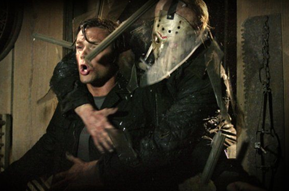
We’re back with Marcus Nispel and Platinum Dunes for this masterfully well-crafted remake of not only the original 1980 classic but, also, the first three sequels. Similar to Halloween, for those who find the original movies to be dated and cut-and-pasted, by-the-numbers slasher films with very little to differentiate them from each other until Friday the 13th Part V: A New Beginning (Steinmann, 1985) then this is the film for you! In fact, I often encourage newcomers to watch this film and then jump straight to Jason Lives! Friday the 13th Part VI (McLoughlin, 1986); not because the continuity would tie together but, by doing that, you watch one kick-ass film with loads of gratuitous mid-2000s sex (which is far more graphic, enjoyable, and realistic than sex scenes from the 1980s) and horror imagery that sums up the first four entries of the franchise incredibly well and then you can delve into the enjoyable nonsense of zombie Jason Voorhees.

Beginning with the brutal decapitation of Mrs. Voorhees (Nana Visitor) and detailing how Jason (Caleb Guss/Derek Mears) witnessed her murder and grew up alone in the wooded forests of Camp Crystal Lake, as well as detailing Jason’s transformation from the lesser-known burlap sack look to the now-iconic hockey mask, Friday the 13th is filled with some incredibly gruesome kills as Jason uses bear traps, snares, and other tricks to entrap and kill hapless teenagers all over the shop. Add to that some strong performances by Danielle Panabaker, Aaron Yoo, and Jared Padalecki and you have an intense, non-stop horror film that, like Jason, comes at you a mile a minute. Honestly, the only bad thing I have to say about this film is that, despite making $92.7 million on a budget of $19 million, we never saw a sequel; even Rob Zombie’s Halloween got a shitty sequel!

The Thing
3 John Carpenter’s The Thing (Carpenter, 1982) and The Thing (Heijningen Jr, 2011)

Here’s some more controversy for you: I actually liked Matthijs van Heijningen Jr’s version of The Thing. It starred Mary Elizabeth Winstead, who I absolutely adore, and, while marketed as a remake, was actually, ingeniously, a prequel to John Carpenter’s 1982 horror/sci-fi classic. Based exclusively on a brief scene from Carpenter’s film, van Heijningen Jr’s The Thing details how a Norwegian research team unearth an extraterrestrial craft and unwittingly awaken a shape-changing, parasitic alien lifeform and concludes with the survivors attempting to hunt down and eliminate the creature’s final form, which leads directly into the beginning of Carpenter’s The Thing.

Drawing loosely from both Christian Nyby’s 1952 B-movie classic The Thing From Another World! and the story that inspired it, Who Goes There? (Campbell, 1938), John Carpenter’s The Thing is one of the quintessential examples of the effectiveness of practical special effects to the horror genre. Kurt Russell and Keith David lead the charge when their small Antarctic outpost is slowly assimilated by the titular alien creature, leaving the survivors to descend into distrust and anarchy as they struggle to fight off the ever-growing menace both outside and within their number. Carpenter’s film features some truly incredibly moments of practical effects wizardry, from a torso sprouting razor sharp teeth, to a severed head growing spider-like appendages and a dog literally splitting in two as tentacles blast out from its head; yet, while its similarly-impressive practical effects were tampered with in post-production, I never felt like Heijningen Jr’s The Thing was sub-par to Carpenter’s film. Instead, it works amazing well as a companion piece, allowing one to binge-watch both movies side-by-side and be suitably entertained.

2 Evil Dead (Alvarez, 2013)

Similar to The Texas Chain Saw Massacre, Sam Raimi’s landmark 1981 horror film The Evil Dead was in desperate need of a remake. Sure, the stop-motion, puppetry, and practical effects were great considering the limited time and budget Raimi had available to him but, over time, neither they nor the acting have aged incredibly well. In fact, for me, Evil Dead II: Dead by Dawn (Raimi, 1987), which retells the events of the original in its opening moments, already surpassed Raimi’s original film by leaps and bounds: Ash (epitomised by Bruce Campbell) is a far more capable, well-rounded character, the effects are much better, and the film adopts a quirky style of black comedy that was sorely missing in the original. Fast forward to 2013 and, rather than attempt to emulate Raimi’s black comedy style, Fede Alvarez approaches his remake with an intense seriousness.

The horror is brutal and horrendous to look at; there’s no laughing deer heads here. Instead, characters saw their arms off, are attacked by nail guns, get beaten by crowbars, and are forced to tear their arms off at the elbow in gruesome fashion. The plot is largely the same, with a group of largely likeable characters accidentally awakening an ancient evil, but the stakes are much higher; here, the evil seeks to take on a physical form and bring about the apocalypse whereas in Raimi’s original film it simply wanted to claim the souls of those trapped in the cabin. While it lacks a character as iconic as Ash, Evil Dead makes up for it with some truly difficult to watch moments that are both sickening and perversely entertaining; even Raimi’s controversial tree rape scene is included and utilised in a far more effective and plot-relevant way and that alone is reason enough to place this film over the original, in my view.

The Fly
1 The Fly (Cronenberg, 1986)

This is it, the quintessential argument that not all remakes are bad and that they can, in some cases, vastly surpass their originals. While Kurt Neumann’s 1958 film of the same name may be closer to the original story and is still a pretty decent piece of 1950s science-fiction, despite its now campy tone, Cronenberg took the idea of a man teleporting himself with a fly and took it to whole new levels. Before, the man bore the head and arm of the fly as a result of the accident and slowly deteriorated into madness; here, though, thanks largely to an absolutely stellar performance by the always-amazing Jeff Goldblum, Cronenberg details the physical and mental degradation of his main character, Seth Brundle, in painstakingly brutal detail. Brundle, a brilliant scientist, initially embraces his newfound physical attributes before realising that he has been stricken by an infection on a cellular level not unlike AIDS or cancer. Soon, his body deteriorates at an alarming rate, with top-notch special effects being employed to make Goldblum practically unrecognisable through heavy make-up and full-body prosthetics.

As he alienates those around him, Brundle’s mind also begins to depreciate; initially desperate to reverse the effects, he soon comes to believe that he was never a man to begin with and prepares a gruesome legacy for himself whereby he will merge his crippled body with that of his lover (a strong, heartwrenching performance by Geena Davis) and his unborn child. In the process, he not only dissolves his rival’s hand and foot with corrosive fly vomit but literally bursts out of the remains of his decrepit human skin to emerge as a grotesque fly-like creature, before finally, tragically, forcing his lover to end his torment. The Fly transcends boundaries; it is a horrific tale of science gone wrong, a body horror with terrifying consequences but, at its heart, it is also an extremely tragic love story. Cronenberg did what many fail to do with their remakes; he took the original concept and not only put his own spin on it but also transformed it into something entirely separate from the source material and yet vastly superior to it in many ways.

Arguably, remakes like A Nightmare on Elm Street (Bayer, 2010) (which attempted to put a unique spin on the franchise and ended up becoming a carbon-copy retelling of Wes Craven’s seminal 1984 original), Total Recall (Wiseman, 2012), RoboCop (Padilha, 2014) could really learn a thing or two from The Fly, and many of the remakes on this list. If you’re going to remake a movie, don’t just retread the same material as before; go back to the source, back to the text, and either produce a more faithful adaptation or extrapolate the core themes and general premise and produce a great movie, rather than a simple, insulting cash-grab.