Jurassic World: Fallen Kingdom (Bayona, 2018) is, of course, the sequel to Jurassic World(Trevorrow, 2015) and the latest in the Jurassic Park series of movies based, loosely, on the books by Michael Crichton. Set some three years after the events of Jurassic World, Jurassic World: Fallen Kingdom sees the genetically resurrected attractions of the titular park face the prospect of renewed extinction when a long-dormant volcano threatens to destroy the entire island of Isla Nubar. While the debate rages in congress regarding whether the dinosaurs should be preserved or left to their fate, Benjamin Lockwood (James Cromwell) reaches out to Claire Dearing (Bryce Dallas Howard) and Owen Grady (Chris Pratt) to join a team in returning to Jurassic World and saving as many species as possible before they can be wiped out.
Dinosaurs face extinction once again.
Joined by Claire’s assistants, Franklin Webb (Justice Smith) and Doctor Zia Rodriguez (Daniella Pineda), and a group of mercenary types led by Ken Wheatley (Ted Levine), Claire and Owen and successful in locating Blue, the last Velociraptor, but are ultimately betrayed when it is revealed that Wheatley has been hired to steal the dinosaurs for Lockwood’s aide, Eli Mills (Rafe Spall). Escaping the destruction of Isla Nubar, Claire and Owen stow away back to Lockwood’s mansion where Mills, alongside Gunnar Eversol (Toby Jones) and Doctor Henry Wu (B. D. Wong), not only auction off their captives but also engineer an entirely new and deadly breed of dinosaur, the Indoraptor, to the highest bidders. As I said, the trailers have really outdone themselves with how much of the movie they give away; by watching each, you know that the dinosaurs are in danger and must be saved, that they’re taken from the island and the protagonists are betrayed, that the dinosaurs are auctioned off and that the Indoraptor is created and runs amok. With some creative imagination, you can fill in the blanks between these trailers and pretty much guess the entirety of this movie, which ends up being a cross between The Lost World: Jurassic Park(Spielberg, 1997) and Jurassic Park III (Johnston, 2001).
Jurassic World: Fallen Kingdom is at its best when it’s a monster movie.
Despite that, however, Jurassic World: Fallen Kingdom is a very effective monster movie; some Jurassic Park fans may decry this but, make no mistake, these movies have always been monster movies. Giant, medium, and tiny dinosaurs have always run amok and eaten people in these films and, yes, while the original may have had a heart and soul that elevated it above a typical monster film, at their core this is what the series has been from the start. The Indoraptor takes this to the next level, shot and presented in as many terrifying ways as possible and presented as a nightmarish creature that lives only to stalk, kill, and eat. When the movie is focusing on these elements, it truly shines; the dinosaur effects and action are probably the best that they have ever been and the return of fan favourite creatures such as Blue and the Tyrannosaurus rex are always exciting to see.
Blue returns to the fight.
As for the human characters, Chris Pratt carries this film; the guy has such a natural charisma that he elevates anything he is in. his character arc is pretty much the same as the last film (he’s the ‘raptor trainer who is level-headed, wants to stand against those who would do harm to the dinosaurs, and is trying to win back Claire) but he’s just too likable to care too much that he hasn’t changed much between movies. Bryce Dallas Howard is probably better in this film than the last, where her time as the annoying, stuck-up corporate stooge really got on my nerves, and the new characters (especially Daniella Pineda) are decent enough in their roles and supply some respectable comic relief, when necessary. Honestly, though, it really feels like the resurrection of the Jurassic Park franchise does not actually deserve a whole new trilogy. Jurassic World: Fallen Kingdom retreads a lot of ground covered in the original two sequels and continues the insane idea that dinosaurs could be used as biological weapons of war, but covers its imperfections and flaws with a wash of incredible effects and terrifying imagery. The franchise will clearly progress to its third instalment but one can only hope that the next film truly tries something fresh and new with the series.
My Rating:
⭐⭐
Rating: 2 out of 5.
Could Be Better
Recommended: I would always recommend a Jurassic Park film; even after all these years, it’s still impressive to see dinosaurs brought to life onscreen. Best moment: The entire sequence on Isla Nubar, despite being largely spoiled by the trailers, and the Indoraptor’s rampage, for sure. Worst moment: There are some parts where the film drags noticeably and the plot is stupidly predictable, especially after watching the previous movies and the trailers.
As part of my PhD thesis, which revolved entirely around live-action and animated adaptations of videogames, I decided to dedicate an entire chapter to the Resident Evil films. Helmed by director Paul W.S. Anderson, these six movies largely veered quite far from the source material, only including popular franchise characters and situations when it was deemed necessary and financially lucrative. While I, personally, have come to loathe the series (with the exception of Resident Evil: Apocalypse (Witt, 2004), purely because it’s the closest adaptation of any of the Resident Evil videogames) because of Anderson’s insistence on pushing star and wife Mila Jovovich over recognisable videogame elements and his blatant disregard for the shitty continuity he created, they nevertheless reaped over $1,233million in worldwide gross over six movies. This, whether I or any one else wants to admit it or not, makes the Resident Evil films the most successful live-action adaptation of a videogame franchise to date.
While researching Anderson’s Resident Evil franchise, I discovered that the first movie was mired in a tumultuous period of development hell. Before Anderson was given the reigns to the survivor-horror videogame franchise, legendary grandfather of the zombie genre, George A. Romero, was offered the chance to direct a feature film adaptation. Although not a videogame fan, Romero’s 1998 script, available to read here, was produced from a screen story by himself and Peter Grunwald and is surprisingly closer to the aesthetic style and atmosphere of the original Resident Evil videogame than Paul W.S. Anderson’s eventual 2002 film. However, the script contains many issues that, rather than being addressed in subsequent re-drafts, were ignored in favour of a complete overhaul. These range from clichés often closely associated with Romero, to a close, almost uninspired fidelity to the source material. In this article I’ll go through the script and describe some of the plot points and characters and talk a little bit about how Romero’s efforts differed from those seen in Resident Evil.
Chris and Jill are at it in Romero’s script.
Like the videogame, Romero’s script features Jill Valentine and Chris Redfield as the central protagonists. Jill is largely similar to her videogame counterpart, being somewhat overwhelmed by the events surrounding her, rather insubordinate to her superiors, yet militaristic and direct in her actions and capabilities. Chris, however, undergoes a significant alteration; rather than being a member of Special Tactics and Rescue Service (S.T.A.R.S.; here a military organisation rather than being associated with the Raccoon Police Department), Chris is depicted as a “part Mohawk” Native American who has strong ties to the Arklay land and a close association with nature. As part of her cover story, Jill initiates a sexual relationship with Chris in order to gather intelligence on the Arklay Mountains and the mansion where the Tyrant-Virus (T-Virus) outbreak occurs; Chris is swept along due to his need to find answers concerning both the infected and Jill’s betrayal. These alterations are apparently intended to make Chris the voice of reason among the other S.T.A.R.S. members, who mostly follow orders or are concerned with their own survival rather than the implications the T-Virus has on natural life. Chris’s capabilities are severely downgraded from his videogame counterpart and he spends the majority of the script brandishing “an old Winchester rifle” in contrast to the well-armed S.T.A.R.S. members.
The entire S.T.A.R.S. team is represented in Romero’s script.
Jill’s Alpha Team, made up of Russo, Williams, and Disimone, is quickly massacred, leaving Jill the only survivor. Albert Wesker leads Bravo Team, twelve additional commandos (including Barry Burton, Brad Vickers, Rebecca Chambers, Richard Aiken, Kenneth Sullivan, Rosie Rodriguez, Forest Speyer, and Laguardia) to assist, and they are immediately beset by zombie dogs and forced into the mansion, as in Resident Evil (Capcom, 1996). Wesker and Barry are portrayed as old friends, almost like brothers; Rodriguez, ironically much like Michelle Rodriquez’s Rain from Anderson’s film, is a trash-talking tough girl, while Rebecca is a nearly non-existent and inconsequential medical officer. Nevertheless, they closely resemble Resident Evil’s S.T.A.R.S. members rather than being entirely original characters as in Anderson’s film, yet Anderson’s Umbrella Special Forces Commandos fill a very similar role.
The characters still have to solve Resident Evil‘s trademark puzzles.
Wesker also serves as Romero’s principal source of exposition as he relates the mansion’s history, the experiments being performed there, and their mission to rescue Dr. John Marcus and recover key research data. Much of this dialogue is mirrored by the Red Queen (Michaela Dicker) and serves as blatant exposition, sandwiched between moments of gore-filled action, reading very much like the videogame’s passive cutscenes. The team also navigates the mansion using various coloured key cards, solving some familiar puzzles involving grandfather clocks and crests, and utilising a map similar to the computerised system seen in Anderson’s adaptation. These aspects, excised completely from Anderson’s films, are depicted as security measures built in by the mansion’s eccentric architect, yet they make the mansion much bigger than usually depicted in order to encompass the script’s large, shifting labyrinth-like rooms and puzzles, and the decision to replace these with Anderson’s more practical key card/password system seems a wise and realistic aesthetic decision, especially considering the majority of Resident Evil’s puzzles simply provide keys to open new areas.
Chris really hates Wesker in this script!
Depending on the avatar, either Jill or Chris can go missing after S.T.A.R.S. take refuge in Resident Evil; in Romero’s script, both Jill and Chris rendezvous with S.T.A.R.S. at different points to reference this, with both eliminating multiple zombies along the way. Though Jill and Chris both exhibit an uncharacteristically aggressive disrespect for Wesker (Resident Evil depicted both as frustrated by Wesker’s secrecy but nonetheless trusting him until the finale), Chris is far more vocal, turning his confusion into anger at the events which have left his homeland a bloody mess. He directly blames Wesker for these events, and Jill for her betrayal, and he continues to butt heads with both throughout their investigation. Romero’s script draws principally from Resident Evil alone –Resident Evil 2’s (Capcom, 1998) only influences are the mysterious, bloodcurdling, roar echoing throughout the mansion similar to G’s and Ada Wong (albeit as a scientist who assisted in developing the T-Virus and delivering yet more superfluous exposition, rather than being a double agent).
All of the game’s BOWs appear!
The mansion is beset by Plant 42’s destructive growth, infected sharks, a giant snake, and even the murderous Hunters, all lifted directly from the original videogame, and showcasing the scale of Umbrella’s research and the impact of the T-Virus beyond “simply” reanimating dead tissue. Whereas the exact implications of the T-Virus in Anderson’s films is left mostly unclear, Romero’s script openly lifts its purpose – to create nigh-indestructible bio-organic weapons (BOWs) for use in warfare – from the videogame, while this only become relevant in Anderson’s films after the T-Virus was released in the Hive.
The Tyrant is the big bad of Romero’s script.
This research culminates in, like the videogame, the Tyrant, and its subsequent rampage mirrors the closing moments of the videogame very closely. By including these creatures, most of which are rather large, complicated, and cumbersome entities, the budget for Romero’s vision would conceivably far exceed that of Anderson’s originally far more low-key, fixed approach; in Resident Evil: Apocalypse’s director’s commentary, he claims that the Licker was only included in the final stages of the first film’s development, implying that the film lacked even that lacklustre “final boss”. Additionally, the script’s extremely graphic depictions of zombie and creature attacks, with victims being ripped apart and torn open and copious gore that mirrors Dawn of the Dead (Romero, 1978) and Day of the Dead (ibid, 1985), takes it far from an R-rating. Although these comparisons are not only fitting due to the influence Romero had on the creation of Resident Evil but also his involvement in the script, they were clearly at odds with the film studio and Capcom, who desired a more manageable budget and wider audience range, which is also at odds with Romero’s surprising faithful adaptation.
One takes on the script’s characterisation of Wesker.
In addition to incorporating more recognisable Resident Evil elements, Romero is not shy about self-gratification: characters draw comparisons to Night of the Living Dead (ibid, 1968) and call zombies “ghouls”, and the increased emphasis on both military presence and Umbrella’s surreptitious nature is extremely similar to the military’s depiction in The Crazies (ibid, 1973). Romero’s cynicism regarding government and corporate power is reflected in Wesker’s superiors being devoid of personality and appearance: “We see no faces. But expensive watches, sleeves with high-ranking stripes, indicate wealth, power, and a military presence”. Wesker’s depiction is much more military-orientated; his focus on the mission and barking orders reflects this, and it is easy to see how his characterisation could have evolved into One (Colin Salmon). Seemingly the only line of Romero’s to reach Anderson’s is “we live here now”, originally delivered by Rodriguez throughout the script in extraneous reference to her childhood. While the line becomes over-emphasised and is far from relevant in Romero’s script, when delivered by Rain it highlights the dire situation that she and the others are in. Romero’s closer adherence to gameplay mechanics is again evident in the conservation of resources; having been beset by enemies and rendered expendable, Wesker orders the division of ammo and supplies, mentioning that they came unprepared for the odds they face. While Anderson’s Commandos are similarly unprepared, they nevertheless enter the Hive fully equipped and fully armed; such resources allow the protagonists to gun down their zombie attackers without the fear of running out of ammunition, though their armaments are inevitably useless against the Red Queen’s defences. These, specifically the laser grid system, surprisingly appear in Romero’s script, though only as a quick jump-scare, with the true danger coming from the acidic steam the lasers trigger, which causes a gruesome death.
Surprisingly, the famous “laser grid” is in this script.
Thus, both Romero’s mutated creatures and Anderson’s laser grid serve the same ends – the deaths of minor characters, though Romero’s approach to this is much closer to the videogame than Anderson, who has often openly voiced his appreciation for the source material, as opposed to Romero, who largely dislikes videogames. Whereas in Anderson’s film, the lasers are significant, in Romero’s script they are glossed over in favour of an overly complex battle against Plant 42 and a mutated copperhead snake, both more suitable inclusions to a Resident Evil adaptation given their prominence in the videogame, yet clearly more expensive to incorporate than Anderson’s more subdued lasers. As S.T.A.R.S. navigates Umbrella’s laboratory, they are beset by Hunters, which are given an extreme durability upgrade. In Resident Evil, the Hunters were far stronger, faster, and more aggressive than zombies, providing an effective difficulty spike, yet they could still be dispatched using small arms fire (though close-range weapons like the shotgun were more effective). Romero’s Hunters are practically indestructible as their skeletal structure is protected by a metallic coating – the only effective tactic is to aim for their joints (an action that Resident Evil’s stiff, restrictive controls would not allow), and even then they continue their relentless pursuit, crawling and dragging themselves along the floor.
Ada also makes an appearance.
The survivors take refuge with Ada, who wishes to atone for her part in creating the T-Virus. Her videogame counterpart’s lost love, John, is amalgamated with Professor James Marcus, the videogame creator of the T-Virus, to become Dr. John Marcus, a markedly different character whose work Ada describes as being “for humanitarian purposes”, rather than specifically creating the T-Virus for military applications. This is pinned directly onto Umbrella, who corrupted Marcus’ research, and this concept was later explored through Resident Evil: Apocalypse’s Dr. Charles Ashford. Ada, far from her deceitful, untrustworthy, and sultry videogame counterpart, awkwardly explains the film’s events directly to the audience and the characters before the finale, rather than this information coming naturally. Ada’s attempts to keep Wesker out of D Lab are unsuccessful, as Wesker’s true motivations are revealed and he activates the Tyrant, confiding in Barry his intentions to retrieve the creature’s data, sell it to Umbrella, and split the money between himself and Barry as payback for Barry’s loyalty and friendship. Once Romero’s script enters D Lab, it closely follows the videogame’s finale, with Chris, Jill, and Barry openly opposing Wesker’s schemes and the Tyrant escaping and going on a rampage.
This ended about as well as you might expect.
By not resorting to a mid-level enemy like the Licker for his finale, Romero’s conclusion is considerably augmented as the Tyrant is practically unstoppable. Its physical threat, imposing stature, unrelenting nature, and iconography as the classic Resident Evil final boss give the finale a danger and tension that we must be convinced of in Anderson’s finale as his Licker has to undergo a significant mutation into a less-recognisable version of itself in order to match the Tyrant. As in the videogame, the Tyrant tears Wesker apart during its rampage, although Romero’s script describes this death as being so total and horrific that it seems unlikely that Wesker could have revived himself as in the videogames. However, as this was retroactively introduced in Resident Evil – Code: Veronica (Capcom, 2000), Wesker’s gruesome death can be understood as being his much-deserved and overdue fate, rather than a deviation from the source material, as Wesker’s death seemed to be total and final in Resident Evil. As the final countdown to the destruction and eradication of all the evidence of the T-Virus takes place, the survivors are beset by zombies and infected crows, and forced to solve contrived puzzles to access a secret passage. The tension is somewhat numbed by these distractions; typically, Resident Evil players face relatively few enemies and some rudimentary but necessary puzzles while an ominous countdown flickers onscreen (like in Resident Evil 2 when players must activate an underground train to allow the survivors to escape) but few distractions that slow progress to a crawl, as in Romero’s script. Like the videogame, though, the final confrontation between the Tyrant and the survivors is short-lived, as a single Stinger missile is enough destroy it. This ending is more predictable than Anderson’s, which mirrored Resident Evil 2’s ending, but the specifics and fundamental impact deviated quite considerably due to Anderson’s belief that to simply copy the videogame eliminated any suspense or tension for Resident Evil veterans.
The script’s clunky dialogue can be worse than the original voice acting, if you can believe that!
Instead, Romero adheres closely to the source material’s finale, with the Tyrant dispatched almost identically and the final survivors escaping just as and the mansion explodes. Romero deviates by making this explosion powerful enough to eradicate Raccoon City, which has been overrun with zombies, effectively encompassing the ending of Resident Evil 3: Nemesis (Capcom, 1999) and seemingly eliminating the possibility of a direct sequel. Quite how the protagonists survive this is left unresolved, but the imagery suggests Romero intended on a big, gory, explosive finale, one that reads as being very abrupt and total rather than Anderson’s cliffhanger or the videogame’s various endings. Overall, there is very little doubt that Romero’s script is a very (very!) rough first draft; there are clear elements, such as dialogue and characterisation, which require re-drafts to make them less contrived, and the characters more three-dimensional. Largely, it ironically reads very much like the original Resident Evil videogame, with cheesy dialogue and awkward, flat characterisations. These issues were addressed in subsequent sequels and remakes, with the localisation improving over time and characters becoming more detailed and intricate. Thus, it is not too unbelievable that Romero’s script could have been improved and the constant repetition of “we live here now” and Chris’s cringe-inducing speech about evil “[residing] in all of us”, in a contrived justification of the film’s title beyond the simple and obvious fact that evil literally resides in the mansion, could have been eliminated altogether.
The movies love to use those zombies.
Additionally, rewrites could possibly eliminate the larger creatures and emphasise zombies, as in Anderson’s first film, which avoided BOWs completely. The Licker was the obvious exception, serving as the big effects finale, but Romero’s script is littered with BOWs – virtually every Resident Evil enemy is present. While enemy variation is important in videogames to maintain player interest and increase difficulty, on film the appearance of so many different creatures could potentially overwhelm it with underexplored monstrosities. Anderson’s films, after all, rely heavily on traditional zombies and utilise BOWs for the finale, rather than focusing on them, ironically making Anderson’s films more zombie films than Resident Evil movies, as the videogames are generally concerned with addressing the T-Virus’s communicability, and zombies are simply a by-product of this rather than the main objective, and this is very much reflected in Romero’s script. The result is that, oddly, Romero’s Resident Evil is less a Romero film infused with videogame elements, and rather more like a slavish videogame adaptation, with certain elements and characters altered in order to create, or force, friction between the characters and unpredictability. Rather than critiquing society, consumerism, or even videogame culture, Romero delivered a banal gore-fest, one that attempts to cram as much from its source material as possible to showcase its fidelity, rather than attempting to adapt gameplay elements and characters in smarter, more sophisticated ways.
At least Romero’s script doesn’t include shit like this…
While Anderson failed to produce direct adaptations, he nevertheless strived to include a fresh, perspective; beyond Anderson’s quickly-redacted claims that his first film was a prequel to the first videogame, his films have always been more inspired by the videogames than adapted from. Romero’s script, however, is the opposite; even though he utilises videogame characters, they all read very similar, especially supporting characters, and utilising the videogame’s puzzles seems unrealistic within the mansion’s confines, whose architecture, on film, promotes realism rather than fantasy. Finally, while videogame purists and fans may yearn for absolute fidelity, there is a considerable difference between adapting smartly and adapting directly, and Romero appears to have produced the latter. For all Anderson’s faults, particularly in his first Resident Evil, Romero’s script reveals how attempting to incorporate every aspect of Resident Evil into a single movie causes characterisation to suffer and the impact of the various creatures to be lessened. Where Anderson infuses a sci-fi, action-horror aesthetic, pulling visual inspiration from various other successful action movie archetypes, Romero relies solely on gore. By creating a more marketable, accessible, and audience-friendly film, Anderson was able to improve upon any faults in sequels and introduce other videogame elements, even though they clash with their source material. As this aligned with the intentions of the multiple production companies behind the Resident Evil films, it is hardly surprising that Anderson’s vision won out over Romero’s, whose adaptation reads, for all its attempts at slavish fidelity, as unimaginative and lacklustre, literally as though he was given crib notes concerning the general aspects of the videogame and worked from them, rather than attempting to incorporate these elements in a smarter, more inspired way.
Honestly, after Deadpool(Miller, 2016) became the highest-grossing R-rated movie in history, I actually expected a new renaissance of action movies to flood cinema screens. Finally, I thought, the days of watered down 12/12A-rated action movies is behind us; I thought we would see the gloriously foul-mouthed, gory, over-the-top action movies of the 1980s make a return now that they had been proven to be critically and commercially viable prospects. Unfortunately, that didn’t actually happen and I’m still waiting for the action movie renaissance I’ve dreamed about for the last few years; but, in the mean time, director David Leitch takes the reigns of the highly-anticipated Deadpool sequel, a movie that, again, emphasises that audiences are ready for a return of the entertaining, bombastic action movies of yesteryear.
Deadpool’s forced to try and protect Russell from Cable’s wrath.
Picking up about two years after the first movie, the immortal, wise-cracking, maniacal mercenary, Wade Wilson/Deadpool (Ryan Reynolds, returning to the role he was born to play) has been carving a path of destruction through various criminal underworlds. Unfortunately, he suffers a personal tragedy when one of his targets returns for revenge; distraught and disillusioned, he attempts to kill himself in various hilarious and unsuccessful ways before Colossus (Stefan Kapičić) literally picks up the pieces and brings him to the X-Mansion. While attempting to find a place in the world as a rookie X-Man, Deadpool meets an angry, traumatised young Mutant named Russell Collins (Julian Dennison), who christens himself Firefist. Recognising that the boy has been mistreated by the Mutant-hating Headmaster (Eddie Marsan) and staff of the Essex Home for Mutant Rehabilitation, Deadpool kills one of the ordeals and the two of them are fitted with power-nullifying collars and sent to the Ice Box (a super-max prison for dangerous Mutants). Finally dying now that the collar keeps his powers from curing his cancer, Deadpool shirks Russell and wishes to die in peace; however, a cybernetic Mutant named Cable (Josh Brolin) travels back from the future and breaks into the prison to kill Russell, who is destined to grow into a dangerous killer. Torn between his desire to die and his urge to put Russell on the right path, Deadpool reluctantly finds himself assembling his own team of Mutants to protect Russell and keep Cable at bay.
With more action, more laughs, and more lewd humour than ever, Deadpool 2 definitely delivers.
Deadpool 2 had one job, in my eyes: to be everything the first movie was and more and, in many ways, it delivers. The movie has real heart, as Deadpool is forced to confront a very real loss and question his place in the world. This is, arguably, a ridiculous premise for a character that is aware that he is fictional by Reynolds pulls it off nicely; Deadpool is just as capable of pulling off some kind of over-the-top action sequence as he is cracking wise or emoting and you really root for his redemptive arc in the film. Similarly, Brolin, who brings fan-favourite Cable to life, is suitably grim and gritty; it’s as if Brolin watched all of Clint Eastwood’s Westerns and Arnold Schwarzenegger’s science-fiction movies to create this stoic brick of a man who is, nevertheless, razor-focused and carries a haunting sense of loss about him. Thankfully toned down from his comics counterpart, Cable is the straight man to Deadpool’s madcap insanity and the two play off of each other fantastically whenever they’re on screen. Brianna Hildebrand returns as Negasonic Teenage Warhead, now revealed to be in a same-sex relationship, though her role seems to be the same, if not reduced, from the first movie. Instead, Deadpool recruits Domino (Zazie Beetz), Bedlam (Terry Crews), Shatterstar (Lewis Tan), Zeitgeist (Bill Skarsgård), the Vanisher (Brad Pitt, in a blink-and-you’ll-miss-it cameo), and (hilariously) the entirely ordinary and nondescript Peter (Rob Delaney) to form X-Force, a Mutant team capable of doing what the X-Men refuse to do and kill Cable. While the team’s fate is ill-fated, to say the least, the recruitment process and their initial mission are a highlight of the movie. Unlike the first film, Deadpool 2 does not really feature a central antagonist; Cable is more of an anti-hero throughout the film and the Headmaster is not a physical threat to anyone. Once Russell decides to enact revenge against the Headmaster, he recruits some serious muscle in the form of an all-CGI Juggernaut (Ryan Reynolds), finally doing the character a modicum of justice, but the central theme of the movie is more about coping with loss and family. Deadpool, who was on the verge of having a family of his own, forms a surrogate family through X-Force and his X-Men allies and, through them, finds the means of both redemption and to seemingly correct the loss he suffers at the beginning of the movie. Filled with Easter Eggs, in-jokes, meta-humour, action, and enough blood to make Paul Verhoeven proud, Deadpool 2 does exactly what I wanted: it takes everything that made the first movie great, ramps it up to eleven or twelve, and then expands Deadpool’s world and cast of characters beautifully.
My Rating:
⭐⭐⭐⭐
Rating: 4 out of 5.
Great Stuff
Recommended: Definitely, movies like Deadpool and Deadpool 2 are a lost art in these days of PG-friendly cinema. Best moment: As mentioned, the recruitment process of X-Force and their first mission is pretty funny, while the rescue operation and the second fight between Deadpool and Cable is pretty bad-ass. There’s also some unexpected cameos in the X-Mansion that made me chuckle. Worst moment: We don’t learn too much about Cable’s back-story beyond the basics (it’s not clear which future he’s from, for example) and the film did lack a central physical antagonist but, given Cable is due to return in future films and the theme of the movie, these are minor nit-picks.
Back in 2013, which seems like a very long time ago now, director Guillermo del Toro put Michael Bay’s overblown, convoluted mess of a Transformers franchise to shame with Pacific Rim, a teenage boy’s wet-dream featuring Idris Elba commanding a rag-tag army of titanic mech suits against increasingly aggressive waves of giant monsters from a dimensional tear beneath the Pacific Ocean. It was a mad concept, one perhaps more suited to anime or manga and, despite being a pretty basic concept, was actually surprisingly good. Reports of a sequel circulated and were rumoured for quite some time and, despite missing del Toro’s presence in the director’s chair and star Charlie Hunnam, the Jaeger’s finally return to battle again in Pacific Rim Uprising (DeKnight, 2018), which picks up ten years after the events of the first film. Apparently, this fictional world is far more productive and efficient than ours as not only have they practically rebuilt and restocked many of the world’s cities and resources, they’ve also managed to construct a veritable army of bigger, better Jaeger’s despite the fact that the Kaiju have been dormant and gone over the last ten decades.
If you ever learn anything from me, learn this: do not trust a suit!
Jake Pentecost (John Boyega), son of Elba’s Stacker Pentecost, has lost his way; having walked away from the Jaeger some time ago, he scavenges Jaeger parts and technology to sell on the black market. During his most recent job, he ends up literally falling in on amateur Jaeger enthusiast Amara Namani (Cailee Spaeny), who has illegally built herself a one-man Jaeger named Scrapper. Although they attempt a spirited getaway, they are both arrested and drafted (re-drafted, in Jake’s case) back into Pan-Pacific Defense Corps at the request of Jake’s half-sister, Mako Mori (Rinko Kikuchi). Jake is reunited with his former Jaeger partner Nate Lambert (Scott Eastwood), with whom he shares an antagonist relationship, and tasked to train the new generation of Jaeger pilots, who are facing the prospect of being made redundant by the Jaeger drone programme spearheaded by Liwen Shao (Jing Tian) and Dr. Newton Geiszler (Charlie Day). After a devastating attack by a rogue Jaeger, Obsidian Fury, Jake’s trepidation at being redrafted is replaced with a dose of good, old fashioned thirst for vengeance. However, in the course of hunting down and bringing Obsidian Fury to justice, Jake and Nate uncover a deeper plot to fuse Kaiju’s with the Jaeger technology and realise Dr. Hermann Gottlieb’s (Burn Gorman) fear that the Kaiju are poised to return for another round.
This is what I paid to see!
Unlike Pacific Rim, Pacific Rim Uprising is less about giant monsters fighting giant robots and more about giant robots fighting other giant robots and the boot camp-style training of the young Jaeger pilots. I found the Jaeger pilots’ enthusiasm to be commendable but flawed; they’re up in arms at the idea of being grounded with desk jobs piloting remote mechs rather than putting their lives on the line in the field, which is a bit strange. Judging from both of these movies, the average lifespan of a Jaeger pilot is scarily short so you’d think that they world prefer to remotely engage the Kaiju. The film effectively expands and builds upon the world of the first movie; I kind of glossed over, or trivialised, how quickly the world has recovered from the Kaiju war but, to be fair, Jake does narrate quite heavily about how not every part of the world has recovered and that life is a struggle for a lot of the less fortunate people. Between movies, however, Newton and Gottlieb have discovered (from drifting with that Kaiju brain) that the Kaiju are created and controlled by beings they call “the Precursors”, whom they postulate are plotting to wipe out all life on Earth, which is an interesting concept to introduce and build upon.
…or is it this? Agh, I’m so conflicted!
Given that the rift between dimensions has been sealed, however, the main thrust of the narrative is about preventing the Precursors from reopening the rift and seeing this plan through. As a result, there is a lot less Kaiju action in this movie compared to the last for a good chunk of it. Luckily, however, the narrative in between of world-building and trying to figure out the identity of Obsidian Fury and the true motives of the Shao Corporation, is actually pretty good and the banter and dialogue between the characters works quite well. Once the Kaiju do appear, it’s for the entire last act of the movie and the pay off is totally worth the wait if you like giant monsters fighting giant robots (and you should!) While the first film was all about being an effects showcase, this is more another example of why John Boyega is becoming one of the hottest, fastest-rising commodities in Hollywood today. So much of this movie hinges on and revolves around his character and he carries it beautifully; Jake is conflicted at living in the shadow of his father’s legacy but still wanting to make him proud, at being a snarky loner but also his deep-rooted obligations towards being a Jaeger pilot.
Why remotely control our mechs when we can go out in what amounts to a suicide run every time?
The cast around him is good and he plays off of them really well. Scott Eastwood fulfilled his role really well; his relationship with Jake is frosty, at best, but while they do butt heads it’s mainly because Nate feels betrayed at Jake’s departure rather than from actual hatred. Amara fulfils a role very similar to Mako’s from the first movie, having been orphaned by the Kaiju war as a child and desperately trying to prove her worth in a sea of other arguably more worthy pilots. However, as good (or, at least, passable to satisfactory) as the rest of the cast are, but make no mistake, this is Boyega’s showcase. In the end, Pacific Rim Uprising is what it is. If you go into a movie like this expecting an intelligent, deeply emotional, life-changing experience then…well, you’re a fool. This is a unique franchise; basically a live-action anime that features giant mech robots fighting Kaiju and, for me, all I want to see is giant things fighting other giant things. Pacific Rim Uprising may feature less of that than its predecessor but the characters were enough to sustain my interest long enough for when the fighting did start and it was totally worth the wait.
My Rating:
⭐⭐⭐
Rating: 3 out of 5.
Pretty Good
Recommended: If you like good, mindless, fun then yep. Best moment: The entire last act, once the Kaiju are finally released from the drift and the rookie pilots are forced to suit up and jump into action. Worst moment: Nothing massively glaring comes t mind; maybe the scenes at Shao Corporation, which feature corporate dialogue about the drones and stuff and isn’t as interesting as seeing things in action.
It may seem difficult to believe but there was once a time when Marvel Comics were in a bit of a bind. On top of having lost some of their top talent in the early nineties, a slump in the comic book industry forced Marvel to file for bankruptcy in 1996. Although they avoided going out of business completely (largely due to being purchased by Toy Biz) and launched all new Marvel titles, like the Marvel Knights imprint, the comics industry wasn’t what it once was and, in an effort to diversify and reap greater rewards from their vast library of characters, Marvel began selling the film rights to their properties to film studios. 20th Century Fox purchased the film rights in 1994 and, after a tumultuous development period that saw various scripts and ideas rejected, released X-Men in 2000. Directed by Bryan Singer, X-Men catapulted the titular Mutant team to mainstream success, kicking off one of Fox’s most successful and longest-running franchises. With ten films released over the last seventeen years, the X-Men franchise became such a success that it seemed like Marvel would never be able to regain the rights to their characters in the same way they had with Daredevil and Doctor Strange. Even after the unprecedented deal was stuck between Marvel Studios and Sony Pictures to allow Spider-Man to finally feature in the Marvel Cinematic Universe (MCU), it seemed like Mutants would forever be apart from the most successful cinematic universe ever conceived.
Despite their flaws, you cannot fault the success of Fox’s X-Men films.
Enter the House of Mouse. In 2009, a time when Marvel Studios had already established itself as an unquestionably successful movie-making juggernaut, Disney stepped in and acquired Marvel Entertainment, which included both the comics and the films. Backed by Disney’s already vast media conglomerate, Marvel was able to bypass the entire issue of working out some sort of deal with 20th Century Fox when, in December 2017, Disney simply acquired the film studio’s parent company, 21st Century Fox, and thus opened the door for the X-Men to become part of the MCU. There’s a pretty large problem with this, though. Having been going strong since the release of Iron Man (Favreau, 2008), the MCU has established an entire world and history that is entirely independent of that seen in the X-Men film series. Unlike characters like the Fantastic Four (also (and, for me, more excitingly) acquired in the Disney/Fox deal), integrating the X-Men into the MCU is far from a simple premise.
If Coulson says there’s no Mutants then he must be right…right?
For starters, it seems like it would be impossible to simply say that the X-Men films have occurred within the MCU; not only has there never been any mention of the world-changing events depicted in films like X-Men: First Class (Singer, 2011) but Mutants seemingly do not exist within the MCU at all. Instead, we have what are referred to as “Gifted” individuals, who are born with superpowers, or “Enhanced” individuals who are bestowed superpowers by some outside force. I know that the MCU doesn’t really acknowledge or cross over with their television properties, but there was also a line in an episode of Marvel’s Agents of S.H.I.E.L.D. (Various, 2013 to present) in which Agent Coulson (Clark Gregg) specifically states that there has never been a legitimate clairvoyant ever discovered which, at the time, seemed like a pretty blatant dig at Fox’s X-Men films.
Rewriting history just seems a bit…lazy, surely?
Plus, you know, there’s the fact that Quicksilver has appeared in both the MCU and the X-Men franchises thanks to some decidedly odd small print in the rights for the character during the initial deal. Considering the universe-changing implications of Thanos (Josh Brolin) unifying the six Infinity Stones in the upcoming Avengers: Infinity War(Russo Brothers, 2018), it seems like the two movie universes colliding and merging is a very real possibility at this point. However, I feel like this would be needlessly complicated. Honestly, the purchase of Fox by Disney couldn’t have come at a worse time; X-Men: Dark Phoenix(Kinberg, 2018), Deadpool 2(Leitch, 2018), and The New Mutants (Boone, 2019) are all due to be released very soon; Legion (Various, 2017 to present) and The Gifted (ibid, 2017 to present) are both still running on television (though they have very little to do with each other or the X-Men films); not to mention the five or six other X-Men spin-offs apparently in the works. On top of that, for all their flaws, Singer’s would-be-prequel series of films (and the previous movies in the franchise) feature some of the best casting choices for popular X-Men characters.
Like it or not, we may need a new Wolverine.
Hugh Jackman recently retired from the role of Wolverine/Logan (although part of me always suspected he was retiring from playing the role full-time and would be open for cameos and short scenes, especially if offered enough cash) but has previously voiced his desire to team up with the Avengers. Michael Fassbender and James McAvoy are both great actors that are still young and virile enough to believably portray middle-aged versions of Professor X and Magneto, and other actors, like the delectable Sophie Turner and Evan Peters, are hot young fits for playing younger versions of Jean Grey and Quicksilver, respectively. To be clear, I’m not really writing this to list a bunch of fanboy recasting but, to me, it seems like the best and simplest course of action would be to allow X-Men: Dark Phoenix to conclude the original X-Men films and retool Deadpool 3 and The New Mutants to retroactively fit into the larger MCU. After all, they sneakily snuck a S.H.I.E.L.D. Helicarrier into Deadpool (Miller, 2016) and the very nature of Deadpool’s (Ryan Reynolds) metahumour allows for him to more easily slide into the MCU with wry commentary. I would then begin to lay the seeds of the X-Men and Mutantkind being revealed within the MCU over the rest of Marvel’s 2018 film releases but not launch a new movie until 2019 and 2020.
Let’s kick things off with a new title, shall we?
First things first, Marvel’s X-Men movie needs to separate itself from Fox’s series and the best way to do this is by expanding the title in a classic and timeless way, so I would encourage The Uncanny X-Men as the title of the first movie. Next, I would suggest that Mutants have always been a part of the MCU but Professor Xavier has used his incredible psychic powers to block their presence from the world. Some have suggested that Quicksilver (Aaron Taylor-Johnson) and Wanda Maximoff/Scarlet Witch (Elizabeth Olson) should retroactively be reclassified as Mutants and I am open to that; perhaps, after the fallout of Infinity War, the presence of Mutants and Wanda’s true heritage is revealed and Wanda could be our window into the world of Mutants as she seeks to discover her true origins.
How awesome would Mark Strong or Colin Salmon be as Xavier?
The main idea I had in mind, though, was to take inspiration from Spider-Man: Homecoming(Watts, 2017) and, more specifically (as much as I hate to say it), the Harry Potter film series (Various, 2001 to 2011) and depict the X-Men as being young teenagers at Xavier’s school. Their presence shielded from the outside world by Xavier, the film would be a fantasy adventure following the classic five X-Men (Cyclops, Jean, Iceman, Beast, and Angel) as they learn to deal with their powers, their longing to join the outside world, and their teen angst and issues. I have no real suggestions for casting of the X-Men or the kids but, as much as I like McAvoy and Fassbender, I wouldn’t mind seeing someone like Mark Strong or even Colin Salmon as Charles Xavier. Both are old enough to bring some longevity to the role and can play the wise, overly protective mentor to perfection.
And who better than Bean or Brosnan for Magneto?
I see Magneto filling a role very similar to Snape (Alan Rickman); he’d be Xavier’s confidante and closest friend, running the school alongside him, but their attitudes and ideologies would be as different as we’ve come to expect from the characters. I’d like to see them clash over the presence of superheroes and the threat it poses to Mutantkind and have Magento slowly, over the course of the film, plan to splinter away from Xavier’s teachings with five of his own students (Toad, the Blob, Mystique, Avalanche, and Pyro), who would all be bullies towards, or otherwise compliment and contrast with, the protagonists. As far as casting Magneto, maybe get Sean Bean or Pierce Brosnan in because these guys need to be in a major superhero role sometime soon. Also, I would rather they didn’t make Magneto a Holocaust survivor since I find it increasingly difficult to believe that age and time wouldn’t have already killed him. Instead, have his father or grandfather have been the one to suffer during the Holocaust and have him carry those teachings but not have witnessed them first-hand.
Mr. Sinister is a must and it’d be quite the coup to get Liam Neeson in to play him!
Okay, so let’s talk villains. I don’t really want to see a repetition of what we’ve already gotten; ideally, I’d like to see Magneto slowly rise into a villainous role over the course of the film and not become a full-blown Mutant extremist until the second or even third X-Men movie, after which he can transition into an MCU-level threat like Loki (Tom Hiddleston) did. At the same time, I would love to see Apocalypse be the ultimate threat for the X-Men but it’s possibly too soon after the character’s lacklustre portrayal in X-Men: Apocalypse (Singer, 2016), so let’s buy him some time and bring in someone we’ve never seen before: Mister Sinister. Sinister, perhaps accompanied by the Hellfire Club, should play a similar role to Sebastian Shaw (Kevin Bacon) in X-Men: First Class in that he is a publically-known Mutant extremist who is aggressively striking against humanity. His radical methods only fuel Magneto’s own desires for Mutant supremacy and he could use his telepathic abilities to infiltrate Xavier’s school and help turn some of them to his way of thinking. Indeed, I would suggest that Xavier doesn’t want his students to ever go out into the world as superheroes and actively discourages such thinking, meaning that Cyclops and the others would recognise or uncover Sinister’s plot and rebel against their mentor, suiting up as X-Men to combat Sinister and his minions and, through their actions, announce the presence of heroic Mutants to the world and begrudgingly change Xavier’s mind. I would’ve loved to see a quirky actor like Jeff Goldblum in the role but, seeing as he already portrayed the Grandmaster, maybe Marvel should try and rope in Liam Neeson for the role?
Stark Industries’ Sentinel Program in full force?
I know what you’re thinking, though, “what about Wolverine?” and you’re right, Wolverine should have a place in Marvel’s X-Men movies but not until the sequel. I would take inspiration from the All-New, All-Different X-Men story from 1975 and have Sinister take his revenge by having his newest henchmen (Wolverine, Gambit, Rogue, Psycloke, and Sabretooth) kidnap Iceman, Beast, Angel, and Jean Grey and disable Xavier in such a way that Magneto is forced to spearhead an aggressive recruitment drive that adds Colossus, Storm, Nightcrawler, and Banshee (or Shadowcat) to the team. In addition to having to whip the rookies into shape and struggle with being a leader, Cyclops would continue to face in-school opposition from Magneto’s Brotherhood after Magneto goes a bit Dolores Umbridge (Imelda Staunton) on the school to enforce his world view. In the midst of their attempt to rescue their team mates, the X-Men would discover that Sinister is using genetic engineering and science to boost his powers, thereby bringing his new acolytes under his control. The X-Men would free them in their rescue attempt, leading to Wolverine and Sabretooth realising they’re hated rivals and the X-Men’s ranks being bolstered by rescuing Sinister’s prisoners. I have no idea who to cast as the new Wolverine but I would also prefer him not to officially join the team or attend the school; instead, Wolverine should wander the MCU so he can fight the Hulk (Mark Ruffalo) and Sabretooth, and maybe get a solo movie where go goes up against Omega Red and/or teams up with Deadpool.
Marvel should use this opportunity to do the X-Men’s outfits justice.
After the events of the second movie make it clear that Magneto’s intentions are far from noble, he would be a full-blown villain for the third X-Men movie, leading his Brotherhood and actively opposing the X-Men. The MCU’s opinion of Mutants as a race to be feared and hated would be directly attributed to the actions of Sinister (whom Magneto should kill in a display of power to take his place as the X-Men’s primary threat) and Magneto, which would result in the Sentinels (which could be derived from Stark technology) being deployed to end the Mutant threat once and for all. A climactic battle between the X-Men, Brotherhood, and Sentinels could result in Jean transforming into Phoenix to end the conflict and the X-Men relocating to Genosha. Or, given the involvement of Sinister in this hypothetical new trilogy, Magneto could be bumped to the primary threat in the second movie and the third would involve Apocalypse’s resurrection. As for the X-Men’s costumes, I would take inspiration from Ultimate X-Men and the X-Men: Evolution (2000 to 2003) animated series (fitting considering that Evolution was very school-based, just as I’d like to see these new films be) to produce outfits that are functional and realistic but also with that comic book tint that the MCU is known for in their outfits.
It’s not an ideal situation as it’s a shame to have to completely recast all of the X-Men characters but it’s surely easier and simpler than attempting to use time travel or the Infinity Stones to rewrite history and integrate the existing X-Men films into the MCU. Integrating the Fantastic Four is so much easier; you just have them return from being lost in the Negative Zone for, like, twenty years or something but the X-Men are so vast and the implications of their presence so game-changing that it would be difficult and, frankly, a little insulting to either just wedge them into existing continuity or debut Mutants as a new thing kicked off from the Infinity War fallout. But to say that Mutants have always existed but their presence has been hidden by Xavier and the government (Weapon X, for example) and are now being exposed? That seems a much more fitting way to recast and reboot the X-Men franchise. The only real issue is that Disney obviously spent a lot of money acquired Fox so will they be able to wait to capitalise on that purchase? Can they afford to take their time and introduce the X-Men in a smart and logical way or will they be forced to swamp the MCU with X-Men and Wolverine movies in order to profit from the purchase? Time will tell but, until then, I’ll continue to live out my Colin Salmon vs. Pierce Brosnan fancasting.
It’s no secret that DC Comics and Warner Bros. are a bit late to the superhero renaissance we are still experiencing thanks to the runaway success of the films put out each year by Marvel Studios. They lost a lot of ground with films like the dull Superman Returns(Singer, 2006) and Green Lantern (Campbell, 2011) – even though I personally actually enjoyed Green Lantern and thought the movie was worth salvaging in further DCEU films – and often focus too much of their attention on Batman at the expense of their massive cast of superheroes. However, amidst the many and ongoing critical debates surrounding Man of Steel(Snyder, 2013) and Batman v Superman: Dawn of Justice(ibid, 2016) and the disappointment of Suicide Squad (Ayer, 2016), they apparently scored a far more meaningful success with Wonder Woman(Jenkins, 2017) and their films have been profitable enough to keep the idea of a cinematic universe alive, even if rumours abound every day that it is on life support. Now, I never saw Wonder Woman, for reasons of my own, and I actually really enjoyed not just Man of Steel but also Batman v Superman so, for me, anticipation was high for Snyder’s third cinematic effort, Justice League. While a personal tragedy saw him leave the production process and be replaced by formal Marvel guru Joss Whedon, the film is still credited to Snyder and carries many of his themes and ideas over but does it deliver?
An invasion from Apokolips is all-but inevitble!
Justice League begins in a world still mourning the loss of Superman (Henry Cavill), which hasn’t resulted in world-wide chaos but has resulted in appearances of insect-like Parademons across the globe. Having witnessed a glimpse into a nightmare dystopian future where these creatures have overrun humanity, Bruce Wayne/Batman (Ben Affleck) has been investigating the creatures and their weaknesses amidst attempting to recruit a superpowered team alongside Diane Prince (Gal Gadot) to fight what he believes to be an inevitable invasion. On Themyscira, Diana’s home island of Amazons, the ancient Mother Box suddenly awakens and opens a Boom Tube, through which appears Steppenwolf (Ciarán Hinds) and an army of Parademons. Slaughtering the Amazonians, he claims their Mother Box and promptly disappears, forcing Bruce and Diana to step up their timetable. Bruce is initially unable to convince Arthur Curry/Aquaman (Jason Momoa) to join their cause due to his desire to be left alone but has far more luck in recruiting Barry Allen (Ezra Miller) who, disillusioned by the wrongful incarceration of his father (Billy Crudup) and struggling to live in a world that now seems painfully slow in comparison to his superspeed, joins up as the Flash without a second’s hesitation. Meanwhile, Diana is able to channel her own experiences with isolation and loss to convince Victor Stone (Ray Fisher) to put his recently-acquired and still developing cybernetic powers to good use in the fight against Steppenwolf.
It’s going to take everyone to fight off Steppenwolf.
Aquaman is finally convinced to join the team when he is forced to return to Atlantis to defend the second Mother Box from Steppenwolf, only to be suitably humbled. With two of the boxes in the hands of the enemy and the countdown to the destruction of the planet imminent, Batman struggles to galvanise the team in using the final Mother Box to resurrect Superman to lead the final battle for the fate of humanity. I’m going to say something now that may cause a stir; I’m a fan of both DC Comics and Marvel. Yes, it is possible; for me, just seeing comic book superheroes on screen and coming together is a thrill in and of itself. I don’t get weighed down with debates between which company is better or criticise DC for failing to follow Marvel’s gameplan; however, I do admit that they are very clearly playing catch-up. This was massively evident in Batman v Superman, where Wonder Woman was introduced with a lot of intrigue and mystery surrounding her but which also wedged in cameos from the Flash, Aquaman, and Cyborg. It felt like the movie was trying to do to much but, at the same time, those small glimpses served the purpose of a larger narrative and didn’t distract from the film at all; instead, they were weaved into Batman’s character arc of moving past his misguided vendetta against Superman and towards rejoining the world and uniting a team.
Ezra Miller brings some welcome levity to the DCEU.
While Justice League does suffer form some pacing issues in the first act, each member of the team gets an ample amount of screen time to shine and show some layers. Although I could’ve done without it as we have seen the tale of Barry’s father played out in the first season of The Flash, it nevertheless helped to establish that Barry is currently in a very lonely and confused place in his life and that his powers only make things more difficult for him. Barry primarily serves as the comic relief, once again being infused with more of the characteristics commonly associated with the Wally West version of the character, but shows significant growth when he admits to Batman that he’s never actually been in a real fight before and, upon Batman’s prompting, learns how to be a superhero by simply saving one life.
Probably the greatest interpretation of Aquaman we’ll ever see!
Before the movie came out, I hedged my bets on Jason Momoa’s Aquaman being a kick-ass, breakout character; for years, people have ridiculed Aquaman because “all he does is talk to fish” when that’s simply not the case. Now, I’m not the biggest Aquaman fan because, honestly, he can still be pretty lame for other more pressing reasons, but I am a fan of the Peter David version of the character, which had long hair, a beard, a more armoured outfit, and was a no-nonsense, stern ass-kicker. Momoa’s Aquaman may not have a harpoon for a hand but, man, is he bad-ass! He’s more like a rock star than a clean-cut prince, revelling in the heat of battle, carrying himself with a sense of narcissism, and generally approaching every situation with a nonchalant attitude. He looks fantastic and really brings the muscle to the team in Superman’s absence, but there’s also a sense of a much larger world and backstory behind him through his return to Atlantis and interactions with Mera (Amber Heard).
Obviously a character mostly created in CGI is going to be CGI!
Probably the character with the most controversy surrounding him is Cyborg; personally, I’ve never liked the idea of Cyborg being on the Justice League, primarily because he’s so closely associated with the Teen Titans and I feel it’s a just a reason to have racial diversity on the team. However, for the purposes of this film, he serves a key purpose; having been created through the machinations of a Mother Box, Victor’s cybernetic parts are constantly evolving and hold the key to interacting with and stopping the Mother Boxes from uniting and destroying the world. Everywhere I look people are bad-mouthing the CGI on Cyborg and, honestly, I don’t see why; Justice League is filled to the brim with top-notch special effects, to the point where even a $300 million budget can be stretched pretty thin. Cyborg is a 90%, at least, CGI character so, obviously, he’s going to have a lot of CGI used on him. Would it have been better if they’d tried more of a Robocop (Verhoeven, 1987) route? Probably, yes. Did I think the sleeker, Teen Titans-inspired look he adopted at the end of the film would’ve looked better than the Transformers (Bay, 2007 to 2017) look? Definitely, but I never let the fact that he was largely comprised of CGI parts distract me from the film and, honestly, if you do then you’re clearly not that interested in the film to begin with.
Gal Gadot continues to impress/surprise.
Gal Gadot continues to impress as Wonder Woman; despite my reservations about her, she is an extremely attractive young lady and her accent actually becomes less distracting the more you hear it. Diana’s arc here is directly tied in to the events of Wonder Woman as she is still apprehensive about rejoining society in the spotlight. Bruce even calls her out on it and accuses her of not being able to move past the death of Steve Trevor (Chris Pine), which only galvanises Wonder Woman’s resolve. Henry Cavill also returns after the team successful manage to resurrect Superman using the same Kryptonian birthing chamber that spawned Doomsday. Unlike the comics, he does not sport a mullet or a black costume, but his memories are briefly fragmented, leading to an awesome fight between Superman and the rest of the team. Superman is actually amazing in this film; he’s clearly overjoyed to be alive again, smiling and cracking jokes, and finally shines as an optimistic symbol of hope to rally behind. His initial period of disorientation also showcases his intense rage as he spits Batman’s “do you bleed” line back into Batman’s face as he is poised to crush Batman’s head. The only things I slightly disliked about Superman were that they didn’t make any effort to address how they explained Clark Kent’s sudden return to life and his resurrection felt like it came too soon; I expected him to return right at the very end, but it comes just before the third act, so it does raise the question of why kill him off in the first place (though I’m glad they did because at least it meant they got that aspect of Doomsday right).
Seriously, how can you not love shots like this!?
Ben Affleck returns as Batman, despite a new rumour springing up online almost every day saying that he wants out of the franchise. When he was first cast, I had my doubts that he would stick around for sequels and, honestly, the more I hear about him wanting to leave the more annoyed I am that he was ever cast in the first place. The fact that he is a fantastic Batman makes it all the more annoying; Warner Bros. seem to want to evoke Marvel Studios’ attitude towards Robert Downey Junior and build their DCEU around Affleck so I really hope that they do everything they can to convince him to see it through because he put in another brilliant performance here. Now focused on facing Steppenwolf’s impending threat, Batman has turned his mission from vengeance and death towards forming a team, saving the world, and atoning for the decisions he made that led to the death of Superman. The guilt he feels is evident and he even descends into some trademark Bat-dickery by manipulating Diana into following Superman’s example and being an inspiration for others. Additionally, the idea that he is so worn down and beaten up from twenty years of being Batman and that he now craves an honourable death continues in Justice League as, even with the team assembled, many of his plans revolve around him making a suicide run; during Superman’s resurrection, Batman even faces him head on with the intention of dying so that Superman can take his place as the more suitable leader of the team, and his joy at seeing Superman returned to life is clear on his face even if he quickly adopts a more stoic façade to save face.
The traditional bland villain does equal fleshed out heroes…
The action in Justice League is very big and very loud; explosions happen all over the place, water crashes everywhere, buildings topple, and hits land with a satisfying impact. Amidst what could be described as chaos, but actually is a far more cohesive end-of-the-world scenario than the one seen in Suicide Squad, is a fabulous score by Danny Elfman. Elfman even weaves not only his classic Batman (Burton, 1989) theme into the score but also John William’s classic Superman (Donner, 1978) theme; as much as I enjoyed the score from Snyder’s previous films, hearing the return of those classic, iconic, and irreplaceable themes brought a warm feeling of joy and nostalgia to my heart. Probably the biggest issues with the film are easily the most predictable; pacing and the villain. With the film being mandated to be two hours long, there’s a real sense that a lot of content was trimmed back and I look forward to seeing it inserted back in for an extended cut. While I did not experience any jarring leaps in continuity or pacing, it is unavoidable that a large chunk of the film’s early runtime is devoted to introducing and fleshing out not just the new characters but also existing ones; the plus side of this though is the clear influence of Joss Whedon, who not only infused a bright, vibrant colour palette but clearly worked on the film’s dialogue, resulting in a truly enjoyable rapport between the protagonists. As for Steppenwolf, he’s there for the team to unite against and defeat and his motivations are as one-note as possible; he wants to destroy the world, no more and no less. Diana relates his backstory through a pretty impressive flashback that shows that Amazons, Atlanteans, tribes of men, Old Gods, and even a Green Lantern fighting against Steppenwolf and his Parademons, which helps give a sense of the scale of his threat. His name-drop of Darkseid hints that a greater threat could be looming on the horizon but it cannot be avoided that he largely disappears for a big portion of the film. Again, though, this results in better characterisations of the protagonists and, unlike some Marvel villains, Steppenwolf actually makes up for it in the third act by not being a complete push-over and taking on the entire League all at once.
Given the after credits scene, in which freshly-escaped Lex Luthor (Jesse Eisenberg) recruits Slade Wilson/Deathstroke (Joe Manganiello) for a League of their own, I really hope that Justice League does well enough to continue the DCEU and help flesh the protagonists out even more in future films and therefore allow for better characterisations of the villains when they appear. While I may have criticised Eisenberg’s Luthor, I am still glad that he returned as it means there is a chance for the character to grow and evolve beyond Eisenberg’s madcap portrayal; if they had simply recast or abandoned the character, that hope would have been completely dashed and we would be forever deprived of the possibility of a good interpretation of Superman’s greatest nemesis. Honestly, the fact that I’ve heard so much negative criticism about this film really bugs me. Similar to Batman v Superman, I just don’t get it; sure, it isn’t perfect and it has flaws, but it’s actually a really good action romp, with some witty dialogue and some fantastic cinematography. Also, unlike the films of Marvel Studios, the thrill of seeing DC superheroes onscreen individually and as a group has not worn thin yet; it’s pretty amazing to finally see Batman, Superman, Wonder Woman, Aquaman, the Flash, and (I guess) Cyborg all together onscreen at last. I really hope Affleck sticks around and that Justice League does well enough to continue to DCEU as this felt like a massive step in the right direction towards forging the distinct big screen superhero universe that they have wanted for so long now.
My Rating:
⭐⭐⭐⭐
Rating: 4 out of 5.
Great Stuff
Recommended: For comic book fans and DC fans, definitely, for the thrill of finally seeing the Justice League on screen, and also for fans of action movies. For those expecting something other than a fun action romp? Maybe stay away and keep your mouths shut. Best moment: Any time the entire League is onscreen together is always great, especially in the finale, but also the scenes involving Batman and Commissioner Gordon (J.K. Simmons). Worst moment: Three things were annoying: Steppenwolf, as you’d expect, though again I’d rather have more screen time for the protagonists in a team-up movie; Cyborg, just because I prefer him on the Teen Titans, and all the Amazonians except for Diana were pretty disappointing actresses.
It’s been seven years since the last Saw movie, Saw 3D: The Final Chapter (Greutert, 2010), spent the majority of its running time haphazardly tying up all the loose ends of one of the most gruesome and convoluted horror franchises of all time. Back then, Saw 3D wasn’t actually supposed to be the last film in the franchise but, as the quality of the films began to wane in its last years, Lionsgate decided to put the franchise on ice until a suitable way to resurrect the series could be figured out. With Jigsaw (Spierig Brothers, 2017), Lionsgate appears to hoping to reclaim the season of Halloween with one of the most successful horror franchises ever but has there simply been too much time between movies?
Two more incompetent cops struggling to stop Jigsaw.
Jigsaw opens with a notorious criminal, Edgar Munsen (Josiah Black) in the midst of one what appears to be one of John “Jigsaw” Kramer’s (Tobin Bell) diabolic games of life and death; chased across rooftops, he is eventually shot by police (led by Detective’s Halloran (Callum Keith Rennie) and Keith Hunt (Clé Bennett), in an attempt to stop him from triggering a detonation. Instead, he triggers another game across town, where five victims are chained by the next in a room where the opposite wall is lined with buzzsaws. The familiar rasping tones of Jigsaw inform them that they must make a sacrifice of blood to escape the room and, in a surprising twist, one of the victims, Anna (Laura Vandervoortt), figures out that just a small cut will release them from their bonds. Although she is able to encourage three of her fellows to follow her example, one is not so lucky and is presumably skewered by the blades. Encouraged by Jigsaw to confess their sins, the victims bicker and argue about their past transgressions in the next room, which forcibly hangs them by their necks until Carly (Brittany Allen) chooses one of three syringes to either cure the poison on her blood or eat her alive through the injection of acid. The now-stereotypical hot-head of the group, Ryan (Paul Braunstein), eventually stabs her with all three needles in a desperate attempt to be freed and, as you’d expect, she is melted to death by the acid.
It’s not a good night unless you wake up with an explosive bucket on your head….
Meanwhile, Halloran and Hunt meet with their resident forensic experts, Eleanor Bonneville (the delectable Hannah Emily Anderson) and Logan Nelson Matt Passmore), who examine the bodies of the victims of the game that is in progress and find unbelievable evidence to suggest that John Kramer is actually still alive and running this new game. Whether its paranoia over the last spate of killings perpetrated by Jigsaw and his apprentices or the desperate need to wrap the investigation up quickly, Halloran almost immediately begins to suspect both Eleanor and Logan of being involved in the game. These suspicions seem to be somewhat founded as Eleanor reveals to Logan that she is not only an avid follower of cult-like online discussions surrounding Jigsaw but also has a whole studio filled with some of Jigsaw’s most infamous traps and mechanisms, including one that was never actually used in a publicly-known game. With tensions running high and the victims trapped in increasingly ghastly situations, the race is soon on to find where the game is being played, rescue the victims, and figure out whether Kramer has actually returned from the dead.
Seriously, I am in love with this woman…
Before going into the film, I figured that Jigsaw would be a soft reboot of sorts; I was sure that it would take place about ten years later, with John Kramer dead but his legacy living on, possibly though his cult-like followers as indicated at the end of Saw 3D. Surprisingly, Jigsaw is very closely tied to the mythology and legacy of the previous films; although the film doesn’t delve too deeply into the exact specifics of the events that came before it, newcomers to the series would probably be best served by watched, at last the first, third, and seventh films before this movie.
Jigsaw’s traps are fairly lacklustre for the series.
One of Saw’s biggest selling points is its use of “torture porn” traps that force victims to endure unimaginable pain in order to survive Jigsaw’s games. Unlike some of the later Saw traps, Jigsaw’s traps are some of the more grounded. The most technically unbelievable ones are at the beginning of the game, with the five victims chained up to a massively complex series of winches and gears; later, Ryan finds his leg caught in a constantly-tightening wire trap while Anna and Mitch (Mandela Van Peebles) are being buried by grain and farmyard tools rain down on them. The traps are interesting and cringe-worthy in their own way but hardly the most horrific or disgusting from the series; Anna is, for a change, surprisingly smart, level-headed, and logical about most of the traps and encourages the others to follow Jigsaw’s rules, allowing the majority of the victims to survive the first three trials. The second of Saw’s selling points is the now-cliché twist ending; Saw(Wan, 2004) had one of the most iconic and unexpected twist endings of all time and, honestly, none of the films that have followed have really come close to topping or even matching that twist. Jigsaw is no exception; there are three twists here, all of which have been done in previous Saw movies (Jigsaw’s game had already been played to completion in Saw II (Bousman, 2005), Mark Hoffman (Costas Mandylor) faked being a victim only to reveal himself as Jigsaw’s apprentice in Saw IV (ibid, 2007), and he, and Amanda Young (Shawnee Smith), both posed as Jigsaw in Saw III (ibid, 2006), Saw V (Hackl, 2008), Saw VI (Greutert, 2009), and Saw 3D).
The final twist wasn’t too difficult to see coming.
The revelation that John Kramer is not actually alive shouldn’t really be that much of a surprise as, unless he comes back as a zombie (which would be super out of place given the generally grounded nature of the franchise), but it’s always great to see Tobin Bell onscreen. Honestly, though, I felt like Jigsaw could have done without him being in it; given that Logan used audio samples to imitate Kramer’s voice, I think it would’ve sufficed to simply have Bell return as the voice of Jigsaw (or whoever is imitating Jigsaw) rather than be shoe-horned in in increasingly difficult to piece together flashbacks. In this case, given that we’ve already seen in great detail how Amanda and Hoffman aided Kramer in the past, it’s a bit jarring to suddenly wedge a new apprentice into the mix. For a guy dying of cancer, John sure fit a lot of tutelage and elaborate planning and trap-making into his last few years.
The lasers really took me out of it, to be honest.
In the end, despite an interesting premise, the thrill of seeing a new Saw movie, another great performance by Tobin Bell, and my newest crush, Hannah Emily Anderson, Jigsaw fell a bit flat for me. I felt it was too safe, feeling very much in the vein of Saw VI rather than taking some risks or returning to the simple premise of the first movie. As a way of kicking off a new series of Saw movies, this is pretty disappointing; I would much rather have spent more time with the victims than running around with the detectives/forensics guys dumping exposition about the previous movies. Also, it seemed like it would have made more sense for Eleanor to be the true inheritor of John’s legacy, the idea that Logan’s victims would all die in the same way of those in Jigsaw’s original game was a bit far-fetched (even for this franchise) and, overall, while I enjoyed it, it didn’t surpass my favourite film in the franchise (Saw II) and ended up feeling more like an entry that would be more at home between Saw V and Saw VI than a true return to form for the franchise.
My Rating:
⭐⭐
Rating: 2 out of 5.
Could Be Better
Recommended: For Saw fans who have been clamouring for a new film, yes. Newcomers might want to brush up on their Saw experience first, general audiences? Probably not; watch the first film instead. Best moment: Normally, I’d say the traps/kills but they were honestly a bit lacklustre here. I guess it’d have to be the part where Ryan’s must pull a lever to sever his leg below the knee to free Anna and Mitch from being buried alive. Worst moment: Mitch’s death, hands down. Considering Eleanor hyped up the trap he was caught in so much it ended up falling very flat; and it was powered by a motorcycle? Seemed a bit over the top, even by Saw’s standards.
Prepare to feel old because it’s been over thirty years since Wes Craven’s seminal horror masterpiece, A Nightmare on Elm Street, first came to cinema screens in 1984. Considering that today is Halloween and star and horror icon Robert Englund recently declared that he is now too old to don the fedora and razor-fingered glove of the demonic Freddy Krueger, I figured it was good a time as any to revisit and review what is still, for me, one of the most terrifying horror movies of all time.
Fans of Johnny Depp may be disturbed at his fate in this film!
A Nightmare on Elm Street takes place on the titular street in a town called Springwood and revolves around four friends, Nancy Thompson (Heather Langenkamp), Tina Gray (Amanda Wyss), Rod Lane (Nick Corri), and Glen Lantz (Johnny Depp in his first feature-film role), who find their dreams haunted by a malevolent ghoul. After Tina is gruesomely murdered in her sleep, Rod becomes the prime suspect and Nancy’s father, police lieutenant Don Thompson (veteran actor John Saxon), stops at noting to place Rod behind bars. However, Nancy comes to believe that the true killer is the ghastly figure that continues to haunt her dreams, Freddy Krueger, and begins to dig deeper into his existence.
Maybe you’ll think twice before taking a nap!
After Rod is hung in his jail cell and Nancy describes who she believes is the real killer, her alcoholic mother, Marge Thompson (Ronee Blakley) takes her to a sleep clinic, believing that her daughter is suffering from shock and sleep deprivation. At the clinic, Nancy convulses wildly from an unseen nightmare and, upon awakening, sports four claw marks on her wrist and is suddenly in possession of the dirty, battered fedora worn by Freddy. Armed with this object, the name of her attacker, and driven to the brink of exhaustion from her nightmares, Nancy confronts her mother and learns that Freddy was a malicious and sadistic child murder (and, it is heavily implied, child molester) who was hunted down and burned alive by the parents of those he killed (including Nancy’s mother and father) after the justice system failed to lock him away.
Freddy is not exactly renowned for his subtlety.
Lack of sleep means Freddy haunts her waking life as much as her dreams and, despite her protests, Glen fails to heed her warnings and is summarily killed in horrific fashion. After realising that, if she can grab Freddy in her nightmare and be woken up, she can bring her attacker into the real world and bring him to justice, Nancy prepares herself for a final showdown by setting up booby-traps around her house and, after encountering Freddy and despite initially believing that she had actually gone crazy from sleep deprivation, the plan works.
Fuelled by fear, Freddy’s power is negated when Nancy denies his existence.
After running Nancy’s gauntlet, Freddy is set on fire and apparently kills Nancy’s mother. When her father rushes in too late to be of any use, Nancy comes to a startling realisation: that everything she is experiencing is just a dream. Freddy rises and prepares to strike her, only for Nancy to deny his existence and renounce her fear of him; her conviction rings true and Freddy is reduced to nothingness. Nancy steps out into an overly bright morning, her vitality restored along with her now-sober mother and her friends. However, as she leaves with her friends, the car suddenly drives off of its own accord and her mother is violently dragged through the window of their front door by Freddy’s clawed hand, leaving the ending ambiguous.
Seriously, the sound of those claws still ends a shiver up my spine!
A Nightmare on Elm Street’s premise may sound simple but it actually significantly impacted the slasher genre of horror films in many ways. Prior to Nightmare, slasher movies typically revolved around a mute masked killer wielding a knife or similar blade, stalking teenagers and with a mysterious backstory. Director Wes Craven changes this with the introduction of perhaps the greatest horror character ever conceived. Krueger returned as a demonic revenant, an unstoppable spirit who haunted the dreams of his victims to enact his revenge, garbed in a disturbing red-and-green jumper, his face burned beyond recognition, and primarily attacking with a custom-made glove that sports four razor-sharp knives.
No two ways about it, Freddy is fucked up!
What set Freddy apart from other slasher villains was his immense power and his sinister wit; within the dank, hellish nightmares, Freddy is all-powerful, capable of appearing and disappearing at will, shaping the dream world to his whims, and affecting the real world when enacting his kills all while sniggering or taunting his victims. While later sequels placed more emphasis on Freddy as a dark comedic figure, in the first Nightmare, his humour is menacing and disturbing, used solely to inspire fear and dread into his victims.
These three are to blame for everything!
Over the years, many have speculated on the themes and meanings behind the film, with Freddy being seen as an allegory for Nancy’s inability to cope with both her mother’s alcoholism and the break up between her parents. The ending, in particular, has sparked numerous debates as many have speculated as to whether the entire film was a dream all along or just the last twenty minutes or so. Considering that this ending is alluded to in the next two sequels, and that Nancy specifically says that Freddy killed her friends in A Nightmare on Elm Street 3: The Dream Warriors (Russell, 1987), I always saw it as being a somewhat clumsily executed attempt to show that Freddy has not been vanquished to give the audience one last scare, that the events of the movie did indeed take place, and that Nancy’s actions only weakened Freddy. Indeed, Freddy is so weakened from this encounter that he has to resort to human possession in A Nightmare on Elm Street 2: Freddy’s Revenge (Sholder, 1985) though, perhaps, that is a review for another day.
Take note, Samuel Bayer, sometimes the old ways are the best ways.
As a child, I was never one for horror movies; I was particularly vulnerable, with an overactive imagination, and horror films were a bit too much for me. Nevertheless, A Nightmare on Elm Street and its first two sequels made its way into my life and truly terrified me. Jason Voorhees, Michael Myers, and Pinhead were scary, sure, but there are easy ways to avoid encountering these slasher icons; simply don’t go to Crystal Lake and be a dick, don’t live in Haddonfield, and don’t open the Lament Configuration and you’re good. But with Freddy, it’s enough to know his name or fear his reputation to give him the strength he needs to invade your nightmares, where you’re most vulnerable. Although the protagonists of Nightmare were ignorant to Freddy’s existence, the “one, two, Freddy’s coming for you” nursery rhyme maintains the Krueger legend enough for Freddy to get a foothold in his victims’ subconscious and enact his grisly revenge.
Honestly, this film ruined my childhood and my dreams for decades!
Even now, I have a hard time watching A Nightmare on Elm Street. Everything from the premise, the sound of Freddy’s perverted sniggering or his claws scraping on metal, to the appearance of the character (constantly hidden in shadows makes Freddy’s gruesome visage all the more terrifying) and the haunting, literally nightmarish soundtrack sends shivers down my spine. Even now, decades later, fully aware of the production behind the film and having view the watered down sequels, Nightmare exhibits a raw, unmatched horror and it was my great pleasure to meet Robert Englund in Milton Keynes just before my twentieth birthday, shake his hand, and tell him that he had been scaring the crap out of me for the last ten years.
A cathartic moment that failed to make Freddy any less scary.
My Rating:
⭐⭐⭐⭐⭐
Rating: 5 out of 5.
Fantastic
Recommended: Absolutely, especially for horror fans, those looking to get into horror, or those who are jaded by today’s lacklustre horror efforts. Best moment: Freddy’s first kill is a dramatic and truly terrifying affair, with Tina being dragged up the walls and across the ceiling of her bedroom while Freddy slashes and cuts her to ribbons. Worst moment: The vague ending, from the moment the burning Freddy smothers Nancy’s mother to the credit roll, is perhaps too abstract a conclusion for this already abstract horror film.
Not content with redefining the superhero genre of movies, the latest effort from Marvel Studios has also redefined the word “psychedelic”. Apparently, the last solo effort to feature everyone’s favourite, muscle-bound God of Thunder (Chris Hemsworth), Thor: The Dark World(Taylor, 2013), did not meet the expectations of many fans and critics out there; it’s easily among the top three less-than-stellar offerings from the Marvel Cinematic Universe (though, personally, I enjoyed it quite a lot). So, in an effort to rectify this, continue the expansion of their cinematic universe, and finally allow the Hulk (Mark Ruffalo) some time to shine, director Taika Waititi has stepped in to infuse the hammer-wielding hero with some of the same outlandish humour seen in the Guardians of the Galaxy (Gunn, 2014; 2017) film series but does it work? Thor: Ragnarok begins with the titular hero bound in chains in the hellish Muspelheim as a prison of the devil-like Surtur (Clancy Brown); through a humorous voice-over, we quickly learn the Thor’s search for the legendary Infinity Stones has turned up nothing and he has stumbled upon evidence to prove that Ragnarök, the twilight of the Gods, is looming on the horizon. As Ragnarök is prophesied to be caused by Surtur placing his crown into the Eternal Flame, Thor defeats the demon and claims his crown. Upon returning to Asgard, he quickly sees through the tricky of his brother, Loki (Tom Hiddleston), easily deducing that the God of Mischief has been posing as their father, Odin (Anthony Hopkins).
Sadly, Hela’s potential never stretches beyond this display of power.
Less than impressed, Thor forces Loki to take him to Odin’s location; however, they are immediately intercepted by Doctor Stephen Strange (Benedict Cumberbatch) who, somewhat needlessly, ushers them along to Norway, where Odin has found himself. On the verge of death, Odin tells his sons that his passing will release his first-born child, Hela (Cate Blanchett), the Goddess of Death, who desires to end all Asgardian life and bring destruction to the Nine Realms. Upon vanishing into a puff of golden sparks, this immediately comes to pass and, when Thor attempts to stop Hela, she easily catches and destroys his magical hammer, Mjolnir. Fearful of his half-sister’s great power, Loki commands the Bifröst to transport them back to Asgard; however, Hela follows and casts her younger siblings into the void of space. Upon her arrival in Asgard, she kills Volstagg (Ray Stevenson) and Fandral (Zachary Levi) within the blink of an eye and recruits Scurge (Karl Urban) as her executioner. Deposited upon the planet Sakaar, Thor is captured – his power subdued by an obedience disk – by Valkyrie (Tessa Thompson) and becomes a prisoner of the enigmatic Grandmaster (Jeff Goldblum). Loki is also there, having landed weeks earlier due to a time-dilation effect and, being in favour with the Grandmaster, is content to remain, leaving Thor to challenge the Grandmaster’s champion in the arena to win his freedom. Just when all hope seems lost, Thor is confronted by the champion, who turns out to be the Incredible Hulk. Revelling in his fame and glory, the now-sentient Hulk battles Thor mercilessly. However, Thor summons the powers of lightning to turn the tide and is summarily subdued by the Grandmaster.
The battle between Thor and Hulk is easily the best part of the film.
In Hulk’s bed chambers, Thor converses with his fellow Avenger, who is less than enthusiastic about helping Thor as he was hated and feared on Earth, even by his team mates. Thor persists, even managing to convince Valkyrie to help him escape and save Asgard but, after activating the Quinjet that brought Hulk to Sakaar, Thor loses his primary means of transportation when the Hulk destroys the ship during his manic reversion back into Bruce Banner. Banner, in a state of shock as he has been trapped within the Hulk for two years, fears for the loss of his identity should he transform again, yet still teams up with Thor, Valkyrie, and Loki to steal the Grandmaster’s luxury spaceship, return to Asgard, and prevent Hela from bringing ruin to the Nine Realms.
In case it isn’t clear from the trailers or television spots, Thor: Ragnarok is an action comedy with a heavy emphasis on the comedy. Thor, whose humour was always present and based in a dry wit, quips one-liners and glib remarks throughout the film, even in the face of annihilation at the hands of Hela. However, the humour works very well; the chemistry between Hemsworth and Hiddleston is as potent as ever and both react, and act, perfectly with the Hulk. Speaking of the Hulk, the Green Goliath finally gets a chance to show a personality; having been transformed for so long has made the Hulk capable of intelligent, if child-like, speech and able to comprehend what is happening around him. There is a clear difference between the Hulk, who is always angry and craving a fight, and Banner; Banner’s previous tenuous control over the Hulk is apparently now lost and he faces a very real fear of being consumed by the Hulk (although this is never developed beyond a short exchange with Thor).
After a strong but, undoubtedly disappointing, showing from Malekith (Christopher Eccleston), there was quite a lot of anticipation surrounding Hela. Like Ultron (James Spader), Hela has a powerful presence and a snappy wit, with clear and concise motivations: she seeks to rule the Nine Realms through anarchy and death rather than the peace and prosperity her father once sought. However, although she is easily Thor’s most powerful foe, she still succumbs to the same issues that plague many of Marvel’s villains: procrastination. The film, honestly, spends too much time on Sakaar and not enough time with Hela who, upon reaching Asgard, kills a bunch of people, stands around gloating, and is then unable to enact her plan simply because Heimdall (Idris Elba) stole the sword that activates the Bifröst. This is quite the problem as she literally storms into Asgard, leaves some bodies in her wake, awakens an undead army and her steed, Fenris Wolf, and then stands around doing nothing until Thor and his team (the “Revengers”) finally return to take her on.
The brilliance of Jeff Goldblum continues to astound.
Logically you would think that it would be the Grandmaster who acts as the secondary antagonist; however, you would be largely mistaken. Although Goldblum, who was clearly given free reign to ad-lib and bring as much of his awesome quirks to the character, steals every scene he is in, he isn’t even an obstacle in Thor’s path beyond making him fight the Hulk. Indeed, Thor stages an uprising (lead by Korg (Taika Waititi, whose soft-spoken take on the character was a surprise, to say the least) simply to distract the Grandmaster’s pitiful forces long enough for him to steal his ship and escape. The film appears to be treating Ragnarök as its primary threat; however, the humour laced throughout is so prominent that this apocalyptic event isn’t really treated with the weight or gravitas that you might expect, meaning that Thor’s realisation that he must revive Surtur to cause Ragnarök as the only means of defeating Hela is given barely any significance (Korg even cracks jokes during what should be the sombre and gut-wrenching destruction of Asgard).
Valkyrie is a welcome addition to the franchise; having faced Hela centuries ago and watched all of her fellow female warriors perish, she has become a bitter recluse, resigned to being an alcoholic bounty hunter. Thor gives her a chance at redemption and she takes it gladly, taking up arms once more to help rescue the Asgardians from extinction. However, her inclusion comes at a price; in a throwaway line, Thor reveals that he and Jane Foster (Natalie Portman) have broken up, and (perhaps more criminally) Lady Sif (Jaimie Alexander) is noticeably and inexplicable absent, with no mention of her in any way, and the Warriors Three (Thor’s brothers-in-arms) are unceremoniously killed off presumably to appease Idris Elba with a more significant role for Heimdall, who basically becomes Thor’s right-hand man by the film’s end.
Yet, Thor: Ragnarok is a stunning film to watch; Sakaar is a dystopian cyber-punk dreamland, filled with the decrepit, lived-in quality of the cities and peoples seen in the Guardians of the Galaxy movies. It is clear that the film is meant firmly entrench Thor in the wild, wacky cosmic side of the Marvel Cinematic Universe and the eighties-inspired soundtrack and visuals really help to hammer that point home (no pun intended). In addition, the humour is truly entertaining and the action is intense and thrilling; the battle between Hulk and Thor is fantastic to watch and the sheer scope of the movie is quite impressive given that it mainly jumps back and forth between Sakaar and Asgard. Additionally, as he is devoid of Mjolnir, Thor showcases his command of lightning to great effect in this film; he truly becomes the God of Thunder, summoning lighting bolts, surrounding himself with a shield of lightning, and powering himself up to the point where is is all-but untouchable. In the end, though, I actually expected more. I was expecting a threat such as the Goddess of Death to be treated with a bit more severity; her campaign never really gets a chance to begin before she is stopped in her tracks and the true impact of her actions or threat is never really felt meaning that, in the end, she is as ineffectual a villain as Malekith was because neither got to showcase their incredible potential due to the many other plot threads at work in the film.
Sadly, this cameo didn’t really add a lot to the film.
Hulk, despite given much more characterisation than ever before, actually quickly fades into the background by the third act and the interesting idea that Banner and the Hulk are finally two separate entities within the same body is never truly explored. Most notably, Thor: Ragnarok goes out of its way to quickly tie up the loose ends from Thor: The Dark World with a very simple and disappointing payoff; when The Dark World ended with Loki impersonating Odin on the throne of Asgard, it posed so many questions and raised expectations of an epic battle to reclaim the throne. Instead, Thor simply reveals the deception and finds Odin maybe ten minutes later. It would have been faster if not for the unnecessary cameo by Doctor Strange; literally, Strange’s inclusion offers nothing of value (Loki could have taken Thor straight to Norway and skipped the entire New York sequence completely) except, I guess, to establish (or re-establish) that Strange acts as the mystic guardian of Earth but we already knew this from Doctor Strange(Derrickson, 2016). I’m all for cameos and inclusions of other Marvel characters but they’ve got to add something to the film and I really don’t think it did in this instance. I think those who disliked Thor: The Dark World will see this film as a redemption as it is, undoubtedly, a better movie and probably the strongest of the Thor films as Hemsworth and Hiddleston truly embody their characters and the interactions between them and their fellow cast of characters was great to see. However, I can’t help but think a film about the literally death of Gods should have some more gravitas to it and be more epic in its scope and execution; instead, this is an action comedy primarily focused on integrating Thor into the cosmic aspect of the Marvel Cinematic Universe and infusing the Hulk with some actual characterisation and, in these aspects, it succeeds spectacularly.
My Rating:
⭐⭐⭐
Rating: 3 out of 5.
Pretty Good
Recommended: Yes, though I’d have to voice a a bit of disappointment at the execution of the film’s primary plot. Best moment: Hands down, the battle between Hulk and Thor in the arena, which delivered in every way possible. Worst moment: Hela’s lacklustre effort as the primary villain and the execution of Ragnarök left a lot to be desired, effectively nullifying the significance of the final act of the film.
Twenty-seven years after the much-lauded (but equally criticised) miniseries by Tommy Lee Wallace and some thirty years after the publication of Stephen King’s original novel, director Andy Mushietti brings one of King’s most terrifying works (and my personal favourite book ever) to the big screen with the novel’s gruesome imagery and themes largely intact. Unlike the novel, It takes place at the back-end of the 1980s and revolves around the coming together of seven outsiders to face an unspeakable, shape-changing nightmare in their quaint little town. Bill Denbrough (Jaeden Lieberher), who suffers from an uncontrollable stutter, is absolutely devastated after his little brother, Georgie (Jackson Robert Scott), goes missing one rainy afternoon.
While Bill, blinded by grief and guilt, is determined prove that Georgie is still alive, Georgie has actually fallen prey to Pennywise the Dancing Clown (Bill Skarsgård), a sewer-dwelling maniacal shape-changing creature that feeds on children. With school out for the summer, Pennywise begins to haunt and terrorise several of the neighbourhood children, who are already struggling to avoid being targeted by local bully Henry Bowers (Nicholas Hamilton) and their own adolescent issues. While Bill regularly visits the Barrens and investigates the sewer outflow pipes alongside his friends Richie (Finn Wolfhard), Eddie (Jack Dylan Grazer), and Stan (Wyatt Oleff), they run into local new kid Ben (Jeremy Ray Taylor) and, while patching up the wounds he suffered at Bowers’ hands, join up with Beverly (Sophia Lillis). As the group bond as friends, they each recount their encounters with Pennywise, share stories of the history of their home town, and work to figure out how they can avoid ending up on missing posters
After a particularly apocalyptic rock fight against Bowers and his friends, they befriend Mike (Chosen Jacobs), the only black kid in town, and figure out that Pennywise appears to live beneath a dilapidated house. Journeying inside, they are attacked by Pennywise and realise that, together, they are able to wound and stand up to the creature. The remainder of the film deals with them overcoming their own individual fears and coming together as a group to not only solve the mystery surrounding Bill’s brother but also destroy an evil that has apparently existed for hundreds of years. Although primarily revolving around a horrific situation, the core themes of It are friendship and coming to terms with adolescence and the loss of innocence. Fittingly, the depiction of the child protagonists is staggeringly on point; the Losers Club (as they dub themselves) all seem to be close friends and their dialogue and interactions appear real and well-developed. However, due to the sheer amount of characters present in the narrative, some of them get less development time than others; Richie never encounters Pennywise by himself (which seems an odd omission given that the other six characters all get attacked by Pennywise separately before coming together), and Mike is largely absent and a lot of his characteristics are transplanted onto Ben (who also isn’t as prominent as he is in the book or miniseries). Despite this, the characters are all very likeable and layered characters, each dealing with their own problems and struggling to deal with the trials they face as children.
The real star of the show here is Bill Skarsgård. While Tim Curry put in a truly iconic performance in the original miniseries, playing the part of Pennywise with a manic glee that remains iconic to this day, Skarsgård opts for a far more intimidating, creepy take on the character. Pennywise taunts his prey, lulling them in with Its comedic appearance and mocking them as It seeks to bring their fear to breaking out and feast upon their flesh. While Pennywise is noticeably absent for sections of the film’s middle, the entire plot and motivations of the children revolve confronting It; this also serves to give Skarsgård’s appearances that much more impact and he really embodies the dark comedic menace of the creature. Right off the bat, It sets itself up to be much more “inspired by” King’s book than directly based upon it. As an adaptation, it retains many key scenes, themes, and characters from the book but places them within entirely new settings. Unlike The Dark Tower (Arcel, 2017), It has the runtime to properly flesh out the child protagonists and bring King’s story to the screen in a far more faithful way. It’s fair to say, though, that, much like the original miniseries, It is quite a departure from the book. The violence and general themes are present but a lot of the specifics are altered; Pennywise takes different forms than in the book and attacks the children in very different ways, and the idea that they can overcome It by not being afraid of It is far more pronounced here than it is in the book.
Perhaps the biggest departure is the fact that It revolves entirely on the narrative of the children; the book and miniseries detail how the children encounter It in the 1950s and then again as adults in the 1990s. All throughout the film’s marketing, no mention was made of inserting the adult narrative into the film or producing another movie to tell that story but it turns out this was a masterful strategy as, right before the end credits play, the film retitles itself as It: Chapter One, which should hopefully mean that a second chapter will follow to complete the story. This means that It is purely focused on developing and portraying the characters as children, establishing the world they inhabit and the rules of that world, as well as dipping its toe into the more metaphysical aspects of Pennywise. Is It the beginning of a new age of successful, profitable horror movies? The critical and commercial success seems to think so, though I was slightly disappointed to find that the film is more about the in-your-face, loud scares and less on haunting, spine-tingling scares, as I had hoped and suspected from the trailers (most disappointing of all was that the creepy soundtrack heard in the trailers was absent from the film). However, It doesn’t rely on random jump scares as much as you might think; the tension builds appropriately well and the payoff is suitably cathartic – Pennywise’s possession of the kids’ slide projector and attacks them in a large, monstrous form exemplifies this wonderfully. As an adaptation of one of King’s works, It fares a lot better than The Dark Tower and many other adaptations. Many liberties are taken with the source material but they all retain the essence of the text in a way that fits and feels natural, while still leaving plenty of unused material for the sequel. Some characters could’ve been given more screen time and a bit more spotlight but, overall, the film works extremely well as a coming of age story featuring a truly creepy and horrific villain.
My Rating:
⭐⭐⭐⭐⭐
Rating: 5 out of 5.
Fantastic
Recommended: Definitely, if only to finally see a really well done adaptation of a Stephen King story. Best moment: Probably the first real showdown between the Losers and Pennywise in the house on Neibolt Street. Worst moment: Despite the decent runtime and the well-developed characters, the lack of screen time for Mike and Ben was a bit of a miss-step for me.


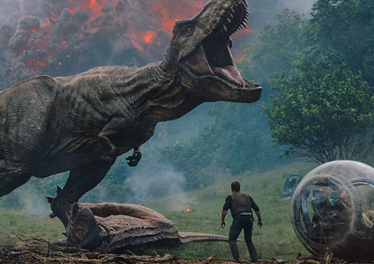
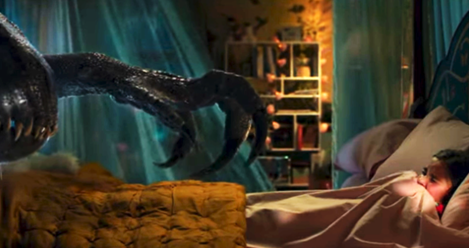
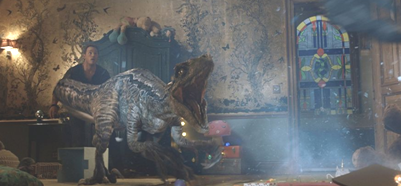


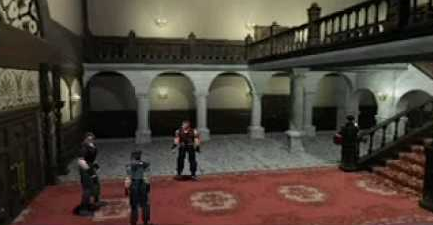
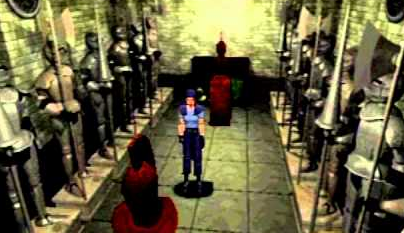
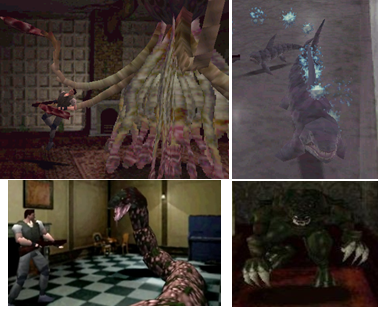
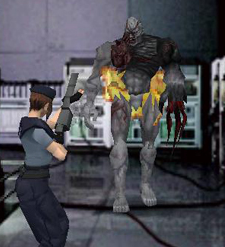
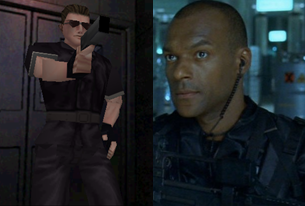
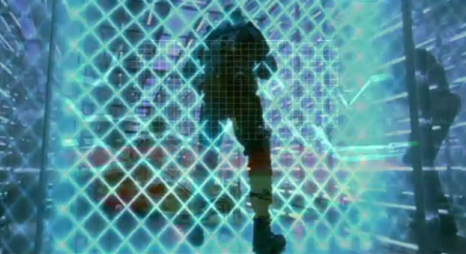
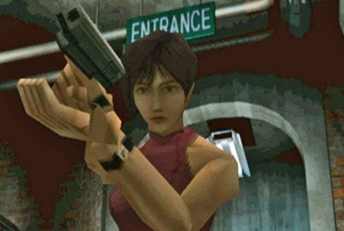
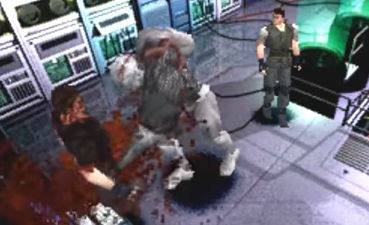
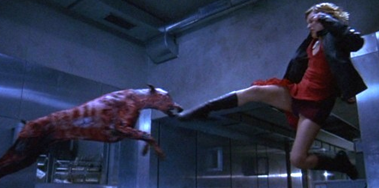


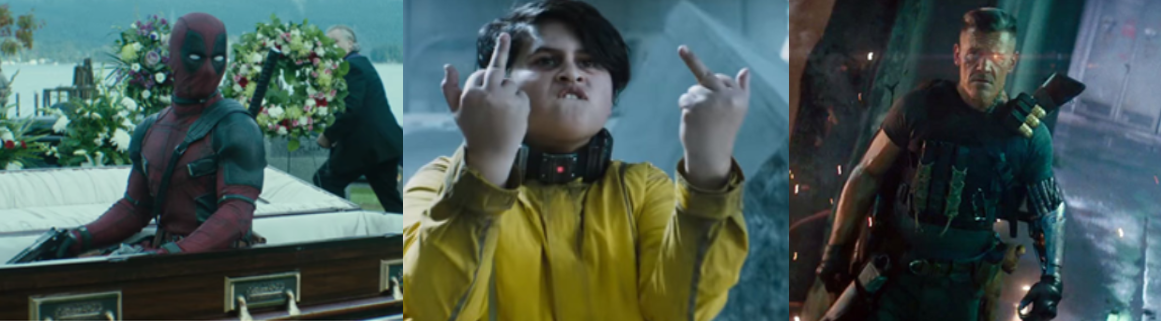
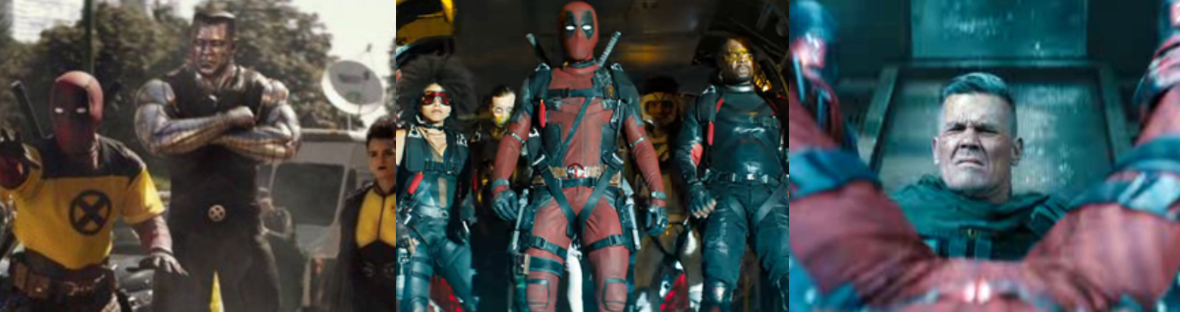


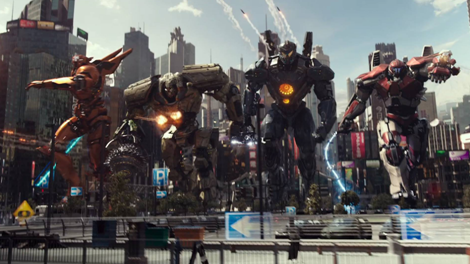




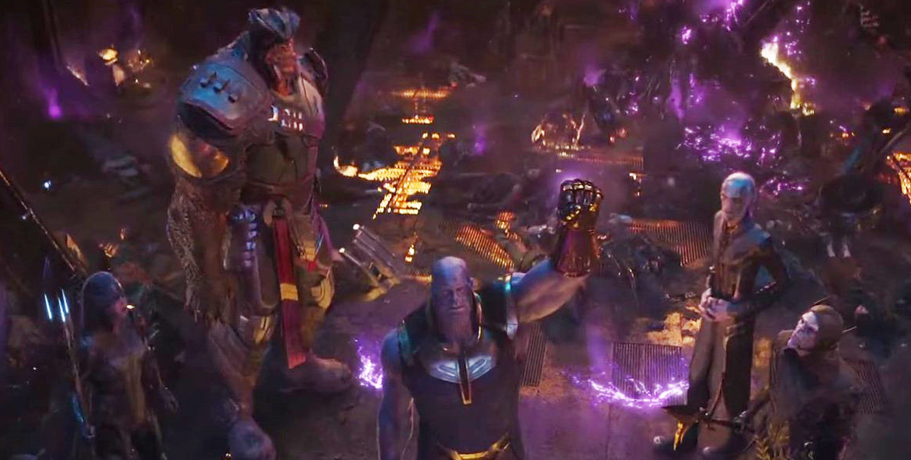
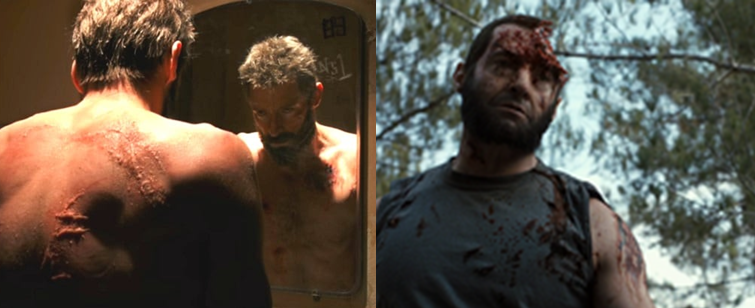
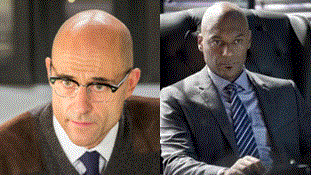


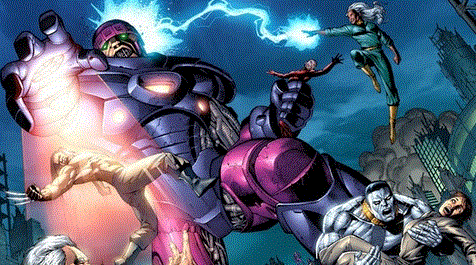
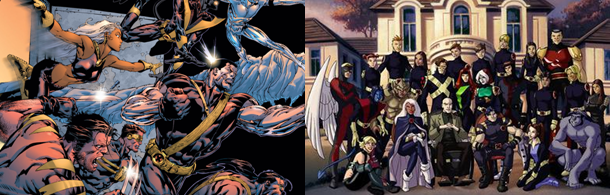

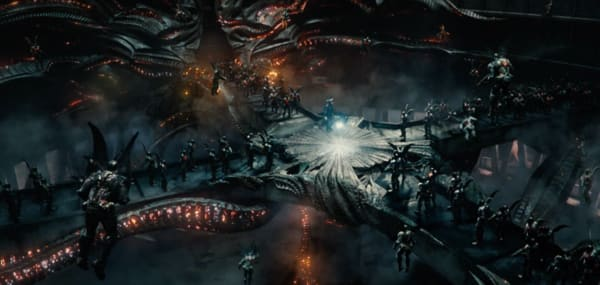
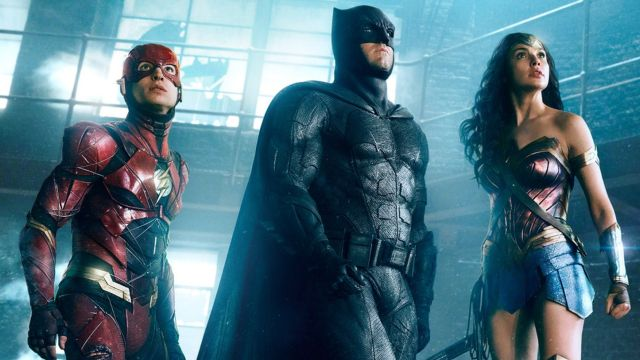
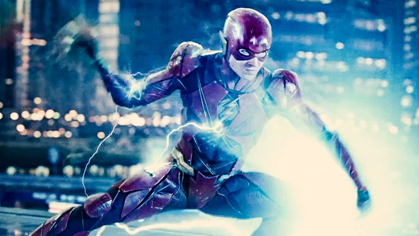
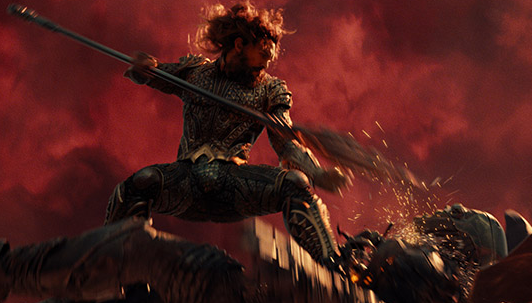
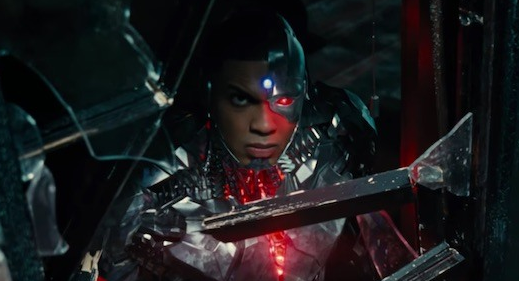

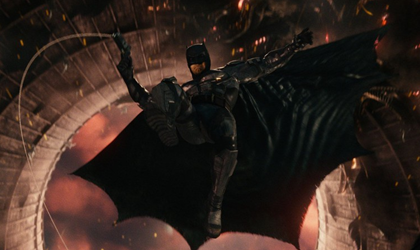
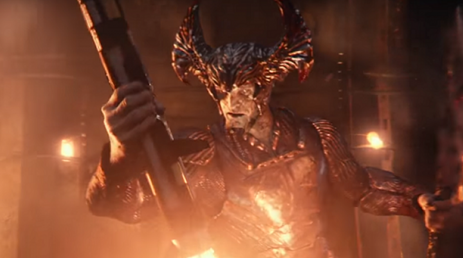


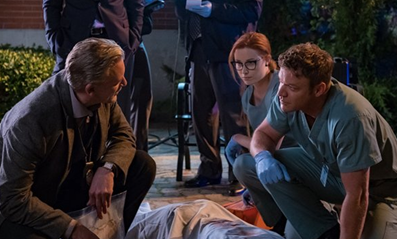
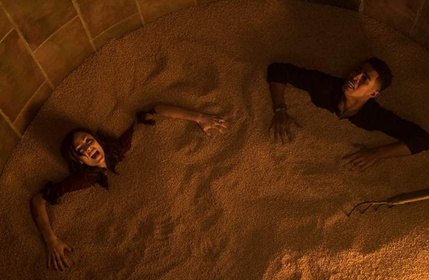
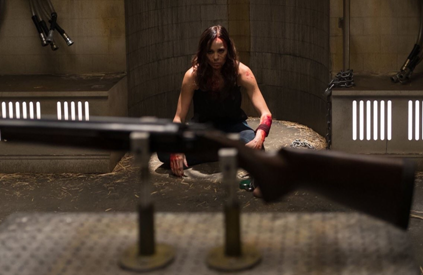




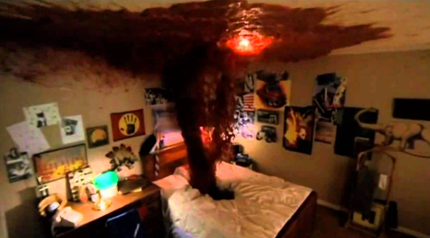
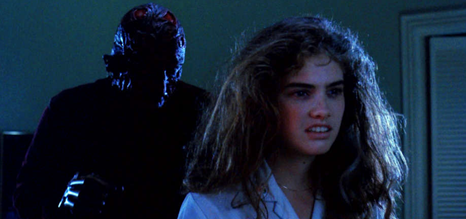
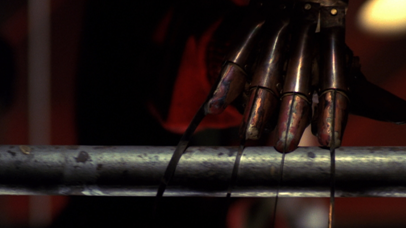
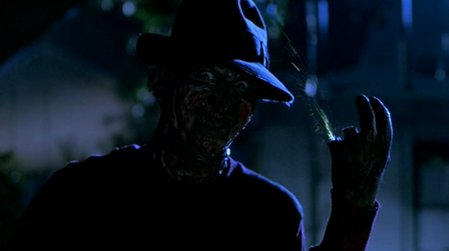

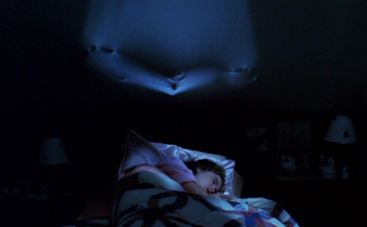
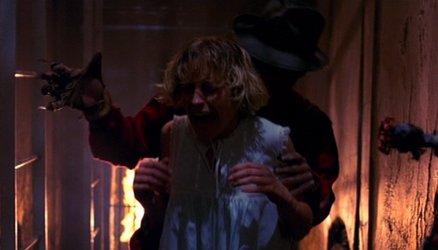
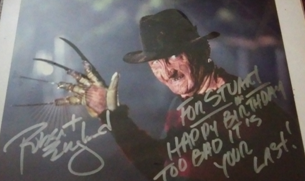


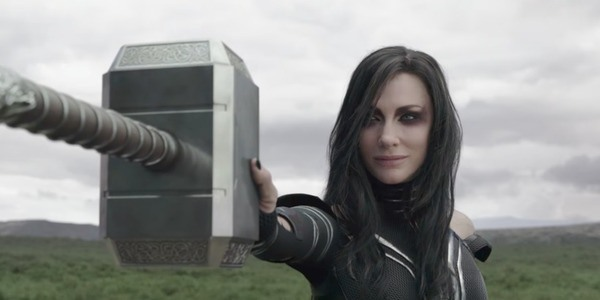
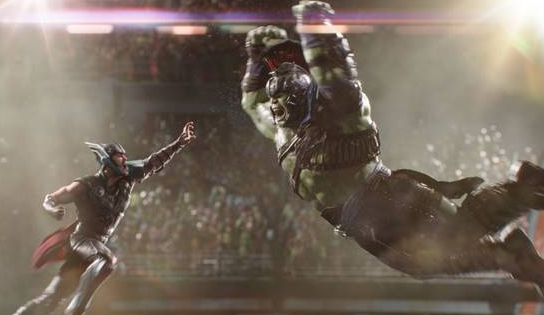



 Dr. K's Waiting Room
You must be logged in to post a comment.