I’ve previously spoken about my love and loyalty towards SEGA’s Sonic the Hedgehog franchise and, no doubt, will do again at some point in the future but one thing that I, perhaps, did not mention about Sonic’s impact on my life was a consequential love for fast-paced action platformer videogames. It’s easy to forget these days, when Sonic videogames often struggle to recapture the same success that they enjoyed back in the early-nineties, but Sonic the Hedgehog (Sonic Team, 1991) had an immediate impact on the landscape of videogames at the time. Especially after the release of Sonic The Hedgehog 2(Sonic Team/SEGA Technical Institute, 1992) there was no question: everyone needed a fast-paced, attitude-infused anthropomorphic mascot.
Ludicrous? Maybe so, but this videogame is fantastic fun!
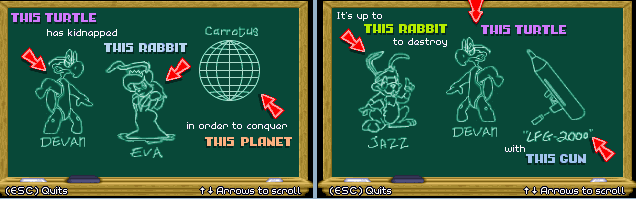
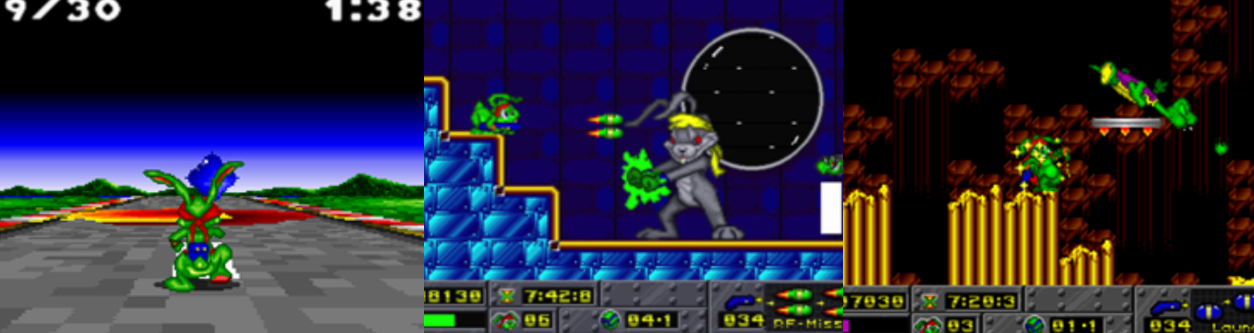
While the idea of a brightly-coloured, family-friendly videogame that incorporated a visually striking mascot who fired projectiles had already been done with Zool: Ninja of the “Nth” Dimension (Gremlin Graphics, 1992) and would, eventually, see perhaps its greatest mainstream appeal at the time with the release of Earthworm Jim(Shiny Entertainment/Virgin Interactive Entertainment, 1994), there was one other title that took the concept of “Sonic with a gun” and really owned it: Jazz Jackrabbit. Designed by Cliff Bleszinski and developed and published by Epic MegaGames, who would go on to create the much-lauded and often-licensed Unreal Engine in 1998, and released exclusively for Windows/DOS and Apple computers on 20 March 1994, Jazz Jackrabbit beat Earthworm Jim to the punch by just over four months. Jazz Jackrabbit casts you as the titular blaster-toting hero in a science-fiction parody of Aesop’s The Tortoise and the Hare; the evil Devan Shell kidnaps Princess Eva Earlong of the planet Carrotus amidst his quest to conquer the universe and the super-fast Jazz, armed with his LFG-2000 gun, must battle across numerous worlds to rescue her. If it sounds bat-shit crazy, that’s because it is but in the most charming way possible. Jazz Jackrabbit is divided into six Episodes, each containing three planets with two levels apiece (and numerous secret levels hidden throughout). Levels are bright, colourful, huge, and filled with loads of branching paths, quirky background scenery, and things to collect as well as numerous enemies (including giant turtles riding rockets, electrified eyeballs, and flying swords).
Armed to the teeth, this speedy little bunny isn’t messing about!
Jazz is super fast; his acceleration is much faster than Sonic’s and, while this comes in handy due to every level having a time limit, it does mean you will often speed head-first into enemies and hazards. Jazz can jump higher and further the faster he is travelling but, although he curls into a ball like Sonic, he can only attack enemies by firing his blaster. This weapon can be powered up by shooting and collecting various icons; the standard Blaster setting has infinite ammo but the upgrades (including the flame-blasting Toaster and RF-Missile rockets) have limited ammunition and Jazz loses all upgrades once he loses a life. Players can collect Carrots to increase Jazz’s health bar, Extra Life icons, and various other items to increase their score and access pseudo-3D hidden Bonus Stages where, if they manage to collect all the Gems within a time limit, they are awarded with an Extra Life. Jazz can also shoot signposts to respawn upon death and pick up various additional power-ups, such as a shield that protects Jazz from damage, a projectile-shooting bird sidekick, a hoverboard, and the traditional speed up and invincibility power-ups we all know and love.
Tackle bonus stages and troublesome bosses all while enjoying the game’s cartoony aesthetic.
To complete a level, Jazz must run, jump, and shoot his way through the various enemies and traps to reach a signpost within the time limit and players receive a grading and percentage bonus depending on how well they did. Thankfully, unlike many action platformers, Jazz Jackrabbit does not feature any bottomless pits for cheap deaths. Instead, players can choose from four difficulty settings (Easy, Medium, Hard, and Turbo), which increase the game’s challenge by giving you less time and health. As you’d expect, Jazz must battle a boss at the end of every level which, along with the steady increase of enemies and hazards, is where the game’s difficulty really lies. Bosses are large and erratic, their patterns difficult to predict, and fire multiple projectiles. Luckily, you have infinite continues and can keep plugging away until you achieve victory. Jazz sports a catchy, upbeat soundtrack and cartoonish sound effects and even some voice acting; like Sonic, jazz grows impatient when you leave him idle, and he will berate the player if they leave him for too long. Sadly, unlike Earthworm Jim, Jazz Jackrabbit was never ported to home consoles, significantly affecting both its mainstream reach and impact on the genre, despite being one of the first titles to bring the action platformer genre to the PC format.
You could even play Christmas-themed levels.
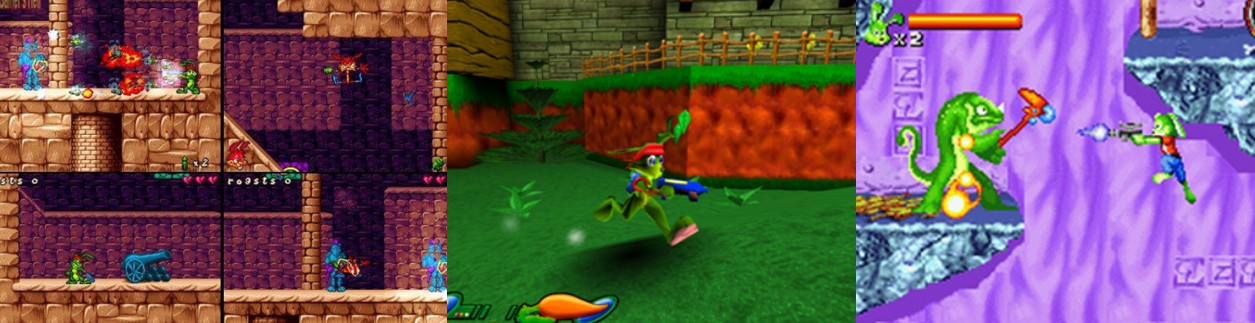
Instead, Jazz Jackrabbit was released as a CD and as shareware; players could freely distribute the first Episode amongst friends but were encouraged to pay for the full game upon completing the first levels. Three additional Epsiodes were included in the physical release of the game, one that transforms Jazz into a lizard, and five more Christmas-themed Episodes were featured in the Holiday Hare shareware editions of the videogame. Jazz Jackrabbit went on to spawn a sequel, Jazz Jackrabbit 2, in 1998. Jazz Jackrabbit 2 introduced numerous new gameplay mechanics (such as a rising uppercut, the ability to jump and butt-stomp on enemies, and allowing Jazz to hover briefly) alongside a second playable character, Jazz’s brother Spaz, and a comprehensive level editor. A third title was apparently in development for Windows and PlayStation 2 and would have brought Jazz and his entire cast of characters fully into the 3D realm, however development ended in 2000 and the videogame never saw the light of day beyond the leaked alpha build. Instead, a complete reboot of the series made its way to the Game Boy Advance. Jazz Jackrabbit (Game Titan/Jaleco, 2002) stripped the titular character of his speed, iconic appearance, and turtle enemies in favour of a more Star Wars-inspired aesthetic. Jazz was redesigned to greatly resemble Han Solo and even wielded a similar-looking pistol, and was pitted against hoards of space-faring chameleons. Make no mistake, the decision to strip away everything that made Jazz Jackrabbit so enjoyable mean that you would be much better served playing the original title or its sequel.
Despite a decent sequel, a canceled 3D title, and a dismay revival, the original Jazz really needs a HD port.
While Jazz Jackrabbit 2 was undeniably bigger and better than its predecessor, there’s something to admire in the simplicity and charm of the original. To this day, neither Jazz Jackrabbit or Jazz Jackrabbit 2 have received ports outside of their PC releases (although the 2013 HD remaster of the similarly-forgotten action platformer Superfrog (Team17, 1993) makes me hope that, one day, Jazz will have his time in the sun once again). Instead, I recommended visiting Gog.com and purchasing the fully-Windows 7-compatible editions of both videogames. Jazz Jackrabbit could have be a simple Sonic knock-off but it is so much more than that; Jazz Jackrabbit has an allure and appeal all its own thanks to its unique cartoonish graphics, outlandish premise, and fun, pick-up-and-play gameplay mechanics. Back in my youth, high quality PC titles were all I would play when I visited an old friend of mine and Jazz Jackrabbit was surely among those videogames and deserves to be rediscovered by a new generation of gamers.
Announced at the commemoration of Sonic’s 25th anniversary, Sonic Mania (Headcannon/PagodaWest Games, 2017) is a side-scrolling, two-dimensional platformer in the spirit and style of Sonic’s original 1990s outings. Headed up by Christian “Taxman” Whitehead, in collaboration with notable members of the Sonic fangaming community, Sonic Mania sets out to be the true sequel to Sonic the Hedgehog 3 & Knuckles(Sonic Team, 1994) that Sonic fans have been clamouring for for over a decade. Sonic Mania opens almost exactly the same way as Sonic the Hedgehog 3 (ibid), with Sonic and Tails flying in the Tornado towards Angel Island. Sonic’s bad luck with the floating haven continues as he immediately runs into a group of Eggrobos who unearth a mysterious gemstone (the Phantom Ruby), which blasts them all through space (and, possibly, time) back to the Green Hill Zone, where the Eggrobos have been transformed into more powerful variants, the Hard-Boiled Heavies.
The Phantom Ruby empowers the Hard-Boiled Heavies.
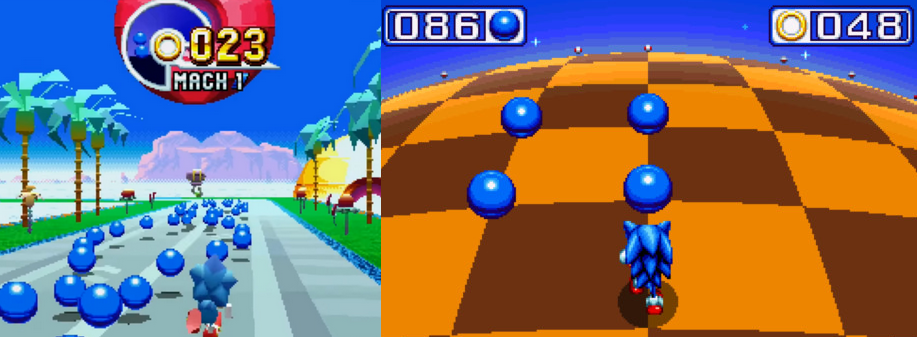
From there, Sonic, Tails, and Knuckles (whose encounter with the Eggrobos takes place as they flee with the Phantom Ruby) must travel through twelve zones in pursuit of Doctor Eggman, battling his Hard-Boiled Heavies, in their quest to obtain the seven Chaos Emeralds and put a stop to them wreaking havoc with the Phantom Ruby. Players can choose to play as Sonic, Tails, or Knuckles in a solo adventure or team-up as Sonic and Tails in two-player simultaneous mode. Each character plays differently but exactly as they did in Sonic 3 & Knuckles; Sonic is the fastest and can perform a Drop-Dash, where he instantly drops into a Spin Dash attack, Tails can fly and swim for a limited time (in a welcome twist, solo players using Sonic and Tails can command Tails to fly and then have him carry Sonic around), while Knuckles has the shortest jump, can glide, and can bash through certain breakable walls that the other two characters can’t. As in Sonic 3 & Knuckles, playing as Knuckles will take players on slightly different paths and even involve battling slightly different bosses. As always, players must collect Golden Rings to survive enemy attacks and hazards, break open monitors to acquire shields (the Water, Fire, and Electricity variants also afford Sonic the ability to bounce, blast, and double-jump, respectively), enter Bonus Stages stylised like Sonic 3 & Knuckles’s Blue Sphere stages by passing checkpoints with over twenty-five Rings, and leap into hidden Giant Rings to enter Sonic the Hedgehog CD(Sonic Team, 1993) style Special Stages.
Make no mistake, the Special Stages are no push-over!
In these Special Stages, players must collect Blue Spheres to increase their speed but also collect Golden Rings to add to the strict time limit in order to chase down a UFO holding a Chaos Emerald. Mastering these stages is the game’s hardest challenge as turns are tight, time is extremely limited, hazards are plentiful, and the UFOs do not give up their prize easily. If you try to get cute and run in the opposite direction, you’ll find yourself out of luck as the programmers thought of that and it’s basically impossible. The first thing you’ll notice when playing Sonic Mania is that it is simply gorgeous to look at; the attention to detail is staggering. Backgrounds and environments are vibrant and colourful, full of life and little details that long-time fans will delight in spotting. The game features eight zones lovingly recreated from classic Sonic titles but expanded and given additional gameplay twists and mechanics, many derived from other Sonic gameplay mechanics (for example, Stardust Speedway features the pulleys from Marble Garden Zone, Flying Battery Zone is amalgamated with Wing Fortress Zone, and Mirage Saloon Zone features the Tornado as in Sky Chase Zone). In the case of the Mirage Saloon Zone, the programmers derived the aesthetics from cancelled desert levels from Sonic the Hedgehog 2(Sonic Team/SEGA Technical Institute, 1992) and Sonic CD.
Dust Hill and Desert Dazzle are finally realised.
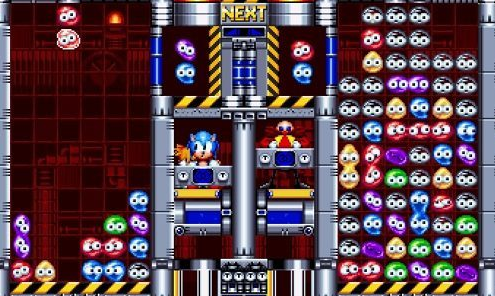
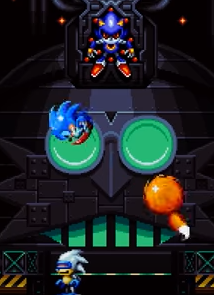
The fan service doesn’t stop there, though. Chemical Plant Zone features a boss battle ripped straight from Dr. Robotnik’s Mean Bean Machine (Compile/SEGA, 1993). Also, Sonic not only races against Metal Sonic in the Stardust Speedway Zone once more, but also has to battle an endless army of Silver Sonic’s from the Master System/Game Gear version of Sonic the Hedgehog 2 (SEGA/Aspect, 1992).
I certainly didn’t expect this inclusion!
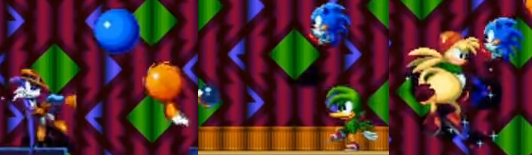
Finally, in perhaps the greatest piece of fan service I have ever witnessed, players will encounter and battle against Fang the Sniper/Nack the Weasel, Bean the Dynamite, and Bark the Polar Bear, three characters long missing from the franchise since 1996. Fans have been literally begging to see these three characters return to the franchise though, up until now, the best we got were some brief homages in Sonic Generations(Sonic Team, 2011). To be fair, their depiction in Sonic Mania looks to be more of an illusion created by the Heavy Magician Hard-Boiled Heavy but the joy I felt upon seeing these three finally return, in glorious sprite form, cannot be understated; the fat little ten-year-old in me was literally geeking out right there.
Fang/Nack, Bean, and Bark make their welcome return at last!
Sonic Mania features numerous endings, with the best ending obviously coming once players have collected all seven Chaos Emeralds. Blue Sphere bonus stages award players with either a silver or a gold medal which unlock additional bonus features (Sonic 3 & Knuckles’s Insta-Shield, Sonic CD’s Super Peel-Out, “& Knuckles Mode” to allow players to play as Sonic and Knuckles, Tails and Knuckles, or even Knuckles and Knuckles(!), a Debug Mode, and a Sound Test). Unfortunately, you are not allowed to save your progress when using these bonus features, which is one of the game’s biggest flaws.
A love letter to the past.
Another is the plot. Honestly, there isn’t much more plot here than there was in Sonic 3 & Knuckles, with the gist of it being expertly told through in-game animations. However, given that this game takes place a short time after Sonic 3 & Knuckles, it makes no sense for Angel Island to be floating on the ocean again. It was also a bit of a contrivance to see the Phantom Ruby being unearthed on Angel Island, a place already known for being home to the Master Emerald; I would’ve preferred to see it be discovered in one of the new in-game locations.
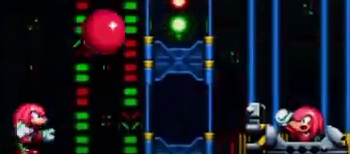
Play as Knuckles and Knuckles…and be rescued by Knuckles!
Furthermore, not every zone ends with an in-game transition to the next, making for a jarringly inconsistent experience at times as the Hard-Boiled Heavies disappear from the plot mid-way through the game. Finally, I can’t be the only one a bit annoyed to see Green Hill Zone and Chemical Plant Zone so soon after their recreations in Sonic Generations; I would’ve liked to have seen more emphasis on Emerald Hill Zone and maybe Mystic Cave Zone (possible with some Underground Zone and mechanical influences) and, while I loved seeing Lava Reef Zone return, the programmers maybe missed a trick by not incorporating some elements from Marble Zone and Sonic 2’s Hidden Palace Zone here. These really are very minor issues, though, as the game plays flawlessly; the controls are just as tight and reliable as they were in classic Sonic titles. There are no cheap deaths or bottomless pits here (well, very few…I only ever fell down maybe two, actually) and the game is exhilaratingly fast and extremely fun to play, while also being very challenging. The ways in which classic zones are remixed add a new layer to the game as even seasoned veterans like myself cannot be sure of what they’re going to encounter. Every boss battle involves a bit of strategy; there is far more to each encounter that just bouncing on Eggman’s head. Honestly, Sonic Mania is a must-buy not just for long-time Sonic fans but for anyone who enjoys beautiful graphics, crisp controls, and a fun, challenging gameplay. From the Sonic CD-inspired animated introduction to the eye-wateringly exquisite graphics and attention to detail in every single element of the sprites and backgrounds, to the remixed levels and soundtrack, Sonic Mania delivers on every single level. Finally, after over a decade of waiting and enduring lacklustre attempts at recapturing Sonic’s classic gameplay, SEGA have done the smartest thing they ever could and handed the keys to a group of developers with a real love and passion for the franchise and Sonic Mania exudes that from every aspect of its presentation.
Sonic the Hedgehog turned 26 this week so I figured it was only appropriate for a very special edition of Game Corner to celebrate the legacy of everyone’s favourite supersonic blue hedgehog. I know that Sonic isn’t exactly as relevant or anywhere near as popular as he used to be but, there was a time back in the nineties, when Sonic the Hedgehog was the videogame icon and the character, and his franchise, have significantly impacted my life over the years. Growing up, I went through many phases where I had franchises and characters I gravitated towards; first it was Thomas the Tank Engine, then Teenage Mutant Ninja Turtles, and so on, alongside superheroes from DC Comics (mainly Batman, Superman, and Green Lantern) and Marvel Comics (primarily Spider-Man, the Incredible Hulk, and the Fantastic Four). However, my first real memories of truly latching on to a franchise and taking it as my own were with my first experiences with Sonic the Hedgehog.
The first Sonic videogame I ever played, and owned, was Sonic the Hedgehog(SEGA/Ancient, 1991) for the SEGA Master System. I remember playing the game for the first time and being struck by the colourful imagery, the addictive tunes, and the simplicity of the gameplay. I used to play that game all the time; one time, my friend came over and struggled to get past the first boss, so I offered to beat it for him and ended up getting further than I ever had before at that point, all the way to the final boss of the game. Sonic on the Master System had many features that were markedly different from its more graphically-impressive counterpart on the Mega Drive; Chaos Emeralds were cleverly hidden throughout the Zones, for example, and the game also featured three Zones not seen in the Mega Drive version and, with the exception of the first boss, it also had completely different boss battles as well. I didn’t have quite the same experience, or have quite the same love, for Sonic the Hedgehog 2(SEGA/Aspect, 1992) on the Master System. Sonic 2 was much harder than its predecessor, with Chaos Emeralds hidden in stupidly-difficult places and a gameplay mechanic whereby you had to collect all five before facing the robotic Silver Sonic or else you’d never get to see the good ending. Unlike the first game, though, Sonic 2 had a rather complex cheat code involved the second player’s controller, which I’m not ashamed to say I would utilise to overcome this issue.
It was around about this time that I acquired a sample of Fleetway’s Sonic the Comic series, which had one-page teasers of the full issue’s stories. The first issue I got was issue two, which I still have, and I got issues here and there throughout the first year of its run before subscribing to it on a fortnightly basis. A few years ago I was able to fill in the gaps in my collection and have managed to collect every single issue bar the last two, which is good for me as the comic was unfortunately cancelled after a long series of reprints. However, the series is being continued at Sonic the Comic – Online. I don’t remember the exact year (it must have been 1992 or 1993) but, after some cajoling, I was able to convince my parents to upgrade me to the SEGA Mega Drive purely based on pictures and reviews of Sonic the Hedgehog 2 (Sonic Team/SEGA Technical Institute, 1992). I got the game, and the console, as a Christmas present and it tided me over for quite some time; I remember getting into trouble because I’d finally defeated Doctor Robotnik’s Death Egg Robot and wanted to watch the final cutscene and credits of the game rather than go eat dinner.
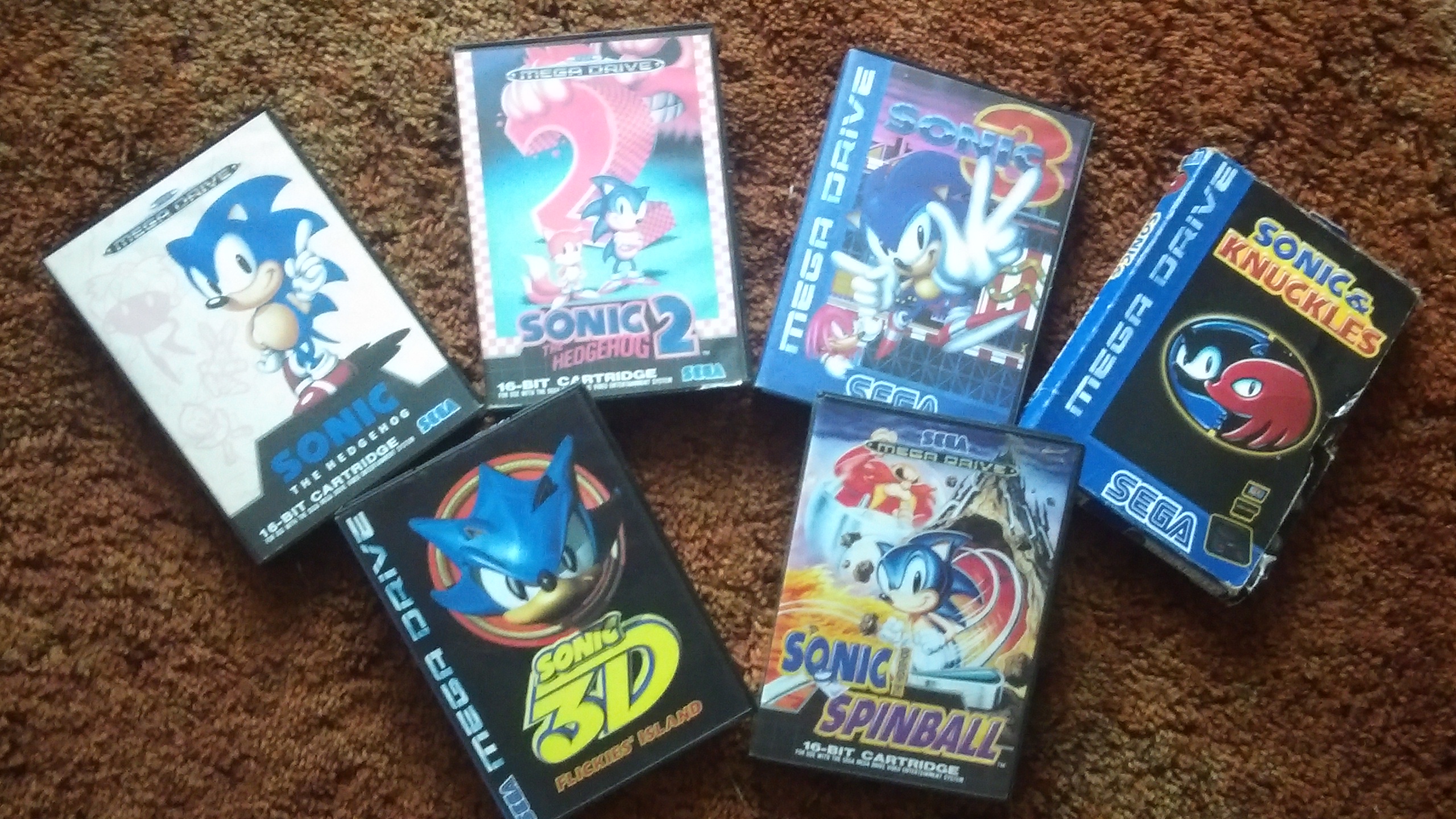
After picking up Sonic the Hedgehog (Sonic Team, 1991) I was set; from that moment on, I bought every Sonic game I could for the consoles I had. I never got a Mega-CD, so I didn’t play Sonic the Hedgehog CD (Sonic Team, 1993) until many years later on PC and, now, PlayStation 3 so, for many years, my absolutely favourite Sonic game was Sonic the Hedgehog 3 & Knuckles(Sonic Team, 1994). We all know the story; Sonic 3 was too big, too complex to be one game so, to save time and make more money, SEGA split it into two, releasing Sonic & Knuckles six months later. The Sonic & Knuckles cartridge would “lock-on” to Sonic 3 (and Sonic 2, or any other Mega Drive cartridge) to unlock the full, complete version of the game. For me, Sonic 3 & Knuckles was a game-changer; it introduced me to my favourite character of the franchise, Knuckles the Echidna, and topped everything its predecessors had done. You could play as Sonic, Miles “Tails” Prower, Knuckles, or Sonic and Tails simultaneously. Each had different paths to take, fought bosses differently, and had a unique ending. The game was bigger, brighter, faster, and more action-packed than its predecessors and had way more options, enemies, power-ups, and replay value. I was absolutely hooked! Then dark times came for SEGA; the failure of the Mega-CD, 32X, and Saturn spelled the beginning of the end of the company. As videogame developers began entering the 32-bit era, I switched to the Nintendo 64 rather than the Dreamcast or Sony’s PlayStation. This was still at a time when parents couldn’t afford to get you every console going; just like back when I used to have to go around to my friend’s house to play the Super Nintendo (SNES) and he would have to come to mine to play the Mega Drive, so to did I opt for the N64 over the Dreamcast or PlayStation. The PlayStation was nothing to me then. It had no iconic characters, no games I was familiar with, and no-one I knew had a Dreamcast so I went with the popular option.
This meant that I didn’t play Sonic Adventure (Sonic Team, 1999) or Sonic Adventure 2 (Sonic Team USA, 2001) until they were re-released on the Nintendo GameCube. Sonic Adventure 2: Battle (ibid) became my new favourite Sonic title, with its crisp 3D graphics, over-lapping narrative, and exciting, fast gameplay variety. Sonic Adventure 2 allowed me to play as Eggman for the first time (by this time I had begrudgingly accepted SEGA’s global acknowledgement or Robotnik’s original Japanese name) and introduced the angst-ridden Shadow the Hedgehog who also became a favourite of mine (he’s like Sonic….but dark!) Sonic Adventure DX: Director’s Cut (Sonic Team, 2003) actually proved even better (it feels like a bigger, more exciting game despite being a bit less pretty to look at and a bit buggier than its sequel) and came with unlockable ports of the Game Gear Sonic titles, allowing me to fill some gaps in my collection. From there, I’d have to say that I actually preferred Shadow the Hedgehog (SEGA Studio USA, 2003) over Sonic Heroes (Sonic Team USA, 2003) simply because it’s a better, more polished videogame. Shadow gets a lot of hatred because Shadow uses guns and vehicles when, to be fair, he doesn’t really need to and the title was, arguably, dark for the sake of being dark. However, I really enjoyed the shooting mechanics; the weapons were varied and ran out of ammo pretty fast (and were also entirely optional) so you can just used the patented Homing Attack instead. The storyline, while a bit convoluted (aliens? Really?) was fun to play through and to see all the many (and many) different endings to the game. The soundtrack and final boss were fantastic, as well, and the game just controls a lot better than Sonic Heroes, which always feels like you’re running on ice!
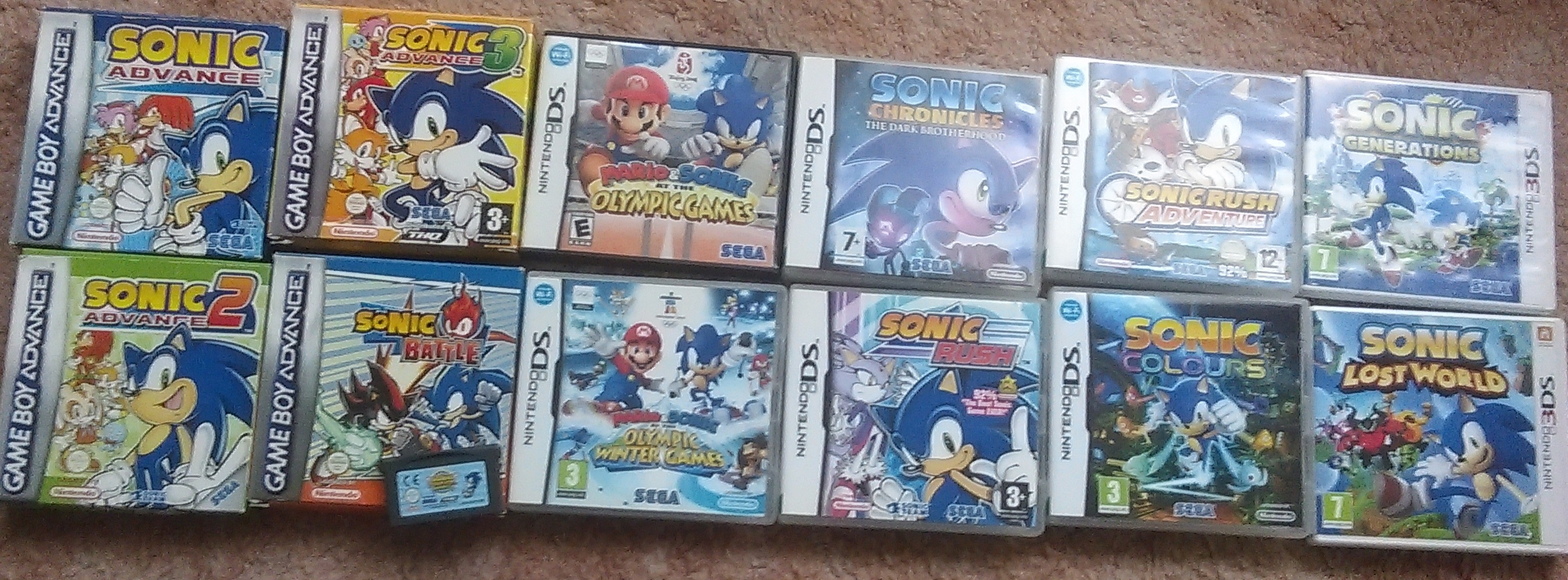
Of course I also played the variousSonic titles on the Nintendo Gameboy Advance. A personal favourite of mine was Sonic Battle(Sonic Team/THQ, 2004), which featured a really long and decent story with multiple characters and options and a simple, yet addictive, fighting, level-up, and gear system. However, things took a sharp turn for the worst with Sonic the Hedgehog(Sonic Team, 2006). By this point, I had switched over to the PlayStation 3 after everyone raved about how great the PlayStation 2 was (ironically, everyone was now raving about how great the Xbox 360 was…). I bought Sonic ’06 knowing it had gotten bad reviews, having heard all the negative press, but steadfast in my commitment to the franchise. Despite some stumbles along the way (Sonic 3D: Flickie’s Island (Traveller’s Tales/Sonic Team, 1996), for example), Sonic had never steered me wrong and I’d always found something to enjoy in every Sonic title I played.
Unfortunately, Sonic ’06 was a pretty dire title; while I don’t hate it as much as some segments of the fandom, the loading times were stupidly long, the sudden, jarring shift to a real-world aesthetic was a strange choice and the camera and controls could hinder you at some really awkward and frustrating moments but there were some good things about the game. It looked amazing, for starters, had a great soundtrack, lots of variety in characters and gameplay, and told a unique and surprisingly deep story for a Sonic title. Probably the worst thing for me were the Mach Speed sections, where Sonic would speed off at a stupidly fast pace and become impossible to control; these were the sections that gave me the most grief and sucked away my lives. The rest was…okay, I guess. I really hate seeing people online bash this game with images and videos of Sonic casually just walking around a loop; when you actually play the game, you’re moving too fast to do stuff like that so you have to be intentionally looking for it. A similar thing irks me when people criticise Sonic the Hedgehog 4: Episode I(Dimps/Sonic Team, 2010); when I played the game, I did so at a fast pace and threw myself into the action. I didn’t just stop and walk to test and bitch about the physics; normal gamers don’t do that (or, at least, they shouldn’t because videogames are made to be played, not bug-tested!)
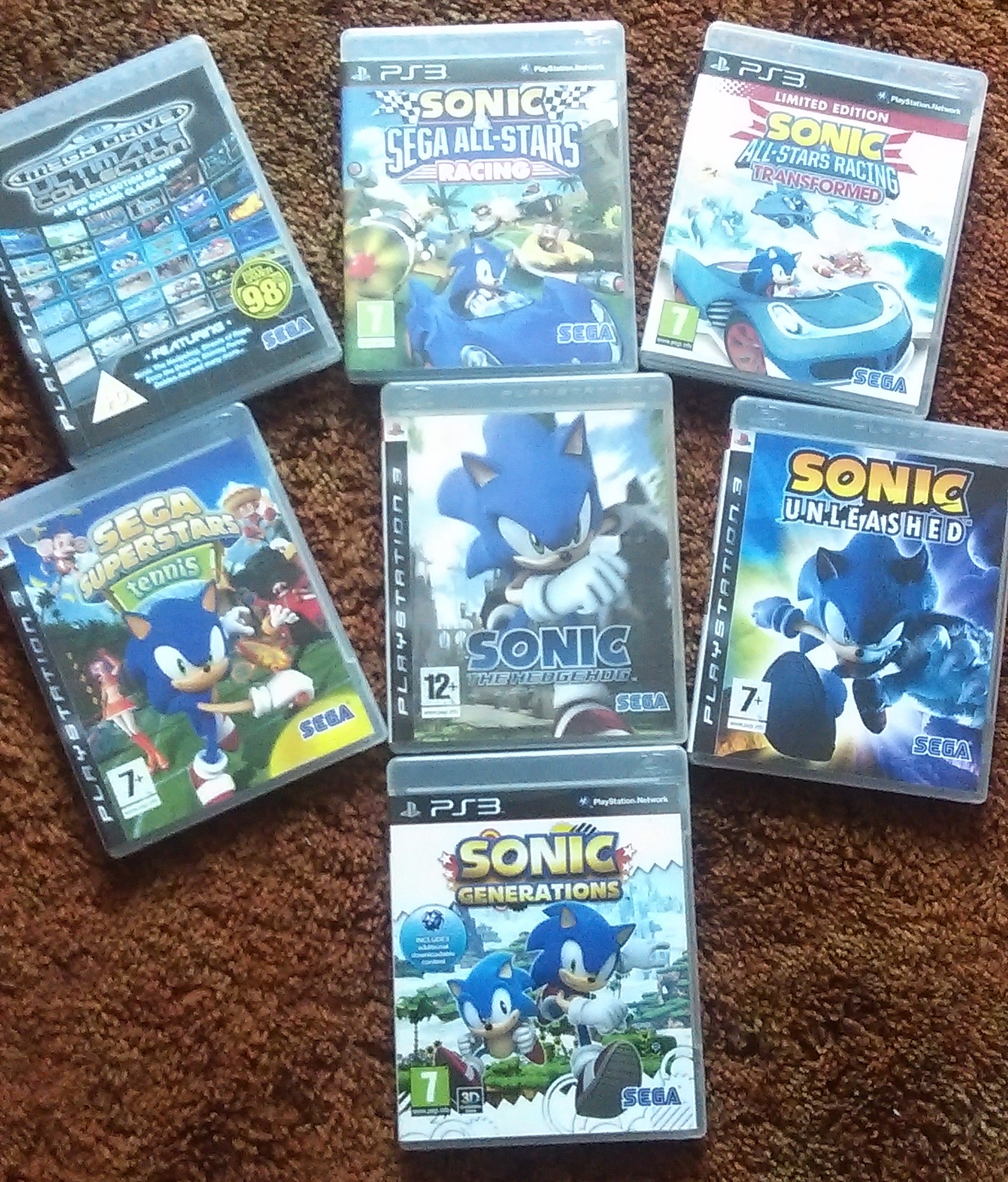
Anyway, unfortunately for me, Sonic ’06 made such a negative impact that SEGA decided to strip everything back. While this resulted in some incredible titles, likeSonic Unleashed(Sonic Team, 2008), Sonic Colours(ibid, 2010), and Sonic Generations(ibid, 2011) it came at a price. Sonic videogames were now about Sonic and Sonic alone; you couldn’t play as Tails, Knuckles, Amy Rose, or any of his other cast of characters. We went from Sonic alone, to adding Tails, then adding Knuckles in the first three/four titles, to six playable characters, right back to just one. Even in polished, sleek, incredibly fun titles like Sonic Unleashed and Sonic Generations, you’re limited to playing as Sonic or another version of Sonic (the Werehog, who could’ve just as easily been Knuckles, or Classic Sonic, respectively). Another by-product of this was that abilities and gameplay mechanics afforded to Sonic’s friends now became a part of his move-set. Although this had been happening since Sonic Adventure 2, Sonic Colours (and, later, Sonic: Lost World (ibid, 2015)) made it abundantly clear that you don’t need to play as Tails to fly or swim or as Knuckles to glide, climb, or bash through walls because Sonic now has either default moves or power-ups that let him do all of those things.
The plus side to this is that it seemed like SEGA were finally getting their act together. After being forced to pull out of console manufacturing and focus on software, and the massive screw up that was Sonic ’06, SEGA, and Sonic Team seemed to have rediscovered the formula that made Sonic such a popular and exciting franchise. Then they shot themselves in the foot with Sonic Boom, which was initially presented itself as a complete rebranding of the Sonic franchise, with all-new character designs and a streamlined, refreshed continuity. Then, SEGA backpedalled and said it wasn’t a reboot but a spin-off series. So instead of having one worldwide brand, they now had Modern Sonic (the taller, older-looking one who used Boost gameplay), Classic Sonic (the chubbier, 2.5D version of the character), and Boom Sonic (with sports tape!) all co-existing at the same time. This was also alongside the Archie Comic series which, until recently, had been publishing consistently for over twenty-five years. Although it began as a strange amalgamation of the Adventures of Sonic the Hedgehog and Sonic the Hedgehog (SatAM) cartoons made by DiC in the nineties, Archie’s Sonic comics had since incorporated aspects of the videogames and become a huge, unwieldy lore all unto their own. Recent lawsuits and shenanigans had seen the comics undergo a dramatic reboot which simplified the continuity and brought the comics closer to the videogames, only for SEGA to suddenly undergo an identity crisis with Sonic Boom.
After Sonic Boom: Rise of Lyric (Big Red Button, 2014) was a critical and commercial flop, rivalling only Sonic ’06 for its bugs and issues, the Boom franchise seems too be dead in the water except for the criminally underrated and highly amusing all-CGI cartoon series that accompanied the videogames. throughout the nineties, I used to watch Adventures of Sonic the Hedgehog on Channel 4 on Sunday mornings religiously. It was bright and colourful and fun, even if it was hardly anything like the videogames. Then, one day, I tuned in and it was suddenly all different; the cartoon was darker, populated by all-new characters, and nothing like what I’d been watching before. Initially I was upset and confused, but I quickly grew to love SatAM even more than Adventures. It was darker and more serious, had a truly horrific Doctor Robotnik, and was also smarter and sleeker. Then it ended on a massive cliffhanger and shifted tone once again to Sonic Underground in 1999. By this time, I was a bit older and wasn’t watching cartoon as much and, although I liked the action and animation, Sonic Underground was just way too different for me. So, growing up, I was used to all these different interpretations of Sonic; these days, though, it seems a lot of kids can’t seem to grasp the concept of multiple versions of popular characters. Yet, Sonic Adventure did a great job consolidating Sonic’s conflicting interpretations into one unified brand image only to somehow drop the ball with it.
To me, Sonic Boom should have been a complete rebranding of the character. People moaned about the redesigns but they actually aren’t that bad; I didn’t mind Knuckles’s redesign at all (though I’d rather he was smarter) and all the characters are exactly the same despite looking different. Plus, the Sonic Boom cartoon is amazing; it’s smart and actually laugh-out-loud funny with its self-referential humour. Plus, the episodes are really short s it’s easy to watch over and over. As for the future, it appears as though SEGA and Sonic Team are getting back on track. While Sonic Boom continues to air, future videogames in the franchise appear to be dead; this has actually negatively affected the upcoming Sonic Forces(Sonic Team, 2017), at least for me. Forces is apparently set in a time when Eggman has finally conquered the world, causing Modern and Classic Sonic to team up once again to stop him. There’s also the option to create your own character which, while exciting, seems to have pushed Boom Sonic out of the title (the custom avatar uses an energy beam similar to the one seen in Sonic Boom, lending credibility to custom character feature having replaced Boom Sonic). However, we’re also finally getting a brand new 2D Sonic title that will hopefully be the true Sonic 4 I’ve been wanting since Sonic 3 & Knuckles. As I said, I enjoyed Sonic 4 (Episode II was the much better experience of the two parts, though) but, for me, a true Sonic sequel should offer more than one playable character. The upcoming Sonic Mania(Headcannon, PagodaWest Games, 2017) finally returns Tails and Knuckles as playable characters and appears to be a lovingly-crafted piece of nostalgia for fans of Sonic 3 & Knuckles with its massive, tiered Zones, huge bosses, and gameplay variety. At the same time, there’s apparently going to be a live-action/CGI hybrid Sonic movie coming out in 2019; I’m a big fan of Sonic the Hedgehog: The Movie (Ikegami, 1996) and feel its past time for a new Sonic film (although I’d rather it was all CGI).
Summer of Sonic, 2010
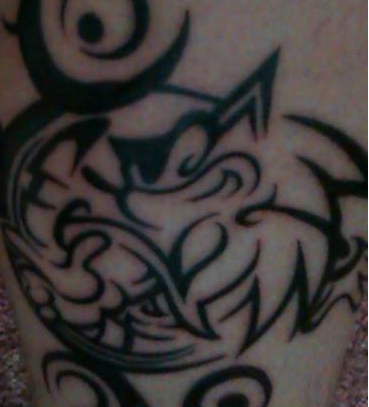
Sonic the Hedgehog has been a part of my life since I was about six years old; that’s nearly twenty-five years now. I went to SEGA World in London when I was a kid and got to play Sonic the Fighters(SEGA AM2, 1996) and SEGASonic the Hedgehog(SEGA AM3, 1993), which ended up being really special as those titles became extremely rare. I went to Summer of Sonic in London in 2010, where I got to play Sonic 4, see Crush 40 perform live, and mingle with many other Sonic fans. Not only did I put together my own series of sprite comics, not only do I even have Sonic tattoos I also wrote over 20,000 words about the development, rise, and fall of both SEGA and Sonic and all about how the cartoons have changed and shaped the videogame canon as part of my PhD. For me, there is no greater videogame icon than Sonic the Hedgehog. He was faster, more expressive, more action-packed than his counterparts; his videogames had more variety and depth, a larger cast of characters, and far more appeal and replay value. He inspired not only a slew of 2D platformers starring attitude-ladened anthropomorphic protagonists, not only one of the fiercest and most competitive marketing wars in the videogame industry, but also me to be more creative and to write and draw about the things I love. So bust out the Mega Drive, blow the dust out of your cartridges, and stick Sonic 3 into Sonic & Knuckles and celebrate the legacy and impact of what I consider to be the greatest videogame icon of all time.












You must be logged in to post a comment.