Story Title: “The Brotherhood of Metallix (Part 1 to 4)” Published: 1 September 1995 to 13 October 1995 Writer: Nigel Kitching Artist: Richard Elson
The Background: After Sonic the Hedgehog became a mainstream success and SEGA usurped Nintendo’s position at the top of the videogame industry, SEGA quickly capitalised on Sonic’s popularity not just with videogames but a slew of ancillary merchandise, including cartoons and comic books. About six months after Archie Comics started publishing a weird amalgamation of the Adventures of Sonic the Hedgehog (1993 to 1996) and Sonic the Hedgehog/SatAM (1993 to 1994) cartoons, United Kingdom publisher Fleetway Editions Limited started “Britain’s Official SEGA Comic”, Sonic the Comic (StC), a fortnightly publication that was a favourite of mine until its unfortunate end. Though StC pulled much of its lore from the now defunct Mobius and Doctor Ovi Kintobor storyline that was prevalent outside of Japan, StC quickly veered from the source material, portraying Sonic the a mean-spirited leader of a gang of Freedom Fighters comprised of videogame characters and anthropomorphic original characters. Like Archie’s comics, StC included some very loose adaptations of the videogames that truncated or adapted the source material to fit with its noticeably different lore. When StC adapted Sonic CD, they reimagined Metal Sonic as “Metallix” and told a self-contained time travel story. However, some years later, a second Metallix appeared and teased a “brotherhood” of Badniks, which was paid off in these issues and solidified Sonic’s robotic doppelgänger as one StC’s more dangerous and persistent secondary antagonists.
The Review: “The Brotherhood of Metallix” takes place in the middle of Doctor Ivo Robotnik’s merciless rule over the planet Mobius. Having conquered the entire world thanks to a time dilation, Dr. Robotnik has become all powerful save for the efforts of Sonic and his friends, who’ve been driven from their homes and roam the Zones disguised as Bob Beaky’s Travelling Circus. The story begins with Porker Lewis, the technical support of the team, activating a security field around their caravan while the Freedom Fighters investigate reports of a new Badnik in Metropolis City, which is essentially Dr. Robotnik’s headquarters. Expecting some all-powerful death machine, the cocksure Sonic is incredulous by the clown-like Mister Blobnik (a thinly veiled parody of British television icon Mister Blobby). A ludicrous Badnik who staggers about blowing bubbles and fumbling with its weaponry, Mr. Blobnik nevertheless proves more durable than regular Badniks and Troopers, withstanding a Sonic Spin Attack and trapping Sonic in a an inescapable bubble upon defeat. Having successfully fooled the Freedom Fighters with a variation of the “Drunken Fist” technique, Mr. Blobnik’s head detaches from its remains and carries Sonic to Citadel Robotnik. However, rather than being tortured, transformed into a Badnik, or executed, Sonic is stunned when a panicked Dr. Robotnik reveals he needs to join forces with Sonic to oppose the “Brotherhood of Metallix”. While Sonic battled Mr. Blobnik, Dr. Robotnik was shocked when a Metallix teleported into his citadel via a corrupt version of the Omni-Viewer (a sentient television screen that resides in the Special Zone) and kidnapped his long-suffering assistant, Grimer. After learning that the Metallix, who were set to automatically replicate and improve themselves in Dr. Robotnik’s abandoned Egg Fortress base in the Special Zone, have gained sentience and are now ruled over by a gigantic Emperor, Grimer’s forced to aid their scheme for true autonomy.
When the Metallix mysteriously return, Sonic’s forced to join forces with Dr. Robotnik to investigate.
Although Sonic’s sceptical of Dr. Robotnik’s claims, he remembers his last encounter with an upgraded Metallix mentioned a “brotherhood” and reluctantly agrees to use his super speed to enter the Special Zone via a Star Post and investigate. Sonic arrives to find the Egg Fortress heavily damaged and seemingly abandoned, until he explores further and witnesses Grimer handing the Emperor Metallix a mechanical staff, the “Alpha Device”. With this in hand, the Emperor Metallix and its troops prepare to teleport to the Miracle Planet via their Omni-Viewer, only for Sonic to attack, reasoning that the Badniks are obviously up to no good. The Emperor Metallix silently commands two minions to attack. While they land a few good blows on the Blue Blur, Sonic dispatches them far easier than their predecessors by tricking one into blowing its fellow up with its chest cannon and simply smashing the other into junk with a swing of the Alpha Device. Sonic’s victory is short-lived, however, when the Emperor Metallix takes Grimer hostage and threatens to crush the life out of him unless Sonic hands over the Alpha Device. With no choice but to acquiesce as he can’t allow even his enemy to be killed, Sonic can only watch as the Emperor Metallix departs. Luckily, since the Miracle Planet has arrived in orbit once again, Sonic and his friends follow the Brotherhood of Metallix using the massive magic chain that binds the planetoid to Mobius. Despite their temporary truce, Sonic refuses to allow Grimer or Dr. Robotnik’s forces or weaponry to go with the Freedom Fighters, meaning we’re denied a true team up between the long-term allies. Instead, the Freedom Fighters witness the Emperor Metallix preparing to usher in a “new age” for its brotherhood via the Alpha Device, which has been created to reshape the mysterious Miracle Planet into Metallix’s form and provide them with the near-limitless power to conquer the world.
Thanks to Porker’s bravery and ingenuity, the Metallix are seemingly foiled on the Miracle Planet.
Detected by the Metallix, Sonic leads his friends into an immense network of caves (where, it’s revealed, he hid from Amy Rose for two days when they were trapped there some years ago). A Metallix stalks them through the tunnels and easily shrugs off Johnny Lightfoot’s attack. A Super Sonic Spin stuns the robot, however, allowing Amy Rose to take it out with a well-aimed crossbow to its neck (its one weak spot, as identified by Dr. Robotnik). The distraction is enough for the Emperor Metallix to enact its plan, however, and the Alpha Device begins transforming the Miracle Planet into a world of metal. The Emperor Metallix gloats when one of its troops arrives with Sonic, Johnny, and Amy, but is too late to notice that the unit has been tampered with by Porker Lewis. Porker presses a button on his remote and causes the Metallix to self-destruct, taking out all the emperor’s troops and severely damaging the big red overlord. For his efforts, Porker receives a kiss on the cheek from Amy Rose and even kudos from Sonic, traditionally a more hard-assed character in StC. Unfortunately, the Alpha Device is still functioning and rigged to explode if it’s tampered with. Thus, Porker steps up again, navigating the booby traps to shut down the Alpha Device and undo the damage being done to the Miracle Planet. With Mobius fading, Sonic ushers his friends down the magical chain, only for the Emperor Metallix to lurch to life and reactivate the Alpha Device before collapsing. With no other choice, Porker bravely returns to the Miracle Planet to shut the Alpha Device down once more, trapping himself on the magical world for a month and leaving Sonic with no choice but to wait and see if his friend was successful.
The Summary: “The Brotherhood of Metallix” has one very obvious positive going for it right off the bat: it’s illustrated by Richard Elson, easily the best artist in Sonic the Comic’s all-too-short history. He brings Sonic and StC’s original characters to life with such a peerless flair and stories always felt more important when his name was attached to them. Unfortunately, it appears Elson was rushed during this particular story as I saw a lot of repetition in “The Brotherhood of Metallix”. Some panels during Sonic’s battles with the Metallix, for example, are directly lifted from Elson’s work in “The Sonic Terminator” (Kitching, et al, 1994) and many of Sonic’s poses looked familiar, too. It’s a minor thing and it’s not like every panel is like that, but it was noticeable and a little odd considering the detail seen in Mr. Blobnik and the Emperor Metallix. The story also suffers from promising a team up between Dr. Robotnik and Sonic and failing to deliver on almost every level. They don’t join forces or oppose the Metallix as a team; instead, Dr. Robotnik simply warns Sonic of the threat, tells him of the Metallix’s weak spot, and that’s it. It’s pretty disappointing as this could’ve been a longer, multi-part story where Sonic shuns his usual allies to team up with Dr. Robotnik instead, making his friends question his decision and having the mad dictator betray him to seize the Miracle Planet for himself. The cliff-hanger of Porker Lewis being left behind was resolved in a later story and expanded into a full-on nervous breakdown for the character, but it could’ve easily been Dr. Robotnik who rigged that Metallix to blow and was left trapped on the Miracle Planet. Consequently, as amusing as the Mr. Blobnik stuff was, I feel these panels were wasted and could’ve been better served showing a proper, awkward team up between Sonic and Dr. Robotnik where they battle at least one Metallix together.
As great as the art is, Metallix is strangely inconsistent and the story squanders its potential.
Speaking of which, the Metallix are a bit hit and miss here. In his first encounter with his robotic double, Sonic struggled to compensate for Metallix’s super speed, power, and armaments. This was taken one step further in Sonic’s second encounter with the robot, which was so powerful that it made mincemeat of Knuckles the Echidna and Sonic was forced to transform into his demonic, unstoppable alter ego, Super Sonic, to destroy it. Metallix has always shrugged off Sonic’s best shots and has always been depicted as being, as the kids say, “built different” from Dr. Robotnik’s other creations. While that’s somewhat true here, it’s pretty inconsistent: sometimes they shrug off the Super Sonic Spin Attack, sometimes it stuns them, sometimes they barely flinch when struck and sometimes Sonic shatters them with a glorified pole! To make matters worse, Porker Lewis easily blows a bunch of them up with a single explosion, severely diminishing their threat despite one or two of them being framed as formidable and menacing robots when they’re pursuing the Freedom Fighters. I did enjoy seeing Metal Sonic Kai from Knuckles’ Chaotix(SEGA, 1995) reimagined as the brotherhood’s emperor. It’s a fantastic design and almost resembles Davros at times, with the gigantic emperor floating about in its throne and spearheading the creation of a Metallix army to take over the world. The Emperor Metallix’s plot is somewhat vague and generic – it wants to transform the Miracle Planet and use its mysterious energies to produce more troops – but it’s at least framed as a threat in its large and menacing stature…until it’s easily disabled by Porker’s explosion! In the end, this was a decent enough follow-up to “The Sonic Terminator” but didn’t live up to its full potential, in my opinion. We didn’t get to see anything new from the Miracle Planet, we lost out on a proper Sonic/Dr. Robotnik team up, and the whole story seems to be more set up for future stories rather than properly standing on its own two feet.
My Rating:
⭐⭐
Rating: 2 out of 5.
Could Be Better
Have you ever read “The Brotherhood of Metallix”, or any issues of Sonic the Comic? If so, what did you think of the story and the return of this version of Metal Sonic? Were you also disappointed that we didn’t get a true team up between Sonic and Dr. Robotnik? What did you think to the Emperor Metallix and the depiction of the Metallix in this story? How are you celebrating Sonic CD’s anniversary this year? Whatever your thoughts on Sonic CD, or Sonic in general, feel free to leave a comment below, support me on Ko-Fi, and check out my other Sonic content.
Story Title: “The Fear Pavilion” (Part 1 to 6) Published: 29 May 1993 to 7 August 1993
Story Title: “The Art of War” (Part 1 to 6) Published: 5 February 1994 to 16 April 1994
Story Title: “Way of the Warrior” Published: 23 April 1994
Story Title: “Power of the Elements” (Part 1 to 7) Published: 4 March 1995 to 27 May 1995
The Background: For a while there, back in the eighties and nineties, ninjas were a big deal in movies, comic books, cartoons, and videogames. Mysterious and deadly assassins often dogged comicdom’s most popular superheroes and these agile, well-armed martial artists also inspired some of the most difficult videogames of the era. In 1987, SEGA entered this arena with Shinobi, a challengingcritical and commercial success that was later refined for its home console release. Director Noriyoshi Ohba pulled out all the stops for the sequel, The Revenge of Shinobi(SEGA, 1989), to showcase the capabilities of SEGA’s all-powerful Mega Drive. A notorious release praised for its visuals and gameplay variety and heralded as a Mega Drive classic, The Revenge of Shinobi spearheaded a brief period of relevancy for SEGA’s long-forgotten sub-series, with additionalsequels and spin-offs released for their 8- and 16-bit consoles. These videogames also served as the basis for a series of comic strip adaptations exclusive to the United Kingdom. The first Shinobi strip appeared in the1993 Sonic the Hedgehog Yearbook, the precursor to Sonic the Comic (StC), a fortnightly publication first debuting that same year and which I diligently collected as a kid until its unfortunate end in 2002. Joe Musashi featured in three multi-part adventures in the main comic over the course of three years, as well as a one-off appearance in the short-lived Sonic the Poster Mag, and his first six-part adventure was even collected in a trade paperback courtesy of Ravette Books. I have to admit, though, that I often skipped the Shinobi stories when I read StC as a kid so this will be my first time sitting down and giving them some attention for many years.
The Review: When we first meet Joe Musashi, the titular Shinobi, in the 1993 Sonic the Hedgehog Yearbook, he’s in Tokyo, Japan and hot on the trail of his lover, Naoko, who’s been abducted by Neo Zeed, the same malevolent ninja clan that murdered Musashi’s teacher (or “sensei”) in what is essentially the same setup as in The Revenge of Shinobi. Musashi easily identifies a Neo Zeed hideout and blasts his way in with a touch of plastic explosive, only to be met by rats and dust. Taking a moment to explore using the mystic art of haregai (billed as a “sixth sense” employed by highly trained ninja), Musashi moves to an elaborate foyer, the omniscient narrator downplaying rumours that Neo Zeed have begun dabbling in dark magic, only to be surprised by a gas bomb. A black-clad ninja assaults Musashi through the smoke, blinding his haregai and striking from behind. Even when the smoke clears and the assailant (somewhat analogous to the Shadow Dancer boss encountered in The Revenge of Shinobi) reveals himself, Musashi’s senses are dulled and Shinobi struggles to stay conscious from the vicious assault. Rallying his celebrated ninjitsu skill, Musashi wields his Oborozuki blade and matches the ninja blow for blown, eventually emerging the superior and opting to spare his opponent’s life since Musashi has pledged to take a higher path. Despite his investigation leading to a dead end, Musashi disappears into the night still determined to find his kidnapped lover. This is where we find him in his first multi-part story in StC, sneaking into a towering pagoda controlled by Neo Zeed that’s somewhat similar to the beginning of The Revenge of Shinobi. After easily subduing the clan’s attack dogs, Musashi clambers up the pagoda wall using a grappling hook and clawed appendages on his gauntlets, sneaking behind two unsuspecting guards and non-lethally taking them out. Musashi sneaks through the building, passing the clan’s deadly training areas, and catching another group of ninjas as they drink saké. Demanding to be taken to Naoko, Shinobi is inevitably drawn into battle with the group, easily deflecting their shuriken and whacking them with the hilt of his sword.
Musashi infiltrates Neo Zeed’s pavilion, only to walk into a trap and run a dangerous gauntlet.
Despite their superior numbers and deadly weapons, Musashi triumphs but is frustrated when the final foe reveals Naoko isn’t in the pavilion and that he has been lured into a trap. Despite being warned of formidable martial artists awaiting him in the pavilion, Musashi descends downwards undeterred and meets an elderly warrior who presents himself as an ally and impresses Shinobi with his deft skill. Reagrdless of the threat, and the elder’s surprising speed, Musashi eventually ties the holy man up in his own robes, leaving him cursing on the floor. Next, Musashi comes across an elaborate stage and a Neo Zeed assassin painted like the Monkey King, a kabuki character renowned in Chinese opera for his kung-fu prowess. Attacking with a viciousness befitting of his clan and throwing Musashi off with his “monkey-style kung-fu”, the Monkey King proves a formidable threat…until Musashi rams the hilt of his sword into the foe’s gut, leaving him a winded and blubbering mess. On the next level of the titular fear pavilion, Musashi meets a muscular warrior who stomps about with stilts strapped to his legs. As if the additional power and reach offered by these appendages wasn’t enough, the fighter also mocks Musashi’s size and skill, breaking a few of Shinobi’s ribs, though Musashi cuts the warrior down to size and limps on. In the next room, Musashi is stunned to find Naoko waiting for him in an unguarded room, cautious despite his haregai not detecting any threat. His wariness turns out to be true as “Naoko” reveals herself to be “Water”, one of the legendary “Four Elements” who control Neo Zeed. Unprepared to face one of Neo Zeed’s daunting commanders and realising that he’s not only outmatched but that Naoko isn’t in the pavilion, Shinobi tosses a smoke bomb and flees from the hazardous pagoda, vowing to confront his enemy on equal ground later.
While his Sun Tzu needs some work, Musashi finally rescues his lover from Neo Zeed.
Sometime later, having recovered from his injuries, a disguised Musashi observes Neo Zeed’s corporate headquarters in downtown Tokyo. Seeing that the skyscraper is nigh-impenetrable and well-guarded, Musashi realises he needs to find another way inside and recalls not only the teachings of Sun Tzu but his training on Mount Hotaka five years previously. Back then, while Musashi’s skills impressed his sensei, he was chastised for his naivety regarding dishonourable methods, such as striking armed enemies from behind, since his foes will not adhere to the rules of Bushido. Musashi learned this the hard way as Neo Zeed poisoned the old man like cowards and kidnapped an innocent girl, so Musashi busts out a hang glider to cross to the skyscraper’s rooftop, reasoning that Neo Zeed wouldn’t anticipate such an attack. Again taking inspiration from Sun Tzu, Shinobi climbs down the building on a rope, slips inside via a conveniently open window, and accesses a computer terminal to better “know [his] enemy”. Musashi proves a master hacker, easily guessing Neo Zeed’s password and searching for Naoko. All too late, Musashi remembers how he honed his haregi through blindfold combat and equally learned that even this superhuman sense can be tricked, causing him to realise his actions have put the building on high alert. Although Shinobi easily subdues a heavily-armed guard, Neo Zeed’s ninjas pursue him down an elevator shaft and, facing a deadly plummet, seemingly breaks his no-killing rule before barely escaping through a ventilation shaft. Remembering his sensei’s teachings, which emphasised that winning is all that matters in a life-or-death confrontation, Musashi knocks out an amusingly inept ninja and assumes his identity only to walk into another trap! Musashi avoids flames, spikes, shuriken, and scythe-like blades but falls victim to a blast of knockout gas and is brought before the Void, Neo Zeed’s “supreme ninja”, who apparently has authority over even the Four Elements since he orders the hulking “Earth” around like a mere underling.
After humiliating the Void, Musashi makes chumps of the Yakuza and angers the Four Elements.
After finally reuniting with Naoko, Musashi springs up, fooling the Void’s minions with prana (death-like trance), and once again escapes rather than fight overwhelming odds. While Water is eager to pursue, the Void forces her to focus on the bigger picture; thus, Musashi and Naoko glide to safety and finally lovingly embrace. After returning Naoko home, Musashi pursues the Void to the Hakima industrial estate and, though he easily dispatches the supreme ninja’s underlings, Shinobi is overwhelmed by the grand master’s mystical power. Utilising the ancient “iron hand technique”, the Void not only physically overpowers Musashi, he also shatters his Oborozuki and leaves Shinobi desperate to come up with a counterattack that won’t violate his code against killing. Thus, Musashi utilises his prana again, focusing it through his body and into his hands to match the Void’s iron fist technique. While the supreme ninja mocks Shinobi’s efforts, their clash leaves the Void’s hand shattered and the Neo Zeed commander humbled. Spared by his foe, the Void has no choice but to slink away with Musashi’s warnings ringing in his ears. About a year later, the Four Elements, now directionless ronin, end up working for the Yakuza (the Japanese mafia) in downtown Tokyo, peddling drugs and gambling, and leading Musashi to track them to Yakuza boss Mitsugi’s casino. Frustrated at Mitsugi’s refusal to employ their unique talents and his ignorance about Musashi, the Four Elements gatecrash the boss’s poker night and demand satisfaction, which the heavily tattooed crime lord agrees to out of curiosity about Musashi. Thus, despite his clever disguise and dodging a barrage of shuriken, Musashi is easily subdued by “Air” and brought before Mitsugi. However, Musashi once again fools his foes with his prana, wounding Mitsugi with a kunai and the death of one of his minions (again, so much for that “no-kill” rule!) Seemingly wishing to see the Yakuza humbled, Water orders her cohorts not to interfere as Shinobi easily escapes their grasp with his patented somersault. Naturally, Mitsugi is displeased by Air’s deception since she knew that Shinobi wasn’t to be trifled with, but she emphasises that it was the only way to demonstrate Musashi’s threat and get approval to hunt Shinobi down.
After a hard fought battle, Musashi defeats the Four Elements but continues his vendetta against Neo Zeed.
Fleeing across the city’s rooftops, the disguised Musashi is jumped by the “Roofworlders”, vagrants who dwell above to avoid the “jackals” on the streets. Their leader, Kotomi-Sensei, recognises Musashi’s garb and, regretful of the attack, invites Shinobi to stay with them. While touring their makeshift shanty town, Musashi learns that Kotomi-Sensei rescued his fellow homeless and taught them to defend themselves. Though Shinobi doesn’t want to endanger the Roofworlders’ sanctuary by bringing the Yakuza to their doorstep, Kotomi-Sensei insists that, together, they can repel the attackers. While the Yakuza scoff at Air’s superstitions, her intuitions turn out to be correct as Shinobi and his new allies blindside her and her goons. Despite having some backup, Musashi is still sent reeling by the mystical power of Earth, which shakes the ground, though he quickly counters by knocking Air unconscious and sending Earth tumbling to the ground below after blinding him with a magnesium pellet. Simultaneously, “Fire” and Water rush Kotomi-Sensei, believing the old man is no threat, only for Wind to fly into a rage when this underestimation sees Fire reeling in agony from a nerve strike. Disturbed, the Four Elements order a tactical retreat, and Shinobi is kept from pursuing when Kotomi-Sensei is wounded by gunfire. Luckily, not only is this merely a flesh wound but the old man knows a mystical technique to heal his injuries. After regrouping, Musashi and the Roofworlders prepare for the inevitable counterattack, striking from the shadows to subdue the Four Elements’ Yakuza cronies. Though Fire tries to roast Kotomi-Sensei, the old man shields himself with a mystical barrier and the other Roofworlders battle the other warriors while Air once again fights with Musashi. Thanks to her agility and flight, Air soon has Musashi hanging on for dear life but, when he makes a desperate leap, she’s sent crashing into a wall. Though Kotomi-Sensei generates a sword of pure chi to battle Fire, he’s hit with the “poison hand technique” and left facing a swift death, which rallies his comrades to overpower Earth and dispel Fire and Water. Luckily, Musashi applies some chi of his own to save Kotomi-Sensei, though he politely refuses to stay with the Roofworlders since his war against Neo Zeed is far from over.
The Summary: Yeah… there’s a reason I often skipped the Shinobi stories when reading Sonic the Comic. It was honestly rare for any of the backup stories based on SEGA’s other properties to be any good and some, like the Decap Attack (Vik Tokai, 1991) strips, far outstayed their welcome, and I have to say that Shinobi falls into this category as well. On the plus side, the art and writing is very consistent, with the same duo working on all of Joe Musashi’s appearances, and the stories have a far more mature edge compared to StC’s norm. While Musashi naturally has a code against killing and thus isn’t slicing his opponents up with his sword, there’s a touch of blood across these stories, many references to death, a fair bit of violence (Musashi gets his ass kicked a lot and even suffers broken ribs), and there is that one panel where a Yakuza gets gunned down! The writing does fall apart under close scrutiny, however, with Musashi being an avid reader of Sun Tzu and yet constantly being tricked and falling into obvious traps. He often finds innovative ways to counterattack physically superior foes and isn’t averse to fighting dishonourably, but it’s odd seeing his vow against killing be repeated so often and to then watch him send a ninja plummeting down an elevator shaft without even a moment’s reflection. I did like the flashbacks to his training, where Musashi was a capable and formidable warrior in all aspects of combat and yet still somewhat naïve, reluctant to break the Bushido code and needing to learn that the rules must be bent in real-world conflicts. He still sees himself as walking a higher path compared to his enemies, sparing their lives whenever he can and always attacking with the hilt of his sword or opting to knock out his enemies. However, even Shinobi still has much to learn as Kotomi-Sensei exhibits mystical abilities that dwarf even his unreliable haregai and his overused prana.
Musashi is a talented and formidable ninja, but also flawed at times and with much to learn.
Indeed, even Musashi scoffs at mysticism throughout these stories, which is a bit odd considering he utilises magic in the Shinobi games and later draws strength from the prana to match the Void’s iron hand technique and utilises chi to counteract the poison fist technique. Portrayed as a cunning and talented swordsman, Musashi is also a master of disguise, dressing up as an old man to case out Neo Zeed’s headquarters and Mitsugi’s casino and even stealing a ninja’s uniform at one point. Sure, he’s regularly discovered, or his deception is anticipated, but I appreciated the effort, at least. Musashi also has a fair few tricks up his sleeve; he doesn’t have his surfboard or canine companion, but he does use a hang glider, smoke bombs, and flash grenades. Although the stories focus more on their own narrative, one heavily inspired by The Revenge of Shinobi, a few elements from the videogame appear. Musashi deflects shuriken like in the opening, slashes his sword as he does during combat, and performs his rolling somersault, though very few of the enemies he faces or the locations he visits are from the games. This is a bit of a shame as it would’ve been nice to see the bosses used in place of the Four Elements and the masked Ninja Master instead the Void. Musashi’s primary goal is rescuing Naoko and bringing down Neo Zeed, just like in the videogame, though he encounters no knock-off characters, supercomputers, or robots here. He’s pretty much exclusively fighting ninjas, as in the original Shinobi, and is generally depicted as being superior to every foe thanks to his Bushido skills. Musashi fights with grace and intelligence, rarely blundering in head-first and never letting his emotions overwhelm him. Occasionally, his resolve does falter, such as when Water masquerades as Naoko or Kotomi-Sensei is endangered, but even then Shinobi gathers his strength and senses to fight back or retreats to regroup and return all the stronger.
There’s no or force Mushashi can’t overcome if he just tries a little harder or gets creative.
While Neo Zeed’s ninjas are no match for Shinobi, Musashi faces an uphill battle since he takes on the ninja clan alone. In “The Dark Circle”, Musashi’s haregai is rendered mute against his assailant’s speed and smoke and, unlike Shinobi, Neo Zeed are happy to kill, with the Monkey Kong proving an especially aggressive and dangerous foe due to his wild fighting stile. The stilt fighter also causes Musashi trouble, as does the old man waiting in “The Fear Pavilion”, though Musashi’s quest always drives him to overcome pain, superior numbers, and even more powerful opponents. While Neo Zeed rigorously trains its members and their locations are filled with traps and martial arts masters, Musashi’s rarely on the backfoot and, even when he is, it’s always revealed to be a ruse by his prana. While the Void is portrayed as a significant threat and certainly has an imposing presence, bossing about the Four Elements and displaying mystical power, he’s left broken and humbled by Musashi simply fighting better. The Four Elements are equally spoken of in hushed tones and Musashi even flees when ambushed by Water, but they’re painfully one note and their threat diminishes over time. Air and Water are given more dialogue and chances to match skills with Shinobi, who tires of their antics, meaning the surprisingly lethal Fire and the hulking Earth toil in the background. Mitsugi is by far the worst villain, happily lording over his criminal empire in ignorance and eager to learn more about Musashi despite literally having the Shinobi tattooed on his chest! It’s telling that Mitsugi vanishes halfway through “The Power of the Elements”; maybe he was to return in a future Shinobi story, as hinted at in the final text box, or maybe he was just a weak ass crime lord who took space away from the visually more engaging Four Elements. While Shinobi had a decent run in StC and there are some enjoyable elements to these strips, I can’t say I missed his presence after the stories ended, despite the loose ends left hanging at the end. There are far better backup stories based on SEGA properties in StC, but at least SEGA bothered to license the character and try and keep him relevant, which is more than can be said of how he’s been treated since the nineties!
My Rating:
⭐⭐⭐
Rating: 3 out of 5.
Pretty Good
Did you enjoy Shinobi’s appearances in Sonic the Comic? Which of his stories was your favourite and why? What did you think to the way they adapted elements of The Revenge of Shinobi and would you have liked to see something closer to the videogames? Were you surprised by how mature and violent the strips were? What did you think to the characterisation of Shinobi and his enemies? Would you have liked to see more Shinobi stories in StC? What were some of your favourite non-Sonic stories in Sonic the Comic? Let me know what you think in the comments, support me on Ko-Fi, and go check out my other Shinobi reviews.
The Review: “Last of the Rocket Knights” begins with Sparkster in a spot of bother. Where he was once the celebrated hero of the planet Elhorn who led their famous Rocket Knights to countless victories, those days are long in the past and Sparkster is now a wanted man possum. Forced to skulk around Zebulos City incognito, Sparkster returns to find himself wrongly persecuted thanks to the efforts of the malicious lizard king, King Gedol. As Sparkster ponders this state of affairs, he’s accosted by Paerie, King Gedol’s commander, who favours action over explanations. His lackadaisical subordinate, Grum, takes his orders a little too seriously and blasts Sparkster with a flame burst from his titanic mech armour, earning Grum a chastising since King Gedol is eager to acquire Sparkster’s mystical armour. Luckily for him, and the titular Rocket Knight, Sparkster avoids being barbecued thanks to his rocket pack and quickly bests Paerie’s troops, including blowing Grum and his towering armour to kingdom come by exploiting an old flaw in the mech’s design. Injured and defeated, Paerie nevertheless delights in informing Sparkster that he’s the last of the Rocket Knights and that King Gedol has conquered all of Elhorn in the hero’s absence. Consequently, the once tranquil realm has become a dark world where despair and mistrust run rampant. Having captured Castle Zebulan, King Gedol rules with an iron fist, punishing insurrection by death and entrancing their monarch, Princess Shelly. However, when Sparkster heads to the princess’s bedchambers, his very presence snaps her from the spell that King Gedol cast over the entire kingdom to seize control. Thanks to his enchanted armour, Sparkster is immune to the incantation and just being close to him is enough to dispel it.
Sparkster fights to free the people of his kingdom, and Princess Shelly, from King Gedol’s dark magic.
Unfortunately, this proves a temporary cure as King Gedol’s spell takes hold over Princess Shelly when Sparkster moves to brood by the window, causing her to alert the lizard guards. Although Sparkster easily holds them off, their monstrous ruler, King Gedol, appears in Princess Shelly’s room and expresses his dark desire to marry her, a whim that the enchanted princess is happy to oblige. Stunned and overwhelmed by King Gedol’s guards, Sparkster is powerless to keep the monster monarch from gloating of his plot to make his rule legitimate through the marriage and his lust for the Rocket Knight’s enchanted armour. After ordering Sparkster to be hauled to the castle dungeon, King Gedol makes preparations for the wedding, including garbing Princess Shelly in an elaborate gown and introducing her to his mother, Stubb, who’s overly critical of Princess Shelly’s skinny disposition and more interested in devouring the possum princess! They’re interrupted by news of Sparkster’s escape, having once again surprised and overwhelmed his captors with his rocket pack. Rather than flee, Sparkster fights through the castle to rescue Princess Shelly, discovering that the palace guards of Zebulos have also been brought under King Gedol’s sway. Luckily, he frees them from their enchantment with his armour and gains a couple of allies for his venture. Keeping them close by to ensure King Gedol’s spell doesn’t take hold again, Sparkster is distraught to spot the elaborate wedding procession passing by outside, with the deluded crowd cheering in support. When his allies feel the spell returning, Sparkster locks them up to keep them safe and blasts off alone, fighting past King Gedol’s guards. However, he’s overwhelmed by the pure, dark magic of a gigantic green crystal, the source of King Gedol’s enchantment over the people of Elhorn and a gemstone of such awesome evil power that it brings Sparkster to his knees, despite his magical armour.
Sparkster easily bests his demons and rescues the princess, freeing Zebulous from King Gedol’s rule.
While Sparkster struggles to compose himself, King Gedol is driven to a frenzy when Stubb stubbornly refuses to hand over her wedding ring, disapproving of his son’s choice in women and forcing King Gedol to swipe a replacement from the archbishop. As Sparkster shakily gets to his feet, the gemstone unleashes warped reflections of him, manifesting his darker impulses into physical form and forcing him to literally and figuratively battle himself. The twisted, leering reflections taunt him, effortlessly avoiding his sword swipes and rocket charges, but are easily dispelled once the heroic Rocket Knight realises that they’re simply figments of his imagination. Thus, Sparkster shatters the gemstone, dispelling his evil doubles and freeing the people of Elhorn from King Gedol’s dark spell. Consequently, just as the archbishop is about to conclude the wedding ceremony, the attendees object to the union in droves, scuppering the monster’s plot. When Princess Shelly and the attendees physically rally against him, King Gedol takes his mother’s advice and retreats up the cathedral wall with Princess Shelly as collateral. He’s so determined to escape that he leaves his mother behind and, in her desperation, Stubb attempts to claim that she’s merely a frail, manipulated old lizard. Emboldened by the rebelling masses, Sparkster finally reaches the cathedral, where King Gedol threatens to harm the princess unless his demands for a rocket pack and safe passage are met. However, Princess Shelly isn’t a helpless maiden and defiantly elbows King Gedol in his bad eye, only to tumble over the edge. Rather than let King Gedol save her, Princess Shelly chooses to drop to her death. Luckily, Sparkster swoops in to save her and, when King Gedol flies in a rage, the lizard king seemingly plummets to his death. Unable to save him and low on fuel, Sparkster chooses to get Princess Shelly to safety rather than investigate and stands ready to aid the princess, and his people, in rebuilding following the mad tyrant’s takeover.
The Summary: Like a lot of the additional stories from Sonic the Comic, “Last of the Rocket Knights” is a very different story to Sonic’s more action-packed adventures. Leaning heavily into its fantasy setting and being more of a dramatic piece, the story essential acts as a follow-up to Sparkster: Rocket Knight Adventures 2 and is focused more on the titular hero’s desperate attempts to free his people from enslavement. Keith Page does an excellent job in recreating the anime-style aesthetic of the Rocket Knight videogames, particularly their cover and manual art, adding a great deal of depth and detail to his backgrounds even if the action mostly takes place in the same locations (either the city or inside the castles). While Sparkster appears as a quirky, cutesy character sprite, he’s a determined and experienced veteran soldier here, easily dispatching multiple armed guards and taking out towering mech armours by fighting smarter, rather than harder. This is emphasised multiple times in the story, with Sparkster quickly targeting the source of the reflections hounding him (which has the knock-on effect of keeping the populace from attacking him) and luring King Gedol into defeating himself by taunting him at the end. It’s not clear how long Sparkster has been gone but it’s seemingly long enough for King Gedol’s forces to have wiped out the Rocket Knights (by implication) and to have forgotten how to fight them. Time and again, Sparkster easily evades his foes and outsmarts them by using his rocket pack and, time and again, they fail to take into account his unique abilities, which paint King Gedol’s forces as largely incompetent. Sparkster’s abilities extend to his armour, which is described as magical and having once belonged to the first Rocket Knight. King Gedol covets it for its vaguely defined power and simply being in its presence is enough to weaking the monster’s spell, with the armour being the only thing keeping Sparkster from being overwhelmed by the gemstone’s dark magic. I would’ve liked to see this element given more time or perhaps been explored in a follow-up, as it’s not entirely clear how acquiring the armour will benefit King Gedol, who’s obviously too big to fit into it.
A very different, dramatic fantasy story that’s enjoyable enough, despite some flaws.
Despite its darker narrative and comparatively stoic protagonist, “Last of the Rocket Knights” has some goofy moments that perfectly fit with Sonic the Comic’s distinctly British sense of humour. While King Gedol is introduced as a menacing figure with an intimidating presence in his regal outfit and monstrous visage, he’s quickly shown to be a hot-headed, blundering mummy’s boy who legitimately pines over Princess Shelly and wishes to legitimise his rule. King Gedol is humiliated by his mother, who objects to his bride and delays the wedding, and King Gedol seems to have little true power, despite his vast army, since he only conquered Elhorn because of an evil gemstone. Once that’s destroyed and the people turn against him, King Gedol is sent running and he chooses to make demands rather than fight, showcasing no physical or magical powers to justify his lofty position. Although Princess Shelly spends the entire story under King Gedol’s spell, she’s clearly distraught by the state of her kingdom and refuses to be a mere pawn once she regains her senses. She fights back and is even willing to die rather than be King Gedol’s captive or unwilling bride, showing she’s got a fair bit of moxie. The story is bolstered by some decent action that recreates Sparkster’s abilities from the comics and he’s rarely shown to be on the back foot, even though everyone in Elhorn is against him. It does waste time having Sparkster free some Zebulan guards only to almost immediately lock them up, the two merely being there to give Sparkster someone to talk to, which is a shame as it would’ve been nice to use those panels to showcase some more action. There was a lot of potential to show Sparkster fighting a city full of enemies and painting him as an underdog figure but, instead, he flies straight to the source of the problem and solves it with only a slight delay when he’s apprehended by King Gedol’s guards. I definitely think the story would’ve benefitted from a follow-up or two as we saw other spin-off stories benefit in this way, but this one-off story was enjoyable enough and stands out a little more thanks to being a self-contained tale.
My Rating:
⭐⭐⭐
Rating: 3 out of 5.
Pretty Good
Did you enjoy Sparkster’s one and only appearance in Sonic the Comic? What did you think to the way it adapted the story and characters of the videogames? Were you disappointed that there wasn’t a greater focus on action? What did you think to the characterisation of Sparkster and King Gedol? Would you have liked to see follow-up stories, or other adaptations of the Rocket Knight videogames? What were some of your favourite non-Sonic stories in Sonic the Comic? Share your thoughts down in the comments, support me on Ko-Fi for more StC content, and go check out my other Rocket Knight reviews.
Sonic the Hedgehog was first introduced to gamers worldwide on June 23 1991 and, since then, has become not only SEGA’s most enduring and popular character but also a beloved videogame icon. Thus, in keeping with tradition, I’m dedicating some time to celebrate SEGA’s supersonic mascot.
Story Title: “Enter: Sonic” Published: 29 May 1993 Writer: Alan McKenzie Artist: Anthony Williams
Story Title: “Robofox” Published: 12 June 1993 Writer: Mark Millar Artist: Woodrow Phoenix
Story Title: “The Origin of Sonic” Published: 4 September 1993 Writer: Nigel Kitching Artist: Richard Elson
Story Title: “Prologue: Once Upon a Planet…” Published: 30 April 1994 (cover-dated: 13 May 1994) Writer: Nigel Kitching Artists: Mike Hadley and John M. Burns
Story Title: “Kintobor Spelled Backwards Is…” Published: 14 May 1994 (cover-dated: 27 May 1994) Writer: Nigel Kitching Artists: Mike Hadley and John M. Burns
Story Title: “A Tale of Tails” Published: 28 May 1994 (cover-dated: 10 June 1994) Writer: Nigel Kitching Artists: Mike Hadley and John M. Burns
The Background: Sonic the Hedgehog was a huge success for SEGA. Thanks to an aggressive marketing campaign and being bundled with the all-powerful 16-bit Mega Drive, over 15 million copies were sold and SEGA briefly usurped Nintendo as the big dog of the videogame industry. Eager to capitalise on Sonic’s mainstream popularity, SEGA shamelessly licensed their mascot anywhere they could, leading to two concurrent cartoons and multiple comics books published across the world, with each taking vastly different approaches to the source material. While the Japanese mangawas far more faithful to the videogames, Archie Comics awkwardly mashed together the contrastingtones of Sonic’s cartoons into what would become the longest-running comic series based on a videogame, and the United Kingdom was treated to Sonic the Comic (StC). Published fortnightly, StC took much of its lore from the now defunct Mobius storyline created specifically for Western audiences and made the bold decision to portray Sonic as an egotistical narcissist who treated his friends poorly while fighting for freedom and justice. Eventually folding more elements and characters from the videogames into its narrative, StC was a highlight of my youth for many years. Although it soon devolved into reprints before being cancelled, its spirit lived on through an online continuation.
The Review: I’m doing things a little different for this review. StC’s early days were a bit sporadic, which isn’t surprising considering each issue featured a handful of stories based on different SEGA properties alongside letters, artwork, reviews, and cheats for SEGA titles. While Sonic the Hedgehog stories were always at the forefront, the lore was anything but sequential. Issue one, for example, drops us right in the middle of the action and appears to take place shortly before the events of the first videogame. By issue six, it’s clear that StC takes place sometime after Sonic the Hedgehog 2(SEGA Technical Institute, 1992) and StC rarely produced direct adaptations of the source material, especially the first two games. It also didn’t waste much time in bogging down its stories with exposition; the comics were aimed at a pre-made audience of SEGA gaming fans so this wasn’t necessary. Thus, it took some time for later issues and backup stories to flesh out Sonic’s characters and world. Fittingly, this was initially related through supplementary stories titled Sonic’s World, in which key events from Mobius’s history, the videogames, and StC’s unique canon were revealed to the reader. Thus, rather than going through each issue in turn for this review, I’ll instead be tackling them in as close to chronological order as possible to give a taste of the world StC crafted and the way it reinterpreted the source material. Accordingly, we must start not with issue one but with issue twenty-five, which included the first appearance of the Sonic’s World stories and gave us our first real overview of how Fleetway were interpreting the videogames. Like all Sonic media outside of Japan in the 1990s, Fleetway takes place not on Earth, but on Mobius, a planet said to be both 117,63222 light years from Earth and in “a parallel dimension” and divided into areas known as “Zones”. “Prologue: Once Upon a Planet…” gives a brief overview of how Sonic the Hedgehog fought the evil Doctor Ivo Robotnik, forcing him to retreat to a secret based in the “Special Zone”, and how Dr. Robotnik has both biological and mechanical minions station around the planet and rules with an iron fist. This story, like the others in these Sonic’s World features, is narrated by the Kintobor Computer, an artificial intelligence that assists Sonic and his friends from their underground base and is the digital backup of Sonic’s old friend, the kindly Doctor Ovi Kintobor.
Sonic shares his superhero origins with his friends and reveals how Dr. Robotnik came to be.
Who is Dr. Kintobor, you ask? Well, to answer that we need to jump to issue eight’s “The Origin of Sonic”. This story (set before Dr. Robotnik conquered Mobius) saw Sonic charge up a Star Post with his superfast speed and transport his friends (long-suffered sidekick Miles “Tails” Prower, brave Johnny Lightfoot, and cowardly Porker Lewis) to the Special Zone. Modelled after the iconic half-pipe Special Stages seen in Sonic 2, StC’s Special Zone the a chaotic and dangerous home of Sonic’s friend, the Omni-Viewer, a gigantic sentient television screen. Capable of transporting and transmitting people and events across time and space, the Omni-Viewer shows Sonic’s friends the origin of both Sonic and Dr. Robotnik through his view screen. Some time ago, Sonic was just a normal, brown hedgehog (albeit one with incredible speed). While exploring Mobius, Sonic stumbled upon Dr. Kintobor’s secret laboratory and met the kindly Doctor, one of the few humans living on Mobius. Enamoured by the beauty of the world, Dr. Kintobor created the Retro-Orbital Chaos Compressor (ROCC), a massive machine designed to transfer the planet’s “evil” into six gems using special Golden Rings. Unfortunately, without the legendary seventh emerald, the process is incomplete and the ROCC is unstable. Sonic agrees to search the planet for the elusive seventh emerald and, in return, Dr. Kintobor develops his natural speed. Thanks to a snazzy pair of “friction reducing […] power sneakers” and a “kinetic gyratoscope”, Sonic breaks the sound barrier, streamlining his body to his iconic blue look. One day, Dr. Kintobor took a lunch break and, while carrying a rotten egg, tripped and collided with the ROCC. The explosion scattering the Golden Rings across Mobius and warped the six Chaos Emeralds to the Special Zone and, like Sonic’s accident, forever changing the friendly Doctor. Where he was once tall, slender, and pleasant, he was now squat, bulbous, malicious, and rotten. Even his name was reversed (hence “Doctor Ivo Robotnik”) and he became obsessed with recovering the Chaos Emeralds to conquer the world. “The Origin of Sonic” concludes with the Omni-Viewer returning Sonic and his friends to Mobius, forced to drop them six months into the future and thus allowing Dr. Robotnik to take over the planet.
These stories depict Sonic’s first meeting with Tails and initial battles with Dr. Robotnik.
“Kintobor Spelled Backwards Is…” reveals that Sonic and Porker discovered one of the Golden Rings could talk after Dr. Kintobor’s brain patterns somehow transferred to it during the explosion. Using comic book logic, the tech-savvy Porker downloads Dr. Kintobor’s consciousness onto a computer, birthing the Kintobor Computer and allowing the kindly Doctor to live on. Following Dr. Robotnik’s transformation, Sonic and his friends scoured the world for the Golden Rings and the Chaos Emeralds to try and reverse the process until, one day, they were attacked by the first generation of Dr. Robotnik’s Badniks. Using his Sonic Spin Attack, Sonic trashed the Badniks and discovered, to his horror, that Dr. Robotnik was capturing his friends and using them to power his machines. There’s some crossover between these panels and issue one’s “Enter: Sonic” and even America’s promotional comic book, namely that Sonic trashed Badniks in Green Hill Zone and rescued Porker Lewis. A montage briefly recaps the first Sonic videogame, how Sonic travelled and successfully recovered the six Chaos Emeralds before Dr. Robotnik. However, when Sonic and his friends tried to analyse them, the Chaos Emeralds disappeared in a burst of radiation since, without the seventh to balance them, they couldn’t be safely kept together. Absorbing the full brunt of the blast, Sonic was transformed into a maniacal, golden-hued form that blasted from the base in a desperate desire for freedom. Crashlanding in the Swampland Zone, Sonic returned to normal with no memory of his transformation; his confusion gave way to concern when he heard cries for help. Rushing to assist, Sonic pulled a fox boy from the swamp and was amazed to find the cub, named Miles, not only had two tails but could fly by spinning them like a propeller, earning him the nickname “Tails”. Tails joined Sonic for another montage, this time recapping Sonic 2, which sees Sonic take down Dr. Robotnik’s greatest creation, the Death Egg, and safely hide the six Chaos Emeralds in the frozen North Cave.
Though Sonic easily destroys Dr. Robotnik’s machine, he’s almost killed by his best friend!
This brings us to “Enter: Sonic”, where Dr. Robotnik unleashes a fresh hoard of Badniks throughout Green Hill Zone to keep Sonic from meddling in the evil genius’s newest creation, the Engine of Destruction. Fuelled by the Golden Rings and literally sucking them out of the air, the machine promises to “crush Sonic into a million bitty hedgehog nuggets” and “pollute the atmosphere […] for a thousand years”! After rescuing his friends from their Badnik prisons, Sonic learns of the Engine of Destruction and races off to stop it, encountering some of the same hazards players must overcome in the first game (loops, crumbling platforms, and spike pits). Despite its vast size and ominous appearance, the Engine of Destruction is easily destroyed by Sonic, who simply rams into it at full speed. Sonic’s victory is soured by the realisation that he hasn’t heard from Tails for some time. Between issue one and two, Sonic goes on an unrelated adventure and returns to find Green Hill Zone deserted after Dr. Robotnik raided it overnight. Donning his new “power-grip trainers” and a pair of shades, Sonic liberates his friends, only to find Dr. Robotnik has transformed the foxboy into the semi-cybernetic “Robofox”. His personality warped by Dr. Robotnik’s programming, Robofox both physically and mentally attacks Sonic. However, when he witnesses his friend and hero being pummelled to death by Dr. Robotnik’s wrecking ball, Tails regains his senses and charges the villain, destroying both his exoskeleton and trashing the Egg-O-Matic. Relieved to have his friend back, Sonic teases Tails for his actions and sadly takes him back home, though his fancy new sneakers were wrecked from the adventure and Dr. Robotnik lived to fight another day.
The Summary: It’s interesting reading these stories in this order, which can loosely bee described as sequential, rather than in publication order. There were a few other stories that flesh out some other elements of these events, such as a glimpse into Tails’ past before he came to Green Hill Zone and a time travel story that showed Sonic was responsible for the accident that birthed Dr. Robotnik. This Mobius/Dr. Kintobor canon was very popular outside of Japan at the time and all the books and comics published in the United Kingdom used a variation of it, while the United States made up their own backstories. It’s certainly an interesting and “comic book” take on the premise but it amuses me that the localisation team went to so much effort to expand the lore when the original story is so simple: anthropomorphic characters battle an evil despot to defend the world from pollution. It’s certainly interesting to see Sonic’s origin depicted this way and, now, many decades later, rather quaint. For a generation of readers, this was Sonic’s canon origin. People really thought he lived on Mobius and was once a regular brown hedgehog, transformed by breaking the sound barrier. It’s a very “superhero” origin, fitting considering Sonic was often billed as such in publications at that time. I think my biggest issue with the Dr. Kintobor thing is how little emotional connection I have to that character. We don’t spend much time with him and his personality is erased by Dr. Robotnik. Even the Kintobor Computer became superfluous once Porker became even more of a tech genius, and it just raised more questions than it was worth sometimes. The whole ROCC thing is an interesting way of explaining why Golden Rings are scattered everywhere in the games and another early story even explained the item monitors, but Rings rarely appeared in StC after this or in the same way as the games so it’s a bit convoluted. I did like that the writers were laying the groundwork for a seventh “Control Emerald” even this early on. This would turn out to be the legendary Grey Emerald rather than the Master Emerald, but it’s a fun way to explain why the Chaos Emeralds constantly need to be collected in each game.
This fantastical origin mixes with loose adaptations of the games to give StC a unique interpretation.
StC also had a unique spin on Super Sonic, making him Sonic’s demonic alter ego and creating deeper parallels between him and Dr. Robotnik, elements sadly never really expanded upon in future stories. The artwork of these stories is decent, if a bit inconsistent. Richard Elson was busy on the main Sonic stories in issues twenty-five to twenty-seven, though we get a taste of his work in issue eight. It’s not quite as refined as later but a lot better than issue one and two, where Sonic’s poses (especially in “Enter: Sonic”) are lazily ripped from official SEGA artwork. I did enjoy how these stories adapted elements from the videogames; we honestly didn’t see this that much in StC, potentially because multiple stories of Sonic simply running around, bashing Badniks, and avoiding traps isn’t very interesting or dramatic. It’s fun seeing Green Hill Zone come to life in “Enter: Sonic” and seeing Sonic’s friends be jostled about by the Special Zone’s bombs in “The Origin of Sonic”. Both locations would be expanded into more grounded, bustling locations within just a few issues as StC settled into a more relatable adaptation of the game’s fantastical elements, but I liked the simplicity and fidelity of everything here. There’s just enough to make it unique, like the Engine of Destruction and the Omni-Viewer. A major plus in these issues is that Dr. Robotnik sports his videogame appearance; he’d later transform into his cartoon counterpart, but I find this rendition far more menacing, especially during his first appearance following his accident. These Sonic’s World stories also deliver the first direct adaptation of the videogames, albeit in an extremely truncated form. We’d see elements included in other stories, sure, but these montages recreate and canonise the videogames, making it clear that issue one occurs after Sonic 2 and that Sonic’s had multiple adventures even before StC began. The stories are also laced with some quirky humour; everything feels very “British”, from the dialogue and the characterisations. Sonic isn’t quite the obnoxious asshole we’d see in other stories, but he lives up to his reputation as a “Hedgehog with Attitude”, giving off an arrogant and cocksure bravado that perfectly contrasts with Dr. Robotnik’s spiteful and egg-centric personality.
My Rating:
⭐⭐⭐
Rating: 3 out of 5.
Pretty Good
Did you read Sonic the Comic as a kid? If so, what did you think to its unique interpretation on Sonic, his friends, and his lore? Were you a fan of the Mobius/Dr. Kintobor origin or are you glad that it’s been forgotten in modern times? What did you think to Sonic’s original look and his first meeting with Tails? What are some of your favourite StC stories and characters? How are you celebrating Sonic the Hedgehog this year? Whatever your thoughts on Sonic the Comic, or Sonic in general, drop a comment below.
With the release of Sonic the Hedgehog 3(SEGA Technical Institute, 1994) in February 1994, gamers were introduced to Knuckles the Echidna. This mischievous, dreadlocked antagonist was created by Takashi Yuda and is my favourite of Sonic’s supporting cast so I’ve been dedicating every Sunday to Rad Red!
Story Title: “Total Chaotix” (Part 1 to 6) Published: 27 May 1995 (cover-dated: 9 June 1995) to 5 August 1995 (cover-dated: 18 August 1995) Writer: Nigel Kitching Artist: Richard Elson
The Background: After finally knocking Nintendo from the top of the videogame industry, SEGA almost immediately transformed Sonic’s popularity into mainstream success with an influx of ancillary merchandise, mainly cartoons and comic books. Six months or so after Archie Comics published their first Sonic miniseries, United Kingdom publisher Fleetway Editions Limited published “Britain’s Official SEGA Comic”, Sonic the Comic (StC), a fortnightly comic book I collected diligently until its unfortunate end. Largely taking its lore from the now defunct Mobius/Doctor Ovi Kintobor storyline that originated outside of Japan, StC portrayed Sonic as a mean-spirited leader of the rebellious Freedom Fighters. Like the Archie comics, StC included someloose adaptations that recontextualised the videogames to fit its noticeably different lore. After his introduction in a multi-part story loosely based on Sonic 3, Knuckles immediately graduated to his own back-up stories that, after tying up loose ends from his debuted, eventually expanded on Knuckles’s vague backstory. His second solo feature, however, would be this loose adaptation of Knuckles’ Chaotix (SEGA, 1995), a bizarre and obscure title released solely for SEGA’s doomed 32X peripheral, which dramatically reinterpreted the titular Chaotix Crew for StC’s purposes.
The Review: “Total Chaotix” begins immediately after (or, at least, not long after) Sonic and Knuckles finally rid the Floating Island of Doctor Ivo Robotnik’s forces, bring down his Death Egg space station, and return the all-powerful Master Emerald to the island’s hot-headed guardian. Thus, Knuckles is in high spirits at the start of the story as, for the first time in centauries, the seven Chaos Emeralds and their gigantic master are fully powered, increasing them in size, keeping the Floating Island high in the sky, and protecting the island with an energy barrier to deter unwanted visitors. Speaking of which, Knuckles takes a Zoom Tube to check in on his new guests in the Mushroom Hill Zone. Realising that Dr. Robotnik would turn his wrath on the Emerald Hill Zone inhabitants, Sonic arranged a deal with Knuckles to shelter the Emerald Hill folk on the Floating Island in return for the Master Emerald. While Knuckles isn’t exactly happy with this arrangement since he prefers to live in solitude, he honours the agreement and hopes his new guests won’t bother him. While investigating the damage done to the Floating Island by the Death Egg’s powerful eye lasers, Knuckles is shocked to discover an old echidna relic: a stone ring whose ancient writing apparently reveals it to be a gateway to a “dream country”. Before Knuckles can properly examine the artefact, a portal suddenly opens and sucks him through, depositing the naïve guardian in the Special Zone. Bombarded by the bizarre dimension’s kaleidoscope of colours and surreal imagery, Knuckles realises he mistranslated the stone and prepares for a rough ride since the Special Zone is almost impossible to escape from. At that moment, Knuckles is confronted by the Omni-Viewer, a sentient television screen who watches over the Special Zone and allows for transport to and from the dimension. While the Omni-Viewer is an ally of Sonic’s and was once forced to do Dr. Robotnik’s bidding, his intelligence is massively out of date and he still believes Knuckles is the dictator’s partner. Thus, he ignores Knuckles’ pleas and teleports in the “Guardians of the Special Zone”, the Chaotix (Vector the Crocodile, Mighty the Armadillo, Espio the Chameleon, Charmy Bee (referred to as “Charmee”), and Nack the Weasel) to deal with the perceived threat.
Knuckles runs afoul of the Chaotix and discovers a Metallix plot in the Special Zone.
On Vector’s order, the group’s muscle, Mighty, leaps in to land the first blow, leaving him plummeting into the void when Knuckles glides to safety. Luckily, the peppy “Charmee” is on hand to rescue his cohort, who doesn’t care for the enthusiastic youngster’s commentary on his humiliation. While trying to escape the unreasonable group, Knuckles is blindsided by Espio’s camouflage ability. The chameleon then throttles Knuckles (!) and calls Nack for an assist, only for both to be shrugged off by the echidna’s superior strength. Vector then enters the fray and tries to snap his powerful jaws onto Knuckles’ head; however, Knuckles dodges and lands a solid uppercut to Vector’s chin, causing him to bite his tongue. The fracas is halted by the Omni-Viewer, who does a bit of research and finds that Knuckles is telling the truth. However, just as tensions are beginning to cool, “Charmee” notices some distortion appearing on the Omni-Viewer’s “face” and, to the horror of all, the warping solidifies to show not one, but two Metallixes forming within the Omni-Viewer! Despite recognising Sonic’s robotic doppelgänger from a precious encounter in Sky Sanctuary Zone, Knuckles is as powerless as Vector to keep the Omni-Viewer from being downloaded to a handheld device wielded by one of the Badniks. The Metallix then flee the scene, leaving the Omni-Viewer an empty void and giving the group no chance but to team up to rescue him, despite Nack’s suspicions that Knuckles is still working for Dr. Robotnik. When Vector mentions the ovoid dictator’s abandoned Egg Fortress base, the group makes haste on a rescue mission, unaware that the Metallixes are working under the command of a gigantic Emperor Metallix! Thanks to Mighty flying head-first at the Egg Fortress, the group’s infiltration doesn’t go as quietly as Knuckles wished, though it’s Rad Red who must keep Mighty and Espio from coming to blows when the short-tempered armadillo trips the base’s alarm. After “Charmee” warns of an incoming Metallix, the group squeeze into the base’s ventilation system. However, an errant kick from Nack compromises their position, forcing the wayward weasel to flee when they’re spotted by the Metallix.
Despite a double cross from Nack, Knuckles and the Chaotix defeat the Metallix…for now…
The Metallix attacks without mercy, blasting the group with its chest laser, easily sends them flying with a swing of its clawed arm, then buries them beneath debris by blasting the roof above. Although the Metallix believes it has killed its foes, Knuckles claws his way from the wreckage and flies into a rage. While the Metallix tanks his best shot and its speed throws Knuckles off-balance, Knuckles subdues the robot by hurling a girder through its chest. Though only a temporary reprieve, it’s enough for Nack to come out of hiding and for Mighty to muscle the debris off his team. With the damaged Metallix in hot pursuit and the Emperor Metallix’s plot to create a copy of the Omni-Viewer almost complete, Nack leads the team right into the “lion’s den” (as Vector puts it), betraying his team mates to the Emperor Metallix in return for “money, what else?” Although the Emperor Metallix thanks Nack for giving them the access codes to the Omni-Viewer, it immediately orders its Metallixes to attack him alongside his former allies, double-crossing the opportunistic weasel. Despite Nack busting out a hidden disruptor for just such a double-cross, he’s blasted by a Metallix. Still, Knuckles grabs the weapon and fires it, emitting what appears to be an electro-magnetic pulse that instantly disables the Emperor Metallix and its two minions. With the threat ended in surprisingly anti-climactic fashion, the Chaotix retrieve Nack and the Omni-Viewer and drop Knuckles back on the Floating Island. However, Knuckles can’t shake the feeling that there was something off about the Metallix and the Omni-Viewer finds he’s missing some memory banks from the ordeal. They’re right to be concerned by this for the story ends to show the Emperor Metallix and its brotherhood reactivating, having successfully feigned defeat, and that they now possess a corrupted version of the Omni-Viewer that will allow them to travel through time and space to realise their goal of world conquest!
The Summary: As is often the case, “Total Chaotix” is bolstered by Richard Elson’s stirring and visually engaging art. Having him work on Knuckles’ early solo strips gave them an air of legitimacy not afforded to other back-up stories in StC and showed that they were just as important to the ongoing storylines (especially StC’s multi-part adaptation of Sonic 3 & Knuckles). Elson draws a fantastic Knuckles, capturing his toothy smirk and temperamental demeanour, and a wonderful Metallix. Unlike the Mecha-Metallix last seen in StC, these Metallix are a return to form, featuring that sleek, sexy aesthetic that’s become so iconic. Knowing how troublesome just one of these Badniks was makes seeing two quite the moment and the Metallix retain their menace by how fast and lethal they’re portrayed. They make mincemeat of the Chaotix, who get no chance to fight back and are nearly killed by just one Metallix. Even Knuckles struggles to go toe-to-toe with the doppelgänger since it’s built to match Sonic’s speed and even a girder to the chest doesn’t put the Metallix down, so seeing a whole army of the robotic doubles ends the story on one hell of a cliff-hanger! “Total Chaotix” also introduces the Davros-like Emperor Metallix, a gigantic robot hedgehog permanently sat in a massive throne and who’s modelled after Metal Sonic Kai (fitting, considering this is a loose adaptation of Knuckles’ Chaotix). Knuckles suspects that the Metallix have split from Dr. Robotnik and that’s revealed to be true. The Emperor Metallix no longer serves its rotund master and has instead commands a “brotherhood” of robotic Sonics to make its own bid for world conquest. Its scheme to facilitate this is to download a copy of the all-powerful Omni-Viewer, a scheme that works despite Knuckles’ best efforts and which ends the story on a cliff-hanger that’s not only picked up in a later Sonic story, but which lays the foundation for future appearances of the Metallix.
It’s nothing like the game but “Total Chaotix” sets up some big storylines for Sonic the Comic.
Naturally, the titular Chaotix make quite an impact in the story thanks, again, to Richard Elson’s artwork, which closely emulates the artwork seen in their debut title. It’s interesting seeing them reinterpreted as the “Guardians of the Special Zone” considering they had no stronger ties to the Special Stages than Sonic and the other characters, but it makes sense in the context given (the Metallix are based in the Special Zone and this story is about introducing their “brotherhood”). Each character gets a little time to showcase their personality but, with so many of them, they’re largely one-dimensional. Vector is the leader (his headphones and love of music don’t come into play here, or ever, as I recall); Mighty is the hot-tempered muscle; and “Charmee” is the annoying little kid who gets on all their nerves. Surprisingly, considering he gets second billing in Knuckles’ Chaotix and is now known as a stoic ninja, Espio is probably the least developed of the group. He turns invisible, which is cool, but doesn’t seem that different a personality from Mighty, with the two almost coming to blows at one point. If course, the odd man weasel out is Nack, who’s less of a disreputable treasure hunter and more of a self-serving sell-out. It’s implied that this group has been together for a while, so it makes me wonder how deep Nack’s infiltration went or if he just decided to betray the team in this story. I guess anyone who had played Sonic the Hedgehog: Triple Trouble(Aspect, 1994) would’ve seen this betrayal coming, but then nothing’s for sure in StC, which plays it fast and loose with fidelity. The Chaotix are seen to be a relatively competent group when faced with a reasonable threat like Knuckles but are ridiculously outclassed against a single Metallix and don’t showcase much of their abilities beyond the basics, which is a shame. Still, the art and the significance of this story in both the wider StC canon and the context of its ongoing Sonic 3 & Knuckles adaptation make “Total Chaotix” a decent story. The new characters add a lot, visually, to Sonic’s extended cast and I enjoyed the ominous nature of the Brotherhood of Metallix, even if the story barely has anything to do with Knuckles’ Chaotix.
My Rating:
⭐⭐⭐⭐
Rating: 4 out of 5.
Great Stuff
Have you ever read “Total Chaotix”? What did you think to Fleetway’s version of the Chaotix and the reinterpretation of Nack as a traitor in their ranks? Were you happy to see the Metallix return? Would you have liked to see more elements from the videogame included in the story? Which of Fleetway’s Knuckles and/or Chaotix stories was your favourite and why? Are you celebrating Knuckles this month? Whatever you think about Sonic the Comic, and especially Knuckles and Chaotix, leave a comment down below and go show me some love on Ko-Fi.
With the release of Sonic the Hedgehog 3(SEGA Technical Institute, 1994) in February 1994, gamers were introduced to Knuckles the Echidna. This mischievous, dreadlocked antagonist was created by Takashi Yuda and is my favourite of Sonic’s supporting cast so I’m dedicating every Sunday to Rad Red!
Story Titles: “Mystery of the Sandopolis Zone” (Part 1 and 2), “Count Down to Disaster” (Part 1 and 2), and “Disaster!” (Part 1 to 3) Published: 17 March 1995 to 9 June 1995 Writer: Nigel Kitching Artist: Richard Elson
The Background: After SEGA finally knocked Nintendo from the top of the videogame industry, the company almost immediately set about transforming Sonic’s popularity into mainstream success with a slew of ancillary merchandise, principally cartoons and comic books. Around six months after Archie Comics published their first Sonic stories, United Kingdom publisher Fleetway Editions Limited began their own series with “Britain’s Official SEGA Comic”, Sonic the Comic (StC), a fortnightly publication I collected diligently until its unfortunate end. Heavily influenced by the now defunct Mobius and Doctor Ovi Kintobor storyline that was popular outside of Japan, StC soon deviated from the source material, portraying Sonic the a mean-spirited leader of the rebellious Freedom Fighters, a group made up of both familiar characters and anthropomorphic characters adapted from the videogames. Like Archie Comics, StC featured some very loose adaptations of the videogames; these were often truncated or heavily altered to align with the comic’s noticeably different lore. Their introduction of Knuckles and their subsequent adaptation Sonic 3 was no different, though that multi-part arc did lead to the first of many solo ventures for the stubborn echidna. Many months later, StC’s creatives brought Sonic and Knuckles together as an unlikely and abrasive team in this loose adaptation of Sonic & Knuckles (SEGA Technical Institute, 1994).
The Review: StC’s continuation of their Sonic 3 & Knuckles arc begins with Sonic and his sidekick, the perennial put down upon Miles “Tails” Prower, flying through the skies of Mobius to the Floating Island (as it was then known) in their biplane (which we now call the Tornado). Despite Tails’ worries, Sonic leaps off solo and lands in the arid desert of the Sandopolis Zone. He’s there to scope out some intel from his friend, fellow Freedom Fighter Porker Lewis, that maniacal despite Doctor Ivo Robotnik (who, at this point, currently dominates the entire planet) has secretly been repairing his ultimate weapon, the spherical Death Egg battle station, on the far side of the Floating Island. From the ancient ruins of Sandopolis Zone, Sonic spots the space station at the nearby Launch Base Zone but, before he can race to keep Dr. Robotnik from completing his repairs, he’s attacked by a particularly aggressive Sandworm Badnik. Caught off-guard, Sonic’s counterattack is interrupted by Knuckles, the pig-headed, super strong guardian of the Floating Island. The two immediately resume their rivalry, trading barbs with each other, and Knuckles clearly enjoys watching Sonic stubbornly refuse help. Of course, bashing Badniks is Sonic’s thing so he quickly trashes the Sandworm and the two realise that they’re there for the same reason since Knuckles is still cleaning up loose ends after he was tricked into helping Dr. Robotnik. Before they can reluctantly join forces to fight their common enemy, Captain Plunder and his Sky Pirates appear, angering Knuckles since he’s sick and tired of everyone and their mother showing up unannounced on his secluded island.
Sonic and Knuckles begrudgingly team up to intercept the Death Egg’s launch.
No strangers to each other, Sonic demands to know what the grim-faced walrus is doing there, and Captain Plunder eagerly reveals that he’s following an ancient treasure map, one he now realises led to the Floating Island since the mythical location has become common knowledge. With the aid of his newest crewman, known only as the Professor, Captain Plunder activates an ages-old control console and successfully raises the legendary Lost Pyramid of Sandopolis. The rag-tag group are immediately confronted by the pyramid’s guardian, a towering stone sentinel who easily reconstructs himself after being blasted with Sonic’s patented Spin Attack. Using his unparalleled knowledge of the island, Knuckles uses his head rather than his muscles and lures the guardian to some quicksand, subduing the titan just as the player would in the game. In the confusion, Captain Plunder and his cronies sneak into the cursed pyramid and discover a tomb full of riches, which they immediately pilfer. Naturally, Knuckles isn’t best pleased by this but, before he can stop the pirates, the tomb is plunged into darkness as the pyramid’s curse takes effect. Demonic ghosts chase them from the tomb, leaving them humiliated and penniless (though Captain Plunder spins a yarn of great danger and heroism to his crew). As for Sonic and Knuckles, they escape when Knuckles smashes a jar, flooding the room with sand and boosting them to a secret exit through a series of underground tunnels towards the live volcano that houses the looming Death Egg. When they reach the Lava Reef Zone, the duo is set upon by Dr. Robotnik’s rotund Eggrobos, which don’t just sport their master’s visage; Dr. Robotnik can see and hear everything through them. Sonic immediately attacks and is sceptical when Knuckles states he has a faster way to deal with them, though Rad Red comes through by smashing a nearby boulder and melting the hoard with a torrent of lava.
Though Super Sonic defeats Metallix, the Death Egg launches and prepares to fire.
Naturally (and correctly) surmising that Dr. Robotnik’s goal is the all-powerful Master Emerald, the gigantic jewel that keeps the Floating Island aloft, Knuckles leads Sonic to the Hidden Palace, where the Chaos Emeralds reside. Unfortunately, the Master Emerald is gone, dooming the island to drop into the ocean in mere hours. As for Dr. Robotnik, he’s already gloating about his supreme victory, not just because he’s close to the gem that will finally allow him to avenge himself upon the Emerald Hill Zone folk who so openly defy him, but also because an armour-clad, upgraded version of his ultimate creation, Metallix, is already drawing power from the Master Emerald. Sonic’s naturally shocked since the last time he tangled with Metallix, Sonic did a bit of time travel shenanigans to erase his metallic doppelgänger from history. The only explanation we get about how Metallix can still be around is a brief mention of a “brotherhood” of Badniks since exposition gives way to an all-out battle. Teleporting to the Sky Sanctuary Zone, the new Metallix proves its superiority by absorbing power from the Master Emerald and knocking Knuckles out. Despite Sonic trying to whip up a vortex to tear Metallix apart, he’s whacked by the Badnik’s extendable arm and socked into the air with a rushing uppercut. Unfortunately for Metallix, the shot sends Sonic flying towards the Master Emerald and, upon contact, the surge of Chaos energy transforms Sonic into his raging, demonic, invincible alter ego, Super Sonic. Super Sonic decapitates Metallix’s head with one blow and rips its remains apart in a mindless rage. Super Sonic then turns his wrath against Knuckles before the transformation wears off and Sonic regains his senses. Knuckles’ bruises are nothing compared to the sudden, dreadful realisation that the Master Emerald has been teleported away in the fracas. The two watch with horror as the mighty Death Egg finally launches, shaking what’s left of the Sky Sanctuary Zone apart with its vibrations.
An interior and external assault sees the Death Egg blasted from orbit once more.
Ecstatic at finally piloting his spherical space station once more, Dr. Robotnik sends a wave of Eggrobos after his foes. However, Knuckles begrudgingly carries them to safety by gliding on the turbulent winds. Sonic then pinballs off the Badniks to infiltrate the space station while Knuckles heads to a hidden chamber. Looking over some wizened scrolls, he activates an antiquated control console and literally pilots the Floating Island towards the Death Egg. Unlike the last time we saw Sonic explore the Death Egg, this rendition is gigantic, ominous, and filled with traps and Badniks. Sonic obliterates the Spikebonkers and then feigns surrender to enter Dr. Robotnik’s main control room. There, he spots the Master Emerald and makes a beeline for it, desperate to remove the space station’s main power source before Dr. Robotnik can disintegrate the Emerald Hill Zone folk. Luckily, the Floating Island opens fire on the Death Egg using energy drawn from the very island. Enraged, Dr. Robotnik demands that his assistant, the long-suffering Grimer, turn the Death Egg’s main cannon on the Floating Island. However, the rotund dictator’s so caught up in his boastful gloating that Sonic knocks the Master Emerald free, disabling the Death Egg and leaving it wide open to Knuckles’ unrelenting barrage.
With Dr. Robotnik’s threat ended, Knuckles agrees to shelter Sonic’s friends on his secluded island.
Tumbling from the disintegrating space station, Sonic spots an Eggrobo snatching the Master Emerald. Thinking fast, Sonic swipes a laser blaster and destroys the Eggrobo, causing the Master Emerald to safely fall to the Floating Island. Sonic then saves himself by relieving another Eggrobo of its jetpack and riding it to safety, gloating as the exploding Death Egg falls from the sky. Upon spotting the Master Emerald, Sonic hefts it up (with no sign of Super Sonic this time around), determined to return it to the Emerald Chamber before the Floating Island crashes to the surface. Unfortunately, he’s taken by surprise when Dr. Robotnik fires upon a concussive laser blast from a gigantic suit of armour somewhat similar to the Giant Eggman Robo from the source material. Unlike that gruelling fight, where the mech boasted gigantic crushing fingers, fireball-sprouting nostrils, and a gigantic, Master Emerald-powered laser cannon, this suit’s primary attack is to try and crush Sonic with its fists. The desperation and high stakes see Sonic unleash aggressive Spin Attacks so savage that even Dr. Robotnik comments upon Sonic’s grim attitude. Still, Sonic is horrified when his final blow causes Dr. Robotnik to topple over the island’s edge. However, the maniacal dictator’s luck holds out as his damaged jet propulsion system means the fall isn’t fatal. Sonic’s equally as unimpressed to see Knuckles rushing up to him, too late to help with the battle and demanding the safe return of the Master Emerald. However, Sonic doesn’t hand over the gem that easily. Realising that Dr. Robotnik will never rest until he’s destroyed the Emerald Hill folk, Sonic agrees to return the Master Emerald in return for safe shelter for his friends. Thus, amidst the last vestiges of a downpour, the displaced Emerald Hill folk are safely hidden from Dr. Robotnik’s repercussions in the island’s Mushroom Hill Zone, high up in the sky. And good thing, too, since the injured Dr. Robotnik swears revenge against both Sonic and Knuckles.
The Summary: StC was really at its peak around this time. This second round of Sonic 3 & Knuckles stories really ups the ante from Knuckles’ first introduction, which barely touched upon the gameplay mechanics, locations, and intricacies of the source material. To be fair, this was common in StC’s adaptations and subsequent stories did explore other aspects from the game, so basically Angel Island’s areas were incorporated into StC canon and formed the basis of plenty of other stories, short and long. But, at its core, the first arc was more concerned with the rivalry between Sonic and Knuckles, the fusion of the twelve Chaos Emeralds, and Dr. Robotnik’s attempt to attain Godhood. This second arc visits far more locations from the game and even incorporates mechanics seen in those areas, such as the pyramid from Sandopolis, the light gimmick and scary ghosts, and the crumbling Sky Sanctuary Zone. Every location and character is brought to life by the peerless Richard Elson, who brings a kinetic, visual power to every action. This is best evidenced in Sonic and Knuckles’ battle against Metallix, which conveys the speed and raw power of the Badnik like never before, instantly differentiating it from its predecessor and emphasising its threat. Things only escalate when Knuckles pilots the Floating Island and fires on the Death Egg, a unique plot thread obviously missing from the videogames but which adds further lore to the mysterious nature of the island, which holds secrets even Knuckles is just now discovering. While Super Sonic wasn’t much of a factor, his appearance was a welcome one and helped sell the threat of the Metallix, itself a lingering plot threat explored in later issues. I really liked that Sonic and Knuckles were teamed up this time around; Tails and the other Freedom Fighters were basically absent but it was a nice bookend to their previous meeting, where they fought against each other and begrudgingly teamed up in the finale.
Rivals Sonic and Knuckles team up against a common foe.
The two work surprisingly well together here. Perhaps because of their common enemy and the very real threat the Death Egg poses, there’s little bickering between the two. They’re largely on the same page, save for a few barbs here and there, and Sonic defers to Knuckles’ expertise regarding the island numerous times. Naturally, a spirited rivalry remains, with Sonic being the flashy showman who never admits when he’s wrong and Knuckles taking a more measured approach, utilising the environment or his know-how to quickly dispatch enemies and focus on the big picture. His primary concern is the safety of the Floating Island, which he feels has been defiled ever since Dr. Robotnik and Sonic arrived there. He just wants to clear out Dr. Robotnik’s influence and get things back to normal and is extremely intolerant of any intruders, even allies like Sonic. Unfortunately for Knuckles, he’s become part of a larger world, something even he acknowledges since he attacks the Death Egg not just for the Floating Island, but to safeguard the entire planet. Having previously experienced the Death Egg’s power before, Sonic knows all-too-well with the space station is capable of. Readers got a taste of this a few issues back when Dr. Robotnik ran a simulation that resulted in Sonic and Tails being vaporised, and the ever-present threat posed by the Death Egg clearly weighs heavily on Sonic’s mind. Sonic gives Badniks and Dr. Robotnik alike a taste of his smart mouth, but he knows what’s at stake and even welcomes transforming into Super Sonic if it means dispatching his metallic doppelgänger and safeguarding the Master Emerald. Consequently, Sonic defiantly battles a roomful of Spikebonkers, desperate to knock out the Master Emerald, only to despair when, for the first time in his life, he’s too slow to save his friends. It’s only because of Knuckles’ attack that Sonic dislodges the power source, and even Sonic must commend the echidna’s thinking (though, tellingly he, never expresses gratitude to his rival at any point in this arc).
Dr. Robotnik’ mad ambitions almost succeed but for the intervention of his worst enemies.
This focus on Sonic and Knuckles means there’s not much panel time for Dr. Robotnik. When we do see him, he’s raving about his need to acquire the Master Emerald, boasting about having acquired it, or anguished at having lost it. He constantly brags to Grimer about his superiority and the power of the Death Egg and relishes having a front row seat to witness the demise of his foes. Once the Death Egg launches, Dr. Robotnik is practically giddy with glee and immediately aims his ultimate weapon at the Emerald Hill Zone, ready to wipe the whole town and its inhabitants out. He’s aghast when Sonic and Knuckles destroy his beloved space station and finally takes matters into his own hands, piloting a mech suit far larger than the one seen in the last arc and taking the fight directly to Sonic. However, even Dr. Robotnik underestimates Sonic’s anger and determination; in the face of Sonic’s raw speed and power, the malevolent dictator is helpless, mech suit or not, and sent plummeting to a nasty landing, his dreams of all-out destruction quashed for now. By spreading the Sonic 3 & Knuckles story across intervening stories and giving the source material time to breath in this main arc, these issues tell one of the first great epics in StC’s run. The stakes were high and tangible: Dr. Robotnik wasn’t using magic gems to become a God or anything like that. He built the Death Egg just as he built Metallix and his Badniks, and it stands as the ultimate weapon of his vengeance upon those who defy him. Seeing Sonic and Knuckles properly team up, utilising their individual strengths in creative ways, was a blast and a taste of an ongoing begrudging alliance that would last until the comics were cancelled. Newcomers may be confused about Captain Plunder, Metallix, Super Sonic’s portrayal, and Dr. Robotnik’s vendetta against the Emerald Hill folk, but I’d still rate this as one of the best adaptations of Sonic 3 & Knuckles just because it takes the time to explore different locations from the games and provide a unique spin (pun intended) on some recognisable elements rather than simply taking the basics and weaving it into an all-new canon, as is usually the case.
My Rating:
⭐⭐⭐⭐
Rating: 4 out of 5.
Great Stuff
Have you ever read Sonic the Comic’s second Sonic 3 & Knuckles arc? Did you enjoy seeing Sonic and Knuckles team up this time? What did you think to the use of locations and mechanics from the games? Were you surprised that Knuckles turned the Floating Island into a weapon? Which of StC’s videogame adaptations was your favourite? How are you celebrating the debut of Knuckles today? Please feel free to share your memories of StC and Sonic 3 & Knuckles below and go check out my other Sonic and Knuckles content.
After the release of Sonic the Hedgehog (Sonic Team, 1991), Sonic was established as the hottest videogame icon. In anticipation for the sequel, SEGA dubbed November 24, 1992 as “Sonic 2sday”. Accordingly, this seems like a great excuse to celebrate Sonic’s faithful sidekick, Miles “Tails” Prower, who debuted in that title.
Story Title: “The Nameless Zone” (Parts 1 and 2) Published: 25 December 1993 to 8 January 1994 Writer: Nigel Kitching Artist: Dave Windett
The Background: Sonic the Hedgehog was a huge success for SEGA. Thanks to an aggressive marketing campaign and being included with the all-powerful 16-bit Mega Drive, Sonic sold over 15 million copies upon release. After a tumultuousdevelopment, Sonic the Hedgehog 2 (SEGA Technical Institute, 1992) surpassed its predecessor by a country mile! 400,000 copies were sold in its first week alone, 6 million units during the Mega Drive’s lifespan, and the game increased SEGA’s control of the home console market by 40%. Widely praised and highly regarded, Sonic 2 also debuted a kid sidekick for Sonic. The result of an internal contest, Miles “Tails” Prower was created by Yasushi Yamaguchi, modelled after the mythical kitsune, and greatly admired his super-fast hero. Well regarded as a popular staple in the Sonic franchise, Tails has the distinction of being one of the few of Sonic’s supporting cast to star in his own divisivesolo outings and he was also the first to get his own solo stories in Sonic’s comic book adventures. The first of these was this two-part adventure that featured in Sonic the Comic (StC), a fortnightly comic book published in the United Kingdom that pulled much of its lore from the now defunct Mobius and Doctor Ovi Kintobor storyline. Tails’ adventures in StC cast him as an unlikely hero in a fantasy setting where he struggled to live up to the reputation he’d made for himself, and his adventures continued to feature in StC even as it transitioned to a fan-made digital format.
The Review: Remember that flashback Tails had in Sonic Adventure(Sonic Team, 1998)? You know, the one where he sees Sonic running past and chases after him, all excited and happy? Well, “The Nameless Zone” begins with a similar scene of Tails chasing after Sonic only it’s very different. In case you forgot or didn’t know, StC-Sonic was a bit of a dick; he truly did have an attitude and he constantly berated his friends, especially Tails. Frequently referring to the young fox as “pixel brain” and chastising him, it’s a wonder Tails bothered to put up with it for so long. Sonic’s no different here; he’s in such a hurry that the last thing he needs is Tails shadowing him and slowing him down. Thus, the super-fast hedgehog speeds off, ordering Tails to stay out of his way, and leaving the young fox cub dejected. He’s so upset at not being able to prove himself to his hero that he’s completely blindsided when a mystical portal opens behind him and a mysterious voice beckons him from beyond, using his real name and calling for his aid. Tails immediately recognises the portal, and the voice, and his heart sinks ever further. Unable to escape his fate, he begrudgingly enters the portal and returns to the titular “Nameless Zone”, a fantasy realm adjacent to Mobius where Tails grew up. Tails is shocked to be greeted by the Enchanter Kings, the two rulers of the sword-and-sorcery world who have reached out to him on the mistaken belief that he’s become a great hero in his absence. They believe this because Tails foolishly wrote letters to his family in which he took credit for Sonic’s heroic acts, spinning a yarn in which Sonic is his sidekick and he, not the Blue Blur, is the true hero of Mobius. Realising that his exaggerated claims have landed him in hot water, Tails tries to explain the situation only for the Enchanter Kings to brush it off as false modesty.
Believed to be a legendary hero, Tails is forced to defend his estranged home from a demonic creature.
They present Tails with an enchanted set of nifty battle armour that’s magically designed to be near weightless when worn. Despite his protests, Tails is fitted with the armour and the Enchanter Kings prepare him to put his legendary heroism to the test to defend their kingdom. The test? Well, it’s none other than a monstrous, demonic creature known as Trogg who has crossed the dimensional bridge to the Nameless Zone from his realm, the “Land Beyond”, and demanded to face their champion in mortal combat. Trogg desires nothing less than to invade the Nameless Zone with his berserker army and is unimpressed with the “shrimp” heralded as their champion. His protests falling on deaf ears, Tails has no choice but to take up his sword and meet Trogg on the bridge. When Trogg demands that Tails take his “best shot”, Tails bravely swings his sword in a clumsy effort and gets a kick to the chest (although it looks like it hits him in the balls!) for his efforts. Seeing his ultimate victory within reach, Trogg goes for the killing blow; however, it turns out Tails’ swing weakened the rope holding up the bridge. The rope snaps, collapsing the structure, and the two take a plummet. Trogg instinctively grabs the flailing rope and assumes that Tails has perished, only to be stunned when Tails flies to safety. Trogg is then forced to surrender to avoid a plunge into the abyss, much to the elation of the fox people. Luckily, Tails is spared any further awkwardness as the portal back to Mobius begins to fade so he quickly hops back through, his armour magically detaching since it cannot exist outside of the Nameless Zone. Back on Mobius, Sonic praises Tails for staying out of his way but, when questioned, Tails chooses not to reveal what he’s been up to, a plot point that would be revisited in Tails’ subsequent adventures in his home realm.
The Summary: This was a short and relatively inoffensive side story for Sonic’s oft-bullied sidekick. There’s not much to it and we get only the barest glimpse into Tails’ backstory, which is as far removed from the source material as Sonic’s was in these comics. There was a belief back then that Tails originated from a distant Zone and came to the Emerald Hill Zone after being bullied for his twin tails, mistakenly believing the Zone contained actual emeralds and seeking to make his fortune. While later issues would show some of this, including Tails being bullied, learning he can fly, and his first meeting with Sonic where the hot-headed hero rescued him from drowning in a bog, we get none of it here and very little detail into Tails’ family life or even the nature of the Nameless Zone. It’s a fantasy realm populated exclusively by foxes and under constant threat from the goblins and monsters that lurk in the Land Beyond, with Trogg as the neighbouring realm’s horrific figurehead. While interdimensional and inti-Zone travel had been established in Sonic the Comic by this point, it was always conveyed through traditional means, such as using Starposts or Big Rings. Here, Tails is called from a magical portal, one with a finite lifespan. Indeed, it’s said at the end of the story that Tails risks being trapped there forever if he doesn’t leave right away, making me wonder how he even left in the first place. The story makes it seem like the Enchanter Kings conjure the portal, so perhaps they did this for him back in the day, or maybe the portals just open randomly (or predictably), allowing for brief travel. It’s also not clear if the Nameless Zone is even on Mobius as it appears to be an alternative dimension, not unlike the comic’s depiction of the Special Stages, though one more aesthetically similar to Sonic the Comic’s Golden Axe (Various, 1989 to 2008) adaptations.
Tails’ wish to be seen as a hero is granted, much to his embarrassment.
Indeed, it’s clear that this is a realm of fantasy and magic. The Enchanter Kings charm Tails’ armour and the backgrounds are all very Tolkien-esque in their depictions, to say nothing of the griffin-like Trogg. Of course, the primary humour in this story is the Enchanter King’s belief that Tails is a legendary hero. Thanks to his frequent letters home in which he takes credit not just for Sonic’s heroics but also details how he defeated Doctor Ivo Robotnik, Tails is lauded throughout the Nameless Zone as a near-mythical champion and therefore the only person their monarchs can turn to when Trogg comes calling. Tails’ awkwardness at this hero worship is hilariously British; he repeatedly tries to politely explain the situation, only to be labelled as modest and pushed into battle. It’s a fun juxtaposition as he starts the story desperate to prove himself to his hero and is suddenly thrust into a life-or-death battle he’s not prepared for and met with the kind of adulation normally reserved for Sonic. He’s extremely embarrassed by this, but more because he’s made a rod for his own back with his tall tales and is now forced to face a monstrous opponent who could easily cut him down. Still, despite the situation, Tails doesn’t back down from the fight. He could’ve easily fled or flown away at any time but he chooses to walk onto the bridge, sword in hand, and meet Trogg and give it his all to live up to his reputation and defend his estranged people. Luckily for him, Trogg is overconfident and insolent; he constantly mocks Tails and toys with him, hesitating just long enough to be undone by a frayed rope. Tails’ natural ability to fly ensures his victory and sees Trogg surrender, and he luckily scarpers before people start asking too many questions. The art was colourful and fun, but the story’s too brief to really rate much higher; it’s definitely a weird little side story for Tails and leaves a lot of questions unanswered. However, this would be the first of many returns to the Nameless Zone for the young fox and the start of him living this secret life as a celebrated hero to rival Sonic, a plot thread only a few choice people become aware of.
My Rating:
⭐⭐
Rating: 2 out of 5.
Could Be Better
What did you think to Tails’ first solo story in Sonic the Comic? Were you surprised to find he came from a fantasy realm? What did you think to the twist that he’s secretly a hero in his homeland? Would you have liked to see more of his past explored her? What did you think to Trogg and his overconfidence? Which of Tails’ solo stories is your favourite? How are you celebrating Tails and “Sonic 2sday” this year? Whatever your opinion on Tails, or Sonic 2 in general, drop a comment below and go check out my other Sonic content.
After the release of Sonic the Hedgehog (Sonic Team, 1991), Sonic firmly established himself as the hot new gaming icon and catapulted SEGA to the forefront of the “Console Wars”. Anticipation was high for a sequel and, in keeping with their aggressive marketing strategies, SEGA dubbed November 24, 1992 as “Sonic 2sday”, a marketing stunt that not only heralded the worldwide release of the bigger, better sequel but changed the way the videogame industry went about releasing games for years to come.
Story Title: “Attack on the Death Egg” Published:7 August 1993 Writer:Nigel Kitching Artist:Ferran Rodriguez
Story Title: “Super Sonic” Published:21 August 1993 Writer:Nigel Kitching Artist:Richard Elson
Story Title: “Megatox” Published:2 October 1993 Writer:Nigel Kitching Artist:Richard Elson
Story Title: “Casino Night: Part 1/2” Published:22 January 1994/5 February 1994 Writer:Nigel Kitching Artist:Richard Elson
Story Title: “Hill Top Terror” Published:19 February 1994 Writer:Nigel Kitching Artist:Ferran Rodriguez
Story Title: “Pirates of the Mystic Cave” Published:2 April 1994 Writer:Nigel Kitching Artist:Richard Elson
The Background: Sonic the Hedgehog was a massive success for SEGA; thanks to an aggressive marketing campaign and including it with their 16-bit Mega Drive, SEGA saw sales of over 15 million copies upon its release. However, all was not right at SEGA as Sonic mastermind Yuji Naka quit for the California-based SEGA Technical Institute. After bringing in many of his own Japanese staff, Naka spearheaded the creation of a sequel while an entirely separate, Japan-based team worked on Sonic the Hedgehog CD(SEGA, 1993). Though mired by an influx of ideas, another internal contest decided Sonic’s new sidekick, Miles “Tails” Prower, and improved graphics and gameplay saw Sonic 2 become incredibly successful; 400,000 copies were sold in its first week alone, with over 6 million units during the Mega Drive’s lifespan. SEGA’s control of the home console market shot up by 40% as a result of Sonic 2; the game was widely praised upon its release and is still held in high regard, with many claiming that it is the best in the series. This, more than anything, helped catapult Sonic to mainstream success and saw SEGA briefly usurp Nintendo’s position at the top of the videogame industry and SEGA were quick to capitalise with a slew of merchandise, including cartoons and comic books. About six months after Archie Comics began publishing a weird amalgamation of the Adventures of Sonic the Hedgehog (1993 to 1996) and Sonic the Hedgehog/SatAM (1993 to 1994) cartoons, United Kingdom publisher Fleetway Editions Limited brought us “Britain’s Official SEGA Comic”, Sonic the Comic (StC), a fortnightly publication that I collected diligently until its unfortunate end. Though pulling much of its lore from the now-defunct Mobius and Doctor Ovi Kintobor storyline that was prevalent outside of Japan, StC quickly veered away from the source material to recast Sonic the a mean-spirited leader of a gang of Freedom Fighters made up of both videogame characters and anthropomorphic characters adapted from the videogames. Like the Archie comics, StC often included a few very loose adaptations of the videogames, though these were often heavily truncated and adapted to fit with its noticeably different lore. Sonic 2 was no different, with many elements of its plot and gameplay being loosely peppered throughout the comic’s early issues.
The Review: So, as I mentioned, StC often included truncated videogame adaptations. Sometimes these stretched over a few parts, or a handful of separate parts; sometimes they carried on through spin-off strips. But, quite often, StC simply adapted the general sense of the source material over various issues and stories, and that’s very much the case with their adaptation of Sonic 2. From issue one, StC quite clearly takes place after the first videogame, with Sonic generally sticking to the Green Hill Zone and other locations from the first game but also visiting or at least referencing events from the second game, if only because Tails was regularly included as Sonic’s sidekick. I suppose you could argue that Sonic 2 takes place between issues, but I always assumed that the first two games happened, and the comic went from there. All this is to say that, initially, I was simply going to review “Attack on the Death Egg” but I decided to make things more difficult for myself and review a bunch of StC stories that are clearly pulling from the second game, while also inserting their own lore. One of the most prominent bits of original lore in StC was their version of the Kintobor origin; in StC, the kindly Doctor Ovi Kintobor was transformed into the evil Doctor Ivo Robotnik after an accident involving a rotten egg and a massive dose of chaos energy from the six unstable Chaos Emeralds. Somehow, Dr. Kintobor’s consciousness was imprinted onto a Golden Ring and then transferred to the computer and acted as a guide, warning system, and information network for Sonic and his gaggle of Freedom Fighters, and an occasional emphasis was placed on Sonic carrying or hiding his guilt for his role in the creation of Mobius’s power-hungry dictator.
Sonic and Tails return to the Death Egg to stop it from destroying the Emerald Hill Zone.
I offer this context because “Attack on the Death Egg” opens with Sonic operating the Kintobor Computer and Tails expressing childish curiosity about the kindly doctor’s holographic face, which acts as an interface to make the machine easier for Sonic to use. The computer reveals that Dr. Robotnik’s all-powerful Death Egg space satellite is not only still in one piece after Sonic 2 but is currently on a collision course with the Emerald Hill Zone, so Sonic has Tails fly them to Dr. Robotnik’s “flying fortress” (obviously the Wing Fortress Zone), though Tails is clueless as to why they’re heading there and not to the Death Egg. While the fortress is largely abandoned, it’s not without some recognisable defences; Sonic dodges a Cluck’s cannonball and ends up battling the laser cannon boss from the videogame (though Sonic’s dialogue and inner monologue implies he’s never encountered this before). Similarly, Tails is completely clueless about the Wing Fortress; he doesn’t even realise it has a spaceship there, which is a bit odd as the Sonic 2 cutscene clearly showed him helping boost Sonic onto the same craft. One quick stomach-churning trip to space later and the two are back onboard the heavily damaged, egg-shaped space station; there, Sonic is…not surprised, more excited and insulted…to see Mecha Sonic is still operational, albeit badly damaged. Sonic makes short work of his chunky robotic doppelgänger, ramming it with a Super Sonic Spin Attack and then kicking its head off, before ordering Tails to take the one and only escape pod while he (as in Sonic) manually redirects the Death Egg to plunge into the ocean rather than destroying the Emerald Hill Zone (which I believe causes a continuity issue for later in StC when Knuckles the Echidna makes his debut). Although Tails weeps for his friend and vows to tell tales of Sonic’s heroics, Sonic obviously escapes certain death and appears to bask in the glory of his bravery.
A near-death experience in the Oil Ocean Zone sees Sonic briefly become the enraged Super Sonic!
StC returned to Sonic 2 in the very next issue, which saw Sonic and Tails help with a raging inferno at the Oil Ocean Zone; while original character Red and the other firefighters have battled the blaze for three days with little success, Sonic easily disperses the burst of flaming oil by creating a “Sonic-Cyclone” with his super speed. However, the dangers of the gigantic oil refinery remain and Red implores Sonic to help them clean the place up with his unprecedented knowledge of the many traps placed around the Zone. Naturally, Sonic agrees without hesitation, but is surprisingly caught off-guard by a lone Aquis; this robotic seahorse singes him with its flame shot and forces him into one of those slippery oil slides, apparently incinerating him alive in a pool of oil! Thankfully, Sonic survives but the stress of the anticlimactic near-death experience transforms him into Super Sonic! Now, this is something else StC took major liberties with; in StC, Super Sonic is a mindless, enraged, demonic entity hell-bent on destruction and chaos and much more akin to Doctor Bruce Banner’s green-skinned alter ego than a conscious, Super Saiyan-like power-up. Sonic first transformed into this being after absorbing a massive dose of chaos energy from the volatile Chaos Emeralds, and then again after collecting too many “Mobius Rings”, and he would undergo the transformation whenever pushed too far, such as here. Now faster than light and able to fly, Super Sonic ploughs through the Aquis in a fit of rage but is so consumed by hatred and evil that he then tries to murder the little woodland critter than pops out of the Badnik! Thankfully, Tails talks some sense into the rampaging, invincible hedgehog, calming him down before his temper got the best of him, returning him to normal and allowing him to make good on his promise to clean up the Oil Ocean Zone.
A daring rescue mission to the Chemical Plant Zone sees Sonic battling the vile Megatox.
After a two-issue gap, StC tapped into Sonic 2 for inspiration for one of the most memorable stories of the comic for me, “Megatox”. This one has special meaning to me as, when I was a kid, before we could afford to buy StC on the regular, I only had two issues; one was issue two, and one was issue ten, so I read “Megatox” to death back in the day. By this time, Dr. Robotnik has overtaken Mobius thanks to taking advantage of a time dilation a few issues back; his Badniks and military Troopers are everywhere and Sonic and his friends have been forced on the run in disguise as Bob Beaky’s traveling circus. This is why Sonic infiltrates the Chemical Plant Zone dressed in a massive snow suit and hat and pretending to be Bob Beaky, loyal servant of Dr. Robotnik’s; this allows him to get into the toxic facility, where Troopers are working woodland critters to exhaustion and disciplining them with energy whips. Disgusted at the Trooper’s mistreatment of innocent Mobians, Sonic quickly abandons his disguise and trashes Dr. Robotnik’s goons; since they don’t use animals as power sources, Sonic doesn’t have to worry about holding back and literally bursts through them to lead a desperate escape attempt through a tunnel full of a strange, pink, toxic gunk. Although Sonic gets the critters to safety (and even frees another from a Grabber), he’s startled when the toxic gunk (known as “Mega Mack”) suddenly comes to life and attacks him, assuming a sentient, corporeal form called Megatox. Once a scientist charged by Dr. Robotnik to create a poisonous chemical to kill Sonic, he was transformed into living Mega Mack after a freak laboratory accident and wastes no time in fulfilling his objective by choking and poisoning Sonic with its toxic body. Already feeling the effects of the poison, and unable to directly attack Megatox since it is essentially living water and incapable of being destroyed through conventional means, Sonic instead burrows through the ground and disperses Megatox all over the countryside (no doubt indirectly polluting the nearby environment in the process) using a vortex, ending the strange creature’s threat…for a time.
Sonic ends up captured during his mission to liberate the Casino Night Zone.
Eight issues later, Sonic 2 was used as the basis for a two-part story; these weren’t uncommon in StC, and a lot of Sonic’s stories were two-part tales. This one takes place in the Casino Night Zone, here realised as a gigantic fun park adorned with Dr. Robotnik’s visage. The Casino Night is also home to a number of…well, casinos. Sonic and his buddy, nervous but tech-savvy Porker Lewis, sneak into the Zone and are disgusted to find the Dr. Robotnik has not only rigged all the games to strip guests of their money and worldly possessions but is turning them into compulsive gamblers using hypnotising beams from a massive, garish statue in his image. Dr. Robotnik (here still sporting his sadly underused videogame design and spitting out egg puns aplenty) has left the Casino Night in the hands of three original characters knock-off villains, the Marxio Brothers – cigar-chomping leader Grouchio, underappreciated stooge Chicio, and the mute trumpet-honker Harpio – thinly-veiled composites of the Marx and Super Mario Brothers from the never-seen (but, assumedly, terrible) Marxio World. When Porker’s specially-created disruptor fails to work from a distance, a frustrated Sonic resolves to get closer so he can put a stop to Dr. Robotnik’s diabolical scheme and, afraid of the hedgehog’s wrath, Grouchio orders Chicio to unleash a swarm of laser-firing Troopers into the Zone. Although Sonic fights them, the sheer numbers cause him some concern and see him fall into a trap; more specifically, a giant pinball machine that batters him about and almost ends with him becoming a hedgehog kebab…until he simply gets out of it with relative ease. Unfortunately, Sonic is forced to surrender when Porker gets captured and tied up by the Marxio’s, ending the first part with him admonishing his nerve-wracked friend even as they await certain death tied to rollercoaster tracks.
After winding up Porker, Sonic humiliates his captors and ends Dr. Robotnik’s casino plot.
“Casino Night” continues in the next issue, picking up right where the first part left off and, thankfully, sparing us any flashbacks or wasted time recapping the previous events. StC was great like that; they just did the smallest text box or a bit of dialogue and that was it. Another thing it was good at was painting Sonic as an absolute prick; like, he was heroic and brave and all that, but Goddamn was he an abrasive, self-absorbed, egotistical bully sometimes. Mostly, he threw his insults at Tails, but he wasn’t above tormenting Porker either, and he does that in this issue, driving the poor pig into a panic by pretending like they’re doomed to die. After getting his kicks from Porker’s abject terror, Sonic vibrates the ropes that bind them at super speed and breaks them free seconds before their gruesome demise. Spotting the Marxio’s nearby, now in possession of the disruptor device, Sonic pursues them into the nightmarish pinball machine that functions as the heart of the Casino Night Zone and runs rings around them as they try to smash and bash him with their metal pole…things (a weapon Sonic’s ill-fated ally, Johnny Lightfoot, would later take as his own). Although Grouchio smashes the device, Sonic is far from perturbed; in fact, he was simply stalling for time to allow Porker to reprogram the Casino Night’s main computer and cause all of the machines to pay out bucketloads of cash. As an exclamation point, Sonic has Porker destroy the head of Dr. Robotnik’s statue, disrupting his hypnotic rays and delivering a decisive victory in the ongoing war against the egg-shaped tyrant.
Sonic’s efforts to save a Hill Top Zone village see him becoming the maniacal Super Sonic once more.
Super Sonic made a return in the very next issue, which took place at one of my favourite Sonic 2 Zones, the Hill Top Zone. “Hill Top Terror” sees Sonic and Tails assist a small village at the base of an active (and very close to erupting) volcano. Before landing, Sonic has to take out a small group of Turtloids, oddly seeming to fly at superspeed and then observing that he can’t actually fly and needs Tails to rescue him with his biplane (which earns the two-tailed fox what can be loosely called a compliment). Sonic and Tails meet the bird-like tribe and their leader, Chief Kordon, who explains that the Mountain of Destiny threatens to wipe them out, claiming it to be the wrath of the Gods, which Sonic dismisses with a casual flippant comment. Racing to investigate, Sonic and Tails are surprised by a Rexxon dwelling in the boiling lava of the mountain; with Tails struggling to keep them from falling to their deaths, the stress of the situation causes Sonic to transform into his demonic other half once more. After taking his anger out on the Badnik, Super Sonic is left hungry for something to destroy and therefore unimpressed by Dr. Robotnik’s seismatron, which causes the volcano to violently explode and spells doom for the village. Thankfully, Tails hitches a ride out of there on Super Sonic’s leg and then manipulates the malevolent creature into stopping the volcano by questioning his power and ability. The effort of creating a “Super Sonic fan to cool the lava” is enough to not only save the villagers from a horrible death but also to return Sonic to normal; though he has no memory of his time, actions, or the threats he made towards Tails as Super Sonic, just enough of his personality remained to carve an effigy of himself on top of the mountain for the villagers to admire.
Sonic encounters the greedy Captain Plunder deep in the Mystic Cave Zone.
Finally for today, we have “Pirates of the Mystic Cave”; this story is actually something of a prelude to StC’s later adaptation of Sonic CD and introduces readers to one of StC’s more annoying recurring original characters, Captain Plunder and his Sky Pirates. The story sees Sonic, Tails, Porker, and Johnny exploring the Mystic Cave Zone in search of Amy Rose, Sonic’s lovelorn number one fan who joined the Freedom Fighter team some issues prior and had a knack for getting herself in trouble. While there, they’re attacked by the caterpillar-like Crawltons but, unlike usual, these Badniks are empty of helpless woodland critters. Sonic and Tails are soon cut off from Porker and Johnny by a massive steel door and summarily attacked, and knocked out, by electrical bursts courtesy of a gaggle of Flashers. When they awaken, they find themselves in a cove where Amy is held prisoner in a wooden cage by the hulking, warthog-like Captain Plunder. Desiring Sonic’s cache of Chaos Emeralds, Captain Plunder first threatens Tails with walking the plank and then ruthlessly kicks him down a chasm, but Sonic reminds his young friend that he can fly and therefore the attempted murder is easily thwarted. While Sonic is unable to hurt Filch, Captain Plunder’s resident poltergeist (whom the captain himself murdered for being greedy with the biscuits), he is able to fight the hook-handed warthog. However, far from a mere meek damsel in distress, Amy talks sense into the two and convinces them to join forces against Dr. Robotnik; although Sonic can’t surrender the Chaos Emeralds, he can offer information which of Dr. Robotnik’s air freighters are worth robbing and the cutthroat crew offer the Freedom Fighters some much-needed backup in the fight against the dictator. Although Captain Plunder agrees to the deal and the Freedom Fighters are allowed to leave unharmed, he vows to use the situation to his advantage regardless and steal the Chaos Emeralds at the first opportunity.
The Summary: There’s a real variety in these six (technically seven, I guess) stories; none of them are a direct adaptation of Sonic 2 by any means and, indeed, the comic plays fast and loose with the game’s continuity at the best of times. One thing I enjoy about Sonic’s comics is how the game locations are actually used and expanded upon, becoming intricate cities, populated areas, and really feeling alive and part of this diverse and often wacky fictional world. The cartoons and movies really struggle with this aspect; occasionally, Zone names and locations are referenced, seen, or somewhat evoked, but it’s never as explicit as in the comics, where anthropomorphic characters live and work and struggle like in the real world. Other concepts, like gameplay mechanics such as Golden Rings and such, were never quite as easily translated in the comics; like the cartoons, these were downplayed or ignored, with stories largely focusing on the Chaos Emeralds and using Rings very sparingly, as though this mechanic were something that only existed in the context of the videogames and wasn’t quite the same thing in this new fiction.
The stories do a great job of bringing Sonic 2‘s locations to life.
Regardless, these stories tell quite a few fun and interesting tales in just a few pages. All but two of these were illustrated by the great Richard Elson, the premier artist of StC who always delivered some of the best, dynamic, and visually interesting sequences and panels. However, this isn’t to discredit Ferran Rodriguez; while his art style is noticeably less detailed than Elson’s and far more simplistic, his characters and locations evoke the anime aesthetic channelled in the manuals and advertisements for the games, especially over in Japan, therefore bringing a more “SEGASonic” version of the character to StC. While some of the writing is a little off (Sonic’s constant heckling of Tails and Porker can make him out to be more of a bully) and it’s a little weak that Super Sonic’s first big appearances were a result of mediocre Badniks like Aquis and Rexxon, the visual representation of the Zones used is absolutely spot on. StC rarely, if ever, took much inspiration from the actual plots of the videogames beyond Dr. Robotnik enslaving animals and polluting the environment, but they always did a bang-up job of bringing the game’s Zones to life in their adaptations, and all of these look great. Sure, Wing Fortress and Death Egg are a little lifeless and dull and Hill Top Zone is less of a lush mountainscape and more of a barren, rocky volcano, but Elson’s depictions of the bustling, pollution-spewing Oil Ocean and Chemical Plant Zones is a joy to behold. There’s so much detail there, with elements from the games (like the oil slides, the toxic gunk, the pinball arena, and the ominous caves) tweaked to become somewhat believable and fully flesh out environments. This is probably best evident in the Casino Night Zone, which takes more from the bustling city you see in the background of the Zone but still includes the bounce springs and bumpers, though Oil Ocean Zone really came off incredibly well, too.
Some unique supporting characters and world-building bolster these stories.
Like basically all external Sonic media, StC was rife with original characters; many, especially those in Sonic’s gang, were adapted from the Mobius lore but others, like Captain Plunder, were a little more surreal and yet fit quite well with this version of Sonic’s world. Few of them make much impression in these stories beyond Captain Plunder and, I guess, the Marxio Brothers for being parodies of SEGA’s rival, Nintendo. One thing you may notice is that Dr. Robotnik doesn’t show up much in these stories and Sonic doesn’t actually fight him directly; this was actually quite common, especially after Dr. Robotnik took over Mobius and became virtually untouchable, and much of the ongoing story was about striking victories and disrupting his operations, not unlike what we saw in SatAM, casting Sonic firmly as the underdog despite him always coming out on top. For those who were hoping to see a traditional Zone-by-Zone adaptation or a bigger, more dramatic showdown on the Death Egg, these stories will probably be a disappointment; indeed, the Death Egg wouldn’t be properly explored or seen as a real threat until later, after Knuckles’ introduction, so I can understand why “Attack on the Death Egg” might fall a little flat in that regard. Still, I think these stories collectively do a decent job of capturing some of the essence of Sonic 2 and recontextualising the Zones and gimmicks into something that would actually work as a living, real place. Many of the elements seen in these stories would return in later issues, with Captain Plunder, Megatox, and the Marxio Brothers becoming recurring villains and anti-heroes, and basically all of Super Sonic’s unique characterisation as this out of control, destructive force was established here. Naturally, there’s a lot of bias on my part; I grew up reading these stories and was an avid collector of StC and really enjoy how they adapted the source material into something recognisable, but still distinctive in its own right, and I definitely think their efforts to incorporate and expand upon Sonic 2 resulted in some fun and visually engaging stories here.
My Rating:
⭐⭐⭐⭐
Rating: 4 out of 5.
Great Stuff
What did you think to Sonic the Comic’s adaptations of Sonic the Hedgehog 2? Did you read StC as a kid and, if so, what did you think to its unique take on the source material? Which of these stories was your favourite and what did you think to the StC version of Super Sonic? Would you have liked to see a more direct adaptation of the games in the comics and how would you compare with StC did with the American comic books? What are some of your favourite stories, characters, and moments from StC? How are you celebrating “Sonic 2sday” this year? Whatever your thoughts on Sonic 2, and Sonic comics in general, share them below or join the discussion on my social media.
With the release of Sonic the Hedgehog 3(SEGA Technical Institute, 1994), gamers were introduced to Knuckles the Echidna. This mischievous, dreadlocked antagonist was created by Takashi Yuda and his debut was made all the more impressive by virtue of the fact that Sonic 3 was too big to fit on one cartridge, which meant that Knuckles was the first of Sonic’s supporting characters to co-star in a main series videogame when Sonic & Knuckles (ibid) was released on this very day in 1994.
Story Title: “Carnival Night Conspiracy” (Parts 1 to 6) Published: 12 November 1994 to 21 January 1995 Writers: Nigel Kitching Artist: Richard Elson
The Background: After Sonic the Hedgehog rocketed to mainstream success and helped SEGA to usurp Nintendo to capture the allure of the videogame industry, SEGA capitalised on Sonic’s popularity not just with videogames but also a slew of merchandise, including cartoons and comic books. About six months after Archie Comics began publishing a weird amalgamation of the Adventures of Sonic the Hedgehog (1993 to 1996) and Sonic the Hedgehog/SatAM (1993 to 1994) cartoons, United Kingdom publisher Fleetway Editions Limited brought us “Britain’s Official SEGA Comic”, Sonic the Comic (StC), a fortnightly comic book that I collected diligently until its unfortunate end. While StC pulled much of its lore from the now defunct Mobius and Doctor Ovi Kintobor storyline that was popular outside of Japan at the time, StC quickly veered away from the source material to recast Sonic the a mean-spirited leader of a gang of Freedom Fighters made up of both recognisable characters and anthropomorphic characters adapted from the videogames. Like the Archie comics, StC often included someloose adaptations of the videogames that adapted the source material to fit with its noticeably different lore. After his introduction in a multi-part story loosely based on Sonic 3, Knuckles almost immediately graduated to his own back-up stories in the pages of StC. While these initially tied up some loose ends from that story and cherry-picked ideas from Sonic 3 & Knuckles, they soon evolved into their own beast entirely to expand on Knuckles’s vague backstory and craft a version of the character entirely unique to any seen in other Sonic media.
The Review: Although “Carnival Night Conspiracy” is Knuckles’ first solo story arc in StC, it wasn’t actually his first solo story; the Guardian of the Floating Island first appeared in a short story in a StC summer special, which basically showed how he met Dr. Robotnik and served as a tantalising prelude to his first multi-part appearance in the main Sonic the Hedgehog strip. “Carnival Night Conspiracy” takes place directly after that; thanks to Dr. Robotnik being unable to hide his true nature for too long, Knuckles soon realised that the egg-shaped dictator he had aligned himself with was actually plotting to merge the twelve Chaos Emeralds into six and absorb their powers. Fortunately, Knuckles was able to use the power of the elusive Grey Emerald (also known as the “Control Emerald”, kind of a precursor to the Master Emerald and something commonly found in Sonic lore at the time) to stop Dr. Robotnik. He then aided Sonic and the other Freedom Fighters to repent for exposing their secret base and, after a massive battle, left on frosty terms in one of Dr. Robotnik’s Egg-O-Matics. This is where we find Knuckles at the start of the story, making his way back to the Floating Island (as it was known then; “Angel Island” wouldn’t become its name until 1999), only to have his ride suddenly explode thanks to a self-destruct mechanism triggered by Dr. Robotnik. Thankfully, Knuckles wasn’t too far from his floating island home and bails out, using his unique ability to glide to reach safety. However, from the clouds above the island he spots a bustlingly casino city, one well-guarded by Dr. Robotnik’s Troopers and just one of many outposts and bases the mad scientist secretly constructed on the island without Knuckles’ knowledge. Insulted and peeved by this, Knuckles burrows his way into the heart of the city, confused by the bright lights and the purpose of the casinos and restaurants and unaware that he’s being watched until he’s confronted by a massive construction robot.
Knuckles reluctantly allows the Marxio’s to stay after being won over by their thrilling ride.
However, it’s no match for Knuckles’ super strength and he easily trashes it in one hit, but his heckles are only raised further when he barely avoids a sniper shot! Clambering up to confront his shooter, Knuckles is met by Carnival Night City’s owners and operators, the swindling conniving trio known as the Marxio Brothers. Led by the cigar-smoking Grouchio and made up of underpaid dogsbody Chicio and the mute Harpio, the Marxio Brothers are a composite of the comedians the Marx Brothers and the Super Mario Brothers and first appeared in StCsome years prior where they were in charge of the similarly-themed Casino Night Zone. Although he initially demands that they pack up and leave, Knuckles is won over by Grouchio’s silver tongue and the smarmy salesman pitches that their casino will help Knuckles spruce up his island for when his lost people eventually return and easily explains away Dr. Robotnik’s Troopers as being security guards they purchased. Naturally, Knuckles is sceptical, but still somewhat naïve to the wider world and awestruck by the technology and allure of modern Mobius, so he allows the Marxio’s to give him a tour and take a ride on a high-speed rollercoaster, completely unaware that the trio do actually work for Dr. Robotnik. Strapped tightly into the Hell House Ride, Knuckles enjoys the thrill of the rollercoaster and admires the amount of effort the Marxio’s went to make the ride dangerous and exciting, using his super strength to smash through any hazards that come his way and being so won over by the fun and exhilaration offered that he agrees to let the slimy conmen stay on the Floating Island. Overjoyed, Grouchio makes Knuckles a partner in their endeavour, granting him a luxurious office (to the echidna’s chagrin) and the title of “Marketing Consultant” ahead of them opening the park to the public.
Knuckles smashes the Marxio’s craft and then forcibly removes them from the island!
However, when Knuckles leaves to take care of Dr. Robotnik’s Launch Base Zone, the Marxio’s pursue him in their three-seater craft and Chicio accidentally lets slip that the egg-shaped dictator is bankrolling their entre endeavour. Though frustrated by his brother’s stupidity, Grouchio has no qualms about transforming their craft into a heavily-armed combat mech and unleashing its full might against Knuckles, who is summarily beaten into unconsciousness. However, right as the first guest arrive on the Floating Island and Grouchio is regaling Dr. Robotnik with their victory and promises of fortune, Knuckles recovers and redoubles his efforts, easily dodging their missiles and massive mechanical fists and tearing the craft apart with a superpowered uppercut. To stave off Knuckles’ wrath, Chicio redeems himself by calling in and hoard of Badniks and Grouchio wows the park’s guests by spinning the resulting destruction as a performance celebrating Knuckles’ victory over Dr. Robotnik. Unable to destroy the Carnival Night City with so many innocent lives at risk, Knuckles allows the Badniks to close in on him so he can destroy them all in one fell sweep and comes up with a simple, direct, and effective solution to his problem. By striking a fault line with one massive punch, Knuckles just breaks the entire Carnival Night Zone off the Floating Island! Thankfully, this severed chunk of rock contains just enough residual power from the Chaos Emeralds to allow it to slowly drop to Mobius below rather than plummeting down and killing the three, and it crashes before the startled eyes of a young boy who was unable to make the trip. With his mission complete, Knuckles orders the startled guests to vacate his island and stoically prepares to rid the Floating Island of every trace of Dr. Robotnik.
The Summary: I was super excited about Knuckles at the time; I was so stoked for Sonic 3’s release and absolutely captivated by this grinning, mysterious, antagonistic red echidna (often referred to as a “spiked monkey” in magazines). When he first appeared in the StC summer special, I couldn’t wait to see when he would make his StC debut and it seemed to take ages for him to show up, but boy was it worth it at the time! Then, after proving a formidable foe and a reluctant ally, Knuckles got his own back-up feature in StC beginning with this story and they quickly became my second favourite strip of the comic after Sonic’s. Nowhere is it more evident that “Carnival Night Conspiracy” was meant to be seen as an important feature, one second only to Sonic’s strips, than in the presence of artist Richard Elson, easily the comic’s most talented hand, who had illustrated Sonic’s stories for years and this definitely helps to bolster the tale as being important to the ongoing Sonic 3 adaptation in the comic at the time.
The story went a long way to establishing Knuckles as a bad-ass loner.
Knuckles retains much of his characterisation from his debut appearance; he’s hot-headed, proud, and incredibly naïve, easily awestruck by the ways of the surface world and manipulated by others. He is a little more guarded here thanks to being burned by Dr. Robotnik, but not so much that he doesn’t just forcibly eject the Marxio’s or that he can’t be won over by a rollercoaster ride. His focus is on safeguarding his home, however, and eradicating Dr. Robotnik’s influence from its surface; when the Marxio’s get in the way of that, and his reluctant hospitality, Knuckles doesn’t hesitate to fight back and trash their machine, but he’s not so single-minded in his vendetta as to endanger anyone’s lives. The Marxio’s have always been joke villains in StC but they work here as Dr. Robotnik’s proxies; Knuckles was never the airheaded, gullible fool in StC but many of the comic’s villains did manipulate and betray his trust, though the situation was a little different each time and he generally seemed to learn from each encounter. The primary thrust of this story, though, is to establish that Knuckles is a hot-headed loner who wants to live in peace and solitude on his island and that he’s an extremely tough physical specimen, able to glide, scale walls, and smash an entire chunk off his island with his incredibly strength. Lacking Sonic’s grating arrogance and proclivity for quips, Knuckles comes across as a bad-ass recluse who isn’t to be trifled with and who will unleash an incomparable wrath on anyone who threatens his home or tries to take advantage of him.
My Rating:
⭐⭐⭐
Rating: 3 out of 5.
Pretty Good
Have you ever read “Carnival Night Conspiracy”? Did you pick the issues up when they were first released and, if so, what did you think about Knuckles’ first spin-off? What did you think to Fleetway’s introduction and characterisation of Knuckles and the way they handled his backstory? Were you a fan of the Marxio Brothers? What did you think to Knuckles’ early crusade against Dr. Robotnik? Which of Fleetway’s Knuckles stories and/or characters was your favourite and why? Are you celebrating Knuckles’ big day today? Whatever you think about Sonic the Comic, and especially Knuckles, leave a comment down below or let me know by commenting on my social media.
Story Title: “Guardian of the Chaos Emeralds“ Published: 18 June 1994 Writer and Artist: Nigel Kitching
Story Titles: “Enter Knuckles” (Part 1 and 2), “Power of the Chaos Emeralds“ (Part 1 and 2), and “Robotnik’s Revenge” (Part 1 and 2) Published: 20 August 1994 to 29 October 1994 Writer: Nigel Kitching Artist: Richard Elson
The Background: After allowing SEGA to knock Nintendo from the top of the videogame industry, the company almost immediately set about transforming Sonic’s popularity into mainstream success through a slew of ancillary media and merchandise, most notably cartoon sand comic books. About six months after the first of Sonic’s Archie Comics adventures, United Kingdom publisher Fleetway Editions Limited began their own series with “Britain’s Official SEGA Comic”, Sonic the Comic (StC), a fortnightly publication that I collected diligently until its unfortunate end. Heavily influenced by the now defunct Mobius and Doctor Ovi Kintobor storyline that was popular outside of Japan, StC quickly veered away from the source material to portray Sonic the a mean-spirited leader of a gang of Freedom Fighters comprised of both videogame characters and anthropomorphic characters adapted from the videogames. Like the Archie comics, StC included some very loose adaptations of the videogames that were often truncated or heavily altered to fit with its noticeably different lore. Their adaptation of Sonic the Hedgehog 3 & Knuckles (SEGA Technical Institute. 1993; 1994) was no different, though it was framed as a lengthy ongoing storyline told over several issues. Additionally, though he was first teased in a one-off story in the 1994 Sonic Summer Special, these stories also stand as some of the most prominent storylines as they introduced Knuckles the Echidna to the comic, a character who would be at the forefront of his own solo series within StC and some of StC’s most important stories.
The Review: Sonic the Comic readers first met Knuckles in Sonic: The Summer Special, the first of many bumper publications from Fleetway that contained additional stories and content not seen in the main issues. In his first appearance, Knuckles looked notably different, appearing squatter and more of a plum colour than his traditional red. Still, “Guardian of the Chaos Emeralds” introduces the legend of what was then called the Floating Island, a mysterious island floating above the clouds and which is so rarely glimpsed by those below that it’s thought to be a myth. However, this myth is actually true and the island, held aloft by the power of the Chaos Emeralds, is home to Knuckles, the last of the Echidna people, who is duty bound to safeguard the island while waiting for his people to return. One day, a meteor comes crashing down in the Ice Cap Zone, caching Knuckles’ attention. Knuckles easily travels the distance using a zoom tube and finds it’s not a meteor, but a large spherical craft. Knuckles is stunned when a remote probe emerges and, though cautious, ventures inside to help the “humble inventor” trapped within. Finding the interior to be a mess, Knuckles follows the probe, whose operator expresses surprise to learn they’ve crashed on the Floating Island and that Knuckles has all the Chaos Emeralds there with him. This is all the information the devious Doctor Ivo Robotnik needs to warn the naïve guardian of a pending threat from Sonic the Hedgehog, and therefore dupe Knuckles into aligning with him. A few months later, concerned over Dr. Robotnik’s disappearance after the Death Egg II fell from orbit, Sonic and the Freedom Fighters scoff at the notion that it landed on the mythical Floating Island. Sonic, already irritated at having to go on what he sees as a wild goose chase, is thus stunned when he and Miles “Tails” Prower find the Floating Island based on Kintobor’s hypothesis. Sonic and Tails land in a loose approximation of the Marble Garden Zone and are instantly attacked by an arrow-spitting totem pole, just one of many hazards and traps littering the mythical island. Thankfully, the sarcastic Sonic is saved from falling to his death by the much-abused Tails, and even demonstrates a secret new ability of his, a forcefield he creates by vibrating the air molecules in front of him at super speed.
Sonic meets his match in Knuckles, but ends the fight by finally capturing Dr. Robotnik!
The presence of a Badnik is all the proof Sonic needs that Dr. Robotnik is on the island, but the egg-shaped tyrant makes a physical appearance at the story’s end and Sonic learns the hard way that his hated enemy as a new ally: Knuckles, guardian of the Floating Island and last of the echidnas, who lays Sonic out with a single punch. Sonic recovers pretty quickly but learns that Dr. Robotnik has duped the isolated echidna into thinking that Sonic and Tails are petty thieves and despots looking to steal his island’s Chaos Emeralds; naïve and trusting that Dr. Robotnik is a kind-hearted soul, Knuckles has pledged to defend his island and its Chaos Emeralds, and a fight ensues. While Sonic has the speed advantage, Knuckles exhibits extraordinary superhuman (superanthro?) strength, walloping Sonic over the head and causing a significant tremor by punching the ground. When Sonic sends Knuckles flying with a whirlwind-like Spin Attack, the echidna surprises him by tunnelling under the dirt and the two battle so fiercely while underground that the landscape cracks apart. Sonic gains the upper hand but, although he’s taken a beating, Knuckles is still more raring for more; however, Sonic manages to outsmart his new rival by thinking of the big picture and has Tails literally capture Dr. Robotnik in a net and fly them away from the island.
Dr. Robotnik reveals his true nature, but his lofty ambitions are immediately undone by Knuckles.
Although Sonic exudes his usual brash arrogance, he admits to himself the Knuckles was tougher than he looked, and his troubles with the misguided echidna are soon revisited when Knuckles burrows into Dr. Robotnik’s cell at Sonic’s space thanks to a homing device the mad scientist implanted at the base of Knuckles’ skull! Dr. Robotnik takes Porker Lewis hostage and demands that Sonic hand over the six Chaos Emeralds in his possession; left with little choice, Sonic reluctantly hands over the gems and tries to appeal to Knuckles, but to no avail, so he and Tails quickly pursue the duo back to the Floating Island to retrieve the jewels. Sonic and Knuckles get back into it, but while Sonic is able to pummel the dreadlocked echidna, he’s at a disadvantage due to Knuckles’ knowledge of the island and all its secrets; Sonic feigns being crushed by two giant stone hands in order to get a better idea of Dr. Robotnik’s endgame, much to Tails’s chagrin, and the two follow their enemies to the Temple of Chaos. These stone runes seem to be acting as a temporary stand-in for the Hidden Palace Zone, and are home to the Floating Island’s six Chaos Emeralds; Knuckles is delighted to have the twelve Chaos Emeralds finally reunited after being split apart untold aeons ago, explaining how there are two sets of Chaos Emeralds in StC lore. However, at this point, the Chaos Emeralds are emerald cut and resemble the 2D sprites from the first two Sonic games rather than the diamond cut design of Sonic 3 and more commonly associated with them, and the Master Emerald is noticeably missing. Instead, the “Control Emerald” is the long-lost Grey Emerald, but Dr. Robotnik utilises a device of his own creation to replicate the Grey Emerald’s power, merge the twelve gems back into six, and then surprise Knuckles by absorbing the Emerald’s energy into himself! Nigh-invincible and grown to gigantic proportions, Dr. Robotnik easily turns Tails to glass and reveals his true nature as a manipulative, malicious dictator with designs of using the Chaos Energy to dominate and destroy everything in his path. However, Knuckles easily turns the tables by revealing not only that he’s not as gullible as Dr. Robotnik thought but also that he’s been in possession of the Grey Emerald all along; he easily saps the Chaos Energy from the would-be God, restoring Tails in the process, and teleports him away from the Floating Island, ending his threat before it can really begin.
Knuckles comes to Sonic’s aid to atone for leading Dr. Robotnik to his secret base.
With the truth revealed to Knuckles, Sonic offers him a place among the Freedom Fighters, but he refuses; not only is Sonic’s war none of his business, but he’s patiently waiting for his people to return from the stars, and the three part was amicably…but far from friends. Although Dr. Robotnik’s dreams of Godhood have been dashed, he poses an even more significant threat than ever as he now knows the location of Sonic’s hidden base and he launches an all-out assault against the Freedom Fighters with a legion of his Badniks and piloting the “Squeeze Tag Machine” (basically the Big Arms from Sonic 3). Tails and Amy have already abandoned the base, but Sonic and Johnny Lightfoot are forced to engage with Dr. Robotnik to buy Porker the time to download Kintobor’s program to the Golden Ring he came from to preserve his personality. The maniacal megalomaniac isn’t messing around this time, though, and the Squeeze Tag Machine proves too tough for even Sonic’s patented Spin Attack, but he’s able to buy them just enough time by burying the machine under a cave-in. While this is going on, Knuckles is working his way across the Floating Island, removing every trace of Dr. Robotnik’s influence; his first target is the Death Egg II, which is under repair at the tyrant’s man-made Launch Base Zone and under the supervision of the doctor’s slimy little assistant, Grimer. Knuckles coerces Grimer into delivering a false message of his death, simply to make a dramatic last-minute save right as Dr. Robotnik is closing in for the kill; with his incredible strength, he smashes open the Squeeze Tag Machine and allows Sonic to deliver the final blow, but there’s still the issue of the doctor’s Badnik army. Knuckles busts them out into the open and the two begrudgingly join forces to fend them off, trading barbs and making a competition out of the combat. Although they clearly have no love for each other, there’s no denying that Sonic and Knuckles make a formidable team and (with some help from Johnny) and it isn’t long before they’re surrounded by a mess of broken mechanical parts. However, this is enough of a distraction for Dr. Robotnik to make a hasty retreat, and the status quo for Sonic and his friends has forever changed as they’re forced to go on the run, and in disguise, as “Bob Beaky’s Travelling Circus”. As for Knuckles, he commandeers one of Dr. Robotnik’s Egg-O-Matic’s and returns to his island for his first solo run, parting on amicable but strained terms with his newfound rival.
The Summary: I was super hyped for Knuckles’ big debut in StC; the character had really captured my imagination and fascination at the time and I was eagerly anticipating his first story arc after his brief introductory story. Thankfully, StC definitely delivered in these stories; thanks to the unparalleled art of Richard Elson, Knuckles is at his absolute best here, appearing intimidating and confident and strong and he never comes across as a gullible, sheltered fool. Instead, he’s simply misguided; he has no reason not to trust Dr. Robotnik and is focused only on protecting his island and reuniting the Chaos Emeralds. Sure, it’s a bit weird how his chest fur is imagined as a necklace, but the character brings probably the most physical challenge to Sonic since Metallix. Though outmatched by Sonic’s speed, Knuckles more than holds his own with his superior strength, durability, and unrivalled knowledge of the Floating Island and all its secrets. He also ends up proving himself to be a wily and honourable warrior, deceiving Dr. Robotnik about the Grey Emerald and even helping Sonic out despite having no interest in the troubles of the surface world.
Very few locations and elements from the source material make it into the story.
It’s a shame, then, that the story really doesn’t explore the Floating Island all that much; the only location the story visits from the game is the Marble Garden Zone and the Temple of Chaos (which doesn’t appear in the game) and, as always, simply cherry-picks elements from the games such as Badniks, hazards, and Dr. Robotnik’s battle craft. However, it’s important to note that Knuckles’ story didn’t end here; far from it, in fact. Through his own solo run, and a subsequent story arc, we would see much more of the Floating Island and adaptations of Sandopolis Zone, Carnival Night Zone, and Sky Sanctuary Zone in a loose adaptation of Sonic & Knuckles that served as a conclusion to this arc. Here, though, there’s very little pulled from the source material and more of the story takes place in the Emerald Hill Zone thanks to the amount of time spent in Sonic’s base. Despite this, Knuckles’ big debut did shake things up in StC for quite some time; Sonic and his friends no longer had a hidden base to operate out of, and had gained a tentative ally in the reclusive echidna, who would reluctantly help Sonic out in future stories as well as have both solo adventures and team-based stories with the Chaotix Crew.
Richard Elson’s art, and the fights between Sonic and Knuckles, are the best parts of this story arc.
Overall, this is a fun story that is given a lot of time to breathe across its six issues, and yet is still primarily more focused on adding to the original lore of the comics rather than delivering a faithful adaptation of Sonic 3. I often wonder just how much material, context, and gameplay the writers and artists of these comics were given access to as there’s rarely an attempt to directly represent the events of the videogames, or maybe it was simply just easier to spend the time introducing and familiarising readers to this new, bad-ass character rather than dwell on the specifics. The general thrust of Sonic 3 is (Dr. Robotnik tricks Knuckles in The Summer Special, steals the Chaos Emeralds, and has Sonic fight Knuckles while he works to repair his Death Egg) but the lack of representation from the Zones is disappointing. It would’ve been nice, for example, if Sonic and Knuckles had had their rematch in Angel Island Zone rather than crash-landing in Marble Garden Zone, and the paper-thin explanation for Sonic’s new forcefield ability seemed forced to me (I don’t recall this ability ever appearing again in the comics, either). Ignoring Knuckles’ off-model appearance in The Summer Special, the best part of this story arc are the fights between Sonic and Knuckles, which are wonderfully brought to life by the amazing Richard Elson. Sonic’s biting wit and abusive attitude are a fantastic counterpart to the proud Knuckles, and this arc really expanded the world of StC into new arenas thanks to the mystery and lore surrounding the last guardian and his Floating Island and went a long way to bringing the comic a little more in line with the source material.
My Rating:
⭐⭐⭐
Rating: 3 out of 5.
Pretty Good
Have you ever read Knuckles’ debut story arc from Sonic the Comic? If so, what did you think of it and which of the six parts was your favourite? Did you enjoy the artwork and Sonic’s abrasive attitude? What did you think to the way certain aspects of Sonic 3 were adapted into StC’s lore and would you have preferred a more faithful rendition? Which of Knuckles’ StC stories was your favourite and what did you think to the changes they made to his character and backstory? How are you celebrating the anniversary of Sonic 3’s release today? Please feel free to share your memories of StC and Sonic 3 & Knuckles below by signing up, or on my social media.


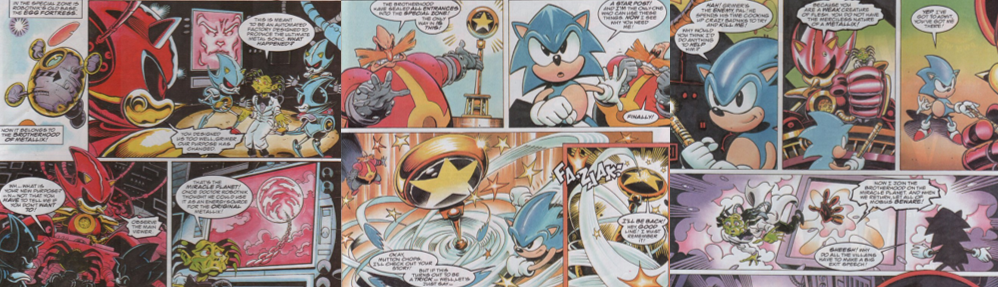
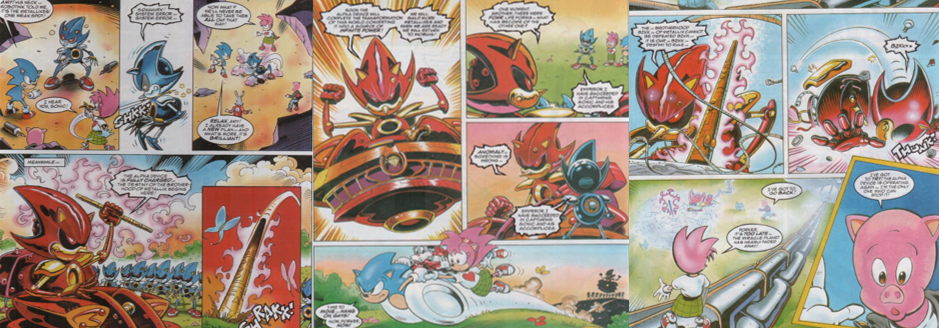
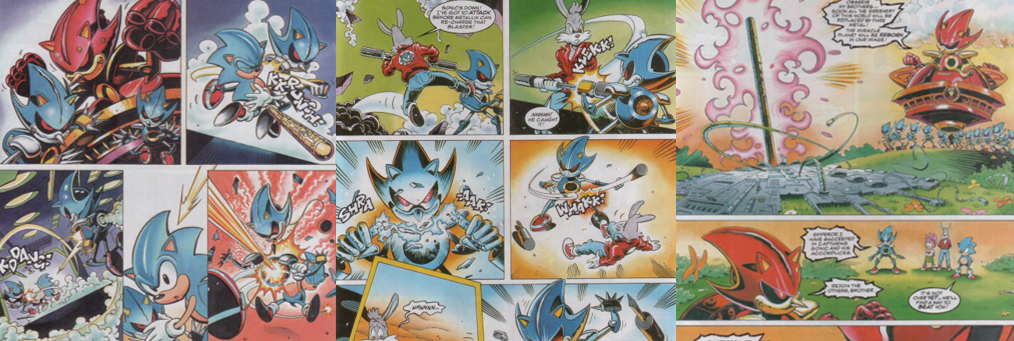


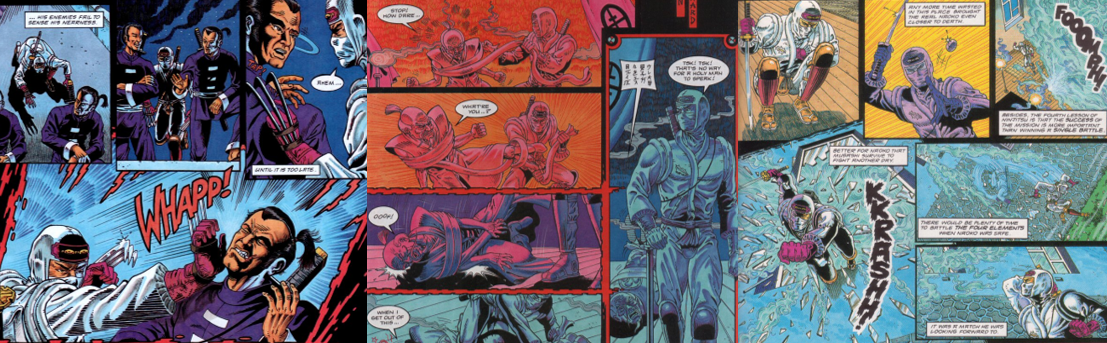
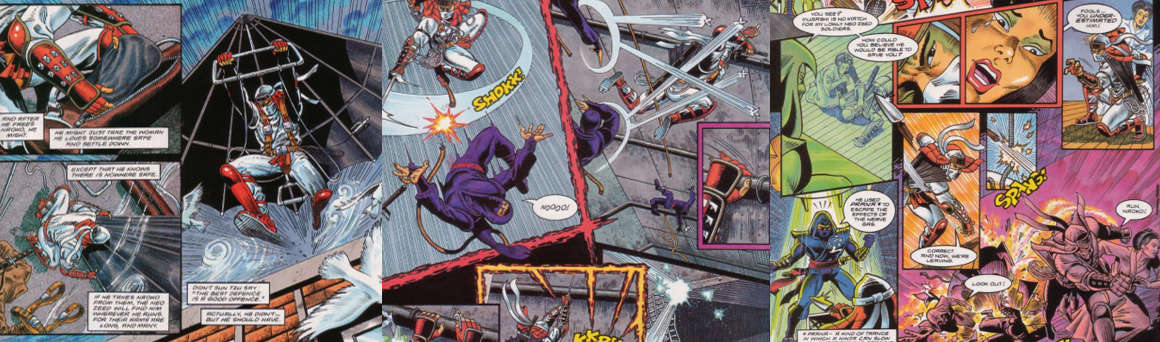
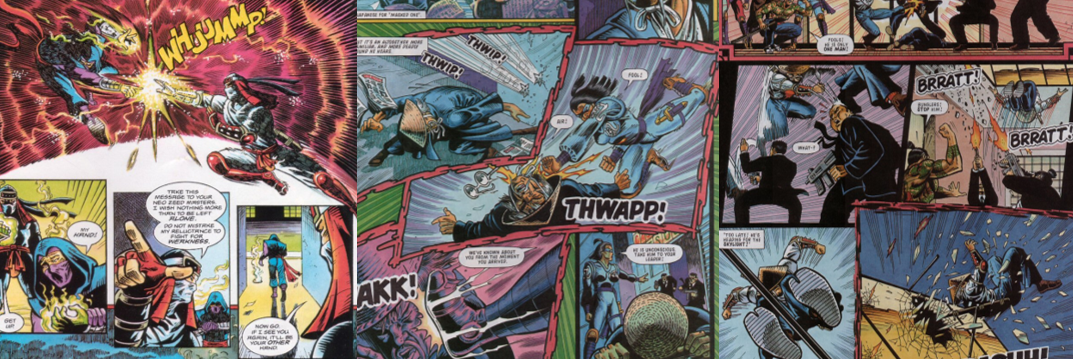
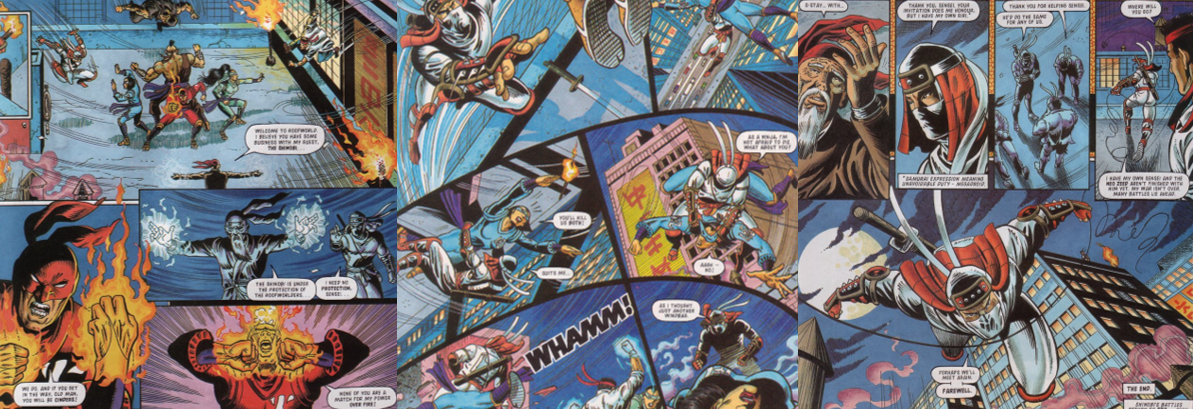
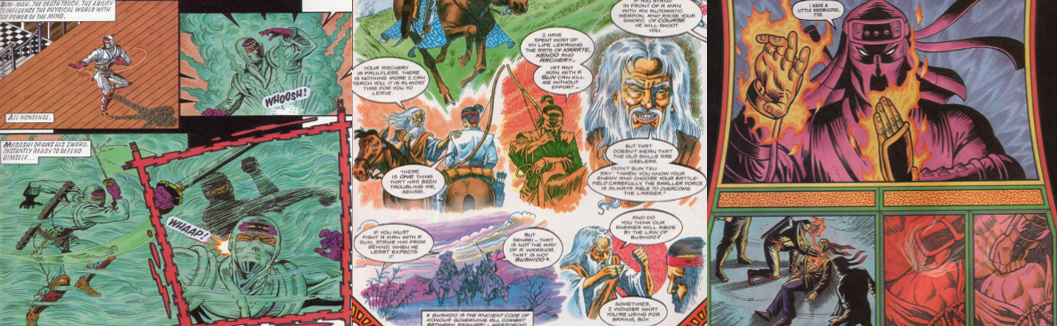
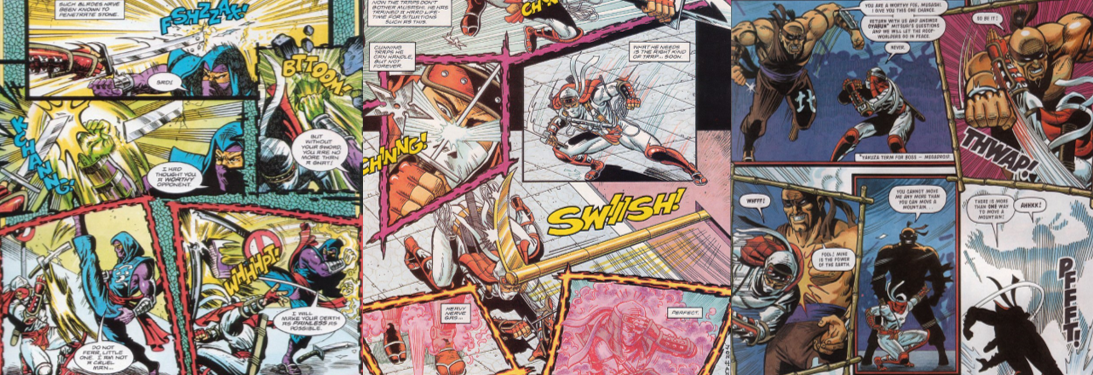


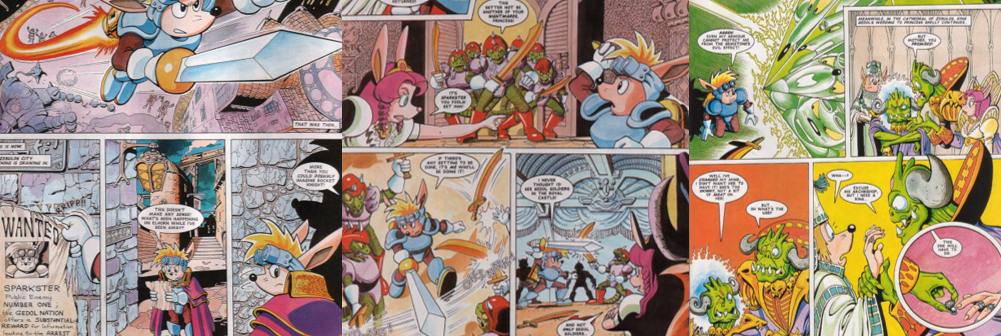
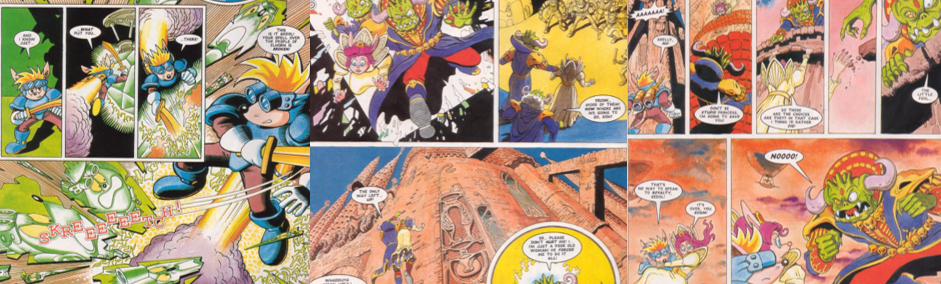
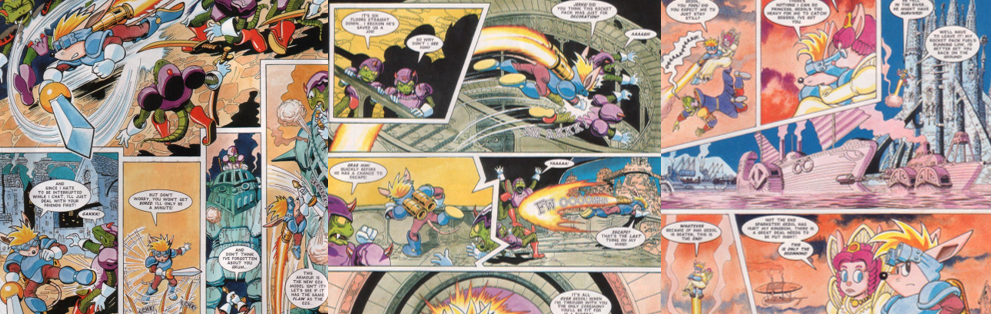



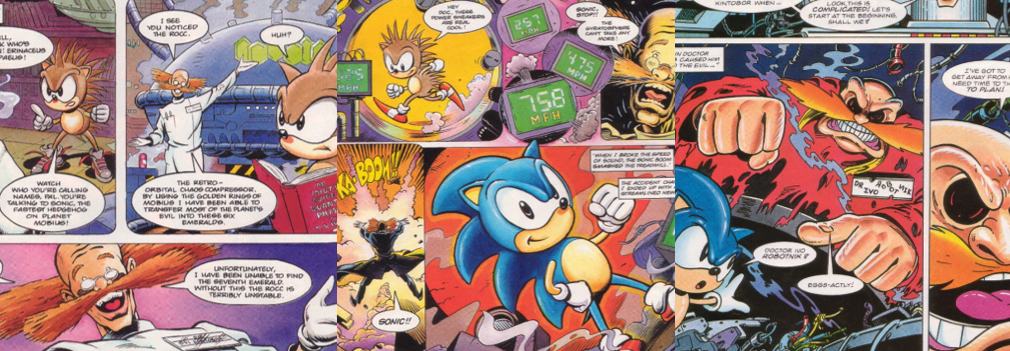
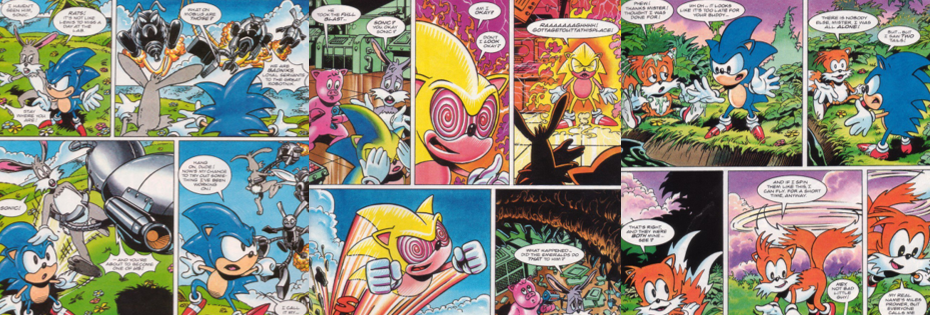
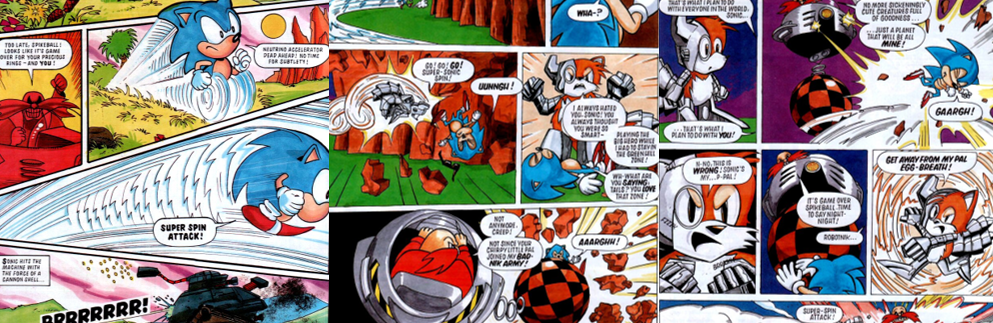
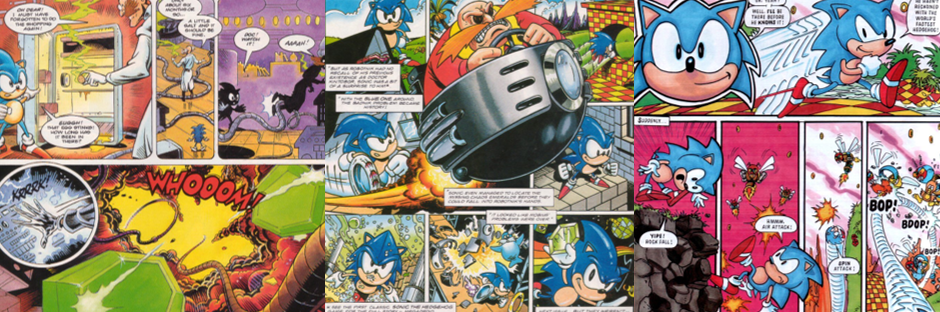



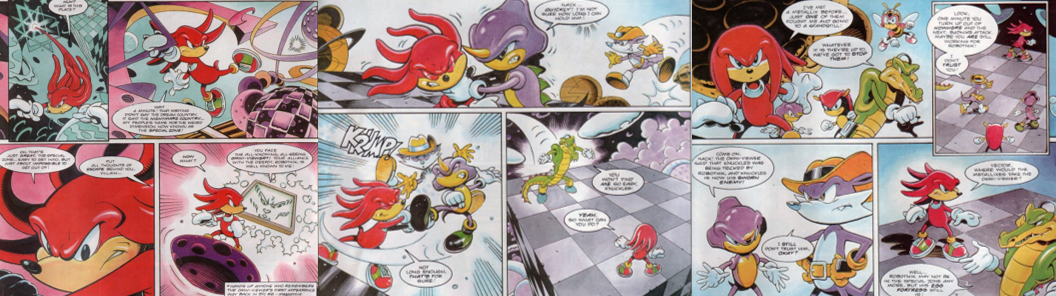
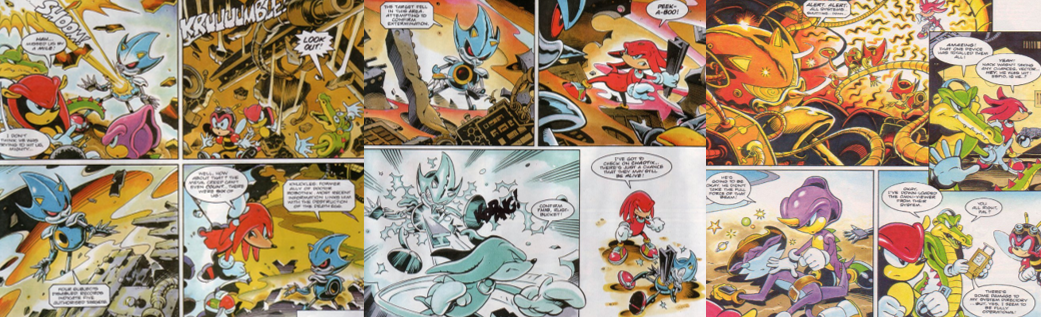
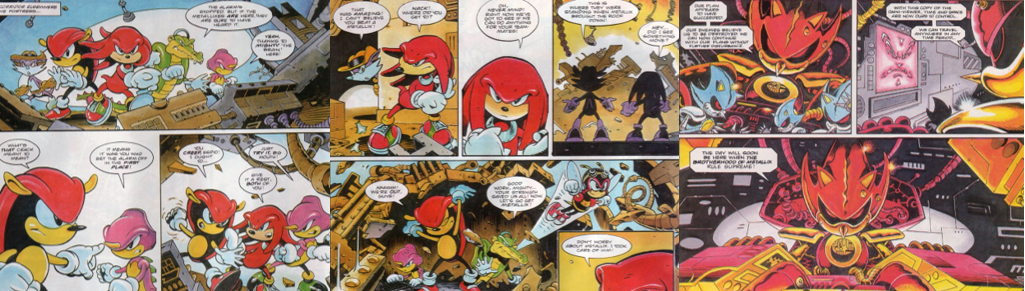


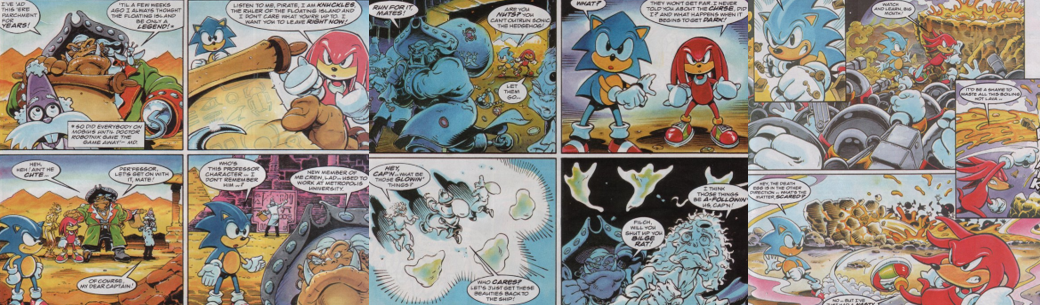


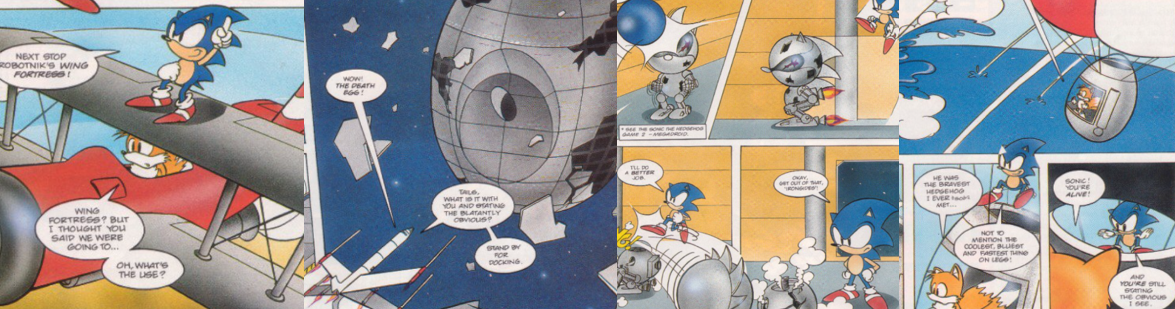

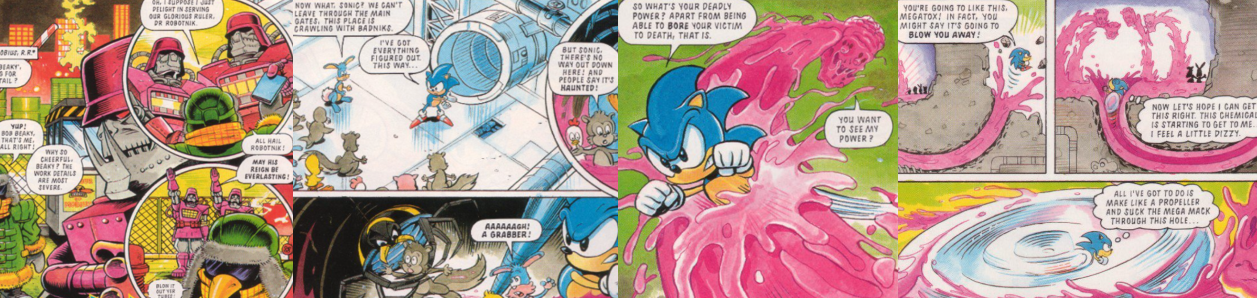

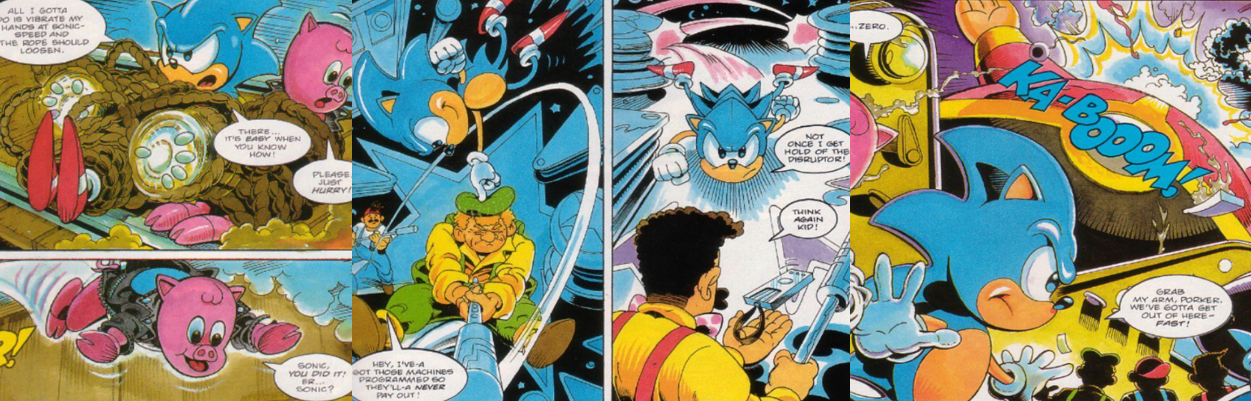
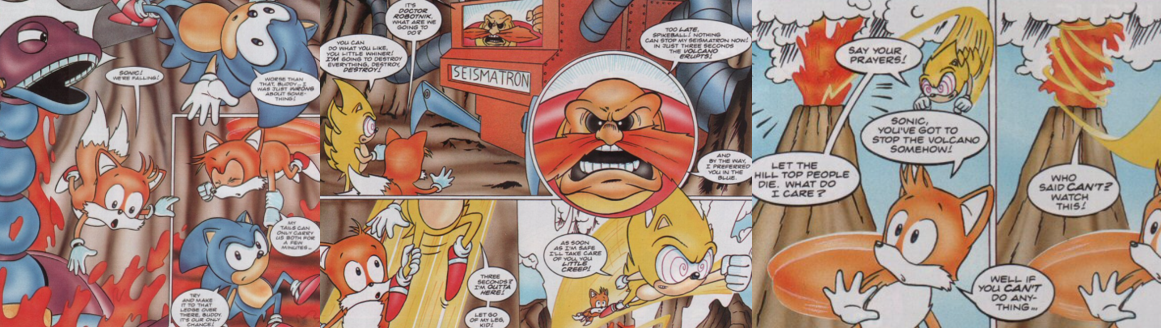
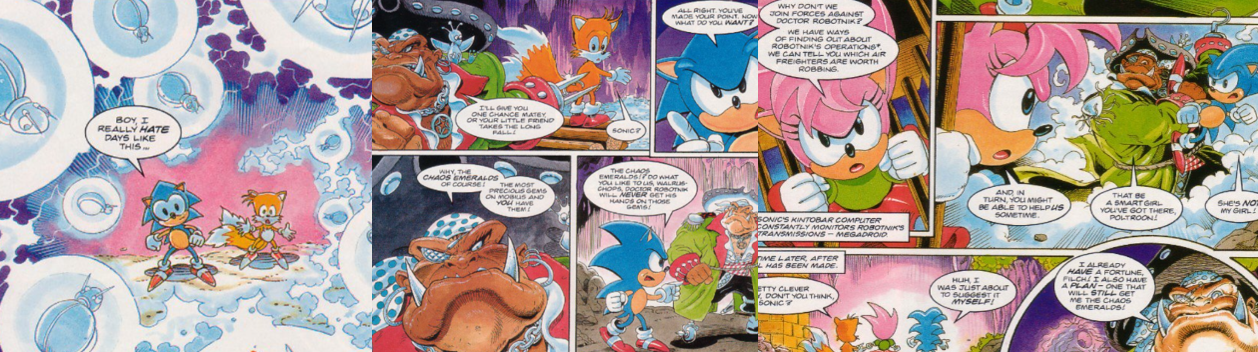


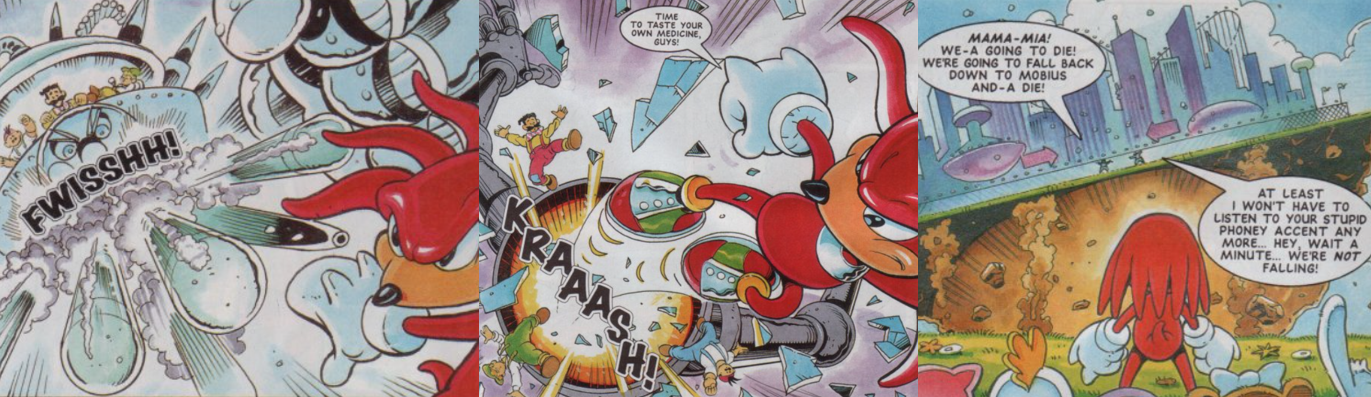
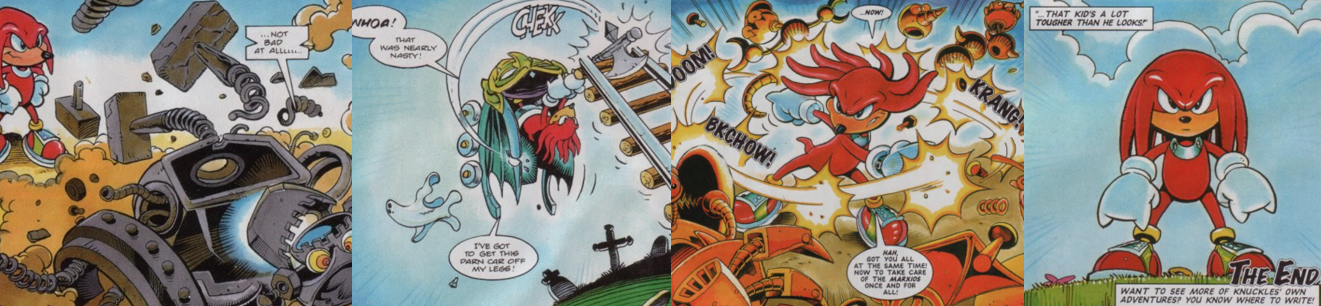


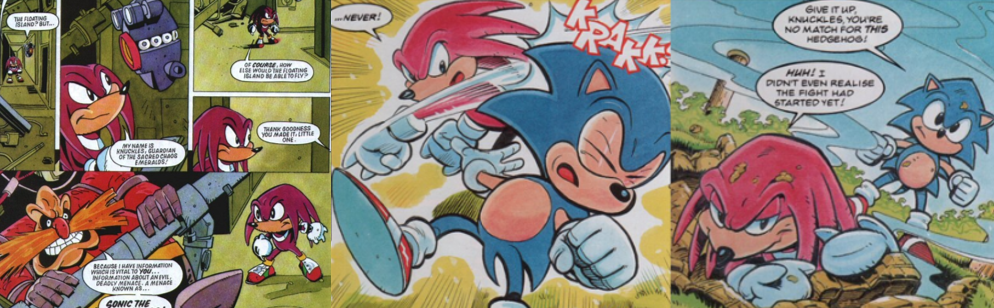
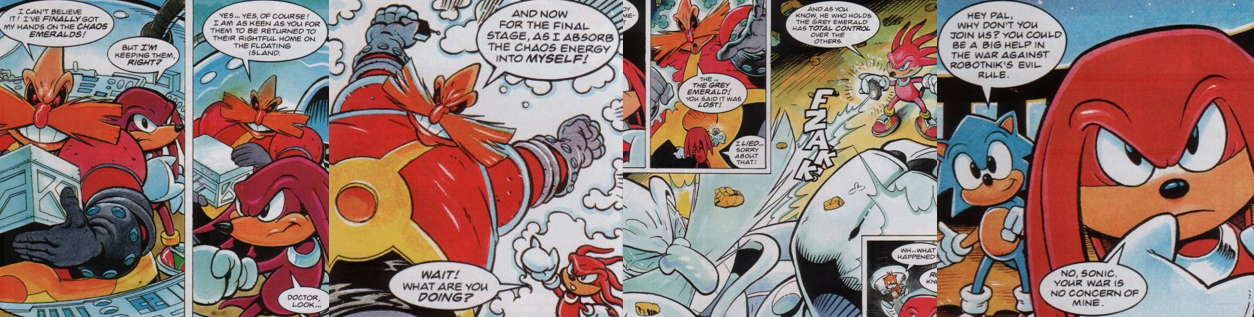


 Dr. K's Waiting Room
You must be logged in to post a comment.