Although February 2014 was dubbed “Green Lantern Day” (because, by the American calendar, the date matched the sector of space assigned to Earth in DC Comics “2814”), the significance of this date has passed as the years have changed. Instead, I celebrate the October 1959 debut of perhaps the most popular Green Lantern, Hal Jordan, who first appeared.
Story Title: “The Day 100,000 People Vanished!” Published: August 1961 Writer: John Broome Artist: Gil Kane
The Background: In July 1940, Martin Nodell and Bill Finger debuted Alan Scott, the first Green Lantern, a magically empowered railroad engineer who became a founding member of the Justice Society of America (JSA). However, following the successful reinvention of the Flash in 1956, fighter pilot Harold “Hal” Jordan became the first of a whole corps of Green Lanterns. Widely regarded as the greatest Green Lantern, Hal soon amassed a colourful domestic and intergalactic rogues’ gallery, though none are more prominent than Thaal Sinestro, Created by John Broome and Gil Kane and modelled after British actor David Niven, Sinestro was formally the most celebrated of the corps before it was revealed that he enforced peace through a dictatorship, disgracing him and positioning him as Hal’s mortal enemy since Hal exposed Sinestro’s true nature. A Machiavellian foe, Sinestro joined the villainous Legion of Doom and Injustice League, led his own yellow-hued counterpart to the Green Lantern Corps, and has regularly waged war against not just Hal, but both the Earth and the entire universe! As Hal’s greatest villain, it should be no surprise that Sinestro has regularly appeared in cartoons and videogames, and was even brought to life by Mark Strong (with scenery-chewing relish) in the much malignedlive-action adaptation.
The Review: Hal’s first encounter with the devilishly alluring villain who became his most recurring and dangerous foe begins on the West Coast of the United States, specifically the town of Valdale, where Green Lantern is scheduled to attend the opening ceremony of the new boys’ settlement house. Luckily for him, Hal’s too busy tying up another case so he’s unexpectedly delayed, meaning he’s absent when the bustling metropolis is suddenly enveloped in an ethereal light (not unlike an aurora borealis) and a strange thunderclap sound, which causes all 100,000 residents to disappear! After learning of this phenomenon, Green Lantern investigated and confirmed to his friend, mechanic, and confidant, Tom Kalmaku/Pieface, that Valdale’s inhabitants have vanished. Green Lantern’s doubly concerned as the incident occurred at nine o’clock, exactly when he was scheduled to be in Valdale but, before he can ponder further, Hal’s suddenly sent a bit queasy by a mind blank. It turns out this wasn’t just a bout of nausea and that Hal’s “astral self” was summoned across the galaxy to Oa, the home of the Green Lantern Corps and their enigmatic alien masters, the Guardians of the Universe. Brought before his masters, Green Lantern was told of Thaal Sinestro, the Green Lantern of sector 1417, a fearless native of Korugar who used the awesome, nigh-unlimited power of his power ring to satisfy his vanity with a throne. Sinestro had people line up and plead for his aid, quickly bored by their petty squabbles and requests and desiring more. When one of his people questioned him, chastising his arrogance and accusing Sinestro of being mad with power, Sinestro flew into a rage and shot down the complainant (non-fatally, it turns out).
Hal is dispatched to thwart a renegade Green Lantern’s plot to attack the Guardians.
Sinestro then decided to depose the ruling council of Korugar and establish himself as the planet’s dictator who forced his people to live peaceful lives or be mysteriously removed from society. Upon discovering Sinestro’s totalitarian ways, the Guardians admonished him and stripped him of his status as a Green Lantern before banishing him to the antimatter universe of Qward. However, the Guardians later learned that Sinestro rallied the malevolent “Weaponers” of Qward to strike back against his former masters and destroy Green Lantern. Thus, Sinestro developed a “viso-teleporter” to transport Green Lantern to Qward, and the Guardians instruct Hal to journey to the antimatter universe to confront the renegade Green Lantern and save those he’s captured. Since his usual route to the antimatter universe is blocked, Hal reasons that Sinestro will attempt to target him again so he uses himself as bait, turning the residents of Coast City invisible, and is soon forcibly transported to Qward. Although Green Lantern easily shields himself from the Weaponers’ attacks, Sinestro forces him to surrender in exchange for returning his captives home. Sinestro encases Hal in a yellow bubble, rendering him powerless, planning to destroy him once his power ring runs out of charge. Despite his ring being ineffective against yellow, Hal’…somehow…manipulates a clock to trick Sinestro into thinking time has passed faster than it actually has. Once he’s freed from his bubble, Green Lantern zaps Sinestro, washes away his allies, and pins Sinestro to a wall with green needles. Sinestro mocks Hal’s morals and lack of killer instinct and arrogantly reveals that he cannot be punished for his crimes since he’s been banished to Qward. However, Hal gets the last laugh by imprisoning Sinestro in an impenetrable bubble of green willpower before returning home to inspire Valdale’s youngsters with a speech about how good will always triumph over evil.
The Summary: I’ve always liked Sinestro. I grew up in the 1990s, so I have a bit of a thing for dark doppelgängers of righteous heroes and Sinestro’s one of comic’s most memorable and visually interesting corrupt counterparts to a beloved hero. However, I haven’t read many stories that feature the character and many Green Lantern stories I’ve read either don’t feature him or take place during one of his many real or faked deaths. However, I definitely feel I’ve been spoilt by the likes of Emerald Dawn II (Giffen, et al, 1991), which went into far greater detail about Sinestro’s complex character and his unique relationship with Hal Jordan. Emerald Dawn II set a new standard for their dynamic, casting Sinestro as Hal’s mentor and the greatest of the Green Lantern Corps, only for it to be revealed that he wasn’t just a pompous, arrogant taskmaster with high standards but also a totalitarian dictator who enforced order with an iron fist. You can imagine my surprise, then, to find Sinestro’s first appearance was a twenty-page story based around a bizarre plot to teleport Hal into the antimatter universe. Now, I’m no expert on Qward or the Weaponers; it’s entirely possible Green Lantern had run-ins with them in the past, hence why they’d relish Sinestro’s aid. However, they are the most useless and ineffective people I’ve ever seen. Sinestro doesn’t even utilise their tech, instead creating his own devices, and they blindly follow the charismatic devil as he conjures a clock and boasts about how he’s going to destroy their enemy rather than just doing it. I’d be questioning Sinestro’s effectiveness the moment his viso-teleporter transported a bunch of randomers to my home world, to say nothing of asking why Sinestro doesn’t just pluck the power ring from Hal’s finger or suffocate him to death inside his yellow bubble.
Though visually and thematically interesting, Sinestro is little more than an inconvenience here.
On the plus side, a sizeable portion of the story is spent exploring Sinestro’s backstory, even if it is just the highlights. The idea of a celebrated and formidable Green Lantern falling from grace and abusing his power is a powerful one and perfectly places Sinestro as Hal’s polar opposite, especial as Hal is such a bland do-gooder during these days. He’s the unscrupulous bastion of “right” and “good”, eagerly obeying his masters and opposing Sinestro simply based on the Guardians’ warnings. Sinestro shows a glimpse of how dangerous a Green Lantern can be if they become obsessed with power, first constructing a “sumptuous headquarters”, then forcing people to beg for his help, and finally deposing the ruling government to become absolute authority on Korugar. It’s not stated how long Sinestro ruled his people, but he presumably would’ve continued enslaving his people had the Guardians not stopped by to check on him. His punishment is severe, but strangely humane, with the Guardians simply banishing Sinestro rather than executing him despite it being implied that he executed anyone who spoke out against his rule on Korugar. The Guardians also shoot themselves in the foot since, although they can teleport individuals to Qward and observe the antimatter universe, they “have no power there” and thus cannot intervene when Sinestro plots his revenge. Thanks to a one-way cosmic “back door” of sorts, Hal does return home but cannot truly punish Sinestro because Hal’s too righteous to take a life and Sinestro cannot leave Qward. Thus, Hal leaves Sinestro in what sounds like a fate worse than death but, to me, seems like a prison he’ll easily escape from, making for a pretty lacklustre ending. Everyone starts somewhere, that’s for sure, but Sinestro’s first appearance is an unfortunately forgettable, villain-of-the-month story that really should’ve been given the entire book to be told. Sinestro has a great look, with his devil-red skin, pencil-thin moustache, and striking black-and-blue colour scheme, and his backstory is certainly intriguing. However, it’s undercooked and basically a throwaway story that’s memorable only for introducing one of DC Comic’s best villains, whose future plots definitely extended further than clock-watching!
My Rating:
⭐⭐
Rating: 2 out of 5.
Could Be Better
What did you think to Sinestro’s debut story? Do you think the Weaponers of Qward should’ve been portrayed as a greater threat? What did you think to Sinestro, his backstory and characterisation? Were you disappointed by how pedestrian Sinestro’s first appearance was? What are some of your favourite Sinestro stories and moments? Which Green Lanterns your favourite and why? How are you celebrating this pseudo-Green Lantern day today? Whatever you think about Sinestro, or Green Lantern in general, leave your thoughts below, drop me some change on Ko-Fi, and go check out my other Green Lantern content.
Although February 2014 was dubbed “Green Lantern Day” (because, by the American calendar, the date read as “2814”, the space sector assigned to Earth in DC Comics), the significance of this date has passed over time. Instead, I’m choosing to celebrate the debut of perhaps the most popular iteration of the character, Hal Jordan, who first appeared in October 1959.
Released: 7 June 2011 Developer: Double Helix Games Also Available For: Nintendo DS, Nintendo 3DS, Nintendo Wii, PlayStation 3
The Background: When Green Lantern first appeared in All-American Comics #16 in July 1940, it was as the superhero persona of of Alan Scott. However, in 1959, Julius Schwartz had writer John Broome and artist Gil Kane reinvent the character as space cop Hal Jordan, thereby creating what we now know as DC Comics’ resident intergalactic police force. After years of aborted attempts, Hal Jordan finally made his big-screen debut (alongside the Green Lantern Corps) in Green Lantern(Campbell, 2011), a critical and commercial failure that set back the formation of a DC cinematic universe a couple of years. However, one thing that came out of the movie was Green Lantern’s first (and, so far, only) solo videogame outing with this tie-in title, which was made by an amalgamated developer whose previous titles were also mostly videogame adaptations. Although featuring the likenesses and voices of many of the film’s stars and allowing players to utilise stereoscopic 3D during gameplay, Green Lantern: Rise of the Manhunters received mixed reviews; while some praised the various gameplay mechanics and the game’s presentation, others criticised the repetitive combat and lack of replayability. Since Green Lantern failed to produce a sequel, we’ve yet to see another solo videogame for the ring-slinger, which is a bit of a shame considering how much potential the character has in the near-limitless scope of the genre.
The Plot: Before harnessing the green energy of willpower and creating the intergalactic peacekeepers known as Green Lanterns, the Guardians of the Universe employed androids called Manhunters. After being shut down for becoming too violent, the Manhunters suddenly return for revenge against their former masters, and Green Lantern’s Hal Jordan and Thaal Sinestro are just two of the emerald corpsmen dispatched to combat this threat.
Gameplay: Green Lantern: Rise of the Manhunters is a third-person action/adventure game very much in the style of hack-and-slash brawlers like the God of War franchise (Various, 2005 to present). Players take on the role of Hal Jordan and fight their way through some pretty long and bland environments slashing about Manhunters with a variety of attacks generating by his Power Ring. If you have a friend, they can join the action at any time as Thaal Sinestro, though he’s basically just a skin and doesn’t have any unique dialogue or attacks and the camera becomes a bit restricted with two players on screen. Still, you have quite a few options available in terms of combat: X unleashes a fast attack with some sword swipes, Y delivers a strong attack that includes a fist and a hammer, B sees you grasping smaller enemies or objects with a claw, and the Right Bumper lets you blast ahead with a drill and chaining all of these together will allow you to pull off some basic combos to take out larger and multiple enemies pretty quickly.
Hal’s Power Ring affords him numerous options in combat and puzzle solving.
A allows you to jump but, unfortunately, you can’t fly unless you’re activating a Green Lantern logo to leap to a new area in a cutscene or dropped into one of the games shooting sections. You can evade, however, with the right stick and shield yourself from attacks with the Left Bumper. As you play through the story, you’ll unlock constructs to assign to the Left and Right Trigger; holding these down and pressing a button lets you pull off up to eight different Power Ring abilities that will drain your meter (though this refills over time and by collecting green orbs). Hal can blast enemies from afar with the Ring Blaster and Gatling Gun, smash them and activate pressure pads with the War Hammer, deploy and throw a Hover Mine to blow them up or destroy power cores, send them flying (and knock back projectiles) with the Baseball Bat, and swing around a couple of maces to devastate groups of enemies. Hal can also rapidly whip Manhunters, auto target and pummel them with the Rocket Punch, smash through enemy shields with the Piston Blitz, deliver targeted attacks to enemy weak points with the Missile Pack, and eventually dish out big damage with a Jet Fighter and a huge Mech Suit. The bigger and more powerful constructs will drain more of your Power Ring’s energy, but you can upgrade your Power Ring and your basic attacks by defeating enemies and smashing parts of the environment for Will Points (strangely still abbreviated to XP). The more XP you earn, the higher your level raises (up to a maximum of ten) and the more upgrades and additional constructs you’ll unlock, eventually allowing you to purchase Lantern’s Light to recharge your Power Ring with the directional pad at the risk of being left vulnerable. Finally, as you defeat enemies, you’ll build up your Ring Surge meter; once it’s full, press the Left and Right Bumper to activate a Ring Surge, which restores your health and Power Ring to full and powers up your attacks for a short time; the effectiveness of your Ring Surge can also be upgraded with XP.
QTEs, simple puzzles, and rail shooting sections add some variety.
The bulk of your gameplay revolves around combat; near endless, mindless combat against Manhunters of all shapes and sizes. The game is incredibly linear, with no need for a map or directions since it’s pretty clear where you need to go, though there are inevitably times when it’s easy to get a little turned around since environments became very samey very quickly. When you’re not smashing apart endless Manhunter drones, you’re given a handful of additional missions, such as destroying mines, leaping to Siege Towers and destroying them by smashing open their armoured cores, and destroying teleport gates to stop enemies spawning in. One mission has you taking out a bunch of lasers before they destroy the Central Power Battery, sometimes you’ll need to press A and rotate the left stick to open doors or spawn in a battery, and other times you’ll be dodging electrified walls and floors to progress. These latter elements get mixed up you play through the story, requiring you to grab a battery and get it to a power node before it explodes or smashing Hover Mines into spinning holes as the floor tries to fry you. Later in the game, yellow Fear Energy nodes and enemies drain your Ring Energy meter and limit your constructs, and Queen Aga’po helps you out on Zamaron by lowering crystal barriers, where you’ll also need to destroy Boost Crystals to stop the Zamarons being powered up. Generally, puzzles are pretty simple, requiring little more than clearing out enemies, grabbing something to plug in somewhere else, either to match symbols or to destroy an energy core, and you’ll only really get a taste of some variety in the handful of rail shooter sections. In these, you use X or Y to fire (with no limits and a rapid-fire option) and can lock onto enemies with LT to fire off energy-draining missiles or become a Jet Fighter with your Ring Surge, making for some fun shooting sections. Additionally, you’ll occasionally have to perform some quick-time events (QTEs) to finish off some of the bigger enemies and bosses, and you can lower the difficulty level after you die if the game becomes too tough.
Graphics and Sound: Technically speaking, Green Lantern: Rise of the Manhunters looks, sounds, and plays pretty decently; I experienced a bit of a delay when activating my Ring Surge (though this could’ve been my controller) but there wasn’t really any slowdown, which is good as things can get a bit hectic at times. Ryan Reynolds returns to voice and lend his likeness to Hal, playing him a little more straight-laced now that he’s a fully-fledged Green Lantern, and he (and the other Green Lanterns) matches his much-maligned movie appearance very well. His constructs all look big and fun and imaginative, though they are a bit restrictive; his basic attacks change appearance as you upgrade them, which is a nice touch, and the developers even made the bizarre decision to include a function where Hall becomes dizzy if you rapidly spin the control stick.
The game evokes the aesthetic of its movie counterpart, for better or worse.
Sadly, the game’s environments and music aren’t much to shout about; you visit Oa twice, at the start and end of the game, and both times it recreates the look of the movie but is little more than a bizarre alien landscape under attack from various Manhunters. Zamaron is a rocky, mushroom-strewn alien world that is more bland than interesting, though it does include canyons and crystal mines and temples and such. The only other area in the game is Biot, a massive mechanical factory and processing plant for the Manhunters that’s full of gears and pistons and consoles and such, but there’s very little to interact with in any of the game’s locations and few rewards or incentive to explore as there aren’t really any collectibles. The game’s cutscenes work well enough, with the suit and the movie’s aesthetic actually translating pretty well to the action figure presentation of this era of gaming, and I liked how the story was a sequel to the movie, though it’s weird how there was no expansion on Sinestro’s decision to switch to a Yellow Ring.
Enemies and Bosses: The vast majority of the enemies you’ll face are Manhunters, disposable tin cans that fly or teleport in and attack in some large numbers. You’ve got regular drones, ones with shields or blasters, and annoying bastards on these hoverboards that allow them to zip around and bombard you with laser fire. Sometimes you’ll be attacked by mines and laser cannons or Manhunter ships, which can be destroyed by smashing back their projectiles, and larger Manhunter variants will rush at you and grab you in a bearhug, draining your Ring Energy and forcing you to mash A to escape. On Zamaron, you’ll battle some different enemies, mainly mind controlled Zamarons who attack with staffs and such, but you’ll also encounter Willhunters, which drain your Ring Energy, and Manhunters also exhibit this ability on Biot and later in the game.
Only Zamaron offers a reprieve from the endless Manhunter variants.
Bosses are primarily larger Manhunters, which then return as mini bosses or are strewn throughout shooting stages. The Ultra Manhunter is the best example of this; you’ll first battle it on Oa, where it stomps about firing lasers and shooting its fists at you but you can evade it, take advantage of the nearby Lantern power-up, and land some combos when it gets stuck on the ground. Ultra Manhunters reappear numerous times, often in twos and accompanied by a slew of other Manhunters; they later add a gravity bomb to their arsenal which sucks you in before exploding, but you can destroy these with your Hover Mines and you can put them down with a QTE after dealing enough damage and blast them to smithereens in the shooting sections. The Siphoner Manhunter, which bearhugs you, and the Willhunters are presented like mini bosses when you first encounter them but they quickly just become regular enemies. On Zamaron, you’ll battle Queen Aga’po after she’s corrupted by the Yellow Energy; she causes crystals to burst from the ground (which freeze you and enemies if you touch them) and sends her minions after you between attacks before attacking with her lance. After pursuing her in a shooter section and taking out another Ultra Manhunter, she sets the Zamaron Defender on you. This battle takes place on a 2.5D pane and sees you attacking its hands and the Willhunters it sends out, avoiding its swipes and the falling boulders, smashing back its projectiles and dodging its electrical barriers and shockwaves in easily the most annoying boss battle of the game so far (and you don’t even get the catharsis of finishing it yourself as Hal delivers the final blow in a cutscene).
After besting the Manhunters, you’ll face off against renegade Amon Sur.
Biot is full of Siphoners and Ultra Manhunters, Manhunters who exude Yellow Energy, and annoying reactor cores that you need to destroy with your Hover Mines. The mechanical hellhole culminates in a battle against the titanic Grandmaster, which is essentially an even bigger Ultra Manhunter and your Mech Suit comes in handy here, allowing you to go toe-to-toe with the armoured foe, who loves to blasts its fists at you and swing them around the arena to send you flying. Take it down and you get to battle the even bigger Highmaster afterwards, which is an even larger Ultra Manhunter that blasts out bigger versions of those gravity bombs and sends a massive laser beam from its hand to cut you down. The only way to damage this guy is to attack the glowing points on its knees, then run around behind it and awkwardly toss your Hover Mines into its knees so it drops to the floor, allowing you to attack the cockpit where Kilowog is being held captive. Repeat this three times, fending off the Manhunters and dodging its faster and more aggressive attacks, and you’ll progress to the final stage of the game. This sees you returning to Oa, where Amon Sur has become consumed by Yellow Energy and is leading a renewed Manhunter assault against the Guardians. You’ll need to dispatch his minions before engaging with him one-on-one, which sees Amon dashing at you with his scythe-like lance, conjuring skeletal hands, bombarding you with laser blasts, and protecting himself with an impenetrable shield. Deal enough damage and he also constructs a massive mech suit for himself, meaning the finale becomes a game of Rock ‘Em Sock ‘Em Robots as you throw slow punches at him, guard against his attacks, and stomp the ground to break his guard, completely negating all of the combat and gameplay you’ve endured and mastered and having the final boss come down to a QTE with obnoxious timing.
Power-Ups and Bonuses: As you defeat enemies and smash pots and other parts of the environment, green, white, and blue orbs will refill your health and Ring Energy and grant you XP. Occasionally, you’ll find Lantern charge points in the environment which fully replenish your health and energy and allow you to pull off a Ring Surge, but that’s about it for in-game power-ups. New constructs are made available as the story progresses and as you level-up, which also unlocks upgrades for your attacks and Ring Meter so they become flashier, more powerful, and charge/last longer. You can assign Hal eight different constructs to use and can swap them out from the pause menu, but it’s best to keep a couple (like the War Hammer, Baseball Bat, and Hover Mine) in your arsenal since they’re useful for solving puzzles and defeating certain enemies. Other constructs, like the Jet Fighter and Mech Suit, may deal a lot of damage but they have a long charge time and drain more of your Ring Energy, though you can find and destroy coloured meteorites in each mission that will extend both of these meters.
Additional Features: There are forty Achievements to earn in Green Lantern: Rise of the Manhunters, with eleven being awarded simply for clearing the game’s missions and story mode. You’ll also get Achievements for racking up high combos, acquiring and upgrading every construct and ability, defeating certain enemies with each construct, and fully expanding Hal’s health and energy. There are three difficulty levels for the game, with an additional Achievement awarded for beating it on the hardest setting, and two more for playing in co-op, making for some pretty simple to earn Achievements. Co-op mode is pretty good, though there’s a distinct lack of individuality to Sinestro, and you can replay any cleared mission from the main menu and even take advantage of a 3D functionality if you have one of those 3D TVs. Sadly, there really isn’t much to keep you playing; you can go back and look for things you’ve missed, but there are no collectibles, no concept art or gallery, and no skins to unlock, making for a pretty cheap and barebones experience.
The Summary: Green Lantern: Rise of the Manhunters is a pretty decent hack-and-slash videogame; fans of the God of War franchise will be immediately familiar with the vast majority of the gameplay, but those who crave a little more depth to their games will be left wanting more from this tie-in title. The controls and combat are pretty good, but the stages are extremely restrictive and tediously drawn out, artificially extending the length of the game without really providing much visual variety. Combat quickly becomes tedious and you can easily mow through most enemies with the same button inputs or constructs without needing to mix things up and, while the rail shooting sections are fun, they’re few and far between and don’t really have a great deal of challenge to them. The enemies you battle get old very quickly, making things even more monotonous, and the few puzzles offered are ridiculously easy to solve and recycled over and over. Graphically, the game does a good job of emulating the style of the movie it’s based on and the story functions as a lacklustre follow-up to a mediocre film, but there’s very little replay value to be offered here. As a quick, cheap cash-in that rips off the gameplay of a more successful franchise, Green Lantern: Rise of the Manhunters does alright but there’s obviously better hack-and-slash titles out there and the only reason to really get this is if you see it cheap and you fancy adding some quick and easy Achievements to your gamer score. Overall, the game just lacks in imagination; Green Lantern is a character who can potentially do and conjure almost anything he desires but he feels needlessly handicapped here and the lack of skins, unlockables, or visual variety really drag this game down.
My Rating:
⭐⭐
Rating: 2 out of 5.
Could Be Better
Have you ever played Green Lantern: Rise of the Manhunters? If so, what did you think to it? How do you feel the combat and constructs worked in the context of the game? What did you think to the plot and its status as a follow-up to the movie? Were you disappointed by the lack of variety in the enemies and locations? Which of the constructs was your favourite and were you a fan of Ryan Reynolds reprising the role? What did you think to the movie the game’s based on and would you like to see a new Green Lantern game in the future? Which Green Lantern character, villain, or story is your favourite and why? How are you celebrating this pseudo-Green Lantern day today? Whatever you think about Green Lantern: Rise of the Manhunters, and the Green Lantern comics books, feel free to leave a comment below.
Although February 2014 was dubbed “Green Lantern Day” (because, by the American calendar, the date read as “2814”, the sector of space assigned to Earth in DC Comics), the significance of this date has passed as the years have changed. Instead, I’m choosing to celebrate the debut of perhaps the most popular iteration of the character, Hal Jordan, who first appeared in October of 1959.
Writer: Ron Marz – Artists: Bill Willingham, Fred Haynes, and Darryl Banks
Story Title: “Emerald Twilight, Part One: The Past” Published: January 1994
Story Title: “Emerald Twilight, Part Two: The Present” Published: February 1994
Story Title: “Emerald Twilight, Part Three: The Future” Published: March 1994
The Background: The character of Green Lantern, in the form of Alan Scott, first appeared in All-American Publications’ (a precursor of DC Comics) All-American Comics #16 in July 1940. In 1959, DC Comics editor Julius Schwartz enlisted writer John Broome and artist Gil Kane to reinvent the character as Hal Jordan and, in the process, created countless other Green Lanterns through the establishment of an intergalactic police force. Although Jordan became one of DC Comics’ most prominent superheroes, the company decided to make some major changes to the character in the mid-nineties, a period of time often referred to as the “Dark Age” of comics that saw stories such as “The Death of Superman” (Jurgens, et al, 1992 to 1993) make headline news and Bruce Wayne/Batman left crippled at the hands of a superhuman foe. Although Batman later recovered and Clark Kent/Superman soon returned to life, Hal Jordan’s home town of Coast City was destroyed during the Man of Steel’s resurrection, leaving Hal devastated and driving him to near madness in his attempt to rebuild his home. The story’s primary purpose was to depict Hal’s downfall into a maniacal, reality-destroying villain known as Parallax and to introduce a new, young, sexy Green Lantern (my favourite of the Emerald Warriors, Kyle Rayner). Eventually, of course, DC backpedalled on this decision and went out of their way to redeem the “greatest Green Lantern” but, for a while there, things were definitely exciting and different in DC Comics as they introduced new legacy characters and fundamentally altered their predecessors in startling ways.
The Review: “Emerald Twilight” begins pretty much immediately after the conclusion of the “Return of Superman” story arc (Stern, et al, 1993) with an injured and emotionally shattered Hal Jordan kneeling amidst the still-smouldering crater that is all that remains of his hometown, Coast City. Burdened by his grief at arriving too late to stop Mongul and Hank Henshaw/Cyborg-Superman from obliterating the city, Hal uses the vast powers of his power ring to heal his broken arm and conjure a construct of his father, Martin, for a bit of a heart-to-heart. Primarily, Hal wants to address his resentment towards his late father for favouring his older, more successful brothers and never telling Hal that he was proud of him and all he had accomplished. However, as Martin is simply a manifestation of Hal’s memories of him, and his guilt and unresolved issues, Martin simply tells Hall that he just never measured up to his brothers, guilt-trips him for not being there for Coast City, and then forces Hal to relive the traumatic experience of watching him die in a plane crash. A construct of Hal’s mother, Jessica, then arrives to comfort her son, pointing out Martin’s many faults as a husband and a father and encouraging Hal to hold on to the happier memories and move on from the pain and loss. Despite her encouragement, however, Hal isn’t satisfied with just having memories; they’re not enough to quell his guilt or his anger or his pain and, in his vehement refusal to let go of his anguish, he focuses his willpower in a wholly selfish way.
Grief-stricken, his anguish turned to rage, Hal carves a path of destruction to confront the Guardians.
Hal uses his willpower to create a living, breathing, emerald-hued recreation of Coast City, including all of its buildings and inhabitants. The temptation to right those wrongs, to “be a God”, is overwhelming and even brings back a manifestation of his first love, Jennifer. Reminiscing about the past and what could have been between them, Hal laments how he screwed up his relationship with Jennifer even after she helped him through the trauma of his father’s death. Jennifer, however, assures Hal that she was happy after him, settled in Coast City, and that the end came quickly for her and the others; she also says that “nobody blames [Hal]” and that they’re just happy that he’s keeping their memories alive. Jennifer walks Hal to his childhood home, where he again meets the “ghost” of his father; Martin echoes Jennifer’s sentiments, stating that every appreciates that he’s “restored” Coast City, but falters when he is about to finally say the words Hal is longing to hear (that he’s proud of him) and promptly vanishes, along with the entire Coast City illusion, when Hal’s ring exhausts its charge. Hal’s anger and bitterness at being denied his desire, and the limits of his power ring, are soon interrupted when one of the Guardians of the Universe manifests before him. The Guardian reprimands Hal for using his power ring for personal gain and violating the rules and regulations of the Green Lantern Corps, and demands that he return to Oa for disciplinary action. Hal, however, lashes out in anger absorbs the residual energy from the Guardian’s projection to give himself a charge and, blasts off to Oa to confront his masters, appearing as little more than a green shooting star to lovers Kyle Rayner and Alex DeWitt. Overcome by his grief, and incensed at the losses and injustice he feels, Hal blasts his way through space and is met by opposition from his fellow Corpsmen, Ke’Haan of Varva and Laira of Jayd, two Lanterns who, while experienced, are no match for Hal’s experience and newfound rage.
Hal’s crusade sees him cutting down some of his most trusted comrades.
Furious at being used as a puppet by the Guardians for so long, Hal incapacitates the two and steals their power rings, leaving them for dead in the void of space and adding more power to his arsenal. While the Guardians of the Universe are concerned at Hal’s trail of destruction, they have faith that the entirety of their Corps, and their near-limitless power, will be enough to stop him; after all, he’s just one rogue Lantern, right? Well Tomar Tu learns the hard way that Hal is not so easily subdued; although he tries to shackle Hal using a parasite not unlike the Black Mercy creature, Hal’s willpower is so strong, and his rage so out of control, that he easily overpowers his former comrade and friend. Jack T. Chance meets a similar end as, while he is far more willing to fight dirty, his inexperience leaves him adrift in space like so many other Corpsmen. Hal is even forced to battle Boodikka, a warrior female he personally recruited into the Corps, but the loyalty of his brothers and sisters now sickens Hal and he’s so obsessed with making them pay for their hubris that he slices Boodikka’s hand off to claim her ring as his own. One by one, both on-panel and off, Hal bests the Guardian’s Lanterns and, with each victory, he becomes increasingly brutal. Upon reaching Oa, Hal is met by the Corps drill instructor, the surly Kilowog, easily the proudest and most loyal member of the Green Lantern Corps. However, while he lasts longer than any of the other Green Lanterns, Kilowog also falls before Hal’s newfound might and rage.
Sinestro is sent to stop Hal, leading to an epic clash between the two with their roles almost reversed.
Even the stoic Guardians, so self-righteous in their power and position, begin to fear Hal’s crusade and, in their desperation, turn to Ganthet’s final solution to Hal’s rampage: releasing the renegade Green Lantern, Thaal Sinestro, from his captivity within the Central Power Battery. And so it is that Hal is pitted against his former mentor, the very man who he stood up to when Sinestro perverted the power and privilege of the power ring for his own ends. The irony is not lost on Sinestro, who finds himself as the last hope of his former masters, beings he has almost as much reason to despise as Hal, and delights in Hal’s torment. Sinestro manages to goad Hal into relinquishing all of his stolen power rings and battling him on equal ground, something Hal is only too happy to agree to just so that Sinestro has no doubt that he was finally, truly, bested by his superior. Eager to have his revenge against Hal for having him imprisoned, Sinestro presses his attack but Hal matches him blow for blow, theorising that the Guardians must have lost their minds to turn to someone as vindictive as Sinestro and seeing his rival’s return as the final proof of the Guardians’ hypocrisy and fallibility. Sinestro taunts Hal by telling him that, years ago, the Guardians asked him, their greatest warrior, to mould Hal into his image but, despite being flattered by their trust, he never thought that Hal would be able to live up to those expectations. When they come to a penultimate clash, Sinestro is almost admiring of Hal’s newfound bloodlust, but maintains that the difference between the two has always been that Hal is unwilling to kill, whereas Sinestro is only held back from killing by the promise of his freedom to subdue Hal non-lethally.
Hal kills Sinestro, and the entire Corps, becoming Parallax and leaving Kyle as the sole Green Lantern.
Ultimately, their battle descends into a wild brawl; as the Guardians impassively watch on, Hal mercilessly beats Sinestro to a pulp. Hal claims victory, having finally bested his long-time rival with his bare hands, but Sinestro continues to taunt him, claiming that he has lost himself in his brutality. Hal’s response? To break Sinestro’s neck, finally killing him and crossing that forbidden line. His attempt to absorb the full power of the Central Power Battery is interrupted by Kilowog, who makes one last desperate plea for Hal to stop before he strips all of the Corpsmen of their powers and leaves them in mortal danger, but Hal simply cannot look past his grief, his pain, and his lust to obtain the power to correct those mistakes. In an instant, he reduces Kilowog to a charred skeleton, tearfully discards his power ring, and has one last heated confrontation with the Guardians before entering the Central Power Battery. As he absorbs the Central Power Battery into himself, the Guardians channel all of their remaining powers into one last power ring; Hal emerges, forever changed, crushing his power ring and fleeing to the stars to begin enacting his grand plan for the universe, and only Ganthet is left alive. He teleports to Earth and stumbles upon struggling artist Kyle Rayner, seemingly at random, and bequeaths him the last power ring, birthing an all-new Green Lantern, the last in the entire universe, in the process.
The Summary: It’s definitely not recommended to go into “Emerald Twilight” without at least some understanding of Hal Jordan, or having read some of the “Return of Superman” arc, but it’s not absolutely necessary. The text boxes and dialogue help to bring you up to speed with how Hal got his power ring, his reputation, and how Coast City was destroyed, but it definitely adds even more emotional weight to the story if it’s not your first exposure to the character. Compared to “The Death of Superman” and “Knightfall” (Dixon, et al, 1993 to 1994), it’s also a much shorter and far more condensed story. Hal literally ploughs through seemingly the entire Green Lantern Corps (or most of them) off-panel or in a few panels in the middle chapter of the story, and much of Hal’s downfall is set up subtly in previous issues and stories rather than being this big, headline event. That’s not to say that “Emerald Twilight” didn’t shake things up, though, but it definitely acts as more of an epilogue to “The Return of Superman” rather than an event of equal proportions. I fully believe that, if this story was done today, it would probably be a six to twelve-issue miniseries that also included Hal fighting his Justice League teammates as well.
Hal wishes only to have what he has lost and is devastated when he is denied even that.
The more intimate nature of the story actually helps it to stand out in some ways, though. The focus here is on Hal’s grief and despair; he’s a man who has literally lost everything, his hometown and all his loved ones, and has been driven right to the edge and it all happened seemingly on a whim. There was no way he could have known what Mongul and Cyborg-Superman were planning, and he was in no position to stop them, so all he’s left with his survivor’s guilt coupled with his unresolved issues with his father. This is beautifully realised in Hal’s desperate attempts to hear his father say he’s proud of him, but being denied even that simple luxury because of his grief screwing with his constructs and the limitations of his power ring. Martin’s appearance here works doubly as a representation of Hal’s own insecurities; he can’t say he’s proud of Hal because Hal knows he would never say that, and even the small comforts brought by his mother and former lover offer Hal no peace or solace. The closest he comes to being happy is when he recreates Coast City; even though it’s clearly an illusion, a facsimile created by his ring, he’d much rather live in that fantasy world than have to endure with the painful and brutal reality that he’s lost everything.
Hal’s brutality forces the Guardians to release Sinestro, culminating in violent final confrontation.
Consequently, it’s entirely understandable that he lashes out at the Guardians when they come along to reprimand him. After giving his body and soul to the ideals of the Green Lantern Corps, he is denied having what he truly desires, and his grief turns to rage; this anger is directed purely at the hypocritical and self-righteous Guardians but also extends to the ideals Hal once embodied, meaning he has to fight off his own kind in order to confront his masters. Believed to be the greatest Green Lantern ever, Hal’s indomitable willpower is only augmented by his rage; this, coupled with his experience and the added power of more and more stolen power rings, make him a dangerous and formidable foe who threatens the lives of even the near-God-like Guardians. At first, Hal has no desire to fight his fellow Lanterns; he constantly rants about the Guardians’ manipulative and deceitful ways and tries to convince the others to side with him, but they’re as blinded by their loyalties as he is by his anguish and the result is a lot of Green Lanterns being left beaten, helpless, or maimed simply to fuel Hal’s newfound crusade. This culminates in easily the best part of the comic, beyond Hal’s descent into gibbering madness, the long-awaited final battle between Hal Jordan and Sinestro. This brutal fight is a fantastically realised clash that is just dripping with irony and fate. When he was just an upstart rookie, Hal saw that Sinestro was abusing his power and opposed him, forever tarnishing the reputation of the once-mightiest Green Lantern and, for years, the two were cast as moral and ethical opposites. Sinestro hungered for power and longed to rule through force and fear, and was more than willing to kill or maim those who opposed him, whereas Hal was the very embodiment of the righteous justice and heroism of the Green Lantern Corps. Now, the tables have turned; Hal is the rogue, power-mad Green Lantern and Sinestro is the last line of defence, and I find that so much more interesting than just watching Superman being beaten to death by a mindless monster. Even better is that Sinestro still underestimates Hal; he is arrogant in his belief that, despite Hal’s recent brush with darkness, he is still the same good-natured and moral individual deep down and therefore doesn’t have it within him to kill, and this proves to be Sinestro’s downfall.
“Emerald Twilight” changed Green Lantern’s status quo for a time and marked a turning point for DC.
Hal’s crossing of that line and descent into a tragic villain was so unexpected at the time. The state of DC Comics was radically upended in the early-to-mid-nineties and Hal’s transformation into the reality-warping Parallax soon became a big part of that as he sought to rewrite time itself in a desperate attempt to set right all the tragedies and mishaps that had befallen himself and his friends. Parallax was quite the intriguing villain in that he fully believed what he was doing was right, and for the greater good, and couldn’t understand why his friends kept opposing him as he had no wish to harm them. This also spelt the end for the Green Lantern Corps as we knew them…for a time. Kyle Rayner became the sole Green Lantern for a while, and was afforded slightly different abilities (he didn’t need to charge his ring and had no weakness to yellow) as well as a cool new costume, which really helped breath new life into the character and comic. DC never quite let Hal go, though, and soon enough they started to undo pretty much everything that had happened here: many of Hal’s victims were shown to have survived or were resurrected, Sinestro was revealed to have been a construct all along, and Hal both sacrificed himself to save the world and became the Spectre before being reborn, alongside the entire Green Lantern Corps, with all of his actions and time as Parallax revealed to have been due to the manipulations of a malevolent space bug. Yet, at the time, this was the status quo: The Green Lantern Corps were dead, Hal was a crazed lunatic, and we had a fun new Green Lantern, and it all kicked off here. It’s maybe not as long or as in-depth as other Dark Age tales from this time, but “Emerald Twilight” is still a significant chapter in the character’s life and well worth checking out if you fancy seeing a hero take a dramatic and tragic turn to the dark side.
My Rating:
⭐⭐⭐⭐
Rating: 4 out of 5.
Great Stuff
Are you a fan of “Emerald Twilight”? If you read the story when it first published, what did you think to the dramatic change in Hal’s status quo and were you happy about it? Do you think that the story should have been expanded into a few more issues or did you prefer the more concise format? What did you think to Hal’s turn to the dark side? Do you think it was justified, and were you disappointed at how easily he dispatched the other Green Lanterns? What did you think to Hal’s turn as Parallax and were you a fan of Kyle Rayner? Did you enjoy the Dark Age of comics or were you happy to see the status quo restored? Which Green Lantern character, villain, or story is your favourite and why? How are you celebrating this pseudo-Green Lantern day today? Whatever you think about “Emerald Twilight”, and Green Lantern in general, sign up to leave your thoughts below or drop a comment on my social media.
In April 1985, the first issue of the ground-breaking Crisis on Infinite Earths(Wolfman, et al, 1986) released and saw the temporary destruction of the “Multiverse”. To celebrate this momentous event, I’m discussing multiversal crossovers all throughout April in an event I dubbed “Crossover Crisis”.
Released: 16 April 2013 Developer: NetherRealm Studios Also Available For: Arcade, Mobile, PC, PlayStation 3, PlayStation 4, PlayStation 5, PlayStation Vita, Xbox One and Xbox Series One X/S (Backwards Compatible), Wii U
The Background: When it was first released, Mortal Kombat (Midway, 1992) was a phenomenal success for Midway because of its focus on gore and violence, and it offered some real competition for Street Fighter II: The World Warrior(Capcom, 1991) in arcades and on home consoles. For a time, the series seemed unstoppable during the 2D era of gaming but struggled to find a footing in the emerging 3D fighter arena and Mortal Kombat seemed to be in jeopardy after Midway went bankrupt in 2010. The main reason for this was the poor reception of Mortal Kombat vs. DC Universe(Midway Games, 2008), the first collaboration between Midway’s Mortal Kombat and the DC Comics characters owned by Warner Bros. Interactive, which was hampered by age-related restrictions. Luckily, Warner Bros. Interactive stepped in and the team, now rebranded to NetherRealm Studios, immediately set about getting their violent franchise back on track; Mortal Kombat(NetherRealm Studios, 2011) was subsequently very well-received for its “back to basics” approach and, bolstered by the reboot’s success and eager to take advantage of the vast library of characters of their parent company, NetherRealm Studios sought to expand upon the game’s mechanics with a new, all-DC brawler. Although the game wasn’t as bloody and violentas its sister series, Injustice: Gods Among Us was a massive critical and commercial success that was followed up by not only a bunch of additional fighters and skins added as downloadable content (DLC) but also a sequel in 2017 and a critically-acclaimed comic book series.
The Plot: In an alternate reality, Clark Kent/Superman has become a tyrant and established a new world order after the Joker tricked him into killing Lois Lane before destroying Metropolis with a nuclear bomb. In an effort to stop him, Bruce Wayne/Batman summons counterparts of the Justice League’s members from another universe to join his insurgency and end the totalitarian regime that threatens to subjugate the entire world.
Gameplay: Just like Mortal Kombat, Injustice: Gods Among Us is a 2.5D fighting game; however, this time you’re able to select one of twenty-four characters from the DC Universe and battle it out in the game’s single-player story mode, one-on-one against another player or computer-controlled opponent (both on- and offline), tackle numerous arcade-style ladders, or take on character-specific missions in Scientific and Technological Advanced Research Laboratories (S.T.A.R. Labs) training scenarios. Just as you’d expect from a Mortal Kombat videogame, Injustice’s fights take place in a best-of-three format (although there are no longer announcements or screen text between each round) and against a time limit, though you can alter these settings (and many others, such as the game’s difficulty) to your heart’s desire in the game’s options to suit your playstyle. If you’ve played the Mortal Kombat reboot then you’ll be immediately familiar with this game’s fighting mechanics and controls, although there are subtle differences: X, Y, and A are assigned to light, medium, and heavy strikes, for example, and may be either punches, kicks, or weapon-based melee attacks depending on which character you’re playing as. You can still grapple and throw your opponent with the Left Bumper (or X and Y and a directional input), dash towards or away from the opponent with a double tap of the directional pad (D-Pad), but now you must hold back on the D-Pad while standing or crouching to block, which can make blocking a bit trickier as sometimes you’ll simply walk or dash backwards when trying to block. If your opponent is crouch-blocking, you can land an attack by pressing towards and A for an Overhead Attack, and string together light, medium, and heavy attacks with directional inputs and your various special moves to pull off quick and easy combos.
Attack with strikes, grapples, and combos to pummel a number of DC’s most recognisable characters.
As is the standard for NetherRealm Studios’ releases these days, you can practise the game’s controls and mechanics as often as you like and take part in a very user-friendly tutorial to learn the basics of the game’s simple, but increasingly complex, fighting mechanics. You can also view your character’s moves, combos, special attacks, and “Character Power” from the pause menu at any time, allowing you to also see a range of information (such as where and how to pull of certain moves, the damage they inflict, and frame data). Each character has a range of special attacks that are unique to them; these mostly consist of certain projectiles or grapples and strikes but can also include various buffs for your character or to slow down your opponent. Each character also has a specific Character Power that is performed by pressing B; this sees Batman summon and attack with a swarm of bats, Oliver Queen/Green Arrow fire different trick arrows at his opponent, Doctor Harleen Quinzel/Harley Quinn gain various random buffs, and allows characters like Diana Prince/Wonder Woman and Rachel Roth/Raven to switch between different fighting styles and thus access different special attacks. While some Character Powers have a cool-down period, others don’t, but they can also be detrimental to you; for example, Slade Wilson/Deathstroke can briefly give his shots perfect aim but, once the Character Power is expended, he’ll miss every shot until it refills. Another new addition to the game is the annoying “Wager” system; when the Super Meter is filled up by two bars, you can press towards and RT when blocking an attack to play a quick mini game where you and your opponent select how much of your Super Meter to gamble. If you win, you’ll regain some health; if you lose, the opponent regains health; and if you tie then you both lose. Personally, if find these “Clash Breakers” even more annoying than the usual “Breakers” seen in the modern Mortal Kombat games as I never win them and they generally just unnecessarily prolong a fight (and, even worse, there’s no option to turn them off).
Different characters attack and interact in different ways according to their strengths.
In a bridge between the differing character movesets of Mortal Kombat and the “Variation” mechanic seen in Mortal Kombat X(NetherRealm Studios, 2013), Injustice features a limited “Class” system whereby characters are split into two camps: Gadget- or Power-class characters. Gadget characters are generally smaller, faster, and rely on various tricks and weapons in fights while Power-class characters are typically bigger, often slower, and rely more on brute strength. One of the main ways you’ll notice the difference between playing as, say, Barry Allen/The Flash and Cyrus Gold/Solomon Grundy is that they interact with the game’s fighting stages in different ways. As in Mortal Kombat X, you can press the Right Bumper when indicated to use (or attack your opponent with) various environmental hazards, such as firing missiles at them or knocking them into the background. But, whereas Superman will wrench a car out of the air and slam it on his opponent, someone like Dick Grayson/Nightwing will rig the same car to explode or somersault off the environment to get behind their foe rather than try to crush them with a wall. As you might naturally expect, there are no Fatalities or gruesome finishing moves in Injustice (not even “Heroic Brutalities”). However, when your Super Meter is full, you can still press LT and RT together to pull off a devastating Super Move; while you won’t see bones breaking and organs shattering like in Mortal Kombat’s X-Ray Moves, it’s still pretty fun to see Hal Jordan/Green Lantern transport his opponent to Oa to pummel them with his constructs, Ares shower his foe with arrows and stamp on them while grown to gigantic proportions, Arthur Curry/Aquaman force his enemy into the jaws of a ferocious shark, and Bane demolish his opposition with a series of throws and grapples, culminating in his iconic backbreaker.
In addition to powerful Super moves, you can bash your foe into new areas using stage transitions.
Another way the game separates itself from Mortal Kombat is stage transitions; when near the far edge of certain stages, you can hold back and A to wallop your opponent through the wall or off into the background where they’ll be smashed up, down, or across to an entirely new area of the stage which often allows more stage interactions and new stage transitions available for your use. You might wonder exactly how someone like Louise Lincoln/Killer Frost can survive being blasting through the brick walls of Wayne Manor or go toe-to-toe with the likes of Doomsday but the game’s entertaining story mode explains that, on this alternative world, the tyrant-like Superman has developed special pills that bestow superhuman strength and dexterity to his generals. As is also the standard in NetherRealm’s titles, the story mode is broken down into twelve character-specific chapters, which is again a great way to experience a wide variety of the game’s roster (though Batman does feature as a playable character in two chapters, which seems a bit lazy). You can replay any chapter and fight you’ve cleared at any time, which is great, and skip through the cutscenes after they’ve loaded a bit, and the story mode isn’t all constant fighting either as you’re asked to pull off a handful of quick-time events (QTEs) at various points, such as blasting cars with Superman’s heat vision. The story is a fairly standard multiverse tale of the main canon heroes fighting against their corrupted or misled counterparts but it’s pretty fun and easy to blast through in no time at all.
Fight to earn XP and level-up, unlock additional perks and modes, and take on a series of challenges.
Every time you win a fight, you’ll earn experience points (XP) that will eventually level-up your character profile. This, and performing a certain number of specific attacks, playing through the story mode, and tackling the game’s other modes and mechanics, unlocks icons and backgrounds for your profile card as well as additional skins in certain circumstances. You’ll also be awarded “Armour Keys” and “Access Cards” to spend in the “Archives”, which allows you to unlock concept art, music, more skins, and certain boosts that will increase how much XP you earn, to name just one example. Like in Mortal Kombat, you can also take on ten opponents in arcade ladders in the “Battle” mode; these range from the basic tournament-style ladder to specific challenges against heroes, villains, or battling while poisoned, injured, or with certain buffs (such as a constantly full Super Meter or health falling from the sky). We’d see a similar system be incorporated into the “Towers” modes in later Mortal Kombat games and similar scenarios exist here, such as a survival mode, battling two opponents, or being forced to fight against the computer set to the hardest difficulty.
Graphics and Sound: Like its violent sister-series, Injustice looks fantastic; there’s almost no difference between the high-quality story mode cutscenes and the in-fight graphics (which, again, makes it all the more frustrating that NetherRealm Studios insist on having character’s endings represented by partially-animated artwork and voiceovers), though it has to be said that the graphics are much more palatable when in a violent fight. I say this purely because I am not a big fan of some of Injustice’s character designs: The Flash looks a bit too “busy”, for example, and Batman’s suit (and cowl, especially) look really janky to me, though I love the representation of Green Lantern and Thaal Sinestro.
In addition to various intros, outros, and Wager dialogue, characters also take on battle damage.
Each character gets a nice little fitting intro and outro for each fight and, between rounds, will perform and quip a variety of taunts to the opponent. In a nice little touch, different character skins get different intros and outros; when playing as the evil Superman, for example, he enters and exits the fight differently to his more heroic counterpart. When playing as different skins, like John Stewart or Hank Henshaw/Cyborg Superman, you’ll also be treated to slightly different dialogue and animations, which is a much-appreciated touch on the developer’s part. Although there aren’t any character-specific interactions in the intros, there are during the Wager cutscenes and, even better, both characters and the arenas will accrue battle damage as the fight progresses! This means that you’ll not only see Selina Kyle/Catwoman’s cat suit rip and her skin be blemished by bruises and blood but arenas will degenerate or change around you the more damage you dish out, which can also allow different intractable options to become available to you.
Stages include a range of recognisable DC locations and take damage as you fight.
Speaking of the stages, Injustice really goes above and beyond to make the best use of the DC license; while it’s a little disappointing to see Arkham Asylum and Wayne Manor feature twice in the game, they are made distinctive by having Joker-ised and night-time variants, respectively (and also being clearly modelled after, and featuring cameos by, the Batman: Arkham (Rocksteady Studios/Various, 2009 to 2015) videogames and villains). Additionally, the use of stage transitions really helps to add a whole new dimension to combat, with some stages featuring more than others (or even none at all), to help ensure that every fight can be a little different. Stages also feature a bevy of other little cameos and DC references, such as the Fortress of Solitude being clearly modelled after Superman(Donner, 1978) while also featuring a portal to the Phantom Zone and a cameo from Starro the Conqueror. Similarly, J’onn J’onnz/Martian Manhunter floats in the background of the Watchtower space station, Floyd Lawton/Deadshot is just hanging out at Stryker’s prison, and Amazons are preparing a boat to launch on Themyscira. Every single stage has a number of intractable elements and changes as you fight, cause damage, or smash foes around, with Gotham City being my favourite as you can battle on the roof with the Bat-Signal and then down to the grimy streets below and then blast your foe back up to the roof using a nearby truck!
Enemies and Bosses: Injustice helpfully separates its character-selection screen into heroes (on the left) and villains (on the right) but, despite their different alignments (and that their loyalties change due to the multiverse shenanigans of the story), every single one of them will be an enemy of yours at some point as you play through the story, Battles, S.T.A.R. Labs missions, and on- or offline. Consequently, it’s worth keeping track of which character suits your playstyle as some have easier combos and special moves to pull off compared to others, or more useful Super Moves and Character Powers.
Play as, and against, the game’s characters to learn their strengths, weaknesses, and skills.
Additionally, the Class system should also be factored in; Lex Luthor, Doomsday, and Solomon Gundy may be powerful and capable of gaining armour to tank through attacks but they’re also a lot slower on their feet and with their jumps. Superman and Shiera Hall/Hawkgirl are much faster Power-class characters but can also have their own drawbacks at times depending on your playstyle (Superman’s Character Power, for example, simply powers up his attacks rather than being a more offensive move like, say, Areas being able to conjure massive magical weapons). Personally, I tend to lean more towards Gadget-based characters, like Nightwing (who can switch between using quick batons or a longer bo staff to attack) or Green Arrow (whose arrows and bow allow for both ranged attacks and blindingly fast melee attacks).
Take on the corrupted Superman and banish him to the Phantom Zone for his crimes!
Unlike Mortal Kombat, Injustice doesn’t really feature any secret or hidden fights or unplayable sub-bosses or boss characters; the story mode and basic arcade ladder culminates in a battle against the corrupted Superman that is a far fairer and more competitive fight compared to the finales of NetherRealm’s recent Mortal Kombat games. While Superman is definitely a bit more of an aggressive foe, even on the game’s easiest difficulty, he doesn’t gain inexplicable armour, can be stunned, and doesn’t deal ungodly amounts of damage or spam his attacks like a cheap bitch. Additionally, he doesn’t transform into some monstrous final form and, instead, the final battle is a far better use of the skills you’ve built up through regular gameplay rather than forcing you to resort to cheap tactics and tricks.
Power-Ups and Bonuses: Because it lacks a “Test Your Luck” mode and “Kombat Kodes” for multiplayer fights, there aren’t really any in-game power-ups available to you outside of the various status effects seen in the Battle mode. As before, though, some characters can gain in-game buffs with their special attacks and Character Powers: Lex Luthor, for example, can erect a shield, Doomsday can cover himself in impenetrable armour for a brief period, and Solomon Grundy slows time down and drains his opponent’s health with his swamp gas. However, you’ll earn yourself additional XP if you mix up your fighting style and take advantage of stage interactions and transitions, which will allow you to unlock further customisation options for your profile card, and you can also earn additional skins and rewards by playing and linking up to the mobile version of the game.
Additional Features: There are fifty Achievements up for grabs in Injustice, with three of which being directly tied to the story mode (50- and 100% completion and succeeding at all of the QTE mini games). Others are tied to the game’s online modes, levelling-up to specific levels, customising your profile card, and finishing Classic Battle with one (and every) character. There are also some character-specific Achievements on offer, including performing every character’s Super Move or a ten-hit combat and winning a fight using only arrows as Green Arrow, or landing at least twelve shots without missing as Deathstroke. Batman is the only character to have two specific Achievements tied to him, though, as you’ll get some G for winning a match using all of his special moves and his Super Moves and for defeating every villain as him. Another standard of NetherRealm Studios is their addition of further skins and characters through DLC; you can get skins to play as John Stewart, Cyborg Superman, and the Flashpoint (Johns, et al, 2011) Batman, among others, and they’re all easily applicable when selecting a character (no need for extraneous “Gear” here).
Injustice included some surprising DLC fighters; even Scorpion showed up!
While the game’s DLC characters have no additional Achievements tied to them, Injustice included some fun and interesting extra fighters; Lobo, General Dru-Zod (who also sports his Man of Steel(Snyder, 2013) look as a skin), Barbara Gordon/Batgirl, Zatanna Zatara, and the Martian Manhunter were all great choices to add to the roster and it was nice to see NetherRealm Studios exercise a little restraint and not overload the DLC with additional Batman characters. By far the most exciting DLC fighter was the inclusion of Scorpion, who sports a Jim Lee redesign and began a trend of DC and Mortal Kombat characters appearing in each other’s games. When you’ve had enough of the story mode and regular battle options, you can take the fight online in a series of matches; here; you can participate in ranked and unranked fights and “King of the Hill” tournaments where you watch other players fight until it’s your turn and bet on who’s going to win. The S.T.A.R. Labs missions will also keep us offline, solo players occupied for some time; these are expanded upon when you download the DLC fighters, which is much appreciated and, similar to Mortal Kombat’s “Challenge Tower” mode, basically serve as extended tutorials for each of the game’s characters. You’ll take on ten character-specific missions, with each one getting a little bit of text and maybe a picture to set the context of the mission, and these range from performing certain combos or attacks, winning fights, or completing tricky challenges (such as guiding Catwoman’s cat through laser trip wires, avoiding damage or debris, or racing against Superman).
The Summary: Injustice: Gods Among Us is a far better marriage of Mortal Kombat and DC Comics than Mortal Kombat vs. DC Universe and a fantastic expansion of the gameplay mechanics and features NetherRealm Studios revitalised their violent fighting game series with in Mortal Kombat (2009). While Injustice is obviously not as gory or violent as its sister-series, that doesn’t make it any less fun and it’s still a very brutal fighter; the Super Moves, especially, and certain character’s outros (such as the Joker’s) are definitely in the Mortal Kombat mould. With gorgeous in-game graphics, a fantastic amount of variety thanks to all of the character’s different special attacks and gameplay mechanics and the stage transitions, and a simple to learn, easy to master fighting system, Injustice is an extremely enjoyable game for anyone who’s a fan of either franchise or fighting games in general. The story is a breeze to get through (thought it is essentially every basic multiverse story ever told in comics) and nicely varied with some QTE sequences; the S.T.A.R. Labs missions and different arcade ladders are much more enjoyable and challenging than in its sister-series and there are plenty of character options, variety, and unlockables to keep you busy. Best of all, the game isn’t bogged down by endless grinding to unlock Gear, skins, or other perks and is a much more user-friendly and accessible fighting game, and overall experience, than its sequel.
My Rating:
⭐⭐⭐⭐
Rating: 4 out of 5.
Great Stuff
Were you a fan of Injustice: Gods Among Us? What did you think to it as a blend of Mortal Kombat and DC Comics? What were your thoughts on the game’s story and its depiction of a parallel world terrorised by a corrupted Superman? Which of the game’s fighters was your favourite and why? Did you buy the base game and all the DLC packs separately or did you pick up the Ultimate Edition when it released later? What did you think to the additional DLC characters and skins? Were there any characters or features missing from the game for you? Which DC Comics videogame, movie, comic, or other piece of media is your favourite? Are you a fan of multiverse stories and crossovers? Whatever you think about Injustice, leave a comment down below and be sure to check back in next Wednesday for more Crossover Crisis content!
In 2014, the 2nd of February was dubbed “Green Lantern Day” because, by the American calendar, the date read as “2814”, the space sector assigned to Earth in DC Comics. While the significance of this date has passed as the years have changed, it seems like a great excuse to celebrate DC Comics’ green-garbed intergalactic police corps but, sadly, the date clashes with another important anniversary so, this year, I’m switching it to today, the 2nd of August, instead since this would have been 2/8/14 back then as well.
Released: 14 October 2011 Originally Released: 17 June 2011 Director: Martin Campbell Distributor: Warner Bros. Pictures Budget: $200 million Stars: Ryan Reynolds, Blake Lively, Mark Strong, Peter Sarsgaard, and Clancy Brown
The Plot: When test pilot Hal Jordan (Reynolds) is bequeathed a powerful ring that can make his thoughts reality, he becomes a member of the Green Lantern Corps, a vast organisation of intergalactic lawmen. However, Hal’s will is tested when Parallax (Brown), a malevolent entity and the embodiment of fear, is awakened and threatens the safety of not just Earth but the entire universe!
The Background: The Green Lantern character first appeared in All-American Publications’ (a precursor of DC Comics) All-American Comics #16 in July 1940. Then, the pseudonym was the alter-ego of Alan Scott but, in 1959, DC Comics editor Julius Schwartz enlisted writer John Broome and artist Gil Kane to reinvent the character as Hal Jordan and, in the process, create countless other Green Lanterns in the establishment of an intergalactic police force. Production of a live-action adaptation of the character can be traced back to 1997 and, at one point, Jack Black was set to start in what sounds like would have been an absolutely dreadful action/comedy take on the character. With the Marvel Cinematic Universe (MCU) impressing at the box office with its first phase of movies, Warner Bros. made significant strides towards a Green Lantern film with a script heavily influenced by the seminal “Secret Origin” (Johns, et al, 2008) story arc, and director Martin Campbell and star Ryan Reynolds locked in to bring to life the daunting, effects-heavy superhero sci-fi. Unfortunately, Green Lantern proved to be a critical and commercial failure; the movie made just under $220 million at the box office and reviews were scathing, scuppering Warner’s hopes for a sequel and delaying the start of their own cinematic universe. As much as I am a fan of Reynolds, I can’t say that I was too impressed with how much he has bad-mouthed this film (which really isn’t as bad as people think) in the years since its release, especially after he was well into honouring the legacy and influence of the role during production.
The Review: When we’re first introduced to Hal in the modern day, he’s a far cry from the straight-laced, serious space cop of the comic books; perhaps thanks to having Reynolds in the role, Hal is a womanising, snarky, and arrogant test pilot who drives a muscle car, frequently shows up late to work, and generally shirks responsibility at every opportunity. The only time he takes any situation serious is when he’s sat in a cockpit, where he’s all business and undeniably the best test pilot on the Ferris payroll but his attitude leaves a lot to be desired. It’s interesting that the filmmakers chose to make these changes and portray Hal as a far more immature and flawed character; it works for his overall story arc as he has to grow into his role as a superhero and learn the usual, cliché lessons about responsibility and duty and gives Hal a snarky edge that makes for the film’s more comedic moments but it’s difficult to believe that this version of Hall will ever grow into the Corps’ most revered soldier.
Hal’s cavalier attitude makes him a great test pilot but causes friction with those around him.
Hal’s attitude stems, largely, from the trauma of experiencing the death of his father, Martin (Jon Tenney), who died during a test flight right before Hal’s eyes when Hal was just a kid. Having witnessed the most distressing and harrowing event possible, Hal has grown up entirely fearless; he never worries about his safety, takes unnecessary risks, doesn’t let anything or anyone get to him, and doesn’t believe in a no-win situation. This, naturally, doesn’t sit well with his friends, family, co-workers, or superiors, who all believe that Hal has a death wish and is being unreasonably irresponsible with his life. Despite this, he has a close relationship with his nephew, Jason (Dylan James), and there are clearly unresolved issues between him and childhood friend, co-pilot, and boss Carol Ferris (Lively).
Carol believes in and is attracted to Hal but cannot sanction his lackadaisical attitude.
Hal believes that Carol has lost her way somewhat since she has, largely, traded the cockpit for a desk, though Carol asserts that she’s simply grown up and accepted her responsibilities. She cares for Hal and is clearly still attracted to him but despairs of his lackadaisical and cavalier attitude; she just wants him to grow up a bit and to be responsible for once in his life rather than coasting along on his admittedly impressive abilities. In a refreshing change of pace, she immediately sees through his rudimentary disguise as Green Lantern (even comment on the ridiculousness of such an ineffective mask) and accepts and supports his newfound superhero life. Indeed, she urges him that the power and responsibility of the ring isn’t something that he can just walk away from and encourages him to actually try and live up to his potential for a change. Far more than just an achingly gorgeous face, Carol actually helps Hal out when Parallax comes to Earth and isn’t afraid to speak her mind, making her more than a match for his trademark snark.
Hal is subjected to harsh training and criticism from the likes of Sinestro.
However, while Hal describes himself as a “screw up” and even his friend, Thomas Kalmaku (Taika Waititi) believes him to be an asshole, he doesn’t hesitate to pull Abin Sur (Temuera Morrison) from his crashed spacecraft, does everything he can to keep him alive, and is genuinely distraught when Abin dies in his arms (he even takes the time to bury Abin’s body after he dies). Confused and overwhelmed at the alien and the strange ring now in his possession, Hal is equally blown away when the ring transports him to Oa and garbs him in the uniform of the Green Lantern Corps; however, Hal adjusts to these alien sights and concepts with an awe-struck bewilderment and struggles to come to grips with his ring’s capabilities and the focusing of his willpower. On Oa, Hal is greeted by Tomar-Re (Geoffrey Rush), who introduces him to the planet and briefs him on the basics of the Green Lantern Corps. Hal’s training is very much a crash course and, honestly, should have taken up a greater deal of the film’s focus and screen time as Hal is put through a tough and uncompromising boot camp at the hands of Kilowog (Michael Clarke Duncan). Almost immediately, before Hal even has a chance to master the basics of ring-slinging, Thaal Sinestro (Strong) interrupts to put Hal through his paces; a being of immense pride and a much-respected member of the Corps, Sinestro was Abin’s friend and former protégé and regards Hal as a disappointment to his mentor’s legacy. Sinestro’s opinion is only fuelled by the fact that Hal is (somehow…) the first ever human being to become a Green Lantern but, truthfully, his focus and mentality comes more from his overwhelming militant mindset. Sinestro believes, to his very core, in the power and authority of the Guardians and the Corps and devotes himself entirely to their cause, rallying his fellow Green Lanterns in a unified, if futile, effort to oppose Parallax and maintain the sanctity of their intergalactic police force.
Hector, already a troubled scientist, is driven to maniacal insanity by Parallax’s influence.
As if that wasn’t bad enough, Hal also faces significant threats at home in the form of his childhood friend Doctor Hector Hammond (Sarsgaard); sadly, Hector isn’t that threatening or impressive as a villain and is more like a quirky, disassociated, unhinged child in a man’s body. Hector resents Hal’s cocky attitude, rugged good looks, and relationship with Carol, harbours unrequited feelings of his own for Carol, and is constantly trying to please his father, Robert (Tim Robbins), a United States senator who Hector feels is constantly disappointed and embarrassed by him. Hector believes his genius and ability are finally being acknowledged when he is hand-picked by Doctor Amanda Waller (Angela Bassett) to perform the autopsy on Abin’s body and is enraged when he finds out that his father arranged it; having been possessed by exposure to Parallax’s yellow fear energy, Hammond slowly develops mental abilities and degenerates into a hideous, hunchback like creature, his inner bitterness and ugliness reflected in his warped and transformed exterior. However, given the larger threat of Parallax and the fact that we briefly see how big and limitless the universe is, Hector isn’t much of a threat and is easily bested by Hal with the simplest of deceptions. Not that Parallax himself fairs much better; rather than the giant, intergalactic space bug and the embodiment of fear, Parallax is, instead, a fallen Guardian as the filmmakers merged elements of Parallax and the dark Guardian Krona (which, to be fair, I feel does work in the context of the film and simplifies the story somewhat). Sadly, because the Guardians look so damn goofy, Parallax doesn’t look all that intimidating and just appears to be a big, angry-looking, cartoony head and that’s when we can actually see him since, for the most part, he takes the form of an ethereal, destructive cloud and, if there’s anything experience has told us, it’s that clouds are never scary or intimidating.
The Nitty-Gritty: The extended version of the film only adds about ten minutes to the film’s run time but the majority of this is used to further develop Hal’s childhood and his relationship with his friends and family. Indeed, the extended version includes an entirely new opening sequence that shows more of Hal, Carol, and Hector’s childhood and the bond between Hal and his father, and his nephew. It’s not much extra footage but it does help to flesh Hal’s character out a little bit more and to build up an understanding of why he is the way he is.
Green Lantern‘s abundance of CGI makes the film resemble a cartoon more often than not.
Of course, one of the major problems with Green Lantern is the quality of the special effects; given the concept is quite unique and necessitates a great deal of work to render not just the Green Lantern’s constructs but also the various worlds and aliens that make up the Green Lantern Corps, and the universe, a great deal of special effects are necessary for a film such as this. Unfortunately, many of the film’s CGI just doesn’t work and is flawed; Parallax and the Guardians, especially, look pretty terrible, to say nothing of Kilowog, Tomar-Re, and, yes, the Green Lantern suits themselves. Personally, I think the idea to render them full in CGI was a really good idea (…on paper) given their otherworldly make up and the fact that they’re generated from the ring and the problem isn’t so much that the suits don’t look good (though they, like a lot of the CGI, do appear disturbingly cartoony) it’s that Hal’s mask looks so damn goofy. This is a shame because Green Lantern does a pretty decent job at adapting the concept and bringing to life such an abstract and near-limitless superhero. As I mentioned, the idea of the suit works really well and Oa, especially, looks pretty good; however, while I like that it’s teeming with life and various alien races, it’s very…busy and kind of looks like a mess of conflicting colours and dodgy CGI. Such shots are contrasted by how good the film’s more practical effects are; the scene where Hal and Carol out-pace automated aircraft is an exhilarating sequence and the make-up effects used to bring Sinestro and Abin Sur to life are top-notch (hell, even Hector looks suitably horrific when he mutates into little more than a hunchbacked man-monster). It’s almost as if the filmmakers should have veered more towards practical effects, maybe even employing the use of traditional puppets and animatronics for the Guardians and Kilowog, and use the CGI sparingly rather than rendering 90% of the film in a mess of computer effects.
Hal eventually comes to accept the responsibility of the ring and grows into his heroic role.
A central theme of the film is Hal’s inability to live up to the expectations placed upon him and to accept responsibility. On Earth, this makes him a highly skilled but unreliable test pilot; when on Oa, it leads to him walking away from the Green Lantern Corps after what feels like maybe an hour, tops, of training. He takes Sinestro’s criticisms regarding him (and the human race) to heart and uses his condemnation as the perfect excuse to reject the destiny placed upon him by Abin Sur; however, for some reason, he is allowed to retain possession of the ring and, reluctantly, becomes a superhero back on Earth. This is directly paralleled with Hector’s own arc as he struggles to live up to his father’s expectations and gives in to the hate, fear, and power of Parallax’s influence; fuelled by his negative emotions, he forces Hal into acting with the ring’s power and, thus, into a heroic role that he, eventually, willingly assumes in order to defend the Earth from Parallax.
Despite Hal’s victory, Sinestro switches to the yellow ring for an unresolved cliffhanger.
Parallax, while an unimposing and disappointing villain compared to both his comic book counterpart and other villains of superhero films, is certainly built up to be an intimidating threat. His ability to induce fear and then suck the life out of his victims is certainly unique and his power only grows as he absorbs the lifeforce of others. While the Green Lanterns are notoriously supposed to be entirely without fear, it’s clear that the Guardians fear Parallax’s power; indeed, they are reluctant to send their corps against Parallax out of fear for their lives and they only divulge Parallax’s true origins to Sinestro after he pleads with them for the knowledge to oppose his power. While Sinestro comes to believe that the only way to defeat Parallax is with fear itself (forging a yellow ring in the process), he eventually saves Hal after his battle and defeat of the creature in the finale and, despite having witnessed that the green light of willpower is powerful enough to overcome even the embodiment of fear, decides to switch to a yellow power ring in, perhaps, one of the most tantalising mid-credits scenes in all of cinema.
The Summary: Green Lantern is a perfectly fine and action-packed science-fiction spectacle; it’s full of humour and big special effects and has a really strong cast, with Mark Strong, especially, standing out as a perfect choice for Hal’s mentor and rival, Sinestro. I think the main problem with Green Lantern, though, is that it isn’t really sure what it wants to be; it’s not a sci-fi epic as a disappointing amount of the film is set on Earth, and the time spent on Earth is nowhere near as interesting as the potential of space and the Green Lantern Corps. When I saw Green Lantern, it was a month or so after seeing Thor(Branagh, 2011), a film that did a much better job of balancing its cosmic, otherworldly elements in a grounded and relatable way and I think that’s the problem with Green Lantern: it’s too confused about its disparate elements and I can’t help but feel a more elaborate approach in the vein of Guardians of the Galaxy(Gunn, 2014) and Serenity (Whedon, 2005) would be a far more fitting direction if we ever see the Green Lantern Corps in live-action again. Personally, though, it’s not as bad as people make it out to be and there’s plenty here that’s worth keeping around (Mark Strong, for one) and it really wouldn’t have taken much to fold this film into the existing DC Extended Universe at one point but, ultimately, it’s just a shame that we never got a sequel to improve upon the film’s high (and low) points beyond the tie-in videogame and that the film failed to properly live up to the potential of the concept.
My Rating:
⭐⭐⭐
Rating: 3 out of 5.
Pretty Good
What did you think to Green Lantern? Were you a fan of the movie when it first released or did you warm to it over time? What did you think to Reynolds in the title role and who would you prefer to see take up the mantle at some point? Were you a fan of the film’s overuse of CGI? What did you think to the animated suit and depiction of Parallax? Would you have liked to see where a sequel would have taken the story or do you think a full reboot is the way to go? Which Green Lantern character, villain, or story is your favourite and why? How are you celebrating this pseudo-Green Lantern day today? Whatever you think about Green Lantern, and the Green Lantern comics books, feel free to leave a comment below.

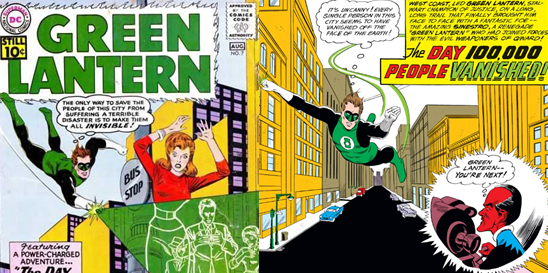
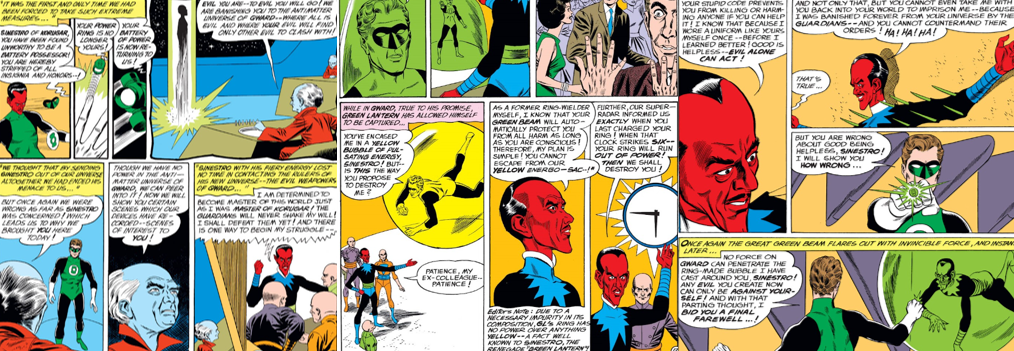
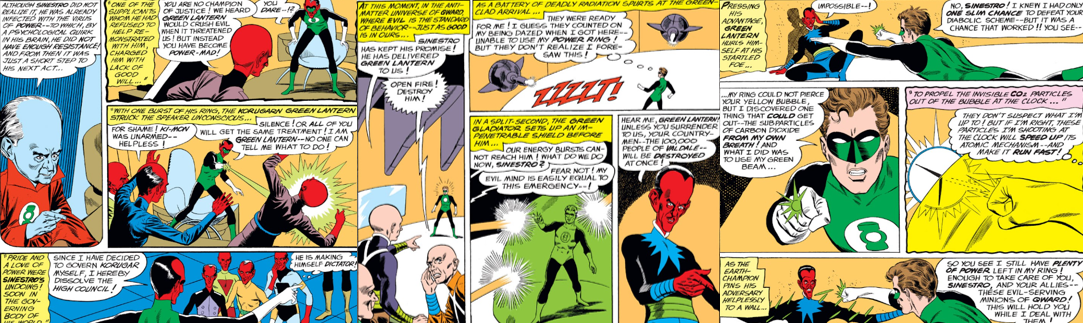



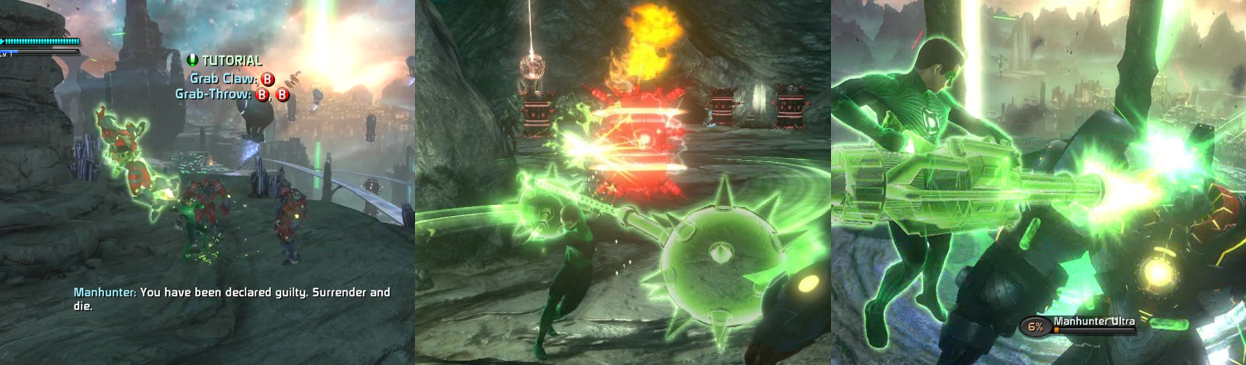

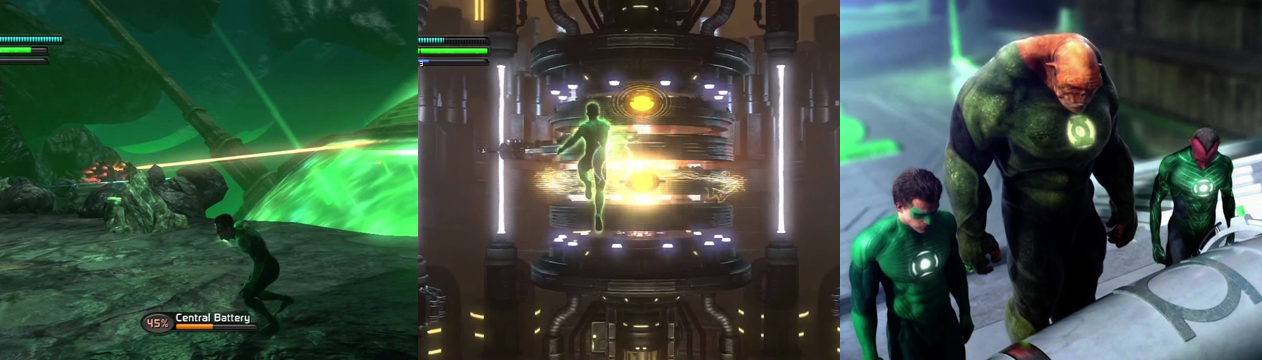
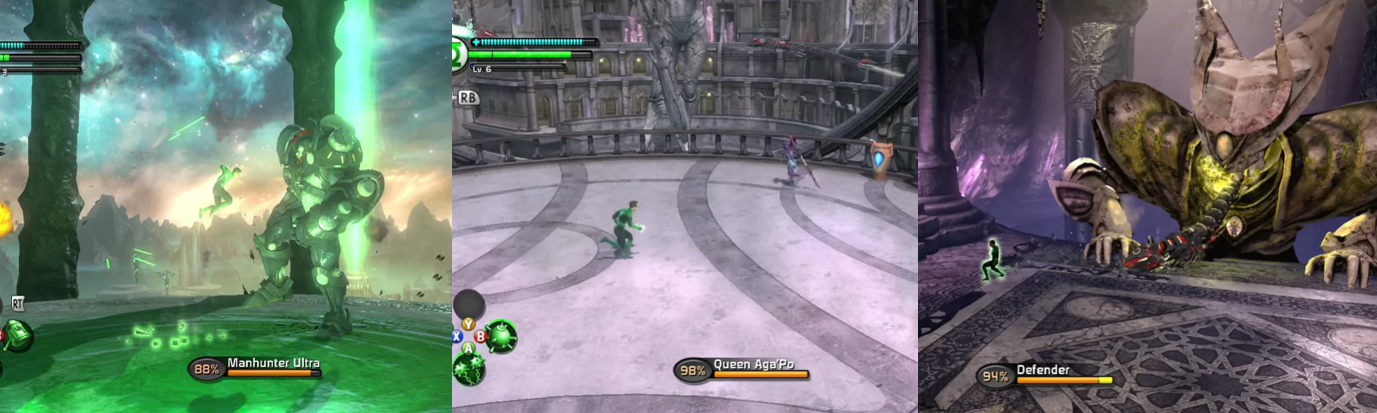





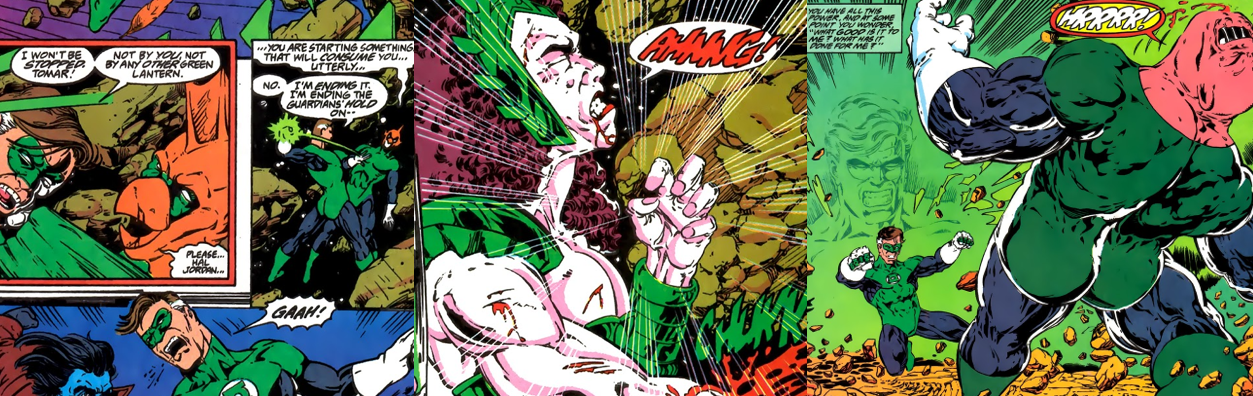

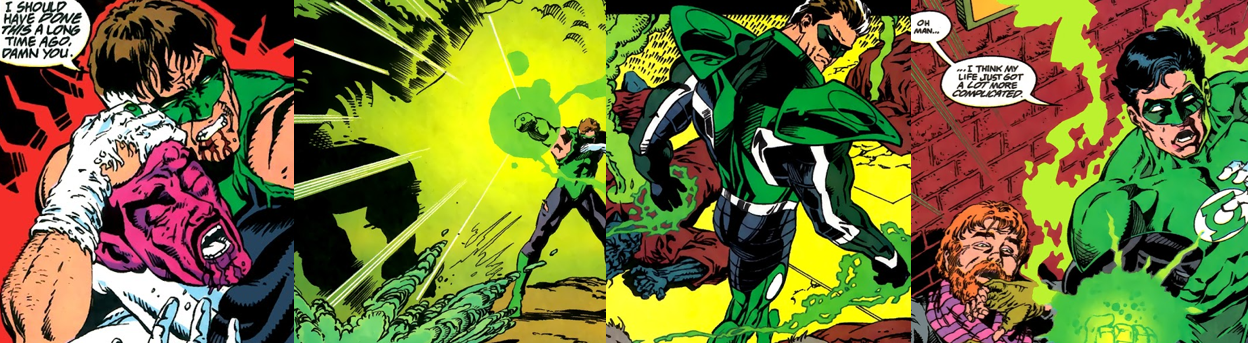
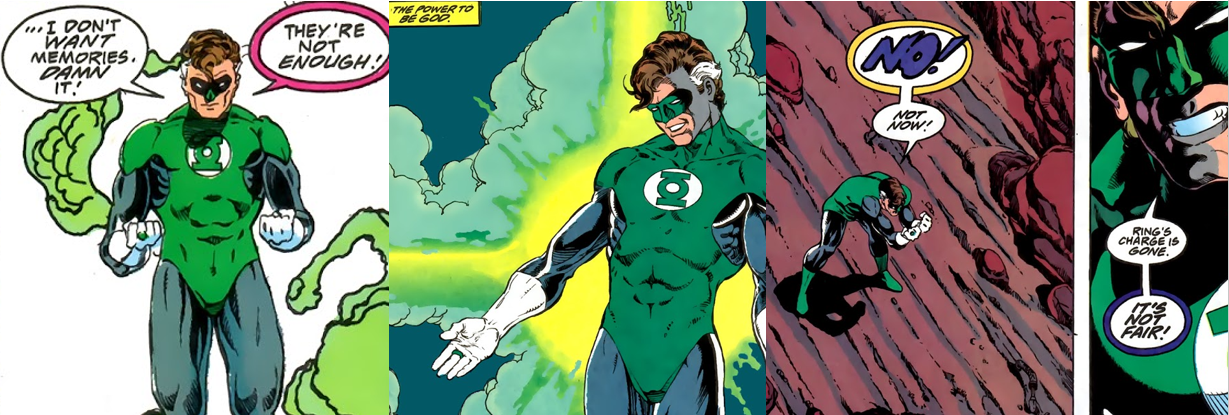
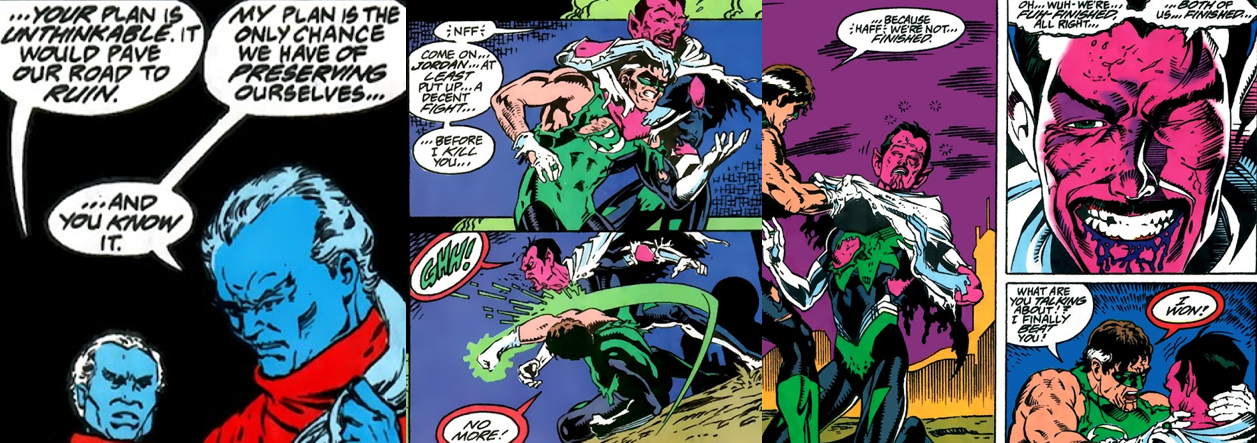
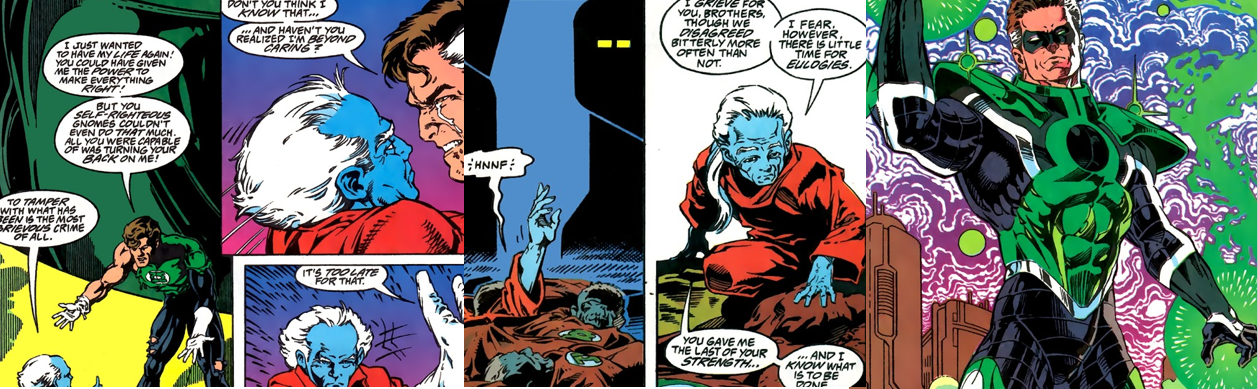




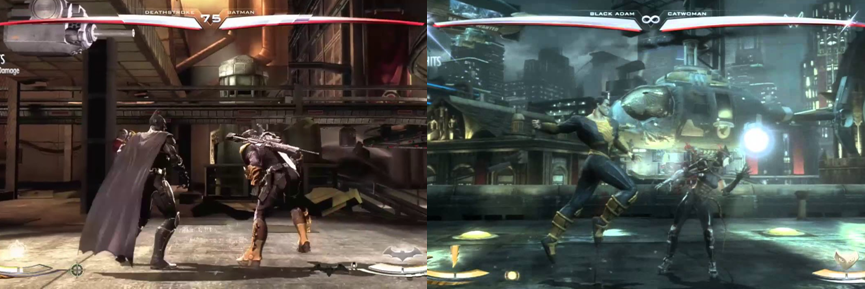

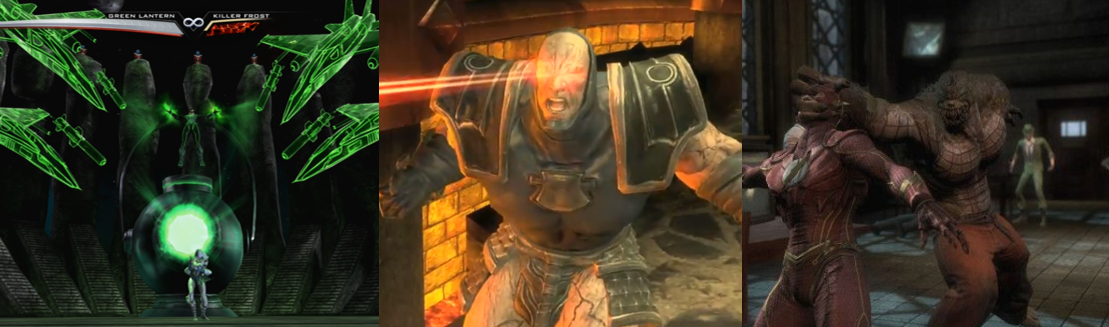
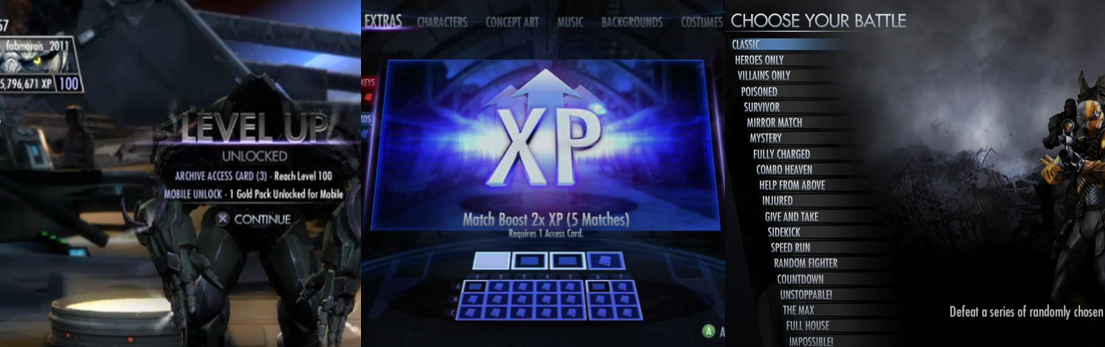
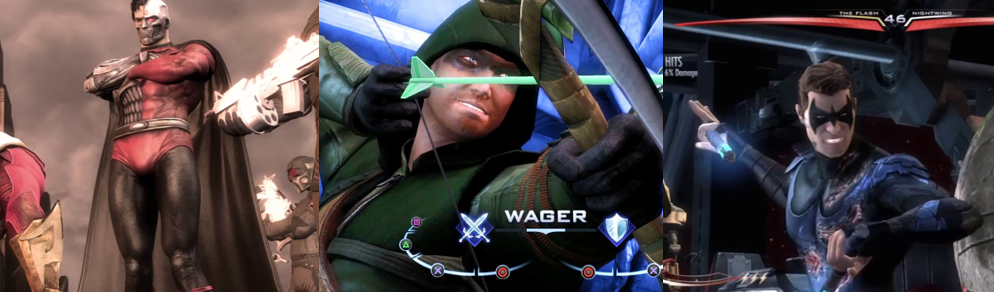
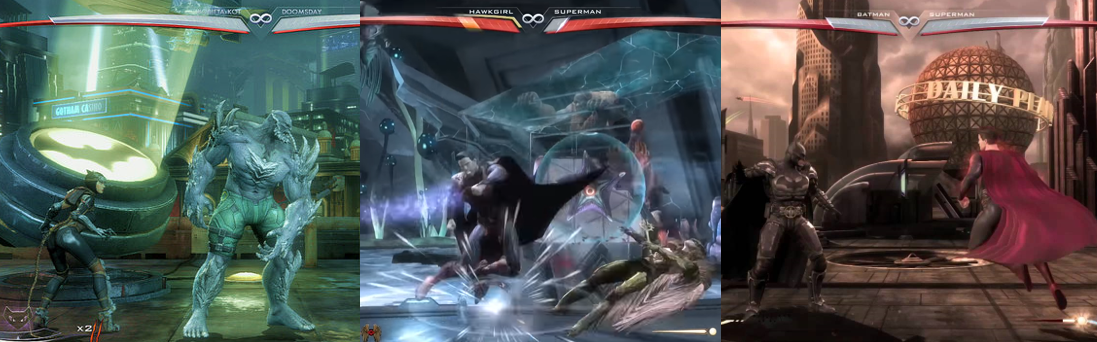





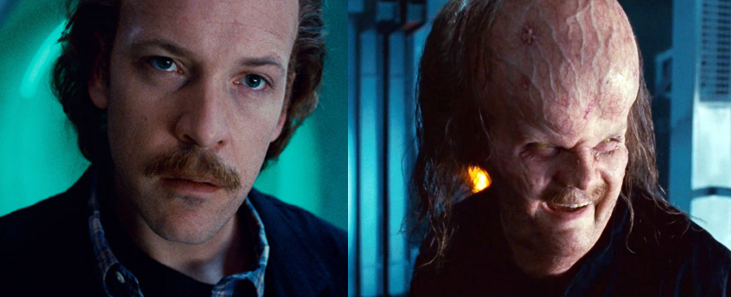
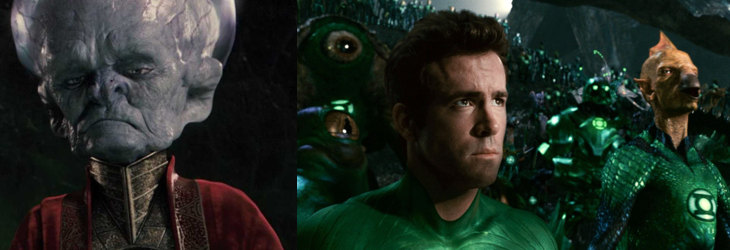
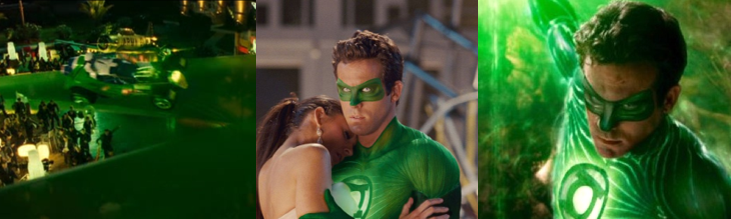


 Dr. K's Waiting Room
You must be logged in to post a comment.