January celebrates two notable dates in science-fiction history: “National Science Fiction Day” on January 2 to coincide with the birth of world renowned sci-fi writer Isaac Asimov, and 12 January being when Arthur C. Clarke’s HAL 9000 was created. Accordingly, I dedicate January to celebrating sci-fi in all its forms.
Released: 13 August 1953 Director: Byron Haskin Distributor: Paramount Pictures
Budget: $2 million Box Office: $2 million (allegedly) Rotten Tomatoes Scores:89% / 71%
Quick Facts: As one of the forefathers of science-fiction genre, it’s perhaps no surprise that Herbert George Wells’s seminal 1898 alien invasion story The War of the Worlds is so widely lauded in mainstream and academic circles alike. After the book gained widespread notoriety from a radio adaptation, George Pal spearheaded the film version, which noticeably differed from the source material and reimagined H. G. Wells’s Tripods as flying machines courtesy of Albert Nozaki and his award-winning visual effects. Heralded as a sci-ficlassic, inspired a follow-up television show, similarly-themed alien invasion movies, a slew of remakes and knock-offs, and a widely celebrated musical adaptation from Jeff Wayne.
The Review: After humanity decimated each other in two World Wars, the Earth was on the precipice of dangerous and terrifying times. Advancements in nuclear and atomic science saw devastating weapons created and stockpiled, which threatened to destroy all life on Earth. Yet, as the omniscient narrator (Sir Cedric Hardwicke) relates, there are beings in the universe far above humanity’s petty squabbles. Far away on the long-dead red planet, unseen and malicious Martians observed our world with curious and envious eyes. Determining that the Earth was their best shot at migration considering how cold, dead, and hazardous the other planets are, the Martians begin a methodical invasion of our world with the simple crash-landing of a red-hot meteor outside Linda Rosa, California. Naturally, this draws immediate attention from the locals, film crews, and the United States military, who struggle to contain the resultant flash fires and rope in visiting scientists like atomic expert Doctor Clayton Forrester (Gene Barry) to offer their insight. Dr. Forrester quickly discovers the meteorite is radioactive and guesses that it’s hollow, explaining why the impact didn’t destroy the town (or the whole planet). He is so intrigued by the arrival – and clearly captivated by local Sylvia Van Buren (Ann Robinson) – that he decides to stick around and investigate the object further once it cools down, graciously accepting the hospitality of Sylvia’s uncle, Pastor Matthew Collins (Lewis Martin. While Dr. Forrester enjoys the square dance, part of the meteorite suddenly unscrews and a strange, mechanical, snake-like periscope emerges, flash-frying the nearby guards when they try to make contact and knocking out all the electricity and phone lines in the town with a burst of magnetic radiation (what we would now call an electro-magnetic pulse/EMP).
Dr. Forrester is at the forefront when Martian flying machines attack the world.
As more of the objects arrive, the military rolls in to secure the crash site. Major General Mann (Les Tremayne) takes charge, ordering a cordon and authorising lethal retaliation against the invader. Pastor Collins, reasoning that the Martians must be a higher lifeform and thus closer to God, attempts to make contact and is immolated by their “heat-ray”, alongside most of General Mann’s troops, when the Martians emerge from their meteorite (actually a cylindrical travel pod) in sleek, manta-ray-like craft that appear to levitate on magnetic beams. The flying machines obliterate everything in their path, easily resisting gunfire, mortars, and even aerial bombardment thanks to their impenetrable force fields. Dr. Forrester and Sylvia flee in a small plane but crash-land in a field, taking shelter in a nearby farmhouse and using the brief reprieve to bond. While Dr. Forrester has no family, Sylvia comes from a large, close-knit family unit and is thus terrified of the destruction caused by the Martians, who slowly sweep across the world as more of their cylinders crash to Earth. When one lands right by the farmhouse, partially destroying it and briefly injuring Dr. Forrester, the strange, squat aliens investigate and Dr. Forrester learns that they are as fragile as humans and, after reconvening with the remains of the military and scientific community, that they’re entirely dependant on their awesome technology. Research on the Martian’s blood also shows they’re highly anaemic while the severed electronic “eye” Dr. Forrester recovers gives some insight into how they perceive the world and humanity, but little advantage is revealed from this. As the world’s nations crumble under the Martian attack, the survivors are driven far from their homes, with the world’s military and surviving governments forced to co-ordinate from makeshift camps with the strangely untouched Washington, D.C., where efforts to mount an effective counterattack are explored.
Though the atom bomb fails and all seems lost, the Martians are undone by Mother Nature herself.
With the Earth on the brink of complete destruction, it’s decided to unleash a far deadlier and more powerful version of the atom bomb. Interestingly, no one (not even Dr. Forrester) objects despite the incredible risk and soldiers, civilians, and reporters observe the blast from dangerously close proximity, seemingly unafraid of any lethal fallout. The devastating force is barely an inconvenience to the Martians, however, thanks to their forcefields, and civilians are ordered to evacuate to the perceived safety of the mountains. Dr. Forrester and his colleagues are thus given the unenviable task of coming up a solution to the problem, an arduous request considering it’s predicted the Martians will conquer the world in just six days, and one almost immediately scuppered when those left behind descend into madness. Rioting, looting, and violence flood the streets, with Dr. Forrester forcibly removed from his car and separated from his vital equipment, seemingly dooming humanity thanks to greed and fear. Concerned only with reuniting with Sylvia, who was similarly forced from a bus heading to the Rocky Mountains, Dr. Forrester recalls a story she shared with him from her childhood where she took shelter in a church and finds her amidst a gaggle of terrified survivors praying for a miracle. Their prayers are seemingly answered when the flying machines suddenly lose control and crash midway through blasting the remains of Los Angeles. The survivors cautiously flood the streets and watch, amazed, as the Martians succumb to the bacteria and diseases humanity has long developed immunity against. Thus, at the very last second, the world is saved not by force or weapons, but by the simplest organisms of all as the planet itself repels its vicious invaders.
Despite some differences from the book and some strange choices, the film remains a sci-fi classic.
I’ve read The War of the Worlds a couple of times, but I haven’t committed it to memory. This film, while largely similar to the book, its noticeably different in that it’s set in America, follows a named (and somewhat educated) central protagonist, and depicts the Martians hovering around rather than stomping through cities in their Tripods. While the Martians utilised flying machines in the book, they were rarely seen, yet the visual of these sleek, deadly craft spewing red death has become iconic in the sci-fi genre. The film also places also more emphasis on the atomic bomb, as I recall, with the weapon depicted as humanity’s last, best hope against the invaders, and many supporting characters are omitted. Dr. Forrester and Sylvia take shelter in a farmhouse, but the curate is missing. The Martians don’t spread their red weed to terraform the planet, don’t capture or consume people, and are never seen engaging with the Navy. The Martians are also depicted very differently than in the book. Rather than being bizarre, octopus-like creatures with a mass of tentacles and bulbous main bodies (essentially being all brain and little else), the Martians are stumpy, gangly creatures with long, spindly arms and weird, biomechanic eyes. This was a strange choice that makes the creatures look more ridiculous than intimidating, though the scene where one fondles Sylvia is still somewhat striking and the cold, efficient ruthlessness of the flying machines more than makes up for how ridiculous the operators look. Indeed, the film emphasises that the Martians are biologically unremarkable, doubling down when they succumb to simple bacteria, and are only fearsome because of their machines, making for a startling allegory for the arrogance and warmongering nature of humanity.
Final Thoughts: The War of the Worlds certainly earned its place as one of the quintessential sci-fi movies of the 1950s and beyond. It’s the classic story of aliens invading the Earth and set the blueprint for so many alien invasion movies, rip-offs, and parodies, and it all came from this loose adaptation of a centuries-old text whose message has only become more prevalent over time. The main showcase of the film might be the amazing special effects, but the character work is pretty good here, too. I liked Dr. Forrester as an unlikely hero. He knew enough to flee when faced with an overwhelming force and his first thought was also to learning more about their enemy than confronting it head-on, and to protecting others rather than giving in to fear and despair. Sylvia is largely here to look pretty, scream when the Martians attack, and lose herself to hysterics, but she gives Dr. Forrester strength and something specific to fight for and focus on. I enjoyed how stern but fair General Mann was and how utterly useless all our fancy weapons and military might were against this aggressive and advanced enemy. The visual of the Martians shrugging off an atomic bomb remains striking and seeing them slowly and methodically wipe out humanity across the world set the standard for later depictions of world-wide destruction. Sure, there are liberties taken with the text and the Martians themselves look kinda goofy, but their flying machines are now intrinsically linked with the story and have become a symbol of the genre. The War of the World’s message about the dangers of humanity taking their planet and lives for granted remains as true as ever, with us being hopelessly insignificant compared to Mother Nature, and the film remains a bleak, humbling narrative about how insignificant we are against such homegrown and outside forces.
My Rating:
⭐⭐⭐
Rating: 3 out of 5.
Pretty Good
Is The War of the Worlds one of your favourite sci-fi films? Did you like the changes made to the source material or were you annoyed to see the focus changed so much? Were you impressed by the special effects and the sleek flying machines or did you miss the lumbering Tripods? Do you believe alien life is seeking to conquer our world? Which version of The War of the Worldsis your favourite and how are you celebrating sci-fi this year? use the comments below to let me know, check out my other sci-fi reviews, and donate to my Ko-Fi to suggest other War of the Worlds media for me to cover.
January celebrates two notable dates in science-fiction history: “National Science Fiction Day” on January 2 to coincide with the birth of world renowned sci-fi writer Isaac Asimov, and 12 January being when Arthur C. Clarke’s HAL 9000 was created. Accordingly, I dedicate January to celebrating sci-fi in all its forms.
The Review: Bucky O’Hare is a 2D, sidescrolling beat-’em-up that essentially acts as a series finale for the cult classic cartoon. In it, up to four players battle across eight stages, fighting the Toad Empire, who have conquered planets in the “Aniverse”, imprisoned their inhabitants, and stolen the life force of the worlds for nefarious purposes. Players can pick from titular space rabbit Bucky, four-armed Dead-Eye Duck, Bucky’s strangely alluring first-mate, Jenny, and boisterous robot Android First Class/AFC Blinky, each voiced by the voice actors from the cartoon. While each is armed with a different pistol and has a different special attack, all four play exactly the same and your options are naturally limited to three buttons: attack, jump, and special. You can float for a short time by holding the jump button, occasionally hold fire to rapidly shoot (or melee attack up close), press jump and attack together for a jumping kick, and activate your character’s special move as often as you like. Bucky tosses a bomb, Dead-Eye surrounds himself with a temporary energy field, Jenny tosses an energy wave, and Blinky unleashes a flame-like blast. You cannot dash and, as far as I can tell, there are no co-op moves, but temporary power-ups, health restoring orbs, and extra life gold bars occasionally spawn from special doors. These briefly power-up your standard shot or your bomb to deal greater damage, though there are no other weapons to pick up, no objects to throw, and no explosive barrels or destructible objects to mix-up the gameplay. Two stages see you flying around on a jetpack and one has you barrelling through the Toad mothership on a spacebike, avoiding barricades and blasting enemies, though there are no bonus rounds to break up the monotony.
Sadly, there’s little innovation or to differentiate the characters in this mindless brawler.
Bucky O’Hare mimics the cartoon to an impressive degree, featuring fully voiced, partially animated cutscenes that include cameos from Willy DuWitt and Mouse (who never appeared in the show). Cutscenes progress the story and raise the stakes between each stage and the sprites are full of life and character, with the Toads fleeing in fear, marching along or saluting, and each playable character sporting colourful idle poses or being scorched by flaming hazards. Everything looks ripped right out of the cartoon and there’s generally always something happening in the background, from battleships looming by or burning up, to Toad tech filling the horizon or the mechanical depths of the heavily fortified Toad Star. Things are a tad clunky, however, as your sprite often disappears when respawning (though this might’ve been an emulation issue) and characters are quite sluggish to control. While most stages simply have you travelling from the left to the right, gunning down nigh-endless enemies, Stage 4 is an autoscroller that forces you along an unstable asteroid belt. You must jump when prompted to avoid falling when the asteroids crumble and fight to rescue Mouse, who makes traversing the level much easier by spawning grassy platforms (though you’ll still have to watch out for meteor showers). When jetpacking in Stage 3, you’re hard pressed to avoid the electrical hazards filling and darting across the screen, and bursts of flame or erratic burning rods often dog your progress when on the ground. Stage 2 introduces diagonal, sloping paths and sees you freeing captive rabbits before fending off enemies and wall-mounted missile turrets in a rising elevator section. Turrets attack from the background or rise from the sand, giant cannons fire explosive shots from behind barricades, electrical hazards sometimes creep across the floor, and enemies occasionally spawn from pods or leap in from passing ships to add to your troubles.
A colourful and fitting finale to the cartoon, but largely forgettable as an arcade game.
It’s quite impressive seeing how many enemies fill the screen in Bucky O’Hare. The Toad Empire use laser rifles, knives, grenades, and jetpacks and are bolstered by mechs, robots, mines, and starships. Most bosses are cumbersome and simple to defeat, however, such as Al Negator who fires a pistol and whips with his cybernetic tail. Toad Borg appears in Stage 2 and Stage 7, where electricity hazards add a bit more danger to his jumping punch, extending fist, and energy wave attack. After bringing down Stage 3’s climate convertor and taking out a gigantic, rock-like fish-thing, you battle the crazed Total Terror Toad. This dude jumps all over, blocking your shots, tossing a meat cleaver, and comically falling down the screen upon defeat. A handful of slippery, rock-hardened Toads guard Mouse in Stage 4, which is cleared by destroying a heavily armed Toad attack craft, which blasts across the screen and fills the arena with various laser blasts. After making short work of a strangely archaic, gear-tossing tank-like vehicle, Stage 5 culminates in a disappointingly simple fight against the Cyborg Spider, who wanders about firing energy bolts from its abdomen and summons web pillars. Although the race through the Toad mothership is exhilarating and includes a fight against a mechanical, shark-like submarine over boiling lava, the stage ends with a largely forgettable fight against a deadly Toad tank. This thing may be a huge target and might sport a second phase, but that’s just the gear mech again and it simply uses lasers and drill appendages to attack. Although you first encounter the Air Marshall on Stage 5, he flees after you destroy his fortified cockpit and largely avoids the fight in Stage 7. Instead, he floats about in his hovercraft and lets his minions fight for him, which is a bit of a letdown. The game then ends with a three-phase confrontation with Komplex-2-Go. At first, it stomps about causing splash damage with its energy bombs, then it loses its legs and causes flaming rods to rain down, before finally careening about the central core spewing debris and bursting into flames.
Final Thoughts: Bucky O’Hare may be a sadly forgotten beat-’em-up title and franchise, but you’re not missing out on all that much if you’ve never played this mindless brawler. While the presentation is top-notch, with the game perfectly aligning with and providing a fitting conclusion to the cartoon, the gameplay is needlessly tedious and simple. It’s mindboggling to me that the developers didn’t try to differentiate the characters more, like making Jenny faster or Blinky slower or Dead-Eye hit harder or shoot faster (he fours have four arms, after all!) It might’ve helped if the game had more power-ups, perhaps allowing you to call in other allies or the Righteous Indignation for assistance, or included a bonus game or two to rack up your score and compete against friends. While the sprites look fantastic and are full of life and colour, the backgrounds are painfully bland until the late game, with only a few memorable moments springled throughout (the asteroid belt, for example, and the Toad Star). I liked that the bosses sported text boxes and voice clips and were huge sprite, but they were disappointingly simple for the most part (though this may have been intentional to balance how grossly outnumbered players will be in this obvious coin-muncher!) Fans of beat-’em-ups will likely find Bucky O’Hare lacking compared to others in the genre, though it has a colourful appeal and is a decent enough way to waste about an hour of your time, especially if you’re a big fan of the cartoon and wanted some closure on it. It can’t be denied that it’s not as good as it could’ve been, though, or that it’s noticeably lacking compared to other brawlers of the time.
My Rating:
⭐⭐
Rating: 2 out of 5.
Could Be Better
Have you ever played Bucky O’Hare out in the wild? How do you think it holds up compared to other beat-’em-ups and the Nintendo title? Were you also disappointed that the characters all played the same? Which of the boss battles was your favourite? Do you agree that the game is lacking compared to other beat-’em-ups? Were you satisfied with how the game concluded Bucky’s story and would you like to see him back a comeback? What are some of your favourite sci-fi-orientated videogames? Feel free to share your memories of Bucky O’Hare in the comments and then donate to my Ko-Fi to suggest other sci-fi content for the site.
January celebrates two notable dates in science-fiction history: “National Science Fiction Day” on January 2 to coincide with the birth of world renowned sci-fi writer Isaac Asimov, and 12 January being when Arthur C. Clarke’s HAL 9000 was created. Accordingly, I dedicate January to celebrating sci-fi in all its forms.
Released: 10 September 1958 Director: Irvin S. Yeaworth Jr. Distributor: Paramount Pictures
Budget: $110 million Box Office: $4 million Rotten Tomatoes Scores:67% / 52%
The Review: What starts as a cosy night in the forest for “teenagers” Steve Andrews (Steven McQueen) and Jane Martin (Aneta Corseaut) quickly turns into an exasperating experience trying to convince their small Pennsylvania town of an unusual threat. Initially, Steve and Jane’s biggest concerns are making sure their relationship is legitimate. Jane seems reluctant to go too far with smooth talking Steve and he’s anxious to prove he’s not a hot-shot frat boy, dutifully keeping his hands to himself and offering to drive her back to town so he can apologise. However, Steve almost hits a panicked old man (Olin Howlin), who stumbles into the road after investigating a nearby meteorite crash. While poking around the red-hot rock, the old man witnessed the titular “Blob” seeping from the rock, which quickly affixed itself to his hand, driving him into a frenzy. Naturally eager to help, Steve loads him into his prized car and races to Doctor T. Hallen’s (Stephen Chase) office, unwittingly insulting fellow “teens” Tony Gressette (Robert Fields), “Mooch” Miller (James Bonnett), and Al (Anthony Franke) by outpacing Tony’s car. Although Steve gets the old man to Dr. Hallen in time, the doctor is stumped by the strange, parasitic growth on his hand, which has doubled in size and appears to be absorbing and dissolving the limb. After anesthetising the old man, Dr. Hallen asks Steve to find some clue as to what happened, causing Steve to attract kindly but authoritative Police Lieutenant Dave Barton (Earl Rowe) after accepting Tony’s challenge for a drag race. Luckily, Steve sweet talks his way out of it and makes amends with Tony’s crew, who reluctantly join Steve and Jane in discovering the remnants of the meteorite.
Steve and his fellow “teenagers” struggle to convince the town of the Blob’s threat.
While Tony and the others head to the cinema, Steve finds Dr. Hallen being consumed by the now larger and more voracious Blob. Rattled, Steve races to the police station for help, only to be met by aggressive scepticism from war veteran Sergeant Jim Bert (John Benson), who believes Steve’s talk of murder and monsters is an elaborate hoax. Dismissing Bert’s accusations, Dave checks out the doctor’s office with Steve, Jane, and Bert, finding it ransacked and Dr. Hallen missing, which only furthers Bert’s suspicions. Steve’s so flustered by what he saw and Bert’s accusations that he briefly questions himself, concerned that he somehow imagined the Blob, though Jane strengthens his resolve and he goes to recruit Tony’s crew in warning the town. Steve’s concerns only double when he spots his father’s (Hugh Graham) grocery store unlocked and he and Jane encounter the far larger and more bulbous Blob inside. They hide in the meat freezer and decide to set off the air raid sirens to get the town to listen. Surprisingly, most of The Blob is focused on this adolescent drama as Steve and the others desperately try to convince the town of the danger, with only Dave taking them seriously as Steve’s a good (if cheeky) kid who’s clearly terrified. Bert, however, is as unconvinced as the townsfolk, who constantly dismiss Steve’s warnings and regard the kids as delinquents pulling an elaborate prank. Jane’s father, Henry Martin (Elbert Smith), is particularly aggrieved by it all, seeing Steve as a bad influence, and Tony and his crew don’t help with that perception. Ironically, Tony and his friends are instrumental in stopping the Blob in the finale, working alongside Henry and even Bert to gather the town’s fire extinguishers. However, as many as forty deaths occur prior to that, primarily because the kids weren’t taken seriously.
Sadly, the titular Blob is largely absent and its effects haven’t aged very well.
And, I mean, why would they be? These “kids” all seem to be in their late twenties for starters and all they do is lounge around, having drag races and rotting their brains with bad horror movies (that, ironically, even the older townsfolk enjoy). Even when the townsfolk are warned of the danger, they’re more concerned about having their sleep disturbed and how they should dress for the crisis. It doesn’t help that Steve cannot accurately describe what he saw, mainly because it was so surreal and he barely caught a glimpse of the Blob as it devoured Dr. Hallen. There’s also no trace of the creature in the doctor’s office and any who encounter it (like an unsuspecting mechanic (Ralph Roseman)) are simply absorbed by the gelatinous creature. The Blob is an unknowable, mysterious thing that crash-lands in the forest near Steve and Jane. Silent and caustic, the Blob appears to be a parasite rather than a thinking, malicious alien organism, consuming living flesh and adding to its mass simply on instinct rather than actively stalking its prey. We barely see what the Blob is capable of as it mostly attacks offscreen, meaning we’re left relying on Steve’s shaken explanations and a few brief glimpses of the Blob. Although it’s accompanied by a jazzy theme song that’s as tone-deaf as some of the acting, the Blob largely disappears for a huge chunk of the movie as Steve runs around trying to convince people of the threat. Unsurprisingly, the amorphous creature’s effects have aged as badly as the re-dubbing peppered throughout the film, largely seen attacking miniatures or as stop-motion-esque goo badly spliced into the film. The creature is immediately said to be unstoppable after only minimal attempts to stop it. Bullets do about as much against it as acid, live wires, and fire, and that’s about all the townsfolk have to use, meaning they’re powerless to keep the animated glob from enveloping a diner Steve, Jane, and her well-meaning but naïve little brother, Danny Martin (Keith Almoney), shelter in.
Luckily, all it takes to stop the Blob are some fire extinguishers and the hope that the Arctic stays cold…
Of course, The Blob’s big showcase moment is its attack on the local cinema, where Tony and his crew enjoy a cheesy black-and-white horror flick with their girlfriends. Although they saw the remains of the meteorite, they’re clueless to the Blob’s threat but are begrudgingly convinced to help Steve and Jane warn the town, though their efforts are largely wasted until they cause a ruckus. While most of the town gathers outside in the shopping district, the cinemagoers remain glued to their film, unaware that the Blob has seeped through the vents and attacked the projectionist (Eugene Sabe). They soon realise what happened when the movie abruptly stops and the Blob oozes from the projectionist’s area, sending them fleeing and screaming into the streets. Sadly, we never get to see what the Blob does to those too slow to escape; we only hear from Dave that it’s a gruesome site. Enlarged to gigantic proportions, the Blob seeps from the cinema, finally convincing Bert of its threat, and summarily traps Steve, Jane, and Danny in the diner. Though Dave tries to electrocute the Blob, this just sets the diner ablaze, threatening a grisly end for those trapped inside. Luckily, Steve recalls that the Blob recoiled from the cold in the freezer and manages to radio Dave and have him gather up all the fire extinguishers they can find and aim them at the creature, successfully causing it to recede and freeze in record time. The film then abruptly ends with the frozen Blob being dumped in the Arctic by the Air Force and then shoehorns in a forced environmental message that warns that global warming will cause the creature to revive and threaten the world anew. Although the meat freezer scene established the Blob’s aversion to the cold, this is an extremely sudden and anti-climactic ending to a disappointingly dull B-movie that stretches logic to breaking point and leaves the movie on a cliff-hanger was certainly an ambitious choice, to say the least.
Final Thoughts: I vaguely remember watching The Blob many, many years ago. Or, at least, parts of it. But I grew up with the 1988 remake, which was a gruesome piece of body horror cinema that I still regard as one of the best remakes. Watching the 1958 original only reinforces that as this is a ridiculously dull and toothless B-movie sci-fi flick. While Steve McQueen makes for a good leading man, I didn’t believe for a second that he was a teenager, and his performance is hampered by the comical, overly theatrical performances rampant in 1950s movies. Jane was essentially a blank piece of wood, there to worry about Dr. Hallen’s dog, cling to Steve when frightened, and bolster his resolve when it faltered. I quite liked Tony and his crew; they were fun anti-heroes who came through in a pinch, but extremely underdeveloped as characters. Bert was the dirt worst, judging the kids as delinquents due to his prejudices and embodying the town’s dismissive and apathetic attitude towards the youngsters, who are seen as nothing but troublemakers. Sadly, we’re stuck with these boring-ass characters for most of the film as the Blob disappears after eating that mechanic and is only talked about until Steve spies it in the grocery store, grinding the film to a halt as we watch these “kids” desperately try to warn the town of the creature’s threat. When the Blob does appear, it’s an impressive and ambitious series of special effects that haven’t aged too well but are still more entertaining to watch than the lead actors. The cinema sequence is an all-time moment, for sure, but I liked the gooey Blob effects when it attacked people and slithered under doors. Sadly, The Blob is largely forgettable beyond this. The ending comes out of nowhere and is a masterpiece of convenience, the environmental message is lacklustre and tacked on, and the overall plot of the kids having to prove themselves just didn’t grab me.
My Rating:
⭐⭐
Rating: 2 out of 5.
Could Be Better
Do you consider The Blob a sci-fi classic? Did you enjoy the focus on the teens trying to prove the creature’s threat or did you always find it boring? Were you impressed by the Blob’s special effects or were you disappointed by its lack of screen time? Would you poke alien goop with a stick? Have you ever attended Blobfest? Would you like to see a new version of The Blob and how are you celebrating sci-fi this January? Leave a like and a comment with your thoughts, check out my other sci-fi reviews, and donate to my Ko-Fi to suggest other sci-fi content you’d like to see.
January celebrates two notable dates in science-fiction history: “National Science Fiction Day” on January 2 to coincide with the birth of world renowned sci-fi writer Isaac Asimov, and 12 January being when Arthur C. Clarke’s HAL 9000 was created. Accordingly, I dedicate January to celebrating sci-fi in all its forms.
Released: 10 February 1989 Director: Chris Walas Distributor: 20th Century Fox
The Review: If you thought watching a nightmare sequence of Veronica “Ronnie” Quaife (Geena Davis) suffering a gruesome childbirth in the previous film was bad, The Fly II doubles down by depicting another, very real birth, which convinced Davis to skip the film. Despite everything, Ronnie (Saffron Henderson) opted not to have an abortion, presumably out of her love for the tragically doomed Doctor Seth Brundle (Jeff Goldblum) and also because the deceptive Anton Bartok (Lee Richardson) gave her some assurances about the birth. As Brundle worked for Bartok Industries, it makes sense that Bartok would claim the miraculous (if flawed) Telepods, but he reveals his true colours early on when he has Doctor Jainway (Ann Marie Lee) remove the distraught Stathis Borans (John Getz) from the birth and watches on dispassionately as Ronnie dies delivering a ghastly little larval sac containing her son, Martin. With his staff watching behind two-way mirrors, Bartok observes Martin’s rapid growth, the result of his father’s unique genetic malformation, which also sees his DNA contain dormant mutated cells. Young Martin (Matthew Moore) grows at an accelerated rate and boasts a photographic memory and advanced intellect, though he never sleeps and the staff quickly become exasperated with him. Bartok encourages Martin to think of his as his dad and has Dr. Jainway and Doctor Frank Shephard (Frank Turner) administer regular placebos to placate him while they monitor his development. Even as a youngster, Martin (Harley Cross) questions these shots, which are clearly haphazardly administered, and is infected by an insatiable yearning for knowledge and curiosity. Martin constructs a fun little helmet for himself that foreshadows his later fly form and reprograms his access to the Bartok laboratory as easily as he solves mazes.
Brundle’s genetically altered son is drawn into completing his father’s work with the Telepods.
While exploring, Martin befriends a Golden Retriever (Unknown) and shares his fears of dying comparatively young because of “Brundle’s Accelerated Growth Syndrome”. Martin also sees his father’s Telepods for the first time. However, while Seth solved the issue that caused the machines to rip living tissue inside out, the Telepods are damaged and they destroy everything sent through them. Despite the best efforts of Doctor Trimble (William Taylor) and the others, the Telepods are next to useless and Martin is horrified when his dog is reduced to a rabid, grotesque monster by the process. On his fifth birthday, the physically adult Martin (Eric Stoltz) finally gets his privacy when a seemingly remorseful Bartok gifts him a home off site and asks him to help with the Telepods. Though reluctant, Martin’s won over by a deleted scene of his father, who talks about how the Telepods “improved” him. While working late, Martin seemingly solves the problem on a whim, successfully teleporting a telephone, and excitedly searches for some organic material to test. He bumps into beautiful data filer Beth Logan (Daphne Zuniga) and is inspired to teleport her cactus, though is ashamed and embarrassed when the machine still struggles with organic matter. Luckily, Beth’s won over by Martin’s boyish looks and awkward charm and agrees to help with the problem. Martin finally feels a human connection after five years in a clinical environment, only to be taunted by Bartok’s depraved head of security, Scorby (Garry Chalk). Beth encourages Martin to come out of his shell and invites him to a party elsewhere in the office, where he overhears talk of a malformed creature kept under observation and is distraught to find it’s his dog. Heartbroken, Martin lashes out at Beth, assuming she knew of the animal, and mercifully puts his friend out of his misery in a truly heart wrenching scene.
While Beth isn’t much but a pretty face, the villains are theatrically despicable.
After having grieving, Martin invites Beth back to the lab to apologise and impresses her by showing that he cracked the Telepods in very much the same way his father did: by admiring the “beauty of the process”. Relieved to make amends with Martin, and to be gifted a cute little kitten (Unknown), Beth takes their relationship to the next level (a somewhat questionable act considering Martin’s still technically five years old…) However, Martin’s puzzled when a wound from a routine injection gone wrong becomes alarmingly infected and explores options to cure his condition with the Telepods, discovering (much like his father) that he can substitute his mutated genes for healthy ones by sacrificing a life. While working, Martin’s confused when he suddenly can’t reach Beth and she’s transferred to another building. Thanks to his genius, Martin patches through to Beth’s boat house and is infuriated to learn that Bartok deceived him again and placed cameras in his home. Oddly, Scorby reveals this by handing Beth video footage of them having sex, something he really didn’t need to do but then The Fly II isn’t exactly subtle about how devious and evil its antagonists are. Dr. Jainway and Dr. Shephard are constantly scowling at Martin or talking down to him and Bartok openly discusses his plans to study Martin once his transformation kicks in, which happens at an alarming rate once Martin discovers the hidden cameras. Upon viewing footage (that shouldn’t technically exist) of his father’s deterioration, Martin confronts Bartok, hurt to see the man he loved as a father figure so cold-hearted and dispassionate about encouraging his transformation and using his unique genetic material (alongside the Telepods) to be at the forefront of a “new age” for the world.
Martin’s transformation ramps up by the end, creating a monstrous fly/human hybrid.
Enraged, Martin showcases superhuman strength and speed as he flees the complex, his face noticeably growing tumours that are disappointingly second rate compared to the first film. After begging for Beth’s help, Martin seeks out Stathis, who has become a drunken, cantankerous, crippled recluse who vehemently refuses to help them and openly mocks Martin. When Martin forces his way into his home (an opulent abode I assume Bartok paid for to keep Stathis quiet), Martin learns of his father’s fate and adamantly refuses to utilise the Telepods to cure himself at the cost of another. Stathis begrudgingly sends the two on their way and, despite him experiencing bouts of despair, Martin’s demeanour turns to spite and arrogance as his condition worsens. As a natural born genetic anomaly, Martin’s transformation is far less ghastly than his father’s (though he still pops out his eyeball for some fun body horror) as he forms a cocoon, one Bartok gleefully watches over after Beth calls him in desperation. Bartok’s elation turns sour when Dr. Trimble reveals Martin boobytrapped the Telepods and things go even worse when “Martinfly” bursts from his cocoon and goes on a rampage. Bartok’s intentions couldn’t be more explicitly evil. While he talks of ending concepts like surgery with the Telepods and advancing science and medicine with the machines and Martinfly’s unique biology, it’s clear he’s primarily interested in profit and power. He visibly scoffs at Martin’s affection for him during their confrontation and thinks nothing of manipulating the boy-man into doing his dirty work, focused entirely on the big picture and willing to sacrifice anyone, even his closest supporters, to get what he wants.
The Fly II abandons all subtlety for a grotesque gore-fest in the finale.
While Martin’s physical transformation is nowhere near as gruelling or disturbing as Seth’s, with the make-up effects being more subtle and oddly incorporating webbing, his demeanour noticeably changes much like his father’s. Martin goes from rage to anguish to smugness across a few scenes, embracing his transformation even as Beth is horrified by it. It’s quite rushed as most of the film prior depicts Martin as an aloof and unique but otherwise healthy young man, so I think it might’ve been better to start his metamorphosis a bit sooner just to see how it changes him physically and emotionally. Martin forces a large cocoon to expediate his transformation and emerges not as a sickly, asymmetrical monster wracked with pain and struggling to survive but as a monstrous, four-armed brute at the peak of his strength. Martinfly is large, powerful, and quick, easily manhandling his prey, fleeing to the rafters, and navigating the facility’s ginormous ventilation shafts. Like his father, Martinfly retains a degree of intelligence, certainly enough to tell friend from foe and to drag Dr. Shephard’s dead body around to unsuccessfully use his key card. While the Martinfly puppet and animatronic are impressive, The Fly II abandons all the subtlety and emotional nuance of the last film to present a monster movie finale, with Martinfly strangling Dr. Shephard to death, breaking Scorby’s spine and tossing him like a sack of potatoes, and absolutely wrecking a poor, unassuming security guard (Pat Bermel) with his projectile “vomit drop”. The corrosive “fly vomit” melts this dude’s face to a screaming, steaming, skeletal mess (“Medical emergency”, indeed!) and leaves him shrieking on the floor as a barely breathing corpse. Another security guard (Andrew Rhodes) gets his head (and body) crushed by an elevator thanks to Martinfly, meaning The Fly II certainly focuses more on gore and a hefty body count by the finale.
Martinfly’s gruesome rampage sees him returned to normal and Bartok receive his just deserts.
Though he insists on capturing Martinfly alive for further study, Bartok’s not a complete fool. He has the Telepod lab sealed, keeps Beth as leverage, and orders Scorby and his men to cover every possible entrance. Naturally, Martinfly easily gets the drop on them and murders them in gleefully disturbing ways, pausing only to pet a dog (Unknown) and share a glance with the horrified Beth. While Beth showed some moxie when they first met and is a pretty face who offers Martin nothing but love and support, she’s easily overpowered by even Bartok when she wrestles with him over Scorby’s pistol and is basically here just to look good and scream when heads burst like water balloons. She has a touching romance with Martin but it’s a shadow of what Ronnie and Seth had in the first film. Martinfly dwarfs Brundefly, though, being a hulking, malicious monster driven to avenge himself on those who’ve wronged him and cure his condition. While Bartok threatens to shoot Beth and even blasts Martinfly a couple of times, the guy’s one monologue away from being a moustache-twirling James Bond villain and completely underestimates Martinfly’s durability and cunning. Martinfly grabs Bartock, forces him to input the Telepod code (fittingly enough, “DAD”), and muscles him into a Telepod, encouraging Beth to initiate his gene-swapping program. Despite Bartok’s protestations, Beth complies just as Bartok’s back-up arrives, successfully achieving what Seth couldn’t and swapping Bartok’s healthy genes for Martinfly’s mutated ones. This sees Bartok reduced to a misshapen, maggot-like mess and Martin fully restored (if covered in disgusting goop). Fittingly, the Bartok-Thing is placed into the same dungeon as Martin’s dog and left to endure an agonised existence as another failed experiment of the Telepods.
Final Thoughts: I feel like I’ve ragged on The Fly II a bit more than I intended. It’s not as good as the last film, that’s for sure, but I think it’s better than many realise. Much of the plot is essentially the same, with a genius scientist struggling with a genetic abnormality trying to perfect teleportation, embarking on a romance along the way and transforming into a hideous creature by the end. However, The Fly II is definitely much more of a monster movie, especially in the finale, and has little of the same disturbing subtext of the last film. I guess it could be read as an AIDS allegory as Martin suffers for the sins of his father much like someone who’s HIV positive, but much of this subtlety is swept aside in favour of a deception so obvious it’s almost explicit and some delicious gore. Eric Stoltz does his best, portraying Martin as brilliant but shy and awkward, but pales in comparison to Jeff Goldblum and only really shines during his “I’m getting stronger!” speech. I majorly crushed on Daphne Zuniga as a kid and she’s still gorgeous now, but there’s not much for Beth to do here, meaning the villains steal the show with their smarmy, conceited, and unashamedly evil depictions. The late Lee Richardson seems to be relishing the role, tackling it was a theatrical glee that makes Bartok a truly despicable character. While I found Martin’s transformation lacklustre compared to the last film (the cocoon, especially, feels very cheap and rushed), I do have a soft spot for Martinfly. A powerful and nigh-unstoppable man/fly monster, Martinfly is the stuff of nightmares and yet seems more ungainly than Brundlefly as the creature is perhaps a bit overdesigned and veers too far into the monstrous. Still, The Fly II is a decent enough epilogue to the first film (if you can forgive the plot hole concerning Ronnie’s abortion) and has a lot of gruesome moments for gore fans even if it is a much weaker film overall that Cronenberg’s masterpiece.
My Rating:
⭐⭐⭐⭐
Rating: 4 out of 5.
Great Stuff
Do you also consider The Fly II to be under-rated and unfairly forgotten? Did you enjoy Eric Stoltz’s performance or do you agree that he struggled compared to Jeff Goldblum? Were the villains a bit too obvious and one-dimensional for you or did you like seeing them be unapologetically awful? Are you a fan of the monstrous Martinfly or do you think it was over designed? Would you like to see another film set in this continuity? How are you celebrating sci-fi this January? Leave a like and comment below with your feedback, check out my other sci-fi reviews, and donate to my Ko-Fi to suggest other sci-fi movies for me to the site.
January celebrates two notable dates in science-fiction history: “National Science Fiction Day” on January 2 to coincide with the birth of world renowned sci-fi writer Isaac Asimov, and 12 January being when Arthur C. Clarke’s HAL 9000 was created. Accordingly, I dedicate January to celebrating sci-fi in all its forms.
Released: 30 June 1995 Director: Bryan Spicer Distributor: 20th Century Fox
The Review: Mighty Morphin Power Rangers: The Movie not only has a mouthful of a title but is technically separate from the ridiculously popular show. While it clearly takes place between the show’s second and third seasons, with the line-up placing Rocky DeSantos as the Red Ranger (Steve Cardenas), Adam Park as the Black Ranger (Johnny Yong Bosch), Aisha Campbell as the Yellow Ranger (Karan Ashley), and fan favourite Tommy Oliver/The White Ranger (Jason David Frank) as the fearless leader, the movie was almost instantly rendered non-canon when the third season retold some of it. Still, I always viewed it as a big-budget expansion of the show, with the awesome new, far more armoured suits and the redesigned command centre simply a big-screen glow-up for what we saw on TV. Angel Grove has been protected by the Power Rangers for some time but the six heroic teenagers are just as giving to the community in their civilian guises as they partake in a charity skydive to raise money for the local observatory, ostensibly to aid researching Ryan’s Comet, which is passing by soon. Billy Cranston/The Blue Ranger (David Yost) and Kimberly Hart/The Pink Ranger (Amy Jo Johnson) join their friends, alongside bungling bullies Farkas “Bulk” Bulkmeier (Paul Schrier) and Eugene “Skull” Skullovitch (Jason Narvy), in completing the dive, amazing youngster Fred Kelman (Jamie Croft) and his strangely unnamed firefighter father (Peter Mochrie), who particularly praise Tommy for his efforts. While roller skating around the city, the titular teens pass by a construction site right as Bulk and Skull land off course, though they miss when the workers unearth a mysterious, ancient egg.
When Ivan Ooze endangers Zordon, the Power rangers must journey to restore their powers.
This doesn’t escape the attention of the Power Rangers’ mentor and father-figure, Zordon (Nicholas Bell/ Robert L. Manahan), who immediately orders his robotic assistant, Alpha 5 (Peta-Marie Rixon/Richard Wood), to bring in the Power Rangers to warn them. The egg also attracts the malevolent Rita Repulsa (Julia Cortez/ Barbara Goodson) and her equally malicious lover, Lord Zedd (Mark Ginther/Robert Axelrod), who teleport in to unleash Ivan Ooze (Paul Freeman), a sorcerer so powerful that even Zordon fears his wrath. Sealed away eons ago for his wicked ways, Ivan immediately sets to work avenging himself on his captor, promising Rita and Zedd that he will destroy Zordon’s entire legacy as recompense. Since Ivan is an accomplished shapeshifter, Zordon’s champions are caught off-guard when they arrive at the construction site and end up battling Ivan’s Oozemen (voiced by Neil Kaplan). Initially, the teenagers battle the Oozemen in their base forms, giving us a taste of how far these youngster’s martial arts and choreography has improved over the show. Indeed, I had trouble spotting when or even if the actors were subbed out for stunt workers, which helped the fights to be more tactile and believable even with all the physics defying, cartoonish nonsense. Eventually, the teenagers morph into their amazing big screen suits, which sport some new gadgets to inspire a wave of new toys. Although the Power Rangers triumph over the Oozemen, Ivan infiltrates the command centre, disables Alpha 5, and leaves Zordon close to death, robbing the Power Rangers of their suits, their powers, and their Thunderzords. After somehow trekking to the command centre, the depowered Power Rangers are horrified by the state of their mentor and jump at the chance to save Zordon and regain their powers, regardless of the risk, by braving a seemingly one-way trip to Phaedos, where a legendary “Great Power” sleeps (though none have ever survived the quest to obtain it).
Despite the looming, personal threat, there’s little chance for character progression or emotional arcs.
Although the Power Rangers are largely interchangeable, given few chances to showcase even their admittedly one-dimensional personalities (there’s no chance for Billy to be smart and scientific, for example), Tommy stands out thanks to his undeniable charisma. I was impressed by the performances here, however, as the actors are much more comfortable and confident by this point, though there’s still plenty of over-the-top deliveries and exaggerated gestures to mimic the Japanese actors. The movie gives the actors more of the spotlight since they (and/or their stunt doubles) are fully carrying the plot and action rather than recycling Japanese footage, which again helps everything flow much better. While all six are shaken by Zordon’s condition and eager to help, Kimberly is particularly rattled and the group are very aware that time is against them. When wandering around Phaedos, the teens are aided by Dulcea (Gabrielle Fitzpatrick), a formidable warrior and ally of Zordon’s who saves them from Ivan’s Tengu Warriors and partially empowers them with an animal spirit, granting them new (and sadly quite disappointing) colour-coded ninja outfits. While the others are emboldened by this, Adam is disheartened that he’s been lumbered with the frog, though embraces his animal spirt after a pep talk and kiss from Dulcea. While the six quest to fully unlock their “Ninjetti” powers, Angel Grove is splintered by Ivan’s mind-controlling ooze, which infects Fred’s dad and the other adults and turns them into mindless slaves to produce more ooze and dig up Ivan’s Ecto-Morphicons. While the other kids enjoy having the run of the city, Fred urges them (and Bulk and Skull) to help their parents after spying on Ivan’s operation and learning that he’s ordered the adults to march to the construction site and “leap to their doom”.
The theatrical Ivan Ooze steals every scene with his over the time, pantomime-worthy performance.
Rather than offering a non-stop, action-packed, big screen Power Rangers adventure, the movie strips them of their powers and forces them to undergo a journey to replenish their power source. They face a ticking clock to accomplish this thanks to Zordon’s health rapidly deteriorating and Ivan’s plot to unearth his machines and destroy the world but have little in the way of individual character arcs. There is no dissension amongst the Power Rangers and they never argue about anything; they remain steadfast in their determination to stay optimistic and save their mentor. This means characters like Rocky and Aisha largely fade into the background as neither have the same emotional reaction to Zordon’s fate as Kimberly, question their abilities like Adam, or have Tommy’s charisma. In fact, there’s more in-fighting between the villains as Ivan, after leaving Zordon near death, barges into Rita’s Moon base and traps her and Lord Zedd in a snow globe, forcing their minions, Mordant (Jean Paul Bell/Martin G. Metcalf) and Goldar (Kerry Casey/Kerrigan Mahan), to join him. There’s little for these two to do except spout one-liners and bow to Ivan’s whims, and it’s a shame to see Rita and Zedd usurped so easily as they look great here. While Ivan looks ridiculous and is often joined by some horrendous visual effects, Paul Freeman is absolutely hamming it up, cackling maniacally, chewing the scenery, and delivering a performance so over-the-top that would make any seasoned pantomime veteran blush! Rather than exuding power, authority, or terror, Ivan is a theatrical and flamboyant villain who delights in playing dress up and bending others to his will, relishing the chance to avenge himself and fully confident in his ability to do so, to the point of arrogance.
As great as the new suits are, they’re sadly side-lined for awful ninja outfits and atrocious CGI Zords.
While I love the big-screen paint job given to the Power Rangers’ suits, they’re sadly absent for a big chunk of the film as the team is depowered by Ivan’s attack. The suits are far more detailed and layered, sporting armour, headlights, special visors, and other nifty gadgets for the big screen. When morphed, the team bust out all the crazy, colourful attacks from the show, defying gravity and physics and relying on teamwork to triumph. However, there’s a distinct lack of explosive sparks thanks to Ivan’s goons being made of sludgy ooze and it takes all movie for us to get a kaiju-sized battle (though this benefits the pacing, to be fair). When on Phaedos, the team are attacked by the Tengu Warriors, bird-like monsters that flap about in unconvincing suits but are at least being whisked along by wires and such. Unfortunately, the Ninjetti are a massive downgrade and little more than coloured gi that turn them into rainbow ninjas. While they’re encouraged to receive new spirit animals, the team are still lacking their full power and must battle past rock warriors that are just as visually disappointing as the Tengu Warriors since they flop and flail about the obvious sets and are crushed by polystyrene boulders, chopped in half with dodgy CGI, and dissolved in a nearby stream. Once the guardians are vanquished, the team reach the Great Power and are fully restored, ditching the awful ninja outfits for their armoured suits and fully unlocking their Ninjetti powers. Beyond providing them with new Zords, though, this largely amounts to them spouting the word “Ninjetti” every time they launch an attack or do anything and is clearly an excuse to sell new toys to kids. Still, it’s a great moment to see them back in their suits, even if the sultry Dulcea is unable to aid them since she would face the same rapid decline as Zordon if she left Phaedos.
A knee to the crotch ends the butt-ugly CGI finale and allows our heroes to revive their mentor.
Although he looks ridiculous, Ivan is a significant threat as he easily disables Zordon, destroys the command centre, and usurps Rita and Zedd, allowing him to force Angel Grove’s adults into unearthing his Ecto-Morphicons. While Fred, Bulk, Skull, and the other kids desperately race to intercept the adults, barely surviving when the Ecto-Morphicons endanger their monorail and Fred commandeering a fire hose to push the zombie-like crowd back, the newly empowered Power Rangers swoop in to battle the Ecto-Morphicons in their all-new Ninjazords. Unfortunately, while the film had been doing a great job of upgrading the show’s practical suits and “Suitmation” aesthetic, it completely drops the ball for the finale by rendering the Ecto-Morphicons and Ninjazords as fully CGI creations (save for some sparse model shots and scenes of the Power Rangers in their cockpits). This was an absolutely atrocious decision as the CGI looks terrible, with the giant machines resembling bad videogame graphics and lose all sense of weight, reality, and appeal since they’re too shiny and too cartoony. It’s a real shame as the finale could’ve been a fun, kaiju-style battle between the mechs but it instead looks embarrassing and laughable. Although the Ninjazords destroy Scorpitron, Ivan bonds with Hornitor and reforms it into a gigantic, unconvincing CGI version of himself. Overwhelmed, the Power Rangers desperately form the Ninja Mega Falconzord but find themselves outmatched by Mecha-Ivan’s pure power. Luckily, the Blue Ranger remembers Ryan’s Comet and suggests luring Mecha-Ivan into the comet’s path. This forces the Ninja Mega Falconzord to get uncomfortably close to the maniacal sorcerer and the Yellow Ranger to amusingly smash a big, red emergency button to deliver a knee to Ivan’s balls and send him hurtling towards the comet, with both being destroyed on impact. Ivan’s death releases his hold on the adults, but the Power Rangers are distraught to find the Zordon has perished. Luckily, Dulcea taught them to overcome any obstacle with their sheer willpower, so they join hands and summon the Great Power to restore Zordon, and the command centre. In the aftermath, Angel Grove rejoices, and Rita and Zedd quickly reclaim their throne from the ambitious Goldar, determined to continue their own plans for conquest.
Final Thoughts: I swear I remember seeing Mighty Morphin Power Rangers: The Movie in the cinema back in the day, but I have no record of that so I must be thinking of when we rented or recorded it on VHS. The Power Rangers were the hottest thing when I was a kid and I was well into it, especially for the show’s first two seasons. After that, and this film, I dropped off and rarely paid much attention beyond videogames and specials and such, but this movie stuck with me despite that. Many of Ivan’s more bombastic lines are very memorable thanks to Paul Freeman’s absolutely glorious performance. The guy is hamming up being under all that make-up and it’s a delight every time he’s onscreen, even when Ivan’s doing wacky shit like whipping up ooze for the adults. Considering how cringey the show could be, I was very impressed by the lead performers, who delivered their lines much more convincingly and had more opportunity to showcase their physicality in the fight scenes since the movie doesn’t recycle any Japanese footage. As great as the new suits look, though, it’s a shame the characters aren’t given more chances to shine individually or as a team. They have a quest and they complete it there’s little character progression or emotional depth beyond them mourning Zordon. Like, why not have Kimberly descend into despair about Zordon to bring her and Tommy closer or have Rocky lash out in anger due to the emotions. I guess that would be too heavy for kids to handle so the film opts for a surface level depiction of this and focuses more on sending a message about believing in yourself. Sadly, Mighty Morphin Power Rangers: The Movie lacks the same punch as the show since it opts for ugly-ass CGI mechs for the finale, completely losing the Suitmation spirit of the show to try and be bigger and better. This alone is enough to cost the film a star, in my opinion, as the ending completely falls flat because of this god-awful, cartoonish CGI. Otherwise, this is a fairly harmless kids’ adventure that does a great job of bringing the TV show to the big screen, even if it’s not doing much more with the formula and is clearly trying to sell new toys to impressionable kids.
My Rating:
⭐⭐
Rating: 2 out of 5.
Could Be Better
Did you enjoy Mighty Morphin Power Rangers: The Movie as a kid? How do you think it holds up today and what did you think of the CGI Zords? Were you also a fan of the new, armoured costumes and disappointed by the ninja look? Do you agree that Paul Freeman stole the shole or did you find him a little too over the top? Which of the Power Rangers movies and incarnations is your favourite? Let me know your thoughts on Mighty Morphin Power Rangers: The Movie down and donate to my Ko-Fi to fund more Power Rangers content.
January celebrates two notable dates in science-fiction history: “National Science Fiction Day” on January 2 to coincide with the birth of world renowned sci-fi writer Isaac Asimov, and 12 January being when Arthur C. Clarke’s HAL 9000 was created. Accordingly, I dedicate January to celebrating sci-fi in all its forms.
Released: 15 August 1986 Director: David Cronenberg Distributor: 20th Century Fox
The Review: I think it’s fair to say that, for shy, insecure recluse Seth Brundle (Jeff Goldblum), meeting Veronica “Ronnie” Quaife (Geena Davis) at a Bartok party was love at first sight. Cradling a glass of Scotch and claiming to be working on something that’ll “change the world and human life as we know it”, Brundle is excited to discuss his work with the beautiful Ronnie, misreading her interest as anything other than a story for Particle Magazine since, by his own admission, he “doesn’t get out much”. Equally, I think it’s fair to say that Ronnie’s intrigued by Brundle’s doe-eyed naivety; she later admits that he’s “very cute”, indicating that she was attracted to him despite his somewhat bumbling nature and acute travel sickness. This, and the perception that Brundle is a harmless cook, drives her to visit his isolated laboratory/apartment, housed within a rundown building in what looks like a pretty rough area of town (red flags if I ever saw them). Once there, Ronnie immediately regrets her decision upon seeing Brundle’s sparse apartment, which is the furthest thing from a clinical, scientific setup you can imagine. Brundle, however, is a closet showman as he tries to impress with his piano skills and introduces her to his revolutionary Telepods. While Ronnie’s unimpressed by the “designer phonebooths”, Brundle’s extremely protective of them, even the “clunky” prototype, since he literally cobbled them together from bits and pieces of other Bartok technology. Yet, Brundle isn’t some hack or fraud; Stathis Borans (John Getz) later reveals that Brundle has a distinguished scientific career and almost won the Noble prize for Physics at just twenty-two! It seems, then, that Brundle is being unnecessarily humble regarding the Telepods, which he controls via a simple computer interface and voice recognition software and which are apparently so efficiently designed that they cause no power drain to his apartment or the immediate area.
While Brundle and Ronnie grow closer and solve the Telepod enigma, Stathis threatens their relationship.
Ronnie, however, is incredibly sceptical of Brundle’s claims to be able to teleport inorganic matter between Telepods. However, when she witnesses it after seductively handing over her stocking, Ronnie immediately recognises that they’re an exciting scientific breakthrough and begins grilling Brundle, causing him to panic when he realises that he’s misread the signs and prematurely revealed his project. Thus, Brundle’s relieved when the creepy, condescending Stathis dismisses Ronnie’s account, initially believing Brundle’s a “con man” before spitefully running with the article after the two become lovers. Brundle offers Ronnie the chance to follow his work more closely, eager to publish a complete record of his world-changing invention and, intrigued, she agrees. However, ever the curious journalist, Ronnie questions the teleportation process, so Brundle naturally demonstrates the system’s fatal flaw by teleporting a baboon (because I guess lab rats or rabbits are too hard to come by!) While Ronnie is horrified when the process turns the baboon inside out, Brundle is both grief-stricken and enraged by the continued failure, blaming himself for the flaw since the computer is only following his commands. Luckily, he gets an intense and passionate sermon on the “flesh” when Ronnie, smitten by his intellect and drive, seduces him. This sexual escapade inspires Brundle to realise that the computer is being too analytical about organic matter, so he excitedly rewrites his program and is elated when the second baboon is successfully teleported. While Brundle and Ronnie celebrate and begin a whirlwind romance, the jealous Stathis descends into a malicious tantrum, angrily confronting Ronnie and threatening to expose Brundle’s work just to get back at them. Ronnie’s forced to pay her editor and former lover a late-night visit to try and reason with him, leaving poor Brundle to drink himself into a stupor. Drunk, believing Ronnie is cheating on him, Brundle spontaneously decides to teleport himself, completely unaware that a seemingly harmless housefly has snuck into the machine with him.
Brundle undergoes a slow but horrific transformation after a teleportation mishap.
Though Ronnie allays his fears regarding Stathis, she’s alarmed to learn about this and relieved to find he’s unharmed. Her relief turns to amazement when Brundle immediately undergoes physical changes, suddenly becoming far stronger, having more stamina, and being more excitable than ever, After being physically exhausted by his sexual appetite and discovering coarse hairs on his back, Ronnie reacts with horror when Brundle suddenly urges her to undergo the process, believing the Telepods purified his genes and made him superhuman, only to lash out with anger and take to the streets to find someone more willing, leaving her devastated. Brundle impresses barfly Tawny (Joy Boushel) with his gruesome physical strength and Telepods, though he’s further frustrated when she also refuses to use the machines and when Ronnie reveals that he’s sprouting insect hairs. Drunk on his newfound physical strength and ignoring Ronnie’s concerns about his health and erratic behaviour, Brundle throws her out in a rage, only to beg her to visit him some time later, his condition having noticeably deteriorated. After realising Ronnie was right when his fingernails fall off, Brundle is horrified to discover that his Telepods spliced him and the fly on a molecular level and surmises that the foreign DNA is manifesting as a “bizarre form of cancer” that’s causing gruesome tumours and decay. Terrified, Ronnie begs Stathis for help, those he’s disgusted upon viewing footage of the rapidly worsening Brundle, whose despair is replaced by a manic glee as he finds he can scale walls and vomit a corrosive enzyme to eat, now excited to be transforming into a unique lifeform he dubs “Brundlefly”. Though Brundle’s mental health degenerates alongside his body and he laments his declining humanity, he works tirelessly on a solution using his Telepods, only to be wracked by agonising spasms and to realise his only viable option is to sacrifice a healthy life. Ronnie’s nightmare only worsens when she finds she’s pregnant and, fearful that the baby could be contaminated by Brundle’s mutated genes, struggles with telling the increasingly monstrous and animalistic Brundle of her plans for an abortion.
Brundle’s initial delight at his superhuman abilities soon turns to despair and madness.
The Fly is very different from the original film, and the source material, replacing concerns about nuclear annihilation with a very blatant AIDS analogy and marrying the fear of scientific curiosity with the tragedy of watching a loved one succumb to a cancerous disease. For me, The Fly is one of the quintessential examples of how to do a remake as it takes the basic premise of the book and adds a new spin to it, modernising it and recontextualising its themes into an unforgettable, tragic sci-fi body horror piece. The Fly takes itself very seriously, showcasing Brundle’s mental and physical decline in gruesome and uncomfortable detail, so much so that Cronenberg famously cut a scene where Brundle beat a cat/baboon hybrid to death as audiences lost sympathy for him. While it’s admittedly odd that Brundle cobbled together his Telepods largely by himself, operates in a less than sterile environment, and uses baboons as test subjects, his eccentric and secretive nature speaks to these decisions. These are also early warning signs that Brundle isn’t quite prepared for how dangerous his Telepods can be. Not only were they not calibrated to handle living tissue, they also can’t comprehend the presence of two lifeforms, essentially killing Brundle during his first jaunt since what emerges is an “insect… who dreamt he was a man… and loved it!” Brundle’s pained soliloquy about “insect politics” is easily one of the film’s most emotional and horrifying moments, largely because The Fly does such a great job building the romance between Brundle and Ronnie. It helps that Goldblum and Davis were dating at the time, but their characters have great chemistry together, with Brundle finally having someone to talk to and be open with and Ronnie excited to be at the forefront of a scientific breakthrough and involved with such a passionate and selfless man.
The squeamish need not apply for The Fly, which is a masterpiece of body horror!
It’s thus even more tragic and horrifying to see Brundle go from an eccentric, loveable goof to a conceited, temperamental jerk and a broken, literal shell of his former self. At first, Brundle’s excitement at reaching his physical potential is infectious but, when he subscribes his condition to the purifying nature of the Telepods, be becomes uncharacteristically violent. Brundle’s mood swings only increase as he deteriorates; he constantly goes from despair, to anger, to sarcastic acceptance even when collecting his decaying body parts. Brundle initially tries to put a positive spin on his condition by urging Ronnie to document his fly-like abilities, before becoming resentful of Ronnie’s frequent absences and trashing his apartment during one of his many outbursts. Brundle noticeably struggles to maintain his logic, reason, and humanity as his body hideously warps, barely holding onto himself long enough to warn Ronnie to stay away for her own safety. However, when he learns that she’s pregnant, Brundle sees the unborn child as potentially the last link to his humanity. Rather than stumbling around with a big fly head, Goldblum endures a horrific physical transformation that is brought to life through top-notch make-up and prosthetics and showcases his deterioration in multiple stages. At first, things aren’t so bad with a few extra hairs, skin blotches, and bad hygiene but, within about a week, Brundle struggles to stand and his skin is covered in disgusting boils. The foreign DNA essentially turns him into a living, slowly decaying cocoon, at first bestowing him with the proportional strength of a fly and then crippling him with pain as the mutation grows more severe. Brundle loses his fingernails, his teeth, his ear, and his penis (judging from his ghastly medicine cabinet); his fingers and toes fuse together; and his speech is so badly distorted that his computer doesn’t recognise him. All throughout Brundle’s transformation, he’s pained by a growth on his side, which another deleted scene reveals birthed a gruesome, fly-like appendage! Brundle loses the ability to properly digest food, using “vomit drop” to liquify sugary treats, and is eventually reduced to a rotten, limping, tumour who’s barely recognisable as a man in a startling gruesome analogy for the AIDs epidemic, the aging process, and cancer.
Brundle’s final, monstrous transformation leaves him a mangled mess of meat and tragedy.
After a horrifying nightmare about her baby, Ronnie pleads with Stathis to help her and he takes her for an abortion since she refuses to risk giving birth. Desperate for a part of himself to live on, Brundle pleads with her to keep the baby but, when she refuses, he’s forced to bring the distraught and terrified Ronnie to his lab. Barely able to speak, Brundle explains his insane plan to teleport himself, Ronnie, and their unborn child and fuse them together into one body, his warped mind seeing this as the only way for them to be together as the “ultimate family”. Though Stathis bravely tries to stop Brundle, he ends up getting his hand and foot melted by vomit drop, though his harrowing moment is merely the appetiser for The Fly’s most impressive and unsettling scene. While fighting off Brundle, Ronnie dislodges his jaw, kickstarting Brundle’s final, gruesome metamorphosis as his sickly shell splits, his flesh tears to ribbons, and his eyes explode as the sickly, gangly Brundefly emerges! Driven only by his insane plan to undo his condition, the “Spacebug” launches Ronnie into a Teleport, activates the sequence, and settles his into another Telepod. However, the horribly injured Stathis fires a shot that shorts out Ronnie’s Telepod. Enraged, Brundefly smashes his way out, only for the countdown to complete and the Telepod to activate! As Howard Shore’s haunting score rises to a crescendo, the Telepod deposits Brundlefly, now little more than a howling, mangled mess of meat, piping, and machinery. Barely breathing, clearly wracked with agony, the twisted Brundlefly/Telepod-thing crawls along on pure instinct. Traumatised and wary, Ronnie grabs Stathis’s gun to defend herself but is crippled by heartache at the sight of what’s left of her lover. With the last vestiges of his strength and humanity, Brundlefly weakly presses the gun to his bulbous forehead. Though Ronnie hesitates, struggling to kill the man she loves, Brundlefly emits a heart wrenching groan and silently pleads to have his torment ended and, more on instinct than anything, Ronnie fires, atomising Brundlefly’s head and causing what’s left of him, and his tormented lover, to collapse to the floor.
Final Thoughts: I was way too young to watch The Fly when I first saw it, and yet it didn’t traumatise me like other horror films back then. There are many reasons why The Fly is so well regarded, even when it first released, and I largely credit The Fly for being one of a handful of movies that made me appreciate the beauty of practical effects, prosthetics, and animatronics. Brundle’s physical and mental decline is disturbing to witness, with him becoming this monstrous, pain-wracked hunchback who grows increasing volatile as his humanity is stripped away. This final transformation into Brundlefly remains as captivatingly horrific as ever, with the sickly, almost alien creature being unpleasant to look at and yet deeply sympathetic, especially when he’s mewling on the ground after being spliced with the Telepod. Add to that the horrifying maggot birth sequence and you have a movie that largely cemented David Cronenberg as the king of body horror. Cronenberg’s visuals are even more potent when you watch The Fly as an allegory for sexually transmitted diseases, a plot point just as prominent in this first-class remake as the dangers of meddling with science and which works so well because of the chemistry between the leads. Brundle and Ronnie make an adorable pair, a couple you really root for due to their undeniable chemistry, and Stathis makes for a despicably loathsome third wheel. The fact Stathis becomes someone to root for by the finale is almost as unsettling as seeing him get dissolved by fly vomit since he’s such a vile creep, but it speaks to how well-written The Fly is that every character is so well rounded. The Fly may very well be the quintessential Jeff Goldblum performance as he throws his all into the role, enduring unimaginable discomfort to showcase Brundle’s declining state and being the perfect mixture of lovable goof, erratic jerk, and enraged monster. I don’t think it’s hyperbole to say that The Fly has aged beautifully and is just as impactful and emotional now as it ever was, especially for me, and it remains one of my all-time favourite movies of any genre…and the standard bearer for how good remakes can be!
My Rating:
⭐⭐⭐⭐⭐
Rating: 5 out of 5.
Fantastic
Are you a fan of this gruesome remake of The Fly? Did you enjoy the ways it reinterpreted the book, or do you think it strayed too far from the original text? Were you invested in the romance between Brundle and Ronnie? What did you think to the horrific make-up effects and Brundle’s mental and physical deterioration? Is The Fly your favourite remake? Would you like to see a new adaptation of Langelaan’s book? How are you celebrating all things sci-fi this January? Leave a like and a comment with your thoughts, go check out my other sci-fi reviews, and donate to my Ko-Fi to suggest other sci-fi movies for me to cover.
January celebrates two notable dates in science-fiction history: “National Science Fiction Day” on January 2 to coincide with the birth of world renowned sci-fi writer Isaac Asimov, and 12 January being when Arthur C. Clarke’s HAL 9000 was created. Accordingly, I dedicate January to celebrating sci-fi in all its forms.
Released: 8 August 2017 Originally Released: 17 December 1996 Developer: Capcom Metacritic Score: 6.9
Also Available For: GameCube, Nintendo Switch, Nintendo Switch 2, PC, PlayStation, PlayStation 2, PlayStation 4, PlayStation 5, SEGA Saturn, Xbox, Xbox One, Xbox Series S
Gameplay and Power-Ups: Mega Man’s debut on the PlayStation and SEGA Saturn sticks so closely to the original 8-bit games that it could easily have been released on a 16-bit console with a few graphical adjustments. Aside from some visual changes and some voice acting and anime style cutscenes, the core gameplay is as familiar as ever, and actually a step back from Mega Man 7 (Capcom, 1995) and even some of the NES titles. Still rendered as an anime-style hero and wielding his “Mega Buster” arm cannon, Mega Man must tackle four new Robot Masters in whichever order the player chooses, then challenge four additional stages, and finally storm Doctor Albert Wily’s newest base, the Wily Tower. You’ll find Mega Man 8 more challenging if you tackle the Robot Masters at random as each one is vulnerable to another’s Special Weapon, which you acquire after defeating them and can, in some instances, be used to better traverse the environment. Like Mega Man 7, Mega Man 8 features an opening stage to learn the game’s controls, which can be customised but remain as simple as ever. The default setup sees you jumping with A or Y, firing your regular shot with X (or holding X to charge a bigger, more powerful shot), and utilising your currently selected Special Weapon with B. Mega Man can slide beneath enemies, projectiles, and through narrow passages by pressing down and A and can now swim by tapping A or Y. This does offer greater control when underwater, but it can be finicky as Mega Man’s quite an erratic swimmer! The Left and Right Bumpers let you quickly cycle through the Special Weapons you acquire by defeating Robot Masters, and these are manually selected from the in-game menu with the “View” button. Your Mega Buster comes with unlimited ammo and can even be fired in conjunction with your Special Weapons, but you’ll need Weapon capsules to replenish your Special Meter to use them. There are no Energy and Weapon Tanks this time, but you can still activate different shots and call upon Mega Man’s canine companion Rush from the main menu after defeating certain bosses.
Mega Man’s Special Weapons have more use but autoscrolling gimmicks make for irritating sections.
You can visit Doctor Thomas Light’s laboratory between stages to buy gear from Mega Man’s sister, Roll, using Bolts. These allow you to immediately exit any cleared stage, speed up your shots, slide, and ladder climbing, replace your regular shot with a piercing arrow or laser, reduce the cost of Special Weapons, and negate the pushback you receive when taking damage. Rush is significantly different here, allowing you to ride him like a motorcycle, gift random items, perform an airstrike, or continuously drop restorative items while his meter lasts. You can still use him to fly across stages, but only in specific areas, finally adding an autoscrolling shooter mechanic at the cost of keeping you from freely flying past hazards or springing to higher areas. Though Auto, Beat, and Eddie help blast incoming enemies when freed from capsules, Rush Health and Rush Item can only be summoned once per stage and I really felt the loss of Rush Coil and Rush Adapter as Mega Man 8 includes some dodgy platforming. There are eight new Special Weapons in Mega Man 8 and, in a change of pace, they’re surprisingly unique. The awkward Mega Ball can be kicked to ricochet around or bounced on to get higher, the Thunder Claw snags hooks to swing you across chasms, the Flash Bomb destroys enemies and illuminates dark areas, the Ice Wave freezes enemies and lava so you can briefly bypass hazards, the Tornado Hold allows you to float and move certain objects, the Homing Sniper locks on to nearby enemies, the Astro Crush rains meteors to clear the screen or break certain barriers, the Water Balloon damages anything caught in its bubbles, and the Flame Sword delivers fire damage up close and melts ice blocks. While I mainly saved these for the Robot Masters, they’re invaluable in Sword Man’s tomb and the Wily Tower as you’ll need them (mostly Thunder Wave) to progress. Finally, Mega Man 8 features aggravating jet-powered board sections, jumping gaps and sliding under obstacles, in some of the most frustrating sections! The screen scrolls awkwardly, making it very difficult to see what’s ahead, you’re giving little time to react, and your button presses often fail (though Astro Crush can help a little as you’ll briefly float when using it).
The usual hazards and gimmicks are compounded by janky controls and cheap-ass insta-death traps.
Naturally, all the usual hazards return, including various insta-kill spikes on walls, ceilings, and floors, insta-kill flame bursts that must be frozen, and giant mallets that knock you to your doom. Disappearing and reappearing platforms also return, fading in and out of reality at the worst times, as do various moving and spinning platforms and even ones that you must press switches to move. There are more switches than usual, too, activating Dr. Wily’s teleporters and moving weighted blocks out of the way. You’ll loop around maze-like catacombs, navigate past spiked mines in fragile bubbles, frantically jump and climb a mechanical tower as it descends into sand, and hop to timed explosive platforms up narrow shafts. Platforming is quite the chore in Mega Man 8, especially without Rush’s usual abilities. Some platforms are just out of reach or quickly fall out from under you, sometimes you must make pixel perfect jumps to precarious platforms, sometimes the Thunder Claw passes through hooks, and sometimes you must risk instant death by sliding and jumping for extra momentum. Ladders are sometimes just out of reach, you sometimes must force dangerous platforms to respawn alongside turrets and enemies to try again, and those autoscrolling sections move far too quickly to ever be fair. You’ll battle on rising elevators, get rid of destructible blocks (watching for pits and spikes as they appear), catch a ride off toy trains, fight against (or be aided by) blowing wind, and avoid crushing hazards as you go. Unlike previous Mega Man games, Mega Man 8 uses a save feature when you clear each stage, though it seems to force you to re-do the entire Wily Tower if you head back to the map screen between these stages. You can replay any stage using your new Special Weapons to find hidden paths and goodies, usually a Bolt to spend at Roll’s shop, though there are no hidden encounters with Proto Man or upgrades to find here.
Presentation: Without a doubt, Mega Man 8 is the best looking 2D Mega Man game I’ve played so far. While Mega Man loses a few frames of animation compared to Mega Man 7, his body short circuits when he takes damage and he moves far smoother and has more personality than ever thanks to voice clips. The sprite-based cutscenes now bolstered by partially animated profile pictures and an infamous English dub that I found amusing and somewhat charming. The quality of these cutscenes might still be very outdated but they add a lot to this world and bring it even more in-line with its anime aesthetic, finally giving these iconic characters voices and personalities beyond story text. Mega Man sounds a little too young at times and Dr. Light sounds like he’s on the verge of a stroke, but these were fun and kinetic sequences that placed more emphasis on story than ever before. Mega Man’s rival, Bass, returns, with the two no closer to settling their differences, and even Proto Man helps in sticky situations. Sadly, the little tutorials and conversations between Mega Man and Dr. Light every time you get a new Special Weapon are gone, replaced by a somewhat impressive 3D model of Mega Man and some congratulatory text. Equally, while Mega Man 8 boasts a jaunty and unique techno-synth soundtrack, I can’t say I found any of the tunes all that memorable. I did like that the Robot Masters’ introductions featured voice clips and that they spawned into their arenas in a unique way, such as Aqua Man (not that one) emerging from the water and producing a rainbow displaying his name, Swords Sword Man cutting his way out of a statue, and Grenade Man blasting into the arena. However, while the game performs very well, with no slowdown due to the in-game action, screen and stage transitions are a bit jerky thanks to the PlayStation’s loading times.
Despite its laughable anime cutscenes, Mega Man 8 impresses with tis visuals, if nothing else.
While there’s little on offer in Mega Man 8’s stages that wasn’t done to death in the previous games, Mega Man 8 offers the benefits of 32-bit hardware by…slapping some 3D models and prerendered textures in the backgrounds. To be fair, this does give stages more depth, colour, and life than ever, with overgrown wreckage seen in the background of the introductory stage, more foreground elements, and far more vibrant and detail environments in general, with blinking lights and moving parts prevalent. Grenade Man’s stage is a dangerous weapons factory, with giant 3D mallets swinging, explosive blocks everywhere, and even dynamite blocks that you must race across to avoid falling to your death. Frost Man’s stage is a flash-frozen city, with you traversing an icy highway (strangely with no loss of traction), ploughing through snow, and blasting past the bright city at night. Tengu Man’s stage is a series of floating pillars held aloft by propellers that features a wind gimmick. As you fly along on Rush Jet, a gigantic bird-like battleship sporting turrets looms through the clouds and you must gingerly fly through this to reach the Robot Master. Clown Man is fittingly in a wacky fairground stage where balloons float in the foreground, you fight through a toy factory so littered with moving foreground elements that they become distracting, and eventually navigate through a pirate ship attraction. After a brief interlude where Mega Man first encounters Duo in a rocky cave, it’s off to Astro Man’s surreal stage with its M.C. Escher-like backgrounds, giant mechanical sunflowers, and ladder maze. Aqua Man’s stage is almost entirely underwater, with a domed underwater city seen on the horizon, while Sword Man’s takes place inside a boobytrapped temple where you must utilise different Special Weapons to overcome obstacles and clear a path to the volcano-like interior. Search Man’s stage features a jungle theme, while the Wily Tower naturally mixes every gimmick and hazard and makes them ten times worse. Here, jet board sections are nearly impossible, walls and ceilings damage you on Rush Jet, and aggravating, often instant-kill hazards are everywhere in this mechanical hellhole that almost had me snapping my controller in two!
Enemies and Bosses: As any long-time Mega Man player might expect, a fair few of Mega Man’s most recognisable enemies return here, in more detail and with improved animation cycles. There’s the Metalls, for example, who appear in the standard variant and a flaming version to spark dynamite fuses. The Bunby Tank returns from Mega Man 7 alongside Battons (with the vampire bat-like Succubatton draining your health with its bite) and a new Sniper Joe. These jump, hide behind their shields, shoot, and toss grenades, though they’re few and far between and easier to take out than previous Sniper Joes. Mega Man 8 also throws ice skating rabbits at you, bird-like robots that fly in swarms, grasshopper-like enemies that often hop between small platforms to mess up your jumps, and little toy soldiers that also drain your health when they latch onto you or hop from hot air balloons. Robotic snakes drop near-endlessly from holes, large flying whale-like battleships hover in the skies dropping Metalls and ice blocks, and three gorilla-like robots toss bombs, spiked balls, or giant boulders that double as makeshift platforms. Crocodile-like robots snap at you from holes in the floor, robotic dragons snake through the air, and shellfish-like robots float about underwater alongside oyster-like enemies that shield their vulnerable cores with their shells. Large cylinders float about dropping bombs and armoured rhinoceros-like Sydeckas fire missiles, but they’re nothing compared to the mini bosses that pop up. A floating mechanical eye awaits in Grenade Man’s stage, surrounding itself with and flinging debris not unlike Junk Man, the central core of Tengu Man’s battleship doubles as a laser cannon, a strange spinning disk with a lion’s face bounces around in Clown Man’s stage firing doubles of itself and little robots, a large fish-like robot emerges from a waterfall to ram you and destroy your log platforms in Aqua Man’s stage, and a gigantic, cog-like robot shoots fireballs in Sword Man’s stage as you desperately avoid a plunge into lava.
The Robot Masters continue to be fun, challenging opponents with some unique attacks.
Your first test comes from a giant robot crab that requires you to awkwardly kick your Mega Ball into his weak spot (though Astro Crush basically one-shots it). Your best bet at tackling the game’s Robot Masters is to fight Grenade Man first as he’s very simple, using wall jumps, a dash, raining debris, and firing his signature Flash Bomb and being particularly weak to the Mega Buster. His Flash Bomb makes short work of Frost Man, a large but clunky robot who delivers a shockwave punch, tosses his Ice Wave, and whimpers when damaged. While the Ice Wave is very effective against Tengu Man, it’s tough to freeze him since he’s always flying and floating about, dashing in and flinging you into the sky for a somersault kick with Tornado Hold. This Special Weapon snatches Clown Man mid-swing and deals damage when he drops to send his Thunder Claw under the ground to grab you, though it might help to slide under his wild trapeze swings. Thunder Claw works pretty well against Grenade Man but I fought Astro Man next, who’s best fought with the Homing Sniper but the Flash Bomb is also good. Astro Man teleports about, flings small orbs to whittle down your health, and fills the screen with his signature Astro Crush. Despite its limited uses, this Special Weapon decimates Aqua Man, who fires a shot of living water that tracks across the screen, conjures waves, and shoots his destructible Water Balloon. These are great at taking out Sword Man, provided you aim at his torso. Sword Man leaps about swinging his Flame Sword, which cuts through the elusive Search Man, who hides behind bushes and takes cheap shots with his Homing Sniper. As ever, all eight Robot Masters are fought in the Wily Tower, this time in more unique arenas, though you’re also tested by Duo during the interlude. He sports a charged, explosive fist slam and ricochets about but is fought to a standstill as Proto Man interrupts the battle.
As familiar and aggravating as some of the late-game bosses are, they’re at least beatable this time!
When in the Wily Tower, four additional mini bosses await, the first being a robotic penguin that requires the aggravating Mega Ball as you must perfectly position yourself to ricochet your shot up the shaft where Atetemino appears, avoiding the crates and missiles it drops. The Bliking aircraft is fought while on Rush Jet, so be sure to grab your other robo buddies to help. This thing fires screen-filling lasers and destructible mines and missiles, and can only be damaged (preferably with Astro Crush) when its wings are fully extended. Bass and Treble combine for a rematch, one far less taxing than Mega Man 7’s as he flies about, charges at you, fires his Mega Buster, and blasts a concentrated beam from above. The Yellow Devil is evoked by the Green Devil, who can only be damaged by blasting a hole to its mechanical core and firing your Flash Bomb or Thunder Claw. Thanks to it constantly deconstructing, summoning green waves and floor spikes, and filling the screen with its pieces, this is another exercise in tedium as you have such a small window of opportunity to strike. Success once again sees you battle Dr. Wily in a two-phase boss fight that’s far easier than the brick wall I ran into in Mega Man 7. Dr. Wily’s newest skull-like machine advances with a buzz-saw like appendage that it flings across the ground. This is easily jumped over, as are its charged laser beams and even its projectiles if you time your jumps right. You need to be quite close to hit it with the Flame Sword but the Water Balloon reportedly works quite well, too. True to form, Dr. Wily mans a UFO-like hovercraft for the final phase, one that teleports about the place and sends purple orbs out in a spiral or spread. While he’s often just out of reach, some of his shots home in, and he can rain Dark Energy into the arena, you should be able to finish him off with the Flame Sword (or, better yet, the Flash Bomb), especially if you still have Rush Health in reserve.
Additional Features: Mega Man Legacy Collection 2 features twenty-one Achievements, with one popping when you complete Mega Man 8. You can also toggle various display options (screen size, borders and screen filters), view a character database and production art, activate “Extra Armour Mode” to reduce the damage you take, and take on additional challenges that have you play through remixed stages, boss rushes, and time attacks. Like the other games in the collection, Mega Man 8 lacks the rewind feature that would’ve made many of its more frustrating sections more tolerable and replaces it with a janky save state system that simply saves a new version of your last checkpoint rather than literally create a save state. Disappointingly, there are basically no secrets or collectibles in Mega Man 8 beyond the forty Bolts, and even those are difficult to amass in a single playthrough. While you can cobble together different combinations of items by visiting Roll, there are no new armours or additional weapons here, meaning there’s even less content than some of the 8-bit games! Incidentally, if you play the SEGA Saturn version (sadly not included in Mega Man Legacy Collection 2), you can battle Cut Man and Wood Man in Duo’s interlude and Search Man’s stage.
Final Thoughts: Considering how much I struggled with Mega Man 7’s difficulty curve, I was apprehensive about tackling Mega Man 8, especially without the convenient rewind features. Thankfully, the final boss wasn’t anywhere near as much of an uphill battle and Rush’s new abilities made the lack of E- and W-Tanks more tolerable at times since Rush drops so many restorative items when summoned. Mega Man 8 makes a great first impression with its anime-style opening and colourful, detailed, vibrant stages. Sure, the voice acting is grating and ludicrous at times and the video compression is awful, but these cutscenes added a lot to the aesthetic and I was very impressed with the visual design of the stages. Unfortunately, Mega Man 8 is let down quite significantly by its gameplay. Not only does Mega Man sport no new abilities beyond his new Special Weapons, but he’s been robbed of many elements that made his games so much fun. I liked that we finally got autoscroller sections with Rush Jet, but I never expected to miss using Rush Coil and Rush Jet whenever I liked. The items in the shop weren’t very useful, it was disappointing that we don’t get to collect anything beyond Bolts, and those jet board sections can go die in a ditch! These sections are far too fast and punishing, often dangerously reducing your view space and requiring split-second decision making. The Robot Masters were fun and I liked the attempt to give the Special Weapons more versitality, but the Thunder Claw’s swing function was needlessly aggravating and the Mega Ball was a clunky and annoying addition. It’s such a shame as there was some real promise here but Mega Man 8 screws up even the most basic platforming mechanics with its janky controls and emphasis on pixel-perfect jumps, irritations only aggravated by the lack of a rewind function. Sadly, I’d say you’re better off sticking to the 16-bit games and even the later 8-bit titles as at least they offer collectibles, bonuses, and air-tight gameplay mechanics to make for challenging, but enjoyable experiences.
My Rating:
⭐⭐
Rating: 2 out of 5.
Could Be Better
What did you think to Mega Man’s 32-bit debut? Were you surprised to see Capcom stick to the 2D style of gameplay? Which of the new Robot Masters and Mega Man’s Special Weapons was your favourite? What did you think to Mega Man and Rush’s stripped back abilities? Did you also struggle with the jet-board and Rush Jet sequences? How are you celebrating the science-fiction genre this month? Whatever you thought about Mega Man8, drop a comment below, go check out my other Mega Man reviews, and donate to my Ko-Fi to suggest more Mega Man content for the site.
January celebrates two notable dates in science-fiction history: “National Science Fiction Day” on January 2 to coincide with the birth of world renowned sci-fi writer Isaac Asimov, and 12 January being when Arthur C. Clarke’s HAL 9000 was created. Accordingly, I dedicate January to celebrating sci-fi in all its forms.
Released: 22 July 1959 Director: Edward Bernds Distributor: 20th Century Fox
The Review: Return of the Fly immediately loses points by being filmed in black-and-white. While I have nothing against a good, grainy, black-and-white horror flick, this was the age of Technicolor, where black-and-white was not only a step backwards but almost an insult, especially as the first film was in colour, so Return of the Fly looks cheap and dated as a result. The film opens with Hélène Delambre (formally Patricia Owens) dead, apparently so haunted by the ghastly accident that cost her ambitious husband, scientist André Delambre (formally David “Al” Hedison) his life, that she was consumed by anguish. André’s devoted brother, François Delambre (Vincent Price), is especially heartbroken as he’d harboured a deep love for Hélène and stepped in to help raise her son, Philippe Delambre (Brett Halsey), as a surrogate father (and potentially married Hélène following André’s death). Alongside the sadly absent Inspector Charas (formally Herbert Marshall), who’s replaced by Inspector Beecham (John Sutton), François covered up the gruesome truth of André’s final days, which have long concerned the now-adult Philippe. Desperate for answers, Philippe begs François to tell him what happened and he reluctantly relates how André, consumed by scientific passion and curiosity, accidentally transformed himself into a bizarre human fly using his “Disintegrator-Integrator”, a potentially world-changing invention left in shambles after André destroyed it to avoid others suffering his fate. Intrigued by his father’s work and seeking to vindicate him, having become a keen scientist himself, Philippe vows to rebuild the machine and perfect his father’s dream, though François strongly advises against it and even refuses to bankroll him with what’s left of the Delambre wealth, believing André meddled in things man should leave alone.
Philippe looks to complete his father’s work, unaware he’s working with an industrial spy!
Undeterred, Philippe returns to his childhood home alongside his friend, Alan Hinds (David Frankham), who agrees to assist him and even waves off a salary to be part of the project and co-own it once they’ve changed the world. Both are quite taken by Philippe’s beautiful childhood friend, Cecile Bonnard (Danielle De Metz), who’s largely just here to be a pretty face, scream when she sees something awful, and babble in French about their childhood. Philippe and Alan quickly rebuild the Disintegrator-Integrator and successfully test it on inanimate objects. They also program it to “store” disintegrated objects to be reintegrated later (apparently a workaround for them only having one chamber), though they encounter a bizarre defect where the machine enlarges living organisms. It doesn’t take long for François to discover their progress and be coerced into aiding them, financially and with his knowledge, to keep Philippe from selling his half of the family company for additional funds (though François continues to oppose the project). Although disheartened that he effectively has to threaten his beloved uncle and encouraged by their progress, Philippe has no idea that Alan is secretly Ronald Holmes, an industrial spy looking to sell the secrets of the Disintegrator-Integrator to the unscrupulous Max Barthold (Dan Seymour) for an even greater profit. Having fled England for crimes so terrible he would be hanged if caught, Alan frantically overpowers Inspector Evans (Pat O’Hara) and sends him through the machine, only to produce a dead body with the hands and feet of a guinea pig and a guinea pig with human hands! After killing the animal and disposing of the body with Max’s help, Alan’s confronted by Philippe, who becomes concerned by his friend’s suspicious nature, only to be easily forced into the machine at gun point alongside a fly, which Alan spitefully tosses in with Philippe since he knows he’s deathly afraid of the insects.
Philippe goes on a rampage as a comical fly-thing, but is ultimatley restored to normal.
François arrives too late to help, taking a surprisingly non-fatal bullet to the gut and collapsing upon seeing Philippe emerge as a grotesque human/fly hybrid (Ed Wolff) with an enlarged and disappointingly comical head, stumpy fly leg, and claw-like arm. Like before, Philippe’s head is transposed onto the tiny fly, which buzzes around the laboratory begging for help before being captured (rather roughly) by Inspector Beecham so they can restore Philippe. Unfortunately, the fly-headed Philippe flees into the night and the police struggle to find him; they even threaten to kill him if he won’t come peacefully. Somehow, the fly-Philippe knows to head to Max’s funeral parlour and throttles him with his augmented strength. Conveniently, Alan shows up shortly after and gets his neck brutally crushed by the fly creature. When François hears of this, he worries that his nephew has already been consumed by the “murderous brain of the fly!” but Philippe apparently has enough of his humanity left to stumble home and collapse in Cecile’s bedroom. Despite still being injured, François helps Inspector Beecham get the fly-Philippe and his insect counterpart into the Disintegrator-Integrator and successfully restores his nephew, sparing him the same fate as his father. While I cut The Fly a lot of slack, it’s difficult to do the same for its sequel, primarily because the enlarged fly head looks so goofy. It’s technically impressive, I guess, but it’s too big and cartoony and makes it too obvious that it’s just a man in an uncomfortable headpiece. Return of the Fly has a higher body count than the first film, which is nice, but Philippe isn’t as interesting as his father. He lacks André’s boundless charisma and enthusiasm and his desire to recreate his father’s work seems paper thin, at best. It might’ve been better if it was Alan pushing Philippe to do this and if Philippe was somewhat reluctant. I also don’t get why the filmmakers didn’t just recast Inspector Charas or bring back Herbert Marshall as Inspector Beecham fulfilled essentially the same role and it was weird seeing a third party be aware of the awful fly experiment.
Final Thoughts: While it has some flaws and has largely been surpassed by the 1986 remake, The Fly was still a fun, classic sci-fi film and a stirring cautionary tale about the mysteries of science. Return of the Fly hits many of the same story beats as its predecessor, focusing on a budding scientist seeking to make a historic breakthrough and being undone by that same technology, but Philippe wants to vindicate his father by completing his work; the benefits to humanity are merely a bonus. While Cecile is a pretty face, she and Philippe lack the same loving (if corny) relationship as his parents; indeed, they are never explicitly stated to be a couple by the end. Return of the Fly focuses more on the devious Alan, who plots to steal the Disintegrator-Integrator and is willing to kill for a profit. Having befriended Philippe, Alan knows how best to spite him and is perfectly positioned to manipulate him, a faulty plot point considering he stood to greatly profit from Philippe’s work. Vincent Price tries his best to elevate the material, but he doesn’t get much to work with and the effects are laughable compared to the last film (which didn’t exactly set a high bar!) Return of the Fly devolves into a simple monster movie when the fly-Philippe goes on a rampage, one that makes little sense as I have no idea how it knew to target Max and it’s still odd that the transformed people retain their intellect. You’re not missing much if you skip Return of the Fly, but I guess it’s an interesting coda for those who wanted to see more after watching the first film, but I’d be lying if I said it was a worthy follow-up.
My Rating:
⭐⭐
Rating: 2 out of 5.
Could Be Better
Were you also disappointed by Return of the Fly or do you think it’s surprisingly good? Did you also think the enlarged fly head looked too goofy to be horrifying? Do you think the film wasted Vincent Price’s talents and agree that Philippe wasn’t as interesting as his father? Were you disappointed that so much of the film focused on Alan’s nefarious scheme? Would you like to see a new adaptation of The Fly and how are you celebrating the sci-fi genre today? Leave a like and comment below with your thoughts, check out my other sci-fi reviews, and donate to my Ko-Fi to suggest other sci-fi movies for the site.
January celebrates two notable dates in science-fiction history: “National Science Fiction Day” on January 2 to coincide with the birth of world renowned sci-fi writer Isaac Asimov, and 12 January being when Arthur C. Clarke’s HAL 9000 was created. Accordingly, I dedicate January to celebrating sci-fi in all its forms.
Episodes One to Three
Supervising Director: Karen Peterson Air Date: 8 September 1991 to 22 September 1991
The Review: Bucky O’Hare and the Toad Wars! started with a bang with a three-part pilot episode (“War of the Warts”, “A Fistful of Simoleans”, and “The Good, the Bad and the Warty”) that somewhat follows the basic plot of Bucky’s original comic book. Namely, the crew of the Righteous Indignation are outnumbered against the all-conquering Toad Empire and joined by science whiz Willy DuWitt (Shane Meier) after a photon accelerator malfunction. Although the cartoon is very colourful and the bonkers premise helps it standout from Teenage Mutant Hero Ninja Turtles (1987 to 1996) and features one of the all-time great theme songs, Bucky O’Hare and the Toad Wars! suffers somewhat from cheap animation. The Righteous Indignation changes size from scene to scene, sometimes being a massive space frigate and other times appearing like a small shuttle. Characters warp and distort as they talk, fight, and shoot, with guys like Bruiser the Betelgeusian Berserker Baboon (Dale Wilson) radically changing size as he pounds toads and the decorated Toad Air Marshall’s (Jay Brazeau) massive, wart-encrusted head apparently caused the animators a lot of trouble. Unlike the TMNT cartoon, Bucky O’Hare and the Toad Wars! is surprisingly violent. The toads are obsessed with terraforming worlds into disgusting swamps and stamping out indigenous life in the name of their leader, KOMPLEX (Long John Baldry), and Dead-Eye Duck (Scott McNeil) is always eager to “croak some toads” with the crew’s “masers”. Indeed, it isn’t until “The Good, the Bad and the Warty” that toads eject from their ships upon destruction, meaning many are presumed killed during the many space battles, though the Righteous Indignation’s original engineer, Bruce the Betelgeusian Berserker Baboon (Dale Wilson) is said to have been transported to “another dimension” rather than killed like in the comics.
Bucky’s battle with the toads gets a boost when science whizz Will accidentally arrives from Earth.
Fearless leader Captain Bucky O’Hare (Jason Michas) commands the flagship of Sentient Protoplasm Against Colonial Encroachment (S.P.A.C.E.), headed by the United Animal Security Council (U.A.S.C.) of anthropomorphic pencil pushers who oversee the “Aniverse” from the lush planet Genus, the capital of this universe that’s well protected by a defence system so powerful it can destroy even toad motherships. Despite the Toad Empire threat, which overruns Bucky’s home planet of Warren in “War of the Warts”, the U.A.S.C. are reluctant to commission additional ships, leaving Bucky disheartened to find he’s left with only The Indefatigable as back-up as the U.A.S.C. are happy to hide behind their impenetrable defence grid. Brave and determined, Bucky faces the Toad Empire head-on despite the odds and his ship being stuck with a dodgy photon accelerator. Though Android First Class Blinky (Sam Khouth) and Bruce try to fix the device, Bruce is presumed dead and the crew are stunned when Willy arrives through an interdimensional portal generated when he activated his home-made photon accelerator. Willy is expanded upon greatly in these episodes compared to the comics. While his hippie parents (Unknown) are more concerned with saving the world than helping with his bully problem, Willy’s a curious and intelligent preteen who immediately adapts to his space adventure by repairing the photon accelerator, earning him the respect and gratitude of the crew. Unlike in the comic, Willy can freely return to Earth and is encouraged to do so despite joining the crew and having an awkward crush on first mate Jenny (Margot Pinvidic) and feeling accepted for the first time. I remember not caring much for Willy as a kid and certainly he’s less interested than the battle hungry Dead-Eye Duck and mysterious Jenny, but he wasn’t as annoying as I thought. He wasn’t a Gary Stu or constantly moaning and was instead surprisingly capable with space technology and lucky that the Toad Empire didn’t think to waterproof their Void Droid.
Bucky and his crew refuse to back down even when faced with the might of the Toad Empire.
The Righteous Indignation is constantly under fire from the Air Marshall’s mothership or against the odds as the Toad Empire is so vast. The Air Marshall and KOMPLEX have clearly run into Bucky and his crew prior to the series and are determined to stamp them (and S.P.A.C.E. out) and spread toad supremacy across the Aniverse. Like the comics, Blinky reveals that the toads were once a benevolent race more concerned with consumerism and comfort than conquest. A highly scientifically advanced race, they built KOMPLEX to handle their boring, everyday tasks but were enslaved when the artificial intelligence became self-aware and decided to conquer the Aniverse. This essentially means that the toads aren’t in control of themselves and are compelled to build war ships and conquer planets for their A.I. commander, though they also showcase some autonomy. The toads watch infomercials, are deathly afraid of Betelgeusian Berserker Baboons, and the Air Marshall is very proud of his medals and has an intense hatred for Bucky. This means the toads have the numbers but not necessarily the smarts and are easily bested, even when the Righteous Indignation is outgunned or Bucky is outnumbered. Bucky simply leaps to safety time and again, apparently possessing superbunny agility, though even he’s overwhelmed by the towering, cybernetic Toad Borg (Richard Newman). Once a regular Storm Toad, the Toad Borg was transformed (presumably by KOMPLEX) into a nigh-indestructible enforcer. Thus, he easily shrugs off masers and water alike and threatens to suffocate Bucky and the others (and then flush them into space) to intimidate Willy into handing over the access codes to Genus so the Toad Empire can install one of their climate converters.
Willy helps the crew overcome betrayal, loss, and the odds to deal a massive blow to the toads.
Although aghast to see his new friends in peril and torn between saving them and dooming an entire planet, Willy bravely defies the Toad Borg and destroys the access codes, only to underestimate cunning bounty hunter Al Negator (Garry Chalk), a crack shot sleazasaur hired by the Air Marshall in “A Fistful of Simoleans” to infiltrate the Righteous Indignation and steal the access codes. Despite being clearly nefarious and the warnings of Willy and Dead-Eye Duck, Bucky accepts Al Negator’s application for ship engineer, impressed by his credentials, and immediately regrets it when the bipedal crocodile easily outwits Blinky and the others and downloads the access codes from the ship’s computer. The greedy Al Negator initially seems willing to part with the stolen codes for play money Willy tricks him into thinking is worth far more than simoleons, but is smart enough to create back-ups of the codes to double down on his profit. Comically, Al Negator is more amused than enraged by the deception and I’m sure returned to plague the crew as often as the Toad Borg, who was blasted into space when Willy successfully tinkered with the climate convertor to destroy it before it could wreck Genus. Considering how colourful Bucky’s crew is, it’s a shame they don’t have more to do in this climatic battle, which sees Bucky holding off the Toad Borg while Willy gets to work. Jenny frees them with her mysterious psychic powers but is reluctant to fully display her abilities due to the laws of her coven, and Dead-Eye Duck is more use at the ship’s cannons than in a skirmish. Bruiser added some muscle to the team but it’s a bit weird having him be there as there’s little to separate him from the doomed Bruce and the team barely acknowledge their comrade’s loss, so it might’ve been easier to just have Bruce survive (at least until “The Good, the Bad and the Warty”).
Final Thoughts: I haven’t watched Bucky O’Hare and the Toad Wars! in years, so it was really fun coming back to it for this review. Although the cartoon has largely been forgotten and my toys are long gone, I never forgot the show or its awesome theme song, which was burned into my imagination. In a sea of TMNT knock-offs, Bucky O’Hare definitely stands out but only a fool would say this cartoon is on par with the Ninja Turtles, at least in terms of animation. These three episodes might be full of space action and adventure, but there’s maybe a little too much going on and some of the character designs are perhaps a little too complicated as they’re constantly warping and changing. Cartoon physics handicap some of the action sequences, and things feel a little too hectic and chaotic, especially compared to early TMNT, which better balanced action and characterisation. I liked that the general gist of the comic book was adhered to but with noticeable changes, especially considering Willy’s characterisation. It’s always tricky having kids in cartoons as they’re often bratty, whiny, annoying, or instantly amazing at everything. Willy definitely gets a confidence boost from joining the Righteous Indignation and is clearly a smart kid, but he’s also in over his head in the Aniverse and only survives thanks to comical luck and his impressive adaptability. This kind of thing gives Bucky and his crew the edge despite the overwhelming odds from the Toad Empire and the bureaucracy of the U.A.S.C. The Righteous Indignation crew never say die and never back down from a fight and constantly think up new ways to fight back, even when faced with physically superior foes like the Toad Borg.
A colourful and bonkers series, despite some dodgy animation, that’s sadly forgotten these days.
Bucky seems to have been mellowed out by the adaptation process, being a far less snarky and prideful character, though he’s not afraid to speak his mind to his superiors about their dire situation or go solo against insurmountable odds. This drive is echoed by Dead-Eye Duck and Jenny, who are equally willing to die to safeguard Genus, and this rubs off on Willy as he constantly chooses to return to the Aniverse to aid his new friends. I enjoyed the explosive space action on offer and seeing how violent this war was. A bunch of toads are unquestionably killed, which was pretty shocking for a cartoon, though the showrunners seemed to realise this and walk it back by having them eject and constantly saying Bruce is lost to “another dimension”. This skews the stakes somewhat but not by much as you clearly see how outnumbered and outgunned Bucky and his crew are. I was a little confused about the Toad Empire, though. KOMPLEX wants to rule purely for the sake of power, it seems, and has brainwashed the toads into following his every command and yet given them enough autonomy to make mistakes and feel emotions like fear and pride. It’d be far more efficient for KOMPLEX to create robotic soldiers who follow his every command rather than place his faith in bunglers like the Air Marshall, especially considering how efficient the Toad Borg is in his endeavours. Still, it was a lot of fun revisiting the pilot episodes of Bucky O’Hare and the Toad Wars! and I do think the cartoon had a lot to offer with its visuals and messages of overcoming the odds. Bucky may be lost to time and have been dwarfed by the TMNT but he’s an entertaining character in a rich and exciting world so do yourself a favour and seek him out however you can for a nice slice of nostalgia pie.
My Rating:
⭐⭐⭐
Rating: 3 out of 5.
Pretty Good
Did you watch Bucky O’Hare and the Toad Wars! back in the day? How do you think it compares to TMNT and other cartoons from the time? Which crew member was your favourite? Were you annoyed by Willy DuWitt or did you find him tolerable? Did you like the ways the cartoon adapted and deviated from the comics? What are some of your favourite sci-fi-orientated cartoons? Feel free to share your memories of Bucky O’Hare and the Toad Wars! in the comments and donate to my Ko-Fi if you’d like to see more Bucky content on the site.
January celebrates two notable dates in science-fiction history: “National Science Fiction Day” on January 2 to coincide with the birth of world renowned sci-fi writer Isaac Asimov, and 12 January being when Arthur C. Clarke’s HAL 9000 was created. Accordingly, I dedicate January to celebrating sci-fi in all its forms.
Released: 16 July 1958 Director: Kurt Neumann Distributor: 20th Century Fox
The Review: Set in Montreal, Quebec, The Fly opens with all the major action having already taken place and aspiring scientist André Delambre (Al Hedison) crushed by a hydraulic press at his family factory. His equally wealthy brother, François Delambre (Vincent Price), is shocked by this but knocked for a loop when André’s beautiful wife, Hélène Delambre (Patricia Owens), confesses to killing her husband. Stoic and apparently remorseless, Hélène openly admits to the act, refusing to paint herself as a “murderess” as André willingly placed himself under the hydraulic press but confessing to activating the machine twice to crush his head and arm. Having adored his brother, his curious young nephew, Philippe Delambre (Charles Herbert), and having secretly been in love with Hélène for years, François is desperate to know why she’s saying such awful things and to get to the truth of the matter. François aids Inspector Charas (Herbert Marshall) in this endeavour, eager to understand why Hélène is so desperate to find and kill a white-headed fly. As Hélène faces either hanging for murder or being committed to an asylum on the grounds of insanity, François pretends to have captured the fly and threatens to give it to Inspector Charas unless Hélène tells the truth. This breaks Hélène’s crazed demeanour and she reveals she’s been pretending to be mad to protect Philippe. Assuming that François has seen the truth of the fly he’s supposedly caught, Hélène agrees to tell him and Inspector Charas the whole story, meaning most of The Fly is framed as flashback to a couple of months ago, when the Delambres’ were a healthy and happy family very much in love and enjoying the opulence of their home.
Hélène shares a fantastical story of her ambitious husband’s incredible new invention…
Back then, the charming André was a loving, if reclusive, scientist who spent days in his basement laboratory working away but always greeted his wife and son with a smile. One day, André bounded from his lab and eagerly brought Hélène to witness his latest, greatest creation: the “Disintegrator-Integrator”. Hélène watches in amazement as André’s machine teleports a plate from one glass chamber to another and shares his elation in the potential applications of the machine, which promises to solve world hunger and change concepts of transport. Unfortunately, André’s delight quickly turns sour when Hélène discovers the reintegrated objects are not perfect duplicates, so André immediately returns to work, shunning his family for several days before he solves the problem. Once satisfied that the flaw’s been corrected, André moves to live animal testing by transporting the family cat, Dandelo (Unknown). However, Dandelo mysteriously fails to reintegrate (possibly because she was transported alongside a saucer of milk) and is apparently reduced to atoms, with only her disembodied cries echoing throughout the lab. Grieved by this mishap, the cause of which he never discovers, André returns to work on his machine and finally re-emerges to demonstrate the revised Disintegrator-Integrator to Hélène, now able to teleport living objects and allowing her to care for a reintegrated guinea pig to atone for Dandelo. Though eager to celebrate his breakthrough, André hesitates to inform the wider scientific community as even he doesn’t fully understand his machine, though he excitedly requests that Hélène bring François to witness the fruits of his labour and bask in what promises to be a world-changing creation. However, when François arrives, he and Hélène are disappointed to find a badly written note taped to the door of André’s lab asking them to stay away. Assuming André has lost himself in his project once more, the two leave him to it, only for André to remain in the lab for several days.
Hélène’s desperate search for the fly leaves the horrifically altered André contemplating suicide.
Concerned, Hélène goes to check on him and finds him hiding his face behind a black cloth and keeping his left hand obscured. Though unable to speak, André converses through written and typed notes and by banging once for “yes” and twice for “no”, forcing Hélène to turn her back as he slurps his food and revealing that he experienced a horrible accident when he transported himself through the Disintegrator-Integrator. A common housefly got into the chamber with him and mixed up their DNA, leaving André with a deformed, fly-like hand and head and the fly with a human head and arm. Strangely, André retains his logic and reason but, knowing it’s only a matter of time before he loses his humanity, he orders Hélène to find the white-headed fly. Hélène spends a couple of days frantically searching all over for the fly, aided by her eager son and confusing their housemaid, Emma (Kathleen Freeman), who somehow misinterprets Hélène’s clear instructions to capture the fly and goes around swatting them. Determined to help her husband, Hélène repeatedly tries to corral the fly and is constantly met with failure: it slips out of Philippe’s net and eventually escapes into the garden, presumably acting as a fly would and slowly having its instincts overridden by André’s consciousness just as André becomes increasingly animalistic. Indeed, the frustration at his wife’s failure only exacerbates André’s condition. He struggles to type and write and keep his thoughts straight and warns that he will have to “destroy himself” if the fly isn’t found. Refusing to accept this, Hélène desperately begs André to try transporting himself again, confident that this will undo the damage, only to be left a shrieking, horrified wreck when she whips off André’s cloth and witnesses his gruesome fly head!
Despite the bizarre story, Inspector Charasis convinced to spare Hélène from the law.
While quaint by today’s standards, this practical effect is surprisingly shocking. It twitches and moves like a fly’s proboscis and effectively transforms the beautifully handsome Hedison into a tragically monstrous figure. This is further emphasised by how hard André fights the animalistic urges of his fly genes; he struggles to keep his fly arm from harming Hélène, and this same limb actively fights against him when he destroys his lab in despair. Realising that he’s meddled in forces beyond human understanding and wishing to destroy all evidence of his experiment, André uses what little humanity he has left to ransack his lab and scrawls a final declaration of love and plea for help on his chalkboard. Thus, Hélène helps her husband to the hydraulic press and, following his instructions, activates the machine to crush his fly parts into indistinguishable mush (though not before his fly arm tries to bring her under with him!) Though amazed by Hélène’s story, Inspector Charas begrudgingly returns with a warrant and the men in white coats to take her to the nut house. While he’s also sceptical, François is desperate to save Hélène and frantically alerts Inspector Charas to a white-headed fly Philippe found caught in a spider-web in the garden. Dubious, Inspector Charas entertains François’s plea one last time, taking no pleasure in causing him pain, and is appalled when he sees the fly has André’s head! Inspector Charas and François watch in horror as a spider advances on the half-human fly as André screams for help. Unable to stand the screaming, Inspector Charas crushes both and François immediately condemns him as being as guilty of murder as Hélène. Shocked by the whole ordeal, Inspector Charas reluctantly agrees to François’s suggestion that André committed suicide, sparing Hélène from death and the asylum. Some time later, Hélène and Philippe return to normal, with François now much closer to them, and François sadly tells Philippe that his father died in a reckless search for the “truth”.
Final Thoughts: Although I grew up with the 1986 remake, I’ve always had a fondness for the 1958 adaptation of the The Fly, which I read and wrote about at university. Aside from a few changes, this is surprisingly faithful to the original short story and certainly one of the more ambitious sci-fi efforts of the late-1950s. Although some of the dialogue is a bit clunky and André and Hélène’s relationship is sickeningly sweet, André has an enthusiastic and affable charm about him thanks to the charismatic David Hedison, who adeptly captures André’s despair and torment after his horrific accident. Vincent Price brings his peerless authenticity to the film, perfectly portraying François as a lovestruck, tormented man trying to do his best by Hélène while struggling to comprehend her fantastical tale. Philippe was kind of annoying but did his best to be helpful, while Patricia Owens did a fine job carrying the bulk of the drama, portraying Hélène as a devoted wife desperate to help her husband. The Fly does a great job of building tension to the big reveal, giving glimpses of André’s malformed hand and depicting his obvious desperation and struggle to maintain his humanity. Sure, the fly head might be quite laughable by today’s standards but that reveal scene is an iconic moment in sci-fi cinema and has immortalised the film as much as the infamous ending. Again, the fly-André’s anguished cries of “Help me! He-ll-p me-e!” might be absurd, but it’s played so straight and so horrific that I can’t help but get shivers as that painfully fake spider devours him. While The Fly was completely outshined by its remake, it’s still a classic sci-fi morality tale of the dangers of science and a surprisingly effective exploration of madness and devotion, to say nothing of having some memorable moments that make it a truly timeless experience.
My Rating:
⭐⭐⭐
Rating: 3 out of 5.
Pretty Good
Did you enjoy this sci-fi classic? Did you like how accurate it was to the book? Were you won over by the seemingly perfect life shared by André and Hélène? Did you like the build up towards the big reveal or did the endless chasing for the fly get on your nerves? Were you impressed with the practical effects or do you think they’ve aged badly? Would you like to see another adaptation that was as closely tied to Langelaan’s book? How are you celebrating sci-fi this January? Like this review and leave a comment below, check out my other sci-fi reviews, and donate to my Ko-Fi to suggest other sci-fi movies for me to cover.



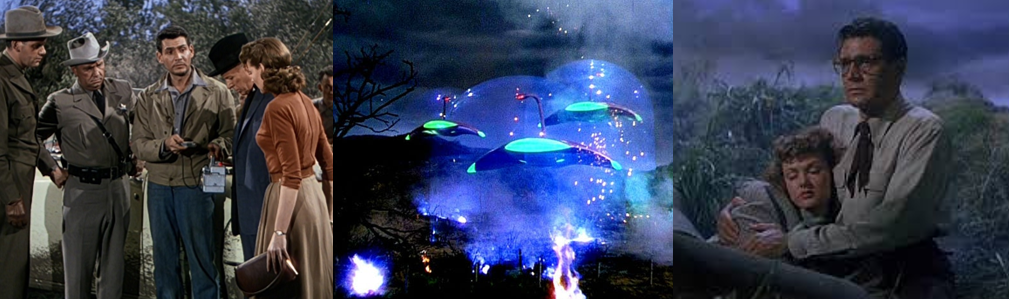
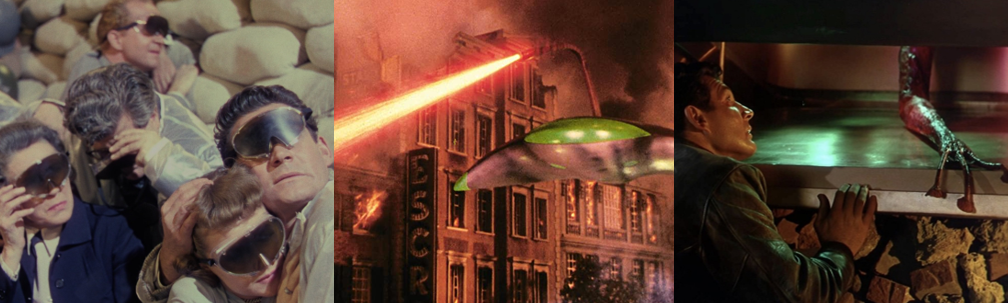
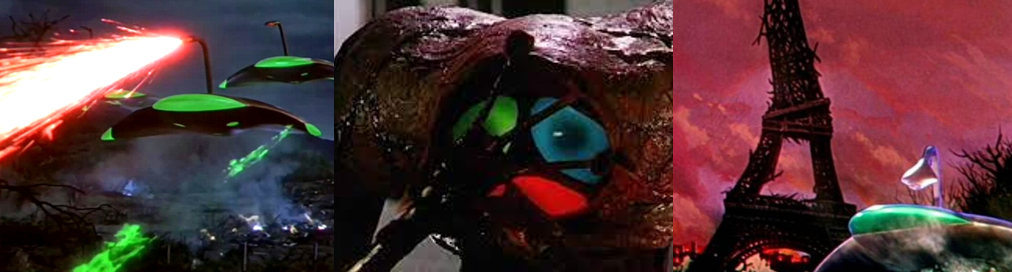


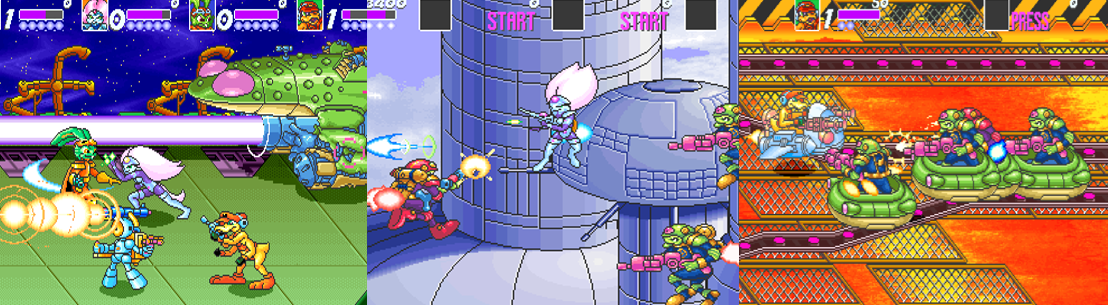
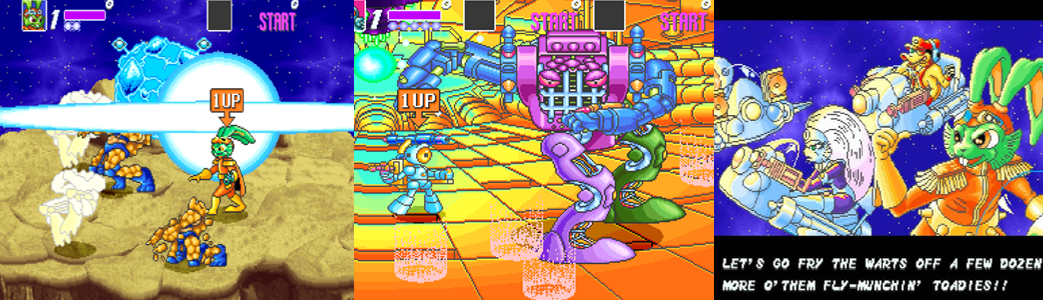


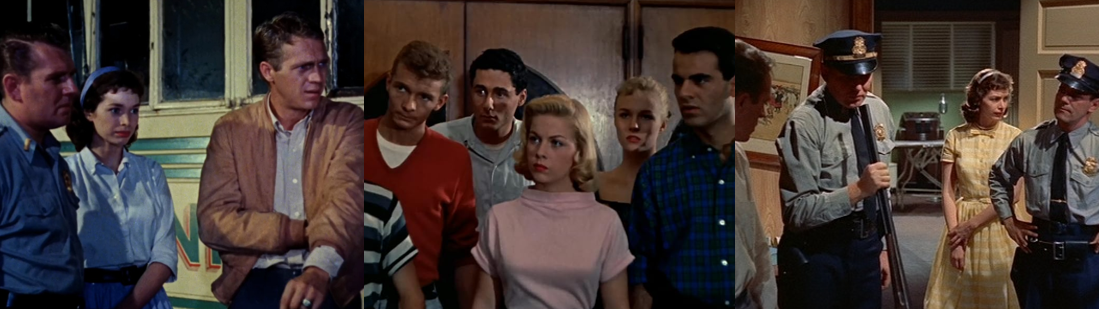
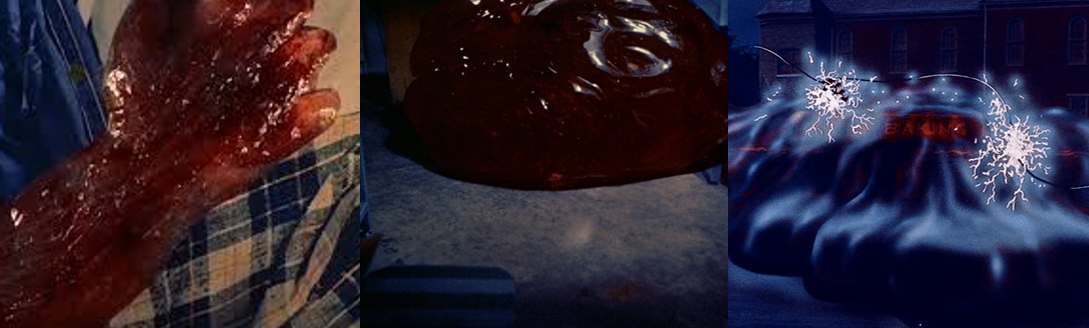
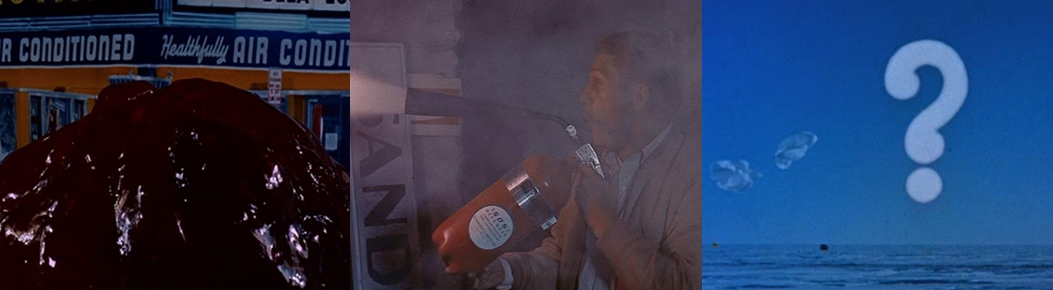

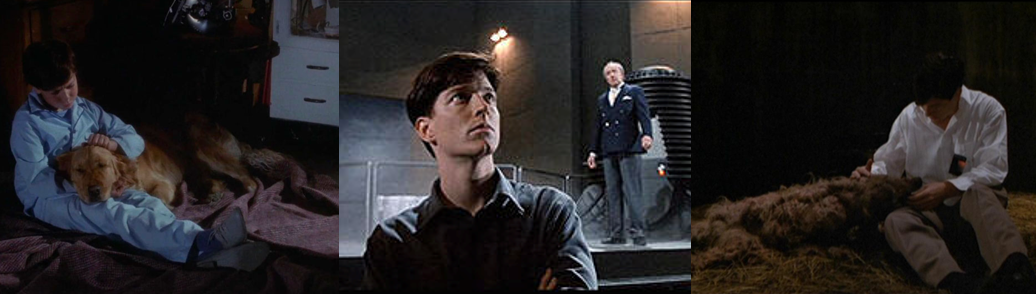
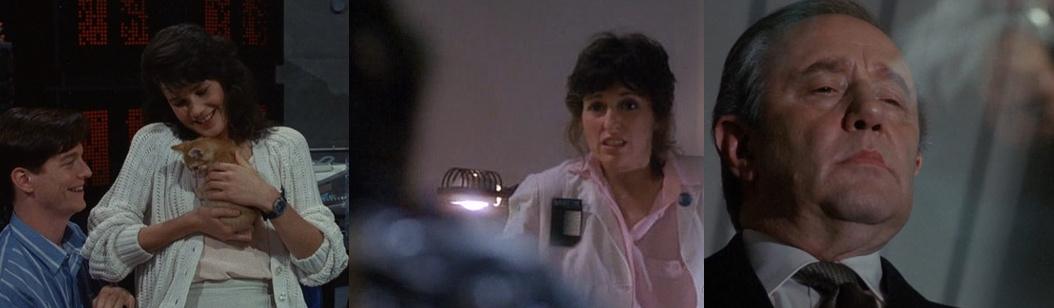
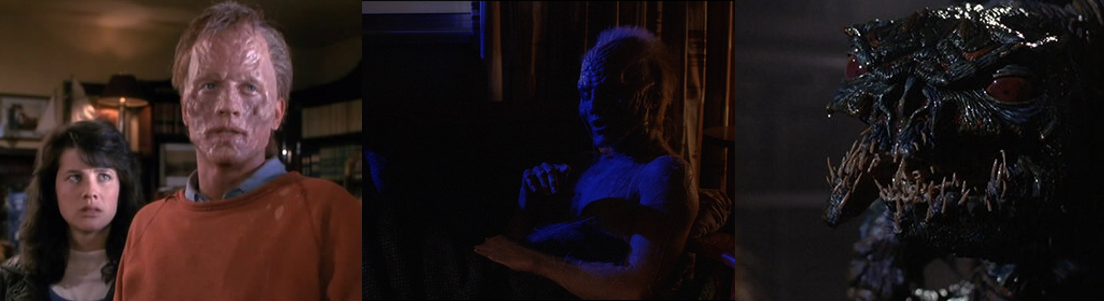
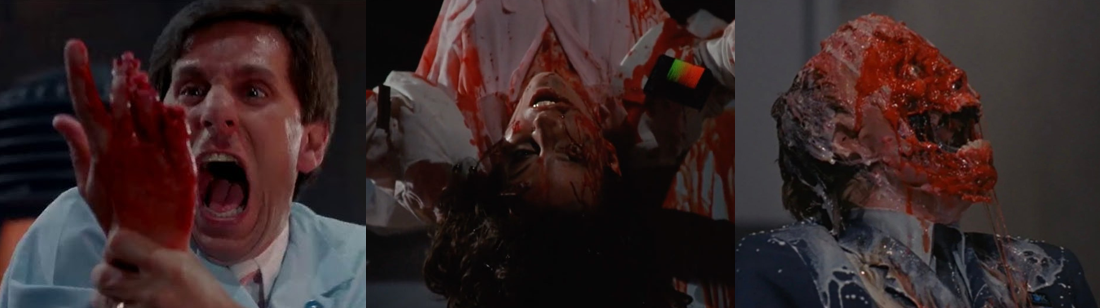
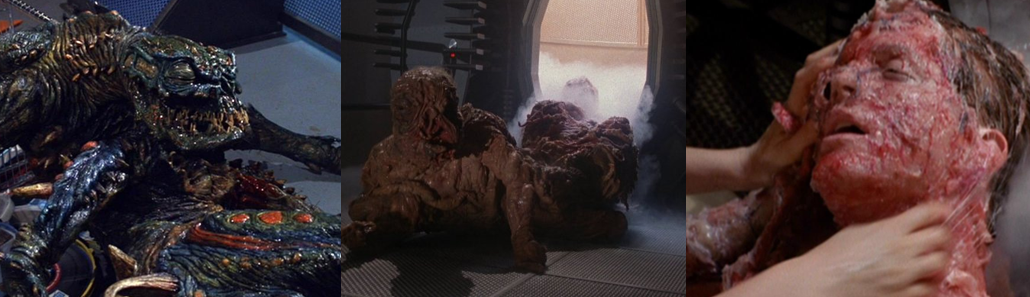

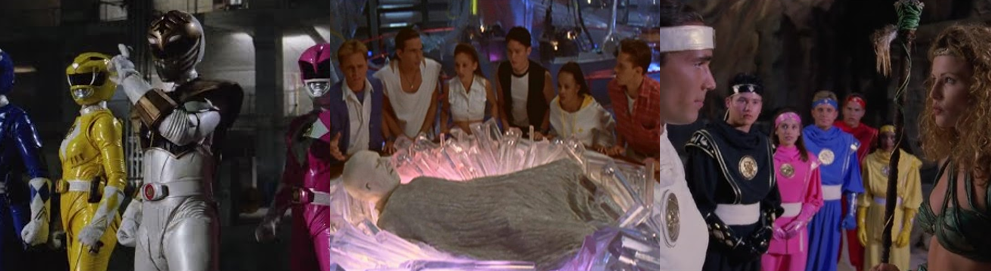
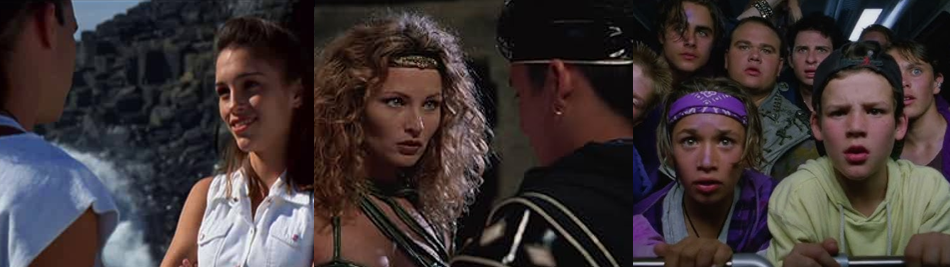
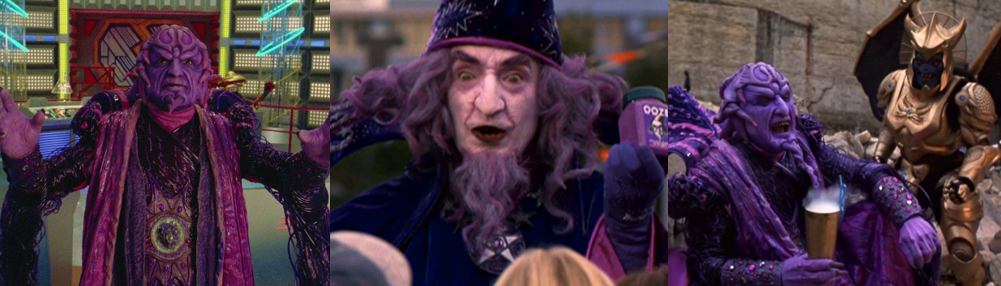
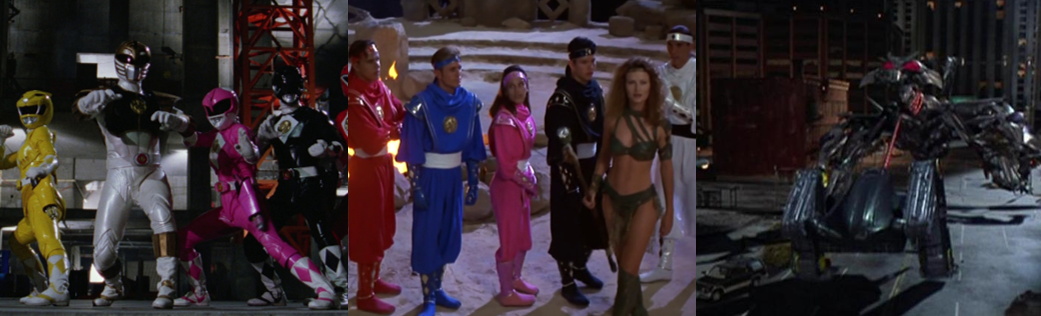
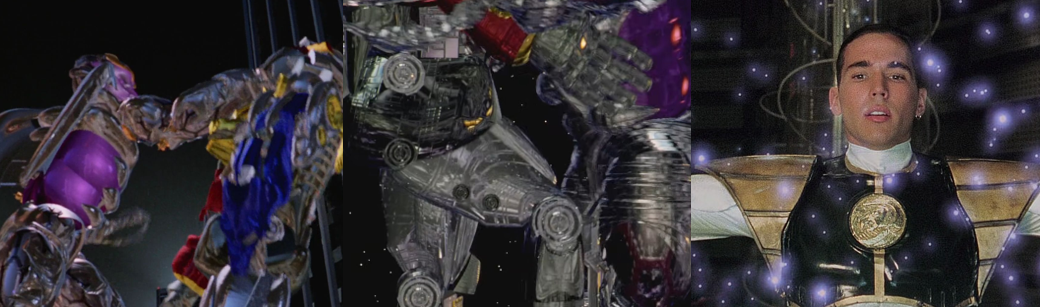


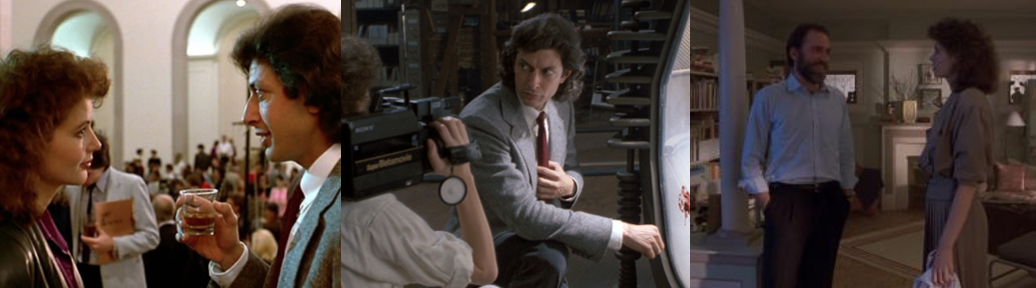
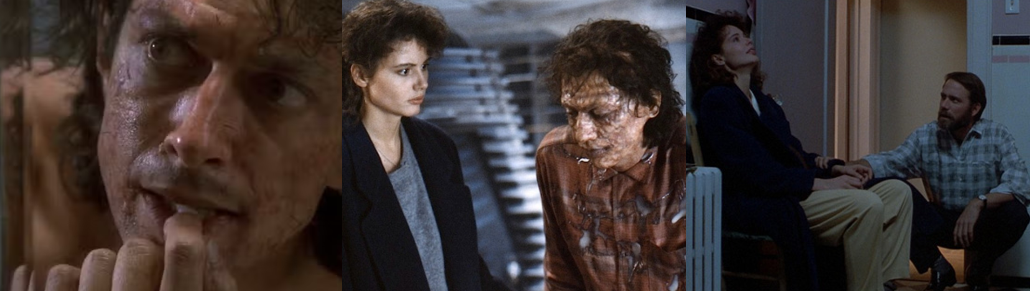
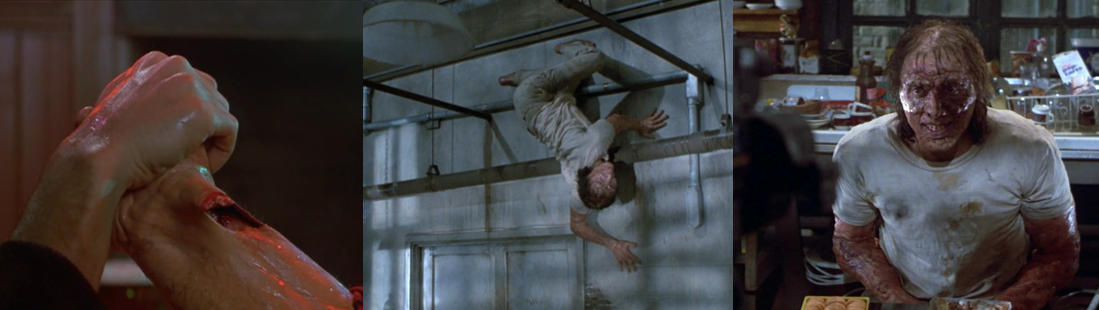

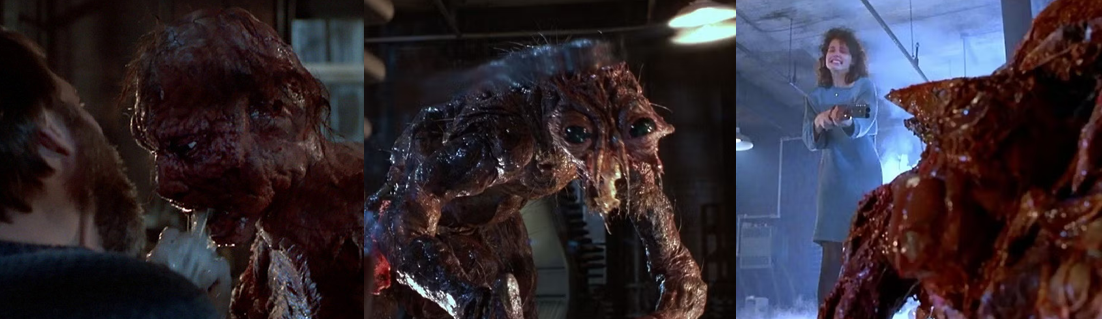


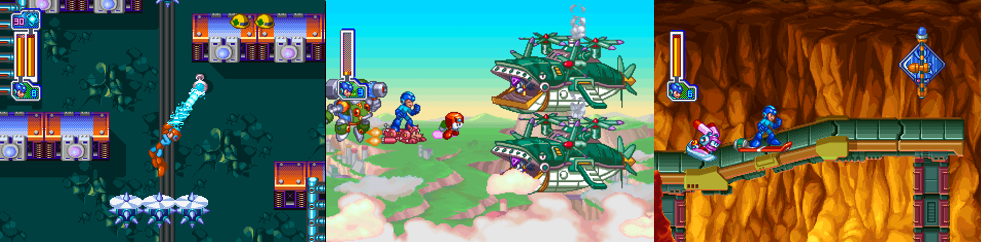
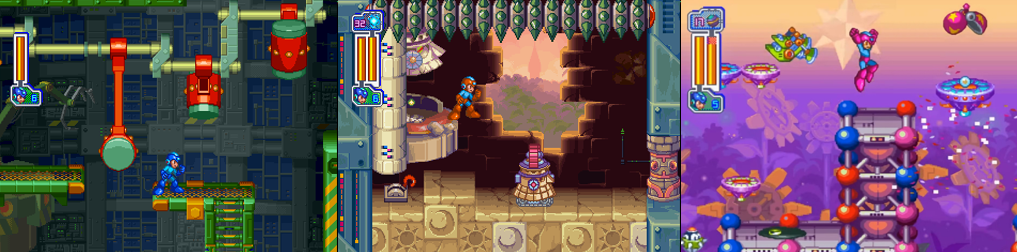
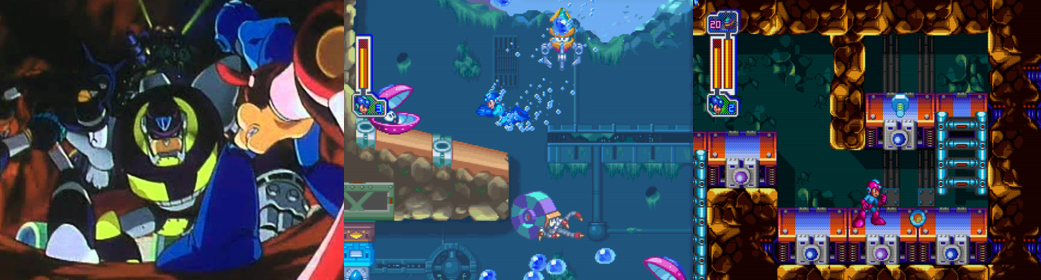
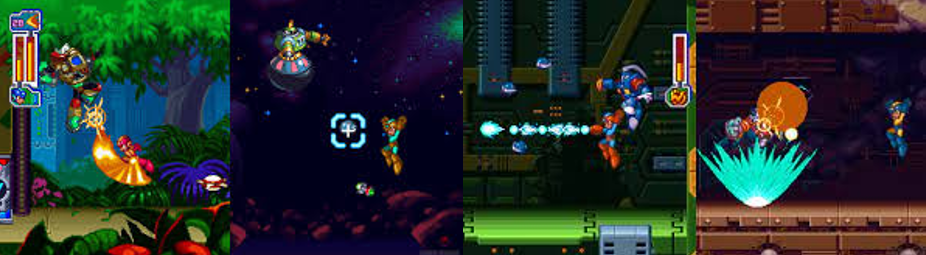
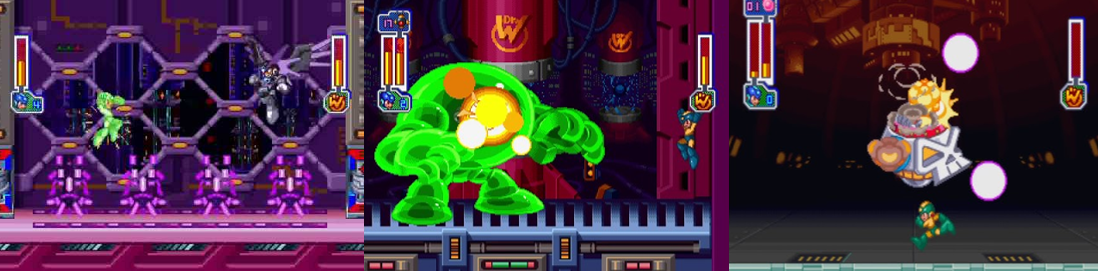

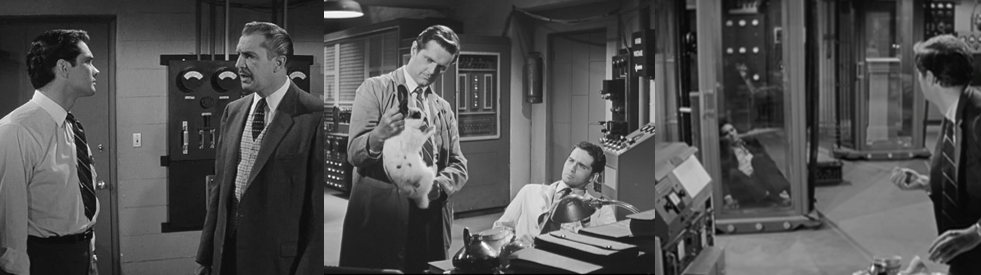
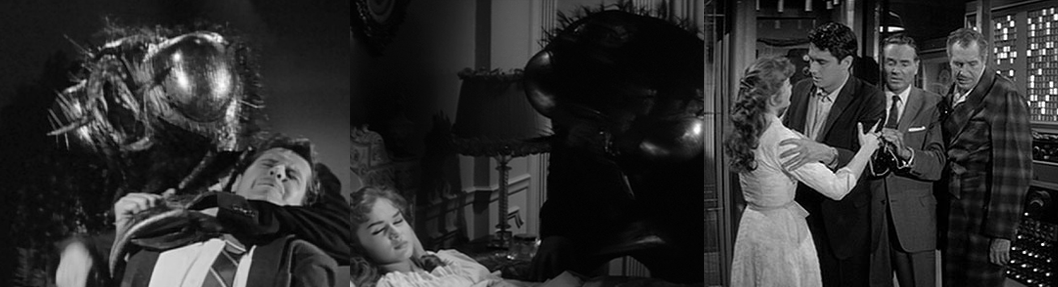


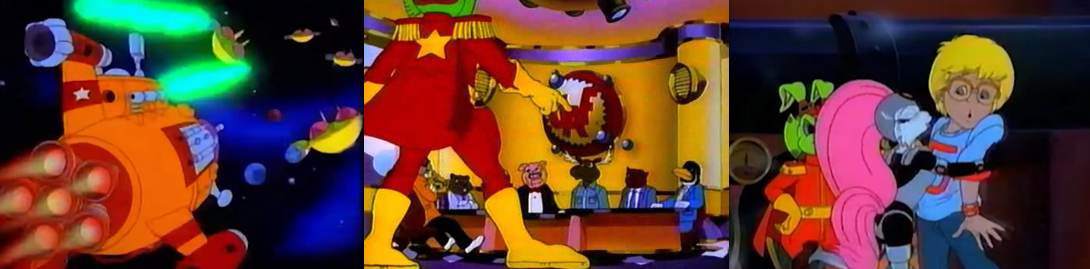
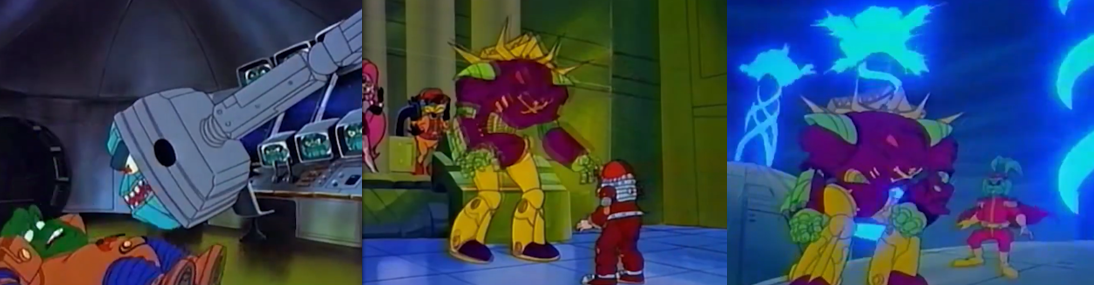


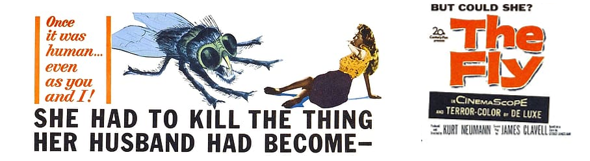
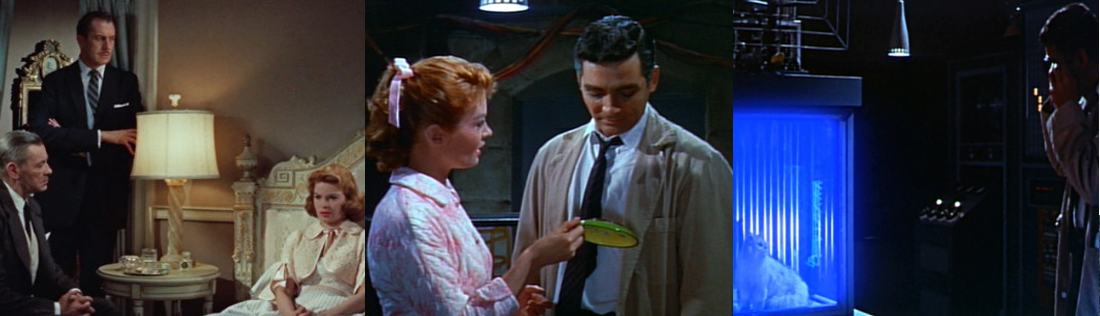


 Dr. K's Waiting Room
You must be logged in to post a comment.