Since his first full debut in November 1974 and joining the X-Men in 1975, James “Logan” Howlett/Wolverine has become one of Marvel Comics’ most recognisable and enduring superheroes.
Story Title: “The Last Run” Published: 9 September 1986 (cover-dated: December 1986) Writer: Chris Claremont Artist: Rick Leonardi
Story Title: “Psylocke” Published: 7 October 1986 (cover-dated: January 1987) Writer: Chris Claremont Artist: Alan Davis
The Background: Back 1974, Marvel Comics editor-in-chief Roy Thomas tasked writer Len Wein with creating the first-ever Canadian superhero, resulting in the short, feisty “Wolverine”. John Romita Sr sketched the original concept art for the character (including his now-iconic retractable claws) and Herb Trimbe put the finishing touches to Wolverine’s design. Although Wolverine’s past and true identity was initially kept a mystery, readers got a glimpse into his background through his ongoing and violent rivalry with fellow Mutant, Victor Creed/Sabretooth. Created by Chris Claremont and John Byrne, Sabretooth initially debuted as an enemy of Danny Rand/Iron Fist in 1977 before transitioning to a minor X-Men foe during the “Mutant Massacre” event (Claremont, et al, 1986). Originally intended to be Wolverine’s father and sometimes hinted to be his brother, the exact nature of their history is shrouded in mystery, with the only recurring element being their intense hatred of each other. Sabretooth famously makes a point of causing Wolverine anguish every year on his birthday and cemented himself as Logan’s archenemy by targeting his loved ones and being his toughest, most persistent foe. Accordingly, Sabretooth often accompanies Wolverine in other media and is naturally regarded as his worst enemy.
The Review: Wolverine’s first clash against Sabretooth came when Creed was running with the Marauders, ruthless Mutant assassins working for Doctor Nathaniel Essex/Mister Sinister. As part of his plot to wipe out or otherwise experiment on Mutants, Mr. Sinister sent the Marauders to massacre the Morlocks, outcast sewer-dwelling Mutants beneath New York City. While reviewing the slaughter, Wolverine is telepathically contacted by newcomer Betsy Braddock/Psylocke, who passes along a request from the grieving Ororo Munroe/Storm for Logan to apprehend a Marauder to learn more about their plot. The effort of contacting Wolverine drains Psylocke, but her suffering is little compared to Storm’s as she ran with the Morlocks for a time and finds herself surrounded by dead or grievously injured allies. Storm’s so traumatised that she flees from Charles Xavier/Professor X’s school in anguish, desperate to return to nature and outrun her guilt. Concerned about Storm and his girlfriend, Kitty Pryde/Shadowcat (who’s been left in a permanently out of phase), Piotr “Peter” Rasputin/Colossus tries to ask Psylocke for help, only to suddenly collapse from his own injuries. Luckily, Erik Lehnsherr/Magneto is allied with the X-Men at this time and he uses his amazing powers to try and help Colossus, only to leave him conscious but paralysed. Meanwhile, Anna Marie/Rogue asks Storm’s Morlock friend, Callisto, to find the weather witch, with the one-eyed Morlock opting to treat Storm to some tough love and literally beat some sense into her.
With the X-Men reeling from the Marauders’ attack, Wolverine renews an old rivalry.
Down in the sewers, Wolverine shrugs off Psylocke’s sudden silence and struggles to pick up the Marauders’ scent only to be jumped by Sabretooth, a hulking, animalistic sadist who has the Morlock Healer in his grasp. Confirming that he’s part of the Marauders and happy to assist Mr. Sinister’s scheme to take out the Morlocks and the X-Men, Sabretooth goads Wolverine into a fight (not that he needs much encouragement) by mocking him and backs up his arrogant claims by proving Logan’s physical better, wrestling with Wolverine and deftly avoiding his patented Adamantium claws. Rather than fighting harder, Wolverine opts to fight smarter, collapsing the already weakening tunnel on his foe, bringing their brief scuffle to an anti-climactic end as Wolverine’s more focused on getting Healer to safety than wasting time fighting Sabretooth. Just as he reconvenes with Rogue, the tunnel is immolated by a mysterious plasma wave that potentially threatened the New Mutants, a young Mutant team Wolverine sensed had gone against orders and ventured into. Despite Wolverine’s best efforts, the blasts apparently obliterate the Morlocks and Storm suspects that her unstable powers may have been the cause. Unwilling to give into despair, Magneto suggests he ally with the Hellfire Club to bolster their numbers, a suggestion Storm naturally balks at considering how dangerous the group has been in the past. As Doctor Moira McTaggart works tirelessly to save the lives threatened by the Marauders, Psylocke struggles with her sense of belonging with the X-Men, eager to prove her worth and lamenting their losses. In an effort to help, Psylocke suggests (well, “insists”) that she bolster her powers with Cerebro to search for the New Mutants and the Marauders, though Storm orders her not to take the risk as they need her to monitor for threats against the school.
Psylocke gambles on Wolverine’s durability to outlast Sabretooth’s assault.
Disheartened, Psylocke suddenly detects an intruder and receives agonising psychic feedback when she tries to probe them. As Rogue wanders the grounds, pondering her past, she’s suddenly attacked by Sabretooth, who easily overpowers her before trashing Cerebro and injuring Psylocke’s arm with his razor-sharp claws. Shrugging off her psycho-blast, Sabretooth pursues her with a sadistic, murderous rage, easily crushing a dumbbell and driving Psylocke to the roof. Though injured and outmatched, Psylocke grabs Storm’s knife after plummeting into her attic apartment, much to Sabretooth’s glee as he seemingly gets off on her feisty attempts to fight back. Just as Sabretooth gets his claws on Psylocke, he’s interrupted by Wolverine and Storm, who attacks Creed with her staff to save Psylocke. Sabretooth draws first blood in his rematch with Wolverine, somersaulting over him and clawing his back, even sampling Logan’s blood before they charge each other. Wolverine buries his claws into Sabretooth’s thigh, causing him to hurl Logan through the skylight in a rage. Sabretooth quickly follows and is tackled to the pool below. Though Magneto wishes to restrain Sabretooth to probe his mind, Psylocke argues that Creed’s psychic defences are too strong and that their best chance is to invade his mind while he’s busy fighting, trusting that Wolverine can take the punishment. Thus, as the two trade blows and cut each other to ribbons, Psylocke discovers that they have fought before and finally extracts knowledge of Creed’s mysterious master. Angered that he’s been so obviously duped, Sabretooth dives off a nearby cliff and into the sea, disappearing from Psylocke’s probes, much to Wolverine’s anger. In the aftermath, Psylocke is formally welcomed to the team and Storm prepares to move their wounded to Dr. McTaggart’s research facility on Muir Island to protect them from further Marauder attacks.
The Summary: “Psylocke” is one of the first X-Men stories I ever read as it was included in a Marvel Comics annual I owned back in the day. Consequently, I have some fondness for this era in the X-Men’s history and this art style, which depicts one of the quintessential incarnations of the team. Wolverine, for example, dons his brown and tan suit, Storm has her wild punk-rock look, Rogue sports short hair, and Magneto wears a more heroic outfit to reflect his position as the X-Men’s headmaster. While the art is often simplistic at times, appearing washed out and lacking detail (specifically the faces), this is more noticeable in group panels and doesn’t apply to Wolverine’s brutal fights with Sabretooth. These issues also take place in the middle (or early days) of the “Mutant Massacre” story arc, so there’s a much bigger narrative of the X-Men and their allies being targeted by Mr. Sinister and the Marauders. Therefore, your enjoyment may hinge on your familiarity with the Morlocks as their slaughter takes centre stage. Storm, especially, is distraught by the deaths of her colleagues and questions her leadership skills, while Psylocke is equally filled with doubt about her place on the team and usefulness beyond simply monitoring for threats. Ultimately, Psylocke proves herself by betting on Wolverine’s tenacity and durability, believing he can take whatever Sabretooth dishes out and thus provide them crucial information regarding the Marauders. Similarly, Callisto’s unique brand of tough love and the pressing nature of their situation forces Storm to snap out of her despair and help save Psylocke, and their injured teammates.
Wolverine’s history with Sabretooth takes a backseat to the wider narrative.
I really like this era for Wolverine, where he was a bit of a gruff loner but still loyal to his team. Wolverine’s happy to tackle the dirty jobs alone since he’s “the best there is at what he does” and his animalistic side relishes the chance to get his claws dirty extracting a measure of revenge on the Marauders. While stunned to find Sabretooth running with the group, Wolverine doesn’t hesitate to fight Creed despite being physically outmatched. Sabretooth is presented as a sadistic psychopath who relishes torturing and slaughtering his prey. He happily targets the defenceless or fights dirty and is presented as a dark mirror to Wolverine, being a killer whereas Wolverine is “a man–who sometimes kills”. Interestingly, while Sabretooth embraces his animalistic side in a way that Wolverine constantly fights against, he’s not some mindless killer and is, instead, loquacious enough to goad his victims and taunt Wolverine relentlessly. Although their dialogue and Psylocke’s probing hints at their past, very little time is spent exploring how Wolverine and Sabretooth know each other. Instead, they simply clash as old rivals, eager to see who is the better between them. Unfortunately, their fights aren’t that impressive. The first was an interesting character study for Wolverine as he chooses the higher path rather than giving into his rage. The second fight is better and longer and is great for showing how tough Wolverine is, but it takes a backseat to Psylocke’s psychic probing. It might’ve been nice to spend a bit more time with the two, to have a few more breadcrumbs dropped regarding their past, and to let them go at it a bit more, but this is still a decent first round bout between the fierce rivals and a notable moment in Wolverine’s long history.
My Rating:
⭐⭐⭐
Rating: 3 out of 5.
Pretty Good
What are your thoughts on Wolverine’s first battle with Sabretooth? Were you a fan of the “Mutant Massacre” story arc? What did you think to the hints towards Wolverine’s history with Sabretooth? Were you a fan of Psylocke and this incarnation of the X-Men? Were you a fan of Claremont’s work with the team, and Wolverine? How are you celebrating Wolverine’s debut this month? Whatever you think about these issue, or Wolverine in general, leave a comment below and donate to my Ko-Fi to suggest more Wolverine stories for me to cover.
Released: 26 July 2024 Director: Shawn Levy Distributor: Walt Disney Studios Motion Pictures Budget: $200 million Stars: Ryan Reynolds, Hugh Jackman, Emma Corrin, Matthew Macfadyen, and Aaron Stanford
The Plot: Struggling with doubt, Wade Wilson/Deadpool (Reynolds) jumps at the chance to join the “Sacred Timeline” of the Marvel Cinematic Universe (MCU). However, when he learns the cost is his universe, he scours the multiverse to recruit a disillusioned version of James “Logan” Howlett/Wolverine (Jackman) to help save his loved ones.
The Background: Created by Fabian Nicieza and Rob Liefeld in 1991, Deadpool as originally an X-Force antagonist before his self-aware humour and creative violence catapulted him to mainstream popularity. This eventually led to his live-action debut in the much-malignedX-Men Origins: Wolverine(Hood, 2009), with Ryan Reynolds finally assuming the role, with a spin-off teased. However, after X-Men Origins and the Reynolds-led Green Lantern (Campbell, 2011) flopped, 20th Century Fox got cold feet about producing an expensive, R-rated superhero movie. However, after director Tim Miller’s early test footage mysteriously leaked online, the positive reaction saw Fox backpedal, resulting in a critical and commercial success for the “Merc with a Mouth”. Deadpool’s (Miller, 2016) success naturally led to a sequel; Deadpool 2 (Leitch, 2018) upped the ante with an increased budget and bringing in Josh Brolin as fan favourite, time travelling cyborg Nathanial “Nate” Summers/Cable, and was met with similar success, and Disney higher ups were adamant about including Deadpool in the MCU after their acquisition of 20th Century Fox. During development, Reynolds was contacted by Hugh Jackman – who had famously retired from his iconic Wolverine role in Logan(Mangold, 2017) – and, despite concerns about undoing that film’s poignant ending, actively lobbied to portray an alternative version of the character for a long-awaited team-up. Finally garbed in a comic book-accurate suit courtesy of costume designers Graham Churchyard and Mayes C. Rubeo, Jackman joined Reynolds for what was to be a love letter to the X-Men films (Various, 2000 to 2020) and their legacy, as well as a slew of fan service cameos. After enduring the SAG-AFTRA strike, Deadpool and Wolverine released to largely positive reviews; critics praised Jackman’s return and the film’s buddy comedy/road trip vibes, and that it remained true to the raunchy humour of the previous films. Though some criticised its shallow plot, Reynolds’ performance was lauded and the film quickly became Disney’s highest-grossing R-rated release, bringing in over $1.300 billion and seemingly cementing the character’s place in the future of the MCU.
The Review: It was genuinely shocking, and heartbreaking, when Logan finally met his end in Logan. After living and fighting and struggling for so long, after an unprecedented run from an actor in a role, the character was finally laid to rest. So, naturally, Deadpool & Wolverine opens with Deadpool digging up Logan’s corpse, convinced he’s still alive, and then massacring an army of soldiers from the Time Variance Authority (TVA) with the dead Mutant’s Adamantium skeleton, even donning Logan’s signature claws at one point, all to the tune of NSYNC’s “Bye Bye Bye”. It turns out that Wade’s life took a bit of a downturn after Deadpool 2; he struggled with his mercenary lifestyle and his place in the world, pushing his lover, Vanessa Carlysle (Morena Baccarin) away after everything he did to save her life and ending up selling used cars in a bad toupee alongside Peter Wisdom (Rob Delaney). While celebrating his birthday alongside his returning supporting cast, Wade is accosted by the TVA and brought to Mr. Paradox (Macfadyen) at their headquarters. Despite Wade’s flagrant misuse of Cable’s time machine in Deadpool 2 (and him using it to sidestep into the MCU and lobby for application with the Avengers), the TVA are seeking to recruit him rather than “prune” him. Wade’s told that Logan’s tragic death is causing his universe to collapse; since Logan was an “Anchor Being”, Earth-10005 literally cannot sustain itself without him and will die out in a few thousand years. Wade’s given the opportunity to avoid this fate and join the MCU (Earth-616), finally taking his rightful place alongside Earth’s Mightiest Heroes and proving that he matters not just to himself, but to Vanessa and the entire world.
Deadpool recruits a jaded version of Wolverine to save his world, and the two naturally clash..
However, Deadpool’s dreams of raking in the Disney cash are quickly dashed when Mr. Paradox immediately reveals that he doesn’t care for Earth-10005 and has aspirations to take over the TVA and take a more direct approach to such events. Realising that Mr. Paradox’s “Time Ripper” device will destroy his world and everyone he loves within 72 hours, Deadpool immediately defies the TVA, steals once of their time devices, and embarks on a short jaunt throughout the multiverse to find a “Variant” of Wolverine to replace his one. After some fun homages and being attacked at every turn, he finally finds a disillusioned Wolverine drowning his sorrows in a bar. However, when Mr. Paradox scoffs at the idea of this Variant (widely known as the “worst” version of Wolverine) could ever replace Logan, he zaps the two to the “Void”, a barren wasteland filled with discarded remnants from deleted or forgotten timelines. While Deadpool is determined to find a way back and safe his universe, Wolverine has no interest and lashes out at Wade at every turn for getting him involved. Surly, jaded, and wracked with guilt after failing to save his X-Men, this Wolverine may wear the most comic accurate suit of any live-action portrayal (not counting some of his other Variants seen in this film) but he’s not interested in playing the hero anymore. Deadpool and Wolverine’s relationship is antagonistic and strained from the start; Logan is constantly frustrated by Wade’s motormouth and is incensed to find Deadpool lied to him to get him to help. The banter and interactions between Jackman and Reynolds are the highlight of the film, as are their many bloody fights against and alongside each other. The two bounce off each other so well, with Deadpool being like an annoying, peppy, snarky younger brother to the older, cynical Wolverine. Wolverine’s attitude towards Deadpool is only further soured when his childishness and blatant lies cause newfound allies to be killed, yet he’s forced to help the Merc with a Mouth on the slim chance that Logan’s timeline can be corrected and his mistakes can be undone.
Nova sets her sights on the TVA’s tech and is protected by a misfit army of Variants.
Unfortunately for the two, they’re stuck with each other in a desolate world outside of time, one filled with cameos, Easter Eggs, and Variants who are both out to help and hider them. The first they encounter, Johnny Storm/The Human Torch (Chris Evans), tells them that the Void is not only constantly preyed upon by the monstrous Alioth but also ruled over by the psychotic Cassandra Nova (Corrin), the telepathic twin sister of Professor Charles Xavier/Professor X (Patrick Stewart/James McAvoy) who resides within the colossal skeletal remains of Scott Lang/Ant-Man (Paul Rudd). Nova, who was sent to the Void by the TVA as a child, has known nothing but hardship. Resentful towards her brother and craving only power, she has a tentative arrangement with Mr. Paradox to dispose of his trash, but is delighted to finally have a Wolverine in her midst. Unlike Xavier, Nova prefers to get (literally) hands-on when probing her victim’s minds, twisting their memories and reality to learn their secrets and showcasing incredible recuperative powers as well as telekinesis. Surrounding by an army of disgruntled cast-offs (including right-hand-man John Allerdyce/Pyro (Stanford), Cain Marko/Juggernaut (Aaron W. Reed), and cameos from other disposable Brotherhood characters), Nova makes a sport of torturing and executing both her enemies and allies. Although she shows a glimmer of humanity when she learns of her brother’s loving ways from Wolverine, her desire for conquest is sparked when she learns of Mr. Paradox’s Time Ripper and she doesn’t hesitate to leave the Void via a stolen Sling Ring to get her hands on it, determined to eradicate world after world until all that’s left is the Void’s blissful emptiness. Although Deadpool and Wolverine can take on Nova’s minions (with some help), they’re no mater for her in a one-on-one fight due to her incredible psychic powers. As if that wasn’t bad enough, there’s an entire legion of Deadpool Variants wandering the Void, all of them devoted to protecting Nova, and this army of wise-cracking psychos literally stands between our heroes and their target in the finale, leading to one of the best and bloodiest action sequences in the film, made all the more enjoyable not just by Logan’s happiness at slaughtering so many Deadpools but him finally donning his comic accurate mask!
The Nitty-Gritty: Considering Deadpool & Wolverine is largely focused on delivering the much-needed spectacle of seeing the titular characters interact and cut each other to ribbons, the film has a surprising emotional depth. I guess this shouldn’t actually be that surprising as the previous films had an unexpected pathos to them as well, but it’s incredibly effective here. While still a loquacious, self-referential, crude dervish, Wade is struggling with his purpose in life. When Harold “Happy” Hogan (Jon Favreau) rejects his application to the Avengers, Wade enters a slump so deep that Vanessa leaves him, he gives up his mercenary ways, and he’s resigned to a boring, normal life. He’s elated at the idea of joining the MCU but cannot bring himself to sacrifice his loved ones to do so, and is so determined to stop Mr. Paradox that he defies the entire TVA. However, it’s through Wolverine that the film finds most of its emotion. While similar to the Wolverine we knew and loved, this one is notably different; he’s at the bottom of the barrel, regularly drinks away his pain, and is wracked by guilt after his selfish actions caused the death of the X-Men and persecution of Mutants on his world. He’s dismissive of his counterpart’s more heroic stature and openly scoffs at Wade’s aspirations to save his world, but his heart is still flickering beneath his pain. Its flame is once again fanned by Laura Kinney/X-23 (Dafne Keen), who’s heartfelt thanks to Logan convince him to oppose Nova, and by the finale he’s even prepared to make the ultimate sacrifice once again to save Wade’s world and gain some redemption. While Logan was a perfect swansong for the character and actor, Jackman continues to nail Logan and bring new nuance to the role. He’s in phenomenal shape for his age and better than ever here as an unhinged, broken version of the character, and it’s a delight not just to see him back but to see him donning the iconic costume and portraying other Wolverine Variants, such as Patch, Age of Apocalypse, a hilarious pint-sized Variant, and even one in the middle of a fight against Doctor Bruce Banner/The Incredible Hulk (Mark Ruffalo). However, he does have some competition for the role when Deadpool briefly meets a gruff and buff variation played by Henry Cavill!
Violent, crude, and packed with cameos, Deadpool & Wolverine also features some surprising pathos.
Although some were sceptical that Disney could stay true to Deadpool’s R-rated roots, Deadpool & Wolverine is just as crude and bloody as its predecessors. Wade has lost none of his fourth-wall-breaking charm, regularly making digs at Disney, MCU head honcho Kevin Feige, 20th Century Fox, and even the mixed reception of the MCU’s fourth phase of movies. Both he and Wolverine cuss up a storm here, ripping into each other and their enemies (and allies) with quips, barbs, and even “fucks” to make a vicar blush. Not only that but the two regularly engage in bloody fights with each other; since both are functionally immortal and have rapid healing, they can carve seven kinds of shit out of each other all day and never get tired. While this could get boring, the film mixes up their fights and has them engage in a barroom scuffle, and all-out knife fight in the Void, and a brutal punch-up in a car! The action continues as their fights are momentarily derailed to focus on Nova’s underlings, including a short (but satisfying) rematch between Wolverine and Victor Creed/Sabretooth (Tyler Mane), and a massive brawl against Nova’s ragtag army. Although Johnny meets a rather gruesome end thanks to Wade’s motormouth, Deadpool and Wolverine are regularly aided by “Nicepool” (Reynolds) and his super-ugly pup, Mary Poppins/Dogpool (Peggy). X-23 also brings them to Elektra Natchios (Jennifer Garner), Eric Brooks/Blade (Wesley Snipes), and Remy LeBeau/Gambit (Channing Tatum), forgotten characters who are eager to have their chance in the limelight. These cameos were some of the best and most unexpected parts of the film; never in a million years would I have thought Snipes and Reynolds would work together again, but he’s still got it as Blade and (while I’m not fan of his) Tatum overdelivered in finally getting to play Gambit. It was also fun seeing Evans swear like a trooper as Johnny and to see X-23 all grown up, still as ferocious as ever. Although Deadpool’s other Variants remain masked, this army of psychos was quite the highlight as well; we had a Lady Deadpool (Unknown/Blake Lively), a “Cowboypool” (voiced by Matthew McConaughey), a disembodied floating head (voiced by Nathan Fillion), samurai Deadpool, Deadpool 2099, and so many others (though, strangely, no “Barakapool”).. The cost of all these amazing cameos and returning characters was the side-lining of Deadpool’s supporting cast, who mainly bookend the film, with the exception of Peter, who’s presence is enough to stop the Deadpools from fighting since all of them love him in every reality!
Deadpool and Wolverine must set aside their differences to stop Nova from destroying the multiverse.
Trapped in the Void, Deadpool and Wolverine’s only way home is through Cassandra Nova. Thus, wade convince Elektra, Blade, Gambit, and X-23 to help them storm Nova’s compound and get them home. While they’re able to appeal to her humanity to help them, she soon follows, eager to get her hands on the Time Ripper, and Deadpool and Wolverine have to lice and dice their way through the Deadpool army to get to her. Thanks, as mentioned, to Peter, they reach the TVA facility, where Nova has forcibly coerced Mr. Paradox into activating the machine. The only ay to stop it is for one of them to connect the matter/anti-matter coils, an act that would vaporise them instantly. Reinvigorated by this time with Deadpool, Wolverine offers (almost begs) to take the fall and redeem himself in death, but Deadpool swaps places with him at the last minute, determined to give Logan a second chance and prove that he’s worthy as a hero. With time running out and Deadpool struggling to connect the wires, Wolverine joins him and, together, they endure the strain of the connection, creating a feedback loop that destroys Nova and has the unexpected side effect of saving Earth-10005 from destruction. Although Mr. Paradox tries to talk himself out of a reprimand, he’s scuppered when the Mutants survive their ordeal and turn him in to Hunter B-15 (Wunmi Mosaku), who agrees to free Deadpool’s allis from the Void but refuses to change Logan’s world since those experiences made him into a hero. Victorious, Deadpool and Wolverine make amends, finding common ground from shawarma and their adventure, and Wade invites him to meet his friends, restoring Wolverine to Earth-10005. Although the post-credits scene is nothing to shout about and simply shows Johnny Strom cussing out Cassandra Nova, a beautiful tribute to the 20th Century Fox Marvel films plays during the credits that shows the love and heart that went into the X-Men films, in particular, and shows that Marvel Studios are more than willing to acknowledge their presence and contribution to the genre.
The Summary: The promise of seeing Deadpool and Wolverine, Ryan Reynolds and Hugh Jackman, match wits and weapons in live-action has been an enticing one for fifteen years, ever since Reynolds took his first tentative steps into the role. Even after Deadpool got a second chance and became a solo success, a team-up between the two has been teased and it seemed we’d never get it after Logan’s poignant end. While I had no doubt we’d see Deadpool transition into the MCU, I never expected Jackman to return to his iconic role beyond a sly cameo here and there, so to se the two finally together, in uncompromising action and wearing glorious comic-accurate suits, was a joy. Deadpool & Wolverine might alienate some who haven’t been keeping up with the MCU’s multiverse shenanigans, but it goes out of its way to emphasis time and again that this Wolverine is a different version to what we’ve seen before and Jackman delivers probably his best performance as the character to date. His Wolverine is at his lowest end, bad-tempered and burdened by impossible guilt, and quick to animalistic violence. He’s the gruff “straight man” to Deadpool’s wacky, outrageous humour and the two have such chemistry that every interaction and punch thrown is a delight. Seeing Wade go to such lengths to save his loved ones and prove himself is as emotional as seeing Wolverine try one last time to do the right thing, with both having to overcome incredible emotional baggage to save the world despite neither being the right man for the job. Emma Corrin made for an unsettling villain; a twisted version of Professor X, she’s both unhinged and psychotic, perfectly matching Deadpool’s eccentricities and Wolverine’s ferocity, and I liked that she was powerful enough that they had to think of other ways to stop her. Of course, a huge highlight of the film is all the cameos, Easter Eggs, and returning characters, allowing Deadpool & Wolverine to not just be a homage to the X-Men movies but also an acknowledgement of the Marvel properties that paved the way for the MCU. It’s stuffed with crude humour, gratuitous violence and swearing, and fanboy pandering in all the right ways, making Deadpool & Wolverine a fantastic step in the right direction for the MCU and laying the foundation for further fan service later down the line.
My Rating:
⭐⭐⭐⭐⭐
Rating: 5 out of 5.
Fantastic
Did you enjoy Deadpool& Wolverine? Were you excited to see the two finally team up, and to see Hugh Jackman back as Wolverine? What did you think to Wolverine’s comic-accurate costume? Which cameo was your favourite and which did you least expect? What did you think to Cassandra Nova as a threat and which of the fight scenes was your favourite? Which of the X-Men films was your favourite and how do you think the X-Men will be introduced into the MCU? Whatever your thoughts on Deadpool, Wolverine, and the X-Men, drop a comment below.
To commemorate, the culmination of their long-running and successful X-Men movies, 20th Century Fox declared May 13th as “X-Men Day”, a day to celebrate all things Mutant and X-Men and celebrate Marvel’s iconic collection of superpowered beings who fight to protect a world that hates and fears them.
Released: 16 May 2006 Developer: Z-Axis Also Available For: Game Boy Advance, GameCube, Nintendo DS, PC, PlayStation 2, Xbox
The Background: Ever since Stan Lee and long-time collaborator Jack Kirby created the X-Men in 1963, Mutants have featured prominently in Marvel Comics and grew to greater mainstream prominence thanks to the influential animated series from the nineties, the success of which led to 20th Century Fox purchasing the film rights and producing a successful long-running live-action franchise. The X-Men have also have a storied history in pixels and polygons; the Mutant team first came to life on the Nintendo Entertainment System in what was essentially a vertical shooter, but the characters arguably saw the most success in their numerous arcade ventures and team-based brawlers. To coincide with the release of X-Men: The Last Stand (Ratner, 2006), publisher Activision was tasked with creating a tie-in videogame to be released across all available platforms and bridge the gap between X2: X-Men 2 (Singer, 2003) and the third entry. However, just as X-Men: The Last Stand was critically panned, X-Men: The Official Gamefailed to impress with its poor enemy A.I., repetitive gameplay, and for being little more than a shameless cash-in.
The Plot: Still reeling from the death of Doctor Jean Grey, James “Logan” Howlett/Wolverine, Bobby Drake/Iceman, and Kurt Wagner/Nightcrawler battle radical terrorist group known as Hydra and their gigantic, Mutant-hunting Sentinels, encountering some of their worst enemies in the process.
Gameplay: X-Men: The Official Game is a third-person action game with three distinct gameplay styles split across its three playable characters, Wolverine, Iceman, and Nightcrawler, who embark on an adventure that takes place soon after the events of X-Men 2 and fills the gap between that film and X-Men: The Last Stand to explain why Nightcrawler is missing from the team in the third movie. While the levels in X-Men: The Official Game are pretty linear, the developers furnished players with a helpful mini map which indicates friendly non-playable characters (NPCs), enemies, and points you in the direction of your next objective/s. There are a few branching paths you can sometimes take, either by smashing through walls and windows as Wolverine or teleporting to higher areas as Nightcrawler, but these generally just lead to a collectible and it is actually pretty easy to get turned around as everything looks very similar. Although each character has a distinct way of playing, there are some similarities between all three: both Wolverine and Nightcrawler can jump with A and dish out attacks and combos with X and Y, Nightcrawler and Iceman can both target foes with the Left Trigger, and all three will automatically heal from minor wounds (though Wolverine and Nightcrawler and able to dramatically speed this up by holding the Left Bumper or pressing the Right Bumper, respectively, whenever it’s safe to do so, though any movement at all will cancel out this healing boost).
Slice through enemies as Wolverine, teleport about as Nightcrawler, and slide around as Iceman.
Wolverine’s gameplay is very much that of a hack-and-slash brawler; however, fans of genre-defining titles like the God of War series (Various, 2005 to present) will be left disappointed as Wolverine is quite a clunky and limited character thanks to the presentation and camera angles offered by this game. With a tap of LB, Wolverine can sheath and unsheathe his claws (which is more of an Easter Egg than anything), which he can use to slash at the multitude of minions who come charging at him in any given level. Using combinations of X, Y, and B (which pushes enemies away), Wolverine can string together some basic combos; he can also block incoming attacks by holding the Left or Right Trigger (and you can flick the analogue stick while blocking to pull off an awkward dodge roll to try and get away from sticky situations), and successfully landing attacks will build up his “Fury Meter” which, when full, powers up your attacks and healing for a short time with a press of the Right Bumper. Nightcrawler has similar capabilities in combat, but his levels are much more focused on platforming with his signature teleport and a bit of semi-stealth. Nightcrawler can also string together punches and kicks for combos, but you’re best served using his relocation attack; pressing B sees him automatically teleport behind the nearest enemy to pummel them with X or smash them with Y, which is great for taking out groups of enemies quickly. RT allows Nightcrawler to teleport to a variety of surfaces, from pipes to bridges and walkways, and is great for quickly traversing areas and getting to consoles or control panels which need rewiring with X. Of the three, Iceman is the most unique as he’s constantly moving forwards on an ice slide and his levels play much more like chasers or dogfight simulators. Holding A lets Iceman boost ahead, while RT brakes and RB allows him to flip around quickly to retarget enemies. X unleashes an ice beam, which is great for freezing up pipes or putting out fires, while B tosses out his Hailstorm attack and Y puts up a temporary frost shield. You’ll need to constantly tap LT and B when faced with multiple targets, but Iceman’s levels are much more geared towards preventing catastrophes or reaching a goal and are often accompanied by an anxiety-inducing time limit.
Whether you’re fighting a gauntlet, repairing consoles, or facing a time limit, things get very tedious.
The game’s story mode is laid out in a linear mission-based structure; at various points, the narrative branches off to follow each of the three characters and, prior to starting a mission, you can pick from three difficulty settings: “Novice”, “Hero”, and “Superhero”. These will dictate how tough the enemies are, with enemies on “Superhero” able to whittle your health to nothing in just a few hits or under sustained gunfire, but there are perks to completing the mission on higher difficulties as you earn more “Mutation Evolutions” on these settings. These power-up each character’s stats, raising such attributes as their overall health, the damage their attacks deal, and their health and energy recovery, and the only way you’ll only be able to max out your abilities is by beating every mission on “Superhero” mode. This, however, is easier said than done; the game is very stingy with its checkpoints, meaning that failure to complete some of the game’s more monotonous tasks requires you to start the mission over right from the beginning. Following glorified training missions for each character, you’ll be thrust into the game’s story mode and, very quickly, will see everything X-Men: The Official Game has to offer. Wolverine will pretty much always be tasked with clearing away all enemies, with wave upon wave teleporting in or rushing in through doors, though he sometimes has to dodge hazards such as flaming vents and cages or destroy something in order to progress. Nightcrawler almost always has to teleport about the claustrophobic environments, activating panels or rewiring stuff, and occasionally luring exploding probes to power nodes or Sentinels to open doors. Iceman is either racing towards something or fending off attacks, often against a time limit; this means you’ll be dousing fires and cooling down nuclear reactors with your ice beam or chasing down an enemy or towards a goal before time runs out. Occasionally, another X-Men appears to help out; Ororo Munroe/Storm accompanies Wolverine and Nightcrawler you can have her instantly kill all enemies with her lightning by pressing in the left stick, while Nightcrawler also has to deactivate shields so that Piotr “Peter” Rasputin/Colossus can destroy some power generators, but Iceman has no such help when desperately trying to stop Giant Sentinels from marching on the downed X-Jet. Sometimes Iceman will have to slide through “nav points” (essentially glorified rings) and avoid laser hazards and mines, sometimes Wolverine’s locked in a room and forced to fight a gauntlet of enemies, and sometimes Nightcrawler has to destroy glowing crystals to keep enemies from spawning, but it’s all very repetitive and your objectives tend to be to do something once and then repeat it three or four times until the mission abruptly ends.
Graphics and Sound: In all honesty, X-Men: The Official Game doesn’t look all that bad; the in-game graphics are pretty decent, with stylistic versions of the film characters well represented for the most part, though the range of animation offered by the three is somewhat lacklustre. Of them all, Nightcrawler looks the best; I love his little coat and how he spins around on poles with a flourish and sometimes gallops on all fours, and it’s a stark contrast to Iceman, who is either relatively static due to his gameplay or ragdolling all over the place when knocked from his slide. Wolverine looks good, but his gameplay is tedious and clunky and severely hampered by the lack of a lunge attack, though he does gain some extra animation frames when in Fury Mode or trying to pounce on larger enemies. The game’s music is pretty decent; it’s mostly all ripped from X-Men: The Last Stand, and many of the film’s cast return to voice their respective characters. In fact, the vocal work may be one of the best things about this game; it’s great hearing Hugh Jackman and Patrick Stewart not only reprise their roles but do it without the lifelessness and boredom that so often accompanies videogame tie-ins.
While the game’s later locations become more visually interesting, the cutscenes are a cheap let down.
Sadly, the same praise can’t be levelled at the game’s environments and cutscenes. Cutscenes are accomplished using a motion comic aesthetic not unlike those employed at various points in games by NetherRealm Studios; these painted pictures have a very limited range of movement, no lip synching, and the cutscenes come off as cheap and rushed and quite unsightly as a result. The in-game environments are okay, but disappointingly bland; the whole game makes a clear effort to evoke the grey, grounded, semi-sci-fi aesthetic of Singer’s films but there’s generally not really much to see since areas are so linear and empty. You’ll get to fight on the Statue of Liberty in a call-back to the first film and revisit the surprisingly unflooded Alkali Lake facility from the second film and the Weapon X laboratory, all of which are very well realised interpretations of the film locations but are so grey and drab that even cheeky references to Wade W. Wilson/Deadpool can’t save them. Thankfully, once the game gets away from recreating areas from X-Men 2, locations become a bit more visually interesting; the Sentinel factory is great, with a massive Sentinel head looming in the background, as are the colourful levels that take Wolverine to an elaborate Japanese palace and garden grounds, but the game really shines once you get into the Master Mold’s control centre, a gigantic airship full of electrified wires and ominous dread that evokes the Borg Cube. Iceman’s chase through the streets of Hong Kong is similarly a visual spectacle thanks to the neon signs, bridges, and skyscrapers, all of which helps to really elevate the game’s presentation after the first few drab missions and despite the tedious gameplay.
Enemies and Bosses: With such varied and colourful characters as the X-Men and the Brotherhood to work with, it’s no surprise that the developers chose to mainly have you wade through an endless supply of generic and boring Hydra thugs. These guys come packing machine guns, electrified axes and lances, and claws and can mostly be taken out with some quick combos but some will block your attacks. For Wolverine, things get a little more interesting as he gets to battle the Hydra “Wind Unit” (who are basically ninjas with two katana), while Iceman is often blasting at smaller Sentinels or fire dragons conjured by John Allerdyce/Pyro. Nightcrawler will also have to deal with Sentinels but he can only take them out by teleporting to them and luring explosive drones to them before the robots can blast him off with a shockwave. Later, Nightcrawler is placed in a nightmarish illusion by Jason Stryker and forced to battle off teleporting demonic entities, and you’ll also encounter Hydra goons packing bazookas and heavy cannons in some levels. For the most part, the enemy AI is pretty dumb; they’ll easily lose track of you and won’t think to go around certain obstacles, but in wider, more open areas they can be incredibly annoying and persistent, catching you in a crossfire or swarming around you to deplete your health in seconds while you desperately try to escape to safety.
No matter who Wolverine faces, the same hit-and-run tactics will always serve you well.
Each character also has to deal with a number of bosses, with some fought multiple times in different forms. During Wolverine’s first training mission, you’ll battle against Victor Creed/Sabretooth to learn the basics of combat; Sabretooth makes a return as the final boss of the game, too, where he’s fought within the decaying remains of the Master Mold facility and significantly more powerful even against your upgraded stats. Sabretooth charges at you with a shoulder barge, can hit slow but powerful combos, grabs and lunges at you, and even has his own Fury Mode that speeds him up and makes him more aggressive. Still, the best thing to do is to avoid his attacks, hit a quick combo, and then stay out of his reach to build up your Fury Meter before unleashing it (avoiding pressing Y as this lunge isn’t effective against him) to whittle down his health bar. Halfway through the fight, Sabretooth flees to a lower level, where debris is a concern for both you and him, and you’ll also have to worry about his health slowly replenishing if you take too long, but he’s not especially difficult to put down. Yuriko Oyama/Lady Deathstrike makes a return in this game and you’ll battle her a couple of times, too; the first time you fight her, it’s within the eye of a hurricane and you have to be careful of being blasted about by the winds while also pushing her into the hazard, and the second time is within a Japanese temple and forces you to fend off waves of enemies between rounds. Still, Lady Deathstrike may be faster and nimbler than Sabretooth, but the same hit-and-run tactics work well against her and it’s much easier to get her trapped in a corner and just go at her full pelt until she goes down. Wolverine’s toughest foe is easily the Silver Samurai; this hulking armoured bastard can teleport about, has great reach with his broadsword, doesn’t get stunned by your attacks, and can send out both energy blades and electrified shockwaves and forces you to fight his minions between bouts. Once again, simply run or dodge about to avoid the brunt of his attacks and build up your Fury Meter and then just tank him as he’s a bit of a damage sponge and can easily cut you down with just a few swipes of his sword.
Nightcrawler and Iceman generally have to fulfill other objectives while fighting their bosses.
Nightcrawler only gets one boss to fight against, but it’s one of the more frustrating ones in the game; while on the rainswept Brooklyn Bridge, he and Storm must fend off clones of James Madrox/Multiple Man while teleporting about the place and defusing his many bombs against a time limit. Afterwards, Nightcrawler has to battle him alone and more directly; the “prime” Multiple Man will occasionally set an explosive charge and, if enough of them go off, the bridge will be destroyed and you’ll lose the mission but try and disarm them and you’ll be beaten to death in seconds by his ceaseless doubles. Your best bet is to stay on the move, dashing to safety and healing when you can, and hoping that he doesn’t set any of these charges (or quickly interrupt him before he can). The hardest thing about this battle, though, is actually dealing damage to Multiple Man; he seems either impervious to your attacks or only hurt after you take out his clones, which can be hard to do as they swarm around you, making for a boss battle more about luck than anything. Iceman primarily battles against Pyro; first, Pyro tries to burn down and destroy a fission plant, then he tries to overload a nuclear reactor, and then he conjures a gigantic fire serpent to target the toxic waste canisters. If enough of these are destroyed, the mission ends so make sure you’re rapidly switching target locks and throwing out your Hailstorms to take out the fire dragons. The serpent itself is also quite a damage sponge, and can set you ablaze if you get too close, but if you power-up Iceman’s Hailstorm attack that makes things a lot easier. Definitely his hardest challenge is stopping a seemingly endless army of Giant Sentinels from destroying the X-Jet in Hong Kong; these huge armoured hulks can only be destroyed by targeting six yellow power nodes, but the ones on the front are super hard to hit not just because of aiming difficulties but also because of their high-powered lasers. Destroy one, and another drops soon after, and another, and this was the first mission where I actively had to drop the difficulty down to “Novice” to get past it and even then it was a pain in the ass!
Power-Ups and Bonuses: Unfortunately, there are no collectible power-us available here. Wolverine and Nightcrawler can built meters (either by landing attacks or waiting for it to charge, respectively) to speed up their healing but the closest Iceman gets is destroying Sentinels to gain extra time until fifteen are taken out. As mentioned, Storm and Colossus will accompany you for some missions; Storm can unleash her lightning, but you’ll need to wait for her meter to fill up too, and you’ll also need to get back to help Colossus fend off the Hydra goons before they deal too much damage to him.
Additional Features: There are sixteen Achievements up for grabs here, with three insulting 0G Achievements awarded after clearing each character’s training mission, three more being rewarded for completing the story mode’s three vaguely defined acts, and three more earned after fully upgrading each characters Mutations. You’ll no doubt notice a few collectibles in each level of the game; every mission hides five Sentinel Tech files and one Weapon X file, and collecting all of these for each character will award another three Achievements and also unlock a bonus costume for each character and a “Danger Room Challenge” for each. Unfortunately, while these collectibles aren’t too difficult to find even without a guide, the rewards you get are pretty pathetic; the costumes are little more than street clothes variants and just having one each is more than a disappointment, it’s a travesty. The Danger Room Challenges amount to timed obstacle courses and challenges used to test your character’s gameplay and abilities, but you earn nothing for completing them so there’s no point in them even being there. Aside from all that, your only other option is to try and beat every mission on “Superhero” to fully upgrade every character, something you won’t really be motivated to do since the gameplay is so uninspiring that even the promise of cutting down goons dressed in Wolverine’s signature wife-beater won’t be incentive enough to ever play this game again.
The Summary: I tend to go into movie tie-in videogames with pretty low expectations; while I’ve played a fair amount that are pretty good, there’s no denying that they’re generally very rushed, lacking in content, and don’t have a lot going for them. On the plus side, they can sometimes be quite cheap and have some easy-to-snag Achievements, and that’s basically what you’re getting here with X-Men: The Official Game. There’s some decent stuff on offer here; Nightcrawler, especially, is pretty fun to play as and I enjoyed teleporting about the place and pummelling enemies with his attacks, and even Iceman was quite fun in the few missions where you weren’t forced to battle against an arbitrary time limit. Sadly, and most confusingly, it’s Wolverine’s gameplay that really drags this one down; he’s very restricted in his offense and the lack of checkpoints really makes getting through some missions, but especially his tedious gauntlets, a frustrating chore. Awful cutscenes aside, the presentation is pretty good; the game makes a decent attempt at recreating iconic locations from the first two films while infusing a more comic book aesthetic and storyline into the movie timeline, but locations are far too bland and repetitive to really be all that interesting, even in the latter parts of the game. Bosses battles are equally uninspiring; thanks to Wolverine getting the bulk of them, they’re hardly a selling point of the game’s few strengths and, overall, there are far better superhero and action videogames out there for you to put your time into. A serious lack of options, unlockables, and replayability hamper this title; while it’s not too difficult to blast through it in about four to six hours, it’s unlikely you’ll be motivated to try and get everything you miss the first time around and, despite a few entertaining aspects, it remains a cheap cash grab designed solely to leech off the popularity of Fox’s X-Men films rather than actually trying to be an entertaining videogame experience in and of itself.
My Rating:
⭐⭐
Rating: 2 out of 5.
Could Be Better
Did you enjoy X-Men: The Official Game? Which of the three characters was your favourite? Did you enjoy the game’s effort to bridge the gap between X-Men 2 and X-Men: The Last Stand? Which of the game’s missions and bosses was your favourite and do you feel like Sentinels are a little overdone in Marvel games? Did you ever fully upgrade the characters and find all the collectibles? Were you disappointed by the lack of options and unlockable extras? What’s the worst (or best) videogame tie-in you’ve ever played? Which X-Men videogame is your favourite and how are you celebrating X-Men Day today? Whatever you think about X-Men: The Official Game, and X-Men in general, feel free to share your thoughts below.
Released: April 2009 Director: Gavin Hood Distributor: 20th Century Fox Budget: $150 million Stars: Hugh Jackman, Liev Schreiber, Danny Huston, Lynn Collins, Taylor Kitsch, Daniel Henney, Will.i.am, and Ryan Reynolds
The Plot: Mutant brothers James Howlett (Jackman) and Victor Creed (Schreiber) are drafted to Major William Stryker’s (Huston) Team X. However, when his murderous sibling goes wild, Logan volunteers for a radical procedure to make him indestructible.
The Background: 20th Century Fox had vastly profited from their acquisition of the X-Men movie rights from Marvel Comics. Under their banner, the first three X-Men movies (Various, 2000 to 2006) had made over $600 million and, soon after X-Men: The Last Stand(Ratner, 2006) brought the trilogy to an end, development began on a series of spin-offs focusing on solo X-Men. Chief among these was, of course, the character of Wolverine; the role had catapulted the relatively-unknown Australian actor Hugh Jackman to superstardom and was the natural choice for a spin-off given how popular the character and his rich recently-uncovered backstory was. Collaborating on the script in order to craft a more interpersonal story, Jackman and director Gavin Hood aimed to explore the duelling nature of Wolverine’s animalistic character. Popular X-Men characters like Wade Wilson/Deadpool (Reynolds) and Demy LeBeau/Gambit (Kitsch) were incorporated into the script, which sought to explore the complex relationship between Logan, Victor, and Stryker based on both their characterisations in the comics and the world Bryan Singer had establish in his first two X-Men movies. Sadly, much like X-Men: The Last Stand, X-Men: Origins Wolverine received mixed to average reviews upon release; despite earning more than double its budget at the box office, X-Men Origins is largely regarded unfavourably by the majority of fans and critics alike. Personally, I always enjoyed the film, which was far more in the vein of X-Men 2 (Singer, 2003) than the third film; I liked that it introduced new and interesting Mutants and feel that it gets a bad reputation despite being an unashamedly enjoyable popcorn action film.
The Review: When X-Men Origins: Wolverine was released, the details of Wolverine’s early years had already been published in Marvel Comics some eight years prior; still, the revelation that James Howlett (Troye Sivan) had began life as a sickly boy in the 1800s was still relatively fresh for many readers who were more used to seeing Logan hooked into machinery and brainwashed into being a merciless killer as Weapon X. Unfortunately, as interesting as it would be to delve into Howlett’s early years and the details of his friendship with the young Victor Creed (Michael-James Olsen), X-Men Origins has no time for that as, within the first five minutes or so, young James has seen his father murdered, unsheathed his bone claws for the first time, killed his father’s murderer only to discover that his victim was actually his real father, and gone on the run with his similarly-powered half-brother. Sadly, this manic pacing is a theme for X-Men Origins; it’s all quick cuts and revelation after revelation in 1845 and then, as the film’s opening credits roll, we see James and Victor (now Jackman and Schreiber, respectively) taking part in every major war over the next hundred years or so. The montage, easily one of the more impressive parts of the film and which arguably should have made up the bulk of the movie’s runtime, does a great job of showing how James grows increasingly jaded with their mercenary lifestyle and how Victor grows equally bloodthirsty over time.
Logan eventually becomes disillusioned with Team X’s increasingly violent methods.
Eventually, the two are put before a firing squad after Victor kills his commanding officer. Obviously, this doesn’t actually kill the two so they are immediately recruited by Stryker, who drafts them into Team X, a group of highly skilled Mutants under his command. James and Victor go on what is implied to be many missions but, thanks to the film’s breakneck pace actually seems more like one mission, alongside such notable Mutants as Wade Wilson, Fred Dux (Kevin Durand), John Wraith (will.i.am), Agent Zero (Henney), and Chris Bradley (Dominic Monaghan). Unfortunately, Victor’s bloodlust can no longer be controlled and, when Stryker orders the team to slaughter innocent sin order to get his hands on a mysterious mineral, James walks away from the team.
Jackman is unquestionably the star of this film, shining at every turn.
Taking the name Logan (why this name is never explained), James spends the next six years making a modest living as a lumberjack in Canada alongside his lover, Kayla Silverfox (Collins). However, after Stryker shows up to warn Logan that their old team mates are being slaughtered, Kayla is killed by Victor and, overcome with grief and rage, Logan willingly volunteers to have Adamantium surgically grated to his skeleton to give him the tools to enact his revenge against his half-brother. Once again, the star of the show here is Hugh Jackman; now at his most toned and muscular and fully at ease with the role of Wolverine, Jackman’s charisma and animal magnetism help X-Men Origins to stay engaging even in its most head-scratching moments. Jackman does a fantastic job of conveying the myriad of emotions Logan goes through, from his more tender, vulnerable moments to his raw, animalistic brutality. Unfortunately, much is made throughout the film (and in the first three X-Men movies) of Wolverine’s animal side; Stryker (Brian Cox) hinted that, in his past, Wolverine wasn’t a very nice person and X-Men Origins also hints that he did some terrible things during the many wars he fought in…but we never see this. Sure, he’s a tortured character because of his traumatic memories of war and is a formidable beast when enraged but, for the most part, he’s the same honourable, good-natured person we’ve seen in the original trilogy. It would have been far more engaging and interesting to really delve into Wolverine’s time as a cold-blooded killer who slowly grows to become disillusioned with that life compared to Victor, who relishes in killing and giving in to his animal nature.
Schreiber is clearly relishing this role and is more than a match for Jackman.
Speaking of Victor, Schreiber was an inspired choice to bring the character to life. Like many comics, X-Men Origins hints very strongly that Victor and Sabretooth (Tyler Mane) are the same character but never fully lands on one side of the fence or the other; certainly, Schreiber’s loquacious nature and cold, calculated charisma separate him from mane’s more bestial portrayal but, in any case, Victor is a fantastic parallel to Logan. Sadistic and heartless, he kills for the fun of it and simply wishes to prove that he’s better than his half-brother, which he does at every turn. It’s surprising, then, when it is revealed that Victor wouldn’t be able to survive the Adamantium bonding process; perhaps this was a lie on Stryker’s part, though, as Victor is consistently shown to be Logan’s better at every turn save for that line and one brief scuffle between them before the finale.
As good as an actor as Huston is, Stryker’s motives and logic are all over the place in X-Men Origins.
After making an impact in X-Men 2 and considering the importance his character has on Wolverine’s early years, it’s only nature that Stryker plays a big role in this film as the puppet master. Yet, while Huston is a great actor and brings a certain scenery-chewing relish to the role, he’s physically nothing like Brian Cox so it’s a bit weird to me that they chose to cast him. Add to that the fact that Stryker’s plan is needlessly convoluted and bone-headed (he tricks Logan into joining Team X, allows him to leave, has one of his agents (spoiler: it’s Kayla) shack up with him, then fakes her death, pretends like Victor isn’t under his control when we know he clearly is, is somehow able to convince Logan to become indestructible and then, when Logan escapes the Weapon X facility, Stryker’s first order (to a guy whose only power is “expert marksmanship”) is to kill their now invincible creation!) and you have a villain who is charismatic enough to fulfil his role as the master manipulator but flawed in his onscreen execution.
Gambit’s role is brief but surprisingly enjoyable and important to the plot.
Such flaws are evident throughout X-Men Origins, I’m afraid to say; the film’s wonky pacing and questionable plot see characters either being tricked or used with ridiculous ease (you’d think Wolverine, of all people, would be able to tell that Kayla’s death was faked, surely) or simply stumble upon the information they need or into the location where the information they need is. The scene where Logan interrogates Dux (now transformed in the Blob) is a great example; it’s a fun scene, one of my favourites, but Dux isn’t able to tell Logan everything he knows so, of course, he sends him to New Orleans to track down another Mutant, Gambit, who knows Stryker’s exact location. Honestly, Gambit has a far bigger and more prominent role in the film than I originally believed; slightly bigger than a cameo but not quite a co-star, he exists to guide Wolverine to what ends up being a pretty obvious location for his final showdown but, while Kitsch is pretty enjoyable in the role, it’s hard to look past his elaborate superhuman acrobatics. I guess you can make the argument that his Mutant ability to super-charge kinetic energy allows him to perform superhuman leaps and bounds but that doesn’t really help explain how Zero goes flying all over the place all the time. Yet…I find myself enjoying these action and fight sequences. They’re loud and over the top but what’s wrong with that? The scene where Wolverine tries to out-race Zero’s helicopter on a motorcycle is pretty awesome, as is his dramatic takedown of said helicopter (which sees him clinging onto it as it crash lands) and the obvious trailer shot of Logan dramatically walking away from the explosion, as cliché as it is, hits all the right spots for me as an action movie fan. Wolverine’s fight scenes are equally enjoyable; similar to Logan’s fight scenes from X-Men 2, Logan fights with a vicious, brutal intensity where the animal side of him everyone likes to talk about so much really comes to the forefront.
The Nitty-Gritty: As much as I enjoy X-Men Origins, however, it’s tough to look past the film’s narrative flaws. As a prequel to X-Men(Singer, 2000), though, the film does line up fairly well (far better than the quadrilogy of “prequels” that were to follow), it’s just a shame that the filmmakers were in such a rush to cram everything into this one movie. This could easily have been restructured to show Logan’s early childhood and time during the war and then his time with Team X, leading to a falling out and with Victor over their methods. The second film could have then shown Wolverine transformed into Weapon X as we saw in the otherwise-disappointing X-Men: Apocalypse (Singer, 2016), with that film and that procedure being responsible for his memory loss, than then the third and final movie could have just been The Wolverine(Mangold, 2013) or even Logan (ibid, 2017). Instead, we rush through all of Wolverine’s greatest hits at a breakneck pace all to get to a point that somewhat awkwardly leads into the start of the first X-Men.
Logan’s ultimate fate is a bit rushed and messy but still somewhat affecting in its bleak execution.
Despite that, however, I still find the scene where Stryker blasts Wolverine in the head with a few Adamantium bullets quite heartbreaking. It’s a messy way to go about his memory loss considering having his healing factor be responsible is a far more cerebral and interesting explanation but it’s still tragic to see him awaken surrounded by death and destruction with no idea who he is or where he is. The implication of this ending, and the final act of the film, is that Logan spent the next fifteen-or-so years relying solely on his instincts, which is kind of ironic considering there was probably some evidence left behind on Three Mile Island to explain his origins. Sadly, however, the X-Men films never filled in the gap between this one and X-Men (at least, not fully, as the films go out of their way to ignore or retcon this entire film) so we never really know what he got up to or what happened to Victor (unless he really did devolve into a mindless, semi-mute brute).
Reynolds was perfectly cast but dealt a bad hand here. Luckily, it wouldn’t be his last time in the role.
Of course, you can’t talk about X-Men Origins without addressing the elephant in the room: Deadpool. Reynolds was perfectly cast as Wade Wilson back in the day and it’s clear from the post-credit sequence that Fox were planning a spin-off for the character all along but, yes, it is disappointing to see the character chopped up and butchered into a weird amalgamation of recognisable Mutant powers as Weapon XI (Scott Adkins) rather than the fast-talking, unkillable “Merc With a Mouth” we all know and love. It’s weird watching this film back now as they could just as easily have had a more traditional Deadpool be Logan and Victor’s final opponent; lose the Adamantium blades and the optic blasts and just have him be a super-healing, super-skilled soldier who is loyal to Stryker. Or, better yet, simply imply that wade was killed and have Victor, now a feral animal, be the film’s final “boss” and then do a post-credits scene that shows Wade alive and well and working as a mercenary. Luckily for Reynolds, and for us all, Deadpool would eventually get his spin-off and it was absolutely brilliant but, thanks to the convoluted mess that the X-Men franchise has become, those films sit in a weird bubble of continuity where everything and nothing is canon at the same time.
X-Men Origins uses its cameos to fill some gaps in the franchise’s once-stable timeline.
Speaking of canon, this film obviously concludes with what was, to me (at the time, anyway), a pretty shocking cameo by Professor Charles Xavier (Patrick Stewart), who arrives on Three Mile Island to rescue Stryker’s Mutant prisoners. Sure, the de-aging affects aren’t as good as in X-Men: The Last Stand but this was a very welcome cameo for me and helped to fill a gap in what was, at the time, a straight forward timeline. While I also applaud the way the film attempts to place a little bit more spotlight on Scott Summers/Cyclops (Tim Pocock) and even goes out of its way to show that he never sees or hears Wolverine so as not to create a continuity error, once again the character is somewhat shafted by his ham-fisted inclusion; I liked that Stryker sent Victor specifically to hunt Cyclops down, as though his powers were fundamental to Weapon XI, but the fact that Cyclops is already wearing ruby-tinted sunglasses to keep his powers in check is a little odd as I always assumed this was a solution provided by Xavier. Still, it’s fun to him and a few other recognisable Mutants in little cameos and that the film allows for other popular or B-list X-characters to be included without Wolverine sucking all of the spotlight away from the traditional X-Men thanks to Jackman’s screen presence, charisma, and popularity.
The Summary: I don’t know what it is about X-Men Origins: Wolverine but…I still really like it. yes, the plot is nonsensical and all over the place, rushing through some story beats that could be a movie all by themselves and lingering on others that are far less interesting and yes it does do a disservice to Deadpool and raise a lot of questions that subsequent X-Men movies and spin-offs largely ignore. But it’s just so much fun! Maybe it’s because I grew up with loud, bombastic action movies but I find this film immensely enjoyable in a lot of ways. It’s fun when it needs to be, bad-ass when necessary, and even touching at times. It’s over the top and mindless action, yes, but what’s wrong with that? Honestly, it irks me that the franchise went out of its way to ignore or retcon this film as it cost us Schreiber returning to the series and caused continuity to be thrown out of the window. Maybe Wolverine deserved better than a big, dumb action movie but sometimes big, dumb fun is just big, dumb, and fun and that’s okay.
My Rating:
⭐⭐⭐
Rating: 3 out of 5.
Pretty Good
What did you think about X-Men Origins: Wolverine? Do you think it deserves the reputation it gets or do you, like me, find it to be an enjoyable entry in the franchise? How did you feel about the way the film treated Deadpool and the relationship between Logan and Victor? How would you like to see Wolverine re-introduced to the Marvel Cinematic Universe? How are you celebrating the month of Wolverine’s debut? Whatever your thoughts about Wolverine and the X-Men, feel free to leave a comment below.
Released: July 2000 Director: Bryan Singer Distributor: 20th Century Fox Budget: $75 million Stars: Patrick Stewart, Ian McKellen, Hugh Jackman, Anna Paquin, James Marsden, Rebecca Romijn-Stamos, Famke Janssen, Ray Park, Halle Berry, and Bruce Davison
The Plot: After discovering her potentially-lethal Mutant powers, Marie D’Ancanto/Rogue (Paquin) goes on the run and crosses path with James “Logan” Howlett/Wolverine (Jackman). When they are attacked by the henchmen of Erik Lehnsherr/Magneto (McKellen), they are rescued by Professor Charles Xavier’s (Stewart) “X-Men” and introduced to a nigh-inevitable conflict between Man and Mutant.
The Background: The X-Men have been a staple of Marvel Comics since their introduction way back in 1963. Alongside long-time collaborator Jack Kirby, Stan Lee created a team of hip, young teens who had a built-in excuse for having their various and fantastic powers; they were Mutants, born with a latent “X-Gene” that activated at the onset of puberty, since their debut, more and more Mutants have appeared and, in some cases, dominated Marvel Comics, with the superhuman offshoot of humanity standing in for a variety of social issues including oppressed creeds, genders, and minorities everywhere through their deep and complex stories. Perhaps the greatest impact of the X-Men outside of comics was the popular and much-renowned animated series produced between 1992 and 1997 but development of an X-Men movie began as far back as 1984 and struggled to get off the ground for quite some time. After the success of the X-Men animated series, however, 20th Century Fox purchased the film rights and development of a live-action movie truly began to take shape. At the time, superhero movies were a bit dead in the water; Batman & Robin(Schumacher, 1997) had been a devastating critical failure and, while Blade(Norrington, 1998) had proven successful and lit the fuse for the explosion of superhero movies that were to come, it was far too dark and violent to capture a wider audience and we were still a couple of years away from Spider-Man(Raimi, 2002) truly capturing that intended audience. So, to say X-Men was a risk is not an understatement; featuring a cast of relative unknowns, bolstered by Stewart and McKellen’s classical training and professionalism, X-Men was a risky venture that paid off dividends, earning over $290 million, catapulting breakout star Hugh Jackman to superstardom, and kicking off one of the most profitable film franchises ever seen that brought comic book movies into undeniable prominence.
The Review: X-Men begins with one of the most striking and affecting scenes in a superhero movie, one that instantly grounds and legitimises the film and its intentions. It’s 1944 in Nazi-occupied Poland and a young Erik Lehnsherr (Brett Morris) is being marched into an Auschwitz concentration camp and, most likely, his cruel death. Separated from his parents, the pain and trauma activate his Mutant ability to control metals and immediately you know everything you need to know about the future Magneto’s motivations: he has seen first-hand the atrocities of humankind and the oppression of his people and he has vowed to never again allow himself or his people to suffer at the hands of “Homo sapiens and their guns”.
Senator Kelly advocates for Mutant registration to keep them regulated and under control.
Director Bryan Singer’s approach to Marvel’s colourful and bombastic comics characters is to ground them in a realistic world, one set in the “not too distant future” and strikingly similar to ours. That means relatable characters, realistic costumes, and an abundance of science-fiction over the more fantastical elements of the comics. As a result, when the film jumps ahead in time, we’re thrust immediately into the ongoing political debate regarding Mutants. Senator Robert Kelly (Davison) is adamant that Mutants need to register with the American government so that their abilities and level of threat can be established for the safety and security of all Americans, however his motivations are so pig-headed and blinkered that they can only be from a place of extreme fear and prejudice.
Jackman makes an immediate impression in the role of Wolverine.
With the threat of Mutant registration hanging in the air, the now adult Lehnsherr decides to finally put into motion a plan to level the playing field. He has assembled a group of like-minded Mutants, the Brotherhood, and constructed a machine that…somehow…uses his magnetic powers to generate an energy field that will trigger unexpected mutations in ordinary humans. As this machine drains Magneto’s powers almost to the point of death, he sends Sabretooth (Mane) to capture Rogue, whose mutation allows her to absorb the powers of other Mutants, so that he can sacrifice her life to make his point. However, thanks to the way the narrative is framed, it initially appears as though Magneto’s target is Logan, a Mutant with a superhumanly fast healing factor, heightened animalistic senses, and an indestructible metal called Adamantium surgically bonded to his skeleton (and claws). Suffering from amnesia and content to fight for money, Logan is unwittingly brought into the world of the X-Men when he and Rogue are saved by Xavier’s pupils; initially, he is a loner with no interest in their cause or the coming war but he develops a soft spot for Rogue and comes to begrudgingly team up with the X-Men in order to save her.
The complex relationship between Xavier and Magneto forms a central focus of the film.
Once Logan is brought to Xavier’s School for the Gifted, the movie really blows open; suddenly, Stewart’s dulcet, soothing tones are expositing information in easy to digest bites as the lore and scope of this world are related to us, the audience, through our two surrogates (Logan and Rogue). The school is built into Xavier’s childhood mansion and is a public front for the massively elaborate tools and resources of the X-Men; they even have a military-style jet under the basketball court. It’s a bit crazy when you stop and think about it but it’s probably best not to and just accept that, somehow, Xavier was able to build all his X-related stuff either without arousing suspicion or by wiping the minds of countless contractors. Central to the film, and Xavier’s exposition, is the relationship between Xavier and Magneto; though they share very little screen time together, Stewart and McKellen’s presence and gravitas instantly elevate the film above many of its peers. Xavier’s dialogue and the way he talks to and about Magneto really develops the sense of a fractured relationship, a long brotherly friendship destroyed by their clashing ideals. There’s a respect and an admiration there and it’s clear that they both appreciate how powerful the other is and have no real desire to fight with each other but will do so, if necessary.
The other X-Men sadly don’t get much to do or much in the way of character development.
Despite being an ensemble piece, the film’s breakout character was, of course, Wolverine. Jackman’s natural charisma and impressive physique and commitment to the role saw him return to the character again and again, dominating Fox’s X-Men movies and largely accounting for the success of the franchise. Despite being far taller than the character is usually portrayed, Jackman certainly looks the part and captures the tortured, animalistic spirit of the role. Haunted by nightmares and struggling with his true origins and identity, Wolverine is initially dismissive and antagonistic towards Xavier’s ideals and his pupils; he laughs at their Mutant code-names, mocks the idea of training and preparing Mutants to defend and live alongside humanity, and immediately clashes with the X-Men’s field leader, Scott Summers/Cyclops (Marsden). Sadly, Cyclops, the characteristically straight-laced and officious leader of the X-Men, doesn’t really get a lot to do here. He mainly stands around, looks cute, and bickers with Wolverine over his unpredictability and the fact that he obviously has the hots for Cyclops’ wife, Jean Grey (Janssen). And did you know that Halle Berry is in this film? She plays Ororo Munroe/Storm, a Mutant who can control the weather and whose main purpose is to guilt-trip Logan into picking a side, providing fog cover to mask the approach of the X-Jet (which doesn’t even work as Magneto knows it’s them…), and deliver one of the worst lines in movie history.
As visually impressive as the Brotherhood is, they’re largely silent and underdeveloped antagonists.
Truthfully, the main X-Men team gets quite shafted by the film’s bloated cast but the Brotherhood suffer even more. Sabretooth is little more than a growling bruiser; nothing is made of his connection to Wolverine, reducing him to Magneto’s muscle rather than the sadistic and murderous character he is in the comics. Toad (Park) is generally a silent character with little going for him other than his little character/body quirks and impressive martial arts abilities. And then there’s Raven Darkhölme/Mystique (Romijn-Stamos), Mangeto’s chief blue-tinted, shape-changing, super sexy henchman who would also go on to be a breakout character of the films. Sadly, however, we learn almost nothing about these characters, their motivations, or their origins and they’re all largely silent. They work as parallels to the X-Men and allow for some tame, but pretty engaging fight scenes but who are they? What drove them to join Magneto? We’re not told as there’s just so many characters and the script and runtime cannot accommodate them all.
The Nitty-Gritty: I think one of the issues with X-Men is the presence of two audience surrogates; the dynamic between Logan and Rogue is interesting, though, and it almost feels as though the film would have worked better if it was them on the run from the Brotherhood and being assisted by, like, two of the X-Men and only being brought to the school at the end of the film. At the time, though, this narrative choice worked really well for introducing audiences to the world of the X-Men and setting the blueprint for the sequels and spin-offs that were to follow.
The colourful costumes are dropped for a uniform look that emphasises style over practicality.
Unfortunately, X-Men came out at a time when Hollywood was still cashing in on, and aping the success of, the action and stylistic aesthetic of The Matrix(The Wachowski Brothers, 1999). As a result, rather than the colourful costumes of the comics, the X-Men are decked out in impractical (but cool-looking) leather suits. I actually didn’t mind this at the time and still don’t now; the uniformity of the X-costumes actually works to show their unity and ties into Logan’s narrative arc: he starts off as a dissociated loner but, by the end, suits up and fights alongside the X-Men as one of the team. I’d still like to see more comic accurate costumes in the eventual X-Men reboot but I grew up with Michael Keaton’s Batman and an abundance of black, cool-but-impractical leather costumes so I’m largely okay with that choice.
Many of the film’s effects look a little dated these days.
Some of the effects, however, haven’t aged too well; the weird shimmering field Magneto uses to create Mutants looks quite janky, as does Mystique’s shape-shifting effects but they held up quite well when the film was first released and other effects, like Wolverine’s claws and Cyclops’ optic blast, still hold up really well thanks to an abundance of wire work and practical, on-set effects. The film’s themes still resonate, as well. As I said, Magneto’s motivations are very real and relatable and the disturbingly fitting end of Senator Kelly is surprisingly affecting. Altered by Magneto’s machine, Kelly mutates into a fish-like quasi-Mutant but, as his cells begin to deteriorate, he horrifically half-drowns before degenerating into liquid right before Storm’s eyes. It’s a terrifying visual, one that seems far too harsh a punishment even considering Kelly’s prejudices but there is some solace to be gained from seeing Kelly humbled at his end and turning to a Mutant for comfort.
The Summary: X-Men works really well as an introduction to the world of Mutants; it grounds its narrative and action in a world not too far removed from our own, which allows it to be grounded and based in some kind of reality so that its more flamboyant, “comic book” elements can be introduced in a way that makes sense. Yet, it’s not a perfect film; there’s a lot of characters here, many of which are left completely one dimensional or underdeveloped. Further sequels would fail to address this for many of these characters, retroactively casting a shadow on X-Men for not doing a better job of dividing its time amongst its large cast a little better. Yet, Stewart, McKellen, and Jackman shine all the brighter as a result of this; the other characters are almost inconsequential compared to their charisma, screen presence, and individual and connected stories. X-Men establishes the rules of its world quite well and definitely laid the foundation for expansion but I can’t help but think that, with the benefit of hindsight and taking into account the lessons of the many X-Men sequels and spin-offs that we’ve had since, that we could the same concept done better in the near future.
My Rating:
⭐⭐⭐
Rating: 3 out of 5.
Pretty Good
What are your thoughts on the first X-Men movie? Were you excited for it when it first released? Do you feel it still holds up or do you agree that it’s seen better days? Which X-character was your favourite? How would you like to see a reboot of the franchise go down? How are you celebrating X-Men Day this month? Whatever you think, feel free to leave your thoughts and opinions on X-Men below and check out my other X-Men articles on the site.
It may seem difficult to believe but there was once a time when Marvel Comics were in a bit of a bind. On top of having lost some of their top talent in the early nineties, a slump in the comic book industry forced Marvel to file for bankruptcy in 1996. Although they avoided going out of business completely (largely due to being purchased by Toy Biz) and launched all new Marvel titles, like the Marvel Knights imprint, the comics industry wasn’t what it once was and, in an effort to diversify and reap greater rewards from their vast library of characters, Marvel began selling the film rights to their properties to film studios. 20th Century Fox purchased the film rights in 1994 and, after a tumultuous development period that saw various scripts and ideas rejected, released X-Men in 2000. Directed by Bryan Singer, X-Men catapulted the titular Mutant team to mainstream success, kicking off one of Fox’s most successful and longest-running franchises. With ten films released over the last seventeen years, the X-Men franchise became such a success that it seemed like Marvel would never be able to regain the rights to their characters in the same way they had with Daredevil and Doctor Strange. Even after the unprecedented deal was stuck between Marvel Studios and Sony Pictures to allow Spider-Man to finally feature in the Marvel Cinematic Universe (MCU), it seemed like Mutants would forever be apart from the most successful cinematic universe ever conceived.
Despite their flaws, you cannot fault the success of Fox’s X-Men films.
Enter the House of Mouse. In 2009, a time when Marvel Studios had already established itself as an unquestionably successful movie-making juggernaut, Disney stepped in and acquired Marvel Entertainment, which included both the comics and the films. Backed by Disney’s already vast media conglomerate, Marvel was able to bypass the entire issue of working out some sort of deal with 20th Century Fox when, in December 2017, Disney simply acquired the film studio’s parent company, 21st Century Fox, and thus opened the door for the X-Men to become part of the MCU. There’s a pretty large problem with this, though. Having been going strong since the release of Iron Man (Favreau, 2008), the MCU has established an entire world and history that is entirely independent of that seen in the X-Men film series. Unlike characters like the Fantastic Four (also (and, for me, more excitingly) acquired in the Disney/Fox deal), integrating the X-Men into the MCU is far from a simple premise.
If Coulson says there’s no Mutants then he must be right…right?
For starters, it seems like it would be impossible to simply say that the X-Men films have occurred within the MCU; not only has there never been any mention of the world-changing events depicted in films like X-Men: First Class (Singer, 2011) but Mutants seemingly do not exist within the MCU at all. Instead, we have what are referred to as “Gifted” individuals, who are born with superpowers, or “Enhanced” individuals who are bestowed superpowers by some outside force. I know that the MCU doesn’t really acknowledge or cross over with their television properties, but there was also a line in an episode of Marvel’s Agents of S.H.I.E.L.D. (Various, 2013 to present) in which Agent Coulson (Clark Gregg) specifically states that there has never been a legitimate clairvoyant ever discovered which, at the time, seemed like a pretty blatant dig at Fox’s X-Men films.
Rewriting history just seems a bit…lazy, surely?
Plus, you know, there’s the fact that Quicksilver has appeared in both the MCU and the X-Men franchises thanks to some decidedly odd small print in the rights for the character during the initial deal. Considering the universe-changing implications of Thanos (Josh Brolin) unifying the six Infinity Stones in the upcoming Avengers: Infinity War(Russo Brothers, 2018), it seems like the two movie universes colliding and merging is a very real possibility at this point. However, I feel like this would be needlessly complicated. Honestly, the purchase of Fox by Disney couldn’t have come at a worse time; X-Men: Dark Phoenix(Kinberg, 2018), Deadpool 2(Leitch, 2018), and The New Mutants (Boone, 2019) are all due to be released very soon; Legion (Various, 2017 to present) and The Gifted (ibid, 2017 to present) are both still running on television (though they have very little to do with each other or the X-Men films); not to mention the five or six other X-Men spin-offs apparently in the works. On top of that, for all their flaws, Singer’s would-be-prequel series of films (and the previous movies in the franchise) feature some of the best casting choices for popular X-Men characters.
Like it or not, we may need a new Wolverine.
Hugh Jackman recently retired from the role of Wolverine/Logan (although part of me always suspected he was retiring from playing the role full-time and would be open for cameos and short scenes, especially if offered enough cash) but has previously voiced his desire to team up with the Avengers. Michael Fassbender and James McAvoy are both great actors that are still young and virile enough to believably portray middle-aged versions of Professor X and Magneto, and other actors, like the delectable Sophie Turner and Evan Peters, are hot young fits for playing younger versions of Jean Grey and Quicksilver, respectively. To be clear, I’m not really writing this to list a bunch of fanboy recasting but, to me, it seems like the best and simplest course of action would be to allow X-Men: Dark Phoenix to conclude the original X-Men films and retool Deadpool 3 and The New Mutants to retroactively fit into the larger MCU. After all, they sneakily snuck a S.H.I.E.L.D. Helicarrier into Deadpool (Miller, 2016) and the very nature of Deadpool’s (Ryan Reynolds) metahumour allows for him to more easily slide into the MCU with wry commentary. I would then begin to lay the seeds of the X-Men and Mutantkind being revealed within the MCU over the rest of Marvel’s 2018 film releases but not launch a new movie until 2019 and 2020.
Let’s kick things off with a new title, shall we?
First things first, Marvel’s X-Men movie needs to separate itself from Fox’s series and the best way to do this is by expanding the title in a classic and timeless way, so I would encourage The Uncanny X-Men as the title of the first movie. Next, I would suggest that Mutants have always been a part of the MCU but Professor Xavier has used his incredible psychic powers to block their presence from the world. Some have suggested that Quicksilver (Aaron Taylor-Johnson) and Wanda Maximoff/Scarlet Witch (Elizabeth Olson) should retroactively be reclassified as Mutants and I am open to that; perhaps, after the fallout of Infinity War, the presence of Mutants and Wanda’s true heritage is revealed and Wanda could be our window into the world of Mutants as she seeks to discover her true origins.
How awesome would Mark Strong or Colin Salmon be as Xavier?
The main idea I had in mind, though, was to take inspiration from Spider-Man: Homecoming(Watts, 2017) and, more specifically (as much as I hate to say it), the Harry Potter film series (Various, 2001 to 2011) and depict the X-Men as being young teenagers at Xavier’s school. Their presence shielded from the outside world by Xavier, the film would be a fantasy adventure following the classic five X-Men (Cyclops, Jean, Iceman, Beast, and Angel) as they learn to deal with their powers, their longing to join the outside world, and their teen angst and issues. I have no real suggestions for casting of the X-Men or the kids but, as much as I like McAvoy and Fassbender, I wouldn’t mind seeing someone like Mark Strong or even Colin Salmon as Charles Xavier. Both are old enough to bring some longevity to the role and can play the wise, overly protective mentor to perfection.
And who better than Bean or Brosnan for Magneto?
I see Magneto filling a role very similar to Snape (Alan Rickman); he’d be Xavier’s confidante and closest friend, running the school alongside him, but their attitudes and ideologies would be as different as we’ve come to expect from the characters. I’d like to see them clash over the presence of superheroes and the threat it poses to Mutantkind and have Magento slowly, over the course of the film, plan to splinter away from Xavier’s teachings with five of his own students (Toad, the Blob, Mystique, Avalanche, and Pyro), who would all be bullies towards, or otherwise compliment and contrast with, the protagonists. As far as casting Magneto, maybe get Sean Bean or Pierce Brosnan in because these guys need to be in a major superhero role sometime soon. Also, I would rather they didn’t make Magneto a Holocaust survivor since I find it increasingly difficult to believe that age and time wouldn’t have already killed him. Instead, have his father or grandfather have been the one to suffer during the Holocaust and have him carry those teachings but not have witnessed them first-hand.
Mr. Sinister is a must and it’d be quite the coup to get Liam Neeson in to play him!
Okay, so let’s talk villains. I don’t really want to see a repetition of what we’ve already gotten; ideally, I’d like to see Magneto slowly rise into a villainous role over the course of the film and not become a full-blown Mutant extremist until the second or even third X-Men movie, after which he can transition into an MCU-level threat like Loki (Tom Hiddleston) did. At the same time, I would love to see Apocalypse be the ultimate threat for the X-Men but it’s possibly too soon after the character’s lacklustre portrayal in X-Men: Apocalypse (Singer, 2016), so let’s buy him some time and bring in someone we’ve never seen before: Mister Sinister. Sinister, perhaps accompanied by the Hellfire Club, should play a similar role to Sebastian Shaw (Kevin Bacon) in X-Men: First Class in that he is a publically-known Mutant extremist who is aggressively striking against humanity. His radical methods only fuel Magneto’s own desires for Mutant supremacy and he could use his telepathic abilities to infiltrate Xavier’s school and help turn some of them to his way of thinking. Indeed, I would suggest that Xavier doesn’t want his students to ever go out into the world as superheroes and actively discourages such thinking, meaning that Cyclops and the others would recognise or uncover Sinister’s plot and rebel against their mentor, suiting up as X-Men to combat Sinister and his minions and, through their actions, announce the presence of heroic Mutants to the world and begrudgingly change Xavier’s mind. I would’ve loved to see a quirky actor like Jeff Goldblum in the role but, seeing as he already portrayed the Grandmaster, maybe Marvel should try and rope in Liam Neeson for the role?
Stark Industries’ Sentinel Program in full force?
I know what you’re thinking, though, “what about Wolverine?” and you’re right, Wolverine should have a place in Marvel’s X-Men movies but not until the sequel. I would take inspiration from the All-New, All-Different X-Men story from 1975 and have Sinister take his revenge by having his newest henchmen (Wolverine, Gambit, Rogue, Psycloke, and Sabretooth) kidnap Iceman, Beast, Angel, and Jean Grey and disable Xavier in such a way that Magneto is forced to spearhead an aggressive recruitment drive that adds Colossus, Storm, Nightcrawler, and Banshee (or Shadowcat) to the team. In addition to having to whip the rookies into shape and struggle with being a leader, Cyclops would continue to face in-school opposition from Magneto’s Brotherhood after Magneto goes a bit Dolores Umbridge (Imelda Staunton) on the school to enforce his world view. In the midst of their attempt to rescue their team mates, the X-Men would discover that Sinister is using genetic engineering and science to boost his powers, thereby bringing his new acolytes under his control. The X-Men would free them in their rescue attempt, leading to Wolverine and Sabretooth realising they’re hated rivals and the X-Men’s ranks being bolstered by rescuing Sinister’s prisoners. I have no idea who to cast as the new Wolverine but I would also prefer him not to officially join the team or attend the school; instead, Wolverine should wander the MCU so he can fight the Hulk (Mark Ruffalo) and Sabretooth, and maybe get a solo movie where go goes up against Omega Red and/or teams up with Deadpool.
Marvel should use this opportunity to do the X-Men’s outfits justice.
After the events of the second movie make it clear that Magneto’s intentions are far from noble, he would be a full-blown villain for the third X-Men movie, leading his Brotherhood and actively opposing the X-Men. The MCU’s opinion of Mutants as a race to be feared and hated would be directly attributed to the actions of Sinister (whom Magneto should kill in a display of power to take his place as the X-Men’s primary threat) and Magneto, which would result in the Sentinels (which could be derived from Stark technology) being deployed to end the Mutant threat once and for all. A climactic battle between the X-Men, Brotherhood, and Sentinels could result in Jean transforming into Phoenix to end the conflict and the X-Men relocating to Genosha. Or, given the involvement of Sinister in this hypothetical new trilogy, Magneto could be bumped to the primary threat in the second movie and the third would involve Apocalypse’s resurrection. As for the X-Men’s costumes, I would take inspiration from Ultimate X-Men and the X-Men: Evolution (2000 to 2003) animated series (fitting considering that Evolution was very school-based, just as I’d like to see these new films be) to produce outfits that are functional and realistic but also with that comic book tint that the MCU is known for in their outfits.
It’s not an ideal situation as it’s a shame to have to completely recast all of the X-Men characters but it’s surely easier and simpler than attempting to use time travel or the Infinity Stones to rewrite history and integrate the existing X-Men films into the MCU. Integrating the Fantastic Four is so much easier; you just have them return from being lost in the Negative Zone for, like, twenty years or something but the X-Men are so vast and the implications of their presence so game-changing that it would be difficult and, frankly, a little insulting to either just wedge them into existing continuity or debut Mutants as a new thing kicked off from the Infinity War fallout. But to say that Mutants have always existed but their presence has been hidden by Xavier and the government (Weapon X, for example) and are now being exposed? That seems a much more fitting way to recast and reboot the X-Men franchise. The only real issue is that Disney obviously spent a lot of money acquired Fox so will they be able to wait to capitalise on that purchase? Can they afford to take their time and introduce the X-Men in a smart and logical way or will they be forced to swamp the MCU with X-Men and Wolverine movies in order to profit from the purchase? Time will tell but, until then, I’ll continue to live out my Colin Salmon vs. Pierce Brosnan fancasting.

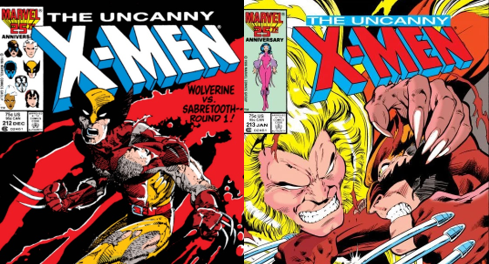


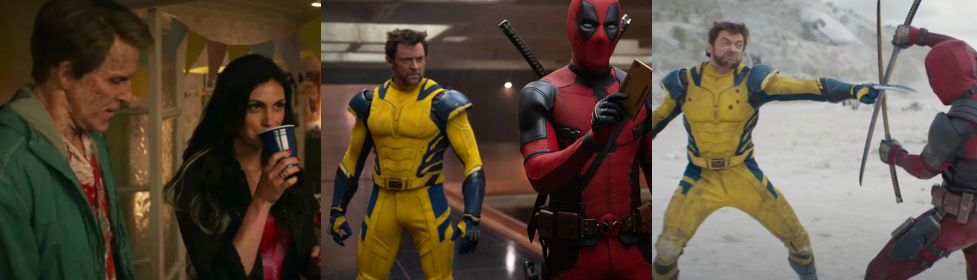
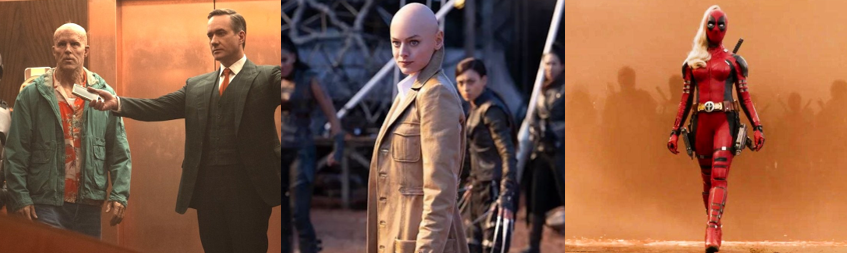
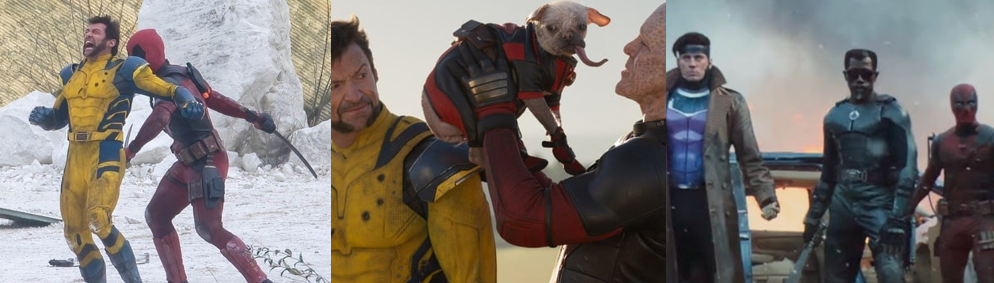
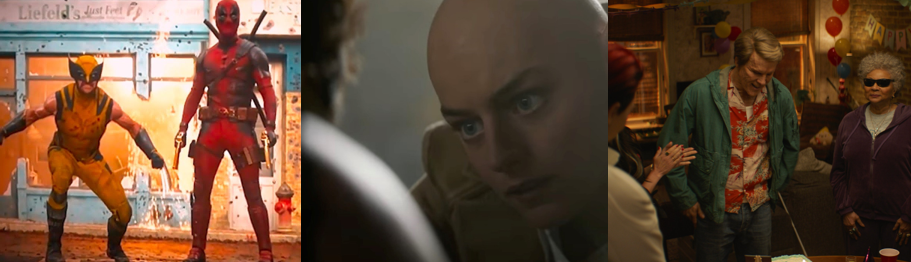






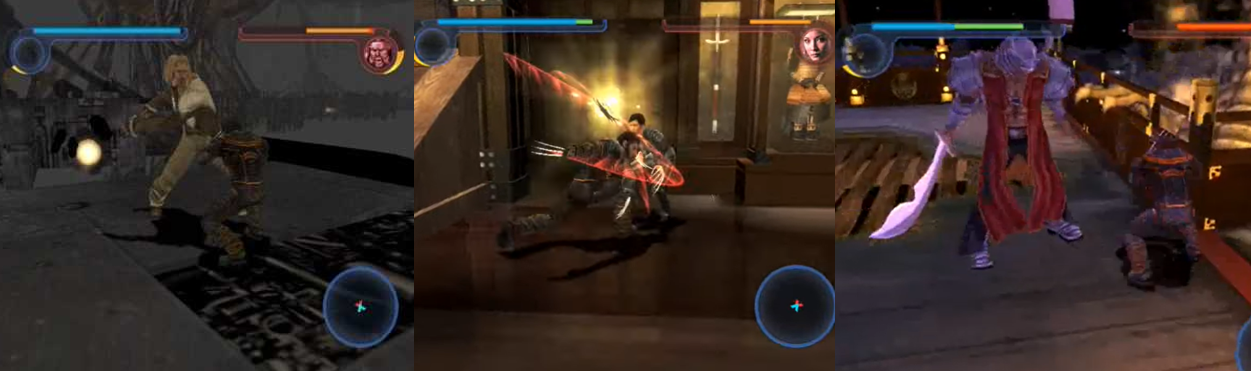



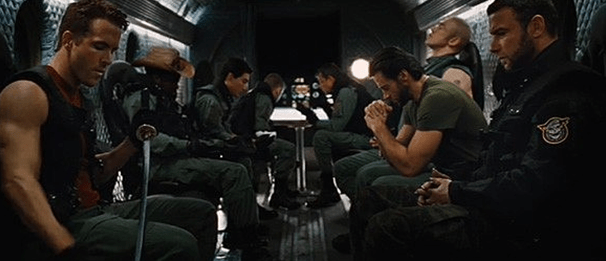
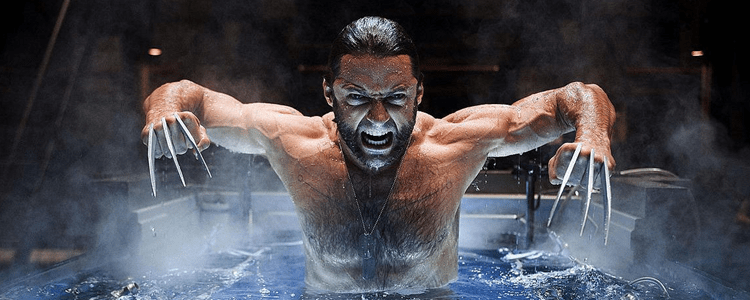
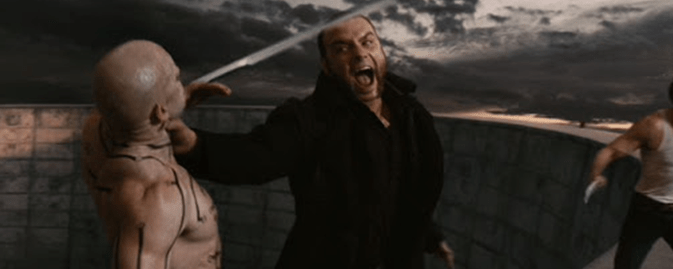
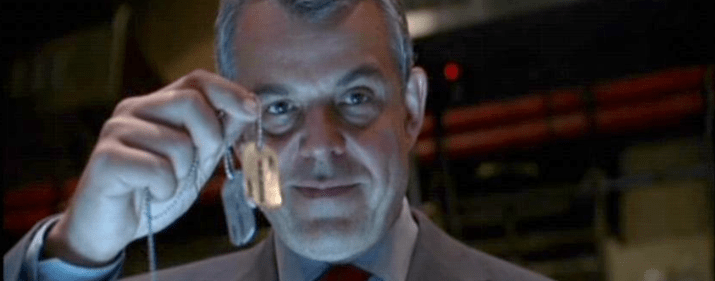

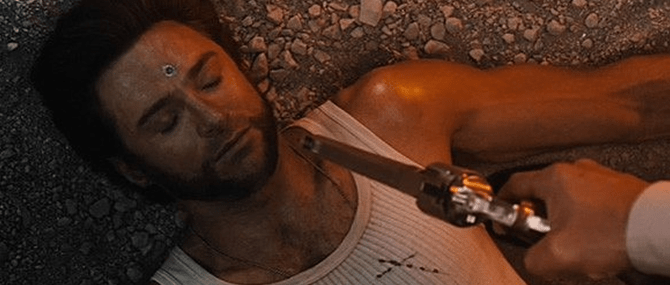
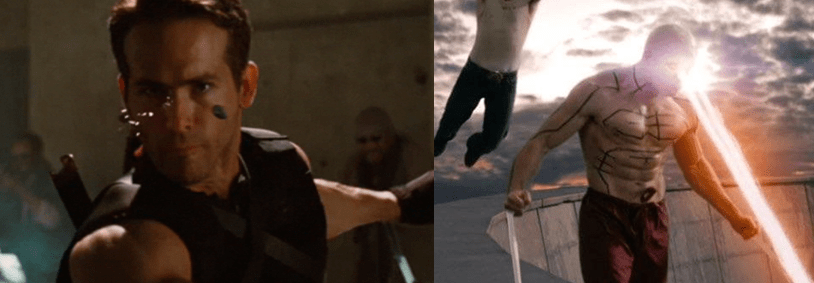
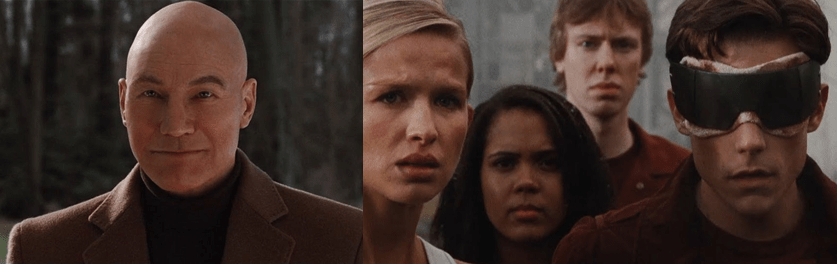
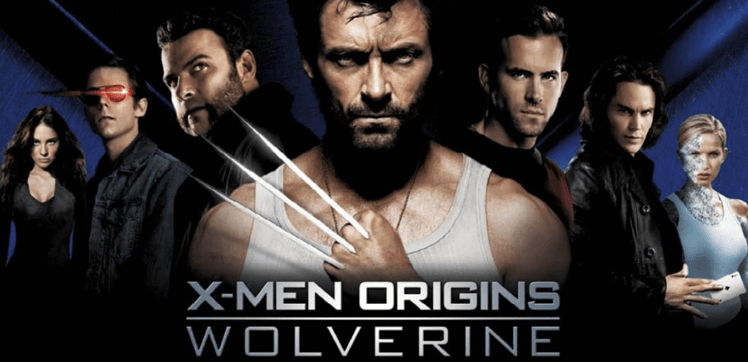


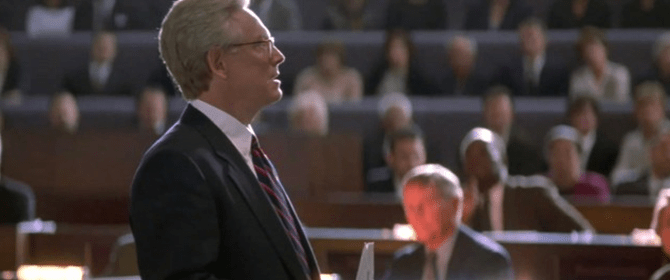

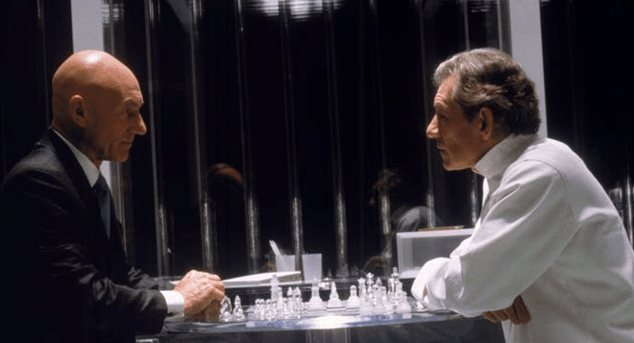
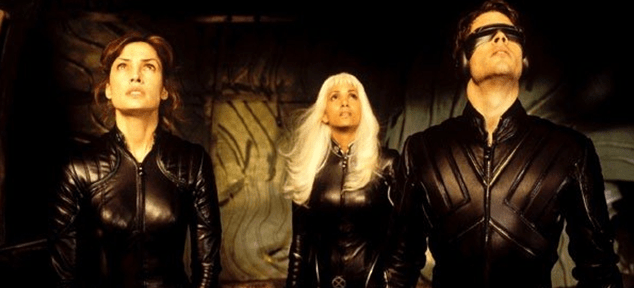
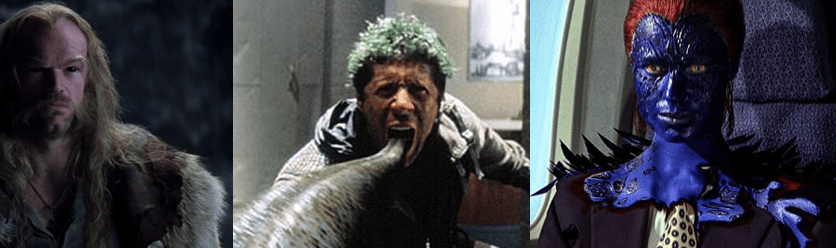
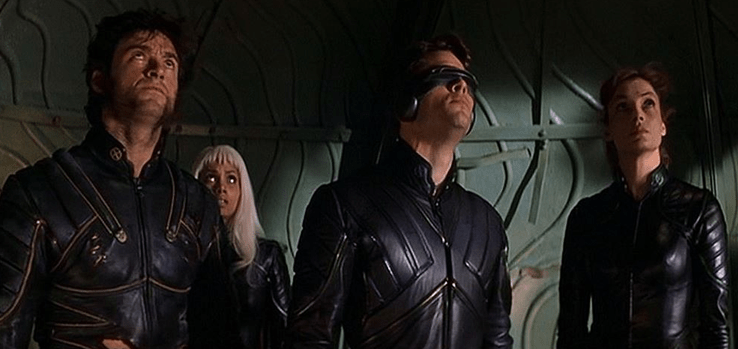






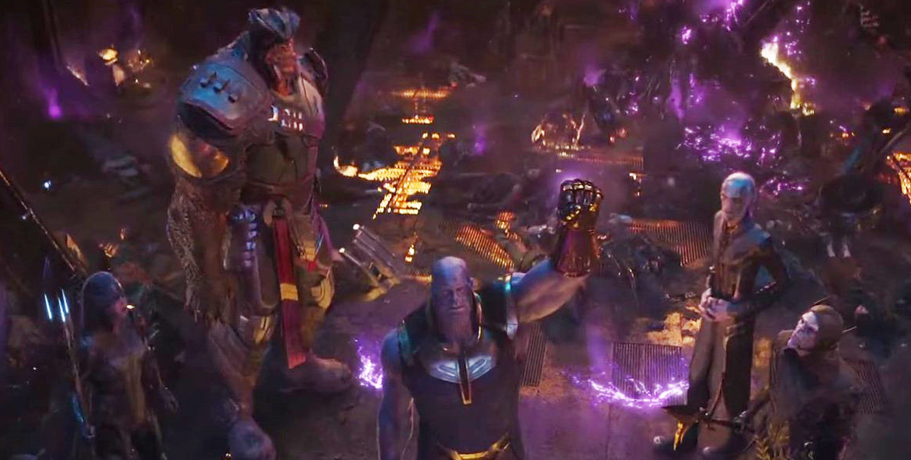
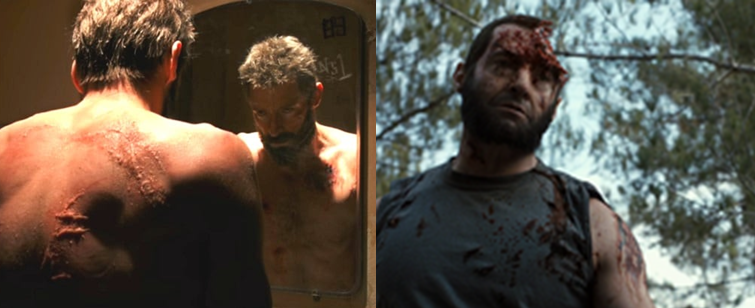



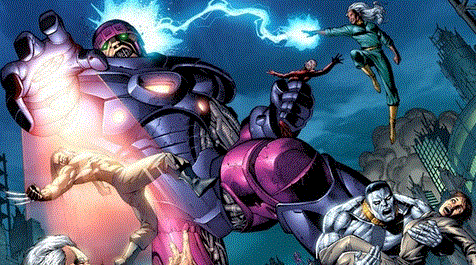
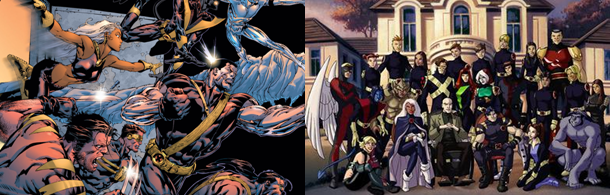

 Dr. K's Waiting Room
You must be logged in to post a comment.