In April of 1940, about a year after the debut of arguably their most popular character, Bruce Wayne/Batman, DC Comics debuted “the sensational find of [that year]”, Dick Grayson/Robin. Since then, Batman’s pixie-boots-wearing partner has changed outfits and a number of different characters have assumed the mantle as the Dynamic Duo of Batman and Robin have become an iconic staple of DC Comics. Considering my fondness for the character and those who assumed the mantle over the years, what better way to celebrate this dynamic debut than to dedicate every Thursday of April to celebrating the character?
Released: 1996 Developer: Probe Entertainment / Iguana Entertainment / Iguana Entertainment UK Also Available For: Arcade, MS-DOS, and SEGA Saturn
A Brief Background: It’s easy to forget now but Batman Forever(Schumacher, 1995) was a pretty big deal for Warner Bros. back in the day; not only had they sunk $100 million into the film but they were desperate to appease those who were outraged with the dark, macabre content of Batman Returns (Burton, 1992) and craft a film that would be more appealing for the sponsors. While it garnered a mixed critical response, Batman Forever made over $330 at the box office and was accompanied by a slew of merchandise and ancillary products. Like its predecessors, Batman Forever also received a tie-in videogame that marked Acclaim’s first foray into the arcade scene. However, the 2.5D beat-‘em-up was met with mostly mixed reviews but still fared better than Acclaim’s other home console adaptation of the movie.
First Impressions: If there’s three things you can always count on with me, it’s that I’m a big fan of arcade titles, sidescrolling beat-‘em-ups, and Batman. Although I didn’t grow up with a Super Nintendo Entertainment System (SNES), emulators have allowed me to have a great deal of fun with Batman Returns (Konami, 1993), which was a cracking licensed videogame simply because it aped the formula of genre staples like Final Fight(Capcom, 1989) and X-Men(Konami, 1992). While Batman Forever had an extremely dismal and almost unplayable sidescrolling adventure game released on Mega Drive and SNES, arcades were blessed with this far more enjoyable and fitting videogame, which thankfully came to the PlayStation so I was able to snap it up (and at a pretty good price, too, all things considered). Batman Forever: The Arcade Game can be played on three different difficulty settings (Easy, Normal, or Hard), with enemies increasing in number and toughness on the harder difficulty settings, and allows you to assign yourself up to seven continues. You begin the game with three lives and, once you’ve lost all three, you can enter a high score and switch your character to return to the action once more. In terms of controls, Batman Forever is as simple as it gets: one button punches, one kicks, and one jumps and that’s it. you can customise these in the options menu and choose to play as either Batman or Robin (or both together, if you have a friend), before jumping into the game proper. There doesn’t appear to be any technical differences between the two, but they do have different animations and Robin seems to be a bit faster on his feet, but that could just my psychosomatic on my part. Right away, you’re treated to a pretty impressive in-game cutscene as Batman and/or Robin heads to the streets of Gotham City in the Batmobile, and the first thing you’ll notice is how impressive and ambitious the graphics are. The game utilises pre-rendered, 2.5D backgrounds that, while murky and a bit washed out, are immediately evocative of many of the neon-drenched, bizarre locations seen in the film, such as the graffiti-and-litter-strewn streets, Edward Nygma/The Riddler’s big gala (with partially animated guests in the background), and Harvey Dent/Two-Face’s lair among others. The playing field allows you to wander into the background, with sprites scaling accordingly, though they do lose a fair amount of graphical fidelity, becoming even more pixelated and ugly as you move about.
While the game is cluttered and chaotic, it’s full of action and fun ways to beat up thugs.
Sprites in general look decent enough; they appear to be digitised, similar to the early Mortal Kombat games (Midway/Various, 1992 to 1996), and Batman and Robin have a glistening sheen to them that makes them look like action figures. Batman looks a little goofy, with his massive chest symbol, but Robin looks pretty good; the thugs you encounter, however, are swarms of Two-Face’s goons, robots modelled after the Riddler’s fortune teller machine, and other generic beat-‘em-up mooks, none of whom have a life bar. The sheer number of enemies is pretty impressive and overwhelming, however. It doesn’t take much for you to get pummelled to death as enemies swarm around you and trap you in an unblockable beatdown, and enemies will fire guns, toss grenades, drive motorcycles and cars at you as well as spring out from the scenery. To make matters worse, Two-Face occasionally pops in, riding a wrecking ball or shooting rockets at you from the foreground, though there are times where you can swing and grapple parts of the environment to barge trough enemies. Combat is a pretty simple affair, with you mashing punch and kick to string together combos, tossing and jump-kicking enemies as you’d expect, but the game makes a big deal out swamping you with various power-ups. As you take out enemies, little Bat Symbols scatter everywhere which power-up your “Combo Meter” as well as a variety of gadgets and pick-ups: Bat-Signals, Two-Face Ying-Yangs, and Riddler Symbols appear frequently, bestowing either gadgets or temporary buffs and debuffs. When you grab a gadget, like the Batarang, grapple gun, taser, or Bat Bola, your regular attack is replaced with a projectile; the grapple gun is particularly useful for landing up to 150 hit combos on enemies and sees you swinging and flailing all over the screen, while the Batarangs can quickly rack up points and the taser and bola can stun enemies for a short time. You can also pull off a screen-clearing attack, summon bats to protect and attack enemies, and toss a stun grenade, and all of these attacks will increase in power and change their appearance as your meter builds higher. However, this can make the combat and action extremely chaotic as the screen is constantly filled with enemies, items, and your almost incomprehensible attacks, making for a very frantic and confusing experience.
My Progression: As you fight your way through the game, you can pick up and throw objects, grab the odd bit of health to sustain yourself, and will be blessed or cursed with power-ups such as invisibility, duplication, invulnerability, and shrinking you (or your enemies), among others. After clearing a stage, your score is tallied up; the more enemies you defeat and the more gadgets and such you use, the better your score and rewards. You can then pick from these rewards to start the next stage with a gadget or power-up advantage; some are merely cosmetic, like “VR Mode”, which sees enemies burst into green computer coding upon defeat, while others increase your combo by default, allowing you to build your meter faster. There are no save points, password, or checkpoints in the game, however; once you exhaust all of your continues, the game is over and you’ll need to start from the beginning, which is always a pretty shitty thing to do in a home conversion of an arcade game since its purpose isn’t to relieve you of your pocket money. All I’m saying is at least have the option to earn more lives or continues, or limit your continues on the harder difficulties and have them disabled entirely on Easy mode.
Unfortunately, I wasn’t able to save Gotham from the villains’ mad schemes…this time…
Naturally, you’ll have to battle a few bosses over the course of your playthrough, however not as many as you might think. The game is structured more to have you battle wave upon wave of the same goons over and over until you reach the end of a stage, where a boss may be waiting for you, but it’s not always the case. I didn’t fight a boss until the second stage, for example, which pits you against three slightly tougher goons: Nick, Blade, and Flex, each of which fires at you with an Uzi, tosses grenades, or throws knives at you and can block your attacks (something you’re incapable of doing). You’ll know when you’re facing a boss as they actually have a life bar and the screen flashes dramatically after you defeat them, and these three weren’t all that difficult but, again, it’s easy to get caught in a crossfire and just whittled down to nothing in no time at all. At the end of an alleyway, you’ll fight Tassel (who seems to be the neon-painted, clown-like goon who hassled Dick in the film), who’s joined by a couple of gun-and-grenade-toting henchmen and shows off a bit of flippy, martial arts skill. After battling through goons on a rooftop, you’ll be confronted by a helicopter and a seemingly endless supply of enemies; simply fend them off, dodging the chopper’s machine gun fire, and press attack to toss projectiles when prompted. Two-Face will continually pop up to fire rockets at you in the subway and at the gala, and two of the Riddler’s robots will attack you with their extendable arms to cover their escape. These then become regular enemies in a construction site full of explosive barrels, where you’ll battle Feather and Stew, with Feather proving pretty tough thanks to being very handy with his bo staff. My run came to a disappointing end in Two-Face’s lair, however, where his beautiful bodyguards, Sugar and Spice, absolutely wrecked me with their fast attacks, which pummelled me from both sides without any chance of fighting back, treating to me to a rather bland game over screen (in the Batman: The Animated Series (1992 to 1999) font, no less) informing me of my failure to save Gotham City.
I was having a pretty good time with Batman Forever: The Arcade Game once I got past the visual and sensory overload. The game includes a renditions of Elliot Goldenthal’s score and some brief sound bites from the movie, but the sheer number of enemies and chaos happening onscreen at any one time can be a little overwhelming. The game looks fairly decent, even though things can get a bit ugly and distorted at times, but the depth of combat is a little odd compared to other beat-‘em-ups; the gadgets and various pick-ups mean there’s always something happening and you can rack up big combos, but it also feels like a lot of control is being taken away from you as Batman and Robin leap into action with these big, elaborate movements at the touch of a button. Unfortunately, neither are particularly durable; your health bar can be whittled down to nothing in the blink of an eye and you’ll burn through your lives and continues in no time, with no passwords or cheat codes to make things easier for you. It’s probably do-able, maybe in two-player mode, and I’m sure I’ll return to it again as I do enjoy a bit of sidescrolling, beat-‘em-up action, but lumbering you with limited continues for a home console release always irks me and there’s not really anything to unlock or to discover outside of the main campaign, which continues basically no story and very few cutscenes (and even these are limited to the in-game graphics, impressive as they can be). I’d like to know if you’ve ever played this one, either in the arcade or at home, and how well you fared against Gotham’s colourful swarms of criminals? Which character did you prefer, and what did you think to all the gadgets and power-ups? Which licensed Batman game is your favourite? Who is your favourite Robin and how are you celebrating the Boy Wonder’s debut this month? Whatever your thoughts on this game, and Robin in general, sign up to leave them below or share your thoughts on my social media, and check back soon for more Robin content!
In April of 1940, about a year after the debut of arguably their most popular character, Bruce Wayne/Batman, DC Comics debuted “the sensational find of [that year]”, Dick Grayson/Robin. Since then, Batman’s pixie-boots-wearing partner has changed outfits and a number of different characters have assumed the mantle as the Dynamic Duo of Batman and Robin have become an iconic staple of DC Comics. Considering my fondness for the character and those who assumed the mantle over the years, what better way to celebrate this dynamic debut than to dedicate every Monday of April to celebrating the character?
Released: 19 November 2013 Developer: Freedom Factory Studios Also Available For: Nintendo 3DS, PC, and PlayStation 3
The Background: After debuting in the pages of The Brave and the Bold #54 in 1964, the Teen Titans had a relatively consistent presence throughout the 1960s and 1970s and acted as a way for DC Comics to appeal to younger audiences. The team arguably achieved their greatest mainstream success when writer Marv Wolfman and George Pérez breathed new life into the concept by introducing many characters who are now synonymous with the team but I actually became a fan of the group after reading the adventures of their later contemporaries, Young Justice. Although functionally similar to the Teen Titans, Young Justice brought together the then-modern incarnations of their predecessors, who had long since grown up and assumed other identities. Created by Todd Dezago, Todd Nauck, and Lary Stucker the team operated between 1998 and 2003 before disbanding (most likely so that DC Comics could captalise on the success of the Teen Titans cartoon (2003 to 2006)) before reuniting in 2019. Some four years after Teen Titans ended, the Young Justice concept was evoked for a new DC animated series that ran from 2010 to 2013 before finally receiving a long-awaited revival in 2020. Young Justice’s critical acclaim and popularity also led to the development of this videogame adaptation; unfortunately, the game suffered delays, ports to other consoles were cancelled, and it released to mainly negative reviews.
The Plot: Taking place in the five-year gap between season one and season two of the cartoon, Young Justice sees the titular team joining forces against the combined might of “The Light”, a cabal of supervillains with intentions to take over (or destroy) the world.
Gameplay: Young Justice: Legacy is a team-based beat-‘em-up with very light puzzle elements that sees players form a team of three (why it isn’t four is beyond me…) characters from a roster of twelve and fight their way through fifteen missions. If you don’t have one or two friends to play alongside, you can switch between the three characters with a press of left or right on the directional pad and, when you’re not playing as them, the computer will take over and batter any nearby enemies with a reasonable amount of competence. When selecting a team for the game’s main campaign, you’re unable to alter the story-based team leader, which can mean that you’re stuck with a character you don’t really like and limits the customisation options available to you, but that doesn’t really matter as, essentially, every single character plays the same way. Tapping X performs a light attack while pressing Y performs a heavy attack (you can also hold Y to charge this up) and you can mix up these button presses to perform a few clunky combos (although it has to be said that you can easily just run past the vast majority of the game’s enemies and not get bogged down in the monotonous combat). You can jump with A and certain characters can fly (more of a hover) with a subsequent press of A, perform an awkward dash with B that can help you move a little faster or dodge incoming attacks, hold the Left Trigger to block, and pick up and throw objects with B and X, respectively.
Combat is laborious and characters don’t really feel that different from each other.
Each character has four superpowers available to use; these are performed by holding the Right Trigger and pressing either X, Y, A , or B and can be performed as long as the blue bar on the heads-up display is full. This bar fills up over time and you’re able to pull off such ranged attacks as tossing Batarangs, shooting arrows, throwing fireballs, and blasting enemies with water, area blast attacks that may stun or knock back enemies, cast a healing spell or boost your attack, defence, and energy consumption, or freeze enemies, compel them to attack their allies, or turn your character briefly invisible. As you defeat enemies, you’ll build up your character’s “Hero Boost” meter; once it’s full, you can pull off a Hero Boost than defeats or heavily damages all onscreen enemies by holding RT and pressing the Right Bumper or build up all three characters’ bars and unleash a massive “Squad Boost” attack by holding RT and pressing the Left Bumper. Sadly, every character has the same Hero Boost attack and animation, which really limits the distinctiveness of each character beyond their individual superpowers. Combat in Young Justice: Legacy is mind-numbingly simple; as you run through painfully linear environments, you’ll be set upon by a near-endless supply of goons, all of whom might look a bit different area to area but basically attack in the same ways and can be put down with a bit of mindless button-mashing (or, as I said, avoided completely in some instances).
Combat is broken up by simple puzzles and a few tedious tasks.
Opportunities for exploration are limited; sometimes you can (and have to) smash through rock walls to access secret areas that lead to some collectibles or control panels and such but you won’t really find multiple paths through stages or areas that can only be accessed by certain characters and/or team combinations. The game also tries to mix things up with some extremely simple puzzles; these generally involve smashing something, usually a generator, activating a console to open a door, or pushing something big to activate bridges, open doors, or reach new areas. Stages are super linear but there’s a helpful mini map on screen at all times to point you in the right direction and you can look up your current objectives with a press of the ‘Back’ button but, while missions are split into three sub-missions at a time, the game’s monotony is made all the more frustrating by a serious lack of checkpoints. While you can’t pick anything up to refill your health, it will automatically refill once all onscreen enemies have been defeated and, if an ally is knocked out, you can revive them by pressing B. You can select from two difficulty settings (Normal and Hard) which, obviously make the game’s enemies a bit tougher and what-not but it can be extremely aggravating to get knee-deep into a mission only to have your health drained to nothing by instant-kill laser traps. Some stages are full of environmental hazards like this, such as flames and spikes from the floor and large statues that come to life as you progress through rooms. Other missions also prove unnecessarily frustrating, such as forcing you to clear out all onscreen enemies in a time limit (bizarrely without an onscreen timer to gauge your progress), rescue hostages, defend John Stewart/Green Lantern while health-sapping debris and waves of enemies attack you, avoid enemy-spawning search lights, smash engines or generators while avoiding missile-shooting turrets, or push forklift trucks to avoid being taken out by snipers.
Graphics and Sound: I should stress here that I haven’t ever seen the cartoon that Young Justice: Legacy is based on but the game opts to use a variation of cel-shaded graphics to recreate the look of its source material and, for the most part, this works…unless you’re watching the game’s cutscenes. When playing the game, thanks to the skewed, top-down perspective, the lack of detail and rigidity of the character models isn’t as noticeable since you’re so focused on combat and the perspective is quite zoomed out but, when the game tells its story, characters are all very flat and kind of resemble lifeless puppets more often than not. While the main characters look fine for what they need to be, the enemies aren’t so great; you’ll fight the same goons and robots over and over, which all gets very monotonous very quickly.
Character models are okay but environments and cutscenes are a bit bland and stilted.
Environments are surprisingly big considering how linear and empty they are; there’s usually a lot of open room to manoeuvre and you’re rarely forced to fight down boring, narrow grey corridors. You’ll visit places like Siberia, Santa Prisca, Gotham City, and battle on LexCorp hovercrafts, all of which provide a decent amount of visual variety to the game. It’s just a shame, then, that there’s very little opportunity to explore; you can go off the beaten path but will often find only a dead end or useless boxes to smash, and there’s no opportunities to platform or utilise specific character powers outside of combat. At one point, Edward Nygma/The Riddler challenges you to solve a light-based puzzle in a neon-drenched sewer system-made-funhouse, which is quite a unique area, but there’s really not that much on display here to keep you that engaged, which only adds to the game’s repetitiveness. The music and sound effects are equally bland but, while the game appears to utilise the same voice cast from the cartoon, this is actually to its detriment; characters will spout the same quips and lines over and over again and I was about ready to snap the disc in half after hearing Dick Grayson/Nightwing moan about being “whelmed” all the damn time!
Enemies and Bosses: A slew of generic goons will dog your progress in every mission. After playing through the first stage, you’ll basically have encountered every enemy the game has to offer as they simply get swapped out with different character models in each mission. You’ll battle teleporting, sword-wielding members of the League of Shadows, a variety of robots (Spider Bots and larger, more humanoid robots being the most common), Bane and David Hyde/Black Manta’s mercenaries, and the Riddler’s baton and shotgun-wielding goons throughout the game’s story. Things get interesting in the game’s final missions, where you’ll battle a larger mech, fight against mummies, and come up against gigantic statues that deal massive damage and get jumped by an assortment of enemies in enclosed areas.
Cheshire and Sportsmaster require a hit-and-run strategy to whittle down.
Each mission culminates in a boss fight against at least one member of the supervillain cabal known as The Light; the first mission ends with you battling Jade Nguyen/Cheshire, who teleports around the arena in a puff of smoke and throws projectiles your way but, while she’s the toughest enemy you’ll have faced at that point, she leaves herself wide open for an attack when she pauses to setup an explosive device and isn’t too difficult to whittle down as long as you keep moving, attacking, and reviving as necessary. This strategy basically applies to every boss but will become abundantly clear when you battle the second boss, Lawrence “Crusher” Crock/Sportsmaster. Sportsmaster is accompanied by a seemingly endless supply of goons, all of whom cause a massive headache when you’re trying to dodge Sprotsmaster’s health-sapping spinning and charge attacks. Thankfully, though, these enemies are finite and, if you quickly take them all out, you can focus on battling Sportsmaster using hit-and-run and ranged attacks.
Many of the bosses cannot be attacked directly and must be stunned first.
In Siberia, you’ll fight Crystal Frost/Killer Frost as Spider Bots attack you; Frost can’t be attacked head-on as she hides atop an ice column and blasts ice attacks at you, so you need to destroy her platform to knock her down and then beat on her before she can build a new one. Cameron Mahkent/Icicle Jr. takes over the ice-based duties for the next boss battle, where he teams up with Sportsmaster. You can utilise the same tactics to take out Sportsmaster and it’s best to focus on one enemy at a time; Icicle Jr. is different from Killer Frost in that he can freeze you and encases himself in an ice sphere that refills his health. After defeating them, you’re faced with a harrowing mission where you must battle through rooms of annoying enemies with no checkpoints and no refillable health as Clark Kent/Superman holds back an incoming avalanche, which was one of the most aggravating parts of the game on my first playthrough. Afterwards, in Santa Prisca, you’ll battle against Bane who, again, requires a little more strategy; when pumped full of Venom, Bane is invincible and you need to lure him into charging the nearby columns to stun him. He also busts out a big ground pound attack and can bash your brains in if you get too close for too long, so again it’s best to hit and run and use ranged attacks to whittle him down.
While you can bypass Black Manta, Psimon and Riddler require a more hands-on approach.
Next up, you’ll have a tough battle where you must disable Black Manta’s submarine; the game doesn’t make it massively clear how you do this but basically you have to fight off Black Manta’s goons and push these red bars near the large generators to overload his sub, all while avoiding his instant-kill lasers by taking advantage of the big metal shields that rotate around the arena. After that, you’ll fight Black Manta himself; make sure you avoid his massive eye beams but don’t worry about fighting him or his goons as you can simply attack and destroy the shield generators to end the fight that way. While at Haly’s Circus, you’ll have to fight through waves of enemies in a mini gauntlet before battling with Doctor Simon Jones/Psimon, who spawns in mirror versions of your team (who seem to randomly stun and defeat you without really landing any attacks) and then rains massive red energy lasers into the arena but if you simply mash the attack button, he’ll go down pretty easily. Finally, you’ll have to do battle with the Riddler, who randomly spawns bombs, poison gas, goons, and other hazards into the arena. To defeat the Riddler, simply ignore everything and attack and destroy the panels on his big circus-wheel-thing in perhaps the game’s easiest (if tedious) boss battle.
The final boss battle just goes on and on and even contains a game-breaking glitch!
The game ends with a gruelling and aggravating multi-stage fight against Klarion Bleak/Klarion the Witch Boy, Mark Desmond/Blockbuster, and the eldritch beast known as Tiamat. While Klarion and Blockbuster aren’t too difficult to best (simply lure Blockbuster into Klarion’s meteor attack to stun him and then beat on him until he goes down), the fight against Tiamat feels like it’s never-ending! In the first phase, he blasts the arena with water attacks that will basically kill you in one or two hits and he can only be damaged when he dips down into the water. In the second phase, he shoots a massive mouth laser at you and tries to swipe and squash you with his claws and fists; after avoiding his attacks, pummel the limb with everything you have until his health is drained. In Tiamat’s final phase, he flies about above you and comes crashing to the ground, unleashing a devastating series of attacks that will leave you “whelmed” in seconds. The only way to damage him is to attack the minions that spawn into the arena; after defeating two, you’ll build up your Hero Boost and you must unleash your Squad Boost to damage Tiamat, and then attack him immediately afterwards to whittle him down even more. This is easily the most frustrating boss battle in the entire game because of how tough Tiamat is; make sure to bring a healer like Zantanna Zatara or M’Gann M’orzz/Miss Martian or else you’re gonna have a bad time but be warned as there’s an almost-game-breaking glitch in this fight that can see the enemies stop spawning in, leaving you unable to finish the fight and forcing you to quit the game and try again but, thankfully, there are save points between each phase of this finale.
Power-Ups and Bonuses: As you defeat enemies, you’ll gain experience points (XP) that will cause you to level-up; each character has different statistics that affect how much health, power, and energy that have and levelling-up allows you to increase the power and range of each character’s superpowers. You can also find crates in stages and earn “Hero Points”, which can be spent on Wayne Industries upgrades, two of which can be equipped to each character after being purchased and will increase your melee or weapon attacks, energy consumption, and a host of other stats. Thankfully, these Hero Points seem to be shared amongst every character; so, if you have ten Hero Points, you can spend them upgrading Tim Drake/Robin’s superpowers and then switch out to Kaldur’ahm/Aqualad and spend the same ten Hero Points upgrading him, too. Sadly, though, there are no pick-ups on offer; yes, you can pick up and throw boxes and barrels and such, but you can’t pick up weapons or power-ups during gameplay, making smashing all those boxes pretty pointless.
Additional Features: Young Justice: Legacy comes with forty-eight Achievements for you to earn; many of these pop simply by playing the main campaign and defeating a certain number of enemies, the game’s bosses, and finishing the game on Normal or Hard. You can also snag some G by destroying crates, finding collectibles, or playing the game in co-up but there are also some stage-specific Achievements, such as avoiding searchlights in the Gotham City docks and solving a puzzle in a certain way. Every stage in the game has a few collectibles to find; these include dioramas, additional costumes for the game’s characters, and journals left behind by Roy Harper/Red Arrow. Playing through the campaign on Normal and Hard will see you unlocking additional characters, which is always nice, and there are four additional characters available to purchase as downloadable content if you like the sort of thing. Also on offer are an array of challenges; while these can only be played in single-player, these will pit you against ten waves of enemies that progress in difficulty, or have you battling against a time limit and you’ll unlock additional challenges and stages by playing the story mode. You can also view character biographies, concept art, and take part in a quiz that will test your knowledge of the cartoon to earn points.
The Summary: I wasn’t expecting much from Young Justice: Legacy except some mindless, arcade-style beat-‘em-up action; I’ve played team-based, top-down fighters like this before and been perfectly satisfied with them but I have to say that this game is just a repetitive, tedious, aggravating experience from start to finish. There’s a decent amount of characters on offer and some of them have more appeal than others, but they all essentially play exactly the same way. Since they lack character-specific super moves, you may as well just pick anyone and it’s ridiculous how you can just run past enemies to progress or simply look away from the screen and mash the X button to win. There’s very little actual skill or intelligence needed for this game, which would be fine if it was actually fun but it really isn’t; it’s dull and down-right infuriating at times, with some bland bosses, linear and empty stages, and very little incentive to replay the game beyond mopping up any missed Achievements.
My Rating:
⭐
Rating: 1 out of 5.
Terrible
Have you ever played Young Justice: Legacy? If so, what did you think to it? What character and team combination was your favourite? What did you think to the combat and gameplay and which of the game’s missions and bosses was your favourite? Were you a fan of the cartoon and, if so, do you think the game did a good job of recreating the action and energy of the show? Would you like to see more videogames based on Young Justice and/or the Teen Titans? Feel free to share your thoughts on Young Justice: Legacy, and Young Justice, down in the comments.
In April 1985, the first issue of the ground-breaking Crisis on Infinite Earths(Wolfman, et al, 1986) released and saw the temporary destruction of the “Multiverse”. To celebrate this momentous event, I’m discussing multiversal crossovers all throughout April in an event I dubbed “Crossover Crisis”.
Story Title: “Apokolips… Now!” Published: January 1982 Writer: Chris Claremont Artist: Walt Simonson
The Background: As I’ve mentioned on a couple of occasions, DC Comics and Marvel Comics have had a surprisingly collaborative and amicable relationship over the years that has led to some inter-company friendships, homages, and co-publications between the two comic book giants. By 1982, both Marvel’s Uncanny X-Men and DC’s Teen Titans were seeing a resurgence in popularity thanks to both teams featuring an exciting new creative and character line-up. Over in Marvel Comics, writer Chris Claremont had revitalised Marvel’s Mutant team by introducing a group of diverse and multi-cultural new characters while the New Teen Titans, under the pen of Marv Wolfman, had been aged up and also included some of the title’s most synonymous characters. With so many similarities between the two teams, and considering the success of the two titles were selling at the time, a crossover between the two was a smart business move for both parties.
The Review: “Apokolips… Now!” begins at the Source Wall, an impossibly large stone wall that represents the edge of the known universe and which is comprised of the legendary Promethean Giants, who were turned to stone for trying to breach the boundaries of the cosmos. There, we find Metron, the generally impartial intellectual of the New Gods, conversing with all-mighty Darkseid, who gifts him with the “Omega-Phase Helmet”, a highly advanced crown that allows Metron’s Mobius Chair to achieve the impossible and penetrate the great stone wall in order for them both to achieve their heart’s desire (Metron for knowledge and Darkseid for power).
A normal day at the X-Mansion is interrupted by a vision of Jean.
The story then jumps to Westchester, New York where Professor Xavier’s X-Men are engaging in a training session within the Danger Room, an exercise that grates on Logan/Wolverine’s patience despite his respect for the professor. After impressing Xavier with their teamwork, the Mutants retire for dinner and the story takes the opportunity to catch us up not only with the current X-Men roster and their powers (the aforementioned Wolverine, Scott Summers/Cyclops, Ororo Munroe/Storm, Piotr “Peter” Rasputin/Colossus, Kurt Wagner/Nightcrawler, and Kitty Pryde/Shadowcat) but also the tragic rise and downfall of Jean Grey, who attained incredible cosmic powers as the Phoenix that eventually corrupted and consumed her. The X-Men’s memories of Jean are extracted by Darkseid and the Phoenix briefly assumes a corporeal form where she begs for help from Cyclops much like Barry Allen/The Flash did in Crisis on Infinite Earths.
Raven and Starfire are spooked by Phoenix while Robin is jumped by Deathstroke!
Meanwhile, over at Titans Tower (yes, in this story, the Marvel and DC universes again exist in a shared world rather than being separate, parallel worlds), Rachel Roth/Raven of the New Teen Titans finds her dreams interrupted by a prophetic nightmare of a woman, taking the shape of a flaming bird, destroying their world. When Garfield Logan/Changeling assumes the form of a similar bird, Koriand’r/Starfire randomly loses control of herself and attacks him; well aware of the threat that the Phoenix poses, Starfire summons the remaining members of the team (Wally West/Kid Flash, Donna Troy/Wonder Girl, and Victor Stone/Cyborg) away from their procrastinations, personal lives, and crimefighting antics to bring them up to speed on the Phoenix’s destructive power. Dick Grayson/Robin, however, is kept from joining his team mates when he butts heads with one of Darkseid’s Parademons only to be attacked by Slade Wilson/Deathstroke the Terminator, who not only reveals that he’s in cahoots with Darkseid but is easily able to knock Robin unconscious thanks to his superior physical and mental abilities. The X-Men discover that Jean’s parents and other areas across the world have also witnessed visions of Jean and mysterious incidents all linked to Jean’s past. After locating Robin, Starfire relates Phoenix’s legend as the “chaos-bringer” and a cataclysmic force; although Robin points out that cosmic threats are a little out of their league, and the more pressing issue of Deathstroke’s current plot, he promises Starfire that they’ll do everything they can to track down and stop Phoenix. The story then introduces us to Ravok the Ravager, another of Darkseid’s henchmen who he recruits as part of his plot to siphon the Phoenix’s vast cosmic powers.
Both the X-Men and Teen Titans are captured with a ridiculous amount of ease.
Weary from pushing himself too far, Xavier enters a deep sleep and barely has enough time to defend himself when Starfire bursts into the X-Mansion and attacks him in a rage. Xavier’s unparalleled psychic powers are subdued by a combination of Cyborg’s ultrasonic blasts and Raven’s dark “Soul-Self”, however Robin is disturbed and irritated at his team’s recklessness in breaking into the mansion and attacking Xavier without provocation. His reprimanding is interrupted by the arrival of Ravok and his Shock Commandos, who storm the mansion looking for the X-Men but quickly adapt to defeat and kidnap all of the Teen Titans but Changeling, who follows along undetected. While investigating New Mexico, the X-Men comes across Deathstroke and one of Darkseid’s “Psi-phons”; although they easily destroy the Psi-phon and are able to fend off the Parademons, Deathstroke quickly recovers from Wolverine’s initial attack to take each of the Mutants out with a “fear ray” that grounds Storm, a “toxi-grenade” that renders Shadowcat, Nightcrawler, and even Wolverine unconscious while a Parademon blasts Cyclops, and overpowers even Colossus’ hulking metallic form. Deathstroke and Ravok bring their captives to all-mighty Darkseid, who waits at the Source Wall and immediately sees through Changeling’s deception to subdue him, and then kills Ravok for his ineptitude with his destructive “Omega Beams”.
Darkseid summons Dark Phoenix but the heroes quickly join forces to confront the New God.
Darkseid secures his captives to a gigantic machine, the “Psychon-Wave”, which painfully and forcefully draws upon their superhuman powers and the Mutants’ memories of Jean, concentrating them on the breach in the Source Wall to bring Dark Phoenix back to life. He then regales the inquisitive Changeling with the reason for this plot (basically, he wants to use the Phoenix to transform the Earth into a new Apokolips that will allow him to conquer first New Genesis and then the length and breadth of reality itself). Hungry for destruction, Phoenix willingly accompanies Darkseid through a Boom Tube to begin this plot but, quite ludicrously, the heroes’ restraints disappear when Darkseid departs! Freed from captivity, the Teen Titans and the X-Men immediately agree to work together to stop Darkseid and Phoenix despite Wolverine not being happy about working with kids. While Shadowcat tries to flirt with Changeling and Kid Flash comments on the diversity of the X-Men, Cyborg, Xavier, Starfire, and Cyclops locate and acquire the Mobius Chair, which Shadowcat and Changeling accidentally activate to provide them with a means of escape. Tensions are stirred when Colossus sees Shadowcat flirting with Changeling and when Starfire kisses Colossus in order to learn Russian, but the team are soon carried back to New York in order to fulfil Cyclops’ solemn vow to make Darkseid pay for violating Jean’s memory and peace. They follow Phoenix’s unique psychic trail to a series of underground tunnels beneath the city where they are attacked by Deathstroke’s Parademons once more. Rather than waste time in a pointless battle, Robin and Cyclops give the order to collapse the tunnel and blast an escape route for their two teams, which conveniently brings them out right at Darkseid’s main base.
Dark Phoenix threatens the Earth’s safety so is subjected to a psychic attack.
Impressed at the tenacity of his foes, Darkseid dispatches Deathstroke and Dark Phoenix to hold the two groups off while he complete his work; although Starfire attacks Dark Phoenix in a fury, her starbolts succeed only in further empowering the corrupted Jean, who vehemently resists Nightcrawler’s attempts to reason with her and equally overwhelms even Raven’s Soul-Self. Dark Phoenix then powers up Darkseid’s “Hellpit” and Darkseid boasts about how this will transform Earth into Apokolips within mere minutes. Interestingly, he actually offers the X-Men and the Teen Titans the opportunity to yield and join his cause, which isn’t something I’ve ever seen Darkseid do before, but Shadowcat and Changeling opt instead to use their powers to try and disrupt and destroy the technology powering the Hellpit. For their insubordination, Darkseid commands Dark Phoenix to destroy them but they are saved at the last second by the combined power of Raven, Xavier, and the Mobius Chair. After Cyclops subdues Deathstroke and Robin spirits Shadowcat and Changeling out of danger, Dark Phoenix is bombarded by a psychic assault that simultaneously drains her rage and hatred and overwhelms her with love and affection.
Darkseid is defeated when the Phoenix Force is unleashed against him.
Drained, and close to unravelling, Dark Phoenix is easily goaded into reabsorbing the blast she fired at the Earth to sustain herself. When Darkseid moves to intervene, he is assaulted first by Kid Flash and then the combined forces of Cyborg, Wonder Girl, Colossus, and Starfire, who force his Omega Beams back into his eyes and therefore keep him from stopping Dark Phoenix from empowering herself and thus sparing the Earth. However, still at risk from being consumed by her raging power, Phoenix heeds Darkseid’s advice to focus her energies through a physical form and bonds herself to Cyclops. This, however, proves to be her undoing as Cyclops channels her powers with his undying devotion to his lost love and then turns the full Phoenix Force against Darkseid. The chaotic, flaming energy blasts itself, and Darkseid, across the vast cosmos of the universe to return to the Source Wall and thus imprison the New God within the Wall alongside the doomed giants of yore. Victorious, the two teams revel in how close they came to being destroyed and how fantastic their triumph was, while Scott finds some solace in Storm’s suggestion that Jean’s good soul ultimately saved them in the end. Finally, Metron returns to his chair and bids farewell to the imprisoned Darkseid, commenting that everything has returned as it once was as is to be expected.
The Summary: “Apokolips…Now!” is quite the chaotic story; considering how many characters it has to juggle, it’s honestly surprising how coherent the story ends up being. If there’s one thing that always puts me off about team-based comics, especially X-Men and the Teen Titans, it’s the sheer abundance of characters and lore a single issue has to deal with so to mash the two together is no mean feat. The result is that no one single character from either team really gets any focus; indeed, many of the characters have next to nothing to do and the focus is, instead, on the meeting of the two teams rather than a bunch of separate interactions between them.
There are a lot of characters who don’t always get time to shine and whose interactions are limited.
This is best seen in the fact that neither Robin or Cyclops get much of a chance to act as a field leader; Nightcrawler is basically a non-factor, and Wonder Girl may as well not be there. Sure, most of the characters are assumed to be busy in fisticuffs with the Parademons and the Shock Commandos but we don’t really get to see much of this. Indeed, we’re even denied a proper fight involving Deathstroke; he takes out Robin with a ridiculous amount of ease, subdues all of the X-Men largely single-handedly, and his fight with Wolverine all takes place off-panel! These days, I like to believe that you’d never see that happen given how prominent Deathstroke and Wolverine are but, in this, Deathstroke is little more than one of Darkseid’s minions who gets taken out pretty quickly to continue the focus on Dark Phoenix. Indeed, Jean’s presence gets more play here than a lot of the other characters; her death was still relatively new at the time and hadn’t been driven into the ground yet so her reappearance is a particularly emotional moment for the X-Men, particularly Cyclops. However, while it’s pretty cool to see Dark Phoenix enamoured with Darkseid and willing to commit global destruction on his behalf, it’s not really enough to elevate this story for me.
While the art is great, the story is just okay and wastes a lot of potential.
I’m not entirely sure where Metron went or what happened to him when he breached the Source Wall and Darkseid’s plot basically boils down to every other plan he has (he’s either seeking out the Anti-Life Equation or trying to conquer the universe, it seems) and, again, he really doesn’t do all that much. This isn’t entirely out of character for Darkseid, who typically allows his underlings to do his work for him, but it’s kind of weird to see him team up with Deathstroke. Like…did Darkseid pay Slade off? I can’t help but feel Trigon might have been a more suitable villain for the New God to ally with. Overall, it’s a pretty decent tale; we don’t get to see the X-Men and the Teen Titans facing off against each other (the closest we get to that is when the Teen Titans attack a weakened Xavier), which is a shame, but it’s fun seeing the teams co-operate. There’s a little tension in the brief Colossus/Shadowcat/Changeling “love triangle” but that’s about all the dissention we get; I would have liked to see how Robin and Cyclop’s leadership styles differ and more interactions from Kid Flash, Wolverine, Wonder Girl, and Storm. Instead, the comic is all about the spectacle of seeing these different comic publisher’s heroes and villains interact in as unspectacular a way as possible. A fun adventure, to be sure, but maybe a little too “safe” and it could very easily be any one of a hundred other X-Men or Teen Titan stories with a few tweaks…but at least the artwork is good.
My Rating:
⭐⭐
Rating: 2 out of 5.
Could Be Better
Have you ever read The Uncanny X-Men and the New Teen Titans? If so, what did you think to it? Do you own a copy of the original comic or do you remember reading it when it was first published? Were you disappointed that the two teams didn’t come to blows or were you happy to see them just working together with no issues? Would you have preferred to see different characters in each team’s line-ups? What did you think to Darkseid’s plan and the return of Dark Phoenix? Would you like to see the X-Men interact with Marvel heroes again in the future and, if so, what stories would you like to see? Whatever your thoughts on The Uncanny X-Men and the New Teen Titans, and comic book crossovers of this kind, drop a comment down below and check back next Wednesday for the final instalment of Crossover Crisis.
In April of 1940, about a year after the debut of arguably their most popular character, Bruce Wayne/Batman, DC Comics debuted “the sensational find of [that year]”, Dick Grayson/Robin. Since then, Batman’s pixie-boots-wearing partner has changed outfits and a number of different characters have assumed the mantle as the Dynamic Duo of Batman and Robin have become an iconic staple of DC Comics. Considering my fondness for the character and those who assumed the mantle over the years, what better way to celebrate this dynamic debut debut than to dedicate every Sunday of April to celebrating the character?
Released: 4 April 2017 Director: Sam Liu Distributor: Warner Home Video Budget: Unknown Stars: Sean Maher, Kari Wahlgren, Stuart Allan, Christina Ricci, Gregg Henry, and Miguel Ferrer
The Plot: Dick Grayson/Nightwing (Maher) rejoins his old team mates, the Teen Titans, who are now training a new generation of costumed heroes. Alongside their newest recruit, Tara Markov/Terra (Ricci), the Titans work to end the maniacal aspirations of Sebastian Blood/Brother Blood (Henry). However, things escalate when Blood hires mercenary Slade Wilson/Deathstroke (Ferrer) to kill the Titans and the team are faced not only with Slade’s burning desire for revenge against them but also a very real threat from within their ranks.
The Background: The Teen Titans first came together in the pages of The Brave and the Bold #54 in 1964, some four years after the debut of their adult counterparts, the Justice League of America. The team was comprised entirely of the teenage sidekicks of DC Comic’s adult superheroes, potentially to appeal to younger audiences. The team had a relatively consistent presence throughout the 1960s and 1970s but was given new life when writer Marv Wolfman and George Pérez, who introduced characters like Victor Stone/Cyborg and Princess Koriand’r/Starfire who would become synonymous with the team for years to come. One of the team’s most celebrated stories was “The Judas Contract” (Wolfman, et al, 1984) in which they were betrayed by one of their own thanks to the machinations of the vindictive Deathstroke. An animated adaptation had been in the works for some time but, after a few false starts, finally came to life as part of the DC Universe Animated Original Movies series. The film, which was the third in this new animated continuity of films and iconic actor Miguel Ferrer’s last role before his untimely death, made over $3,250,000 in home video sales and was modestly received compared to what had come before it.
The Review: The film begins with the original incarnation of the Teen Titans – comprised of Dick Grayson/Robin (Maher), Wally West/Kid Flash (Jason Spisak), Roy Harper/Speedy (Crispin Freeman), Garfield Logan/Beast Boy (Brandon Soo Hoo), and Karen Beecher/Bumblebee (Masasa Moyo) – meeting Starfire (Wahlgren) for the first time. If you’ve watched the awesome Teen Titans (2003 to 2006) cartoon before then many of the Titans’ characterisations will be instantly familiar: Robin is the composed leader, Beast Boy is the comic relief, Kid Flash is impatient, and so forth. This version of Starfire, while still being somewhat naïve and innocent, is far less childish compared to her counterpart; however, she nevertheless forms an immediate bond with the team after learning to communicate through kissing.
After a random flashback, we rejoin the Teen Titans adjusting to their new team dynamic.
We then jump ahead to “NOW” to find Brother Blood and his lover and right-hand, Mother Mayhem (Meg Foster), packing up their most recent Hive base. Choosing to ignore Deathstroke’s warning, the cult are caught completely off-guard when the Titans – now made up of Nightwing, Starfire, Beast Boy, Rachel Roth/Raven (Taissa Farmiga), Jaime Reyes/Blue Beetle (Jake T. Austin), Damian Wayne/Robin (Allan), and newcomer Terra – break into the facility using Terra’s power over earth and rock. Nightwing, who has only recently rejoined the team, finds it difficult adjusting to the new dynamic, which places Starfire as the field commander, but his experience and combat strategies are nevertheless appreciated by Starfire and his older teammates. There is, however, some discord within the team; not only are Nightwing and Starfire a little distracted by their intimate relationship outside of the team but she doubts her place as the team’s leader (despite Robin approving of her) and Robin constantly clashes with Blue Beetle over the unpredictability of Jaime’s alien Scarab suit. Still, the team takes out Blood’s goons and reconvenes at Titan Towers, where their teamwork and interpersonal relationships are developed a little more. Damian continues to have a somewhat disconnected and abrasive personality and remains fully committed to his role as Robin (he’s the only member to never appear outside of his costume during the film) and, interestingly, the film makes a subtle allusion to unpredictability of the Scarab to puberty during Jaime’s video call with his parents (Maria Canals-Barrera and David Zayas, respectively) and his interactions with a young girl he is attracted to that helps to highlight how, despite their superpowers or physical abilities, the Teen Titans remain just that: troubled teenagers trying to find their place in the world.
Blood is a twisted zealot who hires Deathstroke to capture the Titans and fuel his desires for Godhood.
Brother Blood is a ruthless zealot of a man; having organised Hive into a cult-like following, he believes that he has the gift of foresight and is fully willing to kill any who blasphemes against his beliefs. Regularly bathing in the blood of his enemies to maintain his youth and vigour and with a penchant for hanging out in graveyards, Blood has constructed an elaborate machine that is powered by the lifeforce of those connected to it that he plans to use to absorb the Titans’ superpowers and abilities to become a demigod. To that end, he hires Deathstroke to deliver the Titans to him, a task he takes great pleasure in given his past history with Damian and has prepared for by augmenting his already-impressive physical abilities by regularly bathing in a Lazarus Pit.
Deathstroke manipulates Terra into infiltrating the Titans to get revenge on Robin.
Terra constantly feels underappreciated by the team and perturbed by Beast Boy’s constant attentions and remains dismissive and bitter towards their personalities, hobbies, or issues. Aggressive and snappy, Terra has little interest in helping others in a way that doesn’t involve busting heads with her powers and is weary of the team’s constant attempts to reach and befriend her. Tormented by memories of her life in Markovia, where she was beaten and hounded and accused of being a witch, Terra has grown angry at and resentful towards humanity and has no interest in serving it for the greater good. Thus, she willingly infiltrates the team on Deathstroke’s behalf and allows him to capture Damian for Blood. Terra is absolutely besotted with Deathstroke after he saved her life in Markovia prior to the start of the film; devoted to him, she sees him as more than a mentor and father-figure and constantly attempts to seduce him in some truly awkward scenes that have her dressed in an overly provocative outfit. Although he rebukes her advances, he nevertheless commands her complicit behaviour by promising that they’ll be a couple and take command of the League of Assassins once the contract is fulfilled. Thus, begrudgingly, she returns to Titans Tower, now equipped with an audio/visual link up to Deathstroke, to continue her subterfuge. Though her anti-social personality begins to crack when she sees just how appreciative they are of her and she even shares a kiss with Beast Boy, she nevertheless lures each of the Titans into a series of traps that lead to them all being captured by Deathstroke and placed in Blood’s machine.
The Nitty-Gritty: Teen Titans: The Judas Contract shares the same quasi-anime, stilted animation as other DC Universe Animated Original Movies. Still, the animation and visual presentation is made more appealing due to the aesthetic distinctiveness of each of the Titans and their individual powers. Raven, for example, exudes dark, ethereal magic while Beast Boy cycles between a variety of amusing animal forms as part of his somewhat awkward and hyperactive personality. Unfortunately for me, many of the Team’s appearances are taken from their New 52 designs, meaning that Nightwing is wearing his awful red suit; however, Deathstroke more than makes up for this with his bad-ass outfit that is only made all the more intimidating thanks to Ferrer’s distinctive gravely tones. The voice acting, in general, is really good, actually; Stuart Allan is particularly great at capturing Damian’s dickish attitude, I’ve always had a soft spot for Christina Ricci (and it’s great to see her voicing Terra rather than someone more cliché, like Raven), and (though I’m not really his biggest fan) the film even includes a brief cameo by Kevin Smith.
Terra’s abrasive attitude cracks but she remains loyal to Slade … right up until he betrays her.
Having the reveal of Terra’s dual nature quite early into the film makes for a great bit of suspense as we see her emotionally and physically manipulate each of the Titans into Deathstroke’s traps. The relationship between Terra and Slade has always been an unnerving and disgusting one full of appalling sexual subtext and this remains largely prevalent in the film as Deathstroke manipulates Terra’s motions in order to craft her into the perfect double agent. Even though Damian, with his unique insight into both Deathstroke and the League of Assassins, attempts to reach her, Terra is ruled by her bitterness and anger and is thus completely blindsided when Deathstroke betrays her in order to fully deliver on his contract with Blood.
Ultimately, Terra shows her true colours and sacrifices herself to stop Blood and Deathstroke.
In the finale, Nightwing frees his friends thanks to faking his death at Deathstroke’s hands and interrupting the party. Still, Blood is able to absorbs most of the Titans’ powers, which transforms him into a demonic creature and makes him more than a match for Starfire, Beast Boy, Raven, and Blue Beetle while Nightwing and Robin attack Deathstroke head-on in easily the film’s most impressive fight scene. Despite his near-unstoppable new powers, the Titans are only able to overcome Blood when Raven unleashes the full extent of her supernatural powers to strip him of his abilities and render him helpless, though Mother Mayhem kills Blood before he can be brought into the Titans’ custody. At the same time Terra, enraged at Deathstroke’s betrayal, mercilessly attacks and kills him with her incredible powers by bringing the entire area down him. Unable to live with her betrayal and pain, she then destroys the entire temple, taking herself along with it in recompense for her actions but, while Beast Boy is left heartbroken, the team honour their former comrade as a Teen Titan to the end.
The Summary: As an adaptation of the source material, Teen Titans: The Judas Contract does the best that it can in its limited time; obviously, the story has been changed a little, the team is almost completely different, and even Deathstroke’s motivations are very different compared to in the original story but a lot of this is to be expected from the adaptation process. The film’s main concern seems to be with telling another story in the DC Universe Animated Original Movies series; however, while it might be beneficial to have seen Justice League vs. Teen Titans (Liu, 2016) for a bit of additional context, it works pretty well as a standalone story. I do question why the film went to the effort of including a prelude where an almost completely different version of the team first meets Starfire as this doesn’t really tie into the main story (maybe it would’ve been better to have the older team be comprised of grown-up versions of the characters seen in the prelude) and I also feel like the story might have been better served by removing Brother Blood completely and instead focusing on Deathstroke and his vendetta against the Titans as the primary antagonist. Still, it’s a decent enough animated venture and adaptation of the seminal storyline, with some engaging action and intriguing character beats and some great vocal work from Allan, Ricci, and the late, great Miguel Ferrer especially.
My Rating:
⭐⭐⭐
Rating: 3 out of 5.
Pretty Good
Did you enjoy Teen Titans: The Judas Contract? Were you a fan of the changes that the film made to the story and the new team line-up? Have you ever read the original comic book the film is based on and, if so, where does it rank for you amongst other Teen Titans stories? Who is your favourite Robin and how are you celebrating the Boy Wonder’s debut this month? Whatever your thoughts on this film, Teen Titans, and Robin, leave a comment below and thanks for joining me for Robin Month!
In April of 1940, about a year after the debut of arguably their most popular character, Bruce Wayne/Batman, DC Comics debuted “the sensational find of [that year]”, Dick Grayson/Robin. Since then, Batman’s pixie-boots-wearing partner has changed outfits and a number of different charactershave assumed the mantle as the Dynamic Duo of Batman and Robin have become an iconic staple of DC Comics. Considering my fondness for the character and those who assumed the mantle over the years, what better way to celebrate this dynamic debut than to dedicate every Sunday of April to celebrating the character?
Released: 27 July 2010 Director: Brandon Vietti Distributor: Warner Home Video Budget: Unknown Stars: Bruce Greenwood, Jensen Ackles, John DiMaggio, Wade Williams, and Jason Isaacs
The Plot: Gotham City’s underworld is terrorised by a murderous vigilante known only as “The Red Hood” (Ackles). In investigating this new threat, Batman (Greenwood) is forced to face the greatest failure of his career as old wounds reopen and old, once buried memories come into the light.
The Background: As I detailed in my review of A Death in the Family (Starlin, et al, 1988), readers were first introduced to Jason Todd in March 1963. With the original Robin, Dick Grayson, having grown up and gone away to college, Jason was initially almost indistinguishable from his predecessor until he was given an “edge” by writer Jim Starlin following the Crisis on Infinite Earths(Wolfman, et al, 1985 to 1986). Readers didn’t take kindly to the new Robin and, in a moment that went on to define Batman for years to come, DC Comics made the decision to kill the character off in the aforementioned Death in the Family storyline. For over fifteen years, Jason Todd stayed dead and his death haunted Batman; his monument in the Batcave served as a constant reminder of Batman’s greatest failure and he was long considered one of only a handful of comic cook characters who would stay dead. The character made a surprise return during the “Hush” storyline (Loeb, et al, 2002 to 2003) before being officially brought back to life (through cosmic, reality-bending shenanigans, of course) in the “Under the Hood” arc (Winick, et al, 2004 to 2005; 2005 to 2006). Jason’s resurrection was generally positively received and he has gone on to become a popular anti-hero as the Red Hood and, 2010, Winick came onboard to write the animated adaptation of his influential storyline. Batman: Under the Red Hood was the eighth animated feature of the DC Universe Animated Original Movies line-up, which aimed to be more mature than the DC Animated Universe popularised by Bruce Tim and Paul Dini. Batman: Under the Red Hood was one of the most successful of DC’s animated ventures, making over $12 million in sales and being critically applauded; a follow-up even surprisingly landed in 2020 in the form of an interactive animated feature that was also quite well received.
The Review: I never really had any strong feelings for or against Jason Todd as I read comic books so sporadically as a kid that, by the time I even read A Death in the Family, Dick Grayson had already become Nightwing and Tim Drake was already the third Robin so, if I didn’t like what happened to him, it was too late to be mad about it. I do feel, though, like the idea of bringing him back was great…on paper….but that DC Comics screwed it up in execution. Personally, I think Jason should have been Hush all along as his outfit in Hush was way better than the Red Hood look and, considering DC kind of retconned that Jason was present during Hush anyway, I think this would have made a lot more sense. Plus, it took DC a long time to find a way to mention Jason’s dramatic return without having to reference the reality-breaking shenanigans of Infinite Crisis (Johns et al, 2005 to 2006) and, in that regard, if feels like Under the Red Hood tells a far simpler and much more coherent version of events surrounding Jason’s resurrection thanks to the benefit of hindsight.
Still haunted by Jason’s death, Batman hears of a new player muscling into Gotham’s underworld.
Under the Red Hood opens with its interpretation of the events of A Death in the Family; in this adaptation, Ra’s al Ghul (Isaacs) allied with the Joker (DiMaggio) in his latest bid to disrupt Europe’s economy. He realises the error in his judgement all-too-late as the Joker captured Jason Todd/Robin (Vincent Martella) and was busy amusing himself by taunting Robin and mercilessly beating him with a crowbar. Although Jason remained defiant, even with a collapsed lung and having been beaten half to death, he was helpless against the Harlequin of Hate. Despite Jason struggles with all his failing might to hold out for Batman, who raced to aid his young partner, he was killed when the warehouse that he was trapped in explodes (again, take note: Jason is killed by the explosion and not by the crowbar!) The film then jumps ahead five years to find Gotham’s criminal figureheads lured into a meeting and confronted by the mysterious Red Hood. Red Hood delights in taunting the criminals and muscles his way into the operation, promising to protect them from both Batman and Roman Sionis/Black Mask (Williams) on the proviso that they don’t peddle their wares on young kids and proves himself a credible threat by presenting a bag full of the severed heads of their lieutenants. Meanwhile, Batman continues to operate within the city; however, his experiences with Jason have left him more of a loner than ever, to the point where he even out-right refuses Nightwing’s (Harris) help in taking down Amazo (Fred Tatasciore), a superpowered android with all of the powers of the Justice League. Nightwing, of course, completely disregards this and helps anyway and, in the process, the two learn of the Red Hood’s bid to muscle the Black Mask out of power and control Gotham’s underworld.
The Red Hood makes an enemy of both Batman and Black Mask through his violent actions.
When the Red Hood kills the thugs transporting Amazo, Batman gives chase in the Batwing but loses him in the Axis Chemical Plant (though not before having a flashback to his first encounter with the Joker, who, at that time, was hidden under the guise of the original Red Hood). Back at the Batcave, Batman and Nightwing analyse the footage of the biker-gear-clad vigilante and note that, since he arrived in town, crime has fallen significantly. Suspecting that the Joker may be behind the new Red Hood, they head to Arkham Asylum to interrogate the Clown Prince of Crime, who denies any involvement in his activities but takes the opportunity to rile Batman up over failing to save the former Robin. Meanwhile, the Red Hood’s activities have angered Black Mask, the ruling mob boss of Gotham City. In this incarnation, Black Mask is similar to Johann Schmidt/The Red Skull in that, rather than wearing a mask or a helmet, his head is literally a charred black skull. Apart from that, he’s a bombastic, maniacal gangster who viciously beats anyone who dares to stare at his gruesome appearance. His efforts to kill the Red Hood meet in failure as he is closely monitoring Black Mask’s meetings and movements so that he can steal his weapons and merchandise. Thankfully, Batman has also been monitoring Black Mask, correctly guessing that the Red Hood would hijack his latest shipment, and as a result comes face-to-face with Gotham’s newest vigilante once more after an exhilarating chase through a construction site, across the city rooftops, and even across the city’s famously impractical blimps.
Revived by the Lazarus Pit, Jason enacts a plan of revenge against the Joker.
Thanks to the Red Hood’s impressive skills, physical aptitude, and apparent knowledge of Batman’s weapons and tactics (all of which Nightwing, and even Batman, admit to being amazed by), this proves to be a trap as Batman and Nightwing are lured into an explosion that leaves Dick’s leg injured. Both of them marvel at the Red Hood’s physical abilities and skills and knowledge of Batman’s tactics but Batman is stunned when he reviews the playback of their encounter and hears the Red Hood calling him “Bruce”. Black Mask steps up his campaign against the Red Hood, beating, threatening, and killing all of those who have sold out to him and hiring mech-wearing mercenaries to hunt him down, but Batman interrupts the fracas and takes the mercs out alongside Red Hood. Although Batman is disgusted when the Red Hood uses lethal force to kill one of the mercenaries, he nevertheless attempts to offer Red Hood help but the helmet-clad vigilante angrily refuses, believing that his willingness to kill is making an actual difference as opposed to Batman’s more merciful ways. By analysing the Red Hood’s blood, Batman confirms, without a doubt, that he is Jason Todd resurrected. Realising that only one man could possibly have been responsible for Jason’s return to life, Bruce angrily confronts Ra’s and learns about what happened all those years ago: remorseful for allowing the Joker to kill Bruce’s young partner, Ra’s recovered Jason’s body (leaving a dummy in his grave) and revived him by submerging him in the restorative Lazarus Pit.
The Nitty-Gritty: Aesthetically, Under the Red Hood greatly resembles many of DC’s other animated efforts; characters aren’t quite as exaggerated or cartoony as they are in the DCAU but are still quite stiff and rigid. Luckily, this allows the film’s many chase and fight sequences to shine even more, but it does make prolonged scenes of dialogue and exposition to appear a bit inflexible. The voice cast, however, is pretty stellar; Bruce Greenwood makes for a gravelly and intimidating Batman, even if he is imitating the iconic Kevin Conway somewhat, and the film does a pretty good job of showcasing the impact Jason’s death had on him and his rage at allowing himself to be so easily duped by Ra’s’ deception. John DiMaggio makes for a serious and menacing Joker who appears to be evoking both Mark Hamill and Heath Ledger’s take on the character, and Neil Patrick Harris makes for a great Nightwing as well and makes an impression despite being taken out of the film before long (although it’s a bit odd that common thugs know about his past as Robin) but it’s Jensen Ackles’ wit and biting tongue as the Red Hood and Wade William’s explosive portrayal of Black Mask that are the highlights of the feature for me.
Jason goes from carefree youth to violent and unhinged vigilante as he grows and changes.
The film is peppered with flashbacks to Batman’s time working alongside Jason; during the boy’s (Alexander Martella) first year as Robin, he was an excitable, carefree Boy Wonder who Batman first met as he was in the process of stealing the tyres off the Batmobile and delighted in being Batman’s brightly-coloured, hyper-chatty crimefighting partner. As he grew into a teen, however, he became and angry and bitter young man who constantly defied Batman’s orders and brutalised criminals without mercy. His dip in the Lazarus Pit saw him awaken from death half-crazed and unstable and set him on the path towards becoming a murderous vigilante and making both Batman, and the Joker, pay for their actions. Driven to the edge by the Red Hood’s disruptive actions, and the vigilante’s direct assault on his offices with a rocket launcher, Black Mask arranges for the Joker to be smuggled out of Arkham and sets him loose to kill the Red Hood on his behalf. This, however, was exactly what the Red Hood wanted as it allows him to get his hands on the man who murdered him and deliver a measure of payback with a crowbar.
Batman refuses to compromise his moral integrity and remains haunted by his failures.
Luring Batman to Crime Alley, the Red Hood finally reveals his face to his former mentor and demands to know why the Joker is still alive after everything he’s done but especially for taking Jason away from Bruce. He makes a damn good point, one that has been endlessly debated, and states that he can forgive everything Bruce has done and that he’s not talking about mass murder of every two-bit thug or supervillain, but he cannot forgive (or understand why) the fact that Batman hasn’t killed the Joker in recompense for his years of slaughter and for killing him (as in Jason). After a brutal fist fight between the two, Batman apologises but states that he could never kill anyone, not even the Joker, because it would be “too easy” and lead to him becoming just as bad as the criminals he hunts on a nightly basis. Enraged and distraught, Jason demands that Batman shoot him before he executes the Joker; when Batman adamantly refuses to betray his morals, Jason triggers an explosion and disappears once again. In the aftermath, Bruce refuses to have Jason’s monument removed from the Batcave as he never wants to forget how badly he failed young Jason and turned him from a cheery youth and into a damaged, violent killer.
The Summary: Batman: Under the Red Hood is an incredibly bleak and sombre examination of Batman’s greatest failure; one thing I always liked about Jason being dead was how this incident weighed heavily on Batman’s mind and that a constant reminder sat in the Batcave for years so that he (and the reader) would never forget those dramatic events. When Jason returns to life as a violent and unhinged vigilante and twists Batman’s teachings and moral codes into a spiteful vendetta, Batman is forced to confront his failure, and his past, head-on and the film does an excellent job of not only adapting the source material it is based on but also adding to it and, in many ways, improving it. Having Ra’s be the one responsible for Jason’s resurrection as opposed to an alternative version of Superman punching reality just makes so much more sense and seeing Jason snark, shoot, and muscle his way into Black Mask’s dealings was really great thanks to Ackles’ portrayal of the character. I also enjoyed the flashbacks to Jason’s youth and even the Joker’s origin, which helped add some additional context to those who may be unfamiliar with these elements, and overall the film is a great example of the unwavering commitment Batman has to his “no-kill” rule and the impact that has on his never-ending war against crime.
My Rating:
⭐⭐⭐⭐
Rating: 4 out of 5.
Great Stuff
Are you a fan of Batman: Under the Red Hood? How do you feel it works as an adaptation of A Death in the Family and Under the Hood and did you enjoy the changes that the film made to the story and Jason’s resurrection? What did you think to the voice cast, particularly Greenwood, DiMaggio, and Ackles? Were you a fan of Jason Todd when he was Robin, or do you prefer his anti-hero persona? Would you like to see elements of this story make their way into a live-action Batman movie someday? Who is your favourite Robin and how are you celebrating the Boy Wonder’s debut this month? Whatever your thoughts on this film, Jason Todd, and Robin, leave a comment below and check back next Monday as Robin Month continues!
In April 1940, about a year after the debut of Bruce Wayne/Batman, DC Comics introduced “the sensational find of [that year]”, Dick Grayson/Robin. Since then, many have assumed the mantle and the Dynamic Duo have become an iconic staple of DC Comics.
Story Title: “A Death in the Family” Published: September 1988 to November 1988 Writer: Jim Starlin Artist: Jim Aparo
The Background: Having been a regular part of Batman’s adventures since his debut, Dick Grayson eventually grew from a “Boy Wonder” and into a “Teen Wonder” as part of the Teen Titans; to continue the Batman and Robin dynamic, writer Gerry Conway and artist Bob Newton created Jason Todd to, quite literally, fill Grayson’s boots as the new Robin. Originally having a background and personality that was almost an exact copy of Grayson’s, Jason’s backstory and demeanour were dramatically altered by writer Jim Starlin following the Crisis on Infinite Earths(Wolfman, et al, 1985 to 1986). Now a rebellious, impulsive brat from the streets with a volatile temper, readers came to dislike the new Robin and it was writer Jim Starlin who first proposed the idea of killing the character off. Dennis O’Neil decided to run a telephone campaign where the fans themselves would decide whether Jason lived or died following a brutal encounter with the Joker. Starlin and artist Jim Aparo crafted the story and produced two potential outcomes, one where Jason lived and one where he died but, despite some controversy, the results were heavily in favour of the young Robin’s demise. Jason’s death was a pivotal moment in Batman’s career; he kept a monument in the Batcave as a constant reminder of his greatest failure, mentally and physically struggled with the boy’s death even after Tim Drake took on the Robin mantle, and for fifteen years Jason was one of only a handful of comic cook characters whose death actually stuck.
The Review: A Death in the Family begins by immediately emphasising that the dynamic between Batman and Robin has gotten a bit out of whack lately thanks to Jason’s reckless and impulsive attitude. After spending three weeks tracking down a kiddie-porn ring and cutting Commissioner Jim Gordon and the Gotham City police department in on the bust, Jason decides to go off script and attack the thugs head-on. Once they have subduing the pornographers, Batman chews Jason out since not only did his actions mean that Gordon missed out on the bust but they also lead to him (as in Jason) almost being shot in the back.
Jaosn’s reckless ways lead to him being grounded right when the Joker escapes from Arkham!
Although enraged at the time, Batman is left stunned at Jason’s cavalier attitude towards their job and, once back at Wayne Manor, confides in his butler and long-time confidante, Alfred Pennyworth, about Jason’s recent chaotic actions. Alfred suggests that Jason is still struggling to come to terms with the deaths of his parents and that being Robin is probably not the most productive way to work through his grief, a suggestion that Bruce begrudgingly agrees with. Jason, however, is angered at them talking about him behind his back and even more outraged when Bruce grounds him from being Robin and tries to get him to talk about his parents. As if that wasn’t bad enough, Batman is called out to Arkham Asylum (during the day, no less), where Gordon informs him that the Joker was able to get into the janitor’s storage room, mix up a version of his lethal laughing gas, kill a bunch of guards, and escape. Both Batman and Gordon are determined to use every resource available to track Joker down after he crippled Gordon’s niece, Barbara, in Batman: The Killing Joke (Moore, et al, 1988). Joker, however, is fully aware of the heat hanging over him and has a big plan to dismantle a cruise missile he has stored away in a warehouse and sell it off to terrorists and buy his way into politics.
Jason’s solo venture to find his real mother coincides with Batman’s search for the Joker.
Still fuming, Jason wanders around Gotham City and ends up at his old home near Crime Alley. This provides the story with the perfect opportunity to recap how Jason’s mother, Catherine, died of a “disease” when he was young and his father, two-bit criminal Willis Todd, ended up being murdered by his boss, Harvey Dent/Two-Face, leaving Jason in the care of an orphanage. Quite coincidentally, Mrs. Walker, a friend of Catherine’s, recognises Jason and provides him with a box of his personal effects, much to his stunned amazement. However, when looking through these documents, he discovers that Catherine wasn’t his real mother; thanks to the Batcave, Jason narrows down his mother’s true identity to one of three people and, believing that neither Bruce or Alfred would approve or support his endeavour, steals Bruce’s credit cards and heads out to track his true mother down. Although obviously wishing to chase after Jason, Batman is forced to continue tracking down the Joker after discovering the madman’s plot; this leads him to Lebanon, but he is constantly one step behind the Harlequin of Hate. Thankfully, though, Batman’s investigation and Jason’s search for his mother align when they come across each other in Beirut. Despite being angered at the boy’s impulsive actions, Batman is pleased to be working alongside his young partner once more and, together, the two are able to disrupt the Joker’s sale of his missile, something made all the easier when the missile explodes on its launcher and takes the Joker’s money with it. On the downside, the Joker escapes and Sharmin Rosen, an Israeli agent who helps the Dynamic Duo, turns out to not have ever sired a child, though Batman vows to help Jason track down the other two names on his list.
Shiva turns out to be a dead end and Sheila, Jason’s true mother, is in league with the Joker!
However, when they track down Shiva Woosan, they find that she has been kidnapped by Shite terrorists. Thankfully, Batman and Robin are able to infiltrate the Shite camp, where Shiva is revealed to be the deadly assassin and martial artist Lady Shiva and responsible for training the terrorists. A brutal fist-fight ensues between the Dark Knight and Shiva but Batman get the upper hand thanks to Jason choosing to help his mentor in subduing her. After destroying the camp, though, Jason is once again left disheartened when (after being subjected to sodium pentothal), Shiva reveals that has also never had a baby. This leaves Sheila Haywood, the last name on Jason’s list, who turns out to actually be Jason’s birth mother. While Jason is overjoyed to be reunited with his mother, he’s horrified when it turns out that she’s being blackmailed into helping the Joker get his hands on some medical supplies to help with his financial woes. This time, Jason does go to Bruce for help and Batman explicitly orders Jason to stay behind while he intercepts the supply trucks tainted by the Joker’s laughing gas. True to form, Jason doesn’t listen; he reveals his duel identity to his mother and she immediately sells him out to the Joker.
Superman is sent to keep Batman from avenging his partner’s death at the Joker’s hands.
While Batman disrupts the Joker’s plot, he’s left relying on one of the supply trucks to get him back to Jason since he loses his little Bat-mini-copter. As a result, Jason is left entirely at the Joker’s mercy and subjected to a brutal beating; he smacks Jason with his pistol, kicks him in the face, has henchmen put a beating on him, and then beats him to a bloody pulp with a crowbar! Note that the Joker does not beat Jason to death with the crowbar; he “merely” bludgeons him into a broken, bloody mess. Indeed, Jason is still cognizant enough to free his mother when the Joker betrays her but the two are caught in a massive explosion when the bomb the Joker left in the warehouse with them explodes. Batman arrives just in time to witness the explosion and, despite hoping against hope and knowing better, is devastated to find that not only has Sheila perished in the blast but so has Jason. Again, while it is a bit unbelievable that Jason’s body isn’t strewn over the wreckage in bloody chunks, it is the bomb that killed Jason; not the crowbar! Anyway, Bruce immediately sets about coming up with a suitable cover story for how and why Sheila and Jason were there and laying him to rest. However, Bruce refuses Alfred’s offer to contact Dick Grayson to help track down the Joker but Batman’s desire to bring the Joker to justice for his actions are complicated by the arrival of Clark Kent/Superman. Although sympathetic to Bruce’s plight, Superman reveals that he has been explicitly asked by the State Department to stop Batman’s vendetta since the Joker has been made he new Iranian ambassador and has thus been granted diplomatic immunity from all prior crimes!
Batman goes out looking for blood and remains unsatisfied with the Joker’s apparent end.
Unimpressed, Bruce ignores Superman’s warnings, and those of the United States government, and prepares for a final showdown. He (as Batman) makes one final attempt to appeal to the Joker’s decency and sanity but that obviously fails, and he spends a great deal of his inner monologue postulating on the mysterious connection between him and his enemy. Here, we learn that Bruce regrets not killing the Joker years ago, lamenting that he let Joker’s clear insanity stay his hand, but he can no longer justify allowing him to live any longer. Equal parts driven by rage and a moral obligation to spare the world (and other children) the Joker’s wrath, Bruce sets aside his usually strict moral code and commits himself to killing the Joker…or dying in the attempt. When Batman’s suspicions about the Joker’s true intentions at being a United Nations ambassador come to fruition, Superman is luckily on hand to put a stop to his attempt to gas everyone but, thanks to panic caused by his explosive back-up plan, the Clown Prince of Crime is able to escape to his helicopter on the roof. Batman, fuelled by a desire for revenge, pursues his enemy and, in the fracas, both are shot by one of the Joker’s henchman. Though Batman is only wounded, the Joker takes a slug in the chest and, with the helicopter in a death spiral, Batman bids his archenemy adieu and dives to safety. However, he remains unsatisfied when the helicopter crashes since he knows that no-one, not even Superman, will be able to recover a body to confirm the kill.
The Summary: A Death in the Family is the quintessential Batman for me. Never mind your Frank Miller’s and Scott Snyder’s; I grew up with the likes of Jim Starlin and the simple, agile elegance of Jim Aparo. Although I’ve never been a fan of Batman’s blue-and-grey suit with yellow oval, it is still an iconic and timeless look for the character and Starlin’s characterisation of the Dark Knight is pretty much spot-on. Under his pen, he’s not just some grim, stoic avenger of the night; he’s a trusted ally of Jim Gordon’s, a respectable partner of the G.C.P.D., a stern (yet, crucially, fair) mentor, and a master detective. Indeed, as adept and skilled as Batman’s physical prowess was during this time (and in this story), it’s his intellect that is often given just as much time to shine, which really help to redefine the character as a more intellectual superhero. Still, that’s not to say that Batman doesn’t get his fair share of action in this story. Both he and Robin get more than enough chances to shine; Starlin is sure to characterise the two as being a well-oiled unit even when Jason’s explosive temperament causes him to go off the rails. Batman is depicted as being cool, calm, and collected even when facing multiple armed foes and having to account for Jason’s volatile nature. While the everyday, run of the mill goons Batman fights don’t pose that much of a challenge to him, the story still goes to lengths to emphasise the physical skill, co-ordination, and special awareness Batman has to do what he does and it thus makes even more of an impact when Lady Shiva is able to match him blow-for-blow and deal some decent damage to Batman. Indeed, while Batman is characterised as being a master at what he does, he is by no means infallible; not only does his rage drive him into a wholly justified murderous vendetta by the story’s end but he also suffers a few significant physical injuries, including a bullet wound to his arm.
Jason’s reckless nature eventually leads to his brutal death.
Of course, a focal point to this story is Jason. While far from the insolent little prick he’s often characterised as being in flashbacks these days, Jason is still an emotionally-charged liability. He’s an angst-ridden teenager, one struggling to deal with the worst tragedy of his life and given free reign to unload his anger and resentment on Gotham’s underworld. While Dick was a daredevil and a risk-taker due to his background in the circus, Jason is just reckless and leaps into battle without a plan or a care for his own safety or the intricacies of Batman’s operation. Enraged at being shut out from his responsibilities as Robin, Jason finds renewed purpose in his search for his true mother; this helps mend the fences between him and Bruce, who of course sympathises with his young partner’s plight and genuinely wishes to help him in any way he can. Bruce agonises over having to pursue the Joker instead of Jason and this only adds to the grief and guilt he feels weighing upon him when he arrives all too late to save his headstrong partner from a gruesome fate. This is an interesting story for the Joker; like Batman, Joker went through a period of time where he was either absent from DC Comics or significantly altered but his threat really ramped up after Dennis O’Neil came onto the main Batman book. Now a calculating, vindictive, and incredibly intelligent villain, the Joker’s usual madcap nature is supplanted by a desperate need to quickly build up his finances and assume a position of real power through a political career. This backfires on him when he is arrogant enough to think he can assemble and reassemble a cruise missile, costing him his cash in the process, but also drives him to spiking medical supplies and trying to gas the United Nations while being protected from reprisals by diplomatic immunity.
Jason is beaten to a pulp with a crowbar and dies in a desperate attempt to save his mother.
This is a story very much driven by the Joker’s psychopathic and callous ways but not necessarily overwhelmed by him; it remains a dramatic tale of Batman struggling to help his unpredictable partner that culminates in a showdown with the Joker rather than him becoming the sole focus of the story like in a lot of later Batman/Joker stories. Of course, you can’t really talk about A Death in the Family without mentioning the brutal and sadistic torture and death of Jason Todd. One of the things I like about the story is that, as much of a little ass as Jason is, you can totally see where he’s coming from; he’s young, hurting, and lashing out in blind anger. His demeanour shifts from being reckless with his safety to trying to find his birth mother once he finds out that she’s still alive and there’s a definite sense that he just wants to have that gaping hole in his heart filled, which is again obviously something Batman can very much relate to. This is emphasised to the fullest when Jason, beaten and clearly dying, uses the last of his strength to try and save his mother from the blast that kills them despite the fact that she betrayed him to the Joker. In the end, he died every bit the hero Batman raised him to be and is fully deserving of Bruce’s adulation in death. Indeed, while Jason was talented and gifted, he wasn’t quite the all-rounder that Dick was and nowhere near the suitable protégé Tim Drake would prove to be and yet, in making the ultimate sacrifice, he gave himself to Bruce’s cause in a way beyond his other partners and it was fascinating seeing Bruce slowly self-destruct in subsequent stories because of his guilt over Jason’s death, and seeing the incident being brought up every so often to remind him of his greatest failure.
My Rating:
⭐⭐⭐⭐
Rating: 4 out of 5.
Great Stuff
Have you ever read A Death in the Family? What did you think to DC’s decision to kill Jason off? Were you a fan of the character back then or did you think he was an annoying little brat who deserved what he got? What did you think to the characterisation of Batman during this time? Were you a fan of the Joker’s inclusion in this story, and did you like the wrinkle of Superman being brought in to keep Batman in check? Did you realise that Jason died by a bomb and not the crowbar? Whatever your thoughts on A Death in the Family, and Jason Todd, leave a comment below and stick around for more Robin content this month.
Story Title: “The Riddler” Published: 23 August 1948 (cover-dated October 1948) Writer: Bill Finger Artist: Dick Sprang
The Background: After Clark Kent/Superman proved to be a massive success in their Action Comics title, National Comics Publications wanted more superheroes under their banner and charged Bob Kane with creating a new masked crimefighter. Thanks to the long-suppressed influence of artist Bill Finger, Bob Kane’s concept of a “Bat-Man” not only became one of DC Comics’ most popular characters but also a mainstream cultural icon. Over the years, the Batman has matched wits against many colourful supervillains, with some of his most memorable challenging his reputation as the world’s greatest detective, and perhaps none have tested his intelligence more than Edward Nashton, a.k.a. Edward Nygma, a.k.a. The Riddler. Another creation of Bill Finger (alongside artist Dick Sprang), the Riddler has confounded Batman for over eighty years and has earned a reputation as one of the Dark Knight’s most devious and intelligent enemies. Brought to life with delicious relish by the late, great Frank Gorshin, the Riddler has played an integral role in Batman adaptations for years, overwhelming players with riddles and collectibles, seeking to suck the brain waves out of Gotham City, provoking anarchy as a twisted serial killer, and being at the forefront of some of Batman’s greatest stories.
The Review: Our story begins by giving us some backstory on Bruce Wayne/Batman and Dick Grayson/Robin’s newest confounding criminal as we flash back to the youth of the Riddler, known here as Edward Nygma and shown to be a conniving little creep even as a schoolboy. When his teacher sets the class an assignment to complete a jigsaw puzzle to win a prize, Nygma cheats by taking a picture of the completed puzzle using his “flash camera” and continuously humiliates his class mates by challenging them to solve puzzles and using slight of hand and other underhanded tricks to showcase his supposed skill. As he grows into adulthood, Nygma becomes an accomplished con man, fooling and cheating the general public out of their money as “E. Nygma – The Puzzle King”, but grows bored of the lack of challenge his cheating ways bring him. He becomes so sure of his genius and talent with puzzles that he decides to test his abilities against not just the police, but the Batman himself, donning a garish question mark-themed costume and taking the name of the Riddler for the first time.
The Riddler bamboozles Batman and Robin with his deceitful riddles.
The Riddler’s first heinous act is to commandeer a massive advertising billboard that features a crossword theme and challenge Batman and Robin to learn a clue regarding his planned crime. Within two panels, Batman and Robin decipher the solution to the Riddler’s crossword and accordingly head to the Basin Street Banquet. However, when they blunder in hoping to apprehend the crook, they find the city’s upper class safe and sound and are stunned to learn that the Riddler tricked them with word play and actually flooded a nearby bank (“bank-wet”). The Riddler floods the bank’s underground vaults using a water main and robs the bank after easily figuring out the combination to the vault, and is safely washed away to safety using the sewers. Bamboozled by the Riddler, Batman is doubly determined to nail his newest adversary, who delivers a massive jigsaw puzzle to Police Commissioner Jim Gordon at police headquarters. Batman has the police transport the giant jigsaw to the football stadium and directs them, via loudspeaker and microphone, in solving it to determine that the Riddler plans to target the Eyrie nightclub atop a skyscraper. The Dynamic Duo head to the Eyrie later that night, and Batman sends Robin in alone, where the Boy Wonder is left to see Gotham’s socialites party away with no sign of the Riddler.
Batman comes up with an inspired solution to escape the Riddler’s death trap.
It turns out that the Riddler actually meant that he was planning to rob the home of Harrison Eagle, a millionaire collector, but this time Batman is smart enough to figure this out and interrupt the Riddler…though he is momentarily stunned by the Riddler’s gas bomb and the puzzle master is able to slip away as Batman is forced to break apart an elaborate steel rod trap before Harrison Eagle suffocates to death. Riding high on his momentum, the Riddler’s next conundrum is a little more direct and dangerous to the general public as he sends a truck careening through the streets carrying a massive corncob and a devious riddle: “Why is corn hard to escape from?” Luckily, Batman and Robin are on hand to halt the out of control vehicle with the Batmobile, and Batman deduces that the solution is “maize”; or, more specifically, the big glass “maze” at the Pleasure Pier amusement park. Despite arriving in time to spot the Riddler fleeing into the glass maze, having robbed the park, the Dynamic Duo find themselves trapped in the translucent labyrinth and left at the mercy of the Riddler, who has planted a bomb in the maze that is set to go off in half an hour! Although the glass is shatter-proof, Batman marks their route using the “diamonds on [his] badge” but, when they reach the exit, they find it closed up and the Riddler watching them as time ticks down. Batman comes up with the unlikely ingenious plan to pile up rolls of carpet against the glass panel and set it alight; the heat expands the glass just enough for Batman to force the pane open, but the Dynamic Duo are left with no time to apprehend the villain as they have to dive for cover to avoid perishing in the Riddler’s explosion. Trapped on the edge of the pier, the Riddler is flown into the sea, cursing his failure, and leaves behind only a question mark where he landed and the lingering riddle of whether he drowned or escaped to bewilder the Dark Knight another day.
The Summary: I was pleased to find that the Riddler’s conundrums weren’t as simple as they first appeared; Batman and even Robin easily decipher the Riddler’s clues, only to be fooled by the master of puzzles thanks to wordplay and deceit, as is his speciality. Thanks to his devious ways, the Riddler is able to make fools out of the Dynamic Duo and get away with bags full of loot, and his victories only spiral his superiority complex into overdrive. Crucially, however, it’s important to note that the Riddler eludes capture, and Batman, at every turn; even when Batman is upon him, Nygma slips away using a smoke bomb and endangering an innocent man’s life. The Riddler constantly stays one step ahead, and traps the Dynamic Duo within the glass maze, and is only undone because his hubris demands that he lord it over his adversaries. However, even in defeat, he remains ultimately victorious as he eludes capture, imprisonment, and consequences for his crimes, and is even afforded the luxury of being assumed dead so he can carry out more elaborate crimes at a later date.
A colourful tale, and villain, that is as ridiculous in its execution as you’d expect from the time.
“The Riddler” is certainly a colourful and whimsical debut for one of Batman’s most notorious and clever adversaries; Edward Nygma is presented as an arrogant and deceptive little creep who cheats and uses underhanded tactics to bamboozle others with his supposed genius when, in actuality, he’s just a liar and a con man. Having cheated his way to victory countless times over the years, his narcissism is exacerbated by an inflated sense of accomplishment to the point where he’s no longer satisfied with duping the general masses and wishes to pit his “skills” against the Gotham police and the ultimate challenge: The Batman. Ultimately, “The Riddler” is a wholly ridiculous but fun little tale from Batman’s Golden Era, one that is more about presenting a quick, colourful tale that taxes Batman in a new way with a bombastic new villain, but I can’t say it’s the most memorable or influential story of Batman’s early years. It’s fun seeing the absurd means that the Riddler delivers his puzzles, and to see him outwit Batman on technicalities and semantics, and the bizarre ways that Batman gets out of his predicaments during this time is always amusing, but there are definitely better Batman stories from this era – and Riddler tales – to find.
My Rating:
⭐⭐
Rating: 2 out of 5.
Could Be Better
Have you ever read “The Riddler”? What did you think of the Riddler’s debut and the puzzles he threw Batman’s way? Did you correctly solve the Riddler’s conundrums or were you also outwitted by his deceptive ways? What are some of your favourite Riddler stories? Which interpretation of the Riddler, whether animated, pixelated, or live-action, is your favourite? Whatever you think about the Riddler, sign up to share your thoughts below or leave comment on my social media, and be sure to check back in next Saturday for more Batman content!
Story Title: Technically untitled, but commonly known as “The Cat” Published: March 1940 Writer: Bill Finger Artist: Bob Kane
The Background: Following the huge success of Clark Kent/Superman, National Comics Publications set Bob Kane to work creating another masked crimefighter to add to their repertoire. Thanks to the long-suppressed influence of artist Bill Finger, the “Bat-Man” soon became not only one of DC Comics’ most popular characters but also a mainstream cultural icon. In the years that followed, the Batman matched wits against numerous costumed supervillains, but none more alluring or enticing that Selina Kyle/Catwoman. Debuting in Batman’s first solo comic book, Kane and Finger collaborated on the creation of a femme fatale who would add some sex appeal for their readers; originally calling herself “The Cat”, Catwoman began life as a beguiling and wily burglar and jewel thief whose inspirations were actresses like Jean Harlow and Hedy Lemarr. Following this inauspicious debut, Catwoman would go on to be a constant thorn in Batman’s side; their on-again-off-again relationship has been explored in both mainstream and non-canon stories and the character is often cited as one of his greatest adversaries and a powerful feminist icon in her own right. Naturally, Catwoman has featured in many of the Dark Knight’s forays into videogames, cartoons, and live-action, and even starred in her own dreadful standalone feature film before being brought to life in a far more comic-accurate portrayal in The Batman(Reeves, 2022).
The Review: Our story opens to find a luxurious yacht, the Dolphin, out on stormy seas, where Dick Grayson/Robin is currently working undercover. We learn that, some days prior, wealthy philanthropist Bruce Wayne spotted in the newspaper that Martha Travers arranged for a select group of guests to join her on a yacht party and get a glimpse of her ludicrously expensive emerald necklace. Bruce has a hunch that this will attract every crook in town; however, since he has a prior engagement, he requests that his ward take point on this investigation, something Dick is only too eager to sign up for.
Dick discovers plenty of suspects willing to steal from wealthy Martha Travers.
Thanks to Bruce’s connections, Dick is easily placed onboard the Dolphin as an unassuming young steward and sets to work eavesdropping on Martha’s conversations for any hint of any potential threat to her. However, he overhears nothing more suspicious than the affluent lady’s “favourite nephew”, Denny, introducing her to the wizened and hobbled Mrs. Pegg, but one of the other stewards shares a titbit that Denny is little more than a shameless moocher who’s no better than all the other guests and constantly leeching off Martha’s vast fortune and generosity. Later, Dick overhears a heated argument between Martha and her brother, Roger, where she vehemently refuses to lend him the money he desperately needs to pay off his stock losses and he makes a thinly veiled threat against her as a result. Dick’s suspicions are raised even further when he spots a letter from the mysterious “Cat” in which the villain is colluding to steal the necklace and, sure enough, the Cat makes good on their threat and Martha is devastated to find that her necklace has been stolen from her room!
The Batman has Robin teach the thugs, and younger readers, a lesson about relying on guns.
While Denny and the other guests console her, the cost guard quite conveniently come aboard to help, but are quickly revealed to be heavily armed gangsters looking to hijack the boat and steal the necklace for themselves. Although Martha convinces the captain to offer no resistance, she is driven to laughter at the demands and the crooks are stunned to find that the Cat has beaten them to their prize! Believing that the necklace must have been swiped by one of the guests, the gangsters begin accosting the passengers and Dick finally leaps into action, tackling and fighting the goons before diving into the water and shedding his guise to switch to his Robin persona. The crooks speed away from the Dolphin with their loot but are quickly apprehend by the Batman, who has finally showed up after the trail on his other case ran cold. Oddly, Batman decides to teach the thugs a lesson in humility by disarming them and having Robin pummel all four of them at once in a fourth-wall-breaking moment designed, I guess, to teach any young readers that armed criminals are all cowards deep down.
Batman unmasks the Cat, but is so captivated by her beauty that he allows her to slip away!
Anyway, Robin catches Batman up to speed and the Dark Knight immediately suspects that Denny is in league with the Cat, but has his own suspicions about who amongst the guests is the enigmatic Cat. He exposes the true culprit by making a splash at Martha’s costume party, handing over the stolen jewels and spotting that the elderly Mrs. Pegg is quite spritely (and shapely) for an old woman when she races off at the sound of a fire alarm. Mrs. Pegg tries to make a run for it but is collared by Robin and dramatically revealed to be a beautiful young woman in disguise. Batman then wallops Denny when he tries to take the necklace at gunpoint, but turns down the Cat’s proposal that the two of them join forces as partners in crime. However, when the Cat leaps overboard while being transported back to dry land, Batman makes no attempt to stop her and even gets in Robin’s way when the Boy Wonder tries to pursue her. Robin is less than impressed by how smitten Batman was with the Cat, and the issue ends with the Dark Knight musing over the beautiful thief’s captivating eyes.
The Summary: Well, this was certainly a short and whimsical tale full of the same ridiculous conveniences and elements you’d expect from a Golden Age Batman tale. I’ll never not be amused by the sight of Bruce Wayne sucking on a pipe, or the odd, corny inclusions in tales from this era. Just the fact that the story wastes so many panels on having Robin beat up unarmed thugs is incredible in so many ways; I get that the idea is to show that, deep down, bullies and criminals are cowards who hide behind guns but the message also seems to be “Hey kids, don’t be afraid to get into a dust up with adults as long as they’re not packing heat!” The Robin fan in me enjoyed how big a role the Boy Wonder played in this story, going undercover and building a healthy list of suspects and even being very hands-on with the crime busting and apprehension of the Cat. Unfortunately, his efforts are completely overshadowed by the Batman; after hearing all of Robin’s evidence, he immediately pegs the culprit as “Mrs. Pegg” despite the fact that other passengers actually seemed much more viable, and his explanation for figuring our Mrs. Pegg’s true identity is paper thin, to say the least.
While an alluring femme fatale, the Cat lacks everything that makes her later incarnations so iconic.
If you’re a big Catwoman fan, this probably isn’t the best issue for showcasing her character; we never learn anything about the Cat beyond the fact that she takes a perverse thrill in conning the wealthy out of their prized jewels, and we don’t even learn her real name. Additionally, she’s not technically Catwoman here either; she has no cat-themed accessories and is far from the sultry femme fatale she would come to be known as. Instead, this is a Catwoman at the very beginning of her career, one who relies on disguises and subterfuge rather than claws and agility. One thing that is very familiar about her, though, is the mutual attraction between her and Batman; she practically throws herself at him, impressed but his strength and charisma, and he is so captivated by her that he actively breaks his own code to let her go free. It’s pretty clear that the Cat would be inspired by Batman’s iconography to take on her more theatrical appearance in later stories, but in her debut she’s just another wily, self-serving swindler who presents a mystery for Batman to solve with his uncanny deductive abilities. The Cat is able to stand out from Batman’s other rogues by being an alluring, beautiful woman but I’d argue that seeing Batman so lovesick by her beauty actually makes him seem like a bit of a fool by the end, and I much prefer the more playful, physical back-and-forth the two would build up in subsequent meetings.
My Rating:
⭐⭐
Rating: 2 out of 5.
Could Be Better
Have you ever read “The Cat”? What did you think to Catwoman’s debut story and the mystery of her true identity? Did you guess who was behind the theft or were you surprised when Batman fingered Mrs. Pegg? What are some of your favourite Catwoman stories? Which interpretation of Catwoman, whether animated, pixelated, or live-action, is your favourite? Whatever you think about the Catwoman, sign up to share your thoughts below or leave comment on my social media, and be sure to check back in next Saturday for more Batman content!
Released: 23 April 2002 Originally Released: 31 October 2000 Director: Curt Geda Distributor: Warner Home Video Budget: Unknown Stars: Will Friedle, Mark Hamill, Kevin Conroy, Angie Harmon, and Dean Stockwell
The Plot: When the Joker (Hamill) suddenly returns from his apparent death and begins terrorising Neo-Gotham, Terry McGinnis/Batman (Friedle) is forced to go against the advice of his mentor, Bruce Wayne (Conroy), and begin an investigation into the darkest chapter of the former Batman’s career.
The Background: Although a Batman animated series had been in the works during 1990, the release, and relative success, of Batman (Burton, 1989) and Batman Returns (ibid, 1992) caused a wave of “Batmania” and renewed interest in the character. Consequently, quite by chance, the idea of a new animated series influenced by both films and the 1940s Superman cartoons by Fleisher Studios, was thought up Bruce Timm, Paul Dini, and Eric Radomski, who spearheaded one of the most beloved and influential animated shows ever. Batman: The Animated Series aired eighty-five episodes between September 1992 and 1995 before being succeeded by twenty-four episodes of The New Batman Adventures (also known as The Adventures of Batman & Robin here in the United Kingdom) between 1997 and 1999. Once the show wrapped up, Warner Bros. brought many of the show’s creators back to continue the story in the then-futuristic world of 2019 with Batman Beyond (known as Batman of the Future in the U.K.) Batman Beyond introduced a younger Batman under the tutelage of an aged and long-retired Bruce Wayne and taking on all-new villains in a cyberpunk-style future. Though not quite as well-received and lauded as its predecessors or sister series, Batman Beyond was popular enough to warrant a direct-to-video feature film over other potential Batman concepts. Because the film’s production occurred in the wake of the 1999 Columbine High School shooting, numerous cuts and edits were made to the film upon its release, with an “uncut” version being released once the controversy had died down. Regardless, Batman Beyond: Return of the Joker released to critical acclaim, winning (or being nominated for) a number of awards, and is frequently regarded as one of the finest pieces of Batman media to ever be produced.
The Review: My exposure to Batman Beyond is, admittedly, very limited; I watched Batman: The Animated Series on and off back in the day, never seeming to be able to get into a proper routine with it, but saw very little of its futuristic follow-up. When I did catch the odd episode, I can’t say that it really bowled me over; it was too different, too far removed from what I expected from Batman, with virtually none of the recognisable cast or characters. Hell, even Gotham City looked and felt different, and the show had very bleak and depressing connotations for fans of Batman: The Animated Series in its portrayal of Bruce as a grouchy, lonely, recluse. Still, the idea of an older, infirm Bruce mentoring a young successor had a lot of appeal to me and is definitely something I would have liked to see the comics do (particularly during the character’s “death” between 2008 and 2010). Despite that, Batman Beyond: Return of the Joker is well deserving of all the praise it gets; while I wouldn’t go as far as to say that it’s better than, or even on par with, the excellent Batman: Mask of the Phantasm (Radomski and Timm, 1993), very few of Batman’s animated features are able to reach that pinnacle and I’d say Return of the Joker does a decent job of coming pretty damn close.
Terry is a very different kind of Batman, sporting more futuristic tech and a more agile physique.
While I’m lacking a lot of context for many of the film’s newer rogues, it’s not much of an issue since the “Jokerz” are generally just minions and cannon fodder to do the Joker’s bidding and to oppose Batman, though I did appreciate how their designs harkened back to Batman foes of old (with Stewart Carter Winthrop III/Ghoul (Michael Rosenbaum) resembling Doctor Jonathan Crane/Scarecrow and Delia and Deidre Dennis/Dee Dee (Melissa Joan Hart) aping Doctor Harleen Quinzel/Harley Quinn). The feature opens with an exciting action sequence featuring lots of laser blasts, explosions, mid-air chases, and action as Batman tries, and fails, to stop the Jokerz from stealing some high-tech computer parts. Despite all the advantages of Terry’s advanced Batsuit (including rocket boots, invisibility, and augmentations to his speed and strength), and the fact that he’s been Batman for a while now, Terry is still in training in many ways; he’s more experienced and capable but he’s still fallible and capable of messing up or being hurt. At times, though, I find him to be very reliant on the suit and the strength and other benefits it provides; it often feels like he was playing into the cliché of the role rather than being his own man at times but he manages to stand out by being a far more agile and witty Batman and approaching situations slightly differently than Bruce would/advises.
Terry has a complex relationship with Bruce and pulls no punches when fighting with the Joker.
Despite Bruce commending his work and commitment to the role, Terry is insulted when his mentor requests that he return the Batsuit in the wake of the Joker’s return. Terry initially refuses to acquiesce, seeing the role as a chance to make up for his past sins and troubled youth and confirming his commitment to helping others as Batman, and pushes both Bruce and Commissioner Barbara Gordon (Angie Harmon) for the truth about the Joker. This becomes a recurring element in the film, with Terry disliking the comparisons to Bruce’s old partners and striving to prove his worth as Batman rather than a pale imitation or a failed apprentice. This comes to a head in his inevitable confrontation with the Joker, in which Terry fights dirty with a crotch shot and constantly taunts the Joker, laughing at him, criticising his methods, and mocking him to drive the Joker into an angered frenzy.
Bruce is visible stunned by the Joker’s sudden and dramatic return to Gotham.
Bruce, of course, is now a grouchy, crotchety, tough mentor figure who has an interesting relationship with Terry, one that he clearly prefers to keep professional and mutual but you can tell that he values Terry as a replacement/apprentice. Though he’s clearly carrying a lot of ghosts and pain from his past, Bruce is as committed to both Batman and reclaiming his business and has absorbed a lot of wisdom from the long-dead Alfred Pennyworth, showing concern for Terry’s health and well-being and advising against going out on the town after a rough night as Batman, but lacks Alfred’s tact or bedside manner. Bruce’s stoic resolve is shaken upon the Joker’s return; he is visibly horrified by the Clown Prince of Crime’s reappearance and lapses first into moody silence and then into overprotectiveness after verifying the Joker’s identity. Bruce is disgusted at Terry’s sentiment, believing he is as misguided as his other teen partners who never knew what they were getting into, and a rift briefly forms between them because of Bruce’s refusal to explain his troubled past with the Joker. They make amends, however, when Terry saves Bruce from a dose of the Joker’s laughing gas, which is a horrifying sight since Bruce is accosted in his most private abode and the Joker explicitly reveals that he knows Bruce was Batman. Disturbed by being attacked in his civilian identity, Terry races to Wayne Manor and discovers the ‘cave in disarray and Bruce a cackling, grinning corpse-like figure. Succumbing to the Joker’s deadly toxin, Bruce just about manages to direct Terry to the anti-venom, and he is saved from certain death.
The Joker plans to unleash an orbital laser on Gotham to commemorate his return.
The Joker is, perhaps obviously, the star of the show here; as always, Mark Hamill delivers a sinister, maniacal performance that perfectly encapsulates Batman’s most persistent of foes. The Joker immediately establishes himself as a menacing and cold-hearted villain by callously shooting Benjamin Knox/Bonk (Henry Rollins) through the heart with the old “fake gun” trick and brazenly attacks the gala welcoming Bruce back to Wayne Enterprises. Though the Joker is critical, but admiring, of the new Batman, he dismisses him at every turn (referring to him as “Bat-Fake”) in favour of Bruce and wastes little time in setting in motion his plot to take control of an orbiting satellite and use its laser-firing capabilities to deliver massive damage to Gotham and commemorate his return.
Terry’s deductive skills aren’t quite on par with Bruce’s but he brings a unique approach to the role.
Due to the unexpected and impossible nature of the Joker’s return, much of the film revolves around Terry trying to uncover the details of his last appearance and how and why the Joker has resurfaced, apparently from the grave. With Bruce and Barbara being tight-lipped on the matter, Terry pays a visit to the aged Tim Drake (Stockwell), formally Robin, believing him to be involved somehow. Though now happy, healthy, married, and long retied from the role, Drake is still able to detect Batman even with his fancy cloaking technology, but denies any involvement in the matter, expressing only regret and bitterness at the entire debacle and his gratitude at having left the life behind. When Terry’s next suspect, Jordan Pryce (Hamill), also turns out to be little more than a middle man, he briefly despairs at his inability to duplicate Bruce’s deductive skills and reasoning only to finally solve the mystery by observing the deliberate nature of the Joker’s attack on the Batcave and the common thread that links all the materials he’s stolen, proving again that Terry might not be quite on the same level as his predecessor but is still capable of solving mysteries in his own, unique way.
The Nitty-Gritty: Of course, the true extent of the Joker’s villainy and viciousness isn’t exposed until Barbara reveals the tragic details of their last encounter with the Joker through a flashback to some thirty years ago when Batman, Barbara-as-Batgirl (Tara Strong), and Robin were acting as a crimefighting trio; one night, while out solo, Robin was kidnapped by Harley Quinn and held captive by the Joker for three weeks. After aggressively hounding the underworld, the duo was finally lured to the rundown, partially demolished Arkham Asylum by the Joker. There, they are horrified to find that Joker and Harley (Arleen Sorkin) have brainwashed and tortured Robin into being their surrogate son, Joker Jr/J.J. and that, despite Tim’s willpower and strength, he eventually cracked and told them everything about Batman and his operation, revealing his true identity (much to the Joker’s disappointment) and transforming Tim into a disfigured, cackling little Joker-boy
The Joker subjects Tim to endless torture and unwittingly seals his fate.
During the highly emotionally-charged fight that consequently breaks out, Harley appears to fall to her death (despite Batgirl’s attempt to save her) and Batman, overwhelmed by his anger, is baited by the Joker, who gleeful shows video footage of Tim’s torture, taunting Batman and his crusade/motivation and receiving a vicious beating as a result (Batman even threatens to “break [him] in two!” in a chilling moment). However, after being incapacitated by the Joker, Batman can only watch helplessly as Tim shockingly chooses to shoot the Joker through the heart rather than kill his mentor, breaking down into a cackling flood of tears afterwards. It’s a truly horrific and terrifying fate for poor little Tim Drake and which, clearly, has fundamentally soured Batman’s character ever since and led to him alienating all of his closest allies in his twilight years. Though Drake recovered from this horrendous experience, it turns out that the Joker has been “possessing” Tim’s body using a special chip he implanted during Robin’s capture and torture; Tim is completely unaware of the Joker’s influence and the Joker has been able to take over more and more often to the point where he can make the change at will and is on the verge of possessing Tim forever. When Batman confronts Drake about his involvement with the Joker, the former Robin grows confused and disorientated before becoming more and more agitated and crazed, incapacitating Batman’s suit and descending into maniacal laughter, literally transforming into the Joker before our eyes in a spine-chilling moment.
The Joker is destroyed and Bruce finally begins to reconcile with his former allies.
With the Joker’s destructive laser damaged and now heading directly towards their location, Batman and Joker engage in a surprisingly evenly-matched fist fight; it seems possessing Drake’s body as afforded Joker the means to go toe-to-toe with the much younger and more formidable Terry but, just as the Joker is about to throttle the life out of him, Batman uses the Joker’s own electrified joy buzzer to short out and destroy the chip on Tim’s neck, defeating the Joker once and for all and returning Tim to his body, sanity, and consciousness. In the end, Batman gets Tim to safety, allowing the former Robin to finally reconcile with Bruce, Harley is revealed to be alive (though a grouchy old woman), Tim (and, more importantly, Bruce) commends Terry’s abilities as Batman, and Terry flies off into the night to continue the never-ending fight as the Batman of the future.
The Summary: Batman Beyond: Return of the Joker is an action-packed adventure, to be sure, but also easily the darkest of Batman’s animated features; Batman Beyond was already quite a bitter and cynical end for Batman and his allies, with Bruce ending up a grouchy old man with none of his friends or family left, but Return of the Joker really hammers home how bleak Batman’s later years became. Using elements of the “Death in the Family” storyline (Starlin, et al, 1988), Return of the Joker really sticks it to any fans of Robin by having Tim relentlessly tortured and abused and even hinting that Dick Grayson is just as bitter and full of regret as Tim and Bruce. Thankfully, amidst all this bleakness, there is new hope in the form of Terry, a young and very capable but also very different Batman who helps to bring some of the fire and meaning back to an otherwise jaded Bruce. Return of the Joker is framed as Terry’s ultimate test, one that no one else believes he is ready for thanks to the danger and near-mythical threat of the Joker. Throughout it all, though, Terry remains resolute and confident and is able to defeat the Joker in a way that Bruce never could.
My Rating:
⭐⭐⭐⭐
Rating: 4 out of 5.
Great Stuff
What did you think of Batman Beyond: Return of the Joker and where would you rank it against other animated Batman films? Which version of the film do you prefer? Were you a fan of Batman Beyond? Whatever your thoughts, leave a comment down below and check back in next Tuesday for Batman Day!
In April of 1940, about a year after the debut of arguably their most popular character, Bruce Wayne/Batman, DC Comics debuted “the sensational find of [that year]”, Dick Grayson/Robin. Since then, Batman’s pixie-boots-wearing partner has changed outfits and a number of different characters have assumed the mantle as the Dynamic Duo of Batman and Robin have become an iconic staple of DC Comics. Considering my fondness for the character and those who assumed the mantle over the years, what better way to celebrate this dynamic debut than to dedicate an entire month to celebrating the character?
Season One
Air Date: 12 October 2018 to 21 December 2018 UK Network: Netflix OriginalNetwork: DC Universe Stars: Brenton Thwaites, Teagan Croft, Anna Diop, Ryan Potter, Alan Ritchson, Minka Kelly, and Curran Walters
The Background: In July of 1964, the sidekicks of DC Comics’ most powerful superheroes came together under the leadership of Dick Grayson/Robin to form the Teen Titans, a crimefighting group of teenagers who were designed to better appeal to younger readers. Since then, the group has undergone many changes, with runs by the likes of Marv Wolfman and George George Pérez being notably influential, and the team has seen success in a number of animated ventures. Development of a live-action adaption was first announced in 2014; the series, which would have aired on TNT, never came to fruition but the concept was resurrected to produce content for DC Universe, DC’s now-defunct video-on-demand streaming service. Separate from the ongoing “Arrowverse” continuity, Titans got off to a bit of a bad start due to the violent and adult nature of the show and was criticised for its abrupt cliffhanger ending after the true season finale was pulled to become the first episode of the second series. Regardless (and despite the vitriol I often see towards the show on my Twitter feed), Titansimpressed enough to earn subsequent seasons, inspired a spin-off show, and was even acknowledged as being adjacent to the Arrowverse during the Crisis on Infinite Earths crossover event (Various, 2019 to 2020).
The Plot: Dick Grayson/Robin (Thwaites), who is attempting to make a name for himself outside of Bruce Wayne/Batman’s (Alain Moussi/Maxime Savaria) shadow, works as a police detective by day and violent vigilante by night. When the mysterious Rachel Roth/Raven (Croft) comes to him for protection against the dangerous forces pursuing her, Dick finds himself joining forces with not only similarly confused and superpowered misfits but also his former Titans teammates to combat a threat to the entire world.
The Review: Unsurprisingly, much of Titans’ plot revolves around Dick Grayson, who now works as a police detective in Detroit; trying to make a name for himself as a solo act, he is very much against being partnered up with anyone, even within his own department, which makes him somewhat cold and rude towards his new partner, Amy Rohrbach (Lindsey Gort). Dick uses the information and resources of the Detroit police department to track down criminals and bring them to justice as Robin; while the scum he targets immediately dismiss him and are more concerned about Batman, they quickly regret it when faced with Robin’s ferocity and his presence concerns his superior (and the mayor). Dick reveals to Amy that he and his former partner disagreed on the way to go about their work; initially, Dick admired him and saw him as a hero, just like everyone else, but chose to walk away when he saw that he (Dick) was becoming too much like him. Clearly, he’s talking about Batman and this is a recurring theme throughout the show; a much darker and more violent figure, his vicious nature is augmented by his great physical skill and Batman’s training, making him a formidable and well-training combatant who is easily able to take on groups of armed men. Dick isn’t adverse to using knives, guns, and whatever means necessary (even appearing to fatally wound some thugs) to put a beating on lowlifes and seems to both revel in, and be disgusted by, his violent impulses.
Dick uses his position as a cop to track down and bring criminals to justice as Robin.
However, as meticulous and skilled as he is, he’s still vulnerable and carries the results of his actions on his body in the forms of bruises, cuts, and scars; his primary motivation, as Robin and as a police detective, is to help out troubled kids and youngsters targeted by criminals. This naturally leads to him to Rachel, who is clearly framed as the audience surrogate right from the start (her nightmares of Haley’s Circus show her (and us) Dick’s origins as a trapeze artist and the tragic death of his parents) and is our unknown, confused, window into this world of costumes and masks. Such nightmares are a regular occurrence for her that, despite her mother Melissa’s (Sherilyn Fenn) best efforts, continue to torment and frighten Rachel; Rachel, clearly influenced by some dark power, is an empath and can sense a great fear emanating from her deeply religious mother. An outcast at school, Rachel’s fears and confusion lead her to sporadic outbursts of aggression, often accompanied by a dark reflection of herself and a shadowy, ethereal aura. When a mysterious man forces Melissa to reveal that she’s not Rachel’s actual mother and then brutally murders her right in front of Rachel’s eyes, she goes on the run and, driven by her nightmares, heads to Detroit to track down Dick Grayson for help. Though she fears her dark half, which encourages both violence and the need to kill, it acts primarily to protect her from lies and deceit, which allows her to escape from some suspicious types and end up right where she needs to be: police custody. Dick’s relationship with Rachel is a pivotal aspect of Titans; at first, though driven to help her, he plans to leave her in the care of others (with a payoff to sweeten the deal) since he feels that he’s damaged after what Bruce trained him to become.
Kory uncovers evidence that links Rachel and her dark powers to a prophecy.
While his mindset soon changes and he becomes fiercely protective of her, she forms a bond out of necessity with Kory Anders (Diop) when her trust in Dick is shaken. A mysterious and enigmatic young woman suffering from amnesia, Kory’s relationship with Rachel is based as much on necessity as Rachel’s inability to feel anything from Kory, who is inexplicably able to read and speak foreign languages and wields an equally destructive power. Desperate to unlock her memories and find out who she really is, and believing that Rachel is the key to her true identity, Kory uncovers evidence linking Rachel to an apocalyptic prophecy concerning ravens and a vast underworld conspiracy involving the convent where Rachel was raised. However, while Sister Catherine (Meagen Fay) immediately recognises them both and reveals some scant information on Rachel’s childhood and Kory’s mission to track her down, she quickly drugs Rachel and locks her in the convent’s basement in order to hide her from “him”. Rachel’s dark half manifests and, after tormenting her with taunts, empowers her to escape from her confinement and out into the nearby forest. Scared and alone, she crosses paths with Gar Logan/Beast Boy (Potter), a green-haired boy who can transform into a disappointingly rendered CGI tiger. Obsessed with pop culture, movies, videogames, and geek culture, Gar is an awkward, quirky outcast who sees a kindred spirit in Rachel and who desires to explore the outside world and, in an effort to connect with her, brings Rachel to the manor house he shares with his fellow misfits, the Doom Patrol: Cliff Steel/Robotman (Jake Michaels and Brendan Fraser), Larry Trainor/Negative Man (Dwain Murphy and Matt Bomer), and Rita Farr/Elasti-Woman (April Bowlby). Each of them, like Gar, was involved in some kind of hideous accident that left them near death only to be saved (and horrifically changed) through the innovation and genius of the mysterious Niles Caulder/The Chief (Bruno Bichir). Rachel finally feels a sense of belonging amongst these freaks and outcasts, each of whom reflect the complex nature of her own self and dark powers: hidden behind his bandages, Larry is unable to reveal himself because of the destructive nature of his condition, Cliff is robbed of the trivial pleasures we all take for granted, and Rita is barely able to hold herself together to appear normal.
Brought together by tragedy, Hawk and Dove continue to fight crime as costumed vigilantes.
The Chief, however, is angered that Gar threatened their sanctity by leaving the house and bringing an outsider amongst them; despite a glimmer of a threatening, dubious nature, the Doom Patrol are all incredibly thankful and loyal to him for saving their lives and willingly allow the Chief to run his experiments in order to advance the betterment of human lives. The Chief promises that he can also help Rachel and her condition as well but, while she initially allows him to run some tests, she almost immediately changes her mind and grows scared. Although Gar tries to help her, the Chief tranquilises him and, angered by this, Rachel’s dark half manifests as a swirling dark liquid that attacks and paralyses him and frees her. Dick and Kory arrive just in time and Dick is able to talk Rachel down and promises to help her, reuniting them once more. Encouraged by Cliff, Gar goes with them to live a life outside of the mansion, setting the team up for their own strangely unrelated spin-off. Not that Dick is without his allies as well; initially, he plans to leave Rachel with Hank Hall/Hawk (Ritchson) and Dawn Granger/Dove (Kelly) in Washington, two of his former Titans allies who continue to operate as costumed vigilantes. As damaged as Dick is, Hank is equally traumatised by his past when, as a young boy (Tait Blum), he was sexually abused by his football coach to spare his younger half-brother Don (Jayden Marine). As teenagers, Hank and Don (Elliot Knight) became the first Hawk and Dove to specifically target sex offenders and to give Hank an outlet for his anger but Hank’s world was shattered when Don was killed in a random car accident. This same accident also took the life of Dawn’s mother, Marie (Marina Sirtis), and, in time, the two form a bond over their shared grief and need for an outlet for their unresolved issues. After she discovers Hank’s makeshift Hawk gear, Hank finally opens up about the abuse he suffered as a child and, together, they bring justice to his abuser and become the new Hawk and Dove. By the time of Titans, however, Hank is heavily reliant upon painkillers and pills, carries multiple scars, and is in near constant pain from a lifetime of crimefighting in addition to the multiple concussions he suffered during his college football days. The two plan on retiring from their violent double life once they finish breaking up a gang of gunrunners and, though he’s stubborn and pig-headed, Dawn is clearly devoted to Hank and supportive of him despite his injuries and impotence.
Dick is disturbed to find Bruce has replaced him with the arrogant and violent Jason Todd.
Flashbacks cast some light on their time together as Titans, where Dawn had a thing for Dick and Hank, being the arrogant meathead that he is, was rightly jealous and condescending towards Robin. Hank is unimpressed that Dick has come back into their lives and, resentful of Dick’s former relationship with Dawn, also has no faith or trust in Dick at all because of their past in the Titans. However, even Hank is horrified to see how brutal Robin has become as he throws his shurikens into a man’s eye, crushes another man’s balls, and viciously takes out the gun dealers before their shocked eyes, while Dawn sees a correlation between Dick’s relationship with Rachel and how Bruce helped him as a kid. Dick is disturbed, angry, and resentful to discover that Bruce has replaced him with Jason Todd (Walters), who acts as the new Robin, a vicious and arrogant youth who revels in being Batman’s partner, basks in the upgrades in his suit compared to Dick’s, and takes a perverse pleasure in being Robin and part of Batman’s legacy (even while acknowledging that his role is mainly to draw fire away from Batman). A largely annoying and grating character without even really needing to be, Dick is annoyed when Jason reveals that Bruce implanted tracking devices into the both of them and revoked his access to his newer technology. Dick tries to send Jason back to Gotham City and discourages him from continuing his life as Robin; despite trying to convince him that Bruce’s methods and motivations are less than benign, Jason reveals that he was sent there with evidence that his old circus family has been brutally murdered to send a message to him and that someone knows his true identity. Together, they track down the last surviving member of the circus, Clayton Williams (Lester Speight), who was like Dick’s surrogate father back in the day, who is almost immediately abducted by the perpetrator of the murders, the Phantom-like Nick Zucco (Kyle Mac), the “Melting Man” and son of gangster Tony Zucco (Richard Zeppieri), the man who killed Dick’s parents.
Donna advises Dick and helps uncover the truth about Kory and Rachel.
Nick is out for revenge because Dick, as Robin, intercepted Zucco during his transfer, mercilessly beat him and left him to die (watched him, no less) at the hands of the Maroni’s and their acid-firing weapons and then murdered the rest of Nick’s family. Goaded into a trap by Nick, Robin goes to save Clayton and, thanks to Jason, is able to subdue him. When the local cops show up, though, Jason brutalises them and, seeing the darkness he fears in himself mirrored in Jason, Dick is disgusted at Jason’s attitude. Initially, Jason regards Dick with awe and respect and they form a tenuous brotherly bond but, as their relationship sours due to their conflicting methods and attitudes, this is replaced a mixture of contempt and loathing for having walked away from such a sweet gig. Dick struggles with the idea of being replaced so quickly; he doesn’t want to be Robin and is trying to step away from Bruce’s shadow and influence but doesn’t want to see another kid be turned into a weapon like he was and resents the fact that Bruce has been keeping tabs on him while simultaneously keeping him out of the loop. When Dick finally decides to walk away from his Robin persona and burns his uniform, he seeks out another of his former Titans allies, Donna Troy/Wonder Girl (Conor Leslie). Having first met as teenage sidekicks, Dick and Donna formed the Titans back in the day and she’s one of the few people left who Dick feels will properly understand what he’s going through. Donna, now an investigative journalist, has long since walked away from her life as a costumed adventurer, Amazon, and Diana Prince/Wonder Woman’s sidekick, and is able to offer Dick some insight into what it means to redefine oneself outside of the shadow of one’s mentor and to help improve his social skills. Dick, however, finds it difficult to socialise and to keep his mind from wandering back to the “job”; despite being so composed, confident, and controlled when in the field or concentrating on superhero work, he’s a bit of a fish out of water in normal, everyday situations. His paranoia leads to him following Donna as she meets with a game hunter in pursuit of a story and disrupting her attempts to bring down a much bigger operation through his reckless attempt to take one more scumbag off the streets. Although Donna chastises him for his efforts, she encourages him to find a new path, one that isn’t Robin or Batman and is more productive than violent. Donna is also able to offer some insight into the strange text from Kory’s lockup that suggests that Kory’s true mission is actually to kill Rachel.
Adamson sends the disturbing Nuclear Family to track down Rachel.
The intrigue regarding the true nature of Rachel’s power and destiny is a central aspect of Titans; an empath, she’s able to feel and sense the pain of those around her, is frequently tormented by her dark half (which manifests in reflective surfaces and possess her during times of great stress), but also demonstrates the ability to heal the wounds of others. Rachel is targeted by the mysterious Organisation, which is headed by the dubious Dr. Adamson (Reed Birney); Adamson activates the “Nuclear Family” (a group of brainwashed psychopaths comprised of Nuclear Dad (Jeff Clarke), Nuclear Mom (Melody Johnson), Nuclear Sis (Jeni Ross), and Nuclear Biff (Logan Thompson) and, later, Nuclear Stepdad (Zach Smadu)) to track Rachel down so that she can fulfil her destiny to “purify the world”. Disturbingly polite and unnervingly relentless, the Nuclear Family gain formidable abilities from a mysterious vitamin shot, dog the protagonists at every turn, and even put Dawn into a coma during a particularly ferocious attack. Thanks to Dick’s intervention, the team are able to subdue the family but they are killed when Adamson remote detonates the explosives in their heads though, in the process, the team are led to the asylum where Rachel’s real mother, Angela Azarath (Rachel Nichols), is being held captive. This leads to probably the weakest episode of the season, “Asylum” (Kalymnios, 2018), which sees the team captured when they attempt to breach the facility and rescue Angela. The main reason this makes for the weakest episode is the unnecessary drama that sees Rachel and Gar head off on their own foolhardy rescue mission simply because Rachel couldn’t wait ten minutes for Dick to scope out the asylum’s defences and layout. As a result, all of them are captured and subjected to Adamson’s torturous experiments): Dick struggles to counteract Adamson’s serum, which forces him to confront his worst fears about himself and his past; Kory is locked in a dark cell that renders her powers useless and forced to endure an invasive procedure; and Gar is routinely poked with a cattle prod to provoke his transformation.
Dick struggles against his violent impulses and often loses control of himself.
Rachel is left in the disturbing company of Adamson himself, who tries to coerce her into assisting him by forcing her to watch her newfound friends suffer their individual tortures and winds up choking to death on his own blood as a result of Rachel’s unleashed wrath. Rachel then rescues her mother and teammates with a ridiculous amount of ease but Gar is left traumatised after he mauls one of his tormentors to death and this continues to haunt him throughout the remainder of the season. A primary plot point of Titans revolves around Dick’s struggle against his violent nature; believing that Batman’s training turned him into little more than a living weapon, he reveals to Rachel that he began to fear the violence he was forced to inflict to help others and to Kory that he had to walk away from his past because he was growing dangerously close to the edge. While he hasn’t operated as Robin for at least a year by the start of the season, he vehemently opposes any machinations to turn innocent kids into weapons and, even when not in his Robin costume, Dick often struggles with his violent nature; desperate to find Rachel after she goes missing, he briefly loses control and viciously beats a hunter who spotted her in the forest in front of his child, much to Kory’s shock, and absolutely brutalises the asylum’s guards during their escape from the facility and even instructs Kory burn the entire building to the ground (presumably killing everyone left inside). His rage stems from his traumatic childhood after first witnessing the murder of his parents and then having his rage and grief turned towards costumed crimefighting by Batman. However, as violent as Dick can be, Bruce’s training also made him a competent and capable leader; when Dick, Kory, Gar, and Rachel make their new alliance official, Dick begins a training regime to teach them how to master their individual abilities and work together as a cohesive team. All of these plot threads culminate in the season’s final episode, “Dick Grayson” (Winter, 2018); by this time, Kory’s true identity as Koriand’r of the alien world Tamaran is revealed and, with it, the knowledge that Rachel is doomed to bring her demonic father, Trigon (Seamus Dever), into being so that he can devour both of their worlds.
Dick is drawn into a confrontation with Batman after his mentor goes on a killing spree.
Betrayed by Angela, who was in league with Trigon all along, Rachel is manipulated into summoning her father to save Gar’s life and, after restoring Gar, Trigon sets in motion a plot to break Rachel’s heart in order to facilitate his master plan. He does this by thrusting Dick into a dreamworld where he is happily retired and settled down with Dawn; however, his idyllic life is shattered when Jason, now confined to a wheelchair after a botched mission against Edward Nygma/The Riddler, arrives to tell him that Batman has become obsessed with killing Joker in retaliation for his torture and killing of Commissioner James Gordon. Thanks to Trigon’s influence, Dick is compelled to return to Gotham (a dreary and rainswept hellhole where crime, debauchery, and violence are rife, turning the very streets into a desolate warzone) to try and talk Bruce away from the edge. However, despite Dick’s best efforts, Batman murders the Joker in cold blood and then goes on a killing spree throughout Arkham Asylum, killing the Riddler, Harvey Dent/Two-Face, Arnold Wesker/The Ventriloquist and many of the other guards and patients. After revealing Bruce’s identity to the authorities, Dick directs a SWAT team on an all-out assault on Wayne Manor that leaves them all slaughtered at Batman’s hands (including Kory, thanks to Batman busting out Doctor Victor Fries/Mister Freeze’s cold gun). Enraged, Dick orders the entire mansion to be destroyed by C4 explosives and, amongst the rubble and the wreckage, he finds Batman pinned helplessly beneath the debris; driven to the edge, Dick succumbs to the darkness and, with one swift boot, murders his mentor and father figure and, in the process, falls under Trigon’s spell to end the season on a massive cliff-hanger made all the more intriguing by the brief tease of Kon-El/Superboy (Brooker Muir) in a post credits scene.
The Summary: As much as I enjoy Titans (and, honestly, I really do, being a big fan of Robin and happy to see him actually get some acknowledgement and spotlight in live-action for a change), there are a couple of things that I find more than a little disappointing about it. Like many, I was a bit perturbed by Robin’s “Fuck Batman!” line and, while the violence and swearing was entertaining and brutal throughout the show, I do question if it’s really necessary in superhero adaptations that aren’t traditionally violent characters, like Frank Castle/The Punisher or Wade Wilson/Deadpool. Next is the fact that it exists in its own continuity separate from both the DC movies and television shows and this is a shame as it could easily have bridged to the Arrowverse by including Wally West/Kid Flash (Keiynan Lonsdale) or even been adjacent to the DC Extended Universe by including a cameo by Jeremy Irons as Alfred. Titans’ position as a separate, unrelated continuity was solidified in the second season, which upgraded Bruce Wayne from a mere cameo and into a fully realised (and surprisingly old) character played by Iain Glen.
Both Robin suits are impressive and Batman cuts a monstrous figure.
However, Titans excels in both casting and costume design; Brenton Thwaites is great as Dick Grayson and made for a pretty fantastic Robin and his costume, especially, is absolutely top notch in Titans. Both Robin suits look amazing and have probably the best and most practical look of any superhero show; clearly inspired by the awesome and sadly doomed suit that appeared all-too-briefly in Batman v Superman: Dawn of Justice(Snyder, 2016) and Tim Drake’s Robin costume, their dark, gritty, armoured look enables both Robins to not only appear imposing but also move unimpeded and look like they would hold up perfectly well in a big budget film. Similarly, although he only appears very briefly in the final episode, Batman also looks particularly impressive, especially compared to his depictions in Gotham (2014 to 2019) and Batwoman (2019 to present). Referenced continuously throughout the season, Batman is built up as this elusive, near mythological figure and his brief appearance leans heavily into that; frantic editing makes him appear as a monstrous, inhuman figure and the nightmarish appearance of his suit only serves to emphasis this further.
Sadly, the special effects don’t always do justice to the characters or the practical suits.
Hawk and Dove also benefit from Titans’ high-quality costume design; though very different from my limited experience with their comic book counterparts, their heavily armoured suits look both practical and ridiculous at the same time, appearing well-worn and dangerous thanks to their sharp appendages. However, it goes a bit downhill once we get to Kory; for the most part, she’s serviceable enough despite being a far more promiscuous and forthright character than in most interpretations, but her outfits are limited to tight fitting dresses that only somewhat recall her traditional costume. Similarly, Rachel’s not quite the sour, serious and withdrawn goth she’s usually characterised as and is, generally, portrayed as more of a confused and troubled teenager garbed in a vaguely raven-like hoody. Sadly, it’s Gar that suffers the most in Titans; of all the characters, he’s the one that sticks out the most to me as he doesn’t seem to really fit with the rest of the team and ends up being more of an afterthought most of the time. While the special effects used to bring Kory’s powers work, largely due to how infrequent and grounded they are depicted, Gar’s are pretty dreadful, making his animal forms resemble little more than cartoony creatures, which is a bit disappointing considering the quality of the special effects in the likes of Swamp Thing (2019), how impressive the CGI is in shows like The Flash (2014 to present), and the effort Titans went to the faithfully recreate the other members of the Doom Patrol.
Trigon manipulates Dick into succumbing to his influence in order to devour the world.
References to the larger DC universe are prominent throughout Titans thanks to Gar, who fawns over the likes of Batman and Wonder Woman, and the fact that many characters wear Superman t-shirts. For the most part, though, Titans is concerned only with its own gritty, grounded narrative that becomes increasingly more supernatural and elaborate as the plot progresses. The show builds towards these moments over time, with both Rachel and Kory discovering the full extent of their otherworldly abilities as the season progresses, but never shying away from the more flamboyant aspects of the source material with characters like the Doom Patrol and interdimensional beings such as Trigon. Largely based on Marv Wolfman’s initial run on The New Teen Titans, Titans primarily deals with Trigon’s impending arrival through Rachel and the formation of a new version of the Titans but, for the most part, is just as much a journey of self-discovery for Dick as he struggles to define himself outside of his role as Robin. Personally, I found this the most appealing part of Titans and would have happily ditched all the other side plots and storylines to focus entirely on this one plot point but, thanks to each episode focusing on different characters and their sub-plots and building intrigue around this world and the former iteration of the Titans, I found Titans to be incredibly enjoyable and was chomping at the bit for the second season to release to see how things turned out.
My Rating:
⭐⭐⭐⭐
Rating: 4 out of 5.
Great Stuff
What did you think to season one of Titans? Were you a fan of the season, and the show, or did its gritty, violent take on the traditionally plucky and colourful characters turn you off? Which character was your favourite and what did you think to the plots involving Dick’s struggle against his violent impulses and the mystery about Kory and Rachel? Did you enjoy the cameo appearance from the Doom Patrol and other references to DC heroes and properties? Did the climax of the season leave you wanting more or were you turned off by the concept? What did you think to the show’s portrayal of Robin, the inclusion of Jason Todd, and their costumes? Whatever your thoughts on Titans season one, feel free to leave a comment down below.


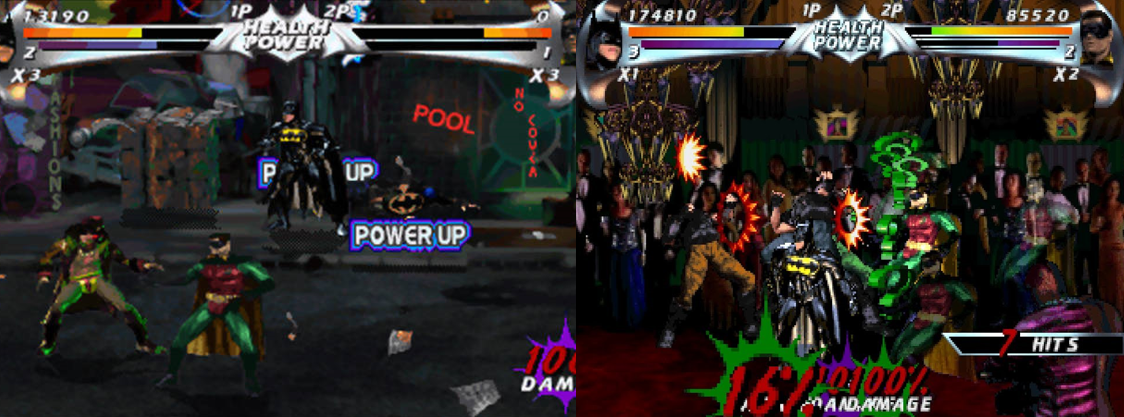
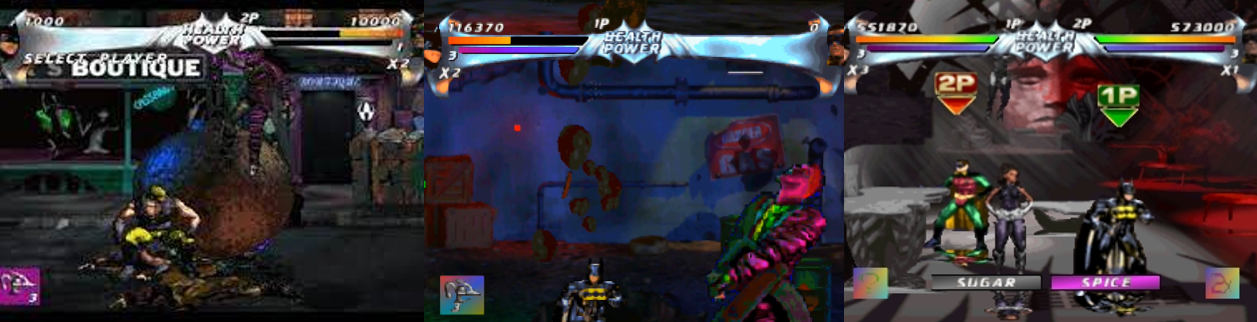




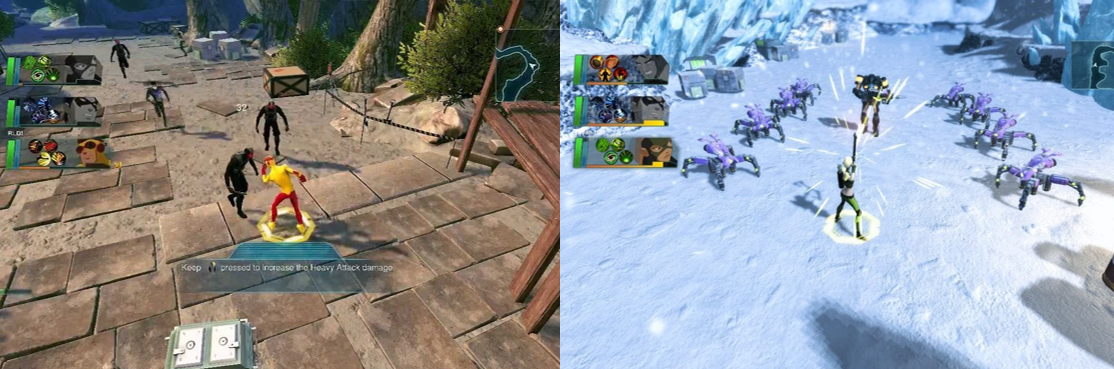


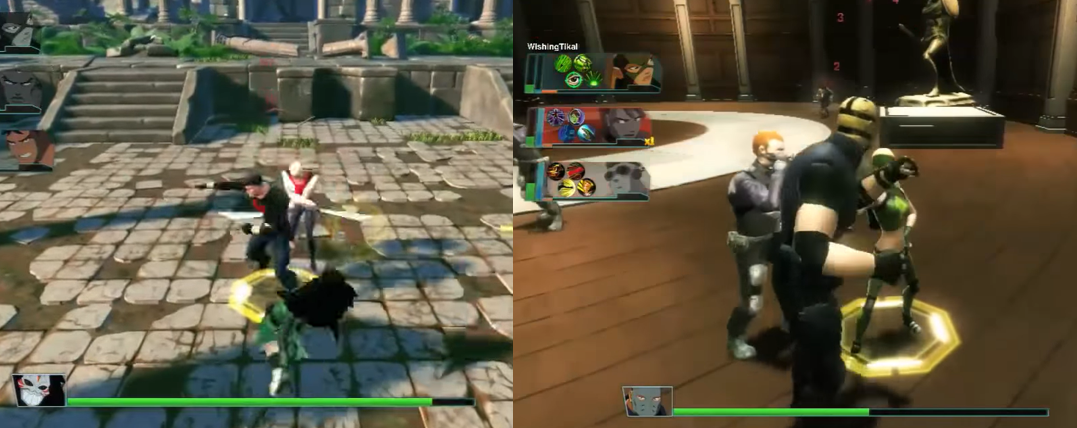

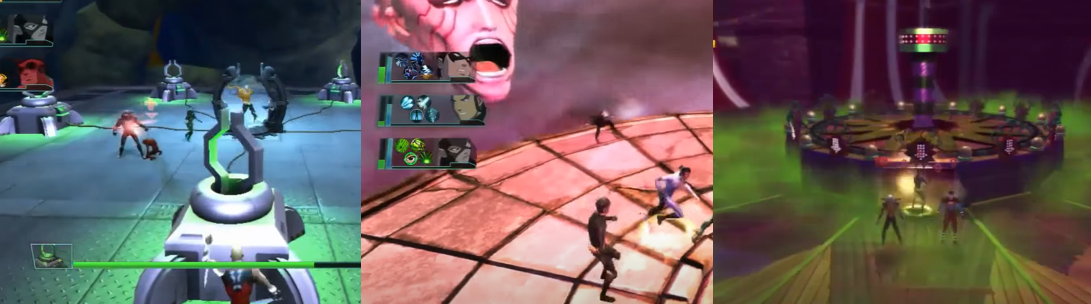




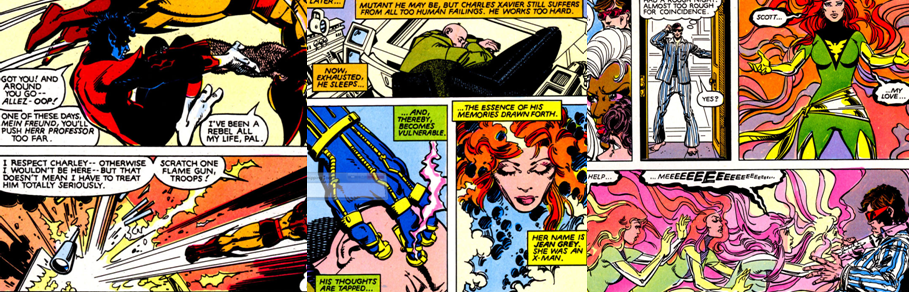
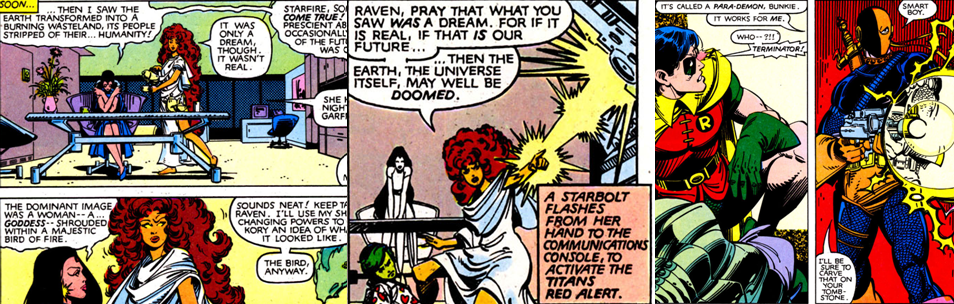

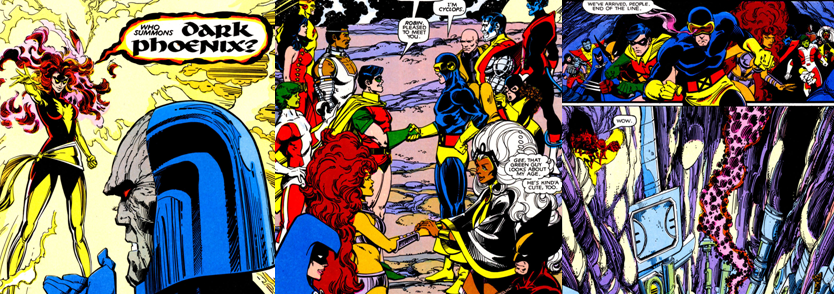
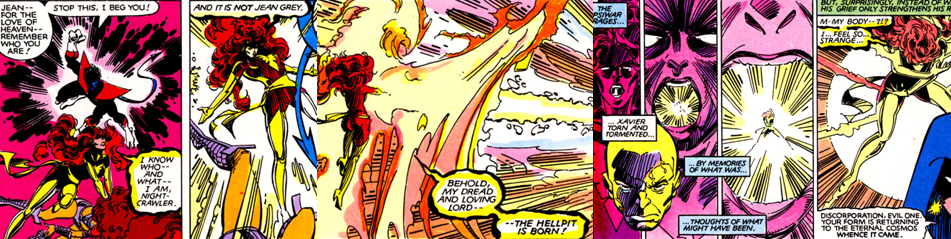

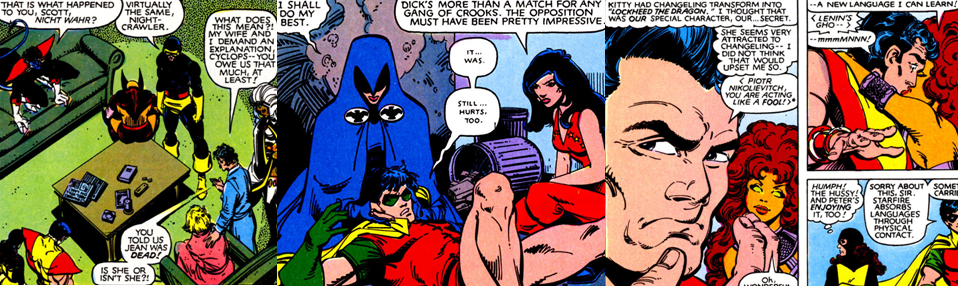
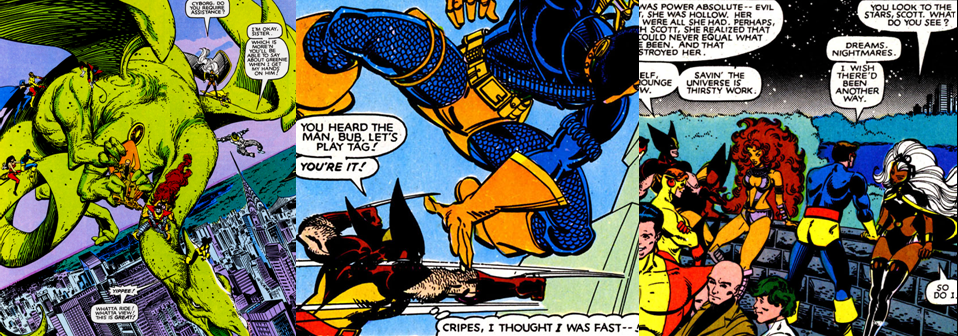


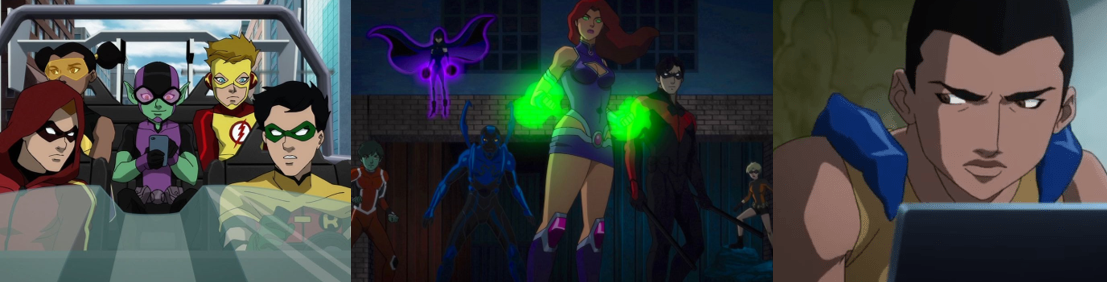
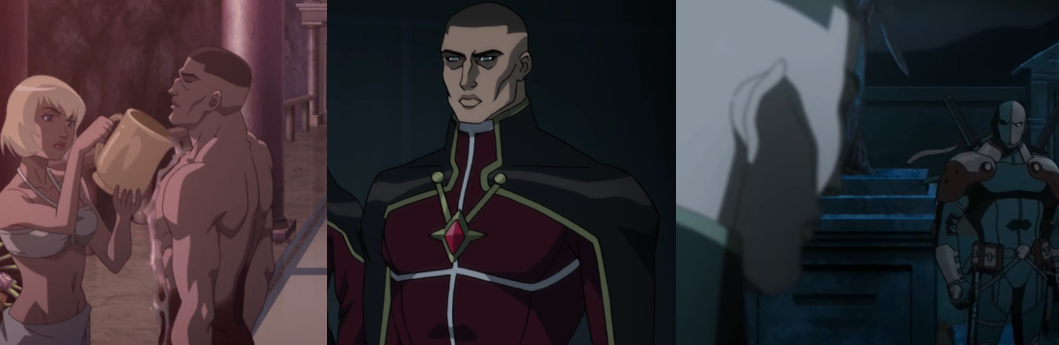


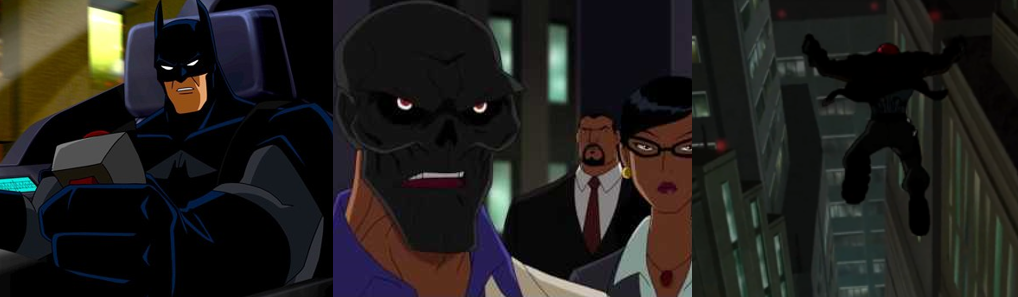
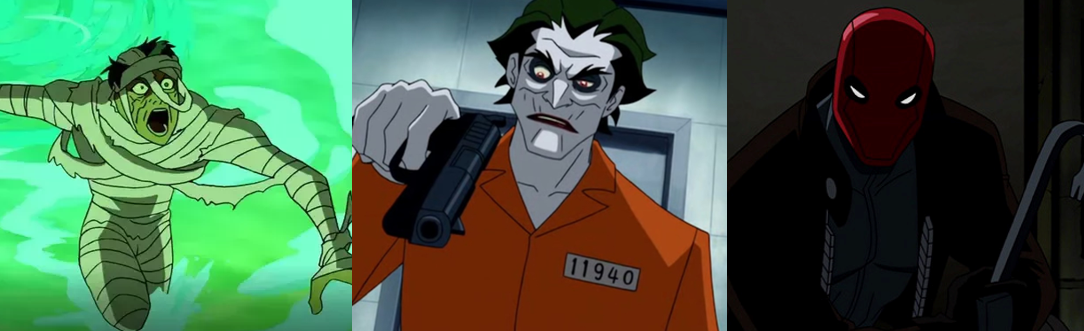




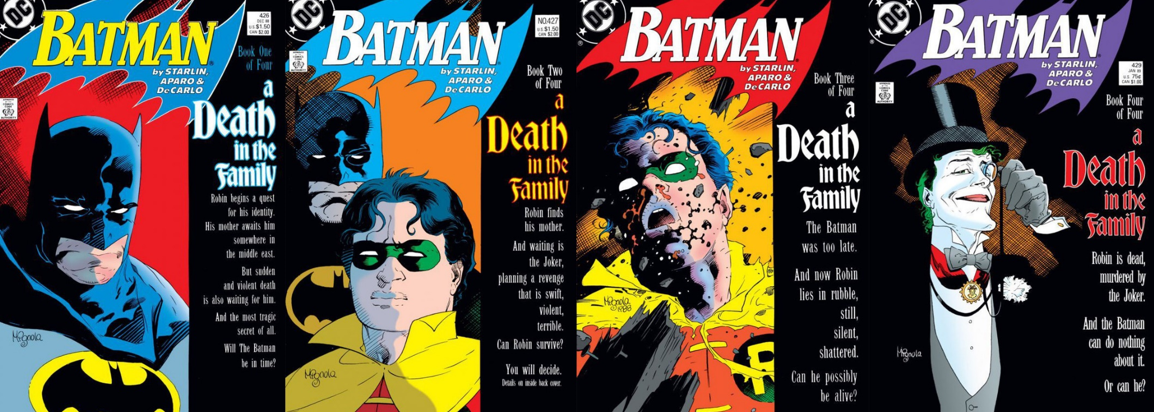
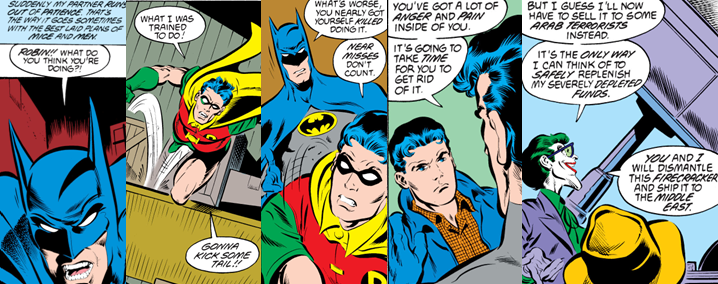
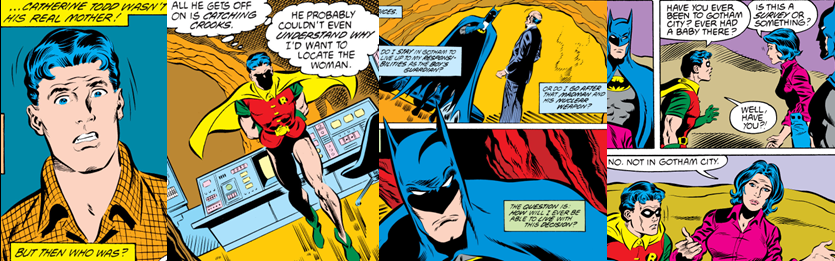
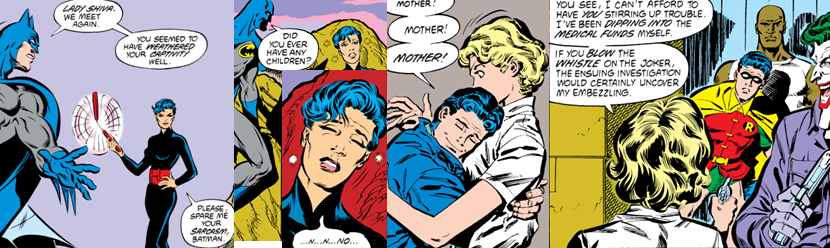
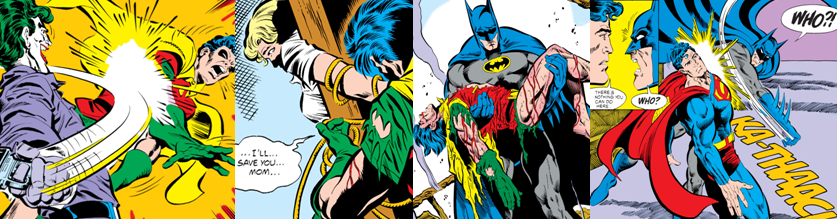
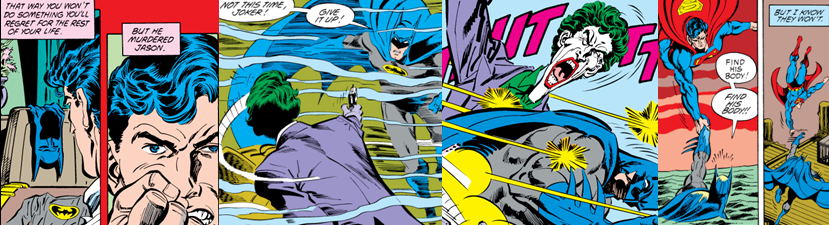
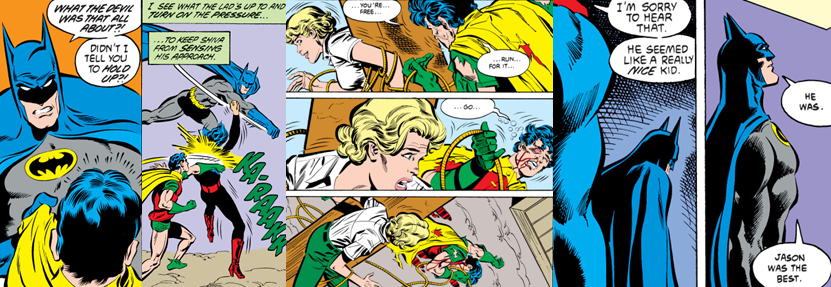
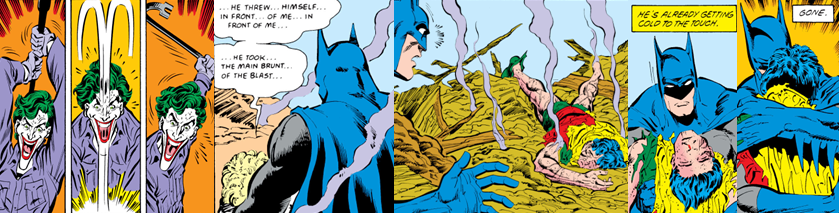



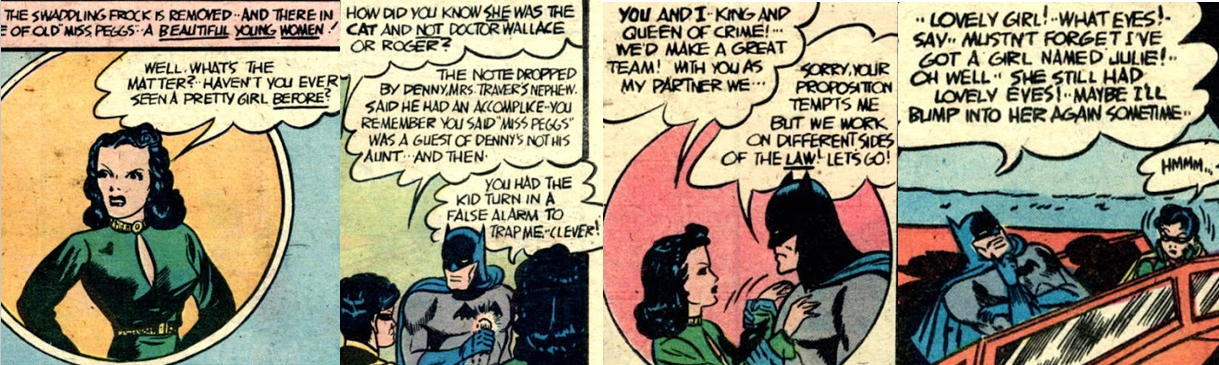


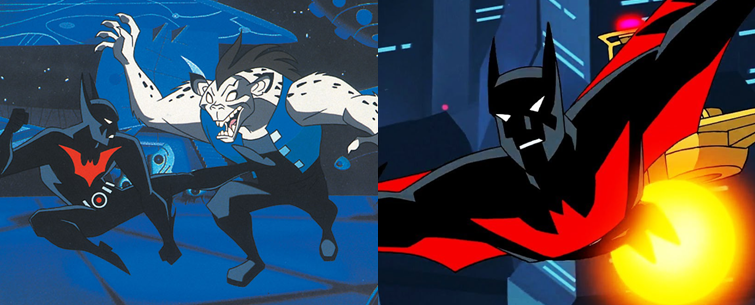
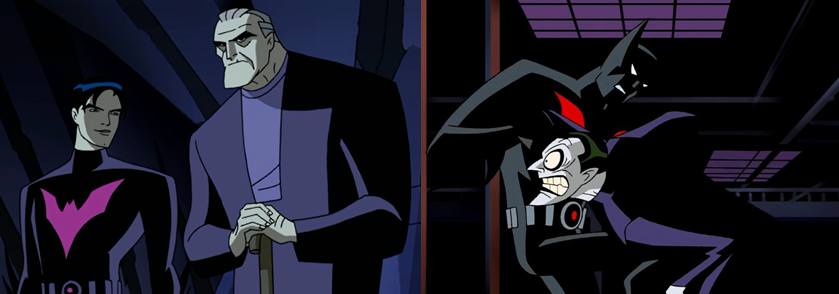
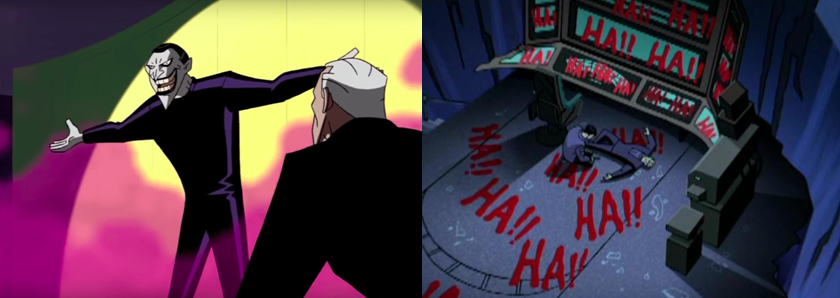

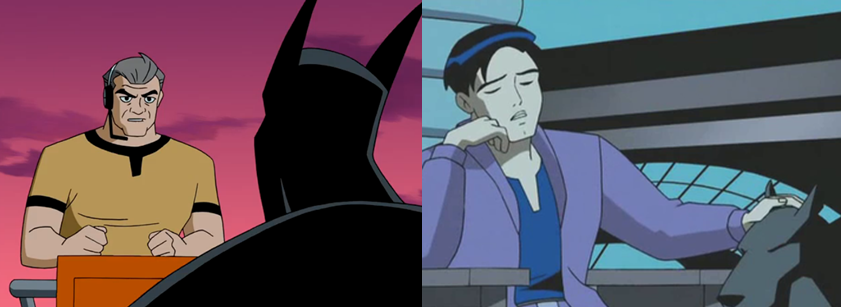

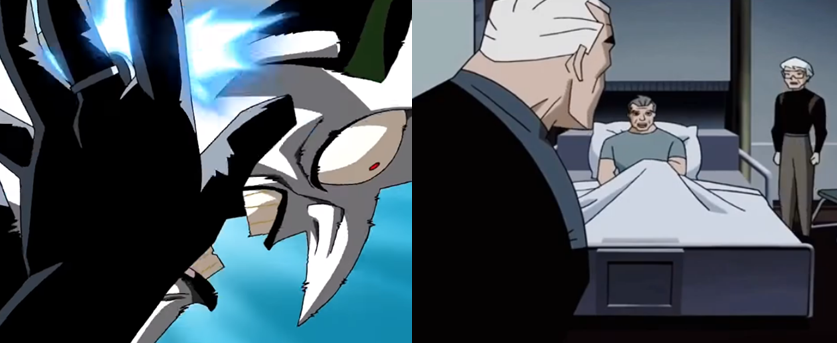



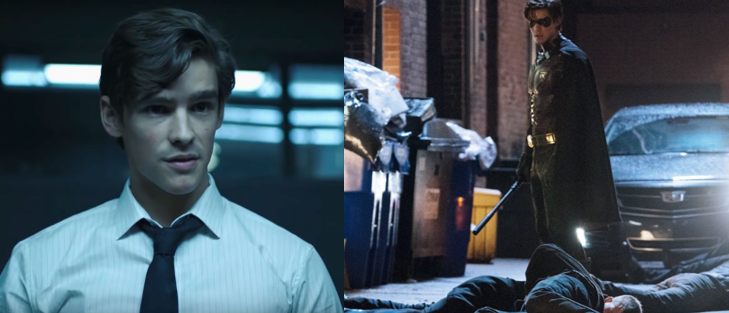


 Dr. K's Waiting Room
You must be logged in to post a comment.