The Review: Set during the Advanced era of the anime (2002 to 2003) and continuing the streak of feature-length films based on the third generation of Pokémon videogames, Pokémon: Jirachi: Wish Maker sees aspiring Pokémon Master Ash Ketchum (Veronica Taylor), his partner Pokémon Pikachu (Ikue Otani), and his friends, former Rock-Type Gym Leader Brock (Eric Stuart) and siblings May (Veronica Taylor) and Max (Amy Birnbaum), take a detour from their journey across the Hoenn region to witness the Millennium Comet, which appears once every thousand years. Though initially disappointed to find the location of the advertised festival to be an empty valley, the group are amazed when a troop of vehicles pull up and quickly erect an elaborate fairground, including a huge tent for the Great Butler’s (Wayne Grayson) exciting magic show. Assisted by Diane (Megan Hollingshead), Kirlia (Unknown), and Mightyena (ibid), Butler wows the crowd by conjuring Pokémon out of thin air and Brock is immediately besotted when the magician does the same with Diane, though Max is more drawn to the mystical crystalline object in Diana’s hands. Rushing to investigate, Max and Ash are quickly roped into Butler’s show but their fifteen minutes of fame are rudely interrupted by Team Rocket – Jessie (Rachael Lillis), James (Eric Stuart), and Meowth (Maddie Blaustein) – who pose as clowns to steal some Pokémon and briefly snag Pikachu before being scuppered by Butler and his Dusclops (Unknown) to the delight of the unsuspecting audience. Impressed that Max can hear the rock’s calling, Butler lets him take the crystal and reveals it contains a sleeping Mythical Pokémon, the titular Jirachi (Kerry Williams), which is said to awaken and grant wishes for seven days while the Millennium Comet is overhead.
Max takes the spotlight as he bonds with the playful Jirachi during his brief awakening.
That night, May “sings” what’s said to be a soothing lullaby (but is just her going “doo-de-doo” over and over) to help Max sleep and inadvertently awakens Jirachi, much to Max’s delight. Although the pixie-like Pokémon fails to live up to its legend by merely teleporting objects or people when granting wishes, Max forms an immediate bond with the childlike sprite and spends every waking moment playing with Jirachi, causing some mischief when Jirachi insists on playing when the gang are supposed to be helping Butler. Max is thus horrified when a local Absol (Eric Stuart), sensing a coming calamity, suddenly attacks Jirachi and equally enraged when May insists on counting down the days on her dreamcatcher-like trinket in anticipation of making her own wish. While I’ve never been Max’s biggest fan, it is sweet seeing him take the spotlight and form a genuine friendship with Jirachi like Ash and Pikachu. Indeed, when Max lashes out at May for constantly reminding him that his time with Jirachi is short, it’s Ash who consoles him by sharing his own experience with saying goodbye to close friends and remembering them. Though Max is extremely protective of Jirachi, he’s young and easily distracted and also not a Pokémon trainer, though even his more seasoned friends are unable to keep Jirachi from being Pokénapped by Butler. Although they save Jirachi, thanks to Absol and Diane, Jirachi is left injured in the fracas, turning the movie into a brief road trip to Jirachi’s home, Forina, so it can recover. Along the way, Max and Jirachi grow closer, making their inevitable separation even harder for Max as he just wants to do is play and be with his new friend.
Humiliated by Team Magma, Butlerembarks on a misguided plot to abuse Jirachi’s power.
Unfortunately, this isn’t meant to be due to Jirachi’s nature as it routinely hibernates for a thousand years after only seven days. While this means Max’s time with Jirachi is limited, it also means Butler’s working to a very short timetable. Though appearing to be an amiable magician, Butler was once a scientist working for the nefarious Team Magma and attempted to impress them by reanimating the Legendary Pokémon Groudon from a small fossil. When his machine malfunctioned, Butler was ridiculed and excommunicated, so he plotted to awaken Jirachi and forcibly acquire the power he needed to resurrect Groudon. Butler does this by abducting Jirachi and using Dusclops to force open its “true eye”, which absorbs incredible power from the Millennium Comet and would grant Butler his wish to be acknowledged as a credible scientist. Butler’s misguided desires see him shun Diane, who’s as in love with him as he is with her, and happily endanger anyone in his path, even torturing Jirachi to achieve his ends. Butler’s aided by his fearsome Salamence (Unknown) and a slew of devices (presumably of his own making) that tie into his status as a magician. A master illusionist, Butler easily makes it seem like people and Pokémon are disappearing and even beats Ash and the others to Forina and sets up mechanical capture devices to ensnare Jirachi and properly focus its power. Butler’s Pokémon and tricks are even enough to keep the feared pseudo-Legendary Absol at bay and fend off a local Flygon (Shinichiro Miki) who helps the heroes. As is tradition for these films, Team Rocket are largely here for comic relief and have little relevance. When Jirachi awakens, they greedily follow Ash and the others to try and snag it only to end up absorbed by Butler’s abomination of a Groudon and once again relying on their enemies to save their asses.
Though fearsome, Meta Groudon is undone by Jirachi’s incredible pre-nap power.
Indeed, while Ash and the others save Jirachi from Butler’s machine, the damage has been done and a titanic, grotesque mockery of Groudon goes on a mindless rampage. Rather than being the fabled Ground-Type kaiju, this corrupted Groudon is said to be “pure evil” and sets about absorbing energy from the land, immediately decaying plant life and absorbing Pokémon and humans with its glob-like tentacles. Fearsome and completely invulnerable, this “Meta Groudon” shrugs off all attacks and absorbs anything in its path, including Absol, Team Rocket, and Diane. Horrified by what he’s unleashed and at his beloved’s fate, the remorseful Butler immediately works to reverse the damage. Though naturally distrustful of Butler, Ash agrees to help spirit Jirachi back to the magician’s machine to reverse the polarity and dispel the fake Groudon, only to be absorbed by the creature shortly before preparing his machine. Drawn to Jirachi’s energy, Meta Groudon begins to melt to try and drown the pixie-like Pokémon, only for Jirachi to successfully absorb natural energy and unleash Doom Desire, rocketing Meta Groudon into the night sky where it explodes like a firework, freeing its captives. Upon reuniting with his new friends, the exhausted Jirachi asks Max to sing the lullaby to send it back into hibernation and, though distraught to say goodbye, Max and the others willingly oblige. Thus, Jirachi turns back into a crystalline form, though Max consoles himself with the knowledge that his friend will always be with him. In the aftermath, a repentant Butler vows to recommit himself to more tangible matters, like his relationship with Diane, having learned to value what really matters in life. Though upset to have missed her chance at making a wish, May agrees with Ash that the best way to make dreams come true is to keep pursuing them, ending the film on a heart-warming message about never giving up on your goals and never forgetting your friends.
Final Thoughts: I’ll admit that I’m slightly biased when it comes to Pokémon: Jirachi: Wish Maker. I much prefer it when the Pokémon movies have high stakes and big, explosive battles between fearsome Legendary Pokémon. It also really bugs me that we never got a movie pitting Groudon, Kyogre, and Rayquaza against each other as that could’ve made for an awesome, world threatening adventure. I’m also not a big fan of Max, who’s especially bratty here, or Jirachi, a relatively weak and largely forgettable Pokémon compared to some of its peers. Still, I don’t necessarily hate this film. It lovingly explores the nature of friendship through Max’s relationship with Jirachi, which is seen as whimsical and carefree but doomed to end in heartache as Jirachi’s time awake is so limited. There’s a meaningful lesson about enjoying the time you have, being mature enough to say goodbye, and always remembering your friends even if they’re gone and this ties in nicely with Butler’s character arc. Shunned and humiliated by Team Magma, Butler becomes obsessed with proving his intellectual superiority, forsaking everything to achieve his goal, only to be horrified when his wish comes true and results in catastrophe. Meta Groudon is a frightening presence that’s sadly underutilised and easily dispatched but results in a pretty intense finale as it wrecks the natural landscape and threatens our heroes, though I still would’ve preferred to see the real Groudon or at least seen this corrupted version battle something more interesting than an Absol. Pokémon: Jirachi: Wish Maker is one of a handful of the features that’s clearly aimed at a different, younger audience than myself and I can accept that, but it doesn’t mean I have to like missing out on what could’ve been. While there’s a heart-warming message here and some fun visuals and moments, it’s not enough for me to say this is one of the better Pokémon movies and it’s ultimately forgettable when you consider some of its messages were told far better in other films and episodes.
My Rating:
⭐⭐
Rating: 2 out of 5.
Could Be Better
What did you think to Pokémon: Jirachi: Wish Maker? Do you prefer the more action-packed Pokémon movies? Did you like the focus on Max and his relationship with Jirachi? Were you also disappointed that we never got a true Groudon in the films? Which Pokémon game, generation, and creature is your favourite and why? How are you celebrating National Pokémon Day today? Whatever your thoughts, leave a comment below and donate to my Ko-Fi to fund more Pokémon content on the site.
Quick Facts: An instant phenomenon, Pokémon (Nintendo/Creatures/Game Freak, 1995 to present) dominated playgrounds with videogames, trading cards, and an ongoing anime series (1997 to present). This led to the successfulfirst feature film, which spawned a slew of sequels. By 2005, these were being released straight to video outside of Japan but continued to feature popularPokémon like Mew, who famously birthed Mewtwoon this day.
The Review: Taking place during the Advanced Battle portion of the anime series (2004 to 2005) and featuring Pokémon from the upcoming Diamond and Pearl releases (Game Freak, 2006), Lucario and the Mystery of Mew opens in the distant past of the Kanto region. At this time, the beautiful Cameron Palace was caught in the middle of a brutal war was fought between two, heavily armoured Pokémon armies. This impending danger is discovered by the titular Lucario (Sean Schemmel), a stoic and proud Fighting/Steel-Type Pokémon who wields incredible power through its “Aura” abilities. Focusing its power through a nearby crystalline formation, Lucario warns its master – “Aura Guardian” Sir Aran (Jason Griffith) – of the danger before being attacked and temporarily blinded by two Houndoom (Koichi Sakaguchi). Although Lucario fends off the Pokémon, he’s stunned when Sir Aran abandons Queen Rin (Bella Hudson) and the castle. When the aghast Lucario pursues, Sir Aran traps it within a magical staff, leaving it feeling hurt and betrayed. History, however, remembers Sir Aran very differently as it’s said he travelled to the nearby “Tree of Beginning” and ended the conflict between the Pokémon armies, restoring peace to the land. Sir Aran’s so well-renowned that Cameron Palace holds an annual festival to celebrate its hero, one that aspiring Pokémon Master Ash Ketchum (Veronica Taylor) and his friends just so happen to be present for. Ash, Brock (Eric Stuart), May (Veronica Taylor), Max (Amy Birnbaum), and (reluctantly) Pikachu (Ikue Ōtani) dress in period-appropriate outfits for the occasion and Ash (garbed in an outfit resembling Sir Aran’s) conveniently wins the annual Pokémon tournament to be crowned “Aura Champion”. Though he’s annoyed to miss out on the dancing and revelry, Ash is amazed by an ancient staff he’s gifted and the whispers he can hear emanating from it and is absolutely gob-smacked when Lucario is unexpectedly released from it.
Betrayed by its master, Lucario struggles to trust humans and their intentions.
Still partially blinded and confused from the time dilation, Lucario initially mistakes Ash for Sir Aran and flees, amazed to find that hundreds of years have passed, but is calmed by Lady Ilene (Bella Hudson), who recognises it from legend. Lucario’s awakened just in time as a mischievous Mew (Satomi Kōrogi) has been masquerading as various Pokémon (including the legendary Ho-Oh) during the festivities and playing with Pikachu and other Pokémon, unaware that world-renowned record breaker and part-time Pokémon trainer Kidd Summers (Rebecca Soler) is hoping to track it to the fabled Tree of Beginning. A miscommunication sees her Weavile (Eric Stuart) get a little rough with Mew, Pikachu, and Team Rocket’s outspoken mascot, Meowth (Maddie Blaustein), leading Mew to teleport itself, Meowth, and the injured Pikachu to the Tree of Beginning to heal. When Max informs the others, Kidd eagerly joins them in journeying to the Tree of Beginning (much to Brock’s delight) and Lucario obediently agrees to lead them, though it’s fraught with scepticism about human nature. The journey sees Lucario learn of Ash and Pikachu’s friendship and remember happier times with Sir Aran, where its master taught him to hone his Aura to attack and communicate. Somewhat uptight and reserved, Lucario struggled to let its guard down even when encouraged by its master and lashes out whenever Ash and the others invite it to bathe or share food, believing humans cannot be trusted. Local “time flowers” only further sour its mood as he’s reminded of Sir Aran’s treachery and it eventually comes to blows with Ash, believing Ash would abandon his so-called friend just as easily. Max helps make peace with some chocolate and Ash later tearfully apologises, aware that he’s on edge with worry about his lost friend.
The mischievous Mew accidentally endangers our heroes when they venture to the Tree of Beginning.
While Meowth enjoys hanging out with Mew at the Tree of Beginning, Pikachu is equally eager to reunite with Ash but compelled to stay by Mew, who wants to keep playing. When Ash and the others – included Meowth’s Team Rocket cohorts James (Eric Stuart) and Jessie (Rachael Lillis) – reach the Tree of Beginning, they’re violently attacked by its three guardians, the legendary Regice (Kunihiro Kawamoto), Recirock (Eiji Miyashita), and Registeel (Atsushi Kakehashi), mindless near-automatons who attack both groups and drive them further into the Tree of Beginning. Within, the humans are attacked by “antibodies” that resemble fossil Pokémon and swallow them as a defensive measure, shrugging off their attempts to fight back and leaving any Pokémon unharmed in favour of consuming their human companions. This leaves Pikachu so distraught when Ash seemingly dies (…again) that Mew reluctantly uses its incredible powers to converse with the Tree of Beginning and restore those it absorbed, quelling the Regis and reuniting the trainers with their Pokémon. The antibody subplot was a touch unnecessary, I feel, and distracted from the inclusion of the Regis, who were enough of a threat by themselves since even Lucario couldn’t hold them off. While the Tree of Beginning makes for an interesting natural maze and beautiful background, it gets very samey and the film even drops the ball on finally paying off the Ho-Oh tease from the anime’s first episode. I’m also not sure if this Mew is supposed to be the same one from the first movie and it’s a little lacklustre having the main plot be kicked off because the cheeky little kitty wanted to play with its new friends. This means May and Max don’t get much to do beyond berating Ash or helping to melt Lucario’s heart, though Kidd makes for a fun temporary addition to the cast as she’s a pioneer with all kinds of nifty gadgets that are sadly wasted on this adventure.
When restoring Ash imperils Mew, Lucario makes the ultimate sacrifice to reunite with Sir Aran.
There is no central antagonist in Lucario and the Mystery of Mew. The antibodies and Regis are simply defending the Tree of Beginning, which has a symbiotic relationship with Mew and threatens to degenerate after the effort of restoring everyone drains Mew’s life force. Determined to save Mew using the Tree of Beginning’s fabled regenerative powers, our heroes journey to the tree’s heart and find Sir Aran’s gloves resting on a pulsating crystalline structure containing his frozen corpse. A nearby time flower reveals that Sir Aran shunned Lucario to keep it from following him to the Tree of Beginning, where Sir Aran sacrificed his life using his Aura to stop the warring Pokémon. Galvanised and guilt-ridden by this revelation, Lucario attempts to use its own Aura to restore Mew and thus save the Tree of Beginning, only to find it lacks the strength. However, Ash conveniently has the same Aura potential as Sir Aran so he slips on the hero’s gloves and helps boost Lucario’s power, somehow just willing himself to generate Aura without any training or knowledge of how to do so. Of course, the plan works and all is restored, but the effort proves fatal to Lucario. A time flower shows Sir Aran’s last moments, where he tearfully wishes his Pokémon well and hoped to be reunited with it someday and Lucario weeps, acknowledging Sir Aran as his friend and saying its farewells before dissipating into energy sparkles and reuniting with his friend in death. Exiting into the fresh air, Ash promises to also keep them both close by and Kidd vows to never reveal the Tree of Beginning’s location to keep it safe from tourists. Lucario is also immortalised alongside Sir Aran at Cameron Palace and Mew even gains a new playmate: a Bonsly (Eric Stuart) May befriended on the journey.
Final Thoughts: I had high hopes for Lucario and the Mystery of Mew. I liked Lucario and even used one on my Diamond team back in the day, though it ended up being far from the dark counterpart to Mewtwo I imagined it to be. It’s kind of weird seeing a Fighting/Steel-Type Pokémon have telepathic powers but the movie kinda explains it through its “Aura” gimmick, a semi-psychic power that makes this Lucario exceptional and which Ash also conveniently has. I don’t think this was necessary; I think his physical resemblance to Sir Aran would’ve been enough and he (and the others) could’ve just given Lucario emotional support in the finale rather than seeing Ash emit an Aura Sphere out of nowhere. If you’re looking for spectacular Pokémon battles, you won’t find them here as Ash has one of his weakest teams ever and this film is more focused on exploring Lucario’s lost faith in humanity and realising that its friend didn’t betray him after all. I do wonder if the film might’ve been improved by having Kidd be an antagonist looking to capture Mew or gain control of the Tree of Beginning as the film suffers somewhat without a villain. The Regis are painfully wasted, leading only to chase scenes, though the antibodies offer some of the more harrowing moments where characters, believing they’re about to die, release their Pokémon (Ash even tells Pikachu he loves it before being devoured). I was disappointed to see that Ho-Oh was simply Mew in disguise, however, and had no relevance to the plot and that Mew didn’t get more significance until its life was suddenly in danger. In the end, Lucario and the Mystery of Mew was a decent, somewhat emotional adventure with some relevant lessons to teach about human nature and such, but it’s a somewhat by-the-numbers Pokémon feature that I don’t think really lived up to its full potential.
My Rating:
⭐⭐⭐
Rating: 3 out of 5.
Pretty Good
Are you a fan of Lucario and the Mystery of Mew? Did you guess that Sir Aran hadn’t really betrayed Lucario? Were you also unimpressed that Ash could wield Aura? Do you think the film squandered the potential of the Regis and Mew? Were you disappointed that Ho-Oh didn’t factor into the plot? Which Pokémon feature film is your favourite? Whatever your thoughts, leave them in the comments below and donate to my Ko-Fi to suggest more Pokémon content for the site.
Upon the release of Pokémon: Blue Version and Pokémon: Red Version(Game Freak, 1996), a new craze swept through playgrounds. An entire generation grew up with Pokémon, as clever marketing saw it become a massively lucrative and popular multimedia powerhouse. Accordingly, February 27th is recognised as “National Pokémon Day”, which I expanded to an entire month of Pokémon this February.
Released: 13 July 2002 Director: Kunihiko Yuyama Distributor: Toho Budget: Unknown Stars: Veronica Taylor, Megan Hollingshead, Lisa Ortiz, Megumi Hayashibara, and Tara Sands
The Plot: Ash Ketchum (Taylor) and his friends visit the beautiful Alto Mare and befriend its protectors, Latias and Latios (Hayashibara), just as the city is targeted by two formidable thieves, Annie (Hollingshead) and Oakley (Ortiz).
The Review: By the time of Pokémon Heroes, the Pokémon movies had well and truly established a formula and were sticking with it. After a brief introduction to “The World of Pokémon”, we find Ash and his friends – his trusted companion, Pikachu (Ikue Ōtani), and former Gym Leaders Misty (Rachael Lillis) and Brock (Eric Stuart) – visiting the distinctly Venice-inspired Alto Mare. Ash is primarily there to take part in the annual water race, where he’s rocketed through the narrow canals by Totodile (Kayzie Rogers) and competes against Misty (oddly wearing a lifejacket despite her status as a Water Pokémon expert) and other locals while Brock cheers on from the sidelines. It’s all fun and games and gives us a sweeping overview of the city, bolstered by some questionable CGI sequences, until Ash catches the eye of a mysterious, invisible Pokémon later revealed to by the smitten Latias. Though she tries to aid him in the race, Ash ends up being dragged away from the course and the race is ultimately won (by a gnat’s wing) by Misty. While taking a gondola tour of Alto Mare courtesy of former race winner Ross (Michael Sinterniklaas), Ash and the others learn that Latias and Latios are revered as the city’s enigmatic protectors and their image adorns statues and medals across the town, which is kept peaceful thanks to their presence. While Misty and Brock get ice cream, Pikachu is sidetracked by a nearby fountain and encounters a local girl who acts strangely around Ash. Although he shrugs off the encounter, Ash jumps to her defence when he later finds her being accosted by Annie and Oakley and their Espeon (Kayzie Rogers) and Ariados (Unknown). Ash also later races after her through the laneways and into a secluded spot hidden deep within the city. It’s here that Ash and Pikachu meet Bianca (Sands), a girl who looks exactly like the girl he’s been chasing, and her grandfather, Lorenzo (Wayne Grayson), and, crucially, the city’s legendary protectors. After being set upon by the overprotective Latias, cooler heads soon prevail and Ash is stunned to learn that the Eon duo can not only turn invisible but also assume human form. Since Latias and Bianca are best friends, the Pokémon likes to take her form and delights in playing with Ash, with the two soaring through the skies of their secret garden before long.
Ash is stunned when a strange girl turns out to be a Legendary Pokémon in disguise!
Ash learns the history of Alto Mare from Lorenzo, who relates how the city was once terrorized by an Aerodactyl (Unknown) and a Kabutops (Eric Stuart) before a Latios came to town and drowned the two beneath a torrent of water, giving his life to protect the inhabitants. Latias left behind its two babies, Latias and Latios, whom Lorenzo practically raised, and the “Soul Dew”, a glowing orb said to contain Latios’s spirit. The Soul Dew also powers an ancient machine, the Defense Mechanism of Alto Mare (DMA), a powerful amalgamation of ancient and modern technology that can both protect and destroy the city. Lorenzo and Bianca have dedicated themselves to keeping the Soul Dew, the Eon duo, and Alto Mare’s secret from falling into the wrong hands, a secret that Ash promises to guard to keep his newfound friends from harm. Ash also experiences the Eon duo’s other unique ability, “sight sharing”; using his psychic powers, Latios can share what he sees with his sister, who then projects it to those they trust, allowing for a unique and awesome view of the world. With the night drawing in, Ash leaves a sad Latias and her brother to their hidey-hole and heads back to his friends alongside Bianca, who’s stunned to learn that Latias was being pursued by Annie and Oakley. The duo, celebrated agents of the nefarious Team Rocket, are in town specifically to investigate its local legends but even they are stunned to learn of the DMA and the Soul Dew. Unlike the bungling Jessie (Rachael Lillis), James (Eric Stuart), and Meowth (Maddie Blaustein) – who pratfall their way through the feature as background players – Annie and Oakley are capable and formidable antagonists. Equipped with hi-tech gear like drones, zip wires, and even binoculars that let them see through Latias’s disguise, they run rings around the Rocket Trio and even manage to capture Latios. While the two weren’t affiliated with Team Rocket in the original version of the film, the dub positions them as two more far more competent members of the organisation. Their depiction as sisters delighting in mischief and mayhem directly parallels the Eon duo, where Latios takes a more protective and mature stance compared to his more curious and child-like sister.
Annie and Oakley are far more capable and formidable agents of Team Rocket.
Alto Mare provides one of the more visually interesting locations for the Pokémon features thus far. Made up of stone buildings, bridges, and canals, the city certainly stands out, though it does little to make itself unique from its real-world inspiration beyond the Pokémon aesthetic. The city mixes traditional architecture with near-magical modern technology, one with a decidedly steampunk styling and represented by the DMA, a machine apparently capable of controlling water and enforcing a lockdown by sprouting impassable barriers and gates around the city. There’s a lot of history in Alto Mare, which was terrorised by prehistoric Pokémon and maintains its serenity thanks to Latias and Latios, a peace thrown into chaos when Annie and Oakley steal the Soul Dew, capture Latios, and activate the DMA. Oakley eagerly takes the controls of the ancient machine and immediately becomes obsessed by the near-limitless power it offers, believing she could conquer the entire world with its ridiculously vague abilities. The DMA allows Oakley to bring Aerodactyl and Kabutops back to life and order them to seek out Latias, cage the inhabitants behind magical barriers, and conjure tidal waves and even hurricanes. With her brother imprisoned and the city under siege, Latias races to Ash for help and he reveals his new friend to Misty and Brock, who end up trapped behind Oakley’s barriers, leaving the city’s fate in Ash’s hands. Ash is particularly aggrieved by Aerodactyl and forced to once again race through the city’s canals courtesy of Latias and a water chariot. Quite how Ash survives such an ordeal is beyond me, but Latias is a great help with her supersonic speed and psychic powers. While she’s younger and far weaker than her brother, Latias is capable of powerful feats when stressed or her friends are in danger, though using these abilities exhausts her. Her abilities are also volatile and potentially dangerous; when she shields Ash from harm, Latias accidentally deals critical damage to the DMA and causes it to go haywire. While Oakley’s brought to her senses, the entire city is threatened by the machine’s wild nature, forcing Latias and Latios to follow in their father’s footsteps and defend the town and its inhabitants.
The Nitty-Gritty: The stakes are decidedly low in Pokémon Heroes, somewhat akin to the stakes in Pokémon 3. Annie, Oakley, and the DMA threaten Alto Mare first and foremost and, though Oakley boasts that the machine could allow her to control the entire world, there’s little evidence to suggest this is true. Like all good Team Rocket agents, Annie and Oakley’s main aim is pleasing their master, Giovanni (Ed Paul), and profiting from the city’s secrets. Unlike the bungling Rocket Trio, Annie and Oakley largely succeed in their goals; while Annie simply covets the beautiful Soul Dew, the two capture Latios and torment him with their electrified ring cage. Oakley then takes the pilot’s seat in the DMA and threatens to flood the town, even almost drowning Ash and Pikachu at one point before Latias intervenes. Pokémon Heroes is one of the few feature-length Pokémon productions to present Legendary Pokémon who cannot communicate, either verbally or through their psychic powers. Latias and Latios are powerful Psychic-Type Pokémon and Latias can assume human form, but neither communicate through words and instead use squeals, squeaks, and body language. It works really well and is a nice change of pace from the usually loquacious Legendary Pokémon and the dynamic between the two is unique, with Latios being the overprotective older brother and Latias being a shy, smitten child trying to make new friends. This does, however, lead to a strange relationship between her and Ash where she visibly blushes in his presence and seems to have a crush on him. Largely, this is presented as her need to make friends and play rather than hiding away, but it seemingly goes a step further in the finale when Latias appears to take Bianca’s form once more and gingerly peck Ash on the cheek (much to Brock’s dismay).
When the DMA goes out of control, Latios sacrifices himself to save the city and his new friends.
With Aerodactyl and Kabutops running wild and the city on lockdown, Ash desperately races to the museum alongside Latias to end the threat to the city. There, he and Latias push themselves to injury trying to free Latios, only for Latias to finally break her brother’s cage, at great strain to herself, and damage to DMA in the process. While Oakley was seemingly ready to lay waste to the entire city anyway, the DMA rages out of control without even her tentative influence, threatening to swamp the city with a destructive tidal wave after the Soul Dew is shattered. The waters recede and rear up in a massive tsunami and the Eon duo are left with no choice but to face it head-on, just as their father did years prior. As before, the threat is dispelled and the city is saved, but at great cost. Already injured from Annie and Oakley’s torture, the strain of dispersing the tsunami costs Latios his life and he bids an emotional farewell to his sister before turning into a beam of light. As the waters rush in and the city’s inhabitants are freed, Ash and the others take a gondola out to sea to look for the Eon duo and find only an exhausted and heartbroken Latias. However, they all receive one final gift as Latios’s disembodied spirit shares his sight with them one last time, allowing them to view the world from afar; his soul also crystallises into a new Soul Dew. A sombre and thankful Lorenzo and Biana place the new Soul Dew back in the secret garden and Ash and his friends say their final goodbyes as they leave to continue their journey across Johto. As they leave, they’re surprised by a strangely quiet Biana, who gifts Ash with a sketch of him and Pikachu and a kiss on the cheek, with it left ambiguous whether it was Bianca or Latias that flagged them down. The three then spot Latias proudly flying through the sky alongside the spirit of her brother and father, while the finale further reveals that Lorenzo is hard at work repairing the DMA and Annie and Oakley have been apprehended and imprisoned for their crimes.
The Summary: Pokémon Heroes is a strange entry in the long-running franchise, one between generations and seemingly afraid to commit to focusing entirely on Hoenn as the anime wasn’t quite there yet. It’s a bit of a shame as we don’t get any new Pokémon featured here other than the titular Latias and Latios; even Annie and Oakley simply use Johto Pokémon rather than teasing use with more from the third-generation games. Latias and Latios are the highlights of the film, deviating from many of the other featured by being incapable of communicating beyond noises, but I feel their potential was squandered somewhat. I think more could’ve been made from Latias’s ability to change forms; like, why not have both assume human form and perhaps be unruly, cheeky teenagers who must learn to live up to their father’s legacy? Or perhaps more could’ve been made of Latias assuming Bianca’s visage, like her getting into trouble in town or the two being raised as sisters. Instead, it’s just an excuse for a lot of forced whimsy; Ash and friends must giggle and exclaim “Cool!” at things that really aren’t that impressive. Sure, Alto Mare is beautiful and visually unique but it’s grating seeing Ash and the others so enthusiastic about local traditions and such. I’m not saying they should disrespect them or anything; just act a bit more normal and leave the awe for things that deserve it, like the high-octane canal race. I quite liked Annie and Oakley, and their juxtaposition with Jessie and James and the Eon duo, but they weren’t really all that different from Domino/Agent 009 (Kerry Williams) and the Iron Masked Marauder (Dan Green) in that they were more capable and threatening agents of Team Rocket. In fact, one has to wonder why the film didn’t just re-use Butch (Eric Stuart) and Cassidy (Megan Hollingshead), though the answer is simply that them being associated with Team Rocket was a dub addition. Still, I liked Oakley’s descent into madness once she piloted the DMA, but it’s weird that this machine can do so much without any real explanation. It would’ve been nice to see the evil Pokémon it resurrects being something a bit more formidable, like Armaldo and Salamence, or to at least factor into the finale to up the ante a bit. The emotional gut punch of Latios’s sacrifice lands well, but it’s not enough to save the film, which meanders through a very predictable formula and offers very little not seen in the last two movies.
My Rating:
⭐⭐⭐
Rating: 3 out of 5.
Pretty Good
Are you a fan of Pokémon Heroes? What did you think to Alto Mare and its Venetian aesthetic? Did you like the relationship between Latias and Latios? Do you think the film squandered the potential of the form change gimmick? What did you think to Annie and Oakley? Were you disappointed by the lack of third-generation Pokémon? Which Pokémon game, generation, and creature is your favourite and why? How did you celebrate National Pokémon Day this year? Whatever your thoughts, drop them in the comments below and go check out my other Pokémon content.
Upon the release of Pokémon: Blue Version and Pokémon: Red Version(Game Freak, 1996), a new craze swept through playgrounds. An entire generation grew up either playing Pokémon, watching the anime, playing the trading card game, and watching the feature-lengthmovies as clever marketing saw it become a massively lucrative and popular multimedia powerhouse. Accordingly, February 27th is now internationally recognised as “National Pokémon Day”, which I expanded to an entire month of Pokémon this February.
Released: 12 April 2023 Originally Released: 14 December 2000 Developer: Nintendo EAD Also Available For: Nintendo 64
A Brief Background: Pokémon’s status as a cultural phenomenon wasn’t just due to savvy marketing. It was thanks to a slew of merchandise and ancillary media, such as the popular trading card game, that the franchise dominated an entire generation on the Game Boy. Pokémon first made the jump to 3D two years after the original games released with the Japan-exclusive Pocket Monsters’ Stadium, a limited proof of concept initially created for the ill-fated Nintendo 64DD that was quickly followed by Pokémon Stadium (Nintendo EAD, 1999). Impressing with its lauded 3D rendition of the turn-based battles of the mainline games and ability to transfer Game Boy data via the underutilised “Transfer Pak”, Pokémon Stadium became a best-selling Nintendo 64 title. This success naturally led to a follow-up, first showcased at the 2000 Nintendo Space World festival and which expanded the concept to incorporate Pokémon from the second-generation games. Like its predecessor, Pokémon Stadium 2reviewed well; the game was largely seen as superior to the original, despite including many of the same features and issues, though its sharp difficulty spike was criticised. Like the first game, Pokémon Stadium2 was stuck on the Nintendo 64 for decades and extremely expensive to buy, until it was finally made available on the Nintendo Switch Online + Expansion Pak in 2023.
The Review: Like its predecessor, Pokémon Stadium 2 is a collection of mini games, battles, and various options to gawk at your favourite Pokémon in 3D. In the original release of the game, players could again copy over Pokémon from the Game Boy games (all six versions) to take them into 3D battles against computer-controlled opponents or their friends in single or team-based contests. Of course, this option isn’t available in the Nintendo Switch Online version, but you can still use “rental” Pokémon (though, unlike the CPU’s Pokémon, these can’t be renamed and you can’t change their moves). Although all 251 Pokémon are represented in the game, you won’t get access to Legendary Pokémon Mewtwo, Mew, Lugia, or Ho-oh until you clear each of the game’s various battle modes. Rental Pokémon all come with four moves that have decent Type-coverage and try to accommodate different battle styles. For example, your Pokemon may sport a Physical and Special Attack move, a move to buff their stats (speed, defence, etc), and a move of a different Type (such as Ampharous, an Electric-Type, using Dynamicpunch, a Fighting-Type move). If you pick third-stage evolutions (Typhlosion, Lantern, Houndoom, etc) or Legendary Pokémon, your Pokémon will boast better stats (which you can now view when selecting a Pokémon) and more powerful moves, but these moves may have a greater chance of missing or will have less Power Points (PP). This time around, you can visit Earl’s Pokémon Academy and read through various tutorials (presented as “lectures”) to learn the controls and battle mechanics. You can also view stats and details about each Pokémon in the Library, learning about what each move does and viewing details on Type advantages, making it much easier to pick a diverse team and plan your attack strategies. Type advantages are key to scoring wins and, in Pokémon Stadium 2, you’ll need to factor in the new Dark- and Steel-Type moves and Pokémon. Dark-Types finally level the playing field against the all-powerful Psychic-Types, for example, and Steel-Type Pokémon can cut through Rock-Types.
New Types, items, and moves spruce up the battles but the core gameplay remains unchanged.
As ever, moves deal additional damage if you score a “critical hit”, but your Pokémon may also take recoil damage. You’ll need to be mindful of status effects such as being paralyzed or poisoned, though the game’s still rigged so no two Pokémon can be frozen or asleep per battle. As before, you’ll put together a team of six but only battle with three. You’ll see which Pokémon your opponent has but won’t know which ones they’ve picked, though I did find that Trainers and Gym Leaders tended to favour Pokémon of a certain Type this time (when challenging Falkner, for example, he and his underlings mostly used Flying-Type Pokémon). Still, you need to be mindful of enemy Pokémon surprising you with unforeseen moves and dragging battles out with moves like Protect, Disable, and Attract, which can cost you turns. The battle system has been tweaked here to incorporate items; when selecting you team, you can have them hold a single item that will passively take effect in battle. This will restore some health points (HP), or cure status effects like confusion, paralysis, or poisoning; however, you cannot manually use these items, and your opponent also holds the same items. Winning without receiving any damage earns you a continue should you be defeated (though abusing the save state feature greatly aids in this regard) and conquering the four “cups”, each with their own level restrictions and one of four PokéBall-themed trophies. The Gym Leader Castle returns, now pitting you against the Johto Gym Leaders and your Rival (who battles with Mewtwo, Ho-oh, and Lugia!) This time around, each Gym Leader has a different number of underlings you must battle beforehand, and Team Rocket even gatecrash the castle, forcing you to battle them. Besting all the Johto challengers unlocks the Kanto Gym Leader Castle, where you must face the Kanto Gym Leaders, Elite Four, and resident champion, Red, though you won’t have to battle past their understudies. Sadly, there is no big boss battle against a Legendary Pokémon this time around, though you’ll still unlock a much more challenging “Round 2” mode by winning all the cups and besting the Gym Leader Castle. There is a new cup on offer, Challenge Cup, where you’re forced to battle with a set team of Pokémon, and the “Event Battle!” mode is strictly for players with a game cartridge installed. Battles are as basic as before; since the items are limited, you can still get stuck if you’re hit with status ailments and it’s still way too easy to sweep your opponent’s team in a few hits.
Game modes are slightly expanded but it’s primarily a graphically improved copy of the last game.
There are more options to alter the game’s difficulty and you can even create your own rules for free battles and the expanded move and Type pool does mix things up. However, you’ll still be facing non-stop battles to get to Round 2, which can get tedious. The overly enthusiastic announcer returns, though can again be disabled, and Pokémon still don’t scream their names, which is much more true to the source material than the anime. While the returning 3D models aren’t much different, Pokémon Stadium 2 also brings the Johto Pokémon to life, allowing Lugia to dwarf the likes of Spinarak and even the battlefield. Though the new moves are also represented, the Pokémon still have limited attack animations, however the textures and details have been given a boost thanks to the Nintendo 64 Expansion Pak. Pokémon Trainers are still just profile pictures rather than 3D models but the battle display has been tweaked to include pre- and post-game comments from your foe and even mid-battle statements to better mirror the mainline games. Many of the Pokémon you face will again sport bizarre nicknames and even different palettes, but the arenas are just as empty as before. However, there are more of them and they have more detail and variety going on; even the PokéBall intros and outros have been made more grandiose and the menu screens are far more visually interesting. However, it’s still all very similar to what came before and just feels like a graphical glow-up rather than actually rendering arenas full of animated spectators. Remixes of all your favourite Pokémon themes try to keep battles fun and engaging and the introductory cutscene, title screen, and main map have been spruced up, but again it’s just presenting the same game in a slightly more appealing way instead of addressing the monotonous gameplay flaws. Once again, many game modes are locked off in this version. You can’t visit the Pokémon Lab to organise or bring in Pokémon from the Game Boy games, you can’t visit the “My Room” mode to see a 3D representation of your bedroom from the second-generation games, and you can’t utilise the “Mystery Gift” feature to earn items or decorations for your room.
In the absence of other modes, read up on gameplay mechanics and enjoy some new mini games.
Again, most annoyingly, you cannot access the GB Tower, so you can’t play the first- and second-generation Pokémon games or utilise the speed-up features you unlock through battle. The Hall of Fame and picture mode also seems to be missing, though you can view all 251 Pokémon from the academy, essentially giving you a 3D PokéDex, and take part in quizzes to earn Medals (presumably for bragging rights). A whole new batch of mini games are also on offer here; each has three difficulty levels, with a fourth unlocked by playing on “Hard” mode. There’s another quiz here, too, and you can challenge the “Mini-Game Champion” mode where you play through each mini game, rolling dice beforehand to determine how many “Tokens” are needed to win and competing for the top score. Some mini games are similar to those from before; Pichu’s Power Plant, for example, has you tapping A or B in conjunction with a direction to charge electrodes like Thundering Dynamo and Tumbling Togepi sees you rolling across a treadmill avoiding obstacles, like Run, Rattata, Run. Otherwise, you’ll be tapping A to fly about as Golbats, bashing other players and collecting hearts, tackling rival Hitmontop out of a sumo ring, pressing A at just the right time to slice through falling logs, and dashing various PokéBalls into goals for points. There’s a four-way version of Pong (Atari, 1972) in which you ricochet balls using Mr. Mime’s Barrier, you’ll be running laps around a dirty track with Donphan, counting Pokémon as they march past, and gathering up presents to fill Delibird’s sack. You’ll also be catching falling eggs and avoiding Voltorb with Chansey and playing a version of musical chairs in Eager Eevee, tackling Aipom and avoiding an exploding Pineco when they appear in the middle of the arena. Since I didn’t play Pokémon Stadium 2 as a kid, I have less nostalgia for these mini games but they’re a decent enough distraction. Technically, though, they’re better and more challenging than the last game. As before, you’ll be awarded with special prize Pokémon for beating the game’s battle modes; you’ll even unlock a “Move Relearner” mode, though you obviously can’t take full advantage of any of this since you can’t plug in a Game Boy game.
The Summary: As I said, I never got to play Pokémon Stadium 2 as a kid. I enjoyed the novelty of the first game, and was still playing the Game Boy games, but I think the game was just too difficult to come by or I was spending my money on more fulfilling Nintendo 64 experiences at the time. However, the second-generation games are my favourites so I was excited to see some of my favourite Pokémon, like Typhlosion and Lugia, come to life in 3D. In this regard, Pokémon Stadium 2 doesn’t disappoint; the new Pokémon all look great and the graphical bump provided by the Expansion Pak spruces up the visuals and makes battles a bit more engaging. Sadly, the arenas are still very bland and the game is basically a carbon copy of the last, flaws and all. Once again, it’s just a constant stream of non-stop battling with little to break the monotony. Incorporating items and allowing players to view details of the Pokémon, moves, and Types was great but it’s again all very limited. You’re limited by moves, by levels, and by your customisation options and these issues are only exacerbated in this version since you can’t access the Game Boy titles. To make matters worse, there isn’t even a big battle against, like, Lugia and/or Ho-oh. Sure, the Rival has these Pokémon but that’s not as epic as facing off against Mewtwo. The new mini games are a step up, for sure, and I liked how the overall presentation was much improved over its barebones predecessor. However, it’s still the same game at its core; you battle over and over for cups and trophies, then do it all over again in Round 2. The Rocket takeover was a fun inclusion; I would’ve liked to see that expanded on, maybe even looped in as a rudimentary story mode. Ultimately, I’d say this is the version of Pokémon Stadium you should focus your time and energy on because of the improvements it brings to the table, but it still falls way off the mark of giving a true 3D Pokémon experience and can’t help but disappoint as a result.
My Rating:
⭐⭐⭐
Rating: 3 out of 5.
Pretty Good
Did you ever own Pokémon Stadium2 back in the day? What did you think to the graphical boost and the inclusion of items? Did you enjoy the new mini games? Were you disappointed that the core gameplay remained unchanged? Did you ever best all the cups and Gym Leaders? Would you like to see another title in the series? How are you celebrating National Pokémon Day this year? Whatever your thoughts on PokémonStadium2, drop them below and check out my other Pokémon content.
Upon the release of Pokémon: Blue Version and Pokémon: Red Version(Game Freak, 1996), a new craze swept through playgrounds. An entire generation grew up either playing Pokémon, watching the anime, playing the trading card game, and watching the feature-lengthmovies as clever marketing saw it become a massively lucrative and popular multimedia powerhouse. Accordingly, February 27th is now internationally recognised as “National Pokémon Day”, which I expanded to an entire month of Pokémon this February.
Released: 12 April 2023 Originally Released: 30 April 1999 Developer: Nintendo EAD Also Available For: Nintendo 64
A Brief Background: Pokémon was an instant cultural phenomenon when it first released. It wasn’t just because of the games, which cleverly encouraged players to “Catch ’Em All”; it was the slew of merchandise and ancillary media that made Pokémon a household name. Right from the beginning, Pokémon was followed by spin-off games; whether it was the incredibly popular trading card game or other videogame genres, like pinball, Pokémon dominated an entire generation, especially on the Game Boy. Two years after the original games released, Japanese Nintendo 64 players were treated to Pocket Monsters’ Stadium. Originally intended as a launch title for the ill-fated Nintendo 64DD, the game was limited to only forty playable Pokémon but set the template for 3D Pokémon battles. Pokémon Stadium was its successor, incorporating 3D models and animations for all 151 Pokémon and being chosen for international release over its predecessor, much like how the inferior Pocket Monsters: Green Version was superseded by its successors. It was HAL Laboratory president Satoru Iwata who studied the Game Boy source code and converted it to work on the Nintendo 64, though Pokémon Stadium’s other big selling point was its ability to communicate with the Game Boy using the unique (and sadly underutilised) “Transfer Pak” to import copies of Pokémon from the handheld titles. Pokémon Stadium was generally well received at the time; reviews largely focused on praising the 3D models and impressive adaptation of the turn-based battle system, though criticised the annoying announcer. Though a best-seller, and followed by a superiorsequel in 2000, Pokémon Stadium was stuck on the Nintendo 64 until it was finally made available to modern gamers, via the Nintendo Switch Online + Expansion Pak, in 2023.
The Review: Pokémon Stadium is a 3D Pokémon adventure in which players could upload copies of the Pokémon from the Game Boy games and battle it out in 3D against computer-controlled opponents or their friends. Since the Nintendo Switch Online version lacks connectivity with the Game Boy games (which aren’t even available on the Nintendo Switch Online as of this writing), you’re limited to using “rental” Pokémon, which can’t be renamed or customised in any way. When you first start the game, only 149 Pokémon are available to rent but you’ll gain access to Mewtwo and Mew by clearing all the game’s battle modes. Each rental Pokémon has four moves, with the third-stage evolutions (like Blastoise and Charizard) sporting better stats (higher attack and defence, for example) but wielding more unreliable moves (such as Fissure, a one-hit knockout move that can miss four times out of five) or moves with less Power Points (PP), such as Fire Blast and Mega Beam. Although I mentioned stats earlier, you can’t view the stats for any Pokémon in the game, rental or otherwise. You have no idea how strong your Pokémon is beyond the level they are and you have no options to improve their stats. The best you can do is use moves that buff them in battle, such as Swords Dance, to increase your chances of attacking before your opponent, or ones that de-buff your foe (such as Sand Attack to reduce their accuracy). As ever, Type advantages are a key factor in battle; Fire-Type moves are “super effective” against Grass-Type Pokémon, for example, which have the edge over Water-Type Pokémon. Many moves also have a chance of landing a “critical hit” for extra damage, missing, hitting you with recoil, or causing status effects. Pokémon can be burned, frozen, put to sleep, paralysed, and poisoned and you have no way to solve these ailments as there are no items here (though the game’s rigged to ensure no two Pokémon can be frozen or asleep in a battle).
All your favourite Pokémon are brought to life to battle in 3D.
The limitations don’t end there, either. Although you assemble a team of six Pokémon, you only ever battle with three. Similarly, while you can see your opponent’s available Pokémon, you have no way of knowing which ones they’ve picked so it’s best to assemble a diverse team. Luckily, every Pokémon has a diverse move pool consisting of elemental attacks, status-inflicting attacks, buffs, or alternative elemental attacks (Marowak, for example, not only has Ground-Type moves but also uses Fire Blast, a Fire-Type move) to provide additional coverage in battle. If you win without taking a single hit, you’ll earn an extra continue to battle on should you be defeated (though the Nintendo Switch’s save state feature can mitigate this). When taking on the titular Pokémon Stadium, you compete in one of four “cups”, each imposing level restrictions, to win one of four PokéBall-themed trophies by gaining six consecutive victories. The Gym Leader Castle has a similar setup, except you only have to win four battles (besting three underlings before challenging the Kanto Gym Leaders, Elite Four, and your Rival) and there are no level restrictions. Besting all these battles unlocks a final super boss battle against Mewtwo, in which you take six Pokémon in battle to beat him, unlocking the much tougher “Round 2” mode and changing both the title screen and the main menu accordingly. Battles are pretty basic; once you get over the fun, colourful, cartoonish animations of the Pokémon, you start to see how limited your options are. You can’t do anything but power through if your Pokémon is poisoned, its moves are disabled, or it gets confused and attacks itself. Type advantages can see you sweep entire teams, but the diverse move pools mean you can’t underestimate opponents, especially if you chose poorly when assembling your team. Finally, battling non-stop can get really tiresome; it’s definitely a game best played in little spurts rather than trying to beat everything in one sitting as the novelty quickly wears off.
While the visuals are decent, gameplay quickly becomes tiresome.
The grating announcer doesn’t help; this overly enthusiastic guy will spout the same exclamations over and over, chastising you if you take too long or pick the wrong Pokémon and screaming praise for every correct decision. Luckily, you can turn him off from the options. Unlike in the anime, Pokémon don’t scream their name when in battle (except for a Pikachu imported from Yellow Version), but this actually makes the game more appealing in my eyes. Pokémon are rendered in full 3D and exhibit a lot of personality; Mr. Mime actually mimes when idle, Onix’s body rotates and squirms, Muk is all sludgy and gooey, and Primeape dances about ready to fight. Rival Pokémon often sport rudimentary nicknames and alternative colour schemes and, while they only have a handful of animations, these work for the moves they perform, which are all brought to life in suitably dramatic fashion even if physical moves (like Mega Punch and Slash) don’t actually connect with the opponent as the Pokémon stay on each side of the arena. You never see the Pokémon Trainers except in profile pictures before and after battle and, while audiences react and make noise in arenas, you won’t see any spectators (at least, not clearly, anyway). Arenas are largely empty and underwhelming, to be honest; some are suspended over water or lava, some are inside, some outside, and you battle Mewtwo in a surreal sky landscape, but there’s nothing to really see as the focus is squarely on the 3D Pokémon models and their attack animations. This is fine and it all looks good and more accurate than the depictions in the anime, but again it’s all quite bland and tiresome after a while. The game is bolstered by renditions of the classic Pokémon theme, battle music, and other in-game tunes, which are always fun to listen to, but the introduction movie is incredibly basic and just showcases a few Pokémon models flying about.
While the mini games are fun, many of the game’s best features are now missing.
Of course, it’s not all battling in Pokémon Stadium, but that is half of the story in this version of the game. Normally, you could visit Professor Samuel Oak’s lab and organise or trade in Pokémon from the Game Boy games, but you can’t do that here. Most notably, you used to be able to access the GB Tower and play the original games on your TV screen, with options to speed up the gameplay at hand, but that’s also not available. Since you can’t import Pokémon, you can’t get the special Surfing Pikachu, though you’ll still be awarded with one of eight semi-rare Pokémon each time you clear the Gym Leader Castle. You can still visit the Hall of Fame and view the Pokémon character models up close, though you must best the Gym Leader Castle with all 151 Pokémon to do this (which also earns you a Psyduck that knows Amnesia). Luckily, you can still visit the Kids Club and play the many fun mini games on offer, either against the computer or alongside your friends. Here, you’ll copy Clefairy’s dance instructions, gobble up sushi with Lickitung, race against Rattata, cast Hypnosis against other Drowzee, see how any times you can get Magikarp to splash, charge up a dynamo with Pikachu or Voltorb, defend against incoming rocks with Kakuna and Metapod, toss Ekans like a ring, and dig into the ground with Sandshrew. These mini games are only short but they’re quite fun and addictive; the timing can be a little off at times and other times you must pay attention to not drain your health bar, but it’s enjoyable enough battling alone or against friends. I do wish the game did more with these, though, like maybe had a random mini game play during the cups to let you earn single-use items or some kind of buff. Other options include a gallery (another limited feature where you can photograph Pokémon to view its model, though you obviously can’t print these anymore), the ability to jump straight into a CPU battle, and unlockable stickers for the gallery when you beat “Round 2”. Beating the Kids Club’s “Who’s the Best?” mode on “Hard” unlocks the “Hyper” difficulty, but it can’t be denied that the game’s appeal and longevity suffer with this version since you can’t access the GB Tower.
The Summary: I remember when Pokémon Stadium was announced and first released. It was the first time I can remember pre-ordering a game, and all my friends and I delighted in seeing our portable Pokémon brought to life in 3D. It was a big deal then, but it can’t be denied that Pokémon Stadium hasn’t aged well, hence this shorter review. It’s certainly still a lot of fun and a nostalgic high to see those early 3D Pokémon models, which were reused for many years after and are actually more lively than in some of the modern games, and I loved that they made noises like the in the Game Boy titles rather than screaming their names like in the anime. There are a few options available here, but Pokémon Stadium is essentially a glorified party game. When you’re not battling for cups and trophies, you’re battling the Gym Leaders, a friend, or the computer. When you’re not doing that, you’re playing mini games which, while fun, aren’t enough to sustain your interest for longer than half an hour or so. Without the GB Tower functionality, Pokémon Stadium loses a lot of its replay value, and you’re forced to focus on the repetitive and tiresome battling. With limited options, no items, and no room for customisation since you can’t import your portable team, the battling just appears very shallow and basic. As a 3D representation of Trainer and Gym Leader battles, it’s serviceable but Pokémon Stadium only does a rudimentary job of representing that one aspect of the mainline games. It’s fun enough in short bursts, but even then it can be tedious hearing the same announcements over and over and essentially just hitting A again and again to spam super effective moves since it lacks the depth and complexity of its far superior portable counterparts.
My Rating:
⭐⭐
Rating: 2 out of 5.
Could Be Better
Did you enjoy Pokémon Stadium? Were you excited to see your team brought to life in 3D back in the day? Which of the mini games was your favourite? What did you think to the limited battle options and repetitive gameplay? Did you ever fill up the Hall of Fame and defeat Mewtwo? Are you disappointed that so much of the game is inaccessible in this version? Would you like to see another battle-centric 3D Pokémon game? How are you celebrating National Pokémon Day this year? Whatever your thoughts on PokémonStadium, feel free to leave them below and check out my other Pokémon content across the site.
Upon the release of Pokémon: Blue Version and Pokémon: Red Version(Game Freak, 1996), a new craze swept through playgrounds. An entire generation grew up with Pokémon, as clever marketing saw it become a massively lucrative and popular multimedia powerhouse. Accordingly, February 27th is recognised as “National Pokémon Day”, which I expanded to an entire month of Pokémon this February, which is even more fitting given that February 6th is the day that Mew gave birth to my favourite Pokémon, Mewtwo!
Released: 10 May 2019 Director: Rob Letterman Distributor: Warner Bros. Pictures Budget: $150 million Stars: Justice Smith, Ryan Reynolds, Kathryn Newton, Bill Nighy, Suki Waterhouse, Ken Watanabe, and Rina Hoshino/Kotaro Watanabe
The Plot: When his ace detective father goes missing, Tim Goodman (Smith) reluctantly teams up with his Pikachu partner (Reynolds) and aspiring report Lucy Stevens (Newton) to unravel the mystery.
The Review: Pokémon: DetectivePikachu takes place in Ryme City, a bustling, neon-drenched metropolis billed as a utopia for humans and Pokémon alike to live and work together in harmony. The city was built by billionaire tycoon and Pokémon advocate Howard Clifford (Nighy), a disabled visionary who poured his heart and soul into protecting Pokémon and fostering positive relations between them and humans. Much of this is related to the audience during Tim’s train ride to the city and in a format not unlike the “Welcome to the World of Pokémon” introductions included in many of the animated features, and is a fun way to show how Ryme City sets itself apart from other regions and locations. There, Pokémon battling is banned and people are discouraged from having PokéBalls. The relationship between humans and Pokémon is supposed to be more symbiotic and mutually beneficial, though that doesn’t stop everyone Tim meets asking where his “partner Pokémon” is. We’ve seen similar cities to this in the videogames and anime; indeed, the idea of humans working alongside Pokémon has been present since the first games. However, it’s presentation in this decidedly Blade Runner (Scott, 1982) inspired environment is not just to stuff in a load of Pokémon cameos but also to acclimatise viewers to the idea that, in this world, Pokémon are real and integrated into society. Still, the world of Pokémon: DetectivePikachu should be instantly recognisable to series fans and the film thankfully doesn’t bog down its run time with heavy handed exposition into its mechanics. This may be somewhat alienating to newcomers but it’s pretty clear from the title and the presentation who this film is aimed at, and I appreciate that it embraces the concept and plays it straight. It also has some tenuous ties to both the anime and the videogames: Mewtwo is said to have “escaped form the Kanto region” twenty years ago and Pikachu tearfully sings the anime’s original infectious theme song at one point, meaning the film can easily be seen as an extension of one or the other (or both, if you like). Layman viewers are tossed a bone in the main character, Tim, who is noticeably distinct from every other character he meets in that he doesn’t have a Pokémon partner and seemingly has no interest in the creatures.
Distraught Tim reluctantly partners with Pikachu to investigate his father’s death.
Again, this isn’t something new; the animated features often include characters either wary of or disinterested in Pokémon. Tim was an avid Pokémon fan as a kid; young Tim (Max Fincham) followed and participated in battles, collected the cards, and lived the Pokémon life. However, that all changed when his mother died; this drove a wedge between him and his father, who threw himself into work with the Ryme City Police Department, leaving Tim to be raised by his grandmother (Josette Simon) and grow up resenting both his father and the Pokémon he preferred to spend time with. Rather than growing up to be a Pokémon Trainer, Tim takes up a tedious job in insurance and has no interest in partnering with a Pokémon but ends up lumbered with his father’s cheeky Pikachu partner when he travels to Ryme City following his dad’s sudden death. Tim’s clearly shaken by his father’s demise and wrestling with conflicting emotions. He struggles to express himself when meeting with Harry’s friend, Lieutenant Hideo Yoshida (Watanabe), who relates that Harry always loved his son. This is little comfort to Tim, who’s clearly rattled at being denied the chance to get some closure and just wants to get home as quickly as possible. The deerstalker-garbed Pikachu completely upends that, however, since Tim can strangely understand the pint-sized detective. Tim initially reacts to this with shock and horror, believing he’s either going mad or has been adversely affected by a mysterious purple gas he discovers in Harry’s apartment. Even when he accepts that no one can understand Pikachu but him, Tim is reluctant to assist the Pokémon in figuring out what happened to his partner. Believing he lacks the same detective skills and expertise as his father, Tim repeatedly shuns Pikachu, who latches onto him out of desperation since he’s suffering from amnesia but feels it “in his jellies” that there’s more to Harry’s death than the media and the police want to admit. Pikachu’s insistence is infectious, and Tim reluctantly agrees to help with his investigation, aiding Pikachu by talking to humans for information while Pikachu interrogations Ryme City’s Pokémon. Though he’s uncomfortable carrying Pikachu on his shoulder and indulging his hairbrained theories, Tim proves a great asset when they question Harry’s informant, a Mr. Mime, leading to a hilarious moment where Tim threatens (through pantomime) to light the Pokémon on fire!
Aspiring journalist Lucy helps Tim and their investigation leads them to Clifford Howard.
Tim also provides Pikachu with the strongest lead in their muddled case when he’s accosted by aspiring reporter Lucy Stevens and her Psyduck (Michael Haigney). Struggling as an unpaid intern repeatedly ignored and chastised by her peers, Lucy is desperate to break a big story and senses that something’s amiss about Harry’s death. This is primarily because she has acquired several vials of the purple gas Harry was investigating, a strange substance known as “R” that temporarily drives any Pokémon that inhale it into a blind rage. Though he claims otherwise, Tim is clearly smitten by Lucy (and, honestly, I don’t blame him) and, while he doesn’t tell her the truth about Pikachu, he does review her notes and work with her to figure out what’s going on. Pikachu tries to help Tim flirt with and grow closer to Lucy, but despairs when Tim proves to be awkward around her and lack game. However, Lucy doesn’t seem to mind and finds the troubled young man charming, even when he’s stumbling over his words or making a fool of himself. While Yoshida believes Harry perished in a car crash, Clifford’s advanced holographic technology shows the detective survived and that both Mewtwo and Pikachu were at the scene, compounding the mystery further by naming his resentful son, Roger (Chris Geere), as the one behind the R. Thanks to Lucy’s digging, Tim learns of an abandoned research facility where Mewtwo was held against its will and harvested to synthesise R, and all signs point to the genetically engineered Pokémon turning its wrath on its captors and, by extension, Harry, who was contracted to capture it. Though this is clearly the big break Lucy has been looking for, she never abandons Tim in favour of getting her scoop like some fictional journalists. Indeed, they remain united throughout the film, working together to help each other, though Lucy continues to run into obstacles when she desperately tries to warn Ryme City’s inhabitants about the R gas in the final act.
Though suffering from amnesia, Pikachu is determined to solve the mystery of Harry’s disappearance.
Since he isn’t a detective, Tim’s at a loss about how to investigate his father’s death and even more helpless at uncovering proof that Harry survived. Thankfully, Pikachu is more than capable of carrying the bulk of the detective work. Though he’s suffering from amnesia, he’s no less determined to root through newspaper clippings, articles, photographs, and unturn any stone to find some kind of connection. Fuelled by caffeine and an insatiable lust for solving a good mystery, Pikachu tackles the investigation with gusto, chattering a mile a minute and standing up to any challenge. This bites him in the ass when he and Tim infiltrate an illegal underground Pokémon battle run by Sebastian (Omar Chaparro) and Pikachu’s forced to battle a voracious Charizard to get information from Sebastian, a sequence that showcases Tim has retained knowledge of Pokémon battles, but the amnesia has caused Pikachu to forget how to fight! Pikachu’s stunned to see he was at the scene of the crash and heartbroken when the Pokémon Comprehensive Laboratory (RCL) footage suggests that he betrayed Harry and led to his death/disappearance by freeing Mewtwo. Tim, Pikachu, Lucy, and Psyduck’s desperate escape from RCL sees them eluding not just a contingent of Greninja but also nearly crushed to death by giant Torterra masquerading as a forest, further results of the RCL’s horrific Pokémon experiments. Pikachu is gravely injured during the escape, which deeply upsets Tim. Despite him shunning Pikachu, and all Pokémon, he comes to connect with the adorable pint-sized detective and is devastated at losing him, both because he considers him a friend and partner and also because he’s the last link to a father he never knew. Luckily for them, some local Bulbasaur guide them to Mewtwo, who heals Pikachu and adds a touch more exposition to what really happened before being ensnared by Roger’s drones. However, this brief glimpse leaves Pikachu despondent and he wanders off, believing he’s a danger to everyone, only to stumble upon the crash site and realise it was the Greninja who attacked Harry’s car, not Mewtwo, and rush to help Tim confront the true mastermind behind the film’s events.
The Nitty-Gritty: Given the movie’s title, it should be no surprise that Pokémon: DetectivePikachu is primarily a mystery story. There’s the obvious mystery surrounding Harry’s unexpected death, which evolves into a mystery about whether he survived or not, what happened to him after the fact, and what role Mewtwo and the Cliffords played in it all. Pikachu, Tim, and Lucy are united in investigating this conundrum, which intersects with all their lives: Lucy’s been investigating the R gas, which was found in Harry’s apartment and produced at RCL, with each step piecing more of the puzzle together for them. Along the way, they’re hounded by numerous obstacles: first, the R gas turns some Aipom rabid, showcasing how dangerous the gas can be, then Tim and Pikachu have to survive a battle with a similarly enraged Charizard, and finally they face persecution from Roger and his minions as they seek to recover Mewtwo and cover up their tracks. All the while, they’re shadowed by Clifford’s mysterious and unnerving bodyguard Ms. Norman (Suki Waterhouse), who turns out to be a Ditto in disguise, and forced to flee from every confrontation since Pikachu cannot remember how to fight and Psyduck’s powers are too unpredictable to be reliable. This means Pokémon: DetectivePikachu doesn’t have many traditional Pokémon battles or mechanics, a fact only exacerbated by Ryme City outlawing battles. Indeed, Sebastian’s arena is the closest thing we get to seeing Pokémon battles; the rest of the time, the characters are fending off or running from Pokémon driven into a frenzy by R. It’s an unusual approach but it seems to serve the narrative well. This isn’t the traditional story of an aspiring Pokémon Trainer earning badges and overcoming a nefarious team of criminals. It’s a young man desperately trying to figure out what happened to his estranged father in a colourful and chaotic world where Pokémon of all shapes and sizes exist.
Many Pokémon are brought to life but the effects often suffer as a result.
The idea of doing a live-action Pokémon movie had been doing the rounds for some time and many aspiring digital artists had tried to show how the concept would work on the likes of Deviantart, with these efforts being pretty close to the final result. Pokémon: DetectivePikachu is stuffed with all kinds of Pokémon, from Machamp and Snubble working with the police department, to firefighting Squirtles and various Flying-Type Pokémon soaring through the skies of Ryme City. Charmanders walk the streets, Jiggypuff (Rachael Lillis) sings karaoke, Greninja hunt our protagonists, and gigantic Torterra shift the very landscape and it’s all taken entirely in stride. There’s literally nothing unusual about these creatures wandering around as they like and the integration of Pokémon into human society is fun to see, though the CGI can be questionable at times. It’s obvious that most of the work went into bringing Pikachu to life; he’s the most detailed, expressive, and nuanced of all the film’s Pokémon. Everything from his little red cheeks, his glassy and vivid eyes, and the tufts of fur on his body are beautifully brought to life, and he interacts seamlessly with Tim at all times. The same isn’t true of most other Pokémon, unfortunately. While Gengar looks great rendered as a gaseous, leering spirit, Charizard, Machamp, and even Psyduck appear a bit too cartoony. This is largely because the filmmakers stick very closely to the Pokémon’s original designs, which is commendable and definitely brings them to life, but results in them sticking out against the more realistic backgrounds. It’s a bit like Who Framed Roger Rabbit (Zemeckis, 1988) but, whereas it made sense for the Toons to appear as living cartoons, it doesn’t quite work for these supposedly real creatures to appear so fake. I definitely think it works for the most part and I’m impressed that Pokémon: DetectivePikachu includes so many Pokémon and integrates them so well, but I do wonder if the effects might’ve been better served by focusing on a handful of Pokémon. Like, maybe if Ryme City were a little different and Pokémon are largely banned and Clifford was trying to change that, so you’d only see a few different types of Pokémon, freeing the animators to make them look as good as possible. It’s a minor thing, but a noticeable one, for sure.
Tim stops Clifford’s mad plot and Mewtwo finally reunites him with his father.
Sadly for me, the Pokémon who suffers the most from this is Mewtwo. Appearing sleek and eel-like, it lacks the armoured, menacing appearance it usually exudes, though it’s no less threatening in its actions. Once again captured and experimented on, Mewtwo flies into a rage and destroys its facility, but is unable to save Harry from the Greninja attack. However, his loyal Pikachu offered to house Harry’s consciousness until Tim could be brought to Mewtwo to reunite Harry with his recuperated body. These revelations all come after it’s revealed that Clifford’s Ditto has been posing as Roger all along (or, at least, for much of the film) and that Clifford was behind everything. Interestingly, Clifford’s goal isn’t world domination or power; it’s to transfer his consciousness out of his crippled body and into the most powerful Pokémon of all. Successfully possessing Mewtwo’s body, Clifford unleashes the R gas throughout Ryme City using a balloon parade, turning all Pokémon feral and leaving them susceptible to his Psychic powers. Again, this isn’t to control them, but rather to use Mewtwo’s hitherto-unknown ability to merge a human’s consciousness with a Pokémon to literally unite the two species in a forced harmony and allow humanity to “evolve” into a better form. While the mismatched Pikachu battles Mewtwo atop the balloons, having rediscovered his Electric-based attacks, Tim fends off Ms. Susan, who assumes various forms (including an unsettling masquerade of Lucy) and removes Clifford’s control device from his prone body, breaking his connection to Mewtwo. Sadly, Lucy isn’t much help during all this as she’s infused with her Psyduck while trying to get the panicked civilians to safety, but she’s charged by the real Roger to break the story after Mewtwo restores everyone to normal. This includes Pikachu and Harry, who returns to full health as Ryan Reynolds and is delighted when Tim decides to stick around and build bridges with his estranged father.
The Summary: Pokémon: DetectivePikachu has a lot going for it. I really liked the design of Ryme City, how it mixed old and new technologies and East and West in its makeup and echoed the tech-noir design of Blade Runner to be both sleek and futuristic but also grimy and dangerous at the same time. I quite liked Tim’s character and his arc; it’s nothing especially ground-breaking but I think Justice Smith did a great job with the character’s emotions and charming awkwardness. I loved Kathryn Newton; she’s super cute and I liked that they didn’t have her simply be obsessed with her career and screw Tim over for her big break, though she does get a bit shafted in the finale. Ryan Reynolds was also great as the wise-cracking, coffee-obsessed Pikachu. Pikachu is as adorable as ever but given a fun edge through his snarky demeanour and obsession with cracking the case and figuring out what happened to his memories and his partner. It was a bit of a shame to not follow a more traditional Pokémon story and characters, but I think it works well for Pokémon’s first live-action outing. I feel the movie appealed to both long-term fans and newcomers by choosing this format and it help make the presence of these cartoonish creatures more acceptable by focusing on them as just an everyday part of life. Sadly, the effects can be a bit hit and miss; like I said, I think the filmmakers overreached a little by featuring a few too many Pokémon and the CGI does suffer at times as a result. Pokémon: DetectivePikachu also struggles a bit with its pacing; it seems to drag a little in the middle, making exciting sequences seem lifeless in the process, and I wonder if this could’ve been prevented by having Lucy be a Pokémon Trainer and thus injecting some traditional battles to keep the pace up. Still, it’s a fun and heart-warming film that appeals to kids and has some fun content for adults (mostly in Ryan Reynolds’ depiction of Pikachu), and it’s worth it just to see Bill Nighy go on a maniacal rant while possessing Mewtwo’s body!
My Rating:
⭐⭐⭐⭐
Rating: 4 out of 5.
Great Stuff
Did you enjoy Pokémon: DetectivePikachu? What did you think to the depiction of Pokémon in a live-action aesthetic? Did you like the mystery surrounding Harry and Tim’s depiction as reluctant partner to Pikachu? What did you think to Ryan Reynolds’ portrayal of Pikachu? Were you disappointed that there weren’t more traditional Pokémon battles? What did you think to the CGI and was your favourite Pokémon included here? How are you celebrating National Pokémon Day this year? Whatever your thoughts, drop them in the comments below and be sure to check out my other Pokémon content.
Upon the release of Pokémon: Blue Version and Pokémon: Red Version(Game Freak, 1996), a new craze swept through playgrounds across the world. An entire generation grew up either playing Pokémon, watching the anime, playing the trading card game, and watching the feature-lengthmovies as clever marketing and a co-ordinated release and multimedia strategy saw it become not just a successful videogame franchise but a massively lucrative and popular multimedia powerhouse. Accordingly, February 27th is now internationally recognised as “National Pokémon Day”, which I expanded to an entire month of Pokémon this February.
Released: 16 November 2018 Developer: Game Freak
The Background: Pokémon was an instant cultural phenomenon back when the games first dropped, taking playgrounds by storm and dominating almost every aspect of my generation through a slew of merchandise. I remember being so adamant about purchasing Pokémon: Blue Version that I bought it brand new rather than getting a cheaper copy of Pokémon: Red Version and my friends and I routinely played at school or on the Nintendo 64 thanks to Pokémon Stadium (Nintendo EAD/HAL Laboratory, 1999). Although the developers originally intendedmy favourite games/generation of Pokémon, Pokémon: Gold Version and Pokémon: Silver Version(Game Freak, 1999) to be the final entries in the series, Pokémon videogames continued to be developed, with new features, improved graphics and mechanics, and a whole bunch of new Pokémon being introduced in each generation. Yet, in all that time, we never really got a proper version of Pokémon on home consoles; they were always spin-offs, battling games, or neutered versions of the main role-playing experience, which remained exclusive to Nintendo’s handhelds. Nintendo’s development of their Switch console changed that, however; thanks to the Switch’s unique ability to be both a handheld and a home console, players were finally able to experience a main series Pokémon game in glorious high definition with the release of Pokémon: Let’s Go, Pikachu! and Pokémon: Let’s Go, Eevee! (ibid, 2018) Though remakes of the first Pokémon games, the Let’s Go games (like pretty much all Pokémon games) proved both successful and popular.
The Plot: The time has come for you and your childhood rival to receive your very own Pokémon from Professor Oak and challenge the eight Kanto Gym Leaders in a bid to become a Pokémon Master. However, your progress is fraught with danger as the nefarious Team Rocket seek to steal Pokémon for criminal acts, in addition to genetically creating the most powerful Pokémon of all!
Gameplay: Essentially, Pokémon: Let’s Go, Eevee! is exactly the same Pokémon game we’ve been playing for decades now, though this is only to be expected as it’s another remake of the original games. Like otherPokémon titles of this calibre on the Nintendo Switch, the game is played from a top-down, slightly isometric perspective that evokes the style of the Game Boy and Nintendo 3DS Pokémon titles; while the gameplay retains a simple control system (you control your avatar with the left stick, make selections with A, back out of decisions with B, and bring up the in-game menu with X), you can choose to play with the Joy-Cons attached (my preferred style), separated, or even use the Poké Ball Plus accessory when catching Pokémon. Interestingly, Pokémon: Let’s Go, Eevee! is somewhat light on the handholding; Professor Oak will run you through the basics of Pokémon at the start of the game, as always, and non-playable characters (NPCs) offer hints, tips, and additional information regarding battling, catching, trading, and raising Pokémon, but gameplay isn’t interrupted every few minutes for a tutorial or bout of exposition, which actually makes the game feel a little too barebones at times as it seems content to simply offer a graphical and mechanical overhaul of the original games. Still, the modern conveniences are well welcome; items are divided into “Pockets” in your bag, allowing you to quickly find, use, and arrange healing items, evolution stones, Technical Machines (TMs), and candies to restore, power-up, or evolve your Pokémon. Unfortunately, you can’t assign an item to a quick button like in later Pokémon games but, to be fair, you really don’t have much need for this since items like the fishing rods and bicycle are missing this time around. Your inventory space now seems to be unlimited, which is even better, so you never have to worry about trekking back to a PC to dump items to pick up others.
I wasn’t a fan of the game’s new motion-sensor catching mechanics.
As ever, wild Pokémon will be encountered all over Kanto, hiding in grass, bopping in the sea, and emerging from the ground when in caves. This time around, the Pokémon all clearly appear onscreen; while they can spawn out of nowhere and swarm all around some locations, you can see where they are and even get an idea of how big or small or rare they are thanks to on-screen colourings and indicators, meaning it’s easier than ever to spot a shiny Pokémon or avoid an encounter altogether since random battles are effectively a thing of the past here. New to this game is the “Combat Point” (CP) mechanic, which allows you to see, at a glance, how good a Pokémon’s stats are, and Pokémon naturally still have “natures” that determine their statistical growth. Once you encounter with a wild Pokémon, you’ll see how different Pokémon: Let’s Go, Eevee! is from its predecessors and contemporaries; the game switches to a first-person perspective and essentially borrows the gameplay mechanics and functionality of Pokémon Go (Niantic, 2016). You can select different Poké Balls, with each one having a different capture rate, one of numerous berries which can calm the Pokémon down, make them easier to catch, or increase your chances of acquiring items and bonuses from a successful capture, get some help, or flee from the battle. You won’t be inflicting damage on the wild Pokémon; instead, you must ready your Poké Ball, wait for the Pokémon to settle down, and toss the Poké Ball between some coloured rings to try and snag it. The level, size, and rarity of the Pokémon generally determine show difficult it is to catch, but even low-level Pokémon can burst out of Poké Balls if your throw is bad or just to be annoying, and you have to be quick and accurate as wild Pokémon can flee from battle. Some certain Pokémon, like the Legendary Birds and the two Snorlax, will need to be battled before you can catch them, which gives you about five minutes to whittle their Hit Points (HP) down before switching to this new capture system. Since I’ve never played Pokémon Go, I wasn’t a fan of this new mechanic, which basically boils down to mindlessly tossing Poké Balls, trying to get a “Excellent!” rating, and swinging the Switch around like an idiot to get a better aim. It’s an extremely different strategy and mindset for long-term players, one that encourages you to catch every single Pokémon you see as this is the primary way of earning experience points (EXP) and levelling-up. Thankfully, Poké Balls, Great Balls, and Ultra Balls are easily obtained from shops and NPCs, but I found this forced mechanic too the “Gotta Catch ‘Em All” tag line a little too literally.
In addition to traditional battles, you can pet and feed Eevee to keep it happy.
Pokémon Trainers are still a thing, so you’ll still have the chance to take part in some traditional battles. Here, you and your opponent take turns to inflict damage or status effects on each other or use in-battle items to heal or relieve status effects. You can’t run from a Trainer battle, but you can switch your Pokémon between rounds, which you’ll want to do when your opponent uses a different “Type” of Pokémon to yours. As ever, this is like Rock/Paper/Scissors, making Water-Type Pokémon “Super effective” against Fire-Type Pokémon, Fire-Types melt Ice-Types, and Fighting-Type Pokémon shatter Rock-Types. Thanks to onscreen text, the advantages of the modern user interface, and the colourings of certain Pokémon, it’s a pretty simple system to figure out. Trainers have all the same options as you, so they can switch their Pokémon at any time, heal or buff them with items, but can attack without fear of running out of Power Points (PP). Each move is limited by PP; when it runs out, you’ll need to use an Elixir or heal up to restore it or risk resorting to “Struggle”, which inflicts serious recoil damage. While it’s possible to succeed with just one or two powerful Pokémon, it’s best to have a diverse team with decent Type coverage in their moves; thankfully, Pokémon: Let’s Go, Eevee! makes this even easier by including far more moves and TMs, especially for your Eevee, to allow for greater Type coverage with each Pokémon. Similar to Pokémon Yellow Version: Special Pikachu Edition (Game Freak, 1998), you’re forced to start with a specific Pokémon, in this case Eevee. Sadly, you can’t evolve Eevee, but certain NPCS will teach it a number of super useful elemental moves, allowing it greater Type coverage than usual. Eevee is your constant companion and can be petted and fed berries to increase your bond with it; this affords you benefits in battle, such as Eevee holding on with 1HP or shaking off status ailments. This’ll also happen with the other Pokémon in your party, however; any Pokémon can follow you around, like in Pokémon: Yellow and Pokémon HeartGold and SoulSilver (ibid, 2009), allowing you to interact with them to see how they’re doing, ride certain Pokémon in place of the bicycle, and they’ll even sniff out or dig up items. Pokémon can also now be renamed at any time and marked with symbols, you can easily move them and their moves around as you like and, even better, you no longer need to visit a PC to move Pokémon to and from your party; you simply do this at any time from the menu, and you can also send the many wild, disposable Pokémon you’ve caught over to Professor Oak where they’ll be lost forever in return for some candies.
Eevee can be bolstered with candies and learn Secret Techniques to expand the world.
These candies take the place of the vitamins and feathers of the previous games, allowing you to feed them to your Pokémon to boost their stats (Attack, Speed, HP, etc). You’ll find these across the game as well and they’re great for quickly boosting stats, with some candies even being specific to Pokémon and giving a boost across all stats, though Pokémon will require more candies the stronger they get and some are locked behind a level cap. Levelling-up can be a bit of a chore thanks to the massive emphasis on catching Pokémon, meaning it’s best to put your money into stocking up on Poké Balls or talking to NPCs to get some extra ones to help you get more powerful. Thankfully, you can still track your progress from a handy onscreen EXP bar; by default, all Pokémon automatically earn EXP from every encounter as well, meaning levelling-up is easier and faster than ever, and you can still trade and use special stones to evolve Pokémon into more powerful forms. This also facilitates the ongoing plot of completing Professor Oak’s PokéDex, a handy-dandy encyclopaedia that tells you where Pokémon frequent and gives you insight into them. Evolving Pokémon also gives them access to newer, usually better moves, though each can only learn four moves at a time; you can either replace an existing move or not learn the new one. An NPC allows your Pokémon to relearn forgotten moves in return for Heart Scales and you can use the TMs as many times as you like, which is always useful. Even better, Hidden Machines (HMs) are now a thing of the past; instead, Eevee learns “Secret Techniques” from NPCs, generally by completing story-based side quests. These allow you to chop down trees blocking your path, light up dark caves, surf across water, and fly to Kanto’s different towns using Eevee and relegates moves like Surf and Fly to TMs. This is extremely useful as it now means you don’t need to clog up your party with HM slaves or have useless HM moves in your arsenal. As ever, your Pokémon can be afflicted with status effects that slow, damage, or hinder them; poison, burns, sleep, and paralysis are the most common though you’ll also have to watch out for moves that cause you to “flinch” and miss a turn, Pokémon avoiding your attacks, and being put into a confused state. Treat and train your Pokémon well and they’ll shake off these ailments, but you can also use various items and the ever-useful Pokémon Centers to restore your Pokémon to full health. If you go into a battle unprepared without taking advantage of the manual save feature, you may be overwhelmed and end up defeated, which’ll cost you some hard-earned PokéDollars and return you to the last Pokémon Center you visited, but you’ll also find helpful NPCs, beds, and healing zones in some areas that avoid a long trek to heal up. You also need to be mindful of levelling-up too quickly; if your Pokémon is too high a level, and you don’t have the appropriate Badge, they may disobey you by ignoring your commands or loafing around.
You’ll tackle some familiar puzzles alongside visiting a handful of new areas.
If you’ve played the original Pokémon games and their remakes before then you’ll be instantly familiar with Kanto which, despite a new coat of paint and some tweaked quality of life features, is basically exactly the same as before. You’ll be taking ladders through maze-like caves, exploring a luxury ship, fetching stuff for NPCs, and solving some rudimentary puzzles using teleporters, hidden switches, and pushing blocks to lower doors. Quite often, you’ll explore areas to acquire keys to progress, which means clearing out Team Rocket and rescuing NPCs. While the Celadon City Game Corner is still present, you can’t play the slot machines anymore; the Safari Zone is also gone, with the rare Pokémon from these areas now appearing out in the wild and the latter replaced with the Pokémon GO Park, where you can transfer Kanto Pokémon from Pokémon Go. In-game trades allow you to acquire different Pokémon and even different forms from other Pokémon regions, and you can still trade and battle with friends as long as you’re paying for the Switch’s online functionality. There’s a very limited incorporation of the “Mega Evolution” mechanic here, too; certain NPCs award you special stones that allow a small handful of Pokémon to “Mega Evolve” once per battle, making them tougher and more fearsome, and some Trainer battles will also see you facing off against a Mega Evolved Pokémon. Very rarely, you’ll also take part in double battles, either by yourself or alongside your rival, though these really don’t happen as often as they could (and should, considering how often you encounter Jesse and James of Team Rocket). Finally, you have a few rudimentary customisation options for your avatar, including gender and skin colour, and can mix and match various outfits that you’re awarded from NPCs; Eevee can also be dressed up, which is quite cute, but this isn’t as in-depth as in other Pokémon games.
Graphics and Sound: Pokémon: Let’s Go, Eevee! naturally benefits from the greater graphical processing power of the Nintendo Switch, utilising a slick, colourful 3D anime approach that really brings Ken Sugimori’s artwork to life in the best way possible. Freed from the grid-system of the original titles but not overwhelming the player in open-world gameplay, Pokémon: Let’s Go, Eevee! transforms the formally limited, pixelated environments of Kanto into far bigger, much more detailed locations. Unfortunately, there’s no day/night system and no weather or seasonal elements, but towns and routes are bright and full of NPCs to chat to, buildings to enter, and Pokémon to encounter. The characters are all instantly familiar but with a new coat of paint; your NPC and rival aren’t strictly the Red and Blue of old, looking and acting slightly different (the rival is way more friendlier and actually helps you at a few points) and Blue actually shows up to offer advice and take Giovanni’s place as the Viridian City Gym Leader. The game also takes inspiration from the anime and Pokémon: Yellow by including and expanding upon the role of Jesse and James, with their Meowth often preceding their appearances and the duo have a far greater impact on the plot by taking the place of other Team Rocket grunts and executives.
The whole game pops thanks to its colourful, 3D, anime aesthetic.
Although the game’s Pokémon are limited to the first 151 from the original games, outside of a few different forms from later games in the franchise, they’re all full of life and can get very energetic when you encounter them in the wild, bouncing, floating, and dodging about the place and even swiping at you (though this just causes your Poké Ball to miss). Pokémon also appear more or less to scale, meaning Onix bursts from the ground and dominates the screen, Voltorbs are tiny globes, and some (like Arcanine) can be rode around to speed up your movement. Each has remixed cries from the original game apart from Pikachu, which gleefully shouts its name, and Eevee, which has a series of squeaky chirps. As if making towns bigger and livelier wasn’t enough, the Gyms have also had an impressive overhaul; spectators are often present, in addition to more detailed interiors, and you’ll even be treated to special cutscenes when encountering Legendary Pokémon and such. The script seems mostly the same as before, with a few alterations here and there that kind of place it as both a follow-up and a retelling of the first two games, and all the redone tunes are as charming and memorable as ever.
Enemies and Bosses: During your Pokémon journey, you’ll battle with other budding Pokémon Trainers; their Pokémon start at low levels, generally with only one or two in their party, but you’ll face progressively tougher opposition as you progress. While you can usually predict what an enemy Trainer will do as they tend to use moves that have a Type advantage over your current Pokémon, they can sometimes surprise you and it pays to go on a mad catching spree between battles to level-up, focus on increasing certain stats, and bringing your team as close to the level cap as possible, utilising moves that are super effective and taking advantage of the shared EXP to easily dominate the opposition. As ever, your most persistent foes throughout Kanto are the nefarious Team Rocket; this gang of Poké-nappers have taken over buildings and even entire towns in a bid to steal Pokémon or technology like the Silph Scope and Master Ball for their own evil ends. Generally, Team Rocket grunts aren’t much different from other Pokémon Trainers and stick to common Pokémon like Zubat and Ratatta, but you’ll also battle Jesse and James a few times thanks to their added importance on the plot. Like in the anime counterparts, they’ll use Koffing/Weezing and Ekans/Arbok but don’t send out Meowth this time around. You’ll also encounter your rival at various points; he’ll either be one step ahead of you, join you for certain side quests, offer advice and award items, and will challenge you to test your skills. A new Trainer class in this game are the Coach Trainers; these guys must be manually challenged and will award TMs and other goodies after you best them, but generally offer a tougher or more advanced challenge compared to regular Pokémon Trainers.
After conquering the Gyms and the Elite Four, some powerful Legendary Pokémon await you.
Your Pokémon journey requires you to travel far and wide across Kanto defeating the eight Gym Leaders to earn their Badges; these increase the strength and level cap of your Pokémon and allow entry into the Pokémon League and each Gym Leader specialises in a certain Type of Pokémon (though, handily, opposing Types can usually be found nearby if you need one). Before battling the Gym Leader, you’ll need to get past their proteges and, often, a puzzle of some kind, such as pressing hidden switches, navigating an invisible or hedge maze, or teleporting from room to room. This time around, many Gyms cannot be fought until you have a certain Type or level of Pokémon, encouraging catching and grinding, though the Gym Leaders remain as simple as ever to any experienced player. After defeating the Gym Leaders, you can battle them again once a day for some extra cash, which is always appreciated as Trainer rematches are disappointingly sporadic in this franchise. Once you’ve defeated them all, you challenge the Elite Four and the Pokémon League Champion without any breaks or free health restoration between bouts. Again, these have been bolstered by the Switch’s graphical power and some of the moves and line-ups of the Elite Four have been mixed up; I mostly noticed this with Lance, who now doesn’t have those two Dragonairs. While the Pokémon League offers a daunting challenge, it’s pretty simple to stock up on Hyper Potions and Revives to help if things get tough and you can battle them as many times as you like afterwards to help level-up. Although you won’t battle wild Pokémon 99% of the time, you still encounter the likes of Snorlax, the Legendary Birds, and Mewtwo; these are timed battles and can be a bit jarring as you suddenly have to shift to the traditional style of play, subduing the opponent with status ailments and whittling their HP to zero so you can start the laborious process of catching them, essentially turning these bouts into mini bosses, of sorts.
After beating your rival, you’ll challenge the best of the best across Kanto.
As he’s a lot friendlier than Blue, your rival is far more easy-going and any sense of urgency about wiping that smug smirk off his face is gone this time around. To counter your Eevee, your rival uses Pikachu (which, annoyingly, he eventually evolves into a Raichu, which isn’t fair as you can’t evolve your Eevee) and will not only amass a well-balanced and diverse team of Pokémon by the time he beats you to the Pokémon League but can also Mega Evolve his Pidgeot during the final battle. While he often presents a slightly more formidable challenge, especially once he’s got his aforementioned Pidgeot and Raichu teamed with Vileplume, Rapidash, Slowbro, and Marowak, defeating him isn’t any harder than beating any other Trainer or Gym Leader; simply strengthen your team, swap them as necessary, and hammer away and you’ll soon be crowned the Pokémon League Champion. Your rival might not be a complete douchebag this time around, but Blue is still a smarmy git and he shows up a few times throughout the story to help fend off Team Rocket and test your mettle as a Pokémon Trainer. After you defeat Giovanni and conquer the Pokémon League, Blue installs himself as the Viridian City Gym Leader, offering one of the game’s three hardest battles, the other two being Green and Red, with Green awaiting your challenge inside the Cerulean Cave after you’ve caught Mewtwo. Once you best the Pokémon League, 153 “Master Trainers” appear all around Kanto; these guys specialise in one Pokémon and, annoyingly, you can only battle them with that same Pokémon and they’re at such a high level that you basically need to grind-train every possible Pokémon just to stand a chance against them. If you manage to defeat six of them, Red can be fought outside of the Pokémon League, with all three of the original Trainers having a diverse team of high-level Pokémon and fully capable of Mega Evolving one of their Pokémon.
Power-Ups and Bonuses: It seems like even more items, both obvious and hidden, are strewn all over Kanto; they’re either onscreen or sniffed out by your Pokémon, gifted by NPCs, or bought from PokéMarts. Healing items like the various Potions, restorative items like the Revives, and status-healing items can take care of your ailments either in battle (at the cost of a turn) or outside of battle and you can temporarily buff your Pokémon’s status with items like X-Speed. You can also buy the game’s various Poké Balls from PokéMarts (being awarded a Premier Ball with bulk purchases) but these are also freely given by NPCs, after battles, and found all over so you’re never short of catching devices. You can find nuggets and stardust to sell for big cash, special stones to evolve Pokémon, and even items that fend off wild Pokémon or draw out more powerful and rarer variants. Berries make a return to the franchise, though in a slightly different capacity; you can feed them to Eevee to improve your bond but they’re best used against wild Pokémon to make them easier to catch, though you can’t have Pokémon hold items for in-battle buffs (potentially because battling is such a secondary feature in this game). Other items are slightly changed, too; the Poké Flute can’t be used in battle, for example, moves like Teleport and Dig can’t seem to be used outside of battle, and you’ll give the guards tea (given to you by Brock) rather than water, just to mix things up.
Additional Features: Pokémon: Let’s Go, Eevee! keeps things incredibly simple with its available Pokémon; no Pokémon outside of the original 151 (and a couple of different forms and a new Pokémon) appear in the game and some are missing since you can’t get the likes of Sandshrew/Sandslash, Grimer/Muk, and Scyther in this game, requiring you to trade with a friend who owns Pokémon: Let’s Go, Pikachu! Trading is also key to evolving certain Pokémon, like Machoke and Haunter, and you’ll need another player to acquire both fossil Pokémon. Once you’ve beaten the game, there’s a little bit of post-game content to come back to; obviously, there’s the PokéDex to complete and the Master Trainers to find and challenge, though this latter is more tedious than exciting. In what will probably be a disappointment to many, there’s no Battle Frontier or anything like that, and there are no other areas to visit beyond the likes of the Cerulean Cave and Power Plant, which is disappointing to me as we don’t even get the Sevii Islands here. Mewtwo awaits in the Cereluen Cave, as mentioned, and the Legendary Birds are in the usual locations, offering inconsistently difficult encounters (I caught Articuno on my second Ultra Ball, Moltres took a few more, Zapdos was quite erratic, and I simply tossed the never-miss Master Ball at Mewtwo). Pokémon legends Red, Blue, and Green are also out there for you to battle but getting to Red isn’t the most enjoyable task available and the rewards are negligible. Similarly, beating the Master Trainers and competing the PokéDex primarily just gives you kudos and bragging rights, though you will be able to ride certain Pokémon to fly across Kanto after beating the Pokémon League, which offers a slightly different dimension to your travels. Otherwise, you can try and hunt down shiny Pokémon, look for the biggest and smallest Pokémon around, and make use of the co-op mode to journey alongside a friend and the Mystery Gift and Pokémon Go functionality to transfer other Pokémon into the game.
The Summary: Although my love for the franchise has ebbed somewhat over the years, basically to the point where I don’t really buy new Pokémon games on the regular since they’re largely the same and don’t really offer much new material, I am a fan of the series and I was somewhat interested in journeying through Kanto one more time in Pokémon: Let’s Go, Eevee! Graphically, the game is very impressive; with the series seemingly moving more towards open-world, open-ended gameplay and introducing more extraneous mechanics to the franchise, it’s nice to get back to basics, but Pokémon: Let’s Go, Eevee! is maybe a little too basic for its own good. Opting more for a fancy new coat of paint rather than really expanding upon the original games’ content in any meaningful way, Pokémon: Let’s Go, Eevee! is a fun enough nostalgia trip but lacking in many ways; not including much in the way of substantial post-game content was a disappointment, to say nothing of the laborious Master Trainers and the decision to not include Pokémon or mechanics from other regions and games (like a day/night cycle, weather effects, hold items, and such). What really soured the experience for me was the incorporation of Pokémon Go mechanics; I admit that I’m biased about this as I don’t really play or like Pokémon Go, but there wasn’t much fun to be had in tossing Poké Balls at Pokémon without much skill or thought. You simply wait for the circles to line up, and for a good opening, and just toss Poké Balls and/or berries until you catch it, making for an extremely simplistic and monotonous level-up system. I loved that Jesse and James had a bigger role, and that Blue showed up on the side and being able to battle him, Red, and even Green (though I was a little disappointed that Professor Oak wasn’t the Pokémon League Champion at the end). Riding Pokémon was quite fun, as was letting Pokémon travel beside you and giving Eevee a real personality, but the lack of customisation options and challenge was unfortunate. Overall, if Pokémon was “Baby’s First RPG”, Pokémon: Let’s Go, Eevee! is “Baby’s First Pokémon” and, while I enjoyed it well enough, it was a bit of a barebones package that played things a little too safe, and a little too quirky, for my liking.
My Rating:
⭐⭐⭐
Rating: 3 out of 5.
Pretty Good
Did you enjoy Pokémon: Let’s Go, Eevee!? How do you think it compares to the original games and their remakes, and which Pokémon game is your favourite? Did you enjoy having Eevee as your partner and what did you think to the special moves it could learn? What did you think to the new catching mechanics and did they make or break the game for you? Did you ever defeat all of the Master Trainers and Red? Who made it into your final team and did you ever complete the PokéDex? Which Pokémon is your favourite? How are you planning to celebrate National Pokémon Day this year? Whatever your thoughts on Pokémon, feel free to leave them below or on my social media.
Upon the release of Pokémon: Blue Version and Pokémon: Red Version(Game Freak, 1996), a new craze swept through playgrounds across the world. Entire generations have grown up with Pokémon as clever marketing saw Nintendo’s newest franchise become a massively lucrative and popular multimedia powerhouse that endures to this day. Accordingly, February 27th is now internationally recognised as “National Pokémon Day”, which I’m expanding to an entire month of Pokémon every Tuesday in February.
Released: 7 July 2001 Director: Kunihiko Yuyama Distributor: Toho Budget: Unknown Stars: Veronica Taylor, Dan Green, Tara Sands, Kazuko Sugiyama, Rachael Lillis, Eric Stuart, and Masahiko Tanaka
The Plot: After being transported through time by the legendary Pokémon Celebi (Sugiyama), young Sammy (Sands) teams up with Pokémon Trainer Ash Ketchum (Taylor) and his friends to defend the spritely Pokémon from the nefarious Iron-Masked Marauder (Green), who seeks to enslave Celebi with a Dark Ball.
The Background: Pokémon (Nintendo/Creatures/Game Freak, 1995 to present) became an instant phenomenon once it came over from Japan: it dominated playgrounds as kids played the videogames, collected the trading cards, and tuned in to the still-ongoing anime series (1997 to present). So successful was this multimedia marketing strategy that it led to the aptly-titled Pokémon: The First Movie: Mewtwo Strikes Back (Yuyama, 1998), a box office success that started a slew of feature films that expanded upon the anime and promoted the newest Pokémon videogames, especially the franchise’s most powerful and elusive creatures. Despite earning less than the first film, Pokémon the Movie 2000: The Power of One(ibid, 1999) still made over $130 million against a $30 million budget; however, while Pokémon 3: The Movie: Spell of the Unown (ibid, 2000) had a far smaller budget, its $68.5 million box office made it the least successful Pokémon movie. Miramax took over the international distribution and released the fourth movie straight to video rather than in cinemas, one that followed a similar formula to is predecessors, and successors, by featuring a Pokémon almost elusive as Mew at the time due to only being legitimately available through a special event. Unfortunately for the super cute sprite, Pokémon4Ever was met with largely negative reviews that criticised its pacing and execution. Despite this, its limited theatrical run saw it make around $40.8 million and Pokémon movies continued to be produced over the years, with Celebi making a feature-film return in 2010.
The Review: Like many kids who played Pokémon back in the day, I was enamoured at the prospect of Legendary Pokémon, rare, incredibly elusive creatures who often represented the elements. Back in the first and second generation of Pokémon, none were more scarce than Mew, the 151st Pokémon that couldn’t be legitimately obtained in the original games outside of Japan. Rumours and hearsay regarding Mew persisted and, for me, it was this mystery as much as Pokémon’s irresistible popularity that made the first movie such a big hit at the time. When it came time for my favourite games in the series to be released, I was all over the marketing and anticipating the next batch of Legendary Pokémon; while I don’t recall anywhere near as many rumours revolving around Celebi, the time travelling pixie was equally elusive for the longest time. It wouldn’t be until the second generation games were remade and made available on the Nintendo 3DS’s Virtual Console that Celebi became legitimately available and you’d be lucky to pick one of them up in one of Nintendo’s giveaway events. However, while there was still enough intrigue surrounding Celebi and Pokémon, I distinctly remember that I started to lose touch with the franchise around the time that Pokémon 4Ever was released; the third movie lacked compared to its predecessors, I was moving on to other interests, and, for a while, I was just a bit burned out from the franchise at the time, so this is definitely about when my fandom towards Pokémon became much more casual.
Ash and friends befriend a time-displaced boy and help protect an injured Celebi.
Pokémon 4Ever is the first of the Pokémon movies to begin with a helpful introduction; for any clueless parents watching or uninitiated kids, former Pewter City Gym Leader and Pokémon Breeder Brock (Stuart) delivers an opening monologue that establishes the world and Ash’s dreams of becoming a Pokémon master. As is often the case, Ash is so distracted by his unending desire to prove himself in battle that he almost misses his ferry to Arborville, a town built out of treehouses deep within a dense forest in the Johto region. On the way, they spot a Suicune (Tanaka) on the riverbank and perplexed by this unusual Pokémon, Ash calls his friend and mentor Professor Samuel Oak (Stuart Zagnit). Professor Oak identifies it as a Legendary Pokémon who “personifies the North Wind” and is capable of personifying water, something he offhandedly claims to have first-hand knowledge of. Excited at the prospect of encountering more rare Pokémon nearby, Ash naturally runs head-first into the forest and comes across Sammy, a time-displaced boy who’s jumped ahead forty years thanks to a panic-stricken Celebi. Despite an initial misunderstanding due to his confusion, Sammy quickly befriends Ash and his friends and eagerly joins them in seeking out Celebi and the renowned “Lake of Life”, though he lacks Ash’s adeptness for physical exertion. A Pokémon enthusiast who sketches wild Pokémon, Sammy bravely shields the Celebi and forms a bond with it not unlike the one between Ash and his long-time partner, Pikachu (Ikue Ōtani), fighting alongside both with his own Pokémon that pop from archaic PokéBalls.
The carefree Celebi is corrupted by a Dark Ball and only Suicune can help defend the forest!
First seen being pursued through the forest by a selfish hunter (Stuart), the fairy-like Celebi is one of a species of extremely rare Pokémon that is regarded as the “Voice of the Forest”. Like almost every Legendary Pokémon featured in the movies, Celebi is a Psychic-Type Pokémon but, in a change of pace, can’t telepathically communicate with its newfound friends and it’s barely able to defend itself with psychic barriers and vines. Instead, Celebi uses its unique time travel ability when in extreme distress, which transports it and quiet, unassuming Sammy, to the present day. Injured and weak, Celebi depends on the assistance of others to protect it, which the protagonists and wild Pokémon are only too happy to do. Once restored to full health, Celebi exhibits a joyful, childlike playfulness, heals Misty’s (Lillis) briefly-injured ankles and takes Ash and Sammy on a flight over the forest. Unfortunately, Celebi undergoes a dramatic change of character when captured and corrupted by one of the Iron-Masked Marauder’s “Dark Balls”; its powers are amplified and turned against the forest it so coveted, turning it into another of the evil-doer’s mindless slaves and encasing it within a “big twig monster”. Luckily, nature has a more proactive defender nearby to help out; Suicune, sensing the danger, spirits Ash, Sammy, and Pikachu to safety and bests the Iron-Masked Marauder’s Tyranitar (Unknown), though even Suicune’s power fails against Celebi’s monstrous form and it takes a desperate plea from Ash and Sammy to bring Celebi to its senses. As much as I like Suicune, I can’t help but be disappointed that the three Legendary Beasts were split up between movies and specials; Entei, Suicune, and Raikou wouldn’t appear together in a film until 2010 (ironically reuniting Suicune with Celebi, although they were all different versions of these Pokémon) but Suicune fares slightly better than Entei as it’s at least closer to its actual in-game depiction.
The Iron-Masked Marauder seeks to corrupt Celebi’s power and twist it to his own destructive whims.
Naturally, Ash and his friends are pursued by Jessie (Lillie), James (Stuart), and Meowth (Maddie Blaustein) of Team Rocket, who are instantly undone first when Jessie gets a leg cramp and then when they crash to the ground after delivering their motto. Although Sammy is concerned for their welfare, the others simply ignore them with barely a glance, severely diminishing what little threat they might’ve had in favour of the new villain, the reprehensible Iron-Masked Marauder. Although also allied with Team Rocket, this mysterious and egotistical foe has his own ambitions to overthrow Giovanni (Ed Paul) using Celebi’s time travelling powers. The Iron-Masked Marauder uses his custom-made Dark Balls to capture Pokémon and bend them to his will, favouring powerful Pokémon like Tyranitar that he turns “evil” and far more dangerous. Selfish, vindictive, and craving destruction, the Iron-Masked Marauder is about as one-dimensional a villain as you could ask for, lacking a true name and any motivation beyond power for the sake of power. Unlike Team Rocket, whose ambitious contraptions always fail them, the Iron-Masked Marauder helms a gigantic mechanical, spider-like walker and is so infamous and fearsome that Team Rocket are instantly besotted after witnessing his power. Bolstered by their newfound alliance, Team Rocket brazenly confront their enemies, backed up by the Iron-Masked Marauder’s formidable technology, which he uses to easily capture and corrupt Celebi and devastate the natural landscape. However, even Jessie, James, and Meowth are horrified when the dark Celebi twists the forest into a lumbering, kaiju-esque monstrosity and goes on a rampage, with the Iron-Masked Marauder at the helm and Jessie trapped within.
The Nitty-Gritty: While there are often themes regarding the power and misuse of nature in Pokémon, often with the titular creatures at the forefront of these issues, they’re particularly prevalent in Pokémon 4Ever. This wouldn’t be the first or last time we’d see a diminutive, innocent Pokémon used for evil or a natural landscape plundered by a ruthless villain, but it’s all the more potent here since Celebi effectively “speaks” for nature itself, and represents its carefree spirit with its cheery demeanour. Thus, while it futilely lashes out with vines to protect itself, Celebi is by far the weakest and most vulnerable of the Legendary Pokémon seen so far; it’s entirely dependent on anonymity, the kindness of others, and the healing power of the Lake of Life, meaning it’s easily overwhelmed by the Iron-Masked Marauder’s Tyranitar. Paradoxically, Celebi is also one of the most powerful Legendary Pokémon because it can travel through time. This aspect is only really a small part of the movie, featuring as a local legend, Celebi’s signature ability, and a means to displace Sammy from time. However, this also introduces an interesting wrinkle in that this version of the movie explicitly reveals that Sammy is a young Professor Oak, suggesting Professor Oak favoured Ash because of the friendship they built as children and that his PokéDex came from his love of drawing the Pokémon he encountered as a boy. Most of Pokémon4Ever takes place in a dense forest that is home to a shrine and the fabled Lake of Life, a healing water where Celebi is said to flourish. CGI is used to give the forest depth and speed to make Celebi’s flying more exciting, but the film is undeniably more like a longer episode of the anime with a greater budget and lacks the cinematic punch seen in the first two movies, despite some attempts to establish atmosphere with waterfalls and a dense fog.
Celebi is revived, the Marauder is defeated, and the forest is saved through the power of teamwork.
While CGI works for the various battles, sweeping scenes, and background elements of the movie, it falls completely short when bringing the corrupted Celebi’s forest-dragon form to life. A swirling mess of twigs and branches, this ugly monstrosity looks more like a heap of hideous wet autumnal grass than anything remotely intimidating, no matter how many mouth lasers it spits out. Due to its more whimsical nature, Pokémon 4Ever is surprisingly light on battles; much of the film is focused on Ash, Sammy, and Celebi’s friendship, so Misty and their newfound friends have little to do but offer support, though Brock does have his Onix (Unknown) help Suicune deal with Tyranitar. Consequently, battles are very brief due to the Iron-Masked Marauder’s corrupted Pokémon being so much more powerful and requiring either a bit of thought or a greater power to topple. Despite this, the forest is badly ravaged; although Ash and Sammy bring Celebi to its senses, the effort of it destroying its draconian body proves fatal and the Lake of Life is unable to revive it due to the damage caused by the battle. Luckily (and conveniently), Suicune is on hand to purify the lake, restoring it to full vitality and, after a brief period of doubt (Ash trying to force feed the shrivelled Celebi berries is particularly heart-breaking), Celebi as well. Following a victory lap with its kin, Celebi repays the favour when he plummets to the ground after dispatching the vengeful Iron-Masked Marauder, who’s left dishevelled, unmasked, and helpless to the mercy of the locals and wild Pokémon. With the forest restored, Suicune impassively departs and a grateful Celebi transports Sammy back to the past following a heartfelt farewell to his new friends. Although Ash is happy to see his friend returned home, he can’t help be sad but, when he shares the news of his adventure with Professor Oak, we learn that his promise to see Sammy again came true as the boy grew up to become his wise and friendly mentor.
The Summary: I’ve made no secret about my love for the second generation of Pokémon; the Johto games remain my favourite in the entire franchise and a huge reason for that is both the simplicity of Pokémon and its popularity at the time. However, as much as I enjoy these games and this time in the franchise, even I have to admit that the Johto movies suffered from the law of diminishing returns; rather than getting bigger and more grandiose, the third and fourth movies opted for smaller, more interpersonal tales, which is fine but I wonder if children really watch Pokémon for this sort of content. Celebi is cute, for sure, and it makes a change to see a Legendary Pokémon onscreen that isn’t a rampaging powerhouse, but there’s not a lot of substance to Pokémon 4Ever to really keep me engaged. I appreciate the attempt to tell a more whimsical and carefree story, one that makes you re-evaluate Ash’s relationship with Professor Oak, but I can’t help but be disappointed with the execution. Perhaps if it had been done a little differently, like having the Iron-Masked Marauder commanding corrupted versions of the Legendary Beasts and Ash teaming up with Ho-Oh instead (or alongside Celebi). I think what fundamentally lets Pokémon4Ever down is the lack of cinematic punch; as much as I love the soundtrack from Mewtwo Strikes Back, it’s a little cheap to recycle elements of its score, the opening titles are lazy and boring, and the lack of exciting battles or visually interesting CGI makes this easily one of the most forgettable Pokémon movies. There are no lessons on offer here that kids couldn’t learn from better animated movies or the Pokémon anime, which taught the same lessons about friendship and respecting nature and freedom on a regular basis, and even the allure of the elusive Celebi can’t save this one from being a disappointment.
My Rating:
⭐⭐
Rating: 2 out of 5.
Could Be Better
Did you enjoy Pokémon 4Ever? What did you think to the choice to craft a more low-key, whimsical story? Did you like the depiction of Celebi and the friendship between it, Ash, and Sammy? What did you think to the Iron-Masked Marauder as the main antagonist and his corruption of other Pokémon? Were you disappointed that the Legendary Beasts were split up across the movies and specials? Which Pokémon game, generation, and creature is your favourite and why? How did you celebrate National Pokémon Day this year? Whatever your thoughts, drop them in the comments below or on my social media and be sure to check out my other Pokémon content.
Upon the release of Pokémon: Blue Version and Pokémon: Red Version(Game Freak, 1996), a new craze swept through playgrounds across the world. Entire generations have grown up with Pokémonas clever marketing saw Nintendo’s newest franchise become a massively lucrative and popular multimedia powerhouse that endures to this day. Accordingly, February 27th is now internationally recognised as “National Pokémon Day”, which I’ve expanded to an entire month of Pokémon every Tuesday in February.
Released: September 2017 Originally Released: 16 July 2015 Developer: Game Freak Also Available For: Arcade and Nintendo Wii U (Original Release)
The Background: Ever since it was brought over from Japan, the Pokémon franchise has been all about spin-offs and ancillary media; the first generation of videogames and tie-in merchandise ensured that Pokémon was an instant cultural phenomenon, taking playgrounds by storm through the games themselves, the trading cards, stickers, magazines, and toys galore. It didn’t take long at all for spin-off videogames to be produced alongside the main series; we got a videogame of the aforementioned trading card game, some pinball and puzzle games, and even a much-loved on-rails photography videogame. Although battling is very much at the heart of the Pokémon series, the closest it came to being featured in a one-on-one fighter was the inclusion of Pokémon characters in the Super Smash Bros. series (Various, 1999 to 2018) until Pokémon Company CEO Tsunekazu Ishihara brainstormed new ideas for the franchise with Tekken (Various, 1994 to 2018) producer Katsuhiro Harada and Soulcalibur (Bandai Namco Studios, 1995 to 2018) producer Masaaki Hoshino. While Ishihara wanted mainly Fighting-type Pokémon featured in the game, Hoshino pushed for more variety amongst the playable fighters, and the game was initially released as a somewhat unpopular and unprofitable arcade fighter before being ported to the Wii U, where it was received much more favourably. An enhanced port was then released for the Nintendo Switch a few years later; this new version of the game included all the previous downloadable content (DLC) and was also met with largely positive reviews.
The Plot: The player’s created character aspires to reach the top of the Ferrum League alongside their partner Pokémon. However, the tournament is soon interrupted by a mysterious and violent Shadow Mewtwo, which has been corrupted by a strange phenomenon in which Gaia, the energy that allows Synergy Stones to bond the humans and Pokémon in Ferrum, is draining away.
Gameplay: Pokkén Tournament DX is a 3D fighter in which players customise a 2D avatar and synch up with one of twenty-one different partner Pokémon using a “Synergy Stone” to not just command them to battle as in the mainline games, but effectively battle as the Pokémon in what basically amounts to a series of never-ending battles in different towns across the Ferrum region in the appropriately named Ferrum League. Unlike in the mainline Pokémon games, you won’t actually be traversing an overworld map; instead, the Ferrum region is represented by a simple map screen where you can navigate to different towns, each of which allow for different options, such as initiating online battles, changing your game settings, customising your avatar and Pokémon, or partaking in the single-player story mode, or single or team-based battles. Before you jump into the story or an actual battle, your guide, Mia, strongly advises you to check out the game’s tutorial and this is heavily advised as well, though the game’s controls actually aren’t as complicated as the tutorials make you think (it doesn’t help that there are a lot of tutorials, with each aspect of battling being broken down into separate categories and sections).
Battles take place on two panes and your attack choices depend on what your opponent’s doing.
Still, the tutorials relate the basics of battle: X unleashes a strong attack while Y sends out a weaker or ranged attack, and mixing and matching these inputs (along with movements of the analogue stick or control buttons) will allow you to string together combo attacks to deal additional damage. B allows you to jump, and you can also attack in mid-air, while A performs one of a series of Pokémon-specific attacks, some of which can drain your hit points (HP) or inflict status ailments on your opponent. You can bring up your Pokémon’s attacks, special moves, and combos from the pause menu at any time, and even alter the controls to suit your specifications, but there really isn’t that much depth to the combat; I got along pretty well just using a standard series of combos and heavier attacks, but the tutorial also details how you can hold the R trigger to block, roll and dash out of harm’s way, and initiate a switch between the “Field Phase” and the “Duel Phase” using certain attacks, charging a “Piercing Attack”, or grabbing your opponent for a throw by pressing Y and B together. When in the Field Phase, you’re free to navigate the fighting arena, restricted only by the energy fields that surround you, and easily able to jump over, counter, or charge right through attacks. The Duel Phase switches to a 2.5D sideways perspective like a classic Tekken game and slightly alters the controls to accommodate this, allowing for low attacks and high-stance attacks to knock your opponent’s feet from under them or intercept an aerial attack. This makes fights more about getting up close and personal with your opponent, and you’ll quickly find yourself pummelled unless you counter incoming attacks with X and A or block against hem (though beware as you’ll get staggered if the opponent breaks your guard). Although Pokkén Tournament DX doesn’t include the usual Type-advantage where Water-types trump Fire-types and so forth (despite Mai claiming attacks to be “Super effective!” during battle), each Pokémon favours either power, speed, long-ranged attacks, or is a slightly more well-balanced fighter, and it also features variation of this in the “Attack Triangle” feature. This allows counter moves to trump normal attacks, grabs to win over counters, and normal attacks to fend off grabs, and successfully timing each attack based on what your opponent is doing will not only deal damage and potentially change the battle field, but also refill a small amount of your HP and fill up your “Synergy Gauge” and “Support Gauge”.
Burst Attacks and Support Pokémon can fundamentally change the course of a battle.
When your Synergy Gauge is full, you can press L and R together to enter “Burst Mode”, which will change your Pokémon’s appearance (generally to a Mega Evolution) and not only power-up their attacks but also allow you to pull off a devastating “Burst Attack” which unleashes their most powerful move against your opponent, though this can be blocked and even countered. Filling up the Support Gauge allows you to call in a temporary Support Pokémon; you’ll pick from a whole bunch of these before each battle, and they come in groups of two. While you unfortunately can’t mix and match these to create a customised support team for yourself, each Support Pokémon has their benefits; Support Pokémon will either attack your foe, disrupt them in some way (usually with status effects), or enhance your fighter, meaning you could get a temporary speed, power, or health buff or your opponent may become stunned or disorientated, and timing the use of a Support Pokémon is key to turning the tide in a battle. Battles are fought in a best-of-three format and, between rounds, you must switch to a different Support Pokémon, though you can assign “Cheers” to Mia that will boost your gauges in different ways and potentially allow you to summon a Support Pokémon automatically in the next round. While the Support Gauge fills over time, and you can pick up “Synergy Power” across the arena to boost both gauges, Pokkén Tournament DX definitely emphasises fast-paced, arcade-style action over any kind of patience as your battles are timed and your opponents quickly become very aggressive, though you can alter some of these settings in the options menu. While the tutorials make it seem like battles are quite complicated, they’re really not; I barely even used the block button, and found it annoying that the counter option wasn’t mapped to it as well. Consequently, I found it much easier to spam some ranged attacks at the start of a fight, hit a grab, and charge a Piercing Attack to pummel my opponents, landing a few character-specific attacks here and there (this was risky as I fought with Shadow Mewtwo, and a lot of its special attacks drained its HP) before finishing them off with a Burst Attack.
You’ll find yourself battling endlessly to clear the Ferrum League and complete the optional missions.
Mia claims that you need to learn about the different opponents and arenas but, again, you really don’t; you can best most opponents by attacking aggressively and, while Synergy Energy does spawn differently in each arena and they are either bigger or more enclosed, the fights quickly became very monotonous for me. This wasn’t helped by the success criteria for the single-player story, which sees you battling through the Ferrum League over a series of battles. You start at Rank D and must win a certain number of fights, either in single battles or by tackling five opponents in a row in League Matches, to increasing your standing in the rank. Once you’ve won enough fights, you’ll enter an eight-man tournament, which you must win to face the League Master in a “Promotion Test”. Win that battle and you’ll move on to the next rank to do it all over again, battling more and more opponents to qualify for more fights and finding your foes becoming faster and more aggressive with each Rank. After every fight, win or lose, you’ll receive a star grading based on your performance; varying your attacks and ending with a Burst Attack flourish will score you more points and earn you more PokéGold, which buys clothing and outfits for your avatar and Mia. You’ll also earn experience points (XP) from each victory and loss; when you earn enough XP your Partner Pokémon will level-up and you’ll earn Skill Points that you can use to upgrade their attack, defence, the speed their gauges charge, and how long their gauge effects will last when triggered. Each Rank also comes with some missions for you to complete; these generally involve winning a certain number of battles, winning in a certain way or using a certain number of specific attacks, and summoning specific Support Pokémon a set number of times. With enough victories, you’ll be given one Bonus Key per mission board to automatically complete a mission, and successfully completing them all will complete a picture puzzle, net you additional PokéGold and titles and clothing for your avatar, and will load up another board with more missions to complete. If single battles start to wear thin for you (and, trust me, they will), you can take part in team battles from the main map. This sees you pick a team of three Pokémon to battle against another team of three in an elimination battle; the damage you take and the amount your gauge is full carries over between rounds, but you can still set your Support Pokémon between each round. Sadly, these battles don’t ever appear in the main story, meaning there’s little incentive to deviate from your chosen Partner Pokémon as that’s the easiest way to stay strong enough to compete with the higher Ranked matches.
Graphics and Sound: While it lacks some of the more memorable tunes seen in the mainline games, Pokkén Tournament DX makes a great first impression with a spectacular CG opening sequence; sadly, such cinematics are few and far between during the bulk of the game. They’ll pop up here and there, but the majority of the game’s story is told using 2D avatars that barely move and using text and dialogue boxes rather than cutscenes. This, as much as the pretty generic battle music, really lets the game down; I get that it’s just a standard arcade fighter, but a little bit more effort could’ve gone into the story and the presentation of the game outside of the main battles. Instead, the story is very secondary; occasionally, your opponents will talk smack to you before and after battles, Mia will chime in with some story-specific spiel to advance the narrative, and you’ll have to move to areas outside of the main overworld map to meet story objectives, but it’s all very cheap and not very becoming of a game that carries such a hefty price tag. Additionally, the map screen is as basic as it gets, and you’ll be absolutely bombarded with Mia’s “helpful” advice during battles unless you shut her off in the main settings.
The opening cutscene and in-battle graphics are where the game’s presentation really shines.
Once you actually get into a battle, things noticeably improve; all the game’s Pokémon are beautifully rendered in just the right balance between realistic and fantastical, very much in the same style as seen in Pokémon: Detective Pikachu (Letterman 2019). Pokémon have a number of different intro and outro animations, and these change depending on whether you’re in Burst Mode or not, and will take on different colours in mirror matches. Attacks are big, colourful, and eye-catching, with Pokémon like Sceptile, Gengar, and Charizard impressive with twisting vines, portal-based spectral fists, and plumes of fire, respectively. Also impactful are the Burst Attacks, which basically amount to a short cutscene when your Pokémon will unleash their most powerful attack, and this really helps to sell the danger of these moves so you definitely want to make sure that you unleash yours before your opponent does. Unfortunately, the arenas don’t fare anywhere near as well as the fighter’s character models; I barely even noticed any difference between each arena, even when inside a haunted house or on the deck of a ship with Magikarp flailing about. You can see buildings and other Pokémon in the background in almost every arena, but there’s really nothing much there to make them all that interesting; there are no stage hazards to worry about, no weapons to pick up, and the only things that really change between them are how restrictive they are and where the Synergy Energy spawns in. Thankfully, battles are generally too fast to really make this much of an issue but you’re forced to have so many fights that it’s hard not to notice that the areas are pretty bland and almost interchangeable.
Enemies and Bosses: In true fighting game fashion, every single Pokémon you can select from will be your opponent at some point in the game. I would say that it pays to get to know what each Pokémon is capable of, but that’s not really that true; sure, Machamp is bigger and slower than, say, Lucario and will buff itself up rather than striking fast and using ranged attacks, and Croagunk is a sprightly little bastard who can whittle down your health pretty quickly with its lightning-fast attacks, but what works against one will generally work against all. There’s a decent array of Pokémon on offer here; while the absence of guys like Hitmonlee and Hitmanchan is questionable (and I don’t really get why we needed two Pikachu…), the inclusion of Suicune, Chandelure, and Darkrai helps to make the available roster very varied so it’s not all focused on Fighting-Type Pokémon. As mentioned, it is useful to take note of what your Pokémon can do; I stuck with Shadow Mewtwo the entire time, whose special attacks drained its HP, but some Pokémon are better attacking from a distance, so you need to be more aware of the field and where you are, while others need to be up close and personal to deal heavy damage. When battling them, though, a simple strategy of dodging, jumping, and keeping up the aggression until you can call in a Support Pokémon or hit your Burst Attack will win you the day more often than not, and the only time I really struggled with anything other than this was when I was trying to complete the different missions and had to hold back on my attacks as a result.
Alongside challenging the Ferrum League, you’ll also contend with the super powerful Shadow Mewtwo.
To advance up to the next Rank, you’ll need to best the League Master. While you’d think that these battles offer something different, they really don’t; League Masters will use Pokémon you’ve probably fought five or six times up to that point, and the only real difference is that they might be at a higher level, and thus have more HP or be more aggressive. After you best each League Master, however, the story will kick back in and you’ll have to battle Shadow Mewtwo; this thing is pretty much well beyond you for the majority of the story, boasting HP in the thousands and making short work of you. I think it might be possible to beat it early on, but I sure as hell couldn’t; in fact, I was barely able to eek out a victory when the story culminated in battling it head-on since it’s easily the toughest fight you’ll have in the story mode. Before you battle it, you’ll have to face three trainers in three new areas a bid to try and cure Mewtwo of its corruption, and these fights actually offer something different as you’re denied the use of Support Pokémon and/or your Synergy Gauge. When you finally battle Shadow Mewtwo for the last time, you must endure the first round without your Synergy Gauge and your Support Gauge will only fill up once Shadow Mewtwo is constantly in Burst Mode in this fight and you’re also denied the buffs Mia provides between rounds. In the second round, you’ll also enter a permanent Burst Mode but will only be able to use your Burst Attack once and there’s no Synergy Power to collect, meaning that these battles can be extremely gruelling as Shadow Mewtwo is a very fast, very aggressive foe who’s constantly coming at you and looking to land his Burst Attack.
Power-Ups and Bonuses: Your primary power-up during a fight will by the Synergy Power that spawns in across the arenas; you’ll need to get in their quickly as your opponent can pick these up as well, and it means the difference between filling your gauges or being on the receiving end of their Burst Attacks. It’s a good job the game subjects you to endless battles as you’ll quickly see the benefits of applying Skill Points to your Partner Pokémon; I’m much more focused on attacking so I tended to boost the attack stat above the others, but lengthening the duration of your burst and speeding up your gauges can really help make the tougher battles a lot easier. Unfortunately, though, that’s about it; you don’t learn any new moves, you can’t assign different items or power-ups to your Pokémon, and just about the only other thing you have at your disposal are the Burst Attacks and Support Pokémon. Support Pokémon are a mixed bag; each one charges up at a different speed, and they each have positives and negatives, but it sucks that you can’t customise your own little support team and are stuck with what the game gives you.
Additional Features: You might think battling through the main leagues will be the end of your journey here, but sadly it’s not. After you purge Shadow Mewtwo, two more unlock, with the last one full of the game’s toughest challenges. You can also revisit the Shadow Mewtwo stages from the story mode whenever you like to take on those unique gauge-less battles, return to each of the leagues you’ve already cleared to mop up any outstanding missions you have left, and you’ll even unlock a new arena to battle in after clearing the story. Throughout the course of the game, you’ll amass a great deal of PokéGold; unfortunately this is all spent on clothing and gear for your avatar and Mia rather than interesting stuff like new arenas or fighters. The clothing options are kind of limited, despite there being a decent variety and colour options, since you can’t mix and match them. New items unlock when you hit certain milestones or complete missions, and you’ll also unlock titles for your avatar and can assign them taunts. There’s an online battle mode, and daily challenges to complete as well, but there really isn’t anything all that fun to unlock. As if that wasn’t bad enough, this “DX” version of the game isn’t even complete as you need to shell out to purchase two more fighters, which also come with two more sets of Support Pokémon and outfits for Mia, which really soured me on the game as I expect a “DX” version to include everything available from the game.
The Summary: I was really excited to get my hands on Pokkén Tournament DX; I’m not a big Tekken fan but the game looked and seemed really unique and exciting and I was hoping for a really fun brawler that did new things with the franchise. Technically, I got that: Pokkén Tournament DX is very similar to other 3D fighters you might find available as online-exclusive releases in that it has a minimalist approach to its interface and story and focuses on frantic, hard-hitting action with just enough bells and whistles to keep you interested. Unfortunately, it’s lacking in a lot of depth; the customisation, battle, and story options are extremely limited and it’s ultimately pointless earning all that PokéGold and those titles once you’re satisfied with your avatar. There’s also very little incentive to try out the other Pokémon as this actually puts you at a disadvantage due to the level-up mechanic; if the emphasis on the different fighting styles had been more prominent, and the story mode different depending on which Partner Pokémon you chose like other fighters, this might have encouraged experimentation but, for me, it really didn’t. Also, the game becomes very laborious very quickly; after about an hour, you’ve pretty much seen everything it has to offer and there’s very little to keep you engaged as it’s just battle after battle, with the same tactics triumphing 99% of the time, in bland arenas with an excitable girl bellowing annoying statements at you. While the game’s fighters look great and the presentation is pretty impressive at times (in battles and the rare CG cutscenes), the whole package feels very cheap and like it should have just been a budget digital-only title, making for an overall lacklustre experience that left me disappointed since I was expected a little but more (and definitely not expecting to have to pay for additional content!)
My Rating:
⭐⭐
Rating: 2 out of 5.
Could Be Better
Have you ever played Pokkén Tournament DX? If so, did you enjoy and where did you first play it? Which Pokémon was your go-to fighter, who was your favourite support duo, and which Pokémon was your least favourite? Did you enjoy the focus on continuous battling or did it grow tiresome for you, as well? What did you think to the plot involving Shadow Mewtwo and did you ever conquer all of the leagues? Would you like to see another game in this style sometime, and if so what improvements would you make? Which Pokémon spin-off is your favourite and why? How are you celebrating National Pokémon Day this month? Whatever your thoughts on Pokkén Tournament DX, share them below or comment on my social media and be sure to check out my other Pokémon content.
Upon the release of Pokémon: Blue Version and Pokémon: Red Version(Game Freak, 1996), a new craze swept through playgrounds across the world. Entire generations grew up with Pokémonas clever marketing saw Nintendo’s newest franchise become a massively lucrative and popular multimedia powerhouse that endures to this day. Accordingly, February 27th is now internationally recognised as “National Pokémon Day”, which I’m expanding to an entire month of Pokémon every Tuesday in February, which is even more fitting given that February 6th is the day that Mew successfully gave birth to my favourite Pokémon, Mewtwo!
Released: 13 July 2013 Director: Kunihiko Yuyama Distributor: Toho Budget: Unknown Stars: Sarah Natochenny, Miriam Pultro, Scottie Ray, Samia Mounts, Eileen Stevens, Jason Griffith, and Ikue Ōtani
The Plot: Ash Ketchum (Natochenny) and his friends arrive in Pokémon Hills, where a Red Genesect (Ray) and its brethren seek to forcibly make their home. This attracts the attention of the Unovan Mewtwo (Pultro), who seeks not only to challenge the Genesect’s power but to shield them from the abuse of their human creators.
The Background: It would be foolish to deny how influential Pokémon (Nintendo/Creatures/Game Freak, 1995 to present) has become ever since the first games were released. The success of the game is only ever half the story when it comes to Pokémon, however; the franchise has dominated a wide variety of media over the years, thanks in no small part to the still-ongoing anime series (1997 to present). Following the financial success of the aptly-titled Pokémon: The First Movie: Mewtwo Strikes Back(Yuyama, 1998), animated feature-length productions became commonplace for the franchise, with fifteen released by 2013 and the last three focused on promoting the fifth generation of the videogames. Reportedly, Genesect and the Legend Awakened drew inspiration from New York City for its setting but the main story surrounding the film was its inclusion of Mewtwo. While this isn’t surprising considering Mewtwo is one of franchise’s most popular characters, what made this different was that this version of the character was entirely new due to legal issues and therefore more recognisably female. Debuting at number two at the Japanese box office and going on to become the tenth highest-grossing film of the year in Japan, Genesect and the Legend Awakened received mostly mixed reviews; some praised for its darker tone and cinematic scope while others criticised the inclusion of a new Mewtwo and largely derivative plot.
The Review: By the time of Genesect and the Legend Awakened, the anime was firmly entrenched in the Unova region and Ash and his faithful friend Pikachu (Ōtani) were traveling alongside Iris (Stevens), a Gym Leader specialising in Dragon-Type Pokémon and accompanied by Axew (Kayzie Rogers), and Cilan (Griffith), another of the region’s Gym Leaders who favoured Grass-Types. My experience with these seasons of the anime is almost entirely limited to the feature films that were released around this time, though the dynamic between the three really isn’t all the different from what was seen between Ash and his other travelling companions; they function as his moral support and guidance, but there are some interesting distinctions, such as Iris being a bit of a wild child and Cilan being very loquacious. The three find themselves in New Tork City, a bustling island metropolis that features a grand park right in the middle (a “Central Park”, if you will), Pokémon Hills, in which various Pokémon roam freely beneath a special dome and where Ash encounters the mysterious, armoured insectoid Pokémon known as Genesect (Stevens). Immediately intrigued by the strange creature, Ash is blown away when it showcases the ability to switch between a bipedal form and a super-fast, aerodynamic form that’s perfect for flying (and sky-surfing), and further stunned when it exhibits the ability to talk using telepathy. Ash and his friends are moved by the lost Genesect’s plight; it’s desperate to return “home” and Ash is determined to help it, only to incur the wrath of its overprotective patriarch, the Red Genesect, who regards all humans as a threat.
Ash and his friends are astounded by the Genesect and the sudden appearance of an all-new Mewtwo.
Luckily, Mewtwo is on hand to defend them, but its priority is safeguarding Pokémon rather than humans; although Ash briefly expresses familiarity with Mewtwo, he mentions nothing of his previous encounters with it and the two are strangers to each other, largely because this isn’t the same Mewtwo he’s met before. While Mewtwo focuses on helping the Genesect and defending the local Pokémon, Ash and the others are also assisted by a concerned Sableye (Bill Rogers) that’s driven from Pokémon Hills by the Genesect’s aggressive invasion, and befriend the friendly, childlike Genesect they first encounter. This friendly Genesect opposes Mewtwo’s belief that all the Genesect crave destruction and simply wants to go home, where its beloved Panna Lotus flowers bloom, a desire shared by its brethren and which makes them susceptible to the Red Genesect’s destructive whims. As ever, Ash is shadowed by Jessie (Michele Knotz), James (Carter Cathcart), and Meowth (ibid) of Team Rocket and meet a new friend, Eric (Jake Paque), a park ranger who oversees Pokémon Hills and brought and ancient Panna Lotus flowers there from Absentia Natural Park, an achievement he’s very proud of given the rarity of the flowers. Naturally, Eric primarily delivers exposition regarding the city and its famous Pokémon reserve and realises that the Genesect’s invasive nest poses a significant threat to the city as it directly siphons its power supply and he proves instrumental in restoring power to the city while the genetic Pokémon engage in a furious battle. Team Rocket’s desire to kidnap Pikachu gives way to a plot to capture the Genesect, and Mewtwo, not to curry favour with their boss but to realise their own ambitions for power. Of course, they’re easily dispatched by the Genesect, once again reducing them to a throwaway gag that has little impact on the plot. Similarly, there’s not much for Iris or Cilan to do here; when they are useful and bring a bunch of wild Pokémon to help quell the Genesect’s attack, they quickly realise that the brutal fight is misguided as the Genesect simply want to live in peace and are largely being forced to attack by the red-hued leader.
Mewtwo is compelled to help the Genesect, but the Red Genesect is determined to enforce its will.
One of the things I absolutely loved about Mewtwo Strikes Back was the sense of mystery and foreboding surrounding Mewtwo (Philip Bartlett). The entire opening sequence was devoted to its tragic origins and painting it as a destructive and slighted Pokémon, and from there it was kept shrouded in shadow and mystery before its big reveal. Much of that is tossed out of the window here; Mewtwo is the first character we see onscreen, blasting through the skies over the Unova region, and she is presented as being sociable with local Pokémon and enjoying testing her limits by freely assuming her Mega Mewtwo Y form. Although Pokémon are rarely identified by their gender in the anime (even Pikachu is generally just called “it”), I feel comfortable describing this Mewtwo as a female since her voice is clearly female and her Mega Mewtwo Y form clearly evokes female anatomy, all of which demonstrates that this is an entirely different character from the one we knew before even commenting on her more carefree nature. In comparison, the Red Genesect and its brethren emerge from dark clouds and cross through frigid mountains, indicating that they don’t enjoy the same freedoms as Mewtwo. The Red Genesect is clearly positioned as the group’s leader; unlike its regular purple variants, it is forceful, commanding, and confident, exuding a maternal protectiveness over its kin and is fully capable of bending the other Genesect to its will when they hesitate to follow its commands. While all the Genesect see others, especially humans as a threat, they’re largely timid and childlike; the Red Genesect, however, is aggressive and forceful, attacking Mewtwo even after she helped its kin and leading the Genesect in an all-out assault against Pokémon Hills in order to build their nest.
The Nitty-Gritty: The visual inspirations of New York City are undeniable in Genesect and the Legend Awakened; it’s normal for Pokémon to base its regions and towns on real places but the influence is so strong here that New Tork City may as well be the famed City That Never Sleeps. Not only is it a lively megalopolis with a central reservation for wild Pokémon, its skyline is dominated by skyscrapers, sirens are everywhere, it’s lit up at night with hustle and bustle, and humans and Pokémon work together to maintain the city. One thing I will say about the Pokémon movies is that their presentation definitely improved as the years went on; the blend between traditional animation and CGI is far less jarring than before and used to great effect whenever the Genesect and Mewtwo engage in battle or multiple Pokémon fill the screen. The Genesect are very unnerving Pokémon; they’re very rigid and almost robotic, but also capable of unleashing powerful elemental attacks with their different “Drives” and transforming into a faster form at will. Their childlike demeanour and blank expressions are also quite unsettling, making the Red Genesect’s domineering personality all the more unnerving as it barks orders and forces its kin to assert themselves even when they have no desire to.
Inexplicably, we have a new, female Mewtwo who distracts from the enjoyable moments.
So, it’s clear from the moment we first meet this Mewtwo that she’s different from the last one; this Mewtwo enjoys testing her powers, especially her Mega Evolution, even going so far as to breach the upper atmosphere to go beyond her limits. Like its more recognisably male counterpart, this Mewtwo was created by a group of scientists using Mew’s genetic material; however, she endured horrendous torture at the hands of her creators, seemingly destroying them in a bid for freedom and finding acceptance and friendship with Unova’s wild Pokémon rather than being driven to destroy humanity. Thus, just as the male Mewtwo wished to liberate Pokémon from human control and fought valiantly to keep its clones safe from persecution, this Mewtwo is very protective of Pokémon. She doesn’t hesitate to swoop in and carry the Genesect to safety when they’re threatened by an avalanche or to shield others from the Genesect; however, while she has no love for humans, she’s far less aggressive towards them and simply chooses to ignore them rather than directly target them. Mewtwo feels a kinship with the Genesect due to their similar backgrounds; like her, the Genesect were genetically recreated against their will after Team Plasma extracted their DNA from fossils. The comparisons don’t end there; just as Mewtwo was scientifically augmented to have incredible psychic powers, the Genesect were outfitted with powerful laser cannons, and they too also went on a destructive rampage soon after being awakened and have been searching for their place in the world ever since. Mewtwo’s first instinct is to help them but, when the Red Genesect proves hell-bent on destruction, she stands against them purely to protect the native Pokémon. Even now, I find the decision to introduce an all-new Mewtwo incredibly bizarre; I get that there were legal issues, but I feel like a more creative solution could’ve been found, or maybe just excise Mewtwo from the script altogether as it’s really weird that another Mewtwo was created by the exact same methods and resulted in an almost identical character; maybe if she had been shiny or spent the entire time in her Mega Evolution form it would’ve helped but, as is, it’s very confusing and distracting from everything else happening in the film.
After a selfless sacrifice and a vicious battle, the Red Genesect finally ceases its relentless attack.
Since Mewtwo so strongly associates with the Genesect’s plight, she’s eager to help them but is met with aggression at every turn from the Red Genesect, which refuses to listen to reason and forces Mewtwo to battle it in the heart of the city in an action-packed fight that resembles a kaiju battle! Mewtwo’s Mega Evolution gives her the speed and power she needs to match the Red Genesect’s unrelenting assault; she shields herself from its energy beams, vanishes in the blink of an eye, and moves so fast that time slows around her. Once again, Ash is compelled to throw himself in the line of fire to shield innocents from the Genesect’s relentless attack, only this time it’s the friendly Genesect that takes the hit, sacrificing itself to save its new friend. This only compels the Red Genesect to redouble its attack, however, which Mewtwo is more than willing to match; using her Mega Evolution, she takes on the Red Genesect and three remaining kin all by herself, easily dodging and countering their attacks with her blinding speed. Unfortunately, the city’s power supply is damaged during the fracas and the nest goes up in flames, trapping and threatening all within. Thankfully, the downed Genesect is revived by the sight of its beloved flowers and fights to put out the flames alongside the other Pokémon, saving the other Genesect and proving to them that they need not fear the world. Blinded by rage, the Red Genesect refuses to back down and even opens fire on its brethren; frustrated by the creature’s stubbornness, Mewtwo pushes herself beyond her limits to force the Red Genesect into the upper atmosphere, where they both finally realise that their lives have more meaning than pure destruction and that even anomalies such as them can coexist in the world. Moved by the sight of a world without boundaries, the Red Genesect finally relents, and the other Genesect work alongside the other Pokémon to save the two as they plummet to the ground on re-entry. Thanks to Ash’s friendship and help, Mewtwo relaxes her prejudices against humanity and, in the aftermath, the protagonists help their newfound friends construct a new nest in Absentia Natural Park, where the Panna Lotus flowers are plentiful, finally allowing them to build the home they’ve longed for since their resurrection.
The Summary: Genesect and the Legend Awakened is definitely one of the poignant Pokémon movies; generally, the films teach similar messages about acceptance and friendship and equality but, by retreading some of the same ground that we saw in Mewtwo Strikes Back, the film touches upon some of the more mature themes regarding identity and acceptance that made that first movie so memorable. As is often the case, there isn’t much for Ash’s supporting cast to do here, but there’s a decent enough reason for that; the plot is firmly focused on the dynamic and parallels between Mewtwo and the Genesect, especially the hyper-aggressive Red Genesect, which embodies all of the destructive prejudices of Mewtwo’s male counterpart and cares for nothing other than the survival of itself and its kin. This parallel works well in the film, since Mewtwo may not care for humans but she absolutely cares for the safety of Pokémon, and results in some explosive action sequences as we finally see Mewtwo unleashing her true power, but it’s hard to really be that invested since this isn’t the same Mewtwo we’ve come to know. I wish I could say that the movie is able to overcome this but, while it is entertaining in its own right, it just sticks out like a sore thumb; had this been the same Mewtwo, the juxtaposition of one genetically-engineered Pokémon opposing another, one that has learned to set aside hatred and violence, with a less morally inclined counterpart would’ve landed so much better. Ash could also have been more invested in Mewtwo’s battle, rather than simply helping out because he’s such a friendly kid, and Mewtwo’s story could’ve come full circle in a satisfying way. Instead, I just can’t help but keep asking why there’s another Mewtwo, how she can possibly be so similar to the other one, or wondering where the male Mewtwo is or if it even exists! If you’re able to set all this aside then this is a pretty decent Pokémon feature, one that delivers an important message, but personally I can’t really get past this decision and it makes the film more of an anomaly than anything else.
My Rating:
⭐⭐⭐
Rating: 3 out of 5.
Pretty Good
What did you think of Pokémonthe Movie: Genesect and the Legend Awakened? Were you put off by the bizarre inclusion of a new version of Mewtwo or did her Mega Evolution make up for this? What did you think to the Genesect and their plight, specifically the Red Genesect’s vendetta? Were you disappointed that the supporting cast didn’t have much to do or did the visual spectacle distract from this? How are you celebrating Mewtwo’s birthday this year? Whatever you think about Genesect and the Legend Awakened, Mewtwo, and Pokémon in general, leave your thoughts in the comments below or leave a reply on my social media.


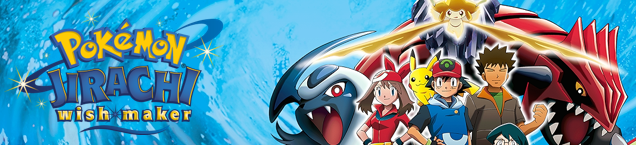
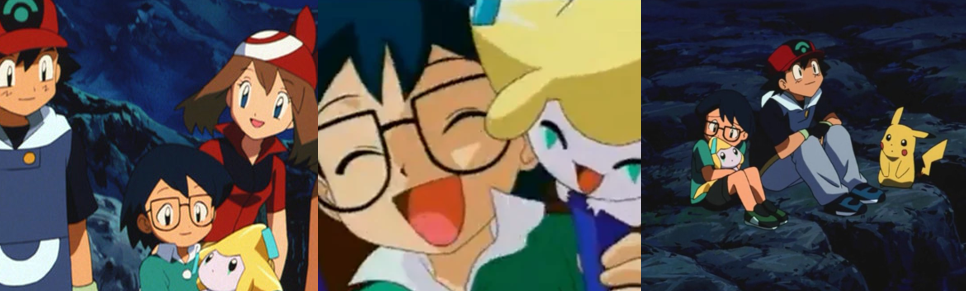
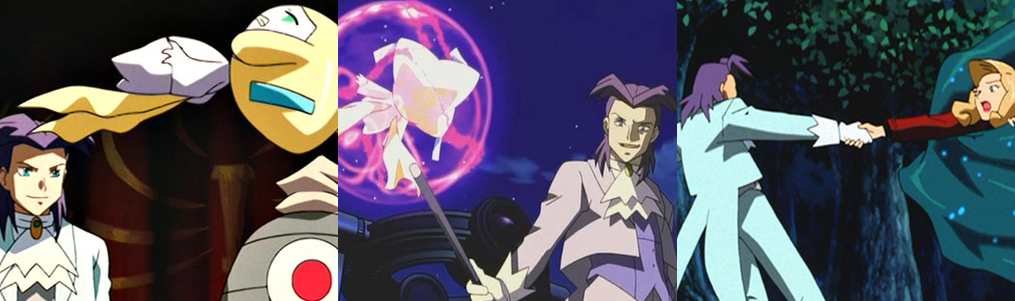
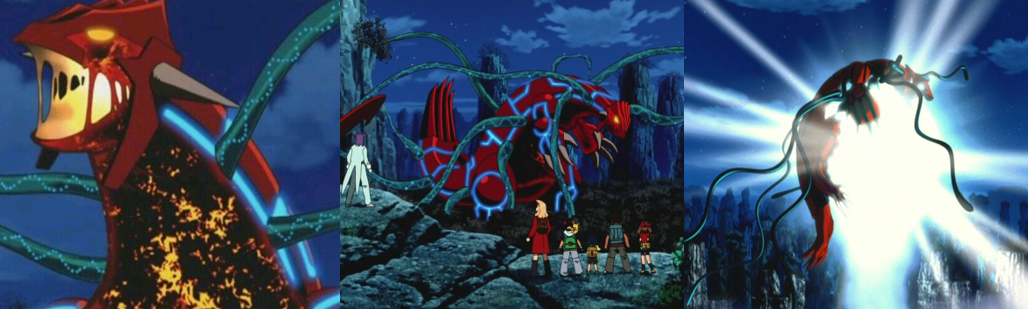


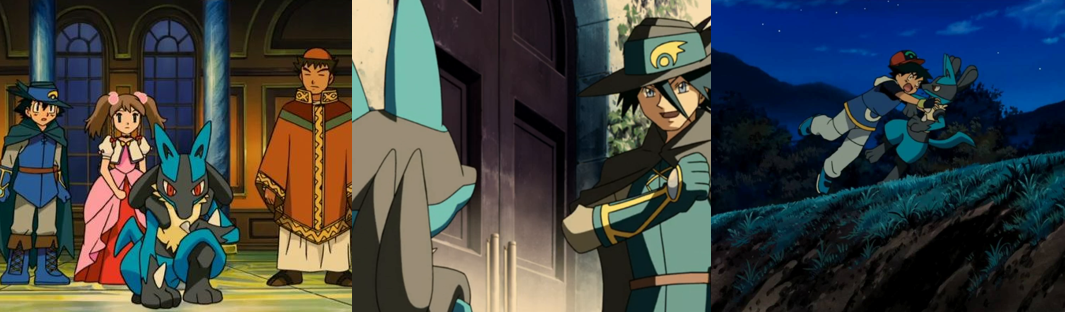
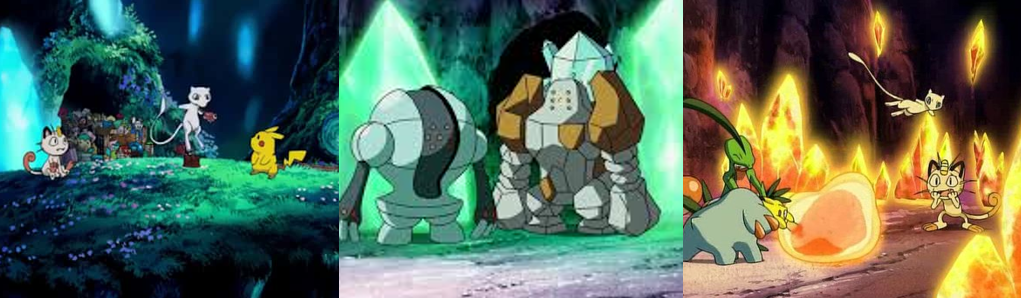
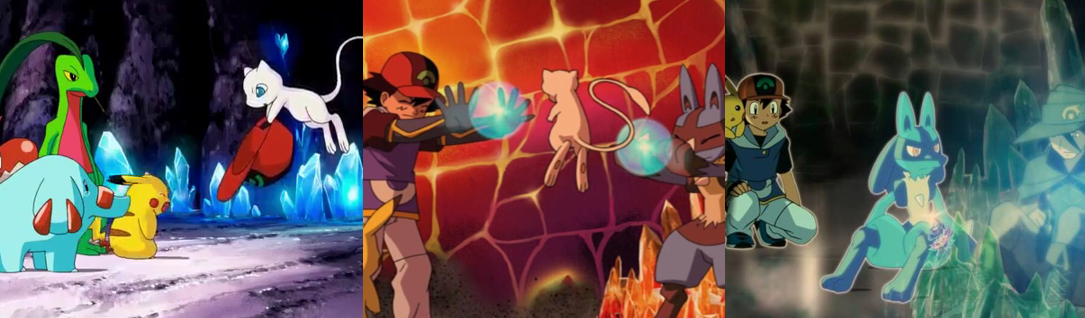


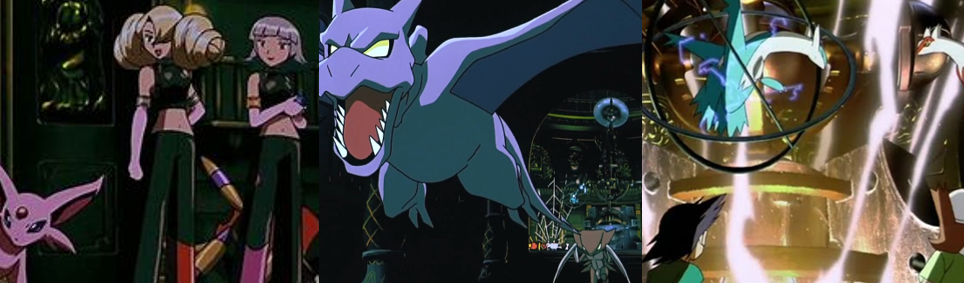




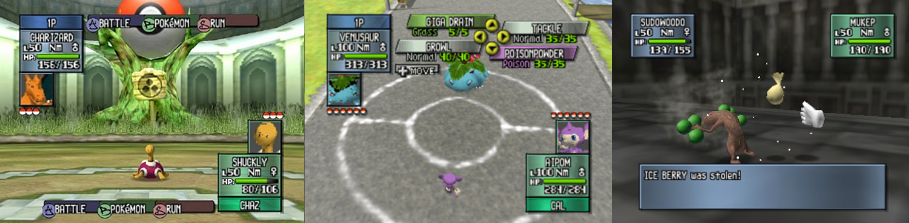
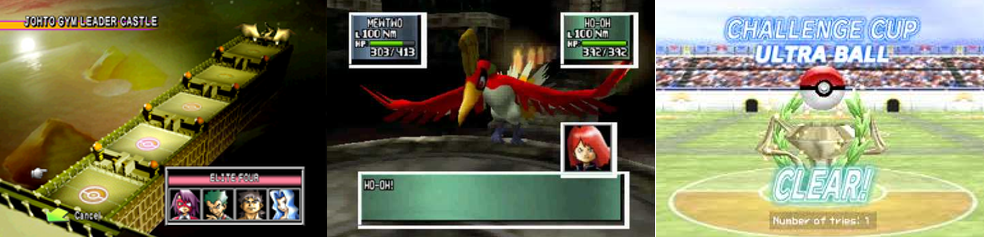
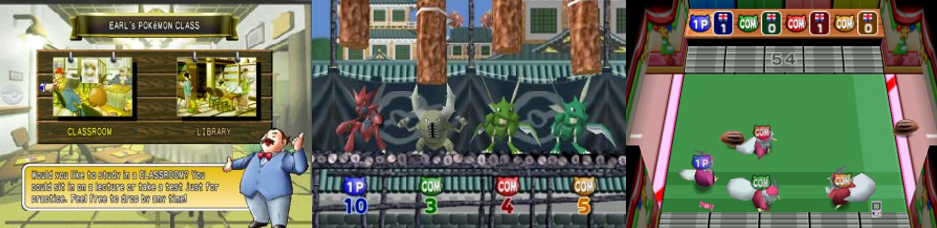


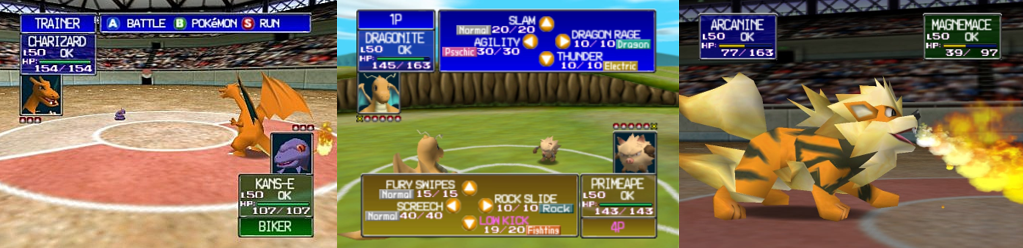
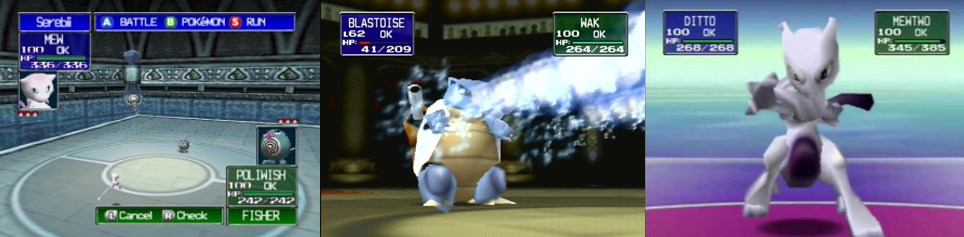
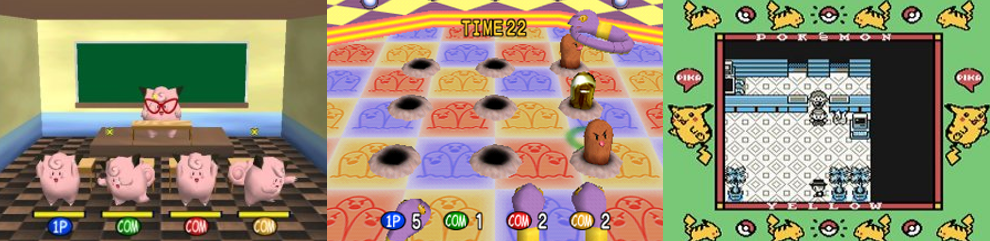

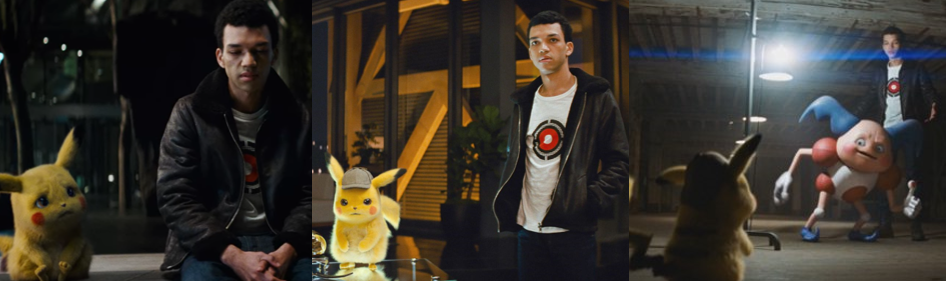
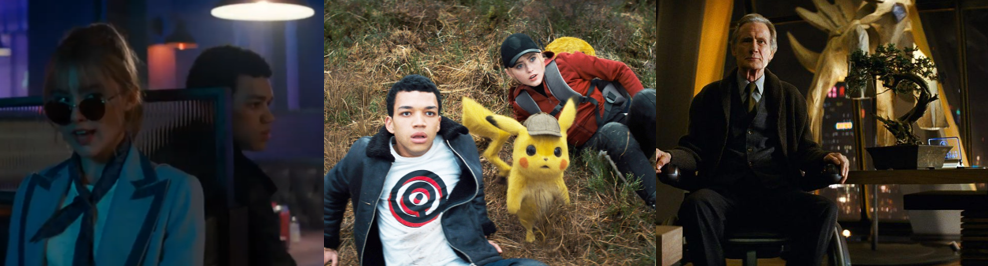
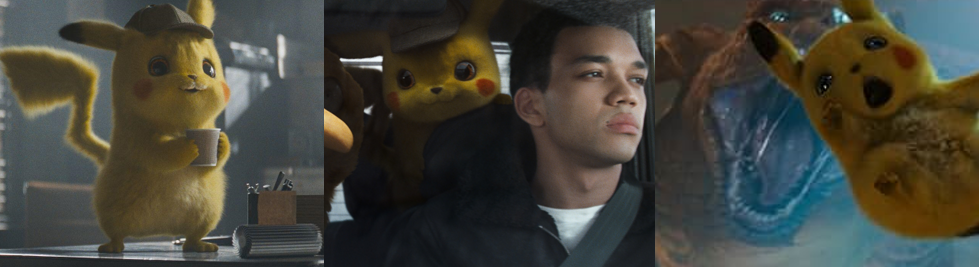
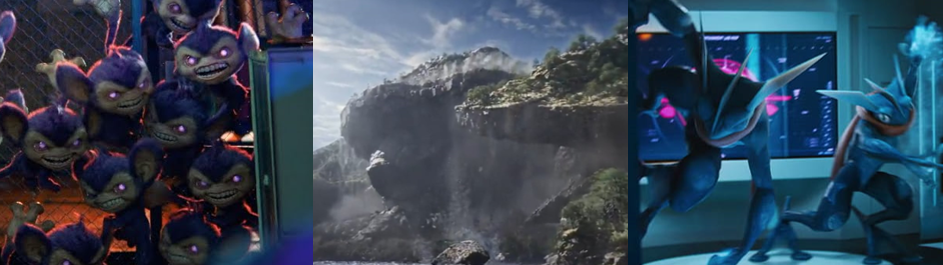
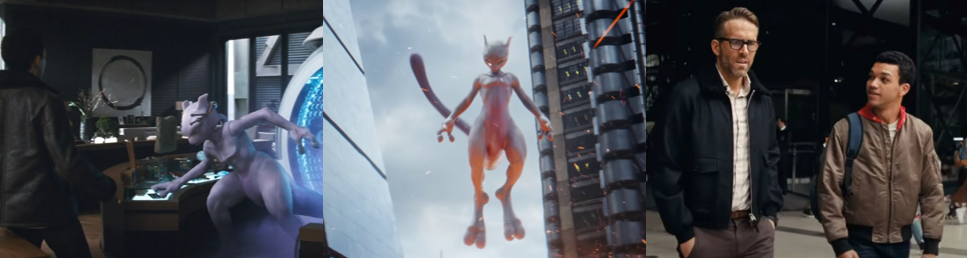




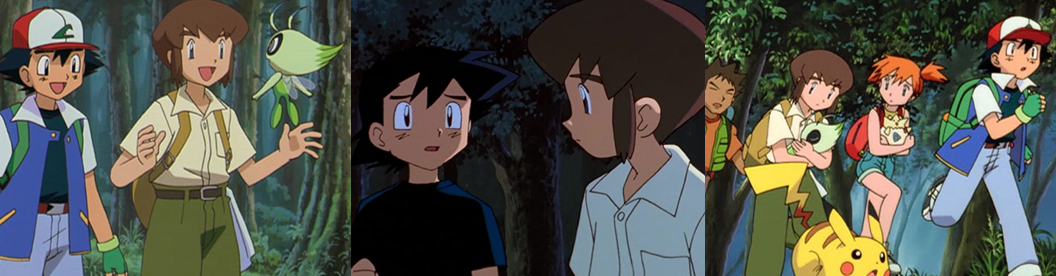

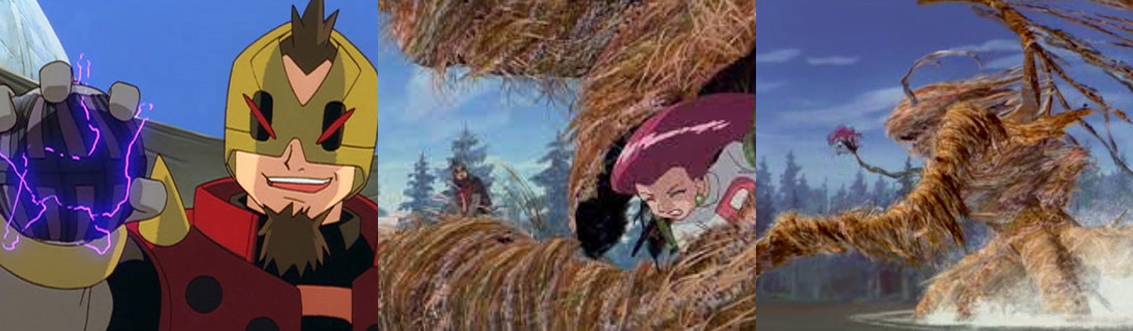





 Dr. K's Waiting Room
You must be logged in to post a comment.