Released: 20 October 2000 Developer: Argonaut Games
A Brief Background: The Alien films (Various, 1979 to present) have had a tumultuous history with videogames, with adaptations ranging from pixelated garbage to first-person shooters, real-time strategies and crossover titles, to survival/horror experiences. In 1997, Jean-Pierre Jeunet was given the unenviable task of resurrecting the franchise after what seemed to be a definitive end, resulting in Alien Resurrection, a minor success that was met with mixedreviews. Like its predecessors, Alien Resurrection was accompanied by tie-in comics, novels, and a videogame, one that was initially asked to simply be a miscellaneous Alien title before 20th Century Fox gave the go-ahead to retool it into a Resurrection tie-in. Argonaut Games were supplied with scripts, storyboards, and raw footage from the film as reference materials but lost numerous team members when they decided to scrap a year’s worth of development in favour of building a third-person game engine. After struggling for another year to adapt to this new engine, the concept was reworked into a first-person shooter (FPS) and Alien Resurrection became one of the first FPS titles to utilise twin stick moving in its gameplay. Ironically, the game was criticised for this decision at the time; further criticism focused on the harsh difficulty, frustrating gameplay, and inferior options compared to the likes of Quake II (id Software, 1997). Thanks to selling only 250,000 units, Alien Resurrection was deemed a failure and Argonaut Games went out of business soon after, though the pioneering title has developed a cult following over the years.
The Review: Alien Resurrection is an FPS title that sticks somewhat faithfully to the main plot of the film upon which it’s based. Consisting of ten missions with three difficulty settings (with the hardest setting limiting you to just one save point), the game sees you explore the Xenomorph infested USM Auriga and escape on the mercenary ship, the Betty, controlling one of four characters depending on which mission you’re on. Mostly, you’ll be in control of “Ripley 8”, an Alien/human clone of the Lieutenant Ellen Ripley, or Annalee Call, a female android. Other missions have you play as Call’s shipmate, Gary Christie, or Private First Class Vincent DiStephano, a soldier stationed aboard the USM Auriga. No matter which character you’re playing as, the controls and basic gameplay remain the same. You can pick from a bunch of different control settings, alongside toggling the crosshair and camera sway, and the game offers the unique option to move with the left stick and aim with the right! With the setup I chose, X allowed me to crouch and squeeze through vents and gaps, Square and Triangle cycled through whatever items I had on hand, Circle used whatever item I had equipped, and pressing in the right stick performed a quick turn. L1 and L2 cycled through my available weapons, R1 fired, and R2 allowed me to interact with the environment, turning handles and activating consoles to open doors or activate lifts and such. The only real difference between the four characters is in the weapons they use; Christie, for example, gets dual pistols (with infinite ammo like the other pistols) while Ripley gets an electric gun that charges a powerful shot. Other weapons include a shotgun, the iconic Pulse Rifle, a laser cannon, a flame thrower, and a grenade and rocket launcher, though some of these are limited to certain missions and won’t carry over between characters.
There’s little to differentiate the characters as they meander through the dark environments.
You’ll find ammo for these weapons (and the weapons themselves) strewn about the game’s dark, oppressive environments alongside helpful items. First aid kits replenish some health, flashlights light up the area (but only for a limited time and you must wait for them to recharge), security cards open doors, and the motion tracker alerts you to nearby enemies. The most useful item you’ll find is the mobile extraction unit, a super helpful bit of kit often conveniently placed near Alien eggs. You’ll need this if when a Facehugger latches onto you as it’s the only way to keep yourself from being instantly killed by a Chestburster and to open certain security doors that remain shut whenever “non-human lifeforms” are detected. Each mission has an objective tied to it, related through the pause menu and text dialogue between the characters between missions, and you’ll have to make a note of your surroundings as there’s no map and things get very samey very quickly. To make matters worse, Alien Resurrection is very dark (the game even recommends playing is the dark to heighten the immersion), so you may want to adjust your brightness settings to aid your exploration. Missions generally involve getting from point A to point B, generally a communications device to switch characters, activating consoles and disabling security systems as you go. Flickering lights, corpses, cries for help, and blood are as commonplace as explosive crates and you must watch for bursts of electricity, manual save points, and locked doors. These are often unlocked by finding vents or alternative routes to control panels but it’s pretty easy to get lost or muddle about in the dark. Things are pretty linear for the most part, but you’ll occasionally hit a wall. In just the second mission, for example, Call has just ten minutes to locate four detonator coils, which must be found and installed or it’s an instant mission failure. Later, you’re charged with destroying Ripley’s other clones, disabling forcefields, avoiding corridors lined with laser traps, finding five key cards to escape the maze-like maximum-security wing, and releasing the Betty’s docking bay clamps.
Sadly, the game’s short on bosses and its enemies are limited in their attacks.
Naturally, you’ll be attacked by Aliens as you accomplish these tasks. Regular drones go down pretty easily, and their blood doesn’t seem to hurt, but they can bleed out of the shadows and deal decent damage with their claw swipes and bites. You’ll want to blast any Alien eggs on sight as the Facehuggers are difficult to hit and your session will end pretty quickly if they latch onto you. You can use this to your advantage, however, as you can’t be double impregnated but you only have a short time before the Chestburster breaks free. The Aliens are all fully 3D models with such limited animation frames that they’re barely superior to their 2D predecessors, though they do sometimes barge through doors and scurry about on the environment. You’ll also have to battle soldiers, especially in the first few missions. These guys use cover tactics and get set upon by nearby Aliens, but their numbers dwindle as the game progresses. Like in the movie, Ripley’s failed clones merely lay on beds or are suspended in tubes for you to destroy so you’re far more likely to be disabling systems and avoiding short circuited machinery than battling elaborate Alien variants. Similarly, Alien Resurrection is disappointingly short on boss battles. You’ll face General Martin Perez, who’s flanked by flamethrower soldiers and wields a rocket launcher and shotgun, making for a particularly tough battle since the controls are so sluggish. You’ll also battle a Xenomorph Queen in a large arena completely devoid of resources. The Queen Bitch is a large target, easily strafed around and pumped with shots, but she also absorbs a great deal of punishment, though she’s limited to simple charges, headbutts, and slashes. You’ll also have several encounters with the horrific “Newborn” Alien/human hybrid, which appears multiple times in the penultimate mission. It’s also extremely limited with its attacks, though does move a bit faster so stay back and unload with the electric gun and it’ll eventually flee. While aboard the Betty and preparing your escape, it’ll reappear, completely invulnerable and confined to the ship’s narrow corridors. You must stun it with your shots and run through the Betty’s narrow, confusing tunnels, eventually taking a ventilation shaft to a control room where you suck it out into space like in the movie.
Despite its fidelity, the game is too dark and clunky to really impress.
Alien Resurrection somewhat impresses with its presentation, but only if I’m being very generous. As a PlayStation title, you can expect long load and save times, texture warping and pixelated environments as standard but the game chugs along at a snail’s pace, with none of the characters moving past a lethargic stroll. This was doubly disappointing as it would’ve been a great way to further differentiate the characters, such as having the synthetic Call and the now-superhuman Ripley move faster. Alien Resurrection does a commendable job of recreating the rusty, lived-in aesthetic of the movie, however, featuring callbacks to the first two films and recognisable areas from the film, such as the gym, the laboratory, and the flooded kitchen. This is quite a large area, full of swimming Aliens and annoying button puzzles; you must also watch your oxygen meter to avoid drowning. While you’ll hear announcements from Father, the omnipresent computer that controls the USM Auriga, voice acting is mostly limited to screams and cries for help, at least until the finale. Janky, pre-rendered cutscenes occasionally appear between missions, recreating certain scenes from the movie, though in a heavily truncated form. Aliens can be dismembered, their blood splatters on the environment, and you’ll disable flame bursts and electrical hazards to acquire key cards or progress. Unfortunately, the game is just way too dark; there’s not much variety once you’re in a mission and you’re sometimes left wandering in circles because you missed a vent or got turned around because everything looks the same. The game mostly uses ambient sounds, making for a largely dull experience, though I did like seeing corpses with holes in their chests slumped over desks, blinking monitors, and Aliens dropping from vents. There is no multiplayer option here, though you can utilise a comprehensive cheat menu to overcome the game’s difficulty and unlock a “Research Mode” that allows you to alter the appearances of the Alien models.
The Summary: I’d heard so much good press for Alien Resurrection that it almost seems as though the game is better regarded than the movie. However, I think most of those reviews rate the game because it was the first first-person shooter to use twin stick controls and it’s a surprisingly solid and faithful recreation of the movie. However, these accolades only carry it so far; behind it all, there needs to be a solid gaming experience and, sadly, there just isn’t. Alien Resurrection is essentially just another, run-of-the-mill first-person shooter, with little to differentiate it from other, more enjoyable games in the genre except the 3D models and new-fangled control scheme. It’s kind of inexcusable to have four playable characters and nothing to differentiate them except the weapons they use, something you won’t even notice if you’re playing with the cheats enabled. The gameplay cycle gets very tiresome very quickly; characters meander around as if bored and you’ll be activating the same switches and consoles over and over. There are seldom more than a handful of enemies onscreen at any one time, the selection of bosses was painfully limited, and the variety, in general, is sorely lacking. Alien Resurrection is relatively short and the environments are quite large and annoyingly labyrinthine, making it a chore to play through since it’s difficult to see what’s going on thanks to the murky graphics and overuse of shadows. In the end, Alien Resurrection is a decent enough first-person shooter with some enjoyable moments but there are far better FPS titles out there and far better Alien-adjacent videogames you could be spending your time on.
My Rating:
⭐⭐
Rating: 2 out of 5.
Could Be Better
Have you ever played Alien Resurrection? If so, where does it rank for you against the other Aliens videogames? Were you also disappointed that there wasn’t more to differentiate the characters and that the game was short on bosses? What did you think to the dual stick controls and maze-like gameplay? Which of the Alien movies or videogames is your favourite and why? Whatever your thoughts on the PlayStation’s videogame adaptation of AlienResurrection, drop them below and be sure to check out for my review of the film that inspired the game.
While May 4th is known the world over as Star Wars Day, many also choose to extend the celebrations of the course of three days, with one of them being the “Evil Star Wars Day” of May 6th (as in “Sith”).
Released: 28 February 1995 Developer: LucasArts Also Available For: Macintosh and MS-DOS
The Review: I’m giving Star Wars: Dark Forces a shorter review not necessarily because there isn’t much to say about the game, or because of its length, but primarily because my playthrough ran into a few roadblocks that even the super useful cheat menu couldn’t help me with. Even if this wasn’t the case, I would’ve still blasted through it with a series of cheats enabled (including invincibility and all weapons), so I feel it’s better to just give an overview of this Doom clone, a game I’ve long coveted due to its obscurity in the vast tapestry of Star Wars videogames. Anyone who’s played Doom will find the control scheme very familiar, but there are a few differences here: by default, you can swim and Triangle lets you jump, for example, and you can run by holding R1, two elements you’ll need to incorporate in later levels (referred to as “Missions”) to clear gaps. Square fires your primary shot, Circle cycles through your available weapons, and X allows you to activate switches and open doors and such. The PlayStation’s analogue sticks are useless here; it’s all about the directional pad and tank-like controls. Still, while there’s no aiming reticule, there’s a mild auto aim system and you can look up or down by holding L1 and strafe by holding R2, allowing a slightly greater range of movement when in a firefight. L2 acts as a toggle; if you hold this down and press Triangle, you’ll crouch to pass through smaller gaps, pressing Square fires your weapon’s secondary shot (usually a cluster shot or proximity function or emptying an entire clip), and pressing Circle cycle backwards through your inventory.
Kyle has an impressive array of weapons and options to help him achieve his objectives.
You play as mercenary and Han Solo proxy Kyle Katarn and are tasked with completing fourteen Missions, each with certain objectives that need to be accomplished (with many of these being repeated across the game, such as finding something or placing explosive charges) before you’re generally forced to backtrack to the start to exit on your ship (or, more accurately manually from the pause menu when prompted). Kyle has a decent array of weaponry available to him throughout the game, including a slow-firing pistol, an inaccurate Stormtrooper blaster, thermal detonators and a grenade launcher, and an assault cannon. If you run out of ammo, you can always default to your fists, but ammo seems pretty plentiful, though some weapons are quite large and obscure your vision and also have less ammo than others due to their power. You can occasionally blow open walls, crates, and explosive barrels to take out enemies and access secret areas, either to find shortcuts or caches of useful items, such as ammo, pick-ups to replenish your health and/or shield, or extra lives, brief invincibility, and temporary power-ups to your weapons. By pressing ‘Select’, you can activate a number of useful items, such as a small wireframe map that’s placed right in your field of vision, or activate a gas mask, night vision, or a headlight if you have enough battery power. You can also access Kyle’s PDA from here, which provides a larger map (when you find the appropriate item to enable this, though, it’s very confusing to look at), an overview of your inventory and objectives, and options to abort or restart the mission. Before you start the game, you can pick from three difficulty settings (“Easy”, “Medium”, or “Hard”) and you’ll need to find coloured keys to open certain doors and complete objectives such as locating clues or certain items (like the Death Star plans), placing explosive charges, and escaping your current location.
While the visuals can be repetitive, some locations and cutscenes do stand out.
One reason I struggled with Star Wars: Dark Forces, even with the cheats enabled, was that it sadly borrows the worst aspect of Doom: large, nearly identical, labyrinthine environments. While some locations faithfully recreate the aesthetic of locations like the Tantive IV or feature little details like those chirping Death Star droids, Imperial symbols, wireframe holograms, and the visuals of the Original Trilogy are recreated as faithfully as this generation of gaming allows, this is quite possibly the greyest game I’ve ever played! Almost every Mission takes place in an Imperial facility or on an Imperial starship, meaning everything is a dull military grey or a stone-grey shading, so it’s really easy to get lost and run into dead ends as you try to figure out where to go next. You’ll be activating a lot of switches to open doors but, like in Doom, it’s sometimes hard to tell what these switches activate. Locations also include stairwells and lifts, which can turn you about quite easily, and you unfortunately can’t destroy many of the monitors you see lining the walls (though the bodies of your victims do stay strewn on the ground, helping to show where you’ve been). Even when there is some visual variety, like the dark, towering skyscrapers of Coruscant or the disgusting sewage system of Anoat City, or the muddy hue of Jabba’s Kell Dragon-infested ship, things aren’t especially attractive. You’ll occasionally take a break from the endless grey to see purple or red-hued skies, dodge flaming pipes and crushing hazards, navigate industrial-esque mines and avoid giant fans. You can find and equip the ice cleats so as not to plummet to your death on frigid, narrow platforms and blast your way through a Star Destroyer to put an end to the Dark Trooper program, but it’s incredibly difficult to navigate each area and it’s disappointing how repetitive the visuals become. Each Mission is proceeded by a veritable wall of text to read but there are some amusing cutscenes on offer. Of course, the game begins with the classic Star Wars story scroll and distorted versions of the iconic music (including an “Imperial March” remix) feature during the game, but you’ll see decent CGI scenes whenever the story’s focusing on ships or planets and partially animated pixel art whenever characters are talking, which really evokes the DOS games of the era.
With only two bosses to contend with, you’ll have to settle for some tougher enemy variants.
Because I quickly became hopelessly lost and confused, I was only able to clear one Mission in Star Wars: Dark Forces and that was more by accident. Instead, I was forced to manually skip to the next Mission on every other level of the game, meaning I never found Crix Madine or Moff Rebus and Boba Fett only appeared in a cutscene in my playthrough. As you explore the repetitive environments, you’ll gun down incalculable Stormtroopers and Imperial officers, all of whom cry out when they see you and when they’re killed, which is fun. Imperial probe droids and other robotic enemies are also present, including (oddly) the Jedi training sphere and that spherical torture device, and these wicked sword-wielding robots that take ages to put down. Pig-like Gamorreans also show up, carrying large axes for a long reach, as do grenade-tossing, three-eyed Grans, disgusting squid-like monsters in the sewers, the gigantic and voracious aforementioned Kell Dragons, and even Trandoshans (who are all just copy/pastes of Bossk. Your most formidable recurring enemies are the Dark Troopers, large, dark-garbed Stormtroopers who can hover overhead and fire missiles and devastating plasma blasts at you. You’ll have to destroy ceiling-mounted turrets, avoid damaging liquid, and even see TIE Fighters flying out into the abyss (though they’re no threat) but I wasn’t able to complete Mission 11 enough to trigger the battle with Boba Fett. However, from what I can see, he’s very much the same as a Death Trooper as he flies about shooting missiles and blasting at you, meaning the Death Troopers and those droids are the closest the game has to boss battles. I did go head-to-head with General Rom Mohc, the man behind the Dark Trooper initiative, who’s also garbed in Death Trooper armour. His strategy is mostly to spam assault cannon shots and defeating him sees Kyle’s potential catch the eye of Darth Vader and the man himself be awarded for his services to the Rebellion. Unfortunately, there’s not much else to Star Wars: Dark Forces; there’s no multiplayer or deathmatch mode, so you’re left with challenging the game’s harder difficulties or messing about with the passwords and cheats, which also allow you to skip to different Missions, change your size, “pogo” up to higher platforms, and seemingly reflect enemy shots.
The Summary: I’ve had vague memories of playing Star Wars: Dark Forces as a kid; I’m sure I played it on DOS way back in my youth and, as a fan of Star Wars, Doom, and Doom clones, I’d longed to get my hands on it and blast my way through countless Stormtroopers with reckless abandon. Unfortunately, Star Wars: Dark Forces quickly threw up some annoying roadblocks that meant I was far more reliant on the cheats than I initially planned to be. The game focuses way too much on its maze-like aspects, forcing you to backtrack to the start of most locations to be picked up by Kyle’s ship rather than having a traditional end goal like other FPS games from the time. This is bad enough but just trying to find your way around is even more frustrating thanks to the terrible map system, repetitive environments, and confusing level layout; everywhere looks the same and it’s easy to get lost, confused, or just aimlessly run around in circles searching for where you’re supposed to go next. The game also has a disappointing lack of boss battles; those droids and the Dark Troopers are formidable enemies, but I would’ve liked to see more battles against bounty hunters, or maybe a showdown with an AT-ST walker, or just something to break up the journey back to the level start. Although the game is slow, clunky, and runs very poorly, the sound effects and voice samples were fun; the cutscenes, while often terribly drawn, had a certain visual appeal and I quite liked the array of weaponry on offer. Unfortunately, the game is too dark, too confusing, and lacks any visual variety for me to really recommend it all that much. It’s a decent Doom clone but it could’ve been a lot better and you’re much better off just playing one of the other, more notable Doom knock-offs that came out around this time.
My Rating:
⭐⭐
Rating: 2 out of 5.
Could Be Better
Have you ever played Star Wars: Dark Forces? Were you a fan of Kyle Katarn and his adventures? What did you think to the level layout and game environments? Did you also get lost and confused or were you able to easily best this title? What did you think to the Dark Trooper plot and lack of proper boss battles? Which Doom knock-off is your favourite? Whatever your thoughts on Star Wars: Dark Forces, or FPS games in general, drop a comment below or let me know on my social media.
May 4th is known the world over as Star Wars Day thanks to being one of the most fitting and amusing puns ever devised (“May the Fourth be with you” in place of the traditional “May the Force be with you”). The first and most popular of what can easily become a three day celebration of the influential science-fiction series, the day stands as the perfect excuse for Star Wars fans to celebrate the beloved franchise in various ways.
Released: 4 April 2000 Developer: LucasArts Also Available For: Dreamcast and Game Boy Advance
A Brief Background: Almost immediately following its 1977 debut, George Lucas’ science-fiction “space opera” became a massive multimedia juggernaut that expanded to include sequels, prequels, spin-offs, novels, videogames, comic books, and more. After wrapping up his Original Trilogy, Lucas was hesitant to return to the franchise, but the success of the “Expanded Universe” books led to a revived interest in Star Wars and Lucas not only produced “Special Edition” versions of the Original Trilogy in 1997 but also the divisivefirstchapter in his Prequel Trilogy, Star Wars: Episode I: The Phantom Menace(Lucas, 1999). Despite manylacklustre to average reviews, the film made over $1 billion at the box office and was accompanied by a huge marketing campaign. All these new toys, books, and comics were joined by ten different videogame adaptations released across numerous platforms, though this is the one I most remember playing as my friends and I used to muck about with it back in the day. The developers of Jedi Power Battles used paper cut outs to design the layout and features of the game’s environments and strived to give each character their own unique appearance, abilities, and lightsaber colours. Although numerous fixes and improvements were made to the subsequent Dreamcast version, this version of the game was received rather poorly; reviews criticised the game’s high level of difficulty and awful controls, though the co-op mechanics and arcade-style gameplay was highlighted as a positive.
First Impressions: Star Wars: Episode I: Jedi Power Battles is a 2.5D, arcade-style hack-and-slash adventure game that includes a little light puzzle solving, some aggravating platforming sections, and a touch of role-playing functionality. Up to two players can play at any one time, which can be useful for taking on the droid army of the Trade Federation but can cause some serious gameplay issues; for one thing, players share the Credit pool, so your game can end pretty quickly if you get defeated too many times. You also have to be mindful not to stray too far behind; if you linger or get left behind when your friend gets too far ahead, you’ll lose a life, and the game will end that much faster. Players can pick from five Jedi characters – Obi-Wan Kenobi, Qui-Gon Jinn, Mace Windu, Adi Gallia and Plo Koon – who all share the same basic control scheme. There are five control schemes to pick from, but the default sees you using Square, Triangle, and X to swing your lightsaber horizontally, heavily, or vertically, respectively, and Circle being used to jump and double jump. There aren’t any jumping attacks here, but you can string together combos using Triangle, X, and Circle and you can also run by holding R2. If you hold L1, you’ll block incoming attacks; tapping it will deflect laser bolts, which is a great way to defeat faraway enemies but keep an eye on your block meter as this depletes (and automatically fills) over time. You can lock on to the nearest enemy with R1, which also sees you circle that enemy and perform a dodge roll but be sure to disengage the lock on if you’re near an edge or hazard as you’re likely to get hurt or lose a life.
Team up with a friend to double the frustration and difficulty of this clunky hack-and-slash game.
Holding L2 allows you to use each character’s four unique Force powers; this also depletes a meter, and you’ll need to grab power-ups to replenish it, and these powers allow you to perform short, defensive, long-range, and special attacks by holding L2 and pressing Triangle, Circle, X, or Square. To start with, Obi-Wan has a saber dash and tosses a thermal detonator, Qui-Gon unleashes a shockwave to send enemies flying and tosses a pulse grenade, Mace Windu protects himself with a saber shield and also tosses a thermal detonator, Adi Gallia can mesmerise foes and protect herself with an energy shield, and Plo Koon has a saber cyclone attack and stim pack. As you defeat enemies, you’ll gain “Jedi Points”; defeating enemies with style, different combos, or with a variety of attacks rewards more Jedi Points while attacking protocol droids or local Naboo wildlife costs you points. These points are tallied up at the end of each level and can be traded in to extend your health or Force meter and also award new combo attacks and Force abilities, though the game doesn’t list these anywhere, so you’ll just have to remember or make a note of them. Finally, you can also find some helpful power-ups dotted around; beyond the usual health and Force-restoring items, you can grab an extra Credit, hit checkpoints for when you inevitably die, add a special item (like the thermal detonator) to your inventory, extend or power-up your lightsaber, and either refill all your meters or halve them for an added challenge. There are two difficulty modes to pick from, “Easy” and “Jedi” mode; I tried “Easy” and the game still presents quite a challenge. While regular battle droids go down pretty easily, their coloured variants are surprisingly tough and they can send you flying with melee attacks up close or absolutely wreck you with laser bolts from afar if you’re not careful!
Hazards, tough enemies, and annoying platforming sections drag down this ugly-looking title.
The presentation on offer here is pretty good by 2000 PlayStation standards; we get the traditional Star Wars opening and story scroll, pixelated screenshots from the movie, and a full score that is ripped right from John Williams’ orchestral suite. After being treated to a CG opening sequence that strangely places the five main characters in a black void, you’ll behold some of the ugliest polygonal representations of these characters ever created; I don’t begrudge Jedi Power Battles too much for this as this is genuinely what a lot of games looked like back then and, to be fair, the character models don’t look too bad once you’re playing the game and the camera isn’t zoomed in on their blocky faces. They don’t have any idle animations, but their combat moves are pretty swift and satisfying; it’s a shame, then, that the controls are so awkward. Despite allowing analogue control, the game feels very clunky; if you’re not locked on to a target, you’ll swing wildly (and slowly) at thin air and, when you are locked on, you’re trapped in one-on-one combat with the target and vulnerable to other enemies. Where the game really falls apart, though, is in the platforming; in the first stage (a pretty decent recreation of the Trade Federation’s battleship), you’ll need to jump across gaps in bridges, avoid electrified floors and hazards, and hop across pistons. In the second stage, the jungles of Naboo, you need to jump up giant mushroom-like platforms and across large branches and treetops, which is especially difficult to do because of the immovable camera. It can be very difficult to judge where you are and how far away things are from you; while characters do grab ledges to give you some leeway, it’s all too easy to just slip off to your death, be shot out of the air, or miss-time a jump and have to start all over. Gameplay is mixed up a little in the second stage, where you must run away from the Trade Federation’s droid carriers amidst a stampede of dinosaur-like creatures towards the camera in a shameless rip-off of Crash Bandicoot (Naughty Dog, 1996). The game’s environments, while detailed and very true to the movie, are very ugly at times; again, this is just how games were back then but it’s a bit of sensory overload at times as textures warp around you and the game world struggles to stay in one piece.
My Progression: As I mentioned, I’ve played Jedi Power Battles before in my youth; it was a long time ago but I knew I wanted the game in my PlayStation library once I started seriously collecting for the console, so I was excited to get into it and sure that I’d be able to finish the game one way or another. I picked Qui-Gon Jinn on “Easy” mode and got to work and, to start with, things weren’t too bad; when you’re running through corridors slicing up droids, the game is quite fun. But then you see the gaps, experience the awful jumping mechanics, and see how the game’s graphics are used against you; there’s one point where it looks like you need to jump between these electrical currents, but you actually need to jump along the side of the screen and will die if you drop down, which isn’t clear at all. Later, your path is blocked by some Droidekas, but they’re actually not that difficult to defeat, and you need to battle through some control rooms full of destructible elements to get to the hanger. After avoiding dropping to my death, I battled two bosses; the first was a large droid with two long, spiked arms and a platform for a head and the second was a droid ship that flew around firing lasers at me on a small gantry as droids distracted me. The first was definitely a challenge; the droid is quite large, and it can be hard to outrun or jump over its charge and spindly arms, but the hardest part of the second boss was dispatching the battle droids before they could ruin my chance to parry the bolts back at the ship.
Sadly, the game proved too frustrating for me to experience its later levels and battles.
Things fell apart in the second level, though; after being trampled to death in the opening stampede, I managed to get to safety and was charged with “protecting” Jar Jar Binks, who you’ll spot flailing about in the backgrounds. Before you can do that, though, you have to wade through a small army of battle droids (or, as I did later, simply race past them as it’s faster!) and take to higher ground. This was extremely frustrating as it was really hard to jump to the mushroom platforms; if you fall from too high up even in this section, you’ll die, to say nothing of being pummelled, blasted, or falling as you traverse the higher path. This sets you back quite a bit but there is an extra life you can snag before the mushroom tree, effectively giving you infinite continues; once you pass it, you enter a cave and must battle a giant worm creature. This thing appears to only be vulnerable on its underside, but it spits out these homing projectiles that can stun lock you, slams into the ground, and spins around with a tail attack. Deal enough damage and it retreats to the side and spits out small termite-like creatures, but this was where I had to call it a day as the worm just decimated my health bar in seconds and I didn’t want to have to play through the frustrating jungle section to try it again. It’s a bit of a shame as well because I know that later levels of the game represent other aspects of the movie, such as infiltrating the Naboo capital, utilising vehicles, and battling Darth Maul. There are also additional characters you can unlock after completing the game, such as the aforementioned Darth Maul and even Queen Padmé Amidala (who plays differently since she doesn’t have any Jedi abilities). Unfortunately, there are no passwords or cheat codes to help with progression in this game, doubling frustration and disappointment; once all your Credits are exhausted, you have to replay the last stage from the beginning, which is very tedious with the stunted camera and janky controls, all of which meant that I was barely able to limp through the first mission let alone even consider trying to conquer the Naboo jungles again!
I waited for years to play Star Wars: Episode I: Jedi Power Battles again; I had fond memories of it from my youth and was really excited to get into it, but it seems that my memories were tainted by time. Although the game has a bombastic score and aspects of the lightsaber combat are exciting, it looks atrocious, even by PlayStation’s standards, and the controls are sluggish and awkward. This probably wouldn’t have been so bad if it had been a mindless hack-and-slash with simple push/pull puzzles and a bit of jumping, but placing such a great emphasis on platforming when your depth perception and game engine are already frustrating is just asking for trouble. The game offers quite the challenge, even on “Easy” mode and even more so in two-player; just targeting and attacking an enemy without being blasted by another or slipping to your death is hard enough, to say nothing of the needless limitation on continues and messed up controls. It’s a shame as I was really looking forward to slicing my way through a fun melee title, but I don’t think I’ll be coming back to Jedi Power Battles any time soon. But perhaps you’ve beaten it without any issues. Perhaps I’m missing something, like playing as a different character or not sucking so hard? Maybe you know of a better Episode I-branded videogame? Whatever the case, there’s a comments section below and my social media is always open to hear your thoughts, good or bad, so feel free to share them and go check out my other Star Wars content!
In April of 1940, about a year after the debut of arguably their most popular character, Bruce Wayne/Batman, DC Comics debuted “the sensational find of [that year]”, Dick Grayson/Robin. Since then, Batman’s pixie-boots-wearing partner has changed outfits and a number of different characters have assumed the mantle as the Dynamic Duo of Batman and Robin have become an iconic staple of DC Comics. Considering my fondness for the character and those who assumed the mantle over the years, what better way to celebrate this dynamic debut than to dedicate every Thursday of April to celebrating the character?
Released: 1996 Developer: Probe Entertainment / Iguana Entertainment / Iguana Entertainment UK Also Available For: Arcade, MS-DOS, and SEGA Saturn
A Brief Background: It’s easy to forget now but Batman Forever(Schumacher, 1995) was a pretty big deal for Warner Bros. back in the day; not only had they sunk $100 million into the film but they were desperate to appease those who were outraged with the dark, macabre content of Batman Returns (Burton, 1992) and craft a film that would be more appealing for the sponsors. While it garnered a mixed critical response, Batman Forever made over $330 at the box office and was accompanied by a slew of merchandise and ancillary products. Like its predecessors, Batman Forever also received a tie-in videogame that marked Acclaim’s first foray into the arcade scene. However, the 2.5D beat-‘em-up was met with mostly mixed reviews but still fared better than Acclaim’s other home console adaptation of the movie.
First Impressions: If there’s three things you can always count on with me, it’s that I’m a big fan of arcade titles, sidescrolling beat-‘em-ups, and Batman. Although I didn’t grow up with a Super Nintendo Entertainment System (SNES), emulators have allowed me to have a great deal of fun with Batman Returns (Konami, 1993), which was a cracking licensed videogame simply because it aped the formula of genre staples like Final Fight(Capcom, 1989) and X-Men(Konami, 1992). While Batman Forever had an extremely dismal and almost unplayable sidescrolling adventure game released on Mega Drive and SNES, arcades were blessed with this far more enjoyable and fitting videogame, which thankfully came to the PlayStation so I was able to snap it up (and at a pretty good price, too, all things considered). Batman Forever: The Arcade Game can be played on three different difficulty settings (Easy, Normal, or Hard), with enemies increasing in number and toughness on the harder difficulty settings, and allows you to assign yourself up to seven continues. You begin the game with three lives and, once you’ve lost all three, you can enter a high score and switch your character to return to the action once more. In terms of controls, Batman Forever is as simple as it gets: one button punches, one kicks, and one jumps and that’s it. you can customise these in the options menu and choose to play as either Batman or Robin (or both together, if you have a friend), before jumping into the game proper. There doesn’t appear to be any technical differences between the two, but they do have different animations and Robin seems to be a bit faster on his feet, but that could just my psychosomatic on my part. Right away, you’re treated to a pretty impressive in-game cutscene as Batman and/or Robin heads to the streets of Gotham City in the Batmobile, and the first thing you’ll notice is how impressive and ambitious the graphics are. The game utilises pre-rendered, 2.5D backgrounds that, while murky and a bit washed out, are immediately evocative of many of the neon-drenched, bizarre locations seen in the film, such as the graffiti-and-litter-strewn streets, Edward Nygma/The Riddler’s big gala (with partially animated guests in the background), and Harvey Dent/Two-Face’s lair among others. The playing field allows you to wander into the background, with sprites scaling accordingly, though they do lose a fair amount of graphical fidelity, becoming even more pixelated and ugly as you move about.
While the game is cluttered and chaotic, it’s full of action and fun ways to beat up thugs.
Sprites in general look decent enough; they appear to be digitised, similar to the early Mortal Kombat games (Midway/Various, 1992 to 1996), and Batman and Robin have a glistening sheen to them that makes them look like action figures. Batman looks a little goofy, with his massive chest symbol, but Robin looks pretty good; the thugs you encounter, however, are swarms of Two-Face’s goons, robots modelled after the Riddler’s fortune teller machine, and other generic beat-‘em-up mooks, none of whom have a life bar. The sheer number of enemies is pretty impressive and overwhelming, however. It doesn’t take much for you to get pummelled to death as enemies swarm around you and trap you in an unblockable beatdown, and enemies will fire guns, toss grenades, drive motorcycles and cars at you as well as spring out from the scenery. To make matters worse, Two-Face occasionally pops in, riding a wrecking ball or shooting rockets at you from the foreground, though there are times where you can swing and grapple parts of the environment to barge trough enemies. Combat is a pretty simple affair, with you mashing punch and kick to string together combos, tossing and jump-kicking enemies as you’d expect, but the game makes a big deal out swamping you with various power-ups. As you take out enemies, little Bat Symbols scatter everywhere which power-up your “Combo Meter” as well as a variety of gadgets and pick-ups: Bat-Signals, Two-Face Ying-Yangs, and Riddler Symbols appear frequently, bestowing either gadgets or temporary buffs and debuffs. When you grab a gadget, like the Batarang, grapple gun, taser, or Bat Bola, your regular attack is replaced with a projectile; the grapple gun is particularly useful for landing up to 150 hit combos on enemies and sees you swinging and flailing all over the screen, while the Batarangs can quickly rack up points and the taser and bola can stun enemies for a short time. You can also pull off a screen-clearing attack, summon bats to protect and attack enemies, and toss a stun grenade, and all of these attacks will increase in power and change their appearance as your meter builds higher. However, this can make the combat and action extremely chaotic as the screen is constantly filled with enemies, items, and your almost incomprehensible attacks, making for a very frantic and confusing experience.
My Progression: As you fight your way through the game, you can pick up and throw objects, grab the odd bit of health to sustain yourself, and will be blessed or cursed with power-ups such as invisibility, duplication, invulnerability, and shrinking you (or your enemies), among others. After clearing a stage, your score is tallied up; the more enemies you defeat and the more gadgets and such you use, the better your score and rewards. You can then pick from these rewards to start the next stage with a gadget or power-up advantage; some are merely cosmetic, like “VR Mode”, which sees enemies burst into green computer coding upon defeat, while others increase your combo by default, allowing you to build your meter faster. There are no save points, password, or checkpoints in the game, however; once you exhaust all of your continues, the game is over and you’ll need to start from the beginning, which is always a pretty shitty thing to do in a home conversion of an arcade game since its purpose isn’t to relieve you of your pocket money. All I’m saying is at least have the option to earn more lives or continues, or limit your continues on the harder difficulties and have them disabled entirely on Easy mode.
Unfortunately, I wasn’t able to save Gotham from the villains’ mad schemes…this time…
Naturally, you’ll have to battle a few bosses over the course of your playthrough, however not as many as you might think. The game is structured more to have you battle wave upon wave of the same goons over and over until you reach the end of a stage, where a boss may be waiting for you, but it’s not always the case. I didn’t fight a boss until the second stage, for example, which pits you against three slightly tougher goons: Nick, Blade, and Flex, each of which fires at you with an Uzi, tosses grenades, or throws knives at you and can block your attacks (something you’re incapable of doing). You’ll know when you’re facing a boss as they actually have a life bar and the screen flashes dramatically after you defeat them, and these three weren’t all that difficult but, again, it’s easy to get caught in a crossfire and just whittled down to nothing in no time at all. At the end of an alleyway, you’ll fight Tassel (who seems to be the neon-painted, clown-like goon who hassled Dick in the film), who’s joined by a couple of gun-and-grenade-toting henchmen and shows off a bit of flippy, martial arts skill. After battling through goons on a rooftop, you’ll be confronted by a helicopter and a seemingly endless supply of enemies; simply fend them off, dodging the chopper’s machine gun fire, and press attack to toss projectiles when prompted. Two-Face will continually pop up to fire rockets at you in the subway and at the gala, and two of the Riddler’s robots will attack you with their extendable arms to cover their escape. These then become regular enemies in a construction site full of explosive barrels, where you’ll battle Feather and Stew, with Feather proving pretty tough thanks to being very handy with his bo staff. My run came to a disappointing end in Two-Face’s lair, however, where his beautiful bodyguards, Sugar and Spice, absolutely wrecked me with their fast attacks, which pummelled me from both sides without any chance of fighting back, treating to me to a rather bland game over screen (in the Batman: The Animated Series (1992 to 1999) font, no less) informing me of my failure to save Gotham City.
I was having a pretty good time with Batman Forever: The Arcade Game once I got past the visual and sensory overload. The game includes a renditions of Elliot Goldenthal’s score and some brief sound bites from the movie, but the sheer number of enemies and chaos happening onscreen at any one time can be a little overwhelming. The game looks fairly decent, even though things can get a bit ugly and distorted at times, but the depth of combat is a little odd compared to other beat-‘em-ups; the gadgets and various pick-ups mean there’s always something happening and you can rack up big combos, but it also feels like a lot of control is being taken away from you as Batman and Robin leap into action with these big, elaborate movements at the touch of a button. Unfortunately, neither are particularly durable; your health bar can be whittled down to nothing in the blink of an eye and you’ll burn through your lives and continues in no time, with no passwords or cheat codes to make things easier for you. It’s probably do-able, maybe in two-player mode, and I’m sure I’ll return to it again as I do enjoy a bit of sidescrolling, beat-‘em-up action, but lumbering you with limited continues for a home console release always irks me and there’s not really anything to unlock or to discover outside of the main campaign, which continues basically no story and very few cutscenes (and even these are limited to the in-game graphics, impressive as they can be). I’d like to know if you’ve ever played this one, either in the arcade or at home, and how well you fared against Gotham’s colourful swarms of criminals? Which character did you prefer, and what did you think to all the gadgets and power-ups? Which licensed Batman game is your favourite? Who is your favourite Robin and how are you celebrating the Boy Wonder’s debut this month? Whatever your thoughts on this game, and Robin in general, sign up to leave them below or share your thoughts on my social media, and check back soon for more Robin content!
Released: 31 August 1997 Developer: Electronic Arts Also Available For: PC and Nintendo 64
The Background: After almost six months of conflict and thousands dead, the Gulf War had finally ended in March 1991 but the bloodshed proved as much of an influence on developer Mike Posehn as the air rescue mechanics of Choplifter (Dan Gorlin, 1982) in the creation of Desert Strike: Return to the Gulf(Electronic Arts, 1992). Opting to eschew typical videogame mechanics and focusing on nonlinear, mission-based gameplay, Desert Strike became one of the Mega Drive’s top titles; its 16-bitsequels introduced new vehicles and locations and were similarlypraised, though reviews sound found the formula becoming stale. By 1996, the videogame industry moved on from traditional 2D graphics in favour of 3D polygons, and arena Sony’s PlayStation was purposely built for and which upended the battle for supremacy between SEGA and Nintendo. Following an aborted attempt to continue the series on the 3DO, Mike Posehn got the ball running on a far more lifelike and muchpraised fully-3D entry on the SEGA Saturn and PlayStation. Following the positive reception of Soviet Strike(Electronic Arts, 1996), the same development team (minus Posehn) got to work on the fifth (and, so far, final) entry; Nuclear Strikereportedlybuilt upon its predecessor’s game engine, increasing the frame rate, lowering load times, including lasting environmental damage, and adding additional camera angles and an in-game radar. New vehicles and weapons were also added, as well as helpful clues to make the game more accessible and address the franchise’s notorious difficulty, though reviews found the story to be lacking. The graphics and destructible environments were widelypraised, however, and it was largely seen as a fun, if repetitive and derivative, experience.
The Plot: Former spy Colonel Beauford LeMonde has stolen a nuclear weapon and joined forced with Triad leader Napoleon Hwong to threaten the safety of the civilised world. The player character, who pilots a Super Apache helicopter as part of anti-terrorist strike force STRIKE, is ordered to pursue the warlord, who kidnaps the world leaders and prepares to unleash chaos upon the globe!
Gameplay: In keeping with the new visual style introducing in Soviet Strike, Nuclear Strike ditches the illusion of 3D created by the isometric perspective of its predecessors and opts for a top-down perspective, with the camera sitting slightly above and behind the player’s vehicle. Like in the last game, you can change your viewpoint with the ‘Select’ button and this time I was actually able to notice the difference; one view kept the camera locked in place and the other saw it swing around with your movements, which I found quite disorientating. All of the movement and control options introduced in Soviet Strike make a welcome return here; there are five different controller layouts on offer, but I found the default button settings to be perfectly fine: X fires your rapid-fire chain gun, Square fires your Hydra Rockets, Circle the Hellfile Missiles, and Triangle will fire the super powerful sidewinders if they’re assigned to your wingtip. As before, you can “jink” (essentially a strafing option) with L1 and R1 to circle targets and avoid incoming fire more effectively, drop your cargo by pressing L2 and R2 together (though I only encountered one use for this, in the second campaign, where you can drop a powerful nitro-glycerine bomb to instantly destroy a fortified oil rig), remove the ammo, fuel, and armour and/or the compass from the heads-up display (HUD) with R2, and review the map and your mission status and objectives by pressing the Start button. A new feature added to Nuclear Strike is the ability to lock each weapon with L2; I thought this was some kind of targeting feature, or a way to restrict the use and wastage of your stronger weapons, but all it seemed to do was put a red border around the ammo box so I’m not entirely sure of the purpose of this function.
New vehicles and gameplay modes help to spice up the tried-and-try mechanics.
One way Nuclear Strike stands out not just from its predecessor but the last two games is the welcome return of additional vehicles; almost every campaign sees you commanding a different type of helicopter, and each one contains another craft you can switch to either by choice or at the behest of your mission objectives. You can hop back into a hovercraft, jump into a heavily-armoured harrier jet, and even roll around in a super tough tank or missile launcher, with the majority of your weapons still at your disposal (though the tank only has its main gun). When in one of these additional vehicles, you can hold L2 and R2 to initiate a self-destruct mode that will see it explode and your main chopper fly in to pick you up, which is handy when you’re stuck halfway across the map in the tank or hovercraft. All-in-all the game boasts it contains several playable vehicles, though as most are variations on the chopper this is a bit misleading but there are some key differences; your default chopper can only carry six passengers, for example, whereas the Huey (which also sports twin guns) can carry twelve. In campaign three, you’re placed at the controls of a smaller, feebler chopper than can only fire weak bullets and non-lethal rounds like smoke and tear gas and can only carry four passengers; you must use these limited options to flush out delegates and get them to safety and then blast parts of the environment (radio towers, petrol stations, and train barriers) to crush or destroy incoming enemy vehicles before switching to a more capable aircraft, which can be tricky as your little chopper is pretty pathetic. Two campaigns also introduce a degree of real-time strategy gameplay to the series; in one campaign, waves of enemies will come rolling across the map and you must fly to different bases to command ground forces to intercept them and form roadblocks. You can fly around trying to take them out yourself, but the sheer number makes this all-but impossible, though I found it equally difficult to find the bases and command my allies as you can’t do it remotely. This function pops up again in the final campaign, where you can direct some commandos to help you take out six radar towers, and your co-pilot will also help you to destroy a proto-nuclear missile and its launcher rig by jumping into her own chopper.
A variety of objectives and improvements help keep the game fun and engaging.
The game’s map system is exactly the same as the one seen in Soviet Strike but with some tweaks to the presentation; dialogue and onscreen notifications give information about your mission objectives, which you can read up on and cycle through from the map screen. I found that I was only able to tackle one mission at a time rather than reading ahead on a few of them as in previous games, though this might be because I played the game on the “Normal” difficult instead of the “Easy” setting. Either way, you can through your mission objectives, enemies, and notable resources and have each of these highlighted on the map to make it easier to plot an optimal route. Nuclear Strike also adds a helpful mini radar to the HUD and a green arrow to the compass that points you in the direction of whatever target you’ve selected on the map; the only thing to remember about the HUD is that enemy forces are highlighted in red and blue as blue indicates mission objectives so you might need to fire upon both. Even better is the fact that there’s finally a way to quick-exit a campaign if you fail or are in danger of failing; simply press Start and Select simultaneously and you’ll be returned to the main menu rather than having to slog all the way back to home base, though there’s still no option for analogue support. You are once again given a choice of a few loadouts for your chopper, though: you can balance out your ammo, focus on your missiles, or even fly into battle with just your chain gun; you can also customise the wingtip loadout to carry sidewinder missiles, additional fuel, or disrupt the enemy’s radar. As always, you get three lives (known as “attempts”) per campaign and will automatically winch up resources (fuel, ammo, and armour), targets (friendlies (your co-pilot and other agents), enemy commanders, dignitaries, and so forth), and cargo (nitro, cages) simply by flying over them and the new maps make it a little easier to accomplish this compared to the last game. Like Soviet Strike, you can no longer bash into buildings or mountains or parts of the environment, which is useful for reducing the damage you take, and you’re still awarded passwords after completing each campaign (though you must manually save your progress from the main menu) and at least one campaign even has a checkpoint, of sorts, that allows you to skip to a later point in the narrative after a nuclear device has exploded.
Escort missions, defensive objectives, and time-sensitive sections mix-up the usual gameplay.
While many of Nuclear Strike’s mission objectives are very similar to those of the previous games, it definitely felt like things were a lot more varied and far less tedious this time around. At first, your doing familiar actions like firing upon burning smoke pits, destroy enemy forces to recruit and rescue targets, and taking out radar sites but there’s often a twist: when you rescue one target, you’re surprised by an ambush; other friendlies you rescue will fly into battle with you in choppers to help root out three enemy generals, for example. There are far more escort missions this time around; your ally and co-pilot, Naja Han, will lead you to target sites by driving erratically across the map on a motorcycle and will also need covering as she rescues diplomats from buildings. This results in two of the tougher missions, one where she’s driving a busload of work leaders through heavily-defended streets while you just have your piddling little chopper and another where you need to protect her as she drives a train to safety. The former can be quite fun as you blast barriers to move her down safer routes, watch her jump a gap in the bus, and listen to her passenger’s bicker and ask for ice cream; the latter is a little more stressful as you must quickly destroy or redirect suicidal trains and take out the heavy ordinance that can quickly make mincemeat of the train. While the second campaign is primarily about large-scale destruction of the enemy’s sea forces, you’ll also need to bribe a local mercenary by dropping off a crate load of treasure, drop him off to uncover missile sites that need destroying, and take out a fleet of Chinese ships before they escape. The final mission includes a huge electromagnetic pulse (EMP) in the middle of the map that disables all of your weapons except the chain gun and is heavily defended by cannons and massive tank-like Guardian Guns that can only be destroyed by having your co-pilot disable them first. You’ll need to take out the EMP by slipping inside and destroying the camouflaged trucks your co-pilot highlights and also investigate six Mongol-like structures trying to find and destroy three nuclear missiles. Overall, while the missions are very similar to its predecessors, there’s a lot less ferrying of passengers or repetitive tasks; the ability to command ground forces helps to mitigate a lot of the frantic flying about and there are lots of combat options available thanks to you and your co-pilot being able to command other vehicles.
Graphics and Sound: Nuclear Strike offers much of the same as its predecessor in terms of its presentation, bringing its varied and ambitiously detailed environments to life using only the finest polygonal graphics of the era, but goes a step further in a lot of little ways. While you mainly pilot variations of an attack chopper, just the fact that there are several vehicles to use is a step up from the last game; each is a fully functioning 3D model with differing speeds and handling, which starts to smoke when they take enough damage and explode in flames when shot down. Thanks to the game not being restricted to the Soviet Union and instead taking place around China and Korea and other such locations, the game maps are far more varied this time around; there’s a decent smattering of water to show off the new splash effects from weapons and explosions, fields and villages, and fully 3D models of buildings to recreate cities and Mongol temples in later campaigns. Probably the most diverse location in the game is Pyongyang, which starts out as a bustling city with functioning train tracks and ornate buildings to liberate dignitaries from and ends up a nuclear wasteland following an explosion; radioactive pits, wrecked buildings, and smouldering ruins scatter the landscape and really help to sell the gravity of the situation. Not only did I not notice any of the PlayStation’s trademark texture warping and screen tearing this time around, but any damage you cause to the environment was permanent this time around, meaning you’ll always see evidence of your firefights and the destruction caused from your conflicts.
The landscapes now change, sometimes drastically, from the game’s combat and events.
While the game is still limited to five campaigns, your missions are as varied as the environments this time around; the second and final campaigns probably offer the most visual and gameplay variety, with you flying across the map taking out missiles and fortified oil rigs in the former and both avoiding heavy artillery and trying to knock out the EMP in the latter. Campaign four is especially notable for showcasing just how powerful the PlayStation is compared to its 16-bit predecessors as the sheer number of enemy forces can be overwhelming at times; they’ll trickle down through narrow passes, burst out from holes, and come crashing into your bases disguised as supply drops and they all need fending off and obstructing with your ground forces. There’s even a bit of day and night action here as the mission progresses and it can get extremely chaotic if you don’t properly marshal your reinforcements. Like its predecessor, Nuclear Strike also includes some in-game music to keep the adrenaline pumping throughout your high-stakes missions; while it dips in and out more often that in the last game, you’ll get a bit more variety other than some thumping tracks with victory jingles and even “Ride of the Valkyries” playing at one point, which did make me chuckle. As before, there’s a lot of voice work on offer here, too; everyone from your commanding officer, your co-pilot, and those you’ve rescued will offer encouragement, reprimands, and reminders as you blast your way through enemy targets and the game’s story is once again told entirely through some of the cheesiest and overly-edited FMV sequences from this era of gaming.
Enemies and Bosses: If you’ve played any of the Strike games before, particularly the previous game, then you know exactly what to expect in terms of enemies. Interestingly, I noticed that there seemed to be far less soldiers this time around; they’re still there, now sporting conical headwear and still shooting rifles and rockets from the ground and from trees, but they seemed less frequent than before. There are some variants here, too; after Pyongyang is devastated by a nuclear explosion, enemy soldiers wear haz-mat suits, and you’ll find a lot more armoured personnel carriers this time around. As is expect, tanks, jeeps, and anti-aircraft cannons are commonplace throughout Nuclear Strike; there seems to be a lot more missile launchers this time around as the stakes are much higher and enemies also barrel across the landscape of motorcycles to make for difficult targets. Occasionally, enemy helicopters will enter the fight and can also prove to be difficult to target; it’s therefore heavily advised that you destroy them while they’re grounded or make use of the “jink” feature toe strafe around them when they come flying in at high speeds. You’ll still need to check your fire as well; it’s all very well and good blasting away at enemy strongholds to free prisoners and such but you’ll screw up the mission if you kill or destroy the wrong targets and cost yourself some valuable resources if you’re too trigger happy, to say nothing of the greater number of enemy forces this time around.
Unload your arsenal onto heavily-armoured and fortified vehicles and missile launchers.
For all the improvements and new features included in Nuclear Strike, you still won’t encounter any traditional boss battles. For the most part, the closest you’ll get to this is being tasked with destroying fleets and waves of enemies; the second campaign sees you defending a satellite from a missile attack, taking out an airfield and nine Hell Ranger choppers, destroying a fleet of chips, tracking down and sinking missile boats before they can launch, and raiding an enemy base. There’s also a heavily-defended oil rig here which pops up again in the game’s hidden campaign; if you don’t drop the nitro onto it, this can be quite difficult to destroy as it takes quite a beating and the target you’re there to retrieve even makes a getaway in a boat afterwards! After Pyongyang’s left a radioactive hellscape from a nuclear explosion, you need to safeguard an armoured train; enemy trains will come up from behind and ahead to try and ram and destroy yours so you need to take them out quickly, but the enemy tanks and missile launchers can’t be ignored either. The sheer number of enemy forces in the fourth campaign cannot be tackled alone; you need to give orders to your various ground troops to help you out as tanks, missile launchers, and armoured carriers can easily swarm all over the map and spell disaster for you. In the final mission, you won’t be able to put a dent in those Guardian Guns without your co-pilot disabling them first, but you also need to distract them so they don’t shoot or run her over, which can be a death sentence in itself. Finally, when the proto-nuclear missile is prepped for launch, you and your co-pilot need to blast it to smithereens to safeguard the civilised world, but you’ll also need to destroy the super-tough carrier it’s on and keep an eye out for any cannons, choppers, and tanks still roaming around the base.
Power-Ups and Bonuses: All the usual resources you’d expect from a Strike game are on offer here: you’ll find caches and crates of fuel, armour, and ammo scattered around the map, hidden inside buildings, and waiting at landing zones. Very rarely, you’ll also find an extra life that you can winch up and there are even some secret pick-ups to be found in certain campaigns, such as the aforementioned nitro, sea mines, night vision goggles, a faster winch, and a super cannon. Every campaign also has at least one vehicle you can switch to or drop your co-pilot off to use; there are often benefits to switching to a tank, such as being able to crash through buildings and obstacles, to say nothing of the additional and much appreciated power of the Harrier jet, though some, like the hovercraft, can be a little unwieldy to control.
Additional Features: As it still lacks any unlockables or even a scoring system, the main reason to revisit Nuclear Strike is to test out different loadouts, maybe try the “Normal” difficulty if you beat the game on “Easy”, seek out the hidden vehicles and optional objectives in each campaign, and try to complete your missions in faster and more efficient ways. The only thing you gain upon completion is a teaser for the next game in the series, apparently titled Future Strike, which obviously we never got, though STRIKE files are once again available on the main menu to add some extra context to the story. You can also still use passwords to skip to later campaigns or make your playthrough far easier and more enjoyable with some useful cheats; you can gift yourself stronger weapons, speed yourself up, disable enemy fire, or reap the benefits of unlimited fuel, invincibility, infinite ammo, and armour to make even the toughest campaigns a little easier. These can be entered in conjunction with level passwords, which is even better, and there’s even a password to access a secret campaign that appears to be some kind of test or training mission; here, you’re given three objectives (destroy hostiles to liberate allies, commandeer a tank or Harrier, and destroy a fortified oil rig) and basically given a little sandbox to mess around in.
The Summary: Without a doubt, Nuclear Strike is leaps and bounds the best in the series since the second game; where Soviet Strike was quite a stripped back experience that didn’t take advantage of the PlayStation’s greater power beyond the 3D paintjob and other aesthetic features, Nuclear Strike adds a whole bunch of variety to the presentation that makes it a truly worthwhile entry in the series. Everything that worked from the last game returns as reliable as ever but has been improved upon; the additional vehicles that reskins of choppers are great fun to use and actually give an incentive for exploration and I enjoyed how varied the campaigns were to create a nice balance between frantic combat, rescue, and escort missions. Unfortunately, the real-time strategy mechanics were more miss than hit with me; not being able to figure out how to highlight the bases or command the troops remotely made it more of a chore than it needed to be, but these mechanics were still better implemented than the awful on-foot sections from the third game. The twist of lumbering you with a non-lethal and ineffectual craft added an extra level of strategy to one campaign, though defending that train proved quite tricky thanks to how fragile the carriages are. The music wasn’t much to shout about but I enjoyed the visual variety on offer, the increased stakes, ad the new graphical features such as lasting damage and improved polygons and explosions. Although Nuclear Strike is a vast improvement over Soviet Strike in every way, though, there’s still a distinct lack of replayability to the title that keeps it for being a five-star experience; I’d definitely recommend this one of the two and it’s a game I can see myself revisiting, but the difficulty curve can still be a brick wall at times and it’s not always massively clear what you need to do to progress even with the improvements to the map system. Overall, Nuclear Strike is well worth a playthrough, and you can easily just skip to this one form the second game, but don’t be ashamed to take advantage of the cheat codes if you’re struggling.
My Rating:
⭐⭐⭐⭐
Rating: 4 out of 5.
Great Stuff
Did you ever own Nuclear Strike back in the day? How do you think it compares to the previous game and the other games in the series? What did you think to the vehicles on offer, and which was your favourite? Were you a fan of the new environments and the altered mission objectives? How did you find the real-time strategy mechanics and which of the campaigns was the hardest for you to complete? Whatever your thoughts on Nuclear Strike, go ahead and share them below or comment on my social media and maybe check out my other Strike reviews.
Released: 31 October 1996 Developer: Electronic Arts Also Available For: PlayStation Network and SEGA Saturn
The Background: The Gulf War had finally ended by March 1991 after nearly six months of bloodshed that left thousands dead, though the conflict was clearly an influence on developer Mike Posehn when he built upon the air rescue mechanics of Choplifter (Dan Gorlin, 1982) to create Desert Strike: Return to the Gulf(Electronic Arts, 1992). Focusing on nonlinear, mission-based gameplay and eschewing typical videogame mechanics, Desert Strike became one of the Mega Drive’s top titles; its twosequels introduced new vehicles and environments while retaining the core gameplay mechanics but were similarlypraised despite criticisms about the formula becoming stale. By 1996, the videogame industry was moving away from traditional 2D graphics and into the third dimension; the battle for supremacy between SEGA and Nintendo was upended by a new contender, Sony’s PlayStation, and the Strike series found a new home there after development of a 3DO continuation stalled. Reportedly, Mike Posehn assisted in the game’s early development before a larger team took over, redesigning the 16-bit graphics and environments into something altogether more lifelike by superimposing real-world topography onto polygonal maps. To better map out the game’s new perspective and approach, the team built replicas of their maps out of plywood and was the first game in the series to feature full motion video (FMV). Soviet Strike has been received rather fairly; reviews praise the graphical leap forward, the FMV sequences, and the gameplay and mechanics. While the difficulty, perspective, and some aspects of the presentation were also criticised, Soviet Strike was followed by a fifth and final entry the following year and even made it onto the PlayStation Store in 2009.
The Plot: After the disintegration of the Soviet Union, former KGB Chairman Uri Vatsiznov (a.k.a. the Shadowman) seeks to fill the power vacuum and spark an international war. Only STRIKE, a special covert operations unit, has the weaponry and capability of opposing Shadowman, and the player must once again pilot an Apache helicopter to fight back against Shadowman and his nefarious comrades.
Gameplay: Unlike its predecessors, which opted for an isometric perspective to create the illusion of being 3D in a largely 2D era of gaming, Soviet Strike switches to a top-down perspective, with the camera placed above and slightly behind the player’s fully armed chopper. The game does offer the option to switch your viewpoint using the ‘Select’ button, but all this seemed to do was swing the camera back around to its default position in the rare instances where it gets twisted around by the in-game action. Thanks to the additional buttons and movement options offered by the PlayStation’s graphical superiority, Soviet Strike both plays very similar to its predecessors but also expands the controls somewhat: the game offers four different button layouts, but the default is more than adequate, allowing you to fire your Hellfires with Circle, chaingun with X, and your Hydra Rockets with Square and adding a fourth, more powerful missile – one assigned to your wingtip – with Triangle. The previous games allowed you to “jink” but I found little use for this ability; here, it’s mapped to L1 and R1 and is very useful for “sidestepping” out of the way of incoming fire. L2 allows you to drop whatever cargo you’re carrying (though this was only necessary in one mission so could’ve just been an automatic function to discourage you from accidentally destroying vital cargo), R2 changes the heads-up display to remove the ammo, fuel, and armour so you just have the compass or remove everything entirely to more closely resemble the 16-bit games, and you can pause the game and review the map and current objectives with the Start button.
The PlayStation’s power offers a new perspective and enhanced presentation to the classic gameplay.
The map is now far more realistic than in the previous games and took me a little while to adjust to but is actually more useful than ever; at times, you’ll get onscreen notifications about mission objectives and can view these by pressing start, but you can also cycle through your mission objectives, enemies, and notable resources and have each highlighted on the map to make plotting an optimal route even easier. You can read up on each mission, enemy, and resource, review the status of your current objectives, and get a better sense of the story from this screen as well, though there’s still no way to manually quit the game without failing the mission and being forced back to home base. Although Soviet Strike doesn’t offer analogue support and you can’t select a co-pilot this time around, you can customise your chopper with a number of loadouts: you can balance your ammo across all weapons, focus on your missiles, or even head into battle with just your chaingun; you can also customise your wingtip loadout to give you the powerful sidewinder missiles, additional fuel, or disrupt the enemy’s radar. As ever, you’ll automatically winch up resources (fuel, ammo, and armour), targets (prisoners of war (POWs), enemy commanders, scientists, and the like), and cargo (nuclear cores and missiles) just by flying over them, though I found the new perspective made it a little tricky to properly target these, and the game completely goes away with the building collision seen in its predecessors; now, you’ll automatically fly over any structures in your way, which is helpful for maintaining your armour though at the cost of a level of realism. As ever, you’re given three lives (known as “attempts”) to complete each of the five campaigns and must complete a variety of missions within each campaign; the scoring system has been done away with, however, but, while the password system returns, you can manually save after completing each campaign.
Mission objectives are more of the same, though with a greater focus on action and destruction.
Strangely, considering the additional power of the PlayStation compared to 16-bit consoles, Soviet Strike doesn’t include any other vehicles or gameplay modes other than the main chopper, meaning that the variety on offer is more akin to Desert Strike than its sequels. Additionally, the missions you’re tasked with completing are extremely familiar to those from previous games and range from destroying radar sites to reduce the number of onscreen enemies, rescuing POWs and other targets and dropping them off at one of five different landing zones (necessitating a bit of back-and-forth traversal as you can only carry six passengers at a time), destroying enemy buildings and airfields, and disabling enemy ships. If you fail any one of these missions, either by being too trigger happy or not being fast enough to destroy or rescue certain targets, the entire campaign is scrubbed and you must return to base to try all over again from the beginning, though you’re often asked “only” to rescue a certain number of targets rather than all of them. As you progress through the game, some objectives will be hidden from you or unavailable until you complete others or pick up key intel, and the game maps are generally arranged in such a way to promote successive progression from one objective to the next. Things soon get quite nuanced as you must rescue an agent before he’s gunned down by a firing squad, drop him off and defend his position as he sets charges, enters a nuclear plant, or calls in an airstrike, dispose of nuclear missiles by dropping them into the sea, fend off a landing assault and, in the third campaign, destroy waves of different enemy tanks and vehicles as they move to converge on a number of different target sites. Enemies will now target friendlies this time around, destroying your resources and attacking villages and such, and you’ll sometimes be notified of additional side missions as you go, though you can ignore all of these without punishment if you wish. By the time you reach the fifth and final mission, things become extremely delicate; you must defend key targets from enemy attacks, rescue government officials before they’re killed, hunt down and destroy a number of bomb trucks before they destroy the city bridges, and defend your co-pilot as she races around the city to get a dignitary to an airport, all of which can get quite stressful as you have to redo the entire campaign from the start if you fail at any point.
Graphics and Sound: Naturally, Soviet Strike is a step up from its predecessors; almost everything is rendered in the finest polygonal graphics the PlayStation has to offer and given a gloss of realism that was ambitiously attempted in the 16-bit titles but not fully realised until the jump to 32-bits. Your helicopter is a fully functioning 3D model, one that easily and smoothly cuts through the air and can “jink” aside from incoming fire; it even starts to smoke when you take enough damage and will burst apart in a ball of fire when being shot down. Enemy vehicles are similarly rendered, appearing to be faster and more versatile as a result, and you’ll encounter the same level of fun detail applied to the various structure sin each environment; drilling rigs, chemical plants, power stations, and the glory of the Kremlin are all brought to life as well defined 3D models, most of which can be destroyed either as part of your mission, to uncover resources and targets, or to cost you your chance at completing the campaign. Although everything has been given a bit more substance and appeal through the shift to a fully 3D perspective, the overall presentation remains very similar to its predecessors, and you won’t really find anything new on offer here in terms of visual variety. Generally, though, everything runs very smoothly; the load times are pretty fast and I noticed very little slowdown during my playthrough, though there were instances of texture warping and screen tearing at times as was common in many PlayStation titles.
Soviet Strike is bolstered by in-game music, 3D models, and cheesy FMV sequences.
Despite the power of the PlayStation, however, the game is still limited to five campaigns and five locations, without any additional gameplay mechanics or options afforded to the player. Similar to how the first game was restricted to the desert, Soviet Strike sets all of its action in various locations in Soviet Russia, though there is some visual variety on offer; you start off in a rural area surrounded by snowy mountains, venture to a heavily fortified dock and sea, attack airfields in a frozen wasteland, and even venture into the desert once more, now far more interesting to look at thanks to the rocky terrain. You’ll also visit Transylvania, complete with wolf howls, radioactive dumping grounds, and suitably gothic aesthetics, and the bustling cityscape of the Kremlin for the final mission. There are a few fun things to spot here and there, from moose to people sunbathing on the beach and friendly villages, all of which can be destroyed. The game also includes in-game music for the first time; it’s nothing spectacular and simply comprised of thumping beats, but its greatly appreciated. There’s also a fair amount of voice work on offer as your co-pilot and passengers offer advice, praise, and reprimands, and the game’s story is entirely related through choppy, frantic FMV sequences that are full of the cheese and over-the-top acting you’d expect from this era of gaming.
Enemies and Bosses: Although coated with a fancy new 3D coat of paint, most of the enemies you’ll encounter throughout Soviet Strike are largely and functionally the same as those from previous games. The game offers gun-toting soldiers and their rocket launcher variants, who can hide in towers, bunkers, and stream from armoured vehicles to attack the targets you’re trying to rescue, as well as various jeeps and tanks that roll around the map. Anti-aircraft turrets and cannons are also commonplace and should be targeted as soon as possible, though you’ll obviously want to avoid or take out the enemy’s larger missile-firing ordinance as soon as you can. Some campaigns see snowmobiles, jet skis, and Hind helicopters join the fray, as well as amphibious tanks and some enemy placements being hidden in buildings. It’s important not to fire away willy-nilly; not only to do risk expending your limited ammunition but you could also hit a vital target and cost yourself the mission if you’re not too careful, and the game’s new perspective can make hitting enemies a little tougher this time around so it’s always a good idea to make use of the “jink” function and to take cover behind buildings wherever possible.
Waves of enemies, armoured tanks, and escort/defense missions take the place of boss battles.
As before, Soviet Strike doesn’t feature any traditional boss battles; instead, you’ll need to do your fare share of retrieving, defending, and destroying targets. At first, this isn’t too much of a stretch as long as you don’t accidentally destroy the villa you need to be infiltrating in the first campaign but every time you need to defend a target you’ll be faced with waves of tanks. Enemies even spawn in to attack the scientists who are key to preparing a salt mine and deactivating a nuclear core in the Transylvania campaign, but the biggest test here is airlifting eleven of them out of an incoming blast zone with no onscreen time and the landing zone being a fair distance away, meaning it can be pretty hairy making the round trip to get everyone to safety. The second campaign sees you sinking enemy submarines, cargo ships, and a large, heavily defended carrier, some of which must be destroyed before they can escape which can be easier said than done if you’re running low on resources. Similarly, the third campaign can be quite the endurance as you must destroy waves of incoming enemy vehicles before they can destroy friendly settlements; ammo and other resources are scattered about but these are some of the game’s deadliest enemy vehicles and they advance in large groups, meaning it’s easy to cut get down by the crossfire. While flying about the Kremlin, you’ll need to be quick on the controls to keep the government officials from being killed and stop the bomber trucks from destroying the city bridges, but it’s the escort mission that can prove the most trying. Luckily, there’s a backup vehicle on hand if the enemy (or you, accidentally) destroys the limo, but the vehicle’s driving is so erratic, and the number of tanks and enemy vehicles so numerous, that it can be easy to lose track of your target and fail to protect it. Finally, you’ll need to be both aggressive and mindful when luring out and capturing the elusive Shadowman; you need to take him alive so you have to sink his escape boat and hold fire long enough to retrieve him, which can be difficult given how many hits some of these more heavily-armoured enemy vehicles can take.
Power-Ups and Bonuses: Sadly, there really isn’t anything new on offer here that hasn’t been seen in previous Strike videogames. You start off with a set amount of ammo, fuel, and armour and these can all be replenished by finding various crates and resources across the game’s environments, all helpfully indicated on your map. You’ll very rarely find an extra life and maybe a brief upgrade to some of your arsenal, but what you see is basically what you get; beyond the different loadouts on offer, which basically amount to different difficulty settings for the game, there’s nothing different here at all and actually less than was seen in the last two games as you can’t switch to other vehicles this time around.
Additional Features: Without a high score table, the only real reasons to play through Soviet Strike again would be to test out different loadouts, find faster and more efficient ways to complete each campaign, and maybe seek out some of the optional side missions to see how (or even if) they impact the story. There isn’t anything to unlock after finishing the game, though you can read STRIKE files on the main menu for some added context and make use to the passwords to jump ahead to later campaigns if you like. There are also, thankfully, some useful passwords on offer here; you can grant yourself stronger weapons, unlimited fuel, invincibility, extra lives, or even infinite ammo, fuel, and lives to make even the toughest campaigns a little easier. You can input these cheats in conjunction with level passwords as well, which is even more helpful, though none of these will help you if you kill or destroy the wrong target. Apparently, the SEGA Saturn version is actually superior in a number of ways and offers a few extra features so it might be worth checking that version of the game for a comparison.
The Summary: If there’s one thing holding Soviet Strike back, it’s the sharp difficulty curve; for me, all of the Strike games have been pretty difficult and demand a lot from the player, giving such a small window for error and forcing you to return to base if you fail even one of your objectives. Thus, you’re forced to play perfectly right away, each and every time, and the game encourages trial and error and replaying each campaign until you find an optimal solution that allows you to make the best use of your resources to take out targets and rescue others without losing your pitiful number of lives. This is true of the Strike games I’ve played before but is somehow more palpable here, with the game throwing a whole mess of targets at you in the second campaign that will test the limits of your ammo conservation and patience in navigating the many onscreen hazards. Thankfully, the game’s passwords mean you can tip the odds in your favour, but even infinite fuel, ammo, and lives don’t amount to much if your allies are killed by enemy fire or your won trigger finger. Soviet Strike seems to veer more towards action than its predecessors; there’s far more resources available to you one each map and firefights and explosions are so much more action-packed and pronounced thanks to the 3D graphics, which makes the game very enjoyable, but it’s frustrating when you painstakingly airlift scientists to safety only to have them wiped out because you were busy with another objective and didn’t realise they were being picked off. The lack of additional vehicles and restricting the action to Russia, however varied the game’s maps may be, is also a shame but my overall experience with Soviet Strike was largely positive and I could see myself revisiting it for more polygonal action in the future.
My Rating:
⭐⭐⭐⭐
Rating: 4 out of 5.
Great Stuff
Was Soviet Strike included in your PlayStation library back in the day? How do you think it compares to the previous games in the series? What did you think to the new perspective and 3D models? Were you disappointed by the lack of extra vehicles and being stuck in Russia or did you enjoy the new loadouts and combat options? Which of the campaigns and missions was the hardest for you to complete? Whatever you think about Soviet Strike, feel free share them below or comment on my social media and check in next Saturday for my review of the final entry in the series.
To celebrate the simultaneous worldwide release of Mortal Kombat (Midway, 1992) on home consoles, 13 September 1993 was dubbed “Mortal Monday”. Mortal Kombat’s move to home consoles impacted not only the ongoing “Console War” between SEGA and Nintendo but also videogames forever thanks to its controversial violence. Fittingly, to commemorate this game-changing event, I’m dedicating every Monday of September to celebrating the Mortal Kombat franchise.
Released: 10 October 1996 Developer: Avalanche Software Also Available For: Game.com, Nintendo 64, PC, R-Zone, SEGA Saturn
The Background: Cast your mind back, if you possibly can, to the 1990s when arcades were in full force. Competitive fighting games were suddenly all the rage thanks, largely, to the many iterations of Street Fighter II: The World Warrior(Capcom, 1991), a title that also saw great success on home consoles and had players queuing in droves to get a chance to play the arcade cabinet. Intending to compete with Capcom’s popular brawler, developers Ed Boon and John Tobias took inspiration from seminal fantasy and martial arts movies like Enter the Dragon (Clouse, 1973), Bloodsport (Arnold, 1988), and Big Trouble in Little China (Carpenter, 1986) and utilised unique, state of the art digitised graphics to bring their concept of an ultra-violent tournament fighter to life. Almost immediately, Mortal Kombatchanged the genre with its simple fighting mechanics and over the top violence, which caused a great deal of controversy that led only to more extreme Mortal Kombat titles being produced.
Mortal Kombat Trilogy was the culmination of over five years of success for the franchise.
By 1996, it’s fair to say that the Mortal Kombat franchise was on a high; the live-action movie had released to surprising success the previous year, an animated series was due to air soon and a live-action series was on the horizon, and the games had seen great success on home consoles and many different iterations in the arcades. Mortal Kombat Trilogy was the culmination of the franchise’s 2D success; essentially an expanded version of Ultimate Mortal Kombat 3 (Midway Games, 1995), Mortal Kombat Trilogy assembled the biggest roster of fighters the series had ever seen and mashed together all of the stages, finishing moves, and stories of the first three games. Released exclusively on home consoles, each version of the game contained a number of differences that affected gameplay and player options and was received differently depending on which platform it was played. Given that my favourite release from the classic Mortal Kombat titles is Mortal Kombat 3 (Midway, 1995), Mortal Kombat Trilogy was a must-buy when I started collecting PlayStation games thanks to its expansive roster and sheer amount of ridiculous finishing moves but it can’t be denied that it was released at a time when Mortal Kombat fatigue was beginning to set in so it’ll be interesting to see how it holds up today.
The Plot: Unlike other “Trilogy” videogames, Mortal Kombat Trilogy is simply an expanded version of Mortal Kombat 3 and, thus, has very much the same plot. Having lost to Earthrealm in the ages-old tradition of Mortal Kombat, Outworld emperor Shao Kahn has his wife, Sindel, resurrected on Earthrealm, thus weakening the dimensional barriers and allowing him to embark on an all-out invasion campaign! In a desperate bid to oppose him, the Thunder God Raiden assembles a team of fighters to push back the Outworld forces and safeguard the realm.
Gameplay: Since I grew up mostly playing Mortal Kombat 3 on the Mega Drive and PC, Mortal Kombat Trilogy is about as classic as classic can be for me when it comes to the old school, 2D style of the original games. Mortal Kombat Trilogy brings together every stage, finishing move, and character from the three (well, four if you count Ultimate Mortal Kombat 3 as a separate game) original games, transplanting their moves and appearance into Mortal Kombat 3’s game engine for the biggest and most expansive Mortal Kombat ever produced at that point. Players can pick from one of a whopping thirty-seven different fighters and battle their way through one-on-one arcade ladders in best of three-style bouts or form teams of two or eight to take on another player in team-based fights; if players want to fight one-on-one, though, a second player will have to press the start button when player one begins their journey up one of the game’s four different towers.
Combat couldn’t be simpler in Mortal Kombat Trilogy, awarding victory with minimal effort.
One of the things that I’ve always loved about Mortal Kombat is how much easier it is to pick up and play compared to Street Fighter II; you don’t need to worry about “frame cancels” or anything like that here. You simply pick a character and they all control exactly the same except for their special moves: Triangle and Circle allow you to kick, Square and X punch, you jump by pressing up on the directional pad (D-pad), block with L1 or R1, and can close the distance towards your opponent by holding down L2 or R2 to run (which is limited by a small stamina meter beneath your health bar). By pressing the D-pad in conjunction with these buttons, you can pull off combinations of attacks or send you opponent flying with a roundhouse kick or uppercut; you can also throw your opponent when you attack up close and can enable automatic combos from the game’s main menu to make combos even easier to pull off.
Characters are separated by their unique special moves, which can be chained together with combos.
Unlike modern fighters, Mortal Kombat Trilogy is quite barebones in terms of offering any kind of move list, tutorial, or practice mode. Thankfully, you can generally get by simply by mashing buttons and performing jumping attacks and by experimenting with the D-pad and buttons to pull off each character’s special moves. The usual button inputs are your best bet (down, forward, X or back, down, Triangle) but, if you’re struggling or new to the games, you can always look up the character’s special moves online. As every character basically controls the same (the only ones that are actually slower and more powerful are the boss characters like Goro and Shao Kahn), your preference will come down to who looks the coolest and who has the most accessible special moves; personally, I’ve always been a Sub-Zero guy. Mortal Kombat Trilogy offers two versions of the ice ninja, with each featuring slightly different moves and animations to separate them, but you might prefer to play as Jax (who has more grapple and stun options) or Sheeva (who can crush her foes beneath her feet) or characters like Raiden and Kung Lao who have a teleport ability. No matter who you pick, you have access to a projectile attack and numerous ways to pummel your opponent so it all comes down to who you like best and who you are most comfortable with.
There are now many different and brutal ways to finish off your opponent.
Mortal Kombat Trilogy is absolutely jam packed when it comes to finishing moves; every single character has two Fatalities, a non-lethal Friendship, an Animality, a Babality, can show Mercy to their opponent (thereby restoring a small slither of the opponent’s health), and can pull off a Brutality when the deciding round is over and you’re ordered to “Finish Him!” (or her, obviously). Some stages also allow you to pull off a “Stage Fatality” that will see the opponent sent plummeting to their death or thrown in front of an oncoming train but you’re only given a short window of time to enter the button combination for these moves and, if you miss it or are standing in the wrong place, you’ll be denied witnessing your opponent’s gruesome end. Sadly, there’s not a massive amount of variety on offer in Mortal Kombat Trilogy when it comes to gameplay. The first game broke up the mindless brutality with its “Test Your Might” challenges and Mortal Kombat 3 featured hidden mini games after you amassed a number of wins but neither of these features are present here. The “Endurance Round” makes an unwelcome return, however; when you play through the arcade ladder, you’ll have to endure at least one of these, which pits you against two opponents with two separate life bars while you only have one. You can experience this yourself in the game’s “2 on 2” mode, where you and another player pit teams of two against each other but, unfortunately, this mode can only be played with another player. Similarly, you can only play the “8 Player Kombat” mode (which is essentially a standard tournament bracket) against another human player, which is a bit of a shame as it would have been nice to take on both of these additional modes against computer-controlled opponents.
Graphics and Sound: For me, it’s hard to beat Mortal Kombat Trilogy in terms of the classic, 2D, digitised look of the original games. Midway had really perfected the procedure by this point and the sprites are much more detailed and varied with some fun little touches (like Cyrax, Sektor, and Smoke’s throws all being this little mechanical arm that comes from their shoulders). Sure, there are a lot of palette-swapped ninjas and cybernetic characters but they all have different special moves and finishers and it never really felt that lazy to me (though, admittedly, that could be the nostalgia talking). As I mentioned, every character from the previous games features here but you’ll notice that Johnny Cage’s sprite has been completely redone from scratch and that he is missing his patented “nut punch” move due to legal issues with the original actor and the new characters lacking the appropriate reaction frames, respectively. Other characters, like Baraka, Rayden, and Stryker, actually gained additional moves to flesh out their moveset but, sadly, the developers didn’t go to the same amount of effort to animate some Fatalities, like Sub-Zero’s classic spine rip.
Sadly, some finishing moves are lazier and less impressive than others.
As you fight, character animations are still quite limited and you’ll notice that they often use the same types of punches, kicks, and postures for pulling off their moves or reaction to attacks. They become a lot more expressive when performing their finishing moves, however, with Kabal ripping off his face mask to reveal his disgusting visage, Sheeva stripping characters to the bone, and Liu Kang dropping a Mortal Kombat arcade cabinet on his opponent. Given that the game has such a large roster of characters, though, a lot of the Fatalities can be a bit lazy and boil down to a character being beheaded or exploding into a ridiculous amount of bones and skulls. Similarly, the Brutalities are just a long combo string that sees you pummel the opponent until they explode in gore and it definitely seems like the developers were beginning to run out of ideas for unique Fatalities for all the newer characters so I recommend sticking with characters who were in the original games as their finishers tend to have a bit more creativity involved.
Animalities are fun, if a bit inconsistent, but lazy Babalities exist just to humiliate your foe.
The Animalities, though, are notably ridiculous; characters will transform into glowing, ethereal creatures to kill their opponent but the actual animal transformation is generally the best part of these finishers as most of the actual deaths again boil down to a decapitation or explosion. Additionally, characters added after Mortal Kombat 3 oddly transform into more realistic looking creatures and Scorpion’s absence from that game means he doesn’t even turn into a scorpion, which is pretty crazy and I’m sure it couldn’t have been that hard to swap the code around to allow this. Friendships tend to be a bit more visually interesting and entertaining, though, featuring the likes of Kid Thunder and Kung Lao using his hat to play fetch with a doggy. Babalities are easily the laziest of the finishers, though, as the baby sprites don’t move and just sit there crying but I appreciate all of the variety on offer and it’s pretty easy to just stick to the more impressive finishers.
Stages old and new appear but I have a lot of nostalgia for the Mortal Kombat 3 stages.
Stages (actually referred to as “Kombat Zones”) are equally varied; you have to jump through a small hoop to actually pick which one you want to fight on but all the stages from the first there games are back, with a few minor changes (Shao Kahn replaces Shang Tsung in the background, for example). This is great for me as I always loved the stages in Mortal Kombat 3, which brought the series into more urban environments; many of these also feature stage transitions that allow you to uppercut your opponent up into another stage, which I always found massively satisfying. Otherwise, there’s not much you can interact with but there’s a fair amount of variety and interesting stuff in the stages to keep you occupied (the Soul Well, for example, or Cyrax being stuck in Jade’s Desert, the developer’s names appearing on tombstones, and the infamous fight between Hornbuckle and Blaze in the background of the Pit).
Story and endings are mostly relegated to simple text but the music and sound effects are top notch.
Mortal Kombat Trilogy is a little cheap when it comes to telling its story, however; the game’s plot is told through simple text at the start of the game interspersed with character biographies that you cannot freely view anywhere else in the game and, when you clear the arcade ladder, your character’s ending is conveyed through text and either a big character sprite that is simply their versus screen picture or a unique piece of artwork. The game makes up for this in the music and sound department, though; characters yell and grunt and scream, Shao Kahn narrates every fight and choice you make, and Dan Forden pops up to yell “Toasty!” from time to time as you land uppercuts. The music, which is all primarily from Mortal Kombat 3, is also some of my favourite; it’s very catchy and has a good beat and rhythm to it to help keep fights engaging and fun but I found that it cuts out if you pause the game for too long in mid-fight. There are also some noticeable load times between bouts, when performing finishers, and when Shang Tsung performs his morph ability (though you can toggle this in the options to reduce load times).
Enemies and Bosses: Take another look at Mortal Kombat Trilogy’s large roster of character because you’ll be fighting every single one of them (with only three exceptions) at some point when playing through the arcade ladders. Similarly, you’ll have to learn the ropes for each of them if you want to see every character’s ending or try out a new fighter and you may find you favour some you wouldn’t expect (as a kid, I often played as the rather bland-looking Stryker simply because his Fatality was easy to pull off, for example). Every time you select one of the arcade ladders, you’ll face off against a number of random opponents one after another before being faced with at least one Endurance Round and the battle against the game’s two main boss characters. For the first two or three fights, you’ll probably find you can handle yourself pretty well, especially if playing on Very Easy (there’s no reason not to as you get to see the ending regardless), but the computer is no slouch and underestimating them can easily lead to your downfall.
Enemies each have their own attacks and techniques you’ll need to be aware of to succeed.
Your first few opponents may not attack much but, as you progress up the ladder, they’ll start busting out all kinds of combos to knock you off balance and drain your health faster than you can think. Blocking is your only real defense here and it’s sometimes better to be for defensive than offensive; I often struggle against Sonya Blade and Kano, two characters perfectly capable of attacking from a distance and juggling you with their special moves. Then there are fighters like Noob Saibot, Ermac, and Mileena; characters like these seem much more aggressive and cheap and are able to chain together teleports, combos, and special moves faster than you can press buttons. Baraka and Kitana are also annoying opponents to face later on as they can catch you off guard at seemingly any time with their blade slices or fan twirl, respectively, while Shang Tsung can easily sap your health if you get caught in his rising or horizontal fireballs (which often come in threes). Reptile and Smoke offer unique challenges in their ability to turn invisible; Sub-Zero can freeze you in place with an ice blast or an ice clone of himself, and Kabal is not only able to spin you dizzy with a rush attack but he can also fire bolts from his eyes and send a bladed saw spinning your way. All of this means that you can’t always approach every fight in the same way, especially on higher difficulty levels or as you progress as the computer doesn’t hesitate to throw everything it has at you even on the easiest difficulty setting.
Endurance Rounds will test your mettle against two fighters!
Unlike in other Mortal Kombat videogames, there are no secret fighters to battle in this game’s arcade modes, which is a bit of a shame. Instead, you’ll have to take on at least one Endurance Round; if you’re very unlucky, you’ll face two troublesome opponents here (like, say, Kitana and Sektor) and since you only have one life bar and the opponent has two, these can be quite the gruelling battles to get through. I will say, though, that on my last playthrough I was able to get past the one Endurance Round I had a lot faster and easier than the fight I had against Kano alone, so it could be that the computer’s aggression is tweaked a little in your favour for these bouts but, again, I wouldn’t rely on that.
Motaro is big and incredibly powerful but not very fast and quite a large target.
Although you can freely choose to play as Goro, Kintaro, Motaro, and Shao Kahn in this game, only Motaro acts as the penultimate boss and this massive centaur who is capable of teleporting around the screen, blasting or tripping you with his tail, knocking you silly with a mule kick, or smashing you across the screen with a single punch. Motaro’s strength is equalled only by his resilience and ability to reflect your projectiles back at you seemingly at random (sometimes I could freeze him with Sub-Zero’s ice blast and others times it bounced back at me; I think it happens when you attack as he’s teleporting). However, Motaro’s biggest weakness is in his sheer size; far bigger than Goro or Kintaro, he’s not especially fast and makes for a much bigger target, meaning that it’s easier to dive in with jump kicks, maybe a quick combo, and uppercut him as he’s pouncing around. Again, though, underestimate him at your peril as it only takes a few shots from him to drain your life bar completely.
Shao Kahn is the game’s toughest, cheapest opponent and is able to drain your health in just a few hits.
Finally, you’ll face off against the Outworld emperor, Shao Kahn, in the game’s toughest, cheapest, and most ridiculous battle by far. Any semblance of skill and strategy is rendered completely moot by Kahn’s awesome power and his annoying tendency to spam his moves over and over. Kahn can charge at you with a shoulder dash, smash into you with a knee attack, fire energy bolts from his eyes, and leave you stunned and staggered from a blow of his massive war hammer. He can also tank your attacks like a champ, blocks like a motherfucker, can send you flying with a single kick or punch, and doesn’t get staggered or stunned at all so you can jump in for a combo only to be defeated in a split second as he breaks through your attacks. The one saving grace is his arrogance; Kahn will stop to laugh or actively taunt you, which leaves him wide open for your attacks, but you can just as easily get your head caved in by his hammer as you move to take advantage of this brief window. It might just be me being paranoid but the computer’s aggression seems to dial up to eleven if you manage to win a round against Kahn; don’t be surprised if he suddenly spams his charge or eye blasts and drains your health in just a few hits and, honestly, every time I’ve managed to beat him as always felt more like luck than anything else.
Power-Ups and Bonuses: Being a simple one-on-one fighter, there aren’t really any power-ups to be found as you play through the game. The only advantage you have is the inclusion of the “Aggressor” bar; as you attack your opponent, the word “Aggressor” spells out, fills up, and begins to glow at the bottom of the screen and, once it’s completely full, your speed and attack power are greatly improved. This can be the difference between victory and defeat but it doesn’t last long and your opponent can also build up their own Aggressor meter but you are able to toggle it on and off in the options. Otherwise, you’ll be left relying on the game’s “Kombat Kodes” to spice up your battles; when you and a friend begin a fight, you’ll see little symbols at the bottom of the vs. screen that change as you press buttons. Input the right button presses and you can disable blocking, combos, throws, music and effects, health bars, and have the victor face certain boss fighters or other fighters. You can also enable special messages, mini games, explosive kombat, and unlimited run energy, all of which can make battles against friends a bit more fun and random.
Additional Features: There’s not much else on offer in Mortal Kombat Trilogy; if you have a friend, you can battle against them in one-on-one, two-on-two, or in a tournament and there are a variety of options available in the game’s settings. Here you can select a difficulty level or disable blood, the in-game timer, and the vs. screens if you feel like it. Although there are no locked or unlockable characters this time around, you can press “Select” to select Rayden, Jax, Kano, and Kung Lao to play as their Mortal Kombat II (ibid, 1993) counterparts, which is a nice touch.
Enable one-button finishers or play as the Chameleon and Mortal Kombat II variants using button codes.
From the options menu, you can also input a button code to access some special options. Sadly, these aren’t as extensive as those in Mortal Kombat 3 but they can help make battling through the arcade a little easier as you can reduce the attack power of the bosses and enable one-button finishers and regenerating health (oddly, this regenerates both your health and that of your opponent, which is really annoying when facing Shao Kahn). Finally, I said there are no unlockable characters but that’s not entirely true; by pressing and holding certain buttons when selecting a male ninja, you’ll play as Chameleon, a semi-translucent ninja who randomly cycles through the colour schemes and attacks of the male ninjas. Kombat Kodes also exist to showcase all of the game’s finishers and such, which is cool, and you’ll get to play as the female Khameleon if you’re playing the Nintendo 64 version.
The Summary: If you’re looking for the quintessential classic Mortal Kombat experience, it’s tough to get much better than Mortal Kombat Trilogy; the game takes all the advances and advantages of the more up-to-date game engine and mechanics and fills it with every single character, special move, and Fatality you could ask for. All of the stages, music, and characters are present and accounted for, making this the biggest and most ambitious Mortal Kombat videogame of its time, and it’s a must-buy for any fan of the series. Sadly, though, it’s not perfect; the game’s difficulty curve is steep and drastic, the loading and musical glitches were a bit annoying, and the lack of extra modes and options was disappointing. I like that they mashed everything together into one game but I can’t help but think that the developers missed a trick by not at least adding arcade towers to represent Mortal Kombat, Mortal Kombat II, Mortal Kombat 3, and Ultimate Mortal Kombat 3 if not have the three games included as part of the package. Instead, what we have here is, essentially, ULTIMATE UltimateMortal Kombat 3, a massive expansion of the third game rather than a true collection of the Mortal Kombat trilogy. Still, if you only want to buy one classic Mortal Kombat game, I would definitely recommend this one, especially if, like me, you’re a fan of Mortal Kombat 3. Those who prefer the first two games, though, may find it a little lacking and it’s a shame that there aren’t more options and variety on offer.
My Rating:
⭐⭐⭐
Rating: 3 out of 5.
Pretty Good
What are your thoughts on Mortal Kombat Trilogy? How do you feel it holds up today and when compared to the Mortal Kombat games that preceded it? Which of the three versions of Mortal Kombat 3 is your favourite? Perhaps you prefer a different Mortal Kombat game; if so, what is it? Which of the game’s roster and many finishing moves was your favourite? Would you like to see these classic Mortal Kombat games re-released and remastered for modern consoles? Whatever you think about Mortal Kombat, leave a comment below and check in again next Monday for more Mortal Kombat content.
Released: February 1996 Developer: Probe Entertainment Also Available For: PC and SEGA Saturn
The Background: Over the years, there has been a slew of media and merchandise produced based on the Alien movies (Various, 1979 to present); we’ve had action figures, comic books, crossovers with the Predator films (ibid, 1987 to present) and various other comic book characters, and, of course, videogames. Typically, videogames based on the Alien series prior to Alien Trilogy focused on the more action-orientated Aliens(Cameron, 1986) and were fast-paced, sidescrolling run and gun videogames. This changed with the arcade title Alien3: The Gun (SEGA, 1993) and Alien vs. Predator (Rebellion Developments, 1994) for the ill-fated Atari Jaguar. Both titles still largely borrow more from Aliens than any of the other Alien movies but transitioned the franchise into a first-person shooter for the first time. With the under-rated Alien: Resurrection (Jeunet, 1997) due to be released late the following year and Final Doom (TeamTNT, 1996) having been released that same year, it’s safe to say that traditional first-person shooters (FPS) were still relatively popular and just starting to be just as much fun on home consoles as they were on PC and that the Alien franchise was still very much alive in the public mind, no doubt contributing to the development and release of this title.
The Plot: After their colony on LV-426 is over-run with the volatile biomechanical creatures known as Xenomorphs, the malevolent Weyland-Yutani corporation enlists a group of Colonial Marines to head into the colony under the pretext of suppressing the Xenomorph infestation (though their true goal is to capture a live sample for use in their bio-weapons division).
Gameplay: Alien Trilogy is a first-person shooter in which players are cast in the familiar role of iconic Alien series protagonist Lieutenant Ellen Ripley and dropped head-first into what is, basically, a Doom(id Software, 1993) clone. If you’ve ever played the original Doom or any of its sequels or knock-offs prior to the franchise making the jump to 3D, you’ll know exactly what Alien Trilogy is all about: navigating dark, dismal, maze-like environments, picking up a variety of weapons, and blasting at never-ending swarms of enemies until you reach a pre-determined exit.
Explore some familiar locations in Alien trilogy.
Despite its title, Alien Trilogy doesn’t have you running through each of the Alien films in concurrent order; instead, the plot is like a condensed and abridged amalgamation of all three movies stuffed primarily into the setting of Aliens. Ripley closely resembles her appearance from Alien3(Fincher, 1992), for example, but now she appears to be a Marine and all the weapons she has available are ripped straight from Aliens. After clearing the first few stages (all of which are based on environments from Aliens), she explores a nearby prison colony that is exactly like Fury 161 and, in the game’s finale, ends up investigating the crash alien spacecraft responsible for LV-426’s problems first seen in Alien (Scott, 1979). So Alien Trilogy is not framed in the same vein as, say, another trilogy title developed by Probe in that same year but more like Mortal Kombat Trilogy(Avalanche Software/Midway Games/Point of View, Inc, 1996) in that it mashes together all of the most recognisable elements from the three Alien movies and merges them with a traditional, Doom-style FPS title. Once you clear a stage, you’ll receive three percentage grades that track the number of Xenomorphs you destroyed, secrets you found, and how much of the mission directive you met. If your mission completion percentage is too low, you may find yourself repeating the stage to get a higher grade and progress further and, after every other stage or so, you’ll be placed in an area completely devoid of enemies and given a short time to stock up on health, ammo, and other items.
The map is useful, if vague and awkward.
Unlike Doom, however, rather than simply making your way from point A to point B and collecting coloured keys to progress further, each stage of Alien Trilogy has a mission directive tied to it that must be met in order for players to activate the exit or successfully clear the stage. These directives range from eliminating all enemies within an area, collecting identification tags, destroying Xenomorph eggs, eliminating infected colonists or rogue androids, and activating lights, lifts, or other mechanisms to access new areas of the colony. Ripley is quite well equipped for the task at hand; she starts each stage with a default handgun but soon acquires all of weapons made famous by Aliens; ammo and health items are scarce, though, and severely limited compared to the number of respawning enemies you’ll face on the game’s higher difficulty levels, so it’s unwise to go in all guns blazing like you would in Doom. Ripley is equipped with the iconic Aliens motion tracker, which will emit a beep whenever enemies are close by; it’s helpful but a bit erratic and vague and doesn’t seem to pick up when enemies are hiding behind doors. Ripley can also acquire a few items to aid her efforts; night vision goggles and a shoulder-mounted light are perfect for illuminating the game’s near-pitch-black environments but run out quite quickly. By pausing the game, you can view a map of the area, which unfolds as you explore or becomes immediately accessible and far more detailed if you manage to find the Auto Mapper device. This is a must-have item as it allows you to zoom in on your current labyrinthine location and see where doors are (marked in green) and terminals and secret areas (both marked in blue).
Navigation can be tricky when a lot of areas look the same.
Without this item, you’ll be left wandering around in circles almost swamped in darkness and you’ll have a tough time getting through the game’s stages yet, while the map is helpful, it’s still very vague and it’s annoying that you have to keep pausing the game to view it; it would have been super helpful if the developers had mapped it to the Select button and allowed you to toggle between the motion sensor and a mini map. Speaking of controls, Alien Trilogy is quite antiquated in its control scheme. You’ll find no support for your analogue controller here, meaning you’re left navigating using the directional-pad (D-pad) and using the shoulder buttons to strafe. Your primary fire button is X, with Square launching a smart bomb or a grenade depending on what weapon you’re carrying, Triangle cycling to the next weapon in your inventory, and Circle used to open doors or activate switches. It can get a bit clunky navigating with the D-pad and having to stand directly in front of terminals and doors to activate them but, thankfully, it doesn’t take long to adapt to the controller set-up and there’s no jump function so you never need to worry about awkwardly jumping from platforms. Unfortunately, the developers doubled down on making every environment a maze; while stages are rendered quite well considering the shoddy graphics we had to put up with at the time and everything looks quite faithful to the source material, it’s easy to get lost as every corridor looks the same, areas are nearly pitch black with darkness, and it’s not always clear how you reach new areas as the map is very vague. A lot of your time will be spent activating lifts to reach upper and lower levels of the stages but sometimes these lifts are timed; similarly, you might finally find a battery to power up a door but it’s not always clear where that door is, leaving you to run around in circles and get slaughtered by your enemies.
Graphics and Sound: Alien Trilogy doesn’t hold up too badly compared to some of its later titles; obviously, it’s a very pixelated experience but, despite the developers rendering a lot of the game’s assets using 2D sprites, the pre-rendered environments contain a surprising amount of detail and fidelity to the movies upon which they are based.
Many of the iconic Alien locations are recreated in Alien Trilogy.
The game’s first ten missions take place inside of LV-426, meaning you’ll be traversing a lot of dark, broken down corridors and cargo bays similar to the ones seen in Aliens; after that, you endure ten missions set in a prison area that is ripped straight from Alien3(it includes the med bay area, the canteen, and even the smelting plant, all rendered in copper-tinted, polygonal glory). The game’s final ten missions all take place in the derelict Engineer spacecraft from Alien (referred to here as the “Boneship”, which even includes the egg depository and iconic image of the dead pilot (though it’s significantly smaller than shown in Alien). Each of these stages have hidden walls, doors, and areas to find and, eventually, become infested with the Xenomorph’s influence, degenerating into hives and nightmarish environments the further you progress. While the environments all look pretty good (when you can actually see them, that is), the game’s other assets don’t fare much better; barrels, crates, and other destructible objects are large, clunky polygons and enemies resemble little more than flat, heavily-pixelated 2D textures. Ripley’s various weapons don’t look too bad when they’re onscreen, though the developers didn’t really do much to make them any different from the stilted animations seen in Doom apart from giving them an Aliens aesthetic, but enemies only really look halfway decent when they’re obscured in shadow or coming at you from a distance. As soon as the Xenomorphs get right up close to you or a Facehugger obscures your vision, you’re faced with little more than a frightfully pixelated mess.
Some basic 3D cutscenes break up the action.
Surprisingly, Alien Trilogy also includes a handful of short 3D cutscenes with some passable voice acting; these are mainly used for the game’s opening and ending and the transition between stages and they’re obviously limited but, considering the rest of the game’s plot is told through onscreen text, they’re an inoffensive inclusion. Even better, when you die you’ll be treated to a gruesome little animated sequence of Ripley being skewered or gunned down by her enemies, which is a nice touch. Unfortunately, Alien Trilogy suffers a bit in the music and sound department; none of the usual Alien tracks are featured and most levels skip foreboding, atmospheric tunes or Doom-like hard rock for some odd melodies. While Ripley’s weapons make sounds that resemble those heard in Aliens, the Xenomorph’s lack the memorable squeal made famous in Cameron’s sequel and settle for animalistic grunts and hisses, though it’s quite creepy hearing cocooned or infected colonists whispering “Kill me…” as you pass them by.
Enemies and Bosses: Primarily, as you explore the different environments on offer in Alien Trilogy, you’ll be contending with Xenomorphs more often than not. The standard drones are plentiful, especially around LV-426, and hobble over to you, hissing and snarling, to swipe at you with their claws. When bested, the Xenomorph enemies collapse into a bile of bloody pieces but be careful not to walk over their remains as their acidic blood will drain your health (though, thankfully/disappointingly, the Xenomorphs are unable to spit their acid at you in this game).
There are a few different Xenomorphs to contend with.
You’ll also come up against Facehuggers and Chestbursters; these annoying little critters skitter and jump all over the place, leaping out of eggs, destroyed crates or vents and, in the Facehugger’s case, obscuring your vision and slowly whittling your health down. As you progress further, you’ll also have to deal with Dog Aliens based on the Xenomorph from Alien3, which are smaller and faster Xenomorph variants, Xenomorphs that crawl along the ceiling, and larger, more powerful and far tougher variants in different colourations to add to the game’s difficulty.
Infected colonists, androids, and Company stooges make up the game’s other enemies.
As if that wasn’t bad enough, you also have to contend with infected colonists; when the word “infected” appears in Alien media, I generally take this to mean someone is impregnated with a Chestburster but, in Alien Trilogy, this means they’re apparently driven by an insatiable need to shoot you to ribbons. Similarly, androids and containment crew working on behalf of Weyland-Yutani (we saw them at the end of Alien3) crop up, all of which are more than happy to blast at you with pulse rifles and shotguns.
Three Alien Queens act as the games only bosses
As for bosses, Alien Trilogy has three and they’re all exactly the same. After clearing ten missions, you’ll wind up in an Alien nest in the LV-426 colony, the prison, and the Boneship, respectively. These nests are littered with Xenomorph eggs, ammo, weapons, and health packs and guarded by an enormous Alien Queen, who begins each battle attached to that iconic egg sack. After wrenching herself free, she’ll plod along the arena swiping and biting and clawing at you, so you’ll need to back away, keep your distance, and just unload on her while clearing away nearby Facehuggers. Honestly, the hardest part about these boss battles is having enough ammo to put the Queen down; as long as you can keep your grenades, pulse rifle, or smart gun stocked up, you should be fine as long as you keep your distance.
Power-Ups and Bonuses: Be sure to shoot any crates, lockers, and other parts of the environment if you can spare the ammo as you’ll likely uncover some helpful items such as health packs, ammo, or even a new weapon or some night vision goggles. You can also pick up armour to boost your durability, Hypos to increase your maximum health, and Boosts to increase your speed and damage output. Ripley has access to a decent arsenal of weapons in Alien Trilogy; she starts the game with a simple handgun but you’ll soon be wielding a shotgun, flamethrower, and the iconic pulse rifle and smart gun. The pulse rifle is doubly effective as it comes with its trademark grenade launcher, which is perfect for one-shotting most enemies and opening hidden doorways (though you’ll also find seismic charges that do the same job, they are far slower to throw).
Additional Features: Alien Trilogy has three difficulty settings, each of which affects the amount of enemies, health, and ammo you’ll find in the game’s stages. When you die, you’re given a (stupidly long) password to enter and continue your progress if you need to stop playing and, best of all, there are some nifty cheat codes available which grant you invincibility, all weapons (with infinite ammo, as standard), and the ability to warp to any stage in the game. Otherwise, that’s about it; there’s no multiplayer or co-op component (unless you’re playing on PC…) or even a high score system in place so you’re literally just replaying to try your skill on a higher difficulty setting.
The Summary: Alien Trilogy is a decent enough Doom clone; it doesn’t really do anything new with the formula popularised by Doom except slap an Alien aesthetic over it but it does an admirable job of recreating the weapons, enemies, and locations from the first three Alien movies. Unfortunately, the game is just way too dark at various points; I get that this adds to the game’s tension and atmosphere but it’s more annoying than fun to be scrabbling around in near pitch darkness trying to find your way as you don’t have the full map available to you. I could almost (almost) forgive the underwhelming music, sound effects, and terribly rendered graphics if not for the game’s insistence on making every environment a near-impossible maze. The game really could have been called Alien: Labyrinth for all the twisting, turning, nigh-identical areas it throws at you and it’s a hell of a chore trying to track down paths to even find the batteries you need to open doors or activate lifts, much less actually find those passageways.
My Rating:
⭐
Rating: 1 out of 5.
Terrible
What did you think about Alien Trilogy? Where does it rate as an FPS title or as an Alien game? Do you agree that the game is let down by its mazes and more confusing elements or did you find it more of an enjoyable challenge? Which videogame or piece of media based on the Alien franchise is your favourite? Whatever you think about Alien, and FPS games in general, feel free to leave a comment below.
Released: August 1996 Developer: Probe Entertainment Also Available For: PC and SEGA Saturn
The Background: In 1996, we would be some eleven years or so away from a fourth entry in the action-packed Die Hard (Various, 1988 to 2013) film series. The third movie, Die Hard with a Vengeance (McTiernan, 1995) had just dropped the previous year so the only way fans of John McClane (Bruce Willis) were going to get more Die Hard action was to turn to videogames. Developed by Probe Entertainment, Die Hard Trilogy utilised three distinct, different gameplay styles to recreate a slightly altered version of the first three (and, at the time, only) movies in the increasingly over-the-top franchise.
The Plot: Terrorists take over the Nakatomi Plaza and McClane must work his way up the tower, freeing hostages along the way; another group of terrorists then take control of Dulles Airport and McClane must once again save the day; finally, McClane must race through New York City defusing bombs placed at key points by, you guessed it, a terrorist.
Gameplay: Die Hard Trilogy plays differently depending on which of the game’s scenarios you tackle; each of the three movies has a different gameplay style and, thus, a different perspective and different gameplay mechanics, camera perspectives, and controls. When playing through the events of Die Hard(ibid, 1988), players guide McClane through the Nakatomi Plaza from a third-person perspective in an arcade-style action shooter. Being a third-person shooter, the player can run, jump, dodge, and shoot at terrorists all while using the directional pad (D-pad) and a version of the “tank controls” made (in)famous by the PlayStation and such titles as Resident Evil (Capcom, 1996).
Try not to shoot the hostages as you play…
This means that you can’t use the analogue sticks to control McClane, making for a clunky, awkward gameplay style where McClane will walk straight backwards when reversing and, due to the game’s more restrictive gameplay style, doesn’t really have to do much in the way of aiming: you simply point McClane in the general direction of your target, shoot, and will probably blow them away. McClane starts Die Hard with no shoes (as in the movie, though this doesn’t factor into the game) and his trusty Beretta, though he can acquire other weapons (such as a shotgun and machine gun) from weapons crates or downed terrorists. His health is measured by a police badge; when taking damage, the badge will deplete and, if completely depleted, McClane will die and the game will be over.
Race to the exit before the bomb goes off!
McClane journeys through nineteen maze-like levels of the Nakatomi Plaza (though it feels never-ending), shooting terrorists and rescuing hostages on each floor. Once a set number of terrorists have been shot, some more will spawn in from the elevators but, once they’re all cleared out, McClane is given about thirty seconds to reach an exit before the Plaza is destroyed.
Speed the hostages away to safety.
You’ll also travel up to the rooftop for a bonus level where a whole slew of hostages will try to escape via helicopter; you’ll have to take out the terrorists scattered around here and, again, race for the exit before the bomb goes off to score some bonus points. This last minute time limit is probably the most frustrating part of the Die Hard section of the game; well, that and trying to navigate through the labyrinthine floors of the Plaza using the game’s rubbish mini map. Sure, you can zoom in and out but, when you’re trying to race to the exit, it’s almost useless at pinpointing exactly where you’re supposed to go.
Terrorists have overtaken Dulles Airport and only McClane can stop them!
The game shifts to a first-person, on-rails shooter to retell the events of Die Hard 2: Die Harder (Harlin, 1990), similar to the likes of Time Crisis (Namco, 1995). Using the D-pad, you’ll manoeuvre a crosshair around a variety of maps, ranging from the car park and foyer of Dulles Airport, to the maze-like underground passage beneath the airport, to the runway and even into the skies above the airport to blast away at terrorists with reckless abandon. McClane must, again, blast the seemingly endless supply of terrorists away while avoiding and rescuing numerous hostages. You can also blast crates and other parts of the environment to pick up health and other temporary weapons and toss grenades at the bad guys again but will only find reprieve from injury when the camera decides to place him slightly behind some scenery.
You’ll blast through all the film’s locations.
You also get to storm the church and race through the snowy landscapes on a jet-ski, as in the movie, and the on-rails gameplay mechanic is actually a lot better in its execution that the third-person style of Die Hard. Sure, it’s never easy moving a crosshair with a D-pad but the polygonal graphics are a lot less obtrusive and, even better, there’s no sudden or enforced time limit rushing you to an exit. You simply blast away at terrorists before they hit you, reload, and continue until they’re all dead.
There’s not much variety in Die Hard with a Vengeance.
For Die Hard with a Vengeance, the game switches to a race against the clock throughout the streets and subways of New York City as McClane and Zeus Carver (sadly not voiced by Samuel L. Jackson) race to reach a series of bombs placed in various locations by Simon Gruber (Jeremy Irons). There’s no shooting to do here; you simply accelerate as fast as possible, making hard turns with the L or R triggers, and using limited boosts and jumps to increase your speed. The mini map returns but, this time, it’s more like a compass and is actually useful here; even if, for some reason, you can’t follow the compass points, Zeus will yell instructions to tell you when to make turns or that time is running out. Yes, the time limit returns but, this time, it’s a constantly ticking down clock on the lower left of the screen; you can pick up time bonuses as you race through the streets but the time you have to reach each bomb is tight, to say the least.
The controls could use some polish.
As you plough your way through the streets, you’ll have to dodge other cars and traffic and civilians; as you’re racing across Central Park (in an amusing interpretation of a similar scene in the movie), you’ll also have to worry about the massive body of water in the middle of the map, which will sink your car. After every stage, you’ll race against a truck in the subway tunnels to reach a bomb; if you fail to reach the bomb in any of the stages, it will explode and obliterate the entire city (so…I guess they’re all nuclear bombs, then?) It took me a little while to get to grips with the controls of Die Hard with a Vengeance; the PlayStation seems pushed to its limits here as it’s easy to bash against the sides of buildings or get caught in between the environment, where you’ll jitter away in a glitchy mess until you finally break free. Yet, once you get the timing of your hard turns right, this was fun, frenetic action even without any gunplay.
Graphics and Sound: Die Hard is rendered in full janky-ass 3D polygons, the trademark style of 3D games around this time. As you explore the Nakatomi Plaza, objects will “pop up” out of thin air or turn see-through if you get to close to them and, rather than use a thick, obscuring fog to mask this effect, the game opts for pitch blackness, especially on the rooftop stages.
McClane is, at least, recognisable in Die Hard.
As a polygonal recreation of Willis’ character, however, McClane doesn’t look half bad; he looks exactly like Willis does in the film (though, obviously, a bit blocky), which is more than can be said for the game’s non-playable characters, who are just generic blocky figures to be shot or rescued.
The more open levels work a lot better.
Taking McClane out of the narrow hallways of the Nakatomi Plaza actually seems to improve the game’s presentation and stability; in both Die Hard 2 and Die Hard with a Vengeance, the more open environments reduce the annoying pop-up of obstacles and walls. I find this odd, as it seems like bigger environments would only exacerbate this issue but, apparently, it’s the opposite.
The environments and graphics can still be a bit janky.
It’s not all good news, though; when Die Hard 2 switches to night-time levels or the underground passageways, the distorted, jerky effects come back in full force. Similarly, while you can switch between different camera perspectives so you can drive from the inside of McClane’s car, and the game’s version of New York City is rendered in surprising stability in Die Hard with a Vengeance, the buildings jerk and move as you race through the streets and it’s easier than it should be to get clipped into the environment. Unfortunately, my copy of the game kept skipping or bugging out when playing music but, from what I heard, there’s a pretty decent, techno/rocking beat to every level. There’s also some fairly decent and amusing voice acting, particularly from the Willis sound-alike who provides McClane’s constant quips. Sure, these (like all the game’s dialogue) are limited and repetitive (and there’s “Yippee ki-yay” but no expletives) but the game does a decent job of recreating McClane’s snarky wisecracks.
Enemies and Bosses: In Die Hard, McClane guns down countless numbers of terrorists; if these are the same guys from the movie then Hans Gruber (Alan Rickman) really got to recruiting for the videogame because there are a lot of henchmen to wade through here. One thing I did like was how, sometimes, hostages will turn out to be enemies in disguise and pull a gun out on McClane, similar to Gruber.
This as close as Hans gets to appearing in Die Hard…
Speaking of Hans…well, he doesn’t really appear. Occasionally, in some levels, you’ll encounter a “Boss” who is slightly different coloured enemy, maybe with more health and a better weapon, who’ll grant an extra life upon being killed. There is one in the game’s last level, but it doesn’t look like Gruber and there’s nothing to say it actually is so that’s a bit of a downer.
Bosses aren’t really a thing in Die Hard 2.
This trend continues in Die Hard 2, where you’ll get to blast “Head Honchos” but won’t actually tackle Colonel Stuart (William Sadler) head-on. Instead, you’ll have to settle for McClane inexplicably circling Stuart’s aircraft in the game’s finale, which you’ll blast away at until it’s nothing more than a flaming mass of wreckage. Die Hard with a Vengeance, however, bucks this trend; in most levels, you’ll end up chasing after a “Bomb Car”, which will explode and destroy everything if you don’t destroy it first. These are the equivalent of the game’s boss battles until you reach the final stage of the game but, unlike the other two games, Simon Gruber will taunt McClane as he completes (or fails) each of his missions, making him a near-constant presence.
Finally, a familiar face!
Gruber also makes an appearance in the game’s final stage, in which McClane must chase after Gruber’s helicopter and use launch points to literally use his car as a weapon to take Gruber down. There’s something incredibly amusing about McClane solving every problem, from city-destroying bombs to helicopters, by simply ploughing into it head-first with a car!
Power-Ups and Bonuses: In Die Hard, you’ll rack up a score as you shoot terrorists and rescue hostage; this, along with killing a Boss, will grant McClane an extra life. You can also replenish McClane’s health with medical packs and acquire new weapons as you play, but these all have limited ammo so you’ll eventually revert back to McClane’s basic Beretta.
Grab a grenade and blow those buggers away!
Also, I dunno if it’s just me, but I couldn’t figure out how to switch between McClane’s different weapons; grabbing a new one automatically switches to it and you switch back to the Beretta once it’s spent. You can, however, also acquire secondary weapons (like grenades and smoke bombs), which you can switch between and which are vital to dispatching large groups of enemies.
The third game is lacking in power-ups compared to the first two.
In Die Hard 2, enemies and destroyed crates will yield additional weapons; as in Die Hard, these have limited ammunition but you can still pick up a machine gun, shotgun, explosive shotgun, and even a rocket launcher to blow terrorists away. In Die Hard with a Vengeance, however, the only power-up you can pick up are the boosts. These will blow your car into the air and give you a short burst of speed but aren’t as effective as I would expect from a boost. You can also pick up additional points and time and hit launch points to fly dramatically through the air at certain key points.
Additional Features: Well, I hate to say it, but there’s nothing. When you play Die Hard Trilogy, you play for a high score; it’s a very arcade experience in that way, right down to how you enter your name on the high score screen.
There’s some weird-ass cheats available in this game…
There are, however, a whole slew of cheats you can enter to each of the three games that will affect or spice up your gaming experience; these range from the usual stuff like infinite ammo and invincibility to odd stuff, like plants that scream when they’re shot and a fat mode.
The Summary: Your enjoyment of Die Hard Trilogy is somewhat dependent upon how well you get on with each of the games, and gameplay mechanics, available within it; Die Hard is a pretty uninspiring third-person action shooter but Die Hard 2 is a surprisingly well-realised on-rails shooter and Die Hard with a Vengeance is an enjoyable racer. However, while each game as positives and negatives, there have definitely been better games of each type, even on the PlayStation, but I appreciate that, back then, developers were very restricted by the limitations of the technology of the time. In the end, there’s quite a bit on offer in Die Hard Trilogy as an arcade-like experience; going into it, I expected each of the movies to be a short, maybe five to ten level game, but they just kept going on and on. This would be good but there’s not much to come back to beyond getting to gun down hundreds of terrorists whilst spewing the snarky witticisms of John McClane but there are far better options if you want to do things like that…like just watching Die Hard.
My Rating:
⭐⭐
Rating: 2 out of 5.
Could Be Better
Did you play Die Hard Trilogy back in the day, or still play it now? What do you think of it? Has it held up over time or is it just a bad example of the limitations of early-PlayStation titles? What’s your favourite Die Hard movie? Drop a comment below and share your thoughts on Die Hard.


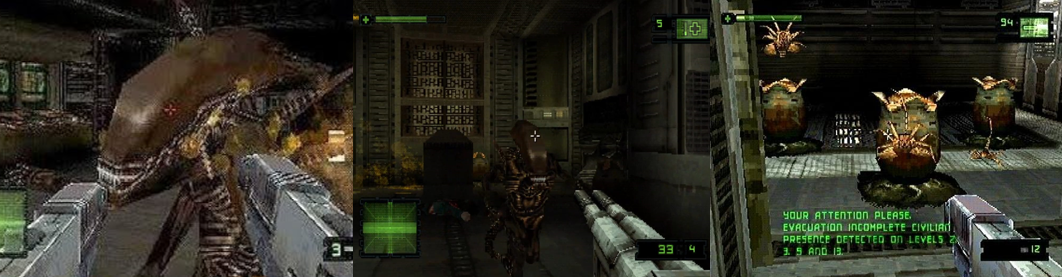
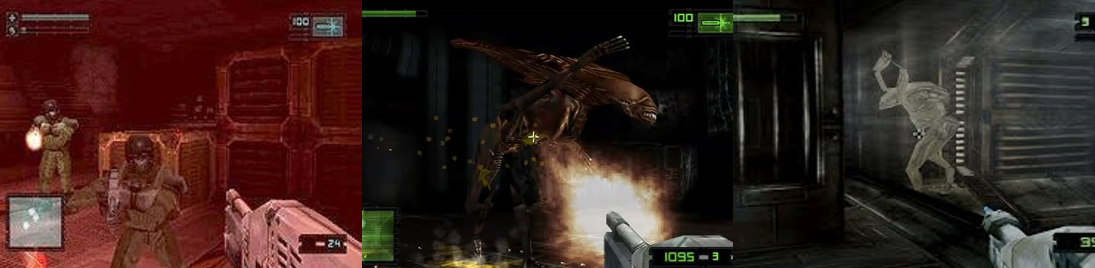
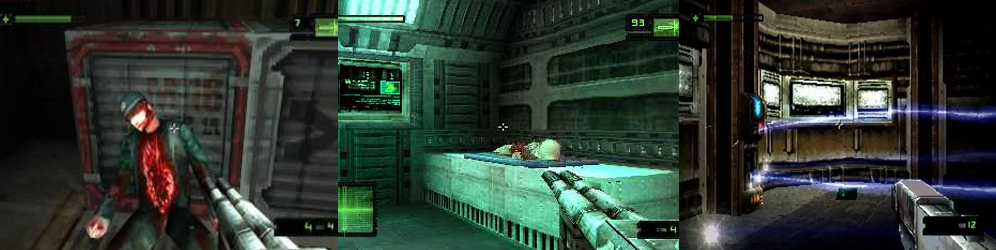





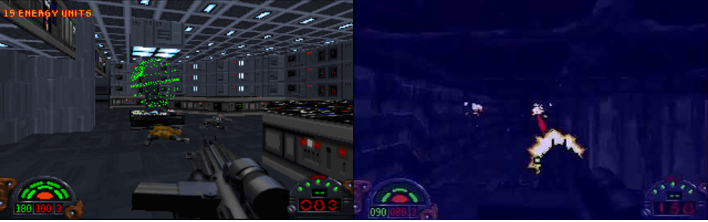
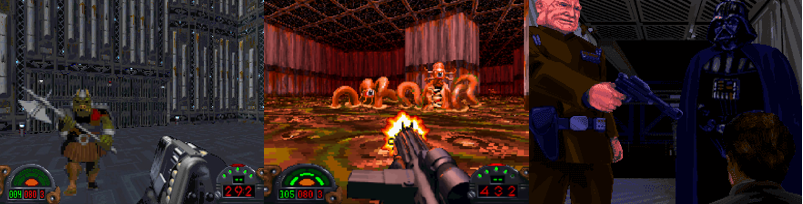
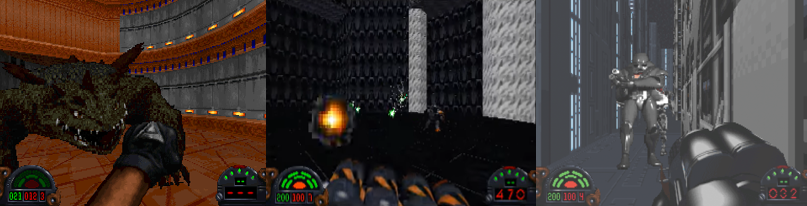





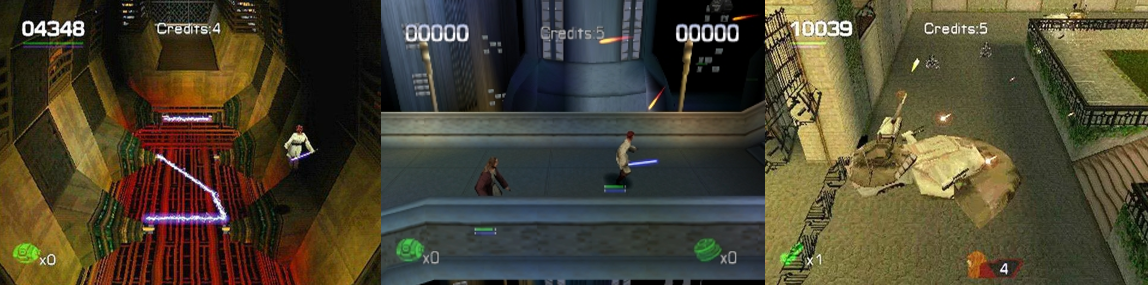


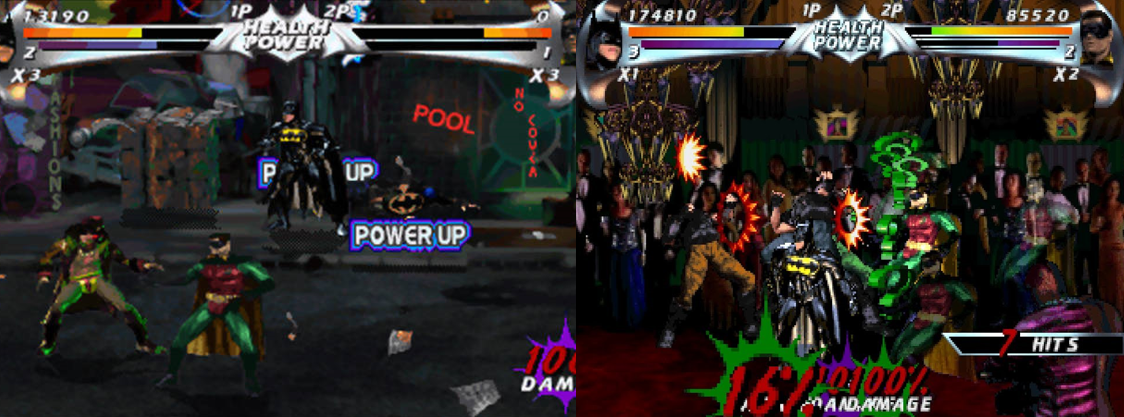
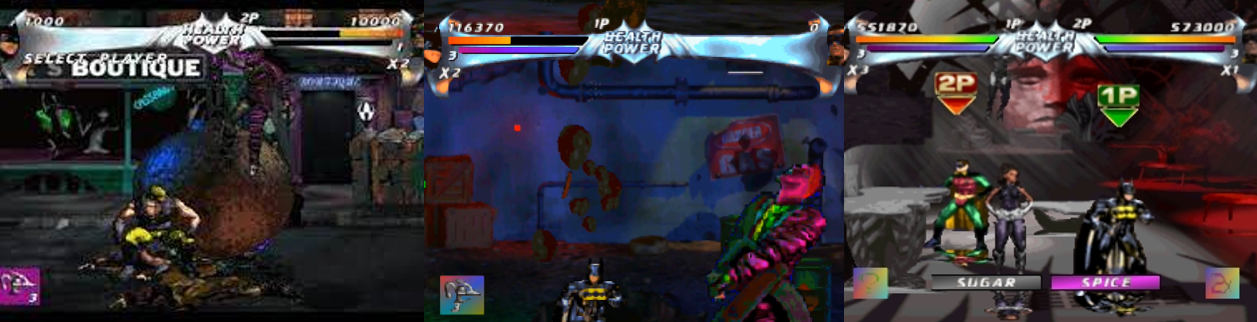



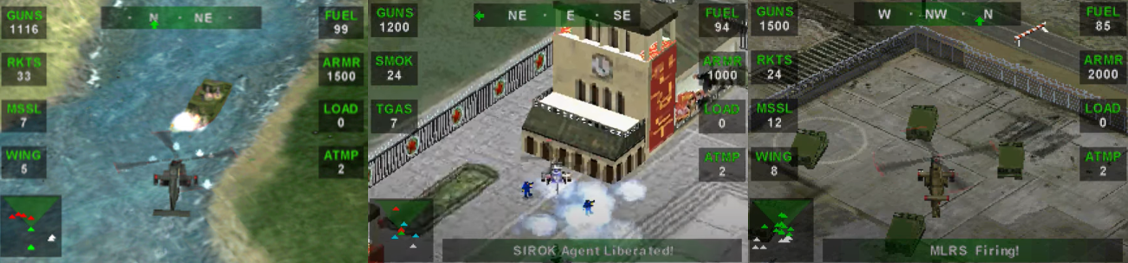
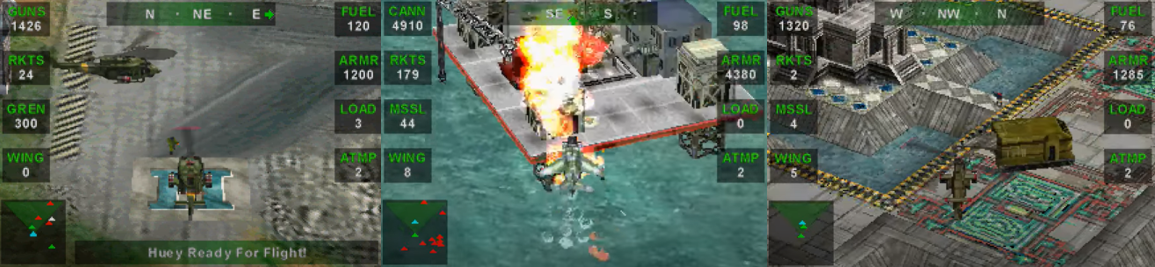

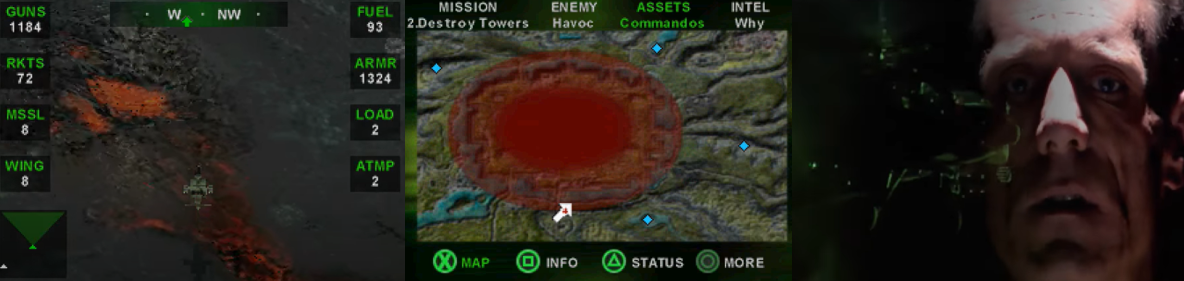
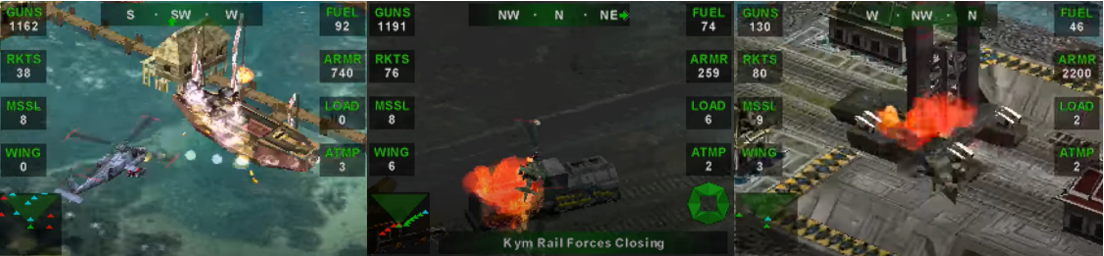



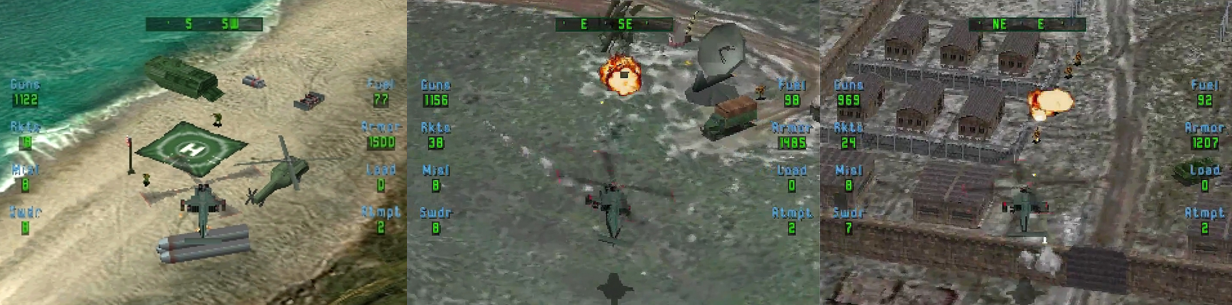
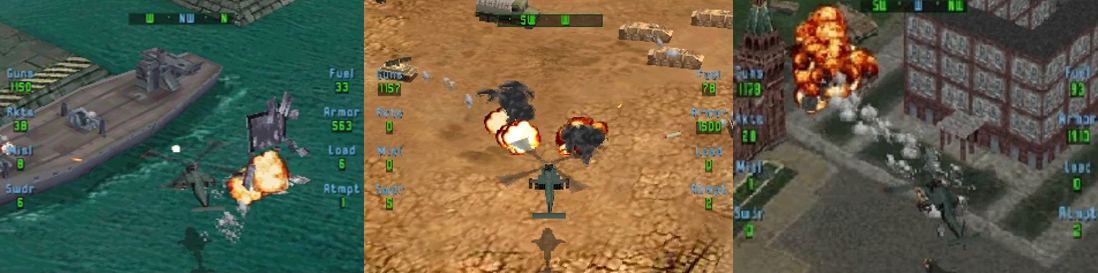
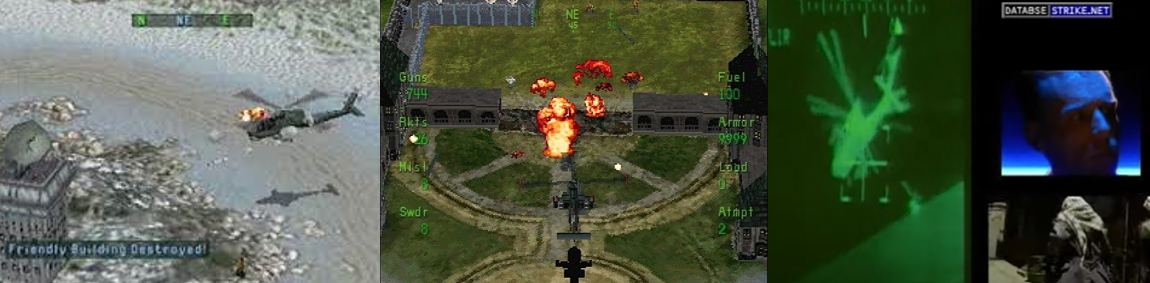
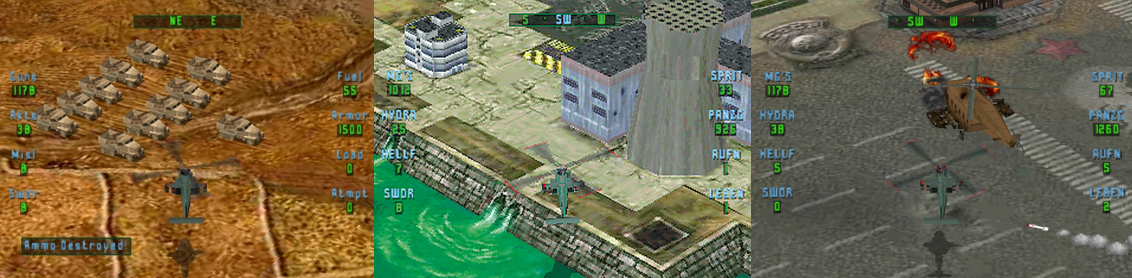








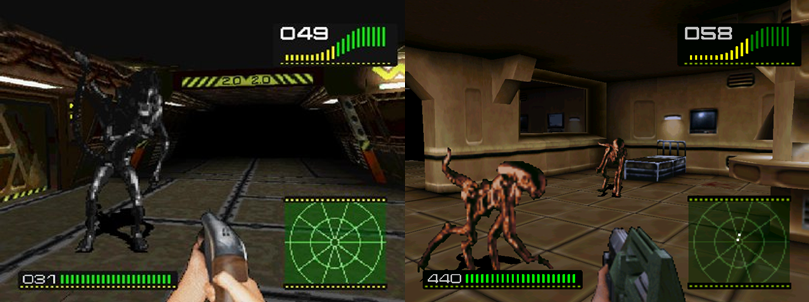
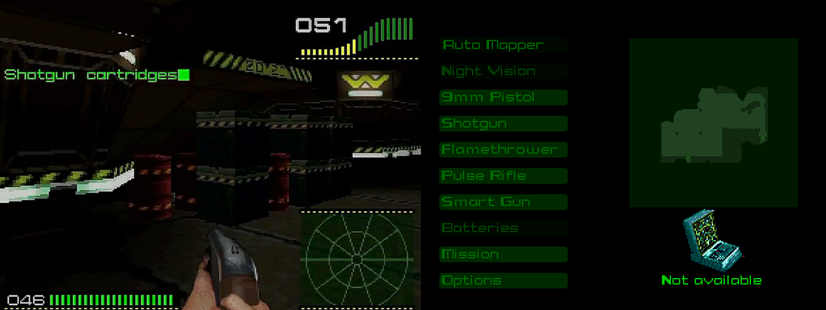
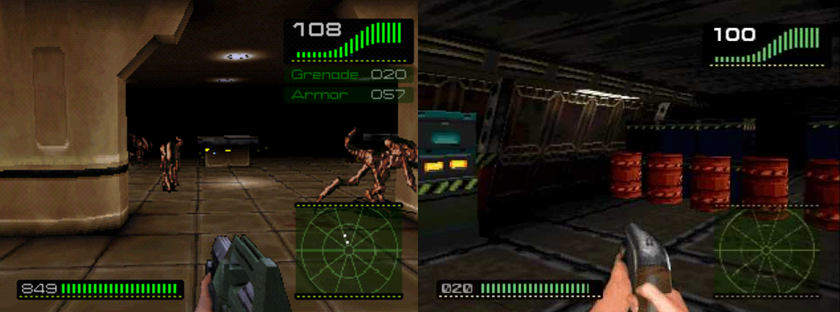
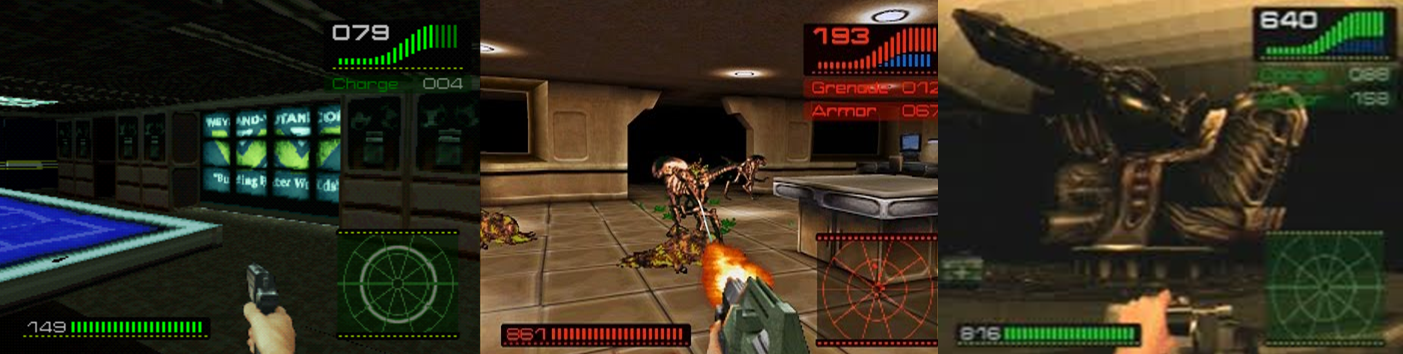
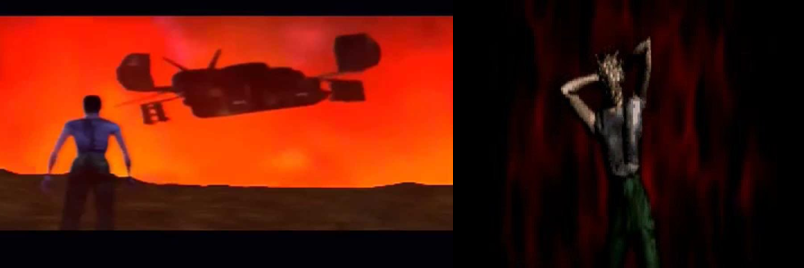


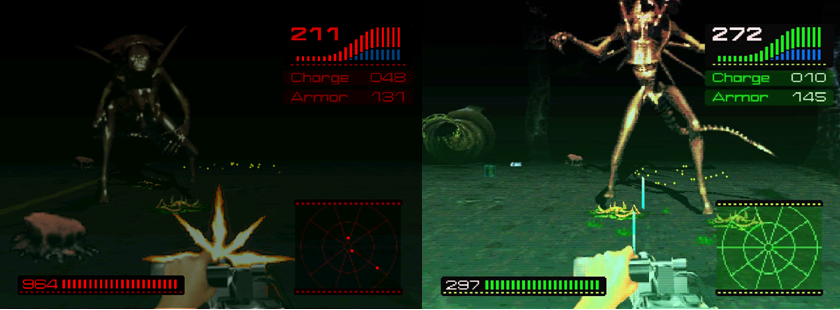
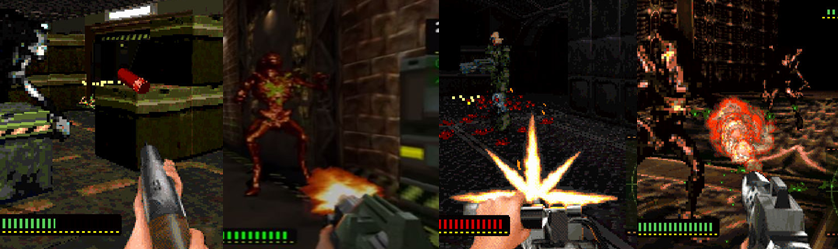


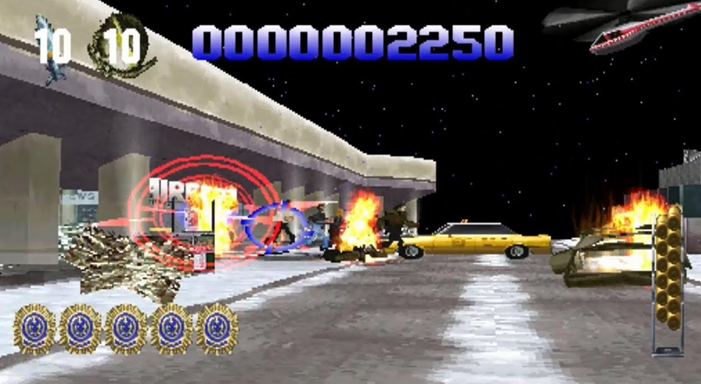
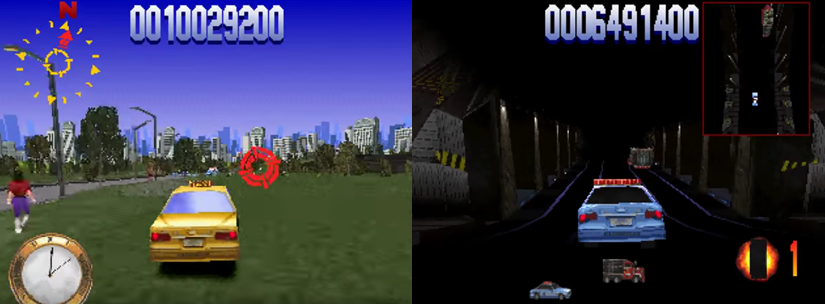
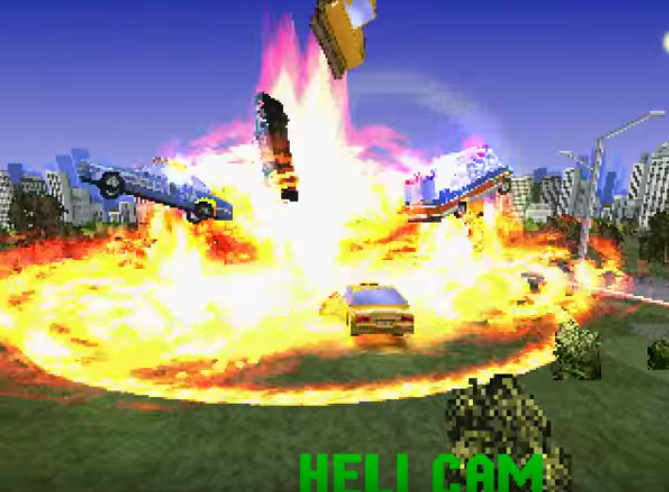


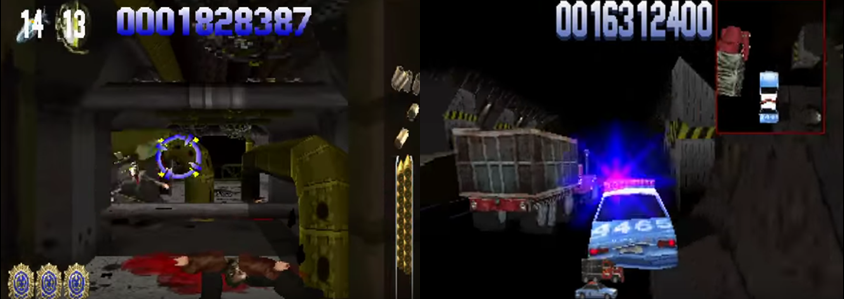



 Dr. K's Waiting Room
You must be logged in to post a comment.