

Released: 7 May 1999
Director: Stephen Sommers
Distributor: Universal Pictures
Budget: $80 million
Stars: Brendan Fraser, Rachel Weisz, Arnold Vosloo, John Hannah, Kevin J. O’Connor, and Oded Fehr
The Plot:
Coerced into leading a team to the fabled “City of the Dead”, Hamunaptra, roguish former Legionnaire Rick O’Connell (Fraser) faces the wrath of cursed, undead priest Imhotep (Vosloo) after they unknowingly disturb his ancient tomb.
The Background:
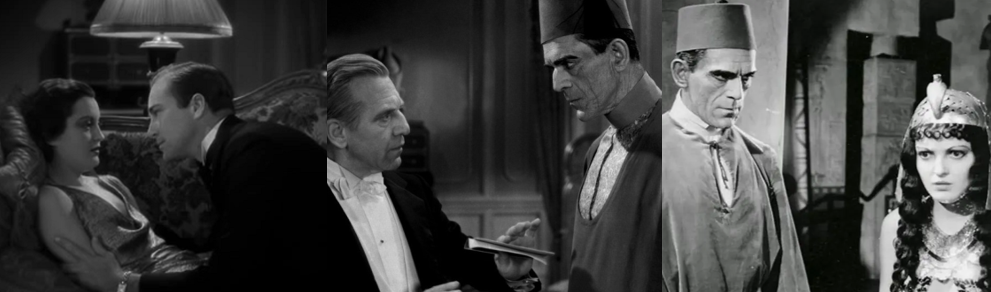
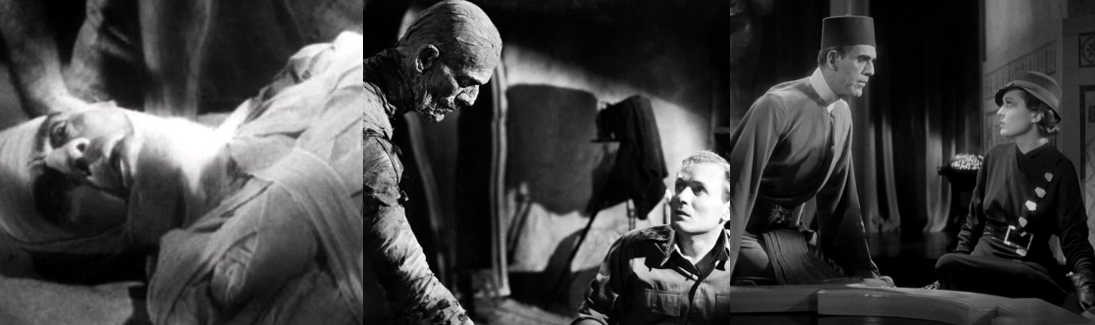
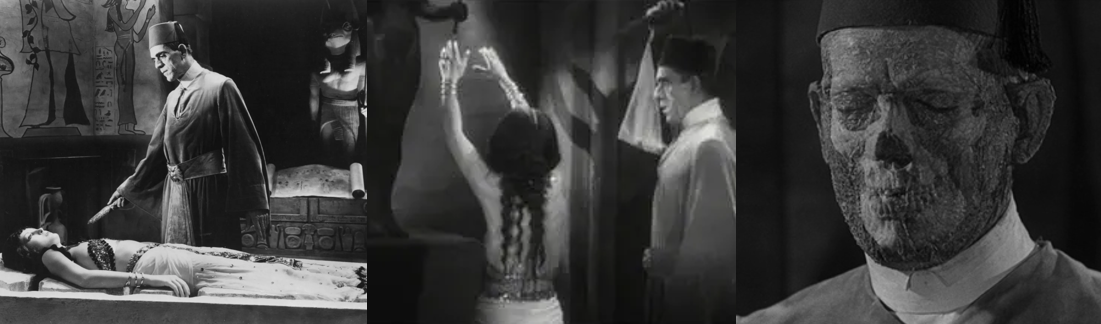
When British archaeologist Howard Carter and his benefactor, Lord Carnarvon, discovered Tutankhamun’s tomb in 1922, they unearthed an elaborate sarcophagus. This inspired producer Carl Laemmle Jr. to task Richard Schayer to produce a Mummy-centric horror movie to go alongside Universal Studios’ previous success with Dracula (Browning, 1931) and Frankenstein (Whale, 1831). The result was The Mummy (Freund, 1932). a modest box office success heralded as a classic of it era. After decades of reinterpretations of this original concept, producers James Jacks and Sean Daniel pitched an updated version in the late-1980s, though Universal only agreed if they kept the budget small. Zombie godfather George Romero and horror maestro Clive Barker were initially attached to the project, which spent some time in Development Hell before the studio agreed to finance a bigger budget period piece and lifelong fan Stephen Sommers came onboard. Reimagining the concept as a romantic-adventure-horror piece inspired by the Indiana Jones trilogy (Spielberg, 1981 to 1989), Sommers cast rising star Brendan Fraser for his swashbuckling allure, while Arnold Vosloo both lost weight and put his theatre background to good use as the tortured Imhotep. While prosthetics were implemented wherever possible, $15 million of the budget was spent on cutting-edge CGI effects, such as painstakingly creating the desiccated Imhotep and an ambitious CGI sandstorm. Though criticised for its historical accuracy, The Mummy’s $818.1 million box office made it an unexpected blockbuster success praised for its action-packed narrative, adventurous spirit, and impressive special effects. Fraser was especially praised and the film was followed by two sequels, an animated spin-off, kickstarted the Rock’s acting career, and is widely regarded as one of the best adventure movies of its era.
The Review:
As this is the story of disgraced High Priest Imhotep, The Mummy opens with a flashback to ages past, narrated by the Medjai warrior later known as Ardeth Bay (Fehr), to show how Imhotep came to be cursed. It seems the horny priest couldn’t keep his hands off Pharaoh Seti I’s (Aharon Ipalé) alluring young bride, Princess Anck-su-namun (Patricia Velásquez), and the two were so besotted that they conspired to murder the pharaoh. The ever-watchful Medjai instantly acted, leading Anck-su-namun to commit suicide, believing her lover would resurrect her with the fabled Book of the Dead (not that one). Unfortunately for Imhotep and his loyal followers, the ceremony was interrupted by the Medjai, who subjected the priest to the worst fate imaginable. He was mummified alive, buried with flesh-eating scarabs, and cursed to exist in a state of limbo, not quite dead or alive. However, this punishment carried a hefty and ridiculous upside, namely that Imhotep would gain incredible supernatural powers if disturbed. He would be a living cataclysm, bringing about the fabled “Ten Plagues of Egypt” (a locust swarm, rivers turning to blood, all that jazz) and herald the end of the world. In hindsight, it seems it would’ve been far easier and less trouble to simply execute Imhotep as the Medjai then spent lifetimes guarding his tomb in Hamunaptra. Hundreds of years later, soldier Rick O’Connell stumbles upon the accursed sight while fighting a losing battle against the Tuareg. This sees Rick’s entire garrison but himself and cowardly opportunist Beni Gabor (Kevin J. O’Connor) wiped out in search of the ancient treasure buried in the long-forgotten “City of the Dead”.
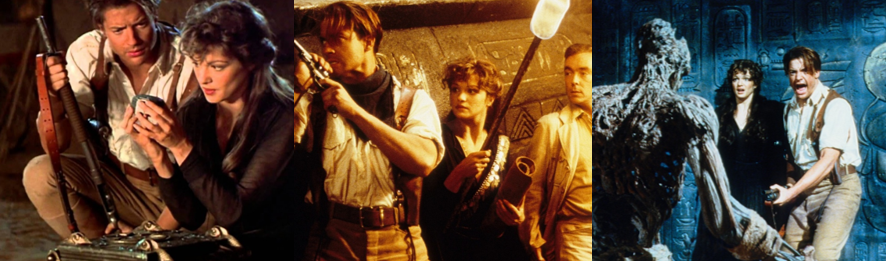
Three years later, Rick (now a dishevelled mercenary) is imprisoned in Cairo and sentenced to be hanged by lecherous warden Gad Hassan (Omid Djalili). Luckily for Rick, he was recently pick-pocketed by unscrupulous Jonathan Carnahan (Hannah) who brings his prize to his bookish, scholarly sister, Evelyn “Evy” Carnahan (Weisz). Though intrigued and baffled by the artefact, Evy immediately recognises that it contains a map to Hamunaptra and eagerly requests to get some much-needed field experience searching for the fabled city, only for her superior, Doctor Terence Bey (Erick Avari), burns a vital part of the map, ostensibly to protect them from running off on a fool’s errand. Undeterred, Evy has Jonathan take her to the man he stole it from and, though aghast by Rick’s boorish nature, successfully barters for his freedom in return for leading an expedition to Hamunaptra. Although Rick has no love for Hamunaptra, he feels he owes Evy a debt and is obviously captivated by her beauty, innocence, and drive to prove that she’s more than a simple clumsy librarian. Evy finds herself constantly daydreaming of the spontaneous kiss she shared with Rick and excited by the adventure, seemingly naïve to any danger, excitedly explaining local legends and superstitions and identifying the best places to dig. While unimpressed by Rick’s impudence, Evy’s nevertheless besotted by him and, honestly who could blame her? Brendan Fraser excels as a gunslinging rogue and is a constant highlight, bringing a wit and determination that makes Rick an easy character to root for. Rick has fantastic chemistry with Evy, who’s essentially the exact opposite of him, and admires her determination, though he’s reluctant to face the danger after Imhotep is unleashed and only does so to keep Evy safe.
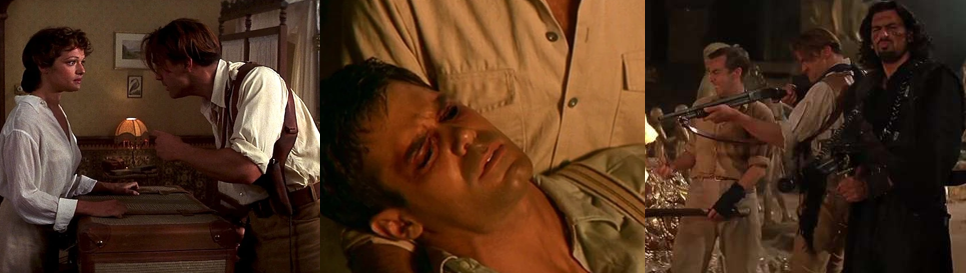
While travelling to Hamunaptra, Rick finds Beni leading some well-funded and well-equipped Americans to the same location. Thanks to Beni being a snivelly little weasel and a constant screw up, Rick successfully leads Evy to Hamunaptra first and the two groups continue to try and one-up each other as they search the site. Thanks to Evy, Rick and the others uncover Imhotep’s long-forgotten tomb, though Egyptologist Doctor Allen Chamberlain (Jonathan Hyde) discovers the Book of the Dead but cannot open it without Evy’s artifact. Knowing this, Evy “borrows” the hefty tomb and reads from it, despite Rick’s objections, unwittingly reawakening an ancient evil. Imhotep’s powers immediately manifest, causing a swarm of locusts to drive both groups into the underground chambers, where Imhotep ruthlessly robs short-sighted Bernard Burns (Tuc Watkins) of his eyes and tongue before being stunned by Evy’s likeness to Anck-su-namun and procuring Benji’s services since he speaks the “language of the slaves”. Both groups are then hounded by the Mummy, who finishes off Burns and similarly absorbs the flesh from Isaac Henderson (Stephen Dunham) and David Daniels (Corey Johnson), quickly regaining confidence and power, much to the horror of the Medjai. Despite attacks by the Medjai and Ardeth’s warnings, the groups persist and struggle to comprehend what they’ve unleashed, though Ardeth eventually joins them in combatting the Mummy despite mortal weapons having little effect on the creature. Even Jonathan, largely lethargic and cowardly, steps up, gunning down Medjai and hiding amongst the brainwashed civilians once Imhotep’s powers increase and proving himself useful in the finale, despite his distinct disadvantages compared to his sister when it comes to reaching ancient hieroglyphics.
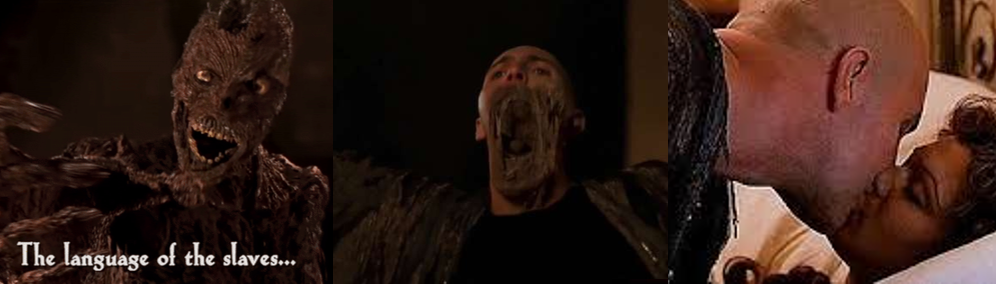
Although Imhotep is motivated by a burning desire to reunite with his beloved, the Mummy is a fearsome and formidable adversary. He seemed to have no interest in world destruction in ancient times but happily calls forth Biblical plagues once resurrected, smiting foes with falling meteorites, siccing his undead loyalists upon those who defy him, and even manifesting a sandstorm to knock Rick from the sky after he drafts drunken, suicidal World War I pilot Captain Winston Havelock (Bernard Fox) to help rescue Evy. Despite initially awakening as a decrepit, desiccated skeleton and fearing cats (the “guardians of the underworld”), Imhotep wields awesome power, easily shrugging off bullets, ripping out organs, and sucking the flesh from his victims with a supernatural scream. Each victim restores more of him, eventually returning the glorious Arnold Vosloo to the screen, where he exudes a quiet, confident menace with a simple glance. Though Beni acts as his translator, Imhotep’s intentions are always clear through his smirk, glare, and body language, to the point where he and Rick understand each other during their tense showdown in Cairo. While it’s not emphasised much as we only see the effects of Imhotep’s actions in the nearby area, it’s stated that Imhotep will destroy the entire world once reunited with Anck-su-namun. However, the primary concern is rescuing Evy before she’s sacrificed to complete Anck-su-namun’s resurrection. Anck-su-namun is Imhotep’s greatest weakness (aside from cats…) as he constantly stops to gaze upon Evy. Evy even uses this to her advantage, kissing Imhotep to dispel his sandstorm, though he has no hesitation in ordering his undead followers to pin her down to be killed so her true love can return.
The Nitty-Gritty:
The Mummy is a great example of a remake done right as it reinterprets the 1932 original as a period-piece adventure film. The basic plot of the original film is here but mainly condensed to the opening sequence and the general threat of an undead mummy trying to resurrect his former love. Comparisons to the Indiana Jones movies are suitable, but not entirely apt. Rick is nothing like Doctor Henry Jones Junior/Indiana Jones except that they’re both rugged, capable heroes. Indeed, Indy’s academic traits are ascribed to Evy (and, to a lesser extent, Jonathan) as Rick’s knowledge comes from experience and hearsay. While the film veers towards horror, it’s noticeable light on gore. When Burns gets his eyes and tongue removed, for example, they’re merely gaping voids in his pained face and it’s always obscured when characters get their flesh melted or devoured. Still, The Mummy doesn’t need to be a gore-fest and is much more enjoyable as a more accessible horror adventure film, and it still has some unsettling visuals. Imhotep’s rotting form is quite disturbing and the flesh-eating scarabs are probably very disturbing for entomophobes. The Mummy also has a great sense of humour, especially in the banter between Rick, Evy, and Jonathan and the depiction of many action scenes. There’s a goofy quality to the mummy fights as their limbs and heads are hacked off and it’s fun seeing Rick’s completely understandable reactions, like screaming in Imhotep’s face, fleeing when his mummified hoards advance, and openly criticising poor decisions like returning to Hamunaptra, reading from the Book of the Dead, and fighting the functionally invincible Imhotep.
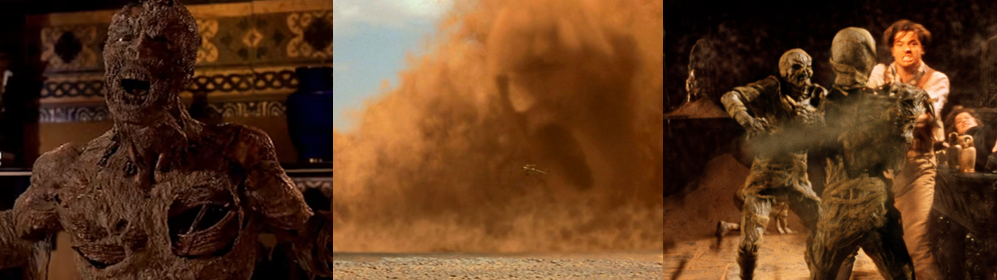
While I have a lot of nostalgia for The Mummy, I’d be lying if the CGI has stood the test of time. At times, it works really well, generally in low lighting or alongside practical effects, and it’s clear that a lot of effort went into rendering Imhotep’s “juicy”, skeletal corpse. However, it can look quite cartoonish, especially when the lighting’s off or he appears in broad daylight, scarabs scuttling under his flesh and his jaw hanging crooked. It was pretty ground-breaking at the time, though, and they’re still impressive shots, they’ve just not aged well. Paradoxically, it’s somewhat disappointing when the alluring Arnold Vosloo returns as a CGI mummy, a big selling point, but he still showcases some supernatural abilities, such as reattaching his severed limb and turning into sand. Surprisingly, these sentient sand effects have held up really well and I love the added detail of Imhotep’s screaming, smirking face in the effect. The plagues also look great, especially the meteor shower and the disgusting boils that appear on Imhotep’s brainwashed slaves, though his mummified cronies are hit or miss. I think the budget was stretched thin by the finale and the filmmakers were a tad ambitious in bringing a dozen or so mummies to the screen. This is best evidenced when you compare Imhotep’s followers to Anck-su-namun, who looks much better (and creepier) for being a practical effect. There are some fun gunfights though, with Rick impressing with his dual pistols, constant supply of firearms, and adaptability as he wards off the Medjai and waves Evy’s cat at Imhotep. The sets are also impressive, ominous recreations of Egyptian tombs and catacombs to really give a sense of foreboding when the characters are stumbling around in the dark.
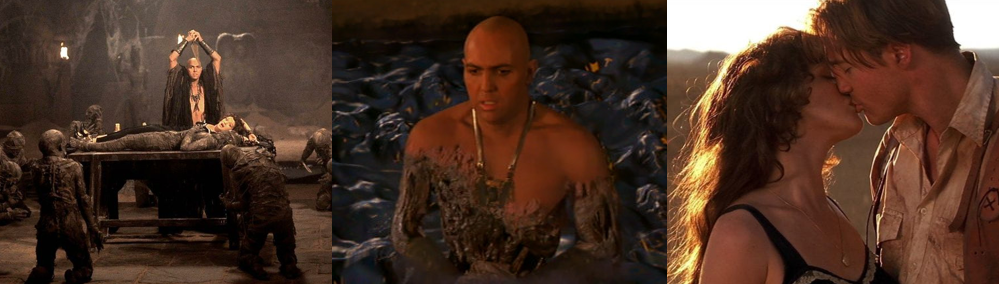
Having hunted down the Americans, Imhotep reaches full power, recovering the Book of the Dead and kidnapping Evy so she can be sacrificed at Hamunaptra. Determined to rescue her and stop the Mummy using the fabled Book of Amum-ra, Rick drafts Jonathan, Winston, and Ardeth into helping him and successfully braves Imhotep’s storm (with some quick thinking from Evy), though Winston is lost in the crash. Since Imhotep needs time to read the incantations and return Anck-su-namun from the underworld, he conjures his mummified acolytes for a fun action sequence where Rick hacks at some mummies and Ardeth blasts them with a machine gun. After retrieved the Book of Amum-ra, Jonathan uses it to distract Imhotep, allowing Rick to free Evy, though she’s attacked by the wretched, undead corpse of Anck-su-namun as Imhotep’s soldiers prepare to finish Rick. Thanks to Evy, Jonathan gains control of Imhotep’s minions, ordering them to hack Anck-su-namun to pieces, much to Imhotep’s rage. He takes his anger out on Rick, manhandling him and preparing to throttle him, only for Evy and Jonathan to read a second incantation that sees Anubis strip Imhotep’s powers. Undeterred, Imhotep prepares to finish his foes off, only to stupidly walk right into Rick’s sword. Startled, Imhotep stumbles into a pool of tar-like liquid, where wailing spirits rapidly decompose him (though he does manage ominously state, “Death… is only the beginning.”) Though victorious, Rick and the others are forced to flee when Beni, who decided to ransack the temple, accidentally triggers a boobytrap. Despite all his flaws and misdeeds, Rick makes a valiant effort to save Beni, but he gets distracted by his haul and left behind with the scarabs. Still, our heroes escape, earning Ardeth’s gratitude, and they ride off with a haul of riches and Rick and Evy finally sharing a passionate and consensual kiss.
The Summary:
While I generally prefer the sequel, The Mummy still holds up really well. Considering how much I disliked the original film and how awful the later reboot was, this is a fun action/adventure with a lot of heart and humour mixed with some light horror elements and thrilling action. Brendan Fraser excels as roguish gunslinger Rick O’Connell, who is immediately likeable and extremely capable while still flawed and vulnerable. I loved how he was so smitten by Evy that it occasionally rattled his confidence, and how he threw himself into every situation regardless of how sceptical he was. His banter with Evy and Jonathan was a constant highlight and he’s honestly a joy to watch, as is the disgustingly beautiful Rachel Weisz, who perfectly embodies this meek but feisty academic who eventually finds the courage to speak her mind. Jonathan was a great counterbalance to them both and I was always intrigued by the mystery surrounding Ardeth Bay, who really should’ve gotten a spin-off. Arnold Vosloo makes for a deliciously menacing villain, yet one who’s still quite tragic and sympathetic since he’s motivated by love and cursed to be a horrific creature. Although I stand by my criticism of the CGI, The Mummy still boasts some impressive special effects that largely hold up and the desiccated mummy design is very well done. I liked how the film expertly balanced its accessible horror with more action-orientated elements and kept the stakes grounded, but with the suggestion that the world was also at stake. In the end, The Mummy is still a fantastic film that far surpasses the original and has stood the test of time as a hugely enjoyable romp with some memorable characters, fun action, and impressive (if, let’s be honest, dated) special effects.
My Rating:
Great Stuff
Did you enjoy this action-orientated remake of The Mummy? Did you enjoy Brendan Fraser’s performance as the roguish Rick? Do you agree that the CGI effects haven’t aged too well or do you think they still hold up? Did you like the blossoming romance between Rick and Evy or did you find it a bit nauseating? Why do you think Imhotep wasn’t simply executed? Would you read from the Book of the Dead? Which of Mummy trilogy is your favourite and how are you celebrating Halloween this year? Let’s see your thoughts on The Mummy below, then read some of my other horror reviews and donate to my Ko-Fi for more Mummy content.


 Dr. K's Waiting Room
You must be logged in to post a comment.