Movie Night: Predator

Released: 12 June 1984
Director: John McTiernan
Distributor: 20th Century Fox
Budget: $15 to 18 million
Stars: Arnold Schwarzenegger, Carl Weathers, Bill Duke, Jesse Ventura, Sonny Landham, Shane Black, Richard Chaves, and Kevin Peter Hall

The Plot:
Major Alan “Dutch” Schafer (Schwarzenegger) and his crack rescue team are recruited by Dillon (Weathers), an old friend turned government operative, to rescue an important group of hostages from guerrilla forces in a Central American jungle. However, they soon find themselves being picked off one at a time by a mysterious extraterrestrial hunter (Hall) who kills for sport.

The Background:
After the release of Rocky IV (Stallone, 1985) there was a joke circulating around Hollywood that Rocky Balboa (Sylvester Stallone) had run out of earthly opponents and would have to fight an alien next time around. Writers Jim and John Thomas took this concept and expanded it into a screenplay initially titled Hunter that, after being bought by 20th Century Fox and placed into the hands of producer Joel Silver, was transformed from a pulp sci-fi tale into a big-budget action vehicle. Initially, the then-relatively-unknown Jean-Claude Van Damme was cast as the titular alien creature, which was originally conceived of as a more agile and bug-like monster; however, after Van Damme bowed out after issues with the original suit, the creature was redesigned by special effects legend Stan Winston (with some input from director James Cameron) to accommodate a new actor, the monolithic Kevin Peter Hall. Filming was rough for the cast and crew, many of whom became ill from food poisoning and the intense heat, and the lead actors (all big, beefy boys in their own right) became obsessed with working out and appearing in peak physical condition. Upon release, Predator was met with largely negative reviews; despite this, the film made nearly $100 million at the box office and quickly became a cult classic that is now regarded far more favourably. Of course, it also spawned an under-rated sequel and marked the beginning of a multimedia franchise that includes further sequels, videogames, and comic books. There were even crossovers with 20th Century Fox’s other sci-fi/horror franchise, the Alien saga (Various, 1979 to 2017), and a fan movement to declare June 12th as “Predator Day”; although this clashes with “Superman Day”, any excuse to revisit this franchise is a win for me.

The Review:
I know how it sounds but let’s not beat around the bush here: Predator is as much a man’s film as you can get! I say that having known plenty of girls who enjoy the film, and the franchise, but come on now, this is a film made for a very specific type of audience at a very specific time when films such as this were popular and the fact that it is so unapologetically hyper-masculine really plays into its strengths as an enjoyable sci-fi/action/horror romp that can be appreciated by anyone and everyone, regardless of gender identification. Right off the bat, Predator isn’t pulling any punches: first, we get the blatant shot of an alien craft shooting a capsule to Earth, then the manliest team of men who ever menned disembark a helicopter while Alan Silvestri’s fantastic, iconic score plays, and, finally, we get perhaps the single greatest interaction between two characters ever put to film as Dutch and Dillon reunite with the world’s most powerful handshake! The excess and testosterone is practically oozing out of the film at every moment but, perhaps, none more so than in these first ten minutes or so where we learn all we need to know about Dutch and his team: They’re the best at what they do but have certain principals, seeing themselves as “a rescue team, not assassins” and being suspicious of outsiders joining their party.
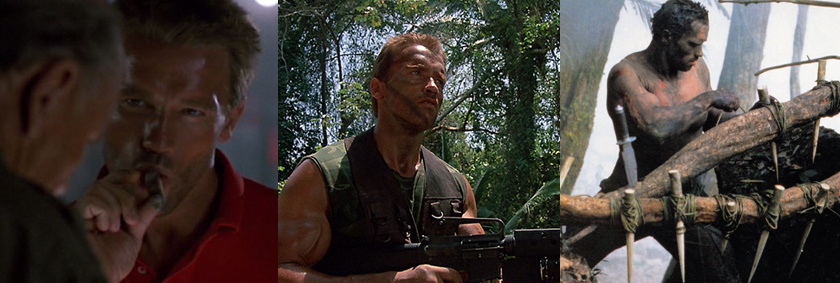
Predator showcased many different sides of Arnold’s range and charisma.

Though one of Arnold’s early roles, Dutch is a fantastic part for the Austrian Oak; rather than being a stoic and silent character, Dutch is confident and instantly likeable, with a playful sense of humour and camaraderie with this teammates. However, when on mission, Dutch is all business, exhibiting a keen sense of his surroundings, comprehensive knowledge of guerrilla tactics and survivalist skills, and a natural ability to adapt to any and all situations. We first see this when he provides a distraction by sending a truck careening into the guerrilla camp and, later, when he sets traps for the Predator and learns how to use mud to camouflage himself and put together a proactive plan to bring the fight to the alien hunter. Of course, while Dutch is a physically capable mountain of a man, he’s no one man army (well…he is but he’s part of a team so I have to talk about his team…); while you can make the argument that Predator’s characters are all largely interchangeable, with the majority of them being heavily-muscled, snarky brutes who attack with a cold, clinical efficiency, each of them has many opportunities to stand out and be a little more than a one-dimensional caricature despite the fact that we really know and learn next to nothing about them.
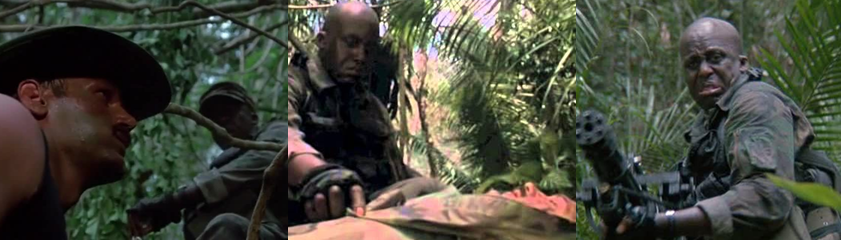
Mac is distraught and driven to mindless vengeance when his friend is killed.

Hawkins (Black), for example, is the awkward bookworm type, one of only two members of the team to sport a more slender physique, whose “thing” (beyond his ridiculous glasses) is trying to get Billy (Landham) to laugh with so-bad-they’re-good Dad jokes. Billy, in comparison, is the strong, silent type; introspective, with an aptitude for tracking, he is the first of the group to really sense that something otherworldly is afoot in the jungle. Superstitious and an appropriation of the Native American spiritualist, Billy believes that a spirit or some cursed demon is stalking the group yet, while he doesn’t rate their chances of survival, he never gives in to despair and is the first of team to confront the Predator head-on in single combat…with results so disastrous that they’re not seen onscreen. Easily the most amusing and memorable character, beyond Dutch and Dillon, is Blaine (Ventura), a gigantic, musclebound soldier who exudes a macho charm that is both endearing and entertaining. Oh, and, he’s also got a fuckin’ galting gun that he uses to mow down guerrillas with reckless abandon and shrugs off bullet wounds like they’re nothing! Blaine also stands out through his love of chewy tobacco, some fantastically memorable one-liners (his “sexual Tyrannosaurs” line is a personal favourite but who can forget “I ain’t got time to bleed!”, perhaps the most unforgettable line of the film) and his brotherly relationship with Mac (Duke). Mac’s “thing” is the little razor he uses to constantly shave sweat from his face and his friendship with Blaine; he’s the only one to refer to one of his team mates as a friend and he’s deeply affected by Blaine’s violent death. Mac is also the only one of the team to really crack under the pressure of the Predator’s assault; grief-stricken and hungry for revenge, he blindly rushes into the jungle to pursue the creature and tries to make good on his promise to avenge his fallen comrade. Of course, he is unsuccessful, mainly because he is so emotionally distraught that, despite being the first to really “see” the camouflaged Predator, he’s unable to think rationally enough to get the upper hand on the alien.
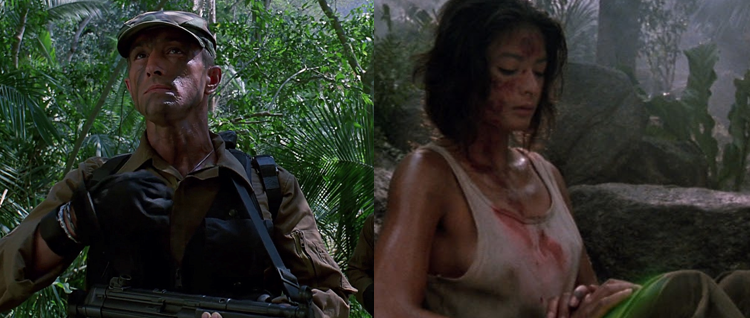
Poncho and Anna help flesh out the team and the world but are largely insignificant.

Perhaps the most underwhelming and easily forgotten member of the team is Poncho (Chaves); in fact, Poncho is so inconsequential that I’m also surprised that he manages to outlive Hawkins, who appears the least physically capable of the group. Poncho, instead, does very little beyond asking rhetorical questions, taking a log to the gut, and ultimately being killed by an unceremonious plasma blast to the head when the last few survivors are trying to escape. The team is also joined by Anna (Elpidia Carrillo), the last remaining hostage from the guerrilla camp; like Billy, she’s a quiet, superstitious, and perceptive character who believes that a devil is stalking them, having heard stories of similar events happening in the past. She adds very little to the team beyond being a hinderance and to add an extra layer of dread to the proceedings, especially when the Predator is still being hidden from view and is a mysterious presence, but she’s largely inoffensive. Best of all, there’s no awkward romantic subplot between her and Dutch; he orders her to “Get to dah choppah!!” the first chance he gets and is left to fend for himself, with no sexual distractions or damsels to rescue.
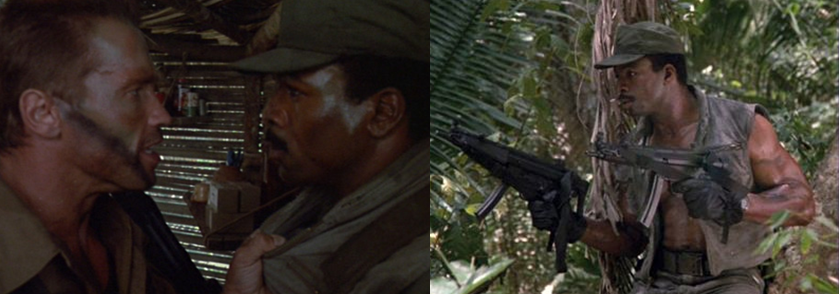
Dillon’s presence causes tension and his downfall comes from his wounded pride.

The wild card to the team is, of course, Dillon; numerous vague hints and references are made towards Dillon’s past and friendship with Dutch but, even with that in mind, Dutch is immediately suspicious of the mission when he is ordered to take Dillion, now a CIA operative, along with him. The rest of the team, particularly Mac, don’t care much for Dillon’s presence, seeing him as a liability to their operation, and these suspicions turn out to be well founded when it’s revealed that the team was drafted in to take out a group of terrorists rather than rescue hostages. This causes tensions within the group, who are already on edge thanks to the mysterious killer picking them off, but they are nevertheless forced to work together to try and corner the Predator. Dillon is the only one of the team that is unwilling to believe in a supernatural or extraterrestrial threat stalking them from the trees but, when the Predator is exposed, he willingly joins Mac in attempting to extract a measure of revenge against the alien for all the death and trouble it has caused him. For Dillon, it’s pride that causes his downfall; had he stayed with Dutch, he may have been in with a chance of surviving but, in the end, he’s dismembered and skewered with an effortless efficiency.
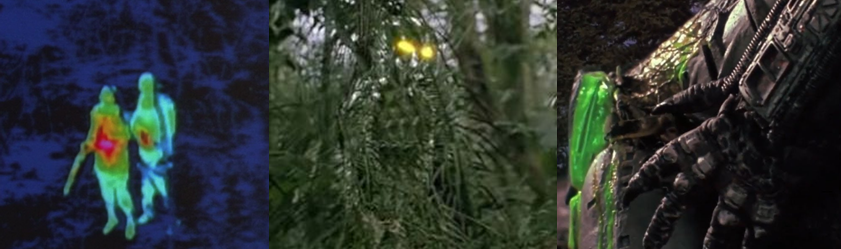
The Predator is initially kept well hidden and vague for maximum tension.

It is, perhaps unsurprisingly, the titular Predator who brings the most appeal and distinctiveness to the film; although we know that an alien presence is clearly stalking the team, we don’t get out first real look at it for a good hour or so and, even then, it’s a fleeting shot. Instead, we see through the Predator’s unique and costly thermal vision, watching as it pursues and observes its prey from the treetops and attempts to mimic their speech (a haunting feature, to be sure). When the Predator does appear, it’s little more than a pair of luminous glowing eyes and a vague, distorted shape and, despite almost the entire film taking place during the day, the creature is kept well hidden. We see glimpses of its blade, spend a lot of time watching its arms, legs, and torso as it ritualistically cleans up its gruesome trophies, and only get a good, lingering look at the creature when it follows Dutch into the water and its cloaking device is disrupted. The result is one of the most iconic alien designs of all time; rather than the bug-like creature that was the Predator’s original design or the animalistic nature of the Xenomorph, the Predator is a humanoid being made up of two arms, two legs, and sporting an impressive frame and physique. Garbed in light armour and sporting a vast array of weaponry (that ranges from low-tech but incredibly lethal wrist-mounted blades to the creature’s iconic plasma cannon), the Predator is instantly recognisable thanks, in large part, to its helmet and dreadlocks but also because of its monstrous crab-like visage and mandibles.

The Nitty-Gritty:
Take away the alien and Predator would be a largely forgettable, by-the-numbers action film about a troupe of crack soldiers fighting terrorists. The Predator, though, takes that concept and the film’s various clichés and completely flips them on their head; as soon as we first see the Predator’s thermal vision, and definitely after Hawkins’ brutally swift death, the film becomes something entirely different from a hyper-masculine action film. It transforms before your eyes into a survival/horror film against an alien presence that is far beyond that of man, changing from a routine mission to defend America’s freedoms to one about man’s battle for survival.
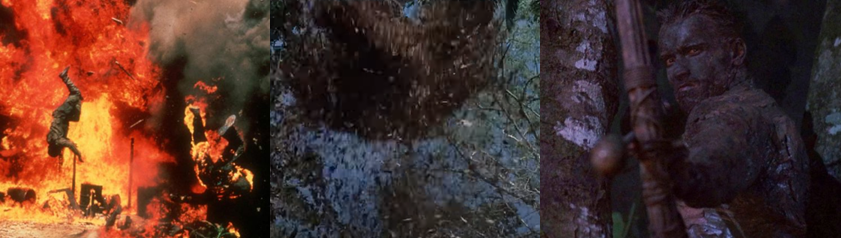
The film evolves from bombastic action to one man’s primal battle for survival.

Before we get to the point, it’s important to make mention of the wide variety of action scenes on offer in Predator: the film starts off relatively simple, with Dutch and his team gunning down the entire guerrilla camp with a clinical efficiency and a bevvy of one-liners, before escalating into a paranoid firefight into the dense jungle in a desperate attempt to kill whatever is responsible for the deaths of their team mates. When it becomes apparent that they’re facing something beyond their understanding, Dutch leads the survivors in setting up a series of low-tech traps, using survival tactics to create a perimeter to ensnare the creature so that they can get a clear shot at it. Though Dillon is sceptical, he helps with this task regardless and it works…until the full extent of the Predator’s capabilities quickly render all their planning mute. Dutch, however, continues to employ these same tactics out of desperation and necessity more than anything else when he’s left the sole survivor; he loses his gun and is left with only a handful of shells and melee weapons with which to make his final stand. He does this through simple guerrilla strategies, using mud to mask his heat signature after a close call with the Predator and then fashioning a bow, a series of explosive arrows, and a number of deadly traps with which to enact his last, desperate stand against the creature. In this sequence, the film’s title takes on a double meaning as Dutch becomes both predator and prey, turning the Predator’s weapons and technology against it to draw it out into the open for a more even fight.
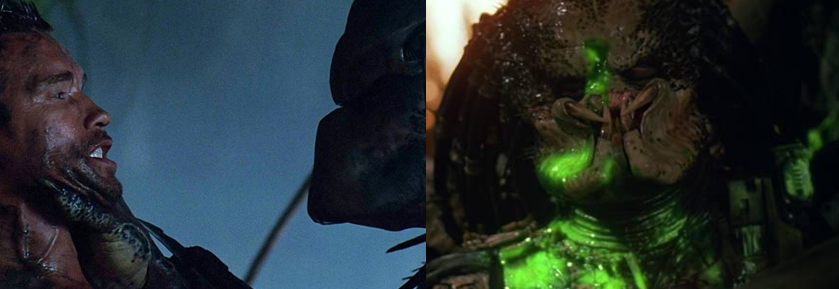
Despite the Predator’s superior strength, Dutch triumphs through his wiles.

While the sequels and extended media would, of course, greatly expand upon the Predator’s society and culture, there’s enough evidence towards the race’s ethos in this first movie: the Predator only attacks those who are armed and that it deems worthy prey (with the exception of Hawkins and Poncho, who were largely defenceless…), methodically stalks its victims from afar to ascertain their strengths and weaknesses, and makes trophies out of the skulls of those it kills. With its cloaking device compromised and faced with an enduring, persistent, and adaptable foe, the Predator chooses to ditch its signature plasma cannon to engage Dutch in a one-on-one fight, even hampering its vision by removing its helmet. Of course, the fight is anything but fair since the Predator is inhumanly strong; I watched a lot (basically all) of Arnold’s films as a kid and it was massively impressive to see a foe not only tower over him but also lift him up by one hand and beat him to near death. In the end, of course, Dutch is able to outsmart the Predator and lure it into a fatal trap; mortally wounded and defeated, the Predator chooses to activate a devesting self-destruct device in an attempt to take Dutch with it but, just as Dutch casually shrugged off a plasma blast early, no small-scale nuclear blast is enough to put down Arnold and he manages to outrun and avoid the blast but is left clearly affected, traumatised even, by his encounter with the creature and the Predator’s systematic slaughter of his friends and comrades.
The Summary:
To me, Predator will always be a near-peerless classic; everything about the film, from start to finish, is so gloriously over the top and entertaining that it never fails to be an enjoyable sci-fi/horror romp. Endlessly quotable and immensely fun, Predator is a fantastic film to throw on with a group of friends with some pizza and a few drinks and just have an unapologetic good time. I regard Predator as one of Arnold’s best films since it was a role with some real meat to it that really showcased his charisma and what he was capable of as a subtly complex action hero: Dutch isn’t just some muscle-bound meathead; he’s intelligent, experienced, and highly adaptable while also being charismatic, well-respected, and tough as nails at the same time. The film is full of testosterone and ridiculously macho characters yet, despite this, they’re all really endearing and likeable; there’s a real sense of camaraderie amongst the team, who all work together as a unit, and even the tension and suspicion regarding Dillon is largely a non-factor in the face of their struggle against a greater, common enemy. The titular Predator is a fantastically unique creature; here, it and its culture are, largely, a mystery and a lot of what we learn about it comes from inference and speculation, all of which adds to the otherworldly nature and appeal of the alien, to say nothing of its horrific appearance and impressive weaponry and physical skill, and I will always have time for Predator and the Predator concept because of this.

My Rating:

Rating: 5 out of 5.

Fantastic

So, tell me, what did you think to Predator? Did you see the film in the cinema back when it first came out and, if so, what did you think of it at the time and how do you think it holds up today? Which of the film’s characters did you like the most, or the least, and why and did you enjoy the film’s excessive machismo? What did you think to the Predator and its design and weaponry and how differently do you think the film would have turned out if Van Damme had remained in the role? Which of the Predator sequels and merchandise was your favourite and did you celebrate Predator Day this year? If you’re a girl and you enjoy Predator and over-the-top action films, chime in with your thoughts about how any one can enjoy these films but, either way, do please leave a comment below sharing your thoughts and opinions on Predator.

Movie Night [Ghostbusters Day]: Ghostbusters (1984)


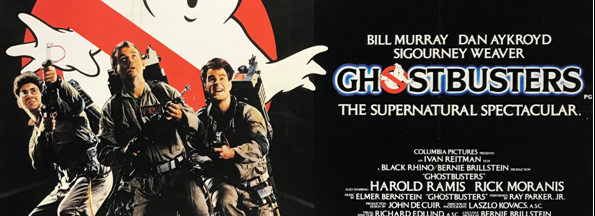
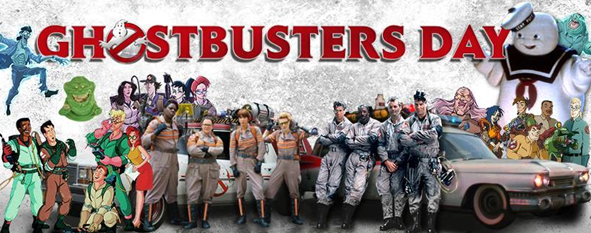
Throw on your proton pack and get ready to bust some ghosts because June 8th is, officially, “Ghostbusters Day”! Ghostbusters (Reitman, 1984) was first released on this day back in 1984 and, since then, has become a major pop culture franchise that includes comic books, a popular cartoon and line of action figures, and videogames and it is, easily, one of my favourite films and franchises from that era.


Released: 8 June 1984
Director: Ivan Reitman
Distributor: Columbia Pictures
Budget: $25 to 30 million
Stars: Dan Aykroyd, Bill Murray, Harold Ramis, Ernie Hudson, Sigourney Weaver, Rick Moranis, Annie Potts, and William Atherton

The Plot:
After being fired from Columbia University, four bungling scientists put their research into the paranormal to use as supernatural exterminators of ghosts and ghouls across New York City. However, while a government official attempts to prove them frauds and shut them down, they soon discover that an ancient God of Destruction is gearing up to wreck havoc across the city…and the world!

The Background:
Ghostbusters was the brainchild of actor Dan Aykroyd, who originally wrote the script (which also went through a number of slightly different titles) as a vehicle for himself, Eddie Murphy, and close friend John Belushi before the latter’s untimely passing. After Aykroyd settled on Ivan Reitman as the director, Reitman brought Harold Ramis onboard to star and rework the script into something they could realistically film, with the group casting Bill Murray soon after and specifically tailoring the script to the three actors’ strengths, characteristics, and ironing out the special effects sequences. Despite concerns from Reitman regarding the film’s ridiculous finale, Ghostbusters tracked well with test audiences and, upon release, finished as the number one movie for the weekend and made nearly $230 million by the end of its release, an incredible achievement considering the comparatively minuscule budget. A subsequent re-release in 1985 saw the worldwide gross hit nearly $240 million and established Ghostbusters as the most successful comedy of the 1980s. Reviews were, accordingly, extremely positive, with the film winning many awards and launching a multimedia enterprise that included an under-rated sequel, a cartoon, loads of toys, and later film projects.

The Review:
Ghostbusters is a brisk, well-paced horror/comedy that immediately establishes its semi-realistic world right from the beginning before introducing us to our three main characters. The first of the Ghostbusters we meet is Doctor Peter Venkman (Murray), a lackadaisical scientist to say the least who uses his research as an excuse to get out of doing any real work and to try and impress women. He’s the sarcastic, cynical, loud-mouthed member of the team and, as Dana Barratt (Weaver) points out, is more of a con man than an actual scientist. At the same time, though, he’s the most socially conscious and capable of his fellow scientists, being much more street smart and handling a lot of the Ghostbusters’ press and advertising. Of course, you can make the case that Venkman is little more than a womanising, egotistic prick; a creep who literally chases every pretty face he sees and who has, despite his many legitimate degrees, literally no idea of what he’s doing or how to work his equipment. He is, as his former dean states, “A poor scientist” and, as Dana astutely observes, more like a gameshow host than a paranormal expert. Still, despite my dislike for Murray and his attitude towards the franchise after the sequel, it’s hard to deny that Venkman is the breakout character of the group thanks to his greedy, outspoken, snarky personality; where the other Ghostbusters maintain a degree of professionalism and awkwardness, Venkman is loud, arrogant, and ballsy and the most candid of the group.

The Ghostbusters are goofy and making it up as they go along but rarely portrayed as incompetent.

Doctor Ray Stanz (Akyroyd), meanwhile, is the overly enthusiastic heart of the group; without Ray, there would be no Ghostbusters since he’s the one who really drives their research and cause forward. Ray, however, is quite naïve and easily distracted by his passion for the paranormal; he is crushed when they are kicked out of the university but extremely excited to be putting their research into practise as the Ghostbusters and remains, despite the often dire nature of their situation, the general optimist. It is fitting, then, that since Ray is the heart of the Ghostbusters, it’s Ray who ultimately (accidentally) causes the Ghostbusters to face their ultimate threat as he’s unable to clear his mind when they’re forced to “choose the form of the Destructor”. Even knowing this, Ray attempts to think of the most harmless thing possible, a cherished memory from his childhood, and instead causes a hundred-foot-tall marshmallow man to rampage through downtown New York. Doctor Egon Spengler (Ramis), meanwhile, is the pragmatist of the three; he’s the most clearly intellectual and rational of the Ghostbusters, rarely letting his emotions rule him, but he’s not just a mere stick in the mud. He is as excited as Ray about the presence of ghosts and the potential their organisation has and has many more subtle moments where he really shines, such as his love for Twinkies, snappy one-liners (“I looked at the trap, Ray!” and his cry of “Your mother!” always gets a chuckle out me me), and his sly indications to Venkman to up the charge for their services to the Sedgewick Hotel’s manager.

Dana expertly rebukes Peter and Louis’s advances but appears to be a conduit for the supernatural.

The Ghostbusters are (eventually) rounded out by Winston Zeddemore (Hudson); if you forgot about Winston, I wouldn’t blame you since Hudson’s name and image is missing from practically all of the film’s promotional materials and that’s a real shame since he’s my second favourite character after Ray. Winston isn’t a scientist; he’s just a normal, everyday working man who joins the team when they expand their operation and, through him, we get a relatable character who voices many of the concerns and questions we may have with an entertaining bluntness. Winston also brings  a unique perspective to the group by being a religious man; he approaches their work not from a scientific perspective but as that of a man exorcising awakened spirits yet, when faced with claims of the Ghostbusters’ legitimacy, passionately advocates for the reality of their work with one of my favourite lines in the film: “I have seen shit that will turn you white!” A prominent sub-plot in the film revolves around Dana, her encounters with Zuul’s minions, and Venkman’s subsequent attempts to flirt and impress her. Dana is a refreshingly strong and candid character; she doesn’t really believe in the supernatural, but the experience rattles her, forcing her to turn to the Ghostbusters, and she puts up with absolutely none of Venkman’s shit. She’s strong and independent, easily able to deter unwanted advances from the likes of Venkman and Louis Tulley (Moranis), and only ends up needing to be rescued because she gets possessed and, even then, this transforms her more into a secondary antagonist than a damsel in distress. Despite what is initially a purely superficial attraction to her, Venkman comes to respect Dana and more seriously, honestly pursue her; when he finds her possessed by the “Zuul, the Gatekeeper”, he sets aside his normally cavalier personality to subdue her and seems genuinely concerned for her wellbeing.

Peck is an insufferable thorn in the Ghostbusters’ side but was riled up by Peter’s attitude.

Despite dealing with an increasing number of ghosts and ghouls, the Ghostbusters also face the most dangerous threat of all: governmental red tape in the form of Walter Peck (Atherton), a representative of the Environmental Protection Agency. Peck is deeply sceptical of the Ghostbusters and their operation, believing them to be frauds and con artists but, to be fair, he only becomes an unbearable antagonistic character after Venkman gives him the run-around; had Venkman simply co-operated, things might have gone down a lot different and less disastrously. Still, it’s from Venkman’s rudeness that we see, arguably, Peck’s true nature as a slimy, rotten, manipulative little git who uses every resource at his disposal to shut down the Ghostbusters no matter what the consequences are despite the fact that he really doesn’t know anything about the Ghostbusters’ operation or equipment. One of the main appealing aspects of Ghostbusters is the goofy humour; while this is largely embodied by the three main cast members, it is Louis who fills the primary role of comic relief thanks to his clumsy, ungainly personality. Mostly an annoyance to Dana, Louis is a perpetual loser who throws parties for his clients rather than friends and is like a hyperactive dog who doesn’t know when to quit and Moranis really brings a quirky hilarity to the character when Louis is possessed by “Vince Glortho, Keymaster of Gozer” and begins running around the city spouting nonsense and talking to horses. Similarly, Ray, Egon, and Peter sneaking around in the library bantering back and forth is highly entertaining, as is their panicked fleeing when the Librarian Ghost attacks them. It’s not all goofball humour, though; much of the comedy comes from simple line delivery, particularly from Venkman and Janine Melnitz (Potts) thanks to their dry delivery and snarky ab-libs. The cast all gel so well together that it’s easy to believe that they are long-term friends and colleagues who are more like a dysfunctional family; they’re bungling fools at times, often making stuff up as they go along and playing it by ear, but they’re not incompetent fools and there’s a difference. Like, for example, they might not have had a successful live field test of their unlicensed nuclear accelerators and are, in all likelihood, operating an extremely volatile operation in the middle of the city, but they’re still smart and capable enough to construct all of their equipment, to say nothing of fixing up the fire station and the frankly scrap-worthy hearse Ray secures as their vehicle.

The Nitty-Gritty:
Ghostbusters immediately establishes its world with an effective opening sequence that shows that, yes, ghosts are real and they are infrequently haunting buildings throughout New York City. One thing that is, seemingly, often forgotten about Ghostbusters is the truly creepy and terrifying elements of the film amidst its humour and the Librarian Ghost is our first exposure to that but this is only escalated later in the film with more monstrous ghosts and creature designs. Ghostbusters has a fantastic, timeless quality to it thanks to its masterful use of practical effects and traditional special effects work; ghosts are all unique and increasingly gruesome, being semi-transparent and slightly cartoony in their appearance but it works because they’re meant to be otherworldly spirits of a somewhat horrific nature. Similarly, the Ghostbuster’s equipment all looks suitably cobbled together and their proton streams are given an ethereal tangibility thanks to a combination of special and practical effects (sparks fly from the proton wand and explosions and scorch marks are left behind by the proton stream).

For a comedy film, Ghostbusters has a lot of terrifying moments and effects.

The score really helps towards emphasising the film’s more terrifying moments, most of them revolving around Dana, such as when eggs spontaneously begin to fry on her kitchen counter, her apartment is drenched in ectoplasm, and her various encounters with the Terror Dogs (with her abduction being particularly horrific). These monstrous Hellhounds are truly horrifying and are brought to life through a combination of (admittedly terrible) stop motion effects and practical animatronics. When a practical effect, the Terror Dogs are disturbingly scary, dripping with saliva and menace and help to place Ghostbusters as one of many films of the time to really push the boundaries of the PG rating.

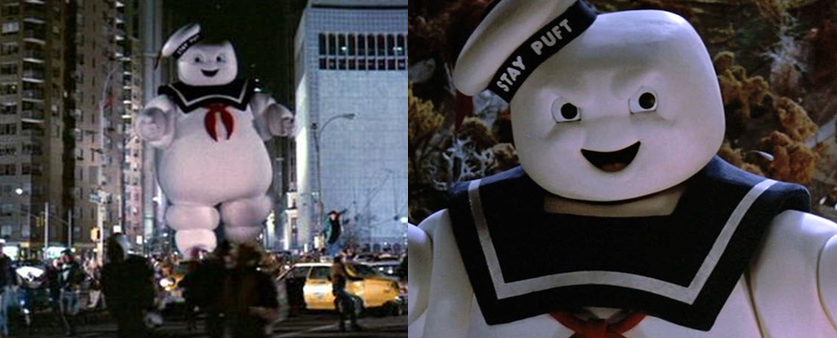
The Stay-Puft Marshmallow Man makes for a ridiculously amusing finale.

Of course, the film’s most impressive effect is the absolutely ridiculous Stay-Puft Marshmallow Man. Up until the Stay-Puft’s appearance, the film plays its humour and concept mostly straight and realistic, but the Stay-Puft Marshmallow Man flips that entirely on its head. It’s a hilarious sequence where the intended and much-feared “Destructor” is forced into the most absurd form possible and, as Mr. Stay-Puft stomps through the middle of New York City as only suits, camera trickery, and miniatures can deliver, it’s both comical and alarming to think that the end of human life could come from such a cute, ludicrous being.   

The Summary:
I grew up watching Ghostbusters; it was one of the quintessential movies of my childhood that helped shape my love for cinema and big, special effects sci-fi/horror productions. As such, I have a great deal of fondness, nostalgia, and respect for the film but, even with all that aside, Ghostbusters is an effortlessly entertaining piece of cinema that, honestly, has everything you could want from a film. It’s funny, scary, enjoyable, charming, and appealing on so many levels, with some amazing old school special effects, great cinematography, and a fun and varied soundtrack, with the film becoming instantly iconic for Ray Parker Jr’s award-winning theme song alone. What I love the most about Ghostbusters, despite the great effects and unique premise, is how naturally organic all of the humour is; the leads have a realistic and appealing banter with each other that makes them instantly likeable and they bicker and trade snarky barbs like old friends. Even better is the fact that, unlike the much-maligned 2016 reboot, almost none, if any, of the humour is gender-based; the only character who’s slightly deplorable is Venkman and neither the film, nor its humour, is geared towards one gender over another. Instead, the humour is largely simple banter that can be enjoyed by anyone and everyone rather than always taking the lowest possible route and relying on crude toilet humour and gender-based insults. If anything, Ghostbusters is more an amusing commentary on politics and governmental bodies and even those aspects aren’t so explicit that they take over the film, making it a fun comedy/horror that appeals to everyone and remains highly recommended.

My Rating:

Rating: 5 out of 5.

Fantastic

What are your thoughts on Ghostbusters? Were you a fan of the film back in the day? Which of the four Ghostbusters was/is your favourite? What did you think to the Stay-Puft Marshmallow Man and the film’s premise? Perhaps you grew up with the cartoon and action figures; if so, what memories do you have of them? How are you celebrating Ghostbusters Day today? Whatever your thoughts and memories of Ghostbusters, drop a comment down below.

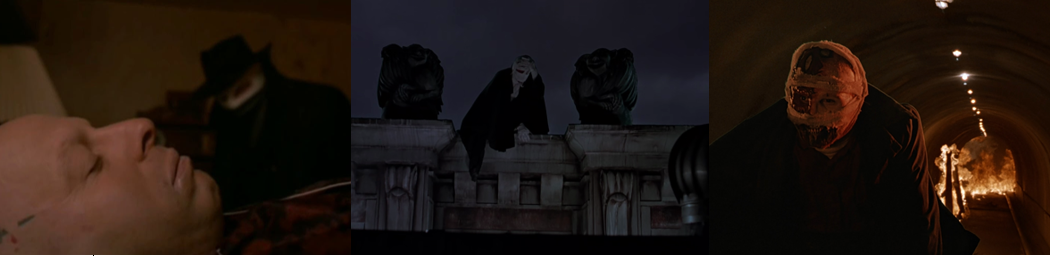
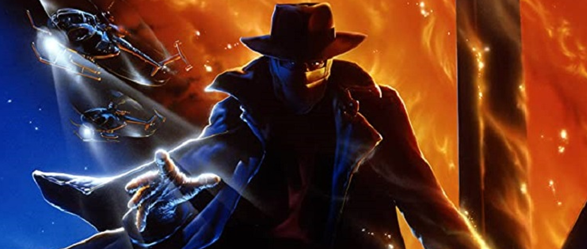
Movie Night: Darkman

Released: 24 August 1990
Director: Sam Raimi
Distributor: Universal Pictures
Budget: $14 million
Stars: Liam Neeson, Larry Drake, Frances McDormand, and Colin Friels

The Plot:
When Doctor Peyton Westlake (Neeson) is left horrifically scarred and burned by mob boss Robert G. Durant (Drake), he uses his advanced (but fallible) synthetic skin and his augmented strength to take revenge upon those responsible while also struggling with his now volatile emotions and sense of humanity.

The Background:
Long before he took the reigns of Sony’s Spider-Man franchise (Raimi, 2002 to 2007), and after making a name for himself with his Evil Dead splatter-horror films (ibid, 1984 to 1992), Sami Raimi had shown an interest in developing an a comic book adaptation. After failed to secure the rights to characters such as Batman and the Shadow, Raimi decided to create his own crime-fighting character, drawing heavy inspiration from classic Universal Monsters films and the likes of The Phantom of the Opera (Leroux, 1910) and The Elephant Man (Lynch, 1980). Working alongside his brother Ivan, his producing partner Robert Tapert, and Chuck Pfarrer, Raimi crafted a story that was much an exploration of the soul as it was a gruesome superhero production. After the studio opposed Raimi’s wish to cast his friend and long-time collaborator Bruce Campbell in the title role, he cast Liam Neeson, believing the actor would be able to convey the nuance of the character’s turmoil despite the film’s extensive make-up effects, which were the genius work of Tony Gardner. Darkman is one of my personal favourite movies and I’m delighted to see that it received a decent amount of praise upon release. The film only made $48.8 million at the box office but is often regarded as a cult hit, spawning two direct-to-view sequels (without Neeson’s involvement) and a number of comic book spin-offs. Honestly, I’ll take any excuse to talk about this hidden gem of a film and today seems like the perfect opportunity given that it’s Liam Neeson’s birthday.

The Review:
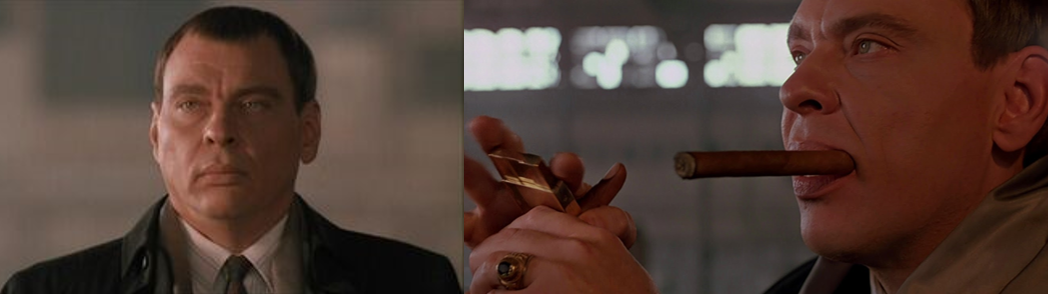
The first thing to note about this film is Danny Elfman’s fantastic, operatic score; bombastic, dark, and gothic, Elfman really captured the atmosphere Raimi was going for with this film and it works on many levels to sell it as a brooding tale of a twisted, tragic man turned superhero and as a monster film. The second thing the film does right off the bat is introduce one of the most under-rated and ominous performances ever put to film and that is Larry Drake as mob boss Robert G. Durant.

Durant is a commanding, menacing presence who exudes authority in every scene.

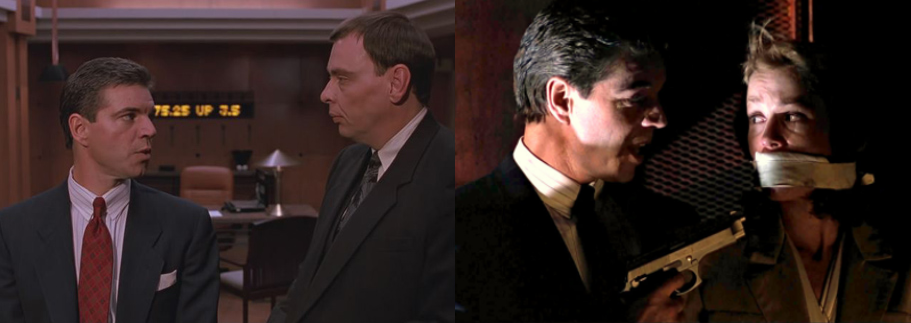
Drake, then best known for his role on L.A. Law (1986 to 1994), brings a sophisticated menace to the role and steals every seen he’s in with a simple, noticeable presence. Stoic and professional, Durant is an eloquent, intelligent, cold, and calculating individual who carries himself with a quiet confidence; when he walks into the room, he fully believes that he is the most powerful man present and is completely confidant that, no matter the odds, he is in complete control of every situation. This, largely, turns out to be true as he easily and calmly takes out several of Eddie Black’s (Jessie Lawrence Ferguson) men not just with the surprise firepower of his henchmen but also with a few well-placed shots of his gun. Durant’s signature is, of course, the cigar cutter which he uses to slice the fingers off his victims; Durant collects these in a special case, touching them up with reverence to really highlight how sick and sadistic this character is.

Westlake is brutally attacked and left a scarred shell of his former self.

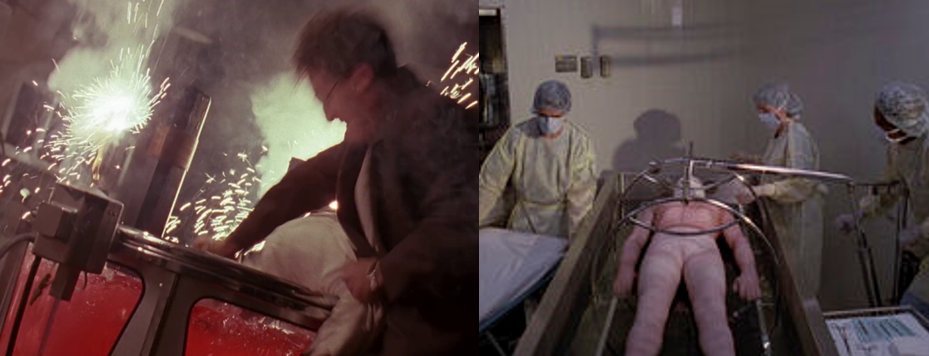
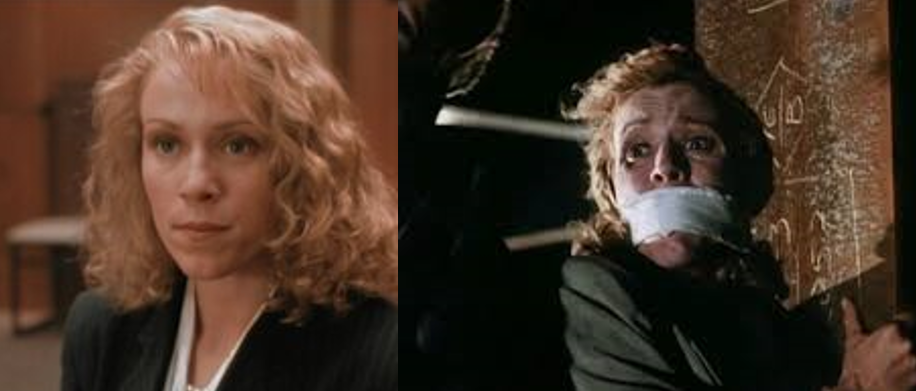
When we’re first introduced to Peyton Westlake, he’s a relatively normal, everyday man and a simple scientist struggling to crack the secret of stability in his synthetic skin. Garbed in a nerdy cardigan, Peyton is passionate and committed to his work but not to the point of distraction; although bothered by his inability to get his synthetic skin cells to last longer then ninety-nine minutes, he still has time for his girlfriend, Julie Hastings (McDormand), and dotes on her wherever possible. The two have a fun, easy relationship but Peyton wants more and is heartbroken when Julie appears to turn down his marriage proposal; for all his intelligence and obvious scientific ability, Peyton is a very relatable, somewhat awkward man who is instantly likeable. It’s thus even more random and tragic when Peyton’s laboratory is attacked by Durant and his henchmen. This is a gruelling sequence in which Peyton is beaten, partially electrocuted, bludgeoned, dipped into acid, and forced to watch Durant’s favourite, Rick (Theodore Raimi), shoot his assistant in the head before his eyes. Despite the fact that he should have died in the ensuring explosion, Peyton clings to life but is irrevocably changed inside and out; unable to feel physical sensations and prone to extreme anger, Peyton is forced to live the life of a vagrant and desperately attempt to perfect his skin so that he can reclaim his former life. When his anger gets the best of him, he turns his attentions just as much, if not more so, to using his synthetic skin to take revenge on those responsible for his horrific appearance.

Though she seems a strong-willed character, Julie becomes little more than a damsel in distress.

If there’s a weak link in the film, it’s got to be Julie; Frances McDormand is a decent enough actress but she’s not that appealing as a woman or a character. Like Peyton, she’s just a normal person with a normal life trying to make the most of it and I can respect that they didn’t cast some knock-out bimbo or an overly made up woman and went for the more realistic look but, still, she never really grabbed me as an particularly alluring character. While she shows a lot of conviction in her morals and is even willing to accept Peyton in his altered condition, she ultimately becomes little more than a damsel in distress who Peyton, as Darkman, must fight to save, which diminishes her otherwise strong character somewhat. Like any good mob boss, Durant is not alone in his organisation and is joined by a handful of one-dimensional but somewhat memorable minions: there’s the aforementioned Rick, a young man who appears to be Durant’s protégé and whom Durant seems more than friendly with; the large, bald-headed Pauly (Nicholas Worth); Rudy Guzman (Rafael H. Robledo) the superstitious Mexican; and the deranged Smiley (Dan Bell). He also has another henchmen, Skip (Danny Hicks), but he disappears after the opening of the film. We don’t really learn anything about these guys except that they’re a bunch of sadistic bastards who follow Durant’s orders to the letter and take immense pleasure in the suffering and killing of others but they exist primarily to cause Peyton’s unenviable position and then fall victim to his machinations and brutal revenge.

Strack lacks any of the threat or nuance of Durant and makes for a disappointing final villain.

To be honest, you could also make the case that Durant is somewhat one-dimensional since we learn very little about him except that he is quick to anger when offended and more than willing to kill anyone, even his own men, if they fail him, offend him, or anger him. Despite this, he’s a far more charismatic and appealing antagonist than his employer, Louis Strack Jr (Friels), who is a slimy, corporate weasel of a villain. Though Durant is always well-dressed, he’s basically a thug in a suit; Strack, by contrast, is the typical suit-wearing puppeteer and, while he does claw back some personality in the finale where he’s revealed to be maniacal and possibly insane, he’s still a shadow of Durant’s aura and if there’s one failing of the film it’s that it ends with a final battle against Strack rather than Durant.

Peyton, left with nothing but the tattered remains of his former life, turns to premeditated revenge.

The bulk of the film revolves around following Peyton as he attempts to put back together the tattered remains of his life and concoct his elaborate plan for revenge; this means that we witness first-hand the degradation of his sanity and humanity as he struggles to keep his volatile emotions under control and to hold on to the last vestiges of his humanity. Too monstrous to return to Julie as he is, this means throwing himself into the perfection of his skin; Peyton becomes obsessed with this process and driven to fits of rage at the skin’s inability to survive prolonged exposure to the light, driving him towards a vicious revenge as a creature of the night. This transformation is both emotional and physical as we see Peyton struggling to maintain his composure when masquerading as himself and, as the film progresses, his tattered appearance degrades, revealing more and more glimpses of his true self until he is left to confront Strack with his gruesome visage on show for all to see.

The Nitty-Gritty:
Darkman is quite the ridiculous concept, to be fair; you need to suspend your disbelief quite a bit to accept that a man would not only survive such an attack but also be able to function for any length of time with burns and injuries as grisly as Peyton’s are depicted in the film. It’s also an extremely over the top affair in many ways; Darkman was, and still is, the best “comic book” movie not actually based on a pre-existing comic book and it shows, with elaborate action sequences, cliché henchmen, and favouring style and spectacle more than logic. Still, with that being said, it’s an extremely enjoyable film because of all those elements; it’s dark, brooding, operatic, and bombastic when it needs to be, with much of the film revolving around the exploration of this simple scientist transforming before our eyes into an unrelenting monster of a man, a killer of killers who wants desperately to return to the life he once had despite the fact that he would never be able to even if he perfected his skin due to being changed emotionally as well as physically.

Unable to feel pain and despondent, Darkman is prone to violent outbursts.

This is seen at numerous points throughout the film but perhaps the best scene at showcasing just how tumultuous Peyton’s emotions and rage have become is his “Dancing freak!” outburst. Frustrated and despondent at his inability to crack the ninety-nine minute barrier, Peyton goes on a half-crazed rant about his condition and begins trashing his lab, ranting and raving before the unimpressed eyes of the cat he adopted by proxy. It’s a gut wrenching scene, one which ends with Peyton catching sight of his horrendous visage in a puddle and collapsing in despair to his knees, desperately attempting to calm himself with his rational mind. As fantastic as Neeson is at conveying this transformation, it’s Larry Drake who steals the show here; articulate and intimidating, Durant exudes authority and control and commands respect whenever he is onscreen. You get the sense that, in all his years, Durant has never failed and that his operation runs like clockwork so, once Peyton begins interfering in his business, he takes it extremely personally and as an affront to his reputation and position. Unlike Strack, and many film villains, Durant isn’t afraid to get his hands dirty or to avoid being up close and personal for the more violent aspects of his day-to-day; thus, when he learns that Peyton has survived as Darkman, he personally leads his men on an assault on the former doctor’s makeshift laboratory and attempts to kill his foe using a grenade launcher! In the end, Durant meets a horrific and satisfying end when Darkman causes the helicopter he is riding in to crash head-first into a bridge; Darkman revels in the death of his tormentor and there’s a real sense of poetic justice to the scene…it’s just a shame that it wasn’t the finale of the movie and that the sequel inexplicably depicts Durant as having survived this explosive end with minimal injuries.

While he initially laments what he has become, Darkman comes to revel in his brutal actions.

Unlike many of his more heroic, masked peers, Darkman isn’t afraid to kill those responsible for his shattered life and monstrous condition; he doesn’t take killing lightly and, at first, wallows in despair at the monster he has become but, over time, comes to revel in the deaths of his victims with a haunting, dramatic laugh reminiscent of the Shadow’s. And…why not? Peyton’s suffering is great and endless, his injuries ghastly and irreversible, and his victims more than deserve the fate he metes out to them. Darkman is the story of an ordinary man pushed as close to the edge as possible and, for a vigilante such as he, there is no room for compromise or mercy; he assumes the identities of many of Durant’s men (including Durant in an entertaining scene) and brings about the downfall of his organisation through manipulation, deception, and violence. It’s a little convenient, you might say, that Peyton is able to so closely mimic the voices of those he impersonates but, to be fair, we do see him practising this skill relentlessly and, while impersonating others, he keeps conversation to a minimum and we also see Peyton padding himself out to impersonate his more stoutly victims, which helps to sell this convenient element of the film. A central crux of the film is the ninety-nine minute time limit Peyton is forced to work around whenever he is out in the daylight; this means that there’s a constant sense of tension as Peyton is always on the clock, which drives him to bouts of mania and aggression as his skin gets closer and closer to disintegrating, and nowhere is this exhibited more explicitly or amusingly than in the iconic “Take the fucking elephant!” scene. While this scene is worth it for the memes alone, it’s also an astounding piece of acting from Neeson as Peyton desperately tries to keep his anger in control and fails, bit by bit, as the scene progresses, the camera skewing and twisting like his fractured psyche and resulting in a brutal explosion of rage and vindictiveness on Peyton’s part. As if to emphasise his true, inner self breaking through, his façade begins to immediately disintegrate in this moment, revealing to Julie that he isn’t the man he’s been pretending to be and, perhaps, never will be again.

The film does a superb job of showing the gruesome extent of Darkman’s injuries.

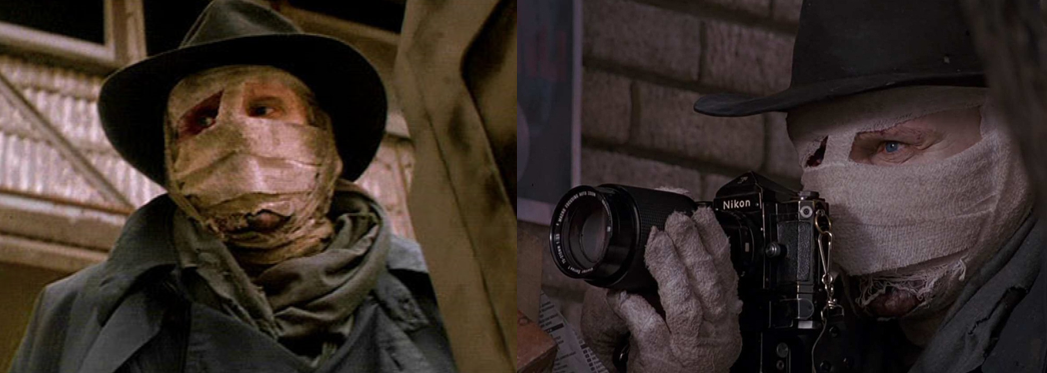
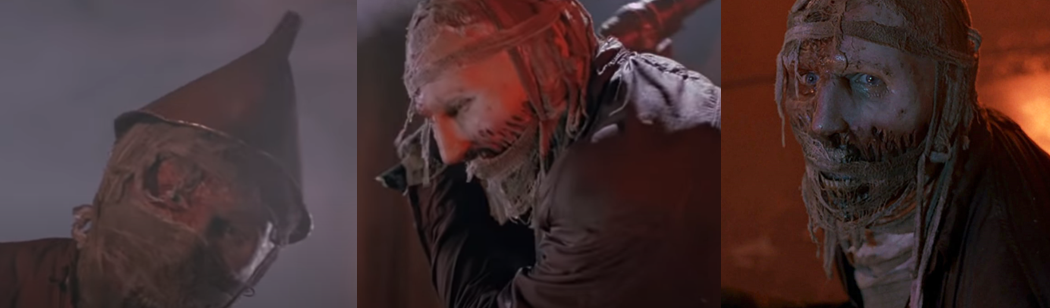
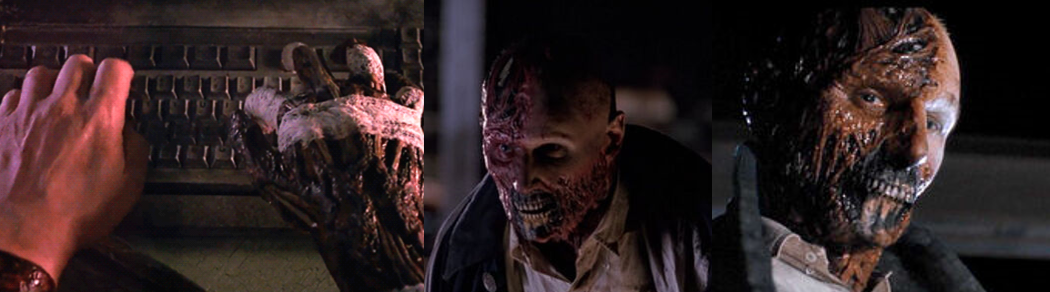
Of course, the most impressive aspect of Darkman is its truly gruesome special effects; thanks to Durant’s attack and the ensuing explosion, Peyton has been horrifically burned, with practically the entirety of his body covered in monstrous burns that expose his bones and tendons. The only part of his skin that remains unblemished is a small section of the left side of his face, which remains the last window into his failing humanity. Peyton’s scarring is genuinely terrifying and ghastly to behold, with him resembling little more than a chargrilled skeleton once the full extent of his injuries is revealed, and I remain astounded at how good the make-up effects are as Neeson disappears beneath the full-face prosthetics. Of course, there’s no way he’d be anywhere near as articulate as he is without his lips and the damage to his vocal chords but, again, we see him struggling to talk after he escapes from the hospital so the film does make an attempt to address this and, sure, his constantly-weeping wounds and exposed nerves, muscles, tendons, and skeleton would undoubtedly be a festering ground for crippling and fatal infection. Sadly, not all of the film’s effects are as good as the make-up; there are some pretty poorly-done greenscreen shots and effects compositions that definitely stand out but, thankfully, they are few and far between and also add to the film’s pulp origins and Raimi’s trademark campy filmmaking methods but…God damn the practical effects are absolutely top notch. Best of all, as I mentioned, there are numerous stages to the effects, with Darkman favouring bandages like Doctor Jack Griffin/The Invisible Man (Claude Rains) that degrade and reveal different aspects of his mutilation as the film goes on and it remains astounding to me that the effects can be this impressive and so massively downgraded in the straight-to-video sequels where Neeson’s replacement, Arnold Vosloo, was clearing wearing a far less impressive mask effect.

The Summary:
Darkman is an elaborate pulp adventure with some massively over the top performances at times but, having said that, it’s an enjoyable romp because of it. Many of the performances are somewhat campy and exaggerated, making even the most one-dimensional henchmen memorable and entertaining as a result, but, while it dabbles in camp and simplistic pulp at times, it also has one other foot firmly rooted in the dark, gothic horror of the classic Universal Monsters films that really helps to give the film its unique edge. This is, of course, bolstered by Drake’s scene-stealing performance as the film’s villain, Neeson’s affecting, complex turn as the titular character, and Darkman’s impressive practical effects and make-up. Just that alone is worth the price of admission as it really shows how realistic and horrific even the most unlikely, monstrous burns can be but Darkman’s position as a monster of a man, granted augmented strength at the cost of his emotional stability and visual appeal, work in conjunction with his unique ability to impersonate others and really help make him stand out amongst other dark, brooding anti-heroes. While the film was an original idea not based on any one existing work, it truly evolved into an entity all its own through Raimi’s exceptional adaptation of many tried-and-tested influences, birthing a new kind of superhero who, honestly and ironically, deserves much more time in the spotlight.

My Rating:

Rating: 4 out of 5.

Great Stuff

Have you ever seen Darkman? If so, what did you think of it? Did you enjoy the film as an over the top romp or were you, perhaps, unable to reconcile the film’s more elaborate stretches of logic and realism? What did you think to the performances of Neeson and Drake and the film’s ghastly make-up effects? Have you seen the sequels or read any of the Darkman comics? Would you like to see the character get more spotlight or do you think the concept works better as a cult favourite? How are you celebrating Liam Neeson’s birthday and what is your favourite Liam Neeson film? Whatever your thoughts, feel free to leave a comment below and let me know what you think.

Movie Night [Sonic Month]: Sonic the Hedgehog (1999)


Sonic the Hedgehog was first introduced to gamers worldwide on 23 June 1991 and, since then, has become not only SEGA’s most enduring and popular character but also a beloved videogame icon. This year, the Blue Blur turns thirty and what better way to celebrate than by dedicating every Friday of this month to SEGA’s supersonic mascot.


Released: 1 November 1999
Originally Released: 26 January 1996 and 22 March 1996
Director: Kazuho Ikegami
Distributor: ADV Films
Budget: Unknown
Stars: Martin Burke, Lainie Frasier, Bill Wise, Edwin Neal, and Sascha Biesi

The Plot:
Doctor Ivo Robotnik (Neal) takes Princess Sara (Biesi) hostage and forces Sonic the Hedgehog (Burke) and Miles “Tails” Prower (Frasier) to journey to Robotropolis to keep Planet Freedom from being destroyed and, in the process, have them battle his ultimate creation: Hyper Metal Sonic (Gary Lipkowitz).

The Background:
After Sonic achieved worldwide success and became the hottest pop culture icon of the nineties following the release of Sonic the Hedgehog 2 (SEGA Technical Institute, 1992), Sonic was practically everywhere as SEGA capitalised on their mascot’s success with comic books, story books, toys, spin-off videogames, and, of course, animated ventures. Outside of Japan, DiC Entertainment produced two widely different Sonic cartoons that ran simultaneously and would come to inform the long-running Archie Comics series. Just as Japan and the rest of the world saw different Sonic promotional materials and lore, so too did each country have incredibly different animated ventures for SEGA’s mascot as, in 1996, Perriot studio produced a two part original video animation (OVA), “Welcome to Eggmanland” and “Sonic vs. Metal Sonic!”, that featured a traditional anime aesthetic that was closely modelled on the anime sequences from Sonic the Hedgehog CD (Sonic Team, 1993) and much closer to the source material thanks to the involvement of Sonic Team (specifically Yuji Naka and Naoto Ohshima). As audiences outside of Japan were enduring easily the worst Sonic cartoon ever created, Sonic Underground (1999), and to coincide (somewhat) with the North American release of the Dreamcast, ADV Films combined the two-part OVA into one feature length feature, subjected it to a questionable dubbing process, and released it straight to video. Still, the feature length animation holds largely favourable reviews among Sonic fans for its closer adherence to the source material despite being just as removed from it as Sonic’s American cartoons.

The Review:
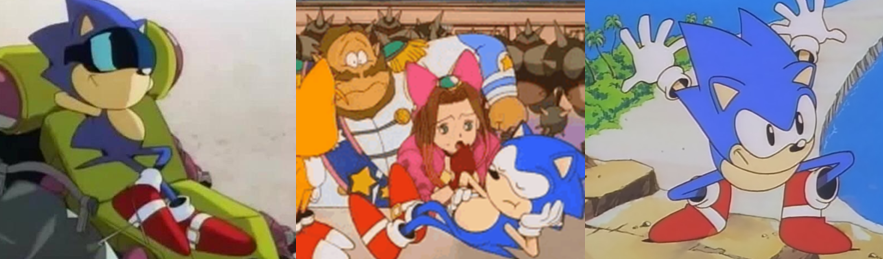
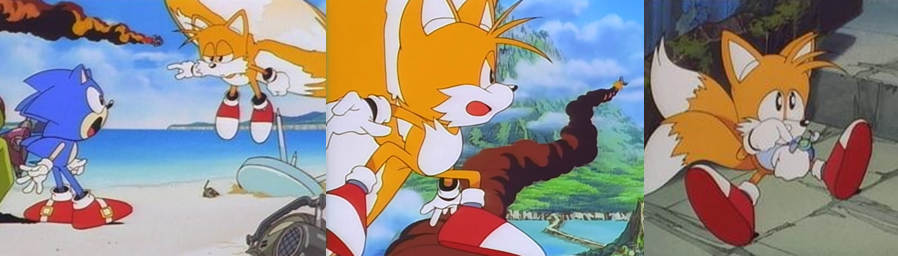
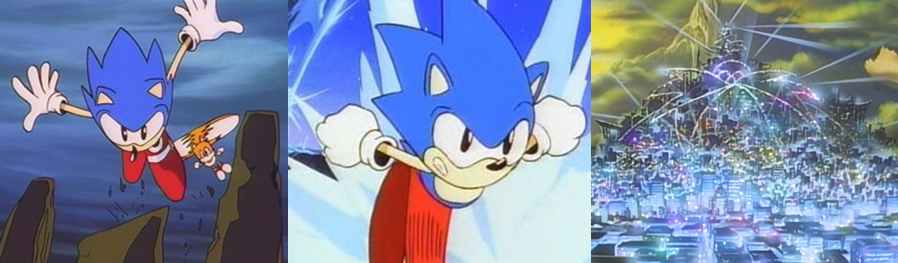
Sonic the Hedgehog: The Movie is this absolutely mental anime adaptation of the videogames that has a slick, detailed aesthetic that not only evokes the artwork of the videogames but also aligns almost perfectly with the anime sequences from Sonic CD. Because of this, though this world is as strange and unique as the various iterations of Mobius, the OVA feels like an authentic tie-in to the source material rather than a distilled, heavily altered commercial product like the cartoons.

Though short-tempered and lazy, Sonic revels in action and adventure.

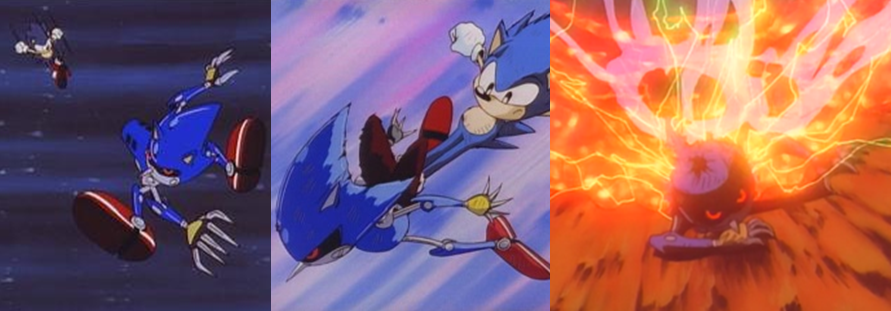
What really makes the Sonic OVA stand out from other animated adaptations, apart from the anime aesthetic, is its portrayal of Sonic; rather than a wise-cracking show off, OVA-Sonic is a snarky, short-tempered teenager and actually showcases the “attitude” that Sonic was advertised as having. He just wants to sunbathe in peace and quiet and yells at Tails for interrupting his relaxation and has absolutely no interest in helping Robotnik even though the safety of the entire planet is, apparently at stake. Despite his lackadaisical attitude, though, Sonic is quick to race into action when he sees Tails is in real danger and begrudgingly agrees to solve Robotnik’s problem despite never shaking the belief that something fishy is going on. Sonic is not just cocky but also extremely arrogant, surprisingly lazy, quick to anger, and uncouth, something his current incarnations often seem to forget or ignore. While still heroic, Sonic prefers to wait until the very last second, or needs considerable persuasion, to act; Sonic desires challenge and, without it, is mainly lethargic. This is best depicted in his intense and escalating battle with Metal Sonic wherein Sonic’s stupor gives way to a passionate desire to defend his pride and identity.

Tails is at his most capable here, berating Sonic’s inaction and directly influencing the plot.

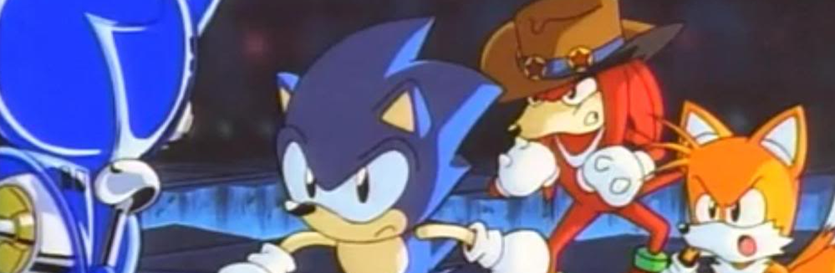
Tails, also, is far more capable and competent than his other animated counterparts; a genius with machines and computers, it’s heavily implied that he retrofitted all the junk and discarded technology to build his laboratory and aircraft hanger and he’s easily able to reprogram Robotnik’s navigational device to alter Hyper Metal Sonic’s programming and repair the Tornado after it crashes. Crucially, though clearly an enthusiastic and naïve little kid, Tails is Sonic’s conscience and the voice of reason; when Sonic refuses to help, Tails berates him and helps coerce him into action and, while he does need a bit of rescuing, he’s also quite capable of doing far more than just whining or being a mere hostage or a liability.

Sara is a pain in the ass but at least she has more personality than the President.

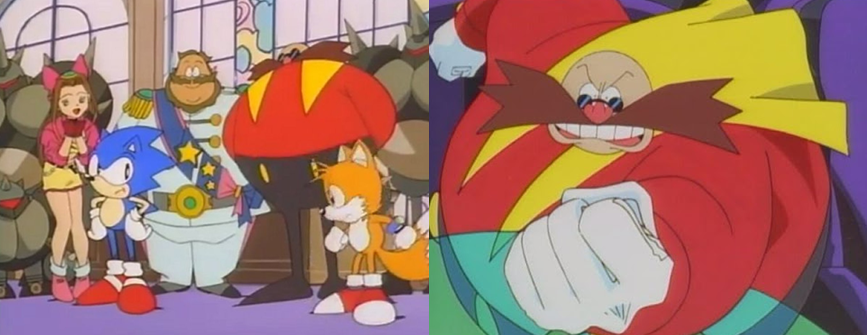
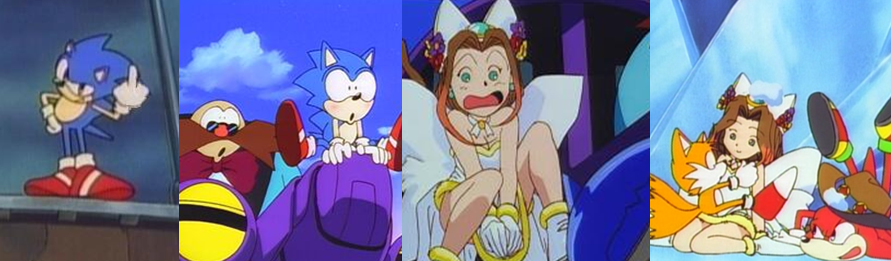
Tails’s usually annoying characteristics are, instead, supplanted into Sara; a grating, annoying character, Sara is selfish and aggravating, throwing tantrums over the littlest things and revelling in her ability to manipulate the hearts and minds of men with her allure. Interestingly, though, the annoying aspects of her character give her a little more personality than the average damsel in distress since she doesn’t just sit there like a lemon or cringe in fear; she shouts, screams, lashes out, and whines the entire time instead which, yes, means you end up questioning why anyone would want to rescue her annoying ass but an irritating personality is a personality nonetheless, at least, which is more than can be said about her father, the President (Neal), who is a largely ineffectual and useless character.

Knuckles is a far less gullible or bumbling character than he’s now characterised as.

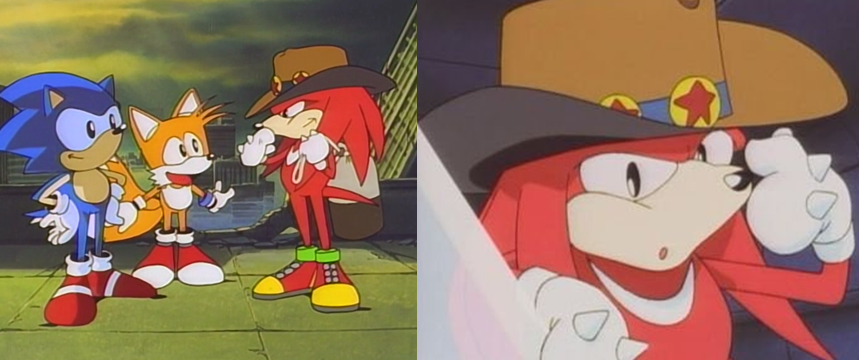
Unlike the majority of Sonic’s American cartoons, the OVA immediately gets extra points from me for actually including my favourite Sonic character: Knuckles the Echidna (Wise). Of course, of all the characters, Knuckles is perhaps the most fundamentally changed by the adaptation process; rather than an echidna, he’s said to be a mole (one, somehow, capable of flying) who is more interested in treasure and bounty hunting than guarding Angel Island and the Master Emerald. In fact, neither of these two elements are ever mentioned, characterising Knuckles as this wandering nomad who is, nevertheless, “Sonic’s best friend”; Knuckles, far from the gullible and foolish character he has become in recent years, is a capable, confident, and knowledgeable source of exposition and gets some fun comedic moments like when he chastises Tails for landing on Sara’s boobs or when his beloved and bad-ass cowboy hat catches fire!

Though a buffoon at times, Robotnik is still a charismatic, deceptive, and competent villain.

For those only familiar with Sonic’s American cartoons, perhaps the most striking character in the OVA is Dr. Robotnik; rather than some bumbling fool or a semi-cybernetic, tyrannical dictator, Robotnik is far closer to his videogame counterpart and, when I think of the Robotnik from Sonic’s 2D videogames, this is the one I think of. A charismatic, deceptive, and a ruthless individual, Robotnik is easily able to intimidate the President by kidnapping his daughter, manipulate Sonic and Tails into doing his bidding, and ultimately capture Sonic’s “life data” to complete Hyper Metal Sonic. There’s a lot of backstory hinted at with this world, primarily through Robotnik, who explains how Planet Freedom works and hints towards previous encounters with Sonic and Tails, and Robotnik actually has a lot of depth to his personality as he seems to genuinely be besotted with Sara while also wishing to destroy Sonic and take over the Land of the Sky. Robotnik, of course, isn’t the only antagonist in the OVA; at first, we’re led to believe that the primary antagonist is the mysterious “Metal Robotnik”, a massive demonic anime mech that is, clearly, being piloted or at least controlled by Robotnik. The deception, however, completely fools everyone despite the fact that Metal Robotnik sounds exactly like Robotnik! The mech suit gives Robotnik a vast array of combat options that briefly give him the upper hand but the destruction of Metal Robotnik isn’t even a set back for Robotnik; it’s all simply part of his master plan, which is surprisingly competent and threatening.

Sonic insists on battling Metal Sonic alone, seeing the robot as a degrading imposter.

Hyper Metal Sonic, obviously, ends up becoming the main antagonist but it doesn’t actually properly appear until after our heroes get past Metal Robotnik, enter Robotropolis, and shut down the Robot Generator; it’s glimpsed in the opening, pre-title sequence, however, and looms over the narrative like an ominous cloud so that, once it does appear, it’s in suitably dramatic and threatening fashion. Hyper Metal Sonic is a cold, calculating, silent antagonist and Sonic sees its mere existence as both an insult and a threat to his position, categorically refusing to have his friends help him and choosing to battle his robotic counterpart alone in increasingly violent confrontations.

The Nitty-Gritty:
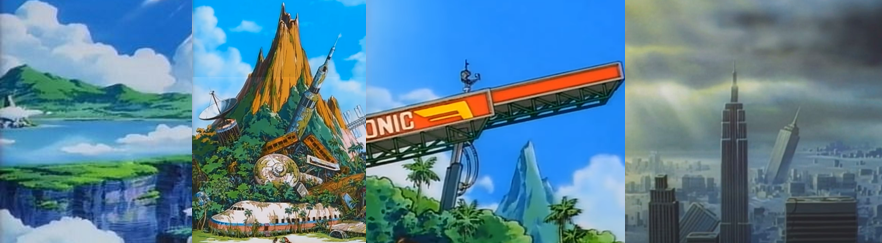
Though there is a general, prevailing idea that Sonic the Hedgehog: The Movie is much closer to the source material than its other animated counterparts, that isn’t exactly true; the world we are presented with in the film is just as different from that seen in the games as Mobius is in the cartoons and comics, perhaps even more so since this is a strange world that resembles a shattered, post-apocalyptic version of our world more than the wacky, fantasy worlds seen in the videogames. However, the spirit of the videogames is evoked far closer thanks to the OVA’s anime aesthetic and locations closely resembling those seen in the games (Never Lake, for example, appears to be briefly seen onscreen at one point and Sonic races through traps and obstacles very similar to those from the games, including the first and most accurate onscreen portrayal of springs, spikes, and Badniks).

The world is both familiar and yet unique, borrowing from and then influencing Sonic‘s videogames.

One thing I love about this OVA is not just how well it captures the spirit of the source material but also came to influence later videogames and Sonic canon; it’s fitting that this was released outside of Japan around the time of the Dreamcast since there are many visual and aesthetic similarities between the OVA and Sonic Adventure (Sonic Team, 1998): Tails’s workshop, the airstrip that rises out of the ground, the visual of the “relics” of the Land of Darkness (clearly the remnants of New York City) sinking into the ocean are all clearly evoked in Sonic Adventure. Honestly, it’s a shame that more episodes of the OVA weren’t produced and that it hasn’t had a greater impact on larger Sonic canon; ideally, I’d love to see a 2D Sonic videogame utilise an artistic style or anime sequences such as the ones on display here for the cutscenes, if nothing else.

Animation is slick and fluid and the level of detail on offer is astounding at times.

Visually resembling Sonic CD’s impressive anime sequences, and loosely adapting its plot, unlike its American counterparts, the OVA featured a fairly simplistic story, but one given greater depth by its diagetic world. While some exposition exists regarding Planet Freedom and its two opposing “dimensions”, it is clearly not Earth, Mobius, or the Japanese videogame world either, despite some aesthetic resemblances to each. Instead, Planet Freedom is a post-apocalyptic alternate Earth where some calamity has caused the planet’s surface to break away and reduced the lower surface to ruins. As a result, the OVA’s visuals and scenery are amazingly detailed and even somewhat resemble the Zones of the source material. This, coupled with the OVA’s musical composition, evokes Sonic’s spirit in a way that its counterparts failed to do; by appropriating numerous anime tropes and conventions, the OVA’s characters act exactly as you expect and engage in frequent, intense, fast-paced action.

Amusingly, some risqué moments slipped past the OVA’s censors…

Of course, the OVA isn’t perfect; ask most people for their thoughts on it and the first thing they’ll mention is the pretty atrocious voice acting. Tails has a strange, nasally quality; Sonic’s voice is wildly inconsistent, croaking one minute and being strained the next, and Old Man Owl (Charles C. Campbell) is almost unintelligible. Knuckles, however, sounds pretty good and I love Dr. Robotnik’s boisterous, elaborate slightly German accent. Overall, I don’t really mind the voice work; it’s not like the ones in the American cartoons were always great and it actually adds to the OVA’s cheesy, goofy charm. Indeed, the OVA’s flaws come from the poor quality of some of the voice acting rather than the quality of the animation yet, interestingly, though it has the high-quality whitewash of respected Japanese anime to bolster its critical reception, Sonic the Hedgehog: The Movie remains almost as separate from its source material as any of the American animations, though ironically is able to better convey the essence of said source material better than any Sonic animation produced throughout the nineties. Furthermore, the OVA is made more entertaining by the fact that a few questionable moments made it past the censors: Sonic gives Metal Robotnik the finger, Sara is seen breastfeeding in a brief imaginary sequence and kicks the crap out of Metal Sonic when she thinks its looking up her dress, and Sonic lands on his crotch on Robotnik’s craft, which is all very wacky and amusing.

Metal ultimately comes to reflect not just Sonic’s speed and skill but his heroic heart as well.

Sonic the Hedgehog: The Movie excels in the quality of its animation; characters move with blinding super speed like in Dragonball Z (1989 to 1996) but are also slick and smoothly animated. Nowhere is the animation and art style represented better than in the depiction of Sonic’s battle against Hyper Metal Sonic and the design of Metal Sonic (and, also, Metal Robotnik). Their battles are a test of their skill, speed, and endurance as Sonic is somewhat on the backfoot given that Metal doesn’t tire or feel pain but Metal, far from a simple unemotional machine, begins to grow frustrated with Sonic’s persistence and will and evolves to mirror Sonic’s personality and body language as much as his speed. Thanks to Tails’s influence, Metal eventually chooses to sacrifice itself to save Sara and the President, refusing to be save from destruction since “There. Is. Only. One. Sonic”.

The Summary:
Sonic the Hedgehog: The Movie is, still, perhaps the greatest Sonic animation ever created even though it still takes numerous, strange liberties with the source material, reflecting neither the Japanese or American versions of Sonic’s story or the story as told in the games themselves. Instead, the OVA is its own thing entirely, implying a continuity and a larger backstory that we, sadly, never get to explore as we only got to see these two episodes edited into one feature-length animation. Nostalgia and the general obscurity and rarity of the OVA obviously all helps to add to its appeal but Sonic the Hedgehog: The Movie is still well worth your time, especially if you’re a Sonic fan or a fan of anime in general since there’s plenty on offer here for both. Between the slick animation, catchy soundtrack, and action-packed narrative, Sonic the Hedgehog: The Movie presents perhaps the most appealing and cohesive bridge between Sonic’s many competing narratives and I’d love to see the concept and aesthetic revisited in more detail at some point. However, since that’s extremely unlikely given how wildly different the Sonic franchise is these days, at least we still have this hidden gem to fall back on.

My Rating:

Rating: 5 out of 5.

Fantastic

Have you ever seen Sonic the Hedgehog: The Movie? If so, what did you think to it? Were you able to look past the dodgy voice acting or was it simply too much to handle, despite the OVA’s impressive animation? Did you like the unique world of the OVA or do you feel it was too separate from the videogames and generally accepted narrative of the time? Would you like to see a return to this style of characterisation and animation for Sonic or would you prefer something a little different; if so, what? How are you planning on celebrating Sonic’s thirtieth anniversary this year? I’d love to hear your thoughts on the OVA, and Sonic in general, so feel free to leave a comment below.

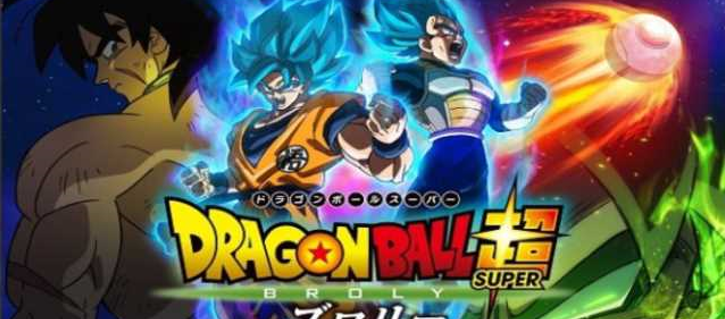
Movie Night [Dragon Ball Month]: Dragonball Super The Movie: Broly


DragonBallDay

When the Great Demon King Piccolo was released upon the world, he broadcasted a message on television declaring May 9th as “Piccolo Day”…and promptly celebrated by announcing his ownership over the planet. Since then, May 9th has been officially recognised as “Goku Day” and, accordingly, I have spent the last few Sundays looking back at one of the franchise’s most popular villains: Broly.


DBZBroly4Logo

Released: December 2018
Director: Tatsuya Nagamine
Distributor: Toei Company/20th Century Fox
Budget: $8.5 million
Stars: Sean Schemmel, Christopher Sabat, Vic Mignogna, Chris Ayres, Erica Lindbeck, and Dameon Clarke

The Plot:
After restoring peace to the Earth, and the multiverse, in the Tournament of Power, Son Goku (Schemmel) and Vegeta (Sabat) have been undergoing rigorous training to combat both the renewed threat of Frieza (Ayres) and unknown enemies from beyond their world. However, they face a threat unlike no other when Frieza joins forces with Paragus (Clarke) and his son, Broly (Mignogna), a being whose power eclipses both Saiyans and forces them to turn to the one technique they swore they’d never use again: Fusion.

The Background:
After debuting in the pages of Weekly Shōnen Jump back in 1984, Akira Toriyama’s Dragon Ball has proven a popular and influential manga and anime; its sequel series, Dragonball Z, not only came to define the entire franchise in popular, mainstream media but also spawned several feature-length movies and even a third series, Dragonball GT, all of which are generally considered non-canon as they lacked the direct involvement of Toriyama. After years of speculation and anticipation, Toriyama returned to Dragon Ball in 2015 with Dragonball Super, an official continuation of his popular manga that spawned two more feature-length movies in 2013 and 2015 and, of course, an accompanying anime series that ran from 2015 to 2018. Picking up immediately where Dragonball Z left off, Dragonball Super has largely supplanted Dragonball GT in the Dragon Ball canon and saw series protagonists Goku and Vegeta transform into even more powerful states, harnessing the powers of Gods, the return of many familiar characters and villains from the franchise’s rich history, and a tournament that spanned parallel universes! Soon after the end of the anime, Toryiama began working on a feature-length film to cap off the series that promised to introduce a “long awaited, strong opponent”. Thanks to his immense popularity among Dragon Ball fans, this turned out to be none other than the Legendary Super Saiyan, Broly, redesigned by Toryiama and officially integrated into his main series canon for the first time. This popularity, alongside improved worldwide distribution compared to previous films, saw the film eventually eclipse even the U.S. lifetime gross of the much-lauded Spirited Away (Miyazaki, 2001) to amass over $120 million worldwide.

The Review:
It is to my great shame that I have to admit that I haven’t really watched much of Dragonball Super, much less read the original manga. I’ve been patiently waiting and debating about buying the physical releases of the anime and caught a few episodes here and there, but the majority of my knowledge of the series comes from what I’ve read online and the previous movies in the series. Luckily, Dragonball Super The Movie: Broly opens in familiar-enough territory; with King Cold (Jason Douglas), Frieza, and the Ginyu Force arriving on Planet Vegeta to meet with King Vegeta (Sabat). If there’s one thing I’ve found Toryiama likes to do whenever he revisits his seminal franchise, it’s digging up the past; he unnecessarily resurrected Frieza in the previous film, Dragonball Z: Resurrection “F” (Yamamuro, 2015), and even brought back Future Trunks (Eric Vale) in Dragonball Super. It’s a helpful shorthand for getting a sense of how powerful certain characters are by having Frieza around but, generally, I don’t really like that villains and characters so hopelessly outclassed are suddenly brought back and deemed a threat once more.

In detailing Broly’s new backstory, the film features some unexpected cameos.

The film even revisits Frieza’s eventual campaign against the Saiyans, including Goku’s father, Bardock (Strait), into the plot and officially incorporating him into the overall canon at the same time. Interestingly, the alterations made to Goku’s origins not only recontextualise the characterisation of Bardock but also slightly alter the specifics of how Goku escaped the destruction of Planet Vegeta and the majority of the Saiyan race and even his early years on Earth. This also allows us to see Vegeta and Raditz (Justin Cook) as little kids, which is something we’ve never really seen before in the series. All of these elements form the background to Broly’s revised origin: similar to his original incarnation, Broly is still a child prodigy with a power level that initially appears to eclipse that of even King Vegeta’s son and who has the potential to be even the Legendary Super Saiyan. King Vegeta is still fearful and frustrated by Broly’s superiority over his son and ostracised the child, and his father, Paragus, by sending them to the backwater world of Vampa where Broly’s power would not be a threat to his rule or the purity of the Saiyan race. Angered, Paragus pursues his son and vows to harness Broly’s power to oppose his former king, resulting in a backstory that is largely the same but slightly different in subtle ways; clearly, Broly’s original origin as a Saiyan born with incredible powers was iconic enough to leave mostly intact but his eventual personality and the circumstances of his madness are altered quite considerably.

Broly is now a far more sympathetic and tragic figure, making him much more complex and relatable.

Originally, Broly was overwhelmed by his power, frustrated by his father’s control over him, and enraged to the point of mindless insanity thanks to Goku’s crying disturbing him as a child; though initially quite eloquent, he was always a mindless engine of destruction even before he literally became little more than a rampaging monster. Here, though, Broly is a far more complex character; naïve and almost caveman-like, he’s easily controlled by his father thanks to a restraining collar and is quite passive and childlike even when fully grown. He’s not only far more gentle and eloquent, he also makes friends with Cheelai (Lindbeck) and Lemo (Bruce Carey) and grew so attached to Ba, a gigantic creature from Vampa, that his father had to mutilate the beast to keep Broly focused on his training as an unstoppable weapon. These elements all add much-needed layers to Broly’s backstory, transforming him into a far more tragic and sympathetic figure who is a victim of his machinations of his father and upbringing as much as his limitless power and uncontrollable rage. When we are finally reintroduced to Goku and Vegeta, they are still just as enthusiastic about sparring and growing stronger than ever thanks to their experiences in the Tournament of Power. While Goku wishes to grow more powerful to take on opponents from other universe, Vegeta desires to increase his power in order to defeat Frieza, angered that Goku not only resurrected Frieza but allowed him to go free after he helped them in the anime. It’s interesting to see Vegeta be the voice of reason; I would have assumed that his and Goku’s motivations would have been reversed but, instead, Vegeta is most perturbed by the potential threat Frieza poses, especially after they discover that he has stolen six of the seven magical Dragon Balls.

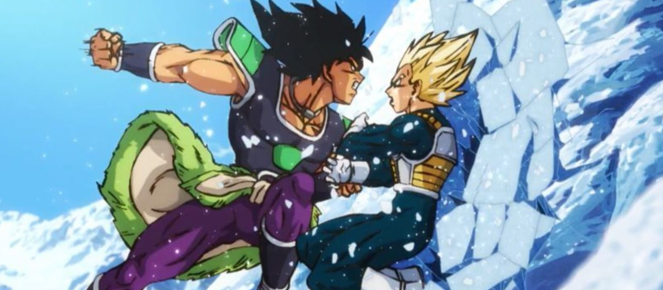
Despite his lack of training, Broly’s raw power is enough to push Vegeta to his limits.

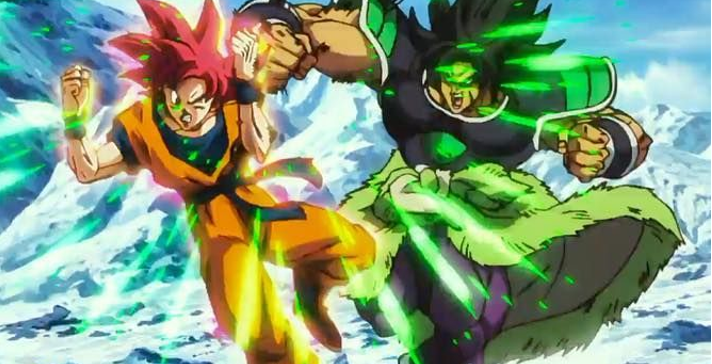
Convinced that Frieza can’t be up to much good, Goku agrees to go with Vegeta and Bulma (Monica Rial) to the ice continent (picking up some nifty cold-weather clothes along the way) to find the last Dragon Ball. In a strangely amusing twist, though, it turns out that Frieza’s motivations for finding the Dragon Balls are as laughably vain and simple as Bulma’s: Bulma wants to wish to look five years younger and Frieza wants to be five centimetres taller, with both characters reasoning that any more would be “too noticeable”. It’s a tenuous reason to get the plot in gear but a recurring joke in the film and perfectly in line with the wackier elements and motivations of the franchise. Frieza’s motivations change, however, when his soldiers find the now-aged Paragus and Broly; impressed by the potential of Broly’s power, Frieza feeds Paragus’s desire for revenge against Vegeta by coercing them into engaging with his hated enemies. This time around, Broly’s rage is not at Goku alone but, instead, at anyone his father deems to be an enemy and, specifically, Vegeta for being the son of the man who condemned them to death. Once he begins to engage in battle, though, his formally peaceful and serene nature gives way to an insatiable bloodlust and increasing, overpowering rage that pushes both Goku and Vegeta to their limits.

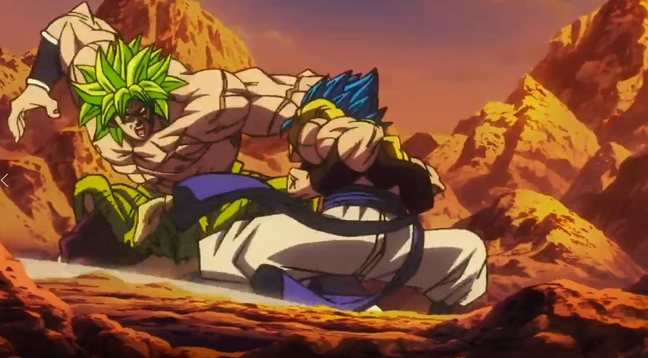
Goku and Vegeta are forced to merge into Gogeta to counter Broly’s unstoppable rage.

Overwhelmed by Broly’s limitless rage, power, and brute strength, Goku and Vegeta are forced to not only team up with Golden Frieza to defeat Broly but also to turn to Piccolo (Sabat) for help in mastering the Fusion Dance. Previously, the two had fused into Vegito using the Potara Earrings and, though they had performed the Fusion Dance and transformed into Gogeta in non-canon anime, movies, and videogames, they’ve never performed the dance or assumed this form in canon until this moment. It’s a striking contrast to Vegeta’s fear and helplessness in Broly – The Legendary Super Saiyan (Shigeyasu, 1993); there, he was so reluctant to fight against Broly or lend Goku his power that he was almost willing to accept what he saw as his inevitable death at the hands of the Legendary Super Saiyan but, here, his resolve against Broly’s power never falters and he begrudgingly agrees to undergo the transformation in order to prevail. As much as I enjoyed seeing Vegeta’s usual arrogance and ego stripped away and him brought to his knees by fear, it’s equally as entertaining to see him forced to merge into the same body as his hated rival.

The Nitty-Gritty:
Unlike his original appearances, which quickly devolved into little more than an extended series of fights against a near-unstoppable opponent that ended in anti-climatic fashion two out of three times, Dragonball Super The Movie: Broly depicts Broly as a formidable opponent whose power increases again and again as the film progresses and, yet, also a foe whom Goku and Vegeta are able to put up a much better fight against than in his original incarnation.

Broly’s Wrath State quickly overwhelms Goku’s Super Saiyan God form.

Unlike his original counterpart, Broly is actually rather untested in battle, relying on brute strength, anger, or instinct in a way that is slightly different to in the original films; despite his vast power level, he cannot even transform into a regular Super Saiyan, much less the Legendary Super Saiyan, at the start of the film and, yet, his base form is more than capable of matching Super Vegeta and pushing him to his limits. Broly also demonstrates the ability to learn, adapt, and increase in power as a fight progresses and, after being bested by Vegeta’s Super Saiyan God form, Broly summons the power of the Great Ape but channels it through his normal body, attaining a new form not seen before: his Wrath State. In an interesting twist, Broly is far more devoted to his father than in his original depiction; rather than turning against and killing Paragus in the midst of his onslaught, Broly follows his father’s directions (when not in a mindless rage) and is so traumatised by his death at Frieza’s hands that he finally transforms into a Super Saiyan. Nothing, not even a Kamehameha/Galick Gun combination or Golden Frieza is enough to stand against Broly, forcing Vegeta to swallow his pride and endure the Fusion Dance to allow Gogeta to be born in canon for the first time. Their eventual team up with Golden Frieza makes for a suitably impressive finale; as much as I may dislike Frieza being resurrected and even him being somewhat redeemed and becoming more of an anti-hero and reluctant ally, it’s still impressive seeing him forced to fight alongside his hated enemies in their merged form.

Broly‘s fights quickly escalate into some of the most furious and explosive the series has ever seen.

The result is a series of far more impressive and spectacular fight scenes than in any of Broly’s previous appearances; as awesome as it was to see the original Broly swat away our heroes like they were nothing, there’s no denying that Broly’s fights are bigger, more explosive, and far more exciting as the stakes continually increase and each character is forced to up their power level again and again to match the other. Even better is the climax of the film; as noted, Broly’s previous appearances all ended in anti-climatic fashion save for one and even that did little to redeem the film that proceeded it. Here, Super Saiyan Blue Gogeta and Legendary Super Saiyan Broly fight so hard that they threaten not only the safety of the Earth but the entire universe as well. Tying back into Broly’s introduction as a simple man-child with a kind heart, he is ultimately transported back to Vampa by Cheelai’s wish right as Gogeta is about to finish him off. Frieza allows Broly to go, confidant that Cheelai and Lemo will be able to domesticate him so Frieza can utilise his power at a later date, and the film ends with Broly, now living a simple life as a farmer with his friends, content and at peace with himself. Unlike in his original incarnation, he even ends the film on good terms with Goku, who not only wishes to face Broly in battle once again but also finally, surprisingly, embraces his Saiyan heritage for the first time in a nod to the original films by insisting that Broly call him “Kakarot”.

The Summary:
Of all the films to feature Broly, Dragonball Super The Movie: Broly is easily the best one, even better than Broly – The Legendary Super Saiyan. One of the biggest issues the original Dragonball Z feature films had was that they were so condensed that they often focused solely on comedy or fight scenes, with little substance to their style. This is great when you’re burned out from watching characters power up over the course of three or five episodes of the anime but not so much when you’re trying to invest in their original characters and the potential of their premises. Dragonball Super The Movie: Broly takes everything that worked from Broly’s previous appearances and expands upon it, giving him a far more intricate and interesting backstory while still portraying him as a brute of near-unstoppable power. At this point in the franchise, Goku and Vegeta are so powerful that it’s hard for any opponent to be taken seriously but the fact that Broly forced them to not only merge together but also turn Super Saiyan Blue in that form shows that he’s just as formidable, if not more so, than his original incarnation. With far more impressive fight scenes, much better use of characters, comedy, and action, and even some much-appreciated peeks into the past, Dragonball Super The Movie: Broly is probably the best Dragon Ball movie out of them all and the fact that it leaves the door open for Broly to naturally and seamlessly return to the franchise is all the better.

My Rating:

Rating: 5 out of 5.

Fantastic

What did you think of Dragonball Super The Movie: Broly? Were you happy with the alterations made to Broly? How do you feel about characters like Frieza returning to the franchise and being somewhat redeemed? What did you think of Dragonball Super as an official continuation of the series? Which story arc from Dragonball Super did you like the best and which characters from the multiverse would you like to see show up in future films? Whatever your thoughts, feel free to leave a comment below.

Movie Night: X-Men: The Last Stand

Released: May 2006
Director: Brett Ratner
Distributor: 20th Century Fox
Budget: $210 million
Stars: Hugh Jackman, Halle Berry, Famke Janssen, Ian McKellen, Kelsey Grammer, Shawn Ashmore, Ellen Page, Aaron Stanford, Patrick Stewart, Rebecca Romijn, Vinnie Jones, Anna Paquin, and James Marsden

The Plot:
The Mutant community is divided when a major pharmaceutical company announces the development of a “cure” that will permanently suppress the Mutant X-Gene. As Erik Lehnsherr/Magneto (McKellen) uses the controversy to step up his war against mankind, Jean Grey (Janssen) inexplicably returns from the dead, her powers having grown exponentially and threatening the lives of humans and Mutants alike.

The Background:
Since Stan Lee and long-time collaborator Jack Kirby created the X-Men in 1963, Mutants have featured prominently in Marvel Comics; unlike most of Marvel’s superheroes, the X-Men (and Mutants in general) are met with near-constant hostility as they stand in for oppressed minorities everywhere. The X-Men grew to greater mainstream prominence thanks to the influential animated series from the nineties, the success of which led to 20th Century Fox purchasing the film rights and producing two well-regarded X-Men films in the early 2000s. The production of X-Men: The Last Stand, however, was far more complex than its predecessors; former director Bryan Singer unexpectedly walked away from the franchise, taking X-Men 2 (Singer, 2003) screenwriters Dan Harris and Michael Dougherty with him in order to make the divisive Superman Returns (ibid, 2006). Many replacements were considered, including Joss Whedon, and the main cast’s contracts were hastily extended before Fox settled on director Matthew Vaughn, who assembled most of the remaining cast. However, family issues and the pressure of Fox’s tight film schedule led to Vaughn exiting the project and Brett Ratner replacing him at the last minute. With limited knowledge of the source material, Ratner trusted the film’s writers, who drew inspiration from the iconic “Dark Phoenix Saga” (Claremont, et al, 1980) and Whedon’s 2004 “Gifted” arc. The sudden mix-up of directors, writers, and creative minds led to X-Men: The Last Stand being far less universally praised compared to its predecessors; despite being regarded as a financial success, the film received mixed to average reviews and is often regarded as a low point for the franchise.

The Review:
Unlike the last two X-Men movies, X-Men: The Last Stand opens with two slightly less exciting scenes; the first is an early example of de-aging effects that we are seeing being incorporated, and perfected, more and more these days. To be fair, the effects actually hold up really well here; both Professor Charles Xavier (Stewart) and the future Magneto look a good twenty-or-so years younger and it’s a great little scene that shows a snapshot of their friendship and relationship that has only been hinted at before and finally fleshes out Jean Grey’s character more than we’ve had in the films so far.

Angel looks impressive but has little impact on the film’s many plots.

The other opening scene introduces us to Warren Worthington III (Cayden Boyd), the Mutant son of corporate mogul Warren Worthington II (Michael Murphy), who is desperately trying to file down the angel’s wings that are sprouting from his back. This scene does a lot to show the shame and fear and desperation many Mutant children feel when they discover that they are Mutants and these emotions play a vital role in one of the film’s central narratives. You would think that the grown-up Warren (Ben Foster) would thus play just as big a role given his prominence in the film’s opening but…no. Unlike Kurt Wagner/Nightcrawler (who is inexplicably absent and not mentioned in this film due to actor Alan Cumming disliking the make-up process), Warren (also known as “Angel” in the comics, where he was a founding member of the X-Men) barely factors into the film at all, disappearing for most of it and serving only to inspire the X-Men to continue Xavier’s dream later in the film (and save his Dad, I guess).

The exhilerating reintroduction of the X-Men is little more than a holographic simulation.

After the opening credits (which thrust Hugh Jackman and Halle Berry’s names to the forefront), though, the film kicks things up a notch by introducing us to the new X-Men team in the midst of what is clearly a Sentinel attack heavily inspired by the seminal “Days of Future Past” (Claremont, et al, 1981) storyline. Ororo Munroe/Storm (Berry) is now the team’s field leader, Logan/Wolverine (Jackman) is the reluctant tag-along, and the core X-Men are comprised of the X-Kids from the previous film: Marie D’Ancanto/Rogue (Paquin), Bobby Drake/Iceman (Ashmore), and Peter Rasputin/Colossus (Daniel Cudmore) finally receive their X-suits and are joined by Kitty Pryde/Shadowcat (Page). Sadly, however, as fantastic this scene is, it is quickly revealed to be nothing more than an elaborate Danger Room simulation. The post-apocalyptic, Sentinel-ruled future of this storyline would be realised far better nearly ten years later but this snapshot is sadly about as exciting as X-Men: The Last Stand gets for some time. Very quickly, we realise that despite the presence of a President (Josef Sommer) who is sympathetic to their cause, and a Mutant, Henry “Hank” McCoy/Beast (Grammer), installed as the Secretary of Mutant Affairs, all is not well at Xavier’s School for the Gifted. Scott Summers/Cyclops (Marsden) is a broken man after the death of his wife, Jean Grey, and no longer fit to lead the X-Men; haunted by memories of Jean and his pain, he abandons the school and returns to Alkali Lake only to discover Jean mysteriously resurrected.

Jean’s Phoenix powers are impressive and destructive…when they’re actually on show.

Despite a heartfelt reunion, their time together is violently cut short and, thanks to a bloated cast and Marsden choosing to join Singer in Superman Returns, Cyclops is disrespectfully killed off…off screen. Yep, in a movie where one of the central storylines is the famed “Dark Phoenix Saga”, the crux of which heavily involved the relationship and love between Cyclops and Jean, the writers chose to kill Cyclops off. Sadly, it would take numerous X-Men sequels and spin-offs to try and patch together Cyclops’ characterisation and prominence and, even then, his character still feels hollow and shafted compared to other X-characters. On the plus side, Jean’s character is suddenly massively fleshed out; Xavier reveals that Jean is a “Class Five” Mutant (…yeah, this film randomly introduces power classes for Mutants but doesn’t really explain them very well) and that her powers are so strong that he had to suppress them so that she wouldn’t be consumed by them. This lead to Jean developing a sadistic, purely instinctual, predatory personality known as the “Phoenix”, which is the personality we largely see throughout this film. The Phoenix drives Jean to indulge her lust for Wolverine, abandon Xavier’s school and his teachings, and even fall under the manipulative sway of Magneto but, honestly, she largely spends a good chunk of the film’s third half just standing around moodily until she is cajoled into unleashing her full power.

Wolverine has now evolved into a full-time member and leader of the X-Men.

Jean’s extensive characterisation also changes our perspective of Xavier; up until now, he’s has been seen as this benevolent, kind-hearted teacher but both Phoenix and Magneto reveal that Xavier has a dark side to his methods as well. Wolverine is visibly disgusted that Xavier would seek to control Jean but, ultimately, Xavier sacrifices his life to try and calm Jean’s emotions and keep her from letting her powers overwhelm her. The death of Xavier hits hard and, if Cyclops’ death didn’t raise the stakes, Xavier’s really does; even Wolverine is heartbroken at the loss of his mentor and it shakes the team so much that they consider closing the school for good. Speaking of Wolverine, this film sees his story arc from the last two movies reach its natural conclusion; originally a loner, he came to reject his past and hedge his bets with the X-Men and, by the end of X-Men: The Last Stand, has become a full-time member of the team, the school, and basically the co-field leader of the team alongside Storm. To get to that point, though, he has to struggle with the knowledge that he will be forced to kill Jean, whom he is in love with, in order to save her and keep her from going nuts. Storm is uncharacteristically quick to jump to this conclusion but Wolverine spends the majority of the film believing that Jean can be redeemed; it is only when the Phoenix starts disintegrating friend and foe alike that he resolves to save her by ending her threat once and for all.

Magneto holds nothing back in waging his war against humanity and their cure.

Magneto’s arc in this film is super interesting to me; in the previous films, you could empathise with his motives due to his backstory but, by X-Men: The Last Stand, Magneto has transformed into everything he hates. Gathering an army of angry young Mutants and rallying them against the so-called “cure”, Magneto becomes little more than a xenophobic, hypocritical dictator, delivering speeches clothed in black and red and with disturbingly Nazi-like mannerisms. It’s fascinating to watch him become so consumed by his prejudices that he loses sight of how far into the dark he has fallen; yet, even when he is disagreeing with Xavier’s motives to the point of escalating conflict, he still has immense respect for his former friend and is visibly shaken by his death. Ultimately, Magneto finds himself reduced to a mere human and horrified by the Phoenix’s true powers and left despondent and alone…though thankfully, conveniently, stupidly luckily the cure is, apparently, not as permanent as Worthington claims despite being harvested from a Mutant whose power is to suppress other Mutants’ powers. The side plot of the cure feels like it would have been enough of a plot for the entire film as the film seems to struggle a bit with focusing on the cure plot and the Phoenix plot, with both dipping in and out of importance as the scene requires. Rogue, frustrated at not being able to touch others without hurting them, is ultimately driven to take the cure despite the fact that she seemed far more comfortable with her powers in the second film. Other than Rogue, though, no other characters seem even remotely interested in the cure; McCoy is overwhelmed and in awe of Jimmy/Leech’s (Cameron Bright) abilities and Storm is vehemently against the idea of “curing” mutation but the real conflict about the cure is personified through the rabid, faceless masses. Even Magneto explicitly uses the existence of a cure more as a reason to declare war on humanity and it honestly feels like any kind of excuse would have been enough to set him off.

The Nitty-Gritty
X-Men (Singer, 2000) struggled a bit with balancing its screen time between its large cast and, while X-Men 2 did a decent job of fleshing out Wolverine and the X-Kids, it too struggled a bit with having so many main characters and X-Men: The Last Stand has even more characters to wedge into its limited runtime. As a result, returning characters like John Allerdyce/Pyro (Stanford) and Raven Darkhölme/Mystique (Stamos), are largely the same as in the last movie but reduced to angry henchman and angry captive-turned-turncoat, respectively.

Once again, the film is bloated with far too many characters for its runtime.

Though upgraded to a member of the X-Men, Colossus is painfully underused; he has exactly one line and exists solely to be this big, handsome, muscular guy with the cool ability to turn into metal and throw Wolverine when he demands it. Even though Kitty is given more characterisation, her sub-plot with Iceman really could have been expanded to include Colossus; like, have Kitty and Colossus be in a relationship and have Rogue be jealous of their closeness just as she is of the relationship between Iceman and Kitty in the film. But, no; instead, Colossus is just…there, some guy on the team we know nothing about who looks cool but is basically a blank canvas. Beast fares slightly better thanks, largely, to Kelsey Grammer’s charisma and dulcet tones; he’s also used far more prominently and, through him, we get a sense of Xavier’s history teaching X-Men we’ve never seen before to help flesh out this world even more. Unfortunately, the film just doesn’t know when to stop as Magneto recruits a whole bunch of new acolytes, most of whom boil down to a one-note character and a cool look or power. Cain Marko/Juggernaut (Jones) stands out the most thanks to Jones’ attempts at characterisation and his meme-inspired delivery but he’s not even a shadow of the character from the comics. James Madrox/Multiple Man (Eric Dane) exists for one fake-out scene, Callisto (Dania Ramirez) is little more than a smarmy bitch for Storm to fight, and Psylocke (Meiling Melançon), Arclight (Omahyra Mota), and Kid Omega (Ken Leung) are just there because they look cool, are recognisable characters, and Magneto needs “pawns” to sacrifice but they’re barely given names much less any kind of backstory. The film does excel at times, though; the score is exceptional, far more memorable than those from the previous films, and the majority of the film’s effects hold up pretty well.

Though a terrifying force, the Phoenix is nothing compared to what she was in the comics.

Chief amongst these scenes are those involving Magneto’s vast powers; first, he flips cars and armoured trunks around with simple flicks of his hands and a quiet confidence and then, later, he wrenches the Golden Gate Bridge from its moorings and brings it crashing down on Alcatraz Island, the site of the cure’s production. It’s an impressive scene that is topped only by the explosive and destructive unleashing of the Phoenix’s true powers; enraged, Jean begins destroying and disintegrating everything around her, causing debris, water, and fire to fly into the air and threatening the safety of everyone on the island. Of course, only Wolverine, with his superhuman healing factor, can withstand Jean’s powers long enough to end her threat and, while I disagree that Jean’s peerless power wouldn’t be able to vaporise Wolverine as easily as she does everything and everyone else, it does lead to a few cool shots where we see Wolverine’s Adamantium-coated skeleton beneath his seared flesh.

The Summary:
X-Men: The Last Stand is a loud, confusing mess of a film in many ways. It’s tonally all over the place, being bleak and serious one minute and then comedic at others. The two central plots are both big enough to have films of their own and distilling the entire Dark Phoenix story into one movie, especially one that isn’t even devoted to it, obviously means that this storyline suffers as a result. Yet, to be fair, it does kind of work in the context and world that Singer created in his previous two movies. Unfortunately, though, there’s just way too much going on at once and far too many characters crammed into the film’s runtime. Behind the scenes issues clearly affected the film’s production, necessitating the killing off of many characters and the hasty introduction of new ones who are given little to do and even less characterisation. It’s not as bad as I remember it being, to be fair, and it does annoy me that subsequent X-Men films went out of their way to erase or undo many/all of its events rather than find ways to build upon or write around them but it is, undeniably, a poor way to end what was, at the time, shaping up to be an otherwise strong trilogy of movies.

My Rating:

Rating: 2 out of 5.

Could Be Better

What are your thoughts on X-Men: The Last Stand? Where do you rank it against the other X-Men films? Which of the many, many new characters do you like the most? Were you annoyed at how the film treated Cyclops and the “Dark Phoenix Saga”? How would you have done the film differently? Whatever you think about X-Men: The Last Stand, and X-Men in general, feel free to leave a comment below.

Movie Night [Dragon Ball Month]: Dragonball Z: Bio-Broly


DragonBallDay

When the Great Demon King Piccolo was released upon the world, he broadcasted a message on television declaring May 9th as “Piccolo Day”…and promptly celebrated by announcing his ownership over the planet. Since then, May 9th has been officially recognised as “Goku Day” but, to make things simpler, I’ve been using this as a good excuse to celebrate all things Dragon Ball and to take a look back at one of the franchise’s most popular villains: Broly.


DBZBroly3Logo

Released: July 1994
Director: Yoshihiro Ueda
Distributor: Toei Company
Budget: Unable to verify
Stars: Kara Edwards, Laura Bailey, Vic Mignogna, Meredith McCoy, C.T. Anger, Bill Townsley, Chris Rager, Sonny Strait, and Robert McCollum

The Plot:
When the World’s Martial Arts Champion, Mr. Satan (Rager), is challenged by his old rival, Mr. Jaguar (Townsley), Goten (Edwards), Trunks (Baily), and Android #18 (McCoy) accompany him to an island laboratory to take part in a special tournament only to find that Jaguar’s bizarre cloning technology has resurrected the Legendary Super Saiyan, Broly (Mignogna), now mutated into a grotesque abomination.

The Background:
Dragonball Z, the anime that defined a generation of kids, was the sequel series to Akira Toriyama’s Dragon Ball, a manga and anime that followed the adventures of Son Goku, a young boy with incredible martial arts prowess who grew up to become the kind-hearted (if goofy) saviour of the world. With the anime proving to be even more successful than its original series, a number of feature-length animated movies were produced without the direct involvement of Toriyama. Though they are largely non-canon to the wider Dragon Ball story arc, they did introduce us to Broly, a near-unstoppable and mindless antagonist who appeared to be the “Legendary Super Saiyan” incarnate. So popular was Broly upon his debut that he became only the second movie villain to star in more than one film and quickly became a popular character in Dragon Ball fighting games and merchandise. This, and the ¥2.33 billion brought in by his debut feature, Broly – The Legendary Super Saiyan (Yamauchi, 1993), no doubt contributed to Broly featuring in not one but two movies in 1994 to complete a loose trilogy of sorts.

The Review:
Bio-Broly gets off to a bad start for me, personally, right from the get-go. Because of where it takes place within the Dragon Ball timeline, Goku (Sean Schemmel) is back in the afterlife after returning to Earth for one day for the World’s Martial Arts Tournament and, given the absence of many of the series’ most popular and powerful characters, this movie is awkwardly placed in the early going of the “Majin Buu Saga”. This, unfortunately for me, means that the film’s primary focus is on Goku’s youngest son, Goten, and Trunks, the son of Goku’s arch-rival and fellow Saiyan, Vegeta (Christopher R. Sabat). This wouldn’t be a problem were it not for the fact that I find both of these characters incredibly annoying; they’re all the worst parts of Saiyans (overconfidence to the point of arrogance, insatiable hunger, and being bored to the point of distraction when they’re not fighting) dialled up to the nth degree thanks to their childishness and immaturity. They’ve never made for compelling characters for me, personally; Trunks was only interesting when he was a time-travelling prodigy and Goten never even managed to grow up to match the disappointment his brother, Gohan (Kyle Hebert) turned out to be. The only time I really enjoy the characters is when they’re fused or being beaten to a pulp as it’s the only time I find them credible or tolerable, respectively.

Mr. Satan plays a central role in the movie’s plot.

The same can also be said for my thoughts about Mr. Satan (or “Hercule”), though I do find him to, at least, be a far more enjoyable and hilariously ridiculous character when he’s used sparingly and smartly. Luckily, that is largely the case here and we get to see a little bit more of Mr. Satan’s past and backstory but I find the movie’s focus on Dragonball Z’s more ridiculous characters to be its downfall and it only serves to further devalue Broly’s mystique and aura. This means that it’s largely up to Android #18 to carry the film’s fight scenes; a cold, focused character, #18 is only interested in receiving the money she is owed by Mr. Satan. In the absence of Vegeta or Piccolo (Sabat), she’s easily the film’s most credible fighter, fulfilling the same stoic, grouchy characterisation those two typically have and she’s perfectly cast as the reluctant muscle of the film.

Jaguar’s Bio Warriors are little more than generic goons for the heroes to pummel.

Sadly, though, the film’s fight scenes leave a lot to be desired; for the most part, our heroes are battling Jaguar’s generic-looking “Bio Warriors”. Jaguar himself is a largely ineffective and bumbling fool; the entirety of his threat is based around his cloning technology and his ability to create monstrous fighters, the majority of which are largely unimpressive to look at. Unfortunately, far too much of the movie’s runtime is devoted to fight scenes involving these Bio Warriors; the opening already hints at Jaguar having a Saiyan ready to go and we know Broly is in the film but he doesn’t actually show up until a good way into the movie, meaning the bulk of the film’s focus is on a bunch of unimposing freaks that are easily dispatched by #18, Trunks, and Goten.

Broly is quickly, disappointingly, transformed into a mindless goo creature.

As it is part of a loose trilogy of films revolving around Broly, Bio-Broly sees the return of a small character from the last movie, Maloja (McCollum); rather than developing into a fully-fledged character or playing a pivotal role, however, Maloja simply exists to explain how Jaguar was able to recreate Broly. In some ways, the film’s plot would have made more sense to me if Maloja had replaced Jaguar entirely as the film’s primary human antagonist; after all, he has an axe to grind against Goten and Trunks after the last movie and it would have been a far better pay off than randomly bringing in a guy who even more pathetic and foolish than Mr. Satan. Once Broly is discovered by Goten and Trunks, the film steps up a notch for the briefest of moments; still just as obsessed with killing Goku and overcome by his limitless power, Broly is just as sadistic and terrifying as ever…for about five minutes. Rather than going on a destructive rampage as the Legendary Super Saiyan, Broly is almost immediately engulfed by a mutagenic liquid and becomes little more than a mindless slop monster, severely diminishing his threat.

The Nitty-Gritty:
Bio-Broly suffers quite a bit by focusing on slapstick and nonsense for the majority of its runtime; the film’s central plot revolves almost entirely around Mr. Satan, which is somewhat amusing when he’s either being pummeled or held up for money by #18, but quite a step back considering the different facets of established characters we saw in Broly – The Legendary Super Saiyan or the potential of a cross-generation conflict in the previous movie.

Broly is just as unstoppable as ever but looks far less unique and appealing.

Truthfully, Broly was always kind of one-dimensional in the previous movies, motivated purely by his destructive rage and hatred of Goku but, here, he’s even more of a blank slate; he literally could have been replaced with any other dull monster so ineffectual is his presence. The potential threat Broly has is given some lip service but the film does little to follow through on it other than showing Bio-Broly to be just as unstoppable as the original Broly, but nowhere near as eloquent or visually appealing, until he is unceremoniously dissolved with relative ease. I’m not really sure why these films go to such lengths to portray Broly as this creature of limitless power and largely immune to pain and physical damage only to have him destroyed with the most anti-climactic of methods; the last film set such a high standard with its triple Father-Son Kamehameha but this film’s climax is even more disappointing than Broly’s end from his debut film.

Broly’s threat is minimal, at best, and he meets his most disappointing end yet.

This time around, there’s no magic assistance from dead fathers or other Saiyans; Goten and Trunks are just as physically outmatched as ever and, thankfully, never depicted as being physically capable of matching or besting Broly’s power. Instead, they have to rely on dousing Broly in a caustic liquid that dissolves him on a cellular level; while this does initially cause Broly to transform even further into a gigantic goo creature, he simply collapses from the strain of the damage. I can’t help but feel like the film would have been a little better if Broly had retained his usual appearance for the majority of his screen time, exhibiting new or enhanced abilities (elasticity and near-instant cellular regeneration), and not assumed his monstrous, gunk-covered form until the end of the film. At least then he’d be far more imposing and interesting to look at rather than being reduced to a mindless sludge monster.

The Summary:
Dragonball Z: Bio-Broly is a pretty poor end to what was, initially, one of the more impressive movie (and Dragon Ball) villains. While always little more than an engine of destruction, Broly at least looked impressive and intimidating, dominating the most powerful characters of the series with ease and only being defeated by pure luck more than anything. Rather than focus his second appearance around a generational conflict that saw Broly go head-to-head with a more powerful and experience Gohan, his subsequent appearances have been little more than shameless attempts to cash in on his popularity. There was so much potential in repeat appearances from Broly to expand on his characterisation and threat but, in each reappearance, he was neutered further and further until he literally became nothing more than a mindless monster that was more an inconvenience than a true, life-threatening menace. It’s not just my bias against Goten, Trunks, or Mr. Satan that drags Bio-Broly down; it’s flawed on almost every level of its execution and can’t even be salvaged by the brief return of Broly let alone its few unimpressive fight scenes and, even when compared to other Dragon Ball features, it is one of the weaker entries for me.

My Rating:

Rating: 1 out of 5.

Terrible

What did you think of Dragonball Z: Bio-Broly? Were you as disappointed as I was at the way Broly was treated in this film or do you actually rate this movie quite high? Are you a fan of Goten and Trunks or do you also find them to be annoying and grating characters? Which Dragon Ball characters do you like, or dislike, the most? How do you feel about this loose trilogy of films involving Broly? No matter what you think, feel free to leave a comment below.

Movie Night: X-Men 2

Released: April 2003
Director: Bryan Singer
Distributor: 20th Century Fox
Budget: $110 to 125 million
Stars: Patrick Stewart, Ian McKellen, Hugh Jackman, Brian Cox, Famke Janssen, Rebecca Romijn-Stamos, Alan Cumming, James Marsden, Halle Berry, Anna Paquin, Shawn Ashmore, Aaron Stanford, Kelly Hu, and Bruce Davison

The Plot:
The war between humans and Mutants escalates after an attack on the President of the United States (Cotter Smith). Having interrogated Erik Lehnsherr/Magneto (McKellen), Colonel William Stryker (Cox) leads an assault on Professor Charles Xavier’s (Stewart) sanctuary for Mutants, scattering his X-Men and setting in motion a plot to rid the world of Mutantkind.

The Background:
After Stan Lee and long-time collaborator Jack Kirby created the original X-Men in 1963, Mutants have long been a staple of Marvel Comics; unlike many of Marvel’s superheroes, the X-Men (and Mutants in general) are hated and feared, standing in for oppressed creeds and minorities everywhere and giving Lee an easy way to produce numerous new superheroes with minimal effort. The X-Men later influenced a whole new generation through the much-lauded animated series from the nineties, the success of which led to 20th Century Fox purchasing the film rights and releasing the first live-action X-Men movie in 2000 with director Bryan Singer at the helm. Against the odds, X-Men proved a success, bringing in over $290 million against a $75 million budget. Production and development of a sequel began almost immediately, with Singer and producer Tom DeSanto both researching the more nuanced storylines of the X-Men comics, specifically God Loves, Man Kills (Claremont, et al, 1982), which introduced William Stryker into the X-Men lore. Singer also clearly drew inspiration from films like Star Wars: Episode V: The Empire Strikes Back (Kershner, 1980) and Star Trek II: The Wrath of Khan (Meyer, 1982) for X-Men 2’s bleaker, more sombre tone and sought to cast a bigger spotlight on the younger pupils of Xavier’s School for the Gifted. Allowances had to be made, however, when developing X-Men 2 (also known asX2” and even “X-Men: United”); after the release of X-Men, Halle Berry had won the Academy Award for Best Actress for her role in Monster’s Ball (Forster, 2001), necessitating that her character, Ororo Munroe/Storm, have more screen time. Other scenes, including the return of Sabretooth (Tyler Mane), the inclusion of the Danger Room, and an expanded role for Scott Summers/Cyclops (Marsden) were all cut due to the expanded cast and to keep the film at a reasonable length. After being released, X-Men 2 was a massive financial success, bringing in over $400 million in worldwide revenue and becoming the ninth-highest-grossing film of 2003. The critical reception was glowing as well and X-Men 2 still stands as one of the more well-regarded entries in Fox’s long-running X-Men franchise.

The Review:
As deep and impactful as the opening of X-Men was, X-Men 2 goes out of its way to top it with one of the most layered, complex, and engaging action sequences put to cinema; the film opens with Kurt Wagner/Nightcrawler (Cumming) infiltrating the White House and attacking Presidential guards. He is stopped short of potentially stabbing President McKenna but leaves behind a blade proclaiming “Mutant Freedom Now”. Immediately, the stage is set for an escalating conflict and that is the key word to describe X-Men 2: escalation. Everything that was great about the first movie is expanded upon and dialled up a notch, increasing both the stakes and the scope of Singer’s X-Men world.

X-Men 2 benefits from not having to waste its runtime on copious amounts of exposition.

As X-Men devoted so much of its time (arguably too much) to establishing the rules and lore of this grounded, quasi-science-fiction take on the X-Men, X-Men 2 doesn’t have to worry about wasting time establishing characters or expositing information. When we’re reintroduced to Doctor Jean Grey (Janssen), Cyclops, and Storm, we already have an idea of their characters as we were exposed to them, albeit briefly, in the first movie. As an added bonus, actions from the first film have consequences in the sequel: Jean’s powers are a bit out of whack after exerting herself in the conclusion of the first movie and Logan/Wolverine (Jackman) is first reintroduced having found the abandoned facility Xavier directed him to in the last film.

Logan’s paternal side is shown as he is left protecting the X-Kids.

The core X-Men are given far more to do this time around but, again, much of their screen time is taken away by other characters; however, whereas the Brotherhood were largely silent, one-dimensional antagonists in the first film, the “X-Kids” (Marie D’Ancanto/Rogue (Paquin), Bobby Drake/Iceman (Ashmore), and John Allerdyce/Pyro (Stanford)) are actually surprisingly well developed. We already know Rogue from the first film but, here, she’s far more comfortable in her own skin and with her powers; she and Drake struggle to reconcile their throbbing biological urges due to the nature of her powers but her story arc is indicative of the story of all of these X-Kids: maturity and growing into the role of an official X-Men. Both Iceman and Pyro get their own separate story arcs as well, both of which are far deeper and more developed than anything either Cyclops or Storm go through in the entire series! When Iceman, Pyro, and Rogue are forced from the X Mansion by Stryker’s team, Wolverine takes them to Iceman’s family in Boston. There, the film explicitly wallops us over the head with its themes by having Iceman “come out” as a Mutant to his family, who react in the same clichéd way as a lot of fictional (and real, I’m sure) parents do when their kids reveal themselves to be gay. Heartbroken at his family’s reaction, he leaves them behind to stick with his real family, the X-Men.

Storm may not get much but she’s got way more to do than Colossus or Cyclops!

Pyro, however, is vastly developed from a brief cameo in the first movie to an obnoxious, fire-obsessed, angry young kid; clearly resentful of Iceman’s comfortable upbringing, he is as hot-headed and temperamental as his powers dictate, aggressively lashing out at cops and growing increasingly tired of Xavier’s more passive teachings. When he meets Magneto, he is clearly in awe and, when Magneto panders to Pyro’s ego, willingly joins the Mutant extremist at the film’s conclusion rather than try to grow beyond his anger. Other Mutants are not so lucky; Peter Rasputin/Colossus (Daniel Cudmore) appears in a tantalisingly frustrating cameo and, as mentioned, Cyclops’ screen time is significantly reduced. Halle Berry may have moaned a lot about her character being side-lined but at least she often has some kind of significant role; here, she doesn’t just fly the X-Jet but she also uses her weather powers to create some bad-ass tornados (twisters? Whatever) and gets a lot of development through her interactions with Nightcrawler. Cyclops, though, bickers with Logan (again), is worried about Jean, has one fight scene, and then disappears for almost the entire movie before Marsden puts in a fantastically heartbreaking performance for the film’s conclusion. I’m not fan of Cyclops but his character deserved so much better than he gets in this, and all of these movies. When he’s missing, Logan implies that Jean doesn’t even love him…when she’s been married to him for years! Speaking of Logan, he has a far bigger, meatier role in this film and the narrative does an excellent job of tying his mysterious past into the plot of the film and the events unfolding. Add to that the fact that we get some absolutely brutal onscreen action thanks to his berserker rage and Adamantium claws and you have a film that really ramps up whenever Wolverine is onscreen.

Wolverine utlimately rejects his past and the chance to learn who he really was.

Wolverine’s past is given a bit more clarification through his interactions with Stryker, who teases Wolverine with hints and promises of revealing his entire past and origin. Ultimately, though, Wolverine rejects his past, whatever it may be, and chooses to side with the X-Men full-time. This character arc would eventually be deconstructed in subsequent sequels and spin-offs but it really works here to show that Logan has decided to put whatever his past was behind him and focus on the present. Stryker is also a fantastic addition to Singer’s world. A cold, calculating, manipulative villain who is motivated by a personal grudge against Xavier and a maniacal, xenophobic desire to control or wipe out all Mutants, his charisma and screen presence is more than up to the task of matching that of Magneto. Sadly, though, Stryker and Alkali Lake would go on to be continually used and beaten into the ground in later X-Men movies but Cox’s captivatingly snake-like performance still makes this first use of the character the best, in my opinion. Speaking of Magneto, X-Men 2 largely defines the grey area the character would come to occupy in subsequent films. Arrogant and pretentious, Magneto takes one step further into the dark in this film; though he and Mystique (Romijn-Stamos) are forced to team up with the X-Men out of mutual survival, they are both happy to mock, manipulate, and betray the team (and humankind) at a moment’s notice. In X-Men 2, Magneto develops into the ultimate opportunist and manipulator; he is the best kind of bad guy as he believes that he is right and you can sympathise and empathise with his beliefs, though his methods grow more and more questionable throughout the film, leaving him firmly in the role of villain by the film’s end.

The Nitty-Gritty:
I said that everything that worked about the first film has been expanded, improved upon, and dialled up a notch and it’s true: the effects are way better, for one thing, and the narrative is paced and constructed a lot better thanks to there not being a need for loads of exposition and world-building. It’s true, though, that Cyclops suffers greatly from the inclusion of so many new characters; even Mystique gets more to do and a bigger role, which is a real shame for the X-Men’s long-standing field commander.

Deathstrike makes for a formidable opponent for Wolverine.

X-Men 2 also has the benefit of included far more interesting and engaging action sequences; the opening, obviously, and Magneto’s escape from his ludicrous plastic prison (seriously, how was that build so fast?) spring to mind but the inclusion of Yuriko Oyama/Deathstrike (Hu) also delivers perhaps the best Wolverine-centric one-on-one fight scene so far. While Deathstrike is little more than another mute henchwoman, this fight more than makes up for her lack of personality; sporting Freddy Krueger-like Adamantium claws, Deathstrike is like a mixture of Sabretooth’s raw animal power and Mystique’s athletic grace and is more than a match for Wolverine. When they get into it, it’s an especially brutal fight that, alongside Wolverine’s enraged skewering of Stryker’s soldiers, would set the scene for further Wolverine spin-offs.

Stryker hates all Mutants and personally blames Xavier for the death of his wife.

Two of the film’s core themes are faith and family; faith is exemplified through Nightcrawler but family is portrayed in numerous different ways. Iceman’s family rejects his true nature, so he turns to his surrogate family; Wolverine also finds himself committing to this same surrogate family by the film’s end and the larger role played by the X-Kids and the pupils helps to emphasise that Xavier is a father figure as much as a mentor and teacher. The other side of this theme is portrayed through Stryker and his Mutant son, Jason (Michael Reid MacKay); convinced that mutation is a disease, Stryker was unable to accept that his son couldn’t be cured and driven half-mad when Jason used his vision-inducing powers to drive his wife to suicide. Stryker then developed a serum to control and brainwash Mutants using Jason’s cerebral fluid and had his son half-lobotomised in order to overpower Xavier; he even declares “My son is dead!”, indicating the lengths to which his madness and obsession with destroying Mutants has gone.

Nightcrawler was a great addition and a continual influence on the franchise.

One of the most influential additions to the film apart from Stryker, though, was Nightcrawler; as a new addition to the world, and the team, a surprising amount of nuance and detail is given to Nightcrawler’s characterisation and backstory. He has far more layers to his character than any of the three X-Men had in the first film and I learn more about Nightcrawler and what makes him tick in this film than I do about Cyclops in the entire series! Nightcrawler was in the circus, he’s a Mutant of devout faith, and he pities those who hate and fear him rather than hating them; despite his demonic appearance, he’s a Mutant of peace and inclusion. Compare this to what we know about Cyclops: he likes cars and motorcycles, is committed to Xavier (though we don’t know the specifics of what drives that devotion), loves Jean, dislikes Logan, and is a bit afraid of his full potential. Who is he? What’s his story? In one scene, we learn more about Nightcrawler than we do Cyclops in two movies and there’s something very wrong about that.

Jean struggles with her powers and ultimately sacrifices herself to save her friends and family.

And then there’s Jean. In X-Men, she was just kind of…there. It was explicitly stated that she was nowhere near as powerful as Xavier, yet she was also a medical doctor so she wasn’t entirely useless (though her characterisation wasn’t up to much). Here, she spends the whole film struggling with her powers, which are wildly in flux and unpredictable. Her doubts cause a few moments of danger for the team but, when her friends and family are about to be wiped out by a wall of water, she ultimately choose to sacrifice herself to save them. Why? Well…because that happened in Wrath of Kahn, obviously, and Singer wanted to lay the groundwork for the much-coveted “Phoenix” arc of the comics. Jean regularly takes on an ethereal, fiery glow as she strains her powers to their limits and the silhouette of a phoenix can be seen after she has apparently died. While this storyline was largely botched in the sequel (and then again a few years later), it’s clear what Singer was going for here but, to me, the execution falls a bit flat. Why didn’t she just stay on the jet?

The Summary:
It’s obvious why X-Men 2 is still so renowned; it’s a far superior film compared to its predecessor and is worlds above its successor. It expands upon the world and the characters of the first film so much and actually feels like a real X-Men movie from start to finish, balancing the use of Wolverine and the involvement of its other characters really well (as long as you ignore Cyclops…) For me, it’s clearly still one of the best, if not the best, X-Men movies and is definitely in the top three but a lot of my enjoyment of it is soured by how poorly its plot threads were handled in the sequel and how Fox continually went back to the well and kept bringing back Stryker, Alkali Lake, and Nightcrawler (or Nightcrawler-like characters). It isn’t enough to make me say I dislike the film, though, as it still holds up really well and is a vast improvement on the original.

My Rating:

Rating: 4 out of 5.

Great Stuff

What are your thoughts on X-Men 2? What title did it have where you are from? How do you feel it holds up these days? Does it still rank high in your list of X-Men movies or do you, perhaps, place it lower? Whatever your thoughts on X-Men 2, or X-Men in general, leave your thoughts below and be sure to check out my review of the thirdX-Men film.

Movie Night [Turtle Tuesday]: Teenage Mutant Ninja Turtles


The first issue of Kevin Eastman and Peter Laird’s Teenage Mutant Ninja Turtles (TMNT) was published in May of 1984. Since then, the TMNT have gone on to achieve worldwide mainstream success thanks not only to their original comics run but also a number of influential cartoons, videogames, and wave-upon-wave of action figures. Even now, the TMNT continue to be an influential and popular commodity, proving that some fads don’t die out…they just get stronger!


Released: 30 March 1990
Director: Steve Barron
Distributor: New Line Cinema
Budget: $13.5 million
Stars: Brian Tochi/David Forman, Corey Feldman/Leif Tilden, Josh Pais, Robbie Rist/Michelan Sisti, David McCharen/James Saito, Judith Hoag, Elias Koteas, and Kevin Clash

The Plot:
New York City is under siege by a crime wave perpetrated by masked hoodlums calling themselves the “Foot Clan”. When reporter April O’Neil (Hoag) tries to bring their organisation to light, the Foot’s leader, Oroku Saki/The Shredder (McCharen/Saito) orders her death but she is saved by four turtles, mutated into humanoid form and trained in martial arts and the way of the ninja, who live in the sewers. When the TMNT’s master, Splinter (Clash) is attacked and held captive by the Foot, they must work to set aside their differences, end the Shredder’s schemes, and finally settle an old grudge between him and their master.
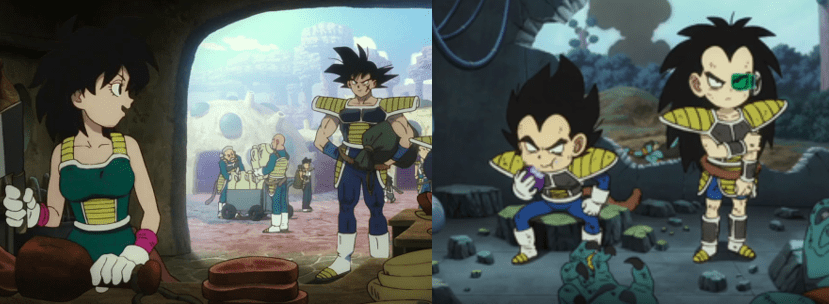
The Background:
I’ve talking in great detail about this before but you must be surprised to learn just how dark and violent the TMNT originally were; created and self-published by Kevin Eastman and Peter Laird back in 1984, the TMNT were influenced by the works of Frank Miller and comic books like Daredevil, the New Mutants, Ronin (Miller, et al, 1983 to 1984), and Cerebus (Sim and Gerhard, 1977 to 2004). As such, the four mutated ninjas were rendered in striking black and white and exposited stoic, stilted dialogue (largely through text boxes) in a clear pastiche of Miller’s trademark art and writing style. The extremely popular 1987 cartoon catapulted the TMNT to mainstream superstardom, transforming them from dark, violent anti-heroes to cute, cuddly, kid-friendly “Hero” Turtles. As such, for many children (myself included), our first taste of just how violent the TMNT could be was this live-action feature film, which blended elements of both the cartoon and the comics to create what is, for me, the quintessential TMNT movie. To bring the TMNT to life, the filmmakers wisely went to Jim Henson’s Creature Shop to create highly sophisticated suits and animatronics, giving the film a truly timeless feel not just because of nostalgia but the sheer quality of the film’s practical effects. Teenage Mutant Ninja Turtles, unsurprisingly, debuted at number one at the box office and went on to earn over $200 million, meaning it was a massive success. Perhaps due to the film’s subject matter and target audience, critics were somewhat divided on their opinion of the film but it has gone on to be a cult favourite for many and, of course, spawned two sequels (one which I believe to be under-rated and the other which was hot garbage).
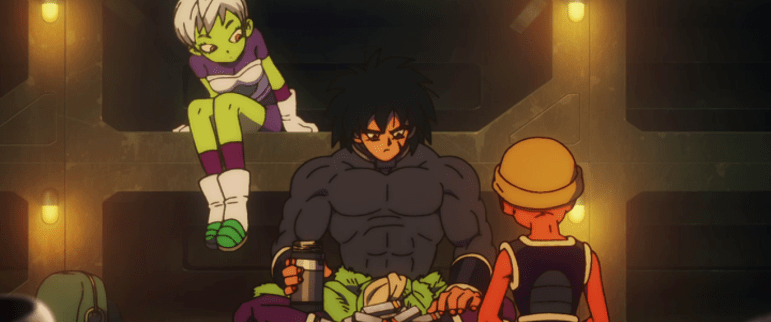
The Review:
The film begins by showcasing and emphasising the crimewave that is sweeping through New York City; April narrates in her broadcast the particulars of these events and we see how teenagers and youths are picking pockets and stealing stuff all over the place and delivering it to the Foot Clan. This sets up right away that the city is, in effect, under siege and the police are powerless to really stop it and hints towards possible corruption in the police department as a result of the Foot’s influence. Despite the warnings of Charles Pennington (Jay Patterson), her boss, April is determined to run with the story; she’s that typical reporter cliché we’ve seen hundreds of times in a multitude of media, always chasing the story and butting heads with those in authority, and seemingly ignorant to any threat against her person. This backfires on her when the Foot confront her, apparently looking to kill her, but she puts up a decent fight despite the odds being stacked against her, which really helps sell her as this tenacious and ballsy character.

April is a strong, ballsy ally to the TMNT who isn’t afraid to stand up to injustice.

April gains additional layers as the film progresses; though she first reacts with fear and horror at the appearances of the TMNT and Splinter, she soon becomes captivated by their origin story, sympathetic to their cause, and befriends them, showing genuine affection towards each of them and offering them a place to stay after Splinter is abducted and presumed dead. She also has a lot of friction with Casey Jones (Koteas) at first but the two eventually warm to each other as they spend more time together; though she doesn’t really factor into the film’s finale, she’s the glue that holds the characters together and drives the plot into motion. Plus, even better, she never becomes a simple damsel in distress and is, instead, both an audience surrogate and a useful ally when the TMNT are left directionless after Splinter’s kidnapping.

Raphael’s hot-headed nature causes him to clash with Leo and sees him seriously hurt.

The film does a great job keeping the TMNT hidden and obscured in the early going; they strike from the shadows and are only heard, rather than seen, until dramatically leaping into view in all their practical and animatronic glory. Each of the TMNT has a distinct look (Michelangelo (Rist/Sisti) is shorter and pudgier, and Leonardo (Tochi/Forman) is leaner and more toned, for example), colourations, and blemishes to help distinguish them beyond their different bandana colours. Each also sports a different and unique voice and accent, with Raphael (Pais) favouring more of a Brooklyn twang and Mikey having that “surfer dude” style of speech that the TMNT were known for in the cartoons. Additionally, each has their own personality and character arc in the film to help separate them and make them relevant; of them all, though, it is Raphael who gets the most recognisable story arc as he is the angry, antagonistic, hothead of the group. He expresses both ager and frustration at having lost his sai in the beginning, frequently defies Leo’s authority and leadership, and makes numerous trips to the surface in a ridiculously basic disguise. Of all the TMNT, Raph is the one who takes Splinter’s abduction the worst, reacting with a gut-wrenching cry of anguish and lashing out at both friend and foe alike. He ultimately pays the price for this when he is jumped and beaten by the Foot and spends the second act of the film semi-conscious in a bathtub. Faced with his mortality, he makes amends with his brother and the TMNT begin training anew as a complete group to take the fight to the Foot Clan.

The TMNT work best as a team, where they are a formidable force despite their bickering.

Leo’s character arc is subtle but present; he’s the field leader of the group but they are all relatively untested in live combat so there are some kinks to work out in the dynamic. Obviously, the most explicit example of this is seen in his frequent clashes with Raphael but we also see Leo struggling to hold his brothers together in Splinter’s absence and he is the only one balanced enough to successfully contact Splinter through meditation and eventually comes to lead the group in their battle against Shredder. Conversely, Donatello (Feldman/Tilden) doesn’t really get much of an opportunity to really stand out or do much in the film, showcasing none of the intelligence or technological ability he is generally known for; however, he is the only one to use bigger, more verbose words in his vocabulary, to notice when April’s apartment is becoming structurally unstable, and to help fix up the vehicle at the farmhouse so these elements aren’t entirely absent. He also attempts to address the implications of Splinter’s absence to the team and bonds with Casey during the sojourn at April’s farmhouse and gets a lot more to do than Mikey, who is the childish goof of the film and exists mainly to complete the group and act as the comic relief. He doesn’t even get highlighted during April’s narration at the farmhouse and has few stand out moments beyond being a loveable goofball and his cringe-worthy, but amusing, series of impressions. Still, the appeal of the TMNT has always been the group dynamic rather than the individuals; when Raph is injured, the team is noticeably fractured and struggles to coordinate their efforts without all four of them and, though they often clash and are very different, even volatile personalities at times, they work best when they are a team. The film really uses their amusing bickering, interpersonal conflicts, and complex interactions to sell the idea of the TMNT being four teenaged brothers; of course they don’t always get along and they are far from perfect but this serves only to highlight them as relatable and full-realised characters even when some of them get ore screen time and development than others.

Splinter is the TMNT’s wise mentor and father-figure whose absence affects them greatly.

The TMNT are guided in their growth and development by Splinter, their mentor and father-figure; each of the TMNT has a different relationship with Splinter, who is a calm and wise teacher who indulges but often despairs over their more childish ways and personality quirks. Leo treats Splinter with a reverence and respect, Mikey takes him somewhat for granted and isn’t willing to think about life without him, Don is the opposite and worries about Splinter’s mortality, and Splinter struggles to get through Raph’s anger. Splinter spends much of the film as Shredder’s captive but, while he is clearly suffering and, perhaps, close to death during this torture, he not only remains tight-lipped but is also able to impart his knowledge on to Charles’s son, Danny (Michael Turney), and make contact with the TMNT via semi-telepathic meditation. Splinter also gets his own arc in the film, having raised the TMNT using teachings he learned as an ordinary rat and, ultimately, confronting and besting the man who killed his master. April isn’t the only audience surrogate in the film though; we also get one of my favourite characters in the franchise, Casey Jones, the hockey mask wearing, sports-gear-wielding vigilante who initially clashes with Raphael before falling in with the TMNT and forming a friendship with them, especially Donatello. We don’t learn a massive amount about Casey or his motivations beyond vague hints towards an injury keeping him from going into professional sports, that he’s extremely claustrophobic, and that he appears to a homeless vagrant but Koteas brings a real likeable charisma and snark to the role and Casey ends up helping out a lot in the film’s finale by rescuing Splinter and confronting Shredder’s main henchman, Tatsu (Toshishiro Obata/Michael McConnohie).

Shredder cuts an intimidating figure but his plot to turn teens into ninja thieves is a bit suspect…

Speaking of Shredder, he’s a far more subdued and calculating individual compared to his boisterous animated incarnation. Rather than wishing to conquer the city, the world, or employ resources from another dimension, Shredder’s entire plot seems to be about building an army of ninja warriors and thieves, turning disillusioned teens into petty crooks and fostering their resentment of authority figures by allowing them to indulge their every whim. It’s not entirely clear what his larger endgame is but it’s enough to amass him a formidable criminal enterprise and to have the city in a state of…maybe not fear but definitely apprehension. Of course, it turns out that the Shredder is actually Oroku Saki, the man responsible for killing Splinter’s master. This isn’t revealed until right at the very end of the film, moments before the Shredder’s defeat at Splinter’s hands, but the TMNT’s battle against the Shredder is highly emotionally charged nevertheless thanks to the beating the Foot deliver to Raphael, Shredder being behind Splinter’s abduction, and Shredder’s assertion that their father-figure is dead. Unlike his lowly minions, Shredder is a formidable combatant, able to easily match and best the TMNT in a four-on-one battle and exuding menace and authority through this very presence.

The Nitty-Gritty:
Having grown up watching Teenage Mutant Hero Turtles as a child, I had no idea how dark and violent the original TMNT comics were; the film was in stark contrast to the TMNT media I was exposed to on a semi-regular basis and, at the time, I saw it as a darker, more serious reimagining of the concept. Still, it impressed me then and it still impresses now not just as easily the best live-action adaptation of the comic books but also how closely it sticks to the original comics. A few elements are changed here and there and the TMNT look and act a lot more like their animated counterparts, but this is all to the film’s benefit as the early comics took a while to actually make distinctions between the otherwise-interchangeable TMNT. It always bugged me how the TMNT have these weapons and martial arts skills and yet never seemed to use them; the film doesn’t show them skewering or slicing up their enemies like in the comics but it does make far better use of their weapons and skills to portray them as competent and dangerous combatants. That’s not to say that the film isn’t violent, though; it’s full of a violent and disturbing subtext that suggests a threat just as real as the gore seen in the comics. This is seen in the Foot’s merciless beatdown of Raphael and the big fight between the remaining TMNT in April’s apartment, which sees the Foot swinging axes and other edged weapons with clear deadly intent and the film’s glorious interpretation of the Shredder as a razor-clad foe who clearly means business and has much more in common with Darth Vader (David Prowse/James Earl Jones) than the bungling fool seen in the cartoon.

The film strikes just the right balance between goofy humour and violence.

One of the film’s most violent scenes comes when Tatsu, Shredder’s gruff, intense, mostly-silent underling beats one of their teenage inductees to within an inch of his life. In fact, it’s pretty clear that Tatsu does kill the boy and that a line was dubbed in to keep the victim alive but, even so, that (and the fact that the TMNT carry the clear bruises and injuries of their many battles) really sells the notion that the film isn’t some goofy cartoon and means serious business. The fact that it is able to take a concept as ridiculous as the TMNT and treat it so seriously is to be commended; the TMNT and Splinter are the most outrageous aspects of the film, with everyone who sees them reacting in shock, fear, disgust, and incredulity but, once you accept that these mutated beings exist, the film is almost the exact opposite of its animated counterpart. There’s humour, of course, largely thanks to the TMNT’s goofy antics and sense of humour but, for the most part, it’s a dark and gritty take that is a fantastic compromise between the violent comic books and the more kid-friendly cartoon. A central theme in the movie is that of family and fatherhood; Danny is an angry, angst-ridden teen who resents his father and wants to rebel against him (and authority in general). His emotional confusion is a pivotal sub-plot as he struggles to fit in with the Foot, doesn’t feel like he belongs or is appreciated at home with his Dad, and becomes conflicted after befriending Splinter.

Family and fatherhood are central themes to the movie’s plot.

Shredder acts as a surrogate father to Danny and his teenaged wannabe ninjas, offering the cheap thrills of sin and indulgence in return for their unwavering loyalty, and Splinter acts as a father to the TMNT. His absence deeply affects each of the brothers and he, too, misses them greatly during his capture and torment; this comes to a head during the group’s meditation practice where he expresses his love and pride for his “sons” and the five are reunited in the finale. The theme here is that family isn’t perfect: the TMNT continuously bicker and are somewhat dysfunctional as personalities despite how well they work together when in battle, Shredder is clearly using and manipulating the kids under his command, Danny has to accept this his father is only acting in service of his best interests, and Charles has to learn that Danny is becoming his own man now and to not treat him like a kid. Of course, the real star of the film are the incredible practical effects used to bring the TMNT and Splinter to life; the TMNT suits are incredibly well realised, full of distinct details and little nuances to distinguish each character and make them feel alive and real. Though their eye masks could be better (they look fake and glued to the their heads rather than being actual fabric coverings wrapped around their eyes), the animatronic heads are an incredible technological feat allowing the TMNT to express a range of emotions, expressions, and even eat pizza convincingly. Splinter looks the most like a practical puppet thanks to his frail frame and less humanoid proportions but he is nevertheless and impressive practical effect, looking wizened and being very expressive and dynamic in his range of motion, and I especially like how he has a wet nose.

The Summary:
Even now, some thirty years since its release, Teenage Mutant Ninja Turtles continues to impress; the practical suits and effects used in the film make it a timeless classic that is way better than it had any right to be and ensures that it holds up under close scrutiny in today’s digital age not just thanks to nostalgia but also because of just how much clear love and effort was put not just into bringing these ridiculous characters and concepts to life but also treating them with a level of respect and reverence that you rarely saw in adaptations of such concepts back then. As a compromise between the dark and violent comic books and the bright and goofy cartoon, Teenage Mutant Ninja Turtles still works surprisingly well; it’s probably the closest we’ll ever get to a straight one-to-one adaptation of the original concept since the TMNT’s wider appeal and commercialisation lie sin their accessibility and recognisable elements like their “surfer dude” attitudes, obsession with pizza, and individual colour schemes. Nowadays, it’s widely known how violent and dark the original concept was and we’ve seen those elements work their way back into the franchise’s later animated incarnations but it was this film that was the first to bridge that gap and to showcase just how much the original concept had been changed to appeal to a wider, more mainstream audience.

My Rating:

Rating: 5 out of 5.

Fantastic

What are your thoughts on Teenage Mutant Ninja Turtles? Do you think the film still holds up today or do the rubber suits and practical effects put you off? Which of the TMNT is your favourite and why? What was your first exposure to the TMNT as a kid and which of their various incarnations is your favourite? What do you think Shredder’s endgame was in the film and would you like to see another crack at the source material using modern technology to create more practical versions of the TMNT? How are you celebrating the TMNT’s debut this month? Whatever your thoughts on the TMNT, leave a comment down below.

Movie Night [Dragon Ball Month]: Dragonball Z: Broly – Second Coming


DragonBallDay

When the Great Demon King Piccolo was released upon the world, he broadcasted a message on television declaring May 9th as “Piccolo Day”…and promptly celebrated by announcing his ownership over the planet. Since then, May 9th has been officially recognised as “Goku Day” but, to make things simpler, I’m using this as a good excuse to celebrate all things Dragon Ball and spend this month taking a look back at one of the franchise’s most popular villains: Broly.


DBZBroly2Logo

Released: March 1994
Director: Shigeyasu Yamauchi
Distributor: Toei Company
Budget: ¥14.5 million
Stars: Kyle Herbert, Vic Mignogna, Kara Edwards, Laura Bailey, Robert McCollum, Sonny Strait, and Sean Schemmel

The Plot:
Whilst searching for the seven magical Dragon Balls with Videl (Edwards), Goten (ibid) and Trunks (Bailey) accidentally awaken the Legendary Super Saiyan, Broly (Mignogna), who crash-landed to Earth after escaping the destruction of New Vegeta. With Goku (Schemmel) dead, it’s up to the Saiyan children, and Goku’s oldest son, Gohan (Herbert), to confront Broly and end his threat once and for all.

The Background:
After debuting in the pages of Weekly Shōnen Jump back in 1984, Akira Toriyama’s Dragon Ball spawned not only an anime of its own but also a sequel series, Dragonball Z, in which series protagonist Goku had grown up to become a superhuman defender of the world. After being licensed by Funimation back in 1996, Dragonball Z largely dominated the lives of a generation of kids who were exposed to its depictions of good and evil and wacky, otherworldly concepts. A series of feature-length animated films accompanied Dragonball Z; though produced without the direct involvement of Toriyama, and thus largely considered non-canon, the films did introduce us to Broly, the hulking, terrifyingly powerful Super Saiyan of legend. The character became a near-instant hit, which no doubt contributed not only to him being only the second Dragonball Z movie villain to star in more than one film but also his multiple appearances in videogames and being the only movie villain to eventually be integrated in Toriyama’s recognised canon.

The Review:
Broly – Second Coming opens to show a Saiyan pod ominously crash-landing on Earth. Its passenger is, of course, a seriously wounded Broly, who is quickly frozen and entombed in ice. Apparently, mere moments before the destruction of New Vegeta in the last movie, Broly was able to make his way to a Saiyan craft and escape; quite how his pod knew to come to Earth isn’t really explained (I assume Paragus (Dartanian Nickelback) pre-programmed all of his crafts to head there since it was his goal to invade the planet, after all) and, while it is a bit lame to have Broly’s injuries not be as fatal as they appeared in the last movie, it’s no more lame than him being defeated by a simple punch. We quickly join Goten and Trunks, who are searching for the seven Dragon Balls in order to summon the Eternal Dragon, Shenron, for Gohan’s girlfriend, Videl. Their motivation for this literally extends to simply being that Videl wishes to meet the dragon, Trunks wants his own amusement park, and Goten wants to live in a land of cakes and ice cream; the quest for the Dragon Balls has often been arbitrary and played for laughs but you’d think the group could think of something a little more useful to wish for.

Videl, Goten, and Trunks are searching for the Dragon Balls to make arbitrary wishes.

The group stumbles upon a village of locals, which is largely destitute despite the abundance of crystals scattered across the landscape. According to the village shaman, Maloja (McCollum) they are under constant threat from a monster that demands human sacrifice; Videl is characteristically sceptical but the village elder, Zalador (Grant James), attests that Maloja’s demands are the only way to appease their mysterious monster. Noticing that Maloja has a Dragon Ball around his neck, Trunks offers to take care of their problem and the three of them lay out an elaborate feast to lure the monster out. When Goten is unable to resist his Saiyan hunger, he gets a slap from Videl that sends him bawling; his cries echo through the mountain and awaken Broly, who was traumatised by the cries of Goten’s father as a child. The villager’s monster turns out to be little more than a dinosaur, a common creature in the Dragon Ball universe, which the Saiyan kids quickly taunt and make short work of, much to Videl’s chagrin. They then roast the dinosaur’s remains and return to the village as heroes, receiving the Dragon Ball for their troubles and disgracing Maloja. Their good time is soon interrupted, however, when Broly emerges from his frozen tomb and begins destroying the countryside; still baring the scars and wounds from his battle with Goku, and driven to insanity in his desire to kill the Saiyan who has haunted his nightmares, Broly violently attacks Goten (who naturally closely resembles his father) and the others.

Broly goes right for Goten, mistaking him for Goku and decimating anyone in his way.

Immediately outclassed, the Saiyan children are little more than play toys for Broly’s raw strength. However, while Broly is attacking them and searching for them in their many periods of hiding, they manage to locate the Four-Star Dragon Ball, the last one they need to summon Shenron, and make a plan to hold out against Broly long enough to call upon the dragon for help .Sensing the battle, Gohan rushes to join the fight and is horrified to find Broly still alive. Well, maybe “mildly aggravated” would be a better way of putting it as even Gohan, despite having witnessed Broly’s bloodthirsty and brutal nature, seems more annoyed by Broly’s presence than fearful. Equally outclassed, Gohan is unable to best the Legendary Super Saiyan, even when transforming into a Super Saiyan 2 and throwing everything he has at Broly and with Goten by his side. With certain death looming their way, they desperately wish for more power (specifically, in Goten’s case, for his Dad’s presence) and, finally, the Dragon Balls decide to activate, bringing Goku’s spirit to the battlefield and joining his sons in obliterating Broly with his own ki sphere.

The Nitty-Gritty:
Videl is just as pig-headed as always but, thankfully, her role in the film is relatively short. It’s amusing to see her charge at Broly head-on but at least the film never depicts her as having a chance at going toe-to-toe with the Legendary Super Saiyan. One scene that is a source of constant amusement, however, is when Krillin (Strait) impersonates and imitates Piccolo (Christopher R. Sabat) to rescue Gohan, proving that Krillin alone is all the comic relief a Dragonball Z movie ever needs. Goten and Trunks are as annoying as ever in their arrogance and stupidity; they constantly avoid serious harm simply by virtue of being little kids and having been basically born Super Saiyans. Realistically, they would never stand a chance against Broly based on his power level from the last movie, especially at this point when they haven’t even mastered fusion yet.

Even Gohan is no match for Broly’s raw power, which really isn’t all the surprising…

As expected, the children care more about food, peeing, sleeping, and looking cool rather than actually being capable fighters, lucking into a lot of their advantageous positions due to dumb luck and the raw power of their Super Saiyan forms rather than skill or strategy. The same largely applies to Gohan, who was continuously noted to be far weaker as a young adult compared to when he destroyed Cell (Dameon Clarke) as a teenager. Indeed, Gohan’s power at this point was presumably far lower than his father’s when he fought Broly, and Goku could only defeat the Super Saiyan through the power of his allies. Because of this, the battles against Broly lack the impact and danger of those in the last film; rather than seeing Dragonball Z’s most powerful characters helpless and beaten to within an inch of their lives by this monstrous new foe, Broly – Second Coming is more about the remaining protagonists trying to survive until Shenron decides to hear their wish and summon Goku to the battlefield.

A triple Father-Son Kamehameha is a fitting end for Broly.

As a result, Broly’s power and menace seems far less impressive this time around; injured and driven to a near-mindless rage, he even seems leaner and less imposing that in his debut appearance. Though he makes short work of the children, and Goten, it’s nowhere near as impressive as the way he no-sold the combined attacks of Goku, Vegeta (Sabat), and Future Trunks (Eric Vale), characters all far more powerful than those that appear in this movie. Sadly, despite his raw power and constant rage, Broly is a bit of a joke in this movie; he is easily outwitted and eluded by the kids (despite the fact that he should be able to sense their ki) and even gets pissed on by Trunks at one point and still fails to live up to even half of the threat he posed in the last film. Once Broly finally powers up to his “Legendary Super Saiyan” form, much of his former glory begins to return as he pummels Goten mercilessly, to the point where he is forced to beg for his father’s help. This, of course, leads to a pretty decent call-back to the iconic “Father-Son Kamehameha” that finally destroyed Cell as Goku joins his sons, in spirit, and, after Trunks follows his own father’s example and lands a minor blow that is enough to distract Broly, the three Saiyans vaporise Broly once and for all. It’s a great moment and trumps Broly’s disappointing end from the last movie, finally giving him a fitting death, but the entire film is a poor imitation of Broly – The Legendary Super Saiyan.

The Summary:
Broly – Second Coming could have been so much more than it ended up being; thanks to the time period at which the film takes place (essentially some time after the end of the “Cell Games Saga”), we’re left following Goten and Trunks for the majority of the film’s runtime and, biased though I may be, I never found these characters that interesting; they’re an annoyance at the best of times and aggravating at the worst, constantly messing about and acting like…well, spoiled, arrogant little kids. I would have much preferred that the film focus on Gohan and his personal battle against Broly in a recreation of his battle against Cell; since much of the film borrows from these recognisable elements anyway, I feel it would have been far stronger if it had gone down this path and included Vegeta, Goten, and Trunks as supporting characters rather than not at all and primary protagonists, respectively. Either way, Broly is a neutered threat; he lacks most of the imposing menace and destructive power so brilliantly showcased in his debut film and seems to struggle against a handful of opponents who are far weaker than those he faced last time, making for a bittersweet reunion with one of Dragon Ball’s more ferocious villains.

My Rating:

Rating: 2 out of 5.

Could Be Better

Did you enjoy Broly – Second Coming? How do you feel it holds up compared to Broly – The Legendary Super Saiyan? How do you feel about Goten and Trunks and the missed opportunity to have Gohan become the series’ main protagonist after Goku’s death? Do you agree that Broly was severely neutered in this film or do you, perhaps, rank Broly – Second Coming quite high compared to other Dragon Ball movies? Whatever you think about this film, feel free to share your memories of Dragon Ball in the comments below.