Movie Night: Captain America: The First Avenger

Released: 22 July 2011
Director: Joe Johnston
Distributor: Paramount Pictures
Budget: $140 to 216.7 million
Stars: Chris Evans, Hugo Weaving, Hayley Atwell, Sebastian Stan, Dominic Cooper, Tommy Lee Jones, and Stanley Tucci

The Plot:
Steve Rogers (Evans) is desperate to enlist in the United States Army and combat the Axis Forces but is repeatedly rejected because of his frail body. Intrigued, Doctor Abraham Erskine (Tucci) transforms Steve into a veritable superhuman. With World War Two in full swing, Johann Schmidt/The Red Skull (Weaving), acquires the mysterious Tesseract and Steve engages in a crusade to bring down his Hydra forces as Captain America.

The Background:
Captain America: The First Avenger was the fifth film in the Marvel Cinematic Universe (MCU) but a big-screen adaptation of Marvel Comic’s patriotic super soldier was actually in development as far back as the year 2000. After settling an ugly lawsuit regarding the character, and bolstered by the early success of the MCU, producer Kevin Feige soldiered on (no pun intended) with his plan to introduce some of Marvel’s classic characters in solo films before bringing them together for a big team up and chose to focus on setting the stage for Cap’s “man out of time” story arc in the wider MCU. After signing director Joe Johnston, production began in earnest in 2010; after some hesitation, Chris Evans (who had previously starred as Johnny Storm/The Human Torch in separate, unconnected Marvel adaptations) joined the film in the title role and cutting edge digital effects were used to portray him as a weak and frail man prior to showcasing his impressive physique. Perhaps because audience anticipation for the upcoming Avengers movie was reaching its peak, Captain America: The First Avenger was a resounding box office success; the film made over $370 million in worldwide gross and was met with widespread critical acclaim, though some noted that it was maybe playing things a little too safe, which I agreed with at the time. Nevertheless, the film’s success led directly into the aforementioned Avengers movie and galvanised Captain America as an icon for an entirely new audience, one who would go on to become a major part of the MCU as it continued to unfold in subsequent years.

The Review:
Captain America: The First Avenger is bookended by scenes set in the then-modern day; the opening sequence depicts a team of scientists (and a few representatives from the Strategic Homeland Intervention, Enforcement and Logistics Division (S.H.I.E.L.D.)) discovering a futuristic aircraft buried in the Arctic that houses the frozen body of Steve Rogers. From there, the film jumps back to 1942, at the tail-end (and height) of the Second World War; Nazi Germany is aggressively spreading death and destruction across most of Europe and the Allied Powers (mainly the United Kingdom and the United States of America, especially in Hollywood) are frantically trying to push them back. As a result, the U.S. continues to ask for volunteers to join her ranks to fight for the ideals of freedom and equality. None embody these beliefs more than young Steve Rogers, a frightfully malnourished man whose family were killed as a result of the War and who has been repeatedly denied his time in service of his country due to his many physical ailments.

Steve is a frail, sickly young man whose heart and determination are unmatched.

Frustrated at his inability to “do his part”, Steve upholds his ideals on the home front; even when he is clearly physically mismatched against bullies and braggarts, Steve continues to get up and fight back in an effort to prove himself (and to vent his frustrations). While his friend, Sergeant James Buchanan “Bucky” Barnes (Stan) is often on hand to help him out, both physically and with the ladies, Steve desperately wishes to contribute to the war effort despite him being basically infirm and more than a little unlucky in love. His latest effort to lie his way into active service catches the attention of Dr. Erskine, who is inspired by Steve’s moxie and his lofty idealism. Dr. Erskine sees Steve as the perfect candidate to undergo the super soldier procedure not because he is a good soldier, but because he is a good man and Steve, who has no desire to kill anyone and simply wishes to stand up to bullies, jumps at the chance to be a part of “Project: Rebirth” and the Strategic Scientific Reserve (S.S.R.). While Colonel Chester Phillips (Jones) is less than impressed with Dr. Erskine’s selection above the other far more physically capable recruits in his regiment, Dr. Erskine remains resolute in his choice and Steve’s adaptability and never-say-die mentality catches the admiration of British agent Peggy Carter (Atwell). As part of their unit, Steve is put through the paces of basic training and demonstrates his bravery on numerous occasions but the one that stands out the most is when he willingly throws himself upon what is believed to be a live grenade to shield his fellow soldiers.

Cap soon finds himself leading the charge in co-ordinated strikes against Hydra facilities.

The super soldier serum is more than just a simple shot in the arm or a light show; in conjunction with technology provided by Howard Stark (Cooper), Erskine subjects Steve to a series of deep injections and a bombardment of “Vita Rays” that augment his physical stature and abilities far beyond those of a normal man. Now tall, muscular, and sporting a rapid metabolism, Steve is made a veritable superhuman but at the cost of Dr. Erskine’s life as Hydra agents strike following the procedure and cause the super soldier serum to be lost. Angered at being denied an army of super soldiers, Philips decides not to utilise Steve’s amplified abilities and he is, instead, reduced to touring the nation as the colourful “Captain America” to promote war bonds rather than fighting alongside the other troops. When Bucky and his unit are declared missing in action in Berlin, Steve disobeys Philips’ direct orders and goes in alone to rescue them; in the process, he meets his Nazi counterpart and learns of Hydra’s plan to attack major American cities with his Tesseract-powered weapons. Alongside Bucky and his unit, the “Howling Commandos”, Steve is officially drafted into the US army as Captain America and given an amazing suit of red, white, and blue and a circular shield made of the supposedly-indestructible “Vibranium” and sets out to put a stop to the Red Skull’s goals of world conquest. In the process, Steve earns not only the respect of his peers and fellow soldiers but also (after some awkward miscommunication) the love of Carter; however, his crusade against Hydra soon becomes as much of a personal vendetta as a mission to safeguard the world and Steve is soon forced not only into a desperate battle against the Red Skull but also into making the ultimate sacrifice for the greater good.

The Red Skull, and Weaving in general, is one of the film’s biggest highlights.

While the super soldier procedure is a success with Steve, Dr. Erskine’s earlier efforts were just as successful but on the opposite end of the spectrum. Johann Schmidt is an extremely charismatic and learned man; with a fascination and deep knowledge of legends and mythology, he seeks the ultimate tangible power in the form of the Tesseract. To acquire this magical object, he ransacks the small town of Tønsberg using both the imposing force of Hydra and his enigmatic personality. As charming as he is ruthless, Schmidt doesn’t hesitate to kill innocents in his pursuit of power and, having obtained the Tesseract, his goal expands considerably; thanks to the near-limitless power of the cosmic cube, Schmidt and his right-hand man, Doctor Arnim Zola (Toby Jones), is able to develop incredibly advanced weaponry almost overnight and, very quickly, he sets his sights on conquering the world not in the name of his Fuhrer but in the name of Hydra and the Red Skull! Subjected to an incomplete version of the super soldier process, Schmidt has gained incredible superhuman abilities and found his intellect and brutality augmented a thousand-fold but at the cost of his physical appearance. Now sporting a blood red visage beneath a life-like human mask, the Red Skull is a horrific and formidable adversary even without the Tesseract but, once he begins experimenting with its powers, he comes almost unstoppable. Thanks to Weaving’s unparalleled screen charisma and some absolutely top-notch practical effects, the Red Skull is brought to gruesome life; as great as many of the film’s effects, period-appropriate technology and attention to detail, and even Cap’s costume are, the Red Skull’s appearance and portrayal are a constant highlight for me every time I watch Captain America: The First Avenger and I never fail to feel like we were robbed of subsequent appearances by the villain.

The Nitty-Gritty:
When I first saw Captain America: The First Avenger, I was extremely eager to get the film out of the way as it was the final step towards the long-awaited Avengers film; as a result, while I enjoyed it at the time, I wasn’t exactly blown away by it. However, in the years since, I have come to appreciate what an impressive piece of superhero cinema it is. Setting the vast majority of its run-time in the 1940s was a brilliant way to separate it from other MCU movies and to devote the proper time to establishing the ideals and morals of Captain America, a character who could easily be seen as hokey and cheesy in modern times. Additionally, like I mentioned in my review of Iron Man (Favreau, 2008), one of the things that really helped the MCU (and other superhero movies of this time) out was the quality of its casting. Although the film doesn’t ask much of Tommy Lee Jones other than to be every gruff and jaded military commander you’ve ever seen, he steals every scene he’s in; Hayley Atwell is both gorgeous and impressive as Agent Carter (a woman living in a man’s world who is striving to prove herself as much as Steve is); and even the smallest roles are bolstered by some well-placed humour and appealing character actors.

The film’s action and aesthetic are bolstered by Chris Evans’ appealing performance.

Considering how grounded and gritty the film is compared to the other MCU films from that era, Captain America: The First Avenger is no slouch in the action and effects department; while some of the special effects are a little iffy compared to other MCU films as the film came out around the time when it was in-vogue to cater to the 3D market, the costume and set design is incredibly impressive. All of the Hydra forces and weaponry are ripped right out of the comic books, the quaint 1940s technology is given a suitably futuristic flair thanks to the efforts of both Stark and Hydra, and once Cap launches his campaign against the Red Skull the film really ramps up. Thanks to his superhuman metabolism, Cap is virtually inexhaustible and a formidable opponent despite his lack of training and experience compared to his fellow soldiers; crucially, he’s also still a man and capable of being injured, which helps as much as his uncompromising commitment to justice and fairness to make him extremely easy to root for. Much of this is down to Evans’ likeable charisma; he portrays Steve as a shy, quirky man just trying to do the right thing even after he balloons out into a muscular physique and it’s impossible to not be won over by his idealism and rugged good looks.

After losing Bucky, Cap defeats the Red Skull and makes the ultimate sacrifice.

This goes a long way to empathising with Steve after he is left devastated when Bucky falls to his apparent death during his team’s successful mission to capture Zola; although anyone who is familiar with the characters and comics knew that Bucky was destined to return later in life, this is still a powerful scene and motivation for Cap’s renewed efforts to strike back against Hydra using information given to the S.S.R. by the seemingly remorseful Zola. This leads to a physical confrontation between Cap and the Red Skull on a Hydra aircraft carrying devastating weapons of mass destruction. Though physically even, the fight remains a brutal slugfest between the two that sees the Tesseract damaged; when he touches the cube, Schmidt is seemingly vaporised by an intense blast of rainbow energy and Steve is left with no choice but to pilot the craft to a suicide dive into the frozen wasteland. Of course, the film ends with Steve awakening in then-modern times and finding the world has moved on over the last seventy years; though despondent at having missed his chance with Peggy, Steve is immediately approached by Nick Fury (Samuel L. Jackson), director of S.H.I.E.L.D., with a new mission to defend the world from an approaching danger. One aspect that I’ve always enjoyed about the film is the incredible attention to detail to its setting and the wider MCU; not only do we get the prerequisite cameo from Stan Lee but Cap dons a fabric version of his costume that is a direct one-to-one interpretation of his comic book counterpart (and still somehow looks better than the suit in the 1990 movie). The film also includes a brief cameo from Jim Hammond/The Human Torch and iconic Howling Commandos such Timothy “Dum Dum” Dugan (Neal McDonough). Additionally, when we’re first introduced to Zola, he’s framed in a magnifying glass to resemble the android body of his comic book counterpart, Hydra’s Tesseract weapons emit the same distinctive whine as Tony Stark/Iron Man’s (Robert Downey Jr.) Repulsor Rays, and Schmidt makes frequent references to Norse mythology.

The Summary:
Honestly, of all the colourful superheroes in Marvel Comics, I’ve never had much of an affinity for Captain America. This may have something to do with the fact that I am British and not really much of a patriot but, in my experience, he generally falls into the unenviable role of the staunch, righteous leader rather than being an especially interesting or engaging character. My indifference towards the character was changed by this film, and Cap’s portrayal in the MCU in general, though. As I mentioned, on first viewing, I didn’t think much to it; it was just another by-the-numbers superhero origin story that was a necessary step on the road to the Avengers movie and, while I enjoyed it, it didn’t exactly blow me away beyond some impressive special (and practical) effects and performances. Very quickly into the MCU’s second phase of movies, though, I came to appreciate just how entertaining this film is; all too often, many people complain about the MCU being too derivative and indistinguishable but I generally believe to be nonsense as the first phase of films alone dabbles in science-fiction, fantasy, and this period piece that all mesh as part of a greater whole thanks to the film’s having a focused goal in mind. Captain America: The First Avenger is, perhaps, one of the under-rated gems of the MCU that quickly became eclipsed by its bigger, better sequel but make no mistake about it, this is one hell of an entertaining watch that is full of action, heart, and some fantastic performances from the likes of Chris Evans and, especially, Hugo Weaving.

My Rating:

Rating: 4 out of 5.

Great Stuff

What did you think to Captain America: The First Avenger? Were you a fan upon first viewing or, like me, did you come to appreciate it more over time? What did you think to the film’s presentation and special effects, especially the Red Skull and Captain America’s suit? Were you also disappointed that we never got a rematch between Cap and Schmidt? Where does this film rank against the other Captain America movies and the larger MCU? How are you celebrating Captain America this month? Whatever your thoughts, drop a comment below and be sure to pop back for more Captain America content throughout July.

Movie Night: Independence Day: Resurgence

Released: 24 June 2016
Director: Roland Emmerich
Distributor: 20th Century Fox
Budget: $165 million
Stars: Liam Hemsworth, Maika Monroe, Jessie Usher, Jeff Goldblum, Charlotte Gainsbourg, and Bill Pullman

The Plot:
It’s been twenty years since the Earth successfully defeated an alien invasion and, since then, humanity has reverse-engineered the alien technology to fortify their defences in anticipation of a second attack. However, humankind is overwhelmed when a gargantuan alien ship arrives and begins drilling into the Earth’s core, forcing the survivors to scramble to launch another desperate counterattack.

The Background:
Independence Day (ibid, 1996) was a massive financial hit back in the day; the film was the highest-grossing movie of 1996, made nearly $820 million at the box office, and inspired a renewed interest in blockbuster disaster films. The film was accompanied by a slew of merchandise and helped catapult star Will Smith into a leading man in Hollywood. And how did 20th Century Fox capitalise on this success? By waiting twenty years to produce a sequel! To be fair, writer/producer Dean Devlin had been planning a sequel since as early as 2001 but, despite being inspired to write a sequel in response to the September 11 attacks, the project was ultimately abandoned when he and director Roland Emmerich were unable to hash out the story. The two finally settled on a treatment in 2011 and planned to film two sequels back-to-back, however Fox refused to meet Smith’s salary demands and his character was written out of the plot. The filmmakers resolved to further explore the alien’s society and take advantage of the time jump to tell a generational story, and aimed to outdo the destruction seen in the first film. After finally settling on a title, Independence Day: Resurgence released to lacklustre reviews and failed to match the success of its predecessor with its $389.7 million box office. Although Emmerich’s plans for a third film were thrown into doubt by this result, he remained hopefully that the final chapter would be produced someday.

The Review:
It’s easy to forget just how big a deal Independence Day was when it first came out; it was massively hyped, accompanied by loads of trailers and posters and merchandise, and my friends and I often found ourselves watching the VHS time and again back in the day. Since then, there have been other, better alien invasion and disaster movies, for sure, and the film has probably lost a lot of its shine but it’s fun enough to return to every now and then for Will Smith’s charismatic performance, Jeff Goldblum’s trademark quirkiness, and Bill Pullman’s rousing speech (as well as the special effects and all that good stuff). However, I can’t really say that I was super hyped for a second film, especially one that took twenty years to be made; maybe if the sequel had come within five years of the first I might’ve felt more enthusiastic but, as it was, it just seemed like a waste of time and way too late in the day.

A group of young, sexy newcomers leads the fight against the renewed alien threat.

One element where the film really loses points is in the absence of Will Smith; obviously, these films are ensemble pieces and aren’t about any one character but Will Smith was a massive highlight  of the first film and, while I like the idea of young, sexy newcomers having to fend off a new alien invasion, none of them have even half the charisma of the Fresh Prince. In his place, and largely supplanting all of the roles from the first film, are three youths, two of whom are grown-up versions of characters who were children in the first film: Lieutenant Jake Morrison (Hemsworth), his fiancée (and daughter of former President Thomas Whitmore (Pullman)) Patricia Whitmore (played by the gorgeous Maika Monroe), and Captain Dylan Hiller (Usher), and the stepson of Will Smith’s Steven Hiller. It’s revealed in the film that Steve died between films during a test flight and Dylan has followed in his heroic stepfather’s footsteps to become Captain of the Earth Space Defense; however, while these three had a tight friendship prior to the events of the film, there are lingering hostilities between Dylan and Jake after their competitive nature almost led to Dylan dying during a test flight with Jake.

Returning character are shocked to learn of the aliens’ return and haunted by their experiences.

The three are joined by Lieutenant Rain Lao (Angelababy), daughter of the Moonbase’s stern commanding officer, Jiang Lao (Chin Han), and Lieutenant Charlie Miller (Travis Tope), Jake’s best friend and wingman who immediately falls for Rain and serves as the film’s lovable, if goofy, comic relief who I was honestly surprised to see survive to the end. As before, a big part of the movie is concerned with following the efforts of the military in scrambling to answer the aliens’ renewed threat. Primarily represented by General Joshua T. Adams (William Fichtner), the military are absolutely overwhelmed when another alien mothership, this one even bigger than the last, arrives in response to a distress call sent by the invaders of the first film. Of course, Independence Day: Resurgence also features a number of returning characters; in the twenty years since the last film, Thomas Whitmore (still largely refereed to as the President or “Mister President” by other characters as a sign of respect) has been plagued and driven to near madness by recurring nightmares and visions of the aliens’ return. David Levinson (Goldblum) now commands a great deal of authority as the director of the Earth Space Defense and the American government’s leading researcher on extraterrestrial technology; although he reunited with his ex-wife in the last film, she appears to have died between movies and is replaced by a poor attempt at a romance between David and Doctor Catherine Marceaux (Gainsbourg), who is researching the telepathic link individuals such as Whitmore share with the aliens. David’s father, Julius (Judd Hirsh) also inexplicably returns, now a successful author, as does Doctor Brakish Okun (Brent Spiner) who, despite clearly being killed in the first movie, is revealed to have merely been in a twenty year coma and who suddenly awakens as the aliens draw closer to Earth.

I find it difficult to believe that humanity was able to rebuild and excel as much as they have.

One of the primary aspects of Independence Day: Resurgence that never sat right with me is the idea that humanity was able to reverse engineer the alien technology to create clean energy, establish a space colony on the Moon, retrofit their iconic death ray into a defensive system, and basically craft a utopia for themselves in a mere twenty years. I have no doubt that humanity at its peak might have been able to accomplish some of this but the Earth was decimated in the first film; countless billions were lost, entire cities and infrastructure wiped off the planet, but yet this film expects me to believe that whatever was left of humankind was able to pull together enough resources to make space-capable fighter jets and all kinds of ludicrously futuristic technology that didn’t really exist in the first film? It’s pretty crazy and I think the filmmakers just got a bit carried away; utilising alien technology to improve our weapons and defences would have been much more believable but I guess if you’re gonna go big, you go all in! This ridiculous notion results in the reinforced Area 51 and the aforementioned Moonbase, which is populated by an international crew and who monitor space for potential threats. Naturally, Jake is the hot-headed, insubordinate pilot whose reckless actions initially see him initially branded as a liability but who ends up being instrumental in the eventual counterattack (of course, it also helps that he’s engaged to the ex-President’s daughter and is good friends with David). One aspect of the film that isn’t as prominent as it could have been is the idea that the alien invasion actually continued after the events of the first film; one of the alien ships landed and its inhabitants continued the war on the ground, where they clashed with Dikembe Umbutu’s (DeObia Oparei) forces for ten years and it is through Umbutu’s prophetic visions and drawings that the arrival of a mysterious sphere is first hinted at. This sphere arrives in our solar system via a wormhole and, fearing a possible alien attack, President Elizabeth Lanford (Sela Ward) makes the decision to pre-emptively shoot it down, unaware that it is actually there to assist humanity.

The Nitty-Gritty:
Independence Day: Resurgence seems to be trying a little too hard; it goes big, but maybe too big, in its attempts to not only recreate the hype and feel of the first film, but to surpass both. Independence Day was kind of like lightning in a bottle but the sequel seems like a shallow attempt to try and out-do its predecessor in every way. While a lot of this is reflected in the film’s far more bombastic scenes of global destruction and devastation, it’s also in some of the performances; try as Hemsworth and Usher do, they’re unable to recreate exactly the same witty dynamic as Smith and Goldblum. It pains me to say that Goldblum appears to have been let off the leash, turning David into a caricature of himself rather than naturally progressing his character thanks to the actor overindulging his trademark quirks and mannerisms.

The destruction is definitely bigger but I wouldn’t necessarily say it was better…

Of course, the actual aliens eventually do make their dramatic and violent return to Earth; arriving in an outrageously titanic alien ship that allows the invaders to literally land on the planet, the aliens cause more destruction than ever before thanks to their ship exuding its own gravitational pull. This literally tears the surface of the Moon to shreds and upends London and China, turning skyscrapers, vehicles, and the very land itself into hazards that our characters have to desperately navigate through to survive. As much as I criticise the film for trying too hard, it’s hard to not be impressed when the mothership ploughs into Earth’s atmosphere and absolutely wrecks cities through its sheer mass alone. Additionally, their weapons technology is just as daunting as ever; their impenetrable shields alone continue to make them a formidable and nigh-invincible force and not even their own death ray is capable of getting through their shield as they simply destroy all of the Earth’s retrofitted satellite defences as if they weren’t even there. While much of the film is focused on the desperate attempts by the world’s military to fend off the alien invaders, there are a few scenes depicting Julius leading some kids through the wreckage and carnage that exists primarily to add further stakes to the finale. As before, the Earth’s attempts at a counterattack are initially futile, despite all their bluster and gung-ho enthusiasm to avenge their loved ones, largely because humanity repurposed all of the alien technology except their shield-generators for their fighter jets. This results in another doomed aerial assault that leaves Jake, Dylan, and Rain presumed dead after the alien Queen lures them into trap that leaves them stranded on her mothership before destroying the remainder of Earth’s satellites and killing President Lanford.

After taking down the convenient alien Queen, humanity is recruited into an interstellar war.

Yes, this time around the aliens aren’t just “locusts” who ransack world after world for their natural resources but are revealed to be under the control of a Queen and consist of an always-convenient hivemind. This results in a desperate final battle against the Queen, who is protected by her own personal energy shield, that ever-so-helpfully results in the invaders being destroyed once she is finally taken down. Although the alien prisoners rejoiced at the arrival of their Queen just as President Whitmore and Dr. Okun feared her presence, they reacted in violent fear of the sphere, which turns out to house an artificial intelligence (Jenna Purdy) that gives the aliens an anticlimactic name (“Harvesters”) and reveals that the invaders have destroyed so many worlds and civilisations that the sphere has amassed a veritable army of refugees on a distant world who are committed to destroying the Harvesters forever. A highly advanced intelligence, the sphere is the last of its kind and the primary target of the alien Queen, who bursts free from her ship in a massive set of battle armour specifically to get to the sphere and extract the location of his planet from its memory. In a desperate bid to protect the sphere and take down the Queen, President Whitmore sacrifices himself to lure the Queen out and put a stop to this latest invasion attempt. In the aftermath, Dr. Okun is thrilled to reveal that the sphere is so impressed by our tenacity that it wants humanity to head out into the stars and lead a massive counterattack against the Harvester’s home world in one of the most blatant and ill-advised sequel hooks I’ve ever seen.

The Summary:
Look, I enjoy a big, dumb sci-fi film as much as the next guy but Independence Day: Resurgence is just trying way too hard; the young actors are attractive and enthusiastic enough but the film just lacks the same star power and pizzazz as the first film. Since the sequel hits many of the same beats as the original (incalculable global destruction, a futile aerial assault, a rousing speech from President Whitmore, and a desperate final gamble), it’s nearly impossible to not make comparisons between it and the first movie and, despite being bigger in almost every way possible, Independence Day: Resurgence ultimately fails to live up to the standards set by its predecessor and the expectations of twenty years in Development Hell. Yes, the devastation is impressive and the special effects are incredible (the aliens in particular look more fearsome than ever…when they are actually seen) but the film just doesn’t land in the same way as the original. Maybe it’s nostalgia, maybe it’s the weight of expectation, maybe it’s the outrageous levels of destruction but it just feels like the magic is gone and all that’s left is a shallow attempt to recreate a blockbuster hit long after its time in the sun.

My Rating:

Rating: 2 out of 5.

Could Be Better

What are your thoughts on Independence Day: Resurgence? Do you think that it lived up to its predecessor or do you agree that it was twenty years too late? What did you think to the far more devastating scenes of global destruction and the depiction of the far larger alien ship? Did you buy into the idea that humanity was able to so capably rebuild society after the first film and repurpose the alien technology? What are your thoughts on the changes made to the aliens and their hierarchy? Would you have liked to see more films continuing the story and what are your plans for Independence Day today? Whatever your thoughts, feel free to leave a comment down below.

Movie Night [Superman Month]: Superman IV: The Quest for Peace


In 2013, DC Comics declared the 12th of June as “Superman Day”, a day for fans of the Man of Steel the world over to celebrate Clark Kent/Kal-El/Superman, the superpowered virtue of “Truth, Justice, and the American Way” who is widely regarded as the first ever costumed superhero. This year, I’ve been spending every Sunday of June celebrating the Man of Steel by expanding Superman Day to “Superman Month“.


Released: 24 July 1987
Director: Sidney J. Furie
Distributor:
Warner Bros. / Columbia-Cannon-Warner-EMI Distributors
Budget:
$17 million
Stars:
Christopher Reeve, Gene Hackman, Margot Kidder, Mariel Hemingway, Jon Cryer, and Mark Pillow

The Plot:
When criminal mastermind Lex Luthor’s (Hackman) nephew, Lenny (Cryer), breaks him out of prison, he enacts a diabolic scheme to destroy Superman (Reeve) by creating his own super-powered minion, “Nuclear Man” (Pillow/Hackman). As if this threat wasn’t bad enough, Superman (and his alter ego, Clark Kent) is suffering a crisis of conscience and the heart as he struggles to keep the world from nuclear destruction and to balance his love life.

The Background:
Superman III ( Lester, 1983) might have been a critical disappointment but producers Alexander and Ilya Salkind were happy to produce a fourth film if its predecessor made over $40 million at the box office. Somehow, it did, but the duo’s financial concerns and Reeve’s reluctance to return to the franchise ultimately saw them selling the Superman rights to the Cannon Group for $5 million in June 1985. Cannon managed to entice Reeve back with a $6 million payday, additional creative control (the anti-nuclear angle of the film was his idea), and financing for another project. However, the production was off to a rocky start almost immediately; Richard Donner turned down the director’s chair, Reeve clashed with Wes Craven and was unable to convince the studio to hire Ron Howard, and co-star Jon Cryer described the entire film as a “nightmare” to shoot. Thanks to Cannon’s ongoing legal issues, the film’s budget was routinely slashed, an entire sub-plot was cut, and the once-vaulted special effects took a dramatic decline in quality. Unsurprisingly, Superman IV: The Quest for Peace was a dismal box office bomb; the film fell short of $40 million, which is frankly pathetic after the success of the first film, and has been repeatedly touted as not only the death knell of the franchise but one of the worst movies ever made.

The Review:
Superman IV: The Quest for Peace is another difficult one for me to revisit; as a kid, I remember being entertained by the film, which was full of bright colours, action, and another physical confrontation for the Man of Steel but, as many have stated in the years since, it can’t be denied that the series had taken a massive and unexpected dip in quality since the ground-breaking original and its influential sequel. The film opens with a poignant scene at the Kent farm where, following the offscreen death of his mother, Clark is preparing to sell his childhood home. Before doing so, he retrieves a glowing Kryptonian energy module from the remains of his ship, which is rendered forever cold and silent as a result, and Clark’s day-to-day life is made all the more complicated by the interference of David Warfield (Sam Wanamaker) and his daughter Lacy (Hemingway) in the running of the Daily Planet; annoyed at the Planet’s lack of profitability, the Warfield’s put pressure on editor-in-chief Perry White (Jackie Cooper) to sex-up the traditional publication and the elder Warfield is so full of himself that he makes his daughter’s promotion front page news!

An odd three/four-way love triangle develops between Clark, his alter ego, and his leading ladies.

Although Lana Lang (Annette O’Toole) is sadly missing from the film and no mention is made of her, an awkward love triangle (more like a love square, I guess) does become a sub-plot of the film when newcomer Lacy takes a shine to Clark Kent. This leads to such “hilarious” moments as Clark visiting a gym with Lacy and feigning difficulty with the machines, and a laughable sequence where Clark and Lacy double date with Lois Lane (Kidder) and Superman, forcing Clark to dive in and out of costume to keep both women happy before thankfully being called away by a greater threat. The film even unashamedly rips off the Superman/Lois romance from the first two films; having a crisis of conscience regarding the world’s nuclear crisis, Clark reveals his identity to Lois, takes her on a terribly composited flight around the world, and asks for her advice before wiping her memory once again. While there is a poignant moment to be found here when Clark laments how unfair it is that he is forced to share himself with the entire world rather than the woman he loves, this largely amounts to an uncomfortable bit of selfishness on Superman’s part since he freely toys with Lois’s emotions and her memory rather than finding a less invasive way of decided what he should do about the looming threat of nuclear war.

After a moral debate, Superman ultimately decides to rid the Earth of all nuclear weapons.

Indeed, perhaps the film’s most promising and appealing element is the question of worldwide nuclear destruction; I know a lingering fear I’ve always had about our world is the presence of nuclear weapons, just one of which could cause a cataclysmic disaster that could end all life on the planet, and tackling this issue with Superman has a lot of potential that really deserves to be in a better movie. When begged to intervene in the nuclear arms race, Superman finds himself torn between his morals since the ghosts of the Kryptonian council vehemently forbid him from interfering in human history. Ultimately, however, Superman decides that he loves the Earth too much to see it go the same way as Krypton and announces to the world’s governments that he is going to rid the planet of all nuclear weapons. He does this by, of course, having them all shot into space so he can gather them up in a giant net and hurl them into the Sun, an ingenious solution that potentially means the world should calm down into a semi-utopia but actually gives birth to a supervillain whose powers match (and, in many ways, surpass) Superman’s.

Using Superman’s DNA, Luthor births Nuclear Man, a ridiculous supervillain capable of crippling the Man of Steel.

This Nuclear Man is the latest brainchild of criminal genius Lex Luthor; easily freed from his imprisonment by his loud-mouthy, goofball nephew Lenny, Luthor (now completely disregarding both bald caps and wigs for Hackman’s natural hair) hatches a plot to take advantage of Superman’s deeds and birth a superpowered minion of his own using a strand of Superman’s hair (also acquired with a ridiculous amount of ease) and some ill-defined genetic tissue attached to one of the nukes. The result is the violent but child-like Nuclear Man, a being born of both Superman and Luthor who exhibits incredible superhuman powers when exposed to sunlight but becomes useless and dormant when bathed in the slightest of shadows. Still, Nuclear Man proves to be a formidable threat; not only does he cause all kinds of chaos and destruction across the globe with his powers but he is also able to cripple Superman with radiation sickness using his talons. However, thanks to the energy module from his ship, Superman is able to recover and ultimately defeat Nuclear Man by shifting the orbit of the Moon and dropping his inert form into a nuclear power plant.

The Nitty-Gritty:
I find Superman IV incredibly fascinating in a lot of ways; considering both Margot Kidder and Gene Hackman were pissed at the treatment of Richard Donner, I find it mind-boggling that the two (especially Hackman) agreed to be in this absolute mess of a movie. While the film doesn’t have to worry about being dominated by the buffoonery of Richard Pryor, any drama and tension that might be felt by Nuclear Man is completely negated by the presence of Lenny. Thankfully, he’s nowhere near as prominent as Gus Gorman but he’s basically Otis (Ned Beatty) dialled up to eleven and infused with a lazy, surfer-dude persona and I never quite understood why these films felt compelled to lumber Luthor with halfwit accomplices (though I actually probably would have preferred to see Otis take Lenny’s place).

The special effects and film logic have taken a massive hit thanks to the miniscule budget.

Of course, one of the first things you’ll notice about Superman IV is that the once-lauded special effects have taken a massive hit; the budget cuts are apparent right from the off as the opening titles pale in comparison to the first film, John Williams’ score seems devoid of all its usual enthusiasm, and even Superman’s rescue of a runaway subway train is lacklustre. Rather than film dynamic and unique flying sequences, the film simply reuses the same shot of Reeve flying at the camera over and over again and, unlike in the previous films, it’s pretty much impossible not to spot that this is a poorly-composited effect. The film’s wirework is equally sloppy and embarrassing compared to the last three films; the fight between Nuclear Man and Superman on the Moon is a plodding affair the lacks any of the intensity seen in Superman’s battles in the second and third movies. Add to that the frankly ludicrous depiction of Superman’s powers (he can now rebuild the Great Wall of China using just his eyes) and concepts as simple as outer space (not only do Nuclear Man and Superman move around freely on the Moon but Lacy is somehow able to breathe in the great void, despite astronauts and space-faring equipment being seen in the opening sequence!), and it’s frankly humiliating to see just how far the series has fallen since the first movie.

Superman IV‘s few good moments would shine all the brighter in a film that was actually good…

Superman comes under fire when he initially turns down the heartfelt plea from schoolboy Jeremy (Damian McLawhorn) to step in and help with the nuclear crisis, something he feels compelled to do despite the urgings of the long-dead Kryptonian council. Feeling a deepfelt love for his adopted world, he feels morally obligated to step in but only does so after confiding in Lois once more. Truthfully, the nuclear plotline is something I’d love to see addressed in the comics some time; I get that it’d be “too easy” to have Superman simply solve the world’s problems but I feel like getting rid of the world’s nuclear weapons deserves a bit of a pass. Clearly attempting to leech off what worked in the first movie, Superman IV’s various call-backs (Superman and Lois go for a fly, Luthor impersonates a military officer and communicates with Superman on a special frequency, Lois gets flustered interviewing Superman, and his abilities are restored using Kryptonian technology, to name just a few) just paint it as a pale, low-budget imitation of better movies. While there are a few decent moments in the film (Superman addressing the United Nations and being accepted by the world’s different representatives is pretty inspiring, and Reeve and Hackman continue to elevate even the weakest of scripts), all of them belong in a far better film. As a kid, I was enthralled by the battle between Superman and Nuclear Man but as intimidating as Nuclear Man with his demonic voice (his declaration of “I am the father now” hints at the potential of him to be a significant threat) and own array of terrible superpowers, but he looks absolutely ridiculous in his little black-and-cold outfit and his menace is ultimately neutered with ludicrous ease (though I guess this makes sense and goes a long way to show how Luthor prepared for his “son’s” hostile impulses).

The Summary:
I mean…what can you say about Superman IV: The Quest for Peace that numerous others haven’t already said? The film’s been picked and critiqued and criticised to death and I don’t think I’ve ever seen anyone say a good thing about it beyond praising Reeve for maintaining a consistent portrayal of the Man of Steel. I think the one thing you can say about the film is that it’s probably a decent amount of fun for little kids who, if they’re anything like I was as a child, will be easily pleased by the bright colours, daft comedy, and fight scenes between Superman and Nuclear Man. Once you grow a old enough to recognise how cheap and lazy the film is, though, it’s hard to look past Superman IV’s glaring flaws. If there’s any concept that can’t be done on the cheap, it’s Superman, because the result is this; a whole mess of recycled, low-quality shots, poor special effects, and a lame rehash of concepts realised far better in even the third film. Ultimately, there’s a reason people avoid this film as it’s a pretty sad state of affairs to find the once-lucrative and ground-breaking franchise in and you should only check it out if you have kids to entertain or if you’ve got nothing better to watch and want to get drunk to a bunch of ridiculous nonsense.

My Rating:

Rating: 1 out of 5.

Terrible

I don’t suppose you’re a fan of Superman IV: The Quest for Peace? I mean, probably not but it’s worth asking the question, right? What did you think to the focus on nuclear weapons and do you think Superman should tackle this issue more directly? Were you a fan of Nuclear Man and his ability to injure Superman? What did you think to the romantic sub-plot and the return of Gene Hackman to the franchise? How influential was Christopher Reeve’s turn as Superman on your perception of the character? Whatever your thoughts on Superman IV, and Superman in general, drop a comment below.

Movie Night: Jurassic World: Dominion

Released: 10 June 2021
Director: Colin Trevorrow
Distributor:
Universal Pictures
Budget: $185 million
Stars:
Chris Pratt, Bryce Dallas Howard, Campbell Scott, Isabella Sermon, Sam Neill, Laura Dern, and Jeff Goldblum

The Plot:
After being set into the wild in the last film, dinosaurs live amongst us and a thriving black market has arisen. When poachers kidnap the infant of Owen Grady’s prize Velociraptor, Blue, and the teenage clone he and Claire Dearing (Howard) have been raising and a swarm of genetically-engineered locusts threaten worldwide famine, they must team up with faces old and new to infiltrate a dinosaur conservation site.

The Background:
In 1990, writer Michael Crichton penned Jurassic Park, a cautionary tale about the dangers of genetic engineering that saw the long-extinction dinosaurs returned to life through science and running amok in a theme park; the novel was well received and its concept caught the attention of famed director Steven Spielberg, who spearheaded the production and not only revolutionised computer-generated special effects on film by marrying CGI with complex animatronics, but also produced an incredibly profitable, influential movie. Naturally, the film led to sequels, however these weren’t as well received and the franchise lay dormant for the better part of twenty years until being revitalised by director Colin Trevorrow with the ridiculously successful Jurassic World (ibid, 2015). Following this success, Spielberg and Trevorrow collaborated on a plan for a new trilogy; however, although reviews were notably mixed for the sequel, Jurassic World: Fallen Kingdom (ibid, 2018) yielded an impressive worldwide gross of $1.310 billion, which all-but guaranteed a third entry. Trevorrow and co-writer Derek Connolly penned a story that tackled the question of how the world reacted to dinosaurs being loose among the populace, how that impacts society, and the promise of different dinosaurs and genetic monstrosities being featured. Alongside crafted something of a redemption story for new generation of protagonists, Trevorrow brought back the three protagonists from Spielberg’s ground-breaking film, and actually used the down time afforded by the COVID-19 pandemic to make changes to the film based on fan feedback. After numerous delays, Jurassic World: Dominion released to the tune of a $1 billion box office; however, the film was met with disappointingly low reactions. Reviews criticised the film as a shameless cash grab that was largely derivative of its predecessors. However, while many of the effects and action sequences were praised, it was largely seen as squandering its primary premise, another revival followed some four years later.

The Review:
The Jurassic franchise has long suffered from the law of diminishing returns; the first was a blockbuster hit, a visual spectacle that captivated an entire generation and kicked off a short-lived fascination with dinosaurs across a variety of media. The special effects, interpretation, and behaviour of its impressive dinosaurs continues to be influential to this day, with many other books, comics, videogames, and documentaries utilising a similar presentation, no matter how scientifically inaccurate they may be, simply because of how realistic and detailed the effects were at the time. Unfortunately this success didn’t really carry through to the sequels; while they all made a massive profit, critical and audience reactions dipped as the film’s failed to really recapture the magic of the first, and the franchise laid dormant until Colin Trevorrow was somehow, able to revive it. I think, for me, one of the reasons for the series growing quickly stagnant was that the films didn’t really try anything new; we were always back on an island, with the same dinosaurs only with a bigger, more vicious carnivore each time and when they did try something new, it was either ridiculous (like weaponizing dinosaurs) or not as big a part of the plot as it should’ve been…like dinosaurs free in the world.

Owen and Claire are drawn back into the world of dinosaurs when Maisie is kidnapped.

I’d like to say that Jurassic World: Dominion bucks this trend but that’s not entirely true. Like the ending of the second and third films, the movie is framed around the idea of dinosaurs no longer being confined to a faraway island, but this plot point isn’t explored in any great detail. Instead, a newscast and a few scenes throughout the beginning set the stage, showing that these genetically resurrected creatures are caused sporadic havoc and deaths across the glove as humans and animals alike struggle to adapt to their presence, but it’s not long at all before we’re back in an isolated jungle and contending with new carnivores. Since the last film, Owen and Claire had retired to a secluded cabin where they keep Maisie Lockwood (Sermon) isolated in order to protect her from the government and malevolent corporations like Biosyn Genetics, who would seek to study or destroy her since she’s a human clone. Naturally, she’s a typical rebellious teen; tired of being cooped up and their lack of trust, she often defies them to journey beyond her limits, but she forms a bond with Blue’s asexually-produced baby, which she names “Beta”, which the two are found to be nesting nearby. While struggling to find a way to be good parents to Maisie, Owen and Grady are horrified when Biosyn mercenaries kidnap both Maisie and Blue and waste no time in calling in old favours and accepting help from pilot Kayla Watts (DeWanda Wise), who is seeking to atone for her part in the kidnapping.

Characters old and new must join forces to survive Biosyn’s newest and biggest dinosaur yet.

Their quest first takes them to Malta, where they witness first-hand the cruel depths of the dinosaur black market and clash with dinosaur smuggler Soyona Santos (Dichen Lachman), who has weaponised Atrociraptors who attack anything they’re directed to via a laser pointer to give us an excuse for a thrilling chase through the claustrophobic streets (and to still have antagonistic ‘raptors, but it wouldn’t be a Jurassic film without that). However, while the likes of the Mosasaurus and Apatosaurus cause a bit of a nuisance, the real threat to our society ae these genetically-engineered locusts; spliced with dinosaur DNA to be much bigger and aggressive, these ugly bugs have been swarming across the country devouring any crops that aren’t manufactured by Biosyn, raising concerns for the returning (and now divorced, in one of a handful of all-too-brief nods to the second and third films) Doctor Ellie Sattler (Dern). Having been invited to Biosyn’s secluded dinosaur preservation facility by chaotician Doctor Ian Malcom (Goldblum), who has been working closely with Biosyn director Doctor Lewis Dodgson (Scott), to keep the dinosaurs safe and study them for medical purposes. Ellie brings along her old flame and associate, Doctor Alan Grant (Neill), reuniting the original Jurassic Park trio for the first time since 1993, and the three investigate Biosyn, which is secretly manufacturing the locusts. Malcolm, and his protégé Ramsay Cole (Mamoudou Athie), have been working to scupper Dodgson’s plot to profit from his monstrosities, and the group infiltrate his facility to acquire concrete proof of his illegal activities. Dodgson was also behind the kidnapping of Maisie and Blue, though this was primarily the will of his lead geneticist, Doctor Henry Wu (BD Wong); having spent a lifetime recreating dinosaurs and cobbling together genetic abominations, Wu seeks to study Maisie and Blue’s unique genetic properties in order to destroy the locusts, though naturally the original protagonists are less than trusting of him due to his previous acts.

Unfortunately, we don’t really get to explore how dinosaurs have impacted the wider world.

If you were a fan of Franklin Webb (Justice Smith) and Doctor Zia Rodriguez (Daniella Pineda) from the last film then you’ll be disappointed to learn that they only get a brief cameo at the start of the film before disappearing entirely; in their place is Kayla, a mercenary pilot who inexplicably develops a conscience because she draws the line at kidnapping. Dodgson (who you may remember from his brief scene in Jurassic Park where he was played by Cameron Thor) is now this quirky, Steve Jobs-esque character who presents the image of a benevolent philanthropist but actually seeks to profit from the research he stole from Jurassic Park (many of the dinosaurs are from both islands and that can of shaving cream finally makes a reappearance). The real story, as ever, is the dinosaurs; this time around, we get to see how cruel they’ve been treated as poachers and other undesirables chain them up for sport, sell them, and even cook them up on the black market, though they’re allowed to roam freely at Biosyn’s secluded hideaway, where they’re even fitted with special chips to call them back to base in the event of an emergency. This time around, Wu has managed to (somehow…) resurrect a few dinosaurs in their purest form, without the need for other DNA to fill in the gene sequence gaps, meaning dinosaurs like the Pyroraptor now sport feathers; one of the most impressive shots of the film is dedicated to the mammoth Dreadnoughtus; and the entire site is also protected by a vaguely-defined air protection system that keeps the Quetzalcoatlus’ at bay (and, when it’s deactivated, they cause a pretty intense, if unbelievably survivable, plane crash). In addition to the long-awaited (for me, anywhere) return of the venom-spitting Dilophosaurus and the series staple, the Tyrannosaurus rex, was also get some fearsome new dinos: a bunch of vicious Dimetrodon stalk Grant, Ellie, and Maisie in the cave sunder the facility, Claire has a close encounter with the horrific long-clawed Therizinosaurus, and Biosyn have even brought back one of the largest and most aggressive carnivore ever known, the Giganotosaurus, which acts as the film’s primary dinosaur antagonist to rival the T. rex in the same vein as its predecessors, the Spinosaurus and Indominus rex.

The Nitty-Gritty:
Pretty much all of Jurassic World: Dominion’s marketing focused on three key elements: dinosaurs out in the world, the return of the original protagonists, and the rescue of Beta. Unfortunately, the film struggles a bit to juggle these elements in a satisfactory way; it almost feels like there’s two scripts stapled together as Ellie and Grant’s side mission feels a little tacked on to the primary concern of  simple kidnapping plot, and both of these take precedence over the concept of exploring what it means to have dinosaurs roaming through cities and suburbs. Sadly, this latter aspect is barely touched upon; we get some cool shots of them flying between skyscrapers and lumbering alongside elephants and such, and the stuff with the black market and the lip service of his disruptive it all is there, but it’s largely secondary compared to the locust swarm, which just isn’t as interesting when you’ve got Allosaurus’s stomping around. While it’s great to see the original trio back (and Goldblum toned his performance down a little), it does feel like a bit of a rewrite could’ve seen Franklin and Zia (or even Claire) will their role; I appreciate the filmmakers going all-in with trying to make this the biggest Jurassic film ever by bringing them back and having them team up with their younger counterparts, but their interactions are a bit weak (Ellie and Claire team up to reset the facility’s power, much like in Jurassic Park, while Grant reluctantly helps Owen and Maisie capture Beta to take her home) and all of them inexplicably survive the most unbelievable situations (with Malcolm now able to not only stand his ground against a Giganotosaurus but even toss a flaming spear into its mouth).

While the locust and kidnapping plots don’t land too well, the dinosaurs look as fantastic as ever.

So, while Biosyn’s facility might not be on an island, we are effectively back in Jurassic Park/Jurassic World for the majority of the film as Dodgson has built an advanced laboratory and sanctuary for the wild dinosaurs so he can study them alongside his team of scientists. Thankfully, the dinosaur effects look fantastic; there were some moments where it was clearly CGI, but others where I wasn’t so sure and there appeared to be a decent amount of animatronics and physical effects used throughout the film. While it’s hard to believe that Claire, Owen, and Kayla survive half the stuff they endure as they’re being chased, ejected, or crashing and there’s numerous times when the protagonists ae able to dodge, outrun, and even fight back against not just the smaller dinosaurs but the bigger ones too, there’s a decent amount of tension applied in certain scenes (particularly Claire’s escape from the Therizinosaurus). This time around, much of the carnage could’ve been easily avoided were it not for Maisie once again wreaking havoc by releasing a dinosaur, in this case Beta, even though Wu is clearly trying to atone for his mistake with the locust by studying the two (a fairly invasive and simple procedure, if the ending is anything to go by). Instead, her actions cause a chain reaction that see Dodgson reluctantly incinerate his locusts to cover up his involvement, which causes a forest fire when they are bizarrely able to stay flying and functional when ablaze. Though he tries to escape, he’s set upon by the Dilophosaurus’s and the protagonists are caught between another gigantic showdown as the T. rex and Giganotosaurus duke it out to decide which is the alpha male. Thankfully, the Therizinosaurus is also on hand this time to ensure that the T. rex remains the undisputed king and the film ends basically the same way as all Jurassic sequels do: the dinosaurs live on in the remains of the sanctuary as protected species and life will just have to find a way to co-exist with dinosaurs in the world.

The Summary:
I went into Jurassic World: Dominion just hoping that it’d be better than Jurassic World: Fallen Kingdom and, thankfully, it was…but not by much. As I say, the law of diminishing returns and normalising the dinosaurs to such an extent that it’d not even worth properly exploring what it means to see them out in our world rather than confined to an island really keeps the film from properly living up to its potential and exploring new avenues. We almost get that when Owen and Claire are tracking Santos, but it’s not long before we’re basically back in Jurassic Park again and going through the same beats as the first and third movies. The larger plot of the locust swarm is pretty weak and seems to be a ham-fisted way of tackling global concerns regarding food and the environment; even though they’re posing a real threat to our survival, no amount of locusts is every going to be as visually impressive or interesting compared to friggin’ dinosaurs! Seeing Grant, Ellie, and Malcolm return to the franchise, and in prominent roles, was great; they slipped back into it nice and easily and had some fun interactions with their younger counterparts, but again this really does feel like forced pandering and a way to cash in on nostalgia. The new dinosaurs, particularly the sadly under-utilised Pyroraptor and the pretty horrific Therizinosaurus were great additions, but the Giganotosaurus really didn’t offer anything we haven’t seen before from the Spinosaurus and Indominus rex besides giving the fan favourite T. rex something new to chomp away at. In the end, Jurassic World: Dominion is a decent enough action/monster film; it drags a bit a suffers from pacing issues, and there was some weird lines and delivery sprinkled throughout, but the effects were pretty awesome and there was a lot of fan service laced throughout. I, personally, would’ve liked to see more explicit references to the second and third film and feel it could’ve done with being a bit shorter, or spending more time exploring the impact dinosaurs have had on our world, but it was enjoyable enough for what it was and a decent enough note for the franchise to finally (hopefully…) go out on.

My Rating:

Rating: 3 out of 5.

Pretty Good

What did you think to Jurassic World: Dominion? Did you enjoy seeing the original cast come back or did you think they were a little unnecessary to the overall plot? What did you think to the threat of the locusts and do you think it was a mistake to not focus ore on the dinosaurs’ impact on the world? Which of the new dinosaurs was your favourite and were you disappointed to see the film was effectively set in another dinosaur park? Are you a fan of Jurassic Park’s sequels or do you consider the first one to be the best? Would you like to see another film in the franchise or do you agree that it’s time to let it die? Whatever your thoughts on Jurassic Park, leave them below.

Movie Night [Superman Month]: Superman III


In 2013, DC Comics declared the 12th of June as “Superman Day”, a day for fans of the Man of Steel the world over to celebrate Clark Kent/Kal-El/Superman, the superpowered virtue of “Truth, Justice, and the American Way” who is widely regarded as the first ever costumed superhero. This year, I’m spending every Sunday of June celebrating the Man of Steel as I expand Superman Day to “Superman Month“.


Released: 17 June 1983
Director: Richard Lester
Distributor:
Warner Bros. / Columbia–EMI–Warner Distributors
Budget:
$39 million
Stars:
Christopher Reeve, Richard Pryor, Robert Vaughn, Pamela Stephenson, and Annette O’Toole

The Plot:
Clark Kent (Reeve) returns to his hometown of Smallville and reunites with his old flame, Lana Lane (O’Toole). However, conniving industrialist Ross “Bubba” Webster (Vaughn) hatches a devious plot to control the world’s oil supply by corrupting Kent’s alter ego, Supermen, using the computer genius of bungling programmer Gus Gorman (Pryor).

The Background:
Although, as I mentioned in my reviews, both Superman (Donner, 1978) and Superman II (Lester, 1981) were critically and financially successful, their production had been not only expensive but also tumultuous; behind the scenes tensions between director Richard Donner and the film’s producers saw him replaced by Richard Lester despite having plans for a third film in the series. Development of a third film continued regardless, with both Vril Dox/Brainiac and Kara Zor-El/Supergirl considered as inclusions; elements of this story, which also featured Mister Mxyzptlk (as played by Dudley Moore) corrupting Superman, remained prevalent throughout the long scriptwriting process. By the time filming began, the production continued to be fraught with bad blood; both Margot Kidder and Gene Hackman had publicly opposed the treatment of Donner and were removed or significantly downgraded for the third film, which was much more focused on slapstick shenanigans. Nowhere was this emphasised more than in the casting of comedian Richard Pryor, who was paid $5 million for his substantial role after declaring his affection for the previous films. With a worldwide gross of barely over $80 million, Superman III was the least financially successful of the series at that point; the reviews were even worse, especially regarding Pryor’s tomfooleries (though Reeve’s consistent portrayal of the Man of Steel (and his turn as the corrupted Superman) continued to be praised).

The Review:
Despite the fact that I had some issues with the first two films, there’s no denying the quality on display in Superman and Superman II; even with all the behind-the-scenes shenanigans, both films have pretty much the perfect balance of action, romance, intrigue, and humour and never veer too far into one element or the other. This means that they both manage to deliver perhaps the most influential portrayal of the Man of Steel while also including just the right level of camp, with both of these aspects being bolstered by some truly impressive and ambitious special effects. Here, things largely proceed as you might expect; with the status quo restored following the memory-wiping kiss of the last film, Clark continues to pose as an awkward, mild-mannered reporter while exuding confidence and reliability as the charismatic Superman.

Clark returns to home, reconnects with old friends and earns the town’s adulation as Superman.

However, in a change from the last two films, Superman III sees Clark return to his hometown of Smallville for a high school reunion; there, he reconnects with old friend Lana Lang but continues to right wrongs with his superpowers. Crucially, this includes preventing a nearby chemical plant from a potentially disastrous meltdown, which earns the Man of Steel the adulation of the entire town. One aspect about the film that I really enjoy is seeing Superman interacting with ordinary civilians and emergency services more often; when approaching an emergency situation, Superman always defers to whoever is in charge before offering his assistance, which goes a long way to showing how polite and willing to collaborate with others he is and is a great parallel to his later turn towards the dark side. With Lois Lane (Margot Kidder) absent for the vast majority of the film thanks to an assignment in Bermuda, Lana fittingly takes over as Clark’s new love interest. A childhood friend and former flame of Clark’s, Lana is a struggling single mother to young Ricky (Paul Kaethler) who is constantly fending off the unwanted advances of the bullish borderline alcoholic Brad Wilson (Gavan O’Herlihy) and dreams of escaping the suffocating confines of Smallville. Though she’s maybe not quite as loud and feisty as Lois, Lana is a capable enough woman in her own right but still laments that she’s stuck without a husband since all the “good” men in Smallville are taken. Crucially, unlike her Metropolis counterpart, Lana’s far less besotted by Superman and is more appreciative and interested in Clark, whom she sees as a kind and caring alternative to the likes of Brad. Lana admires that Clark has made a life for himself out of Smallville and is grateful for his positive influence on Ricky, who is often shunned for being the only kid in town to not have a father, but there’s really not a whole much for her to do in terms of the film’s overall plot beyond be a pretty face for Clark to converse with and to ponder Superman’s later change of character.    

Webster is willing to do anything to add more power and wealth to his already-vast empire.

Also absent from the film is Lex Luthor (Gene Hackman); in his place is Ross Webster, a wealthy philanthropist who is, basically, a poorly veiled stand-in for Superman’s traditional archnemesis. Alongside his spiteful and cruel sister, Vera (Annie Ross), and the voluptuous Lorelei Ambrosia (Pamela Stephenson), Webster initially plots to avenge himself on the nation of Columbia after they refuse to do business with him but soon turns his attention towards the more profitable hording of oil, and makes destroying Superman his top priority after the Man of Steel interferes with his coffee plot. While Vera enables Webster’s ambitions and craves the acquisition of further power and influence (it’s her idea to target the oil, for example), Lorelei plays the part of an airheaded bimbo but is actually much smarter than she appears (it’s her idea to use Kryptonite against Superman). Unlike Luthor, who saw pitting his criminal genius against Superman as the ultimate challenge, Webster is largely dismissive of the Man of Steel and believes destroying him should be a simple task since they’re well aware of his weakness to Kryptonite. It can’t be understated how much Vaughn’s presence and allure elevates this film ever so slightly above mediocrity; thanks to him, Webster makes for a charismatic and manipulative villain. Webster is far more approachable and fair-minded than Luthor but no less dangerous and authoritative; he doesn’t care a lick for the lives he endangers with his schemes and is easily able to threaten and coerce the likes of Gus Gorman into doing his bidding thanks to the power and breadth of his wealth.

Sadly, the film is far too focused on Richard Pryor’s bombastic attempts at comedy.

That, of course, brings us to the ultimate underdog, Gus Gorman, who begins the film as an out-of-work buffoon who finds that he has a talent for computer programming when he lands a job at Webscoe. Gus is a greedy, bumbling fool who believes that the world owes him more than it’s given and who wants to enjoy life now, while he’s young. While it’s child’s play for him to embezzle Webscoe’s funds into his mediocre pay cheque, Gus immediately regrets this decision when he is brought before Webster; however, Webster is as impressed by Gus’s capabilities as he is despondent by the man’s foolishness. To get out of being locked up for this crimes, Gus agrees to redirect space satellites and oil tankers for the industrialist but soon comes to realise that his talents make Webster’s threats obsolete and thus demands that the villain fund and construct a giant super computer of Gus’ own design. A selfish and outlandish figure, Gus only realises the error of his ways when his supercomputer is perverted by Webster into a tool for killing Superman but, sadly, Gus mainly exists to flood the film with all kinds of ridiculous pratfalls; providing both physical comedy and outlandish, energetic rants that appear to be ad-libs on Pryor’s part, Gorman is like a living cartoon and sticks out like a sore thumb as the one buffoon in a film full of mostly straight men.  

Synthetic Kryptonite alters Superman’s demeanour and splits him into two beings!

When Webster orders that Superman be killed, he has Gus synthesise a chunk of Kryptonite but Gus is forced to make some compromises in the element’s construction due to its alien nature. The result is a green hunk of rock that, rather than weaken and kill Superman, affects him more like the red variant from the comics. Initially, Superman becomes distracted and disinterested in his usual duties, which causes him to arrive too late to help out in a minor disaster on a Smallville bridge. Pretty soon, though, he’s flying all over the world and causing all kinds of nuisances, such as straightening the Leaning Tower of Pisa (brought to life through the finest green screens money can buy…), blowing out the Olympic Flame, and gulping shots at the bar. Soon, his costume and demeanour noticeably change for the worst; he wears a constant scowl, sports dark stubble and darker eyes, and his suit takes on a muddier, subdued hue. After being sexually manipulated by Lorelei to cause an environmental crisis with one of Webster’s oil tankers, Superman has a violent breakdown in a junk yard and literally splits into two beings! This leads to a violent brawl between the virtuous Clark Kent and his aggressive doppelgänger that ultimately results in Clark emerging victorious and returning as the one, true Superman. It’s quite a bizarre sequence, to be sure, and is mostly hand-waved away but I can’t deny that the fight between the two is a real highlight of the film.

The Nitty-Gritty:
Right off the bat, Superman III shows us exactly what it’s all about: slapstick, goofball attempts at comedy. Skipping the traditional title sequence (though I swear this was included when I first saw the film on television…), the film opens with this convoluted series of pratfalls and accidents as the people of Metropolis get into all kinds of madcap hijinx. These elements are only exacerbated every time Pryor is onscreen and we’re treated to such delights as him acting out Superman’s impressive feats; rather than spending the money on showing Superman stopping a tornado, we get to hear Gus tell us about it while wearing a makeshift cape which, as entertaining as Pryor can be, is never going to be as enjoyable as actually watching these events happen onscreen. Instead, we get to see Gus flailing around like a fool, falling from the roof of Webster’s skyscraper without injury simply because he’s wearing skis, and him getting into all kinds of scrapes such as impersonating a military officer, jumping at his own reflection, going off on wild tangents in an attempt at humour, and drinking Brad into a stupor to access his company’s computer.

The effects are surprisingly decent and the evil Superman gives Reeve more chances to shine.

These comedic elements are a stark parallel to the film’s darker elements; seeing Superman go from a virtuous paragon of truth, justice, and the American Way to an apathetic and mean-spirited villain is perhaps the best element in this otherwise ludicrous film and really belongs in a far better Superman movie. The dark Superman really gives Christopher Reeve a chance to show his range as an actor and he spits his lines with a real venom and spite and seeing him relish in causing trouble and indulging in his vilest whims really helps the film to keep its head above water. While Superman’s rescue of the trapped chemical plant workers and his solution to freeze a nearby lake and drop it on the inferno is ambitious and impressive, other special effects don’t hold up so well, especially the rendition of technology. Overall, though, the film’s special effects remain largely consistent with those from the previous two films; there’s far more in-camera shots of Reeve being propelled across through the air on wires (though there are some instances where the wires are a little too visible…) and the flying effects, in general, actually hold up a little better than in Superman II, potentially because the film’s budget is being used to slightly better effect or not being stretched across two films that are spiralling out of control.

Despite the awesome power of Webster’s supercomputer, Superman triumphs through his wits.

One of the main themes of the film is that of the growing reliance on computers and technology, which is depicted as being both mysterious and capable of almost anything. With just a few taps of a keyboard and a swipe of a screen pen, Gus is able to make all kinds of ludicrous stuff happen, and the depiction of computer “hacking” horribly dates the film since we know that there’s no way that he’d be able to issue the commands he’s making without utilising proper code. Later, Gus is able to manually reprogram everything from traffic lights to cash machines to send the city into a frenzy, the severity of which is, again, played to cringeworthy comedic effect (the traffic light men even inexplicably get into a fist fight!) Finally, when Superman heads off to confront the villains, Webster manually sends a number of rockets and a large ballistic missile his way using a crude videogame-like interface. While Webster is, in many ways, exactly the same as Luthor except without the same level of personal animosity towards Superman, what helps bolster him and make him slightly more distinct are his sister and lover and his commission of Gus’s supercomputer. Just as the dark Superman is basically a version of Bizarro, this supercomputer is kind of like a dumbed-down interpretation of Brainiac; sure, it doesn’t speak, or look or act anything like Brainiac, but it’s clear that the finale has some roots in the popular villain. The machine is capable of analysing and counteracting with a person’s weaknesses when it feels threatened and is constantly adapting to combat threats; this includes trapping Superman in an odd plastic bubble (that, somehow, manages to choke him even though he doesn’t need to breathe…) and bombard him with pure Kryptonite. Seemingly gaining sentience through its battle with Superman, the computer turns on its creators and even transforms Vera into a cybernetic avatar in a truly horrific scene. Ultimately, Superman takes a page out of Luthor’s playbook and opts for mind over muscle by utilising a highly corrosive acidic substance to fool the machine into destroying itself. Since Gus tried, in his own way, to help Superman in the finale, Superman spares him imprisonment (a favour that Gus immediately squanders) and Kent sets Lana up at the Daily Planet, ending the film with a hint towards a rivalry between her and Lois over Clark’s affections that, sadly, would be completely ignored in the sequel.

The Summary:
Honestly, this is a hard one for me. I remember really enjoying this film as a kid because it’s not like we had superhero films coming out of our asses like we do these days; however, as so many have said on many occasions, Superman III can’t be seen as anything other than a massive disappointment. There are some positives to be found here, though: Robert Vaughn adds a great deal of gravitas to the film and Christopher Reeve continues to be excellent in the title role and Superman III gives him some fantastic moments to show new sides of his personality; the fight between him and his dark self remains a highlight of the film, it’s just a shame that it’s wedged into this unfortunate mess of a film. There’s so much potential in Superman III that is sadly never fully realised because it’s more focused on giving the late, great Richard Pryor a chance to practise his stand-up routine; had the filmmakers exercised some restraint and pulled back on some of Pryor’s more outlandish outbursts and scaled back the slapstick comedy, and maybe even gone all-in with the supercomputer to bring Brainiac to the screen then there might have been something here. As it is though, what we’re left with is a film that’s probably enjoyable enough for little kids but is a bit of a slog to sit through unless you’re a big Richard Pryor fan.

My Rating:

Rating: 2 out of 5.

Could Be Better

Are you a fan of Superman III? What did you think to Richard Pryor’s inclusion in the film and his attempts at comedy? Did you enjoy the switch from Metropolis to Smallville and what did you think to Ross Webster as the film’s replacement for Lex Luthor? Were you a fan of the dark Superman sub-plot and the fight between him and Clark Kent or would you have preferred a more direct interpretation of Bizarro? What did you think to the themes of computer technology spiralling out of control? Where would you rank this film against Superman’s other live-action adaptations and how have you been celebrating the Man of Steel this month? Whatever your thoughts on Superman III, drop them down below and check out my review of the much-maligned fourth entry in the franchise.

Movie Night: Predator 2

Released: 21 November 1990
Director: Stephen Hopkins
Distributor: 20th Century Fox
Budget: $20 to 30 million
Stars: Danny Glover, Gary Busey, María Conchita Alonso, Bill Paxton, Ruben Blades, and Kevin Peter Hall

The Plot:
Ten years after the first film, stubborn and abrasive Lieutenant Mike Harrigan (Glover) battles Colombian and Jamaican drug cartels on the hot streets of 1997 Los Angeles. When a heavily armed extraterrestrial hunter (Hall) arrives and shady government agent Peter Keyes (Busey) try to capture the creature, Harrigan is forced to use all of his wits and resources to tackle the alien predator head-on.

The Background:
Predator (McTiernan, 1987) began as the ridiculous concept of pitting Rocky Balboa (Sylvester Stallone) against an extraterrestrial opponent, evolved into a B-movie with a budget that had Jean-Claude Van Damme running around a jungle in a big bug suit, and finally became a box office hit regarded favourably as one of the best of its genre. While development of a sequel took some time, the concept of placing the titular hunter in the “urban jungle” was a persistent idea right from the start. Although the original plan was for Arnold Schwarzenegger to return and be teamed up with either Patrick Swayze or Steven Segal, the Austrian Oak ultimately passed due to his dislike of the city-based setting and dispute over his salary. Under the direction of Stephen Hopkins, the titular hunter was slightly redesigned by the legendary Stan Winston to be more “hip”, fearsome, and both visually similar and also distinct from its predecessor. Sadly, Predator 2 grossed just under $60 million, substantially less than its predecessor; however, paradoxically, the critical reaction was far more positive. Considering I’ve long argued that the film is an under-rated entry in the franchise, I’m glad to see that it has developed a cult following over the years as its expansion of the Predator lore and society had a significant impact on the franchise’s subsequent sequels, videogames, and comic books. Since there was also a fan movement to declare June 12th as “Predator Day”, this seems like a perfect excuse to revisit this film, even if I’m a day late due to this date clashing with “Superman Day”.

The Review:
When I was a kid, I did not really care for Predator 2; Predator was such an influential film on me and I was such a huge Arnold Schwarzenegger fan that the sequel felt like a bit of a let down from his absence alone and, as other sequels from around that time didn’t suffer in this way, this definitely stuck out to me as a negative. Over time, though, I’ve really come to enjoy it for the new elements it brings to the franchise and the influence it had on the series; it also helps that I became a Danny Glover fan in the intervening years and I now regard it far more favourably than that naïve little kid who didn’t know any better. Glover stars as hot-headed Michael Harrigan, a Los Angeles cop with a lack of respect for authority, rules, and proper police procedure. Harrigan sees himself as a soldier fighting on the frontlines of an ever-escalating gang war and has little time to appease the whims of his superiors; he’s the kind of cop who cruises around with a boot full of small to heavy ordinance, drives head-first into a firefight to get injured cops to safety, and barges into a building full of armed gangsters rather than wait for a “bullshit special unit” since he wants to bust ass before the perps get a chance to dig themselves into a dominating position. Critically, Harrigan isn’t some infallible super soldier; he’s incredibly emotional, quick to anger, and deathly afraid of heights and yet remains deeply committed to fighting his war with a strong emphasis on cooperation and trust within his team.

Hot-tempered Harrigan finds his chaotic life turned upside down when an alien hunter arrives in town.

Harrigan’s service record is littered with instances of aggression, violence, and insubordination but also examples of bravery and an unparalleled arrest record; while his methods rub his superiors the wrong way, he definitely gets results but it’s pretty clear right from the start that he’s on very thin ice when a series of gruesome murders only escalate the tensions and violence on the streets. Luckily, Harrigan isn’t alone in his efforts as he’s part of a very close-knit team of detectives made up of his partner of fifteen years Danny Archuleta (Blades) and tough-as-nails Leona Cantrell (Alonso). While both are far more cool-headed than Harrigan, they willingly follow him into the fray, which ends badly for Danny after he begrudgingly agrees to return to a brutal crime scene to investigate further and ends up being killed by the new Predator. Danny’s death weighs heavily on Harrigan, who came up through the force with him, and his guilt only fuels his drive to track down whoever was responsible for his partner’s death no matter whose feathers he has to rustle. In an interesting change of pace, there is no romantic tension or subplot between Harrigan and Leona, who remains a strong and spirited independent woman who’s just as apt to offer emotional support to the grieving Harrigan as she is her skills with a gun and an aggressive retort to anyone who tries to get in her way. Initially, she turns this fire on newcomer Jerry Lambert (Paxton), a loud-mouthed braggart who, despite often being a source of comic relief, specifically transfers to Harrigan’s team in order to contribute to a greater cause. Known as the “Lone Ranger”, Lambert quickly proves to be a valuable asset to Harrigan’s team not just through his own tenacious nature but also his bravery in trying, in vain, to fend off the Predator.   

Keyes and Harrigan butt heads on how best to deal with the extraterrestrial hunter.

Although there’s friction between the team and Peter Keyes’ special operations unit, Harrigan quickly develops a fierce hatred towards the shady agent as their paths cross more and more; immediately suspicious of him (primarily because of Harrigan’s distrust of authority figures and his intense dislike for Federal government agencies), Harrigan initially feigns co-operation with the smooth-talking Keyes but tensions between the two only escalate when Harrigan continues to disregard orders regarding the Predator’s handiwork, especially after Danny’s death. Convinced from the start that Keyes is covering something up and keeping him out of the loop, both characters warn each other off for different reasons but Harrigan’s stubborn nature leads to him investigating Keyes almost as much as the mysterious killer the agent appears to be protecting. When Keyes reveals the truth to Harrigan, he displays a personal investment in the capture and study of the Predator that leads to him recklessly endangering his men and vastly underestimating the hunter all to show off to the hot-headed cop. While Keyes has certainly done his homework and is unquestionably the authority on the Predator’s capabilities, he massively miscalculates how clever the creature is; having set itself up at the slaughterhouse, the Predator is quick to notice something amiss and filter its vision accordingly, meaning that all of Keyes’ carefully-laid plans are for naught and Keyes ends up first horribly scarred and then skewered, despite a valiant effort to try and cryogenically freeze the alien in order to reverse engineers its technology.

This sexy new Predator’s in town with a few days to kill!

As mentioned, Los Angeles is a veritable warzone thanks to escalating and violent conflict between the Colombian and Jamaican drug cartels; the most prominent figure in this conflict is King Willie (Calvin Lockhart), who openly practises voodoo rituals and brutality to spread fear and intimidate his rivals. When both sides suffer losses from a vicious and mysterious third party, Harrigan arranges an unorthodox meeting between himself and the voodoo priest who, similar to Billy (Sonny Landham), exhibits some supernatural knowledge of the titular alien hunter. The Predator itself is largely very similar to the one from the first film; the build-up to the creature’s reveal is very familiar, though doesn’t take as long as in Predator, which results in a far more action-packed movie and a focus on the Predator’s brutal slaughter of gangbangers and cops alike. The Predator again stalks its prey using its camouflage and still has its shoulder-mounted plasma cannon but this one is also sporting a far more impressive and diverse array of weaponry compared to its predecessor: it wields a deadly spear, a razor sharp net, tosses a smaller sharped implement that kick-starts Harrigan’s investigation, and skewers Keyes with a circular disc. After Harrigan damages its weaponry, the Predator switches to a wrist-mounted blaster and has a far more intricate medical kit that allows it to cauterise gunshot wounds and its stump of a hand, and also shows off a whole range of different visual modes in its helmet that allow it to easily get around Keyes’ well-thought-out plan to capture it.

The Nitty-Gritty:
For me, moving the sequel to the urban jungle was an inspired move; the high-rise skyscrapers, dark alleys, and swelteringly hot Los Angeles streets make for a veritable boiling pot of tension and violence that is both relatable and outrageously dangerous. As overwhelmed as the city police are by the gang wars, even reporters are aghast at both the violence, the inability of governmental officials to step in and, paradoxically, the extreme measures used by the police. Plus, setting it in the city helps the sequel to be visually distinct from the original; if it’d been in the jungle again, it would’ve been criticised for being rehash so it did the best thing a sequel can do (in my opinion) and change the setting up a bit.

While some effects are better than others, they mostly hold up and the film is visually interesting.

The city setting allows for far more diverse and interesting scenes; the film opens with an all-out gunfight in the streets that results in a bunch of crackheads being cut to ribbons by the Predator, includes an extremely intense (if brief) sex scene that is followed by a brutal voodoo ritual that leaves a man with his heart cut out, and also allows for the Predator to be placed in all kinds of new and visually interesting environments. In addition to slaughtering his victims while fully cloaked, we also get an impressive shot of the invisible hunter as it stalks King Willie but two stand out scenes are obviously the subway massacre (where the Predator tears through criminals and pedestrians alike while bathed in ominous strobe lights) and Keyes’ futile effort to corner and freeze the creature in the slaughterhouse. Following an absolutely blinding rooftop chase, Harrigan eventually goes one-on-one with the hunter in its ship, which is a Lovecraftian nightmare filled with smoke, trophies of former kills, and all kinds of intriguing alien architecture. It’s pretty clear to me that the special and practical effects from the first film have only improved in the sequel; yes, the Predator’s camouflage can look a little dodgy and there’s a few dated composite shots, but I always found this to actually work in the context of the film since the Predator would obviously be actively bending light as it moved.

The cat-and-mouse game between Harrigan and the hunter escalates throughout the film.

The Predator tags Harrigan early in the film when he valiantly risks himself to break up a firefight and chases El Scorpio (Henry Kingi) to a rooftop; from there, the two cross paths again and again, with Harrigan constantly being one step behind the creature and left with little more than the blood-soaked aftermath of its slaughter and trace pieces of evidence. Like in the first film, this culminates in a massive showdown between Harrigan and the Predator that begins with the methodical massacre of Keyes and his team and sees Harrigan chase the creature halfway across the city. Although Danny Glover lacks the size and screen presence of Arnold Schwarzenegger, Harrigan is by no means a lesser protagonist; emotional and tenacious, he’s also as vulnerable and incredulous as he is fiery and adaptable. Rather than laying traps and resorting to makeshift weaponry like his predecessor, Harrigan arms himself with as many weapons as he can and even uses the Predator’s own weaponry against it; he makes notable use of the creature’s Smart Disc to slice its hand off, fend off its wrist blades, and finally deliver a killing blow aboard the alien’s ship. However, he also takes a lot more damage that his predecessor and is far more human in a lot of ways; he responds to pressure with a biting wit or explosive anger and uses those emotions to drive him forwards to a messy but impressive victory.

Predator 2 significantly expanded upon the creature’s lore and society.

Crucially, the film also does wonders for expanding upon the Predator lore and society. While visually similar to its predecessor, the new Predator is just visually distinct enough to be unique and, as mentioned, it has a whole bunch of new toys to eviscerate foes with. Like the first Predator, the hunter lures in prey with its voice synthesiser and demonstrates an unwillingness to kill unarmed or dishonourable prey; we see it hold off from blasting a kid with a toy gun and, most notably, it leaves Leona alive after seeing that she is pregnant. Thanks to an amusing scene that shows that practically all of the city is armed in some way or another, to say nothing of the violent war between the two factions, the Predator isn’t exactly short on victims to take as trophies for its collection. Like in the first film, the Predator resorts to honourable combat using melee weapons when challenged by a worthy foe, such as when King Willie pulls a sword out on it and at the end, when its other weapons have been disabled and it’s left to battle Harrigan in knife combat. Finally, after Harrigan emerges victorious, we see the extent of the code of honour amongst the Predator’s species as Mike’s left a trophy of his own, something that would be a prominent and recurring element in future Predator stories.

The Summary:
While I wasn’t initially as big a fan of Predator 2 compared to the original, I now have more than enough time for the sequel thanks to the way it takes everything that worked from the first film and expands upon it, bringing the alien’s technology and twisted code of honour to the big city and giving the creature far more opportunities to kill its targets. An intense and fast-paced action-packed sci-fi horror, Predator 2 is absolutely unrelenting; the tension and escalating conflict is palpable and, crucially, it’s both a very different film from the original while still hitting some familiar beats to satisfy fans of the influential first film. Augmenting the Predator’s skillset, weaponry, and lore to the point where the franchise and its spin-offs would have a wealth of material to pull from and expand upon, Predator 2 is bolstered by strong, memorable performances from Danny Glover and the late, great Bill Paxton (who looks like he’s having the time of his life as the grandstanding Lone Ranger) as much as it is by the ambitious practical effects used to bring the Predator’s advanced technology to life. While it may not be as notable or as impactful as the first film, it does more than enough to hold its own as a worthwhile follow-up; my fondness for it has grown to the point where I often choose to watch this one over the original and I’ll always defend Predator 2 as a worthy successor.

My Rating:

Rating: 4 out of 5.

Great Stuff

Are you a fan of Predator 2? How do you think it compares to both the first film and its successors? Were you disappointed that Schwarzenegger didn’t return for the sequel and what did you think to Danny Glover’s character in comparison? What did you think to the new Predator, its new weapons, and the way the film expanded upon the species’ code of honour? Which of the Predator sequels and merchandise was your favourite and did you celebrate Predator Day this year? Whatever your thoughts on Predator 2, feel free to leave a comment below or on my social media.
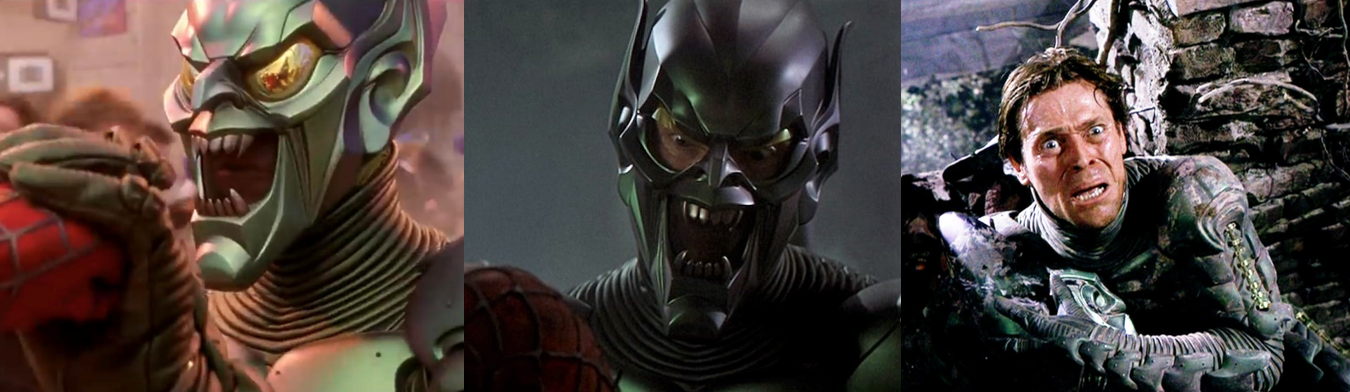
Movie Night [Superman Month]: Superman II


In 2013, DC Comics declared the 12th of June as “Superman Day”, a day for fans of the Man of Steel the world over to celebrate Clark Kent/Kal-El/Superman, the superpowered virtue of “Truth, Justice, and the American Way” who is widely regarded as the first ever costumed superhero. This year, I’m spending every Sunday of June celebrating the Man of Steel as I expand Superman Day to “Superman Month“.


Released: 9 April 1981
Director: Richard Lester
Distributor:
Warner Bros. / Columbia–EMI–Warner Distributors
Budget:
$54 million
Stars:
Christopher Reeve, Margot Kidder, Terence Stamp, Sarah Douglas, Jack O’Halloran, and Gene Hackman

The Plot:
Having thwarted Lex Luthor’s (Hackman) maniacal plans, Clark Kent/Superman (Reeve) faces a new challenge when intrepid reporter Lois Lane (Kidder) manages to deduce his secret identity. While Clark prepares to give up his incredible powers to be with Lois, General Zod (Stamp) and his two followers escape from the Phantom Zone and begin terrorising the planet, leading Clark to choose between his happiness and his responsibilities to mankind.

The Background:
As I detailed in my review of Superman (Donner, 1978), producers Ilya and Alexander Salkind and Pierre Spengler convinced Warner Bros. to produce a two-film adaptation of the character back in the late seventies. However, the production was fraught with issues, both financially and creatively; director Richard Donner frequently clashed with the producers and Richard Lester was brought in as a mediator to allow the filmmakers to focus on the first film, which was a financial and critical success. Despite having shot 75% of the sequel, Donner was replaced as director with Richard Lester, a decision that irked star Gene Hackman so much that he refused to return for the necessary reshoots. Lester shot an entirely new opening for Superman II in addition to making numerous changes to the tone of Donner’s original version to place more emphasis on slapstick silliness. Star Christopher Reeve returned to the project after negotiating a better deal with more artistic control for himself but Marlon Brando was excised completely from the film due to his unrealistic financial demands. Despite all the behind the scenes turmoil, Superman II was still a financial success; its worldwide box office gross of just over $190 million might’ve been less than its predecessor but it was still highly praised, with Stamp’s turn as Zod drawing particular acclaim. Many years later, of course, in the build-up to Superman Returns (Singer, 2008), Donner would finally return to the film to assemble a version that closely resembled his original vision of the film.

The Review:
As far as I can remember, Superman II is another of those instances where I actually saw the sequel before the original; consequently, the film had much more of an impact on my childhood and I remember being more entertained by it thanks to it having a far brisker, more action-orientated flow and featuring villains who could actually match Superman in combat rather than simply just outwitting him. Not that I have a problem with the “mind over muscle” concept, it’s just far more gratifying to me to see Superman getting into a superpowered scrap as Superman II definitely delivers in that regard. Thankfully, for those who haven’t seen the first film, the movie opens with both a quick recap of the first movie over the opening credits and a return to Krypton to show exactly how General Zod, Ursa (Douglas), and Non (O’Halloran) got themselves banished to the mysterious “Phantom Zone”. Basically, they broke into one of the Kryptonian council’s crystal chambers and destroyed one of their fancy little crystals; since Jor-El (Marlon Brando) is entirely absent from this film, the three are sentenced and imprisoned by the nameless Kryptonian council yet, as they’re being thrust into the void of space in their mirror prison, Zod vows revenge upon Superman’s birth father regardless.

Lois begins to suspect that mild-mannered Clark Kent isn’t all that he seems…

The film then picks up shortly after the events of the last film to find the Eiffel Tower overtaken by terrorists who are holding a bunch of people hostage and threatening to detonate a hydrogen bomb if their demands aren’t met. Being the feisty, fearless reporter that she is, obviously Lois Lane is right in the middle of the story and her boldness leaves her in danger of being killed; thankfully, Superman is again on hand to save her and disposes of the bomb-filled elevator by tossing it into space and unknowingly releasing the three Kryptonian criminals form their prison. Still playing the part of the lovable, bumbling goofball, Clark stumbles his way through his assignment with Lois in Niagara Falls but, after springing into action to save a young boy from a fatal fall into the waters, Lois’ suspicions are raised to the point where she willingly puts herself in danger in order to prove that the two are one and the same.

Luthor escapes from prisons, learns Superman’s secrets, and forges a fragile alliance with Zod.

Despite being arrested and locked up at the end of the first film, Lex Luthor (Hackman), the self-proclaimed greatest criminal mind of all time, quickly breaks his way out of prison with the help of a holographic projector of his own making and the assistance of Eve Teschmacher (Valerie Perrine), thankfully leaving the bumbling Otis (Ned Beatty) behind. Not only does Luthor now largely sport his traditional bald head, he also has a far better plan than simple real estate; having deduced that Superman has a tendency to travel north, he tracks the Man of Steel and discovers his Fortress of Solitude, boning up on the three Kryptonian criminals and using this knowledge to charm his way into General Zod’s good graces. There’s something disconcerting about seeing Luthor in the Fortress of Solitude and poking around in his private archives and materials; although Luthor doesn’t learn that Clark Kent is Superman from this excursion, he learns more than enough to be able to barter with General Zod and spare him from the Kryptonian’s unending wrath in exchange for being able to rule over Australia after the three Kryptonians consolidate their control over the entire world.

Led by power-hungry Zod, the Kryptonian criminals quickly claim dominion over the world.

Still, even Luthor is fearful of his new tentative allies; Zod, a verbose egomaniac who craves power and acknowledgement, strikes fear into the hearts of those around him with not only his sadistic and cold-hearted demeanour but also his inclination to fly into an intense rage when his power is defied. The alluring and callous Ursa revels in causing destruction and acquiring new badges and trinkets for her uniform, while the imposing brute Non is as childlike as he is silent and literally follows his General’s orders without question. The three quickly discover and reveal in the superhuman powers afforded by the Earth’s yellow sun, which immediately grants them all of Superman’s powers but with none of his moral compass. They start small, toying with a group of astronauts on the Moon and terrorising a small town in the United States before identifying where the true power of the U.S. lies and laying seize on the White House in a harrowing scene where he forces the President of the United States (E.G. Marshall) to transfer all control to their General.

The Nitty-Gritty:
Of course, it’s difficult to talk about Superman II without addressing some of the film’s more ridiculous aspects; Otis might not be around but his status as the comic relief is usurped by Non’s infantile nature. While things quickly take a turn for the dramatic when Zod steps in out of boredom, it’s initially played for laughs when the three are causing trouble in Houston; similarly, when the three are terrorising Metropolis to goad Superman into a conflict, there’s an awful lot of slapstick and tomfoolery for what is meant to be an imposing scene. And let’s not forget the outrageous superpowers introduced in the film; while traditional Kryptonian powers like heat vision, super breath, and freeze breath are all on display to great effect when the three are causing destruction and fighting with Superman, there’s all kinds of crazy stuff added to the film. Zod is somehow able to levitate objects with a point of his finger, the three of them deface Mount Rushmore by simply blasting it, all four Kryptonians are all able to duplicate themselves in the finale (which I can only assume was originally supposed to be some kind of depiction of superspeed that was limited by the technology of the time), and don’t even get me started on Superman’s weird s-shield attack-thing! Yet, as mental as all of this, it’s actually nowhere near as insane as some of the stuff Superman was doing in the comic books at the time!

Superman willing gives up his powers to be with Lois.

While a romantic element was present in the first film (and gave us the God awful cringey scene of Superman and Lois flying together), it’s far more prominent here. Although Clark is able to momentarily quash Lois’s suspicions about him, his dual nature is ultimately revealed after an accidental stumble. Of course, bearing in mind that Clark is clearly besotted with Lois and was tempted to reveal himself to her in the first film, both Clark and Lois suggest that this was anything but an accident and that Clark subconsciously wanted Lois to learn the truth and made sure that it happened. Regardless, the two embark on a romantic tryst that sees Clark focus on her above all other concerns. Busy wooing her with flowers and food from the far corners of the world at his Fortress, Superman ignores the chaos caused by General Zod and his subordinates and makes the ultimate sacrifice when the consciousness/artificial intelligence of is mother, Lara (Susannah York), dictates that to live with a mortal, he must live as a mortal. This wrinkle, which results in the destruction of the main control console in the Fortress, goes a long way to showing just how serious Clark is about his love for Lois; indeed, he willingly gives up all of his superpowers just to be with her despite the fact he can hear that people are pleading for his intervention. Clark’s adjustment to mortal life is a tough one; almost immediately, he feels the fatigue and pains of us normal folk and runs afoul of mouthy trucker Rocky (Pepper Martin). Humbled and humiliated, Clark is horrified to find that Zod has taken control of the world and immediately journeys back to the Fortress (from what looks like Canada…because I guess there’s a direct road from Canada to the Arctic now?) in a desperate bid to regain his powers. Although the Fortress appears dead and his father Jor-El doesn’t answer his son’s desperate plea, Clark finds the green crystal that birthed the Fortress and this, somehow, restores his powers. Although this whole sequence is a little sloppy, mainly thanks to the way the film was cut up and re-edited from Donner’s original version, I can’t say that I was ever really a fan of it; we’ve seen in the comics, and other adaptations, that Superman is fully capable of being in a relationship with Lois without having to give up his powers and it seems like this aspect was only included to give some humanity to the all-power Man of Steel. One part of it that does work for me was the emphasis on Lara; since Jor-El is entirely absent, Lara’s importance is greatly increased and makes Superman II an interesting companion piece to the first film by placing the focus on his mother rather than his father.

It’s clear the budget was stretched to its limit to depict the superpowered brawl.

Armed with Luthor’s knowledge of Superman’s true heritage and affinity for Lois Lane, Zod, who quickly grows bored of having absolute power, relishes the opportunity to exact his revenge upon Jor-El’s progeny. To this end, the three ransack the Daily Planet and then cause destruction in downtown Metropolis in entertaining scenes of devastation that were certainly ambitious and in stark contrast to the first film’s slower, more subdued tone. It’s clear that the budget is being pushed to its limits to show all four characters flying and fighting in the skies and streets of Metropolis and, while the special effects and the quality of the fight does suffer a bit as a result (there’s a lot of awkward standing around, posturing, and slow, easily telegraphed attacks on show), it’s still a commendable effort for the time. Crucially, Superman goes out of his way to draw the fight away from the city and to save lives rather than mindlessly ploughing his opponents through buildings and causing as much damage as the film’s villains, which goes a long way to emphasising Superman’s selfless and heroic nature (something that arguably needed to be reinforced after he seemed to abandon his responsibilities in favour of getting laid).

Superman turns the tide on his foes but is forced to erased Lois’s memory of his dual nature.

Although the three have the numbers advantage, and are clearly better fighters than he, Superman manages to hold his own but, realising that continuing the fight would only endanger further lives (despite the commendable spirit of the Metropolis citizens in their willingness to stand up to the three after Superman appears to be killed), he flees from the city and lures them to his Fortress for a final showdown. The three are led their by Luthor with Lois as their hostage; when Zod declares that Luthor has outlived his usefulness, the criminal mastermind attempts to double-cross Superman in order to regain favour with the General and, in the process, unwittingly plays right into Superman’s plan. Having reversed the molecule chamber so that Krypton’s red sun rays erase the three’s powers, Superman and Lois are easily able to best their foes and send them hurtling to their deaths. However, in the aftermath, Clark and Lois split up since Superman can’t prioritise one life over the lives of the world and, to spare his love further pain from the burden of knowledge, Superman busts out another new power: the ability to erase minds with a kiss. With Luthor back in prison, the Earth saved, and the status quo restored, Superman promises the President that he’ll never abandon his responsibilities again and heads off for his victory lap.

The Summary:
When I was a kid, I absolutely loved this film; it was probably the closest and most accurate depiction of a live-action Superman I had seen and definitely set a high standard for superhero movies in general for its mixture of heart, action, and comedy. Even now, thanks to the ambitious and impressive special effects, the film holds up surprisingly well; once again, it’s the performances that help bolster the film, with Terrence Stamp putting in a scene-stealing turn as General Zod. The inclusion of three evil Kryptonians to match Superman blow-for-blow was a great way to raise the stakes from the first film and Superman II definitely builds upon the themes and standards of the first film. While I still have a lot of affection for Superman II and definitely prefer it to the first movie, it’s difficult for me to rate it much higher as there are a number of aspects of Superman II that don’t sit too well with me. The same can be said of the first film, and the rest in the series, but I’m still a little baffled by the idea of stripping Superman of his powers and then immediately restoring them and the absurd memory erasing kiss that is almost as preposterous as Superman turning back time at the finale of the first film. Still, it’s easily the best film out of the original four for me and, crazy superpowers aside, deserves to be rated as being at least on par with the influential original and is well worth a watch of only for Stamp’s iconic performance and the battle between Superman and his Kryptonian adversaries.

My Rating:

Rating: 3 out of 5.

Pretty Good

What are your thoughts on Superman II? Did you feel like it measured up to the first film or do you perhaps consider it to be superior, or inferior? What did you think to the introduction of more physically capable villains for Superman to fight and were you a fan of Terrence Stamp’s performance as General Zod? What did you think to Superman sacrificing his powers for Lois and then erasing her mind with a kiss? Do you prefer the theatrical cut of the film or do you think the Donner Cut is the superior version? What is your favourite Superman story, character, or piece of media? How are you planning to celebrate Superman Day today? Whatever you think, feel free to share your opinion and thoughts on Superman in the comments below.

Movie Night [Ghostbusters Day]: Ghostbusters II


Throw on your proton pack and get ready to bust some ghosts because June 8th is officially “Ghostbusters Day”! Ghostbusters (Reitman, 1984) was first released on this day back in 1984 and, since then, has become a major pop culture franchise that includes comic books, a popular cartoon and line of action figures, and videogames and it is, easily, one of my favourite films and franchises from that era.


Released: 16 June 1989
Director: Ivan Reitman
Distributor: Columbia Pictures
Budget: $25 to 30 million
Stars: Dan Aykroyd, Bill Murray, Harold Ramis, Ernie Hudson, Sigourney Weaver, Rick Moranis, Annie Potts, Peter MacNicol, and Wilhelm von Homburg/Max von Sydow

The Plot:
Five years after the events of the first film, the Ghostbusters are no more and are legally forbidden from conducting any ghostbusting or paranormal investigations. However, when a mood-altering slime is discovered beneath the city and the spirit of an ancient Carpathian warlord awakens, the four return to action to once again defend New York from malevolent spirits.

The Background:
Originally developed by actor Dan Aykroyd as a project for himself, Eddie Murphy, and close friend John Belushi, Ghostbusters finally took shape when director Ivan Reitman, writer/actor Harold Ramis, and Bill Murray came onboard. The film was an incredible critical and financial success and, despite the movie intending to be a simple standalone affair, a sequel was considered inevitable. However, Ghostbusters II was a publicly arduous production; Columbia Pictures’ new chairman, David Puttnam, wasn’t interested in making big-budget blockbusters and the creation of a script stalled as the director and actors all required unanimous approval before shooting could begin. After Puttnam was replaced by Dawn Steel, Ghostbusters II finally got underway. Having left acting following Ghostbusters’ success and with a dismissive attitude towards sequels, star Bill Murray demanded an outrageous $10 million salary and his co-stars naturally wanted the same and, after months of negotiations, a fair salary and percentage of the film’s profits was agreed upon for all involved. The script also underwent numerous issues; Aykroyd’s first draft had the team battling witches in Scotland before Ramis helped to shape the sequel towards the film we know today while also factoring in the popularity of the first film’s cartoon spin-off. After a lacklustre response from test audiences, Reitman added an additional twenty-five minutes to the film’s ending and the film eventually grossed just over $215 million, some $67 million less than its predecessor. While I consider it an under-rated sequel, Ghostbusters II was met with mostly negative reviews; its derivative nature, pacing, and performances were criticised and both director Reitman and star Murray found the film to be a disappointing and unsatisfying experience.

The Review:
By the time I was old enough to really have any idea of what was going on in life, both Ghostbusters and Ghostbusters II had been out for some time. Consequently, as a kid, there was very little delay for me between seeing the first film and its often-maligned sequel, meaning that both were formative influences on my childhood. I’ve always held the two in equal regard as a result; yes, the first had the Stay Puft Marshmallow Man but the second had the mood slime and benefitted from a slightly brisker pace so I’ve always thought that Ghostbusters II did a pretty decent job of capturing the same spirit as the first film and building on its foundations with a natural continuation.

No longer allowed to bust ghosts, the Ghostbusters have been forced into other avenues.

The film begins five years after the events of the first film to find our beloved characters in very different situations; after being sued out of business, the Ghostbusters have had to close their doors and have largely gone their separate ways. Only the heart of the team, Doctor Raymond Stantz (Ackroyd), and the “Everyman” of the group,  Winston Zeddemore (Hudson), keep the brand alive by degrading themselves with appearances at children’s birthday parties. While Doctor Egon Spengler (Ramis) has returned to science and is busying himself testing the specifics of human emotions, Doctor Peter Venkman (Murray) has found minor success as a talk show host where he interviews eccentrics who claim to have psychic powers or other inexplicable tales, and Ray has also set up a small occult bookshop for himself. While the four remain on friendly terms, there is a clear sense of discontentment amongst most of them; Ray longs for their glory days as celebrities, Winston glibly remarks that their efforts went unappreciated by the masses, and even Peter, despite his celebrity status, seems unfulfilled, especially as he is widely (and accurately) regarded as being a fraud.

Dana’s newest plight reunites her with the Ghostbusters and rekindles her romance with Peter.

Since the last film, Dana Barrett (Weaver) has split up with Peter, birthed a son, Oscar (William T. and Hank J. Deutschendorf II), with her ex, and has moved away from the orchestra and into the art world. Cleaning paintings at a New York museum, Dana’s life is mired only by her quirky and overeager boss, Doctor Janosz Poha (played with glee by MacNicol), who, like Louis Tully (Moranis), harbours unrequited affections for her. When Oscar’s pram carriage suddenly becomes possessed and escapes from her in the street after she unknowingly rolls over a puddle of “mood slime”, Dana immediately turns to Egon for help and he and Ray investigate her apartment once again. Despite her attempts to keep Peter out of the loop, he forces himself into the investigation and the two reunite once more; despite them having split up over his childish antics, there’s still an attraction there and he laments that he missed the opportunity to be Oscar’s father, and the two eventually rekindle their romance as the film progresses.

A river of evil slime incites new paranormal activity and precedes Vigo’s return to power.

The investigation quickly leads to Egon, Ray, and Peter tearing up the section of the street where Oscar’s possession occurred under the amusing guise of Consolidated Edison (ConEd) workmen; this leads to them discovering that the abandoned Beach Pneumatic Transit system is literally flooded with writhing, pink mood slime that exhibits both paranormal and sentient behaviour. Since they were conducting paranormal investigations, the three are soon brought before a court and face prosecution for their actions (which caused a city-wide blackout); thankfully, however, the mood slime reacts violently to Judge Stephen Wexler’s (Harris Yulin) aggressive outburst and causes two ghosts to manifest in the courtroom and run riot, giving Wexler no choice but to rescind the mandate against the Ghostbusters and allow them to return to work. And just in time, too, as the build-up of the mood slime is no accident; it coincides with the awakening of the brutal and malevolent Vigo the Carpathian (von Homburg/von Sydow), a ruthless Carpathian dictator whose spirit is trapped in a painting in Janosz’s museum. Mustering all of his evil energy, Vigo desires to possess the body of a child in order to live again and easily manipulates Janosz into finding him a suitable host. In exchange for being with Dana, Janosz offers to bring the spirit Oscar so that the two of them can raise the would-be conqueror as their own, and the influx of mood slime causes a new wave of restless spirits to terrorise the city.

Returning characters and a fantastic balance of comedy and horror make for a worthy follow-up.

As if that wasn’t bad enough, Mayor Lenny Clotch’s (David Margulies) sleazeball assistant, Jack Hardemeyer (Kurt Fuller), dogs the Ghostbusters at every turn and ends up going behind the Mayor’s back to have them committed to keep them from threating Clotch’s election for Governor with their maniacal outbursts. Also returning from the first film are the aforementioned Luis and the Ghostbuster’s sharp-tongued receptionist, Janine Melnitz (Potts); while there were hints towards a romance between Janine and Egon in the first film, the focus shifts to the odd couple of Luis and Janine in the sequel and the two comically indulge their whims while babysitting for Dana when the Ghostbusters are briefly arrested. As in the first film, comedy is a large part of Ghostbusters II and is handled beautifully; the courtroom scene where Louis struggles though defending the Ghostbusters is a particular highlight and the Ghostbusters’ various pratfalls, childish antics, and witty retorts provide the same level of bickering entertainment as the first film. I’ve always had a lot of admiration for how these original Ghostbusters films handle the balance of romance, action, comedy, horror, and fantastical science-fiction and, for me, Ghostbusters II more than holds its own when compared to the first although I am still disappointed that the script doesn’t give Winston more to do (he literally disappears for big chunks of the film’s first act and, most notably, isn’t even with the other three when they dig up the street and end up in court).

The Nitty-Gritty:
Thirty-five minutes into the film, the Ghostbusters are legally allowed to return to action and the film noticeably picks up as the foursome return to chasing down and trapping ghosts all over the city. This sees the team wear new versions of their traditional boiler suits, adopt a new logo and produce more (if equally cringey) television advertisements, and even upgrade Ecto-1. I can understand the argument that the film might have been better off had it picked up here, with the Ghostbusters at the height of their popularity and ability, and the film kind of glosses over how the city coped with its supernatural occurrences without the Ghostbusters (who, I feel, have been proven to not be frauds by this point) but I never really minded the narrative structure of the film as it not only echoed the first one but also gave the characters something to overcome and showcased different sides to their personalities by showing us what they get up to when not busting ghosts.

Once the ghosts start popping up, all kinds of terrifying visuals hit the screen!

A central aspect of the movie is the mood slime; although ectoplasmic residue played only a minor role in the first film as a by-product of paranormal activity, here the slime is directly responsible for the resurgence in supernatural activity across the city. When Winston and Ray take an accidental dip in the slime, it immediately heightens their aggression and emotions and the two almost come to blows but, after investigating the substance, Egon discovers that the slime can be equally affected by positive emotions and finds a way to effectively weaponise it to their benefit. This becomes a prominent element of the film as the Ghostbusters must galvanise the positive feelings of the city to counteract the build-up of negative energy that threatens to bring about Vigo’s resurrection and gives them additional weapons to use alongside their traditional proton packs. Like the first movie, Ghostbusters II is bolstered by a number of truly frightening visuals; although the Terror Dogs are gone, Janosz’s glowing eyes in Dana’s hallway are pretty creepy, to say nothing of his ghastly ghostly form when he flies in to kidnap Oscar! Seriously, I remember that creeping me out so badly as a kid and, even now, it’s an uncomfortable scene that manages to be both chilling and amusing thanks to McNicol’s gloating expression. Oh, and did I mention the scene in the subway where a demonic voice calls to Winston and the guys are spooked by severed heads on pikes!? Absolutely crazy stuff that I was shocked to see and which work beautifully alongside the film’s new ghosts; once again rendered through traditional composite effects, animatronics, and practical filmmaking techniques; we get such apparitions as a ghostly jogger, a massive beast under the Washington Square Arch, a monstrous bathtub, a living fur coat, a brief cameo from Slimer, and even the Titanic showing up in the middle of the city!

The finale sees the Ghostbusters bring Lady Liberty to life to confront Vigo!

This all culminates the film’s finale where, rather than having to fend off a gigantic apparition, the Ghostbusters use their positively-charged mood slime and a modified Nintendo Entertainment System Advantage control stick to take control of Lady Liberty! I’ve seen people complain about how the film doesn’t feature the Stay Puft Marshmallow Man but, honestly, that wouldn’t make any sense at all and by no means diminishes the impact of seeing the Statue of Liberty come to life and casually stroll through New York City. In many ways, the finale is actually better than the original since, rather than simply standing around and crossing the streams to win the day, the Ghostbusters have to rappel down into the museum to confront Vigo and Janosz and even have to content with a possessed version of Ray when Vigo briefly takes control of his body after his resurrection is interrupted. This time around, in order to save the city (and the entire world) from falling under Vigo’s influence, the Ghostbusters need more than just their proton packs; they need the combined goodwill of the city and a hefty hosing of their positive-charged mood slime in order to force Vigo back into his painting, end his threat, and presumably fully repair their reputation.

The Summary:
Now, look…I get it. Ghostbusters II isn’t as good as the first film; honestly, Ghostbusters set a high bar that would be difficult for any sequel to reach but, for my money, Ghostbusters II does a really good job of continuing the story from the first film. While many of the story beats are similar, the film adds plenty of fun, scary new stuff to make it well worth your while, especially for fans of the first movie. Thanks to the immortal Max von Sydow’s booming tones, Vigo makes for a compelling and intimidating villain and the addition of the mood slime allows for some gruesome and comedic scenes. All of the characters are just as likeable and entertaining as in the first film, and even fleshed out a little more (sadly, with the exception of Winston…) by seeing their interests outside of work, and the balance of horror and comedy continues to be handled masterfully. I can understand why many were left disappointed by the film, to a degree, but I’ve always had a soft spot for Ghostbusters II and think it makes for a great companion piece to the first film; watch them both back-to-back and you have one pretty consistent and enjoyable story. I’ll always step up to defend this film when I see people talking shit about it because it’s a fun little romp that deserves more attention, and has a great message of positivity that we could all stand to learn from.

My Rating:

Rating: 4 out of 5.

Great Stuff

Are you a fan of Ghostbusters II? Do you think it deserves the negativity it often gets? What did you think to the five year time jump and the plot of the Ghostbusters being barred from working? Were you a fan of Vigo and Janosz and what did you think to the overall plot? Which of the film’s ghosts and scares were your favourite? Perhaps you grew up with the cartoon and action figures; if so, what memories do you have of them? How are you celebrating Ghostbusters Day today? Whatever your thoughts and memories of Ghostbusters, drop a comment down below.

Movie Night: The Grey

Released: 27 January 2012
Director: Joe Carnahan
Distributor: Open Road Films
Budget: $25 million
Stars: Liam Neeson, Frank Grillo, Dallas Roberts, Dermot Mulroney, and Nonso Anozie

The Plot:
Following a devastating plane crash, suicidal marksman John Otway (Neeson) finds himself stranded in the desolate Alaskan wilderness alongside a handful of survivors. Battling mortal injuries and merciless weather, the survivors find themselves hunted and hounded by a pack of wild, ravenous wolves and in a race against time (and nature) to find safety.

The Background:
The Grey was based on the short story Ghost Walker by Ian MacKenzie Jeffers, who also co-wrote the screenplay, and reunited director Joe Carnahan with his A-Team (ibid, 2010) star Liam Neeson. Neeson, who was still enjoying a career resurgence after the success of Taken (Morel, 2008), replaced his A-Team co-star Bradley Cooper in the main role. The gruelling shoot, which drew controversy after it was revealed that the cast got to eat actual wolf meat during filming and for furthering the negative depiction of wolves in popular media, gave Neeson the opportunity to channel his grief over the death of his wife into his performance. Still, the film’s worldwide box office gross of just over $80 million made it a modest success and it earned mostly positive reviews despite its unrelating nature. Personally, I found it to be a poignant and surprisingly tragic story of survival and the harsh reality of nature and I’ll take any excuse to revisit it and today seems like the perfect opportunity given that it’s Liam Neeson’s birthday.

The Review:
Our main character, John Ottway is a haunted man; stuck in a job at the farthest corner of the world, he feels he belongs isolated from the larger world and surrounded by assholes and ex-cons. A sombre, stoic man whose narration sporadically accompanies the film’s bleak and sparse score, he actively avoids others wherever possible and torments himself with memories of his beloved dead wife, Ana (Anne Openshaw), whom he longs to have back in his life. Although he plays a pivotal role in protecting the workers of the oil refinery from ravenous wolves with his expert marksmanship, so great is his anguish that he is fully prepared to kill himself at the start of the film. Despite being literally at the end of his rope and admitting to being scared shitless, Ottway’s survival instinct kicks into full effect after surviving the plane crash; although he has no wish to be a leader, and despite believing that he no longer has anything useful to offer the world, Ottway doesn’t hesitate to help and rally the injured survivors in pooling their few resources and hiking their way through the wilderness.

Ottway begins the film in a dark place before having to lead the survivors of a plane crash.

The plane crash is depicted as a sudden and violent event that perfectly encapsulates why I hate flying; while I find it difficult to believe that anyone, much less a handful of people, would be capable of surviving such an impact, the film does a great job of showing Ottway’s adaptability in his foresight to prepare himself for the crash and we immediately see the fallout from the devastating accident. Bodies and wreckage are strewn everywhere and Ottway immediately shows his pragmatic, realistic approach to the situation when he levels with the trapped Duke Chavis (Adrian Hein) that his injuries are fatal. The ragtag survivors are forced to rally together despite suffering from shock and the extreme cold (and, most probably, a few concussions); it’s not long before injuries and wolves begin to pick off the weaker members, however, or before the affable Jackson Burke (Anozie) succumbs to the hypoxia he has been hiding from his comrades.

While the others defer to Ottway, Diaz challenges him before being humbled into co-operation.

While the other survivors – Dwayne Hernandez (Ben Bray), Todd Flannery (Joe Anderson), Pete Hendrick (Roberts), and Jerome Talget (Mulroney) – defer to Ottway’s knowledge of the area and its wildlife, John Diaz (Grillo) frequently challenges Ottway’s leadership and decisions. An abrasive and antagonistic pessimist, Diaz doesn’t appreciate Ottway’s authority and constantly mocks Ottway’s decisions (or lack thereof); he finds it laughable that Ottway goes out of his way to collect the wallets of the dead for their families, refuses to help the group in scavenging for supplies, and frequently boasts of his ability to survive without Ottway’s assistance. However, for all his fire and bluster, the simple truth is that he is as strung out and scared to death as the rest of them. Overwhelmed by the desperation of their situation, Diaz almost comes to blows with Ottway before he is attacked by a wolf; after focusing his aggression and panic on brutally slaughtering and beheading the creature, Diaz’s demeanour changes to one of humble co-operation and he ultimately proves himself to be a valuable ally and brave-hearted survivor.

The survivors are stalked and set upon by a pack of ravenous wolves.

It isn’t long before the group has their first encounter with one of the many wild and ravenous wolves that populate the area; one attacks Ottway after he interrupts it chowing down on a corpse and, as the group struggles to find their way and set aside their differences, a pack of wolves constantly stalks them from the shadows and the thick, impenetrable woods like an ominous supernatural force. Armed with a wealth of knowledge of the wolves’ behavioural and territorial nature, Ottway desperately tries to keep the group alive as the wolves test them with infrequent attacks and seemingly taunt them with howls and growls from the darkness. As the survivors have trespassed into the wolves’ territory (and are, it turns out, walking right towards and through their den), they are unusually aggressive and bold; intelligent enough not to swarm the group, even with their greater numbers, the wolves bide their time and pick off the weakest and the stragglers one at a time as the film, assuring that the tension and dread escalates to the film’s dramatic climax.

The Nitty-Gritty:
Set in the bleak, barren mountains of Alaska, the environment of The Grey is just as ominous and harsh and as much of an antagonist as the wolves; the survivors are relentlessly besieged by bitter winds, knee-deep snow, harsh blizzards, and below-freezing temperatures that cause them nothing but pain and further tumult within their already highly-strung group. Even in the film’s few daytime scenes, the feeling of helplessness and isolation is palpable and, at every turn, the environment worsens their situation: they have few opportunities for cover and safety, even fewer options in terms of food (the group relishes the chance to cook and eat a wolf in order to intimidate their stalkers), and are often gravely and fatally injured or obstructed by the threes, canyons, and ice-cold rivers that surround them

Every obstacle extracts a price as the unforgiving environment whittles the group down.

Survival is, of course, a key theme in the film and is emphasised through Ottway’s persistent reflection on a short poem written by his father that speaks of a man’s final push into “the fray” and the “last good fight [he’ll] ever know”. Although the plane crash was devastating, the group are able to salvage some fuel for fires and Ottway is able to cobble together some crude weaponry for them to defend themselves with, much to Diaz’s initial chagrin. Thanks to their few resources, the group are just barely able to limp along and find ways to overcome the obstacles they face but, every time they do (whether it’s a wolf or a part of the environment), it extracts a price: each hurdle sees at least one man either injured or horribly killed until the group is whittled down to just three survivors left fatigued and disheartened. A few scenes that stand out for their intensity are the moment where the guys are left with no choice but to scramble across a precarious rope from a cliff edge into the trees below in order to find a river that could lead them to safety (which leaves Talget critically injured and at the mercy of the wolves), Diaz’s decision to ultimately give up fighting and succumb to the ravages of nature (a poignant and utterly heart-breaking scene where he gives Ottway a heartfelt thank you for getting them so far), and the absolutely brutal and abrupt drowning of Hendrick after making the first aforementioned jump into the trees.   

Ottway goes from suicidal to ready to fight for his life as he makes a desperate last stand.

In a nutshell, The Grey is the ultimate depiction of man versus nature; out in the barren wilds, the group cannot depend on anyone or anything but themselves and this is beautifully emphasised in the bleak atheism that permeates the film. To stave off the terror and despair of their situation, the group share stories of their loved ones: Ottway encourages this as it gives the guys something to fight for when their backs are against the wall and he believes not in God but in the stark reality that he is faced with. The wolves are depicted as monstrous, unrelenting extensions of the environment, often appearing as little more than a blurry mess of fur and teeth or simply the pinpricks of their eyes glistening in the darkness. With all the other men dead, Ottway finds himself stranded in the middle of the den with nothing but a bag full of wallets; after sombrely buring the wallets, Ottway first challenges God to intervene and then rejects Him entirely in a powerfully relatable scene before preparing himself for a fight to the death with the Alpha wolf. I can fully understand people being disappointed that the film abruptly cuts to the credits and leaves us with a brief, ambiguous post-credits scene rather than depicting a full-on, bloody brawl between Ottway and the Alpha but I feel this sudden end is just as powerful and effective. By this point, Ottway has overcome so much hardship and pain, seen so many good and brave men die in their attempts to beat nature, and is faced with the startling realisation that he had been leading them in the wrong direction the entire time that he has absolutely nothing left to fight for but himself. Seeing Ottway strap broken bottles and a knife to his hands and prepare to fight to his last breath is a stark contrast to where we find Ottway at the start of the film, where he was all-but-ready to put a bullet in his head and makes for an impactful and memorable end to a powerful and intense film.  

The Summary:
Like many, I’m sure, I was sold on The Grey on my fondness for Liam Neeson and the idea of seeing him having a fist fight with a wolf. What I got was one of the most uncompromisingly bleak and brutal tales of survival against the ravages of nature that I have ever seen. A dismal and startling mediation on the harsh and cruel nature of the wilderness, The Grey may not do much for the depiction of wolves but it never fails to have an impact on me for the way it portrays them as savage, almost demonic arms of nature itself. Bolstered by some understated performances, to say nothing of Neeson’s grim but dogged Ottway, The Grey remains an intense and deeply affecting experience for me; the lack of catharsis in a definitive ending only punctuates what is a harrowing tale of survival and the fortitude of man’s willingness to do anything to overcome the odds. Even if we ultimately fail, in those moments we find the best of ourselves, the ability to set aside grievances, pull together what few resources we have, and make a definitive, if ultimately futile, stand in the effort to stay alive.

My Rating:

Rating: 4 out of 5.

Great Stuff

Are you a fan of The Grey? What did you think to its portrayal of wolves as viscous, ravenous predators? Like me, do you enjoy the film’s bleak tone and the themes of survival and man against nature? How does the film affect you, emotionally, spiritually, or otherwise? What did you think to Liam Neeson’s performance and Diaz’s character development? Do you think you would be able to survive under the same harsh conditions seen in the film? How are you celebrating Liam Neeson’s birthday and what is your favourite Liam Neeson film? Whatever your thoughts, feel free to leave a comment below and let me know what you think.

Movie Night [Superman Month]: Superman


In 2013, DC Comics declared the 12th of June as “Superman Day”, a day for fans of the Man of Steel the world over to celebrate Clark Kent/Kal-El/Superman, the superpowered virtue of “Truth, Justice, and the American Way” who is widely regarded as the first ever costumed superhero. This year, I’ll be spending every Sunday of June celebrating the Man of Steel as I expand Superman Day to “Superman Month“.


Released: 14 December 1978
Director: Richard Donner
Distributor:
Warner Bros. / Columbia–EMI–Warner Distributors
Budget:
$55 million
Stars:
Christopher Reeve, Gene Hackman, Margot Kidder, Valerie Perrine, and Marlon Brando

The Plot:
In the dying moments of the planet Krypton, scientist Jor-El (Brando) rockets his son away to Earth. After learning of his alien origins and discovering the limits of the fantastic superhuman powers afforded him by Earth’s yellow sun, the now-adult Clark Kent (Reeve) assumes the costume identity of “Superman” while disguising himself as a mild-mannered reporter. However, he faces his greatest test when genius criminal mastermind Lex Luthor (Hackman) hatches a plot to cause devastating earthquakes west of the San Andreas Fault.

The Background:
In the years since his dramatic debut, Superman quickly became the subject of numerous adaptations and his 1940 radio drama even introduced many aspects that became synonymous with the character. The idea of a feature-length Superman film was first conceived of by producer Ilya Salkind in 1973; entering into a partnership with his father, Alexander, and Pierre Spengler, the filmmakers were able to convince Warner Bros. to produce a two-film adaptation of the character and paid screenwriter Mario Puzo (of Godfather (ibid, 1969/Coppola, 1972) fame) $600,000 to write the screenplay. Steven Spielberg was courted to direct but was unable to commit and, while Guy Hamilton was attached to the project, the producers eventually settled on Richard Donner, who immediately ditched the campy tone of Puzo’s 400-plus-page script. The first actor signed to the film was Marlon Brando (who had some pretty funny ideas about Jor-El’s appearance and characterisation and had a lackadaisical attitude towards the film) and Oscar winner Gene Hackman soon followed, with the two receiving top billing. Many notable names were considered for the title role before relative-unknown Christopher Reeve was cast after a laborious casting process. Having bulked up for the role, Reeve’s experience as a pilot paid off when performing the film’s complex flying sequences, which were achieved through a combination of green screens, wire work, and other camera tricks while the striking Kryptonian suits were the result of a happy accident with a reflective material. Very quickly, the film’s budget ballooned and filming began to over-run, causing tensions between Donner and the producers; Richard Lester was brought on board as a mediator and work on the sequel halted to concentrate on the first film. After several delays, Superman (also marketed as Superman: The Movie) released to rave reviews and was an incredible financial success, making over $300 million. Although the producers continued production of the sequel immediately, the damage was done and Donner did not return, necessitating a series of expensive reshoots and raising the ire of many of the film’s actors. Still, the first film was an incredible achievement, massively influential on Superman’s comic books, and was eventually preserved in the United States Library of Congress National Film Registry.

The Review:
Superman begins, as most Superman origin stories do, on the far away world of Krypton (or “Krypt’n”, if you’re Marlon Brando), a technologically advanced civilisation that inhabits a largely barren, crystalline world. In a fantastic seed for the sequel, Jor-El sentences three seditious criminals – Non (Jack O’Halloran), Ursa (Sarah Douglas), and their leader, General Zod (Terence Stamp) – to the mysterious “Phantom Zone” for their treasonous and destructive efforts to usurp the Kryptonian council and subjugate the world to Zod’s will. Defiant to the last, Zod vows to avenge himself upon Jor-El and his heirs, no matter how long it takes and against all odds, before the three are cast into the strange mirror prison. Following this, Jor-El is unable to convince the council that Krypton is doomed to be destroyed by its red giant sun within thirty days; indeed, despite being a highly respected and rational member of the council, Jor-El’s claims are so adamantly refuted that he is threatened with being labelled a terrorist himself.

Unable to save his planet, Jor-El sends his infant son to Earth, where he gains awesome powers.

Apparently despondent (it’s hard to tell with Brando…), Jor-El resigns himself to ensuring the survival of his young son, Kal-El; his wife, Lara (Susannah York), laments that their son will forever be an outcast amongst the “primitives” of Earth but Jor-El remains confident that the powers bestowed upon Kal-El by Earth’s yellow sun will make him a symbol of hope and afford him physical advantages beyond all known understanding. As Krypton shatters around them, the baby is rocketed away and, guided by his father’s voice, slowly grows into an infant within his escape craft; Jor-El, who encoded all of his knowledge and wisdom into the crystalline form of the ship, stresses that his son is “forbidden” to interfere in Earth’s history and instead let his example inspire others. In time, many thousands of years after Krypton’s destruction, the ship crash lands on Earth and is stumbled upon by kindly, elderly couple Jonathan (Glenn Ford) and Martha Kent (Phyllis Thaxter) who are awestruck by the child’s super strength and, despite Jonathan’s concerns, take him in as their own.

After losing his adopted father, Clark learns the extent of his powers and reveals himself to the world.

About fifteen years later, the boy has grown into well-meaning teenager Clark Kent (Jeff East, with Christopher Reeve dubbing his voice); though Clark is frustrated that he has to hide his physical capabilities from the world, Jonathan stresses that the boy was sent to them (and the world) for a greater reason than to simply score touchdowns or show off to the other kids. As he just wants to make his parents proud, Clark takes his father’s advice to heart but is left utterly heartbroken when Jonathan suffers a fatal heart attack. At his graveside, a devastated Clark laments that his awesome powers were ultimately useless in saving his father and thus learns a valuable lesson about the limits of his superhuman abilities. Drawn to the remains of his ship (which the Kents kept hidden in their barn), Clark discovers a glowing green crystal that leads him far north, all the way to the Arctic, where the crystal births a piece of his home planet on Earth. In this Fortress of Solitude, Clark communes with the spirit of his father, who lives on as a glorified artificial intelligence, and spends a further twelve years absorbing all of Jor-El’s knowledge and teachings of his newfound abilities. After his training is completed, Clark emerges as Christopher Reeve and garbed in a bright Kryptonian costume and ready to share his abilities with the world as Superman.

Clark poses as a mild-mannered reporter, which allows Superman to captivate Lois.

Clark sets himself up as a reporter at the Daily Planet (apparently it’s as easy as being able to type incredibly fast and being overly polite), meeting hot-tempered editor-in-chief Perry White (Jackie Cooper), enthusiastic young photographer Jimmy Olsen (Marc McClure), and feisty reporter Lois Lane (Kidder). Despite her inability to spell, Lois is a lively and fearless journalist and, consequently, she both despairs of Clark’s overly friendly nature and sees him as a bit of a dorky milksop and finds her curiosity sparked by some of his oddities. In comparison, Lois is immediately captivated by Superman when he not only catches her in mid-air as she’s plummeting to her death but also snags the helicopter she was falling from. Enamoured by his mystery, confidence, and the seemingly limitless superhuman abilities he possesses, her normally controlled and forthright demeanour is shattered and she’s left absolutely awestruck during (and following) her exclusive interview with the Man of Steel (where she names him and he also, curiously, divulges a number of secrets about himself that later come back to bite him in the ass).  

The maniacal Lex Luthor plots to destroy Superman in his quest to profit from real estate.

The villain of the piece, the enthralling Lex Luthor, has set up an impressive hideout beneath the city streets; there, protected by a series of cameras and deadly booby traps, he surrounds himself with the dim-witted Otis (Ned Beatty) and sexy but cynical Eve Teschmacher (Valerie Perrine). Egotistical and arrogant in his intellect, Luthor sees himself as the world’s greatest criminal mind and is busy planning the crime of the century, which involves the acquisition of seemingly worthless land and profiting from it by causing a cataclysmic flood, endangering and ending countless lives in the process. Luthor immediately surmises that Superman is not of this Earth and relishes the opportunity to pit himself against the Man of Steel, and to both prove his intellectual superiority over him and destroy the very virtues that Superman stands for, seeing the Man of Steel as the ultimate challenge for his self-proclaimed criminal genius.

The Nitty-Gritty:
Of course, you can’t really talk about Superman without mentioning John Williams’ bombastic and immediately iconic “Superman” theme that is rendered in full glory over the opening credits. While this theme has become so synonymous with the character that no composer or filmmaker since has come close to crafting a more suitable melody for the Man of Steel, I continue to be baffled by the absolutely cringe-worthy “Can You Read my Mind?” sequence. Like, I get it; it’s supposed to be this big romantic moment between the Lois and Superman and to showcase the film’s wirework, but it stands out like a sore thumb and is all kinds of different flavours of cheese.

While Reeve set the standard for Clark/Superman, other performances are a bit hit and miss.

If I’m being brutally honest, the film’s performances are a bit hit and miss; despite being a relative unknown, Reeve provides the quintessential portrayal of Superman and simply exudes confidence and sociability as Superman while masking his true nature as loveable, bumbling fool. Indeed, by simply straightening his posture and slightly altering his voice, Reeve effortlessly depicts the simple differences between his two persona and his performance so explicitly set the standard for the character that it continues to be emulated to this day. Once the story shifts to Metropolis, the film becomes a much more vivid and over-the-top production that emphasises buffoonery and comic book camp; nobody embodies this more than the bumbling Otis, who is mostly here for comic relief, but there’s also the suggestion that Luthor socialises with cretins simply to have someone to lord over. While Beatty and Cooper seem to have stepped out of a pantomime for their roles as the goofy Otis and bombastic Mr. White, respectively, Hackman brings a certain gravitas to the film that perfectly walks a fine line between camp and severe. Hackman seems to be enjoying himself in the role and commands every scene and room that he’s in; though he lacks Luthor’s bald head, he sports a variety of wigs and exudes a sadistic menace in his willingness to kill millions of innocent people in his quest for power, profit, and to have his matchless intelligence recognised by the world.

While some effects don’t hold up well, they’re all very ambitious and impressive for the time.

Obviously, you have to expect that some of the effects aren’t as impressive and haven’t aged as well as others, as ambitious as they are; the Arctic is clearly a set like something out of Star Trek (1966 to 1969) and I can only assume that Krypton is so barren and lifeless because it was cheaper and easier (though it also makes it cold and alien and a stark contrast to our lush world). The young Clark’s running effect and a number of the rear-projection and miniature shots leave a lot to be desired and almost every skyline appears to simply be a gigantic matte painting as the film is heavily reliant upon impressive sets the likes of which are akin to a James Bond film. While Clark’s super fast changes to Superman and his little spin down into Luthor’s lair aren’t that great, easily the weakest effects come in the conclusion as the San Andreas Fault is ruptured and painstakingly crafted models are washed away by water and dirt before Superman circles the globe at superspeed. To be fair, though, the film’s effects are still incredibly impressive; the helicopter sequence is an ambitious and remarkable composite of miniatures, rear-projection, and live-action wire work that makes for a suitable debut for the Man of Steel and, overall, the film has largely stood the test of time thanks to its practical effects and undeniable charm. As you might expect, Superman’s powers and abilities are the highlight of the film; Superman’s invulnerability, super strength, and superspeed are all accounted for and realised well enough and Superman’s first night on duty provides a great showcase of what he is capable of. No job is too big or too small for Superman, who does everything from rescuing a cat from a tree to apprehending jewel thieves as they clamber up the outside of buildings using sucker pads.

Superman comes up with a unique solution to save the day.

Naturally, it’s the flying sequences that are the true spectacle of the film; even now, the rear-projection holds up pretty well in these scenes but what really sells it is Reeve’s dynamic and believably movements. Reeve banks and turns with an elegant grace and really sells the illusion that we’re seeing a man fly and makes even the most ridiculous aspects of the film (from the 100% comic-accurate suit to using his own body to repair a broken train track to repairing the San Andreas Fault by ploughing through questionable-looking magma) seem entirely plausible thanks to his charming smile and undeniable charisma. Of course, when talking about Superman, you have address the ending. Thanks to acquiring a chunk of Kryptonite, Luthor is able to weaken and cause incredible agony to Superman and it is only thanks to Ms. Teschmacher’s change of heart that he’s able to recoup his strength and intercept Luthor’s missiles. However, while he’s able to stop one, he’s unable to keep the other from striking the San Andreas Fault and is so busy repairing the damage it causes that he’s unable to save Lois from being crushed to death by debris. Devastated and overcome with grief, Superman flies into the upper atmosphere and defies his birth father’s warnings of interfering in human history to favour his adopted father’s advice and is able to literally turn back time by reversing the rotation of the planet. This undoes all of the damage caused by Luthor’s missiles and prevents Lois’s death but remains the most ludicrous aspect of the entire movie and just ends up raising all kinds of questions like…wouldn’t there be two Superman? Why doesn’t he just turn back time all the time? Ultimately, it’s just one of those crazy, over-powered feats that we’ve come to expect from older versions of Superman and I guess it works to show that Superman is capable of overcoming even his limits by pushing hard enough (plus, Reeve’s anguished cry does make for an incredibly intense scene).

The Summary:
I honestly went into Superman ready to give it a lower score of two stars; it’s never really been my favourite superhero, or Superman, film as it’s just got a little too much cheese and cringe in it for my tastes. There’s an undeniable level of camp at work in the film that makes it very cartoony and over-the-top in places, to say nothing of long, oddly paced inclusions that seem decidedly at odds with the rest of the film. However, all of these elements are in perfect balance with the film’s more dramatic and spectacular sequences; this is a film that is, primarily, a showcase of ambitious and trend-setting cinematic techniques as much as it is perhaps the most influential interpretation of Superman ever seen outside of the comic books. While not every effect has aged too well, the majority have stood the test of time remarkably well and there’s just the right balance of goofy comedy, heart-warming charm, and exciting spectacle that simply scream “Superman”, a character who is often characterised as being the world’s biggest Boy Scout and embodying timeless (if slightly antiquated) ideals. There’s no denying that Superman is an absolute classic; while I cannot sanction Marlon Brando’s attitude and I may not be a fan of some of Donner’s choices (Luthor being a real estate maniac, the barren depiction of Krypton, and the time travel ending are all cons of the film for me), Superman remains a delightful and enjoyable little slice of camp goodness that is worth it for Reeve’s incredible and career-making turn in the title role if nothing else.

My Rating:

Rating: 3 out of 5.

Pretty Good

Are you a fan of Superman? What did you think to Christopher Reeve’s portrayal of the character and were you a fan of Lex Luthor’s interpretation in the film? How influential was Donner’s film on your perception of Superman and are there any aspects you would prefer to see films and media move away from? What did you think to the film’s campier elements and were you a fan of the ending? What is your favourite Superman story, character, or piece of media? How are you planning to celebrate Superman Day next week? Whatever you think, feel free to share your opinion and thoughts on Superman in the comments below.