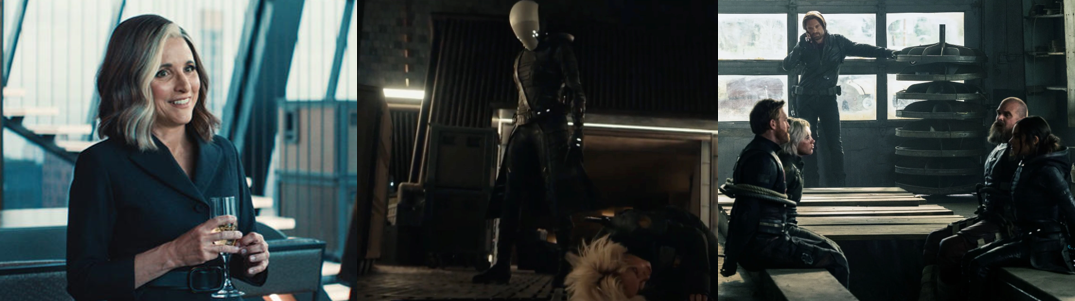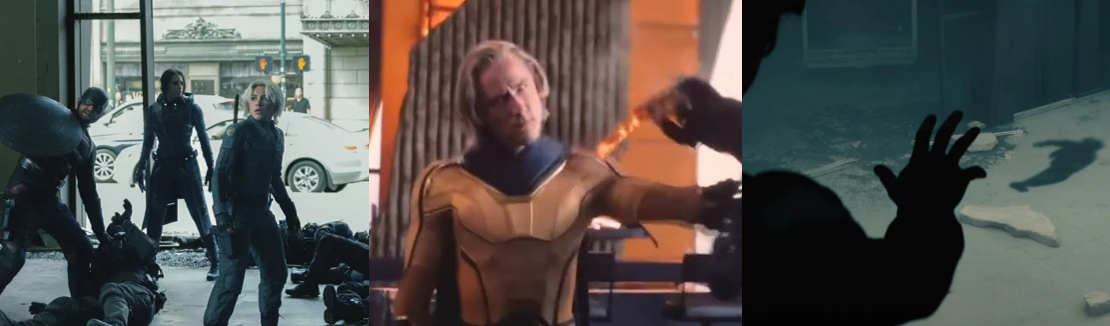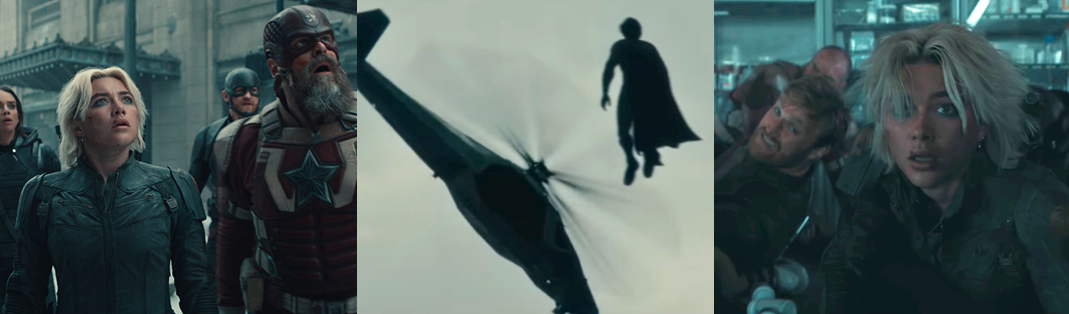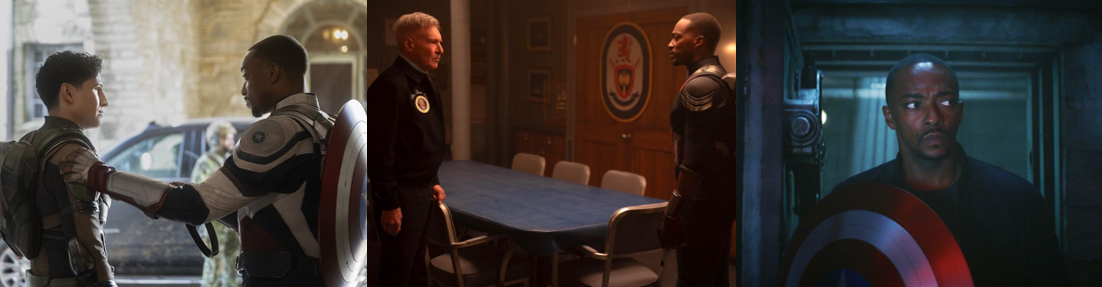
Screen Time: Agatha All Along

Air Date: 18 September 2024 to 30 October 2024
Network: Disney+
Stars: Kathryn Hahn, Joe Locke, Aubrey Plaza, Debra Jo Rupp, Sasheer Zamata, Ali Ahn, and Patti LuPone

The Background:
Created by the legendary writer/artist duo of Stan Lee and Jack Kirby, aged witch Agatha Harkness first appeared in Marvel Comics back in 1970 and has been at the forefront of many magical adventures, tutoring Wanda Maximoff/The Scarlet Witch and often associated with the mystical Darkhold tome. After becoming an unprecedented cinematic success, the Marvel Cinematic Universe (MCU) expanded into television ventures through the Disney+ streaming service. WandaVision (Shakman, 2021) was one of their first and most successful efforts for its exploration of Wanda’s (Elizabeth Olsen) fractured mental state and fun exploration of television eras. The miniseries also introduced Katherine Hahn as a radically different version of Agatha Harkness, one who became a breakout character thanks to her catchy theme song. After WandaVision head writer Jac Schaeffer signed a three-year television deal, he repeatedly suggested Agatha in his pitches, prompting MCU head honcho Kevin Feige to sign off on a dark comedy Agatha-centric spin-off that was to be the second part of a loosely connected trilogy. Initially titled Agatha: House of Harkness, the show underwent numerous title changes before eventually settling on Agatha All Along as a metatextual joke. A team of writers were assembled to offer further insight into Agatha’s character, casting her as a manipulative anti-hero through whom they could further satirise television genres and expand upon the supernatural aspects of the MCU by drawing from popular culture. With many effects realised through practical means and boasting another popular earworm, Agatha All Along sparked much debate over its inclusion of Lady Death and bringing back actors from WandaVision. Agatha All Along attracted 9.3 million global views in its first week and was widely regarded as one of the better MCU streaming shows. Reviews praised the focus on character relationships, Agatha’s theatrical (yet nuanced) performance, and its depiction of queer characters. While some criticised the show’s repetitive formula and bloated premise, the overall reception was very positive and Hahn was enthusiastic about reprising her role in future MCU projects.

The Plot:
Three years after being trapped by a spell, witch Agatha Harkness (Hahn) escapes and travels the mythical “Witches’ Road” to regain her powers alongside a new coven of witches.

The Review:
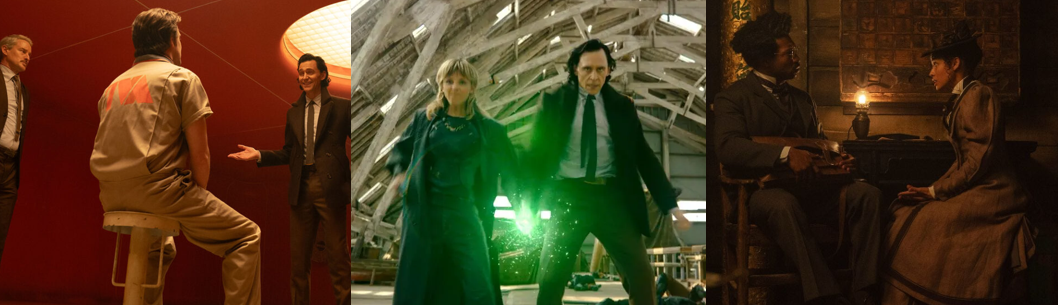
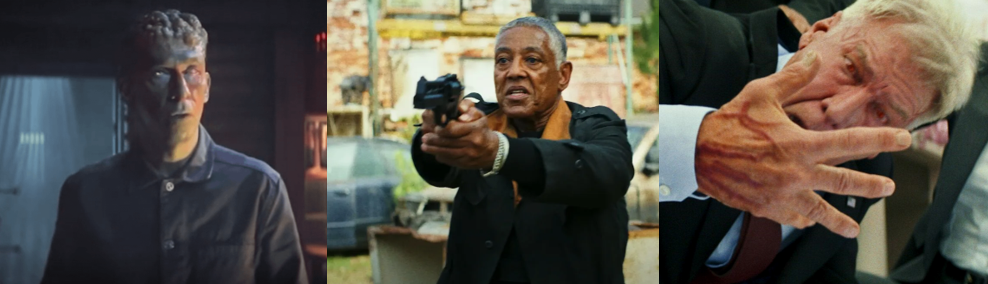
Much like WandaVision, Agatha All Along begins in something of a fantasy world, with Agatha living a crime drama fantasy as “Detective Agnes O’Connor” that the residents of Westview tolerate and even encourage to keep her placated. While Agnes of Westview only lasts for the first episode, “Seekest Thou the Road” (Schaeffer, 2024), the spirit of WandaVision is further evoked when Agatha and her coven journey across the Witches’ Road and revisit the 1960s, 1970s, and 1980s, dressing accordingly and even dealing with supernatural elements not dissimilar from The Exorcist (Friedkin, 1973) and Sam Raimi’s Evil Dead films (1981 to 1992). Enchanted by Wanda as recompense for her heinous actions, Agatha spends three years believing herself to be a tough, no-nonsense Westview detective called to solve a murder frustrated by Federal Agent Rio Vidal (Plaza). While Agnes begrudgingly shares her theories with Vidal, the agent appears coy, questioning her lifestyle choices and her ties to Westview, adding to Agnes’s frustration and unease. This is only exacerbated when Agnes almost pieces together that the victim’s book was the Darkhold, a mythical tome that corrupts anyone it touches. When questioned by Vidal over pizza and beer, Agnes as a mind blank regarding her life outside of Westview and cannot remember why she hates Vidal beyond Agnes being naturally abrasive. After apprehending a teenage thief (Locke) who breaks into her house searching for the “Road” and unnerves Agnes with an incantation, Agnes’s true memories finally return (with some prodding by the mysterious Vidal). Incensed that Wanda has taken her powers, Agatha scuffles with Vidal, seemingly a fellow witch who begrudgingly allows Agatha to regain her full strength for a more competitive battle but alerts the venge-seeking “Salem Seven” to Agatha’s location.
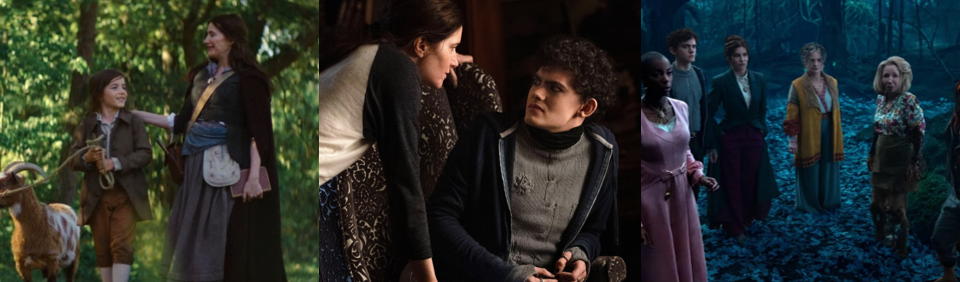
After a lifetime of killing witches, Agatha forms a new coven to travel the Witches’ Road.

Though initially dismissive of “Teen” (whom she comes to regard as a “pet”), Agatha’s intrigued when she cannot learn his name or anything about him due to a “glamour” cast by a magical sigil. Impressed that Teen broke the Scarlet Witch’s curse, Agatha uses him as a chauffeur and he enthusiastically joins her in recruiting a new coven to walk the Witches’ Road, a legendary pilgrimage that promises power to those who overcome its trials. Agatha All Along reveals that Agatha has a horrendous reputation as a witch killer not just because she sacrificed her coven and mother, Evanora (Kate Forbes), but also because she actively murdered her fellow witches alongside her reluctant son, Nicholas Scratch (Abel Lysenk). “Maiden Mother Crone” (Monteiro, 2024) reveals that Agatha provoked other witches into attacking her, allowing her to drain their magic and lifeforce, and the miniseries repeatedly states that Agatha is largely responsible for the negative reputation associated with witches, who were generally kind and compassionate before Agatha inspired lynch mobs to hunt them down. Consequently, Agatha encounters resistance when recruiting her coven, with Lilia Calderu (LuPone), Jennifer “Jen” Kale (Zamata), and Alice Wu-Gulliver (Ahn) only signing up because they’ve also lost their powers or become shells of their former selves. While Teen is very supportive of Agatha and enthusiastic about the quest, the others are sceptical, unified only by their mutual dislike of Agatha and their desire to regain their powers. Since Agatha claims to have walked the Witches’ Road before, they’re forced to defer to her experience, only to find her reluctant to participate in many of the trials and constantly withholding key information from them, leading either to their deaths or dissension as the journey becomes more perilous. Indeed, Agatha knows far more than she’s letting on, constantly manipulating events to suit her grander plan, though she does become very protective of Teen, primarily because he reminds her of her lost son.
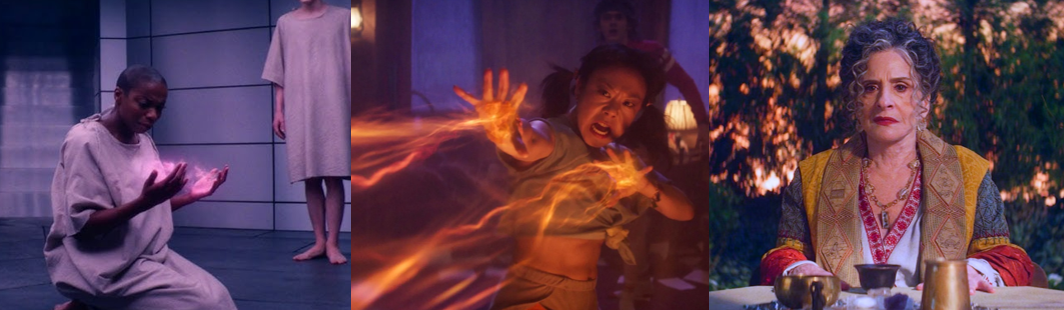
While the Witches’ Road spells doom for the coven, they briefly benefit from their time with Agatha.

While Lilia has no interest in joining the coven and is content as a fortune teller, Jen runs a successful (if dubious) skin care business, and Alice is perfectly happy believing the Witches’ Road is merely a fairytale that made her mother (Elizabeth Anweis) a rock star and led to her death, the three begrudgingly join the coven to regain their magic and out of curiosity regarding the Road. Each is chosen according to the legendary “Ballad of the Witches’ Road”, which calls for witches proficient in different magics, and each has their craft testing by the Road. Jen, who was accidentally bound by Agatha a hundred years ago, is pushed to cobble together an antidote in “Through Many Miles / Of Tricks and Trials” (Goldberg, 2024) and even saves Teen’s life after he’s injured conjuring the winged demon that’s cursed Alice’s bloodline. Alice learns that her mother performed “The “Ballad of the Witches’ Road” to protect her from this curse and gets to put it to rest before unexpectedly dying trying to save Agatha. Equally, the Road gives Lilia the chance to finally feel a sense of belonging after being left despondent at failing to save her previous coven with her clairvoyancy, which sees her experience time in a non-linear way and therefore appear crazy. The one outlier is Agatha’s kindly neighbour, Sharon Davis (Rupp), returning from WandaVision, who’s duped into joining the coven and dies during their first trial since they’re too busy squabbling to work together. She’s replaced by Vidal, an unpredictable and sadistic green witch who refuses to elaborate on her true relationship with Agatha, which is repeatedly depicted as frosty. Although the group are largely suspicious of each other, particularly the enthusiastic Teen and the untrustworthy Agatha, they soon bond, sharing stories of their personal tragedies and regrets, resulting in Jen being distraught when Lilia sacrifices herself in “Death’s Hand in Mine” (Schaeffer, 2024).
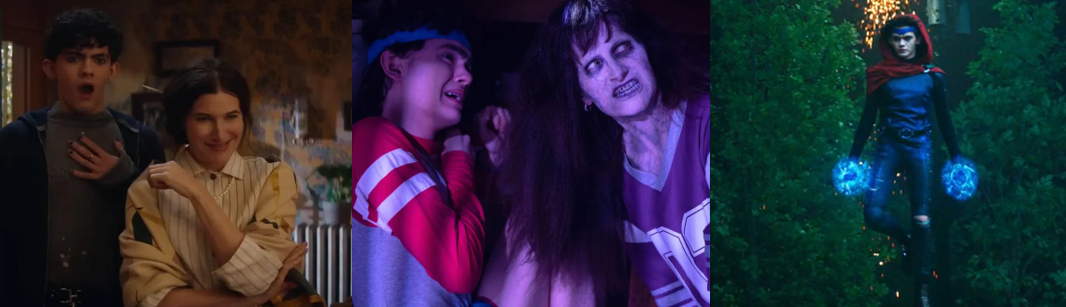
Initially supportive of Agatha and enduring the Road’s trials, Teen’s true power comes to the forefront.

Much of the miniseries revolves around the mystery of Teen, a talented but inexperienced witchling who carries a pocketbook of spells and is eager to travel the Road to gain ultimate power. Agatha is intrigued by his true nature and becomes very attached to him, pleading with Jen to save him in “If I Can’t Reach You / Let My Song Teach You” (Goldberg, 2024), but ultimately unable to deny her selfish nature. Like Agatha, Teen gets a spotlight episode in “Familiar by Thy Side” (Monteiro, 2024) that reveals he’s more than just a familiar face from WandaVision. Originally William Kaplan, Teen died in a car crash caused by Wanda’s Westview Hex and was possessed by the soul of her son, Billy. However, Kaplan awoke with amnesia and to find he could read minds, finding only worry in the heads of his parents (Maria Dizzia and Paul Adelstein) and living the next six years with no idea of who he really was. Supported by his boyfriend, Eddie (Miles Gutierrez-Riley), Kaplan meets with traumatised former Westview resident Ralph Bohner (Evan Peters) and learns of Wanda, her kids, and Agatha, realising what happened and believing that the Witches’ Road could lead him to his twin brother, Tommy (Jett Klyne). Thus, Teen breaks into Agatha’s house where she was living out her cop drama fantasy and deceives her into letting him tag along, unaware that she suspected his true identity when the Witches’ Road turned out to be real and not a con she’d made up. Though protected by Lilia’s sigil, Teen’s powers are unstable, manifesting when his emotions are at their peak, yet Agatha sees the potential in him to wield the same destructive powers as his mother. While Teen comes to resent and reject Agatha, refusing to trust her and renouncing the Witches’ Road, her tutelage allows him to locate Tommy’s soul and bind it to a dying boy, resurrecting him somewhere in the world. Teen also embraces his dual identity and even receives a glow up in “Follow Me My Friend / To Glory at the End” (Monteiro, 2024), wearing a variation of his Wiccan costume and coming to Agatha’s aid against Death.
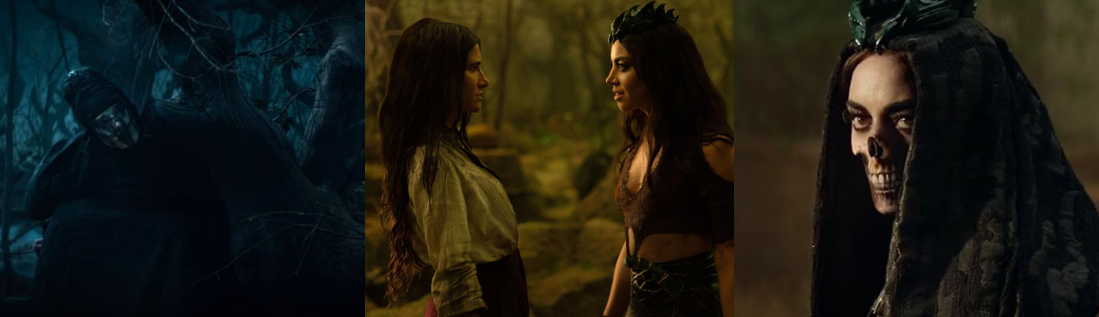
Death easily eclipses the forgettable Salem Seven with her alluring and psychotic charisma.

While Agatha is pursued by the twisted, malformed Salem Seven throughout the miniseries, they’re a minor nuisance, at best. A monstrous hive mind comprised of the children of Agatha’s first coven, they occasionally accost the group across the Witches’ Road before being killed by Liana’s sacrifice. The Witches’ Road also causes the coven a lot of grief, forcing them to complete trials based around dubious riddles, which sees them cobbling together an antidote, summoning and destroying the demon plaguing Alice, and battling the spirit of Agatha’s vengeful mother, who possesses Agatha and encourages the coven to leave her deceitful ass behind. Despite her faults, the coven sticks by Agatha to see the journey through, only for her villainous behaviour to repeatedly bite them since she can’t help but be selfish and abrasive. Liana’s tarot reading reveals that Vidal is actually the personification of death, who’s depicted as a terrifying figure with a job to do. Having had a past sexual relationship with Agatha, Death is more compassionate towards her than others, “gifting” Agatha six years with her son and demanding Billy’s life in exchange for Agatha’s as he’s an insult to the natural order. Though Agatha initially delivers on this promise, she’s convinced to sacrifice herself since Billy reminds her of her son and dies protecting him, knowing her spirit would return. In truth, the true enemy in Agatha All Along is Agatha herself as she spent centuries draining the magic and life from her fellow witches, deceiving them with stories of the Witches’ Road only to dupe them into attacking her. When the Witches’ Road suddenly became real thanks to Billy’s unpredictable magic and vivid imagination, Agatha adapted and fostered the myth, manipulating events to gain the power she so lusted after. However, Agatha’s horrified when Billy tries to banish her to the afterlife since she cannot face her son and, somewhat remorseful for her past deeds, agrees to help him find Tommy as promised.

The Summary:
Agatha All Along acts as the perfect companion to WandaVision and Doctor Strange in the Multiverse of Madness (Raimi, 2022), being coy about Wanda’s fate and showing the effect her actions had on others. Indeed, Westview remains fearful of the Scarlet Witch, choosing not to say her name or interfere with Agatha’s eccentricities since they all suffered greatly at both their hands. Ralph is especially scarred by his time as Agatha’s puppet, reduced to a paranoid hermit who sells tales of his experiences to Reddit users. While Teen never regains William’s memories and largely puts on a front to keep his parents from worrying about him, he also doesn’t acknowledge Wanda as his mother and is simply looking to discover who he is. That Teen is a queer character with a clear goth fixation only adds to this, painting him as an outcast in his own skin who’s just trying to belong. Teen believes that reuniting with Tommy will fill the void in his life but, while he’s elated to locate Tommy’s soul, he’s torn at having to nudge Tommy into the body of a recently drowned boy. Indeed, Billy is horrified to learn that he subconsciously created the Witches’ Road, making him responsible for Alice, Liana, and Sharon’s deaths. Agatha tries to alleviate his guilt by stating that she was going to kill them anyway and pointing out that he technically saved Jen, who regains her magic and confidence and flies off to an uncertain future, but it’s the search for Tommy that really gives Billy a sense of focus by the end. Though he’s the son of her enemy, Teen has a significant impact on Agatha as she sees him as a surrogate son and she repeatedly keeps him out of harm’s way across the Road. While this is for her own selfish ends, she goes out of her way to help him in “Follow Me My Friend / To Glory at the End” and ultimately choses to die in his place after initially being happy to hand him over to Death.
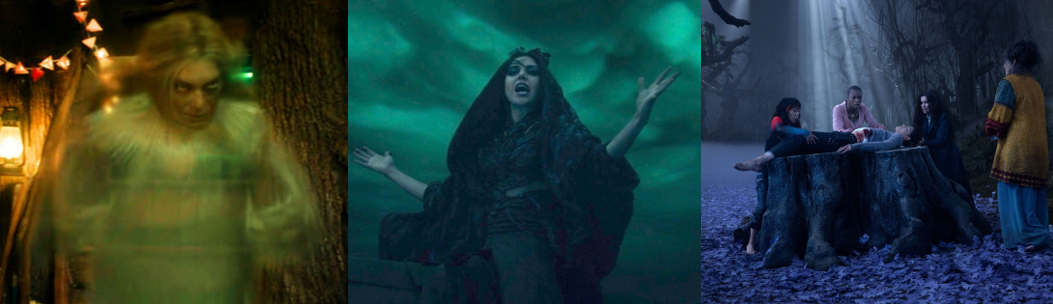
Travelling the Witches’ Road is perilous but nonetheless brings the coven together in entertaining ways.

I was happy to see Agatha All Along lean into the horror genre, presenting a unique take on witches (that they’re naturally kind-hearted and only have a bad reputation because of Agatha) and finally bringing Lady Death into the MCU, casting her as a necessary companion to those who have passed, a spurned lover, and a sadistic psychopath. The clear influence of classic horror films is felt throughout the miniseries, with possessed characters bending, contorting, and scurrying in unnatural ways, the coven messing around with a Ouija board, and introducing ghosts to the MCU. The miniseries also draws upon fairy tales and classic cinema, which subconsciously influence Billy’s interpretation of the Witches’ Road, and tells a heart-warming story of these down-and-out misfits coming together for a common cause. Each of the coven has been wronged by Agatha, either directly or indirectly, and each is looking to gain something from the Road. Poor Sharon is the exception, whisked along with the promise of adventure and being poisoned and constantly dismissed by Agatha after her death. While Alice also ends up dead, she dies protecting someone and finally exorcises her literal demons, though she’s initially dismayed at not getting to live free from the curse. Jen and Liana greatly benefit from the pilgrimage, finally regaining their confidence and their abilities, with Liana finally feeling like she belongs after being alone for so long. Each has heard of the Witches’ Road thanks not just to Alice’s mother’s popular song but the story being popular among the witch community, and each finds themselves tested by the increasingly dangerous and obtuse trials presented to them. The Witches’ Road is a perilous place that constantly pushes the coven onwards and shows them their worst fears, forcing Agatha to be confronted by her past misdeeds and exposing her deceitful nature for all to see.
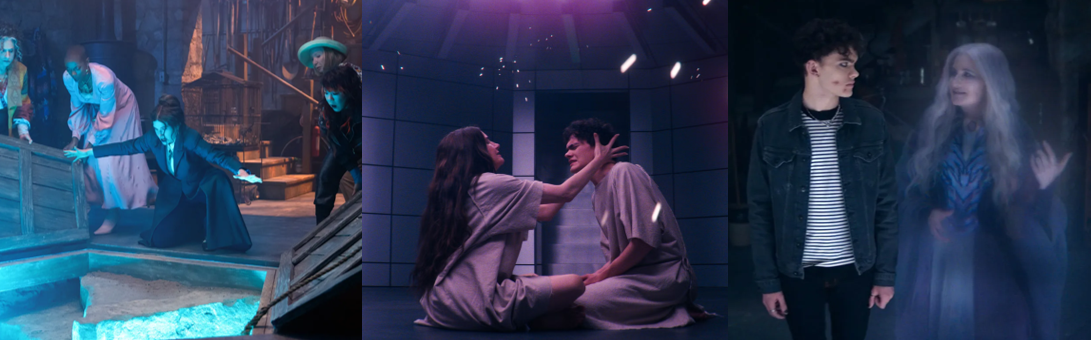
Scheming, deceitful Agatha seemingly seeks atonement by the conclusion of this enjoyable miniseries.

Katherine Hahn stole the show as Agatha, being just the right level of theatrical and dramatic and slowly depicting Agatha’s desperation manifest in aggression and spite as the miniseries progressed. A despicable, selfish character, Agatha seeks only more power and relishes stealing from others, leading them on with stories of the Witches’ Road and caring little for integrating into the witch community (or any society). It’s not made clear why she’s driven to kill, but she doesn’t stop, even when raising Nicholas, and seemingly turns her grief against her kind after he’s taken from her. Bitter and twisted, she’s perfectly happy to manipulate anyone she can and easily adapts to any situation to turn it to her advantage, encouraging stories about her and flaunting her feared reputation. Agatha All Along avoids descending into a big CGI light show battle, emphasising the futility of fighting Death, and instead hinges its confrontations and finale on interpersonal drama and overcoming physical and emotional challenges. The visual identity of the miniseries was captivating, fully committing to its horror aspects and presenting a twisted forest full of dangers and surprises. I liked that the witches couldn’t use their magic and had to come up with different ways to pass their trials, and that Agatha was forced to manipulate events when Billy conjured the Witches’ Road. Even dying was part of her plan, with her continuing on as a spirit and seemingly committed to atoning for (some of) her past by guiding Billy to Tommy and even honouring her coven. It was fun spotting all the references to classic horror films, and enjoying the different variations of “The Ballad of the Witches’ Road”, and learning more about how witches function in the MCU. The miniseries shines most in the way the characters interact, begrudgingly forming a coven and learning to work together and care for each, bickering the entire time and bringing a lot of energy to the show. I’m interested to see what’s next for Agatha and Billy and how this all pays off in the wider picture of the MCU, but I’d be more than happy to see future miniseries for both and in this world going forward.

My Rating:

Rating: 4 out of 5.

Great Stuff

Did you enjoy Agatha All Along? What did you think of Katherine Hahn’s performance and the additional lore afforded to Agatha? Which of the coven was your favourite and did you guess that there was more to Teen and Vidal? What did you think of the Witches’ Road and the way Agatha fostered the legend for her own ends? Were you disappointed that there wasn’t a more spectacular fight between Agatha and Death? Would you like to see more from these characters, and are there any specific Agatha Harkness stories and moments you’d like to see in the future? Whatever your thoughts on Agatha All Along, leave them below, check out my other Marvell content, and donate to my Ko-Fi to fund more reviews like this.


Screen Time: Loki (Season Two)

Season Two

Air Date: 5 October 2023 to 9 November 2023
Network: Disney+
Stars: Tom Hiddleston, Owen Wilson, Sophia Di Martino, Ke Huy Quan, Wunmi Mosaku, and Jonathan Majors

The Background:
While Marvel Studios expanded into television ventures with the likes of Agents of S.H.I.E.L.D. (2013 to 2020) and various Netflix productions, the launch of streaming service Disney+ led to MCU godfather Kevin Feige producing various content to further explore the continuity of the MCU. Although Marvel Studios somewhat flooded the market with shows and movies, the first season of Loki (Herron, 2021) was met with critical acclaim for its characterisations and unique narrative. Since Tom Hiddleston’s portrayal of Norse God of Mischief Loki Laufeyson has been consistently popular over the years, a second season was all-but inevitable, especially considering the first ended on a massive cliff-hanger. Principal directors Justin Benson and Aaron Moorhead were excited to tackle the mischievous outcast and further explore Loki’s unlikely position as the saviour of the multiverse. While the writers strived to showcase new layers to Loki and the show’s returning characters, they faced an uphill battle in addressing lingering plot threads regarding Jonathan Majors’ multiple characters after he was accused of all kinds of wrongdoings and caused Feige to rejig the plans for Majors’ Kang the Conqueror. Still, the season aimed to dive deeper into the weirder side of the MCU while still focusing on character-driven stories, explore Loki’s emotional turmoil, and further set the stage for upcoming MCU projects. Released weekly on Disney+, Loki’s second season was widely praised for its bittersweet conclusion, the culmination of Loki’s selfless character arc, and the compelling performances.

The Plot:
Uncontrollably warping through time, an alternate version of Loki (Hiddleston) attempts to reunite with his female “time variant”, Sylvie Laufeydottir (Di Martino), and warn the Time Variance Authority (TVA) of the threat posed by variants of “He Who Remains” (Majors).

The Review:
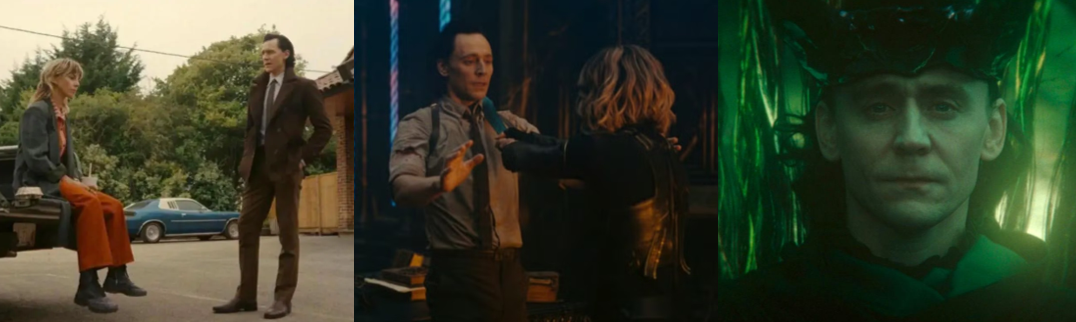
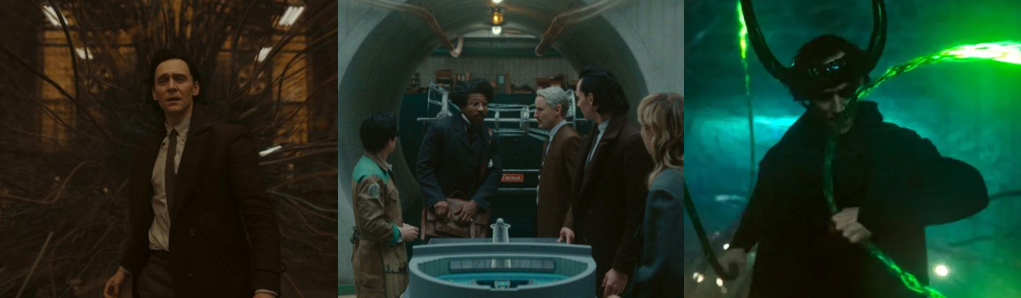
If you’re anything like me and haven’t watched Loki’s first season since it originally aired, you’re in luck as season two opens with a helpful recap, largely narrated by the sentient artificial intelligence Miss Minutes (Tara Strong), that summarises the key events of the first season. Namely, the deceptive nature of the TVA (whose members are variants from destroyed (or “pruned”) timelines) who’ve had their memories continually wiped) and Loki and Sylvie’s climactic confrontation with He Who Remains. This saw Sylvie impulsively murder the enigmatic overseer, plunging the “Sacred Timeline” into chaos as the one coherent timeline diverged into an infinite number of strands. The first season saw this version of Loki, plucked from the peak of his villainous arc, transformed from a mischievous and self-centred antagonist into a reluctant hero, one who came to care for his allies at the TVA, particularly Mobius M. Mobius (Wilson). The first season concluded with Loki deposited in a version of the TVA where no one remembers him and a variant of He Who Remains is now immortalised as the founding father of the TVA. Since no one remembers him and Loki is renowned as a troublemaker, the TVA initially seeks to apprehend and prune him, forcing him to frantically flee through their offices since the time-displaced TVA has safeguards that negate his magic. As if this wasn’t bad enough, Loki finds himself painfully warping to different points in time where the TVA either remember him or don’t, something that should be impossible within the TVA but appears to be a result of one of the many temporal paradoxes and incursions peppering this season. Unfortunately, Loki’s “time slipping” is essentially resolved by the end of the first episode, “Ouroboros” (Benson and Moorhead, 2023), thanks to a time paradox Loki initiates that sees forgotten TVA technician Ouroboros/OB (Quan) cure Loki’s ailment using a “Temporal Aura Extractor”.

Despite being pulled through time, Loki is determined to help and defend his friends at all costs.

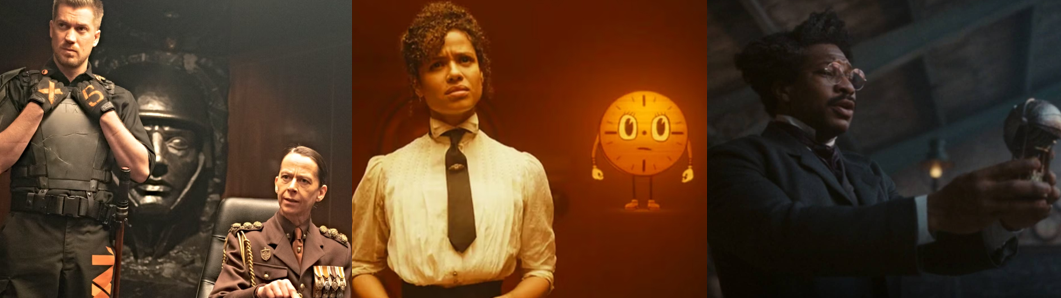
This desperate gamble, which sees Mobius brave a cosmic storm and approach the wildly unstable “Temporal Loom”, only succeeds because Mobius risks his life for his friend and Loki willing prunes himself from every timeline, stabilising his condition and allowing him to return to work alongside Mobius. However, Mobius is sceptical of Loki’s warnings about He Who Remains, an enigmatic variant whose death kick-started the catastrophe that threatens the TVA (and all reality) as he has a nigh-infinite army of variants waiting to wage war on time itself. Although Hunter B-15 (Mosaku) convinces the fractured TVA council (left in disarray after Ravonna Renslayer’s (Gugu Mbatha-Raw) betrayal) not to eradicate the branching timelines and thus sparing other variants of losing their worlds like they did, the TVA is largely unconvinced of the larger threat posed by He Who Remains, even after Loki dramatically reveals that he’s deceived them all. While dealing with He Who Remains is Loki’s top priority, he’s also desperate the safeguard Sylvie from the warmongering General Dox (Kate Dickie) and her chief agent, Hunter X-5 (Rafael Casal), who dismiss Hunter B-15’s arguments and launch a devastating attack on the splintering timeline before they’re apprehended. Distressed at the way their relationship fell apart over their disagreement concerning He Who Remains, Loki’s keen to make amends and recruit Sylvie to his cause, only to find her bitter at the TVA, angry at his loyalty to the organisation, and content to live a mundane life as a McDonald’s employee. This season really showcases how much Loki has changed as he’s extremely loyal to Mobius, makes fast friends with OB, and sees that the TVA saves more lives than it ends and is a necessary function to defend against He Who Remains. While interrogating Hunter X-5 (who abandons his mission to become successful actor “Brad Wolfe”), Loki takes the high ground when his moral stance is questioned and even councils Mobius when he lets Brad get under his skin, having learned to empathise with others and prioritise saving lives over taking them.

Though Loki and Sylvie clash, her perspective motivates Loki to take his rightful place at the End of Time.

While Loki’s still mischievous at times, using his powers of illusion to subdue Brad and then colluding with Mobius to threaten Brad into giving up Sylvie’s location, he demonstrates incredible patience, enduring Mobius’s more relaxed approach to field work, OB’s eccentricities, and Sylvie’s pig-headedness all to try and reason with them. When the likes of Brad and Renslayer call out Loki’s hypocrisy, he admits to having done bad things and experienced jealousy and rage in the past but is seemingly committed to doing good now. However, during his desperate attempt to time slip back to the TVA and prevent the Temporal Loom from exploding, Sylvie forces Loki to admit that, deep down, he’s motivated by a selfish desire to not be alone, leading him to briefly abandon his cause. Loki’s despair at his friends forgetting him and his desperate needs to assemble their variants in “Science/Fiction” (Benson and Moorhead, 2023) is palpable, with him being both frustrated and hurt when they forget him and enduring centuries of time slipping to try and save them all. When his efforts are doomed to fail, a chance comment by Sylvie sees Loki return to the citadel at the End of Time to endure another doomed time loop as Sylvie’s past self refuses to listen to reason and he cannot bring himself to kill her. Ultimately, Loki’s given the same choice as in season one: maintain the Sacred Timeline or risk total annihilation. While Sylvie advocates for free will, even if it means everyone dying, Mobius relates the burden of making sacrifices for the greater good. Thus, rather than risk his friends, Loki destroys the Temporal Loom and rearranges the disparate timelines into something more stable, a tree-like structure resembling Yggdrasil, with himself at the centre. While he previously admitted his fear of being alone, Loki gratefully assumes his duties with a content smile, having finally found his place as a more benevolent overseer of the many timelines.

Even variants of Loki’s beloved friends anchor him and drive him to safeguard all timelines.

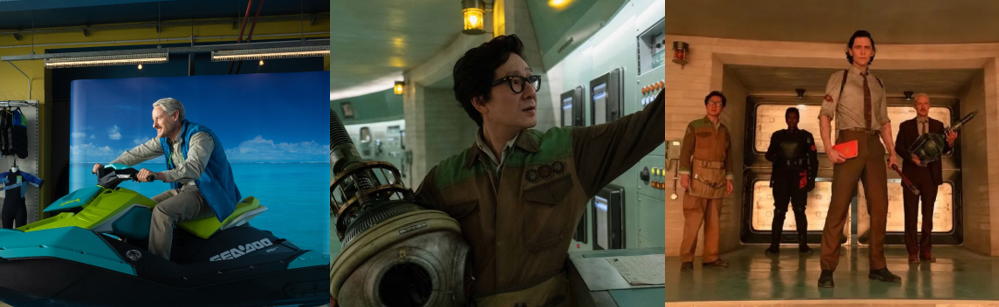
While Mobius initially has no idea who Loki is, his memories quickly return in fragments and he’s soon following his instincts and bringing Loki to OB and risking having his skin peeled off by the Temporal Loom to help his friend. Though still distracted by jet skis, we get a few extra layers to Mobius this season as he adamantly refuses to peek into the many timelines and see the life he was denied by He Who Remains, being content with his job and enjoying it. However, after Loki encounters Mobius’s jet ski salesman variant, Brad, a single dad who’s awestruck that he’s essential to saving reality, Mobius eventually decides to take a break from the TVA. After plunging the Sacred Timeline into chaos, Sylvie retreats to 1982 and lives a content, if mundane, life as a McDonald’s employee. Adamant that she can handle any variants of He Who Remains, Sylvie angrily refuses to help Loki or the TVA, believing that free will is more important than anything. While Sylvie begrudgingly aids Loki despite this, she’s forced to join his group when her beloved timeline is spaghettified by the exploding Temporal Loom, yet still believes she was right to kill He Who Remains. Loki’s also aided by Casey (Eugene Cordero), a technician who helps Loki and Mobius track their targets, Hunter B-15 (who’s determined to stop haphazardly pruning timelines and thus horrified when Renslayer murders General Dox and her followers), and newcomer OB. An enthusiastic and quirky technician, OB wrote the TVA guidebook after being inspired by Victor Timely (Majors), who was in turn inspired by the same guidebook after being gifted it by Renslayer to turn him into He Who Remains, creating a paradox. Even OB’s unsuccessful sci-fi writer variant Doctor A.D. Doug is instrumental in helping Loki by cobbling together a crude TemPad and helping him master his time slipping. OB also spends what’s said to be centuries working with Timely to teach Loki about particle physics. Though this plan ultimately fails no matter how hard or fast Loki tries to utilise the “Throughput Multiplier” as the Temporal Loom is incapable of handling infinite timelines, the influence of Loki’s friends has a profound impact on him and he willingly gives up his personal freedom to safeguard their lives.

While Dox and Renslayer present immediate dangers, Timely is potentially a more destructive threat.

While Loki is terrified of the imminent danger posed by the variants of He Who Remains, they’re a very vague and ominous existential threat, one not seen in this season. Thus, the danger posed by the stubborn General Dox initially takes priority. Although Loki and Mobius apprehend Dox and her loyalists after working over Brad, they’re too late to stop her destroying most of the timelines. Encouraged by Judge Gamble (Liz Carr), Hunter B-15 attempts to find common ground with General Dox to safeguard the TVA, only for her and her loyalists to be gruesomely executed by Renslayer for refusing to join her. Brad does join Renslayer and Miss Minutes but immediately regrets it and ultimately turns on her soon after, finally feeling remorse after spending the entire season being a complete asshat. Renslayer forms a shaky alliance with Miss Minutes, hopping to 1893 to try and coerce Timely into joining with them, only for the eccentric Timely to ditch them since he’s so against a partnership and rightfully horrified when Miss Minutes reveals she’s in love with his counterpart. Spurned by Timely’s refusal and him choosing to assist Loki, Renslayer and Miss Minutes renounce He Who Remains, especially after Renslayer learns that she was once his commander and was discarded by him, to wage their own campaign against the TVA. Loki’s horrified upon seeing Timely, who shares the same visage as He Who Remains, and at the stuttering con artist’s potential to become He Who Remains, but soon defends the bumbling scientist and even respects him for braving the cosmic storm. Though a con man, Timely has a grand imagination and, inspired by the TVA guidebook, has the potential to become what Loki and Sylvie fear most. Ultimately, even Sylvie recognises that Timely isn’t the same man and he proves he’s committed to doing the right thing, even if it costs him his life. When trying to prevent the destruction of all reality, Loki confronts He Who Remains again, learning that he perfectly planned for all eventualities and that the risk of multiversal war remains as strong as ever. However, Loki’s sheer determination to find another way and ensure everyone gets the chance to thrive wins out, with the reorganised TVA shown to be actively hunting the variants of He Who Remains and presumably ending whatever threat they pose to the MCU.

The Summary:
Loki’s second season picks up right where the first one ended but presents a narrative under constant pressure from a few existential threats. Obviously, the danger posed by the unseen variants of He Who Remains is most pressing, and one Loki is eager to guard against, but it’s largely a non-factor here, especially compared to the imminent danger posed by the Temporal Loom. I initially believed season two who revolve around Loki’s sporadic time slipping but this is sadly cured by the end of the first episode. It does make a dramatic return by the finale, “Glorious Purpose” (Benson and Moorhead, 2023), to depict Loki repeating the same loop over and over for centuries, desperately trying to speed up OB’s plan and failing each time. While this is a great way to emphasise Loki’s newfound sense of devotion to his friends and commitment to saving countless lives, it is strange that he didn’t think to time slip further back sooner. There are some fun paradoxes in this season due to this mechanic, though, with Loki jumping to the future, where the TVA is moments from destruction, encountering himself at different times throughout the season, and quickly building a friendship with OB by consulting with him in the past and those memories aiding Loki and Mobius in the present. Unfortunately, this gimmick isn’t sustained throughout the season and, despite many characters glancing at their alternative timelines, we don’t explore many variant realities here. Loki spends all of “Science/Fiction” in one, only for his primary plan to fail and for desperation to drive him to reliving the same moments, kind of making this episode a waste even if it does finally give us the imagery of Owen Wilson on a jet ski.

While the character moments are on point, Timely was an aggravating addition.

The performances were as captivating as ever in this season. I particularly liked the friendship between Loki and Mobius, with Loki insisting on sitting his friend down and discussing his feelings over a slice of pie, being exasperated by his more cerebral approach in the field, and bickering about which of them should brave the cosmic storm and install the Throughput Multiplier. Mobius is explored a little more here, determined not to look into his other timelines out of fear that they will be better or worse than the life he’s devoted himself to, and Loki shows genuine affection towards him to show how far he’s progressed as a character. This extends to the standout character of the series, OB, whose infectious demeanour steals every scene and quickly makes him an ally Loki fights to protect. Sylvie is very different this time around, being somewhat jaded and content to lay down her arms unless challenged. She opposes Loki’s moral high ground and offers an extreme perspective on events but is ultimately an advocate for free will and willing to make any sacrifice to ensure people have that right. If there’s a weak link here, it’s Jonathan Majors, whose oddball, stuttering, bungling Timely really drags down every scene he’s in. I liked that he was a conman who sold faulty inventions and that he constantly switched his allegiance depending on what was best for him, but his eccentric personality and overly theatrical delivery quickly became grating. He does surprisingly showcase a great deal of bravery and fortitude, however, even earning Loki’s respect when he risks his life to save reality and ultimately chooses to take a different path to avoid becoming He Who Remains. Although Renslayer is more of a bit part this time, I liked how bitter and twisted she was and the rivalry between her and Miss Minutes, who both vie for Timely’s affections. I would’ve preferred Renslayer to play a larger role as a dual antagonist alongside Miss Minutes, perhaps with them replacing Brad in some way, as she felt like an afterthought by the end.

Despite some compelling moments, this season failed to live up to its potential in my eyes.

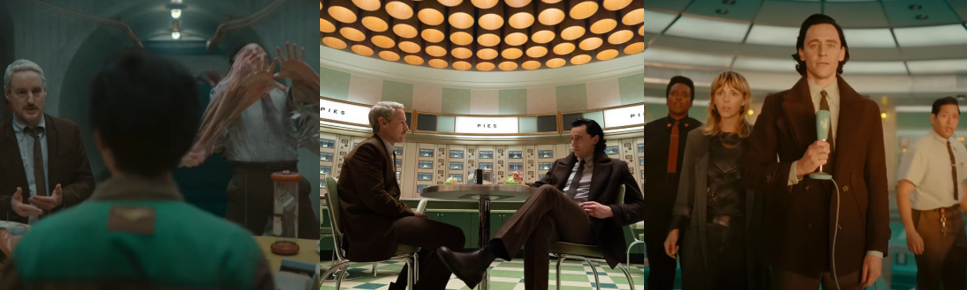
While Loki’s second season certainly looks the part and delivers some stirring character moments from the title character, who finally fulfils his “glorious purpose” and finds his place in reality, I did find it lacking. The entire season is essentially a do-over of the first season’s finale, with it all boiling down to the same choice between killing He Who Remains and risking war or maintaining the lie/sanctity of the Sacred Timeline. As Loki effectively ends up taking the place of He Who Remains and overseeing the newly formed timelines, I can’t help but feel like the show could’ve been reorganised to take the best episodes and ideas and present them as a ten-episode series that makes the same point. I was hoping this season would be about an unstable, time slipping Loki bouncing around the infinite multiverse encountering variants of He Who Remains and trying to prevent his creation. Instead, it was largely a race against time to find ways to repair and stabilise the Temporal Loom, with each approach failing because Loki is seemingly doomed to fail, especially at being anything but a villain. These aspects are where Loki shined the most, the ways it presented new aspects of Loki’s personality. I loved how he encouraged Brad’s criticism and seemingly veered towards his villainous ways when interrogating him, and that Loki constantly takes a higher path, offering support to his friends when they lose control and constantly trying to empathise with others. This season is, however, let down somewhat by the lack of variety in the time periods visited, with most of the action happening in the increasingly chaotic TVA, and failing to explore the multiverse as widely as I’d hoped. As a character-driven season, it’s pretty fascinating, but many of the narrative beats are recycled from the last season. Loki’s encounter with He Who Remains isn’t that much different to last time and, while its bittersweet to see Loki replace He Who Remains, it feels like all this madness could’ve been avoided if he’d just done that in the last season. Still, season two did a good job tying up some loose ends and giving many of these characters a satisfying send off, I just think it had the potential to be even better.

My Rating:

Rating: 3 out of 5.

Pretty Good

Did you enjoy the second season of Loki? Were you happy to see Loki evolve into a more heroic and balanced character? Did you also enjoy the friendship he shared with the likes of Mobius and OB? Were you also disappointed that the time slipping aspect was downplayed? Did Victor Timely also annoy you and what was your reaction when Loki finally took the place of He Who Remains? Drop your thoughts on Loki below, check out my other Asgard-adjacent content, and donate to my Ko-Fi to fund more reviews like this.
Movie Night: Thunderbolts* / The New Avengers

Released: 2 May 2025
Director: Jake Schreier
Distributor: Walt Disney Studios Motion Pictures
Budget: $180 million
Stars: Florence Pugh, Lewis Pullman, Sebastian Stan, David Harbour, Wyatt Russell, and Julia Louis-Dreyfus

The Plot:
When Contessa Valentina Allegra de Fontaine (Louis-Dreyfus) seeks to erase the evidence of her malicious experiments, she unwittingly assembles a rag-tag team of losers and mercenaries, led by Yelena Belova (Push), to stand against her and her secret superpowered agent…

The Background:
Back in the nineties, Marvel Comics were not just in a financial state but the “Onslaught Saga” led to some of their most popular characters being presumed dead for a while. In their place, Peter David created an all-new superhero team, the Thunderbolts, who debuted in 1997 as typically excessive heroes who were secretly the villainous Masters of Evil in disguise. The idea of bringing this concept to the blockbuster Marvel Cinematic Universe (MCU) can be traced back to the production of Guardians of the Galaxy (Gunn, 2014) when director James Gunn expressed interest in a big-screen adaptation. Although the idea was shelved when Warner Bros. produced a similar concept, it regained steam when MCU projects teased Valentina assembling a team of anti-heroes and soon evolved into a starring vehicle for Florence Pugh. Once officially announced, a tumultuous development began as rumours and script rewrites did the rounds, drastically altering key plot points and surprisingly offing one of the main cast for shock value. Writer Eric Pearson was keen to introduce Robert “Bob” Reynolds, arguably Marvel’s most notable Clark Kent/Kal-El/Superman proxy, to tackle mental health issues like depression and addiction, with Lewis Pullman cast after scheduling conflicts forced Steven Yeun to back out. Much speculation surrounded the mysterious asterisk in the film’s title, which quickly saw Marvel re-branding the film to The New Avengers shortly after its release, as was always intended. While this bold decision divided some fans, Thunderbolts* was met with widespread critical acclaim and made over $382 million at the box office. Reviews praised the misfit action, Pugh’s elevation to a lead role, its exploration of depression, and the mixture of action and comedy, though many were dissatisfied with the unceremonious showing for Olga Kurylenko’s Antonia Dreykov/Taskmaster.

The Review:
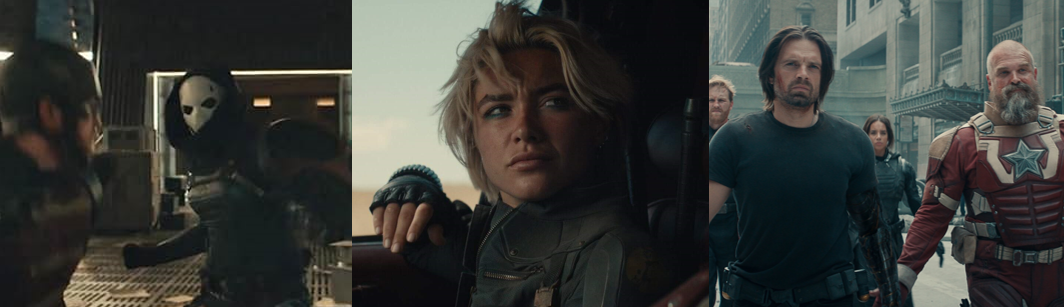
Although the marketing for Thunderbolts* had me believe that Junior Congressman and ex-Winter Soldier James Buchanan “Bucky” Barnes (Stan) was the central character in this film, I was surprised and delighted to find that former Black Widow Yelena Belova takes the lead. In many ways, Thunderbolts* is as much a sequel to Black Widow (Shortland, 2021) as it is a continuation of The Falcon and the Winter Soldier (Skogland, 2021), reuniting Yelena with her eccentric and overbearing super soldier surrogate father, Alexei Shostakov/The Red Guardian (Harbour), delving a little more into Yelena’s backstory courtesy of some traumatic visits to a nightmare dimension known as the “void”, while also significantly building upon the character of disgraced military veteran and former Captain America turned hot-headed mercenary, John Walker/U.S. Agent (Russell). Still grieving the loss of her surrogate sister, Natasha Romanoff/Black Widow (Scarlett Johansson), Yelena begins the film in a place of apathy. Yelena now works as a black ops agent for Valentina, the director of the Central Intelligence Agency (CIA) who’s currently under heavy investigation regarding all her shady experiments and dealings. However, despite throwing herself into her work and being an accomplished assassin, Yelena is unfulfilled and bored with the day-to-day mediocrity of her assignments. Feeling directionless and empty, she attempts to find some direction by talking through her feelings with Alexei, a disgraced and overweight former Soviet hero who’s left living in squalor and running a limo driving service. Despite his significant fall from grace and his boisterous personality, Alexei emphasises that the greatest calling he ever had was being an adored hero and encourages Yelena to step out of her comfort zone and take on a more public, heroic role like her late sister. Though hesitant, Yelena decides to give it a shot, if only to change her daily routine, and Valentina agrees to reassign her if she completes one last job. Namely, the infiltration of a secret underground O.X.E. facility that’s in danger of being robbed (and thus exposing Valentina’s dirty secrets) by Ava Starr/Ghost (Hannah John-Kamen), a tortured soul who can become intangible for short bursts.

Although Taskmaster’s screen time gets cut short, Pugh steals the show with her layered performance.

However, when Yelena accesses the facility, she’s blindsided by Walker, who’s been contracted to kill her. Walker’s then attacked by master fighter Taskmaster, who’s been hired to kill him, and a four-way melee kicks off as they try to take each other out. Though Yelena immediately sees they’ve all been double-crossed, it takes the sudden, dramatic, and down-right insulting execution of Taskmaster for the fighting to stop. Well, that and the strange appearance of the anxious, confused, and seemingly harmless Bob after he was accidentally released from stasis. Though the pig-headed Walker is reluctant to believe Valentina would turn on him, he’s forced to begrudgingly work with the others to escape the facility, which first threatens to incinerate them and then trap them forever. Despite none of them having the powers or equipment to scale the impossibly large shaft, Bob suggests they clamber up back-to-back and, despite Walker’s selfish arrogance, the group fumbles their way to the surface. Unfortunately, Valentina’s long-suffering assistant, Mel (Geraldine Viswanathan), alerts her boss to their actions – and Bob’s presence – meaning the group are met by a heavily armed response team. Thanks to masquerading as Valentina’s goon squad, the group slip past the barricade, but the grateful and kind-hearted Bob decides to risk his life by covering their escape, resulting in him being peppered by bullets. Instead of dying, he emerges unscathed, blasts into the sky, and crashes to the ground with a massive explosion, inadvertently giving his newfound acquaintances the chance to escape and placing him in Valentina’s excited hands. Thanks to having chauffeured Valentina and Mel, Alexei races to retrieve them and excitedly encourages them to stick together as a team, accidentally nicknamed “Thunderbolts” after a passing mention of Yelena’s school sports team, though the group are less than enthusiastic about working together and are visibly disgusted at having had to rely on each other for so long.

Emotionally damaged Bob turns out to be perhaps the greatest threat the world has ever known…

While all this is going on, Bucky seeks to uncover concrete evidence to expose and impeach Valentina, working his charm on Mel to get the inside track and racing to rescue the group when Alexei’s limo is attacked. Despite Alexei’s joy at meeting a Soviet hero and fellow super soldier, Bucky takes no chances and binds the group, seeking to have them testify against Valentina, but is forced to cut them loose and join forces with them when Mel corroborates their wild claims about Bob. As indicated by paperwork found in the facility, the seemingly unassuming Bob is actually a neurotic and emotionally unstable drug addict and survivor of horrific childhood abuse who, in a desperate attempt to feel powerful and significant, signed up to one of Valentina’s secret drug trials. While all the other subjects died, Bob became a full-blown indestructible superman, capable of flight and exhibiting awesome psychic powers, though his dark side also received a superhuman boost. With a touch, or at his command, Bob sends targets to the void, a dark dimension where they relive their most painful memories. However, Valentina brainwashes Bob with platitudes and strokes his fragile ego, promising to make him the world’s mightiest superhero in the absence of the Avengers and having him become the Sentry. While Bob is reluctant to turn on his newfound friends, he embraces the chance to be more than an insignificant nobody, but quickly becomes drunk on his power, rejecting Valentina’s orders and seeking to take the world for himself. While Mel puts the Sentry down with a kill switch, this merely suppresses Bob’s neurotic (but nonetheless harmless) personality and unleashes his dark side, the Void, who impassively terrorises New York City to plunge humanity into a glorious nothingness. Despite being powerless against the Sentry and going their separate ways, the chaos inspires the reluctant Thunderbolts to save civilians and rally against the Void, with Yelena desperate to appeal to Bob’s humanity by willingly returning to the void and facing his dark past.

While Valentina is a deplorable puppet master, the misfit team is their own worst enemy.

Although Valentina is gleefully presented as a despicable and thoroughly unlikeable villain, I do think she suffered from not featuring more prominently in previous Marvel movies as a dark counterpart to Nick Fury (Samuel L. Jackson). Luckily, the titular Thunderbolts are all largely dislikeable or morally dubious characters and their bickering and in-fighting means they’re their own worst enemies. Indeed, it’s only the fact that they have a common enemy that the group sets aside their egos and dislike of each other to even work together, though Bucky and Alexei go a long way to galvanising the team. Still, “dysfunctional” is putting it mildly when it comes to these guys, especially considering how abrasive and unlikeable Walker is. His temper and arrogance paint him as a typical jock, but he undergoes a surprising redemption arc throughout as he tries to atone for his past and turn his life around. Though sadly not featured as prominently as she should be, Ghost seems to carry some guilt about murdering Taskmaster and, despite frequently clashing with Walker, sticks with the group simply because she’s lived so much of her life alone. As Alexei observes, Yelena feels the same emptiness lifted thanks to the team’s presence. Despite them constantly butting heads, she takes a leadership role and is constantly the voice of reason amongst them, pushing them to focus on their true enemy and to do some good for a change. Naturally, Alexei enjoys the chance to be a hero once more and Harbour’s enthusiastic and bombastic energy really cements Thunderbolts* as one of the best MCU movies of the modern era. Finally, there’s Bucky, a guy who seems uncomfortable in his political role and who immediately reverts to type the first chance he gets. Without a doubt, though, this is Bob’s show as, through him, the MCU tackles the serious and soul-crushing weight of abuse and depression and forces it to the forefront as he discovers, masters, and then loses himself to his incredible powers.

The Nitty-Gritty:
Unfortunately, despite the film’s marketing, Taskmaster really got the shaft here, she appeared onscreen for one fight, gets one line, and then is suddenly executed with little to no fanfare. Yelena basically shrugs it off since she’s so impassive and Taskmaster is barely brought up afterwards, which is a shame as her new suit was cool and I would’ve liked to see her character get a shot at redemption. They could’ve at least had her live until the team escaped the facility, perhaps have Bob accidentally obliterate her in his first unexpected show of power. Similarly, I’m not sure what the benefit of having Bucky be a congressman was if it was going to be dropped immediately. Nothing he did tied into that role and he could’ve worked Mel and helped his fellow congressman (Wendell Pierce) without having a political role. While it was also a shame we never got to see how the others fared in the void, it did provide some additional tragedy to Yelena (who was forced to see her fellow Black Widow recruits tortured and killed during her training) and touched upon the shame that fuels Walker and explains his brash personality. The void truly shines when exploring Bob’s traumatic past, however, as Yelena witnesses Bob’s father emotionally and physically abuse him, his drug addict mother shun him, and briefly witnesses his own struggles with addiction. When in his default personality, Bob talks about how he sometimes has highs and then suffers crushing lows that drove him towards drink and meth but also, seemingly to the point where he didn’t care if he lived or died. This led him to Valentina’s “Sentry Project”, which remarkably made him everything she hoped for, but also empowered his dark thoughts and made him extremely emotionally unstable. Seeing Bob wallow in his childhood bedroom (the quietest, nicest room in the void as long as you don’t mind seeing and hearing your parents fight and belittle you) was heart wrenching and Pullman really ran the gamut of emotions in his portrayal of Bob.

Amidst the action and banter, there’s a chilling and emotional exploration of depression.

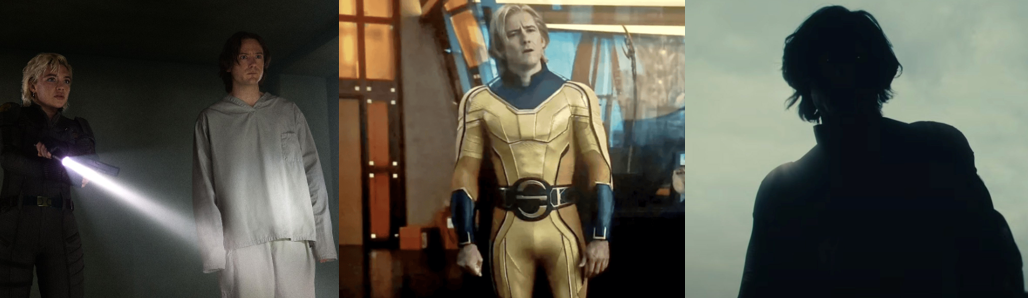
This culminates in a spectacular (if brief) display of power from the Sentry in the former Avengers Tower. Garbed in a golden outfit and showcasing superhuman speed and strength, the Sentry easily overpowers his friends, with even the super soldiers barely making Bob flinch and him overwhelming them all while appearing bored. His transformation into the Void is equally impressive, with Pullman being enveloped in darkness. He speaks in a hushed, impassive tone, with only his silvery eyes glittering from the darkness, and sends targets to the void with a wave of his hand in a chilling visual. While much of Thunderbolts* revolves around the rag-tag team trying to co-exist without killing each other, the group finds a common language in combat. Despite them all pretty much just punching and shooting, each brings something a little different, such as Walker wielding his shield, Bucky utilising his mechanical arm, and Ghost phasing in and out of reality. Although Walker scoffs at Yelena taking charge of the group and a combination of bad luck and miscommunication means their plans often fail or quickly fall apart, the group fights well together. Crucially, when the Void envelops the city, these largely selfish anti-heroes don’t hesitate to jump in and save who they can, leading the crowd to safety and earning their appreciation, much to Alexei’s delight and the others’ surprise. Action-packed moments like Bucky’s Terminator 2: Judgment Day (Cameron,1991) style motorcycle intervention, the team storming Valentia’s tower, and their ill-fated showdown with the Sentry are juxtaposed with some fun humour and banter and some poignant moments, particularly between the grieving and emotional Yelena and Alexei. Angry at her “father” for not staying in touch more and still struggling after Natasha’s death, Yelena breaks down in Alexei’s arms at how lonely she is and he does his best to comfort he, just as Yelena finds a kindred spirit in Bob, whom she senses is both lonely and damaged and in need to help and reassurance.

These unlikely heroes step up to meet the challenge when the Void engulfs the city in darkness.

This, as much as her inherent heroic nature, is what drives Yelena to stop running from the Void and willingly return to his dark dimension. There, she ignores her own traumatic past and desperately searches for Bob, eager to appeal to his reason, and discovers the sheer depth of his emotional trauma. Having resigned himself to the void and feeling as powerless to fight it as he was to stand up to his parents, Bob is reluctant to stand against his dark side and, though bolstered by Yelena’s genuine concern, is touched when the rest of the team brave their nightmares to reunite with them. At Yelena’s suggestion, Bob brings them to the worst “room” in the void, the place where he was transformed into a superhuman, and the team discovers that the effect on his psyche was near instantaneous. They also encounter the Void, a spiteful and all-powerful force that belittles Bob, tortures his friends, and maliciously mocks Bob’s insecurities. When Bob lashes out in anger, attacking the Void and mercilessly beating him, Yelena sees that this threatens to erase his compassionate side altogether and, despite the environment itself trying to stop her, she rushes not to stop or kill Bob, but to embrace him. The others do the same, embracing their damaged comrade and affirming their belief in him and their showcase of affection is enough to quiet the Void, returning everyone lost to the darkness and leaving Bob seemingly with no memory of what happened (and, sadly, no longer wearing his awesome Sentry suit). In the aftermath, the group seeks retribution upon Valentina, only to be blindsided when she leads them into a press conference and introduces them as the New Avengers. Though Valentina’s dismayed when the group begrudgingly accept the moniker (and when Yelena asserts dominance over her), she accepts the compromise as it means she can remain in a position of power. Unfortunately, the credits and post-credit scenes immediately deride the unlikely new Avengers, with headlines and news stories questioning them and even Sam Wilson/Captain America (Anthony Mackie) said to be suing them over the name! Still, the team relishes the chance to prove their credentials when they receive word of a strange, extradimensional craft entering Earth’s atmosphere…

The Summary:
I purposely avoiding using any spoiler warnings for this film, and including both titles, since Marvel Studios let the cat out of the bag just a few days after its release. While I was surprised to see the team be revealed as the New Avengers, it was a pretty fun way to end the movie, though I do wonder how prominent the team will be in the sixth phase of the MCU considering how packed the slate is. Regardless, Thunderbolts* was a surprisingly good time. I say “surprisingly” as the team has very little to do with their comic book counterparts and I wasn’t expecting all that much of it, especially after we had two similarly themed DC movies, but it turned out to be very entertaining and surprisingly touching. As a deconstruction of mental illness, Thunderbolts* (more specifically Lewis Pullman) knocks it out of the park, with Bob perfectly encapsulating the insecurities, incredible highs, and soul-destroying lows of depression. While he’s apathetic as the Sentry, Bob is chillingly impassive as the Void and so powerful that he completely neuters his more reasonable side. I also loved how Yelena came to the forefront here as a leader and her own search for meaning, and the evolution of her relationship with Alexei. While it was a damn shame Taskmaster got shafted, I would’ve liked to see Valentina used more leading up to the film, and I was hoping for more Bucky, I really enjoyed the dysfunctional team dynamic and how even an asshole like U.S. Agent could turn his life around with the right motivation. Thunderbolts* was a definitely step in the right direction for the MCU and I’m excited to see how its events will impact future MCU movies, especially regarding the Sentry, and I would absolutely say it’s a must-see for fans of this sprawling cinematic universe.

My Rating:

Rating: 4 out of 5.

Great Stuff

What did you think to Thunderbolts* and the surprise reveal of the film’s true nature? Were you disappointed that a more comic accurate team wasn’t used? What did you think of the unceremonious execution of Taskmaster? Were you impressed by the Sentry and the film’s discussion of mental health? What do you hope is next for the team in the MCU? Tell me your rating of Thunderbolts* in the comments, support me on Ko-Fi, and go check out my other Marvel content.

Movie Night: Captain America: Brave New World

Released: 14 February 2025
Director: Julius Onah
Distributor: Walt Disney Studios Motion Pictures
Budget: $180 million
Stars: Anthony Mackie, Harrison Ford, Danny Ramirez, Shira Haas, Giancarlo Esposito, and Tim Blake Nelson

The Plot:
Now shouldering the mantle of Captain America, Sam Wilson (Mackie) navigates a political minefield after an assassination attempt against President Thaddeus “Thunderbolt” Ross (Ford) threatens to spark world war!

The Background:
After some initial resistance, the United States finally joined the War against the “Axis powers” of Germany, Japan, and Italy in 1939. With patriotism running high in America, Joe Simon and the legendary Jack Kirby created Captain Steve Rogers/Captain America and his kid sidekick, James Buchanan Barnes/Bucky to encourage readers to support the war effort. Cap saw a resurgence when he joined the Avengers and has long found a home outside the comics, featuring in cartoons, serials, a botched big-screen debut, and three critically lauded entries in the Marvel Cinematic Universe (MCU). After Steve Rogers (and actor Chris Evans) retired from the role, MCU head honcho Kevin Feige sought to expand the MCU with Disney+ shows, with one pitch being a “buddy comedy” series focused on the dysfunctional friendship between Sam Wilson and James Buchanan “Bucky” Barnes/The Winter Soldier (Sebastian Stan). Echoing the comic books, where Sam took up the Cap mantle, The Falcon and the Winter Soldier (Skogland, 2021) was universally praised for its depiction of racism and the dynamic between the two leads. This success directly led to the production of a fourth Captain America movie, initially titled New World Order, that sought to be a more grounded political thriller. This was soon offset by the casting of Harrison Ford, who replaced the late William Hurt and was thrust into the spotlight when the film’s marketing heavily relied upon his transformation into the Red Hulk as much as commenting on real-world politics. Reshoots saw the plot shuffled round and some characters be excised, with Giancarlo Esposito given additional screentime as a trade off and placing more emphasis on the conspiracy sub-plot. Captain America: Brave New World grossed over $370 million worldwide, but was met with somewhat negative reviews that criticised the political narrative, especially in the face of real-world events. The narrative and characterisations were also called into question, with critics being divided over the visual effects, though Mackie remained hopeful for future solo ventures for the character.

The Review:
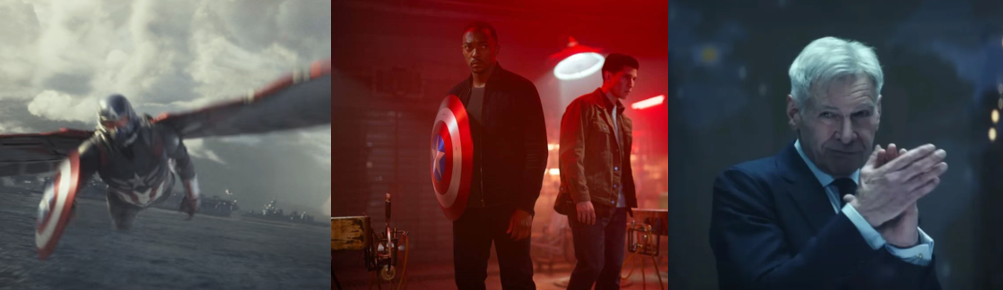
Captain America: Brave New World depicts the United States as a country in turmoil. Following the many strange, destructive, and harrowing events of the previous MCU films, the nation is more divided and afraid than ever. Thus, former “Hulk Hunter” and decorated military General Thaddeus Ross completes his evolution from Senator to President of the United States after running a successful campaign based on one, unlikely word: together. Though Ross captures the majority vote with his promises to unite Americans and repair the relationship between the American government and the country’s various costumed defenders, some still question Ross’s newfound appreciation for the Avengers and his push for unity considering his historically short fuse and previous aggression in upholding the Sokovia Accords. None are more aware of Ross’s shortcomings than Sam Wilson, the former Falcon who now operates independent of the government (yet still in a military capacity) as Captain America. Sam’s wariness of Ross’s promises is echoed by aged veteran Isaiah Bradley (Carl Lumbly), the prototype super soldier who spent thirty years locked away and being experimented on and who is reluctant for Sam to work with the government. However, Ross is eager to build bridges not just with Sam, but the entire world, especially as scientists from across the globe have discovered a rare and particularly versatile mineral (dubbed “Adamantium”) on “Celestial Island”, the remains of a titanic Celestial that tried to emerge from the Earth. The staggering potential of Adamantium is enough to have Ross set aside personal grudges and encourage the world’s governments to co-ordinate their mining efforts. He makes significant headway with this after Captain America and his enthusiastic, hacker partner, First Lieutenant Joaquin Torres/The Falcon (Ramirez), recover a stolen sample of Adamantium from Seth Voelker/Sidewinder (Esposito), an expert marksman and enigmatic leader of the Serpent Society, a group of mercenaries working for the mysterious “Buyer” to upset the political climate.

Amidst a political minefield, Sam discovers a plot to discredit the President and spark worldwide conflict.

Celebrated for their heroics, Sam and Joaquin are invited to attend Ross’s special presentation on Adamantium at the White House and, eager to coax the distrustful Isaiah out of his shell, Sam invites him along. However, during Ross’s speech, Isaiah and a handful of other attendees suddenly open fire on the President, with Isaiah appearing little more than a confused old man after Sam talks him into custody. Angered by these events, Ross rescinds his offer for Sam to rebuild the Avengers and orders him not to investigate, instead handing the task to his personal security advisor, former Black Widow Ruth Bat-Seraph (Haas). Naturally, Sam disobeys this order and works with Joaquin to review security footage of the attack, learning that Isaiah and the others were compelled through a form of mind control. Sam’s investigation sees him cross paths with and apprehend Sidewinder, whose phone leads him and Joaquin to a military black site, where they find Gamma-mutated biologist Doctor Samuel Sterns (Nelson) has been held captive for over a decade. Gifted an upgraded suit by the Wakandan people, Sam is more than capable as Captain America thanks to his Vibranium wings protecting him, absorbing the impact of any attack and redirecting it as kinetic blasts. Sam has the same skills he showcased as the Falcon (skills he’s extremely protective of as he hesitates to share them with Joaquin) but has vastly improved his skill with a shield. Unlike Steve Rogers, however, Sam doesn’t have the benefit of the super soldier serum, though his suit helps dull any injuries he does receive and a pep talk from Bucky allays Sam’s doubts about his abilities after Joaquin is injured defusing a conflict between American and Japanese forces. In a nice change of pace, Sam is seemingly universally accepted in his new role; the military respect and admire him, jeopardising their careers to aid him after Ross demands he and Joaquin be apprehended. Sam’s also as charismatic and confident as Steve, easily befriending those around him and championing world peace and cooler heads over violence. Far from a naïve optimist, Sam plays his cards close to his chest and gives Ross the benefit of the doubt, but becomes determined to investigate the complex deception at work after Isaiah is imprisoned and faces the death penalty.

Sterns manipulates events to brainwash assassins and push Ross to breaking point!

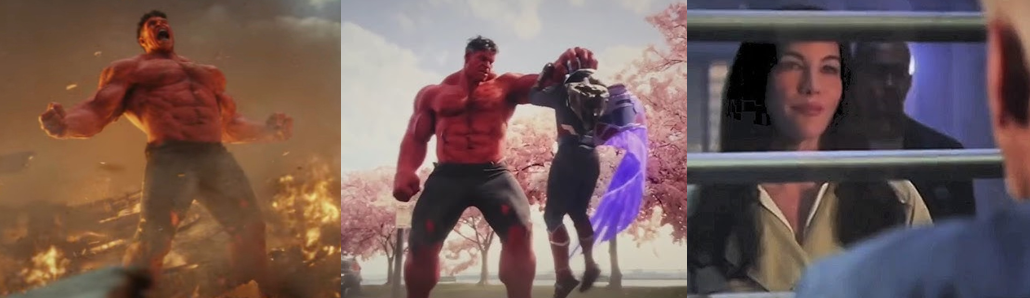
Obviously, it’s a shame that William Hurt never got to complete his story as Thunderbolt Ross but, if you’re going to recast an actor, who better than Harrison Ford to pick up the slack? Shaving his trademark moustache and campaigning on a platform of unity, Ross is desperate to convince the world that he’s a changed man. However, while he’s convinced the majority of Americans, Sam and the others remain skeptical and his estranged daughter, Doctor Betty Ross (Liv Tyler) refuses to take his calls. Eager to void conflict, Ross is adamant about pushing forward a treaty to share the Adamantium, but soon finds his temper tested after he’s shot at and accused of shady dealings by the equally sceptical Japanese prime minister, Ozaki (Takehiro Hira). Although Ross genuinely wants Sam onboard and the rebuild the Avengers to atone for his previous aggressive ways, he burns bridges with Sam over Isaiah and quickly mobilises the Navy to secure Celestial Island, his stress only compounded by Sterns’ influence and his reliance on mysterious pills. It turns out the Sam’s right to be suspicious of Ross as he worsened Sterns’ condition and used his superhuman intellect to manipulate his way to the White House, then incurred the hyper-intelligent doctor’s wrath by refusing to free him. This sees Sterns concoct an elaborate plan to discredit Ross using mind control triggers, which easily turns the President’s secret service into his unwitting soldiers and sees him escape custody. Sterns’ scheme also extends to hiring Sidewinder and kick-starting the plot, which tips the world to the brink of war and sees Sam and Joaquin desperately rushing to calm tenses between the world’s superpowers once they uncover this plot. Determined to keep his dealings with Sterns from leaking, Ross surreptitiously tries to tie up loose ends, unwittingly turning the petite Ruth’s loyalties towards Sam after she discovers evidence that Isaiah and the others weren’t in control of their actions. Though Ross was saved from certain death from a heart condition thanks to Sterns’ research, he’s been unknowingly digesting Gamma-laced pills for years, which make him quick to anger and susceptible to Sterns’ mind control, resulting in Ross transforming into a crimson-hued Hulk before a terrified press conference and forcing Sam to test his mettle in the most dangerous way possible.

The Nitty-Gritty:
Captain America: Brave New World certainly gives itself a lot of balls to juggle. It finally addresses what happened to that gigantic Celestial and lays an interesting foundation for the MCU’s version of the X-Men, finally ties up the loose end of Samuel Sterns, presenting him as an embittered puppet master looking to publicly disgrace President Ross, teases Bucky’s new life as a Congressman, and continues Sam’s evolution as Captain America. Thanks to Sam having worked through many of his doubts and insecurities in The Falcon and the Winter Soldier, Sam has fully embraced his new role here, only questioning his ability after Joaquin gets hurt. Even then, Bucky offers him some advice that gets him back on track and, while I think it’d be totally believable that a man as good as Sam could handle the super soldier serum, Sam’s perfectly capable without it thanks to his skill as the Falcon. In fact, Sam may be a little too good as he shrugs off wounds and performs nigh-superhuman feats during fights, though the film makes an effort to show him visibly exhausted from the effort. His status as a “normal” man doing the right thing contributes to the respect he earns from his peers; even Ross has a begrudging respect for Sam, even if it’s strained as the film progresses. I’m glad that Brave New World didn’t waste time questioning Sam’s ability or showing undue negativity towards him. Instead, he kicks ass as Captain America and showcases his stubborn determination as he works to clear his friend’s name, even if it goes against what the President thinks or wants. It was a shame, however, that Giancarlo Esposito was essentially wasted here. He gets a couple of action scenes and steals the show with his usual silky-smooth cool, and is presumably being set up for more later down the line, but his role got a lot of hype prior to the film so I couldn’t help but be disappointed by how small his role was in the end.

Despite some predictable elements, the film was an action-packed political thriller.

Instead, most of the film’s marketing was focused on the Red Hulk and his fight against Captain America. On the one hand, I understand this as you want to capture people’s attention and get people in the cinema to see how Sam can stand against such a creature, but it was a touch misleading since the Red Hulk doesn’t appear until the finale. Instead, most of the film is an action thriller following Sam and Joaquin as they work to uncover who’s behind Isaiah’s mind control. There’s nothing wrong with this and it makes for a decent adventure, but it’s pretty obvious that Isaiah and the others were triggered by lights and music, something we’ve seen in the MCU before (and which Sam even notes), so it’s weird that Ross was so quick to condemn Isaiah. Of course, a significant sub-plot regarding the President is his trustworthiness and it’s clear he’s hiding a lot, leading to an emotional showdown between him and Sam where Ross reveals how close he came to death and how poorly he treated Sterns. Once Sam confronts Sterns and he escapes, it’s pretty clear what’s gone down, but the key parties (Sam and Ross) remain clueless. There’s even a moment where Sterns callously murders Sam’s ally, Dennis Dunphy (William Mark McCullough), to keep him from revealing the truth of Ross’s pills to Sam…only for Sterns to relate that information to Sam shortly afterwards. While some have picked about Brave New World’s CGI and reshoots, I had a great time with the action sequences. Sam looks amazing in his new suit, which is a vast improvement over his last one, and is a whirling dervish as Captain America, cutting through the air, blasting along with his jetpack, slicing up foes with his wings, and tossing his shield in ways that would make his predecessor proud. Sam’s Wakandan enhancements make up for his lack of superhuman strength, though Sam remains vulnerable, sporting wounds and exhaustion, and yet being strong enough to turn to his allies for help and to take the high road during conflicts. Joaquin made for a fun counterpart to Sam; he’s equally talented as the Falcon and a tech whiz, but overly enthusiastic and too eager to prove himself to his hero at times. They work well together on equal terms and I enjoyed their high-speed action sequences, with Sam even proving his worth without the suit and emphasising disarming and subduing his foes rather than blindly blundering in.

Cap ultimately overcomes the odds and brings a measure of peace to the misguided President.

With Ruth on-side and Sam and Joaquin having discovered Sterns is mind controlling targets with light and sound triggers, Cap and Falcon barely quell a conflict between the US and Japan. Though Joaquin is severely wounded when defending Celestial Island, Sterns’ plot is ultimately scuppered and Ross’s treaty regains traction, leading Sterns with no choice but to surrender himself, arrogantly believing that Ross’s true nature cannot be suppressed. Indeed, when addressing the press outside the White House, Sterns’ pills and the stress of the whole situation (and the Sterns’ testimony to the media) see Ross lose control of his emotions. Thus, he painfully and forcibly transforms into the Red Hulk, a mindless and enraged giant who immediately goes on a rampage. Despite being hopelessly outmatched, Captain America flies into battle with the Red Hulk, barely protected by his Vibranium wings and destroying most of the White House. Remembering Ross’s wish to take his daughter to the city’s cherry blossom trees, Captain America has Ruth get the crowd to safety and leads the Red Hulk to the garden, only for the creature’s rage to boil out of control. Badly hurt and with his suit damaged, Captain America charges his remaining wing with the Red Hulk’s unbridled strength and delivers a concussive blast that momentarily puts the beast down. When the Red Hulk returns for more, Sam takes a major gamble and appeals to Ross’s humanity, finally calming the troubled President down and ending the threat. Realising the extent of his actions, Ross relinquishes his post and allows himself to be incarcerated at the Raft, where he finally reconciles with Betty. Ross and Sam part with a mutual respect and Sam’s delighted to see Joaquin on the road to recovery, especially as he’s decided to rebuild the Avengers after all, though Sam’s left rattled when the imprisoned Sterns mocks him and delivers a vague, suitably ominous warning about future threats from other worlds…

The Summary:
Captain America: Brave New World faced an uphill battle, for many reasons. Despite Sam being Captain America in the comics for years, the idea of someone else taking up the mantle is always going to irk some, especially a very vocal and toxic minority of bigots. However, Anthony Mackie takes to the role admirably, exuding a cool confidence that sees him command the screen and throw the shield with admirable gusto. I loved how Sam was presented as a friend to all, talking to people in their native language, saluting the military, and sticking to his guns, even if it means going against the President of the United States. He’s a natural leader and an efficient fighter, even without the super soldier serum, and attacks the conspiracy at work with a stubborn determinism that showcases the strength of will and loyalty that make him the right choice to be Captain America. Harrison Ford was equally captivating in the film. It’s awful that William Hurt died before he could see this arc through, but Ford really threw himself into the whole MCU circus and brought his all to this role, being gruff, commanding, and pained as the script dictated. I definitely felt like Ross was genuinely trying to make amends for his past, but he had too many skeletons in the closet, had made too many enemies, and ultimately was faced with forces beyond his control, leading to his Hulk-out. The Red Hulk looked fantastic, exuding rage and danger and delivering by far the best and most impressive CGI rendition of a Hulk yet. While it was misleading to base so much of the marketing around the character, I can see why they did it and the sequence absolutely delivered, more than making up for the wasting of Giancarlo Esposito. I was also thrilled to see Tim Blake Nelson return and deliver a suitably hammy, menacing version of the Leader, finally paying off one of the MCU’s most notorious plot threads. While the plot felt a little predictable and bare bones at times, the action and performances and nice balance of drama and comedy made up for it and resulted in a solid first solo effort for the new Captain America, who I hope to see have a prominent role as an aspirational leader in the MCU for years to come.

My Rating:

Rating: 4 out of 5.

Great Stuff

Did you enjoy Captain America: Brave New World? What did you think Anthony Mackie’s first big-screen solo outing as the character and Sam’s status as a more human version of the Avenger? Did you enjoy Harrison Ford’s performance and Ross’s attempts to turn over a new leaf? Were you satisfied with the way the film tied up loose ends regarding Sterns and the Celestial? Do you think it was misleading to put so much focus on the Red Hulk or did you enjoy his eventual appearance? Where do you want to see Captain America go next in the MCU? Whatever you think about Captain America: Brave New World, or Captain America in general, drop a comment down below, support me on Ko-Fi, and go check out my other Captain America content.

Screen Time [Sci-Fanuary]: I Am Groot (Season One and Two)


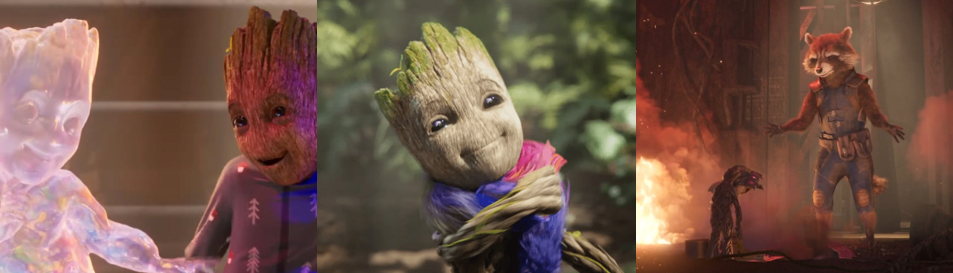
January sees the celebration of two notable dates in science-fiction history, with January 2 christened “National Science Fiction Day” to coincide with the birth of world renowned sci-fi writer Isaac Asimov. HAL 9000, the sophisticated artificial intelligence of Arthur C. Clarke’s seminal 2001: A Space Odyssey (1968), was also created on 12 January. Accordingly, I am dedicating January to celebrating sci-fi in all its forms.


Season One and Two

Air Dates: 10 August 2022 and 6 September 2023
Director: Kirsten Lepore
Network: Disney+
Stars: Vin Diesel, Trevor Devall, James Gunn, Fred Tatasciore, Bradley Cooper, and Jeffrey Wright

The Background:
Created by Stan Lee and Larry Lieber, the original version of Groot was a far cry from the loveable tree-monster who won the hearts of audiences in Marvel Studios’ Guardians of the Galaxy films (Gunn, 2014 to 2023). Vin Diesel’s surprisingly nuanced performance made the character a household name and Marvel wisely capitalized on the cute appeal of Baby Groot with a series of animated shorts to bolster Disney’s new streaming platform. Seeking to hearken back to a simpler time in Disney animation, when short-form storytelling didn’t rely on much dialogue, director and head writer Kirsten Lepore was inspired by her son when exploring Groot’s childhood. She also met with Guardians of the Galaxy director James Gunn to explore Groot’s mischievous characterisation. Though Gunn questioned the canonicity of the shorts, Lepore was open to producing more episodes since she and Marvel Studios had plenty more ideas to pull from. Despite the character’s limited vocabulary, Vin Diesel returned to record new “I am Groot” lines and Bradley Cooper even recorded a cameo as Rocket Raccoon. The second series revisited ideas pitched for the first and featured a cameo by Jeffrey Wright as Uatu the Watcher that injected some comedy into the otherwise stoic overseer. The show also recycled the Baby Groot CGI model created by Luma Pictures and Lepore took inspiration from the original Star Wars trilogy (Various, 1977 to 1983) when suggesting designs for Baby Groot’s supporting cast. When it first streamed, I Am Groot was the third highest streaming series in America and both seasons were widely praised for its adorable main character, quirky humour, and playful nature.

The Plot:
Baby Groot (Diesel) takes the spotlight in a series of shorts exploring his adventures growing up, getting into trouble among the stars, and deciding the fate of the entire multiverse!

The Review:
I Am Groot is a CGI animated series of shorts made for little kids. Each episode last about five minutes and features very little dialogue, consisting primarily of Baby Groot’s many different inflections of “I am Groot”. Therefore, they don’t take too much time to watch and it’s easier and fairer to just lump both seasons together into one review. Series one begins some time after Baby Groot first sprung to life in his little plant pot on the Eclector. He’s just a sapling but he still needs care and attention, which is provided to him by a couple of automated robots, who routinely water and tend to him. However, he’s growing so quickly that he cracks his pot, causing the robots to replace him with a sturdier bonsai plant. Naturally, Baby Groot isn’t impressed with this and attacks his replacement, causing both their pots to break from a fall. Luckily, Baby Groot survives and finds he’s got legs, allowing him to take his first steps and get into more mischief. He even makes it up to the bonsai plant by befriending it afterwards, and this caring side to Baby Groot is revisited a couple of times in the show. For example, Groot discovers a colony of ant-sized Grunds living under a rock on an alien world in “The Little Guy”. While Baby Groot initially enjoys toying with them as a God-like figure, he’s stunned when they showcase advanced technology and bombard him with laser fire! While protecting himself in the foetal position, the terrified Baby Groot accidentally farts out a leaf, much to the delight of the Grunds, who immediately devour the offering. Inspired, Baby Groot quickly forgets the attack and gathers up armfuls of leaves to feed the colony, only to accidentally step on them and back away nonchalantly (though the Grunds are actually fine). Similarly, in series two’s “Are You My Groot?”, Baby Groot adopts a strange alien bird, playing with it and feeding it his snacks. Groot’s fondness for the bird and enjoyment of being a surrogate parent are juxtaposed by his annoyance with the bird’s clingy nature and constant pooping. However, Baby Groot still sheds a tear when the bird finds its siblings and flies off with its bulbous, equally quirky mother.

Baby Groot both causes and finds mischief, though always in the spirit of good-natured fun.

In “Groot’s Pursuit”, Baby Groot’s awoken by a mysterious clanging and bravely investigates, hoping to get a good night’s sleep. Though his initial search turns up nothing, he fails to notice a mysterious liquid goop from a broken vial until he’s surprised by the Iwua (Devall), a shape-shifting alien who’s just as mischievous as Groot. Indeed, the Iwua impersonates Groot, leading to a dance-off that Groot thoroughly enjoys until the Iwua first criticises his technique and then reveals its true form, leading to Groot tricking the creature into an airlock and ejecting it into space. In “Groot Takes a Bath”, Baby Groot enjoys some relaxation time in a mud bath, only to find the mud causes his leaves to sprout wildly. Though initially horrified, Groot returns to the mud bath again and again as he grooms himself different hairstyles, outfits, and looks, each time saddened to find the leaves wilt within moments. Eventually, he uses up all the mud, leaving him saddened. When a local bird laughs at his misfortune, glad to see the cheeky little baby tree get his comeuppance after his fun kept the bird awake, Groot improvises and trims the bird’s feather to fashion himself a stylish scarf. Series one ends with Groot’s literal “Magnum Opus”, a meticulously crafted drawing of him and his friends and family, the Guardians of the Galaxy, as they appeared during his emotional sacrifice at the end of the first film. Baby Groot’s so determined to bring the piece to life that he scours the ship for items, including a clipping from Rocket Racoon’s (Cooper) tail and samples from the ship’s fuel cells. This creates a glittery explosion that not only finalises his titular masterpiece but also tears a hole in the Eclector, one Baby Groot adeptly begins sealing with duct tape when Rocket comes to investigate all the noise. Though alarmed that Groot has caused the ship to both flood and catch fire, Rocket’s outrage is quickly quashed when he sees the picture, which warms his heart even as he’s sucked into the hole and rescued by Baby Groot’s extendable arms.

At times, Baby Groot’s hijinks put both him and the entire universe in danger.

While searching for new batteries for his videogame controller, Baby Groot pulls himself from his pit of snacks and roots around in Rocket’s treasure trove of stolen items, eventually slapping a prosthetic nose to his face and gaining a sense of smell. Amazed, he explores these new sensations but quickly ditches the appendage when he returns to his filth with his batteries and is disgusted by the stench. Though he’s tempted to grab a brush and clean the place up, Baby Groot decides it’s better to just toss the nose away and get back to his game, content to sit in the mess. In “Groot’s Snow Day”, Baby Groot explores a snowy planet and builds a snowman. Deciding his frosty friend would look better with a few modifications, he ransacks the Milano and stuffs the snowman with cybernetic enhancements, unwittingly bringing it to life. The robotic snowman immediately attacks with its lasers and heads to the ship, intent on spreading further destruction, though Groot seemingly destroys it by launching a well-timed snowball at a compromised engine part lodged in its head. Groot then searches high and low for some credits to get himself a sweet treat from a passing ice cream ship, awestruck by its flashing lights and assortment of frozen goodies. After many pratfalls, Baby Groot finally gathers some coins and is left despondent when the ship moves on. Desperate, he commandeers a space capsule and gives chase, ultimately crashing through the ice cream ship and gifting him as many treats as he could want. Finally, the Watcher (Wright) observes and narrates Baby Groot’s exploration of an ancient tomb said to contain a sacred seed that will bring peace and prosperity to the universe. Despite the Watcher’s best efforts, Baby Groot continually puts himself in danger and gets distracted from his quest, preferring to desecrate the tomb and take a nap. By the time he finally spots the seed, Groot’s more interested in retrieving his ball, causing the seed to be consumed by lava and the temple to crumble. However, the Watcher consoles himself with the understanding that the prophecy was a metaphor and that Groot, emerging from the rubble with fresh leaves sprouting, was the “seed” that would rise from the temple.  

The Summary:
I had a good time with I Am Groot. Obviously, your expectations need to be quite low considering it’s primarily aimed at kids, but I enjoyed Baby Groot’s pratfalls and adventures. As ever, Vin Disel does a great job of making “I am Groot” convey so many different meanings. Baby Groot expresses curiosity, sadness, anger, and even affirms his own identity with these three words, showing caring, mischievous, lazy, and poignant aspects of his personality. The entire show is shot from Groot’s perspective (not literally, of course; I mean at his level), not unlike the classic Tom and Jerry cartoons (1940 to present). We never see any of the other Guardians of the Galaxy save for an obscured cameo of Drax the Destroyer in the shower and Rocket’s heart-warming appearance in “Magnum Opus”, though the crew are obviously around as someone’s flying the ship and visiting all these worlds. It might’ve been fun to hear some of the crew shouting or talking off-camera, reacting to Groot’s antics or just giving a bit more life to the ship, but the framing purposely keeps things at Baby Groot’s level to suggest that he gets up to all these adventures on the regular, largely without anyone noticing. As a sapling, Baby Groot is still understanding himself and the universe; he can stretch his limbs at will but is surprised when he sprouts leaves, for example. He learns as he goes, like any child would, and takes pleasure in simple things, like relaxing in a mud bath or eating ice cream. He still enjoys a dance and gets shirty when the Iwua offers him tips and we see the origin of what would become a teenage obsession with videogames as he sits in a fetid pit chomping on snacks and ignoring his personal hygiene.

Unbeknownst to his family, Baby Groot is getting into all kinds of mischief.

Baby Groot also shows a passion for creativity and construction; he cobbles together all sorts of random items to spruce up his picture and (literally, if unexpectedly) bring his snowman to life. These talents seem to be borrowed from Rocket, who’s forever scrounging away parts and putting together outrageous devices, and it shows that Groot is influenced by his adopted family. This also fosters a caring side to him; he’s driven to feed both the Grunds and the weird little bird that imprints on him and is genuinely upset when he thinks he’s crushed them and his adopted baby returns to its kin. A highly volatile and emotional little sapling, Baby Groot lives a life of extremes; he’s super excited to see the ice cream ship pass by, grows increasingly frustrated at failing to find any coins, and is so desperate to get a treat that he collides with the ship at full speed! If you listen to the all-seeing, all-knowing Watcher, you’d be fooled into thinking that Groot is some prophesised hero destined to usher in a golden age for the universe. However, he’s just a cheeky little tree-boy who enjoys playing his games, bouncing his ball, and doodling, even if his work accidentally endangers his family or defiles an ancient tomb. The Watcher is convinced that the seed is pivotal to the safety and security of the universe and comically aghast when Baby Groot fails to recognise this, and is ultimately forced to reinterpret the prophecy since, like Rocket, the Watcher cannot stay mad at the adorable little sapling. Ultimately, I Am Groot is worth checking out if you’re a fan of Groot and the Guardians of the Galaxy, but obviously will have more appeal to little kids, who will no doubt relate to and enjoy Baby Groot’s mischievous antics. It’s fun getting a sense of what these characters do when no one’s looking and how they interact with the world around them, and Baby Groot is a cute little bugger you can’t help but fawn over. The show’s not going to give the Minions anything to worry about any time soon, but it’s a fun enough distraction to have on in the background as a break from Marvel’s increasingly high stakes action and there’s no shame in that.

My Rating:

Rating: 3 out of 5.

I Am Groot

I am Groot? I am Groot, I am Groot? I am Groot, I am Groot, I am Groot? I am Groot? I am Groot? I am Groot? I am Groot, I am Groot? I am Groot, I am Groot, I am Groot? I am Groot? I am Groot?

Screen Time [Sci-Fanuary]: M.O.D.O.K.


January sees the celebration of two notable dates in science-fiction history, with January 2 christened “National Science Fiction Day” to coincide with the birth date of the world renowned sci-fi writer Isaac Asimov, and HAL 9000, the sophisticated artificial intelligence of Arthur C. Clarke’s seminal 2001: A Space Odyssey (1968), being created on 12 January. Accordingly, I am dedicating all of January to celebrating sci-fi in all its forms.


Air Date: 21 May 2021
Directors: Eric Towner and Alex Kamer
Network: Hulu / Disney+
Stars: Patton Oswalt, Aimee Garcia, Ben Schwartz, Melissa Fumero, Wendi McLendon-Covey, Jon Daly, and Beck Bennett

The Background:
Created by Stan Lee and Jack Kirby, George Tarleton, the “Mental Organism Designed Only for Killing”/MODOK first appeared in the pages of Tales of Suspense back in 1967. The deranged, cybernetic would-be conqueror has been a thorn in the side of numerous Avengers and a mainstay of Marvel videogames, though he’s had a tumultuous life on the big and small screen. While I best know the character from his appearances in the 1990’s Iron Man cartoon, most mainstream audiences probably best know him from his infamous appearance in Ant-Man and the Wasp: Quantumania (Reed, 2023). Before that debacle, MODOK received his own adult animated series on Hulu, the first in what was planned to be a bunch of adult animated series before his fellow “Offenders” were summarily cancelled. A stop-motion production in the style of the similarly-themed Robot Chicken (2005 to present), M.O.D.O.K. was well-received upon first airing. Though some found it incomparable to its peers, most reviews praised the vulgar tragicomedy for its workplace humour and entertaining performances. Unfortunately, neither the generally positive reactions or a Golden Trailer Award nomination were enough to produce a second season and M.O.D.O.K. was cancelled after only one season.

The Plot:
After failing to conquer the world, MODOK (Oswalt) loses control of Advanced Idea Mechanics (A.I.M.) when it goes bankrupt and schemes to regain his position while dealing with a failing marriage and a mid-life crisis.

The Review:
M.O.D.O.K. is an adult stop-motion animated series in the same visual style of Robot Chicken, a show I haven’t watched all that much but have enjoyed its zany take on pop culture. However, I used to watch The Adam and Joe Show (1996 to 1999) as a kid and that regularly included segments featuring stuffed toys and action figures, so it’s a style I’ve always enjoyed. M.O.D.O.K. skews more towards the action figure aesthetic; this is especially evident in scenes where MODOK and A.I.M. attack Avengers Tower and battle Anthony “Tony” Stark/Iron Man (Jon Hamm), who’s styled after the Toy Biz “Marvel Super Heroes” action figure. Considering how painstaking stop-motion animation is, I’m surprised by how long each episode is, with each clocking in at around twenty-five minutes; though it’s my understanding that the animation studio, Stoopid Buddy Stoodios, used elaborate puppets during filming. The result is a very surreal animation style that perfectly matches the bizarre nature of the show, which is much cruder and ruder than the average Marvel production. M.O.D.O.K. features blood, violence, a touch of body horror (both in MODOK’s unsightly appearance and in a Fly-like (Various, 1957; 1958 to 1989) genetic monstrosity), and some swears, thus firmly setting it as a more adult-orientated show. Additionally, and most prominently, M.O.D.O.K. tackles adult themes such as divorce, mid-life crises, and navigating an increasing unstable workplace undergoing corporate mandated overhauls to be more politically correct and accommodating. As enjoyable as it is to see characters have half their faces melted off, blood and guts burst on the screen, and MODOK’s long-suffering (but endlessly enthusiastic) henchman Garfield “Gary” Garoldson (Sam Richardson) get his arm blown off just for standing in the wrong place at the wrong time, it’s the domestic drama where M.O.D.O.K. really shines. There’s an unexpected pathos laced throughout the show as MODOK desperately attempts to win back his frustrated wife, Jodie Ramirez-Tarleton (Garcia), and the approval of his kids, aspiring supervillain Mental Entity Living to Induce Seriously Sinister Anarchy/Melissa (Fumero) and endlessly jovial Lanky Organism Undeniably Irresistible and Syphilitic/Lou (Schwartz).

The once-fearsome MODOK is reduced to squalor by his failing company and family life.

MODOK’s family is acutely aware of his evil deeds; it’s hard for them not to be since the only thing he talks about at home is himself, how superior he is, and spinning disastrous failures into overblown wins just because he stole Iron Man’s boot. MODOK’s obsession with destroying the Avengers and conquering the world stems from his childhood, where he was relentlessly bullied for his big head and supervillain-level genius. However, his loving mother (Unknown) encouraged his ambition and he continuously experimented on himself with science and cybernetics in a bid to take over he world and “improve” it with his own twisted version of a utopia. Unfortunately, MODOK’s preoccupation with this goal has caused him to neglect his family: he barely acknowledges Jodie’s success as a self-help guru or her upcoming book launch, Melissa resents him for embarrassing her and not acknowledging her opinions, and Lou, though seemingly cheerful, is hiding his own insecurities behind a happy-go-lucky façade and an amateur interest in stage magic. When MODOK’s reckless spending pushes A.I.M. to the brink of bankruptcy, MODOK’s forced to sell to young, socially aware Austin Van der Sleet (Bennett), owner of tech company GRUMBL, who, despite his assurances, makes so many changes to A.I.M.’s corporate structure that MODOK is eventually reduced to a mere mailman. His frustrations see his marriage crumble; realising they no longer have anything in common, Jodie demands a divorce and kicks MODOK out, forcing him to live in squalor with the family’s underappreciated robot slave, the Super-Adaptoid (Daly). When MODOK’s begging and pleading for a second chance fail, he and Gary break into the Strategic Homeland Intervention, Enforcement and Logistics Division’s (S.H.I.E.L.D.) headquarters and steal a time machine, desperate to undo a past mistake and take Jodie to a Third Eye Blind concert to rekindle their love. However, the attempts fails when she’s angered at him using the jaunt to also try and assassinate Austin and he inadvertently creates the show’s overarching villain when his ineptitude angers his past self and displaces him from time after he shatters the time machine’s Chrono Crystal.

MODOK’s long-suffering wife and daughter come to resent his selfish attitude.

Jodie’s frustration with MODOK is well founded; he’s an egotistical, selfish, obnoxious braggart who causes chaos wherever he goes. At work, MODOK is largely idolised by A.I.M.’s mostly nameless and faceless beekeepers; MODOK shows he cares for them when he begs Austin to keep them employed, but also treats them as disposable pawns when enacting his plans. Jodie feels a degree of the same disregard, constantly feeling second fiddle to MODOK’s greater aspirations, and forces a separation so she can get her life in order. When she starts dating Simon Williams/Wonder Man (Nathan Fillion), Jodie sees her stock and fame skyrocket due to the sordid publicity surrounding Wonder Man and she shamelessly embraces it. She manipulates both Wonder Man and MODOK to promote her book, coldly using the limelight-loving superhero for her own ends, and even injects Lou with a serum to give him a peanut allergy to give him a personality flaw, showing why she’d fall for a supervillain in the first place. It’s clear Jodie and MODOK still have feelings for each other (when trapped in the past, they grow old and rekindle their feelings, only to be erased from time) but they struggle to reconcile even for the sake of their kids. Melissa, though a female copy of MODOK, is actually very popular and has aspirations of being a supervillain but is continuously let down by him ignoring her input. She expertly teaches him how to psychologically manipulate others during a work conference, only for him to default to a grandiose plan for hero worship by opening a portal to the Broodworld. She works hard to give him a makeover, but he ruins his new look by brawling with Wonder Man. It’s doubly frustrating for Melissa considering she’s the most pragmatic of the family. Indeed, when faced with discovering which of them are murderous robot doubles created by Arcade (Alan Tudyk), Melissa doesn’t hesitate to slaughter their doppelgängers either on a whim or by closely watching their body language and behaviour.    

MODOK’s struggles to regain A.I.M and be taken seriously are compounded by his family life.

Lou is the black sheep of the family. Whereas MODOK and Melissa and even Jodie can be cruel, cold-hearted, and manipulative in their own ways, Lou is kind and jovial, without a care in the world. Not confined to a floating machine like his sister and father, Lou’s free to express his boundless energy, seemingly finding the good in every situation, no matter how dire. The only concern he seems to have is about his upcoming Bar-Mitzvah, and even then he just wants to perform magic for his audience; a desire so great that it drives him to chase after his props when MODOK callously transports them to Asgard. There, he earns the awe and loyalty of the goblin-like Kodolds, setting him against his father but ultimately aiding him in escaping death when he learns the MODOK is just trying to protect him from possible humiliation. While his family love him, Lou’s mostly perplexing to them; he finds a kindred spirit in outcast, sullen goth Carmilla Rappaccini (Zara Mizrahi) and gains a brother when he befriends his robot duplicate, but an overriding concern of MODOK and Jodie’s is that Lou is hiding his pain behind his magic. MODOK’s attempts to be a good father, win back Jodie, and regain control of A.I.M. see him turning to lower-tier supervillains for assistance when big shots like Samuel Sterns/The Leader (Bill Hader) and Doctor Nathanial Essex/Mister Sinister (Kevin Michael Richardson) turn him away. Begrudgingly relying on the Super-Adaptoid for company and transport, MODOK forms a crew consisting of David Angar/Angar the Screamer (Bill Hader), Antonio Rodriguez/Armadillo (Dustin Ybarra), Bruno Horgan/The Melter (Eddie Pepitone), Marion Pouncy/Poundcakes (Whoopi Goldberg), and Alvin Healy/Tenpin (Chris Parnell) to steal Captain Steve Rogers/Captain America’s shield and curry favour. Naturally, this goes hideously awry when the D-listers get distracted by their own personal dramas and incompetence, and when they abandon MODOK after learning he was manipulating them. However, MODOK comes to sympathise with the downtrodden villains and they agree to storm Avengers Tower, only to fall asleep on the trip and the Melter to die from excitement.

MODOK’s abrasive nature creates his own villains and even angers a past version of himself.

MODOK’s abrasive personality and disregard for his underlings means he has many enemies beyond the likes of Iron Man, even within his own company. Most notably, he’s constantly challenged at work by Monica Rappaccini (McLendon-Covey), an A.I.M. scientist whose genius matches, or many even surpasses, that of MODOK. Initially excited to be hired as another disposable beekeeper since she idolised MODOK, Monica slowly came to resent him when he not only undermined her inventions but also took credit for her killing an unnamed Avenger. Monica’s frustrations with MODOK’s leadership lead to her betraying him and siding with Austin, fooling the cybernetic villain with her jelly-like doubles and taking his place as A.I.M.’s “Scientist Supreme”. Despite her lofty position, Monica becomes paranoid when MODOK seemingly embraces his new position as a mailman, but ends up partnering with him when he sells a controlling share of A.I.M. to Iron Man and sets up A-I-M-2 with Gary once it’s revealed that Austin’s masters, a sentient, alien corporation known as the Hexus, plans to brainwash the world with their new GROME device. The exact opposite of MODOK, Austin is an overly friendly and accommodating boss who insists his employees take regular breaks, vacations, and relaxation time. Claiming to idolise MODOK, Austin repeatedly tolerates his abusive behaviour until he’s caught stealing from the company, but eventually turns on his alien masters when they order him to dispose of his beloved dog, though being on the same side doesn’t stop him from being run down by Gary. The show’s ultimate villain is MODOK himself, literally and figuratively. A younger version of him becomes displaced from time and, angered at MODOK’s failures, conspires with the likes of Arcade to kill his family and set MODOK towards world domination. Calling himself “The Anomaly”, this younger MODOK shows his older self that his plans are destined to fail unless his family dies. While MODOK cannot bring himself to sacrifice the ones he loves and is determined to have it all, the Anomaly is not so morally inclined and murders his wife and children, creating a dystopian future where MODOK rules all. However, when he exhausts the energy of the Chrono Crystal and the life of his younger counterpart, the sullen dictator vows to find a way to bring his family back and retain his supreme position, ending the show on an unresolved cliff-hanger.

The Summary:
Though not set in the Marvel Cinematic Universe (MCU), M.O.D.O.K. is clearly influenced by it in many ways. Avengers Tower, for example is basically a carbon copy of the MCU’s version and Iron Man is a snarky asshole like in the films. Other characters, like MODOK’s crew and the assorted villain cameos, are styled more after their comic book counterparts. Even S.H.I.E.L.D.’s uniform is modelled after the comics and A.I.M.’s employees are all rendered anonymous by their comic accurate beekeeper outfits. MODOK, though, is ironically more akin to his later MCU counterpart than the source material. Rather than being a frothing, maniacal supervillain, he’s an insecure, angry, petty cyborg lashing out at the world around him. MODOK is seen as a lesser-tier villain, even more so than in the 1990’s Iron Man cartoon where he was a glorified henchman; he’s not allowed in the supervillain club and ends up slumming it with D-list villains. When MODOK approaches Iron Man with an offer to buy A.I.M., the armoured Avenger initially believes he’s there for a fight and downplays MODOK’s threat, despite the rotund villain sporting various dangerous weaponry such as buzzsaws, claw arms, and his iconic brain blasts. Thus, just as his kids seek his approval and the likes of Gary and the Super-Adaptoid long to be recognised for their significance, so too does MODOK strive to be acknowledged as a (or the) superior being. His plots and ambitions are lofty and often exceed his grasp, causing him to steal technology from others or claim ownership of victories that weren’t his own. Constantly, desperately seeking approval and acceptance, he initially plans to save a party of investors from the Brood then quickly takes credit for the party-loving Ciegrimites who arrive instead. He manipulates an army of Asgardians into attacking the Kobolds since his systems have been damaged and ends up bleeding out when his younger counterpart fatally wounds him, only to be begrudgingly saved by Melissa.

Episodes are full of lewd comedy, bloody violence, and a surprising pathos.

Many episodes have great moments in them, either spontaneous scenes of violence, workplace gags where MODOK is taken to human resources, or emotionally charged explorations of MODOK’s fragmented family life. “The M.O.D.O.K. That Time Forgot!” was a pivotal episode not just for exploring MODOK and Jodie’s past but also for introducing the younger MODOK, who isn’t held back by the domestic drama that befuddles his elder’s life. The plot twist of the Ciegrimites being so party hard that they literally dance people to death was fun, but I really enjoyed watching Melissa teach her dad how to emotionally manipulate people into seeking validation from him, and Monica’s desperate attempts to get out of using her corporate-mandated vacation time in “If Bureaucracy Be… Thy Death!”, which also showed how low MODOK will stoop to be seen as a great villain. “This Man… This Makeover!” showed a darker side to Jodie, who becomes consumed by the fame being associated with Wonder Man brings her and her book, to the point where she disregards Wonder Man’s very real feelings for her and manipulates MODOK into embracing his base instincts just to make headlines. “O, Were Blood Thicker Than Robot Juice!” promises a reconciliation for the family, only to reveal that Jodie, Melissa, and Lou have been replaced by Arcade’s robots. Arcade then forces them to fight to the death against multiple robotic duplicates, a fight easily won by the real family not because they know each other so well, but because Melissa eagerly resorts to violence. I loved the satirical take on corporate greed that comes to the forefront in “What Menace Doth the Mailman Deliver!”, where the Hexus’ plot to control and conquer the world is seen as a heinous by-product of their dislike of Austin’s puppy. This episode also commentated on society’s dependence and love for smart technology like Alexa by having the GROME brutally murder people when activated. The show ends with a surprisingly emotional gut punch in the aptly named “Days of Future M.O.D.O.K.s”, where MODOK’s forced to see that the only way he’ll conquer the world is if his family dies before his eyes. He’s complicit in this and is brought no joy at being the undisputed master and ruler of the world, but is sure to torture the Anomaly to death to both see glimpses of his family and make him pay for making him endure such a loss.

A bizarre and entertaining show bolstered by its toy-like animation and characters.

Thus, MODOK’s characterisation may irk fans of the character. He’s a very co-dependent, egotistical narcissist, one who takes his family for granted and demands adulation without really earning it. The juxtaposition of this gruesome supervillain cackling away with his minions and bludgeoning his enemies retreating to suburban mundanity is amusing. MODOK’s efforts to destroy his enemies and retake his company are seen as equal to his attempts to win the favour of his kids and deal with his messy divorce, casting him as a desperate and clingy villain whose knee-jerk reaction is to blast his way out of every situation. Eventually, he embraces his wife’s teachings and tries to turn his life around, then braves Arcade’s death trap to save them when they’re replaced by robot doubles, ultimately refusing to kill them but, paradoxically, also not trying to save them when they’re targeted by the Anomaly. I loved the biting wit and satire at work in the show, and the explosive violence. Seeing the dolls get torn to shreds, guts and gore splattering everywhere, was really fun and the occasional swears really hammered home that this was a different sort of Marvel project. The animation was commendable, with the dolls and puppets showcasing a lot of personality, none more so than MODOK, expertly brought to life by Patton Oswalt as an insecure, unpredictable villain burdened by time and family life and desperate to make his mark on history. It’s a shame the show was cancelled without a proper resolution as the door was left wide open for more episodes. There were many plot threads left dangling that promised greater things in another season and plenty of places for the characters to go, especially as M.O.D.O.K. wasn’t afraid to explore surreal, colourful, and obscure aspects of the Marvel Universe. I really enjoyed the marriage of suburban drama with violent, over-the-top comic book action; seeing MODOK struggle to adapt to corporate policy and appease his children was as enjoyable as his fight for world domination. He might not be a completely faithful rendition of the character, but he’s endlessly more interesting here due to how complex and layered he is, with the show emphasising that he can be a serious threat if given sufficient motivation.

My Rating:

Rating: 4 out of 5.

Great Stuff

Did you enjoy M.O.D.O.K.? What did you think to his characterisation as a struggling family man and villain? Did you enjoy the animation style and the various cameos spliced throughout the show? What did you think to Austin, Hexus, and the satirical commentary on corporate synergy? Which of MODOK’s family was your most or least favourite, and did you enjoy the family drama? Would you have liked to see another series, or at least a resolution to the ending? What are some of your favourite MODOK stories? Share your thoughts on M.O.D.O.K. in the comments and then go check out my other sci-fi content on the site!

Movie Night: Deadpool & Wolverine

Released: 26 July 2024
Director: Shawn Levy
Distributor: Walt Disney Studios Motion Pictures
Budget: $200 million
Stars: Ryan Reynolds, Hugh Jackman, Emma Corrin, Matthew Macfadyen, and Aaron Stanford

The Plot:
Struggling with doubt, Wade Wilson/Deadpool (Reynolds) jumps at the chance to join the “Sacred Timeline” of the Marvel Cinematic Universe (MCU). However, when he learns the cost is his universe, he scours the multiverse to recruit a disillusioned version of James “Logan” Howlett/Wolverine (Jackman) to help save his loved ones.

The Background:
Created by Fabian Nicieza and Rob Liefeld in 1991, Deadpool as originally an X-Force antagonist before his self-aware humour and creative violence catapulted him to mainstream popularity. This eventually led to his live-action debut in the much-maligned X-Men Origins: Wolverine (Hood, 2009), with Ryan Reynolds finally assuming the role, with a spin-off teased. However, after X-Men Origins and the Reynolds-led Green Lantern (Campbell, 2011) flopped, 20th Century Fox got cold feet about producing an expensive, R-rated superhero movie. However, after director Tim Miller’s early test footage mysteriously leaked online, the positive reaction saw Fox backpedal, resulting in a critical and commercial success for the “Merc with a Mouth”. Deadpool’s (Miller, 2016) success naturally led to a sequel; Deadpool 2 (Leitch, 2018) upped the ante with an increased budget and bringing in Josh Brolin as fan favourite, time travelling cyborg Nathanial “Nate” Summers/Cable, and was met with similar success, and Disney higher ups were adamant about including Deadpool in the MCU after their acquisition of 20th Century Fox. During development, Reynolds was contacted by Hugh Jackman – who had famously retired from his iconic Wolverine role in Logan (Mangold, 2017) – and, despite concerns about undoing that film’s poignant ending, actively lobbied to portray an alternative version of the character for a long-awaited team-up. Finally garbed in a comic book-accurate suit courtesy of costume designers Graham Churchyard and Mayes C. Rubeo, Jackman joined Reynolds for what was to be a love letter to the X-Men films (Various, 2000 to 2020) and their legacy, as well as a slew of fan service cameos. After enduring the SAG-AFTRA strike, Deadpool and Wolverine released to largely positive reviews; critics praised Jackman’s return and the film’s buddy comedy/road trip vibes, and that it remained true to the raunchy humour of the previous films. Though some criticised its shallow plot, Reynolds’ performance was lauded and the film quickly became Disney’s highest-grossing R-rated release, bringing in over $1.300 billion and seemingly cementing the character’s place in the future of the MCU.

The Review:
It was genuinely shocking, and heartbreaking, when Logan finally met his end in Logan. After living and fighting and struggling for so long, after an unprecedented run from an actor in a role, the character was finally laid to rest. So, naturally, Deadpool & Wolverine opens with Deadpool digging up Logan’s corpse, convinced he’s still alive, and then massacring an army of soldiers from the Time Variance Authority (TVA) with the dead Mutant’s Adamantium skeleton, even donning Logan’s signature claws at one point, all to the tune of NSYNC’s “Bye Bye Bye”. It turns out that Wade’s life took a bit of a downturn after Deadpool 2; he struggled with his mercenary lifestyle and his place in the world, pushing his lover, Vanessa Carlysle (Morena Baccarin) away after everything he did to save her life and ending up selling used cars in a bad toupee alongside Peter Wisdom (Rob Delaney). While celebrating his birthday alongside his returning supporting cast, Wade is accosted by the TVA and brought to Mr. Paradox (Macfadyen) at their headquarters. Despite Wade’s flagrant misuse of Cable’s time machine in Deadpool 2 (and him using it to sidestep into the MCU and lobby for application with the Avengers), the TVA are seeking to recruit him rather than “prune” him. Wade’s told that Logan’s tragic death is causing his universe to collapse; since Logan was an “Anchor Being”, Earth-10005 literally cannot sustain itself without him and will die out in a few thousand years. Wade’s given the opportunity to avoid this fate and join the MCU (Earth-616), finally taking his rightful place alongside Earth’s Mightiest Heroes and proving that he matters not just to himself, but to Vanessa and the entire world.

Deadpool recruits a jaded version of Wolverine to save his world, and the two naturally clash..

However, Deadpool’s dreams of raking in the Disney cash are quickly dashed when Mr. Paradox immediately reveals that he doesn’t care for Earth-10005 and has aspirations to take over the TVA and take a more direct approach to such events. Realising that Mr. Paradox’s “Time Ripper” device will destroy his world and everyone he loves within 72 hours, Deadpool immediately defies the TVA, steals once of their time devices, and embarks on a short jaunt throughout the multiverse to find a “Variant” of Wolverine to replace his one. After some fun homages and being attacked at every turn, he finally finds a disillusioned Wolverine drowning his sorrows in a bar. However, when Mr. Paradox scoffs at the idea of this Variant (widely known as the “worst” version of Wolverine) could ever replace Logan, he zaps the two to the “Void”, a barren wasteland filled with discarded remnants from deleted or forgotten timelines. While Deadpool is determined to find a way back and safe his universe, Wolverine has no interest and lashes out at Wade at every turn for getting him involved. Surly, jaded, and wracked with guilt after failing to save his X-Men, this Wolverine may wear the most comic accurate suit of any live-action portrayal (not counting some of his other Variants seen in this film) but he’s not interested in playing the hero anymore. Deadpool and Wolverine’s relationship is antagonistic and strained from the start; Logan is constantly frustrated by Wade’s motormouth and is incensed to find Deadpool lied to him to get him to help. The banter and interactions between Jackman and Reynolds are the highlight of the film, as are their many bloody fights against and alongside each other. The two bounce off each other so well, with Deadpool being like an annoying, peppy, snarky younger brother to the older, cynical Wolverine. Wolverine’s attitude towards Deadpool is only further soured when his childishness and blatant lies cause newfound allies to be killed, yet he’s forced to help the Merc with a Mouth on the slim chance that Logan’s timeline can be corrected and his mistakes can be undone.

Nova sets her sights on the TVA’s tech and is protected by a misfit army of Variants.

Unfortunately for the two, they’re stuck with each other in a desolate world outside of time, one filled with cameos, Easter Eggs, and Variants who are both out to help and hider them. The first they encounter, Johnny Storm/The Human Torch (Chris Evans), tells them that the Void is not only constantly preyed upon by the monstrous Alioth but also ruled over by the psychotic Cassandra Nova (Corrin), the telepathic twin sister of Professor Charles Xavier/Professor X (Patrick Stewart/James McAvoy) who resides within the colossal skeletal remains of Scott Lang/Ant-Man (Paul Rudd). Nova, who was sent to the Void by the TVA as a child, has known nothing but hardship. Resentful towards her brother and craving only power, she has a tentative arrangement with Mr. Paradox to dispose of his trash, but is delighted to finally have a Wolverine in her midst. Unlike Xavier, Nova prefers to get (literally) hands-on when probing her victim’s minds, twisting their memories and reality to learn their secrets and showcasing incredible recuperative powers as well as telekinesis. Surrounding by an army of disgruntled cast-offs (including right-hand-man John Allerdyce/Pyro (Stanford), Cain Marko/Juggernaut (Aaron W. Reed), and cameos from other disposable Brotherhood characters), Nova makes a sport of torturing and executing both her enemies and allies. Although she shows a glimmer of humanity when she learns of her brother’s loving ways from Wolverine, her desire for conquest is sparked when she learns of Mr. Paradox’s Time Ripper and she doesn’t hesitate to leave the Void via a stolen Sling Ring to get her hands on it, determined to eradicate world after world until all that’s left is the Void’s blissful emptiness. Although Deadpool and Wolverine can take on Nova’s minions (with some help), they’re no mater for her in a one-on-one fight due to her incredible psychic powers. As if that wasn’t bad enough, there’s an entire legion of Deadpool Variants wandering the Void, all of them devoted to protecting Nova, and this army of wise-cracking psychos literally stands between our heroes and their target in the finale, leading to one of the best and bloodiest action sequences in the film, made all the more enjoyable not just by Logan’s happiness at slaughtering so many Deadpools but him finally donning his comic accurate mask!

The Nitty-Gritty:
Considering Deadpool & Wolverine is largely focused on delivering the much-needed spectacle of seeing the titular characters interact and cut each other to ribbons, the film has a surprising emotional depth. I guess this shouldn’t actually be that surprising as the previous films had an unexpected pathos to them as well, but it’s incredibly effective here. While still a loquacious, self-referential, crude dervish, Wade is struggling with his purpose in life. When Harold “Happy” Hogan (Jon Favreau) rejects his application to the Avengers, Wade enters a slump so deep that Vanessa leaves him, he gives up his mercenary ways, and he’s resigned to a boring, normal life. He’s elated at the idea of joining the MCU but cannot bring himself to sacrifice his loved ones to do so, and is so determined to stop Mr. Paradox that he defies the entire TVA. However, it’s through Wolverine that the film finds most of its emotion. While similar to the Wolverine we knew and loved, this one is notably different; he’s at the bottom of the barrel, regularly drinks away his pain, and is wracked by guilt after his selfish actions caused the death of the X-Men and persecution of Mutants on his world. He’s dismissive of his counterpart’s more heroic stature and openly scoffs at Wade’s aspirations to save his world, but his heart is still flickering beneath his pain. Its flame is once again fanned by Laura Kinney/X-23 (Dafne Keen), who’s heartfelt thanks to Logan convince him to oppose Nova, and by the finale he’s even prepared to make the ultimate sacrifice once again to save Wade’s world and gain some redemption. While Logan was a perfect swansong for the character and actor, Jackman continues to nail Logan and bring new nuance to the role. He’s in phenomenal shape for his age and better than ever here as an unhinged, broken version of the character, and it’s a delight not just to see him back but to see him donning the iconic costume and portraying other Wolverine Variants, such as Patch, Age of Apocalypse, a hilarious pint-sized Variant,  and even one in the middle of a fight against Doctor Bruce Banner/The Incredible Hulk (Mark Ruffalo). However, he does have some competition for the role when Deadpool briefly meets a gruff and buff variation played by Henry Cavill!

Violent, crude, and packed with cameos, Deadpool & Wolverine also features some surprising pathos.

Although some were sceptical that Disney could stay true to Deadpool’s R-rated roots, Deadpool & Wolverine is just as crude and bloody as its predecessors. Wade has lost none of his fourth-wall-breaking charm, regularly making digs at Disney, MCU head honcho Kevin Feige, 20th Century Fox, and even the mixed reception of the MCU’s fourth phase of movies. Both he and Wolverine cuss up a storm here, ripping into each other and their enemies (and allies) with quips, barbs, and even “fucks” to make a vicar blush. Not only that but the two regularly engage in bloody fights with each other; since both are functionally immortal and have rapid healing, they can carve seven kinds of shit out of each other all day and never get tired. While this could get boring, the film mixes up their fights and has them engage in a barroom scuffle, and all-out knife fight in the Void, and a brutal punch-up in a car! The action continues as their fights are momentarily derailed to focus on Nova’s underlings, including a short (but satisfying) rematch between Wolverine and Victor Creed/Sabretooth (Tyler Mane), and a massive brawl against Nova’s ragtag army. Although Johnny meets a rather gruesome end thanks to Wade’s motormouth, Deadpool and Wolverine are regularly aided by “Nicepool” (Reynolds) and his super-ugly pup, Mary Poppins/Dogpool (Peggy). X-23 also brings them to Elektra Natchios (Jennifer Garner), Eric Brooks/Blade (Wesley Snipes), and Remy LeBeau/Gambit (Channing Tatum), forgotten characters who are eager to have their chance in the limelight. These cameos were some of the best and most unexpected parts of the film; never in a million years would I have thought Snipes and Reynolds would work together again, but he’s still got it as Blade and (while I’m not fan of his) Tatum overdelivered in finally getting to play Gambit. It was also fun seeing Evans swear like a trooper as Johnny and to see X-23 all grown up, still as ferocious as ever. Although Deadpool’s other Variants remain masked, this army of psychos was quite the highlight as well; we had a Lady Deadpool (Unknown/Blake Lively), a “Cowboypool” (voiced by Matthew McConaughey), a disembodied floating head (voiced by Nathan Fillion), samurai Deadpool, Deadpool 2099, and so many others (though, strangely, no “Barakapool”).. The cost of all these amazing cameos and returning characters was the side-lining of Deadpool’s supporting cast, who mainly bookend the film, with the exception of Peter, who’s presence is enough to stop the Deadpools from fighting since all of them love him in every reality!

Deadpool and Wolverine must set aside their differences to stop Nova from destroying the multiverse.

Trapped in the Void, Deadpool and Wolverine’s only way home is through Cassandra Nova. Thus, wade convince Elektra, Blade, Gambit, and X-23 to help them storm Nova’s compound and get them home. While they’re able to appeal to her humanity to help them, she soon follows, eager to get her hands on the Time Ripper, and Deadpool and Wolverine have to lice and dice their way through the Deadpool army to get to her. Thanks, as mentioned, to Peter, they reach the TVA facility, where Nova has forcibly coerced Mr. Paradox into activating the machine. The only ay to stop it is for one of them to connect the matter/anti-matter coils, an act that would vaporise them instantly. Reinvigorated by this time with Deadpool, Wolverine offers (almost begs) to take the fall and redeem himself in death, but Deadpool swaps places with him at the last minute, determined to give Logan a second chance and prove that he’s worthy as a hero. With time running out and Deadpool struggling to connect the wires, Wolverine joins him and, together, they endure the strain of the connection, creating a feedback loop that destroys Nova and has the unexpected side effect of saving Earth-10005 from destruction. Although Mr. Paradox tries to talk himself out of a reprimand, he’s scuppered when the Mutants survive their ordeal and turn him in to Hunter B-15 (Wunmi Mosaku), who agrees to free Deadpool’s allis from the Void but refuses to change Logan’s world since those experiences made him into a hero. Victorious, Deadpool and Wolverine make amends, finding common ground from shawarma and their adventure, and Wade invites him to meet his friends, restoring Wolverine to Earth-10005. Although the post-credits scene is nothing to shout about and simply shows Johnny Strom cussing out Cassandra Nova, a beautiful tribute to the 20th Century Fox Marvel films plays during the credits that shows the love and heart that went into the X-Men films, in particular, and shows that Marvel Studios are more than willing to acknowledge their presence and contribution to the genre.

The Summary:
The promise of seeing Deadpool and Wolverine, Ryan Reynolds and Hugh Jackman, match wits and weapons in live-action has been an enticing one for fifteen years, ever since Reynolds took his first tentative steps into the role. Even after Deadpool got a second chance and became a solo success, a team-up between the two has been teased and it seemed we’d never get it after Logan’s poignant end. While I had no doubt we’d see Deadpool transition into the MCU, I never expected Jackman to return to his iconic role beyond a sly cameo here and there, so to se the two finally together, in uncompromising action and wearing glorious comic-accurate suits, was a joy. Deadpool & Wolverine might alienate some who haven’t been keeping up with the MCU’s multiverse shenanigans, but it goes out of its way to emphasis time and again that this Wolverine is a different version to what we’ve seen before and Jackman delivers probably his best performance as the character to date. His Wolverine is at his lowest end, bad-tempered and burdened by impossible guilt, and quick to animalistic violence. He’s the gruff “straight man” to Deadpool’s wacky, outrageous humour and the two have such chemistry that every interaction and punch thrown is a delight. Seeing Wade go to such lengths to save his loved ones and prove himself is as emotional as seeing Wolverine try one last time to do the right thing, with both having to overcome incredible emotional baggage to save the world despite neither being the right man for the job. Emma Corrin made for an unsettling villain; a twisted version of Professor X, she’s both unhinged and psychotic, perfectly matching Deadpool’s eccentricities and Wolverine’s ferocity, and I liked that she was powerful enough that they had to think of other ways to stop her. Of course, a huge highlight of the film is all the cameos, Easter Eggs, and returning characters, allowing Deadpool & Wolverine to not just be a homage to the X-Men movies but also an acknowledgement of the Marvel properties that paved the way for the MCU. It’s stuffed with crude humour, gratuitous violence and swearing, and fanboy pandering in all the right ways, making Deadpool & Wolverine a fantastic step in the right direction for the MCU and laying the foundation for further fan service later down the line.

My Rating:

Rating: 5 out of 5.

Fantastic

Did you enjoy Deadpool & Wolverine? Were you excited to see the two finally team up, and to see Hugh Jackman back as Wolverine? What did you think to Wolverine’s comic-accurate costume? Which cameo was your favourite and which did you least expect? What did you think to Cassandra Nova as a threat and which of the fight scenes was your favourite? Which of the X-Men films was your favourite and how do you think the X-Men will be introduced into the MCU? Whatever your thoughts on Deadpool, Wolverine, and the X-Men, drop a comment below.

Movie Night: The Marvels

Released: 10 November 2023
Director: Nia DaCosta
Distributor: Walt Disney Studios Motion Pictures
Budget: $270 million
Stars: Brie Larson, Teyonah Parris, Iman Vellani, Zawe Ashton, and Samuel L. Jackson 

The Plot:
Whilst investigating a universal threat as a favour to Nick Fury (Jackson), Captain Carol Danvers/Captain Marvel (Larson) discovers an anomaly in the fabric of space and time caused by venge-seeking Kree commander Dar-Benn (Ashton). Coincidentally interacting with the anomaly at the same time as Captain Monica Rambeau (Parris) and Kamala Khan/Ms. Marvel (Vellani) use their own cosmic powers, Danvers finds herself switching places with the two heroes and forced to join forces with them to prevent Dar-Benn from destroying the people dearest to her. 

The Background:
After a 1953 lawsuit regarding Fawcett Comics’ Billy Batson/Captain Marvel, Marvel Comics got to trademark and publish their own “Captain Marvel” stories. While Stan Lee and Gene Colan’s Kree warrior is mostly remembered for his death from cancer in 1982, Mar-Vell was followed by a numerous successors, including Carol Danvers, who overcame online trolls with her critical and commercial debut. Talk of a sequel began before Captain Marvel’s (Boden and Fleck, 2019) release, with star Brie Larson wishing to see Kamala Khan/Ms. Marvel included and MCU head honcho Kevin Feige stating that Marvel Studios had some exciting ideas for a follow-up. After Larson cameoed in adjacent spin-off Ms. Marvel (Various, 2022), which introduced Kamala to the MCU, and Teyonah Parris portrayed a grown-up and superpowered Monica Rambeau in WandaVision (Shakman, 2021), the stage was set for a team-up of the cosmically-empowered heroines, especially after director Nia DaCosta was announced to be helming the sequel and exploring new perspectives on these characters. When other MCU productions caused changes to the script, the filmmakers shifted to focus on the dynamic between the three main characters, with numerous special effects studios contributing to the film’s cosmic scope. Following several delays, The Marvels finally released to polarising reviews; many criticised the surreal moments and rushed narrative and branded it as the worst MCU film to date, while others praised the performances (specifically Iman Vellani) and its fun, kinetic action sequences, Still, as of this writing, The Marvels has barely cleared $165 million at the box office, had the lowest opening weekend of any MCU movie, and is on track to be a box office bomb, leaving the future for these characters murky.

The Review:
I really enjoyed Captain Marvel. At the time, I was fully expecting the film to dictate the next phase of Marvel movies, positioning Captain Marvel as a powerful force in the MCU and establishing the shape-shifting Skrulls as an ongoing threat to these colourful characters. Sadly, however, that didn’t really happen; the movie subverted expectations and cast the Skrulls in a sympathetic light and attempts to make them more antagonistic were questionable, at best. Indeed, the Skrulls barely feature in The Marvels except for a brief sub-plot where Dar-Benn arrives on Tarnax, where they have established a refugee colony under the leadership of Emperor Dro’ge (Gary Lewis), under the guise of a peace treaty simply to create an unstable jump point that strips Tarnax of its atmosphere and forces the Skrulls from their world once more. Despite Captain Marvel having helped settle the colony, and the assistance of her and her new allies in evacuating much of Tarnax and arranging safe refuge with King Valkyrie (Tessa Thompson), Emperor Dro’ge is seen to have lost faith in Captain Marvel, primarily because he believes she ruined a chance for the Skrulls to return to prosperity in the Kree Empire and resents her for inviting conflict. Captain Marbel also ended with the promise of Carol avenging herself against her warmongering Kree superiors, a plot point that sadly sets a precedent for The Marvels as it’s simply rushed through, brushed aside, and barely explored, especially considering Carol’s destruction of the now-comic-accurate Supreme Intelligence is the catalyst not just for the slow destruction of the Kree home world, Hala, but also Dar-Benn’s entire vendetta against Captain Marvel. It’s a shame as I would’ve liked to see Carol fighting to free her adopted people from the manipulation and influence of the Supreme Intelligence, but it feels as though there was a Captain Marvel 2 we never got that actually told this story, including a rematch with Yon-Rogg (Jude Law) and her former Starforce allies, as all of this is relegated to a quick flashback and a brief scene where Carol awkwardly expresses guilt over setting the paper-thin plot of this movie in motion. 

Carol and Monica finally reunite, brush past their issues, and join forces.

So, what are we left with instead? Well, Captain Marvel has effectively lost herself to her work; she’s so busy investigating and confronting cosmic threats and trying to atone for essentially dooming Hala to destruction that she’s largely closed herself off to others. The only person she regularly talks to is Fury and the closest thing she has to a friend is the cat-like Flerken, Goose (Nemo and Tango); her shame at being labelled the murderous “Annihilator” has kept her away from Earth and her surrogate niece, Monica, earning her the new-empowered Captain’s resentment. Though haunted by the gaps in her memory and anxious about opening herself up to others, Carol is nonetheless excited to reunite with the grown-up Monica, even more so when she sees that Monica’s not only gained light-based powers of her own that allow her to become intangible, fire bursts of energy, and (eventually) fly, but also followed in and surpassed the footsteps of her mother, Captain Maria Rambeau (Lashana Lynch) by joining Fury’s Strategic Aerospace Biophysics and Exolinguistic Response (S.A.B.E.R.) crew. New to, and resistant towards, the superhero game (she actively resists being labelled with a code-name), Monica struggles to reconcile her conflicting emotions towards her Aunt Carol; on the one hand, she’s glad to be with her again but, on the other, she begrudges Carol for leaving her to face her mother’s death and life after the Blip alone. Still, Monica acquits herself well in this fast-paced cosmic adventure; her powers may be strangely defined, but she takes a commanding role in the threesome and quickly embraces and enjoys teaming up with Carol and Kamala. Because Captain Marvel has definitely been shown to be one of the (if not the most) powerful characters in the MCU, it can be difficult to imagine her struggling against any enemy or ever requiring a team, even though we saw that she is far from an infallible, unstoppable one-woman army in Avengers: Endgame (Russo and Russo, 2019).  

Kamala is the adorable heart and soul of the film and awestruck by her hero.

Still, The Marvels gets around Carol’s incredible and unmatched power through a unique and enjoyable body-swapping mechanic. Thanks to Dar-Benn’s actions and the similarities in their cosmic, light-based powers, Carol, Monica, and Kamala switch places whenever they use their powers in unison; this causes a great deal of distress for the young Ms. Marvel, who suddenly finds herself dumped halfway across the galaxy and fighting Kree warriors and her family – overbearing Muneeba Khan (Zenobia Shroff), astonished Yusuf Khan (Mohan Kapur), and exasperated Aamir Khan (Saagar Shaikh) – threatened by those same forces. Still, Kamala is the shining light in this film; her adorable, infectious enthusiasm is a joy to see and she’s genuinely excited to meet, and team up with, her lifelong hero. When there’s tension between Carol and Monica, Kamala acts as the intermediary, dishing out sympathy, excitement, and hugs despite how in over her head she is. Since Dar-Benn possesses the other mystical bangle, Kamala becomes a target for the fanatical Kree, who wishes to have both so that she can enact the full extent of her diabolical plan, and Kamala is determined to prove herself to Carol, Monica, Fury, and her family. However, as thrilling as it is for Kamala to bond with Carol and Monica (and they do develop a true, charming sisterhood over a few montages), she also learns how dangerous and bleak the superhero life is. Carol’s actions are not always virtuous and she’s forced to make hard choices as often as she is to visit planets like Aladna, where the inhabitants can only communicate through song and dance, though the experience galvanises Kamala’s spirit and inspires her to seek out other young heroes to form a team of their own. Fury was also quite enjoyable here; although he doesn’t work alongside Carol in the same way as the first film, The Marvels repositions him as the principal figurehead for Earth/galaxy relations and he takes an active role in guiding the Marvels and evacuating S.A.B.E.R.’s inhabitants using a clowder of Flerkens in another of the film’s strangely bizarre sequences. 

The vengeful Dar-Benn is a disappointingly bland and forgettable villain.

While the relationship between the Marvels is naturally at the forefront here, and is easily the best element of the film, other aspects are underdeveloped and rushed; The Marvels is the shortest MCU movie to date and really ploughs through all its characterisations and plot, which means things like Monica’s relationship towards Carol and Carol’s shame at her actions are touched upon and then quickly cast aside. However, the real casualty of the film’s brisk pace is the lead villain. Essentially just Ronan the Accuser (Lee Pace) again, Dar-Benn even wields Ronan’s mallet-like staff (which strangely still glows and demonstrates the same properties it did when it had the Power Stone in it), which just lends further credibility to my argument that Ronan should’ve been a recurring threat in the MCU. Dar-Benn sadly ends up as a throwback to villains like Ronan and Malekith (Christopher Eccleston), underdeveloped, one-dimensional bad guys who do “bad guy stuff” simply because the movie needs a bad guy. Dar-Benn’s vendetta is based on Carol destroying the Supreme Intelligence, an act that…somehow…had cataclysmic ramifications for Hala, including destroying its atmosphere, oceans, and even its sun, driving Dar-Benn to use the vaguely-defined bangle to rip open holes in space and time to suck these resources from Carol’s adopted worlds in what is, essentially, the villainous plot from Spaceballs (Brooks, 1987). A driven, fanatical patriot, Dar-Benn is a hero by her people and poses a significant threat to the Marvels thanks to her bangle absorbing their blasts, the power of her mallet, and the confusion caused by them switching bodies, but is ultimately overwhelmed without much trouble and destroyed by her own obsession. She’s sadly far from a memorable villain, despite her posing a legitimate threat to the universe, and is just another aspect of the film that’s not given enough time to flourish onscreen; it’s a real shame as I thought we were past the age of unforgettable, wasted villains in comic book movies but here’s The Marvels to prove me wrong and harken back to lacklustre movies like Fantastic 4: Rise of the Silver Surfer (Story, 2007). 

The Nitty-Gritty:
There are some themes at work in The Marvels, but they’re severely rushed and take a backseat to keeping the narrative and the action moving ever forwards. It’s as though the film is afraid to linger too long on complex emotions and characterisations, or like a good hour or so of the plot was excised in favour of wacky nonsense that bogs down the otherwise intriguing relationship between the Marvels. Monica resents Carol for leaving her and prioritising work over her friends and family, something we learn is as much because of Carol’s humiliation at dooming Hala to destruction as it is because of her duties to the cosmos. Carol believed she was liberating the Kree when she destroyed the Supreme Intelligence but was horrified by the consequences of her actions, which see the Kree brand her as the feared “Annihilator” and target her allies in recompense. While fangirl Kamala is overjoyed to meet and fight alongside her idol, she quickly learns how dangerous the superhero life is when she’s placed in constant danger (much to the concern of her family) and sees that, sometimes, heroes can’t save everyone. Her enthusiasm remains boundless, however, and she’s very much the heart that binds the Marvels together and makes their training montages and interactions even more enjoyable, but The Marvels is handicapped by some truly bizarre sequences. They trio travel to Aladna to warn of Dar-Benn’s threat, a planet where Carol is revered as a princess and married to the forgettable Prince Yan (Park Seo-joon), and where the inhabitants communicate through singing and dancing, forcing a really surreal musical number into the film that feels more at home in Taiki Waititi’s Thor movies (2017; 2022).  

Some fun action mechanics and impressive visuals can’t atone for the film’s more surreal moments,

The Marvels may also alienate those who haven’t seen the Ms. Marvel Disney+ series. Although Kamala and her family are introduced to unaware viewers, they still kind of appear from nowhere for the uninitiated, not unlike the mentions of Westview in Doctor Strange in the Multiverse of Madness (Raimi, 2022). I firmly believe we’re at a point where MCU fans are digesting every product the MCU puts out, so there probably aren’t many people who are confused when the Disney+ shows are referenced or appear in the movies, but this could escalate into a bigger problem in the future. Still, the inclusion of Ms. Marvel adds to the film’s frantic action sequences; it’s fun seeing the three stumble about, suddenly deposited in different locations and having to quickly adapt to save themselves, and others, as the situation dictates. Through some fun montages and learning to communicate, the Marvels overcome the issue of their body swapping to form a cohesive unit that both allows them to overwhelm Dar-Benn and keeps the ultra-powerful Captain Marvel from simply ending every threat by herself. Cosmic, space-based action is kept to a minimum this time around, with most of the special effects reserved for planetary destruction and depicting rips in the fabric of reality. I will say, though, that Ms. Marvel’s powers look a little iffy at times, though the film’s costumes make up for this, with Carol sporting some snug, sexy uniforms and Kamala getting a nice upgrade that sees her gain a whip-like scarf, though I didn’t care for Monica rejecting adopting a code name and tearing off the disco-wings of her Aladna outfit as, again, I thought we were past the age of mocking superhero tropes. 

The Marvels work together to defeat Dar-Bonn, but Monica sacrifices her freedom to save the galaxy,

So, Dar-Benn’s revenge sees her scour the universe for the sister bangle to Kamala’s heirloom; when combined with Ronan’s staff, this allows her to create unstable jump points that suck air, water, and the sun from worlds that are close to Carol, with the goal of restoring the Kree home world and delivering a decisive blow to Carol. Although she has an army of loyal soldiers at her back, this doesn’t really factor into Dar-Benn’s plan and the Kree exist primarily as cannon fodder for the Marvels to beat up as they save lives and try to confront the head of the snake. This confrontation takes place, naturally, on Dar-Benn’s command ship as she arrives to suck the life out of Earth’s sun and sees the Marvels working in unison to overwhelm their foe, ultimately (and inadvertently) mortally wounding her. Carol echoes Kamala’s compassion for the fallen Kree and, on Monica’s suggestion, offers to reignite Hala’s sun to atone for her actions, which Dar-Benn seems to agree to but she ultimately can’t let go of her vendetta and destroys herself after creating a massive tear in the fabric of reality. Luckily, the Marvels surmise that Carol and Kamala can recreate the energy used to create this tear and use it to empower Monica so she can close it, an action that must be performed from inside the rift and ultimately results in Monica seemingly sacrificing herself to save the universe. Changed by the experiences, Carol decides to spend more time on Earth to wait for Monica’s inevitable return, and Kamala heads out to start her own superhero team, with Fury spearheading the repairs to S.A.B.E.R. to monitor future intergalactic threats. Of course, Monica isn’t dead as a mid-credits scene shows her waking up in a hospital, overjoyed and overwhelmed to find her mother at her side. However, this is a variant of Monica’s mother, one who has adopted the Captain Marvel powers and codename of Binary and works alongside Doctor Henry “Hank” McCoy/Beast (Kelsey Grammer) at the X-Mansion. This was a fun stinger since recent MCU products have laid the groundwork for the X-Men and I enjoyed the inspiration from the nineties’ cartoon, but Beast was an unsightly CGI creation and I remain incredulous to Marvel’s resistance towards recasting new actors as the X-Men, and the idea that Mutants need to step through a tear in reality to exist in the MCU. 

The Summary:
I had high hopes for The Marvels; I really enjoyed Captain Marvel, and Ms. Marvel, and was interested to see Carol and Kamala meet onscreen, and explore the relationship between Carol and Monica. These aspects were, thankfully, exceedingly well realised; the three had some great chemistry, obviously had fun working together, and formed a fun sisterhood that perfectly balanced their different characters and experiences (and inexperiences, in some cases). I don’t normally like body swap narratives (and, in truth, it started to wear out its welcome here in the early going) but, for the most part, it was a fun inclusion; it was a unique way to nerf Captain Marvel’s vast cosmic powers and show her the benefits of working with others, and to repair the rift between her and Monica and induct Ms. Marvel into the wider superhero community. Sadly, that’s about where my praise for The Marvels ends; Dar-Benn is in the running for weakest MCU villain of all time, the plot was slapdash and simple, and any nuance or intrigue laced into the narrative was breezed through to get to the next wacky sequence. It honestly felt like major cuts were made, or we missed an entire movie, and I didn’t care for the half-assed characterisation of Dar-Benn or the mockery of superhero tropes, which are both negative elements of the genre that I thought we had moved on from. On the one hand, I liked that the film didn’t outstay its welcome and had a brisk pace, but I think the overall plot and characterisations (outside of the titular trio) suffered because of it. This is definitely a miss-fire for me, ultimately coming across as a film that exists for the sake of existing and setting up future MCU products rather than delivering a solid follow-up worthy of the principal cast.  

My Rating:

Rating: 3 out of 5.

Pretty Good

Did you enjoy The Marvels? What did you think to the dynamic between the trio and which of the three is your favourite? Did you like the film’s brisk pace, or do you agree that certain elements were rushed? Were you also disappointed in Dar-Benn? Are you also annoyed that the X-Men are being introduced as part of the multiverse? Would you like to see the Marvels join forces in a future MCU movie? Whatever your thoughts on The Marvels, leave a comment down below.

Screen Time: Ms. Marvel

Air Date: 8 June 2022 to 13 July 2022
Network: Disney+
Stars: Iman Vellani, Zenobia Shroff, Matt Lintz, Nimra Bucha, Aramis Knight, and Mohan Kapur

The Background:
In 1939, Fawcett Comics introduced readers to the magically-empowered boy-turned-superman Billy Batson/Captain Marvel; however, a 1953 lawsuit forced them to cease publication of their Captain Marvel comics and allowed Marvel Comics to trademark the name for themselves. While Stan Lee and Gene Colan’s Mar-Vell ended up being more famous for his death from cancer, his mantle was continued by a number of successors, most notably Carol Danvers. However, before she took name Captain Marvel, Carol went by Ms. Marvel, an identity later adopted by young Kamala Khan, an Inhuman Muslim girl who idolised Carol. Created by Sana Amanat, Stephen Wacker, G. Willow Wilson, Adrian Alphona, and Jamie McKelvie, Kamala’s adopting the Ms. Marvel mantle and subsequent solo series marked the first time a Muslim character headlined a Marvel publication and she drew significant praise from the Muslim community and for representing a marginalised youth demographic. After Captain Marvel (Boden and Fleck, 2019) proved a critical and commercial hit, star Brie Larson expressed interest in including Kamala in the MCU, something Marvel Studios were keen to do considering the character’s diversity and mainstream popularity. Development of a six-episode series for streaming service Disney+ began in 2019, with the writers keen to stay true to the source material (despite some alterations to Kamala’s powers) and tell both a coming-of-age story for the fledgling heroine and explore aspects of the Muslim faith and traditions through Kamala’s whimsical perspective. Newcomer Iman Vellani won the title role and her outfits and costumes, which are infused with cultural trappings, were designed by Arjun Bhasin; the showrunners also took great pains to ensure cultural authenticity throughout the entire process. Despite complications from the COVID-19 pandemic, Ms. Marvel released in weekly instalments on Disney+ and the first three episodes received a cinematic release in Pakistan. Although suffering from short-sighted hatemongering, the show was met with overwhelmingly positive feedback; reviews praised the blend of quirky humour with its authentic representation of Pakistani-American culture, Vellani’s performance, and the depiction of her new powers, and Ms. Marvel was heralded as a turning point for the MCU and mainstream representation of the Muslim faith. Although there has been no mention of a second season as of this writing, Kamala and her family featured prominently in the The Marvels (DaCosta, 2023), ensuring that the character has a future in the MCU in one form or another.

The Plot:
Sixteen-year-old Kamala Khan (Vellani) idolises Captain Carol Danvers/Captain Marvel (Brie Larson) but her strict Muslim mother, Muneeba Khan (Zenobia Shroff), disapproves of her constant daydreaming. Already struggling to fit in at school and juggling the minefield of a teenage social life, Kamala’s world is changed forever when she acquires cosmic powers from a family heirloom and discovers a mystical background to her family lineage.

The Review:
So, first of all I think it’s only fair to say that I know practically nothing about Ms. Marvel; if she’s appeared in some of the crossover events I’vr read, it was usually in a minor, supporting role and just about all I know about her is that she’s a Muslim girl with stretchy powers and has become quite popular in recent years. I say this only to establish that I went into Ms. Marvel without any kind of expectations, thus I didn’t really care that they altered her powers and, as I understand it, her origin into an amalgamation of her comic book counterpart, perennial sidekick Rick Jones and the Nega-Bands, and even a splash of the various Green Lanterns from DC Comics. I think it was probably a good idea; it ties into the mystical slant to the MCU’s cosmic side, separates her from Doctor Reed Richards/Mister Fantastic, and makes her powers a little more visually diverse. Kamala is probably the most relatable and grounded MCU protagonist yet; a young high schooler who’s just trying to find her way in the world, she’s an avid fan of the Avengers, specifically Captain Marvel, and makes fun animated videos about them and the battle against Thanos (Josh Brolin). Thanks to Scott Lang/Ant-Man’s (Paul Rudd) podcast interviews, she and the rest of the world have a pretty good idea of what happened in this battle but, despite the effort she puts into her videos, she only has two subscribers, barely any views, and a lot of her comments are just spam…which I can totally relate to! Kamala represents the MCU’s core audience in many ways; youngsters who have grown up with these films and characters and want to emulate them, decorate their rooms in superhero paraphernalia, and eagerly attend conventions so they can dress up as their heroes and be around likeminded, hardcore fans. Kamala is so excited about AvengerCon that she and best friend Bruno Carrelli (Lintz) cobble together an impressive costume for the event and she’s amazed in the finale when her father, Yusuf (Nimra Bucha Kapur), tells her that her name can be translated to mean “marvel”, which only makes her idolisation of Danvers even stronger.

Kamala idolises Captain Marvel and is absolutely adorable but has a strained relationship with her mother.

If there’s a word to describe Kamala, it’s “adorable”! She’s a little shy and introverted and other kids and even teachers are dismissive and rude to her, but she’s not exactly harassed like in a lot of high schools. Her powers do give her a newfound confidence that sees her become more assertive and engaging but she remains a bit clumsy and accident prone and is constantly reprimanded by her mother, Muneeba, and her try-hard principal (Jordan Firstman) about her constant doodling and daydreaming. Like all teens, she’s at a crossroads in life and is always being told that she needs to think about her future; her belief that girls should be able to make their own choices, to go out into the world and discover themselves, is met with stern disapproval by her mother since she firmly believes that Muslim women need to get married, put down roots, and start a family rather than drift away into fantasy, something Kamala can’t help but do as she has such an overactive imagination. Her relationship with Muneeba throughout is thus strained throughout; while she accepts Bruno and her older brother, Aamir (Saagar Shaikh) can seemingly do no wrong, Muneeba has high expectations of Kamala and isn’t impressed that she wants to “go to a party…at night” while dressed in a tight costume. To Yusuf’s chagrin, Muneeba initially openly admits that she doesn’t trust Kamala and she is constantly frustrated by her stubbornness. Kamala does truly love her parents, and wants to make them proud, but she also wants to pursue her dreams; this results in her causing them pain and shame when she lashes out at Muneeba’s insistence that Yusuf accompany her to AvengerCon and when she’s forced to disrupt Aamir’s wedding to safeguard her family and friends later in the series.

Muneeba’s strict nature stems from her relationship with Sana but she comes to accept and encourage Kamala.

Muneeba is quite the contradiction a lot of the time; she’ll defend Kamala and be warm and loving towards her one minute, and then chip away at her self confidence and desires the next. Because of this, Kamala has a much closer relationship with her elderly grandmother, Sana (Samina Ahmad), who is a dreamer just like her. Aamir and Kamala were raised on stories of how young Sana (Zion Usman) was forced from her home during a period of social unrest known as “The Partition”, which saw India divided up following years of British oppression. Separated from her mother, Aisha (Mehwish Hayat), and her father, Hasan (Fawad Khan), Sana was led back to her father by a mysterious trail of stars, but Muneeba was driven to leave her homeland after Sana’s tall tales brought her nothing but persecution and shame. Muneeba hasn’t had the easiest life, to be fair; she shares with Kamala how difficult it was after the Partition and how she found solace in the United States through the local mosque, their community, and, most importantly, her family. Indeed, there’s no question that she doesn’t love and care for Kamala; both her and Yusuf just want the young girl to be safe and to not be ogled over and Muneeba is clearly distraught when Kamala disappears in Karachi while investigation Sana’s past. Having long denied that magic that is a part of their heritage, the show eventually brings Muneeba closer to her daughter and her mother; when Kamala’s powers are revealed to her, she accepts her and even provides her with an upgraded costume, with Yusuf christening her “Ms. Marvel” in the finale and the two encouraging her to use her powers for good while still whittling over her wellbeing because parents gotta parent.

After initially struggling with her powers, Kamala masters them as she embraces her past and true self.

Kamala’s powers are activated by a mysterious bangle sent to her by Sana; this bangle is one of at least two and was discovered back in the 1940s on the dead body of an unidentified blue humanoid by a group of interdimensional travellers known as the Clandestine. When Kamala wears it, she’s bathed in a strange cosmic energy and beset by visions of her grandmother’s escape from India, which eventually lead her to the Clandestines and discovering that she shares their bloodline as a Djinn, a mythological race of people from the Noor dimension who have been interpreted as both angels and demons in folklore. Alongside Bruno, Kamala tries to get to grips with her powers, which don’t come with super strength, speed, or dexterity but do allow her to form hard light constructs that, after many pratfalls, she’s able to run and jump on, form shields with, cover herself in a protect crystalline armour of sorts, and occasionally “embiggen” herself to give her stretchy limbs like her comic book counterpart. Visually, these powers manifest quite well but the CGI is a bit wonky and cartoony at times; it could be argued that this ties into her artistic side but that’s a bit of a stretch (no pun intended). Unsurprisingly, considering the young cast, Kamala’s unstable powers flare up as a metaphor for puberty at one point; she flees to the toilets when her nose glows (like with a spot) and her other best friend, Nakia Bahadir (Yasmeen Fletcher), offers her a period pad when she misreads the situation. Despite having no formal training, Kamala generally holds her own in a tight spot; when attacked by Kareem/Red Dagger (Aramis Knight), she’s at a disadvantage due to his superior acrobatic and fighting skill but still defends herself, at least on instinct. When the Djinn try to force her to co-operate with their plot and gate-crash Aamir’s wedding, Kamala fends them off mostly through instinct and panic and is only able to focus her powers when Bruno is injured in the fracas. Indeed, Kamala’s powers quickly exacerbate her struggles to find her place in the world; often misunderstood at home and an outsider at both school and the mosque, she doesn’t always feel like she belongs and this means her powers are often dangerous to those around her, which only makes her question herself further. It’s only after literally reliving Sana’s past and reconciling with her mother, and accepting her newfound heritage, that Kamala is able to master her powers for the finale and win the support and appreciation of her community.

Damage Control, particularly Deever, are now fully framed as a prejudiced and antagonistic force.

However, because of her public demonstrations of power, Kamala attracts some undue attention. She’s immediately identified as a potential threat by the Department of Damage Control (DODC), which is now firmly an antagonistic government agency in the MCU that uses Stark Tech to track down and isolate or imprison potentially dangerous superpowered people. Here, they’re primarily represented by agents P. Cleary (Arian Moayed) and Sadie Deever (Alysia Reiner); however, it’s Deever who takes the most explicitly antagonistic role as she immediately targets the local Muslim community, disrespecting their culture and traditions at every turn, and then uses armed forces to barricade and openly attack Kamala and her friends at school. When Cleary realises the bad press this will bring them thanks to Kamala having her former friend turned avid supporter Zoe Zimmer (Laurel Marsden) livestream the incident, he orders Deever to withdraw but she refuses to listen and even advocates for lethal force simply because the confused and unstable Kamran (Rish Shah) refuses to get down on the ground when ordered. There’s definitely a sense that Deever fully believes she’s doing the right thing and protecting lives from dangerous individuals but she also makes many subtle prejudice comments that edge her closer to the black and out of the grey. Damage Control have no qualms about subduing their targets, interrogating and threatening vulnerable high schoolers, and locking prisoners in supermax prisons, which is literally the opposite of what the organisation was founded for and their trigger-happy agents are clearly positioned as an allegory for the racial prejudice and gung-ho nature of America’s police department throughout history, but particularly in recent years.

Najma’s obsession has driven her to violence and leads her to sacrifice herself to atone for her actions.

Kamala also attracts the attention of the Clandestines, Djinn who were trapped on our world decades ago and have been trying to return to the Noor dimension ever since. Their leader, Najma (Bucha), reveals to Kamala that they’ve existed on Earth for hundreds of years, maintaining their youth and vigour thanks to the Noor, an extradimensional energy from their dimension and which is channelled by the bangle. Initially, Najma adopts a warm and friendly demeanour as she asks for Kamala’s help in returning them home and Kamala believes helping them would make up for the mistakes she’s made since receiving her powers, but Najma quickly becomes far more sinister as she leads the Clandestine in forcibly acquiring the bangle. Kamala is stunned by this, even after Bruno’s initial research suggests that helping the Djinn could result in an explosive catastrophe and is even more shocked when an impromptu trip to the 1940s reveals just how malicious Najma can be. When Aisha fell in love with Hasan and chose a life amongst humanity, she hid the bangle from her fellow Djinn to keep them from destroying the world by breaching the Veil of Noor and thus consuming the Earth with the Noor dimension’s destructive energy. For her defiance, Aisha was fatally stabbed by Najma and the Clandestines have been searching for the bangle ever since; when they recognise its power in Kamala, Najma sends her son, Kamran, to befriend her so they can acquire it, but they’re so obsessed with returning home that they quickly turn to violence to achieve their goals. When Kamala returns from the past, she unwittingly breaches the Veil, resulting in a rift between dimensions that vaporises on contact and grows increasingly destructive. Although Kamala isn’t able to talk Aisha out of approaching the rift, she is able to convince her to close it; her sacrifice saves the world and sees Kamran endowed with powers comparable to Kamala’s for the finale, which sees him struggling with both them and his emotions.

The Summary:  
Honestly, I have very little knowledge of Muslim religion or the history of India and Pakistan; it’s not something that’s ever really come up in my life and, while I’m aware that it’s a very rich and spiritual faith, my exposure to it is understandably limited since that’s not my culture. However, it’s naturally a central aspect of Ms Marvel and is presented in a very engaging and digestible way. It helps that Kamala is struggling to find her place in the world; she’s just as uncomfortable and awkward at school as she is at mosque (where women are literally separated from the men by a partition), around her “aunties”, and when being dressed up for Aamir’s wedding. Born and raised in New Jersey, she’s very much a modern American girl; she likes superheroes and YouTube and isn’t exactly an expert in her culture and heritage like her elders. Consequently, it makes sense for people to relate some of the tradition and folklore of her people to her, so it never comes across as blatant exposition. When in Karachi, Kamala is awestruck by the colours, the bustling crowds, and how different it is from the graffitied streets of her neighbourhood, where her culture is primarily kept alive in homes, the mosque, or annual Eid Al-Adha celebrations. A lot of the Muslim faith and culture is reflected through Nakia’s small side story; she chooses to wear a hijab as part of her identity but also actively advocates for more equality for her gender by running for the Mosque Board, a pursuit she accomplishes with Kamala’s encouragement. One thing I particularly liked was that, despite how strict Muneeba is, she fully accepts Bruno; she regularly texts him about Kamala’s life, much to her embarrassment and, since he doesn’t have a family, he’s kind of been adopted by Kamala’s, to the point where he’s invited to join them for Eid and helps sort out their tech issues.

Kamala certainly isn’t short on allies and potential boyfriends as she uncovers the truth about her heritage.

This culture is also represented by Sheikh Abdullah (Laith Nakli), a relatively down to earth religious figurehead who cares for everyone in their community despite holding on to the tradition of separating the genders to preserve their modesty. Still, he unknowingly offers Kamala some useful advice when she struggles with how to use her powers and greets the constantly disrespectful Deever with ridicule when she shows up at his mosque looking for Kamran, stalling her and allowing Kamala, Bruno, and Kamran to slip out garbed in the sheikh’s flimsy disguises, and also imploring Kamran not to hurt others just because they hurt him. The partnership between Bruno and Kamran is one of desperation; Bruno clearly has a crush on his long-time friend Kamala and is slighted when she takes an instant like to the fit and mysterious new kid, Kamran, who drives a fancy car and is into the same music and movies as she. It doesn’t help that Kamran constantly calls him “Brian”, which is a genuine mistake on his part, but Bruno remains loyal to Kamala even though he feels hurt. Ultimately, this quasi-love triangle resolves itself since Bruno eventually accepts an unprecedented opportunity to put his near-genius technological skill to good use at to the California Institute of Technology (Caltech) and Kamran is forced to flee the country after his very public display of power in the finale. While in Karachi, Kamala also connects with Kareem, an adept vigilante who is the latest in a long line of scarfed vigilantes dedicated to defending the world from threats like the Clandestines. A mysterious organisation operating out of an elaborate temple hidden behind a restaurant, the Red Daggers are far better equipped and adept than Kamala and help her to further home her powers through training as well as filling in some gaps about the Djinn, and opening her eyes to their true threat. As adorkable as Kamala and Bruno’s friendship is, her banter with Kareem is just as entertaining and the two have real chemistry; in fact, Kamala has great chemistry with all her supporting cast, winning over Zoe with her heroic nature and even quickly patching up a falling out with Nakia after failing to tell her about her powers.

Kamala’s coming-of-age story is wonderfully told and allows her personality to shine through her cosmic powers.

At its heart, Ms. Marvel is a coming-of-age story. Kamala is an wide-eyed, enthusiastic dreamer who isn’t quite ready to take her first steps into adulthood but is on the cusp of facing some big changes in her life as she inevitably gets older. When low or bored, Kamala daydreams Captain Marvel and the Avengers as construction paper cartoons, which distracts her from reality; these animation techniques are also frequently employed to bring her imagination, elaborate plans, and even her text messages to life, which really gives the show a distinct visual style. When she gets her powers, Kamala’s first instinct is to help people and emulate her heroes, something she struggles with due to her inexperience and her youth and the damage she causes impacts her self-confidence almost as much as Muneeba constantly trying to keep her head out of the clouds. This, as much as the budget, is why her constructs are rarely more elaborate than shields and platforms but, when Muneeba accepts her and helps complete her superhero outfit, she’s able to do so much more with her powers, from “embiggening” her entire body to containing Kareem’s raging powers with a cocoon of her own. Kareem reacts to his powers with fear and panic and, having lost his mother and finding himself hounded by Damage Control, lashes out despite Kamala and her friends trying to protect him. His anger and instability make him extremely dangerous and everything Kamala feared she was after just a few mistakes but also provide Ms. Marvel with the perfect opportunity to put her newfound confidence to the test and defend Kareem from himself and others. This earns her the respect and protection of her grateful community, who shield her and allow her to escape just as she does for Kareem, whom she talks down and arranges safe passage to Karachi so he can come to terms with his powers and potentially use them for good, as she has learned to. The result of this is that the once unsure and awkward girl who stood unconvinced in her cosplay outfit now stands tall and proud in a comic-accurate outfit and ready to truly live up to the standards of her heroes by defending her community.

Ultimately, Kamala embraces her powers and identity and is set for a much bigger adventure!

I really enjoyed Ms. Marvel. I was honestly worried that I wouldn’t really connect with it since I’m not exactly the target audiences but it’s a really fun and charming coming-of-age story with an absolutely adorable main character. I loved Kamala’s awkward enthusiasm and her attempts to strive for her own independence while still being respectful to her elders and really connected with her strife; what teenager hasn’t felt their parents are holding them back, after all? I appreciated that she wasn’t a pouty, moody teen and that she always strived to make amends with those she’d hurt and that she was driven to do the right thing after being inspired by Captain Marvel. The Djinn aspects were an interesting adaptation of Indian folklore; while Najma is the only Clandestine who really matters, she’s quite a compelling antagonist since she just wants to return home and is willing to kill and even sacrifice our entire world to achieve that. There’s still a fair amount of mystery surrounding them and the bangle; although we learn a bit about the Noor and the Djinn, it’s not revealed why the bangle was in a Ten Rings temple, what the creature was that was holding it, and the series ends on a massive cliff-hanger as Kamala spontaneously trades places with Captain Marvel to set up their feature-length team up. Not only that but Bruno’s investigation into Kamala’s powers reveals that she’s different from her family and potentially her fellow Djinn because her DNA contains a “mutation”, effectively making her the MCU’s first acknowledged mainstream Mutant, clearly laying the foundations for bigger things in the character’s future. Most importantly, though, none of this overshadows Ms. Marvel’s main plot; it’s a visually unique series that flies by despite most episodes being nearly an hour long and I really enjoyed all the quirky and colourful characters, their lovable interactions with Kamala, and the acknowledgement of the hardships her people have gone through in the past. What it lacks in action it more than makes up for with entertaining dialogue and character beats and establishing a new corner of the MCU, one both grounded and cosmic in its scope and which further broadens the diversity of this ever-growing superhero universe in compelling and interesting ways.

My Rating:

Rating: 4 out of 5.

Great Stuff

Did you enjoy Ms. Marvel? What did you think to Kamala; did you find her adorable or did you think she was annoying? Did you enjoy her interactions with her family and friends and her doubts about her powers and place in the world? Were you annoyed that they altered her powers and origins and what did you think to the Djinn and their plot to return home? Did you like Kamala’s final costume, the revelation that she’s a Mutant, and Damage Control being cast as villains? Do you think the series did a good job of representing Indian culture and folklore or did that alienate you? What are some of your favourite Ms. Marvel stories and moments and are you excited to see her in future MCU projects? Feel free to leave your thoughts about Ms. Marvel in the comments and be sure to check out my other Captain Marvel content!

Movie Night [Thor’s Day]: The Incredible Hulk Returns


In August 1962, Stan Lee, Larry Lieber, and Jack Kirby introduced readers of Marvel Comics (specifically Journey into Mystery) to Thor Odinson, God of Thunder and mightiest of the Asgardian deities. Through associations with Marvel’s premier super team, the Avengers, and a number of cosmic, mythological adventures, Thor has become another of Marvel’s most successful and versatile. Being as it’s the first Thursday (or “Thor’s Day”) of the month, what better way to celebrate the God of Thunder than to take a look back at his live-action debut!


Released: 22 May 1988
Director: Nicholas Corea
Distributor:
New World International
Budget:
Unknown
Stars:
Bill Bixby, Lou Ferrigno, Steve Levitt, Eric Kramer, Lee Purcell, Tim Thomerson, and Jack Colvin

The Plot:
For two years, Doctor David Banner (Bixby) has been able to keep his monstrous alter ego, the Hulk (Ferrigno) at bay. Banner’s hopes to rid himself of the Hulk once and for all with his Gamma Transponder are interrupted by a former student of his, Donald Blake (Levitt), and Thor (Kramer), the brutish Norse God of Thunder under Blake’s control. When mob boss Jack LeBeau (Thomerson) threatens to pervert Banner’s research, he reluctantly teams up with Blake and Thor to ensure that his machine doesn’t fall into the wrong hands.

The Background:
Long before the creation of the Marvel Cinematic Universe (MCU), Marvel Comics had a decent amount of success with live-action adaptations thanks to the iconic Incredible Hulk television series (1977 to 1982). The show, which coined the memorable “Don’t make me angry. You wouldn’t like me when I’m angry” line, aired eighty episodes before finally concluding on 12 May 1982 and forever entrenched the Green Goliath in the cultural consciousness thanks to standout performances by star Bill Bixby and Lou Ferrigno, who would go on to voice the character for years to come. About six years after the end of the series, the first of three made-for-television movies was produced, intended as a backdoor pilot for a Thor spin-off. The Incredible Hulk Returns was, apparently, a ratings success, which justified the production of the next two television features.

The Review:
So, if you’ve been following my website for a while and reading my previous reviews of the Incredible Hulk’s made-for-TV movies, you might’ve noticed that they’re a bit out of order. This actually reflects how I watched them as a kid, since I actually saw The Trial of the Incredible Hulk (Bixby, 1989) first, though it’s pretty clear right from the beginning that this film is meant to be take place two years after the end of the show. This is most obvious not just from the film’s title, but the inclusion of the classic opening sequence, narrated by Ted Cassidy, which gives a (very) brief rundown on the premise of the show. After experimenting on himself with Gamma radiation in an effort to unlock the hidden superhuman strength within all of us, Doctor David Banner finds himself transforming into a green-skinned beast whenever angered or panicked. Banner is believed to be dead, and this “Hulk” is pegged as the culprit, and the doctor has been forced to go on the run in a desperate attempt to find a cure for his condition, all while reporter Jack McGee (Colvin) relentlessly hounds him at every turn to try and get the scoop on the Hulk.

Banner’s chance for a cure is ruined by the surprise interruption of Blame and his magic hammer.

The Incredible Hulk Returns glosses over basically everything that happened in the show and picks up some two years later; Banner, using the fake name of “David Bannion”, lives a relatively stable and happy life with his long-term girlfriend, biogeneticist Doctor Margaret “Maggie” Shaw (Purcell). Though plagued by nightmares of his monstrous condition, Banner has finally found a happiness that had long eluded him; although he’s told a version of the truth to Maggie (he summed the whole situation up as a long period of “self-destructive behaviour”), he’s managed to hide the true extent of his secret from her and politely refuses to move in with her permanently to protect her lest his other half emerge. Maggie’s influence on Banner is immediate; not only is he content with her, but the Hulk has laid dormant for two years because of her positive influence on him, and it’s out of love for her that he works on his latest cure so he can fully commit to this new life. Banner has found a modicum of success as a scientist for the Joshua Lambert Research Institute, where he’s the brains behind the “Gamma Transponder”, a machine that promises to deliver unlimited, clean, renewable energy while also ridding Banner of his monstrous affliction. Much to chagrin of his employers, Joshua and Zachary Lambert (John Gabriel and Jay Baker), Banner refuses to take the spotlight or be publicly acknowledged for his work, not just because he insists that it was a team effort but also to avoid being recognised by the likes of McGee when he’s so close to a cure. Following a public unveiling of the institute’s most promising technological marvel, Banner wastes no time in activating the Gamma Transponder to rid himself of the Hulk. As is his nature, he is meticulous about this, recording what essentially amounts to a farewell message to Maggie and his colleagues in case the worst should happen, and emphasising that the machine can do everything he promised and so much more. Unfortunately, his experiment ends before it can even begin when a shady character grapples up into the lab and interrupts the procedure. This turns out to be a former acquaintance of his, Donald Blake, who sought to confirm that his old mentor was still alive and ask for his help in solving a very unique problem he has.

Blake can summon and command Thor, who must perform heroic deeds to ascend to Valhalla.

A far cry from the crippled doctor of the comics, Blake is a young and irresponsible figure, who often got into trouble as a student and acts without thinking of the consequences, Blake has been fixated on Norse mythology and culture his whole life but has never been able to explain why, so he signed on as the team doctor for a hazardous excursion into the frigid Norse mountains as a way to scratch that itch. Drawn towards a cave by pure instinct, Blake stumbled upon the tomb of a Viking warrior king known as Thor, who was denied entrance into Valhalla until he had paid a penance for a lifetime of arrogance. Blake discovered a Viking warhammer laying next to the skeletal remains of the warrior and, upon seizing it, was stunned by the arrival of Thor, reborn into the living world, following a flash of lightning and the rumble of thunder. Interestingly, Banner completely forgets about his experiment to indulge Blake in his story, but is sceptical that his old student truly brought a long-dead Viking warrior back to life. and rightfully so; The Incredible Hulk was always a very grounded show, with the only fantastical element being the titular green-hued beast, so the introduction of actual, real magical elements is as jarring to Banner as it is to the audience. Unfortunately for him, his scepticism leads to disaster as Blake calls forth Thor and Banner is stunned to find the brutish Norse warrior king is not only real, but dangerous in his arrogance and brash nature. Rather than Blake and Thor being one and the same, as in the comics, they are two completely separate individuals here; just as Blake is bound to the hammer, Thor is tied to him, duty-bound to follow Blake’s directions in a bid to fulfil his heroic quota and appease Odin so he can finally rest. Although he’s not as fantastical as his comic book counterpart, Thor possesses incredible superhuman strength but, despite wishing to perform heroic deeds, he’s impulsive and a stranger to the ways of the modern world.

Thor proves a valuable, if hot-headed, ally to the Hulk in battling their gangster foes.

Thor sees Banner as a “warlock”, the Hulk as a “troll”, and cars as “metal chariots” and is used to his demands for food, drink, and revels being met without question; frustrated at being little more than Blake’s slave, Thor wishes to live, to indulge himself, and craves the rush of battle. While this means his impetuous nature triggers Banner’s first transformation into the Hulk in two years, he delights in clashing with the Hulk, but is stunned when the Green Goliath shrugs off his attacks, and even electrified blows from his hammer. In a moment of hubris, a combination of shock, respect, and fear, Thor changes tries to befriend the beast after seeing the extent of his rage and fighting prowess, and humbly affords the proper respect and consideration towards Banner in subsequent scenes. Irritated by Blake’s interference and influence, to say the least, Banner guilt-trips him into sticking around rather than just running away after all the trouble he’s caused. In this way, Banner forces Blake to stop avoiding responsibility, or constantly shifting the blame to Thor, which ties into Thor’s earthly mission to encourage Blake to step up and be more heroic. While Blake is something of a burden to Banner, and Thor’s lumbering oafishness causes more than its fair share of trouble, Banner’s life is only compounded when McGee sees the newspaper report on the lab incident and immediately sets out to sniff out any news of the Hulk. McGee is small fry compared to Zach Lambert, however, who hires Cajun mobster Jack LeBeau (Thomerson) to steal the Gamma Transponder in a bid to screw over his domineering older brother and profit from the machine. Unfortunately, LeBeau’s men are thwarted in their attempt by the Hulk, and he thus decides to target Maggie instead; despite the best efforts of the Hulk and Thor, Maggie, already reeling from discovering Banner’s secret, is kidnapped from her beachfront home after a surprisingly engaging helicopter attack. LeBeau and his goons aren’t really much more than the stereotypical gangsters, but they’re given a bit of an edge with their Cajun accents and willingness not only to take Maggie as a hostage but also to kill Zach when he starts to get cold feet. Zach’s motivations are a bit weak (he wanted to have something for himself after being handed everything by Josh) but things quickly spiral out of his control when LeBeau goes into business for himself. LeBeau’s actions are enough to properly get the Hulk and Thor on the same page, and for Blake to see the potential for good Thor has, so as a plot device it ticks enough boxes for some last-act action and to crush Banner’s dreams of finally curing himself but none of the antagonists ever really pose a physical threat to either superhumans despite their greater numbers and being reasonably well armed.

The Nitty-Gritty:
Like I said, The Incredible Hulk has always been very grounded and focused more on science than mystical elements, so the introduction of Thor really does change the perception of the show in interesting ways. Obviously, the team up between Thor and the Hulk is nowhere near the grand spectacle of the MCU, but his presence definitely pushes the show more towards its comic book roots than ever before. It ties perfectly into Banner’s ongoing, desperate search for a cure; just as his efforts were thwarted time and time again in the show, his best effort to date is not only accidentally sabotaged by Thor but forever denied him due to the events of the film, and Banner is forced to return to his old, wandering life by the end. Along the way, though, he’s at least able to help impart some wisdom to Blake, who begins the film directionless and desperate in his own right but destined for greatness since he literally commands the power of a God, he just lacks the confidence and compunction to truly accept that destiny. Sadly, this comes at the expense of Banner’s cure, and his newfound life; this remains the closest Banner would ever get to a sense of normalcy, and in many ways he might have been better off using Maggie as his calming influence rather than constructing an elaborate machine that could be used for nefarious purposes, but it’s the tragedy of the character to be doomed to a life of hardship and to put his intelligence, and unique condition, to work aiding others rather than himself.

Alongside a fair amount of action and Hulk-outs, Thor’s boorish nature provides some humour.

As in every instance when I return to The Incredible Hulk, it’s the Green Goliath himself who provides the bulk of the action and spectacle. Lou Ferrigno excels in the role, which actually requires a little more nuance than just growling and looking hench as fuck! since the Hulk is now joined by a fellow boisterous muscleman. The initial fight between the Hulk and Thor might boil down to a lot of posturing and posing, but there’s some decent stuff there considering the limitations of the time and budget; the lightning effects when Thor arrives and leaves and tosses his hammer are crude but they get the point across, and the Hulk is even show lifting the Viking warrior up and tossing him aside, humbling the would-be Thunder God. Thor himself steals the show for me; sure, Kramer is garbed in a pretty cheap looking outfit and spouts some cheesy dialogue, but it works for the character’s raucous nature. Thor is a born and bred, battle-tested warrior from a very different time, when men fought and revelled and threw themselves in the glory of battle, and he’s frustrated that all Blake wants to do is discuss the nature of their relationship and destiny. Blake is moved by a poignant soliloquy from Thor in which the Viking expresses the pain and despair of having lost everything he knows and cursed to lay dead, and yet fully conscious, between worlds, and the two bond during one of the film’s most entertaining moments when Blake takes Thor to a biker bar to indulge his vices. Thor adds a much appreciated comedic element to the narrative, downing pitchers of beer, being a carefree and impulsive character, and even posing as David Bannion when McGee comes calling in a hilarious moment. Again, this does detract from the Hulk somewhat, who is noticeably absent in the middle part of the film, but Banner more than carries his own weight as he’s forced to neutralise the Gamma Transponder to keep it from being perverted into a weapon, thus destroying his best chance at a cure.

Banner loses his best hope of a cure and walks away from his idyllic new life in search of a new hope.

After Maggie is kidnapped and held to ransom, Banner has no choice but the dismantle the Gamma Transponder, erase all of the computer records, and destroy the machine’s most vital component to keep it from being weaponised. He and Blake then head to the agreed meeting place with the intention of rescuing Maggie, but things quickly become complicated when Josh shows up, grief stricken by Zach’s death, and triggers another transformation into the Hulk. This means that The Incredible Hulk Returns has a fair few Hulk-outs packed into it, which is actually quite surprising given how often the show (and these feature-length adventures) liked to focus on Banner’s personal dramas. It also means that the film concludes with the Hulk and Thor storming through LeBeau’s men, easily shielding themselves from their gunfire and overpowering them with their superior physical strength; even Blake gets in on the action, completely disregarding whatever hypocritic oath he may or may not have taken to gun down one of the mobster’s goons. Despite LeBeau taking Maggie at gunpoint, the Hulk cuts quite the intimidating figure, meaning he’s easily able to snatch the gun from his hand and subdue LeBeau by wrapping him up in a metal pipe. Although they’re victorious, Banner’s life has been irrevocably changed by the events; while McGee faces ridicule for his obsession chasing monsters, his presence and the publicity surrounding it all scares Banner off. While Blake and Thor make peace with each other and head out to do some good in the world, Banner is forced to leave Maggie and his idyllic life behind and hit the road once more, once again cursed to endure his hardship alone.

The Summary:
The Incredible Hulk Returns is easily my favourite of the Incredible Hulk’s three feature-length adventures; although my experience with the television show is still very limited, I feel this one is a bit more legitimate in  a lot of ways since it retains the opening sequence, Jack McGee features in it, and it has the same kind of atmosphere as the show. However, it also introduces fantastical elements to the otherwise grounded narrative, elements that don’t crop up again and make this a really unique entry in the show. I can see why some would find the Hulk sharing the screen with Thor, of all people, a little jarring but I find it incredibly enjoyable; Thor is a boorish, loud-mouthed, arrogant warrior who is massively out of place in every scene he’s in and it’s endlessly entertaining as he’s central to many of the film’s comedic and action-orientated moments. The Hulk is massive and eye-catching as always, performing a number of impressive physical feats and more than meeting his match with Thor who, despite being a little underpowered compared to the source material (much like the Hulk), still makes a visual impact. It’s cool seeing them onscreen together, fighting, roaring, and revelling in their battles, and this is nicely juxtaposed with the disappointing shattering of Banner’s new life. Clearly, the focus is on establishing the relationship dynamic between Blake and Thor, but Banner’s decision to destroy his only hope of a cure for a greater good and heading back on the road is very familiar to anyone who’s watched the show before. I think there’s a fair amount to like here, and Bixby holds his own against his less subtle screen partners to deliver a poignant reintroduction to the character, who’s doomed to forever be burdened with his monstrous alter ego.

My Rating:

Rating: 3 out of 5.

Pretty Good

Have you ever seen The Incredible Hulk Returns? What did you think to the introduction of Thor into the show’s continuity and did you enjoy Kramer’s performance? Were you sad to see that Banner had to walk away from his new life? What did you think to the relationship between Thor and Blake and would you have liked to see a spin-off show focusing on them? How are you celebrating Thor’s debut this month, if at all? I’d love to hear your thoughts on Thor in the comments or on my social media so feel free to drop me a line.