Released: May 2006 Director: Brett Ratner Distributor: 20th Century Fox Budget: $210 million Stars: Hugh Jackman, Halle Berry, Famke Janssen, Ian McKellen, Kelsey Grammer, Shawn Ashmore, Ellen Page, Aaron Stanford, Patrick Stewart, Rebecca Romijn, Vinnie Jones, Anna Paquin, and James Marsden
The Plot: The Mutant community is divided when a major pharmaceutical company announces the development of a “cure” that will permanently suppress the Mutant X-Gene. As Erik Lehnsherr/Magneto (McKellen) uses the controversy to step up his war against mankind, Jean Grey (Janssen) inexplicably returns from the dead, her powers having grown exponentially and threatening the lives of humans and Mutants alike.
The Background: Since Stan Lee and long-time collaborator Jack Kirby created the X-Men in 1963, Mutants have featured prominently in Marvel Comics; unlike most of Marvel’s superheroes, the X-Men (and Mutants in general) are met with near-constant hostility as they stand in for oppressed minorities everywhere. The X-Men grew to greater mainstream prominence thanks to the influential animated series from the nineties, the success of which led to 20th Century Fox purchasing the film rights and producing two well-regarded X-Men films in the early 2000s. The production of X-Men: The Last Stand, however, was far more complex than its predecessors; former director Bryan Singer unexpectedly walked away from the franchise, taking X-Men 2 (Singer, 2003) screenwriters Dan Harris and Michael Dougherty with him in order to make the divisive Superman Returns (ibid, 2006). Many replacements were considered, including Joss Whedon, and the main cast’s contracts were hastily extended before Fox settled on director Matthew Vaughn, who assembled most of the remaining cast. However, family issues and the pressure of Fox’s tight film schedule led to Vaughn exiting the project and Brett Ratner replacing him at the last minute. With limited knowledge of the source material, Ratner trusted the film’s writers, who drew inspiration from the iconic “Dark Phoenix Saga” (Claremont, et al, 1980) and Whedon’s 2004 “Gifted” arc. The sudden mix-up of directors, writers, and creative minds led to X-Men: The Last Stand being far less universally praised compared to its predecessors; despite being regarded as a financial success, the film received mixed to average reviews and is often regarded as a low point for the franchise.
The Review: Unlike the last two X-Men movies, X-Men: The Last Stand opens with two slightly less exciting scenes; the first is an early example of de-aging effects that we are seeing being incorporated, and perfected, more and more these days. To be fair, the effects actually hold up really well here; both Professor Charles Xavier (Stewart) and the future Magneto look a good twenty-or-so years younger and it’s a great little scene that shows a snapshot of their friendship and relationship that has only been hinted at before and finally fleshes out Jean Grey’s character more than we’ve had in the films so far.
Angel looks impressive but has little impact on the film’s many plots.
The other opening scene introduces us to Warren Worthington III (Cayden Boyd), the Mutant son of corporate mogul Warren Worthington II (Michael Murphy), who is desperately trying to file down the angel’s wings that are sprouting from his back. This scene does a lot to show the shame and fear and desperation many Mutant children feel when they discover that they are Mutants and these emotions play a vital role in one of the film’s central narratives. You would think that the grown-up Warren (Ben Foster) would thus play just as big a role given his prominence in the film’s opening but…no. Unlike Kurt Wagner/Nightcrawler (who is inexplicably absent and not mentioned in this film due to actor Alan Cumming disliking the make-up process), Warren (also known as “Angel” in the comics, where he was a founding member of the X-Men) barely factors into the film at all, disappearing for most of it and serving only to inspire the X-Men to continue Xavier’s dream later in the film (and save his Dad, I guess).
The exhilerating reintroduction of the X-Men is little more than a holographic simulation.
After the opening credits (which thrust Hugh Jackman and Halle Berry’s names to the forefront), though, the film kicks things up a notch by introducing us to the new X-Men team in the midst of what is clearly a Sentinel attack heavily inspired by the seminal “Days of Future Past” (Claremont, et al, 1981) storyline. Ororo Munroe/Storm (Berry) is now the team’s field leader, Logan/Wolverine (Jackman) is the reluctant tag-along, and the core X-Men are comprised of the X-Kids from the previous film: Marie D’Ancanto/Rogue (Paquin), Bobby Drake/Iceman (Ashmore), and Peter Rasputin/Colossus (Daniel Cudmore) finally receive their X-suits and are joined by Kitty Pryde/Shadowcat (Page). Sadly, however, as fantastic this scene is, it is quickly revealed to be nothing more than an elaborate Danger Room simulation. The post-apocalyptic, Sentinel-ruled future of this storyline would be realised far better nearly ten years later but this snapshot is sadly about as exciting as X-Men: The Last Stand gets for some time. Very quickly, we realise that despite the presence of a President (Josef Sommer) who is sympathetic to their cause, and a Mutant, Henry “Hank” McCoy/Beast (Grammer), installed as the Secretary of Mutant Affairs, all is not well at Xavier’s School for the Gifted. Scott Summers/Cyclops (Marsden) is a broken man after the death of his wife, Jean Grey, and no longer fit to lead the X-Men; haunted by memories of Jean and his pain, he abandons the school and returns to Alkali Lake only to discover Jean mysteriously resurrected.
Jean’s Phoenix powers are impressive and destructive…when they’re actually on show.
Despite a heartfelt reunion, their time together is violently cut short and, thanks to a bloated cast and Marsden choosing to join Singer in Superman Returns, Cyclops is disrespectfully killed off…off screen. Yep, in a movie where one of the central storylines is the famed “Dark Phoenix Saga”, the crux of which heavily involved the relationship and love between Cyclops and Jean, the writers chose to kill Cyclops off. Sadly, it would take numerous X-Men sequels and spin-offs to try and patch together Cyclops’ characterisation and prominence and, even then, his character still feels hollow and shafted compared to other X-characters. On the plus side, Jean’s character is suddenly massively fleshed out; Xavier reveals that Jean is a “Class Five” Mutant (…yeah, this film randomly introduces power classes for Mutants but doesn’t really explain them very well) and that her powers are so strong that he had to suppress them so that she wouldn’t be consumed by them. This lead to Jean developing a sadistic, purely instinctual, predatory personality known as the “Phoenix”, which is the personality we largely see throughout this film. The Phoenix drives Jean to indulge her lust for Wolverine, abandon Xavier’s school and his teachings, and even fall under the manipulative sway of Magneto but, honestly, she largely spends a good chunk of the film’s third half just standing around moodily until she is cajoled into unleashing her full power.
Wolverine has now evolved into a full-time member and leader of the X-Men.
Jean’s extensive characterisation also changes our perspective of Xavier; up until now, he’s has been seen as this benevolent, kind-hearted teacher but both Phoenix and Magneto reveal that Xavier has a dark side to his methods as well. Wolverine is visibly disgusted that Xavier would seek to control Jean but, ultimately, Xavier sacrifices his life to try and calm Jean’s emotions and keep her from letting her powers overwhelm her. The death of Xavier hits hard and, if Cyclops’ death didn’t raise the stakes, Xavier’s really does; even Wolverine is heartbroken at the loss of his mentor and it shakes the team so much that they consider closing the school for good. Speaking of Wolverine, this film sees his story arc from the last two movies reach its natural conclusion; originally a loner, he came to reject his past and hedge his bets with the X-Men and, by the end of X-Men: The Last Stand, has become a full-time member of the team, the school, and basically the co-field leader of the team alongside Storm. To get to that point, though, he has to struggle with the knowledge that he will be forced to kill Jean, whom he is in love with, in order to save her and keep her from going nuts. Storm is uncharacteristically quick to jump to this conclusion but Wolverine spends the majority of the film believing that Jean can be redeemed; it is only when the Phoenix starts disintegrating friend and foe alike that he resolves to save her by ending her threat once and for all.
Magneto holds nothing back in waging his war against humanity and their cure.
Magneto’s arc in this film is super interesting to me; in the previous films, you could empathise with his motives due to his backstory but, by X-Men: The Last Stand, Magneto has transformed into everything he hates. Gathering an army of angry young Mutants and rallying them against the so-called “cure”, Magneto becomes little more than a xenophobic, hypocritical dictator, delivering speeches clothed in black and red and with disturbingly Nazi-like mannerisms. It’s fascinating to watch him become so consumed by his prejudices that he loses sight of how far into the dark he has fallen; yet, even when he is disagreeing with Xavier’s motives to the point of escalating conflict, he still has immense respect for his former friend and is visibly shaken by his death. Ultimately, Magneto finds himself reduced to a mere human and horrified by the Phoenix’s true powers and left despondent and alone…though thankfully, conveniently, stupidly luckily the cure is, apparently, not as permanent as Worthington claims despite being harvested from a Mutant whose power is to suppress other Mutants’ powers. The side plot of the cure feels like it would have been enough of a plot for the entire film as the film seems to struggle a bit with focusing on the cure plot and the Phoenix plot, with both dipping in and out of importance as the scene requires. Rogue, frustrated at not being able to touch others without hurting them, is ultimately driven to take the cure despite the fact that she seemed far more comfortable with her powers in the second film. Other than Rogue, though, no other characters seem even remotely interested in the cure; McCoy is overwhelmed and in awe of Jimmy/Leech’s (Cameron Bright) abilities and Storm is vehemently against the idea of “curing” mutation but the real conflict about the cure is personified through the rabid, faceless masses. Even Magneto explicitly uses the existence of a cure more as a reason to declare war on humanity and it honestly feels like any kind of excuse would have been enough to set him off.
The Nitty-Gritty X-Men(Singer, 2000) struggled a bit with balancing its screen time between its large cast and, while X-Men 2 did a decent job of fleshing out Wolverine and the X-Kids, it too struggled a bit with having so many main characters and X-Men: The Last Stand has even more characters to wedge into its limited runtime. As a result, returning characters like John Allerdyce/Pyro (Stanford) and Raven Darkhölme/Mystique (Stamos), are largely the same as in the last movie but reduced to angry henchman and angry captive-turned-turncoat, respectively.
Once again, the film is bloated with far too many characters for its runtime.
Though upgraded to a member of the X-Men, Colossus is painfully underused; he has exactly one line and exists solely to be this big, handsome, muscular guy with the cool ability to turn into metal and throw Wolverine when he demands it. Even though Kitty is given more characterisation, her sub-plot with Iceman really could have been expanded to include Colossus; like, have Kitty and Colossus be in a relationship and have Rogue be jealous of their closeness just as she is of the relationship between Iceman and Kitty in the film. But, no; instead, Colossus is just…there, some guy on the team we know nothing about who looks cool but is basically a blank canvas. Beast fares slightly better thanks, largely, to Kelsey Grammer’s charisma and dulcet tones; he’s also used far more prominently and, through him, we get a sense of Xavier’s history teaching X-Men we’ve never seen before to help flesh out this world even more. Unfortunately, the film just doesn’t know when to stop as Magneto recruits a whole bunch of new acolytes, most of whom boil down to a one-note character and a cool look or power. Cain Marko/Juggernaut (Jones) stands out the most thanks to Jones’ attempts at characterisation and his meme-inspired delivery but he’s not even a shadow of the character from the comics. James Madrox/Multiple Man (Eric Dane) exists for one fake-out scene, Callisto (Dania Ramirez) is little more than a smarmy bitch for Storm to fight, and Psylocke (Meiling Melançon), Arclight (Omahyra Mota), and Kid Omega (Ken Leung) are just there because they look cool, are recognisable characters, and Magneto needs “pawns” to sacrifice but they’re barely given names much less any kind of backstory. The film does excel at times, though; the score is exceptional, far more memorable than those from the previous films, and the majority of the film’s effects hold up pretty well.
Though a terrifying force, the Phoenix is nothing compared to what she was in the comics.
Chief amongst these scenes are those involving Magneto’s vast powers; first, he flips cars and armoured trunks around with simple flicks of his hands and a quiet confidence and then, later, he wrenches the Golden Gate Bridge from its moorings and brings it crashing down on Alcatraz Island, the site of the cure’s production. It’s an impressive scene that is topped only by the explosive and destructive unleashing of the Phoenix’s true powers; enraged, Jean begins destroying and disintegrating everything around her, causing debris, water, and fire to fly into the air and threatening the safety of everyone on the island. Of course, only Wolverine, with his superhuman healing factor, can withstand Jean’s powers long enough to end her threat and, while I disagree that Jean’s peerless power wouldn’t be able to vaporise Wolverine as easily as she does everything and everyone else, it does lead to a few cool shots where we see Wolverine’s Adamantium-coated skeleton beneath his seared flesh.
The Summary: X-Men: The Last Stand is a loud, confusing mess of a film in many ways. It’s tonally all over the place, being bleak and serious one minute and then comedic at others. The two central plots are both big enough to have films of their own and distilling the entire Dark Phoenix story into one movie, especially one that isn’t even devoted to it, obviously means that this storyline suffers as a result. Yet, to be fair, it does kind of work in the context and world that Singer created in his previous two movies. Unfortunately, though, there’s just way too much going on at once and far too many characters crammed into the film’s runtime. Behind the scenes issues clearly affected the film’s production, necessitating the killing off of many characters and the hasty introduction of new ones who are given little to do and even less characterisation. It’s not as bad as I remember it being, to be fair, and it does annoy me that subsequent X-Men films went out of their way to erase or undo many/all of its events rather than find ways to build upon or write around them but it is, undeniably, a poor way to end what was, at the time, shaping up to be an otherwise strong trilogy of movies.
My Rating:
⭐⭐
Rating: 2 out of 5.
Could Be Better
What are your thoughts on X-Men: The Last Stand? Where do you rank it against the other X-Men films? Which of the many, many new characters do you like the most? Were you annoyed at how the film treated Cyclops and the “Dark Phoenix Saga”? How would you have done the film differently? Whatever you think about X-Men: The Last Stand, and X-Men in general, feel free to leave a comment below.
Since his explosive debut in 1962, Stan Lee and Jack Kirby’s gamma-irradiated Jade Giant has been one of their most recognisable and successful characters thanks, in large part, to the Incredible Hulk television show (1977 to 1982) catapulting the Hulk into a mainstream, pop culture icon. Hulk has been no slouch in the comics either, being a founding member of the Avengers, joining teams like the Defenders, and has gone through numerous changes over the years that have added extra depth to the green-skinned behemoth and made him one of their most versatile and enduring characters.
Story Title: The Hulk (includes “Part 1: The Coming of the Hulk”, “Part 2 : The Hulk Strikes!”, “Part 3: The Search for the Hulk”, “Part 4: Enter…The Gargoyle!”, and “Part 5: The Hulk Triumphant!” Published: May 1962 Writer: Stan Lee Artist: Jack Kirby
The Background: The Incredible Hulk (and his human alter ego, Doctor Robert Bruce Banner), was, of course, the creation of Marvel Comics legends Stan Lee and Jack Kirby. Inspired by a story of a hysterical mother exhibiting superhuman strength to rescue her trapped child, in addition to classic movie monsters such as Frankenstein’s Monster and the duel personalities of Doctor Jekyll and Mister Hyde, Lee and Kirby sought to create a tortured, monstrous figure that was a reaction to the mysterious of science and radiation and the foils of war. Famously, of course, the Hulk made his debut as a stone-grey figure who emerged at the onset of night; when printing errors saw the character rendered in different hues, Lee (who also often mistakenly referred to Bruce Banner as “Bob Banner”) decided to switch the character to his now-signature green (though red would have been far more appropriate considering it, like the Hulk, is associated with rage). Despite The Incredible Hulk being cancelled after only a year and a half, the character returned to a self-titled comic and a position of prominence with Marvel readers thanks to subsequent expansions of his lore and character and, of course, his inclusion in numerous team ups, issues of Tales to Astonish, and the popularity of the TV show and his other animated appearances.
The Review: The issue begins in the middle of the desert where stands the Gamma Bomb (or “G-Bomb”), the “most awesome weapon ever created by man”; the genius behind the G-Bomb, Dr. Bruce Banner, waits anxiously in the concrete bunker some miles away. Banner’s nerves aren’t helped by the criticism of his fellow scientist, Igor, or the blustering presence of General “Thunderbolt” Ross. Ross isn’t happy at the delays Banner has caused the operation, or his men, and openly scoffs at Banner’s concerns and apprehension concerning the vague (yet nonetheless awesome) power the weapon holds. Igor, meanwhile, is incensed that Banner hasn’t shared the secrets of the G-Bomb with him or their peers, even more so when Banner reveals that no one has double-checked his formulas and calculations.
Thanks to Igor and Rick, Banner is bathed in the full force of the mysterious gamma rays!
Banner’s preference towards secrecy and privacy backfires on him, however, as Igor, eager to take all the credit for Banner’s work, allows the G-Bomb countdown to continue after Bruce heroically races out into the testing area to save the life of a teenage kid, Rick Jones, who has slipped past the guards. Banner shields Rick in a nearby trench but, thanks to Igor, the genius scientist is caught in the full blast of the exploding G-Bomb! Hours later, he awakens, still screaming, having miraculously survived the explosion and apparently suffering no ill effects from the awesome gamma rays. Rick, humbled and eternally grateful to Banner for saving his life, sticks around and watches in awe as, when night falls, Banner undergoes a startling transformation into a grey-skinned behemoth!
The Hulk’s rampage is stopped right before he can do serious harm to Rick.
Rather than the mindless, rampaging beast known for his trademark cry of “Hulk smash!” this first incarnation of the Hulk (as the panic-stricken soldiers coin the beast) is a disconcertingly articulate and lumbering creature. His first thought is escape, smashing first through the concrete wall of the base and then trashing an oncoming jeep with ease before disappearing into the night as Rick frantically gives chase. While the soldiers back at base are gob-smacked at what they witnessed, they nevertheless mount an armed search party to track down the beast, whom they believe has kidnapped or killed Dr. Banner. The Hulk, meanwhile, is driven by pure instinct to retrieve Banner’s gamma formula but stumbles upon Igor attempting to steal it for himself! To Igor’s horror, the Hulk is completely unfazed by a “.38 slug in [his] shoulder]”, crushes Igor’s pistol in one meaty hand, and tosses Igor across the room effortlessly. Upon hearing Banner’s name, the Hulk is disgusted and annoyed, believing Banner to be “weak — soft!!”, and then violently rejects Rick’s desire to help him. Indeed, the Hulk advances on Rick, seemingly looking to kill him, and is only stopped by the sudden and unexpected rising of the sun, which sees the Hulk revert to Banner before Rick’s horrified and fascinated eyes.
The stress of his newfound curse begins to take its toll on Banner…
When General Ross and the Military Police show up searching for the Hulk, they immediately begin pointing fingers at everyone! Igor is detained as they believe he is in league with the Hulk and Banner (who sports a minor shoulder injury from Igor’s bullet) is questioned as a suspect. Luckily, plenty of eyewitnesses are on hand to attest to the Hulk’s monstrous appearance, though their accounts of the creature vary wildly. Amidst the confusion, Banner is comforted by Ross’s daughter, Betty, who previously defended him in front of her father. Perhaps out of pity, perhaps out of kindness, perhaps even out of an attractive, Betty offers her help and support to Banner, whom she believes is still suffering from the effects of the G-Bomb, to say nothing of the subsequent stress of recent events. After she leaves, Banner laments his cruel fate, despairing that, when the sun sets, he will once again become the Hulk and lose his rational mind to a monstrous creature.
News of the Hulk’s strength reaches the Gargoyle, the Soviet’s ghastly grotesque.
Locked up in a prison cell, Igor (actually a spy for the Russians) is able to use a handy-dandy hidden “sub-miniature transistor short wave sending set” (translation: a small radio) hidden in his thumbnail to send a message to his Soviet comrades. The Russians take Igor’s message of the Hulk to the Gargoyle, “the most feared man in all of Asia”, a hideous little…gargoyle…of a man who is so feared that no one dares give him the message in person. Angered at the thought of a creature able to match his power, the Gargoyle immediately has himself literally launched over to America to confront the Hulk.
The Hulk is disgusted at Betty’s fragility…
In a desperate attempt to keep the Hulk from hurting others, Banner and Rick drive out of the base and into the desert but, on the way, the transformation occurs and their jeep is wrecked. Rick is shaken by the crash but the Hulk is unfazed and immediately, instinctively, heads towards Betty at General Ross’s house. Betty, who is irrationally overcome with feelings of concern and affection for Banner, attempts to clear her head and encounters the Hulk just outside her house, fainting in his arms to the grey goliath’s disgust. However, unbeknown to the Hulk and Rick, they have been followed by the Gargoyle, who promptly shoots the charging man-monster and his young companion with a special pistol that instantly makes them obedient to his every command.
Banner uses his intellect to cure the Gargoyle, who sacrifices himself to ensure their escape.
Utilising the help of similar slaves, the Gargoyle manages to escape with his prey back behind the Iron Curtain and is positively giddy at the thought of dissecting the Hulk and claiming his power for his own…and equally distraught to find that the Hulk has reverted back to Banner during the trip. Now no longer showing the effects of the Gargoyle’s weapon, Banner and Rick are astonished to witness the Gargoyle break into tears when he realises that the Hulk and Banner are one and the same. Distraught at his ghastly appearance, the Gargoyle wishes only to be a normal man again, just like Banner, whatever the cost. Banner, who has “seen cases” like the Gargoyle’s before, believes he can use “radiation” to grant the creature’s wishes and is, surprisingly, successful. Now a man once more, the Gargoyle allows his captives to return to America safely while he stays behind and sacrifices himself to destroy the Russian outpost
The Summary: Well, honestly, I have to say that I am surprised; I was expecting the Hulk’s debut appearance to be primarily about him coming into conflict with the military but, instead, the story takes a dramatic and odd sharp left turn with the introduction of the Gargoyle.
The Hulk is surprisingly articulate and subdued compared to his later, more mindless portrayals.
“Unexpected” is perhaps the best world to describe The Incredible Hulk #1 since neither the Hulk or the Gargoyle are portrayed as mere mindless monsters. Instead, the Hulk is childlike, lumbering, and quick to anger but a far cry from the volatile creature he is now known to be. His feats of strength are extremely subdued compared to the literal world breaking exploits he would later indulge in and he’s also surprisingly articulate and cunning, acting on instinct but not simply yelling and screaming near-incoherently at his pursuers.
The Gargoyle, like the Hulk, is not what he seems on the surface.
The Gargoyle, meanwhile, appears to be this deformed, monstrous Red Menace and, indeed, it is implied that he is one of the Soviet’s most formidable weapons. Yet the knowledge that Banner and the Hulk are one and the same reveals his true nature as a tortured, pitiable creature who is lashing out because of his monstrous appearance. The Hulk, meanwhile, lashes out to escape and out of pure instinct thanks to the remnants of Banner’s memories and consciousness rather than out of pure malice and, while Banner is seemingly unable to help himself (though, to be fair, he hasn’t even tried yet) he is able to cure the Gargoyle through questionable means and allow him to die as a man.
Many of the Hulk’s troupes are established in this debut issue despite the story’s odd turn.
The issue, obviously, establishes many of the troupes that would come to be associated with the Hulk for decades: Banner is tormented by his condition, lamenting his fate and completely giving into despair and acceptance of his newfound curse. The Hulk wishes only to be left alone and to revel in his strength and power over the likes of “Puny Banner!” Betty is at once fascinated by Banner and terrified of the Hulk, with no one besides Rick having knowledge of his dual nature, and Ross, having discovered Betty still woozy from her fainting spell and babbling about the Hulk, vows to hunt down and destroy the creature without mercy. Little of this is really developed all that much in this first issue thanks to the sudden shift in tone and focus to the Gargoyle but the seeds are definitely planted and it certainly stands out as more of a monster/horror story than a traditional superhero tale, which may have been why the Hulk struggled to connect with Marvel readers for some time as they were, perhaps, expecting bright, costumed adventurers rather than a persecuted man-monster.
My Rating:
⭐⭐⭐
Rating: 3 out of 5.
Pretty Good
How did you find the Hulk’s debut story? Did you read it when it was first published and, if so, did the Hulk leave much of an impression on you or were you expecting something different from Marvel? What did you think to the Hulk as a character, especially compared to how he would be portrayed in subsequent years? Do you like the original grey-skinned Hulk or do you prefer the traditional green colouring? What is your favourite Hulk story, character, or piece of media? How are you celebrating the Hulk’s debut today? Whatever your thoughts on the Hulk, go ahead and leave a comment below.
Released: April 2003 Director: Bryan Singer Distributor: 20th Century Fox Budget: $110 to 125 million Stars: Patrick Stewart, Ian McKellen, Hugh Jackman, Brian Cox, Famke Janssen, Rebecca Romijn-Stamos, Alan Cumming, James Marsden, Halle Berry, Anna Paquin, Shawn Ashmore, Aaron Stanford, Kelly Hu, and Bruce Davison
The Plot: The war between humans and Mutants escalates after an attack on the President of the United States (Cotter Smith). Having interrogated Erik Lehnsherr/Magneto (McKellen), Colonel William Stryker (Cox) leads an assault on Professor Charles Xavier’s (Stewart) sanctuary for Mutants, scattering his X-Men and setting in motion a plot to rid the world of Mutantkind.
The Background: After Stan Lee and long-time collaborator Jack Kirby created the original X-Men in 1963, Mutants have long been a staple of Marvel Comics; unlike many of Marvel’s superheroes, the X-Men (and Mutants in general) are hated and feared, standing in for oppressed creeds and minorities everywhere and giving Lee an easy way to produce numerous new superheroes with minimal effort. The X-Men later influenced a whole new generation through the much-lauded animated series from the nineties, the success of which led to 20th Century Fox purchasing the film rights and releasing the first live-action X-Men movie in 2000 with director Bryan Singer at the helm. Against the odds, X-Men proved a success, bringing in over $290 million against a $75 million budget. Production and development of a sequel began almost immediately, with Singer and producer Tom DeSanto both researching the more nuanced storylines of the X-Men comics, specifically God Loves, Man Kills (Claremont, et al, 1982), which introduced William Stryker into the X-Men lore. Singer also clearlydrew inspiration from films like Star Wars: Episode V: The Empire Strikes Back(Kershner, 1980) and Star Trek II: The Wrath of Khan(Meyer, 1982) for X-Men 2’s bleaker, more sombre tone and sought to cast a bigger spotlight on the younger pupils of Xavier’s School for the Gifted. Allowances had to be made, however, when developing X-Men 2 (also known as “X2” and even “X-Men: United”); after the release of X-Men, Halle Berry had won the Academy Award for Best Actress for her role in Monster’s Ball (Forster, 2001), necessitating that her character, Ororo Munroe/Storm, have more screen time. Other scenes, including the return of Sabretooth (Tyler Mane), the inclusion of the Danger Room, and an expanded role for Scott Summers/Cyclops (Marsden) were all cut due to the expanded cast and to keep the film at a reasonable length. After being released, X-Men 2 was a massive financial success, bringing in over $400 million in worldwide revenue and becoming the ninth-highest-grossing film of 2003. The critical reception was glowing as well and X-Men 2 still stands as one of the more well-regarded entries in Fox’s long-running X-Men franchise.
The Review: As deep and impactful as the opening of X-Men was, X-Men 2 goes out of its way to top it with one of the most layered, complex, and engaging action sequences put to cinema; the film opens with Kurt Wagner/Nightcrawler (Cumming) infiltrating the White House and attacking Presidential guards. He is stopped short of potentially stabbing President McKenna but leaves behind a blade proclaiming “Mutant Freedom Now”. Immediately, the stage is set for an escalating conflict and that is the key word to describe X-Men 2: escalation. Everything that was great about the first movie is expanded upon and dialled up a notch, increasing both the stakes and the scope of Singer’s X-Men world.
X-Men 2 benefits from not having to waste its runtime on copious amounts of exposition.
As X-Men devoted so much of its time (arguably too much) to establishing the rules and lore of this grounded, quasi-science-fiction take on the X-Men, X-Men 2 doesn’t have to worry about wasting time establishing characters or expositing information. When we’re reintroduced to Doctor Jean Grey (Janssen), Cyclops, and Storm, we already have an idea of their characters as we were exposed to them, albeit briefly, in the first movie. As an added bonus, actions from the first film have consequences in the sequel: Jean’s powers are a bit out of whack after exerting herself in the conclusion of the first movie and Logan/Wolverine (Jackman) is first reintroduced having found the abandoned facility Xavier directed him to in the last film.
Logan’s paternal side is shown as he is left protecting the X-Kids.
The core X-Men are given far more to do this time around but, again, much of their screen time is taken away by other characters; however, whereas the Brotherhood were largely silent, one-dimensional antagonists in the first film, the “X-Kids” (Marie D’Ancanto/Rogue (Paquin), Bobby Drake/Iceman (Ashmore), and John Allerdyce/Pyro (Stanford)) are actually surprisingly well developed. We already know Rogue from the first film but, here, she’s far more comfortable in her own skin and with her powers; she and Drake struggle to reconcile their throbbing biological urges due to the nature of her powers but her story arc is indicative of the story of all of these X-Kids: maturity and growing into the role of an official X-Men. Both Iceman and Pyro get their own separate story arcs as well, both of which are far deeper and more developed than anything either Cyclops or Storm go through in the entire series! When Iceman, Pyro, and Rogue are forced from the X Mansion by Stryker’s team, Wolverine takes them to Iceman’s family in Boston. There, the film explicitly wallops us over the head with its themes by having Iceman “come out” as a Mutant to his family, who react in the same clichéd way as a lot of fictional (and real, I’m sure) parents do when their kids reveal themselves to be gay. Heartbroken at his family’s reaction, he leaves them behind to stick with his real family, the X-Men.
Storm may not get much but she’s got way more to do than Colossus or Cyclops!
Pyro, however, is vastly developed from a brief cameo in the first movie to an obnoxious, fire-obsessed, angry young kid; clearly resentful of Iceman’s comfortable upbringing, he is as hot-headed and temperamental as his powers dictate, aggressively lashing out at cops and growing increasingly tired of Xavier’s more passive teachings. When he meets Magneto, he is clearly in awe and, when Magneto panders to Pyro’s ego, willingly joins the Mutant extremist at the film’s conclusion rather than try to grow beyond his anger. Other Mutants are not so lucky; Peter Rasputin/Colossus (Daniel Cudmore) appears in a tantalisingly frustrating cameo and, as mentioned, Cyclops’ screen time is significantly reduced. Halle Berry may have moaned a lot about her character being side-lined but at least she often has some kind of significant role; here, she doesn’t just fly the X-Jet but she also uses her weather powers to create some bad-ass tornados (twisters? Whatever) and gets a lot of development through her interactions with Nightcrawler. Cyclops, though, bickers with Logan (again), is worried about Jean, has one fight scene, and then disappears for almost the entire movie before Marsden puts in a fantastically heartbreaking performance for the film’s conclusion. I’m not fan of Cyclops but his character deserved so much better than he gets in this, and all of these movies. When he’s missing, Logan implies that Jean doesn’t even love him…when she’s been married to him for years! Speaking of Logan, he has a far bigger, meatier role in this film and the narrative does an excellent job of tying his mysterious past into the plot of the film and the events unfolding. Add to that the fact that we get some absolutely brutal onscreen action thanks to his berserker rage and Adamantium claws and you have a film that really ramps up whenever Wolverine is onscreen.
Wolverine utlimately rejects his past and the chance to learn who he really was.
Wolverine’s past is given a bit more clarification through his interactions with Stryker, who teases Wolverine with hints and promises of revealing his entire past and origin. Ultimately, though, Wolverine rejects his past, whatever it may be, and chooses to side with the X-Men full-time. This character arc would eventually be deconstructed in subsequent sequels and spin-offs but it really works here to show that Logan has decided to put whatever his past was behind him and focus on the present. Stryker is also a fantastic addition to Singer’s world. A cold, calculating, manipulative villain who is motivated by a personal grudge against Xavier and a maniacal, xenophobic desire to control or wipe out all Mutants, his charisma and screen presence is more than up to the task of matching that of Magneto. Sadly, though, Stryker and Alkali Lake would go on to be continually used and beaten into the ground in later X-Men movies but Cox’s captivatingly snake-like performance still makes this first use of the character the best, in my opinion. Speaking of Magneto, X-Men 2 largely defines the grey area the character would come to occupy in subsequent films. Arrogant and pretentious, Magneto takes one step further into the dark in this film; though he and Mystique (Romijn-Stamos) are forced to team up with the X-Men out of mutual survival, they are both happy to mock, manipulate, and betray the team (and humankind) at a moment’s notice. In X-Men 2, Magneto develops into the ultimate opportunist and manipulator; he is the best kind of bad guy as he believes that he is right and you can sympathise and empathise with his beliefs, though his methods grow more and more questionable throughout the film, leaving him firmly in the role of villain by the film’s end.
The Nitty-Gritty: I said that everything that worked about the first film has been expanded, improved upon, and dialled up a notch and it’s true: the effects are way better, for one thing, and the narrative is paced and constructed a lot better thanks to there not being a need for loads of exposition and world-building. It’s true, though, that Cyclops suffers greatly from the inclusion of so many new characters; even Mystique gets more to do and a bigger role, which is a real shame for the X-Men’s long-standing field commander.
Deathstrike makes for a formidable opponent for Wolverine.
X-Men 2 also has the benefit of included far more interesting and engaging action sequences; the opening, obviously, and Magneto’s escape from his ludicrous plastic prison (seriously, how was that build so fast?) spring to mind but the inclusion of Yuriko Oyama/Deathstrike (Hu) also delivers perhaps the best Wolverine-centric one-on-one fight scene so far. While Deathstrike is little more than another mute henchwoman, this fight more than makes up for her lack of personality; sporting Freddy Krueger-like Adamantium claws, Deathstrike is like a mixture of Sabretooth’s raw animal power and Mystique’s athletic grace and is more than a match for Wolverine. When they get into it, it’s an especially brutal fight that, alongside Wolverine’s enraged skewering of Stryker’s soldiers, would set the scene for further Wolverine spin-offs.
Stryker hates all Mutants and personally blames Xavier for the death of his wife.
Two of the film’s core themes are faith and family; faith is exemplified through Nightcrawler but family is portrayed in numerous different ways. Iceman’s family rejects his true nature, so he turns to his surrogate family; Wolverine also finds himself committing to this same surrogate family by the film’s end and the larger role played by the X-Kids and the pupils helps to emphasise that Xavier is a father figure as much as a mentor and teacher. The other side of this theme is portrayed through Stryker and his Mutant son, Jason (Michael Reid MacKay); convinced that mutation is a disease, Stryker was unable to accept that his son couldn’t be cured and driven half-mad when Jason used his vision-inducing powers to drive his wife to suicide. Stryker then developed a serum to control and brainwash Mutants using Jason’s cerebral fluid and had his son half-lobotomised in order to overpower Xavier; he even declares “My son is dead!”, indicating the lengths to which his madness and obsession with destroying Mutants has gone.
Nightcrawler was a great addition and a continual influence on the franchise.
One of the most influential additions to the film apart from Stryker, though, was Nightcrawler; as a new addition to the world, and the team, a surprising amount of nuance and detail is given to Nightcrawler’s characterisation and backstory. He has far more layers to his character than any of the three X-Men had in the first film and I learn more about Nightcrawler and what makes him tick in this film than I do about Cyclops in the entire series! Nightcrawler was in the circus, he’s a Mutant of devout faith, and he pities those who hate and fear him rather than hating them; despite his demonic appearance, he’s a Mutant of peace and inclusion. Compare this to what we know about Cyclops: he likes cars and motorcycles, is committed to Xavier (though we don’t know the specifics of what drives that devotion), loves Jean, dislikes Logan, and is a bit afraid of his full potential. Who is he? What’s his story? In one scene, we learn more about Nightcrawler than we do Cyclops in two movies and there’s something very wrong about that.
Jean struggles with her powers and ultimately sacrifices herself to save her friends and family.
And then there’s Jean. In X-Men, she was just kind of…there. It was explicitly stated that she was nowhere near as powerful as Xavier, yet she was also a medical doctor so she wasn’t entirely useless (though her characterisation wasn’t up to much). Here, she spends the whole film struggling with her powers, which are wildly in flux and unpredictable. Her doubts cause a few moments of danger for the team but, when her friends and family are about to be wiped out by a wall of water, she ultimately choose to sacrifice herself to save them. Why? Well…because that happened in Wrath of Kahn, obviously, and Singer wanted to lay the groundwork for the much-coveted “Phoenix” arc of the comics. Jean regularly takes on an ethereal, fiery glow as she strains her powers to their limits and the silhouette of a phoenix can be seen after she has apparently died. While this storyline was largely botched in the sequel (and then again a few years later), it’s clear what Singer was going for here but, to me, the execution falls a bit flat. Why didn’t she just stay on the jet?
The Summary: It’s obvious why X-Men 2 is still so renowned; it’s a far superior film compared to its predecessor and is worlds above its successor. It expands upon the world and the characters of the first film so much and actually feels like a real X-Men movie from start to finish, balancing the use of Wolverine and the involvement of its other characters really well (as long as you ignore Cyclops…) For me, it’s clearly still one of the best, if not the best, X-Men movies and is definitely in the top three but a lot of my enjoyment of it is soured by how poorly its plot threads were handled in the sequel and how Fox continually went back to the well and kept bringing back Stryker, Alkali Lake, and Nightcrawler (or Nightcrawler-like characters). It isn’t enough to make me say I dislike the film, though, as it still holds up really well and is a vast improvement on the original.
My Rating:
⭐⭐⭐⭐
Rating: 4 out of 5.
Great Stuff
What are your thoughts on X-Men 2? What title did it have where you are from? How do you feel it holds up these days? Does it still rank high in your list of X-Men movies or do you, perhaps, place it lower? Whatever your thoughts on X-Men 2, or X-Men in general, leave your thoughts below and be sure to check out my review of the thirdX-Men film.
Released: July 2000 Director: Bryan Singer Distributor: 20th Century Fox Budget: $75 million Stars: Patrick Stewart, Ian McKellen, Hugh Jackman, Anna Paquin, James Marsden, Rebecca Romijn-Stamos, Famke Janssen, Ray Park, Halle Berry, and Bruce Davison
The Plot: After discovering her potentially-lethal Mutant powers, Marie D’Ancanto/Rogue (Paquin) goes on the run and crosses path with James “Logan” Howlett/Wolverine (Jackman). When they are attacked by the henchmen of Erik Lehnsherr/Magneto (McKellen), they are rescued by Professor Charles Xavier’s (Stewart) “X-Men” and introduced to a nigh-inevitable conflict between Man and Mutant.
The Background: The X-Men have been a staple of Marvel Comics since their introduction way back in 1963. Alongside long-time collaborator Jack Kirby, Stan Lee created a team of hip, young teens who had a built-in excuse for having their various and fantastic powers; they were Mutants, born with a latent “X-Gene” that activated at the onset of puberty, since their debut, more and more Mutants have appeared and, in some cases, dominated Marvel Comics, with the superhuman offshoot of humanity standing in for a variety of social issues including oppressed creeds, genders, and minorities everywhere through their deep and complex stories. Perhaps the greatest impact of the X-Men outside of comics was the popular and much-renowned animated series produced between 1992 and 1997 but development of an X-Men movie began as far back as 1984 and struggled to get off the ground for quite some time. After the success of the X-Men animated series, however, 20th Century Fox purchased the film rights and development of a live-action movie truly began to take shape. At the time, superhero movies were a bit dead in the water; Batman & Robin(Schumacher, 1997) had been a devastating critical failure and, while Blade(Norrington, 1998) had proven successful and lit the fuse for the explosion of superhero movies that were to come, it was far too dark and violent to capture a wider audience and we were still a couple of years away from Spider-Man(Raimi, 2002) truly capturing that intended audience. So, to say X-Men was a risk is not an understatement; featuring a cast of relative unknowns, bolstered by Stewart and McKellen’s classical training and professionalism, X-Men was a risky venture that paid off dividends, earning over $290 million, catapulting breakout star Hugh Jackman to superstardom, and kicking off one of the most profitable film franchises ever seen that brought comic book movies into undeniable prominence.
The Review: X-Men begins with one of the most striking and affecting scenes in a superhero movie, one that instantly grounds and legitimises the film and its intentions. It’s 1944 in Nazi-occupied Poland and a young Erik Lehnsherr (Brett Morris) is being marched into an Auschwitz concentration camp and, most likely, his cruel death. Separated from his parents, the pain and trauma activate his Mutant ability to control metals and immediately you know everything you need to know about the future Magneto’s motivations: he has seen first-hand the atrocities of humankind and the oppression of his people and he has vowed to never again allow himself or his people to suffer at the hands of “Homo sapiens and their guns”.
Senator Kelly advocates for Mutant registration to keep them regulated and under control.
Director Bryan Singer’s approach to Marvel’s colourful and bombastic comics characters is to ground them in a realistic world, one set in the “not too distant future” and strikingly similar to ours. That means relatable characters, realistic costumes, and an abundance of science-fiction over the more fantastical elements of the comics. As a result, when the film jumps ahead in time, we’re thrust immediately into the ongoing political debate regarding Mutants. Senator Robert Kelly (Davison) is adamant that Mutants need to register with the American government so that their abilities and level of threat can be established for the safety and security of all Americans, however his motivations are so pig-headed and blinkered that they can only be from a place of extreme fear and prejudice.
Jackman makes an immediate impression in the role of Wolverine.
With the threat of Mutant registration hanging in the air, the now adult Lehnsherr decides to finally put into motion a plan to level the playing field. He has assembled a group of like-minded Mutants, the Brotherhood, and constructed a machine that…somehow…uses his magnetic powers to generate an energy field that will trigger unexpected mutations in ordinary humans. As this machine drains Magneto’s powers almost to the point of death, he sends Sabretooth (Mane) to capture Rogue, whose mutation allows her to absorb the powers of other Mutants, so that he can sacrifice her life to make his point. However, thanks to the way the narrative is framed, it initially appears as though Magneto’s target is Logan, a Mutant with a superhumanly fast healing factor, heightened animalistic senses, and an indestructible metal called Adamantium surgically bonded to his skeleton (and claws). Suffering from amnesia and content to fight for money, Logan is unwittingly brought into the world of the X-Men when he and Rogue are saved by Xavier’s pupils; initially, he is a loner with no interest in their cause or the coming war but he develops a soft spot for Rogue and comes to begrudgingly team up with the X-Men in order to save her.
The complex relationship between Xavier and Magneto forms a central focus of the film.
Once Logan is brought to Xavier’s School for the Gifted, the movie really blows open; suddenly, Stewart’s dulcet, soothing tones are expositing information in easy to digest bites as the lore and scope of this world are related to us, the audience, through our two surrogates (Logan and Rogue). The school is built into Xavier’s childhood mansion and is a public front for the massively elaborate tools and resources of the X-Men; they even have a military-style jet under the basketball court. It’s a bit crazy when you stop and think about it but it’s probably best not to and just accept that, somehow, Xavier was able to build all his X-related stuff either without arousing suspicion or by wiping the minds of countless contractors. Central to the film, and Xavier’s exposition, is the relationship between Xavier and Magneto; though they share very little screen time together, Stewart and McKellen’s presence and gravitas instantly elevate the film above many of its peers. Xavier’s dialogue and the way he talks to and about Magneto really develops the sense of a fractured relationship, a long brotherly friendship destroyed by their clashing ideals. There’s a respect and an admiration there and it’s clear that they both appreciate how powerful the other is and have no real desire to fight with each other but will do so, if necessary.
The other X-Men sadly don’t get much to do or much in the way of character development.
Despite being an ensemble piece, the film’s breakout character was, of course, Wolverine. Jackman’s natural charisma and impressive physique and commitment to the role saw him return to the character again and again, dominating Fox’s X-Men movies and largely accounting for the success of the franchise. Despite being far taller than the character is usually portrayed, Jackman certainly looks the part and captures the tortured, animalistic spirit of the role. Haunted by nightmares and struggling with his true origins and identity, Wolverine is initially dismissive and antagonistic towards Xavier’s ideals and his pupils; he laughs at their Mutant code-names, mocks the idea of training and preparing Mutants to defend and live alongside humanity, and immediately clashes with the X-Men’s field leader, Scott Summers/Cyclops (Marsden). Sadly, Cyclops, the characteristically straight-laced and officious leader of the X-Men, doesn’t really get a lot to do here. He mainly stands around, looks cute, and bickers with Wolverine over his unpredictability and the fact that he obviously has the hots for Cyclops’ wife, Jean Grey (Janssen). And did you know that Halle Berry is in this film? She plays Ororo Munroe/Storm, a Mutant who can control the weather and whose main purpose is to guilt-trip Logan into picking a side, providing fog cover to mask the approach of the X-Jet (which doesn’t even work as Magneto knows it’s them…), and deliver one of the worst lines in movie history.
As visually impressive as the Brotherhood is, they’re largely silent and underdeveloped antagonists.
Truthfully, the main X-Men team gets quite shafted by the film’s bloated cast but the Brotherhood suffer even more. Sabretooth is little more than a growling bruiser; nothing is made of his connection to Wolverine, reducing him to Magneto’s muscle rather than the sadistic and murderous character he is in the comics. Toad (Park) is generally a silent character with little going for him other than his little character/body quirks and impressive martial arts abilities. And then there’s Raven Darkhölme/Mystique (Romijn-Stamos), Mangeto’s chief blue-tinted, shape-changing, super sexy henchman who would also go on to be a breakout character of the films. Sadly, however, we learn almost nothing about these characters, their motivations, or their origins and they’re all largely silent. They work as parallels to the X-Men and allow for some tame, but pretty engaging fight scenes but who are they? What drove them to join Magneto? We’re not told as there’s just so many characters and the script and runtime cannot accommodate them all.
The Nitty-Gritty: I think one of the issues with X-Men is the presence of two audience surrogates; the dynamic between Logan and Rogue is interesting, though, and it almost feels as though the film would have worked better if it was them on the run from the Brotherhood and being assisted by, like, two of the X-Men and only being brought to the school at the end of the film. At the time, though, this narrative choice worked really well for introducing audiences to the world of the X-Men and setting the blueprint for the sequels and spin-offs that were to follow.
The colourful costumes are dropped for a uniform look that emphasises style over practicality.
Unfortunately, X-Men came out at a time when Hollywood was still cashing in on, and aping the success of, the action and stylistic aesthetic of The Matrix(The Wachowski Brothers, 1999). As a result, rather than the colourful costumes of the comics, the X-Men are decked out in impractical (but cool-looking) leather suits. I actually didn’t mind this at the time and still don’t now; the uniformity of the X-costumes actually works to show their unity and ties into Logan’s narrative arc: he starts off as a dissociated loner but, by the end, suits up and fights alongside the X-Men as one of the team. I’d still like to see more comic accurate costumes in the eventual X-Men reboot but I grew up with Michael Keaton’s Batman and an abundance of black, cool-but-impractical leather costumes so I’m largely okay with that choice.
Many of the film’s effects look a little dated these days.
Some of the effects, however, haven’t aged too well; the weird shimmering field Magneto uses to create Mutants looks quite janky, as does Mystique’s shape-shifting effects but they held up quite well when the film was first released and other effects, like Wolverine’s claws and Cyclops’ optic blast, still hold up really well thanks to an abundance of wire work and practical, on-set effects. The film’s themes still resonate, as well. As I said, Magneto’s motivations are very real and relatable and the disturbingly fitting end of Senator Kelly is surprisingly affecting. Altered by Magneto’s machine, Kelly mutates into a fish-like quasi-Mutant but, as his cells begin to deteriorate, he horrifically half-drowns before degenerating into liquid right before Storm’s eyes. It’s a terrifying visual, one that seems far too harsh a punishment even considering Kelly’s prejudices but there is some solace to be gained from seeing Kelly humbled at his end and turning to a Mutant for comfort.
The Summary: X-Men works really well as an introduction to the world of Mutants; it grounds its narrative and action in a world not too far removed from our own, which allows it to be grounded and based in some kind of reality so that its more flamboyant, “comic book” elements can be introduced in a way that makes sense. Yet, it’s not a perfect film; there’s a lot of characters here, many of which are left completely one dimensional or underdeveloped. Further sequels would fail to address this for many of these characters, retroactively casting a shadow on X-Men for not doing a better job of dividing its time amongst its large cast a little better. Yet, Stewart, McKellen, and Jackman shine all the brighter as a result of this; the other characters are almost inconsequential compared to their charisma, screen presence, and individual and connected stories. X-Men establishes the rules of its world quite well and definitely laid the foundation for expansion but I can’t help but think that, with the benefit of hindsight and taking into account the lessons of the many X-Men sequels and spin-offs that we’ve had since, that we could the same concept done better in the near future.
My Rating:
⭐⭐⭐
Rating: 3 out of 5.
Pretty Good
What are your thoughts on the first X-Men movie? Were you excited for it when it first released? Do you feel it still holds up or do you agree that it’s seen better days? Which X-character was your favourite? How would you like to see a reboot of the franchise go down? How are you celebrating X-Men Day this month? Whatever you think, feel free to leave your thoughts and opinions on X-Men below and check out my other X-Men articles on the site.
To commemorate the culmination of their long-running and successful X-Men movies, 20th Century Fox declared May 13th as “X-Men Day”, a day to celebrate all things Mutant and the X-Men, Marvel’s iconic collection of superpowered beings who fight to protect a world that hates and fears them. To mark the occasion this year, I’ll be reviewing the original X-Men trilogy every Thursday from tomorrow to see how they hold up on a repeat viewing.
Story Title: “X-Men” Published: 1 September 1963 Writer: Stan Lee Artist: Jack Kirby
The Background: By 1963, Marvel Comics were riding a wave of success thanks to characters like the Fantastic Four, Tony Stark/Iron Man, and, of course, Peter Parker/Spider-Man. Faced with the prospect of having to come up with more costumed heroes and needing a way to quickly and easily explain their powers, Stan Lee came up with the idea of “Mutants”, ordinary people who developed extraordinary powers once they hit puberty. Alongside long-time collaborator Jack Kirby, Lee created the concept of “The Mutants”, teenagers who were born with extraordinary abilities, but was asked to retool the concept with a new title: The X-Men, with the titular superheroes being students at a special school to hone their abilities into a force for good. Unlike superhero teams like the Avengers and the Fantastic Four, the X-Men were hated and feared by the general public for their powers and what they represented: the next step in human evolution. In this way, Mutants were used by Lee and Kirby to tackle variety of social issues, most notably racism. Although initial sales of The X-Men lagged compared to other Marvel titles and the comic was cancelled by issue sixty-six, a 1975 revival, in which an international team of Mutants joined the title, breathed new life into the concept and the X-Men have been an enduring and popular team in comics ever since, influencing an entire generation with a much-lauded animated series in the nineties and, of course, a series of massively successful live-action movies.
The Review: “X-Men” had quite a difficult prospect ahead of it that most other comic book origins didn’t at the time and that is that the story had to introduce an entirely new concept (Mutants) as well as seven new characters and the concept of the X-Men all in one issue. As a result, it’s quite a rushed and underwhelming issue in a lot of ways and none more so than in its first few pages. The issue opens with Professor Charles Xavier/Professor X sitting and brooding in the study of his “exclusive private school”; he’s just sitting there, all casual, and then suddenly sends a mental command out to his students, the X-Men, to report for class immediately. His pupils obediently obey, with each one entering the frame almost right away and in a way that immediately shows off their powers and abilities: Warren Worthington III/The Angel flies in on Angel’s wings, Hank McCoy/The Beast (not quite his furry blue self yet and resembling more of a muscular hunchback or ape-like man) bounds in through the window, Bobby Drake/Iceman (here resembling a living snowman more than a man of ice) slides down an ice pole that is connected to nothing but appears to be attached to one of Angel’s wings, and “Slim” Summers/Cyclops…runs in from the background, indicating how useless he is.
While Cyclops and Angel dote on Xavier, Iceman and Beast wind each other up.
In the very next panel, Cyclops and Angel, like the suck-ups they are, dutifully attend to Xavier’s comfort by adjusting his chair while Iceman and Beast get into a bit of banter that sees Beast more than a little perturbed by his team mate freezing up his arm. Iceman taunts Beast, and his fellow X-Men, showcasing an arrogant, free-spirited approach to his powers and abilities that immediately brings to mind Johnny Storm/Human Torch (Beast, with his large frame and quick temper, is equally reminiscent of Ben Grimm/The Thing). Angel keeps the two from coming to blows and Xavier orders the teens to begin their training exercise under Cyclops’ tutelage. Each of the Mutants is ordered to perform a specific task within a short time frame to demonstrate their powers and the control they have over their abilities: Beast expertly grabs a taut wire with his toes, spins himself around at an unbelievable speed, and then ricochets off the walls of the training room (not quite the Danger Room yet) before showcasing his superhuman balance and coordination (though he does overshoot on the final test). Angel (who exhibits a casual racism towards Homo sapiens) is up next, dodging jets of flame, crushing weights, and spinning blades with his expert agility and coordination but is momentarily stunned when a “sudden sound concussion” threatens to knock him out of the air. He recovers, learning a lesson in humility and also taking another step towards mastering hovering, all while Xavier mentally commands and praises his abilities.
Cyclops is easily able to subdue and best his team mates even when they outnumber him.
Iceman, impatient and frustrated, decides to throw a tantrum, believing that Xavier is going easy on him since he’s a little younger than the others. Xavier stresses patience but Iceman, ever the hot-headed and immature youth, decides to goof off and dress himself up as a snowman. At the last second, Iceman realises that this was all part of Xavier’s test of his reflexes as Iceman is forced to whip up a shield of ice to deflect a massive weighted ball that Xavier commands the Beast to throw right at his frozen comrade’s head! At this point, we’ve yet to see what Cyclops is capable of; up until now, he’s simply operated the controls of the training machine and supervised the drills of his team mates. Unimpressed with Iceman and Beast’s lackadaisical attitude to their training, he goads them into combat and showcases his own unique talent, almost blasting Beast through the wall with his optic blasts. Although Iceman encases himself in a thick ice cube, Cyclops easily breaks through it and, when all three of his fellow Mutants attempt to subdue him, Cyclops easily keeps them at bay with his red eye beams and physical ability, proving that he is, perhaps, the most powerful and capable of the X-Men.
Jean exhibits her impressive telekinetic abilities to quiet her condescending peers.
Satisfied with the abilities of his pupils, Xavier immediately calls and end to their training and rough-housing to introduce them to a new pupil, “a most attractive young lady”, which immediately sends the teens (with the curious exception of Iceman…at least, the dialogue makes it seem like it’s Iceman but he’s leering over her later in the story so who really knows?) into an excited frenzy as they leer at her from the window of Xavier’s study. The girl is, of course, Jean Grey, who has arrived more out of sheer curiosity than anything else since Xavier, apparently, didn’t give her any details prior to her arrival. He reveals that his school is actually a sanctuary for Mutants, those who posses “an extra power”, and home to his accordingly-named “X-Men”. Xavier introduces Jean to her new team mates, immediately inducting her into the school and onto the X-Men under the oft-forgotten and frankly lazy codename “Marvel Girl”. The boys, however, are unimpressed; seeing nothing unique about Jean, they regard her with scepticism and patronise her simply for being a gorgeous redhead. When “Slim” brings her a chair in which to sit, she shuts their condescending attitude right down by demonstrating her telekinetic powers, which are more than enough to move objects and fend off Hank’s creepy and inappropriate advances.
Magneto issues his threat against humanity and plots to take control of Cape Citadel.
With Jean part of the team, Xavier begins to divulge his backstory and the purpose of the X-Men: Xavier (who speculates that he was “possibly the first [Mutant]” since his parents worked on the “A-Bomb project”), recognising that “normal people” feared and distrusted him for his mental abilities, decided to set up a school to train Mutants in using their powers for the betterment of humanity, to help improve human/Mutant relations, and to protect the world from “evil Mutants”. The story then introduces us to one of these “evil Mutants”, Erik Lehnsherr/Magneto, who loudly monologues his own beliefs that humanity needs to be wiped out in favour of Mutants. Magneto demonstrates his incredible power of magnetism to destroy “the mightiest rocket of all”, turn a machine gun against a group of soldiers, and terrorise an army base by sending a tank amok before issuing an ultimatum to the Cape Citadel army base and calling for their immediate surrender. When the humans defy Magneto’s order, he destroys another of their missiles and then walks right into Cape Citadel! Garbed in a magnificently regal red costume and elaborate helmet, Magneto emits magnetic waves that render the soldier’s weapons useless and repels them with pure magnetic energy. Despite the General’s bluster, Magneto is easily able to overpower him and the entirety of his guards and lay claim to the base to fulfil his first objective towards his lofty goals of Mutant domination. Back at Xavier’s school, Bobby, Hank, and Warren’s disturbing leering of Jean is interrupted by another of the Professor’s mental summons; having heard of Magneto’s takeover of Cape Citadel, he orders his X-Men to confront the Master of Magnetism and defeat him in the first true test of their abilities. Seems a little unfair to Jean since the X-Men have been training together for some time and she literally just joined the team so she has no idea of their tactics and no experience of working alongside them as a team so she’s at a severe disadvantage even compared to the untested X-Men.
Magneto is defeated and the X-Men earn the respect and admiration of the army and their mentor.
Rather than dramatically flying to the base using the X-Jet on campus, the X-Men are driven to the airport in Xavier’s Rolls Royce and then spirited to their destination by a private jet controlled by Xavier’s “thought impulses”. Upon arrival, the X-Men find the army unable to penetrate Magneto’s magnetic force field and, driven to desperation, the General is willing to allow the X-Men fifteen minutes to attempt to breach Magneto’s defences. The soldiers are stunned by the X-Men’s abilities, which they thoughtlessly use to cut a path through their ranks and approach the shield, just in case you forgot what these new heroes are capable of. Thanks to Cyclops’ incredible optic blasts, the X-Men are able to easily breach Magneto’s barrier; the assault causes physical pain and a debilitating effect on Magneto so, in anger, he launches the base’s missile defences against the X-Men. Thanks to the team’s unique abilities and intense training, though, they’re easily able to avoid and dispatch the missiles, with even Marvel Girl pulling her weight with her telekinetic powers. Though impressed with their abilities, Magneto nevertheless takes immense pleasure in proving is power and superiority over them even when the X-Men are able to counter each of his attacks: when Magneto crushes Angel beneath a pile of junk, Cyclops blasts it away; when he sends a burning trolley of rocket fuel their way, Iceman shields them with an “igloo shield”. Magneto is then caught off-guard by the X-Men’s persistence and, after taking a blast from Cyclops, decides that an immediate and tactical retreat is in order; he levitates away using “magnetic repulsion” and uses another force field to keep the Mutants from following him. With Magneto scared away, the X-Men earn the respect and gratitude of the General as well as the praise and congratulations of their mentor,
The Summary: Even taking into account the way Marvel operated back in the 1960s, “X-Men” is a very disappointing debut story for Marvel’s premier Mutant team. The art is stark, simple, and not very eye-catching or inspiring, with only Magneto really impressing in his design and abilities, and the dialogue is full of some of the worst clichés of comics at the time. The X-Men are constantly talking, generally always boldly exclaiming their names and abilities in a constant reminder of who they are and what they can do; this is indicative of comics of the time, as superheroes constantly felt the need to remind readers of these things (and their origins), but it’s especially annoying and off-putting here as it not only happens constantly but is the main thrust of the issue’s narrative. For a comic about the debut of a bombastic and exciting group of superpowered teenagers, barely anything happens throughout the issue as copious panels must be used to showcase these new characters and their abilities and to explain to the reader what Mutants are. I can understand it but it does interfere with the action and pace of the story and, ironically, would be a consistent issue in subsequent stories and arcs in future X-Men comics and spin-offs; even to this day I find X-Men comics quite off-putting due to the sheer amount of characters, dialogue, and dense lore that is packed into every issue and I pity anyone that tries to break into X-Men on a whim!
Jean must endure a lot of uncomfortable scepticism, leering, and comments from her team mates.
I can forgive the out-dated slang and even Marvel cutting corners on characterisation by supplanting the personalities of the Fantastic Four into their new team but it’s very hard to forgive the treatment of Jean Grey; like Susan Storm/Invisible Girl and even Janet van Dyne/The Wasp before her, Jean is constantly patronised, met with condescending comments, and leered over by the X-Men a frankly disgusting amount. Again, times were different back then, but Jean’s narrative is so simple it’s almost insulting: the boys are sceptical of her because she’s a girl but even when she demonstrates her powers they still treat her as little more than eye-candy, meaning she must not only prove herself as a capable X-Man but also constantly strive to be seen as a capable individual regardless of her gender. Still, at least she shows a bit of gumption and puts the horny teenagers in their place. Each of the X-Men gets a chance to showcase their personalities, which are as distinct as their powers, but some are more interesting and unique than others. Why should I care about Iceman being an arrogant, hot-tempered show-off when Johnny Storm already did it better? We learn next to nothing about Angel except that he’s a bit of a bigot towards humans and Beast is far from the eloquent, educated voice of reason we know him as today; instead, he’s just a Thing knock-off who is just as immature and foolhardy as Iceman. Cyclops, meanwhile, is the straight-laced teacher’s pet of the team; he gets a chance to show off how formidable his powers and abilities are, proving that he can best all of the X-Men even when they gang up on him, but he’s not an especially fun or interesting character since he’s all about adhering to Xavier’s rules and taking their training seriously.
Despite Magneto’s incredible power, he is defeated with ridiculous ease!
Xavier is also something of an enigma; we learn a bit about his background and his motivations and his cause is certainly a just one but he comes across as a stern and strict teacher, issuing orders and expecting them to be followed immediately, without question, and to the letter. His school is also noticeably light on students, meaning that he’s literally been training his X-Men to be superheroes rather than educating an assortment of Mutants for a variety of reasons, and he seems like a very secretive, devious individual since he freely reads people’s thoughts, projects his thoughts into the minds of others, and recruits Jean without her even understanding what she’s signing up for. Even Magneto, clearly the most visually interesting character, is little more than a rip-off of Victor Von Doom/Doctor Doom; he loves to monologue, is egotistical and brazen, and relishes in demonstrating his superior powers at every opportunity. Yet, despite appearing to be an unbeatable foe who is able to render men helpless simply through the weight of his magnetic force fields, Magneto is defeated with ridiculous ease! Seriously, the X-Men don’t even fight him as a team like the front cover suggests; they simply shrug off his pathetic attempts to destroy them, Cyclops blasts him once, and that’s it! Job done, Magneto flees, and the day is saved! It’s a lacklustre end to a lacklustre comic, to be honest, and it feels like everyone involved was just phoning it in and more concerned with getting over their new concept rather than debuting the X-Men in a fun and interesting way. The X-Men have certainly had better stories and debuts in the years since but it’s hard to really recommend their debut issue beyond nostalgia or curiosity to see how far the concept has come since its dull beginnings.
My Rating:
⭐
Rating: 1 out of 5.
Terrible
What are your thoughts of The X-Men #1? What did you think to the X-Men and their introduction? Do you agree that the story suffers somewhat from poor art and characterisation or were you instantly hooked on Marvel’s new team? Which character was your favourite? What did you think to Magneto’s debut, the portrayal of his powers, and his ultimate defeat? Which era of the X-Men is your favourite and who is your favourite ever team/character? How are you celebrating X-Men Day today? Whatever your thoughts, leave a comment below and be sure to come back tomorrow, and every Thursday for the rest of May, for more X-Men content.
In 1995, Marvel Comics created “National Superhero Day” and, in the process, provided comics and superhero fans the world over with a great excuse to celebrate their favourite characters and publications.
Released: 4 May 2012 Director: Joss Whedon Distributor: Walt Disney Studios Motion Pictures Budget: $220 million Stars: Robert Downey Jr, Chris Evans, Mark Ruffalo, Chris Hemsworth, Scarlett Johansson, Jeremy Renner, Tom Hiddleston, Clark Gregg, Stellan Skarsgård, and Samuel L. Jackson
The Plot: When Loki Laufeyson (Hiddleston) arrives on Earth wielding a mind-controlling spear and in search of the Tesseract, Nick Fury (Jackson), director of the Strategic Homeland Intervention, Enforcement and Logistics Division (S.H.I.E.L.D.) activates the “Avenger Initiative”. Tony Stark/Iron Man (Downey Jr), Steve Rogers/Captain America (Evans), Doctor Bruce Banner/The Hulk (Ruffalo), Thor Odinson (Hemsworth), Natasha Romanoff/Black Widow (Johansson), and Clint Barton/Hawkeye (Renner) are called into service and must find a way to co-exist before they can combat this otherworldly threat.
The Background: The development of an Avengers film began in 2003 with an outrageous plan to release a series of solo films for each character before having them all meet up, similar to how the Avengers formed in the comics back in 1963 courtesy of Martin Goodman, Stan Lee, Jack Kirby, and Dick Ayers. It was an unprecedented move, one which saw fledging studio Marvel Studios roll the dice on lower-tier heroes such as Iron Man and win big time with a slew of massively successful and popular superhero films, each one hinting towards a much larger, shared cinematic universe. When the time came for Earth’s Mightiest Heroes to finally meet onscreen, Marvel Studios turned to Joss Whedon to rewrite the script and direct the film and included Iron Man(Favreau, 2008) and Iron Man 2 (ibid, 2010) director Jon Favreau as an executive producer. After some differences of opinion, Marvel Studios chief Kevin Feige chose to recast Edward Norton in the role of Banner/Hulk and easily the biggest superhero film of all time was officially underway. The Avengers (known as Avengers Assemble here in the United Kingdom) was an absolutely phenomenal success, making over $1.500 billionat the box office, receiving ravereviews, and kicking off the extraordinary blockbuster success we know of today as the Marvel Cinematic Universe (MCU).
The Review: Avengers Assemble was the first time we had ever seen superheroes come together in a big screen, big budget movie. Before the MCU, before Iron Man, superheroes always existed in isolated bubbles and never interacted and, as a big fan of the interconnected world of the comics (not just in Marvel but in DC Comics and pretty much ever comic publication), I was excited to see these characters come together onscreen for the first-time and will always lean towards an interconnected, shared continuity. It was a risky venture taking admittedly B to D-tier characters like Iron Man and Captain America and shaping a series of movies around them but Avengers Assemble totally justified that risk, allowing these volatile egos and characters to share the same screen and mixing fantasy, science-fiction, magic, and technology all together in one action-packed adventure.
Loki comes to invade Earth and realise his grandiose desires for power and servitude.
Loki’s threat is immediately established when he suddenly arrives on Earth and makes short work of Fury’s men and then uses his spear to take control of Professor Erik Selvig (Stellan Skarsgård) and Barton. Though only a singular villain, one whom Thor has been able to best in combat before, Loki is a significant threat to the world since he is, effectively, a God and he has the entire Chitauri army at his command. Before the Chitauri arrive, though, Loki is formidable enough to justify bringing in Iron Man (despite Fury’s earlier reservations) and Cap since Thor wasn’t supposed to be able to get back to Earth. When Thor does arrive, his mission to capture Loki and bring him back to Asgard is hampered by Earth politics (since Fury wants to hold Loki accountable for the death and destruction he’s already caused) and as a result Loki manages to manipulate the fledgling Avengers into bickering and fighting with each other rather than him, allowing him to take possession of the Tesseract and bring the Chitauri to Earth. While he avoids active, physical combat, Loki is a daunting opponent when he does engage in battle, able to go toe-to-toe with Thor (thanks, largely, to Thor holding back out of love for his brother), easily catching Hawkeye’s arrow, and tossing Stark out of a window with just one hand. His downfall comes not only through the unification of the Avengers but is spelt out by Stark, who monologues about how, win or lose, they would hunt down and hold Loki personally responsible to ensure that he never truly wins, and, of course, more explicitly through the sudden and hilarious beat down he receives at the hands of the Hulk.
It’s a rough experience for Cap, who has awoken to a world that has radically changed.
Essentially, the film is a significant chapter in Cap’s story; since Captain America: The First Avenger(Johnston, 2011) ended with Cap being dethawed in the modern day, this was only the second time we had seen him in action; unfortunately, because of the nature of the film, Cap’s reintegration into society is largely glossed over and, rather than being dwelled upon, is replaced with Cap wishing to be given a mission, a focus, a reason to fight in the modern world. As a result, he unquestioningly follows Fury’s directions primarily out of instinct, duty, and a need to have a reason to go on in a world that has largely passed him by; he clashes with Stark’s rebellious attitude, believing that they should follow orders like soldiers, but is convinced enough to investigate further and is disgusted to find Fury in possession of Chitauri technology and with contingencies in place to combat the Avengers since they have the potential to be a threat to humanity. Cap is all business when in battle, instinctively taking command and exuding leadership even though he is the most out of touch and out of place of all the characters; his initial antagonism with Stark is eventually put aside to lead the team during the Chitauri invasion and Cap fights to the bitter end even when he is vastly overpowered by the alien forces, taking the most damage of any of his team mates (including the “weaker” members like Natasha and Barton).
Stark joins the team with his own agenda but eventually comes to respect and defer to his peers.
Stark is just as stubborn and snarky as ever; he’s clearly insulted by Agent Phil Colson (Gregg) and Fury’s decision to relegate him to a “consulting” role in the Avengers Initiate despite his claims to not want to be part of the team and believes himself to be the only one smart and capable enough of combating Loki’s impending threat. He comes aboard with the program purely out of a selfish desire to lord himself over Fury and the other Avengers and to learn more of S.H.I.E.L.D.s secrets, using them to call Fury out on his hypocrisy, and constantly goading his team mates (particularly Banner) into being themselves and rejecting Fury’s orders and control. While the prevailing arc for the entire team is learning to work together, Stark personifies this as he is the most antagonistic and reluctant to work as a team; he’s the most affected by Coulson’s death due to him knowing the agent the best, his experiences witnessing death and suffering first-hand in Iron Man, and his inability to properly cope with death and loss. Coulson’s death galvanises Stark, turning his incredulity to vengeance and giving him the motivation to not only put aside his ego to work with the team but also acknowledge Cap’s superior leadership skills.
The naturally apprehensive Banner has attained a measure of tenuous control over the Hulk.
Banner appears very differently to where we left him in The Incredible Hulk (Leterrier, 2008); fearing the unpredictability and ferocious nature of the Hulk, he has stayed in hiding, suppressing the Hulk with some success, but is unable to deny his innate wish to help others in need with his scientific and medical expertise. Banner has managed to keep the Hulk at bay not only through a risky and unique technique (he’s “always angry”, indicating that he constantly keeps his emotions at a level where the Hulk is satiated but doesn’t actually emerge) and a vehement refusal to acknowledge or speak the Hulk’s name. Banner is convinced to help advise on Loki’s spear by Natasha’s beauty and simply her asking him nicely, rather than forcing him to comply, but, while he is clearly excited to be working with S.H.I.E.L.D. and the Tesseract and forms a fast, budding friendship with Stark (with Stark goading Banner and acting like an annoying brother to him), he quickly comes to realise that Fury’s intentions aren’t entirely noble and questions the validity and ability of a team that is little more than a “timebomb” of ego and emotions. When the Hulk is forcibly unleashed as part of Loki’s plan, he is unbridled rage and fury, lashing out at everything and everyone around him in a mindless rage since the transformation was against Banner’s will. Later, during the Battle of New York, Banner initiates the transformation willingly and the Hulk is much more…maybe not “docile” but let’s say willing to cooperate, taking Cap’s orders and specifically targeting to Chitauri threat while protecting and aiding his teammates. A measure of Banner’s influence and the Hulk’s intelligence is seen as the Hulk makes the effort to save Iron Man from his fatal fall and his dismissive grunt of “Puny God!” after beating the piss out of Loki.
Thor’s complex relationship with Loki is a pivotal plot point throughout the film.
Thor’s arrival on Earth comes out of nowhere and is quickly waved away with a brief line about “dark energy”; personally, I never liked this or understood why the filmmakers had the Bifrost be destroyed in Thor(Branagh, 2011) when they knew very well that Thor would be back in Avengers Assemble but it is what it is and Thor is there. Thor is handicapped by his emotions towards his brother; he is elated and heartbroken to see Loki alive after believing him dead and just wants his brother to abandon his crusade and come home. Loki, however, is too full of jealously, rage, and resentment and constantly taunts, defies, and dismisses his brother, who finds himself unable to simply wade in, muscles bulging, and retrieve Loki thanks to opposition from Iron Man, Cap, and Fury and the greater issue concerning the Tesseract. Thor offers knowledge of another world, another level of understanding, that is unique amongst his teammates and spends much of the film believing his brother still has good in him and wishing to return him home. After Loki kills Coulson before Thor’s eyes and tries to kill him with a trap intended for the Hulk, Thor reluctantly gears up and enters the fray, so determined to stop his brother’s mad schemes that he’s willing to fight alongside the Avengers and submit to Cap’s orders since he, like Cap, is a stranger in this world and still learning how to navigate modern, human society.
Natasha remains a mystery despite the showcase of her skills and hints towards her past.
Natasha is still relatively new in this film since audiences only saw a fraction of her true character and abilities in Iron Man 2 so it’s good that she gets a solo action scene at the start of the film to showcase her physical and manipulative abilities. We learn bits and pieces of her character and backstory through her interactions with Banner, Loki, and Barton but she remains very much a mystery even by the end of the film. This would, of course, continue over the years since Black Widow was one of the last of the original Avengers to get a solo film, meaning an air of mystery constantly surrounds her, but much of her arc is focused on her relationship with Barton (which is one of duty, gratitude, and mutual, platonic respect) and her commitment to Fury and S.H.I.E.L.D. Like Cap, she follows orders unquestioningly but it also feels like she has her own agenda and reasons for going along with S.H.I.E.L.D.; while she, like Barton, is one of the weakest links in the Avengers, she’s still capable enough to hold her own against the Chitauri…for a time, at least.
Though he spends the majority of the film under Loki’s spell, Barton proves a formidable opponent.
Barton, who is only referred to as Hawkeye once in the film, spends most of the movie under Loki’s command (though this does harken back to his comic book beginnings as a villain); as a result, all we know about him is the few bits and pieces Natasha reveals about their relationship and their background. However, we do get to see him in action on more than one occasion; he’s a crack shot, almost to superhuman levels, and is able to bring down an entire Helicarrier with a single, well-placed arrow. He is an essential soldier in Loki’s army, offering him insight into Fury’s operation and resources, but is also able to provide the Avengers with key information regarding Loki after Natasha literally knocks some sense into him. He proves himself capable enough in the finale by providing much needed and peerless cover from a high vantage point, from which he is able to take out multiple Chitauri with a few well-aimed shots. He’s easily the least developed of all the characters thanks to the role he plays in the film but it works for the plot and means we’re left wanting to know more about him and his backstory. Fury plays a much larger role in this film than in the previous MCU movies since he’s a pivotal supporting character rather than a mere cameo; he believes that Loki represents a very real threat to humanity but also believes wholeheartedly in the concept of heroes and the ability of the Avengers Initiative to combat Loki’s threat.
Coulson is the glue that connects Fury’s Avengers and his death galvanises the team into action.
Fury opposes the World Security Council when they dismiss the Avengers as a legitimate solution and when they order a nuclear strike on New York which, along with his own brand of snark and dry wit, makes him a rebellious and layered character in his own right. However, he’s also a secretive and manipulative individual, constantly telling everyone only as much as they need to know and a handful of half-truths (as Stark says: “Fury’s secrets have secrets!”) and believes in having contingencies against any and all possible threats, both foreign and domestic. While he doesn’t fight alongside the Avengers in the final battle, he’s crucial to their formation and is a charismatic and alluring figurehead for their group. Sadly, this was as prominent as Fury would be for some time, with him quickly going back to being either a cameo or supporting character over the years, which is a shame as it’s always great to see Samuel L. Jackson in the role and interacting with these characters. Similarly, Coulson also gets much more screen time and development this time around; still acting as Fury’s go-to and the liaison between S.H.I.E.L.D. and the Avengers, Coulson (whose first name is revealed to be “Phil” rather than just “Agent”) is the relatable man among Gods, the common thread that links all of these volatile personalities together. Initially, all they really have in common beyond their heroic tendencies is their relationship with Coulson, with Stark having the closest link to him and Coulson being especially in awe of Cap, his hero and idol, and Coulson’s death is both sudden and heartbreakingly brutal. It’s a fantastic moment that serves to galvanise and motivate the them and, as much as I’ve enjoyed some episodes and seasons of Agents of S.H.I.E.L.D. (2013 to 2020), it did annoy me that his dramatic death was undone so soon after the film’s release. Thankfully, the MCU movies don’t acknowledge Coulson’s resurrection so his tragic death remains the principal motivating factor behind the coming together of Earth’s Mightiest Heroes.
The Nitty-Gritty: Considering the large cast of bombastic, unique characters and actors, Avengers Assemble is fantastically well paced; sure, Natasha and, especially, Barton don’t get anywhere near as much screen time or development as established guys like Cap or Stark but they get several character defining moments and character beats that help to keep them relevant and integral to the plot. The film isn’t full of non-stop action but it never feels slow or like it’s wasting time; any time there isn’t some kind of physical conflict, there’s a conflict of character, beliefs, or ideologies as each of the characters interacts with each other in different ways. The central conflict in the film is between the individual Avengers as much as it is with Loki as each one must learn how to interact and co-operate with the other, which leads to some friction between Rogers and Stark, disdain from the God-like Thor, and distrust from the understandably agitated Banner. This all comes to a head in one of the film’s most intense moments where the fledgling Avengers argue over Fury’s manipulations, the threat each of them oppose, and their conflicting egos in a scene that is easily as powerful as any of the film’s fight scenes. Here, each character talks and argues over each other; lots of fingers are pointed, egos are bruised, and accusations are made thanks to the influence of Loki’s spear, which exacerbates their most negative aspects and fuels the distrust and tension between the group. It’s an amazingly realised scene, with lots of dynamic camera work on offer and allows the characters to vent their frustrations and concerns about each other, the mission, and the inevitable escalation of conflict that threatens Earth now that it has experienced otherworldly threats and, in it, these conflicting personalities actually grow stronger as a result of their brutal honesty.
Seeing these colourful and volatile individuals interact is every fan’s dream come true!
However, amidst this, there are also numerous amusing little moments that help to add to the film’s levity and develop each character: Rogers handing Fury a $10 bill after being awe-struck by the Helicarrier, Stark pointing out that one of the S.H.I.E.L.D. agents is playing Galaga (Namco, 1981), Thor’s humiliation regarding Loki’s actions and heritage, and Banner’s flashes of anger all help to make the characters real and relatable. One of the best examples of this is Cap’s confrontation with Loki in which he, despite being “out of time”, recognises Loki’s evil and potential threat and openly opposes him just as he did a similar dictator in World War Two and engages him in combat despite Loki’s clear physical advantage over him. Cap’s whole character is that he continues to fight no matter the odds and that is continuously seen in Avengers Assemble as, even when outclassed or outnumbered, he continues to get back up and go on with the fight until it’s done, one way or another, and fails to give in to intimidation from concepts beyond his time such as Gods, aliens, and advanced technology. Their interactions with each other are equally impressive, with the heroes just as likely to come to blows as they are to work together; this means we get to see these bright, colourful costumed characters fighting with each other as much as alongside each other. Iron Man fights with Thor, Cap joins in to make it a triple threat, Black Widow fights with Hawkeye, and Thor memorably goes toe-to-toe with the Hulk to set up a friendly rivalry that would be fantastically revisited in Thor: Ragnarok (Waititi, 2017). It’s a staple of superhero team-ups that the heroes simply must fight at least once and Avengers Assemble delivers on this in spades; we’ve watched each of these characters in their own films, or be involved in other MCU films, over the years so to see them match wits, trade blows, and fight together is a true fanboy’s delight.
The Chitauri are, admittedly, underwhelming antagonists but they serve their purpose.
The finale is little more than a battle against mindless, indistinguishable alien hoards who, conveniently, operate in a hive mind and are “easily” shut down by Stark tossing a nuclear weapon at their mothership. I honestly expected a version of the Masters of Evil for the first Avengers movie, with Loki joining forces with Johann Schmidt/The Red Skull (Hugo Weaving) outside of the Realms and then teaming up with Emil Blonsky/The Abomination (Tim Roth) and/or Samuel Sterns/The Leader (Tim Blake Nelson) once they reach Earth for a smaller scale, six on six style team vs. team movie and, in some ways, it is a bit disappointing that the Avengers only went up against one villain and an army of drones but it really works in the film since the entire point of the movie is to bring these volatile characters together. The actual antagonist could have be anyone or anything and it wouldn’t really matter but it being Loki works wonders thanks to Tom Hiddleston’s iconic performance; he’s truly a snake in the grass, a wily, manipulative, vindictive villain who is intelligent and cruel enough to match wits with each of the Avengers both physically and vocally and the only previous villain I could see being able to do anywhere hear as good a job would be Hugo Weaving.
The Avengers win the day but a greater, far more powerful threat looms in the background…
One issue I have though is that, as much as I loved the “Avengers Assemble!” scene we eventually got, I still don’t get why we couldn’t have heard that iconic cry during that awesome panning shot of the team standing back-to-back. I think we definitely could have heard this cry in each of the team-up films and appearances of the group and it wouldn’t have taken away from that impactful scene; if anything, it would have added to it since it would be a rallying cry for the reunited heroes. Still, the Battle for New York is amazing in its scope; the Chitauri may be interchangeable alien drones but they are relentless. The Avengers are able to combat them and easily defeat them but their numbers are legion and, apparently, inexhaustible and it isn’t long before they are overwhelmed even with the might of Thor and the Hulk. The Chitauri’s larger reinforcements and advanced weaponry and sheer numbers mean that it is simply a matter of time before the Avengers, for all their power, are overwhelmed and Loki is successful, meaning that the Avengers’ main concern is holding the line and keeping the invasion at bay while their team mates confront Loki and cut off the source of the invasion. All throughout the film, Loki converses with “The Other” (Alexis Denisof) and is clearly being given power and resources from an unseen third party, revealed at the very end of the film to be none other than Thanos (Damion Poitier). At the time, we could never have anticipated the extent to Thanos’s threat and importance to the MCU but the bringing together of cosmic characters like Asgardians and threats like the Chitauri and Thanos only hinted at how large and varied the MCU was destined to become.
The Summary: Avengers Assemble is still one of the biggest and most entertaining movies in the MCU and, perhaps, ever made. Of all the movies in the MCU’s first phase, it’s easily my favourite and, for me, set the standard not just for subsequent MCU team-up movies but for every film in the MCU going forward. No longer were these characters going to exist in their own isolated bubble; they would interact with their fellow characters, reference the larger world we finally saw in all its glory, and be part of something much bigger and greater than a series of self-contained films. For me, this is the greatest appeal of the MCU; before Iron Man, superhero films were always solo affairs and we never saw heroes interact with each other. Thanks to the MCU, all of that changed and, finally, the movies came to resemble the comics by having a shared universe that has a tight continuity and an actual tangible, long-term plan. The film is alive with character moments, an amusing dry wit, and action-packed sequences but, as thrilling as the bombastic fight scenes can be, it’s all the little interactions and interpersonal conflicts that really make this film so entertaining and appealing to me even to this day.
My Rating:
⭐⭐⭐⭐⭐
Rating: 5 out of 5.
Fantastic
What are your thoughts on Avengers Assemble? How do you feel it holds up now that the MCU has become this massive, multimedia juggernaut? Were you disappointed that the film focused solely on the one villain and side-lined Hawkeye with a mind control sub-plot or were you satisfied with Hiddleston’s performance and the interpersonal conflicts between the characters? Which of the Avengers is your favourite and which of the comic’s characters are you excited to learn more about or see join the team? Which of the MCU movies, shows, or characters is your favourite and why? How are you celebrating National Superhero Day today? Whatever your thoughts, leave a comment below and be sure to stick around for more superhero and comic book content throughout the year.
Released: 1991 Developer: Data East Also Available For: Game Boy, Game Gear, Mega Drive, Nintendo Entertainment System (NES), Super Nintendo Entertainment System (SNES)
The Background: First created in 1940 by Joe Simon and Jack Kirby, Steve Rogers/Captain America was an icon of the Second World War, embodying America’s obsession with patriotism and pride by taking the fight directly to the Axis Forces. Superhero comics went on a bit of a decline after the war and Captain America wouldn’t return to prominence until 1964, when he was famously revived to join Marvel Comics’ all-star team, the Avengers. Since then, the character has been largely synonymous with Earth’s Mightiest Mortals, often acting as the team’s moral compass and leader. In 1991, both comics and arcades were undergoing something of a renaissance; Marvel published the influentialInfinity Gauntlet (Starlin, et al, 1991) during this time and sidescrolling beat-‘em-ups like Final Fight(Capcom, 1989) and The Simpsons(Konami, 1991) were proving popular coin munchers. It is perhaps these factors that led to Data East developing a four-player beat-‘em-up game centred around Marvel’s popular super team, a game that is often forgotten because of genre-defining titles like X-Men(Konami, 1992) and a title I first played on the SEGA Mega Drive in all its inauspicious glory.
The Plot: Johann Schmidt/The Red Skull has assembled an army of the world’s most dangerous supervillains in order to take over the world using a gigantic, Moon-based laser! Answering the call to action and adventure are Captain America, Tony Stark/Iron Man, Clint Barton/Hawkeye, and the Vision – the Avengers – who are the only ones capable of putting a stop to the Red Skull’s nefarious plans for world domination!
Gameplay: Captain America and the Avengers is a 2D, sidescrolling beat-‘em-up in which you, and another player if you have a friend, control one of the four Avengers and mindlessly pummel a bunch of robots, cyborgs, and iconic Marvel bad guys across five different stages (referred to as “Scenes”). No matter which character you choose to play as, the game pretty much plays exactly the same with only some minor aesthetic differences separating the characters.
Each Avenger has their own special attack but, otherwise, controls exactly the same.
Despite this, though, I found Cap the most enjoyable character to play as, with Iron Man a close second. The controls are as simple as you could want: you can beat down your enemies with some simple punches and kicks, charge through them with a dash attack, block by holding down the punch button, and perform two different jumping attacks depending on how high you’re jumping. You can also grab and throw enemies (and objects) and unleash a unique ranged attack by pressing down the attack and jump button simultaneously: Captain America hurls his mighty shield, Iron Man fires his repulsor rays, Hawkeye fires arrows, and Vision fires laser blasts from his forehead. I found there to be a bit of a delay in activating these special attacks, however, which can leave you vulnerable but at least they don’t drain your health. Speaking of which, your health is measured in hundreds; you begin each Scene/life with 100 health but can increase it by grabbed the rarely-seen small blue orbs or the power-ups dropped by other Avengers like Prince Namor McKenzie/The Sub-Mariner and Pietro Maximoff/Quicksilver.
Autoscrolling shooting sections help to add some variety to the gameplay.
You can also increase your health, all the way up to “Max”, by entering coins to keep you alive and kicking, effectively sacrificing your pocket money and extra lives for more health. Thankfully, emulation means you don’t need to worry about wasting your hard-earned pocket money so you never have to worry about running out of lives or health. Unlike a lot of arcade games, Captain America and the Avengers doesn’t feature a time limit; however, if you stand around idle for too long, an explosion randomly drains your health until you either die or get moving, which is a cruel but unique inclusion. It’s not all mindless right-to-left fighting, either; Scene 2, Scene 3, and Scene 5 feature autoscrolling shooting sections that take place in the skies of a wrecked city, deep underwater, and in the cold vastness of outer space. If you’re playing as Cap or Hawkeye, you’ll get to pilot a Sky-Cycle in the first of these stages, but for the others you’ll throw on some scuba gear and a rudimentary space suit. Either way, you must blast enemies with your ranged attack (which is now just a simple button press), avoiding their projectiles and holding down punch to block. These sections are only short but they held to mix things up a bit and, when it comes to sidescrolling beat-‘em-ups, variety is hard to find so it’s appreciated.
Graphics and Sound: I remember Captain America and the Avengers looking very unimpressive on the Mega Drive, with small sprites in large areas and lacking a lot of the detail and quality of other games of the time. In that regard, the arcade game is better since the sprites are much bigger and more distinct and detailed but you’ll notice that they’re not as large, colourful, or intricate as those seen in games like X-Men, for example. Still, it does a decent enough job; the camera is zoomed out quite far compared to other beat-‘em-ups, though, giving you a much larger battlefield which would be a positive but, while areas can get swamped with enemies and do feature interactive elements (mainly barrels and other objects to throw or explode), they are quite empty and there’s little benefit to exploring or attacking your surroundings.
The game is colourful and varied but not as impressive as others in its genre.
You will find some interesting elements, though, such as enemies bursting out of windows and the background, an Avengers mural, burning cars, wrecked buildings, and both a sprawling city in the background and water rushing beneath you as you fly, with comic book sound effects punctuating the onscreen violence. As you might expect, comic book-like panels and text are used to convey the bulk of the story; each character is given a brief demonstration of their in-game abilities and a biography, which is a nice touch, and the game is peppered with some in-game cutscenes that feature dialogue between the Avengers and their enemies. These are some of the most ludicrous examples of mistranslation ever, which hilarious exchanges such as “Seeeeee my powerrr!”, “Where is the laser?”/“Ask the police!”, “You can’t escape!”/“You will be the one escaping!”, and “Why should it goes well!?” It’s cheesy and ridiculous in a “Welcome to die!!” kind of way that adds some unintentional entertainment value to the game, which also features a suitably heroic soundtrack; you’ll hear the main theme quite a bit, since it kicks in once bosses are close to defeat, and while it’s nothing special it’s very catchy and rousing and gives the game a stirring, stimulating gallant feel.
Enemies and Bosses: For the most part, you’ll battle seemingly endless wave upon wave of robots or cybernetic enemies; the most common of these incessantly shoot at you with lasers, sometimes while jumping, while others carry shields or can grab and hold you with retractable arms. You’ll also battle enemies that hover in jetpacks, bigger, more muscle-bound variants that squeeze the life out of you with a bear hug, and hopping bug-like robots. Underwater, enemies will fire harpoons at you while you try to dodge mines and, in the air, they’ll circle around firing lasers in a simple formation. Most of these are destroyed in just a few hits, and both increase in number and become tougher to defeat as you progress, exploding upon defeat, making me believe them to be cyborgs and mechanical rather than flesh and blood.
In Scene 1, you’ll battle some minor Marvel foes after they rob a bank.
One thing Captain America and the Avengers does really well, though, is its expansive use of Marvel’s rouges gallery; in each Scene, you’ll have to contend with a main boss and a series of sub-bosses, many of whom will be recognisable to fans of the source material (and even the movies, to a degree). In Scene 1, you’ll have to contend with the duo of Arthur Parks/The Living Laser and Ulysses Klaw/Klaw mid-way through the stage as they cover David Cannon/Whirlwind’s escape following a bank robbery. Laser and Klaw are best faced with a partner since they hop around the screen, blasting lasers and projectiles at you, but, like all of the game’s sub-bosses and bosses, can be easily pummelled solo as well. When you do go toe-to-toe with Whirlwind, it’s dead easy to just wail away on him, with his only threat being his ability to transform into a literal whirlwind to dash about the screen and whip up nearby objects to rain them down on you.
After disposing of a Sentinel, you’ll fight the Grim Reaper, though the Wizard or the Mech. Taco are a threat.
Scene 2 sees you having to relentlessly blast away at a Hydra aircraft on your way to the wrecked city and a confrontation with the gigantic, screen-filling “Giant Robot” (clearly a Sentinel). The Sentinel is a slow, plodding sub-boss who tries to smack you out of the sky, fires lasers, and grabs you in its near-endless supply of robot hands. After blowing it to pieces, you’ll battle through the ruins of the city and into a confrontation with Eric Williams/The Grim Reaper, one of the game’s tougher bosses. Grim Reaper can block your projectile attack with his spinning scythe, rush across the screen with lightning speed to slash and strike you, hover in the air, and fires explosive projectiles as the fight progresses. In Scene 3, you’ll battle Bentley Wittman/The Wizard on the deck of a wrecked battleship; the Wizard favours diving punches, throwing discs, and quick-firing laser bolts but is, otherwise, a minor inconvenience at best. After exploring the depths of the ocean, you’ll encounter a giant mechanical octopus referred to as “Mech. Taco”; this is functionally the same fight as against the Sentinel, requiring you to avoid the Taco’s tentacles, swim beneath its lasers, and simply fire at it relentlessly until it explodes.
Even some of Marvel’s most recognisable villains end up being a bit of a pushover.
After emerging victorious, you’ll battle through a submarine and into a confrontation with the Mandarin; the Mandarin is a bit of a trickster, floating around the arena, rocketing into the air, firing at you with lasers, encasing you in ice, and even duplicating himself for double the threat. The Mandarin can command his duplicate to charge at you, send you flying with his floaty movements, and loves to bash you senseless when he gets up close. Like all the other bosses, though, he might have a lot of flair but he’s got a glass jaw and it’s easy to land a few combos and whittle his health down in seconds. Scene 4 sees you infiltrating the Red Skull’s Moon base, where you’ll have to contend with Cain Marko/Juggernaut (who is, ironically, actually smaller than the game’s bruiser enemies…). Juggy likes to roll around the arena in a ball, land big uppercuts, charge at you with a shoulder barge, and trying to cave your skull in with a big double axehandle smash. Oddly, the most difficult thing about fighting him isn’t his much-vaulted strength but actually his speed, since he cannot be damaged in his ball form and likes to speed around the arena like a whippet. After defeating Juggernaut, you’ll eventually battle Ultron, who fires electrical beams from his face, dashes across the screen in a fireball-like form, fires lasers blasts from his hands, pummels you with punches, and causes lasers to rain down across the arena once his health gets low. It’s not an especially difficult fight but, thanks to Ultron’s array of abilities and speedy, damage-dealing moves, it’s comparable to the ones against the Grim Reaper and the Mandarin in that it can be frustrating navigating through Ultron’s attacks but, once you get some hits in, he goes down as easily as any other boss.
Surprisingly, Crossbones is pretty tough, but the final confrontation with the Red Skull couldn’t be simpler.
Having destroyed the Red Skull’s giant laser in Scene 5, you’ll again battle two sub-bosses at once; in this case, “Control” (who is possibly supposed to be Basil Sandhurst/The Controller). This fight is made more troublesome by the buzzsaws that travel across the grid on the ground but is still easier than the first fight against the Living Laser and Klaw since Control just tries to grab you and land flying kicks. Once they’re dealt with, your penultimate boss is against Brock Rumlow/Crossbones, of all people. Not gonna lie but Crossbones is a bit disappointing as a penultimate boss in terms of his character and stature but he’s no pushover; Crossbones leaps, bounds, and tumbles across the arena leaving a shadow in his wake and raining explosive mines (which home in on you) down around you. He also pulls out a pistol to fire at you from a distance and isn’t afraid to either rush at you with his trusty knife or toss the blade your way in rapid succession. Because of his speed and relentless attacks, Crossbones is no pushover but you can tip the tide in your favour by throwing his explosives back at him. Once you corner the Red Skull (who is seen smoking a cigarette in his introduction idle animation!), you’ll go head-to-head with the Nazi superman in a good, old-fashioned slugfest. If you’re wondering where the cliché elevator stage is, it’s right here in this simple fight that turns out to be a trap! Once you drain the Red Skull’s health, he grows into a massive mechanical form and it’s revealed you’ve been fighting a decoy all along. The real Red Skull watches, safely protected within a glass tube, as you battle the formidable “Mech. Skull”, which boasts such devastating attacks as twin gatling guns, energy bolts, massive melee attacks, rockets, a big slam attack, and can summon whirlwinds to mess you up. Still, it’s a big, largely stationary target so it’s pretty simple to get close to it to avoid the majority of its attacks and just pummel away until it explodes, seemingly taking out the Red Skull with it and destroying the Red Skull’s entire Moon base in the process.
Power-Ups and Bonuses: Unlike most sidescrolling beat-‘em-ups, there aren’t many power-ups to be found in Captain America and the Avengers. Very rarely, in the autoscrolling stages, you’ll find small blue orbs to restore your health and there are a variety of objects to pick up and throw but there are none of the traditional health power-ups, invincibilities, or melee weapons to be found. At certain, predefined points in a lot of Scenes, another Avenger will make a brief cameo and toss out a big health-restoring power-up, which is a fun inclusion. In the autoscrolling sections, you can also pick up a “W” icon and gain the help of Janet van Dyne/Wasp, who encircles your character and can be shot forwards to deal additional damage for a limited time. It’s a shame that more of the other non-playable Avengers don’t aid you in the same way (though Namor does provide some brief assistance in Scene 3).
Additional Features: It’s an old arcade beat-‘em-up so, of course, there’s really nothing else on offer here except for obtaining or beating the high score or playing alongside a friend. Apparently, some versions of the arcade cabinet supported four-player co-op, which seems like a missed opportunity, but I do know that the consoles versions included different difficulty settings and a “Training” mode that allows you to pit each playable character against each other in a pale imitation of games like Street Fighter II: The World Warrior(Capcom, 1991).
The Summary: If you’re looking for a classic, sidescrolling arcade beat-‘em-up, you can do a lot better than Captain America and the Avengers. It’s a decent way to waste about half an hour or so and is big, colourful, mindless fun but there are far better arcade beat-‘em-ups out there, whether carrying the Marvel license or not. The game is fun with a second player and for the completely off-the-wall voice acting and dialogue but it’s very empty and basic, even for an early-nineties beat-‘em-up title. I will say, though, having previously owned the Mega Drive version, that the arcade version of the game is the superior of the two so I would recommend playing this version over any of the others…and then jump back into X-Men right after.
My Rating:
⭐⭐
Rating: 2 out of 5.
Could Be Better
Have you ever played Captain America and the Avengers? If so, which version did you play and which do you feel was the superior iteration? Which of the four Avengers was your go-to character and which of the unplayable Avengers would you have liked to see made playable characters? What did you think to the game’s many sub-bosses and bosses and cheesy, terribly translated dialogue? Have you got a favourite arcade beat-‘em-up or Marvel videogame; if so, what is it? Either way, I’d love to hear your thoughts so drop a comment below.
Story Title: Iron Man is Born! Published: March 1963 Writers: Stan Lee and Larry Lieber Artist: Don Heck
The Background: Long before Robert Downey Jr. uttered that unforgettable line, “I am Iron Man”, Stan Lee’s original idea behind creating Iron Man was to take a concept his readers would hate (a rich, military industrialist), throw in a little inspiration from Howard Hughes, toss in a little vulnerability and personal tragedy, and make him a character they would root for. Although Lee intended to write Iron Man’s debut, mounting deadlines saw him turn to his younger brother, Larry Lieber, to flesh out this concept. Though artist Don Heck drew the interior artwork, the cover art (which posits the question “Who? Who?Who?” and depicts Iron Man’s awesome, super chunky grey armour) was done by the legendary Jack Kirby. Stark and his armoured alter-ego was initially a whimsical, Errol Flynn-type anti-communist who existed, largely, for Lee to comment on both industrialism and the Cold War, and debuted in the pages of Tales of Suspense, a title known for including science-fiction mystery and (fittingly) suspense stories.
The Review: “Iron Man is Born!” begins in “a secluded area somewhere in the U.S. perimeter” where Anthony Stark is demonstrating the power and awesome potential of his “tiny transistors”. Though the General is initially unimpressed with Stark’s grandstanding, with just a flick of a switch, Stark’s transistor technology increases the power of even the smallest magnet a thousandfold to tear open even a heavily-sealed vault door in an impressive demonstration of the technology he believes to be “capable of solving [the] problem in Vietnam”.
Stark impresses both military officials and ladies alike with his many talents.
Having introduced us to Stark’s impressive technological genius, the story then spends the next couple of panels giving us a glimpse into the type of character Stark is. A rich, handsome, glamorous playboy, Stark is seemingly lusted after by every woman who lays eyes on him and is both a sophisticate, millionaire bachelor and a scientist who wants for nothing, is capable of getting, making, or having anything he wants, and who is one of the premier hot-shotters in the U.S.
Wong-Chu has been terrorising South Vietnam, trouncing all who dare oppose him.
We’re then introduced to the tyrannical Wong-Chu , a stereotypical “Yellow Peril” menace who has mercilessly dominated the majority of South Vietnam, bringing village after village to its knees and besting all who dare challenge him in single combat and plundering without compassion. Wong-Chu and his “Red Guerrillas” vastly outnumber the stationed U.S. forces and have the advantage of being able to navigate through the dense jungle, which keeps the U.S. military’s heavy weapons and armaments at bay. Considering it’s Vietnam and we all know how messed upthat particular conflict was, it’s a bit odd that the army would rather employ Stark’s transistor technology (as groundbreaking as it apparently is) to solve this problem rather than, I dunno, simply burning the jungle.
A booby trap causes sharpnel to become lodged near Stark’s heart, giving him just days to live!
However, while wandering around in the jungle for apparently little other reason than to deliver exposition, Stark triggers an unseen booby trap and is captured by the Red Guerrillas while he lies wounded. At the Guerrilla chief’s headquarters, their physician reveals that Stark is in critical condition; shrapnel near his heart makes it impossible for them to operate and Stark will be dead within about a week. Undeterred, Wong-Chu decides to coerce Stark into using what little time he has left to make weapons for them instead. Immediately sensing Wong-Chu’s deception, Stark agrees to their terms if only to use their resources in one last, desperate attempt to keep himself from dying. Considering he has untold pieces of shrapnel lodged in his chest and is, apparently, in critical condition and mere days away from death, Stark is rather spirited, able to stand, walk around, and work himself around the clock with only the looming threat of his impending demise working against him rather than, you know, agonising pain.
Yinsen helped Stark, and sacrifices himself, to create a powerful suit of armour to save his life.
On the second day, Wong-Chu bring Stark an assistant, the aged Professor Yinsen, a man whom Stark recognises and seems to idolise after studying Yinsen’s texts while in college. Stark shares his plans with Yinsen and they work together to complete Stark’s imaginative solution to his problem: a mighty electronic body powered by Stark’s transistor technology. This massive iron frame is specifically crafted to replicate all the natural movements of a man and to work in conjunct with Stark’s transistors to both keep him alive and grant him freedom of movement. With Stark’s conditioning worsening as time goes on, Yinsen presents him with the iron chest-plate to applies it, and the remainder of the suit, to Stark’s body. However, after powering up the generator, Yinsen selflessly rushes out to keep Wong-Chu’s forces at bay while Stark lies motionless and helpless.
The suit saves Tony’s life but it takes him some to adjust and adapt to it.
As the transistors charge up Stark’s suit, he is devastated to hear the sound of his friend being shot and killed and swears vengeance for him. Once the suit is fully charged, Stark’s life is saved; the transistors imbedded in the chest plate are vaguely depicted as being something akin to a life support machine that keeps Stark’s heart beating but we know, from the demonstration of the transistor’s magnetic powers that we saw earlier and from subsequent stories, that the suit is actually keeping the shrapnel at bay to keep Stark from dying. Surprisingly, and somewhat hilariously, Stark struggles to adjust to his new armoured suit, falling and having to take a panel or two to master the awesome power of the suit. Even more surprisingly, as Wong-Chu’s men head towards his cell, Stark has a moment of despair; he sees the oncoming battle as his “greatest test” and wonders if his suit will be up to the task while simultaneously doubting his own humanity and the unknown future that lays ahead of him as he must remain reliant upon, and encased within, his iron suit. It’s a startlingly affecting couple of panels and really shows just how much the experience has affected the formally carefree Stark.
Iron Man’s armour affords Stark many abilities and allows him to easily best Wong-Chu in combat.
Pragmatic as ever, Stark utilises his “transistor-powered air-pressure jets” to perform a great vertical leap and hides from Wong-Chu’s forces using “suction cups” to cling to the ceiling. After hearing clarification of Yinsen’s death, Stark again swears to make the Red Guerrilla’s pay for killing an innocent, harmless old man as Iron Man. Out in the courtyard, Wong-Chu is celebrating another victory over a hapless villager when Here Comes a New Challenger!! Iron Man approaches Wong-Chu and challenges him to single combat, easily besting him with his transistor-powered strength.
Iron Man uses his many gadgets and gizmos to deter and and demoralise Wong-Chu’s forces.
Iron Man’s reinforced metallic shell is even capable of deflecting bullets and, when Wong-Chu orders the use of grenades, Iron Man simply “[reverses] the charge in [a] magnetic turbo-insulator” and “[uses] a top-hat transistor to increase its repelling power a thousandfold” to deflect the incoming projectiles. Wong-Chu is incensed when his men flee from Iron Man’s power and uses a loudspeaker to offer a thousand yen reward to the man who can destroy the metallic menace who threatens his rule; however, Iron Man uses “electrical interference” to drown out Wong-Chu’s words and replace them with an order for the Red Guerrillas to flee in panic.
Though stunned by a rock-filled filing cabinet, Iron Man brings an end to Wong-Chu’s threat.
Though he easily uses his miniature buzz saw to cut through the locked door that hides Wong-Chu, Iron Man is briefly incapacitated when Wong-Chi is able to topple a rock-filled filing cabinet on top of him. Okay…first of all: where did Wong-Chu get the rocks to fill the filing cabinet and, secondly, how was is it he had the strength to push it down the stairs but Iron Man, with all his transistor-powered strength, struggled to lift it off of him? Regardless, Iron Man soon lifts the weight off of him but finds that he has exerted his power levels far too much and cannot pursue Wong-Chu. However, determined to keep the tyrant from slaughtering all of the prisoners in the camp, Iron Man squirts a thin stream of oil towards the ammunition storage building Wong-Chu is running past and ignites it, blowing Wong-Chu to smithereens without hesitation and leaving Stark to ponder his unknown future that lies before him as Iron Man.
Tony does not initially appear to be made out of traditional hero material…
The Summary: “Iron Man is Born!” is quite the snappy little story; Tony Stark is indeed a very different character compared to some of Marvel’s other heroes in that he is a womanising philanthropist. While he’s not shown to be aloof or carefree, the panels depicting him as a billionaire playboy certainly indicate that this is the case; sure, he’s clearly a patriot but he seems to assist the military effort more out of personal pride and to show off his technology rather than out of any real inherent duty to his homeland.
A prisoner with only days to live, Stark falls back on his intellect to save his life.
Yet, when captured by the Red Guerrilla’s, Stark comes face-to-face not only with the true extent of the brutality of the Vietnam conflict but also his own mortality; where other Marvel heroes may have faced this threat with a witty remark or a patriotic resolve, Stark instead invests himself in the only thing he really knows: his science and genius. He works tirelessly to construct the Iron Man armour, crafting a sophisticated, life-saving machine out of a smattering of resources and technology, not just to save his own life but also to take Wong-Chu down with him.
Stark faces an uncertain future as he is initially bound to the armour in order to survive.
Indeed, initially, Stark seems to accept that this will be a suicide mission and that he may very well fail before he can even complete the armour; his motivations turn to revenge after the death of Yinsen, however, and he becomes quite the unlikely hero thanks to the experience of being held prisoner, coming to terms with his mortality, and the unlimited potential of his transistor-powered Iron Man persona. In the end, I actually felt like Stark had a lot in common with Doctor Bruce Banner/The Hulk in that he is somewhat horrified by the monster he has made himself into; he is not only overwhelmed by the implications of being trapped within the armour but ends the story satisfied with his vengeance but uncertain how the man once known as Tony Stark can continue to live in the world as an Iron Man.
My Rating:
⭐⭐⭐
Rating: 3 out of 5.
Pretty Good
Have you ever read “Iron Man is Born!”? How did you find it as a story and as an origin for ol’ shellhead? What did you think of Tony Stark compared to other Marvel superheroes at the time? What are some of your favourite Iron Man characters or stories? Where does Iron Man rank in your hierarchy of comic book characters? Are you doing anything to commemorate Iron Man’s debut appearance and, if so, what is it? Either way, I’d love to hear your thoughts on Iron Man so leave a comment below.
Story Titles: “Case No.1. Meet Captain America”, “Captain America and The Riddle of the Red Skull”, and other untitled stories Published: March 1941 Writer: Joe Simon Artist: Jack Kirby
The Background: By 1941, World War Two was in full swing; Nazi Germany had overtaken Denmark and Norway in April 1940 and, after a period of resistance to joining the war effort, the United States entered the fray during 1941, providing much needed support against the combined “Axis powers” of Germany, Japan, and Italy. As a result of the ever-escalating conflict, patriotism and national pride was high, especially in America, and it was at this turbulent time that Joe Simon and the legendary Jack Kirby first debuted Steve Rogers/Captain America and his kid sidekick, James Buchanan Barnes/Bucky, two characters who would not only take the fight directly to the enemies of America and the free world but also encourage readers to support the war effort by any means necessary.
The Review: Captain America Comics #1 is a bumper forty-five page debut issue for the First Avenger that features four short stories (and even a two-page text story with only a couple of accompanying drawings and panels) but only two of these stories have actual titles. The first, “Case No.1. Meet Captain America”, details the origin of the titular star-spangled Avenger; the War is in full swing and, while America faces real threat from the vast Axis armies overseas, they also face the threat of sabotage, treason, and terrorist bombings on their home turf thanks to the actions of the “Fifth Column”, spies and traitors from the Axis forces who perpetrated such heinous attacks. To combat this threat, the President of the United States has J. Arthur Grover of the Federal Bureau of Investigation (F.B.I.) take two high-ranking military officers to “a sinister-looking Curio Shop” in a “shabby tenement district” in Washington, D.C. that is actually the front for a highly sophisticated laboratory. There, they join other attendees in witnessing a frail, young man who was deemed unfit for active service be miraculously transformed into a man in peak mental and physical condition by Professor Reinstein’s mysterious serum.
Frail Steve Rogers is transformed into the peak of human physical ability!
Reinstein thus dubs the young man “Captain America” and explains to his awestruck audience that he is to be the first in a “corps of super-agents” who will actively oppose spies and saboteurs on America’s home turf. Unfortunately, one of the men in attendance is one of these spies (so much for the military’s stringent background checks…); with only a few frantic shots, the spy kills both Reinstein and Grover and destroys the only remaining vial of the super-soldier serum! Luckily, Captain America is able to subdue the spy, driving him to stumble into a bank of laboratory equipment and causing him to be summarily electrocuted to death. Sadly, though, the damage is done; with Reinstein dead, the serum destroyed, and the laboratory trashed, America’s hopes of building an army of super solders are dashed. Undeterred, Cap enlists in the army as Private Steve Rogers whilst also battling enemies of American soil as Captain America. Cap’s heroic antics catch the awe and imagination of his regiment’s mascot, young Bucky Barnes. Bucky is both stunned and exhilarated to stumble onto the fact that Steve is his patriotic hero, literally walking in as Steve is halfway through changing into his Captain America costume in perhaps the most anticlimactic and convenient of accidents. If you thought that was contrived and ridiculous though, Steve decides that the only logical course of action is for Bucky to join him as his partner. And so, donning a brightly-coloured outfit, a domino mask, and the laziest codename ever (Bucky goes by “Bucky”…), Captain America and his woefully-inexperienced sidekick pledge themselves to opposing the Axis powers in all their forms.
Cap and Bucky subdue the Nazi goons and put a stop to their nefarious plot.
They continue this fight in the issue’s next story, which goes untitled; in this story, a stage performer known as Sando has his diminutive, hunchbacked accomplice Omar stun audiences with predictions of the future, all of which detail terrorist attacks or destructive events. Although Bucky believes the two to be fakes, Cap is convinced when Omar’s prediction of the destruction of a nearby bridge comes true and the two suit up to confront the two stage performers. Cap doesn’t pull any punches, aggressively questioning Sando and then laying him out with a punch while Omar makes a quick getaway. I wouldn’t mind but the two haven’t even done anything yet or been proven to be responsible! Luckily Conveniently, Cap’s war-time paranoia turns out to be true as, when he races after Omar, he finds both Bucky and a beautiful reporter named Betty Ross (no relation, I’m sure) being held hostage at gunpoint by Sando and Omar, who are revealed to be working in league with Hitler’s spies to cause disasters across the country. Unimpressed, Cap and Bucky make short work of the Fuehrer’s goons, with Bucky swiftly tackling one and tossing the bomb he planned to use to kill them all out of the window before disappearing into the night. The issue’s third story also goes untitled and introduces a crazed Nazi who is known only as Rathcone but who comes to brand himself “The Dictator”. A malformed, goblin-like man, Rathcone has his own plans for world conquest and favours crafting little chess pieces that resemble his opposition, announcing his intentions to kill a target over the radio, and then employing a number of Nazi agents to carry out the deed. Captain America and Bucky seek Rathcone out after the self-styled Dictator makes good on his promise to kill Admiral Perkins; the witnesses to the gruesome visage of Perkins’ execution are whipped into a frenzy and baying for blood but Cap and Bucky waste no time in tracking down the assassin responsible for the murder.
Honestly, Steve, your constant snark to your superior officers isn’t helping the situation!
Despite Cap questioning (presumably in jest) Bucky’s ability to handle “a man’s job”, Bucky successfully tackles the killer and Cap is all set to force information out of him when an unseen assailant kills the man. This is also the first instance of Cap using his shield to…well, shield himself from gunfire, however neither he nor his kid partner are able to find the shooter. Next, Rathcone targets General Ellsworth; coincidentally (and conveniently) enough, Rogers and Bucky are ordered to report for “special duties” at Ellsworth’s hut, which means that they are the first to discover the General dead at his table! The media, of course, has a field day and Rathcone is so enthused by the two murders he has orchestrated that he begins to set his sights on the lofty goal of invasion; but first, he plots to remove Cap and Bucky from his chess board by…having his goons lure them into a trap that Bucky walks right into. Returning to his tent and finding that Bucky has gone off alone, Steve pulls on the stars and stripes and sets out to rescue him, making short work of Rathcone’s muscleman, Herr Strangler, in the process.
Rathcone captures Bucky but wastes time monologuing so Cap lays him out.
Rathcone, however, holds Cap at gunpoint and, typically, wastes his best chance to off the two masked men by explaining his master plan, which gives Cap the chance to lay him out with a good, old-fashioned punch to the jaw. After freeing Bucky, the two are set upon by Rathcone’s goons, with Bucky again requiring Cap’s assistance when two Nazis pin him down and try to stab him (I mean, it’s almost as if Cap has partnered up with a child with no training or physical acumen of any kind…). Although Rathcone recovers, tries to make a break for it, and even attempts to fight Cap off by smashing a chair over the Avenger’s head, Cap easily puts him down for the count and they uncover detailed documents of the self-styled Dictator’s plans to put an end to his scheming. The issue concludes with the first ever appearance of the Red Skull, Cap’s Nazi counterpart who would go on to be his most iconic, and enduring, archenemy. Though the Red Skull is typically the codename of Johann Schmidt, in his debut story it’s actually the persona adopted by George Maxon, a seemingly innocuous American businessman who has turned traitor and is working for the Nazis. Like Rathcone, the Red Skull’s modus operandi is to target influential military personnel in order to weaken America’s will and capabilities; he does this by stalking them, attacking them, and getting them in a choke hold all while chanting “Look at me! Look at death!” to, apparently, will his victims to death with a death gaze. So notorious is the Red Skull that he’s become something of an urban legend amongst the military personnel but, when Major Croy is found dead, the latest victim of the Red Skull, Cap takes it upon himself to investigate.
The Red Skull’s ability to apparently will his victims to death gives Cap reason enough to go solo…
Annoyed at being left behind (to be fair, I don’t blame Cap for this but, at the same time, it is extremely random (and, again, convenient) that he decided not to bring Bucky along this time…), Bucky decides to conduct his own investigation and (…somehow) stumbles upon the Red Skull’s secret lair where he is outlying his plan to overthrow the American government by “[looting] the First National Bank” because nothing says “Superhuman Nazi Terrorist” like a bit of old-fashioned bank robbery! Thanks to some shoddy masonry, Bucky falls into the villain’s lair as he moves to warn Cap of the Red Skull’s plan and, once again, finds himself being held as a hostage; this time around, though, Bucky’s slightly more feisty and doesn’t let himself get captured without a fight but, wouldn’t you know it, Cap also found the Red Skull’s lair and arrives just in time to bash up his goons, though the Red Skull manages to slip away. The next day, Steve, Bucky, and their squad are introduced to Mister Maxon who has come to join them in watching his new plane take a test flight. However, the plane catches fire in mid-flight and plummets to the ground in a fireball. Steve is disgusted that Maxon only cares about the loss of the plan rather than the men who were in it and is reprimanded by his superior officer as a result but vows to investigate further as Captain America.
Despite a brief setback, Cap is finally able to take out the Red Skull.
Later that evening, the Red Skull strikes again, literally crossing General Manor off his hit list, but is distracted from escaping into the night by the General’s wife. Though this allows Cap to get the drop on the Red Skull, he is knocked out cold when the nefarious Nazi smashes a chair over his head (which is odd as Cap shrugged off a similar shot easily enough earlier in the comic…). Luckily, Bucky flies in and rescues Cap from the Red Skull’s death gaze and, upon regaining consciousness, Cap fells his foe with a punch so hard that it shatters the Red Skull’s head! It turns out, of course, that the Red Skull was wearing a “false-face” and that Maxon had used the guise of the Red Skull, and a hypodermic needle filled with poison, to terrorise and murder his victims. Quite why he felt the need to make such a dramatic affair of it all with his “look at death” spiel is beyond me; it’s not like any of his killings took place in public or had any witnesses, after all.Anyway, Maxon makes one last, desperate lunge for Bucky and, in the fracas, rolls over onto his own needle and dies! Interestingly, Bucky questions why Cap didn’t try to intervene and he simply replies: “I’m not talking, Bucky”. Regardless, with the Red Skull dead, Cap and Bucky flee into the night, returning to their tent for some much-needed rest (Steve loves to puff away on his pipe after a good bit of manslaughter…), and ready for more adventures as Captain America and Bucky!
The Summary: Captain America Comics #1 is little more than what you might expect it to be; a bright, colourful piece of patriotic propaganda featuring a superhero literally wrapped in Ol’ Glory herself and tackling foreign enemies on American soil. It’s a brief, action-packed affair full of contrivances, conveniences, and long out-dated dialogue and virtues, but it’s a product of its time so you kind of have to expect that. You’ll notice, of course, that Captain America uses a completely different shield in his debut appearance; Cap wields a diamond-shaped shield in these stories, one far less versati le and iconic as the discus-shaped shield he would acquire in the very next issue and generally favour over the next eighty-odd years. As a result, there’s very little shield-based action or combat in this issue; Cap only uses it as a shield once, never throws it, and the rest of the time it’s more of a prop than anything else as Cap prefers to use his fists to settle his foes.
Cap’s exact strengths and limitations are quite vaguely defined in his debut appearance.
Speaking of which, Cap’s a bit of a blunt instrument here; in contrast to the majority of superhero origin stories, literally no time at all is spent showcasing Rogers’ training or physical abilities (and even less is spent on Bucky’s) and Cap’s exact strengths and limitations are extremely vague. He’s described as hitting hard and fast and can clearly take a good deal of punishment, and yet he can be stopped in his tracks by a gun, knocked out cold, and never displays any of the near-superhuman levels of strength we’ve come to associate with the character. Stylistically, the comic is obviously designed to make monsters out of the Axis powers, specifically Nazis and their ilk. Both Rathcone and the Red Skull take on grotesque visages and appearances, appearing more like demons than humans, and their underlings are depicted as slimy, cowardly traitors or muscle-bound henchmen who all blindly follow the Fuehrer’s commands even to their deaths. The idea is pretty simple: America is the bastion of all that is good and just, with their army made up of red-blooded men and patriots who are giving it all for their country, and the Axis powers are misshapen, demonic, nefarious devils who revel in spreading death and terror. In that regard, Captain America Comics #1 does its job extremely well but, overall, I can only really recommend it for containing Cap’s iconic origin story and the first appearance of the Red Skull.
My Rating:
⭐⭐⭐
Rating: 3 out of 5.
Pretty Good
Have you ever read Captain America Comics #1? If so, what did you think of it and the early adventures of Captain America and Bucky? What was your first exposure to Captain America and where do you rank him against other superheroes, Marvel or otherwise? What story or character of his is your favourite and why? How are you celebrating Captain America’s star-spangled debut today? Whatever your thoughts, drop a comment below and check out my other Captain America content!
Released: 30 November 2004 Originally Released: 14 February 2003 Director: Mark Steven Johnson Distributor: 20th Century Fox Budget: $78 million Stars: Ben Affleck, Jennifer Garner, Michael Clarke Duncan, Colin Farrell, Jon Favreau, and Joe Pantoliano
The Plot: After being blinded by radioactive waste as a child and discovering his other senses are superhumanly keen as a result, Matt Murdock (Affleck) works as a lawyer by day and devil-garbed vigilante by night. While falling in love with the mysterious and beautiful Elektra Natchios (Garner), Daredevil draws the ire of Wilson Fisk/The Kingpin (Duncan), who hires the assassin Bullseye (Farrell) to rid him of Daredevil’s interference once and for all.
The Background: Following his creation in 1964, Daredevil has been no stranger to multimedia ventures; while Angela Bowie’s 1974 proposal for a television movie was never produced, the character made his live-action debut in The Trial of the Incredible Hulk(Bixby, 1989), portrayed by Rex Smith, and made occasional appearances in various Marvel cartoons, particularly in the nineties, and a live-action movie was in the works since as far back as 1997 but could never quite get off the ground thanks to Marvel Comics’ legal issues at that time. Development finally gained traction in 2000, with 20th Century Fox (who would also find success with another of Marvel’s properties, the X-Men, around this time) distributing the film and Mark Steven Johnson signed on to both write and direct. Taking inspiration from the “Guardian Devil” (Smith, et al, 1998 and 1999) storyline and Frank Miller’s celebrated work with on the character, Daredevil was poised to be one of the darker, grittier superhero films of its time. Despite turning a sizeable profit, making nearly $180 million in worldwide gross (and having a rocking soundtrack that propelled one of my favourite bands, Evanescence, into mainstream popularity), Daredevil was less-than-favourablyreceived upon release, with even star Ben Affleck speaking out against the film after its release (despite all the positive comments he had made to market the film…) The “Director’s Cut” of the film (which restored an entire sub-plot, swear words, and was far more violent) released about a year later, is generally regarded by many (including myself) to be the definitive version of the film, however, though the critical and commercial failure of spin-off Elektra (Bowman, 2005) and Affleck’s refusal to revisit the role put an end to any hopes for a sequel and Daredevil would not reappear in live-action until Marvel Studios regained the rights to the character about ten years later.
The Review: Daredevil was released at a time when superhero movies were just really starting to hit their stride; they weren’t the multimedia juggernaut they are today thanks to the efforts of Marvel Studios and Disney so, while there were many highly regarded and influential superhero films released in the early 2000s, not all of them were guaranteed smash hits and even the ones that were haven’t exactly aged well (or have been done better) since then. As a result, most superhero films tended to feature a major focus on the character’s origin, a lot of fast-paced and frenetic action scenes, and a plot that moved at a relatively brisk pace to cover a lot of ground as quickly as possible. They, like many other action films of the time, were also heavily influenced by (or blatantly ripping off) The Matrix(The Wachowski Brothers, 1999) so black leather, “wire-fu”, and CGI were plentiful during this time and, of all the superhero movies released in the early 2000s, perhaps nowhere are all these now-cliché elements more apparent than in Daredevil.
Daredevil is framed by a flashback to Matt’s childhood to tell his origin story.
Daredevil begins in medias res with the titular vigilante wounded, seemingly fleeing from the police, and seeking sanctuary at Father Everett’s (Derrick O’Connor) church. As he lays incapacitated and hurt, Murdock begins to narrate his childhood and life up until that point under the illusion that his life is flashing before his eyes as he dies; this flashback-heavy first portion of the film separated Daredevil from its contemporaries as, while the Spider-Man films (Raimi, 2002 to 2007) featured a bit of narration from the main character, most superhero films started at the beginning and progressed from there, with us following the hero along his journey and learning alongside him/them. This technique, though, means that we experience Daredevil from a uniquely different perspective, that being through the haunted, tumultuous memories of its main character.
Jack discourages Matt from fighting and wants him to grow up to be a success.
We’re thus introduced to Murdock first as a battered and injured vigilante and then, very quickly as a young kid (Scott Terra) from Hell’s Kitchen who is constantly harassed by a gang of local youths. These bullies like to rag on young Matt because his father, Jack Murdock (David Keith), is not only an over-the-hill, washed up prize-fighter who once fought under the name “The Devil” and wore a devil-themed robe to the ring but has now taken to working as an enforcer for Fallon (Mark Margolis), a local mob boss. Matt, maintaining a staunch belief in his father’s glory days, accolades, and abilities, stands up to such bullies and trash talk and takes a beating as a result, much to the dismay of his father. Jack, however, wants more from Matt and discourages him from fighting, wishing instead for Matt to devote himself to his studies and to make something of himself and it is clear from their brief scenes together that the two have a very strong relationship, one built on mutual trust, respect, and dependency. Jack is determined to have Matt grow up unafraid, to be the best version of himself, and to not be a “bum like [him]” but this goes so far that he is too ashamed and too despondent to admit that he really has been forced to rough people up on Fallon’s behalf in order to provide for his family. The very next scene shows Matt witnessing this and, distraught and heartbroken, he flees from the sight only to end up narrowly avoiding a collision and being blinded by a biohazardous waste product as a result.
Blinded by toxic waste, Matt’s remaining senses are enhanced to near-superhuman levels.
Similar to Spider-Man, an elaborate CGI sequence shows us the effect this has on Matt’s DNA and, when he awakens in hospital, he is immediately bombarded with sensory overload as, while he has been rendered permanently blind, his remaining senses (particularly his hearing, which gets the most attention) have been augmented to near-superhuman levels. Unlike in the character’s debut appearance, where Matt barely flinched at being blinded, very little time was spent dwelling on how he or his father felt about it, and where Matt never once struggled to adapt to his new abilities, Daredevil adds a few wrinkles to this turn of events. Firstly, because Matt’s accident happened as a direct result of him running away from his father, Jack feels a tremendous amount of guilt and shame about the accident; secondly, Matt is overwhelmed to the point of terror at his newfound abilities and struggles to get them under control. However, the two have such a strong bond, love, and dependence upon each other that Matt doesn’t bare a grudge and the two resolve to redouble their efforts to overcome their limitations, with Jack getting back into training and back into the ring and Matt continuing his studies using Braille and discovering that his echolocation provides him with a version of sight. In experimenting with his newfound abilities, he loses all sense of fear as he easily traverses rooftops and overwhelms his tormentors (who “dare” him to fight them) with little more than his walking stick and his dexterity. Of course, Daredevil is still a superhero story and what superhero origin is complete without a dash of tragedy? It turns out that Fallon has engineered Jack’s comeback and threatens both him and Matt to coerce Jack into taking a dive in his next fight; with his son in the crowd and refusing to compromise his principals, Jack refuses and wins through heart, determination, and brute strength/force of will. However, Fallon’s goons jump Jack after the fight and beat him to a pulp before an unseen third assailant delivers the finishing blow, beating Jack to death and leaving a red rose on his bloodied corpse.
Matt plays the role of “unassuming blind man” well but suffers the consequences of his double life.
Tragically, Matt hears it all and is absolutely heartbroken when he comes across his father’s beaten and bloody body. He resolves to keep his promise to his father to help those that others wouldn’t and seek justice one way or another, with the film glossing over his time in college and law school and jumping ahead several years to find him fully grown into Ben Affleck. The older Murdock is a haunted, heavily conflicted individual; in order to block out the constant barrage of noises, he sleeps in a sensory deprivation tank and regularly chews a number of pills and painkillers to dull the constant pain from the many wounds he has suffered in his nightly jaunts. The effects of his double life can be immediately seen not only in his weary expression but also the multitude of scars, bruises, and injuries his body exhibits; though Matt’s abilities make him faster and stronger than the average man, he’s still human and we constantly see him suffering blows and injuries during his activities as Daredevil, taking hard shots to the ribs and even losing a tooth during the film’s first big action scene. I’m no fan of Affleck (largely because of the way he crapped all over this movie after professing to be such a big fan of the comics during its marketing) but he’s actually really great as Murdock; the special contact lenses he wears are only a small part of selling him as a blind man as Affleck assumes a slightly skewed posture and thousand-yard stare, always positioning himself in such a way that you can tell he’s lacking his sight. Additionally, Murdock uses Braille to identify his belongings, and even folds his notes in certain ways to recognise them (though it’s not entirely clear if he needs to do this, since we know he doesn’t, or if it’s all part of playing up his persona as a simple blind man), all of which go a long way to showcasing how a blind man might life his life.
Matt is a brutal and resmorseless vigilante when he dons his Daredevil garb.
Affleck is also able to showcase a multitude of emotions with a surprising amount of nuance; Murdock is a pragmatic, yet passionate, bastion of the innocent in the court room, has a fantastically realised love/hate relationship with his friend and colleague Franklin “Foggy” Nelson (Favreau), and transforms into this violent, sardonic, brutal vigilante when donning the incredible blood-red leather outfit of Daredevil. It’s clear that Murdock is a man of many conflicting emotions and suppressed rage and that Daredevil is his outlet for those sensations; he takes deep offense to those who flaunt or break the law or who are under the clear influence of the mysterious Kingpin of Crime and takes it upon himself to bring such individuals to justice. His methods to achieve this are vicious and violent, involving the unrelenting beating of any law breakers and even more direct and indirect murder as he moves fast enough to avoid bullets that other thugs then take and not only willingly knocks Jose Quesada (Paul Ben-Victor), an obvious rapist and all-round bad person, to a gruesome death by train but even takes the time to mock him before his grisly dismemberment.
Favreau is great as the loveable, if goofy, Foggy Nelson.
Clearly a tortured, haunted individual, Matt keeps others at arm’s length and actively sabotages his relationships because of his unwavering commitment to bringing criminals to justice as Daredevil and his unresolved issues. Foggy makes this abundantly clear as he calls Matt out on his bullshit time and time again while still being in quiet awe of Matt’s adaptability, dedication towards helping those in need even when they receive very little payment (or payment in fluke or sports gear, which makes for an amusing running gag), and his capability in the court room. Their relationship is a real highlight of the film, with the two sharing banter, matching wits, pulling pranks on each other, and even using Matt’s disability to wind up strangers or to win the sympathy of the jury. Any time these two are onscreen together, it’s a joy to see; Favreau is instantly charming and likeable as the goofy Foggy and, while he was always able to stand out by questioning Matt’s approach to the women in his life, the Director’s Cut expands Foggy’s role and gives him a character arc where he is able to resolve Dante Jackson’s (Coolio) case and help lead the authorities to the Kingpin.
Duncan exudes an arresting aura and jumps from eloquent calm to unbridled rage!
Speaking of Wilson Fisk/The Kingpin…how amazing was Michael Clarke Duncan? The man had such a charisma and a presence not only because of his massive frame but also his charming smile and deep, dulcet tones. Though traditionally a white character, Duncan is a perfect fit for the role and exudes power, charisma, and a commanding respect from the moment he is introduced in the film garbed in a flashy suit and puffing away on a chunky cigar. Though the character was an eloquent and calculating individual in the theatrical cut, the Director’s Cut goes even further in establishing Fisk’s threat when he is seen viciously bludgeoning two of his underlings (one with his massive cane and the other by first throttling and then breaking his neck), which makes it all the more ominous when he later lays a seemingly innocent hand on the shoulder of Nikolas Natchios (Erick Avari) and gets his large hands on Daredevil in the film’s conclusion. The added runtime afforded by the Director’s Cut also adds further nuance to Fisk’s character; on the one hand, you could argue that we don’t really learn much about him and that he’s every typical, one-note criminal mastermind but, on the other, you can really see a number of layers to Duncan’s performance. Like Murdock, Fisk is keeping his raw, animalistic urges and primal rage at bay with a suit (literally a business suit); he explodes in a burst of rage and pure, unbridled power then immediately calms and composes himself and is so eager to put his abilities to the test against Daredevil for the climatic final fight that he all but invites the vigilante in to take him on man-to-man. Cold, calculating, but also articulate and oozing menace, Duncan portrays Fisk as a man at war with his clearly street-smart upbringing and the sophistication required of his role. Indeed, while he takes immense pleasure in the suffering of others, he also maintains that none of his actions have ever been personal; it’s with a glimpse of regret, maybe even sorrow, that he admits to Daredevil that his entire criminal enterprise has only ever been “business” and nothing more. Fisk’s “business” finds itself somewhat compromised not only by Daredevil but also the continued attempts by reporter Ben Urich (Pantoliano), whose speciality is urban legends, to expose the Kingpin. Fisk solves that problem by hiring Bullseye, a charming, animalistic, cold-hearted, sadistic, masochistic hitman, to kill Natchios. Unlike Murdock and Fisk, we learn very little about Bullseye save that he is a ridiculously good shot who talks little, kills on a whim, and has a flair for the dramatic. Like Fisk, Bullseye enjoys killing but takes a perverse pleasure out of it rather than revelling in his power like Fisk does; he’s also incredibly egocentric and takes it personally when Daredevil causes him to miss a shot, happily accepting an extended contract to take out both Daredevil and Natchios’ daughter, Elektra.
Matt and Elektra flirt but sparring in a playground. It’s not awkward at all…
Of the three main characters in the film, it’s Elektra who I feel brings the weakest performance; I’m not really a fan of Jennifer Garner and find her to be a bit of a blank slate who is sleepwalking through the film. She phones it in well enough to portray Elektra as a strong, independent, and forceful character when she needs to be but her romance with Matt is incredibly rushed and convenient. He basically becomes infatuated by her on scent alone and they have an absolutely cringe-worthy flight/flirt in a neighbourhood playground that seems more like Matt stalking and forcing himself upon her than a genuine attraction. However, she respects Matt’s ability to perform heavily choreographed wire-fu enough to give him her name and the time of day. To be fair, Elektra is a fairly layered character; she hates being under the constant supervision of her father and her bodyguards and wants her independence yet is incredibly devoted to him and her family. She is feisty and strong-willed but also lonely and you get the sense that her relationship with Matt is the first time she’s really been able to open up to someone. After her father is killed, though, she turns into a cold, venge-seeking individual, blanking out Matt’s pleas to turn away from vengeance and showcasing her formidable martial arts and sai-based combat skills in preparation to take out the man she believes responsible for her father’s death: Daredevil. All-in-all, Daredevil’s cast is pretty solid, ranging from top notch to mediocre performances that do a serviceable job given the film’s run time. And there is a lot happening in this film, especially in the extended Director’s Cut, yet the film’s pace is relatively speedy all throughout, glossing over such things as how Matt was able to construct his suit, multi-purpose cane, and the “Devil-Cave” compartments of his apartment and often padding out action scenes or stunts with some very dodgy CGI. I remember the effects not being that bad at the time but they really haven’t aged well now, with the CGI Daredevil, especially, looking particularly rubbery and cartoony as he ludicrously jumps from building to building or battles Bullseye up a ridiculously large church organ. The film is at its best when the action and fight scenes are simple, raw, and gritty, such as the one-on-one action between Daredevil and Elektra, Bullseye, and, especially, Fisk. Perhaps because of the success of Spider-Man, though, and definitely because of the popularity of The Matrix, Daredevil seeks to portray not just Daredevil but also Elektra and Bullseye as being capable of performing incredible, physics-bending stunts. While this is somewhat fitting for Daredevil, who is generally about as agile and adept as Spider-Man in the comics, it definitely feels like the film would have benefitted from downplaying the more nonsensical stunts and focusing on more dark and gritty action and fights.
The Nitty-Gritty: In contrast to the beliefs of some, one of the best things about Daredevil, for me, has always been its soundtrack; sure, either the score or a host of licensed tracks are usually playing over every scene in the film but Daredevil boasts some rocking tunes and uses them to really help establish the mood or the character onscreen at the time. Murdock drowns out the sounds of the city with some Seether, for example; Nickleback’s “Learn the Hard Way” plays while Daredevil kicks the crap out of Quesada and his goons (who all need to “learn the hard way” that their actions have consequences), Fisk is introduced to the sounds of N.E.R.D.’s “Lapdance”, the appropriately-named “Man Without Fear” by Drowning Pool and Rob Zombie brings a manic energy to Bullseye’s elaborate motorcycle chase against Natchios, and, of course, the iconic “Bring Me to Life” and “My Immortal” by Evanscence feature prominently to set the stage for Elektra’s grief and her thirst for vengeance. Honestly, I don’t give a damn how much music is in the film because when a film’s soundtrack is as bad-ass as this one, all you can really do is sit back and rock out!
The film is full of explicit religious imagery.
Fittingly, Daredevil is also rife not only with references to some of the character’s most influential writers (John Romita, David Mack, Joe Quesada, Brian Michael Bendis all get name dropped, Frank Miller and Stan Lee pop up for brief cameos, and, most egregiously of all, Kevin Smith has the gall to appear as a coroner named “Jack Kirby”) but also with religious imagery; the opening of the film provides a perfect excuse to recreate that iconic shot of Daredevil clinging to a cross atop a church, Matt is only able to control his newfound abilities by focusing on the ringing of a church bell, the Director’s Cut features a handful of quasi-dream sequences where Matt is visited by a Nun (actually his deceased mother), Daredevil subdues Bullseye by causing a sniper’s bullet to pierce his hands in the style of the stigmata, and Matt frequently finds solace in Father Everett’s church. In the theatrical cut, Everett was the only other person who knew of Matt’s dual identity and he strived to turn Matt towards a more righteous path; here, this role is largely the same but slightly different as the film focuses more on Matt’s dark path and the violence of his life. We’re led to believe that this comes to a head when he spares the Kingpin but, arguably, Fisk deserved to die more than any of Matt’s other victims. Instead, Matt is happy (or, at least, willing) to kill small fry like rapists in the opening but not the primary crime lord of New York simply to serve a wonky character arc and to set up sequel bait.
Matt is haunted by his past, his pain, his anger, and his struggle to reconcile his emotions.
One thing the Director’s Cut really brings to light is just how conflicted and full of anger Matt is; his violent double life is clearly at odds with his Catholic upbringing and is taking its toll on him, as expertly seen by a new scene where Matt is literally haunted by the screams and suffering of those he cannot help in the city. He lashes out at criminals when under the mask and takes his anger and frustration out on both them and his Devil-Cave when he is unable to save Natchios and, unlike in his original debut, Matt is a flawed and fundamentally broken character; he struggles with his newfound abilities at first and his quips are more like cruel taunts than light-hearted whimsy. There’s a sense that he does what he does out of a sense of duty to his father and because of his abilities but it’s also pretty clear that he’s using Daredevil to exert all of his emotions and rage; when he sees a child cower in fear of him, he is stunned and desperately tries to convince himself that he’s “not the bad guy”. Finding little solace in Father Everett’s talk of faith, Matt struggles to reconcile his actions and inner turmoil and he is noticeably tetchy and short with Foggy the next day as a result. This all goes to great lengths to explain why he was unable to get through to Elektra at the funeral since Matt is hardly a bastion of virtue. How can he hope to convince someone not to seek vengeance when he does it every night?
It might look impracticable and uncomfortable but Daredevil’s suit is straight up bad-ass!
Another thing I always enjoyed about Daredevil was its dark and gritty aesthetic and the costume design; when taking to the streets as Daredevil, Murdock dons a thick, uncomfortable-looking but super bad-ass leather outfit that is a fantastic blood-red and is one of the few live-action superhero suits to actually use lens over the eyes. The practicality of this suit might be in question but it sure looks awesome (…when it isn’t rendered in shitty CGI), though I do find myself questioning how Matt was able to make it and the many duplicates hanging in his Devil-Cave. Matt also, of course, wields his multi-purpose cane (seriously, it’s a baton, nunchaku, a grappling hook, and even an axe!) but I find it hard to believe he could do both to such a high standard and exactly how does Matt manage to change into Daredevil in the middle of the city? There’s no way he’s wearing that suit under his clothes and he can’t be that close to his apartment all the time so either it’s a convenience for the sake of keeping the film’s frenetic pace going or Matt has stashed spare costumes all over the city!
Despite all her abilities, Elektra is no match for Bullseye…
Bullseye and Elektra don’t fare quite as well as Daredevil on the costume front, unfortunately, with both opting for black leather and relatively simple attire despite Bullseye demanding a “fuckin’ costume” from Fisk. Still, Bullseye makes up for it with a preposterous bullseye scar on his forehead and an absolutely gorgeous Matrix-style trenchcoat that he even uses to disorientate and distract Elektra during their fight. This whole sequence is a bit of a let down, to be honest; earlier, in their civilian clothing, we saw Elektra and Matt go toe-to-toe and that they were largely evenly matched until Elektra got the better of him. Considering Matt’s augmented strength and reflexes, this is a pretty impressive feat and, overwhelmed by hatred and her desire for revenge and helped by the fact that Matt refuses to fight her, we see Elektra again able to best Daredevil in a fight, incapacitating him with a stab to the shoulder that, for all intents and purposes, leaves Daredevil seemingly near death! After discovering the truth about her father’s murder, though, she immediately redirects her anger towards Bullseye, a man we have seen exhibit absolutely not fighting prowess up until that point, and is summarily overwhelmed! Seriously, I get that Bullseye is agile and all about the misdirection and the perfect shots but he toys with Elektra all through their fight and kills her without barely breaking a sweat!
Daredevil and Kingpin settle their differences in a good, old-fashioned fist fight!
Daredevil’s fight against Bullseye isn’t much better as not only are they depicted as being physical equals (though at least Daredevil has the excuse of being badly wounded), the fight is hindered by the worst instances of CGI in the film that sees them leaping and hopping up about the place like in a videogame, Daredevil catching all of Bullseye’s shurikens with swift movements of his club, and Bullseye expertly snagging every single shard of broken stained glass and tossing them at Daredevil (who avoids them all with a superb series of well-timed backflips). It really hasn’t aged too well and is ridiculously over the top for what should have been a simple, brutal affair. Thankfully, the climactic fight between Daredevil and Kingpin makes up for this even more in the Director’s Cut; in the original version, this fight is depressingly short but, here, it’s noticeably longer and stands out from the rest of the film by beginning with the simple, raw sounds of the two adversaries kicking the crap out of each other. Thanks to his immense strength and Daredevil’s wounds, Fisk is able to subdue Daredevil with a concussion-induced blow to the head and a rib-breaking toss into a concrete pillar; like the bullies of Matt’s youth, Fisk is incredibly amused to find that his rival is “the blind lawyer from Hell’s Kitchen” but finds himself on the back foot when Matt uses the sprinkler system to focus his radar sense and brutally bring the Kingpin to his knees. Driven to the floor in pain and at Matt’s mercy, Fisk is spared and handed over to the police despite promising that he’ll get out, and tell others of Daredevil’s identity. Matt, however, is unfazed, believing that no one would believe Fisk’s story and vows to be ready for Fisk when he gets out, setting the stage for a rematch and an escalating conflict that, sadly, we never saw. Like when Matt threw Bullseye out of the church window and to what should have been his death (he survived but was left in a full body cast so I guess that makes it okay…?), this is treated as a heroic, character-defining moment as Matt finally choose the higher, more noble and heroic path…despite the fact that he’s killed before, both directly and indirectly, and leaving Fisk alive is arguably more dangerous to both him and the city.
The Summary: While many of the CGI shots and fight/action scenes haven’t aged too well, there’s actually a lot to like here; Daredevil’s suit is incredible and, while the costumes are very Matrix-y (as are the fights), they still work and allow each character to stand out from each other. The cast (with the exception of Elektra) is also really strong; Affleck may have talked shit about the role but he’s really good, shaking off a lot of his boy scout persona and really selling the idea that he’s a blind man and an emotionally tormented sole trying to do good through violent actions and getting lost down a dark path, and Duncan is phenomenal as the Kingpin. He has a real weighty presence, exuding power and intimidation but also layering the character with subtle nuances; it’s like he’s constantly keeping his anger and brutality in check through the veil of civilisation and decorum and is itching to let his emotions loose. Daredevil allows Matt to do this but Fisk has few opportunities to do it; the only one not hiding behind some kind of a mask is Bullseye, who is unapologetically sadistic through and through The soundtrack is also incredible; sure, music and songs fill nearly every scene but the hard rock, metal, and nu-metal tracks are a welcome inclusion for me. It’s not perfect; the plot is kind of all over the place, even in the Director’s Cut, and full of conveniences and contrivances but it does a really good job of establishing this world and it’s a shame we never got to see this cast all come back for at least one more film. Seriously, we got two mediocre Fantastic 4 movies (Story, 2005 and 2007) but we couldn’t get a sequel to Daredevil? As much as I loved the Netflix series, I still think that’s a real shame since the intention was clearly to do something akin to “Born Again” (Miller, et al, 1986) in the follow-up.
My Rating:
⭐⭐⭐
Rating: 3 out of 5.
Pretty Good
What did you think about Daredevil: Director’s Cut? How do you think it compares to the theatrical version? What did you think to Ben Affleck in the title role, and the film’s cast in general? Did you enjoy the film’s soundtrack or did you find the constant influx of songs distracting? How well do you think the film holds up compared to its modern equivalents? Perhaps you prefer the Netflix series (I mean, who doesn’t, right?); if so, why and what are some of your favourite moments from that? Do you have a favourite Daredevil character or storyline you’d like to see adapted into live-action? Whatever your thoughts on daredevil, feel free to leave a comment down below.



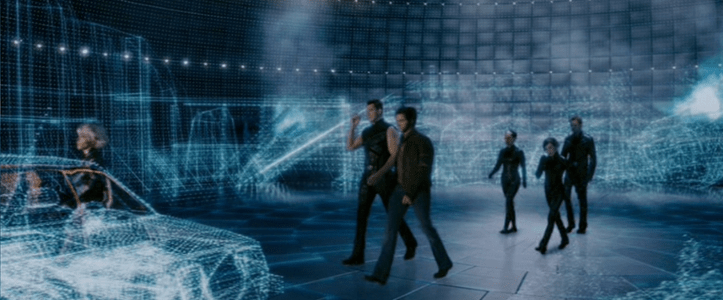

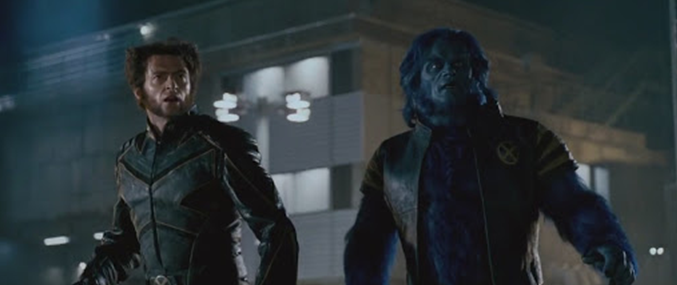
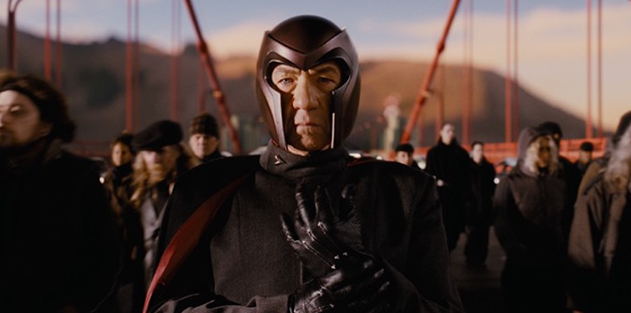
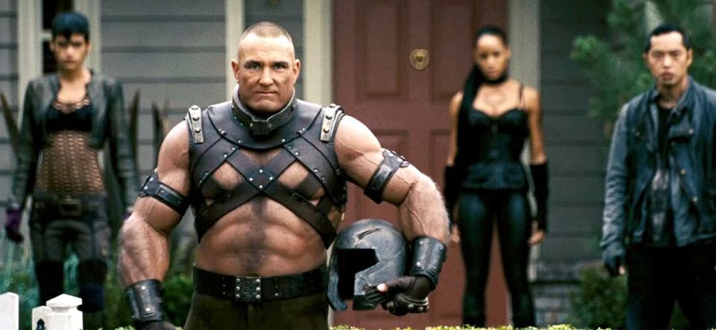
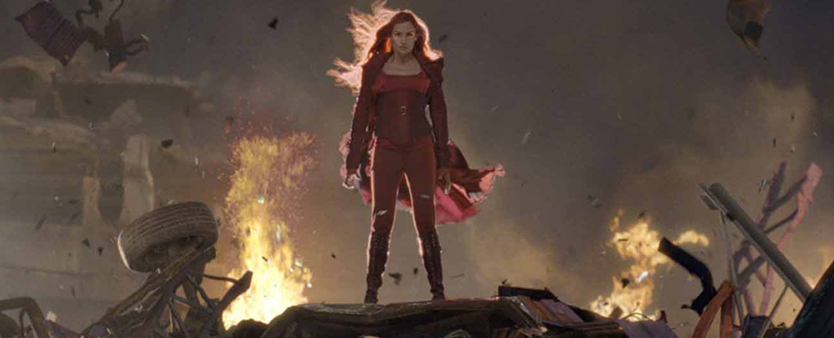



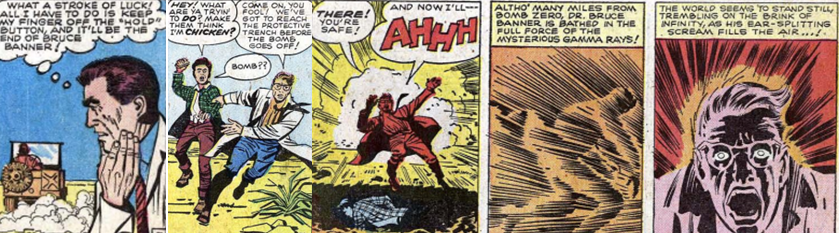
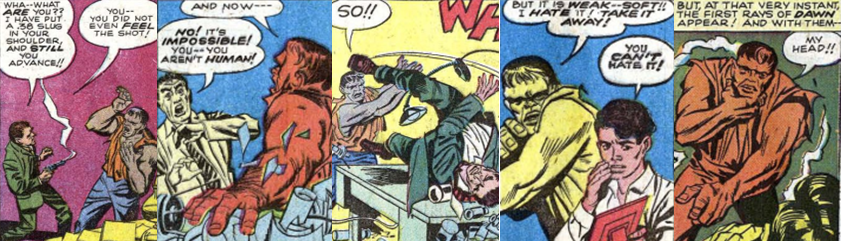
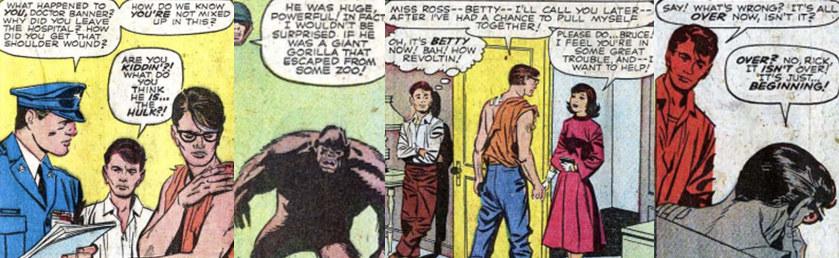
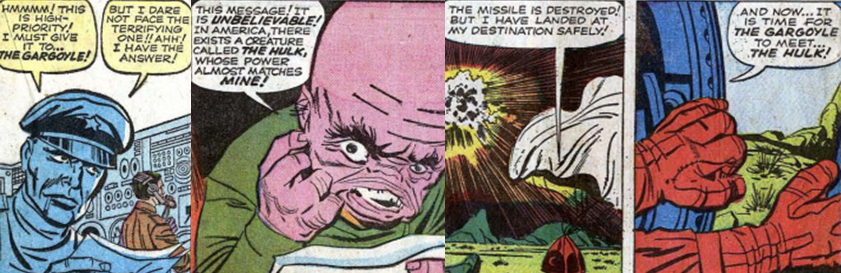
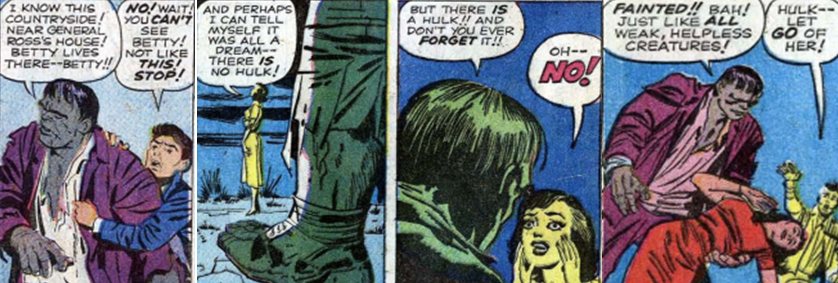
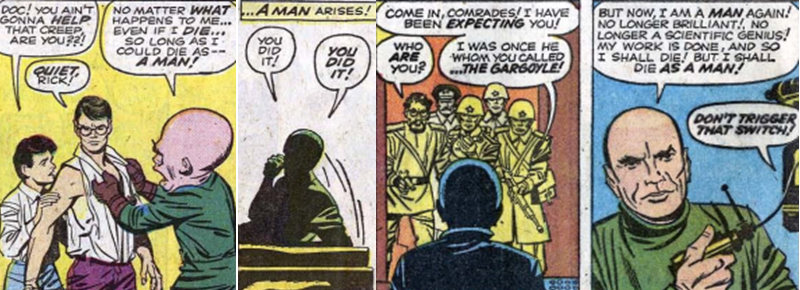
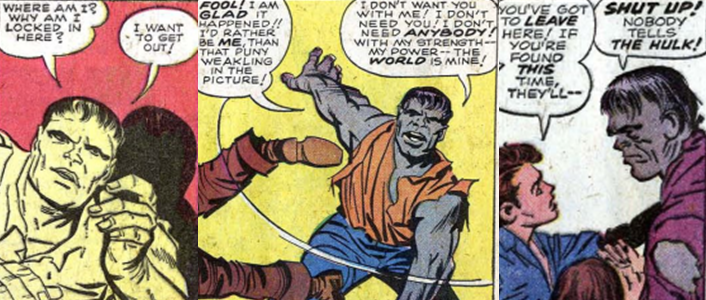
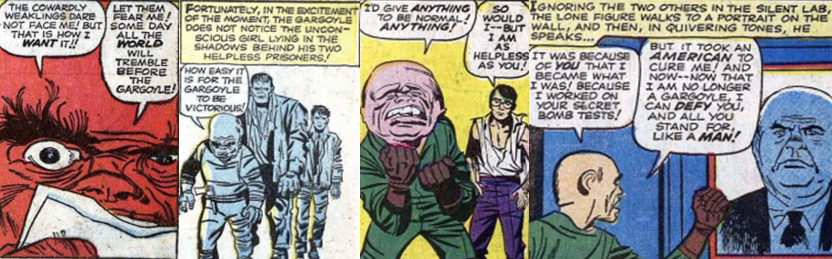
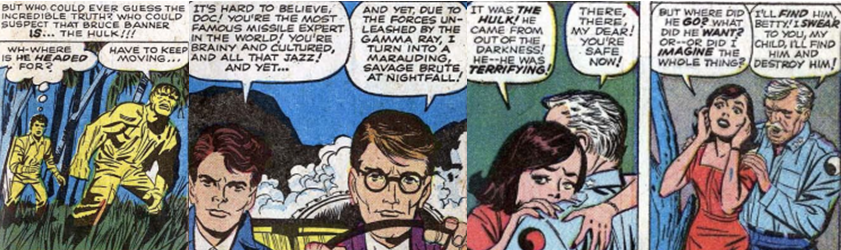


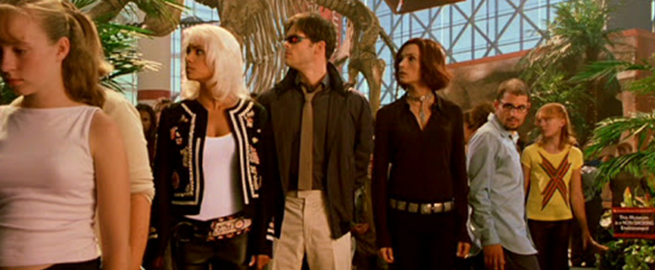
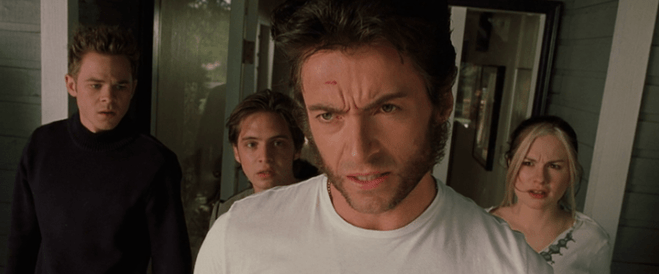
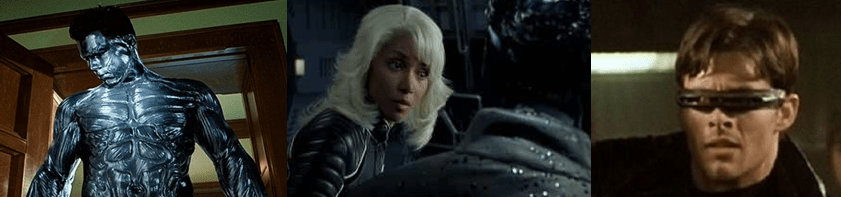
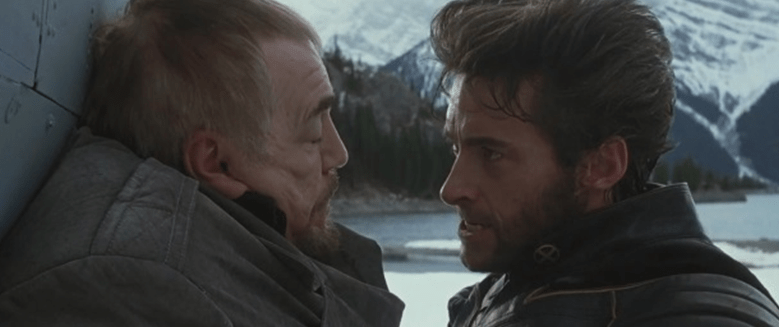
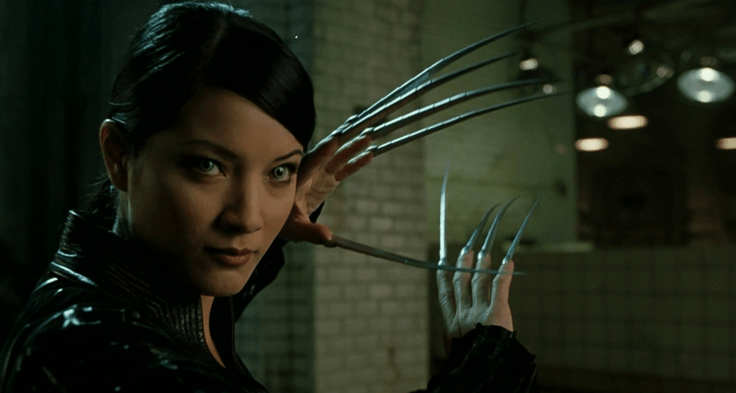
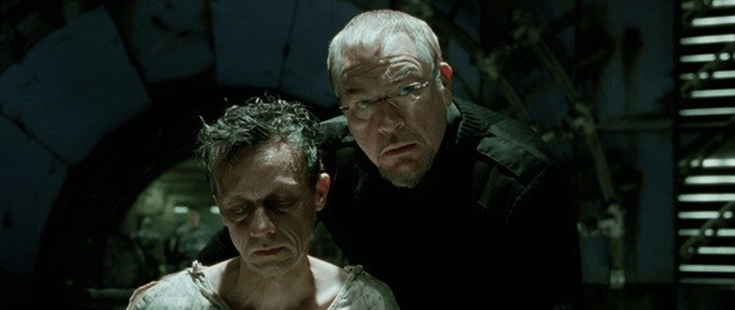
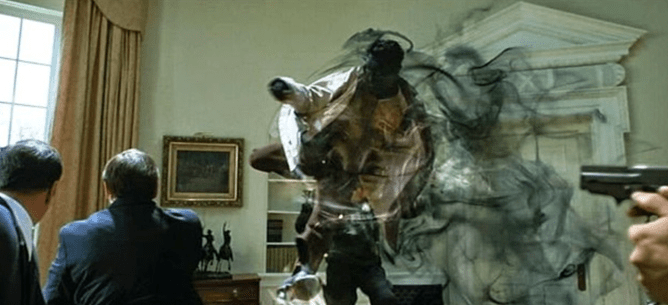
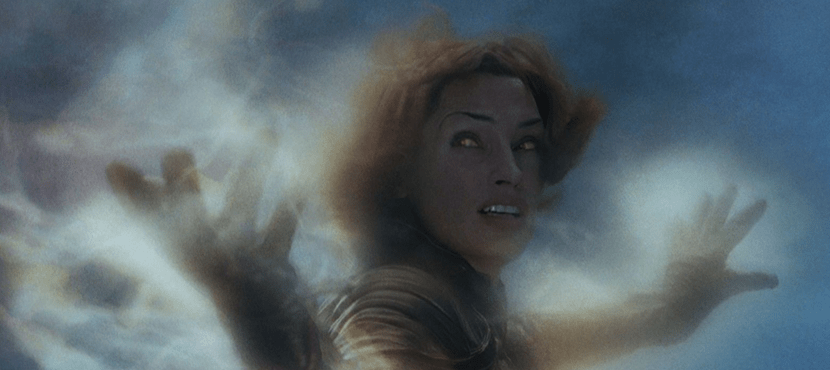


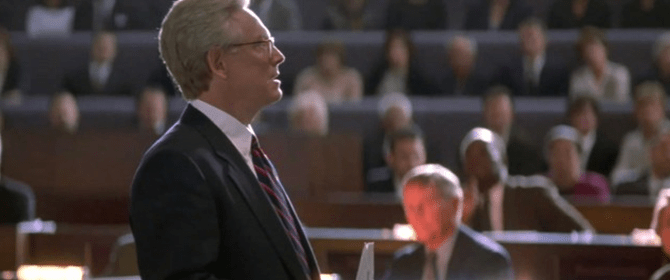

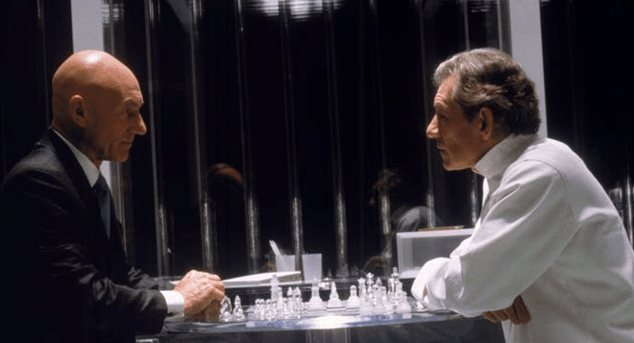
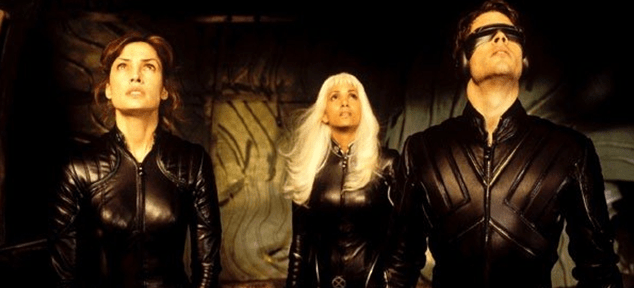
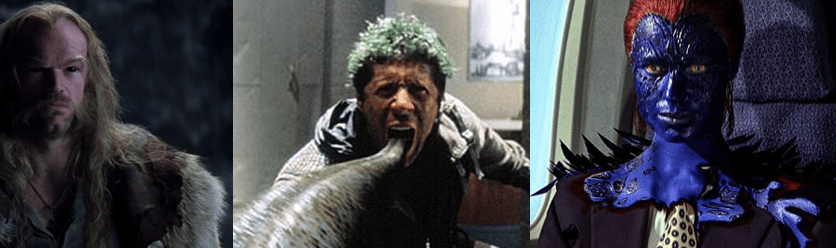
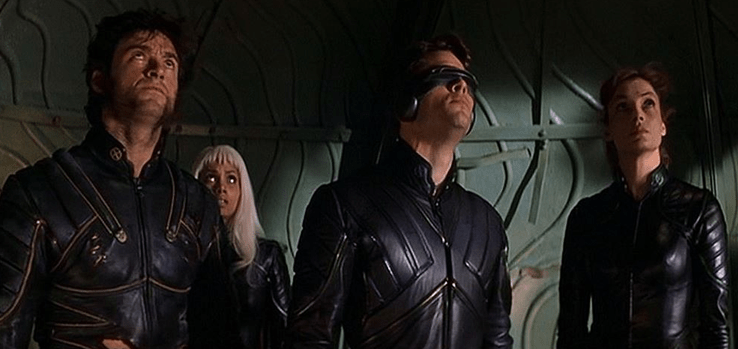



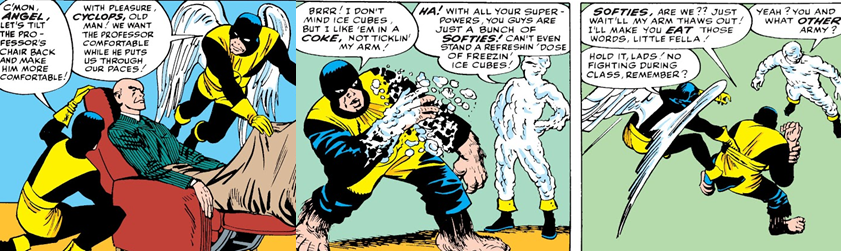

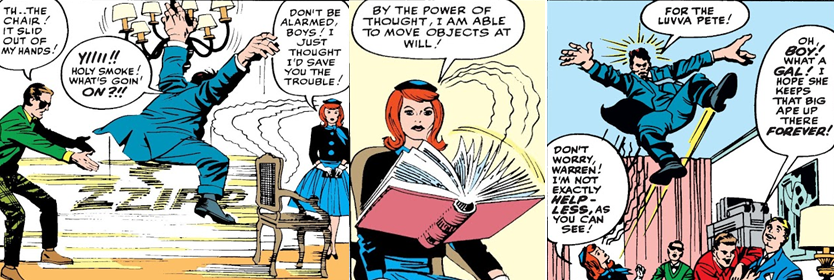


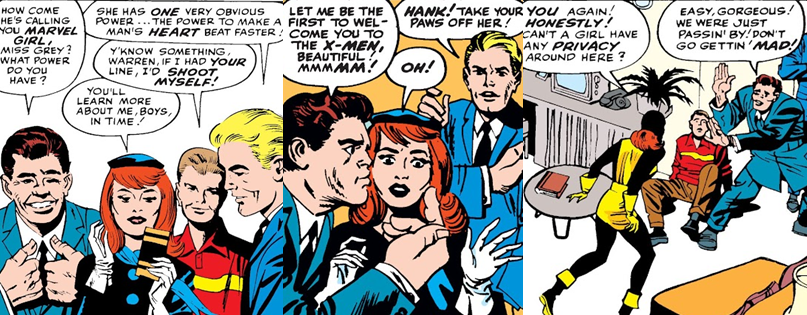


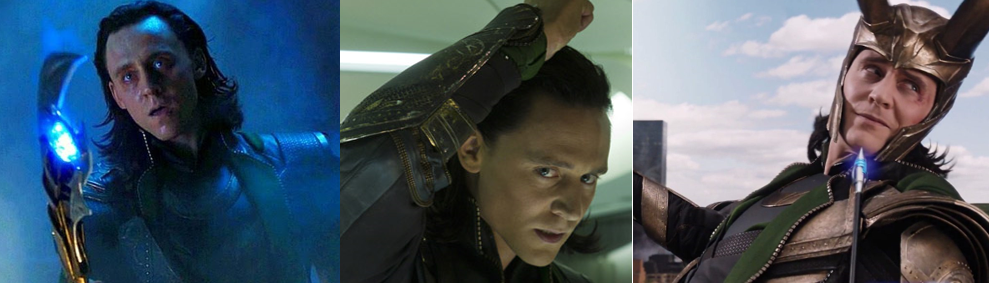
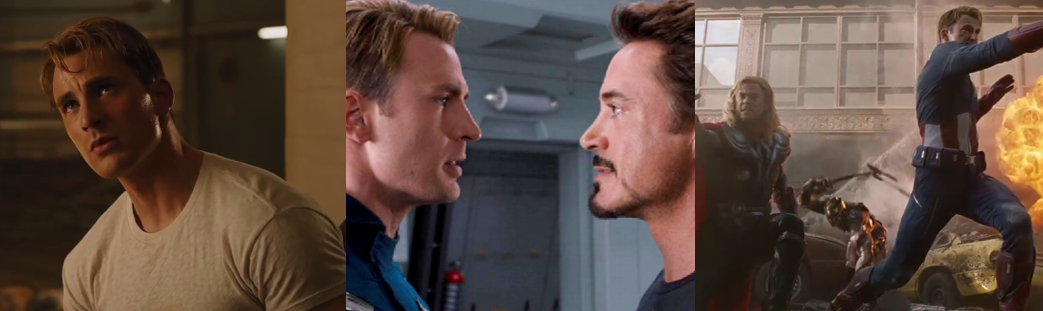
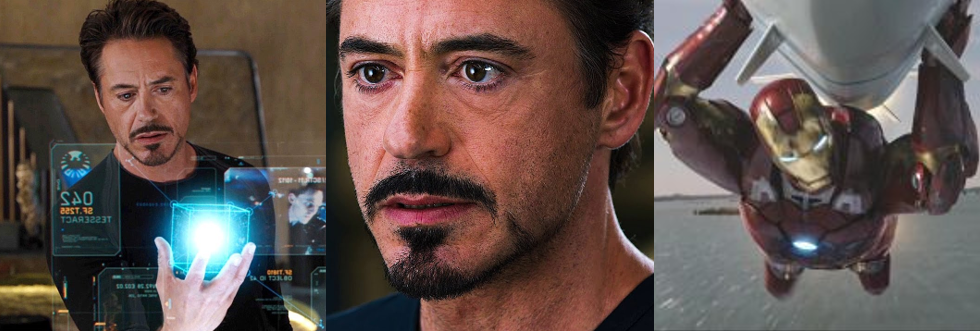
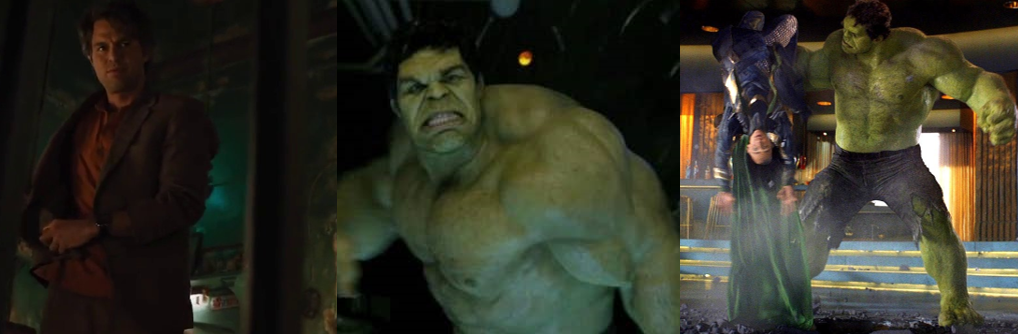
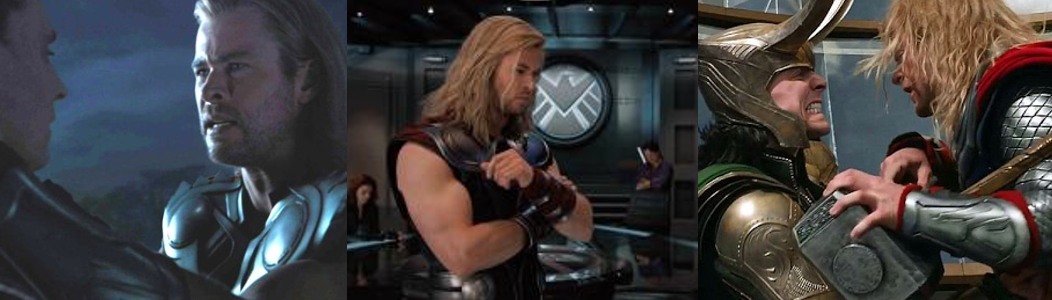
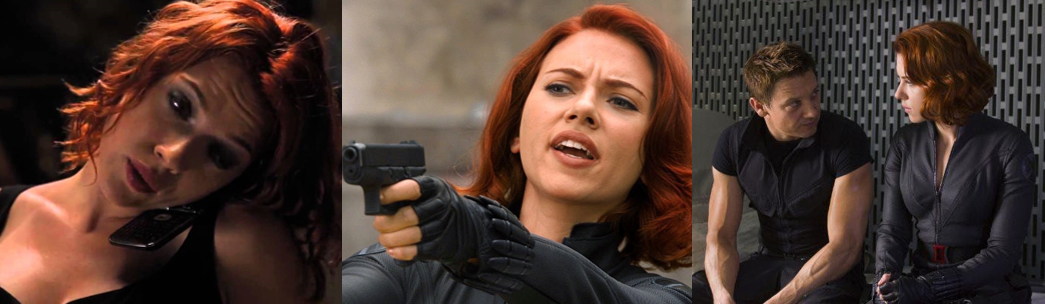
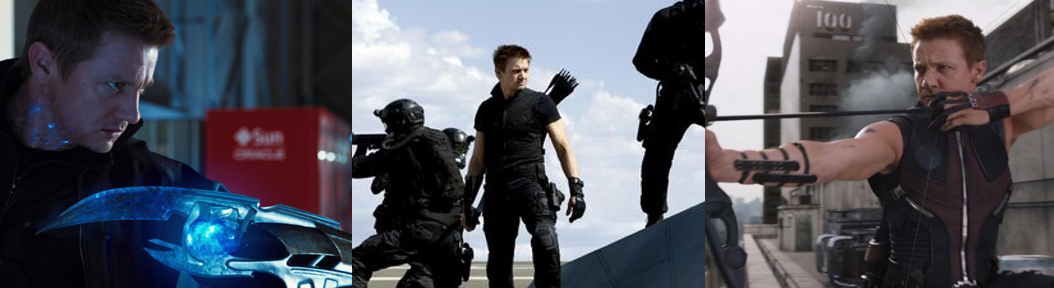
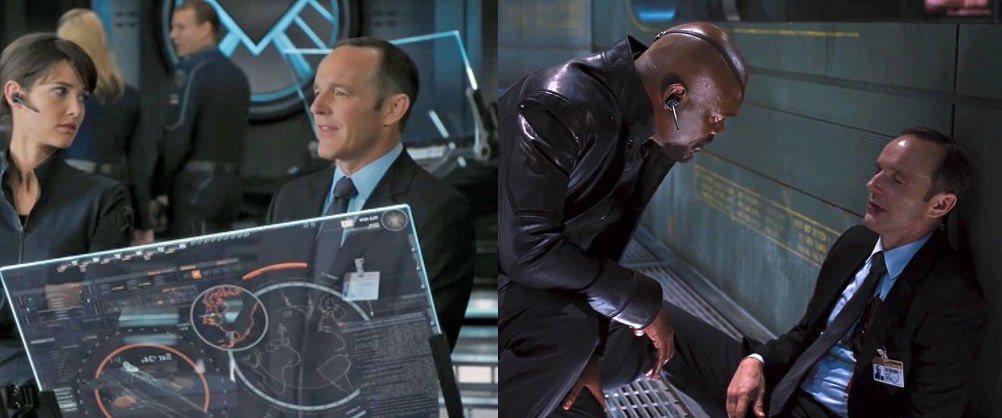
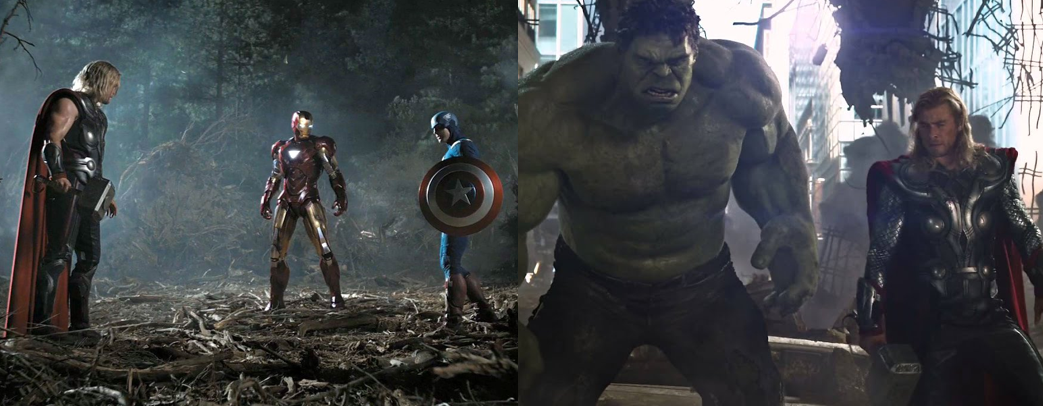
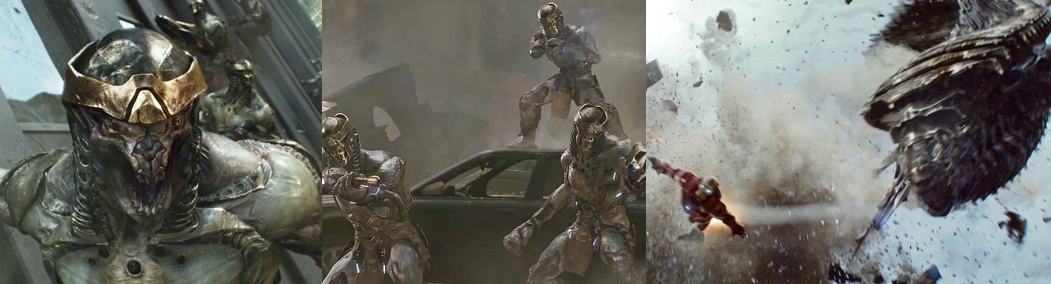
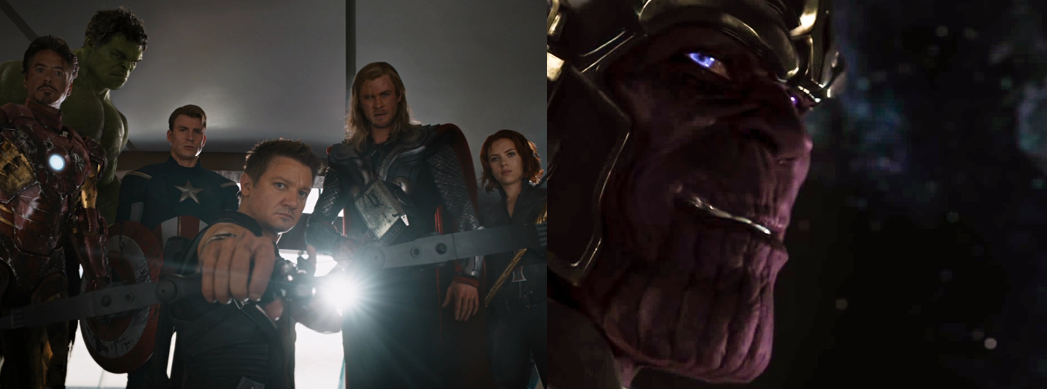





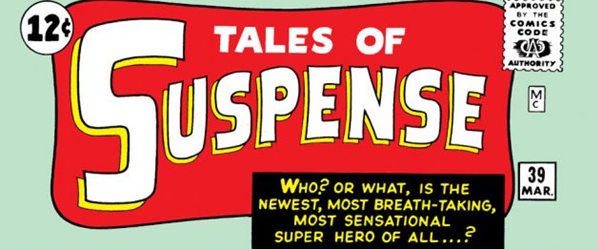
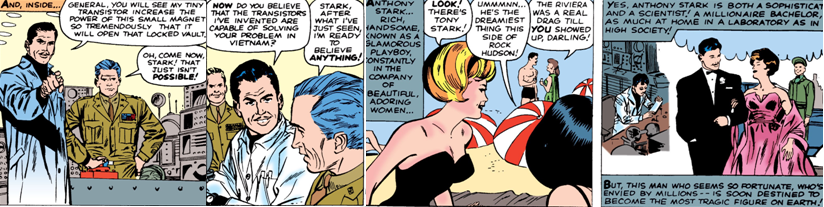

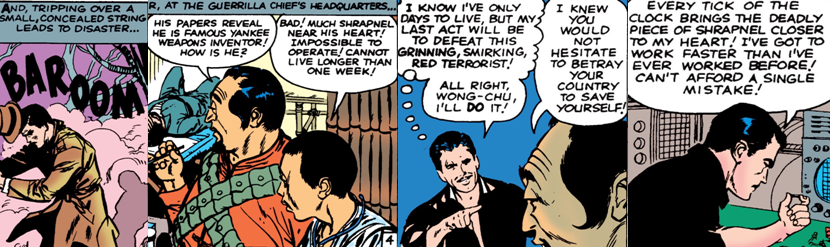

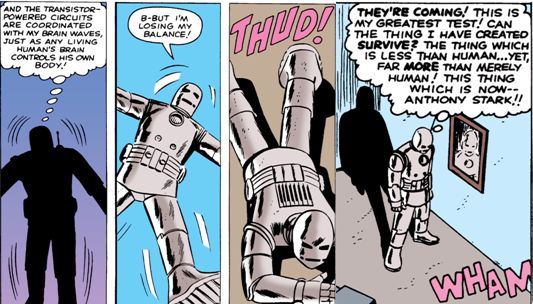

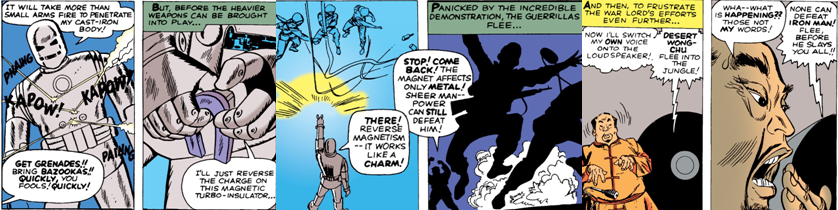
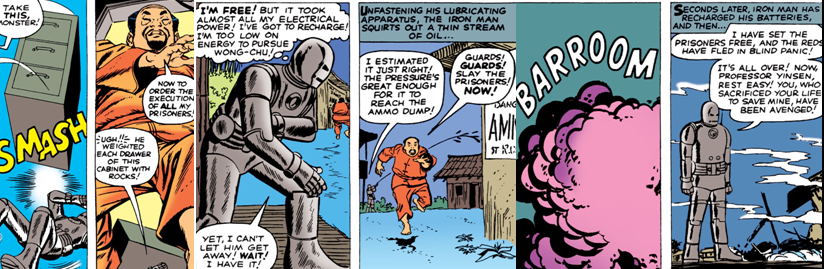

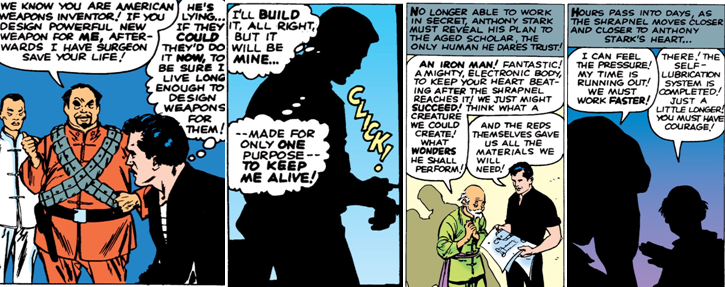






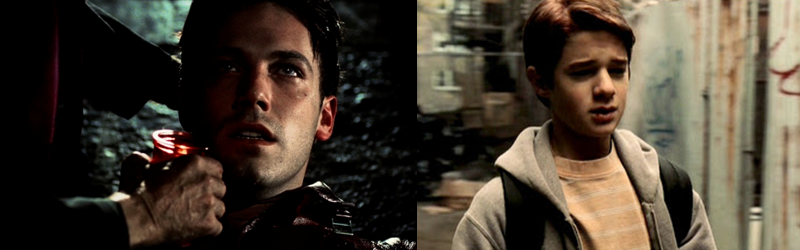
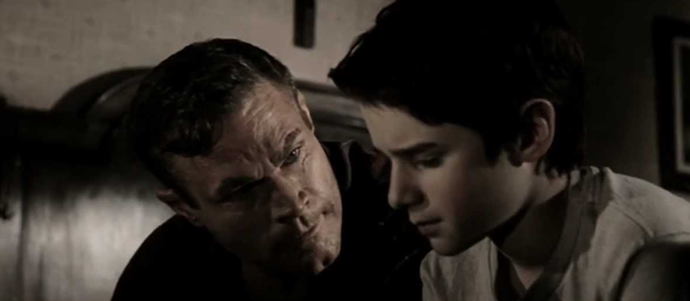

 Dr. K's Waiting Room
You must be logged in to post a comment.