Movie Night: Hulk vs. Wolverine

Released: 27 January 2009
Director: Frank Paur
Distributor: Lionsgate
Budget: Unknown
Stars: Steven Blum, Fred Tatasciore, Tom Kane, Janyse Jaud, Colin Murdock, Mark Acheson, Nolan North, Bryce Johnson, and Tom Kane

The Plot:
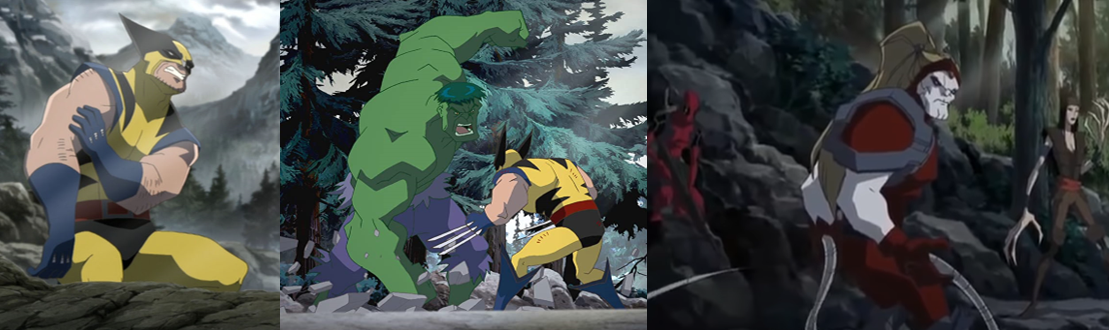
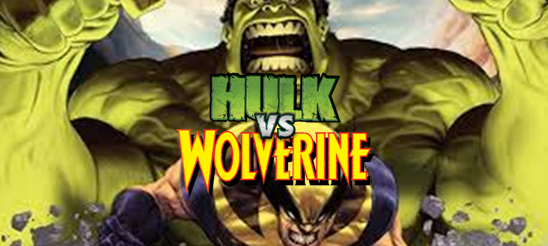
After Doctor Bruce Banner’s (Johnson) rampaging alter-ego, the Hulk (Tatasciore), is suspected of destroying a town, Department H sends James “Logan” Howlett/Wolverine (Blum) to confront the creature, attracting soldiers from Weapon X.

The Background:
Marvel Comics have had a long history with animated ventures; some of these, like the X-Men animated series (1992 to 1997), largely defined a generation of fans. In 2004, with the Marvel Cinematic Universe was still about four years away from it genesis, Marvel licensed many of their characters out for live-action films, many of which were massive critical and financial successes. To capitalise on this wave of mainstream popularity, Marvel made a deal with Lions Gate Entertainment to produce a series of direct-to-video animated movies based on their characters. Sales were initially very strong and, while the releases soon dropped from two per year to one, 2009 saw a dual feature release that pitted the Hulk against Wolverine and Thor Odinson in separate adventures. Hulk vs. would go on to make the second-highest gross out of all of these animated films and Hulk vs. Wolverine was met with generally positive reviews, potentially because of Wolverine’s inclusion and growing popularity at the time and the inclusion of fan favourite character Deadpool. Wade W. Wilson (also known as “Deadpool”) was created by Fabian Nicieza and Rob Liefeld and first appeared in The New Mutants #98 in February 1991. Though originally little more than a cold-blooded mercenary, the wise-cracking “Merc With a Mouth” went on to become one of the few comic book characters to be aware that they are comic book characters, leading to a warped, violent sense of humour, a tendency to break the fourth wall, and one of Marvel Comics’ most popular characters.

The Review:
Hulk vs. Wolverine begins with a narration by Wolverine, who awakens beaten and bloodied in the middle of the Canadian wilderness. Momentarily disorientated, he painfully shoves his arm back into his socket and his memory is jogged by the dramatic arrival of the enraged Hulk. From there, the feature flashes back to four hours earlier in the day; Logan was transported into Canada by Department H after a town was destroyed by a creature believed to be the Hulk. Wolverine’s senses give him the general sense of what happened and, excited at the prospect of hunting down the Hulk, is given carte blanche to stop the Green Goliath by any means necessary before he can hurt anyone else. Free-falling to the snow-encrusted wilderness, Wolverine follows his enhanced sense of smell deep into the forests and mountains in search of the Hulk (a search made all the easier by the gigantic impact craters the Hulk has left behind as he leaps across the mountains) but finds only the distraught Bruce Banner.

Wolverine is sent to stop the Hulk but their fight is interrupted by Weapon X.

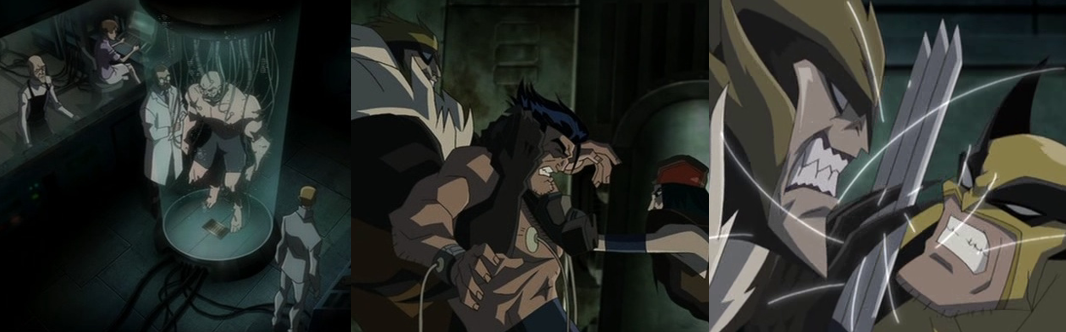
Although Banner begs him to leave and laments his condition, his transformation into the rampaging Hulk s triggered when Wolverine catches the Hulk’s scent on Banner and threatens him. After being knocked clear across the valley from a single punch from the Hulk, Wolverine recovers as in the opening and an all-out slugfest between the two ensues. Rather than engage the Hulk in head-to-head combat, Wolverine initially tries to use his wiles to attack the Hulk from behind, stabbing him repeatedly in the back, but the Hulk’s unquenchably rage and strength quickly overpower Wolverine and leave him a beaten, bloody pulp. As tenacious as his namesake, Wolverine gives in to his bloodlust and continues the fight, gouging deep, bloody wounds into the Hulk using his Adamantium claws but their fight is soon interrupted by a barrage of tranquilizer darts fired by Deadpool (North) and the arrival of Victor Creed/Sabretooth (Acheson), Arkady Rossovich/Omega Red (Murdock), and Yuriko Oyama/Lady Deathstrike (Jaud). Succumbing to the dart, Logan recalls how, while drinking himself into a stupor, he was abducted by the mysterious Professor (Kane) and subjected to the Adamantium bonding process against his will.

Wolverine’s past in Weapon X comes back to haunt him with a vengeance.

In the aftermath, he became the brainwashed soldier code-named Weapon X and was forced into a series of combat scenarios alongside the other Weapon X “graduates”; in time, Sabretooth’s unheeded warnings regarding Logan’s stability came to pass and he violently escaped from the facility and fled into the Canadian wilderness. Wolverine is brought back to the present by a vicious beating from his former teammate; as Sabretooth beats on him, Deadpool chatters incessantly, but the Professor (now sporting a robotic claw hand) interrupts to proceedings to reveal that Weapon X has been pursuing the Hulk and causing the destruction attributed to the beast in their efforts to capture him. The Professor plans to wipe the Hulk’s memories and brainwash him using the same procedures they subjected Logan to back in the day and place Wolverine back into the containment capsule in order to subdue him once more. As each of the Weapon X members wants Wolverine dead, Sabretooth kills the Professor so that he and Deathstrike can torture Logan and rip him to shreds; however, Wolverine is able to goad Deathstrike into skewering him in such a way that frees him from Sabretooth’s grip and, after slicing off her arm, attempts to escape the facility, slaughtering a whole bunch of armed guards in the process.

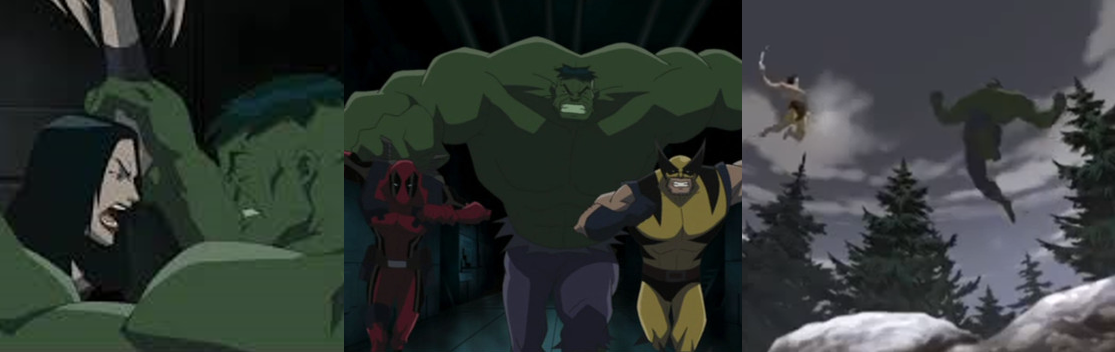
Hulk tears his way through Weapon X but the film ends with his fight against Logan unresolved.

Although Deadpool isn’t convinced by Sabretooth’s story that Wolverine attacked the Professor, he agrees to hunt down and kill Logan, who frees Banner in order to get the Hulk’s help. A frail, despondent figure, Banner is tired of his dual existence and yet also terrified at the prospect of being turned into a weapon. Although horrified by Omega Red and Deadpool, Banner refuses to let the Hulk out so Wolverine stabs him in the gut to help speed up the transformation before engaging his adversaries alone; thanks to their individual healing factors, the fight is bloody and brutal and effectively pointless and yet each of them do everything they can to try and kill the other. Despite his best efforts, Banner is unable to hold off the transformation and, as Omega Red as Wolverine tangled up in his electrified tentacles, the Hulk attacks in a blind rage. The Hulk easily shrugs off Deadpool’s bullets and Omega Red’s tentacles, unwittingly saving Wolverine from Deathstrike’s clutches in the process; remembering Wolverine as an enemy, the Hulk charges after him, swatting aside Deadpool when Wolverine hilariously uses him as a human shield and dispatching Deathstrike with his patented clap before ripping her cybernetic limbs off. Hulk then pounds Omega Red into submission before bringing the entire facility down around them in his desperate need to escape; Wolverine is launched clear by the resultant explosion and the film ends with the two once again leaping to engage each other amidst the Canadian snow.

The Nitty-Gritty:
Unlike the other Marvel animated efforts, Hulk vs. Wolverine isn’t exactly what you would call a feature-length presentation; this is mainly because it was released alongside Hulk vs. Thor (Liu, 2009) and, together, the two are supposed to form a kind of double feature. While they’re not exactly directly related to each other, this does help explain the brevity of Hulk vs. Wolverine, which is more like a bite-size version of a much greater story. You might think that this means the feature is a simple extended fight scene between the two characters but that isn’t actually the case; yes, Wolverine and the Hulk engage in bloody, brutal combat for a few minutes but their fight is quickly interrupted by the Weapon X members. The primary selling point of the feature then takes an extended break to touch upon Wolverine’s back story with Weapon X, which makes this much more like a snapshot of his character rather than a battle for the ages.

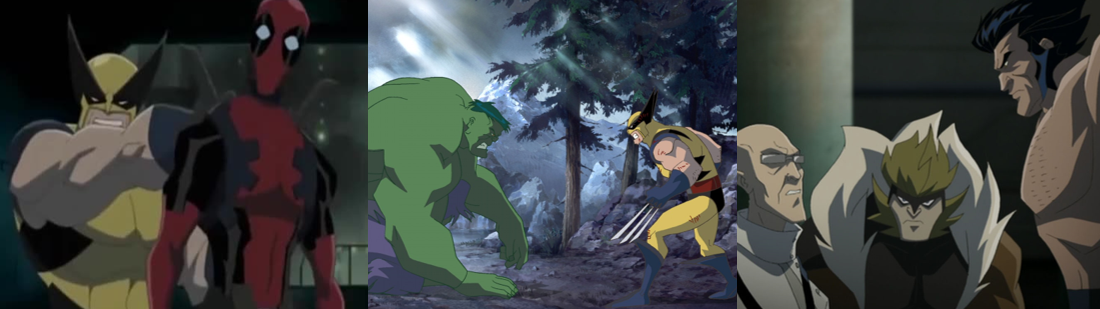
As amusing as Deadpool is, the Weapon X plot completely overshadows the title fight.

Indeed, Wolverine (and the Hulk, for that matter) spend more of the feature fighting against Weapon X than they do each other. On the plus side, this means there’s still a lot of violence and action packed into the feature’s short runtime and loads of opportunities for Deadpool to steal the show with his wit and wacky nature but those looking to see Hulk fighting Wolverine, as the title promises, may be left disappointment at how little of the action is actually focused on this fight. It’s interesting seeing a brief glimpse into Wolverine’s animosity against Weapon X but it’s all very rushed and glossed over to get to the next violent scuffle; I would have liked to see a bit more time spent exploring Banner’s desperation and downtrodden character at the sacrifice of, say, Omega Red (who was largely inconsequential overall) and a bit more time spent exploring the dichotomy between Banner/Hulk and Wolverine (since both are characters who rage and animal nature often overcome their rational minds). Instead, the feature blasts through a “greatest hits” package of Wolverine’s life, hints at relationships to characters many audiences might not be immediately familiar with (the past between Wolverine and Sabretooth and Deathstrike is given the bare minimum of lip service), and seems to have little faith in the concept of Hulk fighting Wolverine since it would rather skew its run time towards the more popular Wolverine.

The Summary:
Hulk vs. Wolverine is a fun, if brief, way to spend about forty minutes of your life. Although it doesn’t quite deliver on its premise, the fight between the Hulk and Wolverine is brutal and exciting and there is a great deal of violence packed into its short run time. Hulk vs. Wolverine definitely doesn’t shy away from the ferocious nature of its title characters, or their adversaries, which is refreshing to see since these are violent characters and should be treated as such, but it definitely feels as though Wolverine’s presence overshadows that of the Hulk and the core concept of the feature. Although Deadpool’s role in the animated is small, he definitely stands out and it was exciting to see him included but, in the end, the insertion of Weapon X and the focus on Wolverine’s character definitely keeps Hulk vs. Wolverine from living up to its potential. I guess seeing the Hulk and Wolverine go at it for about half an hour straight wouldn’t have been that interesting but, as I said, there was a lot of potential in paralleling Logan’s animalistic character and nature with Banner’s condition that was imply abandoned to capitalise on Wolverine’s incredibly popularity and that’s a bit of a shame despite the feature being chock full of violent action and bloody violence.

My Rating:

Rating: 2 out of 5.

Could Be Better

What did you think to Hulk vs. Wolverine? Do you feel like it wasted the potential of its premise or were you happy with what was presented? How do you feel it compares to Hulk vs. Thor and the other Marvel animated features? Which member of Weapon X was your favourite and how did you feel about the way Banner was portrayed here? What did you think to Deadpool’s inclusion and characterisation and would you like to see him featured in animation more often? How are you celebrating Deadpool’s debut this month? Whatever your thoughts on the Deadpool, or Marvel’s animated features, feel free to leave a comment below.

Game Corner [Punisher Month]: The Punisher (PlayStation 2)


Back in February 1974, Spider-Man/Peter Parker faced a new enemy in the form of Frank Castle, the Punisher, a veteran of the Vietnam War turned bloodthirsty vigilante. The Punisher separated himself from other, traditional costumed heroes by his willingness to kill and uncompromising, suicidal one-man war on crime and what better way to celebrate the debut of this nuanced and complex character by dedicating every Tuesday of this month shining a spotlight on Marvel’s most notorious anti-hero?


Released: 16 January 2005
Developer: Volition
Also Available For: Mobile, PC, and Xbox

The Background:
After his impressive debut in the pages of The Amazing Spider-Man #129, Frank Castle/The Punisher quickly became one of Marvel’s most popular anti-heroes thanks to his tragic backstory and unwavering commitment to the eradication of crime. The Punisher has also seen some success outside of the comic books, featuring in movies, cartoons, and a number of licensed videogames. Released to coincide with the 2004 movie of the same name, The Punisher was developed by Volition, a studio purchased by THQ in 2000 and perhaps best known at the time for their work on the Red Faction (ibid, 2001; 2002). Acting as a quasi-sequel to The Punisher (Hensleigh, 2004), The Punisher saw star Thomas Jane return to voice the role but incorporated its aesthetic presentation, storyline, and characters from the comics and was subjected to numerous edits and cuts to tone down its scene of explicit violence and gore and make it financially viable for release. While the game was met with mixed reviews, it sold around one million copies and was considered a success for Volition, who would go on to develop Saints Row (Volition, 2006).

The Plot:
Having dedicated his life to the eradication of crime after losing his family to mobsters, Frank Castle has been working his way through New York City’s underworld as the Punisher. Having carved his way through the low-level street gangs and the Yakuza, he allows himself to be captured and interrogated in order to get closer to the town’s newest head gangster, the mysterious “Jigsaw”, who has a personal grudge against the Punisher.

Gameplay:
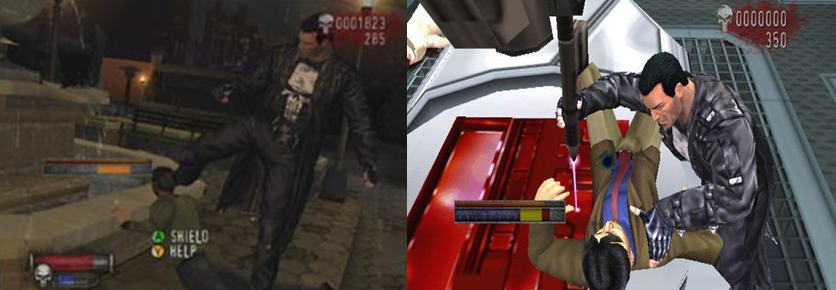
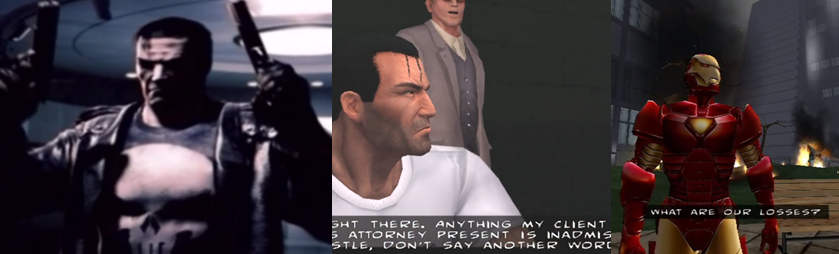
The Punisher is a third-person action shooter in which you’re placed into the iconic trenchcoat, combat trousers, and skull-shirt of Frank Castle, the titular Punisher, as he mows his way through countless thugs, lowlifes, and criminals in a one-man war on crime. Although he can’t jump, the Punisher has a number of combat and movement options available to him: he can pick up and swap weapons with the Circle button (note that, while he can dual-wield weapons, he can only hold two types of weapons at once; a smaller weapon like a pistol and a bigger weapon like a shotgun), select between his weapons by pressing down on the directional pad, fire his weapons with R1, toss grenades and other such explosives with L1, and enter a more accurate aiming mode (which is further expanded when he has a sniper rifles) by pressing in the right analogue stick.

Frank’s methods of interrogation basically amount to brutal and sadistic torture.

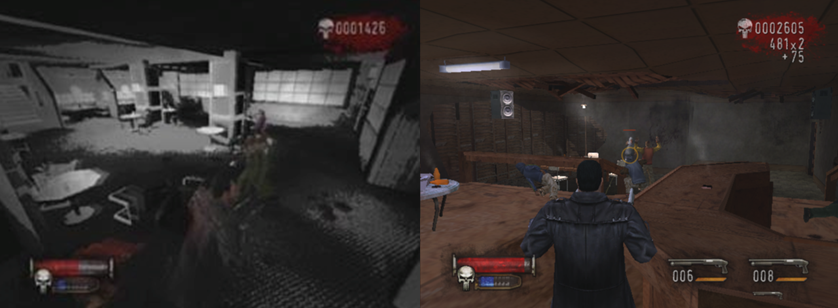
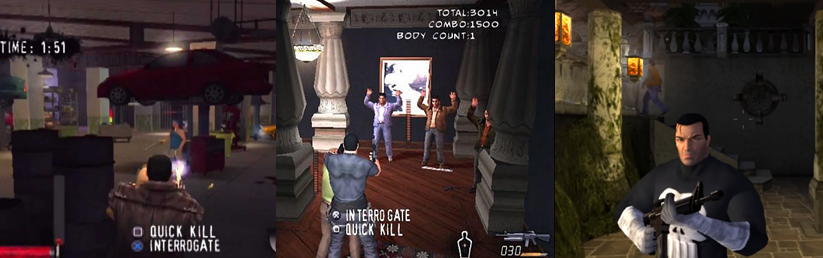
The Punisher can also dive ahead with a press of R2, duck and crouch walk with L2, and grab thugs and use them as a human shield with X. In this position, or when up close to enemies, you can execute them with a quick kill by pressing Square. Enemies can also be interrogated by pressing X; in this mode, you’re ask to tilt or move the left analogue stick to keep a meter in the right area long enough to “break” your victim, which will award you with hints and Style Points. As you kill enemies, rack up kill combinations, and pull off successfully interrogations, you’ll earn Style Points that can be used to upgrade the Punisher’s various skills and attributes from the main menu in Frank’s apartment. As you encounter enemies and head into fire fights, you’ll notice glowing white Punisher skulls over the heads of certain enemies; once you’ve cleared the immediate area of all other enemies, these guys will give up and you’re tasked with performing a “Special Interrogation” using various parts of the environment (drills, furnaces, shark tanks, or dangling off a ledge, for example). Once you break them, they’ll often lead you to secret areas with new weapons or cause enemies ahead of you to stand down so you can progress easier. You can kill them, but it will cost you Style Points (which can be a little confusing as you’re otherwise rewarded for killing criminals; indeed, you can kill these guys normally after breaking them and not be penalised). Other times, you’ll see a glowing gold Punisher skull in the environment, which allows you to pull off a “Special Kill” (locking a scumbag in a coffin and tossing in a grenade, for example) for additional Style Points.

Enter Slaughter Mode to make short work of your enemies but watch your fire around friendlies!

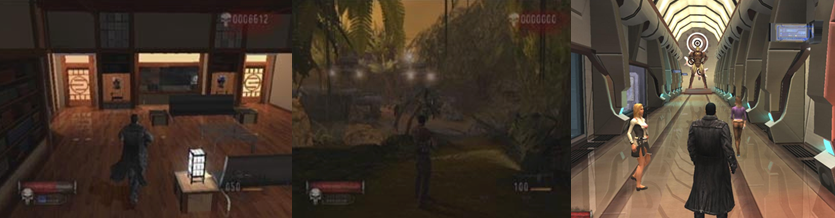
Considering how linear the game is, it’s surprisingly easy to get lost as you’re often exploring dark, grey corridors and very bland environments; there’s no map or onscreen indication of where you need to go so it’s easy to get a bit turned around at times. Often, you’re joined by a partner character (Natalia Romanova/Black Widow, Nick Fury, and agents of the Strategic Hazard Intervention Espionage Logistics Directorate/S.H.I.E.L.D.) who cannot be harmed by either you or enemies and are, surprisingly, very useful and competent for computer-controlled characters. Occasionally, you’ll be asked with solving some very simple puzzles that amount to finding a key or pulling a lever, rescuing hostages, placing explosive charges, interacting with a hidden switch to open a door, or forcing certain enemies to open doors; it’s nothing massively taxing but, again, it can sometimes be confusing as to where you need to go. The Punisher is quite a durable character whose health is refilled as he breaks thugs through interrogations or talks to rescued innocents but it also regenerates when you press Triangle; this puts you into “Slaughter Mode”, which slows time down to a crawl, turns the screen black and white, and has you tossing throwing knives and performing instant kills as long as the meter lasts. This can be a great way of clearing out rooms filled with perps but, honestly, I generally tended to save it for boss battles as the game is pretty generous with its checkpoints and not especially difficult to get through and I found this mechanic to be quite disorientating. Most of my deaths and mission failures came from accidentally dropping from high ledges or killing innocents; occasionally, enemies will grab hostages and use them as human shields and, if you kill them, you’ll instantly fail the mission so be sure to use your more accurate aiming in this situations.

Graphics and Sound:
For a PlayStation 2 game, The Punisher is pretty decent to look at when you can actually see what’s onscreen. Character models are pretty good, if a bit blocky, but not much to shout about when it comes to enemy variety and aesthetic. Indeed, the character who looks the most dynamic and impressive is, fittingly, the Punisher himself. Decked out in a long trenchcoat, combat trousers, army boots, and skull shirt, the Punisher looks exactly like he stepped right out of the pages of a Garth Ennis comic book. Punisher even dons different outfits for different missions, including ditching the trenchcoat, decking himself out in war paint, and wearing prison clothes and, while he doesn’t have Thomas Jane’s likeness, he looks very much like his comic book counterpart.

Environments can be a bit boring and drab but there are a few that stand out as visually interesting.

Where the game falters, though, is in the level variety and presentation; you’ll skulk around seedy alleyways, dark corridors, and dingy crack houses, which aren’t massively impressive. Even areas like the chop shop, the zoo, and Fisk Industries’ skyscraper aren’t much to shout about as the game’s visuals are dulled with a dark, moody presentation that, while fitting, can make things visually very lifeless and boring. It’s not all bad, though; one mission takes place in a jungle, which helps to spice things up, as does battling through the research and development department of Stark Industries and a nightclub/bar, all of which bring some life and clarity to the action.

While many of its more brutal kills are censored, The Punisher is still a gloriously violent game.

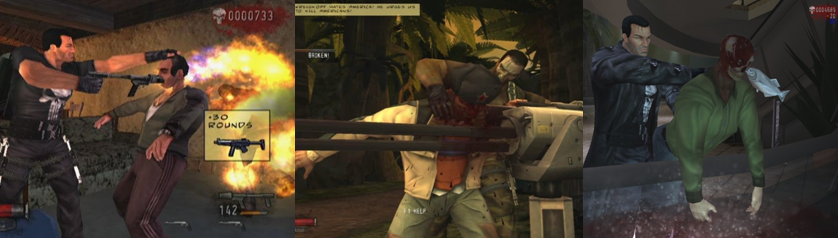
As mentioned, the game’s more brutal and bloodier executions have, sadly, been censored; nevertheless, the game is extremely violent, with enemies spurting blood and being blasted to death as best as the PlayStation 2 can render. The Punisher’s interrogation sequences basically amount to a version of torture and see Frank beating, choking, kicking, or intimidating his victims or threatening this lives using various parts of the environment, which is all very fun to see and take part in and, while these are censored, the implication is still very clear to see.

While the CG cutscenes are a bit fuzzy, the in-game graphics are pretty decent and there’s some fun cameos.

The music isn’t really that interesting or memorable; the game doesn’t seem to pull any tracks or influence from the movie, which is a shame, but the voice acting is top notch. Thomas Jane was always a fantastic Punisher and he continues to narrate events around him, offering wry commentary, dry quips, threats, and conveying just the right amount of dread and anger in the title role. The few amount of CG cutscenes the game uses are decent enough but the icing on the cake were the appearances and cameos from some of Marvel’s more recognisable characters, such as Matt Murdock, Tony Stark/Iron Man, and Wilson Fisk/The Kingpin, which are fun hints at the wider Marvel universe that exists around The Punisher and the cries and screams of the goons you fight are satisfying to hear.

Enemies and Bosses:
As you might expect, the Punisher is confronted by a horde of nameless, faceless goons, thugs, and scumbags in his quest to destroy all crime. Enemies will react with fear and hostility at your presence, shoot at you from behind cover and doors, and throw weapons at you but, for the most part, are quite stupid and easily taken out even when they have the higher ground or the numbers advantage. As the story progresses, though, you’ll come up against more formidable enemies or enemies wielding more powerful weapons, such as shotguns, sniper rifles, and flamethrowers. Enemies will also fire rockets at you from helicopters, commandos don more protective armour to withstand your shots, and Yakuza will dog you at every turn in waves. Thankfully, you always have plenty of options available to take these guys out, from tossing them to giant snakes, smashing their faces into mounted guns, or simply blasting them away with your weapons and, while you’re often asked to hold out against a timer as an endless swarm of enemies rush at you, it’s never like you’re not capable of defending yourself.

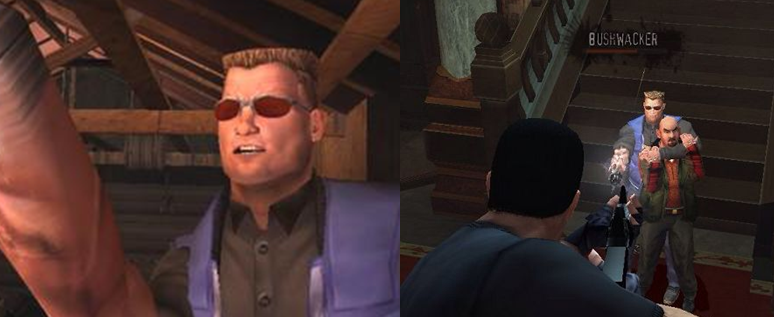
Bushwacker gives you the slip more than once before you finally confront him head on.

In terms of bosses, The Punisher has an interesting variety both visually and in terms of how you fight them. The game’s first few missions see you busting up the Gnucci gang; when you get into a shootout with Bobby Gnucci, you need to make use of nearby cover to get a good bead on him to take him out with a headshot. Later, you’ll burst out of a coffin and gun down countless minions of the family and find yourself running around in circles in a confusing attic maze as enemies continuously spawn in and you desperately try to find take out Eddie Gnucci in one of the game’s more confusing and frustrating boss battles. One of the more elusive bosses in the game is Carl Burbank/Bushwacker, a muscle-bound freak with a gun for an arm who constantly dogs your progress and escapes your retribution until you finally confront him in the library at Ma Gnucci’s estate. Goons will continually spawn into this fight and, if you attack Bushwacker head-on, you’ll take massive damage so I found the best tactic was to do a continuous circuit of the library, shooting at Bushwacker as and when, and bust out the Slaughter Mode to bring him down. Afterwards, you are given four minutes to escape the estate as it burns down, shooting sprinklers on the ceiling to get through the flames and performing a Special Kill to make short work of Ma Gnucci.

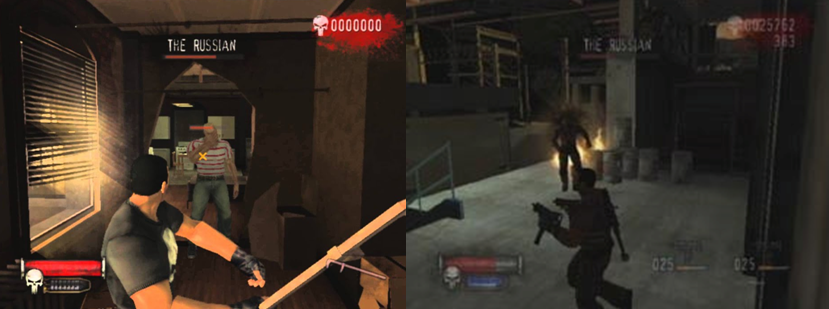
Though seemingly impervious to pain, environmental hazards and flames will bring the Russian down.

At the end of the docks, you’ll have to grab a nearby rocket launcher to take out the tank that blocks your exit, which is pretty easy to do thanks to all of the handy-dandy containers that offer cover. Afterwards, the game recreates a classic scene from the movie and comics with a battle against the nigh-invulnerable Russian in Frank’s apartment; here, you must stay away from the Russian and stun him with nearby melee weapons, mount his back, and use the Special Interactions to best him. Later, you’ll battle him against around a missile silo; this time, you need to shoot the barrels he grabs before he can throw them at you and, when he comes down to your level, use your grenades, the explosive barrels, and the missile’s flame jet to put him down once and for all while dispatching the endless goons.

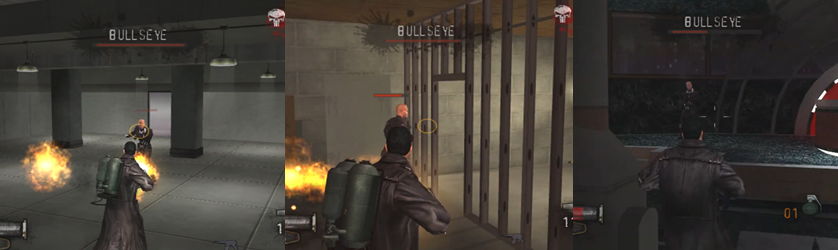
Bullseye is a slippery, tricky devil who eludes your attacks and keeps you on the move.

When you infiltrate Fisk Industries, you’ll encounter another elusive and annoying boss, Bullseye. This slippery devil will somersault about the place, tossing knives at you and only really taking damage when you land a headshot thanks to his fancy body armour. You’ll fight him again in an area of the skyscraper that is under construction, which makes it harder for you to get a clean shot thanks to all the walls and obstructions, before you have a finale showdown in Fisk’s penthouse where he pulls a gun out on you. In each of these three areas, you’ll find a weapons cache to keep your ammo topped up and I would recommend returning t it again and again to grab grenades to deal the most damage to Bullseye and knock him down so you can get a cleaner shot at his stupid head.

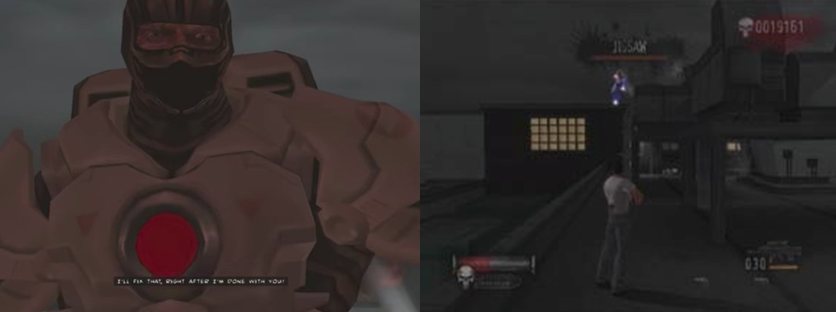
The finale sees you battling Jigsaw, who is in stolen Iron man tech, on the prison rooftop.

The finale of the game sees you facing off against Jigsaw (who, in a change to the source material, is revealed to be John Saint from the 2004 movie) who has donned stolen Iron Man armour. This is a two-stage boss battle; in the first stage, Jigsaw fires seeking missiles and repulsor blasts at you while hovering in the air and the only way to bring him down and damage him is to run underneath him and fire at his jetpack. Once he’s brought to ground level, he’ll chase after you and blast at you while goons spawn in to back him up. While you can shoot at him, it’s far easier to run to an area of the rooftop where the explosive mines (or “RAMs”) continually respawn; simply position yourself behind parts of the environment and toss these towards Jigsaw and remote detonate them and you’ll blow him away in no time at all.

Power-Ups and Bonuses:
The Punisher is afforded a great deal of weaponry for his crusade, most of it he liberates from defeated enemies or picks up from weapon caches in the environment. You’ll get access to a number of pistols (which Frank can dual-wield), revolvers, sub-machine guns, rifles, and shotguns and you can swap these out at any time when you see a weapon on the ground. You can also find and use flamethrowers (but be careful as flaming enemies can harm you as well) and a rocket launcher, which is perfect for bringing down helicopters, and a sniper rifle to take enemies out from a distance and defend your gondola in the jungle. Other time, you can acquire melee weapons to put a beatdown on your enemies.

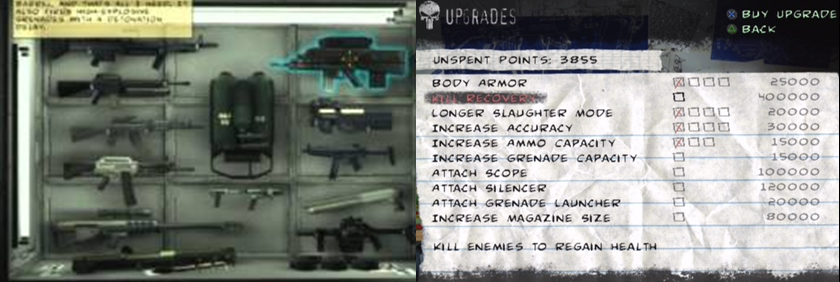
Choose from a wide selection of weapons and use Skill Points to upgrade Frank’s abilities.

After clearing a mission, you’ll be awarded with both Medals and Style Points. You can spend these points upgrading a number of the Punisher’s skills and attributes from Frank’s apartment. You can upgrade Frank’s body armour to increase your resistance to damage, increase the duration of your Slaughter Mode, increase your clip capacity, and add a scope or grenade function to certain weapons. Thankfully, you don’t have to worry about upgrading every weapon individually so increasing your accuracy or ammo capacity will do this for every weapon by default.

Additional Features:
The Punisher offers three difficulty settings, which will increase the aggressiveness and durability of your enemies and also allow you to obtain different Medals and gameplay modes. You can earn Bronze, Silver, and Gold Medals in every mission, but Gold Medals are only available when playing on Hard Mode; however, every time you finish a mission, you’ll unlock an additional “Challenge Mode” that presents you with a specific objective to fulfil to unlock extra stuff. Sadly, there is no option to don a different skin or outfit when replaying missions but there are cheat codes to unlock alternative outfits, so that ’s something, at least.

Take on challenges and play on Hard Mode (or cheat…) to unlock additional modes, cheats, and costumes.

From Frank’s apartment, you can view all of the Punisher’s weapons (Thomas Jane even narrates what each weapon is capable of), enemy biographies, cutscenes, flashbacks (which are triggered and unlocked when interrogating certain enemies), and comic books covers (unlocked by clearing challenges). When playing on Hard Mode, you’ll also gain access to “Punishment Mode”, which has you holding out against waves of enemies to earn points and medals. Additionally, clearing Hard Mode will unlock cheats for you to use; you can also unlock these manually but, while it’s fun to run around without fear of harm, you won’t actually be able to progress through the story with these activated.

The Summary:
The Punisher is a pretty decent third-person shooter; considering it’s a licensed game, which are generally regarded as being terrible, it’s a pretty solid effort. I think choosing to veer more towards the source material than the movie was a good choice as it made it more appealing and fresh and, rather than going through the beats of the movie step by step, it crafts an entirely new adventure that is appealing to fans of the film, the comics, and this genre of videogame. It’s not perfect by any means; the censoring of the torture scenes is disappointing, environments are bland and dark and confusing, and certain sections can be frustrating at times but there is a lot of variety and mayhem on offer thanks to the wide array of weapons and kill options at your disposal. It’s probably the most accurate Punisher videogame we’re ever likely to get and has quite a lot of replay value thanks to the additional challenges and such. There might be better third-person shooters out there but The Punisher is definitely worth your time for the violence alone, to say nothing of the references to and cameos of other Marvel characters. Team this up with Deadpool (High Moon Studios, 2013) and X-Men Origins: Wolverine (Raven Software, 2009) and you have some of the best and most accurate videogame depictions of Marvel’s more violent characters.

My Rating:

Rating: 4 out of 5.

Great Stuff

Have you ever played The Punisher? If so, what did you think of it? Were you disappointed that it didn’t follow the movie closer, or have more ties to the movie, or did you enjoy that it was more in line with the source material? What did you think to the game’s violence, executions, and action? Which of the cameos and/or boss battles was your favourite and were there any you felt were missing from the game? Would you like the see the title remastered for modern consoles or do you think it’s best left as a relic of a bygone era? Which Punisher videogame, story, or adaptation is your favourite? Whatever you think about The Punisher, feel free to write a comment below and be sure to check out my other Punisher content.

Movie Night [Punisher Month]: The Punisher: Extended Cut (2004)


Back in February 1974, Spider-Man/Peter Parker faced a new enemy in the form of Frank Castle, the Punisher, a veteran of the Vietnam War turned bloodthirsty vigilante. The Punisher separated himself from other, traditional costumed heroes by his willingness to kill and uncompromising, suicidal one-man war on crime and what better way to celebrate the debut of this nuanced and complex character by dedicating every Tuesday of this month shining a spotlight on Marvel’s most notorious anti-hero?


Released: 21 November 2006
Originally Released: 16 April 2004
Director: Jonathan Hensleigh
Distributor: Lions Gate Films
Budget: $33 million
Stars: Thomas Jane (also billed as “Tom Jane”), John Travolta, Will Patton, James Carpinello, Laura Harring, and Russell Andrews

The Plot:
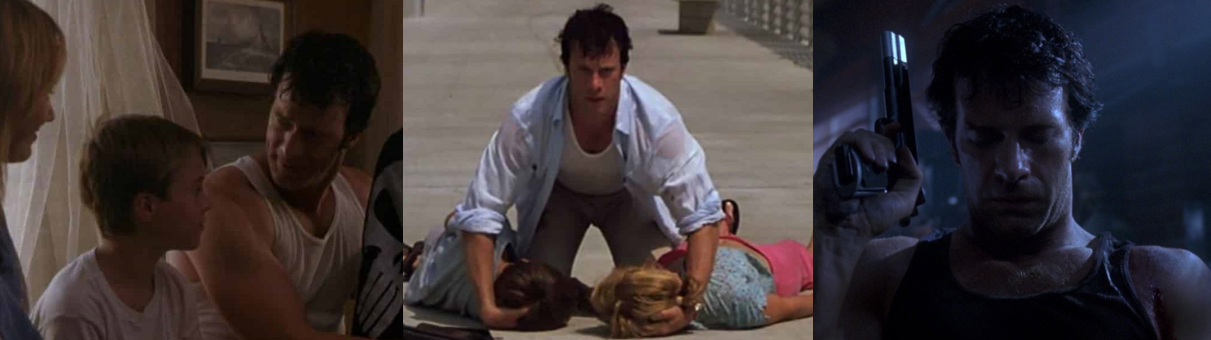
Frank Castle (Jane), an undercover agent for the Federal Bureau of Investigation (F.B.I.) and former Delta Force veteran, is left devastated and believed dead after crime boss Howard Saint (Travolta) orders the death of his entire family following Frank’s part in the death of his son, Bobby (Carpinello). Turning to alcohol and fuelled by rage, Frank embarks on a suicidal plan to destroy the Saint’s operation from within to punish them for their deeds.

The Background:
While Marvel Comics has its fair share of bright-coloured do-gooders swinging or flying around and dispensing justice, they are also have their fair share of anti-heroes and one of their first, and most notorious, was the Punisher. As one of Marvel’s more “realistic” and low-key characters, it’s perhaps not surprising that the Punisher has seen his fair share of live-action adaptations over the years. While the first attempt at adapting the character was received rather poorly, by 2004 things had changed; superhero movies were now increasingly popular and profitable, with films like Spider-Man (Raimi, 2002) and X-Men (Singer, 2000) paving the way for the juggernaut that is the Marvel Cinematic Universe. Development of a new Punisher movie can be traced back to 2000, when Marvel made a long-term agreement with Artisan Entertainment to adapt fifteen of their characters into films and TV shows, and writer/director Jonathan Hensleigh came onboard with the specific intention to draw inspiration from seminal Punisher writers like Garth Ennis and Dan Abnett. Thomas Jane was producer Avi Arad’s first and only choice for the role and, though not a comic book fan, Jane soon threw himself into meticulous physical and mental preparation for the role. Unfortunately, Hensleigh was not afforded the same budget as other superhero films at the time, meaning he was forced to excise certain scenes from the film, which was an unfortunate financial and critical failure. This stalled plans for a direct sequel and Jane left the role after waiting three years for news of the follow-up, only for a completely unrelated reboot to be produced soon after! Still, I feel The Punisher’s negative reception is unwarranted; it was an instant favourite of mine upon first viewing and I went out of my way to purchase this “Extended Cut”, which added an animated prologue and an additional subplot, both of which add a great deal to what is, in my opinion, already a pretty poignant and bad-ass film.

The Review:
After a short but incredibly effective title sequence set to Carlo Siliotto’s fantastic Punisher theme, “The Skull”, which is like a dirge of military horns, The Punisher immediately sets the stage for its events by opening not in New York City like in the comic books, but in the gorgeously alluring city of Tampa Bay, Florida. While I’m sure some purists lamented this choice at the time, I actually always really enjoyed it; it’s nice to see comic book movies mix the locations up a bit so that they’re not all set in the same damn high-rise cities and the film ends with Frank clearly heading off the New York to continue his work so it’s pretty clear to me that the intention was always to get to the big city in a follow-up movie.

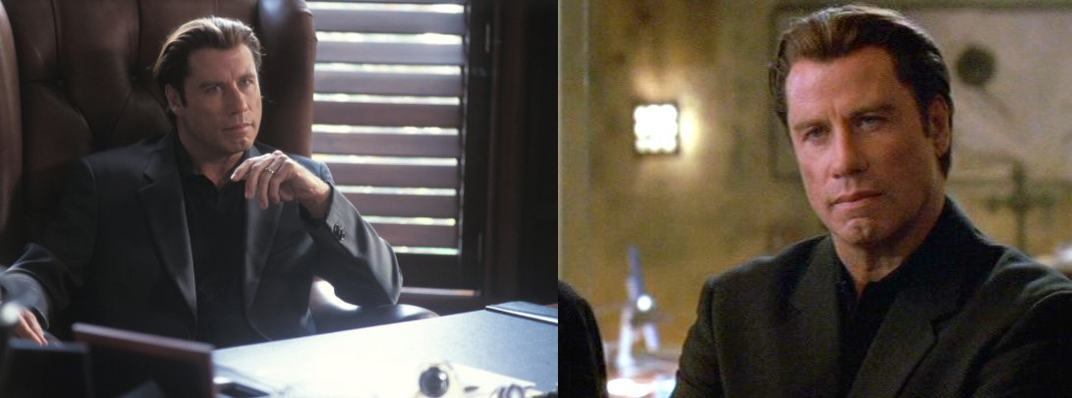
Ruthless mobster Howard Saint is driven to near madness by Castle’s vengeance.

As far as I am aware, Howard Saint has no basis in the source material but, for me, he’s an extremely effective antagonist in this interpretation of the Punisher. While I’m not a fan of John Travolta, he makes for a captivating and enigmatic villain; exuding confidence and authority, Howard clearly believes himself to be the most powerful man in the room and he lords his position as a money launderer and high-ranking mobster. Sharply dressed and living in luxury, it’s implied that he has worked his way up the ladder of success from nothing and he is clearly living his best life with expensive suits, jewellery, opulence, and accessories. In many way, even his wife, Livia (Harring), is another trophy to hang from his arm and he has kept himself in power by being both extremely reliable and extremely protective about his business, personal life, and family. Howard’s empire is vast and wealthy thanks to him funnelling Mike (Eduardo Yáñez and Joe Toro’s (Omar Avila) misbegotten funds through his legitimate business, such as his incredibly successful club, Saints & Sinners (whose unfortunately garish-looking sign looks like it was whipped up using WordArt). In an effort to impress his father with his business acumen and proactivity, Howard’s son, Bobby, agrees to finance an arms deal with the Saint’s lackey, Mickey Duka (Eddie Jemison), only for it to be part of an undercover bust in which Frank has been posing as Mickey’s contact. Frank’s assumed identity is killed in the ensuing conflict, thereby protecting him and his family from reprisals, but, unfortunately, Bobby is also killed by an errant shot, which greatly disappoints Frank as he was hoping for a bloodless end to the operation.

After his entire family is murdered, Frank becomes a hardened vigilante.

Frank, a former Marine, is heralded by his friends and colleagues as the “finest undercover op” in the F.B.I. However, as capable as he is and as legendary as his reputation is, Frank has grown weary of his time in conflict and around death and, with the conclusion of this particular bust, is planning on moving himself and his wife Maria (Samantha Mathis), and son Will (Marcus Johns) to London so he can take a much safer desk job and never have to worry about his identity or their safety being compromised. Unfortunately for Frank, Bobby’s death comes back to haunt him as both Howard and Livia are heartbroken to the point of fury; although Howard spares Mickey’s life, despite his part in Bobby’s death, he actively uses every resource at his disposal to learn Frank’s identity and, upon learning that Frank and his entire family are at a family reunion in Puerto Rico, Livia demands that the entire Castle line is executed as recompense. Accordingly, although Frank and his father, Frank Castle Sr. (the excellent Roy Scheider in one of his last roles) try to hold off Saint’s hitmen with their weapon proficiency, Frank is forced to watch every single member of his family be gunned down in cold blood. Maria and Will try to escape and are run down and killed, leaving Frank wounded and completely at the mercy of Bobby’s twin brother, John (also Carpinello), and Howard’s right-hand man, Quentin Glass (Patton), who beat him, shoot him, and leave him to die in an explosion.

Thomas Jane is the Punisher and captures the character’s spirit amazingly.

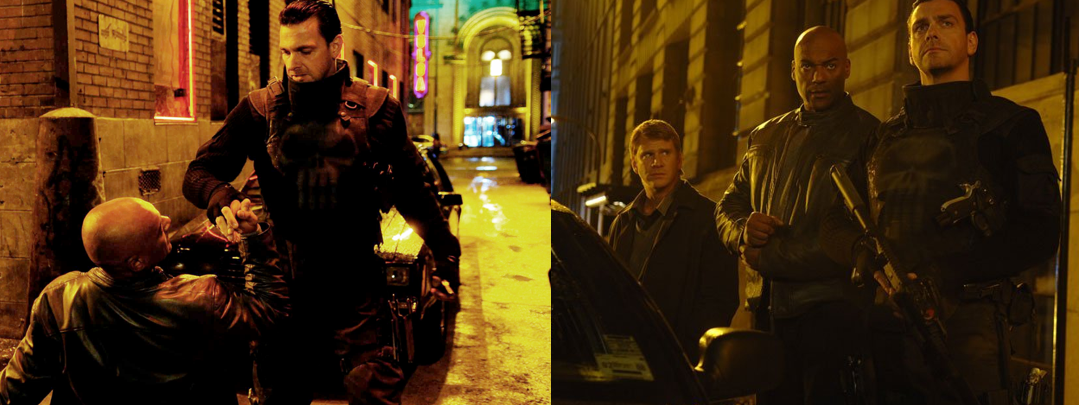
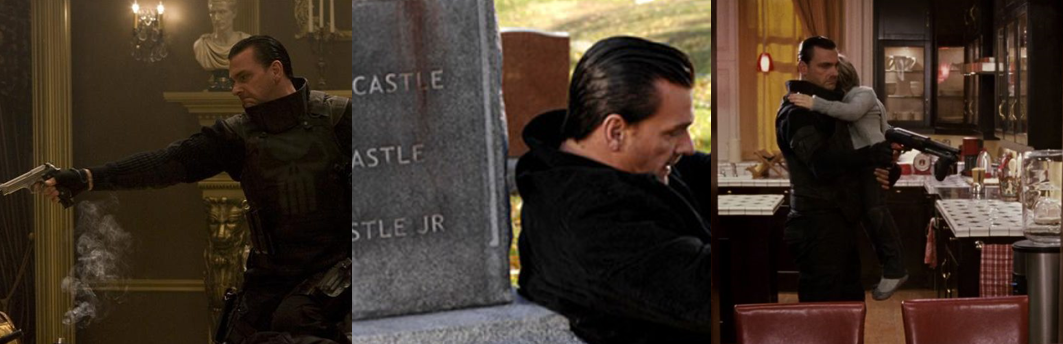
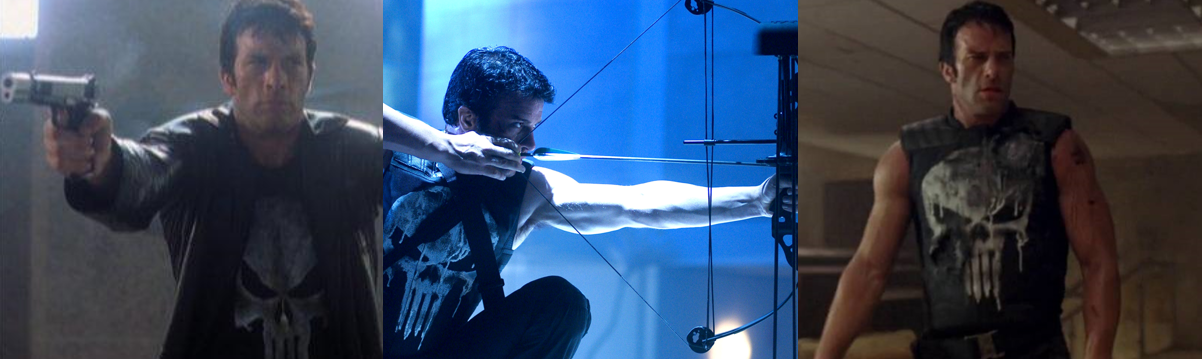
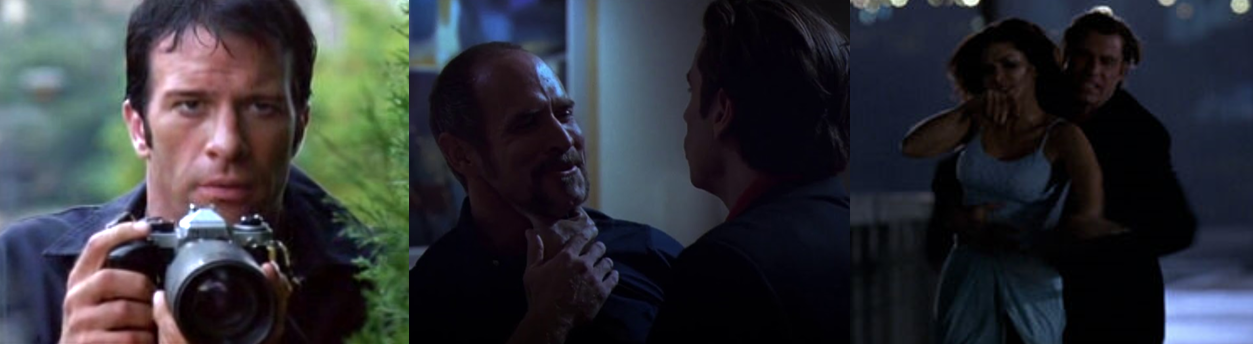
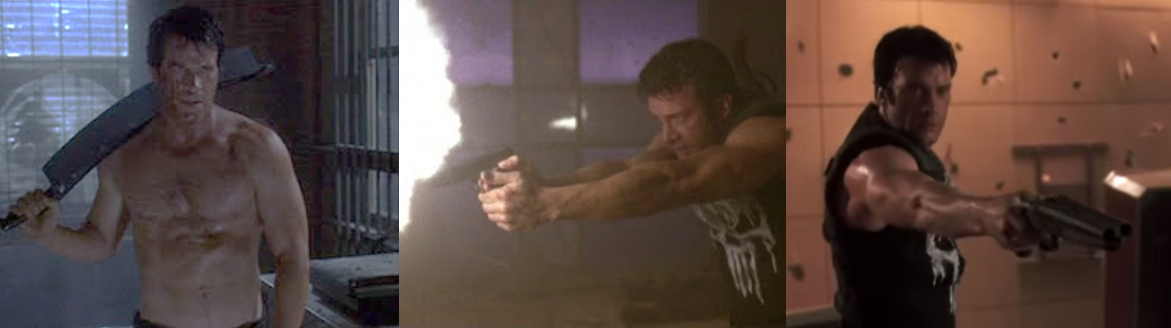
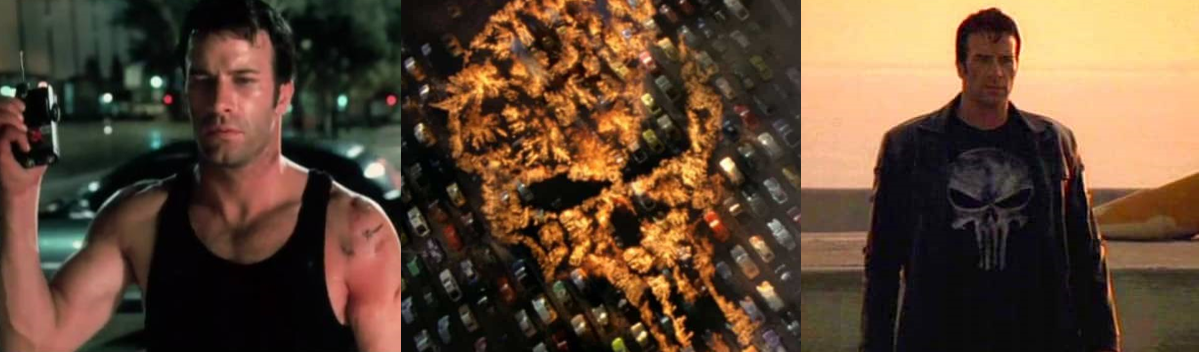
While the Saints toast their victory, Frank somehow survives this onslaught; after being nursed back to health by a local medicine man, he returns to the scene of the massacre to acquire his father’s guns and a shirt baring a gruesome skull visage gifted to him by his son the day that he died and, with a grim glare and a stoic utterance (“God’s gonna sit this one out”), vows to have his revenge. He moves into a dilapidated apartment block and begins busying himself sprucing and armouring up an American muscle car, boobytrapping his apartment, cleaning and preparing his guns and drinking himself into a stupor with glass after glass of whiskey. Haunted by his family’s murder and suffering the weight of survivor’s guilt, something flips in Frank’s head and he enters into a cold-blooded, merciless vendetta not just to kill the Saints but to punish them. Although he doesn’t take the name “The Punisher” until the final moments of the film, Frank looks very much the part; unlike Dolph Lundgren, Thomas Jane spends the majority of the film decked out in his iconic skull-branded shirt and sporting a bad-ass leather trench coat and looks like Tim Bradstreet’s impressive artwork come to life. Add to that his physical stature and stern commitment to the role and you have probably one of the best, if not the best, portrayals of the character ever put to film and it still annoys me that Jane never got the chance to feature in a second feature-length Punisher film.

Frank attracts the attention of his misfit, but good-natured, neighbours.

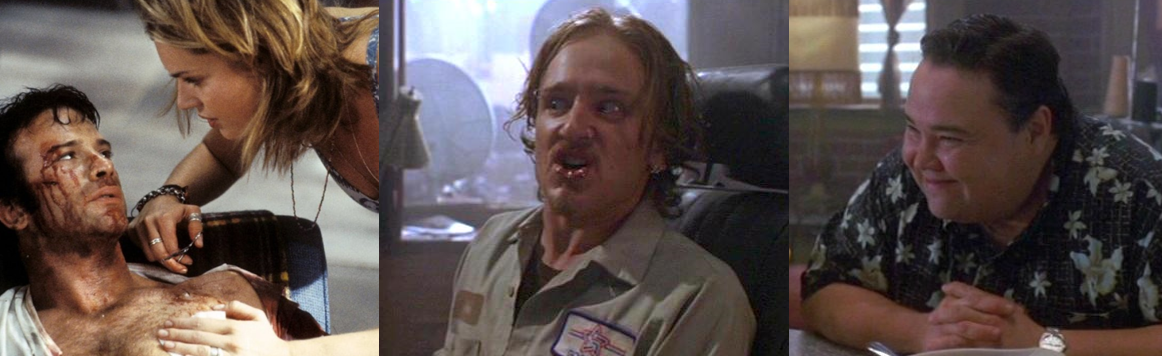
While in the building, he attracts the interest and attention of his neighbours: Joan (Rebecca Romijn), Spacker Dave (Ben Foster), and Nathaniel Bumpo (John Pinette). While Dave and Bumpo basically act as the film’s comic relief (which they both perform admirably through great use of comedic timing, line delivery, and physical performance), Joan feels a great swell of pity and attraction towards Frank, especially after they learn about what happened to his family. Having suffered from a number of abusive relationships and alcohol problems, she is naturally attracted towards damaged people and has formed a kind of oddball surrogate family with Dave and Bumpo. Nevertheless, she attempts to reach what little remains of Frank’s humanity; seeing that he is on a self-destructive, potentially suicidal path, she stresses the importance of clinging on to good memories rather than letting the bad or dark ones tear him apart. While Frank is initially dismissive of his neighbours, he cannot in good conscience ignore their plight when they’re in danger and is mortified when Dave is tortured and mutilated by Quentin simply to hide Frank from Saint’s men. In that moment, Frank realises that there is life after tragedy and is touched by their loyalty to him, a veritable stranger, and thus gifts them with the Saint’s ill-begotten gains when he moves on at the end of the film out of his appreciation for their affection.

The Nitty-Gritty:
Those who have seen the original theatrical cut of The Punisher will immediately notice the differences made to this extended version of the film as the opening is proceeded by an animated prologue that details Frank and Jimmy Weeks’ (Andrews) time as soldiers in Kuwait. While the original version of the film works without this and does allude to Frank’s time as a solider, it only adds to the emotional depth and complexity of the character to see some of the horrors he witnessed in combat. Specifically, we see how Frank openly defied his commanding officer, who wanted to execute some terrorist prisoners, and watched him die when one of the captives pulled a grenade for a suicide blast. This brief animated sequence also does a great job not only of showing that Frank was a veritable one-man army even back in those days but also of lending just a little more depth to Frank and Jimmy’s relationship as we see how Frank saved Jimmy’s life by single-handedly taking out a group of snipers and how Jimmy saved him, in turn, from an RPG attack.

Jimmy’s character is greatly expanded upon in this Extended Cut.

Also added to the film is a new sequence at the start where we see that John tries, unsuccessfully, to talk Bobby out of going along with Mickey’s arms deal, and a scene in the Toro’s casino where they detail some of their past and history with Howard and help him to get leverage on Jimmy by fixing the odds against him. Indeed, Jimmy benefits the most from the Extended Cut by virtue of a number of his excised scenes being restored to the film; this shows how Jimmy has a known and destructive gambling habit and makes it explicitly clear that Howard Saint was able to get the lead on Frank’s name and location by capitalising on Jimmy’s vices. Jimmy is understandably disturbed when Frank returns from the “dead” not just because his old friend turns out to be alive, as in the original cut, but also because he knows that he will eventually fall into Frank’s crosshairs. Indeed, while Frank is too preoccupied with his vendetta against the Saint’s to really socialise with Jimmy all that much, he immediately becomes suspicious of Jimmy’s involvement in his family’s murder when he notices that his friend has traded away his fancy new car and is missing the watch Frank gifted him after Kuwait. As a result, we get an extremely tense, volatile, and heart-wrenching confrontation between the two where Frank gives his old friend and comrade the chance to end his life by his own hand rather than be “punished”.

Castle enacts his revenge by manipulating Saint into killing his friend and wife.

For such a small, low budget film, The Punisher certainly packs a lot into its run time. I said when reviewed The Punisher (Goldblatt, 1989) that, compared to many colourful superheroes, the Punisher is probably one of the easiest to adapt as you simply give a decent actor a gun and a grim visage and do an eighties-style action film. This version of The Punisher, though, both escalates the stakes involved (killing Frank’s entire family rather than “just” his wife and kid/s) and really runs with the implications of Frank’s pseudonym: he’s not just clinically punishing the guilty by murdering them indiscriminately, he’s literally punishing the three people most directly responsible for his family’s murder by turning them against each other and destroying Howard’s operation from the inside out. He does this by coercing Mickey into divulging the Saint’s entire schedule (which is, admittedly conveniently, very predictable and routine), which allows him to make it seem as Livia and Quentin are having an affair and thus manipulates Howard into murdering his wife and his best friend.

Castle is an extremely adaptable and capable foe and expertly wields a range of firearms.

Of course, that’s not to say that The Punisher doesn’t have its fair share of fight fights and action/fighting scenes. The slaughter of the Castle’s is basically a prolonged execution full of big explosions, squibs, and guns going off all over the place that reminds me very much of a tamer version of the sort of gratuitous violence seen in RoboCop (Verhoeven, 1987). When Frank infiltrates Howard’s bank to disrupt his money laundering activities, the film takes on aspects of a traditional Western, with tense, prolonged shots of Frank and his adversaries getting ready to draw and shoot, and Frank’s final assault on Saints & Sinners sees him take on an entire room full of goons and mobsters with a variety of firearms while decked out in skull-stained body armour.

Hitmen Harry Heck and the Russian try, and fail, to stop Castle’s disruptive rampage.

Of course, there are two standout action sequences in The Punisher. Driven to frustration by Frank’s disruptive actions, Howard grows increasingly desperate to track down and stamp out the Punisher; to do this, he hires a couple of hitmen to do the job for him, both of whom unsuccessfully attempt put a stop to Frank’s vendetta. The first of these is Harry Heck (Mark Collie), a Memphis hitman who moonlights as a musician. After trying, fruitlessly, to intimidate Frank (who, by this point, as adopted a permanent “thousand-yard stare”) with a chilling song, Heck runs Frank off the road (sadly totally the proto-Battle Van before it really gets a chance to do anything, which may have been a budgetary thing) and taunts him while holding him at gunpoint only to wind up with a ballistic knife in his throat! Next, Howard brings in the Russian (Kevin Nash), a mute giant who is superhumanly strong and seemingly impervious to pain. This fight, which is almost an exact adaptation of a fight between the two from the 2001 “Welcome Back, Frank” (Ennis, et al) arc, is mostly played for laughs thanks to Bumpo’s opera playing over it and is much more comical compared to the otherwise gritty and grim tone of the film. Still, it’s incredibly enjoyable to see the Russian absolute decimate Frank and a great showcase of Frank’s tenacity, endurance, and adaptability as, although stabbed and brutalised from the assault, he continually finds new ways to try and hurt the behemoth before finally charging him on the stairs and breaking the giant’s neck.

After completing his mission, Frank heads out to hunt more criminals as the Punisher.

Still, a central aspect of the film is Frank’s emotional detachment and grim commitment to enacting his revenge. To pull off his complex plan, he feigns torturing Mickey and specifically targets Livia and Quintin; by following them and compiling a list of their habits, routines, and dirty little secrets, he’s easily able to predict where they’ll be and how best to turn Howard against them. Once he has manipulated Howard into giving in to his jealousy, rage, and the enraged monster dwelling just beneath his façade of respectability, Frank launches a direct assault against the remnants of Howard’s empire. Having lived his entire life by a strict code of honour and within the bounds of a lawfully just system, Frank sees his newfound vigilantism not as a simple matter of revenge but rather as a necessary action to ensure that those who do evil are punished for their misdeeds. As a result, he shows no mercy to John, whom he leaves helpless and holding an anti-personnel mine, and takes absolutely no pleasure in revealing what he has done to Howard. With Howard grovelling and bleeding at his feet, Frank nonchalantly ties him to a car and has him driven into a massive (and, sadly, poorly rendered) series of explosions to finally put an end to those who wronged him. With his mission complete, Frank prepares to end his own life but, at the last minute, stops when recalling a “good memory” of Maria. Although this scene is a bit confusing in the way it’s shot, the intention is made explicit with Frank’s closing narration: realising that there are more scumbags out there who need to be punished, he vows to wage war against them all as “The Punisher” until the day he dies.

The Summary:
I’ve always been a fan of the Punisher. I love the concept of the Punisher as this merciless, unrelenting force fully committed to killing as many criminals as he can until he inevitably dies. It’s an incredibly simple, incredibly bleak, and incredibly realistic concept that Marvel Comics really need to put more effort into pushing as a stark contrast to other, more colourful and law-abiding superheroes. When I first watched The Punisher, I was immediately impressed by just how raw and emotional the film was; it wasn’t just another superhero film or even a bombastic action movie like its predecessor. It was a heart-breaking examination of a man who has literally lost everything, driven to the very brink of death, and come back with only one thought in mind: punishment. You could substitute the word “vengeance” or “punishment” there if you like but it doesn’t change the fact that The Punisher, to me, perfectly captures the uncompromising and gritty spirit of the source material and presents it in a fresh, new way by setting the film in Tampa rather than the traditional New York City. As I said, I’m not a Travolta fan but he really impressed me in this film; exuding power and total authority one moment and then descending into a maniacal rage the next, he gave a performance just shy of scenery chewing and was a perfect foil. The film is, honestly, full of great performances: Will Patton was fantastic as the subdued, sadistic Quentin Glass, Rebecca Romjin and Samantha Mathis did a great job as the film’s emotional anchors, even the guys playing the Toro brothers and guys like Mark Collie and Kevin Nash were clearly having a great time on set. Thomas Jane remains probably my favourite actor to portray the Punisher; not only does he look just like the comic book character, he has exactly the right level of physicality and acting ability to really own the role. It is, as I’ve said, a simple character in many ways but it does require a great deal of emotional range to properly portray the gamut of Frank’s turmoil and Jane did a spectacular job as this grim, haunted avenger who will stop at nothing to punish those responsible for his pain and The Punisher, especially this Extended Cut, remains probably my go-to recommendation for anyone looking to get an idea of what the character is all about.

My Rating:

Rating: 5 out of 5.

Fantastic

What did you think to the Extended Cut of The Punisher? Did you prefer to the theatrical version and how do you think it works as an adaptation of the character? What did you think to Thomas Jane’s performance in the film? Did you like the changes the film made to the source material or do you think it maybe changed a little too much? What did you think to the film’s action scenes and soundtrack? Did you enjoy the slapstick nature of the fight between the Punisher and the Russian or do you think it kind of went against the otherwise grim tone of the film? Which live-action portrayal of the Punisher is your favourite and why? How are you celebrating the Punisher’s debut this month? Whatever you think about The Punisher, feel free to write a comment below and be sure to check out for my review of the videogame tie-in to this film.

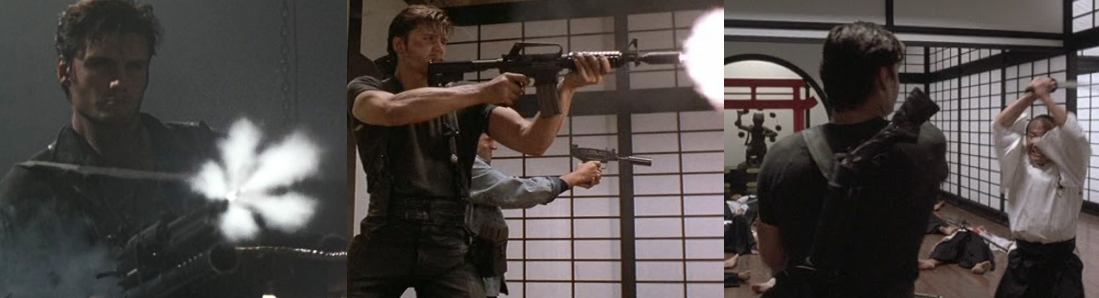
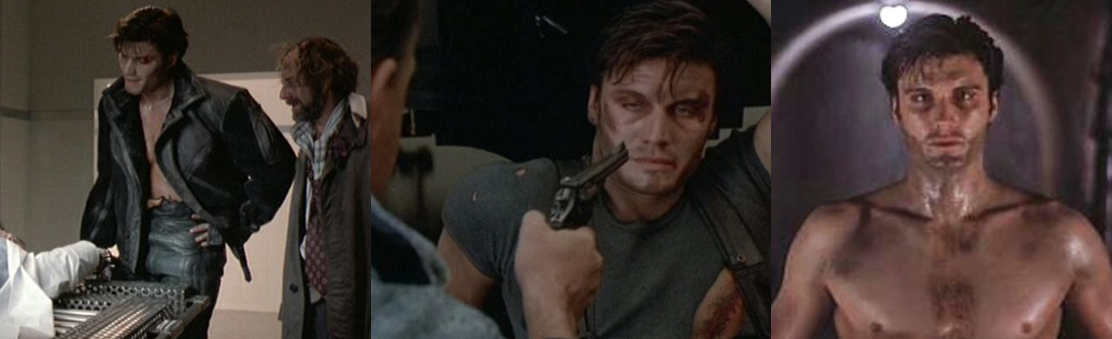
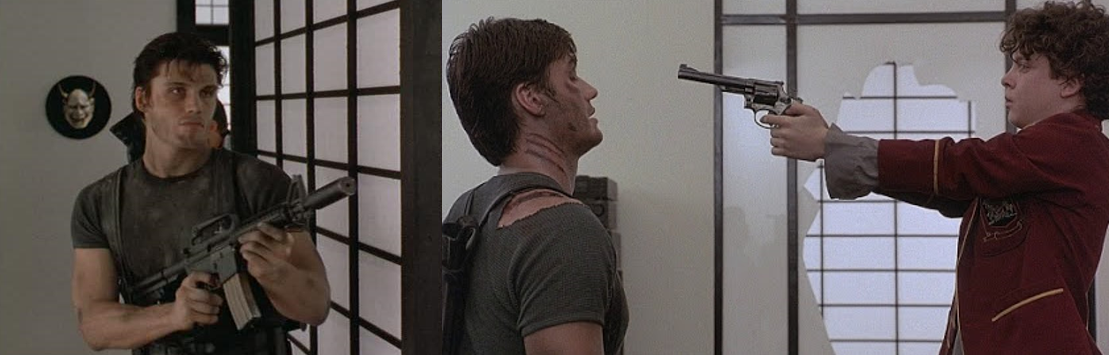
Movie Night [Punisher Month]: The Punisher (1989)


Back in February 1974, Spider-Man/Peter Parker faced a new enemy in the form of Frank Castle, the Punisher, a veteran of the Vietnam War turned bloodthirsty vigilante. The Punisher separated himself from other, traditional costumed heroes by his willingness to kill and uncompromising, suicidal one-man war on crime and what better way to celebrate the debut of this nuanced and complex character by dedicating every Tuesday of this month shining a spotlight on Marvel’s most notorious anti-hero?


Released: 25 April 1991
Director: Mark Goldblatt
Distributor: New World International
Budget: $9 million
Stars: Dolph Lundgren, Louis Gossett Jr., Nancy Everhard, Barry Otto, Jeroen Krabbé, and Kim Miyori

The Plot:
After his family are killed by a mafia-planted car bomb intended for him, former ex-Marine Frank Castle (Lundgren) has taken to a life of vigilantism as “The Punisher”; killing criminals and mobsters with special skull-engraved knives and operating from the sewers, he has become New York’s most wanted man. However, when crime boss Gianni Franco (Krabbé) comes out of retirement and butts heads with Lady Tanaka (Miyori) of the Yakuza, the Punisher is the only man capable of stopping all-out war in the streets.

The Background:
Having made an impressive debut in the pages of The Amazing Spider-Man #129, the Punisher quickly became one of Marvel’s most popular anti-heroes thanks to his tragic backstory and unwavering commitment to the eradication of crime. This, in turn, led to him appearing in videogames, cartoons, and a surprising amount of live-action adaptations of the source material. The first of these was produced in 1989 at the end of the action movie renaissance of the 1980s; muscle-bound stars like Arnold Schwarzenegger and Sylvester Stallone had redefined the criteria for the action genre but Dolph Lundgren was no slouch in that department either. The Swedish strongman made quite a name for himself in his own right, even if he was often overshadowed by Schwarzenegger, and adapting the Punisher character into the trappings of an eighties action film made perfect sense at the time. Sadly, the bizarre decision was made to not have Lundgren don the character’s iconic skull shirt and The Punisher was denied a widespread theatrical release in favour of being released straight to video. While most reviews agreed that the film was unimpressive, to say the least, and criticised its presentation and content, others praised Lundgren’s performance and the dark and gritty nature of the movie, though it would be nearly fifteen years before the character would receive another live-action adaptation.

The Review:
The Punisher opens with a depressingly low budget title sequence that’s like something out of a sixties James Bond film; rather than getting you pumped up for a high-octane action film, it’s more like the opening to a bog standard television cop show from the seventies, despite the brief shots of the Punisher gearing up or randomly unloading his machine gun. In many ways, this sets up the tone for the film but, at the same time, misrepresents The Punisher; while it’s not quite the same over-the-top spectacle as the likes of Commando (Lester, 1985) or Rambo III (MacDonald, 1988), it’s a decent enough representation of its genre that is, perhaps, unfairly overlooked against its other, more popular counterparts.

After five years killing mobsters, the Punisher goes public to enact his revenge.

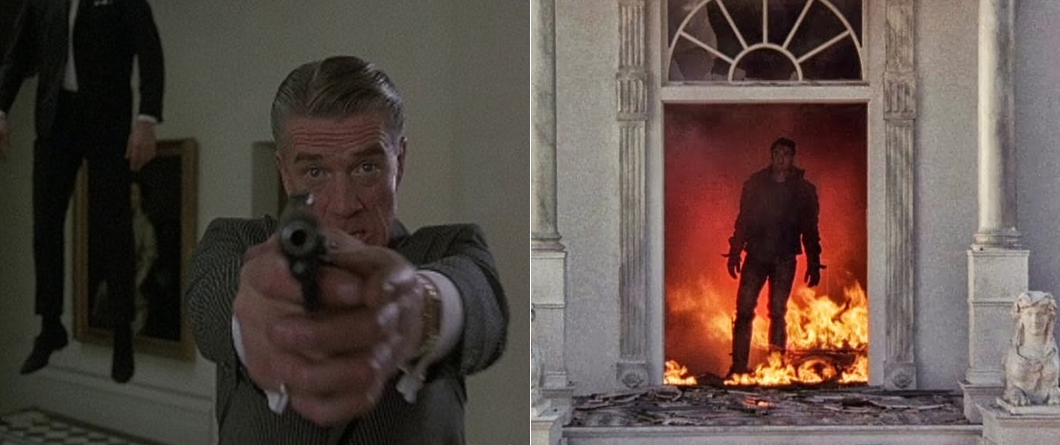
Frank’s tragic background is initially reduced to a brief news report (we later get a proper flashback that shows it but, again, this is more of a snippet rather than an extended sequence) that informs us that the man responsible for the death of Frank’s family, Dino Moretti (Bryan Marshall), has been acquitted for the charges. Moretti arrogantly laughs off concerns about the Punisher seeking retribution against him, despite the fact that Frank has become a notorious underworld vigilante and has at least 125 kills to his name. As you might expect, Moretti’s arrogance is misplaced and Frank not only murders his armed bodyguards one by one but also blows up the mobster’s stately home in a very public display.

While there’s not much for Leary to do, Berkowitz has an emotional connection to the Punisher.

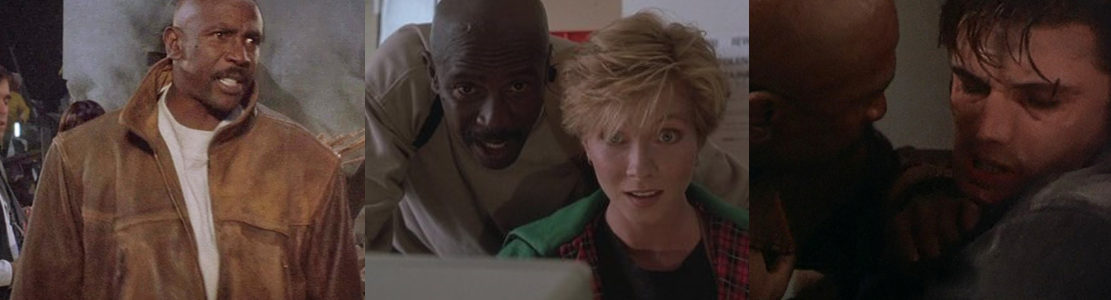
The Punisher is a hot news item; though they are unaware of his true identity, reporters are desperate to cover him and milk his violent actions but the police, and the mayor, would prefer to downplay his actions. After the Punisher appears to die in the explosion at Moretti’s house, the official line is that he is dead but his former partner, Detective Jake Berkowitz (Gossett Jr.), refuses to let the subject lie. Although he has no interest in working with a partner, and has become quite jaded since Frank’s apparent death in a mob hit, Berkowitz is convinced to work with Detective Samantha Leary (Everhard) when she shares his suspicion that Frank is the Punisher. Leary uses what is sold to us as a state-of-the-art computer algorithm to pinpoint the Punisher’s location, which is pretty much her sole contribution to the film other than being a very basic audience surrogate. Berkowitz, however, is a constant highlight of the film; his relatable, no-nonsense attitude stands out amidst a few mediocre performances, with his escape from Mafia custody stands out as a notably amusing sequence. His emotionally-charged reunion with Frank is another standout moment; Berkowitz desperately tries tor each Frank, screaming and manhandling him and clearly heartbroken at the state Frank has found himself in, while Frank remains impassive and unapologetic for his actions.

Already weakened from the Punisher’s actions, Franco wages all-out war with the Yakuza.

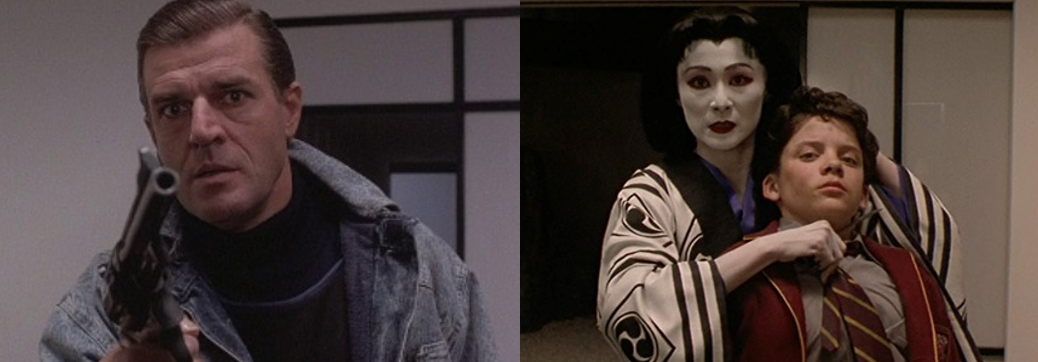
The traditional, mostly Italian-American world of organised crime is shaken up by the arrival of the Yakuza. Led by Lady Tanaka, the Yakuza strikes with silent, surgical precision and effectiveness and are easily able to consolidate a stranglehold on the criminal underworld thanks to the Punisher thinning out the competition. Their presence, and the Punisher’s actions, force former kingpin Gianni Franco (Krabbé), a well-dressed and eloquent mobster, out of retirement; to sway him and the remaining Mafia family members into agreeing to a lop-sided alliance with her, Lady Tanaka arranges to have the mobster’s children kidnapped. Tanaka is portrayed as a cold, calculating, merciless foe who willingly slaughtered her own brother and employs any means necessary to get her way while still being confident and cultured and exuding a quiet menace and authority. This is in stark contrast to the hot-headed Mafia Dons, who are driven to the point of desperation by recent events and find themselves easily outmatched at every turn by both the Punisher and the Yakuza.

Frank is convinced to expand his focus from vengeance to rescuing the kids.

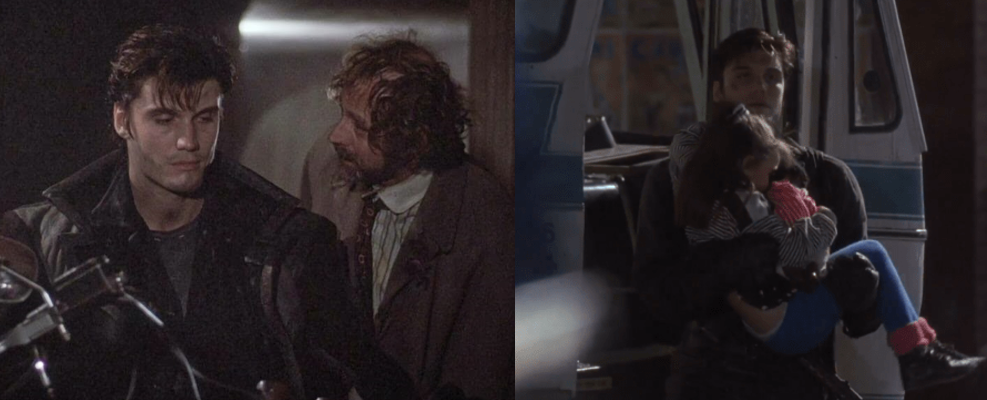
One of the kids taken by Tanaka is Franco’s son, Tommy (Brian Rooney), who, unlike the other hostages, is completely unaware of his father’s criminal activities. Having successfully culled much of the Mafia’s numbers in the five years since he became the Punisher, Frank is content to let the remnants fight and kill themselves and has no interest in saving the children or getting involved in the brewing war between the Mafia and the Yakuza. However, he is swayed into action after a guilt-trip from one of his few allies, “Shake” (Otto), a former stage actor turned vagrant who informs Frank of underworld activities and gives him leads in exchange for alcohol.

The Nitty-Gritty:
When talking about the big action stars of the eighties, I can’t help but feel like Dolph Lundgren often gets overlooked; this isn’t massively surprising in a lot of ways as he was largely overshadowed by the bigger and more charismatic Arnold Schwarzenegger and lacked the big-hit franchises associated with Arnold or Sylvester Stallone. Still, he was a pretty decent choice to portray the Punisher at the time despite never wearing the iconic skull-branded outfit of his comic book counterpart. Lundgren’s strained narration also peppers the film as he laments his lot in life and God’s apparent refusal to do anything to protect the innocent and punish the guilty and he throws himself into the action and fight scenes and exudes just the right level of stoicism, vulnerability, conviction, and capability that are so crucial to the Punisher’s characterisation (he even tosses in a bit of snark here and there when faced with agonising torture).

While not as bombastic as its peers, The Punisher still contains a decent amount of action.

As such, Lundgren’s portrayal of the Punisher is as a weary, disassociated man who has lived a life of such extreme violence and hardship that he has become numb to anything and everything around him. While you could argue that Lundgren simply comes across as bored, he excels in the film’s many action scenes, which are surprisingly varied, exciting, and full of gratuitous eighties-style gun fights, a ridiculous amount of explosions, blood squibs, and even some sword-based combat. Here, the Punisher is in his element and has a purpose but, when not in combat, he is a morose and sombre figure to be pitied, which is perfectly in keeping with the Punisher’s character. Best of all, unlike other eighties action heroes, the Punisher is not infallible; he gets hurt, feels pain, and regularly has to perform extreme surgery on himself to stem his wounds.

The Punisher remains a complex and layered character.

Again, this speaks to the Punisher’s roots as an anti-hero; he does good things by association but doesn’t head out into the night expecting to be heralded a hero. Instead, he is completely focused on the brutal eradication or organised crime; he walks (or rides) head-first into gun fights and rooms and crowds of armed opponents with no fear and protected only by his heavy arsenal and his force of will. When captured and tortured by Lady Tanaka, Frank refuses to give in to the pain and expertly breaks free of his bonds to save Shake when he is subjected to the same torture and, when Berkowitz’s life is threatened by Franco, he agrees to an alliance with the remnants of the Mafia, which was a great way to emphasise the character’s adaptability and loyalty to his few allies.

Though lacking the iconic skull, Lundgren embodies the spirit of the character admirably.

The Punisher’s softer side also gets some play when he successfully rescues the kids from their captivity; it seems to be a constant truth that Frank’s hardened exterior cracks somewhat when kids are involved, which is understandable given that he was a father at one time, and it goes a long way to showing that there is still some humanity left in the character. Furthermore, Frank’s suicidal tendencies are also a notable factor in the film; as I mentioned, he makes very little effort to protect himself from damage (he literally refuses body armour for the finale) and walks into firefights without a second’s hesitation and is haunted by nightmares of his family’s murder but this attitude is made heart-wrenchingly explicit at the film’s conclusion. After entering into a frosty alliance with Franco, the Punisher wages all-out war against Lady Tanaka to rescue Tommy; this results in the once efficient Yakuza being reduced to little more than cannon fodder, Lady Tanaka receiving a skull-branded knife to the head, and Frank murdering Franco before Tommy’s eyes. When Tommy holds Frank at gunpoint,  Frank submits to his mercy, welcoming death but when the boy chooses not to pull the trigger, Frank briefly comforts him before warning Tommy not to follow in his father’s footsteps lest he have to punish the boy in the future and returns to his never-ending war against the guilty.

The Summary:
The Punisher is quite a brisk and inoffensive little action movie. It might not really measure up to some of its competition, and there are definitely better eighties action films out there, but you could do a lot worse than this. For me, the Punisher is a ridiculously easy character to adapt compared to his other more colourful and fantastical superhero counterparts; you simply get a rugged actor who can portray the character’s complex emotions, give him a gun and some knives, and put a lot of bodies in his path and, in that respect, The Punisher succeeds very well. Sure, other iterations of the character has done a better job of handling the character’s pathos and complex ideology and attitude but those aspects are still present in The Punisher. Frank Castle isn’t just some muscled up meathead who care barely string two words together and the film tries its best to explore the character’s fading humanity and mental instability; obviously, the typical bombastic eighties action mostly drowns a lot of these elements out but, again, that’s a good thing because who doesn’t like a bit of over-the-top eighties action? I’d even go as far as to say that it doesn’t really matter that Lundgren doesn’t wear the skull-shirt since he does a pretty good job of embodying the character regardless and, while it might be the worst of the three Punisher movies and lacking the star power of Commando and Rambo III, The Punisher is worth your time if you’re a fan of the character and the genre.

My Rating:

Rating: 3 out of 5.

Pretty Good

Have you ever seen The Punisher? If so, what did you think of it? Were you disappointed that Dolph Lundgren didn’t wear the skull-shirt or were you not really all that bothered? What did you think to the film’s action scenes and gratuitous violence? Were you a fan of Lundgren’s casting; if not, which eighties star would you have cast in the role? What did you think to the film’s portrayal of the Punisher and the overall plot and where would you rank this film against others in the genre and the other Punisher adaptations? What is your favourite eighties action movie? Which Punisher videogame, story, or adaptation is your favourite? How are you celebrating the Punisher’s debut this month? Whatever you think about The Punisher, feel free to write a comment below and be sure to check out my other Punisher content!

Back Issues [Sci-Fanuary]: The Silver Surfer #1


January sees the celebration of two notable dates in science-fiction history, with January 2 christened “National Science Fiction Day” to coincide with the birth date of the world renowned sci-fi writer Isaac Asimov, and HAL 9000, the sophisticated artificial intelligence of Arthur C. Clarke’s seminal 2001: A Space Odyssey (1968), being created on 12 January. Accordingly, I’ve been spending every Sunday of January celebrating sci-fi in all its forms.


Story Title: “The Origin of the Silver Surfer!”
Published: August 1968
Writer: Stan Lee
Artist: John Buscema

The Background:
In 1961, comic readers everywhere were introduced to Marvel’s “First Family” of superheroes, the Fantastic Four. Doctor Reed Richards/Mister Fantastic, Susan Storm/The Invisible Girl, Johnny Storm/The Human Torch, and Ben Grimm/The Thing were characterised as a dysfunctional, but loving, family of superpowered scientists and adventurers and their creation was not only the first collaboration between the legendary Stan Lee and Jack Kirby but also the beginning of the unique “Marvel Method” of writer and artist collaboration. In 1966, the team faced their greatest challenge yet when they faced the God-like Galactus, who came to Earth looking to devourer it and satiate his unending hunger for worlds. When Kirby turned in his artwork for the story, he included a brand-new character that had not been part of his previous discussions with Lee; Kirby crafted a herald for the all-mighty being and, tired of drawing spaceships, had this silvery being ride a surfboard instead. Though initially hesitant, Lee ran with the idea and, following the conclusion of the Galactus arc, the Silver Surfer received his own self-titled series in 1968 that, while short-lived, was one of Lee’s favourites to work on. Since then, the Silver Surfer has appeared consistently within Marvel Comics; he’s been a part of the Defenders, joined and fought against his old master numerous times, and featured not only in the Fantastic Four’s animated and live-action adaptations but also received his own self-titled cartoon that ran for thirteen episodes in 1998.

The Review:
When he was introduced in the pages of The Fantastic Four, the Silver Surfer was a mysterious and enigmatic cosmic entity about whom we learn very little; he was painted as Galactus’ obedient herald and servant, wielded vast and ill-defined cosmic powers, and was compelled to defy his master’s intentions to consume the Earth after a desperate plea from Alicia Masters. Having grown to care for the fate of the human race, if primarily out of pity, the price for the Silver Surfer’s defiance was to be forever (well, obviously not forever as nothing in comics is ever “forever”) banished to Earth by his master and, accordingly, The Silver Surfer #1 finds the cosmic entity still bound to the world he chose to save.

The conflict he encounters on Earth leads the troubled Silver Surfer to recall his own home world.

In the opening pages, the Silver Surfer immediately acts to save the life of Colonel Jameson, whose space capsule crash-lands in the ocean depths. Of course, for the Sentinel of the Spaceways, things such as water, air, and metal are of little concern and the Silver Surfer is easily able to dive beneath the ocean and rescue the Colonel. Despite returning the astronaut to a military vehicle, the Silver Surfer finds himself hounded by fighter jets and, similarly, as he streaks across the skies of the planet he now calls home, the Surfer is attacked by missiles and encounters only discord and war. Lamenting the foolishness of men that would seek to harm the lush and fertile world that has captured his heart and imagination, the Silver Surfer is compelled to recall his own home world, a planet far across the galaxy called Zenn-La which, unlike the Earth, had long ago eradicated war, crime, and disease after ten thousand centuries of conflict. Back then, the Silver Surfer was known as Norrin Radd and was simply a man who, though he lived in a virtual nirvana, was left despondent that his people and world no longer had any drive or ambition to achieve anything new. Having inherited the peace and advanced technology of their forefathers, Zenn-La’s inhabitants are largely happy to indulge in the luxuries and benefits of these; they have lost the spirit of adventure and seem content to simply allow technology to fulfil tasks they would have once sweated over.

Memories of his distant and recent past haunt the Silver Surfer and cause him much strife.

Restless and eager to understand why only he seems to find their utopia so stagnating, Norrin reviews the history of his world through advanced virtual reality and discovers that an age of enlightenment put an end to all conflict and that his people ventured far out into the universe before eventually settling on staying put on their home world. Back in the present, the Silver Surfer comments that the Earth is at a similar crossroads between destroying themselves through war and being united in a common cause; even while being randomly attacked by savage yetis, the Silver Surfer laments the innate sense of distrust and fear that touches the hearts of men and turns even beasts such as those (and Doctor Bruce Banner/The Hulk, whom the Silver Surfer once hoped would be an ally as they have both been unfairly ostracised by humanity) into hate-filled barbarians. Similarly the Silver Surfer recalls how Doctor Victor Von Doom/Doctor Doom easily duped him and briefly stole the mysterious “Power Cosmic” from him, an event that caused the Silver Surfer to never again trust another human lest their selfish and manipulative nature get the better of him.

Rejecting his society’s complacency, and despair, Norrin heads out to confront their invader.

Stumbling upon the ruins of an ancient civilisation now forever lost to the ravages of time and the elements, the troubled Silver Surfer is again haunted by his lost world, and his beloved Shalla Bal. Despite Shalla’s plea that he turn his focus back to the wonders offered by Zenn-La, Norrin finds himself alone in a world where indulgence is the norm, knowledge is simply gifted rather than earned, and the citizens want for nothing. However, Norrin’s lamentations and concerns for the stagnation of his people are interrupted when a gigantic spacecraft breaches the planet’s “nuclear defences” and the people are warned to prepare for an invasion; while Shalla weeps at the prospect of war, especially as Zenn-La has no space fleet or weapons to speak of, Norrin practically relishes the idea of such an event forcing his complacent people into action. With the people giving in to panic, Zenn-La’s computer system decrees only one course of action: the deployment of the “Weapon Supreme”, a solution that literally rips the neighbouring planetoids from their orbits and hurls them at the orbiting craft with such force that it devastates the entire infrastructure of Zenn-La. This devastating solution is ultimately futile, however, as the invading probe simply slipped into the fourth dimension to avoid being damaged and, having decimated their world and with no hope left, the entire planet gives in to despair. All, save for Norrin Rad who, fuelled by the spirits of his ancestors, urges the remnants of Zenn-La’s scientific community to craft him a ship so that he can commune with the craft as he refuses to lose hope.

To spare his world, Norrin volunteers to become Galactus’ herald and is reborn as the Silver Surfer!

Drawn within the mighty spherical craft, Norrin is overwhelmed by his insignificance next to the craft’s size and technology and is then driven to his knees by a blast from the ship’s owner and operator, all-mighty Galactus! Though he has no desire to, and takes no pleasure in, destroying Norrin’s people, the World Devourer is adamant that his quest cannot be assuaged as he is compelled to feed his unending hunger lest he be consumed by it. Harbouring no malice or ill-will, Galactus compares his mission to that of a man casually stepping on an ant hill and states that it simply is, but Norrin pleads with him to spare Zenn-La and instead feed upon a world devoid of sentient life. When Galactus laments that he has not the time to seek out such a world since even he is but one being, Norrin offers to become the World Devourer’s herald, to seek out lifeless worlds in order to appease Galactus’ hunger, and gladly sacrifices his personal well-being in order to be transformed by the all-mighty’s vast cosmic powers. Reborn as the Silver Surfer, Norrin is rendered immune to the ravages of space and gifted his trademark board with which he can swiftly travel the stars to seek out ne worlds for Galactus to consume. Thrilled to have a lifetime of adventure and exploration amongst the stars finally within his grasp, Norrin bids an emotional farewell to his beloved and departs Zenn-La fully committed to serve his new master, alone and haunted by Shalla’s face in every star and sun he comes across. The Silver Surfer finds his pain eased as he successfully spares worlds teeming with sentiment life from Galactus’ ravages but had no choice but to lead his master to Earth as the gnawing hunger grew unbearable for the God-like being. And it is there that his story ends, with Galactus stoically removing his herald’s ability to travel amongst the stars and the man once known as Norrin Rad left exiled to another world he hoped to spare from destruction.

The Summary:
“The Origin of the Silver Surfer!” is indicative of many of Marvel’s tales from back in the day; featuring a number of references, flashbacks, and cameos, the story is as much a recap of the Silver Surfer’s prior appearances as it is an exploration of his beginnings. Crucially, though, it’s not just the Silver Surfer’s unconquerable cosmic powers that separate him from other Marvel superheroes; the character is perhaps the most loquacious of Stan Lee’s comics characters (matched only by the verbose Dr. Doom) and probably the second most conflicted character he’s created next to Peter Parker/Spider-Man. But, whereas Dr. Doom boasts only of himself and his needs and Peter laments such day-to-day problems as money and relationships, the Silver Surfer’s concerns are with being denied access to the vast cosmic skies and observing the sheer animosity that threatens to consume his adopted world.

Norrin is one of the most loquacious and complex characters in Marvel’s line-up.

The Silver Surfer’s previous life as Norrin Rad was hardly a carefree existence either; while the inhabitants of Zenn-La were perfectly content to life stagnated lives where they wanted for nothing and had sacrificed ambition and advancement for peace and tranquillity, Norrin finds himself concerned for the long-term welfare and overall development of their society since they no longer need to apply themselves to do or achieve anything. Everything around them was left to them by previous generations; knowledge is simply downloaded directly into their brains and all of the thinking and decisions are made by advanced computer systems and a puppet government. Where once Zenn-La had fought tooth and nail for survival and reached out beyond the universe, now they were content to simply indulge their whims and life lives free from the burden of struggle or failure. Amongst the entire planet, only Norrin feels as though the world has lost its way and should strive for more and thus it is only he who has the temerity to face their would-be conqueror head on.

Galactus, though destructive, does not delight in his need to feast on worlds.

As is generally always the case, Galactus is presented as a force of nature; something unconquerable and inexorable and a force beyond any in the known universe, and certainly beyond the peaceful people of Zenn-La. Ironically, it isn’t Galactus that leaves Zenn-La in ruins but the people themselves as they decimate their world by tearing small planets out of their very orbit, making them, for all their enlightenment, no better than the World Devourer himself. Indeed, while Galactus doesn’t act out of any malice or emotion, the same can’t be said for Zenn-La’s people, who first react in violent fear and panic and then give in to despair entirely; Galactus takes no pleasure in his destructive existence but must consume worlds to survive and even he is willing to listen to reason. Galactus makes Norrin his herald not because he is won over by his desperate plea but simply because it makes logical sense for him to have a herald out there finding new worlds for him to consume and to spare lives from his nature because, while Galactus does consume inhabited worlds, it’s only because he is forced to by his great hunger.

Delving into the Silver Surfer’s past adds much more emotional depth to his decision to aid Earth.

In the end, this was a poignant and fascinated story; the Silver Surfer makes for one of the most emotionally complex and layered characters in all of Marveldom, especially in his earliest appearances where he is both captivated by the Earth and saddened by our propensity towards destruction and violence. Seeing Norrin Rad as a man dissatisfied with utopia and craving the thrill of scientific and societal advancement was an interesting twist and witnessing him sacrificing his very being and all he knows in order to spare his people only adds further context to the Silver Surfer’s somewhat abrupt decision to aid humanity in his debut arc. The comic is beautifully rendered by John Buscema, who perfectly evoked the grandeur of Jack Kirby’s artwork to deliver wondrous and imaginative technology and surroundings, to say nothing of his awesome rendition of the towering Galactus, who fittingly appears both fearsome and God-like in his regality. While I haven’t actually read a great deal of the Silver Surfer and can understand people having trouble connecting with him due to his near-limitless powers, I’ve always had a bit of a soft spot for the Sentinel of the Spaceways, especially his early appearances where he was exiled to Earth, and found this to be a captivating glimpse into his unique backstory.

My Rating:

Rating: 4 out of 5.

Great Stuff

Have you ever read Silver Surfer #1? If so, what did you think to the title character’s origin story? What did you think to Zenn-La and Norrin Rad’s troubles with his society? What did you think to Norrin Rad’s sacrifice to save his people? What are your thoughts on Galactus, his motivations and his characterisation? Are you a fan of the Silver Surfer? If so, what is it about him you like and, if not, why is that? Who would you like to see portray the Silver Surfer in the Marvel Cinematic Universe? Whatever you think about the Silver Surfer, leave a comment below and thanks for joining me for Sci-Fi Sunday.

Talking Movies: What If…? Thanos and the Masters of Evil

Talking Movies

In Avengers: Infinity War (Russo and Russo, 2018) the Mad Titan, Thanos (Josh Brolin), finally made a significant appearance in the Marvel Cinematic Universe (MCU). When the idea of a two-film saga based on the Infinity Gauntlet comic book (Starlin, et al, 1991) was first announced, I, like many others, had many theories about what was going to happen, who was going to live and die, and how everything was )going to go down. For example, before Thor: Ragnarok (Waititi, 2017), I was certain that Thanos’ big entrance was going to immediately establish his threat by hanging him storm into Asgard kill Odin Allfather (Anthony Hopkins), and claim the Tesseract (and, obviously, the Space Stone it help). After all, how better to establish this big bad villain than by having him kill a God?

Thanos’ Black Order made their MCU debut in Avengers: Infinity War.

Instead, of course, Thanos wrecked Thor Odinson’s (Chris Hemsworth) ship and slaughtered half of the Asgardians onboard. Still an impressive feat, to be sure, but one that focused more on Thanos’ grandeur and pretentious philosophy rather than his actual physical strength thanks to the bulk of the work being undertaken by his underlings, the “Children of Thanos”. Headed by Ebony Maw (Tom Vaughan-Lawlor), Cull Obsidian (Terry Notary), Proxima Midnight (Carrie Coon/Monique Ganderton), and Corvus Glaive (Michael James Shaw), the Children of Thanos didn’t actually appear in The Infinity Gauntlet and are, instead, relatively recent additions to Thanos’ ranks who first appeared (as the “Black Order”) in Infinity (Hickman, et al, 2013). In the film, we don’t really learn much about these guys at all except that they enforce Thanos’ will with unquestioning loyalty and that he trusts them to help him gather the remaining Infinity Stones and, while they certainly look visually interesting, they’re mostly disposable bad guys for the Avengers to fight in place of Thanos.

While Abomination is a good choice, I definitely think Ronan could’ve taken Cull’s place.

Now, I’ve never read Infinity; I have no emotional attachment to the Black Order or any of the characters and, as a result, they were merely nothing more than henchman to me and I only really recall one of them being referred to be name (“I take it the Maw is dead?”) While I enjoyed their inclusion in the film, I can’t help but feel like they could have been dropped and supplanted with some other, more recognisable MCU villains had some other films and events happened just a little differently. For example, take Cull Obsidian; he’s Thanos’ muscle who basically does nothing and is largely inconsequential. What if, instead of killing Ronan the Accuser (Lee Pace) in Guardians of the Galaxy (Gunn, 2014), Ronan had been soundly defeated and humbled and, having seen the extent of Thanos’ power (he did destroy Xandar (offscreen), which was what Ronan wanted, after all, and would be enough to bring Ronan to heel, I would wager), he pledged himself fully to Thanos’ cause to get revenge against the Guardians of the Galaxy? I’m not massively familiar with Ronan but it seems to me like it was a bit of a miss-step to kill him off when he could have fulfilled a role in Thanos’ little gang at the very least, if not remain as a recurring antagonist for the Guardians. Another potential replacement for Corvus would be Emil Blonsky/Abomination (Tim Roth) who, at the time, had been conspicuous by his absence from the MCU. However, arguably, it wouldn’t make as much sense for Thanos to recruit the Abomination as he’s not exactly floating around in the depths of space for him to encounter.

What if Loki or the Red Skull had aligned themselves with Thanos in place of Ebony Maw…?

Intrigue was equally high in the build-up to The Avengers/Avengers Assemble (Whedon, 2012); I was hoping to see a version of the Masters of Evil, with Loki Laufeyson (Tom Hiddleston) joining forces with Johann Schmidt/The Red Skull (Hugo Weaving) – who was clearly transported away from Earth by the Bifrost at the end of Captain America: The First Avenger (Johnston, 2011 – and either the Abomination or Doctor Samuel Sterns/The Leader (Tim Blake Nelson) once they got to Earth. While I was happy with the first Avengers team-up we got, I do feel this was another missed opportunity that we never saw this anti-Avengers team-up. Consequently, I feel like we could have swapped out Ebony Maw for either of these characters; in The Infinity Gauntly, Thanos was advised by Mephisto, a role many expected Loki to play in Infinity War given his mischievous and devious nature. Naturally, of course, you could argue that this wouldn’t really fit with Loki’s character arc by that point but remember how he feigned loyalty to Thanos and then tried to stab him in the neck? Well, imagine that but throughout a large portion of the movie. Loki pledges fealty, willingly hand shim the Tesseract, and spends the remainder of the film waiting for the perfect moment to strike and then he’s killed for his efforts. Obviously, the Red Skull finally showed up in Avengers: Endgame (Russo and Russo, 2019) in a slightly different role as the Stonekeeper (Ross Marquand), but again…what if the Red Skull had replaced Ebony Maw? How much more interesting and impactful would it have been to see the Red Skull empowered by Thanos and making a triumphant return as Thanos’ chief torturer? Sure, if his death was the same then you could argue that he would’ve been “wasted” or been killed off too easily but I still feel like this would have been a better use of the character than as the keeper of the Soul Stone (a role that could’ve been filled by character’s envisioning the Stonekeeper as someone close to them, perhaps?)

With some tweaks, nebula could have taken Corvus’ role as Thanos’ chief assassin.

Corvus Glaive is a trickier one to “replace” in this hypothetical alternate world, however I have one  suggestion: Nebula (Karen Gillan). Now, similar to Loki joining Thanos, this would require quite a few changes to Nebula’s character arc; in Guardians of the Galaxy Vol. 2 (Gunn, 2017), she finally buried the hatchet with her “sister”, Gamora (Zoey Saldana) and it was great seeing her grow as a character, put aside her hatred, and learn how to work alongside the Guardians and the Avengers. In The Infinity Gauntlet, Nebula spends most of her time as a mindless zombie thanks to Thanos’ wrath but plays a vital role in his downfall by stealing the Gauntlet for herself (and promptly being driven mad by its power). By tweaking her character arc, or having it so that Thanos either intimidates or reprograms her into subservice, you could replace Corvus with a more prominent and recognisable character and still find ways to weave her existing arc into the story. Like, what if, after Guardians of the Galaxy Vol 2, Nebula is forced into Thanos to serve him (maybe he threatens to kill Gamora/the Guardians or promises to “repair” her once he’s assemble the Gauntlet) in Corvus’ place; she could still have been ripped apart and tortured to force Gamora into revealing the Soul Stone’s location and would have even more motivation to turn against her “father” since he would have lied to and manipulated her once again.

If Hela wasn’t going to take Death’s place, she could’ve replaced Proxima Midnight.

Another character who I, like many, expected to play a prominent role in Infinity War was Hela Odindottir (Cate Blanchett), a character who a lot of people expected would take the role of Lady Death as the object of Thanos’ affections. Of course, this didn’t turn out to be true as Hela was killed in Thor: Ragnarok and Thanos’ motivations were changed from worshipping Death to wanting to bring a sense of balance to the galaxy. Still, how awesome would it have been if Hela had taken Proxima Midnight’s place in the Dark Order? If killing the Allfather didn’t show you that Thanos was a bad-ass, bringing the Goddess of Death to heel totally would have and could have made for a much more memorable female villain for the finale in Wakanda. Again, there’s the question of her being killed off but what better way to help showcase Wanda Maximoff’s (Elizabeth Olsen) sheer power than by having her shred a Goddess to pieces? Or you could rewrite her death to maybe come at the hands of her brother, Thor, and his new weapon, Stormbreaker, to sell the awesomeness of the weapon.

As cool as the Black Order were, would a version of the Masters of Evil have been better…?

Ultimately, I was more than happy with Avengers: Infinity War, Endgame, and the MCU’s portrayal of Thanos overall. His underlings were find cannon fodder for the film and helped to serve as extensions of the Mad Titan’s will but I do feel it would have been even more awesome to see these more recognisable villains swayed to Thanos’ cause so that we could see them interact with their rivals, and other heroes, in new and interesting ways. Sure, many have cropped up again since then and the potential of a Masters of Evil in the MCU is still there, I just think that maybe these huge movies could have been made even bigger if things had been slightly changed to accommodate these more familiar characters. Do you agree or disagree? Maybe you’re a big fan of the Black Order from the comics? Perhaps you’d have like to see a different route taken? Do you even want to see the Masters of Evil in the MCU? Either way, feel free to sound off in the comments below.

Movie Night: Spider-Man: No Way Home

Released: 17 December 2021
Director: Jon Watts
Distributor: Sony Pictures Releasing
Budget: $200 million
Stars: Tom Holland, Zendaya, Jacob Batalon, Willem Dafoe, Alfred Molina, Jamie Foxx, and Benedict Cumberbatch

The Plot:
After having his secret identity publicly outed, Peter Parker/Spider-Man (Holland) finds himself branded a murderer and requests Doctor Stephen Strange (Cumberbatch) cast a spell to make everyone forget his identity. However, when the spell is corrupted, reality is fractured and Peter is beset by foes from across the multiverse seeking to avenge themselves against Spider-Man, no matter what world he’s from!

The Background:
Following the massive success of the original Spider-Man trilogy (Raimi, 2000 to 2007) and the largely mediocre reception of the poorly-timed reboot films, Marvel Studios were finally able to achieve the impossible when they reached an agreement to include a new version of the iconic web-slinger in their interconnected Marvel Cinematic Universe (MCU). Tom Holland took on the role of a young, fresh-faced take on the character and debuted in spectacular fashion in Captain America: Civil War (Russo and Russo, 2016) before spinning off (no pun intended) into the incredibly successful Spider-Man: Homecoming (Watts, 2017). Spider-Man: Far From Home’s (ibid, 2019) impressive $1.132 million box office proved that the MCU could sustain the success it had amassed even after the cataclysmic events of Avengers: Endgame (Russo and Russo, 2019) but development of a third outing for the character was initially stalled when financial disputes threatened to see the character once again pulled from Marvel’s control. After these issues were resolved, and following a delay due to the Covid-19 pandemic, production finally got underway in late-2020 and, almost immediately, rumours began circulating regarding the possible return of actors from the previous Spider-Man franchises. These were only exacerbated when Benedict Cumberbatch was confirmed to reprise his role as Dr. Strange, a character who was already scheduled to have his own multiversal adventure, and when the long-awaited trailer was finally released following a leak, confirming that Alfred Molina would be returning as Doctor Otto Octavius/Doctor Octopus thanks to digital de-aging. Finally, after months of speculation and wild fan rumours, the film’s final trailers confirmed that this story would tackle Spider-Man’s varied cinematic multiverse and the film received an official release date. Thanks to bringing together elements from across Spider-Man’s cinematic legacy, Spider-Man: No Way Home was met by unanimous praise; critics lauded the performances and heart of the film, in addition to atmosphere and chemistry between the actors, and the film made a mammoth $1.916 billion at the box office.

The Review:
I feel it’s only fair to emphasise here that I simply cannot find the language to talk about this film without using spoilers. If the title and various warnings aren’t enough for you, then this text should be: here be spoilers, and I’m not planning on holding back as I feel the movie deserves to be discussed in detail and the only way to do that is to talk about spoilers. Also, I was initially torn when it came to this film; the build up to it saw some really toxic opinions and members of the fandom rear their ugly heads, and the marketing has been a bit all over the place. Sony showed a surprising amount of restraint with their trailers, and maybe held them off a little too long, but it definitely built up a great deal of hype and intrigue surrounding it and it felt good to be excited and curious about a movie for a change. Having said that, though…be better, people, come on. If you have a favourite Spider-Man, that’s great, but don’t rag on people for having a different opinion. Spider-Man is really lucky as he has had so many adaptations and so much representation, so many live-action portrayals, and all of them have been extremely accurate to the source material and exciting outings in their own right, so maybe just be thankful that the web-head gets so much love and is so popular rather than being ungrateful or attacking others for their opinions?

Jameson’s smear campaign spells personal trouble for Spider-Man and his friends.

Spider-Man: No Way Home picks up immediately where Spider-Man: Far From Home left off, with blustering, loud-mouthing online personality J. Jonah Jameson (J. K. Simmons) gleefully broadcasting edited footage sent to him by Quentin Beck/Mysterio (Jake Gyllenhaal) that not only implicates Peter as a murderer but also outs his secret identity to the entire world. Naturally, this sends New York City into a bit of an uproar and, pretty much immediately, both Spider-Man and his new girlfriend Michelle Jones-Watson/M. J. (Zendaya) are swamped by a mob that is split between worshipping and condemning Spider-Man, paparazzi looking to get a sound bite, and cops seeking to question Peter’s involvement in Beck’s death. Despite his best efforts to escape the chaos, and to break the news to his beloved Aunt May (Marisa Tomei) and his begrudging friend and handler, Harold “Happy” Hogan (Jon Favreau), Peter and his friends and family are soon apprehended by the Department of Damage Control (DODC), which has now extended its scope into being a federal agency responsible for such matters. Although M. J. and May remain tight-lipped on the matter, Peter’s bungling but loyal friend Ned Leeds (Batalon) and Peter himself don’t exactly help his case, and Peter is left overwhelmed by the barrage of accusations and the public’s awareness of his true identity. Any legal ramifications concerning these matters are quickly swept under the table, however; although Happy and May recently ended their fling (much to Happy’s dismay), the Parkers are given sanctuary at Happy’s secure apartment and an especially good blind lawyer is able to ensure that the charges against Peter are dropped. However, public opinion remains divided; since the world considers Mysterio a hero, many people condemn Spider-Man (which isn’t helped by Jameson’s continuing smear campaign against Peter) and Peter is treated with both awe, fear, and adulation by his fellow pupils. Thankfully, he has M. J. and Ned there to support him through it; despite the revelation uprooting their lives and thrusting them into the spotlight as well, they remain his loyal and understanding companions, which is always sweet to see. While Peter appreciates this, and could probably have adjusted to the major changes in his life with their support, his guilt and shame are magnified when neither her, Ned, or M. J. are able to successfully get into college.

Peter turns to Dr. Strange for help, but muddles the spell and causes reality to fracture as a result.

Because of the media storm and controversy surrounding Peter, no college wants to risk being associated with any of them, and Peter is guilt-ridden at having cost his loved ones the chance of realising their dreams. Yet, even though this has happened, M. J. and Ned still take it on the chin and remain optimistic (or, at least, put on a brave face, in M. J.’s case) and neither of them blame Peter for this, but it does little to alleviate his guilt. Desperate for a solution, Peter seeks out the council of Dr. Strange (who, it is amusingly revealed, is no longer the Sorcerer Supreme thanks to being snapped away for five years; Wong (Benedict Wong) has assumed the position instead, which could potentially be explored to greater humourous effect in Strange’s upcoming movie). Although Wong cautions against it, Dr. Strange offers to cast a complicated and dangerous spell that will erase the knowledge of Peter’s secret identity from everyone in the world; however, Peter starts to panic mid-way through the spell and requests that May, M. J., Ned, and Happy be exempt from the erasure, which causes Strange to lose control of the spell and contain it within a jewel least it wreak havoc upon the world…and the multiverse. The relationship between Dr. Strange and Peter is notably different to what we saw between Peter and Tony Stark/Iron Man (Robert Downey, Jr); Strange isn’t a mentor to Peter, he’s more like a work associate, and he’s willing to help the kid out because of his efforts at restoring half the population, but he’s easily frustrated by Peter’s naivety and ignorance, especially when it comes to the world of magic, and angered that Peter risked tampering with the fabric of reality before properly exploring all of the real-world options available to him or learning to adapt to the changes in his life.

Molina makes a triumphant return as the crazed Doc Ock, who’s intrigued by the MCU.

Determined to make up for this, Peter tracks down a college professor to plead M. J. and Ned’s case, only to suddenly be attacked by a face very familiar to us but completely alien to him as Dr. Octopus attacks the Queensboro Bridge in a confused rage, ranting at Peter and demanding to know what happened to his “machine”. Though confused by the villain’s sudden appearance, Spider-Man holds his own in impressive fashion thanks to the advanced technology and gadgets built into his Iron Spider costume, saving lives while fending off Doc Ock’s mechanical arms; his genius mind addled by the corrupting influence of his mechanical tentacles, Doc Ock is intrigued by the Iron Spider’s nanotechnology but startled to find a very different face behind the mask. His confusion soon turns to manic frustration when Peter is able to use the suit’s nanotech to take control of Doc Ock’s arms and render him helpless, and Octavius’s rage is only incensed further when he suddenly finds himself a prisoner in a dark catacomb beneath Dr. Strange’s Sanctum Sanctorum. Although dismissive of the idea of magic and vehemently rejecting the idea that he needs help or to be fixed, Doc Ock is intrigued to see the evidence of a multiverse surrounding him; not only has he met the MCU version of Peter and M. J., but he shares his prison with Doctor Curt Connors/The Lizard (Rhys Ifans), a monstrous creature Dr. Strange was able to subdue offscreen and who is very clearly from another reality. Ock’s curiosity is only piqued further when he and Peter catch a fleeting glimpse of another Spider-foe Octavius knows all-too-well, Doctor Norman Osbourn/The Green Goblin (Dafoe), before being imprisoned.

Peter finds a number of monstrous, and maniacal, villains have crossed over into the MCU.

Angered at the incursions that have slipped into their world because of Peter’s ignorance, Dr. Strange demands that he and his friends “Scooby-Doo this shit!” and round up the visitors so they can be sent home; he grants Peter a magically-charged gadget that allows him to shoot a web that instantly teleports the villains to the prison, and Peter is forced to turn his suit inside-out after it gets ruined by paint thrown by a mob. Although he initially heads out to track down the Green Goblin, Peter instead finds Max Dillon/Electro (Foxx), who draws power from electricity lines to regain his physical form and alter the nature of his powers. Disorientated at having being violently ripped from his reality, Electro lashes out in anger, and Peter is only saved by the timely intervention of Flint Marko/The Sandman (Thomas Hayden Church), who helps Peter subdue and capture Electro. However, upon realising that he’s trapped on another world, the Sandman also grows antagonistic and winds up confined as a result, and Peter learns from each of them the nature of their personalities, their worlds, and their fates: Green Goblin, Doc Ock, and Electro are all fated to die in battle with Spider-Man, and returning them home would seal that fate, and that’s something Peter cannot, in good conscience, allow.

The Green Goblin quickly re-establishes himself as Peter’s greatest threat.

This brings him into conflict with Dr. Strange, who is determined to activate the jewel and send the visitors back home regardless since he’s weighing the fate and stability of the entire multiverse rather than the lives of a few villains. When Peter tries to take the jewel from him, a bit of a scuffle ensues in which we see Peter is able to control his body even while forced into his astral force thanks to this spider-sense, and his knowledge of geometry also allows him to figure out the mirror dimensions, web up Strange, and leave him stranded there while he works to cure the villains. While he has good intentions, and his friends and family support his efforts, and he is even able to convince the villains to trust him to help keep them alive, Peter underestimates the depths of Norman’s psychosis. Rendered a meek, bewildered scientist who is lost and in pain, Norman willingly works alongside Peter to help fix Doc Ock, returning the tentacled menace to his more good-natured self, but Norman’s dark half, the Green Goblin, soon resurfaces to throw Peter’s entire plan out the window. I got a real kick out of seeing Norman and Otto being familiar with each other, and the Lizard and Electro also having a familiarity with each other, it really helped to flesh out their respective worlds and deliver exposition regarding the characters to those who might not be familiar with them. While it’s disappointing that the Sandman was rendered entirely in his sand form for 90% of the movie, and the Lizard was basically a non-factor (there’s even a moment where he is simply confined to a van and forgotten about until the film’s big climax needs to happen), both Doc Ock and the Green Goblin play significant roles in the story. The Goblin wraps the remains of his God-awful suit in a tatter cloak and Dafoe’s demented facial expressions get to shine trough as he operates entirely unmasked throughout the film; he’s also far more vicious and deadly than ever before, cackling in Peter’s face and taunting him at every turn. While all of these returning actors slipped back into their roles perfectly (and even got a chance at redemption, in Electro’s case), Dafoe steals the show ones again as a maniacal and vicious villain who simply wants to cause Peter pain, no matter which Peter it is!

The Nitty-Gritty :
When I first heard that Tom Holland’s third solo movie was going to delve into the multiverse, I have to admit that I was disappointed and annoyed; I enjoyed Spider-Man: Into the Spider-Verse (Persichetti, Ramsey, and Rothman, 2018) but even with that film I questioned the logic of confusing matters with multidimensional shenanigans. The MCU definitely seems to be gearing towards exploring the multiverse, but I expected this to be confined to Dr. Strange’s solo films and worried that bringing in faces from the Sam Raimi and Marc Webb films would just be pandering and confusing. Not only that, but I’m of the firm belief that every role can be recast: Dafoe, Simmons, and Molina were all fantastic in their previous iterations but who’s to say that another actor wouldn’t be just as good, if not better? I expected this third Spider-Man movie would be the perfect excuse to finally bring the Sinister Six to life using the villains already established in the MCU: Adrian Toomes/The Vulture (Michael Keaton), Herman Schultz/The Shocker (Bokeem Woodbine), Mac Gargan/The Scorpion (Michael Mando), and even Mysterio (he was the master of illusions, after all) could all have returned and joined forces with two new villains (ideally an all-new Doc Ock) to collect a bounty on Spider-Man. Hell, I was more excited at the prospect of Charlie Cox returning as Matt Murdock/Daredevil or Spider-Man being forced to go on the run and teaming up with the Netflix Defenders than complicating things with multiverse hijinks, and I still maintain that it makes zero sense to have Eddie Brock/Venom (Tom Hardy) exist in a separate universe when it would have been far simpler to have him be based in San Francisco but still exist in the MCU (like how other MCU heroes and movies take place in different cities but those characters don’t have to be transported through time and space to interact).

Spider-Man butts heads with Dr. Strange regarding how to deal with the villains.

And yet….man, was it a thrill to see Alfred Molina return in the role! Bringing back these iconic actors in their most famous villain roles might be unapologetic fan service but it was fan service executed almost to perfection. I say “almost” as we were one villain short from an iteration of the Sinister Six; Eddie doesn’t show up into the mid-credits scene and he is teleported back where he came from without having any impact on the movie (though he does leave a part of himself behind…) and there was no secret sixth villain added to the roster. However, that’s not to say that the five villains we did get were disappointing…far from it! Since the MCU is different to where he came from, Electro is able to not only reconstitute his body, but also alters his powers; the addition of an Arc Reactor only pushes his powers even further, allowing him to resemble his traditional comic book appearance far closer than in his original iteration. The Sandman may be in sand form for the majority of the film, but he remains an emotionally conflicted character; at first, he helps Peter, and even tries to talk sense into some of the villains, but the idea of being kept from his home world and his daughter pushes him against the web-slinger out of pure self-preservation. This motivation is the driving force behind many of the villains, as they have either accepted their monstrous new powers or have no wish to be sent away to die. In the case of Doc Ock and the Lizard, this is due to technology or mutation clouding their judgement; when Peter repairs the inhibitor chip on Ock’s neck, he becomes much more agreeable and even helps Peter to hold off the villains in the finale, and when the Lizard ingests the cure and returns to his human form, he returns to his more docile personality.

Peter is devastated by loss and pushed to the edge by the Green Goblin.

The same is also true of the Green Goblin, however Norman’s psychosis is far more manipulative, calculating, and violent. He has no desire to return home to meet his end and absolutely brutalises Peter to keep him from trying to cure him; the Goblin quickly re-establishes himself as Peter’s most dangerous and notorious foe not only by swaying the other villains into turning on Peter, but delivering a massive beatdown on him that leaves him helpless to keep his Aunt May from harm. Although Peter manages to shield May from the Goblin’s pumpkin bomb, the glider blindsides her and leaves her with a fatal wound, and she tragically dies in his arms, leaving him heartbroken and with her final words of encouragement ringing in his ears: “With great power, there must also come great responsibility.” May’s death devastates Peter, and drives him into a quest for revenge against the Goblin; no longer merely satisfied to cure or help the villains, he wishes nothing less than the Goblin’s death at his hands, and it’s a true moment of despair for the young Avenger. No Way Home really puts Peter through the wringer, pushing his morals and optimistic outlook to breaking point, and really burdens him with the guilt of having indirectly caused his mother-figure’s death by trying to help the villains rather than allowing them to return home and potentially die as fated.

Spider-Man gets some unexpected help to fend off the combined threat of these multiversal villains.

Desperate to find Peter and give their support, M. J. and Ned mess about with one of Dr. Strange’s sling-rings and discover the presence of two more familiar faces who slipped through the dimensional barriers and are determined to help and let me tell you…I have never seen a cinema explode into rapturous applause before but my screening blew the roof off when Andrew Garfield and Tobey Maguire made their long-awaited, and long-rumoured, return to their famous roles. Both arrived due to Strange’s spell and have been trying to track down MCU-Peter, and both have arrived from later in their careers, finally giving us a coda to their stories: Webb-Peter reveals that he struggled to cope after failing to save Gwen Stacy (Emma Stone), and almost lost himself to his rage at one point, and that he has thrown himself into his duties as Spider-Man to cope. Raimi-Peter is noticeably older, but still in good shape, and, though haunted by his failures and losses, maintains that he and M. J. (Kirsten Dunst) found a way to carry on). The scenes with the three Peters are an obvious highlight and they share some fantastic line sand banter together; Webb-Peter is elated to have found “brothers” and they work together to synthesise cures for the villains based on their previous experiences and scientific acumen. They also share stories of their adventures and powers, with Webb-Peter and MCU-Peter both being astounded (and a little disturbed) by Raimi-Peter’s organic webbing, Raimi-Peter extending a much-needed pep talk to Webb-Peter, and both Webb- and Raimi-Peter being impressed by MCU-Peter’s space adventures. Seeing them work together, offering MCU-Peter support and understanding, is fantastic as Webb-Peter delivers an emotional soliloquy about his failures (and gets to make amends for it by catching M. J. in a truly emotional moment) and Raimi-Peter relates the messages passed on to him by his beloved Uncle Ben (Cliff Robertson), and MCU-Peter is even able to help them get past being solo heroes and work together using his experiences of teamwork as an Avenger.

The multiversal breach rages out of control, leading to Peter making a selfless sacrifice…

With three Spider-Man working together, the Lizard, the Sandman, and Electro are all subdued and returned to their human forms, presumably alleviating them of their madness and violent tendencies, in a mind-blowing final confrontation around the Statue of Liberty (which is being refurbished to hold Captain America’s shield aloft). Despite the best efforts of his alternative counterparts, though, MCU-Peter is driven into a rage and attacks the Green Goblin mercilessly and even prepares to deliver a fatal blow with his own glider, only for Raimi-Peter to intervene (and get stabbed in the back for his efforts). Ultimately, MCU-Peter delivers a cure, rather than a kill, to his newest foe and Norman is left an emotional and remorseful wreck, though this pales in comparison to the threat unleashed by one of his pumpkin bombs as Strange’s spell is blown free and miscellaneous, vaguely-defined villains and intruders from all across the multiverse threaten to converge on the MCU. Dr. Strange struggles to contain the spell and, determined to make amends for his previous mistake, MCU-Peter decides to make the ultimate sacrifice and has Strange cast a new spell that will make everyone, everywhere, forget all about Peter Parker. He thanks his counterparts for their help and bids an emotional farewell to M. J. and Ned, promising to find them and rekindle their friendship/relationship after the spell is cast, but hesitates upon seeing how happy and better off M. J. and Ned are without him in their lives. Ultimately, Peter chooses to leave them be and fashions a new, 100% comic accurate costume for himself using his counterparts’ suits as inspiration and finally gets his big, triumphant final swing as he begins a new life safe in the knowledge that no one knows his true identity any more…and that he’s not alone in the vast, dangerous multiverse.

The Summary:
After viewing that first trailer and seeing Doc Ock show up once again, my mind was pretty much blown when it came to this movie. It raised so many questions, many of them being concerns that Tom’s third solo outing would get overwhelmed or bogged down by multiverse shenanigans and blatant fan service. Subsequent trailers helped shed a bit more light on the film, and I began to calm down a bit and predict that these returning characters wouldn’t be as integral to the narrative as many were making out. This turned out to be true, to a degree; the villains are definitely a big part of the film, but Spider-Man: No Way Home still does a fantastic job of focusing on Peter, his relationships, his growth, and his identity crisis. Could we have seen a grittier, more grounded film that dealt with him being on the run and learning to adapt to his tumultuous new public life? For sure, yes, and I would also argue that many of these villains could have been recast and reimagined as MCU characters and it would have worked just as well, but again there is such a thrill to be had at seeing these actors return to their iconic roles and, in many cases, reinvigorate their characters with the benefit of hindsight. I loved that Peter’s focus was on others the entire time; his selflessness is a driving force of his character, and every decision he makes is to try and benefit either his friends or family or to save lives. This is motivated by his guilt, of course, as they would only be in danger because of him, and he remains a flawed character trying to make amends for his mistakes, which is the quintessential essence of Spider-Man for me. More than any other Spider-Man, MCU-Peter tries to help even the most villainous characters rather than condemn them to death, it was truly heart-breaking to see him o devastated by Aunt May’s death that he was willing to cross that line. Of course, the undisputable highlight is seeing Tom Holland share the screen with Tobey Maguire and Andrew Garfield; while it’s painfully obvious that all three actors weren’t on set or in the studio at the same time for every shot (whether due to Covid or scheduling), it’s still a blast to see them interacting, hearing those iconic themes, and seeing them in action. Once I accepted that No Way Home was going to be a multiverse adventure, my hope was that the film would go all-out to deliver on its potential…and I’m happy to say that it went above and beyond! Action-packed, emotional, and amusing throughout, Spider-Man: No Way Home may very well be in the top-tier of Spider-Man adventures and I am very excited to see where Peter’s journey takes him now that his status quo has been so dramatically changed.

My Rating:

Rating: 5 out of 5.

Fantastic

Have you seen Spider-Man: No Way Home? Were you excited at the idea of iconic Spider-Man villains making their return or do you think that the multiverse stuff should stay in the Dr. Strange movies? What did you think to the way the film handled the public’s knowledge of Spider-Man’s identity and would you have preferred to see this explored a little more in-depth? Which of the returning villains was your favourite, and how excited were you to see Tobey Maguire and Andrew Garfield return (and Charlie Cox finally be incorporated into the movies)? Were you disappointed that we came so close to the Sinister Six and that Venom didn’t have a role in the film? Where do you see the MCU-Spider-Man’s story going from here? Whatever your thoughts on Spider-Man: No Way Home, leave a comment below.

Movie Night: Logan

Released: 3 March 2017
Director: James Mangold
Distributor: 20th Century Fox
Budget: $97 to 127 million
Stars: Hugh Jackman, Patrick Stewart, Boyd Holbrook, Stephen Merchant, Dafne Keen, and Richard E. Grant

The Plot:
It’s 2029 and Mutants are all but extinct. Jaded, world-weary, and suffering from Adamantium poisoning due to his weakened healing factor, James Howlett/Logan (Jackman) has been trying to keep the increasingly-dementia-ridden Professor Charles Xavier (Stewart) out of harm’s way but his already tumultuous life is thrown one last curveball when they are forced into protecting Laura/X-23 (Keen) from a group of mercenaries seeking to retrieve her and genetically engineer Mutants as potential soldiers.

The Background:
By 2017, 20th Century Fox had more than profited from their various X-Men movies and spin-offs, which had raked in over $1,800,000,000 at the box office. Although The Wolverine (ibid, 2013) received mixed reviews upon release, a sequel was still put into development thanks, in no small part, to the film’s worldwide gross of over $300 million and Hugh Jackman’s popularity and commitment to the role. Rather than produce a direct continuation of the last film, and on keeping with the loose continuity of Fox’s X-Men franchise, this new film drew inspiration from movies like The Wrestler (Aronofsky, 2008) and Unforgiven (Eastwood, 1992) as well as storylines such as “Old Man Logan” (Millar, et al, 2008 to 2009). Purposely developed to be the conclusion to Jackman’s time in the role, the film took the surprisingly simple title of Logan and was produced as an R-rated film in order to make Jackman’s last outing the most violent yet. Afforded a much smaller budget than its predecessors, Logan went on to be an unprecedented critical and commercial success, earning over $600 million at the box office and drawing rave reviews across the board for its bleak tone, violence, and emotionally affecting end to the character’s extraordinary popularity. Though potential follow-ups were thrown into uncertainty when Disney purchased the 20th Century Fox, regaining the rights to the X-Men franchise, among others, in the process, Jackman has, so far, remained adamant that Logan would be his last go-around in the role.

The Review:
Set in the far future of 2029, Logan (who has, somehow, regained all of, if not most of, his memories and now openly refers to himself as “James Howlett” and is even (mysteriously) carrying an Adamantium bullet from X-Men Origins: Wolverine (Hood, 2009) that he plans to use to kill himself with at some point) is now a dishevelled, world-weary, broken down limo driver who is succumbing to Adamantium poisoning and his weakened healing factor, which allows him to drink himself into a stupor but also results in a prominent limp and a visible amount of pain and discomfort. Completely done with the X-Men, Mutants, and pretty much everything in life, he has no time for anything or anyone, much less the assholes trying to steal the tyres off his limo. He doesn’t want to fight anymore and just wants to be left alone but is incredibly irritable and quick to anger because of everything he’s been through and brutally skewers, slices, and dices the thieves when they push him too far; though he is hurt in the process, he’s more annoyed that they damaged his limo.

Logan and Xavier have a rocky, dysfunctional father-son relationship.

Logan has no time or patience at the best of times but least of all of those who call him “Wolverine”, proposition him, or oppose him; he dismisses Gabriela Lopez’s (Elizabeth Rodriguez) pleas for help until she promises him a big bundle of cash and is angrily dismissive of the semi-cybernetic Donald Pierce (Holbrook). He just wants to be left alone and has no interest in helping or fighting anyone so, when Laura ends up in his care, he is extremely annoyed at being dragged out of his hole and Xavier’s insistence that they help and protect her. Logan is working as a limo driver to save up the money to buy a yacht and disappear from civilisation forever with the decrepit and increasingly irascible Xavier; Xavier now suffers from bouts of dementia, which results in mood swings, a fractured perception of time and reality, an overall grouchy demeanour and spite-filled outbursts, and, worse of all, awful seizures which cause incredible pain to those in his vicinity. He has a tumultuous relationship with Logan, resembling a petulant child at times, but also trying to stress the importance of Laura’s existence and safety and is still trying to teach him to be a better man.

Xavier’s seizures make him a very real danger to those around him.

Logan, of course, is the only one able to endure Xavier’s abuse and is doing everything he can to keep Xavier safe, and others safe from him, and to administer his medication to him. He sticks by the Professor out of a begrudging love and loyalty, seeing him as a father-figure, but isn’t happy about what he’s become, the world they live in, or the life he leads. It’s very heavily hinted that the Professor killed all of the X-Men during one of his seizures, which is haunting Logan and causing him incredible grief and pain since he, presumably, witnessed it and he has to live with the knowledge of it. We see a sample of Xavier’s seizures early on and Caliban (Merchant) complains about how they’re getting worse but we don’t really see their true, devastating effects until later in the film when Xavier lapses into a violent episode as Peirce’s men are coming for him and Laura. The effect is an intense, crippling version of Xavier’s “freeze ability” first seen in X-Men 2 (Singer, 2003), rendering all within his vicinity helpless and wracked with pain. This results in one of the film’s standout moments as Logan, struggling against the effects of Xavier’s mind the way a man struggles against the tide, rams his claws into Peirce’s men with a violent ruthlessness. Even after Logan delivers Xavier’s medicine and stops the seizure, though, it has lasting effects as those who suffered from it lie in agony or struggle to regain their composure.

Pierce is full of the kind of egotism that only youth can bring.

Caliban isn’t really given a lot of  backstory or focus but Merchant does a decent job with the limited time he has; it’s nice to see new Mutants/characters involved in the franchise but, beyond acting as Logan’s conscience and trying make him realise the hopelessness and gravity of their situation, he doesn’t really have much else to do except get used and abused by Pierce, add to Logan’s grief, be ignored, and sacrifice himself in an unsuccessful attempt to kill Pierce (though he does take some of the other Reavers out with him). Pierce, though, is a charismatic, arrogant antagonist; he’s full of the kind of egotism that only youth can bring and attempts to coerce Logan into co-operating before leading a raid on his Mexican hideout. Though persistent, he’s clearly in over his head but determined to see his mission through; still, at least he’s not another guy-in-a-suit villain. In the end, he meets his need not at Logan’s hands but at the hands of a new batch of young Mutants, his commitment to the mission turning out to be his downfall, though he does last a little longer than his employer, Doctor Zander Rice (Grant).

Rice is, honestly, a waste of Grant’s talents and simply there to be the film’s “mastermind”.

Personally, I feel the inclusion of Rice is a little unnecessary; it’s a bit of a waste of Grant’s talents and stature as an actor and I almost feel like it would have worked better if he had showed up for the finale in a quick cameo rather than being peppered throughout the film simply to deliver exposition. Rice is basically a substitute for Colonel William Stryker (Brian Cox); a scientist who is experimenting on, and fascinated by, Mutants. The difference, though, is that Price unwittingly caused the extinction/suppression of Mutants through his research and is now working to genetically engineer a new generation of Mutants by splicing the genes of the older generation, such as the X-Men and, of course, Logan. Price is a slimy, manipulative individual; pragmatic and logical but also entirely convinced that his way is just and yet, at the same time, marvels at X-24’s (Jackman) efficiency and savagery. His villain is the kind of hypocritical kind who believes he was only trying to help humanity and, having accidentally effectively wiped Mutants out, is now trying to rebuild Mutants according to his design.

Laura is the breakout character, being both an innocent child and a whirling ball of savage fury.

Of course, Laura is the standout character; initially little more than a scared, unassuming little girl, she is a whirlwind of feral fury and naïve innocence. The two combined are a dangerous combination, making her unpredictable and violent at the best of times, though easily appeased by childish wants and desires (cereal with too much milk, X-Men comics, kiddy rides, snacks, funky sunglasses, fiddling with everything she sees and the like). When her life is in danger, or those around her are threatened, she reacts with a primal, savage fury, attacking and killing on instinct, and is every bit the animal that Logan has fought against all these years. As the film progresses, Laura opens up more, speaking first in angry Spanish and then in angry English; her and Logan begrudgingly bond, forming a dysfunctional family dynamic alongside Xavier, and her safety becomes his final mission and reason for living over the course of the film. Having buried his oldest friend and mentor, Logan is vulnerable and grieving and, in that moment, comes to see Laura as a true person, his daughter, rather than simply a liability or mission.

The Nitty-Gritty:
Of course, what separates Logan from its predecessors is its excessive violence, gore, and profanity (which Jackman secured by selflessly taking a pay cut); Logan is covered in scars and bruises, his claws sever limbs and skewer his prey without mercy and in extremely brutal fashion. Irritable and grouchy, Logan is quick to a fiery temper and has no time for decorum or mercy this time around and this is reflected in the way he mercilessly dismembers those who get in his way, as though losing the X-Men finally removed the last vestiges of his humanity and he’s been left with its tattered remnants.

Despite his rage, Logan is crippled by chronic pain and a lifetime of injuries and fatigue.

This is clearly the most vulnerable and distraught we’ve ever seen Logan; perhaps the closest parallel was when he was living like a hermit at the beginning of The Wolverine. Here, though, he’s lost absolutely everything and is suffering inside and out; we saw him struggling with a dodgy healing factor in The Wolverine but it’s far worse here as not only does he struggle to heal, or heal properly, but all his old wounds are resurfacing and he is slowly dying from, and being crippled by, Adamantium poisoning. He suffers from a persistent cough, is clearly in constant pain, and is now forced to wear glasses to read, watch phone screens, and to see properly. Despite this, Logan continues to fight with a savage fury when pushed; he fights through the pain, uses it even, which results in a number of visceral, brutal action scenes but also allows the film to explore Logan’s humanity in a way we haven’t seen before. Ultimately he succeeds in this but in a thematic way since Laura uses the bullet to blow X-24’s head off.

Xavier meets a gruesome end after a rare, and tragic, moment of clarity.

Xavier is a broken-down shell of his former self; frail and weak and far from his usual eloquent sense. Prone to bouts of profanity and cruel spite, Xavier is a shadow of the man he used to be and is entirely dependant upon, and resentful of, Logan and Caliban. Of course, Xavier’s condition makes it difficult to separate fact from fiction; his outbursts and vindictiveness could be due to his dementia since he perks up once Laura comes into their lives. Xavier is transformed by the conformation of a new breed of Mutants, determined to protect Laura and get her to the rest of her kind, and becomes more of a kindly old grandfather. This make sit all the more tragic when, in a moment of clarity and sanity, he is brutally murdered by X-24 and dies believing that Logan, his last remaining student and friend, killed him.

In death, Logan finally finds the peace he has long desired and ensures that his legacy will live on.

Logan is deeply affected by Xavier’s death; he is horrified at the thought that his mentor and father-figure died thinking he had turned on him and uses that anger as motivation in his fight against Pierce, Rice, and X-24 but he is hopelessly outmatched by his younger, stronger clone. All the determination, rage, and will in the world don’t really help Logan in a one-on-one fight and he is forced to use whatever means he can, including both taking Rice’s serum and sacrificing his own life, to end X-24’s threat. In the end, Logan is able to deliver Laura to her fellow new Mutants and dies to protect her; in the process, he finds the peace he has long desired in that his legacy gets to live on and he finally gave his life for something worthwhile, a chance for a new generation of Mutants to live free in the world. It’s a poignant scene, one that is a fitting farewell for Jackman and his iconic role, though a part of me would have preferred to see Liev Schreiber return as Victor Creed rather than a clone of Logan.

X-24 emobides Logan’s darker, animalistic side of Logan and exists as his dark mirror.

However, X-24 has obvious thematic reasons to exist; superficially, he represents everything Logan has fought to not be over the years, being little more than a savage animal forced to blindly and unquestioningly follow orders. Additionally, he is the younger, stronger version of Logan (with none of the age, scars, blemishes, or pain that Logan carries) meaning that, in fighting X-24, Logan is literally and figuratively fighting against himself, his past, and the most savage parts of his nature. Again, though, I do feel like Creed could have fulfilled this in exactly the same way (X-24 even resembles Creed in many ways) but I guess it’s more explicit this way and keeps the filmmakers from referencing one of the more unfavourably-received X-Men films. Still, I’m glad, and actually kind of surprised, that the filmmakers decided to not keep X-24 around in an attempt to leave the door open for Jackman’s return and the film definitely seems to be setting Laura up to be the next Wolverine.

As great as the film is, there are some questionable moments to nitpick.

There are some things that bother me about the film, however; first and foremost is, obviously, its sketchy continuity. Apparently, this film takes place in the “Good Future” seen at the end of X-Men: Days of Future Past (Singer, 2014), which is fine but a little depressing that, no matter which timeline you follow, the X-Men are doomed to suffer and die. Second, there’s the massive lull the film takes with Logan, Xavier, and Laura stop to help a family on the highway and end up getting close to them; it works, again in a thematic sense, to remind Logan of what it means to be happy and have a family but it does kind of slow the film down and it’s a pretty cheap way to up the body count, add to Logan’s grief and rage, and to sell X-24 as a relentless killer. Add to that Gabriella’s incredibly well edited phone video, which stretches plausibility not only through its professional construction but also through her ability to record all of that footage without being spotted. Finally, there’s the vague explanation of what happened to the X-Men and the other Mutants; I can appreciate the subtle ways the film hints at its story and what has happened but, considering how wildly different the world is since we last saw the X-Men and Wolverine, a little more consistency and exposition would have gone a long way, instead, we’re left with a lot of questions and unresolved plot points; it definitely feels like they were setting up for a spin-off involving and, arguably, I feel like The New Mutants (Boone, 2020) should have explored her and the other new breed of Mutants to help expand upon this premise and the success of the film but it is what it is and for an emotional last chapter for Jackman and Logan it excels in every regard.

The Summary:
While the X-Men films have always been big, action-packed features full of special effects and increasingly elaborate action scenes, Wolverine’s solo efforts have always strived to have a slightly different flavour; even X-Men Origins: Wolverine dabbled in being a war movie and trying to tell a more intimate, focused story amidst its bombastic action. However, this becomes undeniably explicit in Logan, which is, essential, as much road trip film and a Western as it is in an intense character study; heavily influenced by Sergio Leone’s “Spaghetti Westerns” (1964 to 1966) and classic Westerns like Shane (Stevens, 1953), Logan is the exploration of a tortured, jaded loner just trying to exist in a world that has long past him by but who is forced back into prominence by the hands of fate. Logan is a very different kind of comic book/superhero movie; it’s not full of bombastic action or overly-choreographed set pieces and is, instead, a much more subdued exploration of the longevity, suffering, and mortality of the man we know as Wolverine. However, when the action and fights do happen, they’re fast, brutal, and viciously intense and, perhaps, the best way to describe Logan: intense. It’s a far cry from the loud, frenetic action of other X-Men films, especially X-Men Origins: Wolverine, and is all the better for it, finally unleashing the animalistic nature of Wolverine and showing just how dangerous and violent he can be while also being, essentially, a character study, or deconstruction, of Logan and allowing him both the chance to be the ferocious character he has battled against all this time and give him the send-off he deserves.

My Rating:

Rating: 5 out of 5.

Fantastic

What did you think of Logan? How do you feel it compares to the other X-Men and Wolverine movies? What are your thoughts on the presentation of a broken down, dying Logan and the introduction of X-23? Were there any parts of the film that disappointed you? Would you have liked to see Liev Schreiber return? Do you think Hugh Jackman will ever be tempted to return to the character in some way, shape, or form or do you feel it’s best to pass the role on to someone else; if so, who, and do you want Laura to assume Wolverine’s mantle? Whatever your thoughts, please leave a comment below.

Movie Night: The Wolverine

Released: July 2013
Director: James Mangold
Distributor: 20th Century Fox
Budget: $100 to 132 million
Stars: Hugh Jackman, Tao Okamoto, Rila Fukushima, Hiroyuki Sanada, Haruhiko Yamanouchi, Svetlana Khodchenkova, Will Yun Lee, and Famke Janssen

The Plot:
Haunted by memories of Jean Grey (Jansssen), Logan/Wolverine (Jackman) is called back to Japan by the dying wish of an old friend, Ichirō Yashida (Yamanouchi), who offers to end Logan’s immortality. However, when Yashida dies, his granddaughter, Mariko (Okamoto) is targeted by assassins, and Logan’s healing factor is compromised, Logan is begrudgingly forced to protect her and uncover a conspiracy with Yashida’s vast corporation.

The Background:
20th Century Fox had vastly profited from their X-Men movies, the first three of which earned them over $600 million. Though X-Men Origins: Wolverine (Hood, 2009) was met with mixed reviews, the film grossed over $300 million against a $150 million budget and Hugh Jackman’s popularity as the character all-but ensured that some kind of sequel would be put into production. After deciding to draw upon elements from Chris Claremont and Frank Miller’s work on the character’s time in Japan, famed director Darren Aronofsky was brought on to direct; Aronofsky was responsible not only for the film’s blunt and unimaginative title but also restructuring the film as a standalone spin-off rather than a straight-up sequel to X-Men Origins. By 2011, however, Aronofsky had exited the project due to vast amount of overseas shooting the film would require and James Mangold was brought in as a replacement. Produced on a smaller budget than X-Men Origins, The Wolverine had a somewhat shaky box office; it’s currently the seventh-highest grossing film in the franchise, earning less in worldwide revenue than the much-maligned X-Men: The Last Stand (Ratner, 2006) but still more than the much-lauded X-Men 2 (Singer, 2003). Critically, however, the film fared far better than its predecessor, with the general consensus being that it was a far more accurate portrayal of the character. Personally, I have to admit that I missed the more recognisable X-characters of the previous film and the chance to shed more light on Wolverine’s complex and storied history but I did appreciate the film’s more brutal nature and grittier, more focused direction.

The Review:
In keeping with the theme of the previous X-Men movies, The Wolverine opens with a particularly gruelling and thrilling scene that sets the tone for the film to follow. In this case, we find Logan being held in an armour-plated well as a prison of war in Nagaski mere moments before the fateful atomic bomb is about to drop. Understandably panicked by the incoming wall of fiery death, young Japanese soldier Ichirō Yashida (Ken Wamamura) is too afraid to commit ritual seppuku but, having seen how Yashida risked his life to free prisons and give them a chance to escape, and fully aware of what’s to come, Logan manages to escape from his prison and shield Yashida from harm at the bottom of the well.

Memories of Jean haunt Logan’s dreams.

Surprisingly, rather than continue this narrative and fill in a large missing chunk from Wolverine’s early life, the film then jumps ahead to a few years after the events of X-Men: The Last Stand. Although Wolverine has not only recovered his missing memories, this is both a blessing and a curse as not only is he now (conveniently for this film’s plot) haunted by memories of Nagasaki, he’s also haunted by dreams of Jean Grey (Janssen). In them, he and Jean are happy and content in the afterlife; however, this perfect illusion is continually shattered by the brutal remind of how he skewered the love of his life and his desire to be with her in death. It seems that, despite appearing content and well-adjusted at the end of The Last Stand, Logan was unable to cope with what he did to another man’s wife that he decided, after minimal interactions with, that he loved and walked away not only from the X-Men but also the name of the Wolverine, vowing never to kill or endanger others again.

Thanks to Viper, Logan spends most of the movie with his healing factor on the fritz.

However, Logan is soon approached by Yukio (Fukushima), a Mutant with limited pre-cognitive powers who tracks him down to not only offer him Yashida’s blade but also accompany Logan to Tokyo so that Yashida can pass along his thanks before he succumbs to the caner that is eating away at his body. Initially resistant, Logan is eventually convinced to tag along for one day and is horrified to find that Yashida is offering to somehow remove his superhuman healing factor so that others can benefit from it and he can finally live out a normal, mortal life. While in Japan, Logan has a tense introduction to Yashida’s son, Shingen (Sanada) and granddaughter, Mariko (Okamoto), but is nevertheless adamant about heading back home as soon as possible. However, while tormented by his nightmares, Logan is attacked by Yashida’s doctor, Viper (Khodchenkova), and wakes to find Yashida has died in the night. Receiving a frosty reception at the funeral, Logan is immediately alerted to things not being quite right and is thrust into action once more when Yakuza thugs open fire and attempt to kidnap Mariko. In the fracas, Logan receives a few gunshots (included a blast from a shotgun and point-blank range) and is confused, and shocked, to find that his healing factor is mysteriously dulled. This does little to keep him down, though, and he is able to largely shrug off gunfire long enough to get Mariko to relative safety. As a result, a large portion of The Wolverine focuses on Logan’s damaged healing factor causing him both here and there and questions regarding his perceived immortality as he both tries to reconcile his past actions and get to the bottom of a conspiracy within Yashida’s vast organisation.

Logan’s complex, volatile character is finally explored in some depth.

As you might expect, Hugh Jackman is the unmistakable star of the show once more; now a far more tortured, broken man than we’ve seen before, this is a Logan who is visibly tired of the death and heartbreak that seems to follow him at every turn. Initially content to hide away from the world, he is forced back to Japan out of little more than the last vestiges of honour within him but is quick to do the right thing and defend Mariko when it appears her fiancé and father want her dead. Rather than being the cool, charismatic loner we’ve seen before, however, this Logan is a cynical, grouchy ex-soldier who just wants to be left alone and is desperately trying to suppress his violent urges. Honestly, it’s the version of Logan we should have gotten in X-Men Origins: Wolverine; world-weary and wanting death but not quite ready for it, he slowly comes to realise this his animalistic nature can be used for good and eventually comes to reclaim his title of the Wolverine.

Japan, and Japanese culture and traditions, plays a big role in the film’s plot and visual identity.

Compared to every other X-Men movie that came before it, The Wolverine is a much grittier, more focused affair; the story centres entirely on Logan and his inner emotional turmoil and his reluctance to get involved in the convoluted drama and conspiracy that has infected Yashida’s company. The Japanese setting works wonderfully to visually separate it from the other films as well and much of the film is focused on Japanese traditions and mysticism; Logan is like a vagrant stranger in his world, constantly referred to as a rōnin (a “samurai without a master”) or a gaijin (a derogatory Japanese word for an outsider or foreigner), who doesn’t fit and is not welcome. The simple, open countryside’s and urban landscapes of Tokyo give the film a visual identity that is truly unique; this isn’t another bombastic X-Men movie taking place in a large, familiar urban space or a grey-coloured military lab and it really adds to the film’s appeal at aesthetic.

Mariko and Yukio both help to bring Logan back into the fight in different ways.

It also helps that a large portion of the film includes subtitles; Japanese characters routinely speak to each other, and Logan, in their native tongue, adding a coat of legitimacy to its setting. All too often, foreign characters simply speak in English all the time and having them speak in Japanese helps to add to the other-worldliness of the setting and empathise with Logan, who doesn’t understand a word of Japanese. Logan’s newfound vulnerability is also clearly meant to help us empathise with him as it means he struggles to recover from injuries and is in near-constant pain, a step slower than usual, and actually has to struggle to succeed rather than simply charging head-first into battle. Of course, he’s not alone in his fight but rather than sharing screen time with other colourful, fan favourite Mutants, Logan spends most of his time associating with Yukio and growing closer to Mariko. The moment she is introduced, Yukio is portrayed as a bad-ass character in here own right; her pre-cognitive abilities work in conjunction with her athleticism and skill with a blade to make her a formidable opponent and ally. Mariko, on the other hand, is much more of a damsel in distress; initially, Logan sees her as little more than a pampered, self-entitled princess but she’s soon revealed to be oppressed by the desires of her father, fiancé, and her devotion to maintaining the honour of her family. She’s a damaged, conflicted character but is also able to put up a bit of a fight when needed so she isn’t just some screaming, helpless trophy to be fought over.

The Nitty-Gritty:
Up until now, we’ve seen glimpses of Logan’s vicious nature but The Wolverine goes above and beyond in portraying just how brutal and savage Wolverine can be. Initially reluctant to fight, much less kill, when Logan unsheathes his claws to fight, it’s with a fast, ruthless ferocity; every blow is designed to either kill or maim and you truly get the sense of an animal being unleashed in full force. For the majority of the film, Logan is chopping apart nameless, faceless Yakuza goons; he faces a new test in the form of Viper, a seductive, snake-like Mutant who is able to use her toxins to dull his senses and her medical expertise to suppress his healing factor. While the two don’t really come to blows (the honour of dispatching her is left to Yukio), Logan is able to match swords with Shingen, who has garbed himself in the ceremonial armour of the Silver Samurai. It’s in this fight that Logan regains his sense of identity and honour but it’s merely the beginning of the end for the film.

Logan is forced to operate on himself to restore his full abilities.

The decision to dull Logan’s healing factor didn’t sit right with me at the time as I was more interested in seeing a nigh-invincible Wolverine cutting down foes and being emotionally vulnerable rather than physically but it actually does work quite well in the film. That is until the revelation that it’s not some toxic or Mutant suppressant keeping his powers dulled but a weird little spider robot thing attached to his heart. Quite how that works is beyond me but it makes for a tense scene where Logan, having already been told by Yukio that he would die holding his heart in his hand, is forced to cut himself open and remove the device. It’s been suggested that Yukio’s vision actually foreshadowed Logan’s eventual, dramatic death in Logan (Mangold, 2017) but I don’t actually agree with that; Yukio specifically says that he saw Logan lying on the operating table with his lifeless heart in his hand but Logan is clearly impaled on a tree in a forest holding the very-much-alive hand of his “daughter” in Logan so I think this is a bit of a stretch, to say the least.

The actual Silver Samurai seems to conflict with the film’s more grounded, gritty tone.

After spending most of its runtime being almost the exact opposite of X-Men Origins (gritty and introspective, brutal and reflective rather than loud and bombastic), The Wolverine ends with a massive, knock-down brawl between Logan and a huge mech suit of armour. This true Silver Samurai is not only made from the same indestructible Adamantium that coast Logan’s bones but also wields two gigantic blades that are able to cut off Logan’s claws! Revealed to be Yashida, who faked his death and orchestrated everything just to forcibly extract Logan’s healing ability from the marrow of his bone claws, this finale is notably at odds with the tone of the rest of the film but is, nevertheless, quite the exciting end to the film. You really get the sense at Logan is in actual danger thanks to the Silver Samurai’s ability to actually hurt him, which is good for raising the stakes for the finale, but I wasn’t a fan of how Wolverine leaves the film with his entire Adamantium skeleton intact exact for his claws. The bone claws are a fun addition to his character and backstory but are pretty lame by themselves and I would have liked to see him just dip them into some Adamantium to recoat them or something.

Xavier and Magneto turn up alive and fully powered, hinted at a greater threat to come…

Simultaneously, though, I wasn’t a fan of how the next film simply gave him back the Adamantium claws without any explanation. Speaking of which, The Wolverine’s mid-credits sequence sees the inexplicable return of the fully repowered Erik Lehnsherr/Magneto (Ian McKellen) and Professor Charles Xavier (Patrick Stewart), who seek to recruit Wolverine to face an impending threat. A tantalising scene that raises a lot of interesting questions, this scene, and all the character development and story potential of The Wolverine’s finale, would be either swept away or forgotten completely in subsequent films. What happened to Yukio, for example, who ends the film as Logan’s self-appointed bodyguard? What happened in the two years between the final scene and the mid-credits scene? Why did Fox cut a scene in which Logan receives his traditional costume? Well…okay, I can kind of understand that last one but, thanks to the mess Fox made of the X-Men timeline and their complete disregarding of continuity, The Wolverine ends up being this really good, really engaging partially standalone story that exists in a weird bubble where it’s not really canon, but kind of is, but nothing that happens in it factors into Logan’s next appearances in any way.

The Summary:
Ever since Wolverine’s introduction in the first X-Men movie, I was waiting for a movie, and a depiction of the character, like The Wolverine. Far darker, grittier, and more brutal than his previous depictions, this is the first X-Men film to truly delve into the meat of the character’s complexities. As much as I enjoy, and apologise for, X-Men Origins: Wolverine, there’s no denying that The Wolverine, despite its bland title and tonally contradictory finale, surpasses its predecessor in every way. The oriental setting really adds to the film, as does Jackman’s bulkier (and yet more streamlined) look. Showing Logan as being constantly torn by his actions, haunted by his memories, and struggling with the dichotomy of being a weary immortal soldier who is tired of life but not quite ready die is a fascinating dive into the character’s nuances and psyche. Punctuated by fight scenes that cast a wider light on just how vicious the character can be and let down only by the fact that subsequent sequels failed to really expand upon where The Wolverine leaves the character, The Wolverine is easily one of the best X-Men movies, perhaps surpassed only by the even bleaker and grittier Logan.

My Rating:

Rating: 4 out of 5.

Great Stuff

What did you think about The Wolverine? Do you find that it’s a far better portrayal of the character compared to X-Men Origins: Wolverine or do you, perhaps, feel that it’s a bit over-rated? How did you feel about Wolverine’s healing factor being suppressed and the inclusion of the Silver Samurai? Which Wolverine story arc from the comics was your favourite? How would you like to see Wolverine re-introduced to the Marvel Cinematic Universe? Whatever your thoughts about Wolverine and the X-Men, feel free to leave a comment below.

Movie Night: X-Men Origins: Wolverine

Released: April 2009
Director: Gavin Hood
Distributor: 20th Century Fox
Budget: $150 million
Stars: Hugh Jackman, Liev Schreiber, Danny Huston, Lynn Collins, Taylor Kitsch, Daniel Henney, Will.i.am, and Ryan Reynolds

The Plot:
Mutant brothers James Howlett (Jackman) and Victor Creed (Schreiber) are drafted to Major William Stryker’s (Huston) Team X. However, when his murderous sibling goes wild, Logan volunteers for a radical procedure to make him indestructible.

The Background:
20th Century Fox had vastly profited from their acquisition of the X-Men movie rights from Marvel Comics. Under their banner, the first three X-Men movies (Various, 2000 to 2006) had made over $600 million and, soon after X-Men: The Last Stand (Ratner, 2006) brought the trilogy to an end, development began on a series of spin-offs focusing on solo X-Men. Chief among these was, of course, the character of Wolverine; the role had catapulted the relatively-unknown Australian actor Hugh Jackman to superstardom and was the natural choice for a spin-off given how popular the character and his rich recently-uncovered backstory was. Collaborating on the script in order to craft a more interpersonal story, Jackman and director Gavin Hood aimed to explore the duelling nature of Wolverine’s animalistic character. Popular X-Men characters like Wade Wilson/Deadpool (Reynolds) and Demy LeBeau/Gambit (Kitsch) were incorporated into the script, which sought to explore the complex relationship between Logan, Victor, and Stryker based on both their characterisations in the comics and the world Bryan Singer had establish in his first two X-Men movies. Sadly, much like X-Men: The Last Stand, X-Men: Origins Wolverine received mixed to average reviews upon release; despite earning more than double its budget at the box office, X-Men Origins is largely regarded unfavourably by the majority of fans and critics alike. Personally, I always enjoyed the film, which was far more in the vein of X-Men 2 (Singer, 2003) than the third film; I liked that it introduced new and interesting Mutants and feel that it gets a bad reputation despite being an unashamedly enjoyable popcorn action film.

The Review:
When X-Men Origins: Wolverine was released, the details of Wolverine’s early years had already been published in Marvel Comics some eight years prior; still, the revelation that James Howlett (Troye Sivan) had began life as a sickly boy in the 1800s was still relatively fresh for many readers who were more used to seeing Logan hooked into machinery and brainwashed into being a merciless killer as Weapon X. Unfortunately, as interesting as it would be to delve into Howlett’s early years and the details of his friendship with the young Victor Creed (Michael-James Olsen), X-Men Origins has no time for that as, within the first five minutes or so, young James has seen his father murdered, unsheathed his bone claws for the first time, killed his father’s murderer only to discover that his victim was actually his real father, and gone on the run with his similarly-powered half-brother. Sadly, this manic pacing is a theme for X-Men Origins; it’s all quick cuts and revelation after revelation in 1845 and then, as the film’s opening credits roll, we see James and Victor (now Jackman and Schreiber, respectively) taking part in every major war over the next hundred years or so. The montage, easily one of the more impressive parts of the film and which arguably should have made up the bulk of the movie’s runtime, does a great job of showing how James grows increasingly jaded with their mercenary lifestyle and how Victor grows equally bloodthirsty over time.

Logan eventually becomes disillusioned with Team X’s increasingly violent methods.

Eventually, the two are put before a firing squad after Victor kills his commanding officer. Obviously, this doesn’t actually kill the two so they are immediately recruited by Stryker, who drafts them into Team X, a group of highly skilled Mutants under his command. James and Victor go on what is implied to be many missions but, thanks to the film’s breakneck pace actually seems more like one mission, alongside such notable Mutants as Wade Wilson, Fred Dux (Kevin Durand), John Wraith (will.i.am), Agent Zero (Henney), and Chris Bradley (Dominic Monaghan). Unfortunately, Victor’s bloodlust can no longer be controlled and, when Stryker orders the team to slaughter innocent sin order to get his hands on a mysterious mineral, James walks away from the team.

Jackman is unquestionably the star of this film, shining at every turn.

Taking the name Logan (why this name is never explained), James spends the next six years making a modest living as a lumberjack in Canada alongside his lover, Kayla Silverfox (Collins). However, after Stryker shows up to warn Logan that their old team mates are being slaughtered, Kayla is killed by Victor and, overcome with grief and rage, Logan willingly volunteers to have Adamantium surgically grated to his skeleton to give him the tools to enact his revenge against his half-brother. Once again, the star of the show here is Hugh Jackman; now at his most toned and muscular and fully at ease with the role of Wolverine, Jackman’s charisma and animal magnetism help X-Men Origins to stay engaging even in its most head-scratching moments. Jackman does a fantastic job of conveying the myriad of emotions Logan goes through, from his more tender, vulnerable moments to his raw, animalistic brutality. Unfortunately, much is made throughout the film (and in the first three X-Men movies) of Wolverine’s animal side; Stryker (Brian Cox) hinted that, in his past, Wolverine wasn’t a very nice person and X-Men Origins also hints that he did some terrible things during the many wars he fought in…but we never see this. Sure, he’s a tortured character because of his traumatic memories of war and is a formidable beast when enraged but, for the most part, he’s the same honourable, good-natured person we’ve seen in the original trilogy. It would have been far more engaging and interesting to really delve into Wolverine’s time as a cold-blooded killer who slowly grows to become disillusioned with that life compared to Victor, who relishes in killing and giving in to his animal nature.

Schreiber is clearly relishing this role and is more than a match for Jackman.

Speaking of Victor, Schreiber was an inspired choice to bring the character to life. Like many comics, X-Men Origins hints very strongly that Victor and Sabretooth (Tyler Mane) are the same character but never fully lands on one side of the fence or the other; certainly, Schreiber’s loquacious nature and cold, calculated charisma separate him from mane’s more bestial portrayal but, in any case, Victor is a fantastic parallel to Logan. Sadistic and heartless, he kills for the fun of it and simply wishes to prove that he’s better than his half-brother, which he does at every turn. It’s surprising, then, when it is revealed that Victor wouldn’t be able to survive the Adamantium bonding process; perhaps this was a lie on Stryker’s part, though, as Victor is consistently shown to be Logan’s better at every turn save for that line and one brief scuffle between them before the finale.

As good as an actor as Huston is, Stryker’s motives and logic are all over the place in X-Men Origins.

After making an impact in X-Men 2 and considering the importance his character has on Wolverine’s early years, it’s only nature that Stryker plays a big role in this film as the puppet master. Yet, while Huston is a great actor and brings a certain scenery-chewing relish to the role, he’s physically nothing like Brian Cox so it’s a bit weird to me that they chose to cast him. Add to that the fact that Stryker’s plan is needlessly convoluted and bone-headed (he tricks Logan into joining Team X, allows him to leave, has one of his agents (spoiler: it’s Kayla) shack up with him, then fakes her death, pretends like Victor isn’t under his control when we know he clearly is, is somehow able to convince Logan to become indestructible and then, when Logan escapes the Weapon X facility, Stryker’s first order (to a guy whose only power is “expert marksmanship”) is to kill their now invincible creation!) and you have a villain who is charismatic enough to fulfil his role as the master manipulator but flawed in his onscreen execution.

Gambit’s role is brief but surprisingly enjoyable and important to the plot.

Such flaws are evident throughout X-Men Origins, I’m afraid to say; the film’s wonky pacing and questionable plot see characters either being tricked or used with ridiculous ease (you’d think Wolverine, of all people, would be able to tell that Kayla’s death was faked, surely) or simply stumble upon the information they need or into the location where the information they need is. The scene where Logan interrogates Dux (now transformed in the Blob) is a great example; it’s a fun scene, one of my favourites, but Dux isn’t able to tell Logan everything he knows so, of course, he sends him to New Orleans to track down another Mutant, Gambit, who knows Stryker’s exact location. Honestly, Gambit has a far bigger and more prominent role in the film than I originally believed; slightly bigger than a cameo but not quite a co-star, he exists to guide Wolverine to what ends up being a pretty obvious location for his final showdown but, while Kitsch is pretty enjoyable in the role, it’s hard to look past his elaborate superhuman acrobatics. I guess you can make the argument that his Mutant ability to super-charge kinetic energy allows him to perform superhuman leaps and bounds but that doesn’t really help explain how Zero goes flying all over the place all the time. Yet…I find myself enjoying these action and fight sequences. They’re loud and over the top but what’s wrong with that? The scene where Wolverine tries to out-race Zero’s helicopter on a motorcycle is pretty awesome, as is his dramatic takedown of said helicopter (which sees him clinging onto it as it crash lands) and the obvious trailer shot of Logan dramatically walking away from the explosion, as cliché as it is, hits all the right spots for me as an action movie fan. Wolverine’s fight scenes are equally enjoyable; similar to Logan’s fight scenes from X-Men 2, Logan fights with a vicious, brutal intensity where the animal side of him everyone likes to talk about so much really comes to the forefront.

The Nitty-Gritty:
As much as I enjoy X-Men Origins, however, it’s tough to look past the film’s narrative flaws. As a prequel to X-Men (Singer, 2000), though, the film does line up fairly well (far better than the quadrilogy of “prequels” that were to follow), it’s just a shame that the filmmakers were in such a rush to cram everything into this one movie. This could easily have been restructured to show Logan’s early childhood and time during the war and then his time with Team X, leading to a falling out and with Victor over their methods. The second film could have then shown Wolverine transformed into Weapon X as we saw in the otherwise-disappointing X-Men: Apocalypse (Singer, 2016), with that film and that procedure being responsible for his memory loss, than then the third and final movie could have just been The Wolverine (Mangold, 2013) or even Logan (ibid, 2017). Instead, we rush through all of Wolverine’s greatest hits at a breakneck pace all to get to a point that somewhat awkwardly leads into the start of the first X-Men.

Logan’s ultimate fate is a bit rushed and messy but still somewhat affecting in its bleak execution.

Despite that, however, I still find the scene where Stryker blasts Wolverine in the head with a few Adamantium bullets quite heartbreaking. It’s a messy way to go about his memory loss considering having his healing factor be responsible is a far more cerebral and interesting explanation but it’s still tragic to see him awaken surrounded by death and destruction with no idea who he is or where he is. The implication of this ending, and the final act of the film, is that Logan spent the next fifteen-or-so years relying solely on his instincts, which is kind of ironic considering there was probably some evidence left behind on Three Mile Island to explain his origins. Sadly, however, the X-Men films never filled in the gap between this one and X-Men (at least, not fully, as the films go out of their way to ignore or retcon this entire film) so we never really know what he got up to or what happened to Victor (unless he really did devolve into a mindless, semi-mute brute).

Reynolds was perfectly cast but dealt a bad hand here. Luckily, it wouldn’t be his last time in the role.

Of course, you can’t talk about X-Men Origins without addressing the elephant in the room: Deadpool. Reynolds was perfectly cast as Wade Wilson back in the day and it’s clear from the post-credit sequence that Fox were planning a spin-off for the character all along but, yes, it is disappointing to see the character chopped up and butchered into a weird amalgamation of recognisable Mutant powers as Weapon XI (Scott Adkins) rather than the fast-talking, unkillable “Merc With a Mouth” we all know and love. It’s weird watching this film back now as they could just as easily have had a more traditional Deadpool be Logan and Victor’s final opponent; lose the Adamantium blades and the optic blasts and just have him be a super-healing, super-skilled soldier who is loyal to Stryker. Or, better yet, simply imply that wade was killed and have Victor, now a feral animal, be the film’s final “boss” and then do a post-credits scene that shows Wade alive and well and working as a mercenary. Luckily for Reynolds, and for us all, Deadpool would eventually get his spin-off and it was absolutely brilliant but, thanks to the convoluted mess that the X-Men franchise has become, those films sit in a weird bubble of continuity where everything and nothing is canon at the same time.

X-Men Origins uses its cameos to fill some gaps in the franchise’s once-stable timeline.

Speaking of canon, this film obviously concludes with what was, to me (at the time, anyway), a pretty shocking cameo by Professor Charles Xavier (Patrick Stewart), who arrives on Three Mile Island to rescue Stryker’s Mutant prisoners. Sure, the de-aging affects aren’t as good as in X-Men: The Last Stand but this was a very welcome cameo for me and helped to fill a gap in what was, at the time, a straight forward timeline. While I also applaud the way the film attempts to place a little bit more spotlight on Scott Summers/Cyclops (Tim Pocock) and even goes out of its way to show that he never sees or hears Wolverine so as not to create a continuity error, once again the character is somewhat shafted by his ham-fisted inclusion; I liked that Stryker sent Victor specifically to hunt Cyclops down, as though his powers were fundamental to Weapon XI, but the fact that Cyclops is already wearing ruby-tinted sunglasses to keep his powers in check is a little odd as I always assumed this was a solution provided by Xavier. Still, it’s fun to him and a few other recognisable Mutants in little cameos and that the film allows for other popular or B-list X-characters to be included without Wolverine sucking all of the spotlight away from the traditional X-Men thanks to Jackman’s screen presence, charisma, and popularity.

The Summary:
I don’t know what it is about X-Men Origins: Wolverine but…I still really like it. yes, the plot is nonsensical and all over the place, rushing through some story beats that could be a movie all by themselves and lingering on others that are far less interesting and yes it does do a disservice to Deadpool and raise a lot of questions that subsequent X-Men movies and spin-offs largely ignore. But it’s just so much fun! Maybe it’s because I grew up with loud, bombastic action movies but I find this film immensely enjoyable in a lot of ways. It’s fun when it needs to be, bad-ass when necessary, and even touching at times. It’s over the top and mindless action, yes, but what’s wrong with that? Honestly, it irks me that the franchise went out of its way to ignore or retcon this film as it cost us Schreiber returning to the series and caused continuity to be thrown out of the window. Maybe Wolverine deserved better than a big, dumb action movie but sometimes big, dumb fun is just big, dumb, and fun and that’s okay.

My Rating:

Rating: 3 out of 5.

Pretty Good

What did you think about X-Men Origins: Wolverine? Do you think it deserves the reputation it gets or do you, like me, find it to be an enjoyable entry in the franchise? How did you feel about the way the film treated Deadpool and the relationship between Logan and Victor? How would you like to see Wolverine re-introduced to the Marvel Cinematic Universe? How are you celebrating the month of Wolverine’s debut? Whatever your thoughts about Wolverine and the X-Men, feel free to leave a comment below.