Released: 5 November 2021 Director: Chloé Zhao Distributor: Walt Disney Studios Motion Pictures Budget: $200 million Stars: Gemma Chan, Richard Madden, Kumail Nanjiani, Lia McHugh, Brian Tyree Henry, Lauren Ridloff, Barry Keoghan, Don Lee, Angelina Jolie, Salma Hayek, Bill Skarsgård, and Kit Harington.
The Plot: Over 7,000 years ago, the God-like Celestials charged their superpowered, immortal creations, the Eternals, with defending the fledgling planet Earth from their evil counterparts, the Deviants. After destroying the Deviants, the Eternals lived among humanity and went their separate ways; however, when the Deviants re-emerge following the return of half the world’s population, reunite to protect humanity from this monstrous threat.
The Background: Jeez, okay…this is a tough one for me. So, after the legendary Jack Kirby left Marvel Comics in 1970, he created a race of cosmic, God-like beings called the New Gods and intended to tell a finite story with his creations before the comic book was cancelled. When he then returned to Marvel, he developed a startling similar concept initially titled “The Celestials” before being legally advised to change the title. Although The Eternals was cancelled, Kirby’s plotlines were later resolved in other Marvel publications and the characters and their mythology played a pivotal role in the wider Marvel universe. Although I am mildly aware of the Celestials and Thanos’ status as a Deviant, however, I can’t say that I have ever encountered the Eternals in all my years of reading comics so I was intrigued when the team was announced as being part of the fourth phase of the Marvel Cinematic Universe (MCU), which director Chloé Zhao aimed to further expand the scope of the MCU. Featuring a diverse cast of characters and story spanning several centuries, MCU maestro Kevin Feige was eager to delve further into the MCU’s cosmic history and introduce a new ensemble of characters to their ever-growing series of interconnected films. Although Eternals was delayed due to the COVID-19 pandemic, the visual effects team continued to work remotely and the film was finally released to largely mixed reviews. After being review-bombed by bigots, critics praised the visuals of the film while also questioning the pace and characterisation; others questioned Marvel’s attempts to branch out from their usual formula while praising the deconstruction of the superhero genre, though Eternals’ worldwide gross of over $171 million would point to it being a relative financial success.
The Review: So, as I mentioned, I had no expectations for Eternals; I know absolutely nothing about the characters and have never encountered this group in all my years of reading comics, but I often find that this actually helps with my perception of a movie (I wasn’t really familiar with the Guardians of the Galaxy and I loved those films). Still, it seems like we’re only really getting this movie because Inhumans (Various, 2017) failed to impress as there was a time when Marvel where really pushing the Inhumans to the forefront of their comics. In fact, I believe the Inhumans are tangentially related to the Eternals in the comics, but it definitely seems like Marvel Studios are abandoning tackling the Inhumans and have turned to the Eternals in their stead. Introducing the Eternals means expanding the cosmic scale of the MCU beyond even the scope of the Thor movies (Various, 2011 to present) as these characters, and their creators, came into existence before even the Infinity Stones were created, meaning that they’re not just akin to Gods but also responsible for inspiring humanity’s evolution, innovation, and mythology.
The film doesn’t spend much time dwelling on the romantic drama between these characters.
Even more than the Guardians of the Galaxy films (Gunn, 2014 to present), Eternals is an ensemble film and, more so than any other MCU movie so far, the film’s characters are a tight-knit group of superhuman character. Before Eternals, the MCU’s teams have been a mishmash of egos and personalities who struggled to get along, but the Eternals are more like a family of God-like beings who are initially heartbroken when they go their separate ways. Sersi (Chan) is the closest thing we have to a main character; an empathetic Eternal who’s able to transmutate matter upon physical contact and who has a strong connection with humanity. For centuries, Sersei was engaged in a romantic relationship with Ikarus (Madden), the most powerful of the Eternals; while all of the Eternals exhibit superhuman strength and durability, Ikarus can fly and fire lasers from his eyes and yet, despite his great power, he isn’t chosen to lead the team: the honour falls to the conflicted Sersei. Left heartbroken after their relationship ended with little explanation, Sersei has been living as museum curator and dating Dane Whitman (Harrington), who actually barely appears in the film; I expected Dane to be the audience surrogate but he only really bookends the film and we simply learn what’s happening alongside the Eternals as they reunite. This means that their isn’t really a love triangle between Sersei, Dane, and Ikarus, though a mild one does exist thanks to the presence of Sprite (McHugh), an Eternal cursed to remain a child and who can conjure illusions at will, who carries a torch for Ikarus.
The Eternals have gone their separate ways and lived amongst us in secret for centuries.
When the Deviants suddenly appear, Sersei, Dane, and Sprite are saved by Ikarus and, since the Eternals were charged with destroying these monstrous beings, they quickly realise that they need to reunite with their comrades. Naturally, they seek out their spiritual leader Ajak (Hayek), who not only has the ability to heal their injuries but can also commune with their creator, the titanic Celestial Arishem (David Kaye), and communicates His will to the team. However, they discover Ajak dead, slaughtered by the Deviants, and this responsibility passes to Sersei and, in the process, she learns a terrible truth about the Eternals’ origins and the true nature of their mission on Earth. This only spurs her to reunite with her follow Eternals, which leads them to India, where they find Kingo (Nanjiani) revelling in fame as a popular Bollywood star. Easily one of the most entertaining characters in the film, Kingo can fire bolts of cosmic energy from his fingers and brings along his valet, Karun (Harish Patel), to document the trip and, in the process, provide not only an audience surrogate but another highlight of the film. As powerful as Ikarus is, he is matched perhaps only by Gilgamesh (Lee) and Thena (Jolie), who retired to Australia hundreds of years ago after the battle-hungry Thena began to suffer from the “Mahd Wy’ry”, a condition that causes her to remember her past conflicts and drives her into a mindless aggression against her fellow Eternals. While Thena is able to conjure weapons from thin air and lives for battle, Gilgamesh turns his cosmic powers into his hands to boost his physical strength ever further. This comes in handy when the group braves Druig’s (Keoghan) sanctuary and defend it from Deviants; able to manipulate the minds of others at will, Druig was the first of the group to question their mission and Arishem’s decree that they not interfere in human conflicts unless Deviants are involved, and chose to separate himself not just from his fellow Eternals, but the wider world itself in order to protect generations of people. While Druig is initially sceptical, he’s soon convinced to rejoin his comrades by the scale of the threat they face and after being reunited with Makkari (Ridloff), an Eternal with superhuman speed and who can only communicate through sign language.
Easily Marvel’s most diverse movie yet, though the main antagonists were largely forgettable.
At this point, you’ve probably noticed that Eternals is packed full of diversity and representation; each character looks and sounds different and Marvel are definitely widening the scope of their fictional world with this team. Nowhere is this more prevalent than in the depiction of Phastos (Henry) as not only being openly gay, but in a same-sex relationship and raising a young boy, giving us the MCU’s first male-on-male kiss. Like Druig, Phastos is initially reluctant to reunite with his fellow Eternals; a master builder, he lost faith in humanity after his technological innovations eventually led to the creation of nuclear weapons and further conflict. However, his love for his family and desire to protect them spur him forward and the group is finally reunited…only to find that the Deviants have changed significantly over the years. Amongst their number stands an alpha, Kro (Skarsgård), who starts off as the largest and most intimidating of his monstrous brethren and eventually evolves into a sentient, humanoid form after absorbing the powers and lifeforce of a few of the Eternals. This gives him the ability to speak, heal his wounds, wield similar cosmic energy as the Eternals, and alter his fellow Deviants into far more grotesque and versatile forms. This means the Deviants can fly, attack with razor-sharp claws, and chomp down on their prey; they’re also incredibly durable and aggressive, but actually don’t appear all that much in the film. Kro, especially, doesn’t reach his humanoid form for some time and then vanishes for a huge hunk of the movie, only reappearing very briefly in the finale, as the Deviant threat is soon usurped by another, far more personal and dangerous menace.
The Nitty-Gritty: It actually kind of sickens me to see so many bigots and haters dump on this film just because it features a lot of diversity; sure, there’s quite a lot packed in here all at once but we live in a world where diversity is the norm. just look around your office, or school, or local supermarket; everyone looks and sounds different, so why shouldn’t that be the case in superhero movies? Eternals was, in many ways, a great way to highlight diversity in the MCU for the first time and, since I’m unfamiliar with these characters, I really don’t care if this means their gender, skin colour, or sexual orientation has changed. Take Kingo, a recognisably Indian and very spiritual Eternal; he’s easily a stand-out character in the film thanks to his egotistical attitude and him revelling in his celebrity status, and Karun helps to add a real heart to the film since he is in awe of the Eternals. Then there’s Makkari, the MCU’s first deaf character, who exhibits a fantastic sense of enthusiasm and personality through her sign language, and the fact that all of the characters have distinct and interesting accents to help them standout from the rest of the MCU. Eternals is also a visually impressive movie; it’s clear that the MCU is definitely going for more visually distinct and experimental films in Phase Four and Eternals is probably the most beautiful MCU movie to date. The film constantly jumps to different eras and moments in human history, and different locations across the globe, as well as bombarding the viewer with some surreal cosmic imagery and some incredible costume design for the titular group.
While the film is incredibly visually appealing, its hampered by a bloated cast and some redundancies.
The Eternals’ powers and technology are equally intriguing; there’s a real Stargate (Emmerich, 1994) vibe to the presentation of their ship and influence upon humanity, and their cosmic powers are augmented by distinct, gold-laced CGI that’s comprised of suitably Kirby-esque swirls and patterns. Their costumes, though sadly absent for a great deal of the film, are equally impressive; unlike any other costumes in the MCU, the Eternals are garbed in a form-fitting, regal attire that is sleek, sexy, and colourful while still appearing comfortable and practical. Everything looks great until Kro takes on his human form; then the CGI takes a noticeable hit and he appears extremely out of place and cheap-looking, which is a shame as the Deviants didn’t look too bad for the most part (even though they were just big, generic monster-things). Thankfully, the film excels in the depiction of the Celestials and when fleshing out the cosmic history of the MCU; we’ve seen hints to this before, and even some brief scenes of Celestials here and there, but Eternals goes all-in with depicting these God-like beings in full and basically positioning them as being responsible for life on Earth and countless other worlds and integral elements of the wider cosmic balance. It has to be said, though, that the film does suffer from being a bit bloated; there are ten main characters, each of whom only exhibit the one power, and while the cast is very charismatic and does a pretty good job of standing out and making the most of their screen time, it definitely feels like six or maybe eight characters would have been more manageable. Like, Makkari was fine but probably could have been removed completely, and Gilgamesh could probably have been cut as well, and Ajak’s personality traits probably could have been merged into Thena to give her a bit more to do beyond just going crazy here and there.
Kro’s effects are a bit of a letdown and there’s a lot of exposition to sit through here.
Similarly, there are some other areas where Eternals also fails to hit its mark; although there is a great deal of action and the trademark MCU snark in the film, there’s noticeably far les than in other MCU movies. That’s not necessarily a bad thing; not every movie, even if it’s a superhero movie, needs to be full-on mindless action all the time, but there isn’t really anything on show here to separate this from other MCU movies where we’ve seen similar powers and abilities done far better. Eternals is, however, a much more deliberate and meditative entry in the MCU; the debates between the Eternals regarding whether to weigh the lives of one world against countless others in the vast cosmos is intriguing, and the Eternals are quite a complex group of characters; created to do Arishem’s bidding, they follow Arishem’s word without question and regard Him with the reverence we reserve for our Gods. Over time, some of them question Arishem’s design for them and the world, while others remain steadfastly loyal to the will of Arishem to a fault, which infuses the film’s narrative with a fascinating religious undercurrent. However, Eternals falls into a trap that plagues many movies that need to explain a lot of lore; it’s the first MCU film to feature opening text explaining the background of the Eternals, but then Sersei relates some of it to Dane, and the others bring Kaurn up to speed, and then there’s a long piece of exposition between Arishem and Sersei that she then tells the others about. For me, that’s a lot of redundant exposition; I feel it might have been better to veer more towards a more visual and implied narrative and then spread the exposition out a bit, but I also suspect that the opening text was added in just to make sure audiences understand what’s going on.
The Eternals are rocked to learn the truth behind their origins and mission.
I suppose it’s not too surprising that the Deviants and Kro fail to make much of an impression as antagonists in the film as their threat is completely overshadowed by Ikarus. Initially a devout follower of Arishem, Ajak grows to truly care for the Earth and sees the vast potential of humanity after they reversed the effects of the Snap, which leads her to planning to oppose Arishem’s true design for the Eternals. It turns out that they’re not there to protect the world, but are actually there to help foster the planet’s population to feed a young Celestial, Tiamut, who’s growing in the centre of the Earth and will destroy the world upon awakening. Ikarus is so devoted to Arishem that he allows Ajak to be killed by deviants and then actively fights against his friends and family, and even his beloved Sersei, to bring their mission to an end so that their memories can be erased and they can be sent to another world, as has happened over and over throughout the ages. It has to be said, though, that there are some flaws in this twist; it turns out that the Eternals are basically akin to robots, creations of the Celestials that are programmed “not to evolve” (even though they clearly do, emotionally at least), so why wouldn’t the Celestials just recall them after the Deviants are wiped out and only dispatch them when the creatures return? It also seems extremely unlikely that the Eternals wouldn’t have rebelled against their master’s grand plans in the past, so a bit strange that Arishem wouldn’t do a more thorough job of wiping their memories. The emergence of the Deviants is also more of a coincidence than anything else, and Tiamut’s awakening has only been hastened by the Snap, and Kro’s potential as a character and an antagonist is completely stunted by Ikarus’ mid-way heel turn and I almost feel like it might’ve been better to have him and Sprite teaming up from the start and have the Deviants the Eternals face be mere illusions. Regardless, Sersei and the others are determined to save the world and spare Tiamut’s life so that thousands of lives can be created by His powers; initially, they plan to do this by creating the “Uni-Mind” and vastly augmenting Druig’s power to put Tiamut to sleep. However, Ikarus’ fanatical devotion to awakening the Celestial leads Sersei with no choice but to turn the emerging Celestial to marble, freezing it in place, and Ikarus is so remorseful for his actions that he willingly commits suicide by flying into the centre of the sun. In the aftermath, Druig, Thena, and Makkari head out into the galaxy to find the other Eternals and inform them of the truth, while Arishem dramatically arrives to abduct Sersi, Phastos, and Kingo and judge whether humanity is worthy of saving and Dane is so rattled by the experience that he prepares to take up the cursed sword of his ancestors…
The Summary: As I said, I went into Eternals with little no expectations; I saw the trailers and imagined that it would be a visually stunning and atmospheric entry in the MCU, and it definitely is that. Marvel are clearly taking some chances in Phase Four and experimenting with more diversity, variety, and unexpected directions going forward; it’s fascinating to see them go all-in with some of Marvel and Jack Kirby’s more surreal cosmic aspects and really opens the franchise up to an endless number of possibilities. This is juxtaposed by the same grounded, realistic approach to the subject matter that we saw in the likes of Thor (Branagh, 2011) that helps to introduce these wild concepts by framing them against real-world events, technology, and mythology to show how this fictional world has been influenced by these demigods. When the action does kick in, it’s pretty impressive and I like how each of the Eternals looks, sounds, and feels distinct and exhibits unique powers that make them formidable in their own right but almost unstoppable when their united against their monstrous enemies. However, Eternals is far more interested in world-building, moral discussions, and character analysis in a bid to present something of a deconstruction of the typical superhero movie. This may or may not land for you; for me, it did for the most part, but I felt the exposition could have been paced out better and the film would have benefitted from a little less hand-holding and veering more towards abstract visuals, but there’s no denying that it did an exceptional job of bringing a fresh group of sexy and powerful characters into the MCU which I imagine will have a significant impact on the franchise going forward.
My Rating:
⭐⭐⭐
Rating: 3 out of 5.
Pretty Good
Have you seen Eternals? If so, what did you think to it and where would you rank it against the other films in the MCU? Which of the characters was your favourite? What did you think to the diversity and variety on offer in the film? Do you like seeing the cosmic scope of the MCU or do you prefer their more grounded and relatable stories? Are you familiar with the Eternals and, if so, how do you think the film worked as an adaptation? Whatever you thought about Eternals, sign up to leave a reply down below or drop a comment on my social media.
Released: 3 September 2021 Director: Destin Daniel Cretton Distributor: Walt Disney Studios Motion Pictures Budget: $150 million Stars: Simu Liu, Awkwafina, Meng’er Zhang, Florian Munteanu, and Tony Leung
The Plot: Desiring a normal life away from his father, Xu Wenwu (Leung), who has led the terrorist organisation known as the “Ten Rings” for a thousand years thanks to his mysterious alien rings, Shang-Chi (Liu), a master kung fu, flees to San Francisco. However, his normal, everyday life is shattered when he is forced to confront his father, who has become obsessed with locating a lost mythical land.
The Background: Shang-Chi was created by Steve Englehart Jim Starlin and debuted in December 1973 to capitalise on the popularity of kung fu (and, specifically, the late Bruce Lee)during that time. Despite being a staple of Marvel Comics ever since, and me being a die-hard comic book reader and collector, I can’t really say that I have any experience of Shang-Chi at all beyond a few passing mentions and I am much more familiar with Danny Rand/Iron Fist, so I was surprised not only when a movie was announcedbut also to learn that the concept was kicked around in the 1980s and that an adaptation very nearly saw the light of day in 2004. Seeking to introduce new characters for the fourth phase of the Marvel Cinematic Universe (MCU), MCU producer Kevin Feige saw Shang-Chi as a way to not only do the Mandarin justicebut to also expand the scope of the MCU into Asian territories and a whole new genre. Following delays due to the COVID-19 pandemic, Shang-Chi and the Legend of the Ten Rings finally released to overwhelmingly positive reviews; critics praised the film’s martial arts and charactersand regarded the film as a breath of fresh air for the MCU and the film managed to defy the pandemic by grossing almost $169 million at the box office.
The Review: The movie opens with a quick recap of the titular legend of the Ten Rings, which actually doubles as two legends in one; basically, Xu Wenwu found the mysterious and powerful, potentially alien, rings about a thousand years ago and they granted him immortality, everlasting youth, and the power to conquer and reign. Like all men with power, though, he craved even more and, upon learning of the lost land of Ta Lo, ventured there to learn the powers of the Gods. While Trevor Slattery (Ben Kingsley) was a complete mockery of everything the Mandarin stands for, Wenwu isn’t exactly a one-to-one interpretation of the fictional warlord either; rather than controlling different elemental powers and such, the ten rings function more as a kind of magnetic inexhaustible energy field that Wenwu manipulates like whips or uses to fire concussive bolts, propel himself through the air, or form shield. I can understand why (the actual ten rings are probably a little too close to the powers of the Infinity Stones, maybe), though, and it definitely makes for some unique action and fight scenes involving the character.
This new version of the Mandarin end sup as one of the MCU’s most complex and sympathetic villains.
Crucially, however, Wenwu is a surprisingly complex and sympathetic character; in the comics, the Mandarin is generally always this power-hungry dictator who slaughters and destroys simply to feed his lust for power but Wenwu actually gave up his evil ways after meeting, being bested by, and subsequently falling in love with Ying Li (Fala Chen). Together, they sired two children and it was only after Ying Li died that Wenwu returned to the rings, rebuilt his criminal empire, and returned to amassing a formidable armed of well-trained assassins and terrorists. Having studied Ta Lo for years, Wenwu has become somewhat consumed by grief and guilt; he supplants the blame for Ying Li’s death into the people of Ta Lo and, later, even Shang-Chi himself and his entire motivation is based on the belief that storming Ta Lo and opening the “Dark Gate” they protect will return his love to him. Indeed, for the majority of the film, Wenwu is a well-spoken, intelligent, and even kind-hearted character; he’s stern and tough, and seen to be ruthless and uncompromising, and definitely has a dark past soaked in blood but it’s undeniable that he cares for his children, and his lost love, even if the allure of the ten rings is often more provocative for him.
When his father comes looking for him, Shang-Chi is forced to confront his past.
As for Shang-Chi, after his mother died he was trained to be an assassin, like all of the men under Wenwu’s command; a highly adept and dangerous fighter, he was given his first assignment at fourteen and used it as an opportunity to escape from his father’s organisation. Fleeing to America and changing his name to “Sean”, Shang-Chi was content to hide from his true self and his true power and eke out a meagre living as a valet attendant alongside his oldest and closest friend, Katy (Awkwafina). However, when Wenwu’s goons come for him (specifically the jade pendant the wears around his neck, a gift from his late mother), Shang leaps into action to defend himself and Katy using his incredible (and largely unmatched) martial arts skill. Realising this his sister is in equal danger, he travels to Macau (with Katy in tow) and is forced to face his past in the process; ashamed of his upbringing, the heinous acts he has committed in his father’s name, and his inability to save his mother, Shang is reluctant to face his inner demons but nonetheless adamantly opposes his father’s plot to burn Ta Lo to the ground and is convinced that Wenwu has gone mad with grief and needs to be stopped.
Katy provides the comic relief while Shang-Chi tries to repair his relationship with Xialing.
Katy largely fills two very crucial roles in the film: she’s both the audience surrogate and the comic relief, two roles she fulfils beautifully. Her rapport and banter with Shang is genuinely affectionate and entertaining and she is often getting into amusing situations that he has to rescue her from since she’s not really a fighter. Her enthusiasm and kind nature more than make up for this, though; even after learning about Shang’s true name and past, she sticks by him and her faith in him is never shaken. In fact, it’s only bolstered when she sees how good a fighter he is and when they reach Ta Lo, she is eager to help out in the ensuing battle in her own way and ends up not only being a vital part of the finale but also a highlight of the film. Shang’s sister, Xu Xialing (Zhang), more than makes up for Katy’s lack of fighting prowess; a grim and independent young woman, she and Shang were close as children but she grew to resent him after he left and never returned for her, and after spending a lifetime being shunned by her father and denied the same fighting training her brother received. Nonetheless, she has self-taught herself to be as formidable a fighter as he, especially with a roped kunai, and the reforging of their relationship as brother and sister is a key subplot of the film. Though they join forces fairly quickly after reuniting and agree that their father has gone mad, it’s only through truly working together to oppose Wenwu that their tension and lingering issues come to be resolved.
Some formidable, if underdeveloped, goons oppose our heroes alongside some fun cameos.
Of course, the odds are fairly stacked against are three heroes; Wenwu sends his two top enforcers, Razor Fist (Munteanu) and Death Dealer (Andy Le), to acquire Shang and Xialing’s pendants, alongside dozens of nameless, faceless, disposable members of the Ten Rings. While Death Dealer is little more than an unnamed mute with a cool look and some swift moves, there’s discord between him and Shang since Death Dealer was so instrumental in Shang’s harsh and brutal training as a child. We get a touch more personality for Razor Fist, a hulking brute of a man with a blade for an arm who follows his orders relentlessly but is still smart enough to know when to withdraw or refocus his goals for his own survival. Rather than being depicted as strictly a terrorist organisation, the Ten Rings is painted as a global, adaptable organisation that can topple governments and change the course of history through many and varied means. The film even has Wenwu comment on the unfortunate situation with Slattery and philosophise on the power and meaning being names and reputations, though I honestly could have done without revisiting this lingering plot point as I wasn’t impressed with the wayIron Man 3 (Black, 2013) handled the character. Of course, there are a few familiar faces from the MCU to be found here as well; both Wong (Benedict Wong) and Emil Blonsky/The Abomination (Tim Roth) appear in the film for what basically amounts to a brief cameo in Xialing’s underground fight club where Wong tricks Abomination into knocking himself out as part of a scam to fun his magical teachings.
The Nitty-Gritty: Shang-Chi and the Legend of the Ten Rings is an extremely visual film that is heavily seeped in Chinese lore and mythology; aesthetically, it stands out beautifully from other films in the MCU, especially in the fight choreography and the largely oriental setting of the film once the characters move away from san Francisco. Even then, fights and shots are framed in a way that is visually engaging and entertaining, with the camera being fluid and flowing as smoothly as Shang-Chi’s fast and elegant movements. Macau provides an alluring neon background for Xialing’s fight club while Wenwu’s compound embodies his centuries of age and experience. Of course, it is Ta Lo that really makes the film stand out; an alternate dimension of mythological wonders come to life, Ta Lo is a land untouched by the ravages and wars of man and heavily reliant upon the old ways of combat and the benefits of magical armaments. The closest MCU parallels I can draw are to Black Panther (Coogler, 2018) and Doctor Strange (Derrickson, 2016) for the way it mixes traditional oriental folklore and magic with advanced technology, at times, and the use of both to create a whole new corner of the MCU, one rich in notions such as chi and lost lands of wonders that potential hold more dangers for this interconnected world.
Fittingly, the varied and impressive fights steal the show.
And then there are the fight scenes. Honestly, we haven’t seen fight scenes like this in the MCU at all, and they’re very rarely in cinema these days as well. Fights are fast-paced, kinetic, and full of energy, motion, emotion, and variety. Shang-Chi is every bit a living weapon, easily able to defend himself against numerous armed and unarmed foes even in close quarters like on a double-length bus or on a narrow scaffold while also being so away of his surroundings that has able to keep Katy safe from harm at the same time. At first, he is completely unmatched; even the hulking Razor Fist can’t hold to tough him so expert are his martial arts skills, but Xialing is able to defeat him in their cage fight thanks to Shang-Chi holding back against her and her having trained to be his equal. In Ta Lo, Shang-Chi learns additional martial arts skills, ones more focused on chi and serenity than anger and brute force, in order to stand toe-to-toe with his father, who is an accomplished fighter even without his magical ten rings. Thanks to a fluid camera and some truly incredible shots, Shang-Chi’s fights are a masterpiece of visual cinema that all seem to flow as one continuous shot and really highlight how talented the character (and the actors) are in their craft.
The film culminates in a massive battle against demonic creatures and between father and son.
Similar to Black Panther, the film concludes with a dual sequence depicting Xialing and Katy battling alongside the residents of Ta Lo to defend it from the Ten Rings and Shang-Chi confronting his father in a series of escalating fist fights. The stakes become incredibly high as Wenwu fanatically pound son the Dark Gate, convinced that it will return Ying Li to him, only to unleash a swarm of demonic creatures that suck the souls from their victims! While Ta Lo and the Ten Rings are forced to fight together to fend off these winded demons, Shang-Chi desperately tries to talk sense into his father and to stop him from destroying the gate entirely. Thanks to Wenwu’s ten rings and his mad obsession, to say nothing of his centuries of experience and knowledge, to say that the would-be Mandarin is a formidable foe is more than an understatement. Shang-Chi, however, finds the strength to persevere and continue to battle against his father, even turning the power of the rings against him at one point and summoning one hell of a game-changing ally to aid in the fight, as he finally accepts his destiny and true self. While a lot of MCU films can have somewhat disappointing conclusions as the heroes battle a dark mirror of themselves Shang-Chi chooses an intense and emotionally charged finale that pits father against son. While the influx of gigantic CGI creatures can detract from this narrative, it doesn’t change how spectacular a debut and finale this is for the titular character, who makes an impactful first appearance in the MCU that appears as though it’ll have lasting ramifications for this shared universe of films.
The Summary: Considering I absolutely nothing about Shang-Chi and was only really aware of three characters in this film (one of which being another vastly different interpretation of the Mandarin), I really enjoyed Shang-Chi and the Legend of the Ten Rings. The final battle was maybe a little overblown and dragged a bit and there were a few instances where we told things rather than being showed them but, overall, it was a very entertaining film. It feels like forever since I’ve seen a big budget kung fu film at the cinema and Shang-Chi definitely delivered on that front, showcasing easily the most fluid, complex, and impressive fight scene sin the MCU and shining a long-overdue spotlight on a hitherto unseen corner of Marvel’s interconnected world. Simu Liu is instantly likeable as the well-meaning, but flawed, main character, Awkwafina stole the show with her loveable and amusing escapades, and Tony Leung brought a depth and emotional complexity that I wasn’t expecting from one of Marvel’s most fearsome villains. With top-notch special effects, jaw-dropping fight scenes, and a focus on Chinese mythology and folklore, Shang-Chi has opened a door into even more spectacular territory for the MCU and I’m excited to see where the character and his world go next as Phase Four continues on.
My Rating:
⭐⭐⭐⭐
Rating: 4 out of 5.
Great Stuff
Have you seen Shang-Chi and the Legend of the Ten Rings? If so, what did you think to it? Are you a fan of the title character? What are some of your favourite Shang-Chi stories and moments from the comics? Which of the film’s fantastical creatures and cameos was your favourite? What did you think to this new interpretation of the Mandarin and the way the character’s been handled in the MCU? What’s your favourite kung fu movie? Whatever your thoughts, sign up and leave a comment or let me know on my social media.
Released: 9 July 2021 Director: Cate Shortland Distributor: Walt Disney Studios Motion Pictures Budget: $200 million Stars: Scarlett Johansson, Florence Pugh, David Harbour, Olga Kurylenko, Ray Winstone, and Rachel Weisz
The Plot: On the run after the events of Captain America: Civil War(The Russo Brothers, 2016), Natasha Romanoff/Black Widow (Johansson) reunites with her estranged sister, Yelena Belova (Pugh), and discovers a conspiracy tied to her chequered past as a Russian spy.
The Background: Created by the legendary Stan Lee, Don Rico, and Don Heck, the Soviet super spy Natalia “Natasha” Romanova/Black Widow first appeared as a recurring villainous in Marvel Comics’ Tales of Suspense series, where she frequently clashed with Tony Stark/Iron Man. After running across Clint Barton/Hawkeye, however, she eventually shook off the brainwashing she had been subjected to and defected to the United States, becoming a hero and an Avenger in the process. Over the years, the character has become a popular staple of Marvel’s publications and a strong feminist icon who has made numerous appearances in other Marvel media and made her first live-action appearance in the Marvel Cinematic Universe (MCU) inIron Man 2(Favreau, 2010). Development of a standalone Black Widow movie, however, was fraught with issues; the film was initially in development back in 2004 and MCU producer Kevin Feige considered exploring the character further in 2014 as the MCU was in full swing. Despite the character being killed off in Avengers: Endgame(The Russo Brothers, 2019), and the sexist machinations of Marvel Entertainment CEO Ike Perlmutter, and repeated delays due to the COVID-19 pandemic, Black Widow finally got a solo film that sought to explore her complex past in 2021. Black Widow was released to a modest (if not disappointing) box office compared to other MCU movies, potentially because of the aforementioned pandemic; the reviews were generally positive, with many praising the film’s action and presentation, though some criticised the film’s derivative nature and how long it took for Black Widow to receive her time in the spotlight.
The Review: Black Widow aims to address a lingering issue with the character since her introduction into he MCU, and that is her lack of a detailed backstory. Unlike other MCU heavy-weights, Black Widow’s past has only been vaguely hinted at and is shrouded in mystery. However, as much as I feel the character deserves her time in the spotlight (and honestly should have had her past with other side characters explored in some one-shots years ago), I always found this to be part of the character’s mystique. Not knowing the specifics of her time in Budapest and only vaguely hearing hints of her past (“Drakov’s daughter”, “I got red in my ledger”, “Daughter of Ivan”) made her seem like a very mysterious character who had done some terrible, almost unspeakable things and was trying to atone for them. Thankfully, Black Widow retains much of the character’s mysterious aura while still shedding some much-needed light on her past. As a girl (Ever Anderson) was raised in Ohio alongside her sister, Yelena (Violet McGraw), by her parents, Alexei Shostakov (Harbour) and Melina Vostokoff (Weisz). However, her childhood was nothing more than an elaborate deep cover infiltration by the Soviets and, after Alexei acquires the crucial data her was sent to retrieve, the girls are suddenly ripped from their happy, suburban life and forced into serving the State in the “Red Room”. There, they are sterilised and trained relentlessly to become the perfect weapons, each of them moving and operating identical to the other and, with them at his beck and call, General Dreykov (Winstone) is able to topple governments and societies alike with the merest order.
Black Widow places Nat in a vulnerable position where she’s left alone and forced to confront her past.
The film then jumps ahead to shortly after the end of Civil war; after eluding Secretary of State Thaddeus “Thunderbolt” Ross (William Hurt) and being branded a fugitive, Natasha contacts one of her few remaining allows, Rick Mason (O-T Fagbenle), to help her escape from Strategic Homeland Intervention, Enforcement, and Logistics Division (S.H.I.E.L.D.), her former allies who are now relentlessly hunting her down. having lost her surrogate family (the Avengers), Natasha defaults to her cold, KGB training and is fully prepared to live off the grid and with few ties as possible; she is in a very vulnerable and fight-or-flight position at the start of the film and there’s a very real sense that she feels angry at herself for having grown so accustomed to working with, and trusting, others. She is rattled when she discovers that Dreykov is still alive and that the Red Room is still active, especially after the horrific acts she had to do to bring them down to join S.H.I.E.L.D. and is even more uncomfortable at having to travel back to Budapest and dig up the long-dead ghosts of her past since all she’s tried to do is forget about and atone for her time in the KGB.
Natasha reunites with Yelena, who wishes to free the other Widows from Dreykov’s control.
In the years since Natasha’s defection to the United States, Yelena was subjected to something more than just the psychological conditioning that turned Natasha into a ruthless assassin. Yelena, like her fellow Black Widows, was instead also subjected to a mind-control agent of Dreykov’s design that renders them little more than mindless puppets to carry out his every whim. However, after she is accidentally exposed to a chemical antidote, Yelena regains her senses and begins a campaign to free her fellow sisters from Dreykov’s control. As they were trained in exactly the same manner, Yelena is, in many ways, an exact mirror of Natasha; they move the same, fight the same, and have the same penchant for killing but the difference is that Yelena is noticeably more blunt and bitter since, unlike her “big sister”, she has been trapped in the role of an assassin without any hope of reprieve. Free for the first time in her life, Yelena is still a somewhat excitable and naïve child to many of life’s normality’s but is a formidable foe in battle; indeed, one of the objectives of Black Widow is to sell us on the idea that Yelena is every bit as good as Natasha while also being a distinct and likeable character in her own right. It succeeds in this regard by having her be evenly matched (and even best) Natasha when they fight and through Pugh’s natural charisma and adorable line delivery, which manages to be both blunt and endearing at the same time.
Alexei is a goofy blowhard who is desperate to relive his glory days as the Red Guardian.
Angered to learn that Dreykov is still alive after she risked everything, including sacrificing his young daughter Antonia (Ryan Kiera Armstrong), to kill him and defect to the U.S., Natasha reluctantly teams up with her “little sister” to find the Red Room (which is notorious for being impossible to trace) and bring it, and Dreykov, down once and for all. To do this, they decide to free Alexei from the prison he has been rotting in for over twenty years; having been exposed to a variation of the same super-soldier serum that birthed Captain America (Chris Evans), Alexi had a colourful career as the Red Guardian at some point but is now an out of shape blowhard who loves to drone on about his glory days (even if they don’t necessarily fit in with reality). Honestly, Alexei is one of he many highlights of the film; I have a real affinity for David Harbour and he embodies the role of his big, bear of a man perfectly, able to convey both genuine emotion and also a great deal of laughs with his bombastic nature and exaggerated (or inappropriate) stories of his time as a superhero.
Dreykov sends his best agent, the silent mimic known as Taskmaster, to hunt Nat and Yelena.
The three of them reluctantly reunite with Melina and learn the horrifying truth behind Drewkov’s operation; through an intricate system of mind control, he is able to command his Black Widows and has kidnapped, indoctrinated, and disposed of countless young girls over the years in order to maintain his position of power. Since Yelena has the only sample of the antidote, Dreykov sends his top operative, the silent and intimidating Taskmaster, to track her and the others down and acquire it by any means necessary. Taskmaster is quite the menacing foe, despite being uncharacteristically silent; a natural mimic, he is able to copy and replicate the physical abilities of anyone he watches and also predict and counter incoming attacks thanks to his intimidating skull helmet feeding him constant data. Wielding a sword, shield, bow and arrows, and even talons reminiscent of T’Challa/Black Panther(Chadwick Boseman), Taskmaster is incredibly adaptable and able to mimic Natasha’s most famous moves on the spot as well as possessing all of the fighting aptitudes of the Avengers, making for a relentless and threatening enemy that is made all the more intimidating through the fact that he doesn’t say a word the entire time.
The Nitty-Gritty: Going into Black Widow, I’d heard comments that the same was playing it “too safe”; that is was basically a rehash of Captain America: The Winter Soldier (Russo and Russo, 2014) and I can totally understand those observations. Personally, though, I found this to be a good thing; it’s not the first time the MCU has returned to a more grounded story after a big, cosmic event and hearkening back to one of the MCU’s most entertaining and successful films isn’t a bad thing, in my opinion. Indeed, I imagine when watching the MCU films in order, Black Widow will fit in pretty perfectly as an epilogue to Civil War. Nowhere are the similarities to The Winter Soldier more apparent than in the presence of those annoyingly large location subtitles, the film’s gritty and hard-hitting action, and the character of Taskmaster. Taskmaster’s presentation, demeanour, and even his theme are all highly reminiscent of the titular Winter Soldier (Sebastian Stan) from that film. Like the Winter Soldier, he has a tendency to ram and shoot at cars, performs a number of nifty knife tricks, and is an inexorable force who appears sparingly throughout the film but makes an impact every time he does.
Black Widow is bolstered by some gritty, hard-hitting, and over-the-top action and fight sequences.
Taskmaster’s story is noticeably different from his comic book counterpart, however, in that “he” isn’t a “he” at all; when I first saw the trailers, I (like many, I’m sure) was fully expecting Melina to be under the skull mask and, while the revelation of Taskmaster’s true identity has a great impact on Natasha, I can’t help but feel like that would have been just as meaningful a reveal and a far better use of Rachel Weisz. The remainder of the film’s action scenes are also instantly familiar to anyone who’s seen The Winter Soldier. Well framed and full of ever-escalating action, fight scenes are as brutal as they are beautiful and entertaining to see (even if Natasha, especially, walks away from multiple situations that should have killed her outright). Natasha and Yelena’s reunion is marked by a fierce bit of melee combat that instantly sells Yelena as Natasha’s equal; their daring helicopter rescue of Alexi was a thrilling sequence as Alexi causes a chaotic prison break and the three are forced to escape from an incoming avalanche; and their final assault against the Red Room is made visually interesting and distinct by the fact that the facility is floating up in the clouds. This results in an explosive and over-the-top finale very similar to when the Helicarriers rained from the sky in The Winter Soldier but, again, I’m convinced that these parallels were a conscious decision and the film certainly doesn’t suffer from them and, I feel, is distinct enough to hold its own.
Essentially, the story is about Nat reconnecting with her family and herself.
A central theme of the film is family. Natasha hides her heartbreak and sorrow at losing her surrogate family behind a cold bravado and resists letting Yelena, Alexi, and Melina into her heart and life as much as she can. We know that this isn’t the entire truth, though, since we’ve heard her talk fondly of her affection for the Avengers are her job as S.H.I.E.L.D. agent and we see at the start of the film how much she cares for Yelena. Natasha insists that her childhood and this hitherto-unknown family unit was all a fake and meant nothing to her and her attitude seemingly reflected by Alexi, who was frustrated at being stuck in a “boring” undercover assignment and desperately wanted to get back into his costume to fight Captain America again. However, just as Alexi felt true feelings of love and fondness for his “daughters”, so too is Natasha unable to deny that she feels a kinship and responsibility towards not just Yelena but all of Dreykov’s Black Widows. Her urge to finish the job and kill the man who ruined her life is motivated not just by her personal need for revenge but also a deep-rooted desire to free the girls under his control and ensure that no others are ever violated in the same way. Along the way, she reconnects with her first family and comes to realise that she isn’t as alone as she once though, setting her on the path towards reuniting with her disparate Avengers comrades.
The Summary: I’ll admit that I wasn’t exactly that thrilled at the prospect of a solo Black Widow film, especially one that came out after she had died in the MCU timeline. I definitely feel like she, and other key S.H.I.E.L.D. personnel should have featured in a one-shot or television movie or even, yeah, a feature-length film a few years ago or had her story folded in with the likes of Clint Barton/Hawkeye (Jeremy Renner) to appease the more sexist executives at Disney. Still, as the saying goes: Better late than never. Black Widow was an enjoyable romp with some impressive action and fight scenes, some fun humour and heartwarmingly poignant moments. It was great seeing Natasha in a more vulnerable position and to explore her backstory and character in more detail and the film introduces some entertaining and colourful new characters to the MCU, with Yelena and Alexei stealing the show at every opportunity. It seems as though Marvel Studios are pushing forward with a big shake-up in their films and line-up and I fully expect to see these two, at least, play a major role in the coming years.
My Rating:
⭐⭐⭐⭐
Rating: 4 out of 5.
Great Stuff
Have you seen Black Widow? If so, what did you think to it? Did you like the new character sit introduced and the exploration into Natasha’s past? What did you think to Taskmaster and how the film adapted the character? Do you agree that Black Widow should have had her own solo film a lot sooner or do you think the film was in a good position as a cool down after Avengers: Endgame? Would you like to see more films focusing on this character? Whatever you thought about Black Widow, drop a comment down below.
In 1995, Marvel Comics created “National Superhero Day” and, in the process, provided comics and superhero fans the world over with a great excuse to celebrate their favourite characters and publications.
Released: 4 May 2012 Director: Joss Whedon Distributor: Walt Disney Studios Motion Pictures Budget: $220 million Stars: Robert Downey Jr, Chris Evans, Mark Ruffalo, Chris Hemsworth, Scarlett Johansson, Jeremy Renner, Tom Hiddleston, Clark Gregg, Stellan Skarsgård, and Samuel L. Jackson
The Plot: When Loki Laufeyson (Hiddleston) arrives on Earth wielding a mind-controlling spear and in search of the Tesseract, Nick Fury (Jackson), director of the Strategic Homeland Intervention, Enforcement and Logistics Division (S.H.I.E.L.D.) activates the “Avenger Initiative”. Tony Stark/Iron Man (Downey Jr), Steve Rogers/Captain America (Evans), Doctor Bruce Banner/The Hulk (Ruffalo), Thor Odinson (Hemsworth), Natasha Romanoff/Black Widow (Johansson), and Clint Barton/Hawkeye (Renner) are called into service and must find a way to co-exist before they can combat this otherworldly threat.
The Background: The development of an Avengers film began in 2003 with an outrageous plan to release a series of solo films for each character before having them all meet up, similar to how the Avengers formed in the comics back in 1963 courtesy of Martin Goodman, Stan Lee, Jack Kirby, and Dick Ayers. It was an unprecedented move, one which saw fledging studio Marvel Studios roll the dice on lower-tier heroes such as Iron Man and win big time with a slew of massively successful and popular superhero films, each one hinting towards a much larger, shared cinematic universe. When the time came for Earth’s Mightiest Heroes to finally meet onscreen, Marvel Studios turned to Joss Whedon to rewrite the script and direct the film and included Iron Man(Favreau, 2008) and Iron Man 2 (ibid, 2010) director Jon Favreau as an executive producer. After some differences of opinion, Marvel Studios chief Kevin Feige chose to recast Edward Norton in the role of Banner/Hulk and easily the biggest superhero film of all time was officially underway. The Avengers (known as Avengers Assemble here in the United Kingdom) was an absolutely phenomenal success, making over $1.500 billionat the box office, receiving ravereviews, and kicking off the extraordinary blockbuster success we know of today as the Marvel Cinematic Universe (MCU).
The Review: Avengers Assemble was the first time we had ever seen superheroes come together in a big screen, big budget movie. Before the MCU, before Iron Man, superheroes always existed in isolated bubbles and never interacted and, as a big fan of the interconnected world of the comics (not just in Marvel but in DC Comics and pretty much ever comic publication), I was excited to see these characters come together onscreen for the first-time and will always lean towards an interconnected, shared continuity. It was a risky venture taking admittedly B to D-tier characters like Iron Man and Captain America and shaping a series of movies around them but Avengers Assemble totally justified that risk, allowing these volatile egos and characters to share the same screen and mixing fantasy, science-fiction, magic, and technology all together in one action-packed adventure.
Loki comes to invade Earth and realise his grandiose desires for power and servitude.
Loki’s threat is immediately established when he suddenly arrives on Earth and makes short work of Fury’s men and then uses his spear to take control of Professor Erik Selvig (Stellan Skarsgård) and Barton. Though only a singular villain, one whom Thor has been able to best in combat before, Loki is a significant threat to the world since he is, effectively, a God and he has the entire Chitauri army at his command. Before the Chitauri arrive, though, Loki is formidable enough to justify bringing in Iron Man (despite Fury’s earlier reservations) and Cap since Thor wasn’t supposed to be able to get back to Earth. When Thor does arrive, his mission to capture Loki and bring him back to Asgard is hampered by Earth politics (since Fury wants to hold Loki accountable for the death and destruction he’s already caused) and as a result Loki manages to manipulate the fledgling Avengers into bickering and fighting with each other rather than him, allowing him to take possession of the Tesseract and bring the Chitauri to Earth. While he avoids active, physical combat, Loki is a daunting opponent when he does engage in battle, able to go toe-to-toe with Thor (thanks, largely, to Thor holding back out of love for his brother), easily catching Hawkeye’s arrow, and tossing Stark out of a window with just one hand. His downfall comes not only through the unification of the Avengers but is spelt out by Stark, who monologues about how, win or lose, they would hunt down and hold Loki personally responsible to ensure that he never truly wins, and, of course, more explicitly through the sudden and hilarious beat down he receives at the hands of the Hulk.
It’s a rough experience for Cap, who has awoken to a world that has radically changed.
Essentially, the film is a significant chapter in Cap’s story; since Captain America: The First Avenger(Johnston, 2011) ended with Cap being dethawed in the modern day, this was only the second time we had seen him in action; unfortunately, because of the nature of the film, Cap’s reintegration into society is largely glossed over and, rather than being dwelled upon, is replaced with Cap wishing to be given a mission, a focus, a reason to fight in the modern world. As a result, he unquestioningly follows Fury’s directions primarily out of instinct, duty, and a need to have a reason to go on in a world that has largely passed him by; he clashes with Stark’s rebellious attitude, believing that they should follow orders like soldiers, but is convinced enough to investigate further and is disgusted to find Fury in possession of Chitauri technology and with contingencies in place to combat the Avengers since they have the potential to be a threat to humanity. Cap is all business when in battle, instinctively taking command and exuding leadership even though he is the most out of touch and out of place of all the characters; his initial antagonism with Stark is eventually put aside to lead the team during the Chitauri invasion and Cap fights to the bitter end even when he is vastly overpowered by the alien forces, taking the most damage of any of his team mates (including the “weaker” members like Natasha and Barton).
Stark joins the team with his own agenda but eventually comes to respect and defer to his peers.
Stark is just as stubborn and snarky as ever; he’s clearly insulted by Agent Phil Colson (Gregg) and Fury’s decision to relegate him to a “consulting” role in the Avengers Initiate despite his claims to not want to be part of the team and believes himself to be the only one smart and capable enough of combating Loki’s impending threat. He comes aboard with the program purely out of a selfish desire to lord himself over Fury and the other Avengers and to learn more of S.H.I.E.L.D.s secrets, using them to call Fury out on his hypocrisy, and constantly goading his team mates (particularly Banner) into being themselves and rejecting Fury’s orders and control. While the prevailing arc for the entire team is learning to work together, Stark personifies this as he is the most antagonistic and reluctant to work as a team; he’s the most affected by Coulson’s death due to him knowing the agent the best, his experiences witnessing death and suffering first-hand in Iron Man, and his inability to properly cope with death and loss. Coulson’s death galvanises Stark, turning his incredulity to vengeance and giving him the motivation to not only put aside his ego to work with the team but also acknowledge Cap’s superior leadership skills.
The naturally apprehensive Banner has attained a measure of tenuous control over the Hulk.
Banner appears very differently to where we left him in The Incredible Hulk (Leterrier, 2008); fearing the unpredictability and ferocious nature of the Hulk, he has stayed in hiding, suppressing the Hulk with some success, but is unable to deny his innate wish to help others in need with his scientific and medical expertise. Banner has managed to keep the Hulk at bay not only through a risky and unique technique (he’s “always angry”, indicating that he constantly keeps his emotions at a level where the Hulk is satiated but doesn’t actually emerge) and a vehement refusal to acknowledge or speak the Hulk’s name. Banner is convinced to help advise on Loki’s spear by Natasha’s beauty and simply her asking him nicely, rather than forcing him to comply, but, while he is clearly excited to be working with S.H.I.E.L.D. and the Tesseract and forms a fast, budding friendship with Stark (with Stark goading Banner and acting like an annoying brother to him), he quickly comes to realise that Fury’s intentions aren’t entirely noble and questions the validity and ability of a team that is little more than a “timebomb” of ego and emotions. When the Hulk is forcibly unleashed as part of Loki’s plan, he is unbridled rage and fury, lashing out at everything and everyone around him in a mindless rage since the transformation was against Banner’s will. Later, during the Battle of New York, Banner initiates the transformation willingly and the Hulk is much more…maybe not “docile” but let’s say willing to cooperate, taking Cap’s orders and specifically targeting to Chitauri threat while protecting and aiding his teammates. A measure of Banner’s influence and the Hulk’s intelligence is seen as the Hulk makes the effort to save Iron Man from his fatal fall and his dismissive grunt of “Puny God!” after beating the piss out of Loki.
Thor’s complex relationship with Loki is a pivotal plot point throughout the film.
Thor’s arrival on Earth comes out of nowhere and is quickly waved away with a brief line about “dark energy”; personally, I never liked this or understood why the filmmakers had the Bifrost be destroyed in Thor(Branagh, 2011) when they knew very well that Thor would be back in Avengers Assemble but it is what it is and Thor is there. Thor is handicapped by his emotions towards his brother; he is elated and heartbroken to see Loki alive after believing him dead and just wants his brother to abandon his crusade and come home. Loki, however, is too full of jealously, rage, and resentment and constantly taunts, defies, and dismisses his brother, who finds himself unable to simply wade in, muscles bulging, and retrieve Loki thanks to opposition from Iron Man, Cap, and Fury and the greater issue concerning the Tesseract. Thor offers knowledge of another world, another level of understanding, that is unique amongst his teammates and spends much of the film believing his brother still has good in him and wishing to return him home. After Loki kills Coulson before Thor’s eyes and tries to kill him with a trap intended for the Hulk, Thor reluctantly gears up and enters the fray, so determined to stop his brother’s mad schemes that he’s willing to fight alongside the Avengers and submit to Cap’s orders since he, like Cap, is a stranger in this world and still learning how to navigate modern, human society.
Natasha remains a mystery despite the showcase of her skills and hints towards her past.
Natasha is still relatively new in this film since audiences only saw a fraction of her true character and abilities in Iron Man 2 so it’s good that she gets a solo action scene at the start of the film to showcase her physical and manipulative abilities. We learn bits and pieces of her character and backstory through her interactions with Banner, Loki, and Barton but she remains very much a mystery even by the end of the film. This would, of course, continue over the years since Black Widow was one of the last of the original Avengers to get a solo film, meaning an air of mystery constantly surrounds her, but much of her arc is focused on her relationship with Barton (which is one of duty, gratitude, and mutual, platonic respect) and her commitment to Fury and S.H.I.E.L.D. Like Cap, she follows orders unquestioningly but it also feels like she has her own agenda and reasons for going along with S.H.I.E.L.D.; while she, like Barton, is one of the weakest links in the Avengers, she’s still capable enough to hold her own against the Chitauri…for a time, at least.
Though he spends the majority of the film under Loki’s spell, Barton proves a formidable opponent.
Barton, who is only referred to as Hawkeye once in the film, spends most of the movie under Loki’s command (though this does harken back to his comic book beginnings as a villain); as a result, all we know about him is the few bits and pieces Natasha reveals about their relationship and their background. However, we do get to see him in action on more than one occasion; he’s a crack shot, almost to superhuman levels, and is able to bring down an entire Helicarrier with a single, well-placed arrow. He is an essential soldier in Loki’s army, offering him insight into Fury’s operation and resources, but is also able to provide the Avengers with key information regarding Loki after Natasha literally knocks some sense into him. He proves himself capable enough in the finale by providing much needed and peerless cover from a high vantage point, from which he is able to take out multiple Chitauri with a few well-aimed shots. He’s easily the least developed of all the characters thanks to the role he plays in the film but it works for the plot and means we’re left wanting to know more about him and his backstory. Fury plays a much larger role in this film than in the previous MCU movies since he’s a pivotal supporting character rather than a mere cameo; he believes that Loki represents a very real threat to humanity but also believes wholeheartedly in the concept of heroes and the ability of the Avengers Initiative to combat Loki’s threat.
Coulson is the glue that connects Fury’s Avengers and his death galvanises the team into action.
Fury opposes the World Security Council when they dismiss the Avengers as a legitimate solution and when they order a nuclear strike on New York which, along with his own brand of snark and dry wit, makes him a rebellious and layered character in his own right. However, he’s also a secretive and manipulative individual, constantly telling everyone only as much as they need to know and a handful of half-truths (as Stark says: “Fury’s secrets have secrets!”) and believes in having contingencies against any and all possible threats, both foreign and domestic. While he doesn’t fight alongside the Avengers in the final battle, he’s crucial to their formation and is a charismatic and alluring figurehead for their group. Sadly, this was as prominent as Fury would be for some time, with him quickly going back to being either a cameo or supporting character over the years, which is a shame as it’s always great to see Samuel L. Jackson in the role and interacting with these characters. Similarly, Coulson also gets much more screen time and development this time around; still acting as Fury’s go-to and the liaison between S.H.I.E.L.D. and the Avengers, Coulson (whose first name is revealed to be “Phil” rather than just “Agent”) is the relatable man among Gods, the common thread that links all of these volatile personalities together. Initially, all they really have in common beyond their heroic tendencies is their relationship with Coulson, with Stark having the closest link to him and Coulson being especially in awe of Cap, his hero and idol, and Coulson’s death is both sudden and heartbreakingly brutal. It’s a fantastic moment that serves to galvanise and motivate the them and, as much as I’ve enjoyed some episodes and seasons of Agents of S.H.I.E.L.D. (2013 to 2020), it did annoy me that his dramatic death was undone so soon after the film’s release. Thankfully, the MCU movies don’t acknowledge Coulson’s resurrection so his tragic death remains the principal motivating factor behind the coming together of Earth’s Mightiest Heroes.
The Nitty-Gritty: Considering the large cast of bombastic, unique characters and actors, Avengers Assemble is fantastically well paced; sure, Natasha and, especially, Barton don’t get anywhere near as much screen time or development as established guys like Cap or Stark but they get several character defining moments and character beats that help to keep them relevant and integral to the plot. The film isn’t full of non-stop action but it never feels slow or like it’s wasting time; any time there isn’t some kind of physical conflict, there’s a conflict of character, beliefs, or ideologies as each of the characters interacts with each other in different ways. The central conflict in the film is between the individual Avengers as much as it is with Loki as each one must learn how to interact and co-operate with the other, which leads to some friction between Rogers and Stark, disdain from the God-like Thor, and distrust from the understandably agitated Banner. This all comes to a head in one of the film’s most intense moments where the fledgling Avengers argue over Fury’s manipulations, the threat each of them oppose, and their conflicting egos in a scene that is easily as powerful as any of the film’s fight scenes. Here, each character talks and argues over each other; lots of fingers are pointed, egos are bruised, and accusations are made thanks to the influence of Loki’s spear, which exacerbates their most negative aspects and fuels the distrust and tension between the group. It’s an amazingly realised scene, with lots of dynamic camera work on offer and allows the characters to vent their frustrations and concerns about each other, the mission, and the inevitable escalation of conflict that threatens Earth now that it has experienced otherworldly threats and, in it, these conflicting personalities actually grow stronger as a result of their brutal honesty.
Seeing these colourful and volatile individuals interact is every fan’s dream come true!
However, amidst this, there are also numerous amusing little moments that help to add to the film’s levity and develop each character: Rogers handing Fury a $10 bill after being awe-struck by the Helicarrier, Stark pointing out that one of the S.H.I.E.L.D. agents is playing Galaga (Namco, 1981), Thor’s humiliation regarding Loki’s actions and heritage, and Banner’s flashes of anger all help to make the characters real and relatable. One of the best examples of this is Cap’s confrontation with Loki in which he, despite being “out of time”, recognises Loki’s evil and potential threat and openly opposes him just as he did a similar dictator in World War Two and engages him in combat despite Loki’s clear physical advantage over him. Cap’s whole character is that he continues to fight no matter the odds and that is continuously seen in Avengers Assemble as, even when outclassed or outnumbered, he continues to get back up and go on with the fight until it’s done, one way or another, and fails to give in to intimidation from concepts beyond his time such as Gods, aliens, and advanced technology. Their interactions with each other are equally impressive, with the heroes just as likely to come to blows as they are to work together; this means we get to see these bright, colourful costumed characters fighting with each other as much as alongside each other. Iron Man fights with Thor, Cap joins in to make it a triple threat, Black Widow fights with Hawkeye, and Thor memorably goes toe-to-toe with the Hulk to set up a friendly rivalry that would be fantastically revisited in Thor: Ragnarok (Waititi, 2017). It’s a staple of superhero team-ups that the heroes simply must fight at least once and Avengers Assemble delivers on this in spades; we’ve watched each of these characters in their own films, or be involved in other MCU films, over the years so to see them match wits, trade blows, and fight together is a true fanboy’s delight.
The Chitauri are, admittedly, underwhelming antagonists but they serve their purpose.
The finale is little more than a battle against mindless, indistinguishable alien hoards who, conveniently, operate in a hive mind and are “easily” shut down by Stark tossing a nuclear weapon at their mothership. I honestly expected a version of the Masters of Evil for the first Avengers movie, with Loki joining forces with Johann Schmidt/The Red Skull (Hugo Weaving) outside of the Realms and then teaming up with Emil Blonsky/The Abomination (Tim Roth) and/or Samuel Sterns/The Leader (Tim Blake Nelson) once they reach Earth for a smaller scale, six on six style team vs. team movie and, in some ways, it is a bit disappointing that the Avengers only went up against one villain and an army of drones but it really works in the film since the entire point of the movie is to bring these volatile characters together. The actual antagonist could have be anyone or anything and it wouldn’t really matter but it being Loki works wonders thanks to Tom Hiddleston’s iconic performance; he’s truly a snake in the grass, a wily, manipulative, vindictive villain who is intelligent and cruel enough to match wits with each of the Avengers both physically and vocally and the only previous villain I could see being able to do anywhere hear as good a job would be Hugo Weaving.
The Avengers win the day but a greater, far more powerful threat looms in the background…
One issue I have though is that, as much as I loved the “Avengers Assemble!” scene we eventually got, I still don’t get why we couldn’t have heard that iconic cry during that awesome panning shot of the team standing back-to-back. I think we definitely could have heard this cry in each of the team-up films and appearances of the group and it wouldn’t have taken away from that impactful scene; if anything, it would have added to it since it would be a rallying cry for the reunited heroes. Still, the Battle for New York is amazing in its scope; the Chitauri may be interchangeable alien drones but they are relentless. The Avengers are able to combat them and easily defeat them but their numbers are legion and, apparently, inexhaustible and it isn’t long before they are overwhelmed even with the might of Thor and the Hulk. The Chitauri’s larger reinforcements and advanced weaponry and sheer numbers mean that it is simply a matter of time before the Avengers, for all their power, are overwhelmed and Loki is successful, meaning that the Avengers’ main concern is holding the line and keeping the invasion at bay while their team mates confront Loki and cut off the source of the invasion. All throughout the film, Loki converses with “The Other” (Alexis Denisof) and is clearly being given power and resources from an unseen third party, revealed at the very end of the film to be none other than Thanos (Damion Poitier). At the time, we could never have anticipated the extent to Thanos’s threat and importance to the MCU but the bringing together of cosmic characters like Asgardians and threats like the Chitauri and Thanos only hinted at how large and varied the MCU was destined to become.
The Summary: Avengers Assemble is still one of the biggest and most entertaining movies in the MCU and, perhaps, ever made. Of all the movies in the MCU’s first phase, it’s easily my favourite and, for me, set the standard not just for subsequent MCU team-up movies but for every film in the MCU going forward. No longer were these characters going to exist in their own isolated bubble; they would interact with their fellow characters, reference the larger world we finally saw in all its glory, and be part of something much bigger and greater than a series of self-contained films. For me, this is the greatest appeal of the MCU; before Iron Man, superhero films were always solo affairs and we never saw heroes interact with each other. Thanks to the MCU, all of that changed and, finally, the movies came to resemble the comics by having a shared universe that has a tight continuity and an actual tangible, long-term plan. The film is alive with character moments, an amusing dry wit, and action-packed sequences but, as thrilling as the bombastic fight scenes can be, it’s all the little interactions and interpersonal conflicts that really make this film so entertaining and appealing to me even to this day.
My Rating:
⭐⭐⭐⭐⭐
Rating: 5 out of 5.
Fantastic
What are your thoughts on Avengers Assemble? How do you feel it holds up now that the MCU has become this massive, multimedia juggernaut? Were you disappointed that the film focused solely on the one villain and side-lined Hawkeye with a mind control sub-plot or were you satisfied with Hiddleston’s performance and the interpersonal conflicts between the characters? Which of the Avengers is your favourite and which of the comic’s characters are you excited to learn more about or see join the team? Which of the MCU movies, shows, or characters is your favourite and why? How are you celebrating National Superhero Day today? Whatever your thoughts, leave a comment below and be sure to stick around for more superhero and comic book content throughout the year.
Before I earned my PhD writing about adaptations of videogames, I studied towards a Master’s degree in the same subject only, for my Master’s dissertation, I wrote about adaptations of comic books and superheroes. As many of you are probably aware, movies based on the likes of DC Comics and Marvel Comics costume-clad crimefighters are a prevalent subgenre in cinema these days but, back then, the boom was still reaching its apex; Marvel’s The Avengers/Avengers Assemble(Whedon, 2012) was still a year or two away from changing the genre, and cinema, and The Dark Knight(Nolan, 2008) had just been released. It was an exciting time not just for move lovers but also for comic book fans; superheroes and comics have long been the basis of movies, cartoons, videogames, toys, and other media and have always been ripe for adaptation but, in the last ten years especially, they have really emerged as a successfully subgenre of cinema to dominate box offices and, thanks to the interconnected movies of the Marvel Cinematic Universe (MCU), change the way movie studios approach not just comic book movies but movies in general.
However, as with all adaptations, we’ve seen some changes to the source material during the act of taking these beloved characters from the restrictive panels and plash pages of comic books and transferring them to the big screen. The first thing you learn when studying adaptations is the inevitability of this change yet even when knowing this, those who critique adaptations do so to test their faithfulness and equivalence to a source material that is, by comparison, awarded primacy and authority simply because it “came first” (Hutcheon, 2006: 16). Similarly, Dicecco (2015: 164) observed that adaptation theorists are generally exhausted with the concept of “fidelity” and the subsequent rejection of fidelity as constructive analytical discourse has been described as essential to adaptation theory as it “does not make sense as a critical framework because literal reproduction, which may or may not even be a formal possibility, is actually a relatively uncommon motive for adapters” (ibid, referencing Hutcheon and Leitch). Indeed, the very act of discussing fidelity is to express personal disappointment when an adaptation “fails to capture what we see as the fundamental narrative, thematic, and aesthetic features of its literary source” (ibid, quoting Stam), none of which is generally viewed as constructive to adaptation theory.
No matter how good or faithful the adaptation, changes are inevitable.
And yet, for those of us who are particularly close to the source material and heavily invested in it, it can be difficult to accept when a movie changes something fundamental about our beloved characters; from having Jack Napier/The Joker (Jack Nicholson) be responsible for killing Bruce Wayne/Batman’s (Michael Keaton) parents, to the Mandarin (Ben Kingsley) being little more than a drunken actor playing us all for fools, to Peter Parker/Spider-Man (Tom Holland) being the idealistic protégé of Tony Stark/Iron Man (Robert Downey, Jnr), comic book fans often lament startling changes and, with the internet and social media giving them the perfect platform to vent their frustrations, are never shy about letting others know exactly how they feel when movies alter their favourite comic book characters.
But perhaps the biggest and most enduring debate amongst the superhero fan community is the question of whether or not their favourite heroes should be depicted as killers. It seems like every other day my Twitter feed comes alive with people raging endlessly about whether Batman should kill, protesting that Clark Kent/Superman (Henry Cavill) snapped General Zod’s (Michael Shannon) neck in Man of Steel(Snyder, 2013), and generally raging endlessly whenever someone dares to suggest otherwise. Honestly, it gets very old and aggravating; it’s almost as annoying and insulting as when these same fans decry superhero costumes in movies and television shows (no matter how faithful the design is to the source material, they still find something to complain about). So I figured that I’d go back to my Master’s dissertation and throw my two pennies into the well; however, as this debate could honestly go on forever and contain numerous example, I’m going to try and limit it to a couple of choice franchises: Batman, Superman, Spider-Man, the Avengers, and Star Wars.
While Bale’s Batman refused to kill, Affleck’s had no such qualms.
When I wrote my Master’s dissertation, the first chapter was all about Batman; his origins, his code, his various intricacies and how these had been summarised, distilled, and changed by the adaptation process when the character was brought to life in movies. At the time, the Christopher Nolan films were at their peak and it was generally understood that Batman (Christian Bale) had one simple rule: he would not kill, no matter the circumstances. Fast-forward to sometime later, after the release of Batman v Superman: Dawn of Justice(ibid, 2016) and I revisited this piece in an attempt to get it published in a journal. However, when I came back to it, my entire argument had changed; having seen the way Batman (Ben Affleck) was portrayed in Batman v Superman, and actually being perfectly fine with a Batman who killed, my original piece was suddenly completely contradicted and it is this contradiction that I want to tackle first and foremost. Personally, I feel Nolan’s movies hammered home Batman’s no-killing rule in a way that is massively exaggerated for the source material. Whenever the subject is raised, people inevitably point to examples from Batman’s earliest days of publication, back when he was little more than another gun-toting pulp vigilante in the spirit of the Shadow or the Phantom. The “Bat-Man” as originally depicted by Bob Kane and Bill Finger was very nonchalant about killing criminals; he would kick them into vats of chemicals, snap their necks, or hang them from the Batplane, all while spouting a cutting quip or dry comment.
Whenever talk about Batman killing crops up, these same panels appear.
However, examples of Batman killing in comics are few and far between and he is seen far more often opposing the killing of others than he is executing criminals. This was a driving force in the Under the Hood (Winick, et al, 2004 to 2006) in which Jason Todd, freshly returned to life, laments the fact that Batman would prefer to let criminal, murdering scum like the Joker live rather than end their threat once and for all. this idea of Batman resisting the urge to kill because it would be “too easy” and would start him on a downward path of death and destruction has been explored numerous times in Batman comics and is of particular relevance in Nolan’s films. In Batman Begins(Nolan, 2005) Bruce Wayne is fully prepared to avenge the death of his parents by shooting the man who killed them, Joe Chill (Richard Brake) right in front of entire host of witnesses. When the opportunity is taken from him, he becomes disgusted at himself for taking up the same weapon that brought such pain and loss to his life and, in that moment, literally and figuratively rejects such instruments of death. Later, when told that he must execute a murder to graduate from the League of Shadows, Bruce’s resolve remains steadfast (emphasis mine):
BRUCE (refusing the sword offered to him) No. I’m no executioner.
DUCARD: Your compassion is a weakness your enemies will not share.
BRUCE: That’s why it’s so important. It separates us from them.
DUCARD: You want to fight criminals? This manis a murderer!
BRUCE: This man should be tried.
DUCARD: By whom? Corrupt bureaucrats? Criminals mock society’s laws! You know this better than most!
It’s a great scene, and a great moment, in which Bruce outright refuses to follow the League’s gospel to the letter and, instead, chooses to take their teachings and bring criminals to justice rather than end their lives. However, when faced with the choice of killing the man, Bruce takes drastic action and causes a fire to start in the League’s temple and ends up fighting with “Ra’s al Ghul” (Ken Watanabe); the fire causes the temple to become structurally unstable and, as a result, “Ra’s” is crushed to death by falling timber and, shortly after, the temple is rocked by a series of explosions. While Bruce risks his life to save his friend and mentor, Ducard (Liam Neeson, later revealed to be the true Ra’s), how many members of the League perished because of Bruce’s actions?
In Year One, Batman put himself at risk to save a falling criminal.
This scene is, structurally, reminiscent of a sequence in Batman: Year One(Miller, et al, 1987) in which a young, inexperience and exuberant Batman is so frightening that he causes a robber to almost tumble over a balcony and to his death. Despite the fact that Batman takes a great amount of punishment from the other criminals (he gets a television bashed over his head, and not one of our light-weight flatscreens!), Batman makes a concentrated, deliberate effort to save the man from falling. “Lucky,” he remarks afterwards, “lucky amateur”. However, despite all of this, Batman is faced with a choice at the conclusion of the movie: the Gotham monorail is out of control and heading right to Wayne Tower and cannot be stopped. It’s breaking apart around him and his only option is to escape and let the train crash, destroying Ra’s’ microwave emitter in the process and saving Gotham City. Yet, he’s not along: Ra’s is with him in this moment:
RA’S: Have you finally learned to do what is necessary?
BATMAN: I won’t kill you…but I don’t have to save you!
And, with that, Batman unfurls his cape and is flown clear of the train, and of danger, and Ra’s is left to accept his fate. So, explain to me how killing a man and letting a man die are two different things? Remember, Batman has an entire utility belt full of gadgets and gizmos, the most prominent of which is his gas-powered magnetic grapnel gun. Rather than gliding away, he could have swung them both to safety or, better yet, took Ra’s with him as he escaped but, instead, he let Ra’s die through his inaction. Had Ra’s made a move or a fatal error that Batman was powerless to stop, this debate wouldn’t exist; we saw something similar in Batman Beyond: Return of the Joker(Geda, 2000) where Batman (Kevin Conroy) was too injured to stop Tim Drake (Mathew Valencia) from killing the Joker (Mark Hamill) but he most like would have tried to interject had he been physically capable.
Alfred encouraged Bruce not to give in to the Joker even if it meant more would die.
In The Dark Knight, Batman’s code against killing is so widely known that not only does he rasp it at criminals at any given opportunity, but Gotham’s criminal underworld is “wise to [his] act”. Spurred on by Batman’s “morals” and his “mode”, the Joker (Heath ledger) wages a reign of terror across Gotham in an attempt to have Batman unmask and expose himself as a fraud. Interestingly, it is Bruce’s loyal butler and father-figure, Alfred Pennyworth (Michael Caine), who tries to talk Bruce out of complying with the Joker’s demands:
BRUCE: People are dying, Alfred. What would you have me do?
ALFRED: Endure, Master Wayne. Take it. They’ll hate you for it but that’s the point of Batman. He can be the outcast. He can make the choice that no-one else can make. The right choice.
This isn’t the first time Alfred has encouraged Bruce to accept that casualties are inevitable in his war on crime; in Batman Forever(Schumacher, 1995), Alfred (Michael Gough) actively encourages Bruce (Val Kilmer) to offer guidance to Dick Grayson (Chris O’Donnell) just as he encourages Grayson to follow his own path towards vigilantism: “One day, Robin will fly again” he tells the troubled youth and he not only not only is conveniently lax about keeping the secret entrance to the Batcave hidden from Grayson he also “[takes] the liberty” of creating an armoured Robin costume for his young master.
Bruce repeatedly tried to convince Dick not to kill Two-Face.
Batman Forever is an interesting example as, whether fans want to admit it or not, this movie is tangentially connected to the two prior Batman movies, both of which depicted Batman as fully capable of killing. By Forever, though, Bruce has become so lost in his crusade that’s actually forgotten a pivotal motivation behind becoming Batman in the first place: the vow to keep anyone from experienced what he had to as a child. When it becomes apparent that Grayson is fixated on tracking down and killing the man responsible for the death of his family, Harvey Dent/Two-Face/“Harvey Two-Face” (Tommy Lee Jones), it is Bruce, not Alfred, who tries to talk him out of it:
BRUCE: So you’re willing to take a life.
DICK: As long as it’s Two-Face.
BRUCE: Then…it will happen this way. You make the kill. But your pain doesn’t die with Harvey, it grows and so you run out into the night to find another face. And another. And another. Until one terrible morning you wake up and realise that revenge has become your whole life…and you won’t know why.
Grayson, however, is unconvinced at the time and Bruce’s words don’t truly start to sink into him until much later in the film, when he’s suited up as Robin: “I can’t promise I won’t kill Harvey,” he says…and Batman accepts this, having completed his own character arc and learned that he can’t deter Grayson from his path, all he can do is help guide him. However, when he finally gets his hands on Two-Face, Robin stops short of killing him and, ironically, it is Batman who causes the villains demise, in that moment, the shot clearly lingers on Robin’s face as he gets the catharsis he so desperately desired from Two-Face’s death but is spared having to commit the act himself thanks to Batman.
Dent died as a direct result of Batman tackling him off a building!
Batman’s willingness to get his hands dirty, to “plunge [his] hands into the filth” so that others can keep theirs clean, is a pivotal plot point of The Dark Knight Rises (Nolan, 2012). This film is a culmination of the idea that Batman, as a concept, is not a hero; he’s a legend, an icon, an inspiration to others. We saw this in The Dark Knight when Harvey Dent (Aaron Eckhart) believed so strongly in the Batman that he lied to the press and said that he was Batman right as Bruce was about to out himself to stop the Joker’s killings. We saw Bruce do a similar thing in Batman Forever where he didn’t hesitate to stand up and shout his secret identity to the world when Two-Face threatened the circus but, whereas his cries were drowned out by screaming Gothamites in that film, Dent is arrested and publicly believed to be Batman until he dies. And how did Dent die? Batman tackled him off a high ledge! Harvey fell and broke his neck on impact and, with their “White Knight” dead, Batman chose to take the fall for his crimes: “I killed those people. That’s what I can be […] Because I’m not a hero. Not like Dent”. Only Batman and Jim Gordon (Gary Oldman) know the truth and this truth, and guilt, is what drives Gordon to become a shell of his former self in The Dark Knight Rises. The Dark Knight ends with the prospect of Batman being hounded by the Gotham police, who believe him a murderer, as well as the galvanised criminals of the city but, instead, Bruce simply retires from the role due to the physical and mental impact it has on his body.
Batman’s got some nerve criticisng Batwoman considering some of the company he keeps.
When he finally returns to the cape and cowl, Batman picks up right where he left off, to his detriment. When he crosses paths with Selina Kyle/Catwoman (Anne Hathaway), he immediately discourages her from using guns or killing people; this is consistent with Batman’s methods in the comics where, despite referring to his crusade as a “war” and his protégés as “soldiers”, Batman constantly forbids members of his “family” from taking lethal action. This despite the fact that Batwoman, Kate Kane, is former military and has killed before, that Jason Todd/Red Hood regularly engages in gunplay and murder, that Batman’s own son, Damian Wayne/Robin, has killed before, and the fact that Alfred regularly patrols and defends the Batcave with either a shotgun or a musket! Furthermore, when Catwoman uses the cannons on his Bat-Pod to kill Bane (Tom Hardy), Wayne is still perfectly happy to retire from crimefighting with Selina by his side.
This simple shot says more than words ever could about Bruce’s mindset.
So you’ll forgive me if seeing Ben Affleck mowing down criminals with machine gun fire and breaking them in two doesn’t offend my opinion of Batman. Of course, Batman films are often regarded as being especially important to comic book fans because they depict “a supposedly definitive representation” of Batman, belonging to a “multi-national conglomeration and the global audience” who buy tickets and merchandise, “rather than to the dedicated comic book readers” (Brooker, 2001: 293). Honestly, I think one of the issues hampering Batman v Superman and the film’s portrayal of Batman is the fact that Snyder’s directing style tends to be very loud and bombastic and on the nose but, when it comes to Batman, he is uncharacteristically subtle. I’ve mentioned this before but Batman’s entire motivation in this film can be explained in that one lingering shot of him first looking at the Batsuit with a mixture of disgust and conviction and then gazing in anguish at the Robin suit left on display. I fully believe that the visuals tell us more than words ever could in this scene, which clearly shows that this is a broken, desolate Bruce who, after twenty years (twenty years!) of being Batman, has become so jaded by his crusade that he has given up all hope: he now freely kills criminals or brands them with his symbol, ensuring they will die in prison:
ALFRED (handing Bruce a newspaper): New rules?
BRUCE (barely glancing at the headline: “Bat Brand of Justice!”): We’re criminals, Alfred. We’ve always been criminals. Nothing’s changed.
Sadly, Alfred (Jeremy Irons) then elaborates that things have changed…because of the arrival of Superman and alien beings on their world, rather than because of recent events in Bruce’s life. Yet, nevertheless, this is a Bruce so jaded and lost in his crusade for justice, that’s willing to pre-emptively kill Superman in order to actually affect real change in the world. Perhaps if the film had included a more explicit line of dialogue or explanation regarding Bruce’s state of mind rather than relying on the audience filling in the gaps through subtext, audiences would have reacted a little better to Affleck’s portrayal (or, at least, understood it better). While the eventual change in his perspective is quite jarring, Bruce spends the remainder of the film and the entirety of Justice League(Snyder/Whedon, 2017) trying to make amends for his actions. Indeed, in Justice League, Batman is so devoted to forming a superhero team and bringing Superman back to life that he’s willing to die to see this through. Superman’s sacrifice galvanises Bruce and he sees how far he has fallen and believes he has to atone for his sins; however, the team worked too well and saved him from not only death but himself as well.
This issue is also referred to whenever the subject of Superman killing comes up…
Speaking of Superman, every other day I see the debate raging on Twitter that killing should, under no circumstances, ever be a part of Superman’s nature. No matter what the situation is, Superman, as the pinnacle of “Truth, Justice, and the American Way” should always find another way to resolve the issue and never resort to killing.
Which, quite frankly, is utter rubbish.
If Star Trek II: The Wrath of Khan (Meyer, 1982) taught us anything it’s that, sometimes, you’re in a no-win situation and there is no other way. To deny Superman, or any superhero, that kind of desperate situation is to deny us the chance to read interesting stories dealing with the fallout from that situation. If Superman always prevails and never has to address the fact that his actions may have fatal consequences, than surely that limits him as a character? In the comics, Superman has killed a few times, the same as Batman and other superheroes (even Spider-Man once accidentally killed a woman), but examples are far less prominent for the Man of Steel. One particular story that often gets brought up time and time again as an example of Superman killing is “The Price” (Byrne, et al, 1988), in which Superman is forced to execute some Kryptonian criminals with a chunk of deadly Kryptonite. This decision weighed heavily on Superman’s conscience for some time as he had taken an oath to never use his powers to kill and, as a result, tied into John Byrne’s over-arching goal of humanising Superman and making him more relatable to readers rather than him being some all-powerful, infallible demigod.
Never forget that Reeve’s Superman killed Zod as well.
Typically, though, Superman (like Batman and other superheroes) is generally depicted as killing one of the many parallel worlds that crop up in comics, with Superman generally becoming a merciless dictator once he starts down that path. In this story, though, one of the Kryptonians Superman killed in this story was none other than General Zod; of all the villains Superman has faced, Zod has perhaps met his ends at the hands of the Man of Steel more than any other. People forget that Superman (Christopher Reeve) threw Zod (Terrance Stamp) to his death after removing his Kryptonian powers, crushing his hand, and throwing him down a bottomless pit in Superman II (Lester, 1980). Sure, the Richard Donner Cut(Donner, 2006) showed that Superman was originally going to reverse time to restore Zod to life but, even if you consider this canon, he still killed Zod so how is this any better than what we see in Man of Steel?
Superman and Zod’s fight caused untold devastation and, surely, death in Metropolis.
In this revised origin story, Clark has finally discovered his true heritage and only just put on his Super-Suit for the first time when, all of a sudden, General Zod arrives and demands that he surrender to him. He’s not had a chance to properly reveal himself as Superman, much less use his powers in a fight, and he’s suddenly forced to battle against a group of dangerous, highly-trained Kryptonians who threaten his mother. How would you react in that situation? Would you calmly assess the situation and try to think of a way around the issue or would you attack head-first in an emotional attempt to save the woman who raised you? Obviously, the ensuing battles are quite devastating in their impact; Superman trashes most of downtown Smallville and never once during his subsequent fight with Zod does he try to direct the fight away from Metropolis. While this is mainly due to Zod blocking his path or forcing the fight to stay on ground level, there is that one sequence where the fight ends up in outer space and the two come crashing down right on top of Metropolis like an Earth-splitting meteor. This was easily Superman’s best opportunity to direct the fight away from the city but, again, this is a Superman who hasn’t been in action longer than a day and is overwhelmed by his emotions so of course his solution is to try and end the fight through brute force.
Sometimes, even the most righteous heroes have accidentally or indirectly killed.
Whether talking about Batman, Superman, or any other costumed hero, you have to factor in a degree of plausible realism; how likely is it that entire skyscrapers or cities would be evacuated when Doomsday comes crashing down into Metropolis? In the “Death of Superman” (Jurgens, et al, 1992 to 1993) story, Metropolis gets a great deal of advance warning before Doomsday rocks up, despite Superman’s best efforts to keep the creature from the city, and there are still countless civilians watching the fight and caught in the resulting destruction. We’ve also seen in comics before how, when dodging automatic gunfire, Batman has allowed others to be gunned down; is this not killing? By the logic of the internet, Batman should have taken those bullets and died right then and there rather than let someone die through his actions. As I briefly mentioned before, even Spider-Man has been guilty of this in the past; despite Peter Parker doing everything in his power to save lives, sometimes he fails to do so and, sometimes, his actions (or inactions) lead to yet more death and he is forced to deal with the consequences of that. Yet, apparently, according to some people, Superman doesn’t have to. In Sam Raimi’s Spider-Man trilogy (2002 to 2004), Peter Parker/Spider-Man (Tobey Maguire) is guilty of causing at least two deaths that we know of, intending to kill two others, and directly responsible for at least one death.
Could Spidey have done more? Maybe…and he’s haunted by that knowledge for the rest of the films.
In Spider-Man, enraged at the death of his beloved Uncle Ben (Cliff Robertson), Parker chases down the culprit, Dennis Carradine (Michael Papajohn), breaking his wrist and confronting him in a fit of anger. Peter demands answers from the murderer who, spooked by Peter’s enhanced strength and abilities, conveniently trips and falls to his death. Could Peter have saved him? Well…yes, of course he could have. He could have shot out his webbing and saved Carradine but, in the heat of the moment, he was powerless to stop the carjacker from falling to his death and, in the aftermath, vows to take his uncle’s words to heart and use his great powers responsible. And it works, for the most part, until he ends up locked in combat with Norman Osborn/Green Goblin (Willem Dafoe); beaten to a pulp by the chemically-enhanced madman, Peter is shaken when he discovers that the Green Goblin is the father of his best friend, Harry (James Franco) and, taking advantage of that distraction, the Goblin summons his rocket-powered glider to impale Spidey in the back, luckily, however, Peter’s spider-sense warns him of the danger and, acting purely on instinct, Peter flips out of the way and Norman is impaled by his own glider and dies. Should Peter have taken that fatal blow rather than saving himself? Could he have used his webs in mid-flip to knock the glider off course? Who can say, but the guilt of being directly responsible for Norman’s death haunts Peter throughout the next two movies.
Black-suit Spidey fully intended to kill Sandman when they fought.
I’ll cut Spidey some slack for the conclusion of Spider-Man 2(ibid, 2004) as I don’t think anyone can really pin the death of Otto Octavius/Doctor Octopus (Alfred Molina) on Spidey but, still, you could make the argument that Spidey could have swung in and saved the misguided scientist from his death, no matter how willingly Otto went to meet his fate. In Spider-Man 3, however, Peter again lets his rage consume him when he discovers that Flint Marko/The Sandman (Thomas Haden Church) is actually the man responsible for the death of Uncle Ben. Fuelled by the symbiotic black suit, Peter obsessively monitors police radio frequencies and, as soon as he gets a lead on Sandman, tracks him down and washes him away with a jet of water. The liquid dissolves Sandman into a mushy mess as Spidey remarks: “Good riddance!” Clearly, in this moment, Spider-Man believes Sandman is dead and is glad to have killed him; he later admits to his Aunt May (Rosemary Harris) that Spider-Man killed Marko and she is shocked:
AUNT MAY (confused, shocked): Spider-Man? I don’t understand…Spider-Man doesn’t kill people. What happened?
AUNT MAY: I don’t think it’s for us to say whether a person deserves to live or die.
The revelation that Aunt May no longer wishes harm upon the man responsible for her husband’s death clearly knocks Peter for a loop and he questions his actions…but not enough to keep from tossing a pumpkin bomb right in Harry’s face when they fight later in the movie. Up until that point, the only person to survive such a blast was Spidey himself so, even if you want to make argument that Peter knew Harry’s enhanced strength would keep him from dying, he clearly set out to kill, or at least permanently maim, his childhood friend with that explosive.
Aliens are, apparently, exempt from a superhero’s “no kill” rule.
Later still, having finally freed himself from the black suit’s corrupting influence, Peter prepares to kill once again; this time, his target is the alien symbiote itself, which he has contained within a bunch of vibrating bars. This is a common theme in superhero movies and comics where heroes like the Justice League and the Avengers are perfectly happy with killing sentient alien creatures; whether they’re part of an insect-like hive mind or mindless brutes, they’re still living creatures and the likes of Batman and Superman are more than happy to off them without a second’s hesitation. In this particular instance, though, Parker actually ends up killing Eddie Brock, Jnr (Topher Grace), who was so obsessed with the power and freedom offered by the symbiote that he leaps right into the blast and was summarily incinerated. Peter’s reaction? A look of shock, a scream of “EDDIE!!”, and he shrugs it off as just one of those things. The symbiote was a drug, after all, and Eddie couldn’t kick the habit and he paid for it. plus, to be fair, there was very little Peter could do to save Eddie in those final moments, certainly far less than he could have done to save Norman and Otto, and it’s obvious that he never intended for the bomb to kill Eddie but, still, a young man died as a direct result of Peter throwing that bomb.
Cap has a sizeable body count in the MCU thanks to his time as a soldier.
I mentioned the Avengers earlier so let’s go back to them real quick; while everyone cries and gets all stressed and upset when Batman launches a crate right in a goon’s face and smashes his skull open, no one bats an eyelid when the Avengers make killing a routine habit of their day-to-day lives. Obviously, Steve Rogers/Captain America (Chris Evans) gets a pass though, right? He was a soldier in the war and we clearly see him gunning down Nazis and Hydra agents in Captain America: The First Avenger(Johnston, 2011) like any good soldier would be expected to do. Steve even says: “I don’twant to kill anybody” (emphasis mine) in his debut movie but it’s war: of course he’s going to and he does and nobody questions it. Yet Batman has the nerve to lecture Kate Kane about not using lethal force in DC Comics and Kate (Ruby Rose) even has a crisis of conscious when she kills in her self-titled television show (2020 to present)…which is doubly ridiculous when you consider that Oliver Queen/The Hood/The Arrow/Green Arrow (Stephen Amell) and his allies routinely went around killing criminals and goons in Arrow(2012 to 2020) and it was perfectly acceptable! Hell, it was even part of Ollie’s character arc as he swore off killing for a time but, when he returned to murdering bad guys, nobody questioned it so why is there this double standard when it comes to superheroes killing? Similarly, in Avengers Assemble, we clearly see Cap gunning down those under the influence of Loki (Tom Hiddleston); these men aren’t actually evil or deserving of death, they’re just under a magic spell, but Cap offs them anyway and never gets a lecture for it. similar, billionaire industrialist Tony Stark, who is so horrified and traumatised by his time as a prisoner of war and seeing his technology and weapons being used to kill American soldiers that he builds highly advanced suits of armour and flies halfway across the world to murder terrorists! The criminally under-rated and unfairly lambasted Iron Man 2 (Favreau, 2010) tries to explore the consequences of this but Tony simply laughs in the face of the American government…and is literally cheered for it!
Secretary Ross wants the Avengers to be put on a leash to control what they do, when, and where.
For that matter, all of the Avengers are publicly lauded as heroes despite that fact that each and every one of them is a cold-blooded killer; Natasha Romanoff/Black Widow (Scarlett Johansson) is a former Russian spy with “red in her ledger” that she may never be able to erase no matter how much good she does, Clint Barton/Hawkeye (Jeremy Renner) was sent to assassinate Romanoff and, while he made a “different call”, he’s clearly trusted enough to perform such an action, and even Bruce Banner/The Hulk (Mark Ruffalo) was guilty of causing untold amounts of mayhem, destruction, and deaths when he was Edward Norton in his also-under-appreciated solo movie. Later in the MCU, Doctor Stephen Strange (Benedict Cumberbatch) reacts with horror when he kills a man even though it was a clear case of self-defence. Dr. Strange’s position is unique within the MCU; as a Doctor, he’s more accustomed to saving lives than taking them so his perspective on the matter, and approach to superheroics, is naturally very different to that of his fellow costumed peers. The consequences of collateral damage and the Avengers’ actions are explored in Captain America: Civil War(The Russo Brothers, 2016); here, the Avengers are placed under scrutiny when their largely unilateral actions result in a lot of innocent deaths. Up until this point, they have operated with “unlimited power and no supervision” and the decision is passed that, going forward, they should answer to the United Nations before jetting off to fight super criminals and terrorists, a decision which divides the team. Captain America’s outlook is very black-and-white and fitting for a soldier; he understands and sympathises with the guilt and shame Wanda Maximoff (Elizabeth Olsen) feels following her actions but doesn’t believe that it should spell the end of the Avengers’ effectiveness as an independent team:
STEVE: People died. That’s on me. This job…we try to save as many people as we can. Sometimes that doesn’t mean everybody but, if we can’t find a way to live with that, next time…maybe nobody gets saved.
For Tony, the resultant Sokovia Accords are a means to alleviate some of his guilt and to show to his estranged girlfriend, Pepper Potts (Gwyneth Paltrow), that he’s willing to step away from his role as Iron Man and hold himself accountable for his actions. Up until this movie, though, Tony’s view and methods reflected Cap’s more pragmatic view on the matter, as did the rest of the Avengers; they generally identify who the enemy is, engage them, and subdue them by any means necessary. In the course of their battles, which natural escalate, collateral damage is not just expected but all-but-inevitable; Cap understands this and, yet, even in the midst of city-wide destruction, will direct his team (and emergency and public services) to take the time to minimise civilian casualties wherever possible. As a result, Cap and the Avengers are never seen killing criminals indiscriminately and make every attempt possible to contain and reduce damage and casualties, but are not only willing to kill when necessary but accept that causalities are bound to happen. We see this when Cap goes to talk sense into James Buchanan “Bucky” Barnes/The Winter Soldier (Sebastian Stan) and they end up having to fight off a riot squad; though he says he’s not going to kill anybody, Bucky, his head twisted by years of Hydra programming, is desperate to escape by any means necessary, is extremely aggressive towards his would-be-captors and Cap has to go out of his way to save them from serious harm and death. Cap recognises that these are the local authorities, not some Hydra goons, and therefore shouldn’t be killed or harmed at all, if possible, but has already showcased in the first Avengers movie that he’s used to seeing team-mates and innocents get caught in the crossfire during battle and has learned to compartmentalise that in such a way that allows him to continue function to save countless other lives whenever possible.
Batman arrests Deadshot, kills random thugs, but lets the Joker live. It’s a bit inconsistent.
Let’s apply this to Ben Affleck’s Batman; despite popular believe, he isn’t some unhinged, murdering psychopath. He exists in a world where he’s perfectly happy to arrest the likes of Floyd Lawton/Deadshot (Will Smith) and where Harley Quinn (Margot Robbie) and the Joker (Jared Leto) remain alive and well; Batman v Superman implies that it’s only very, very recently that Batman has taken to taking more violent and extreme actions against criminals and he’s understandable a bit distracted by the oncoming battle against the forces of Apokolips but you have to believe that, if he wanted the Joker dead, he would be dead…but he’s not. Batman also doesn’t kill every criminal he crosses paths with; some are clearly only as maimed or injured as the countless goons Batman disables in the comics, while others are left completely unmolested. His methods are quite inconsistent but, for this Batman, the end goal is far bigger than just his city; in these movies, he’s concerned with the safety of the entire world and actually having a lasting impact outside of Gotham City. As a result, is approach seems to be one of sacrificing a few to save many, which isn’t a million miles away from Cap’s philosophy but, obviously, far more explicitly violent.
Han wasn’t allow to shoot first but he could gun down countless Stormtroopers…
Finally, lets take a look at the characters of the Star Wars (1977 to present) movies. In Star Wars: Episode IV: A New Hope(Lucas, 1977), we’re introduced to two characters who would become staples of the franchise: the innocent, wide-eyed farm boy Luke Skywalker (Mark Hamill) who dreams of fighting space battles against the Galactic Empire and the rough-and-ready lovable rogue Han Solo (Harrison Ford), who wants little more than to be paid for his services. Famously, Lucas has butchered his original movie time and time again to alter the scene in which Han has a tense confrontation with Greedo (Paul Blake). Originally, Han blasted Greedo and killed him in a bad-ass moment that showed Han had no fucks to give but, feeling this made Han seem too cold-blooded, Lucas altered the scene again and again to have Han awkwardly “dodge” Greedo’s laser bolt and the two of them to shoot simultaneously. My question, as I’m sure many Star Wars fans also have, is…why? It seems completely redundant as, not long after this scene, both Han and Luke are blasting away at Stromtroopers without a care in the world. Is it somehow “better” because they’re being shot at? To me, it’s the same thing; killing is killing, the only question is how you can justify that killing and, in the case of Han murdering Greedo, he’s totally justified: Greedo confront Han with the specific intent on killing the smuggler so Han is simply defending himself by pre-emptively eliminating the immediate threat to his life.
How many innocents died when Luke blew up that Death Star?
Plus, like, Han is a galaxy-weary smuggler who has been around a while; he carries a blaster and is expecting trouble everywhere he goes so of course he would have had to have killed before so why Lucas chose to meddle with this scene but thought it was perfectly okay for bright-eyed and eternally optimistic Luke Skywalker to start murdering Stromtroopers (most of whom are simply following orders) with reckless abandon is beyond me. Oh, and let’s not forget the fact that Luke destroyed the Death Star! We know the Rebellion has spies within the Empire; how many of those were onboard those space stations when they blew? How many innocent lives were snuffed out? How sure are we that everyone on those battle stations was pure evil? Half of the Rebellion is made up of defected Imperial soldiers, for God’s sake! Even Han was an Imperial once and he ended up becoming a pivotal member of the Rebellion so who’s to say that a significant number of those hundreds of thousands of people actually “deserved” to die?
There are bound to be casualties in war, no matter what your super powers are.
Again, though, it’s war so I guess that makes it “okay”, right? The fact that Batman often refers to his cruse as a “war on crime” never seems to factor in since it’s assumed that, obviously, there are different “types” of war. War is war; if you declare war, you’re at war and, in any war, there are casualties. Batman, of all people, should understand that. But don’t misunderstand me: I’m clearly not saying that Batman and every superhero should go out there and kill every criminal indiscriminately. That’s obviously not the point I’m making. What I am saying, though, is that if we’re to believe that a man dresses like a bat or an archer or wields incredible powers and regularly engages in city-wide battles or highly dangerous fights against armed foes, death is an inevitability. It should be avoided at all costs, sure, but it’s going to happen even if it’s just because our spandex-clad hero jumps out of the way of incoming gunfire. Hell, this was even a theme in the universally-maligned Batman & Robin(Schumacher, 1997) for God’s sake:
ALFRED: For what is “Batman” if not an effort to master the chaos that sweeps our world? An attempt to control death itself?
BRUCE (contemplating, clearly affected by this): But I can’t. Can I?
ALFRED (resolutely): None of us can.
So what is it that makes killing acceptable for some characters but not others? Is it literally because these characters haven’t been so closely associated with not killing as Batman has (thanks, again, to the Nolan movies) or because Superman, with all his powers, should be capable of more? Okay, well, Thor (Chris Hemsworth) is an actual God and he kills people all the time during battle and when his back is against the wall so why shouldn’t Superman? Diana Prince/Wonder Woman (Gal Gadot) is obviously the better analogy as, like Thor, she’s this superpowered, God-like character from the pages of mythology and she kills so why is that okay but it’s not okay for Superman to snap a madman’s neck when he’s not only threatening to roast an innocent family alive but literally screaming about how he is genetically engineered to continue killing and causing as much destruction as it takes to resurrect Krypton? Of course, a lot of these examples are circumstantial; you could read an entire year’s worth of Batman comics and never see him kill, or through action or inaction allow someone to die, so it’s true that it’s hardly a normal, everyday occurrence for superheroes to kill (unless you’re talking about the likes of Spawn, Wolverine, or the Punisher, where it’s a given). Yet, it does still happen and, when adapting any character with as rich a history as the likes of Batman to the screen, writers and directors often tend to draw from the entirety of the character’s history, distilling their essence and reinterpreting the character in a way that hits all the familiar beats (and even introduces some new ones).
Comics should never limit themselves in the stories they can tell.
Now, don’t get it twisted: I’m clearly not calling for these heroes to start killing their enemies indiscriminately but I’ve been a fan of all the superheroes and franchises I’ve talked about in this article for pretty much my entire life; I’ve seen Batman kill, abstain from killing, kill by coincidence, and lecture his fellow heroes on taking a strictly non-lethal approach and, yet, I am perfectly happy with either approach. Not minding (or even caring) when the likes of Batman kill doesn’t make me any “less” of a Batman fan; instead, it opens the door for deeper explorations of the character if you choose to look at the subtext of this approach and see what it does for the character. Personally, I am always open to the endless possibilities offered by comic books and their many adaptations and feel it is extremely short-sighted and limited to limit oneself to the types of stories they can tell. Use the pages to explore how killing this affects Superman and his faith in himself and his abilities; people always complain that Superman is too powerful to be relatable so any chance to humanise him and make us understand him better is an opportunity for a poignant tale without having him become some crazed dictator. It’s the same for Batman; he’s always preaching and lecturing his protégés and extended family of vigilantes on the virtues of saving lives rather than taking them so what would it do to batman, to Bruce Wayne, if he were responsible for innocent lives being lost and caused a criminal to die? Would he quit, go on another voyage of self-discovery, change his tactics, go on a killing spree? Most stories tend to lean towards that latter and even the comics have basically said that, once Batman starts killing, he wouldn’t stop but…wouldn’t he? He didn’t kill every criminal in the Tim Burton or Snyder movies so is it really fated that he’d become a pseudo-Punisher once he took a life or could he, perhaps, have the strength of will to work through the knowledge that his crusade had led to someone losing their life and be a better, stronger character for it?
I hesitate to ask you to leave your opinions on this matter as it’s a massively divisive can of worms, to say the least, but please do feel free to comment below on your opinions regarding this subject. Do you feel death is an inevitable part of a superheroes chosen career or do you think superheroes should be above that sort of thing? If so, why? Who is your favourite superhero? How would you feel if they took a life or, if your favourite superhero is already a killer, why do you feel it’s acceptable fort hem to kill but not others. Literally no opinion is “wrong” regarding this matter; it’s all a matter of interpretation so, whatever you think, leave a comment and, the next time you think about ranting about a superhero killing on twitter, stop and think about why it upsets you so much and maybe do a little research or dig a little deeper into the lore and the subtext before lynching those who disagree with your opinon.
Superheroes may dominate television screens these days, but it all started back in the seventies. Long before the Marvel Cinematic Universe (MCU) took cinemas by storm and drummed up enough cash to sink a small cruise liner, Marvel Comics had ventured into live-action adaptations of their comics books by licensing their properties to studios like CBS and Universal Television. This produced the iconic Incredible Hulk (1977 to 1982) television show that firmly entrenched the Green Goliath in the cultural consciousness and produced tropes that became synonymous with the character for years to come.
You wouldn’t like him when he’s angry…
However, The Incredible Hulk wasn’t the only live-action adaptation of a Marvel Comics property to be produced in the seventies; in fact, there were so many productions (or, at least, so many Marvel characters) around this time that a version of the MCU can be seen to have existed long before Iron Man(Favreau, 2008) graced cinema screens. So, today, I’m going to take a quick look back at some of these productions and have a chat about the MCU we very nearly saw come together back in the days of Pink Floyd, frayed jeans, and mullets…
As I mentioned, The Incredible Hulk kicked all of this off; starring Bill Bixby as Dr. David Bruce Banner, the show depicted a scientist recklessly experimenting on himself with gamma radiation in a bid to unlock the hidden strength and potential of the human body. When he absorbs too much gamma radiation, moments of stress and anger cause him to transform into the green, bestial Hulk (Lou Ferrigno), a creature of limited intelligence, immense rage, and incredible strength.
McGee relentlessly hounded Banner.
Believed dead at the Hulk’s hands, Banner is forced to wander around the country in search of a cure, helping those in need with both his intelligence and the strength of the Hulk when pushed too far, all while being relentlessly pursued by reporter Jack McGee (Jack Colvin). The show was famous for coining the phrase: “Don’t make me angry. You wouldn’t like me when I’m angry”, which has since become so synonymous with the character that it has appeared in most Hulk adaptations. Equally popular was both Bixby’s portrayal of Banner as a wandering nomad, desperate to cure himself of his alter ego and return to normal life, and Ferrigno’s portrayal of the Hulk (a role that Arnold Schwarzenegger auditioned for and that originally went to mammoth actor Richard Kiel).
Ferrigno always had a place in Hulk adaptations.
Ferrigno has since become so associated with his role as the Hulk that he went on to not only voice the character in the animated Incredible Hulk (1996 to 1997) television series but also collaborated with Mark Ruffalo in voicing the Hulk in the MCU and cameoed in both Hulk(Lee, 2003) and The Incredible Hulk(Leterrier, 2008), a movie that was heavily influenced by the ‘70s television show. If there’s any downside to the show, and Ferrigno’s performance, it’s that they both popularised the notion that the Hulk is a feral, growling creature rather than a semi-to-impressively articulate individual. While Stan Lee himself may have signed off on this at the time (“I had the Hulk talking like this: “Hulk crush! Hulk get him!” […] that would have sounded so silly if he spoke that way in a television show” (Lee, quoted in Greenberg, 2014: 19 to 26)), I feel this was more a case of Lee signing off on anything for the licensing revenue. This portrayal even carried over into the MCU, where the Hulk was capable of rudimentary speech (one or two growling lines here and there) but did not properly articulate until Thor: Ragnarok (Waititi, 2017); to compare, Bradley Cooper was snarking up cinema screens as Rocket Raccoon in Guardians of the Galaxy(Gunn, 2014) before Hulk was allowed to properly talk.
The Incredible Hulk returned with a bang.
In any case, The Incredible Hulk ran for eighty episodes before finally coming to an end on 12 May 1982. Banner’s adventures, however, continued in the made-for-television film The Incredible Hulk Returns(Corea, 1988). While the TV show shied away from including any Marvel characters aside from Banner and the Hulk, much less his fellow Marvel cohorts, The Incredible Hulk Returns featured two of the most unlikely inclusions you could imagine given the show’s relatively rounded approach to its source material. After successfully suppressing the Hulk for two years, Banner’s idyllic life is turned upside down when an old student of his, Donald Blake (Steve Levitt), seeks him out. Right as Banner is on the cusp of finalising a potential cure in the Gamma Transponder machine, Blake reveals that he discovered an enchanted hammer in Norway that, upon his command, releases the mighty immortal warrior Thor (Eric Kramer) from Valhalla.
I honestly can’t tell the difference…
When Thor upsets Banner, he briefly battles with the Hulk and damages Banner’s the Gamma Transponder, but the two (three, I guess) are forced to work together to stop criminals from stealing Banner’s research and harming his life interest, Dr. Margaret Shaw (Lee Purcell). In the end, while Shaw is rescued, Banner is forced to destroy a vital component to the Gamma Transponder and, with the Hulk’s presence catching McGee’s attention, promptly returns to the road to seek out a new cure for himself. When I was a kid, I never got the chance to watch The Incredible Hulk, so one of my first exposures to it was with The Incredible Hulk Returns, which I found to be hugely enjoyable largely because of the thrill of seeing the Hulk in live-action and the banter between Blake and Thor. Rather than transforming into Thor, as in the comics, Blake instead brings Thor forth with the hammer and is charged with guiding him in life and in the fulfilment of a number of heroic deeds so he can take his place at Odin’s side in Valhalla. It’s absolutely mental, especially as a continuation of the TV show, but Kramer is so much fun as the loud-mouthy, arrogant, meat-headed Thor that you can’t help but smile when he’s onscreen, especially when he’s drinking and fighting in a bar or battling with (and alongside) the Hulk.
Banner forms a kinship with Daredevil.
I said I never really watched the show but, in truth, my first ever exposure to the Bixby and Ferrigno team was the follow-up movie, The Trial of the Incredible Hulk (Bixby, 1989), in which Banner, now a desolate soul who’s lost all hope, wanders into a city and, after disrupting a mugging on an underground train, is wrongfully imprisoned. As luck would have it, his appointed attorney is none other than Matt Murdock (Rex Smith), a blind lawyer who also patrols the streets at night as the black-clad vigilante Daredevil. Murdock is pursuing evidence against Wilson Fisk (John Rhys-Davies), an entrepreneur whom Murdock (rightfully) believes is a dangerous crime boss. While Banner is content to stay safely locked up in jail, the idea of being put on trial causes him to Hulk out and, eventually, team up with Murdock/Daredevil in bringing Fisk to justice.
John Rhys-Davies was great as Fisk.
The Trial of the Incredible Hulk is notable for a couple of reasons; it features Stan Lee’s first-ever live-action cameo in a Marvel production, it heavily adapts elements of Frank Miller’s iconic run on the Daredevil comics, and the titular trial only actually takes place in a nightmare Banner has while imprisoned. Nevertheless, Rhys-Davies is exceptional as Fisk; he’s never referred to as the Kingpin onscreen but that doesn’t stop him being a cool, calculating puppet master of a villain; his eventual escape (in a God-damn rocket ship!) is a loose end that was never tied up as the final TV movie, The Death of the Incredible Hulk(Bixby, 1990), chose to bring an end to the Incredible Hulk series and did not feature any additional Marvel characters.
Hammond was a decent Peter Parker…and he had a great stunt double.
Hulk wasn’t the only one to get his own live-action TV show though; after the feature-length pilot, Spider-Man(Swackhamer, 1977), proved popular, Marvel’s web-head got his own thirteen episode series in the form of The Amazing Spider-Man (1977 to 1979). In addition, episodes of the show were edited (“cobbled”, is probably a better word) together into two made-for-television movies, Spider-Man Strikes Back (Statlof, 1978) and Spider-Man: The Dragon’s Challenge (ibid, 1981), both of which (along with the pilot) are the only exposure to this show I’ve had. The Amazing Spider-Man starred Nicholas Hammond as Peter Parker (with the show’s stunt co-ordinator, Fred Waugh, taking the role of Spider-Man, which was pretty obvious given their wildly contrasting size and builds) and, if you thought that this show took more from the source material than The Incredible Hulk then you’re going to be woefully disappointed.
I mean…they did the best the could…
Jonah Jameson (played by both David White and Robert F. Simon) featured quite prominently but Robbie Robertson (Hilly Hicks) and Peter’s Aunt May (Jeff Donnell) only appeared in the pilot episode and, though Spidey tussled with hypnotists, terrorists, and gangs, he never once butted heads with any of his colourful rogues gallery. Spidey (and Parker) also initially ran afoul of Police Captain Barbera (played with gruff, loveable glee by Michael Pataki), but this character was sadly dropped for the show’s second season. The Amazing Spider-Man was an ambitious project, especially for the seventies; Spider-Man is a character who requires a lot of effects and stunt work to pull off correctly and is arguably far more dependent on modern computer effects than the likes of even the Hulk. As a result, while the show featured an incredibly faithful recreation of Spidey’s origin, costume, and web shooters and did its best to portray Spidey’s wall-crawling and web-slinging through wires, pulleys, and other camera tricks, the show always came across as being far more absurd than its Universal counterpart.
For whatever reason, Doctor Strange got a movie too.
There was more to come from Universal Television, however, as they also produced a Dr. Strange (DeGuere, 1978) made-for-television movie that featured Peter Hooten in the title role (I guess Tom Selleck was unavailable…) and Jessica Walter as Morgan Le Fay. This one’s especially obscure and many have probably never heard of or seen it; it actually got a DVD re-release in 2016, coincidentally around the same time as Doctor Strange (Derrickson, 2016) was released in cinemas. Interestingly, Stephen Strange is portrayed as a psychiatrist rather than a physician and stumbles into his destiny as the Sorcerer Supreme when Le Fay possesses one of his patients, Clea Lake (Eddie Benton). The movie also featured other recognisable faces from the source material, such as Wong (Clyde Kusatsu) and the Ancient One (Michael Ansara), which is already a bit of a leg up on the Hulk and Spider-Man outings. What scuppered Dr. Strange, though, was, again, the fact that it was produced at a time when special effects simply were not up to the task of doing the character justice. It also didn’t help that the film was criticised for being overly long and boring and lacking any real urgency. In all honesty, there really isn’t much to see here that’s worth you rushing out to watch except the novelty of seeing a C-list character like Strange get a live-action movie well before his time.
Yeah, I don’t think K.I.T.T. had anything to worry about…
CBS also had one another Marvel character to offer the seventies; Captain America (Holcomb, 1979) brought the star-spangled Avenger to life on television screens and…dear Lord, is this a sight to behold! Reb Brown starred as Steve Rogers, a former marine-turned-artist living in the present day whose patriotic father was known as “Captain America”. After he’s nearly killed by an attempt on his life, he’s inexplicably chosen to be administered with the super-serum F.L.A.G. (Full Latent Ability Gain), which turns him into a superhuman. He then decks himself out in a horrendous version of the Captain America costume and takes to the streets on a modified super-cycle so massively over-the-top with gadgets and features than even K.I.T.T. would blush! Luckily, by the end and the sequel, Captain America II: Death Too Soon (Nagy, 1979), Rogers adopts a more faithful version of the costume and uses his abilities to oppose the plans of General Miguel (inexplicably played by Christopher Lee!), who desires to create a dangerous chemical. I’m actually far more familiar with the equally-lambasted Captain America (Pyun, 1990), which is still a guilt pleasure of mine. Nevertheless, both films were released on DVD and, while Dr. Strange was lost to the mists of time and obscurity, these films appear to have at least partially influenced the MCU as Cap (Chris Evans) does favour a motorcycle (but, to be fair, so did the comics Cap…).
I would’ve watched a show with either of these two in.
Both The Incredible Hulk Returns and The Trial of the Incredible Hulk introduced Thor and Daredevil with the intention of setting them up for spin-off shows of their own but, for a variety of reasons, this never came to be and that’s a bit of a shame. Smith is no Charlie Cox but, while his Murdock was quite dull and boring, he gave a pretty good turn as Daredevil and it would probably have been easier and far cheaper to produce a Daredevil TV show than a Hulk or even Thor one. Similarly, I love the portrayal of Thor in Trial; sure, he doesn’t look or act anything like his Marvel Comics counterpart, but it could have been pretty fun to see him tossing fools around, getting into bar fights, and learning lessons in humility on an episodic basis. One thing that is equally unfortunate about all this is that the inclusion of Thor and Daredevil really took a lot of the focus off of Banner and the Hulk; sure, in the show, he was often a supporting player in a bigger story and other character’s lives, but these movies devoted so much of their runtime to pushing and establishing their new characters that it’s easy to forget that Banner and Hulk are even in them. The Death of the Incredible Hulk rectified this, but at the cost of killing both characters off in what was, while emotional (as a child, anyway), probably the lamest way imaginable.
All these guys co-existed at about the same time…
Unfortunately, there hasn’t been much love shown to The Amazing Spider-Man over the years; it’s never been released on home media outside of a few VHS tapes and, while Hammond appears to have been the basis for Parker’s design in the Spider-Man (1994 to 1998) animated series, he’s never returned to the character or the franchise again, not even for a quick cameo or a voice role (though I’m hoping the sequel to Spider-Man: Into the Spider-Verse (Persichetti, Ramsey, and Rothman, 2018) will rectify that). Interestingly enough, there were apparently talks in 1984 to produce a movie that would see Spider-Man cross paths with Banner and the Hulk, with Spidey even donning the black costume during the film. There were, apparently, also talks of an additional made-for-television Hulk movie, The Revenge of the Incredible Hulk, which would have seen Banner (somehow) revived and forced to recreate the accident that turned him into the Hulk (or be reborn as the Hulk with Banner’s intellect, depending on what you read) but neither of these ideas ever came to fruition and were ultimately halted when Bixby sadly died in 1993.
Magic linked these shows together, however tenuously.
However, none of this changes the fact that, sometime around 1978 to 1979, there were all these Marvel characters running around on television screens at about the same time, all produced by two studios and, in some cases, airing on the same networks. What this effectively means, then, is that it’s easy to imagine an alternative world where negotiations never broke down and the shows and movies proved popular enough for Spider-Man to crossover with the Hulk and, by extension, interact with Thor and Daredevil. So, what if…? What if there were a threat so big, so far beyond petty street crooks and one-note villains that these heroes would be forced to band together? Dr. Strange was heavily steeping in magic and mysticism, which was already (however unfitting) be proven to be a part of The Incredible Hulk’s world; hell, even The Amazing Spider-Man dabbled in the paranormal at times.
It’s easy to image these guys existing in the same place and time.
Perhaps the threat would involve Fisk waging a war against Daredevil and all costumed heroes? The city is never named in The Incredible Hulk Returns but it could easily be New York City, the same New York City that Spider-Man swings around in. Perhaps this would be a chance to do a supervillain team-up, of sorts, between Fisk and Le Fay or to introduce other classic Marvel villains, such as Loki and the Red Skull. I would have loved to have worked Nick Fury (David Hasselhoff) into this imaginary Marvel team-up but it’s difficult to do that seeing as Bixby died in 1993 and Nick Fury: Agent of S.H.I.E.L.D. (Hardy, 1998) didn’t release until 1998 but what if…? What if Bixby hadn’t suffered from cancer, or had beaten the disease and Banner had been resurrected in The Revenge of the Incredible Hulk? Perhaps we would have seen a version of the Professor Hulk or Grey Hulk personas, one that merged the brawn and the strength together, and Fury could have banded these heroes together to fight a common enemy.
Spidey and Daredevil often work well together.
Personally, though, I would have preferred to see Banner and Hulk as they were portrayed in the television series; Bixby would have been the veteran actor who held this team up together and I would have limited his Hulk outs to two or three occurrences. Have him be the team’s moral compass, the hesitant advisor who learns to reconcile with his enraged alter ego through working with the other heroes. Murdock, as the older of the two, could have also acted as a kind of mentor to Spider-Man as the two are often portrayed as friends in the comics and have a lot in common with their “everyman” approach to super heroism. While the effects would not have allowed us to properly see the two swing across the New York rooftops, I think they could have cobbled together enough to produce some semi-decent, maybe even slightly acrobatic, fight scenes between the two.
These guys are worlds apart.
You’d obviously think that Captain America would be the natural leader of this group but, remember, this isn’t the war-tested superhero we all know and love and I am not proposing an Avengers movie; Brown’s Cap is more of a secret agent, an enhanced super soldier who hasn’t nearly a fraction of the combat experience that Cap is usually known for. Because of that, I’d imagine him as the public face of the group and (in the absence of S.H.I.E.LD.), a source of the group’s intelligence resources. Perhaps Cap prefers to work alone and he has to learn to work with a group, rather than tackling everything head-on.
Thor still had a lot to learn about humility.
Instead, I’d have Doctor Strange be the de facto leader of the team by virtue of his age and power as the Sorcerer Supreme. His arc, perhaps, would have revolved around him needing to shift his focus from the bigger picture to factoring in the smaller issues that his peers face on a daily basis, effectively making himself both a public figure of the superhero community and improving his interpersonal skills. And then there’s Thor (and Blake, of course); Thor would be the group’s hot-headed jock, the guy who runs in, hammer swinging, trying to fix every problem with brute strength. This team up would be the perfect opportunity to teach Thor proper humility, to accept that he must work alongside mortals and lead by example rather than being a blundering buffoon. While he learned some of this in The Incredible Hulk Returns, it was clear that there was more to tell with his story and, perhaps, this team up and his learning of humility would be the final heroic act that would earn him his place in Valhalla, allowing Blake to, however sorrowfully, begin his life anew.
In the end, for as hokey and cringe-worthy as a lot of these seventies Marvel shows were, it does disappoint me that we never got, at least, to see Spider-Man, Hulk, and Banner crossover onscreen. There was a lot to like about each of these, from the impressively realised costumes to the heart-felt emotion, to even the woeful action scenes and I would honestly have loved to see all of these characters come together to battle a common enemy. What do you think about Marvel’s television show and movies from the seventies? Do you have fond memories of The Incredible Hulk? Do you also wish that The Amazing Spider-Man would get a release on DVD? Perhaps you hated the monotony and ridiculousness of these shows. Whatever your opinion, leave a comment below and get in touch.
So, when it comes to movies, I am surprisingly optimistic. This may be because I would never pay to see a movie if I wasn’t reasonably sure that I was going to enjoy it and because I stick to genres and franchises that I know I like, but I usually go into a film with certain expectations and, as long as those are met, I am generally satisfied. With that said, there are some things about movies that drive me mad…or, at least, annoy me. Tropes that I would like to see less or, if not phased out entirely, and I’m come up with ten of them to rant about right now.
10 Lack of Opening Credits
I’m fairly certain I’m the only person who cares about these days, where everyone is all about cutting right to the action, and I do understand that but there’s something I find innately lazy and annoying about not even seeing the movie’s title appear onscreen at the start of a film. We have to sit through grandiose logo sequences for movie studios, some that last about three minutes and sometimes watching up to five in quick succession, but we can’t just plaster the movie’s title on the screen? I believe the earliest I was exposed to this was in RoboCop 2 (Kershner, 1990) but it’s become especially noticeably in the works of Marvel Studios. I’m not expecting entire cast credits, as these can be admittedly annoying to sit through (though you can just place them over the opening scene, as in Batman v Superman: Dawn of Justice(Snyder, 2016) or the Guardians of the Galaxy (Gunn, 2014 to 2023) films, but just throw the movie’s title up there and help me out a bit!
9 Pointless Post-Credit Scenes
I am a sucker for post-credit scenes; Marvel Studios have popularised this to the point where it’s now expected that every movie has some kind of pre-, mid-, or post-credits scene. Unfortunately, a lot of them aren’t really worth sitting through ten minutes of credits for. Marvel have become especially lazy with this in recent years; no longer to their post-credit scenes set up further events or hints of things to come and, instead, they’re usually just throwaway gags or scenes purposely made to troll us (I’m looking at you, Spider-Man: Homecoming(Watts, 2017)!) These days, it seems like the pivotal, must-see scenes for Marvel movies now come before the credits rather than after them and the worst thing about a lot of these is that they are often used to hint at sequels that either never come or are fundamentally altered between movies; this is especially true of the DC Extended Universe but it also applies to the Dark Universe, which is seemingly dead in the water.
8 Mismatching Title Fonts
Another thing that really bugs me is when movies use a specific title font for the posters, merchandise, and DVD covers but never actually use this font or logo in the film. Take Raiders of the Lost Ark(Spielberg, 1981), which has that awesome orange font for its logo but instead uses a simpler, less grandiose font in the film. What’s worse is that Spielberg used the Indiana Jones logo for Indiana Jones and the Temple of Doom(ibid, 1984) but reverted back to the much less exciting font for the subsequent Indy films. While Christopher Nolan’s Dark Knight trilogy (2005 to 2012) may not have had the most exciting title font ever, at least this was uniform across the film and merchandise. It seemed like Warner Brothers were employing this as the standard font for their DC movies…until Green Lantern(Campbell, 2011) ruined it by using the basic font on the posters and a far more exciting, comic-inspired font in the movie!
7 Prequel Sequels
You know what really gets my arse up? Numbers in movies are sequential; you have the first movie, then the second, then the third and so forth so, when movies use a number in their title, a 2 should mean it’s the second movie and, therefore, a continuation of the first. But, instead, movies like to slap a 2, 3, or even a 4 on there when, in actual fact, it’s a prequel! Tarzan 2 (Smith, 2005) and Insidious: Chapter 3 (Whannell, 2015) are perfect examples of this but, for a better example, take a look at the Scorpion King (2002 to 2018) franchises! The Scorpion King (Russell, 2002) is a spin-off of the Mummy (1999 to 2008) franchise, taking place before The MMovie Night: The Mummy (1999)ummy(Sommers, 1999). Its sequel, The Scorpion King 2: Rise of a Warrior, despite having a 2 in its title, is actually a prequel with the subsequent three sequels all being sequels to The Scorpion King, resulting in the following viewing order:
The Scorpion King 2: Rise of a Warrior The Scorpion King The Scorpion King 3: Battle for Redemption (Reine, 2012) The Scorpion King 4: Quest for Power (Elliot, 2015) The Scorpion King: Book of Souls (Paul, 2018) The Mummy The Mummy Returns (Sommers, 2001) The Mummy: Tomb of the Dragon Emperor (Cohen, 2008)
6 Senseless CGI
I grew up in an age where special effects were constantly evolving, where complex camera techniques and detailed prosthetics were the order of the day. Consider the laborious effort that went into composting all of the matte paintings, models, and sets in Aliens(Cameron, 1986), a film that also employed fantastic suits, miniatures, and puppets that really made it seem as though there were hundreds of Xenomorphs out for Sigourney Weaver’s blood. Nowadays, filmmakers just CGI the hell out of it and be done with it and, while this can result in some breath-taking movies and action scenes, often it’s an egregious use of a tool that should be used to enhance films rather than overwhelm them. Let’s talk, again, about George Lucas, one of the pioneers of practical effects, who used puppets, models, and complex filming techniques to craft his original Star Warstrilogy (1977 to 1983). However, when it came time for him to produce the prequel trilogy (1999 to 2005), he used nothing but green screens, digitally adding almost every element of the films in after this actors stumbled through scenes with no frame of reference. Honestly, just because you can use CGI to create all the Clone Troopers doesn’t mean you should and, to me, it just seems unnecessarily lazy and an arrogant use of your time, budget, and resources.
5 Panic Stations
I’m probably the only person who will admit to liking the Marc Webb/Andrew Garfield Amazing Spider-Man films (2012; 2014). I loved the suit in The Amazing Spider-Man, the slightly different take on Peter Parker’s origin, and that it looked like Sony were finally going to be setting up the Sinister Six…and then The Amazing Spider-Man 2 happened. Despite making $700 million worldwide against a nearly $300 million budget, reception of the film was mixed and, rather than finish the series off with a finale, Sony finally decided to cooperate with Marvel Studios and opted to bring Spider-Man into the MCU. However, rather than integrate the MCU with the Amazing films (as had been previously suggested), Marvel Studios opted to complete recast the character, bringing in Tom Holland. Now, I like Holland as Peter/Spidey, but his introduction in Captain America: Civil War(Russo Brothers, 2016) came just two years after Garfield’s last appearance. Considering The Amazing Spider-Man rebooted the franchise only five years after Spider-Man 3 (Raimi, 2007), that is a lot of reboots and changes to Spider-Man in a very short amount of time. Halloween(Green, 2018), Hellboy(Marshall, 2019), and Terminator: Dark Fate(Miller, 2019) are also guilty of this, falling back on rebooting, retconning, or straight-up ignoring previous movies and returning “to their roots”. The DCEU has also suffered from Warner Brothers panicking to the reactions to their darker, gritty comic book movies, which caused Justice League(Snyder/Whedon, 2017) to suffer from rewrites and drastic changes.
4 The Wilhelm Scream
The Wilhelm Scream used to be cute, a fun little recurring gag in movies. Like the creator cameos (popularised in recent years by Stan Lee showing up in Marvel movies), this used to be a fun Easter Egg for knowing audiences. Now, though, I have come to really despise this over used sound effect. It has been done to death in the Star Wars and Indiana Jones films alone but seems to crop in every movie you see these days and I am just so sick of hearing it; it really takes me out of the experience and just makes me grimace every time it gets snuck in there.
3 Daft Movie Titles
Movie titles should be simple and striking; they should relate what’s going to happen and give the general gist of the movie. They should not be a chore to read or be indistinguishable from other film titles and, yet, we live in a world with films like The Mummy: Tomb of the Dragon Emperor, Batman v Superman: Dawn of Justice, Fantastic 4: Rise of the Silver Surfer(Story, 2005), and Rise of the Planet of the Apes (Wyatt, 2011). Here’s some alternative titles just for those movies: Tomb of the Mummy, Fantastic 4: Doomsday, Rise of the Apes. As for Batman v Superman, I don’t think it ever should have had a title at all; it literally should have just been the Batman and Superman logos on top of each other, with the film referred to as Batman/Superman. Let’s not forget such lazy titles as Solo: A Star Wars Story(Howard, 2018), The Wolverine(Mangold, 2013), and The Dark Knight Rises, all of which could have easily been called Smuggler’s Run, Wolverine: Ronin, and Knightfall. Don’t even get me started on all the movies we got with Rise of, Age of, and Dawn of in their titles not that long ago!
2 Repeating Past Mistakes
I’m looking at Spider-Man 3 for this one; by the time that movie came out, it was pretty well known that a lot of comic book fans weren’t too happy with the revelation that Jack Napier/the Joker (Jack Nicholson) was the man who gunned down Bruce Wayne’s (Michael Keaton) parents in Batman(Burton, 1989). Yet, Sam Raimi seemingly didn’t hesitate at all to do exactly the same thing when he fingered Flint Marko/Sandman (Thomas Hayden Church) as the gun man in his movie. And why? Just so there would be a “connection” between Peter Parker/Spider-Man (Tobey Maguire) and Sandman…despite the fact we already had a personal connection between Spidey and Harry Osborn/”New Goblin” (James Franco). It wasn’t the only mistake he made in that movie but it was one of the most baffling, especially considering all the controversy surrounding the Joker revelation. We saw a similar situation when Green Lantern decided that Parallax (Clancy Brown) would be much more effective as a big ol’, CGI mess of a space cloud, something that worked out just as well for Galactus in Rise of the Silver Surfer. Similarly, Justice League didn’t earn itself any favours by repeated the same “big fight against a CGI monstrosity” from both Batman v Superman and Suicide Squad (Ayer, 2016), which were its direct predecessors and the subject of a lot of online backlash.
1 Ignoring Continuity
I touched on this earlier but there’s nothing I hate more than a film series or sequels completely ignoring their established continuity. The X-Men(Various, 2000 to present) series is the worst offender of this, throwing continuity out of the window with every entry and thinking it’s cute to poke fun at it in their Deadpool (Various, 2016; 2018) spin-offs. The Terminator series (Various, 1984 to present) is also just as bad with this, mainly because the film rights keep being passed between different studios and bodies, but it seems like every new Terminator movie disregards chunks of, if not the entirety of, their previous entries, making for a disjointed franchise that’s difficult to care about, with Terminator: Dark Fate being a mish-mash of its predecessors rather than something fresh and new. I get that, sometimes, aspects of films or entire movies/sequels aren’t received too well but I would much rather the screenwriters tried to address and move on from any problems rather than simply ignoring them or waving them away. If you’re just going to ignore what’s come before, make a remake or reboot and start completely fresh; otherwise, try something a little lazy than just ignoring entire movies.
How about you? What tropes of movies and cinema do you dislike? Let me know in the comments, or if you think I’m full of shit.
Released: July 2019 Director: Jon Watts Distributor: Sony Pictures Releasing Budget: $160 million Stars: Tom Holland, Jake Gyllenhaal, Zendaya, Jacob Batalon, Samuel L. Jackson, and Jon Favreau
The Plot: Following Avengers: Endgame(Russo Brothers, 2019), Peter Parker/Spider-Man (Holland) is struggling with the death of his friend, mentor, and father-figure, Iron Man/Tony Stark (Robert Downey, Jnr). However, he is once again forced to choose between living his life as a normal high school student and saving the world when he is recruited by Nick Fury (Jackson) to battle monstrous elemental creatures alongside the charismatic Quentin Beck/Mysterio (Gyllenhaal).
The Background: Spider-Man: Homecoming(Watts, 2017) fleshed out Spider-Man’s role in the Marvel Cinematic Universe as a quirky, inexperienced-but-enthusiastic young superhero who longed to be an Avenger but, eventually, learned to keep his feet on the ground as a friendly neighbourhood Spider-Man. However, after his excursion into outer space and his efforts in standing against Thanos (Josh Bolin), it’s safe to say that a lot of things have changed for Spider-Man. As the first MCU movie post-Endgame, Far From Home serves not only as the final movie in Marvel’s third phase of movies but also the first step in an uncertain future for the MCU, where, seemingly, anything can happen.
The Review: Spider-Man: Far From Home is, once again, a high school comedy first with a high-octane superhero film threaded through it; as a result, the film’s primary focus is on comedy and awkward moments, particularly involving Peter and his attempts to express his feelings for MJ (Zedanya) and his ongoing friendship with Ned Leeds (Batalon). While it could be argued that the MCU’s increasing focus on comedy undermines some of the more dramatic moments in their bigger, more cosmic-focused movies, it’s perfectly at home in a Spider-Man film as the character has always been about his snarky sense of humour.
At its core, Far From Home is a high school comedy first.
That’s not to say that Far From Home doesn’t have its fair share of impressive action sequences, though. As in Homecoming, Marvel have taken one of Spidey’s lesser foes and not only cast a spectacular actor in the role but also improved the character by leaps and bounds by casting him as a potential replacement for Iron Man. Mysterio, who is decked out in a fantastically realised version of the character’s classic costume, is at the heart of the film’s action sequences as he goes toe-to-toe with the gigantic Elementals, creatures made of earth, wind, fire, and water that threaten to destroy entire cities. Additionally, Beck acts as a mentor and confidante to Peter, offering advice and understanding at a time when he is struggling with his identity and responsibility.
The Elementals threaten to destroy entire cities!
Seeking a brief hiatus from his duties as Spider-Man and the pressure of living up to Iron Man’s legacy, Peter jumps at the chance to go on a trip to Europe with his class. However, soon after landing, he is approached by Nick Fury and reluctantly recruited to help battle the Elementals. This brings the MCU Spidey much closer to his classic comic book portrayal as he is now forced to constantly choose between his desires and dreams and living a normal life and using his powers to do good while also struggling with the idea that he cannot live up to Stark’s expectations.
The Nitty-Gritty: The moment I saw that Mysterio was the villain in this movie, I knew that he would turn out to be the bad guy; I mean, we all did, right? Beck claims to be from a parallel world, confirming a multiverse in the MCU, and appears to be a charismatic, confident, and well-honed superhero in his own right. Beck ticks every box for Fury and, especially, Peter, who is struggling to assume the role of Iron Man, and Peter is only too happy to hand over control of Stark’s A.I. to Beck…only for Beck to reveal his true nature as a complete and utter fraud.
Peter is still reeling from Stark’s death.
A former Stark employee, Beck created the virtual reality technology we previously saw Stark showcase in Captain America: Civil War (Russo Brothers, 2016) and grew embittered when he was fired by Stark. Feeling used and undervalued, he teamed up with other resentful Stark employees to use drones and virtual reality tech to create a superhero so universally loved that he would not only become an Avenger but also get his hands on Stark’s limitless technology.
Only the MCU could take something as lame as this and make it awesome.
As I said, I knew this twist would come but even I was starting to get fooled by the character, so great is Gyllenhaal’s performance; Beck not only defends and befriends Peter, he seems to have all the motivation and experience necessary to be a trusted and reliable hero. Once the turn is revealed, though, the character’s darker side starts to come through wonderfully, making for some fantastically nightmarish fight scenes. This is where the idea to use a lame villain like Mysterio is totally justified as the best part about using Mysterio is the potentially limitless visuals his illusion-tech offers, and Far From Home definitely delivered on that front. So far, I am really happy with the portrayal of Spider-Man’s villains in the MCU; if they can make his lesser villains this interesting and dangerous, imagine what they will do with his heavy-hitters!
Who will be the next Iron Man…?
As per the trailer, it is revealed that MJ has figured out that Peter is Spider-Man; MJ is featured pretty strongly before this but actually has something to do and plays a small role in the finale once she reveals this knowledge. This also culminates in Peter and MJ officially hooking up, though the film’s first post credits scene may put some strain on that relationship going forward. So, with his illusions revealed and Spider-Man wading through an army of drones, Mysterio takes a stray bullet and dies, self-righteous to the end. Fury has accepted Spider-Man and given him props, Peter is finally with MJ, and everything seems to be tied up in a nice little bow…and then J.K. Simmons returns as J. Jonah Jameson to reveal that Beck used doctored footage to frame Spider-Man for his death and the drone attacks and to reveal Peter’s true identity to the world! It was amazing to see Simmons back in the role, though I am curious to see another actor’s take on Jameson, but the revelation of Spidey’s identity will no doubt cause him some serious issues in future Spider-Man movies.
The Summary: Spider-Man: Far From Home is a rollercoaster ride of action, comedy, and heart as Peter struggles with his relationships, the expectations placed upon him, and some potentially world-ending situations. Gyllenhaal shines as Beck and raises Mysterio’s profile wonderfully, providing a perfect substitute for Iron Man in Spidey’s life, and the dialogue, action scenes, and tone of the film are an exhilarating ride that takes everything that was good in Spider-Man: Homecoming and dials it up to eleven while still laying some interesting foundations for the future of the MCU.
Released: April 2019 Director: Anthony Russo and Joe Russo Distributor: Walt Disney Studios Motion Pictures Budget: $356 million Stars: Robert Downey Jr., Chris Evans, Mark Ruffalo, Chris Hemsworth, Scarlett Johansson, Jeremy Renner, Don Cheadle, Paul Rudd, Karen Gillan, Bradley Cooper, and Josh Brolin
The Plot: Three weeks after the Mad Titan, Thanos (Brolin), acquired the six Infinity Stones and snapped his fingers, the Avengers are desperate to set the world right after watching their friends (and half the universe’s population) disintegrate from reality. When Tony Stark/Iron Man (Downey Jr.) and Nebula (Gillan) return to Earth and Scott Lang/Ant-Man (Rudd) returns from the Quantum Realm, the Avengers pull together every resource available to bring Thanos to justice.
The Review: Avengers: Infinity War was certainly a hell of an experience. Even I wasn’t sure if it would actually go through with Thanos snapping his fingers, and the emotional fallout from that bleak, dramatic ending had everyone reeling and speculation running rampant about how this would be resolved. I was under the impression that this would come through an exploration of Doctor Stephen Strange’s (Benedict Cumberbatch) willingness to give up the Time Stone. I was expecting we’d see him lead a team of heroes trapped within the Soul Dimension (an aspect that isn’t explored or even raised here) in tandem with the heroes spared by the Snap (or “Blip” as it would later be termed). When the first rumours of time travel appeared, speculation only increased as fans scrambled to explain why this would be necessary, but Endgame establishes early on that Thanos’s second act after achieving his goal was to destroy the Infinity Stones to ensure his victory. Ultimately, I was quite satisfied with the narrative Endgame provided. I always thought that it was fitting that the original six Avengers were spared erasure to help bring things full circle, but I’m still surprised that the film not only jumped ahead five years to show a world devastated by change and loss but that the MCU chose not to undo this. It probably would’ve cleared up a lot of issues and constant explanations and references to the Blip if Endgame had seen Doctor Bruce Banner/The Hulk (Ruffalo) use the Infinity Gauntlet to wind time back, restored the lives lost but also keeping the lives gained in the process. Or if Tony had perhaps willingly sacrificed his young daughter, Morgan (Lexi Rabe), for the sake of the entire universe. But I think it definitely indicated a massive change in the status quo of the MCU…even if things got back to normally pretty quickly, all things considered.
Haunted by defeat, Tony’s priorities shift towards safeguarding his daughter by any means necessary.
Endgame immediately explores the devastating fallout of the Avengers’ defeat and foreshadows its dramatic and emotional finale by finding Tony drift in space alongside Nebula. Although she’s still stoic and aggressive, it’s clear Nebula is deeply affected by the loss of her sister, Gamora (Zoe Saldaña), and her reluctant adopted family, the Guardians of the Galaxy. While Nebula naturally bottles these feelings up, Tony sees his end coming. Realistic and ready to die after being worn down by his survivor’s guilt and desperate need to defend the Earth at all costs, he records a farewell message to Virginia “Pepper” Potts (Gwyneth Paltrow) and prepares to meet his end….only for them to be rescued and returned to Earth by Captain Carol Danvers/Captain Marvel (Brie Larson). However, returning to Earth brings little solace for Tony; deeply traumatised at witnessing his protégé, Peter Parker/Spider-Man (Tom Holland), disintegrate before his eyes (to say nothing of his other teammates and the crushing weight of defeat), Tony lashes out at former ally Captain Steve Rogers/Captain America (Evans) and refuses to join the expedition to confront Thanos, having lost the will to fight. Not that it would’ve made much difference given that Thanos guarantees his actions cannot be undone, but Tony instead chooses to focus on his family. In the five year gap, he has a daughter and settles down with Pepper, his priorities shifting from the lives of everyone else to the lives of his family. Thus, when Cap, Scott, and Natasha Romanoff/Black Widow (Johansson) come calling looking for Tony’s scientific input on their bonkers “time heist” idea, Tony initially scoffs at the suggestion, though he has let go of his animosity towards Steve in the interim. Still, ever the scientist, Tony can’t help but be intrigued and, upon running a few simulations based on Scott’s Quantum Realm data, quickly devises a means to navigate the dimensional vortex and effectively allow travel through time and space. Realising that they now have a very real shot at regaining the Infinity Stones and undoing Thanos’s devastating actions, Tony agrees to re-form the Avengers and don his iconic armour once more but on the very specific proviso that Morgan’s safety and existence is ensured. It’s a dramatic culmination of Tony’s character arc; he went from a selfish, womanising arms manufacturer to a snarky, egotistical superhero, to risking losing everything to safeguard the Earth from otherworldly threats, to literally sacrificing himself to not only bring back those lost, but ensure his daughter grows up in a world that hasn’t been crippled by loss.
Cap’s fighting spirit galvanises the team and sees him standing against incredible odds.
While Tony falls into despair and then devotes himself to his family to cope with the tragedy, Cap is initially adamant to make Thanos pay for his actions. When Carol and Rocket Racoon (Cooper) pinpoint Thanos’s location, Cap’s first thought is, appropriately, to avenge their losses. Unfortunately, Cap’s forced to face a heavy reality: there’s no way to undo what’s happened so, instead, he devotes himself to offering counselling and trying to help everyday folk pick up the pieces of their lives. With most of the world’s governments apparently gone, Natasha and the remnants of the Avengers apparently still fight to maintain order across the world, but there’s a clear sense that they’re just desperately holding on to what little they have left. However, Scott offers them hope through a clunky form of time travel. Despite outlandish science being outside his wheelhouse, Cap eagerly reassembles the Avengers and galvanises them to travel back to key moments in their past to reacquire the Infinity Stones and set things right. Steve teams with Tony, Scott, and Banner and revisits the battle for New York. Although Banner convinces the Ancient One (Tilda Swinton) to lend them the Time Stone, they’re unable to secure the Space Stone when Loki Laufeyson (Tom Hiddleston) steals it, forcing Cap and Tony to pay a further visit to 1970 to restock on Pym Particles and reacquire the Space Stone. Here, not only does Tony finally reconcile with his father, Howard Stark (John Slattery), in an amusing and poignant way, but Cap finally lays eyes on his old flame, Peggy Carter (Hayley Atwell) for the first time in a hundred years. Cap is devastated when the team returns to find Natasha was lost in the pursuit of the Soul Stone, but continues to soldier on with the plan, focusing solely on the restoration of the world. Despite this being far from a traditional fight, Cap stands against nature – and time – itself, betting everything on the slim chance that they can succeed. Although clearly burdened by defeat, he continues fighting and encourages everyone around him to do the same no matter how bleak the odds. This is, of course, explicitly demonstrated in the climactic finale. When the younger Thanos violently attacks the Avengers and lays waste to his allies, Cap grits his teeth and stands tall in in the face of what appears to be an inevitable end and his faith is rewarded not only in the dramatic arrival of his much-needed backup and proving himself worthy to wield Mjölnir, but in finally walking away from the fight and have a life of his own.
Hulk is smart now, while Thor has succumbed to self-despair and desperately seeks redemption.
Two characters fundamentally altered between Infinity War and Endgame are the Hulk and Thor Odinson (Hemsworth). While I do agree that it’s a shame we never get to see Banner and the Hulk finally reconcile their differences and come together as one united entity (a “Smart Hulk”, if you will) and I definitely would’ve preferred to see this in the finale of Infinity War as originally intended (though tweaked with the united Banner/Hulk being portrayed as grey), I’m satisfied with the explanation we got and both film are already so stuffed with characters and plots that it could have bogged things down. Now a far calmer and intelligent being, the Hulk sees his brutish ways as “gratuitous” and instead puts his mind to work trying to figure out time travel in Tony’s absence. He’s primarily here as exposition and a bit of comedy relief but I liked how everyone just accepted his new normal, that he proved pivotal in reversing the Blip by being the only one strong and capable enough to handle the destructive power of the Infinity Stones (retroactively suggesting that the Hulk was fated to exist for that very reason), and he’s a key factor in convincing Thor to rejoin the Avengers. No one shoulders the burden of failure more than Thor; this once proud and arrogant warrior is reduced to a depressed, out of shape, drunken king of New Asgard all because he failed to land a killing blow on Thanos. Even decapitating Thanos brings him little catharsis as it changes nothing, and Thor clearly struggles with both survivor’s guilt and costing the lives of untold billions. He sees the time heist at a shot at redemption, a personal mission to prove that he’s still worthy of being the Mighty Thor, but is largely seen as a hinderance since he’s so wracked by grief and guilt that he struggles to keep his emotions in check. It’s only after a pep talk from his beloved mother, Frigga (Rene Russo), and the knowledge that he can still wield Mjölnir, that bolsters his self-worth, though Thor is so desperate to undo his mistake that he practically begs to bring everyone back with Tony’s gauntlet, despite the fact that the effort would probably kill him. Ultimately, Thor’s redemption comes in the most fitting way: on the battlefield. I liked how Thor doesn’t snap back to being a super-buff warrior in the finale; I think it was important to show that he was still carrying the burden of his failures even as he cut down foes with both Mjölnir and Stormbreaker, and there’s a definite sense that he rediscovers himself in battle with Thanos and through the loyal support of his friends and allies.
Each of the Avengers has an emotional and personal stake in the desperate time heist.
Although they either didn’t get too much to do or missed out entirely on the events of Infinity War, Endgame allows fellow Avengers Natasha, Ant-Man, Clint Barton/Hawkeye (Renner), and Colonel James “Rhodey” Rhodes/War Machine (Cheadle) play key roles in the time heist. Indeed, without Scott (and that one-in-a-billion rat), the Avengers would never have reacquired the Infinity Stones since it was only his knowledge and insight into the Quantum Realm that allowed Tony to crack time travel. Scott continues to be in awe of working alongside his idols, but even his chirpy demeanour is tested by the Blip. He arrives in a world where millions have perished and his daughter, Cassie (Emma Fuhrmann), is now a teenager but he remains as optimistic as ever about their chances of success, even if you can tell that he’s clinging to hope as desperately as the others. The same can’t be said of Hawkeye; after witnessing his wife and children disintegrate before his eyes, Barton spends the next five years going on a killing spree, murdering crime bosses and those he deems unworthy of being spared with a cold-blooded precision as “Ronin”. Although he’s clearly scarred by his losses, his loyalty to Natasha sees him join the time heist in a last-ditch effort to restore the world, but his character has been given an obvious edge. Now sporting a frankly ridiculous mohawk and an array of tattoos, Hawkeye is more than willing to sacrifice his life for the Soul Stone when directed by the enigmatic Johann Schmidt/The Red Skull/The Stonekeeper (Ross Marquand). What follows is a test of the two’s loyalty and friendship and a desperate and emotional battle to save the other while restoring countless lives. The two literally fight to give up their lives for the Soul Stone, willing to die for their friends and family, but ultimately Barton is left carrying the burden of Natasha’s selfless sacrifice and finding a way to live with his dark deeds. Rhodey finds himself teamed up with Nebula; as reliant upon his armour as she is on her cybernetics, the two find some surprising common ground and working with the Avengers definitely helps to soften both her and Rocket and make them more open to co-operation. Their jaunt to retrieve the Power Stone from Peter Quill/Star-Lord (Chris Pratt) has dire consequences, however, when a past version of Thanos is alerted to their presence. This not only sees Nebula face off against her less morally inclined past self and brings a past version of Gamora into the main timeline, but sees Thanos renew his campaign for the Infinity Stones using knowledge of the future!
Despite being killed, Thanos comes across time to plague the heroes once again.
Indeed, Endgame is largely unique among MCU films in that the battle is already lost at the start and the heroes are mostly fighting against intangible foes: grief, loss, guilt, and time being chief among them. While Carol leads them in confronting Thanos at the start, he’s no longer a threat and doesn’t even try to fight them. Injured from his actions and content with his victory, he simply mocks their attempts at revenge and meets his end victorious. While in New York, Cap, Scott, Banner, and Tony are mainly tasked with avoiding their past selves in true Back to the Future Part II(Zemeckis, 1989) fashion, though Cap does have a brief scuffle with his past self that sees even him exasperated by his can-do attitude. The Stonekeeper could be classified as a threat but he’s simply a messenger for the Soul Stone; the real threat comes from having to sacrifice a loved one to acquire the Stone, similar to the Ancient One’s warnings that the Avengers must return the Infinity Stones or risk the destruction and collapse of other, alternate timelines. However, when that past version of Thanos learns of his fate and orders the evil version of Nebula to travel to the future, the Avengers’ compound decimated by Thanos’s ship, Sanctuary II, the return of his monstrous army and his “children”, the Black Order, and Thanos himself back on Earth with victory within his grasp. I’ve seen it suggested that there’s less emotional catharsis in seeing the Avengers battle this version of Thanos since he technically isn’t the one who wronged them, but I don’t think this really matters all that much. There’s little difference between the two Titans except one died knowing he had achieved his goal and the other was determined to expedite his goal after learning of his victory. Perhaps because of this foresight, Thanos is far more aggressive and less honourable than his counterpart. Rather than offering to spare those he respects or aiming to wipe out half of life so that people can learn to appreciate what they have, Thanos now aims to completely rewrite history in his image. To that end, this Thanos takes to the battlefield in a way his counterpart avoided. Garbed in gleaming armour and wielding a massive double-bladed sword, Thanos is positioned as the ultimate threat, regardless of which timeline he’s from, since the Avengers know full well how destructive he is. Indeed, Thanos’ threat truly shines in the finale, where he not only goes toe-to-toe with Cap, Iron Man, and Thor but also shows his wiles and raw strength by matching blows with Captain Marvel, fuelled the entire time by his obsession for victory and unrivalled power.
The Nitty-Gritty: As mentioned, grief, loss, and time are key themes in Avengers: Endgame. While the film doesn’t linger or go into massive amounts of depth exploring how the Blip has affected the world, it effectively conveys the desolation and loss through some eerily silent aerial shots, Cassie’s overgrown and dishevelled neighbourhood, the monument erected to those lost, and through the way each character deals with their failure. At the time, it definitely shook things up to jump ahead to a world left in ruins by Thanos, and even though even I will admit that the potential of this was largely undone and sadly played for laughs in subsequent films, it really works in the context of this movie to hammer home just how devastated everyone is, which in turn drives their mission to defy the laws of physics and set things right. Endgame makes sure to lay the rules for time travel out as plainly as possible. Thanks to Scott and Tony, characters can navigate the Quantum Realm and travel to the past using Pym Particles, but anything they do in the past will not change the present because time isn’t a straight line, but a multiverse of different pathways. Yet, removing the Infinity Stones will cause the collapse of those branches, meaning the Avengers have a moral obligation to return them when they’re done. Like most time travel stories, it’s not perfect and has some holes in it but I think it works to sell the idea that you can’t just go back in time and kill Thanos to set things right. Banner very emphatically explains that time just doesn’t work that way and it’s a great way to place importance of the “main” timeline and add some additional tension to the heist since they risk other timelines while saving theirs.
Endgame explores new levels of these characters and then goes all-out with an action-packed finale.
In many ways, Endgame is a far more grounded, subdued character study compared to Infinity War. Thus, bombastic, action-packed scenes give way to exploring the emotional fallout from the Blip and how each character has been changed by their defeat. That isn’t to say that action and big CGI sequences aren’t here, though; it’s just more a fight for redemption and against those intangibles I mentioned than against a singular foe, for the most part. You would never know it but the Avengers’ time suits are all entirely CGI; their stark white and uniformity unites the team in a way we haven’t seen before and allows them to safely navigate the chaotic Quantum Realm and avoid being physically altered by the timestream like Scott is during Banner’s test run. While in the past, the team revisit the Battle of New York, now expanded to show that the Ancient One and the Sanctum Santorum were also fending off the Chitari and what happened after the Avengers defeated Loki, where Cap uses his knowledge of Hydra’s infiltration of the Strategic Homeland Intervention, Enforcement and Logistics Division (S.H.I.E.L.D.) to his advantage. This, and their later trip to 1970, allows for some fun cameos from Alexander Pierce (Robert Redford), Brock Rumlow (Frank Grillo), and even a de-aged Doctor Henry “Hank” Pym/Ant-Man (Michael Douglas), complete with retro helmet. The rest of the time heist is spent revisiting key moments from previous MCU films, recreating and reframing certain events from a new perspective, before the massive climactic battle at the end. One thing I enjoyed about the time heists, and the film in general, was seeing characters like Rocket and Nebula interact with the Avengers and become part of the team. In the spirit of pooling all available resources, Natasha directs a joint effort of every remaining superhero to try and maintain order, but her focus is squarely on the Earth. The rest of the universe is dealt with by Captain Marvel, who sadly misses out on joining the time heist but more than makes up for it with her dramatic entrance during the finale. Since she’s the most powerful hero in MCU, she easily wipes out Sanctuary II and ploughs through the aliens before going one-on-one with the Mad Titan himself. Although a bit arrogant in her abilities, Carol more than backs this up with her incredible power. Indeed, it’s shown that she probably could’ve wrestled the Infinity Gauntlet from Thanos had he not had the wherewithal to use the Stone’s individual powers to fend her off, meaning that even Captain Marvel’s might required the support of her teammates to wrestle the gauntlet from the Mad Titan.
Cap’s resolve is bolstered by the emotional and dramatic return of his restored allies.
The remnants of the Avengers come together with a simple goal: to retrieve the Infinity Stones from the past, insert them into a nanotech gauntlet, and undo the Snap with a snap of their fingers. Although Thor pleads to perform this, the Hulk is the only one capable of surviving the act, and the film really sells the reveal of his success as a strange anti-climatic event…at first. Cap, Iron Man, and Thor are too busy fighting for their lives against Thanos and his army to focus on much else. Each one has a personal and emotional stake in the battle and each one falls to Thanos’s power, regardless of how hard they fight. Thor, especially, leaps head-first into the bout and ends up at the mercy of Thanos, desperately calling to Mjölnir…only for the hammer to fly into Cap’s waiting hand! Seeing Cap wield Mjölnir and attack Thanos with renewed vigour drew a rare cheer from the audience when I saw Endgame and is easily one of the most memorable moments in the entire MCU, but it’s quickly followed by one of the most emotional. Left as the last man standing and ready to go down fighting, Cap is suddenly stopped when he hears his friend, Sam Wilson/The Falcon (Anthony Mackie) in his ear. Relief and emotion sweep through Cap as he beholds a series of magic portals. Through them step his allies, friends, and teammates old and new, restored and ready to fight. It’s a sweeping, cinematic, incredibly powerful sequence jam-packed with cameos, from the Ravagers to Howard the Duck (Seth Green), and little moments, like Scott reuniting with Hope van Dyne/The Wasp (Evangeline Lilly), Wanda Maximoff (Elizabeth Olsen) angrily confronting and nearly killing Thanos, Star-Lord’s ill-fated reunion with Gamora, Tony unashamedly embracing Spider-Man, and a fun scene where the various female heroes of the MCU come together to clear a path for Captain Marvel. This climatic battle is an absolute wet dream for any Marvel fan. It’s the literal culmination of a ten-year journey for the MCU and I always spot different things each time I watch it, but the entire battle is made even sweeter by Cap finally uttering that rallying war cry: “Avengers Assemble!” While I would argue that we definitely should’ve heard this before this moment, this doesn’t take away from how powerful that moment was or just how amazing it was (and still is) to hear it and see all the MCU’s heroes battling alongside each other.
Tony’s sacrifice defeats Thanos and clears the path for a new generation of heroes.
Despite all these heroes, and Captain Marvel’s last second save, Thanos proves true to his word; no matter what’s thrown at him, he seizes the gauntlet and appears to be truly “inevitable”. However, just as he’s about to snap his fingers again, Iron Man leaps in for one last attack and steals the Stones away from Thanos! His body wracked with cosmic energy, struggling to contain the immense power, Stark utters his famous line once more – “I am Iron Man!” – and obliterates Thanos’s army with a snap of his fingers. Thanos, startled to see his army disintegrate around him, can only watch on and slump down with quiet defeat, accepting his end as nobly as possible. Sadly, this victory is bittersweet as the effort fries Tony’s body and mind and leaves him a babbling, near-lifeless wreck. Peter, Rhodey, and Pepper gather around him to say their goodbyes and Pepper tearfully gives him permission to finally rest, and death finally catches up to Tony amidst his friends and family. While I would’ve loved to see the scene where his comrades all take a knee kept in the film, the emotional weight of Tony’s sombre funeral delivers as strong a message. Everyone that was close to him gathers in quiet gratitude and respect to honour his sacrifice and take comfort in each other, and it’s a hell of a way to close the book on the character that kickstarted the emotional rollercoaster that is the MCU. Of course, it doesn’t end there; as the heroes go their separate ways and prepare for their next steps, Cap steps back into the Quantum Realm to make good on Banner’s promise to return the Infinity Stones. After sharing a heartfelt farewell to his old friend, James Buchanan “Bucky” Barnes/The Winter Soldier (Sebastian Stan), it initially seems like Steve has gotten lost in the timestream. However, Bucky and Sam spot a old man (Evans/ Patrick Gorman) sitting nearby who’s revealed to be Cap, age finally having caught up with him, who chose to take a leaf out of Tony’s book and settle down with Peggy. He gifts his shield and Captain America identity to Sam and reflects happily on his life, finally at peace with the world. While there’s a lot of debate and disagreement about the specifics of this, I really don’t care. Whether Cap lived in an alternate time or the main timeline, it makes no difference and the entire point was to finally give him some peace and happiness, which I think is conveyed beautifully, and to pass the torch to a new generation of heroes.
The Summary: It’s amazing to think how massive Avengers Assemble was and how incredibly the MCU built upon it with Avengers: Infinity War. It’s so rare to see a film franchise have such longevity and build such intrigue for its next entry, but the buzz surrounding Avengers: Endgame was so real that I was practically frothing at the mouth to see how the story would be wrapped up. Rather than going bigger and more explosive, Avengers: Endgame focuses on the original six Avengers and the remnants of their group and explores new depths to their characters. Each is affected by their defeat in different ways and embodies that failure in ways that make them so much more vulnerable and relatable. I loved how they all came together, united in grief and in their determination to put things right, “whatever it takes”, and how the time heist gave us fresh new interactions between them. Sure, time travel is a bit of a cliché solution and some of its aspects are a bit wonky under close supervision, but I’m okay with that as the purpose was to celebrate what came before and sow the seeds for the MCU’s future, which was set to be very different based on the new status quo established here. Honestly, Avengers: Endgame is worth a watch for the emotional and action-packed finale alone. Even now, it never fails to give me goosebumps and bring a tear to my eye since it’s such a fantastic culmination of everything that came before and a satisfying, if bittersweet, end to these beloved characters. Avengers: Endgame could have easily collapsed under its own narrative, the weight of expectation, and the high standards set by its predecessor and the MCU in general. Instead, with a poignant heart at its core, riveting action, and some genuinely moving moments amidst its big action set pieces, Avengers: Endgame is a fantastic endnote for the first ten/eleven years of Marvel movies.
My Rating:
⭐⭐⭐⭐⭐
Rating: 5 out of 5.
Fantastic
What did you think to Avengers: Endgame? Were you satisfied with how it wrapped up the ending of Infinity War or would you have liked to see it take a different direction? What did you think to the five-year time jump and the way this was handled in subsequent films? Did you like the depiction of time travel here? What was your reaction when those portals opened, when Cap picked up Mjölnir, and to Tony’s dramatic death? Have you been happy with the MCU film we’ve seen since Endgame or do you think it peaked here? What are some of your favourite Avengers stories, characters, and villains? Whatever your thoughts about Avengers: Endgame, and the Avengers in general, leave a comment below or on my social media and be sure to check out my other Marvel content across the site.
Released: 8 March 2019 Director: Anna Boden and Ryan Fleck Distributor: Walt Disney Studios Motion Pictures Budget: $152 to 175 million Stars: Brie Larson, Samuel L. Jackson, Ben Mendelsohn, Jude Law, Lashana Lynch, and Annette Bening
The Plot: It’s the mid-nineties in the MCU and, across the galaxy, Kree super soldier Vers (Larson) is embroiled in a war against the shape-shifting Skrulls. When the Skrull campaign brings Vers to Earth, she encounters a young Nick Fury (Jackson) and embarks on a journey to recover a mysterious light-speed craft that also reveals the truth about her past as an Air Force pilot.
The Review: Captain Marvel is another of Marvel’s colourful characters who I know very little about; Mar-Vell was long dead by the time I started reading comics and I believe the mantle was in the hands of Monica Rambeau when I got into the medium. Still, I was somewhat aware of Mar-Vell and his time sharing a body with perennial sidekick Rick Jones, and I knew of Carol Danvers as she was occasionally mentioned as being in a coma (or something similar) following an encounter with the X-Man Anna Marie/Rogue, but I wasn’t very familiar with the character prior to the announcement of Captain Marvel. This wasn’t much of a problem for me as I was interested to see a powerful female hero introduced in her own solo movie and I had expected that the film would set the stage for bigger things in the MCU since we were right on the cusp of Avengers: Infinity War(Russo and Russo, 2018) at the time and Marvel’s then-recent acquisition of 20th Century Fox had my imagination running wild over the possibilities of introducing the shape-shifting Skrulls to the MCU. I can fully understand the argument that Natasha Romanoff/Black Widow (Scarlett Johansson) should’ve led the first female-orientated superhero film in the MCU given that she was already an established Avenger by 2019; hell, I would’ve liked to see a film centred around her, Clint Barton/Hawkeye (Jeremy Renner), Nick Fury, and Agent Phil Coulson (Clark Gregg) that explored into their pasts and the formation of the Strategic Homeland Intervention, Enforcement, and Logistics Division (S.H.I.E.L.D.), especially after the events of Captain America: The Winter Soldier(Russo and Russo, 2014). Sadly, it took some time for Black Widow to get her own solo film, but I didn’t mind Captain Marvel beating her to that accolade as she was framed as being a game-changer in the MCU hierarchy and it made some narrative sense given how the MCU was pushing towards cosmic adventures in Phase Two and Three.
Having devoted her life to the Kree cause, Vers is stunned to discover her origins as an Air Force pilot.
Captain Marvel starts with Carol out in the galaxy with no memory of her true identity and already a formidable superpowered warrior. Believing herself to be a Kree soldier named “Vers”, she sees herself as a peacekeeping hero in an increasingly chaotic universe and wouldn’t question her past if she didn’t possess a broken dog tag that gave her her name or dream of a life she doesn’t remember. This uncertainty about her true past and nature makes her powers dangerous and unpredictable; under the tutelage of Yon-Rogg (Law) of Starforce, she is pushed to overcome her weaknesses and be a stoic, unflinching soldier. Vers and Yon-Rogg have a mutual respect for one another and enjoy regular sparring sessions, but he’s riled by her cavalier attitude; she would rather make flippant remarks and wind him up than learn to control her strange energy-based powers, a formidable ability she believes was bestowed upon her by the Kree but one that Yon-Rogg feels she is overly reliant on and which she’s told can be removed from her at any time. Despite the volatile nature of her powers, her impulsive nature, and her offhand attitude towards authority, Vers is a key member of Starforce; led by Yon-Rogg and commanded by the Supreme Intelligence (Bening) – the artificial intelligence that governs Kree society – the team is comprised of sniper Minn-Erva (Gemma Chan), marksman Att-Lass (Algenis Pérez Soto), powerhouse Bron-Char (Rune Temte), and swordsman Korath (Djimon Hounsou). While Ronan the Accuser (Lee Pace) is seen as more of a blunt instrument, bombing targets from afar with his mighty fleet, Starforce goes in at ground level for high-risk infiltration missions. Vers’ dedication to her team and the Kree is without question until she’s captured by Skrull soldiers and subjected to their mind probe, which provides glimpses of an entire life on Earth in which Carol fought to earn her rightful place in the sky as an Air Force pilot. Although initially believing that the Skrulls have implanted false memories into her head, she’s nonetheless left stranded on Earth after escaping their ship and forced to join forces with a young Nick Fury to locate an experimental light-speed engine and its creator, Doctor Wendy Lawson (Bening), a recurring figure in Vers’ dreams, before the Skrulls. Along the way, Vers is stunned to discover that her dreams are memories of her former life on Earth, one that was suppressed by the Kree, and is devastated to learn that the dogma she’s devoted her life to has all been based on a lie.
It’s great seeing Fury take his first steps towards defending the Earth, despite his goofiness.
It’s great to see Coulson back in the MCU; while I appreciated that his death was a significant emotional trigger to galvanise the Avengers, I always felt like he’d been offed too soon, but equally disliked that his death was undone in Agents of S.H.I.E.L.D.(2013 to 2020), even if that show is now considered non-canon. Coulson doesn’t have a huge role here; he’s simply a fledgling S.H.I.E.L.D. agent still earning Fury’s trust and is mostly relegated to comedy relief, but it was nice to see him and get a sense of how he entered Fury’s inner circle. When the Skrulls attempt to order S.H.I.E.L.D. agents to take in Fury dead or alive for colluding with Vers, Coulson immediately senses something isn’t right and chooses loyalty over orders, something which no doubt Fury kept in mind in the years since. It’s even better to delve into Fury’s past; rather than being the all-knowing director of S.H.I.E.L.D., Fury is an active field agent whose perception of the world is upended by Vers, who confirms the presence of alien life (and antagonists) and thus sets Fury on the path to preparing Earth’s defences. A pragmatic and proactive individual, Fury is careful about who he trusts but stands against injustice in all forms; naturally, he’s dismissive of Vers’ claims of an alien invasion since he’s never encountered aliens or superheroes before but he dedicates himself to assisting the Skrull refugees once the truth is uncovered. This mission takes him not only across the country but into space, giving Fury a crash-course in advanced technology and introducing him to the vast and dangerous cosmic threats out in the galaxy through artifacts like the Tesseract. However, as great as it is to see a younger, far less jaded Nick Fury in action, he’s a bit too much of a goof at times. I’m happy for him to go ga-ga over a cute kitty cat, for example, but randomly singing, laughing, and joking seems contrary to his character and I can only assume that he saw some serious shit between this movie and The Avengers/Avengers Assemble(Whedon, 2012). Also, yes, I was a little disappointed that Fury lost his eye from an errant scratch from Goose (Reggie, Archie, Rizzo, and Gonzo), this weird cat-alien “Flerken” that swallows objects whole using tentacles, rather than this injury either being left a mystery or attributed to something a little less comedic.
Although framed as the villains, the Skrulls are simply trying to escape the oppression of the Kree.
Thanks to the Kree, Vers (and the audience) believes that the shape-shifting Skrulls are the film’s antagonists; depicted as terrorists who can assume the form of anyone they see, they can only mimic ( or “sim”) the most recent memories of their hosts, raising Fury’s suspicions about S.H.I.E.L.D. director R. Keller (Mendelsohn). Their invasive probing of Vers details they plan to acquire Dr. Lawson’s light-speed drive to aid in their warring ways, but it turns out that Talos (ibid) and his wife, Soren (Sharon Blynn), are actually refugees who were being aided by Dr. Lawson (actually renegade Kree scientist Mar-Vell), who wished to spirit them to safety after the destruction of their home world at the hands of her race. As Keller, Talos adopts a very strait-laced and bureaucratic demeanour but, in his true Skrull form, he’s much more laidback and speaks with an Australian twang that makes him an affable personality. There’s a tragedy to Talos, who simply wants to be reunited with his people and escape the conflict, and he’s depicted as a simple man driven to extremes in order to free his people, though the blood on his hands is nothing compared to the oppressive nature of the Kree. After being subjected to the Skrull mind probe and finding herself stranded on Earth, Vers’ dreams manifest in real life as her memories bubble to the surface and, seeing a link between her dreams and Project: Pegasus, Vers and Fury head to Louisiana to meet with Captain Maria Rambeau (Lynch), the last person who saw Dr. Lawson alive. Vers is stunned when Maria and her young daughter, Monica (Akira Akbar), recognise her as their old friend, Captain Carol Danvers, an Air Force pilot presumed dead six years ago. Despite being shocked at her wingman’s return, Maria and Monica fill in some of the gaps in Carol’s memory, revealing she was a test pilot for Dr. Lawson, a woman she greatly admired (hence why the Carol sees her when she communes with the Supreme Intelligence). Carol’s entire life philosophy turns on its head when Talos and Soren play black box audio of her plane being shot down, revealing she was charged by Dr. Lawson to carry on her work and ended up being supercharged when she tried to keep the energy core out of Yon-Rogg’s hands. Although robbed of his prize, he chose to take the amnesiac Carol as compensation and indoctrinate her into the Kree way of life in order to manipulate her powers to expand their ruthless campaign against the Skrulls.
The Nitty-Gritty: Captain Marvel balances a few different genres really well; it starts as a space-epic and, whenever cosmic elements arise, very closely echoes the look and feel of the Guardians of the Galaxy films (Gunn, 2014 to 2023); when Vers crash-lands on Earth and teams up with Fury, it becomes a road trip, buddy-cop take on Thor(Branagh, 2011) as Vers is a super powerful fish-out-of-water. Also, this is a nostalgia trip back to an era very close to my heart, the good old nineties; as such, period accurate fashion, arcade machines, and many references to the Grunge music scene are commonplace. These elements are sometimes a bit in your face (Vers crashes into a Blockbuster, walks around in a Nine Inch Nails t-shirt, and struggles to navigate the thankfully long forgotten realm of dial-up internet) but, generally, they act simply as a backdrop and framing device. Using the nineties is a nice change of pace as well, since all the nostalgia seems to revolve around the eighties these days, and explores a previously unknown time in the wider MCU. For the most part, all these elements come together really well; despite all the negativity I read about Larson and her being a stoic, unemotional robot in the trailers, Vers is actually a very emotive and charming character who makes jokes and quips at the expense of her teammates (and to the frustration of Yon-Rogg) and has a very dry sense of humour most of the time. Larson also expresses Carol’s conflicting emotions about her past and the revelations she uncovers really well, turning sadness and guilt into focused anger. Honestly, I shouldn’t even have to be commenting on this, as trailers are just that…trailers, they show only glimpses of a movie and the characters so to judge Larson completely on the trailers is laughable, especially considering there are plenty of trailers in the MCU that show characters just frowning or being stoic and serious.
The manipulations of the Kree turn Carol from their greatest asset into a formidable threat.
Although I enjoyed seeing the return of Korath and Ronan, their characters don’t get much screen time and I do feel like the film missed a trick by not swapping Bron-Char out for Ronan to expand his character and his prejudices more. I’m not massively upset about this as the focus is on Carol rather than Starforce, but again it feels like they could’ve just had Vers, Yon-Rogg, and Korath be an elite three-person team and had more time to develop their characters instead of pushing four of them to the side. On the plus side, I was very surprised by how well the Skrulls came off, especially as their characterisation is very different from the source material; although they can still shape-shift and are clearly capable of defending themselves, the Skrulls are recast as oppressed and clearly innocent parties in the Kree/Skrull war. Although this initially seemed to lessen the Skrull threat in the MCU, we’ve since seen that antagonistic Skrulls do exist so, while my prediction that they would be an ongoing threat throughout Phase Four wasn’t quite on the money, they’re still portrayed as a surprisingly nuanced race. I’m no Jude Law fan but he did pretty well in this role; he played the smarmy, self-assured leader of Starforce very well and I enjoyed the playful chemistry between him and Vers, which borders on respect, attraction, and frustration due to her impulsive nature and his more pragmatic sensibilities. Carol’s relationship with Fury is somewhat similar; she enjoys toying with him and boasting of the Kree’s reputation as “noble warrior heroes” but he’s so intrigued by aliens that he willingly joins her in her investigation into Project: Pegasus despite the constant injury to his left eye. Similarly, Vers chooses to rescue Fury when the Skrulls target him despite Yon-Rogg’s orders, thus establishing a trust between the two that sees her return to Earth to answer his emergency call and her first concern being his welfare.
Whether on Earth or in space, the film is bolstered by some impressive action and effects.
Although much of the action takes place on Earth, Captain Marvel is full of impressive visual and practical effects; Starforce (and Captain Marvel) reap the benefits of this through some fantastic costume design, which translates Captain Marvel’s outfit to the big screen in immaculate detail and even includes some nods to her other colour schemes when she decides to abandon her Kree colours. Although the Flerken’s effects are a little dodgy, the perfect balance between practical and visual effects bring the Skrulls to life and transform the actors into distinctly different characters, and the progression of de-aging technology is frankly astounding even now (even if Jackson’s age is betrayed during his more active moments). Between the road trip and detective work, there are some pretty solid action sequences; thanks to Goose’s true nature as a weird Lovecraftian alien-monster and Maria’s piloting skills, Carol’s allies are able to contribute to the finale, which sees Fury acknowledge Talos as a friend and ally and Maria take on Minn-Erva in an awesome dogfight sequence that takes more than a little inspiration from Independence Day(Emmerich, 1996). The opening sequence on the foggy world of Torfa shows how ruthless Starforce are when engaging the Skrulls and perfectly establishes the latter’s ability to mimic the appearances of others, and we even get to see just how capable and tenacious Vers is when she resists the Skrull mind probe and fights them off even with her hands and feet bound. Indeed, it should be no surprise that the titular heroine benefits the most from the action sequences; not only does Carol done a fantastically comic accurate suit but she’s capable of some amazing feats with her cosmic powers, which allow her to fire energy blasts, fly, and make her superhumanly durable. Her tenacity for chasing down her enemies is one of her most defining characteristics; highly suspicious of all since she’s been conditioned to believe the Skrulls are her mortal enemy, she has no compunction about attacking old women in broad daylight, leading to a fun action sequence on a train. Even before Carol obtained her unparalleled cosmic powers, she was a skilled enough pilot to engage with a Kree starship but, once she unlocks her true power, Carol makes short work of her former teammates with her concussive energy blasts and cuts through Ronan’s entire armada like it was nothing, effectively establishing her as one of the most powerful superhuman forces in the MCU.
After discovering her true potential, Carol goes full Super Saiyan and vows to protect the galaxy.
After having her memory jogged by the black box recording, Carol leads Talos to the cloaked ship in Earth orbit and it’s discovered that the energy core that allowed Mar-Vell to create her light-speed energy is none other than the Tesseract. More importantly, Talos is finally reunited with his wife and child but their lives, and those of the other Skrull refugees, are immediately threatened by Yon-Rogg and Carol’s former Starforce teammates. Thanks to an inhibitor chip suppressing her cosmic powers, Carol’s forced into a confrontation with the Supreme Intelligence where the xenophobic brutality of the Kree is exposed for her to witness, and to fight against. The Supreme Intelligence’s attempts to break Carol’s spirit only galvanises her when she realises that every time she ever got knocked down, she got back up for more, and this fighting spirit spurs her to reclaim her human name, break her bonds, destroy her inhibitor chip, and finally realise the full extent of her powers, which sees her adopt a golden hue almost akin to a Super Saiyan. Having witnessed the awesome extent of Carol’s true power, Yon-Rogg attempts to goad her into battling him on equal ground but, in a fantastic subversion of expectations, she simply knocks his ass down and refuses to rise to the bait. Finally reconciling her past with her present, Carol ships Yon-Rogg back to the Kree home world and vows not only to end their warring ways but also to find the Skrulls a new home away from further conflict. Before heading out into the galaxy, Carol bids farewell to Maria and Monica and hands Fury the modified pager device seen at the end of Avengers: Infinity War, for use “in emergencies only”. His eye opened to impending cosmic threats, Fury begins outlining defensive measures for the world, dubbing it the “Avenger Initiative” after Carol’s call-sign, which brings the MCU full circle and emphasises Carol’s influence in the wider MCU. As for post-credits scenes, the first is a mid-credits scene in which Carol drops in on the survivors from Avengers: Infinity War and the second is a relatively lacklustre sequence in which Goose coughs up the Tesseract on Fury’s desk.
The Summary: There was a lot of toxic backlash surrounding Captain Marvel when it first released; I’m not entirely sure what the perception of Brie Larson and her performance is now as it’s been a while since we’ve seen her in the MCU, but I was pleasantly surprised with how her solo film turned out. As a mixture of the first Guardians of the Galaxy and Thor, Captain Marvel separated itself not just by introducing a strong, new female hero into the MCU but in its nineties setting and shedding new light on Fury and Coulson’s early S.H.I.E.L.D. days. I thought Brie Larson was great; she played Vers as an arrogant and proud warrior and contrasted this wonderfully with Carol’s more conflicted but no less determined humanity and I enjoyed her interactions with her supporting cast, which showed her to be a very nuanced character fully capable of cracking jokes, smiling, and applying herself in a fight. Obviously, Captain Marvel is framed primarily as a female-led film with a feminist agenda about females being powerful and independent but it wasn’t as in your face as some haters would have you believe; Vers is mostly portrayed as an equal among men, especially on Earth, and is only ever seen as less due to her inability to control her powers and emotions. This is primarily beaten into her by Yon-Rogg, a character who isn’t exactly a bastion of emotion and righteousness, and gives her an oppressive male force to rally against but it’s telling that the Supreme Intelligence takes the form of a strong, manipulative, and ruthless woman, with both attempting to force Carol into bending to their will by trying to degrade and control her. I enjoyed that Captain Marvel framed itself fun buddy-cop movie with science-fiction influences and action sequences but also that it told a relatable story of a strong-willed female overcoming the odds and standing up against injustice, whether it’s against her or a race of shape-changing refugees or pits her against one of the galaxy’s most formidable armadas and I really hope Marvel double-down on Carol’s importance to the hierarchy of the MCU, especially on the cosmic side of things.
My Rating:
⭐⭐⭐⭐
Rating: 4 out of 5.
Great Stuff
Did you enjoy Captain Marvel? What did you think to Brie Larson’s performance and Carol’s characterisation in the film? Were you surprised that the Skrulls were changed to be a less antagonistic threat? Did you see Yon-Rogg’s heel turn coming? What did you think to Carol’s power level and seeing her go full Super Saiyan at the end? Would you have liked to see a little more from Ronan and Starforce? Were you disappointed by the way Fury lost his eye and what did you think to the film’s de-aging effects? To share your thoughts on Captain Marvel, whatever they may be, drop them below or leave a comment on my social media and be sure to check out my other Captain Marvel content.


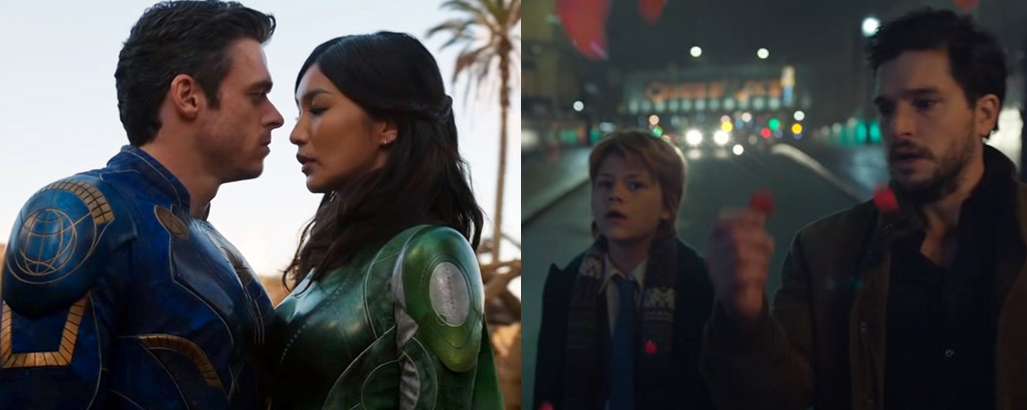
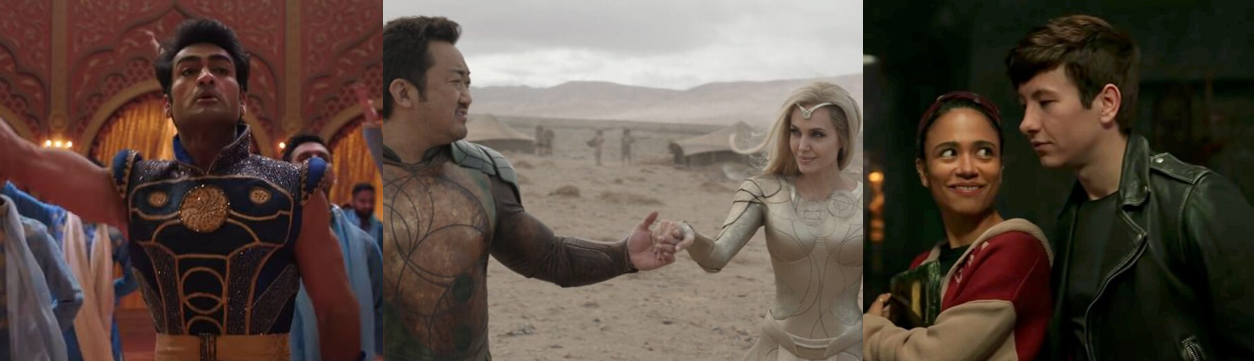
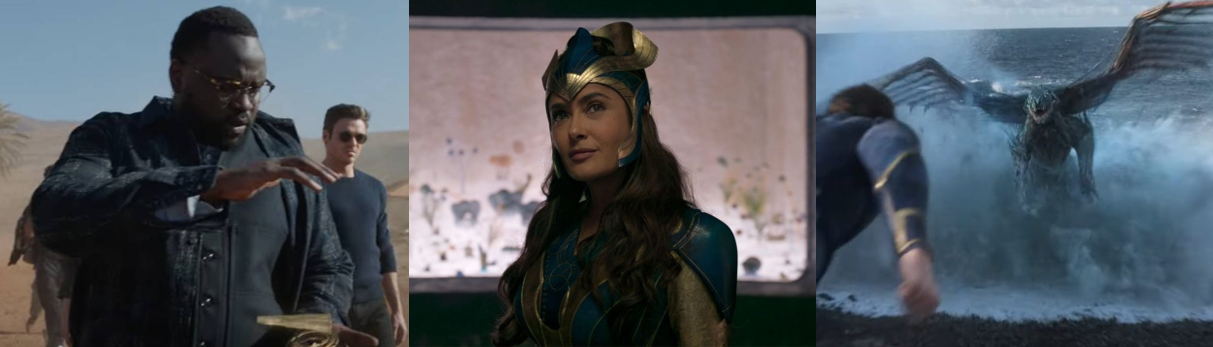
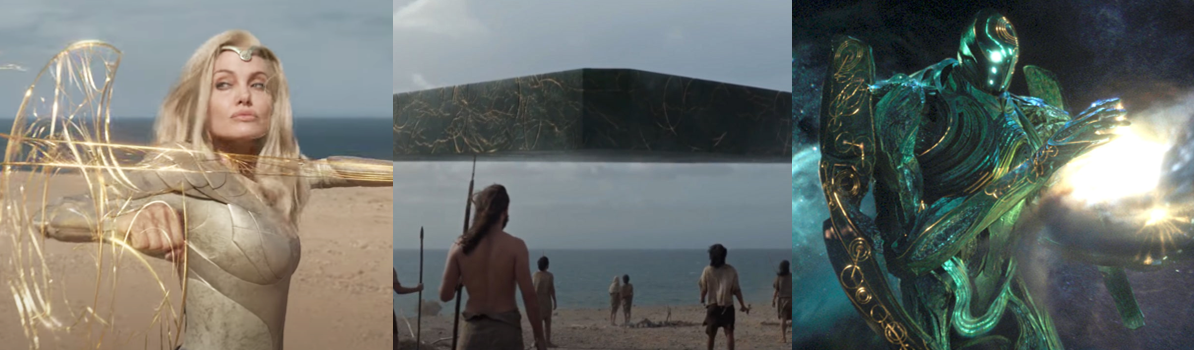
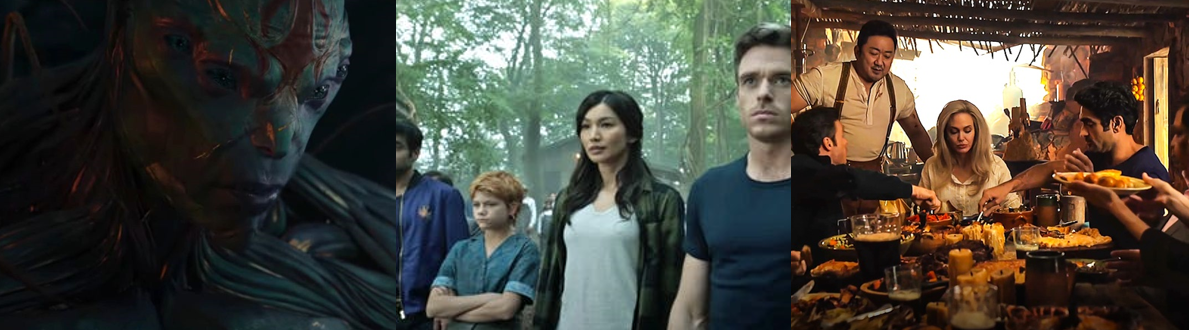
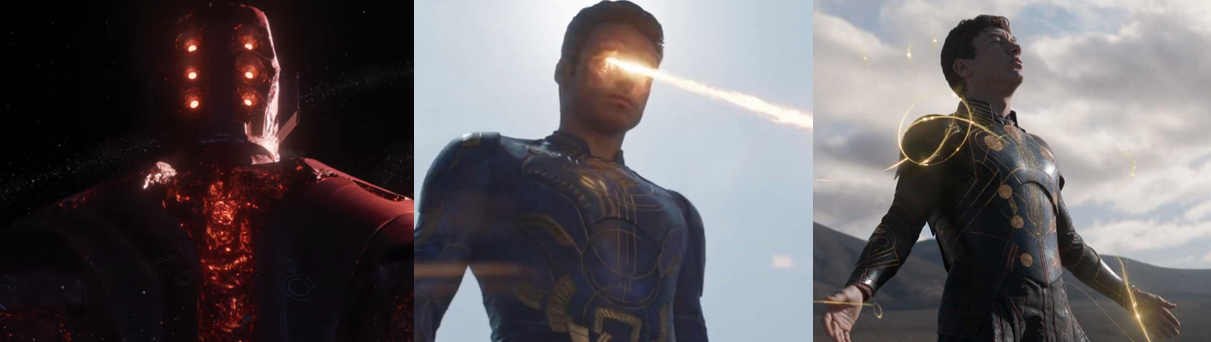




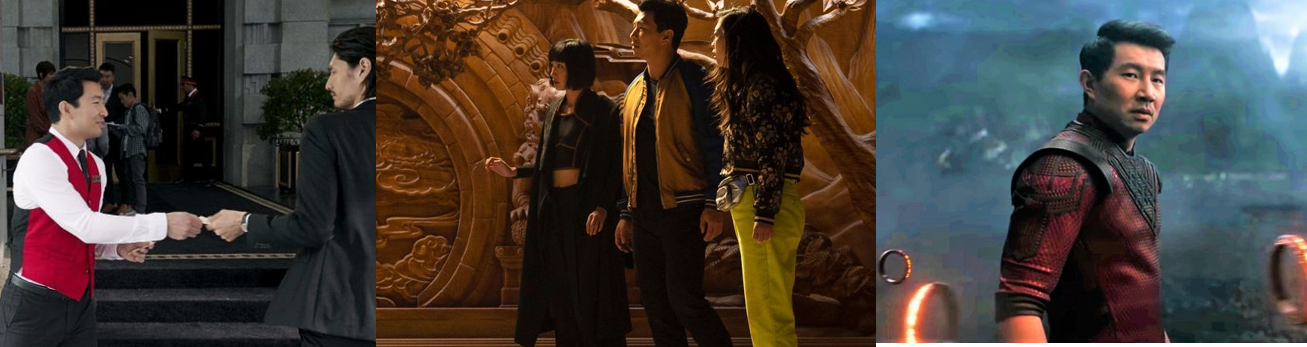
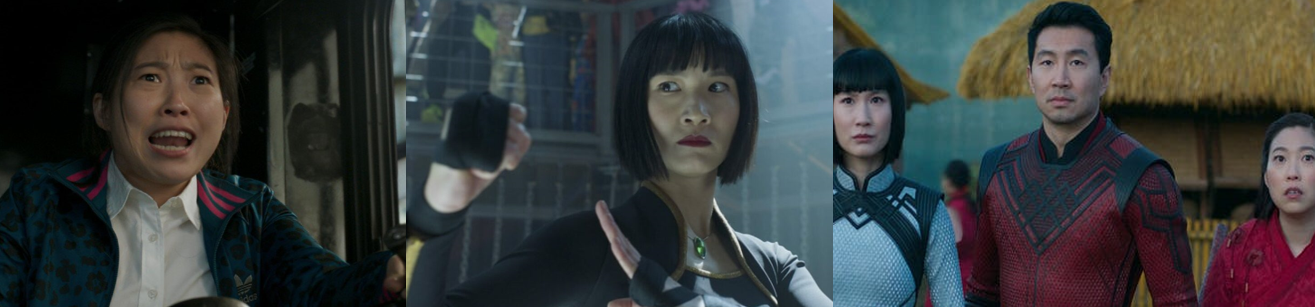
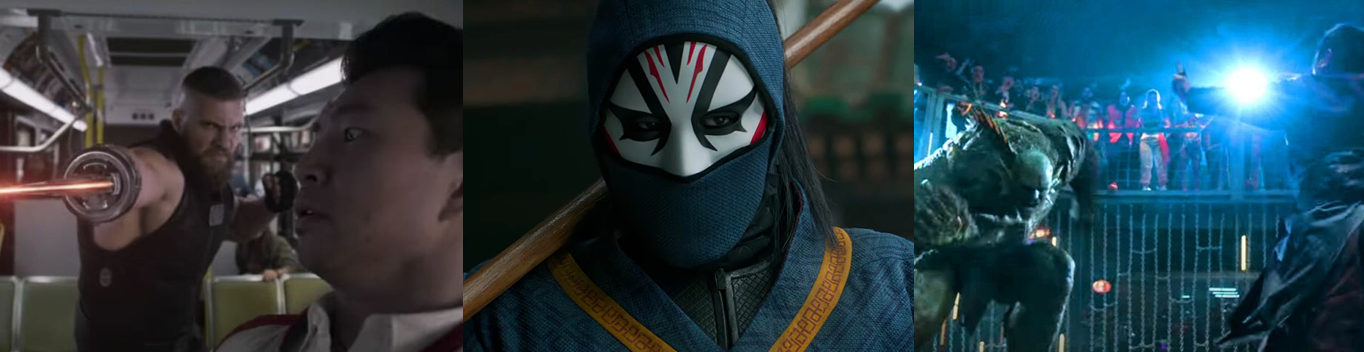
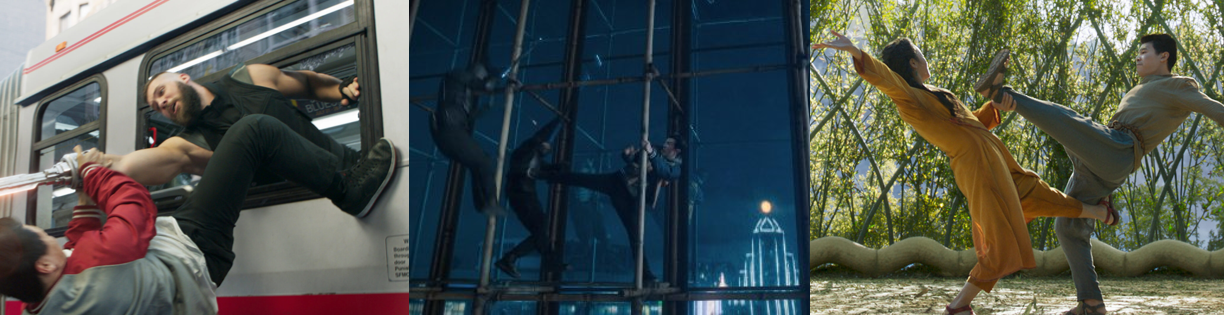
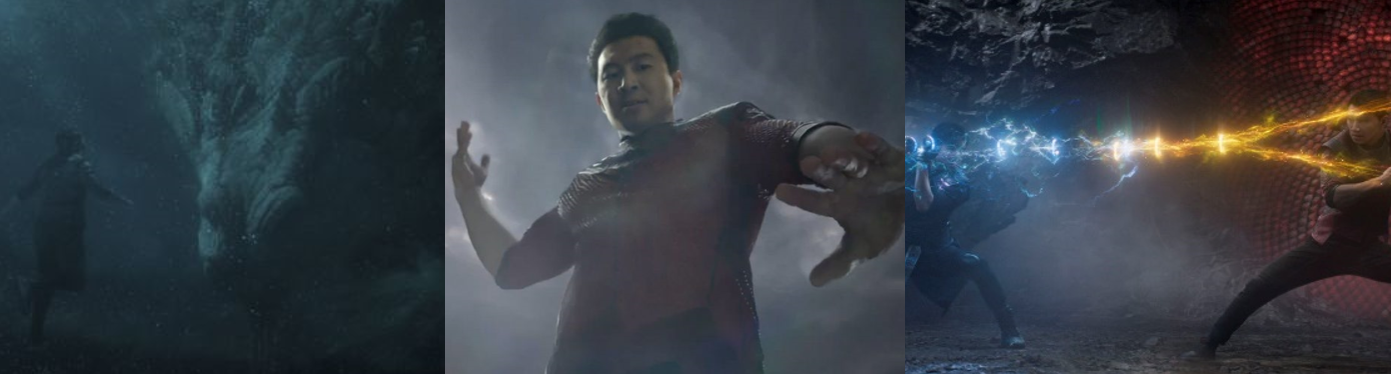


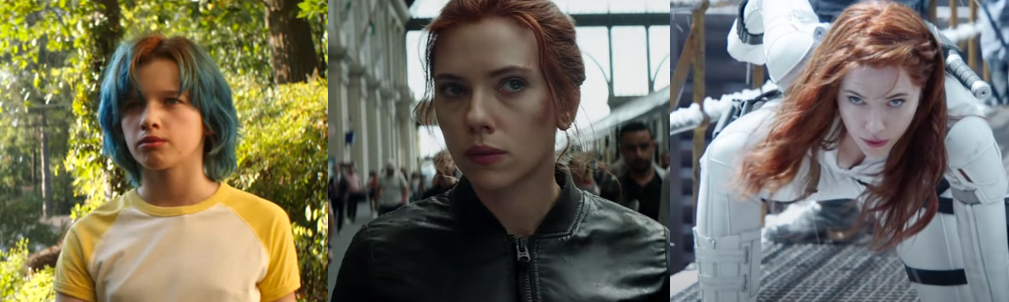
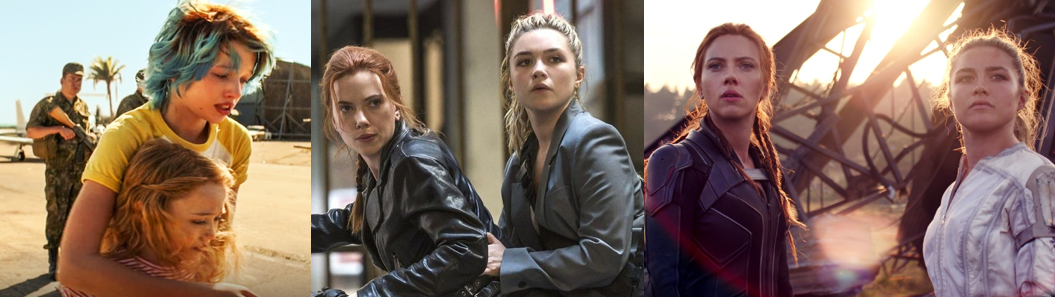
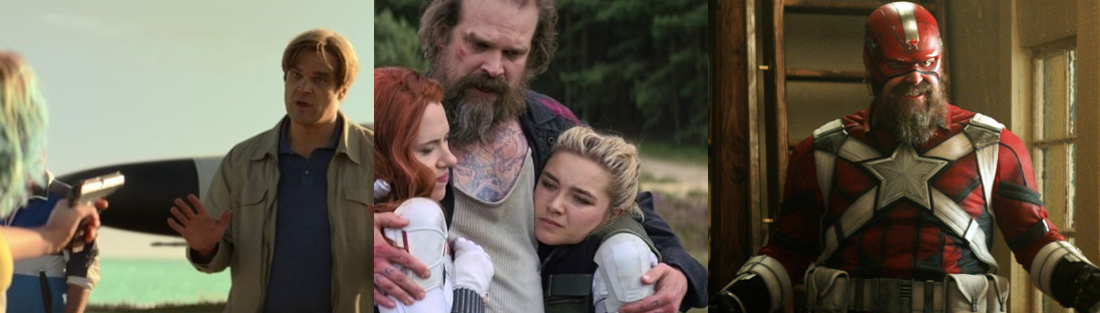
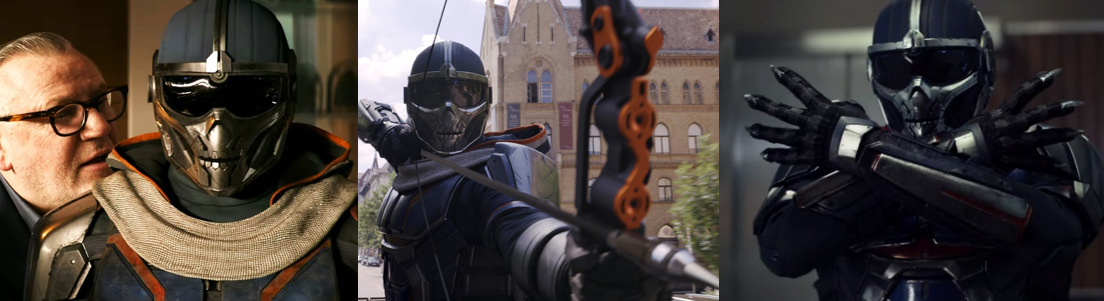

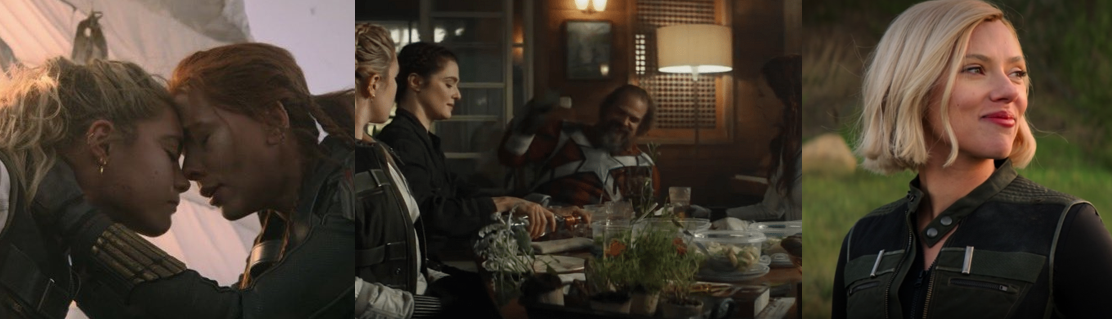


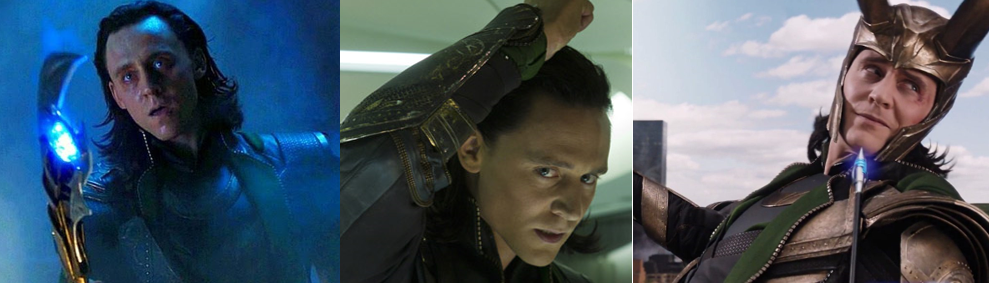
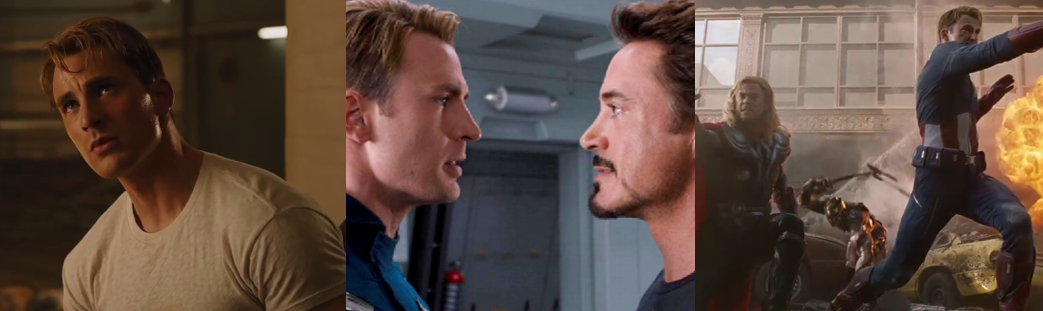
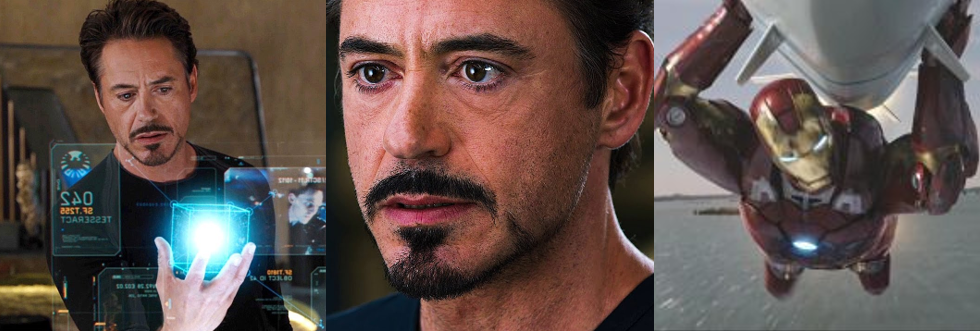
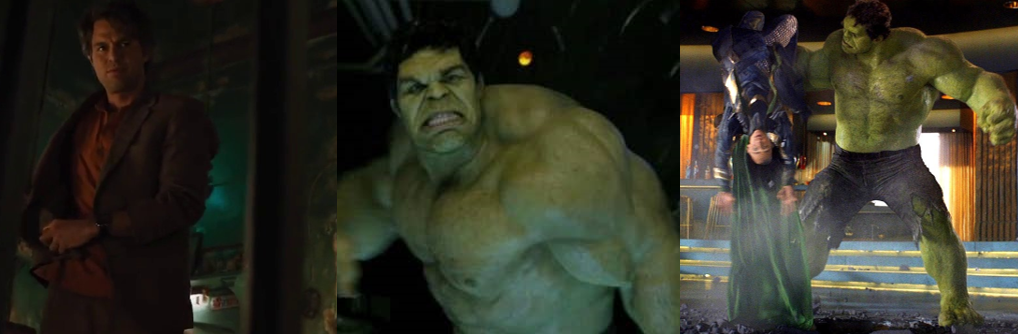
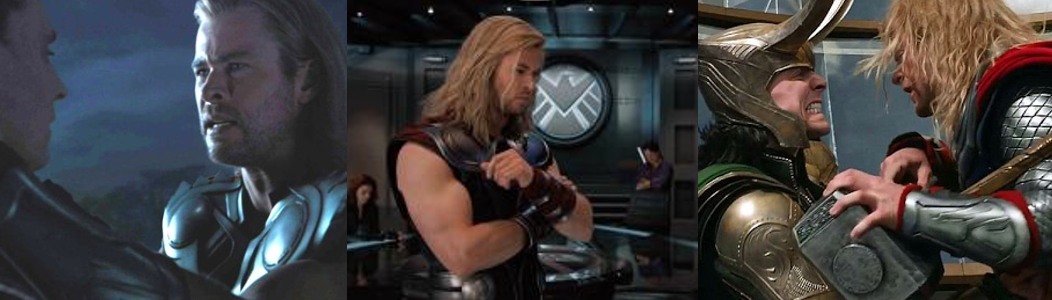
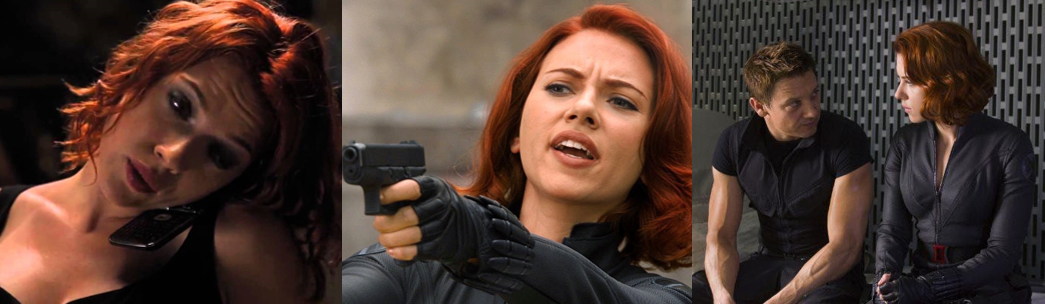
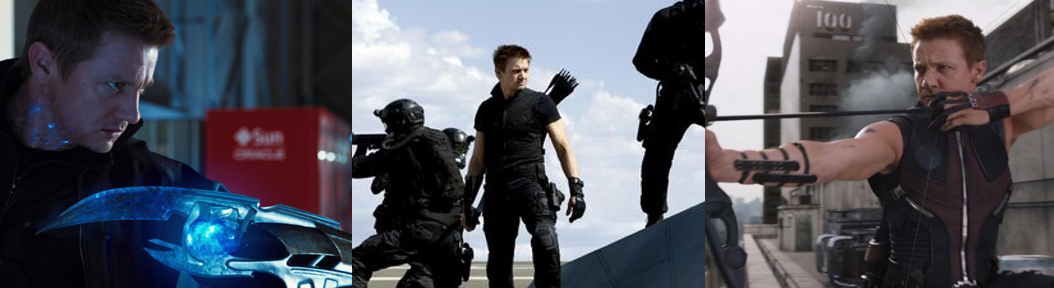
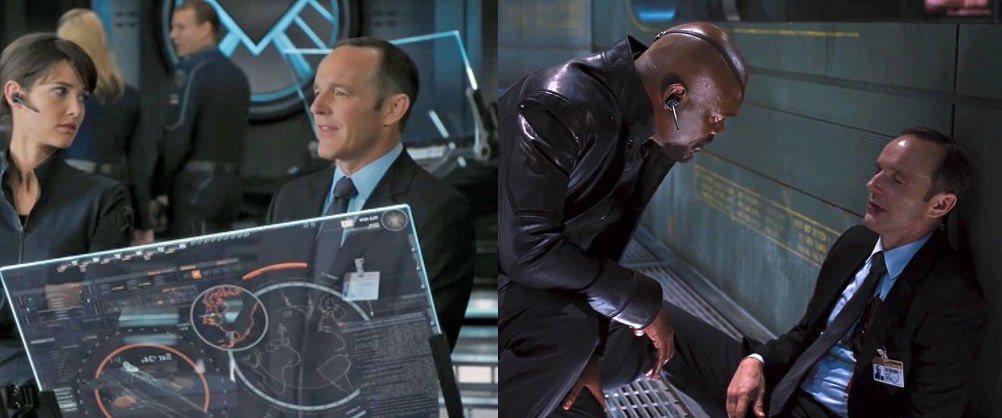
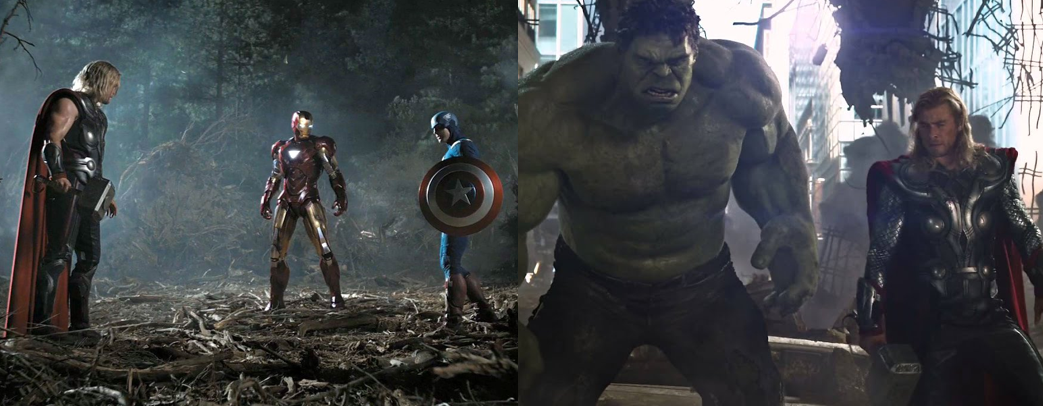
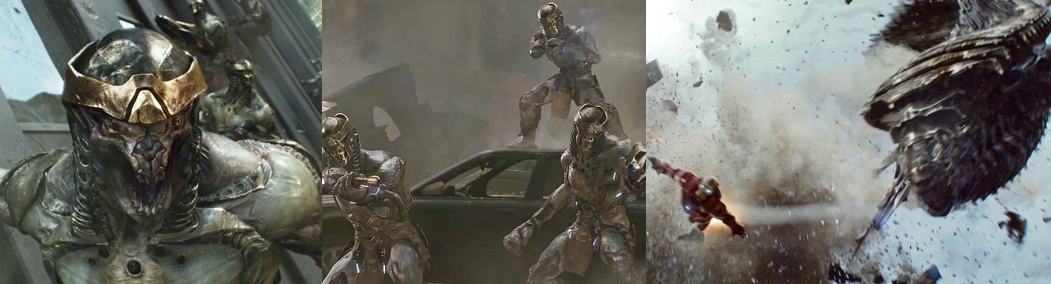
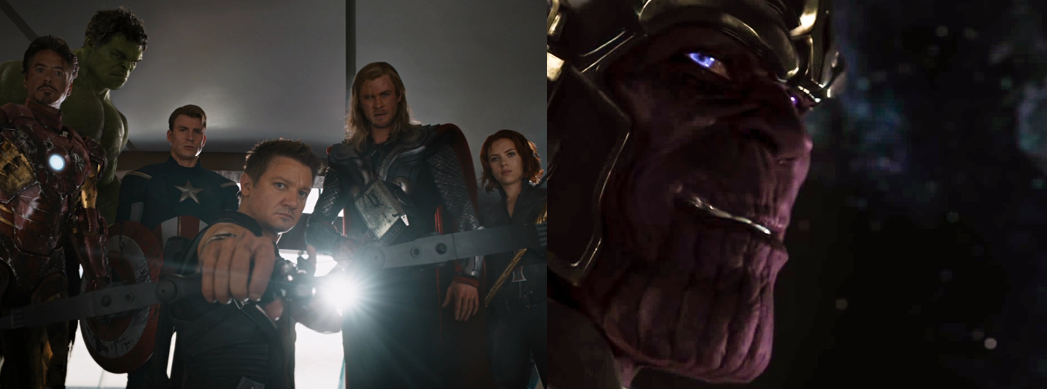



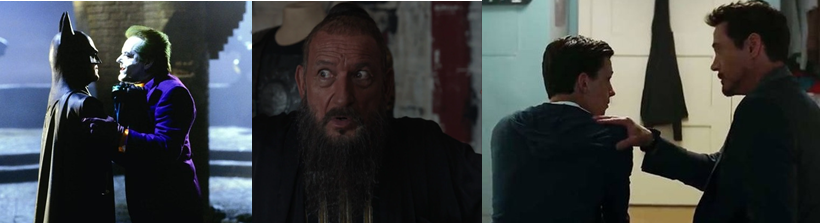
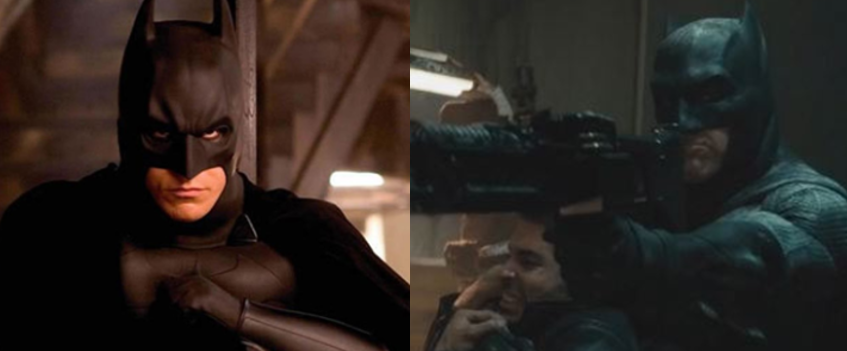

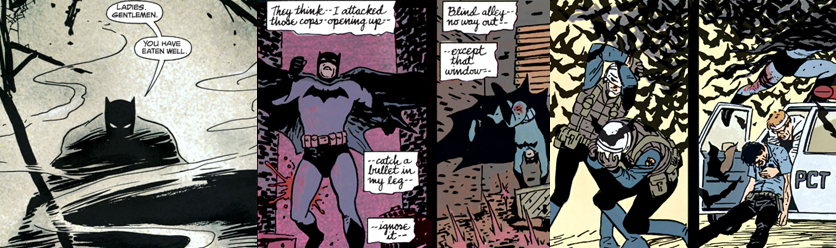
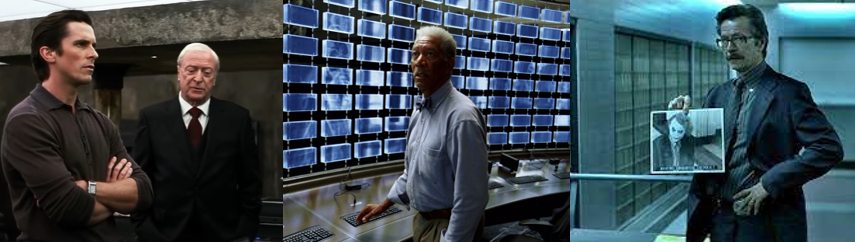

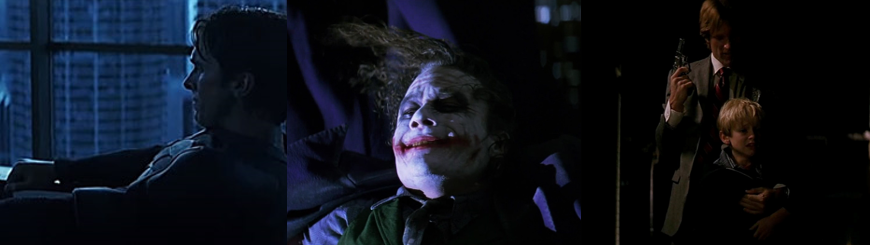
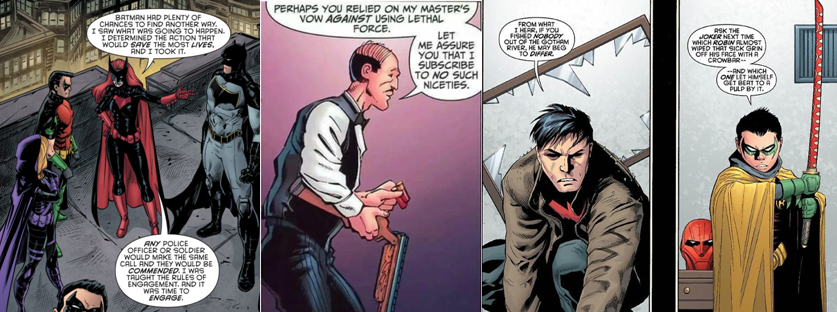

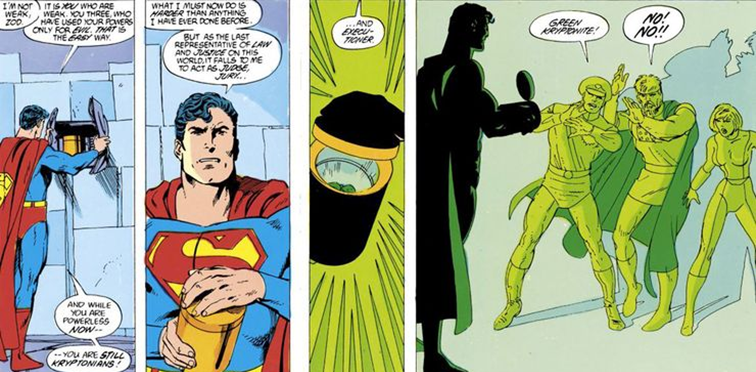

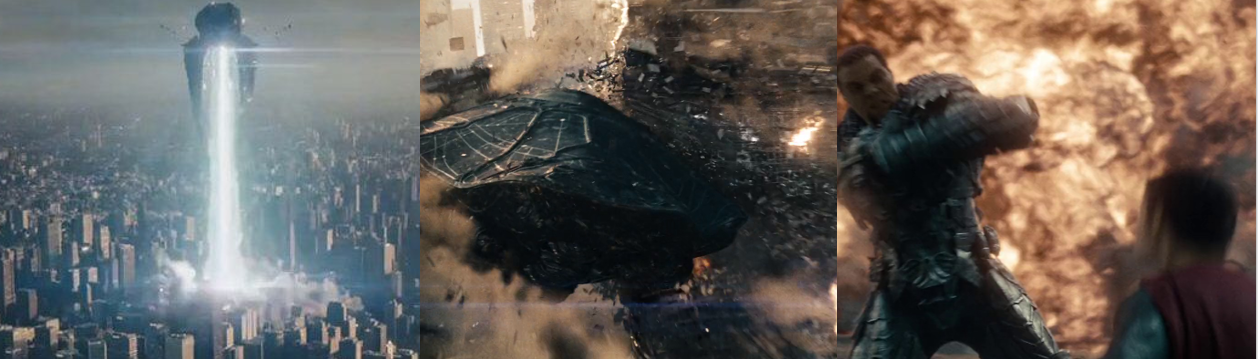
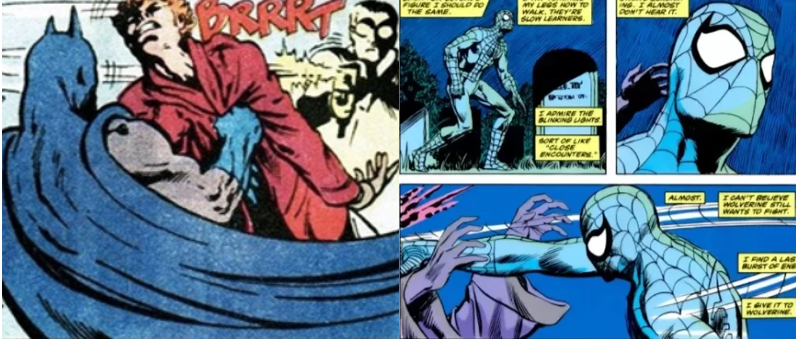
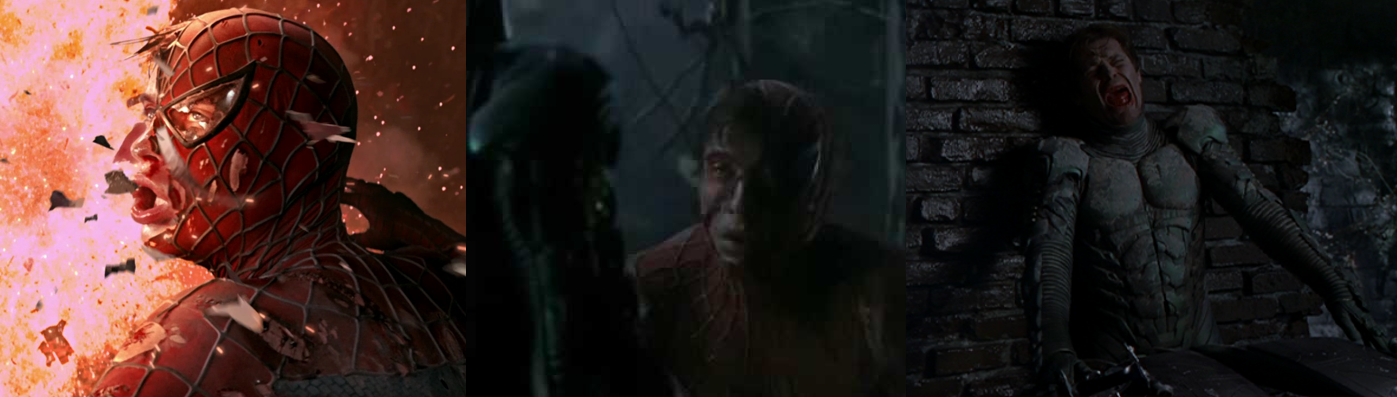
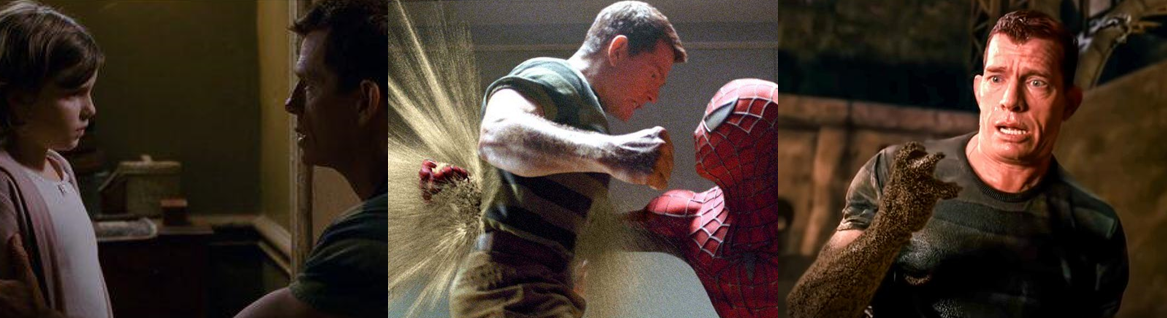

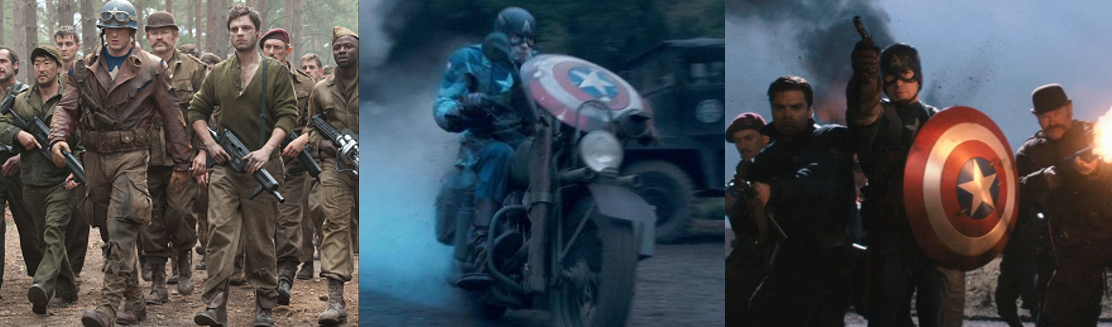
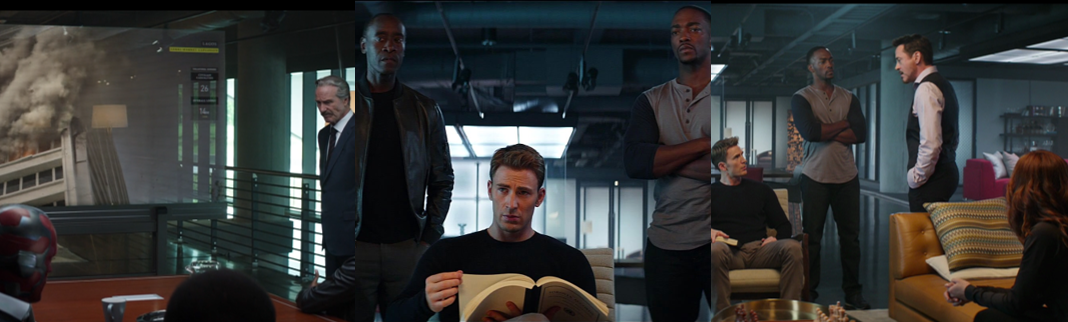



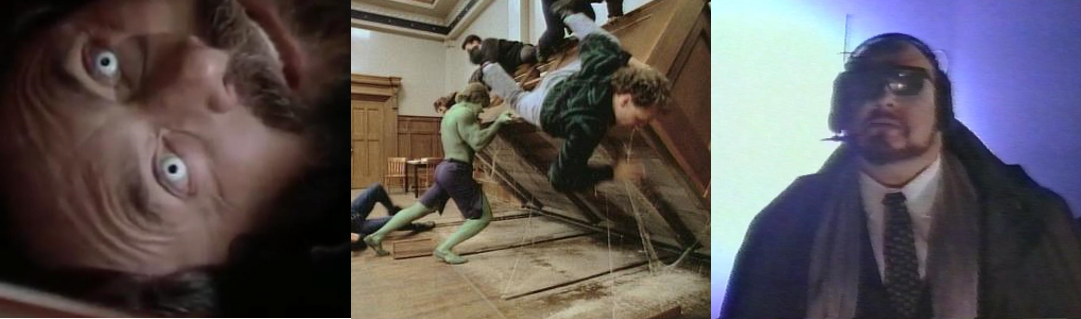
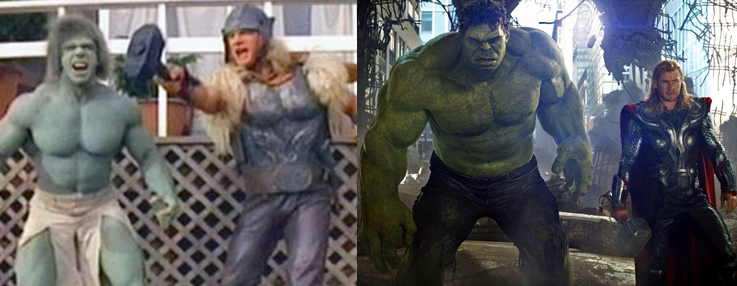
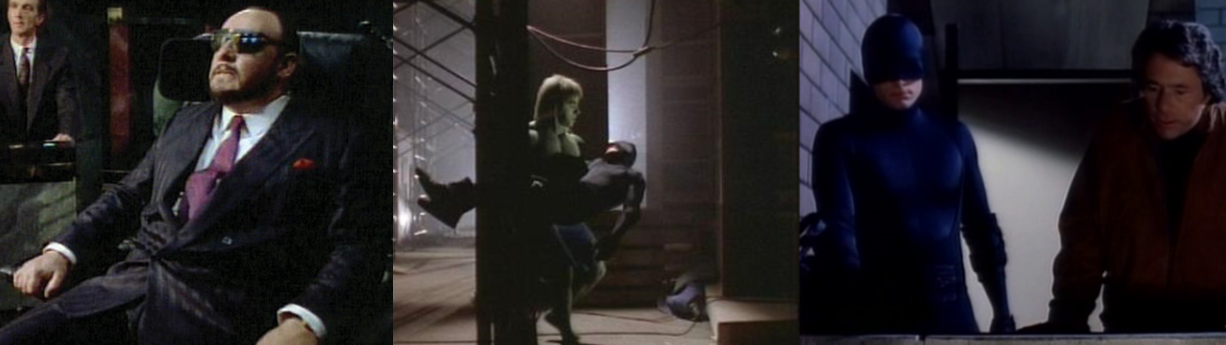
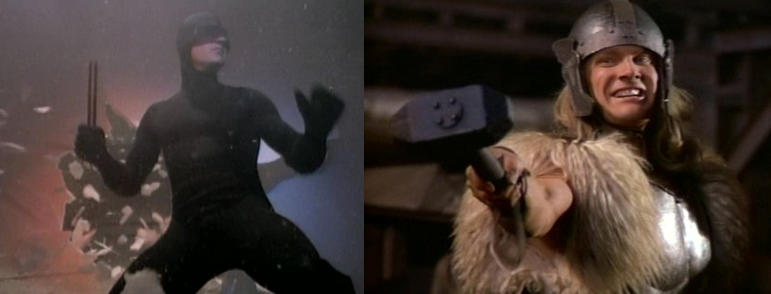

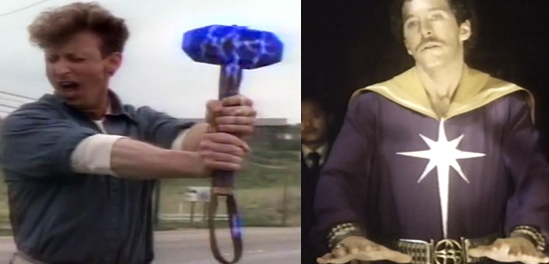
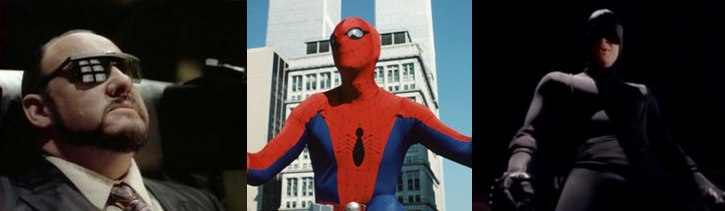
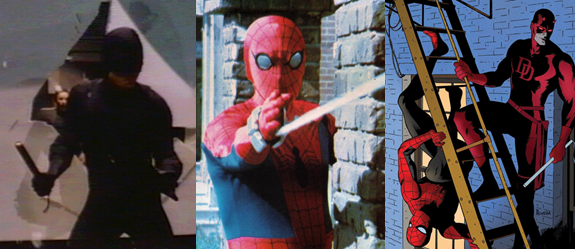
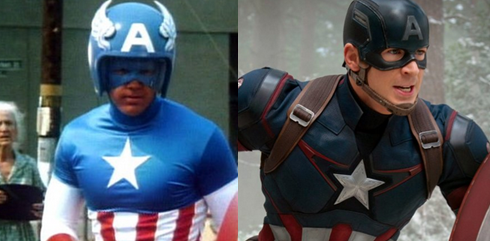
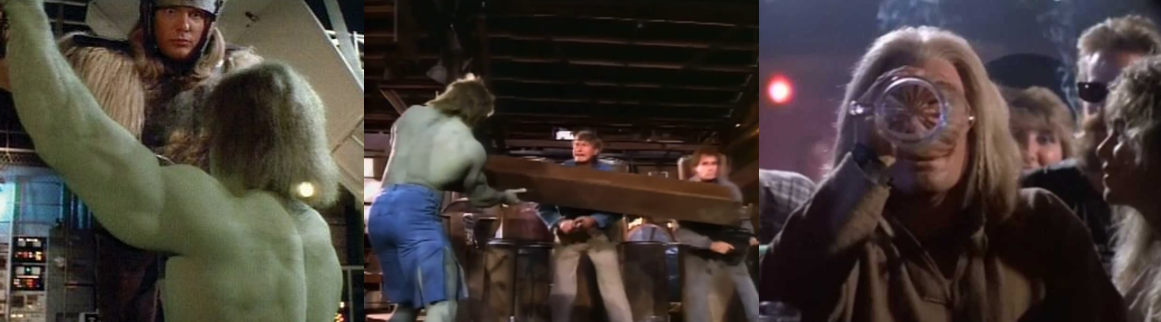



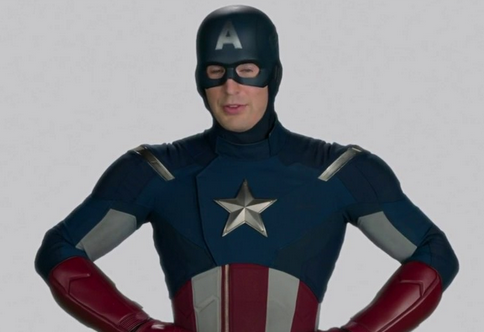



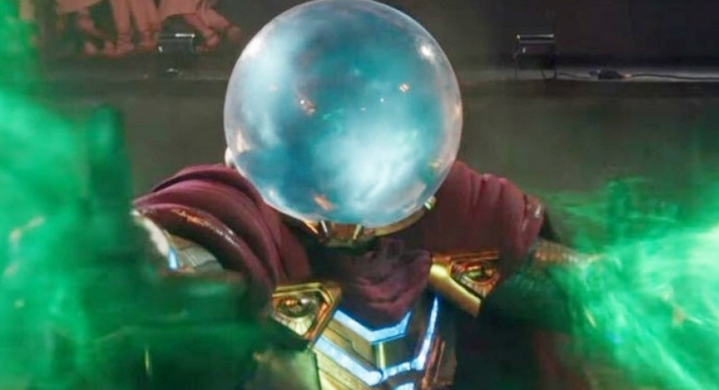
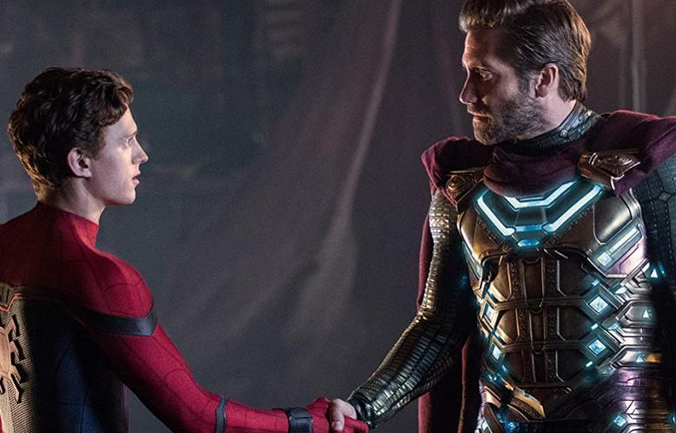

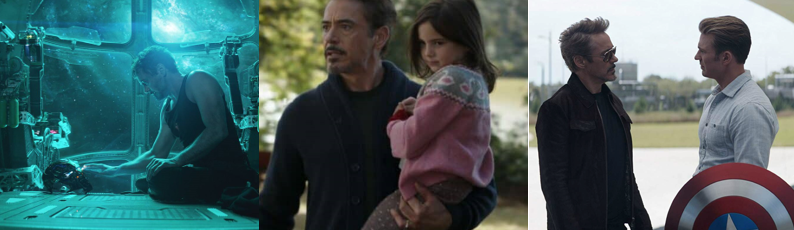
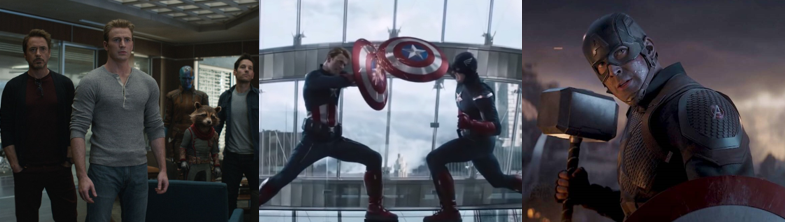
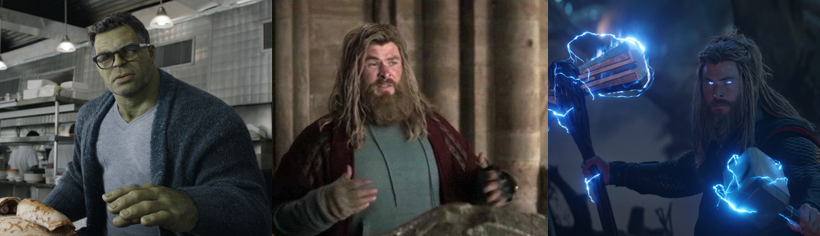
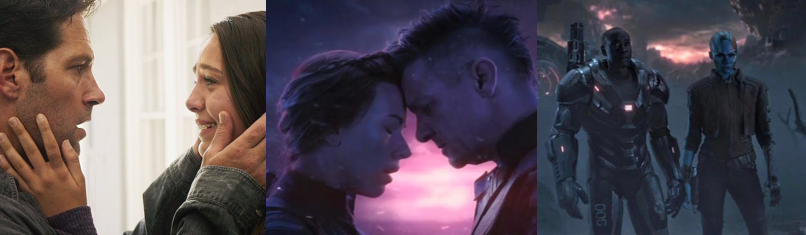
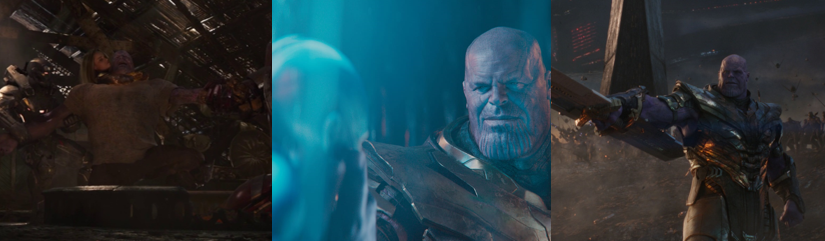
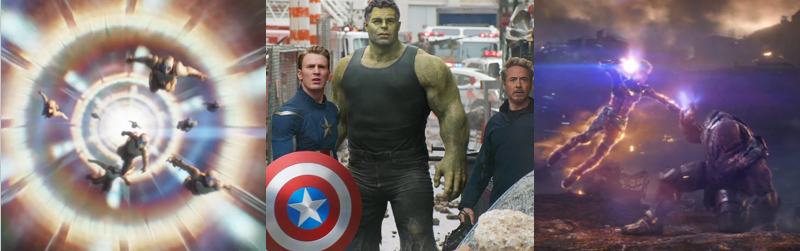
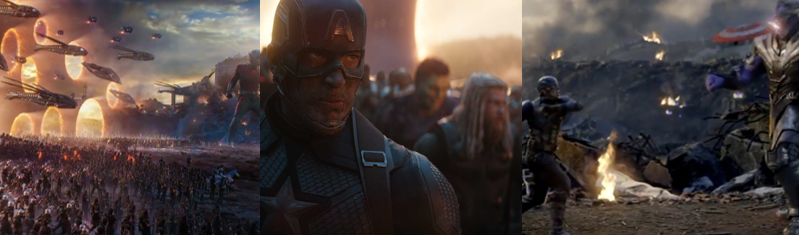


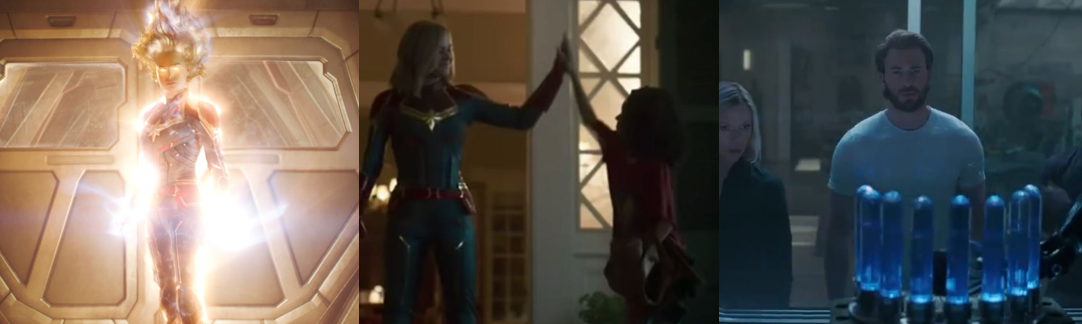

 Dr. K's Waiting Room
You must be logged in to post a comment.