Movie Night: No Time to Die

Released: 30 September 2021
Director: Cary Joji Fukunaga
Distributor: United Artists Releasing / Universal Pictures
Budget: $250 to 301 million
Stars: Daniel Craig, Rami Malek, Léa Seydoux, Lashana Lynch, Ben Whishaw, Ralph Fiennes, Jeffrey Wright, and Christoph Waltz

The Plot:
Five years after the capture of Ernst Stavro Blofeld (Waltz), super spy James Bond/007 (Craig) has retired from active service to be with his love, Doctor Madeleine Swan (Seydoux). However, when he his old friend Felix Leiter (Wright) asks him to investigate a missing scientist, Bond is brought violently back into the world of betrayal and terrorism when he is pitted against terrorist Lyutsifer Safin (Malek).

The Background:
James Bond, the charming and sophisticated MI6 agent with a license to kill, is the creation of former navy intelligence officer-turned-writer Ian Fleming. As beloved as his 007 novels were, the character was forever immortalised through the late, great Sean Connery, who would be just one of many actors to portray the superspy in perhaps the most successful cinematic franchise of all time. In 2005, amidst much unwarranted controversy, Daniel Craig assumed the iconic role for a gritty, modern reboot of the long-running franchise; Casino Royale (Campbell, 2006) was a massive critical and commercial success and effectively revitalised the series after it had become stagnated. Much to the chagrin of Craig, who became increasingly disillusioned with the role, more successes soon followed, with Skyfall (Mendes, 2012) surpassing Casino Royale’s achievements and Spectre (ibid, 2015) earning rave reviews. Development of the twenty-fifth Bond film began in 2016, with director Danny Boyle initially attached to the project before he bowed out over script concerns. Cary Joji Fukunaga came onboard in 2018 and the film’s title was announced in 2019 but the jury was out over whether Craig would reprise his role. Although Craig eventually signed on to No Time to Die, he stated that the film would be his last go-around as 007 and the script was tailoured to reflect this sentiment. As with al of Craig’s Bond movies, No Time to Die was set to feature a sequential narrative from the previous films and included a number of returning cast and characters; like all great Bond movies, filming took place all around the world and included a number of spectacular stunt sequences. The film’s release was repeatedly delayed due to the Covid-19 pandemic but No Time to Die finally released in the United Kingdom on September 30th to largely positive reviews that emphasised Craig’s performance and the film’s action sequences while criticising the film’s lengthy runtime, and a final worldwide gross of almost $775 million.

The Review:
No Time to Die kicks off with one of the most longest, if not the longest, pre-title sequences in any James Bond film that basically serves a number of purposes; first, we get to see a flashback to Madeline’s childhood where, as a young girl (Coline Defaud), witnessed her mother being brutally gunned down by Safin, a psychotic killer with a bit of a limb and sporting an unsettling Noh mask. Safin’s motivation here is actually somewhat relatable as Madeline’s father, Mister White (Jesper Christensen), killed Safin’s entire family as part of a Spectre assassination. Although Madeline and Bond have retired to Italy to be together, leaving behind Bond’s tumultuous life, but are still haunted by the ghosts of their respective pasts; Madeline promises to reveal this part of her past to Bond after he makes peace with his former love, Vesper Lynd (Eva Green), and in process unwittingly sets Bond’s paranoid into overdrive as he is summarily attacked by Spectre agents, led by Primo/Cyclops (Dali Benssalah), and he separates himself from Madeline to both keep her safe and because he feels he can’t trust her. The film then jumps to five years later, Bond has set himself up in Jamaica and is so far off the grid that MI6 has assumed that he has died. However, when Spectre agents kidnap scientist Valdo Obruchev (David Dencik) to weaponise the devastating “Heracles” virus that MI6 chief, Gareth Mallory/M (Fiennes) developed off the books to specifically target and eliminate individuals while negating collateral damage, both MI6 and the Central Intelligence Agency (CIA) are understandably perturbed at the implications of this virus being in the wrong hands. When M discovers that his darkest secret has been dug up for the world to see, he becomes very cagey and snippy with his employees Eve Moneypenny (Naomie Harris), Q (Wishaw), and Bill Tanner (Rory Kinnear) and demands that Obruchev and his research be retrieved as quickly and surreptitiously as possible. Bond is begrudgingly brought into the investigation by CIA operative Felix Leiter, whom he embraces as an old friend; having been absent from the last two Bond movies, it’s great to see Felix make a comeback, if only briefly, and it’s just one of many heartwarming moments in the film that help humanise Bond, with Bond even referring to Felix as his brother at one point.
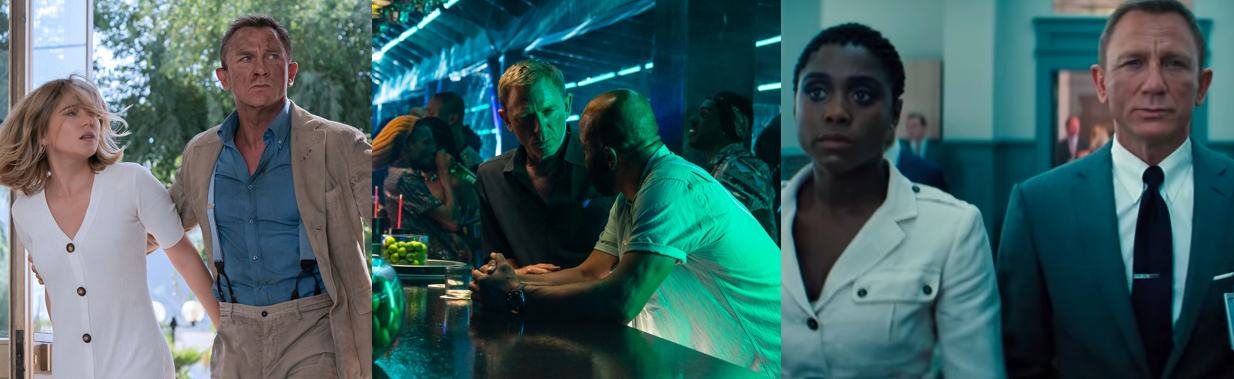
Bond is drawn back into espionage after appearing to be betrayed, only to find he’s been replaced.

Bond doesn’t truly return to his former, violent life until he crosses paths with Nomi (Lynch), a no-nonsense, militaristic agent who, in case you couldn’t guess, has replaced Bond as the new 007. The two initially have a frosty relationship, with Nomi brushing off Bond’s advice and experience and basically continuing on her mission with little regard for Bond’s presence. While Bond played it fast and loose with the rules and regulations, Nomi is all business and follows her orders without questions, making for a less glamorous but strikingly efficient spy, but her heckles are raised when M ends up reinstating Bond as an active 00 agent following a tense and heated confrontation between the two. The more they work together, however, a mutual respect develops between the two, to the point where Nomi requests that Bond regain his 007 number (his actual new 00 number is never revealed), and any concerns that Nomi is being setup to replace James Bond in future films are largely dashed as she never takes the spotlight away from Bond and she largely exists as a competent support character for Bond. Bond has a number of other allies helping him both officially and unofficially; when Bond agrees to help Felix, he is partnered with the lovely and excitable Paloma (Ana de Armas), a CIA agent on her first assignment who’s more than capable of kicking ass even while in a very revealing silk dress. Paloma helps Bond infiltrate a mass gathering of Spectre agents, which is revealed to be a trap setup by Blofeld to kill bond using Heracles, however all of Spectre end up being killed instead when Obruchev reprograms the nanobots to target the Spectre agents, which was a bit of an anti-climatic end to one of Bond’s most notorious and iconic evil organisations. After arguing with M over Heracles, Bond works independently to find out more information about the virus and concludes that he needs to gain access to Blofeld; to do this, he asks Moneypenny and Q for help, and they’re able to help him hack into a bionic eye used my Primo to reveal crucial information that gets Bond reinstated at MI6. Q actually plays a surprisingly big role in the film as he’s out in the field on more than one occasion and even communicates with Bond and Nomi through their earpieces in the finale, which is something I’ve never seen in a Bond film before. It does lead to an amusing moment where Q prepares to walk Bond through a complex procedure to open up the blast doors and allow Safin’s base to be bombarded with a missile assault and Bond simply frantically presses every button and pulls every lever.
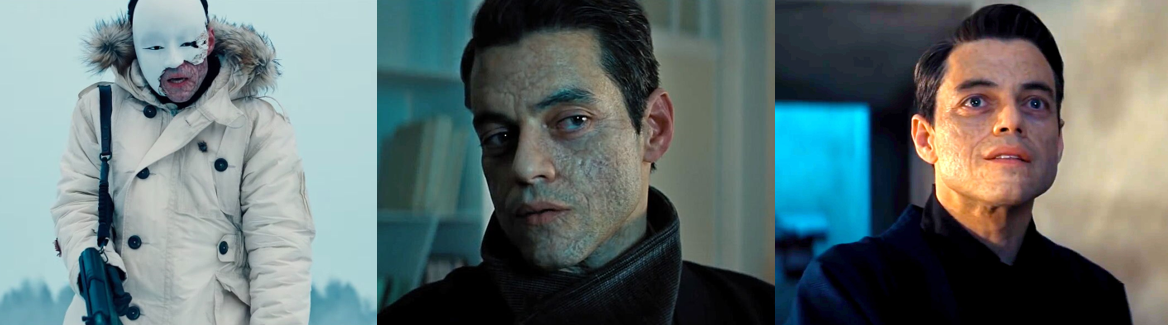
Safin makes an immediate impression before becoming a bit of a cliché, fanatical villain.

The main villain of the film, Safin, is largely absent for much of the film and left as this mysterious, unknown third party. Instead, most of the film’s early going is focused on the remnants of Spectre, which Blofeld is secretly controlling while being locked up and isolated in prison. He’s been able to do this because he’s been diagnosed as clinically insane and spends his days muttering and mumbling in his cell and refuses to talk to anyone except his psychiatrist, Madeline. This leads to an awkward reunion between Bond and Madeline, and a tense reunion between Bond and his adopted brother; Blofeld delights in taunting Bond and having outwitted him, and the irony that the two now have a common enemy as Safin is specifically targeting Spectre agents and Blofeld himself to get his revenge. Unfortunately, we don’t really get to see too much of Blofeld here, and I continue to be unimpressed with Waltz’s performance as the character, which just a little too quirky and unhinged for my tastes considering how refined the character usually is. Safin picks up some of the slack in this regard, appearing to echo classic bond villains such as Doctor Julius No (Joseph Wiseman), Karl Stromberg (Curt Jürgens), and Hugo Drax (Michael Lonsdale) in his soft-spoken, unsettling menace and sporting a disturbing skin condition. Safin is motivated to kill all of Spectre after they caused the death of his family, but his plot shifts to worldwide mass murderer after he acquires Heracles, which escalates his favoured method of using plants for a variety of nefarious purposes into reshaping the world into his own image. When he’s first introduced, Safin is clad in a white snowsuit and wearing an expressionless mask, resulting in a twisted visage as he hunts down the young Madeline, and the entire sequence is framed like a slasher horror film; however, when Safin finally returns later in the film, he’s set aside his mask and is just another disquieting, unhinged Bond villain in a suit with delusions of grandeur.

The Nitty-Gritty:
One of the most highly anticipated traditions of any James Bond film is the title sequence, in which the chosen song for the film plays over images of scantily-clad women, guns, and other obscure imagery tangentially related to the film. No Time to Die not only brings back the iconic gun barrel sequence (which also gets a call-back later in the film when Bond shoots an assailant down a curved tunnel) but the title sequence even recalls the very first title sequence of the series by bringing back the multiple circular dots that blared at the screen in the opening of Dr. No (Young, 1962), before descending into the usual iconography of guns firing and images of the main actors looking morose. It’s a pretty decent title sequence but for one crucial element; the title song itself, “No Time to Die”, by Billie Eilish. Now, admittedly, I am not a fan of Eilish; I find her music grating, depressing, and uninspiring, but I went into this willing to set aside these prejudices (after all, I’m not fan of Adele or Sam Smith and their Bond themes were pretty good) and remained unimpressed. I just don’t think the song really works; it never properly kicks into a higher gear and just sets a bleak, miserable tone for that the film doesn’t really reflect. The song really should have been a celebration of Bond’s life and emphasised this being the end of an era, and instead just conveys the same dullness of your average gloomy Billie Eilish song. Thankfully, some of these themes of it being a celebration of all things Bond and the end of Craig’s time as the character are revisited throughout the film; Louis Armstrong’s “We Have all the Time in the World” plays in the beginning and ending of the film, which is a nice (if unexpected) call-back to On her Majesty’s Secret Service (Hunt, 1969), and even had me half-expecting to see Madeline gunned down by one of Blofeld’s agents as she and Bond are racing through Italy.
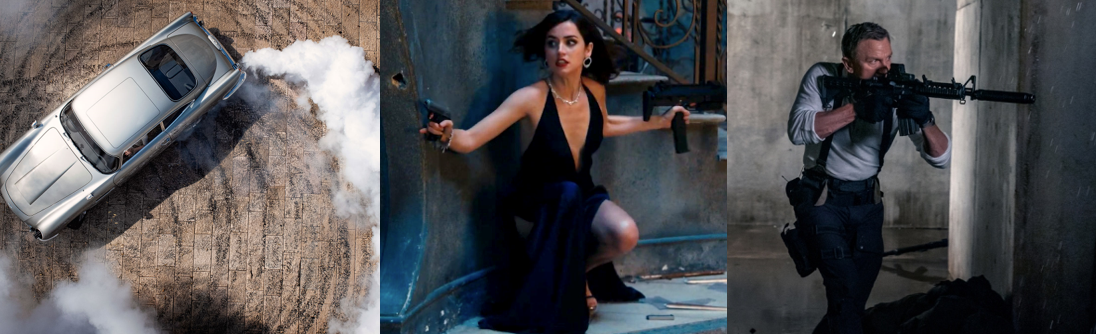
Armed with his most iconic gadgets and teamed with beautiful allies, Bond is as effective as ever.

Additionally, Bond drives his iconic Aston Martin DB5, which is outfitted with all of the classic gadgets of old, and there’s even a touching tribute to Judi Dench and Bernard Lee as portraits of them adorn the walls of MI6. I actually really love the call-backs to classic Bond aesthetics that finally got reintroduced to the series in Skyfall, such as the door to M’s office (and the office itself) while still keeping things grounded in the current times with modern technology. We even get a spin on Bond’s classic watch gadget as Q furnishes him with a watch capable of emitting a short-range, high-frequency electromagnetic pulse that pays off beautifully in offing Primo (but is apparently unable to affect the nanobots coursing through Bond’s bloodstream, which is where I expected the gadget to really come into play). As mentioned, the film’s opening is starkly different to those of other Bond films not just for its length but also for the way its short, which mirrors a slasher horror film, with Safin even appearing and being portrayed as an unsettling masked home invader. Safin’s casual brutality is mirrored in Bond’s ruthlessness; both characters are completely at ease with killing (even executing) others in the line of duty, and Safin even proposes that the two are more alike that they may seem at first glance. Interestingly, the idea that Bond has “lost a step” due to his advancing age, injuries, and being out of action for so long is largely cast aside here; it could have been revisited once he meets and works alongside Nomi but, instead Bond is running, fighting, and chasing down bad guys with very few signs of having slowed down. If anything, Bond’s more effective and brutal than ever; he’s easily able to evade Primo and his mercenaries by leaping from a bridge with only a precarious wire for support, races across Italy on a motorcycle, has a series of brutal fistfights that continue to highlight Craig’s Bond’s adaptability when brawling, and the film is punctuated by a number of car chases against both jeeps and a helicopter to help keep things exhilarating. Yes, it’s a long film, even for a Bond movie, but all Bond movies are quite long and it never really felt like it was dragging all that much; I could see a few scenes and even characters being trimmed and maybe cutting back on some of the sweeping establishing shots, but overall I was quite satisfied with the length of the film and the amount of action packed in between its slower, more poignant moments.
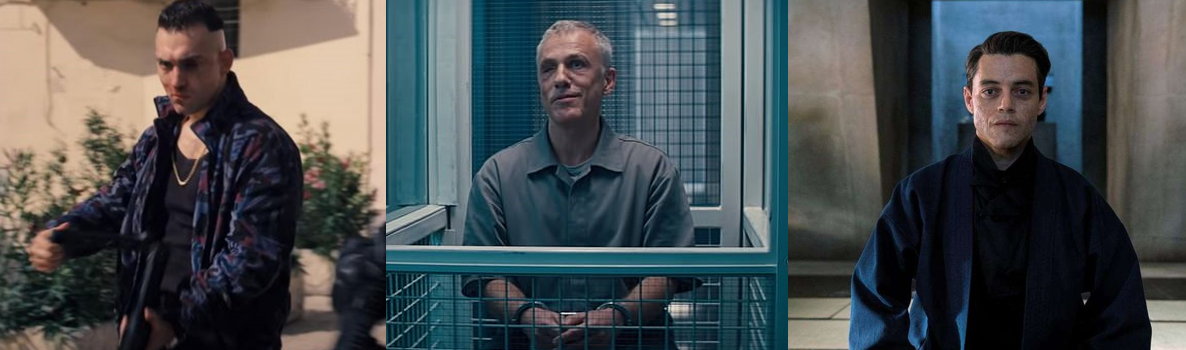
Blofeld manipulates events from his prison cell before being unceremoniously offed by Safin.

Many Bond films become so iconic because of their villains, and as ever there’s a number of bad guys bumping around in No Time to Die; Primo stands out for his bulging bionic eye, but is mainly just Spectre’s main henchman and gets very little to do beyond cropping up to cause Bond headaches throughout the film. Bond’s focus shifts towards tracking down CIA operative Logan Ash (Billy Magnussen) after he proves to be a double-agent working for Spectre; Nash, a nervous and overly enthusiastic agent, plays a pivotal role in the film’s early going when his betrayal leads to the tragic death of Felix and it’s incredibly cathartic seeing Bond brutally brush the slimy little weasel under a jeep. Obruchev is the living McGuffin of the film, being a slightly neurotic Russian scientist who at first seems to be reluctantly assisting Spectre and Safin and soon turns out to enjoy his work on the nanobots a little too much, meaning he more than deserves his gruesome dip into an acid bath at Nomi’s hands.  And then there’s Blofeld, the ultimate puppet master of the film who continues to torment his stepbrother even while locked up; their interaction is a bevy of emotions, with Bond flipping between eccentricity and seething rage, leading to him choking Blofeld while spitting “Die, Blofeld!” Although Bond pulls back at the last minute, and gets berated by Tanner for losing control of his emotions, Blofeld is revealed to have died thanks to Bond unknowingly being exposed to nanobots specifically programmed to kill the Spectre head honcho, which was a death as anticlimactic as it was predictable (we see Madeline spraying herself with Safin’s nanobots, and Bond grab her wrist, prior to Bond choking Blofeld). Safin’s plot involves the use of Heracles, a vast array of nanobots that can be set to kill specific targets by programming them with DNA; once they’re inside your body, they’re there for ever and will pass from host to host until they reach their intended target, and Safin even has Obruchev modify them to kill the bloodline of the target as well. M’s direct involvement in this project casts an ugly shade of grey on the character, leading him into conflict with Bond and driving him to use every resource available, even at the expense of keeping the Prime Minister out of the loop and the world on the brink of war, just to eradicate Heracles once and for all. Safin’s jump from wanting revenge against Spectre to destroying most of the world’s population is quite the leap, but he is fully prepared to do this and has more than enough resources to pull it off; how he has these resources isn’t really explained (I guess he appropriated them from Spectre?) but he does sport a suitably ominous repurposes World War Two base as his headquarters and apparently has a background in using poisonous and otherwise toxic plants in his research. This only bolsters his nanobot technology and, while he is far from a physical threat to Bond, actually ends up making him Bond’s most formidable adversary ever as he’s able to infect Bond with nanobots that make his touch lethal to Madeline, effectively destroying any hope he could have of a normal life with her in the process.
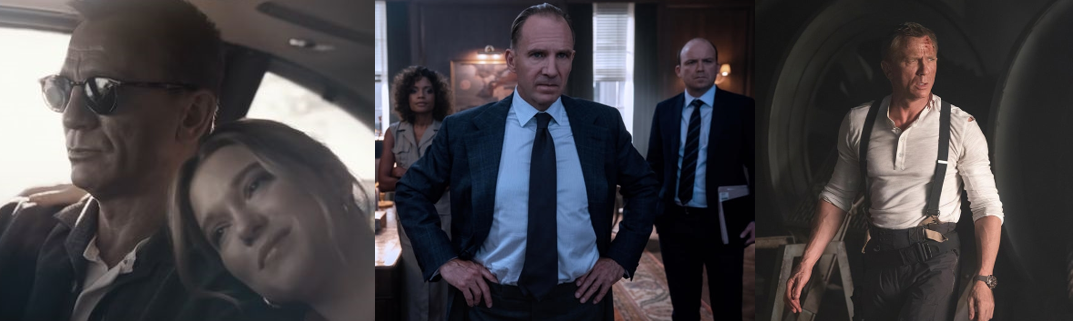
To ensure the safety of his love, his child, and the world, Bond makes the ultimate sacrifice.

The movie may not have time to die, but the characters certainly do! As mentioned, Felix is the first to go in an emotionally charged scene that sees Bond desperately trying to haul his friend’s injured body to safety and then being forced to watch him die right in front of his eyes after he succumbs to Nash’s gunshot. Much of his immediate motivation revolves around wanting to avenge and honour Felix’s death, though I do think it might have had even more impact if Felix had joined Bond and Paloma on their mission (or even, dare I say it, replaced Paloma entirely) just so we could have seen the two interacting a little bit more and working together in the field. Blofeld also lives to die another day as, despite Bond’s best efforts to ensure that he has a long and unhappy existence rotting away in prison, Safin succeeds in offing the Spectre head through his proxies. I wasn’t exactly blown away by Waltz’s performance in the role, but I do have a fondness for the character’s iconography and impact on the franchise, so it was a bit disappointing to see him brought in as a Doctor Hannibal Lecter-type (Anthony Hopkins) character only to be killed off in anticlimactic fashion. Finally, believe it or not, No Time to Die actually has the balls to kill off the iconic superspy! All throughout the movie, Bond experiences and cheats death at every turn (he survives at least two explosions at close range with minimal damage beyond impaired hearing) and has been assumed dead for at least five years, but No Time to Die finds the character in a position where he’s finally achieved a sense of happiness that he had been searching for since the days of Casino Royale. However, his past haunts him so much that he immediately believes that Madeline has betrayed him, which costs him valuable time with her, and the two quickly rekindle their romance once they reunite, but, more crucially, means he misses out on experiencing fatherhood as he finds Madeline has sired his child, Mathilde (Lisa-Dorah Sonnet). While she’s initially stated to not be his, it’s pretty obvious that she is, even to Bond, and he makes it a priority to rescue her, and Madeline, from Safin after he and Nomi infiltrate his base to shut down his operation. While successful, Bond is injured by multiple gunshots and drawn into a physical altercation with Safin, which sees him brutally snap the terrorist’s arm but being infected with nanobots that will kill Madeline and Mathilde if he touches them. After executing Safin, Bond is forced to stay behind on the island and open the blast doors so that the military’s missile strike will destroy the facility, bidding a heartfelt farewell to Madeline before being killed in the bombardment. In the aftermath, his life and sacrifice are toasted by M, Nomi, Q, and Moneypenny while Madeline prepares to regale her daughter with stories of her father. I kind of suspected that this might happen given the trailers and Craig’s desire to step away from the role, but also thought that the character would simply fake his death to finally retire from his violent life and be succeeded by Nomi, but the film actually went all-in with finishing off the character in perhaps the most dramatic way possible that hit with an impact I honestly wasn’t expecting.

The Summary:
No Time to Die is another strong effort in the Daniel Craig-era of James Bond movies; since his Bond films have all largely been sequential, it’s definitely advisable to be somewhat familiar with his previous outings as the character since the entire film is framed as a celebration of Bond’s life and career and a swansong not just to Craig but the character itself. Never before has a James Bond film positioned the renowned superspy in such an uncharacteristic position where he is largely retired from active service and focused entirely on living a normal life as the world passes him by, and his return to action seems to reinvigorate not just the character but those around him as well, with many of his allies excited to be working alongside him once again. Safin starts off as a strong and visually intriguing character, before descending into cliché Bond villainy and plotting to destroy the world for tenuous reasons, and Blofeld’s big return may be largely squandered but these issues are largely secondary compared to the continued character study into Bond’s emotional journey. Craig’s Bond is probably to most developed and complex of all the Bonds since we’ve witnessed his tumultuous and tragic evolution into an impassive spy and his struggle to reconcile his duty with his desire to lay down his guns, and all of this culminates in his stunned discovery that he has a child out their in a world and something more tangible worth fighting, and dying, for. The execution of Bond’s ultimate end may not land well for some; yes, it’s overly dramatic and reminded me of the overblown farewells modern-day Doctor Who actors give when they leave the role, and leaves a lot of questions regarding the series going forward. Will they recast and reboot again, or will they try and continue the story in this world with Nomi as the new 007? It’s hard to tell, and the film may end up being overshadowed by being “the one where Bond dies”, but I felt that it was an emotional and poignant journey and end for the character, and that the film was a strong and enjoyable outing throughout, and I’m excited to see where the series goes next if they do recast.

My Rating:

Rating: 4 out of 5.

Great Stuff

Have you seen No Time to Die? If so, what did you think to it and where would you rank it against other James Bond films, especially Daniel Craig’s earlier efforts? What did you think to Safin, his characterisation and his plot, and Blofeld’s brief return? Were you impressed by Nomi and would you like to see her get her own solo film as 007 going forward? Which of the character’s deaths was the most surprising and memorable for you and what did you think to the decision to kill Bond off? Are you pissed off that I spoiled the entire film rather than dancing around the plot? What is your favourite James Bond film and who would you like to see cast in the role someday? Whatever you thought about No Time to Die, sign up to leave a comment below or leave a response on my social media.

Movie Night [Global James Bond Day]: GoldenEye


To celebrate the release of Dr. No (Young, 1962), the first film in the long-running series of James Bond movies (Various, 1962 to present), October 5th is officially recognised as “Global James Bond Day”. Today, this franchise stands as the longest-running franchise ever and the character is one of the most recognised and popular movie icons of all time.


Released: 17 November 1995
Director: Martin Campbell
Distributor: MGM/UA Distribution Co. and United International Pictures
Budget: $60 million
Stars: Pierce Brosnan, Sean Bean, Izabella Scorupco, Famke Janssen, Alan Cumming, and Judi Dench

The Plot:
In the midst of an administrative shake-up at MI6, renowned super spy James Bond/007 (Brosnan) in drawn into a confrontation with a rogue 00 agent who plans to use a satellite weapon known as “GoldenEye” to cause a global financial meltdown.

The Background:
James Bond, Agent 007 of MI6, was created by writer Ian Fleming in 1953 and was heavily based upon his time and experiences as a navy intelligence officer. Following a very strange, comedic adaptation of his works, James Bond was popularised by Sean Connery’s immortal and iconic portrayal of the character, which kick-started an unparalleled cinematic franchise. However, in the late-eighties/early-nineties, the franchise had stalled somewhat. Plans for a third picture for then-current Bond Timothy Dalton fell through thanks to legal issues and, by the time production of the seventeenth Bond film was ready to begin, Dalton had resigned from the role since he couldn’t commit to multiple films. Of course, every generation has their James Bond and, as a result, Pierce Brosnan was finally cast in the role and became the Bond for my generation. The character, and the film’s story (the first not adapted or inspired by from an existing Fleming text), was also updated to then-modern times and largely disregarded the previous films long before franchise reboots were really a well-known trope of cinema. With a worldwide gross of over $350 million, GoldenEye was a phenomenal box office success and effectively revitalised what had been a dormant franchise. GoldenEye was also a a critical hit and impressed with its contemporary sensibilities. Of course, while the film is still fondly remembered, it had a lasting impact thanks to the Nintendo 64 videogame adaptation, GoldenEye 007 (Rare, 1997), which is largely regarded as one of the best videogame adaptations, if not one of the greatest videogames, of all time.

The Review:
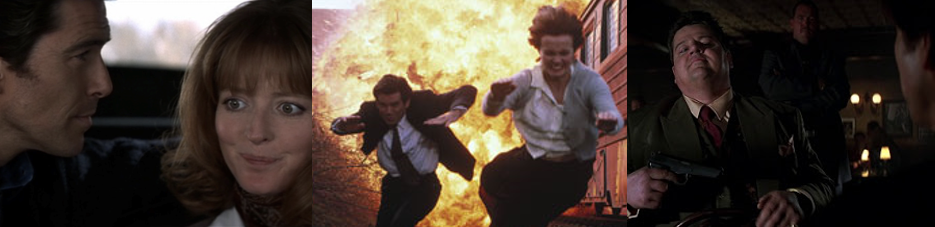
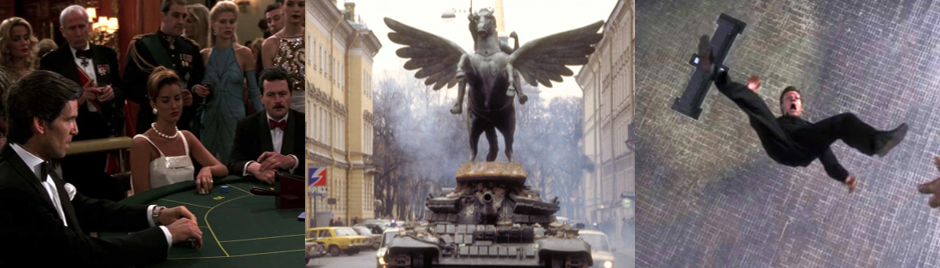
Unlike a lot of Bond movies, GoldenEye’s cold open actually plays into the films larger plot. The movie begins nine years ago with Bond and his partner and friend, Alec Trevelyan/006 (Bean), infiltrating a facility in Russia. This establishes, first and foremost, their unique relationship, which is base don a lot of witty banter and sayings, and Bond’s hatred of Colonel Arkady Grigorovich Ourumov (Gottfried John) after Ourumov executes 006 in cold blood. It’s a thrilling opening sequence, shot in such a way as to slowly acclimatise us to this new Bond (we only see Brosnan’s face after he has infiltrated the facility, building up tension to the reveal of the new actor) and to show that he’s just as bold, witty, and adaptable as ever as he’s able to commandeer a motorcycle and a plane and even pull himself out of what is obviously a deadly free fall.

Bond’s methods and attitude may be seen as antiquated but they’re no less effective.

When we pick up with Bond nine years later, MI6 is in the midst of an administrative shake-up. The new M (Dench) is a woman and is generally perceived by Bond and some of his co-workers (specifically Bill Tanner (Michael Kitchen), M’s chief of staff) to be unfit for the job due to her predication for statistical analysis rather than Bond’s more traditional, proactive methods of action. Their relationship is frosty, at best, and openly explored in a candid discussion between the two in which M confronts Bond over his judgements and isn’t afraid to tell him exactly what she thinks of him. To M, Bond is a “relic of the Cold War” whose methods are out-dated and borderline dangerous in the modern age of espionage. However, by airing their grievances to each other, they develop a mutual respect and admiration in which Bond appreciates M’s candour and M puts her trust in Bond to do what he does best and investigate the GoldenEye satellite. Indeed, Bond’s methods are a significant plot point in the film. H seduces the girl sent to psychologically evaluate him due to his lack of interest in MI6 protocol and his tendency to shoot first, ask questions later, and bulldoze into any situation, wrecking vehicles in the process, is frequently chastised by Natalya Simonova (Scorupco). Indeed, even for KPG figureheads like Valentin Zukovsky (Robbie Coltrane) criticise Bond for continuing to live in the past and work for MI6. Yet, as you might expect, Bond’s unique approach to his work, despite him continually being a “sexist, misogynist dinosaur” gets results and, despite his critics, he is capable of subterfuge and investigatory techniques as well, as seen in his investigation into the Tiger Helicopter and Xenia Onatopp’s (Janssen) links to the Janus Syndicate, all of which are based on his instincts but turn out to be valid lines of enquiry.

While not a typical Bond Girl, Natalya shines through her intelligence and headstrong nature.

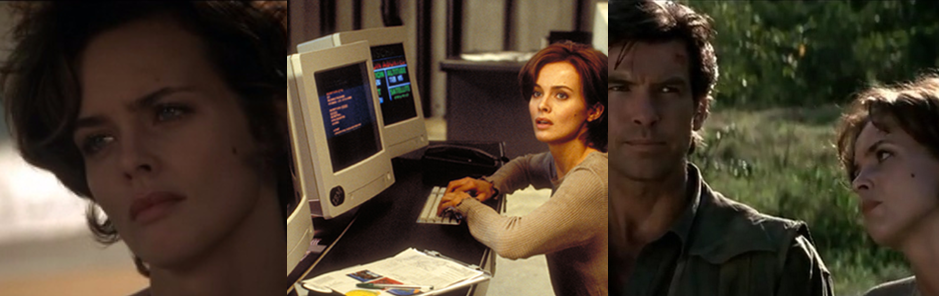
During Bond’s investigation of the devastation at Severnaya, he inevitably crosses path with Natalya, a programmer from the Severnaya facility who witnessed Ourumov and Xenia killing all of her co-workers, firing the weapon, and stealing the GoldenEye firing key for the remaining satellite. Unlike a lot of Bond Girls, Natalya is just a regular and, comparatively, unremarkable young woman. She’s basically a civilian, one who is scared out of her wits during the attack and continuously disgusted with the killing. She also questions Bond’s motives and his cold, clinical approach to his work and, as a result, provides a brief glimpse into his more vulnerable, human side. However, while she is somewhat lacking in fortitude and is held hostage a bit too often for my liking, Natalya is an extremely capable and intelligent Bond Girl: she is headstrong, ordering Bond about at various points and forcing him to take her along on his mission. Her technical ability is directly responsible for tracking the location of Janus; and, thanks to her experience with the satellite, she’s able to reprogram and reposition it even despite the snide remarks regarding her ability by her former colleague, the lewd and reprehensible Grishenko (Cumming).

Xenia and Ourumov represent the Janus Syndicate and are sadistic killers.

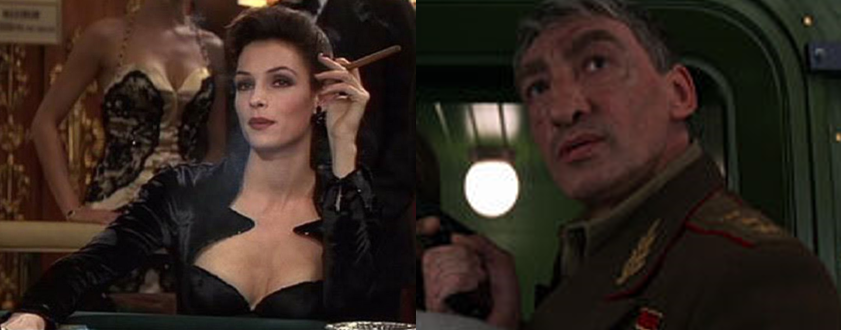
Of course, Natalya isn’t the only Bond Girl in the film. Xenia is quite a unique femme fatal for Bond; shrewd, alluring, and intelligent, she’s no mere henchwoman and is, instead, a highly sexually charged and dangerous adversary capable of seducing men into bed and crushing their ribs with her powerful thighs. She’s also a sadist who revels in the thrill of killing, literally getting off on it at various points throughout the film, and is more than a match for Bond as an intellectual and physical opponent. The Janus Syndicate is rounded out by Ourumov himself; a traitor to his own country, Ourumov aspires of being the next “iron man of Russia” and is an abrasive, egotistical man. However, while he seems slightly unhinged at the best of times and is a pivotal antagonist in many ways, Ourumov is reduced to little more than a henchman for Janus who uses his military rank and position to acquire the GoldenEye access codes.  

Bond’s former friend and partner turns out to be a traitor looking for vengeance for his people.

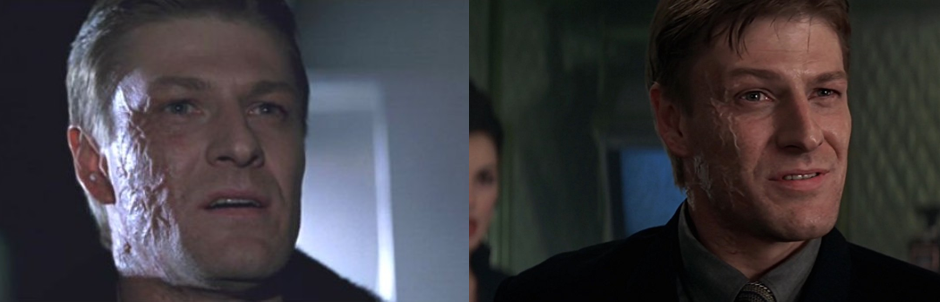
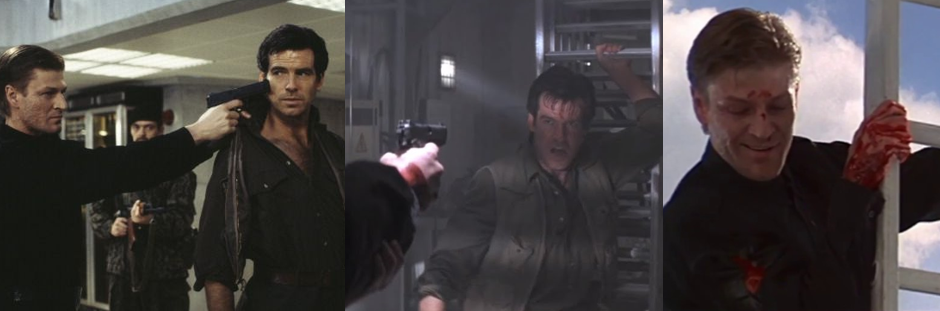
As for the headman of the Janus Syndicate, the film goes out of its way to paint the arms dealer and terrorist as a mysterious and enigmatic figure who hasn’t been seen and about whom very little is known except for the fact that he’s a “Lienz Cossack”. Of course, it turns out to be Alec Trevelyan, who faked his death but has been left horribly scarred on one side of his face after being caught in the explosion at the facility. After witnessing the cruel treatment of his people and the deaths of his family after the British betrayed them following the Second World War, Alec has been scheming for years to take revenge for this betrayal, beginning with infiltrating MI6 and culminating in a plan to destroy the British economy. Of course, Bond isn’t exactly without a degree of support during his mission. As always, Q (Desmond Llewelyn) is on hand to talk Bond through his new gadgets (nothing massively fancy; a belt that fires a high tension wire and an exploding pen, though Q Branch is full of fun little gags and mishaps in the background) and share some banter with him. Rather than being supported out in the field by long-standing Bond ally Felix Leiter (Various), Brosnan’s Bond is aided by Jack Wade (Joe Don Baker), who is a far more jaded and pragmatic CIA operative, and is able to convince Valentin to lead him to Janus by “[appealing to] his wallet”.

The Nitty-Gritty:
If there’s a downside to GoldenEye, especially for long-time James Bond fans, it’s probably the lack of any real car-based shenanigans. Bond never gets to use any of the gadgets and gizmos Q briefs him on in his fancy new BMW and, aside from the opening car chase against Xenia, there’s no real traditional car chases or car-based action. I don’t really mind this, though, to be honest as I’m not really a car guy and my enjoyment of a film isn’t predicate don the presence of a car chase.

Bond’s mission is a lot more grounded than usual but no less global in its scope.

Plus, GoldenEye more than makes up for it was Bond’s exhilarating and highly amusing jaunt through St. Petersburg in a tank! Following a thrilling escape from the archives, Bond is forced to commandeer a Russian T-54/T-55 tank to pursue Ourumov (who has taken Natalya hostage) through the streets of St. Petersberg. It’s very much a “Bond Moment” but, like much of the film, isn’t quite as over the top as some of Roger Moore’s antics (though I’m fairly certain one man can’t drive a tank in the way that Bond does) and culminates in Bond successfully bringing Janus’ armoured train base to a halt with a single shell. In true Bond tradition, GoldenEye’s plot takes Bond all over the world; Bond’s mission takes him to Monte Carlo, Russia, and Cuba, with all three destinations being starkly contrasted to each other (he spends the majority of his time in Monte Carlo in a casino, St. Petersberg is portrayed as a cold (if architecturally beautiful) country still recovering from the Cold War, and Cuba is a lush, luminous jungle). Similarly, GoldenEye is full of practical stunts and effects, from model shots used during the destruction of the Severnaya base and the raising of Janus’s antenna cradle to actual tanks, trains, and other vehicles all being involved in explosive sequences that lend a real credibility and gravitas to Bond’s otherwise extravagant actions. In fact, the only effects scenes that are a bit questionable are Bond’s dive into the plane at the start of the film and the shot of Boris’s flash-frozen form when he meets his fitting end.

Xenia’s aggression, physicality, and thighs of steel make her a formidable opponent for Bond.

Action is paced out wonderfully, though, with plenty of shoot-outs and a fights taking place to spice things up and Bond even escaping from an impossible death trap within a helicopter. While I still don’t get why that random deckhand attacked Bond on the frigate, the towel gag afterwards always makes me laugh, and the many confrontations between Bond and Xenia are a particular highlight. Thanks to his misogynistic nature, Bond has no compunction about fighting a woman, though Xenia’s physicality and aggression is enough to put him on the back foot; in the end, he’s able to bring her to a fitting end by causing her to be crushed to death against a tree.

Janus was probably Bond’s most personal villain yet due to his close relationship with 007.

Though Bond drops a characteristically witty quip regarding this, and many of the other events in the film, GoldenEye is one of the more personal missions for Bond. Taking his name from the two-faced Roman God, and having worked alongside 007 for years, Janus is a cold, calculating, and deeply personal villain for Bond. Thanks to his background as a Lienz Cossack, Janus has a propensity for deception, betrayal, and lies and it’s clear that Bond is deeply affected by Alec’s treachery even as he tries to compartmentalise his feelings on the matter. Alec is, effectively, Bond’s dark reflection and he knows exactly how to hurt him, which buttons to press, and how to counteract his methods, immediately taking his watch, defusing his mines, and fully aware that Bond’s Achilles’ Heel is his affection for women. All of this culminates in a fittingly brutal and visceral final fight between the two as they match each other blow for blow and shot to shot (Alec even taunts Bond with the claim that he (as in Alec) was “always better”) during their climatic chase/fight across the antenna cradle. Ever since he revealed his identity to Bond, Janus continually questions Bond’s unwavering loyalty to the mission and his country rather than his friend and, in the end, Bond emphatically drops his old comrade-in-arms to his death not for England but out of personal vindication for himself.

The Summary:
GoldenEye was the first Bond film I ever watched all the way through and that is solely because of my enjoyment of the videogame adaptation. I had been aware of Bond before GoldenEye but never been that interested in the franchise but GoldenEye changed all that with its slick, stylish, and entertaining presentation and story. Brosnan was the Bond of my generation and, even now, I consider him to be one of the best; charming, sophisticated, and extremely witty, his Bond was like an amalgamation of all of his predecessors as he had the same charisma and wit as Moore but could also be gritty and rugged like Connery and Dalton (…he was also a man, like George Lazenby). The subtext of Bond being an antiquated resource whose time has long since passed is interesting and is used to juxtapose Bond’s unique, somewhat blunt approach to his work against more modern, technologically orientated times. Sadly, this plot point didn’t really appear in Brosnan’s subsequent Bond films but it did crop up again in later Daniel Craig movies and is an intriguing inclusion since it shows that, while all the technology and resources of the modern age are useful, nothing beats the good, old-fashioned, hands-on approach. GoldenEye excels through its polished presentation, memorable theme song and score, and some tremendous performances all around; Sean bean makes for an equally charismatic and vicious antagonist, one far more personal than the majority of Bond’s previous villains, who serves as a dark reflection of Bond since he was his friend, partner, and is fully aware of all of MI6’s training and protocols to make him more than a match for 007. Action and stunts are far more subdued this time around, which helps to ground the film and reintroduce Bond as a more serious and realistic character and franchise while still being over-the-top and fun throughout. Endlessly quotable and entertaining from start to finish, GoldenEye remains one of my favourite Bond films (possibly my absolutely favourite) and was a fantastic return to prominence for the character and the franchise.

My Rating:

Rating: 5 out of 5.

Fantastic

Are you a fan of GoldenEye? Where does it rank against the other James Bond films for you? What did you think to Pierce Brosnan’s debut and portrayal of the character? Did you like the casting of Judi Dench as M and the subtext regarding Bond’s outdated ways and attitudes? What did you think to Sean Bean’s inclusion as the villain and his inevitable death? Did you ever play the videogame and, if so, how do you think it works as an adaptation of the film? Which Bond actor, film, story, villain, or moment is your favourite? How are you celebrating Global James Bond Day today? Whatever you think about GoldenEye, or James Bond in general, feel free to leave a comment down below.

10 FTW: Dark Doppelgängers

10FTW

If there’s one thing any hero can count on it’s that, at some point in their illustrious career, they’re going to have to face off against themselves. Sometimes, like with the classic Demon in a Bottle (Michelinie, et al, 1979) this is a metaphorical battle against their own inner demons and foibles but. More often than not, it’s a literal battle against an evil version of the themselves. Sometimes they’re from another world or a parallel dimension, perhaps they’ve used stolen technology or been cloned from the hero; other times, they are of the same race or seek to replicate the hero’s powers and usurp them. Whatever the case, I’ve always enjoyed a good doppelgänger, generally because they’re just like the hero but dark and edgy or more violent and, being as I grew up in the nineties, I like that kind of stuff. An evil version of a hero can help to elevate the hero by allowing them to overcome their failings and, sometimes, will even edge out of villain territory and become either a full-fledged hero in their own right or a line-towing anti-hero. In either case, today I’m going to run through ten of my favourite dark doppelgängers; evil versions of heroes who are just cool through and through.

10DarkLink
10 Dark Link / Shadow Link

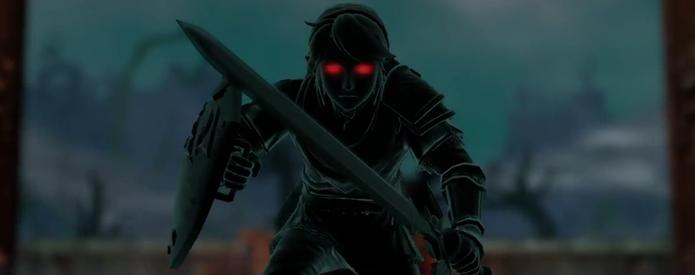
First appearing in Zelda II: The Adventure of Link (Nintendo EAD, 1987) this shadowy version of the heroic Link gets the number ten spot purely because he isn’t really much more than a glorified henchmen for main series villain, Ganon. In true Peter Pan (Barrie, 1902) fashion, Dark Link often takes the form of a pitch-black shadow or a dark, distorted reflection and is able to perfectly mirror all of Link’s attacks and abilities. In recent years, he’s appeared more as a phantom and been given more definition but he’s generally relegated to being a sub-boss for a game’s dungeon and never the true threat to the land of Hyrule.

9Wario
9 Wario

Debuting in Super Mario Land 2: 6 Golden Coins (Nintendo R&D1, 1992), this bloated, disgusting, twisted version of Mario is everything Nintendo’s cute and cuddly mascot isn’t: he’s rude, crude, mad, bad, and dangerous. Where Mario jumps on blocks and Koopa heads to save a delightful Princess, Wario barges through walls and tosses his enemies at each other to steal, loot, or recover treasure. Wario even has his own version of Luigi, Waluigi (who exists more for the sake of existing, I would argue) but, while he crashed onto the scene in a big way by taking over Mario’s castle, Wario has softened over the years. He’s transitioned from an anti-hero and begrudging ally to simply a master of ceremonies as Nintendo moved him away from being the star of his own series of unique games and more towards party games and mini games.

8 Black Adam

Created by Otto Binder and C. C. Beck, Teth-Adam was originally gifted the magical powers of the wizard Shazam and chosen to be his champion, Mighty Adam. After being bewitched and corrupted, however, Adam was stripped of his powers and withered away to dust but, centuries later, was reborn when his ancestor, Theo Adam kills Billy Batson’s parents to lay claim to Adam’s power. Black Adam possesses all of the same powers as Captain Marvel/Shazam but is also gifted with a pronounced mean streak and tactical genius; he briefly reformed for a time, even joining the Justice Society of America and building a family of his own, but his quick temper and deep-seated contempt for humanity generally always drives him into a murderous rampage that few heroes can hope to oppose.

7Janus
7 Alec Trevelyan / Janus

Appearing in what is still probably the best James Bond film ever made, GoldenEye (Campbell, 1995), Alec Trevelyan (masterfully portrayed by Sean Bean) was one of MI6’s top 00 agents. However, wanting revenge against the British government for the death of his family and comrades during World War Two, Trevelyan faked his death and formed a criminal organisation named after his new alias, Janus. Trevelyan makes the list because he’s everything James Bond (Pierce Brosnan) was but twisted towards villainy; he and Bond were close friends and partners and his “death” weighed heavily on Bond’s conscious for nine years, making his betrayal even more sickening. In facing Trevelyan, Bond not only faces his biggest regret and mistake but also himself and what he could easily become if the fates were different.

6Slash
6 Slash

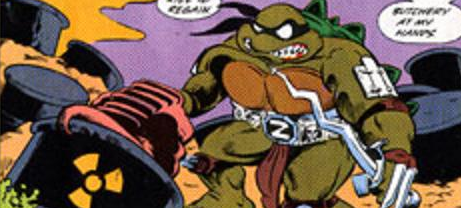
First appearing in ‘Slash, the Evil Turtle from Dimension X’ (Wolf, et al, 1990), Slash was originally an evil violent mirror of the heroic Teenage Mutant Ninja Turtles who often appeared in Turtles videogames and merchandise as a sub-boss for the Turtles to fight. For me, his most iconic look is when he’s sporting a black bandana, some spiked apparel, razor-sharp, jagged blades, and a heavy, armour-plated, spiked shell. Slash’s look and characterisation have changed significantly over the years as he’s gone from a somewhat-eloquent villain, to a rampaging monster, to an ally of the Turtles depending on which version you’re reading or watching.

5TheMaster
5 The Master

Originally (and, perhaps, most famously) portrayed by Roger Delgado, the Master was a renegade Time Lord who rebelled against his overbearing masters to freely wander through time and space. While this closely mirrors the story of his childhood friend, the Doctor (Various), the Master was the Doctor’s exact opposite: evil where the Doctor was good, malicious where the Doctor was kind, and wanted nothing more than to extend his lifespan, conquer other races, and destroy (or break) his oldest rival. Though sporting a deadly laser screwdriver and able to hypnotise others, the Master gets the number five spot simply because he’s been overplayed to death in recent years. Time and time again we’ve witnessed the Master at the end of his regeneration cycle, or destroyed forever, only for yet another incarnation to appear and wreck more havoc. He’s even redeemed himself and turned good before, and yet still returns to his wicked ways to plague the Doctor even when his threat should long have ended.

4 Metal Sonic

Speeding onto the scene in Sonic the Hedgehog CD (SEGA, 1993), Metal Sonic stands head-and-shoulders above all over robot copies of Sonic the Hedgehog simply by virtue of his simplistic, bad-ass design. A fan favourite for years, Metal Sonic has made numerous appearances in multiple Sonic the Hedgehog (Sonic Team/Various, 1991 to present) videogames, comic books, and other media. Sporting a sleek, aerodynamic design, chrome plating, and a massive jet engine on his back, Metal Sonic did something no one had done at the time of his debut and not only matched Sonic’s speed, but outmatched it on more than one occasion. While Sonic CD is far from my favourite Sonic title, it’s hard to downplay the iconic race against Metal Sonic in Stardust Speedway or his impact on the franchise.

3ReverseFlash
3 Reverse-Flash

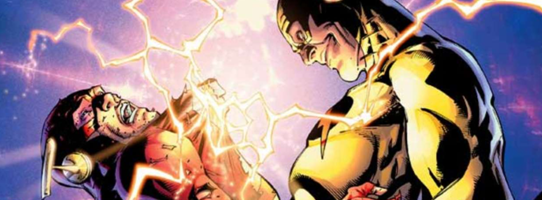
Versions of the Reverse-Flash have plagued DC Comics’ speedsters over the years, most notably Edward Clariss (The Rival), Eobard Thawne (Reverse-Flash), and Hunter Zolomon (Professor Zoom). Sporting a yellow variant of the classic Flash suit and shooting off sparks of red lightning, the Reverse-Flash is generally characterised as using his powers to torture the Flash out of a twisted desire to make him a better hero. Reverse-Flash’s threat is increased by his tendency to travel through time, evading death and plaguing different generations of the Flash; Professor Zoom was even able to manipulate the Speed Force to jump through time and appear to be faster than the Flash. Reverse-Flash has also been the cause of numerous agonies in the lives of multiple Flashes; he’s killed or threatened those closest to him (including Barry Allen’s mother) and delights in bringing the Flash to the brink of his moral code.

2JudgeDeath
2 Judge Death

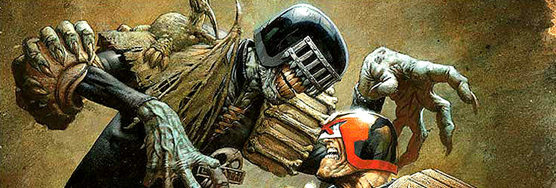
Hailing from an alternate dimension where life itself is a crime (as crimes are only committed by the living), Judge Death is the dark counterpart to no-nonsense lawman Judge Dredd. First appearing in 1980 and created by John Wagner and Brian Bolland, Judge Death assumes the appearance of the Grim Reaper and uses his demonic powers to kill with a touch. Rocking a metal design (recently evoked by the Batman-Who-Laughs, another contender for this list), Judge Death takes Dredd’s uncompromising enforcement of the law and ramps it up to eleven. Alongside his fellow Dark Judges, he once slaughtered over sixty million citizens of Mega City One and, despite his corporeal form being destroyed or trapped, has returned time and time again to bring judgement upon the living.

1 Venom

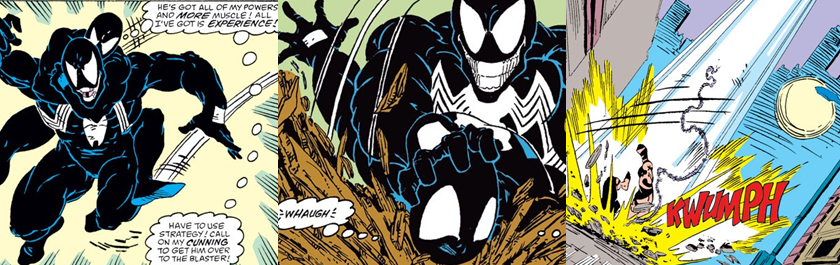
Perhaps the most popular (or, at least, mainstream) of all dark doppelgängers is the alien symbiote who, when bonded to Eddie Brock (or others), is known as Venom. Created by David Michelinie and Todd McFarlane, Venom began life as a black alien costume that absorbed Spider-Man’s powers and abilities and sought to permanently bond with him. When Spidey rejected it, it turned to Brock and, through their mutual hatred of Spider-Man, Venom was born. Sporting a super simple design (pitch-black with a white spider logo, emotionless white eyes, deadly fangs and claws, and a long, drooling tongue), Venom plagued Spidey for years. Immune to Spidey’s Spider-Sense and sporting all his powers, but double the strength and viciousness, Venom has evolved from a sadistic villain, to an anti-hero, to all-out hero over the years but, thanks to their equally violent offspring, has been the source of much death and woe to Spider-Man since day one.

0CrimeSyndicate

What dark doppelgänger is your favourite? Were there any I missed off this list, or do you, perhaps, feel the evil copy is a played out trope? Drop a line in the comments and pop back for more lists and articles.