Movie Night [00-Heaven]: Casino Royale (2006)


October 5th is officially recognised as “Global James Bond Day” so I’m dedicating some time to revisiting some firsts in the long-running franchise.


Released: 16 November 2006
Director: Martin Campbell
Distributor: Sony Pictures Releasing
Budget: $102 to 150 million
Stars: Daniel Craig, Eva Green, Mads Mikkelsen, Jeffrey Wright, Giancarlo Giannini, and Judi Dench

The Plot:
Newly promoted 00 agent James Bond/007 (Craig) must set his ego aside to play poker against Le Chiffre (Mikkelsen), a terrorist banker desperate to recoup his losses, only to find his loyalties strained when he falls for no-nonsense British Treasury agent Vesper Lynd (Green).

The Background:
Although Sean Connery’s immortal and iconic performance brought the super spy franchise to life, James Bond was the brainchild of writer Ian Fleming and heavily inspired by his years as a Navy intelligence officer. Bond first appeared in the 1953 novel Casino Royale, which was initially adapted into a one-hour CBS television adaptation, a 1958 South African radio drama, a 1957 comic strip, and finally a bizarre 1967 comedy. Fleming selling the rights to all his Bond novels except Casino Royale (and, most infamously, 1961’s Thunderball) led to years of rights disputes, which wouldn’t be resolved until 1999. Writers Neal Purvis and Robert Wade initially hoped to return Bond to his roots through popular Bond actor Pierce Brosnan, feeling the franchise had gotten too fantastical. However, when negotiations broke down, director Martin Campbell returned to helm a reboot, bringing writer Paul Haggis to retool the script accordingly. Clearly inspired by The Bourne Identity (Liman, 2002), the filmmakers sought to make a grounded, gritty spy thriller and considered numerous actors to take over the role before settling on Daniel Craig, which caused some ridiculous controversy at the time and Craig later came to despise the role. Despite being a reboot, Judi Dench returned as “M” to help with the transition and the film purposely subverted many expectations of the franchise. Although some criticised the poker scenes, the opening parkour sequence was widely praised and Casino Royale’s spectacular car crash stunt broke records at the time. Grossing nearly $620 million, Casino Royale was both a massive hit and the highest-grossing Bond film for a time. Critics lauded Bond’s reinvention, Craig’s rugged performance, and the new insights into Bond’s character and background. Widely regarded as one of the best Bond movies, Casino Royale successfully reinvented the character and reinvigorated the franchise, and led to four more, largely praised outings for Craig’s Bond.

The Review:
For the first time in Bond’s mainstream film career, Casino Royale starts the character from the beginning, presenting a black and white pre-title sequence where Bond earns his promotion to 00 status by claiming his necessary first two kills. While the first is an ugly affair that leaves Bond shaken, his execution of corrupt MI6 Section Chief Dryden (Malcolm Sinclair) is a far more dispassionate act, though both set the tone for Craig’s gritty, far less refined version of the character. Bond is noticeably rougher around the edge compared to his veteran predecessors, with even M lamenting his reckless ways and outrageous ego. Bond has little regard for protocol, breaking into M’s private home and even logging into MI6 systems using her credentials, dumbfounding and frustrating M. Seen as a “blunt instrument” who needs to consider the “big picture” rather than executing small-time bombers like nimble Mollaka (Sébastien Foucan), Bond immediately risks punishment for his insolence and struggles to reconcile with M’s orders that he set aside his ego and act for the greater good. Having been raised as an orphan at the grace of someone else’s charity, Bond carries a large chip on his shoulder, giving him an air of conceited arrogance that quickly turns to blind rage when he doesn’t get his way or is outdone at poker or in a fight. Yet, paradoxically, Bond has a rugged charm; he always says, “thank you”, rises when greeting or saying farewell to people, and easily appeals to women with his piercing blue eyes, self-confidence, chiselled physique, and wry smile. Naturally, Bond’s pursuit of women is purely for a sexual thrill or to get intel on his targets, but he also only pursues married women to “keep things simple”, though he also adopts a stoic demeanour concerning their fates.
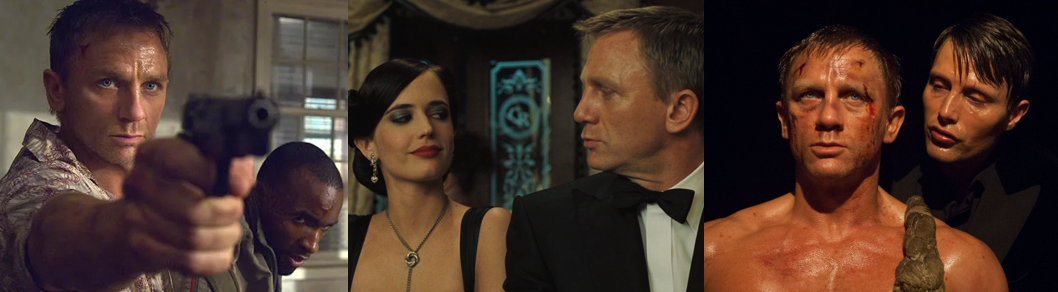
Young, gritty Bond must set aside his ego to safeguard the greater good through a poker game.

There’s certainly no questioning Bond’s commitment. He leaps into action, literally charging through walls and chasing his targets by any means necessary, though his methods are often questionable. After recovering Mollaka’s cell phone and tracing a mysterious text (“ELLIPSIS”), Bond discovers another would-be terrorist (Claudio Santamaria) targeting a prototype aircraft, working on hunches and intuition to prevent catastrophe and consequently driving Le Chiffre to desperation. Though annoyed when M fits him with a tracking implant, Bond’s sure of his chances at besting the banker at the titular casino. We get a taste of Bond’s card skills early on when he humiliates Alex Dimitrios (Simon Abkarian), winning his Aston Martin and seducing his wife (Caterina Murino), and giving an overview of the game to a sceptical Vesper while travelling to Montenegro. While poker has always been in Bond movies, it’s at the forefront here and shot like a tense game of cat and mouse as Bond tosses his chips, reveals his hand, and glares at Le Chiffre, daring him to test his luck. Admittedly, I have very little understanding of the game, but these scenes have always been a highlight for me. Bond focuses on Le Chiffre, sacrificing his winnings to learn the banker’s “tell” and frustrating Vesper with his arrogance. Bond clearly knows what he’s doing, but he lets his ego to get the better of him and ends up wiped out. When Vesper angrily refuses to stake his buy-in, Bond prepares to go against M’s strict orders to bring Le Chiffre in alive, but is stopped by Felix Leiter (Wright) of the Central Intelligence Agency (CIA). Leiter agrees to fund him in return for Le Chiffre since Felix is struggled to hold his own in the game.
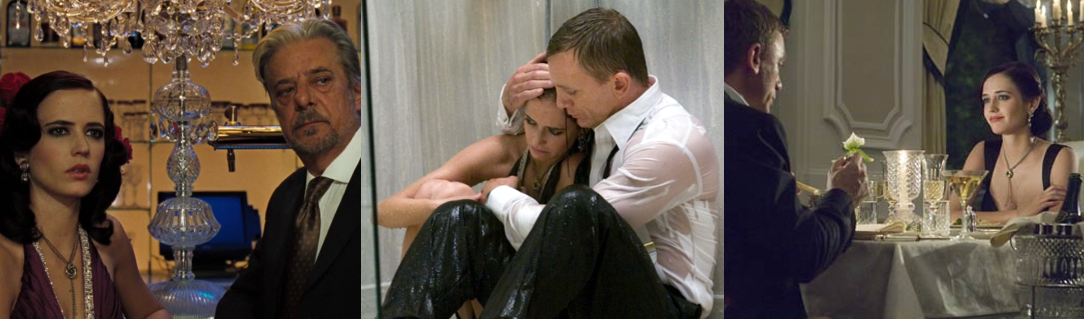
Though sceptical of the plan and clearly hiding something, Vesper soon succumbs to Bond’s allure.

M’s exasperation and scepticism of Bond are echoed by Vesper, a stunning and forthright Treasury Agent who’s unconvinced by the plan to bankrupt Le Chiffre. Bond shares with her some of the analytics and mathematics involved in the game, but primarily emphasises that it’s about reading people, quickly surmising that Vesper’s an orphan with a prickly demeanour who’s struggling to get over a lost love. Unimpressed, Vesper showcases her own insight into Bond’s character, proving herself his intellectual equal and further one-upping him by providing a tailored dinner jacket so he can look like the man he’s only pretending to be. Though Vesper sees Bond’s ego as a liability, she’s instrumental in saving his life after Le Chiffre poisons him and Bond, who enjoys their rapport as much as Vesper is irritated by his arrogance, comforts her after she witnesses him brutally throttle Steven Obanno (Isaach de Bankolé). After Vesper is captured following Le Chiffre’s loss and Bond endures unimaginable torture to protect her, Vesper’s opinion of Bond cools as much as his stoic armour is stripped, leading Bond to resign and pursue a passionate romance with Vesper to save himself from a violent and cruel lifestyle. Despite the horrendous damage to his nether regions, Bond miraculously recovers and whisks Vesper to Venice after being won over by her fortitude and beauty. Unfortunately for Bond, his uncanny ability to read people is blinded by Vesper and he’s caught completely off-guard when she betrays him and takes the money, handing it to one-eyed Adolph Gettler (Richard Sammel) of the mysterious “Organisation” behind Le Chiffre. Indeed, while Bond quickly accuses René Mathis (Giannini), his otherwise indispensable Montenegro contact, of betraying him to Le Chiffre, Bond misinterprets Vesper’s cagey nature as grief or heartbreak and doesn’t realise she’s been compromised until it’s too late.
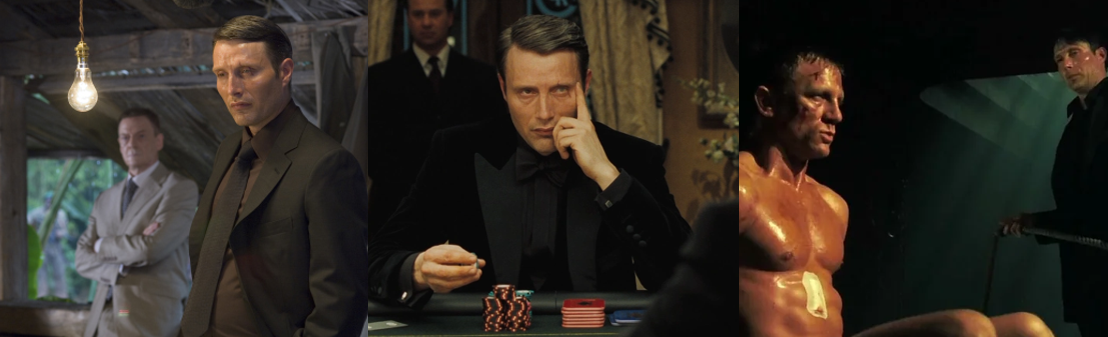
Cruel banker Le Chiffre desperately puts his poker skills to the test to recoup his losses.

A cold, calculating mathematician, Le Chiffre is a highly skilled poker player who takes funds entrusted to him by unscrupulous individuals like Obanno and “invests” it to fund wars, rebellions, and terrorism for the Organisation. Le Chiffre bets against the stock market and plans to double-down by destroying a prototype aircraft, only to lose everything thanks to Bond’s interference and, in desperation, use the high stakes poker game to recoup his losses. A grim individual who cares little for his lover (Ivana Miličević), uses an inhaler, and occasionally weeps blood from his messed-up eye, Le Chiffre is anxious to play and delights in taunting Bond with bluffs and fake tells and information from Mathis. Despite Le Chiffre’s best efforts, Bond keeps coming back and even Bond killing Obanno only increases Le Chiffre’s desperation, forcing him to kidnap Vesper and lure Bond into a trap. Le Chiffre threatens to kill Vesper and rob Bond of his manhood unless he gets the winnings, fully aware that MI6 will offer him sanctuary since they want what he knows, only to be summarily executed for his failures by the mysterious Mister White (Jesper Christensen). Mr. White’s shady Organisation is merely hinted at in Casino Royale but cast a shadow over the film as Le Chiffre is such an enigmatic and cruel-hearted character that I really feel his loss after he’s killed. From there, though, the film discusses the nature of trust as Bond order Mathis to be interrogated and then reels when Vesper betrays him. However, I think it might’ve been better to keep Le Chiffre alive for the finale and have Bond shoot him through the eye with a nail gun rather than Gettler as it would’ve been equally fitting considering the banker’s dodgy eye.

The Nitty-Gritty:
Casino Royale presents a very different Bond, one far younger and less refined than we’re used to. Said to be ex-Special Air Service (SAS) and orphan, Bond is a somewhat reckless and disobedient recruit for MI6, who barges in with a distinct lack of finesse and delights in rubbing people the wrong way. His charm is based on his rugged good looks and arrogant swagger, which have little affect on M and are largely deflected by Vesper, who both push for him to be more professional and emotionally detached regarding his work. Ironically, Bond is very emotionally detached in his relationships, preferring to use and dispose of people on a whim and even turning on his close allies when he senses they’re not to be trusted. Reboots were seeing a resurgence at this time and I remember people stupidly thinking Casino Royale was a prequel to Dr. No (Young, 1962) despite it clearly being set in the modern day and featuring a very different Bond. Judi Dench’s presence doesn’t help, to be fair, though M is quite different to before, taking a firmer and more demanding approach with Bond, whom she disciplines like an unruly child. Casino Royale also subverts many of the Bond tropes, incorporating the opening gun barrel sequence into the narrative, having him not “give a damn” about his Martini, recontextualising how he acquired his Aston Martin, and saving the “Bond… James Bond” for the final shot. Most crucially, for me, is the inclusion of easily the best Bond theme ever, “You Know My Name”, a rocking earworm from the late, great Chris Cornell that’s sampled throughout the film alongside more traditional Bond motifs as he slowly develops into something more recognisably Bond.
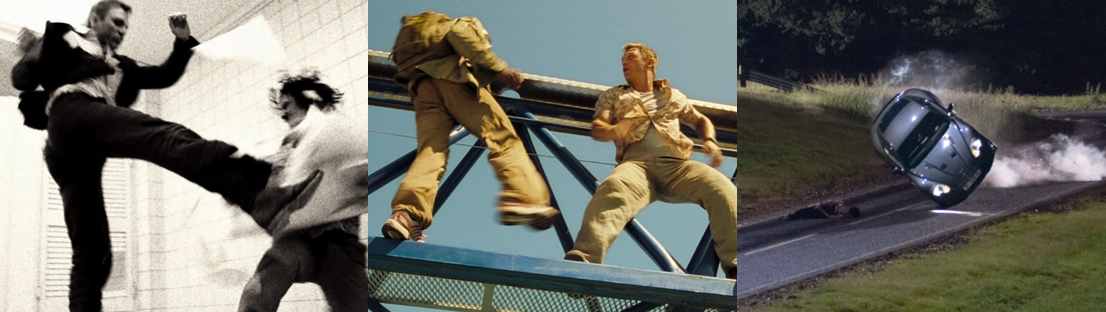
A gritty, realistic makeover results in some of the most brutal and thrilling action sequences of the series.

Considering how over the top Bond’s adventures had become at the time, it was both startling and refreshing to see Casino Royale ape The Bourne Identity and present a grounded, far grittier Bond and his action sequences. Craig’s Bond is a messy brawler who roughly tussles with his foes, landing hard, crippling blows and absorbing more damage than any of his predecessors. Bond is generally battered and bloody after every scrap and both traumatised by the violence and relishes it, assuming a stoic demeanour whenever he kills. As if the opening bathroom brawl wasn’t enough, Casino Royale delivers one of the most memorable sequences of the franchise a Bond relentlessly chases Mollaka through a Madagascan construction site. While Mollaka deftly parkours about, Bond barges through walls, steals vehicles, and takes any shortcuts he can to nail his man, earning M’s ire for his short-sighted, brutish approach. Vesper is left traumatised after witnessing Bond fright machete-wielding Obanno, which sees Bond tumble down stairs and choke the life about of his foe. Of course, we get some high-octane chase sequences too, like Bond’s mad dash through a Miami airport to intercept Le Chiffre’s bomber, which sees cars being blasted away by a passing aircraft, and his desperate pursuit of Vesper, which ends with his car careening over. The finale sees Bond fighting through a sinking building in Venice, gunning down Gettler’s goons and worsening the situation to throw his enemies off-balance. Indeed, while he’s not as suave as his predecessors, Bond is still impressively adaptable and uses his environment wherever possible since his ego won’t allow him to lose. Since “Q” (Ben Whishaw) wouldn’t be introduced for some time and Casino Royale takes a very realistic and back-to-basics approach, Bond doesn’t have many fancy gadgets beyond simple stuff like a defibrillator and earpieces, though he is still packing his signature Walther PPK.
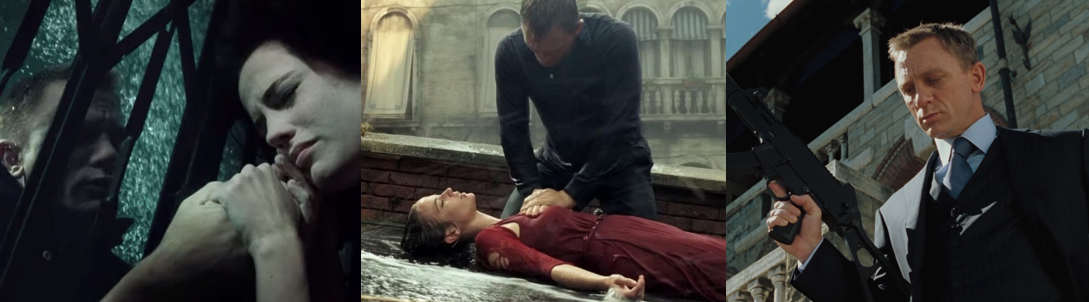
Devastated by Vesper’s betrayal and death, Bond takes solace in his grim-faced demeanour,

Despite almost dying, Bond outplays Le Chiffre and wins the poker game, forcing Le Chiffre to kidnap Vesper and brutally torture Bond, only for Mr. White to execute him for the Organisation. After recovering, Bond tries for a normal life with Vesper and takes a passionate getaway to Venice. However, Bond is disturbed when M asks about the winnings and he finds the funds are being withdrawn from a nearby bank. Realising he’s been duped, Bond tails Vesper to a secret meeting where she hands the cash to Gettler. Blinded by betrayal, Bond is easily spotted and a spectacular firefight ensues that sees an abandoned Venetian building crumble and sink into the Grand Canal during the chaos. Naturally, Bond triumphs in his fight to Vesper, offing Gettler with a nail gun, only to find she’s locked herself in an elevator cage and refuses to be rescued. When she plummets into the water, a desperate Bond follows, hammering and clawing at the door to reach her, only for Vesper to drown before his eyes. Though Bond tries to resuscitate her, it’s a futile effort and he’s left visible distraught by her seemingly senseless death. In the aftermath, Bond rescinds his resignation and dispassionately dismisses Vesper’s death and importance to him, only to learn from M that Vesper was being blackmailed by the Organisation to keep her lover safe and that she made a deal to spare Bond despite knowing it would probably lead to her death. Although his heart is already hardening and his stoic demeanour is already rebuilding, Bond finds Vesper left details of Mr. White’s location and promptly visits to his opulent estate, wounding him with an unnecessarily large rifle and apprehending him…

The Summary:
While I was a huge fan of Pierce Brosnan’s Bond and disappointed to see him replaced at the time, I was beyond excited for Casino Royale and loved it back in the day. The film was a superb shot in the arm for the franchise and finally did away with the cartoonish outlandishness that had dogged much of the series, presenting a gritty, rugged Bond set very much in the present day and a realistic world. Craig’s Bond is also one of the more accurate to the source material, being somewhat cruel and cold-hearted at times and a stone-cold killer when he needs to be while still being polite and enjoying the finer things in life. I loved that Bond was so vulnerable here, emotionally and physically. His reaction to killing, the bloody aftermath of his fights, and the sheer look of confusion, anger, and despair on his face when he loses are all very raw and palpable and go a long way to show why Bond is the way he is in future movies. Casino Royale’s action sequences remain some of the best in the franchise and I really enjoyed seeing Bond barge his way through situations with little to no finesse, saving his more subtle actions for the surprisingly engaging poker sequences. I also liked Le Chiffre, who was motivated by fear and desperation and stole every scene so effectively that I was dismayed when he was killed. The romance between Bond and Vesper is also very engaging as she’s very much his equal and not someone who suffers fools gladly, yet she can’t deny her attraction and admiration for Bond, despite how pig-headed he can be. I do wish the film had committed to the do-over and replaced Judi Dench as this still seems like a strange choice for a reboot, but I did like how this M had no time for Bond’s recklessness and constantly disciplined him. Nostalgia is a beautiful thing but Casino Royale is still one of my favourite Bond movies, and my favourite of Craig’s tenure, for its messy fight sequences, thrilling action set pieces, intense cat-and-mouse poker scenes, and the engaging exploration of how Bond was moulded into MI6’s top field agent through his trauma and experiences.

My Rating:

Rating: 5 out of 5.

Fantastic

Are you a fan of Casino Royale? Were you disappointed to see Pierce Brosnan replaced at the time or were you excited for a back-to-basics approach? Did you enjoy Daniel Craig’s more brutish, rugged portrayal of the character? Were you able to follow the poker scenes and, if so, did you enjoy them? Is Le Chiffre one of your favourite Bond villains and do you agree his death should’ve been moved to the finale? What did you think to the romance and rapport between Bond and Vesper? Which of Ian Fleming’s books would you like to see adapted into a Bond movie? How are you celebrating 007 this month? Share your thoughts on Casino Royale in the comments, check out my other Bond reviews, and donate to my Ko-Fi to help support more 007 content.

Movie Night [00-Heaven]: Live and Let Die


October 5th is officially recognised as “Global James Bond Day” so I’m dedicating some time to revisiting some firsts in the long-running franchise.


Released: 12 July 1973
Director: Guy Hamilton
Distributor: United Artists
Budget: $7 million
Stars: Roger Moore, Yaphet Kotto, Jane Seymour, Julius W. Harris, and David Hedison

The Plot:
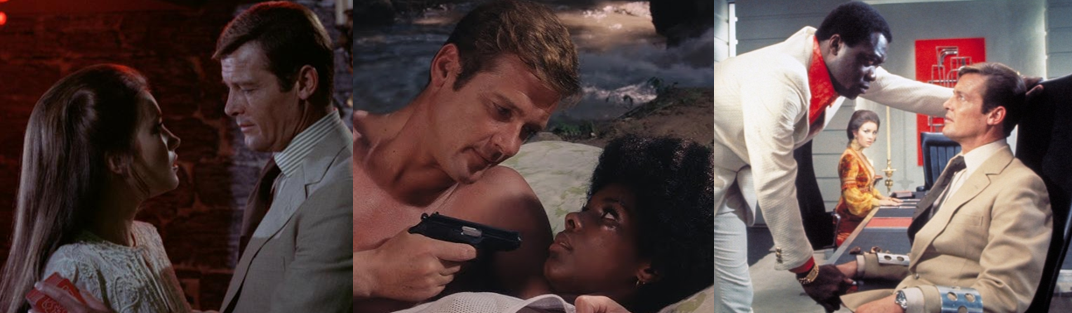
Renowned super spy James Bond/007 (Moore) travels to New Orleans to investigate mob boss Mister Big/Doctor Kananga (Kotto), a drug baron planning to mass distribute his particularly addictive strain of the heroin.

The Background:
MI6 agent James Bond is the creation of writer Ian Fleming and was heavily inspired by his time and experiences as a Navy intelligence officer. The unparalleled James Bond cinematic franchise famously got started with Sean Connery in the lead role before he tired of the part. Although Connery was lured back by a whopping $1.25 million deal, this was a temporary reprieve and suave Roger Moore finally took the role after finishing up with The Saint (1962 to 1969). Loosely based on the 1954 novel of the same name, screenwriter Tom Mankiewicz purposely emphasised the racial undertones of the story, inspired by the Black Panther movement and “Blaxploitation” movies of the era and to include a crocodile farm after spotting one during location scouting. Mankiewicz also worked with Moore to tweak Bond’s characterisation, making him a more light-hearted character, though it took some time for this to solidify. While Mankiewicz wanted signer Diana Ross for Solitaire, the producers cast up-and-comer Jane Seymour, while the late Yaphet Kotto reportedly had issues with the racial clichés of the script and his villain. The production was littered with issues, from Moore’s kidney stones, stuntmen being injured, and many struggling with the live snakes. Live and Let Die’s $161.8 million box office got the franchise back on track after the previous films underperformed, though some criticised Moore’s performance and the more over-the-top elements. Others praised the film’s more innovative moments and its fun chase sequences, though Dr. Kananga has been cited as one of the worst Bond villains and the comedic moments divided some. Still, Moore returned as Bond the following year and finished up with an unprecedented seven-film run as the character, and is often regarded as the best actor to ever portray the legendary super spy.

The Review:
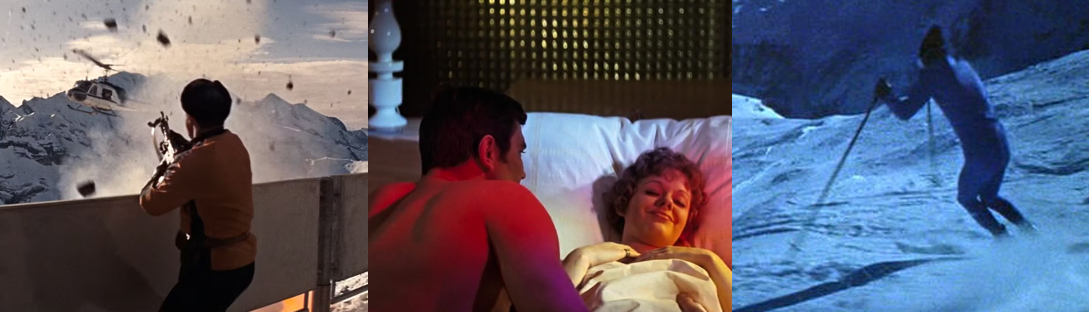
Live and Let Die uses its opening moments to establish that something fishy is going on with Dr. Kananga, the proud and outspoken dictator of the small Caribbean nation of San Monique. Those monitoring him are killed in subtle, yet amusingly theatrical ways, prompting MI6 director “M” (Bernard Lee) to visit Bond at home and send him to New York City to investigate. Our new Bond is introduced in bed with an Italian special agent (Madeline Smith) and, most crucially, in his home, which I don’t believe we’d seen before. Moore’s Bond is a charmer and a little more comedic than his predecessors, dancing around distracting the exasperated M to keep him from spotting the girl. While M had little time for Connery’s antics, he seems visibly aggravated by Bond’s cavalier attitude. This is possibly because “Q” (Desmond Llewelyn) is uncharacteristically absent and elements of his irritated opinion of Bond have been splicing into M, especially apparent by their discussion of Bond’s fancy new magnetic watch. Thanks to a quick intervention from Miss Moneypenny (Lois Maxwell), Bond avoids any repressions and heads to New York to liaise with his Central Intelligence Agency (CIA) counterpart, Felix Leiter (Hedison), who’s been monitoring Dr. Kananga. Despite his cheerful and confident disposition, Bond is caught somewhat unawares when his driver (Joie Chitwood) is murdered at the wheel, but quickly gains control with minimal damage and even providing the registration number of a suspicious pimpmobile. So, right away we can see that Moore is capable and charismatic, greeting every situation with a wry grin and a disarming pun, but also observant and adaptable, using any means necessary to overcome danger.

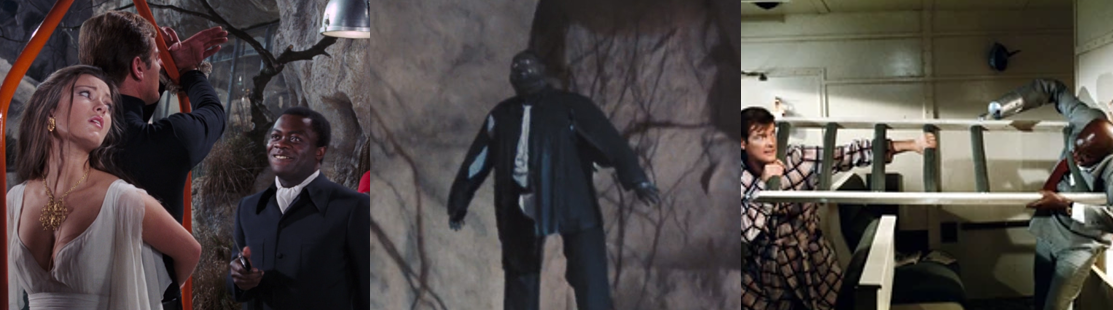
Moore’s portrayal of James Bond would rather use his charm and wit than resort to violence.

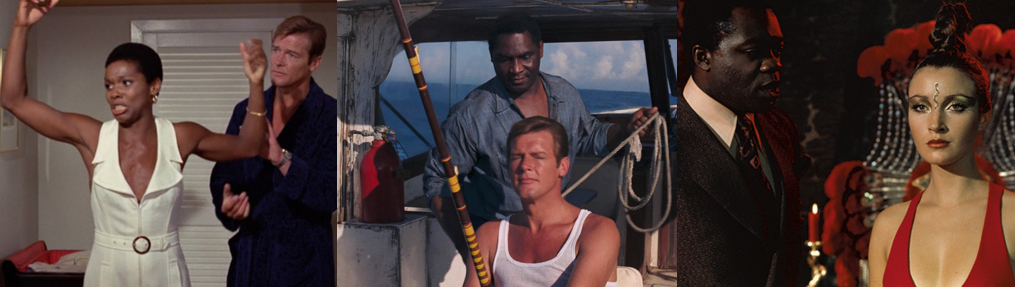
While investigating the pimpmobile, Bond tails Dr. Kananga and his colourful entourage to a “Fillet of Soul” restaurant in downtown Harlem, receiving a suspicious welcome from the predominantly Black clientele and meeting the aggressive and demanding Mr. Big, a strangely deformed mobster who orders his execution. Luckily for Bond, Mr. Big’s henchmen take their sweet time marching him to his death and Bond turns the tables before pondering the situation with Felix and fellow CIA agent Harry Strutter (Lon Satton). Since Dr. Kananga has flown back to San Monique, Bond follows and is again threatened in his bugged bungalow suite, first by a snake and then by a gun-toting assassin who turns out to be fledgling CIA operative Rosie Carver (Gloria Hendry). Though she’s unsure of herself and terrified by local voodoo superstitions popularised by the mysterious, seemingly immortal Baron Samedi (Geoffrey Holder), Bond sweet talks Rosie into bed and onto his side as she’s his only link to investigating one of the MI6 murders. Thanks to a chance encounter with Mr. Big’s medium, the beautiful Solitaire (Seymour), and quickly brushing up on tarot cards, Bond is tipped off about Rosie’s duplicitous nature and his kindly (if somewhat condescending) demeanour turns sour as he threatens her for information. However, when Rosie’s killed to keep her silent, Bond’s forced to use even less gentlemanly means to seduce the naïve Solitaire, easily tricking her by stacking her beloved cards in his favour, only to be frustrated to learn that she knows nothing of Dr. Kananga’s operation and simply gives him readings to help guide his actions. Despite this, Bond clearly sees that Solitaire’s life is in danger now that she’s lost her virginity and her uncanny abilities and promises to protect her. She’s thus with him when he discovers Dr. Kananga’s priceless poppy plantation, one protected by voodoo superstitions and ritualistic killings.

While Bond’s surrounded by some kooky allies, Solitaire impresses with her naïve allure.

Although almost every Black person in the movie secretly works for Dr. Kananga/Mr. Big as an undercover operative, Bond has a fair bit of backup. Felix freely shares his findings into Dr. Kananga, and conducts damage control when Bond commandeers an aeroplane and traumatises trainee pilot Mrs. Bell (Ruth Kempf). Oddly, Felix doesn’t accompany Bond for his late-night raid of the poppy plantation, instead handing over the weapons and explosives to 007 and stoic sailor Quarrel Jr. (Roy Stewart). Quarrel Jr. provides some backstory to the island but is basically just there to drive the boat so it’s a little odd seeing him sulking around with explosives instead of Felix. Initially, Rosie seems like she’ll be a comedic foil for Bond, a clumsy, untested field agent who succumbs to his charms and grows into her own by the film’s end. However, Rosie’s soon revealed to be working for Dr. Kananga and is quickly offed (which is odd as the bullet could’ve just as easily hit Bond). After escaping from Dr. Kananga’s crocodile farm, Bond annoys Sheriff J.W. Pepper (Clifton James) and the Louisiana State Police, who scramble to chase him and his pursuers as they race around in speedboats, only to be comedically foiled time. Finally, there’s Solitaire, whom Bond is immediately entranced by and wastes no time turning her cards against her by uncovering the “Lovers” card. While Bond seems disturbed by Solitaire’s ramblings regarding the “Gods” and her “powers”, he resolves to protect her, and she willingly goes along with him since she knows Dr. Kananga will kill her once he discovers her gift is gone.

Dr. Kananga’s largely overshadowed by his more visually interesting and colourful henchmen.

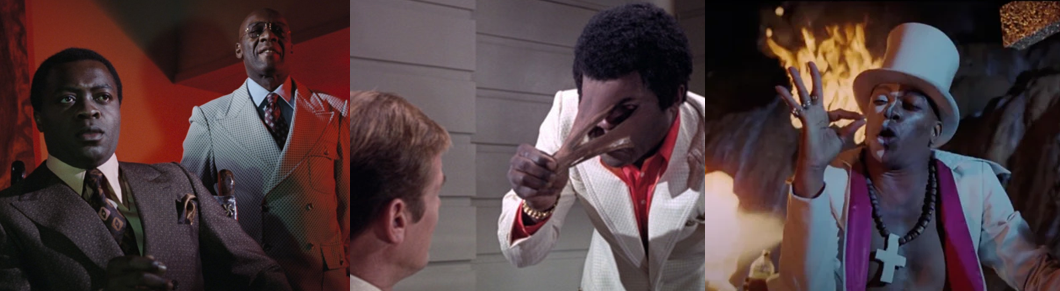
Dr. Kananga is actually two villains in one, since the bombastic president doubles as a mob boss thanks to peculiar disguise, quickly revealing his dual identity to Bond. While Mr. Big is a gruff, severe mob boss, Dr. Kananga is a loquacious and mostly charming psychopath who delights in his plot to distribute his heroin free of charge to ensure his dominance over the drug trade. Dr. Kananga’s actions are guided by Solitaire’s insight, though he’s angered when Bond defies her predictions and laments having to punish her, clearly harbouring an affection for her that leans towards something more sinister as he is both enraged and betrayed to learn she gave herself to Bond and not him. Surrounded by his colourful entourage, Dr. Kananga fosters local superstition to protect his operation and spread fear, relying on the voodoo legend of Samedi to bolster his reputation and the unnerving muscle of the sadistic Tee-Hee Johnson (Harris), a brutish man with an infectious smile and a particularly nasty prosthetic arm. Tee-Hee relishes taunting Bond, bringing him to the crocodile farm to be eaten alive and gladly returning for one last shot at killing 007 in the finale. The soft-spoken Whisper (Earl Jolly Brown) crops up to lure Bond into traps and Dr. Kananga delights in executing his foes in the most theatrical way possible, even leaving Bond’s fate to a shiver of sharks rather than simply shooting him dead.

The Nitty-Gritty:
It’s undeniable that Live and Let Die is “Bond Meets Blaxploitation”. I’m no expert and probably not the best person to comment on how “appropriate” any of this is these days, but it was certainly a style at the time, and it does bring a certain uniqueness to the film. Many characters criticise Bond for wandering around Harlem and into exclusively Black territory, though the only Black characters to give him grief are those working for Mr. Big. Even then, Dr. Kananga’s henchman all have a jive and swagger to them that’s far more visually interesting than most disposable minions, spitting racially charged insults at Bond, sassing the locals, and have an air of confident cool about them that nicely contrasts with Sheriff Pepper’s bluster. I think it’s also important to note that neither Bond or Dr. Kananga exhibits a discriminatory attitude: Bond never comments on anyone’s race, seducing Rosie as eagerly as Solitaire, and Dr. Kananga gleefully makes his product available to everyone. Ironically, he also delivers a stirring tirade calling for his people to rise up and happily encourages superstition if it means deterring outsiders. These voodoo rituals probably veer on the offensive as people writhe about in loincloths carrying snakes and chanting like stereotypical depictions of island “savages”. The supernatural is treated very ambiguously, with Bond believing it a smokescreen but Dr. Kananga trusting Solitaire’s predictions, which are all seen to be true. I’m also at a loss to explain the cackling Baron Samedi, who turns to porcelain when shot and returns from death time and again, with little logical explanation beyond the presence of lifts beneath his gravesites.

Bond’s stunts and action sequences are noticeably more cartoonish in Moore’s debut.

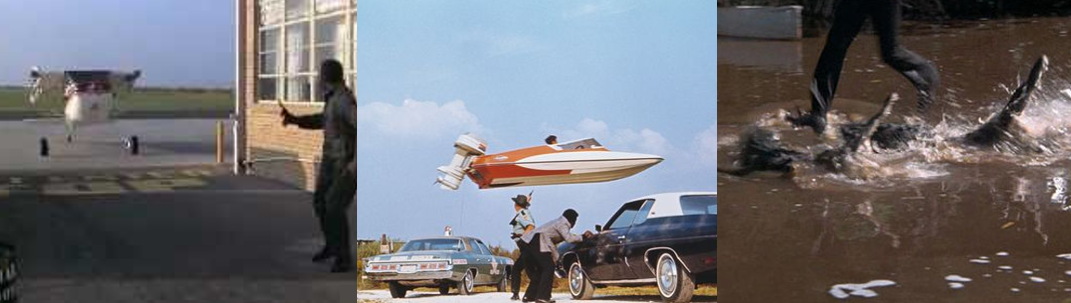
Despite Q’s absence, Bond gets a few memorable and bizarre gadgets. His new wristwatch emits a powerful magnetic force said to be capable of stopping a bullet, but which is simply used to attract a compressed gas pellet (though Bond also uses its buzzsaw function to escape his vines). When scoping out his bungalow, Bond whips out a gadget to detect surveillance bugs then taps at another gadget at the window (though I’ve no idea why) and even uses a hang glider to reach Solitaire’s abode. While he loses his signature Walther PPK thanks to Tee-Hee’s bionic claw, Bond later blasts Dr. Kananga’s henchman with a miniaturised shotgun and proves adept with a speedboat. Sadly, this chase becomes a slapstick farce as the cartoonish Sherriff Pepper repeatedly fails to apprehend his man. This sequence quickly outlives its welcome, depicting Bond and Dr. Kananga’s henchmen blasting across grass, through a wedding, and crashing into a local’s swimming pool. Bond’s escape through Mister Bleeker’s (Stephen Hendrickson) flying school is equally outrageous, with Bond somehow outpacing his pursuers and causing them to crash just by casually driving around a Cessna 140, which the henchmen run despite having a clear shot. On the plus side, there’s very little of that awful rear projection early Bond films were so notorious for and the car chase and crashes are pretty good. I liked how subtly the pimpmobile rolled up and executed Bond’s driver, Bond’s use of an abandoned double decker bus, and the jive cab driver (Arnold Williams) who constantly obstructs Bond’s investigation. Moore’s Bond isn’t much of a fighter, however, and is more apt to walk into elaborate traps and be clobbered from behind Instead, his Bond tries to talk his way out of every situation, or at least distract his captors with dry wit, mocking Tee-Hee’s disability even as he’s at risk of having his finger…and more…severed. Moore’s Bond is extremely adaptable, however, seen to be quick thinking and using his surroundings to his advantage, including an overhead ladder, a makeshift blow torch, and hopping across crocodiles!

While Dr. Kananga’s death is ludicrous, Bond’s final fight with Tee-Hee is quite enjoyable.

After giving Bond the chance to escape, Solitaire returns to Dr. Kananga but endures his wrath for her betrayal, ending up tied to an altar to be executed in a voodoo ritual. Luckily, Bond and Quarrel Jr. show up to blow up the poppy plantation and Bond rescues Solitaire, seemingly killing Baron Samedi and descending into Dr. Kananga’s surprisingly high-tech underground hideout, which where he monitors his operation and plans to move heroin from the island. Naturally, Dr. Kananga greets Bond and Solitaire as guests and treats them to a drink before disarming them and strapping them to a winch, amused by Bond’s gadgets but even more excited to slice his arms and get his sharks in a frenzy for a fittingly theatrical and bloody execution. Cool as a cucumber, Bond surreptitiously uses his watch to snag one of his compressed gas cannisters and cut his binds, subduing the oafish Whisper and facing Dr. Kananga, who’s practically giddy at the prospect, baiting him and waving a hunting knife in 007’s face. There isn’t much to this fight, however, as Bond easily sidesteps Dr. Kananga and they tumble into the water, where the drug baron panics at the sight of his sharks, allowing Bond to stuff the cannister into his mouth and inflate him like a balloon for perhaps the most comical and ludicrous death of the entire franchise. Bond and Solitaire’s hopes for a long, relaxing train ride back to New York are dashed when Tee-Hee attacks. Despite the brute’s augmented strength, Bond’s wiles again prove the difference maker as he cuts some wires in Tee-Hee’s arm, locking him in place to be easily tossed out the window to his death. Having been bested at cards by Solitaire, Bond prepares to “test an old adage” about being luckier at love, unaware that Baron Samedi inexplicably survived and is laughing like a maniac on the front of the train…

The Summary:
Fun fact: Live and Let Die was the first of what I call the “Classic Bond” movies I watched all the way through and is the reason Roger Moore is my favourite Bond of this era. While Sean Connery was charismatic but cold-blooded and George Lazenby was just a guy pretending to be Bond, Roger Moore is a suave, charming, jovial character who’s all business when he needs to be but would rather disarm his enemies with his quick wit and make up his escape plans on the fly than shoot or fight his way out of situations. Generally, this works pretty well for him and Bond utilises some absolutely comical methods to elude and dispatch Dr. Kananga’s henchmen, but he’s just as apt to be knocked out and placed in an elaborate death trap that requires an equally over the top method to escape. Still, Moore oozes charm and fits nicely into the role, and I liked that he still had a bit of an edge to him but seemingly disliked resorting to violence. Bond’s nicely out of his depth in Harlem and San Monique, seen as a “honky”, sticking out like a sore thumb, and refusing to entertain the local superstitions. While the “Blaxploitation” aspects are probably problematic, I really liked the swagger and theatricality given to Dr. Kananga and his underlings as it made them more lively and enjoyable to watch than the usual stone-faced Russians. Jane Seymour is easily one of the most gorgeous of the Bond Girls and delivers a suitably alluring, almost childlike performance and I really enjoyed Julius W. Harris as Tee-Hee, how he relished each encounter with Bond, and continue to be fascinated by the theatrical Baron Samedi. As much as I love Yaphet Kotto, however, Dr. Kananga is a strange villain who constantly flip-flops between being sinister, aggrieved, and insane, being just as likely to delight in conversing with Bond as he is to lash out in anger. His death was ludicrous even for this film, which largely ruins every action sequence with slapstick buffoonery and cartoonish supporting characters. While I think Moore acquitted himself well in Live or Let Die, the overall plot and most of the execution is somewhat questionable, despite the jive cool that permeates the film, making this one of his more forgettable outings as the suave super spy.

My Rating:

Rating: 3 out of 5.

Pretty Good

Did you enjoy Roger Moore’s debut as 007 in Live and Let Die? How do you think he compared to his predecessors? Do you find the “Blaxploitation” angle problematic? Would you agree that Dr. Kananga has one of the worst deaths in the franchise? Do you think there is a supernatural element present in this film? Which Bond actor, film, story, villain, or moment is your favourite? How are you celebrating James Bond this October? Whatever you think about Live and Let Die, leave a comment below, check out my other 007 content, and donate to my Ko-Fi to suggest other Bond movies for me to review.

Movie Night [00-Heaven]: On Her Majesty’s Secret Service


October 5th is officially recognised as “Global James Bond Day” so I’m dedicating some time to revisiting some firsts in the long-running franchise.


Released: 19 December 1969
Director: Peter R. Hunt
Distributor: United Artists
Budget: $7 million
Stars: George Lazenby, Diana Rigg, Telly Savalas, Gabriele Ferzetti/David de Keyser, and Ilse Steppat

The Plot:
While posing as a genealogist to uncover terrorist mastermind Ernst Stavro Blofeld’s (Savalas) mad plot to cause bacteriological warfare through brainwashed agents, British secret agent James Bond/007 (Lazenby) reluctantly romances and falls for the reckless Contessa Teresa “Tracy” di Vicenzo (Rigg).

The Background:
Created by former Navy intelligence officer Ian Fleming. MI6 super spy James Bond was famously brought to life by Sean Connery, beginning a long-running cinematic franchise. However, Connery’s decision to retire from the role sent producers Albert R. Broccoli and Harry Saltzman’s plans for the sixth 007 film out of whack as much as the ongoing rights issues regarding Blofeld and the Special Executive for Counter-intelligence, Terrorism, Revenge and Extortion (SPECTRE). When their top choice to replace Connery, Roger Moore, became unavailable, the producers cast Australian model George Lazenby, who had little acting experience. Director Peter R. Hunt also chose to recast Blofeld with Telly Savalas, seeking a more physical presence for the villain, while Diana Rigg became the latest “Bond Girl” after producers were impressed with her work on The Avengers (1961 to 1969). Although the tabloids claimed Rigg despised Lazenby, the actor later quashed these rumours, though he did refuse to return as 007 out of fears of being typecast. Largely filmed in Switzerland, On Her Majesty’s Secret Service became as famous for its ski sequences as its tragic ending, which saw Hunt purposely wear Lazenby down to force the required emotion from him. Despite its $82 million box office being one of the highest of 1969, On Her Majesty’s Secret Service made considerably less than the previous Bond movies and critics loathed Lazenby’s portrayal and unfairly compared him to Connery. While this led to the producers desperately offering Connery an unprecedented deal to return in the following movie, On Her Majesty’s Secret Service is now generally seen as an under-rated entry in the franchise, one praised for its visual beauty and stirring performances.

The Review:
On Her Majesty’s Secret Service (OHMSS) features the one and only appearance of George Lazenby as the world-famous super spy. Amusingly, the film sets a tone for subsequent newcomers to the role by largely obscuring Lazenby’s features in the traditional pre-title sequence and slowly introducing his new interpretation of Bond. This is all done with a mixture of brutal action, intrigue, and tongue-in-cheek humour as Bond comments on his inability to get the girl. Once the titles are done, OHMSS apes Bond’s first appearance in these films by sitting him at a poker table and piling up the winnings with casual confidence. Once again, Bond runs into the alluring woman from the opening, whom he saved from an apparent suicide attempt, only to get the cold shoulder even after he bails her out from her poor card playing. Though she agrees to meet him in her hotel room, Bond is once again jumped from behind and gets into another fist fight. When Bond returns to his room and finds the woman, the stubborn Tracy, she denies any knowledge of his attackers and spends the night with him, only to disappear in the morning and for Bond to be coerced into a car. Thus, our introduction to this new Bond is somewhat inconsistent. On the one hand, he has the same look, penchant for cigarettes and fine dining, and card skills as his predecessor and is pretty good in a fight. On the other hand, he’s constantly being jumped at random, keeps getting the brush off from Tracy (who seems to resent his interference), and has no choice but to go along when he’s kidnapped as he’s powerless to do much else. Sure, Sean Connery was in similar positions, but I think it might’ve helped if the opening established Bond was following Tracy as part of his investigation into SPECTRE.
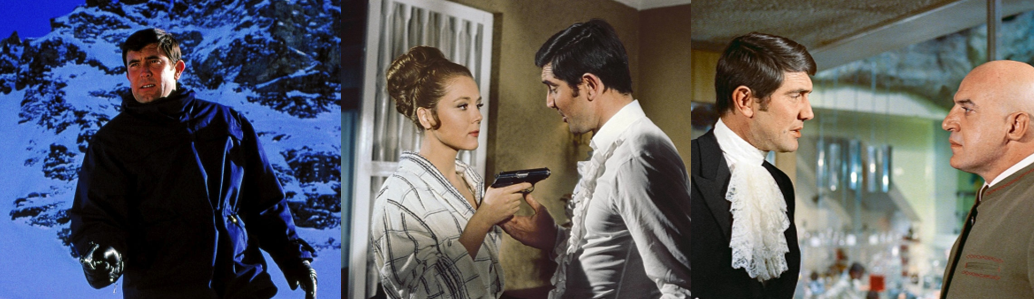
Newcomer Lazenby is as ill-suited to the role as Bond is at impersonating Sir Hillary.

Bond is taken to meet Tracy’s father, Marc-Ange Draco (Ferzetti/de Keyser), a charismatic mob boss who despairs of his wayward daughter and wishes Bond to “dominate her” to set her straight, even offering him £1 million if he woos and marries her. Though he’s attracted to Tracy, Bond rejects the offer, aghast at being tied down or compromising himself, but changes his mind when Draco agrees to offer information on the whereabouts of Blofeld, SPECTRE’s elusive mastermind. Thus, Bond sets to work cooling Tracy’s cold heart but is angered when he returns to London and his cantankerous superior, “M” (Bernard Lee), relieves him of the Blofeld mission. Although ready to quit in protest, Bond’s granted two weeks leave thanks to the intervention of Miss Moneypenny (Lois Maxwell) and heads to Portugal for Draco’s birthday. There, Tracy is incensed to learn that her father is using her as a bartering tool and angrily forces Draco to give Bond the information so he won’t be obligated to waste time with her. However, this is merely a front for the feelings Tracy has developed for the suave secret agent and, having grown fond of her as well, Bond smooths things over and the two properly fall for one another. However, this romance takes a noticeable backseat when Draco points Bond to a law firm, which he swiftly breaks into to discover that Blofeld is posing as Count Balthazar de Bleuchamp and has established a restricted clinical allergy research institute in the Swiss Alps. Bringing his evidence to M, Bond is swiftly allowed to meet with and assume the identity of Sir Hilary Bray (George Baker), a genealogist who’s been asked to verify Blofeld’s ancestry. Adopting an exaggerated accent, ill-fitting clothes, and glasses, Bond is taken to Piz Gloria by Blofeld’s number two, the grim-faced but accommodating Irma Bunt (Ilse Steppat), and a curious game of cat-and-mouse begins.

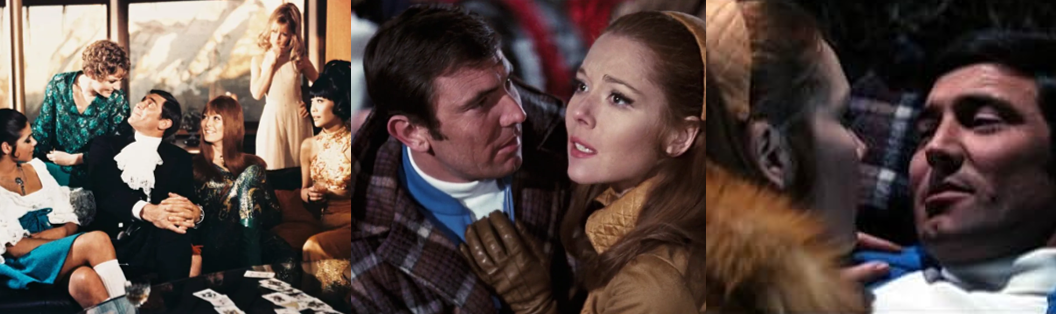
Womanising Bond falls for headstrong Tracy, who loses her edge after having her heart melted by 007.

Unfortunately, this is where OHMSS really falls apart for me. It’s ludicrous to think that Blofeld wouldn’t immediately recognise Bond, whose disguise is somehow worse than the Japanese cosplay he adopted in the previous film, especially after they’ve already met. It’s pretty obvious that Blofeld is aware of the deception from the start and simply plays along to prove his superiority over Bond, or perhaps because he finds it amusing, genuinely believing he has a legitimate claim to being Count Balthazar de Bleuchamp since he has (presumably forged) documentation and has cut off his ear lobes to match the Bleuchamp bloodline. While Bond is as well versed in many subjects as ever, he spends some time with Sir Hillary to learn about genealogy and mimic his mannerisms, appearing to be a meek intellectual who, while exceedingly polite, has little interest in the beautiful women being treated for allergies at Piz Gloria. However, since his disguise is little more than a pipe and a kilt, Bond naturally catches the eye of the patients, who are incredibly horny. Thus, while Bunt enforces strict rules within the clinic, both Bond and the girls sneak out for a few bunk ups, though this seems to merely be a passing distraction for Bond. It also proves to be his undoing, as Bunt surprises him and Blofeld chastises his lustful ways since it was just one of many signs that “Sir Hillary” wasn’t who he claimed to be. Bond’s far more capable when it comes to escaping Blofeld’s compound, skiing to safety only to be relentlessly hounded in Lauterbrunnen. This is when Tracy finally returns, rescuing Bond, and he spontaneously decides he’s so in love with her that he wants to marry her and give up his violent lifestyle and womanising ways.

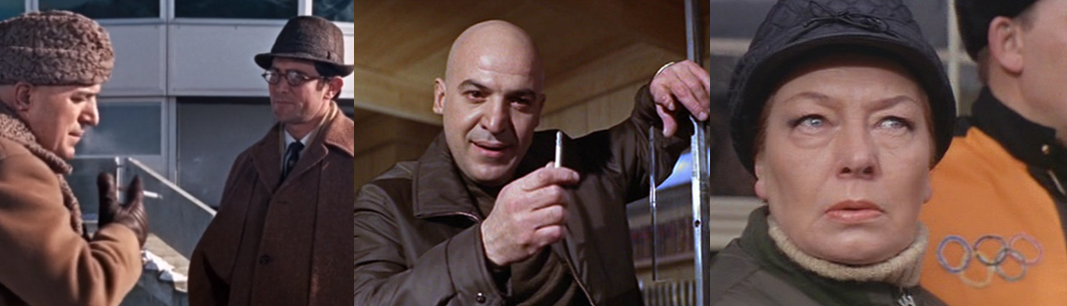
Blofeld and his operation have undergone a significant facelift but are still bent on chaos.

After finally being revealed as a scheming, disfigured criminal mastermind in the previous film, Blofeld has spent the last two years transforming into the fetching, silver-tongued director of a special clinic for those suffering from crippling allergies. Charismatic and sophisticated, Blofeld charms his patients and commends their progress and is so confident in his allure that he even tries to seduce Tracy after kidnapping her from an avalanche. To the outside world, Blofeld is a reclusive and private individual whose clinic is so restricted that unauthorised visitors are shot at and turned away on sight. Oddly, it seems Blofeld has the perfect setup at Piz Gloria but he draws undue attention to himself by claiming to be Count Balthazar de Bleuchamp, something which has little relevance to his true, mad plot. While Blofeld has successfully cured or aided his patients’ allergies using hypnosis, he’s also been brainwashing them into being his unsuspecting “Angels of Death”, charging them with unleashing a biological agent that will render all plant and animal life impotent. Blofeld’s endgame is to hold the world to ransom, threatening famine and extinction unless he’s given amnesty for his crimes and the title of Count Balthazar de Bleuchamp. While we don’t get to see this chemical agent in action, Blofeld provides a small sample to the United Nations and keeps Bond prisoner to verify his threat, confident that his demands will be met before a cure is inevitably found. So horrifying is Blofeld’s threat that the world’s governments agree to roll over, pointedly refusing Bond’s demands to launch a strike on Piz Gloria and cut Blofeld off from commanding his Angels of Death. Thus, Bond turns to his future father-in-law, Draco, who happily agrees to lead an assault on Piz Gloria to both rescue Tracy (though their haphazard gunfire says otherwise) and stop Blofeld’s mad scheme.

The Nitty-Gritty:
I’ve always found OHMSS to be a particularly dull Bond movie, and Lazenby’s mediocre turn as the character is only part of it. The film lacks a punchy title song, preferring excerpts of Louis Armstrong’s “We Have All the Time in the World”, a fittingly smoochy and emotional tune that hits doubly hard during the tragic finale.  Additionally, Bond noticeably lacks any fun gadgets; “Q” (Desmond Llewelyn) is merely a cameo and the best we get is a massive safe picking machine, a deconstructed sniper rifle, and a bog-standard printer/copier. I am a fan of the romance angle, though, of Bond learning there’s more to life than random hook ups and his staunch commitment to Queen and Country. However, the execution is lacking. I liked that Tracy initially appeared forthright and almost dismissive of Bond, barely caring that he was getting roughed up or giving him the time of day. However, Draco is right when he notices that Tracy “likes [him]” but is hiding behind a stubborn façade as Tracy falls for Bond like any other woman. She even acknowledges that Bond is unlikely to return those feelings, and yet helps him Lauterbrunnen and is so delighted by his proposal that she cries tears of happiness every time he’s around. The shadow of Tracy’s former, headstrong self resurfaces when she’s held captive by Blofeld as she attempts to disarm him with her beauty and even puts up a decent fight against his men, but she loses so much of her edge so quickly that it’s hard to see why Bond falls for her as she simply becomes another pretty girl who’s besotted by him. I also rate OHMSS poorly because it’s such a slog, churning along at a snail’s pace and placing so much focus on Bond’s ridiculous infiltration of Piz Gloria that wouldn’t have fooled a blind man!

A beautiful, but largely dull movie best known for its snowy locations and ski-chase sequences.

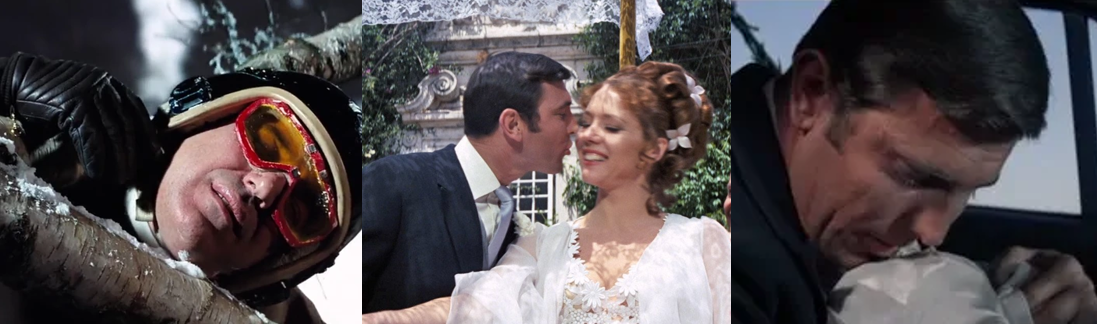
Still, there are some positives to OHMSS. The film is very beautiful, with the snowy Swiss Alps providing a gorgeous backdrop for Blofeld’s compound. While his facility isn’t as memorable as a hollowed-out volcano launch base, it is very slick and futuristic, forcing Bond to find ways to escape his confinement and brainwashing the girls to follow Blofeld’s commands. Bond gets into a lot of scuffles in OHMSS, generally emerging unscathed after summarily drowning his foes, flinging them off the Swiss Alps or tumbling into a wood chipper, and constantly lashing out to catch his capturers off-guard. Naturally, most chases occur either in the snow or down the dangerous Swiss Alps, with the finest rear projection money selling the illusion that the actors are in the thick of it. All joking aside, the skiing sequences are really fun. It is bizarre that Blofeld’s henchman can’t hit their target when there’s no cover around, but then they are rocketing down a mountain at high speed so I’ll forgive it. Seeing them careen off the side is quite harrowing, and watching Blofeld set off an avalanche to bury his hated foe made for an exciting sequence (though it’s a little unbelievable that Bond survived). There are also a couple of car chases here, but the big action set piece comes when Bond and Draco assault Blofeld’s lair. Strangely, considering how fortified the compound appears, Blofeld has no anti-aircraft guns and is initially easily deceived by Draco’s claims to be on a mercy mission. His men are thus ill-equipped against a full-scale assault, easily being gunned down and blown over balconies when Bond attacks. OHMSS utilises some impressive miniatures to showcase Piz Gloria’s destruction, though there’s a painfully noticeable delay (even by Bond movie standards) between Draco’s wristwatch, the bomb timer, and Bond and Blofeld escaping the compound before it blows.

Blofeld spitefully returns to deliver a tragic blow to Bond in the shocking finale.

Having narrowly escaped, Blofeld stumbles down the mountainside with Bond in hot pursuit. Any sense of poise, composure, and authority is evaporated once Blofeld speeds off in a bobsleigh, desperately taking pot shots at Bond and comically fumbling with a grenade! Desperate to get his man, Bond doesn’t let a little thing like being blown from his bobsleigh slow him down and gets into a clumsy fist fight with the SPECTRE head that ends with Blofeld seemingly killed by a branch. Seemingly victorious, Bond makes good on his promise and marries Tracy before friends and family. Though obviously heartbroken, even Miss Moneypenny is pleased for Bond and the ceremony allows former enemies M and Draco to reminisce on previous encounters between their organisations. Elated to have found a woman worth settling down for, Bond and Tracy drive towards a seemingly happy future, already planning to build a family together. However, their overly decorated wedding car draws much attention and Bond realises that he never bought his wife a gift, or flowers, so he pulls over to strip the vehicle and share a sweet moment with Tracy. Unfortunately for him, Blofeld not only survived their anti-climatic battle but returns with a vengeance, barrelling towards them at high speed (comically sporting a neck brace) alongside Bunt. Bond barely has time to flinch before Bunt unloads with a machine gun but is determined to chase after the villain. However, Bond’s horrified to see that Tracy has been killed by a bullet to the forehead. As a passing motorist stops by, Bond cradles his dead wife, barely holding back tears, and briefly taking solace in denial before succumbing to a grief that would come to define much of his later characterisation.

The Summary:
I’ve never been a fan of On Her Majesty’s Secret Service and have long held the belief that the film would’ve struggled to impress me even if Sean Connery or Roger Moore had been in the role. Connery being Bond would’ve made things simpler, for sure, but I doubt even his magnetic presence would help with the uneven tone, slow pacing, and more ridiculous elements. As I understand it, many consider George Lazenby to be an under-rated Bond actor, though I disagree. He barely has the look, certainly doesn’t have the acting chops or screen presence, and is as thoroughly unconvincing as Bond as Bond is at impersonating Sir Hillary. Lazenby’s flaws are only exacerbated whenever he shares the screen with the charismatic Draco, the stunning Tracy, or the captivating Blofeld. While it annoys me that Blofeld is no longer scarred or a devious psychopath, Telly Savalas oozes charm and commands the screen, easily overshadowing Bond and yet portraying Blofeld so differently that he may as well have been a different villain. I did like the concept behind Tracy and her romance with Bond, but it was a mistake to make this a glorified side-plot and for her to disappear for the middle portion of the film. It might’ve been better to have her infiltrate Blofeld’s compound under the guise of needing treatment, or for her to have attended Blofeld’s facility and need to be freed from his control…anything to get her involved in the second act and avoid the nonsense Sir Hillary aspect. Admittedly, it was amusing seeing Bond work his way through the Angels of Death, but also a shitty move considering he was supposed to be in love with Tracy. The skiing sequences and explosive finale were decent, but the bobsleigh chase was laughable and OHMSS greatly suffers from a lack of memorable gadgets. The only reason anyone remembers it is the tragic and dramatic ending, which shows Bond at his most vulnerable and hits like a blow to the gut. However, this isn’t enough to elevate OHMSS, which remains one of my least favourite Bond movies and a mere footnote in the character’s history, which is a shame considering how relevant its finale was to future interpretations of the character.

My Rating:

Rating: 2 out of 5.

Could Be Better

Do you think I’m being too harsh on On Her Majesty’s Secret Service or do you agree that it’s one of the weaker Bond movies? Are you a fan of George Lazenby or do you agree that he was miscast? What did you think to Telly Savalas’s less monstrous version of Blofeld? Were you left devastated by the ending? Which Bond actor, film, story, villain, or moment is your favourite? How are you celebrating James Bond this month? Whatever you think about On Her Majesty’s Secret Service, or James Bond in general, feel free to leave a comment below, check out my other James Bond reviews, and donate to my Ko-Fi to suggest more 007 content for the site.

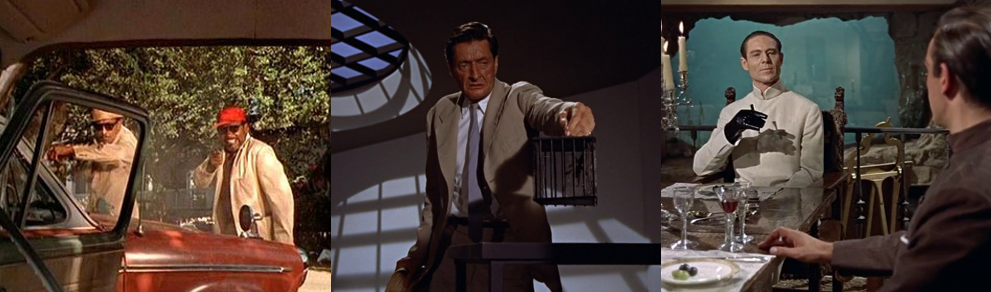
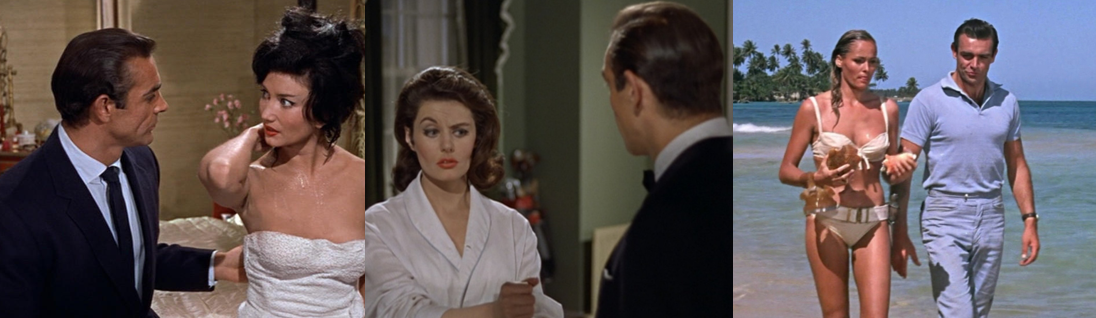
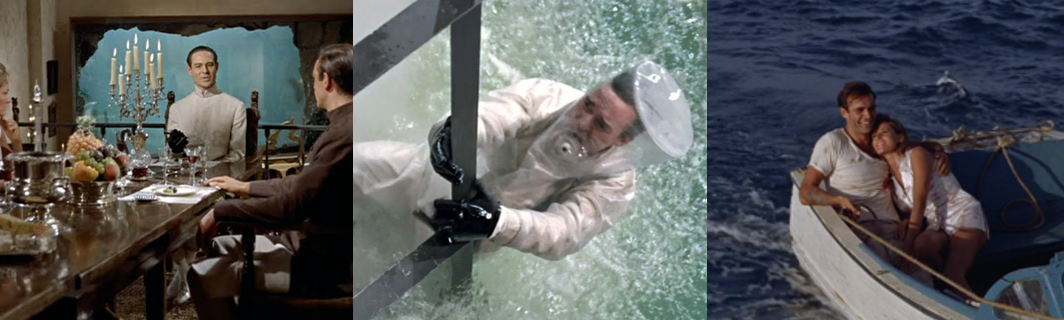
Movie Night [00-Heaven]: Dr. No


To celebrate the release of this movie, the first of many filmic outings for James Bond, October 5th is officially recognised as “Global James Bond Day”. Today, 007 is one of the most recognised and popular movie icons of all time so I’m dedicating some time to revisiting some firsts in the long-running franchise.


Released: 5 October 1962
Director: Terence Young
Distributor: United Artists
Budget: $1.1 million
Stars: Sean Connery, Joseph Wiseman, Jack Lord, John Kitzmiller, and Ursula Andress

The Plot:
After an MI6 liaison is murdered in Jamaica, suave spy James Bond/007 (Connery) discovers a plot by malformed mad scientist Doctor Julius No (Wiseman) to disrupt an American rocket on behalf of the Special Executive for Counter-intelligence, Terrorism, Revenge and Extortion (SPECTRE).

The Background:
Super spy James Bond was the brainchild of writer Ian Fleming in 1953, heavily inspired by Fleming’s years as a Navy intelligence officer. 007 first came to life not through Sean Connery’s immortal and iconic performance or even the bizarre comedy loosely based on Fleming’s first Bond book, but a one-hour CBS television adaptation of that same book that was heavily altered for American audiences. Bond was next adapted into a South African radio drama in 1958 and Fleming’s books became a long-running series of comic strips starting in 1957, before Casino Royale (1953) finally came to the big screen in 1967 after years of Development Hell and rights disputes. Though initially reluctant, Fleming eventually sold the rights to all his Bond novels (except Casino Royale and, most infamously, 1961’s Thunderball) to producer Harry Saltzman. Saltzman partnered with Albert R. “Cubby” Broccoli to spearhead an adaptation of the 1958 novel of the same name, bringing in director Terence Young to define the onscreen portrayal of the super spy for decades to come. Though hampered by a paltry budget, Young chose to innovate and spend what little money had had wisely, while the script included many alterations from the source material, including painting Dr. No as an agent of SPECTRE. While the producers initially envisioned Cary Grant as Bond, Richard Johnson claimed to have been tapped for the role, and Rod Taylor rejected the pitch, former bodybuilder Sean Connery impressed with his devil-may-care attitude and cemented his career (for better or worse) with his now-iconic performance. Although Dr. No received a mixed reaction at the time, it proved a box office success that kick-started a cinematic franchise, with each subsequent film out-performing the last at the box office. In the years since its release, Dr. No has been critically re-evaluated in a more positive light, with the film named as one of the top 100 British films of all time and praised for delivering some of the most memorable moments in the series.

The Review:
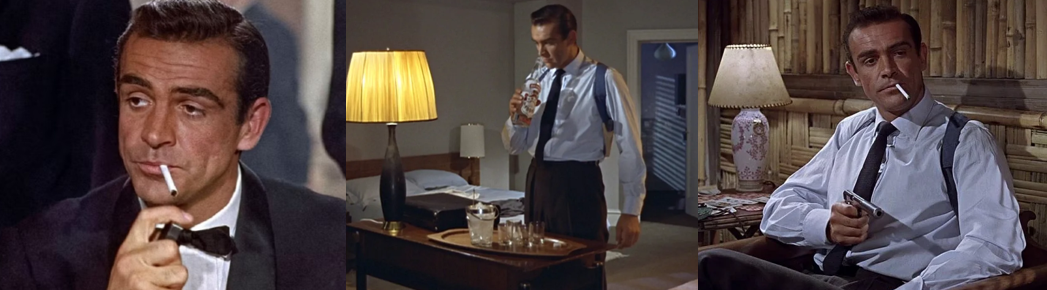
I think it’s only fair to start off by admitting that I’ve never been a fan of Dr. No. While it’s easy to explain away a lot of its flaws by pointing to the era it was made and it being the first of a series, so many of the recognisable Bond elements hadn’t been refined yet (even if they make their debut here), I’ve just never been a fan of the pacing and plot. Indeed, one thing I often joke about is that, even now, I don’t really know what Dr. No is about or what the titular mad scientist is  after. Therefore, I went into this viewing really trying to pay attention and grasp what the plot was and what was happening. Surprisingly, Dr. No’s stakes are surprisingly low; the world isn’t at stake here. In fact, no nations, cities, or lives seem to be at risk at all, save those who venture to Dr. No’s private island, Crab Key, uninvited or those who stand in his way. The film’s events kick off when John Strangways (Timothy Moxon/Robert Rietti), a keen fisherman, poker player, and head of MI6’s Kingston station, and his secretary, Mary Trueblood (Dolores Keator), are murdered by, of all things, three assassins posing as blind beggars. After a few hours trying to re-establish contact with Strangways, the cantankerous and officious head of MI6, “M” (Bernard Lee), pulls Bond from a game of Baccarat and orders him to find out what happened, advising him to liaise with his Central Intelligence Agency (C.I.A.) counterpart, Felix Leiter (Lord), and to not waste any time. Though Bond happily takes the assignment, he drags his feet a little by flirting with M’s secretary, Miss Moneypenny (Lois Maxwell), and hooking up with the alluring Sylvia Trench (Eunice Gayson), firmly establishing that, while Bond is loyal to King and Country, he’s got a soft (well, more accurately a hard) spot for the ladies and the finer things in life, such as a good smoke and a stiff drink.

While Connery mesmerises as Bond, 007’s painfully mundane in his first outing.

Sean Connery immediately embodies the now-world famous super spy with a relaxed, confident poise and charm. He greets every situation, even admonishments from M, with a wry smile and a biting wit, seemingly fearless and maintaining his composure even when he’s being followed or clearly duped by enemy agents. While this is Bond’s first screen outing, it’s clearly not his first assignment as he’s been licensed to kill for some time (though M’s dialogue suggests Bond may only be a year or so into this career as a 00 agent) and is generally hyper aware of his surroundings. Even when he’s welcomed by Chief Secretary Pleydell-Smith (Louis Blaazer) and given lodgings at Government House, Bond checks for bugs and preps his room to alert him to intruders. Unlike later Bond movies, 007 is rather ill-equipped; Major Boothroyd (Peter Burton) simply furnishes him with the standard issue Walther PPK in place of his unreliable Beretta M1934 and that’s it. Not that Bond really needs any gadgets here, just a rental car and a working telephone suffice for most of the film. Bond’s first official big screen adventure is much more of an investigative thriller than anything else. Bond wanders about Kingston meeting with those who knew or saw Strangways last, piecing together what happened, knocking back vodka martinis (“Shaken, not stirred”) and other vices as he goes. After a brief misunderstanding, Bond meets with Leiter, visits a few more locations, and eventually suspects Professor R. J. Dent (Anthony Dawson), a geologist and one of the last people to see Strangways alive. Bond’s investigation alerts him to Crab Key, a forbidden island owned by the mysterious Dr. No, which Strangways regularly visited. It’s all very mundane and dull, sadly, with only Connery’s magnetic screen presence holding my interest as Bond simply stumbles upon breadcrumbs to discover that Dr. No obviously had something to do with Strangways disappearing.

Sadly, scene-staler Quarrel meets a toasty end when he insists on aiding Bond.

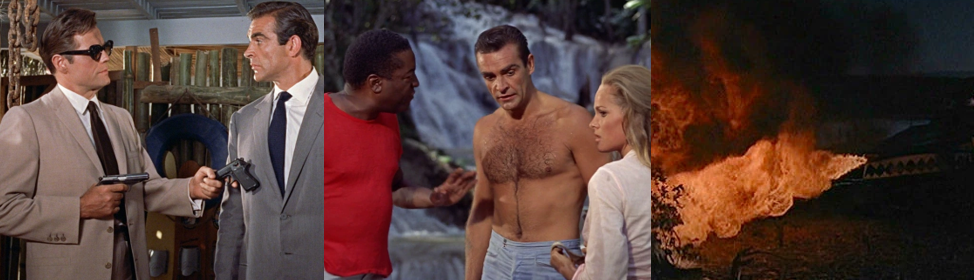
Bond’s eventually aided by Leiter, though Felix at first suspects 007 of being corrupt since Bond willingly allows obvious enemy plants to drive him around and lure him into bed. Bond does this in hopes of questioning and/or boning said agents, though his investigation is often frustrated since many of his would-be assassins choose death by cyanide over talking. Leiter reveals that he worked closely with Strangways to discover the source of a radio jamming signal that has been disrupting America’s space exploration rockets. Leiter’s also instrumental in cooling tensions between Bond and Quarrel (Kitzmiller), a Cayman Islander whose boat Strangways took to Crab Key and collect samples. Initially giving Bond the brushoff, Quarrel confronts him and knifepoint and the two scuffle until Leiter intervenes and they all get on the same page. While Leiter isn’t that interesting, simply being a friendly face to give Bond some intel and call out his womanising ways, Quarrel is quite an enjoyable addition, being an upbeat and friendly seaman who affectionately calls Bond “Cap’n”. Rather than rely on sea chats or coordinates, Quarrel follows his instincts but is extremely hesitant to go to Crab Key due to rumours of a fire-breathing “dragon” dwelling there. While Bond initially gives Quarrel the option of staying behind, his patience with these stories grows thin, especially when they bump into the beautiful Honey Ryder (Andress) and she echoes Quarrel’s fears. Still, Quarrel proves useful to Bond’s investigation and subdues Annabel Chung (Marguerite LeWars) when she spies on the trio. Bond seems genuinely distraught when Quarrel meets his horrifying (and ridiculously abrupt) end at the hands of Dr. No’s “dragon” (an armoured tank with a flamethrower) and adds the seaman’s name to the list of people he wishes to avenge.

Dr. No is sadly absent for most of the film and his scheme is very vaguely defined.

As if Dr. No wasn’t disappointing enough, the titular scientist is quite a letdown as well. Like Honey, Dr. No doesn’t fully appear until the final act, which is pretty incredible considering his unique affliction and his admittedly captivating screen presence. While I appreciate the fear and awe given to Dr. No throughout the film, with the locals scared of Crab Key and Dent terrified of his master’s reprisals, I think the film suffers from not including him at least once before Bond reaches Crab Key. A mysterious and isolated figure, Dr. No initially appears as a disembodied voice reprimanding Dent and ordering him to kill Bond using a tarantula (an effective means, to be sure!) Dr. No has agents all over Kingston, it seems, with him sending a driver (Reginald Carter) to try and kill Bond soon after he lands, placing Miss Taro (Zena Marshall) as a double agent, and employing some goons to try and run Bond off the road. Despite Dr. No voicing an explicit desire to have Bond killed, he does a complete 180 once Bond arrives on Crab Key. His loyal soldiers give Bond, Quarrel, and Honey multiple chances to surrender peaceful and end up roasting Quarrel alive when they disobey, but Dr. No treats Bond and Honey as distinguished guests and has them decontaminated and confined to a room that’s more deluxe suite than a dungeon. Dr. No is impressed by Bond’s repeated interference (even though I’m not sure what Bond did to cost him time and money…) and believes him an intellectual equal, only to be angered by Bond’s dismissive and condescending attitude. Although Dr. No claims his genius is as formidable as his physical strength thanks to his painfully limited artificial hands, he’s clearly a madman. So much so that neither the East or the West wished to employ his services and even SPECTRE seems somewhat embarrassed by him. This could be because Dr. No uses his vast and overly complicated nuclear-powered facility to disrupt Cape Canaveral simply for his own self-gratification as he issues no threats and demands no ransom, seemingly embodying only the “Revenge” aspect of SPECTRE as he wishes to prove himself superior to those who mocked and dismissed him.

The Nitty-Gritty:
Dr. No is obviously the blueprint which all future Bond movies were based, establishing many of the tropes, elements, and recurring themes for the series. Accordingly, we get out first gun barrel sequence (with stuntman Bob Simmons as Bond), first utterance of “Bond… James Bond”, and our first title sequence (though there’s no cold open here). Unfortunately, Dr. No fails to impress with its opening titles, which are simply a mess of colours, dancing girls, and “007” plastered over the screen while Monty Norman’s “James Bond Theme” blares. Bond’s iconic overture oddly crops up when he’s doing such exciting tasks as… walking, searching his room, or using the telephone. Rather than have an artist or group write a unique song for the film as would later become a key component of the franchise, Dr. No repeatedly falls back on renditions of “Under the Mango Tree”, a tune I’d happily never have to listen to again after sitting through this snore fest. The basic frameworks of future Bond films are established here, however, meaning it’s perfectly natural for M to simply show up to give Bond his mission and Miss Moneypenny to give Bond someone to flirt with in MI6 headquarters. Long-time Bond fans may be surprised that Desmond Llewelyn isn’t playing “Q” here (though Major Boothroyd is the same character). Consequently, there’s no visit to Q-Branch, no Aston Martin, and Bond’s even light on the quips, only dropping a couple of deadpan comments after outwitting his would-be assassins. Bond is a largely apathetic character, seemingly bored with the routine aspects of his job and preferring to be in the field, where he does his own thing regardless of his orders. This sees him getting a dressing down for carrying a Berretta and taking many detours in his investigation to get his end away or have a drink or smoke. Indeed, both M and Leiter comment on Bond’s lackadaisical attitude, though his methods always return to his primary mission one way or another.

While Bond’s women are attractive, it would’ve been nice to expand Honey’s role.

Despite getting second billing alongside Sean Connery, Ursula Andress only appears in the third act and has such a small role that it’s barely worth discussing. Of course, she makes a lasting impression on both audiences and Bond with her dramatic emergence from the sea, clad in a sultry bikini and inspecting her coveted seashells, but it might’ve been nice to include her a bit sooner to break up the monotony of watching Bond mingle around rooms. Though initially appearing naïve and almost childlike in her demeanour, Honey’s actually a well-travelled young lady, an accomplished diver, and has experienced by heartache (she believes Dr. No murdered her father) and strife. As a child, she was sexually assaulted (or possibly raped) and took her revenge by killing her attacker with a black widow spider (though oddly reacts in horror when Bond offs one of Dr. No’s henchmen). Still, she plays basically no role in the finale, with Bond successfully convincing Dr. No to send her away for their parlay and is simply there to have a pretty face onscreen at the tail end of the film. She’s nice on the eyes, for sure, and somewhat aids Bond with her familiarity with Crab Key, but her demeanour is a bit odd and it’s difficult to really care that much about her since she appears so late in the film. Similarly, while Sylvia gets a lot of play at the start of the film, she’s simply an attractive Baccarat player Bond seduces with his card game rather than an undercover SPECTRE agent like Miss Taro, Pleydell-Smith’s secretary. Indeed, it’s possible Sylvia and Taro would’ve been combined into one character in a later Bond film (and, truthfully, that would’ve made more sense here) to give Bond a tertiary threat while playing detective. Though she acts coy about listening into Bond’s meeting and the conveniently missing files on Dr. No, Miss Taro tries to lure Bond into a trap and then uses her body to distract him, only for him to effortlessly see through her ruse and simply use her for his own gratification (and to lure Dent into outing himself as another of Dr. No’s agents).

While I’m still not sure what Dr. No’s endgame was, he’s ultimately foiled by Bond.

After knobbing around Kingston for a few days, dodging death every other night and following leads on Strangways, Bond becomes very suspicious of Crab Key and its mysterious Dr. No. After using Miss Taro and easily fooling Dent, Bond decides he has enough evidence to visit Crab Key, convincing Quarrel to give him a lift and having Leiter on standby with the Marines. After Quarrel’s killed, Bond and Honey are welcomed as Dr. No’s distinguished guests, furnished with a luxurious room, drugged coffee, and a fine dinner. Dr. No’s patience and reverence for Bond quickly grows thin when 007 insults him and refuses to join SPECTRE, however, leading to Bond being beaten and tossed into a cell. Despite the electrified grate, and his injuries, Bond easily escapes through the facility’s massive ventilation shafts, kills one of Dr. No’s technicians (Anthony Chinn), and assumes his role in the control room. There, himself and his underlings protected from the radiation that cost him his hands, Dr. No directs a test on his nuclear reactor, apparently to disrupt America’s latest rocket launch. Despite his genius, Dr. No’s so distracted by his monitors that he fails to notice Bond overloading the reactor until its too late. With the facility in meltdown and his minions fleeing for their lives, Dr. No awkwardly confronts Bond on the gantry. Rather than treating us to a slugfest where the underdog 007 must use his wit and wiles to compensate for the crushing power of Dr. No’s prosthetic hands as the environment goes up in flames around them, this final battle is merely a clumsy scuffle on a small platform descending into a cool pool and Dr. No’s superior strength fails him as his crappy plastic hands can’t grip for shit. With everyone more concerned with escaping, Bond easily convinces Dr. No’s panicked employees to point him in Honey’s direction, and he rescues her from…being slowly drowned, I guess? The two then commandeer a convenient boat and drift away from Crab Key just as Dr. No’s facility explodes, ending whatever vague threat he posed. Though Leiter comes by to tug the two to safety, Bond opts to release his line so he and Honey can canoodle in their boat during the credits.

The Summary:
I was honestly dreading watching Dr. No again as, like I say, I’ve never been a fan of it. I want to respect it for laying the foundation for one of my favourite cinematic franchises, and that (alongside Sean Connery’s magnetic performance) is what gives it its second star, but this is always a tough watch for me. There’s so much working against it, from the dull opening titles, the Bond theme blaring in the most mundane scenes, and the dull focus on Bond’s investigation rather than action, women, or suspense. I understand that this was a different time and there was only so much the filmmakers could do (painfully obvious during Bond’s big car chase…), and that Dr. No is more of an investigative thriller than a bombastic action movie, but my lord is this painfully slow to watch. Bond meanders from scene to scene, easily piecing together clues when you’d think Dr. No would want to cover his tracks, and happy to waste his time bedding and toying with Dr. No’s obvious agents rather than getting to business. Dr. No is painfully absent throughout, meaning his motivations and character are poorly developed, to say the least. SPECTRE is little more than a name drop, Dr. No is simply a maniacal cripple childishly lashing out at a world that rejected him, and his plan is painfully ill defined. I still have no idea what the stakes are or why I should care about Dr. No’s plot when he makes no demands and seems to just be messing with America for shits and giggles, and we’re even robbed of him matching wits (and brawn) with Bond since Dr. No prefers to let his underlings or spiders do the work rather than just bloody shoot him! Ursula Andress may be gorgeous and have captivated a generation, but Honey Ryder shows up far too late to be that interesting. Had she been featured throughout, or perhaps been Dr. No’s unwilling concubine, then maybe I would care but, as is, she’s just kind of there. Sean Connery, Joseph Wiseman, and John Kitzmiller are the stars of this show but even they can’t keep me from tuning out every time I watch Dr. No and I’m honestly surprised we got a Bond franchise after this tedious slog of a movie.

My Rating:

Rating: 2 out of 5.

Could Be Better

Am I being too harsh on Dr. No? Where would you rank it against the other James Bond films? Were you impressed by Sean Connery’s first outing as 007? What did you think to the focus on his investigation and the film’s slower pace? Do you agree that Dr. No and Honey Ryder should’ve shown up sooner? Were you disappointed when Quarrel got roasted? Can you tell me what Dr. No’s plan was, because I still don’t know… Which Bond actor, film, story, villain, or moment is your favourite? How are you celebrating Global James Bond Day today? Whatever your thoughts on Dr. No, or James Bond in general, leave a comment below, check out my other James Bond reviews, and suggest some 007 content you’d like me to cover by donating to my Ko-Fi.

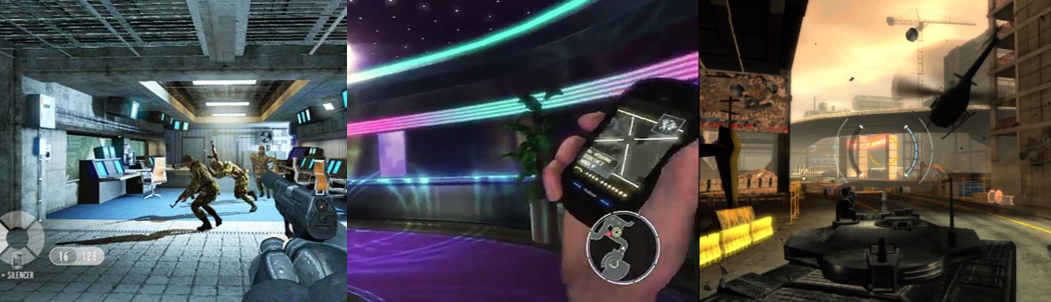
Game Corner [00-Heaven]: GoldenEye 007: Reloaded (Xbox 360)


To celebrate the release of Dr. No (Young, 1962), the first of the James Bond movies (Various, 1962 to present), October 5th is known as “Global James Bond Day”. This year, I’ve been spending every Saturday commemorating cinema’s longest-running franchise, and one up of the most recognised and popular movie icons.


Released: 1 November 2011
Originally Released: 2 November 2010
Developer: Eurocom
Also Available For: Nintendo DS, Nintendo Wii (Original Release); PlayStation 3 (Reloaded)

The Background:
Like many gamers back in the day, much of my social gaming was spent playing GoldenEye 007 (Rare, 1997), a best-selling title for the Nintendo 64 that began development as a simple rail-shooter before bucking the trend of videogame tie-ins by being universally praised as one of the greatest first-person shooters (FPS) and multiplayer experiences. Unfortunately, Rare lost the James Bond license and fans had to make do with spiritual successors like Perfect Dark (Rare, 2000), and other Bond titles, and blatant attempts to cash-in on GoldenEye 007’s popularity, like the shameless and mediocre GoldenEye: Rogue Agent (EA Los Angeles, 2004). In 2006 and 2008, both Nintendo and Microsoft expressed interest in releasing a port of the game on the Virtual Console and Xbox Live Arcade platforms but rights issues led to Activision charging Eurocom with developing a reimagining of the classic shooter for the Nintendo Wii. Built around the same gameplay and mechanics as 007: Quantum of Solace (Treyarch/Various, 2008), this new GoldenEye 007 saw Daniel Craig reprise his Bond role and many reviewers comparing it to the Call of Duty franchise (Infinity Ward/Various, 2003 to present). Despite some positive reviews GoldenEye 007 was mostly met with a mixed response that painted it as a lacklustre title. This didn’t stop Activision from releasing this high-definition port of the game to PlayStation 3 and Xbox 360 a year later, though critics remained as unimpressed as before. Thankfully, after numerous leaks, the original GoldenEye 007 was finally released on the Nintendo Switch and Xbox One so that a new generation of players could experience it and this middling reimagining was left mostly forgotten.

The Plot:
Renowned super spy James Bond/007 in drawn into a globe-trotting adventure as he races to stop a rogue 00 agent Alec Trevelyan (now a terrorist known as “Janus”) from causing a global financial meltdown with a satellite weapon known as “GoldenEye”.

Gameplay:
GoldenEye 007: Reloaded is a first-person shooter in which players assume the role of James Bond, now sporting Daniel Craig’s likeness and voice rather than Pierce Brosnan’s, and journey through reimagined maps and locations that are loosely based on the original videogame and movie. There’s a reason why GoldenEye 007: Reloaded has been referred to as “Bond of Duty”; if you’ve played any of the Call of Duty games, the controls, mechanics, and overall “feel” of the game will be very familiar to you, for better or worse. The game is therefore very much a modern reimagining of the classic Nintendo 64 FPS rather than a true, high-definition remake of the original game. This is first reflected in the game’s control scheme, which a helpful MI6 tutorial walks you through. Bond can climb and vault over downed objects (desks, trees, rocks, and the like), crouch with B to sneak up on enemies undetected for a stealth take down with the right analogue stick, manually reload his current weapon by pressing X and activate certain consoles or pick up new weapons by holding X, and switch weapons with Y. Holding the Left Trigger lets you aim down the sights of Bond’s gun and tapping it enables a helpful auto lock-on to the nearest target, if enabled. The Right Trigger is used to fire, and Bond can throw primary and secondary grenades and similar explosives with the Right and Left Bumpers, respectively. Finally, you can briefly sprint by holding down the left analogue stick, melee attack enemies up close by pressing in the right analogue stick, and apply a number of gadgets (such as a silencer or night vision goggles) with the directional pad (D-pad).

Use stealth, Bond’s phone, or go all-out in a tank in this mediocre shooter.

Your main gadget throughout the game isn’t a fancy watch or bizarre invention of Q and is, instead, disappointingly, your phone. Gameplay is invariably interrupted by phone calls from M and Bill Tanner that update your objectives or add some nuance to this re-told story, and you’ll be using your phone to scan partygoers to find your contact, investigate the environment to find and photograph objects of interest (like weapons caches and such), make recordings, activate remote explosives, and hack into terminals and drone guns. It’s a bit of a shame that so many of the game’s objectives require the use of the phone as it’s not that interesting to use and completely halts the action, though it’s relatively versatile and it can be fun to hack drone guns and gun down large groups of goons. Bond can also crawl through vents as a shortcut and to get behind groups of enemies, shoot fire extinguishers, explosive panels and barrels, and other parts of the environment to take down groups, and utilise his stealth and subdue skills to keep enemies from calling in reinforcements. Sometimes, you’ll be asked to press the right stick rather than hold X to open doors. This causes a “breach” that slows down time so you can dispatch armed foes and rescue hostages, like those on the frigate and Bond’s ally, Natalya Simonova. You’ll also be taking out security cameras to keep reinforcements at bay, activating surface-to-air missile launchers to take out choppers, acquiring and planting explosive charges, and even ploughing through the streets of Russia in a heavily armed tank! This chase mission is far more involved this time around, with Bond firing a chain gun, the main cannon, and even a homing shot, though the controls can be a bit clunky, and you can’t dawdle too long or you’ll lose General Arkady Grigorovich Ourumov. Another prominent feature in the game are quick-time event (QTE) sections. These pop up when Bond needs to pull apart doors by mashing LT and RT together, in first-person cutscenes where you need to activate explosives, and during bosses battles against turncoat Trevelyan and his right-hand assassin, Xenia Onatopp.

The locations are large but the objectives and requirements are sadly lacking.

QTEs rear their ugly heads at the worst possible moments, such as when Bond is racing after a plane down an airstrip. You need to fend off the pursuing troops and then leap to the plane with LT and RT, with failure returning you to the last checkpoint. Speaking of which, checkpoints are relatively generous here, allowing you to reload if you get spotted or are caught in a crossfire. GoldenEye 007: Reloaded has four difficulty settings (“Operative”, “Agent”, “007”, and “007 Classic”), with the enemy AI and objectives increasing for each setting. If you’re playing on “007 Classic”, you’ll be relying on body armour to replenish your health similar to the original game; otherwise, Bond will automatically regenerate health while taking cover, just like in the Call of Duty games. You’ll need to do this quite often, or at least be stealthy and smart about how you play, as Bond is surprisingly weak here. Enemy fire (and, especially, explosives) will end your mission in a split second and you always need to be aware of snipers and even sheer drops off cliffs! Thankfully, an onscreen radar highlights nearby enemies, allowing you to better anticipate their movements. This also points you in the direction of your main objective, with a phone icon altering you to any additional objectives in the nearby area. Unfortunately, Bond is far more limited here than in the original game. You can only hold two additional weapons alongside your standard issue pistol for three in total, though you can retrieve dropped weapons if you wish and the game is pretty good about providing you with helpful or necessary weapons (like sniper rifles or rocket launchers) in key areas. While the game is far more linear than the original version, you have a few options available to you (taking vents, lifts, and vaulting through windows, for example) to explore. You’ll need to pull apart rocks to progress, race through burning environments, fend of guards as they rappel through windows, and yes even defend Natalia as she sabotages the GoldenEye satellite. I actually found this a lot easier this time around (on “Agent” difficulty, at least). It didn’t seem like Natalia could be killed and it was much easier to target enemies, despite having to rush about between different consoles.

Graphics and Sound:  
Technically speaking, GoldenEye 007: Reloaded looks and plays perfectly fine. Many of the environments recreate and update the familiar stages of the original game, including the same sweeping camera cuts and décor choices. These are most prominent in the “Dam”, “Facility”, and “Archives” stages, which take the original map, apply updated textures and mechanics to them, and greatly expand upon them. “Dam” now takes place at night and in the pouring rain, for example. Bond and 006 commandeer an enemy truck to progress further towards their objective, there’s a helicopter pad, and the entire area is transformed from a relatively short and simple experience into a more nuanced opening stage. However, many of the returning stages are so different that they’re basically unrecognisable. It’s as though the developers were told the general concept of GoldenEye 007 and given free rein to imagine that however they like. “Frigate”, for example, is now comprised of a lengthy section where Bond must fight his way on to the ship. There are barely any hostages to rescue this time and you’re mainly disabling the ship’s systems to plant a tracker on the EMP-hardened helicopter as it takes off. Similarly, the “Surface” and “Bunker” levels are now far more detailed and basically entirely new stages. Bond must take cover within the wreckage of wooden huts and make his way through the burning wreckage of the Severnaya facility, and the “Depot” and “Train” stages are entirely reimagined, with the “Train” section being just a short run through a few wrecked carriages and a lacklustre escape where you need to shoot open a panel rather than use Bond’s watch.

Mostly, the game looks dark, bleak, and terrible and doesn’t do much with the Bond license.

Technically, I don’t really mind this. It makes sense that stages are expanded and changed using the new engine and mechanics, but any nostalgia you might feel creeping through the vents of “Facility” or stealthily taking out Janus goons in “Statue” is completely lost when you realise just how different and unrecognisable these environments are. “Statue” is a great example as the stage now takes place in a memorial park and museum. The confusing, maze-like layout is replaced with a dark and dreary covert mission past giant statues and stone trappings, using the sewers and silent takedowns to dispatch Janus’s men. The game also omits entire stages, like “Silo” and “Control”, replacing them with a nightclub stage full of raving partygoers where Bond meets a heavily altered version of Valentin Zukovsky. In fact, every character has had their likenesses completely remodelled with the exception of M, who’s still played by Judi Dench. Obviously Bond is Daniel Craig and that’s fine but the guy they got for Trevelyan is no Sean Bean and doesn’t even sport any facial scars to go with his Janus moniker! It’s almost a blessing, then, that much of the game’s story is conveyed through voice over and cheap MI6 briefings where all we see is digital information rather than character models. However, I think I preferred the text dossiers from the original game as at least that wasn’t doing the Nintendo 64’s graphical abilities a disservice like here. This translates to certain aspects of the gameplay, too. I noticed a few instances of graphical pop-ups and texture warping in the “Jungle” and “Surface” stages, enemies and gunfire often clipped through solid walls, and the game can get so dark and chaotic that it’s easy to get confused and frustratingly picked off before you even have a chance to react. One aspect I did like was that  “Dam” transitioned into an all-new title sequence, with Nicole Scherzinger performing an okay cover version of “GoldenEye” to give the game a cinematic flair that’s sadly missing in its otherwise muted, clinical, and bleak presentation. This is reflected in Craig’s delivery, which is decidedly lackadaisical, and juxtaposed by the vibrant “Jungle” stage and the high-tech “Cradle” finale, where blasts of blinding light cause gantries to collapse under your feet and goons to riddle you with bullets in the confusion.

Enemies and Bosses:
An endless supply of goons, guards, and soldiers will be patrolling every location in the game. If you follow them while crouched, you’ll get to listen in on some fun banter and discussions between them that might have you feeling a little remorse when you execute them with a headshot and you can see enemies going through certain motions, like patrolling back and forth, resting against barriers and walls, attaching charges to walls, and ransacking the environment. This opens a few options to you, such as sneaking up to subdue them, silently nailing a headshot, or going in all guns blazing, though the latter action is not always recommended as it’ll alert all nearby guards and cause tougher goons to come swarming in until the enemies are dealt with. Enemies are generally armed with an array of machine guns, but some also pack rocket launchers, take the high ground with sniper rifles, and you’ll have a fair few grenades lobbed at your head if you camp out in one area. Enemies can take cover (overturning tables and dramatically sliding behind walls) to fire at you, and have their hats shot off. They also busy themselves at computer terminals, vending machines, and in toilets but their gunfire is just as likely to ignite fuel tanks to cause explosive damage as yours so be sure to mind your surroundings at all times. Bosses aren’t really a thing in GoldenEye 007: Reloaded. Most stages end when you’ve completed your objectives, entered a facility, and either evaded capture or been captured. Sometimes you’ll need to hold off against waves of enemies as you wait for a lift to arrive. Other times, you’ll be switching to night vision to take out goons in darkened tunnels

Sadly, the game’s few boss encounters boil down to pressing the right buttons at the right time.

You will also be tasked with finding efficient ways of dispatching rooms or areas full of guards without raising too much of an alarm, and others you’ll be contending with helicopter attacks. This is fine when you’re in your tank but, when on foot, you’ll need to dodge between cover and activate a surface-to-air missile to down the chopper, with the one in “Jungle” unloading a missile barrage that limits your options in this regard. When in the tank, you’ll come up against a fighter jet near the end of the stage that takes a few more hits from your cannon to down, alongside loads of RPG-wielding soldiers, choppers, and trucks in the road but this is closest you get to battling Ourumov as he’s simply executed in a cutscene by Xenia. Xenia is fought as a boss, but this time it’s purely a QTE. Simply tap the buttons as they appear onscreen and Bond will dodge and parry her wild kicks until the sequence ends with her death. As in the original game, GoldenEye 007: Reloaded culminates in a showdown with traitor Alec Trevelyan, revealed as the terrorist Janus, in his antenna control facility. After overcoming the aggravation of getting past the dangerous gantry area, you’ll have another QTE-ladened fight with Trevelyan where the hardest thing about it is realising you need to mash LT and RT together rather than one after to other to avoid having your face burned off. After this, you’ll face one of the game’s toughest and most annoying challenges: a shootout with Trevelyan where he’s protected by a bulletproof vest and calls in goons and even a chopper to help him out. After failing multiple times, I realised that the best option is to shoot him with your unsilenced pistol (which oddly does more damage) and then head outside to the far left. The chopper won’t move around the building to fire at you so you can simply fend off the goons and shoot at Trevelyan until he runs off. Then you simply need to win one final QTE sequence that culminates in a fatal shot to the treasonous agent, and you’ll have achieved a final, if unremarkably hollow, victory.

Power-Ups and Bonuses:
Since you’ll only be picking up body armour on the “007 Classic” difficulty, the closest thing you’ll find to power-ups here are the various guns and gadgets you’ll find throughout your adventure. Bond can use a silencer to muffle his shots and remain undetected and can use night vision goggles in areas with low lighting to take out enemies (thought they don’t seem nearly as handicapped by the darkness), and of course use his trusty phone to hack drone guns. Otherwise, you’ll grab a fair amount of different guns, though barely any of them resemble their counterparts from the original game. You’ve got Bond’s regular pistol but there are other hand guns on offer, including one with a nifty aiming laser and one that fires in bursts. You can snipe from afar with sniper rifles (and some machine guns also make use of a scope or targeting attachment) or blow enemies away using a rocket launcher or a grenade launcher feature to one rifle, and blast goons in the face with powerful magnums and shotguns. My favourite weapon was the Masterson M557, a kind of high-powered, rapid rife shotgun! Classic Bond weapons like the one-hit kill Golden Gun and Moonraker laser also appear in the game’s multiplayer alongside grenades, though I never encountered either of these in the single player campaign. Honestly, I was a little disappointed by the weapon selection. You’ll come across locked crates and cabinets that can be smashed or shot open to grab new weapons, but they all seemed to be variations of machine guns and submachine guns, so I struggled a bit to tell them apart or favour one over the other, generally relying on whatever had the most ammo in the immediate area.

Additional Features:
There are fifty Achievements up for grabs in GoldenEye 007: Reloaded, four of which are awarded for completing every objective on every mission for each of the game’s difficulty levels (though these do stack up, so you can snag multiple in one playthrough). Many of the game’s stages contain the opportunity to earn an additional Achievement, such as getting forty kills with the Wolfe .44 magnum in “Nightclub” and twenty kills with hacked drone guns in “Jungle”, or require you to finish missions quickly or without reinforcements being called in. Five Janus emblems are hidden in every stage, and you’ll get Achievements for destroying one, twenty, and fifty of them, as well as for finishing any mission without taking damage of any “007 Classic” mission without any body armour. Outside of the main story, you can also take part in “MI6 Ops” missions for extra Achievements. These charge you with revisiting locations from the main game and eliminating enemies as quickly as possible, using stealth tactics, or defending three consoles and you’ll earn star rankings based on how well you perform. A good chunk of the game’s Achievements are also tied to the game’s multiplayer component. This can be played on- and offline and sees you again selecting from a roster of characters (including classic characters like Jaws and Oddjob) that you can now select different weapon and gadget loadouts. There are ten different maps to choose from and a variety of familiar game modifiers, such as melee only, team conflict, and a race for the Golden Gun. There are also some new modes here, too, such as “Escalation” (where killstreaks grant you better weapons), “Bomb Defuse” (like a “Capture the Flag” mode except you need to retrieve and defuse a bomb), and “Detonator Agent” (where you’re carrying a bomb and can either pass it to someone else or rack up a greater kill streak). While you don’t unlock fun cheat codes through gameplay like before, you can input some off websites to unlock some extra features for the multiplayer component, though not for the main campaign, which is limited to simply replaying missions on higher difficulties.

The Summary:
I played GoldenEye 007: Reloaded years ago on the PlayStation 3, around the same time as I played through the equally lacklustre Quantum of Solace game, and remember it being a largely uninspired FPS experience. Like many who bought the game, I was excited at the prospect and compelled by nostalgia to pick it up and it’s that same nostalgia that drove me to re-acquire it for my Xbox 360 library. Sadly, time and my experience with the Call of Duty franchise hasn’t made this game any better. While a lot of it visually resembles the original GoldenEye 007, so much has been changed and awkwardly shoe-horned into this samey, uninspired game engine that it may as well be an entirely different game. Indeed, I do wonder if it might’ve been better to tweak the concept a little to simply be a distant homage to GoldenEye 007 rather than an actual, explicit remake but that wouldn’t be anywhere near as interesting or profitable, would it? The gameplay is okay, but even on the “Agent” difficulty things can get very frustrating, boring, and repetitive very quickly. I found myself burning through weapons since they’re all so interchangeable, getting annoyed with how linear and obtuse the stages could be, and being unimpressed by the cutscenes, story, and voice acting. The QTEs were also annoying as they felt very out of place against the shooting gameplay. I disliked how much waiting and faffing around with the phone was involved, and the stealth mechanics were poorly implemented. When the game recalls and provides an updated twist on the original, it’s okay, but the rest of the time it’s just another painfully generic shooter where all you have to do is hide behind a wall until your health regenerates and then push a little further forward. It’s a shame as it could’ve been so much more, but GoldenEye 007: Reloaded was probably doomed from the moment it even thought about trying to cash-in on the original’s success and ends up offering nothing new for either Bond or FPS fans.

My Rating:

Rating: 2 out of 5.

Could Be Better

Have you ever played GoldenEye 007: Reloaded? If so, did you like it? Do you think it lived up to the standards of the original game? How do you think it holds up compared to other Bond games of this era? What did you think to the recreations and changes featured in the game? Were you annoyed by the QTEs and overreliance on the phone gimmick too? How did you find the game’s multiplayer and additional modes? What’s your favourite James Bond game that isn’t GoldenEye 007? Whatever you think about GoldenEye 007, please share your thoughts in the comments  and be sure to check out my other James Bond content across the site!

Game Corner [00-Heaven]: GoldenEye 007 (Xbox Series X)


To celebrate the release of Dr. No (Young, 1962), the first of the James Bond movies (Various, 1962 to present), October 5th is known as “Global James Bond Day”. This year, I’ve been spending every Saturday commemorating cinema’s longest-running franchise, and one of the most recognised and popular movie icons.


Released: 27 January 2023
Originally Released: 23 August 1997
Developer: Rare
Also Available For: Nintendo 64, Nintendo Switch, Xbox One, Xbox Series X

The Background:
It was tough to get any better than a game of four-player GoldenEye 007 back in the day. The endlessly accessible and enjoyable first-person shooter (FPS) was a staple at many a sleepover in my youth and was directly responsible for making me the James Bond fan I am today. Popularised by Sean Connery’s immortal portrayal, Ian Fleming’s super spy was in a bit of a drought in the late-nineties thanks to legal issues and Timothy Dalton resigning from the role. The iconic British institution came back with a bang, however, with Pierce Brosnan’s critical and commercial debut, which was followed by a tie-in game for the Nintendo 64 some two years later. Developed by British studio Rare under the direction of Martin Hollis, the game was originally conceived of as a 2D platformer for the Super Nintendo Entertainment System and as a rail-shooter before the developers got to grips with the Nintendo 64 hardware. After a year of development, David Doak joined the team and implemented stealth mechanics using a radius test. Successive gunfire would attract nearby enemies and players were encouraged to spy on enemy characters using the game’s two-way mirrors. Six months before the release date, programmer Steve Ellies added the now iconic multiplayer mode, though the likeness of former Bonds and the names of certain weapons were changed for legal reasons. The developers also toned down the violence to appease Nintendo’s concerns and included a number of unlockable cheats. In a world where videogame tie-ins are notorious for being rushed, bugged, and unfulfilling affairs, GoldenEye 007 proved the exception. Not only was it one of the best-selling Nintendo 64 games but the game was met with unanimous (and continuous) praise for its gameplay, mission-based mechanics, and multiplayer. Although Rare soon lost the James Bond license, GoldenEye 007’s legacy continued to be felt not just with its spiritual sequel, Perfect Dark (Rare, 2000), and in other FPS titles, but throughout subsequent James Bond tie-in games. There were rumours and clamouring for a re-release for decades, though rights issues always saw these stall. In 2010, Eurocom released a reimagining of the title to mixed reviews but hopes were raised when leaks of an Xbox One version appeared online. On the eve of the game’s 25th anniversary, these rumours were officially announced to be true when it released exclusively on the Xbox One and Nintendo Switch series of consoles and featuring a number of enhancements. So beloved is the original game that this enhanced version of GoldenEye 007 was equally lauded, especially for its nostalgia factor, though some were disappointed that the Xbox version didn’t include online multiplayer.

The Plot:
Renowned super spy James Bond/007 in drawn into a globe-trotting adventure as he races to stop a rogue 00 agent Alec Trevelyan (now a terrorist known as “Janus”) from causing a global financial meltdown with a satellite weapon known as “GoldenEye”.

Gameplay:
GoldenEye 007 is a first-person shooter in which players are placed into the shoes of world-renowned super spy James Bond and charged with completing various objectives across eighteen stages (referred to as “Missions”) taken from the movie of the same name, and two bonus Missions that loosely adapt elements and events from classic Bond films Live and Let Die (Hamilton, 1973), The Man with the Golden Gun (ibid, 1974), The Spy Who Loved Me (Gilbert, 1977), and Moonraker (ibid, 1979). Unlike FPS classis like Doom (id Software, 1993) and rail-shooters like Time Crisis (Namco, 1995), GoldenEye 007 offers a range of movement and control options, making Bond a far more versatile and capable FPS character compared to some of his counterparts. This new version of the game improves things even more thanks to modern controllers having two control sticks, but there are a range controls available and players can even customise them if they wish. The default controls see you firing Bond’s current weapon with the Right Trigger, activating consoles, opening doors, and disabling alarms and such with A, crouching to avoid incoming fire or enter vents with B, and aiming with the Left Trigger. You can also press Y and the Left and Right Bumpers to cycle through your available weapons, or manually select them by pausing the game, which brings up Bond’s fancy gadget watch. This also allows you to read up on your mission objectives, gives you the option of switching to different control schemes (each named after a different Bond Girl and with one even allowing an awkward two-player mode where only player moves while another one shoots), select gadgets like a key decoder or Bond’s laser watch, and quit the current Mission. On the original Nintendo 64 version, strafing was accomplished with the C-buttons and allowed you to rapidly dart across environments at higher speeds. Here, you can use the left analogue stick to accomplish this same task, and you’ll also find that your aim benefits from a slight auto-aim function.

Take on the role of 007, gun down enemies, and complete various objectives.

Unlike in modern FPS games, Bond is surprisingly vulnerable and will not regenerate health when taking cover from enemy fire. In fact, most things you take cover behind will explode in your face, so it’s better to keep moving and make use of the game’s controls to peek around corners or use silenced weapons or Bond’s handy karate chop to knock enemies unconscious without raising alarm. When taking damage, Bond will react accordingly, which can throw off your aim and see you being bounced about in a crossfire. Explosions are usually an instant death sentence as well so be sure to avoid grenades, rockets, and exploding crates whenever possible. While you can’t replenish Bond’s health, you can pick up body armour strewn across the environment to add an extra bit of protection, but there are no checkpoints in GoldenEye 007 so once you see that blood filling the screen or the “Mission Failed” notification, you’ll have to start over from the beginning. The game offers three difficulty settings (“Agent”, “Secret Agent”, and “00 Agent”), with a fourth being unlocked that allows you to customise various difficulty options, and the difficulty setting you play on directly impacts the behaviour of the game’s enemies, the bonuses you unlock, and the mission objectives you’re given. For example, when playing on “Agent”, you’re generally only given a couple of mission objectives. “Runway” on this mode simply asks you to acquire a key and escape in a plane, but higher difficulties have you destroying anti-aircraft guns first. Later Missions can become extremely complex and difficult because of this. Each Mission is preceded by a number of dossiers in which M, Q, and Miss Moneypenny will explain the specifics of each objective, often with pictures, so you have to be mindful about going in all-guns blazing as you don’t want to accidentally destroy a vital piece of machinery or gun down an ally. Because of this, many 00 Agent Missions require better use of stealth, such as attacking with short bursts of fire or while unarmed, enemies will be noticeably more formidable, and you’ll need to explore more of the environment and have less access to body armour, dramatically increasing the challenge.

Each Mission and difficulty setting offers unique objectives and mechanics.

Mission objectives are quite varied, but also shared across the game;. You’ll be deactivating alarms and consoles (sometimes by interacting with them, other times by blowing them up), acquiring keys, key cards, and documents, and meeting with allies like Doctor Doak, Valentin Zukovsky, and Dimitri Mishkin. Environments are often littered with cameras and alarm systems that will attract enemies to your location or even lock you out of rooms if you’re not quick to disable them, and enemies can sometimes be holding hostages who you’ll need to free without killing the innocent. This can be easier said than done, especially on missions that require you to protect, escort, or work alongside Natalya Simonova. All of the game’s non-playable characters (NPCs) tend to run in front of your bullets but Natalia is the worst, running around in a mad panic amidst a gunfight or leaving herself an open target while messing about with computers. Things quickly become quite obtuse and tricky as you’re tasked with destroying weapons caches, calling for back-up (without destroying the radio equipment), re-aligning an antenna cradle, and wandering around a statue park to meet with the mysterious Janus. Many mission objectives require the acquisition and use of Bond’s gadgets, such as using his laser watch to cut through grates, attracting keys with his magnet, planting tracking devices, and photographing objects, sometimes while racing against a time limit. Gameplay is somewhat broken up in the two instances where you can hop into an armoured tank, with it being mandatory to barrel through the streets of Saint Petersburg in said tank while trying not to run down too many innocent civilians. If you fail even one objective, the entire Mission is a bust, but you can continue playing if you want. This can be a good way to get an idea of the layout of the environment and find other mission objectives for your next playthrough to get a faster completion time, something that’s necessary to unlock all of the game’s cheat options. In addition to your time, your accuracy, shots fired, and kills are all tracked after a Mission is completed, meaning you can always try and improve your approach to a Mission.

Graphics and Sound:  
Even back on the Nintendo 64, GoldenEye 007 did a pretty good job of recreating scenes and characters from the movie. Sure, the character models are blocky and their faces hideous and many environments are a little too bland, polygonal, and swamped with fog, but they managed to capture the essence of the film really well, expanding upon minor elements and areas, especially in the first few Missions, and making them fully-fledged locations. The only issue I had was that the developers included two versions of Surface and Bunker. I would have preferred to see a Casino and Paris stage used instead to add a bit more variety to the early game, but at least there are differences between the two stages to both differentiate them and showcase the passage of time. There are even entirely new environments that weren’t seen in the film, like Silo, Depot, Caverns, and stages based on small parts of the film (like Dam, Runway, Frigate, and Train) are expanded on with additional mission objectives and aesthetic quirks. Of course, the most memorable location remains Facility, which lovingly recreates and expands upon the opening scenes of the film and remains the quintessential map for multiplayer skirmishes. My least favourite stages were always Statue, Jungle, and Cradle as they’re quite difficult to navigate and full of dense fog and hazards, to say nothing of the tougher enemies dwelling within.

While the graphics are dated, nostalgia means the game retains its visual appeal.

Every Mission begins with a bit of an overview of the location before the camera pans around and into Bond’s head, literally placing you in the role of the world’s most famous spy. Cutscenes, in the traditional sense, are few and far between and limited to these opening camera pans and a little animation of Bond looking all cool as he exits the stage, with the majority of the game’s story being relayed through the mission dossiers and onscreen dialogue. There are occasions where you can continue on and this dialogue will still play out, but if you try and rush Janus in Statue or don’t heed his advice to holster your weapon then you’ll fail the Mission. There are some graphical limitations to GoldenEye 007 that definitely date it, as well. There’s no reloading animation (guns simply disappear and reappear with a reloading sound effect), enemies have repetitive animation cycles (though they do kneel down, roll, cross their arms when dual-wielding, and react when shot in the ass), and there can be a bit of slowdown when too many explosions fill the screen. Still, little details like bullet holes, splashes of blood on clothing, and screams of pain help to keep things very immersive. Additionally, the soundtrack is incredible; composed by Rare stalwarts Graeme Norgate, Grant Kirkhope, and Robin Beanland, the soundtrack is both recognisably Bondian and unique, harkening back to Éric Serra’s movie score and the Bond themes made so famous by John Barry.

Enemies and Bosses:
Bond’s mission is impeded by the finest polygonal soldiers and grunts money can buy. While there’s not much to differentiate them in terms of animation, the game’s enemies all don different attire depending on the Mission (sporting parkas in Surface, camo gear in Jungle, and tactical outfits in Caverns) and wield various weapons. Many carry the KF7 Soviet or Klobb, two notoriously inaccurate weapons; others bust out the DD44 Dostovei or dual-wield the ZMG (9mm). The challenge posed by the game’s enemies directly relates to the difficulty setting you’re playing on and the Mission you’re playing. Enemies are pretty clueless in Dam but wander around the Caverns carrying super-powerful US AR33 Assault Rifles and blast at you with Moonraker lasers in Aztec. Janus’s special forces, and some guards aroused by alarms, will also carry shotguns or toss grenades, and you’ll also have to keep an eye out for high-impact turret placements that can shred your life meter in seconds. Enemies are quite vulnerable, even on “Secret Agent”, dropping after a few good torso shots or a headshot, but sometimes their guns can block your bullets and the sheer number of enemy bodies can make it difficult to land decent shots, in which case it’s best to target explosive parts of the environment to send them flying.

In addition to the movie’s baddies, you’ll encounter some classic Bond villains here,

Although boss battles aren’t commonplace in GoldenEye 007, there are a few instances where you’re tasked with killing one of Janus’s henchpeople in a firefight. The first of these you’ll encounter is Colonel Arkady Grigorovich Ourumov, who cannot (easily) be killed in the first few encounters. Ourumov fires at you from a distance in Silo, you pursue him in Streets, and then you finally gun him down at the end of Train, just like in the movie. Shooting Xenia Onatopp in Train will buy you some much-needed extra time with the floor grate, but she puts up a far greater fight when you confront her in Jungle. She’s armed with both a super-powerful RC-P90 and a grenade launcher and can be difficult to hit thanks to the fog, the explosions from her grenades, and her armour-piercing shots. Your best bet is to hang back, firing from a distance, or get up nice and close and fill her face with AR33 fire. This method of staying back serves you well in the final Mission of the main game, Cradle, where you go head-to-head with rogue MI6 agent Alec Trevelyan/Janus. In this Mission, you must realign the antennae, fending off Janus’s elite guard and the sentry guns set up about the place, blasting at Trevelyan as he fires his AR33 and tosses grenades to cover his escape. Trevelyan can absorb a great deal of damage but, once you’ve hurt him enough, he’ll dash to a specific area of the map and drop down to a small platform, just like in the film’s finale, where you’re given precious seconds to reorientate yourself and deliver the final blow. When you unlock the bonus missions, Aztec and Egyptian, you’ll face off with classic Bond villains Jaws and Baron Samedi. The former carries two AR33s and is a veritable bullet sponge, though he’s a big target and shots to the face are recommended. The latter mysteriously resurrects and wields a different weapon each time as you search through the pyramid for Francisco Scaramanga’s fabled Golden Gun, which can kill any enemy, including the supernatural Samedi, in one hit.

Power-Ups and Bonuses:
Naturally, there’s quite a bit you can find throughout each Mission to aid your progress. Body armour allows you to take a few more hits and effectively acts as a secondary health bar and you can pick up any weapons dropped by downed enemies. Green crates can often be found which contain new weapons or ammo, and you’ll also be able to swipe keys and key cards from guards and NPCs alike to acquire mission-specific items or additional toys. Bond can karate chop enemies without expending ammo, but this leaves him extremely vulnerable so it’s best to use this from behind. Similarly, the sniper rifle butt can be used to hit and defeat enemies when up close. He’s also afforded numerous weapons, including his iconic Walther PPK (known as the PP7), which also comes with a silenced variant, and his trusty watch, which cuts through grates and enemies alike with its laser. Bond can also dual-wield for additional damage (and ammo expenditure) and you can even have him hold two different weapons if you’re quick at cycling through them. A variety of machine guns are on offer, from the near-useless Klobb to the simplicity of the D5K Deutsche and the burst fire of the RCP-90. You can also grab high-explosive weapons, such as grenades, grenade and rocket launchers, and three types of mines (remote-activated, proximity triggered, and timed), but be sure to avoid the blast zone. Throwing and hunting knives can also be used for a more personal touch, but I like the power and accuracy offered by the two shotguns and the Couger Magnum. The game’s best weapon is the one-shot Golden Gun and the faster variants unlocked through cheats, but you can also make use of the tanks cannon to blast at soldiers and anti-aircraft guns and zap enemies with lasers when you acquire the Moonraker laser.

Additional Features:
There are fifty-five Achievements on offer in GoldenEye 007, with twenty being awarded simply for clearing each of the game’s Missions on any difficulty setting. You’ll get three separate Achievements for finishing the entire game on each of the three difficulty settings, and 10G each time you finish a Mission in a specific time frame on a specific difficulty and unlock a cheat option. Yes, blasting through Missions as quickly as possible on each of the difficulties will unlock a wide variety of cheats, from invincibility, invisibility, all guns, infinite ammo, and even options for a hilarious “big-head mode” and to speed up or slow down the in-game action. Achievements are also earned by playing the game’s multiplayer mode. Although the Xbox version doesn’t allow for online multiplayer, you and your friends can still get together in person to battle head-to-head, or in teams, across a variety of repurposed maps.

The game’s replay value is bolstered by fun cheats, a banging multiplayer, and various unlockables.

You can battle simply for points, set limits on how many lives and time you have to play, set weapons to be one-hit kill, battle for control over the mythical Golden Gun, and play a capture the flag scenario, with each option named after a classic Bond film. All of the game’s characters, major and minor, are available to pick from alongside two classic Bond villains, Oddjob and Mayday, with the former (and Jaws) offering different challenges based on their height. Completing the game on Secret Agent and 00 Agent will also unlock two bonus Missions: Aztec and Egyptian. In Aztec, you’re placed in a fantastic recreation of Hugo Drax’s missile command centre from Moonraker and must confront Jaws, escape a rocket’s test fire, and then sabotage the Drax shuttle before it takes off. In Egyptian, you’re tasked with navigating a maze-like pyramid in search of the Golden Gun and hounded by Baron Samedi, who returns three times to cause you trouble but the biggest challenge here is remembering the sequence to reach the aforementioned Golden Gun as you’ll be cut down by sentry guns if you step on the wrong tiles. Some additional weapons can also be used when utilising the All Guns cheat, which can make it fun to revisit previous Missions, and you can even tweak the enemy behaviour, strength, and awareness when you unlock 007 Mode to make the game even easier or harder depending on your preference.

The Summary:
Obviously, nostalgia is a huge part of GoldenEye 007’s appeal. Graphically, the game hasn’t aged very well, and it’s definitely been superseded by other Bond games and FPS titles in terms of presentation, gameplay mechanics, and content but there’s something very appealing to GoldenEye 007’s simplicity. It’s nice to be placed in a surprisingly large number of polygonal environments and simply head to a goal, with additional objectives adding relay value and challenge to the game, meaning GoldenEye 007 can be surprisingly complex that more you play on higher difficulties. The game is full of fun little Easter Eggs as well, from character animations and dialogue to oddities placed in each environment, and I enjoyed how NPCs on one difficulty suddenly become vital objectives in the next. There’s a lot to do here as the game challenges you to play on harder difficulties and find the fastest, most efficient way of beating its Missions to unlock everything. There’s also a nice variety of weapons that can all be held at once, meaning you can easily mix and match your gameplay style on the fly, and a fun assortment of objectives that often encourage stealthier gameplay but give you the tools to engage in a manic firefight. The multiplayer is as enjoyable as ever, too; I’m not fussed about the lack of online functionality as I don’t play online and it’s great to be able to jump in and mess about like in the old days. After decades of GoldenEye 007 being restricted to an old console, it’s simply astounding to see it made available once again. It’d be great if more licensed games got the same treatment but I’m happy to say that GoldenEye 007 is just as much of a blast to play through now as it was all those years ago.

My Rating:

Rating: 4 out of 5.

Great Stuff

Was GoldenEye 007 a favourite of your youth? What did you think to this re-release and were you surprised when it was finally announced? How do you think the game holds up today? Did you ever finish it on 00 Agent and unlock everything? Which Mission, weapon, or location was your favourite? Do you have fond memories of playing the multiplayer? What’s your favourite James Bond videogame? I’d love to know your thoughts and memories of GoldenEye 007 so please leave them in the comments and go check out my other Bond reviews.

Mini Game Corner [00-Heaven]: James Bond 007: The Duel (Mega Drive)


To celebrate the release of Dr. No (Young, 1962), the first of the James Bond movies (Various, 1962 to present), October 5th is known as “Global James Bond Day”. This year, I’m spending every Saturday commemorating cinema’s longest-running franchise, and one of the most recognised and popular movie icons.


Released: December 1992
Developer: The Kremlin
Also Available For: Game Gear and Master System

A Brief Background:
Although videogame tie-ins have a reputation for being rushed, bugged, and unfulfilling titles, James Bond/007 seems to have fared quite well in videogame endeavours. Obviously, everyone knows about the best-selling GoldenEye 007 (Rare, 1997), but Bond’s headlined videogame titles since 1983. He’s featured in racers and adventure games, but is most notable for this third- and first-person escapades. In 1987, Timothy Dalton took over the famous role, starring in two reasonably successful, if polarising, Bond movies. Although Dalton signed a three-picture deal, legal issues stunted his return and he was ultimately replaced in the role, though his likeness was used for this videogame, the first Bond game to feature an original storyline. Developers the Kremlin and publisher Domark actually had previous experience adapting Bond’s adventures, but James Bond 007: The Duel attracted mixed reviews that criticised its short length, repetitive gameplay, and sharp difficulty curve.

My Review:
James Bond 007: The Duel is a 2D, sidescrolling run-and-gun with mild platforming elements. Naturally, players assume the role of the famous super spy and are tasked with journeying across five levels in the battle against Professor Gravemar, a maniacal terrorist who not only threatens the world with his satellites but has built a cloning machine to resurrect Bond’s greatest enemies as his personal guard. After an absolutely awful pixel art rendition of Timothy Dalton, garish title screen, and mildly impressive MIDI recreation of the iconic Bond theme, players can customise their controls, pick from three difficulty levels (“Normal”, “Hard”, and “Manic”), or play the game’s tunes in the sound test. By default, A sees Bond jump (with 007 frequently performing an impressive and wholly uncharacteristic somersault), B sees him shoot his signature Walther PPK, and C tosses any grenades he acquires from Q Cases hidden in each level. Bond’s combat and traversal options are a bit limited; he can climb ladders, shoot diagonally up and down and whilst on ladders or when jumping or crouching (though he can’t shoot straight up or down). Furthermore, he flies backwards comically when shot, takes fall damage and will even die if he falls from a great enough height, and has frames of animation when ducking or picking up ammo and items that leaves him wide open to attack.

Bond’s mission to rescue hostages on a garish ship was too tough for me to beat.

Each mission is preceded by a map screen of the professor’s private, heavily guarded island. After flying in on the Thunderball (Young, 1965) jetpack, Bond must navigate a large ship rescuing hostages. On “Normal”, Bond starts with four lives and must rescue three hostages (all scantily clad babes); he has limited ammo, reloading his gun when he runs out, and his health is measured in hit points. Players can replenish Bond’s health by rescuing hostages, and every goon they gun down and mission they complete will earn them points to increase their standing on the high score table. Unfortunately, there’s no indication of where the hostages are, so you’ll need to search high and low, hopping from platforms and lifeboats and avoiding falls, being shot to death, or being crushed by a falling submersible. Thankfully, there’s no time limit and any hostages you’ve rescued will stay rescued if you lose a life. Unfortunately, while you have unlimited continues and hidden checkpoints in each level, you’ll have to replay the stage from the start if you use a continue. Bond can hide in doorways to avoid enemies and bullets by pressing up and, though his sprite isn’t very detailed and lacks idle animations, Bond does switch his gun between his hands when you turn from left to right. Enemies appear to respawn as you play and, once you rescue all the hostages, you’ll need to find a bomb and then frantically search for the exit against a tight one-minute timer. Sadly, I wasn’t able to achieve this; although I found an optimal route to rescue the hostages and defuse the bomb, I would either slip and fall to my death or be throttled and tossed to my doom by the brutish Jaws before I could even find the exit.

Later levels see Bond braving deadly hazards and battling his most famous foes.

James Bond 007: The Duel has a strange presentation. It’s very bright and colourful, with a jaunty soundtrack, and the backgrounds remind me of James Pond 2: Codename: RoboCod (Vectordean, Intellectual Software, Consultants Limited, 1991), which is a strange fit for Bond. The background scrolls as you move but is otherwise completely static; it also shifts up and down as you hold those directions, which can be quite disorientating. You need be careful not to fall into the water as, while you can grab ladders to climb out, the current will take you towards a frenzy of sharks. I gave the game a good shot, but it can be very unforgiving; if you’re shot, Bond is so slow to get up and often aims diagonally downwards rather than crouching, meaning it’s easy to get stun-locked in a continuous cycle of being shot at until you’re killed. With no passwords or cheat codes to mitigate the difficulty, and the level forcing you to restart from scratch when your lives are exhausted, I was neither able to defeat or bypass Jaws in this playthrough. Looking ahead, it seems more competent players can beat the game in about twenty minutes and Bond will traverse vines, dodge spike pits, battle Baron Samedi (who tosses bones at you) and encounter a massive futuristic tank in the jungle, avoid being roasted alive by lava and fireballs and encounter Mayday (who launches at you with flying kicks) and a claw-machine in a volcano, and gun down scientists, dodge flame bursts and take down Oddjob (who tosses his hat a painfully short distance) and a flame-shooting mech in the shuttle base. The game’s final level is dedicated to a boss battle against Jaws. Yes, rather than take on the mad Professor Gravemar, Bond faced Jaws once more, with the brute now piloting a mech that spits grenades and sports a scorpion-like tail. Defeating Jaws earns you another terrible piece of sprite art and a brief credits sequence, with no story text being included in the game at any point.

I know that James Bond 007: The Duel was only a mediocre title, at best, but I suddenly felt the urge to add it to my Mega Drive library and give it a go. I was hoping it would be a tough, but generally enjoyable platform shooter than I could maybe breeze through using a cheeky infinite health code or abusing the infinite continues, but it sadly didn’t go that way. This is a game that requires a great deal of patience and persistence from the player; I have no doubt that I probably could do better with a little more time, but the lack of passwords means you basically have to complete it in one sitting, which isn’t an appealing prospect. Although the game looks good, it has a very confused presentation; the large pixel art is dreadful, the locations are garish and cartoonish, but Bond and his enemies look pretty good despite their lack of detail. I liked seeing Bond’s enemies pop back up and little Easter Eggs like the jetpack and the map screen changing as you progress, but the gameplay is very clunky and repetitive. Every level requires the same functions from you (rescue hostages, disarm bomb, reach exit, battle bosses) with no variety beyond a greater emphasis on vertical exportation. Perhaps with a little more to do, some additional weapons, and some useful codes, James Bond 007: The Duel could’ve impressed me more but as is, it’s a little too punishing for me to sink my teeth into right now. But perhaps you’ve beaten it. Perhaps you enjoy it as a hidden gem for the Mega Drive. Perhaps you had no difficulty blasting through it and besting Bond’s resurrected baddies. Perhaps you think I should try harder or give the 8-bit version a try. Perhaps you prefer a different Bond game. Whatever you think, drop a comment below.

Movie Night [00-Heaven]: The Living Daylights


To celebrate the release of Dr. No (Young, 1962), the first of the James Bond movies (Various, 1962 to present), October 5th is known as “Global James Bond Day”. This year, I’m spending every Saturday commemorating cinema’s longest-running franchise, and one of the most recognised and popular movie icons.


Released: 31 July 1987
Director: John Glen
Distributor: United Artists
Budget: $40 million
Stars: Timothy Dalton, Maryam d’Abo, Jeroen Krabbé, Joe Don Baker, Art Malik, and John Rhys-Davies

The Plot:
British secret agent James Bond/007 (Dalton) helps KGB officer Georgi Koskov (Krabbé) defect and learns that a policy of assassinating defectors has been instated by new KGB head Leonid Pushkin (Rhys-Davies). After being betrayed by Koskov, Bond’s only lead to him – and a greater plot involving shady American arms dealer Brad Whitaker (Baker) – is naïve cellist Kara Milovy (d’Abo), whom he must coerce into helping him track Koskov down before it’s too late.

The Background:
MI6 super spy James Bond was created by writer Ian Fleming in 1953 based on his time as a Navy intelligence officer. The character was most famously brought to life by Sean Connery, kicking off an unparalleled cinematic franchise. When Connery tired of the role, Roger Moore stepped in and made it his own as a softer, gentler Bond. Though Moore was beloved in the role, his movies took a critical and financial downturn after twelve years and seven films. Moore stated he left the franchise due to aging out of the role, and the search was on for the new James Bond. Although San Neill was initially considered, it was actually Pierce Brosnan who was first cast based on his work on the television series Remington Steele (1982 to 1987). However, the announcement caused renewed interest in the show, meaning contractual obligations would keep Brosnan from the role until 1995 and Timothy Dalton (eventually) agreed to sign on in his place, eager to separate himself from Moore’s portrayal with one more in line with the source material. Although the film’s title was taken from Octopussy and The Living Daylights (Fleming, 1966), very little material was taken from the book beyond the opening sequence, with the film initially planned to include recurring KGB General Anatol Gogol (Walter Gotell) in Pushkin’s role, but Gotell was too sick to handle such a large part. The film saw the return of Bond’s iconic Aston Martin, and complex (and dangerous) mid-air stunts made more troublesome by unfavourable weather. Perhaps due to Bond’s nearly-five-year absence, The Living Daylights outperformed Moore’s last film with its $191.2 million box office (actually making it more profitable than five of Moore’s movies), but was met with mixed reviews. Many both praised and criticised Dalton’s more gruff and serious Bond; while the stunts impressed, the middling plot and unappealing villains drew criticism and, while some have argued that it is an under-rated entry, others maintain Dalton’s second attempt was more fitting for his version of Bond.

The Review:
Everyone has their favourite Bond, and everyone has the Bond of their generation; sometimes they don’t align, and sometimes people prefer aspects of one Bond to another. For me, Pierce Brosnan was both my Bond and the Bond of my generation thanks to 007’s lengthy absence from cinema screens during my childhood. Yet, when I first started getting into the Bond franchise, I had an affinity for the suave, light-hearted take offered by Roger Moore. It might be surprising to learn, then, that I’ve always been a fan of Timothy Dalton’s edgier, more serious take on the character. While this was influenced by his short time in the role and thus often being underappreciated, when I later researched Bond for my Master’s degree, I developed a greater appreciation for his surprisingly faithful portrayal of the character, who’s often a pretty dark character. The differences between Dalton and Moore are apparent right from the start: he takes the deaths of his fellow agents very seriously (almost personally), and throughout the film he’s shown to have more of an edge than his predecessor. He is visibly frustrated with Kara throughout the film and barking his displeasure and just exuding a feeling of exasperation at having to hold himself back because of etiquette or duty. At the same time, Dalton shows a softer, caring side; he begrudgingly goes out of his way to retrieve Kara’s cello and enjoys wooing her while on the move. Yet, he has a ruthless, biting delivery and always seems to be on the verge of snapping into a violent rage, which makes him seem volatile and unpredictable, qualities that I find really enjoyable after the previous flawless, almost superhuman incarnations of the character.

Dalton gives Bond an edge, making him a gruff and blunt character despite his natural charisma.

The Living Daylights coyly toys with the audience in its opening sequence by masking Dalton’s appearance, making the unveiling of the new Bond a dramatic reveal that’s designed to explicitly say, “This is the new guy!” To me, this is plainly establishing that The Living Daylights is supposed to be a soft reboot of the franchise, but this does get decidedly muddled. “M” is still portrayed by Robert Brown, who previously portrayed Admiral Hargreaves but was presumably promoted during Moore’s era, and “Q” is still portrayed by Desmond Llewelyn, suggesting Dalton’s Bond is the same character as the previous iterations. Yet the sudden youthful appearance of both M’s secretary, Miss Moneypenny (Caroline Bliss), and Bond himself lends credence to this being a soft reboot, one that retains many of the previous actors and in which it can be implied that Bond went on similar missions to his predecessors. I think this is probably what The Living Daylights is going for but it’s understandably a little muddled since reboots ad re-quels weren’t part of the mainstream cinema lexicon at this time. This is a Bond with very little time for quips and glib remarks; sure, he does make them but they’re drier than the desert sand. He also tends to be late, flippant, and easily distracted especially by his vices, (booze and women, for example). This, as much as Bond’s arrogance and his standoffish, “lone wolf” persona irks the likes of Saunders (Thomas Wheatley), who prefers to go by the book rather than improvise like 007. Yet, Bond’s reputation as “the best” precedes him; Koskov only agrees to defect if Bond personally protects him, yet Bond has little regard for his orders. Indeed, he seems to welcome the idea of being fired for his insubordination and is portrayed more as a man living on the edge, facing the threat of death every day, and preferring to take the most direct course of action to achieve his objectives. Bond’s instincts do earn him the disapproval of M, meaning he’s reprimanded for sparing Kara, and his disbelief at Koskov’s claims about Pushkin, a man Bond knows quite well, is dismissed after the General is spirited away by KGB enforcer Necros (Andreas Wisniewski). Although Bond refuses to hunt down and kill Pushkin, despite his name being on his Smiert Spionam, he agrees to take the assignment only so he can more efficiently circumvent M’s orders and follow his gut, which tells him to investigate the sniper he wounded.

Naïve cellist Kara fails to impress with her wide-eyed awe and abject cluelessness.

Kara catches Bond’s ear (and eye) almost immediately; he picks her out of her entire choir and admires his beauty and talent, but even he is stunned when she pulls out a sniper rifle. Recognising that the girl has been setup as a decoy, Bond purposely shifts his aim to only graze her since he “only kills professionals”, angering Saunders but showing that Bond has the wherewithal to spot a patsy. Intrigued by her, Bond follows her to discover her exact involvement in the narrative, only to find she’s simply a naïve girl blinded by love and loyalty. Of course, Bond’s instincts are dead right and it turns out Koskov manipulated her to make his defection appear genuine, but Kara’s so infatuated with Koskov that she defends him, even when interrogated by Pushkin and the KGB, and is visibly excited at the knowledge that his “friend”, Bond, has been sent to take her to him as promised. Naturally, Bond is perfectly happy to manipulate her feelings by assuming the role of a concerned mutual friend and keeping her on the move, placated with false promises, half-truths, and sightseeing, in the hopes of luring Koskov out. Bond assumes an almost paternal relationship with her, even requesting two bedrooms and treating her to lavish gifts and experiences, all under the guise of looking after her in Koskov’s absence. Despite her love and devotion to Koskov, Kara is smitten by Bond, whose mask slips the more he gets close to her, but Koskov’s influence runs deep. All it takes is one phone call and a few kind words and Kara is convinced to drug Bond, believing him to be a KGB agent. However, even as he’s crippled by the poison, Bond reveals Koskov’s true nature and that he spared her life while Koskov wanted her dead. Kara realises she’s been taken for a fool when Koskov hands her over to Colonel Feyador (John Bowe) as Bond’s accomplice and, while she shows some fighting spirit in the action-packed finale, remains little more than a wide-eyed, cheerfully enthusiastic (and, ultimately, extremely forgettable) hinderance.

Despite his abrasive nature, Bond finds allies in high, low, and the strangest of places.

At the start of the film, Bond is paired with Saunders and immediately gets on his bad side by being late, distracted, and overly critical of Saunders’ carefully planned out extraction plan for Koskov. Saunders goes by the book and thinks very little of Bond’s cavalier attitude; his anger at Bond deliberately missing Kara turns to humiliation when Bond usurps his operation, showcasing a field awareness and experience that paints Saunders as ineffectual and bumbling, but is convinced by Bond to investigate Koskov. While Saunders comes through and reveals Koskov’s partnership with American arms dealer Brad Whitaker (Baker), and he and Bond find a mutual respect, it indirectly leads to his death as Necros murders him before Bond’s eyes, enraging the already uptight 007. Although he’s a new character to the franchise, Pushkin is said to be a former acquaintance of Bond’s. Bond, ever the remarkable judge of character, smells a rat when Koskov claims that Pushkin has designs on being the next Joseph Stalin but is driven to confront him after Saunders’ death. Holding Pushkin at gunpoint and callously using his mistress, Rubavitch (Virginia Hey), as a distraction to subdue his guard, Bond demands answers and prepares to execute Pushkin as per his orders. However, Bond is convinced to stage an elaborate public execution of Pushkin to try and draw Koskov out, which attracts the local authorities and Bond’s his old ally, Felix Leiter (John Terry), who’s also been monitoring Whitaker’s operation and later helps him breach the arms dealer’s fortified base in the finale. While escaping from his cell in Afghanistan, Bond casually frees Kamran Shah (Malik), who turns out to be the leader of the rag-tag Mujahideen rebels and helps them flee the Soviet air base. Though he shelters them and is grateful for their assistance, Kamran initially refuses to help Bond due to the insurmountable odds and finds his resolve amusing but is convinced to provide him with what little arms and aid they can offer when he learns of the greater threat posed by Koskov’s plot.

Koskov allies with the psychotic Necros and militant Whitaker for a complex scheme to usurp power.

Koskov is initially portrayed as a willing defector to the British government; a terrified, almost bumbling Soviet General who greatly admires Bond, much to 007’s chagrin (though they do share an affinity for fine foods and wines). In exchange for amnesty, he offers information on Pushkin that paints the General as a threat not just to the free world but to Western spies through his Smiert Spionam initiative. Koskov claims Pushkin is targeting spies as part of a diabolical scheme to create political unrest due to a mad lust for power, but it’s simply a ruse conjured by Koskov to coerce Bond into eliminating his chief rival. Of course, this deception isn’t uncovered until later in the film, meaning Bond plays right into Koskov’s hands in his frantic search for the turncoat General, which leads him into conflict with Pushkin and the revelation that they’ve all been fooled by the same man. Koskov. Koskov’s primary enforcer is Necros, a psychopathic KGB assassin who stands out like a sore thumb with his large physique and yet fools everyone with his disguises and accents, Necros makes an immediate impression by infiltrating the highly secure MI6 state house, garrotting victims and tossing explosive milk bottles, and applying a brutality and surprising theatricality to his methods, fully capable of holding his own when his cover’s blown and killing without remorse. Instantly recognisable by his headphones and that annoying song that plays through them, Necros acts as Bond’s physical threat. Easily able to take and dish out punishment, Necros embodies the callous ruthlessness of the “Red Menace” yet takes pride in his methods and is also said to be part of a revolutionary operation. Koskov’s backed by would-be conqueror Brad Whitaker, whose military credentials and credibility are questioned by Pushkin, who terminates their arrangement after learning of his disrepute. An aggressively patriotic nutjob with a fascination for warfare and military tactics, Whitaker has his own private war museum all setup with model recreations of history’s most infamous battles for him to study and even life-like mannequins of him dressed as infamous military leaders (or “surgeons”, as he views them), much to Pushkin’s disgust. Although a blowhard who’s more talk than action, despite his short temper, Whitaker proves a surprisingly threatening opponent for Bond thanks to his proficiency with cutting edge weaponry, his use of theatrics to disorientate 007, and being garbed in “the latest body armour” to essentially resemble a futuristic riot cop.

The Nitty-Gritty:
We might have a spirited, aggressive new Bond but, sadly, the trademark title sequence is still as lacklustre as ever. I know it’s kind of blasphemous to say but very few of the early title sequences wowed me thanks to featuring bland font and surreal, often nonsensical visuals of women and guns, and The Living Daylights is no exception. Sure, the song by a-Ha is a banger but I’m not sure what all the sultry women holding guns and projected 007 logos is supposed to be suggesting, or their relevance to the film’s plot. Still, it’s as traditional as the opening gun barrel sequence and many of the usual Bond cliches are here, too, including a mission debriefing from M, overt flirtation with Miss Moneypenny, and Q’s continued exacerbation with Bond’s childish antics. Indeed, Dalton’s Bond may have more of an edge to him, but he still relishes in winding Q up with his antics, though I’d say that the age gap has slightly altered their relationship into something more akin to a rebellious son acting out against a father figure. Tonally, The Living Daylights can be a little jarring. For all Dalton’s grouchy edge, there are strange moments of levity (no doubt holdovers from Moore’s era), such as his ally, Rosika Miklos (Julie T. Wallace), using her curvaceous girth to distract from Koskov’s escape, the escape itself (which sees the General blasted through a gas pipeline), and the usual shenanigans at Q branch with “ghetto blasters” and trap sofas. While I’m not against comedy in Bond films, and it’s nowhere near as bizarre as that seen in Moore’s outings, it does noticeably clash with the more serious focus on Smiert Spionam. Indeed, “Cold War” tensions are perhaps more rampant than ever here as the lines between ally and enemy are blurred through deception and subterfuge.

Despite being a more grounded Bond, the film still features some wacky and inventive stunts.

Dalton certainly looks the part in sharp suits and Bond’s trademark tuxedo, and wielding 007’s trademark Walther PPK, but his entire demeanour is one of disinterest, frustration, or childish banter, especially on the job (he brazenly smokes in the MI6 offices, appears visibly frustrated with the daily red tape, and takes pleasure whenever he can since his job is so dangerous). Despite Q branch being as wacky as ever, Bond’s field gadgets are noticeably toned down in The Living Daylights to keep things more grounded. He has a fancy looking but otherwise entirely unremarkable pair of binoculars (especially compared to Saunders’ night vision goggles), a practical tuxedo jacket that turns into a stealth suit with a simple strip of Velcro, yet Q’s built a firing ghetto blaster, Bond lugs around a massive sniper rifle at the start, and Q provides him with a whistle-operated explosive device (with built-in skeleton key) that seems more impractical than a simple grenade. The Living Daylights sees Bond back behind the wheel of an Aston Martin, this time the sleek, sexy V8. Yet, in another example of the film’s inconsistent tone, Bond’s car is outfitted with a bevvy of gadgets that include a laser that severs a pursuing police car from the rims, hidden missile launchers in the front bumper, bulletproof glass, and even ski attachments and a self-destruct! Amusingly, Bond not only ends up escaping the Czech police by driving across a frozen lake and blasting over their blockade with a rocket boost (the naïve and awestruck Kara too exhilarated by all the gunfire and explosions to question his implausibly explanations) but also evades his pursuers and crosses into Austria by using Kara’s cello case as a makeshift sledge! After “assassinating” Pushkin, Bond makes a dramatic escape across the rooftops of Tangier, and the third act culminates in a massive shootout between the Mujahideen and the Soviets and Bond fighting with Necros while dangling precariously out the back of a cargo plane in mid-flight!

Despite an explosive finale and showdown with Whitaker, this was a dull first outing for Dalton.

As you expect from a Bond movie, The Living Daylights is quite the globe-trotting adventure. Thanks to Bond bouncing Kara all over the place to rendezvous with Koskov, the film journeys to Vienna, Austria, Whitaker’s personal museum in Tangier, and ends in a Soviet air base in Afghanistan. Bond is taken there by Koskov, who plans to turn him in for Pushkin’s “murder” and be heralded a hero, installing him and Whitaker into a position of wealth and power. While travelling with Mujahideen, Bond also learns that Koskov and Whitaker have been buying opium from them to sell for a profit to fund their arms dealings with the Russians, thus putting the Mujahideen and many others at considerable risk. With Kamran’s help, Bond smuggles some C4 into the bags of opium, ending up trapped in the cargo plane when his flimsy disguise fails him. While the Mujahideen provide a distraction, Bond commandeers the plane and takes off with Kara onboard, only for Necros to leap on at the last second and attack Bond in mid-flight. Massively outmatched by the larger foe and facing a ticking clock thanks to the C4, Bond’s forced to improvise and send the cruel assassin plummeting to his death, disposing of the bomb (and saving the Mujahideen from the Soviet forces in the process), and inexplicably escaping the crashing plane in a jeep when it runs out of fuel. With Felix guiding him, Bond then confronts Whitaker at his museum who surprises Bond with his tenacity, tricks, and advanced weaponry; pinned down and outgunned, Bond gets the upper hand with Q’s quirky explosive gadget, felling Whitaker with one of his own statues. Having narrowly escaped a fiery death at the air base, Koskov swoops in and tries one last deception, but Pushkin doesn’t buy it and has Koskov arrested (and, presumably, sentenced to death). In the aftermath, back in Vienna, Kara receives a standing ovation for her solo performance, which M, General Gogol, and Kamran and his soldiers also attend to offer their congratulations. Although upset by Bond’s absence due to a mission, Kara is overjoyed to find him waiting in her dressing room, with a veritable forest of flowers, for a more personal celebration.

The Summary:
I definitely feel like Timothy Dalton is perhaps the most under-rated James Bond. It’s certainly jarring going from the charming, whimsical Roger Moore to the more gruff and serious Dalton, but, though he really does capture the edge of the character as conceived in the books (at least the ones I’ve read), it’s difficult for Dalton to really impress here. Not only is The Living Daylights bogged down by a pretty middling and confusing plot, but it also still contains a lot of the same over the top elements that made Moore’s run paradoxically so enjoyable and so fantastical. Just as it didn’t suit Moore to be channelling Sean Connery’s meaner spirit, so too does it not suit Dalton’s strengths to be in some of these ridiculous situations, turning a witty quip into a spiteful bark and clashing with the more grounded nature of the film. Still, he is one of my favourite Bond’s; I love how he seems so tense and ready to snap at any moment, his disregard for the rules, and this sense that he does what he does because it’s his job, but that he also takes it very personally. Sadly, Kara didn’t really impress me as a Bond Girl; she’s just kind of there and this naïve, lovesick girl who I have a hard time believing Bond would fall for beyond a passing fancy. Koskov and Whitaker were more enjoyable with their bombastic, almost cartoonish personalities, but Necros really stood out for me. Barring that annoying song that’s always accompanying him, I think he was a really good physical foil for Bond, and I would’ve liked to see more of him. There are some decent stunts and set pieces here, but I find The Living Daylights quite tedious. The tone is all over the place, the plot isn’t that engaging, and I always find myself tuning out near the third act. Dalton was capable of more, and his next film leaned into his strengths a bit more, but this was a pretty disappointing first outing for him and probably doesn’t help bolster his reputation as a Bond actor.

My Rating:

Rating: 2 out of 5.

Could Be Better

Are you a fan of The Living Daylights? Where does it rank against the other James Bond films for you? What did you think to Timothy Dalton’s edgier take on James Bond? Did you find the tone jarring and the plot a bit dull? What did you think to the collusion between Koskov, Whitaker, and Necros? Were you impressed by the film’s stunts, or did they clash with the more serious atmosphere? Which Bond actor, film, story, villain, or moment is your favourite? How are you celebrating Global James Bond Day today? Whatever you think about The Living Daylights, or James Bond in general, feel free to leave a comment on my social media or drop your thoughts down below.

Movie Night [Global James Bond Day]: The Man with the Golden Gun


To celebrate the release of Dr. No (Young, 1962), the first in the long-running series of James Bond movies (Various, 1962 to present), October 5th is officially recognised as “Global James Bond Day”. Today, this franchise stands as the longest-running franchise ever and the character is one of the most recognised and popular movie icons of all time.


Released: 19 December 1974
Director: Guy Hamilton
Distributor: United Artists
Budget: $7 million
Stars: Roger Moore, Christopher Lee, Britt Ekland, Hervé Villechaize, Soon-Taik Oh, Richard Loo, and Maud Adams

The Plot:
Sophisticated super spy James Bond/007 (Moore) may have met his match in Francisco Scaramanga (Lee), a world-renowned assassin whose weapon of choice is a distinctive gold pistol. When Scaramanga seizes the priceless Solex Agitator energy convertor, Bond must recover the device and confront the trained killer in a heart-stopping duel to the death!

The Background:
James Bond, Agent 007 of MI6, was the creation of writer Ian Fleming in 1953 and was heavily inspired by his time and experiences as a navy intelligence officer. James Bond was most famously brought to life by Sean Connery, who kick-started an unparalleled cinematic franchise. However, after five films as the super spy, Connery began to tire of the role; after being lured back for a whopping $1.25 million and other perks, Connery walked away from Bond (…for a time…) and, while still finishing up with The Saint (1962 to 1969), suave Roger Moore took over and immediately set about making it his own so as not to imitate Connery’s iconic performance, eventually becoming a softer and more gentle Bond. Moore’s Bond debut, Live and Let Die (Hamilton, 1973) was a commercial success, though garnered mixed reviews, and famed Bond producers Albert R. Broccoli and Harry Saltzman finally set about making a big-screen adaptation of Fleming’s 1965 novel, a polarising tale that set Bond against a notorious assassin. It was writer Tom Mankiewicz who altered Scaramanga’s character into a dark mirror of Bond himself, and the adaptation ended up being very different from the source material after taking inspiration from the 1973 energy crisis. Christopher Lee, Fleming’s step-cousin, finally got his chance to play a Bond villain and received high praise for his performance, though he struggled a bit with the Golden Gun prop device. The film was shot in numerous locations around Hong Kong, with the nearby Ko Khao Phing Kan islands housing Scaramanga’s suitably elaborate and bizarre lair. The Man with the Golden Gun was notable for its car stunts, one of which made it into the Guinness Book of Records; the barrel roll was caught in one take and saw a stunt driver guide an AMC Hornet over a specially-constructed ramp for the shot, which was mired only by an unfortunate slide whistle sound effect. Although The Man with the Golden Gun grossed over $97 million at the box office, notably less than its predecessor and coming in as the fourth-lowest-grossing film in the series. Reviews were mixed upon release, with critics questioning the script and redundancy of the film, regarding it as an uninspiring entry, despite Lee’s performance, and the film very nearly ended the franchise right then and there. It didn’t, of course; Moore’s Bond was back three years later with The Spy Who Loved Me (Gilbert, 1977), which got the franchise back on track and has been regarded as one of the best Bond movies ever.

The Review:
It was very interesting in preparing for this review to find out that The Man with the Golden Gun wasn’t very successful or well liked upon release, and that it’s since garnered a legacy as one of the worst Bond films ever made. When I first started getting into James Bond, Roger Moore was my main doorway into the classic films; Pierce Brosnan was the Bond of my generation and I’d struggled to get into the Sean Connery films for some time, but Moore’s films were far more appealing to me as they were more fun and quirky and far less dry and dull like a lot of Connery’s films. Consequently, I always had a fondness for The Man with the Golden Gun; granted, much of this was because there was a mystique surrounding the title character thanks to his trademark weapon being such a game-breaking inclusion in the classic GoldenEye 007 (Rare, 1997) but this game was my primary gateway into the franchise so anything that was included in it became a fascination for me. The film opens not with a crazy action sequence or with James Bond on a mission, but on Scaramanga’s opulent island getaway near Red China. Here, surly gangster Rodney (Marc Lawrence) shows up to kill Scaramanga and claim a hefty bounty from his pint-sized butler, Nick Nack (Villechaize). Naturally, he’s unsuccessful, but this establishes many aspects of the titular assassin that come into play later in the film: he’s a skilled gunman and survivor who delights in engaging in live competition against other killers, his island is a veritable funhouse full of animatronic distractions used to disorientate both him and his foe, he’s a crack shot with his trademark weapon, easily scoring a headshot even under low lighting, and he seems to regard James Bond as the ultimate opponent since he has a life-sized dummy of the super spy in his house of tricks.

The bullish Bond appears to have met his match in renowned assassin Scaramanga.

Scaramanga holds a unique distinction amongst other Bond villains in that he’s only the second one to have not only the film but also the title song named after him. Everything you need to know about this sadistic marksman is related in Lulu’s awkward, if catchy, opening song; he’s a world-famous assassin who’s so proficient that he can afford to charge $1 million for a hit. With few morals, he’ll take any contract as long as the client pays this fee, and he likes to engage in “love” before completing his assignment, and only requires one bullet to claim his bounty. However, there’s actually a surprising amount of depth and quirkiness to Scaramanga; as a child, he worked in the circus training animals, and was so enraged when his best friend, a performing elephant, was killed by a stage hand that he immediately took his revenge and found that he enjoyed killing even more than animals. Consequently, while he basks in the opulence of his fully-automated and luxurious island abode, Scaramanga takes a perverse pleasure in every kill and thrives on testing his skills against other, equally worthy opponents. Though he’s notorious enough that even James Bond and MI6 are aware of him, few have actually seen Scaramanga’s face and lived to tell of it; he’s readily identifiable, however, by his recognisable third nipple, a curious physical quirk that allows Bond to impersonate Scaramanga. Although he comes across as a cool, calculating, and even charismatic man, charming women and clients alike with his eloquence and wealth, Scaramanga is a ruthless and abusive man; Andrea Anders (Adams) lives in constant fear of him, to the point where she risks her life and offers her body just to get Bond to free her from his grasp, and even Nick Nack appears to covet Scaramanga’s wealth and power. Bond also gives a quick rundown of the titular assassin’s life history; of course, during his time, Bond films loved to have 007 do this, so this isn’t exactly anything new and actually helps establish the a reputation Scaramanga has. Despite his constant despair over Bond’s childish antics, M (Bernard Lee) is thus understandably perturbed when one of Scaramanga’s golden bullets arrives baring not only Bond’s number but also Scaramanga’s fingerprints, resulting in one of my favourite exchanges in the film where M gruffly rattles off the list of potential suspects who would happily pay $1 million to kill Bond. Recognising the threat, M forces Bond to take a sabbatical, but surreptitiously gives him carte blanche to investigate the threat. Luckily for Bond, his concerns about the “energy crisis” and the mysterious Solex Agitator align with his efforts to track down Scaramanga, which is made easier by Scaramanga having assassinated a fellow 00 Agent in Beirut but also because Bond is approached by Andrea, the woman behind the golden 007 bullet, who offers him anything he desires to kill her abuser.

Bond is aided, and opposed, by a variety of cartoonish supporting characters.

As much as I enjoy the quirkier side of Bond as embodied by Moore, it’s true that he’s not quite in that role here; Bond is unduly rude and dismissive of Mary Goodnight (Ekland), threatens to shoot a man in the groin, tosses a little boy into water, and smacks Andrea around before seducing her in the same brutally manipulative style of his predecessor. Still, Moore’s suave charm is more than evident (he easily seduces a belly dancer (Carmen du Sautoy) in possession of one of Scaramanga’s bullets) and to be fair, it’s implied that Bond is more than familiar with Goodnight and doesn’t regard her as much of an agent (and why would he? She’s easily one of the more scatter-brained Bond Girls so I’m not surprised that Bond is exasperated by her). Bond walks into every situation with an effortless confidence; even when attacked by larger men, or highly-trained karate students, his resolve doesn’t falter and he finds a way to fight, shoot, or run from the problem with trademark physics-defying deftness. A far cry from later, more independent and capable Bond Girls, Goodnight is little more than an inconvenience; she has some local knowledge, but mostly just gets in the way and ends up taken hostage. Although she has one flash of brilliance when she superbly knocks down Bond’s charms, she’s only too eager to hop into bed with him and is incensed when he literally stuffs her into a wardrobe to screw Andrea to get closer to Scaramanga, meaning she’s one of the few Bond Girls who’s immediately besotted by Bond and desires him, whereas most of her counterparts at least need a bit of convincing first. Goodnight is juxtaposed by the alluring Andrea, a desperate victim of Scaramanga’s lusts and control who puts her life on the line getting his finger prints on the bullet and note sent to MI6 all so Bond can slap her about and bully her into revealing Scaramanga’s location. However, this is nothing compared to Scaramanga; we never see or learn exactly what he does to Andrea, aside from a brief scene of her clearly disgusted by him, but it’s clear that she has nothing but hatred for the cold-blooded assassin, who has no compunction about putting killing her for her betrayal. While in Hong Kong, Bond works with local agent Lieutenant Hip (Oh) who, wouldn’t you know it, is not only proficient in martial arts but even has nieces who are similarly trained, allowing the movie to clumsily capitalise on the recent popularity of kung-fu movies like Enter the Dragon (Clouse, 1973). Sadly, Q’s (Desmond Llewelyn) role is disappointingly small and little more than a cameo and armaments expert Colthorpe (James Cossins) steals lines and screen time away from the recurring quartermaster, and the secondary villains aren’t much to shout about either. Scaramanga takes a contract from Thai industrialist Hai Fat (Richard Loo), whom he promptly kills (for free, despite Lulu’s assertions to the contrary…) so he can assume control of his business and claim the coveted Solex Agitator for himself, and his reportedly perverted, diminutive henchman Nick Nack is little (no pun intended…) more than a cackling nuisance who Bond easily dispatches, despite wishing to take his employer’s vast estate for himself by arranging (or, at least, co-operating) in his death.

The Nitty-Gritty:
As with any James Bond film, it’s always worth discussing the title sequence and song. Sadly, The Man with the Golden Gun doesn’t impress in this department; James Bond films of this era were decidedly simple and lacklustre compared to the more elaborate title sequences that would come later, but this is a mess of glittering lights, dancing bodies, and primarily focuses on the titular weapon being held and waved in our faces just in case you forget what Scaramanga is known for. Earlier, I described Lulu’s song as “awkward”; it’s a catchy tune and definitely sticks in the head, but there’s some weird lines like “If-you-want-to-get-rid-of-some-one, the-man-with-the-golden-gun-n-n…willgetitdone!”, which would flow a lot better if “want to” was substituted with “wanna”. While Bond films tend to be quite formulaic, especially in this era, they’re often salvaged by their exotic locations, gadgets, and colourful villains and The Man with the Golden Gun excels in this latter aspect. Christopher Lee brings a charismatic menace, largely carrying the film and stealing every scene with his magnetic performance and alluring delivery, switching between affable and menacing with a natural ease. It’s a shame, then, that the film is lumbered with a far less interesting side plot regarding the Solex Agitator; Q stresses that the device is integral to solving the world’s energy crisis but it’s not clear how it works and even Scaramanga isn’t all that interested in the specifics. I guess the film wouldn’t have been as interesting without some kind of world-threatening crisis in the background, but it might’ve benefitted from making Scaramanga’s endgame a little more explicit as he’s far more focused on killing and testing his unmatched marksmanship against the world’s greatest super spy.

Scaramanga is positioned as Bond’s dark mirror and feels a kinship towards the famous super spy.

A prominent theme throughout the film is the idea of both Scaramanga and Bond being world-renowned killers; Scaramanga views Bond as the only man worthy of testing his skills against, and even gun and munitions manufacturer Lazar (Marne Maitland) is in awe of Bond’s reputation as a marksman. I have some issues with this (after all, it can hardly be conducive for a spy for all and sundry to know their name and repute), but it fits perfectly with Bond’s ego and arrogance (he always openly introduces himself as “Bond, James Bond”, gives out his number, and usually always identifies himself as working for the British government so it’s natural that the underworld is aware of him). This ties directly into Scaramanga’s belief that he and Bond are cut from the same cloth; while treating Bond to his lavish hospitality, Scaramanga goads 007 by suggesting they each get a thrill out of killing, though Bond vehemently disagrees. It’s a fascinating dichotomy, one that is probably an ill fit for Moore’s Bond, who seems nonchalant about killing half the time (always pausing to straighten his tie and deliver a pithy one-liner) and regretful the rest, with only a handful of instances where he was more brutal in his methods (none of which are here, where Bond’s body count is noticeably low). When it’s revealed that Scaramanga hasn’t been contracted to kill Bond, cracks noticeably appear in this plot thread; Scaramanga states that he “doesn’t have anything against” Bond when they finally meet, and yet has a life-size dummy of him in his funhouse and, later, delivers a menacing diatribe about how alike they are, and even M admits that things would be easier if Scaramanga were gunning for Bond as it would be less of a crisis compared to the disappearance of the Solex Agitator, which promises to end the energy crisis by making fossil fuels redundant.

While the fights aren’t great, the sets are fun and the famous car roll remains an impressive stunt.

The Man with the Golden Gun is surprisingly light on Bond gadgets; Bond doesn’t get a fancy car or even some wearable tech. In fact, the only thing Q fits him with is an artificial third nipple so he can impersonate Scaramanga, a ruse that fails since Hai Fat has a working relationship with the renowned assassin, and the only impressive gadget is the titular golden gun, a custom-built, single-shot pistol assembled from four seemingly innocuous golden objects. Still, that’s not to say that The Man with the Golden Gun doesn’t have its fair share of stunts and exciting chase sequences; Bond flees from Hai Fat’s martial arts academy (after being inexplicably left behind by Hip) on a motorised sampan for some wacky hijinks, Scaramanga escapes in an AMC Matador that bizarrely transforms into a plane, but of course the most memorable stunt is Bond’s incredible barrel roll in an AMC Hornet that’s sadly undermined not just by the aforementioned slide whistle effect but also the blustering commentary provided by the cartoonish Sherriff J. W. Pepper (Clifton James). Bond’s fight scenes are as ungainly as ever from this time in the franchise, with Moore’s Bond specialising in improvisation and underhanded tactics such as using nearby objects, attacking the groin, and disregarding kung-fu’s code of honour. Bond succeeds in every physical encounter simply because the script says he must, meaning he can hold his own against two sumo wrestlers and even punch out Hai Fats top student, Chula (Chan Yiu Lam), and unfortunately he’s not really given a physical challenge to test himself against beyond enduring Scaramanga’s funhouse. As is also a Bond tradition, The Man with the Golden Gun visits some exotic locations, primarily Hong Kong and Thailand; Bond reconvenes with his superiors on the wreckage of the RMS Queen Elizabeth, giving us a fun slanted set, fights and speeds away through rural Bangkok, and has a tense encounter with Scaramanga at a Muay Thai boxing match, but the most impressive set is, naturally, Scaramanga’s island home.

Bond outsmarts Scaramanga, ending his threat, and finally gives Goodnight some attention.

Although she ends up as little more than a piece of eye candy as Scaramanga’s hostage, Goodnight allows Bond to pinpoint Scaramanga’s location thanks to the homing device she placed in his vehicle, leading 007 to Scaramanga’s vast, elaborate estate. In addition to his elaborate funhouse, Scaramanga’s lair houses a sophisticated solar power planet facility that, luckily for the charming assassin, is all fully automated (he has one inept guard, Kra (Sonny Caldinez)). Interestingly, it’s Bond, rather than Scaramanga, who explains what the facility is capable of since Scaramanga doesn’t understand the Solex Agitator. Indeed, he’s more interested in using focused solar energy to power his destructive laser cannon, and he’s largely content to use Hai Fat’s business to give himself the monopoly in solar energy, which he can then outsource or sell to others (or take bribes from fossil fuel manufacturers). Rather than concern himself with the particulars of all this science and business, Scaramanga’s absolutely giddy at finally testing himself against the legendary James Bond. Despite putting himself at a disadvantage since his golden gun only fires one bullet, Scaramanga has the natural advantage since they’re on his home turf and both he and Nick Nack delight in watching Bond stumble around, wasting his ammo on the same distractions that were so helpfully shown in the opening sequence. Ultimately, however, Scaramanga meets his match when Bond uses his life-sized dummy to catch the wealthy murderer by surprise with a single shot from his Walther PPK, finally ending Scaramanga’s threat. Quite conveniently, Goodnight knocked Kra into a vat of liquid helium, causing the facility (and the entire island) to go into meltdown. Of course, Bond retrieves the Solex Agitator (despite Goodnight’s bumbling) and escapes, and even fends off one final attack from Nick Nack before finally getting it on with Goodnight ahead of the credits.

The Summary:
It’s hard for me to be negative about The Man with the Golden Gun as it was one of the first Roger Moore James Bond film I ever saw and I’ve always had a soft spot for it, primarily because of how alluring and enigmatic the titular assassin is. Christopher Lee always brought his A-game to every role, especially villainous ones, and he plays Francisco Scaramanga with such delicious relish that it’s hard to deny that he’s the best part of the film and seems to be enjoying himself. Roger Moore, as ever, remains one of the most fun and charismatic Bonds; although he’s got a little too much of Sean Connery’s blunt edge here, and is quite the bully towards Mary Goodnight, he effortlessly charms, fights, and overcomes every situation, no matter how unlikely the odds or how physically outmatched he is, and I’ve always been a fan of his suave delivery and unflinching confidence in the role. While the film is undeniably bogged down by some cartoonish supporting characters and perplexing side plots, The Man with the Golden Gun is the first movie to present us with a dark reflection of 007 in Scaramanga, a sadistic assassin whose skills with a pistol are more than a match for Bond’s own, and I would’ve loved to see the idea of Bond’s occasionally ruthless and cold-blooded ways being explored in a dark opposite in one of Daniel Craig’s movies since his Bond had more of an edge than Moore’s. Still, it makes for one of the best and most memorable Bond villains; the climactic showdown between the two is a tense and engaging shoot out, despite Goodnight’s pratfalls, and I enjoyed seeing Bond on the back foot for a change and having to adapt to his surroundings to win rather than simply overpowering or outshooting his rival because the script says so. Honestly, I’m not sure why people rate this one so low; it’s not perfect, of course, and has its flaws, but all Bond films do. It’s maybe not the best of Roger Moore’s outings as the famous spy, but it’s still one of my favourites of his and I find the positives far outweigh the negatives thanks to Christopher Lee’s captivating presence and performance, the thematic parallels between Scaramanga and Bond, and the lavish locations on offer.

My Rating:

Rating: 4 out of 5.

Great Stuff

Are you a fan of The Man with the Golden Gun? Where does it rank against the other James Bond films for you? What did you think to the thematic parallel between Bond and Scaramanga? Did you enjoy Christopher Lee’s performance and where does Scaramanga rank in your list of favourite Bond villains? What did you think to Goodnight and Bond’s bullish ways? Which Bond actor, film, story, villain, or moment is your favourite? How are you celebrating Global James Bond Day today? Whatever you think about The Man with the Golden Gun, or James Bond in general, feel free to leave a comment below.

Movie Night [Global James Bond Day]: You Only Live Twice


To celebrate the release of Dr. No (Young, 1962), the first film in the long-running series of James Bond movies (Various, 1962 to present), October 5th is officially recognised as “Global James Bond Day”. Today, this franchise stands as the longest-running franchise ever and the character is one of the most recognised and popular movie icons of all time.


Released: 13 June 1967
Director: Lewis Gilbert
Distributor: United Artists
Budget: $9.5 million
Stars: Sean Connery, Tetsurō Tamba, Akiko Wakabayashi, Karin Dor, Teru Shimada, Mie Hama/Nikki van der Zyl, and Donald Pleasence

The Plot:
A disaster in space threatens all-out war between American and the Soviet Union. When renowned super spy James Bond/007 (Connery) is dispatched to Japan to investigate, he uncovers a plot that finally brings him face-to-face with Ernst Stavro Blofeld (Pleasence), the head of the terrorist organisation known as the Special Executive for Counter-intelligence, Terrorism, Revenge and Extortion (SPECTRE).

The Background:
James Bond, Agent 007 of MI6, was created by writer Ian Fleming in 1953 and was heavily based upon his time and experiences as a navy intelligence officer. Following a very strange, comedic adaptation of his first book, James Bond was brought to life through Sean Connery’s immortal and iconic portrayal of the character, which kick-started an unparalleled cinematic franchise with the box office success of Dr. No. This led to Eon Productions producing annual James Bond films, each of which out-performed the last at the box office and was based, however loosely, on Fleming’s books. While Thunderball’s (Young, 1965) $141.2 million box office made it the most successful Bond film at the time, the production was fraught by legal disputes and, initially, the filmmakers planned to produce an adaptation of On Her Majesty’s Secret Service (Fleming, 1963) but switched to adapting Fleming’s eleventh Bond novel and drafted Fleming’s war-buddy and noted children’s writer Roald Dahl to pen the script. Though Dahl ended up making numerous changes to the original story, You Only Live Twice retained the Japanese setting of the book, which led to some uncomfortable issues of cultural representation. The film included one of the most expensive and elaborate sets in the series’ history, a massive volcano lair designed by the legendary Ken Adam, but star Sean Connery was beginning to become jaded with the super spy and, while an increased salary returned him to the role, he would bow out after this film. You Only Live Twice’s $11.6 million worldwide gross meant it underperformed compared to Thunderball and critics bemoaned the preposterous gadgets and plot and the oversaturation of the franchise. These days, the film’s reputation is slightly more positive and Pleasence’s turn as the villainous Blofeld is regarded as an iconic aspect of the franchise. While Connery left the series after this film, he would eventually return after On Her Majesty’s Secret Service (Hunt, 1969) was a critical and financial disappointment and the franchise soon bounced back into prominence with the fresh-faced Roger Moore taking the role, and the series, into further success.

The Review:
You Only Live Twice begins in one of the most surprisingly oft-used locations for a Bond film, in orbit around the Earth. The Jupiter 16 spacecraft is minding its own business circling the globe as its astronauts test a new probe when an unidentified, missile-like spacecraft comes along and hijacks the ship, swallowing it up and sending astronaut Chris (Norman Jones) floating off into the infinite void. As you might expect, given that tensions between the United States and Soviet Russia were somewhat frosty at the time, accusations are thrown around at the United Nations, though the United Kingdom’s government offers a more level-headed point of view after tracking the craft’s crash-landing off the coast of Japan. This is where we catch up with James Bond…and where he’s suddenly and brutally gunned to death while sharing a bed with Ling (Tsai Chin).

After faking his death, Bond’s investigation into a crashed spacecraft takes him to Japan.

Given his status as a navy commander, Bond is buried at sea; however, upon drifting to the sea floor, his body is recovered by scuba divers and brought onboard a naval submarine. Of course, Bond isn’t really dead; the entire sequence, as explained by M (Bernard Lee), was an elaborate ruse to fake his death in order to shake off some of his old enemies (presumably SPECTRE, but it’s never really made explicit; still, it’s understandable that Bond would have made many enemies out in the field, especially with his tendency to forgo false identities and cause a ruckus). With the Americans and Soviets both planning missions into orbit and ready to launch a full-scale war unless the true culprits behind the hijacking are discovered, M stresses that time is not on Bond’s side, and 007 immediately begins his investigation. Ever the overconfident and suave ladies’ man, Bond has no need for Miss Moneypenny’s (Lois Maxwell) “instant Japanese” dictionary and walks the bustling streets of Tokyo with an assertive and polite demeanour. Because Bond films are all about spectacle, 007 of course meets with local liaison and fellow secret agent Aki (Wakabayashi) at a sumo wrestling match, where as much of the film’s focus is on depicting the pre-match rituals and the clash between the competitors as it is Bond’s suspicions at going through a middle man (or, in this case, woman) to get to his true contact, MI6 operative Dikko Henderson (Charles Gray). Aki is one of those sultry Bond Girls who appears distrustful and playful to begin with but soon reveals herself to be a capable and assertive agent in her own right; indeed, she is pivotal in getting Bond out of numerous scrapes throughout the film, and even unknowingly gives her life to save his.  

Bond makes new allies and enemies along the way, some of whom are just as won over by his charms.

Though a loquacious and accommodating host, Henderson does amusingly mix up Bond’s iconic vodka Martini (“That’s stirred, not shaken. That was right, wasn’t it?”) and is abruptly killed in mid-sentence by a knife in the back; fortunately, he was able to point Bond in the direction of Tiger Tanaka (Tamba) before his untimely death. Bond chases down and dispatches the killer and, thinking on his feet, steals his coat, hat, and mask in order to infiltrate Osato Chemicals. After obtaining documents from Mr. Osato’s (Teru Shimada) safe, Bond is rescued by the coy Aki and finds himself blundering into what appears to be a trap but turns out to be an elaborate meeting with Tanaka, a wealthy and influential figure who travels exclusively by use of his own personal subway train and discovers that Osato has been buying large quantities of rocket fuel. Furthermore, Osato appears to have ordered the death of an innocent tourist for taking pictures of a ship, the Ning-Po, which is enough to convince Bond to masquerade as a potential buyer (“Mister Fisher”) to meet with Osako. This leads to one of those traditional games of subterfuge between Bond and one of his villains where both are aware of each other’s identity or unscrupulous nature but play along with the ruse simply to keep up appearances. Realising that Bond knows too much (or, at least, is close to stumbling upon the truth), Osato orders his secretary, Helga Brandt (Dor), to have him killed. Of course, both are agents of SPECTRE, the true organisation behind the mysterious spacecraft, but their half-hearted attempts to gun Bond down in a simple drive-by naturally end in failure. When they’re attacked by a bunch of trigger-happy henchman at the docks, Bond has Aki flee in order to contact Tanaka and is left helpless and at the mercy of Brandt (or “Agent 11”) on the Ning-Po; interrogated by Brandt, Bond maintains his cover and answers with only glib remarks even when she threatens him with a number of sharp blades. With very little effort, Bond is able to seduce her but, rather than simply killing him while she has him tied to a chair, she decides to parachute out of a small aircraft and leave him to die in suitably dramatic fashion. Of course, Bond is able to pull the plane out of its nosedive, land it, and escape before it explodes with barely a wrinkle on his suit. For her failure, Brandt meets a most gruesome fate at the hands of her superior after Osato places the blame squarely on her shoulders and she ends up being dropped into a piranha pool!

Bond finally comes face-to-face with the warped director of SPECTRE, perhaps his greatest nemesis.

Having determined that the true culprit behind the mysterious spacecraft is hiding somewhere on one of Japan’s islands, Bond concocts an outrageous plan to pose as a simple fisherman and investigate further; he manages to infiltrate the elaborate volcano lair of SPECTRE’s elusive head-honcho, Ernst Stavro Blofeld, an enigmatic and ruthless villain whose appearance had been obscured up until this point. Constantly stroking a beautiful, long-haired white cat, Blofeld is a merciless and callous man whose sole aim is to incite and profit from global discord. It was common for Bond villains to have some kind of physical deformity or tell, be it mechanical hands or an eye patch, but few have been iconic as Pleasance’s bald-headed, squinty-eyed Blofeld. Sporting a vicious scar down his right eye and dressed in a plain, grey suit, the character is the antithesis of not only Bond but also his literary counterpart (who was known for his ever-changing appearance but was also a far bigger and more imposing foe). However, Blofeld doesn’t need to be a physical challenge for Bond and is the definition of the quintessential puppet master; a genius criminal mastermind, Blofeld is both incredibly perceptive (he’s easily able to see through Bond’s disguise by recognising that he isn’t following proper astronaut procedure) and stoically ruthless in his actions as he doesn’t hesitate to punish those who fail him with death. However, like basically every Bond villain, Blofeld’s weakness is his need to boast of his superior intellect and plot to an audience, in this case Bond, which leads to him keeping 007 alive to witness his plot unfold and thus allows Bond the opportunity to defeat his plans.

The Nitty-Gritty:
One of the most entertaining aspects of any James Bond film is the elaborate title sequence and song choice; Nancy Sinatra’s rendition of John Barry and Leslie Bricusse’s title track may not be one of my favourites, but its soft-spoken melodies certainly make it a memorable and haunting theme that recurs throughout the entire film. The sequence itself seems geared around establishing that the vast majority of the film will have an oriental flavour as well, which is perfectly in keeping with the themes and locations of the film, but I have to say that few of these early Bond title sequences managed to impress me and this is probably one of the weaker ones.

The film showcases Japanese society and then uncomfortably “transforms” Bond so he can “blend in”.

It’s unusual for a Bond film to be largely based in just one country and location, but Japan certainly makes for a visually interesting meshing of styles; Tokyo is a huge, bustling city full of neon lights and cloud-tickling skyscrapers and the interiors are a quaint mixture of then-modern aesthetics and traditional Japanese trappings, such as low tables, sliding doors, and an abundance of wood. I can’t really comment much on the depiction of Japanese society as I’ve never been there but it seems maybe a little uncomfortable now to see Tanaka relate his patriarchal Japanese society is; men are the undisputed authority in Japan and women are little more than their obedient servants, who not only clean their men with hot, soapy sponges and willingly massage them without question, but are also driven to distraction by Bond’s body hair and his natural allure. Additionally, Tanaka trains and employs an army of ninjas years before the kung fu craze of the early-to-late seventies, and naturally Bond is quickly able to learn their ways. Of course, it’s difficult to talk about this and You Only Live Twice without mentioning the frankly ridiculous “procedure” that Bond goes through in order to make himself Japanese; this involves dying his body, slapping a terrible wig on him, sticking ridiculous eyebrows to his face, and dressing him in a kimono. Honestly, he looks more like a second-rate Mister Spock (Leonard Nimoy) than a Japanese man and all the make-up and prosthetics of the time would never be enough to convince anyone with half a brain that a six-foot-two man with broad shoulders, covered in body hair, and oh yes sporting a thick Scottish accent could ever be mistaken for a Japanese man. Thankfully, we’re not forced to endure this absurd attempt at subterfuge for long, and it does result in the visual oddity of Bond marrying an unassuming Japanese girl, Kissy Suzuki (Hama/van der Zy) as part of his cover.  

The fights and rear projection might be a bit iffy but Little Nelly stole the show in her brief appearance.

While the film suffers from terrible, absolutely dreadful rear projection in the driving scenes, it was ahead of its time with the depiction of some of Bond’s gadgets; Aki has a video screen in her car that allows Bond to communicate with Tanaka using a transmitter but it’s nothing compared to “Little Nelly”, a speedy one-man portable aircraft that has a variety of weaponry built into it. As always, you can tell that Q (Desmond Llewelyn) is very proud of the machine by the way he talks about it and runs Bond and Tanaka through its many capabilities and, while the rear projection is still pretty terrible for Connery’s close-ups, Little Nelly is definitely a fun highlight of the film that allows for some dynamic and beautiful sweeping shots of Japan’s islands and volcanic regions. Of course, we also get to see Little Nelly’s many armaments in action when Bond is set upon by attack helicopters; the spritely ‘copter is capable of firing flame jets from its rear exhaust, boasts a machine gun and rocket launchers, and is easily nimble enough to run rings around Bond’s attackers and blast them out of the sky. Sean Connery always was a bit of a clunky, awkward brawler; he’s much better at conveying Bond’s unshakable charisma and confidence than he is at handling himself in a fist fight, but there’s something very entertaining about how his Bond can be so commanding and assertive at everything and then be forced to think on his feet and adapt to his surroundings when fighting off assailants. The result is a series of brutal, if clunky, brawls between opponents who are clearly Bond’s better yet the script demands that Bond find a way to overcome them, and he does so through a variety of means. This actually adds a layer of vulnerability to the stereotypically indestructible super spy as he’s left visibly shaken and sweaty following these brawls, but there’s no doubt that he’s far better in a shootout or in bursts of sudden, aggressive energy. One thing that’s definitely true about Connery’s Bond is that he set the standard for the character’s overwhelming arrogance; Bond is a connoisseur of foods and drink and can identify brands, makes, and even the vintage of his sustenance by taste and smell and he uses this ability to both lord his expertise and refinement above others and to impress hosts such as Tanaka with his cultivated tastes.   

After destroying Blofeld’s impressive volcano lair, Bond wins the day but fails to catch the SPECTRE head.

While the film’s model shots and miniatures are quaint and much-appreciated, they haven’t aged too well; however, thanks to some impressive and dynamic camera work, they work fantastically well when incorporated into the film’s expansive and heavily-detailed volcano lair set piece. Honestly, I feel that You Only Live Twice set the standard for elaborate villain lairs and that every single Bond film since has tried to emulate or out-do this simply overwhelming technical achievement; built into a hollowed out volcano, Blofeld’s lair has a fully functional monorail, a piranha pool, a slick, futuristic sheen, gantries, stairs, and walkways for days, and is fully capable of capturing and launching rocket ships from its launch pad. The sheer size and scope of this lair alone is worth the price of admission and it’s only bolstered by Pleasance’s chilling portrayal of Bond’s most persistent and sadistic villain and the massive firefight at the film’s conclusion that sees Japanese agents rappelling into the lair, explosions rocking the environment, and bedlam running wild across every square inch of what remains one of the most impressive sets in all of cinema. The film culminates with Bond being captured by Blofeld and meeting SPECTRE’s main man face-to-face for the first time; while the United States prepares to go to war against Soviet Russia, Bond seems helpless to stop Blofeld’s plot. However, because Blofeld doesn’t just kill Bond while he has the chance, 007 is able to see the entire workings of the madman’s control room and thus knows exactly which buttons and switches to activate to let Tanaka’s ninjas in once he gets the opportunity after using his trick cigarettes to cause a small explosion in the control room. This is all the chance Bond needs to fend off Blofeld’s men and cause a massive firefight to break out across the lair; with his base falling apart around him, Blofeld activates a self-destruct sequence and decides to shoot Tanaka dead rather than Bond. By the time Blofeld finally decides to shoot Bond, Tanaka stops him with a well-placed shuriken but, while the base is eventually destroyed and his plan foiled, Blofeld manages to elude capture. Still, a nuclear conflict between the world’s superpowers is averted (with five seconds left to go). Bond, Kissy, Tanaka, and a number of his ninjas emerge from the erupting volcano victorious and are soon picked up by a submarine, and Bond’s mission would subsequently switch to tracking down and eliminating Blofeld.

The Summary:
When I was a kid and first getting into the James Bond franchise, You Only Live Twice was an elusive film for me; all of the Bond movies were shown on television as part of a huge marathon and, somehow, I missed this one and had to pick it up on VHS later down the line. I always felt like it must be one of the best Bond films because of how often the volcano lair and Blofeld’s design and mannerisms have been parodied, and it does stand out as one of the more visually impressive and iconic of Connery’s time as the character. As much as I respect the standard he set, I’ve never been a massive fan of his films, which tend to be a bit slower and suffer from not aging too well, but You Only Live Twice is one of his that I do rate quite highly. Obviously, it’s probably the most culturally insensitive of all the Bond films; even arguing that it’s a product of its time doesn’t quite excuse Bond’s awful “transformation” into a humble Japanese fisherman, but the film has plenty of highlights that make up for this. First, there’s Little Nelly, then Blofeld’s incredible volcano lair, and finally the reveal and long-awaited confrontation between Blofeld and Bond. Their meeting is one more of tension and mutual respect and hatred rather than a massive fist fight but it’s not hard to see why the villain and his lair have become so iconic and synonymous with the franchise. Sadly, subsequent Bond films kind of made a mess on capitalising on the rivalry between the two and legal issues meant that Blofeld and SPECTRE were all but erased for nearly fifty years but that doesn’t take away from how impactful both were at the time and they really help to add an extra level of spice to an otherwise mundane Bond adventure.

My Rating:

Rating: 4 out of 5.

Great Stuff

Are you a fan of You Only Live Twice? Where does it rank against the other James Bond films for you? What did you think to the long-awaited reveal of Blofeld? Do you find the cultural insensitivities of the film awkward and what did you think to Bond’s transformation into a Japanese man? Are you as awestruck by the volcano lair as I and many others or did you find that making bigger and more elaborate sets dragged the series down a rabbit hole of ridiculousness? Which Bond actor, film, story, villain, or moment is your favourite? How are you celebrating Global James Bond Day today? Whatever you think about You Only Live Twice, or James Bond in general, feel free to leave a comment on my social media and sign up and drop your thoughts down below.