Movie Night: Hollow Man: Director’s Cut

Released: 25 December 2009
Originally Released: 4 August 2000
Director: Paul Verhoeven
Distributor: Sony Pictures Releasing
Budget: $95 million
Stars: Kevin Bacon, Elisabeth Shue, Josh Brolin, Kim Dickens, and William Devane

The Plot:
When ambitious scientist Doctor Sebastian Caine (Bacon) arrogantly subjects himself to his invisibility serum, his team is horrified when he descends into madness after going drunk with power.

The Background:
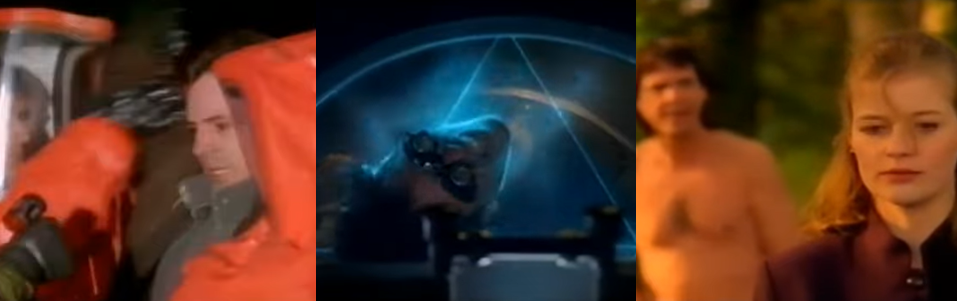
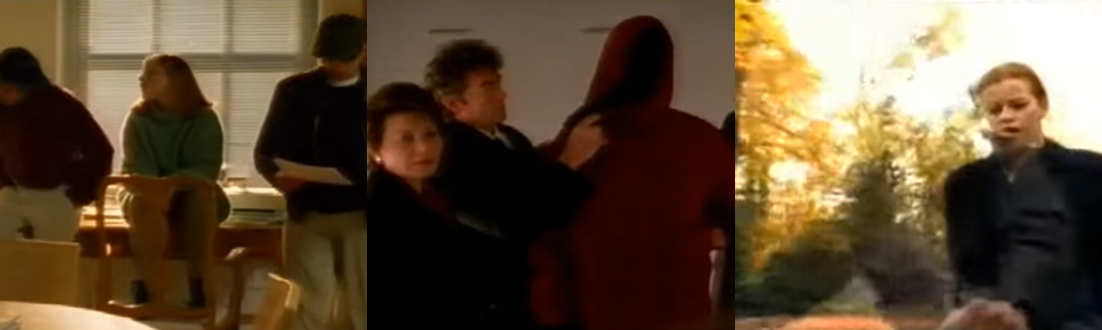
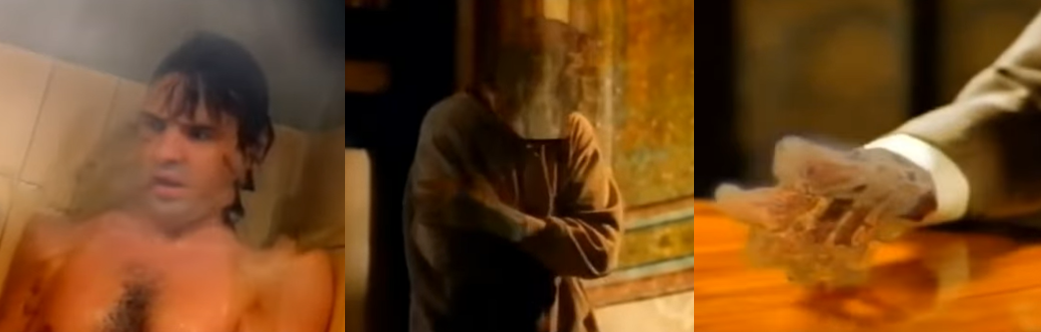
By 1897, British author Herbert George Wells had established himself as a prolific author in the science-fiction genre. Possibly inspired by W. S. Gilbert, Wells’ 1897 literary classic The Invisible Man captivated readers with its cautionary tale and then impressed audiences when adapted into James Whale’s ambitious and celebrated 1933 classic. Followed by a bunch of pseudo-sequels and spin-offs, The Invisible Man developed an enduring legacy in sci-fi and horror and eventually lived again, in spirit at least, when acclaimed auteur Paul Verhoeven sought to make a more “conventionally commercial” blockbuster. Writer William Goldman disliked the script but attempted to salvage it with rewrites, only for Verhoeven to ignore his input and double-down on the special effects work. Sony Pictures Imageworks and Tippett Studio developed the intricate invisibility effects, which involved compositing scenes with and without star Kevin Bacon and dressing him in a latex body suit to create a digital double. Initially absent once his character became invisible, Bacon was brought back for reshoots to give the characters someone to interact with and the actor detailed a troublesome pre-production period. With a box office gross of $190.2 million, Hollow Man was Verhoeven’s biggest hit since 1992 but was met with largely negative reviews that criticised its formulaic characters and misogynistic undertones, though the visual effects were widely praised. Accompanied by this Director’s Cut, which added about ten minutes of slightly extended scenes, and followed by a critically panned direct-to-DVD standalone sequel in 2006, Hollow Man saw the remorseful Paul Verhoeven retreat from Hollywood, though it’s often regarded as an under-rated gem.

The Review:
Hollow Man follows a team of scientists, technicians, and other assorted specialists developing an invisibility serum. Genius narcissist Sebastian Caine is at the forefront of the project, which was entrusted to him by his old mentor, Doctor Howard Kramer (Devane), and his team includes his ex-girlfriend, Linda McKay (Shue), and his frenemy Doctor Matthew “Matt” Kensington (Brolin). The team has already cracked invisibility, producing a startling neon blue serum that undergoes some vague irradiation process and is injected directly into the blood stream. The team have tested the serum on multiple test animals, cared for by feisty veterinarian Doctor Sarah Kennedy (Dickens), though they cannot reverse the process. While Linda and Matt embark on a love affair, Sebastian works tirelessly on the problem until he suddenly intuits the solution. Giddy with excitement, eager to claim a Noble Prize and etch his name in history, Sebastian insists on testing the formula on Isabelle (Tom Woodruff Jr.). Although the gorilla’s heart rate and blood pressure spikes wildly, the team stabilises her and she becomes visible. Emboldened by their success, Sebastian attempts to rekindle his romance with Linda, only for her to coldly shut him down due to his narcissism (though it’s clear she admires him, as do the rest of the team).

Narcissistic scientist Sebastian loses what little sanity he had to invisibility madness.

However, Linda and Matt are infuriated when Sebastian lies to the Pentagon, arrogantly wishing to be the first person to turn invisible and back. Despite their protests, Linda and Matt agree to Sebastian’s proposal and lie to the others to get them onboard, each eager to be at the forefront of the experiment. Though tense and demanding, Sebastian insists on injecting himself to protect Linda from legal repercussions and endures agonising convulsions as he slowly and painfully dissolves. Though he’s extremely sensitive to lights, Sebastian and the others are elated by the successful trial, and they endure his playful invisible antics. The first red flags occur when Sarah is unnerved by his presence, believing he sexually assaulted her, and technician Janice Walton (Mary Randle) refuses to go anywhere without her infrared goggles. Thus, they’re horrified when he reacts violently to the reversion serum before fading away again (potentially because they didn’t use the defibrillator). Sebastian’s initial excitement about being invisible quickly turns to anger and resentment as he endures days of testing, with no solution in sight, angrily lashing out at Linda and Matt when they try to help him and struggling with cabin fever. On the plus side, the team forge a latex mask to give him a physical presence, but Sebastian still storms out, much to the alarm of friendly but naïve medic Carter Abbey (Greg Grunberg).

Sebastian’s warped mind is further twisted, driving him to paranoia, anger, and murder.

Returning to his apartment, Sebastian tries to talk himself out of messing with his alluring neighbour (Rhona Mitra) before stripping down and raping her. Obviously, he keeps this to himself (though he makes allusions to Carter, who obliviously encourages him), but the team is pissed at him breaking protocol and essentially place him under house lab arrest. However, while Sebastian feigns compliance, he surreptitiously fiddles with the video camera to fool technician Frank Chase (Joey Slotnick) and sneaks out again, discovering Matt and Linda’s romance and finally snapping. His ego wounded and angrily resentful at the team, Sebastian brutally murders one of Sarah’s dogs and talks down to the others, raising their suspicions further. Linda’s sympathy evaporates when Sebastian showcases the extent of his mania, considering his condition as a “gift” that they’re jealous and fearful of. When they discover that Sebastian’s messed with the cameras, Linda and Matt come clean, enraging Sarah and driving them to ask Dr. Kramer for help, even if it means the end of their careers. Unimpressed and incensed, Dr. Kramer dismisses them and prepares to report Sebastian, only for the manic scientist to drown him in his pool. Thus, like basically every invisible man, Sebastian descends into full-blown madness. Sebastian was already an arrogant, self-absorbed asshole before he turned invisible, believing himself “God” but cabin fever and unforeseen side effects of the serum escalated his violent tendencies. Sebastian relishes the power and freedom of invisibility (“It’s amazing what you can do when you don’t have to look at yourself in the mirror”) and is willing to kill anyone who tries to stop him.

The Nitty-Gritty:
Technically speaking, Hollow Man isn’t a remake of The Invisible Man and barely resembles H.G. Well’s classic text beyond surface level similarities. However, a scientist going mad partially from an invisibility serum and going on a killing spree are all reminiscent of The Invisible Man. Like Griffin, Sebastian is wholly unlikeable from the start. Sure, there are moments of humility and humanity, mainly in his interactions with Linda, but it’s clear he only wants her because he can’t have her and wants to be seen as superior to her lover. Sebastian openly mocks Sarah and her love for animals, gets very handsy with his colleagues when invisible, and routinely berates Matt simply to prove his intellectual superiority, completely missing the irony and hypocrisy of him being as unable to crack reversion. Hollow Man is a very different film for director Paul Verhoeven. It has none of his usual satirical or visual signatures, no commentary on the media or government, and everything is presented in such a clinical and by-the-number way that it could’ve been directed by anyone. It doesn’t help that most of the film takes place in a visually boring laboratory or that it feels like Verhoeven was making a cookie-cutter sci-fi/horror simply for a pay cheque, compromising his usual signature style simply to appease studio executives and producers.

The impressive special effects largely carry this otherwise tedious horror/thriller.

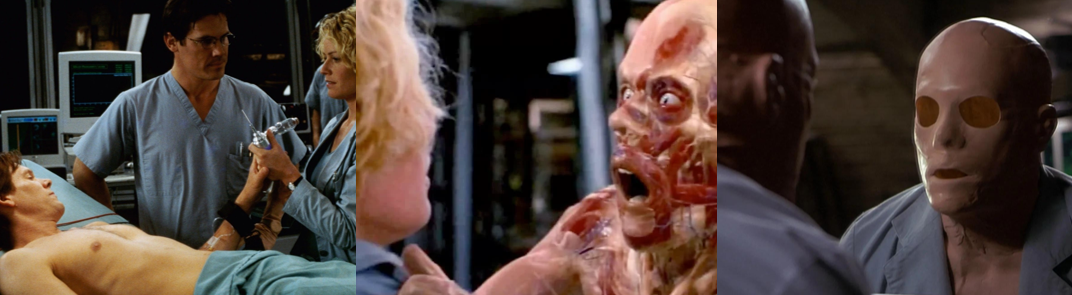
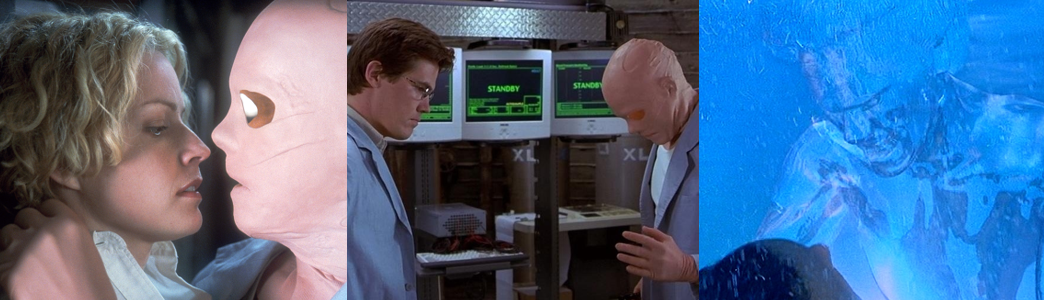
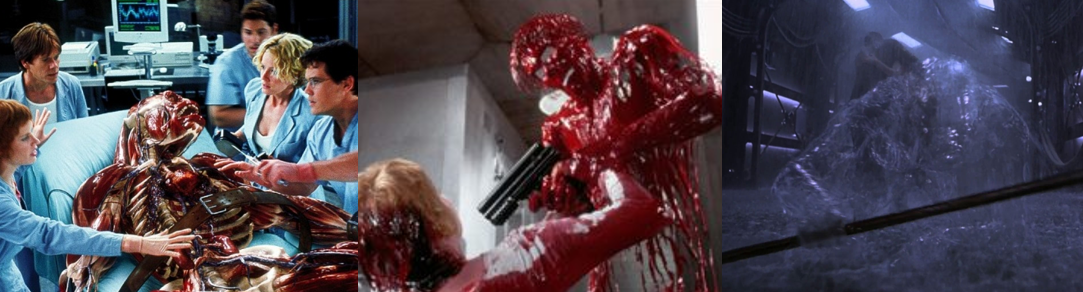
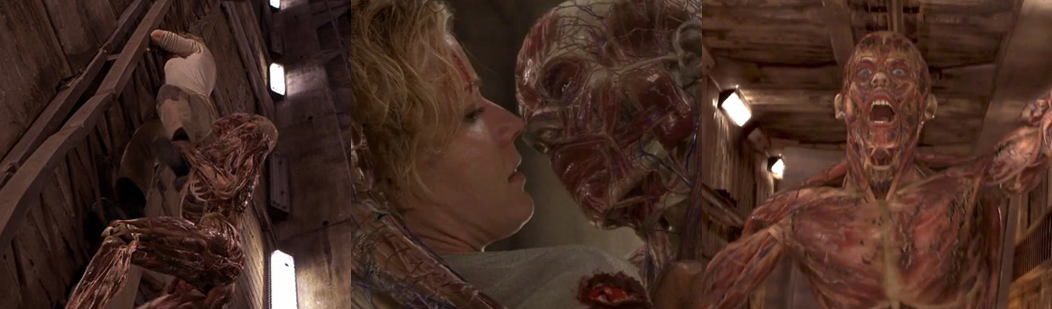
Hollow Man makes up for this with its impressive visual effects. The CGI when Isabelle and Sebastian turn invisible or return (briefly, in Sebastian’s case) to visibility is extremely detailed. Sure, it makes no sense how any of the test subjects can see but that’s largely inconsequential when skeletal structures, arteries, muscle, and flesh appear or disappear before your eyes. Sebastian’s experience is noticeably more traumatic since he can articulate the pain of the process but also because it’s like his flesh is dissolving. With Isabelle, it’s the reverse and the filmmakers painstakingly show her organs and body structure reforming. While they’re occasionally cartoony, the CGI still holds up and I also enjoyed the simpler techniques used when Sebastian is invisible, like moving chairs and the others reacting to his unseen presence. Sebastian cuts an unsettling figure in his latex mask, with empty voids for his eyes and mouth, making him a true “Hollow Man” devoid of a body, soul, and eventually conscience. The invisibility effects can be somewhat inconsistent, however. When Sebastian attacks Dr. Kramer, you can clearly see Sebastian’s hair, eyes, and mouth but, other times, he appears to be bald or to have no eyes or mouth depending on what suit Kevin Bacon is wearing. While this can be distracting, the sight of Sebastian cutting through water, covered in blood, or strangling Carter from an overhead pipe is as unnerving as his incredible physical strength, which is apparently augmented by his insanity. Verhoeven’s signature gory style finally appears in the finale, where blood spurts from Carter’s neck wound, Frank takes a pole through the abdomen, and Matt suffers a sickening blow to the gut.

Linda preys upon Sebastian’s ego and lusts to get the better of him and finally end his rampage.

After killing Dr. Kramer, Sebastian prepares to erase all traces of the team and the experiment. Thus, he traps the team in the lab and picks them off one by one. Though armed with their infrared goggles and tranquilizer darts, and utilising a tracking system, the team are essentially powerless against Sebastian, who easily subdues and kills them before grievously wounding Matt and spitefully locking him and Linda in a freezer. Confident of his victory, Sebastian casually applies a semi-convincing false face and rigs a makeshift bomb with some chemicals and a centrifuge. He underestimates Matt’s tenacity (some duct tape takes care of his internal bleeding) and Linda’s adaptability as she cobbles together an electromagnetic to escape the freezer. Moments away from freedom, Sebastian is surprised by Linda, who attacks with a flamethrower, melting his disguise and making him temporarily visible from the burns. Matt makes a miraculous recovery to help in the scuffle, which sees Sebastian being electrocuted and partially restores him. Desperately clambering up the elevator shaft as Sebastian’s bomb explodes, Matt and Linda barely avoid being smushed by the elevator and are attacked by the relentless Sebastian, now reduced to a skinless, raging maniac obsessed with taking them with him. However, Sebastian’s obsession with Linda gets the better of him and he pulls her in for one last kiss, “for old time’s sake”, giving her the perfect opportunity to brace herself and release the elevator’s emergency brake, sending the egomaniacal murderer plummeting to his fiery end. The film then ends rather abruptly with Linda and the injured Matt being met by emergency services, robbing us of any kind of stinger relating to Linda’s trauma following the events.

The Summary:
I’ve always been a fan of Hollow Man, though sometimes I wonder why. The film is quite long, which doesn’t help, and the visually repetitive setting only exacerbates this issue. Perhaps if the lab had been a bit more futuristic, or if different areas had different colour schemes or themes, that might’ve helped but, as is, it gets very tedious looking at the same clinical, drab locations the entire time. The characters aren’t all that great, either. Sebastian’s a narcissistic prick with a superiority complex who elicits little sympathy and who’s already unbearable before he loses himself to invisibility madness. Elizabeth Shue seems to be trying her best but also seems bored, only coming to life when Linda has to be horny, while Josh Brolin seems somewhat miscast, despite my gravitating to his more “Everyman” persona. I liked Sarah’s feistiness and how depraved Carter was, but the team were largely forgettable and boring, meaning I don’t care much when they die. Thankfully, their deaths are quite gory and/or harrowing, but Paul Verhoeven’s signature visual and thematic style is entirely absent here, making for a confusing film that was wasted on his unique talents. The special effects are what carries Hollow Man but, while they do a bulk of the heavy lifting and are impressive, they don’t really make up for the other tiresome aspects. Yet, I find myself drawn to Hollow Man and the impressive visuals of skeletons and circulatory systems fading in and out before our eyes in painstaking detail. The invisibility effects may well be the best I’ve ever seen and they do give Sebastian a horrific aura, especially as he’s so unpredictable and aggressive. Still, I can see why people dislike this film and struggle to recommend it, but Hollow Man remains a somewhat guilty pleasure for me.

My Rating:

Rating: 3 out of 5.

Pretty Good

Are you also a fan of Hollow Man? Did you enjoy its twist on the Invisible Man formula? How impressed were you by the digital effects and the depiction of invisibility? Did you find it hard to sympathise with Sebastian and the other characters? Were you disappointed that Paul Verhoeven’s signature style was entirely absent? Which incarnation of the Invisible Man is your favourite? How are you celebrating Halloween this year? Share your thoughts on Hollow Man in the comments, go read my other horror reviews, and support me on Ko-Fi to suggest other translucent horror content.

Movie Night: The Invisible Man (1933)

Released: 13 November 1933
Director: James Whale
Distributor: Universal Pictures
Budget: $328,033
Stars: Claude Rains, Gloria Stuart, William Harrigan, Henry Travers, and Una O’Connor

The Plot:
After turning invisible with a special formula, Doctor Jack Griffin (Rains) first obsesses over a cure and then goes on a crazed rampage through a Sussex village.

The Background:
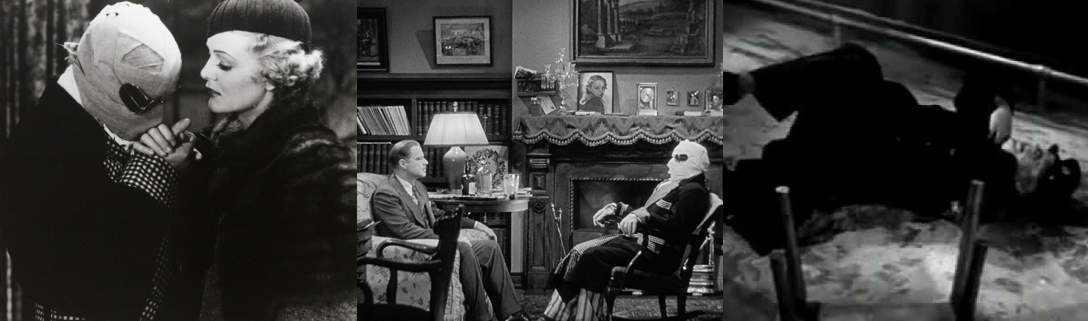
By 1897, prolific British author Herbert George Wells had quickly made a name for himself as a creative visionary and futurist, with The Time Machine (1895) laying the foundation for the science-fiction genre and The Island of Doctor Moreau (1896) inviting discourse regarding morals and ethics. Potentially inspired by W. S. Gilbert’s “The Perils of Invisibility” and allegedly starting as a short story Wells later expanded, The Invisible Man became a literary classic as a startling cautionary tale regarding the dangers of science. Development of a silver screen adaptation can be traced back to 1931 where, after their unexpected success with Dracula (Browning, 1931), Universal Studios suggested The Invisible Man as a follow-up. While producer Carl Laemmle and his son opted to prioritise Frankenstein (Whale, 1931) instead, they purchased the rights during filming (though Wells demanded script approval). Though James Whales was reluctant to direct out of fear of being typecast as a horror director, he eventually signed on and the script underwent many rewrites before shooting started. While Boris Karloff was initially set to star in the title role, stage actor Claude Rains took over for his feature film debut, where he shared the screen with some simple and innovative visual effects. Everything from simple wire tricks to layering negatives over each other sold the illusion of invisibility so well that they stood as a blueprint for modern-day green screen effects. Highly praised upon release and regarded as one of the best films of its era, The Invisible Man has stood the test of time for its ambitious visuals, stirring performances, and masterful exploration of the corruption of power. Followed by a handful of quasi-sequels and spin-offs, The Invisible Man has had an enduring legacy in sci-fi and horror, resulting in everything from under-rated sci-fi dramas, to big-budget remakes and reimaginings that were both underappreciated and evocative, to infamous comic book adaptations of his classic literary icon.

The Review:
I’m somewhat familiar with H. G. Wells’ classic sci-fi story of an invisible man terrorising a small English village, and have long been a fan of the concept and its adaptations and how they often depict an ambitious scientist meddling in things beyond him and turning to madness. The original invisible man (here given the first name “Jack”) is already a rude and demanding character when he first stumbles through the snow and into Iping looking for a room. His appearance startles the locals at the Lion’s Head since he’s covered in bandages. Despite his odd appearance and gruff nature, doting and bothersome landlady Jenny Hall (O’Connor) caters to his every whim. However, the nosey old shrew can’t help but bother Griffin, fussing over his room and catching a glimpse under his bandages, and spreading gossip to her husband, Herbert (Forrester Harvey), and the snooping locals, who believe he’s an escaped criminal. In reality, Griffin is an understudy of Doctor Cranley (Travers), who was allowed to conduct experiments in his spare time. To the suspicion of his colleague, Doctor Arthur Kemp (Harrigan), Griffin worked in secret against the open and honest code of most scientists. Indeed, Griffin’s beautiful fiancée and Dr. Cranley’s daughter, Flora (Stuart), notes that Griffin had become more withdrawn before his sudden disappearance and openly laments his departure, worrying herself sick about his health. Though Dr. Kemp uses Griffin’s actions to proposition her, he’s hilariously unsuccessful and his dislike of Griffin counters Flora’s romanticised opinion of him, strongly indicating that Griffin was previously an eccentric but nonetheless caring and compassionate man.

A mysterious and rude stranger upsets the locals of a small village with his gruesome visage.

Eager for fame and glory, Griffin experimented with the obscure drug “monocaine”, which drains colour from its surroundings. By distilling the substance and regularly injecting it under his skin, Griffin successfully turned himself invisible but fled from his laboratory and home to discover the way back to visibility in seclusion. When he reaches Iping, Griffin is irritable and quick to anger, eventually launching into a tirade after Jenny reprimands him for messing up her sitting room with his bizarre equipment. Insulted and enraged, Jenny orders Herbert to evict their guest, who desperately pleads with the landlord before angrily tossing Herbert down the stairs. The barflies fetch pompous and ludicrous Constable Jaffers (E. E. Clive), only to be amazed when Griffin dramatically reveals he’s completely invisible! While they’re shocked and powerless to catch Griffin, who half-throttles Jaffers and causes havoc in town, the unmasking and the frustration at his condition briefly unhinges Griffin’s usually ordered (if unstable) mind. Griffin delights in chaos before fleeing to Dr. Kemp, who’s stunned when Griffin calmly explains his maniacal plot for a mutually beneficial partnership so that Griffin can terrorise the world with his powers. Though hesitant, Dr. Kemp’s too terrified to resist Griffin’s demands and gives him shelter, helping him retrieve his notebooks, all while Griffin giggles about the mayhem and murder he plans to indulge to showcase his intellectual superiority. While Griffin claims to be “strong” and easily outwits the police as they mobilise to flush out the invisible man causing so much death and panic, he’s still very vulnerable as he must stay naked and out of rain, soot, and snow to remain undetected.

Despite attempts to humanise him, Griffin is largely depicted as an unhinged psychopath.

Griffin’s madness comes in waves, with him switching between reasonable (if callous) and enraged. When docile, he sees Dr. Kemp as his valued and trusted partner but, when angered, Griffin gleefully murders even his reluctant ally when Dr. Kemp calls in first Dr. Cranley and Flora and then the police. Griffin’s demeanour noticeably softens around Flora, but his madness returns when he realises Dr. Kemp has betrayed him. Griffin renews his killing spree, all thoughts of returning to visibility forgotten as he tosses men over ravines, shoves over baby carriages, and casually derails a train, killing over a hundred passengers! Regardless, Flora remains devoted to her man and near sick with worry, though Dr. Cranley’s powerless to do much but promise to help try Griffin once he’s apprehended. When the sceptical Police Chief (Holmes Herbert) is strangled to death for his ignorance, the Chief Detective (Dudley Digges) takes the threat very seriously. Unfortunately for him, his office is swamped with calls from “helpful” civilians offering outlandish solutions and all plans must be spoken privately, necessitating his men walk a giant net across his office! When Griffin vows to murder Dr. Kemp in retaliation, the Chief Detective uses the terrified doctor as bait to lure Griffin into an elaborate trap. However, despite his crazed state, Griffin easily evades the traps and follows Dr. Kemp, casually explaining how he’s going to kill him and then executing the plan, sending Dr. Kemp to a spectacularly fiery death! The invisible man’s rampage continues over several montages, with many policemen and volunteers joining the search and just as many terrified civilians barricading their doors, though Griffin constantly makes fools of them.

The Nitty-Gritty:
The Invisible Man has an edge over many classic Universal Monsters movies with its orchestral score. It also impresses with its surprising and startling body count, especially as the titular antagonist is simply one man running around in the nude. Griffin’s mood swings seemingly grant him augmented strength and he thinks nothing of murdering for his own amusement. As explicitly stated by Dr. Kemp and then reiterated in the finale, The Invisible Man is another cautionary tale of the dangers of dabbling in science. Griffin meddled in things he didn’t understand and, in his arrogance, blundered into his experiment without conducting proper research, essentially dooming himself to madness, debauchery, and ultimately death. The Invisible Man is reasonably close to the source material, recreating many aspects while bolstering Dr. Kemp’s role and altering both the title character and making his unfortunate more dramatic. The book spends more time in Iping, as I recall, while these scenes merely introduce the mystery of the bandaged stranger. Naturally, the concept of a person turning invisible and consequently losing their mind to the freedom and power originates here, with Griffin first toiling for cure and then revelling in his abilities. The process makes him unhinged and gives him an inflated sense of superiority, eventually bringing him ruin. However, Griffin seems perfectly happy to be the all-powerful, untouchable invisible man…except for having to always be naked.

Simple and pioneering filmmaking techniques alike are used to bring Griffin’s rampage to life.

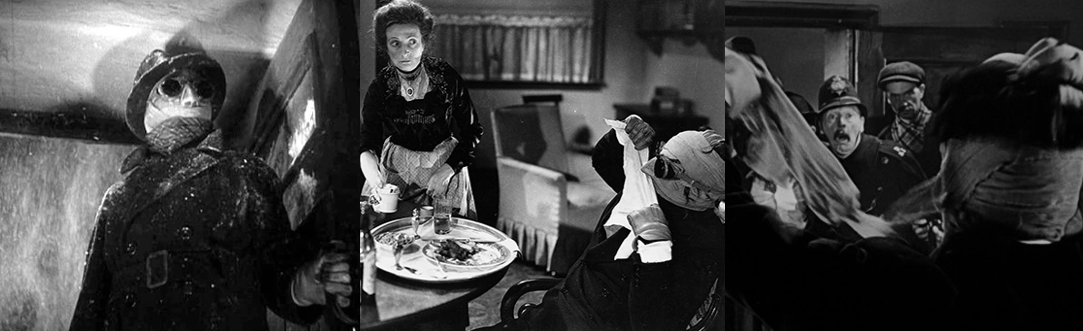
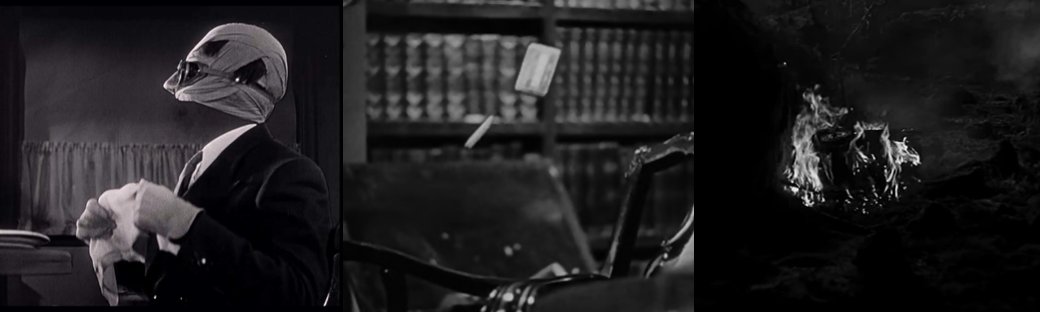
Of course, the most startling way The Invisible Man stands out from its peers is its groundbreaking visual effects. Obviously, everything seen here was achieved practically using unique and clever solutions and they hold up ridiculously well. While it’s clear when a dummy has been used, you can sometimes spot wires, and there’s an odd translucent effect at times, I remain impressed and amazed by the innovation on show. There are scenes where Griffin is simply a talking shirt or has half his jaw missing that blend better than some modern-day CGI and I especially when he took and lit one of Dr. Kmep’s cigarettes with a match. Of course, many of the effects are incredibly simple, being basically actors talking to thin air or pretending to be throttled, but many sequences showcasing the invisible man’s actions were setup to avoid making things too easy. Like, when he escapes through the window, it would’ve been simpler to just show the window opening but, instead, we see the net curtain opening, an ornament set aside, and then the window opens. Other effects are simply achieved through wires, which works incredibly well and the black and white, grainy filter helps hide many of the tricks used. A fun model train and car also go down in flames during Griffin’s rampage to add a sense of danger and scale things. While later iterations relied more and more on CGI, I appreciated the simplicity and hard work that went into rendering Rains invisible. His reveal is an incredibly powerful scene where he angrily tosses his fake nose, glasses, and bandages at the gawping locals and flails like a madman, a far cry from his composed and demanding demeanour and the first true indication that Griffin is gone completely off his nut.

Griffin’s reign of terror is ultimately undone, returning his senses and flesh in time for his death.

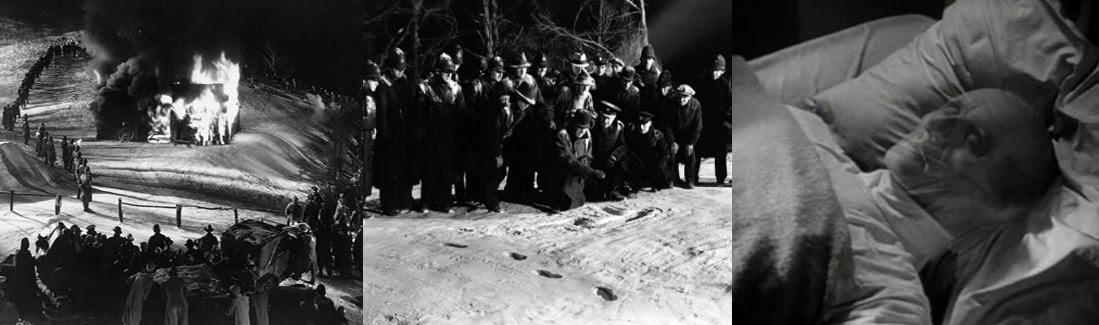
While the Chief Detective works to apprehend the invisible man, apparently employing over 100,000 men in a widespread manhunt, he’s eluded at every turn. This is largely because Griffin easily slips past traps or patiently waits to act. While Flora renders him docile, Griffin embraces mayhem and death once the cops mobilise, never once trying to contact Flora. Initially, Griffin wants Dr. Kemp help him spread true chaos. Then, he plots to master the serum so he and Dr. Kemp can take turns indulging their destructive whims (though Dr. Kemp is aghast at this). Upon being discovered, however, Griffin simply runs amok until he burns himself out. Throughout the film, however, Griffin is seen to be exhausted and famished, constantly demanding food, rest, and a fire to warm his frozen, exposed flesh. Though he delights in killing Dr. Kemp, Griffin collapses, exhausted, in a farmer’s (Robert Brower) barn. Upon discovering the sleeping invisible man, the farmer raises the alarm, prompting the Chief Detective to capitalise on the latest snowstorm and flush Griffin out with fire. In desperation, Griffin flees into the snow, where his footprints clearly show, allowing the police to gun him down. Griffin finally reunites with Flora in the hospital where, despite the best efforts of those involved, he faces a quick and probably painful death from the bullets in his lungs. Despite this, there’s no blood and Griffin is coherent enough to make amends with Flora and realise the folly of his experiments. Griffin’s sanity is restored moments before he passes and he dramatically and ambitiously becomes visible, his wounds and death apparently flushing the serum and the madness from his system and leaving Flora distraught by his bedside.

The Summary:
Even now, The Invisible Man is my favourite of all the classic Universal Monsters movies. I think that’s because, from my perspective, the concept hasn’t been as worn out as other classic horror concepts, like Count Dracula or Frankenstein, and also because I find the film more visually impressive than many of its peers. Of course, it’s not perfect: Una O’Connor’s grating, shrieking, over-the-top performance is very obnoxious at the start and many of the later, one-note constables and supporting characters are strangely comical. There’s a fanciful nature to Griffin’s rampage, with many of his actions framed as pranks, but things nicely escalate as he first causes mischief and then amasses one of the greatest body counts of his era! While the film attempts to humanise Griffin through Flora and the descriptions of monocaine, he’s still a despicable and unstable character, being rude and demanding and then giving in to enraged outbursts when his experiments are constantly interrupted. We see little of Griffin’s more logical, compassionate side, instead seeing him flip-flop between being coldly ruthless and utterly off his rocker as he plots to cause chaos alongside Dr. Kemp. It’s a stirring, magnetic performance from Claude Rains, especially as he’s barely in the film and yet his presence is constantly felt. Of course, The Invisible Man really impresses with its ambitious and ground-breaking visual effects, pioneering practical filmic techniques that were further refined over time. I personally believe these sequences hold up extremely well, especially because of the black and white film stock, and have aged the most gracefully of all the Universal Monsters films of this era. The Invisible man also set the standard for the concept many would follow but few would as masterfully execute, and told a stirring cautionary tale about the dangers of science in a way that was at least somewhat scientifically plausible. Ultimately, while The Invisible Man is more shocking and at times amusing than scary like its peers, it’s an admirable product of its time that still makes an impression today and you’re truly missing out if you’ve slept on this classic piece of cinema.

My Rating:

Rating: 3 out of 5.

Pretty Good

Were you as impressed by The Invisible Man as I was? If you read the book, what did you think to the film’s execution of the concept? Did you like the attempts to humanise Griffin or do you prefer him as an unhinged maniac? What did you think to the visual effects used to render Claude Rains invisible and do you agree that they hold up today? Were you surprised by the large death toll? Which version of The Invisible Man, or Universal Monsters movie, is your favourite? How are you celebrating Halloween this year? Make your thoughts on The Invisible Man visible in the comments, go read my other horror reviews, and support me on Ko-Fi for more translucent horror content.

Talking Movies: The Invisible Man (2020)

Talking Movies
InvisibleManLogo

Released: March 2020
Director: Leigh Whannell
Distributor: Universal Pictures
Budget: $7 million
Stars: Elisabeth Moss, Aldis Hodge, Storm Reid, Harriet Dyer, Michael Dorman, and Oliver Jackson-Cohen.

The Plot:
After finally leaving her long-term abusive boyfriend, Adrian Griffin (Jackson-Cohen), Cecilia Kass (Moss) finds herself unable to shake his oppressive presence when, following his apparent suicide, she suspects that he is still stalking her.

The Background:
Remember The Mummy (Kurtzman, 2017)? Well, that was supposed to be the latest attempt by Universal Pictures to launch the “Dark Universe”, a series of interconnected horror/action/science-fiction movies that would bring together the classic Universal Monsters for the first time in decades. However, The Mummy tanked and Universal were forced to change their tactics and focus, instead, on standalone stories that reimagined their horror classics. Personally, I didn’t find it to be that and a movie and the cast that Universal had assembled for their dark Universe was very impressive and promising. Veering away from the Johnny Depp-starring vehicle, Universal instead turned to Leigh Whannell to create a modern take on The Invisible Man (Wells, 1897) that bypassed the classic Universal horror of the same name (Whale, 1933) and, instead, concerned itself more with being an intense thriller with elements of sci-fi and horror mixed in.

The Review:
One day, after years of being trapped under the thumb of her sociopathic, controlling boyfriend Adrian, Cecilia decides to creep out in the dead of night after drugging him; as she’s being picked up by her sister, Emily (Dyer), Adrian tries to attack her but his threat seems to be over when, two weeks later, it is revealed that he killed himself.

InvisibleManCast
Despite its flaws, you can’t fault (most of) the cast.

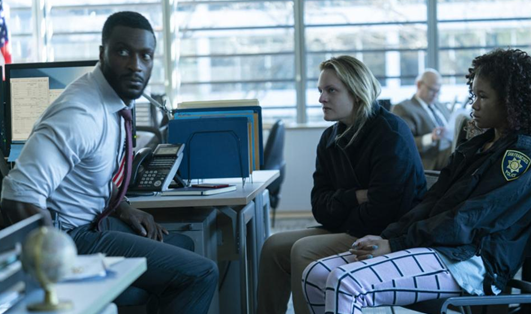
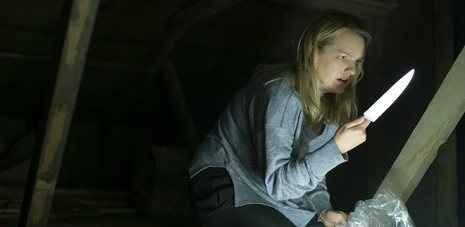
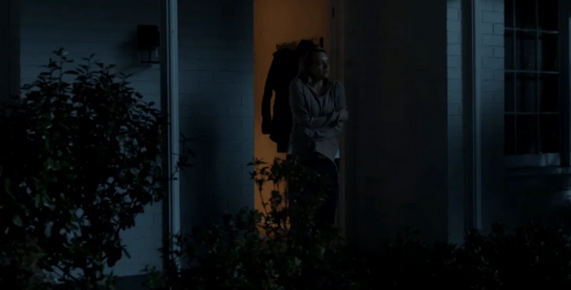
Cecilia has hidden herself away from Adrian and the world by moving in with her friend, James (Hodge) and his teenage daughter, Sydney (Reid). After Adrian’s lawyer brother, Tom (Dorman), reveals that Adrian left Cecelia $5 million, she finally begins to turn her life around. However, she soon begins to feel Adrian’s presence looming over her everyday life; after years of abusive and mistreatment, her fears are dismissed as paranoia and shock but, before long, things start to happen that can’t be explained away and Cee begins to suspect that her former lover, a world leader in optics, has faked his death, discovered a way to make himself invisible, and is stalking her, destroying her relationships and life bit by bit to force her to return to him.

InvisibleManTramua
Strange events start haunting Cecelia.

What separates The Invisible Man from other adaptations is its singular focus on the victim, rather than the titular antagonist; normally, Invisible Man stories and their contemporaries revolve entirely around a man who turns himself invisible and is slowly consumed by its intoxicating effects. Here, though, we follow Cee as she succumbs to fear and hysteria, not only from the threat of an actual invisible man, but also the lingering effects of her toxic relationship with Adrian. There aren’t enough words to describe how great Elisabeth Moss is at portraying a woman who is struggling to return to normal, everyday life and is clearly traumatised by her abusive boyfriend and also seemingly haunted by his continuing presence.

InvisibleManTom
This guy’s definitely…in the movie…

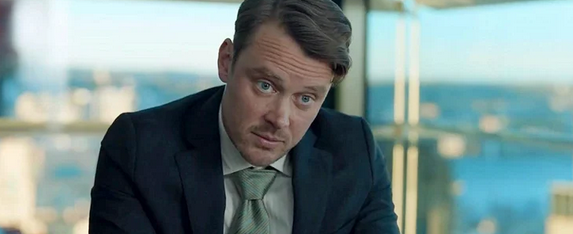
Surrounding her is a similarly decent cast; Hodge and Reid have great rapport with Moss and you definitely believe in their platonic, yet loving, relationship. There’s some friction between Cee and Emily that goes back to their childhood, but it’s not really expanded upon and takes a backseat to the more pressing concerns about Cee’s mental health, and there isn’t much for Tom to really do except exist as another victim of Adrian’s destructive behaviour.

InvisibleManTension
The Invisible Man really excels at building tension.

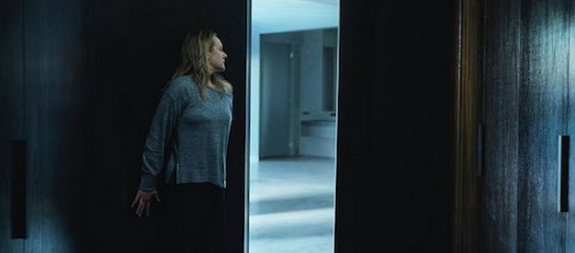
Ostensibly, The Invisible Man is a tense thriller; there’s some really unique framing choices and camera work at use here to make you feel on edge and uncomfortable at all times, as though there really is another, unseen man present in most scenes. Whannell favours building tension over a high body count and this keeps the film on a razor’s edge; once the pace picks up, things get even more intense as we follow the deterioration of Cee’s mental health…but it’s far from perfect. As a big fan of The Invisible Man, I wasn’t really expecting this to be a character study of the trauma victims of abusive relationships can suffer through. To be fair, judging from the trailers, I was expecting little more than a jump-scare thriller, so it was surprising to find the film had so much meat on its bones but I have some issues with its execution and pacing that spoiled the experience for me.

The Nitty-Gritty:
First of all, there is and invisible man in this movie; the trailers made this pretty explicit but the film does a really good job of making you question whether it’s a ghost, an invisible man, or just all in Cee’s head. However, I feel this is a bit disingenuous; I went into it expecting an invisible man and wanting to “see” an invisible man, so to constantly beat around the bush was a bit frustrating.

InvisibleManMadness
Here it’s the victim who struggles with her sanity…

We don’t ever really get much of a sense of who Adrian really is; he’s talked about at length but there’s not much time spent on why he was so abusive to Cee or what drove him to form such destructive relationships with people. It saps him of some of his menace and makes him, instead, he’s just a silent stalker who dispatches those in his way with little effort. It turns out that Adrian developed a special suit comprised of loads of little cameras that allows him to appear invisible; this is a change of pace as, usually, invisible men take a serum that renders them invisible but, while the suit may be more “realistic”, it carries exactly the same issues as a serum does…and even a few more. For example, the suit completely covers Adrian, so how does he see out of it? Its skin-tight surface is covered with plastic and cameras so, surely, he would make quite a bit of noise when he moved and, if he somehow didn’t, his muffled breathing would be hard to disguise.

InvisibleManPacing
I had some issues with the film’s pacing…

Also, somehow, Adrian appears to be superhumanly strong; he can lift Cee with one hand, toss her across rooms, and beat men to death, or close to it, without much problem. I don’t really see how his fancy suit helps him do that, even though it does make for some impressive action and kill scenes in the film’s final act. The big twist turns out to be that Tom is in on it all too; Cee remains steadfast that Adrian put Tom up to it, however, and takes it upon herself to kill Adrian herself (cloaked in his same suit) to finally gain some catharsis but it’s left ambiguous as to whether Adrian did actually stalk Cee while invisible or if it was always Tom…or the both of them. And yet I find it hard to really care as neither man is Claude Rains (hell, they’re not even Kevin Bacon!) and reducing the invisible man to a silent killer sucks a lot of the charm and menace out of the normally talkative antagonist.

InvisibleManConclusion

The Summary:
The Invisible Man is one hell of a tense, nail-biting thriller; the film does a masterful job of building tension and suspense and Elisabeth Moss puts in a great performance as an emotionally-scarred victim but, in the end, I just couldn’t really get into it. Despite the film’s interesting take on the classic Invisible Man formula, we’re left with a poorly-defined villain and some forgettable supporting characters; the all the tension and build in the world can’t overcome the fact that The Invisible Man overstays its welcome for way too long (the film doesn’t seem to know how, or when, to end and drags on and on) and sacrifices too much of the original source material and concept to tell an otherwise moving story of a victim of abuse.

My Rating:

Rating: 2 out of 5.

Could Be Better