Back Issues: Whatever Happened to Kyle Rayner!?

BackIssues

Ah, the nineties! What a time to be alive for comic book fans! We saw Clark Kent/Superman die and be replaced by four imposters before returning…with a mullet! We saw Bruce Wayne/Batman get his back broken and be replaced with a Frank Castle/Punisher-like nutjob. We saw Arthur Curry/Aquaman get his hand bitten off by piranhas and replaced…with a harpoon! And we saw Hal Jordan, the premier Green Lantern, go mental, kill a bunch of his fellows, and take on an antagonistic role as Parallax. Yet, the legacy of Green Lantern lived on in a new, young, sexy replacement who was to take the title in a bold new direction; a character who, though he exists today, is a shadow of his former self, prompting me to ask…

GreenLanternLogo

DC Comics like to paint Hal Jordan as the greatest Green Lantern that ever lived. Literally almost every time the character appears, text boxes, character dialogue, or story events are geared towards this agenda. This was especially obvious in 1992 when, after being replaced buy Guy Gardner, Jordan decided that he had had enough of bitching, moaning, and moping about and forced Guy to relinquish the Green Lantern power ring and reclaim his mantle. This was sold to us as a miraculous return; characters, including Guy’s Justice League teammates, openly gushed at Hal reclaiming the mantle and trashed Guy. I mean, sure, Guy was no saint and was a massive pain in the ass, but for everyone to talk so much shit about him was jarring. Things went from bad to worse, however, when Mongul and Hank Henshaw/Cyborg-Superman obliterated Hal’s home town, Coast City, during the ‘Reign of the Supermen’ (Jurgens, et al,1993) arc that saw Superman return to life. Hal, unable to cope with the loss of his friends and family, tried to recreate the city and was admonished by the Guardians of the Universe. Incensed at what he saw was a betrayal after years of loyal service, ‘Emerald Twilight’ saw Hal fly to Oa, relieving multiple Green Lanterns of their rings, killed Kilowog and Thaal Sinestro (later revealed to be an illusion), and absorbed the entire power of the Central Power Battery. This immediately depowered every Green Lantern in the universe (it is implied that the majority of them died, though this was also later retconned) and transformed Hal into Parallax.

Kyle was severely tested at the start of his career.

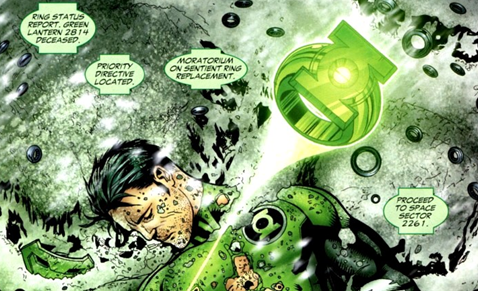
While Parallax went out into the cosmos to acquire yet more power and would eventually attempt to rewrite all of time itself in Zero Hour: Crisis in Time! (Jurgens, et al, 1994), the last remaining Guardian, Ganthet, travelled to Earth and, seemingly at random, presented the last power ring to the first person he saw: Kyle Rayner. Kyle, a young freelance artist, was initially characterised as being cocky and irresponsible; a rookie who received no training or instruction, he struggled to get to grips with his newfound power and responsibility. Attacked by enemies of Jordan’s who mistook him for the former Green Lantern, Kyle endured a trial by fire made all the more testing when Clifford Zmeck/Major Force infamously killed his girlfriend, Alexandra DeWitt, and stuffed her into a refrigerator! For a long time, this was a constant source of guilt and angst for Kyle; it seemed that he would openly mention it to anybody at the drop of a hat, even amidst battling Parallax, saving the universe, and joining perhaps the strongest incarnation of the Justice League ever. In time, though, Kyle was able to master his emotions and his power; unlike other Green Lanterns, Kyle’s ring did not carry a weakness to yellow (later revealed to be because the weakness was a result of Parallax being imprisoned within the Central Power Battery), did not need to be recharged, and could only be used by him, which effectively made him the most powerful Green Lantern ever seen at that point.

Despite making a name for himself, Kyle was constantly overshadowed by Hal.

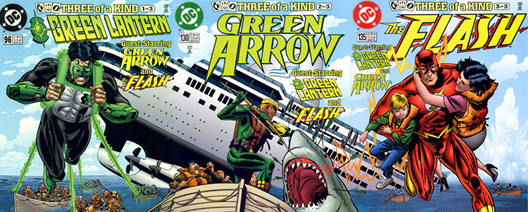
As part of the Justice League, Kyle struck up friendships with Wally West/The Flash and Connor Hawke/Green Arrow, just as Jordan had been friends with Barry Allen and Oliver Queen in the past, and voted to keep Batman (one of his strongest supporters) in the Justice League following the ‘Tower of Babel’ storyline in 2000. As his career progressed entered into a romantic relationship with Alan Scott’s daughter, Jade, and evolved into a leader when he fought off the Circle of Fire. After Parallax sacrificed himself to reignite the Sun in the ‘Final Night’ storyline, Kyle received a massive power boost and was rechristened Ion. Wielding God-like powers, he eventually restored Oa, the Central Power Battery, the Guardians of the Universe, and the Green Lantern Corps in order to relieve himself of the burden of his newfound powers. Restored to a regular Green Lantern, but still unrestricted by the yellow impurity or the need to recharge, went from being the last of the Green Lanterns, and a God, to be one of many Green Lanterns. His status was further damaged when writer Geoff Johns took over the Green Lantern title and orchestrated Hal Jordan’s return in the ‘Rebirth’ storyline. Jordan, who had since become the Spectre, was absolved of all his previous crimes by the revelation that Parallax is actually a parasitic fear entity that latched onto his soul and drove him to evil. Thanks to the efforts of Kyle, Guy (who also had his recent years of messy writing undone), and John Stewart, Jordan returned to life as a Green Lantern once more and promptly took over the Green Lantern title.

Kyle has assumed a number of different forms and identities over the years.

Despite transforming back into Ion during Infinite Crisis (Johns, et al, 2006) following Jade’s death, Kyle was possessed by Parallax during the ‘Sinestro Corps War’ storyline (Johns, et al, 2007) and continued to operate as just one of four (five, if you count Alan Scott) Earth-based Green Lanterns, even after being promoted to ‘Honour Guard’ status. He even found his very existence branded as an anomaly during ‘Countdown’ and ‘Countdown to Final Crisis’ (Dini, et al, 2007 to 2008) and spent most of 2007 bouncing around the Multiverse with little rhyme or reason. He found himself on the frontlines during Blackest Night (Johns, et al, 2010), which saw Jade restored to life, and sacrificed himself to destroy a bunch of Black Lanterns. He, too, was restored to life and, during War of the Green Lanterns (ibid, 2011) assumed the role of a Blue Lantern after Parallax infected the Green Lantern rings. Unfortunately for him, Blue Lanterns are pretty useless; they only real do anything when Green Lanterns are around, making him the weakest of the rag-tag group (obviously led by Jordan) that stood against the renegade Guardian, Krona. As much as I hate to praise it, The New 52 actually returned some semblance of importance to Kyle; while Sinestro and Jordan dominated the main Green Lantern titles like it was the late-eighties, Kyle was the focus of the New Guardians title. When power rings from all the different corps are drawn to him, Kyle goes on a universe-spanning pilgrimage to master the entire emotional spectrum and once again reaches the levels of God-hood he enjoyed as Ion by becoming a White Lantern. Oddly, The New 52 also put Kyle in a romantic relationship with Jordan’s long-term love interest, the Star Sapphire Carol Ferris, which only further bogged his character down with unnecessary ties to Jordan’s legacy. It wasn’t to last, though, it soon became apparent that the powers of the White Lantern were too much for any one person to wield and, as of Rebirth, Kyle has returned to being a lowly Green Lantern.

GreenLanternAnimated
What the hell is this nonsense!?

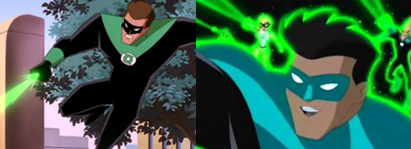
It gets worse for Kyle outside of the comics. Although his name and profession were used, he looked exactly like Hal Jordan when he appeared in Superman: The Animated Series, and even had Hal’s origin! With John Stewart acting as Green Lantern in Justice League, Kyle was relegated to brief cameos and bit-parts in Justice League: Unlimited. While Stewart is generally included as an alternative costume for Hal in various DC videogames, this luxury is rarely afforded to Kyle; he appears as a skin in Justice League Heroes (Snowblind Studios/Warner Bros. Games, 2006) and is featured in DC Universe Online (Daybreak Game Company/WB Games, 2011) and Lego Batman 3: Beyond Gotham (Traveller’s Tales, 2014) but barely gets a mention in the Injustice videogames (NetherRealm Studios/Warner Bros. Interactive Entertainment, 2013; 2017) due to being unceremoniously killed off in the prequel/tie-in comic books. I remember, many moons ago, reading an article in Wizard around the same time that the ‘Emerald Twilight’ storyline happened; whomever was being interviewed at DC said something along the lines of “DC reserve the right to not give their characters happy endings” and basically said “Hal is evil; Kyle is Green Lantern – deal with it!” as I mentioned, DC was all about major character changes in the nineties; Wally West had become the Flash following Crisis on Infinite Earths (Wolfman, et al, 1985), Dick Grayson became Nightwing in the ‘Judas Contract’ storyline, and Tim Drake succeeded him as Robin, in addition to the aforementioned Connor Hawke and even Roy Harper progressing to Arsenal.

GreenLanternLegacy
A generation of heroes doomed to obscurity and irrelevance.

Kyle was supposed to be the next in line of these young new legacy heroes; his costume was bold and striking, a far cry from the regimental style favoured by most Green Lanterns, and his constructs were often infused with manga and anime imagery. As a young, untested hero, Kyle made reading Green Lantern was perfect for newcomers at the time who got to learn about the Green Lantern mythos through fresh eyes. However, once DC’s editors and writing staff switched hands and decided that they wanted to bring back Silver Age characters like Barry Allen and Wally West, the writing was on the wall for characters like Kyle. Once the sole Green Lantern and the figurehead for the Corps, Kyle was relegated to being just another face in a sea of green once Hal came back; even his costume and haircut changed and became far less interesting.

GreenLanternKyleDead
You’ll always be my Green Lantern, Kyle!

For my money, DC massively dropped the ball by not keeping Kyle bonded with Ion and carrying that codename; at least then Kyle would have been set apart from Hal Jordan and the other Green Lanterns. In these modern times, where we have a Corps for every colour of the emotional spectrum, there really is no excuse for Kyle, Hal, Guy, John, and newcomers like Simon Baz to all be Green Lanterns. I would have kept Kyle as the White Lantern, Guy as a Red Lantern, and John as an Indigo Lantern if only to mix things up and keep everyone different and relevant. Instead, with Hal still at the forefront of the Green Lantern titles and constantly being branded by DC writers, editors, and characters as the greatest Green Lantern of all time, there doesn’t seem to be any room for Kyle these days. Once upon a time, DC vowed that characters like Kyle and Wally were the new standard but, now, they’re pale imitations living in the shadow of the apparently far superior Silver Age counterparts and that’s just sad for people like me, who grew up in the nineties reading about Kyle’s adventures and growing attached to his character, rather than that of Hal Jordan.

Game Corner: Injustice 2: Legendary Edition (Xbox One)

GameCorner
Injustice2Logo

Given that Warner Brothers bought Midway back when they were forced to shut up shop, it should have been seen as inevitable that a videogame would be made that mashed together characters from the Mortal Kombat series with those of the DC Universe. Of course, Mortal Kombat vs. DC Universe (Midway Games, 2008) was quite the barebones, lacklustre effort compared to the spiritual successor, Injustice: Gods Among Us (NetherRealm Studios/Warner Bros. Interactive Entertainment, 2013).

Injustice2Brainiac.png
Brainiac is coming to collect the Earth!

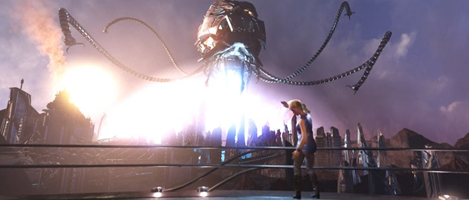
Injustice was generally applauded not only for its graphics, gameplay, and competitive fighting mechanics but also its story mode; NetherRealm Studios have seemingly perfected the art of infusing their fighters with an in-depth and genuinely captivating single play story and Injustice 2 (ibid, 2017; 2018) continues this trend. After the Justice League travel to a parallel world to help end the reign of a dictator-like Superman and his regime of similarly-evil former heroes, the Injustice-world faces a new threat in the form of Brainiac. Though Batman attempts to rally a new generation of heroes against Brainiac, they have no choice but to free Superman from his red sun prison cell in order to combat the threat and enter into an uneasy alliance.

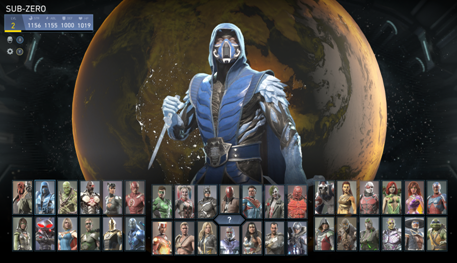
Injustice2Roster
A good roster, bogged down with one-too-many Batman characters.

A fighting game is only as good as its roster; like Injustice, Injustice 2 has an unhealthy obsession with Batman characters – Batman, the Joker, Robin, Poison Ivy, Red Hood, Scarecrow, Bane, Catwoman, Harley Quinn, and Deadshot bloat out the roster. While it is a little disappointing that this appears to have caused other, unique characters such as Booster Gold or Doctor Sivana miss the cut, Injustice 2 does bring some welcome new faces to the game; Firestorm, Blue Beetle, Atrocitus, Gorilla Grodd, and Doctor Fate are just some of the new heroes and villains available to play as. The Legendary Edition also includes some fantastic downloadable characters, such as Hellboy, Black Manta, and even the Teenage Mutant Ninja Turtles!

Injustice2Unique
Every character has a unique play style.

Every character boasts their own unique combos, special moves, and super moves and plays a little differently; Darkseid, for example, is slow and methodical, Supergirl is a much faster character, while characters like Green Arrow and Batman rely more on their gadgets and skills to succeed. Successfully pulling off combos, counters, and landing attacks allows players to build up their super meter and power up their special moves or execute a world-ending super move. Each character starts with three loadout slots, which can be increased to five, that allow you to gear up Aquaman, for example, to have one loadout the favours attack, one that favours health, one that favours special moves, and so on, depending on the gear you apply. You can also apply this gear to AI Loadouts and have them fight for you, which is kind of weird and I’m not sure why you would want to do that rather than play the game yourself but it is useful for the game’s Endless and Survival modes.

Injustice2Stages
Injustice 2‘s stage selection levels much to be desired.

While Injustice 2 has a decent roster, it doesn’t have much in the way of stages; there are only twelve stages to pick from and they’re not really that dynamic or interesting. You can still send characters flying to other parts of the stage, which is fun, but it seems there’s a lot less opportunities to do this than in Injustice. There are also some fun stage interactions to be had, like smashing Swamp Thing over the head with a crocodile in Slaughter Swamp, but, again, it seemed that there were more and better stage interactions in Injustice. The primary selling point of Injustice 2 is the Gear System; winning matches not only earns experience points for each character and the player’s profile but also awards numerous gear. Players can then apply this gear to each character to boost their attributes, gain performance buffs (such as greater attack strength against Metahumans), alter the character’s costumes, and even unlock different special moves. Winning matches also earns the player coins and crystals, which can used to buy Mother Boxes and unlock more gear, transform or combine gear to make it stronger, or unlock Premier Skins for certain characters.

Injustice2Skins
Premier Skins are available…at a price.

Premier Skins allow you to play as new characters; Cheetah, for example, has a Premier Skin that turns her into Vixen and Raiden’s Premier Skin is Black Lighting. This is great, as it effectively adds even more characters to the game’s roster; the only downside is that, to purchase Premier Skins, you need Source Crystals, which are few and far between. You’re therefore forced to grind over and over, levelling up your profile and characters, to earn a pittance of Source Crystals or spend real money. This latter appears to be what NetherRealm Studios want you to do as it is extremely difficult to earn enough Source Crystals as the Premier Skins carry a hefty price tag, and only the best Mother Boxes and rewards can be earned through spending real money, it seems, making the in-game currency all but worthless. Unlocking gear and applying it to characters is fun but, let’s be honest, you won’t be applying all of your gear to every character as some characters are better than others and some or just dead weight. The biggest downside to the Gear System is that, unlike in Injustice, it is the gear that determines what your character will look like; therefore, you can’t just select Green Lantern and choose to play as Yellow lantern, you have to unlock the correct gear and colour palette (which also require Source Crystals), which is quite disappointing and annoying.

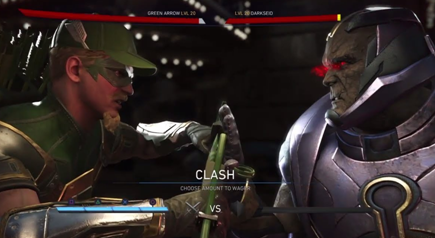
Injustice2Clash
The clash mechanic as as annoying as ever.

In terms of gameplay, Injustice 2 is very similar to its predecessor with a noticeable increase in AI competency; I played the entire game on Very Easy and, on more than one occasion, noticed that the AI doesn’t take any shit. If you spam moves or favour a certain tactic, the AI calls you out on it and gives you a competitive match more often than not. The story mode is fun to play through but a breeze; I finished it in within two casual days of gameplay and only went back to it to finish off the branching paths. The clash mechanic returns from Injustice and it’s just as annoying as ever; as you take damage, you can spend your super meter initiating a clash and pressing a button in a rock/paper/scissors type of mini game, which will either deal additional damage or restore your health. It seems that the AI always busts out a clash at the worst or most annoying opportunities and it’s easily to most frustrating part of the game.

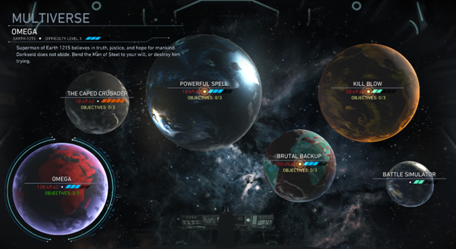
Injustice2Multiverse
Take on the entire Multiverse…once you’re levelled up enough…

Similar to Mortal Kombat X (ibid, 2015), Injustice 2 utilises an ever-changing Multiverse mode that allows players to fight a number of opponents and obtain better rewards. These change hourly, daily, weekly, and monthly and often carry certain themes that will be familiar to DC Comics fans; you can also use the Battle Simulator to play traditional tournament modes or battle endless opponents. One thing I will praise about Injustice 2 is that every battle is different; I don’t think I ever fought the same version of a character twice as it seems every match sees random gear and colour schemes applied to the opponent. You can also join a Guild and take part in Guild Multiverses and challenges to unlock even more Mother Boxes and rewards; these are far more challenging than the regular Multiverse modes and, similarly, the best Multiverse rewards are only available when you’ve levelled a character up to level twenty or thirty, meaning that you’re going to have to play again and again and grind over and over to reap the benefits. Honestly, maybe I’m a bit jaded, but I don’t find myself particularly enthusiastic about stepping up to this challenge; Injustice 2 features a wealth of Achievements, many you can sweep through regular gameplay, but the more specific ones (such as maxing every character’s level out) just seem like too much of a chore. I really don’t like that I have earned so many in-game coins and yet I cannot use them to purchase Premier Skins or extra colour palettes; I don’t really want to spend my actual money buying them, was disappointed to see that they weren’t already unlocked in the Legendary Edition, and am not sure I can be bothered to grind over and over to unlock them.

Injustice2Batman
Want the best stuff? You better have deep pockets!

In the end, Injustice 2 is good; it’s fun to play, the story mode is decent, and the graphics are very impressive but there’s not too much calling me back to it. I played Injustice pretty much to death working my way through the challenge mode but you have to put some serious effort in to challenge the best Multiverses and the motivation is severely lacking this time around just because the best gear and rewards are either really rare or too expensive. Maybe, next time around, NetherRealm Studios should limit the in-game currency to two forms (one to buy stuff, one to upgrade stuff) and move away from forcing players into spending their real-world money on additional extras, especially if they’re going to bring out a Legendary Edition after the initial versions.

My Rating:

Rating: 2 out of 5.

Could Be Better