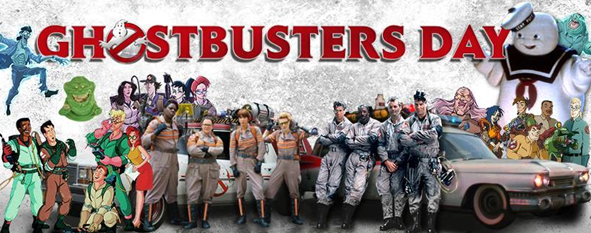
Movie Night [Ghostbusters Day]: Ghostbusters (2016)


Throw on your proton pack and get ready to bust some ghosts because June 8th is officially “Ghostbusters Day”! Ghostbusters (Reitman, 1984) was first released on this day back in 1984 and has become a major pop culture franchise that includes comic books, a popular cartoon and line of action figures, and videogames.


Released: 15 July 2016
Director: Paul Feig
Distributor: Sony Pictures Releasing
Budget: $144 million
Stars: Kristen Wiig, Melissa McCarthy, Kate McKinnon, Leslie Jones, Chris Hemsworth, Neil Casey, and Andy García

The Plot:
Estranged friends and physicists Doctor Erin Gilbert (Wiig) and Doctor Abby Yates (McCarthy) team with engineer Doctor Jillian Holtzmann (McKinnon) and transport employee Patty Tolan (Jones) to investigate a spate of ghost sightings across New York City, creating both chaos and controversy.

The Background:
Originally conceived by Dan Aykroyd as a project for himself, Eddie Murphy, and John Belushi, Ghostbusters came into being when director Ivan Reitman, writer/actor Harold Ramis, and Bill Murray joined the project. A critical and financial success, it was followed by an under-rated sequel that both underperformed financially and was met with mostly negative reviews, Rumours of a third movie circulated for decades, often stalling due to Murray’s reluctance to return and Aykroyd’s ambitious scripts being too costly to produce. After everyone got on the same page for Ghostbusters: The Video Game (Terminal Reality, 2009), plans for a third movie regained traction, however Murray continued to veto scripts and Columbia Pictures eventually decided on a complete reboot rather than a sequel. Initially marketed as a soft reboot set in the same continuity and later distinguished by its tagline, “Answer the Call”, the new Ghostbusters would feature an all-female lead cast, a decision that effectively killed the film for many audiences. After the leads and cameos for many of the original cast (including, bizarrely and hypocritically, Murray) were secured, Sony Pictures Imageworks produced 1700 visual effects shots for the film, which also included some more traditional, practical effects. Unfortunately, controversy surrounding the casting, its status as a reboot, and claims that director Paul Feig failed to conduct reshoots saw Ghostbusters underperform at the box office. While some reviews praised it as a fun time with some entertaining performances, others criticised the overreliance on CGI and uninspired script. In the end, the vocal negative reaction and undue racial and sexual backlash towards the film killed any plans for a sequel. While the characters lived on in IDW’s comics, Columbia Pictures opted to ignore the film and produce a legacy sequel to the original five years later.

The Review:
Rather than being a legacy sequel or a re-quel, as the original trailers first suggested, this version of Ghostbusters is a complete reboot with an all-new cast, though all the principal names from the original movies appear in cameo roles and the film does follow a similar narrative structure. Erin starts the movie on the cusp of earning tenure at Columbia University and desperate to impress department head Doctor Harold Filmore (Charles Dance) with her capability and professionalism. She’s thus very perturbed when Ed Mulgrave Jr. (Ed Begley Jr.) shows up with a copy of her previous co-authored musings on the paranormal and asks her to investigate ghost sightings at the allegedly haunted Aldridge Mansion after an employee (Zach Woods) is attacked following a tour. Ashamed of her past dealings with the supernatural and wishing to shut down any further publications of the book to secure her teaching position, Erin’s forced to confront her co-author and former friend, the loud and obnoxious Abby Yates. While the two were best friends in high school and Abby was the only person who believed Erin was haunted by the ghost of her mean old neighbour as a child, the two have grown distant in recent years and Erin is exasperated that her old friend would republish their work just to get some extra revenue for her research. Unlike Erin, who abandoned the paranormal to focus on physics, Abby never gave up researching and pursuing the supernatural and her interest is only encouraged by her partner at the Kenneth P. Higgins Institute of Science, enthusiastic engineering physicist Jillian Holtzmann. Together, they’ve assembled a mess of prototype gadgets and gizmos to detect, subdue, and (eventually) capture ghosts, all while going under the radar of the institute’s dean, Thomas Shanks (Steve Higgins). However, after Erin reluctantly accompanies the two to the Aldridge Mansion and they’re attacked by its resident malevolent spirit (Bess Rous), all three lose their jobs when their frantic, indistinct footage goes viral, forcing them to relocate to a cramped apartment space above a Chinese restaurant since they can’t afford the outrageous rent for the more familiar firehouse.
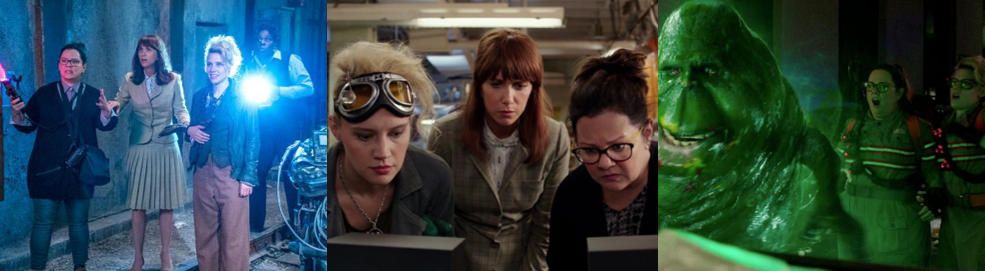
Four misfit women come together to investigate and capture the ghosts suddenly haunting New York.

Despite having no income, Holtzmann continues to tinker with their equipment, dreaming up a clunky prototype proton pack and additional weapons, all scavenged from whatever resources they can get their hands on and the equipment they liberate from the institute. With her distinguished career in tatters, Erin has no choice but to team with the two to establish themselves as bona fide paranormal researchers, though her reluctance is swayed when goofy hunk Kevin Beckman (Hemsworth) shows up to be their receptionist. Despite noted supernatural debunker Doctor Martin Heiss (Bill Murray) publicly discrediting the “Ghostbusters” (a name Erin begrudgingly comes to accept), lonely and explosive transport employee Patty Tolan comes to the team after sighting a ghost (Dave Gruber Allen) in the subway. This leads to the perfect field test for Holtzmann’s new gear, which successfully ensnares the spook and encourages her to make the weaponry smaller and more accurate, as well as cooking up a containment unit to capture a ghost for them to study. Amazed by the experience, Patty joins the team and provides them with overalls to keep them from being slimed by the ghosts’ ectoplasm and even provides them with a vehicle, a hearse borrowed from her uncle (Ernie Hudson) that Holtzmann repurposes into something more akin to Ecto-1. The team is kept surprisingly busy as more ghost sightings are called in, and are troubled and confused by strange, burned-out devices at each location, leading to a very public display of their abilities at a heavy metal concert that sees them successfully capture a ghost and become overnight celebrities. This earns them the attention of Mayor Marth Bradley (García), who reveals that they (and Homeland Security) and well aware of the supernatural threats and cautions the group that they’ll be publicly labelled as fraudsters despite his office acknowledging their contributions to the situation. Undeterred, the Ghostbusters continue their research, continue to get calls, and continue to pay their bills and build more accessories for their actions, presumably eating into their savings since none of them have a family home to remortgage.
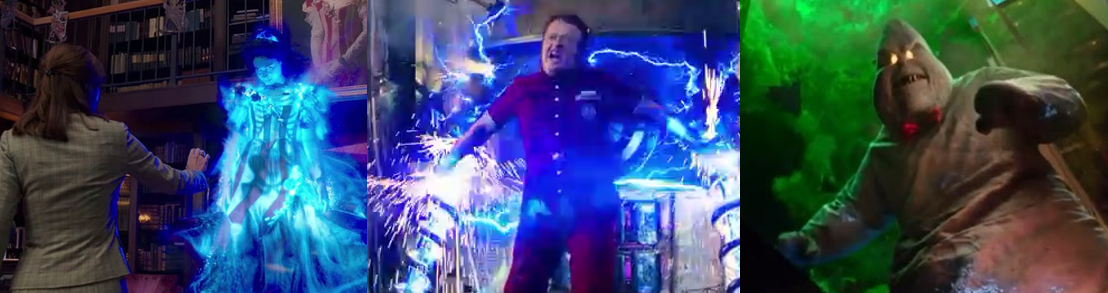
Rowan’s mad plot sees him unleash ghosts upon the city and become a gigantic spirit!

This minor plot point aside, I have to say that I enjoyed the rapport between the four leads. I could’ve done with less toilet humour from the always obnoxious McCarthy (who’s clearly been given license to ad-lib a lot of her lines, leading to some awkward moments) and the two cringe-inducing musical numbers, but the four had great chemistry. I must’ve missed how she and Abby fell out but their issues are quickly worked out within the first fifteen minutes as Erin is swept up in Abby and Holtzmann’s paranormal research. Holtzmann was a great standout for me; I loved how wacky and enthusiastic she was. Patty was also great, being loud and having a down-to-earth attitude that made for some fun comedic moments. It definitely felt like the four bounced off each other well and were left to do their own thing with the material, and I liked that they didn’t bog down the runtime with immature disagreements or love triangles. Kevin is mostly played as a bumbling idiot who can’t work a phone properly but is easy on the eyes (for Erin, at least), while even Mayor Bradley acknowledges their good work despite having to discredit them to keep ghosts a secret. They’re very real, however, and being actively summoned through devices built and placed by doomsayer Doctor Rowan North (Casey), a socially maladjusted man who’s been convinced by a horde of malevolent spirits that the world needs to be “cleansed” by breaching the barrier between the living and the dead. He plants these devices along “ley lines” to break down the barriers, and ultimately crosses over himself when he commits suicide after being confronted by the Ghostbusters, an act that only increases his power as his spirit possess first Abby and then Kevin. Far from seeking to bring forth an Eldritch God, Rowan wishes to unleash the spirits of the dead upon the world and trigger an apocalypse, leading to a string of ghosts to rum amok through Times Square in a surprisingly impressive CGI finale that evokes both the original movie and the cartoon with some off the ghosts’ wacky designs.

The Nitty-Gritty:
Although I was surprised by how much I didn’t mind this version of Ghostbusters, it is strange to me that the filmmakers went for a full-blown reboot rather than trying to tie it into the original canon. This is doubly confusing by the cameos from returning actors as Patty could have easily been Winston Zeddemore’s niece, Erin could’ve been the daughter of one of the other original Ghostbusters, and Mayor Bradley’s line about the paranormal being covered up could easily have been used to explain why the Ghostbusters have been defunct for so long. I just find it odd, especially as Extreme Ghostbusters (1997) and the later legacy sequels showed that a generational story could work in this universe. To its credit, though, Ghostbusters does do things a little differently. For starters, we spend more time with them field testing their equipment and Holtzmann puts together a bunch of different gadgets for them to use, including ghost-busting grenades and a glove accessory, though sadly I felt their new uniforms left a lot to be desired and Ecto-1 is largely an afterthought until the finale despite boasting its own armaments. Secondly, the team have to earn their firehouse by saving the city, meaning they’re working in cramped quarters for the entire film and the team seem far less adept with their cobbled together equipment, often being knocked on their asses or flung through the air for comedic value. This isn’t to say that they’re incompetent, but it’s interesting that these Ghostbusters are more likely to flip out in excitement and appear like raving lunatic compared to their more subdued predecessors. I was glad that the film didn’t fall back on crude, man-hating humour but the toilet humour and musical numbers were a bit weird. The movie seems to be trying to force comedy where the original so effortlessly executed it, and it doesn’t always land. Hemsworth is funny in his role and there were some good moments between the leads, but often it felt like this was more accidental than intended. I liked that the four come together much faster than the original four, allowing a lot of screen time and personality for each, though we learn more about Erin than any of the others until Holtzmann’s surprisingly emotional toast in the finale.
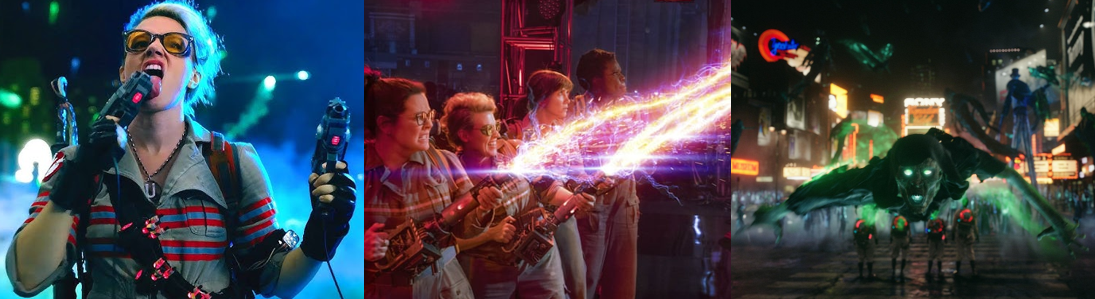
The team’s gadgets, rapport, and the film’s ghosts were surprisingly entertaining.

This Ghostbusters also veers into the horror aspect in surprising ways. Obviously, there’s no blood or gore but the ghosts are pretty horrific here, appearing as looming, intimidating spectres that roar and spew ectoplasm and loom from dark corners. The subway ghost (apparently the victim of the electric chair) was surprisingly menacing, as was the gargoyle that terrorises the heavy metal concert and gives Ozzy Osbourne a scare. In fact, the ghosts and the special effects were really impressive here, even though there are obvious moments where the film was pandering to the 3D craze of the time, potentially because the filmmakers are mixing real actors and practical effects with the CGI. Fan favourite Slimer (Adam Ray) even briefly shows up and the Ghostbusters tackle a spectral balloon parade during the final act, eventually being squashed and almost suffocated by an inflatable Mr. Stay Puft. These balloon ghosts were really fun and reminded me of the old cartoon, as did the barrage of malicious spirits Rowan unleashes upon Times Square. While it’s kind of crazy that the ghosts attack one at a time rather than using their obvious superior numbers and powers, this is an impressive showcase of the Ghostbusters’ teamwork, camaraderie, and Holtzmann’s gadgets as they evaporate spirits all over the place. They tackle a skeletal pilgrim, a towering, monstrous corruption of Uncle Sam, and innumerable wicked spirits in an all-action showcase the original film could only dream of. It’s a good thing these special effects work so well as Ghostbusters is crammed full of some of the most egregious product placement I’ve ever seen, to the point where it’s almost painful, to say nothing of its parade of cameos. It’s nice to see the original actors show up but it’s also kind of a slap in the face since they dragged their feet on making a third movie, only to later return to their roles anyway. It just makes me wish the film had been a legacy sequel, or an offshoot following a new team in a new city.
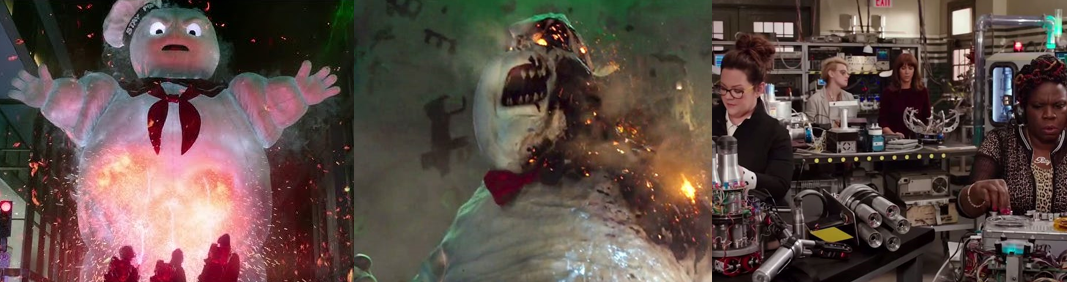
Despite Rowan’s army and girth, the Ghostbusters are victorious and finally legitimise themselves.

As the Ghostbusters investigate the spate of hauntings and slowly build their confidence in tackling and trapping ghosts, they discover strange devices not unlike their proton packs at each location. Together, the four figure out that they’ve been placed at ley lines, with Erin and Abby theorising they could weaken the barriers between life and death. This is exactly what Rowan hopes to do having grown despondent by humanity and society’s treatment of him and having made contact with the malevolent spirits seeking to “pester” the living with unspeakable tortures. Ignored and mistreated by those around him, Rowan easily places his devices and grows increasingly aggravated by the Ghostbusters’ interference, before dramatically killing himself so he can possess Abby and wreck their equipment. He then upgrades to hijacking Kevin’s body to enact the final stage of his plot, the activation of a large device that, similar to the first film, unleashes a hoard of ghosts upon New York City. When the Ghostbusters’ frantic warnings are met with scorn and dismissal, they suit up to tackle the threat directly, subduing Rowan’s army and confronting him in Times Square. There, he toys with them, promises to bring about the end of days, and eventually corrupts their iconic logo to become a Kaiju-sized apparition and go on a rampage not unlike Gozer the Destructor’s (Paddi Edwards/Slavitza Jovan) as a gigantic Mr. Stay Puft and the opening sequence of the old cartoon. Though their proton packs are useless against the creature, the Ghostbusters trick Slimer into driving Ecto-1 into the swirling vortex Rowan conjured, turning it into a giant ghost trap and sucking him in. Though Rowan tries to drag Abby down with him, Erin rescues her and the team are heralded as saviours, despite Mayor Bradley continuing to downplay the paranormal threat. In the aftermath, the Ghostbusters finally move into the iconic firehouse and further upgrade their operation thanks to secret funding from city officials, constructing a containment unit and a device to monitor spooky sound waves, alerting the team to a potential threat named “Zuul”…

The Summary:
After years of hearing nothing but negativity about the Ghostbusters reboot and being sure that I would hate it due to a combination of Melissa McCarthy and what would surely be an obnoxiously anti-male stance, I was surprised by how much I enjoyed this film. While it teases appealing to the lowest common denominator with some of McCarthy’s painfully unfunny toilet humour, the film shows some surprising restraint in its all-female approach, characterising the leads not as sex-starved bimbos or wacky nuts obsessed with their genitals but as kooky, enthusiastic, and ultimately good natured individuals who come together as a team and family to save the city. While I’m not a fan of McCarthy, I did enjoy Abby’s sisterly relationship with Erin and Holtzmann, whose energy and mad scientist aesthetic was a constant stand out. Patty was also great, bringing a grounded rawness to the team and I really enjoyed the banter with the four, who all appeared as equals and to have a deep respect for each other, even if they drive each other crazy at times. While the film hits many of the same notes as the original, I liked that it changed things just enough to stand on its own, from the different equipment, the bumbling receptionist, and the main villain. Rowan’s threat was palpable by the end and I really liked the depiction of and the variety in the ghosts, who were surprisingly creepy even when they were charging at the screen for a jump scare. While I would’ve much preferred this was a legacy sequel or a spin-off to better utilise all those cameos, I do think Ghostbusters gets a bad rap that isn’t fully justified and that perhaps things would’ve been different if it had been a legacy sequel, allowing these characters to return in future films. As is, it’s obviously not as good or as iconic as the original but nostalgia is a big part of the original’s appeal and I think there’s enough here to allow this Ghostbusters to work as a comedy/horror for a new generation.

My Rating:

Rating: 3 out of 5.

Pretty Good

What did you think to the Ghostbusters reboot? Were you disappointed that it wasn’t a legacy sequel or do you think it works better as a standalone film? Which of the new characters was your favourite and did you like their rapport and new gadgets? What did you think to the ghosts and the bigger, action-packed finale? Did you enjoy IDW’s continuation of this universe? Which Ghostbusters film or project is your favourite and how are you celebrating Ghostbusters Day today? Whatever your thought about the Ghostbusters reboot, drop a comment below, support me on Ko-Fi, and go check out my other Ghostbusters content.

Mini Game Corner [Ghostbusters Day]: The Real Ghostbusters (Arcade)


Throw on your proton pack and get ready to bust some ghosts because June 8th is, officially, “Ghostbusters Day”! Ghostbusters (Reitman, 1984) was first released on this day back in 1984 and, since then, has become a major pop culture franchise that includes comic books, a popular cartoon and line of action figures, and videogames and it is, easily, one of my favourite films and franchises from that era.


Released: 1987
Developer: Data East
Also Available For: Amiga, Amstrad CPC, Atari ST, Commodore 64, and ZX Spectrum

A Brief Background:
After Ghostbusters became a big hit, it spun off into a pretty significant franchise comprised of an under-rated sequel, a questionable reboot, some okay modern follow-ups, and a handful of videogames. The first Ghostbusters-branded videogame was a multi-platform release from Activision that was a huge success despite being wildly different across each home console and containing humorous grammatical errors. This was followed up by an arcade title loosely based on one of the most memorable Ghostbusters spin-offs, the much-loved cartoon. Licensing issues saw the game released as Meikyuu Hunter G in Japan, which included redrawn sprites, the removal of the iconic Ray Parker Jr. song, and the multi-player stripped down to two players instead of three. Unlike the beloved cartoon, The Real Ghostbusters attracted mixed reviews across its various iterations; while some praised the fun gameplay and graphics, many others disagreed and criticised it as an ugly, repetitive, unfair and undemanding, and overall unimpressive shooter.

The Review:
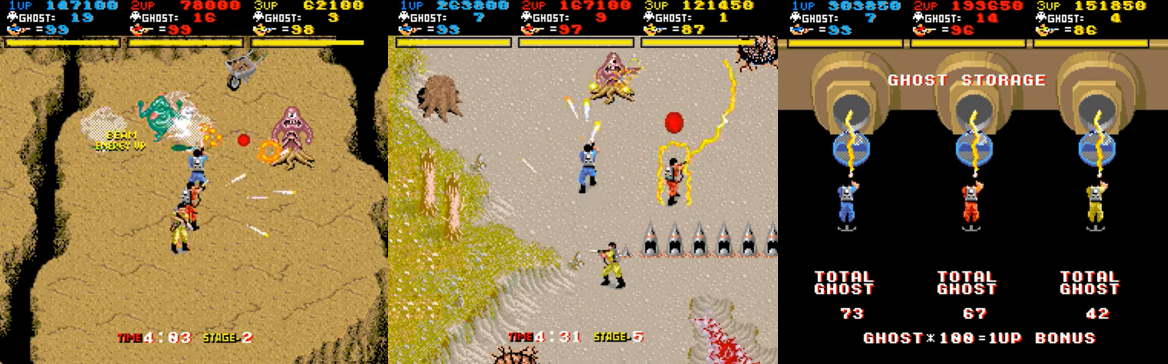
I’m doing things a little differently for my review of the Real Ghostbusters arcade game. It’s a naturally shorter review but that’s mainly because the game is so short and simplistic that I don’t see the point in dragging it out too much, but I was also able to finish it so I want to touch base with everything I saw and give it a proper rating. The Real Ghostbusters is a top-down, semi-isometric shooter not unlike its successor, Smash TV (Williams, 1990), perhaps the most popular of this genre. The game allows up to three players (because, once again, Winston Zeddemore gets the shaft) to play simultaneously, but your character is never identified onscreen by name (they’re just “1Up”, “2Up”, and “3Up”) and their sprites are just palette swaps, so you have to go by the colour of their uniforms (blue for Doctor Egon Spengler, yellow for Doctor Ray Stantz, and orange for Doctor Peter Venkman). They also all play exactly the same; there are no stats or attributes to differentiate them, so it really doesn’t matter which character you play as (though “2Up”/Orange/Venkman stands out a little more against the backgrounds). The Real Ghostbusters offers basic, arcade-style gameplay; you simply move your character around the ten stages and blast at monsters with your proton pack using two buttons: one that fires a slower, infinite projectile shot and one that unleashes your proton stream. The proton stream is tied to a yellow meter under your character’s name and score. As you fire it, the meter depletes and you’ll need to grab power-ups or insert a coin to replenish it, which is necessary as the proton stream is the only way of sucking up the ghosts that pop out from defeated baddies and earning points to both out-do your friends between stages and work towards earning extra lives, which are awarded for every one hundred ghosts you capture.

Players compete against each other to grab power-ups and capture the most ghosts.

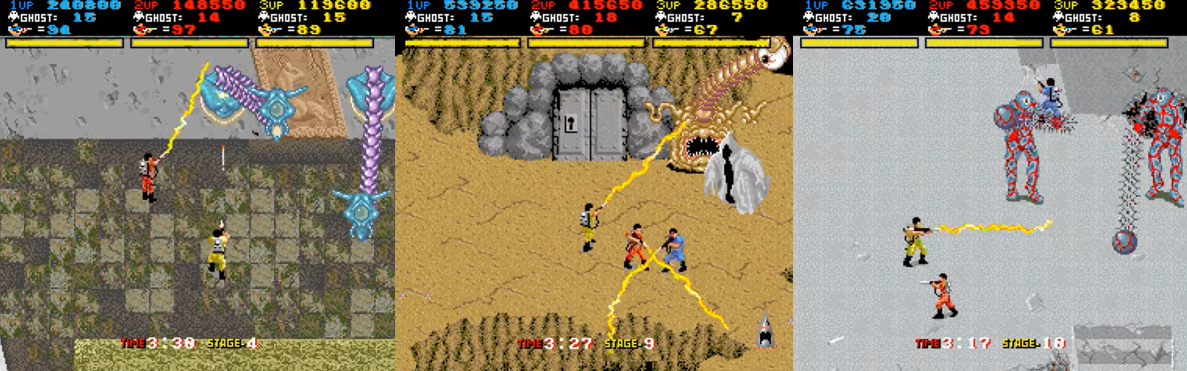
Following the big title font and a fun scene of Ecto-1 pulling up outside of the Ghostbusters’ headquarters, you’re dropped into the first stage and tasked to “Capture the ghosts, collect the keys, save the city” which is done by zapping the bizarre monsters and ghouls that swarm every area and confronting a boss at the top of the stage. This earns you a key to move on to the next stage, but the game very quickly recycles its environments; you’ll explore the dilapidated rooftops on the first and final stages, then play through a canyon (with bones scattered all about), a graveyard (containing gravestones and tree stumps), a moss-infested catacomb, and a more Hellish variant of the graveyard over and over between the first and last stages. While the environments are quite repetitive, the action is thick and fast. Ghoulies, goblins, and nightmarish creatures infest every screen, constantly respawning, shooting lightning bolts or other projectiles, and making a beeline towards you. As if that wasn’t bad enough, laughing spikes pop up from the floor and the excised spirits will steal power-ups if you’re not fast enough. You’ll also have to climb (well, just walk up) ladders and cross tree trunks to progress, sometimes by blasting rocks or trees to make them appear. Be careful, though; there are a lot of things you can blast, like toxic waste bins and barrels and such, but some of these are just as likely to spawn more enemies as they are power-ups! Power-ups include upgrades to your proton stream and projectile shot to make them more powerful and replenish your meter, an “aura” shield that protects you from damage, and a “Green Ghost” (because, apparently, Slimer wasn’t a popular name just yet?) that both protects you and takes out enemies for a short time. There is also a power-down item, helpfully indicated by its skull-and-crossbones symbol, that debuffs your shot, so watch out for that, but two or more players are able to cross their streams for a more powerful attack. You also have to deal with a timer; you have five in-game minutes to clear each stage, but you can earn more time by inserting a coin or grabbing a power-up. Finally, The Real Ghostbusters is classic coin-muncher if I ever saw one; it’s one-hit kills here and you’ll die a lot throughout the course of the game as the enemies just never stop coming. It’s actually quite impressive how many appear onscreen at once and the sheer variety on offer; it’s a shame that the music didn’t get the same attention as the chip-tune rendition of the iconic Ghostbusters soon wears out its welcome after a few minutes.

The gruesome bosses are recycled and poor substitutes for more iconic Ghostbusters foes.

The Real Ghostbusters is similarly limited in its gameplay variety; between each stage, the Ghostbusters deposit the spirits they’ve captured into the containment unit for bonus points and extra lives, but this is purely a non-interactive cutscene and there are no bonus games to break up the action here. The same goes for the game’s bosses; sure they’re bigger and tougher than the regular enemies and are accompanied by a boss theme, but they don’t require any more skill on your part than to keep blasting and avoiding taking a hit. As if that wasn’t bad enough, the game both recycles bosses and substitutes a boss battle with a gauntlet against swarms of enemies. I gave this a pass at first since the first two introduced two new enemies to the game (weird rotund bird-things that extend their beaks and scythe-wielding demons), but the third gauntlet is simply against the bulbous purple bolt-shooting monsters you’ve been busting all along. The first boss is two large, cloaked figures that resemble the Grim Reaper and bop about shooting spooky napkins. The second is a disgusting, blob-like monster with a gnashing face in its stomach and a single, disgusting eye at the end of an extendable neck, and both of these guys appear again at the end of stage nine. Extendable appendages and swarms of projectiles are commonplace with The Real Ghostbusters’ bosses; the two wall-mounted demons in stage four, the scarier robed priests of stage six, and the lava/rock golems of stage seven all featured these tactics though the priests mix things up a bit by being able to teleport and the golems come armed (literally) with swinging maces. Rather than taking on the iconic Stay Puft Marshmallow Man, your final challenge is to fight to the end of the rooftops and battle two of these golem-like giants, something that’s barely a challenge at all since you can easily make mincemeat of all the game’s enemies with three players. Defeat them and you’re treated to an odd scene of the ghosts and monsters all escaping the Ghostbusters’ firehouse (it’s almost as if the intro and outro cutscenes should’ve been reversed to show the ghosts escaping and the Ghostbusters returning home victorious), a bit of congratulatory text, and the chance to enter your initials into the high score table.

The Summary:
I love a good, mindless arcade title, especially one where you can just keep pumping in coins and mowing down waves of enemies to achieve victory. I actually have memories of playing the Amiga version of The Real Ghostbusters back when I was a kid and quite enjoying it, especially compared to the more confusing and taxing Ghostbusters (Activision, 1984), and I could definitely see myself and other kids blowing our pocket money on this fast-paced action shooter back in the day. Having said that, the game is painfully basic; the lack of bonus stages and gameplay variety is staggering, even for an arcade title, and things quickly become repetitive and chaotic. I was obviously emulating the game, so I had unlimited credits, making it a breeze to blast through; while enemies swarmed the screen and took me out again and again, I was back in action at the press of a button but all this tells me was that The Real Ghostbusters was unfairly cheap and designed to rid you of your hard-earned coins with its one-hit kills, strict timer, and sheer amount of enemies. While the chip-tune music gets grating and the semi-isometric perspective can be a little confusing, the game looks decent enough. The Ghostbusters might look awful, but the monsters are all suitably bizarre, Lovecraftian creatures, though this visual appeal is diminished by the fact that most of them just bounce, fly, or wander about shooting the odd projectile. The power-ups are kind of fun but, again, basic; why not change up the projectiles the Ghostbusters shoot or have a screen-clearing bomb or something? Also, the lack of Mr. Stay Puft really diminished the appeal and finale of the game; he was the obvious final boss, but The Real Ghostbusters chose to play it cheap and safe and cycle previous bosses instead. Overall, The Real Ghostbusters was a decent enough arcade game, especially with three players, but nothing massively memorable or innovative.

My Rating:

Rating: 2 out of 5.

Could Be Better

Have you ever played the Real Ghostbusters arcade game? If so, what did you play it on and did you enjoy it? Which Ghostbuster did you play as, and were you upset by Winston’s absence? Were you disappointed by the recycled bosses and environments? What are your memories of The Real Ghostbusters and how are you celebrating Ghostbusters Day today? Whatever your thoughts and memories of Ghostbusters, feel free to share them below and be sure to check out my other Ghostbusters reviews across the site.

Game Corner [Ghostbusters Day]: Ghostbusters (Mega Drive)


Throw on your proton pack and get ready to bust some ghosts because June 8th is, officially, “Ghostbusters Day”! Ghostbusters (Reitman, 1984) was first released on this day back in 1984 and, since then, has become a major pop culture franchise that includes comic books, a popular cartoon and line of action figures, and videogames and it is, easily, one of my favourite films and franchises from that era.


This review has been supported by Chiara Cooper.
If you’d like to support the site, you can do so at my Ko-Fi page.

Released: 30 June 1990
Developer: SEGA / Compile

The Background:
Ever since Ghostbusters was released and became a big hit, the concept of four somewhat-bumbling New York parapsychologists snagging troublesome spirits has developed into a pretty significant franchise. We’ve had the under-rated sequel, a questionable reboot, and a decent enough modern follow-up, a couple of popular cartoons, a whole slew of action figures and comic books, and, naturally, videogames. The first Ghostbusters-branded videogame was a multi-platform release from Activision that was a huge success despite being wildly different across each home console and containing humourous grammatical errors. Although the much-loved cartoon spin-off failed to replicate its success at the arcades, Japanese developer Compile made up for this with a much-sought-after Mega Drive title in 1990. The game, which was oddly missing Winston Zeddemore from its roster, was largely praised for its graphics and addictive gameplay, but criticised for its music and sound design. Although ranked highly among Ghostbusters videogames, the Mega Drive title is also seen as one of the strangest titles in the franchise for its unique art style and gameplay mechanics.

The Plot:
After saving New York City (and the entire world) from Zuul, business is slow for the Ghostbusters. However, when ghosts and ghouls rise again, the three supernatural exterminators rush to help (and earn some cash in the process) and solve the mystery of an ancient stone tablet.

Gameplay:
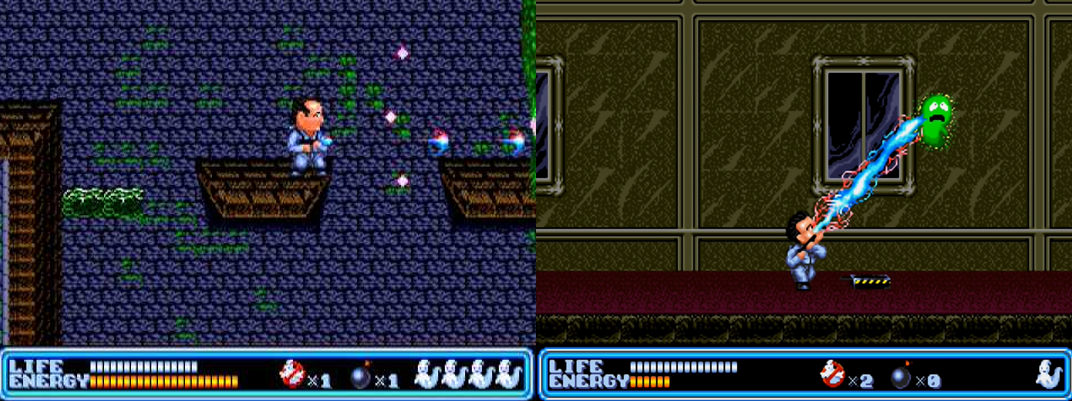
Ghostbusters is a 2D, sidescrolling run-and-gun with light platforming elements and an emphasis on exploration, purchasing upgrades, and choosing which missions to undertake. Players can pick from one of the three Ghostbusters, and there are slight differences between each character: Doctor Peter Venkman is the allrounder, with normal speed and stamina; Doctor Ray Stanz (referred to as “Raymond”) compensates for his slow speed with a higher stamina; and Doctor Egon Spengler is fast on his feet but has less health than his fellow Ghostbusters. In this case, I guess it makes some sense to leave Winston out of the game as his stats would inevitably mirror one of the others, but it’s still a kick in the teeth that all four Ghostbusters aren’t playable. Despite the fact that Ghostbusters was very much an ensemble movie and focused on the camaraderie between the main characters, the videogame is a single player experience, and once you pick a Ghostbuster, you can’t switch to another one mid-way through the game.

Explore a number of locations zapping and trapping ghosts to earn cash.

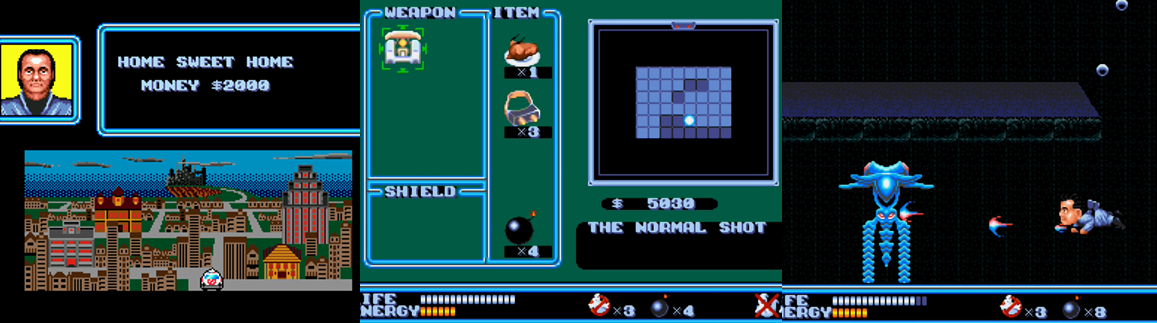
Regardless of which Ghostbuster you pick, the game’s primary controls and mechanics remain the same; pressing A will see you toss one of your limited supply of bombs to deal damage to or defeat enemies, B will fire your current weapon from your proton pack, and C allows you to jump. Oddly, you cannot change these controls, which is a bit of a shame as I’d much rather have A be fire, B jump, and C throw bombs but it’s not too difficult to adapt to the controls. Pressing Start brings up the game’s inventory screen, where you can select a different weapon, activate a shield, use items such as food or the infrared scope, and view the grid-like map. The map gets coloured in as you explore and will give you a vague idea of where the “middle ghosts” and bosses are in each level, but it’s a very barebones map screen not unlike those seen in the early Metroid videogames (Various, 1986 to present). The heads-up display (HUD) will show your stamina (basically your health bar), proton pack energy, remaining lives, the number of bombs you have left, and how many ghosts are left for you to catch in the stage you’re in. When you start the game, you can pick from one of four different locations in New York City; each building has a different number of spooks that you need to catch and will net you a different cash pay-out, and basically the amount of money you can earn determines how difficult the stage will be. Once in the location, you need to seek out the ghosts and try to catch them; along the way, you’ll encounter some basic enemies that’ll you need to blast and hazards to avoid or hop over. The Ghostbusters can fire while moving and shoot both upwards and diagonally, which is extremely helpful; they can also crouch through small gaps and vents and swim without worrying about drowning. Your goal is to “encounter” the stage’s resident ghosts, which act as sub-bosses; once the ghost has been defeated, its spirit will float around the immediate area and you’ll have to hold down fire button (or tap it, it’s not very clear) to snag the spook in your proton stream and try to drag it over the ghost trap to capture it. If you manage to do this (and it’s easier said than done sometimes), you’ll see some of your health and energy restored and get a cash bonus; if you fail, either due to running out of energy or taking too long, the ghost will run away and you’ll lose out on these bonuses.

There’s some freedom to level and item selection, and the difficulty shifts accordingly.

However, you don’t actually need to capture these ghosts in order to progress; you just need to battle and defeat them and tick them off in the HUD in order for the boss ghost to appear on the map. You can freely navigate your way back to the start of the stage to exit back to the Ghostbuster’s headquarters and purchase additional health, items, and gear if you need to and you’ll have a limited number of continues at your disposal to carry on playing if you lose a life. The game can be played in either Easy, Normal, or Hard mode; I played on Easy and had nine continues, but I imagine the harder modes limit your continues (possibly your lives as well) and potentially make enemies more aggressive. Enemies will respawn when you leave the screen, or sometimes when you hang around too long, and you’ll encounter such hazards as spikes, lava, limited visibility due to lack of lighting, swinging axes, and projectile-spitting barriers that block your progress. Thankfully, there’s no time limit to worry about so you can take your time exploring each location, and you’ll need to search all over to track down the ghosts and figure out how to progress further. This can be confusing at times, thanks both to the map and how familiar some of the stages are laid out and appear, and the screen sometimes doesn’t scroll up fast enough for you to see temporary platforms or ladders that lead to a new area or the final boss. There are also no checkpoints in the levels so, if you exit or lose all your lives and have to continue, you’ll have to play through the entire stage from the start again but, on the plus side, you won’t have to capture the middle ghosts again.

Graphics and Sound:
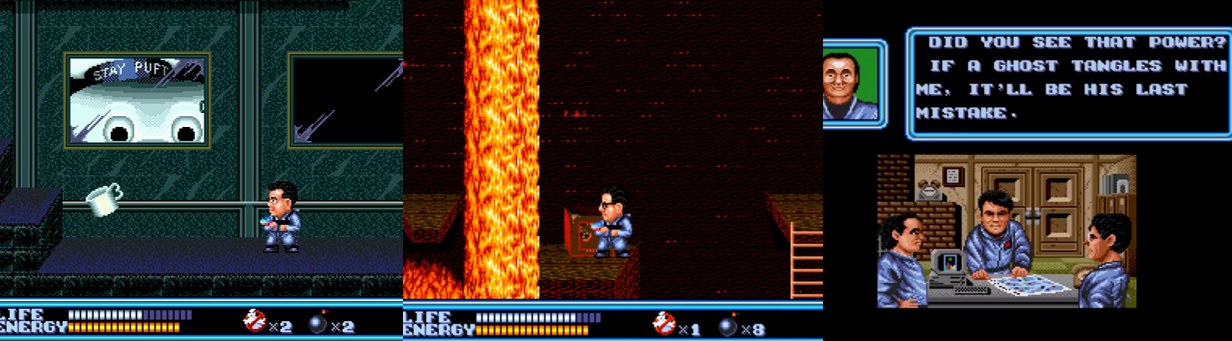
I’ve played the 8-bit Ghostbusters videogames, and the arcade shooter, and I have to say that I have long been intrigued by screenshots and gameplay footage of this title. The game immediately stands out by utilising a charming chibi-style aesthetic than compresses the characters down to squat, cartoonish sprites with comically oversized heads! This gives the Ghostbusters a great deal of personality and expression, especially when hit, dying, or left idle; you’ll even see their breath in the frozen apartment stage, and you’ll be treated to a 16-bit rendition of the iconic Ghostbusters theme alongside some jaunty and catchy tunes to keep you invested in even the more uninspiring locations. While the bog standard enemies aren’t much to shout about, the sub-bosses and bosses are extremely creative and unique in terms of their appearance; the game even includes some fun homages, such as a giant man-eating plant not unlike Audrey II (Levi Stubbs, et al) from Little Shop of Horrors (Oz, 1986), alongside familiar enemies like Slimer and the Stay Puft Marshmallow Man.

Though the locations are a bit bland, the sprites are comical and expressive and the story’s told well.

Indeed, Mister Stay Puft will be a constant presence in the high-rise building stage, leering in through windows and punching through the background as you progress upwards. The game’s main four stages are all quite similar in terms of their basic layout, containing doors to pass through, ladders to climb, and spikes to avoid, but the more profitable stages are noticeably bigger and more maze-like. The “Home Sweet Home” stage is a haunted mansion that just about separates itself from the high-rise building with dining tables and falling (and candle-tossing) chandeliers; the apartment stage grows increasingly frozen as you progress, with falling icicles dropping from above (but, thankfully, you don’t have to worry about the ground being slippery); the woody house requires the infrared scope to cast some light in the darkness and is filled with lava and narrow (or temporary) wooden log platforms. Once you’ve beaten the main four stages, you’ll head to a mossy, dungeon-like castle and, finally, descend into a deep hole full of diamond-like glass and damaging globs. The story is told through text boxes and pixelated renditions of the characters and their clients as they discuss the mysterious tablet pieces they acquire and the dialogue captures that amusing Ghostbusters banter that made the film so memorable; some limited sprite animations also help progress the story, but the majority of the cutscenes take place in these small box windows that somewhat limit their appeal.

Enemies and Bosses:
Each stage is filled with some minor enemies who dog your progress and don’t offer any pick-ups or cash upon defeat; you’ll encounter leaping slime balls, possessed cutlery and tablecloths, ice-like golems, big jellyfish, bouncing orbs, flaming bat-like spooks, gaunt zombies, and demonic teddy bears. Each of these can be dispatched in just a few hits but, as enemies will respawn and have a tendency to follow you, it’s quite easy to get caught off-guard or swamped with enemies at times, and this can be frustrating as you’ll experience some knock-back upon taking damage with can cause you to drop to a lower area or fall onto some spikes or lava.

You’ll need to wait for a lot of the middle ghosts to reveal themselves so you can properly damage them.

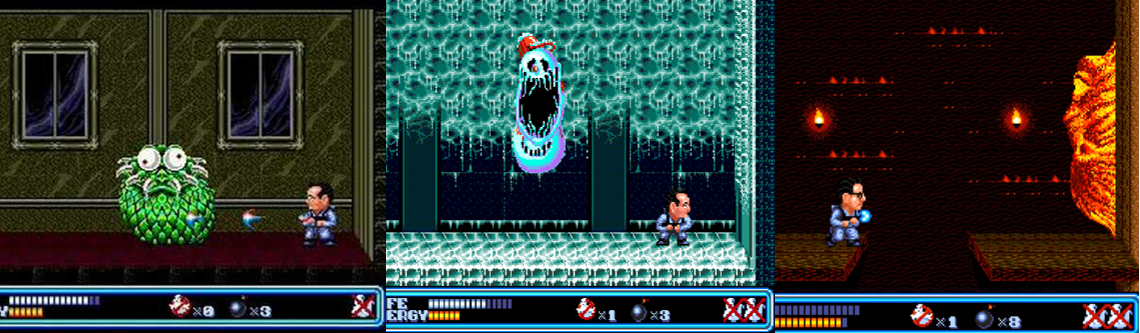
There are ten middle ghosts that need to be fought (and, ideally, captured) in order to refill some of your health and energy, snag a cash bonus, and unlock the stage’s boss battle. These “encounters” take place in an isolated area in each stage and, since you can take on the main four stages in any order, their difficulty can vary depending on which route you take. I played “Home Sweet Home” first, which sees you battling Silk Hatton, a headless gentleman ghost who resists your projectiles; you can only deal damage to this spirit when its demonic, dog-like “head” pops out of its top hat. You’ll need to avoid (or shoot) Silk Hatton’s projectiles and, once you deal enough damage, it’ll split into two disembodied parts that need to be blasted to reduce it to a catchable spirit. You’ll battle the ice giant Crystarobo in the apartment stage; this crystalline monster lumbers and hops about, blasting lightning that spawns small minions, swinging overhead, and even detaching its limbs to attack you and it can only be damaged by shooting its head. You’ll also need to battle the Siren, a witch-like entity that flies about at the top of the screen shooting a three-way projectile at you and splitting into three to fire large shots your way; it’s invulnerable when flying overhead and you’ll need to shoot the correct Siren in order to whittle her health down and snag her spirit. In the woody house, you’ll encounter the Fire Dragon and Fire Giant; while the “giant” is anything but and leaps all over the place spitting embers at you and is comparatively weak, the dragon is a pain in the ass as it randomly pops up through the floor to breathe a long plume of fire at you that is very difficult to dodge.

Monstrous creatures, possessed Ghostbusters, and even Death itself must be conquered to progress.

In the high-rise building, you’ll come across the 100-Eyed Centipede that worms around in mid-air and splits into separate, sweeping parts as you damage it; the 3-Way Shot upgrade is super useful here as the creature spreads itself across a large area and can be tricky to dodge as a result. You’ll also battle the Shell Beast, a green, glob-like ghost that shields itself from attacks with a pink shell and bounces around the arena; you must fire up at it when it cracks open, but can blast its projectiles to make this one of the easier encounters in the game. Finally, in the castle, you’ll battle the massively annoying Broccoli Worm that’s a bastard to jump over and splits into separate parts, the Grim Reaper himself (who flies about swinging his scythe at you and sending flaming blades spinning around the arena, and who can only be damaged by hitting his head), and even possessed versions of your kidnapped Ghostbuster pals! These two will mimic your currently-equipped weapon and match you shot for shot but, oddly, cannot damage you on physical contact; equally, the only way you can free them from their possession is to get around them to blast the spirit floating around near them, and I recommend equipping the Phaser Shell weapon as it’s slow and easier to dodge than other shots.

Bosses can take quite a bit of punishment, and love hopping about and firing projectiles.

Once you’ve captured the middle ghosts in each stage, you’ll be able to fight the boss can acquire a piece of the tablet or other key item to progress the story. There are five main bosses, one for each of the main levels, and four of them will need to be battled again in the “Deep Hole” stage before you can tackle the game’s final boss. In the apartment stage, you’ll find Scalon, a reptilian creature that rolls and hops about and is protected by its scales. When it attacks, it sends its scales flying off its body, exposing its true form and leaving it vulnerable, but you’ll need to fend off these projectiles and try to hop over or run under it as it moves back and forth across the arena. The frozen apartments are home to a demonic Snowman; this frosty customer floats above your head and spawns smaller versions of itself that shoot their carrot noses at you, but is pretty simple to take out, especially if you have the 3-Way Shot equipped. One of the more laborious bosses for me was the Wall Man from the woody house; in the first encounter, this massive projectile-spitting face is fought over a gap that leads to a lava pit, but this obstacle is missing in the “Deep Hole” stage, making the battle a lot easier. Basically, you need to fire diagonally upwards or jump-shoot at the eye that appears on the Wall Man’s forehead or chin, avoiding the enemies and projectiles he spits out, but he appears (seemingly at random) on either side of the screen, making this an exercise in trial and error.

After defeating a couple of familiar foes, you’ll face the newest God of Destruction on the block!

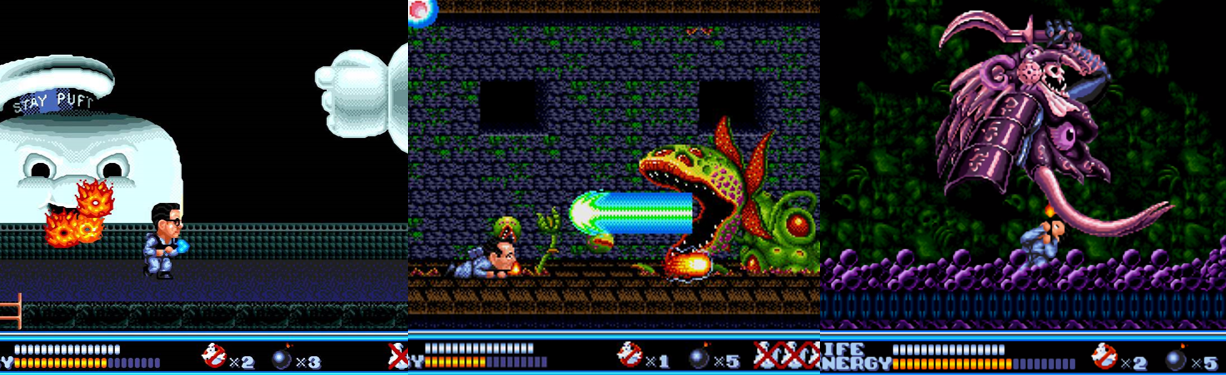
On the roof of the high-rise building, you’ll have a rematch with Mr. Stay Puft; this joyous kaijiu looms in the background firing lasers from its eyes, will-o’-the-wisp-like flames from its mouth, and trying to punch you from either side of the screen. However, it’s surprisingly simple to just blast away at Mr. Stay Puft’s grinning visage and put him down for the count. Easily the most difficult boss you’ll encounter before the finale is the Insect Trapper, a huge man-eating plant and fires a large laser from its gaping mouth and constantly spawns fines and snapping plant minions to attack you. I couldn’t quite tell if he creature was immune to my shots when its mouth was closed, so I simply poured on the firepower non-stop and kept low to the ground, switching to 3-Way Shot to dispatch the smaller minions. Once they’re all defeated, you’ll face off against Janna in a two-stage encounter; first, the massive, armoured monstrosity sits stationary and tosses an easily-avoidable bouncing heart at you and launches a spinning scythe that you need to race all the way to the left to avoid. Damage her head (her one weak spot) enough and she’ll detach from the background and float around, constantly hovering just out of reach of your attacks and tossing her scythe at you; however, if you stay on the move, duck and crawl when necessary, and take to the high ground when she exposes herself, you can take her down without too much trouble.

Power-Ups and Bonuses:
In-game power-ups and pick-ups are few and far between, making this a tough experience at times; you’ll come across Slimer in every stage (sometimes more than once, and usually right before or after an encounter) and can blast him for a health or energy boost, but he won’t respawn unless you lose a life or use a continue. If you’re extremely lucky, you might stumble across a 1-Up in a stage, which is massively useful, but you’ll generally be dependent on capturing ghosts or defeating the boss to refill your health and energy meters outside of buying items. You’ll find safes in each level that can be destroyed to gift you bags of cash (or damaging bombs) and you can spam-collect these by entering and exiting stages over and over so you can buy everything you need.

Slimer will drop power-ups, but you’ll need cold, hard cash to purchase new weapons and gear.

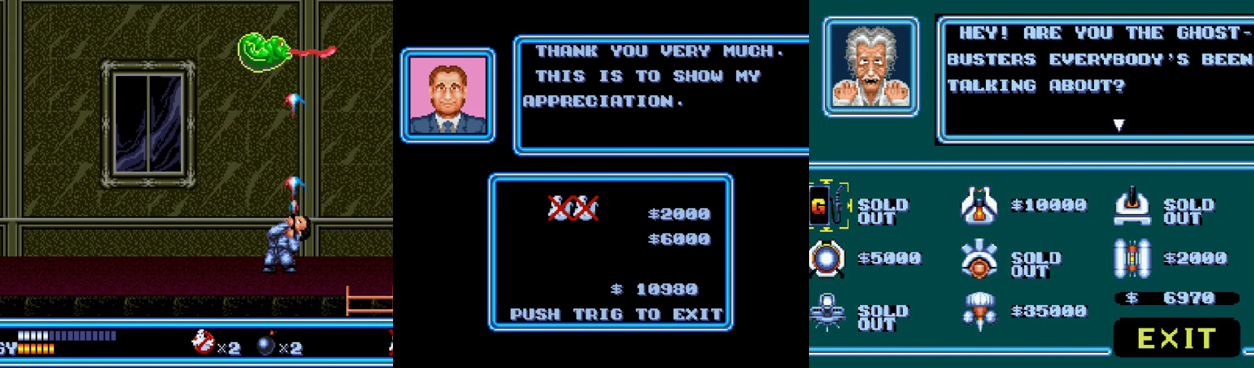
There are two shops at Ghostbusters HQ; an item shop and a weapon shop. At the item shop, you can buy health-restoring items, bombs, and infrared scopes but these items will sell out pretty quickly so be sure to use them sparingly in stages. At the weapon shop, you can purchase new weapons and shields to make things easier on yourself; I found the most useful weapon to be the 3-Way Shot but you can also get the Phaser Shell (which fires a slow, but powerful, burst of energy), the Bubble Projectile (a slow, floaty bubble that I had little use for), and an explosive shot to damage multiple enemies at once. These additional weapons do drain your energy meter a lot faster, however, which can limit their use and your ability to capture ghosts. You can also upgrade and extend your energy meter and buy protective gear like the Special Suit that reduces the amount of damage you take for a limited time and the Barrier, which renders you temporarily invincible at the cost of draining your energy meter. Each of these items and weapons can be equipped from the inventory menu, carries a hefty price tag, and often can only be used once per life.

Additional Features:
Although Ghostbusters is a fairly lengthy game for its era, there’s not too much extra material to spice things up. As mentioned, there’s no two-player mode and there isn’t even a high score to try and beat. Instead, the replayability comes from the addictive gameplay, the option to play as a different Ghostbuster, and the freedom in picking which order you play the first four stages.

The Summary:
I have to admit that I was a little intimidated and concerned when I finally sat down the play Ghostbusters; the game is so expensive and so hard to come by that I was worried that it wouldn’t live up to the hype I’d built up for it or the promise of its graphics. Thankfully, the game definitely delivers a solid experience; the controls are tight and responsive and blasting ghosts and enemies is a lot of fun, despite how difficult I found it to be to actually capture the little buggers. The graphics are charming and amusing, especially the sprite work on the main characters and the enemies, which more than makes up for some lacklustre environments. I actually really enjoyed earning cash to purchase new items and weapons; while you will need to grind a bit if you want to buy everything on sale, you don’t necessarily need to have every item the game offers to you and can fare well enough with the default weapon and setup. While it’s a shame that the game doesn’t include some kind of two-player mechanic or the ability to play as Winston or drive Ecto-1, Ghostbusters is easily the best videogame adaptation of the film I’ve played from this era of gaming; it’s tough but fair, presented wonderfully, and kept me engaged from start to finish. The only real drawback is how hard it can be to get your hands on a physical copy; I got lucky with mine, but it’s probably best you emulate it to save your money and also take advantage of save states to make things even easier on yourself.

My Rating:

Rating: 4 out of 5.

Great Stuff

Have you ever played Ghostbusters on Mega Drive? If so, what did you think to it and how does it compare to other Ghostbusters videogames from that era? Which of the Ghostbusters did you play as, and were you disappointed by Winston’s absence? Which of the bosses was your favourite and did you also struggle with capturing spooks for cash? What memories do you have of Ghostbuster merchandise like cartoon and action figures? How are you celebrating Ghostbusters Day today? Whatever your thoughts and memories of Ghostbusters, go ahead and share them below.

Movie Night [Ghostbusters Day]: Ghostbusters II


Throw on your proton pack and get ready to bust some ghosts because June 8th is officially “Ghostbusters Day”! Ghostbusters (Reitman, 1984) was first released on this day back in 1984 and, since then, has become a major pop culture franchise that includes comic books, a popular cartoon and line of action figures, and videogames and it is, easily, one of my favourite films and franchises from that era.


Released: 16 June 1989
Director: Ivan Reitman
Distributor: Columbia Pictures
Budget: $25 to 30 million
Stars: Dan Aykroyd, Bill Murray, Harold Ramis, Ernie Hudson, Sigourney Weaver, Rick Moranis, Annie Potts, Peter MacNicol, and Wilhelm von Homburg/Max von Sydow

The Plot:
Five years after the events of the first film, the Ghostbusters are no more and are legally forbidden from conducting any ghostbusting or paranormal investigations. However, when a mood-altering slime is discovered beneath the city and the spirit of an ancient Carpathian warlord awakens, the four return to action to once again defend New York from malevolent spirits.

The Background:
Originally developed by actor Dan Aykroyd as a project for himself, Eddie Murphy, and close friend John Belushi, Ghostbusters finally took shape when director Ivan Reitman, writer/actor Harold Ramis, and Bill Murray came onboard. The film was an incredible critical and financial success and, despite the movie intending to be a simple standalone affair, a sequel was considered inevitable. However, Ghostbusters II was a publicly arduous production; Columbia Pictures’ new chairman, David Puttnam, wasn’t interested in making big-budget blockbusters and the creation of a script stalled as the director and actors all required unanimous approval before shooting could begin. After Puttnam was replaced by Dawn Steel, Ghostbusters II finally got underway. Having left acting following Ghostbusters’ success and with a dismissive attitude towards sequels, star Bill Murray demanded an outrageous $10 million salary and his co-stars naturally wanted the same and, after months of negotiations, a fair salary and percentage of the film’s profits was agreed upon for all involved. The script also underwent numerous issues; Aykroyd’s first draft had the team battling witches in Scotland before Ramis helped to shape the sequel towards the film we know today while also factoring in the popularity of the first film’s cartoon spin-off. After a lacklustre response from test audiences, Reitman added an additional twenty-five minutes to the film’s ending and the film eventually grossed just over $215 million, some $67 million less than its predecessor. While I consider it an under-rated sequel, Ghostbusters II was met with mostly negative reviews; its derivative nature, pacing, and performances were criticised and both director Reitman and star Murray found the film to be a disappointing and unsatisfying experience.

The Review:
By the time I was old enough to really have any idea of what was going on in life, both Ghostbusters and Ghostbusters II had been out for some time. Consequently, as a kid, there was very little delay for me between seeing the first film and its often-maligned sequel, meaning that both were formative influences on my childhood. I’ve always held the two in equal regard as a result; yes, the first had the Stay Puft Marshmallow Man but the second had the mood slime and benefitted from a slightly brisker pace so I’ve always thought that Ghostbusters II did a pretty decent job of capturing the same spirit as the first film and building on its foundations with a natural continuation.

No longer allowed to bust ghosts, the Ghostbusters have been forced into other avenues.

The film begins five years after the events of the first film to find our beloved characters in very different situations; after being sued out of business, the Ghostbusters have had to close their doors and have largely gone their separate ways. Only the heart of the team, Doctor Raymond Stantz (Ackroyd), and the “Everyman” of the group,  Winston Zeddemore (Hudson), keep the brand alive by degrading themselves with appearances at children’s birthday parties. While Doctor Egon Spengler (Ramis) has returned to science and is busying himself testing the specifics of human emotions, Doctor Peter Venkman (Murray) has found minor success as a talk show host where he interviews eccentrics who claim to have psychic powers or other inexplicable tales, and Ray has also set up a small occult bookshop for himself. While the four remain on friendly terms, there is a clear sense of discontentment amongst most of them; Ray longs for their glory days as celebrities, Winston glibly remarks that their efforts went unappreciated by the masses, and even Peter, despite his celebrity status, seems unfulfilled, especially as he is widely (and accurately) regarded as being a fraud.

Dana’s newest plight reunites her with the Ghostbusters and rekindles her romance with Peter.

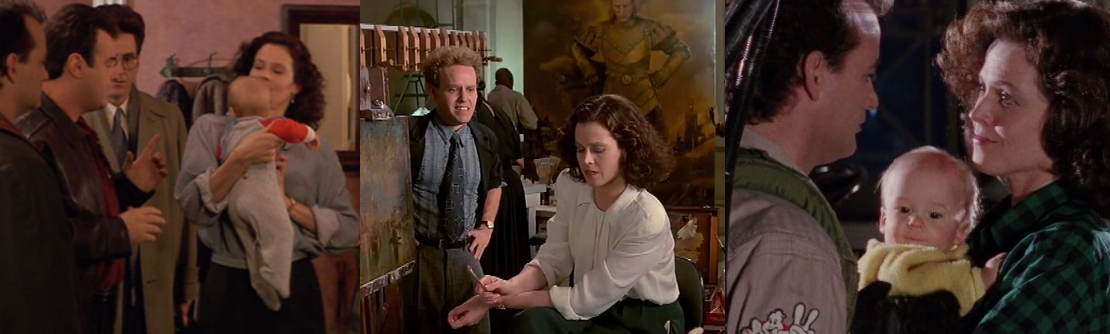
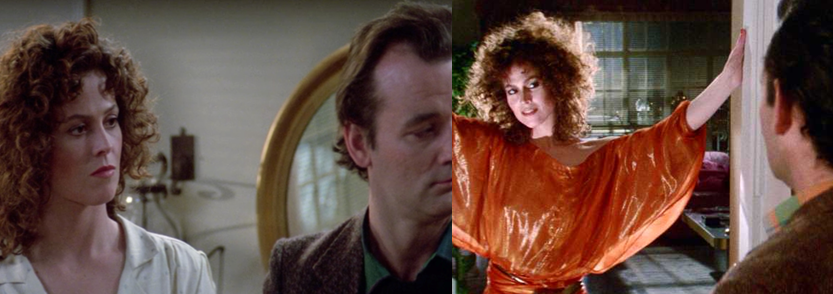
Since the last film, Dana Barrett (Weaver) has split up with Peter, birthed a son, Oscar (William T. and Hank J. Deutschendorf II), with her ex, and has moved away from the orchestra and into the art world. Cleaning paintings at a New York museum, Dana’s life is mired only by her quirky and overeager boss, Doctor Janosz Poha (played with glee by MacNicol), who, like Louis Tully (Moranis), harbours unrequited affections for her. When Oscar’s pram carriage suddenly becomes possessed and escapes from her in the street after she unknowingly rolls over a puddle of “mood slime”, Dana immediately turns to Egon for help and he and Ray investigate her apartment once again. Despite her attempts to keep Peter out of the loop, he forces himself into the investigation and the two reunite once more; despite them having split up over his childish antics, there’s still an attraction there and he laments that he missed the opportunity to be Oscar’s father, and the two eventually rekindle their romance as the film progresses.

A river of evil slime incites new paranormal activity and precedes Vigo’s return to power.

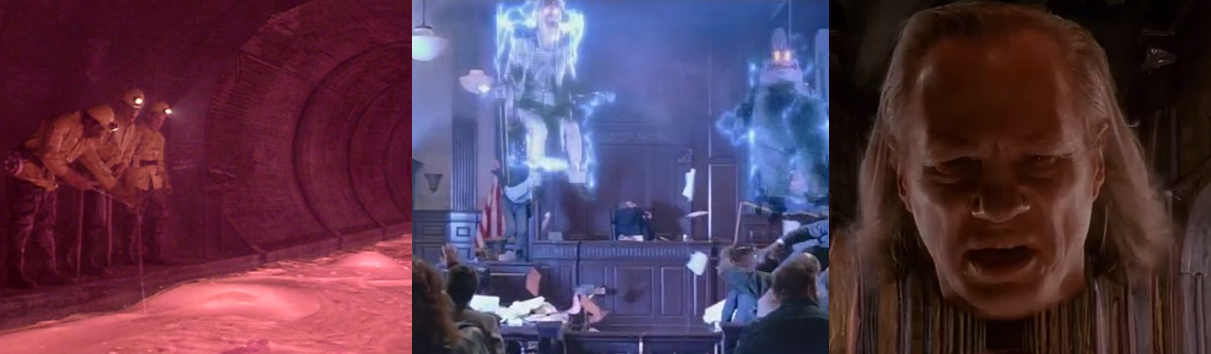
The investigation quickly leads to Egon, Ray, and Peter tearing up the section of the street where Oscar’s possession occurred under the amusing guise of Consolidated Edison (ConEd) workmen; this leads to them discovering that the abandoned Beach Pneumatic Transit system is literally flooded with writhing, pink mood slime that exhibits both paranormal and sentient behaviour. Since they were conducting paranormal investigations, the three are soon brought before a court and face prosecution for their actions (which caused a city-wide blackout); thankfully, however, the mood slime reacts violently to Judge Stephen Wexler’s (Harris Yulin) aggressive outburst and causes two ghosts to manifest in the courtroom and run riot, giving Wexler no choice but to rescind the mandate against the Ghostbusters and allow them to return to work. And just in time, too, as the build-up of the mood slime is no accident; it coincides with the awakening of the brutal and malevolent Vigo the Carpathian (von Homburg/von Sydow), a ruthless Carpathian dictator whose spirit is trapped in a painting in Janosz’s museum. Mustering all of his evil energy, Vigo desires to possess the body of a child in order to live again and easily manipulates Janosz into finding him a suitable host. In exchange for being with Dana, Janosz offers to bring the spirit Oscar so that the two of them can raise the would-be conqueror as their own, and the influx of mood slime causes a new wave of restless spirits to terrorise the city.

Returning characters and a fantastic balance of comedy and horror make for a worthy follow-up.

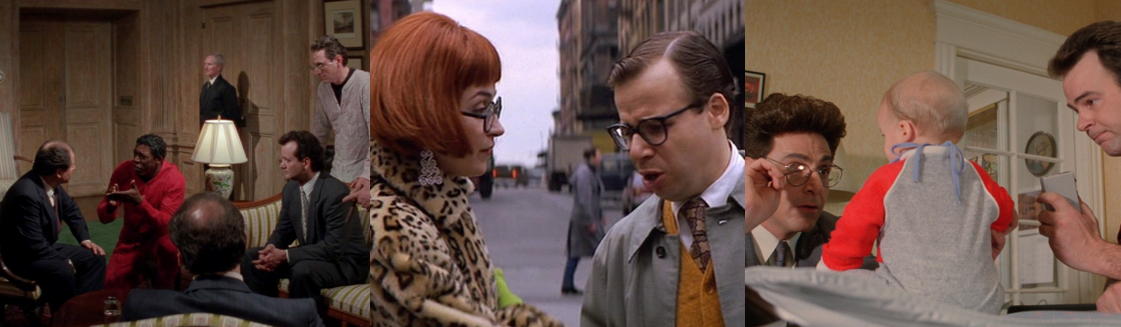
As if that wasn’t bad enough, Mayor Lenny Clotch’s (David Margulies) sleazeball assistant, Jack Hardemeyer (Kurt Fuller), dogs the Ghostbusters at every turn and ends up going behind the Mayor’s back to have them committed to keep them from threating Clotch’s election for Governor with their maniacal outbursts. Also returning from the first film are the aforementioned Luis and the Ghostbuster’s sharp-tongued receptionist, Janine Melnitz (Potts); while there were hints towards a romance between Janine and Egon in the first film, the focus shifts to the odd couple of Luis and Janine in the sequel and the two comically indulge their whims while babysitting for Dana when the Ghostbusters are briefly arrested. As in the first film, comedy is a large part of Ghostbusters II and is handled beautifully; the courtroom scene where Louis struggles though defending the Ghostbusters is a particular highlight and the Ghostbusters’ various pratfalls, childish antics, and witty retorts provide the same level of bickering entertainment as the first film. I’ve always had a lot of admiration for how these original Ghostbusters films handle the balance of romance, action, comedy, horror, and fantastical science-fiction and, for me, Ghostbusters II more than holds its own when compared to the first although I am still disappointed that the script doesn’t give Winston more to do (he literally disappears for big chunks of the film’s first act and, most notably, isn’t even with the other three when they dig up the street and end up in court).

The Nitty-Gritty:
Thirty-five minutes into the film, the Ghostbusters are legally allowed to return to action and the film noticeably picks up as the foursome return to chasing down and trapping ghosts all over the city. This sees the team wear new versions of their traditional boiler suits, adopt a new logo and produce more (if equally cringey) television advertisements, and even upgrade Ecto-1. I can understand the argument that the film might have been better off had it picked up here, with the Ghostbusters at the height of their popularity and ability, and the film kind of glosses over how the city coped with its supernatural occurrences without the Ghostbusters (who, I feel, have been proven to not be frauds by this point) but I never really minded the narrative structure of the film as it not only echoed the first one but also gave the characters something to overcome and showcased different sides to their personalities by showing us what they get up to when not busting ghosts.

Once the ghosts start popping up, all kinds of terrifying visuals hit the screen!

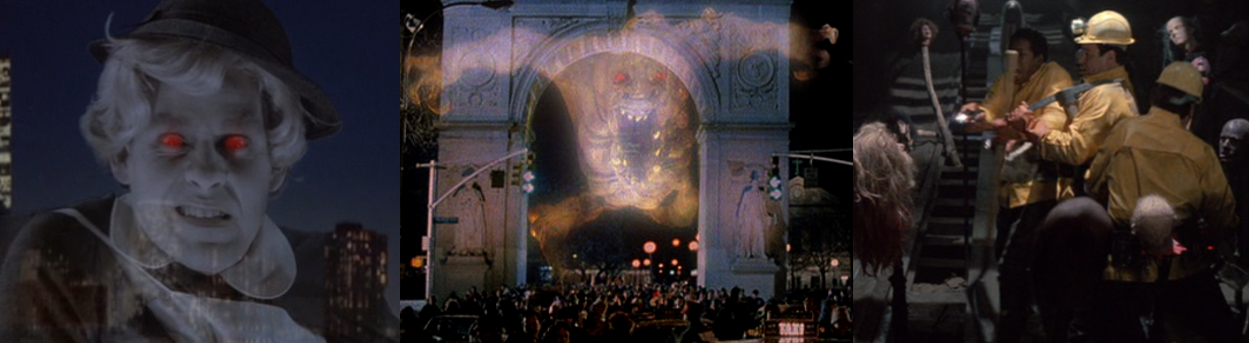
A central aspect of the movie is the mood slime; although ectoplasmic residue played only a minor role in the first film as a by-product of paranormal activity, here the slime is directly responsible for the resurgence in supernatural activity across the city. When Winston and Ray take an accidental dip in the slime, it immediately heightens their aggression and emotions and the two almost come to blows but, after investigating the substance, Egon discovers that the slime can be equally affected by positive emotions and finds a way to effectively weaponise it to their benefit. This becomes a prominent element of the film as the Ghostbusters must galvanise the positive feelings of the city to counteract the build-up of negative energy that threatens to bring about Vigo’s resurrection and gives them additional weapons to use alongside their traditional proton packs. Like the first movie, Ghostbusters II is bolstered by a number of truly frightening visuals; although the Terror Dogs are gone, Janosz’s glowing eyes in Dana’s hallway are pretty creepy, to say nothing of his ghastly ghostly form when he flies in to kidnap Oscar! Seriously, I remember that creeping me out so badly as a kid and, even now, it’s an uncomfortable scene that manages to be both chilling and amusing thanks to McNicol’s gloating expression. Oh, and did I mention the scene in the subway where a demonic voice calls to Winston and the guys are spooked by severed heads on pikes!? Absolutely crazy stuff that I was shocked to see and which work beautifully alongside the film’s new ghosts; once again rendered through traditional composite effects, animatronics, and practical filmmaking techniques; we get such apparitions as a ghostly jogger, a massive beast under the Washington Square Arch, a monstrous bathtub, a living fur coat, a brief cameo from Slimer, and even the Titanic showing up in the middle of the city!

The finale sees the Ghostbusters bring Lady Liberty to life to confront Vigo!

This all culminates the film’s finale where, rather than having to fend off a gigantic apparition, the Ghostbusters use their positively-charged mood slime and a modified Nintendo Entertainment System Advantage control stick to take control of Lady Liberty! I’ve seen people complain about how the film doesn’t feature the Stay Puft Marshmallow Man but, honestly, that wouldn’t make any sense at all and by no means diminishes the impact of seeing the Statue of Liberty come to life and casually stroll through New York City. In many ways, the finale is actually better than the original since, rather than simply standing around and crossing the streams to win the day, the Ghostbusters have to rappel down into the museum to confront Vigo and Janosz and even have to content with a possessed version of Ray when Vigo briefly takes control of his body after his resurrection is interrupted. This time around, in order to save the city (and the entire world) from falling under Vigo’s influence, the Ghostbusters need more than just their proton packs; they need the combined goodwill of the city and a hefty hosing of their positive-charged mood slime in order to force Vigo back into his painting, end his threat, and presumably fully repair their reputation.

The Summary:
Now, look…I get it. Ghostbusters II isn’t as good as the first film; honestly, Ghostbusters set a high bar that would be difficult for any sequel to reach but, for my money, Ghostbusters II does a really good job of continuing the story from the first film. While many of the story beats are similar, the film adds plenty of fun, scary new stuff to make it well worth your while, especially for fans of the first movie. Thanks to the immortal Max von Sydow’s booming tones, Vigo makes for a compelling and intimidating villain and the addition of the mood slime allows for some gruesome and comedic scenes. All of the characters are just as likeable and entertaining as in the first film, and even fleshed out a little more (sadly, with the exception of Winston…) by seeing their interests outside of work, and the balance of horror and comedy continues to be handled masterfully. I can understand why many were left disappointed by the film, to a degree, but I’ve always had a soft spot for Ghostbusters II and think it makes for a great companion piece to the first film; watch them both back-to-back and you have one pretty consistent and enjoyable story. I’ll always step up to defend this film when I see people talking shit about it because it’s a fun little romp that deserves more attention, and has a great message of positivity that we could all stand to learn from.

My Rating:

Rating: 4 out of 5.

Great Stuff

Are you a fan of Ghostbusters II? Do you think it deserves the negativity it often gets? What did you think to the five year time jump and the plot of the Ghostbusters being barred from working? Were you a fan of Vigo and Janosz and what did you think to the overall plot? Which of the film’s ghosts and scares were your favourite? Perhaps you grew up with the cartoon and action figures; if so, what memories do you have of them? How are you celebrating Ghostbusters Day today? Whatever your thoughts and memories of Ghostbusters, drop a comment down below.

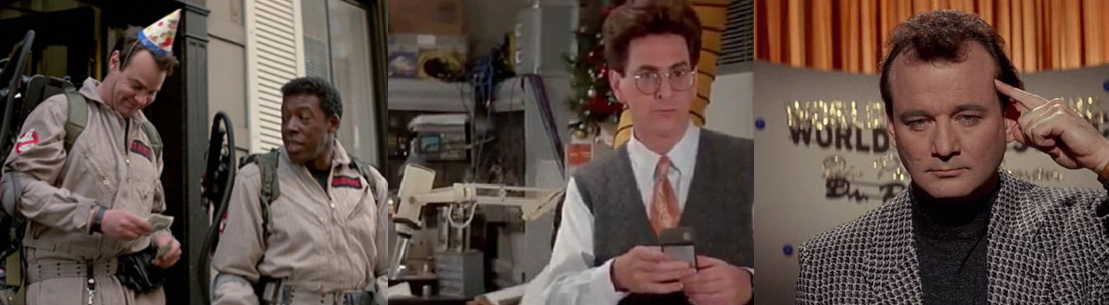
Movie Night [Ghostbusters Day]: Ghostbusters (1984)


Throw on your proton pack and get ready to bust some ghosts because June 8th is, officially, “Ghostbusters Day”! Ghostbusters (Reitman, 1984) was first released on this day back in 1984 and, since then, has become a major pop culture franchise that includes comic books, a popular cartoon and line of action figures, and videogames and it is, easily, one of my favourite films and franchises from that era.


Released: 8 June 1984
Director: Ivan Reitman
Distributor: Columbia Pictures
Budget: $25 to 30 million
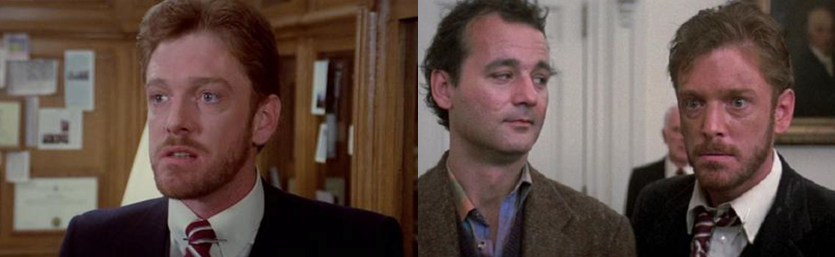
Stars: Dan Aykroyd, Bill Murray, Harold Ramis, Ernie Hudson, Sigourney Weaver, Rick Moranis, Annie Potts, and William Atherton

The Plot:
After being fired from Columbia University, four bungling scientists put their research into the paranormal to use as supernatural exterminators of ghosts and ghouls across New York City. However, while a government official attempts to prove them frauds and shut them down, they soon discover that an ancient God of Destruction is gearing up to wreck havoc across the city…and the world!

The Background:
Ghostbusters was the brainchild of actor Dan Aykroyd, who originally wrote the script (which also went through a number of slightly different titles) as a vehicle for himself, Eddie Murphy, and close friend John Belushi before the latter’s untimely passing. After Aykroyd settled on Ivan Reitman as the director, Reitman brought Harold Ramis onboard to star and rework the script into something they could realistically film, with the group casting Bill Murray soon after and specifically tailoring the script to the three actors’ strengths, characteristics, and ironing out the special effects sequences. Despite concerns from Reitman regarding the film’s ridiculous finale, Ghostbusters tracked well with test audiences and, upon release, finished as the number one movie for the weekend and made nearly $230 million by the end of its release, an incredible achievement considering the comparatively minuscule budget. A subsequent re-release in 1985 saw the worldwide gross hit nearly $240 million and established Ghostbusters as the most successful comedy of the 1980s. Reviews were, accordingly, extremely positive, with the film winning many awards and launching a multimedia enterprise that included an under-rated sequel, a cartoon, loads of toys, and later film projects.

The Review:
Ghostbusters is a brisk, well-paced horror/comedy that immediately establishes its semi-realistic world right from the beginning before introducing us to our three main characters. The first of the Ghostbusters we meet is Doctor Peter Venkman (Murray), a lackadaisical scientist to say the least who uses his research as an excuse to get out of doing any real work and to try and impress women. He’s the sarcastic, cynical, loud-mouthed member of the team and, as Dana Barratt (Weaver) points out, is more of a con man than an actual scientist. At the same time, though, he’s the most socially conscious and capable of his fellow scientists, being much more street smart and handling a lot of the Ghostbusters’ press and advertising. Of course, you can make the case that Venkman is little more than a womanising, egotistic prick; a creep who literally chases every pretty face he sees and who has, despite his many legitimate degrees, literally no idea of what he’s doing or how to work his equipment. He is, as his former dean states, “A poor scientist” and, as Dana astutely observes, more like a gameshow host than a paranormal expert. Still, despite my dislike for Murray and his attitude towards the franchise after the sequel, it’s hard to deny that Venkman is the breakout character of the group thanks to his greedy, outspoken, snarky personality; where the other Ghostbusters maintain a degree of professionalism and awkwardness, Venkman is loud, arrogant, and ballsy and the most candid of the group.

The Ghostbusters are goofy and making it up as they go along but rarely portrayed as incompetent.

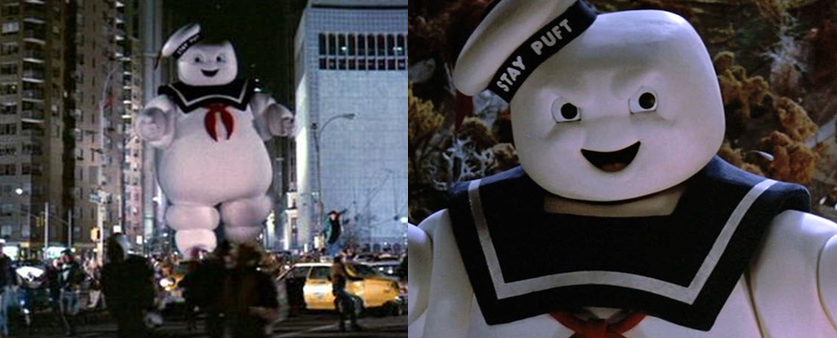
Doctor Ray Stanz (Akyroyd), meanwhile, is the overly enthusiastic heart of the group; without Ray, there would be no Ghostbusters since he’s the one who really drives their research and cause forward. Ray, however, is quite naïve and easily distracted by his passion for the paranormal; he is crushed when they are kicked out of the university but extremely excited to be putting their research into practise as the Ghostbusters and remains, despite the often dire nature of their situation, the general optimist. It is fitting, then, that since Ray is the heart of the Ghostbusters, it’s Ray who ultimately (accidentally) causes the Ghostbusters to face their ultimate threat as he’s unable to clear his mind when they’re forced to “choose the form of the Destructor”. Even knowing this, Ray attempts to think of the most harmless thing possible, a cherished memory from his childhood, and instead causes a hundred-foot-tall marshmallow man to rampage through downtown New York. Doctor Egon Spengler (Ramis), meanwhile, is the pragmatist of the three; he’s the most clearly intellectual and rational of the Ghostbusters, rarely letting his emotions rule him, but he’s not just a mere stick in the mud. He is as excited as Ray about the presence of ghosts and the potential their organisation has and has many more subtle moments where he really shines, such as his love for Twinkies, snappy one-liners (“I looked at the trap, Ray!” and his cry of “Your mother!” always gets a chuckle out me me), and his sly indications to Venkman to up the charge for their services to the Sedgewick Hotel’s manager.

Dana expertly rebukes Peter and Louis’s advances but appears to be a conduit for the supernatural.

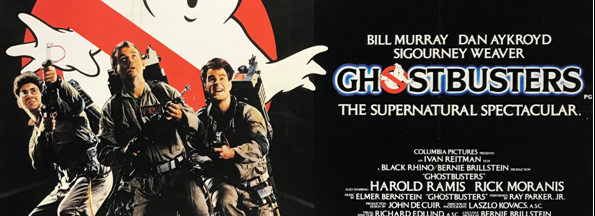
The Ghostbusters are (eventually) rounded out by Winston Zeddemore (Hudson); if you forgot about Winston, I wouldn’t blame you since Hudson’s name and image is missing from practically all of the film’s promotional materials and that’s a real shame since he’s my second favourite character after Ray. Winston isn’t a scientist; he’s just a normal, everyday working man who joins the team when they expand their operation and, through him, we get a relatable character who voices many of the concerns and questions we may have with an entertaining bluntness. Winston also brings  a unique perspective to the group by being a religious man; he approaches their work not from a scientific perspective but as that of a man exorcising awakened spirits yet, when faced with claims of the Ghostbusters’ legitimacy, passionately advocates for the reality of their work with one of my favourite lines in the film: “I have seen shit that will turn you white!” A prominent sub-plot in the film revolves around Dana, her encounters with Zuul’s minions, and Venkman’s subsequent attempts to flirt and impress her. Dana is a refreshingly strong and candid character; she doesn’t really believe in the supernatural, but the experience rattles her, forcing her to turn to the Ghostbusters, and she puts up with absolutely none of Venkman’s shit. She’s strong and independent, easily able to deter unwanted advances from the likes of Venkman and Louis Tulley (Moranis), and only ends up needing to be rescued because she gets possessed and, even then, this transforms her more into a secondary antagonist than a damsel in distress. Despite what is initially a purely superficial attraction to her, Venkman comes to respect Dana and more seriously, honestly pursue her; when he finds her possessed by the “Zuul, the Gatekeeper”, he sets aside his normally cavalier personality to subdue her and seems genuinely concerned for her wellbeing.

Peck is an insufferable thorn in the Ghostbusters’ side but was riled up by Peter’s attitude.

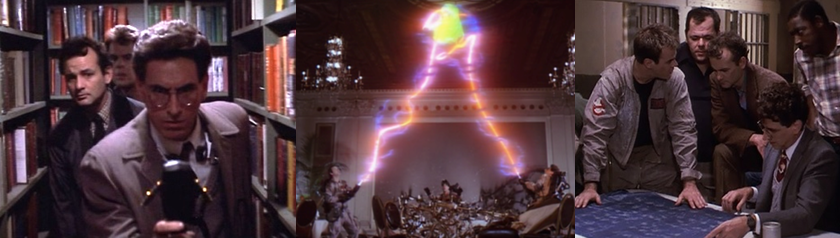
Despite dealing with an increasing number of ghosts and ghouls, the Ghostbusters also face the most dangerous threat of all: governmental red tape in the form of Walter Peck (Atherton), a representative of the Environmental Protection Agency. Peck is deeply sceptical of the Ghostbusters and their operation, believing them to be frauds and con artists but, to be fair, he only becomes an unbearable antagonistic character after Venkman gives him the run-around; had Venkman simply co-operated, things might have gone down a lot different and less disastrously. Still, it’s from Venkman’s rudeness that we see, arguably, Peck’s true nature as a slimy, rotten, manipulative little git who uses every resource at his disposal to shut down the Ghostbusters no matter what the consequences are despite the fact that he really doesn’t know anything about the Ghostbusters’ operation or equipment. One of the main appealing aspects of Ghostbusters is the goofy humour; while this is largely embodied by the three main cast members, it is Louis who fills the primary role of comic relief thanks to his clumsy, ungainly personality. Mostly an annoyance to Dana, Louis is a perpetual loser who throws parties for his clients rather than friends and is like a hyperactive dog who doesn’t know when to quit and Moranis really brings a quirky hilarity to the character when Louis is possessed by “Vince Glortho, Keymaster of Gozer” and begins running around the city spouting nonsense and talking to horses. Similarly, Ray, Egon, and Peter sneaking around in the library bantering back and forth is highly entertaining, as is their panicked fleeing when the Librarian Ghost attacks them. It’s not all goofball humour, though; much of the comedy comes from simple line delivery, particularly from Venkman and Janine Melnitz (Potts) thanks to their dry delivery and snarky ab-libs. The cast all gel so well together that it’s easy to believe that they are long-term friends and colleagues who are more like a dysfunctional family; they’re bungling fools at times, often making stuff up as they go along and playing it by ear, but they’re not incompetent fools and there’s a difference. Like, for example, they might not have had a successful live field test of their unlicensed nuclear accelerators and are, in all likelihood, operating an extremely volatile operation in the middle of the city, but they’re still smart and capable enough to construct all of their equipment, to say nothing of fixing up the fire station and the frankly scrap-worthy hearse Ray secures as their vehicle.

The Nitty-Gritty:
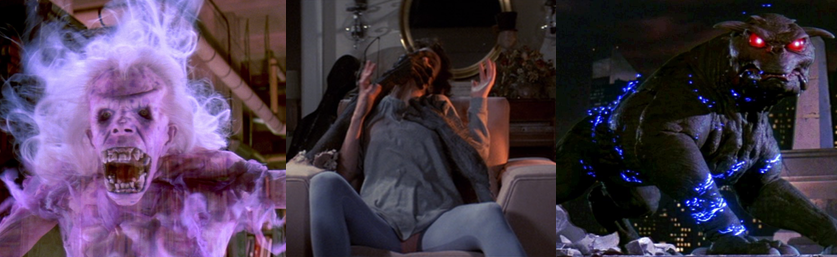
Ghostbusters immediately establishes its world with an effective opening sequence that shows that, yes, ghosts are real and they are infrequently haunting buildings throughout New York City. One thing that is, seemingly, often forgotten about Ghostbusters is the truly creepy and terrifying elements of the film amidst its humour and the Librarian Ghost is our first exposure to that but this is only escalated later in the film with more monstrous ghosts and creature designs. Ghostbusters has a fantastic, timeless quality to it thanks to its masterful use of practical effects and traditional special effects work; ghosts are all unique and increasingly gruesome, being semi-transparent and slightly cartoony in their appearance but it works because they’re meant to be otherworldly spirits of a somewhat horrific nature. Similarly, the Ghostbuster’s equipment all looks suitably cobbled together and their proton streams are given an ethereal tangibility thanks to a combination of special and practical effects (sparks fly from the proton wand and explosions and scorch marks are left behind by the proton stream).

For a comedy film, Ghostbusters has a lot of terrifying moments and effects.

The score really helps towards emphasising the film’s more terrifying moments, most of them revolving around Dana, such as when eggs spontaneously begin to fry on her kitchen counter, her apartment is drenched in ectoplasm, and her various encounters with the Terror Dogs (with her abduction being particularly horrific). These monstrous Hellhounds are truly horrifying and are brought to life through a combination of (admittedly terrible) stop motion effects and practical animatronics. When a practical effect, the Terror Dogs are disturbingly scary, dripping with saliva and menace and help to place Ghostbusters as one of many films of the time to really push the boundaries of the PG rating.

The Stay-Puft Marshmallow Man makes for a ridiculously amusing finale.

Of course, the film’s most impressive effect is the absolutely ridiculous Stay-Puft Marshmallow Man. Up until the Stay-Puft’s appearance, the film plays its humour and concept mostly straight and realistic, but the Stay-Puft Marshmallow Man flips that entirely on its head. It’s a hilarious sequence where the intended and much-feared “Destructor” is forced into the most absurd form possible and, as Mr. Stay-Puft stomps through the middle of New York City as only suits, camera trickery, and miniatures can deliver, it’s both comical and alarming to think that the end of human life could come from such a cute, ludicrous being.   

The Summary:
I grew up watching Ghostbusters; it was one of the quintessential movies of my childhood that helped shape my love for cinema and big, special effects sci-fi/horror productions. As such, I have a great deal of fondness, nostalgia, and respect for the film but, even with all that aside, Ghostbusters is an effortlessly entertaining piece of cinema that, honestly, has everything you could want from a film. It’s funny, scary, enjoyable, charming, and appealing on so many levels, with some amazing old school special effects, great cinematography, and a fun and varied soundtrack, with the film becoming instantly iconic for Ray Parker Jr’s award-winning theme song alone. What I love the most about Ghostbusters, despite the great effects and unique premise, is how naturally organic all of the humour is; the leads have a realistic and appealing banter with each other that makes them instantly likeable and they bicker and trade snarky barbs like old friends. Even better is the fact that, unlike the much-maligned 2016 reboot, almost none, if any, of the humour is gender-based; the only character who’s slightly deplorable is Venkman and neither the film, nor its humour, is geared towards one gender over another. Instead, the humour is largely simple banter that can be enjoyed by anyone and everyone rather than always taking the lowest possible route and relying on crude toilet humour and gender-based insults. If anything, Ghostbusters is more an amusing commentary on politics and governmental bodies and even those aspects aren’t so explicit that they take over the film, making it a fun comedy/horror that appeals to everyone and remains highly recommended.

My Rating:

Rating: 5 out of 5.

Fantastic

What are your thoughts on Ghostbusters? Were you a fan of the film back in the day? Which of the four Ghostbusters was/is your favourite? What did you think to the Stay-Puft Marshmallow Man and the film’s premise? Perhaps you grew up with the cartoon and action figures; if so, what memories do you have of them? How are you celebrating Ghostbusters Day today? Whatever your thoughts and memories of Ghostbusters, drop a comment down below.