

Released: 4 November 1994
Director: Kenneth Branagh
Distributor: TriStar Pictures / Sony Pictures Releasing
Budget: $45 million
Stars: Kenneth Branagh, Robert De Niro, Helena Bonham Carter, Aidan Quinn, and Ian Holm
The Plot:
Obsessed with preventing death, eccentric scientist Victor Frankenstein (Branagh) patches together a monstrous being (De Niro), who embarks on malicious crusade when its creator rejects it.
The Background:
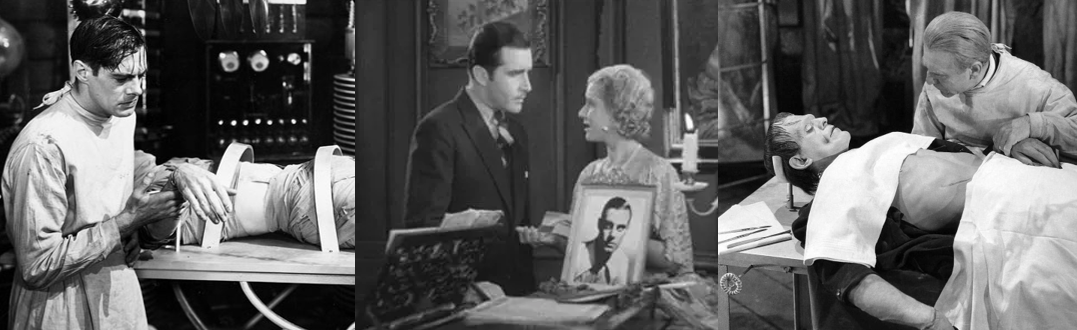
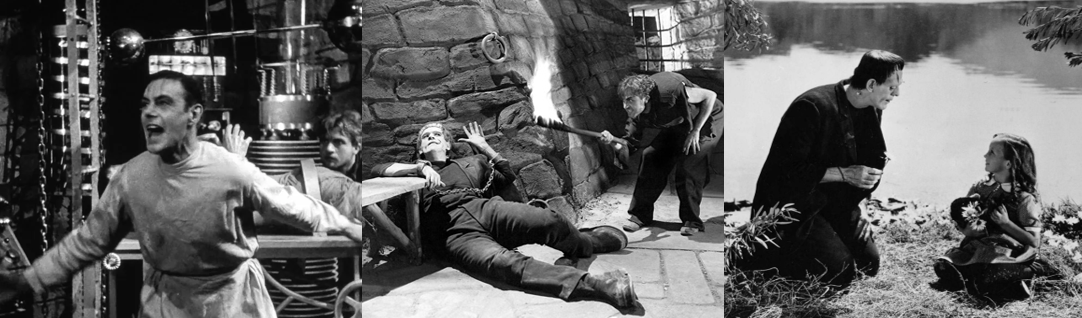
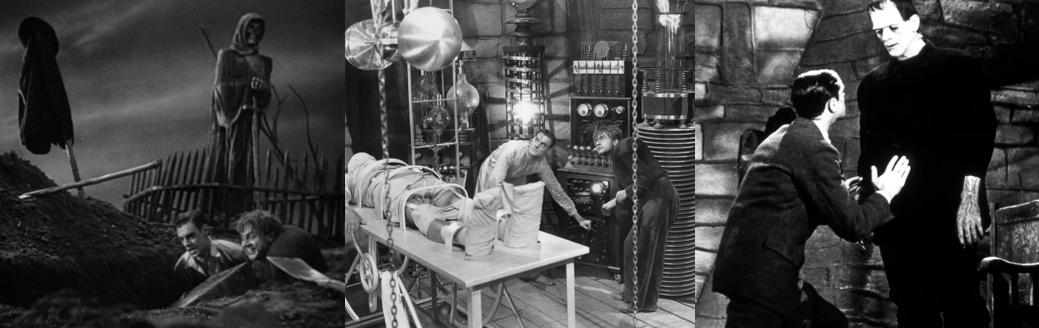
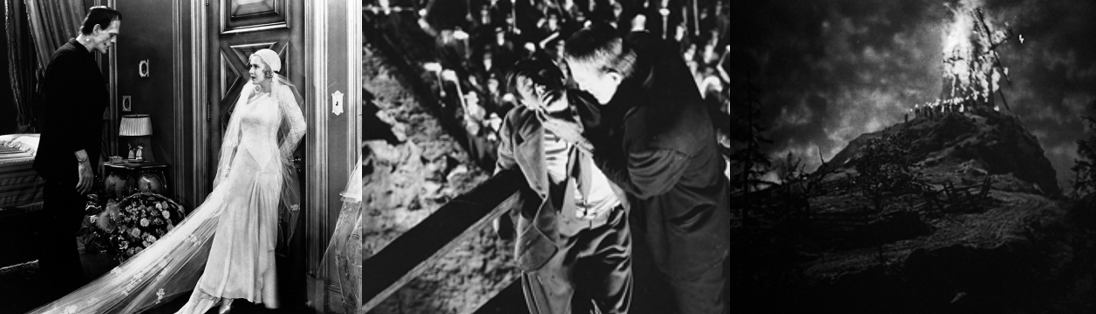
In a bid to tell a story that spoke to “the mysterious fears of our nature” while snowed in in Geneva, eighteen year old Mary Shelley dreamed up Frankenstein; or, The Modern Prometheus in 1818, attracting much controversy for its blasphemous content and producing a celebrated piece of literary fiction. Following a short silent film in 1910, Frankenstein saw considerable success on the stage and silver screen thanks to James Whales’ 1931 horror classic and Boris Karloff’s iconic performance. Following numerous additional reinterpretations, and the incredible critical and commercial success of Bram Stoker’s Dracula (Coppola, 1992), director Francis Ford Coppola wanted to helm a more faithful adaptation of the book before moving into a producer role. Coppola’s first mandate was that Robert De Niro be cast as the tragic creature and that Kenneth Branagh should direct. Next, Frank Darabont was drafted to rewrite Steph Lady’s initial script, though he later lamented that Branagh had heavily altered his vision for the film. Alongside a far more fantastical depiction of the Monster’s reanimation, Mary Shelley’s Frankenstein presented a dramatically different version of the creature, one far closer to Shelley’s text than other adaptations. With a box office of $112 million, Mary Shelley’s Frankenstein was a modest financial success met with mostly mixed reviews that criticised the manic pace and surprisingly bland execution, while praising De Niro’s heart wrenching performance and the intriguing exploration of Victor’s haunting obsessions.
The Review:
Mary Shelley’s Frankenstein immediately gets off on the right food by establishing a framing narrative the echoes the original text, beginning by following Captain Robert Walton as he leads his crew in a desperate bid to find a path through the ice to the North Pole. Unfortunately, the journey is so perilous and difficult that his crew are close to breaking point. Even when the ship gets trapped in ice, Captain Walton refuses to turn back, having spent his entire fortune funding the trip and being driven by an obsession with etching his name in history, no matter the cost. As the crew frantically try to free the ship and entertain thoughts of mutiny, they’re startled by an inhuman howl and amazed when a dishevelled cloaked figure appears from the storm, babbling about some “thing” out on the ice. Captain Walton takes the exhausted stranger in and cares for him, curious about what’s waiting in the frigid wasteland, only to be introduced to the manic, wild-eyed rantings of Victor Frankenstein, who begs Captain Walton to give up his crusade due to the danger of the mysterious thing pursuing him. When Captain Walton refuses, scoffing and enraged at the idea of being denied his destiny, Frankenstein is distraught to see the stubborn captain shares his madness and, in a bid to convince him to turn back before he destroys himself and his crew, tells Captain Walton his life story. This is related through the remainder of the film, with some correspondence between Frankenstein and his adopted sister, Elizabeth (Carter), and excerpts from Frankenstein’s journal mirroring the epistolary nature of the novel, and being bookended by Captain Walton’s reaction to Frankenstein’s crazed story of scientific obsession turned to destruction.
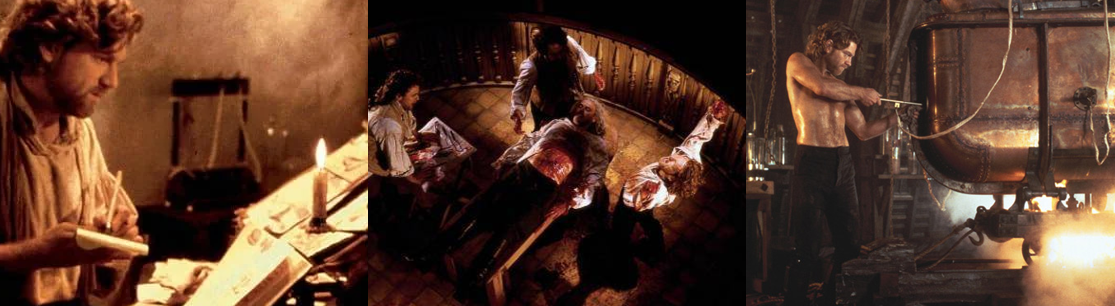
Frankenstein met Elizabeth when they were children (Rory Jennings and Hannah Taylor-Gordon) and spent his whole life caring for her as though she were his own, as instructed by his beloved mother, Caroline (Cherie Lunghi), and expert surgeon father, Baron Alphonse Frankenstein (Holm). Even from an early age, Frankenstein hungered for knowledge and conducted many eccentric experiments using ancient tomes, mostly concerning the transfer and nature of energy, to the amazement of his family. Unfortunately, Frankenstein’s youth was marred by tragedy as his mother died giving birth to his younger brother, William/Willie (Charles Wyn-Davies/Ryan Smith), an event that traumatised Frankenstein and began his obsession with defeating death. Upon arriving at the University of Ingolstadt to follow in his father’s footsteps, Frankenstein immediately gains notoriety for studying and championing unconventional texts and authors long considered heretics or sorcerers, angering his more rational and scientifically minded tutors, who believe their focus should be on saving lives using the scientific method. Obstinate and arrogant, Frankenstein secretly continues his experiments alongside his enthusiastic (if medically conventional) friend Henry Clerval (Tom Hulce), but his outbursts attract the curiosity of Professor Waldman (John Cleese), who touted similar beliefs in the past and was tarnished because of it. Frequent discussions and experiments with Professor Waldman further Frankenstein’s obsession with preventing or reversing death, discovering that the applying electricity to key areas of the body can reanimate corpses, though even Professor Walden refuses to share his notes and divulge how close he came before giving up his crusade. Frankenstein, however, is undeterred and only redoubles his efforts after his mentor is senselessly murdered trying to prevent an outbreak of cholera. Despite Clerval’s objections, Frankenstein studies Professor Walden’s notes and arrogantly believes he can succeed where his mentor failed by acquiring the right “raw materials” for his “reanimate”, locking himself in his attic laboratory and ignoring his friends and loved ones as he works himself to exhaustion stitching together a monstrosity that he believes will be both smarter, stronger, and superior to man.
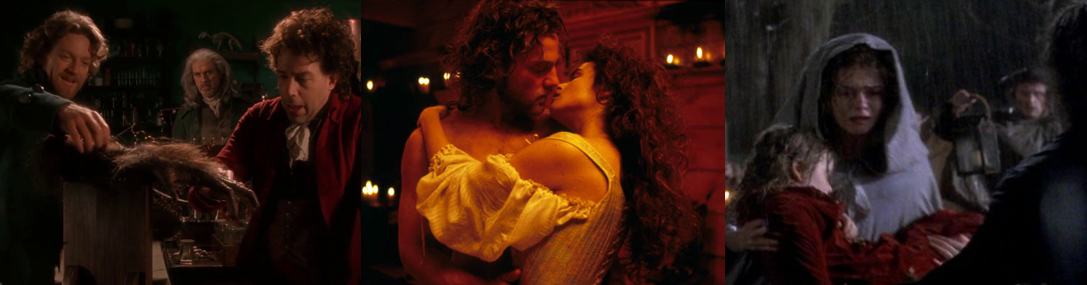
Frankenstein’s fixation on overcoming death sees him become a recluse; he locks Clerval out and stops writing letters to his family and Elizabeth, who’s particularly distraught as the two became so close over the years that they couldn’t deny their feelings and vowed to be married once Frankenstein finished his studies. While it is admittedly quite disturbing to see these “siblings” suddenly lustful for each other, no one bats an eyelid at their romance because it’s been obvious to everyone, especially nursemaid Justine Moritz (Trevyn McDowell), who’s been in love when Frankenstein since they were children, that that two have always cared deeply for one another, Elizabeth is besotted by Frankenstein, eagerly anticipating consummating their relationship on their wedding night and desiring to bring new life to their family home through their children. Encouraged by Justine, Elizabeth travels to Ingolstadt to be with her lover, concerned for his welfare, only to find him a physical and emotional wreck living in squalor. Erratic and fixated on his work, Frankenstein shuns Elizabeth and sends her away, breaking her heart. However, when he’s discovered in a feverish stupor by Clerval, Frankenstein is nursed back to health by his friend and his love, reconciling with Elizabeth and suddenly vowing to give up his bizarre and secretive experiments. Frankenstein returns to his family home in Geneva, ready to commit himself to medical science alongside Clerval, and joyously announcing his engagement to his father, who celebrates the union as a blessed event. However, Frankenstein remains tight-lipped about his dark days isolated in his lab and refuses to speak of what transpired there, taking solace in his newfound happiness. Elizabeth and Alphonse are left devastated when Frankenstein’s past comes back to haunt him, however, as poor little Willie is brutally murdered on the family grounds and poor Justine is unfairly and unlawful lynched as the primary suspect, thrown off the prison roof and hanged by the bloodthirsty local despite the true culprit being a hideous creature of Frankenstein’s own making.
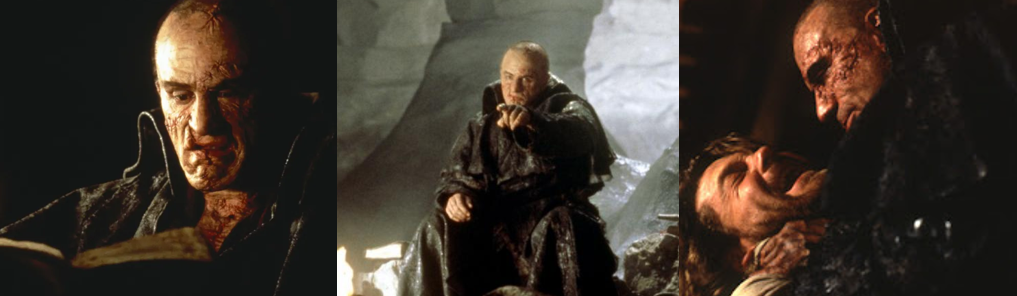
Following Professor Walden’s notes, Frankenstein cobbles together a brutish patchwork creature from bits and pieces of others, including the man who killed his mentor and Professor Walden’s brain. Using a bizarre contraption filled with amniotic fluid and powered by electric eels, Frankenstein maniacally sees his experiment through and is initially overjoyed when his creature comes to life. However, he immediately regrets his actions, echoing Professor Walden’s own conclusions, when the Monster appears ungainly, deformed, and brain damaged. Believing the creature to be dead, a remorseful Frankenstein forgets the entire thing, unaware that his creature stumbled through Ingolstadt in a daze before being driven to the countryside by paranoid locals who, upon seeing the monstrous visage, assumed it was the cause of the cholera outbreak. While in the woods, the Monster shelters in the barn of a kindly family of farmers, who are struggling to survive due to the bitter winter cold. Touched by their kindness towards each other and their plight, the creature secretly helps harvest their crops and learns (or, as it later says, remembers) how to read and write by observing them. When the creature defends the family’s blind grandfather (Richard Briers), it’s welcomed by the grateful old man, who shows compassion, only for the rest of the family to misread the situation and drive the Monster away before fleeing. Learning of its origins from Frankenstein’s journal, the enraged creature hunts down its creator and confronts him on “the sea of ice”, desperate to learn the purpose of its existence. Though a deeply sympathetic and pitiable creature, it’s hard to feel too bad for Frankenstein’s being when it delights in detailing how it crushed the life from Willie and set Justine up for her execution. It vows to indulge its insatiable rage if Frankenstein refuses to build it a mate, promising to disappear from the world if it has a companion to ease its suffering, and is presented as the personification of Frankenstein’s folly.
The Nitty-Gritty:
It’s been a while since I read the book, but Mary Shelley’s Frankenstein is certainly the most accurate adaptation of the text I’ve ever seen. It has the framing narrative, showcases his family life, details his studies, and presents the Monster as being intelligent and articulate, all things largely ignored in the 1931 version. Frankenstein has always been a favourite of mine, largely because of this movie, which I believe was my first exposure to the story. It’s amusing to watch in some ways, however, since Frankenstein’s rantings about hair and fingernails regrowing after death have long been proven to have nothing to do with the body still being alive. Similarly, his experiments with electricity are shown to literally reanimate a frog when we know that any convulsions and movements are due to the electrical current. Frankenstein does touch upon some valid aspects of medicine in his rantings, however, like organ transfers, very much making him ahead of his time (and thus a heretic to the God-fearing scientific community). I’ve always found it odd, though, that Frankenstein stitches together his creation. Professor Walden’s notes state that the right “raw materials” may result in success, though it’s not clear what makes any of the body parts Frankenstein gets more “right” than others except when he harvests “the very finest brain” from his mentor. It seems like it’d be much easier to simply zap Professor Walden’s body to bring him back but, instead, Frankenstein cobbles together a creature he feels will be the perfect lifeform, only to be disgusted and ashamed of his feeble creation once he realises he’s made a massive mistake. I really enjoyed that we got to see the Monster learning from the family and the exploration of how its mind works. Many of its memories and abilities are presented as “trace memories”, as though each body part remembers something different from its previous life and the creature can use that knowledge to learnt to speak and play the flute while also being a completely unique personality, one driven by incredible love and equally powerful rage.
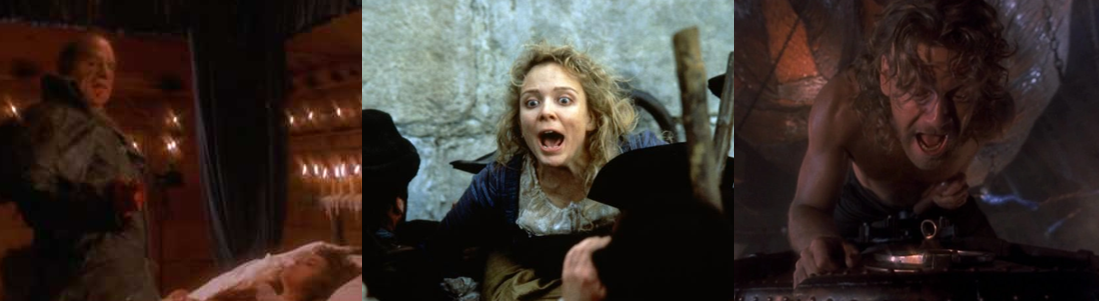
It’s astounding to me that Robert De Niro, of all people, was cast as the creature but he does an excellent job depicting the Monster’s confusion, anguish, and hatred. Initially a mindless, wailing creature acting on instinct, the Monster comes to realise it is a living thing (in a sense) and has been abandoned by its creator. Its conversation with Frankenstein echoes the bitter resentment a man may have towards God and Frankenstein’s blunt, clinical answers about the creature’s purpose and origin speak to the disappointment one might feel upon asking God, “Why am I here?” Rather than being a bulky, block-headed giant lumbering about with bolts through it sneck, the Monster is a patchwork of skin and body parts, with De Niro’s eyes conveying the bulk of the emotion as the impressive make-up distorts his features. Instead of channelling a lightning bolt into his creation, Frankenstein constructs an elaborate and frankly ridiculous contraption that uses special chemicals, electrodes, and electric eels in an unsettlingly sexualised sack to birth his creature, somewhat overcomplicating the process but providing some unique visuals, if nothing else. The creature is depicted as being incredibly unstable, boasting superhuman strength and agility and seemingly impervious to the cold, and flip-flopping between loving and gentle and abhorrently brutal as it relishes killing Willie and tormenting Frankenstein. Mary Shelley’s Frankenstein gets very gory, with death, especially, depicted as a messy and traumatising affair. Caroline and Professor Walden’s deaths are particularly gruesome, leaving the Frankenstein’s covered in blood, and Justine’s is notably harrowing given the senselessness of it all. Things come to a head when the Monster, enraged when Frankenstein breaks his vow, makes good on its promise and brutally murders Elizabeth on their wedding night, ripping out her heart and mangling her corpse with glass and fire. It’s no wonder that Frankenstein is so obsessed with defeating death considering these experiences, but his obsession is tainted by arrogance and a God complex that makes him foolhardy and stubborn, refusing to entertain any notions contrary to his or apply his admittedly keen mind towards perfecting surgeries and medicines to achieve his goal.
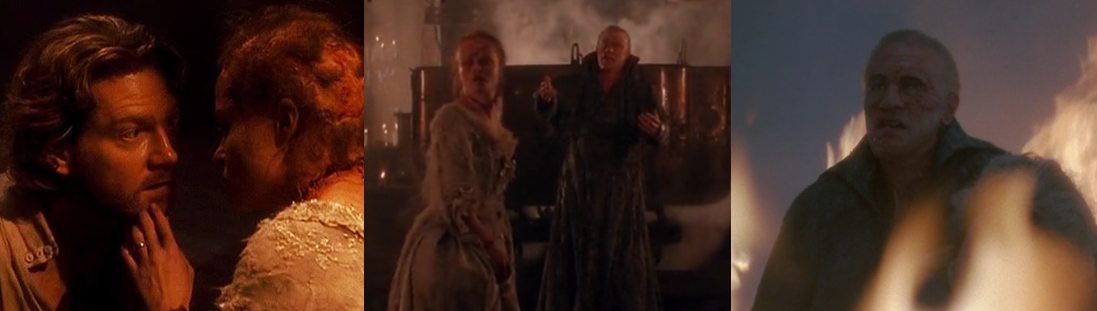
Although Frankenstein reluctantly agrees to create a mate for the Monster, desperate to atone for his mistakes and to give his creation some peace, he backs out on the deal when the experiment again alienates him from Elizabeth. Marshalling his family guards, Frankenstein abandons his work to marry Elizabeth, only to be devastated and horrified when the Monster tears out her heart in recompense. With his lover dead and his father dying of a broken heart following Willie’s murder, a grieving Frankenstein shuns Clerval’s objections and frantically stitches Elizabeth’s disfigured head to Justine’s corpse and recreates his experiment, desperate to be reunited with his love and lost to his insane obsession once more. Even when the confused, clearly disfigured and inept Elizabeth returns to life, Frankenstein refuses to realise what he’s done, begging her to say his name, slipping on her wedding gown and ring, and dancing with her with manic joy even as she flops around like a lifeless puppet. Frankenstein’s bliss is shattered when the Monster appears and claims Elizabeth for itself, her being drawn to the monstrous being on some primal instinct. While Frankenstein is elated when she finally chokes out his name, Elizabeth is horrified when she catches sight of her mangled reflection and incensed when the two fight over her, eventually choosing to immolate herself, taking Frankenstein’s home with her. Returning to Captain Walden, we learn that Frankenstein pursued his creature for months, always being drawn north, intent on killing the beast. However, Frankenstein succumbs to pneumonia and dies, much to the despair of his creation, who weeps for its “father”. Taking pity on the Monster, Captain Walden organises a funeral, only for the ice to crack and the Monster to choose to die alongside his father rather than return to the world of man. Finally, after seeing how destructive obsession can be and touched by Frankenstein’s story, Captain Walden agrees to abandon his crusade before he’s destroyed in the same way.

The Summary:
I’ve always had a soft spot for Mary Shelley’s Frankenstein as it was my introduction to the story and sparked a lifelong fondness for the text, its stirring themes, and its complex, monstrous creature. However, it’s not a film I watch all that often as it is quite long and it does have some flaws. While Kenneth Branagh did an excellent job conveying Frankenstein’s obsession and mania, I think it was quite self-indulgent to cast himself in the movie. I’m not always convinced by Helena Bonham Carter or her relationship with Frankenstein, which is a bit questionable in this day and age, and the film overly complicates iconic moments like the construction and birth of the Monster, seemingly to be more grounded and realistic despite how fantastical the story is. Robert De Niro did a surprisingly great job as the Monster, however. I never would’ve pegged him for a role like this, but he showcases an unexpected emotional depth that perfectly captures the creature’s intense love and blinding fury, presenting a very different and much more accurate portrayal of the creature that challenges the popular depiction of it as a mindless, lumbering giant. This is a very beautiful film, with some fantastic sets and costumes, that really captures the period setting. It’ll always be weird to seeing the bizarre equipment used to bring the creature to life but it’s certainly memorable, and doubly unsettling when viewed as an allegory for birth. Frankenstein’s obsessions are very relatable, as is the Monster’s rage, and both are flawed, justified characters in different ways that really make you think about the nature of “good” and “evil”. The creature is like the personification of karma, relentlessly causing death and torment for its creator, literally destroying Frankenstein’s entire family for revenge. Had Frankenstein embraced and nurtured his creation, or simply destroyed it, much of the anguish he suffers could’ve been avoided but Frankenstein’s arrogance and superiority complex constantly prove his undoing. Ultimately, I can understand why many dislike Mary Shelley’s Frankenstein as it’s not the easiest film to watch, but it’s always been a not-so-guilty pleasure of mine and it remains as evocative today as it did when I was a teenager, so I have a lot of fondness for this flawed creation.
My Rating:
Pretty Good
Are you also a fan of Mary Shelley’s Frankenstein or did you find it too much of a slog to sit through? What did you think to the cast and their performances and were you surprised to see Robert De Niro in such a role? Did you like how different the creature’s make-up effects were? Do you consider this the most faithful adaptation of the text? How are you celebrating horror this year? Leave your thoughts on Mary Shelley’s Frankenstein in the comments, check out my other horror reviews, and donate to my Ko-Fi to suggest more Frankenstein content.


 Dr. K's Waiting Room
You must be logged in to post a comment.