In the decades since his first dramatic appearance in the pages of Detective Comics, Bruce Wayne/Batman has become a mainstream, worldwide, pop culture icon. The brainchild of writer Bob Kane, Batman was brought to life by artist Bill Finger and has been a popular staple of DC Comics and countless movies, videogames, and cartoons over the years. Today is “Batman Day” this year and I figured this was a perfect excuse to spend every Saturday celebrating comic’s grim and broody vigilante.
Story Title: “The Man Who Falls” Published: March 1990 Writer: Dennis O’Neil Artist: Dick Giordano
The Background: Seeking to capitalise on the success of Clark Kent/Superman in their Action Comics publication, the editors of National Comics Publications wanted more superheroes under their banner. In response to this, artist Bob Kane, inspired by pulp heroes like Kit Walker/The Phantom and Lamont Cranston/The Shadow and Leonardo Da Vinci’s sketch of an ornithopter flying device, drew up a design for a masked crimefighter dubbed the “Bat-Man”. This design, however, was wildly different from the image of the Caped Crusader we know and love today and it was only thanks to the long-suppressed influence of artist Bill Finger that the Bat-Man gained his iconic cape, cowl, and darker, more gothic uniform. In the years since his debut, Batman has become not only one of DC Comics’ most popular characters but also a mainstream cultural icon, appearing in numerous other comics, movies, cartoons, and videogames. Many writers and artists have brought their own flair to the Batman and his colourful cast of characters, but one of the most influential for me (and an entire generation) was Dennis O’Neil, who removed many of the camp aspects of the character and reimagined Batman as a grim but sociable detective and even put his own spin on Batman’s famous origin in this story, first published as part of DC’s Secret Origins line (1961; 1973 to 1974; 1986 to 1990; 2014 to 2015) that specifically focused on detailing the origins and backgrounds of their many superheroes and villains.
The Review: “The Man Who Falls” begins with anticipation; against a moonlight night sky, the Batman sits perched, ready to leap through the area and get the drop on a bunch of armed thugs. It’s something he’s done countless times before in the pursuit of justice, and never once has the Dark Knight ever entertained the notion that he would fail in his leap or to uphold his ideals. As he sits, poised for the jump, the Batman’s thoughts flash back to a time from his childhood when he did fall, tumbling through the rotten boards over a forgotten cave on his family’s estate as a child. There, bathed in darkness, young Bruce Wayne was overwhelmed by a hoard of startling, flapping bats; the boy cried out in terror, horrified by the experience, but soon found safety in the protective arms of his father, Doctor Thomas Wayne, who rescued young Bruce from the cave and admonished him for running off alone and putting himself in danger. Bruce’s mother, Martha, attempts to comfort him, assuring him that he was simply in a dark cave with scared animals rather than, as he believes, in Hell…but Bruce isn’t so easily reassured, and his thoughts remain haunted by his harrowing experience. Since then, the Batman considers whether he ever truly stopped falling deeper into the darkness; along the way, he watched others fall, including his beloved parents, who were viciously gunned down before his eyes, leaving only the broken shell of a child behind.
A traumatised Bruce travels the world looking for a purpose to put his skills and anger into.
Spurned on by this traumatic event, Bruce found himself desperate for a purpose, a direction, some way to make sense of everything. To get around the greed and pity of others, a teenaged Bruce crafted clever forgeries that enabled him to leave Gotham City and travel the world using his family’s wealth. He became something of a nomad, enrolling in various learning institutions but never staying very long, while also moonlighting on the streets amongst the poor and desperate. While others turned their nose up at him, dismissing him as a “rich snot”, Bruce consoled his feelings of isolation and loneliness with the knowledge that there would always be another train, city, or teacher waiting for him. At age twenty, his wealth and academic achievements were more than enough to secure him a place in the Federal Bureau of Investigation (despite his poor marksmanship skills), but he was only able to stomach it for six months; frustrated by the sheer amount of red tape and legislation, Bruce realised that he wouldn’t find whatever he was searching for within the governmental system. Instead, he journeyed to Korea, to a mysterious temple high up the frigid Paektu-San Mountains. After three weeks of patiently waiting, Bruce was graced with the presence of Master Kirigi; after five months of menial tasks, he was finally deemed worthy to begin his martial arts training and took to it with a finesse and skill beyond his years. This saddened his master, who believed that Bruce’s natural inclination towards violence would eventually destroy him and urged his student to let him teach him to move past the trauma that has so badly scarred him. As this would take another twenty years, and he had no intention of forgetting the lessons he’s learned, Bruce departed the next morning, travelling to France and learning the art of manhunting from a brutal mercenary known as Ducard.
After years of training and searching, Bruce adopts the terrifying persona of the Batman!
Protesting the man’s willingness to kill and shaken by his culpability in the murder, Bruce continued his travels and his studies; by his early twenties, he’d consulted with every prominent detective in the world save one: Willie Dogget. As gentle as Ducard was skilled, Dogget was also murdered before Bruce’s eyes and, in the scuffle with his murderer, Bruce indirectly took another life and was left wandering the frozen wastes of a mountain with little in the way of protection. Thankfully, he was rescued by an Indian shaman, one who wore the ceremonial mask of the bat and mused that Bruce had been “marked” by the winged creatures. Once he fully recovered, Bruce finally returned home to Gotham City, physically and mentally changed from his experiences and yet still pondering the true nature of his mission and its connection to the bats. Determined to put his skills to good use, Bruce’s first attempt at vigilante crimefighting is an abject failure that leaves him critically injured; humiliated, he retreats to his father’s library and contemplates the paradox of the criminal, a superstitious and cowardly lot who hide behind their guns. At that exact moment, the answer to all of his questions literally comes crashing through the window; a giant, terrifying bat that brings him both horror and an unexpected joy. In that moment, Bruce finally realises that he has to become something more than a man, something less than human and also more at the same time and dons his first ghastly visage as the Batman. Now, he is far beyond questioning his mission and his purpose; beyond fear, beyond doubt, the Batman leaps from his perch with nothing but confidence, committed to dedicating the rest of his life to taking such death-defying falls to bring justice to the same type of criminals that stole his childhood.
The Summary: “The Man Who Falls” is an extremely simple tale; Secret Origins was a publication known for little more than retelling, recontextualising, or reframing the origin stories of DC Comics’ characters but one thing I enjoyed about the book was that it often gave a new spin on the narrative. Rather than the stories always just being a clear-cut narrative, there was often a framing device employed so you had a little more substance to the tale, and “The Man Who Falls” utilises such a device to really emphasise the bleak, never-ending crusade of the Dark Knight. For the Batman, his life has become a nightly routine of life-or-death situations, to the point where he really doesn’t think anything of leaping hundreds of feet from the air, crashing through a skylight, and tackling armed thugs despite the fact that he could die at any moment during even such a simple and mundane task as that. The Batman has no time for doubt or fear; all that matters to him is an unwavering commitment to his mission to battle injustice no matter the cost, and “The Man Who Falls” showcases that very well purely through its artwork and the grim narrative boxes that deliver more insight into the Batman’s background than ever before.
The story delves deeper into Bruce’s background and training than ever before.
The story touches, albeit briefly, upon Bruce’s travels, that lost period of time between him losing his parents and returning to Gotham City to “become a bat”. Skipping over some of the intervening years when he was a boy, we find a teenaged Bruce Wayne travelling, searching for a purpose and a way to put his pain and anger to good use, and finding himself bored and unsatisfied by traditional academic environments. Still, while others question his focus and integrity, Bruce excels in his studies and has all the tools required to do whatever he desires, even pursue a career in the F.B.I. on his test scores alone, but remains unfulfilled and frustrated by the compromises and flaws of the traditional system. More than ever, we get a glimpse of the arduous physical and mental training Bruce endured on his travels and find that his childhood traumas not only left him ideally suited to mastering physical combat, but also on the path towards self-destruction and with a strong moral compass that’s only galvanised by witnessing (and being somewhat complicit in) further death. While the Batman’s original origin story was incredibly powerful despite its brevity, “The Man Who Falls” expands upon it beautifully, linking in with the events of Batman: Year One (Miller, et al, 1987) and emphasising that Bruce effectively was killed alongside his parents and what left that alleyway was a traumatised, driven child determined to put his anguish to good use no matter the cost.
My Rating:
⭐⭐⭐⭐
Rating: 4 out of 5.
Great Stuff
Have you ever read “The Man Who Falls”? What did you think to the way it expanded on Batman’s origin and background? Do you like seeing Bruce’s travels and training or do you think it’s best left ambiguous? What are some of your favourite stories and moments depicting Batman’s never-ending crusade and his early days of training? Whatever your thoughts, drop them below or leave a comment on my social media, and be sure to check out Batman content.
In the decades since his first dramatic appearance in the pages of Detective Comics, Bruce Wayne/Batman has become a mainstream, worldwide, pop culture icon. The brainchild of writer Bob Kane, Batman was brought to life by artist Bill Finger and has been a popular staple of DC Comics and countless movies, videogames, and cartoons over the years. “Batman Day” falls on September 16 this year and I figured this was a perfect excuse to spend every Saturday celebrating comic’s grim and broody vigilante.
Story Title: “Daughter of the Demon” Published: June 1971 Writer: Dennis O’Neil Artist: Neal Adams
The Background: Following the huge success of Clark Kent/Superman, National Comics Publications set Bob Kane to work creating another masked crimefighter to add to their repertoire. Thanks to the long-suppressed influence of artist Bill Finger, the “Bat-Man” soon became not only one of DC Comics’ most popular characters but also a mainstream cultural icon. In the years that followed, the Batman defended Gotham City from numerous costumed supervillains, but perhaps none have been more captivating and intriguing than “The Demon’s Head” himself, Rā’s al Ghūl. Created by editor Julius Schwartz, writer Dennis O’Neil, and artist Neal Adams during a time when DC Comics were reinventing the Batman to shake off the camp trappings of the sixties, Rā’s al Ghūl was an enigmatic criminal mastermind akin to a James Bond villain. His vast criminal empire, lofty goal of ending all worldwide conflict by any means necessary, and international flavour made him both a dark mirror of the Dark Knight and an evolution of the Fu Manchu stereotype. A new villain for a new era in comics, Rā’s al Ghūl would continually plague Batman over the years thanks to the rejuvenating properties of his “Lazarus Pits”, which allowed him to stave off injuries and death and the cost of his keen intellect, and he was a pivotal figure in DC Comics thanks to the influence of his daughter, Talia, with whom Batman would have a volatile son. Rā’s al Ghūl has made numerous appearances outside of the comics, usually as a master manipulator; he was excellently voiced by the eloquent David Warner in the DC Animated Universe, often cropped up as a puppet master in various Batman videogames, and made appearances in DC’s live-action television shows (however ill-fitting these might have been) courtesy of Matthew Nable and Alexander Siddig. Liam Neeson expertly brought the character to life in Batman Begins(Nolan, 2005) and Rā’s al Ghūl has consistently been regarded as one of Batman’s most dangerous and formidable villains due to his complex nature and the influence of his League of Assassins.
The Review: “Daughter of the Demon” takes place during a transitional time in the Caped Crusader’s life and portrayal; in an effort to curb ludicrous claims about the Dark Knight’s sexuality and to simplify his entire persona, Bruce Wayne moved into a luxury penthouse in the middle of Gotham City alongside his faithful butler and father-figure, Alfred Pennyworth, and Dick Grayson/Robin grew into the “Teen Wonder” and moved away to Hudson University. This provides some context for the opening panels of the story, which see the colourful youth sneaking back into his dormitory and being dramatically gunned down by two unseen assailants! As horrified as Bruce is to learn that Dick hasn’t been seen for a few days, he’s even more startled when a photograph of the captured (but seemingly alive) teen arrives at his penthouse with a threatening note addressed to the Batman! Bruce wastes no time in suited up as Gotham’s grim avenger and swinging his way over the Wayne Manor in order to run tests on the note and the photograph at the Batcave. It seems that, when they moved, they didn’t initially kit the penthouse up with all their crime-fighting equipment as Batman is forced to make the trip using his trusty Batrope rather than the Batmobile, but such concerns are immediately forgotten when Batman is greeted by the enigmatic figure of Rā’s al Ghūl and his hulking bodyguard, Ubu.
When Robin and Talia are kidnapped, Batman teams up with Rā’sto find them.
Having deduced that Bruce Wayne and the Batman are one and the same through deduction, research, and observation (being the Batman requires wealth and resources, after all, a “hole” that Batman vows to “plug” in the future), Rā’s comes to Batman seeking his aid since he received a similar note showing that his daughter, the beautiful Talia al Ghūl, has also been kidnapped. Having encountered the Batman in a previous story, Talia spoke highly of his deductive skills, making him the natural choice to seek for assistance and Bruce lives up to his reputation by analysing both pictures under a “microscopic spectograph” [sic] and discovering small traces of a certain herb used in ceremonies by an Eastern cult known as the Brotherhood of the Demon, who operate out of Calcutta. The three board Rā’s’ plane (with Batman noting the strength and loyalty of the overzealous Ubu) and, on the long flight to India, Rā’s comments on Batman’s stoic demeanour and Bruce grimly responds that he is compartmentalising on the task at hand and will grieve later, if necessary which, of course, detours the story into a flashback of how young Bruce Wayne saw his parents murdered before his eyes. Of course, we all know the story: Dedicating his mind and body to the eradication of crime, he was inspired by the appearance of a bat to become the Batman and then found a kinship in young Dick Grayson, whom he trained to become his crimefighting partner. Once they land in Calcutta, Batman begins his investigation in earnest, benefitting from the terror his unfamiliar guise evokes in the local street scum and even threatening them with death for information on the Brotherhood of the Demon. This bluff pays off and leads the three to a building at the end of a nearby alleyway, wherein Batman is set upon by a ravenous leopard! Acting swiftly, he locks the cat’s jaws open with his elbow, overpowers it, and nonchalantly breaks its neck with only minor wounds.
Batman outs Rā’sand is stunned to find he’s being groomed as the villain’s successor!
Remarking that the leopard had been well trained to act as a guard, the Batman discovers a convenient map pointing them in the direction of the Himalayan Mountains, and the three make haste to the frigid heights of Mount Nanda Devi. Easily picking up the trail, the Batman makes use of some handholds that have recently been hacked into the ice and leads the expedition up the mountain, only for them to be shot at by a sniper; while Ubu tends to his master, the Batman spectacularly swings into action to punch out the shooter. Afterwards, Batman notes the presence of a helicopter and several other armed guards, but his inner monologue suggests that he’s figured out what’s really going on; he calls the gunmen’s bluff and easily makes his way into an elaborate chamber, where he frees Robin and launches into an angered tirade against the so-called Brotherhood of the Demon that reveals Rā’s was behind everything. He was immediately tipped off when Rā’s showed up at the Batcave right after Robin was kidnapped, and when Ubu insisted that his master go ahead…unless there was immediate danger nearby, and finally because the two brought them to the exact mountain they needed to investigate despite the map not specifying the Brotherhood’s precise location. Furious and insulted by the deception and the run-around, Batman relishes in taking his anger out on the Brotherhood’s minions alongside Robin, unmasking their “Supreme Leader” as none other than Ubu and engaging with the musclebound brute in a short, but decisive, clash that sees the Batman effortlessly avoid the big man’s swings and lay him out with an uppercut to the jaw! Rā’s commends the Batman’s physical and mental prowess and reveals his intentions behind the whole charade: Talia is in love with the Dark Knight and Rā’s wishes to retire from his vast organisation and have Batman take his place as his successor…and son-in-law!
The Summary: When I was a kid, comic books weren’t that easy to come by in the United Kingdom so I mainly got my Batman fix from yearly annuals, with many of them being from the seventies and eighties. Consequently, Denny O’Neil and Neal Adams’ version of Batman was the one I knew best, so “Daughter of the Demon” ticks a lot of boxes for me. The artwork is spectacular, with large, well-defined, and realistic depictions being at the forefront; while I’m not a fan of the Batman’s yellow oval symbol or blue-and-grey ensemble, Adams always drew him in dynamic and powerful poses, even when he’s just standing their with his caped wrapped around him or sitting and brooding. Having said that, it’s a bit weird that the Batman doesn’t have his car or at least a makeshift Batcave a little close to his penthouse; having to swing all the way across Gotham and out to Wayne Manor seems unnecessarily laborious, but it’s barely a factor in the story, though it might’ve saved some panels and been just as easy to simply have Rā’s and Ubu show up at Bruce’s penthouse. Rā’s himself is a well-spoken and mysterious figure; appearing to be a wealthy and influential man of culture and of high intelligence, it seems almost too convenient for him and the Batman to join forces but, in the context of the story, it makes sense as Bruce is clearly impressed and stunned that someone was finally able to figure out his true identity.
A startling debut for one of Batman’s greatest foes let down only be a weak finale.
We later find out that he knew all along that Rā’s was behind the whole plot and had simply been playing along to rescue Robin; along the way, Batman dishes out some sass to the brutish Ubu and demonstrates his keen mind and attention to detail alongside his unmatched physical prowess. This is enough to impress Rā’s in the end, but we wouldn’t actually see a resolution to this dangling plot thread for some time; the following issue doesn’t continue this story and next time Rā’s showed up, it was a similar test of Batman’s fortitude and skills. They wouldn’t have their iconic shirtless sword fight until over a year later either, meaning that all the intrigue and excitement this story builds around Rā’s is kind of squandered as it doesn’t really go anywhere. This is a bit of a disappointment as it was an interesting debut for one of Batman’s most cunning and ruthless foes; the idea of someone, especially a well connected individual like Rā’s, being privy to Batman’s dual identity is shocking and something that helped set him apart from the Dark Knight’s other rogues, but we wouldn’t learn more about the Demon’s Head, his organisation, or his motivations and physical skills for some time, retroactively making this story a bit random and unfulfilling in a lot of ways.
My Rating:
⭐⭐⭐⭐
Rating: 4 out of 5.
Great Stuff
Have you ever read “Daughter of the Demon”? What did you think of Rā’s al Ghūl’s first appearance and his surprising knowledge of Batman’s true identity? Did you cotton on that Rā’s was behind everything? What are some of your favourite Rā’s al Ghūl stories? Which interpretation of the Rā’s al Ghūl, whether animated, pixelated, or live-action, is your favourite? Whatever you think about the Rā’s al Ghūl, share your thoughts below or leave comment on my social media, and be sure to check out my other Batman content!
In the decades since his first dramatic appearance in the pages of Detective Comics, Bruce Wayne/Batman has become a mainstream, worldwide, pop culture icon. The brainchild of writer Bob Kane, Batman was brought to life by artist Bill Finger and has been a popular staple of DC Comics and countless movies, videogames, and cartoons over the years. “Batman Day” falls on September 16 this year and I figured this was a perfect excuse to spend every Saturday celebrating comic’s grim and broody vigilante.
Story Title: “The Riddle of the Human Scarecrow” Published: September 1941 Writer: Bill Finger Artist: Bob Kane and Jerry Robinson
The Background: Once Clark Kent/Superman proved to be a massive success, National Comics Publications (as DC Comics was then known) were eager to add more superheroes to their line-up and charged Bob Kane to create a new masked crimefighter. Thanks to the long-suppressed influence of artist Bill Finger, Bob Kane’s “Bat-Man” concept quickly became one of comicdom’s most popular characters and a mainstream cultural icon thanks to a slew of successful and profitable multimedia ventures. Over the years, the Batman has matched brain and brawn against many colourful supervillains, but perhaps none have challenged his reputation as a fearsome symbol of terror more than Jonathan Crane, the Scarecrow! Created by Bill Finger and Bob Kane, the Scarecrow was heavily inspired by Ichabod Crane, the slender protagonist of The Legend of Sleepy Hollow (Irving, 1820); though he only made two appearances during the “Golden Age” of comic books, the Scarecrow has become a recurring member of Batman’s rogues’ gallery, often as a manipulative and unhinged master of fear who gasses or doses up his victims to drive them to near hysteria. The character was a prominent villain in the DC Animated Universe, where his design was radically altered to make him scarier and he was responsible for one of the most disturbing episodes of The New Batman Adventures (1997 to 1999). He also played a memorable role in the Batman: Arkhamvideogames (Various, 2009 to 2023), where he sported a Freddy Kreuger-inspired design, and made his big-screen debut in Batman Begins(Nolan, 2005), all of which has helped add to the villain’s mystique as one of Batman’s more twisted and cerebral foes.
The Review: The Scarecrow’s ties to Sleepy Hollow are immediately apparent from the first splash page of his debut story, which depicts him as a huge, gaunt scarecrow lumbering across a moonlit field surrounded by bats and gnarled trees, certainly evoking a gothic, supernatural horror more than anything. But, as we soon learn, behind this terrifying visual is a man; a very disturbed man, at that. Flashback panels tell how young Jonathan Crane delighted in frightening birds as a small boy and this obsession with fear (both causing and studying it) carried through to his adulthood, where he became a Psychology teacher “in a university” notorious for his extreme methods as much as his haggard appearance. Crane brings a gun to his class to demonstrate the psychology of fear; the mere sight of a gun, of having it pointed your way, inspires dread but hearing it go off, seeing it destroy a vase, only increases the emotional response, something Crane is absolutely fascinated by. Crane is shunned by his peers since, rather than spending his salary on some decent clothes, he resembles a scarecrow in his old, drab attire and buys books instead. Enraged by their dismissive comments and prejudice, Crane formulates a plot to acquire the wealth deemed so important by others using a dramatic and powerful symbol: the scarecrow, a “symbol of poverty and fear combined”. The Scarecrow immediately sets about establishing a protection racket by preying on Frank Kendrick, a local businessman whose partner is suing him for embezzlement. The Scarecrow offers to “scare” Kendrick’s partner, Paul Herold, in return for a fee, and Kendrick is…I dunno…intrigued? Curious? Certainly not terrified and the Scarecrow doesn’t really demonstrate anything that makes him a valid investment beyond his straw outfit…
Fear-obsessed Dr. Crane begins a campaign of terror under the guise of a scarecrow.
Regardless, Kendrick agrees and the Scarecrow makes good on his promise not by his trademark fear gas or any kind of elaborate gimmick, but by simply wounding Herold with a gun shot and promising to kill him if he doesn’t drop the suit. Conveniently, Batman and his colourful sidekick, Dick Grayson/Robin, are on a rooftop nearby and hear the gunshot; they swing into action when they spot the curious human scarecrow making his escape. The Scarecrow surprises them with his swiftness and effectively holds them off with a few shots from his pistol, a good wallop to the Batman’s head, and by tossing a trash can at Robin and slipping away “with queer grasshopper leaps”. Naturally, Kendrick is fingered as the prime suspect in hiring Herold’s attack, but he denies everything, and Herold’s refusal to drop his lawsuit results in another visit from the Scarecrow that leaves him dead as “The Scarecrow warns only once!”, leaving Kendrick horrified. He still pays, however, which is lucky as Crane’s unorthodox teaching methods cost him his job; Crane barely even cares, however, since he now has a big wad of cash and a reputation in the criminal underworld. The Scarecrow sets about bolstering this reputation by offering his services to Richard Dodge, whose department store is going under thanks to a rival store, so he offers to scare customers away and back to his shop, which he does through his mere appearance and the use of smoke bombs, which drive the crowd into a frenzy. Coincidentally, Bruce Wayne and Dick Grayson happen to hear about this riot on the radio and, suspecting a link between Crane and the Scarecrow after the university president (who is conveniently a friend of Bruce’s) nonchalantly mentioned Crane’s wad of cash, Batman and Robin rush to the scene. They find the Scarecrow in the act of smashing up the store with a baseball bat and Batman flings some really weird and cringey one-liners and quips at the Master of Fear during their far more even rematch.
Despite proving a surprisingly slippery foe, the Scarecrow is finally apprehended.
Still, the Scarecrow proves to be a slippery and surprisingly physically capable opponent, as well as highly adaptable; he has Batman on the ropes and at gun point at one point and is only stopped from shooting him, and finishing him off with a “bomb” (potentially meant to be a grenade? Who even knows?), by the timely intervention of the Boy Wonder. Discovering that the only thing the Scarecrow stole were a couple of rare books is all the proof Batman needs to deduce that Crane and Scarecrow are one and the same and he proves his theory by infiltrating Crane’s home under an elaborate disguise and spotting all his rare books. Crane is not so easily fooled, however; by use of the lost art of…looking out his window…he sees that his visitor was really the Batman and heads out to kill Dodge to cover his tracks, only to find Batman and Robin waiting for him. Armed with his trusty pistol and giving them the slip with his “queer grasshopper leaps”, the Scarecrow flees to a nearby playground, where he almost shoots Robin but for an errant swing bashing him in the head. The Scarecrow is even able to hold off the Batman with his punches, boasting that he’s “as good as fighting as [he] is”, but is ultimately undone when he tries to retrieve his gun and gets unbalanced by Robin and a see-saw and then punched out by the Dark Knight. Impressed by his newest foe, who “gave [him] the fight of [his] career”, Batman literally drags the Scarecrow’s unconscious body off to jail, where Crane vows escape and continue his reign of terror.
The Summary: “The Riddle of the Human Scarecrow” is certainly a bizarre early-Batman tale. There isn’t really a “riddle” to the straw-faced villain, so to speak, as we learn everything about him within the first few pages, including hints towards him being psychologically damaged as a boy and his obsession with wealth, knowledge, and fear. Batman and Robin barely even stop to wonder who is under the burlap sack and only happen upon clues to his true identity through sheer luck and massive coincidence, so it’s not as if they spend hours toiling away studying evidence or being bamboozled by the their new foe’s identity. Indeed, they only happen across the Scarecrow out of dumb luck and are only alerted to his crimes because of newspapers and radio broadcasts. If the Scarecrow had employed his fear toxin here to kill through a more unconventional means it might have helped to make the title more relevant and give the character more menace and intrigue, but he just runs around dressed as a scarecrow and shoots people, clearly as a hired gun, so I think a title more akin to “The Menace of the Human Scarecrow” would’ve been more appropriate.
While his methods are quite different from what we’ve come to expect, the Scarecrow is a tricky foe for Batman.
Interestingly, since this is a longer Batman tale than some other debuts I’ve read, quite a bit more time is spent on developing Crane and establishing his character; he’s resentful that his peers place so much importance on wealth and combines his obsession with fear with his desire for affluence into a horrifying visage. He sells himself as an intimidating thug who can terrify a person’s business rivals for cash, but goes about this in a manner so mundane that it really isn’t befitting of his theatrical getup. He simply shoots people and tosses smoke bombs, something any hoodlum can do, but makes the front page because he happens to be dressed as a scarecrow. Despite being a gaunt, wiry, and somewhat middle-aged man, Crane is surprisingly nimble, athletic, and physically gifted; much time is spent emphasising his speed and agility and he’s more than capable of fending off Batman and Robin either using his wiles or fisticuffs. This is probably the most unrealistic aspect of the character and I much prefer the Scarecrow as a psychological challenge rather than a physical one, but this “Crane Style” of fighting has come up before and is known to catch Batman off-guard so I can just about forgive it. What I can’t forgive is how clueless and ineffectual Batman and Robin are; they stumble across the Scarecrow and are easily bested, are hounded by the police (and even have to fight them off at one point), are almost killed by the villain on more than one occasion, and make absolutely no effort to investigate the Scarecrow, relying purely on the convenient clues dropped by other characters. Batman’s one piece of innovation has him dressing up as a civilian…over his Batsuit…and then revealing his subterfuge right outside Crane’s window and it’s only through their teamwork (and the will of the writer) that they’re able to finally topple the Scarecrow. Overall, I enjoyed the parts of this story that focused on Crane and his strawy alter ego; the Scarecrow has a lot of visual and motivational potential, but without his fear gas and his more psychological aspects he comes across as just weird guy in a suit shooting people for cash.
My Rating:
⭐⭐⭐
Rating: 3 out of 5.
Pretty Good
Have you ever read “The Riddle of the Human Scarecrow”? What did you think of the Scarecrow’s debut and his surprisingly direct methods of inspiring fear? Were you surprised at how lazy and ineffectual Batman and Robin were and how physically capable Crane turned out to be? What are some of your favourite Scarecrow stories? Which interpretation of the Scarecrow, whether animated, pixelated, or live-action, is your favourite? Whatever you think about the Scarecrow, share your thoughts below or leave comment on my social media, and be sure to check out my other Batman content!
Released: 18 August 2023 Director: Angel Manuel Soto Distributor: Warner Bros. Pictures Budget: $104 million Stars: Xolo Maridueña, Bruna Marquezine, Belissa Escobedo, George Lopez, Raoul Max Trujillo, and Susan Sarandon
The Plot: College graduate Jaime Reyes (Maridueña) finds himself unwittingly bonded to an alien, beetle-like suit of armour (Becky G) and drawn into a destructive conflict with the vindictive Victoria Kord (Sarandon) and her ruthless enforcer, Ignacio Carapax (Trujillo)
The Background: Initially presented as a beat cop created by Charles Nicholas Wojtkoski, the Blue Beetle is easily one of DC Comics’ more obscure characters, despite Steve Ditko’sreimagining attaining cult status due to his time with Justice League International. It’s the third iteration, Jaime Reyes, who is easily the most recognisable incarnation of the Blue Beetle thanks to being a Latino superhero and appearances in videogames and television. Development of a live-action film focused on the character began in 2018, initially scheduled as content for HBO Max before Warner Bros. were impressed by director Angel Manuel Soto’s vision and bumped it to a cinematic release. The filmmakers were keen to emphasise Jaime’s family roots and values alongside him coming to terms with his powers as a metaphor for maturing into a young adult, with star Xolo Maridueña excited at the prospect of being DC’s first Latino superhero. The Blue Beetle armour was designed by Mayes C. Rubeo, who took inspiration from anime as much as the character’s many iterations in and out of the comic books, while various special effects groups collaborated to bring the character’s unique alien weaponry to life. Although Blue Beetle was met with mainly positive reviews that praised the performances and heart of the movie, it was met with a disappointing initial box office; as of this writing, the film has grossed over $50 million at the box office, though DC Universe head honcho James Gunn and all involved were keen to return to the character in future projects.
The Review: I’ll be honest and say that I was very surprised when I first caught wind of a live-action Blue Beetle solo movie. Considering the state of the DCEU, it seemed odd to me that they would prioritise such a film, though it’s pretty clear that it’s yet another attempt by the studio to change direction, as well as appeal to fans of troubled superheroes like Peter Parker/Spider-Man and target a new demographic in the genre, in this case the Hispanic audience. While I’m quite familiar with all iterations of the Blue Beetle, I’ve always felt a bit of a disconnect with Jaime, mainly because his iteration changed the concept so much. Still, he’s a popular figure and I can understand trying something new, and luckily Blue Beetle proved to be an enjoyable enough adventure simply by focusing on relatable themes such as family, a sense of identity and duty, and exploring xenophobic themes through Jaime and his destitute, hard-working family against the technologically advanced corporate greed of Victoria Kord and her malevolent Kord Industries. When we first meet Jaime, he’s just graduated from Gotham High (the first in his family to achieve this) and has aspirations of making his family prouder by landing a job worthy of his degree, only to find himself forced to scrub gum off Victoria’s decking alongside his snarky little sister, Milagro (Escobedo). I can immediately relate to the frustration he feels about this; there’s nothing worse than spending years at university (getting yourself into debt, in Jaime’s case) only to find having a degree doesn’t open the doors you’d expect, and Jaime suffers even more as Victoria basically treats all her staff, especially the lower classes like the Reyes’, as glorified servants.
The heart-warming and relatable relationship between Jaime and his family is the heart of the film.
Jaime is devastated to learn that his family will be forced to leave their home since Kord Industries tripled the rent; after his beloved father, Alberto (Damián Alcázar), suffered a mild heart attack and was forced to sell the family garage, they’ve barely been able to scrape by, though the Reyes’ remain resolute because they are such a tight-knit and loving family unit. Jaime’s mother, Rocio (Elpidia Carrillo), remains steadfast that they can whether any storm, his surprisingly capable and bad-ass Nana (Adriana Barraza) demonstrates a fighting spirit and chequered background that contrasts with her frail form, while his rebellious, anti-authoritarian uncle, Rudy (Lopez), riles his family up with his crackpot theories and wacky inventions. Still, they are a supportive and loving group; Jaime might be embarrassed by their outspoken love for him, but he’s absolutely devoted to them and desperate to help out with their financial situation. This sense of loyalty and responsibility sees him intervene when he spots Victoria and Carapax giving Jenny Kord (Marquezine) a hard time, which results in him and Milagro getting fired but also opens an opportunity for Jaime to secure a better job at Kord Industries courtesy of a grateful Jenny. Although his family wind him up over his obvious attraction to the young Kord, Jaime is primarily motivated to take a chance on this offer out of a deep-rooted desire to put himself to work for the good of his family, and ends up biting off more than he can chew when a desperate Jenny hands him a mysterious scarab, an alien device once studied by her father and long coveted by Victoria, who moves Heaven and Earth to acquire it to upgrade her company’s destructive One Man Army Corps (O.M.A.C.) technology.
The scarab bestows Jaime with potentially unlimited power and opens up an unexplored corner of the DCEU.
Upon inspecting this artifact, Jaime and his family are shocked and horrified when it suddenly springs to life and grafts itself to his spine, painfully growing a techno-organic armour right through his skin and encasing him in an honestly really well-realised rendition of the Blue Beetle suit in scene reminiscent of The Guyver (George and Wang, 1991). Unlike in his initial comic run, the armour (which identifies itself as Khaji-Da) communicates directly to him, though he remains mostly incapable of controlling the symbiotic suit and much of his character arc is learning not to fear or rid himself of the armour, but to embrace his newfound destiny. Described as a world-destroying weapon, the armour renders Jaime effectively bulletproof and resistant to serious injury, healing any wounds he receives and conjuring fantastical weapons based purely on his imagination and willpower. Initially, Jaime is terrified at the prospect of the symbiote imbuing itself into his nerves and brain and is entirely dependent on Khaji-Da to take over when in a combat situation, with his only influence being his desperate pleas not to use lethal force (a sentiment his family, curiously and hilariously, do not share). With his family fearing for his safety and Jaime out of his mind with panic, they’re forced to turn to Jenny for answers; she reveals that her father, Ted Kord, once studied the scarab alongside its former host, Dan Garrett, with both of them fighting crime in the past as the Blue Beetle. Although she’s unable to offer a reasonable solution to Jaime’s predicament, her assistance allows Jaime, Milagro, and Rudy to explore Ted’s long-abandoned lab and retro technology and put Jaime on the path to discovering his true calling as a superhero.
While Carapax showcases some surprising depth, both he and Victoria ham it up a bit too much.
Malicious and ruthless after being spurred by her father in favour of her brother, Victoria has reshaped Kord Industries into a weapons manufacturer and become obsessed with acquiring the scarab to take her O.M.A.C.’s to the next level. Although I applaud the filmmakers in securing Susan Sarandon for this role, it can’t be denied that she’s absolutely hamming it up to the point of being a pantomime villain, overdelivering many of her lines and exuding a one-dimensional, xenophobic hatred towards anyone she sees as lesser than her. The only person she shows a modicum of respect and admiration for is her right-hand man, Carapax, the most capable and ruthless of her soldiers; a half-human cyborg empowered by the existing O.M.A.C technology, Carapax is absolutely loyal to Victoria’s bidding and takes a sadistic pleasure in hunting down Jaime to apprehend him for her experiments. Although a largely stoic and grim juggernaut of a henchman, Carapax is secretly hiding a pain of his own, one that he has largely forgotten due to the emotional and physical trauma of being transformed into a cyborg; his family were murdered before his eyes by Victoria’s weapons, and she herself oversaw his transformation simply out of a cruel desire to test her technology on a live (and suitable) subject. Bolstered by uncannily futuristic technology and her own private army, Victoria stops at nothing, even targeting her own niece, to get what she wants; her desire to get her hands on Jaime is so great that she leads an attack on the Reyes household and indirectly causes Alberto to suffer a fatal heart attack. This, however, has the knock-on effect of galvanising the Reyes’ into using Ted’s weaponry to storm Kord Industries and rescue Jaime, proving that Carapax was incorrect when he dismissed Jaime’s love for his family as a weakness. As interesting as Carapax is, these developments don’t come until the film’s finale and he loses much of his appeal whenever his bulky armour obscures his face and form, ultimately making him as over the top as Sarandon’s performance.
The Nitty-Gritty: Although themes of family are prevalent in many superhero films, they’re at the forefront in Blue Beetle and represented in different ways by each character. Obviously, the most prominent representation of traditional family values are the Reyes’, a hard-working immigrant family who weathered terrible adversity to establish a home in the United States and value each other more than material possessions. These aspects are explored through Jaime’s interactions with Alberto, in which he expresses no regrets at having to work every job he could get and all the hours of the day to get his family to America, and later guides Jaime towards embracing Khaji-Da and ending the conflict within him as his final gift to his son. Jenny is absolutely aghast at how her aunt has perverted her father’s company into a greedy, ruthless powerhouse that lords itself over everyone and treats its employees as expendable pawns. Heartbroken at the disappearance and presumed death of her father, Jenny has actively been trying to do good in his name against her aunt’s wishes and sees liberating the scarab from Victora’s clutches as the ultimate insult. Victoria’s entire motivation for being such a cartoonishly cold-hearted villain is based on the bitterness she felt towards her father, who bequeathed Kord Industries to Ted over her despite her being instrumental in establishing the company. Finally, though Carapax sneers at Jaime’s emotional ties to his family, the scarred brute is fuelled by the trauma he endured at seeing his family violently killed; he carries their locket on his person and is later inspired to end himself and Victoria after remembering that his poisonous employer was responsible for his pain and suffering.
While the suit and effects are a lot of fun, it’s the familial aspects that hold this film together.
I praised the Blue Beetle suit earlier and it really does look great here; a mixture of practical and CGI effects, the armour is extremely versatile, conjuring bug-like wings, concussive blasts, and even a fully-functional Buster Sword to easily best swarms of heavily-armed goons. Indeed, the Blue Beetle is almost too powerful here, proving resistant to all harm and unstoppable once Jaime and Khaji-Da are united; the only one capable of consistently offering a challenge to the Blue Beetle is Carapax, whose weapons-grade O.M.A.C. armour is more than up to the task of matching the panic-stricken teen blow for blow. While the Blue Beetle armour is strikingly faithful to its comic book counterpart (almost to a fault with its strangely cartoonish face), the O.MA.C. armour is heavily altered to more resemble Carapax’s comic book counterpart, and appears more akin to something seen in the Iron Man movies (Various, 2008 to 2013). Still, the action and fight scenes involving both were exhilarating and fun, especially when Khaji-Da took control and turned Jaime into a cartwheeling, sword-wielding engine of destruction. The Blue Beetle’s flight scenes were also a lot of fun, as was exploring Ted’s underground lair, his retro-tech (including comic-accurate renditions of the Dan Garrett and Ted Kord Blue Beetle suits), and the Reyes’ commandeering Ted’s old school weapons and ridiculous bug ship to go rescue Jaime. While the bug ship looks a little cartoony at times, it was fun seeing Rudy stomp about, impaling Victoria’s guards and unleashing Ted’s unique weaponry on her forces, as was seeing Milagro and even Nana take up arms to help Jaime out in the name of love and family. Yet, easily the film’s most poignant scene is a metaphysical interaction between Jaime and his father’s spirit in a limbo between life and death; here, Alberto encourages his son to embrace his destiny, finally allowing true symbiosis between him and Khaji-Da, a revelation sadly somewhat muted when Jaime has to wait for the suit to reboot after escaping Victoria’s energy-sucking device (though this is a great excuse for the gun-toting Nana to shine).
Jaime’s family ultimately proves his greatest strength in overcoming Carapax.
Desperate to retrieve the scarab after learning Jenny swiped it, Victoria leads her troops and Carapax to the Reyes’, mercilessly threatening them and even causing Alberto’s death in a bid to draw out and capture Jaime. This proves a success and Jaime is hooked up to an elaborate machine that forcibly downloads the scarab’s code to empower the O.M.A.C. armour, but luckily Alberto’s spirit and Jaime’s family help to rescue him and scupper Victoria’s entire operation. Jenny even earns a modicum of catharsis when she tackles Victoria out of her helicopter and smashes the scarab data which, in conjunction with blowing up the O.M.A.C. lab, leaves Victoria desperate to avenge herself, only to find that Carapax has suffered a change of heart when Jaime inexplicably shows him mercy and they come to an understanding. This comes after a lengthy and brutal battle between the two armoured warriors in which the continually bust out bigger and better weapons to try and beat the other; Carapax uses every trick in the book, including taunting Jaime over his perceived weaknesses and seemingly killing Rudy, to gain the upper hand on his young foe, who is pushed to the brink by the onslaught. Despite having spent the whole film admonishing Khaji-Da for favouring lethal force, Jaime is fully preparing to execute the defenceless Carapax but spares his life after being shown his traumatic memories, finally reaching an understanding with Khaji-Da and leaving the grief-stricken brute to avenge his losses against Victoria. In the aftermath, Jenny assumes control over Kord Industries and immediately sets about discontinuing their weapons production; she vows to rebuild the Reyes’ house and give back to the community, rather than steamrolling over it, and shares a passionate kiss with Jaime (though, to be honest, I wasn’t convinced that she was as into him as he was her, so maybe they should’ve stayed plutonic friends, at least until the sequel). Speaking of which, the seeds of further intrigue are planted not just from the opening credits, where an errant Green Lantern beam causes the scarab to fall to Earth, but when Ted Kord (Unknown) desperately tries to contact someone for aid…
The Summary: I was honestly sceptical going into Blue Beetle; it’s such an obscure character and an odd decision to go in, especially now with the DCEU in such a confusing flux, but the film actually held up really well, despite a few hiccups. The effects and suit action were really impressive, with a strong anime influence and drawing from some familiar superhero cliches but presenting them in a visually engaging new way, such as Jaime panicking and pleading with the suit and apologising to those around him since he’s not in control of himself when Khaji-Da takes over. Jaime himself and his family were very enjoyable characters; I liked their banter, their relatability and humanity, and the heart that held them together even in the toughest of times. While I wasn’t entirely convinced of the romance between Jaime and Jenny (mainly because I would’ve liked to see more of her showing an equal interest in him, rather than it being largely one-sided), the relationship between him and his sister, father, and uncle kept the family drama elements interesting for me. Unfortunately, Susan Sarandon is hamming it up a bit too much for me; she seems to be channelling the pantomime-like villainy that once dogged the genre and which I thought we’d moved on from. Carapax is far more compelling, but is largely just a surly brute of a man until some last-second revelations and is again simply a dark mirror of the hero, clichés that I can’t help but point out as flaws even if the film mostly kept its head above water. Overall, this was a fun introduction to a fresh, young superhero and I’d like to see more from these characters going forward, with perhaps some more visually and thematically interesting villains being introduced to place more emphasis on the positives at work here.
My Rating:
⭐⭐⭐⭐
Rating: 4 out of 5.
Great Stuff
Did you enjoy Blue Beetle? Were you surprised to see the character brought to life on the big screen or did you enjoy seeing a fresh new ethnically diverse superhero take the spotlight? What did you think to the relationship between Jaime and his family? Did you enjoy the look and powers of the suit? What did you think to the more cartoonish presentation of the villains? Would you like to see more from these characters, and which obscure DC hero would you like to see get their own film? Whatever you thought about Blue Bettle, drop a comment below or on my social media and be sure to check out my other Blue Beetle content on the site.
Story Title: “Blue Monday” Published: May 2006 Writers: Keith Giffen and John Rogers Artist: Cully Hamner
Story Title: “Can’t Go Home Again” Published: June 2006 Writers: Keith Giffen and John Rogers Artist: Cully Hamner
Story Title: “The Past Is Another Country” Published: July 2006 Writers: Keith Giffen and John Rogers Artist: Cynthia Martin
The Background: I wouldn’t begrudge modern readers of DC Comics if they didn’t know who Dan Garret was. The creation of Charles Nicholas Wojtkoski, the very first Blue Beetle featured prominently in Charlton Comics and is pretty much all but forgotten in the legacy of the character. Hell, I wouldn’t be too surprised it Garret’s successor, genius inventor Theodore “Ted” Kord, didn’t ring a bell; in 1966, Steve Ditko reimagined the Blue Beetle but, despite his tenure on Justice League International and making waves through his friendship with Michael Carter/Booster Gold, Ted never really rose beyond the ranks of a D-list hero and is generally remembered for being shockingly and graphically executed on-panel in the build-up to the universe-shakingInfinite Crisis (Johns, et al, 2005 to 2006). Indeed, even a big Ted Kord fan like myself has to acknowledge the mainstream impact of his successor, Jaime Reyes, easily the most recognisable incarnation of the Blue Beetle to date; Jamie has appeared in videogames, cartoons, and in live-action, both on television and even his own feature film. A noted Latino superhero, Jaime was created by Keith Giffen, John Rogers, and Cully Hamner and debuted in the pages of Infinite Crisis before appearing in his own self-titled comic book two months later. Jaime separated himself from his predecessors not just in his more diverse background and his youth, but also by actually deriving superhuman powers and abilities from a techno-symbiotic alien scarab infused to his spine, making him theoretically the more competent of the three Blue Beetles, though this was counterbalanced by his lack of experience and control with the scarab. Jaime has been a part of DC’s premier superhero team, the Justice League, as well as the Teen Titans, fought extraterresital threats and struggled to figure out his powers, and is generally regarded as one of DC’s best legacy characters in recent years.
The Review: As mentioned above, Jaime made his first appearances in the epic, universe-shattering Infinite Crisis. Specifically, Jaime made a very brief cameo in Infinite Crisis #3 (Johns, et al, 2006) where, in the midst of the mainstream DC universe being rocked by incursions from disgruntled heroes from previous, destroyed worlds, young Jaime just happened to stumble across the glowing, mysterious scarab just sitting out in the open. Jaime returned in Infinite Crisis #4 (ibid), where he was stunned to find Booster Gold and Skeets searching his bedroom for the scarab, which would allow him to reveal the forces of Bruce Wayne/Batman’s renegade artificial intelligence, Brother Eye; although initially amazed to find such a prominent, corporate sponsored hero in his bedroom, Jaime was soon aghast to find that the scarab had fused itself to his spine. When Booster Gold brought him to the Batcave in Infinite Crisis #5 (ibid), Jaime’s life changed forever as the scarab, sensing danger, encompassed his body in a sleek, form-fitting armoured suit unlike any sported by his predecessors. Although very much out of his depth, Jaime found himself in space alongside some of Earth’s greatest heroes in Infinite Crisis #6; his suit unsettled Green Lantern John Stewart’s semi-sentient power ring and he was so overwhelmed by the confusion and stakes of their mission that he had to receive a pep talk from Batman, of all people. Although he couldn’t begin to understand the nature of the scarab, Jaime found the suit had a mind of its own; as soon as the heroes got close enough to Brother Eye’s cloaked satellite, the suit sparked to life and exposed it, leading to a massive battle to decide the fate of all universe, a fight that Jaime was spared since the suit promptly teleported him out of there, against his will, to get away from the Green Lanterns present.
Jaime’s teenage troubles are compounded by the scarab and the mysterious Posse.
Jaime’s solo comic bounces between the present, where he returns to Earth, and the past, which focuses on providing Jaime with more backstory than “confused young kid suddenly gifted superpowers”. He’s a talented high schooler from El Paso, Texas whose free time is spent mediating the constant bickering between his friends, workshy Paco Testas and fastidious aikido student Brenda Del Vecchio. This provides a little more context behind Jaime’s random discovery of the scarab, which he stumbled upon while his friends were squabbling and took home without thinking much about it. At home, Jaime’s mother, nurse Bianca, despairs of his constant quarrelling with his annoying little sister, Milagro and has him take lunch to his father, Alberto, who owns a garage in town. Although Jaime wishes to help his hard-working father, Alberto encourages him to both study and enjoy being a kid while he has the time. That evening, after accidentally stepping on the scarab, Jaime awakens to find himself talking a strange alien language and a similar text glowing on his palm, which he chalks up to being a dream, an explanation Brenda and Paco encourage, but he’s spooked when he crosses path with a strange girl without any eyes who speaks to him in riddles. Jaime’s friends were less than helpful with his predicament; Paco is convinced that Jaime’s seeing ghosts and Bianca’s suggestion that he take the scarab to someone to analyse is no help since it’s vanished. They’re left dumbfounded when he spots the goth chick, Probe, and her tattooed associate, Damper, hanging around the school and he promptly vanishes from sight when he gets close to them thanks to Damper’s ability to cloak their presence with his “mojo”. Jaime’s confused by them; it doesn’t help that they talk in riddles and he has no idea what’s going on, but their curiosity turns to anger when Probe’s attempt to mentally.. well, probe…Jaime sees her being first blocked and then suffer a painful seizure.
The scarab’s armour brings Jaime undue attention and lashes out uncontrollably.
After trying, and failing, one more time to convince Alberto to let him help out, Jaime found himself set upon by Damper and three of his cohorts – the bloated Scour, diminutive Thump, and alluring Bonita – a group of street-level metahumans calling themselves the “Posse”. While the others want to take a more direct approach at making Jaime pay for hurting Probe, and Damper even subtly threatens Jaime’s family, Bonita attempts to subdue him using a combination of pheromones and feminine wiles. Luckily for the captivated Jaime, the scarab’s instincts kick in and he finds himself shielded by his alien armour, which gives him the means to fight back against them, though entirely beyond Jaime’s control, and the scarab can even detect that Bonita is pregnant. As mentioned, these three issues also chart what happened after Jaime dramatically crashes back to Earth. He was immediately attacked by hot-headed Green Lantern Guy Gardner and, since Jaime had no idea how his suit works or what it’s capable of, he was entirely at the scarab’s mercy as it instinctively formed shields, energy-based weapons, and even wings to fend off Guy’s relentless assault, all while Jaime expressed terror and confusion at the entire situation. Jaime’s inexperience allowed Guy to pound him into the dirt and drove him to beg for mercy, and Guy was horrified to find that his ring drove him to attack and almost kill a kid. This showed that scarab is perceived as such a threat by the ring that it drove Guy into a temporary bloodlust, almost driving him to the point of murder, which he claims is something he’s not known for (which is odd as I could’ve sworn Guy’s more volatile nature had seen him kill before…). After Guy left, Jaime was wracked with pain as the suit retracted into the scarab, which has painfully bound itself to his spine, and was left naked in the desert trying to figure out how to tell his mother what happened.
Jaime is stunned to find he lost an entire year of his life during Infinite Crisis.
Although he was helped by a kindly gas station attendant with some clothes, food, and a ride, Jaime was constantly bothered by the scarab’s alien voice in his head (which, amusingly, sounds like his mother); however, his troubles were only compounded when he got home to find out that he’d been gone for an entire year! This means that Jaime has no choice but to come clean to his family about where he was and his new abilities; however, his suit terrifies Milagro and Bianca was so convinced that he was dead that she refuses to believe that Jaime and the Blue Beetle are one and the same. Alberto, who now requires a cane to walk, is somewhat more understanding and sympathetic, explaining the grief they all went through thinking he was dead, but promises to talk to her on his behalf. Overwhelmed by it all, Jaime flies off and tries to get a grip on his powers but is amazed by the sensory overload and destructive abilities of his alien armour. While he doesn’t understand it and is still acting on instinct, the scarab is able to bring up a holographic compass that leads him to Paco at the Mexican border and allied with Damper. The Blue Beetle arrives in time to shield them from agents of “La Dama” and, during the fight, Jaime constantly berates his armour for being too violent but manages to fly Paco out of there. While Jaime doesn’t approve of Paco’s association with the Posse, he’s even more shocked to learn that Brenda almost died after her abusive father beat her and that she’s moved in with her wealthy aunt after he died in a car accident. Although Jaime earns a good punch to the gut for causing her to worry about his safety, the three friends are happy to be reunited, though they’re left blissfully unaware that Brenda’s aunt is the mysterious La Dama who’s been targeting the Posse…
The Summary: Make no mistake about it, Jaime Reyes is a very different Blue Beetle compared to his predecessors. I admittedly haven’t read too much of any of the Blue Beetles but my understanding has always been that Dan Garret and Ted Kord were completely normal human beings who took the iconography of the scarab and themed their crimefighting careers after it. Until Jaime’s introduction, I had no idea that the scarab was alien in origin, alive (in at least a techno-organic sense of the word), or capable of being such a versatile and visually interesting piece of symbiotic armour. Indeed, Jaime’s tenure represented a massive paradigm shift for the concept of the Blue Beetle; not only was he now a teenage kid with teenage dramas, he was in possession of a volatile alien weapon whose origins and capabilities were a complete mystery since they’d never been seen or associated with the character before, essentially meaning the Blue Beetle concept was reconfiguring into something entirely new, not unlike how the Green Lantern concept was significantly altered between Alan Scott and Hal Jordan.
Jaime’s personality and supporting cast are as intriguing as the mystery behind the alien armour.
What works for me in these three issues is the dynamic between Jaime and his supporting cast; he’s a smart kid, capable of speaking multiple languages and applying himself at school, and also a good kid, volunteering time and again to help his father out and pulling his weight at home. However, he also has some snark, particularly with his bratty little sister, and he describes himself as Brenda and Paco’s “babysitter” since he’s often forced to be the voice of reason when they get into it. I really enjoyed the banter between the three of them; it’s a friendship dynamic that really grounds the character to contrast his relatively normal and mundane lifestyle with the chaos of his newfound superhero life. I also enjoyed the relationship between Jaime and Alberto; a physically tough but empathetic father, Alberto works hard to provide for his family but still encourages Jaime to live his life, so it’s all the more jarring when Jaime returns home to find his father a shell of his former self and his family still grieving from his presumed death. While there are a few fights in these issues and they’re exhilarating enough thanks to the colourful and kinetic art style, the main conflict here is between Jaime and the scarab, which latches itself to him and almost immediately turns his life upside down, sweeping him away on an outer space adventure and unwittingly stealing a year of his life, as well as constantly bombarding him with alien language symbols, and bizarre weaponry.
Jaime represented a fun and visually interesting new direction for the Blue Beetle concept.
Obviously, these are just the first three issues of an ongoing story; the exact nature of the Posse, their issues with La Dama, and the changes faced by Jaime’s supporting cast are no doubt developed over the course of subsequent issues, but there was enough here to have me invested in Jaime and his world. I really like the mystery of the volatile relationship between the scarab and the Green Lantern Corps; we saw glimpses of this in Infinite Crisis and it would become a whole cosmic drama later on, but it really helps to flesh out that there’s always been more to the Blue Beetle than we could ever has suspected. Jaime is admittedly no fighter; he panics in battle and generally tries to talk his way out of situations rather than engage since he’s not acquitted for the superhero life, but the scarab is more than capable of compensating for that. Not only does it cover him in a sick looking beetle-themed armour, but it sprouts wings, enhances his senses, shoots lightning-like energy, augments his strength, and forms shields and all sorts to protect him…and fight back. Jaime is constantly overwhelmed by the armour and its insistence on violence, elements that again I’ve never associated with the Blue Beetle before. Jaime is a reluctant superhero, overwhelmed by what’s happening to him, and a potentially dangerous individual as he cannot control his abilities. In many ways, the scarab’s attachment to him is framed as a metaphor for puberty as his body undergoes strange and often violent changes. I guess hardcore fans of the Blue Beetle might have been turned off by how wildly different the character and concept are with Jaime at the helm, but I think they’re changes for the better. They result in a visually interesting character, one with an appealing personality and strong supporting cast, and increase the Blue Beetle’s appeal by adding all this mystery, lore, and potential to the concept. I really enjoyed this three-issue arc and would absolutely like to read on a bit more and find out more about what happened during his one year absence, what the story of the Posse is, and how it all ties in with La Dama, and to witness Jaime’s growth into his newfound role and abilities.
My Rating:
⭐⭐⭐⭐
Rating: 4 out of 5.
Great Stuff
Are you a fan of Jaime Reyes? What did you think to his introduction and springboard to prominence in Infinite Crisis? Did you enjoy these first three issues and the changes to the Blue Beetle concept? What did you think to the scarab’s new abilities and its relationship with the Green Lantern Corps? Were you intrigued by the Posse and the one year gap introduced here? What did you think to Jaime’s supporting cast? Which incarnation of the Blue Beetle is your favourite and what are some of your favourite Jamie Reyes stories and moments? Whatever you think, drop a comment below or on my social media and be sure to check out my other Blue Beetle content.
Story Title: “The New Blue Beetle” Published: November 1966 Writers: Steve Ditko and Gary Friedrich Artist: Steve Ditko
The Background: In 1939, comics readers were introduced to Dan Garret, a policeman who fought crime in a suit, fedora, and domino mask as the Blue Beetle, a shameless knock-off of Britt Reid/The Green Hornet created by Charles Nicholas Wojtkoski and who eventually found his way into the pages of Charlton Comics. Given the time period, where pulp crimefighters were beginning to be overtaken by more theatrical costumed superheroes, Garrett is often forgotten in the legacy of the Blue Beetle, especially when comparing his impact to that of his immediate successor. In 1966, the legendary Steve Ditko reimagined the Blue Beetle as genius inventor Theodore “Ted” Kord during the “Silver Age” of comics books, where many superheroes with given new origins and powers to fit the then-modern age. Despite debuting in a back-up feature and never rising above the status of a lower tier crimefighter, Ted gained far greater mainstream exposure thanks to his tenure on Justice League International and friendship with Michael Carter/Booster Gold; Ted even went toe-to-toe with Doomsday, unlike many of his more powerful comrades, and was even shockingly and graphically executed on-panel during the build-up to the universe-shakingInfinite Crisis (Johns, et al, 2005 to 2006). While still a relatively obscure character in the DC hierarchy, Ted is often regarded as one of the best incarnations of the Blue Beetle and he’s featured far more prominently in ancillary media compared to his predecessor, including multiple animated appearances and even appearing in live-action in the tenth series of Smallville(2001 to 2011).
The Review: Similar to this predecessor, Ted Kord’s debut outing as the Blue Beetle begins not only with him already in the bug-themed guise of a masked crimefighter but also in the midst of a crime wave sweeping his city as the “Killer Koke Gang” make headlines for their many violent robberies. Unlike Dan Garret, however, Ted Kord’s Blue Beetle is tripped out on technology; he already has a massive, beetle-shaped hovercraft from which he can tune into sound waves throughout the city in search of trouble. When he picks up the sounds of gunshots from a nearby bank, the Blue Beetle flies into action, literally, guiding his craft through the night sky, though he strangely chooses to drop out of the craft and pilot it while hanging beneath it from a handle and wire. Although his monologue shares that he’s put in many hours of training, this is also still the Blue Beetle’s first field test and taste of real-world action; he’s so nervous about it that he almost clips a nearby building, but his presence certainly serves to put the wind up Killer Koke and his thugs.
Despite a minor setback, Ted Kord has a successful first night as the new Blue Beetle.
The Blue Beetle comes swinging in, fists flying, easily dispatching Killer Koke’s men with a deftness and skill despite their superior numbers and weaponry. Just as he’s feeling the thrill of the action, though, one of the goons tosses…some kind of spherical explosive…at the Blue Beetle’s knee, which manages to knock him unconsciously. Luckily for Ted, the thugs can’t get his mask off to learn his true identity and they’re scared off by a single cop before they can finish him off. When he comes to, the Blue Beetle assumes they fled because he was too much for them…even though he clearly saw one of them tossing that thing, whatever it was, at him. He summons his flying craft and makes a swift exit, praising his technology and prowess the entire time. Thanks to his amazing craft, the Blue Beetle is easily able to catch up to Killer Koke and his goons, literally snatching their car off the ground and depositing them, rattled and humiliated, at police headquarters. Although Killer Koke claims that the Blue Beetle was really behind it all, the cops are unconvinced and take them away, and the story comes to an end with the Blue Beetle name-dropping Dan Garret, suggesting a relationship between the two, and again praising the genius of his technology, such as the lock underneath his chin that kept him from being unmasked, and expressing excitement for his next crimefighting adventure.
The Summary: I really didn’t think much of Dan Garret’s first outing as the Blue Beetle and, sadly, the trend continues here. Thanks to the immortal Steve Ditko, the art is at least much more palatable this time around; I’ve always liked Ted Kord’s Blue Beetle costume and, despite how corny it is with its overt bug theme, it’s at least more on brand with his masked persona that the suit-and-fedora combo of his predecessor. Ted Kord goes one step further than Dan Garret by having a massive beetle-shaped craft that doubles as a base of operations and his transport around town; it also leans into his branding and gives him an edge not shared by many other superheroes, who are more likely to utilise cars or motorcycles before jumping in a flying contraption. Having said that, though, it is all incredibly goofy; there’s nothing wrong with that, of course, and it makes for some fun visuals and concepts, but it’s just a bit weird seeing this massive metallic beetle rocketing through the city and scooping up cars. Similar to his predecessor, we learn almost nothing about this new Blue Beetle; we don’t even learn his true name in this story, much less delve into the relationship he may or may not have with Dan Garret or his motivations behind taking up the Blue Beetle mantle.
Despite his fancy new gimmick, Ted’s debut is barely any better than his predecessor’s.
Again, I’m okay with that, not every first appearance needs to be an origin story after all, but it does mean that Ted’s first appearance is more about expositing his technology than anything else. There’s still a sense of relatability to him; he appears to have no superhuman powers, starts the story itching to put his training to the test and nearly costing himself dearly because of it, and, for all his obvious fighting skill, he’s still flawed enough to be rendered unconscious by…whatever that thing was that was thrown at him. Killer Koke and his gang are just regular street-level mooks; they’re violent bank robbers and that’s about it, warm bodies for the Blue Beetle to beat up and prove himself against, and he’s very happy with how his first night went, despite nearly being unmasked, because he was smart enough to put a clasp on his cowl. I think it actually might’ve been better to showcase him using more gadgets in his fight rather than his fists to truly separate him from Dan Garret and lean into him being a more technologically-inclined crimefighter. As is, we’re presented with a guy who clearly has the time, means, and money to go out busting bank robbers with a fancy suit and craft but little that makes him stand out from other, similar costumed heroes. I’ve always been a fan of Ted Kord’s and he’s always been quite a goofy character, so I don’t want to begrudge his first appearance too much, but it’s surprising he was able to excel as far as he did after such a mediocre first outing.
My Rating:
⭐⭐
Rating: 2 out of 5.
Could Be Better
What did you think to Ted Kord’s debut as the Blue Beetle? Were you stunned by how different he was, visually and in concept, to Dan Garret? What did you think to his costume and mechanical bug craft? Were you disappointed by ineffectual Killer Koke and his gang were and do you know what that thing was they threw at Ted? Which incarnation of the Blue Beetle is your favourite and what are some of your favourite Ted Kord moments? Whatever you think to the Blue Beetle, share your thoughts below or on my social media and be sure to check out my other Blue Beetle content across the site.
Story Title: “The Coming of the Blue Beetle” Published: August 1939 Writer: Will Eisner Artist: Charles Nicholas
The Background: Something I’ve always found fascinating about the history of DC Comics is just how many of their characters and concepts originated elsewhere; Billy Batson/Shazam might be a DC mainstay now but he started life in Fawcett Comics, for example, and even heavy hitters like the Justice Society of America were published under the All-American Publications banner before being bought by, or rebranded, to DC Comics. This is also true of the very first Blue Beetle, Dan Garret; created by Charles Nicholas Wojtkoski, the Blue Beetle was one of many costumed adventurers who would come to be featured in the pages of various comic books published by Charlton Comics and, in his earliest incarnation, was a domino-masked pulp crimefighter rather than a superhero. In fact, the character’s look and origin was almost a composite of the likes of Kit Walker/The Phantom and Denny Colt/The Spirit, which isn’t too surprising given that comic icon Will Eisner allegedly assisted with Garret’s first adventures. Initially appearing under Fox Comics publications, the otherwise powerless Blue Beetle would be taken on by Charlton Comics and play a significant, if often forgotten, role in the legacy of his successors. Indeed, Dan Garret is sometimes all but forgotten about whenever the subject of the Blue Beetle comes up since, like other Golden Age heroes, his influence was surpassed by his Silver and Modern Age equivalents. As a result, he’s rarely featured, referenced, or even acknowledged within DC Comics, let alone in ancillary media but, since his modern day successor has since made his live-action debut, I figured I would revisit Garret’s first appearance and examine the origins of this often overlooked character.
The Review: Dan Garret is just your normal, everyday beat cop in a normal, everyday city where bankers like Mr. Vander are kidnapped in broad daylight. Indeed, poor old Dan was just minding his own business, patrolling his beat, when he was suddenly fired upon from a car. Although he takes a slug to the shoulder, Dan still has the presence of mind to fire back, but he’s unable to stop the speeding car, out of which is thrown an elderly man. Despite the pain from his injury, Dan tends to the man, who turns out to be the aforementioned Mr. Vander, a banker who was kidnapped by the “White Face Gang” alongside his daughter and his secretary, John Brandes. While Dan miraculously recovers from his wound between panels, Mr. Vanders isn’t so lucky; the sergeant informs Dan that the banker died later that evening, though the cops were able to recover the gang’s car. Rather than rest up as his sergeant suggests, Dan inspects the vehicle. Although the car’s serial number has been filed off, a “drop of specially prepared chemical” reveals the number and that the car belongs to a certain garage owner named Mike Ravani.
When a banker’s daughter is kidnapped, flatfoot Dan Garret investigates as the Blue Beetle!
Later that same evening, the Vanders girl is being tortured across town in Ravani’s garage by a group of thugs, who threaten to set her ablaze if she doesn’t tell them the combination to her father’s bank’s vault. One of the thugs spies an ominous sight, however: a blue beetle, the calling card of the titular suit-and-fedora-clad vigilante. Rather than rushing in and beating the gang to a pulp, the Blue Beetle is able to spare the girl from further torture by offering to tell them the combination to the vault in exchange for a 40% cut. Despite the fact that he’s a mysterious masked manhunter, the gang agrees to the offer; though they’re smart enough to take the Blue Beetle with them, they inexplicably leave him alone long enough to place a call to police headquarters using his special wireless phone. Consequently, when the White Face Gang break into the bank, the cops are there to get the jump on them; the Blue Beetle then punches one out, blinds another with a gas capsule, and then flees in his car as the gang is arrested. Their leader is unmasked to reveal it was John Brandes all along in a twist that really doesn’t make all the much sense as it can’t have been difficult for Mr. Vanders’ secretary to learn the safe combination. Things get even more confusing as Dan owes his plan’s success to his friend, drug store owner Abe, who apparently houses his Blue Beetle gear and called the White Face Gang to confirm the Blue Beetle’s combination…? I don’t really understand it, personally. Anyway, the gang is arrested, and Dan returns to work, where one of his colleagues tells him all about how he came so close to nailing the elusive Blue Beetle…even though they never actually had a hope in hell as he was long gone by the time they arrived.
The Summary: Well…this was pretty awful. It’s strikingly similar to the first appearance of Bruce Wayne/Batman, something that shouldn’t be too surprising considering Batman’s pulp roots and Bob Kane’s talent for plagiarism. While the quality of these scans isn’t great, the artwork is fitting for the era; by which I mean it’s grainy, messy, low on detail, and a bit confusing with all the high contrasting colours and such. To be fair, the story does a decent job of introducing us to Dan Garret; he’s just a normal, everyday bloke but he tends to others even while wounded and takes it upon himself to tackle criminals…even though there’s no suggestion that the police are baffled by the kidnapping and no reason given as to why he’s adopted a masked persona. Like many pulp heroes, the Blue Beetle has a fancy car and a base of operations (though we never see it in detail) and a confidante who shelters and supplies him (though we learn nothing about him except that he’s an old friend and runs a drug store).
A confusing story featuring a Green Hornet rip-off that fails to impress on almost every level.
The Blue Beetle’s attire here is a simple blue suit, black fedora, and white domino mask that looks like he’s wrapped a handkerchief around his eyes! In fact, there’s little to separate the Blue Beetle from Britt Reid/The Green Hornet when it comes to his overall appearance and the down-to-earth nature of his crimefighting methods. His iconography, the Blue Beetle, is visible on his chest and apparently is left as a calling card to announce his arrival, though it’s not clear how he got this into the gang’s garage nor is it explained why Dan has chosen this motif for his masked persona, which only lends more weight to the argument that he’s a Green Hornet rip-off. The Blue Beetle also employs smoke pellets to blind his foes, packs a mean right hook, and carries a miniature wireless phone that’s quite ahead of its time, indicating that he’s surprisingly well funded and intelligent for a simple beat cop. However, the story falls apart very easily for me; I don’t get why Brandes would have to resort to kidnapping and murder for his crime, or how Abe’s call to the gang aided the plan. It’s also weird that the Blue Beetle is seen to be a known vigilante, yet the White Face Gang take him at his word when he offers to help, almost as if he’s some underworld figure. I don’t have any answers to that; all I know was that this was a very confusing and an extremely disappointing first outing for the Blue Beetle that paints him as a forgettable knock-off rather than a memorable pulp hero.
My Rating:
⭐
Rating: 1 out of 5.
Terrible
Have you ever read the first appearance of Dan Garret’s Blue Beetle? If so, what did you think to it? Was there anything about this strip that impressed you or do you agree that the Blue Beetle was a rather underwhelming presence? Are you able to explain the plot and what the hell happened with Abe and Brandes’ plan, because it didn’t make much sense to me…? Who is your favourite pulp hero? Would you like to see more from Dan Garret or do you prefer a different Blue Beetle and, if so, who is it? I’d love to know your thoughts on the Blue Beetle down in the comments or on my social media, so feel free to share them and be sure to check out my other Blue Beetle content.
This review has been supported by Chiara Cooper. If you’d like to support the site, you can do so at my Ko-Fi page.
Released: 4 November 2022 Director: Andy Muschietti Distributor: Warner Bros. Pictures Budget: $200 to 220 million Stars: Ezra Miller, Sasha Calle, Michael Keaton, and Ben Affleck
The Plot: After realising the true extent of his superspeed, Barry Allen/The Flash (Miller) travels back in time to prevent the death of his mother, Nora (Maribel Verdú), and ends up breaking the timeline and teaming up with an alternative version of Bruce Wayne/Batman (Keaton) in order to set things right.
The Review: The Flash is one of the last holdouts of the DCEU as it existed for about ten years. It’s a film that has been so much development strife that I’m surprised it even got made and has always been something of an anomaly. On the one hand, producing solo movies for DC characters after their big team up is certainly one way to catch up to and separate themselves from the MCU, as is producing darker, grittier movies but that didn’t exactly last long, did it? I was actually onboard with the idea of each DCEU solo film featuring a team up between two of their characters to help speed things up, but my faith in The Flash was tainted by three very specific things. The first was Ezra Miller, who I’ve never really enjoyed in the role as he acts more like Bart Allen/Impulse than the more methodical Barry; the second was the decision to prey on nostalgia by bringing back Michael Keaton rather than actually try to solve the DCEU’s bonkers multiverse by resetting into Robert Pattinson’s new world; and the third was the bizarre decision to have the Flash’s first solo outing be an adaptation of Flashpoint(Johns, et al, 2011), a universe-altering event that not only ushered in one of the worst DC runs of all time for me but also painted Barry as a selfish and misguided man who broke the multiverse for the worst. I’ve talked about this a few times, but I don’t necessarily hate the idea of the multiverse, I just think it’s the sort of thing you should build up to, not rush into before we’ve had a chance to connect with the existing characters, and some of these issues are certainly present in The Flash.
Socially awkward Barry is astonished when his selfishness beaks the timeline.
The tone of the movie is established right off the bat as we catch up with Barry, still a forensic scientist and still as neurotic as ever. In a way, I understand Ezra’s portrayal of Barry as a constantly agitated, awkward social recluse; for him, even mundane tasks take too long and he’s constantly jittery thanks to the Speed Force, which allows him to run superhumanly fast, even up walls and in defiance of gravity, and to vibrate his molecules so he can pass through solid objects. However, Barry was clearly more than a little maladjusted before he got his powers; flashbacks tohis childhood show young Barry (Ian Loh) obsessing over numbers and quandaries and struggling to focus on one task at a time. Barry’s social skills haven’t improved all that much since his time with the Justice League; he talks rapidly and about absolute nonsense, goes off on tangents, and generally seems incredibly uncomfortable in social situations, even more so when gorgeous reporter Iris West (Kiersey Clemons) tries to approach him and his immediate assumption is that she’s looking for an exclusive comment regarding his wrongly imprisoned father, Henry (Ron Livingston). Barry’s been tormented by his mother’s death and championing his father’s innocence since he was a kid, and it’s heavily implied that a lot of his neurosis is due to losing his mother to a random murder, to the point where he’s constantly driven to use any means necessary to prove his father’s innocence and haunted by his grief. Thus, when he realises (or remembers, depending on your perspective; both appear valid here) that he can effectively time travel using the Speed Force, Barry can’t help but use his abilities to save his mother despite Bruce Wayne/Batman’s (Ben Affleck) warning that meddling with time, even in minor ways, could be disastrous.
Barry’s time travel shenanigans see him confronting the worst of himself to make things right.
At first, Barry is elated to see that one small change sees him having a happy childhood with both his parents; however, after a demonic figure knocks him out of the Speed Force, he accidentally winds up in 2013 rather than the present day. Again, this is fine at first as he reconnects with his parents, but he’s soon forced to tackle his younger, even more obnoxious and aggravating self and realises that he’s altered time in such a way that Young Barry won’t get his powers unless he intervenes. This is a great way to show the Flash’s origin in a unique way, but it predictably results in Barry losing his powers because of Young Barry’s stupidity and then having to desperately try and train his younger self to realise the scope of his super speed when General Zod (Michael Shannon) and his forces have come seeking Kal-El (Henry Cavill) and Barry learns that his actions have somehow robbed the world of metahumans. Barry’s interactions with Young Barry teach him some valuable lessons about how annoying he can be; his younger self is ridiculously excitable even before he starts flashing about with reckless abandon and takes his life and happiness for granted, which frustrates Barry almost as much as seeing how his selfishness has “broken” the timeline. Young Barry is confused by the entire situation and mainly stoked to suddenly have awesome powers and be hanging around the Batcave; he’s like a kid with a new toy when he borrows the Flash suit and learns that he’s destined to be a superhero, but he hasn’t had to deal with loss like his older, alternate self and so treats the missions as more of a game. Over the course of the movie, the gravity of the situation eventually sinks in; the Barrys have a relationship akin to squabbling siblings, which is quite endearing when they’re not being annoying or aggravating characters, and Young Barry’s eventual determination to both prove himself and prevent his newfound friends from dying serves as a crucial wake-up call for Barry to realise that he needs to let go of his past and his pain in order to save the entire multiverse.
The undo the damage he’s caused, Barry turns to an older, alternate version of Batman.
Although the Justice League are absent from Barry’s meddling, he’s relieved to learn that Bruce Wayne and the Batman still exist, so he coerces Young Barry into travelling to Wayne Manor to recruit Bruce’s help in locating Superman, the only one powerful enough to oppose Zod. Barry’s stunned to find the manor once again in disarray and Bruce an elderly recluse, and even more shocked to see he’s an entirely different person! This Bruce is conveniently as clued in on multiverse theory as Barry’s Bruce and explains (using pasta as a metaphor) how Barry’s actions have caused changes all throughout time as time isn’t linear and instead intersects at multiple points. Though intrigued by Barry’s story, Bruce refuses to actively help; his Gotham City has become one of the safest places in the world and outgrew the need for a Batman, which apparently was enough for him to give up his crusade both in and out of the suit. However, he can’t help but listen in as Barry uses the Batcomputer to locate Superman and, inspired by Barry’s dedication to saving a world that isn’t even his, he decides to suit up and help out. Though older and jaded, Batman is no less capable; he has a wealth of gadgets on hand to help them break into the Russian facility where Superman’s pod is being held and is surprisingly a far more capable fighter in his twilight years than at his peak. Keaton was a selling point of the film (and for many, I’m sure) and, while I was annoyed that we went backwards rather than forwards with the character, it’s a blast to see him back in the suit and assuming a proactive mentor role. Keaton definitely steals the show (thanks in no small part to his upgraded suit (despite the poor cowl), assortment of other suits, and snippets of Danny Elfman’s theme) and Batman finds his passion again in aiding Barry’s quest, to the point where he’s willing to sacrifice his life to save the world.
The traumatised Supergirl ends up being the best shot at opposing General Zod’s mad ambitions.
Barry’s goal for much of the film is to find Superman. He’s convinced that Superman will be able to defeat Zod as before, thus saving the world and allowing him to live in a timeline with both his parents. Like him running to Batman, much of this can be attributed to displacement; he screwed up and knows it, and his kneejerk reaction is to “fix” it like he tried to with Nora. However, when he finds that it’s not Superman but an emaciated Kara Zor-El/Supergirl (Calle), he doesn’t hesitate to help her and, despite her having every reason to hate humanity after they made her suffer in a cage for years, she’s compelled to aid him after witnessing Zod slaughter humans without mercy. Kara is instrumental in helping Barry regain his powers when Bruce’s makeshift device fails on him, finally restoring Barry to full power, and she’s driven into a rage when she learns that Zod intercepted her infant cousin’s pod and killed him in his relentless quest to restore Krypton to prominence. As much as I enjoyed seeing Michael Keaton back in action, I went into The Flash equally as excited for Supergirl; Sasha looks gorgeous in the suit and plays the role (essentially substituting for Superman from Flashpoint) really well. She’s suffered greatly not just at the hands of humanity but in losing her world and initially has no interest in helping Barry; like Bruce, she’s inspired by him and his selfless nature and desire to undo his mistake and throws herself into the battle against Zod, and she proves to be the catalyst for an emotional showdown between the two Barry’s. Surprisingly, The Flash doesn’t really have a main antagonist; on paper, it’s Zod and the Kryptonian threat but really the main villain is time and Barry himself. Stopping Zod is seen as the primary goal to course correct this new timeline, and he proves to be as ruthless as ever as he cuts down anyone in his way, including the fledgling Supergirl, and proves such an insurmountable threat that Young Barry becomes obsessed with reversing time again and again to find a way to stop him and save Batman and Supergirl from falling in battle.
The Nitty-Gritty: A principal theme in The Flash is of dealing with loss; it’d be difficult for anyone, much less the socially awkward Barry, to come to terms with the traumatic loss of their mother and subsequent imprisonment of their father, and dealing with this loss and the frustrating lack of evidence in favour of his father is very much at the heart of Barry’s motivations not just as a superhero, but in this film. This, as much as anything, is perhaps why he relates so closely to Bruce; while he resents being a glorified janitor for the Justice League, he connects with Bruce over their shared pain but is far too reckless and impulsive to heed his advice regarding meddling with time. However, Barry is switched on enough to recognise when he’s screwed up but it takes him much of the movie to realise that he can’t just “fix” things as easily as he would like, and he literally comes face to face with his neurotic obsession with undoing the bad when Young Barry realises the potential of the Speed Force. Although both are driven to do good things, Young Barry is inexperienced and less adjusted compared to his counterpart, and Barry’s hardly setting a high standard for responsibility here as it is! Still, the entire reason the alternate Bruce and Supergirl agree to aid Barry is by seeing that he has a drive towards protecting others, despite his flaws as a character.
While some effects are a bit dodgy, The Flash is visually impressive, especially the costumes.
I think a major issue with The Flash is the same thing that was present in his previous appearances; there’s nothing new happening here for the character. His plight about Nora and Henry has been expertly tackled in The Flash (2014 to 2023), as was the Flashpoint story, parallel worlds, and alternate characters. I understand that many audiences might not have watched the show so these aspects would be new to them, but the presentation of Nora’s death isn’t as compelling as in the comics or TV show since it isn’t attributed to a dark mirror of the Flash. Similarly, Iris may as well not even be in the film since she doesn’t really do anything and is basically a glorified cameo, as cute as she is and despite the potential she has for a future relationship with Barry. On the flip side, the presentation of the Flash’s powers is generally quite visually exciting; sure, we’ve seen the super slow-motion speed scenes before but never with a character saving a bunch of babies plummeting from a collapsing hospital. I quite like how destructive Barry’s speed and lightning can be; he now sports a sleek, comic accurate suit that glows when he channels the Speed Force and monitors his “energy” (basically a recurring gag where he stuffs himself full of carbs to refuel) and Barry has far better control over his speed, but Young Barry still has the wild, destructive blue lightning and is constantly getting into scrapes as his clothes burn up. Similarly impressive are the new Batsuits and Bat-gadgets and Supergirl’s eye-watering suit; Keaton’s Batman also flies and fights with a grace never seen before, and I was impressed by good his and Affleck’s stunt doubles performed in their new suits. I also enjoyed the depiction of the Speed Force and time travel; we get a bit of spaghetti-fication as Barry travels faster than light and, within his bubble, he can view multiple timelines at once and engage with them as he likes, though Ezra continues to have a weird weightlessness to him and the strangest running stance I’ve ever seen.
With the sake of his friends, and the multiverse, at stake, Barry makes the ultimate sacrifice.
Devoid of his powers, Barry has no choice but to rely on Batman and his exasperating younger self for much of the middle film. Young Barry proves a poor student but, to be fair, he has a lot of pressure suddenly thrust upon him and lacks the years of training Barry has (which we get a glimpse of with another flashback that shows the proto-Flash was also in Metropolis when Zod invaded). Given how dire Zod’s threat is, Barry risks his life being struck by lightning once more to regain his powers and his substitute Justice League fly into battle against the Kryptonians. However, even with Supergirl and Batman’s amazing Bat-toys, it’s an unwinnable battle; no matter how hard Young Barry tries, he can’t prevent Batman and Supergirl being killed in the battle and his obsession with trying to prevent it horrifies Barry when he sees the damage it causes both to Young Barry and the multiverse. Within the Speed Force, Barry sees a bevvy of cameos (including deepfakes of Christopher Reeve, Helen Slater, and Nicolas Cage and archival footage of Adam West and George Reeves but, oddly, no cameo from Grant Gustin) as worlds and timelines collide and are destroyed by his increasingly manic double. Young Barry’s obsession then takes physical form when the demonic entity reappears and is revealed to be an older version of Young Barry, one who’s spent untold years desperately trying to find a way to succeed and has become so corrupted by this notion that he doesn’t care about the damage he’s causing. Finally learning that he needs to let go and restore the timeline, Barry resolves to undo his actions, thus dooming his mother; although Young Barry is aghast by this, he’s so disgusted by dark doppelgänger that he sacrifices his life to save Barry, thus erasing himself and the Dark Flash. After a heartfelt, incognito goodbye to his mother, Barry resets time but, apparently having learnt nothing about temporal causality, can’t himself from making another minor change. This is enough to see Henry acquitted for his crimes and apparently restores the world to normal…if you don’t count Bruce Wayne being changed once more, this time into George Clooney and ending the movie on a hefty sigh rather than truly restarting or rebooting the DCEU as I expected.
The Summary: I was sceptical about The Flash. I’m not a fan of Ezra Miller or his portrayal of the character, I feel it came out way past the point where it could’ve actually been meaningful, I definitely was miffed that it was skipped right to Flashpoint rather than focusing on the Flash’s rogues, and I questioned the heavy reliance on Michael Keaton’s return as Batman. I grew up with Keaton; he was an excellent Batman and set a standard for others to follow but bringing him in just seemed like such a blatant trick to get people to see this film that I was sure it would be terrible. Thankfully, despite these issues being the case, that wasn’t true, and I enjoyed it more than I expected. Barry is, however, a fundamentally awful and often unlikeable character because of how whiny, awkward, and ungainly he is; I did like seeing him interact with his younger self and realising how obnoxious he can be, and the character arc of him learning to let go of the past was executed well, even if it was very derivative. The film suffers a bit from some wonky special effects (the deepfakes were especially unnerving) but mostly delivers some fun visuals with the Flash’s powers and I loved the practical suits used in the film. It was awesome giving Keaton one last crack at the character, but I can’t help but feel like The Flash missed an opportunity to properly re-align the DCU. Instead, the message here, again, is that the multiverse exists, and everything is canon as it’s all connected, which is fine, but I honestly prefer the focus to be on one singular continuity. Still, The Flash was quite fun and had some thrilling action scenes, especially those involving the Bat-actors’ stunt doubles. The primary themes of the film landed well, too, even if Barry just seems like a selfish, petulant child most of the time, and I was glad (and surprised) to find that it just about managed to hold its head above water amidst all the clarified cameos and references.
My Rating:
⭐⭐⭐
Rating: 3 out of 5.
Pretty Good
Did you enjoy The Flash? Were you disappointed that it skipped to Flashpoint or were you simply won over by the cameos? Do you enjoy Ezra Miller’s portrayal of the character and what did you think to the relationship between Barry and Young Barry? Were you excited to see Michael Keaton return or did you think it was weird how the only character who changed faces was Bruce Wayne? Who’s your favourite version of the Flash and where do you see the DCEU going next? Whatever your thoughts, please leave a comment below or on my social media.
In 2013, DC Comics declared the 12th of June as “Superman Day”, a day for fans of the Man of Steel the world over to celebrate Clark Kent/Kal-El/Superman, the superpowered virtue of “Truth, Justice, and the American Way” who is widely regarded as the first ever costumed superhero. This year, I expanded Superman Day to “Superman Month“ and have been spending every Monday of June celebrating the Man of Steel.
This review has been supported by Chiara Cooper. If you’d like to support the site, you can do so at my Ko-Fi page.
Released: 14 June 2013 Director: Zack Snyder Distributor: Warner Bros. Pictures Budget: $255 to 258 million Stars: Henry Cavill, Amy Adams, Michael Shannon, Antje Traue, and Russell Crowe and Kevin Costner
The Plot: Just before the planet Krypton is destroyed, scientist Jor-El (Crowe) sends his young son to Earth. Raised by a kindly couple, Clark Kent (Cavill) hides his superhuman powers from the world but, when he discovers the truth of his alien heritage, he finally assumes the mantle of Earth’s greatest protector, Superman, just in time to defend his adopted home world from the maniacal General Zod (Shannon), a Kryptonian warrior seeking to terraform Earth into a new Krypton!
The Review: Those who’ve read my reviews of the Richard Donner/Christopher Reeve films, and Superman Returns, will know that my relationship with those movies is a contentious one. While Reeve was undoubtably iconic in the role, and the first two films not only helped establish Superman in the eyes of the general audience but influenced comic books and their adaptations for decades, I also grew up reading the Post-Crisisversion of Superman as written by John Byrne and firmly believed that the character had significantly changed since his wacky Pre-Crisis days. In the comics I read, Clark Kent wasn’t some bumbling reporter, Lois Lane wasn’t an obsessed stalker, and Superman was a relatable and at times vulnerable character; he got married, died and came back, and, crucially, had a humanity at the heart of his character and was far less God-like than in the sixties and seventies. Consequently, I was quite excited to see a new version of the character brought to the big screen, with a revised origin and no ties to the films that had come before it. I believe this is the route Warner Bros. should have taken with Superman Returns and, if they had, the nature of the DCEU could be quite different today. I was doubly excited since the studio not only had Christopher Nolan onboard as a producer but brought in Zack Snyder, who had impressed me with his visuals and brutal action-orientated storytelling in 300 (Snyder, 2006) and Watchmen(ibid, 2009), and even roped in Kevin Costner and Russell Crowe in pivotal roles.
Amidst a chaotic opening, Jor-El is able to spirit his infant son to safety before Krypton is destroyed.
As is tradition at this point, Man of Steel opens on Krypton, a world decidedly different from what we’ve seen onscreen and in the comics before. While many interpretations of Krypton like to draw upon Donner’s cold, crystalline wasteland, Man of Steel presents a vast alien world whose technology is based around a sort of fluid nanotech, genetic engineering, and artificial intelligence. The landscape is also much more alive and vibrant, with massive creatures roaming the ground and the skies, other planets dominating the horizon, and a tint of copper red/orange applied to the world, whose architecture is a curious mixture of almost Aztec-like structures and advanced anti-gravity technology. In this version of events, Krypton is quite the lackadaisical race; having grown weary of colonising other worlds, they’ve allowed themselves to become somewhat stagnant on their home world. Their society is comprised of genetically engineered individuals pre-programmed into specific roles, such as warriors, scientists, and politicians, and thus the infant Kal-El is the first natural birth in centauries. However, their hubris remains as steadfast as ever and they ignore Jor-El’s warnings that the planet’s core is quickly destabilising after (presumably) decades of mining it following an energy crisis. Realising the planet is doomed, Jor-El pleads with the Kryptonian Council to allow him access to the “Codex”, a complete record of their society and genetic history, in order to ensure that a new generation of Kryptonians survives the calamity, but his demands are quickly interrupted by a coup d’état led by General Zod, who disposes the council and causes the planet to erupt in all-out war despite the looming danger. Consequently, Man of Steel has an extremely chaotic opening where we’re bombarded with information and explosive visuals; Kal-El is born, Krypton is said to be close to destruction, war breaks out!, Kal-El is imbued with the vaguely-defined Codex and rocketed to safety, Zod kills Jor-El before his insurrection is quashed and is banished to the Phantom Zone alongside his cohorts, and then the planet explodes all within the first twenty minutes! While this is clearly important to give us a glimpse of Kryptonian society and the sacrifices his parents made, and absolutely a narrative device used in Superman media time and time again, I can’t help but feel like the opening could have been trimmed down a little and scattered throughout the film, especially as Jor-El’s holographic interface later gives Clark the rundown on these events, and Zod also relates things from his perspective, meaning we essentially learn the same information twice.
Having struggled with his powers, and guilt over his father’s death, Clark with his place in the world.
This bombastic and visual cacophony then gives way to a much more nuanced, grounded, and undeniably Nolan-influenced portion of the film where we jump ahead some thirty years to find the now grown-up Kal-El travelling Earth as Clark Kent and trying to get a better understanding of himself and the nature of humanity in order to figure out how best to utilise the fantastic abilities afforded him by our yellow sun. This narrative device makes far better use of the film’s run time to parallel Clark’s journey as an adult with his childhood growing up in Smallville, Kansas, where young Clark (Cooper Timberline and Dylan Sprayberry) was initially overwhelmed with his developing abilities, which cause him pain, discomfort, and fear and are framed very much as an allegory for puberty. Clark’s superhearing and x-ray vision are depicted as being harrowing for the young boy, who has a full-blown panic before his kindly adopted mother, Martha Kent (Diane Lane), helps him to focus himself, to block out the noise and the visions that plague him, and to master his abilities. As he grows older, he comes to resent having to hold himself back and to hide his powers, which very much sets up an ongoing moral conflict within the film. Indeed, his adopted father, Jonathan Kent (Costner), even suggests that he should have let a busload of his classmates drown rather than risk revealing himself since he’s of the firm belief that the world isn’t ready to accept the truth of what he is. However, Jonathan and Jor-El both believe that Clark, and his gifts, have world-changing implications; his presence will inspire both fear and hope, reverence and hostility, as humankind realises that they’re not alone in the universe and that their world has been forever changed. Jonathan recognises that this is not only a huge burden but will result in Clark being viewed as something other than human, whether for good or ill, and just wants his son to be prepared to either face up to this great destiny or to walk away from it without regret. Clark’s fear and confusion eventually turn into resentment and adolescent rage as he grows older and becomes tired of having to hide himself and lashes out at Jonathan without thinking, only to have to watch, helplessly, as his adopted father is swept away by a tornado since he was forbidden to act and expose himself before he was ready. While this death is overly dramatic and lacks the subtle nuance of Jonathan succumbing to a simple heart attack thus teaching Clark that even he cannot stop nature, it does result in him being so guilt-ridden that he travels the world to try and find himself and learn how best to honour his father.
Lois is integral to Clark’s decision to reveal himself as Superman and is at the forefront of the chaos.
By the time he’s an adult, Clark has experienced much of the conflicting nature of humanity; there are bullies and assholes but also those who will go out of their way to save others, proving that humankind has a spark of decency buried deep beneath the conflict. When he discovers the Kryptonian scout ship and meets the holographic representation of his birth father, Clark learns of his true heritage and the reason for his existence and finally discovers the means to reconcile the conflict within him. Donning an absolutely glorious alien suit and flowing cape, and inspired by both his fathers, Clark finds he has only begun to realise the true extent of his abilities as he defies Earth’s gravity, clearly basking in the feelings of liberation brought not only from flying through the air but from finally accepting his birthright. Clark is shown to have always had a strong relationship with Martha, who only ever showed him love and affection and tried to help him to focus his abilities. While both her and Jonathan loved him unconditionally, their methods at helping him through his adolescence and his burgeoning powers differed somewhat, as she was perfectly happy to just let him grow up, fully confident that he’d make the right decisions, whereas Jonathan continually went out of his way to stress that Clark is there for a reason and has a greater destiny. After Jonathan’s death, Clark’s bond with Martha grows even stronger, partially due to his guilt but also because she’s all that he has left and he flies into a rage when her life is threatened by Zod and his cronies later in the film. Of course, intrepid reporter Lois Lane (Adams) remains a central influence in Clark’s decision to embrace his destiny and put his powers to good use; depicted as a strong-willed, curious, and empathetic woman, Lois is a fearless reporter who doesn’t hesitate to put herself in harm’s way, or the most extreme environments, in order to get a good story. When she learns that a centuries-old Kryptonian scout ship has been located in the Canadian Arctic, she doesn’t hesitate to head out there, immediately establish herself as a woman of some fortitude before the somewhat disapproving Colonel Nathan Hardy/Guardian (Meloni), and even brave the frigid environment to get up close and personal with the ship. After she’s attacked by the Kryptonian security droids and Clark saves her life, she throws herself into trying to track down her mysterious saviour, much to the chagrin of her editor, Perry White (Lawrence Fishburne), and is intrigued by the many and varied reports of a superpowered do-gooder helping others before disappearing.
Strong supporting characters flesh out the world and ask new questions about Superman’s presence.
In a fantastic change of pace, Lois experiences Clark’s abilities and is privy to his identity right away, doing away with the need for him to assume the guise of a bumbling fool. Lois not only gives him the name Superman (in a roundabout way), but also plays an important role as an audience surrogate as she uses her reputation as a celebrated reporter to accompany and talk to him after he surrenders himself to the distrustful Lieutenant General Calvin Swanwick (Harry Lennix) and even goes with him to Zod’s ship after Superman willingly agrees to give himself up to spare his world. Cavill and Adams have a real tangible onscreen chemistry and Lois very much acts as a mediator between Clark’s somewhat sheltered upbringing, the awe that his presence (and unparalleled physicality) inspires, the suspicion of Swanwick and some others, and the demands of Zod. General Zod announces his arrival by broadcasting an ominous message across all media platforms and in all languages to deliver Clark with an ultimatum, thereby giving him another moral quandary over whether to surrender himself to the Kryptonians or to humanity, neither of which are particularly trustworthy. Zod isn’t alone in his mission, of course. He’s joined by a number of Kryptonian followers, the most prominent of which are Faora-Ul (Traue) and an unnamed towering brute who ransack Smallville to draw Superman out for a conflict. Much like Ursa (Sarah Douglas), Faora-Ul is absolutely devoted to General Zod and follows his every order without question. Interestingly, she sparks up a rivalry (and, apparently, a mutual attraction and respect) with Colonel Hardy during the conflict between the military and the Kryptonians that eventually drives them to go out in a burst of glory during the finale. Perry White also has quite a prominent role here; not only does he bust Lois’s balls over daring to suggest the Daily Planet print a story about aliens, but he’s also less than impressed that she protects Superman’s identity and actually takes an active role in helping his staff (and others) during the cataclysmic finale. Lieutenant General Swanwick takes the lead in the military’s investigation of Superman; legitimately concerned and thrown off by the revelation that an alien has been living amongst them for thirty-three years, he treats Superman with a great deal of apprehension since he has such incredible power but acts independently of anyone’s interests, to say nothing of those of the United States government.
Zod is a cruel and malicious warrior who is dedicated to ensuring the survival of the Kryptonian race.
I do think that the film would have benefitted from a slight restructuring to allow for a time jump between Clark discovering his suit and Zod’s arrival; Clark is Superman for barely a day before the Kryptonians arrive to cause havoc, meaning his first real test is right in the deep end against a bunch of fanatical warriors and I think it would have benefitted the film (and the sequel) to have had a bit of a montage that showed him performing superheroic feats across the world and lay the seeds for the hope and fear his presence inspired in people. Kryptonian society is a little different to what we saw in the old films; genetic engineering is the norm, so everyone has a predefined role; while Clark, as the first natural-born Kryptonian in centuries, is the exception to this rule, General Zod is a warrior through and through whose desire to ensure Krypton’s survival drives him to extreme and devastating actions that he couldn’t stop even if he wanted to. Having spent a great deal of time in exile and spurred by the perceived betrayal of his fellow Kryptonians, Zod is an interesting dichotomy; he’s both one-dimensional and multi-dimensional since he is fixated on ensuring Krypton’s survival and yet he’s genuinely hurt when Jor-El refuses to join forces with him in meeting this goal, and at being forced to fight against his old friend. Rather than being a criminal and a conqueror simply for personal glory, Zod seeks to terraform Earth and extract the Codex from Clark in order to rebuild Kryptonian society and is disgusted that Clark shares the same compassion and weakness as his father. As much as I was glad to see that Man of Steel avoided using typical Superman villains and devices like Lex Luthor and Kryptonite, I was a little disappointed that Zod was used as the main antagonist; Michael Shannon is amazing in the role, don’t get me wrong, exuding an intelligence and a malice that help him be as distinct from Terence Stamp’s memorable rendition of the character as Cavill is from Reeve, but I do think the film could’ve been largely the same, and actually somewhat superior, if Zod had been replaced with Brainiac. By taking influences from Superman: The Animated Series (1996 to 2000) and elements of the Eradicator and Zod’s fanatical fixation on rebuilding Kryptonian society, Brainiac could have helped the film stand out even more from its predecessors, and Michael Shannon could have brought the same calculating intensity to that role as he does to Zod, but I very much enjoyed how Zod was such a devious, manipulative, and brutal foe here.
The Nitty-Gritty: Man of Steel owes more than a little to Nolan’s grounded and gritty take on Bruce Wayne/Batman in the Dark Knight trilogy; like those films, Man of Steel is a very serious and thought-provoking deconstruction of easily the most iconic superhero in all of comicdom. The film is front-loaded with themes regarding destiny, nature/nurture, and realising oneself in a world that’s not as black and white as we’d like. More than ever, Superman and General Zod are presented as thematic opposites; while Zod is pained to have killed his friend and is acting only in the interest of preserving his long-dead society, Superman is determined to safeguard his world and others but has struggled for his entire life with finding the means to do so. Both Jor-El and Jonathan see him as a world-changing symbol of hope and the capacity to achieve something greater, and he even wears his family crest (the symbol of hope) as Superman, but a prevailing concern throughout the film (which later turns out to be true) is that humanity will stumble, to say the least, in their efforts to keep pace with him. As ever, Superman is accompanied by strong religious themes; one of Jonathan’s many worries about him exposing himself is how it will change humanity’s perception of their beliefs in both scientific and religious teachings, when Zod arrives Clark communes with a priest (Coburn Goss) before surrendering himself (fitting, considering his dialogue with Jor-El clearly evokes a conversation with the Creator), and of course Superman adopts the image of the crucifix before dashing off to rescue Lois’s escape pod.
Superman, his enemies, the tech, and the entire film shines thanks to a strong visual identity.
One of the benefits of bringing in Zack Snyder is his strengths as a visual storyteller; Man of Steel is beautifully shot, utilising a subdued colour scheme that gives the film a very tangible, grounded aesthetic. Shots of Krypton, and Superman, are given a suitably grandiose sheen, making for some of the most impressive flying sequences in a Superman film yet and ensuring that Superman makes a lasting impact every time he’s onscreen. Snyder is far from a subtle storyteller, however, though, here, his tendencies are clearly tempered by Nolan’s more measured and intellectual approach. Still, Snyder’s propensity towards spectacle and engaging visuals results in some harrowing sequences; one of the standouts is a dream-like confrontation between Superman and Zod where the Man of Steel sinks beneath the skeletal remains of billions of murdered humans. Superman’s powers are somewhat subdued here, potentially to maintain the grounded tone of the film; Superman exhibits superhearing, vision, and strength but he and the other Kryptonians primarily rely on their heat vision, superspeed, and flight rather than freezing breath. Thanks to fully utilising modern technology, Man of Steel has the best flying sequences of any Superman movie, taking the lessons learned in Superman Returns and cranking them up to eleven. Snyder loves him some dramatic camera zoom; it’s a little overused but actually makes it feel as though the camera is tracking the action and flying in real-time. Of course, I have to gush about Cavill’s super-suit; yes, debates will rage seemingly for all eternity about whether he should have trunks or not but this is, for me, the best Superman costume we’ve ever seen in live-action. The symbol is alien, and yet familiar, and the texture work is sublime. His cape is nice and long and flowing, making for some dramatic shots as it billows out behind him, and the colour grading allows it to be both colourful and realistic without being overly comic book-y. While the Kryptonian suits are all CGI, you’d never know it since they never appear to be fake; I love how they’re all garbed in this functional dark armour, which is a brilliant thematic and visual parallel between their dark designs for Earth and Superman’s heroism. Krypton and its technology are far more alien than is the norm, comprised of squid-like robotic aides, a sort of nanotechnology used for communication, and a life-like holographic projection of Jor-El that guides Superman and helps Lois. When Superman arrives on the Kryptonian ship and learns about his society, there’s a distinct visual contrast between himself and the world he knows on Earth and this unknown alien society, which is similar to ours but fundamentally different and far more advanced in so many ways.
Metropolis is wrecked by the destructive conflict in scenes analogous to a disaster movie.
Superman ultimately embraces aspects of both worlds by donning a Kryptonian suit and his father’s crest and using his powers to benefit his adopted world while also being mindful of his adopted father’s fears that society will never fully trust, or embrace, him due to how different he is. Thanks to having lived on Earth for his entire life, Clark has fully mastered all of the sensory bombardment that comes from his powers, however he’s still learning and is untested in operating in public. Onboard Zod’s ship, Superman is rendered powerless and as vulnerable as they are when exposed to Earth’s atmosphere, which initially causes them crippling pain. However, the Kryptonians are born and bred warriors, trained to master their senses and their environment, so quickly adapt to the atmosphere and the powers that come with it; they’re also far more adept at fighting than Clark, and not only outnumber him but have devastating terraforming technology at their disposal, meaning Superman faces a very real and formidable physical threat throughout the film. This results in Man of Steel being almost the exact opposite of Superman Returns, and its other predecessors, as it features more action, fight scenes, and depictions of gratuitous destruction than you could ever hope for…and it’s pretty freakin’ glorious! Even Jor-El gets in on the action, donning both the Superman suit and Kryptonian armour, blasting at Zod’s forces, flying through the battle that rages in Krypton’s sky, and even going toe-to-toe with Zod himself to help establish that Superman’s fighting spirit and defiance is potentially inherited from his father. The action is intense and brutal, with a huge area of Metropolis and Smallville being destroyed as Superman ploughs his opponents through buildings and Zod’s World Engine machine devastating the city with its energy cannon. This Superman is an extremely emotional and reactive character who flies into a rage and is determined to tackle his enemies using brute force, meaning untold collateral damage in the process that received a lot of backlash but is clearly evoking the imagery of cataclysmic events such as 9/11 to show how these God-like beings pose a real danger to the world. While I can’t deny that Snyder definitely went way overboard with the destruction caused during the finale (Metropolis literally looks like it’s been entirely wiped out at one point, and Superman sends Zod’s ship crashing right into the heart of the city, which absolutely killed thousands of people), Clark’s just become Superman and is being threatened by a formidable force who won’t listen to reason, so he’s not as experienced as his predecessor or comic book counterpart. Plus, I think it’s important to remember that Superman does make an effort, wherever possible, to save lives; hell, the entire reason Colonel Hardy learns to trust Superman is because he saved his life, and he pushes himself to the absolute limit to destroy the World Engine in the Indian Ocean, thus saving the entire world from destruction.
Superman takes drastic action to end Zod’s threat and settles into his new life as an unassuming reporter.
With his ship downed, his World Engine destroyed thanks to Superman and Hardy’s sacrifice, and his followers all dead, General Zod is left utterly devastated; he’s lost his world, the last remnants of his people, and his entire reason for living (nay, being) has been brought to ruins all because Superman, the son of his former friend and hated enemy, chose his adopted world over his birth planet. Fuelled by his rage, and his commitment to ensuring the greater good of his people, Zod flies into a brutal and merciless assault, resulting in a vicious battle between him and Superman through the remains of Metropolis. Thanks to the benefits of modern day effects, this fight isn’t restricted in the same way as the finale of Superman II was, allowing Superman and Zod to plough through buildings, tear through walls, smash through a Wayne Enterprises satellite in the upper atmosphere, and finally gives us the violent and exciting airborne fist fight we’ve wanted from a Superman film since seeing The Matrix Revolutions (Wachowski Brothers, 2003). Although the battle has already cost the lives of God-knows how many, Superman is ultimately faced with an impossible decision; trapped in a headlock, General Zod refuses to ever stop his destructive vendetta and threatens to immolate a nearby family with his heat vision, leaving Superman no choice but to break the fanatical Kryptonian’s neck to end his threat once and for all. Again, this sparked a great deal of controversy and I can fully understand that, but it’s not as if Superman hasn’t killed Zod before (he did it in Superman II (twice, actually) and famously did executed him the comics, too) and I would much rather have Superman forced to make that decision and then learn to deal with it rather than just sweep it under the rug because he’s supposed to “be better”. In the aftermath, Superman maintains that Swanwick will just have to trust that he’s there to help and isn’t a threat to humanity (something that, sadly, is a focal point of the sequel) and, in a move that I was genuinely surprised to see, goes to work with Lois at the Daily Planet. Considering how fast and loose Man of Steel played Superman’s identity, I was almost sure that Snyder would avoid using this trope but it is tradition, after all, and the film ends with the hope that the world will change for the better following Superman’s arrival (which, again, would be dashed in the sequel…)
The Summary: After years of Superman being pigeon-holed into this outdated Silver Age characterisation as a God-like being forever embodied by Christopher Reeve, Man of Steel was a real breath of fresh air for the character and really changed the perception and portrayal of the character in interesting ways. I’ve said it before but playing Superman is no mean feat because Reeve cast a very long, dark shadow and comparisons will always be made between him and every actor to take on the tights and cape, but Cavill really brought a physicality and charisma that hadn’t been seen for some time. It helps that he’s an absolute beefcake, but his suit is incredible, and I enjoyed the deeper insight into his relationship with humanity and the burden of living up to the responsibility of his incredible powers. It’s maybe a bit too grounded and gritty and dour for a Superman film, especially as he’s meant to be a paragon of truth, justice, and the American Way, but I think it did a great job of introducing a new version of Superman to a new generation of audiences. The visual presentation and explosive action is an absolute spectacle; there’s a real sense of danger and consequence when Superman throws hands with his Kryptonian foes that may not be the most subtlest approach to take when it comes to disastrous events but absolutely makes for the most action-packed Superman film yet. Man of Steel is only bolstered by strong performances across the board; there’s a fantastic chemistry between Lois and Clark, Zod is a malicious and spiteful despot, and even the supporting actors all do a wonderful job of grounding this world and setting the stage for the coming DCEU. It’s a shame that so many people couldn’t get past the wanton destruction and more controversial aspects as there’s a lot to like here, and even more of a shame that Snyder (and Warner Bros.) squandered all the potential of this world with the follow-up by presenting Superman as a contentious figure and then killing him. While I have grown to despise die-hard Snyder fans and their antagonistic behaviour, I still really enjoy Man of Steel and am incredible happy with how it all came together to deliver a Superman much more in line with what I wanted to see onscreen.
My Rating:
⭐⭐⭐⭐
Rating: 4 out of 5.
Great Stuff
Did you enjoy Man of Steel? What did you think to Henry Cavill’s performance as Superman and how do you think he compares to other live-action Superman? Did you enjoy the new interpretation of Krypton? What did you think to the extended discussion regarding Clark’s powers and place in the world? Did you enjoy the way the film handled his secret identity and the new suit? What did you think to this version of General Zod? Were you put off by the destruction and Zod’s execution or did you enjoy the more violent aspects of the film? What is your favourite Superman story, character, or piece of media? How did you celebrate Superman Day this month? Whatever your thoughts, feel free to share them below or leave a comment on my social media.
This review has been supported by Chiara Cooper. If you’d like to support the site, you can do so at my Ko-Fi page.
Story Title: “Flashpoint” (comprised of “Chapter One” to “Chapter Five”) Published: July 2011 to October 2011 Writer: Geoff Johns Artist: Andy Kubert
The Background: Robert Kanigher and artist Carmine Infantino introduced readers to Barry Allen/The Flash in Showcase #4 (1956) and heralded the “Silver Age” of comics; this new incarnation of the Scarlet Speedster may have taken the place of his predecessor, Jay Garrick, but it wasn’t too long before the two were coming face-to-face thanks to the concept of the multiverse. Barry fast became one of the most popular and iconic characters to carry the Flash mantle, and his death in Crisis on Infinite Earths (Wolfman, et al, 1985 to 1986) was long-regarded as one of the few permanent fixtures in comics. However, in the ridiculously confusing Final Crisis event (Morrison, et al, 2008 to 2009), DC finally brought Barry back and reinstated him as the Flash, a decision that irked (and continues to irk) many fans of his replacement, Wally West. Though Barry was returned to a world that had largely passed him by, a series of retcons enabled him to slip back into his old role; however, despite having already torn apart and rebuilt the multiverse just five years prior in Infinite Crisis (Johns, et al, 2005 to 2006), writer Geoff Johns decided to shake up the DC Universe with this five-issue event, which was bolstered by a number of tie-in stories. Flashpoint saw massive changes to DC’s timeline, characters, and continuity; it directly led to one of my least-favourite eras of the comics, The New 52, and both compressed, altered, and confused many of DC’s storylines. The story proved quite influential, however; not only was it partially referenced in The Flash (2014 to present), it was also adapted into a well-received direct-to-DVD animated feature, and served as significant inspiration for the Flash’s big-screen solo film.
The Review: Flashpoint begins and is punctuated by narration from Professor Zoom, Eobard Thawne/The Reverse-Flash, Barry Allen’s long-time nemesis who has a warped hero worship of the Flash that compels him to cause the Fastest Man Alive nothing but pain and misery in a twisted attempt to make him a better hero. A series of little flashbacks establish Barry’s close relationship with his mother early on; he adored Nora as a child and the mystery of her strange and brutal death haunted him even into his adult life, where he became a forensic scientist. Once he was struck by that errant lightning bolt and gained his superspeed, the Flash found a happiness that was missing from his life: friends and colleagues in the Justice League, love with his own wife, Iris West, and a family of fellow speedsters. However, all of that randomly changes for Barry when he’s roused from sleep at the Central City Police Department to find that Central City is under the protection of a questionable hero, Leonard Snart/Citizen Cold, the Flash’s rogues gallery doesn’t exist and, to Barry’s horror, he no longer has his superspeed or identity as the Flash.
Barry finds the world has changed for the worst and that Bruce has been replaced by his violent father!
If that wasn’t bad enough, Iris is in a loving relationship with another man; however, on the plus side, Nora Allen is still alive but, while Barry is overjoyed at being reunited with his beloved mother, his analytical mind immediately sets to work trying to figure out what’s happened to the world; he still remembers heroes like Clark Kent/Superman and the Justice League, but neither of these aspects appear to exist anymore…with one exception: Batman. The story jumps over to Gotham City, now a bustling metropolis with neon billboards promoting “Wayne Resorts and Casinos” and haunted by a far darker and more violent version of the Caped Crusader. While this Batman is far more callous than his mainline counterpart, and perfectly happy with tossing costumed baddies to their deaths, he’s just as driven to hunting down the Joker, and especially motivated as the Harlequin of Hate has kidnapped Mayor Harvey Dent’s twins. His investigation is interrupted by Victor Stone/Cyborg who, rather than judging Batman’s violent methods, invites him to align with a motley crew of alternative heroes and villains in order to oppose Arthur Curry/Aquaman and Diana Prince/Wonder Woman, whose warring nations threaten to destroy the world in their conflict. Batman, however, is uninterested in joining their cause since none of them stand a chance at fighting the Atlanteans and the Amazons, and his disinterest causes many of Cyborg’s followers to cut out as well, leaving the man-machine despondent. Confused and desperate for answers, Barry is forced to endure the frustration of traffic jams in order to travel to Gotham City to ask Bruce Wayne for help. However, when he arrives at Wayne Manor, he finds Alfred Pennyworth missing, the stately home in disarray, and is shocked to discover that this Batman isn’t Bruce…but his father, Doctor Thomas Wayne!
Barry goes to extreme lengths to regain his powers before he loses his memories of the original timeline.
In this world, it was young Bruce who died that night in Crime Alley, turning Thomas into a brutal and sadistic bat-themed vigilante. Believing Barry to be delusional, and angered at his knowledge of Bruce, Thomas breaks Barry’s finger and puts a beating on him, unimpressed with his claims to be the Fastest Man Alive. The conflict with Thomas not only assaults Barry’s body, but also his mind as his memories start to change to align with this new world, one caught in the middle of a war between Atlantis and Themyscira that has devastated large parts of the world. One year previously, the hostile Aquaman and his half-brother Orm Marius/Ocean Master flooded much of Western Europe and, before that, Wonder Woman and her Amazons attacked and conquered London, re-christening it New Themyscira. Barry finds his Flash ring in the Batcave but is shocked to find Thawne’s Reverse-Flash uniform in there instead of his Flash costume and theorises that the maniacal time-traveller must be behind the changes to the timeline. Although initially sceptical of Barry’s story, Thomas is intrigued by Barry’s tragic and twisted history with Thawne, who purposely travelled back in time to cause him anguish by killing his mother and hounding his superhero career, and spurred to help him since restoring the timeline will mean that Bruce never gets murdered. However, the only way they can hope to achieve this is to restore Barry’s superspeed before he forgets everything about the previous timeline, but his initial attempt to recreate the accident that doused him with chemicals and saw him struck by lightning leaves him a charred and scarred mess. Although left in agonising pain from third degree burns over seventy-five percent of his body, Barry is adamant about trying again, with an even bigger bolt of lightning, before his new memories completely override everything he used to be and know. Thomas, of course, thinks he’s a madman for risking his life in such a desperate attempt, but the second bolt of lightning does the trick and Barry’s superspeed and connection to the Speed Force is restored, which has the added effect of speeding up his recovery time. Barry whips himself up a fresh new Flash costume and sets to work trying to figure out what else has changed in this new timeline and who else is available to help; he explains the dangers and mechanics of time travel to a cynical Thomas, that Thawne is afforded additional abilities thanks to his “Negative” Speed Force and has no compunction about screwing up the timeline, which can have serious consequences even if only small changes are made.
Since Superman’s no help, Batman joins the Resistance, but they’re hopelessly outmatched against their foes.
Believing that Thawne purposely orchestrated this new timeline to take the world’s greatest superheroes out of action, Barry discovers that the Kryptonian rocket carrying the infant Superman crashed into Metropolis and killed thirty-five thousand people, and Thomas agrees to be Cyborg’s strategist in exchange for access to classified government information on the rocket that only Victor can supply. Thomas has absolutely no problem with deceiving Cyborg since, if they’re successful, time will be forever changed and none of their strife will have happened or mattered, which is perfectly fine with this jaded, semi-suicidal version of Batman. Cyborg leads the two to a secret underground facility beneath Metropolis, the home of “Project: Superman”, which they sneak into and discover the skeletal remains of a Kryptonian canine and an emaciated, terrified Kal-El who has been routinely tortured, experimented on, and kept out of the sun’s rays his entire life. Batman is less than impressed with Barry’s so-called “saviour”, who has little to no control over his powers and deserts them the moment that General Sam Lane’s soldiers close in. Thankfully, they’re saved by Emily Sung/Element Woman, who chemically incapacitates the soldiers, but Barry continues to be plagued by the physical pain and seizures his new memories cause him; these show a life where his mother was constantly by his side encouraging him, even after his father’s tragic heart attack, and a version of Barry who continuously struggled to find a woman to settle down with. After Colonel Steve Trevor fails to liberate reporter Lois Lane from New Themyscira, the United States President is left with no choice but to employ the full might of the U. S. military, which results in Hal Jordan (who never received the Green Lantern ring in this world and resents the world’s superheroes for not getting involved in the greater conflict) being shot down and killed by the Amazon’s invisible jets. With the entire world on the brink of all-out war, and the United Kingdom threatened by a devastating tidal wave, Barry berates Thomas for writing his world off; arguing that, at any moment, Barry could completely forget Bruce and the former timeline, Barry encourages Cyborg to make contact with the superhero community to defend the world and, although their ace in the hole, “Superman”, has literally flown the coop, they’re joined by Billy Batson and his adopted family, who are collectively known as Captain Thunder in this world. Such is the allure of Batman’s urban legend that all it takes is his involvement and leadership to unite the world’s superheroes in interceding in the battle between Aquaman and Wonder Woman, however they’re betrayed by June Moon/The Enchantress, who forcibly transforms Captain Thunder back into his mortal form so that Diana can run him through with her sword.
Reverse-Flash’s boasting is cut short and Barry is seemingly able to set the timeline right…
It’s here, in the midst of a brutal war with the fate of this alternative world in the balance, that the Reverse-Flash finally makes his physically appearance. Naturally, a vicious fist fight breaks out between the two, but Barry is devastated to learn that it was he who caused this dark new timeline and not Thawne. Thawne “[resets Barry’s] internal vibrations” to reveal that Barry was so distraught after learning that Thawne killed his mother that he pushed himself further than he’d ever gone before, travelled back in time, and called upon the entire power of the Speed Force to prevent that event from ever happening. The result was a fracturing of the timeline in wild and unpredictable ways, and also that Thawne has been “removed from the timeline” so that, no matter what happens in the past, present, or future, he will continue to exist to plague his foe. This means that Thawne no longer has to rely on Barry being alive to ensure his creation in the far future, and nothing Barry does will prevent Thawne from existing. However, just as it seems like Thawne has achieved his ultimate victory, Batman stabs Thawne through the back and kills him, admonishing him for turning his back on the battlefield. Even though Superman makes a dramatic reappearance to join the fight, the war escalates uncontrollably; Atlantis plans to sink the United Kingdom and Enchantress mortally wounds Batman, who begs Barry to set things right. Reluctant to leave the world to its fate, Barry first stops by to talk to his mother, who encourages him to do the right thing since he’s literally sacrificed billions of lives and made the world a complete hellhole just to save her life. Heartbroken, but galvanised by her blessing, Barry intercepts his past self and knocks him from the Cosmic Treadmill but, when he returns to the time stream, Barry finds that there are three separate, competing timelines and a mysterious, hooded woman warns that time has been splintered and that only Barry can help merge them back into one unified timeline. When Barry awakens at his desk, the world appears to be back to normal; the first thing he does is race to the Batcave to talk with Bruce, who is once again Batman and who, surprisingly, reassurances Barry that he’s only human and couldn’t have known that saving his mother would have screwed the world up so badly. In an interesting twist, Barry retains his memories of the “Flashpoint” universe, and leaves Bruce in tears when he delivers him a letter rom his father. However, Barry fails to notice a few changes that have occurred as a result of his time meddling; not only is his Flash suit different, but so is the Batsuit, and all of the world’s heroes have been altered into their God-awful “New 52” forms, but the extent of Barry’s actions wouldn’t be revealed for some time and, for all intents and purposes, this is now the “real world”.
The Summary: If there’s one reason to read Flashpoint, it’s the gorgeous artwork by Andy Kubert; stylistically similar to Jim Lee and John Romita Jr., Kubert really emphasises the kinetic energy of his characters, which is perfect for the Flash, while still balancing the many secondary characters in a way that’s bold and striking and crafting a far darker and more fearsome rendition of Batman. Each issue is accompanied by supplementary materials about this changed world, such as a world map that shows who controls which territory and where these new groups of alternative characters operate, and line art showing Kubert’s process. Sadly, though, just reading the main five issues doesn’t give you the entire story of Flashpoint; like pretty much every big Crisis and crossover event these days, Flashpoint was accompanied by four one-shots, two preludes, and no less than seven additional tie-in titles that further explored this alternative world and these far darker, less hopeful characters. I haven’t actually read any of these as I never felt compelled to explore it further as I subscribed to Thomas Wayne’s philosophy that it really doesn’t matter what happened to him, Aquaman, Hal Jordan, or any of the other characters changed by Barry’s actions as the timeline is reset at the end of the story. That and I really can’t afford to by the omnibus edition that collects all these issues, I don’t want any of the tie-ins taking up space on my shelves, and I really don’t care for the story enough to want to read any more about it.
Barry really comes across as a hypocritical, selfish asshole in this story.
This really isn’t a great story, or look, for Barry Allen. For someone like me, who grew up reading Wally West’s adventures as the Flash, it was already quite the insult to have him so readily supplanted by his predecessor, but to write a story where Barry’s so selfish that he screws up the entire timeline and, not only that, hesitates to set things right because he can’t stand to lose his mother? Yeah, that’s not a great look. And I get it; he’s grieving and in pain and not thinking rationally, but it’s especially odd that Bruce reassures him that he (as in Bruce) probably would’ve done the same thing…despite the fact that he turned down the chance to see the world and timeline reorganised in his favour in Infinite Crisis. The message seems to be that we have to sympathise with Barry but, while he’s obviously suffered a terrible loss at the hands of one of his worst enemies, it kind of seems like Geoff Johns wrote this twist simply because it’d be too predictable to have Thawne be behind the changes to the timeline. On the plus side, Barry certainly suffers for his selfishness; he’s nearly killed by the lightning bolts he attracts to himself and endures an unimaginable amount of agony from their impact, which is the least he deserves to go through. It’s interesting, though, as Barry feels morally obligated (or, perhaps, guilty enough) to help save this world and even has the gall to lecture Thomas Wayne about condemning the world to die. He even hesitates to undo his actions and is desperate to find a way to save his mother and the world at the same time, but finally being convinced to do, y’know, the right thing and prioritise the greater good and he doesn’t even do that right as it births the New 52 world.
Thomas Wayne’s violent, jaded Batman steals the show and delivers a heart-warming end to the story.
Flashpoint’s nightmare timeline is very different from the mainline DC Universe; it’s full of conflict, loss, and despair. A world constantly on the brink of war, under threat by two warring superpowered nations, and suffering without the world’s greatest superhero. This is a world where the public has lost faith in costumed heroes since they’re reluctant to stand against the forces of Atlantis and Themyscira and many of them have either been killed, maimed, or forced to make unlikely alliances and rely on subterfuge to survive and try to take a stand. However, the allure of Batman’s reputation remains as strong as ever; while Cyborg doesn’t approve of Batman’s violent methods, he knows that the Resistance will only really commit to fighting if Batman is onboard and goes out of his way to try and recruit the Dark Knight in order to spark some small sliver of hope. Thomas Wayne, naturally, steals the show here; his darker costume and demeanour show an alternative version of Batman who’s much older and far more cynical than Bruce Wayne. It’s consistently hinted that Thomas Wayne is in such a dark place that he’s not only completely given up on the world, but he also doesn’t really care whether he lives or dies. For him, nothing really matters anymore as not only was his entire world ripped away from him when he watched his son die before his eyes, but everything could be wiped out at a moment’s notice. He is compelled to help Barry, despite his cynicism, not to save his world, but to undo it entirely, fulfilling both of these goals, and really makes an impression with his surly demeanour, willingness to kill, and glowing red eyes. Sadly, despite appearing to die here and this timeline being erased, Thomas Wayne’s Batman would return later down the line and actually oppose his son as yet another dark analogue to the Caped Crusader, but I have to admit that he was one of the few highlights of this Crisis.
As if besmirching Barry’s character wasn’t enough, Flashpoint resulted in the dreadful New 52 era!
Overall, I really don’t care for this story specifically because it spelt the end for the DC Universe as I knew it and the beginning of my least favourite time in DC Comics, the New 52 run. I just didn’t understand the need to even do this and reset things in such an extreme way when Infinite Crisis had already done that not too long before this was published. As a self-contained, throwaway Flash tale that taught Barry a serious lesson about dealing with his grief, it could’ve worked; hell, even as a longer story the stretched over a few of the Flash titles and shook up the status quo for the Flash might have been more enjoyable, but it falls pretty flat as a reality-warping Crisis event because it’s a mere five issues and is lacking the expansive scope of these events. For me, it just doesn’t work since it paints Barry in such a poor light, and it feels completely pointless to dip into any of the tie-in stories since this was obviously never going to last as a timeline. I absolutely feel this could have worked much better if the Reverse-Flash had been the mastermind behind it and had cropped up a bit more in these five issues; this could’ve been a great showcase to show how depraved and twisted he is and could have presented a nightmare timeline where he’s the hero and the Flash is a villain, but he shows up far too late in the story to really make much of an impression and, despite boasting that he’s effectively immortal, is dispatched pretty easily by Batman and his trusty sword. In hindsight, now that the New 52 has finally been undone, Flashpoint isn’t as bad as it was when I first read it and was struggling to cope with all the rubbish decisions made in that era, but it’s still easily skipped over, I think. Just the idea that Barry, who lectures Thomas on how dangerous haphazard time travel can be, would make such a poor, selfish decision without thought to the consequences really doesn’t warm me to his character and, in many ways, makes him as reprehensible as Hal Jordan was back when he was Parallax. These are the actions of a misguided villain, not a sympathetic hero, and all the heart-warming letters from dead fathers and grief over lost mothers in the world can’t save this utter dreck of a story.
My Rating:
⭐⭐
Rating: 2 out of 5.
Could Be Better
Are you a fan of Flashpoint? If so, what did you like about it? If you read the tie-in stories, which ones were your favourite and what did you think to this alternative timeline? Were you a fan of DC’s decision to reset their continuity again? What did you think to Barry’s decision to save his mother? Did you sympathise with him or did it paint him in a bad light? Were you a fan of Thomas Wayne’s Batman? Which Flash or speedster is your favourite? What’s your favourite Flash story? Which of DC’s infinite parallel worlds is your favourite? Feel free to sign up and share your thoughts on Flashpoint below or drop a comment on my social media.


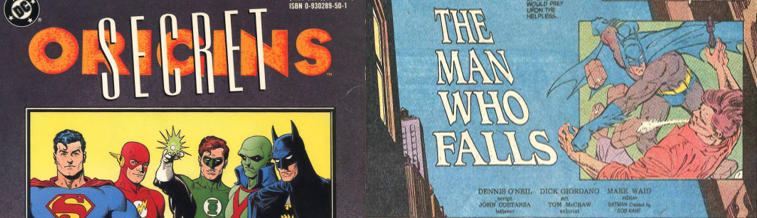

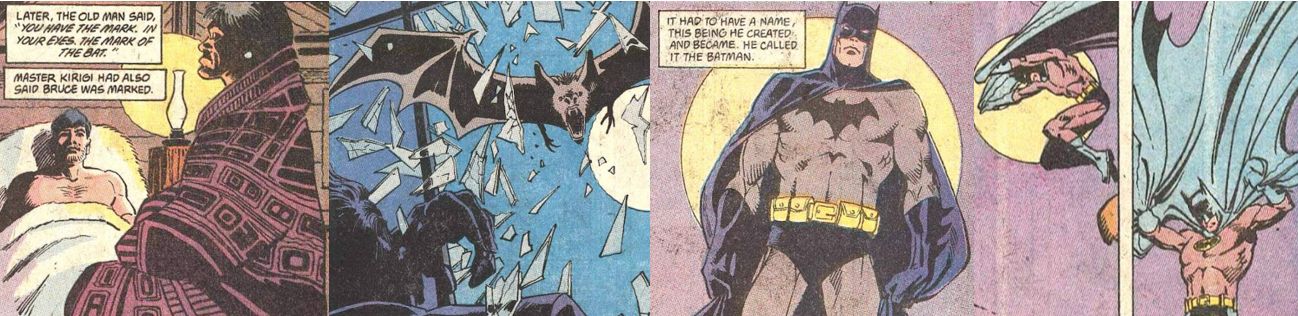
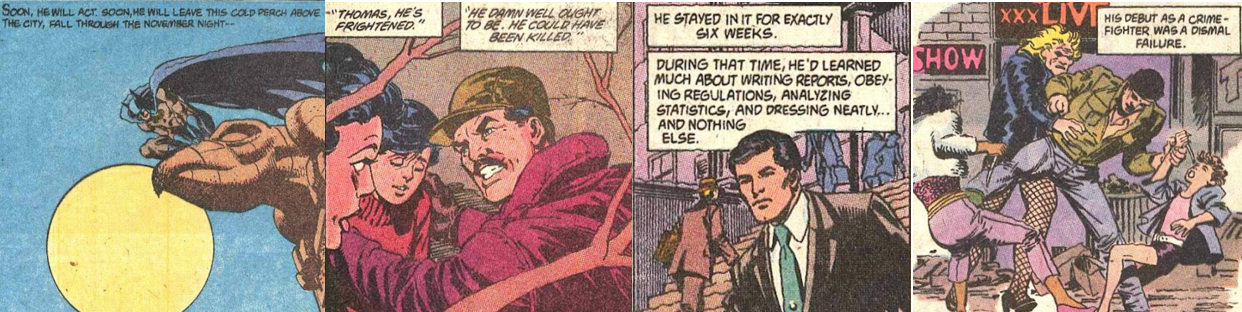


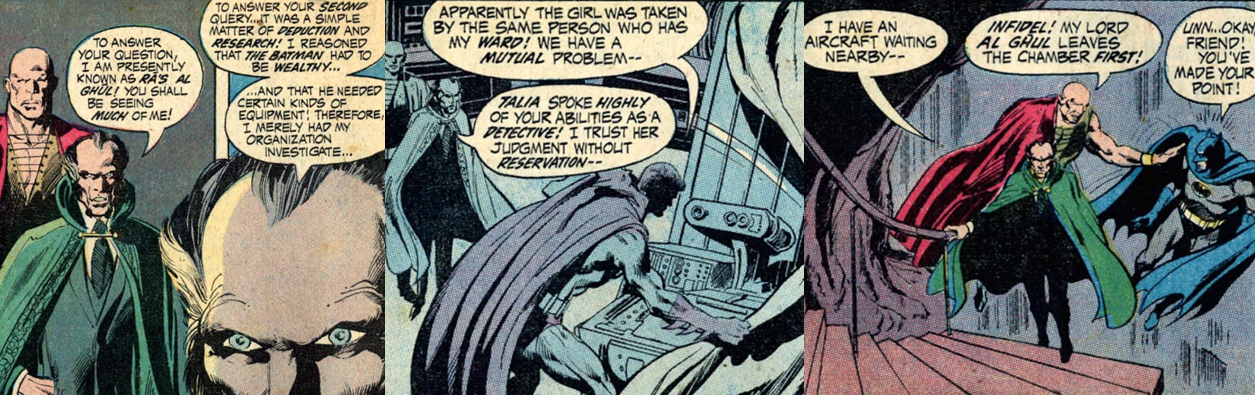


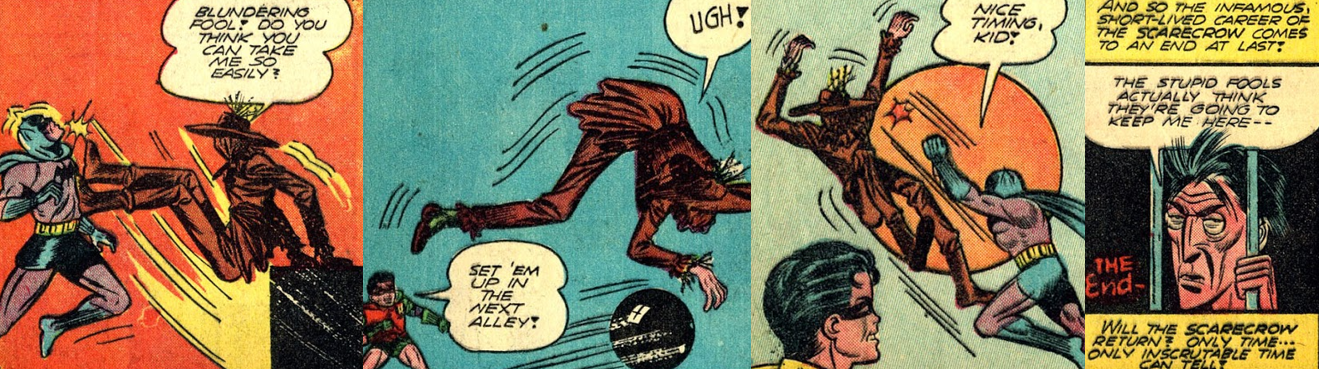
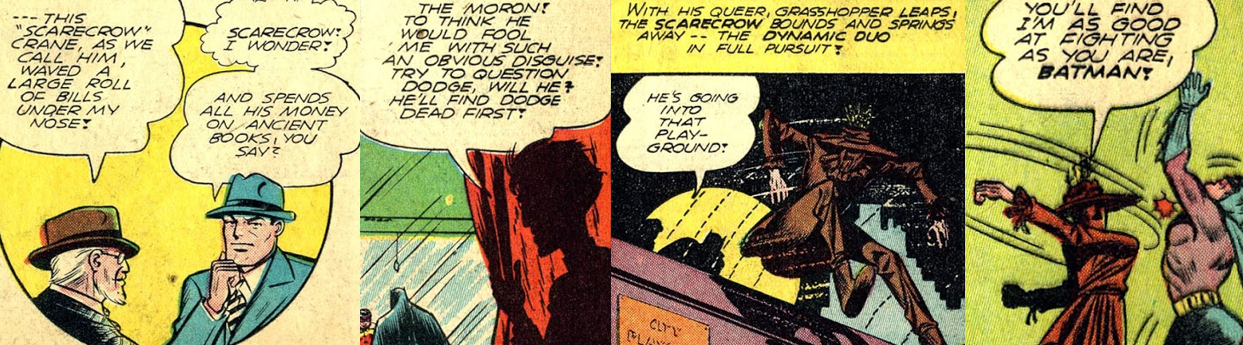


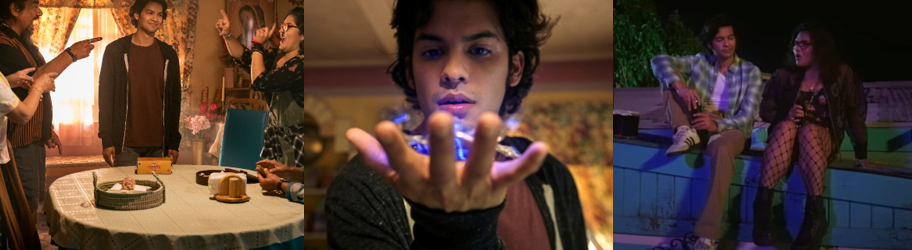


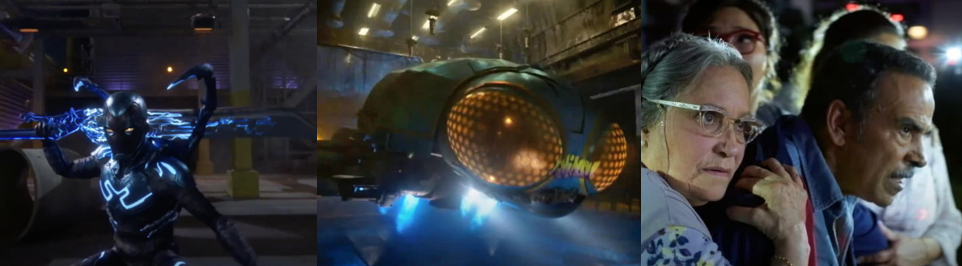
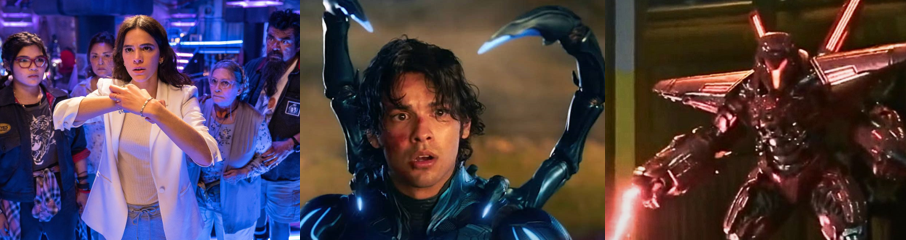



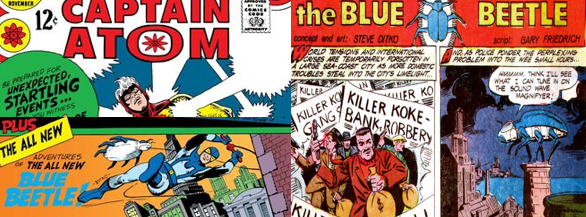
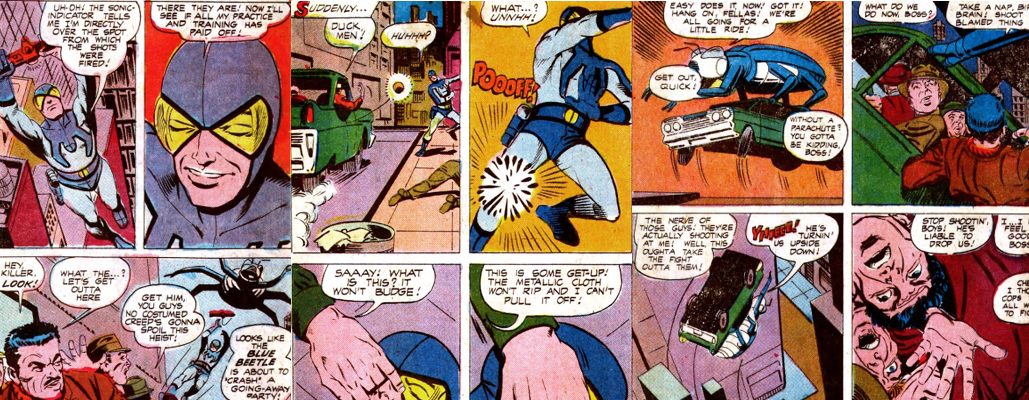


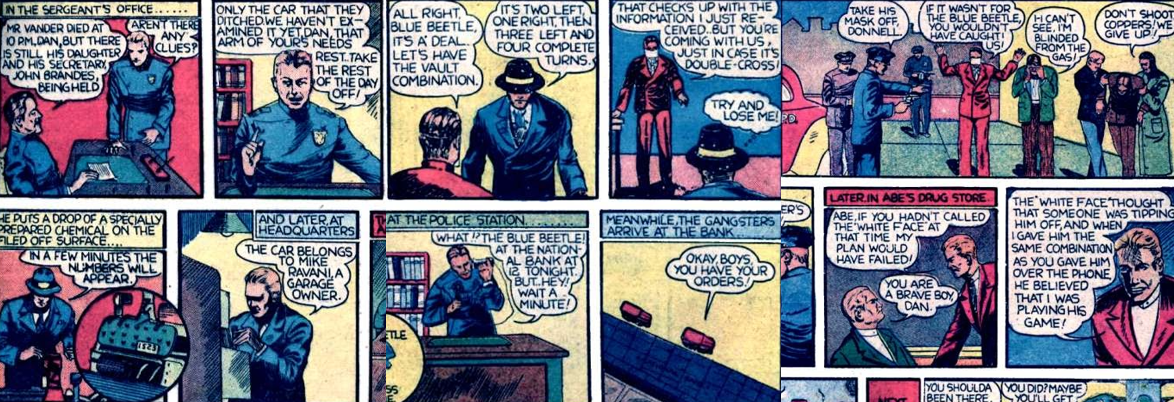
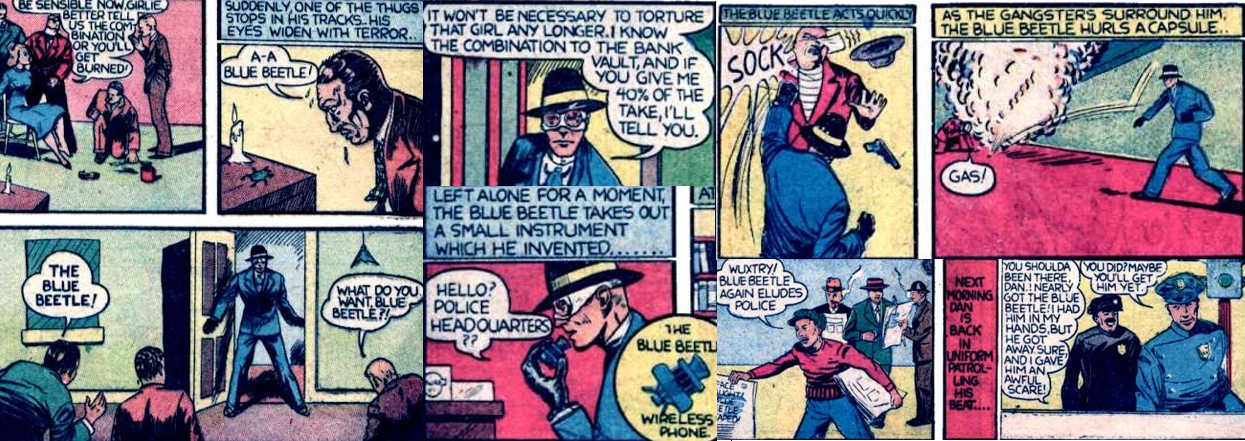













 Dr. K's Waiting Room
You must be logged in to post a comment.