Although February 2014 was dubbed “Green Lantern Day” (because, by the American calendar, the date matched the sector of space assigned to Earth in DC Comics “2814”), the significance of this date has passed as the years have changed. Instead, I celebrate the October 1959 debut of perhaps the most popular Green Lantern, Hal Jordan, who first appeared.
Story Title: “The Day 100,000 People Vanished!” Published: August 1961 Writer: John Broome Artist: Gil Kane
The Background: In July 1940, Martin Nodell and Bill Finger debuted Alan Scott, the first Green Lantern, a magically empowered railroad engineer who became a founding member of the Justice Society of America (JSA). However, following the successful reinvention of the Flash in 1956, fighter pilot Harold “Hal” Jordan became the first of a whole corps of Green Lanterns. Widely regarded as the greatest Green Lantern, Hal soon amassed a colourful domestic and intergalactic rogues’ gallery, though none are more prominent than Thaal Sinestro, Created by John Broome and Gil Kane and modelled after British actor David Niven, Sinestro was formally the most celebrated of the corps before it was revealed that he enforced peace through a dictatorship, disgracing him and positioning him as Hal’s mortal enemy since Hal exposed Sinestro’s true nature. A Machiavellian foe, Sinestro joined the villainous Legion of Doom and Injustice League, led his own yellow-hued counterpart to the Green Lantern Corps, and has regularly waged war against not just Hal, but both the Earth and the entire universe! As Hal’s greatest villain, it should be no surprise that Sinestro has regularly appeared in cartoons and videogames, and was even brought to life by Mark Strong (with scenery-chewing relish) in the much malignedlive-action adaptation.
The Review: Hal’s first encounter with the devilishly alluring villain who became his most recurring and dangerous foe begins on the West Coast of the United States, specifically the town of Valdale, where Green Lantern is scheduled to attend the opening ceremony of the new boys’ settlement house. Luckily for him, Hal’s too busy tying up another case so he’s unexpectedly delayed, meaning he’s absent when the bustling metropolis is suddenly enveloped in an ethereal light (not unlike an aurora borealis) and a strange thunderclap sound, which causes all 100,000 residents to disappear! After learning of this phenomenon, Green Lantern investigated and confirmed to his friend, mechanic, and confidant, Tom Kalmaku/Pieface, that Valdale’s inhabitants have vanished. Green Lantern’s doubly concerned as the incident occurred at nine o’clock, exactly when he was scheduled to be in Valdale but, before he can ponder further, Hal’s suddenly sent a bit queasy by a mind blank. It turns out this wasn’t just a bout of nausea and that Hal’s “astral self” was summoned across the galaxy to Oa, the home of the Green Lantern Corps and their enigmatic alien masters, the Guardians of the Universe. Brought before his masters, Green Lantern was told of Thaal Sinestro, the Green Lantern of sector 1417, a fearless native of Korugar who used the awesome, nigh-unlimited power of his power ring to satisfy his vanity with a throne. Sinestro had people line up and plead for his aid, quickly bored by their petty squabbles and requests and desiring more. When one of his people questioned him, chastising his arrogance and accusing Sinestro of being mad with power, Sinestro flew into a rage and shot down the complainant (non-fatally, it turns out).
Hal is dispatched to thwart a renegade Green Lantern’s plot to attack the Guardians.
Sinestro then decided to depose the ruling council of Korugar and establish himself as the planet’s dictator who forced his people to live peaceful lives or be mysteriously removed from society. Upon discovering Sinestro’s totalitarian ways, the Guardians admonished him and stripped him of his status as a Green Lantern before banishing him to the antimatter universe of Qward. However, the Guardians later learned that Sinestro rallied the malevolent “Weaponers” of Qward to strike back against his former masters and destroy Green Lantern. Thus, Sinestro developed a “viso-teleporter” to transport Green Lantern to Qward, and the Guardians instruct Hal to journey to the antimatter universe to confront the renegade Green Lantern and save those he’s captured. Since his usual route to the antimatter universe is blocked, Hal reasons that Sinestro will attempt to target him again so he uses himself as bait, turning the residents of Coast City invisible, and is soon forcibly transported to Qward. Although Green Lantern easily shields himself from the Weaponers’ attacks, Sinestro forces him to surrender in exchange for returning his captives home. Sinestro encases Hal in a yellow bubble, rendering him powerless, planning to destroy him once his power ring runs out of charge. Despite his ring being ineffective against yellow, Hal’…somehow…manipulates a clock to trick Sinestro into thinking time has passed faster than it actually has. Once he’s freed from his bubble, Green Lantern zaps Sinestro, washes away his allies, and pins Sinestro to a wall with green needles. Sinestro mocks Hal’s morals and lack of killer instinct and arrogantly reveals that he cannot be punished for his crimes since he’s been banished to Qward. However, Hal gets the last laugh by imprisoning Sinestro in an impenetrable bubble of green willpower before returning home to inspire Valdale’s youngsters with a speech about how good will always triumph over evil.
The Summary: I’ve always liked Sinestro. I grew up in the 1990s, so I have a bit of a thing for dark doppelgängers of righteous heroes and Sinestro’s one of comic’s most memorable and visually interesting corrupt counterparts to a beloved hero. However, I haven’t read many stories that feature the character and many Green Lantern stories I’ve read either don’t feature him or take place during one of his many real or faked deaths. However, I definitely feel I’ve been spoilt by the likes of Emerald Dawn II (Giffen, et al, 1991), which went into far greater detail about Sinestro’s complex character and his unique relationship with Hal Jordan. Emerald Dawn II set a new standard for their dynamic, casting Sinestro as Hal’s mentor and the greatest of the Green Lantern Corps, only for it to be revealed that he wasn’t just a pompous, arrogant taskmaster with high standards but also a totalitarian dictator who enforced order with an iron fist. You can imagine my surprise, then, to find Sinestro’s first appearance was a twenty-page story based around a bizarre plot to teleport Hal into the antimatter universe. Now, I’m no expert on Qward or the Weaponers; it’s entirely possible Green Lantern had run-ins with them in the past, hence why they’d relish Sinestro’s aid. However, they are the most useless and ineffective people I’ve ever seen. Sinestro doesn’t even utilise their tech, instead creating his own devices, and they blindly follow the charismatic devil as he conjures a clock and boasts about how he’s going to destroy their enemy rather than just doing it. I’d be questioning Sinestro’s effectiveness the moment his viso-teleporter transported a bunch of randomers to my home world, to say nothing of asking why Sinestro doesn’t just pluck the power ring from Hal’s finger or suffocate him to death inside his yellow bubble.
Though visually and thematically interesting, Sinestro is little more than an inconvenience here.
On the plus side, a sizeable portion of the story is spent exploring Sinestro’s backstory, even if it is just the highlights. The idea of a celebrated and formidable Green Lantern falling from grace and abusing his power is a powerful one and perfectly places Sinestro as Hal’s polar opposite, especial as Hal is such a bland do-gooder during these days. He’s the unscrupulous bastion of “right” and “good”, eagerly obeying his masters and opposing Sinestro simply based on the Guardians’ warnings. Sinestro shows a glimpse of how dangerous a Green Lantern can be if they become obsessed with power, first constructing a “sumptuous headquarters”, then forcing people to beg for his help, and finally deposing the ruling government to become absolute authority on Korugar. It’s not stated how long Sinestro ruled his people, but he presumably would’ve continued enslaving his people had the Guardians not stopped by to check on him. His punishment is severe, but strangely humane, with the Guardians simply banishing Sinestro rather than executing him despite it being implied that he executed anyone who spoke out against his rule on Korugar. The Guardians also shoot themselves in the foot since, although they can teleport individuals to Qward and observe the antimatter universe, they “have no power there” and thus cannot intervene when Sinestro plots his revenge. Thanks to a one-way cosmic “back door” of sorts, Hal does return home but cannot truly punish Sinestro because Hal’s too righteous to take a life and Sinestro cannot leave Qward. Thus, Hal leaves Sinestro in what sounds like a fate worse than death but, to me, seems like a prison he’ll easily escape from, making for a pretty lacklustre ending. Everyone starts somewhere, that’s for sure, but Sinestro’s first appearance is an unfortunately forgettable, villain-of-the-month story that really should’ve been given the entire book to be told. Sinestro has a great look, with his devil-red skin, pencil-thin moustache, and striking black-and-blue colour scheme, and his backstory is certainly intriguing. However, it’s undercooked and basically a throwaway story that’s memorable only for introducing one of DC Comic’s best villains, whose future plots definitely extended further than clock-watching!
My Rating:
⭐⭐
Rating: 2 out of 5.
Could Be Better
What did you think to Sinestro’s debut story? Do you think the Weaponers of Qward should’ve been portrayed as a greater threat? What did you think to Sinestro, his backstory and characterisation? Were you disappointed by how pedestrian Sinestro’s first appearance was? What are some of your favourite Sinestro stories and moments? Which Green Lanterns your favourite and why? How are you celebrating this pseudo-Green Lantern day today? Whatever you think about Sinestro, or Green Lantern in general, leave your thoughts below, drop me some change on Ko-Fi, and go check out my other Green Lantern content.
In the decades since his first dramatic appearance in Detective Comics, Bruce Wayne/Batman has become a pop culture icon. The brainchild of writer Bob Kane, Batman was brought to life by artist Bill Finger and has been a popular staple of DC Comics over the years. Accordingly, September celebrates “Batman Day”, the perfect excuse to celebrate comic’s grim and broody vigilante.
Released: 1 April 2014 Originally Released: 25 October 2013 Developer: Armature Studio Also Available For: Nintendo 3DS, Nintendo Wii U, PC, PlayStation 3, PlayStation Vita
The Background: Batman’s “troublesome” relationship with videogames was changed for the better when Eidos Interactive, Rocksteady Studios, and celebrated Batman writer Paul Dini collaborated on the critical and commercial success Batman: Arkham Asylum (Rocksteady Studios, 2009). This was followed by a bigger and better sequel, Batman: Arkham City (ibid, 2011), that was even more lauded, an achievement Rocksteady Studios didn’t take lately. Eager to capitalise, Warner Bros. Interactive Entertainment turned to WB Games Montréal to develop a prequel while Rocksteady worked ona third game. Although it received a fair amount of praise, Batman: Arkham Origins(2013) was largely seen as mediocre and derivative. Yet, Warner Bros. doubled down on their desire to cash in on the Arkham franchise and outsourced the development of a portable spin-off title to many of those behind the Metroid Primetrilogy (2002 to 2007). Armature Studio collaborated with WB Games Montréal to ensure continuity between their titles, and the portable versions were developed to be unique for each system, though reception was mixed regarding the downgrade to portable hardware. Indeed, considering reviews criticised the bland prison setting and clunky combat, it’s surprising that the game was re-engineered to run on home consoles, though with updated visuals, controls, and maps, to deliver this slightly better receivedDeluxe Edition of the game.
The Plot: Three months after apprehending the maniacal Joker, Batman is forced into an unlikely alliance with Selina Kyle/Catwoman to quell a prison riot at the Blackgate Penitentiary, which has been taken over by the Joker, Oswald Cobblepot/The Penguin, and Roman Sionis/Black Mask.
Gameplay: Unlike other entries in the Batman: Arkham series, Arkham Origins Blackgate is a 2.5D “Metroidvania” style title that restricts Batman to a self-contained, largely linear series of environments explored and expanded by acquiring additional gadgets. While the 3DS version divided the gameplay to the top screen and the map to the lower screen, the Deluxe Edition emulates the Batman: Arkham style but on 2 2.5D plane. Therefore, players must press the ‘Back’ button to bring up a janky 3D wireframe map and check their objectives and collectibles, and use the Left Bumper to enable the trademark Detective Mode rather than tapping on the bottom screen. Similarly, LB allows you to scan the environment, pinpointing crates to open, clues to solve cases, and interactive elements in the environment (that, strangely, need to be scanned every time before use). Otherwise, the controls should be relatively familiar for anyone who’s played a Batman: Arkham game before. Holding A allows Batman to sprint and double tapping it sees him to hop over enemies to attack from behind or roll past spiked hazards. B stuns enemies with a swipe of your cape, allowing you to pummel armoured foes, while X sees Batman attack with strikes, building combos for fancier moves and additional damage. Tapping Y when the icon appears over his head counters incoming attacks, while the Right Trigger is used to crouch and enter vents. Batman’s various gadgets are selected with the directional pad, aimed with LT, and used with RT, allowing him to toss Batarangs or quickly grapple to higher ground as needed.
The game tries to emulate its main console counterparts by recreating Batman’s abilities,
Given the 2.5D restrictions, you won’t be battling large waves of enemies and foes tend to come in manageable groups and only swarm from the background and foreground sporadically. There is no level-up system like in other Batman: Arkham games so you can often bypass enemies rather than fighting them, which is sometimes preferable given that the combat feels much clunkier than in the other games. Countering, in particular, can be a bit hit and miss at times. Knife-wielding thugs and those with stun batons cut through your defences surprisingly easily and Batman seems much weaker this time around. This means electrical currents and poisonous gas drain your health extremely quickly and Batman cannot withstand even a short burst of sustained gunfire. Although Batman doesn’t have to worry about gaining experience points and levelling-up, he can still improve his suit and gadgets by finding WayneTech crates. Similarly, you upgrade Batman’s “Rush” ability (something I struggled to understand but seems to do additional damage as his combo increases) or obtain gauntlets to increase your regular damage. There are numerous helpful autosave points and you can skip cutscenes when reloading, which is even better, but it can be very frustrating to fail again and again because you were spotted and got caught in a crossfire. Arkham Origins Blackgate tries to recreate the “Predator” sections of its bigger, better counterparts but these are both painfully limited and needlessly frustrating. Detective Mode highlight enemies and objects to distract them, and Batman can toss a snare to tangle goons when up high, but there are few options to avoid being spotted. Batman can still hop into floor grates, shimmy along ledges, or sneak behind enemies to take them down or can just dive kick them. Still, you’ll mostly rely on distracting enemies or take them out by dropping hazards into them or destroying the ground beneath them.
You can explore new areas with Batman’s different gadgets and abilities.
Blackgate Prison is split into three main areas: the Cell Block, the Industrial Area, and the Administration Offices. Each has sub areas, such as a sewer system, a dock and lighthouse, and the maximum-security Arkham Wing and you’ll be going back and forth between these areas many times. In many ways the game has more in common with Batman: Arkham Asylum than the other open-world titles, meaning you’ll inevitably reach an obstacle and be forced to explore elsewhere to acquire a different gadget or a key card for your Cryptographic Sequencer. Each area has different entrances and exits and there are shortcuts you can take, but it would’ve helped speed things up to be able to return to the main map from the pause screen. Once there, you can jump to different areas, which is helpful, but it’s not always clear where you need to go or what you need to do no matter how helpful the map thinks it’s being. To be fair, if you haven’t acquired the Line Launcher then you obviously can’t cross gaps and if you don’t have the right key card you can’t open new paths. However, the game is structured to allow you to tackle the main bosses in any order provided you don’t mind backtracking. The puzzles are pretty simple and familiar and largely centred around the Cryptographic Sequencer, which launches you into a number matching/finding mini game, but you’ll also be activating consoles, grappling to switches, and using your various gadgets to access new paths scanned with your Detective Vision. Batman starts with his Batarang and grapnel gun but soon acquires the Batclaw to rip down grate covers and certain walls, the Line Launcher to cross gaps, and explosive glue to explode floors. These can also be upgraded as the story progresses, providing a shock upgrade for the Batarang to create an electrical current to activate doors and machinery, the ability to walk on your line like a tightrope and clumsily ascend up shafts, and glue gel to temporarily jam gears and mechanisms.
Presentation: As you might expect, given that it’s a conversion of a 3DS game, Arkham Origins Blackgate isn’t anywhere near as impressive as its main console counterparts but, for the most part, it looks and runs quite well. Batman’s character model fittingly gets the most attention, though he won’t show battle damage and he’s obviously limited in his animations and movements because of the perspective shift and lesser game engine. Combat is a little sluggish, unfortunately, and nowhere near as slick and satisfying as in the other games, which makes one of the franchise’s most enjoyable aspects a chore. Thankfully, much of the gameplay is focused on exploration, simple puzzle solving, and backtracking and Batman controls much better in this regard. Catwoman will help him on the comms, presenting a unique dialogue dynamic compared to talking with Batman’s usual allies. Thugs still engage in some amusing and distracting banter as you wait in the shadows, but the visuals let the game down a bit, appearing more akin to a late-PlayStation 2 or PlayStation Portable title.
Blackgate fails to impress with its drab visuals, however ambitious they may be at times.
Much like Batman: Arkham Asylum, the game is awash in drab, uninspired, grey locations. It’s all very dull and clinical whenever Batman’s indoors, with the only things separating one area from another being one might have some elevators while another has more office equipment, one will be a gothic almost steampunk sewer and the other will have more advanced cells for inmates, but none of it is very visually appealing. The lighthouse and docks are a notable exception, but I was glad to venture into the sewers (generally one of the more visually uninspiring videogame locations) just to mix things up. When I played through the 3DS version, I chose not to engage the 3D function; while it offers a decent sense of depth, the game’s too visually dull to make the most of it. As many environmental puzzles and collectibles are hidden, this means it’s usually better to play with Detective Mode activated so you don’t miss anything and can see during blackouts. The game’s cutscenes largely use a motion comic style reminiscent of Tim Sale’s artwork and they’re fully voiced. You’re gameplay is also often interrupted by cutscenes showing Amanda Waller observing and commenting on your progress, though cutscenes using the in-game engine are restricted to a few short sequences.
Enemies and Bosses: Blackgate Prison houses some of Gotham City’s most violent criminals, but they’re not the most colourful. Most of the common thugs return from the bigger Batman: Arkham games, with no new additions or interesting wrinkles added. You’ll get into fist fights with enemies, some of whom wield blunt instruments like baseball bats, but those with knives will slash at you mercilessly unless you stun them with a swipe of your cape and beat them down and those with stun batons must be hopped over and attacked from behind. You won’t have to worry about thugs using car doors as shields or coming at you with swords, or any brutish goons, but anyone with a gun should be avoided at all costs. In these instances, you’ll need to use stealth to take them down as it won’t take much to alert them to your presence and see you riddled with bullets, but easily one of the worst dangers in the game is the annoying abundance of spiked hazards lining the floors!
Bosses can be ridiculously simplistic or ridiculously frustrating, with little middle ground.
As Batman progresses further into the prison, or to facilitate this progression, he must face some of his most memorable rogues…and also Benjamin Turner/Bronze Tiger and Floyd Lawton/Deadshot…in boss battles that range from simplistic to ridiculously frustrating. First, you’ll chase Catwoman across the city’s rooftops to a construction site, then you must tap Y to evade her claw swipes and press B to stun her with your cape when prompted. If you try to attack any other time, she’ll slap or whip you away and you’ll need to be quick with your counters for the final hit as she swipes at you three times in slow-motion before going down and offering to help you out. As you explore the cell blocks, you’ll end up in a specially constructed electrified arena made for the Penguin’s amusement where you fight Bronze Tiger in a battle that’s functionally very similar to the one against Catwoman. You’ll initially need to counter Bronze Tiger’s attacks, stun him with your cape, and hit a quick combo but he also has a leaping attack that you must dodge to smack him up, and you can deal a fancy finish if your combo hits him into the electrified cage. As much as I mock him, Deadshot at least mixed up the challenge for his boss battle. Initially, you control Batman from the perspective of Deadshot’s sniper rifle, using cover to avoid being shot and making your way around the area. Then, he switches to a machine gun and will cut you down in seconds if you don’t duck down, meaning the timing to hit a nearby spotlight and blind him is very tight, but at least it wasn’t just counter/stun/attack/repeat.
These three bosses had me tearing my hair out during each encounter.
Down in the sewers, you randomly fight Cyrus Gold/Solomon Grundy, the game’s solo gigantic foe. Accordingly, he’s immune to your standard attacks and you must use Batman’s explosive gel and Batarangs to activate electrical cables to shock him when he charges over puddles. It’s probably just me but this wasn’t immediately clear and I struggled to figure out what the hell I was supposed to do but, once you figure it out and get the timing right, it’s not too difficult. This frustration continued into the fight with Black Mask. As he’s not a physical match for the Batman, Sionis sends in his goons, tosses grenades, and blasts away with his machine gun. He’s also very slippery and forces you to disable three generators in a time-consuming puzzle before waiting to gun you down the moment he spots you. You need to distract him with the nearby alarms, take out an overhead light, and use the floor grates to lure him into position to take him down, all of which was far more aggravating than it had any right to be. Easily the most difficult of the regular bosses, for me, was the Penquin. Cobblepott is flanked by armed goons who cannot be defeated without disarming them, which is extremely difficult to do. Instead, it’s better to distract them so you can drop onto the Penguin and avoid being shot to death in seconds by his shotgun. As the battle progresses, more goons and even an overhead drone makes things harder, though thankfully there is a checkpoint for the final stage.
Your greatest challenge will come, surprisingly, from the Joker and Catwoman.
In a change of pace for this series, you go one-on-one with the Joker in Arkham Origins Blackgate, to a degree. You fight him in a small, enclosed space where his minions toss grenades and the Joker races around a central obstacle, smacking you with an electrical baton whenever you get close. Accordingly, you must run in the opposite direction and time your Line Launcher to fly in and land a combo, but he’ll also take shots with his pistol, floods the arena with poisonous gas, and has the largest health bar of any boss so far. However, he’s a walk in the park compared to the final boss, initially teased as another tedious fight against Bane but which turns out to be an infuriating three-stage fight against Catwoman, of all people. Before you fight her, you’re forced to search all over finding and defusing bombs before you battle her in the same format as in the first encounter, except she’s added Bronze Tiger’s leap to her arsenal and trying to counter her claw swipes is even more difficult. After this, she blinds Batman and strikes from the darkness; your only cue to when she’ll attack is the brief glow of her goggles and a little jingle, meaning it’s way too easy to miss-time your counter and get hit. Survive this phase and she appears to duplicate, with her doubles feigning attacks and the true Catwoman striking so quickly and so awkwardly that it’s near impossible to correctly time your counters as you need to press Y slightly before the indicator appears. Oh, and you need to repeat this last phase three times, with the fakes and attacks increasing each time, making for the most irritating boss battle in the franchise since that God-awful fight with Slade Wilson/Deathstroke!
Additional Features: There are thirty Achievements on offer in the Deluxe Edition of the game, with one being awarded each time you defeat a boss or hit a continuous combo (up to 100). You’ll also get Achievements for solving detective cases, destroying Joker teeth, explosive bird cages, and replica black masks (which also unlock extras in the game’s gallery), and locating armour and full costume sets. Interestingly, there are some creative Achievements available too, such as dying from the Joker’s laughing gas, facing a different final boss each time, and defeating Grundy with the shock Batarang. While there are no Riddler Trophies, you can find and scan various clues to different criminal cases; some are hidden and others require your gadgets to uncover. What you really want, though, are the WayneTech crates containing the different Batsuit parts. Find all five of each to apply a new skin to the Dark Knight and be afforded additional perks, such as increasing your resistance to damage or just making you invincible! Although there are no Achievements tied to it, the Deluxe Edition offers “Normal” and “Hard” difficulties and you unlock “New Game Plus” after clearing the game, which carries over any Batsuits, clues, and unlocks you’ve earned but will overwrite your save data, take away your gadget upgrades, and present you with re-ordered boss battles and some new items.
The Summary: I knew that Batman: Arkham Origins Blackgate wouldn’t be as expansive or as impressive as its home console counterparts, but I held out hope that the game would make the most of its new format and genre to deliver a fun and engaging Metroidvania. In many ways, Batman suits this genre perfectly; it really opens a lot of avenues for exploration, unique use of Batman’s gadgets and abilities, and speaks to his reputation as the World’s Greatest Detective. Unfortunately, it failed to live up to its potential, the standards set by its bigger cousins, and to meet the expectations of its genre. The combat is slow, sluggish, and unreliable; you’ll try and counter an attack only to get hit and this makes fighting, especially boss battles, extremely aggravating. The Predator sequences are far too limited; I think it might’ve been better to switch to a different presentation for these sections, perhaps a little more zoomed out or isometric perspective but, as it stands, they’re just too finnicky to be anything other than a chore. Some aspects are interesting, like tracking the Penguin’s blood trail or rescuing hostage or even defusing the bombs in the game’s finale, but it’s so difficult to navigate that it’s easy to get turned around or exit an area before you’ve completed your objective. I appreciate it when a game doesn’t hold your hand but, normally, the Batman: Arkham games give you a little more direction than here, where you can just fail constantly trying to figure out how you’re supposed to take out Solomon Grundy and the Penguin or get to where the map’s directing you. I’m not really sure what makes this version so “deluxe” compared to the 3DS title as it barely improves upon the limited 3DS version. As a budget title that offers a taste of Batman’s bigger adventures, it’s not bad but, as an entry in the lauded Batman: Arkham series, it’s a clear disappointment.
My Rating:
⭐⭐
Rating: 2 out of 5.
Could Be Better
What did you think to Batman: Arkham OriginsBlackgate? Do you agree that it fails to make the most of its new format and genre? Did you also find the game world difficult to navigate or were you able to find your way without much problem? What did you think to the game’s bosses? Did you struggle against Black Mask, the Penguin, and Catwoman? Would you like to see the Arkham Origins games given more spotlight? How are you celebrating Batman Day and what is your favourite Batman videogame? Whatever you think about Batman: Arkham OriginsBlackgate, or Batman in general, please leave a comment below and check out my other reviews of the Batman: Arkham series.
Following his first dramatic appearance in the pages of Detective Comics, Bruce Wayne/Batman became a mainstream pop culture icon. The brainchild of writer Bob Kane, Batman was brought to life by artist Bill Finger and has been a popular staple of DC Comics and countless movies, videogames, and cartoons over the years. “Batman Day” fell on 20 September this year so I spent every Saturday celebrating comic’s grim and broody vigilante.
Released: 20 July 2012 Director: Christopher Nolan Distributor: Warner Bros. Pictures Budget: $230 to 300 million Stars: Christian Bale, Tom Hardy, Anne Hathaway, Marion Cotillard, Joseph Gordon-Levitt, and Gary Oldman
The Plot: After taking the fall for Harvey Dent’s (Aaron Eckhart) killing spree, billionaire Bruce Wayne (Bale) has retired from vigilantism and the public spotlight. However, when nigh-superhuman mercenary Bane (Hardy) terrorises Gotham City, Bruce is forced to suit up as the Batman once more.
The Review: Honestly, it was going to be hard for Christopher Nolan to top or even match The Dark Knight. The movie earned its flowers as one of the most engaging and gritty superhero thrillers even if you discount Heath Ledger’s tragic death, and part of me thinks it might’ve been better to wait a little longer to follow it up, especially considering how lacklustre this third entry is. Granted, things start off positively as Nolan opens with a thrilling, IMAX-enhanced mid-air plane hijack as the masked brute Bane and his suicidally loyal followers infiltrate a Central Intelligence Agency (CIA) plane to kidnap renowned nuclear scientist Doctor Leonid Pavel (Alon Aboutboul). This breath-taking, fully practical, death-defying sequence introduces Bane, an intimidating and calculating villain. Rather than simply being a mindless brute, Bane is as articulate and loquacious as he is jacked, but you’d be forgiven if you had trouble understanding his obtuse soliloquys. Yes, I’m going to address the elephant in the room right away: Bane speaks with a very strange and at times indecipherable accent that often sounds pre-recorded, kind of taking me out of any scenes he’s in. Tom Hardy is a fantastic physical performer and Nolan did a wonderful job masking the height discrepancy between him and Bale, but his accent and line delivery is so strange and distracting that it can detract from Bane’s menace. I just wish we could’ve heard him speak in a less janky mishmash of accents, or perhaps if we could more clearly see his lips moving through the mask’s mesh, because Bane frequently seems ridiculous due to this decision (though, to be fair, memes and parodies haven’t helped his portrayal).
Broken and grieving, Bruce ignores his ailments and all advice to suit up as Batman once more,
In the eight years since the last film, Harvey Dent has been honoured as a hero, Batman branded a murderer, and the “Dent Act” has largely kept Gotham’s streets free from organised crime. Despite finishing the last movie fully prepared to be hounded and vilified, it seems Batman retired pretty soon after The Dark Knight. The rebuilt Batcave suggests he kept it up for a bit, but dialogue also suggests he disappeared the same night Dent died, which is confusing. Bruce has also shut himself away in Wayne Manor for many years. Still grieving the loss of his childhood friend and love interest, Rachel Dawes (Maggie Gyllenhaal), Bruce retreated after overseeing the development of a clean fusion reactor and mothballing it to keep it from being converted into a weapon. A reclusive shut-in, Bruce is riddled with physical ailments from his crimefighting antics, having lost all cartilage in his knees, and has become so morose that he’s let Wayne Enterprises fall into financial ruin. When he’s robbed by brazen cat-burglar Selina Kyle (Hathaway), Bruce uses his detective skills and resources to track her down and seems reinvigorated at the chance to don the Batsuit once more. Quickly (and magically) compensating for his injuries with a single leg brace, he eagerly returns to the streets despite the protests of his loyal butler and father figure, Alfred Pennyworth (Michael Caine), who believes (and rightfully so) that Bruce is no longer physically capable of contributing as Batman and that renewing his vigilante ways will simply lead to his senseless death. Instead, Alfred (and Lucius Fox (Morgan Freeman), executive vice president of Wayne Enterprises and Bruce’s quartermaster) encourage him to pursue more meaningful endeavours, such as sharing his clean energy reactor, funding orphanages, and pursuing “lovely” philanthropist Miranda Tate (Cotillard), who longs to collaborate with Bruce and bring glory back to his family name.
Lies have created a period of peacefor Gotham, but its foundations are incredibly fragile.
As beaten down as Bruce has become, police commissioner James “Jim” Gordon (Oldman) is equally burdened by guilt. In the years since The Dark Knight, Gordon has been celebrated as a hero but at the cost of his family and is currently at risk of losing his position since he’s become superfluous. Clearly still guilt-ridden for failing to save Dent and lying about his death for eight years, Gordon’s plans to come clean are scuppered when he’s captured by Bane’s henchmen and brought to the main man himself. Though he manages to escape, Gordon’s wounded and bedridden and pleads with a concerned, partially masked Bruce to bring the Batman back to face this new threat. Later, he’s instrumental in galvanising the city police and civilians against Bane’s forces, and in tracking down Bane’s bomb. Although Gordon’s still in charge of the police department, much of the day-to-day operations are now run by Peter Foley (Matthew Modine), an uptight and annoyingly antagonistic individual who’s determined to oust Gordon by apprehending the Batman and continually ignores evidence of the greater threat, no matter how often rookie cop John Blake (Gordon-Levitt) tries to warn him. Seen as a “hothead” (despite literally being as cool as a cucumber), orphan Blake is quickly promoted to detective when his keen insight rescues Gordon, and works diligently to uncover Bane’s true plan. Blake gains additional support when, after Gordon’s kidnapping, he goes to Bruce for help, revealing that, as a fellow orphan, he recognises both Bruce’s pain and his attempts to mask it with his playboy persona, thus revealing his knowledge of Bruce’s dual identity. Blake therefore becomes something of an apprentice to both Bruce and Gordon, learning of Bruce’s motivations to wear a mask and fight crime and putting his natural deductive reasoning to good use, all to serve true justice and make life better for his fellow orphans. Naturally, Bruce is also aided by Fox, who gives him a tour of an off-the-books armoury where all his new Bat-toys are stored, including a fearsome jet-plane concept imaginatively called “The Bat”. Fox is begrudgingly forced to agree with the Board that Bruce needs to step down, advocates for Miranda to continue their work, and is forced to aid Bane when he holds the city hostage so Pavil can weaponise the fusion reactor.
Bruce’s relationship with Alfred crumbles as his intrigue in Selina is piqued.
Of all Bruce’s supporting cast, it’s Alfred who has changed the most, however. Just as Bruce and Gordon struggle with their guilt and decisions, Alfred is agonised at having lied about Rachel choosing Bruce over Dent. When Bruce insists on reviving the Batman, Alfred pleads with him to explore other solutions to Gotham’s troubles but, when his protestations fall on deaf ears, he’s forced to come clean in a last-ditch attempt to keep Bruce from throwing his life away. Instead, Bruce reacts with anger and orders Alfred to leave, leaving his father-figure heartbroken and leading to some bittersweet amusing scenes where Bruce realises how much he relies on his faithful manservant. Much of Bruce’s investigation into the so-called “Catwoman” revolves around retrieving his mother’s pearls, but he soon realises she’s a devious, highly capable, sultry thief who’s desperate to acquire the fabled “clean slate”, a piece of technology that will erase all records of her and presumably allow her to give up her life of crime. Manipulative and a master of deception, Catwoman allies with anyone, no matter how morally skewed they are, to achieve her goal, but is captivated when she fights alongside the Batman. Her distrustful, selfish nature sees her sell Batman out to Bane, but she’s stricken with a conscience when she learns of Batman’s true identity. She thus helps him in the finale, despite having achieved her goal, though she has little interest in following Batman’s “no-kill” rule. Hathaway definitely embodies the role and makes an impression in her skin-tight catsuit. Selina sports some gadgets and martial arts skills of her own, but her greatest ally is her ability to assume different roles (on the fly or with a simply costume and demeanour change) to deceive her marks, with only Bane proving immune to her deceptions and flirtations.
Calculating powerhouse Bane has an intimidating presence…until he’s revealed to merely be a pawn.
All throughout the film, we’re drip-fed information about Bane. Alfred (…somehow…) tells Bruce how Bane was the prodigy of his old mentor and enemy, Rā’s al Ghūl (Liam Neeson), and a man so ferocious and feared that he was excommunicated by the League of Shadows. When held captive in a prison in the Middle East – a desolate pit where inmates risk life and limb trying to climb to freedom using a precarious rope – the critically injured Bruce learns of a child who made the climb, forsaking all fear and the safety of the rope, and claw his way to freedom. Bruce assumes the child is Rā’s’ son, out for revenge, and Bane himself boasts of his goal to “fulfil Rā’s al Ghūl’s” destiny. A large, muscular man, Bane intimidates through sheer size and presence but swiftly and deftly proves his threat by snapping necks, crushing windpipes, and punching through solid concrete with his bare hands. Unlike in the comics and most iterations, this isn’t due to the superhuman drug Venom but actually thanks to his mask, which constantly feeds him aesthetic to numb the pain of the wounds he received in the Pit. Calculating and vindictive, Bane immediately targets Bruce, pulling off a very public robbery of the stock exchange that somehow leaves Bruce bankrupt and colluding with greedy businessman John Daggett (Ben Mendelsohn) to seize Wayne Enterprises. Once he’s achieved the funding and influence he needs, Bane captures Bruce’s armoury and brutalises Batman in a completely one-sided fist fight that leaves Bruce broken and humbled. Bane then outs Dent’s secret, destroys all bridges leading in and out of Gotham, traps the cops in the sewers when Foley stupidly sends their entire force to flush the mercenary out, and turns Gotham into a veritable no man’s land for five months as he threatens to detonate his nuclear bomb if anyone tries to escape. Bane’s plot is therefore essentially a combination of Rā’s’ and the Joker’s, exposing Gotham’s corruption and encouraging civilians to turn to anarchy, all with the threat of total destruction overhead. This is honestly a far cry from releasing Batman’s rogues from Arkham Asylum and watching as they mentally and physically wear him down. To be fair, it’s not like there were any recognisable inmates for Batman to fight here. Sure, Doctor Jonathan Crane/Scarecrow (Cillian Murphy) gets a quick, fun cameo but Batman is mostly fighting Bane’s goons, Foley’s cops (but not all cops since many are strangely still on his side), or Bane himself.
The Nitty-Gritty: There’s a theme in The Dark Knight Rises and you’ll never guess what it is: it’s rising. Rising from adversity, from pain, from obscurity; rising against corruption, deceit, or malicious forces. And, naturally, one can’t rise without a fall, but my issue with this film is that Bruce falls so many times. Bruce rises from the stagnant quagmire of his reclusive life to return as the Batman, only to immediately fall at Bane’s hands due to his hubris and be forced to rise again (literally and figuratively) when imprisoned in the Pit. It’s not clear how bad Bruce’s injuries are here as he shrugs off that cartilage issue, seems just as capable as ever as Batman when not facing Bane, and easily recovers from what is potentially a broken back with a well-placed punch and some basic exercises. Personally, I was hoping for an adaptation of Knightfall first and foremost: start with Bruce being physically and mentally worn down by grief and fighting both the cops and criminals so he’s completely exhausted but too stubborn not to confront Bane. Then he can rise from his hubris and his injuries all at once and we’d get not only more Batman action in the early going, but a better payoff for The Dark Knight’s ending. Also, the film jumps all over the place, to the point where it seems the injured and bankrupt Bruce escaped the Pit and returned to the inaccessible Gotham through magic. It might’ve been better to skip the Pit altogether and have Bane imprison Bruce deep in the sewers, perhaps with Godon and the cops, who learn his true identity and the truth about Dent, and are therefore inspired to join him against Bane.
Nolan finally delivers an intense fight scene alongside his jaw-dropping practical set pieces.
Indeed, a lot of The Dark Knight Rises just feels like padding and it lacks much of the gravitas of its predecessors since it repeats many of their story beats. Nolan continues to struggle with fight scenes, though the team-up between Batman and Catwoman in the sewers is a lot of fun, the grand destruction of Gotham’s football field is suitably impressive, and the intense brawl between Batman and Bane is a memorable sequence. Devoid of music so all we hear are the combatant’s blows, Bane’s taunting, and Batman’s stubborn growling, the fight shows just how ill-prepared and overconfident Bruce is. Just as Alfred feared, Bruce underestimated Bane and “[fought] like a younger man” rather than preparing for the fight. It’s interesting that Batman, a character typically depicted as very smart, didn’t think to target Bane’s mask in this fight. He learns of this vulnerability and uses that tactic in their rematch, though Bane reacts furiously by this and is still positioned as Batman’s physical superior. Even Batman’s gadgets are useless against Bane, though Batman’s new EMP gun helps stop Bane’s goon after their heist. Batman also pilots the Bat, a jet-like vehicle that allows him to quickly and easily fly around Gotham’s skyscrapers. It’s not used much (there’s only really a need for it in the finale), so Batman continues to ride the Batpod, though prototype Tumblers are commandeered by Bane. Nolan definitely ups the scope for The Dark Knight Rises, staging an all-out war between Gotham’s police and ordinary civilians and Bane and his troops in the finale. It’s a bit of a mess with lots of smoke, bullets, and bodies crashing into each other. Background characters simply collapse and die, Foley is killed offscreen, and the entire scuffle is literally framed as a distraction so Batman can fight Bane once more, in broad daylight, to find the trigger to his bomb.
A cringey death here, a disappointing finale there, and Bruce gets to retire once again.
Bane claims to have hidden the trigger somewhere in Gotham and that anyone could accidentally set it off at any time. In the five months Gotham is on lockdown, Blake and Gordon try to rally the civilians with the hope of Batman’s return as Crane and Bane execute the city’s government in a kangaroo court. Although he takes a beating, Batman overpowers Bane by targeting his mask but is absolutely dumbfounded when Miranda literally stabs him in the back and reveals her true identity as Talia al Ghūl and that it was she who made the climb thanks to Bane’s protection. Talia’s gloating is quickly rendered moot thanks to Gordon blocking the trigger, so she races to activate the bomb herself after Bane is unceremoniously killed by Catwoman and a blast from the Batpod’s cannons. Catwoman helps Batman and Gordon to catch Talia, who ultimately crashes and gives one of the worst onscreen deaths in cinema history, followed by a strangely uncomfortable kiss between Batman and Catwoman, and Gordon looking like a complete fool as he was truly clueless about the Batman’s true identity until Bruce made it explicitly clear. With no way of stopping the bomb, Batman does the only thing he can and carries it out to sea using the Bat, seemingly perishing in the blast. In the aftermath, Dent’s legacy is tarnished, freeing all those convicted in his name, and the Batman is memorialised by the fickle Gothamites. Fox, Gordon, and especially Alfred are left heartbroken by Bruce’s death but soon realise that he survived. The Batsignal is found repaired, Fox discovers the Bat’s ejector seat malfunction was repaired, and Alfred literally sees Bruce, now retired and seemingly happy with Selina. Finally, Blake resigns and finds Bruce left him a special package under his legal name, “Robin”, that leads him to the Batcave, where he literally rises into the darkness to an unknown destiny.
The Summary: Despite the tragedy of Heath Ledger’s passing, I was excited for The Dark Knight Rises when it came out because I’m a big fan of the Knightfall story but, honestly, this film struggled from the start. The lame and uncreative title, Hardy’s weird-ass voice, Bale’s odd demeanour as Batman, and the confusing editing, strange dialogue, and inconsistent performances really hold this one back. Honestly, it feels as though everyone was contractually obligated to do a third movie but no one really wanted to. There’s effort here, for sure, and Nolan is still putting his all into the practical effects, but the execution is lacking and there’s so many odd flaws and plot holes that I wouldn’t expect from Nolan and his team. Bale continues to be the quintessential Batman, adding new nuance through his stubborn refusal to see that he’s past his prime, his hubris, and his deteriorating relationship with Alfred, but his Batman seems strangely tired and ineffectual here and I really didn’t like that he just gave up and then magically recovered from all those injuries. Anne Hathaway, Joseph Gordon-Levitt, and Tom Hardy inject some much-needed life into the film, though. Anne was easily the best Catwoman at that point, Nolan surprised me with the Robin reveal, and Hardy made for a fantastic Bane…except for that weird accent. I just feel like there’s too much happening here, with Batman’s return, the clean slate stuff, Bane’s convoluted plan, the Pit, the no man’s land stuff…it’s a lot and it’s very messy, which is also unlike Nolan. In the end, it feels like an extended, lacklustre epilogue to a great duology. It delivers an unexpected and somewhat unfulfilling end to Bale’s Bat-career, with this Bruce being one of the few to survive long enough to retire, but ultimately fails to deliver a satisfying follow-up to perhaps the greatest Batman movie ever made. Catwoman’s sex appeal, the fight between Bane and Batman, and all the stunning IMAX-enhanced action sequences aren’t enough to make up for an otherwise dull, plodding affair that ends the trilogy on a disappointingly sour note.
My Rating:
⭐⭐⭐
Rating: 3 out of 5.
Pretty Good
Do you think I was too harsh on The Dark KnightRises? What did you think to Tom Hardy’s portrayal of Bane, especially his accent? Is Anne Hathaway the best live-action Catwoman we’ve ever seen? Were you also annoyed that Bruce quit after The Dark Knight and by how easily he recovered from his injuries? What did you think to this version of Robin? Were you as disappointed with the film as I was or is it a favourite of yours? How are you celebrating Batman Day this year? Whatever your thoughts The Dark KnightRises, or Batman in general, share them below.
Following his first dramatic appearance in the pages of Detective Comics, Bruce Wayne/Batman became a mainstream pop culture icon. The brainchild of writer Bob Kane, Batman was brought to life by artist Bill Finger and has been a popular staple of DC Comics and countless movies, videogames, and cartoons over the years. “Batman Day” fell on 20 September this year so I spent every Saturday celebrating comic’s grim and broody vigilante.
Story Title: “Vengeance of Bane” and “Knightfall Part I: Broken Bat” (includes various subtitles) Published: January 1993 to July 1993 Writers: Chuck Dixon and Doug Moench Artists: Graham Nolan, Jim Aparo, Jim Balent, and Norm Breyfogle
The Background: After the overnight success of Clark Kent/Superman, National Comics Publications commissioned Bob Kane to add another masked crimefighter to their repertoire. Thanks to considerable input from artist Bill Finger, the “Bat-Man” immediately became one of DC Comics’ most popular characters and a mainstream cultural icon. This was bolstered, in no small part, by the many costumed supervillains the Batman has contended with over the years, with perhaps the superhuman mastermind “Bane” being the Batman’s most dangerous and physically imposing foe. Created by Chuck Dixon, Doug Moench, and Graham Nolan based on input from legendary Batman editor Dennis O’Neil, Bane was specifically conceptualised for this sprawling story arc, with the seeds of his first appearance and actions during “Knightfall” being planted throughout 1992. Following plans to introduce the warped vigilante Jean-Paul Valley/Azrael, O’Neil, Dixon and other DC creatives planned to significantly shake up the Dark Knight similar to how Superman was set to be dramaticallykilled. In keeping with DC’s plans to comment upon the readers’ desire for darker, grittier characters, Bane drove Batman to exhaustion before breaking his spine, leading Valley to assume the Batman mantle and become a more violent and unhinged version before Bruce reclaimed the role. The initial eleven issues were seen as one of the most important moments in Batman’s storied career and, while Bane struggled to remain relevant in the eventual aftermath, the visual of him bending Batman over his knee has influenced videogames and cartoons for years. Though always appearing significantly altered from the source material, Bane has appeared numerous times in cartoons and live-action, where he was reduced to a mindless lackey and something worse than cosplay before Tom Hardy largelydivided audiences with his enigmatic portrayal in The Dark Knight Rises(Nolan, 2012). Still, as one of Batman’s most enduring villains, Bane joined the Secret Six, murdered Bruce’s mentor and father figure Alfred Pennyworth while conquering Gotham City, was once rumoured to be Bruce’s brother, and almost became the head of the League of Assassins!
The Review: The story of Bane, easily Batman’s most physically imposing foe, begins years ago in the chaotic nation of Santa Prisca. After the totalitarian dictatorship quashed a doomed coup d’état, the insurgents were either slaughtered or arrested. One such insurgent, a heavily pregnant woman, was taken to island gulag Pena Duro and her unborn son was tried and convicted for his father’s crimes, as per Santa Prisca custom. Thus, the infant Bane was born in captivity, cared for only by his mother and fellow prisoner “Zombie”. They watched as the child grew and the mother’s health failed, with the boy showing an aptitude for exploration and subjected to daily horrific brutality. When the boy was six, his mother finally passed, yet by then he was too hardened to shed a tear. Without his mother’s protection, the boy was released into the cutthroat general population, far from Zombie’s gaze, where he was protected by the brutish Trogg. However, while Trogg fought off a malicious inmate with sadistic designs on the boy, the youngster fell and suffered a near-death experience, a vision of his future self who spoke of his destiny to rule. The vision also warned that the boy must overcome fear (represented by a giant, fearsome bat) to be a true conqueror and, when he awoke from a thirty-odd-day coma, the boy took his first steps towards becoming a man by savagely murdering his would-be abuser. The boy’s feral nature earned him the moniker “Bane” and a lengthy stint in solitary confinement, where every day and night was a fight for survival against crabs, rats, and a nightly flood of water. Each time, Bane overcame the odds, killing what he could to survive and growing stronger, harder, and more disciplined with each passing day. To stave off further madness, Bane entered a meditative trance, dreaming of slaughtering a bat-like creature and overcoming fear itself.
After a lifetime of hardship and training, Bane vows to crush Batman and conquer his city!
After ten years in the hole, Bane was released by the warden in the hopes that the inmates would kill him, only to be praised as a legend and to gain an additional follower, Bird, who taught Bane to read. Bane consumed knowledge and literature, learning six languages and training himself to the peak of human physical perfection. Bane’s coveted position was challenged many times, and each time he established himself as the alpha male in brutal combat. Still, Bane remained curious about Gotham City and demanded Bird tell him everything about the city, learning of its vigilante protector and vowing to destroy the Batman, whom he soon became obsessed with. Frustrated by this obsession, Bane incited a riot, slaughtering over thirty prisoners before he was subdued and returned the isolation. This was when the cruel warden forced Bane to be the next “volunteer” for Doctor Ruger’s inhumane experiments with a particularly deadly nerve toxin. Although others died from the serum, Bane persevered and was further altered, with “Venom” fed directly into his brain and turning him superhuman. As Dr. Ruger and the others busied themselves with Bane, Zombie stole a Venom sample, replicated it, and helped Bane fake his death so he could finally escape the island. His first act was to take the warden hostage and free his three lieutenants, tossing the warden to the sharks as they helicoptered to safety. Establishing themselves in Gotham City, Bane’s lieutenants devised a portable delivery system for his drug and quickly made a name for himself by brutalising a mob gang. Bane watched and followed the Dark Knight as he investigated, even saving Batman’s life so he could claim it for himself later. Eventually, Bane confronted the Batman and mocked his code against killing, though the Batman was unimpressed by Bane’s threats.
When Bane frees Arkham’s inmates, an exhausted Batman’s forced to hunt them all down.
After spending more time observing and studying his quarry (during which Bane fought Waylon Jones/Killer Croc and broke his arms), Bane finally struck about six months later, ransacking a military armoury and launching a premeditated assault on Arkham Asylum. At Bird’s suggestion, Bane blew open the Joker’s cell first before dropping some ordinance to fuel the ensuring riot. While the other prisoners attacked the guards, the Joker gleefully took Doctor Jeremiah Arkham hostage. Though still recovering from mental and physical fatigue, the Batman arrived to help, rescuing who he could but unable to keep many inmates from blasting their way to freedom. While Batman freed Dr. Arkham from the Joker’s death trap, his hated enemy escaped and Batman was left mortified at the prospect of hunting down the escapees, much to Bane’s delight. After reviewing the situation and, alongside Tim Drake/Robin, surmising that Bane sparked the outbreak, Batman’s first test came when Jervis Tetch /The Mad Hatter invited him to a “tea party”. There, the Mad Hatter forced some goons to wear his brainwashing hats, sending Z-tier villain Burt Weston/Film Freak to investigate the bird following him and leading to him being beaten to death by Bane. Though Batman and Robin broke up the tea party, they were nowhere closer to locating Bane and, though physically struggling, Batman was adamant about proactively stopping the more dangerous inmates from organising themselves. His stubborn nature saw him chastising Robin’s concern and being more abrasive than usual, almost costing him when he investigated a toy store break in and was attacked by Arnold Wesker/The Ventriloquist’s brutish companion, Aaron Helzinger/Amygdala, while searching for Wesker’s mobster puppet, Scarface. With Robin busy tussling with the agile and arrogant Bird, Batman took a beating before finally knocking his simple-minded foe unconscious, forcing him to slink away to the Batmobile rather than apprehend the Ventriloquist.
While Batman’s pushed to his limit and Robin barely escapes Bane, the mayor is kidnapped.
Though hurting and fatigued, the Batman raced to a school where sadistic serial killer Victor Zsasz/Mister Zsasz had taken schoolgirls hostage, relishing the thought of scarring his body after slitting their throats. Though Bane’s lieutenants were eager for their boss to act, Bane was content to observe and delight in exhausting Batman and the Dark Knight refused to allow the Gotham police to interfere in the situation, which left one cop dead a feisty pupil held at knife point. After sending Robin after Bird (expressly forbidding him from confronting Bane), Batman brutalised Mr. Zsasz with a beating so vicious that Detective Renee Montoya had to intervene at gunpoint. The ordeal left the Batman so drained that he blacked out on a rooftop, meaning he couldn’t answer Robin’s calls for backup as he tracked Bird to Bane’s location. When Bane leapt to a passing train, Robin followed and was easily captured, blindfolded, and taken to the sewers. There, Bane expressed admiration for the boy and queried him regarding Batman, only to be meet with quips and Robin’s desperate attempts to fight back. Luckily for the Teen Wonder, the vengeful Killer Croc stepped in for a rematch, damaging Bane’s Venom device and ending up with his arm broken again. Their smackdown saw all three being swept through the sewers, with Robin barely getting to safety, though both he and Alfred despaired when Batman refused to back down from Bane’s challenge. As Trogg repaired Bane’s device, Batman was horrified to learn that cannibal psychopath Cornelius Stirk planned to murder Commissioner James “Jim” Gordon. Utilising his unique ability to cloud his prey’s mind with fear, Stirk masqueraded as Batman and almost knifed Gordon, much to the anger of his accomplice, the Joker, who wanted Gordon alive. Although the Batman saved Gordon, the incident led to the Joker teaming up with the true master of fear, Doctor Jonathan Crane/The Scarecrow, who suggested they terrorise the city’s anti-Batman mayor, Armand Krol.
Though Batman leaves Firefly to Robin and defeats Poison Ivy, he flies into a rage against the Joker.
After kidnapping Mayor Krol and driving him to near madness with the Scarecrow’s patented fear gas, the two coerced the mayor into causing a firefighter strike, which allowed crazed pyromaniac Garfield Lynns/Firefly to set the city pier alight. Though he stubbornly refused Robin’s aid, the Batman was too exhausted to apprehend Firefly and begrudgingly let his partner investigate Firefly’s possible targets. While this led Batman to Firefly’s location, he was still too out of it to stop him, leading to him literally collapsing upon returning to Wayne Manor. While the Ventriloquist searched for Scarface and Jean-Paul Valley tested himself, Mayor Krol was forced to send the cops into a trap. Despite his failing health, Batman forced himself to attend a charity function as Bruce Wayne alongside physiotherapist Doctor Shondra Kinsolving, only for Doctor Pamela Isley/Poison Ivy to gatecrash the function and use special spores to kidnap wealthy gentlemen. Bruce played along to reach Poison Ivy’s lair and then switched to Batman to stop her, expending the last of his energy fighting her terminally infected minions. After the disgruntled Tim’s legwork leads Batman to the zoo and finally results in Firefly’s capture, Robin’s forced to intervene when Edward Nygma/The Riddler takes a talk show hostage, though his reckless actions earn him a dressing down from cantankerous detective Harvey Bullock. Upon learning of the mayor’s kidnapping, the Batman races to locate him, rescuing Bullock from an explosion and eventually tracking the Joker and the Scarecrow to the Gotham river tunnel. Unfortunately, the Scarecrow’s fear toxin bombards Batman with images of the Joker beating former Robin Jason Todd with a crowbar. Enraged, the Batman makes short work of the Scarecrow and savagely beats the Joker while screaming Jason’s name. The Batman’s only kept from killing his hated foe by the Scarecrow’s timely intervention, which sees him save and finally earn the trust of Mayor Krol.
Bane beats the near-helpless Batman close to death and then shockingly breaks his back!
As the Ventriloquist finally reunites with Scarface, the Batman’s gauntlet ends when he’s attacked by Trogg. Though the brute snaps one of Batman’s rubs with a bearhug, the Dark Knight’s gadgets and tenacity see him victorious. He then quickly outsmarts Zombie but, after being driven to the edge by Bird, again comes close to snapping. Drained and at his wit’s end, the Batman reluctantly heads home, eager to rest, only to be horrified to find Alfred unconscious and Bane in his family home! Bane reveals he easily figured out the Batman’s identity, has mastered and perfected the Venom serum that once almost drove Bruce insane, and states his desire to take Gotham City by ending its creator. Though startled by Bane’s cold-hearted demeanor, Bruce dons his cowl and leaps into the fight…only to be immediately swatted aside. After launching Batman through some nearby furniture, Bane tackles him down to the Batcave and shrugs off his foe’s pitiful counterattack, disgusted by Batman’s broken resolve. The vicious beating causes Batman to remember every fight, injury, and villain to have mentally and physically scarred him, leaves him trapped under the Batcave’s giant penny, and driven head-first into the Batmobile, all while Bane rages. Though the Batman tries to fight back, it’s a miserable attempt and he’s sent crashing through Jason’s memorial, mercilessly battered, and partially impaled on parts of the Batcave. While Alfred rushes to Tim for aid, the half-dead Batman is manhandled by his monstrous foe. Victorious, Bane decides it would be too easy to simply kill the Batman and that he’d rather his foe continued to suffer so, in dramatic and horrifying fashion, Bane lifts the brutalised Batman over his head and drives him, spine-first, onto one meaty knee, snapping Bruce’s back in an awesome show of power. Bane then simply drops his foe to the floor, dismissive in victory, and prepares to claim his reward…
The Summary: It’s easy, at first glance, to compare this first dramatic chapter in the “Knightfall” saga to the “Death of Superman” (Jurgens, et al, 1992 to 1993) arc that happened just before it (indeed, Batman and Robin both wear black arm bands in mourning for the Man of Steel). However, while that was a prolonged slugfest over a few issues with little meat on its bones beyond the shocking death of the world’s greatest hero, “Knightfall” is an agonising gauntlet for the Dark Knight that pushes him to his mental and physical limit. This was all perfectly set up in previous issues, which pushed Batman to breaking point and saw him shun Robin and drive himself to exhaustion, causing Tim to resent his stubborn and dismissive attitude and Bruce to alienate his allies. Perhaps he would’ve snapped out of this of it wasn’t for Bane, a calculating supervillain who spend a lifetime in near-literal hell honing his mental and physical self to conquer Gotham City and destroy her protector. I’ve mentioned it before, but this is peak Batman for me, in terms of art, with the likes of the immortal Jim Aparo showcasing Batman’s exhaustion, anger, and degenerating mental state throughout each issue. While this first chapter suffers from the absence of Batman’s biggest foes, Bane’s test is more than enough to exhaust Batman as he insists on going alone to avoid others getting hurt and out of a pig-headed refusal to accept help. Notably, however, the Batman commends Tim when his investigation locates Firefly and shows concern when Tim survives his encounter with Bane and Killer Croc, but Bruce ultimately shoulders the burden alone, which leads to his inevitable downfall.
The calculating Bane tests Batman’s mettle by running him ragged across Gotham.
I’ve always found it interesting that Bane chose to put Batman to the test this way. It’s a fantastic way to showcase Bane’s cunning and strategy; he’s no mere mindless brute, something many subsequent stories and adaptations tend to forget. Bane is a man of deep focus and determination, with a sprinkle of obsessive insanity thrown in, and is depicted as a dark mirror of Batman in many ways (though he’s ironically more courteous to his lieutenants than Batman is!) Still, for a man who expresses such admiration for the Batman and who wants to make a point of physically dominating him, it’s ironic and a little hypocritical that Bane chooses to strike when Batman is ready to keel over. All through the one-sided beatdown, Bane scoffs at the Batman and rages in disappointment, but he specifically chose to fight a Batman who was far from his peak, cleverly ensuring his victory but also meaning his win, while dominant, was undeniably tainted. Bane even maims and kills others to keep his target alive so that he can have the final glory, though showcases enough respect to leave Alfred and Robin alive since the Batman is his sole target. Nevertheless, Bane takes perverse pleasure in watching new reports and observing Batman’s progress and decline, studying his quarry to learn all his strengths and weaknesses to aid his eventual attack. The gauntlet is an exhausting test for the Batman, who’s obsessed with locating Bane, to the point where he brutalises some of his villains and comes dangerously close to breaking his “one rule”. This was particularly notable in Batman’s confrontation with the Joker, which sees the enraged Dark Knight beat his foe half to death for killing Jason Todd. It’s enough to terrify even the Scarecrow, and similar outbursts against the Mad Hatter and Mr. Zsasz sees Batman’s allies question his mental stability. This is reflected in Mayor Krol’s anti-Batman campaign, though the city’s cops are left largely useless thanks to a departmental shake-up and the mayor being forced to mess them about.
Bane showcases cunning, strength, and a psychotic determination in his memorable debut.
This first chapter of “Knightfall” does a fantastic job of painting Bane as an intelligent and nigh-unstoppable foe. While it’s a shame that it took a new villain to overwhelm and decisively defeat the Dark Knight, Bane makes a far greater impression here than Doomsday, who was a mindless brute bent on destruction. While Bane’s design is perhaps too simplistic, I really enjoyed how calculating and quietly psychotic he was: he has a plan and he sticks to it, confident of his victory. Naturally, this is aided by his Venom serum, which makes him almost superhuman, but a lifetime of hardship and training made Bane the perfect villain, a puppet master largely being content to let the escapees do as they please. This chapter also depicts some of Jean-Paul’s redemption, as he trains with Robin to put his skills to good use, shows Robin’s frustration and adaptability, and even leaves the door open for future threats from the Joker, the Scarecrow, and the Ventriloquist. Far from being as one-note as “The Death of Superman”, this first chapter of “Knightfall” deconstructs Batman and leaves him a man weary from a lifetime of fighting, effectively shattering the status quo as surely as Bane breaks Batman’s back. This startling conclusion leaves the reader wondering what’s next for Batman, Bane, and Gotham City and shows that even the Batman has a breaking point. While it’s a shame that Bane struggled to remained relevant after such a memorable debut, his intriguing and imposing character certainly made an impact on me as a teenager and continue to make “Knightfall” one of the quintessential Batman stories.
My Rating:
⭐⭐⭐
Rating: 3 out of 5.
Pretty Good
Were you a fan of Bane’s dramatic debut? What did you think to his violent past and his depiction as a dark mirror of the Batman? Do you agree that it was unfair of him to run the Batman to exhaustion? Which of Batman’s battles were you most invested in? Were you shocked when Bane broke the Batman’s spine? What are some of your favourite bane stories and moments? How are you celebrating Batman Day this year? Whatever your thoughts on this first chapter of the “Knightfall” saga, and Batman in general, share them below. If you’d like to see me tackle the next chapter in the “Knightfall” saga, support me on Ko-Fi and let me know.
In the decades since his first dramatic appearance in the pages of Detective Comics, Bruce Wayne/Batman has become a mainstream, worldwide, pop culture icon. The brainchild of writer Bob Kane, Batman was brought to life by artist Bill Finger and has been a popular staple of DC Comics and countless movies, videogames, and cartoons over the years. “Batman Day” falls on September 16 this year and I figured this was a perfect excuse to spend every Saturday celebrating comic’s grim and broody vigilante.
Story Title: “Bruce Wayne — Rest in Peace!” Published: June 1972 Writer: Dennis O’Neil Artist: Irv Novick and Dick Giordano
Story Title: “The Lazarus Pit!” Published: August 1972 Writer: Dennis O’Neil Artist: Neal Adams
Story Title: “The Demon Lives Again!” Published: September 1972 Writer: Dennis O’Neil Artist: Neal Adams
The Background: Following their success with Clark Kent/Superman, National Comics Publications tasked Bob Kane with creating another masked crimefighter to add to their repertoire. Thanks to the invaluable and long-suppressed talent of artist Bill Finger, the “Bat-Man” quickly became one of DC Comics’ most popular characters and a mainstream cultural icon. Over the years, the Batman defended Gotham City from many costumed supervillains, but perhaps his most captivating and intriguing villain is “The Demon’s Head”, Rā’s al Ghūl. Created by editor Julius Schwartz, writer Dennis O’Neil, and artist Neal Adams during DC Comics’ reinvention of the Batman to downplay the camp trappings of the sixties, Rā’s al Ghūl was an enigmatic criminal mastermind not unlike a James Bond villain. His expansive criminal empire, lofty goal of ending worldwide conflict by any means necessary, and international flavour made him a dark counterpart to the Dark Knight. Following his first appearance, Rā’s al Ghūl continually plagued Batman thanks to the rejuvenating properties of his “Lazarus Pits”, which were introduced in these three issues and restored him from death at the cost of his keen intellect. Rā’s was a pivotal figure in DC Comics thanks to his daughter, Talia, who birthed Batman’s volatile son, and numerous appearances outside of comics. He was excellently brought to life by the eloquent David Warner, Matthew Nable, Alexander Siddig, and Liam Neeson. These issues also inspired some of these interpretations of Rā’s, with the story and visual of the two (or a Batman proxy) battling bare-chested and/or with swords being evoked in the DC Animated Universe, Batman Begins(Nolan, 2005), and Arrow(2012 to 2020).
The Review: This three-part story kicks off with quite the sensational headline: “Bruce Wayne Vanishes!” In Commissioner James “Jim” Gordon’s office, the world-weary commissioner discusses the millionaire’s presumed death with the Caped Crusader, obviously oblivious that the Batman is Bruce Wayne. Both men lament Wayne’s assumed death before the Batman leaves, informing Gordon that he’ll be out of the country for some time. As the Batman swings through the city, we learn that he faked his alter ego’s death as a mysterious villain apparently knows of his dual identity and the Batman doesn’t want to risk endangering those closest to him. Begrudgingly, the Batman realises he needs help combating this threat and thus swoops into a downtown café to chat with crime boss “Matches” Malone. However, Malone sics his goons on the Batman and flees into the café’s kitchen. Cornered, Malone opens fire and apparently shoots Batman dead! Thus, the story follows Malone (whose gimmick, who may have guessed, is repeatedly lighting matches with his thumb) as he follows Doctor Harris Blaine through the Gotham Arms Hotel. When Dr. Blaine is attacked by an unknown assailant, Malone repays the favour and carries the unconscious doctor to a nearby building to meet the Batman, alive and well and grimly revealing that Rā’s al Ghūl – the seemingly immortal head of the worldwide criminal organisation the League of Assassins – has targeted Dr. Blaine due to his as-yet-unknown research. Dr. Blaine’s attacker, Lo Ling, interrupts the meeting and spontaneously reveals some of his backstory (he was saved by Rā’s and thus owes him his servitude) and that Rā’s’ daughter, Talia, disagrees with his vendetta against the Batman, all before tossing a knife right into the Dark Knight’s chest! Malone is so enraged by this that he accidentally topples over the projector Batman was using to show Dr. Blaine slides, temporarily blinding Dr. Blaine and allowing Lo Ling to vanish…along with the Batman’s corpse!
The Batman assembles a rag-tag team to track Rā’s al Ghūl to the Swiss alps.
Malone orders Dr. Blaine to the lobby and then races after Lo Ling. With Dr. Blaine out of sight, Malone removes his clever disguise and reveals that he was the Batman all along, the Dark Knight assuming the mobster’s identity after he accidentally killed himself and setting up a dummy for his meeting with Dr. Blaine. Lo Ling is so shocked to see the Caped Crusader alive that he slips from the rooftop, though the Dark Knight catches him mid-fall by racing to a lower-floor window. Now owing his life to the Batman as much as Rā’s al Ghūl, Lo Ling is drafted into Batman’s crusade, though insists on fighting him in respectful combat first. This time, Dick Grayson/Robin assumes Malone’s identity as the two battle, with Batman abandoning his blade and overpowering Lo Ling with his superior judo skills and earning Lo Ling’s eternal servitude. Despite needing allies for his war with Rā’s al Ghūl, the Batman sends Robin back to Hudson University to avoid endangering the Teen Wonder and to ensure that the Batman’s legacy can continue if he falls. Dr. Blaine and Lo Ling then meet with Malone (who’s Batman in disguise, keep up!) at a private airfield and take a plane to the Swiss alps, where it’s rumoured Rā’s al Ghūl is located. Upon landing, Lo Ling randomly spots Talia al Ghūl and rushes to capture her, eager to please his new master, only to be knocked out by Talia’s hulking bodyguard, Ubu. The Batman intervenes and quickly takes the brute down, only to be blasted by international ski champion Molly Post, who misread the situation and thought Batman was attacking Talia. This allows Ubu to kick the shit out of Batman, but Talia calls him off since she’s still got the hots for the Masked Manhunter.
Although Batman and his allies find Rā’s dead, the Demon’s Head rises again, stronger than ever!
After apologising for her blunder, Molly insists on accompanying the three in hunting Rā’s al Ghūl since the Demon’s Head manipulated her fiancé so badly that he turned to alcoholism. Upon reaching Rā’s al Ghūl’s private cable car, Batman and Lo Ling KO two guards (much to Dr. Blaine’s chagrin) and have Molly and Dr. Blaine assume their identities, while Batman and Lo Ling cling to the outside of the cable car, to bypass the inept snipers. As swift as the Dark Knight and his ally are, however, the goons open fire, causing the group to be pinned down by machine gun fire from a nearby World War Two bunker that serves as Rā’s al Ghūl’s Swiss headquarters. Despite claiming to be a pacifist, Dr. Blaine resolves the situation by hurling a bar of Sodium-19 (which was being transported in the cable car) into the bunker, causing a massive explosion that the doctor is strangely confident their attackers will have survived. Eager to discover what Rā’s is planning for the Sodium-19, the Batman leads the group onwards, lamenting that he must endanger such brave and feisty lives, easily breaking into Rā’s’ stronghold and taking Ubu down with a flying kick. Although Molly tackles Talia, believe her to be a threat, Talia not only reaffirms her love for the Batman but also reveals that Rā’s is dead. Dr. Blaine confirms it by examining the body and Batman offers his condolences. Although Talia dismisses Batman’s sympathies and agrees to be arrested, the group miss that she activates a hidden switch that lowers Rā’s al Ghūl’s corpse into a bubbling, putrid green liquid – the Lazarus Pit. True to its name, the mysterious liquid reanimates Rā’s, returning him to life with the strength of ten men and the madness of an animal! Accordingly, the crazed, half-naked Rā’s races into the frigid cold to confront the group, laying Lo Ling out with a single punch and shrugging off the Batman’s most powerful blow! Refusing to back down even in the face of such a mighty madman, the Batman is easily manhandled and tossed into the cable car.
Following a beautiful sword fight, Batman KO’s his foe and takes him into custody.
After Dr. Blaine wrecks the cable car’s controls, Talia talks some sense into her father and flees with him to their hovercraft, leaving Batman to shake off his injuries and Dr. Blaine insisting they get the wounded Lo Ling to a hospital. Upon seeing Rā’s al Ghūl’s futuristic hovercraft blast away, the Batman is stunned when Molly gives chase on her skis, forcing him to follow to protect her. Though astonished by her recklessness, the Batman can’t help but admire her skill and bravery, and he’s even more impressed when Molly hurls one of her skis into the hovercraft’s propeller, forcing a crash landing, though she’s wounded from debris. This is all the distraction the al Ghūl’s need to flee and, after getting Molly to safety, the Batman returns during the night to inspect the downed hovercraft and discovers a camel’s bridle. With all his allies on the shelf, Batman heads to the desert of an unspecified nation to confront Rā’s, whose regained his senses and determined to rebuild his empire. Determined to stop Rā’s, Batman agrees to a duel to the death and the two face each other, topless and armed with swords, in the sweltering desert. As a weeping Talia watches her lover and her father clash, Batman and Rā’s battle long into the afternoon but the fight unexpectedly ends when Batman is stung by a scorpion. Declaring himself the victor, Rā’s abandons his foe to his fate, though a kiss from Talia revitalises Batman and counteracts the poison. Driven by rage and instinct, the Batman stalks to Rā’s’ tent and lays him out with a single punch, with Rā’s too humble and horrified to offer any resistance. Although the Batman carries Rā’s al Ghūl off to be the authorities, he lets his emotions get the better of him and spares Talia, leaving her with a final kiss.
The Summary: These three stories (generally referred to as “The Demon Lives Again!”) have become iconic moments in the Batman’s long and storied career mainly due to the visual of the bare-chested Dark Knight duelling with the Demon’s Head in the arid desert. For me, this is peak classic Batman since I grew up with the writing and art of Dennis O’Neil and Neal Adams, which portrayed him as a well-rounded, intelligent, and stable individual more focused on crime solving than bashing heads or being a paranoid control freak. While the Batman loathes asking for help and putting others in danger to track down Rā’s al Ghūl, he feels compelled to do so to protect those he cares about (such as Robin and, assumedly, his mentor and father figure, Alfred Pennyworth). While the Batman is clearly rattled to have his civilian identity be targeted, to the point where he fakes Bruce Wayne’s death to operate autonomously as the Batman, it’s not clear what Rā’s al Ghūl’s goal is in this story arc. He targets Dr. Blaine for unspecified reasons and is stockpiling Sodium-19, but it’s not revealed why or what the endgame is beyond Rā’s wishing to strengthen his already powerful criminal empire. The assumption is that whatever Rā’s al Ghūl is planning can’t be good since he’s essentially a threat to the entire world by default, but it might’ve been nice to get some idea about what the stakes were beyond this vague threat. It’s also not revealed how and when Rā’s al Ghūl died. The Batman doesn’t seem to have known about this, so I doubt it happened in a previous story, and it raises questions regarding Talia. While she’s clearly conflicted between her loyalty to her father and her love for the Batman, it’s heavily implied that she’s begrudgingly carrying out his posthumous orders and is therefore the true threat of the story arc.
Batman’s allies and methods are questionable, adding little to the plot and ultimately being unnecessary.
Naturally, she hides it well, talking down Ubu, kissing the Dark Knight, weeping at the iconic clash between the two, and making no explicit moves against him, but Talia clearly can’t be trusted and carries out her father’s orders, willingly or not. The Batman’s plan is to assemble a team to hunt the Demon’s Head, though I’m not entirely sure what the benefit of assuming “Matches” Malone’s identity was since his underworld ties didn’t have any impact on their journey. I guess it helped to distract Lo Ling, who was fooled by the dummy Batman, but Malone didn’t seem necessary to the plot to me. It would’ve made more sense for “Bruce Wayne — Rest in Peace!” to revolve entirely around Batman masquerading as Malone to figure out who Rā’s al Ghūl is planning to target and then abandoning the disguise once Dr. Blaine was saved. I quite liked Lo Ling; he seemed like a tortured soul torn between his loyalties, like Talia, and was a useful ally in combat. It definitely would’ve made more sense for him to toss that Sodium-19 bar and for that to have killed Rā’s’ men, bringing some conflict between Lo Long’s methods and the Batman’s. It also would’ve made more sense for Lo Ling to guide Batman through the Swiss alps; he should know the location of Rā’s al Ghūl’s base, after all, meaning the inclusion of Molly Post also a questionable one. I liked that she impressed Batman time again, how resourceful, determined, and fearless she was, and that he was obviously taken by her, but I fail to see how she added anything to the story. Lo Ling and the Batman could’ve easily filled her role and it’s not like Molly and Batman become an item by the end. Additionally, Lo Ling and Molly are both grievously wounded in the final issue, which also takes Dr. Blaine out of the picture since he needs to see to her, meaning Batman faces Rā’s al Ghūl alone in the end…which was the exact opposite of his plan!
Batman’s relationship with Talia and rematch with Rā’s are the two highlights of this arc.
Therefore, the primary focus of this story arc (tracking down and stopping Rā’s al Ghūl’s mysterious plot) is a bit flimsy for me. However, these issues still stand as a landmark moment in the Dark Knight’s history simply because of how alluring and nuanced Rā’s al Ghūl and Talia are. Rā’s al Ghūl poses a significant threat to both the world and the Batman because of his resources and knowledge of Bruce Wayne’s identity, while Talia represents seductive temptation. Both the al Ghūl’s deeply respect and admire the Batman and wish him to join their cause, though they refuse to alter their methods to appeal to him and even Talia only defies her father so much. These issues not only reintroduce Rā’s al Ghūl but also introduce the concept of the Lazarus Pit, a mysterious, ancient substance that not only restores the dead to life but briefly bestows them with superhuman strength, though at the temporary loss of their sanity. When he rises from the dead, Rā’s al Ghūl is a mindless, animalistic force who easily fells Lo Ling and overpowers the Batman, only coming to his senses when confronted by his daughter. By the time the Batman intercepts them in EgyptAfghanistan whatever desert they flee to, Rā’s al Ghūl has fully regained his composure and is ready to battle to the death to settle his differences with the Dark Knight. While the Batman outright refuses to kill Rā’s al Ghūl, he also refuses to leave without the Demon’s Head in custody and accepts the challenge, providing the arc’s most powerful and sexually charged imagery. The actual sword fight, however, is surprisingly disappointing; neither competent draws blood, there’s no back and forth between the two, and it randomly ends when a scorpion stings Batman. Rā’s is incredibly pleased by this victory, claiming that nature itself has willed him as the victor, but so startled to see his foe fully recovered that he offers no resistance when the enraged Batman comes for him. In the end, these are decent enough stories, but I feel it could’ve been cut down to a two-part tale by removing some unnecessary characters and moments. This might’ve freed some panels to better explore Batman’s relationship with Talia and Rā’s al Ghūl’s plan, but there’s no denying the appeal of their sword fight and the juxtaposition between the Dark Knight and the Demon’s Head.
My Rating:
⭐⭐⭐
Rating: 3 out of 5.
Pretty Good
What did you think of Rā’s al Ghūl’s rematch with the Dark Knight? Do you agree that the additional characters bogged down the narrative or were you a fan of Lo Ling and the “Matches” Malone identity? Did you enjoy the bare-chested sword fight between the two? What are some of your favourite Rā’s al Ghūl stories? Which interpretation of the Rā’s al Ghūl, whether animated, pixelated, or live-action, is your favourite? Whatever you think about the Rā’s al Ghūl, share your thoughts below, support me on Ko-Fi, and check out my other Batman content!
Released: 11 July 2025 Director: James Gunn Distributor: Warner Bros. Pictures Budget: $225 million Stars: David Corenswet, Rachel Brosnahan, Nicholas Hoult, Edi Gathegi, Nathan Fillion, and Gabriela de Faría
The Plot: When xenophobic madman Lex Luthor (Hoult) orchestrates a smear campaign against and conspires to murder Clark Kent/Superman (Corenswet), the Man of Steel must prove to the world that he is its protector.
The Review: In a fantastic change of pace for DC’s live-action efforts, Superman takes place in a world where superhuman individuals (or “metahumans”) are not only commonplace but accepted. In James Gunn’s DCU, metahumans have been public knowledge for about 300 years and Superman has been active for at least three by the time the movie starts, dropping us in a world where Guy Gardner/Green Lantern (Fillion), Kendra Saunders/Hawkgirl (Isabela Merced), and Michael Holt/Mister Terrific (Gathegi), the corporate sponsored “Justice Gang”, respond to alien, interdimensional, and metahuman threats alongside the world’s most powerful metahuman, Superman. In another change of pace, Superman distills the origin to a simple line of text and dialogue, giving us a Clark who’s already established as a reporter at the Daily Planet (one known for his exclusive interviews with Superman) and already in a relationship with feisty reporter Lois Lane. This also means that the world is well accustomed to Superman and other metahumans, with the Man of Steel celebrated as a symbol of hope and benevolent protector, though Superman is undergoing some scrutiny at the start of the film (and throughout) for taking it upon himself to intervene in a conflict between warring nations Boravia and Jarhanpur. While Boravian president Vasil Ghurkos (Zlatko Burić) launches a public tirade against Superman, the United States government refuses to act against the Man of Steel without proof of malicious intent, with General Rick Flag Sr. (Frank Grillo) being especially supportive of Superman, though even normal citizens question Superman’s unilateral actions when the “Hammer of Boravia” attacks. When grilled by Lois, Clark vehemently defends himself, claiming he did what was right and intervened to save lives. Thus, Superman sees the good in everyone and who has a very black and white view of the world; he knows what’s right and doesn’t hesitate to use his powers to help those in need.
Superman finds his relationships tested by his determination to put his powers to good use.
This desire stems from a damaged message from his long-dead Kryptonian parents, Jor-El (Bradley Cooper) and Lara Lor-Van (Angela Sarafyan) in which they express their love and hopes for him to serve humanity as a protector. Superman takes great comfort in these words, finding solace in the knowledge that he has a higher purpose even if his people are long dead. Additionally, Clark was raised with the standard virtues of right and wrong associated with the character thanks to his adopted parents, Jonathan and Martha Kent (Pruitt Taylor Vince and Neva Howell), who nurtured his kindly nature and contributed greatly to his characterisation as a loveable goof. Despite his amazing powers, Superman struggles as much as any normal man, constantly swooping in to save those in danger and checking to make sure those around him are okay and always pushing to end conflicts with as little violence and death as possible. He’s therefore irritated when the Justice Gang mortally wound a rampaging kaiju and aghast at the idea that he should just stand back and let people die when he could intervene. While Clark and Lois have a very passionate relationship behind closed doors and keep up the pretence of being bickering co-workers, their views on this matter drive a wedge between them early on. While Clark wears his emotions on his sleeve and expects Lois to cut him some slack, Lois is more hesitant about long-term relationships and isn’t afraid to ask the big questions, even of Superman. Though she considers breaking up with him because of her doubts, Lois not only stands by Superman, she comforts him when Lex Luthor launches a smear campaign against him, and teams with Mr. Terrific to rescue him after he willingly surrenders to the authorities. This comes after Luthor raids his Fortress of Solitude and broadcasts the entirety of his parents’ message, which surprisingly reveals that Kal-El was sent to rule a backwoods people, severely shaking Superman’s outlook on himself and his mission to safeguard his adopted world.
While Lois has a lot to do, even teaming with Mr. Terrific, the rambunctious Krypto steals the show!
Superman may well give Lois more to do than any previous Superman-centric movie as she gives the Justice gang (particularly the conceited Guy Gardner) a grilling for abandoning their friend, braves Luthor’s unstable “pocket dimension” to locate her lover, and even pilots Mr. Terrific’s T-Craft to ferry him around when he’s injured. While Lois doesn’t hold back when questioning Superman, her deep-rooted desire for the truth sees her digging deeper into Luthor’s malicious vendetta against Superman. She’s aided by peppy photographer Jimmy Olson (Skyler Gisondo), who uses his unexpected way with the ladies to convince Luthor’s current squeeze, Eve Teschmacher (Sara Sampaio), to give them the clues to both locate Superman and reveal that Luthor financed Ghurkos in return for half of Boravia. Lois is depicted as more than Superman’s equal, braving any danger for a scoop and meticulously presenting her evidence to crabby Daily Planet editor Perry White (Wendell Pierce), who supports her efforts to expose Luthor as a liar and a traitor. While his people are long gone, Superman’s aided by a handful of robotic helpers at his crystalline Fortress of Solitude and begrudgingly cares for the energetic and disobedient Krypto, the Kryptonian dog of his unruly cousin, Kara Zor-El/Supergirl (Milly Alcock). While this isn’t Krypto’s first venture outside of the comic books, he steals the show here with his unruly and feisty behaviour, causing chaos due to his super speed and strength much to Superman’s exasperation as he’s struggled to train the pup. An all-CGI creation (though you’d never know it), Krypto’s an adorable superpup who pounds around in a cape, goes for the face when threatened, and nips at Superman’s heels at every opportunity. Though he reluctantly tolerates the dog, Superman is enraged when Luthor pupnaps Krypto, further damaging his reputation by storming into Lex’s office, and endures horrendous torture at the hands of the reluctant Rex Mason/Metamorpho (Anthony Carrigan) when he surrenders to rescue the dog.
While the Justice Gang’s methods clash with Superman’s, it’s nice to see established metahumans.
Although the Justice Gang are clearly the tools of corporate mogul Maxwell “Max” Lord (Sean Gunn), garbed in uncomfortable matching outfits and showing up to avert any crisis and get some much-needed publicity, they are extremely competent superheroes in their own right. While we don’t get any meaningful backstory on any of them, especially the alluring and deliciously battle hungry Hawkgirl, beyond some snarky comments from Guy about how he was chosen to be a Green Lantern, the team is well established and close enough to Superman to know his true identity. Although Mr. Terrific takes centre stage, I enjoyed the abrasive and egotistical Guy Gardner the most and was very pleased to finally see a Green Lantern on the big screen again. Guy is rude, belligerent, and full of himself, believing himself the leader of the Justice Gang and stepping up to anyone who questions his motives, authority, or even the group’s name. Guy is the most vocal of the group in turning on Superman, immediately condemning him as an alien threat, while Hawkgirl is more dismissive and Mr. Terrific is more concerned with the facts. Shown to be a somewhat stoic but unrivalled genius, Mr. Terrific utilises various tech, most notably his T-Spheres, to analyse a threat and determine the best, most efficient course of action, lethal or otherwise. While Superman bemoans their recklessness, the Justice Gang disregard his complaints as they don’t hold themselves accountable for property damage or loss of life, painting them as very rough around the edges. Mr. Terrific is both impressed and horrified to learn the Luthor has harnessed a black hole to create dimensional portals all over the world and kit out a hazardous pocket dimension as his own prison, where the egomaniac throws any dissenters and forces monkeys to slander Superman online. Metamorpho is kept under heel there to save his baby son and forced to transmute his body into Kryptonite to torture Superman. While he initially demands that Superman not try to talk or reason with him, Metamorpho has a change of heart after witnessing how cruel Luthor is and restores Superman to full health, assisting him in fending off Luthor’s goons and even joining the Justice Gang to curb the invasion of Jarhanpur.
Vindictive Luthor schemes to discredit and destroy Superman with his self-made enforcers.
After years of enduring subpar or wildly eccentric cinematic interpretations of Lex Luthor, Superman finally gives us easily the greatest and most despicable version of the balding madman ever seen on the big screen. Nicholas Hoult excels in the role, effortlessly commanding every scene and bringing a cold, clinical focus to Lex that’s matched only by his ruthlessness and descent into abject tyranny. Already resentful of metahumans, Lex is driven to a self-confessed envious rage by Superman, whom he sees as an alien interloper who is stunting human growth and stealing the spotlight from hard-working, natural geniuses like himself. Committed to first discrediting Superman and then destroying him, Luthor concocts a convoluted scheme to turn the public against the Man of Steel to gain authority to apprehend and destroy him, all while funding the Boravia/Jarhanpur conflict to profit from the war. Constantly in command of every situation, Luthor easily infiltrates the Fortress of Solitude and steals Superman’s personal data, employing his homegrown metahumans – the cybernetic Angela Spica/Engineer (de Faría) and the mysterious Ultraman – to distract Superman while directing a team of all-too-willing underlings to commit horrendous atrocities. Sacrificing her humanity for Luthor’s dream, able to turn her body into any weapon she can imagine, the Engineer attacks with nanotech, easily hacking the Fortress of Solitude and almost suffocating him. Equally, Superman meets a physical match in the ruthless Ultraman, who mirrors his abilities and is directly controlled by Luthor, who’s meticulously studied Superman to counteract and predict his every move. Beneath his silky-smooth facade, however, Luthor is a raving lunatic who condemns anyone who questions him to his pocket dimension, happily tortures and executes those who get in his way or is even remotely tied to Superman, and who relishes the chance to prove his intellectual superiority over the Man of Steel.
The Nitty-Gritty: It’s clear that James Gunn is influenced by many different sources for this film. Obviously, the classic Richard Donner films are the most prominent, with composers John Murphy and David Fleming sampling the iconic John Williams theme and giving it a glam-rock edge and the opening and closing titles mirroring Donner’s films. The design of the Fortress of Solitude is also ripped directly from Donner, though Gunn populates it with distinctly “Silver Age” Kryptonian automatons who tend to Superman’s needs. The entire film pops with colour and exciting action, just like a comic book, and Superman is purposely given a corny edge to make him a loveable throwback to a simpler time. Superman also takes place in a world where metahumans, Gods, and monsters have become an accepted part of everyday life. Therefore, while civilians still flee for their lives when the Hammer of Boravia and a fire-breathing kaiju attack, it’s treated as another day in Metropolis, with even Superman and Lois barely acknowledging an interdimensional imp threatening the city during their reconciliation. Superman goes one step further with this, introducing pocket dimensions, establishing the Hall of Justice as the Justice Gang’s headquarters, and hinting at a larger universe beyond our world through a Green Lantern and certain dialogue. Everything feels very “lived in”, like we’ve jumped into the third film in a franchise, without being overwhelming or difficult to follow as the focus is on the characters, their interactions and relationships, and their different dynamics. The world is in awe of Superman but turns on him immediately once Luthor broadcasts his message, with even his allies questioning his true purpose, and this twist is used to push Clark away from being beholden to his lost and unknown people and back towards his true heritage: namely, his Earth parents and their lessons.
Even when Luthor turns people against him, Superman strives to do the right thing.
Although I wasn’t sold on the costume at first, seeing it as a mishmash of different elements from various Super Suits over the years, it looks fantastic on screen. It’s so gratifying to see the trunks and the cape symbol make a return and Corenswet fills the suit out beautifully, appearing as visually iconic as Christopher Reeve did all those years ago. Superman isn’t some invincible demigod here, either. Like in the John Byrne stories I grew up with, Superman is extremely powerful but still physical vulnerable, suffering a brutal defeat by the Hammer of Boravia and enduring incredible agony to return to full strength using a concentrated dose of solar radiation. Superman visibly struggles with his bigger, more impressive feats, increasing the stakes as it’s not always certain that he’ll succeed. Superman also makes a point to rescue civilians wherever possible, something the Justice Gang see as secondary, and even tries reasoning with the Engineer and Ultraman as he always sees the good in people. Superman’s greatest weakness here, however, isn’t just the Kryptonite Metamorpho synthesises to poison him but his own insecurities. Superman believed he was embarking on a sacred mission and is overwhelmed by doubt upon hearing his parents’ full message, but continues to fight anyway, determined to prove that he’s there to help regardless of what people say. The Kents, especially Jonathan, greatly contribute to this, encouraging him to forge his own path based on what he knows is right. To that end, Superman surrenders and allows himself to be imprisoned and tortured, all with the goal of rescuing Krypto and ending Luthor’s schemes, even if it causes him great pain, trusting that his actions will prove that he’s not a threat. Luckily for him, Lois helps turn public opinion back in his favour as Eve’s clandestine selfies reveals Luthor’s plot, though the people of Jarhanpur still believe in Superman since he helped liberate their people from tyranny.
Superman rallies to redefine his mission, battle his crazed clone, and disrupt Luthor’s mad scheme.
Thanks to Lois, Mr. Terrific activates one of Luthor’s interdimensional portals and, after convincing Metamorpho to aid him, Superman escapes from the pocket dimension, recuperating at the Kent farm, reconciling with Lois, and determined to stop Luthor. In his mad ambition to publicly discredit and destroy Superman, Luthor overloads one of his portals and causes a rip in space and time to tear through Metropolis, literally splitting the city in two. Though a mandatory evacuation spares many lives, the entire planet is threatened by this tear, which can only be stopped using Luthor’s access codes. After narrowly escaping being suffocated by the Engineer’s nanites, Superman is horrified to learn that Ultraman is a mindless, brutal clone of his grown by Luthor with the sole purpose of destroying and replacing him. This revelation comes quite late in the film and is easily telegraphed as we never see Ultraman’s face and he’s there when Luthor access the Fortress of Solitude, and I don’t feel it landed all that well. It might’ve been better if Ultraman had been revealed to be a degenerating clone like Bizarro, but I feel the image of Superman battling his mirror image wasn’t as strong as the visual variety offered by the Engineer. It’s moot either way as Ultraman gets tossed into a black hole, leaving Superman free to confront Luthor and engage in a slanging match, one ended when Lois’s story breaks and Krypto manhandles Luthor. His reputation in tatters and his plans undone by Mr. Terrific’s genius, Luthor ends the film disgraced and incarcerated and Metropolis is sewn back together when the rip is shut down. Having declared their love for each other, Superman and Lois rekindle their relationship, the Justice Gang gets a new member in Metamorpho, and the world’s faith in Superman is seemingly restored. Although Superman despairs when his rowdy cousin returns from a bender out in space, he now finds comfort in viewing his memories of his childhood with his Earth parents.
The Summary: I’ll be the first to admit that I was annoyed that we got another Superman/DC reboot after years of false starts and troubled efforts to get a live-action DC universe off the ground. I was hoping for a course correction with Henry Cavill and slightly sceptical of the new suit, but the colourful atmosphere and light-hearted action of the trailer gave me hope…and James Gunn certainly follows through on that promise. Superman is easily the best big screen adaptation of the Man of Steel perhaps ever, taking inspiration from many different interpretations and comic books and stitching together possibly the most accurate live-action distillation of the character and his chief nemesis. David Corenswet was fantastic in the title role, thankfully spending more time in the suit and just being a good man doing good things, while also not being infallible or so invulnerable that he’s not relatable. Nicholas Hoult was equally captivating as, in my opinion, the best Lex Luthor we’ve ever seen. He brought a malicious spite and smug energy to the role that blew his cinematic predecessors away, appearing as a true threat with an immense hatred for Superman. While I admit some of the supporting characters weren’t as developed as they could be, I’m intimately familiar with all of them so I’ll accept that in favour of a rich, fully realised world where superheroes are the norm. It is a bit odd that Supergirl never told Superman what Kryptonians were really like and somewhat reduces the emotional impact of Superman’s robots being trashed when they’re fully repaired by the end, but the engaging action and thought-provoking character interactions made up for it. I liked that Superman was questioned but not to the point where he was hated and feared, and the painfully relevant metacommentary on the state of politics and social media, and how people rallied behind Superman regardless of his bad press as they could see he was a good person. This was the Superman we should’ve gotten a decade ago, an inspirational hero who can spearhead a colourful and comic accurate live-action universe that finally does justice to these beloved characters while still offering a few fun twists along the way.
My Rating:
⭐⭐⭐⭐
Rating: 4 out of 5.
Great Stuff
Did you enjoy Superman? What did you think to David Corenswet’s performance and his suit? Did you enjoy seeing him portrayed as fallible and vulnerable? Were you glad to see metahumans are the accepted norm in his new world? What did you think to Lex Luthor and would you agree this is the best cinematic portrayal of the villain? Were you a fan of Krypto and did you guess Ultraman’s true identity ahead of time? Feel free to share your thoughts on this new version of Superman, even if you’re a hardcore Snyder fan, in the comments, check out my other Superman content, and donate to my Ko-Fi to support more reviews like this.
In 2013, DC Comics declared the 18th of April as “Superman Day” so fans of the Man of Steel could celebrate Clark Kent/Kal-El/Superman, the superpowered virtue of “Truth, Justice, and the American Way” who is widely regarded as the first ever costumed superhero.
Published: December 1992 to October 1993 Writers: Dan Jurgens, Jerry Ordway, Louise Simonson, and Roger Stern Artists: Brett Breeding, Dan Jurgens, Jackson Guice, Jon Bogdanove, and Tom Grummett
The Background: Jerry Siegel and Joe Shuster first met in 1932 while attending Glenville High School and, just one year later, dreamed up their first draft for a superman with “The Reign of the Super-Man”. About five years later, a revised version of this concept appeared in Action Comics #1 and the world met Superman for the first time. Not only was Superman an immediate hit, but he went on to become a cultural icon. After decades of increasingly over-the-top stories, DC Comics tasked John Byrne with reimaginingSuperman for modern audiences. Under Byrne’s direction, Superman was a more grounded character and his stories adhered to strict continuity guidelines. After Byrne left DC Comics over creative differences, Superman group editor Mike Carlin moderated frequent “Superman Summits” involving Byrne’s replacements. It was during these chaotic meetings that writer/artist Jerry Ordway would jokingly suggest killing the Man of Steel. With Superman’s sales taking a hit thanks to readers favouring more violent anti-heroes, the creatives planned to shake things up by having Superman reveal his identity to his long-time love, Lois Lane, and eventually marry her. However, these plans were postponed to coincide with a similar arc on Lois & Clark: The New Adventures of Superman (1993 to 1997) and thus the idea of “Doomsday for Superman” was developed. Writer Dan Jurgens came up with the concept of a monster tearing through Metropolis and a climactic fist fight between it and Superman, before sketching a design for the creature that was subsequently dubbed Doomsday. Although DC always planned to resurrect the character, Superman’s death was headline news and became a best-selling title, despite being criticised as a publicity stunt. Despite also dying in this story, Doomsday would return to dog Superman, evading the literal death of the universe and evolving into both an ally and an intelligent being, though he never returned to the prominence he had in this first arc. Doomsday and the “Death of Superman” concept also appeared outside the comics: there was a videogame adaptation, multiple animated ventures, and it was long considered for a live-action adaptation before being brought to life first on television (with disastrous results) and then on the big screen (to similar chagrin) before finally having more faithful live-action renditions on Krypton(2018 to 2019) and Superman & Lois (2021 to 2024).
The Review: Our story begins “somewhere else…” where, deep underground, in a reinforced prison, a mysterious monster repeatedly strikes its cage. Each blow sees the thing’s containment suit rupture little by little, revealing menacing bone appendages on its knuckles, and the metal wall crack and weaken until, eventually, the creature we now know as Doomsday bursts free! Oblivious to this impending threat, Superman’s far more concerned with tracking down the Underworlders, a group of misfits, monsters, and outcasts from the shady Project Cadmus who dwell deep beneath Metropolis. Led by the simple-minded but nigh-invulnerable Clawster (whose rocky design and bony appendages are eerily evocative of Doomsday’s final form), the Underworlders cut the city’s power in a bid to rise up and take the streets as their own. Luckily for Superman, young Keith White alerts him to the Underworlders’ plot and that they’ve taken Lois Lane hostage after she stumbled upon their lair. Though bolstered by technology stolen from War World, the Underworlders are no match for Superman, who easily fells Clawster with a grenade to the mouth, trashes their digging machine, and ends their plot. Thanks to Lois’s informant, Charlie Underwood, the plot is revealed and the uprisers are imprisoned to await trail by their more peace-loving people. However, while all this is going on, Doomsday runs amok across the countryside and causes chaos in Ohio…all with one hand tied behind his back! Thanks to Oberon monitoring the police band, Justice League International arrives to help with the rescue effort and, after learning the devastation was caused by a “monster man”, Ted Grant/The Blue Beetle rallies the JLI in pursuing the culprit. While Superman gives a candid interview of his life and allies, the JLI follow Doomsday’s trail of destruction. Though neither the mysterious Quintus Arce/Bloodwynd or the battle hungry Maxima’s psychic probes offer little information on the creature other than him being “hate–death and blood lust personified”, they soon come face-to-face with Doomsday when he wrecks the Bug with a tree trunk and starts tearing through a LexCorp oil refinery.
A monstrous creature tears across the countryside…and through the Justice League!
Never one to back down from a fight, Guy Gardner (who wasn’t a Green Lantern at this point but instead wielded Thaal Sinestro’s yellow ring) immediately attacks, only to be blindsided by the creature’s incredible speed and left damn near blinded when it pounds his face into the ground! Beatriz Da Costa/Fire’s intense heat blasts do little to halt Doomsday’s attack so Bloodwynd steps in. Summoning the “spirits of the dead” into a powerful blow, he’s stunned when Doomsday barely registers the punch and is then sent hurtling into the oil refinery (and an explosive end). The Blue Beetle rushes in to help his secretive ally, catching a glimpse of Bloodwynd’s true form before Doomsday strikes. With no superpowers and being little more than a child against the monster’s awesome strength, the Blue Beetle is manhandled by Doomsday and beaten into a coma. Enraged, Michael Carter/Booster Gold throws a “full-intensity blast” but barely has time to erect his force field before Doomsday sends him flying. Luckily, Superman intercepts him, having been alerted to the crisis by a stagehand. Unfortunately, though Maxima spirits the Blue Beetle away for medical attention, Superman’s too late to save Tora Olafsdotter/Ice from being tossed into the home of some innocent bystanders. Superman’s initially unimpressed by Doomsday, easily taking the creature’s first blow, but is astonished when the follow-up kick sends him flying harder than he’s ever been hit before. Realising Doomsday’s threat, Superman rallies and stands with the remaining Leaguers, who combine their individual powers in an intense barrage. Though completely encompassed by the onslaught, the effort drains Fire and Booster Gold’s physical and power reserves. Unfortunately, their efforts are wasted as Doomsday emerges unscathed save for his torn containment suit, revealing a scowling, gruesome visage that gleefully rushes the fatigued heroes. Booster Gold endures a horrific beating, then Doomsday easily tramples the others and causes another inferno before leaping away. Although Superman chases and temporarily subdues the creature underwater, he’s forced to help the injured Justice League rescue the innocent bystanders caught up in Doomsday’s rampage. With the JLI down, Superman resolves to pursue and stop Doomsday alone.
Despite Superman’s best efforts, Doomsday crashes into Metropolis and endangers his loved ones.
Despite the military’s best efforts, Doomsday continues his rampage. As Superman battles the creature, he’s stunned by Doomsday’s complete lack of empathy and troubled that the snarling brute seems to be growing stronger as the fight progresses. Although Lex Luthor II (Lex Luthor inhabiting a young, fit body and masquerading as his own son) forbids Matrix/Supergirl (a protoplasmic alien rather than the traditional Kara Zor-El) from assisting Superman out of fears for her safety, Maxima jumps in to help…only to cause more destruction and endanger additional lives. After Maxima is left concussed, Superman asks James “Jim” Harper/Guardian to tend to her and continues pursuing Doomsday, determined to put the monster down before he does any more damage. Doomsday carves a path of destruction across the countryside and eventually winds up tearing through a Lex-Mart store, where a television commercial for a Metropolis wrestling match catches his attention. Obsessed with “Mhh-trr-plss”, Doomsday prepares to head there and Superman flies into a desperate second wind, continuously amazed that his strongest blows barely faze the monster. With Lois and Jimmy Olson covering the battle, Superman accidentally hurls Doomsday into Habitat, a tree-city created by Project Cadmus. Resolving to fight smarter rather than harder since just hitting Doomsday hurts, Superman buries Doomsday beneath Habitat, only for him to burst free in a rage and resume his course towards Metropolis. Superman intercepts Doomsday and finally tries to fly him off-world, only for Doomsday to easily wriggle free and send Superman crashing into a construction site. As Jonathan and Martha Kent watch on horrified, Doomsday crashes into the Underworlder domain, inadvertently rescuing and then purposely slaughtering the prisoners, and causes a massive explosion to rock the city when his foot collides with a power line.
Superman battles valiantly and ultimately stops Doomsday at the cost of his own life.
Superman’s second attempt to fly Doomsday away ends with him skewered through the abdomen by one of Doomsday’s spines. Finally released to assist, Supergirl is immediately dispatched with a single punch that reduces her to protoplasmic goop and even Professor Emil Hamilton’s massive laser cannon barely fazes the beast. Still, these distractions give the injured Superman time to regroup; hoping that Doomsday is as fatigued as him, Superman redoubles his attack. Luthor’s paratroopers and even Metropolis’s finest try to aid the Man of Steel, bombarding the creature with laser blasts that seemingly have no affect. Battered, exhausted, and desperate, Superman’s constantly distracted by saving innocents so, after rescuing Lois and Jimmy, he bids an emotional farewell to his fiancée and flies at his adversary, determined to put Doomsday down by any means necessary. Despite fighting for most of the day and having journeyed across the country and endured horrendous punishment, Doomsday easily overpowers Superman, cutting and bruising him. Superman finally hurts the creature by targeting Doomsday’s bony protrusions before the fight devolves into a slugfest outside the Daily Planet. Each blow shatters windows as the two relentlessly pummel each other, neither backing down until, finally, they fly in for the killing blow. Superman and Doomsday strike simultaneously, the force of their final blows sending shockwaves across the country, and Doomsday finally falls, apparently dead. Too late to help, Bloodwynd and Ice can only watch in shock alongside the world and Superman’s nearest and dearest as the Man of Steel collapses. Lois cradles her beloved, unconcerned about hiding her grief, as Superman breathes his last and succumbs to his wounds. Lois is left wailing as Superman, his costume torn and tattered and bloody, lies still amidst the rubble of his titanic clash, leaving the onlookers and his friends and family stunned.
The Summary: “The Death of Superman” isn’t so much a story as it is a long, protracted beatdown of the Man of Steel. Amidst the fighting, the story takes a few detours to explore Superman’s opinion of his fellow heroes and his impact on the world. While most people find him an awe-inspiring figure and celebrate him as the world’s greatest hero, others are more dismissive. A teen eventually caught in Doomsday’s rampage is especially outspoken about the Man of Steel, preferring hot-headed Guy Gardner instead, only to be indebted to Superman when he puts his life on the line to protect his family. Guy, especially, is overly critical of Superman, blinded by pride and arrogance and attacking Doomsday head-on only to be mutilated and humbled. Doomsday’s threat is so great that even some of Superman’s more duplicitous and mysterious allies aid him with Dubbilex attempting to probe the beast for clues to his origin and the supercilious Maxima throwing herself into the bout to try and prove her worth. While the outside world sees Lex Luthor II as a benevolent figure, he’s the same conniving antagonist he’s always been. He doesn’t get involved until Superman and Doomsday are literally tearing through his city and, even then, his tech and even Supergirl’s bizarre powers are no match for the creature. Nowhere is this better showcased than in Doomsday’s utter decimation of the Justice League. Sure, the JLI was never the strongest incarnation and his demolition of them isn’t as powerful as if he were shredding the likes of Arthur Curry/Aquaman, Princess Diana Prince/Wonder Woman, and Wally West/The Flash, but it sends a startling message when Earth’s greatest heroes are beaten by one creature. However, the narrative is quite repetitive after a while. I lost count of how many times Superman and other characters muse over the creature’s strength, tenacity, and origins and, while the art is good, it’s inconsistent throughout. For example, Superman’s injuries vary between issues, with some issues ending with him bleeding and bruised and others ignoring those injuries before leaving him with different ones.
When Doomsday decimates everyone else, Superman resolves to put him down at any cost.
As a story about Superman’s will, “The Death of Superman” is quite powerful. Where the JLI and others fail due to being significantly underpowered, Superman fights on, battling Doomsday almost non-stop across the country. During their fight, Superman constantly stops to rescue bystanders and is always trying to keep Doomsday from populated areas. When he realises Doomsday’s heading to Metropolis, Superman desperately tries to keep him from reaching the city and, when this fails, he commits to ending the beast’s rampage. Sure, Superman rarely tries to get Doomsday off-world, but Doomsday is not only incredibly strong, but extremely agile and he easily escapes Superman’s grasp or leaves him gravely injured. At one point, Superman tosses Doomsday several miles away so it’s possible he could’ve launched Doomsday into space. However, Superman constantly notes that Doomsday never tires, seems to be growing stronger, and adapts to each situation. What works against Doomsday once won’t necessarily work a second time, something greatly expanded upon in subsequent appearances, so I think this is acceptable enough as an explanation for why Superman doesn’t just toss Doomsday into space. The conflict causes great distress for Lois and Jimmy, who are forced to watch and report as the man they love and admire is beaten to death before their eyes. While Lois eschews the usual restraint regarding her relationship with Superman to comfort and tend to him, the Kents are forced to watch, helpless, as their son is beaten to a pulp on live television. The impact of Superman’s deteriorating health is felt by every character and is palpable through the artwork. There’s a real sense of desperation as the fight reaches its climax and a shocking gut punch as the final blows are struck.
The mysterious Doomsday lives to kill and is little more than a mindless beast.
In many ways, it’s disappointing that Superman dies not at the hands of a traditional villain but in a slugfest with a monster. However, Doomsday is a visually intimidating and impressive monster. Initially garbed in an uninspiring containment suit, Doomsday’s true form – a snarling, grey-hued monstrosity – is revealed as he tears through his opponents and shrugs off their attacks. Doomsday never speaks; he simply barks laughter, grunts, and mumbles a bastardised growl of “Metropolis”. He’s noted to be “faster than Flash”, easily overturns trucks and rips apart bridges and buildings, and is not only inhumanly strong but absorbs tremendous punishment. Even the combined energy powers of the Justice League barely faze him, blows from mighty man-made trees barely slow him, and even hitting the brute causes Superman pain. Doomsday is malicious and bloodthirsty, slaughtering wildlife and innocents and beating the JLI with relish, and becomes fixated on both Metropolis and Superman. Throughout the story, psychics try to learn his origins and find only hatred and destruction. Doomsday is, essentially, a blank canvas; a mindless beast determined to destroy. Later stories fleshed out his origin (which is actually really interesting) but I can totally understand why adaptations made him a man-made doomsday machine or added to his lore as he’s primarily an invincible McGuffin shamelessly designed to shock the world by killing Superman. Superman realises far too late that Doomsday can be hurt by targeting his bony protrusions and he barely takes advantage of this, breaking one before going back to trading punches with the beast. This is a bit of a shame as it means the finale was always anti-climactic for me. We never see Doomsday tire, he rarely shows pain, he has no injuries and survives shots that look far more devastating than Superman’s final blow. This, as much as the tedious nature of their fight, means I’ve never held “The Death of Superman” to very high regard beyond it being notable for killing the Man of Steel and introducing a monstrous new villain for Superman, one who sadly never reached these same heights again because it’s difficult to top killing the world’s most powerful superhero.
My Rating:
⭐⭐⭐
Rating: 3 out of 5.
Pretty Good
What did you think to “The Death of Superman”? Were you disappointed that Superman wasn’t ended by one of his more iconic foes? What did you think to Doomsday, his design and characterisation (or lack thereof)? Were you disappointed that a more powerful version of the Justice League didn’t battle Doomsday? Do you think the story suffers from being little more than a prolonged slugfest? Did you enjoy Doomsday’s later appearances or do you think he peaked here? How are you celebrating Superman Day today? Whatever you think, feel free to share your opinions in the comments below and feel free to check out my other Superman content on the site.
Cover-dated April 1985, the first issue of this ground-breaking event precipitated the destruction of the “Multiverse” in favour of a unified DC canon. Though DC returned to this concept again and again, that doesn’t change how influential this massive crossover was and what better way to celebrate than with a “Crossover Crisis” of my own?
Published: 3 January 1985 (cover-dated: April 1985) to March 1986 (cover date) Writer: Marv Wolfman Artist: George Pérez
The Background: In Showcase #4 (1956), writer Robert Kanigher and artist Carmine Infantino debuted Barry Allen/The Flash, the successor to Jay Garrick, who was established as an alternative version of the Fastest Man Alive. This concept was taken to the next level when Barry and Jay met face-to-face, revealing an infinite number of parallel worlds. Regular crossovers between the likes the Justice Society of America and the Justice League of America soon followed, allowing alternative heroes and various stories to exist simultaneously. Over time, writers like Mark Wolfman became frustrated with this concept, which made keeping track of continuity difficult and it was hard for both writers and readers to connect with the stories. Wolfman initially pitched a reader guide to simplify the DC universe, which then evolved into a sprawling tale of multiversal destruction seen as a risky proposition as it meant erasing all continuity and starting from scratch to attract new readers. Such an event was unprecedented and DC spent two years laying the foundation for this Crisis, hiring researchers to document every character and event in their library and bringing in George Pérez to illustrate, with the artist excited at the idea of illustrating every DC character. Crisis on Infinite Earths became a bestseller for DC Comics and was heralded as a turning point for both the publisher and the industry. The fallout saw every DC character rebooted, with Clark Kent/Superman notably being reimagined as a more grounded character and Wally West taking over as the Flash, though Carter Hall/Hawkman was irrevocably damaged for years as DC struggled to reconcile certain elements of his character. Praised as the greatest comic book crossover in history, the event popularised massive, cosmic crossovers and DC revisited this concept numerous times in subsequent years. The event was even adapted into an ambitious and well receivedtelevision event and an impressive three-part animated feature.
The Review: Confused by the concept of the multiverse? Well, Crisis on Infinite Earths has you covered, to a degree, as it opens with (and features throughout) narration and exposition from the tragic Kell Mossa/Pariah. In the beginning, before there was light and life, there was only darkness. Then, from nowhere, came a single light that grew and expanded and finally exploded in “pain [and] relief” as the multiverse was born. The idea is infinite parallel realities all co-exist at once, separated by vibrational planes, though this is noted to not have been the intention when the light burst into being. The story the shifts to one such Earth where the hooded, weeping Pariah witnesses the destruction of not only that world, but the entire reality, at the hands of an all-encompassing white light. As entropy erases everything it touches, Pariah begs to be taken with it, sparing him his grim fate, only to be teleported away as the universe meets its destructive end. We then jump to Earth-3, home of the Crime Syndicate, an evil alternative version of the Justice League. There, Harold Jordan/Power Ring and Clark Kent/Ultraman desperately try to stop the cataclysmic natural disasters springing up across their world as the anti-matter wave approaches. While Thomas Wayne Jr./Owlman and Jonathan Allen/Johnny Quick lament their helplessness against such awesome power, the world’s only superhero, Alexander Luthor, watches helplessly as lifelong enemies like Diana/Superwoman are devoured by the anti-matter wave. With no way to save his world, Alexander rushes to be with his wife, Lois, and baby son, Alexander Luthor, Jr. In a parallel to Superman’s iconic origin, the baby is loaded into a specially prepared rocket and spirited away to Earth-1 as his world dies.
With all universes at risk of annihilation, the Monitor assembles a team of heroes and villains.
The mysterious Mar Novu/The Monitor observes this from his orbiting, spherical space station alongside Lyla Michaels/Harbinger, whom he sends to recruit Earth’s greatest heroes and villains to stop the pending Crisis. Harbinger recruits King Solovar from Gorilla City, Dawnstar from the 30th century Legion of Super-Heroes, Danette Reilly/Firebrand from Earth-2 1942, Ted Kord/The Blue Beetle from Earth-4, and Roger Hayden/Psycho-Pirate from present-day Earth-2. She returns Psycho-Pirate’s emotion manipulating Medusa Mask and coerces him into quelling Louise Lincoln/Killer Frost’s bloodlust and bringing both her and Ronnie Raymond and Professor Martin Stein/Firestorm to the cause. Though Harbinger is possessed by a Shadow Demon when recruiting Ahri’ahn/Arion the Sorcerer, he joins the other recruits, including Kal-L/Superman, John Stewart/Green Lantern, Neal Emerson/Doctor Polaris, Victor Stone/Cyborg, Simon Jones/Psimon, and Todd Rice/Obsidian. With tensions running high, the group are attacked by Shadow Demons, which seem impervious to physical, mental, and energy-based attacks. While the likes of the Blue Beetle can only run and Firestorm struggles with Killer Frost’s newfound affections, Obsidian and the arrogant Dr. Polaris put their shadow- and magnetism-based powers to good use. The Monitor halts the attack and introduces both himself and the threat to their universes. Weakened by the spread of anti-matter and facing suspicion from his assembled forces, the Monitor reveals that he’s judged them as the best hope of protecting five devices spread across the different eras that he hopes will halt the anti-matter wave. Meanwhile, reality is warped across the multiverse: in prehistoric times, Anthro the Cave-Boy is as astonished to spot a futuristic city amongst the wilds as Querl Dox/Brainiac-5 is to see mammoths stampeding through the 30th century. Half a galaxy away on Oa, the Guardians of the Universe prepare to summon their entire Green Lantern Corps to meet the threat, only for a mysterious voice to corrupt the Central Battery and trap them in a stasis beam. On Earth-1, Bruce Wayne/Batman is busy confronting the Joker during his latest crime spree and is astonished when an emaciated, confused Flash suddenly appears babbling about the end of the world and begging for help before disintegrating before the Dark Knight’s eyes!
As the Crisis worsens, the Monitors prepares Alexander and a new Dr. Light to face the threat.
On the post-apocalyptic Earth-AD, Kal-L, King Solovar, and Dawnstar meet Kamandi, the last boy on Earth, and discover the Monitor’s device, a towering, golden Cosmic Tuning Fork that’s immediately (though only briefly) attacked by Shadow Demons. Arion, Obsidian and the Psycho-Pirate watch over another tower in Atlantis, only for the Psycho-Pirate to be transported to a dark realm and coerced into turning against the Monitor just as Harbinger secretly conspires with that same dark force. Oblivious, the Monitor experiments on the rapidly aging Alexander Luthor, Jr., an impossible merger of matter and anti-matter who potentially holds the key to defeating the anti-matter spread, whom Harbinger’s dark master wants destroyed before he can threaten his schemes. Meanwhile, in the far future of Earth-1, the Flash races to keep his world from being torn apart from natural disasters but is forced to vibrate at super-speed to escape death. This same anti-matter energy arrives on present-day Earth-1, much to the horror of the Teen Titans, who desperately try to both halt the destructive wave and save lives alongside Batman and Superman. As Linda Lee/Kara Zor-El/Supergirl does the same, Barbara Gordon/Batgirl gives in to self-doubt, and John Constantine arrogantly believes it’ll all work out, Vril Dox/Brainiac coldly observes the events concludes that, if he’s to survive, he must team up with Lex Luthor. While defending a Cosmic Tuning Fork from both Nazi forces and Shadow Demons in 1942 Markovia, the Blue Beetle discovers the mysterious Scarab fused to his suit is lethal to the shadowy entities but is wounded before he can put this to good use and returned to his world by the Monitor to spare him. Back on Earth-AD, the skies turn red and King Solovar succumbs to his wounds while Cyborg, Firebrand, John Stewart, and Psimon team up with some local heroes (including Jonah Hex) in 1879 to defend another tower, only to be as overwhelmed by anti-matter as the far-flung future of the Legion of Super-Heroes. Elsewhere, the terrified heroes of Earth-6 blame Pariah for the looming threat, to no avail (though Pariah does save Tashana/Lady Quark to ease his suffering). While the unseen villain forcibly recruits the Red Tornado, the Monitor activates an “ion-based energy ray” to empower Doctor Kimiyo Hoshi, transforming her into the new Doctor Light and sending her to defend his tower on Earth-1.
Following the Monitor’s death, his champions are convinced to unite and save the remaining Earths.
When the heroes attack her, believing she and the tower caused the entropy, Superman quells the fighting, though things take a turn when the Shadow Demons combine into one gigantic, terrifying entity in each era. Even Princess Diana Prince/Wonder Woman’s hopes of recruiting her Amazonian sisters fail. When Pariah berates the Monitor for not doing more to intervene, he reveals just how weak he’s become and then nobly faces his end at Harbinger’s hands. Distraught, Pariah weeps as Earth-1 and Earth-2 are finally consumed; confused to find his strength hasn’t increased as a result, the dark villain delights in having the Psycho-Pirate torture the Flash. Depowered, Lyla is distressed by her actions but a pre-recorded message from the Monitor reveals that his death allowed his essence to empower his Cosmic Tuning Forks and create a “netherverse”, a pocket dimension to keep Earth-1 and Earth-2 safe. After giving the Monitor an appropriate burial, Lyla, Pariah, and the now teenage Alexander Luthor, Jr. gather both world’s champions on the Monitor’s satellite to merge all existing realities into one lest all worlds and realities be lost. Since there are some doubters, Alexander has them witness the Red Tornado be forcibly transformed into a being of pure, primal force, one easily subdued by sorcerers like Kent Nelson/Doctor Fate and Zatanna Zatara (though Ted Grant/Wildcat’s legs are shattered during the fracas). Thus, even the most sceptical agree to defend their worlds, only for the satellite to disintegrate courtesy of the event’s big bad, the Anti-Monitor! Fleeing to the emptiness of limbo, Alexander moves to save Earth-4, -S, and -X, only for Harbinger to subdue him and take his place. While Yolanda Montez continues Wildcat’s legacy on Earth-2, the Freedom Fighters and the Monitor’s agents come to blows on Earth-X when the Psycho-Pirate, his powers augmented by the demonic Anti-Monitor, stirs fear and hatred amongst them. Similarly, on Earth-1, Billy Batson/Captain Marvel and his siblings mindlessly attack Supergirl and Wonder Woman, though the fighting ends when Harbinger forces Earth-4, -S, and -X into the netherverse alongside Earth-1 and Earth-2, exhausting her incredible powers but dooming them to be slowly merged together.
After Lyla relates the Anti-Monitor’s origin, Supergirl sacrifices herself to try and destroy him.
Thus, Lyla, Pariah, and Alexander assemble Earth-1’s Superman, Earth-2’s (Kal-L), Captain Marvel, the Blue Beetle, Lady Quark, and Uncle Sam and reveal that, ten billion years ago, the Oan scientist Krona dared to seek the beginning of the universe, witnessing a giant hand clutching a star cluster. This caused a cosmic fracture, creating not just the multiverse, but an anti-matter universe and a counterpart to Oa, Qward. After banishing Kronoa, the Oans created peacekeeping forces like the defective Manhunters and the Green Lantern Corps but were fractured by a civil war, birthing the Controllers. Amidst the fighting, the Monitor and his evil, anti-matter counterpart came into being. The Anti-Matter conquered Qward and created the Shadow Demons to spread his influence throughout the anti-matter universe before waging war against the Monitor upon sensing his presence. Evenly matched, they were rendered unconscious for nine billion years before being awoken by the misguided Pariah, once a celebrated healer and scientist who also investigated the origin of the universe. Pariah’s world paid the price, and he was damned to live forever and watch all worlds die, though the Monitor also saw him as instrumental in saving all reality. Alexander uses his unique matter/anti-matter powers to create a dimensional tear to the anti-matter universe, which Pariah leads the heroes to the Anti-Monitor’s vast stone fortress. Enraged that the Psycho-Pirate is too drained to corrupt them, the Anti-Monitor has his stronghold attack, injuring the usually invulnerable Kal-L. Dr. Light and Superman discover the Anti-Monitor’s solar collector but are attacked before they can destroy it and halt the merger of the Earths. Hearing her cousin’s agony, Supergirl flies to Superman’s aid, brutally beating the villain in a rage and chastising his disdain for life, tearing through his protective armour. Furious, the Anti-Monitor prepares to explode with all his energy and, in a last-ditch effort to destroy him, his machine, and save everyone, Supergirl tackles him, destroying his machine but being fatally blasted. As the Anti-Monitor’s deteriorating, incorporeal form slinks away, Superman mourns his cousin’s death and vows to kill the Anti-Monitor. Kal-L calms his counterpart and they escape, and a memorial service is held on Earth-2, where Superman pays homage to Supergirl, vowing to remember her and fight in her name. Despite the loss, the five worlds are saved; similarly, the Green Lantern Corps free their masters and almighty Darkseid wisely cloaks Apokalips from the Anti-Monitor’s gaze. However, the Anti-Monitor reconstitutes himself on his ship, where the Flash is imprisoned, and prepares a counterattack from Qward.
Despite the Flash’s noble sacrifice, the Anti-Monitor gains God-like power from his anti-matter universe.
Though saved, the five worlds are still overlapping, causing anomalies and damage to each while the Anti-Monitor oversees the creation of the anti-matter cannon, which he plans to use to obliterate the worlds. Just as the Psycho-Pirate feels his powers return, the Flash escapes and angrily attacks the sadistic villain, forcing him to turn the Anti-Monitor’s slaves against their master as a distraction. Though stunned to find the anti-matter cannon is powered by concentrated anti-matter and realising that destroying it would kill him, the Flash bravely circles the weapon’s core to turn its destructive energy back on it. Staving off the agony with memories of his loved ones, the Flash runs fast enough to move back in time (explaining his earlier, sudden appearances). Though Barry successfully destroys the weapon, it costs him his life. Enraged, the Anti-Matter absorbs the anti-matter universe, literally sucking the life out of over a million worlds to feed his lust for power and vengeance, an act so awesome that it’s detected by both the Challengers of the Unknown and the embodiment of the Lord’s wrath, Jim Corrigan/The Spectre. In the face of multiversal destruction, the Guardians of the Universe offer Guy Gardner the chance to become a Green Lantern once again and, when all but one of them are all slaughtered by a sudden explosion, Guy vows to avenge them as their champion. The Brainiac/Luthor team then recruit dozens of villains to strike while the remaining Earths are weak and in disarray. As time runs amok on Earth-1 and Alexander, Lyla, and Pariah address the United Nations, the villains make their move, having conquered Earth-4, -S, and -X, encasing them within impenetrable barriers, and threatening to destroy the remaining worlds. Lyla and Jay recruit a reluctant Wally West/Kid Flash to breach the barrier with the cosmic treadmill, though neither Luthor or Brainiac care much about their losses since they still possess the power to destroy everything. However, the Spectre ends the hostilities by revealing that the Anti-Monitor still lives and plans to corrupt the flow of time and formation of life by travelling to the dawn of time.
The Spectre demands co-operation, resulting in a singular world being created.
With the villains back on side, Kal-L bids an emotional farewell to his wife, Lois Lane, to join the counterattack, alongside a surprising newcomer: the Superboy from Earth-Prime (a fictional approximation of the real world where he’s the only superhero). After a rousing speech from Uncle Sam, heroes and villains alike pool their technology and powers to travel to the dawn of time and confront the anxious Anti-Monitor. The Anti-Monitor reveals that he, not Pariah, was responsible for the destruction of Pariah’s world after he took advantage of Pariah’s experiments to rebuild his power, absolving the tragic figure of his sins. Now grown to immense proportions, the Anti-Monitor withstands the assault of those assembled (with guys like Batman offering only support), absorbing their life energy to add to his power and allowing his hand to be the one that shapes all reality, as witnessed by Kronoa. His grasp is intercepted by the Spectre and the combined magic of the unified sorcerers, reducing the battle to a literal arm wrestle between the Anti-Monitor and the Spectre. Thanks to their bickering, Luthor’s underlings fail to kill Kronoa before he can cause the creation of the multiverse and the Anti-Monitor, and all seems lost. However, following a blinding light and the literal shattering of all time and space, Kal-L awakens on present-day Earth to find he’s on the same world as his Earth-1 counterpart. Sharing the same fragmented memories, Superman explains that time seems to be healing (albeit wonkily) and that elements of multiple Earths have been merged into one. For example, everyone knows Supergirl died but not how, the Flash is presumed vanished, and Earth-2’s Keystone City and Jay Garrick now live on this Earth. Jay, Wally, and the Supermen use the cosmic treadmill to discover Earth-2 is missing. Realising that the multiverse no longer exists, Superman has to force his older counterpart to return rather than throw himself into the endless void in despair. With the cosmic treadmill irreparably damaged, Wally assembles everyone at Titans Tower, discovering guys like Captain Marvel, Superbody-Prime, Uncle Sam, and the Earth-2 Dick Grayson/Robin also exist on this world, where they’re all shocked to see Harbinger alive and powered back up. The refugees are despondent and horrified to learn their worlds, pasts, and many loved ones are gone thanks to “cosmic irony” as Harbinger explains that there is now one Earth with one coherent timeline that folds their disparate lives into its flow, sending Kal-L into a crazed distress at having lost his wife and home.
A final, all-out assault ends the Anti-Monitor and starts the universe anew, with some casualties.
After questioning the imprisoned Lex Luthor, Batman, Jason Todd/Robin, and Alexander confirm that, while some duplicates remain and some lives were restored, others weren’t and only those who present at the dawn of time remember the multiverse. Just as they’re processing this, the skies turn red and the world suddenly shifts to the anti-matter universe, where the titanic, disembodied Anti-Monitor still lives! Though incensed by their efforts, the Anti-Monitor congratulates them for handing him his first defeat in ten billion years and then decrees that they must all die. Wally’s shock at his mentor’s death is mirrored by the abject panic that sweeps the civilians following the Anti-Monitor’s threat, which doubles when the Shadow Demons kill Don Hall/Dove, Helena Wayne/Huntress, and Tula Marius/Aquagirl. While the sorcerers remove the Shadow Demons, Harbinger assembles one last effort to stop the Anti-Monitor on Qward. Though the Anti-Monitor is too large and powerful to be damaged, Harbinger has Dr. Light absorb the star feeding him power, weakening him enough for Alexander to breach the villain’s armour. With the threat seemingly ended by a combined energy blast, Alexander struggles to return Earth home and the Anti-Monitor absorbs his exiled Shadow Demons to rise again and vaporise Wonder Woman. Rather than see anyone else die, Kal-L tackles the Anti-Monitor, believing he’s got nothing to lose, and Alexander and Superboy-Prime are trapped with him. Though Darkseid, watching from Apokalips, strikes a fatal blow through Alexander’s eyes, the Anti-Monitor refuses to die, so Kal-L delivers a final strike that obliterates the tyrant. Faced with the pending destruction of the anti-matter universe, Kal-L and Superboy-Prime prepare to meet their end only for Alexander to teleport them, alongside Kal-L’s Lois, to a pocket dimension. In the aftermath, Wonder Woman returns to the clay that forms Themyscira, her Earth-2 counterpart is welcomed among the Gods, the dead heroes are memorialised, and Wally assumes the Flash mangle. Confined to Arkham Asylum, the Psycho-Pirate is dubbed a raving lunatic since he’s the only one who remembers the multiverse and the catastrophic events of the Crisis.
The Summary: Whew, there’s a lot happening in Crisis on Infinite Earths. There’s a reason I’ve put off reviewing it for so long, and why I rarely revisit it. It’s a very dense and complex story, full of exposition and cameos and faces both obscure and iconic. As a celebration of DC’s rich history and characters, it’s hard to find much better than Crisis on Infinite Earths, which stuffs just about every costumed character, hero or villain, into its dense twelve issues! My hat’s off to George Pérez; it must’ve been painstaking to sketch all these group shots, action sequences, montages, and dramatic events. Equal praise to Marv Wolfman as I can’t imagine how difficult it was to make sense of all these different worlds and come up with a cohesive way to explain, link, and destroy them all. In the end, the solution was simple: pure, destructive, unstoppable entropy. It’s fitting that the anti-matter wave is depicted as a blinding white light that erases everything it touches, for it symbolically represents a blank page or an artist’s eraser, indicating that these colourful and convoluted worlds are being literally wiped clean for a new status quo. Our guide through most of this is Pariah, a tragic figure doomed to watch each world die as penance for kick-starting the events that follow. Immortal but seemingly powerless to intervene, all he can do is shout desperate warnings and is powerless to rescue anyone and constantly met with aggression, suspicion, and accusations. He’s merely a pawn in a much larger game, however, much like Harbinger, who acts as an all-powerful emissary of the Monitor and deliver exposition in his stead. A conflicted individual burdened with the knowledge that she will betray and murder the man to whom she owes her life, Harbinger, nevertheless works to uphold the Monitor’s legacy and bring together heroes and villains alike to stand against his dark counterpart.
The Anti-Monitor’s power sends shockwaves through the multiverse and those who’ve witnessed it.
The dreaded inevitability of death is a focal point in Crisis on Infinite Earths. When the anti-matter wave hits, heroes and villains set aside their differences and use all their powers and resources to either stop it or save people from its destructive touch. Even the abhorrent Crime Syndicate find themselves fighting to save their world and Ultraman willingly enters the wave to die on his terms. Even before the wave arrives, the worlds are shaken to their core by natural disasters; volcanoes, tsunamis, and ominous, crackling red skies precipitate the disaster as much as Pariah. Perhaps no character is more synonymous with the coming destruction than the Flash; thanks to his super-speed, he ends up travelling through time, arriving before the likes of Batman and Wally as an omen of what’s to come and taking on an appearance that resembles Death itself. The Anti-Monitor echoes this in his design; though shrouded by his all-powerful armour, he sports a skull-like visage and dark, piercing eyes. Commanding demonic shadows, he’s very much the embodiment of Death and his lust for utter annihilation drives him to snuff out all life and light. Sadistic to the core, he employs the Psycho-Pirate to foster fear and hate, turning his would-be opponents against each other and causing countless more deaths. His ruthlessness seemingly knows no boundaries as he gleefully corrupts Harbinger, relishes the death of his counterpart, and nonchalantly obliterates his rebellious slaves without a second thought. His power and cruelty are so great that even the mighty Darkseid is driven to hide rather than confront him, striking when the villain is at his most vulnerable and largely avoiding the greater conflict. For all his God-like power, the Anti-Monitor still relies on technology; his merger and destruction of worlds can be halted or stopped by Cosmic Tuning Forks or destroying his solar collector. Indeed, it’s only after his massive, world-ending cannon is destroyed that the Anti-Monitor eschews all other methods and absorbs the entire lifeforce of the anti-matter universe into himself to literally take matters into his own hands.
The Supermen anchor the story, leading the assembled champions in battle and saving all reality.
There is no one central character in Crisis on Infinite Earths. Instead, it’s a team-up story through and through, meaning some of your favourites may be sidelined. In some respects, I don’t mind this; Batman outright admits how useless he is against the Anti-Monitor and it’s clear only beings of incredible power can stand against him. Yet, the Blue Beetle is said to be pivotal in opposing the villain, the Red Tornado is briefly said to be incredibly important, and Lex Luthor comes close to co-ruling five entire worlds and even leads the charge to assassinate Kronoa. The Earth-2 Superman, Kal-L, is often at the heart of the conflict, leading the others and inspiring confidence, as is his Earth-1 counterpart. It’s therefore more tragic seeing Superman’s grief-stricken reaction to his cousin’s death; holding Supergirl in his arms, the Man of Steel briefly forgets his morals and vows to kill the Anti-Monitor as recompense. This is but one of the unforgettable deaths featured in Crisis on Infinite Earths as the Flash sacrifices himself to deal a critical blow to the Anti-Monitor, making a martyr of himself for decades before DC made the bone-headed decision to revive him. There’s an odd dichotomy in Crisis on Infinite Earths; these alternative worlds and characters co-exist and are even folded into one by the end. Rather than wiping everything away and starting afresh by the conclusion, the story clunkily has the survivors forget key events and weaves characters like Captain Marvel and the Justice Society into a unified timeline. This works for me as I prefer a coherent narrative, but it essentially means Crisis on Infinite Earth takes place mid-way through the early years of the post-Crisis reboot and reimaginings like John Byrne’s Superman stories happen before and during this event, rather than after it.
Worlds lived, worlds died, and the DC Universe was never the same…for about twenty years…
These days, Crisis on Infinite Earths may be a lot for modern readers to take in. Many of its characters and concepts are either forgotten, wildly different, or have been done to death thanks to the multiple reality-altering events that followed (many specifically to address loose ends from this story). At the time, though, I’d wager many long-term DC readers appreciated the cameos and call-backs weaved into the story. I’m glad DC devoted twelve issues to the story and didn’t rush it, but it does get repetitive and convoluted as it drags on. The secondary threat of Brainiac and Luthor directing a team of villains to conquer the five worlds, for example, could probably be skipped or relegated to a tie-in comic. Similarly, the defending of the Cosmic Tuning Forks isn’t very interesting and doesn’t really add to the story since we barely see any action around this, the Shadow Demons are too powerful to be interesting, and it’s all negated by the Monitor’s death. In this respect, I think the event could’ve been cut down to eight or ten issues and still been just as effective, especially as many Earths and characters feature as quick cameos to be obliterated. The remaining five Earths are said to be the most important, which is a little disrespectful to those that perished by the Anti-Monitor’s hand and a bit of an insult to any fans of those worlds. I liked seeing new heroes rise during the chaos, like a new Dr. Light (who was an aggressive bitch throughout), Wildcat, and Guy being Green Lantern again, though it falls a little flat when you know the canon is going to be altered after this to return the status quo. I liked the Anti-Monitor’s design and his characterisation as a reprehensible being who craved only power and destruction, but it was hard to get a sense of his power and limitations. One minute he’s weakened by giant towers, then his armour is containing his energy, and then he’s being powered by a black sun despite having absorbed the lifeforce of his anti-matter universe. Still, the unification of heroes and villains to oppose him was fun to see, the sacrifices and determination were poignant, and the weaving together of a singular continuity, while flawed, was ambitious and visually engaging to behold.
My Rating:
⭐⭐⭐⭐
Rating: 4 out of 5.
Great Stuff
Have you ever read Crisis on Infinite Earths? What did you think of this unprecedented mash-up of DC’s various worlds and characters? Which parallel world was your favourite and were you upset to see destroyed? What did you think to the Anti-Monitor, his vast power and his stubborn refusal to die? Were you shocked to see Supergirl and the Flash die so dramatically? Do you agree that the story dragged on a bit by the end? Which of the subsequent Crisisevents was your favourite and what are some of your favourite cosmic events? Drop a comment below to share your thoughts about Crisis on Infinite Earths and feel free to check out my reviews of other notable crossovers.
To celebrate the release of Justice League (Snyder/Whedon, 2017), DC Comics named November 18 “Justice League Day”. Setting aside all the drama surrounding that movie, this provides a perfect excuse to spotlight DC’s premier superhero team, which set the standard for super teams in comics by bringing together DC’s most powerful heroes.
“Secret Origins”
Air Date: 17 November 2001 Director: Dan Riba and Butch Lukic Original Network: Cartoon Network Stars: George Newbern, Kevin Conroy, Susan Eisenberg, Phil LaMarr, Michael Rosenbaum, Maria Canals-Barrera, Carl Lumbly, and Kevin Michael Richardson
The Background: In 1992, hot off the successof Tim Burton’s gothic Batmanmovies, Bruce Timm and Paul Dini produced one of the most lauded cartoons of an entire generation with Batman: The Animated Series (1992 to 1995). The award-winning animated series was soon accompanied by one of the greatest adaptations of Clark Kent/Superman’s adventures, and it wasn’t long after that The New Batman Adventures (1997 to 1999) and Superman: The Animated Series (1996 to 2000) were crossing over. Superman also introduced a number of additional superheroes into the celebrated DC Animated Universe (DCAU), colourful faces familiar to comics readers who would be pushed to the forefront when Dini and Timm collaborated on the illustriousJustice League animated series (2001 to 2004). The late, great Kevin Conroy (for many the definitiveBruce Wayne/Batman) returned to voice the Dark Knight, though George Newbern replaced Tim Daly as the Man of Steel, and the show came to define the values and appeal of the titular team. Starting with a bang with a three-episode arc that was later collected as a feature-length presentation, Justice League expanded its lore and roster evermore in its sister-series and has been widely praised for its mature themes, relatable characters, and for setting a new standard for animated adaptations, to the point that DC’s later animated ventures are often directly compared to the DCAU.
The Plot: When the alien invaders who decimated Mars attack the Earth, the planet’s greatest superheroes are called together for the first time by Martian survivor J’onn J’onnz (Lumbly) to combat the threat.
The Review: The DCAU started as a very grounded affair. Batman: The Animated Series largely stuck to street-level or city-wide disturbances, focusing on Batman villains who were crazed, yes, but largely human. There were obviously exceptions, but things rarely got too fantastical. That changed when Superman: The Animated Series was confirmed to take place in the same continuity; suddenly, Batman existed alongside aliens, magic, and other supernatural threats far beyond his mortal limits. Yet, even then, Superman: The Animated Series focused more on the titular Man of Steel and his exploits; when costumed heroes did appear, it was more of a spotlight or a cameo, a glimpse into an even bigger world. I say all this as “Secret Origins” wisely starts off from Batman’s perspective, with him investigating a series security breaches in WayneTech’s global deep space monitoring network and finding the culprits are guilty of more than simple corporate espionage. Confronting the facility staff as they attach an alien device to a satellite dish, Batman is stunned to find the employees not only speaking an alien language but exhibiting superhuman strength and an unnerving ability to reconstitute broken limbs. Stubborn as ever, Batman refuses Superman’s help when he stops by, only to end up aiding the Man of Steel when he’s half-crippled by what appears to be a psychic attack. Though Batman scoffs at the idea of calling for Superman’s help with his signal watch, he pockets the device and continues his investigation over the next six months, undeterred despite his enemy being far outside of his weight class. However, when checking out a Metropolis warehouse, Batman discovers more scientists, this time encased in disgusting, egg-like pods, held in stasis so the alien invaders can better assume their identities. When he’s attacked by an alien guard dog, Batman’s forced to signal Superman for help but even the Man of Steel is seemingly powerless when a series of meteors crash to Earth and birth gigantic, tripod-like alien walkers that decimate the world’s major cities.
When invaders attack, Earth’s heroes are forced to work together (and with J’onn) to fight back.
Despite throwing his best punches, Superman barely slows the destructive walkers, but another psychic barrage clues him in on the key to fending off the invaders. Closely followed by Batman, who’s no match even in his kitted-out Batplane, the World’s Finest find a strange alien humanoid held in captivity in an alien base. Freeing the visitor, they learn that he is J’onn J’onnz, the last survivor of Mars, and that he was attempting to communicate to Superman on a mental level. Though naturally distrustful, even after J’onn assumes a more human guise, Batman listens intently as J’onn relates how the once-peaceful Martian civilization was decimated by the relentless, gloop-like invaders. They destroyed all trace of J’onn’s people, committing mass genocide and even stealing their shape-shifting powers, and were only stopped when J’onn himself led a final, desperate attack on their underground stronghold and paralysed them with a nerve gas. Though he sealed the invaders away and kept watch for 500 years, J’onn was in a hibernation cycle when two astronauts accidentally opened the tomb, reawakening the invaders and turning their aggression towards Earth. Desperate to ensure that another civilisation doesn’t suffer as his did, J’onn escaped and tried to warn the Earth, only to be captured and studied. Luckily, he retained enough of his power to call out not just to Superman, but to Wally West/The Flash (Rosenbaum), John Stewart/Green Lantern (LaMarr), and Shayera Hol/Hawkgirl (Canals-Barrera), who all join the fight and take down a contingent of the alien walkers. Their efforts are further aided by Princess Diana of Themyscira/Wonder Woman (Eisenberg), a “rookie” hero (as John puts it) who abandons her island paradise to aid mankind. Though new to the hero game, Wonder Woman makes an immediate impression, deflecting incoming fire with her wrist guards and showcasing superhuman strength and flight, aiding Hawkgirl and taking down the walkers as forcefully as Superman. Still, distrust is rife amongst the fledgling Justice League; not only are they wary of J’onn but Diana’s expertise is called into question, and the group initially struggles to gel. John immediately takes charge, barking orders and dividing the group into teams to gain intel on the walkers, only to be lumbered with the childish Flash and left chastising Wally for his reckless nature. Such recklessness is echoed in both Hawkgirl and Wonder Woman, whose first instinct is to fight and cause them to blindly charge into ambushes and traps as a result. Superman is constantly trying to help everyone and therefore lets his guard down. Apparently somewhat complacent since he’s largely invulnerable, Superman’s easily subdued by the invaders’ powerful tech.
The fledgling Justice League ultimately triumph over the invaders and become a cohesive unit.
Although they’re unsure about J’onn, he proves to be dependable and is extremely capable in a fight. Boasting psychic powers, he can also fly, turn invisible and intangible, and exhibits superhuman strength on par with his peers. He also holds the key to shutting down one of the invaders’ drilling facility, working alongside Wonder Woman and Batman to steal the ion crystal, only for Batman to be left behind and seemingly gunned down. As the only member of the team without superpowers, Batman is at a physical disadvantage, but he does his best. He has his toys, of course, but his greatest asset is his mind. He colludes with J’onn to fake his death, an act that galvanises the team to work harder in rescuing Superman and Hawkgirl, and which deceives the invaders and their overseer, the Imperium (Richardson), a Lovecraftian, tentacled nightmare that delights in torturing J’onn before his newfound allies. The Imperium realises all-too late that Batman has survived as the Dark Knight sabotages the ion crystal, reversing its polarity and dispelling the polluting cloud that’s blanketed the Earth since the invaders arrived. It’s also Batman who deduces that the invaders are vulnerable to sunlight, a weakness the team quickly takes advantage of by ripping holes in the alien craft, killing the creatures without a second’s hesitation. Though they have no name, the alien invaders are a formidable force; they use shape-shifting abilities stolen from the Martians to impersonate public figures and even the heroes, laying the groundwork for their forces to arrive. They also wield laser blasters and are fully malleable, pulling themselves back together or reforming after taking damage. Most notably, they attack humanity using tripod-like walkers ripped right out of The War of the Worlds (Wells, 1898) just as the Imperium’s arrival is ripped from Independence Day(Emmerich, 1996). Their numbers and advanced alien tech make them more than a match for each of the team individually, even overpowered members like Superman and J’onn, but, once the disparate heroes start working together, the invaders are summarily driven off and Earth gains a powerful group of protectors.
The Summary: “Secret Origins” has quite a mountain to climb. Sure, while DCAU viewers would’ve been well acquainted with Batman and Superman and have some knowledge of the Flash and the Green Lantern Corps, Wally, John, Shayera, and Diana are essentially brand-new characters in this sprawling continuity. Rather than spending time delving into the background of each of these new heroes, “Secret Origins” spends more time focusing on introducing J’onn and Wonder Woman, assuming the audiences will remember lore about the Flash and the Green Lantern Corps from Superman: The Animated Series and simply dropping Hawkgirl in our laps. I think this was a good approach; I liked that the first part was essentially another Batman/Superman team-up as it showcased neither man could fight off the invaders alone and that the two together wouldn’t be enough, either. This greatly aided in establishing the invaders as a true threat; they easily manhandled Batman, forcing him to ask Superman for aid, and Superman was distracted by J’onn’s attempts to communicate and unprepared to face a physical challenge. J’onn is depicted as a suitably tragic figure, one who’s seen his whole world die at the hands of these invaders and who is determined to prevent it happening again. J’onn even apologises for humanity’s violent nature and defends the very people who treated him so poorly when he arrived. He finds a kindred spirit in Superman and a surrogate family in the Justice League, who eventually accept him as one of them through his courageous actions. This arc is echoed in Wonder Woman, who renounces her place in paradise out of curiosity to explore “Man’s World” and a sense of duty to defend the planet from its aggressors. However, as she’s new to the superhero lark, she’s initially treated with contempt by the strait-laced John Stewart. A gruff military man who focuses solely on the job, John has no time for the Flash’s games and is dismissive of Diana for being a “rookie”. The others are much more accepting and even John is turned around after seeing the fantastic abilities Wonder Woman brings to the table.
Heroes old and new must learn to fight together to defend the Earth.
The dynamic between the fledgling Justice League is at the forefront of “Secret Origins”. J’onn calls them together to defend the planet but none of them have any experience working together. Sure, Batman and Superman have teamed up, but they didn’t exactly like it or make a habit of it. Indeed, the only one with a sense of teamwork is John and even he’s bad at it, ordering the heroes around like he’s king shit and simply expecting them to fall in line or work together without laying the groundwork first. Egos and personalities clash throughout, with Batman being his usual pig-headed self, Hawkgirl charging into conflict, and the Flash toying with his foes, seemingly oblivious to the stakes. Even Superman struggles with the team dynamic, feeling obligated to help everyone and being blindsided as a result, and consequently sees the value in bringing the team together as a permanent fixture. Superman’s focus is on solving all the world’s problems, so much so that he doesn’t even suspect he’s being manipulated by the invaders to weaken Earth’s defences. The invaders are relentless and extremely aggressive, laying waste to cities with little resistance, but are both formidable and extremely vulnerable. Even Batman takes them out with enough effort and their machines are brought down by the heroes, but their sheer numbers and tenacity mean they can easily subdue even the Justice League. It isn’t until they underestimate Batman and their weakness is exposed that they show any signs of fear, with the Imperium desperately fleeing once its exposed to sunlight, only for Wonder Woman and Hawkgirl to violently bring down its escape craft and send the rest of its kind scurrying back to the depths of space. Again, it’s a very War of the Worlds-like ending and perhaps a little too contrived and nonsensical for the invaders to have such a glaring weakness, but it’s used to emphasise the team coming together as a unified force, so I’ll allow it. Ultimately this was a great introduction to the DCAU Justice League. “Secret Origins” established their different and conflicting personalities and how their various powers and abilities will work going forward, emphasising that they all have a part to play, and showed that there are some threats that require a whole group of special heroes to oppose it.
My Rating:
⭐⭐⭐⭐
Rating: 4 out of 5.
Great Stuff
What did you think to “Secret Origins”? Did you enjoy seeing these heroes come together? What did you think to threat they faced? Would you have liked to get a little more insight into the Flash and Hawkgirl? Are you a fan of J’onn J’onnz? What are some of your favourite Justice League episodes? Feel free to use the comment section below to share your opinions and be sure to check out my other Justice League content across the site.
Although February 2014 was dubbed “Green Lantern Day” (because, by the American calendar, the date read as “2814”, the sector of space assigned to Earth in DC Comics), the significance of this date has passed as the years have changed. Instead, as perhaps the most popular iteration of the character, Hal Jordan, first appeared in October of 1959, I’ve been dedicating every Sunday of October to the Green Lantern Corps!
Story Title: “Beware My Power!” Published: January 1972 Writer: Dennis O’Neil Artist: Neal Adams
The Background: Initially presented as magically empowered railroad engineer Alan Scott, Martin Nodell and Bill Finger’s colourful Green Lantern was significantly reinvented by writer John Broome and artist Gil Kane in 1959, becoming a more science-fiction-oriented superhero. Almost ten years later, Groome and Kane planted the seeds for a diverse peacekeeping force, a Green Lantern Corps, with the introduction of Guy Gardner, a volatile individual who acted as a backup to Harold “Hal” Jordan, popularly known as the greatest Green Lantern of all time. Arguably, however, many fans are more familiar with military-minded John Stewart as Earth’s go-to Green Lantern, particularly after his inclusion in the popularJustice League cartoons (2001 to 2004; 2004 to 2006). Created by Neal Adams, who favoured shelving Guy Gardner for an African-American Green Lantern, John was originally depicted as a belligerent architect whose methods and sensibilities clashed widely with Hal’s, and famously refused to hide his identity. John was later retconned to be a former United States Marine, a change that would come to define his character, and became burdened by guilt after accidentally committing genocide. In addition to serving on the Justice League, John became the first mortal Guardian of the Universe, was one of the rare male members of the Star Sapphires, and has prominently featured in DC adaptations, appearing as a skin for Green Lantern in multiple videogames and very nearly making it to live-action on more than one occasion.
The Review: Things get off to a dramatic start here as an earthquake rocks Southern California just as Hal Jordan is charging up his ring. Although the tremors are brief and have cause only minor damage, Green Lantern swoops over the city to help out where he can, do-gooder that he is. And he’s not the only one; outside the city, the quake has wrecked a bridge and sees little Suzie teetering over a fatal drop. Luckily, Guy Gardner is on hand to help talk her down, but the poor girl’s so terrified that she’s rooted to the spot. With the remains of the bridge unstable and a plummet into the canyon awaiting them both, Guy makes a desperate run for the girl just as Green Lantern arrives to help. Hal shows up just in time to see Guy get smashed by a bus(!) as the section collapses, rescuing them both from the fall but grieved to see that Guy was critically injured from the impact. When doctors at a local hospital inform Green Lantern that Guy should fully recover in six months’ time, Hal is left dejected. Since Guy has been pegged as his successor, Hal has been relying on him taking over if his personal issues become too overwhelming. Luckily, one of the enigmatic and all-power Guardians of the Universe senses Hal’s anxiety and, aware of the situation, suggests that a new substitute be picked in case the worst should happen. Hal agrees and the Guardian takes him to meet his new replacement in the last place Hal expected to go: an urban ghetto.
When Guy is injured, Hal begins training socially-minded John to be his backup.
There, we’re introduced to John Stewart in a way that perfectly encapsulates his alternative sensibilities. When a police officer threatens two Black youths with disciplinary action for playing dominoes on the pavement, John intervenes, questioning his authority and calling the cop out on his obvious racism. Hal, however, is unimpressed (though not, as the Guardian suggests, because he’s equally prejudiced) by John’s apparent ego. Though he disagrees with the choice, Hal agrees to approach John as Green Lantern and offer him the position as his backup and John, who’s struggled to find work as an architect because of his race, readily agrees to the opportunity to shake off his reputation as a “square” as a superhero, jokingly suggesting he change his name to “Black Lantern”. Thus, Green Lantern (who doesn’t reveal his true identity to John) begins teaching John about the powers and limitations of the power battery and the ring. Hal teaches John the Green Lantern oath (which he finds “corny”), reminds him to charge his ring every twenty-four hours, and temporarily empowers John with his own Green Lantern uniform so they can begin field training, John, however, refuses to hide his identity behind a mask. He also takes to his training like a natural, mastering the ring easier than avoiding muggers and bigots, and is quickly given the chance to put his skills to the test when they spot an out of control fuel tanker heading towards a crowd at the airport. Although they succeed, Hal is enraged when John purposely causes Senator Jeremiah Clutcher to receive a face full of oil, giving John the chance to insult him with a racist quip. John, however, justifies his actions since Clutcher is a known racist who openly oppresses John’s people in his bid to become President of the United States.
Despite their clash of personalities, John earns Hal’s resect for his deductive reasoning.
Hal chastises John and, to teach him a lesson, orders him to guard Clutcher from reprisals; he also objects to being called “Whitey”, especially considering John’s so pent-up about racism. Later, Clutcher makes an impassioned speech to his supporters, openly mocking “The Darkies” and accusing them of being of lesser intelligence, which only further raises John’s ire. Although Hal doesn’t approve of Clutcher’s insensitive attitudes, he’s so strait-laced that he believes the senator has the God-given right to free speech, meaning he leaps into action when a Black man suddenly shoots at Clutcher during his tirade while John refuses to get involved. Hal quickly tackles the gunmen, noting that the assassin never tried to put up a fight, while John subdues a White gunman outside the stadium. Hal reprimands John for his prejudice, accusing him of bringing disgrace to his uniform, but John simply shrugs him off and teaches Hal a lesson of his own: he spotted both gunmen at the airport and was suspicious to note that one was shooting and the other was missing. Hal’s stunned to learn that the Black man’s gun was filled with blanks as part of an elaborate frame. The Black man was a patsy, setup to make it look like the “Blacks are on a rampage” and winning Clutcher the Presidency at the cost of an all-out civil war. Hal condemns the senator’s actions and is impressed by John’s deductive reasoning. Hal still has apprehensions about John’s methods and style, but the content architect simply brushes it off and the two seem to finish the story with a mutual respect for each other.
The Summary: First and foremost, I have to praise the stunning artwork of the late, great Neal Adams. Adams first came to my attention when I read Batman annuals as a kid and I’ve always loved his bold, kinetic, square-jawed depictions of DC’s superheroes. He brings Hal and John to life in such a dynamic way, depicting them as lean, muscular heroes and giving a fluidity to their actions, and it’s always a joy to see his art on the page. Sadly, the scans I’m reading don’t do the art justice. The colours are muted, messy, and robbed of their “pop”, though this does give “Beware My Power” a bit of a dark edge to it that is reflected in the nature of the plot. Next, I have to comment on Guy Gardner. While he tries to help a girl endangered by the earthquake, he’s unceremoniously taken out when a bus smashes into him, leaving him bedridden like a chump. This element was so random, so unnecessarily over the top, that it may as well have killed Guy (and, realistically, should’ve) since it was a pretty extreme and unintentionally hilarious way to put him on the shelf. It was also weird that Hal’s concern was less for Guy’s welfare and more for his own. His entire concern is on what will happen to him and the Green Lantern mantle if he’s unable to perform his duties and less on how the injuries will impact Guy’s future. It’s pretty selfish, if I’m honest, and does as little to endear me towards the “greatest Green Lantern” as his unwavering commitment to the concepts such as authority and free speech.
With his outspoken nature and unique appearance, John makes a great first impression.
This means he naturally clashes with John Stewart. While John admittedly has a chip on his shoulder and is overly suspicious of authority figures, he has every right to be since he’s an out of work Black man struggling to make a living in the ghetto and facing unfair persecution wherever he goes simply for the colour of his skin. His attitude might be confrontational, and he might ruffle Hal’s feathers with his cavalier nature, but John’s entirely justified since the story depicts a cop persecuting young Blacks for no justifiable reason and then paints Senator Clutcher as such an exaggerated racist bastard that it’s almost comical. Of course, this is probably truer to reality at the time than we realise. The segregation and public dismissal of Blacks was commonplace and African-Americans had every right to take issue with it. Unlike many of them, John is given the power to affect real change when he agrees to become Hal’s backup Green Lantern. He easily masters the ring (potentially because of his creativity as an architect but also because of the strong sense of injustice he feels) and immediately clashes with Hal in his approach towards using his power. While Hal obviously doesn’t agree with racism, he’s a stickler for the rules and believes everyone should have basic human rights, even dirty scum like Clutcher, so he constantly reprimands John, who frankly doesn’t give a shit about Hal’s opinion. Being a product of the 1970s, the story naturally infuses John’s dialect with a bit too cliché “Jive talk” for my tastes, but it instantly gives him more personality than Guy; as does his refusal to wear a mask, his confrontational behaviour, and his unique look. Consequently, I’d definitely say John makes a better first impression than Guy, Hal, or even Alan. While they were all quite bland and cookie cutter in the debuts, John is bold and outspoken. He might be a bit of a hypocrite at times (he exhibits the same prejudices towards Whites as he receives from them) and in need of some seasoning, but his introduction was the shake-up the book needed at the time and I’d go as far as to say that both Guy and Hal should’ve been taken out by that bus so the Guardian could’ve empowered John to take over the comic!
My Rating:
⭐⭐⭐
Rating: 3 out of 5.
Pretty Good
Did you enjoy John Stewart’s debut story? What did you think to his characterisation and the personality clash between him and Hal? Were you as unimpressed by Guy’s accident as I was? What did you think to the racism angle threaded throughout this story? Do you think John was justified in his actions or do you think he needed tempering a little to approach things more diplomatically? Where does John rank in the Green Lantern hierarchy for you and what are some of your favourite stories and moments of his? How are you celebrating Green Lantern this month? I’d love to hear your thoughts on John Stewart so leave them below, and go check out my other Green Lantern content across the site!

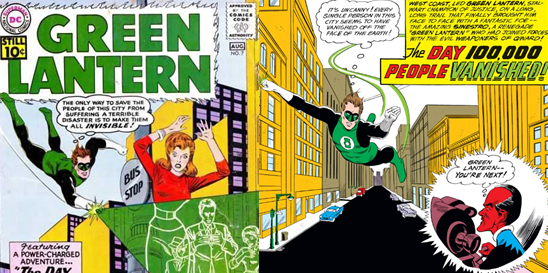
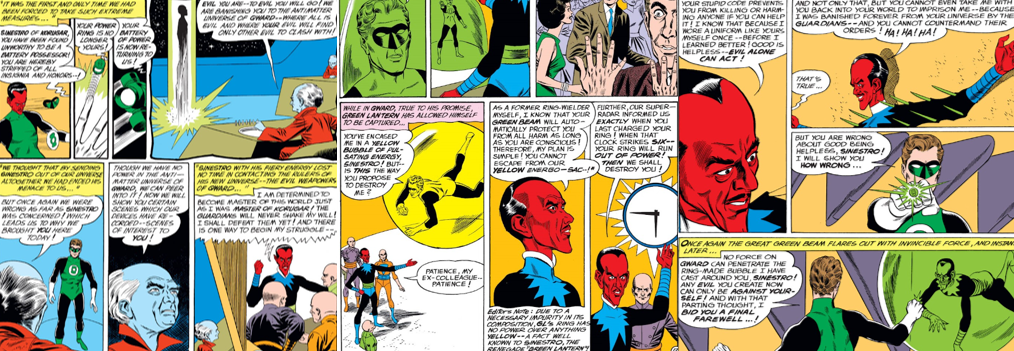
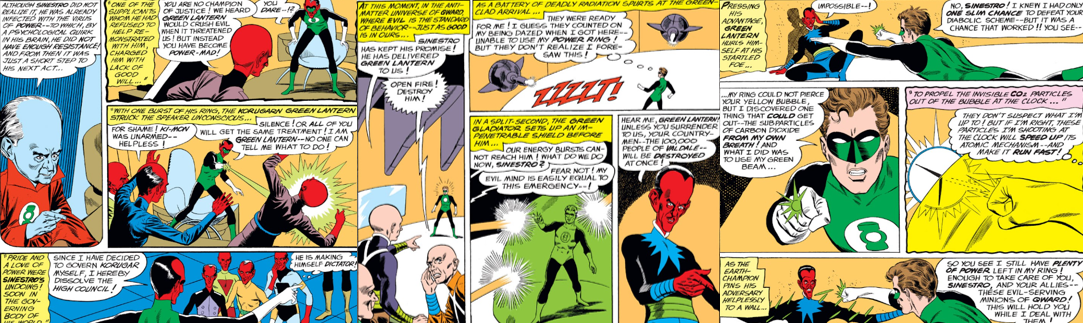




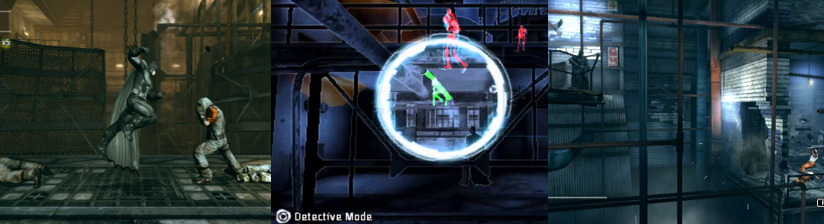
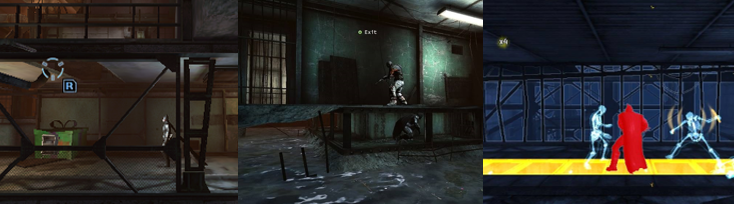
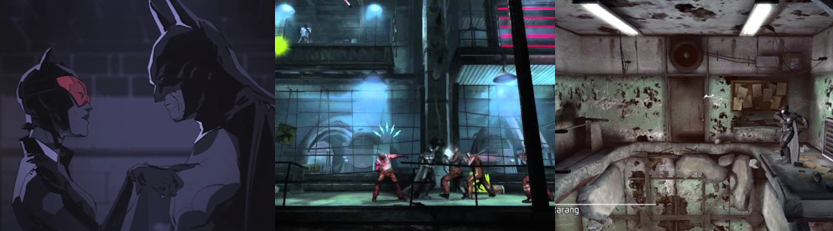
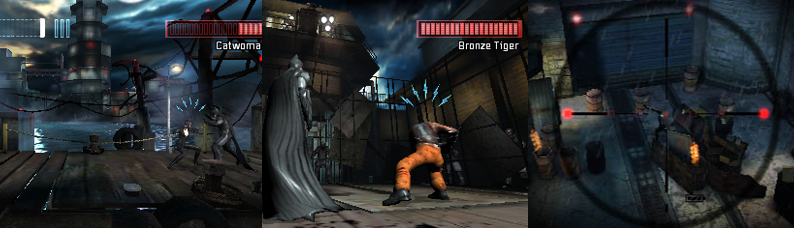
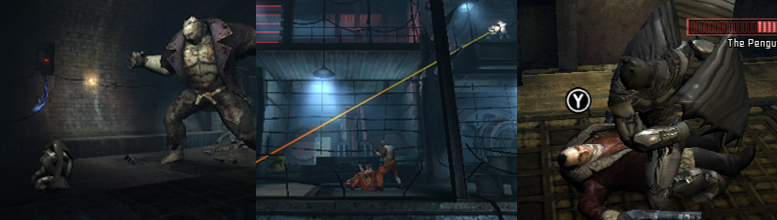
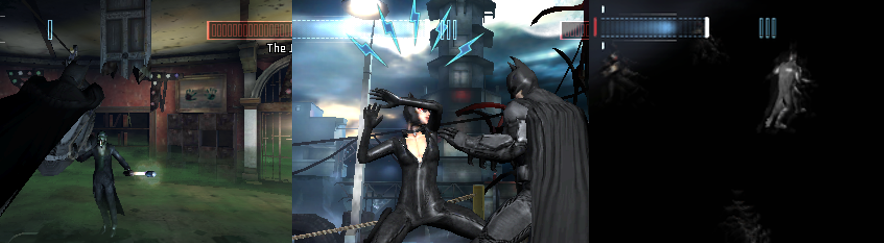




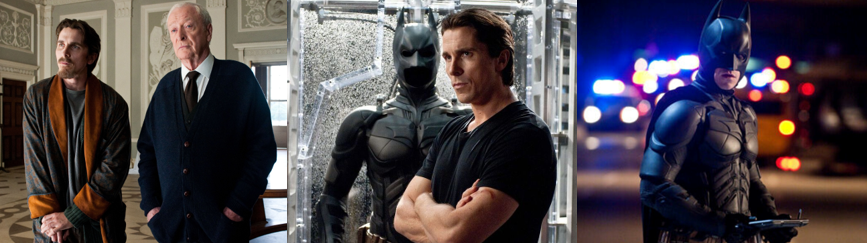
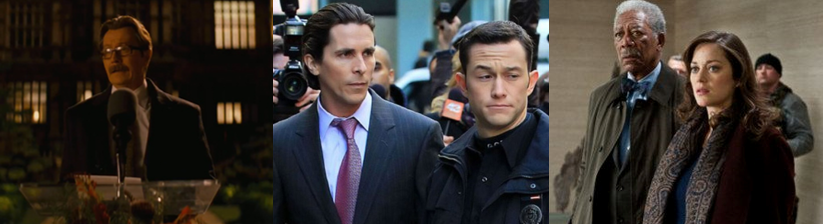
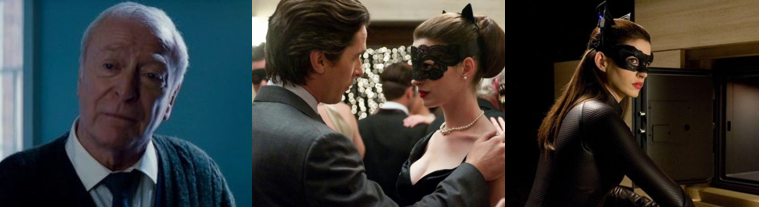
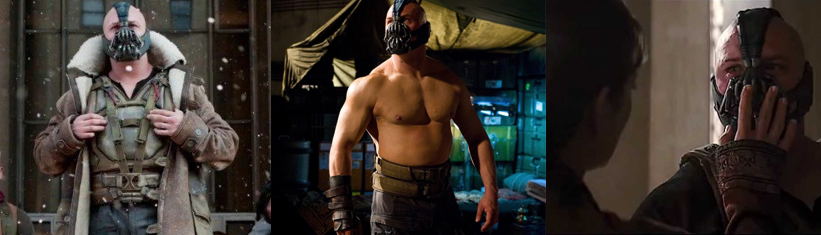
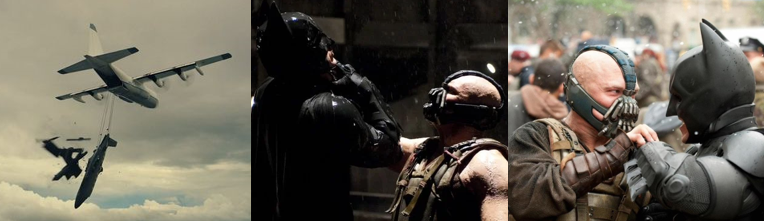
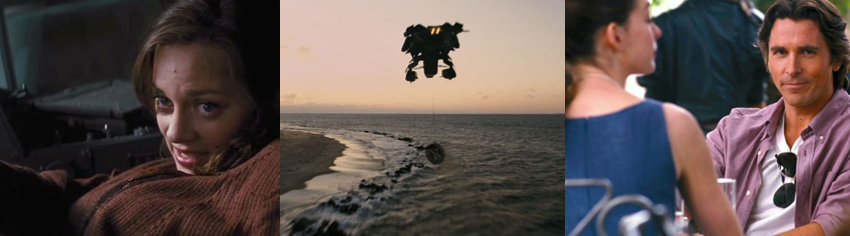


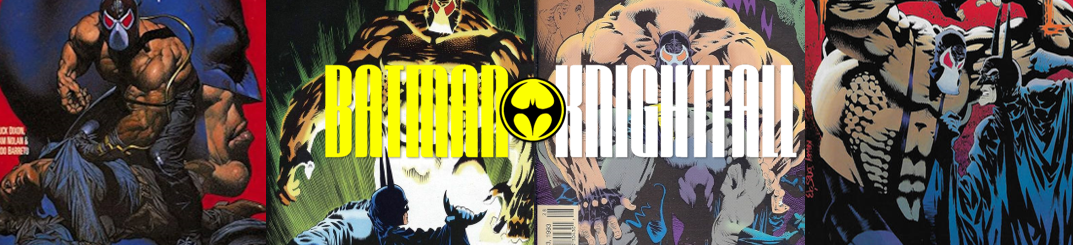
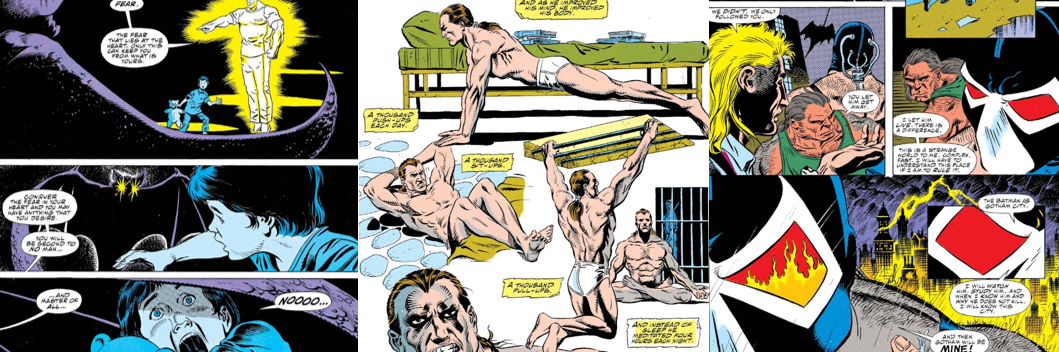
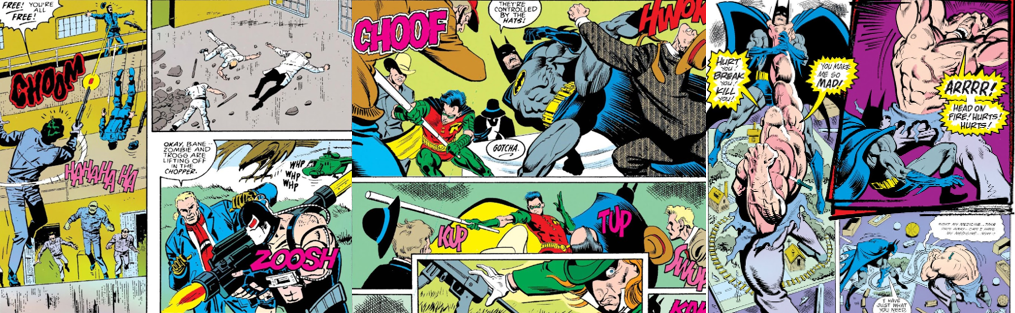
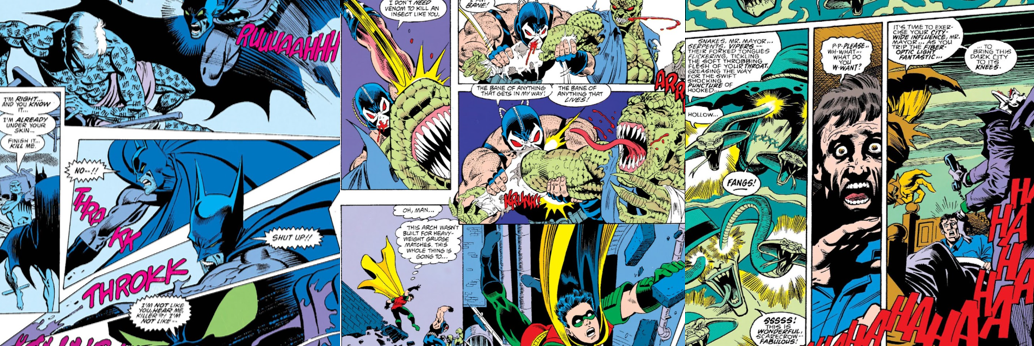
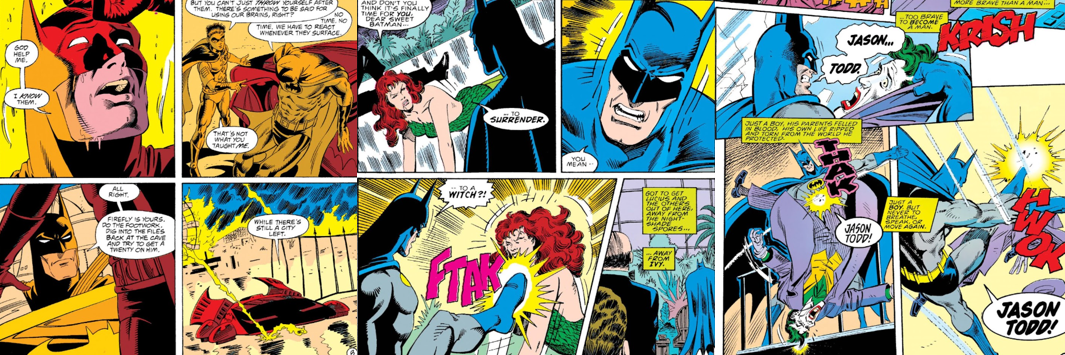
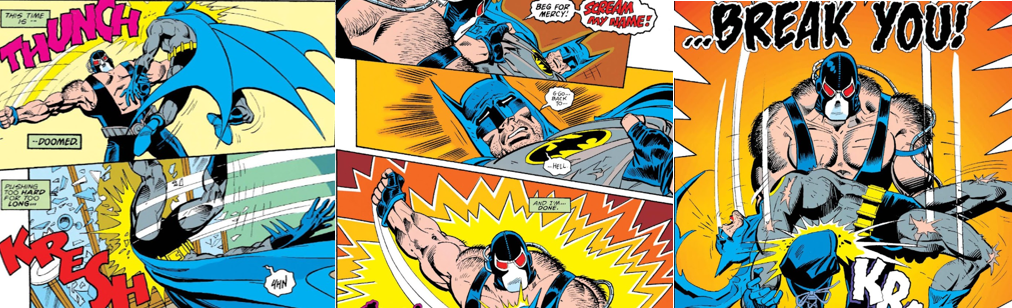
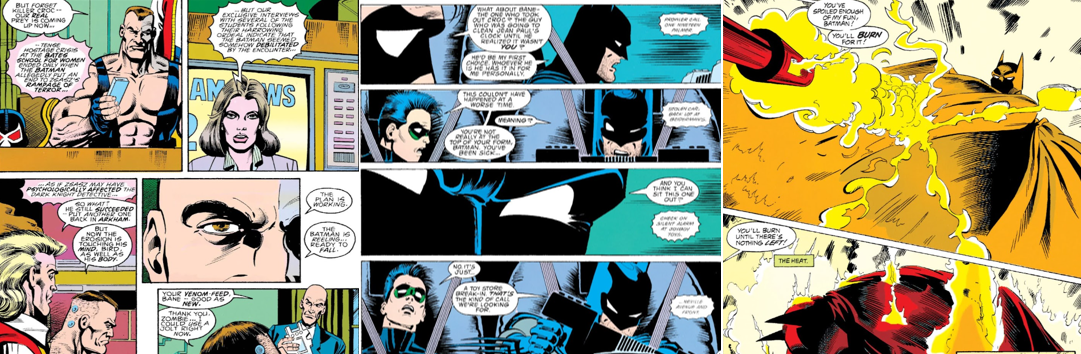
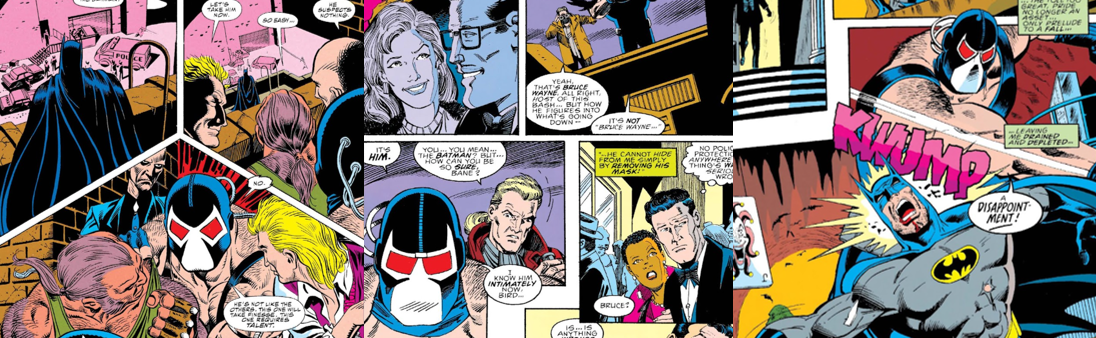

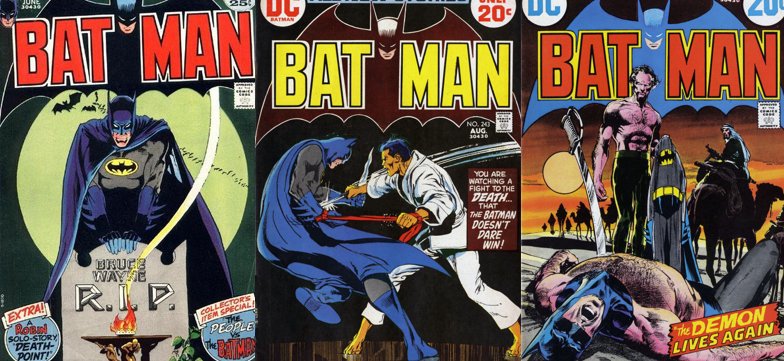
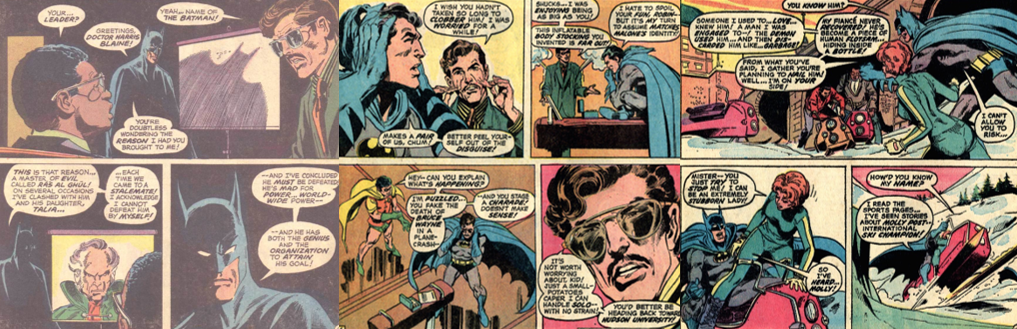
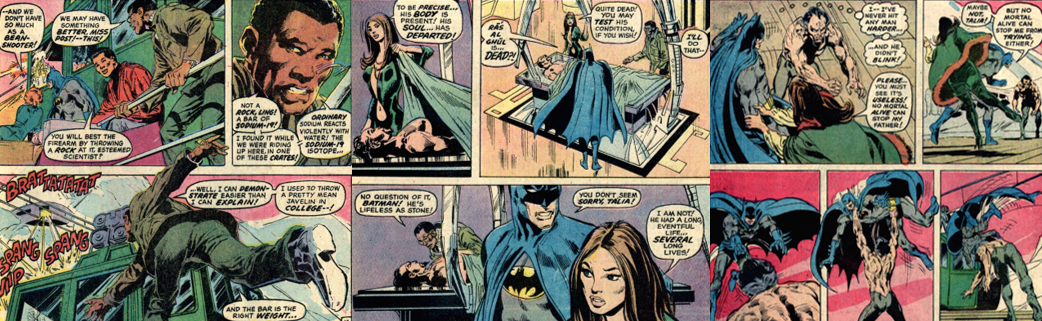
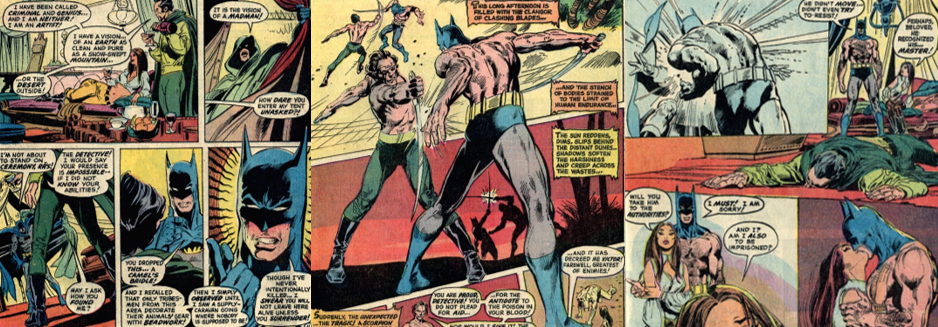
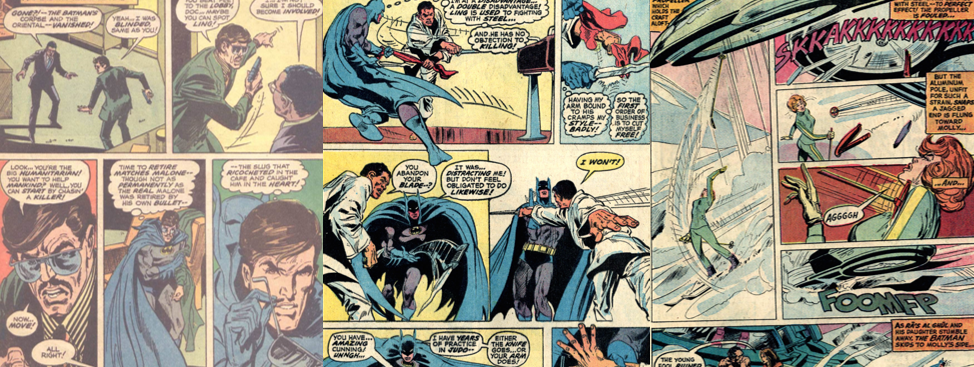
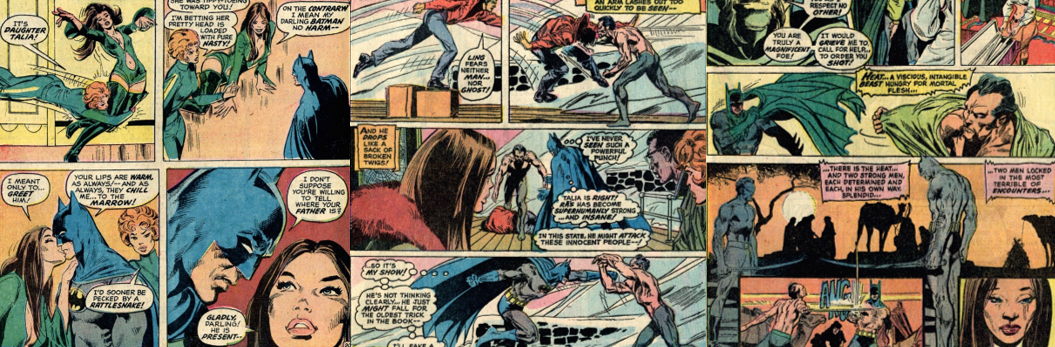






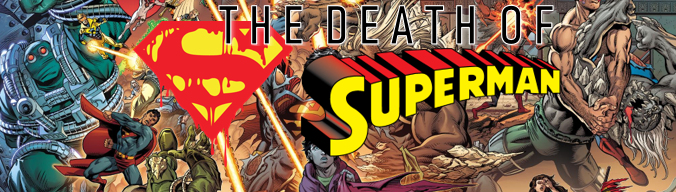
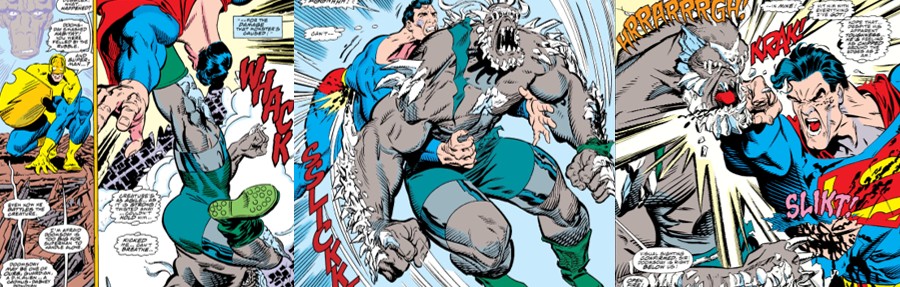








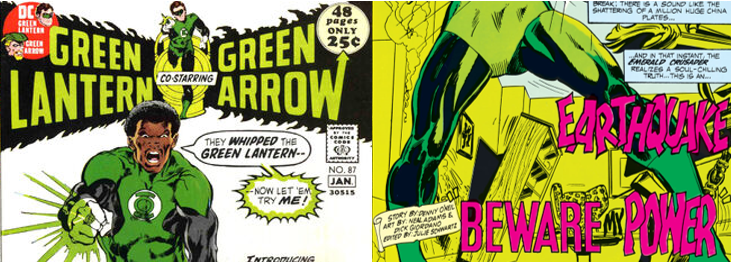
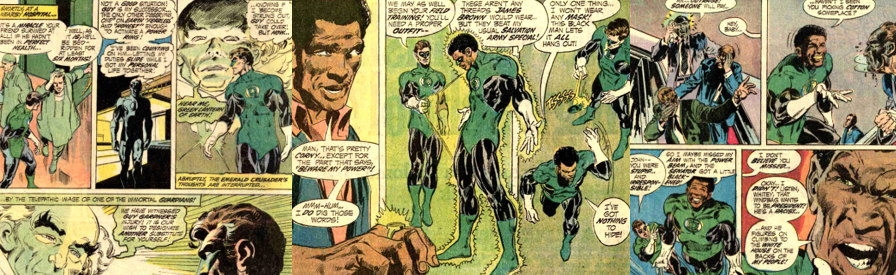
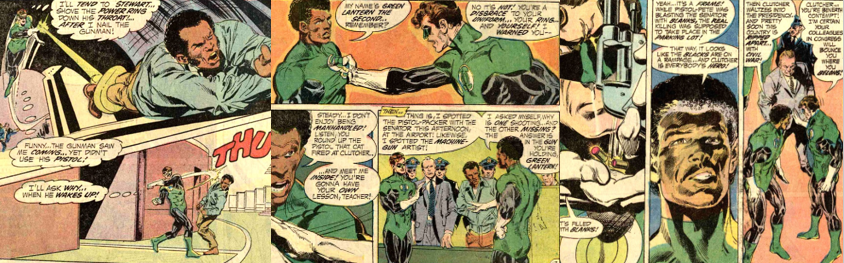
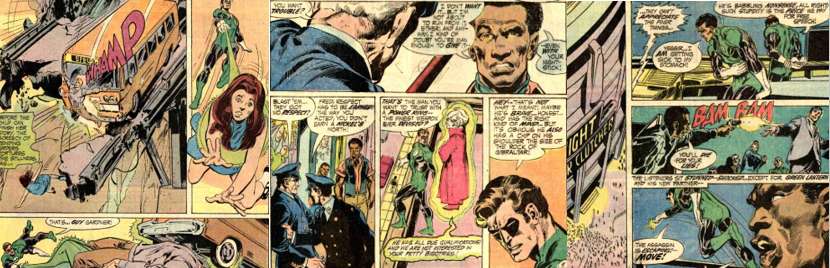


You must be logged in to post a comment.