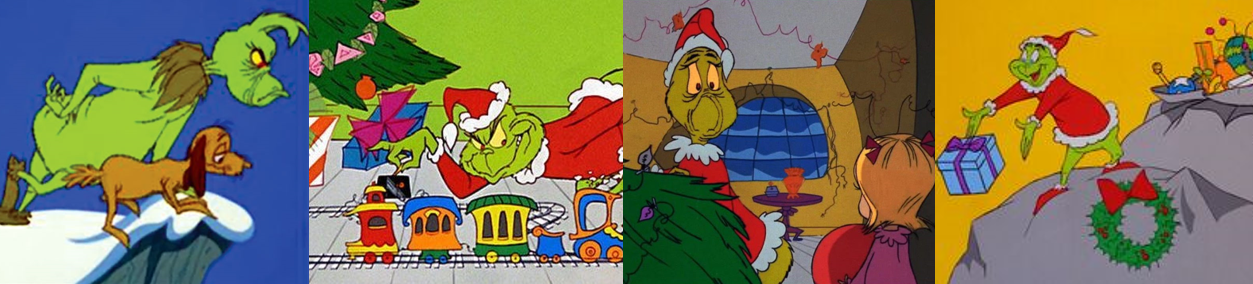

Movie Night [Christmas Countdown]: Dr. Seuss’ The Grinch

Released: 9 November 2018
Director: Scott Mosier and Yarrow Cheney
Distributor: Universal Pictures
Budget: $75 million
Stars: Benedict Cumberbatch, Cameron Seely, Rashida Jones, Kenan Thompson, and Pharrell Williams

The Plot:
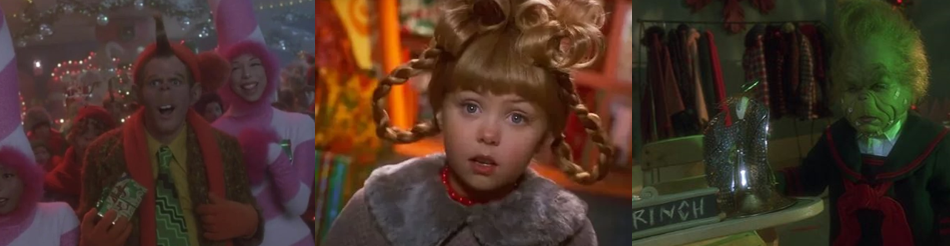
Since the ill-tempered Grinch (Carrey) despises Christmas so much, he tricks impressionable Cindy Lou Who (Seely) into kidnapping Santa Claus and then plots to literally steal Christmas from Whoville! 

The Background: 
Poet and children’s author Theodor Seuss Geisel (more widely known as “Dr. Seuss”) produced “The Hoobub and the Grinch” in 1955, the prototype for How the Grinch Stole Christmas!, which was inspired by the rampant commercialisation of Christmas. The character became an instant and surprisingly complex festive icon. Dr. Seuss once again teamed with the legendary Chuck Jones to adapt the story into a universally loved, animated feature that became a Christmas classic. Though Dr. Seuss refused to sell the film rights to his works, his widow, Audrey Geisel, negotiated a lucrative merchandising deal that eventually led to Ron Howard and Jim Carrey collaborating on a live-action project in 2000. Though a box office success, with Carrey’s performance being widely praised, Dr. Seuss’ How the Grinch Stole Christmas was met with mixed reviews. After their adaptation of The Lorax (Seuss, 1971) proved a commercial, if divisive, success, Illumination produced a new, CGI animated adaptation of How the Grinch Stole Christmas! Benedict Cumberbatch was cast in the title role and insisted on employing an American accent to vibe with his fellow actors and a 3D CGI model of Whoville was crafted using software applications like Maya. With a worldwide box office gross of $540 million, Dr. Seuss’ The Grinch was a commercial success met with mostly positive reviews. Critics praised the heart-warming story and colourful visuals, though it was also criticised for being noticeably lifeless and predictable compared to its predecessors.

The Review:
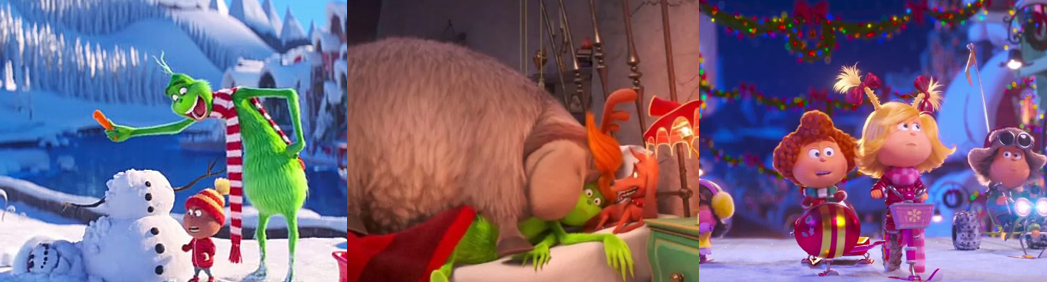
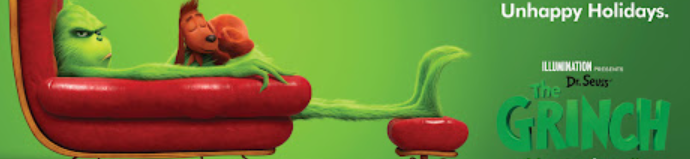
This adorable, all-CGI animated retelling of The Grinch puts its own spin on the original story, and the live-action version, by presenting a familiar but somewhat different incarnation of the titular, miserable creature. As ever, the Grinch lives atop Mount Crumpit with his loyal canine companion, Max (Unknown), who brings him coffee and goes along with his schemes with a boundless enthusiasm. This time, the Grinch is not a feared figure in nearby, Christmas-loving Whoville or a miserly bogeyman they actively avoid, or a figure of hatred and ridicule. In fact, the locals barely acknowledge him! The Grinch isolates in his cosy cave and only begrudgingly ventures into Whoville for groceries, where few bat an eyelid at his noticeably different appearance and nobody reacts with anything but kindness and friendliness. This is most embodied by the energetic Bricklebaum (Thompson), a decidedly Santa Claus-like Who whose Christmas spirit is infectious and who regards the Grinch as his best friend, much to the Grinch’s loathing. Even when he actively shuns and bullies Whos, pushing over snowmen and refusing to help them, the Grinch is simply frowned upon as being a “mean one”. Nobody wonders who he is or where he came from, or why he hates Christmas so much. Indeed, our omniscient narrator (Williams) asks us not to question these things and simply states that the Grinch’s heart is “two sizes too small”. However, while wandering through the bustling seasonal town, the Grinch suffers a small panic attack and is reminded of his childhood, where he was left alone in an orphanage while the Whos celebrated Christmas, coming to despise the season as he was ignored and forgotten.

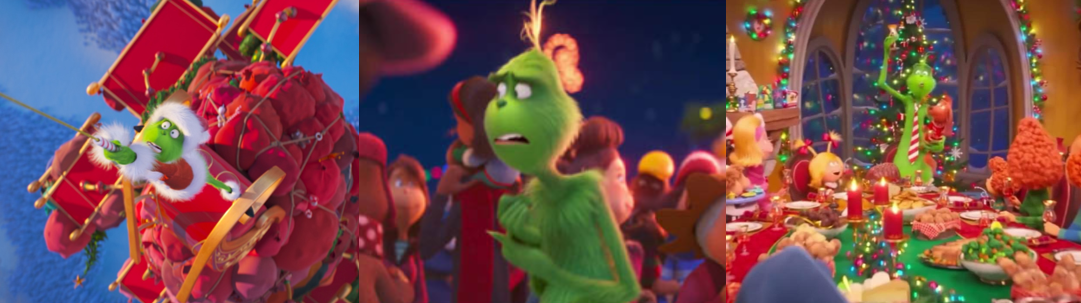
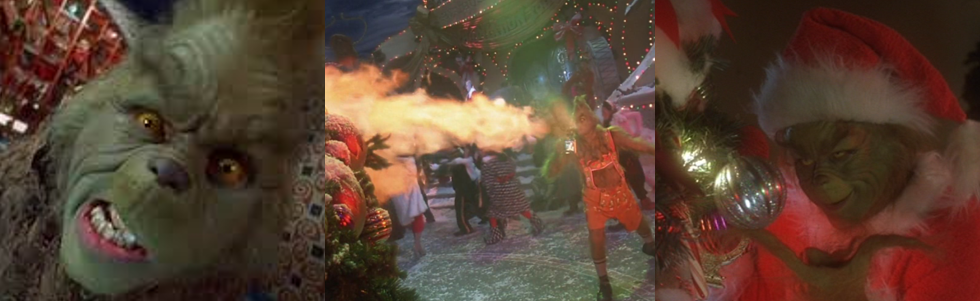
As Cindy hopes to appeal to Santa Claus, the moody Grinch plots to steal Christmas from Whoville.

While stocking up for his annual self-imposed Christmas isolation, the Grinch literally bumps into lively, kind-hearted Cindy Lou Who as she’s frantically trying to deliver her letter to Santa Claus. Disgusted by the Whos’ greedy attitude and demanding ways, the Grinch mocks Cindy Lou and sarcastically tells her to visit Santa if her wishes are so important. Inspired, but overly ambitious, Cindy Lou is only stopped by her overworked mother, Donna Who (Jones), who points out that it’d take Cindy Lou at least a month to reach the North Pole. However, as her Christmas wish is incredibly important to her, Cindy Lou resolves to think of an alternative plan with her best friend, Groopert (Tristan O’Hare), a friendly (if dozy) Who boy whom Cindy Lou shares that her wish is for her mother to have some help and happiness as she’s always working to provide for her three children. Thus, Cindy Lou drafts a plot to stay awake on Christmas Eve to trap Santa Claus and beg for his help, sure that he can work his Christmas magic. This side-plot is completely unrelated to the Grinch until the last act as the titular, furry creature is more distracted trying to scupper the town’s tree lighting ceremony. When this goes awry, the Grinch vows to end Christmas once and for all, sickened by Whoville’s insatiable Christmas spirit and wishing them to pay for being so happy and materialistic all the time. After some half-assed research, the Grinch tries to recruit some reindeer, only to attract a particularly loud mountain goat and be lumbered with “Fred”, and cute, curious, oafish reindeer who nonchalantly becomes part of the Grinch’s plot before he’s revealed to have a family. Begrudgingly, the Grinch substitutes Santa Claus’s traditional eight reindeer for Max, who eagerly pulls the sleigh they stole from Bricklebaum despite how large and heavy it is and even helps the Grinch steal Whoville’s Christmas using his gadgets.

Embittered by a lifetime of loneliness, the Grinch has grown to despite the festive season.

The Grinch is as emotionally complex, and conflicted, as always. Thanks to his troubled childhood, he developed an intense dislike for Christmas and forced himself into exile with Max since loneliness is all he’s ever known. This motivates him to steal Christmas so everyone feels as bad as he does. However, it’s clear that the Grinch desires more deep down in his small heart as he sadly watches as Whoville prepares and celebrates Christmas and allows Fred to return to his family despite needing him for his plot, showing that the Grinch isn’t entirely heartless. Indeed, he enjoys spending time with Max in montages, playing/cheating at chess and going on rides, and greatly appreciates Max’s kindness and companionship, especially as he puts Max through a lot, like rigging him up to a helicopter harness to get intel on Whoville. Thankfully, this film ignores the backstory and Grinch/Who nonsense from Jim Carrey’s film, though I do think it suffers a bit from there being such a disconnect between the Grinch and Cindy Lou. As the Grinch barely interacts with Whoville, there are less scenes of him harassing the Whos or their reactions to him, and the focus is more on how they’re happily obsessed with Christmas rather than fearing the cantankerous Grinch, who has almost no impact in their daily lives. Cindy Lou isn’t mesmerised by him, instead, focusing on Santa Claus and her exhausted mother; the Mayor (Angela Lansbury) is merely a cameo rather than a rival; and the Grinch spends more time conducting tests with his sleigh than causing chaos in Whoville. Still, Benedict Cumberbatch was super enjoyable in the role, putting on a sarcastic voice that gave way to some emotional scenes as the Grinch relives his past and steps up his campaign against Christmas.

The Nitty-Gritty:
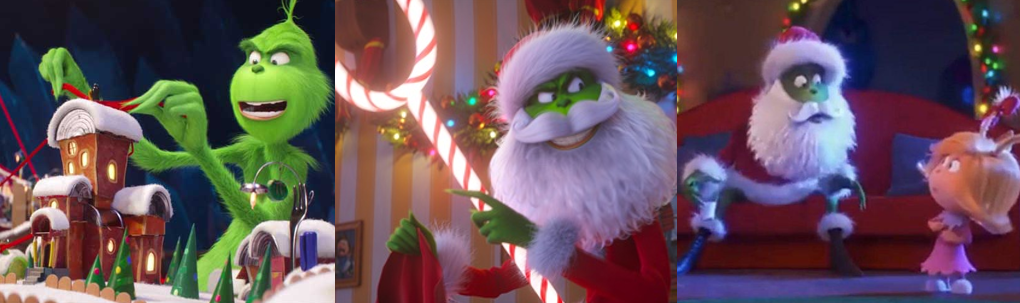
As is to be expected from Illumination, The Grinch looks fantastic. There’s an adorable aesthetic to the entire film that makes it very appealing and the animation is much more suitable to Dr. Seuss’ unique art style, which frankly looks horrific in live action. Cindy Lou was especially adorable, easily melting the Grinch’s heart with her big, expressive eyes and pure-hearted plea, but I also enjoyed how colourful and lively Whoville looked. Although the Grinch isn’t said to have superhuman strength like in the live-action version, cartoon logic and physics make him incredibly durable and allow him to perform bizarre feats like lugging around a massive, overloaded sleigh and muscle his haul to safety after his change of heart. Surprisingly, The Grinch omits the traditional “You’re a Mean One, Mr. Grinch” during his malicious scheme (which also sadly lacks him gobbling up Christmas presents). Whoville still sing their usual Christmas melody, “Welcome Christmas” around their gigantic tree, but the film’s more likely to use traditional Christmas carols than original songs, though I did like the use of “Zat You Santa Claus?” by Buster Poindexter and His Banshees of Blue. The Grinch is depicted as more of an inventor, though sadly this is mostly offscreen and comes quite late into the film. He cobbles together extending shoes and grappling hooks for himself and little mech suits for Max, which help him to steal Christmas in record time. I would’ve liked to see the Grinch tinkering away with some of these inventions throughout the film or using some tech to try and wrangle reindeer rather than a simple horn and a lasso.

Cindy Lou melts the Grinch’s heart and shows him the true meaning of the season.

Thanks to Groopert and their other friends, Cindy Lou hatches a foolproof scheme to trap Santa Claus. Realising that she could never hope to stay awake all night, she booby-traps an enticing cookie to trap Santa with a snare. Unbeknownst to her, the Grinch and Max are methodically stripping Christmas from Whoville. While raiding Cindy Lou’s house, the Grinch falls into her trap and is stunned when the Who-girl asks not for presents, but for “Santa” to help her mother. Though he tries to forget the whole thing and dump his haul, the Grinch is haunted by Cindy Lou’s plea and outraged to find that Whoville’s Christmas spirit hasn’t been dampened in the slightest. Still, touched by Cindy Lou’s words and realising that the spirit of Christmas means more than gifts, the Grinch finds his spirits lifted and his heart triples in size, bringing him a sense of joy and happiness. Immediately remorseful, the Grinch decides to return everything he’s stolen, only for his overloaded sleigh to plummet off Mount Crumpit! Luckily, Fred and his family and Max help the Grinch save the sleigh, and the Grinch slides down the mountain the apologise to Whoville, and to Cindy Lou specifically. Even then, Whoville barely acknowledges the Grinch except for a general sense of awe and Bricklebaum’s enthusiastic shouting. They simply look on, stunned, to see their stolen Christmas return and make no comment. The Grinch slinks home, awkwardly gifting Max a squeaky toy, before Cindy Lou invites the Grinch to Christmas dinner. Though anxious and unsure, the Grinch tags along, awkwardly interacting with the guests and reluctantly enjoying the Christmas cheer. Finally part of the festivities and accepted for the first time, the Grinch realises that he didn’t really hate Christmas; just the feeling of loneliness he associated with the season. With that, the Grinch accepts the Whos’ friendship and honours them with a toast, fully embracing the spirit of the season.

The Summary:
I was surprised by how much I liked Dr. Seuss’ The Grinch. Although the live-action version is a Christmas tradition of mine and I love Jim Carrey, I’ve always found it to be a bit of a slog and just bizarre to look at. This beautifully animated film addresses at least this latter criticism, bringing Dr. Seuss’ surreal characters and story to life with adorable grace and crafting a colourful, visually enjoyable world for them to inhabit. Dr. Seuss’ The Grinch does drag a bit in the middle, however, as filmmakers continue to dream up ways to pad the short story out, providing an alternative backstory for the Grinch and following his quest to rid Whoville of Christmas. I enjoyed some of these aspects, such as his simple but tragic childhood and the continuing emphasis on him being a sad, lonely figure, but I wasn’t a fan of how little he interacted with Whoville. Benedict Cumberbatch did a delightful job in the role so it’s disappointing not to see his Grinch interacting with the Whos, especially Cindy Lou, all that much. It ironically ties into the Grinch’s feelings of abandonment and exile to have the town basically ignore him rather than living in fear of his antics, but it created an odd disconnect for me that I struggled to reconcile. It’s also bizarre that there aren’t more musical numbers in the film (though others may disagree) and that more focus isn’t placed on the Grinch as an inventor since he comes up with some fun gadgets. Ultimately, Dr. Seuss’ The Grinch is a relatively harmless Christmas cartoon for kids that has a few gags and moments that may make adults chuckle. It carries the same heart-warming message about the true meaning of Christmas as ever and has some fun moments kiddies will probably get a kick out of, but it feels like it’s lacking an extra spark to make it a true Christmas classic.

My Rating:

Rating: 3 out of 5.

Pretty Good

Did you enjoy the all-CGI Dr. Seuss’ The Grinch? How do you think it compares to the book and other adaptations? Did you enjoy the additional lore added to the Grinch or did you also find it unnecessary? What did you think to Benedict Cumberbatch’s performance? Can you be a Grinch around Christmas? Which Christmas movies and specials are you watching this year? Whatever your thoughts on Dr. Seuss’ The Grinch, leave them in the comments and donate to my Ko-Fi to suggest other festive films for the site.

Movie Night [Christmas Countdown]: Terrifier 3

Released: 11 October 2024
Director: Damien Leone
Distributor: Cineverse / Iconic Events Releasing
Budget: $2 million
Stars: David Howard Thornton, Lauren LaVera, Antonella Rose, Samantha Scaffidi, and Elliott Fullam

The Plot:
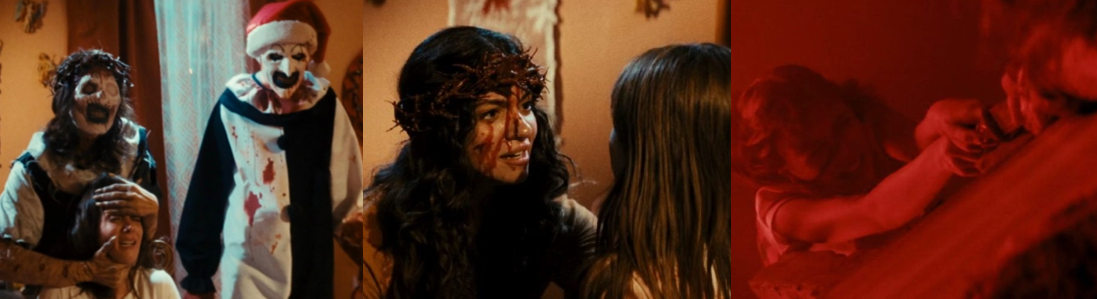
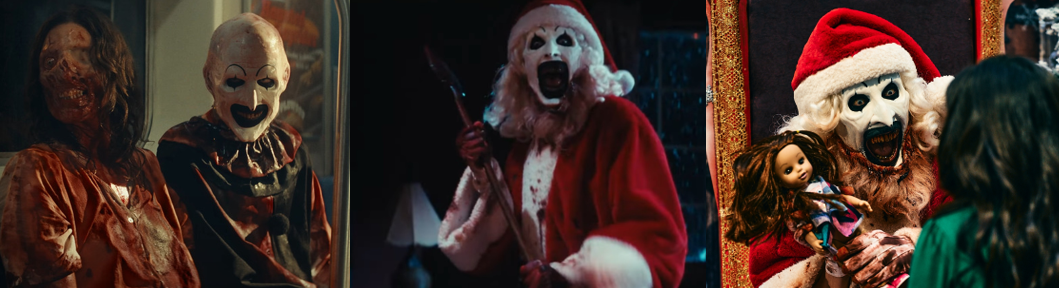
Supernaturally reborn Art the Clown (Thornton) and his demonic cohort, Victoria Heyes (Scaffidi), torment traumatised Sienna Shaw (LaVera) and her family at Christmas.

The Background:
The fear of clowns (or “Coulrophobia”) crops up a lot in horror and reality, largely thanks to fictional “Evil Clowns” like Stephen King’s Pennywise and twisted psychos like John Wayne Gacy. Though I’ve never found clowns particularly scary, writer and director Damien Leone touched upon Coulrophobia with The 9th Circle (2008), a short film that featured a prototype of Art the Clown (Mike Giannelli). Though merely a supporting character, Art was popular enough for Leone to bring him back in Terrifier (2011) and All Hallows’ Eve (2013), and to expand the character into a modern-day slasher icon in Terrifier (2016). Though a modest success met with largely positive reviews (especially for David Howard Thornton’s performance and the sickening gore), Leone was dissatisfied with some his characterisations of the protagonists and sought to address this in the 2022 sequel. Weathering criticisms about its brutal content, Terrifier 2 was a critical and commercial success and Leone was excited to add additional nuance to Samantha Scaffidi’s returning character. Leone also gave wrestler Chris Jericho additional screen time, reaped the benefit of a vastly increased budget, and sought to emulate John Carpenter by shooting the film with Panavision anamorphic lenses. With a $90 million box office, Terrifier 3 was the most successful of the franchise at the time, and the reviews mirrored this. While the narrative and extreme content continued to be criticised, critics praised the ever-expanding lore and characters, with many reviews lauding the various complex and captivating performances, and this success all-but ensured the continuation of the controversial slasher franchise.

The Review:
Terrifier 3 opens with pure, unadulterated shock value: a home invasion around the festive season where Art’s dressed as Santa Claus and which establishes the slightly different direction of the film. Namely, Leone relies far more on long, lingering shots and a tense build-up to the brutal gore. Thus, we follow cute youngster Juliet Thomas (Luciana VanDette), who’s awakened by the sounds of commotion on the roof she adorably believes is Santa. While her mother, Jennifer (Krsy Fox), encourages her imagination to get her back to sleep, neither her father or brother (Mark (Alex Ross) and Timmy (Kellen Raffaelo), respectively) have any time for her wild claims. Juliet’s ecstatic when she creeps downstairs and sees Santa lingering near the family tree, but enters a state of awestruck shock when Jolly Ol’ Saint Nick pulls out a fire axe and tip-toes upstairs to hack Timmy to death (off camera, but still rather shocking) and brutalise Mark. Yes, it’s Art the Clown in his newest festive guise, as spiteful as ever. He relishes Jennifer’s screams as he bludgeons Mark and gleefully chases her downstairs before caving in the distraught mother’s head. Art then helps himself to milk and cookies and even does the dishes. Art spies Juliet hiding in a kitchen cupboard, though her fate’s ultimately left ambiguous and I wouldn’t be against seeing her return in a future film. This opening is extremely unsettling, mainly because it’s easy to imagine it happening. Mark tends to leave the front door unlocked and ajar and he and his son are slaughtered before they even knew what hit them. To say nothing of Jennifer’s horrified reaction to her son’s body parts strewn around his bloodstained room and the trauma Juliet suffered as she tries to comprehend the horror happening before her eyes. It’s extremely effective, mainly because of the time Leone takes to build anticipation and the way he teases us with bits and pieces of the kills. I am surprised that Terrifier 3 didn’t go the whole hog and show Art hacking a child to death, considering the franchise isn’t exactly known for pulling its punches.

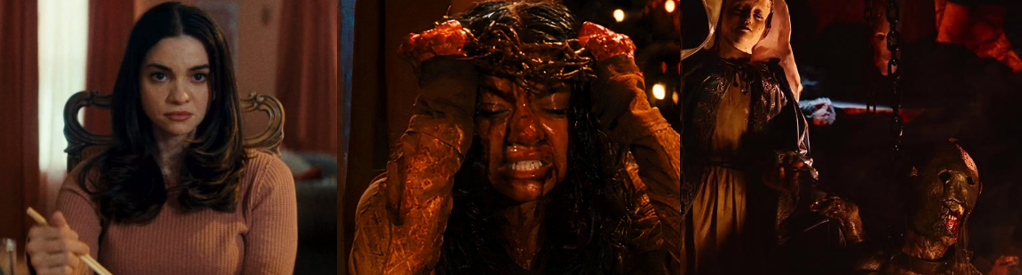
Traumatised by her encounter with Art, Sienna struggles to realise her seemingly divine destiny.

A security guard (Chris Jericho) at the mental hospital where the horrifically disfigured Victoria Heyes has been incarcerated since the first movie then stumbles open the scarified wretch consuming a nurse, Art’s disembodied head joining in and connected to Victoria by a ghastly umbilical cord! Victoria lets out a plea for help that appears to be her last gasp of sanity and humanity before the demonic force (the “Little Pale Girl” (Amelie McLain) from the last film) possesses her. The demonic Victoria then cheerfully joins Art in tearing the guard’s head to pieces, Art’s headless body having sprung to life and travelled across town after ripping off a cop’s (Stephen Cofield Jr.) head. This reanimation and possession seems to exhaust them as they travel to an abandoned house and enter a strange hibernation, Art reclining in a rocking chair and Victoria slitting her wrists in a bathtub, where they wait for five years. It’s not entirely clear why: potentially exhaustion, as I said (Art seems visibly annoyed with Victoria’s antics, as though cranky and needing a nap) or possibly because the dark power of the Halloween season is leaving them. Regardless, they lie dormant and the “Miles County Clown” becomes a modern-day myth discussed on true crime podcasts like Mia’s (Alexa Blair Robertson), a fangirl who’s hooking up with Jonathan’s (Fullam) roommate, Cole (Mason Mecartea). We catch up with Sienna as she’s being discharged from five years in therapy following her bizarre and brutal encounter with Art. Jonathan, however, is in college and seemingly happy to survive on a diet of denial, pills, and isolation, despite initially being so obsessed with demonology and possession that he wrote Sienna letters about his wild theories regarding Art, the demonic forces behind him, and the strange, seemingly angelic destiny bestowed upon Sienna by their father, artist Michael Shaw (Jason Patric). With her mother dead, Sienna stays with her aunt and uncle, Jess (Margaret Anne Florence) and Greg Shaw (Bryce Johnson), though their compassion wanes as Sienna becomes agitated and aggressive after first sensing Art’s presence and then receiving conformation that her tormentor is still alive.

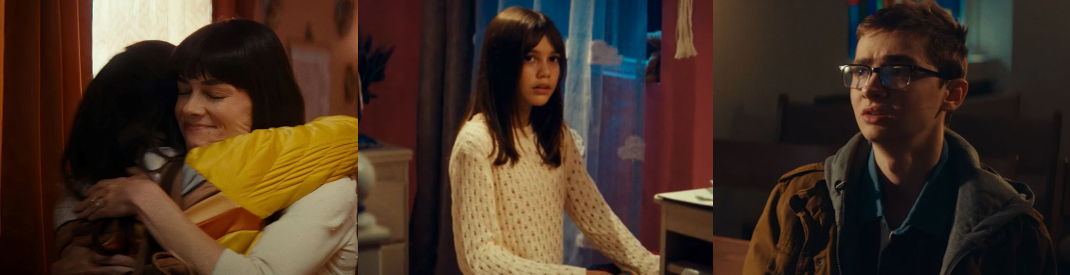
Though Sienna tries to find peace with her extended family, Jonathan remains in denial.

Sienna is very different from the last movie but is initially determined to get back on track and rediscover herself by rekindling her sisterly relationship with her cousin, Gabbie (Rose). Gabbie is in awe of Sienna and looks up to her as an idol and older sister, admiring Sienna’s scars and reading her journal, a private musing of the nightmares that still haunt our traumatised heroine. Sienna tries to rebuild bridges with Jonathan using the festive season and is dismayed to find her little brother deep in denial and refusing to believe that Art is still alive. Despite her years of therapy, Sienna is still very fragile; she relies on medication to sleep and is shaunted by screams and visions from her experiences. She’s either hearing the dreaded “Clown Café” jingle or seeing delusions of her brutalised best friend, Brooke (Kailey Hyman), feeding her survivor’s guilt and leaving her a neurotic mess. However, as good as LaVera continues to be, I would’ve liked to see more emphasis placed on Sienna’s fractured mental state. Brooke could’ve shown up more, for example, and Sienna’s scars could’ve been more prominent. Her relationship with Gabbie was adorable, though, and there’s a sense that Sienna relies on this normalcy to move on from her past, but Sienna is quick to anger when Mia badgers her and erratically lashes out at Jonathan when he seemingly turns his back on her, unaware that he’s hiding his panic attacks. Terrifier 3 delves a little more into Sienna’s past where, as a child (Luciana Elisa Quiñonez), she was doted on by her father, who depicted her as an angelic warrior. Jonathan also claims Sienna was “chosen”, presumably by angelic forces seeking to counterbalance the demon that possessed Art and Victoria, and the film teasing with a bizarre nightmare depicting the statuesque Virgin Mary (Juliana Lamia) forcing a bound demon (Michel Vidal) to forge Sienna’s magical sword.

Joined by the demonic Victoria, Art’s more supernatural and malicious than ever.

Though he may have started as a theatrical, but still mortal, serial killer, Art has become something far worse. He was essentially supernatural in Terrifier 2, but it’s taken up a notch here, with his headless body lumbering about and killing and his disembodied head being reborn through Victoria. Yet, though Art can reattach his head, shrug off bullets, and hibernate for years, he still feels pain when attacked by Sienna and her sword, and his abilities remain rooted in his bag of tricks (now given a festive makeover). Art cobbles together a liquid nitrogen spray device and later boobytraps gifts with a homemade bomb, and cosplays as Santa seemingly on a whim. He spots Charles Johnson (Daniel Roebuck) drinking in a bar and excitedly accosts him, believing he’s the real Santa, only to steal his outfit and leave Johnson a frigid, bloody mess. Art delights in luring victims with his festive guise, enjoying the same degree of anonymity his clown outfit gave him at Halloween, making his horror even more visceral since he targets children. Art’s joined by Victoria, a demonic presence who literally (and gruesomely) gets off on Art’s antics. Although Victoria’s very loquacious, she’s very aloof about who and what they are. Jonathan’s theory that the demonic force possessed the worst person imaginable (a serial killer) and is seeking to inhabit another, stronger body seems as true as his belief that Sienna’s been “chosen” to oppose these forces. Victoria first mocks Sienna’s status as a saviour then compliments her strength, and then literally tries to break Sienna by murdering what little family she has left so she (as in Victoria) can forcibly possess her. Unfortunately, this finale kind of relegates Art to Victoria’s henchman as she dictates the torture and is presented as something of a puppet master. It’s only a fleeting suggestion and the two are depicted more as equals when they do appear onscreen, but I would prefer Leone steer away from diminishing Art like that in future instalments.

The Nitty-Gritty:
I’m not going to get into a debate about whether or not Terrifier 3 is a Christmas movie. It’s set during the festive season, there are Christmas trees, mall Santas, presents, and trappings everywhere, and Art’s going around dressed as Santa, which is enough for me! I will, however, debate the evolving lore. While it seems like Leone is simply making up the story as he goes, suggesting things that may or may not be relevant in the future, there’s a strong suggestion of biblical forces at work. Jonathan believed the Little Pale Girl was the key to it all the film suggests that Art was once a serial killer who, upon his death (either in Terrifier or before), was possessed by a demonic force like the demon in Victoria. Someone, presumably angels or another divine presence, then seemingly chose Sienna to counter these forces and worked through her father to prepare her for this destiny, bestowing her with a magical sword forged by a captive demon. However, while this is said to be the only weapon capable of stopping Art and Victoria, Art still recovered after being beheaded by it and he survives another stabbing from the blade here, though the sword does heal Sienna’s wounds. Sienna previously fell down some kind of Hell hole in Terrifier 2 and another pops up here to swallow Gabbie and the sword, and Sienna’s haunted by memories of the Clown Café, an unsettling upbeat corner of whatever Hell these demons are from that seemingly relishes the suffering of others. It’s intriguing and there are some interesting visuals and suggestions here, though Terrifier 3 stubbornly refuses to provide any explicit details, perhaps to maintain a sense of mystery or perhaps because Leone hasn’t figured out how it all fits together yet. Instead, the film uses it as a backdrop to Sienna’s fractured mental state, which leaves her on edge and tormented by nightmares, though I would’ve liked to see more of these so we could get a better sense of how much she’s struggling with her guilt.

The film certainly delivers the brutal kills you’d expect, though with more suspense than before.

Terrifier 3 had an uphill battle trying to top the last film’s gruesome kills and, perhaps in recognition of this, puts more effort into building tension before Art strikes. Naturally, there are exceptions: Art’s headless body pounces upon the cop that discovers it, for example, Victoria viciously stabs an unassuming exterminator (Michael Genet) through the neck with a shard of glass, and Art opts to simply gun down the bar patrons before torturing Charles. Interestingly, some kills are kept off-screen: we never see what Art and Victoria do to the Art cosplayer (Peter Mitchell), for instance, and both Greg and even Jonathan die off camera. This was an odd choice for me, and it felt like some scenes were cut from the movie, so jarring was their end, to the point where I’m assuming Jonathan is either still alive or we’ll get a flashback in Terrifier 4. Of course, there’s plenty of onscreen brutality and it’s just as macabrely fascinating and disturbing. While Art starts rather pedestrian with a fire axe, he and Victoria are soon ripping Chris Jericho’s jaw off and it’s not long before demented clown is slicing through another exterminator’s (Jon Abrahams) head with a Stanley knife and ripping his skin down his skull! Art’s particularly proud of his liquid nitrogen contraption, which he uses to flash-freeze Charles’ leg, hand, and face before bashing the limbs with a hammer and ripping his beard off. The film’s standout kill sequence sees Art attack Cole and Mia in the college showers with a chainsaw, cutting through bone and muscle and leaving Mia a gibbering mess of sliced meat as he grants her wish to be face-to-face with pure evil. Cole gets the worst of it, having half a hand chopped off, then his leg severed in sickening fashion, before being sliced up the rear and then from the groin to his belly, leaving him little more than steaming meat on the tiles. While it’s truly bizarre that Jonathan’s supposed death happens offscreen, it leads to a particularly ghastly end for Jess as she gets a plastic tube hammered down her throat and is forced to swallow rats before having her throat cut. It’s a scene eerily similar to a sequence form American Psycho (Ellis, 1991) and one that, again, I feel could’ve been even more extreme, like the rats could’ve come clawing out her nether regions or something!

Although Sienna dispatches Victoria, Gabbie falls to Hell and Art escapes into the night…

Perhaps the most distressing kills, however, are those that befall the unsuspecting children fooled by Art’s disguise. After posing as Santa at the mall, Art leaves a bunch of kids and their parents splattered across the festive scenery with a bomb, which deeply unsettles Sienna to the point where she starts screaming for Jonathan to be brought to them so they can get to safety. Although Greg begrudgingly goes to get him, Sienna wakes from a disturbing dream to find her uncle beheaded and nailed to the lounge wall and Art and Victoria in her home. Bound and gagged and beaten with a mallet, Sienna’s forced to watch her aunt’s horrific death. Her relief at finding Gabbie alive is short-lived since the girl’s held at knife point by Art and Victoria triumphantly presents Jonathan’s gory skull to her captive. When her first attempt to possess Sienna fails, Victoria prepares to kill Gabbie to finally break Sienna’s spirit but decides it’d be amusing to watch Sienna open Gabbie’s Christmas present first. After Art bashes Sienna’s hands to a pulp, Victoria demands she open the gift but she and her mute cohort are horrified when it turns out to be the magic sword (which Sienna recovered from the Terrifier funhouse, though I’ve no idea why she left it there or why we never see her get it…) Empowered by the sword, Sienna stabs and beheads Victoria and then jousts with Art, who attacks with his chainsaw. Although Sienna pins Art to the wall, she’s forced to abandon him when Victoria’s remains rot away and open a portal to Hell right under Gabbie! Despite Sienna’s best efforts, she fails to save her cousin, who’s sucked into the void alongside the sword. Although Sienna’s wounds heal and she’s determined to save her surrogate sister, Art escapes into the night to continue unsettling the populace, ending the festive slasher on a cliff-hanger…

The Summary:
I had high hopes heading into Terrifier 3. The first one might’ve been a bit rough around the edges, but the sequel was such a vast improvement, with memorable gore and a relatable and adorable main character to root for. Terrifier 3 seems to struggle with its momentum right from the start, substituting gruesome kills for suspense, which would be fine if this wasn’t a series known for its in-your-face splatter gore. While there are some standout kills and many of the dismemberments and torture sequences are as brutal as you’d expect, it’s jarring when the camera cuts away or significant characters like Jonathan are seemingly killed onscreen. If Leone is going for pure shock value by killing kids, the least he can do is follow through and present some nightmarishly unsettling deaths rather than merely showing us the bloody aftermath. It doesn’t help that Terrifier 3 feels like it’s making the story up as it goes along, clumsily suggesting a coherent narrative through exposition and teases but potentially setting up for an underwhelming payoff. Art’s still very mysterious but the supernatural, demonic context takes some of the allure off him, as does relegating him to Victoria’s henchman in the finale. It’s a fleeting moment and one that’s inconsequential compared to the carnage Art unleashes throughout the film, but I wonder if it might’ve been just as good, if not better, if Victoria had accompanied him throughout and joined in with the kills, if only to cement them as equals. Similarly, while I enjoyed Sienna’s struggles with her trauma and her desperate attempts to continue on after everything she went through, I don’t think the film focused on her delusions and nightmares enough. It could’ve been so much more harrowing if she was having visions of her loved ones so that she (and we) question her sanity. Instead, it’s kind of swept under the rug near the end. It feels like some of this (like other sequences and deaths) were cut to save time, resulting in an uneven narrative that left me unsatisfied at times. David Howard Thornton and Lauren LaVera still give excellent performances, newcomer Antonella Rose is everything Elliott Fullam isn’t, and I did like seeing Victoria depicted as a cackling witch and the hints towards some greater biblical endgame…I just hope the payoff is satisfying and it all fits together in the end.

My Rating:

Rating: 3 out of 5.

Pretty Good

Did you enjoy Terrifier 3? What did you think to Victoria joining Art as a demonic partner? Do you agree that more focus should’ve been placed on Sienna’s fractured mental state? Which of the kills was your favourite and what did you think to the greater emphasis on tension? Did you also feel like key moments were cut from the film? What’s your favourite Christmas-themed scary movie and which Terrifier film is your favourite? Let me know your thoughts about Terrifier 3 in the comments, support me on Ko-Fi, and check out my other horror and Christmas content!

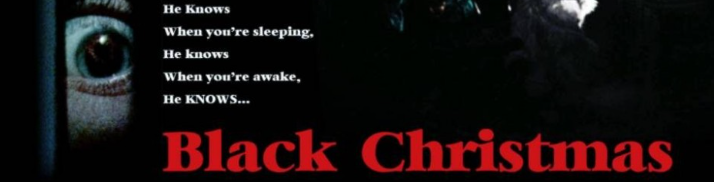
Movie Night [Christmas Countdown]: Black Christmas (1974)

Released: 11 October 1974
Director: Bob Clark
Distributor: Ambassador Film Distributors
Budget: $686,000
Stars: Olivia Hussey, Keir Dullea, Margot Kidder, James Edmond, John Saxon, and Nick Mancuso/Bob Clark/Albert J. Dunk

The Plot:
Jess Bradford (Hussey) and her Sorority Sisters are tormented by obscene phone calls from “The Moaner” (Mancuso/Clark) that soon turn violent when the bodies pile up over Christmas.

The Background:
While John Carpenter’s Halloween (Carpenter, 1978) can be said to have popularised the “slasher” sub-genre, and copycats like the equally iconic Friday the 13th franchise (Various, 1980 to present) established its enduring tropes, slasher films can more accurately be traced back to this seminal, Christmas-themed horror. Initially developed by Canadian screenwriter Roy Moore and inspired by both urban legends and a gruesome string of murders, Black Christmas aimed to present realistic protagonists and challenge perceived notions of female leads with a socially relevant character arc. The late Olivia Hussey took the lead on the advice of a psychic, while Margot Kidder was allegedly attracted to how wild her character was and director Bob Clark was said to have meticulously storyboarded the entire film. Clark employed first-person shots to portray the mysterious killer and his techniques genuinely shocked both cast and crew. Briefly retitled Silent Night, Deadly Night upon release, Black Christmas was an unexpected box office hit that initially garnered mixed reviews. Over time, the film was heralded as a classic of the genre that was especially celebrated for its feminist subtext and subverting expectations of the festive holiday. While it massively influenced subsequent slashers, Black Christmas never spawned a sequel, though it was eventually remade over the years and fan film continuations later emerged,

The Review:
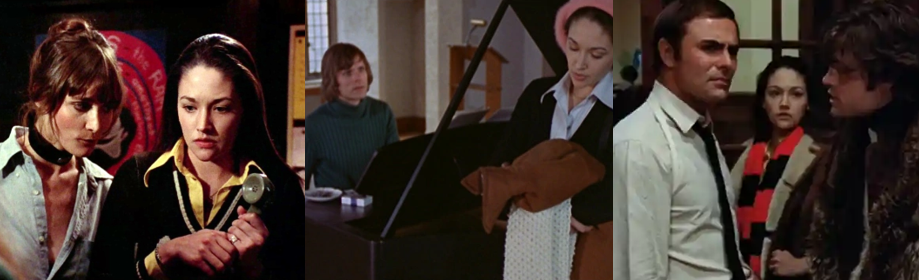
Black Christmas is set almost entirely within a sorority house around the Christmas season. This provides a good sense of space and the rooms in the house, but it does get a touch repetitive being stuck in the same location 90% of the film. Interestingly, despite there only being a handful of residents cared for by alcoholic and incorrigible housemother Barbara MacHenry/Mrs. Mac (Marian Waldman), the house seems to shrink as the film goes on, becoming more claustrophobic and ominous, especially as many scenes are shot from the perspective of the killer hiding in their attic. This largely unseen, mysterious figure approaches the house in the dead of night at the start of the film and easily clambers to the attic, watching the sorority sisters muddle about with their various dramas. Chief among them is the repeated obscene phone calls they receive from a raspy, vulgar voice they’ve dubbed the Moaner. At least once a day, the Moaner calls and growls aggressively sexual threats and comments to the girls, who are disgusted and amazed by this. While Jess is appalled and quiet newcomer Clare Harrison (Lynne Griffin) is disturbed, headstrong, domineering Barbara “Barb” Coard (Kidder) fearlessly challenges the voice and barks equally obscene insults. Barb’s efforts only exacerbate the deranged Moaner, leading to the voice screaming, arguing with itself, and threatening to kill her. Already upset by the calls and Barb’s snide comments, Clare prepares to spend Christmas with her father (Edmond) only to be surprised and suffocated by their unwanted house guest. Her corpse is toyed with by the killer (let’s call him “Billy”) and undiscovered for the entire film but driving much of what follows.

As if obscene phone calls aren’t bad enough, Jess is dealing with an unwanted pregnancy.

A big and very unusual sub-plot of Black Christmas revolves around beautiful and determined Jess, who ironically usurps many of the tropes of a “Final Girl” as she’s in a sexual relationship with Peter Symthe (Dullea) and it can be inferred she enjoys drinking with her sisters. Jess discovers she’s pregnant early on, leading to disagreements between her and her piano playing “artist” boyfriend about what to do. Jess decides it would be unfair to have an abortion without telling Peter first, but he’s stunned by her decision and comes across as very condescending and neurotic when she tells him. Any time Peter questions her, Jess stands her ground, determined to decide what to do with her body and only informing him as a courtesy. It’s telling that Jess only replies with “I know you do” when Peter says he loves her, especially as she later shoots down his marriage proposal and insists that she doesn’t want to give up her dreams (whatever they are) just because he’s decided to drop out. Although they initially seem to have a very loving relationship, the baby revelation rocks Peter to the point where he messes up his piano playing and takes a very draconian view on the matter. While I agree that Peter is allowed to be upset and deserves to know that she’s pregnant, Jess makes very valid points about not being ready or willing to be a mother or throwing her youth away on a marriage that likely won’t last. It’s a very mature and pragmatic attitude and it’s clear she’s thought it all through, just as it’s clear she’s disappointed not to have his support but not very bothered since she knows she’s better off without him. When the Moaner’s calls emulate a baby’s screams and seemingly mock her, Jess finally reports the calls and concerned Lieutenant Kenneth Fuller (Saxon) immediately suspects Peter after seeing and hearing of his attitude about the abortion.

The sorority sisters have no idea that they’re being stalked by a deranged killer.

This relationship drama is as much a focal point of Black Christmas as the mystery of the calls and the stranger in the sorority house, though it’s married with Mr. Harrison’s concerns for his daughter. When she no-shows their rendezvous, he visits the sorority house to look for her, dismayed at the idea of his daughter picking up boys and partying rather than studying. While Mrs. Mac tries to alleviate his concerns, he remains unimpressed by Barb’s outspoken demeanour and taste for the booze. Regularly swigging back shots and even encouraging minors to drink, Barb drowns her sorrows, clearly upset that her mother would rather go off with her new fancy man than spend Christmas with her. Though her sisters rally around her, Barb is a prickly and difficult person to love and her drinking only makes her worse as she humiliates herself before the worried Mr. Harrison and alienates the others with her selfish and confrontational attitude. This is only worsened by growing concerns about Clare and a local teenager being killed in the park, with most of our main characters helping to search for the girl. Lieutenant Fuller leads this effort, immediately taking Mrs. Quaife’s (Martha Gibson) concerns for her daughter to heart and organising a search party. Lieutenant Fuller equally takes the report of Clare’s disappearance very seriously, and the obscene calls reported by Jess, chastising inept Sergeant Nash (Douglas McGrath) for dismissing them and withholding what he sees as irrelevant information. Determined to help, Lieutenant Fuller taps the sorority house phone and encourages Jess to keep the Moaner on the line to trace the source, only to grow increasingly suspicious of Peter when he overhears them arguing about the abortion.

The Nitty-Gritty:
This was my first time watching Black Christmas, which I can immediately tell inspired John Carpenter. The shots from Billy’s perspective, the disconcerting breathing, the sense of dread surrounding the sorority sisters as we know there’s someone in the house but they don’t is all mirrored in Halloween. In some ways, however, it might’ve been better to not show Billy entering the house or any shots from his perspective except when he’s killing as it makes the iconic reveal that “The calls are coming from inside the house” less impactful since we know Billy is behind the calls. Still, it is disturbing knowing Billy is rattling around upstairs and could strike at any moment, and seeing the characters be so oblivious to this. And, honestly, why wouldn’t they be? Jess is notably very distracted by her unwanted pregnancy and her issues with Peter, delivering an extremely progressive (and no doubt controversial, then and now) sub-plot regarding a woman’s decision to do what she wants with her body and how insensitive and entitled men can be about that. Personally, I think she’s right to have an abortion if she’s not ready. She never says she wouldn’t want children some day; she just wants a chance to live her life first rather than being trapped with an asshole and his baby, resenting both. The search for Mrs. Quaife’s daughter was an odd sub-plot, however. It might’ve been better if Lieutenant Fuller and the others were searching for Clare instead, though it was odd that the police never thought to search the sorority house or Clare’s room, where her lifeless corpse is left rocking in a chair for Billy’s amusement. While Barb is clearly the loudest and most obnoxious, she’s clearly upset about her mother and people judging her. Phyllis “Phyl” Carlson (Andrea Martin) is easily the weakest of the sisters in terms of screen time and characterisation, portrayed as the voice of reason when Barb gets drunk, but Mrs. Mac was a delight every time she was on the screen sneaking booze, searching for her cat, or coyly apologising for the sisters’ behaviour.

Thanks to Peter’s bad attitude, Billy goes as undiscovered as some of his victims.

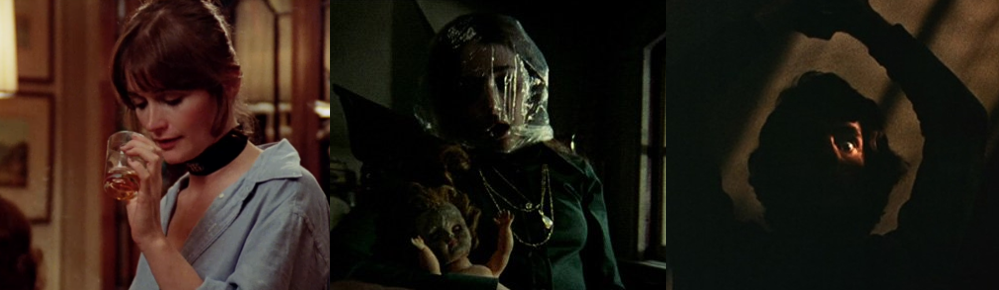
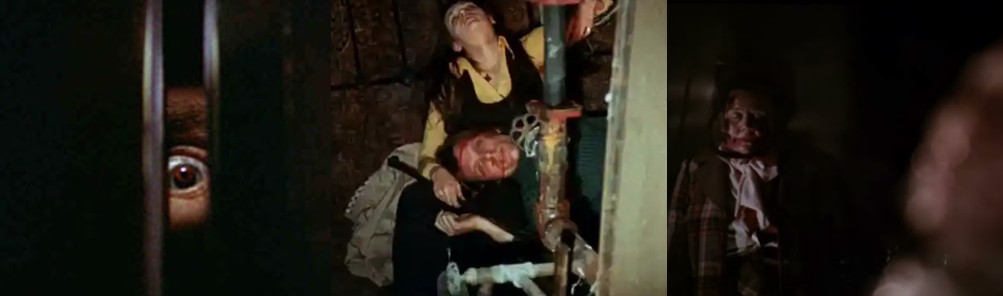
Although Black Christmas is more of a suspenseful thriller than a stab-happy slasher and the body count is very low, the deaths are pretty decent and harrowing. Clare is asphyxiated with cling film and her corpse is left rocking in a chair, eyes bulging and mouth silently screaming, for Billy to toy with. Although Mrs. Mac gets a roped hook to the neck offscreen, we do hear her strangled cries and see her hanging there, blood dripping down her body, as undiscovered as Clare. Mrs. Quaife’s little girl is killed offscreen and we never see her body or how Phyl and Officer Jennings (Julian Reed) die (though we do see their bodies and that Jennings has had his throat slit). Barb’s death is thus the showcase of the film. Sent to bed by Phyl after making a fool of herself, Barb is brutally stabbed by Billy with a glass unicorn, giving a rare glimpse of the killer (his bulging eye against his darkened silhouette), though the kill is mostly from his perspective. Billy is a demented and disturbing figure who seems to have multiple personalities, mood swings, and to despise women, hinting at an abusive childhood and a deranged psyche. Delighting in tormenting the sisters, he strikes from the shadows and goes largely unnoticed as they’re more concerned with his phone calls. After Sergeant Nash urges Jess to leave the house immediately as the killer’s in there, she naturally disregards his warnings and investigates, discovering her dead friends and being forced into the basement by the crazed stranger. When Peter breaks into the basement to help her, the panicked Jess reacts without thinking (or possibly assuming Lieutenant Fuller’s suspicions were correct) and beats Peter to death with a fire poker. In the aftermath, Lieutenant Fuller wraps the case up, believing Peter went nuts after being spurned by Jess, completely oblivious that Billy is still hiding in the attic.

The Summary:
As I said, this was my first time seeing Black Christmas, much to my shame. I was well aware of its place in horror history, and its twist ending, and somewhat familiar with the plot since I’ve seen the 2006 remake a few times but never found time to watch the original. Consequently, much of my opinion comes from love of Halloween, which clearly borrowed many elements from this film, especially regarding the mysterious and stalkerish nature of its disturbed killer. It was interesting seeing how much focus was placed on the sorority sisters and how relatable they were, Jess especially. She’s making difficult decisions at a difficult time of her life and dealing with a difficult boyfriend, all while being increasingly unnerved by the Moaner’s ghastly phone calls. Barb might’ve been an obnoxious and rowdy character, but I appreciated her subtle layers and the insecurities she was dealing with. Mrs. Mac was a fantastic addition and John Saxon brought a lot of authority to his role, especially in how he chastised dismissive Sergeant Nash, whose ineptitude cost lives and time. Billy’s obscene language and deranged behaviour becomes increasingly harrowing and malicious as he specifically targets each girl, and I loved the mystery surrounding him as we never learn anything about him or even see what he looks like. My only complaint is that we’re fully aware that Billy is in the sorority house and that Peter is innocent, meaning there’s little suspense around who’s behind it all, but it was still thrilling knowing Billy was always lurking and watching and could strike at any moment. Ultimately, I feel this is a fair rating as Black Christmas laid the foundation for the slasher sub-genre but many of its most distinguishable features were done far better in subsequent films, though I did enjoy the character drama and the sense of dread that built throughout the film.

My Rating:

Rating: 3 out of 5.

Pretty Good

Is Black Christmas a Christmas tradition for you? Which of the sorority sisters was your favourite? Were you shocked to see the film tackling abortions? Do you think it detracted from the horror to know that Billy was in the house? Which of the kills was your favourite? What’s your favourite Christmas-themed scary movie? Use the comments below to discuss Black Christmas, check out my other horror content, and donate to my Ko-Fi if you’d like to see me review the other Black Christmas movies.

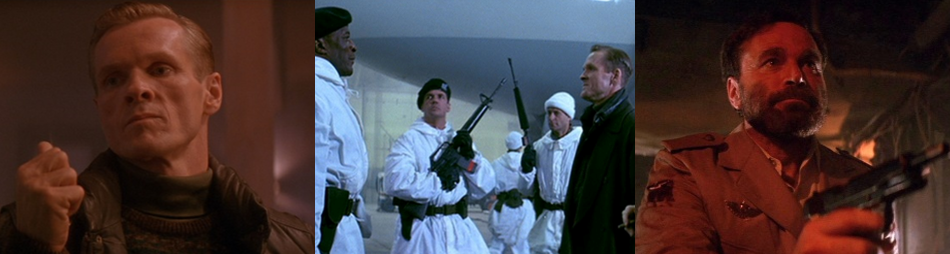
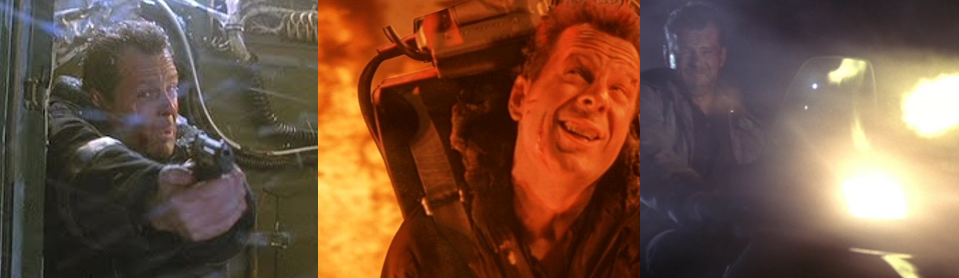
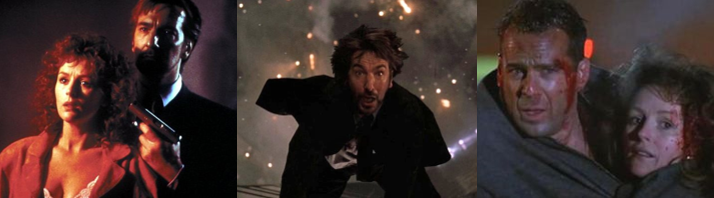
Movie Night [Christmas Day]: Die Hard 2

Released: 4 July 1990
Director: Renny Harlin
Distributor: 20th Century Fox
Budget: $60 to 70 million
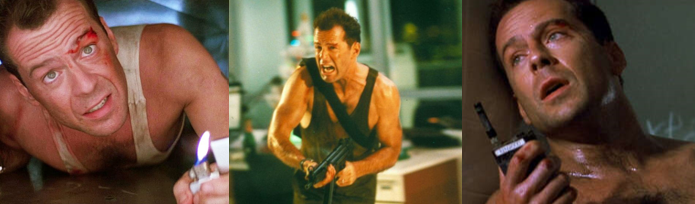
Stars: Bruce Willis, William Sadler, Fred Thompson, John Amos, Art Evans, and Bonnie Bedelia

The Plot:
While waiting at Dulles Airport to pick up his wife, Holly Gennero-McClane (Bedelia), Lieutenant John McClane (Willis) is embroiled in a complex cat-and-mouse plot by disgraced Colonel William Stuart (Sadler) to hijack the planes and liberate a corrupt foreign military leader.

The Background
Roderick Thorp published a follow-up to his 1966 thriller, The Detective, in 1979, to decent reviews. Accordingly, an adaptation of Nothing Lasts Forever did the rounds before being retooled by struggling screenwriter Jeb Stuart. Stuart reimagined Thorp’s aging Detective Joe Leland into a flawed everyman, a role so expertly portrayed by Bruce Willis that it changed the perception of action heroes forever. Despite garnering mixed reviews, Die Hard’s (McTiernan, 1988) $140-odd million box office made it a a massive financial success that revitalised 20th Century Fox and redefined the action hero stereotype. For the sequel, the filmmakers turned not to Thorp’s writing but to Walter Wager’s 58 Minutes (1987), a thriller in which a police officer has less than an hour to stop terrorists who have hijacked an airport. Inspired by the Iran/Contra affair, Steven E. de Souza helped rework the concept into a Die Hard sequel, which saw star Bruce Willis return to the tune of $7.5 million and producer Joel Silver removed after his spending ballooned the budget. Also marketed with the subtitle Die Harder, Die Hard 2 was the first film to digitally compose live-action footage with a traditional matte painting, which was used for the final runway scene. With a box office of $240 million, Die Hard 2 exceeded expectations and held the largest pre-opening record for six years, though reviews were mixed. Even positive reviews noted issues with the plot and it was dubbed another disappointing sequel of the era that failed to capture the magic of the first film. Still, there are some who claim it to be an under-rated entry and the box office success alone was enough to justify a third entry some five years later.

The Review:
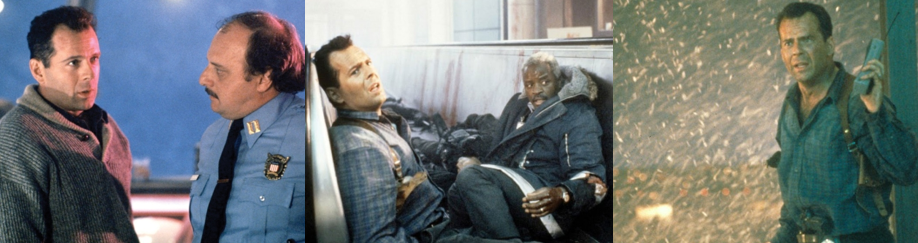
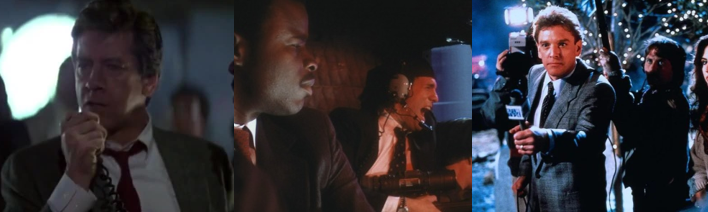
Die Hard 2 immediately expands the focus of its action by pivoting away from a claustrophobic, confined location and dropping grizzled, promoted cop John McClane into a bustling airport over the holiday season. In Die Hard, McClane was burned out, irritable, and desperately trying to win back his estranged wife. His personal issues were compounded by the terrorists who took over Nakatomi Plaza and he vented his anger and frustration on them with sharp-tongued relish. In Die Hard 2, things are going much better for McClane: he’s looking a little less haggard, he’s been promoted and has transferred to the Los Angeles Police Department, and he and Holly are back together. Unfortunately, while they might be on much better terms, they’re still apart as Holly’s flying in to spend Christmas with him, the kids, and her family. Still, they remain in contact through the miracle of airphones and McClane’s excited to meet her at Dulles Airport. Things get off to a shaky start for McClane, however; bad luck seems to follow him around, even when things are going well, as he’s unceremoniously towed by Sergeant Vito Lorenzo (Robert Costanzo) for illegally parking outside the building. McClane’s appeals fall on deaf ears as, in a taste of the disregard McClane’s later shown, Vito’s unimpressed by his rank and stature. To make matters worse, it was his mother-in-law’s car! Still, a $40 fine is the least of McClane’s worries when he wanders through the airport and not only bumps into a strangely familiar face and spots a handful of guys acting very suspiciously. Attentive and curious, McClane observes as the men covertly talk, sync their watches, and Sergeant Oswald Cochrane (John Costelloe) and Miller (Vondie Curtis-Hall) slip into a restricted baggage sorting area. Interestingly, McClane’s first thought isn’t to investigate himself but to instead alert the airport police. However, when he’s greeted by Vito’s smarmy grin, he realises they’ll never take him seriously and follows the two alone. When confronted by McClane, the two open fire and a brief fracas ensues that leaves Cochrane dead, McClane in custody, and Miller alive to tell the tale to his commander, shamed military veteran Colonel William Stuart (the man McClane had bumped into earlier).

Met with opposition at every turn, McClane faces another Christmas ruined by a new terrorist plot.

After McClane verifies his identity, he’s brought to Captain Carmine Lorenzo (Dennis Franz), who just so happens to be Vito’s brother and who’s not only dismissive of McClane’s reputation, but personally offended by his presence and his attitude. Consequently, Carmine angrily rebukes McClane’s suspicions that the two men were anything more than simple luggage thieves and has him removed from his office. Stubborn and unimpressed by Carmine’s failure to take the situation seriously, McClane takes matters into his own hands and faxes a copy of Cochrane’s fingerprints to his old friend, Sergeant Al Powell (Reginald VelJohnson), who reveals that they’re fake. Based on this, and the men’s weapons, and the impending arrival of the crooked General Ramon Esperanza (Franco Nero), McClane realises that something bad is about to go down and forces his way into the airport control tower to warn Carmine and air traffic controller Ed Trudeau (Thompson) that a group of mercenaries are obviously planning something. While Trudeau seems to take the threat seriously, especially when the tower starts losing power and access to their systems, Carmine refuses to entertain any of McClane’s warnings, believing he’s an overhyped, out of his depth cop trying to steal the spotlight. McClane is unceremoniously booted from the tower and accosted by keen reporter Samantha Coleman (Sheila McCarthy), who name-drops Colonel Stuart and puts the final pieces of the puzzle together for McClane. Unlike in the last film, McClane is surrounded by potential allies but constantly met with antagonism, resentment, and dismissal. No one takes his warnings seriously, causing not only the tower to be compromised when Colonel Stuart hijacks their systems, but also many deaths when Carmine’s crack troops are gunned down by Colonel Stuart’s men (leaving airport chief engineer Leslie Barnes (Evans) wounded) and Stuart brings down an aeroplane in retaliation. Although McClane desperately tries to provide a warning to the doomed aircraft, he ultimately fails and those deaths weigh heavily on his troubled conscience throughout the film. While Trudeau shows some compassion to McClane following this, he continues to be met with hostility from the airport staff and from no-nonsense Major Grant (Amos), who arrives with a bunch of troopers to take control of the situation and, like Carmine, immediately butts heads with McClane, who’s seen as a dangerous loose cannon despite his best efforts to help.

McClane’s reputation and aggressive demeanour mean he’s as short on allies as he is time.

Luckily, McClane does have some allies amongst all these hot-headed egos. While Powell is sadly relegated to a cameo, he does confirm McClane’s suspicions that something’s amiss at Dulles. Barnes proves extremely helpful in offering alternative ways to signal the aircraft, though Colonel Stuart angrily retaliates each time or has set up contingencies for these. Barnes is also the one who clues McClane in that Colonel Stuart’s men are using a coded frequency (though he’s unable to break it) and who re-routes the emergency beacon to covertly communicate with the pilots. While racing to find solutions and workarounds to Colonel Stuart’s plot, McClane ends up in a network of access tunnels beneath the runway and bumps into Marvin (Tom Bower), a quirky janitor with racks upon racks of blueprints who helps McClane get to different areas of the airport, try new ways of signalling the planes, and locate Colonel Stuart’s outpost at a nearby church. Marvin also retrieves the coat and pre-coded walkie-talkie of one of Stuart’s men, allowing McClane to listen in and retort to Stuart directly. This gives McClane the chance to vent his anger on the man responsible for ruining his latest Christmas, though Colonel Stuart isn’t easily baited and out-thinks McClane at every turn. While Major Grant and McClane clash, McClane earns his begrudging respect after he helps storm Colonel Stuart’s church, raiding their operation and driving off Stuart’s men. This resolution is short-lived, however, when McClane realises he and Major Grant’s men were firing blanks the entire time. While Carmine again refuses to believe McClane’s claims, he’s forced to realise they’ve all been duped when McClane dramatically opens fire on Carmine (somehow not being gunned down by the cops present) to demonstrate his point and Carmine finally comes on side, giving McClane clearance to intercept the villains. While McClane treats Coleman with about as much respect as Colonel Stuart and has no time for her sniffing around for a story, she proves somewhat useful first in identifying Stuart and then in joining him in intercepting Stuart’s Boeing 747, giving McClane the chance to dramatically tackle the bad guys and end their plot.

Holly’s safety means McClane has a personal stake in the film’s events.

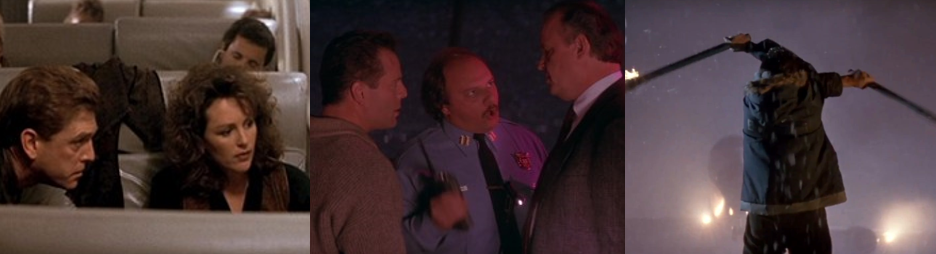
While Holly returns, she’s far less of a factor and has far less agency this time around. She’s stuck in the air, as far out of McClane’s reach as before, but with even less control over her situation. While she communicates with McClane using an airphone, she has no idea why her landing has been delayed and only becomes concerned about the situation after the returning Dick Thornburg (William Atherton) points out the circling aircraft in the nearby skies. As obnoxious and grating as ever, Thornburg feels slighted and threatened by Holly since a right-hook to his jaw knocked out two of his teeth after he endangered her children in the last movie, leading him to take out a restraining order against her. While this earns Holly the admiration of Connie (Karla Tamburrell), an air hostess equally repulsed by Thornburg, Holly’s forced to endure his presence as the situation worsens. Ever the opportunist, Thornburg patches into the cockpit radio and learns of the situation, then remotely forces his way on-air to report on the situation live, selfishly thinking only of his career and not the panic it causes those waiting at Dulles Airport. As perceptive and feisty as her husband, Holly not only catches on that their situation is going to become a real problem due to lack of fuel but also retaliates against Thornburg once more by subduing him with a fellow passenger’s taser. Still, while Holly doesn’t get much else to do, it’s the drive to save her from plummeting to a fiery death that pushes McClane on downside. His personal stake in the events sees him aggressively interject himself into the situation and causes as much of the animosity he receives as his smart mouth, though McClane excels in a pressure situation and simply forces himself to fight harder or find other ways around problems, even if it means pissing off those in authority. The subtext of Die Hard 2 is lesser than the first, with more generic masculine and pseduo-sexual connotations, but the premise of this stubborn, determined “Everyman” fighting against the odds to save the woman he loves is strong, though I would’ve liked to see Holly have a more active role in the main plot.

Colonel Stuart enacts a diabolical plan to liberate his anti-communist idol.

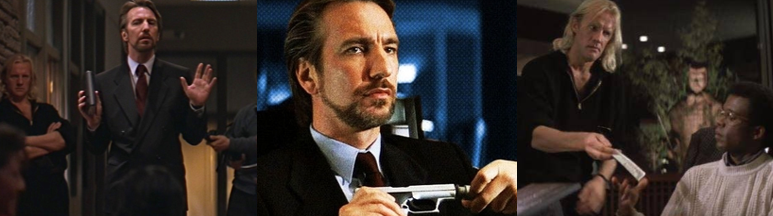
This time, McClane is up against an opponent just as intelligent, ruthless, and heavily armed as Hans Gruber (Alan Rickman) but one with the added benefit of a lifetime of military service and equally well-trained, incredibly loyal followers. A former Special Forces officer and one time student of Major Grant, the anti-communist Colonel Stuart strongly supported General Esperanza and even funded his operation, being dishonourably discharged and disgraced as a consequence. After fleeing the United States prior to his court martial, Colonel Stuart and the imprisoned General Esperanza plotted an elaborate scheme to hijack Dulles Airport, intercept Esperanza’s plan, and abscond to safety in a Boeing 747. A stoic, calculating martial arts expert, Colonel Stuart plans everything to the smallest detail, easily infiltrating Dulles Airport and hijacking their communications and power array and duplicating much of their control room in a nearby church. From here, Colonel Stuart and his men easily dupe the aircraft into thinking ground control is experiencing nothing more than heavy weather and effectively holds all incoming aircraft hostage, crashing them without a second’s thought whenever and reprisals are attempted. Though he doesn’t hesitate to take lives, even those of his men, Colonel Stuart reprimands Trudeau and McClane for not obeying his instructions and forcing his hand, indicating that he’s trying to rescue his beloved General with as little bloodshed as possible. His patience with McClane quickly wears thin, however, especially when John intercepts Esperanza’s aircraft and nearly brings him into custody. Aggravated that one stubborn cop could cause his meticulous plan so much trouble, Colonel Stuart has his men open fire on the craft and tosses a bunch of grenades in to take out McClane but is forced to flee when McClane miraculously survives thanks to his quick thinking. Colonel Stuart’s men are fiercely loyal; while they briefly hesitate upon being ordered to trick an aircraft into crashing, they obey his every word without question out of fear of his reprisals. Colonel Stuart’s joined by Major Grant, a deceptive and equally ruthless military man who slits newcomer Telford’s (Patrick O’Neal) throat just for not being “one of them” and aids in duping McClane to cover their escape. When push comes to shove, Colonel Stuart finally gets his hands dirty in a one-on-one fight with McClane, being far more physically capable than Gruber. He’s also much more in control of his emotions and motivated not by greed, but by a warped sense of patriotism and pride.

The Nitty-Gritty:
Die Hard is a Christmas movie. I don’t care what you say or think; it just is. Die Hard 2 is also a Christmas movie, but the season is far less of a factor in the plot. Seasonal jingles aren’t as prominent in Michael Kamen’s score and Christmas trappings aren’t as easily noticeable thanks to how bustling Dulles Airport is, but the entire crux of the plot is Holly coming home for Christmas and half the reason the weather is so bad is because we’re deep into the festive season. McClane does note that his bad luck constantly ruins the season for him, but this seems more emblematic of him than of the festive period. Indeed, Major Grant notes that McClane is in the “wrong place at the wrong time” during one of the many tirades launched against him for trying to help, and the situation only escalates as things spiral out of control. McClane is in a slightly better position this time around, though; he’s wearing shoes, for starters, is fully armed, and has more resources at his disposal to try and help. Unfortunately, he’s constantly hampered by those around him. Since Carmine doesn’t take his concerns seriously, Trudeau doesn’t prepare the control tower for a possible hijacking; since doors are constantly shut in his face, McClane can’t share his insight or opinion on the situation; and since Colonel Stuart is so resourceful and intelligent, the odds are stacked against him in a far greater way than before. This time, McClane battles to save not just his and Holly’s lives, but the lives of all the people on the planes unable to land because of Colonel Stuart. McClane might be selfishly driven to intervene to ensure Holly’s safety but he doesn’t just sit back and do nothing when Stuart hijacks a British airliner. He runs out onto the landing strip and desperately tries to do something, though this is of little comfort when his efforts inevitably fail. While Die Hard 2 is therefore more of a typical action/thriller and less of a tale of reclaiming masculinity and enforcing masculine power like the first film, some aspects of this still remain. Half the reason Vito, Carmine, and Major Grant clash with McClane is because they view him as a threat to their authority and masculinity. McClane is a loose cannon who shouts his opinion and acts impulsively, with little respect for local authority and the chain of command, which especially irks Carmine and equally annoys Major Grant, who believes McClane’s interference is doing more harm than good.

Aside from some explosive moments, McClane is largely a gunfighter this time around.

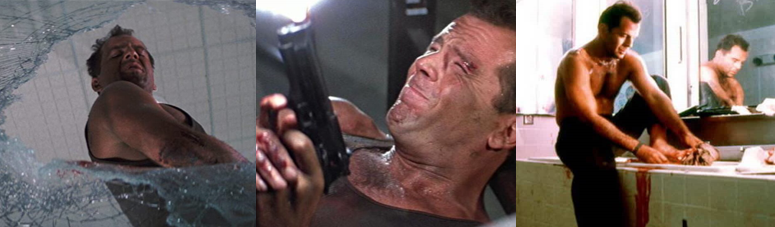
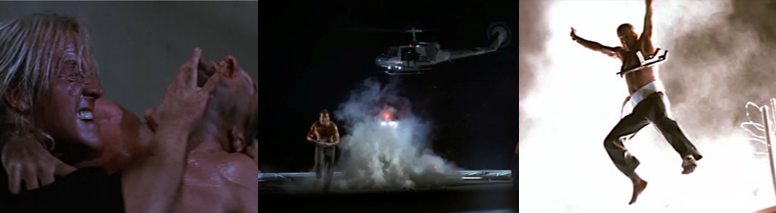
Ironically, even if McClane approached these figures with a more reasonable and respectful tone, it probably wouldn’t have helped since McClane is something of a celebrity now after his actions in Die Hard. This, and departmental xenophobia, are equally strong reasons for them to dislike McClane and dismiss his concerns, only to begrudgingly realise that he’s been the only one making sense the entire time, which is frustrating but still an improvement over the bungling police presence in the last film. While thematically and narratively very similar to Die Hard, Die Hard 2 broadens its scope for action set pieces; there are more characters involved so more opportunities for big shoot outs, with McClane even engaging in a snowmobile chase near the climax. However, I’ve never thought of Die Hard 2 as being “bigger” or “better” than the first one in terms of its action. It’s often far more explosive, that’s for sure; the plane crash is a notable set piece, as is the destruction of General Esperanza’s plane. However, it’s pretty obvious both are model and composite shots, making them ironically less impressive than McClane’s leap from the exploding Nakatomi helipad. McClane doesn’t get as many opportunities to throw hands this time; he always has his pistol and ammo on him, so he’s more apt to just gun down his foes with a wry remark, meaning we see less of McClane’s physical tenacity. However, this is supplanted by his “die hard” nature; he’s a stubborn cockroach of a man who won’t quit and keeps fighting even when met with a hail of gunfire. Ironically, he’s far less banged up and bloody than in the first film despite the greater odds against him and McClane’s resourceful nature comes not from finding innovative ways to kill his enemies but from finding creative ways to save lives, galvanising McClane into a more broadly heroic character. That’s not to say Die Hard 2 is tame, by any means: plenty of guys are executed by gunshot to the head, people are strangled, have their throat cut, and are riddled with bullets or blown to pieces. But it does feel far less personal this time around; before, McClane was desperately picking Gruber’s men off one by one but Colonel Stuart has far more men with far less memorable characteristics, so it just feels more generic when they’re killed rather than a rousing victory for our lone hero like before.

Though he’s no match for Stuart, McClane gets the last laugh and rescues his wife once again.

McClane is against a ticking clock throughout Die Hard 2. He only has ninety minutes before Holly’s plane runs out of fuel so he does everything he can to restore communications with the planes and find a way to negotiate her safety. He experiences ups and downs in this endeavour as Barnes does manage to contact the pilots, but McClane is intercepted by Colonel Stuart and his men before he can barter Esperanza’s life for Holly’s. The wounded General Esperanza escapes but things start to look up with Major Grant comes along and leads an all-out assault on Colonel Stuart’s church base, only to dupe McClane and the others with blanks and betray them to aid Stuart and Esperanza’s escape. With time running out and Holly’s plane preparing for an emergency landing, McClane finally gets the assistance he’s been demanding the entire movie and has Coleman’s pilot chase after the escaping villains. With no way to block the larger aircraft, McClane is forced to make a desperate drop to the wing on their Boeing 747 to try and stop them. Unlike the first movie, which ended with a tense showdown akin to an Old West duel between the exhausted McClane and the smug Gruber, Die Hard 2’s climax centres around bare-knuckle fistfights on the wing of a speeding aircraft trying to take off. Major Grant is the first to head out to put a beating on the outmatched McClane. However, thanks to his tenacity and resourcefulness, McClane manages to trip Major Grant and send him into a jet engine, splattering him across the plane and further screwing up Esperanza’s attempts to get off the ground. Thus, Colonel Stuart takes matters into his own hands and beats the shit out of McClane in a way Gruber could only dream of, finally kicking him to the speeding runway below. Returning inside to celebrate with his men, Colonel Stuart is completely oblivious to the fact that McClane opened the plane’s fuel valve. Bloodied and beaten, McClane delivers his “Yippie-ki-yay, Mister Falcon motherfucker!” catchphrase and tosses his lighter at the fuel trial, which naturally defies all physics and logic to burn into the plane and explode it in mid-air. As an added bonus, the flame trail and burning wreckage act as a marker for the planes to use to make a safe landing, reuniting McClane and Holly once more and bringing their latest Christmas drama to a close.

The Summary:
Die Hard is a Christmas tradition for me. I watch it every year and every year I enjoy it as much as the last time I watched it. Die Hard 2 also makes the Christmas watch list, but I’d be lying if I said I looked forward to it as much as the first movie. It’s not that it’s bad, really, just not as enjoyable or memorable as the first film. The atmosphere is both familiar and yet different, which is what you want from a sequel but something just feels off. Narrative beats, returning characters, and a sense of repetition help thematically link it to the first movie while also expanding upon the characters and setting. John McClane is far less beaten down than before, but no less tenacious; however, his character is noticeably different, largely because of the supporting cast. He’s face-to-face with the same type of bureaucrats who got in his way last time and we live his frustration with their dismissive attitude and his desperate attempts to do something while they sit around, stubbornly refusing to believe him due to their slighted pride. McClane is as resourceful and enjoyable as ever, delivering some wry quips and surviving some unbelievable situations, but he’s recast as a more typical heroic figure this time. Die Hard 2 isn’t just about saving a handful of hostages; it’s about saving thousands of lives from Colonel Stuart’s reprisals. It’s not about reclaiming masculinity; it’s about reinforcing it and a clash of “Alpha Male” figures and egos. Colonel Stuart exemplifies this; unlike Gruber, he’s a physical and intellectual challenge for McClane, after all. Oddly, despite its greater scope, I find Die Hard 2’s action to be lacking compared to the first. Things don’t feel as intimate and personal and a lot of the impact is dulled, as though everyone’s just going through the motions despite some enjoyable performances. In the end, I still watch Die Hard 2 at Christmas and still enjoy it, but I would much rather watch Die Hard twice or skip to one of the other sequels as they delivered a new challenge for McClane in a far more unique way than what we see here.

My Rating:

Rating: 4 out of 5.

Great Stuff

Are you a fan of Die Hard 2? How do you think it compares to the first films? What did you think to Colonel Stuart and his cold-hearted depiction? Did you like seeing McClane face new challenges, especially following his infamy from the first movie? Were you also disappointed by the action sequences? Is Die Hard 2 on your Christmas watch list? What are your plans for Christmas Day today? Whatever your thoughts, feel free to comment down before and have a great Christmas!
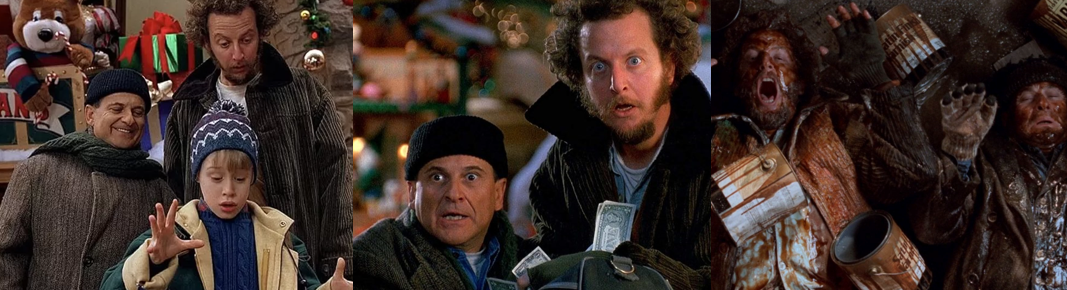
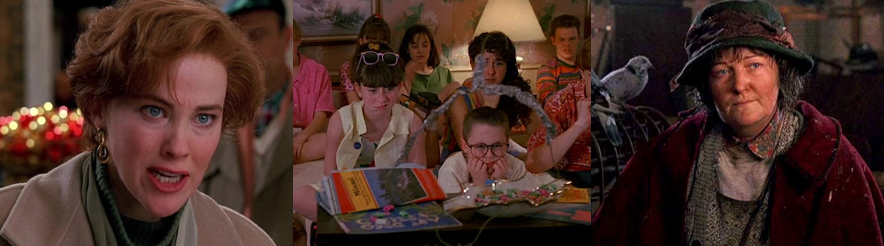
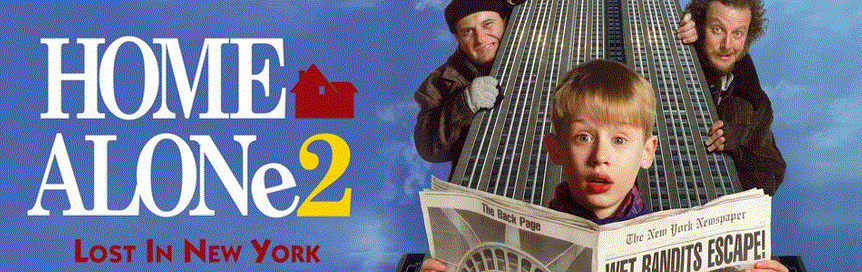
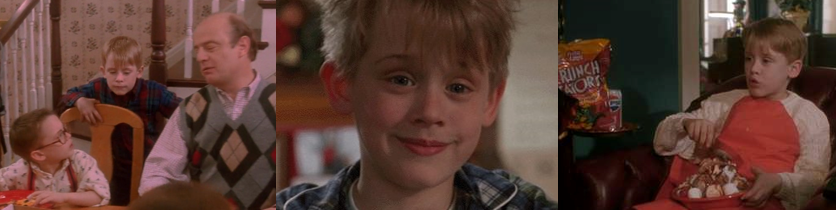
Movie Night [Christmas Countdown]: Home Alone 2: Lost in New York

Released: 20 November 1992
Director: Chris Columbus
Distributor: 20th Century Fox
Budget: $28 million
Stars: Macaulay Culkin, Joe Pesci, Daniel Stern, Catherine O’Hara, Tim Curry, and Brenda Fricker

The Plot:
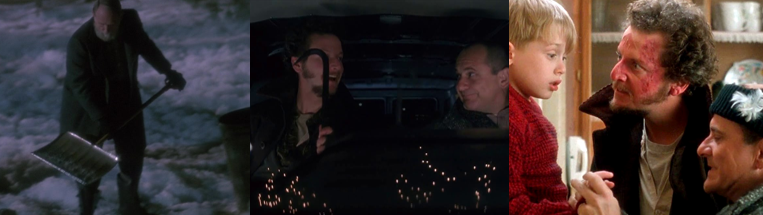
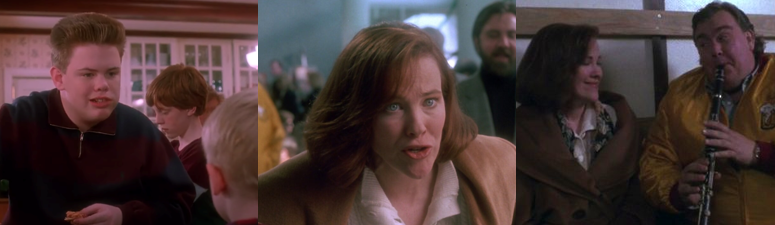
While jetting off to Florida for Christmas, an airport mix up separates young Kevin McCallister (Culkin) from his mother, Kate (O’Hara), and his family, leaving him to deal with vengeful burglars Harry (Pesci) and Marv (Stern) in the Big Apple.

The Background:
Widely considered one of the greatest Christmas movies, Home Alone (Columbus, 1990) was dreamed up by writer and producer John Hughes and brought to life by Chris Columbus. Macaulay Culkin beat over two hundred children for the breakout role in the critical and commercial hit, which became an instant Christmas classic. The first of its many sequels entered development just one year after the first film landed, with Culkin receiving a lucrative payday for returning, alongside a share of the film’s gross. Once again, the shoot was difficult for star Joe Pesci, who suffered serious burns during filming, and the film was a commercial success even if its final gross fell short of the first film. The third highest-grossing film of 1992, Home Alone 2 was nevertheless met by largely negative reviews. The cartoonish violencesentimental hook, and central concept were all noted to be lazy, derivative repeats of the first film, though the performances were praised and it has since been regarded more favourably, especially compared to the later, unrelated sequels.

The Review:
It’s been a year since the McAllisters and their chaotic extended family left Kevin home alone and things are very much the same as before in their opulent and inexplicably luxurious family home. That is to say that the house is full of kids and adults rushing back and forth in a mad panic trying to pack and prepare for another family vacation, this time to Florida and at the expense of the McAllister patriarch, Peter (John Heard). Everyone slips right back into their previous roles exactly as depicted in the last film, with Peter unwittingly causing the family to sleep in by unplugging the alarm clock and Kevin’s uncle, Frank (Gerry Bamman), being as aggressive and dismissive towards Kevin as ever. Some things have changed, however; Kevin isn’t as bratty as before and his relationship with his mother is much improved. Kate makes more of an effort to listen to and include him and goes out of her way to ensure that Kevin makes it to the airport this time, acutely aware of her previous mistake and desperate to keep it from happening again. Despite reaching a mutual respect at the end of the first film, Kevin is still at odds with his older brother, Buzz (Devin Ratray). Still resentful towards his little brother and happy to demean him at every turn, Buzz delights in humiliating Kevin in front of the entire school, including the parents and staff, by pulling a mean-spirited prank during his choir solo, one that’s entirely unfunny but which has everyone in the audience in stitches. Kevin naturally lashes out, causing a ruckus, and the two are taken to “family court” to discuss the issue. While, on the surface, this seems more productive and fairer than what we saw in the last film, where Kevin’s family condemned him without giving him a chance to defend himself, it’s a kangaroo court, at best, and Buzz easily sways the family into believing he regrets his prank. Naturally frustrated that his family expects him to apologise, Kevin once again bemoans his unfair treatment and chastises his family’s ignorance. Still, he successfully makes it to the airport this time, despite not wishing to spend his Christmas in Florida due to his sudden love of Christmas trees.

Lost in New York, mischievous Kevin touches hearts and raises suspicions as he indulges himself.

Unfortunately for Kevin, things go awry at the airport. Thanks to Peter, the family’s again in a mad rush to reach their flight and, thanks to messing about putting batteries in his Talkboy tape recorder and lackadaisical airport security, Kevin accidentally boards the wrong flight and ends up in New York City. After quickly overcoming his surprise and a brief flash of fear, Kevin takes in the sights of the city and heads to the luxurious Plaza Hotel. Posing as “the father” and using his dad’s credit card and cash, Kevin secures a swanky room and all the treats he could want. Kevin’s arc in this movie is, like much of Home Alone 2, copy and pasted wholesale from Home Alone except he’s now in the city. Given complete freedom to do whatever he wants, Kevin indulges in sweets, bad movies, and a trip to Duncan’s Toy Chest, where he chats with the proprietor, Mr. Duncan (Eddie Bracken), and showcases an empathy beyond his years. Kevin even repeats that same routine of fear, misunderstanding, and befriending of a misjudged local, in this case an unnamed vagrant (Fricker) with a love of pigeons. Unlike the last film, though, Kevin’s not just relishing the chance to do whatever he wants without consequence; he’s living the Christmas vacation he feels he desires, one that caters to his every whim. However, the presence of a lone child in the Plaza Hotel foyer raises the suspicions of the hotel concierge, Mr. Hector (Curry), who immediately tries to confirm that Kevin’s….well, it’s not entirely clear what Mr. Hector is trying to discover, actually. He exhibits the same strangely confused reaction at seeing a kid by himself, but it’s not entirely clear why he’s so sceptical. Thanks to Kevin’s quick thinking, the youngster throws Mr. Hector off his scent with a blow-up doll and a convenient recording of Uncle Frank yelling at him, securing Kevin the hotel’s co-operation for a short time out of fear of reprisals from his unseen father. However, thanks to Kate and Peter reporting Kevin’s absence to the police, Peter’s credit card comes up as stolen, verifying Mr. Hector’s suspicions and leading him to more aggressively confront the mischievous youth. Though Kevin again holds them at bay with a convenient ruse, he’s forced to flee the hotel, believing he faces criminal charges for credit card fraud, and wanders the dangerous streets of New York, the fun suddenly sucked out of his impromptu vacation.

Harry and Marv get distracted from their big payday with thoughts of revenge.

In a film (and franchise) full of coincidences, Kevin’s old enemies, Harry and Marv (now calling themselves the “Sticky Bandits”) also end up in New York following a jail break. Fugitives and desperate for a quick, big score to abscond to safer shores, the two rule out petty theft or any big-time jobs and instead target Duncan’s Toy Chest, believing that it’ll be an easy score since no one would be stupid enough to rob a toy store on Christmas Eve. Ever year, Mr. Duncan donates the store’s profits to a local children’s hospital, in cash and in person, meaning all the crooks have to do is hide out in the store until it closes and rob the place. Unfortunately, there’s a glaring plot hole with this plan: Mr. Duncan tells Kevin he plans to donate the money at midnight but the money’s still there when the Sticky Bandits come out of hiding. Anyway, it’s a moot point as Kevin shows up to interfere with their plot. Earlier in the film, the three just happened to cross paths despite the vastness of the city and Kevin was horrified to find his enemies out and about and hungry for revenge. Thanks to the busy city streets and some quick thinking, Kevin evaded the Sticky Bandits and got to safety, but not before learning of their appalling plan to screw over sick children. Harry and Marv are exactly the same as before: malicious and bumbling. Harry may be the smarter of the two, chastising Marv’s foolishness and loose tongue, but he’s hardly the sharpest tool in the drawer. Like Kevin, Harry and Marv have learned from their previous experiences, however. Not only do the crooks have no desire to go back to prison but they’re acutely aware of how adept Kevin is at setting up traps, meaning they’re far more likely to be cautious when chasing him rather than simply barging in head-first. This doesn’t help them in the slightest when it comes to chasing Kevin as they still fall afoul to his many traps and tricks, but there are fleeting moments when it seems like the two might pose a significant threat this time around. While they’re happy to simply steal some cash and get out of the country, they can’t pass up the chance to get a measure of revenge on the kid who sent them to jail and they become fixated on this. This leads to their inevitable torture and downfall when they could’ve simply targeted a different toy shop or schemed up a slightly different plan and potentially have avoided being scarred for life.

Kate and the family are side-lined for a greater focus on Kevin and his new friends.

Unlike Home Alone, Kate doesn’t get a big side plot this time around. She, Peter, and the kids are stuck in Florida, their vacation ruined not just by Kevin’s absence but the inclement weather. Since they have no idea of where Kevin is until Peter’s credit card gets flagged, they can’t do anything but wait at their surprisingly lowkey hotel, though they immediately get the next flight to New York once the Plaza Hotel alerts the police. We don’t get to see this flight and we also get far fewer reactions from Kate and the others at Kevin’s plight; she simply expresses concern for his safety and that it. That is, of course, until she meets Mr. Hector and finds out what a botched job he and his long-suffering bellhop, Cedric (Rob Schneider), did at keeping Kevin safe and secure at the hotel. Flustered and desperate to appease the enraged Kate, Mr. Hector’s forced to shut his yap and acquiesce to the McAllister’s every whim to avoid any reprisals more severe than a slap to the face and Kate braves the cold, dangerous streets to try and find Kevin. This is a far cry from her cross-country travels and the guilt-ridden reflections of the first film, meaning the bulk of Home Alone 2 is spent following Kevin and drinking in the awe of the hustle, bustle, and sights of New York City. At first, this is portrayed as a beautiful and awe-inspiring location and Kevin is amazed at everything he sees, but his wonder turns to fear when he’s left wandering the streets and Central Park at night, surrounded by surly vagrants and dark shadows. He reacts with fear whenever he sees the Pigeon Lady, creeped out by her grim façade, ragged clothes, and the pigeons clinging to her, but quickly comes to realise that she’s not bothering anyone and was trying to help him. He bonds with her in the same way he bonded with Old Man Marley (Roberts Blossom) in the last film, learning there’s a deeply emotional and tortured soul beneath the repulsive visage and again learning that he’s been unfair to his family and shouldn’t have taken them for granted. It is, as I said, essentially the same character arc he underwent in the first film. Even the musical cues, much of the dialogue, and a lot of the trap sequences are mirrors of Home Alone’s and I don’t think Home Alone 2 does enough with its new setting to differentiate itself from the original as a consequence.

The Nitty-Gritty:
Similarly, every theme and character arc seen in Home Alone 2 is a repeat of what we saw in Home Alone. Kevin’s siblings and family may not be as explicitly aggressive or dismissive towards him (except for Buzz), but they still all laugh at Buzz’s prank and take the older boy’s side after the fact. Kate is far more protective and aware of Kevin this time, but only when it comes to planning their trip and ensuring Kevin isn’t left behind. When she and Peter begrudgingly report Kevin’s disappearance to the cops, there’s a sense that Kate’s despondent not just because of the same emotional turmoil she faced in the last film (namely, questioning her ability as a mother) but also at the idea of her being judged for letting this happen two years in a row. Kate’s concern is definitely framed as being for Kevin’s welfare (this is clear when she desperately hits the streets trying to find him) but it also seems much more rooted in her desire to not be seen as a bad mother. As before, Peter doesn’t seem all that bothered until they reach the hotel and Mr. Hector proves to be less than useless, and even then he’s more worried about losing Kate or her getting hurt searching for Kevin. All the other McAllister’s return and have even less personality or impact than before. They’re there simply to enforce that this family is way too big and it’s easy for Kevin to be lost in the shuffle. Instead of focusing on Kate’s turmoil, Home Alone 2 follows Cedric’s struggles to find out more about Kevin for his boss and his inability to secure a decent tip from the youngster, and Mr. Hector’s problematic pursuit of investigating his young guest. Again, I’m not sure why Mr. Hector is so suspicious of Kevin; he’s right to be, but I just don’t get what raised that flag for him, especially considering how many guests (including kids) are milling about in the bustling hotel.

Kevin’s hazardous traps once again scupper the crooks and he’s rewarded with a merry Christmas.

As fun as it is living vicariously through Kevin as he explores the city, treats himself to all sorts using his dad’s mysterious wealth, and messes about with his Talkboy, the main appeal of any Home Alone film is the traps and tricks the kids use against the bumbling burglars. Although Harry and Marv are initially confident of their chances at nabbing Kevin and tossing him in the river since he doesn’t have a kitted-out funhouse to torture them in, they run right into an all-new booby-trapped domicile after Kevin photographs them robbing the toy shop and alerts the police. Desperate to retrieve the evidence and get their revenge, they follow Kevin to his uncle’s place, already a death trap thanks to hefty renovations, and endure incredible punishment that surely would’ve killed them a dozen times over. Though wise to some of Kevin’s tricks and testing doorknobs and light switches and even avoiding swinging paint cans, the Sticky Bandits are nevertheless hit in the face by bricks, dropped down several storeys, and set ablaze by Kevin’s malicious traps. Marv absorbs the brunt of the punishment, I’d say, taking a nasty tumble, being crushed by shelves, being electrocuted, and having a bag of plaster land right on his head. Not to be outdone, Harry gets set on fire and partially exploded and the two are crushed by a giant iron bar and a tool chest, their cautious nature giving way to their anger and frustration. Unfortunately, it’s all very much the same as in the last film, just dialled up to be more comical and ridiculous. Harry’s sent flying into the air and crashing onto a car and they two are forced to take what’s clearly a life-ending plummet from a rope to avoid being set on fire! Even Harry packing heat doesn’t help them since his gun gets jammed and the two are ultimately undone simply because they spend too much time growling threats at Kevin, allowing the Pigeon Lady to intervene and subdue the crooks for the cops. Kevin’s relief at seeing his foes be apprehended is doubled after his wish upon a gigantic Christmas tree at Rockefeller Center coincides with Kate remembering that Kevin loves Christmas trees (all of a sudden…) and finally tracking him down. Thanks to Kevin’s note, Mr. Duncan rewards him and his family with a bunch of presents and all seems well…until Peter is handed the bill Kevin ran up during his stay!

The Summary:
Home Alone is far from my favourite Christmas movie. It is, however, a staple of the season for me and I have a lot of nostalgia for it, despite its flaws. As a kid, I always wanted to watch Home Alone 2 but it never seemed to be on and I didn’t watch it until I was in my mid-twenties. Consequently, I have far less nostalgia for the film and find it to be much weaker than the first. This isn’t helped by the fact that Home Alone 2 is essentially exactly the same movie as the first one, just set in New York City. The core concept is the same, many of the characters are unchanged, and the lessons and pratfalls are either copied wholesale or drawing heavily from what we saw before. Just because it worked once doesn’t mean it’ll work again, and I think Home Alone 2 plays things way too safe and relies far too much on slapstick violence, diluting the charm of the original into a poor imitation. The film just doesn’t do enough with its new setting; Kevin has all of New York to play with, but the finale is once again him being chased through a boobytrapped house by the same bungling crooks. The film also suffers from an increased emphasis on Macaulay Culkin; we follow Kevin’s indulgences and exploits far more that in the last film, and it gets a bit dull after a while since he’s literally pulling the same shtick as before. Tim Curry tries to salvage these scenes with his flamboyant performance but it’s both weird and not enough to make the film as enjoyable as the first. It’s a shame as the concept had a lot of potential and seeing what Kevin could get up to in the big city with near-unlimited funds could’ve been fun, but instead it’s just a rehash of the first film with in a slightly expanded environment and far less entertainment value. Honestly, just watch the first film twice and you get the same experience.

My Rating:

Rating: 2 out of 5.

Could Be Better

What do you think to Home Alone 2: Lost in New York? How do you think it compares to the first film and is it a Christmas tradition for you to watch this movie? What did you think to the increased screen time for Macaulay Culkin? Do you agree that the film squandered the potential of its larger setting? Were you also disappointed that it copied so much from the first film? What did you think to the new traps and the punishment endured by the Sticky Bandits? What did you think to the other sequels in the franchise? Whatever your thoughts, leave a comment below and be sure to check out my other Christmas movie reviews!

Movie Night [Christmas Countdown]: Dr. Seuss’ How the Grinch Stole Christmas

Released: 17 November 2000
Director: Ron Howard
Distributor: Universal Pictures
Budget: $123 million
Stars: Jim Carrey, Taylor Momsen, Christine Baranski, Bill Irwin, and Jeffrey Tambor

The Plot:
The monstrous Grinch (Carrey) hates Christmas with a passion. When the joyful holiday cheer of Whoville becomes too much for him, the Grinch disguises himself as Santa Claus and sets out to ruin Christmas by stealing the town’s presents! 

The Background: 
In 1955, poet and children’s author Theodor Seuss Geisel (better known by his pen name, “Dr. Seuss”) wrote and illustrated “The Hoobub and the Grinch”, the precursor to a more expansive work focusing on the mean-spirited Grinch. Inspired by his personal life and the rampant commercialisation of the season, Dr. Seuss quickly completed the story, which reportedly received critical acclaim and saw the titular character become an instant and surprisingly complex Christmas icon. Following previous collaborations, Dr. Seuss teamed with legendary cartoon director Chuck Jones to adapt the story into a television special that became a universally loved Christmas classic. Although he refused to sell the film rights to his works before his death, his widow, Audrey Geisel, successfully negotiated a lucrative merchandising deal that gave her a high percentage of any profits and creative control over any projects. Many filmmakers and names vied to produce a Grinch adaptation but Geisel rejected them all until a reluctant Ron Howard impressed with a pitch to flesh out the story and add a backstory to the Grinch. Jim Carrey signed on to portray the title character and endured a torturous experience, courtesy of renowned make-up artist Rick Baker, that saw him irritable and moody due to the uncomfortable suit and make-up before eventually learning to endure the process. With a worldwide box office gross of nearly $350 million, Dr. Seuss’ How the Grinch Stole Christmas was a commercial hit, though reviews were mixed. While Carrey’s performance was universally praised, it was seen as both the sole saving grace of an otherwise uninspired film and awkwardly gratuitous at times. The film was followed by an equally successful CGI reboot in 2018, Carrey’s appearance was evoked for bizarre slasher film in 2022, and Carry later said he’d reprise the role if he could use motion capture rather than a practical suit.

The Review:
Just as in the original children’s story and the classic animated special, the film is set in Whoville, a wonderous, magical land populated by enthusiastic and joyous beings known as Whos. As related by our narrator (Anthony Hopkins), the entirety of Whoville and its surrounding lands, including the ominous Mount Crumpit, is contained within a single snowflake and, while the Whos celebrate every season and holiday with gusto, their most favourite holiday is, of course, Christmas time. The Whos really get into it, decorating the entire town and swarming the shops to buy gifts upon gifts for their nearest and dearest (and, seemingly, everyone in town). While all Whoville revels in the season and is united in jubilation, some competitiveness does exist within the town: Betty Lou Who (Molly Shannon) strips her entire house of every lightbulb she can find in a bid to outdo her neighbour, Martha May Whovier (Baranski), who always has the best lights in Whoville. The pompous mayor, Augustus May Who (Tambor), is positively giddy during the festive season, especially as he manipulates the town’s goodwill into regularly voting him as the “Holiday Cheermeister” so he can bask in their adulation and generosity. Interestingly, this is a world where everyone is eager to buy and exchange presents but also one in which Santa Claus exists, indicating that they also receive additional presents from the Big Round Guy. It’s no surprise, then, that the Grinch later lays into the Whos regarding their avarice and their hypocrisy for, while all the Whos delight in the season and pile gifts under the tree, almost all their presents get “dumped” to Mount Crumpit via a lengthy disposal tube, causing a mountain of disregarded Christmas gifts to pile up near the Grinch’s snow swept home. Indeed, Christmas is depicted as a chaotic time in Whoville, especially for postmaster Lou Lou Who (Irwin), who has the unenviable task of sorting and delivering everyone’s Christmas cards and gifts. You’d think a small town like Whoville wouldn’t need such a large and hectic mailing system but, as I said, the Whos are nothing if not enthusiastic and generous and it’s heavily implied that other, similar towns also exist on the same snowflake.

Disillusioned with Whoville’s Christmas obsession, Cindy Lou investigates the mysterious Grinch.

Yet, despite the chaos, Lou remains captivated by what all Whos see as the Christmas spirit. Whoville is a town committed to the idea of spending their cash on gifts and going all-in with the season and see all the excess and frivolity as being part and parcel of getting into the spirit of things. Even the youngsters are encouraged to make gifts for their friends (“Christmas of Love”) and it seems Whoville celebrates Christmas all year round in at least some capacity. Hell, the town clock even counts down to the minute as they approach the big day! However, there’s one Who who’s not feeling the Christmas spirit this year: little Cindy Lou Who (Momsen). This year, Cindy Lou is perplexed by the excess and greed, sad to learn from her father and all those around her that there isn’t more to Christmas than just presents (“Where Are You, Christmas?”) Disillusioned with the town’s obsession, Cindy Lou desperately searches for some deeper meaning to the holiday and, eager to please her father, Cindy Lou tries to help out in the mailing room only to come face-to-face with the Grinch, an ostracised figure known throughout the town as a miserly spoilsport who hates Christmas. Shocked by the monster’s appearance, Cindy Lou almost falls victim to the post office’s gigantic and ludicrous sorting machine but, annoyed by her screams for help, she’s saved by the Grinch. From that moment, Cindy Lou becomes fascinated by the creature and goes out of her way to find out everything she can about him. While this annoys Mayor May Who and causes some concern throughout the town, she learns that the Grinch came to Whoville many years ago on a strange wind and was conditioned to hate Christmas from an early age. Left out in the cold while the Whos celebrated the season and bombarded by obnoxious Christmas spirit, the young Grinch (Josh Ryan Evans) was the antithesis of his joyous Who peers: furry, mean spirited, and with a vile disgust towards all things Christmas. Despite everyone in town preferring to act like the Grinch doesn’t exist, Cindy Lou actively campaigns to both talk about and involve him in the festive season, believing that the true spirit of Christmas is offering holiday cheer to all, regardless of their appearance or demeanour. This sets her at odds with Mayor May Who, who harbours a deep-rooted jealousy and dislike towards the Grinch that stems back to their childhood, where they both vied for the attention of the young Martha May (Landry Allbright).

The Grinch’s spiteful mischief escalates into a full-on rampage against the Whos and Christmas.

Indeed, Martha was one of the few Whos who showed any affection for the young Grinch and, even in adulthood, is still awestruck by the monster’s rugged charisma and inexplicable superhuman strength. Described as more of a “What” than a Who, the Grinch’s animosity towards Christmas was only exacerbated when the young May Who (Ben Bookbinder) mocked and bullied him, leading to an anti-Christmas outburst and the Grinch exiling himself to the frigid wastes of Mount Crumpit. There, he lives alongside his dog, Max (Kelley/Various/Frank Welker) and amuses himself by scaring away any Whos daring enough to climb his mountain. Incensed by Whoville’s Christmas cheer, the Grinch throws on a simple disguise and heads into town to cause them mischief, sabotaging bikes, encouraging kids to run with a hacksaw, making prank phone calls, and messing up Lou’s mailing system. Satisfied with his malice, the Grinch returns home and is seen to be an extremely lonely individual, one who consoles himself with feelings of animosity and spite but who secretly yearns for affection and to be accepted. Disgusted by these feelings and caught in a perpetual cycle of self-loathing, the Grinch actively pushes away any who attempt to reach him, including both Max and Cindy Lou, and wrestles with his insecurities and anxiety when Cindy Lou invites him to accept the title of Holiday Cheermeister. After debating with himself, the Grinch finally decides to accept Cindy Lou’s offer and cautiously arrives at the ceremony. Despite his mean-spirited demeanour and disgust of the Whos, the Grinch genuinely seems to enjoy participating in the holiday games and being celebrated by the town, but his brief flash of happiness turns to rage when Mayor May Who humiliates him in front of everyone with a shaving razor. Seething, all his childhood memories of being bullied overwhelming him, the Grinch launches into another tirade, berating the Whos and going on a rampage, incinerating the town tree and reaffirming the town’s wariness of him. Retreating to Mount Crumpit, sure that his actions will have crippled the town’s Christmas spirit, the Grinch is further incensed to find the town “relentless” in their celebration and quickly returning to their holiday cheer. This causes the vile Grinch to hatch a devious plot to ruin their Christmas once and for all just as he does in the source material (“You’re a Mean One, Mr. Grinch”).

The Nitty-Gritty:
It’s actually quite amazing how Dr. Seuss’ How the Grinch Stole Christmas manages to take the story, and the original animated feature, and make it so spectacularly dull. Obviously, the source material isn’t long enough to sustain a full-length feature film and I understand wanting to expand upon the concept and the Grinch’s character, but this is honestly one of the Christmas movies I dread watching every year. The pacing is really off and the film feels way too long, spending far too much time in Whoville and needlessly complicating the Grinch with a backstory that really isn’t all that interesting. It would’ve been so much easier and saved so much time to simply say that a town of Whats lived over the mountains or beyond the sea or whatever and one of them randomly landed on Mount Crumpit one Christmas and was ostracised by the Whos because of his startling and terrifying appearance, leading to him resenting them and Christmas. That would’ve spared us the time spent exploring the Grinch’s childhood (as much as I like the “You’re eight years old and you have a beard!” line) and the strange love triangle between the Grinch, Martha May, and May Who that could easily be cut from the film. Martha May’s shown to be fascinated by and attracted to the Grinch, yet does nothing to defend him and is just as horrified by his rampage; the Grinch doesn’t even spare her when he steals the Whos’ Christmas! Additionally, I love Jim Carrey as much as the next guy and he’s the best part of this film, but so much of the runtime is spent just watching him riff and mess about in the Grinch’s lair. It’s funny seeing him eat glass, argue with his echo, and thumb through his depressing diary, but it also feels like needless padding since the film knows it doesn’t have enough steam to justify being nearly two hours long and must rely on Carrey’s comedic antics. Honestly, this would’ve been perfectly fine as a 90-minute feature, or they could’ve worked in some more musical numbers to stave off the utter boredom I always feel around the second act.

While the Whos look monstrous, Carry steals the show as the theatrical Grinch.

Dr. Seuss’ How the Grinch Stole Christmas is like a feature-length stage show, in many ways. Whoville never feels like anything other than a sound stage and the film seems to be embracing its whimsical roots in its aesthetic. Everything is bright and over the top, accentuating Whoville’s obsession with Christmas and compounding the Grinch’s sour nature since he’s literally and figuratively bombarded by this holiday cheer, which only shrinks his already small heart. The Whos honestly look horrific, even more so than the Grinch! Rick Baker’s prosthetics and make-up perfectly capture Dr. Seuss’ artwork but looks extremely uncomfortable for the actors, whose facial features are distorted to make them appear comical and exaggerated. The Grinch, meanwhile, looks superb. Garbed head to toe in yak fur, with oversized fingers and a cat-like visage, Jim Carrey disappears into the role, embodying the Grinch through and through, yet retains full body and facial movement, allowing his rubber-faced antics to shine and his over-the-top performance to steal every scene. The Grinch is another of Carrey’s famous live-action cartoons; every movement is exaggerated, even subtle ones, and he’s clearly throwing everything he has into bringing the cartoon character to life. The Grinch provides many of the film’s most amusing lines and scenes: I love his interactions with the Whos, many of which feel improvised by Carrey, and his utter revulsion towards them (and, depressingly, himself). His only companion is Max, a doggy who secretly loves Christmas but goes along with the Grinch’s plans out of sheer loyalty. The Grinch is shown to be an alluring, terrifying figure, exhibiting superhuman strength and durability as well as a mischievous nature and aptitude for invention. He has many large contraptions and machines in his lair and easily cobbles together a fully functioning, flying sleigh out of the Who’s discarded gifts and trash. The Grinch is both vain, conceited, and incredibly insecure; he just wanted to be accepted for who he was and was faced with mockery at every turn. He embodies Cindy Lou’s disillusionment, representing both the lack of Christmas spirit and the true meaning of the season since he doesn’t want presents: he just wants to be accepted without judgement. Of course, he doesn’t do himself any favours: he causes havoc in town and wrecks the Who’s decorations with his outbursts, reinforcing the belief that he’s nothing more than a mean-spirited monster, much to the delight of Mayor May Who.

A remorseful Grinch returns the stolen gifts and discovers his Christmas spirit.

Enraged at the Who’s relentless Christmas spirit, the Grinch fashions himself a Santa suit, builds a flying sleigh, and forces Max to act as his Rudolph as he sneaks into town on Christmas Eve to steal everyone’s Christmas presents (and all their Christmas paraphernalia) in scenes that directly adapt the animated feature. Swiping every gift using a giant hose and stuffing them into a magical, oversized bag, the Grinch leaves no stone unturned: he forces Mayor May Who to kiss Max’s butt and even steals from Martha May. However, while ransacking the Lou Who’s house, the Grinch is once again met by Cindy Lou. Naturally, she doesn’t recognise him due to his “convincing” disguise and is disappointed when “Santa” reinforces the belief that Christmas is all about presents. The Grinch keeps up the charade to avoid being discovered, sending Cindy Lou to bed and swiping her tree before hefting his haul back to Mount Crumpit to toss it all over the edge. While Mayor May Who is enraged to discover what’s happened and blames Cindy Lou for inviting the Grinch into town, he’s shut down by Lou, who finally finds his backbone, sticks up for his daughter, and relates the true meaning of Christmas: family. Galvanised by his words, the Whos join hands and sing (“Welcome Christmas”) and even the Grinch is touched by their spirit, finally understanding the true meaning of Christmas and finding his heart enlarged by their cheer. Immediately remorseful, he attempts to save the town’s gifts but is only able to summon the strength when Cindy Lou appears on the sleigh and is endangered. With the gifts secure and Cindy Lou safe, the Grinch speeds down the mountain to return what he stole and admits his wrongdoings, prepared to be punished for his crimes. While Mayor May Who encourages Officer Lihan Who (Jim Meskimen) to arrest the Grinch, the cop and the town are only too happy to forgive and forget since the Grinch not only apologised but returned everything he stole. To make matters worse for the greedy mayor, Martha May rejects his engagement in favour of the Grinch and the once monstrous figure enjoys his first Christmas with the Whos, hosting the season at his cave and carving the Roast Beast alongside Cindy Lou, his heart having finally grown large enough to allow love and warmth into his life.

The Summary:
There’s no doubt that Dr. Seuss’ How the Grinch Stole Christmas is a Christmas classic. It has a lot of fans and I can understand its appeal, but I just find it to be far too long. The movie loses a lot of momentum after the first hour and it becomes painfully obvious that the movie is struggling to expand the source material into a feature-length production. I’m honestly surprised it didn’t lean more into being a colourful, Christmas musical; at least some more musical numbers would’ve kept the energy up. Instead, it relies entirely on Jim Carrey’s madcap, comedic antics to sustain it and, while these are amazing and the best parts of the film, it’s not enough to keep me from descending into boredom as the film limps along to the finale, the only part that’s even remotely like the source material. Thankfully, Jim Carrey gives a magnetic and inspired performance here; despite being completely unrecognisable under the make-up, his personality and energy shine through and it’s clear he put everything he had into bringing the miserable monster to life. Everything from his theatrical delivery, his over-the-top performance, and his exaggerated motions make the Grinch an amusing and instantly memorable character and he’s responsible for the best lines and moments in the film. I loved seeing him stewing on Mount Crumpit, him arguing with his insecurities and causing mischief in town, and his fully justified rampages when he’s humiliated by May Who. Everyone seems to be channelling that stage show energy, to be fair, leaning into the ridiculousness and embracing the quirky nature of their appearances and rhyming patterns. The whole film has a colourful, unique visual appeal that make it almost dream-like and I enjoyed those aspects, even if the environment did feel a bit cheap at times. However, because of the sheer amount of needless padding, you can easily just watch a montage of Carrey’s performance and skip to the final act, where the film finally adapts the source material and the Grinch steals Christmas. Everything else feels bogs down the runtime and really makes Dr. Seuss’ How the Grinch Stole Christmas a chore to watch, at least for me, meaning it’s not one of my favourite Christmas movies.

My Rating:

Rating: 3 out of 5.

Pretty Good

Are you mad that I’m so critical of Dr. Seuss’ How the Grinch Stole Christmas? Do you regularly watch it for the Christmas season? How do you think it compares to the book and other adaptations? Did you enjoy the additional lore added to the Grinch or did you also find it unnecessary? What did you think to Jim Carrey’s performance? Are you a bit of a Grinch around this time of year? What Christmas movies and specials are you watching this year? Whatever your thoughts on Dr. Seuss’ How the Grinch Stole Christmas, leave them in the comments and go check out my other Christmas content across the site.  

Movie Night [Christmas Day]: Die Hard

Released: 15 July 1988
Director: John McTiernan
Distributor: 20th Century Fox
Budget: $25 to 35 million
Stars: Bruce Willis, Alan Rickman, Bonnie Bedelia, Reginald VelJohnson, Paul Gleason, and William Atherton

The Plot:
New York City police detective John McClane (Willis) arrives at the Nakatomi Plaza in Los Angeles to reconcile with his estranged wife, Holly Gennero-McClane (Bedelia). Things quickly turn south when Hans Gruber (Rickman) and his gang of terrorists take the building hostage, leaving McClane to wage a one-man war.

The Background
In 1979, writer Roderick Thorp published a sequel to his 1966 thriller, The Detective; inspired by The Towering Inferno (Guillermin, 1974), Nothing Lasts Forever was well-received and soon shopped around Hollywood, with Thorp hoping Frank Sinatra would reprise his role from the adaptation of The Detective (Douglas, 1968). Instead, the concept ended up in the hands of struggling screenwriter Jeb Stuart, who was given free reign as long as he retained the Christmas-in-Los-Angeles setting. Drawing from personal experiences with married life, Stuart reimagined Thorp’s aging detective, Joe Leland, into a flawed everyman, though remained largely faithful to the spirit of the source material. After Sinatra turned down the lead role, the project was offered to some of Hollywood’s biggest action stars, including Arnold Schwarzenegger and Sylvester Stallone, before Bruce Willis (then known more for his comedic efforts) was cast as the wisecracking John McClane and subsequently redefined not only his career, but the portrayal of action heroes in general. Die Hard was the silver screen debut for the late, great Alan Rickman, who was won over by the wit and intelligence of the script and even had some creative input on his character thanks to his theatre background. Screenwriter Steven E. de Souza came onboard for a rewrite, which framed the narrative as though Hans Gruber were the protagonist, though director John McTiernan allowed Willis and the other actors room to improvise during the shoot, which was based almost entirely in and around the Fox Plaza in Central City. Willis performed many of his own stunts, suffering partial hearing loss as a result; the stunts were dangerous and complex for cast and crew alike, though McTiernan couldn’t resist dropping Rickman early to produce a genuine look of fear for Gruber’s fall. In defiance of low expectations, Die Hard was a massive financial success, making around $140 million at the box office, revitalising both 20th Century Fox and the action genre. Although initial reviews were mixed, praising the direction and stunts but questioning Willis’s performance, the film was seen as a breakout role for the actor, one that redefined the action hero stereotype into a more vulnerable and snarky tough guy. After proving to be equally popular on home video, this success naturally translated into a sequel two years later, a venture that proved even more profitable and led to an entire franchise of additional sequels, videogames, and ancillary media of varying quality that nonetheless cemented Willis’s status as a smart-mouthed action hero.

The Review:
Believe it or not, but there was a time when I wasn’t much of a Die Hard fan. Despite growing up on action movies, specifically those starring Arnold Schwarzenegger, kid me always found Die Hard to be a little too slow and “grown up” compared to the Austrian Oak’s films. Eventually, however, I grew up a bit and did a binge watch of the then-trilogy of Die Hard films and realised what I’d been missing out on. Specifically, Bruce Willis establishing himself as a mainstream action icon with these films, in particular this first Die Hard movie, which is still the undeniable best of a surprisingly strong action franchise. McClane separates himself from his action movie counterparts by being the quintessential “Everyman”; he’s physically fit, yes, but not some musclebound brute and he’s far from invincible, gradually becoming more injured and fatigued as the movie goes on. He’s easy to relate to because he’s a very flawed character; his marriage is on the rocks, he’s seen as insubordinate and a liability by his peers, he makes mistakes, and he’s forced to adapt, always one wrong move away from certain death. This is in stark contrast to the likes of Schwarzenegger and Stallone; while they have certainly portrayed more grounded, vulnerable, and human characters, they’re best known for being virtually unstoppable and overcoming the odds through sheer brute force, whereas McClane has to use his wits, cunning, and sheer force of will to triumph.

Smart-mouthed John McClane is the only man tenacious enough to rescue the terrified hostages.

John McClane is portrayed very much as a fish out of water since he is both a New York City cop in the unfamiliar surroundings of Los Angeles and a rugged working man amidst a skyscraper full of well-heeled business types. Although rough around the edges, he’s treated warmly and with respect by Joseph Takagi (James Shigeta) and invited to join the Nakatomi Christmas party, but he’s focused solely on reconnecting with Holly, who has managed to build a successful career for herself without McClane, much to his chagrin. While he’s clearly still in love with her and wants to build bridges, if only for the sake of their young children, McClane is handicapped by a natural immaturity that causes only further arguments rather than him simply admitting to his mistakes. A career cop, McClane is always taking in his surroundings and has a suspicious nature that allows him to separate bullshitters like Harry Ellis (Hart Bochner) from the honest, like Argyle (De’voreaux White), his overly chatting limo driver. This talent goes hand in hand with his adaptability and stubborn nature, from which the film takes its title; though outnumbered and outgunned and definitely in way over his head, McClane keeps his wits about him and is always trying to find some way to get help or pick off his assailants and is intuitive enough to assess the threat posed by the terrorists based on their accents, firearms, and tactics. Basically caught with his pants down, McClane finds himself the only one capable of raising the alarm when Hans Gruber and his goons take over the tower, executing Takagi and taking his employees hostage while they work on breaking into the vault. Outnumbered, outgunned, and without even his shoes, McClane’s first instinct is to call for help, only to be repeatedly met with scepticism, endangering himself and forcing him to flee or fight, with tenacity in equal measure. Though armed only with his service pistol, McClane soon acquires a machine gun (“Ho-ho-ho”), but it’s not enough to tackle Gruber head-on. Instead, McClane fights with a brutal and rabid animal spirit; often physically outmatched by his foes, he takes quite a beating in every encounter and only emerges victorious due to his stubborn nature or taking risks that further damage his body, slicing his feet on glass shards, tumbling down stairs, getting shot, crawling through ventilation ducts, and defying physics and death alike with a desperate leap from the rooftop with only a firehose as a lifeline!

McClane’s only ally and supporter in rescuing his equally spirited estranged wife is Powell.

If anyone knows about McClane’s stubborn nature, it’s his wife, Holly. A driven and determined career woman, Holly moved to Los Angeles with their kids to make a go out of it in the corporate world and, despite McClane’s doubts (and hopes), actually succeeded in her new role. Though warm, kind, and friendly, Holly is sick of McClane’s thick-headed ways and bullish nature; she has no problem calling him out or standing up to him and just wants to be treated with some respect. Although he knows what he needs to do to repair their relationship, McClane struggles to express himself and often falls back on accusations and jealousy, widening the gap between them. When she’s taken hostage, Holly remains calm and composed but brings the same fiery energy when she’s forced to speak up for her fellow colleagues in place of Takagi; even Gruber comments on her dependable and forthright nature, which helps her act as a mediator between the groups in a far more effective way than her coked-up colleague, Ellis. When she learns that McClane is at large in the building and causing Gruber trouble, Holly begins to hope; despite their differences, she knows that McClane will fight to the bitter end to get the job done, but even she is shocked by the state he’s in by the end. While Los Angeles’ finest are often more of a hinderance than help to the fatigued and aggravated McClane, his most vocal supporter outside of the tower is Sergeant Al Powell (VelJohnson), a Twinkie-loving father to be who’s struggling with guilt after accidentally shooting a kid. Alerted to gunfire and a disturbance at Nakatomi Plaza, Powell is horrified by what’s happening inside. Going with his gut, Powell becomes McClane’s primary contact, much to the ire of Deputy Chief Dwayne T. Robinson (Gleason). While Robinson believes McClane is as much of a problem as the terrorists, if not one of them, and prefers to go by the book and suck up to Agent Johnson and Johnson (Robert Davi and Grand L. Bush) of the Federal Bureau of Investigation (FBI), Powell is much more “boots on the ground” and helps McClane stay sane and motivated and to stop and think about the big picture regarding the takeover.

McClane feels very unappreciated by the bureaucratic and arrogant pen-pushers on the outside.

Although he means well, Robinson is clearly not used to being in the field; he refuses to listen to McClane’s warnings and outright criticises his attempts to help and desperately tries to negotiate with Gruber, completely oblivious to the fact that he’s being played for a fool. When the LAPD’s Special Weapons and Tactics (SWAT) team try to storm the tower by force, he witnesses a taste of Gruber’s firepower when Gruber’s men shoot out their spotlights and destroy the armoured transport vehicle (APV) with a rocket launcher. Rather than thank McClane for his assistance, which sees him kill several of Gruber’s men with a hastily-constructed bomb, Robinson chastises him for damaging the building, but even his ineffectual nature pales in comparison to the arrogant and self-righteous FBI agents. Even Powell can see that the FBI are just like Robinson, working from a checklist and foolishly believing that they’re in charge of the situation without realising that they’re just expediating Gruber’s plan and causing unnecessary danger. Indeed, the agents are so arrogant that they personally accompany the helicopters to retrieve the hostages, relishing the chance to kick some ass and paying the ultimate price for it when they’re caught in an explosion, despite McClane’s best efforts to ward them off (which almost get him killed!) As if that wasn’t bad enough, snivelling reporter Richard Thornburg (Atherton) learns of the commotion and forces himself into the investigation, doing a deep dive on McClane and his family in order to advance his career. This directly impacts the finale when Gruber learns of Holly’s connection to McClane from Thornburg’s invasive and wholly inappropriate report, which see her kids and family plastered all over the media. This is enough to earn him her undying wrath and she gives him a good sock to the jaw after finally being rescued, proving that her drive to protect her family is just as strong as her husband’s.

Composed psychopath Hans and his goons are riled up by McClane’s cowboy vendetta.

So, to say McClane is against the odds is putting it mildly. With only a single security guard on duty, he has no backup inside the building against Gruber’s heavily armed and physically imposing forces. McClane immediately antagonises Gruber’s most brutish henchman, Karl Vreski (Alexander Godunov), after he kills Karl’s brother, Tony (Andreas Wisniewski), in a brutal scuffle. A cold-blooded and merciless killer, Karl swears revenge and his burning need to kill McClane sees him disregard Gruber’s orders, warn his allies not to rob him of his quarry, and ends with him hanging from a chain, seemingly dead because of his vendetta. Gruber’s other most notable ally is Theo (Clarence Gilyard), the group’s wisecracking and enthusiastic tech specialist who happily applies his skills to cracking Takgaki’s safe, seeing it as a personal challenge, and directs his allies in fending off the SWAT team, laughing with glee at how outmatched the LAPD are against their firepower and his intellect. And then there’s Hans himself, a smooth talking, eloquent, unnervingly polite terrorist who commands not just the respect and loyalty of his crew but the attention of every room and scene he’s in. While he’s a reasonable man, Gruber is as psychotic as his underlings when pushed; he thinks nothing of executing Takagi and Ellis and is fully prepared to kill everyone in the building to pull off his heist, despite agreeing to Holly’s terms to treat the hostages humanely. Although positioned and selling himself as a revolutionary terrorist fighting against oppression, he’s actually little more than a common thief as his goal is to steal $640 million in untraceable bearer bonds from Takagi’s vault and abscond to a faraway beach, free from persecution thanks to his elaborate and well-executed plan. While he’s largely the commanding voice of reason and directs his men to focus on the big picture, such as retrieving his C4 explosives rather than wasting time and energy hunting McClane, he didn’t factor a lone New York cop into his schemes and his demeanour noticeably becomes more frustrated the more his operation is scuppered by this smart-mouthed “cowboy”. Gruber even comes face to face with McClane at one point when looking for his detonators and gains a deeper understanding about his foe; though Gruber’s accent and charade are good, McClane shows he’s more than a meathead by seeing through the act, but Gruber matches him at every turn, ordering Karl to “shoot the glass” when he notices McClane’s bare feet and even taking Holly hostage to ensure their escape in the finale.

The Nitty-Gritty:
I’ve never understood the debate regarding Die Hard’s status as a Christmas movie. Every year, memes and posts and arguments rage about whether it “counts” as a Christmas movie when the evidence is pretty clear that it absolutely is a festive film. For starters, it takes place on Christmas Eve and at the Nakatomi Christmas party; that alone is enough to qualify in my book, but we’ve also got an abundance of Christmas decorations (including trees and presents), a hip Christmas song, and a Christmassy jingle laced into the film’s score. For me, all it takes is for a film to be set during the Christmas season for it to be considered a Christmas movie, making the entire debate redundant from my perspective; plus, it’s a great excuse to watch Die Hard while the turkey’s roasting. The Christmas setting is a great excuse to have Nakatomi Plaza be empty save for its partying employees; it also helps set up some great puns and aggrieved commentary from McClane, who regularly laments about how unfair the situation is. Thanks to a combination of fear, adrenaline, anxiety, and his own juvenile nature, McClane provides a running commentary throughout the film to himself, Powell, and his foes. It’s clear he does this to cope with the extreme danger of his situation, but it also showcases his investigative mind as he ponders the accents and gear of Gruber’s gang, chastises his own reckless behaviour and bad ideas at every opportunity, and assaults his enemies with colourful insults as much as bullets and body blows.

John McClane embodied a different type of action hero, a vulnerable, flawed, smart-ass everyman.

Whilst studying for my PhD thesis, I did a lot of background research into action cinema and, unsurprisingly, Die Hard came up quite a bit, especially regarding discussions of masculinity in Hollywood (and, specifically, this genre). For decades, action cinema and gender roles were defined by physicality; masculinity, especially, was embodied by hyper-masculine heroes like Schwarzenegger and Stallone, but this perception was challenged by the AIDS crisis and smaller, less troublesome statures and heroes became more prominent. Thus, not only did Stallone dramatically reconfigure his persona at this time, but McClane represented something very different to his peers; defined “through the voice, more wise-guy than tough-guy” (Tasker, 1993: 239), McClane was a “perpetual adolescent [who seemed] to be playing games”, cracking jokes and carrying “a sense of surprise and confusion that [the] explosive events are happening to him”. He thus personified the more relatable, rugged “Everyman” action hero; proactive individuals who faced danger not just with a fist or a gun but a smirk and a hefty amount of icy dialogue (ibid). However, McClane remains a figure of masculine power like his peers; Barry Grant (2007) noted that McClane survives multiple milestones throughout and ultimately triumphs, believing McClane’s heroics were linked to masculinity, patriarchy and their mythic representations since he conquers a clearly phallic structure, overcomes numerous male henchmen who challenge his masculinity, and ultimately defeats these villains to reclaim both his masculine potency and his wife. Indeed, Die Hard was noted by Steve Neale (2001) to be progressive in these gender codings as “fantasies of class- and gender-based resistance to the advent of a post-feminist/post-Fordist world [and] all the old lines of force and division between races, classes and genders are both transgressed and redrawn”. While you can read gender and political messages into almost any narrative, there’s some really interesting reading on the subject out there, especially in relation to Die Hard. I think what impresses me the most about this is how it allows the film, and this largely dismissed genre, to gain a bit more legitimacy in the eyes of academics; sure, it’s a bombastic action flick filled with blood squibs, wise cracks, and elaborate stunts but that doesn’t stop it from having intriguing academic appeal and opening discussions regarding gender roles.

Amidst the explosions and gunfights, Die Hard has a raw and brutal edge to its set pieces.

Indeed, while Die Hard is easily the most grounded and subdued of the franchise, which upped the ante to almost ridiculous (but no less entertaining) degrees, it still has some impressive set pieces, especially for a film set largely in one location. There’s the aforementioned APV assault, which sees the foyer rocked by explosions and ends with an impressive (if slightly dodgy) composite shot of McClane chucking C4 down an elevator shaft. And before this we have fun stuff like McClane blasting Marco (Lorenzo Caccialanza) through a table and then tossing him out a window, where he crashes onto Powell’s car and finally gets the LAPD out in full force. McClane’s fist fights with Tony and Karl are very brutal affairs; McClane takes quite a beating in each case and survives only by the skin of his teeth and is left sweaty and bloodied as a result. The damage he accumulates racks up to the point where he starts to consider that the odds aren’t looking too good in his favour; as he gingerly pulls glass shards from his feet, he tries to confide in Powell, who remains the steadfast voice of encouragement and hope. Things continue to escalate when Theo finally cracks the vault and Gruber enacts his final deception; he agrees to let the hostages go in exchange for safe passage on a helicopter, knowing full well that the FBI will double-cross him and rigging the rooftop landing pad to blow. Thanks to McClane, the hostages get to safety but Johnson and Johnson aren’t so lucky as their chopper is engulfed by the explosion. McClane, however, proves as resourceful as ever, leaping from the roof with a firehose as a makeshift safety line and smashing his way back into the building, narrowly avoiding a fatal fall in the process. Indeed, the film’s title is certainly apt as McClane continually avoids death even when he should probably have died several times over, though this takes a visual toll on his body and his mind as the film progresses, with him becoming noticeably bloodier and more desperate as things escalate.

An injured and exhausted McClane ultimately topples Gruber and reunites with his wife.

Thankfully, Powell in on hand to keep him together; their many radio exchanges see Powell shamefully admit to his mistake, which saw him transfer to a desk job and holster his revolver, an emotional arc that reaches a crescendo in the film’s final moments when Powell is forced to shoot Karl dead when he suddenly springs to life, thus allowing Powell to regain his confidence (and, if you want to read it that way, his own sense of masculinity; guns are a very phallic object, after all). After spending the whole movie pretending to be this cultured, intellectual terrorist revolutionary, Holly is disgusted and stunned to learn that Gruber’s simply in it for the money. Although many of his men have been killed by McClane, Gruber finally gets into Takagi’s safe and prepares to make his getaway, taking Holly as his hostage for collateral. However, McClane stumbles out from the embers, exhausted and bloody, to confront Gruber once more; as ever, though, he’s outnumbered and outgunned and dare not make a move since Gruber has Holly at gunpoint. With no other choice, McClane drops his gun and surrenders to Gruber, who prepares to shoot him and mockingly repeats a taunt McClane had flippantly thrown his way earlier, “Yippee-ki-yay, motherfuker”, causing them both to break out in laughter. This is all the distraction McClane needs to enact his final, desperate gambit; with his hands behind his head in a submissive gesture, he retrieves a pistol he taped to his back, guns down Eddie (Dennis Haden), and incapacitates Gruber with a shot, despite taking another bullet in the process. This sees the mortally wounded Gruber topple out the window, but he proves as persistent as his nemesis; caught up on Holly’s wristwatch (a gift from Takagi for her hard work), he prepares to shoot McClane only to be sent suddenly plunging to his death when McClane rips the watch from his wife’s wrist, symbolically shedding Holly from her career and returning her into the arms of her grateful and remorseful husband, their relationship having been galvanised by the whole traumatic ordeal.

The Summary:
Christmas is a great time of year. The food, the atmosphere, the presents…and the movies! Every year, I get to re-watch some of my favourite Christmas-themed films and Die Hard absolutely makes that list. Yes, you can (and should) watch it any time of the year but why not at Christmas, when the movie is set? Honestly, this is one of the all-time greats of the genre; more of an action/thriller, the film is a hugely entertaining depiction of one tenacious man’s fight against overwhelming odds and, while it can sometimes feel a little lengthy, it’s very fun and always enjoyable to watch every time. John McClane is a very different type of action hero; he’s vulnerable and flawed and has a smart mouth and a never-say-die attitude. He’s the perfect monkey wrench in Hans Gruber’s meticulous plot to get rich quick and the dichotomy between the two is half the fun of the movie. Even though they share very little screen time together, you can see them both growing more desperate and riled up and eager to take the other out as the film progresses, and this rising tension is both palpable and reflected in the escalating violence and destruction. I loved McClane’s snarky attitude, his quips and one-liners, and the humanising relationship between him and Al Powell, which really helps you remember that these action heroes are just normal people, deep down beneath the machismo. Another thing I love is how raw Die Hard is; it’s grounded and dirty and gritty and it really makes you feel it every time McClane takes a shot or a beating or a fall. Although it’s easy to just turn your brain off and enjoy a good time, I do like how the film invites deeper readings and academic discussion with its depiction of gender, masculinity, and violence. For me, Die Hard has endured the test of time; it reinvigorated the action genre and created one of the best protagonists of action cinema and it’s one of those films I both genuinely look forward to watching time and time again and which just gets better the more you watch it.

My Rating:

Rating: 5 out of 5.

Fantastic

Are you a fan of Die Hard? Did you like how it reinvigorated the action genre with a snarky everyman hero or are you a fan of the more over-the-top protagonists? What did you think to Hans Gruber’s plan, his portrayal, and his crew? Did you enjoy McClane’s tenacity and snarky attitude? What did you think to the set pieces? Do you consider Die Hard to be a Christmas movie? What are your plans for Christmas Day today? Whatever your thoughts, feel free to comment down before and have a great Christmas!
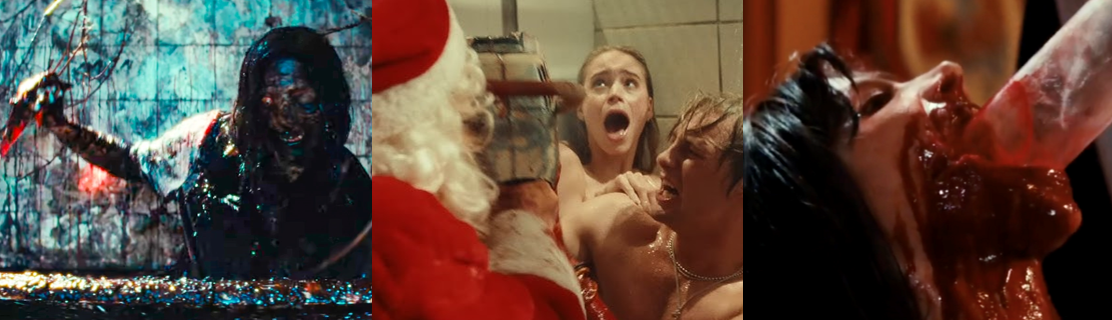
Movie Night [Christmas Countdown]: Home Alone

Released: 16 November 1990
Director: Chris Columbus
Distributor: 20th Century Fox
Budget: $18 million
Stars: Macaulay Culkin, Joe Pesci, Daniel Stern, Catherine O’Hara, John Heard, and Roberts Blossom

The Plot:
When bratty eight-year-old Kevin McCallister (Culkin) acts out the night before a family trip to Paris, his mother, Kate (O’Hara), makes him sleep in the attic. After the McCallisters mistakenly leave without Kevin, he is left to defend his home from career burglars Harry (Pesci) and Marv (Stern).

The Background:
A serious contender for the greatest Christmas movie ever made, Home Alone was the brainchild of writer and producer John Hughes, who conceived of the general premise while on holiday. Hughes parlayed with both Warner Bros. and 20th Century Fox to give himself a safety net should the film go over budget, and turned to Chris Columbus to direct after the latter had a falling out with star Chevy Chase. Although Hughes pushed for Macaulay Culkin to be cast, Columbus auditioned over two hundred children for the lead role before finally agreeing that Culkin was the best fit, and filming of nighttime scenes was restricted to accommodate his age. Co-star Joe Pesci proved more troublesome to the shoot than the child actor, however, as he was angered by the early starts and struggled to keep himself from swearing. The severity of the film’s stunts also caused some tension during filming, which resulted in Culkin being permanently scarred and a real tarantula being placed on co-star Daniel Stern’s face. Home Alone was a ridiculous success at the time, grossing over $475 million at the box office and being met by largely positive reviews. While the plot and its elaborate traps were criticised, the heart-warming comedy, performances, and Culkin gained the most praise. Over the years, it’s been pegged as a Christmas classic, despite sequels diluting the premise with redundant retreads, and is a Christmas tradition more many, including myself, over the festive season.

The Review:
It’s difficult to think of a movie more synonymous with the Christmas season than this one; maybe Miracle on 34th Street (Mayfield, 1984) or Santa Claus: The Movie (Szwarc, 1985), but it’s a tough call. It’s one of those Christmas movies that’s always on every year and has become as much of a tradition as crackers and pigs in blankets. The film is a whimsical family comedy, but you wouldn’t really know that from the opening moments; when we’re introduced to the lavish McCallister family home, it’s the definition of chaotic, with screaming kids running everywhere, arguing, and their parents being just as bad. They’re all in a tizzy because they’re leaving for the airport in the morning for a luxurious Christmas getaway to France, and so preoccupied with their own problems that none of them notice (or question) the uniformed police officer desperately trying to get their attention. Although they don’t suspect a thing since this was a simpler time, the cop is actually Harry in disguise, covertly casing the neighbourhood to get a sense of its security precautions, something that McCallister patriarch Peter (Heard) really doesn’t seem all that bothered about. Peter’s happy to rely on his automatic lights and locks and such, which really goes a long way to show you how much this unexplainably rich family takes their home (and everything, for that matter) for granted. All the stress of packing and organising such a huge trip means that matriarch Kate (O’Hara) has even less patience for her youngest son’s bratty behaviour than usual; the smallest of his siblings, Kevin is ridiculed by brutish older brother Buzz (Devin Ratray) and snobby sister Linnie (Angela Goethals) for his helplessness since he’s so reliant on his mother that he can’t even pack his own suitcase for the trip.

Fed up of his neglectful family, Kevin revels in finally having his freedom.

There’s a sense that Kevin is frequently forgotten or dismissed even without his extended family in the house; with them there, he hasn’t a chance of being attended to, loses his room to his tight-fisted and grouchy uncle Frank (Gerry Bamman), and is horrified at the prospect of sharing a bed with his young cousin, Fuller (Kieran Culkin), due to his bedwetting. In a house full of noise, Kevin’s only outlet is to be louder than everyone else; he brazenly backchats his mother, offers false apologies when he’s punished for acting out, and causes the ire of his entire family when he rightly lashes out at Buzz for eating his pizza. Despite there being plenty of blame to go around, it’s easier for Kate to punish Kevin by sending him up to the third floor, and Kevin spitefully protests this injustice by wishing that she (and all of them) would disappear and leave him alone. Of course, he has no idea that fate has conspired to make this wish come true; Kevin’s plane ticket was accidentally thrown away while cleaning up his mess, Peter accidentally unplugs the alarm clock and causes them to oversleep and rush around in a panic in the morning, and an annoying neighbourhood kid (Jeffrey Wiseman) throws off Heather McCallister’s (Kristin Minter) head count, meaning nobody notices that Kevin is missing until they’re halfway to Paris (and even then it’s a strange intuition Kate suddenly has for no real reason other than a mother’s instinct). Thus, Kevin’s stunned when he finds his house empty, but this turns to elation when he remembers all the awful things his family has said and done to him, and he immediately indulges his every whim. He robs Buzz’s “life savings” (accidentally trashing his room and setting his pet tarantula loose in the process), orders himself a cheese pizza, eats copious amounts of ice cream and junk food while watching trash TV, and generally has the time of his life, all while narrating to himself and occasionally calling out to his family to punish his behaviour. Of course, it’s not all fun and games for Kevin; he applies aftershave and ends up screaming in agony and is forced to go shopping for a new toothbrush and groceries, overpacking his bags and inadvertently shoplifting after being spooked by his neighbour, Old Man Marley (Blossom), whom he’s terrified of thanks to Buzz’s wild stories of his bloodlust.

As if scary Old Man Marley wasn’t bad enough, Kevin must protect his home from the Wet Bandits.

Although continuously terrified by the old man’s grim façade, this fear is just the start of Kevin’s troubles; unbeknownst to him, Harry and Marv have systematically been robbing every house in the neighbourhood since everyone’s gone away for the holidays and left their homes vulnerable. Although far from an intelligent crook, Harry is clearly the brains of the operation; he cases out each house, evaluating their potential and noting when their security measures, and chastises the dim-witted Marv for his perverse fixation on flooding houses to earn them a reputation as the “Wet Bandits”. While Harry is methodical and meticulous, Marv is loud and bumbling, focused more on haphazardly filling his swag bag rather than searching for high value items. Harry pegs the McCallister’s as the “silver tuna” (mainly because they live in a palace!) and is astonished to find the house seemingly occupied when they go to enter it. Night after night they are dissuaded by Kevin’s elaborate deceptions, mannequins and pulleys to trick them into thinking the house is occupied. Obsessed with ransacking the house, Harry follows Kevin and quickly deduces that he’s home alone; confident that the two of them and their crowbars can handle one little boy, Harry resolves to use force but even doesn’t account for how adaptable (and cruel) Kevin is when backed against the wall. What follows is an absolute massacre that sees the two thieves beaten up, knocked about, and brutalised by Kevin’s homemade traps, each one driving Harry further and further over the edge. Pesci shines in his role as the bad-tempered thief, and you can really tell from his indistinct mumbling, garbled curses, and rising frustration that he was really living his character’s aggravation with this obnoxious little foe.

With their trip ruined, a distraught Kate desperately tries to get back home to her son.

As this is going on, the story continuously jumps over to the McCallister’s, whose Christmas vacation is effectively ruined by the realisation that they left Kevin behind; though Buzz and Frank aren’t concerned, the fun and excitement of the trip has been sucked out of everyone else, compounded by them being stuck in an apartment with nothing to do while Peter waits to hear about potential flights. Wracked with guilt and determined to make it back by any means necessary, Kate stays at the airport and wait for a cancellation after every attempt to call their neighbours and elicit the police’s assistance conveniently fails. Although Kate convinces a kindly old couple (Bill Erwin and Billie Bird) to trade some cash and valuables for a plane trip back to the United States, she’s forced to bounce around airports since she can’t get a direct flight back and naturally becomes frustrated from exhaustion and desperation. Luckily for her, friendly polka musician Gus Polinski (John Candy) takes pity on her; after rambling about his band, their success overseas, and their own transportation issues, he offers her a ride in their van, which she gratefully accepts. Although relieved to finally be on her way, and finding kindred spirits in the band since they’ve lost a lot of time with their families while on the road, she’s bombarded by upbeat polka music and endures Gus’s bizarre story of the time he left his own son in a funeral parlour. While this makes for good comedy and helps to humanise Kate after she was such a snappy bitch, I do feel there could’ve been more to this, I assume they were only able to get the late, great John candy for a day or two so he’s just a glorified cameo but I would’ve liked to see Kate spend more time reflecting on her relationship with Kevin with Gus and the band and less time screaming at airport employees. Speaking of humanising, Kevin is surprised to find that Old Man Marley isn’t the grouchy killer he’d been led to believe; while seeking solace in church after regretting taking his family for granted, Kevin speaks with Marley and learns he’s been branded by cruel lies and is actually a kindly old man who’s estranged from his family. The conversation helps Kevin to better understand his own relationship with his family, galvanises his fighting spirit, and sees Marley become an unexpected saviour in the finale, all while reinforcing the true meaning of Christmas: family.

The Nitty-Gritty:
Home Alone is certainly a product of its time and is far from perfect, but it has a quaint charm that only increases with time. Nowadays, this situation would be resolved in a heartbeat as Kevin could easily call or message his family, but that wasn’t really possible in 1990. It also doesn’t help that the power and phone lines are temporarily (and conveniently) knocked out in the opening scene, limiting Kate’s options, or that everyone in their neighbourhood also happens to be out of town at the same time. I can excuse this just by looking at the McCallister’s house and their neighbourhood; this is clearly a wealthy area, populated by the same kind of people as the McCallister’s, so it makes sense that the well-to-do would jet off over Christmas. However, one thing I’ve never been able to believe is that the McCallister’s were able to get up, get changed, load all their shit into the airport buses, get to the airport, and still make their flight in less than an hour! Even if they hadn’t overslept, I find it very difficult to believe that they’d even get to the airport on time; the lack of airport security is somewhat believable as things were different back then but, realistically, they would’ve been stuck in traffic, at the airport waiting for a later flight, or forced to head home anyway since they should’ve gotten there a good two hours early. Does this detract from my enjoyment of the film? Not at all. It’s a fun little eccentricity that, as I say, only gets more amusing the further we get from the antiquated nineties.

Thanks to his traps, Kevin fends off the thieves and gratefully reunites with his family.

Although he’s just a little boy who is apparently incapable of doing anything without parental guidance, Kevin proves to be a capable and adaptable defender thanks to his many toys, his vast imagination, and his devious and sadistic nature. In less than an hour, he draws up a battle plan that sees him planting a nail on the cellar stairs, flash freezing the stone pathways and steps, leaving broken Christmas ornaments by the window, rigging paint cans, irons, and other items to bash the crooks, and even scorches Harry’s head with a blowtorch! Kevin shoots his foes in the face and crotch, sets up Micro Machines to trip them, and even makes use of Buzz’s pet tarantula when in a tight pinch. It’s all very amusing and entertaining stuff but, while Harry and Marv suffer only superficial and comical injuries as the film turns into a live-action cartoon, the implications of these booby traps are staggering as many would surely be fatal in real life! Although Kevin rigs his house with all these traps and pratfalls, he’s smart enough to have a back-up plan that sees him lure the Wet Bandits into a trap after alerting the police, only for the two to intercept him, battered and hungry for revenge. Luckily, Old Man Marley saves Kevin’s bacon and the two are apprehended, easily charged with all their crimes thanks to Marv’s flooding obsession, but Kevin is still left all alone and morose at having apparently wished away his family. Hoping for a Christmas miracle he tidies and decorates the house only to wake up and find it still empty. This is, of course, a fake-out as Kate arrives soon after, mere moments before the rest of the family, and reconciles with Kevin. Even Buzz is impressed that Kevin didn’t burn the house down, briefly showing Him respect before he sees the state of his room, and Kevin has an emotional embrace with his mother that echoes Marley’s own reconciliation with his estranged family, ending the film on a heart-warming note.

The Summary:
Christmas isn’t Christmas without Home Alone, but I do admit that my affection for the film has waned as I’ve gotten older and more cynical. There’s something about live-action, feel-good family movies that just doesn’t age as well as animated films, particularly when it comes to Looney Tunes-style violence that turns what was a grounded (if whimsical) film into a live-action cartoon, somewhat lowering the stakes even when Harry and Marv get their hands on Kevin. It also doesn’t help that I’ve never been a big fan of Macaulay Culkin; sure, he’s just a little boy here and he definitely does well in the role, but his delivery is a bit cringey at times and Kevin is so unlikeable in the opening and obnoxious when left alone that I find it hard to root for him. I enjoy the wish-fulfilment aspects of the film, where Kevin just goes nuts around the house and with food and acting like a grown-up while still being a little kid, and it’s definitely heart-warming seeing both him and Kate (and the rest of the family) realise how much they mean too each other. But, for me, the appeal of the film is the Wet Bandits; Marv might be an idiot, but Harry is so alluring as a cantankerous, scheming thief whose patience is pushed to the limit by Kevin’s traps and antics. Seeing them fall afoul of Kevin’s booby traps is still the best part of the film, even if it does drastically shift the tone, and I enjoyed the imagination and mischievousness behind Kevin’s antics and traps, I just wish that we’d had some inkling of his ability to set these up beforehand. He goes from a bratty, underappreciated kid to a free-spirited child to setting potentially lethal traps pretty quickly, which I guess speaks to how everyone (even he) underestimates him, but I could’ve done with this being fleshed out a little since we were specifically told that he was Les Incompétents. Ultimately, these are minor gripes from a bitter and aging film nerd; kids and youngsters will still find plenty to enjoy here, even if the film is heavily dated in some aspects, and Home Alone is still a staple of the festive season despite its flaws.

My Rating:

Rating: 3 out of 5.

Pretty Good

What do you think to Home Alone? Is it a Christmas tradition of yours or do you prefer another Christmas movie; if so, what is it? What did you think to Macaulay Culkin’s performance? Did you enjoy seeing his bobby traps in action? What did you think to the Wet Bandits and Kate’s desperate attempts to get home to her son? Have you ever been left home alone? What did you think to the film’s sequels? Whatever your thoughts, leave a comment below and be sure to check out my other Christmas movie reviews!

Screen Time [Christmas Countdown]: How the Grinch Stole Christmas! 
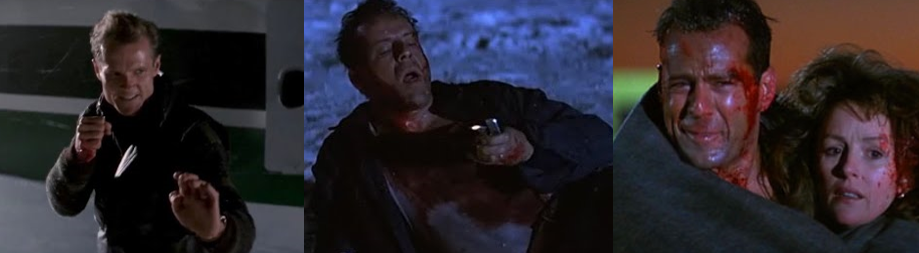
Air Date: 18 December 1966
Director: Chuck Jones and Ben Washam
Original Network: CBS
Budget: $315,000
Stars: Boris Karloff, June Foray, Dallas McKennon, Thurl Ravenscroft, and the MGM Studio Chorus 

The Background: 
In 1955, children’s author and poet Theodor Seuss Geisel (known by his pen name as “Dr. Seuss”) wrote and illustrated a 33-line poem titled “The Hoobub and the Grinch”, which was the catalyst for a more expansive piece of work focusing on the mean-spirited Grinch. Inspired by himself, his wife’s ongoing medical problems, and the rampant commercialisation of Christmas, the story was completed within weeks and reportedly received critical acclaim, with the titular character becoming an instant and surprisingly complex Christmas icon. After collaborating on animated ventures during the Second World War, Dr. Seuss and legendary cartoon director Chuck Jones reunited (despite Dr. Seuss’s initial apprehension) to adapt the story into a television special. Jones insisted on complete creative control and expanded on the original story to flesh out characters like Cindy Lou Who (Foray) and Max (McKennon) and inserting musical numbers to pad the runtime. Though released amidst a slew of other animated Christmas specials, How the Grinch Stole Christmas! impressed when first broadcast; over the years, it has become a universally loved Christmas classic, with the cartoon noted as a timeless, heart-warming festive tale. It was so successful that it inspired follow-up cartoons years later, two financially successful cinematic remakes (one a Jim Carrey showcase and the other an all-CGI throwback) and even a bizarre slasher film in 2022, to say nothing of a slew of other Dr. Seuss adaptations over the years. 

The Plot:
The monstrous Grinch (Karloff) hates Christmas with a passion. When the joyful holiday cheer of Whoville (The MGM Studio Chorus) becomes too much for him, the Grinch disguises himself as Santa Claus and sets out to ruin Christmas by stealing the town’s presents! 

The Review: 
The cartoon is set in Who-ville, on Christmas Eve, where the joyful and excited Whos are happily preparing for the big day by decorating the biggest Christmas tree they can find and displaying it proudly in the centre of their village (“Opening”). They’re also hard at work decorating their houses, and the entire village, with tinsel, wreaths, garlands, baubles, and Christmas joy galore (“Trim Up the Tree”) which, in conjunction with the heavy snowfall, quickly turns Who-ville into the most festive place around…maybe ever! However, while all of Who-ville likes Christmas a lot, the sour Grinch, who lives atop the desolate and foreboding Mount Crumpit, does not. Although the narrator (Karloff) informs us that “no one quite knows the reason” why the Grinch hates Christmas so vehemently, it’s speculated to be because his heart is “two sizes too small” and his hatred extends to the entirety of Who-ville. He glares from his cave, joined only by his faithful dog, Max, the only living creature the Grinch shows any remote affection for. The Grinch tells Max that he’s desperate to keep the Whos from making a racket with their Christmas joy and presents, even their sumptuous banquets, where they gorge themselves on a seemingly endless supply of food, and their insistence of gathering in the village to sing and ring bells (“Welcome Christmas”). After fifty-three years of Who nonsense, the Grinch has reached his limit; the Grinch is inspired by a snow-caked Max to assume the guise of jolly ol’ Saint Nic and storms into his cave (dragging Max along) to whip up a suitable outfit (“You’re a Mean One, Mr. Grinch”). Once complete, the Grinch forces Max to act as his reindeer, loads up a “ramshackle sleigh” with some black sacks, and sneaks into Who-ville in the dead of night while all the Whos are tucked up in bed, oblivious, easily clambering into their houses via the chimneys and stealing every present under each tree with glee!  

After stealing Christmas, the miserly Grinch has a change of heart regarding the festive season.

Emboldened by his wickedness, the Grinch does this for every house, wrecking their trees, pinching their Christmas stars, rolling up their gifts in rugs, and even stealing candy canes from sleeping Who children and clearing out their “ice boxes” (“You’re a Mean One, Mr. Grinch (Reprise)”). However, just as he’s stuffing a Christmas tree up a chimney, he’s discovered by sweet, innocent, Cindy Lou Who; to pacify the child, the Grinch quickly thinks up a lie, convincing Cindy Lou that he’s going to fix a fault with the tree’s lights. After placating her with milk and a cookie, the Grinch leaves the house barren and ransacked, with barely a microscopic crumb left behind. Once he’s cleared out all of Who-ville and piled his sleigh high with his stolen wares, including the village tree, he heads back up Mt. Crumpit, with poor Max desperately pulling the overloaded sleigh through the snow while being mercilessly whipped. Once at the top, the Grinch prepares to dump everything over the side (“A Quarter of Dawn”), gleefully anticipating the despair of the Whos once they realise Christmas isn’t coming this year. However, when the Grinch pauses to bask in their anguish, he’s surprised to find the Whos’ spirits remain as high as ever! They gather in the village, joining hands and ringing in the season with their bells and song (“Welcome Christmas (Reprise)”), their hearts as warm and large and full of Christmas cheer even without the presents and decorations. Considering the Grinch believes that Christmas is purely about the gifts and excess, he’s confused by this but, as he puzzles out the quandary, he realises that “Christmas” is about more than just things bought from shops. This revelation drives him to save his plunder from their plummet, empowered by the sudden increase in his heart size and the true spirit of Christmas. Now cheerful and joyous, the Grinch and Max ride into Who-ville and return everything they stole, restoring Christmas to the village and even joining them for Christmas dinner, carving the roast beast and allowing the spirit of the season to fill him from head to toe (“Finale”). 

The Summary:
It might surprise you to know that I’m not really a fan of Dr. Seuss. I didn’t grow up reading his bizarre stories, nor was How the Grinch Stole Christmas! part of my annual Christmas tradition. In fact, I don’t think I’ve ever seen it broadcast on television here in the United Kingdom, so my experience with the good doctor and his colourful characters is limited solely to their later live-action and CGI adaptations. All this is to say that it wasn’t until Christmas 2023 that I randomly decided to finally give this a quick watch and share my thoughts on it since it’s such a well-known and beloved holiday tale and children’s story. Unsurprisingly, given who directed it, How the Grinch Stole Christmas! is suitably Chuck Jones-ian in its animation style; there’s a raw fluidity to the cartoon, meaning you can tell that countless hours of work went into animating every frame, and the characters and their environments are ripped straight from Dr. Seuss’ famous work, literally bringing the static images to life in all their sketchy glory. As you’re probably aware, it’s also a musical, with its songs (particularly Ravenscroft’s rendition of “You’re a Mean One, Mr. Grinch”) becoming as synonymous with the festive season as the titular miserly creature and being revised and covered not just for future adaptations of the story, but to coincide with the season. The story is a whimsical and timeless ditty, full of enjoyable little rhymes and colourful, memorable, oddball characters; the Whos are strange, furry humanoids who embody Christmas cheer and happiness and their town, though small and buried in snow, is a place of light and love where the Whos live peacefully and with lots of food and comfy houses to keep them snug and warm. 

A whimsical fantasy tale with a timeless, heart-warming message.

Naturally, this is juxtaposed by the Grinch; a green-furred, sour-faced gremlin, the Grinch despises the Whos, and Christmas, and has glared at their village with anger, enraged by their noise and excess, every December for the last fifty-five years! Although no definitive reason is given for his dislike for Christmas, it basically comes down to him lacking in Christmas cheer, misunderstanding the meaning of Christmas, and feeling conflicting waves of jealous, disgust, and personal insult since he’s not part of any of the Whos’ celebrations. Believing that the Whos will sing a different tune if all their Christmas possessions are stolen, the Grinch slinks around like a snake, swiping everything he can get his hands on (even lightbulbs and ice cubes!), and easily fooling curious Cindy Lou with his forked tongue. However, the sight and sounds of the Whos retaining their Christmas spirit even without possessions is enough to change the Grinch’s demeanour completely; this is a fundamental lesson of many Christmas tales and it’s shown in beautifully simplistic detail here. The Grinch never considered that Christmas was as much a state of mind as it was about food, decorations, and extravagance, and the love and warmth of this revelation lightens his mood and turns him around on the season completely. It’s simple and much of the depth is buried beneath the whimsical songs and cartoonish fantasy, but it resonates nonetheless and is an important lesson for kids to learn (basically, be grateful for what you have and don’t just think about presents!) While I’m not always Dr. Seuss’ biggest fan, I enjoy the visual and thematic appeal of the Grinch and his heartwarming story, and this fun little animated short is a great addition to your Christmas viewing every December, 

My Rating:

Rating: 3 out of 5.

Pretty Good

Is How the Grinch Stole Christmas! an annual tradition for your Christmas? Have you read the original story and, if so, what do you think to its different adaptations? Are you a fan of the Grinch character and the colourful, bizarre Whos? Why do you think the Grinch hated Christmas so much? Are you a bit of a Grinch around this time of year? What Christmas movies and specials are you watching this year? Whatever your thoughts on How the Grinch Stole Christmas!, leave them in the comments or on my social media and go check out my other Christmas content across the site. 
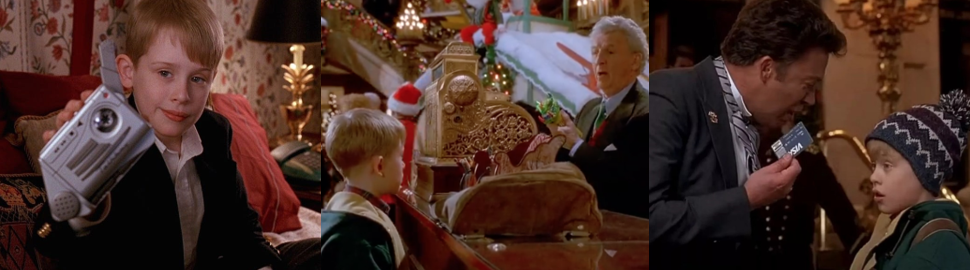
Wrestling Recap: Extreme Elimination Chamber (December to Dismember ’06)

The Date: 3 December 2006
The Venue: James Brown Arena; Augusta, Georgia
The Commentary: Joey Styles and Tazz
The Referee: Mickie Henson
The Stakes: Extreme Elimination Chamber match for the ECW World Championship

The Build-Up:
Back in the days when the then-World Wrestling Federation (WWF) and World Championship Wrestling (WCW) competed in a vicious ratings war, Extreme Championship Wrestling (ECW) offered a different brand of sports entertainment. First founded in 1992 as Eastern Championship Wrestling, the company was re-branded by one of wrestling’s greatest minds, managers, and promoters, Paul Heyman, in 1993 and came to be known for its violent and controversial matches and content, which was instrumental in inspiring the WWF’s “Attitude Era”. Unfortunately, despite ECW’s rabid cult following, the company was unable to sustain itself after losing its television deal; many of ECW’s stars jumped to the WWF and the company officially closed its doors in early-2001. ECW lived on, however, not just in the rise of independent promotions but also in the confines of the rebranded World Wrestling Entertainment (WWE); the success of their Rise and Fall of ECW documentary (Dunn, 2005) saw the WWE host a special throwback event, ECW One Night Stand, in 2005 to celebrate the brand. It was so successful that a second event followed in 2006, one that would see ECW and many of its stars return as a third WWE brand. Unfortunately, despite initially being presented as an alternative product and a showcase for new talent, the WWE ECW was doomed to fail: it lacked the “Extreme” edge fans expected, Heyman’s influence was limited, and its top star and champion, Rob Van Dam, was stripped of his championship belts after being arrested on drug charges! The WWE seemed to lose interest soon after; although they promoted this pay-per-view event, very few matches were announced beforehand and the card was supplemented by Raw and SmackDown! talent. The entire show was built around this Extreme Elimination Chamber match, with former champion RVD being the first announced for the contest. There was also some drama surrounding Hardcore Holly’s involvement; he was initially scheduled to be a part of it before Bobby Lashley attacked him and took his place, failed to gain a spot in a match against RVD, and was finally included after Sabu was mysteriously attacked earlier on the show, a decision that irked the ECW original but would be just the tip of the iceberg when it comes to this universally lambasted event.
The Match:
Considering ECW December to Dismember 2006 was already criticised for its lacklustre card and padding its runtime, it’s perhaps not surprising that this match was preceded by not just a hype video emphasising its violent and brutal nature, but also a lengthy pre-match promo from ECW general manager Paul Heyman. While the crowd, and even the commentary team, have no love for Heyman, who turned heel by ditching the ECW originals for up-and-coming stars like Bobby Lashley and CM Punk (and, naturally, the Big Show) as the future of the company. This promo went on for about three minutes and, afterwards, the show wasted even more time by dwelling on the chamber’s lowering around the ring. What made this match unique, and “Extreme”, compared to previous elimination chamber matches was that each competitor also carried a weapon: CM Punk had a steel chair, Test a crowbar, Lashley a table, and the Big Show had a baseball bat wrapped in barbed wire. Otherwise, the rules were the same; two men (RVD and Hardcore Holly) started the match and, around every five minutes, another competitor was released to join in. As was often the case whenever the Big Show actually got a serious push, much of Heyman, Styles, and Tazz’s commentary emphasised the champion’s size and strength; despite the fact that the Big Show had been beaten like a drum over the years by this point, he was hyped as “unbeatable” simply because he was a huge man with a newfound motivation since capturing the championship. Of all the competitors, rising star CM Punk,the epitome of an indie darling, and the ever-popular RVD made the most waves during their entrances. Even now, as big a fan of Test and even Hardcore Holly I am as a dependable midcarder, it’s hard to deny that these two stick out like a sore thumb; nobody in the audience wanted Holly in this match and their inclusion really speaks to how limited and lacklustre the WWE ECW roster was.

RVD proved the MVP of this thrown-together match, closely followed by crowd favourite CM Punk.

As mentioned, RVD and Hardcore Holly started the match after what felt like an ice age of stalling and entrances and they kicked off what was sold as the most devastating match in the entire WWE by…trading lock ups and punches. A clothesline exchange was enough for Holly to go for the cover, which earned him barely a one count, then Holly gently tossed RVD to the raised steel floor outside the ring. RVD leapt to the cage wall when Holly dodged his dive, which was admittedly pretty impressive; unfortunately, he ended up hitting the ropes when he tried a follow up dive, which was apparently enough to draw an “ECW!” chant from the crowd. Holly pressed his advantage by running RVD into the chain-link wall and slamming him on the steel but crashed and burned when he uncharacteristically went for a dive off the top rope and ate a boot for his troubles. RVD capitalised with his patented Rolling Thunder manoeuvre from the ring, over the ropes, and to Holly’s prone body on the outside, only to find himself deposited back into the ring from a suplex for a two count. Holly and RVD traded blows, with Holly landing his trademark dropkick, before CM Punk joined the action. The crowd exploded when Punk launched his steel chair right at Holly’s face and took out RVD with a springboard clothesline, only to be blasted with that same chair when RVD tossed it at his head! RVD followed up with his rolling monkey flip in the corner, which saw Punk slightly graze the chair with his tail bone, only for Punk to duck RVD’s spin kick and sweep him onto the chair with his speed and martial arts skill. Punk kept Holly out of the game with a springboard dropkick and continued to work over the busted open RVD, thrusting him head-first through the chair as it was wedged in the corner, only to have his momentum cut off when Holly swung him into the chain link wall for a near fall.

The crowd were unimpressed when RVD and Punk were eliminated, and by the botched pin on Holly.

Holly continued his attack with a sidewalk slam to Punk before dumping him on the ropes and booting him right in the head and driving him to the mat with a superplex. Regardless, CM Punk kicked out of two follow-up pin attempts and all three men were fatigued when Test brutally attacked with his crowbar, slamming, clawing, and choking Punk and RVD to give Holly time to recuperate. RVD somehow found a second wind, attacking with the chair then eliminating CM Punk with the Five-Star Frog Splash, which initially caused the audience to pop but their cheers quickly turned to boos when they realised what’d happened. Test then shockingly hit Holly with his Big Boot; however, despite the referee not counting to three and Tazz insisting that Holly kicked out, Hardcore Holly was summarily eliminated in confusing, frustrating, and anti-climactic fashion. RVD then flew in with a side kick off the top rope that downed Test and left him in prime position for a Five-Star Frog Splash off the top of the Big Show’s pod; however, the Big Show grabbed at RVD and interrupted the move, allowing Test to attack with a chair, dump him off the pod, and land a massive elbow drop from the pod to the steel chair, which took RVD out of the match and left the audience incensed as they realised their two favourites were gone.

After some stalling, shenanigans, and mediocre action, Lashley captured the championship.

There was a huge lull in the match where Test was left to awkwardly stumble about the ring as the counter wound down; then, when Heyman’s riot squad refused to let him out, Lashley broke out of his pod by smashing the roof with his table. Although he almost slipped off the top rope, Lashley, hit a diving clothesline, kicking the chair in Test’s face, and smashing him in the gut with the crowbar. The Spear that followed then took Test out of the match, leaving Lashley to stalk around the ring for over a minute as he waited for the Big Show to be released. The Big Show lumbered out with his barbed wire baseball bat and hammered at Lashley, who desperately defended himself with the chair; quickly, Lashley tricked the Big Show into getting the bat caught in the cage wall, allowing the challenger to drive the champion into the steel mesh and right through a pod, busting him open and leaving him prone for a beating. The Big Show rallied, effortlessly tossing Lashley into the ring and flooring him with a clothesline; however, when he went for his trademark Chokeslam, Lashley countered into a huge DDT! The Big Show got pissed when Lashley deftly ducked his haymakers and tried to plant him with a running powerslam, but Lashley easily slipped off, hit the ropes, and collided with a Spear to finish the clearly winded champion and capture the ECW Championship to reluctant applause. I can understand why this match is so poorly regarded; there’s just not enough star power, heat, or intrigue behind it. The weapons added some spice but they were barely used and there was too much waiting around, not to mention the two clear fan favourites being unceremoniously dispatched and that botched pin on Hardcore Holly!

The Aftermath:
This wouldn’t be the last time that the Big Show and Bobby Lashley clashed over the ECW World Heavyweight Championship; on the very next episode of ECW, Lashley defeated the Big Show in a one-on-one match, retaining the belt and temporarily removing the Big Show from WWE programming. Lashley continued to mix it up with his fellow chamber opponents, clashing with RVD on ECW and defending the championship against Test at Royal Rumble, but he ended up embroiled in a “Battle of the Billionaires” at WrestleMania 23 as he represented Donald Trump in a match against WWE chairman Vince McMahon’s proxy, Umaga. This ultimately led to perhaps the most outrageous storyline of the revived ECW as McMahon and Lashley feuded over the championship, with the chairman actually capturing the belt in the process! Although December to Dismember wouldn’t be the end of ECW, it was the end of Paul Heyman’s tenure with the company, and the WWE, for some time; the show’s poor buy rate and attendance figures escalated tensions between Heyman and McMahon, with the former walking away from the company after his booking decisions regarding CM Punk, Rob Van Dam, and Bobby Lashley were ignored. Contrary to popular belief, ECW limped on for about two more years after December to Dismember, but the brand was never again afforded its own pay-per-view and December to Dismember went down in history as one of the worst produced, worst attended, and worst regarded wrestling events of all time.

My Rating:

Rating: 1 out of 5.

Terrible

What did you think to the Extreme Elimination Chamber match? Who did you want to see win the match at the time? Were you annoyed that Sabu was swapped out for Hardcore Holly? What did you think to CM Punk being the first person eliminated? Do you think the match should have made better use of its weapons? Were you excited that Bobby Lashley won? What did you think to the WWE’s revival of ECW? Would you like to see the December to Dismember event make a comeback? Whatever your thoughts, feel free to leave them below or drop a comment on my social media.