Back Issues & Knuckles: Sonic Adventures #1


Following a highly anticipated release, bolstered by an extravagant marketing and release schedule, Sonic the Hedgehog 2 (SEGA Technical Institute, 1992) not only improved on every aspect of its influential predecessor but also went on to become the second best-selling SEGA Mega Drive game of all time. Expectations were high for the equally-anticipated third entry, a game that ended up being so big that SEGA made the decision to split it into two, birthing perhaps the greatest 2D Sonic adventure in the process.

Story Title: “In the Claws of Doctor Robotnik”
Published:
October 1994
Writer: Smoldo
Artist: Mister B

The Background:
It didn’t take long at all for SEGA’s supersonic mascot to achieve an unprecedented level of mainstream success; Sonic basically single-handedly allowed SEGA to usurp Nintendo’s position at the top of the videogame industry and the company almost immediately set about capitalising on the Blue Blur’s popularity with  a slew of videogames and merchandise such as cartoons and comic books. While the most notable Sonic comic books were the long-running series published first by Archie Comics and then by IDW and the United Kingdom’s Sonic the Comic (StC), there have been a number of lesser known Sonic books, comics, and manga released over the years but one of the most intriguing for me has always been the two Sonic Adventures comics published only in France by Sirène in 1994 to promote the release of Sonic the Hedgehog 3 & Knuckles (SEGA Technical Institute, 1994). The series only ran for two issues, with one being the full-length comic book I’m talking about today and the other being more of a character/game guide to Sonic 3. As a lifelong fan of the Astérix series (Various, 1959 to present), I was immediately drawn to the expressive and vibrant art style of “Dans Les Griffes De Robotnik” but what really makes this comic stand out is how obscure it is. I’ve never been able to find a copy only but, thankfully, a fan translation by Sonknuck and Manic Man is readily available to read online. Like a lot of Sonic media outside of Japan at the time, Sonic Adventures pulls much of its lore from the now defunct Mobius and Doctor Ovi Kintobor storyline, depicts Doctor Eggman (or “Robotnik” as he was widely known then) as his Adventures of Sonic the Hedgehog (1993 to 1996) counterpart, and features an interesting twist on Sonic 3 & Knuckles’ story that omits Knuckles the Echidna altogether, includes Amy Rose, and actually has some similarities to later narrative elements introduced in Sonic Adventure (Sonic Team, 1998).

The Review:
“In the Claws of Doctor Robotnik” begins in the skies of Mobius, specifically on board Doctor Robotnik’s airship. Robotnik, whose design is ripped directly from Adventures of Sonic the Hedgehog, basks in his victory and own magnificence when his Penguinators present him with Sonic bound in chains. Although initially musing on why Sonic was doing wandering about the “Marble Temple” on Angel Island, he is driven into a rage when Sonic taunts him by briefly referring to Robotnik’s origin as the kindly Professor Kintobor.

Sonic makes a desperate escape from Robotnik’s air ship.

Robotnik’s mood lightens once more, however, when the Penginators present him with a bag full of Chaos Emeralds (which Sonic had been carrying on him) and the mad scientist boastfully proclaims himself to be the “king of the world!” Robotnik’s victory is extremely short-lived, though; Sonic breaks free on his chains, punches the Chaos Emeralds from Robotnik’s grasp, and leaps out of the airship to plummet back to the planet alongside the legendary gems. Luckily, Sonic had spotted his friend, Miles “Tails” Prower, skulking about outside the ship and the two-tailed fox is able to save Sonic just in the nick of time.

After fending off the local wildlife, Sonic and Tails retreat from Robotnik’s all-out attack.

The two land in an “unexplored [region]” of Mobius; although Robotnik immediately leads his Badniks down in pursuit, Sonic’s primary concern is shaking himself loose from the jaws of ordinary piranhas using the same technique players used in Hydrocity Zone. Unlike his videogame counterpart (but similar to Sonic’s depictions in cartoons at the time), Sonic has no problem swimming once he shakes off the critters but he and Tails are soon forced to make a desperate retreat when Robotnik and his Badniks bombard the area with fire (similar to Angel Island Zone; Robotnik’s craft even somewhat resembles his contraption from the finale of that Zone).

Sonic and Tails are swept away to an ancient city populated by savage echidnas!

With RhinoBots literally raining down around them (on cute little parachutes, no less), Sonic and Tails are driven down a waterfall (Tails having, apparently, forgotten how to fly despite flying in the panels leading up to this plummet). Luckily for them, they find a cache of Golden Rings at the bottom of the river; Sonic, however, decides that discretion is the better part of valour and allows the river to carry them away from danger rather than use the Rings for a power boost. Instead, though, the river leads to another waterfall and the two are dumped into a hidden echidna society that bares a resemblance to the one seen in Sonic Adventure that is too uncanny to just be a coincidence. The echidna “savages” (whom Sonic describes as being “fools [that] are descents of Mobius’ first race” and all of which look exactly like Knuckles despite him being entirely absent from the story) attack the two with spears in an attempt to kill them, leading to Sonic destroying their wooden boats with his patented Spin Attack and a “knuckle sandwich”.

Robotnik holds the feisty Amy hostage while Sonic and Tails are condemned to death by Princess Alucion.

Meanwhile, Robotnik has captured Amy Rose (whose hair, much like in StC, has been erroneously stylised into a high sweep because of that one piece of Sonic the Hedgehog CD (SEGA, 1993) artwork) and plans to use her as leverage against Sonic. While Amy was characterised as a meek, lovesick damsel in distress in Sonic CD, here she’s a snarky, defiant tomboy who openly mocks Robotnik at every opportunity. Back at the ruins, the echidnas have captured Sonic and Tails (mainly because the two are more used to smashing robots and didn’t want to hurt the savages). They are taken to Princess Alucion, the ruler of the echidna tribe, who has the long-lost Grey Emerald imbedded in her crown. Alucion showcases the grandeur of “the antique city of the first people” and then prepares to push them down a tube so that they can be roasted alive inside a volcano that somewhat resembles the one from Lava Reef Zone.
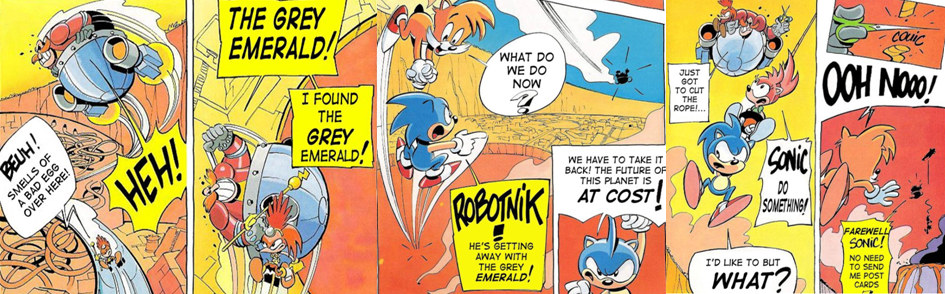
Once again, Robotnik seems to have claimed total victory in the finale.

Fortunately, Robotnik attacks at exactly the right moment; Sonic and Tails dive down the tube, taking Alucion with them, to avoid Robotnik’s missile attack and, while the mad doctor believes them to be dead, Sonic revels in the twisting, turning slide that carries them to their doom. When a Penguinator shows Robotnik that his prey has survived, he moves to intercept them and, in to process, kidnaps Princess Alucion. Tails saves Sonic from a dip in molten lava (again, right at the last second) and, despite the obvious trap, rushes to save Amy when she is flown past tied up to a bunch of Jawz Badniks. Amy berates Sonic’s plan, since the two are left suspended over the volcano, and Robotnik swoops in to cut the rope and send them plunging to the burning crater (taking a picture for prosperity).

After clearing the Special Stage, Sonic assumes a powered-up form to battle Robotnik.

When Robotnik moves to retrieve the Grey Emerald from Alucion, she bites him and dives after Sonic and Amy while Tails is left wailing in despair and vows that everyone will know of their bravery and courage. His lamentations are premature, however, as the volcano is home to a Big Ring, which transports Sonic and Amy to a Blue Sphere Special Stage. Thanks to his super speed, Sonic easily bests the challenge and Alucion praises his achievement and awards him with the seven “magical emeralds, the golden armour, and the power to be transported wherever [he] wants”. While Tails is regaling their friends in Green Hill Zone with the tale of Sonic’s end, Sonic and Amy miraculously materialise before them. Tails is elated to see his friends and awestruck to see Sonic transformed by the “golden armour” into a glowing, super-powered form and the comic ends with Super Sonic promising the Robotnik’s problems are just starting.

The Summary:
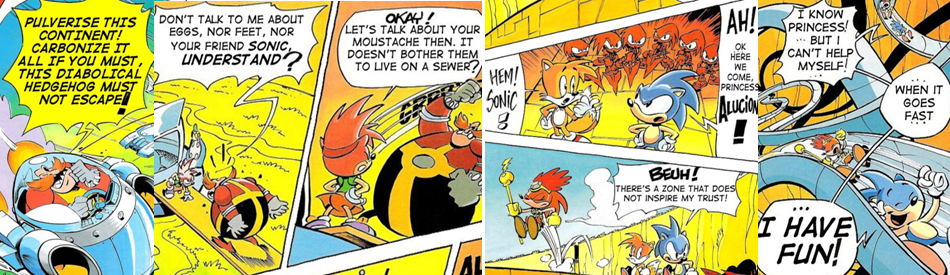
“In the Claws of Doctor Robotnik” is one of the best of Sonic’s obscure comic tales; similar to Sonic the Hedgehog Story Comic (Unknown, 1991), the comic is full of some truly gorgeous artwork that reminds me of the Astérix comics and contains many of the gameplay mechanics and hazards from the source material. While Sonic is sporting his much-maligned Mohawk design, I seriously cannot get enough to the artwork here; characters are cartoony and exaggerated, similar to in Adventures of Sonic the Hedgehog, but also full of snark and attitude, exactly like Sonic should be.

The comic is full of humour but also suffers a bit from the translation.

Of course, being that it’s a fan translation, there are some oddities to be found in the comic; referring to Super Sonic as the “golden armour” sticks out the most but there are a number of odd grammatical errors and inclusions to be found as well. Still, Sonknuck does a pretty good job at adapting the original French text for an English-speaking audience and the story is peppered with all kinds of quirky comedy and phrases; Sonic loves to exclaim “Darn and blast!” and there’s some amusing sayings such as “I haven’t seen the movie” and “No need to send me post cards!” Other translations don’t land quite so well, however, and I would love to see this comic officially translated and released some time.
A fun piece of obscure Sonic media with some excellent artwork and humour.

Still, “In the Claws of Doctor Robotnik” is a lot of fun; it appears to read like this quirky amalgamation of the Western Sonic lore and as a prelude to Sonic 3 & Knuckles, though obviously the Mobius story doesn’t really align with that presented in the videogames. The imagery used, though, is fascinating; it’s amazing how closely the echidna civilisation seen in Sonic Adventure resembles what we see in the comic and it was fun seeing mechanics from the videogames crop up. Obscurity and nostalgia also play a large part in my appreciation for “In the Claws of Doctor Robotnik” but that doesn’t change the fact that you should try and seek this one out online and give it a read sometime.

My Rating:

Rating: 5 out of 5.

Fantastic

Have you ever read “In the Claws of Doctor Robotnik”? If so, what did you think of it? Have you read the original French comic and, if so, how does this translation measure up? Did you enjoy the art style and quirky humour in the comic or do you prefer the Archie and IDW comics? What did you think to the original characters and would you like to see this comically officially translated and more widely available some day? How are you celebrating the anniversary of Sonic 3’s release today? Whatever your thoughts, please feel free to share them and your memories of Sonic 3 & Knuckles below.


February Drabble Challenge: Stoic

Horror PromptsGillian Church has created 28 single-word prompts and challenged writers to write a horror drabble for each. A drabble is a story of exactly 100 words, no more, no less (not counting the title).

Can you do it?

The Prompt:
Stoic

The Submission:
“You sure want to hear the rest of this?” she asked, looking up from the paperwork. It had arrived that morning, and he’d purposely waited for her to come home so that she could read through it for him since he couldn’t bring himself to look upon the words.

“Every word,” he replied impassively.

She read a tale of betrayal, of accusations, or baseless half-truths. Accounts from biased eavesdroppers, vindictive liars, and self-serving backstabbers.

Yet, those the words left a void where his heart had once been, his face betrayed no emotion. He simply sat, stoic, seething within his skin.


What did you think to the prompt for this week’s drabble challenge? Did you submit anything for it? Have you ever written any flash fiction before? I’d love to know what you think to my snippets and writing prompts, so feel free to sign up and let me know what you think below or leave a comment on my Instagram page. You can also follow Gillian Church to take part in her Weekly Writing Prompt challenge.

Weekly Writing Prompt: 02/02/2022

Gillian Church posts Writing Prompts every week on her Horror Prompts Instagram account and I like to take part with a few snippets and pieces of flash fiction.

The Prompt:
You were talking in your sleep. What were you dreaming about?

The Submission:
“The orderlies said you were talking in your sleep again,” Doctor Michaels said, barely glancing up from his notes. “What were you dreaming about?”

I shifted in my seat. “I don’t wanna talk about it.”

Michaels finally looked up; his face shimmered behind the glass that separated us. “Come now, I think it would be–”

“Good for my therapy,” I finished with a grimace. “I’ve heard it a hundred times, Doc.”

Doctor Michaels laced his hands together. “Sometimes talking helps, Cody.”

I rolled my eyes and coughed. “Fine, you wanna know? I saw a man.”

“Was it your father?”

I screwed my face up in disgust. “No, it wasn’t my father. He had a face.”

Doctor Michaels raised an eyebrow.  “His face was stoic? Expressionless?”

“It was missing. There was … nothing. He carried a meat clever …”

“Your father was a butcher, wasn’t he?”

“IT WASN’T MY FUCKIN’ FATHER!” I screamed, leaping to my feet and sending my chair flying. “He was bald … a giant! He wore a torn smock and laughed … God, he laughed!”

Doctor Michaels scribbled on his notepad. “And what did this man want?”

“Me,” I whispered. “It’s the same thing every night”.

“Because of what you did to your father?”

I lowered my head and took a deep breath, then grabbed the leg of my chair and swung it at the glass with all the force I could muster. It cracked but didn’t shatter; Doctor Michaels’ face splintered as a result, seeming to split in two.

I ranted and screamed and gnashed and roared and he just sat there, impassively jotting down notes as I hammered away at the glass again and again. With each hit, his face distorted and twisted; it became blank … empty.

“I can see we still have a lot of work to do”.


What did you think to this week’s writing prompt? Did you submit anything for it? Have you ever written any flash fiction before? I’d love to know what you think to my snippets and writing prompts, so feel free to sign up and let me know what you think below or leave a comment on my Instagram page. You can also follow Gillian Church amd Horror Prompts to take part in the Weekly Writing Prompt challenge.

Movie Night [Punisher Month]: The Punisher (1989)


Back in February 1974, Spider-Man/Peter Parker faced a new enemy in the form of Frank Castle, the Punisher, a veteran of the Vietnam War turned bloodthirsty vigilante. The Punisher separated himself from other, traditional costumed heroes by his willingness to kill and uncompromising, suicidal one-man war on crime and what better way to celebrate the debut of this nuanced and complex character by dedicating every Tuesday of this month shining a spotlight on Marvel’s most notorious anti-hero?


Released: 25 April 1991
Director: Mark Goldblatt
Distributor: New World International
Budget: $9 million
Stars: Dolph Lundgren, Louis Gossett Jr., Nancy Everhard, Barry Otto, Jeroen Krabbé, and Kim Miyori

The Plot:
After his family are killed by a mafia-planted car bomb intended for him, former ex-Marine Frank Castle (Lundgren) has taken to a life of vigilantism as “The Punisher”; killing criminals and mobsters with special skull-engraved knives and operating from the sewers, he has become New York’s most wanted man. However, when crime boss Gianni Franco (Krabbé) comes out of retirement and butts heads with Lady Tanaka (Miyori) of the Yakuza, the Punisher is the only man capable of stopping all-out war in the streets.

The Background:
Having made an impressive debut in the pages of The Amazing Spider-Man #129, the Punisher quickly became one of Marvel’s most popular anti-heroes thanks to his tragic backstory and unwavering commitment to the eradication of crime. This, in turn, led to him appearing in videogames, cartoons, and a surprising amount of live-action adaptations of the source material. The first of these was produced in 1989 at the end of the action movie renaissance of the 1980s; muscle-bound stars like Arnold Schwarzenegger and Sylvester Stallone had redefined the criteria for the action genre but Dolph Lundgren was no slouch in that department either. The Swedish strongman made quite a name for himself in his own right, even if he was often overshadowed by Schwarzenegger, and adapting the Punisher character into the trappings of an eighties action film made perfect sense at the time. Sadly, the bizarre decision was made to not have Lundgren don the character’s iconic skull shirt and The Punisher was denied a widespread theatrical release in favour of being released straight to video. While most reviews agreed that the film was unimpressive, to say the least, and criticised its presentation and content, others praised Lundgren’s performance and the dark and gritty nature of the movie, though it would be nearly fifteen years before the character would receive another live-action adaptation.

The Review:
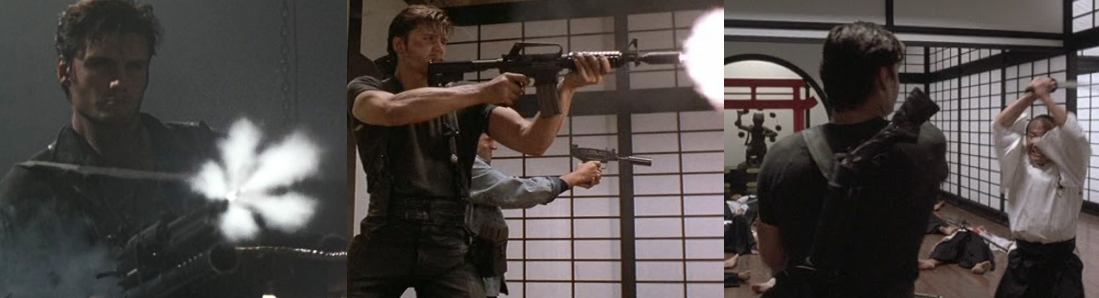
The Punisher opens with a depressingly low budget title sequence that’s like something out of a sixties James Bond film; rather than getting you pumped up for a high-octane action film, it’s more like the opening to a bog standard television cop show from the seventies, despite the brief shots of the Punisher gearing up or randomly unloading his machine gun. In many ways, this sets up the tone for the film but, at the same time, misrepresents The Punisher; while it’s not quite the same over-the-top spectacle as the likes of Commando (Lester, 1985) or Rambo III (MacDonald, 1988), it’s a decent enough representation of its genre that is, perhaps, unfairly overlooked against its other, more popular counterparts.

After five years killing mobsters, the Punisher goes public to enact his revenge.

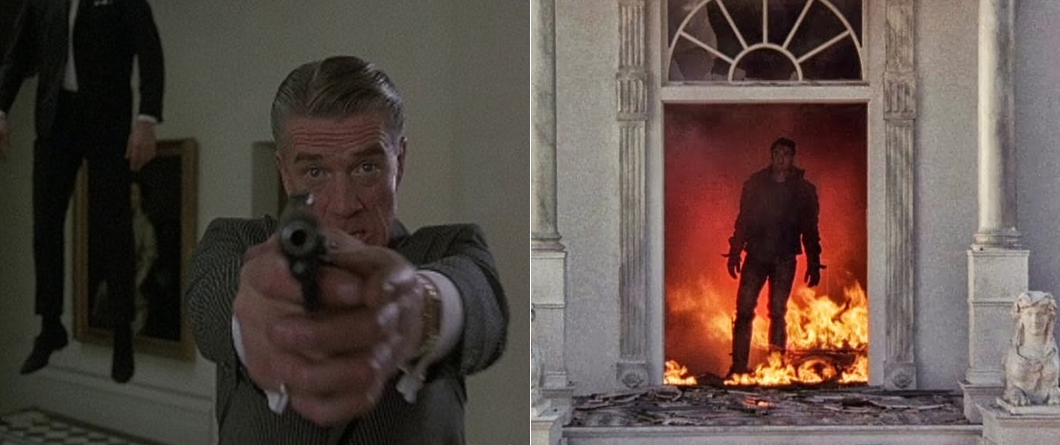
Frank’s tragic background is initially reduced to a brief news report (we later get a proper flashback that shows it but, again, this is more of a snippet rather than an extended sequence) that informs us that the man responsible for the death of Frank’s family, Dino Moretti (Bryan Marshall), has been acquitted for the charges. Moretti arrogantly laughs off concerns about the Punisher seeking retribution against him, despite the fact that Frank has become a notorious underworld vigilante and has at least 125 kills to his name. As you might expect, Moretti’s arrogance is misplaced and Frank not only murders his armed bodyguards one by one but also blows up the mobster’s stately home in a very public display.

While there’s not much for Leary to do, Berkowitz has an emotional connection to the Punisher.

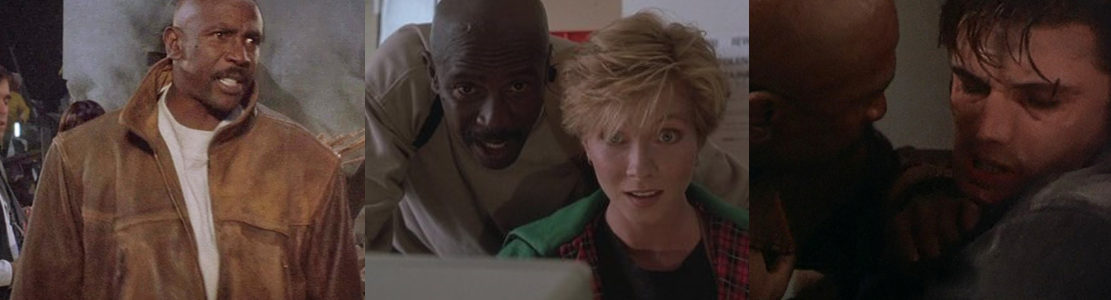
The Punisher is a hot news item; though they are unaware of his true identity, reporters are desperate to cover him and milk his violent actions but the police, and the mayor, would prefer to downplay his actions. After the Punisher appears to die in the explosion at Moretti’s house, the official line is that he is dead but his former partner, Detective Jake Berkowitz (Gossett Jr.), refuses to let the subject lie. Although he has no interest in working with a partner, and has become quite jaded since Frank’s apparent death in a mob hit, Berkowitz is convinced to work with Detective Samantha Leary (Everhard) when she shares his suspicion that Frank is the Punisher. Leary uses what is sold to us as a state-of-the-art computer algorithm to pinpoint the Punisher’s location, which is pretty much her sole contribution to the film other than being a very basic audience surrogate. Berkowitz, however, is a constant highlight of the film; his relatable, no-nonsense attitude stands out amidst a few mediocre performances, with his escape from Mafia custody stands out as a notably amusing sequence. His emotionally-charged reunion with Frank is another standout moment; Berkowitz desperately tries tor each Frank, screaming and manhandling him and clearly heartbroken at the state Frank has found himself in, while Frank remains impassive and unapologetic for his actions.

Already weakened from the Punisher’s actions, Franco wages all-out war with the Yakuza.

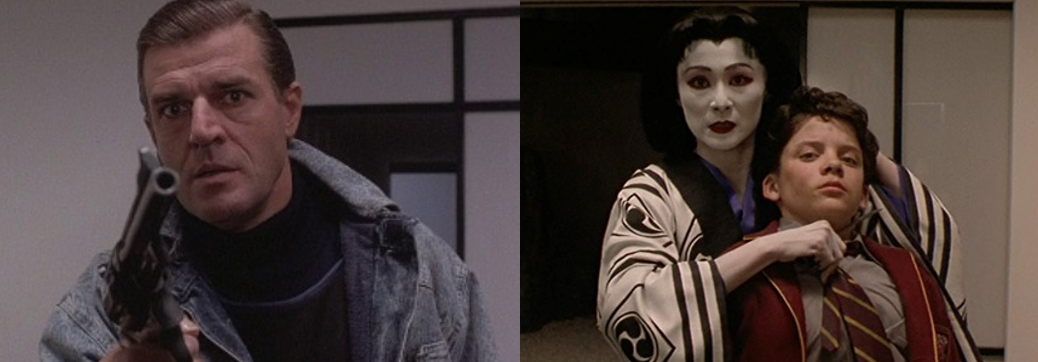
The traditional, mostly Italian-American world of organised crime is shaken up by the arrival of the Yakuza. Led by Lady Tanaka, the Yakuza strikes with silent, surgical precision and effectiveness and are easily able to consolidate a stranglehold on the criminal underworld thanks to the Punisher thinning out the competition. Their presence, and the Punisher’s actions, force former kingpin Gianni Franco (Krabbé), a well-dressed and eloquent mobster, out of retirement; to sway him and the remaining Mafia family members into agreeing to a lop-sided alliance with her, Lady Tanaka arranges to have the mobster’s children kidnapped. Tanaka is portrayed as a cold, calculating, merciless foe who willingly slaughtered her own brother and employs any means necessary to get her way while still being confident and cultured and exuding a quiet menace and authority. This is in stark contrast to the hot-headed Mafia Dons, who are driven to the point of desperation by recent events and find themselves easily outmatched at every turn by both the Punisher and the Yakuza.

Frank is convinced to expand his focus from vengeance to rescuing the kids.

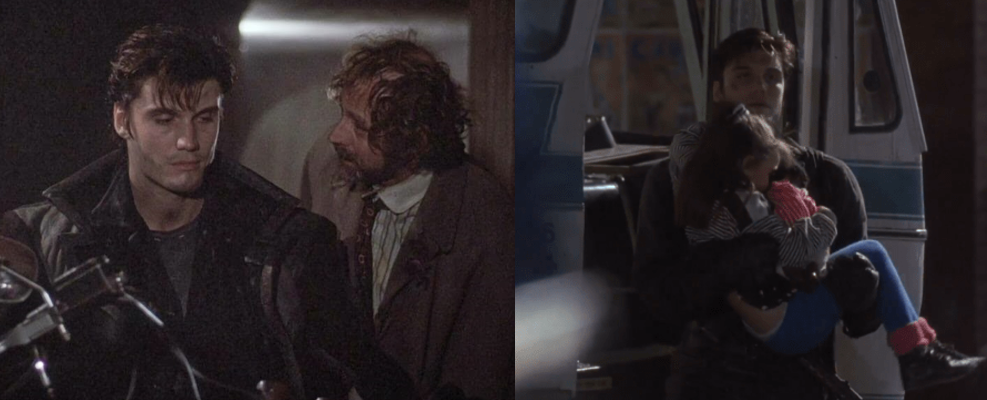
One of the kids taken by Tanaka is Franco’s son, Tommy (Brian Rooney), who, unlike the other hostages, is completely unaware of his father’s criminal activities. Having successfully culled much of the Mafia’s numbers in the five years since he became the Punisher, Frank is content to let the remnants fight and kill themselves and has no interest in saving the children or getting involved in the brewing war between the Mafia and the Yakuza. However, he is swayed into action after a guilt-trip from one of his few allies, “Shake” (Otto), a former stage actor turned vagrant who informs Frank of underworld activities and gives him leads in exchange for alcohol.

The Nitty-Gritty:
When talking about the big action stars of the eighties, I can’t help but feel like Dolph Lundgren often gets overlooked; this isn’t massively surprising in a lot of ways as he was largely overshadowed by the bigger and more charismatic Arnold Schwarzenegger and lacked the big-hit franchises associated with Arnold or Sylvester Stallone. Still, he was a pretty decent choice to portray the Punisher at the time despite never wearing the iconic skull-branded outfit of his comic book counterpart. Lundgren’s strained narration also peppers the film as he laments his lot in life and God’s apparent refusal to do anything to protect the innocent and punish the guilty and he throws himself into the action and fight scenes and exudes just the right level of stoicism, vulnerability, conviction, and capability that are so crucial to the Punisher’s characterisation (he even tosses in a bit of snark here and there when faced with agonising torture).

While not as bombastic as its peers, The Punisher still contains a decent amount of action.

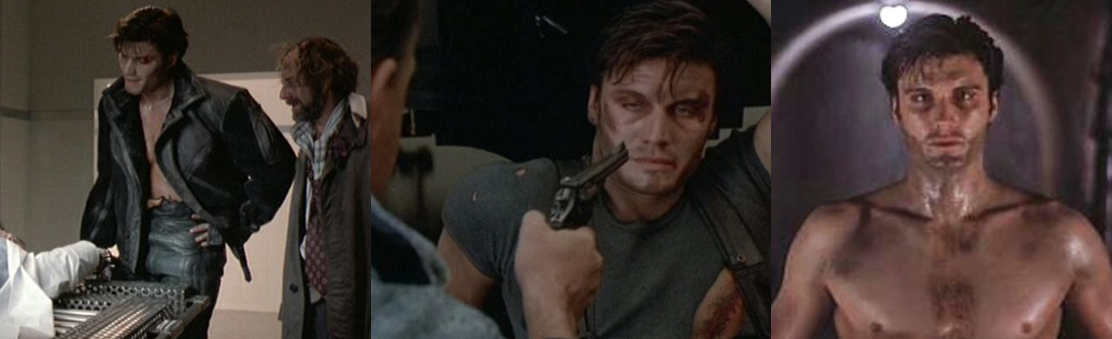
As such, Lundgren’s portrayal of the Punisher is as a weary, disassociated man who has lived a life of such extreme violence and hardship that he has become numb to anything and everything around him. While you could argue that Lundgren simply comes across as bored, he excels in the film’s many action scenes, which are surprisingly varied, exciting, and full of gratuitous eighties-style gun fights, a ridiculous amount of explosions, blood squibs, and even some sword-based combat. Here, the Punisher is in his element and has a purpose but, when not in combat, he is a morose and sombre figure to be pitied, which is perfectly in keeping with the Punisher’s character. Best of all, unlike other eighties action heroes, the Punisher is not infallible; he gets hurt, feels pain, and regularly has to perform extreme surgery on himself to stem his wounds.

The Punisher remains a complex and layered character.

Again, this speaks to the Punisher’s roots as an anti-hero; he does good things by association but doesn’t head out into the night expecting to be heralded a hero. Instead, he is completely focused on the brutal eradication or organised crime; he walks (or rides) head-first into gun fights and rooms and crowds of armed opponents with no fear and protected only by his heavy arsenal and his force of will. When captured and tortured by Lady Tanaka, Frank refuses to give in to the pain and expertly breaks free of his bonds to save Shake when he is subjected to the same torture and, when Berkowitz’s life is threatened by Franco, he agrees to an alliance with the remnants of the Mafia, which was a great way to emphasise the character’s adaptability and loyalty to his few allies.

Though lacking the iconic skull, Lundgren embodies the spirit of the character admirably.

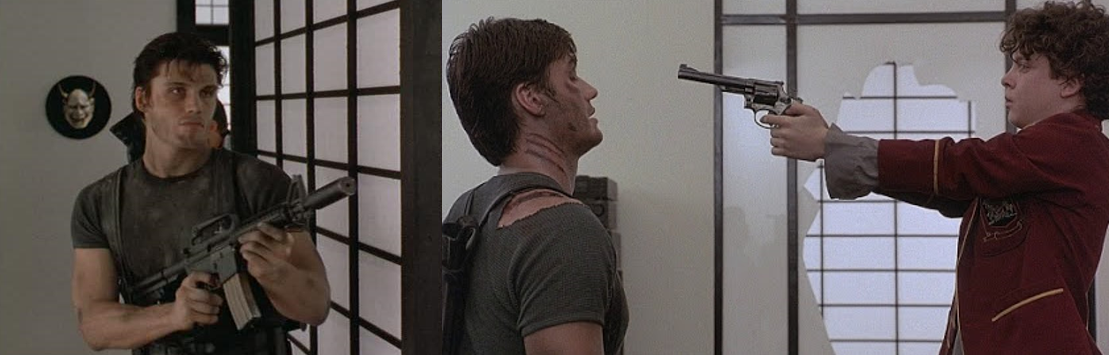
The Punisher’s softer side also gets some play when he successfully rescues the kids from their captivity; it seems to be a constant truth that Frank’s hardened exterior cracks somewhat when kids are involved, which is understandable given that he was a father at one time, and it goes a long way to showing that there is still some humanity left in the character. Furthermore, Frank’s suicidal tendencies are also a notable factor in the film; as I mentioned, he makes very little effort to protect himself from damage (he literally refuses body armour for the finale) and walks into firefights without a second’s hesitation and is haunted by nightmares of his family’s murder but this attitude is made heart-wrenchingly explicit at the film’s conclusion. After entering into a frosty alliance with Franco, the Punisher wages all-out war against Lady Tanaka to rescue Tommy; this results in the once efficient Yakuza being reduced to little more than cannon fodder, Lady Tanaka receiving a skull-branded knife to the head, and Frank murdering Franco before Tommy’s eyes. When Tommy holds Frank at gunpoint,  Frank submits to his mercy, welcoming death but when the boy chooses not to pull the trigger, Frank briefly comforts him before warning Tommy not to follow in his father’s footsteps lest he have to punish the boy in the future and returns to his never-ending war against the guilty.

The Summary:
The Punisher is quite a brisk and inoffensive little action movie. It might not really measure up to some of its competition, and there are definitely better eighties action films out there, but you could do a lot worse than this. For me, the Punisher is a ridiculously easy character to adapt compared to his other more colourful and fantastical superhero counterparts; you simply get a rugged actor who can portray the character’s complex emotions, give him a gun and some knives, and put a lot of bodies in his path and, in that respect, The Punisher succeeds very well. Sure, other iterations of the character has done a better job of handling the character’s pathos and complex ideology and attitude but those aspects are still present in The Punisher. Frank Castle isn’t just some muscled up meathead who care barely string two words together and the film tries its best to explore the character’s fading humanity and mental instability; obviously, the typical bombastic eighties action mostly drowns a lot of these elements out but, again, that’s a good thing because who doesn’t like a bit of over-the-top eighties action? I’d even go as far as to say that it doesn’t really matter that Lundgren doesn’t wear the skull-shirt since he does a pretty good job of embodying the character regardless and, while it might be the worst of the three Punisher movies and lacking the star power of Commando and Rambo III, The Punisher is worth your time if you’re a fan of the character and the genre.

My Rating:

Rating: 3 out of 5.

Pretty Good

Have you ever seen The Punisher? If so, what did you think of it? Were you disappointed that Dolph Lundgren didn’t wear the skull-shirt or were you not really all that bothered? What did you think to the film’s action scenes and gratuitous violence? Were you a fan of Lundgren’s casting; if not, which eighties star would you have cast in the role? What did you think to the film’s portrayal of the Punisher and the overall plot and where would you rank this film against others in the genre and the other Punisher adaptations? What is your favourite eighties action movie? Which Punisher videogame, story, or adaptation is your favourite? How are you celebrating the Punisher’s debut this month? Whatever you think about The Punisher, feel free to write a comment below and be sure to check out my other Punisher content!

February Drabble Challenge: Trophy

Horror PromptsGillian Church has created 28 single-word prompts and challenged writers to write a horror drabble for each. A drabble is a story of exactly 100 words, no more, no less (not counting the title).

Can you do it?

The Prompt:
Trophy

The Submission:
I sat in the garden, battered copy of The Pale Horse in one hand and sipping from a cheeky glass of Buck’s Fizz as the mid-day summer’s sun blared overhead. I adjusted my parasol to ensure I’d get a nice golden tan rather than roasting alive.

The jingling of Bert’s little bell alerted me to his presence before he rubbed against my bare toes. I peeked over my sunglasses and rolled my eyes as I saw the bloody remains of a tiny shrew sitting on the boiling decking.

Bert looked up at me, apparently very proud of his little trophy.


What did you think to the prompt for this week’s drabble challenge? Did you submit anything for it? Have you ever written any flash fiction before? I’d love to know what you think to my snippets and writing prompts, so feel free to sign up and let me know what you think below or leave a comment on my Instagram page. You can also follow Gillian Church to take part in her Weekly Writing Prompt challenge.

Back Issues [Sci-Fanuary]: The Silver Surfer #1


January sees the celebration of two notable dates in science-fiction history, with January 2 christened “National Science Fiction Day” to coincide with the birth date of the world renowned sci-fi writer Isaac Asimov, and HAL 9000, the sophisticated artificial intelligence of Arthur C. Clarke’s seminal 2001: A Space Odyssey (1968), being created on 12 January. Accordingly, I’ve been spending every Sunday of January celebrating sci-fi in all its forms.


Story Title: “The Origin of the Silver Surfer!”
Published: August 1968
Writer: Stan Lee
Artist: John Buscema

The Background:
In 1961, comic readers everywhere were introduced to Marvel’s “First Family” of superheroes, the Fantastic Four. Doctor Reed Richards/Mister Fantastic, Susan Storm/The Invisible Girl, Johnny Storm/The Human Torch, and Ben Grimm/The Thing were characterised as a dysfunctional, but loving, family of superpowered scientists and adventurers and their creation was not only the first collaboration between the legendary Stan Lee and Jack Kirby but also the beginning of the unique “Marvel Method” of writer and artist collaboration. In 1966, the team faced their greatest challenge yet when they faced the God-like Galactus, who came to Earth looking to devourer it and satiate his unending hunger for worlds. When Kirby turned in his artwork for the story, he included a brand-new character that had not been part of his previous discussions with Lee; Kirby crafted a herald for the all-mighty being and, tired of drawing spaceships, had this silvery being ride a surfboard instead. Though initially hesitant, Lee ran with the idea and, following the conclusion of the Galactus arc, the Silver Surfer received his own self-titled series in 1968 that, while short-lived, was one of Lee’s favourites to work on. Since then, the Silver Surfer has appeared consistently within Marvel Comics; he’s been a part of the Defenders, joined and fought against his old master numerous times, and featured not only in the Fantastic Four’s animated and live-action adaptations but also received his own self-titled cartoon that ran for thirteen episodes in 1998.

The Review:
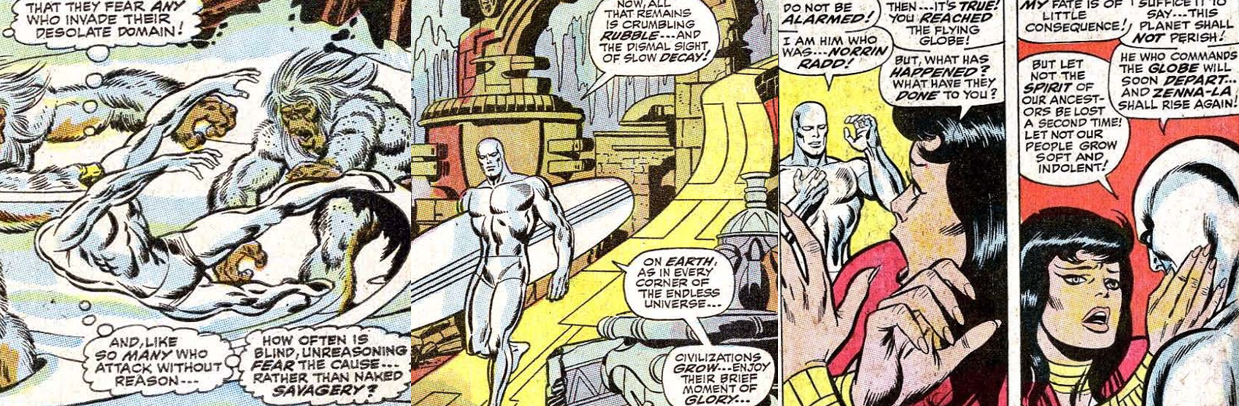
When he was introduced in the pages of The Fantastic Four, the Silver Surfer was a mysterious and enigmatic cosmic entity about whom we learn very little; he was painted as Galactus’ obedient herald and servant, wielded vast and ill-defined cosmic powers, and was compelled to defy his master’s intentions to consume the Earth after a desperate plea from Alicia Masters. Having grown to care for the fate of the human race, if primarily out of pity, the price for the Silver Surfer’s defiance was to be forever (well, obviously not forever as nothing in comics is ever “forever”) banished to Earth by his master and, accordingly, The Silver Surfer #1 finds the cosmic entity still bound to the world he chose to save.

The conflict he encounters on Earth leads the troubled Silver Surfer to recall his own home world.

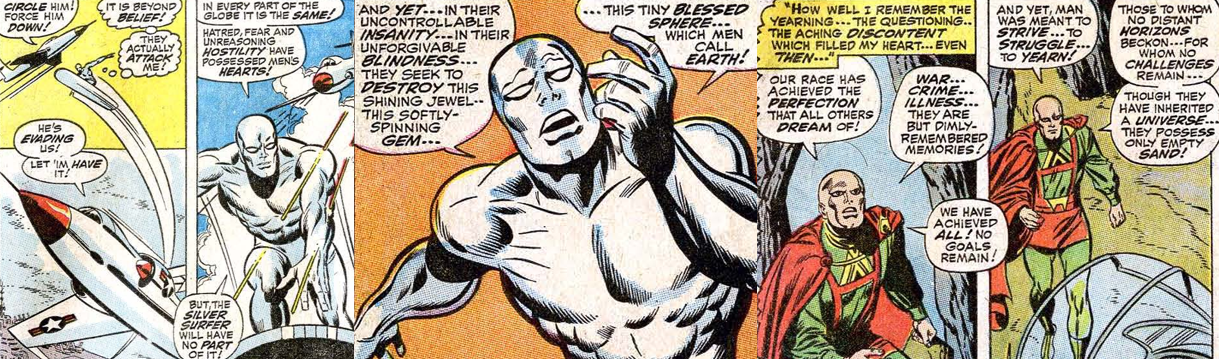
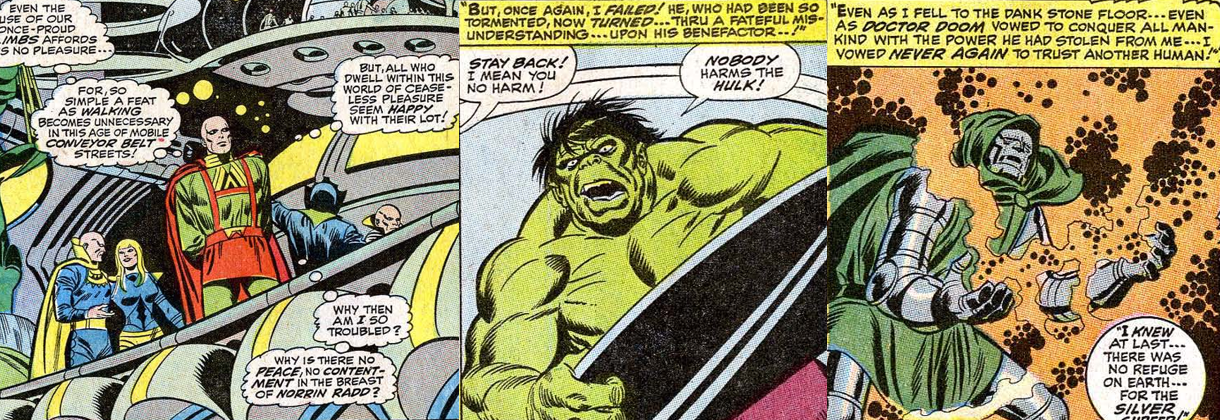
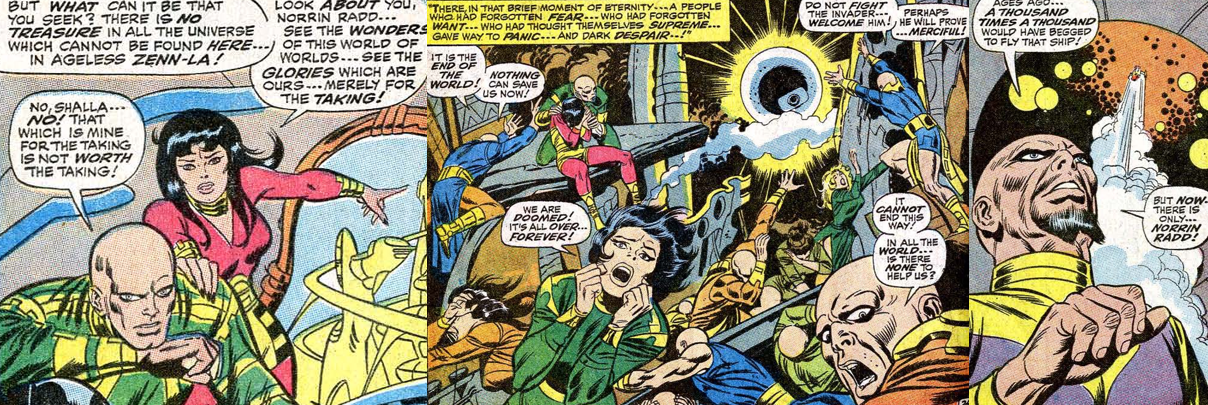
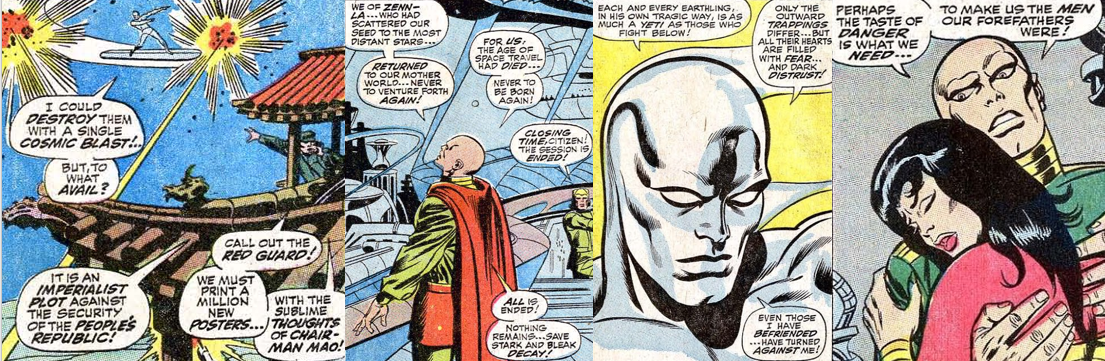
In the opening pages, the Silver Surfer immediately acts to save the life of Colonel Jameson, whose space capsule crash-lands in the ocean depths. Of course, for the Sentinel of the Spaceways, things such as water, air, and metal are of little concern and the Silver Surfer is easily able to dive beneath the ocean and rescue the Colonel. Despite returning the astronaut to a military vehicle, the Silver Surfer finds himself hounded by fighter jets and, similarly, as he streaks across the skies of the planet he now calls home, the Surfer is attacked by missiles and encounters only discord and war. Lamenting the foolishness of men that would seek to harm the lush and fertile world that has captured his heart and imagination, the Silver Surfer is compelled to recall his own home world, a planet far across the galaxy called Zenn-La which, unlike the Earth, had long ago eradicated war, crime, and disease after ten thousand centuries of conflict. Back then, the Silver Surfer was known as Norrin Radd and was simply a man who, though he lived in a virtual nirvana, was left despondent that his people and world no longer had any drive or ambition to achieve anything new. Having inherited the peace and advanced technology of their forefathers, Zenn-La’s inhabitants are largely happy to indulge in the luxuries and benefits of these; they have lost the spirit of adventure and seem content to simply allow technology to fulfil tasks they would have once sweated over.

Memories of his distant and recent past haunt the Silver Surfer and cause him much strife.

Restless and eager to understand why only he seems to find their utopia so stagnating, Norrin reviews the history of his world through advanced virtual reality and discovers that an age of enlightenment put an end to all conflict and that his people ventured far out into the universe before eventually settling on staying put on their home world. Back in the present, the Silver Surfer comments that the Earth is at a similar crossroads between destroying themselves through war and being united in a common cause; even while being randomly attacked by savage yetis, the Silver Surfer laments the innate sense of distrust and fear that touches the hearts of men and turns even beasts such as those (and Doctor Bruce Banner/The Hulk, whom the Silver Surfer once hoped would be an ally as they have both been unfairly ostracised by humanity) into hate-filled barbarians. Similarly the Silver Surfer recalls how Doctor Victor Von Doom/Doctor Doom easily duped him and briefly stole the mysterious “Power Cosmic” from him, an event that caused the Silver Surfer to never again trust another human lest their selfish and manipulative nature get the better of him.

Rejecting his society’s complacency, and despair, Norrin heads out to confront their invader.

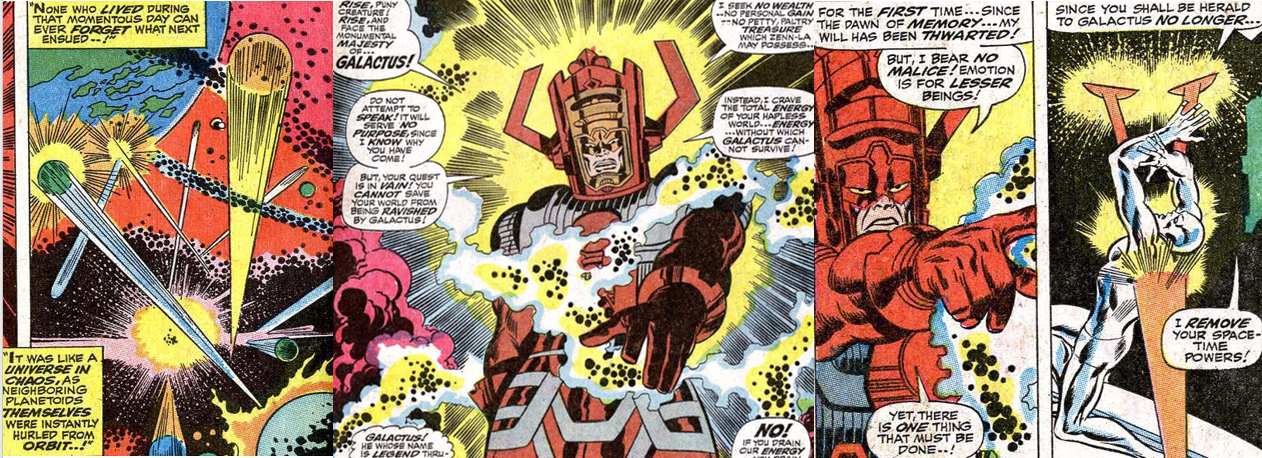
Stumbling upon the ruins of an ancient civilisation now forever lost to the ravages of time and the elements, the troubled Silver Surfer is again haunted by his lost world, and his beloved Shalla Bal. Despite Shalla’s plea that he turn his focus back to the wonders offered by Zenn-La, Norrin finds himself alone in a world where indulgence is the norm, knowledge is simply gifted rather than earned, and the citizens want for nothing. However, Norrin’s lamentations and concerns for the stagnation of his people are interrupted when a gigantic spacecraft breaches the planet’s “nuclear defences” and the people are warned to prepare for an invasion; while Shalla weeps at the prospect of war, especially as Zenn-La has no space fleet or weapons to speak of, Norrin practically relishes the idea of such an event forcing his complacent people into action. With the people giving in to panic, Zenn-La’s computer system decrees only one course of action: the deployment of the “Weapon Supreme”, a solution that literally rips the neighbouring planetoids from their orbits and hurls them at the orbiting craft with such force that it devastates the entire infrastructure of Zenn-La. This devastating solution is ultimately futile, however, as the invading probe simply slipped into the fourth dimension to avoid being damaged and, having decimated their world and with no hope left, the entire planet gives in to despair. All, save for Norrin Rad who, fuelled by the spirits of his ancestors, urges the remnants of Zenn-La’s scientific community to craft him a ship so that he can commune with the craft as he refuses to lose hope.

To spare his world, Norrin volunteers to become Galactus’ herald and is reborn as the Silver Surfer!

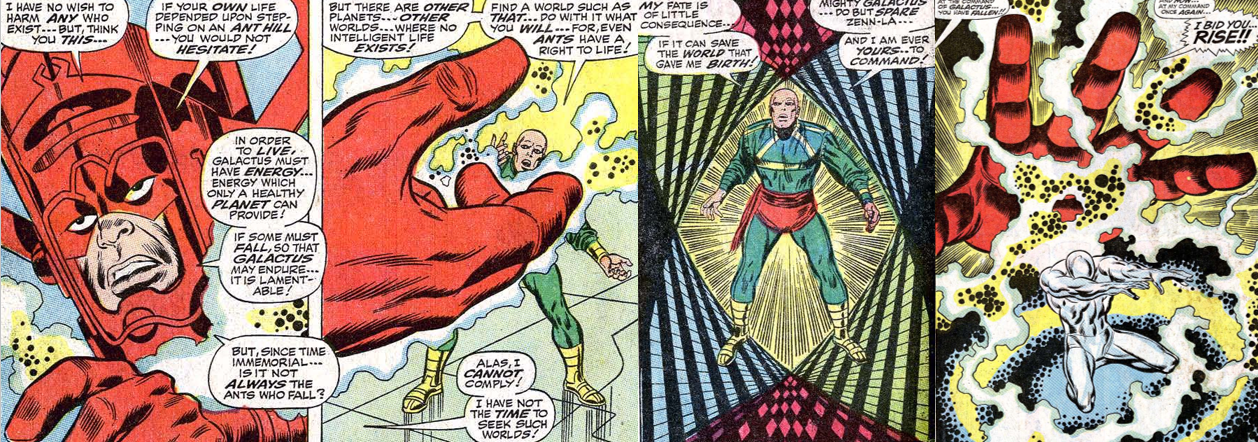
Drawn within the mighty spherical craft, Norrin is overwhelmed by his insignificance next to the craft’s size and technology and is then driven to his knees by a blast from the ship’s owner and operator, all-mighty Galactus! Though he has no desire to, and takes no pleasure in, destroying Norrin’s people, the World Devourer is adamant that his quest cannot be assuaged as he is compelled to feed his unending hunger lest he be consumed by it. Harbouring no malice or ill-will, Galactus compares his mission to that of a man casually stepping on an ant hill and states that it simply is, but Norrin pleads with him to spare Zenn-La and instead feed upon a world devoid of sentient life. When Galactus laments that he has not the time to seek out such a world since even he is but one being, Norrin offers to become the World Devourer’s herald, to seek out lifeless worlds in order to appease Galactus’ hunger, and gladly sacrifices his personal well-being in order to be transformed by the all-mighty’s vast cosmic powers. Reborn as the Silver Surfer, Norrin is rendered immune to the ravages of space and gifted his trademark board with which he can swiftly travel the stars to seek out ne worlds for Galactus to consume. Thrilled to have a lifetime of adventure and exploration amongst the stars finally within his grasp, Norrin bids an emotional farewell to his beloved and departs Zenn-La fully committed to serve his new master, alone and haunted by Shalla’s face in every star and sun he comes across. The Silver Surfer finds his pain eased as he successfully spares worlds teeming with sentiment life from Galactus’ ravages but had no choice but to lead his master to Earth as the gnawing hunger grew unbearable for the God-like being. And it is there that his story ends, with Galactus stoically removing his herald’s ability to travel amongst the stars and the man once known as Norrin Rad left exiled to another world he hoped to spare from destruction.

The Summary:
“The Origin of the Silver Surfer!” is indicative of many of Marvel’s tales from back in the day; featuring a number of references, flashbacks, and cameos, the story is as much a recap of the Silver Surfer’s prior appearances as it is an exploration of his beginnings. Crucially, though, it’s not just the Silver Surfer’s unconquerable cosmic powers that separate him from other Marvel superheroes; the character is perhaps the most loquacious of Stan Lee’s comics characters (matched only by the verbose Dr. Doom) and probably the second most conflicted character he’s created next to Peter Parker/Spider-Man. But, whereas Dr. Doom boasts only of himself and his needs and Peter laments such day-to-day problems as money and relationships, the Silver Surfer’s concerns are with being denied access to the vast cosmic skies and observing the sheer animosity that threatens to consume his adopted world.

Norrin is one of the most loquacious and complex characters in Marvel’s line-up.

The Silver Surfer’s previous life as Norrin Rad was hardly a carefree existence either; while the inhabitants of Zenn-La were perfectly content to life stagnated lives where they wanted for nothing and had sacrificed ambition and advancement for peace and tranquillity, Norrin finds himself concerned for the long-term welfare and overall development of their society since they no longer need to apply themselves to do or achieve anything. Everything around them was left to them by previous generations; knowledge is simply downloaded directly into their brains and all of the thinking and decisions are made by advanced computer systems and a puppet government. Where once Zenn-La had fought tooth and nail for survival and reached out beyond the universe, now they were content to simply indulge their whims and life lives free from the burden of struggle or failure. Amongst the entire planet, only Norrin feels as though the world has lost its way and should strive for more and thus it is only he who has the temerity to face their would-be conqueror head on.

Galactus, though destructive, does not delight in his need to feast on worlds.

As is generally always the case, Galactus is presented as a force of nature; something unconquerable and inexorable and a force beyond any in the known universe, and certainly beyond the peaceful people of Zenn-La. Ironically, it isn’t Galactus that leaves Zenn-La in ruins but the people themselves as they decimate their world by tearing small planets out of their very orbit, making them, for all their enlightenment, no better than the World Devourer himself. Indeed, while Galactus doesn’t act out of any malice or emotion, the same can’t be said for Zenn-La’s people, who first react in violent fear and panic and then give in to despair entirely; Galactus takes no pleasure in his destructive existence but must consume worlds to survive and even he is willing to listen to reason. Galactus makes Norrin his herald not because he is won over by his desperate plea but simply because it makes logical sense for him to have a herald out there finding new worlds for him to consume and to spare lives from his nature because, while Galactus does consume inhabited worlds, it’s only because he is forced to by his great hunger.

Delving into the Silver Surfer’s past adds much more emotional depth to his decision to aid Earth.

In the end, this was a poignant and fascinated story; the Silver Surfer makes for one of the most emotionally complex and layered characters in all of Marveldom, especially in his earliest appearances where he is both captivated by the Earth and saddened by our propensity towards destruction and violence. Seeing Norrin Rad as a man dissatisfied with utopia and craving the thrill of scientific and societal advancement was an interesting twist and witnessing him sacrificing his very being and all he knows in order to spare his people only adds further context to the Silver Surfer’s somewhat abrupt decision to aid humanity in his debut arc. The comic is beautifully rendered by John Buscema, who perfectly evoked the grandeur of Jack Kirby’s artwork to deliver wondrous and imaginative technology and surroundings, to say nothing of his awesome rendition of the towering Galactus, who fittingly appears both fearsome and God-like in his regality. While I haven’t actually read a great deal of the Silver Surfer and can understand people having trouble connecting with him due to his near-limitless powers, I’ve always had a bit of a soft spot for the Sentinel of the Spaceways, especially his early appearances where he was exiled to Earth, and found this to be a captivating glimpse into his unique backstory.

My Rating:

Rating: 4 out of 5.

Great Stuff

Have you ever read Silver Surfer #1? If so, what did you think to the title character’s origin story? What did you think to Zenn-La and Norrin Rad’s troubles with his society? What did you think to Norrin Rad’s sacrifice to save his people? What are your thoughts on Galactus, his motivations and his characterisation? Are you a fan of the Silver Surfer? If so, what is it about him you like and, if not, why is that? Who would you like to see portray the Silver Surfer in the Marvel Cinematic Universe? Whatever you think about the Silver Surfer, leave a comment below and thanks for joining me for Sci-Fi Sunday.

Weekly Writing Prompt: 26/01/2022

Gillian Church posts Writing Prompts every week and I like to take part with a few snippets and pieces of flash fiction.

The Prompt:
Nobody has ever come back before. What was it like?

The Submission:
“We’re in position, sir,” came the ensign’s statement.

His commander glanced up and beheld the world that had claimed so many of his people over the years. “Very good. Hold here,” it was a redundant command; no ship dared cross the five parsec barrier, not with this world.

The commander shifted in his seat; palms sweaty with anticipation. He had commanded missions, fought on the front lines, and even escaped from a prisoner of war camp but had never felt fear such as this before.

How many had been lost over the years? Scouts, explorers, rescue missions…none had ever returned. In all the years, they had learned to stay well back, masking their presence using solar flares or the celestial body orbiting the world, or the vast debris barrier that had brought down so many of their ships and probes.

The commander had never had any intention of visiting this world, even from this distance; his goal lay in the stars beyond at the forefront of the spice wars on Phobos, but he would never be able to face his mother again if he didn’t at least try and retrieve his brother on the way.

He had been a loudmouthed upstart; he didn’t believe in the war, or advancing their cause further into the cosmos, and wanted nothing more than to observe, catalogue, and investigate. And for his curiosity, he had fallen to that damned world below and become another statistic in a long list of lost souls.

“We have a lock, sir…but, from this distance…”

Again, it was a redundant statement; he was well aware that the transport technology was temperamental at the best of times but, from this distance, it was sure to result in his brother’s atoms dissipating into the aether or him being reduced to a squealing, wretched pile of flesh. The commander had seen both results before, but for the first time let his heart overrule his logic.

“Get us closer,” he ordered.

“But sir, we’ll be exposed!”

“I said closer!” he barked. “Prep the thrusters; boost the signal. The moment you have a lock, you get him onboard and get us away from here!”

The ensign swallowed and the ship edged closer; an alarm sounded as the ship automatically went to red alert, a failsafe of crossing the five parsec barrier.

“Sir! Sir, we have him!” came the medic’s voice through the com.

“Get us out of here!” the commander ordered, and swept from the bridge as the stars blasted past them and that hated world fell into the void.

His brother lay in the medical bay; he was hooked up to complex machines and wires that even the medic was stumped by. The commander swallowed, a heavy weight in his heart; his brother was little more than a mangled torso, devoid of many of his limbs and organs and apparently kept alive only by this alien machinery that they couldn’t hope to understand.

The medic shook his head sorrowfully, and the commander grasped his brother’s remaining mutilated  hand. “You came back, brother,” he said,  unable to stop his voice from cracking. The  boy didn’t have long; there was no question about it. “What did you see? What did they do to you?”

The mauled body that had once been the commander’s brother sighed deeply, clearly in agonising pain. He rolled his one eye towards the hardened face of his decorating sibling and shook his head slightly, a small tear falling from his eye. “Hate,” he croaked. “Anger. Such…such fear.” His body trembled slightly as his struggled to cling to life and deliver a final message: “Keep…keep away from those…humans… “ His brother passed, the commander straightened his body and his uniform. Preparations would have to be made, announcements given, reports submitted. He wished that he could honour his brother’s last request but, for the commander, this was the last straw. It was time to strike back against these “humans”.  


What did you think to this week’s writing prompt? Did you submit anything for it? Have you ever written any flash fiction before? I’d love to know what you think to my snippets and writing prompts, so feel free to sign up and let me know what you think below or leave a comment on my Instagram page. You can also follow Gillian Church to take part in her Weekly Writing Prompt challenge.

Screen Time [Sci-Fanuary]: The Outer Limits (1995): “The New Breed” (S1: E16)


January sees the celebration of two notable dates in science-fiction history, with January 2 christened “National Science Fiction Day” to coincide with the birth date of the world renowned sci-fi writer Isaac Asimov, and HAL 9000, the sophisticated artificial intelligence of Arthur C. Clarke’s seminal 2001: A Space Odyssey (1968), being created on 12 January. Accordingly, I’m dedicated every Sunday of January to celebrating sci-fi in all its forms.


Season One, Episode 16: “The New Breed”

Air Date: 9 July 1995
Director: Mario Azzopardi
US Network: Showtime
UK Network: BBC 2
Stars: Richard Thomas, Peter Outerbridge, and Tammy Isbell

The Background:
I never watched The Twilight Zone (1959 to 1964; 1985 to 1989) as a kid; growing up, I was limited to the then-four channels of terrestrial television so my sci-fi/horror anthology series of choice was The Outer Limits (1995 to 2002). Itself a revival of the original 1960s show, The Outer Limits was an award-winning anthology series that was originally broadcast here in the United Kingdom on BBC 2; every week, a new tale would unfold, usually revolving around aliens, rogue artificial intelligence, or other sci-fi, horror, or fantastical stories, though there were also a number of recurring themes, characters, and even semi-sequential stories to be found in the show’s long history. Considering my nostalgia and affection for the series, it is gratifying to see others also have a fondness for the show and I’ll be extremely interested to see if the planned revivals ever come to pass.

The Plot:
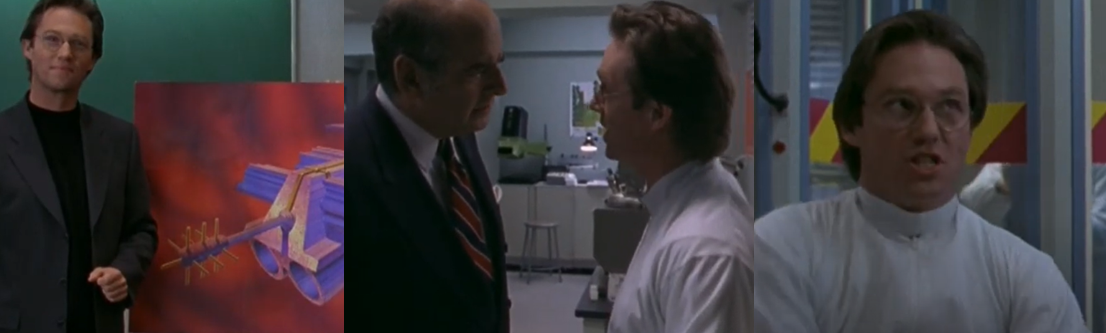
Doctor Stephen Ledbetter (Thomas) makes a technological and medical breakthrough with nanobots. However, when his dying friend, Doctor Andy Groenig (Outerbridge), injects himself with the experimental nanobots, his body starts to hideously mutate!

The Review:
“The New Breed” focuses on Dr. Stephen Ledbetter, a genius in nanotechnology whose research spell the potential end for life-threatening cancerous disease by rewriting the cellular structure of the bodies they are introduced to and removing malignant or destructive elements. A somewhat condescending and self-aggrandising scientist, Stephen fully believes in his work and is extremely proud of the level of intricacy and brilliance that has gone into their creation. However, like many phenomenally intelligent individuals, he is somewhat blinded by how miraculous his nanobots are, which are smart enough to replicate individually and operate independently to, in his words, improve the “flawed man”.

Stephen’s breakthrough nanobots spell the end for cancer but he is frustrated by regulations.

His grandiose claims to have surpassed God aggravate his colleague, Doctor Norman Meritt (L. Harvey Gold), who is not in the least bit amused at Stephen’s attitude and flamboyant disrespect for professional conduct. Meritt stresses that Stephen needs to play by the rules since the last time he bent them in his favour, he almost lost his job and caused the entire department to be shut down. As it’s the only way for his nanobots to see the light of day, Stephen begrudgingly agrees to play the game for the sake of his grant and the Board of Trustees despite being frustrated at having to wait for approval to begin live animal testing.

Andy’s whole world comes crashing down when he receives news of a malicious cancer.

His research and the potential of the nanobots excites Stephen’s friend and colleague, Dr. Andy Groenig, a far less egotistical and driven scientist who is not only dating Stephen’s younger sister, Judy Hudson (Isbell), but is engaged to marry her in a month’s time. Things are looking good for Andy, who also just got tenure, and Stephen is overjoyed at his good fortunes (showing hat, beneath his arrogance, there is a loyal and trustworthy human being). However, when he pays a visit to Doctor Katzman (Veena Sood) regarding an lingering pain in his back, Andy’s world comes crashing down at the news that he’s suffering from a malignant form of pelvic cancer that will either kill him in about a year or leave him without his lower limbs through surgery. Desperate for a solution to this horrifying news, he presses Stephen for more information about his nanobots and is dismayed to find that the Board would never allow human testing without stringent tests, not even on a willing volunteer, for fear of a potential lawsuit.

Desperate for a solution, Andy injects himself with the nanobots and is miraculously healed.

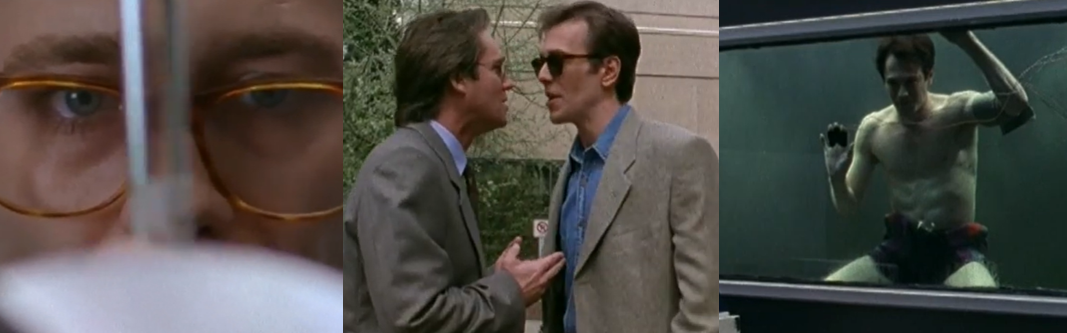
With Judy already enthusiastically planning out the rest of their married lives, and with literally nothing left to lose, Andy breaks into Stephen’s lab during the night and exposes injects the nanobots into his body. The results are almost instantaneous; within three days, his tumour has significantly reduced, giving him a whole new lease on life and virality. The benefits don’t end there, either, as Andy awakens one morning to find that he no longer requires glasses to improve his vision. Stephen, however, is aghast at Andy’s recklessness; despite his bold claims from earlier, Stephen is enraged that Andy would put himself and both of their lives and careers at risk. Afraid of what the nanobots could potentially do to Andy, Stephen immediately demands that they be shut off but, when Andy vehemently refuses, they reach a compromise and, together, run further tests to record the benefits and behaviours of the nanobots on the proviso that they deactivate the second anything starts to go wrong. Thanks to the nanobots, Andy is able to hold his breath underwater for at least seven minutes, read even near microscopic test from a greater distance, physically push himself faster and harder than ever before, and heal from horrific injuries in seconds.

Andy’s stamina overwhelms Judy but the nanobots soon take their programming a bit too far…

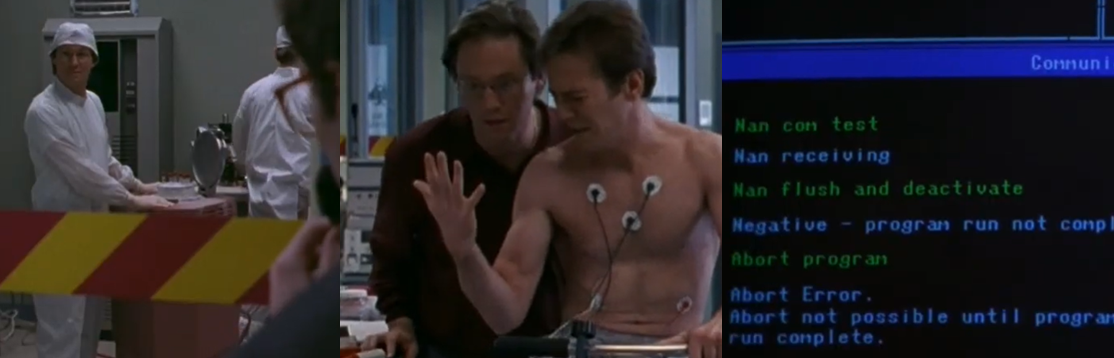
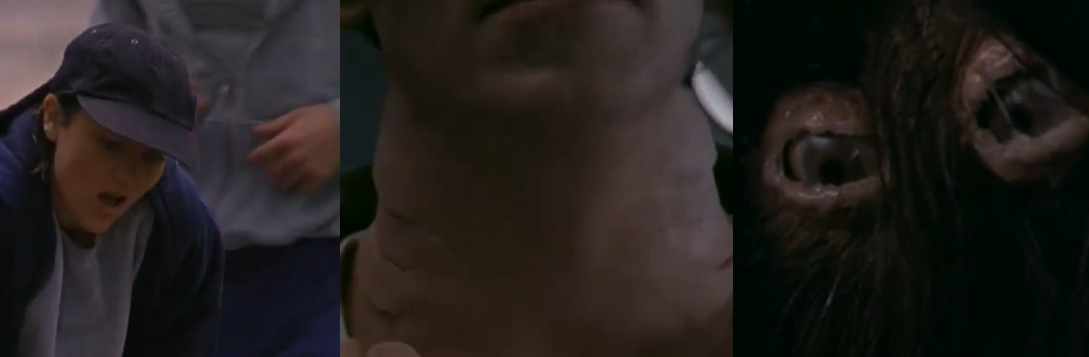
A sentimental goof, Andy is extremely grateful to the nanobots, and Stephen, for saving  and improving his life; however, his increased stamina and virility begin to cause concern for Judy, whom he inadvertently hurts during sex. Concerned that he’s on drugs, Judy is nevertheless exhausted and somewhat fearful of his newfound virility and, as if that wasn’t bad enough, Andy awakens to find that the nanobots have “gifted” him with a set of gills to allow him to freely breath underwater. Both enthralled and horrified at this development, Stephen immediately attempts to expel the nanobots from Andy’s body; however, his attempts are met with unexpected failure as the nanobots believe that the “program run [is] not complete”. Consequently, Andy is absolutely horrified to find that the nanobots have grown him a new pair of eyes on the back of his head!

Andy chooses death to end his suffering but leaves a terrifying legacy behind…

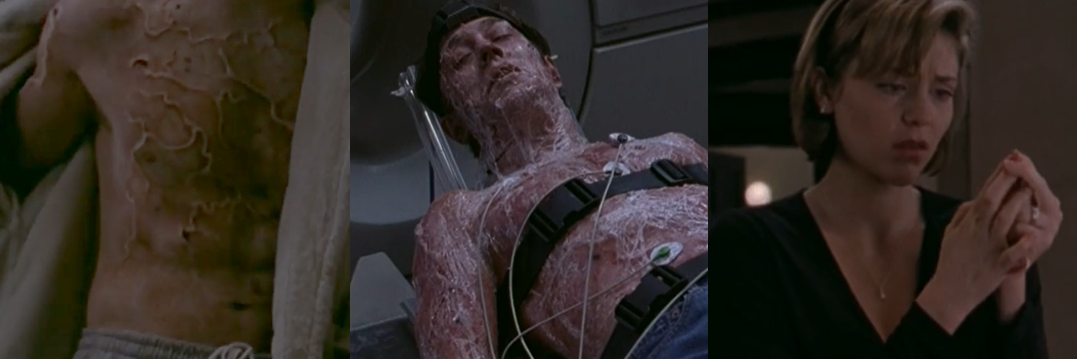
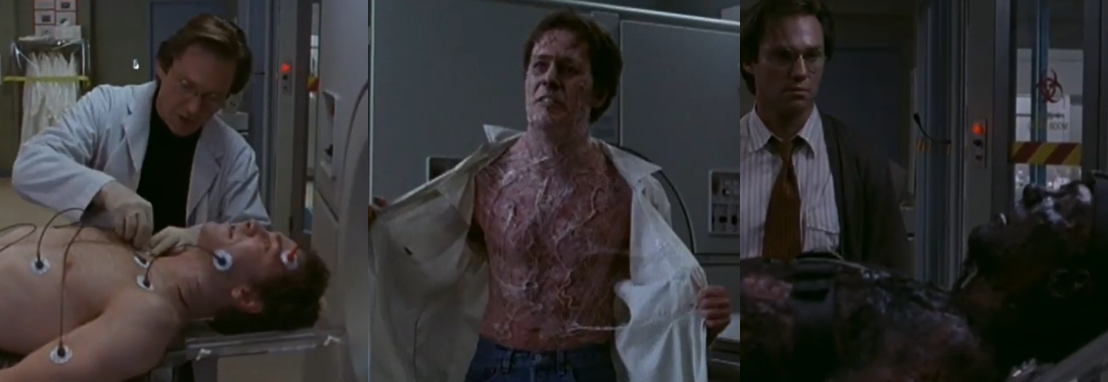
Unable to shut the nanobots down in a conventional way, Stephen attempts to short them out using high-intensity electric shocks; unfortunately, though, he is again frustrated by failure and reluctant to subject Andy to further electric shocks out of fear of killing him. Andy, however, begins to think that dying wouldn’t be so bad at this point and his fears and desperation only grow as his hearing becomes superhumanly acute and the nanobots shield his body from both external and internal threats with an array of jellyfish-like nematocysts and additional ribs, respectively, in a conscious effort to stop Stephen’s efforts to drive them from Andy’s body. Angered at his current physical condition, Andy is equally dismayed at his inability to die as, no matter what either of them do, the nanobots continue to revive Andy. With no other option, the two sorrowfully agree to bombard Andy to a lethal dose of electrical current to destroy both him and the nanobots; heartbroken and dejected, Stephen destroys all evidence of the event, and his research, in a fire but the episode ends suggesting that Andy has passed at least a few of the nanobots on the Judy during their earlier coitus.

The Summary:
As the narrator (or “Control Voice”; Kevin Conway) sombrely tells us: “Man has long worked to stave off the diseases that can ravage us, but what can happen when the cure grows more fearsome than the disease? Over millions of years man has become the very paragon of animals, but we must take care not to alter what nature has taken so long to forge…or risk being burned by the very fires of creation”. The lesson here, as with many episodes of The Outer Limits and similar tales of man trying to either play God or expand the limits of scientific research, is to exercise caution, restraint, and humility when dabbling in the fantastical and the unknown.

A miraculous technology soon turns terrifying in this cautionary tale.

I’ve watched a lot of movies and television over the years, and many episodes of The Outer Limits, but “The New Breed” always stuck with me as a moving, terrifying, and poignant tale of the potential, and dangers, of science. Andy is facing his very real, and painful, death at the beginning of the episode and, as he puts it, “sells [his] soul” for another chance at life; this turns out to be more than apt as the nanobots very quickly begin to take their programming way too far. Although Andy assures Stephen on numerous occasions that he doesn’t blame him (as in Stephen) for the events of the episode, it can’t really be argued that the tests Stephen subjected Andy to were directly responsible for his gills, eyes, and other freakish enhancements. Had Andy not been so overjoyed at getting his second chance and so afraid for his cancer returning, Stephen may have been able to deactivate the nanobots before they set about further “improving” Andy’s physical condition but, instead, we’re left with a cautionary tale of the limits of science.

“The New Breed” is full of disturbing imagery and warnings of the potential danger of science.

These lessons, while commonplace in many similar science-fiction stories and which can be traced all the way back to the likes of Frankenstein; or, The Modern Prometheus (Shelley, 1818), are presented in a fascinating and terrifying way in “The New Breed”, one which left an indelible impression on me as a child. The shot of Andy’s new pair of eyes slowly, ominously blinking open through weeping pus alone is a nightmarish visual, as are the unnerving, gaping gills on his neck and the disgusting, twisted stingers that eventually cover his entire body and seem to be cocooning him for a further transformation by the end of the episode. Another comparison I could easily make would be to The Fly (Cronenberg, 1986), which is a similar tale of science at first improving a man and then quickly mutating him into some more gruesome and monstrous and my unapologetic fondness for that film may very explain my affection for “The New Breed”. Still, the episode remains as captivating and enthralling as ever (thanks also, it has to be said, to nostalgia and some intense sex scenes) and it’s just one of many strong episodes of the Outer Limits revival that I would point any self-respecting sci-fi fan to without hesitation.

My Rating:

Rating: 4 out of 5.

Great Stuff

Have you ever seen “The New Breed” or the 1995 revival of The Outer Limits? If so, what did you think to it and what were some of your favourite episodes? Did you enjoy the steady, gruesome escalation of the nanobots’ effect on Andy’s body? What are some other cautionary tales regarding science that you enjoy? Whatever your thoughts, feel free to leave a comment below.

Talking Movies: What If…? Thanos and the Masters of Evil

Talking Movies

In Avengers: Infinity War (Russo and Russo, 2018) the Mad Titan, Thanos (Josh Brolin), finally made a significant appearance in the Marvel Cinematic Universe (MCU). When the idea of a two-film saga based on the Infinity Gauntlet comic book (Starlin, et al, 1991) was first announced, I, like many others, had many theories about what was going to happen, who was going to live and die, and how everything was )going to go down. For example, before Thor: Ragnarok (Waititi, 2017), I was certain that Thanos’ big entrance was going to immediately establish his threat by hanging him storm into Asgard kill Odin Allfather (Anthony Hopkins), and claim the Tesseract (and, obviously, the Space Stone it help). After all, how better to establish this big bad villain than by having him kill a God?

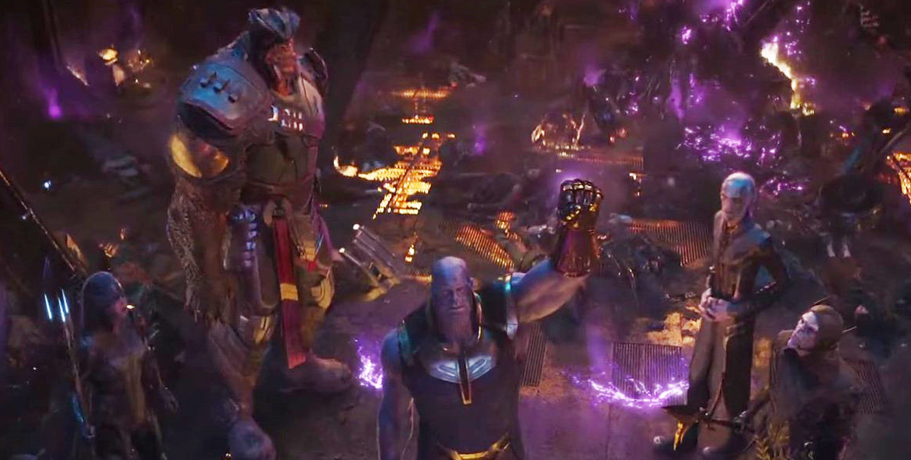
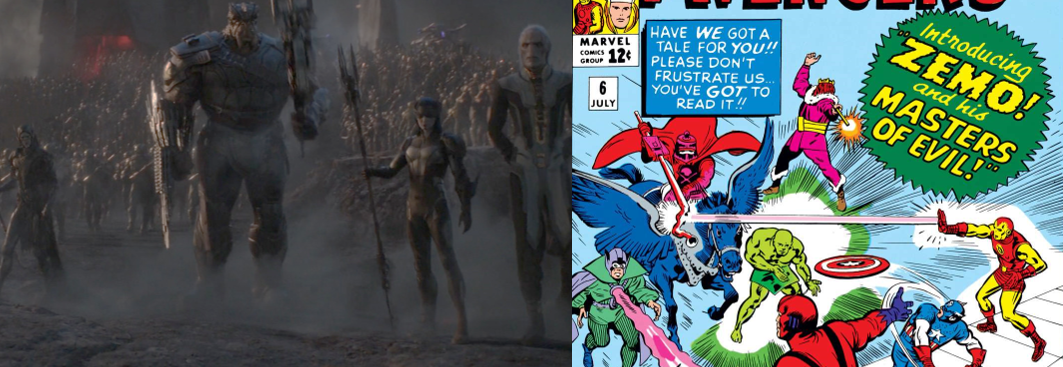
Thanos’ Black Order made their MCU debut in Avengers: Infinity War.

Instead, of course, Thanos wrecked Thor Odinson’s (Chris Hemsworth) ship and slaughtered half of the Asgardians onboard. Still an impressive feat, to be sure, but one that focused more on Thanos’ grandeur and pretentious philosophy rather than his actual physical strength thanks to the bulk of the work being undertaken by his underlings, the “Children of Thanos”. Headed by Ebony Maw (Tom Vaughan-Lawlor), Cull Obsidian (Terry Notary), Proxima Midnight (Carrie Coon/Monique Ganderton), and Corvus Glaive (Michael James Shaw), the Children of Thanos didn’t actually appear in The Infinity Gauntlet and are, instead, relatively recent additions to Thanos’ ranks who first appeared (as the “Black Order”) in Infinity (Hickman, et al, 2013). In the film, we don’t really learn much about these guys at all except that they enforce Thanos’ will with unquestioning loyalty and that he trusts them to help him gather the remaining Infinity Stones and, while they certainly look visually interesting, they’re mostly disposable bad guys for the Avengers to fight in place of Thanos.

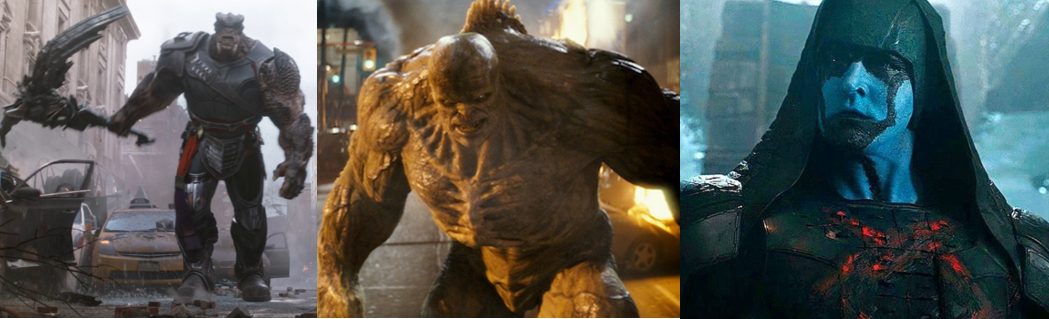
While Abomination is a good choice, I definitely think Ronan could’ve taken Cull’s place.

Now, I’ve never read Infinity; I have no emotional attachment to the Black Order or any of the characters and, as a result, they were merely nothing more than henchman to me and I only really recall one of them being referred to be name (“I take it the Maw is dead?”) While I enjoyed their inclusion in the film, I can’t help but feel like they could have been dropped and supplanted with some other, more recognisable MCU villains had some other films and events happened just a little differently. For example, take Cull Obsidian; he’s Thanos’ muscle who basically does nothing and is largely inconsequential. What if, instead of killing Ronan the Accuser (Lee Pace) in Guardians of the Galaxy (Gunn, 2014), Ronan had been soundly defeated and humbled and, having seen the extent of Thanos’ power (he did destroy Xandar (offscreen), which was what Ronan wanted, after all, and would be enough to bring Ronan to heel, I would wager), he pledged himself fully to Thanos’ cause to get revenge against the Guardians of the Galaxy? I’m not massively familiar with Ronan but it seems to me like it was a bit of a miss-step to kill him off when he could have fulfilled a role in Thanos’ little gang at the very least, if not remain as a recurring antagonist for the Guardians. Another potential replacement for Corvus would be Emil Blonsky/Abomination (Tim Roth) who, at the time, had been conspicuous by his absence from the MCU. However, arguably, it wouldn’t make as much sense for Thanos to recruit the Abomination as he’s not exactly floating around in the depths of space for him to encounter.

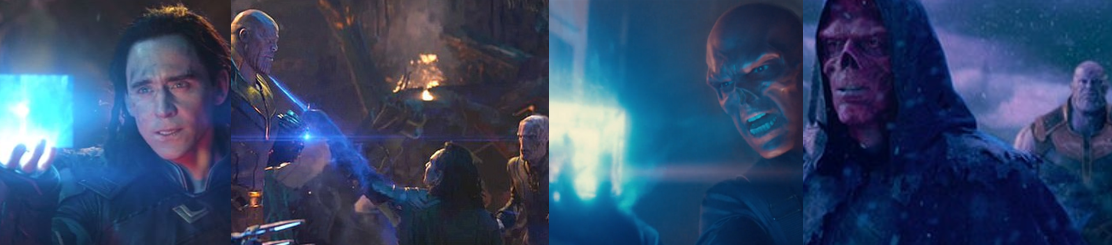
What if Loki or the Red Skull had aligned themselves with Thanos in place of Ebony Maw…?

Intrigue was equally high in the build-up to The Avengers/Avengers Assemble (Whedon, 2012); I was hoping to see a version of the Masters of Evil, with Loki Laufeyson (Tom Hiddleston) joining forces with Johann Schmidt/The Red Skull (Hugo Weaving) – who was clearly transported away from Earth by the Bifrost at the end of Captain America: The First Avenger (Johnston, 2011 – and either the Abomination or Doctor Samuel Sterns/The Leader (Tim Blake Nelson) once they got to Earth. While I was happy with the first Avengers team-up we got, I do feel this was another missed opportunity that we never saw this anti-Avengers team-up. Consequently, I feel like we could have swapped out Ebony Maw for either of these characters; in The Infinity Gauntly, Thanos was advised by Mephisto, a role many expected Loki to play in Infinity War given his mischievous and devious nature. Naturally, of course, you could argue that this wouldn’t really fit with Loki’s character arc by that point but remember how he feigned loyalty to Thanos and then tried to stab him in the neck? Well, imagine that but throughout a large portion of the movie. Loki pledges fealty, willingly hand shim the Tesseract, and spends the remainder of the film waiting for the perfect moment to strike and then he’s killed for his efforts. Obviously, the Red Skull finally showed up in Avengers: Endgame (Russo and Russo, 2019) in a slightly different role as the Stonekeeper (Ross Marquand), but again…what if the Red Skull had replaced Ebony Maw? How much more interesting and impactful would it have been to see the Red Skull empowered by Thanos and making a triumphant return as Thanos’ chief torturer? Sure, if his death was the same then you could argue that he would’ve been “wasted” or been killed off too easily but I still feel like this would have been a better use of the character than as the keeper of the Soul Stone (a role that could’ve been filled by character’s envisioning the Stonekeeper as someone close to them, perhaps?)

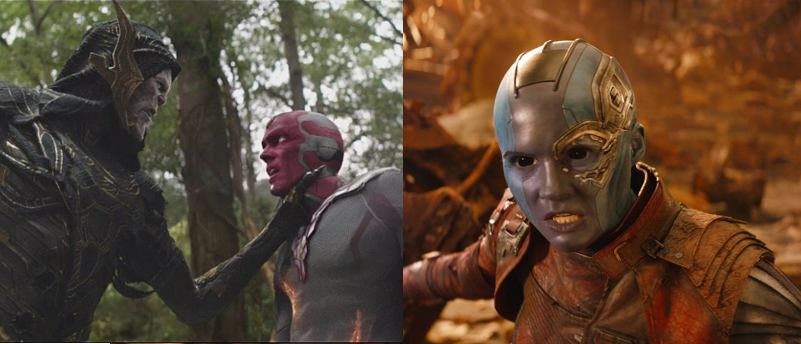
With some tweaks, nebula could have taken Corvus’ role as Thanos’ chief assassin.

Corvus Glaive is a trickier one to “replace” in this hypothetical alternate world, however I have one  suggestion: Nebula (Karen Gillan). Now, similar to Loki joining Thanos, this would require quite a few changes to Nebula’s character arc; in Guardians of the Galaxy Vol. 2 (Gunn, 2017), she finally buried the hatchet with her “sister”, Gamora (Zoey Saldana) and it was great seeing her grow as a character, put aside her hatred, and learn how to work alongside the Guardians and the Avengers. In The Infinity Gauntlet, Nebula spends most of her time as a mindless zombie thanks to Thanos’ wrath but plays a vital role in his downfall by stealing the Gauntlet for herself (and promptly being driven mad by its power). By tweaking her character arc, or having it so that Thanos either intimidates or reprograms her into subservice, you could replace Corvus with a more prominent and recognisable character and still find ways to weave her existing arc into the story. Like, what if, after Guardians of the Galaxy Vol 2, Nebula is forced into Thanos to serve him (maybe he threatens to kill Gamora/the Guardians or promises to “repair” her once he’s assemble the Gauntlet) in Corvus’ place; she could still have been ripped apart and tortured to force Gamora into revealing the Soul Stone’s location and would have even more motivation to turn against her “father” since he would have lied to and manipulated her once again.

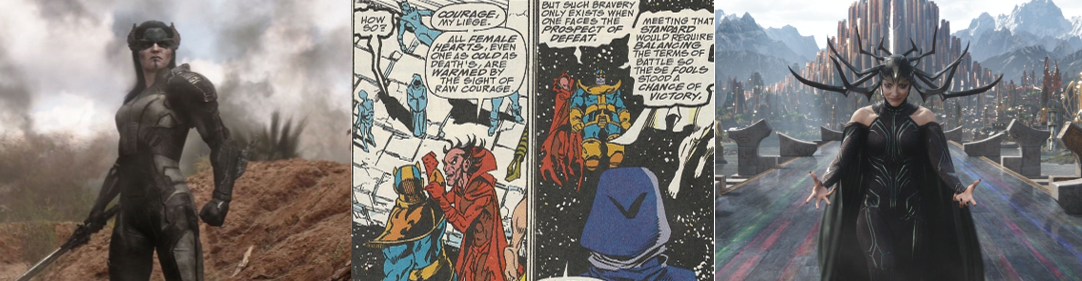
If Hela wasn’t going to take Death’s place, she could’ve replaced Proxima Midnight.

Another character who I, like many, expected to play a prominent role in Infinity War was Hela Odindottir (Cate Blanchett), a character who a lot of people expected would take the role of Lady Death as the object of Thanos’ affections. Of course, this didn’t turn out to be true as Hela was killed in Thor: Ragnarok and Thanos’ motivations were changed from worshipping Death to wanting to bring a sense of balance to the galaxy. Still, how awesome would it have been if Hela had taken Proxima Midnight’s place in the Dark Order? If killing the Allfather didn’t show you that Thanos was a bad-ass, bringing the Goddess of Death to heel totally would have and could have made for a much more memorable female villain for the finale in Wakanda. Again, there’s the question of her being killed off but what better way to help showcase Wanda Maximoff’s (Elizabeth Olsen) sheer power than by having her shred a Goddess to pieces? Or you could rewrite her death to maybe come at the hands of her brother, Thor, and his new weapon, Stormbreaker, to sell the awesomeness of the weapon.

As cool as the Black Order were, would a version of the Masters of Evil have been better…?

Ultimately, I was more than happy with Avengers: Infinity War, Endgame, and the MCU’s portrayal of Thanos overall. His underlings were find cannon fodder for the film and helped to serve as extensions of the Mad Titan’s will but I do feel it would have been even more awesome to see these more recognisable villains swayed to Thanos’ cause so that we could see them interact with their rivals, and other heroes, in new and interesting ways. Sure, many have cropped up again since then and the potential of a Masters of Evil in the MCU is still there, I just think that maybe these huge movies could have been made even bigger if things had been slightly changed to accommodate these more familiar characters. Do you agree or disagree? Maybe you’re a big fan of the Black Order from the comics? Perhaps you’d have like to see a different route taken? Do you even want to see the Masters of Evil in the MCU? Either way, feel free to sound off in the comments below.

Weekly Writing Prompt: 19/01/2022

Gillian Church posts weekly Writing Prompts every week and I like to take part with a few snippets and pieces of flash fiction.

The Prompt:
It looks like you’ve lost your way. Maybe I can help you.

The Submission:
By the time the swordsman idled past the dilapidated hut, the day grew short and his choices were limited. The brigands had taken his pack, his canteen was down to one pathetic mouthful, and the solar batteries on his cycle were shot. With Alfgard still a good two days’ ride ahead of him, and the temperature already dropping, he had little choice but to dismount his cycle when the old lady in the tattered robes flagged him down.

“Come,” she said, her voice like a mouthful of bees. “Warm thyself; take rest.”

“Crokk,” he cursed, for only the mad, one-eyed God could be responsible for his utter misfortune.

The hut was rancid and seeped in squalor, but it was warm; blankets and soft furnishings had ben placed before a pleasant fire, over which a small, bubbling cauldron brewed a stew that made his mouth water.

“Eat, be comfortable,” she invited, handing him a small, cracked clay bowl.

Despite his reservations, the swordsman didn’t hesitate; he hadn’t eaten in three days and was ravenous. The stew was hot and thick; potatoes and vegetables mixed in with chunks of meat, probably the mindias he’d seen scurrying about in plains and dashing to and from their boltholes.

“Tell me,” she asked, sipping from a cup. “Howzit be that one such as thyself finds thy way out here?”

The swordsman looked up from his second bowl and raised a weary eyebrow. “You toy with me,” he muttered. “You think I don’t see the sigil plastered everywhere? Surely a Sooth such as yourself already know these answers.”
The woman wheezed a cackle and settled before her fire. Through the flickering flames, the swordsman could see the silvery gleam in her eyes. “Indeed,” she agreed, and lowered her hood. The swordsman wished that she hadn’t, for the crone was wizened and afflicted with boils, a common crutch of the Sooth. “I can help you, though.”

The swordsman set aside his bowl and laced his bandaged hands together before him, rubbing them, warming them on the blessed heat. “I need no help for such as you.”

“One does not wander out here on purpose,” she mused. “Thy’ve lost thy way; let me aid you.”

The swordsman shifted slightly, but said nothing.

“They took her, yes?”

The swordsman glared at the crone. “Like cowards, they struck in the night as I slept.”

“She is not far.”

The swordsman scowled. Three days tracking the brigands across the plains, struggling against the hordak that tried to pick his bones clean, had yielded nothing. “The trail went cold.”

“The trail is simply eluding thy,” the Sooth whispered.

A queer sensation filled the swordsman’s aching muscles; at first, he thought it the warm light of hope, that he was on the right track and would find her anon, but since when had hope left him so lightheaded?

“Stay the course; the Old Ones wish to see thy succeed,” the crone cooed, licking her lips. “The would have her, draw from her.”

“Crokk!” the swordsman spat and launched to his feet. He blinked and shook his head, his vision blurry. “Strakking witch!”

The air grew dark, as if sucked towards the rocking Sooth. She cackled wildly, her silver eyes shining with glee. Words tumbled from her drooling mouth and an icy blackness filled the once warm, soothing space.

The swordsman didn’t hesitate; who knows what may happen if the Sooth finished her incantation! He swept Flair from his back and swiped it at the crone’s hooting face; her head tumbled to the floor, a black ooze dribbling from the stump of her neck.

The swordsman stood, blade at the ready, the Sooth’s blood sizzling like acid on everything it touched. His head cleared, and light and warmth slowly filled the small space once more, but still he heard her gravelly cackle ringing in his ears

They would have her, she’d said. Draw from her.

He swore by all that there ever was that he would not let that happen.


What did you think to this week’s writing prompt? Did you submit anything for it? Have you ever written any flash fiction before? I’d love to know what you think to my snippets and writing prompts, so feel free to sign up and let me know what you think below or leave a comment on my Instagram page. You can also follow Gillian Church to take part in her Weekly Writing Prompt challenge.