Horror Prompts’ Gillian Church is hosting a horror drabble challenge this January: 31 prompts for 31 creepy tales throughout January that clock in at around 100 words.
The Prompt: Frost
The Submission: Tommy was delighted to see the first frost glistening in the pale moonlight. It meant the town would be blanketed with snow by morning and, sure enough, a good eight inches greeted him when he woke.
Excitedly, he rushed through breakfast, yanking on his big winter coat and mittens and hat as his mama cautioned him: “Mind the ice! Stay covered up! Don’t be out too late.”
Each time he replied with an enthusiastic, “Yes, Mama!”
Tommy pelted from the house, sleigh in hand, and nearly went head over heels as he rounded the corner. He couldn’t wait to race down the hill, giggling with his friends without a care in the world.
He wasn’t thinking of anything else as he sauntered over the small stone bridge over the frozen stillness of the Brook.
“Who’s that up there?” a faint voice whispered, stopping Tommy in his tracks.
Curious, he peered over the frosted stone wall, seeing leaves, twigs, perhaps even a dead animal stuck in the ice. He called: “Hullo?”
A hand, gnarled and riddled with frostbite, shot up and clamped around his wrist. Tommy screamed, unable to break free, tears leaking from his eyes and freezing on his cheeks as he was pulled over, down into the wretched, freezing darkness under the bridge.
Jagged talons sliced at him from the shadows; breath, hot and rancid, choked his nostrils. And as fanged jaws ripped into the chubby flesh of his forearm, that whisper gurgled and mocked in his ear:
“Hullo”.
If you’re interested in reading more about this bridge and the ghouls that lurk beneath it, check out Here There Be, available digitally and physically on Amazon.
What did you think to the prompt for today’s drabble challenge? Did you submit anything for it? Have you ever written any flash fiction before? I’d love to know what you think to my snippets and writing prompts, so feel free to sign up and let me know what you think below or leave a comment on my Instagram page. You can also follow Gillian Church to take part in her Weekly Writing Prompt challenge.
Horror Prompts’ Gillian Church is hosting a horror drabble challenge this January: 31 prompts for 31 creepy tales throughout January that clock in at around 100 words.
The Prompt: Clock
The Submission: All day long, every day, for thirty-five years the grandfather clock would stand in the corner of the room, ticking away.
Minute after minute, hour after hour.
Ticking. Incessantly, chipping away at every moment, like a piece of apple caught between his teeth, driving him mad.
He thought he could drown it out with drinks, sex, even kids. And, for a time, on occasion, it would work. The sounds of life filled the house and, for one mad minute, he thought it’d worked.
But beneath it all was always that constant ticking. Muted, but ever present.
Even when he took the knife to them, splitting them open, spraying their life’s blood across the room in a frenzied rage and revelling in their agonised screams…
The ticking of the clock
would
not
stop
What did you think to the prompt for today’s drabble challenge? Did you submit anything for it? Have you ever written any flash fiction before? I’d love to know what you think to my snippets and writing prompts, so feel free to sign up and let me know what you think below or leave a comment on my Instagram page. You can also follow Gillian Church to take part in her Weekly Writing Prompt challenge.
The Date: 9 January 2005 The Venue: Coliseo de Puerto Rico; San Juan, Puerto Rico The Commentary: Jim “J.R.” Ross, Jerry “The King” Lawler, and Jonathan “The Coach” Coachman The Referee: “The Heartbreak Kid” Shawn Michaels (guest) The Stakes: Six-man Elimination Chamber match for the vacant World Heavyweight Championship
The Build-Up: By 2005, World Wrestling Entertainment (WWE) was the undisputed top dog in the sports entertainment industry; having bought their competition and become an indomitable multimedia juggernaut, the company decided to split their now bloated roster into two distinct brands, with both Raw and SmackDown! receiving their own exclusive wrestlers, belts, and creative teams. Under Paul Heyman, SmackDown! became known as the “wrestling show” and delivered quality matches and storylines thanks to the efforts of the fabled “SmackDown! Six”, rising stars like John Cena, and the brand-exclusive Cruiserweight division. In contrast, Eric Bischoff’s Raw was more about over-the-top storylines and was largely dominated by Triple H’s “Reign of Terror” that saw him maintain a stranglehold on the World Heavyweight Championship, backed up by his Evolution allies (“The Nature Boy” Ric Flair, Randy Orton, and Batista). Though this led to a fondly remembered feud against Triple H’s former D-Generation X running buddy Shawn Michaels and saw Chris Benoit finally capture the big one on the grandest stage of them all, it also included controversial storylines involving Kane and a disastrous main event run for Randy Orton that would lead to him adopting a “Legend Killer” gimmick but also saw his big WrestleMania coronation being usurped by Evolution’s enforcer, Batista, who gained unanimous fan support around this time. After a championship match between Triple H. Chris Benoit, and Edge ended in a double pin, the World Heavyweight Championship was declared vacant and Bischoff had the six top challengers vie for a place in an Elimination Chamber match to battle for the belt. This was only the third Elimination Chamber match so the concept was relatively new in the WWE; it debuted at the 2002 Survivor Series and forced four men to waiting in “bulletproof pods” as two others fought in the ring, with each participant joining the match at random at regular intervals, with wrestlers being eliminated by pin fall or submission until only one is left standing. The two main storylines heading into the match revolved around Triple H; Batista was showing signs of independence and had earned himself the final spot in the match, which angered The Game as he’d already been slighted by Orton and was concerned about Batista’s loyalties. Shawn Michaels being named the special guest referee also threw Triple H of as he wasn’t expected to be impartial given his bloody history with The Game. Chris Benoit’s presence was another thorn in Triple H’s side since The Game had suffered numerous losses to him and Triple H’s years of domination and oppression meant he had few allies heading into this bout.
The Match: I remember this period of wrestling; I gather many look back on Triple H’s time with the belt more fondly now and it’s true that he eventually made some of the WWE’s biggest stars, but at the time it was absolutely frustrating to watch. What made it worse was that Chris Benoit had already knocked him off the perch (well, technically HBK and Goldberg had also beaten him for the belt but that’s neither here nor there…) and it seemed we were due some fresh faces in the Raw main event scene, but Triple H kept getting involved, basically meaning that the story leading up to WrestleMania 21 was basically the same as the previous year’s WrestleMania XX, only this time it would be the up-and-coming Batista rather than the veteran Benoit finally getting his due. The Elimination Chamber concept also hadn’t been run into the ground; the massive, dangerous steel structure had a real ominous feel to it at this point and the match is still perhaps the most inventive and interesting of the modern era despite becoming an annual event, often without any real storyline justification for it. Edge was the first man to enter a ring pod; this was the start of Edge’s push towards the top of the card and I was all for it. He had proved himself in tag team matches and runs with the Intercontinental Championship and was a much-needed fresh face in the main event scene, but he was edging into tweener territory here due to his problems with HBK. Triple H was out next and was practically livid at having to be locked into a pod by one of his worst enemies and then got into a slanging match with his former protégé, Randy Orton, when he came to the ring looking to regain the championship, though it was pretty clear that he’d lost a lot of the bite and appeal he’d had before turning against Evolution. In comparison, the crowd was much hotter for Batista, who had not only won the right to be the last man to exit his pod but had also vowed not to let the championship slip through his fingers if push came to shove. With the four sealed in their pods, it was up to Chris Jericho and Chris Benoit to kick the match off; these two were no strangers to each other by any means and could always be relied on to put on a clinic. I’ll give this to the creative team, they certainly had a lot of bad blood and crossover going on in this match; everyone had issues with each other and a reason to fight beyond just wanting to be the champion, which made for quite the powder keg as the match got underway.
What started as a wrestling clinic soon broke down into a brutal brawl using the steel trappings of the chamber.
Benoit and Jericho locked up with a series of takedowns, reverses, and tentative holds; Jericho’s attempts to take control were emphatically shut down by Benoit’s patented knife-edge chops and, when Y2J returned the favour, Benoit responded by tripping him into a Sharpshooter attempt. After fighting off the Walls of Jericho, Benoit landed a massive German Suplex, but Jericho managed to slip out of a Crippler Crossface attempt and score a couple of near falls. Benoit cut Jericho off when he went to the top rope and brought the first-ever Undisputed Champion crashing to the mat with a Superplex that saw both men struggling to recover as Triple H entered the match. Triple H went right after Benoit, beating and stomping on him in the corner and wiping out with a couple of hard whips into the corners for a two count while also taking out Jericho with his signature jumping knee strike. Jericho soon laid in the chops to The Game, though, before being taken down by a clothesline; Triple H brutally tossed Benoit out onto the steel platform surrounding the ring and ran him face-first into the thick steel chains that made up the chamber’s walls, busting him open and creating a gaping target for Hunter’s assault. Regardless, Benoit was still able to kick out at two so Triple H went for the Pedigree but, oddly, Jericho interrupted the move rather than potentially remove an obstacle from the match and then reversed another Pedigree into a back body drop that sent Triple H to the steel on the outside. Another slam continued to work over Triple H’s back and a suplex brought him back into the ring for a near fall before Edge joined the party. Edge wasted no time in taking advantage of his wounded opponents, hitting Spear-like moves on Jericho and Triple H before planting The Game with the Edgecution for a close two count and even planting Benoit with an uncharacteristic belly-to-belly suplex! Jericho tried to steal a pin, but Triple H kicked out, then Edge took a tumble to the outside courtesy of a Jericho dropkick but Y2J’s momentum was summarily cut off when Edge raked his eyes and launched him into the chain wall with a catapult and then did the same to Triple H after The Game tried to hit him with a Pedigree out on the steel!
As the match escalated, even HBK fell victim to the competitors and unlikely alliances emerged…
A diving clothesline to Benoit scored Edge a two count, then he feverishly fought out of a Crippler Crossface attempt before being knocked down by an enziguri from Jericho that was also only a two count. The bloodied Jericho and Triple H then went at it, with The Game landing his patented spinebuster for a near fall and Benoit getting the same result with a lovely Northern Lights Suplex to Edge. Triple H finally nailed the Pedigree on Jericho but was too out of it to capitalise; Orton then entered the match like a house on fire, smacking Edge’s head off the chain and leaped at Triple H with a crossbody off the top rope. Orton continued to beat Triple H down to a fair amount of applause (though they mainly chanted for his finisher…), tossing him to the outside and running him into the chain wall, slamming him with his beautiful snap powerslam, and even planting Jericho with an RKO out of nowhere! However, when he tried that shit on Benoit, he got tied up in a version of the Crippler Crossface; Triple H taunted Orton as he struggled in the hold, so Benoit hit ‘Select’ to change targets and locked a Sharpshooter on The Game, only to be hit by an RKO! Edge then tried to take Orton out with a Spear but the future Legend Killer dodged out of the way and caused HBK to take the attack instead! Consequently, there was no referee to count the pin when Edge did hit the Spear on Orton; incensed, Edge manhandled HBK and slapped him, which earned him a dose of Sweet Chin Music and left him wide open for a Lionsault from Jericho and a subsequent elimination. Benoit then saved Jericho from another Pedigree by blasting Triple H with three German Suplexes in a row; Benoit then clambered on top of a chamber pod to land a humongous diving headbutt to Triple H! He and Jericho then called back to their days as a tag team by locking in both the Walls of Jericho and the Crippler Crossface on The Game but, luckily for him, the timer ran down and Batista finally emerged from his pod after an awkward delay that I can only assume was unintentional.
Batista’s path of destruction was cut off by Orton but he was still instrumental in Triple H winning the match.
Batista’s first act was to save his mentor; he fought off Jericho and Benoit with ease, launching them out of the ring and drilling Orton with a spinebuster. He then went face-to-face with Triple H in a tense showdown that had the crowd absolutely begging for them to go at it but the two were jumped by their opponents before they could come to blows. Batista took out a camera man by Military Pressing Jericho into the poor bastard then hoisted Orton up in a wonky looking chokehold before Benoit attacked his knee and brought him to the mat. Orton and Benoit then temporarily joined forces to put the pressure on Batista before Triple H got back into the thick of it by picking each man off; he launched Orton into the chain but then got slammed into the platform by a facebuster courtesy of Jericho that properly got the blood gushing. After a bit of brawling, Benoit was emphatically shut down with a spinebuster from Batista, who then hit a spinebuster on Jericho onto Benoit that allowed him to eliminate the Rabid Wolverine. Jericho was next to go after being decimated by the Batista Bomb, meaning the match came down to a contest between Evolution! Orton struck first, tossing Triple H to the steel platform and smashing Batista off the steel before being launched into the chains from a Triple H catapult that busted him open. Triple H and Batista worked over the bleeding, helpless Orton relentlessly; despite the merciless beating, Orton continued to kick out of their pin attempts, frustrating both men. Although a lengthy onslaught clearly designed to pain Orton as a resilient underdog, this actually worked for the crowd, who were fully behind Orton as he mounted a comeback with some strikes and, indeed, when he hit a low blow and a huge RKO to eliminate Batista, the crowd came unglued! Triple H and Orton then fought on the outside, where Orton repeatedly threw him into the chain wall before hitting another massive RKO. Unfortunately, HBK was busy trying to get Batista and Ric Flair out of the ring so there was no pin fall. In the chaos, Batista blasted Orton with a clothesline; this was enough to leave Orton prone for a Pedigree that awarded Triple H yet another championship victory.
The Aftermath: J.R said that Batista “dominated” the match but that wasn’t quite true, though it should have been; since the match went so long without any eliminations, I would’ve had Batista be the one to eliminate everyone before being upset by Orton to better paint him as this unstoppable force. Although Evolution celebrated the win, with Batista hoisting Triple H onto his shoulders, it was clear from the footage that The Game could’ve prevented Batista’s elimination and chose not to, a wrinkle that only added fuel to their issues going forward. Orton would win the right to challenge Triple H at the Royal Rumble but, where he came up short, Batista (eventually) emerged as the winner of the Royal Rumble itself. Although Triple H and Ric Flair tried to convince him to challenge JBL, Batista dramatically revealed that he’d had enough of being Hunter’s lackey and their manipulation; Batista went on to capture his first World Heavyweight Championship at WrestleMania 21 and begin his own ascension to mainstream success that remained intrinsically linked to his former mentor. Despite the good reactions he got here, Orton’s time as a fan favourite was largely a dud; to get himself back on track, he decided to challenge the Undertaker at WrestleMania 21. Although unsuccessful and injured in the bout, he did score victories over the Deadman thanks to help from his father, “Cowboy” Bob Orton, during the feud, which took up most of his 2005. Blaming HBK for his loss, Edge got into a short feud with Shawn Michaels that was over with by WrestleMania 21; there, HBK battled Kurt Angle in a dream match and Edge won the first-ever Money in the Bank ladder match, which also included Chris Jericho and Chris Benoit; Edge cashed in the briefcase at the following year’s New Year’s Revolution to win his first World Heavyweight Championship. Although the WWE would continue to produce Elimination Chamber matches, there would only be two more New Year’s Revolution events; the pay-per-view was cancelled in 2007, though the branding was briefly revived for a series of house shows in 2020.
My Rating:
⭐⭐⭐⭐
Rating: 4 out of 5.
Great Stuff
What did you think to the third-ever Elimination Chamber match? What did you think to the match concept? Were you a fan of Randy Orton’s face turn and would you have liked to see him win it? Did you like the narrative surrounding Batista and were you excited to see him break out on his own? What did you think to Triple H’s reign with the World Heavyweight Championship What’s your favourite Elimination Chamber match? Were you a fan of the New Year’s Revolution event and would you like to see it revived? Whatever your thoughts on the 2005 Elimination Chamber and its participants, share them below or leave a comment on my social media.
Horror Prompts’ Gillian Church is hosting a horror drabble challenge this January: 31 prompts for 31 creepy tales throughout January that clock in at around 100 words.
The Prompt: Potential
The Submission: The bloodliquid bubbled, frothing like acid, and Maureen watched, a small smile tugging at the corner of your lips, as the grotesque thing stirred in its capsule.
“Vitals are stable, Ma’am,” a technician spoke from her desk.
Maureen barely heard her. She glanced at the readouts on her screen; they were all nicely within normal parameters. She tapped a key and the screen switched to show the creature’s face. Warmth flowed through her stomach as she took in its leathery, toad-like skin; boils pulsated on its flesh amidst thick, spine-like whiskers and its eyes, large and nebulous, glared through the blood liquid…
…seemingly through the screen.
“Beautiful,” Maureen whispered.
Her fingertips caressed the screen and hovered, ever so briefly, over her keyboard before tapping a single key.
Immediately, panic swept the laboratory. Alarms blared; a siren wailed; and horrified screams rose in a crescendo.
Maureen stood, still as a statue, and watched as the ghastly, lizard-like creature tore them limb from limb. The survivors pounded on the thick glass that separated her from the creature’s wrath; their blood smeared across it, ran down in thick droplets.
The creature stood. Hunched, heaving, its glistening skin dropping with gore and entrails as its piercing glare settled on her cold, hard eyes. Soon, the fail safes would kick in; gas would flood the laboratory, men would move in with cattle prods, and the creature would move on to the next stage but, for now, they simply stared…
…one with a bestial hunger, the other one in pure admiration.
“This one has potential…” Maureen muttered with a smile.
If you’re interested in reading more about Maureen and here fiendish experiments, check out The Teamos Connection, available digitally and physically on Amazon.
What did you think to the prompt for today’s drabble challenge? Did you submit anything for it? Have you ever written any flash fiction before? I’d love to know what you think to my snippets and writing prompts, so feel free to sign up and let me know what you think below or leave a comment on my Instagram page. You can also follow Gillian Church to take part in her Weekly Writing Prompt challenge.
January sees the celebration of two notable dates in science-fiction history, with January 2 christened “National Science Fiction Day” to coincide with the birth date of the world renowned sci-fi writer Isaac Asimov, and HAL 9000, the sophisticated artificial intelligence of Arthur C. Clarke’s seminal 2001: A Space Odyssey (1968), being created on 12 January. Accordingly, I’ll be spending every Sunday of January celebrating sci-fi in all its forms.
Story Title: “Guardians of the Galaxy! Earth Shall Overcome!” Published: January 1969 Writer: Arnold Drake Artist: Gene Colan
The Background: Nowadays, Marvel Comics’ Guardians of the Galaxy are quite a well-known team of reprobates thanks to their inclusion in the Marvel Cinematic Universe (MCU); when Guardians of the Galaxy(Gunn, 2014) was produced, it’s fair to say that the team (and the concept) was relatively obscurecompared to other Marvel heavy-hitters like the Avengers and Peter Parker/Spider-Man. Fans of the films and the MCU may be surprised to learn that the cosmic team was quite different when they first debuted in the pages of Marvel Super-Heroes!, a Marvel spin-off title that told standalone side-stories and was responsible for debuting many of the publications supporting characters. The concept began life as an idea by writer and editor Roy Thomas about super-guerrillas fighting against Russians and Red Chinese that was altered into an interplanetary situation by writer Arnold Drake and the legendary Stan Lee. Despite strong sales of the team’s debut issue, the Guardians of the Galaxy remained dormant for about five years; eventually, though, the team earned their own solo series and underwent numerous alterations over the years before evolving into something resembling the team dynamic reflected in the MCU and it all began with this bizarre space adventure about a team of misfits from the year 3007.
The Review: As mentioned at the end there, our story opens in the far-off future of 3007 to find the Earth, and dozens of other planets, united as the United Lands of Earth Federation (U.L.E.). However, conflict is still rife throughout the various star systems of the galaxy and it is into this squall that we are introduced to Charlie-27, a stout, semi-cybernetic inhabitant of Jupiter who is finally returning home after six months of “solitary space-militia duty”. Expecting a big parade for returning as a conquering hero, Charlie-27 is confused to find the immediate area deserted and lifeless except for a contingent of the nefarious Badoon, a reptilian race of warmongers who have overrun the entire planet and captured its inhabitants, including Charlie-27’s father. After disposing of a couple of Badoon using his massive bulk, Charlie-27 follows a prison transport and finds his fellow Jovians are being forced to mine “high-intensity Harkovite”, a substance that will cause them all to die of radiation poisoning within five days.
The crystal-bodied Martinex helps Charlie-27 escapes the Badoon forces who have over-run Pluto.
Realising that it is suicide to take on the invading Badoon forces alone, Charlie-27 desperately dives into a teleporter and randomly arrives on Pluto hoping to recruit an army to aid his cause and finding the ice-planet equally empty of life an, d overrun by the Badoon. Set upon by a Saturn Hound-Hawk, Charlie-27 is rescued by Martinex, a Pluvian man comprised entirely of a crystal-like substance. Though Maritinex harbours resentment to people like Charlie-27, who refer to him and his kind by the derogatory term “Rock Head” despite both races being descended from Earthman, Martinex catches the Jovian up with event son Pluto and uses a radio transmitter to cause a distraction that allows them to take a Tele-Train to Earth. Like Jupiter and Pluto, however, Earth has been enslaved by the Badoon; Drang, the Badoon supreme commander, is overjoyed to find his men has captured Major Vance Astro, the so-called “Thousand-Year-Old Man” who was the first Earthman to visit the stars. Curious to learn his story, Drang subjects Astro to a painful Memory Probe that quickly recaps how he came to be in the year 3007: back in 1988, Earth had established a small Moon colony and had started making excursions to Mars and Vance volunteered to be cryogenically frozen for a thousand years in a bid to explore beyond the reach of Earth’s solar system. Awakening a thousand years later, Vance was forced to remain forever garbed in a copper foil wrapping lest his centuries of slumber catch up to him and found his trip was ultimately futile as humanity learned to travel faster than light in the intervening years.
After a brief misunderstanding, the four misfits join forces against the Badoon as the Guardians of the Galaxy.
Thanks to his unique knowledge and experiences, Vance is spared the Badoon’s usual slave disk and seemingly agrees to aid Drang’s dreams of conquest. However, when Drang puts Vance’s loyalty to the test by having him execute his comrade, Yondu Udonta, Vance reveals it was all a ploy to reunite his blue-skinned friend with his special bow-and-arrow, which Yondu is able to control using whistles to take out Drang’s forces and allow them to escape. Vance and Yondu immediately run into Charlie-27 and Martinex, with each duo mistaking the other for an enemy; a fight between the two teams breaks out, in which Martinex showcases his ability to freeze air molecules and Vance reveals that he has (somehow…) acquired psychic powers, but they are soon interrupted by their actual enemy, the Badoon. United against a common foe, the group dispatch the Badoon guards and teleport themselves to New New York, determined to find the rumoured free colony and free the Earth from Badoon enslavement as the Guardians of the Galaxy.
The Summary: When I went to see Guardians of the Galaxy, I was intrigued by the presentation of the film, which gave off vibes of Firefly (2002)/Serenity (Whedon, 2005) and the J. J. Abrams Star Trek films (2009; 2013), I knew absolutely nothing about the characters, the team, or the concept beyond a very rudimentary familiarity with the likes of Drax the Destroyer, Gamora, and Nebula thanks to having read The Infinity Gauntlet (Starlin, et al, 1991). No doubt to capitalise on the release and success of the first film, Marvel released a collection of Guardians of the Galaxy stories as part of their “Marvel Platinum” range of graphic novels and this is primarily where my experience of the comic book versions of the team comes from. Reading the Guardians’ debut issue is a bit jarring for anyone who is a fan of their MCU counterparts; the only character that carries over to the films is Yondu, here characterised as little more than a simpleton rather than the leader of a band of space pirates. There’s no Peter Quill/Star-Lord, no Drax, Rocket Raccoon, or Groot and rather than being a band of well-meaning reprobates, the original Guardians of the Galaxy are a rag-tag collection of oddballs united by a common cause.
This is a very different team of Guardians than you may be used to…
Each of the Guardians is the last of their kind either due to slavery or the slow passage of time and are very bold, independent characters…with the exception of Yondu, who is denied any kind of in-depth backstory and whose character is reduced to a couple of throw-away lines from Vance. Aesthetically, ‘Guardians of the Galaxy! Earth Shall Overcome!” is a bit of a mess; taking place in the far future, we find that colonisation has extended far into our solar system and rendered even gas giants like Jupiter entirely habitable but evolution has also caused Earthlings to adapt in radical ways to survive in their new environments. A lot of the backgrounds and the comic’s more cosmic-trappings are very reminiscent of the works of Jack Kirby but, while this is very fitting, it does make for quite a cluttered and messy presentation. The issue has its work cut out for it by introducing four brand-new characters in about thirty pages of story, something I find early Marvel Comics often struggled with, and while there are some interesting elements to each character (Charlie-27 seems to be going for a self-entitled righteousness, Martinex hints at possibly being racially targeted, Yondu is a monosyllabic grunt, and Vance has his whole, very rushed, “man out of time” thing going on), I can’t really say that I was massively blown away by either their characterisation or their abilities (which are, for the most part, vaguely defined).
The Badoon are a major invasion force for the fledgling Guardians to unite against.
I’m not massively familiar with the Badoon; from what I can tell, this story wasn’t their first appearance but they really don’t seem to be that much different from other monstrous, semi-humanoid galactic conquers like the Free and the Skrull (despite, obviously not having shape-shifting powers). As a villainous force to unite against, they’re relatively unremarkable; while we can assume that they’re a formidable force since they have completely enslaved Jupiter, Pluto, and the Earth, Drang’s forces crumble like paper whenever they engage with the Guardians. Still, they have the numbers advantage, which is a great way to show that even a veteran like Charlie-27 knows when to fight and when to flee, and it’s pretty clear that the main aim of this issue was to bring together these misfits to continue telling stories of their struggle against the Badoon in subsequent issues. Still, as interesting as it is to see how the Guardians first came about the Yondu’s wildly different initial characterisation, there’s not really a whole hell of a lot to really say about this first Guardians tale; this isn’t the team that’s been popularised in the decades since, inevitably the writing and presentation is a product of its time, and the art isn’t particularly engaging or eye-catching (or even good, at times) so this is more of a quaint look at the Guardians’ humble beginnings rather than a bombastic showcase of what the team is truly capable of and probably has more appeal to die-hard fans of Marvel’s cosmic stories than the more casual Guardians readers like myself.
My Rating:
⭐⭐⭐
Rating: 3 out of 5.
Pretty Good
Have you ever read the Guardians of the Galaxy’s debut story? If so, what did you think to it, especially compared to the various interactions of the team that have come since? What did you think to the idea of setting the story in the year 3007 and of the Badoon having conquered the solar system? Which of the original four characters was your favourite? Which version of the team is your favourite and why? Are you a fan of the Guardians of the Galaxy comics and, if so, did you like the MCU’s interpretations of the characters and concepts? Would you like to see the original team get a larger focus in the MCU someday? Share your thoughts on the Guardians of the Galaxy in the comments below and check in again next Sunday for more sci-fi content.
Released: 31 August 1997 Developer: Electronic Arts Also Available For: PC and Nintendo 64
The Background: After almost six months of conflict and thousands dead, the Gulf War had finally ended in March 1991 but the bloodshed proved as much of an influence on developer Mike Posehn as the air rescue mechanics of Choplifter (Dan Gorlin, 1982) in the creation of Desert Strike: Return to the Gulf(Electronic Arts, 1992). Opting to eschew typical videogame mechanics and focusing on nonlinear, mission-based gameplay, Desert Strike became one of the Mega Drive’s top titles; its 16-bitsequels introduced new vehicles and locations and were similarlypraised, though reviews sound found the formula becoming stale. By 1996, the videogame industry moved on from traditional 2D graphics in favour of 3D polygons, and arena Sony’s PlayStation was purposely built for and which upended the battle for supremacy between SEGA and Nintendo. Following an aborted attempt to continue the series on the 3DO, Mike Posehn got the ball running on a far more lifelike and muchpraised fully-3D entry on the SEGA Saturn and PlayStation. Following the positive reception of Soviet Strike(Electronic Arts, 1996), the same development team (minus Posehn) got to work on the fifth (and, so far, final) entry; Nuclear Strikereportedlybuilt upon its predecessor’s game engine, increasing the frame rate, lowering load times, including lasting environmental damage, and adding additional camera angles and an in-game radar. New vehicles and weapons were also added, as well as helpful clues to make the game more accessible and address the franchise’s notorious difficulty, though reviews found the story to be lacking. The graphics and destructible environments were widelypraised, however, and it was largely seen as a fun, if repetitive and derivative, experience.
The Plot: Former spy Colonel Beauford LeMonde has stolen a nuclear weapon and joined forced with Triad leader Napoleon Hwong to threaten the safety of the civilised world. The player character, who pilots a Super Apache helicopter as part of anti-terrorist strike force STRIKE, is ordered to pursue the warlord, who kidnaps the world leaders and prepares to unleash chaos upon the globe!
Gameplay: In keeping with the new visual style introducing in Soviet Strike, Nuclear Strike ditches the illusion of 3D created by the isometric perspective of its predecessors and opts for a top-down perspective, with the camera sitting slightly above and behind the player’s vehicle. Like in the last game, you can change your viewpoint with the ‘Select’ button and this time I was actually able to notice the difference; one view kept the camera locked in place and the other saw it swing around with your movements, which I found quite disorientating. All of the movement and control options introduced in Soviet Strike make a welcome return here; there are five different controller layouts on offer, but I found the default button settings to be perfectly fine: X fires your rapid-fire chain gun, Square fires your Hydra Rockets, Circle the Hellfile Missiles, and Triangle will fire the super powerful sidewinders if they’re assigned to your wingtip. As before, you can “jink” (essentially a strafing option) with L1 and R1 to circle targets and avoid incoming fire more effectively, drop your cargo by pressing L2 and R2 together (though I only encountered one use for this, in the second campaign, where you can drop a powerful nitro-glycerine bomb to instantly destroy a fortified oil rig), remove the ammo, fuel, and armour and/or the compass from the heads-up display (HUD) with R2, and review the map and your mission status and objectives by pressing the Start button. A new feature added to Nuclear Strike is the ability to lock each weapon with L2; I thought this was some kind of targeting feature, or a way to restrict the use and wastage of your stronger weapons, but all it seemed to do was put a red border around the ammo box so I’m not entirely sure of the purpose of this function.
New vehicles and gameplay modes help to spice up the tried-and-try mechanics.
One way Nuclear Strike stands out not just from its predecessor but the last two games is the welcome return of additional vehicles; almost every campaign sees you commanding a different type of helicopter, and each one contains another craft you can switch to either by choice or at the behest of your mission objectives. You can hop back into a hovercraft, jump into a heavily-armoured harrier jet, and even roll around in a super tough tank or missile launcher, with the majority of your weapons still at your disposal (though the tank only has its main gun). When in one of these additional vehicles, you can hold L2 and R2 to initiate a self-destruct mode that will see it explode and your main chopper fly in to pick you up, which is handy when you’re stuck halfway across the map in the tank or hovercraft. All-in-all the game boasts it contains several playable vehicles, though as most are variations on the chopper this is a bit misleading but there are some key differences; your default chopper can only carry six passengers, for example, whereas the Huey (which also sports twin guns) can carry twelve. In campaign three, you’re placed at the controls of a smaller, feebler chopper than can only fire weak bullets and non-lethal rounds like smoke and tear gas and can only carry four passengers; you must use these limited options to flush out delegates and get them to safety and then blast parts of the environment (radio towers, petrol stations, and train barriers) to crush or destroy incoming enemy vehicles before switching to a more capable aircraft, which can be tricky as your little chopper is pretty pathetic. Two campaigns also introduce a degree of real-time strategy gameplay to the series; in one campaign, waves of enemies will come rolling across the map and you must fly to different bases to command ground forces to intercept them and form roadblocks. You can fly around trying to take them out yourself, but the sheer number makes this all-but impossible, though I found it equally difficult to find the bases and command my allies as you can’t do it remotely. This function pops up again in the final campaign, where you can direct some commandos to help you take out six radar towers, and your co-pilot will also help you to destroy a proto-nuclear missile and its launcher rig by jumping into her own chopper.
A variety of objectives and improvements help keep the game fun and engaging.
The game’s map system is exactly the same as the one seen in Soviet Strike but with some tweaks to the presentation; dialogue and onscreen notifications give information about your mission objectives, which you can read up on and cycle through from the map screen. I found that I was only able to tackle one mission at a time rather than reading ahead on a few of them as in previous games, though this might be because I played the game on the “Normal” difficult instead of the “Easy” setting. Either way, you can through your mission objectives, enemies, and notable resources and have each of these highlighted on the map to make it easier to plot an optimal route. Nuclear Strike also adds a helpful mini radar to the HUD and a green arrow to the compass that points you in the direction of whatever target you’ve selected on the map; the only thing to remember about the HUD is that enemy forces are highlighted in red and blue as blue indicates mission objectives so you might need to fire upon both. Even better is the fact that there’s finally a way to quick-exit a campaign if you fail or are in danger of failing; simply press Start and Select simultaneously and you’ll be returned to the main menu rather than having to slog all the way back to home base, though there’s still no option for analogue support. You are once again given a choice of a few loadouts for your chopper, though: you can balance out your ammo, focus on your missiles, or even fly into battle with just your chain gun; you can also customise the wingtip loadout to carry sidewinder missiles, additional fuel, or disrupt the enemy’s radar. As always, you get three lives (known as “attempts”) per campaign and will automatically winch up resources (fuel, ammo, and armour), targets (friendlies (your co-pilot and other agents), enemy commanders, dignitaries, and so forth), and cargo (nitro, cages) simply by flying over them and the new maps make it a little easier to accomplish this compared to the last game. Like Soviet Strike, you can no longer bash into buildings or mountains or parts of the environment, which is useful for reducing the damage you take, and you’re still awarded passwords after completing each campaign (though you must manually save your progress from the main menu) and at least one campaign even has a checkpoint, of sorts, that allows you to skip to a later point in the narrative after a nuclear device has exploded.
Escort missions, defensive objectives, and time-sensitive sections mix-up the usual gameplay.
While many of Nuclear Strike’s mission objectives are very similar to those of the previous games, it definitely felt like things were a lot more varied and far less tedious this time around. At first, your doing familiar actions like firing upon burning smoke pits, destroy enemy forces to recruit and rescue targets, and taking out radar sites but there’s often a twist: when you rescue one target, you’re surprised by an ambush; other friendlies you rescue will fly into battle with you in choppers to help root out three enemy generals, for example. There are far more escort missions this time around; your ally and co-pilot, Naja Han, will lead you to target sites by driving erratically across the map on a motorcycle and will also need covering as she rescues diplomats from buildings. This results in two of the tougher missions, one where she’s driving a busload of work leaders through heavily-defended streets while you just have your piddling little chopper and another where you need to protect her as she drives a train to safety. The former can be quite fun as you blast barriers to move her down safer routes, watch her jump a gap in the bus, and listen to her passenger’s bicker and ask for ice cream; the latter is a little more stressful as you must quickly destroy or redirect suicidal trains and take out the heavy ordinance that can quickly make mincemeat of the train. While the second campaign is primarily about large-scale destruction of the enemy’s sea forces, you’ll also need to bribe a local mercenary by dropping off a crate load of treasure, drop him off to uncover missile sites that need destroying, and take out a fleet of Chinese ships before they escape. The final mission includes a huge electromagnetic pulse (EMP) in the middle of the map that disables all of your weapons except the chain gun and is heavily defended by cannons and massive tank-like Guardian Guns that can only be destroyed by having your co-pilot disable them first. You’ll need to take out the EMP by slipping inside and destroying the camouflaged trucks your co-pilot highlights and also investigate six Mongol-like structures trying to find and destroy three nuclear missiles. Overall, while the missions are very similar to its predecessors, there’s a lot less ferrying of passengers or repetitive tasks; the ability to command ground forces helps to mitigate a lot of the frantic flying about and there are lots of combat options available thanks to you and your co-pilot being able to command other vehicles.
Graphics and Sound: Nuclear Strike offers much of the same as its predecessor in terms of its presentation, bringing its varied and ambitiously detailed environments to life using only the finest polygonal graphics of the era, but goes a step further in a lot of little ways. While you mainly pilot variations of an attack chopper, just the fact that there are several vehicles to use is a step up from the last game; each is a fully functioning 3D model with differing speeds and handling, which starts to smoke when they take enough damage and explode in flames when shot down. Thanks to the game not being restricted to the Soviet Union and instead taking place around China and Korea and other such locations, the game maps are far more varied this time around; there’s a decent smattering of water to show off the new splash effects from weapons and explosions, fields and villages, and fully 3D models of buildings to recreate cities and Mongol temples in later campaigns. Probably the most diverse location in the game is Pyongyang, which starts out as a bustling city with functioning train tracks and ornate buildings to liberate dignitaries from and ends up a nuclear wasteland following an explosion; radioactive pits, wrecked buildings, and smouldering ruins scatter the landscape and really help to sell the gravity of the situation. Not only did I not notice any of the PlayStation’s trademark texture warping and screen tearing this time around, but any damage you cause to the environment was permanent this time around, meaning you’ll always see evidence of your firefights and the destruction caused from your conflicts.
The landscapes now change, sometimes drastically, from the game’s combat and events.
While the game is still limited to five campaigns, your missions are as varied as the environments this time around; the second and final campaigns probably offer the most visual and gameplay variety, with you flying across the map taking out missiles and fortified oil rigs in the former and both avoiding heavy artillery and trying to knock out the EMP in the latter. Campaign four is especially notable for showcasing just how powerful the PlayStation is compared to its 16-bit predecessors as the sheer number of enemy forces can be overwhelming at times; they’ll trickle down through narrow passes, burst out from holes, and come crashing into your bases disguised as supply drops and they all need fending off and obstructing with your ground forces. There’s even a bit of day and night action here as the mission progresses and it can get extremely chaotic if you don’t properly marshal your reinforcements. Like its predecessor, Nuclear Strike also includes some in-game music to keep the adrenaline pumping throughout your high-stakes missions; while it dips in and out more often that in the last game, you’ll get a bit more variety other than some thumping tracks with victory jingles and even “Ride of the Valkyries” playing at one point, which did make me chuckle. As before, there’s a lot of voice work on offer here, too; everyone from your commanding officer, your co-pilot, and those you’ve rescued will offer encouragement, reprimands, and reminders as you blast your way through enemy targets and the game’s story is once again told entirely through some of the cheesiest and overly-edited FMV sequences from this era of gaming.
Enemies and Bosses: If you’ve played any of the Strike games before, particularly the previous game, then you know exactly what to expect in terms of enemies. Interestingly, I noticed that there seemed to be far less soldiers this time around; they’re still there, now sporting conical headwear and still shooting rifles and rockets from the ground and from trees, but they seemed less frequent than before. There are some variants here, too; after Pyongyang is devastated by a nuclear explosion, enemy soldiers wear haz-mat suits, and you’ll find a lot more armoured personnel carriers this time around. As is expect, tanks, jeeps, and anti-aircraft cannons are commonplace throughout Nuclear Strike; there seems to be a lot more missile launchers this time around as the stakes are much higher and enemies also barrel across the landscape of motorcycles to make for difficult targets. Occasionally, enemy helicopters will enter the fight and can also prove to be difficult to target; it’s therefore heavily advised that you destroy them while they’re grounded or make use of the “jink” feature toe strafe around them when they come flying in at high speeds. You’ll still need to check your fire as well; it’s all very well and good blasting away at enemy strongholds to free prisoners and such but you’ll screw up the mission if you kill or destroy the wrong targets and cost yourself some valuable resources if you’re too trigger happy, to say nothing of the greater number of enemy forces this time around.
Unload your arsenal onto heavily-armoured and fortified vehicles and missile launchers.
For all the improvements and new features included in Nuclear Strike, you still won’t encounter any traditional boss battles. For the most part, the closest you’ll get to this is being tasked with destroying fleets and waves of enemies; the second campaign sees you defending a satellite from a missile attack, taking out an airfield and nine Hell Ranger choppers, destroying a fleet of chips, tracking down and sinking missile boats before they can launch, and raiding an enemy base. There’s also a heavily-defended oil rig here which pops up again in the game’s hidden campaign; if you don’t drop the nitro onto it, this can be quite difficult to destroy as it takes quite a beating and the target you’re there to retrieve even makes a getaway in a boat afterwards! After Pyongyang’s left a radioactive hellscape from a nuclear explosion, you need to safeguard an armoured train; enemy trains will come up from behind and ahead to try and ram and destroy yours so you need to take them out quickly, but the enemy tanks and missile launchers can’t be ignored either. The sheer number of enemy forces in the fourth campaign cannot be tackled alone; you need to give orders to your various ground troops to help you out as tanks, missile launchers, and armoured carriers can easily swarm all over the map and spell disaster for you. In the final mission, you won’t be able to put a dent in those Guardian Guns without your co-pilot disabling them first, but you also need to distract them so they don’t shoot or run her over, which can be a death sentence in itself. Finally, when the proto-nuclear missile is prepped for launch, you and your co-pilot need to blast it to smithereens to safeguard the civilised world, but you’ll also need to destroy the super-tough carrier it’s on and keep an eye out for any cannons, choppers, and tanks still roaming around the base.
Power-Ups and Bonuses: All the usual resources you’d expect from a Strike game are on offer here: you’ll find caches and crates of fuel, armour, and ammo scattered around the map, hidden inside buildings, and waiting at landing zones. Very rarely, you’ll also find an extra life that you can winch up and there are even some secret pick-ups to be found in certain campaigns, such as the aforementioned nitro, sea mines, night vision goggles, a faster winch, and a super cannon. Every campaign also has at least one vehicle you can switch to or drop your co-pilot off to use; there are often benefits to switching to a tank, such as being able to crash through buildings and obstacles, to say nothing of the additional and much appreciated power of the Harrier jet, though some, like the hovercraft, can be a little unwieldy to control.
Additional Features: As it still lacks any unlockables or even a scoring system, the main reason to revisit Nuclear Strike is to test out different loadouts, maybe try the “Normal” difficulty if you beat the game on “Easy”, seek out the hidden vehicles and optional objectives in each campaign, and try to complete your missions in faster and more efficient ways. The only thing you gain upon completion is a teaser for the next game in the series, apparently titled Future Strike, which obviously we never got, though STRIKE files are once again available on the main menu to add some extra context to the story. You can also still use passwords to skip to later campaigns or make your playthrough far easier and more enjoyable with some useful cheats; you can gift yourself stronger weapons, speed yourself up, disable enemy fire, or reap the benefits of unlimited fuel, invincibility, infinite ammo, and armour to make even the toughest campaigns a little easier. These can be entered in conjunction with level passwords, which is even better, and there’s even a password to access a secret campaign that appears to be some kind of test or training mission; here, you’re given three objectives (destroy hostiles to liberate allies, commandeer a tank or Harrier, and destroy a fortified oil rig) and basically given a little sandbox to mess around in.
The Summary: Without a doubt, Nuclear Strike is leaps and bounds the best in the series since the second game; where Soviet Strike was quite a stripped back experience that didn’t take advantage of the PlayStation’s greater power beyond the 3D paintjob and other aesthetic features, Nuclear Strike adds a whole bunch of variety to the presentation that makes it a truly worthwhile entry in the series. Everything that worked from the last game returns as reliable as ever but has been improved upon; the additional vehicles that reskins of choppers are great fun to use and actually give an incentive for exploration and I enjoyed how varied the campaigns were to create a nice balance between frantic combat, rescue, and escort missions. Unfortunately, the real-time strategy mechanics were more miss than hit with me; not being able to figure out how to highlight the bases or command the troops remotely made it more of a chore than it needed to be, but these mechanics were still better implemented than the awful on-foot sections from the third game. The twist of lumbering you with a non-lethal and ineffectual craft added an extra level of strategy to one campaign, though defending that train proved quite tricky thanks to how fragile the carriages are. The music wasn’t much to shout about but I enjoyed the visual variety on offer, the increased stakes, ad the new graphical features such as lasting damage and improved polygons and explosions. Although Nuclear Strike is a vast improvement over Soviet Strike in every way, though, there’s still a distinct lack of replayability to the title that keeps it for being a five-star experience; I’d definitely recommend this one of the two and it’s a game I can see myself revisiting, but the difficulty curve can still be a brick wall at times and it’s not always massively clear what you need to do to progress even with the improvements to the map system. Overall, Nuclear Strike is well worth a playthrough, and you can easily just skip to this one form the second game, but don’t be ashamed to take advantage of the cheat codes if you’re struggling.
My Rating:
⭐⭐⭐⭐
Rating: 4 out of 5.
Great Stuff
Did you ever own Nuclear Strike back in the day? How do you think it compares to the previous game and the other games in the series? What did you think to the vehicles on offer, and which was your favourite? Were you a fan of the new environments and the altered mission objectives? How did you find the real-time strategy mechanics and which of the campaigns was the hardest for you to complete? Whatever your thoughts on Nuclear Strike, go ahead and share them below or comment on my social media and maybe check out my other Strike reviews.
The Date: 28 December 1997 The Venue: MCI Center; Washington, D.C. The Commentary: “The American Dream” Dusty Rhodes, Mike Tenay, and Tony Schiavone The Referee: Nick Patrick (with Bret “Hitman” Hart as the guest official) The Stakes: Main event singles match for the WCW Championship
The Build-Up: On the 27 May 1996 edition of WCW Monday Nitro, Scott Hall (the former Razor Ramon) gatecrashed the broadcast and declared war on World Championship Wrestling (WCW). He was soon joined by Kevin Nash (formally Diesel) and, together, they began interrupting WCW programming and challenging the company to assemble a three-man team to face them and their “third man” at Bash at the Beach. Though Sting, Lex Lugar and “Macho Man” Randy Savage opposed these “Outsiders” at the match, they (and the entire wrestling world) would be stunned to find the duo’s partner to be none other than Hulk Hogan, who turned his back on the fans and WCW to form the New World Order (nWo). Reinvigorated by this heel turn and rechristened “Hollywood” Hogan, the once colourful wrestling hero led the nWo in hijacking WCW’s programming and capturing the WCW World Heavyweight Championship from The Giant at Hog Wild. Tensions were raised between the WCW defenders when Sting appeared to join the black and white supergroup, leading to him walking out on his WCW team mates at Fall Brawl for being so easily deceived by the fake nWo Sting. The next night on Nitro, Sting cut a scathing tirade against his doubters and then disappeared into the rafters for almost a year, adopting a trench coat and black and white face paint inspired by The Crow (O’Barr, 1989; Proyas, 1994) and refusing to speak. As more and more names jumped on the nWo bandwagon, WCW took a commanding lead in the “Monday Night Wars” and the nWo became the hottest storyline in professional wrestling. Now a dark avenger, Sting would occasionally test the loyalty of the in-ring competitors by offering them the chance to attack him with his signature baseball bat and would often rappel to the ring and attack the nWo in an emphatic statement of defiance but repeatedly refused to re-sign with the company unless he was granted this infamous one-on-one match against Hogan at Starrcade for the WCW Championship!
The Match: Although I’d been aware of wrestling as a kid since Hulk Hogan was just that big of a multimedia icon, I didn’t actually start properly watching it or getting into it until around 1999 and 2000, and even then my experiences were limited to the Nintendo 64 videogames since I didn’t have the channels that carried the two main promotions. Consequently, I’ve always been somewhat fascinated by WCW; while many have talked at length about how bad the company got in its latter years, I actually quite enjoy watching the odd WCW match or pay-per-view here and there when I get the chance since the presentation was so different to the then-World Wrestling Federation (WWF). As a massive fan of The Crow and supernatural wrestlers like Kane and the Undertaker, Sting naturally caught my eye; his whole presentation during this time really spoke to me and I’ve always gone out of my way to try and catch up with his career highlights once DVDs of his matches started to be produced. I mention all this simply to say that I don’t have the benefit of having lived through some of WCW’s biggest or most infamous moments as they happened; the Monday Night Wars didn’t really exist for me as I could barely watch WWF programming as it was, so there wasn’t a choice for me, and they ended soon after I started watching anyway, so I generally tend to watch these old WCW matches in an isolated bubble rather than from a position of nostalgia. One of the things I really enjoyed about WCW is that they featured legendary boxing announcer Michael Buffer as the intro man for their main events; his delivery, his explanation of the competitor’s and their stories, the way he rattled off the wrestler’s accomplishments and nicknames and, of course, his signature cry of “Let’s get ready to ruuu-uuu-mblll-llle!” really helped to sell WCW’s main event bouts as a big deal.
The long-awaited clash between Hogan and Sting was a highly anticipated contest with major stakes.
First to the ring was the WCW Champion himself, the devious and sly Hollywood Hogan and, I have to say, I always hated the nWo’s theme song; though iconic, the tune is grating and annoying and probably one of my least favourite entrance themes in all of wrestling. As for Hollywood Hogan, I have to give the man props for his dramatic reinvention; Hogan was a household name, a hero to kids and fans everywhere, and to turn his back on that and take on this villainous persona was a hell of a gamble, but one that absolutely paid off for the aging Hulkster, who became more relevant than ever before simply by swapping his red and yellow duds for black and white and acting like an absolute underhanded jackass who relied on cheating, cheap tactics, and his running buddies to protect his spot at the top of the WCW pantheon. After a year away from in-ring competition, the audience was hyped to a frenzy at the anticipation of seeing Sting make his entrance; accompanied by lightning flashes, a light show of his painted face, and an ominous introduction, Sting sauntered to the ring with his trademark baseball bat, his face a stoic mask of implacability even as his pyro (and the audience) exploded around him. The commentators did a great job of hyping up how Sting, once the colourful, energetic heart and soul of the company, had been changed by Hogan’s arrival and the betrayal he suffered from the fans and his peers. Though his blank visage barely twitched during his entrance, Sting made a big show of making his intentions absolutely clear by repeatedly pointing his baseball bat at Hogan. However, Sting immediately let Hogan know exactly what he thought of him by delivering a quick bitch-slap to the Hulkster after Hogan shoved the Stinger and threw his bandana at him. This riled Hogan up so much that he retaliated by…pacing around the ring, threatening the camera crew, and hurling abuse at the crowd to further milk the anticipation for their inevitable lock up.
The match gets off to a slow, uninspired start as the two stall and plod around the ring.
Hogan further stalled for time after Sting got the better of their first exchange in the corner, but quickly became the aggressor after luring Sting in with the promise of a test of strength and blindsiding him with a gut kick that, in all honesty, Sting really should have seen coming. Hogan then started pummelling Sting with right-hands and repeatedly taunting him with growls of, “Come on, “hero”!” and Sting was quickly overwhelmed by Hogan’s patented offense of punches, eye pokes, splashes in the corner, and the ever-devastating back rake! A quick body slam took Sting to the mat, but the painted-up warrior easily avoided Hogan’s three attempts at an elbow drop and send the architect of the nWo tumbling to the outside of the ring with a sudden dropkick. After stalling again on the outside, threatening fans and really dragging this anticipation out, Hogan eventually returned to the ring and then put the Stinger in a headlock. Just as the crowd started to become restless (I think I even heard a brief “Boring!” chant), Sting got out of the hold, leapt over Hogan’s charging body, and sent him tumbling outside again with another dropkick. More stalling followed before the two locked up again; this time, it was Sting who put on the headlock right as Schiavone claimed that Sting had “never looked better”, a bold statement considering how disappointingly slow and lethargic the match had been up until that point. Although he managed to shut down Hogan’s attempt to power out of the devastating headlock, Sting wasn’t able to avoid Hogan’s clothesline; despite wasting time and energy hurling abuse at the fans, Hogan was then able to further press his advantage with a suplex…but Sting completely no-sold it, much to the delight of the fans. Stunned at Sting’s…well, I guess “resilience” is as good a word as any, despite it being a little too generous since the match was a complete snooze-fest…Hogan then found himself on the receiving end of a battering in the corner.
Although Hogan clearly wins this mess of a contest, Bret Hart ensured Sting got the big victory.
Realising that Sting isn’t to be underestimated, Hogan again went for the eye poke and then dumped Sting to the outside, where Hogan smacked his foe’s face off the ringside table and then smashed Sting over the back with his own baseball bat (which, somehow, didn’t result in a disqualification). After smacking Sting into the ring post and off the apron, Hogan wily dodged out of the way of an attempted Stinger Splash, which resulted in Sting crashing into the metal barricade right on his ribs. Winded and hurt, Sting was helpless to stop Hogan from crotching him over the barricade. With Sting little more than a lifeless sack of potatoes, Hogan easily dropped him in the ring and planted him with his patented Big Boot. Hogan then taunted the crowd, landed his patented Leg Drop, and Nick Patrick counted an empathetic three count. Despite the fact that Hogan clearly (and with a ridiculous amount of ease) just pinned WCW’s would-be saviour, the ring bell never sounded and Hogan wasn’t named as the victor (even though he clearly was…) because Bret Hart interjected himself into the proceedings to keep another screwjob from happening…even though there was no screwjob here. Hogan pinned Sting clean as a whistle; it wasn’t even a fast count, so there’s no controversy to call into question. Regardless of logic and fact, Hart used his authority as a WCW referee to restart the match; he laid out Nick Patrick, tossed Hogan back into the ring, and the match finally got a jolt of energy as Sting fired up and went nuts on Hogan. He whipped him into the corner, crushed him with the Stinger Splash, fought off the nWo’s Buff Bagwell and Scott Norton, and then hit another huge Stinger Splash in the opposite corner, all as the crowd leapt to their feet in thunderous applause. Hogan staggered to the mat and Sting wrapped him up in the Scorpion Deathlock; with the submission move firmly locked in, Hogan had not choice but to tap out and WCW wrestlers rushed to the ring to celebrate Sting finally wrestling the WCW Championship from Hogan’s hands.
The Aftermath: Sadly, though, as exhilarating as those last five minutes were, this was a dreadfully painful match to sit through; considering all the emotion heading into it, I would have expected a much faster, more aggressive affair but, instead, Hogan completely dominated Sting and even won the damn match! Even though the crowd popped hard for the last five minutes, and the ending was framed as this big moment, the match was a complete mess of stalling and plodding offense as the two men just didn’t gel well together in the ring. To make matters worse, the botched finish meant that the WCW Championship ended up being vacated, necessitating a rematch at Fall Brawl VIII, which Sting won. Sting’s title run didn’t last long, however; he dropped the belt to Randy Savage in April, and Hogan regained the belt the day after. Additionally, despite this victory for WCW, the nWo storyline continued with a vengeance; the group even split into two factions, one of which Sting joined! Hogan would recapture the WCW Championship for the fifth time (under controversial circumstances) when the group reformed in early 1999, and this wouldn’t be the last time Sting and Hogan shared a ring together even after WCW went defunct. Both men eventually found themselves in Total Nonstop Action (TNA) and facing off in match comparable to this one at Bound for Glory 2011 and Hogan (and the nWo) even bizarrely tried to help Sting in his big WrestleMania match against Triple H during Sting’s disappointing run in World Wrestling Entertainment (WWE).
My Rating:
⭐⭐
Rating: 2 out of 5.
Could Be Better
What did you think to the long-awaited match between Sting and Hollywood Hogan at Starrcade 1997? Were you excited to see Sting return to the ring at the time? Did the constant stalling and screwy finish bother you? What did you think to the nWo storyline and do you think it should’ve ended here? Were you a fan of Sting’s “Crow” persona and what are some of your matches and moments of his? Which era of WCW, or Sting’s career, was your favourite? Whatever your thoughts on Sting, and this match in particular, voice them below.
Ever since Kevin Eastman and Peter Laird’s Teenage Mutant Ninja Turtles (TMNT) first debuted, the franchise has enjoyed worldwide mainstream success thanks to action figures, cartoons, and videogames. Since I found some free time this December, I’ve been spotlighting four such videogames every Tuesday of this festival season.
Released: 30 August 2022 Originally Released: 4 September 1993 (Mega Drive / SNES) / February 1994 (NES) Developer: Digital Eclipse Original Developer: Konami Also Available For: Mega Drive, Nintendo Entertainment System (NES), Nintendo Switch, PC, PlayStation 4, PlayStation 5, Super Nintendo Entertainment System (SNES), Xbox One, and Xbox Series S
The Background: There was only one franchise that dominated childhoods back in the late-eighties and early-nineties and that was the Teenage Mutant Ninja Turtles (or Teenage Mutant Hero Turtles for Brits like me); beginning life as a violent pastiche of comic book tropes, the TMNT’s popularity exploded into the massively successful cartoon and action figures, live-action movie adaptations, and many videogames. Spearheaded by Konami, the TMNT were equally successful with their arcade beat-‘em-ups and their home console ports, but this was also a time when Capcom had changed the face of both arcades and the competitive fighting scene with the many iterations of Street Fighter II: The World Warrior(Capcom, 1991), which was great success on home consoles and inspired a slew of knock-offs looking to cash in on Capcom’s success. The TMNT were amongst these with this one-on-one tournament fighter, which released in slightly different versions across three platforms at the time; the games took inspiration from the cartoons, movies, and the Archie spin-off comics but, while the 16-bit titles aped the combos and special moves of Street Fighter II, the 8-bit version had more in common with the likes of Yie Ar Kung-Fu (Konami, 1984) due to the NES’s limitations. Of the three, the SNES version was positively received despite being a Street Fighter II knock-off, the Mega Drive version was criticised for its sluggish controls and lacklustre presentation, while the NES version was seen as ambitious but unsurprisingly limited. All three games were lost to the midst of time, available only through emulators or extortionately expensive physical copies until they were included in this Cowabunga Collection alongside a host of other games and quality of life features.
The Plot: The Turtles and their allies take part in a one-on-one tournament. In the Mega Drive version, the heroes battle across the alien worlds of Dimension X to rescue Splinter from their archnemesis, Oroku Saki/The Shredder, and their evil clones; in the NES version, the Shredder challenges them to defeat his latest plot for world domination; and in the SNES version, the heroes battle on a fighting game show to prove their mettle and earn some cold, hard cash.
Gameplay: Regardless of which version of Teenage Mutant Ninja Turtles: Tournament Fighters you choose to play, the game is a standard 2D, one-on-one fighting game, with the 16-but versions of the game heavily borrowing their controls, combat, and presentation from Street Fighter II. Each game comes with a different roster of fighters, with ten fighters selectable in the SNES version, eleven available in the Mega Drive version, and seven in the NES version. Each version of the game allows you to customise the gameplay in some way, such as setting the difficulty level of the game (which directly impacts the ending and bosses you face), changing the time limit and amount of rounds to win (with the games defaulting to the standard best of three rounds), setting the speed of the game, setting the amount of credits you have to continue laying upon defeat, and eve setting the strength of your character and your opponent to establish any handicaps. These features don’t carry across to every version of the game, and some are slightly altered (the SNES version represents difficulty on a zero to seven scale, for example, while the NES uses a simple Easy, Normal, and Hard designation), but these options are generally consistent to those seen in Street Fighter II.
Each game sees you pummelling foes with a variety of moves and special attacks.
Combat, however, is a slightly different story and varies somewhat between each version; while the SNES version benefits from the additional buttons and mimics the directional input and button presses of Street Fighter II to pull off special moves, the Mega Drive and NES versions are limited by their control scheme layouts and the general presentation of the game. Indeed, the SNES version is more like Super Street Fighter II Turbo (Capcom, 1994), running much faster at its maximum speed and aping similar button combinations, while the Mega Drive version is far slower and reminds me more of the original, somewhat clunky first release of Street Fighter II. The NES version, as mentioned, is more like Yie Ar Kung-Fu and features little in the way of complex button combinations and special moves due to the limitation of the NES hardware. In the SNES version, you have two different types of punches and kicks; A and X launch a “normal” punch and kick while B and Y throw “fierce” variants. You can press up on the directional pad (D-pad) to jump and launch flying kicks and punches; when up close to an enemy, you’ll grab them and toss them in a unique throw move and you’ll use directional inputs and button presses (down, diagonal down-right, right, X, for example) to pull off each character’s special moves. When not playing in the game’s story mode, you’ll gradually fill up a gauge underneath your life bar; when this is full, you can use another simple button combination to unleash a devastating “Ultimate-Attack” that, unlike your regular attacks, actually damages the opponent through their block (though if they attack you during it you’ll fail and it’ll deplete if you don’t use it in time). Much of this is true of the Mega Drive version, but with some notable differences; there’s no special attack gauge, for starters, and no “fierce” attacks, you simply use X to punch and A to kick, and press Y to pull off a taunt (that seems to have no function). To pull off stronger attacks, you need to press the D-pad towards the opponent and then press X or A; you can still grab and throw your foe but special moves seem a lot harder to pull off (not least because the button inputs are missing from the strategy guide) and the game’s sluggish pace makes combat inconsistent and frustrating. It’s still more complex that the NES version, though; here, X punches and A kicks and that’s about it; you can use directional inputs and button presses to pull off special moves, but they’re extremely basic and the TMNT don’t even fight with their signature weapons in this game! Each game features a stun mechanic like in Street Fighter II, though; deal enough damage in a string of attacks and your opponent will be momentarily dazed and wide open for another combo or throw.
Although it lacks Nintendo’s bonus stages, the Mega Drive version has instant replays…
Some versions of the game do allow you to alter the button layout if you’re not happy with the default, and all three versions allow you to block by holding back on the D-pad (a mechanic I’ve always found awkward in fighting games; I much prefer a dedicated block button) but the SNES version also allows you to flip away from incoming attacks but only the NES version allows you to run towards your opponent by double tapping the D-pad. Each version also comes with a few gameplay options; you can take on the story mode (where you’re limited to playing as the TMNT), with cutscenes and a map screen (in the Mega Drive version) furthering the narrative between each bout, battle against a friend (or against the computer in the NES version), watch or practice the game in the SNES and Mega Drive versions, or take on a standard tournament mode. This also differs greatly between each version, with the SNES version taking the form of a broadcast and game show and featuring pre- and post-match dialogue and even tossing in a bonus stage where you rack up extra points and gold by smashing open safes in a bid to help break up the monotony. Although this is absent from the Mega Drive version, whose tournament simply goes from one fight to the next, every match is followed by an instant replay), bonus stages do appear in the NES version; here you have to smash through walls in the dojo for extra points, and all three will tally up certain criteria (health remaining, time left, whether you took damage or not) when you’re victorious to add to your score and this is the only version of the game to feature a high score table.
Each version offers a pretty tough challenge even on the easiest difficulty.
Each game comes with a natural, steady, and expected difficulty curve that I find is typical of most fighting games but synonymous with Street Fighter II; your ability to succeed will depend on how adept you are at pulling off the awkward special attacks and combos, especially as special attacks and throws deal way more damage than your regular attacks. The enemy AI, even on the easiest settings, is incredibly cheap in all three versions; your opponent will block almost constantly, is consistently able to attack and throw you through your attack animations, and they’re far more aggressive and skilled than I was, meaning I either had to fight hard and fast or be on the defensive. The difficulty and gameplay sliders can help with this, especially in the Mega Drive version, which allows you to reduce the rounds to win to one and set your speed and power to give you an advantage. Since the SNES version is the fastest of the three, combat can move at a breakneck speed, with rounds turning out of your favour in the blink of an eye, and you’ll be immediately at a disadvantage as you need to play on at least difficulty level three to even battle to true final boss and see the game’s best ending. This is even more demanding in the Mega Drive version, where you need to play on level eight to get the true ending; this version is so hampered by its plodding speed that it’s easy to get trapped in an unbreakable combo string and stunned into oblivion by your hyper-aggressive opponents. The NES version can be both paradoxically difficult and easy at the same time; there’s little benefit from picking one fighter over another as they’re all so limited but some, like Hothead, make for bigger targets while others, like Casey Jones, appear to be more agile. Either way, the limitations of the hardware make this a mundane back and forth affair that’s more about who can grab the power-up first rather than requiring any in-depth skill like the SNES version.
Graphics and Sound: Obviously, all three games look and sound very different. Of the three, the SNES version is the clear winner in terms of overall presentation; the game features more sound bites, big, bright, and well animated sprites and backgrounds, and the music is clearer and has more kick to it. The emphasis on story and cutscenes means there’s far more opportunities for big, partially animated sprite art here, with April O’Neil reporting on and interviewing characters before and after bouts and every fight in story mode being proceeded by dialogue between the fighters and the TMNT travelling to each location via their signature blimp. The characters in this version are clearly modelled more like the cartoon, with a hint of the live-action influence here and there, and they’re all large and full of attack and reaction frames. Sadly, the same isn’t true of the Mega Drive version; even the title screen and character select screen aren’t as impressive, though the game does include more palette swaps and some different fighters compared to its SNES counterpart. Sprites are smaller, however, duller, and seem to be missing some animation frames; everyone seems far meaner and more surly, as well, making this a very gritty and moody experience that seems to owe more to the original Mirage Comics, but it’s pretty obvious even to a die-hard SEGA fan like me which version has the better overall presentation. Naturally, the NES version is the most inferior in terms of graphics, character, and stage selection; however, while the TMNT don’t sport their signature weapons, they do have their own unique green palettes to separate them and the character designs seem to be drawing more from the first live-action movie than anything else. You won’t find much in the way of animation and variety here but it’s pretty ambitious, really; sprites have some decent details and special attacks, but the game suffers from black bars eating up a lot of the player’s screen.
Presentation varies between the three, with the SNES being the clear superior.
Naturally, the stages you’ll fight in follow very much the same format; the SNES version features a variety of large and detailed environments set largely on Earth, with some even featuring destructible elements to smash your opponents into like in Street Fighter II. Also like in that game, you’ll see background characters and elements and characters cheering and watching the fight, including TMNT staples like Bebop and Rocksteady, Baxter Stockman in his fly form, and various Foot Soldiers. There’s always something going on in the SNES version, whether it’s a giant octopus, a band performing on stage, or a news report recording the action, and this version also includes better, more detailed and varied story cutscenes and even character bios in its attract mode. Comparatively, the Mega Drive version is an immediate disappointment; cutscenes are smaller and less interesting and the backgrounds, while surreal and often disturbing, are far more muted and feature almost no animation and absolutely no interactable elements. As this version of the game features a planet-hopping narrative, there are some bizarre stages to choose from, from an ice world complete with a submarine to an ocean planet with a sinking ship in the background, to the bleakness of the cosmic abyss, but it’s all so dull and lifeless even when there’s giant cycloptic magma creatures and dinosaurs looming in the background. Again, the NES version is hampered by its hardware and includes only four stages: the sewers, a subway station, the galley of a pirate ship, and the rooftops of New York City. This latter is the most impressive stage, showing the city and the Statue of Liberty at night and in all its 8-bit glory, and is preceded by a rare cutscene to set the stage for the final battle against the Shredder.
Enemies and Bosses: As with all fighting games, every available character will eventually be your enemy at some point; button codes and the Cowabunga Collection’s enhancements allow you to play as the boss characters in the 16-bit versions of the game and the Mega Drive version even includes and practise mode to help you get to grips with your favourite character. Essentially, however, there’s minimal benefit to picking a certain character in each version of the game; all of them sport special moves that can match each other, with every character sporting projectiles, grabs, and powerful rushing or slamming attacks to deal heavy damage. However, there are some notable exceptions; as mentioned, Hothead is a unique character in the NES version, sporting a chunkier sprite and breathing fire, meaning his hit box is a little larger and the character is a little slower. In the Mega Drive version, Casey Jones can set bombs as traps, while characters like Chrome Dome and Krang can cover distances from a standstill with their extending arms and legs. Even on the easiest setting, the SNES version puts up quite a fight; I struggled against War in the first battle simply because of his ridiculous rolling throw and large swiping claws, and the Shredder proved quite formidable here thanks to his dashing uppercut, his flurry of punches, and his cheap tactics of spamming low kicks. The Rat King also proved a unique foe in this version as he relied more on wrestling moves, snatching you out of the air and grabbing you midway through your attacks to slam you to the ground, and you’ll really get a sense of how good or bad you are when you face off against your character in a mirror match.
You’ll need to challenge the game’s highest difficulties to achieve the best endings.
These are spiced up a bit in the Mega Drive version through the inclusion of evil clones, who sport a purple palette swap and constantly dog your progress throughout the game. The Mega Drive version also includes a unique character, Sisyphus, an alien beetle who spits a blue projectile at you and unleashes a rapid-fire horn attack. He’s not the only unique character, however; Ray Fillet, April O’Neil, and a Triceraton are also included in this version of the game, while Wingnut, Aska, and Armaggon round out the SNES roster, with each one bringing their own strengths and weaknesses. April was a surprisingly decent character to use as she has a very cheap crouching spam attack that’s great four countering the game’s aggressive enemies, but you can never count out the titular turtles, who can send ground sparks, spinning cyclones, and twirling kicks your way at any moment even in the NES version. Krang only appears as a boss in the Mega Drive version of the game; naturally, you battle him in the Technodrome as the penultimate boss and he’s able to extended his arms, slide at you with a kick, and fire missiles high and low from his robot body but his sprite just isn’t large or intimidating enough to evoke a sense of danger. Both 16-bit versions include the same final boss, Karai, who can only be fought on higher difficulty settings; on the SNES, you fight her on top of a speeding train, whereas you battle her in a traditional dojo on the Mega Drive. In both, she’s easily the most formidable fighter, which is accentuated on the SNES thanks to her larger sprite; she’s capable of crossing the screen with a devastating cartwheel kick, tossing out projectiles, diving from high above with flying kicks, and is overall a pretty tough customer thanks to her martial arts kicks and overly aggressive AI. Thanks to its limited roster, the Shredder is your final foe in the NES version of the game; fought on a rooftop like in the movie and original comic, Shredder again has a dashing uppercut, a flaming flurry of punches, and can send a ground shot your way but goes down just as easily as every other enemy in this version of the game.
Power-Ups and Bonuses: As Tournament Fighters is styled heavily after Street Fighter II, for the most part, there aren’t any in-game power-ups for you to utilise. The SNES version includes that special gauge outside of the story mode, which is good for a dramatic finish, but this is completely absent from the Mega Drive version. The NES version, however, does feature a power-up; at some point in every battle, Splinter will drop a red ball into the arena, which you can collect by pressing down and X. While the exact button inputs aren’t explained, and it seems incredibly temperamental, you can then launch this ball at your enemy to deal massive (and, usually, decisive) damage and this will be your key to victory in almost every bout. Be warned, though, as your foe is also able to pick up the ball and you’ll lose it if you take too much damage.
Additional Features: The additional features on offer differ somewhat between each version of Tournament Fighters but there is some overlap; each version includes a story and a tournament mode and allows players to go head-to-head, selecting their character, stage, and handicap modifiers as you’d expect from a one-on-one fighter. Each game includes a variety of endings depending on which character you play as and the difficulty you set the game to, encouraging multiple playthroughs if you can stand to tackle this game again. Of course, the Cowabunga Collection adds even more features to these games; you’ll get a generous 100G Achievement for completing each game, however, you need to beat each one of the higher/highest difficulty level and battle Karai for this to pop. You can also use the Left Bumper to rewind the gameplay and bring up save states and display options with the Right Bumper, which also allows you to look through the strategy guide for tips and move inputs, which is much appreciated. In addition to viewing each game’s box art and manuals, exploring their soundtracks, and switching between the American and Japanese versions, you can enhance each game in various ways: you can choose to play as the 16-bit bosses, access additional stages, increase the game’s speed, and enable extra lives, remove sprite and slowdown from the NES version and allow for Hothead versus Hothead fights if you wish.
The Summary: Teenage Mutant Ninja Turtles: Tournament Fighters is a tough one for me. I’m really not the best at Street Fighter II and similar knock-off fighters; the button inputs and aggressive opponents always throw me off and playing these games is often more frustrating than fun. The TMNT aesthetic certainly suits the format; all of the character have unique attacks and represent both the cartoons, comics, toys, and movies from the time and anyone who’s ever played Street Fighter II, especially on home consoles, will be immediately familiar with the 16-but versions of the game. For me, the SNES version is the clear winner; not only does it look and sound the best of the three, it plays a lot better and there are far better opportunities for combos and special attacks. The story and tournament modes are also presented in a much more visually impressive way, the stages are livelier and more interesting, and the game is bolstered by the faster combat and fluid gameplay. It pains me to say it being a big SEGA fan, but the Mega Drive version just can’t compete with its SNES counterpart; everything’s smaller, grimier, and so slow and clunky. I actually prefer some of the roster here, having read a lot of the TMNT’s Archie Comics as a kid, but the gameplay and presentation lets these additions down considerably. Naturally, the NES version is the inferior of the three but, even so, it does a decent job with the limitations of its hardware. One-on-one fighters are never a good option on inferior hardware and the TMNT definitely benefitted more from their 8-bit sidescrolling adventures and brawlers, but there’s some ambitious elements here that make it an interesting option, at least, though it’s hard to believe anyone choosing to downgrade or settle for the NES version of the far superior SNES version. Overall, if you’re a fan of one-on-one fighters and Street Fighter II, you could do a lot worse than to give the SNES version of Tournament Fighters a whirl; the other two are worth a quick playthrough for a boost to your gamer score but I can’t see myself picking the Mega Drive or NES version on future playthroughs since the SNES version just leaves both in the dust with its superior options, gameplay, combat, and presentation.
Mega Drive Rating:
NES Rating:
SNES Rating:
⭐⭐
Rating: 2 out of 5.
⭐
Rating: 1 out of 5.
⭐⭐⭐
Rating: 3 out of 5.
Could Be Better
Terrible
Pretty Good
What did you think to Teenage Mutant Ninja Turtles: Tournament Fighters? Which of the three did you own back in the day, or is your favourite to play in this collection? How do you think it compares to other one-on-one fighters, especially Street Fighter II? Which character was your favourite to play as in each version? Were you disappointed by the dip in graphical quality in the Mega Drive version? What did you think to the NES version and how it utilised the system’s limitations? Would you like to see another one-on-one tournament fighter from the TMNT? What did you think to the additional features added to the Cowabunga Collection? Whatever your thoughts on Tournament Fighters, go ahead and share them in the comments below.
Air Date: 25 November 2022 Director: James Gunn Network: Disney+ Stars: Chris Pratt, Dave Bautista, Vin Diesel, Bradley Cooper, Pom Klementieff, Sean Gunn, and Kevin Bacon
The Plot: With Peter Quill/Star-Lord (Pratt) still reeling from the death of Gamora (Zoe Saldaña) and the presence of her alternative self from a separate timeline, Mantis (Klementieff) and Drax the Destroyer (Bautista) head to Earth to bring Peter the greatest Christmas gift they can think of: his childhood icon, Kevin Bacon!
The Review: The special opens with Kraglin Obfonteri (Gunn) shedding some light on young Peter’s (Luke Klein) childhood amongst the Ravagers to Mantis, Drax, and Nebula (Karen Gillan). As a boy, Peter was still very sentimental towards Earth (largely referred to as “Terra” out in the depths of space) and tried to teach Yondu Udonta (Michael Rooker) about its ways and traditions. Yondu, however, wasn’t just unimpressed at the idea of Christmas; he was enraged by it and forever ruined the festivities with his volatile temper. While Mantis is heart-broken at the story, Drax, in his usual boisterous fashion, finds Peter’s traumatic upbringing incredibly amusing, something even Nebula admonishes him for. The special does answer a lingering question I had about Taneleer Tivan/The Collector (Benicio del Toro), last seen as an illusion cast by the Mad Titan, Thanos (Josh Brolin), and presumed dead but he’s apparently still alive since he sold the entirety of Knowhere to the Guardians between movies. Because of this, the team has been too busy fixing the place up and restoring some kind of order and has been unable to indulge in festivities or even search for the elusive, alternative Gamora. Feeling a sense of obligation towards Peter, who’s revealed to be her half-brother since they’re both children of Ego the Living Planet (Kurt Russell), Mantis is spurred to give Peter the Christmas he missed out on as a child. Confiding in Drax, the only one who knows her secret, Mantis is elated when the muscled-bound buffoon suggests bringing Peter’s childhood hero to him as the ultimate Christmas gift and head to Earth to kidnap Kevin Bacon! Although their arrival initially causes a stir due to Drax forgetting to activate the ship’s cloaking device, the two easily blend in amidst the glitz, excess, and cosplayers of Hollywood, unwittingly earning themselves a decent wad of cash in the process as enthusiastic tourists clamour for selfies with their pair.
To cheer Peter up, Mantis and Drax head to Earth to kidnap Kevin Bacon!
After blowing all their dough on shots and revels, Mantis uses her empathic abilities to obtain a map to Kevin Bacon’s house, where the EE spokesman is relaxing in his spacious Hollywood home and awaiting the return of his family. Although he politely sends the two away when they come calling, they’re easily able to barge into his house and a frantic chase throughout Bacon’s abode ensues, with Mantis hopping from wall to wall like her namesake and things escalating when Bacon desperately asks the local cops for help, which thankfully ends without any bloodshed. This sequence also showcases Mantis’s fighting skill as she easily takes down the armed cops and renders them unconscious with her powers, showing that she’s more than just the team’s emotional, compassionate conscious. These same powers are used to quell Bacon’s fears and, at the lightest touch and softest suggestion, he become enthusiastic about accompanying the two and helping them deck their ship out with Christmas decorations. However, once he’s heading out into the big black and sharing stories of his career, Bacon unknowingly lets slip that he’s simply an actor rather than some world-renowned superhero, much to the disgust of Mantis and Drax, so Mantis coerces Bacon into believing he truly is a hero so as not to ruin Peter’s Christmas once more. Bacon then believes himself to be a World War Two soldier, adopting a…well, “Australian” accent would be generous…then briefly pretending to be Bruce Wayne/Batman before Mantis demands that he be himself but not “suck”. Thankfully, Bacon is just happy to be out in space and takes it all in his stride, and Peter is astounded to find that all of Knowhere has been decorated with Christmas lights, songs, decorations, and even a snow blower. Though touched by their efforts, Peter’s joy turns to horror when he discovers that his friends have kidnapped his childhood hero, regardless of how excited Kevin Bacon is to be there to celebrate Christmas with them. After demanding that Bacon be returned to normal, the actor’s enthusiasm turns to terror; however, after learning of how influential his career was to Peter’s life, Bacon has a change of heart and decides to stick around and help out.
The Summary: Naturally, given the title and when it released, Christmas is a central theme of The Guardians of the Galaxy Holiday Special; it’s bookended by the God-awful “Fairytale of New York” song by The Pogues, the traditional Marvel Studios logo is overlaid by soft snow fall and Christmas lights, and the special opens with an animated flashback showing young Peter’s failed attempts to explain the sentiment behind Christmas to Yondu. He’s not the only one in the depths of space who struggles with the concept; Bzermikitokolok (Rhett Miller) and his band (The Old 97’s) to interpret the season through song recast Santa Claus as a superpowered master burglar who shoots missiles and has a flamethrower, much to Peter’s dismay. Drax and Mantis are equally dumbfounded by Earth’s traditions but soon enjoy the taste of Earth liquor, the excitement of a bar, and delight in the festive decorations littered across Kevin Bacon’s lawn. Those who delight in the action-packed adventures of the Guardians may be disappointed to learn that the Holiday Special is much more of a character-driven pieces; Groot (Diesel) is little more than a cameo (and looks a lot like a man in a suit, an effect I approve of) and the special primarily follows Drax and Mantis, which is pretty delightful as these two don’t always get much to do and it’s cute to see them bicker and Mantis ultimately gifting him with an inflatable elf he had grown fond of on their journey. Also, the special shows that the team is now aided in their efforts by Cosmo the Spacedog (Maria Bakalova), a sentient dog that developed psionic powers after being shot into space by the Soviet Union and who has a strained relationship with Rocket Raccoon (Cooper), though she responds much better to doggy treats than criticism.
Ultimately Kevin Bacon brings the spirit of Christmas to Peter and the other Guardians.
Although Kevin Bacon is terrified by Mantis and Drax, and rightfully so, fearing at first an invasion of his home, then an attempt on his life by overly enthusiastic cosplayers, and finally overwhelmed by being surrounded by strange alien lifeforms, his excitement at being out in the galaxy comes through thanks to Mantis’s spell. Despite his fear, however, he is touched by Kraglin’s story of how much his movie roles impacted Peter’s life and he decides to stick around Knowhere for a bit, singing a song and helping to teach them about the true meaning of Christmas. While Bacon’s explains the virtues of family and goodwill so associated with the season, Peter encourages the others to open their gifts: Groot is delighted by his Game Boy and even Nebula gets into the spirit by gifting Rocket James Buchanan “Bucky” Barnes’ (Sebastian Stan) prosthetic arm! Thus, Kevin Bacon parts with the team on friendly terms, and even promises to be back for Easter, having brightened Peter’s life considerably with his generosity. Equally moved by the team’s effort, Peter reveals to Mantis that Yondu quickly came around to the spirit of Christmas after being amused by Peter’s gift (the first of many small toys for his control panel( and that he even gifted Peter his trademark blasters in return. Mantis’s revelation, however, trumps even that present and Peter is thrilled to learn that he has a sister, ending the special on a sweet note about family and goodwill and all that heart-warming Christmas spirit.
My Rating:
⭐⭐⭐
Rating: 3 out of 5.
Pretty Good
Did you enjoy The Guardians of the Galaxy Holiday Special? What did you think to the focus on Drax and Mantis and their efforts to cheer Peter up with a most unusual present? Did you enjoy Kevin Bacon’s role as a clueless, well-meaning celebrity? Would you have liked to see a little more action in it or were you happy with the traditional Christmas message it delivered? Where do you see the team going in the future? What’s your favourite Christmas special? Whatever your thoughts, feel free to share them below or on my social media.
Released: 4 December 2015 Director: Michael Dougherty Distributor: Universal Pictures Budget: $15 million Stars: Adam Scott, Emjay Anthony, Toni Collette, David Koechner, Krista Stadler, and Luke Hawker/Gideon Emery
The Plot: Young Max Engel (Anthony) finally has enough of his dysfunctional family’s squabbling and loses his festive spirit, which incurs the wrath of Krampus (Hawker/Emery), a fearsome, horned demonic beast who lays siege to the neighbourhood and forces the family to band together to save one another from a monstrous fate.
The Background Everyone knows about Santa Claus; jolly ol’ Saint Nic has been the good-natured mascot of the season for generations and is celebrated as a figure of generosity and joy for kids the world over. You may be less familiar with Father Christmas’s demonic counterpart, Krampus, however; a monstrous figure whose roots can be traced back to pre-Christian Alpine traditions, the horned demon delivers coal and misfortune to the naughty at Christmas time. After breathing new life into the Halloween season inTrick ‘r Treat (Dougherty, 2007), director Michael Dougherty turned his attention towards crafting a scary Christmas movie and became inspired by the legend of Krampus. Taking his cue from horror-holiday classic Gremlins(Dante, 1984), Dougherty sought to infuse his Christmas horror with both dark comedy and commentary on family troubles and consumerism during the festive times. A worldwide box office gross of over $61 million made Krampus a decent financial success, and reviews were generally quite positive, with the film being praised as a modern horror classic for the season.
The Review: Krampus kicks off not by establishing a horrific or disturbing atmosphere, but by showing an amusing representation of the many and varied moods that surround the festive season; against the dulcet tones of Perry Como’s “It’s Beginning to Look a Lot Like Christmas”, shoppers rage and fight each other for presents and purchases, spend exorbitant amounts of money, and basically resemble little more than a manic hoard in their rush to fill the void of consumerism. Clerks and employees are largely apathetic and little more than zombies, completely worn out by their mundane profession and the madness of it all, and even the shopping mall Santa Claus is depicted as a lecherous and unsettling figure.
Despite Omi’s best efforts, Max loses his Christmas spirit thanks to his dysfunctional family.
Amidst all of this is young Max, who gets into a fight in the middle of a Christmas recital because an older, bigger kid was bad-mouthing the spirit of Christmas. Although he’s old enough to know that Santa Claus isn’t actually real, he still believes in the season and wants to keep the dream alive for those younger than him who deserve to find out naturally, rather than from some man-spirited kid, and is enthusiastic to watch A Charlie Brown Christmas (Melendez, 1965) as is his family’s tradition. His teenage sister, Beth (Stefania LaVie Owen), is far less passionate about the spirit of Christmas, or anything for that matter; disinterested in playing nice for the season, or the turmoil in her family, she’s far more concerned with texting and seeing her boyfriend, Derek (Leith Towers), though she does try to keep Max from lashing out when his cousins mock his letter to Santa over Christmas dinner. Of all of the family, only Omi Engel (Stadler) shares Max’s appreciation for the spirit of Christmas; dutifully baking cookies and helping to wrap presents, she encourages him to keep the magic alive. Warm and friendly, she spends the majority of the film speaking in German, which is a neat twist, and all of her immediate family understand her despite talking to her in English, which really adds a flavour to her character as a wise and loving patriarch. Rather than add to the stress of the season, Omi is a calm and reliable anchor who also carries the burden of a past experience with the horrific demon who comes knocking mid-way through the film.
Sarah is just barely holding everything together amidst the chaos of her family.
Sarah (Collette) is very much a mother, and a woman, nearing the end of her tether. Like a lot of mothers around this time of year, she’s feeling the stress of having to try and keep her dysfunctional family together and increasingly exasperated by all the little issues that keep cropping up; she just wants a nice, quiet, uneventful family Christmas but Max’s behaviour throws a spanner in the works and Beth’s attitude towards her in-laws coming to stay only adds fuel to the fire. Although her husband, Tom (Scott), is sympathetic and supportive, he’s not exactly an assertive force in the family, meaning that Sarah carries a lot of the burden on her shoulders. Her stress is only exacerbated when her sister, Linda (Allison Tolman), arrives with her massive troupe: abrasive husband Howard (Koechner), sluggish Howie Jr. (Maverick Flack), sporty sisters Stevie (Lolo Owen) and Jordan (Queenie Samuel), and baby Chrissie (Sage Hunefeld). The differences between the two families couldn’t be more apparent: where Tom is pretty easy-going and attentive and content to be more of a number cruncher, Howard is a loud, proud, all-American hunter and avid sports fan; where Max is friendly and chatty, Howie Jr. is a slob-like mute. Though both Sarah and Linda try to cope with their dysfunctional families as best as they can, things are even more strained when Linda brings along grouchy Aunt Dorothy (Conchata Ferrell), a rude crank who isn’t afraid to speak her mind and criticise Sarah’s house, kids, or attempts to try and mix up the usual Christmas menu.
It doesn’t take long for horrific events to descend upon the town, and the family.
Despite Tom and Omi’s best efforts to keep Max’s spirits up, the mockery of his cousins is the last straw and, disillusioned, he rips up his letter to Santa Claus and tosses it into the frigid night air after ranting at his family for ruining Christmas. Almost immediately, bad things begin to happen; first, an ominous dark storm sweeps over the entire town, then the family wakes up on Christmas Eve to find a blizzard has buried them in show and cut off their heat and power. The first signs of something truly creepy come when Max spots a mysterious snowman in their front yard and a massive sack full of Christmas presents is delivered to their house. Already struggling because of the political, financial, and familial attitudes between their two groups, the sudden weather and power outage only further escalates the tensions in the house; this pales in comparison to the fate of poor, cute Beth, however, as she spots a demonic, hooded figure out in the blizzard and is promptly spirited away by the howling creature when she braves the storm to check on Derek.
The Nitty-Gritty: Although the families find themselves trapped, freezing, and increasingly at risk, there is room for some much-needed bonding; Sarah and Tom share a quiet moment where they reflect on how stale their marriage has become, Sarah also reconnects with Linda over their shared memories of their deceased mother, and, in a twisted way, Max’s Christmas wish comes true as the families are forced to set aside their petty squabbles and work together to fend off Krampus’s minions. Even Scott and Howard find some common ground, despite one being a pacifist and the other being a gun-toting activist; when Howard is injured while they’re out searching for Beth, he hands his shotgun to Tom and finally offers him his respect as a provider and protector of his family. Although the film is largely bloodless (and there’s a case to be made that none of the main characters actually die) and the horror is offset by dark comedy and a biting wit, this serves to make the relationships between the characters all the more real and relatable. None of them are perfect, and their relationships with each other are severely strained (either explicitly or inexplicitly), but they find common ground in their crisis as they are all bound together by their fear and the need to survive.
Krampus is a scene-stealing, grotesque, nightmarish perversion of jolly ol’ Saint Nic.
Krampus employs a number of horrific minions to do its dirty work, ranging from vicious little gingerbread men, bloodthirsty toys, a demonic jack-in-the-box (Brett Beattie), and even cackling, perverted versions of Santa’s elves. Krampus’s minions may be cute and ridiculous but they’re incredible vicious and cruel, snaking down through the chimney on iron hooks and dragging the family away one-by-one. Krampus brings a number of these to life using digital effects, as is to be expected, but excels in its use of traditional, practical effects for many of its monstrosities, such as the aforementioned jack-in-the-box, which swallows Jordan whole up in the attic. Of course, the clear highlight is the titular creature itself, a cloven-hooved horror that appears as a nightmarish version of Santa Claus, Krampus sports a twisted, screaming face mask, devil-like horns, and long, talon-like hands. A lumbering, monstrous creature, Krampus isn’t onscreen for long, but its presence is felt throughout the film; when it does appear, it’s a heart-stopping and frightening experience as it looms over its prey and regards them silently or emits an animalistic growl. Its backstory is related by Omi, who recounts how she had a similar crisis of faith at Christmas time as a girl and evoked Krampus’s wrath, which left all of her family dragged to Hell and her as the sole survivor. This is related to the viewer as a fantastically gothic and Tim Burton-esque animated segue, and really helps to sell the mythology and horror of Krampus, who punishes the naughty and those who’ve lost hope at Christmas, and it’s pretty clear that Krampus’s minions take a perverse pleasure in tormenting their victims.
Krampus culminates in a surprisingly bleak ending that punishes Max’s loss of Christmas spirit.
While Howard is all gung-ho about fighting back, Tom maintains that the family needs to stay warm and come up with a practical plan to get all of them to safety using a nearby snowplough; this is scuppered, to say the least, then Krampus’s minions attack in full force, driving the survivors to fight back but eventually forcing them out into the blizzard while Omi stays behind to face her nightmare head-on when Krampus arrives in person. Omi’s attempts to appease the beast are met with failure, and Max is soon left all alone when his remaining family members are yanked beneath the snow one by one. While this is quite the abrupt ending for these characters, I’m okay with it as it leads into one of the best scenes of the film; not content with emerging from the chimney like a lumbering devil, Krampus prepares to toss Max’s family into a hellish pit when the boy rejects Krampus’s attempts to leave him behind, as it did Omi all those years ago. Despite Max angrily taking back his wish, and desperately pleading that all he wanted was for his family to be happy at Christmas like they used to be, Krampus simply mocks his tears and, rather than sparing the boy and undoing its evils, drops him into the pit with a vindictive chuckle. Max awakens the next morning to find his family restored, happy and healthy, but any hopes that his ordeal was some horrible nightmare are quickly dashed when he finds a parting gift from Krampus, and the camera pulls back to reveal that Max and his entire family have been trapped within the purgatory of a miscellaneous snow globe in Krampus’s terrifying workshop.
The Summary: Krampus is a delightfully devilish little Christmas treat. It hits many of the same notes as you’d expect from a Christmas film (consumerism destroying the spirit of Christmas, dysfunctional families struggling to co-exist during the holiday season, and a festive wish gone awry) but puts a haunting twist on it all with some of the most unique monsters brought to life on film. I find the idea of Krampus (a beast I had never heard of until this film) to be incredibly appealing, and the creature’s design and characterisation are worth the price of admission alone. Sadly, it’s not on screen as often as I would like, but the film is littered with some appealing performances by a variety of veteran and character actors; even the kids do a stellar job and, some dodgy CGI aside, the film is really engaging from start to finish. Obviously, one of the things people remember most about Krampus is the incredibly bleak and dark ending, which sees the family presumably forced to relive Christmas morning over and over in a never-ending purgatory, but this, to me, is the perfect way to end the film. Some biting wit and dark comedy ease much of the film’s horror, but it’s still there thanks to some dark and creative shots in the snow-strewn streets and the way Krampus is framed as this monstrous devil, and the downer ending is like the cherry on top of an excellently crafted modern horror classic that’s well worth putting on to add a bit of spice to your Christmas viewing.
My Rating:
⭐⭐⭐⭐
Rating: 4 out of 5.
Great Stuff
Are you a fan of Krampus? Where does it rank for you against other horror Christmas movies? Were you familiar with the Krampus figure before this movie and what do you think of there being this dark opposite of Santa Claus? Were you a fan of the film’s special effects and would you have liked to see more of the titular beast? What did you think to the bleak ending? What are your plans for Christmas Day today? Whatever your thoughts, sign up to comment down or leave a reply on my social media and have a great Christmas!


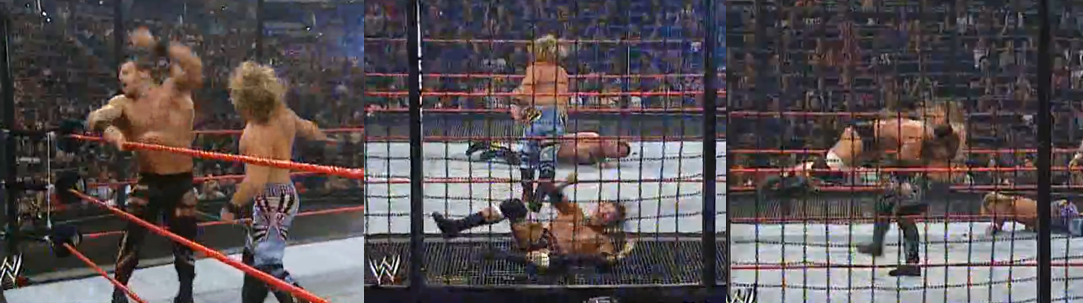
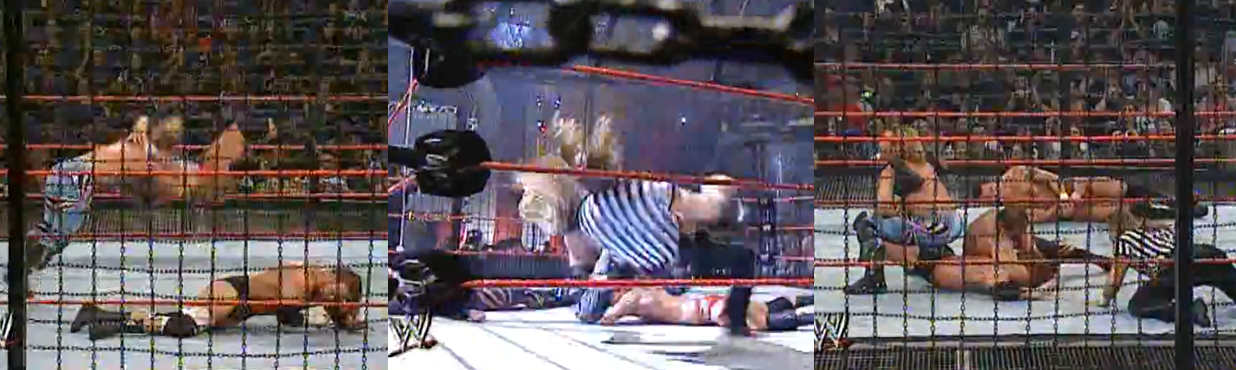
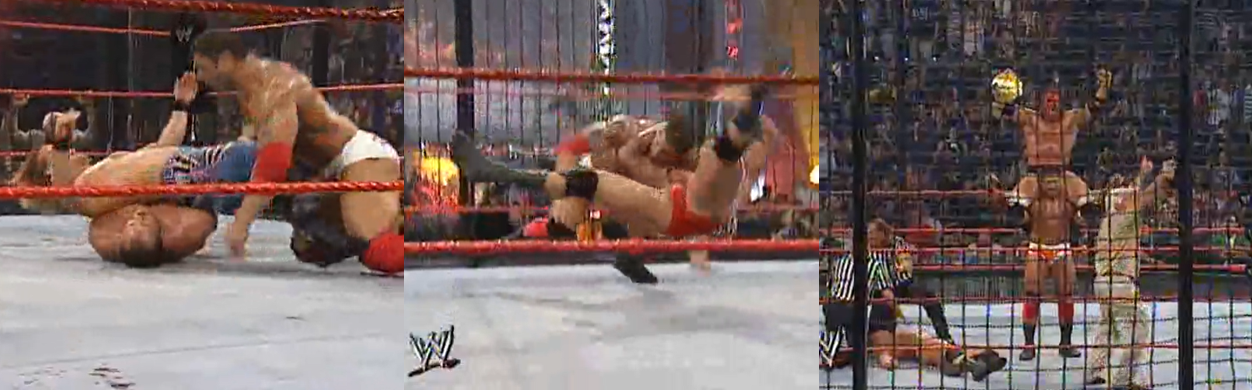



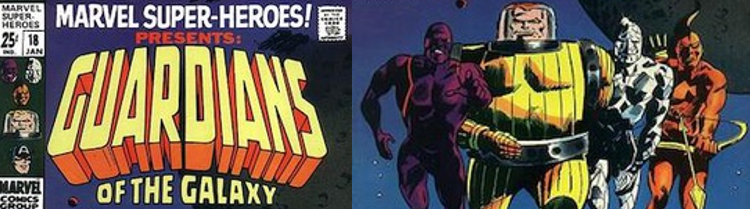
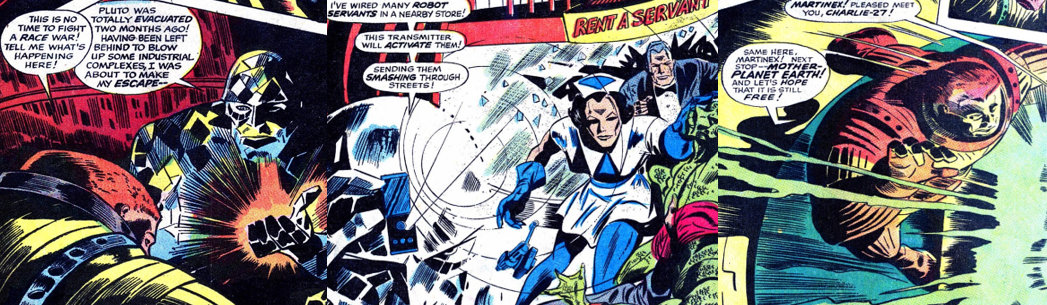
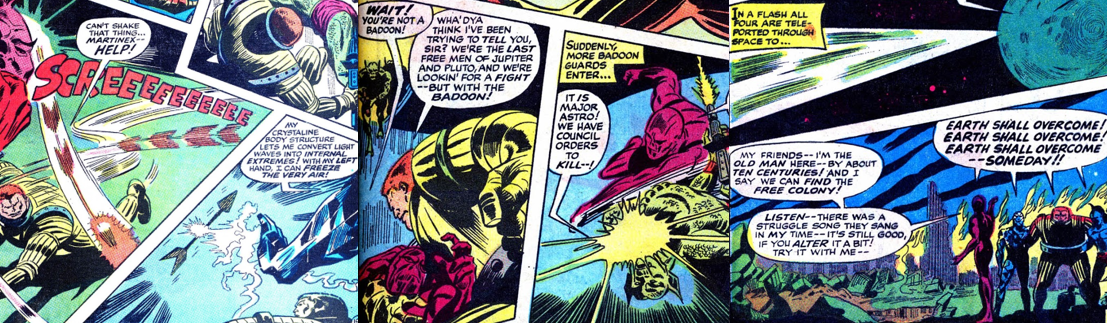
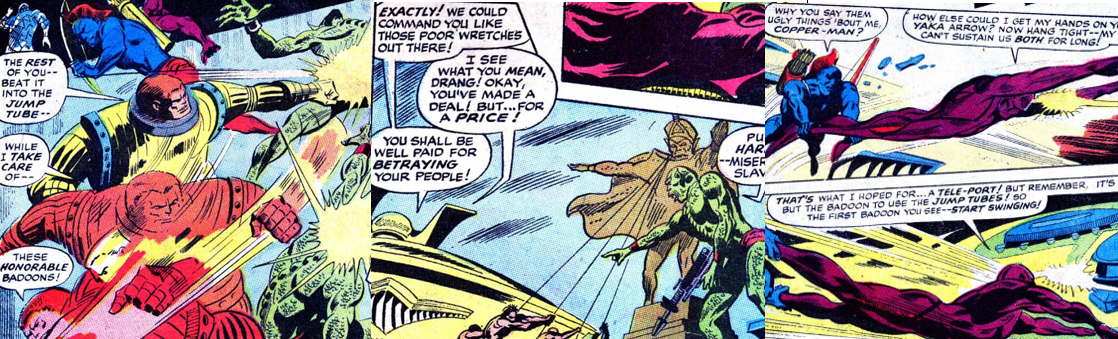
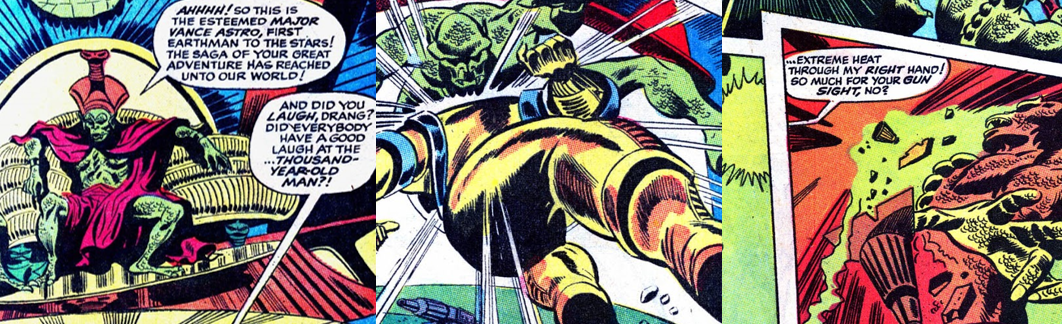



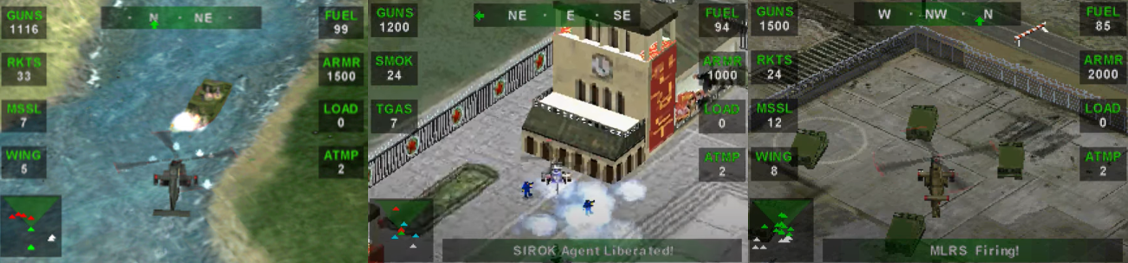
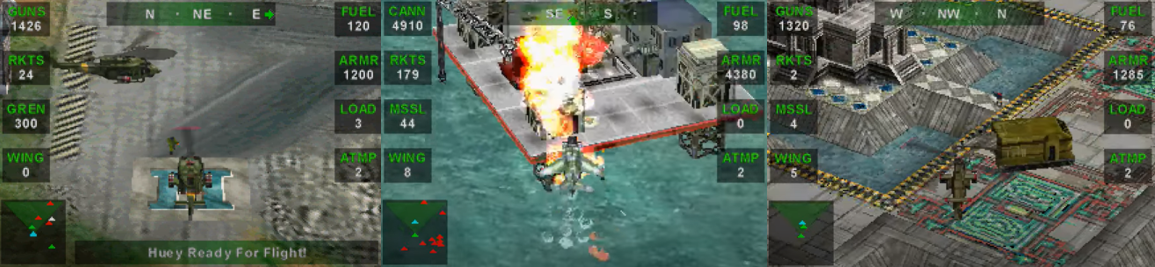

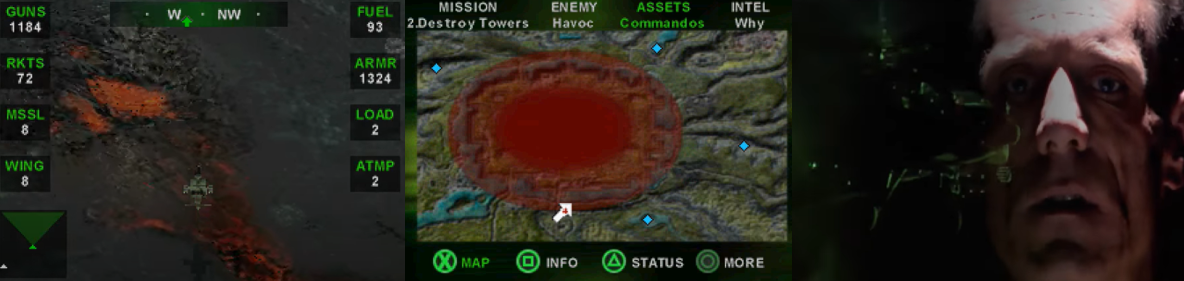
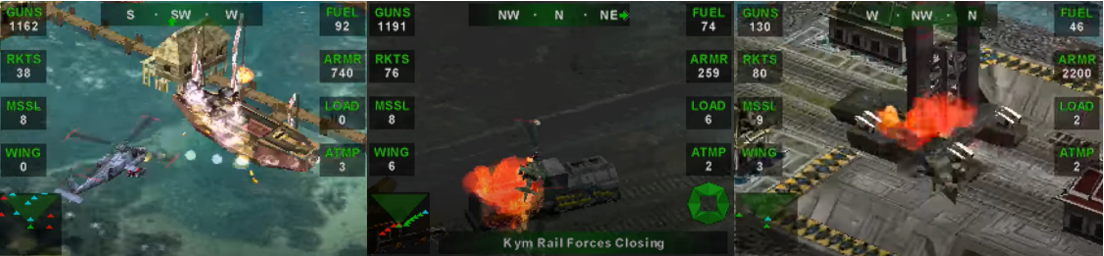


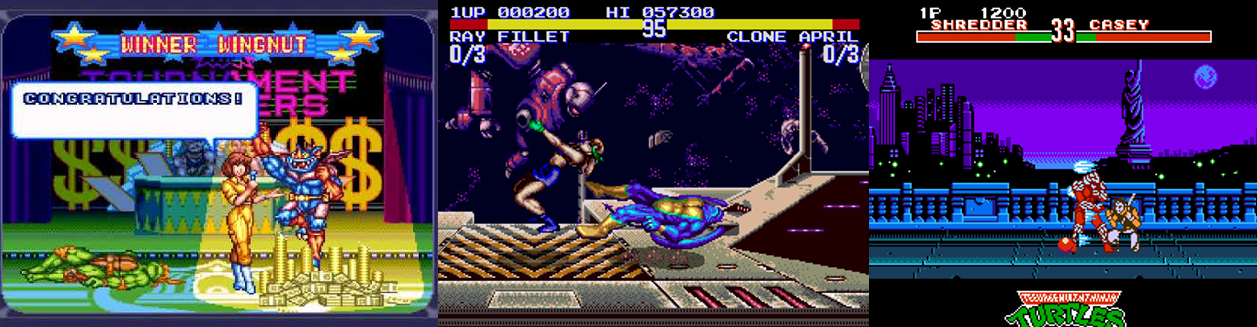









 Dr. K's Waiting Room
You must be logged in to post a comment.