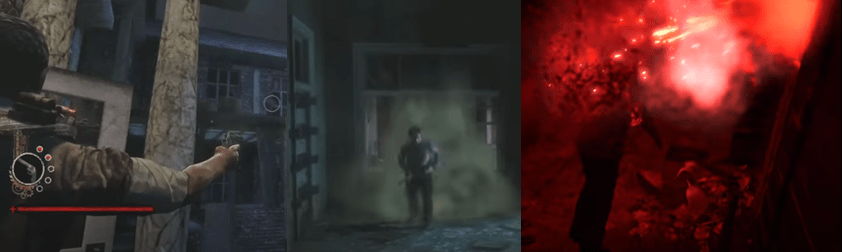
Game Corner [MK Month]: Mortal Kombat XL (Xbox One)


This image has an empty alt attribute; its file name is mortalmonday.png

To celebrate the simultaneous worldwide release of Mortal Kombat (Midway, 1992) on home consoles 13 September 1993 was dubbed “Mortal Monday”. Mortal Kombat’s move to home consoles impacted not only the ongoing “Console War” between SEGA and Nintendo but also videogames forever thanks to its controversial violence. Fittingly, to commemorate this game-changing event, I’ve been dedicating every Monday of September to celebrating the Mortal Kombat franchise.


Released: 1 March 2016
Originally Released: 13 April 2015
Developer: NetherRealm Studios
Also Available For: PlayStation 4 and Xbox Series X (XL Edition); PC and Mobile (Standard Edition)

The Background:
After gaining equal parts success, popularity, and controversy thanks to its peerless use of gore and violence and unique digitised graphics, the Mortal Kombat franchise (Various, 1992 to present) offered not only the first real competition for Street Fighter II: The World Warrior (Capcom, 1991) but also redefined videogames (especially fighting games) for years to come. After the series hit its peak in the mid-to-late nineties, Mortal Kombat struggled to find a footing in the emerging 3D fighter arena; however, after recovering from the poor reception of Mortal Kombat vs. DC Universe (Midway Games, 2008) and bankruptcy, Midway was bought by Warner Bros. Interactive, rebranded to NetherRealm Studios, and successfully got their ultra-violent fighting game franchise back on track after Mortal Kombat (NetherRealm Studios, 2011) was very well-received for its “back to basics” approach.

After MK9 breathed new life into the franchise, Mortal Kombat X took the story in a new direction.

Production of the next game in the series began in 2012 and much of the hype and marketing focused on the game featuring the most brutal and gruesome Fatalities in the series to date. Mortal Kombat X expanded upon not only the mechanics and story of its predecessor but also the content, featuring a wealth of new online modes that would come to be a signature of NetherRealm Studios, alongside far more downloadable content (DLC) than its predecessor. Sales and reviews of the game were incredibly strong, leading to the release of the XL version of the game about a year later; this version included all of the DLC and additional content released and continuing the game’s strong critical response and all but guaranteeing the production of the eleventh entry in the series.

The Plot:
Although Shao Kahn and his Outworld forces were defeated in Mortal Kombat (2009), much of Earthrealm’s forces were killed and enslaved by Quan Chi’s dark sorcery and put in service of his master, the fallen Elder God Shinnok. After Johnny Cage uses his mysterious latent powers to defeat Shinnok and many of their friends and allies are restored, a new generation of Earthrealm warriors are forced to put aside their egos and arrogance in order to prevent Shinnok’s resurrection and continue the uneasy truce Earthrealm has forged with Outworld.

Gameplay:
Like its predecessor, Mortal Kombat XL is a 2.5D fighting game in which players select one of thirty-three characters and take on the game’s single-player story mode, battle one-on-one against another player or computer-controlled opponent, or challenge a variety of arcade-style towers or other players in a variety of online battles. As is the Mortal Kombat tradition, fights take place in a three round format and against a time limit, though you can customise these settings (and many others, such as the difficulty of computer-controlled opponents) from in game’s options to speed up gameplay or make things more accessible.

While the controls stay the same, the overall fighting mechanics have been improved upon considerably.

Essentially, the game’s fighting mechanics are exactly the same as in the last game but tweaked and improved in numerous ways. You can throw punches with either X or Y, kicks with A or B, hold RT to block, perform a grapple-like throw with LB (or X and Y and a directional input), dash towards or away from your opponent (or hold RT to run, though this consumes the new stamina meter), jump in or crouch to attack or avoid projectiles, and string together combos by pressing the attack buttons and using directional inputs quickly. The game also expands on the tutorial of its predecessor to teach you the basics of the in-game combat, which gets deeper and more intricate as you learn more about the game’s combo system and stringing together basic attacks, combos, and special moves but, thanks to a refined and simplified control scheme and a much more user-friendly move list that is accessible by pausing a fight at any time, it’s very easy for even new players to perform a few simple combos and succeed in most fights.

You can now select three different fighting styles and X-Rays are more brutal than ever!

With a few simple directional and button inputs, you can also pull off a number of special moves, ranging from projectiles to grapples and elemental or telekinetic slams. This time around, though, every character has at least three different “variations” that alters their special moves and fighting style; this adds a great deal of variety to the game’s fights and means that you can focus on ranged attacks, grapples, or even summon minions to provide a modicum of assistance and can help make each character accessible to your fighting style. As you perform combos, special moves, and absorb damage, you’ll once again fill up the Super Meter at the bottom of the screen; this meter fills much faster than in the last game, allowing you to enhance your special moves with RT and pull off combo breakers much faster and more frequently. Once it’s completely full, you can once again pull off a devastating X-Ray move but, this time, you also have the option of enhancing your moves further with another tap of RT (though this will burn up your meter) and perform reversals and “block breakers” without draining your meter.

Grab an interactable object to put beat your foe and then rip their head off in gruesome fashion.

While the tag team system has been completely abandoned in Mortal Kombat XL, there are numerous opportunities in every stage for you to interact with the environment with a press of RB. This allows you to swing from vines, flip up walls, throw innocent bystanders, or use weapons to avoid incoming attacks or dish out a bit more damage to your opponent. Most stages have at least three of these but some have more, or less, and you can even set the game up to give you an audio indication of when you can interact with the environment or turn them off completely (though I don’t get why you’d do that). Of course, once you’ve drained your opponent’s health bar completely and won the decisive round of the fight, you’ll be given the chance to finish off your foe; by positioning yourself correctly and inputting some directional inputs and button presses fast enough, you’ll pull off a gruesome Fatality that will leave your opponent dismembered (usually with their brains, eyes, and/or other organs spilling from their remains).

Brutalities and Faction Kills offer new and horrific ways to leave your opponent a mangled corpse.

Every character has at least two Fatalities (in addition to special “Stage Fatalities” that can be performed on certain stages) available to them and, while you’ll have to unlock their inputs in the Krypt or look them up online in order to pull them off, you can view them at any time from the pause menu, practice them in the Fatality Tutorial mode, and earn (or buy) “Easy Fatality Tokens” to assist you. While “Babalities” (and all silly elements) are no longer present, Mortal Kombat XL sees “Brutalities” return to the franchise; by following a specific set of instructions during a fight (such as ending the fight with a throw or a stage interaction or performing a certain number of attacks during the final round), you’ll mutilate your foe with a sudden, vicious kill move. Another new addition to the game is that you’ll be asked to join one of four “Factions” for the purposes of online play; as part of this, you’ll also be able to pull off one of five “Faction Kills” by standing a jump distance away from your opponent during the “Finish Him/Her!!” command, holding block, and entering specific directional inputs.

Mortal Kombat XL expands upon your options for on- and offline play to add a lot of variety.

Every time you win a fight, you’ll earn Koins to spend in the Krypt, experience points (XP) to level up your user profile (which can also be customised with unlockable icons and backgrounds by winning fights, exploring the Krypt, and completing simple daily challenges), and points to aid your Faction. This allows you to increase your rank in your Faction, unlock access to more Faction Kills, and help your Faction to beat the others in an ongoing struggle for dominance. This is further aided by full on Faction War through a variety of towers and the regular Invasion of a super tough boss character that everyone in your Faction has to work to whittle down for more rewards, and you can change your Faction at any time to explore their different Faction Kills. Towers themselves are greatly expanded this time around; the traditional arcade ladder still has you tackling eight random opponents before battling Goro and Shinnok and unlocking your character’s ending but you can also take on daily, hourly, and premium challenge towers, and Test Your Might returns (though the other “Test” mini games are absent) in the tower mode as well. You can also tackle an Endless tower and a Survival mode that sees any damage you take carry over to the next fight and you can even create Tower Challenges for your friends to try out.

The story is a generational tale of new warriors rising up to combat the resurrected Shinnok.

Mortal Kombat (2009) sought to revitalise the franchise by retelling the events of the first three games in a cohesive way and making big changes for the series and Mortal Kombat XL’s story expands upon this greatly. Essentially a retelling of the events of Mortal Kombat 4 (Midway Games, 1997), the story deals with the emergence of a new generation of fighters and the building of inter-realm relations between Earthrealm and Outworld. Divided into twelve chapters, the story again has you playing as one character for each chapter, which continues to be an effective way of getting to grips with a wide variety of the game’s roster (though, again, you still can’t perform Fatalities in the story mode), and you can replay them at any time. While you won’t have to worry about fighting two characters at once this time, you will have to be on your toes as you’ll be asked to perform a handful of quick-time events (QTEs) during the story, which also features cameos not only from unplayable characters like Sareena, Li Mei, and Smoke but DLC characters like Tanya and Bo’ Rai Cho. Because the last game left many of the series staple character undead minions of Quan Chi, much of the story’s focus is on Johnny Cage rather than Liu Kang and the new generation of fighters (Cassie Cage, Kung Jin, Takeda Takahasi, and Jacqui Briggs) but, sadly, a lot of the unique appeal of these new characters is somewhat undermined by the inclusion of their parents (the more popular series staples like Johnny, Sonya Blade, and Jax). Equally, the story immediately backpedals on a lot of the changes made in the last game; Sub-Zero is no longer a cyborg, Scorpion is human now, and both of them (and Jax) have been freed from Quan Chi’s influence, which is a shame as it would have been cool to see a streamlined design for Cyber Sub-Zero but it is cool seeing Scorpion’s human form.

Graphics and Sound:
As great as Mortal Kombat (2009) looked, Mortal Kombat XL is a massive step forwards in terms of its graphics, presentation, and gore; character faces can be a bit shiny and unnerving in the story mode cutscenes but you won’t really notice this minor issue when locked in combat. Similarly, there’s basically no distinction between the cutscenes and in-game graphics, with only a change of lighting and camera positioning separating the two.

Mortal Kombat has never looked better but these improvements still don’t carry over to the endings.

This means that the game is presented so convincingly that it’s basically like playing a high quality CG cutscene and the character’s little quirks and mannerisms are emphasised even further; the winning character will back away from their fallen opponent between rounds, characters spit taunts after landing combos and special moves, and each one is injected with a high degree of personality to make them shine (Ferra and Torr, being two characters fighting in tandem with each other, are the perfect example of this but you’ll also get little moments like characters reloading or straightening their outfit). Even better is the fact that pre-fight introductions have been greatly expanded; characters will now trade dialogue with their opponent, which changes depending on who you’re facing and leads to some interesting references to previous games and rivalries. It thus remains a shame that NetherRealm Studios continue to offset all these impressive graphics with the motion comic-like sequences used to convey each character’s ending.

Stages come to life through numerous interactable elements, which also offer more unique Stage Fatalities.

Mortal Kombat XL’s stages are equally far more detailed and full of even more life than ever before thanks to the wide variety of stage interactions on offer. Aside from the returning Pit stage (which still has random fighters battling it out in the background), stages in Mortal Kombat XL are both new and immediately familiar; the Dead Woods and Sky Temple stages recall the Living Forest and the Courtyard, respectively, for example. You’ll also battle on a boat in the middle of a tumultuous storm as bodies rise and fall with the waves in the background, outside of the Lin Kuei palace, in the middle of a dense jungle, and even before the very life force of Earthrealm itself. Each stage has a fantastic field of depth and brought to life through the different interactions and Stage Fatalities on offer, which allow you to bash your foe’s skull in, toss hot coals at them, uppercut them into the sights of a machine gun, or feed them to a hungry kraken. 

X-Rays and Fatalities are more gruesome and disgusting than ever and emphasise dismemberment.

Characters still carry cuts and the wounds from their battle but their clothing no longer rips or tears as fights progress. However, the game’s graphical upgrade does mean more gore and more brutal Fatalities and X-Ray moves. X-Rays now lose the distorting x-ray effect and clearly show bones, muscles, and arteries snapping and splitting in gruesome, over the top detail as characters stab their foe through the eyes and deliver bone-breaking shots to their limbs. Similarly, Fatalities are much longer and gorier than ever and make Mortal Kombat (2009)’s look tame in comparison: Kung Lao forces his opponent face-first into his razor sharp buzzsaw-like hat, Kenshi cuts them into little bloody chunks with his telekinetically-controlled sword, Takeda and Ermac uses their whip and psychic powers, respectively, to rip out their opponent’s insides, and Reptile dissolves his foe in pools of acid. The game takes full advantage of its greater processing power to show guts and brains plopping out from their dismembered remains and characters being torn apart in explicit, sickening detail and there’s a definite sense that Mortal Kombat XL’s Fatalities were purposely designed to be as entertainingly disturbing as possible.

Enemies and Bosses:
As before, every character in Mortal Kombat XL will be your enemy at some point as you play through the story mode and many different towers; this time around, though, you don’t just need to worry about the fact that every character plays and controls a little differently but also has a variation that can fundamentally alter the way they fight. You might be expecting Scorpion, for example, to fight with his trademark kunai and fire breath but one of his variations adds additional sword attacks and another allows him to toss demons at you or hold you in place. This means that you’re asked to adapt your playstyle on the fly and experiment not only with different characters but their different variations as well; Kotal Kahn might be a lumbering, unwieldy lug but his War God variation affords him greater reach with his sword and D’Vorah might be a massive pain in the ass of a character but her different variations give her different rush and projectile attacks. It’s all about experimenting and seeing which variation of which character best suits your play style and finding ways to counteract the different moves and abilities afforded by your opponent’s variations.

The new characters are okay, if a little redundant and underwhelming, with Takeda shining the most.

Of course, there are quite a few new characters on offer in Mortal Kombat XL but, as unique as characters like Erron Black and Takeda are thanks to their long-range weaponry and whips, respectively, characters like Cassie and Jacqui are merely faster, weaker shadows of their parents (Johnny, Sonya, and Jax). Personally, as much as I like Johnny, Sonya, and Jax, I feel like the game missed a trick by not removing them from the roster and simply having their moves represented solely in the variations of their kids as it would help them stand out more but, as it is, I’d always pick to play as the iconic and capable Johnny than Cassie. Kung Jin, despite being related to Kung Lao, is basically a new version of Nightwolf, which hurts him a little, and Ferra/Torr (despite their unique symbiotic gameplay) are little more than an ape-like beast. Of all the new characters, Takeda was my favourite to play as thanks to how overpowered and versatile his whips were but the four generational characters left a lot to be desired in terms of their design and attire (but then, to be fair, Johnny also gets a pretty disappointing default attire this time around).

While there aren’t any secret fighters, Goro has been tweaked to be less of a cheap spam artist.

When playing the story mode, you’ll have to battle against Tanya at one point, which was the first hint towards some of the DLC characters that would round out the game’s roster. Similarly, originally, Goro was only available as a pre-order bonus and would await you as the penultimate boss in the traditional arcade ladder. Thankfully, Goro is nowhere near as cheap or as tough as in Mortal Kombat (2009); a far more balanced character, he still tanks your attacks with armour and is capable of dishing out a great deal of damage but it doesn’t feel like the game (and the character) has suddenly been ramped up when you face him (you can even perform finishing moves on him this time around). Fighting Goro really helps to emphasise how much fairer Mortal Kombat XL is over its predecessor; Breakers and parry moves are still a pain in the ass but the computer no longer hides behind their blocks and is nowhere near as cheap and frustrating as in Mortal Kombat (2009).

Even in his most demonic form, Shinnok is no Shao Kahn, which a good thing as the fight is actually fair!

At the conclusion of the story mode (and waiting at the end of the classic tower) is Shinnok (who is, unlike Shao Kahn in the last game, also a playable character). The fight against Shinnok is a standard two round affair that is far easier than battling Shao Kahn; first of all, you don’t have to worry about Shinnok hiding behind armour and spamming moves that drain half or all of your health in a few attacks and can freely jump in and attack Shinnok with a string of combos rather than camping out at the far edge of the screen and spamming your projectiles. Defeat him, however, and he transforms into the boss-exclusive “Corrupted Shinnok”, a demonic form that looks far more intimidating than it actually is. You are still free to attack at your leisure and however you prefer, which makes beating the arcade ladder much easier and far less frustrating than in the last game. Sadly, though, there are no secret or hidden fights to be found this time around, which is a shame.

Power-Ups and Bonuses:
Although it scales back on the available mini games and distractions, Mortal Kombat XL sees the return of the Test Your Might mini game and the Test Your Luck mode. Test Your Might is now confined to the towers and has you, once again, mashing buttons until the targeting reticule is in optimum position so you can hit LT and RT to smash a variety of materials. This quickly becomes incredibly difficult, though, and sees you frantically mashing buttons only to fail and see your character being killed as a result. Test Your Luck allows you to have up to seven different modifiers that will randomly select your opponent and cause a number of positive and negative effects to alter the fight; this can cause acid to rain down, Cyrax’s bombs to fly into the fight, dashing, blocking, or Breakers being disabled, an instant boost for your Super Meter or health, or characters to randomly fall asleep among many others. It remains a very fun and entertaining additional mode that adds a lot of chaos and variety to the game and there’s even a whole tower dedicated to this mode to really spice up your fights.

Test Your Luck and Dragon Challenges help to spice up fights considerably with random elements.

When tackling the Living Towers (either as part of a Faction or the timed tower challenges), you’ll also be tasked with completing a “Dragon Challenge” as indicated by an ethereal dragon flying around your next fight. This gives you the option of performing a specific task (such as landing certain attacks or not blocking) during the fight to earn additional Koins, XP, and points for your Faction. When tackling the Living Towers and Faction Towers, you’ll also find that your opponents are far more capable than in the regular arcade ladder on the easiest setting and that fights are often subject to Test Your Luck-style modifiers and, though Kombat Kodes are no longer a thing, you can evoke the spirit of those codes using the Kustom Kombat mode to set modifiers and fight-altering effects when fighting against a friend.

Additional Features:
Mortal Kombat XL offers sixty Achievements for you to earn, with only two being directly tied to the completion of the story mode. The others encourage you to experiment with all the different characters, variations, and game modes on offer, giving you Achievements for winning fights with every character variation, completing towers, performing jumps, throws, and Fatalities, and battling online. Best of all, the developers added thirteen additional Achievements when they released the DLC packs, with many of these directly tied to the DLC fighters, though a great deal of the game’s Achievements are tied to battling online, which can be tricky given how stupidly good players always seem to be online.

Mortal Kombat XL‘s guest fighters were a mixed bag but included some fun, smart, and fitting choices.

As in the last game, the DLC characters unfortunately don’t come with additional costumes but their appearance does change when you select their variations (Alien has a variation that spawns Baraka’s trademark arm blades, for example; both Jason Voorhees and Leatherface’s appearances alter to reflect their looks in different movies, and you can even choose to play as Cyber Sub-Zero by pressing up twice when selecting Triborg’s variation). The DLC fighters are an…interesting bunch; on the one hand, the game offers what I would consider to be underwhelming characters like Tanya and Bo’ Rai Cho (I seriously don’t get why Rain wasn’t upgraded to the main roster after the last game) while also bringing back an obscure character like Tremor and making the brilliant decision of combining the cybernetic ninjas into one character. Then there are the guest fighters; Predator was an awesome, inspiring inclusion (as was the skin packs that accompanied him) and including Alien was a logical choice but, as great as Jason is (one of his variations has him returning to life with a small bit of health after being defeated), it feels like a missed opportunity to have him in a game where Freddy Krueger is absent. Leatherface is a decent enough inclusion, to be sure, but hardly conjures the same visual as Freddy when set against Jason.

Explore the bigger, more detailed Krypt to spend your Koins on finisher inputs, concept art, and more.

Thankfully, though, the DLC characters aren’t completely mute this time around and there were loads of additional skins released for the game (some that were only unlockable by linking up to the mobile game) that include classic outfits (and Fatalities) and character cosplay. All of these are included as part of the XL version of the game but NetherRealm Studios did release a few additional skins after the XL edition released so, while it is the definitive, most complete version of the game, it’s not got 100% of the content as a result. Returning from Mortal Kombat (2009) is the Krypt, which is now a far more elaborate first-person jaunt through spooky, gothic environments; this time, you can also acquire a number of iconic items (such as Reptile’s Claw, Scorpion’s Spear, and Raiden’s Staff) to open up new areas and explore further. In the Krypt, you’ll be able to spend your Koins opening a whole bunch of chests to unlock concept art, finishing moves, and other goodies but, if that’s all too much work for you (and, honestly, it can be), you can pay real-world money to unlock everything in the Krypt.

There’s a lot of variety on offer thanks to Factions, online modes, and ever-changing towers.

Otherwise, you’ll earn rewards and Koins the old-fashioned way: grinding. Lots and lots of grinding. You’ll do this primarily by besting the game’s many towers with each fighter, performing finishing moves, and battling online. Online fights include standard one-on-one affairs and the “King of the Hill” mode where you sit and watch other players fight until it’s your turn and offer (and receive) “Respect” points. Sadly, however, I found online play far too difficult to be enjoyable; I don’t know what it is but online players always seem to move at lightning speed, stringing together nearly endless combos and attacking with an aggression that makes it almost impossible for you to win without a bit of luck and a lot of spamming. There is some attempt to encourage collaboration through the Faction mechanic but it’s tentative, at best; when an Invasion Boss becomes available, you’ll battle them alone rather than directly alongside other players and your Faction can easily win (or lose) without you being involved in any of the decisions at all.

The Summary:
Mortal Kombat XL takes everything that worked in Mortal Kombat (2009) and ramps it up to eleven; not only are the graphics leaps and bounds beyond the last game, the gameplay mechanics have been tweaked and adjusted and expanded upon to make the game far more accessible and enjoyable. The inclusion of intractable stage elements adds an additional layer to every fight and increases your immersion in the game and, thanks to the Super Meter filling faster and the wide array of offensive and defensive options available to you, fights are faster and more entertainingly gruesome than ever. Best of all, even with the continued inclusion of Breakers, parries, and having to hold block to press up for some finishing moves, the computer-controlled opponents are far less likely to hide behind their block or just smack you out of the air so fights are much more fun rather than becoming frustrating or annoying.

For me, Mortal Kombat XL is the best of NetherRealm Studios’ revived Mortal Kombat titles by far.

There’s very little at fault in Mortal Kombat XL for me; of all the NetherRealm Studios Mortal Kombat games, it’s easily my favourite and expands the story into new territory. While it’s a shame that some story elements were abandoned and a lot of the new characters are a bit underwhelming, the benefits on offer far outweigh the negative. Mortal Kombat XL also comes before NetherRealm Studios got greedy and locked everything behind numerous in-game currencies, grinding, and real-world purchases; the DLC was really well done and actually included additional Achievements, I enjoyed all of the different skins, and the game expands upon the Challenge Tower of the last game into a wide variety of different gameplay modes to keep you coming back for more (as if the horrific Fatalities weren’t enough).

My Rating:

Rating: 5 out of 5.

Fantastic

What did you think to the XL edition of Mortal Kombat X? Did you buy the base game and all the DLC packs separately or, like me, did you wait for this complete edition to release before buying the game? What did you think to the DLC characters this time around and the additional Achievements and skins made available? What did you think to the game’s story; did you like it as a retelling of Mortal Kombat 4 and an expansion into new territory or were you disappointed by the new fighters? What did you think to the new features, like the variations, Factions, and Living Towers, and which Faction was your preference? Were there any characters or features missing from the game for you? Which Mortal Kombat game, movie, comic, or other piece of media is your favourite? Whatever your thoughts on Mortal Kombat XL, or Mortal Kombat in general, leave a comment down below.

Back Issues [Multiverse Madness]: Superman vs. The Amazing Spider-Man


In September 1961, DC Comics published a little story called “Flash of Two Worlds” (Fox, et al), a landmark story that featured in The Flash #123 and brought together two generations of the Flash: the Golden Age Jay Garrick and the Silver Age Barry Allen. In the process, DC Comics created the concept of the multiverse, the idea that DC Comics continuity was comprised of an infinite number of parallel universes that allowed any and all stories and characters to exist and, more importantly, interact and I’ve been celebrating this ground-breaking concept every Sunday of September!


Story Title: “The Battle of the Century!” (Includes four chapters: “A Dual of Titans”, “When Heroes Clash!”, “The Call of Battle!”, and “The Doomsday Decision”)
Published: March 1976
Writer: Gerry Conway
Artists: Ross Andru and Dick Giordano

The Background:
Despite the fact that the two companies were both producing colourful, superpowered costumed heroes in a cut-throat industry, relations between DC Comics and Marvel Comics have been surprisingly collaborative and amicable over the years (they’ve certainly been more civil with each other than many of the toxic fans” I see arguing on social media every day…) Sure, there’s been lawsuits and underhanded tactics from both companies, but not only were the legendary Stan Lee and the disreputable sham Bob Kane actually good friends but the two companies both borrowed from and inspired each other and they’ve even collaborated on numerous joint publications in the past. The idea of pitting Clark Kent/Superman against Peter Parker/Spider-Man was first suggested by author and literary agent David Obst, who pitched the idea to Marvel Comics publisher Stan Lee and DC Comics editorial director Carmine Infantino as a live-action feature film. Writer Gerry Conway and artist Ross Andru, two of the few who had worked on both characters in the past, were brought in to bring the concept to life, which was treated as more of a fantasy tale (despite the fact that DC had introduced the concept of the “Multiverse” over a decade previously). The comic, which generally sells for quite a high price these days, wouldn’t be the last time Superman and Spider-Man (or DC and Marvel, for that matter) crossed paths as the two would collaborate on a number of inter-company crossovers during the eighties and nineties.

The Review:
Our story begins with just another normal, boring day in Metropolis as a gigantic mechanical construct is tearing its way through the city. Even Superman laments the frequency of such events but is unable to see who is controlling the robot thanks to it being lined with lead and is equally unable to stop it thanks to its incredible strength, an “inertia ray”, and gravity beams being emitted from its mechanical feet that crush Superman with “ten times the gravity of Krypton”. All of this means that Superman is smashed through the nearby buildings (which are, we later learn, conveniently empty despite the fact that the robot is rampaging through downtown Metropolis with reckless abandon and Superman even has to save innocent civilians from falling debris) and is unable to keep the robot from stealing a computer console from Scientific and Technological Advanced Research Laboratories (S.T.A.R. Labs). Indeed, Superman is so distracted with trying to retrieve this from the robot’s head that he completely misses that the mastermind directing the machine’s attack was none other than Lex Luthor himself!

Superman tracks Luthor down, gets his ass kicked again, and rescues Luthor from certain death.

Superman returns to his civilian life as Clark Kent, reporter for the Daily Planet (owned by Galaxy Communications at the time), who avoids one of Steve Lombard’s mean and unprofessional pranks thanks to his super powers, gets chewed out by his boss, Morgan Edge, for not covering the attack (quite why Edge chooses to target Clark over Lois Lane or Lombard is beyond me), and realises from watching the footage back that he can track the robot’s obvious trail of destruction and gigantic footprints to Metropolis Bay There, beneath the water, he immediately discovers (and is attacked by) a walking undersea laboratory. Inside the lab, Superman confronts Luthor and after trying, and failing, to convince him to renounce his evil ways and rekindle heir former friendship, is attacked by a series of high-intensity laser beams. Though he’s able to dart through them, one blasts him into his eyes and, thanks to essentially being red sun radiation (which weakens Superman), dazes him and causes him to wreck Luthor’s lab. Luthor manages to spirit away the programming circuit he stole from S.T.A.R. Labs but ends up being apprehended by Superman after almost drowning to death.

Spider-Man almost immediately tracks Doc Ock down and puts him out for the count for the cops.

The story then switches to New York City right as Spider-Man is swinging in to take care of a handful of crooks who are in the middle of robbing the Metropolitan Museum. Of course Spidey easily trounces the crooks with his spider-powers but things quickly escalate when the mastermind behind the plan, Doctor Otto Octavius/Doctor Octopus, suddenly attacks with his mechanical limbs and, thanks to the element of surprise (and a good old whack to the back of the head), is able to temporarily knock Spider-Man unconscious and escape in his ridiculous looking “Flying Octopus” craft with boxes and boxes of loot. After fleeing from the police (who naturally assume Spider-Man to have been involved in the robbery), Spidey (as Peter Parker, obviously) presents the photographs of the entire event to his boss, J. Jonah Jameson, but earns the cantankerous editor’s wrath when Jameson prints the shots unseen and is left with nothing but a blurry, instinct picture on page one of his newspaper, the Daily Bugle. When his spider-sense suddenly alerts him to a passing blimp overhead, Peter ditches Mary Jane Watson and heads off to investigate as Spider-Man only to discover (after having to think on the fly thanks to his web fluid having run dry) that the blimp was disguising Doc Ock and his flying machine. The ensuing fight wrecks the blimp, causing it (and them) to crash into the Central Park reservoir and, with one swift punch to the jaw, Spidey successfully apprehends Doc Ock and heads off to try and smooth things over with Mary Jane.

Mere hours after being locked in an escape proof prison, Luthor escapes and takes Doc Ock with him.

As luck (or fate, or simple plot convenience) would have it, both Lex Luthor and Doc Ock end up being shipped off to “Federal Maximum-X Security Penitentiary Number One, the most “escape proof” prison in the world” out in New Mexico and the two immediately bond over their respective losses and enemies and agree to join forces upon escape. Though Doc Ock is sceptical of their chances, Luthor quickly uses a number of small, high-tech devices hidden under a layer of fake skin to disrupt the prison’s security cameras and guards and allow Doc Ock to regain control of his mechanical limbs and literally carry them both to safety within just a few hours of Luthor’s arrival, The story proper begins with Clark, Lois, and other members of the Daily Planet staff attending the world news conference in New York; as you might expect, Peter is also there and, after being berated by Jameson, snaps at his boss and quits his job, shocking (but also impressing) Mary Jane with his sudden outburst. Meanwhile, Clark is stunned to hear that Edge doesn’t want him covering the news conference and, again, alludes to his temptation to replace Clark with a more well-known newscaster. Frustrated that Clark is happy to roll over and allow himself to be forced out of the “biggest story of his career”, Lois storms off in anger at his cowardice and her inability to truly hate him since he’s so charming and likeable. In true Lois Lane fashion, she risks her life climbing up a scaffold to get some better pictures (because Jimmy Olsen couldn’t make the trip, apparently) and nearly falls to her death when she’s saved by Peter. They bond over their respective professional accomplishments, much to Mary Jane’s displeasure, but Peter is left flabbergasted when Superman suddenly swoops in and seemingly vaporises them both right before his eyes!

When reason doesn’t work, Superman nearly kills Spider-Man before the web-slinger calms down.

Clark also witnesses this event and is equally stunned and changes to Superman to investigate while Peter frantically switches to Spider-Man using the staircase (because, in a cute moment, the convention doesn’t have traditional phone booths). The two superheroes instantly run into each other in the skies above the building and come to blows (Superman having assumed, as many often do, that Spidey is connected to his doppelgänger). Although Superman immediately begins to be the voice of reason, Luthor and Doc Ock (who were behind the fake Superman; Luthor’s even still wearing the costume and has the lifelike mask nearby!) decide to escalate their conflict by surreptitiously blasting Spider-Man with red sun radiation to power him up for the fight. Thanks to the red sun radiation, his anger at being pushed around, and believing the Superman has captured or killed the woman he loves, Spider-Man attacks relentlessly; his strength knocks Superman off balance and his fury causes him to stubbornly refuse to listen to reason, all of which makes Superman mad enough to throw a killing blow at Spidey’s head. At the very last second, Superman is able to pull his punch but the resulting “wind-blast” sends Spider-Man flying through buildings and across the city. Disgusted at having nearly killed a man, Superman tries one more time to get Spidey to listen to reason and, when the red sun radiation wears off and amusingly leads to Spidey simply hurting his fists on Superman’s steel-hard body, Spider-Man finally relents. After comparing notes, they quickly bury their issues and agree to work together to uncover the truth about what happened but the proof of the pudding is clear: Spider-Man dominated the fight between the two and had Superman reeling throughout.

Lex Luthor and Doc Ock appropriate the Injustice Gang’s satellite to hold the world to ransom.

Following the “energy residue” of the imposter to the Penn Central railroad yard, Superman shows that he hasn’t quite shaken off the dickish ways of his sixties incarnation by allowing Spider-Man to go in first and run a gauntlet of traps and hazards before he (as in Superman) just ploughs right in there and they both confront the combined might and intelligence of Luthor and Doc Ock. Revealing that Lois and Mary Jane have simply been taken captive to lure the two heroes into a trap, the villains quickly vanish, having been mere projections all along (which you’d think Superman and Spider-Man would be able to register with their enhanced sense but apparently not…), and nearly manage to kill Spidey with a booby trapped computer console before Superman intervenes. Superman then rebuilds the wrecked computer at super speed and down to the smallest detail, apparently somehow managing to repair and restore the destroyed files that would have been on it in the process, which leads the two to Mount Kilimanjaro. There, a local nomadic Masai tribe lead them to another of Luthor’s secret bases. After battling and defeating a superpowered tribesman (who also wields a sword charged with red sun radiation), the two discover that Luthor and Doc Ock have headed to the upper atmosphere and the abandoned satellite headquarters of the Injustice Gang. There, Lois and Mary Jane are held hostage and are privy to the supervillains’ mad scheme: using the programming circuit he stole from S.T.A.R. Labs, Luthor is able to disrupt and hijack Comlab (a massive, missile-like communications tower in orbit) and cause it to fire a “high-intensity laser probe” into the Earth’s atmosphere and hold the world to ransom or face untold death and destruction from the violent storms the laser causes.

Thanks to Spidey, Otto turns on Luthor, Superman stops a deadly tidal wave, and the heroes triumph.

Superman and Spider-Man (piloting a shuttle of his own with surprising efficiency) head up to stop them but are immediately overwhelmed by Luthor’s lasers and captured. Although they catch their foes off-guard by feigning helplessness, Superman and Spider-Man are thrown off balance when Luthor suddenly shuts off the satellite’s artificial gravity (quite how this would affect Superman is beyond me…), which allows the villains to topple the costumed heroes with a humiliating ease. Quickly recovering, the two turn the tide when Superman is able to get close enough to Doc Ock to…remove his glasses! Distracted by recovering his comrade’s glasses, Luthor is unable to defend himself against Spider-Man, and Spidey is able to turn Doc Ock against Luthor by appealing to his greed because, after all, what use is money if Luthor plans to decimate the world? Although this is enough to disable to destructive laser and cause the two villains to come to blows, Superman must still take care of a gigantic tidal wave that threatens to engulf the entire United States! Of course, Superman is able to dispel the wave by flying at it at super speed and, with the villains subdued and the threat ended, Superman and Spider-Man part as allies and return to their respective lives, with both men able to win over (and back) their employers with their exclusive insight into this one of a kind team up.

The Summary:
I grew up reading Superman, Batman, and Spider-Man stories from the 1970s so, for me, Superman vs. The Amazing Spider-Man feels like a very familiar and nostalgic little tale. The artwork and characterisations are representative of this era; both the main characters and their villains pop out nicely, with Luthor being more of the scheming supervillain rather than a manipulative businessman. While Spider-Man is just as troubled by his angst and anxieties and spouts the usual quips and puns that were “hip” at the time, Superman is far from an unstoppable demigod while still having one foot in the ridiculously overpowered nature of his Golden Age counterpart. If you’re a fan of Lois and Mary Jane then this isn’t the comic for you; the two barely factor into the plot at all and, arguably, could have been excised completely and the villains’ scheme would have carried on largely unchanged. Similarly, characters like Jameson, Morgan, and Lombard are mainly just there for comic relief or to flesh out and contrast the normal, everyday lives of our two heroes. This is a bit of a missed opportunity, in many ways, as we’re denied a meeting between Jameson and Clark’s usual boss, Perry White, or even a sub-plot where Lois and Mary Jane have to work together to either escape or help stop the villains. Maybe if the story hadn’t suddenly veered off to waste time on the Marais tribe or wasted pages recapping the origins and powers of the heroes and villains we could have seen more of these interactions or had Spider-Man visit Metropolis.

The fight between Superman and Spider-Man, brief as it is, is the main appeal of the comic.

Still, the comic is called Superman vs. The Amazing Spider-Man and we definitely do get that; the two fight for about twelve pages and it’s a fairly evenly matched affair thanks to Spidey being supped-up by Luthor’s special red sun ray. Superman, ever the Boy Scout, spends most of the fight reeling from Spidey’s surprising strength and trying to calm the web-slinger down and, every time he tries to fight back, Spider-Man is right there to shut him down and press the attack. In fact, Superman only throws one punch in the entire fight but it’s enough to send Spidey flying with “the force of a compact hurricane”. Interestingly, there’s a lot of subtext that can be gleaned from this bout; Spidey, representing Marvel Comics, is the young, hot-tempered upstart who hits first and asks questions later and Superman, representing DC Comics, is the older, more level-headed veteran who seeks to resolve conflict peacefully but will strike back if pushed too far. Naturally, the two pool their respective talents far more than they clash and, after resolving their issues, never come to blows or conflict again. I suppose it’s nice that there wasn’t a lame excuse for them to fight again, like hypnotism or whatever, but the actual inciting incident is pretty paper thin (even though he saw “Superman” vaporise Mary Jane and Lois, Peter knows Superman by reputation so you’d think he’d hesitate to suddenly think he’d gone rogue) and I would have liked to see a bit more of how their different approaches to situations clash. We only really got to see this once when they reached the rail yard and it seemed petty and mean on Superman’s part to send Spidey in alone when he (again, as in Superman) could just burst in there without issue. It’s a good job that the clash and interactions between the two heroes pays off as the supervillain team up is a bit lacklustre; Doc Ock is reduced to a mere common criminal and a henchman here, having no real agency and playing very little role in the story other than giving Luthor someone to talk and boast to and acting as Luthor’s muscle. It’s a shame as Doc Ock is one of Spidey’s most devious, intelligent, and imposing villains but he may as well not be in the story at all since everything (from the prison escape, to framing Superman, to the red sun ray, and the orbiting satellite/laser plot) is Luthor’s plan and Lex may as well have teamed up with Flint Marko/The Sandman for all the use Octavius’s arms and demented genius were.

Sadly, the potential of this team is never realised as Doc Ock is reduced to being Luthor’s henchman.

As a result, Luthor comes out of this looking like a scheming, diabolical madman who is happy to threaten and kill millions for a measly ten billion dollars; his genius allows him to create all kinds of fantastic technology and even duplicate red sun radiation to weaken Superman but, in the end, he’s undone because Spidey was able to manipulate Octavius to turn against him. Overall, it’s a decent enough story; well drawn and full of big, action-packed panels when the two heroes clash and take on their foes but the main appeal of Superman vs. The Amazing Spider-Man is, unsurprisingly, in seeing two of Marvel’s premier superheroes butting heads and joining forces. In that regard, the story works but just barely; it reads like a typical, run of the mill Superman story from the time just with a guest appearance by Spider-Man and some of his supporting characters. When the Marvel characters do appear, they’re written exactly as you’d expect from that era as well and no one side really looks better or dominates the other…unless you look at the subtext at work. Superman and Spider-Man appear to be evenly matched in their fight but Spider-Man is clearly the aggressor; Luthor outshines Doc Ock at every turn, relegating him to being a mere henchman, so I guess everything just about evens out on both sides but I can’t help but feel like the story was lacking a little. It would have been nice to see Spidey in Metropolis, more interactions between the two in and out of costume, and the two having to deal with their counterpart’s villains in a more interesting way than flailing around on a space station but there’s an appeal to Superman vs. The Amazing Spider-Man, if only because of the comic’s rarity and the chance to see these two heroes, and worlds, collide for a change so it’s probably worth seeking out for the sheer spectacle of it if nothing else.

My Rating:

Rating: 3 out of 5.

Pretty Good

Have you ever read Superman vs. The Amazing Spider-Man? If so, what did you think to it? Do you own a copy of the original comic or do you remember reading it when it was first published? Were you also disappointed that the comic didn’t make better use of its concept, supporting characters, and villains or were you happy with the story we got? Which of the two heroes, and publishers, was/is your preference? Do you enjoy all comic books and superheroes equally or are you one of those toxic fans who actively hates other characters and companies? Would you like to see DC and Marvel collaborate again in the future and, if so, what stories would you like to see? Whatever your thoughts on Superman vs. The Amazing Spider-Man, and comic book crossovers of this kind, drop a comment down below and check out my other multiverse reviews.

Back Issues & Knuckles: Sonic’s Friendly Nemesis: Knuckles


With the release of Sonic the Hedgehog 3 (SEGA Technical Institute, 1994), gamers were introduced to Knuckles the Echidna. This mischievous, dreadlocked antagonist was created by Takashi Yuda and his debut was made all the more impressive by virtue of the fact that Sonic 3 was too big to fit on one cartridge, which meant that Knuckles was the first of Sonic’s supporting characters to co-star in a main series videogame when Sonic & Knuckles (ibid) was released on this very day in 1994.


Writers: Mike Kanterovich and Ken Penders – Artist: Art Mawhinney

Story Title: “Rites of Passage, Part One”
Published: May 1996

Story Title: “Rites of Passage, Part Two”
Published: June 1996

Story Title: “Rites of Passage, Part Three”
Published: July 1996

The Background:
When Sonic the Hedgehog blasted onto the videogame scene in 1991, he was an immediate hit thanks to his debut title being bundled with the Mega Drive and SEGA’s aggressive marketing campaign. His popularity exploded with Sonic the Hedgehog 2 (SEGA Technical Institute, 1992), however, and Sonic merchandise was suddenly everywhere: not only did he feature in the Macy’s Day Parade and in cartoons but he also starred in a number of comic books. Following the initial four-part miniseries which mashed together narrative elements of Sonic’s cartoon adventures, Archie Comics  began regular publication of what would become the longest-running videogame comic book ever. In time, to capitalise on Sonic’s continued popularity, a number of spin-off comics were produced, with one of the most prominent being the Knuckles the Echidna sister series. What began as a simple enough three issue miniseries soon expanded into a convoluted lore that eventually became the subject of a bitter lawsuit between Archie and writer/artist Ken Penders that forever changed the way subsequent Sonic comic books were handled.

The Review:
Sonic’s Friendly Nemesis: Knuckles begins by first promoting the “mystery of Archimedes” and then giving a very brief rundown on Archie’s take on Knuckles, the downfall of the Echidna society, and his floating home. In these early appearances, Angel Island was known by the Western name of Floating Island and, in Archie Comics especially, was held aloft through the power of just the one Chaos Emerald (and not even the Master Emerald at this point) and incredibly advanced technology. With the Echidna’s long gone, nature has reclaimed much of the island, leaving it in disarray and causing long-forgotten secrets to be buried. Knuckles pays a visit to Mount Fate in search of his missing friends, Mighty the Armadillo, Vector the Crocodile, Espio the Chameleon, and Charmy Bee (collectively known as the Chaotix), who he strongly suspects are being held captive there by the mysterious Archimedes. Archimedes has been making Knuckles’ life a bit of a misery in recent issues and stories, taunting him with riddles about his past, and led Knux to discover that, generations ago, the Echidna brothers Edmund and Dimitri tried to use the Chaos Emerald to return Floating Island to Mobius and, in the process, Dimitri became the evil entity later identified as Enerjak, the “Harbinger of Chaos”. The entire experience caused the Echidnas to renounce technology in all its forms and bury their secrets away beneath Mount Fate and, when Knux arrives, he finds that the chamber is well guarded by a number of electronic lasers, booby traps, and other obstacles specifically designed to keep out (or kill) any intruders.

Knuckles’ reunion with Chaotix is cut short by the sudden appearance of the all-powerful Enerjak.

As Knuckles explores his surroundings, he arms himself with a concussive blaster (because that’s what I always think when I think of Knuckles: guns!) and forces his way into the grand observatory at the heart of the temple…only to find that his friends are being treated to a glorious spread as guests of Archimedes, who is revealed to be a weird-looking anthropomorphic fire-ant (yeah…I don’t know, either). Considering all of the games, subterfuge, and questionable behaviour shown by Archimedes, Knuckles is understandably enraged and demands answers but any hostilities between the two are interrupted by the arrival of Enerjak, who broke free from his prison when Knuckles triggered Mount Fate’s traps. Although Knuckles dismisses the Pharaoh-esque madman as a fraud, Enerjak boasts the incredible, unmatched power of eleven Chaos Emeralds (Archie Comics had an almost incalculable number of the gems at the time) and proves his power (and to be more than a match for the combined might of Knuckles, Chaotix, and Archimedes) by overpowering them all, taking Chaotix captive, and blasting Knuckles and Archimedes to the blazing hot desert of the Sandopolis Zone. As the two begin the bleak, day-long journey across the outback, they are attacked by a giant sandcrawler. However, the beast is easily defeated and turned into late-night kebabs for the two when Archimedes uses himself as bait (and his ability to teleport) to trick it into colliding head-first with a stack of rocks. Afterwards, Archimedes regales Knuckles (and bores the shit out of me…) with the story of how his people watched as the Echidnas harnessed the power of many Chaos Emeralds to move the entire city of Echidnapolis out of the path of an incoming comet (why they didn’t just evacuate is beyond me) thanks to the fire-ants performing the “ground-breaking ceremony” to effectively birth Floating Island. Archimedes then recounts, in a little bit more detail, how Dimitri later fashioned the “Chaos Siphon” to absorb the power of eleven Chaos Emeralds and ended up burying himself in the process.

Stuck in the boiling desert, Knux is subjected to endless exposition and visions of his father.

Since then, generation after generation of Echidnas were named Guardian of the Chaos Emerald and the fire-ants watched over them, testing them with a rite of passage to ensure that they would be read to combat threats such as Enerjak. While Knux and Archimedes resolve to work together to face Enerjak, they still need to cross the boiling desert; in his desperate hunger, Knux amusingly tries to eat Archimedes and ends up getting his mouth burned as a result. Later, while succumbing to the heat, Knuckles has a vision of his long-dead father, Locke, who does his best Mufasa (James Earl Jones) impersonation and gives him not only the resolve to continue onwards but also a cryptic clue as to how to defeat Enerjak: “The key to your present peril is in our past!” After reinvigorating himself at a mysterious oasis, Knuckles and Archimedes forge onwards towards Nekronopolis, a mighty city erected by Enerjak’s vast Chaos powers. The city, which Enerjak has built as a dark and corrupt reflection of Echidnaopolis, is home to an army of disposable mechanical minions (known as “Mecha-Nauts”) and Enerjak’s imposing citadel. Knuckles decides that the best approach is to tackle the Mecha-Nauts head on, which earns him Archimedes’ disapproval until he reveals that it was part of a plan to lure the machines to a gate so that he could crush them all (or, at least, a lot of them) in one move. However, while they manage to get into the citadel with a minimum of fuss, inside he is confronted by the Chaotix, who have been brainwashed by Enerjak’s magic and attack the two on his command. The fight (which includes a timely reference to The Mask (Russell, 1994) and even, surprisingly, The Shadow (Mulcahy, 1994), two films that both released in the year prior to this issue) goes poorly for the Chaotix; despite them having the numbers advantage, Knuckles and Archimedes are able to hold them off, forcing Enerjak to intervene and render them both unconscious using his powers (kind of making controlling the Chaotix a waste of time…) With Knuckles and Archimedes helpless against Enerjak’s powers, the would-be tyrant recaps his origins again just in case we didn’t realise how he came to be what he is.

Enerjak’s power may be awesome but the fight ends unresolved.

Despite acknowledging that the Guardian and his newfound fire-ant companion are the only two who could possibly oppose him, Enerjak prefers to boast and monologue rather than destroy them while he has the perfect opportunity. Indeed, Knux goads him into releasing them from his energy field, which gives Archimedes the opportunity to contact his fellow fire-ants. While Knuckles creates a distraction by taunting Enerjak and absorbing the brunt of his anger, Archimedes is able to teleport them out of danger so that Knux can (literally) get the drop on him and, though stunned to learn that he is Knuckles’ great-uncle, Enerjak attacks with a ferocity that is only matched by his augmented strength. Still, the two are relatively evenly matched, potentially because Knuckles has successfully goaded Enerjak into a straight-up fist fight and continues to chastise his great-uncle for his selfish ways and lack of honour. Their fight is cut short when Enerjak’s citadel suddenly transforms into a rocket and blasts into space; Knuckles and Archimedes escape thanks to the efforts of the fire-ants and Chaotix are freed from their pointless mind control. In the aftermath, despite Knuckles not really learning anything from him or really acting in a way that’s that impressive, Archimedes gives Knux his respect. Although Enerjak escaped to live to fight another day, the group is victorious and decide not to worry too much about the mysterious happenings that they experienced along the way (such as the oasis disappearing and the aforementioned rocket) but the story concludes with the revelation (to us) that Locke is actually alive and actively monitoring and assisting Knuckles from a hidden, high-tech bunker.

The Summary:
Jesus, what a slog. I’ll be the first to admit that Knuckles is my absolute favourite Sonic the Hedgehog character and I remember being so excited when he debuted in Sonic the Comic (1993 to 2002) and to learn that he was a prominent feature in the Archie comics, which were seen as kind of a continuation/parallel to Sonic the Hedgehog/SatAM (1993 to 1994). Knuckles the Echidna was one of the longest-running spin-off of the Archie Sonic comics, which is a testament to the character’s appeal and popularity, but every time I read his solo run I can’t help but be astounded at how boring and preposterous it is. I don’t usually lark to harp on about this sort of thing but my God is the art terrible in these issues! The covers, drawn by the always amazing Patrick “Spaz” Spaziante, are the best part of the artwork in this miniseries as, while Knuckles generally looks kind of okay, a lot of the characters just look really weird and disproportionate. I can kind of understand it as the majority of the Chaotix are really weird character designs already but Archimedes and the rest of the fire-ants just look ugly, man. Environments are very bland and nonsensical as well and all three issues suffer from the same artistic inconsistency that plagued the Archie Sonic comics for about fifty issues or so. There are, however, some impressive moments in the issues, though. In the rare instances where Knuckles is gliding or in action, he looks suitably bold and striking and, while Enerjak’s design is a bit “busy”, he looks pretty distinct and intimidating and I love how he has all this Egyptian-inspired apparel on his armour. Thanks to having absorbed the powers of eleven Chaos Emeralds, he can fly, wields Chaos energy, and is able to render targets under his control or unconscious and seems to have enhanced durability and strength, and can even erect a fully-functional city and robot minions in just a few panels.

Enerjak has a striking design and is certainly powerful but this was a poor outing for him.

Yet, the exact limits of his powers remains a mystery; he is regarded as a bogeyman-type figure by Archimedes and, as we learn, the reason why the Echidnas eventually renounced technology and he’s certainly a maniacal force but the story ends before we really get to delve into exactly what he wants. And that’s interesting because Sonic’s Friendly Nemesis: Knuckles is about 75% dialogue and exposition. Look, I get it; you can’t assume that people who read issue two or three will have read issue one but every issue starts with a bit of swirling text recapping the previous issue’s events so I really don’t think it was necessary to recap the (literal) rise and fall of Echidna society or Enerjak’s origin three Goddamn times! Sure, have Archimedes explain the fire-ant perspective on it all and introduce the idea of Dimitri there and yeah, Enerjak could share his perspective as well, but they’re largely the same and it just felt like needless filler. Add to that the fact that neither Knuckles nor Archimedes ever shuts up and constantly narrates his every thought and action and you have a story that is more a chore than a thrill to get through, which is a shame as I find Enerjak to be a compelling villain and his slug-fest with Knuckles was gearing up to be something good. It doesn’t help that Archie constantly shoe-horned the Chaotix into Knuckles’ stories, bloating the cast to kind of make it like an alternative to Sonic and the Knothole Freedom Fighters and, considering how useless the Chaotix were in this miniseries, it might’ve been better to omit them entirely and focus solely on Knuckles (and Archimedes, I guess, even though I am not a fan of the character) and his efforts to prove himself a worthy Guardian and oppose Enerjak’s ambitions.

My Rating:

Rating: 2 out of 5.

Could Be Better

Have you ever read Sonic’s Friendly Nemesis: Knuckles? Did you pick the issues up when they were first released and, if so, what did you think about Knuckles’ first spin-off? What did you think to Archie’s introduction and characterisation of Knuckles and the increasingly-complex depiction of the Echidna society? Were you a fan of Archimedes and Enerjak? Did you like the Chaotix being Knuckles’ running buddies? Which of Archie’s Knuckles stories and/or characters was your favourite and why? Are you celebrating Knuckles’ big day today? Whatever you think about Archie’s Sonic comics, and especially Knuckles, leave a comment down below and let me know.

Movie Night: Malignant

Released: 10 September 2021
Director: James Wan
Distributor:
Warner Bros. Pictures
Budget: $40 million
Stars:
Annabelle Wallis, Maddie Hasson, George Young, Michole Briana White, Marina Mazepa/Ray Chase, and Jacqueline McKenzie

The Plot:
After her and her abusive husband are attacked at home, Madison Lake-Mitchell (Wallis) is plagued by terrifying visions of gruesome murders that she soon realises are real. Her plight worsens when the killer reveals a link to her mysterious past and she is forced to confront a horrifying secret about herself that has laid dormant for decades.

The Background:
The gritty, disturbing horror/thriller Saw (Wan, 2004) not only ushered in a new sub-genre of horror and spawned a long-running and influential series of gory films, it also put director James Wan and writer Leigh Whannell on the map. Since then, the duo have seen even more horror success with their Conjuring universe (Various, 2013 to present) that has enabled them to venture into other genres and produce more experimental horror films. An original idea with no connection to Wan’s similarly-titled graphic novel, Malignant was delayed by the COVID-19 pandemic but finally released to mostly mixed reviews and is currently on track to be a box office bomb with its $14.7 million worldwide gross.

The Review:
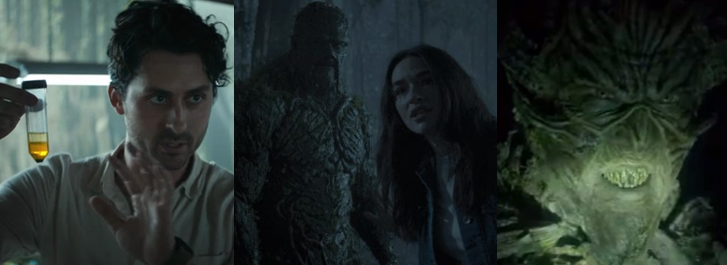
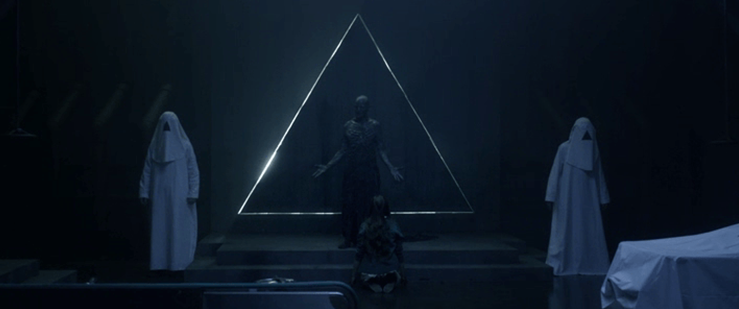
Malignant opens in the good old days of the early nineties at the Simion Research Hospital, where Doctor Florence Weaver (McKenzie) works to help children with mental and physical reconstruction after severe trauma. One look at the exterior of the hospital, however, should tell you that the facility is hardly the most benign and there’s a strong implication that Weaver and her associates have been experimenting on the children in their care in bizarre ways. The most destructive and promising of their charges is the mysterious and dangerous Gabriel (Mazepa/Chase), a monstrous young boy who is somehow only able to communicate by broadcasting his thoughts through speakers and radios and who can control electricity. One night, he flies into a violent rage, killing several staff, and Weaver has no choice but to “cut out [his] cancer” since he refuses to respond to their treatments.

Though she survives her attack, Madison loses her baby and starts experiencing disturbing visions.

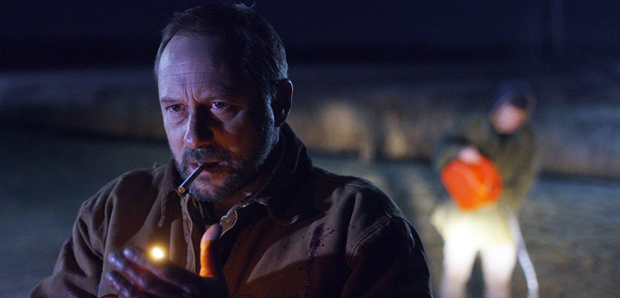
The story then jumps ahead twenty-eight years to find pregnant Madison in an abusive relationship with her husband, Derek (Jake Abel); this is her third pregnancy and she is desperately hoping for the baby to survive this time as she has tragically suffered miscarriages previously. Although it’s said that Derek has beat on her before, this particular incident is caused specifically because of his heartbreak at having to continuously see his children die before they’re born, something he blames Madison for and, during an argument, he violently smashes her head into the bedroom wall and leaves her with a nasty head wound. That night, though, a shadowy supernatural entity toys with Derek before brutally twisting his head around and then attacking Madison; although she survives the assault, her baby doesn’t, and she’s left devastated and paranoid that the entity is still haunting her.

Sydney supports Madison even as she is haunted by visions of gruesome murders that turn out to be real.

On the plus side, this allows her to reconnect with her cute younger sister, Sydney (Hasson); thanks to Derek’s toxic influence, they haven’t been able to see each other for some time but Sydney stays by her sister’s side during her recovery and supports her even after she begins to suffer gruesome visions of murders. While sleeping or performing menial tasks, Madison is seemingly haunted by visions of a gangly, trenchcoat-wearing killer that leave her paralysed with fear and terrified out of her mind; her fear only grows when she realises that the killings are actually taking place and Sydney goes with her to inform the police in the hopes of catching the man responsible. Even when Madison reveals to Sydney that she (as in Madison) was adopted into Sydney’s family at eight years old, Sydney continues to support her and even conducts her own investigation into Madison’s mysterious past after she undergoes hypnotherapy to try and uncover her strange link to the killer.

Madison’s claims to see murders raise the intrigue and suspicion of the cops.

The brutal killings are investigated by Detectives Kekoa Shaw (Young) and Regina Moss (White); while Regina is more of a stern pragmatist, Kekoa is something of a workaholic and is so focused on his cases and crime scenes that he misses obvious flirtatious advances form the likes of Sydney and the equally cute crime scene investigator Winnie (Ingrid Bisu). While investigating Derek’s death, Regina immediately pegs Madison as the prime suspect due to her abusive nature and but Kekoa is more sympathetic to her plight; Regina is equally unconvinced (and even somewhat insulted) at Sydney’s claims that Madison is having visions of the murders but, while chasing up one of Madison’s visions, Kekoa comes face-to-face with their vicious killer, a seemingly supernatural and superhuman man who claims to be Gabriel. When their traditional methods hit a wall, Kekoa and Regina arrange to have Madison sit with a hypnotherapist and soon their investigation leads them down a dark path that forces Madison to go to her mother, Jeanne (Susanna Thompson), for answers to help fill in the gaps in her memory.

The Nitty-Gritty:
If there’s one thing James Wan has become really good at over the years, it’s building a sense of tension and dread; the sporadic and effective use of music definitely helps with this as scenes are either completely silent save for a character’s panicked breathing, punctuated by a chilly melody that rises to a crescendo, or startlingly flip from the mundane to the terrifying with a sharp pull of strings. While such jump scares aren’t for many, I always felt like Wan used them really well in Insidious (Wan, 2010) and his use of them (and music and silence) to help build a foreboding atmosphere is just as good here. it’s a pity, then, that Malignant suffers a bit from uneven pacing; building tension is one thing but the film definitely slows down a bit in the second act and the performances and deliveries don’t exactly make the middle section all that interesting either. The film meanders for some time as though it’s forgotten what it was doing and, when it does get back on track, it does so with a jarringly brutal shift that, while thoroughly bloody and entertaining, end sup feeling a bit rushed.

Horror clichés are given a unique new twist that keeps things interesting.

As a core aspect of Malignant is the question of the killer’s identity, Madison’s mysterious past, and the strange connection they seem to share, it’s difficult to talk about the film without spoiling too much. I will say, though, that anyone who’s had even a passing knowledge of horror films of this kind will probably see the twist coming, however Wan puts an absolutely ghastly spin on this twist that completely turns the film on its head and changes the way you view it. Indeed, much of the film is drawing from horror clichés that have been done before (it’s not the first time a character has had visions of a killer’s actions, for example, or dreamt of/been haunted by a serial killer) but Wan repackages these tropes with his own unique twist and presentation to keep things interesting. Wan further mixes things up with some unique and creative camera angles; when Madison has her visions, her surroundings bleed away into the killer’s location and the camera spins around her dramatically, which is very effective at putting us in her shoes and sharing her dread, and there’s a section where she’s being pursued by an invisible force that’s short entirely from a bird’s-eye view inside her house that is very Sam Raimi.

Gabriel ‘s twisted visage and movements make for an unnerving and inhuman killer.

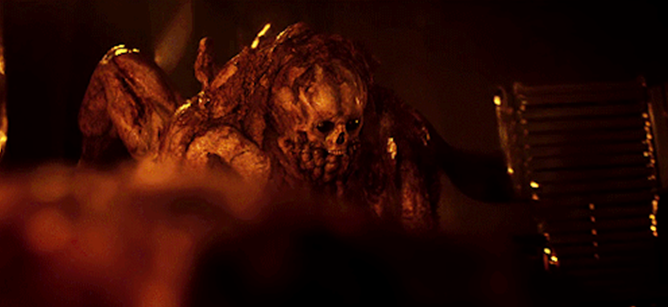
Quite soon into the film, the killer identifies himself as Gabriel; he exhibits the same croaking, cackling voice as Gabriel and also the same control over electricity and lights. The killer is presented as both supernatural and tangible, appearing as an ominous and genuinely frightening black shadow when in Madison’s dreams and visions and as a lanky figure in a trenchcoat with long hair and wielding a trophy fashioned into a deadly knife. His movements are erratic and inhuman and remind me more than a little of the unsettling Onryō from film series like Ringu/The Ring (Various, 1998 to 2017) and Ju-On/The Grudge (Various, 2001 to 2020); the few times we do see his face, he’s a scarred monster of a man and he exhibits an unnatural control over his limbs and incredible superhuman strength, to say nothing of exerting a seemingly supernatural influence upon Madison. His design is extremely effective and makes for some effective scares; scenes are often framed in a way to keep areas of shadow in the background, meaning you’re constantly on edge waiting to catch a glimpse of the killer, and his tendency to bleed out of the darkness or appear out of nowhere makes for some effective jump scares. The film also benefits from his uncanny and superhuman prowess during one particular scene that sees him effortlessly slaughter almost an entire police precinct and the startling reveal of his true nature and connection to Madison completely changes the context of the film and asks for a repeat viewing.

The Summary:
I was intrigued by the trailers for Malignant; obviously, because of the way the world’s been, I wasn’t aware of this film at all until cinema’s opened up again and I found it to be an interesting premise with some creepy visuals. This is reflected in the film; the premise, while nothing groundbreaking, is executed in a unique and interesting way by mixing and matching other horror clichés into a new context and putting a terrifying twist on them. I’ve always said that it’s perfectly fine to go back to the well in movies, especially horror (how many haunted house films have there been, for example?), as long as the filmmakers put an interesting twist on the cliché and Malignant definitely does that. Unfortunately, it’s pretty easy to guess what the main twist is going to be, meaning that you’re just waiting for the film and the characters to catch up. When they do, there’s a horrifying spin on the reveal that helps to get the film back on track but that doesn’t completely make up for a middling middle half of the film and some odd performances and deliveries. Overall, it was an entertaining and chilling horror thriller; I can’t deny that I was expecting a little more from it but I stuck with it and was entertaining by the presentation and the foreboding ambiance being built up throughout the film, though I suspect that it might do better and possibly garner a cult following once it comes to home media.

My Rating:

Rating: 3 out of 5.

Pretty Good

Have you seen Malignant? If so, what did you think to it? Did you see the initial twist coming and what did you think to the twisted follow-up to that? What did you think to the film’s use of horror tropes and jump scares? Did you enjoy the film’s performances and the brutal kills? Would you like to see a follow-up to this concept and are you a fan of James Wan’s horror films? Whatever you thought of Malignant, sign up to leave a comment or leave your thoughts on my social media.

Movie Night: Batman Beyond: Return of the Joker: The Original, Uncut Version

Released: 23 April 2002
Originally Released: 31 October 2000
Director: Curt Geda
Distributor: Warner Home Video
Budget: Unknown
Stars: Will Friedle, Mark Hamill, Kevin Conroy, Angie Harmon, and Dean Stockwell

The Plot:
When the Joker (Hamill) suddenly returns from his apparent death and begins terrorising Neo-Gotham, Terry McGinnis/Batman (Friedle) is forced to go against the advice of his mentor, Bruce Wayne (Conroy), and begin an investigation into the darkest chapter of the former Batman’s career.

The Background:
Although a Batman animated series had been in the works during 1990, the release, and relative success, of Batman (Burton, 1989) and Batman Returns (ibid, 1992) caused a wave of “Batmania” and renewed interest in the character. Consequently, quite by chance, the idea of a new animated series influenced by both films and the 1940s Superman cartoons by Fleisher Studios, was thought up Bruce Timm, Paul Dini, and Eric Radomski, who spearheaded one of the most beloved and influential animated shows ever. Batman: The Animated Series aired eighty-five episodes between September 1992 and 1995 before being succeeded by twenty-four episodes of The New Batman Adventures (also known as The Adventures of Batman & Robin here in the United Kingdom) between 1997 and 1999. Once the show wrapped up, Warner Bros. brought many of the show’s creators back to continue the story in the then-futuristic world of 2019 with Batman Beyond (known as Batman of the Future in the U.K.) Batman Beyond introduced a younger Batman under the tutelage of an aged and long-retired Bruce Wayne and taking on all-new villains in a cyberpunk-style future. Though not quite as well-received and lauded as its predecessors or sister series, Batman Beyond was popular enough to warrant a direct-to-video feature film over other potential Batman concepts. Because the film’s production occurred in the wake of the 1999 Columbine High School shooting, numerous cuts and edits were made to the film upon its release, with an “uncut” version being released once the controversy had died down. Regardless, Batman Beyond: Return of the Joker released to critical acclaim, winning (or being nominated for) a number of awards, and is frequently regarded as one of the finest pieces of Batman media to ever be produced.

The Review:
My exposure to Batman Beyond is, admittedly, very limited; I watched Batman: The Animated Series on and off back in the day, never seeming to be able to get into a proper routine with it, but saw very little of its futuristic follow-up. When I did catch the odd episode, I can’t say that it really bowled me over; it was too different, too far removed from what I expected from Batman, with virtually none of the recognisable cast or characters. Hell, even Gotham City looked and felt different, and the show had very bleak and depressing connotations for fans of Batman: The Animated Series in its portrayal of Bruce as a grouchy, lonely, recluse. Still, the idea of an older, infirm Bruce mentoring a young successor had a lot of appeal to me and is definitely something I would have liked to see the comics do (particularly during the character’s “death” between 2008 and 2010). Despite that, Batman Beyond: Return of the Joker is well deserving of all the praise it gets; while I wouldn’t go as far as to say that it’s better than, or even on par with, the excellent Batman: Mask of the Phantasm (Radomski and Timm, 1993), very few of Batman’s animated features are able to reach that pinnacle and I’d say Return of the Joker does a decent job of coming pretty damn close.

Terry is a very different kind of Batman, sporting more futuristic tech and a more agile physique.

While I’m lacking a lot of context for many of the film’s newer rogues, it’s not much of an issue since the “Jokerz” are generally just minions and cannon fodder to do the Joker’s bidding and to oppose Batman, though I did appreciate how their designs harkened back to Batman foes of old (with Stewart Carter Winthrop III/Ghoul (Michael Rosenbaum) resembling Doctor Jonathan Crane/Scarecrow and Delia and Deidre Dennis/Dee Dee (Melissa Joan Hart) aping Doctor Harleen Quinzel/Harley Quinn). The feature opens with an exciting action sequence featuring lots of laser blasts, explosions, mid-air chases, and action as Batman tries, and fails, to stop the Jokerz from stealing some high-tech computer parts. Despite all the advantages of Terry’s advanced Batsuit (including rocket boots, invisibility, and augmentations to his speed and strength), and the fact that he’s been Batman for a while now, Terry is still in training in many ways; he’s more experienced and capable but he’s still fallible and capable of messing up or being hurt. At times, though, I find him to be very reliant on the suit and the strength and other benefits it provides; it often feels like he was playing into the cliché of the role rather than being his own man at times but he manages to stand out by being a far more agile and witty Batman and approaching situations slightly differently than Bruce would/advises.

Terry has a complex relationship with Bruce and pulls no punches when fighting with the Joker.

Despite Bruce commending his work and commitment to the role, Terry is insulted when his mentor requests that he return the Batsuit in the wake of the Joker’s return. Terry initially refuses to acquiesce, seeing the role as a chance to make up for his past sins and troubled youth and confirming his commitment to helping others as Batman, and pushes both Bruce and Commissioner Barbara Gordon (Angie Harmon) for the truth about the Joker. This becomes a recurring element in the film, with Terry disliking the comparisons to Bruce’s old partners and striving to prove his worth as Batman rather than a pale imitation or a failed apprentice. This comes to a head in his inevitable confrontation with the Joker, in which Terry fights dirty with a crotch shot and constantly taunts the Joker, laughing at him, criticising his methods, and mocking him to drive the Joker into an angered frenzy.

Bruce is visible stunned by the Joker’s sudden and dramatic return to Gotham.

Bruce, of course, is now a grouchy, crotchety, tough mentor figure who has an interesting relationship with Terry, one that he clearly prefers to keep professional and mutual but you can tell that he values Terry as a replacement/apprentice. Though he’s clearly carrying a lot of ghosts and pain from his past, Bruce is as committed to both Batman and reclaiming his business and has absorbed a lot of wisdom from the long-dead Alfred Pennyworth, showing concern for Terry’s health and well-being and advising against going out on the town after a rough night as Batman, but lacks Alfred’s tact or bedside manner. Bruce’s stoic resolve is shaken upon the Joker’s return; he is visibly horrified by the Clown Prince of Crime’s reappearance and lapses first into moody silence and then into overprotectiveness after verifying the Joker’s identity. Bruce is disgusted at Terry’s sentiment, believing he is as misguided as his other teen partners who never knew what they were getting into, and a rift briefly forms between them because of Bruce’s refusal to explain his troubled past with the Joker. They make amends, however, when Terry saves Bruce from a dose of the Joker’s laughing gas, which is a horrifying sight since Bruce is accosted in his most private abode and the Joker explicitly reveals that he knows Bruce was Batman. Disturbed by being attacked in his civilian identity, Terry races to Wayne Manor and discovers the ‘cave in disarray and Bruce a cackling, grinning corpse-like figure. Succumbing to the Joker’s deadly toxin, Bruce just about manages to direct Terry to the anti-venom, and he is saved from certain death.

The Joker plans to unleash an orbital laser on Gotham to commemorate his return.

The Joker is, perhaps obviously, the star of the show here; as always, Mark Hamill delivers a sinister, maniacal performance that perfectly encapsulates Batman’s most persistent of foes. The Joker immediately establishes himself as a menacing and cold-hearted villain by callously shooting Benjamin Knox/Bonk (Henry Rollins) through the heart with the old “fake gun” trick and brazenly attacks the gala welcoming Bruce back to Wayne Enterprises. Though the Joker is critical, but admiring, of the new Batman, he dismisses him at every turn (referring to him as “Bat-Fake”) in favour of Bruce and wastes little time in setting in motion his plot to take control of an orbiting satellite and use its laser-firing capabilities to deliver massive damage to Gotham and commemorate his return.

Terry’s deductive skills aren’t quite on par with Bruce’s but he brings a unique approach to the role.

Due to the unexpected and impossible nature of the Joker’s return, much of the film revolves around Terry trying to uncover the details of his last appearance and how and why the Joker has resurfaced, apparently from the grave. With Bruce and Barbara being tight-lipped on the matter, Terry pays a visit to the aged Tim Drake (Stockwell), formally Robin, believing him to be involved somehow. Though now happy, healthy, married, and long retied from the role, Drake is still able to detect Batman even with his fancy cloaking technology, but denies any involvement in the matter, expressing only regret and bitterness at the entire debacle and his gratitude at having left the life behind. When Terry’s next suspect, Jordan Pryce (Hamill), also turns out to be little more than a middle man, he briefly despairs at his inability to duplicate Bruce’s deductive skills and reasoning only to finally solve the mystery by observing the deliberate nature of the Joker’s attack on the Batcave and the common thread that links all the materials he’s stolen, proving again that Terry might not be quite on the same level as his predecessor but is still capable of solving mysteries in his own, unique way.

The Nitty-Gritty:
Of course, the true extent of the Joker’s villainy and viciousness isn’t exposed until Barbara reveals the tragic details of their last encounter with the Joker through a flashback to some thirty years ago when Batman, Barbara-as-Batgirl (Tara Strong), and Robin were acting as a crimefighting trio; one night, while out solo, Robin was kidnapped by Harley Quinn and held captive by the Joker for three weeks. After aggressively hounding the underworld, the duo was finally lured to the rundown, partially demolished Arkham Asylum by the Joker. There, they are horrified to find that Joker and Harley (Arleen Sorkin) have brainwashed and tortured Robin into being their surrogate son, Joker Jr/J.J. and that, despite Tim’s willpower and strength, he eventually cracked and told them everything about Batman and his operation, revealing his true identity (much to the Joker’s disappointment) and transforming Tim into a disfigured, cackling little Joker-boy

The Joker subjects Tim to endless torture and unwittingly seals his fate.

During the highly emotionally-charged fight that consequently breaks out, Harley appears to fall to her death (despite Batgirl’s attempt to save her) and Batman, overwhelmed by his anger, is baited by the Joker, who gleeful shows video footage of Tim’s torture, taunting Batman and his crusade/motivation and receiving a vicious beating as a result (Batman even threatens to “break [him] in two!” in a chilling moment). However, after being incapacitated by the Joker, Batman can only watch helplessly as Tim shockingly chooses to shoot the Joker through the heart rather than kill his mentor, breaking down into a cackling flood of tears afterwards. It’s a truly horrific and terrifying fate for poor little Tim Drake and which, clearly, has fundamentally soured Batman’s character ever since and led to him alienating all of his closest allies in his twilight years. Though Drake recovered from this horrendous experience, it turns out that the Joker has been “possessing” Tim’s body using a special chip he implanted during Robin’s capture and torture; Tim is completely unaware of the Joker’s influence and the Joker has been able to take over more and more often to the point where he can make the change at will and is on the verge of possessing Tim forever. When Batman confronts Drake about his involvement with the Joker, the former Robin grows confused and disorientated before becoming more and more agitated and crazed, incapacitating Batman’s suit and descending into maniacal laughter, literally transforming into the Joker before our eyes in a spine-chilling moment.

The Joker is destroyed and Bruce finally begins to reconcile with his former allies.

With the Joker’s destructive laser damaged and now heading directly towards their location, Batman and Joker engage in a surprisingly evenly-matched fist fight; it seems possessing Drake’s body as afforded Joker the means to go toe-to-toe with the much younger and more formidable Terry but, just as the Joker is about to throttle the life out of him, Batman uses the Joker’s own electrified joy buzzer to short out and destroy the chip on Tim’s neck, defeating the Joker once and for all and returning Tim to his body, sanity, and consciousness. In the end, Batman gets Tim to safety, allowing the former Robin to finally reconcile with Bruce, Harley is revealed to be alive (though a grouchy old woman), Tim (and, more importantly, Bruce) commends Terry’s abilities as Batman, and Terry flies off into the night to continue the never-ending fight as the Batman of the future.

The Summary:
Batman Beyond: Return of the Joker is an action-packed adventure, to be sure, but also easily the darkest of Batman’s animated features; Batman Beyond was already quite a bitter and cynical end for Batman and his allies, with Bruce ending up a grouchy old man with none of his friends or family left, but Return of the Joker really hammers home how bleak Batman’s later years became. Using elements of the “Death in the Family” storyline (Starlin, et al, 1988), Return of the Joker really sticks it to any fans of Robin by having Tim relentlessly tortured and abused and even hinting that Dick Grayson is just as bitter and full of regret as Tim and Bruce. Thankfully, amidst all this bleakness, there is new hope in the form of Terry, a young and very capable but also very different Batman who helps to bring some of the fire and meaning back to an otherwise jaded Bruce. Return of the Joker is framed as Terry’s ultimate test, one that no one else believes he is ready for thanks to the danger and near-mythical threat of the Joker. Throughout it all, though, Terry remains resolute and confident and is able to defeat the Joker in a way that Bruce never could.

My Rating:

Rating: 4 out of 5.

Great Stuff

What did you think of Batman Beyond: Return of the Joker and where would you rank it against other animated Batman films? Which version of the film do you prefer? Were you a fan of Batman Beyond? Whatever your thoughts, leave a comment down below and check back in next Tuesday for Batman Day!

Game Corner [MK Month]: Mortal Kombat: Komplete Edition (Xbox 360)


To celebrate the simultaneous worldwide release of Mortal Kombat (Midway, 1992) on home consoles, today, 13 September 1993, was dubbed “Mortal Monday”. Mortal Kombat’s move to home consoles impacted not only the ongoing “Console War” between SEGA and Nintendo but also videogames forever thanks to its controversial violence. Fittingly, to commemorate this game-changing event, I’m dedicating every Monday of September to celebrating the Mortal Kombat franchise.


Released: 28 February 2012
Originally Released: 19 April 2011
Developer: NetherRealm Studios
Also Available For: PC, PlayStation 3, and PlayStation Vita

The Background:
Thanks, primarily, to its focus on gore and violence and unique digitised graphics, Mortal Kombat (Midway, 1992) was a phenomenal success for Midway and offered some real competition for Street Fighter II: The World Warrior (Capcom, 1991) in arcades and on home consoles. However, while the series seemed unstoppable during the 2D era of gaming, Mortal Kombat struggled to find a footing in the emerging 3D fighter arena and, thanks to the poor reception of Mortal Kombat vs. DC Universe (Midway Games, 2008), was in serious jeopardy after Midway went bankrupt in 2010. Luckily, Warner Bros. Interactive stepped in and the team, now rebranded to NetherRealm Studios, immediately set about getting their violent franchise back on track.

As good as some of the 3D games were, the series floundered compared to its former glory.

Simply called Mortal Kombat, the ninth entry in the franchise sought to return the series to its mature, bloody roots and was developed with a very “back to basics” approach in mind. Some of the more ridiculous elements from the series were removed and the game was developed to be both accessible through its fighting mechanics and technically impressive with its physics and gore. Although this once again stirred controversy, the game was incredibly well-received and its sales were enough to cover the costs of Midway’s acquisition. So popular and critically lauded was Mortal Kombat (2009) that the team were able to offer a number of additional fighters and skins in the form of downloadable content (DLC) and re-release the game with all these extra inclusions and this Komplete Edition was equally well-received upon release, effectively bringing new life into what looked to be a dead franchise.

The Plot:
Faced with defeat and Shao Kahn’s ultimate victory after the malevolent emperor lays claim to a God-like power, Raiden sends a message back through time to his younger self warning him of the coming events. This leads to a divergent timeline in which Raiden desperately attempts to interpret this grim warning of death and destruction whilst also coaching the Earthrealm warriors through slightly altered versions of events from the first three videogames.

Gameplay:
Like basically every single 3D Mortal Kombat title, Mortal Kombat: Komplete Edition is a 2.5D fighting game in which players pick from one of thirty-two characters and battle through the game’s single-player story mode, fight either one-on-one or two-on-two against another player or computer-controlled opponent, battle their way through an arcade ladder, or take on a series of increasingly difficult challenges and mini games based on your ability to follow an eyeball or mash buttons. Fights are preset to take place in a best-of-three format and against a time limit but you can alter these settings (and many others, including the difficulty of the game) from the game’s main menu to speed up gameplay or make it more accessible.

Pummel opponents with a simple, but surprisingly deep, array of combos and attacks.

Unlike the 3D Mortal Kombat fighters that preceeded it, which featured two different fighting styles and a weapon style for each character, Mortal Kombat goes back to its roots with simple, but surprisingly complex, fighting mechanics. You can attack your opponent with punches using X or Y, kicks with A or B, throw (more of a grapple, really) them with RB, and block incoming attacks by holding RT. You can also dash towards and away from your opponent, jump in or crouch down to attack or avoid projectiles, and string together combos by quickly pressing the attack buttons alongside directional inputs. The game includes a tutorial mode that teaches you all of the basics of the game’s combat, which is more complex depending on how skilled you are and which character you play as.

The game’s unique X-Ray feature allows you to see, in graphic detail, the damage your attacks inflict.

Each character comes loaded with their own unique special moves that you can perform using simple button and directional inputs (back, back, A, for example, or left, down, right, X); these can be stringed together with combos and enhanced with a well-timed press of RT when your “Super Meter” has reached the first tier. This will add a bit more impact and flair to your special move but, if you let the meter fill to the next tier (by landing special moves or taking damage), you’ll be able to pull off a “Breaker”, which will interrupt the opponent’s combo or attack if you manage to press RT and a direction at the right time. When the meter fills completely, you can blow the whole thing by pressing RT and LT at the same time to pull off a spectacularly gruesome “X-Ray” move that will see your character dealing massive damage with bone-breaking attacks. Be wary, though, as sometimes you need to be in a specific situation to pull these off; Cyber Sub-Zero’s X-Ray, for example, is performed in mid-air and Johnny Cage’s only works as a parry to incoming attacks.

Finish off your opponent by performing a Fatality and leaving them a dismembered, mutilated mess.

As you might expect, X-Rays are only outdone by the series’ trademark Fatalities; at the end of the deciding round (usually round two), you’ll be ordered to finish your opponent and given a very brief window of opportunity to stand in a specific spot and enter another button combination to tear your opponent to pieces, usually resulting in them being dismembered or beheaded or blown to shreds. Every character has at least two Fatalities available to them (in addition to a “Stage Fatality” that sees you ending your opponent using the environment in specific stages) but some have a third based on their classic Fatalities from the first game. One of the benefits to owning the Komplete Edition is that every Fatality is available right from the start, though you can still purchase them using the Koins you earn from fights in the game’s Krypt and can practice them to your heart’s content in the Fatality Tutorial. If you feel more like humiliating your opponent, though, you can choose to pull off a Babality instead, which will see you reduce your opponent to a crying infant. While these aren’t as horrific or entertaining as the gory Fatalities, you are awarded more Koins for pulling these off so there is an incentive to finishing your opponent as the more Koins you have, the more bonus content you can unlock in the Krypt. Noticeably, though, I found that combos, special moves, and especially finishing moves were actually harder to pull off here than I remember in the PlayStation 3 version and subsequent Mortal Kombat titles; often, my character would jump or dash when I pressed left or right and some of the button inputs are more difficult to pull off compared to later games because they require you to input more directional commands and even press up (which, to pull off, you need to hold down RB).

Team up with another player, or go it alone, to form a tag team and pull off tag team moves.

Unlike its subsequent titles, you don’t need to worry about amassing a bunch of different currency or unlocking a bunch of extraneous gear for your characters. Every time you perform certain combos, win fights, or complete challenges, you’ll earn Koins that can be spent in the Krypt to unlock concept art and such. When you complete the sole arcade ladder included in the game (which, despite having different difficulty settings, always has you fighting ten opponents), you’ll unlock your character’s ending and an alternate costume (though, again, these are all accessible right from the start in the Komplete Edition but still need to be unlocked/purchased to earn an Achievement). One thing that does separate Mortal Kombat from its successors is the inclusion of an optional tag mode; this allows you to tag between two fighters with a press of LB and even pull off tag team assist moves and have another player fight alongside you. You can even take on the arcade ladder in this mode, unlocking two endings for the price of one, and, while I usually dislike tag or team fighters, I give this one a pass as it’s an optional gameplay mode and not forced upon you.

The story mode contains familiar elements but also new events that changed the franchise’s direction.

Of course, one of the primary attractions of Mortal Kombat is its single player story mode that picks up right after the ending of Mortal Kombat: Armageddon (Midway Games, 2006) and sees you playing through an altered version of the first three games as the series goes back to its roots and, for the first time, details these events in a coherent and decisive way. The story is split into chapters, with each chapter dedicated to one of the Earthrealm warriors as they battle against the forces of Outworld (and even their own teammates at times). This is a great way to allow you to familiarise yourself with the vast majority of the game’s fighters and their unique combos and special moves and a great way to make some headway towards the game’s Achievements, though you cannot perform Fatalities or Babalities when playing the story mode. At times, you’ll also be tasked with fighting two opponents by yourself, which can be a bit unfair since you’re only given a single character and life bar and the game’s difficulty can be frustratingly unreasonable as the computer-controlled characters love to block and jump-kick you out of the air or pull off a devastating combo or X-Ray attack when you least expect it.

Graphics and Sound:
When I first played Mortal Kombat, it was a very impressive title and the most graphically advanced of the series up to that point. looking back at it now, it’s obviously not going to look as good as, say, Mortal Kombat 11 (NetherRealm Studios, 2019) but it still holds up really well, I think. Some character models (like Liu Kang, especially) are a little off but there’s very little distinction between the in-game graphics and those featured in the story mode’s cutscenes and characters are full of life and little quirks, like Reptile being hunched over and slobbering, the females all having amusing jiggle physics, and Kabal adjusting his breathing apparatus between rounds. Sadly, the developers chose to forgo full motion CGI cutscenes for the characters’ endings and, instead, utilise a motion comic-like aesthetic and voice over, which is a bit of a letdown considering how good the cutscenes are in the game.

The game recreates classic stages, including some of my favourites from Mortal Kombat 3.

Still, Mortal Kombat more than makes up for this with the variety and detail of its stages; while you can’t interact with your environment like in later games or smash your opponent into new areas, the game features lovingly realised recreations of stages from the first three games. You’ll battle in Shang Tsung’s courtyard while monks cheer you on, above a spike-filled pit while fighters can be seen battling in the background, and in Shao Kahn’s arena and throne room as he launches jeers and praise your way. One of my favourite Mortal Kombat games is Mortal Kombat 3 (Midway, 1995) and I’m happy to say that a lot of that game’s stages feature here as well, meaning you’ll not only once again battle in the city streets and in the subway but also on a rooftop while the city is being attacked and destroyed by dragons and other monstrosities in the background.

Stages come to life for certain Fatalities and characters shine in the story mode.

There’s loads of little details in the backgrounds of stages to liven things up and catch your attention; you’ll see random fighters and captives going at it, traffic and trains flying past, trees roaring at you, sacrificial rituals being performed, and even spot a few Easter Eggs and cameos if you look hard enough. Many of these come to the forefront when you perform a Stage Fatality, which sees you leaving your opponent in the middle of the road to be decapitated by an oncoming car, splattered against a subway train, careening down to a spiked pit, dunked into acid, or having their face melted off by the molten lava of the NetherRealm. Equally welcome are the many remixes of classic Mortal Kombat tracks, which do a great job of setting the mood and ambience for each stage, and the quality of the voice acting in the story mode’s cutscenes (with Johnny Cage being a particular highlight).

X-Rays display damage in graphic detail and characters carry the scars of battle as fights progress.

Such gruesome features are, obviously, a highlight of Mortal Kombat and only further emphasised through the game’s unique X-Ray mechanic. When you pull off your character’s X-Ray move, the game goes to great lengths to show the damage and brutality of your attacks on your opponent, meaning you’ll see ribs splinter, organs burst, and blood spew like a geyser. Even better, when characters take damage or are splattered by viscera this is reflected in their character models; as a result, at the end of a particularly gruelling fight, you’ll see that your character has bruises and cuts and that your clothes are torn and ripped (resulting in Scorpion’s exposed skull being visible, for example). Things only escalate when you pull off your character’s Fatality moves; while not as elaborate or horrific as those seen in subsequent Mortal Kombat games, these were easily the most realistic and gruesome seen in the series at the time. Perhaps inevitably, given how big the roster is, some are better than others but it’s fantastic seeing Noob Saibot literally tear his opponent in two, Scorpion melt his foe with his classic “Toasty!” Fatality, or seeing your battered opponent dismembered in a shower of guts and gore. Skin is peeled and melted away from the bone, limbs and heads are torn off with reckless abandon, and bodies are mutilated with a simple effectiveness that is the perfect way to put the exclamation point on a particularly gruelling fight.

Enemies and Bosses:
Being that it’s a fighting game, every character will be your enemy at some point and you’ll inevitably be forced to do battle with (and against) all of them at least once when you play through the story mode or take on the arcade ladder and Challenge Tower. Naturally, every character controls and fights a little differently; some are better suited to projectile-based attacks, others can snatch opponents out of the air with mid-air grabs, while others can turn invisible, intangible, or teleport across the arena to avoid attacks and land blows from behind. Therefore, you’re better off playing through the story mode and getting an idea of how many of the game’s characters play to see who works best for you; some characters, for example, might have trickier combos or special moves, while others might have parry attacks to help you interrupt combos and incoming attacks, but generally I find that you can usually find some simple combos and special moves that you can easily master for every character (and, if you ever need help, you can easily view your character’s moves from the pause menu at any time).

Experiment and gain experience fighting with, and against, each fighter to prepare yourself.

Again, it’s perhaps inevitable that some characters are more capable (or broken) than others: Kabal, for example, boasts a rush move that leaves your opponent spinning on the spot and open for an attack alongside two really good ranged attacks; Sub-Zero can, as always, freeze his opponent in a variety of ways; Shang Tsung is able to restore a little bit of health with his Soul Steal ability and even briefly morph into other fighters, giving him access to their specials and X-Rays at the same time; Noob Saibot can use portals to teleport behind you; and characters like Quan Chi and Sheeva can leap off the screen and come crashing down on your head. Then you get a guy like Kano, who can perform really useful cannonball rolls and air grabs but these can be tricky to pull off; similarly, Jax has a lot of grapple moves at his command but they require you to get quite close to your opponent so there’s some risk involved there. Other characters like Sindel are afforded great range thanks to her versatile and hip-like hair, and Ermac and the aforementioned Quan Chi can use their telekinesis and hypnotism, respectively, to disorient their opponent.

Goro and Kintaro pose a significant threat thanks to their sheer power and ability to tank your attacks.

When playing through the game’s story mode and the arcade ladder, you’ll also battle against a handful of unplayable boss characters. Two of the most prominent are Goro and Kintaro, massive four-armed half human dragons who can blast you with devastating fireballs, crush you from above, and deliver massive damage with just a few swings of their arms. These guys are made even more tank-like by their annoying ability to gain armour, rendering them largely immune to your attacks, shrugging off your offense, and being able to absorb a great deal of punishment. For these guys, I tend to favour leaping in with a jump-kick, landing a quick combo, and then hopping out of harm’s way; this is essential as it’ll help you to avoid the shockwaves of their ground attacks and gives you the chance to kick them out of the air and avoid their projectiles and X-Ray moves. Things get even more difficult, though, in the story mode and Challenge Tower missions that force you to battle both Shokan warriors in a one-on-two tag battle but, with clever use of your enhanced special moves and quick combos, they’re not too difficult to put down.

Stay far away from Shao Kahn and strike with projectiles or when he’s taunting.

The shit really hits the fan when you face off against Shao Kahn, however. Like Goro and Kintaro, Shao Kahn can tank your attacks with armour, spams his devastating moves like a newbie, and is capable of absorbing a great deal of punishment even on the game’s easiest setting. Shao Kahn will toss a spear at you, charge at you with his spiked shoulder, and wallop you with his devastating hammer, which can leave you dizzy and vulnerable and mean your health bar will be drained to nothing in just a few hits (or, like with the Shokan, basically instantly drained if he lands his X-Ray attack). However, Shao Kahn is also an egotistical blowhard and will often stop to taunt or laugh at you, leaving him wide open for a combo, X-Ray, or enhanced special. By far the easiest solution to defeating Shao Kahn, though, is to keep your distance at the far side of the screen and just spam your projectile attack, hitting an enhanced special as and when they’re available, and just staying the hell away from him. It’s cheap, and not very satisfying, but no cheaper than Shao Kahn and it gets the job done.

Four super tough secret fighters await you in the arcade ladder and will truly test your skills.

When playing through the single-player arcade ladder with more than one round activated, and after fulfilling certain conditions, you’ll also get the chance to battle against four hidden fighters. These guys are palette swapped variants of Reptile, Noob Saibot, Smoke, and Jade that, like in the first two games, boast the special moves of characters like Sub-Zero, Scorpion, Kitana, and Mileena and can only be fought against if you fight on specific stages and meet specific criteria (not blocking, winning rounds without taking damage, performing Fatalities, and so forth). The effort you have to go to, and the luck required, to even face these hidden fighters is matched only by their sheer difficulty; Noob Saibot and Smoke, especially, are lighting fast, love to block (even more so than your usual opponents), can tank your attacks even better than Shao Kahn, and will devastate you with their enhanced special moves. Sadly, even to this day, I’ve been unable to access the fight against Jade but I imagine she’s no walk in the park either after I was thoroughly trounced by Noob Saibot.

Power-Ups and Bonuses:
Since it lacks many of the features and customisation options of its successors, there’s not really a lot of in-game power-ups on offer in Mortal Kombat; some characters, like Noob Saibot and Quan Chi, can buff themselves and debuff their opponents with some of their special moves, which adds an extra wrinkle to the gameplay, but the main way that you’ll see power-ups granted to you is if you play the “Test Your Luck” mode or during the versus screen for a two-player fighter. Here, each player can press buttons on their controller to input a variety of “Kombat Codes” (which can be unlocked in the Krypt or found online) to change the parameters of the fight; this means you can disable blocking, power bars, throws, and specials or even fight without arms or heads!

Test Your Luck offers a great deal of entertainment and variety to the usual fights.

Similarly, in Test Your Luck, you’ll randomly be forced to fight with a variety of different effects in play, many of which are similar to those activated by the Kombat Codes. This means you can end up fighting with reduced health, upside down, as zombies, without arms or heads, or in pitch black while flames burst from the floor. It’s honestly one of the most entertaining additional modes in the game and really helps to spice up two-player fights as you never know what sort of effects are going to be activated, meaning that even seasoned players can be thrown off their game by the mode’s many different effects.

Additional Features:
As alluded to above, Mortal Kombat comes with fifty Achievements for you to earn; two of these are awarded just for playing through the story mode but you’ll get three more for beating the arcade mode once, with every fighter, and with a tag team. Other Achievements include performing every character’s X-Ray, Fatality, and forwards and backwards throw, unlocking every alternate costume, and spilling 10,000 pints of blood, all of which are pretty easy to do as you play through story mode and the arcade ladder. Some are tied to the game’s online modes, though, and are thus trickier to obtain now but by far the worse Achievements are ‘My Kung Fu is Strong’ and ‘My Kung Fu is Stronger’, which require to you gain mastery of first one and then every fighter in the game, which basically equates to many hundreds of hours of gameplay and is, frankly, pretty ridiculous.

The Challenge Tower hosts a wide variety of increasingly difficult challenges.

Unlike NetherRealm Studios’ later efforts, Mortal Kombat is actually quite light on additional gameplay modes; you can battle against other players online in ‘King of the Hill’ matches and the like but, rather than taking on ever-changing arcade towers, Mortal Kombat offers only the one Challenge Tower. This is a series of fights that begins as an extended tutorial and soon evolves into a variety of unique and increasingly difficult tasks; although you can skip the challenges by spending some Koins, you’ll need to best them all to unlock a super sexy alternate skin for Mileena and obtain 100% completion but this is easier said than done. Challenges range from simply defeating an opponent, completing a mini game, or taking part in a more unique task such as using (or spamming) a character’s projectile attack to take out waves of enemies. You’ll face off against a number of opponents not seen in the playable roster, which adds a bit of variety to the proceedings, but things quickly become increasingly difficult, frustrating, and down-right insane as you’ll eventually be asked to battle incredibly powerful versions of the likes of Goro, Kintaro, and Shao Kahn in a gauntlet and with only a single life bar, which frankly just isn’t worth the aggravation.

Complete mini games, spend your Koins in the Krypt, and view stats and models in the Nekropolis.

Outside of this mode, you can also take on classic Mortal Kombat mini games like “Test Your Might” as well as the very similar “Test Your Strike”. Both to these will see you mashing buttons until a bar fills up and then pressing LT or RT at just the right moment to smash a variety of materials. These start off easy enough but soon become incredible difficult and you’ll find yourself furiously mashing away only to fail at the last second when the bar dips too low. There’s also the “Test Your Sight” mini game, which sees you picking which cup hides a severed eyeball and is, comparatively, far less aggravating but, to complete all of these challenges and get 100% completion, you’ll need to play through the Challenge Tower. Then there’s the Krypt; unlike the elaborate, third-person quasi-adventure mode of later games, the Krypt here is a first-person jaunt through four nightmarish landscapes littered with gravestones, bodies, and tortured souls for you to free at the cost of some Koins. This will unlock concept art, renders, Fatality and Babality inputs, Kombat Codes, and alternate costumes, all of which you can view in the Gallery within the game’s Nekropolis. The Nekropolis also allows you to view the stats for each fighter (including total play time, blood spilt, Fatalities performed, and such), their endings, and their models. You can even apply various stages of battle damage to each model, which is kind of cool, and will gain a special item for each character when you complete the arcade ladder with them or unlock their alternate costume from the Krypt.

All four DLC fighters are included as standard but have no extra costumes or Achievements.

In the regular version of Mortal Kombat, you would unlock two additional fighters (Quan Chi and Cyber Sub-Zero) by completing the story mode but both of these are included right off the bat in the Komplete Edition. The inclusion of a cybernetic variant for Sub-Zero was interesting at the time but, sadly, was quickly undone in the very next game, as were many of the major ramifications of Mortal Kombat’s story. Finally, there’s the inclusion of every single downloadable fighter (apart from the PlayStation 3-exclusive Kratos); Mortal Kombat had some interesting DLC at the time, which included classic costumes (and Fatalities) for the likes of Sub-Zero and Scorpion, a brand new character based on a rumoured secret fighter, Skarlet, a surprise addition in the form of Kenshi, and one of my favourite ninja characters, Rain. It also set the trend for NetherRealm Studios’ later games by including a guest fighter from outside of the franchise, in this case Freddy Krueger from the Nightmare on Elm Street films (Various, 1984 to 2010). Sadly, however, none of the guest fighters speak (not even Freddy, despite the fact that Robert Englund provided the grunts and vocals for the character and his penchant for dark humour) or have alternate costumes and there are no additional Achievements tied to their inclusion; the Komplete Edition doesn’t even expand/update the player select screen to include them, which is a bit of a shame.

The Summary:
I have very fond memories of playing Mortal Kombat on the PlayStation 3; the fantastic retelling of the first three games was a great way to continue the franchise’s convoluted story while also streamlining it and making it cohesive for a change and the emphasis on unrepentant gore and violent combat was just the kick up the ass the series needed after getting sidetracked with all kinds of needless gimmicks. I remember the game being easy to pick up and play, with a surprising amount of depth to it, and offering a decent challenge the more you played and the more you tried to progress. Coming back to it with the Komplete Edition, much of my opinion remain the same; combat is fast and fluid, Fatalities and X-Rays are gruesome to behold and satisfying to watch, and the story does a great job of setting the stage for a new generation of fighters and new stories to be told.

While frustrating at times, Mortal Kombat did wonders for the series and finally got it back on track.

Sadly, though, there were some things that soured the experience for me: it’s clear that NetherRealm Studios refined the engine and the mechanics in the next game as the button inputs can be really finicky and aggravating at times; stages are nice and detailed but also lack an interactive elements outside of Stage Fatalities (even Mortal Kombat 3 let you smash your opponent into new areas); bosses like Goro, Kintaro, and Shao Kahn are super cheap and ridiculously annoying at times; and the computer just blocks way too often even on the easiest difficulty. This wouldn’t be so bad but you’re at risk of being hit with a Goddamn Breaker if you attack while they’re blocking; add to that the frustrating parry mechanics of guys like Liu Kang and Cyber Sub-Zero, Mileena and Noob Saibot’s overpowered teleport attacks, and the game not properly registering my inputs and it was needlessly exasperating at times. There’s still a lot to like here and it’s definitely worth your time but it clearly set the groundwork for bigger and better things in the far superior sequel, in my opinion.

My Rating:

Rating: 3 out of 5.

Pretty Good

What are your thoughts on the Komplete Edition of Mortal Kombat? Did you hold out for this version of the game or did you just get the base version and buy the DLC later? Were you a fan of how the game went back to basics and explored the roots of the series in a coherent and decisive way or would you have preferred to see the game try something truly new? Which fighter in the game (or the franchise) is your favourite and why? What did you think to the DLC characters and the game’s X-Rays and Fatalities? What did you think to the online options and the different towers the game had to offer? Which Mortal Kombat game, movie, comic, or other piece of media is your favourite? How are you celebrating Mortal Monday today? Whatever your thoughts on Mortal Kombat, leave a comment down below and check back in next Monday for more Mortal Kombat content.

Movie Night [Multiverse Madness]: Superman: Red Son


In September 1961, DC Comics published a little story called “Flash of Two Worlds” (Fox, et al), a landmark story that featured in The Flash #123 and brought together two generations of the Flash: the Golden Age Jay Garrick and the Silver Age Barry Allen. In the process, DC Comics created the concept of the multiverse, the idea that DC Comics continuity was comprised of an infinite number of parallel universes that allowed any and all stories and characters to exist and, more importantly, interact and I’ve been celebrating this ground-breaking concept every Sunday of this month!


Released: 25 February 2020
Director: Sam Liu
Distributor: Warner Bros. Home Entertainment
Budget: Unknown
Stars: Jason Isaacs, Amy Acker, Diedrich Bader, Vanessa Marshall, Roger Craig Smith, and Paul Williams

The Plot:
In an alternate timeline, Krypton’s last son crash-lands in Cold War-era Russia and Superman (Isaacs) is raised to be the figurehead of Joseph Stalin’s (William Salyers) Communist campaign. In response, Lex Luthor (Bader) devises a plan to neutralise and destroy the Soviet Superman while a renegade terrorist known as Batman (Smith) and the alien cyborg Brainiac (Williams) both plot to overthrow the superpowered tyrant.

The Background:
Having met with considerable success with their animated ventures, such as Batman: The Animated Series (1992 to 1999), Warner Bros. Animation began producing a number of direct-to-video animated features based upon existing and popular comic book storylines but Superman: Red Son was a bit of a change of pace as the last few animated features had been part of a shared universe. Red Son was based on the three-issue miniseries of the same name written by Mark Millar in 2003, a story that was part of DC’s “Elseworlds” imprint. A surprisingly dense text, it was a popular and poignant “What If” scenario published by DC Comics for its deconstruction of Superman’s ideals. Similarly, the adaptation received generally positive reviews and sold quite well on home media. Having never gotten around to reading the original comic and, although I’ve been aware of it and the premise for some time, this was actually my first time properly experiencing this alternate take on Superman.

The Review:
These days, the “Evil Superman” story has been pretty much done to death; it was a big part of the Injustice franchise (NetherRealm Studios/Various, 2013 to 2017), movies like Brightburn (Yarovesky, 2019) have explored the concept further, and even Henry Cavill’s version of the character has walked the line more than once, particularly in the questionable “Knightmare” scenario present in the DC Extended Universe films. Interestingly, Red Son takes Superman’s core values of “Truth, Justice, and the American Way” and simply transposes them into Soviet Russia; as a boy, Superman fears hurting others with his powers and hides them from the world as a result but, after showing them to Svetlana (Winter Ave Zoli), is encouraged to “give them to the State” in order to put them to the best use (i.e. for the betterment of their Communist superiors). As a result, the Soviet Superman isn’t initially evil in the way a lot of alternate versions of Superman are; he begins as a humble Communist patriot who is simply acting in the best interests of his country, which is basically what the mainstream Superman does more often than not.

Superman embarks on his own totalitarian regime predicated on peace through force.

At first, the Soviet Superman basically acts as a nuclear deterrent to the rest of the world, ensuring the strength, superiority, and prosperity of Soviet Russia in a similar way to how Jon Osterman/Doctor Manhattan acted for the United States in Watchmen (Moore, et al, 1986 to 1987). This Superman is uncomfortable in the spotlight and sees himself as a “servant of the State”, a man simply doing his part in ensuring Russia’s success, and is quick to attribute his feats to the betterment of the country rather than simply his actions. Similarly, he doesn’t hesitate to act to intervene when Metropolis is threatened by a falling satellite, expressing that the citizens of the United States aren’t his enemy or those of his government, and yet he is sceptical and distrustful of the press, such as Lois Lane-Luthor (Acker). In this version of the DC Universe, Lois is still a reporter but is married to Luthor; Lois’s ideals clash with those of Superman’s, with each of them disapproving of the actions and methods of each other’s governments. Clearly intrigued by Superman, it is Lois who opens his eyes to the horrendous actions of Stalin, which have left his beloved Svetlana dead after being imprisoned in a hellish gulag for knowing his true identity. Disgusted at the torture and treatment of the prisoners, and enraged at Svetlana’s death, Superman frees the inmates and brutally kills Stalin, usurping his authority in the process and beginning his own totalitarian regime. Just as she encouraged him to give his powers to the country, Svetlana’s dying words motivate Superman to be the strongest of the strong and to ensure that the Russian people are never again oppressed. Just as Luthor hoped, this causes Superman to become a significant threat as he easily ends the Korean War and demolishes the Berlin Wall, accepting collateral damage and loss of life to safeguard the majority and spreading a message of peace through aggressive intervention. Luthor’s machinations speed up his vendetta against Superman, which sees his him cloning a bizarre version of Superman using genetic material from this landing craft.

Luthor creates a clone of Superman that he purposely overloads to the point of death just to rattle Superman.

This “Superior Man” (Travis Willingham) resembles the traditional Superman in many ways, save for a “US” symbol on his chest, and has been programmed with complete subservience to his country (and to Luthor), however he’s little more than a blank slate. Luthor unveils Superior Man in a very public display and wastes no time in sending him to confront Superman, leading to a massive brawl between the two through the streets of Moscow. Horrified at the devastation and loss of life their conflict causes, Superman quickly diverts the battle away from innocent lives (interesting that the Soviet version of Superman is more concerned with safeguarding innocent lives than Snyder’s Superman in his debut film…), but the clone soon degenerates into a monstrosity and, finally, painfully dissolves when Luthor purposely overloads him with more power to test Superman’s limits and psychologically unnerve his superpowered opponent.

The Nitty-Gritty:
Superman: Red Son isn’t anything massively new when it comes to animation since it appears very similar to other DC animated movies and draws heavy aesthetic influence from Paul Dini and Bruce Timm’s animated works. The story continuously jumps through time, showing characters aging and noticeably changing (Luthor starts off quite athletic and with a full head of hair but soon grows pudgy and balding while Superman’s costume becomes darker and more adorned with military insignias and accessories as his campaign escalates), which covers a lot of ground very quickly in order to establish that these events take place over a long period of time and slowly shows the expansion of Superman’s Communist strength.

Superman and Wonder Woman forge an alliance in a world where Batman is a violent terrorist.

As with many alternate world stories and animated features, Red Son includes several cameos and additional characters, recast and changed by their place in this parallel world. This Superman forges a powerful alliance with Diana Prince/Wonder Woman (Marshall), who admires his accomplishments and his commitment to his ideals of unity through strength; their relationship is built out of a mutual desire to change the world for the better with their powers and resources rather than a romantic liaison since Diana is a lesbian in this world. In time, however, Diana comes to question Superman’s methods when he turns insurgents into little more than zombies. Similarly, Superman faces opposition from the Soviet Batman, here little more than a terrorist who openly opposes Superman’s regime after suffering in the same gulag as Svetlana and losing all faith the superpowered Premier. As with many alternate versions of Batman, the Soviet Batman is perfectly happy to kill, blowing up a museum dedicated to Superman’s accomplishments and killing numerous innocents in the process. Batman has also inspired several followers, who all wear his symbol and willingly follow his orders, which causes them to be subjected to brainwashing by Superman’s reprogrammed Brainiac technology. After many years of striking against Superman, Batman eventually overwhelms Wonder Woman and subdues her with her own Lasso of Truth in order to lure Superman into a trap. Using artificial red sunlight supplied by Luthor, Batman weakens Superman and mercilessly beats him into submission as payback for his part in the death of his parents and to liberate Russia from his oppressive rule. Ultimately, though, Wonder Woman breaks free from her binds and restores Superman’s powers, though Batman choose suicide over being subjected to Superman’s brainwashing and the whole ordeal causes Diana to walk away from man’s world.

Superman and Luthor team up to defeat Brainiac and Superman uses the opportunity to fake his death.

Finally, Luthor’s ongoing efforts to bring down Superman lead to him not only becoming President of the United States and repositioning the United States as a prosperous democracy, but also discovering Abin Sur’s crashed spaceship and bequeathing the power ring on his finger to Captain Hal Jordan (Sasha Roiz) to create an alternative version of the Green Lantern Corps. Although not wishing to go to war with the United States, or to simply remove Luthor from power, Superman is forced into action when the Green Lantern Corps attack; although saved by Diana, he refuses to listen to her pleas for peace and loses her trust and friendship forever when Themyscira closes its borders to the rest of the world. Although Brainiac’s invasion of the world is limited to a brief montage, its influence on the story is significant; defeated and reprogrammed by Superman, Brainiac not only subtly influences Superman’s methods and gives him the technology necessary to better enforce his rule, but has also been secretly plotting to take over the world through Superman’s increasingly aggressive methods. This comes to a head in the finale, where Brainiac’s machinations lead Superman to the White House and the world to the brink of all-out war. Thanks to Lois, Superman realises the error of his ways and even works alongside Luthor (in a version of his signature mech suit) to battle Brainiac on the White House lawn; Luthor’s technology even ends up playing a pivotal role in disabling Brainiac’s forcefields and allowing Superman to destroy the machine, faking his death in the process and retreating to a simple, unassuming life to allow humanity to make their own destiny…and their own mistakes.

The Summary:
Superman: Red Son is an entertaining glimpse into an alternate version of Superman, one whose ideals of patriotism and justice are skewed by his Communist beliefs and upbringing. Initially a propaganda tool used to showcase the might of the Soviets, Superman evolves into a surprisingly layered dictator, one who laments and avoids the taking of innocent lives but is willing to aggressively expand his empire through force, if necessary. In time, his regime enforces a notable peace through the expansion of Communist ideals, which makes him colder and more inhumane in his efforts as he subjects those who defy him to lobotomies and yet still believes that his methods are more humane than those of Stalin. Superman is positioned as the enemy of the free world, particularly Democratic nations such as the United States, which seeks to liberate the Soviet nations from his oppressive rule but, as with Superman’s methods, Luthor’s aren’t exactly benevolent. One thing I found particularly interesting was that Superman doesn’t have another name; renouncing whatever name he had as a boy and becoming a symbol of Communist power and ideology, he’s also far more separated from humanity because of the emphasis on his alien nature, which is skewed by Communist beliefs. It’s an interesting take on the character and helps to make the story stand out and showcase the surprising amount of depth to Superman, who retains his trademark desire to only do good and help others but this desire is distorted by his totalitarian ways.

My Rating:

Rating: 3 out of 5.

Pretty Good

What did you think to Superman: Red Son? How would you rank it against the other DC animated features and how do you think it holds up against its source material? Are you a fan of the Soviet Superman concept? What other alternate scenario would you like to see Superman thrust into some day? What is your favourite alternative take on Superman and what are your thoughts on the “Evil Superman” trope in comic books and other media? Whatever your thoughts on Superman: Red Son and other parallel versions of iconic characters, go ahead and leave them down below.
Back Issues [A-Day]: The Avengers #1


Having introduced comic readers to a whole host of colourful characters, in September of 1963 the legendary duo of Stan Lee and Jack Kirby brought together six of Earth’s mightiest heroes to form the Avengers. A super team like no other, with a constantly rotating roster, the Avengers has become the premier team of Marvel Comics and, thanks to the team and its individual members forming the backbone of the Marvel Cinematic Universe, have become an unbelievably popular and successful franchise in their own right.


Story Title: The Coming of the Avengers!
Published: September 1963
Writer: Stan Lee
Artist: Jack Kirby

The Background:
In 1960, DC Comics brought together their most popular and powerful characters to form the Justice League of America. Never ones to let the competition get a leg up on them, and having seen successful with the Fantastic Four and the debut of the X-Men in that very same month, Marvel Comics head honcho Martin Goodman asked Stan Lee to create a similar team of superheroes. Helpfully, Lee and a number of his most famous collaborators had already established a number of colourful characters to bring together: Tony Stark/Iron Man, Doctor Bruce Banner/The Hulk, Doctor Donald Blake/Thor Odinson, and Doctor Hank Pym/Ant-Man and Janet van Dyne/The Wasp. Since the debut issue, the Avengers have been a consistent and influential presence in Marvel Comics; the roster constantly shifted and changed, with the Hulk leaving the team in the second issue and Lee memorably dusting off the long-retired character of Steve Rogers/Captain America in issue four. Since then, the team has expanded and changed many times, seen spin-offs and splinter groups, been disassembled and reassembled, and taken part in all manner of massive cosmic events in the decades since their introduction.

The Review:
“The Coming of the Avengers” begins with Thor’s brother, Loki Laufeyson, the God of Mischief, imprisoned on the “dreaded Isle of Silence” in the mythical realm of Asgard. This is, of course, back when Loki was a despicable, irredemable villain whose previous mad schemes for power and conquest were thwarted by his brother; consequently, Loki is incensed at being exiled to the barren wasteland by Odin Allfather and plots a devious scheme for revenge.

Loki burns with a desire to destroy Thor, not Blake, and sees the Hulk as his chance to do so!

Though his physical self is trapped, Loki is able to use his vast magical abilities to project his disembodied self across the length of he dimension-spanning Bifrost and down to Earth, the planet Thor loves so dearly. He spies in on Donald Blake but dismisses him as a lame and insignificant mortal; he is acutely aware that Blake and Thor are one and the same but desires victory over Thor, not his crippled mortal shell. After many long hours, Loki comes upon the Incredible Hulk and is instantly intrigued by the creature’s brute strength and disdain for humanity. Thanks to Loki’s manipulations, the Hulk is blamed by the media when a train almost derails (despite the fact that the Hulk went out of his way to keep the train on track after Loki’s tricked him into damaging the tracks). Concerned for the well-being of his friend, Rick Jones desperately attempts to contact the Fantastic Four for help but Loki intercepts the broadcast and successfully coerces Blake to transform into Thor.

Words almost can’t express how much I despise Janet’s characterisation in these early comics!

However, Rick’s broadcast is also intercepted by Ant-Man and the Wasp and Tony Stark, who eagerly leap into action to stop what they perceive to be one of the Hulk’s trademark rampages. Though he’s now decked out in his slightly more streamlined gold plated armour (which can also charge through solar power), Stark is still entirely reliant upon his iron plated chest device to keep him alive but, nevertheless, he’s eager to test the strength of his armour against the Hulk’s much-vaulted power. The Fantastic Four eventually pick up the transmission regardless of Loki’s interference but are unable to assist since they’re already busy on another case but Rick and his fellow “Teen Bridge” are star-struck when Thor, Iron Man, Ant-Man, and the Wasp all show up to answer their summons. This is probably as good a time as any to talk about how much I loathe Janet van Dyne, especially in her earlier appearances in the sixties and seventies! She’s such a ditzy, scatterbrained little tart; all she ever does is think about her hair, make-up, and appearance and constantly fawn over other men right in front of her partner/husband, Hank. Sure, Hank is generally much more focused on his work, the mission, or being professional and is largely neglectful and ignorant of Janet but that doesn’t excuse her God-awful characterisation. Similar to Susan Storm/Invisible Girl, Jean Grey/Marvel Girl, and many of Marvel’s supporting female characters at the time, Janet is constantly patronised and spoken down to by men but, unlike many of them, she actually deserves such harsh treatment since she’s more of a glorified model or brainless celebrity than a capable superheroine, much less an individual worthy of their respect since all she wants to do is drool over Thor’s muscles!

Loki is apprehended but the battle between Iron Man and the Hulk continues to rage!

Anyway, having inadvertently brought together some of Earth’s mightiest heroes, Loki changes tactics and uses his powers to trick Thor into thinking the Hulk is right outside their door! Acting without thought or logic, Thor immediately heads out to battle the Green Goliath and immediately heads to Asgard when he realises that the “Hulk” is merely one of Loki’s visions…just as Loki planned all along! Meanwhile, the Hulk, now free from Loki’s control, has…disguised himself as Mechano the Mechanical Man and hidden himself away at a circus? Thanks to Ant-Man’s uncanny helmet, which allows him to control and communicate with ants, Pym is able to first locate the Hulk and then use countless numbers of ants to cause a cave-in beneath the beast’s feet. Unimpressed and irritated, the Hulk easily bursts free of the trap and reacts with anger when Ant-Man attempts first to calm him and then to trap him. As in his debut appearance, the Hulk is far more than the mindless, rampaging beast he is generally known as; he’s eloquent and intelligent, using words like “masquerade” and being smart enough to disguise himself as a circus performer and use weapons to blow the Wasp out of the air and render her helpless. The Hulk is kept from crushed the Wasp into a fine paste by the timely arrival of Iron Man; after Iron Man’s attempts to lure the Hulk into a trap fail, he gives chase but the Hulk is wily enough to allow Iron Man to pass harmless overheard so that he (as in the Hulk) can deliver a crippling blow to Stark’s “propulsion battery”. Over in Asgard, Odin grants Thor permission to travel to the Isle of Silence to confront Loki and he has to overcome numerous traps and hazards conjured by Loki’s black magic along the way. Thor perseveres and shatters Loki’s magical barrier using his enchanted hammer, Mjölnir, in his mission to “avenge” Loki’s foul deed. However, Thor is kept from attacking Loki first by the sudden arrival of a monstrous troll, a nature of the isle, and then by Loki’s deceitful illusions.

Loki is defeated with ridiculous ease and a new super team is born!

Regardless, Thor triumphs again by summoning lightning to drive the creature away and then dispels Loki’s duplicates with an implausible twirling of his hammer. Though Thor has Loki in his grasp and intends to bring him to Earth to answer for his deception, there’s still the little problem of the Hulk to contend with; Iron Man, having repaired his battery, continues his pursuit of the Hulk to an automobile factory, where the Hulk is able to endure and outwit Iron Man’s attempts to subdue him. Thor interrupts the battle and reveals that Loki was behind everything; Hulk’s desire to make Loki pay for framing him is momentarily avoided when Loki breaks free of Thor’s grasp and prepares to resume his battle with his hated brother…only for a hoard of ants to open a trapdoor beneath his feet and cause him to fall into an lead-lined chamber. With the threat ended, Ant-Man suggests that the six of them join forces as a team, which the others (including the Hulk, despite everything he went through during the issue) readily agree to and it is the Wasp who suggests the team’s name: The Avengers!

The Summary:
“The Coming of the Avengers!” is a breath of fresh air after the year I’ve had looking back at early origin stories and comic books; even compared to standalone stories of the time, it’s refreshing to not have the plot be endlessly bogged down with recaps of the characters’ origins and to not have every other piece of dialogue by a description of that character’s ability. Characters do still have an annoying tendency to monologue and describe what they’re doing as they’re doing it but it’s a far more action-packed issue than some other comics I’ve read this year, that’s for sure.

The brisk pace means some characters get more focus than others but there’s still time for cameos…

If you’re a newcomer to Marvel, this is obviously a bit of a disadvantage since you’d have no idea who any of these characters are; the only characters who really get any extended backstory and focus are Thor and Loki, which is only natural considering it is Loki who drives the main plot of the issue. However, we never see an appearance from the Hulk’ alter ego (Banner isn’t even mentioned in the issue), Ant-Man and the Wasp are never seen outside of their costumed identities, and the comic even has time to waste panels on a cameo by the Fantastic Four. The intention, however, is pretty clear: Rick’s first thought is to call the Fantastic Four since there are only a couple of superhero teams in existence at that time and the implication is that Loki is a threat worthy of the Fantastic Four’s involvement, which thus makes the Avengers appear just as capable and formidable by proxy. Not that the Avengers really need any help in that regard; each character has already had numerous chances to shine and show how capable they are in their solo issues but what better way to showcase that to its fullest than by pitting them against the Hulk, the most powerful mortal in Marvel Comics at the time?

For all his power and scheming, Loki is incredibly ineffectual and his plan massively backfires!

Iron Man, especially, is eager to pit his skills and augmented strength against the Hulk’s (who sadly never gets to tussle with Thor to see which of the two truly is mightier) and it’s certainly unique seeing Ant-Man and the Wasp futilely try to subdue the beast with traps and trickery. It’s not a perfect story by any means; I could talk for days about Janet’s characterisation and she basically does nothing except buzz around, pine after Thor, and name the team and Loki never thinks to use his powers to send the Hulk into a mindless rampage to help tip the balance in his favour. Indeed, though Loki’s powers are vast and have the potential to be extremely dangerous, he’s pretty ineffectual as Thor easily fights off his illusions, he’s anti-climatically defeated by Ant-Man and the Wasp (of all people), and all he succeeds in doing is uniting Earth’s Mightiest Heroes as a team. He might have had more success if he’d tried to manipulate them into fighting each other or used his powers to better effect but, as an excuse to bring together six of Marvel’s most formidable superheroes into a super team, “The Coming of the Avengers!” succeeds far more than it fails…it just needed to be a bit longer and have a bit more interaction between the characters.

My Rating:

Rating: 3 out of 5.

Pretty Good

How do you feel about “The Coming of the Avengers!”? Do you feel it was an effective introduction to Marvel’s newest and greatest team or do you, perhaps, find it a little weak and light on content? Which of the original line-up is your favourite? What did you think to the Wasp’s characterisation and the treatment of females during this time? Which version of the team is your favourite or who would you like to see on an Avengers roster one day? Do you think the singular threat of Loki was suitable enough justification for bringing together these heroes or would you have preferred a bigger threat? How are you celebrating the debut of the Avengers today and what are some of your favourite Avengers storylines, characters, or adaptations? Feel free to share your thoughts and opinions on the Avengers in the comments below.
Movie Night: Shang-Chi and the Legend of the Ten Rings

Released: 3 September 2021
Director: Destin Daniel Cretton
Distributor:
Walt Disney Studios Motion Pictures
Budget: $150 million
Stars:
Simu Liu, Awkwafina, Meng’er Zhang, Florian Munteanu, and Tony Leung

The Plot:
Desiring a normal life away from his father, Xu Wenwu (Leung), who has led the terrorist organisation known as the “Ten Rings” for a thousand years thanks to his mysterious alien rings, Shang-Chi (Liu), a master kung fu, flees to San Francisco. However, his normal, everyday life is shattered when he is forced to confront his father, who has become obsessed with locating a lost mythical land.

The Background:
Shang-Chi was created by Steve Englehart Jim Starlin and debuted in December 1973 to capitalise on the popularity of kung fu (and, specifically, the late Bruce Lee) during that time. Despite being a staple of Marvel Comics ever since, and me being a die-hard comic book reader and collector, I can’t really say that I have any experience of Shang-Chi at all beyond a few passing mentions and I am much more familiar with Danny Rand/Iron Fist, so I was surprised not only when a movie was announced but also to learn that the concept was kicked around in the 1980s and that an adaptation very nearly saw the light of day in 2004. Seeking to introduce new characters for the fourth phase of the Marvel Cinematic Universe (MCU), MCU producer Kevin Feige saw Shang-Chi as a way to not only do the Mandarin justice but to also expand the scope of the MCU into Asian territories and a whole new genre. Following delays due to the COVID-19 pandemic, Shang-Chi and the Legend of the Ten Rings finally released to overwhelmingly positive reviews; critics praised the film’s martial arts and characters and regarded the film as a breath of fresh air for the MCU and the film managed to defy the pandemic by grossing almost $169 million at the box office.

The Review:
The movie opens with a quick recap of the titular legend of the Ten Rings, which actually doubles as two legends in one; basically, Xu Wenwu found the mysterious and powerful, potentially alien, rings about a thousand years ago and they granted him immortality, everlasting youth, and the power to conquer and reign. Like all men with power, though, he craved even more and, upon learning of the lost land of Ta Lo, ventured there to learn the powers of the Gods. While Trevor Slattery (Ben Kingsley) was a complete mockery of everything the Mandarin stands for, Wenwu isn’t exactly a one-to-one interpretation of the fictional warlord either; rather than controlling different elemental powers and such, the ten rings function more as a kind of magnetic inexhaustible energy field that Wenwu manipulates like whips or uses to fire concussive bolts, propel himself through the air, or form shield. I can understand why (the actual ten rings are probably a little too close to the powers of the Infinity Stones, maybe), though, and it definitely makes for some unique action and fight scenes involving the character.

This new version of the Mandarin end sup as one of the MCU’s most complex and sympathetic villains.

Crucially, however, Wenwu is a surprisingly complex and sympathetic character; in the comics, the Mandarin is generally always this power-hungry dictator who slaughters and destroys simply to feed his lust for power but Wenwu actually gave up his evil ways after meeting, being bested by, and subsequently falling in love with Ying Li (Fala Chen). Together, they sired two children and it was only after Ying Li died that Wenwu returned to the rings, rebuilt his criminal empire, and returned to amassing a formidable armed of well-trained assassins and terrorists. Having studied Ta Lo for years, Wenwu has become somewhat consumed by grief and guilt; he supplants the blame for Ying Li’s death into the people of Ta Lo and, later, even Shang-Chi himself and his entire motivation is based on the belief that storming Ta Lo and opening the “Dark Gate” they protect will return his love to him. Indeed, for the majority of the film, Wenwu is a well-spoken, intelligent, and even kind-hearted character; he’s stern and tough, and seen to be ruthless and uncompromising, and definitely has a dark past soaked in blood but it’s undeniable that he cares for his children, and his lost love, even if the allure of the ten rings is often more provocative for him.

When his father comes looking for him, Shang-Chi is forced to confront his past.

As for Shang-Chi, after his mother died he was trained to be an assassin, like all of the men under Wenwu’s command; a highly adept and dangerous fighter, he was given his first assignment at fourteen and used it as an opportunity to escape from his father’s organisation. Fleeing to America and changing his name to “Sean”, Shang-Chi was content to hide from his true self and his true power and eke out a meagre living as a valet attendant alongside his oldest and closest friend, Katy (Awkwafina). However, when Wenwu’s goons come for him (specifically the jade pendant the wears around his neck, a gift from his late mother), Shang leaps into action to defend himself and Katy using his incredible (and largely unmatched) martial arts skill. Realising this his sister is in equal danger, he travels to Macau (with Katy in tow) and is forced to face his past in the process; ashamed of his upbringing, the heinous acts he has committed in his father’s name, and his inability to save his mother, Shang is reluctant to face his inner demons but nonetheless adamantly opposes his father’s plot to burn Ta Lo to the ground and is convinced that Wenwu has gone mad with grief and needs to be stopped.

Katy provides the comic relief while Shang-Chi tries to repair his relationship with Xialing.

Katy largely fills two very crucial roles in the film: she’s both the audience surrogate and the comic relief, two roles she fulfils beautifully. Her rapport and banter with Shang is genuinely affectionate and entertaining and she is often getting into amusing situations that he has to rescue her from since she’s not really a fighter. Her enthusiasm and kind nature more than make up for this, though; even after learning about Shang’s true name and past, she sticks by him and her faith in him is never shaken. In fact, it’s only bolstered when she sees how good a fighter he is and when they reach Ta Lo, she is eager to help out in the ensuing battle in her own way and ends up not only being a vital part of the finale but also a highlight of the film. Shang’s sister, Xu Xialing (Zhang), more than makes up for Katy’s lack of fighting prowess; a grim and independent young woman, she and Shang were close as children but she grew to resent him after he left and never returned for her, and after spending a lifetime being shunned by her father and denied the same fighting training her brother received. Nonetheless, she has self-taught herself to be as formidable a fighter as he, especially with a roped kunai, and the reforging of their relationship as brother and sister is a key subplot of the film. Though they join forces fairly quickly after reuniting and agree that their father has gone mad, it’s only through truly working together to oppose Wenwu that their tension and lingering issues come to be resolved.

Some formidable, if underdeveloped, goons oppose our heroes alongside some fun cameos.

Of course, the odds are fairly stacked against are three heroes; Wenwu sends his two top enforcers, Razor Fist (Munteanu) and Death Dealer (Andy Le), to acquire Shang and Xialing’s pendants, alongside dozens of nameless, faceless, disposable members of the Ten Rings. While Death Dealer is little more than an unnamed mute with a cool look and some swift moves, there’s discord between him and Shang since Death Dealer was so instrumental in Shang’s harsh and brutal training as a child. We get a touch more personality for Razor Fist, a hulking brute of a man with a blade for an arm who follows his orders relentlessly but is still smart enough to know when to withdraw or refocus his goals for his own survival. Rather than being depicted as strictly a terrorist organisation, the Ten Rings is painted as a global, adaptable organisation that can topple governments and change the course of history through many and varied means. The film even has Wenwu comment on the unfortunate situation with Slattery and philosophise on the power and meaning being names and reputations, though I honestly could have done without revisiting this lingering plot point as I wasn’t impressed with the way Iron Man 3 (Black, 2013) handled the character. Of course, there are a few familiar faces from the MCU to be found here as well; both Wong (Benedict Wong) and Emil Blonsky/The Abomination (Tim Roth) appear in the film for what basically amounts to a brief cameo in Xialing’s underground fight club where Wong tricks Abomination into knocking himself out as part of a scam to fun his magical teachings.

The Nitty-Gritty:
Shang-Chi and the Legend of the Ten Rings is an extremely visual film that is heavily seeped in Chinese lore and mythology; aesthetically, it stands out beautifully from other films in the MCU, especially in the fight choreography and the largely oriental setting of the film once the characters move away from san Francisco. Even then, fights and shots are framed in a way that is visually engaging and entertaining, with the camera being fluid and flowing as smoothly as Shang-Chi’s fast and elegant movements. Macau provides an alluring neon background for Xialing’s fight club while Wenwu’s compound embodies his centuries of age and experience. Of course, it is Ta Lo that really makes the film stand out; an alternate dimension of mythological wonders come to life, Ta Lo is a land untouched by the ravages and wars of man and heavily reliant upon the old ways of combat and the benefits of magical armaments. The closest MCU parallels I can draw are to Black Panther (Coogler, 2018) and Doctor Strange (Derrickson, 2016) for the way it mixes traditional oriental folklore and magic with advanced technology, at times, and the use of both to create a whole new corner of the MCU, one rich in notions such as chi and lost lands of wonders that potential hold more dangers for this interconnected world.

Fittingly, the varied and impressive fights steal the show.

And then there are the fight scenes. Honestly, we haven’t seen fight scenes like this in the MCU at all, and they’re very rarely in cinema these days as well. Fights are fast-paced, kinetic, and full of energy, motion, emotion, and variety. Shang-Chi is every bit a living weapon, easily able to defend himself against numerous armed and unarmed foes even in close quarters like on a double-length bus or on a narrow scaffold while also being so away of his surroundings that has able to keep Katy safe from harm at the same time. At first, he is completely unmatched; even the hulking Razor Fist can’t hold to tough him so expert are his martial arts skills, but Xialing is able to defeat him in their cage fight thanks to Shang-Chi holding back against her and her having trained to be his equal. In Ta Lo, Shang-Chi learns additional martial arts skills, ones more focused on chi and serenity than anger and brute force, in order to stand toe-to-toe with his father, who is an accomplished fighter even without his magical ten rings. Thanks to a fluid camera and some truly incredible shots, Shang-Chi’s fights are a masterpiece of visual cinema that all seem to flow as one continuous shot and really highlight how talented the character (and the actors) are in their craft.

The film culminates in a massive battle against demonic creatures and between father and son.

Similar to Black Panther, the film concludes with a dual sequence depicting Xialing and Katy battling alongside the residents of Ta Lo to defend it from the Ten Rings and Shang-Chi confronting his father in a series of escalating fist fights. The stakes become incredibly high as Wenwu fanatically pound son the Dark Gate, convinced that it will return Ying Li to him, only to unleash a swarm of demonic creatures that suck the souls from their victims! While Ta Lo and the Ten Rings are forced to fight together to fend off these winded demons, Shang-Chi desperately tries to talk sense into his father and to stop him from destroying the gate entirely. Thanks to Wenwu’s ten rings and his mad obsession, to say nothing of his centuries of experience and knowledge, to say that the would-be Mandarin is a formidable foe is more than an understatement. Shang-Chi, however, finds the strength to persevere and continue to battle against his father, even turning the power of the rings against him at one point and summoning one hell of a game-changing ally to aid in the fight, as he finally accepts his destiny and true self. While a lot of MCU films can have somewhat disappointing conclusions as the heroes battle a dark mirror of themselves Shang-Chi chooses an intense and emotionally charged finale that pits father against son. While the influx of gigantic CGI creatures can detract from this narrative, it doesn’t change how spectacular a debut and finale this is for the titular character, who makes an impactful first appearance in the MCU that appears as though it’ll have lasting ramifications for this shared universe of films.

The Summary:
Considering I absolutely nothing about Shang-Chi and was only really aware of three characters in this film (one of which being another vastly different interpretation of the Mandarin), I really enjoyed Shang-Chi and the Legend of the Ten Rings. The final battle was maybe a little overblown and dragged a bit and there were a few instances where we told things rather than being showed them but, overall, it was a very entertaining film. It feels like forever since I’ve seen a big budget kung fu film at the cinema and Shang-Chi definitely delivered on that front, showcasing easily the most fluid, complex, and impressive fight scene sin the MCU and shining a long-overdue spotlight on a hitherto unseen corner of Marvel’s interconnected world. Simu Liu is instantly likeable as the well-meaning, but flawed, main character, Awkwafina stole the show with her loveable and amusing escapades, and Tony Leung brought a depth and emotional complexity that I wasn’t expecting from one of Marvel’s most fearsome villains. With top-notch special effects, jaw-dropping fight scenes, and a focus on Chinese mythology and folklore, Shang-Chi has opened a door into even more spectacular territory for the MCU and I’m excited to see where the character and his world go next as Phase Four continues on.

My Rating:

Rating: 4 out of 5.

Great Stuff

Have you seen Shang-Chi and the Legend of the Ten Rings? If so, what did you think to it? Are you a fan of the title character? What are some of your favourite Shang-Chi stories and moments from the comics? Which of the film’s fantastical creatures and cameos was your favourite? What did you think to this new interpretation of the Mandarin and the way the character’s been handled in the MCU? What’s your favourite kung fu movie? Whatever your thoughts, sign up and leave a comment or let me know on my social media.

Movie Night [Star Trek Day]: Star Trek: The Motion Picture


On this day, 8th September 1966, the first episode of Star Trek (1966 to 1969) first aired, that being “The Man Trap” (Daniels, 1966). Since then, Star Trek has become a massive cultural phenomenon that still endures to this day, spawning numerous continuations, spin-offs, and ancillary media to become, perhaps, the most influential science-fiction franchise of all time. Accordingly, the 8th of September has been deemed “Star Trek Day” and is thus the perfect excuse to dedicate some more time to, and celebrate, this massive sci-fi franchise.


Released: 7 December 1979
Director: Robert Wise
Distributor: Paramount Pictures
Budget: $44 million
Stars: William Shatner, Leonard Nimoy, DeForest Kelley, Stephen Collins, and Persis Khambatta

The Plot:
Some time has passed since the conclusion of Star Trek; James T. Kirk (Shatner) has been promoted to admiral and the U.S.S. Enterprise is now under the command of Captain Willard Decker (Collins). When a mysterious and destructive alien cloud known as V’Ger approaches Earth, Kirk reassumes command of the ship, reuniting with his crew in the process, in a desperate attempt to discover V’Ger’s origins and intentions.

The Background:
I’ve mentioned previously that a big question facing many Star Trek fans is the choice between the Original Series and Star Trek: The Next Generation (1987 to 1994) and, thus, between Kirk and his successor, Captain Jean-Luc Picard (Patrick Stewart). As the Original Series never seemed to be on television when I was a kid, I mainly watched The Next Generation and its subsequent spin-offs so the majority of my exposure to the original crew came through the feature-films. Although Star Trek performed well during its original run, it gained significantly more popularity during re-runs; however, production of a feature-length continuation was met with considerable difficulties and took so long to get off the ground that creator Gene Roddenberry even started shopping around a follow-up series, Star Trek: Phase II. The success of sci-fi epics like Close Encounters of the Third Kind (Spielberg, 1977) and Star Wars (Lucas, 1977) convinced executives that they could benefit from a big-budget, feature-length Star Trek film, which was largely adapted from an unproduced script for Phase II. Necessitating the construction of extremely expensive sets, the film’s script underwent numerous rewrites and changes, often with the input and under the scrutiny of the returning cast members. Although the film grossed nearly $140 million, Paramount were disappointed that it didn’t perform as well as they had expected and the film was met with mixed to negative reviews. Even now, the film is largely considered a disappointment and one of the worst in the franchise but, if nothing else, its negative backlash led to a dramatic course correction in how subsequent films were written and produced.

The Review:
Star Trek: The Motion Picture opens promisingly enough by introducing us to the all-new, far more alien and threatening designs for the Klingons that would go on to define the alien race in all subsequent Star Trek media. An aggressive, war-like race, their first thought upon encountering the V’Ger cloud is to open fire, which promptly results in the destruction of their crafts. While this is a decent enough way to introduce V’Ger and sell the entity as a threat, it’s not much of an engaging or entertaining sequence and this is largely to order of the day for the film. With V’Ger inexorably approaching Earth (and with the Enterprise, of course, the only ship capable of meeting it in time), Kirk manages to convince his superiors to give him back command of the ship in order to investigate the entity. Kirk, now and admiral, appears to have reassumed command of the Enterprise primarily to fuel his ego and to have a command once more as much as because of his experience with the strange and unknown. This, of course, brings him into conflict with the Enterprise’s current captain, Decker, who resents Kirk taking control away from him and believes (rightfully so) that Kirk’s previous experience with the Enterprise is no longer valid due to the ship’s recent refit; this turns out to be the case as Kirk gets a little lost touring the ship and is unfamiliar with its systems and capabilities since they’ve changed so much.

Spock rejoins the crew after becoming aware of, and fascinated by, V’Ger’s consciousness.

You might notice that Mister Spock (Nimoy) is not among the crew members for nearly an hour; indeed, Spock has left Starfleet and is labouring on Vulcan at the beginning of the film and only joins the crew after sensing V’Ger’s consciousness. Having worked to suppress his emotions in the ritual of Kolinahr, Spock’s character at first seems to have taken quite a dramatic step back as he is initially cold towards his crew mates, almost seeming like a stranger amongst them, but he eventually reacclimatises to the crew. As pragmatic and logical as ever, Spock becomes so fascinated by V’Ger’s unique form of consciousness and composition that he takes it upon himself to attempt to make direct contact with the entity and is overwhelmed by the influx of information in the process. Indeed, V’Ger’s cold, logical composition is a direct parallel to Spock’s often unemotional nature but, after mind-melding with the entity, it is revealed that the difference is that Spock’s capacity for emotion separates him from the entity, which is confused and incapable of understanding emotion or appreciating beauty.

The unique friendship between Kirk, Spock, and Bones has very few chances to shine.

While Doctor Leonard “Bones” McCoy (Kelley), Lieutenant Commander Montgomery “Scotty” Scott (James Doohan), Lieutenant Pavel Chekov (Walter Koenig), Lieutenant Uhura (Nichelle Nichols), and Lieutenant Commander Hikaru Sulu (George Takei) all return in their familiar roles, there’s not a whole lot for most of them to do. Scotty gets a fair amount of time to shine in the early going as he introduces Kirk to the refitted ship and struggles to fix up the damaged engines and, while Bones only agrees to come along out of loyalty to his former captain, he plays a relatively influential role in pointing out Kirk’s disingenuous reasons for commandeering the Enterprise and commenting (in his trademark abrasive nature) on his rivalry with Decker. Unfortunately, there are far few moments for Kirk, Spock, and McCoy to interact, robbing the film of their amusing and love/hate relationship and making The Motion Picture a decidedly stale experience.

V’Ger finds a voice by transforming Ilia into a robotic duplicate.

Instead, the Enterprise is manned by a larger unfamiliar crew, the most prominent of which is Lieutenant (Junior Grade) Ilia (Khambatta), a Deltan who acts as the ship’s navigator and has a previous relationship with Decker. Unfortunately, any chance of this relationship being rekindled, or of exploring Ilia’s personality, are quickly dashed when V’Ger abducts her, apparently kills her, and has a robotic duplicate assume her form and act as its emissary. Though now a robotic lifeform, the probe contains Ilia’s memories and experiences, which it is briefly able to reignite through Decker’s influence. The antagonistic force of the film, V’Ger, is the original “cosmic cloud”; a mysterious, incredibly powerful, and seemingly malevolent force that contains a form of consciousness far beyond anything previously encountered. Capable of launching devastating energy attacks, it overcomes its difficulties in communicating with its Ilia double and appears to be a sort of vast ship whose design and concept are more than a little reminiscent of the Borg. V’Ger’s goal is based upon a misinterpretation of the programming of Voyager 6 by an alien race of living machines to assimilate information and then return to Earth and “The Creator”, meaning that the entity is far from malicious and is, instead, a titanic machine that has gained sentience and is simply trying to understand its purpose and is little more than a demanding child. However, when V’Ger’s attempts at communicating with its creator go unanswered, it comes to believe that “carbon lifeforms” have infested the Earth and threatens to eradicate the infestation to fulfil its mission to return to its creator.

The Nitty-Gritty:
I think one of the things that always bugged me about this movie is that so much has changed between the Original Series and the Motion Picture. All of the familiar uniforms for gone, replaced with a dull, uninteresting outfits that are mostly grey and uninspired and, while you might think it’s good that the Enterprise has undergone a dramatic refit as it makes for bigger and far more elaborate sets (and, indeed, these are impressive), the film wastes so much time in introducing us to the ship. The model effects are top-notch, don’t get me wrong, and it really helps sell the awe, ambiance, and iconography of the Enterprise but my God! I still feel like I’m watching it even now, it went on for that long!

The model shots are great, which is good as the film spends a lot of time dwelling on them.

This is, of course, symptomatic of the era that the Motion Picture was made; sci-fi films, especially those set in space, loved their long, lingering shots and to build a sense of atmosphere and grandeur and I can respect that but it constantly grinds the film to a halt and gets in the way since the film seems more interested in showing off its impressive (if, obviously, dated) special effects and model shots than it does with actually moving the plot along. Pacing is a real problem in the film, especially in the first hour or so; it plays very much like an extended episode of the series, with the crew encountering numerous random obstacles in their otherwise straightforward journey and the film constantly featuring Kirk recording his thoughts in the Captain’s Log. Because of the refit, the Enterprise is in chaos as the crew try to get the ship ready for launch, immediately selling the idea that this isn’t the same Enterprise we knew from the Original Series and necessitating a quick tour of the film’s impressive sets. The downside to this, though, is that the transporters are dangerously malfunctioning, and the ship’s capabilities are limited, which mainly exists simply to fuel the animosity between Kirk and Decker since Kirk’s decisions almost get the crew killed when they randomly come across a wormhole.

V’Ger’s core and interior are certainly impressive and mysterious.

The special effects are impressive and ambitious for the time, admittedly; as I said, there’s some lovely model shots at work and the Star Trek concept clearly benefits from having a much larger budget. Sadly, the film opts to have a rather underwhelming antagonist at face value; V’Ger is literally just an ethereal cloud of blue lights but, once the Enterprise penetrates its energy field, it is revealed to be a complex biomechanical entity, of sorts, that is extraordinary to look at and clearly took a lot of time to construct but its more abstract nature makes V’Ger more like a force of nature. This is best seen during Spock’s absolute head-trip of a journey into V’Ger’s vast core, where he witnesses all of the knowledge and experience V’Ger has accumulated over the years. This all culminates in a journey to V’Ger’s core, a frankly extraordinary set that is as grand and complex as it is bland; despite this, it’s a suitably cold, alien environment, with the remains of Voyager 6 sat at its core, that dwarfs the cast. In the end, Kirk and the others figure out that V’Ger requires a now-archaic signal in order to complete its mission but, having learned all that there is to learn (a somewhat contradictory assertion since V’Ger has somehow learned nothing of emotion or carbon lifeforms), it requires tactile human contact in order to “evolve” and, thus, Decker sacrifices himself to facilitate this. Yes, in the end, Star Trek: The Motion Picture basically becomes a rip-off of 2001: A Space Odyssey (Kurbrick, 1968) and Kirk, Spock, and McCoy are left to muse on the ramifications of this new, undisclosed lifeform.

The Summary:
God, what a bore-fest! I feel like I lost two hours of my life and fell into some kind of coma watching this film. There’s a reason that I haven’t seen it in about ten years; it’s just so boring, cold, and clinical…so drab and uninteresting. I can fully understand and appreciate that the seventies were a different time and that seventies sci-fi, especially, was very much about establishing an atmosphere and revelling in the vest intergalactic ambiance of outer space but Star Trek: The Motion Picture pretty much embodies all the worst aspects of Star Trek. Needlessly mired in philosophy and scientific curiosity it sacrifices not just action but characterisation in service of its plot and it’s truly a shame as there are glimmers of the rapport between Kirk, Spock, and McCoy that were so entertaining in the show and subsequent movies and the plot is actually rather fascinating. The idea of a living machine attempting to reconnect with its creator and evolve into a higher form is intriguing and the revelation that it was all because of an old Earth space probe and the suggestion of some vast race of sentient machines all has a lot of potential but it’s so poorly executed. For Star Trek’s big feature-film debut, The Motion Picture just played things way too safe and sucked all the fun and adventure out of Star Trek and no amount of impressive and ambitious sets, models, and special effects can save this one.

My Rating:

Rating: 1 out of 5.

Terrible

Are you a fan of Star Trek: The Motion Picture? If so…why? What is it, exactly, about the film that you enjoy? If you’re not a fan, what was it that turned you off about the film? What did you think to Kirk’s portrayal as an egotistical, self-serving asshole? Did you like the new designs for the Enterprise’s interiors and the new characters the film introduced? What did you think to V’Ger; do you think it should have been officially recognised as being involved in the Borg’s origin or do you think it’s best left as one of those incredible space phenomena? Which Star Trek captain, crew, show, or movie is your favourite and why? How are you celebrating Star Trek Day today? No matter what you think, feel free to leave a comment down below.