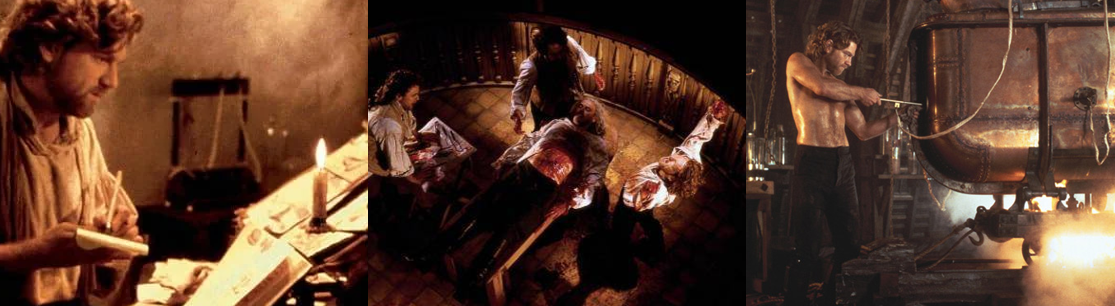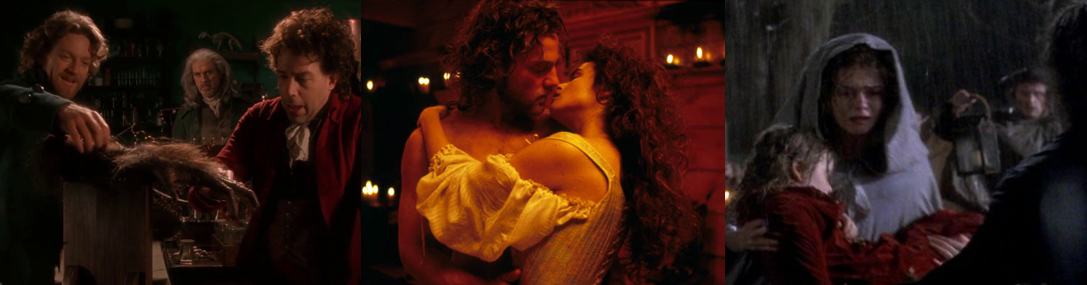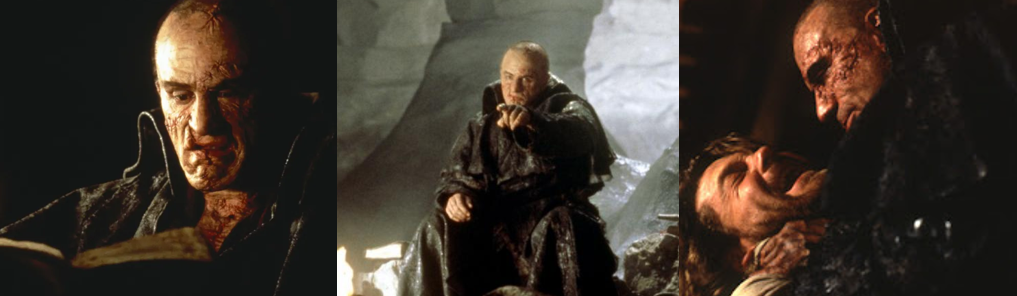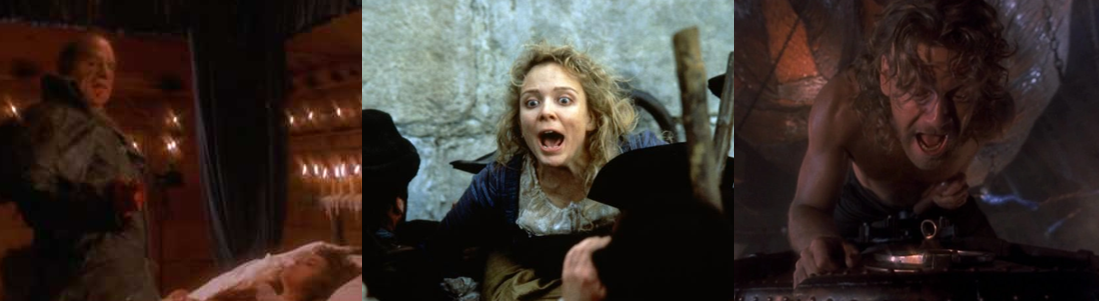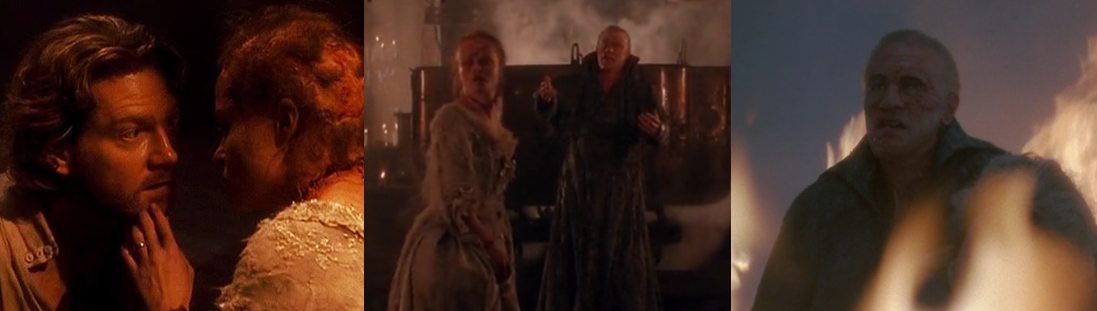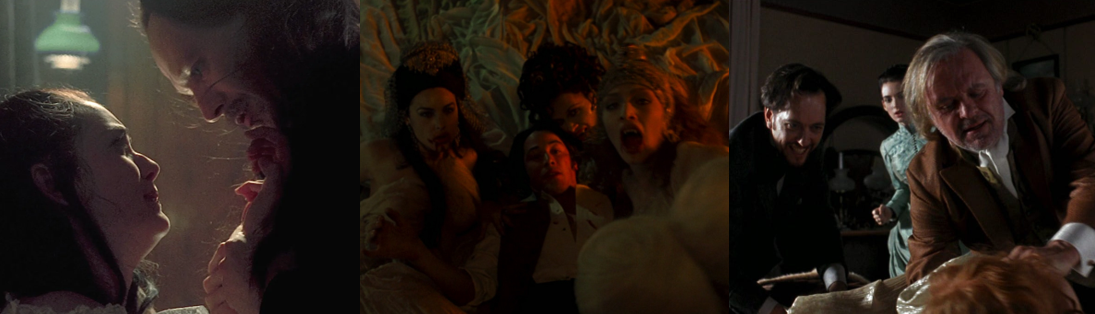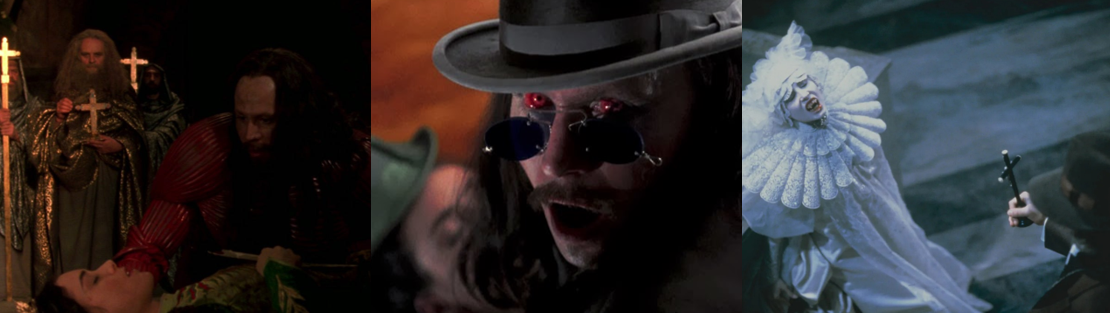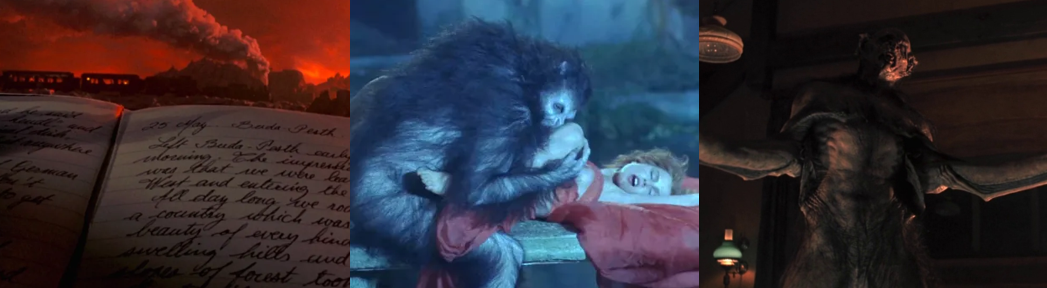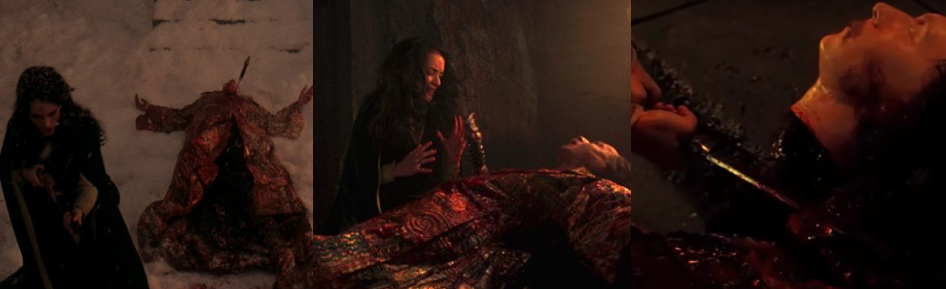
Movie Night: Bram Stoker’s Dracula

Released: 13 December 1992
Director: Francis Ford Coppola
Distributor: Columbia Pictures
Budget: $40 million
Stars: Gary Oldman, Winona Ryder, Keanu Reeves, Richard E. Grant, Billy Campbell, and Anthony Hopkins

The Plot:
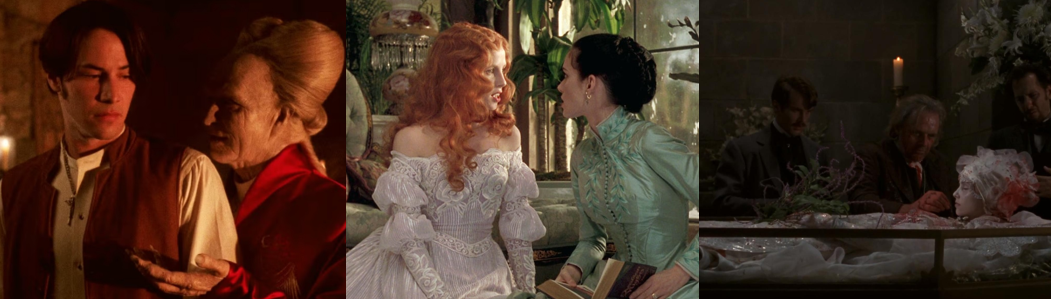
Having renounced God after the suicide of his love, ruthless vampire Count Vlad Dracula (Oldman) travels to London to seduce her lookalike, Mina Harker (Ryder), indulging his bloodlust and inspiring a rag-tag band of would-be vampire killers to stand against him.

The Background:
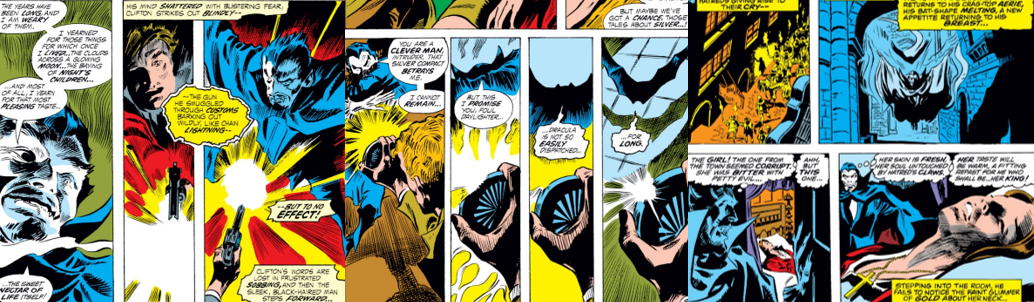
Inspired by Irish folklore and age-old vampire myths, Bram Stoker’s Lord of Vampires undeniably popularised the vampire as we know it today and inspired many critical and academic discussions. About thirty years after the book was published, World War I infantryman Bela Lugosi first embodied the role of Dracula for a stage production, eventually transitioning to the silver screen for Tod Browning’s horror classic before the legendary Christopher Lee made the role his own in 1958. After decades of reinterpretations and filmic appearances, Dracula lived again in 1992 thanks to the efforts of star Winona Ryder, who brought James V. Hart’s screenplay to director Francis Ford Coppola as a project for them both. Attracted to the haunting, disturbing sensual nature of the material, Coppola agreed and Gary Oldman jumped at the chance to work with the prolific director, who spared no expensive crafting the film’s ornate costumes. Veteran production artist Mentor Huebner and even comic book writer and artist Mike Mignola worked on the film’s extensive storyboards while hair and makeup designer Michèle Burke crafted Oldman’s signature look. After Christian Slater turned down the Jonathan Harker role, Keanu Reeves stepped in, though his hard work to convey a British accent drew much criticism. Oldman apparently lost himself in the sexuality and intensity of the role so completely that fell out with Ryder for a while and Coppola’s eccentric demands drew some criticism at the time. Finally, Coppola also insisted on utilising practical, in-camera, and old-school special effects technique utilising forced perspectives, miniature effects, and matte paintings. Opening at number one at the US box office and with a final gross of over $215 million, the award winning Bram Stoker’s Dracula was largely praised as a visual masterpiece. While many criticised some of the performances and its overly dramatic elements, just as many praised it as a tragic, alluring mixture of romance and horror, lauding Oldman’s performance and the tangible nature of its presentation.

The Review:
Bram Stoker’s Dracula mixes folklore, fiction, and history to present the titular Lord of Vampires as having started life as a Vlad III Drăculea, a warrior for the Romanian Orthodox Church, a commander and soldier so ruthless and bloodthirsty that he single-handedly slaughtered many in the Ottoman Empire and impaled their bodies and heads on pikes as a way to destroy their moral. Back in 1492, Dracula’s campaign against the Turks was seen as a righteous one, fought to defend his church in the name of almighty God, who Dracula praised and devoted himself to above all else save his beloved wife, Elisabeta (Ryder). However, while Dracula was successful in slaughtering his enemies, Elisabeta took her life after receiving false reports of his death, unable to face living life without her husband. Upon discovering this, and learning that Elisabeta’s suicide had damned her soul, Dracula cursed and renounced God, desecrating the chapel and drinking a strange blood spewing from its altar. In the process, Dracula became the first vampire, an undead thing with powers over the elements (he conjures great storms and winds), dominion over the “children of the night” (wolves, rats, and such), and the ability to transform into a monstrous bat-like form, mist, and rats. Contrary to most popular depictions, Dracula is merely weakened by sunlight, though he does draw strength from the cursed soil of his homeland, Transylvania, and renew himself by drinking the blood of his victims. Yet, Dracula spends four centuries isolated in his decrepit, ominous castle on the outskirts of a nearby village with only his lustful, ravenous concubines (Florina Kendrick, Michaela Bercu, and Monica Bellucci) for company, presumably terrorising and feeding upon the locals whenever the thirst or fancy takes over. When the film jumps ahead to 1897, however, visits to Transylvanian to liaise with the mysterious Count have driven solicitor R. M. Renfield (Tom Waits) insane, leaving him in the care of Doctor Jack Seward (Grant), who’s both disgusted and amazed by Renfield’s hunger for flies and mad rantings about his “master”.

When Dracula pays a visit to London, he terrorises the aristocracy with his perverse lusts.

Since Dracula wishes to purchase properties around London and represents a substantial investment, Renfield’s duties are passed to fresh-faced, well-spoken, and somewhat frigid solicitor Jonathan Harker (Reeves). Though his fiancée, Wilhelmina “Mina” Murray, is saddened to hear he will be gone for some time, eager to consummate their marriage, she recognises that this is a big opportunity for Harker and takes solace in his frequent correspondence. Though well-mannered and good-natured, Harker is unnerved by Transylvania, where wolves freely wander, darkness looms ominously, and his client is prone to bizarre outbursts. Dracula treats Harker as a guest, welcoming and feeding him and expressing his desire to be amongst civilisation once more, but is erratic and eccentric, lamenting his cursed family bloodline, driven to a frenzy by the sight and smell of blood, and generally testing Harker’s civil nature. While I love Keanu Reeves, he is dreadful in this role, delivering perhaps the worst British accent I’ve ever heard and appearing lost and confused. This is a case where it might’ve been better to let him use his natural accent, if only to make his line readings less awkward, but that wouldn’t have helped with his awful haircut/wig and robotic tone. Harker’s effectively held prisoner in Dracula’s castle, feasted upon by his brides for at least a month before he finds the willpower and courage to escape and being left severely traumatised. While pining for her love, Mina takes solace in the courtship of her dear friend, the promiscuous Lucy Westenra (Sadie Frost), giggling over sex acts while Lucy flits between her suitors, Dr. Seward, wealthy Lord Arthur Holmwood (Cary Elwes), and gunslinger Quincey P. Morris (Campbell). Though she settles on Holmwood (presumably for the financial security, accustomed as she is to such a lifestyle), the other two continue to hang around and curry her favour, forming first a dysfunctional friendship and then a rag-tag group of vampire hunters when the peculiar Professor Abraham Van Helsing (Hopkins) alerts them to the vampire’s threat.

While Mina succumbs to Dracula’s charm and Harker’s tortured, Van Helsing offers his expertise.

Betrayed by his faith, Dracula is presented as a far more tragic and sympathetic figure. Upon seeing Mina’s photograph, Dracula alters his plans for London to include seeing his reincarnated love, mercilessly slaughtering the crew of the Demeter to restore his youth. Unlike other adaptations of Dracula, where he integrates into London society and socialises with Dr. Seward and the others, Dracula is a largely enigmatic figure once he reaches Ol’ Blighty. Appearing as a peculiar foreign prince, Dracula stalks Mina through the streets, using his hypnotic and persuasive powers to entrance her and slowly unearth her forgotten memories of their past life and love. Though initially rude towards him, Mina comes to be captivated by Dracula and begins a love affair in Jonathan’s absence, naturally unaware that her handsome prince has been feeding upon Lucy in the night as a wolf-beast. However, when she receives word of Jonathan’s condition, Mina goes to him, encouraged by her sick friend, to rekindle their love and get married, though it’s obvious that her feelings have changed and that her thoughts constantly drift to her passionate and mysterious prince. When Lucy’s condition worsens and defies Dr. Seward’s expertise, he calls Van Helsing for aid, only for the outlandishly blunt priest to conclude that she’s been targeted by Nosferatu, a subject he’s well versed on. Although Van Helsing tries to stave off the infection with a questionable blood transfusion, Mina’s beset by a fever, constantly wandering off in a daze, and undergoes radical personality changes, resembling Dracula’s ever-horny, ever-hungry brides and quickly making believers out of Lucy’s bemused suitors.

Dracula is depicted as a demonic, yet ferociously tragic and aggressively sexual romantic figure.

Jonathan’s return to London confirms Van Helsing’s worst fears, that Dracula himself is amongst them, and he leads the fledgling vampire to hunters to “where the basturd sleeps” so they can destroy Dracula’s cursed soil. However, Dracula is agonised when Mina breaks off their tryst, conjuring violent winds and fully transforming Mina into a vampire out of spite. This process sees her rise as an undead seductress with the same unnerving taste for children as Dracula’s concubines. While Dr. Seward, Quincey, and Holmwood falter against Lucy’s monstrously sexual transformation, Van Helsing leads the charge, wielding a holy cross and easily placing Lucy into a vulnerable slumber so she can be staked and decapitated. While Jonathan is startled about how blasé Van Helsing is about this, he eagerly joins their cause to deal a measure of revenge against Dracula, who murders Renfield for running his mouth to Mina before appearing before her, all pretence dropped. Although Mina is horrified and angered to learn that her lover murdered her best friend, she cannot deny her feelings for him or the strength of her vague memories and begs to be with him, forever. While elated to hear this and desperate to inflict his curse upon her to be reunited with his lost love, Dracula hesitates at the last second, unable to bring himself to watch her suffer from eternal torment as he has. However, horny little minx that she is, Mina refuses to listen and gladly, hungrily drinks his blood in an explicitly sexual act that sees her undergo a similar transformation to Mina. This means that she constantly interferes with the hunters’ attempts to intercept and destroy Dracula when he flees to Transylvania, attempting to seduce Van Helsing and even holding her husband at bay with a rifle to defend her dying love, having willingly sacrificed her humanity for some real passion in her life.

The Nitty-Gritty:
Since I haven’t read the original book, I’m not really qualified to comment on how accurate an adaptation Bram Stoker’s Dracula is. However, from what I’ve heard, it’s one of the most faithful retellings and I did like that the film incorporated voice overs and diary entries to mimic the book’s epistolary nature. Dracula is undeniably a vastly different character to other, more popular depictions, appearing as a once proud and seemingly noble (if ruthless) soldier who slaughtered armies in the name of his God. He cherished Elisabeta more than anything in the world and felt betrayed when the church turned on him after his many years of faithful service, renouncing God since he’d forever be denied his love even in death due to her damning her soul through suicide. His quest to London thus becomes a desperate desire to reunite with Elisabeta, who’s seemingly been reincarnated in Mina, and he wastes no time in captivating and wooing her. Whereas Jonathan is reluctant to give in to carnal desires, Dracula is an extremely passionate man whose romantic way with words entrance Mina as much as his hypnotic gaze and the shadows of her former life. While he’s overjoyed to reunite with his love, Dracula hesitates to subject her to his curse, knowing it cannot be undone and will lead to eternal earthly damnation for them both. Interestingly, he doesn’t spare this same concern for his other concubines or show mercy to the children he regularly feasts on, but these are apparently secondary concerns for the lovelorn Mina, who’s so desperate to get laid that she gleefully renounces her humanity. And make no mistake about it, Bram Stoker’s Dracula is the horniest, sexiest adaptation of the text you’ll ever see! Lucy is super horny for all her suitors, Dracula’s many attacks are framed as blatantly sexual acts, the vampire brides all exude succubus energy, and then there’s the scene where Mina drinks Dracula’s blood and he reacts with orgasmic pleasure!

Despite some impressive visuals, the monster designs are questionable, at best.

Bram Stoker’s Dracula may also be the most visually impressive version of the book. It’s clear that the filmmakers spared no expensive on the elaborate costumes and sets, with the woman, especially, being strapped into extravagant gowns and the men all dressed in their finest regalia. While I dig Dracula’s beehive hairdo and opulent robes, I do question the design of his blood red armour, which seems awfully devilish for a man of God and also looks far too much like heavy leather for my tastes. The film uses practical effects and traditional optical trickery to fantastic effect to overlay miniatures with backgrounds and diary entries and project Dracula’s gaze into the storm clouds. The film is surprisingly sparing with the gore, but it makes quite an impression when it does appear, with arterial spray drenching drapes, Lucy spewing up blood when Van Helsing shoves a cross in her face, and heads flying after being severed by the vampire hunters. Dracula has quite a few forms here, though some are better than others. His aged, withered appearance is one of my favourites, though his youthful guise makes the girls wet and his unnerving mist proves suitably deadly to the rabid Renfield. Sadly, Dracula’s monstrous forms leave a lot to be desired, his man-bat form is the superior of the two, but even this looks awkward and uncomfortable, especially as his arms are literally bent-back wings. His wolf-man form is even worse, however, appearing very fake and shaggy looking, with only the facial prosthetics and his unsettling sexual attack saving it from being ludicrous. Dracula’s decaying appearing in the finale is far more striking, as is his mysterious horseman and the techniques used to show him and his concubines moving with unnatural grace. Unfortunately, little of this keeps the film from being an absolute slog to sit through. At just over two hours long, Bram Stoker’s Dracula sure does drag things out, inflating its runtime with bizarre editing choices and unnecessary cutaways and perhaps sticking a little too close to the text for its own good.

Thankfully, the entranced Mina ends Dracula’s torment, and mine, by ending this dull movie.

Thanks to Jonathan, Van Helsing and the others destroy all but one of Dracula’s boxes of earth. When his seduction of Mina is interrupted, Dracula’s forced to flee to Transylvania in his last box, his powers fading and his appearance quickly degenerating, to regain his strength. Van Helsing leads his group in intercepting Dracula, bizarrely taking Mina with them despite her being less of a liability in London. While Harker and the others try to cut off the gypsy slaves transporting Dracula’s carriage, Van Helsing and Mina head directly for his castle, with the eccentric vampire expert desperately fending off the brides with his flaming torch and subduing Mina with a communion wafer when they try to seduce and bite him. When the brides kill their horses, Van Helsing takes a swift revenge and claims their heads before joining up with the others at Dracula’s castle. Although Quincey is fatally stabbed in the hectic fracas, he does stab the decaying Dracula through the heart and Harker gets a measure of revenge by slitting the Count’s throat. However, Mina stops them from finishing off the monstrous abomination and Harker and Van Helsing reluctantly allow her to get Dracula into the chapel where he once turned his back on God. There, the demonic Dracula shares a kiss with his beloved and is amazed when the chapel undergoes a supernatural restoration; the candles ignite and the cross he disgraced repairs itself, restoring Dracula to his youth. However, he’s still mortally wounded and, with his dying breath, Dracula begs Mina to bring him peace. Although she’s heartbroken, Mina agrees to end his suffering and stake shim through the heart before decapitating him, undoing the curse inflicted upon her and seemingly allowing Dracula to reunite with Elisabeta in the afterlife.

The Summary:
I’m going to be honest and say I’ve never liked Bram Stoker’s Dracula. I never watch it because I remember it being a long, boring, overly stylised affair with some atrocious performances. And that isn’t just a knock against Keanu Reeves, either, as Winona Ryder and Sadie Frost are just as bad with their accents and delivery. Hell, even Gary Oldman and Anthony Hopkins are hamming it up, though I at least give them credit for bringing a Shakespearean gravitas to this tediously dull movie. While I’m sure Bram Stoker’s Dracula is exceedingly faithful to the book, there’s something to be said for condensing the text when making an adaptation. For example, did we really need Dr. Seward, Holmwood, and Quincey all in the film? I feel it would’ve been far simpler to combine them into Dr. Seward for the sake of brevity. Additionally, we spend way too long in Dracula’s castle with him, Harker, and the brides. Like, I get it; Dracula’s manipulated Harker and imprisoned him there, but this sequence goes on for what feels like an age and yet the Demeter scenes are a glorified montage? I did like how tragic and human Dracula is, with him depicted as a disgraced former believer who’s spent centuries yearning for his lost love and yet hesitates to afflict her with his curse as it’s been such a tortured unlife for him. Paradoxically, Dracula is still a monstrous fiend who feasts upon innocent souls (and children) to prolong his life and make others suffer for his own amusement. While the film is undeniably beautiful and the old-school filmmaking techniques are appreciated, giving the film a tangible quality that makes it seem like a big-budget stage play, Dracula’s monstrous forms leave a lot to be desired. His man-bat form is a major disappointment and the man-wolf effects are laughable, though it is intriguing how sexually aggressive the film is, explicitly depicted Dracula’s attacks as sexual misdeeds. It may be the most faithful adaptation of Stoker’s text, but Bram Stoker’s Dracula is just too tedious for me to rate much higher. I dreaded revisiting it for this review and hoped my opinion would’ve changed, but it’s just as dull and painful to sit through as ever, despite its strong visuals and atmosphere.

My Rating:

Rating: 2 out of 5.

Could Be Better

Are you a fan of Bram Stoker’s Dracula? If you’ve read the book, how faithful is this adaptation and would you say it stuck too close to the text in some areas? Do you agree that the film is too long or were you captivated by the gothic atmosphere? What did you think to Gary Oldman’s performance and Keanu Reeves’s atrocious accent? Which adaptation of Dracula is your favourite and how are you celebrating Halloween this year? Tell me I’m wrong about Bram Stoker’s Dracula in the comments, read my other horror reviews, and donate to my Ko-Fi if you want to see more Dracula content.

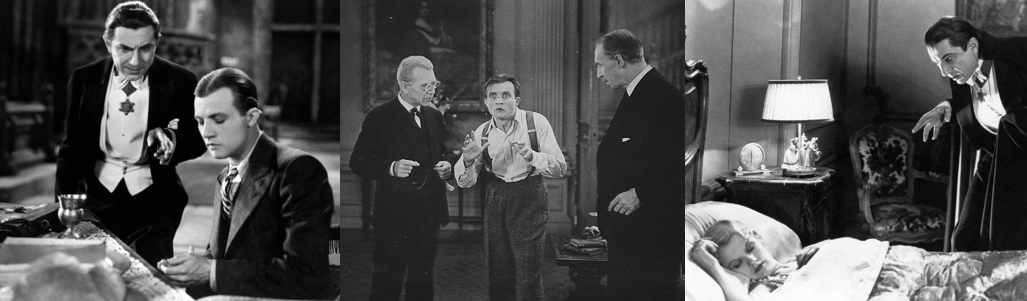
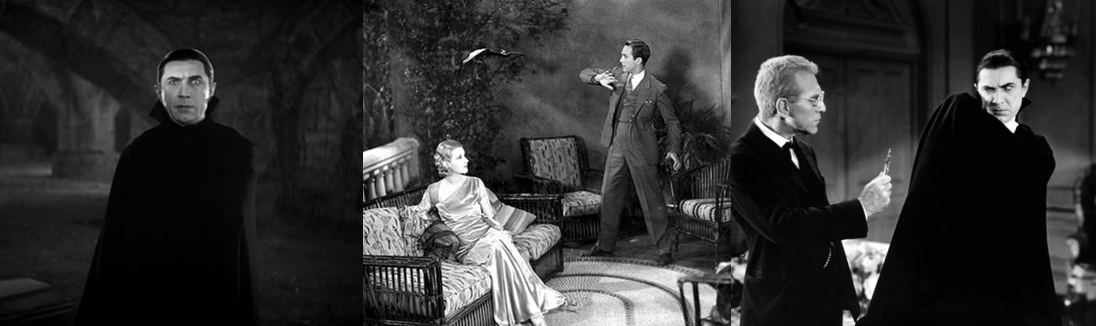
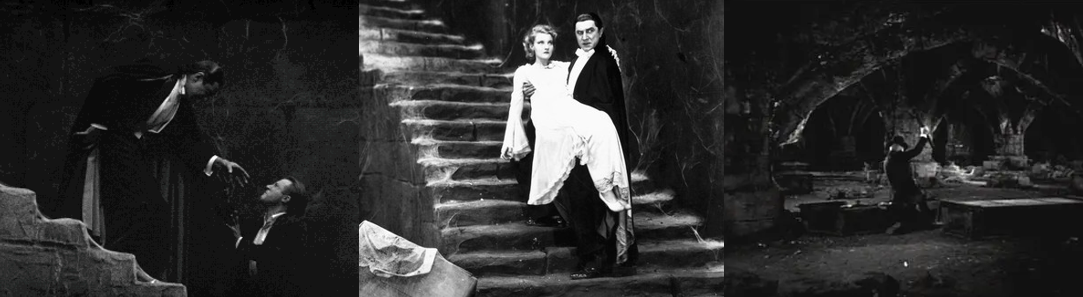
Movie Night: Dracula (1931)

Released: 14 February 1931
Director: Tod Browning
Distributor: Universal Pictures
Budget: $341,191
Stars: Bela Lugosi, Helen Chandler, David Manners, Dwight Frye, and Edward Van Sloan

The Plot:
When R.M. Renfield (Frye) travels to Transylvania to oversee the purchase of a London abbey to the enigmatic Count Dracula (Lugosi), he unwittingly facilitates the malicious vampire lord’s trip to London, where he terrorises beautiful maiden Mina Harker (Chandler).

The Background:
In 1897, the literary world was introduced to Count Dracula, Lord of Vampires, courtesy of Irish author Bram Stoker. Inspired by Irish folklore and long-standing vampire myths, Dracula undeniably popularised many characteristics of vampires that are still used to this day. Dracula also inspired many critical and academic discussions regarding its narrative and subtext, becoming a literary classic, and was said to be a big hit at the time, despite its controversial content. About thirty years later, Dracula was adapted for the stage, with former World War I infantryman Bela Lugosi first assuming the role that would make (and haunt) his career. Though the production was a hit, Lugosi wasn’t the first choice for the role when Universal Pictures began producing a feature film adaptation and only got the part after accepting a significantly lower salary. Although Browning’s film was the first official film adaptation of Stoker’s novel, Nosferatu: A Symphony of Horror (Murnau, 1922) owed its existence to Dracula, to the point that Stoker’s widow sued the filmmakers and ordered all copies to be destroyed. After acquiring the rights to the property, Universal Pictures funded what was said to be a disorganised shoot, with Lugosi alienating some cast members and Dracula stage veteran Edward Van Sloan expressing displeasure with the film. Despite some apprehension surrounding the film, Dracula was bolstered by reports of audience members fainting and it was well received by critics. Of course, nowadays, Dracula is regarded as a classic of the silver screen, with Lugosi’s portrayal being the quintessential standard of all subsequent screen Draculas. Its success not only led to additional big-screen outings for the count and a slew of horror releases from Universal Pictures, but also defined the titular character for generations.

The Review:
I think it’s important to preface this review by saying that I’ve never gotten around to reading Stoker’s Dracula. My experience with the Lord of Vampires is all based on movies and other media rather than books, so I can’t speak to Dracula’s status as an adaptation. If I had to guess, it seems it’s more an adaptation of the original stage production than the epistolary text, but I’m sure a lot of the most prominent elements of the book are represented here. Dracula is initially the story of Renfield, a painfully polite and well-to-do Englishman who travels to a morbidly superstitious town in Transylvania to oversee the sale of Carfax Abbey. Respectful and courteous to the locals, Renfield insists on meeting a midnight carriage, as arranged by his client, Count Dracula, only to be warned off by villagers. In a lengthy, awkward opening scene with many obvious insert shots, the locals react with horror at Renfield’s plan to meet Count Dracula and insist he carry a crucifix to ward off the vampires they believe live in the ominous, gothic castle. Undeterred by superstition and enthusiastic about closing the deal, Renfield maintains his composure even when Dracula’s carriage driver vanishes, his luggage is left behind, and the enigmatic count appears to pass through an enormous spider’s web. Renfield enjoys Dracula’s hospitality, complimenting his home despite it being quite dilapidated and eagerly partaking of his food and wine, only to be duped by the charismatic vampire, who easily hypnotises him with his alluring glare and then samples his blood to turn Renfield from a chirpy and pleasant solicitor into a grinning, cackling nutjob with a taste for insects and an unwavering devotion to his “master”. With Renfield’s help, Dracula not only legally secures Carfax Abbey, but also loads crates of his home soil onto the Vesta, ensuring he can maintain his full strength on the journey to London and while hobnobbing about the city as an eccentric aristocrat.

Vampire lord Dracula corrupts Renfield and heads to London to target an innocent young lady.

Once Dracula enslaves Renfield, the film juggles between the alluring count and Doctor John Seward (Herbert Bunston) and his inner circle. A renowned physician, Dr. Seward operates the sanatorium that sits alongside Carfax Abbey and where Renfield is committed after being discovered as the crazed sole survivor of the Vesta. Dr. Seward lives with his beautiful daughter, Mina, who’s engaged to his protégé, Jonathan Harker (Manners) and best friends with Lucy Weston (Frances Dade). The four are rarely seen apart, enjoying the opera together when they’re first introduced to Count Dracula, who shuns Harker and takes a shine to Lucy. Captivated by the count’s charisma, Lucy jokes to Mina of her attraction to him but quickly becomes his next victim when he enters her room and feast on her blood. Despite Dr. Seward’s best efforts, Lucy dies and Mina is left devastated, haunted by terrifying nightmares of wolves and bats. As Renfield keeps mysteriously leaving his cell, perplexing bumbling attendant Martin (Charles K. Gerrard), and ranting about all kinds of nonsense, Dr. Seward has his colleague, polymath Professor Abraham Van Helsing (Van Sloan), analyse the madman’s blood. Van Helsing concludes that Renfield has been bitten by a vampire and constantly exposits folklore about Nosferatu, who assume various animal forms, drink blood, and cast no reflection. While Harker is sceptical, Mina takes them to heart and they’re seemingly proven true when Renfield reacts violently to wolfsbane, a vampire repellent. During a tense meeting with Dracula, Van Helsing reveals that the count has no reflection and deduces that he’s their vampire, though Dr. Seward and the others are only convinced to do something other than just stand around discussing the threat after Dracula easily coaxes Mina into the garden for another suck session, eventually leading Van Helsing to give her wolfsbane for her protection.

Despite his allure and incredible powers, Dracula is surprisingly vulnerable if you know his weaknesses.

Of course, the main draw of Dracula is the titular count, played masterfully by the magnetic Bela Lugosi. A charming, gracious man with a silver tongue, Dracula oozes charisma but is as unnerving as he is appealing thanks to his raspy accent and peculiar behaviour. Dracula relishes the sound of wolves, the sight and taste of blood, and particularly enjoys getting close to his quarry, captivating with his steely gaze and wooing with his words. Van Helsing instantly distrusts Dracula and they have some tense face-offs, with the professor’s willpower resisting the count’s hypnotism and his knowledge of vampires giving the protagonists the edge. Since Dracula is vulnerable to sunlight and needs Transylvanian soil to maintain his strength, he rests in a coffin of dirt during the day but easily enters Dr. Seward’s residence by becoming the fakest bat you’ve ever seen. Dracula showcases superhuman strength but his greatest assets are his charming personality and alluring gaze, though his brides (Cornelia Thaw, Dorothy Tree, and Geraldine Dvorak) flinch at his command and he clearly instils fear in the locals. This fear isn’t felt by Dr. Seward and the others since they see him as a polite, if eccentric, foreign count, and isn’t felt by Van Helsing, who’s clearly wise to the vampire’s tricks. Unfortunately, many of these are kept offscreen, merely told by Harker and Renfield, because of the limitations of the time. I was also a bit unclear about what Dracula’s endgame was. He buys Carfax Abbey and targets Dr. Seward and his wards, but I’m not sure why? I guess to spread his wings beyond his stuffy old castle but it’s not clear why he targets Mina beyond enjoying torturing Harker and turning something innocent into an abomination, as he did Renfield, who spends the film conflicted and wrestling with his loyalties and his wish to die without blood on his hands. Lugosi plays the role so well that it’s easy to forget these criticisms, but it was frustrating seeing everyone just standing around or him just glaring at people or randomly being inserted into shots to show him lurking on the grounds.

The Nitty-Gritty:
I usually cut black and white films a lot of slack. It was a different time with many limitations compared to today, where almost anything is possible in cinema. Therefore, I can forgive the obvious sets and painted backgrounds, and the slight imperfections in the camera movements and film quality. This extends to the few special effects, such as cutting to Renfield’s reaction rather than showing Dracula pass through the web, having Harker describe the wolf running across their grounds, and Renfield’s mad rant about the “thousands … millions!” of rats promised to him by his master. Dracula’s bat form is silly, for sure, but the effort put into Lugosi’s costume and lighting his eyes is impressive, even if his close-ups often feel awkward and out of place. Dracula gets ambitious by using a passable model ship for the Vesta’s trip (though some water effects over Lugosi would’ve helped sell the sequence) but strangely relies on voice overs to describe the massacre Dracula leaves on the ship. I did like how theatrical the whole production was, which isn’t surprising considering the time period and Lugosi’s experience portraying the role on stage, with the actors (especially Dwight Frye) largely overacting and chewing the scenery. I do feel Dracula suffers from a lack of music, though, as the film basically has no soundtrack and some scenes would’ve greatly benefitted from some ominous tunes. Dracula, especially, needed a haunting theme accompanying him and some ambient music would’ve really helped to liven up the film’s many dull exposition scenes.

Dracula’s brief and confusing rampage is easily ended when Van Helsing stakes him in his sleep…

Despite Van Helsing’s best efforts, Mina falls under Dracula’s spell, confessing to Harker that she’s becoming a creature of the night and breaking off their engagement. While Van Helsing is unflinching against Dracula’s threats, Mina’s maid (Joan Standing) is easily coerced into removing the wolfsbane from the entranced girl and spiriting her away. Luckily for her, Harker and Van Helsing spot Renfield fleeing to Carfax Abbey (although, honestly, where else would Dracula be?) and they pursue the crazed lunatic. This leads to a tragic end for Renfield as Dracula is incensed that his witless minion has betrayed his location (though…again…that should be the first place anyone would look!) and, despite Renfield begging to be tortured or punished, the sad fool is nonchalantly tossed down a flight of stairs to his death. While you might expect a tense showdown between Dracula and Harker, or perhaps a battle of wits between the count and Van Helsing, with the two perhaps buying time to expose Dracula to the rising sun and turn him to ash, the finale is far more disappointing. Dracula flees into Carfax Abbey with Mina in his arms and Harker and Van Helsing muddle about in search of him, knowing full well that he must rest in his coffin to avoid the rising sun. Van Helsing also knows that the only way to kill a vampire is with a wooden stake through the heart, so he improvises such an implement from the dilapidated abbey and the two stumble upon a coffin. While Mina isn’t inside, Dracula is, already fast sleep despite mere minutes passing, allowing Van Helsing to easily stake him to death with no resistance or the count’s death even being shown onscreen. Harker then finds Mina, who conveniently returns to normal, and the film abruptly and anticlimactically ends with the firm belief that Count Dracula has been destroyed forever.

The Summary:
Dracula’s never really been a favourite of mine. Out of all the classic gothic horror novels and all the Universal Monsters films, I can think of at least three others I’d rather watch or read than this one. Dracula lives and dies by the allure of its main star, the enigmatic Bela Lugosi, who brings an unmistakable gravitas to the role (and the screen) every time he appears. The man embodied the role so perfectly that it set the standard not just for future portrayals of Dracula, but most vampire characters (especially their leaders). Charming, sophisticated, and with a glare that can chill to the bone, Lugosi’s Dracula commands the screen and effortlessly woos all around him. Except, of course, for Van Helsing, played with stoic confidence by Edward Van Sloan as the natural foil to the malicious count. Honestly, I wish we’d gotten more interactions between these two in a battle of wits and wills as Van Helsing employed his vast knowledge to reveal Dracula’s true nature. Instead, we get a lot of sitting and standing around as characters describe stuff I would’ve loved to see, reiterate the plot or discuss vampire lore, or wonder what’s to do in their quirky, oh-so-British way. Dracula is visually impressive at times, especially the Castle Dracula set, though obviously its effects and techniques are painfully dated these days. The film touches upon the fear of the unknown, of being preyed upon by a conniving and manipulative, lustful predator, and Dracula’s tortured immortality but never fully commits. Similarly, the film’s ending seems to be very different and far less grandiose than the book’s, which definitely hurts it as it just…ends, leaving you unfulfilled. Ultimately, no one (least of all me) is denying the cultural significance of Dracula, but I absolutely feel it’s lacking in ways other Universal Monsters movies aren’t. Watch it to witness history but don’t expect much to hold your attention, especially if Lugosi isn’t on the screen.

My Rating:

Rating: 2 out of 5.

Could Be Better

Are you a fan of the 1931 big-screen adaptation of Dracula? If you’ve read the book, what did you think to the changes it made and the elements it brought to life? Do you agree that the film drags in the middle or were you as captivated by the narrative as Mina was by Dracula? What did you think to Bela Lugosi’s performance and would you agree that he’s the standard all Draculas should be compared to? Which adaptation of Dracula, or Universal Monsters movie, is your favourite? How are you celebrating Halloween this year? Let me know your thoughts on Dracula down in the comments, go read my other horror reviews, and donate to my Ko-Fi if you want to see more Dracula content.

Game Corner: Doom (2016; Xbox Series X)

Released: 4 August 2020 
Originally Released: 13 May 2016
Developer: id Software 
Also Available For: Nintendo Switch, PlayStation 4, PlayStation 5, Stadia, Xbox, Xbox One, Xbox Series S

The Background:
First-person shooters (FPS) existed before Doom (ibid, 1993), but that celebrated title popularised the genre with its online “Deathmatches” and multiple ports. Although sparking much controversy, Doom was incredibly successful and this translated into a bigger, equally successful Doom II (ibid, 1994). It then took ten years for id Software to release Doom 3 (ibid, 2004), a more story-focused title that was celebrated for its claustrophobic atmosphere and gory combat. Following this, id Software tried to launch a new FPS series with Rage (2011) and outsource a fourth Doom as they had with their Wolfenstein franchise (Various, 1981 to 2019), a difficult proposition that Bethesda Softworks revised after purchasing id Software. Originally set on Earth as a spin on Doom II, Doom 4 struggled to build momentum and was eventually retooled into a series reboot. Now simply titled Doom, the game sought to emphasise fast-paced combat rather than story, taking inspiration from the bloody action/horror movies of the 1980s and rewarding bloodthirsty players. Lauded as one of the best games of 2016, Doom received top scores from critics, who praised the gory visuals, heavy metal soundtrack, and action-orientated gameplay. Doom was further bolstered by three packs of downloadable content (DLC) that added extra content to the uncharacteristically divisive multiplayer mode, all of which was later bundled alongside the first three games in one handy collection. Having successfully revitalised the franchise, Doom was followed by an even bigger, widely praised sequel in 2020 and a fantasy-orientated prequel in 2025.

The Plot:
In the far future, crippled Union Aerospace Corporation (UAC) researcher Olivia Pierce opens a portal to Hell to enslave humanity, prompting UAC cyborg scientist Doctor Samuel Hayden to awaken the legendary Doom Slayer to combat the invading demons.

Gameplay and Power-Ups:
Unsurprisingly, Doom is a first-person shooter in which you assume the role of the legendary Doom Slayer, a mute, violent warrior greatly feared by the demons of Hell. Before beginning Doom, you may wish to tweak the game’s settings. Alongside the standard difficulty modes, you can change the heads-up display, crosshair, compass and objective display, and even the position of your weapons. Naturally, the game’s controls are equally adjustable, but the default settings are perfectly fine. You jump with A (eventually upgrading to a double jump), crouch with B, and switch to the chainsaw or Big Fucking Gun/BFG with X and Y, respectively, once you acquire them. Pressing the left stick activates photo mode to share your bloody accomplishments, while pressing the right stick interacts with consoles, switches, map stations, etc. The Right Bumper switches your weapon; holding it opens the weapon wheel and you can toggle whether you want to automatically switch to new weapons. The Right Trigger fires (no need to worry about reloading here and there’s even aim assist), the Left Bumper uses items (typically a grenade), and the Left Trigger activates your weapon’s currently equipped modification to deal additional damage. You need Medikits of different sizes and special stations to replenish health and armour pick-ups to reduce the damage you take.

Blast, tear, and slaughter your way through hordes of demons.

Health and ammo are further replenished by slaughtering demons with the chainsaw (though fuel is limited) and performing “Glory Kills”. Shooting enemies eventually stuns them, which is your prompt to press the right stick and tear them to shreds with your bare hands. Similarly, you occasionally find more traditional power-ups (Berserk, Haste, Invincibility, Quad Damage, etc) to temporarily empower you. The Doom Slayer begins with a simple pistol that boasts unlimited ammo and a charged shot modifier. You soon grab a shotgun (which can be modified with either a charged or explosive shot), the heavy assault rifle (which can be modified into a sniper rifle or to fire cluster missiles), a plasma cannon (which can emit a stun or heat blast), and my personal favourite, the Super Shotgun (which fires two shots at once). You’ll also grab a massive chaingun (which can become a sentry turret), the Gauss Cannon (a heavy-duty laser cannon that I struggled to aim), and the ever-reliable rocket launcher (which can fire homing missiles). You can toss frag grenades, siphon grenades (which replenish your health at the cost of your target’s), and distract enemies with a hologram. Enemies also attack each other, especially in Hell, and you can shoot explosive barrels to thin out their numbers. Of course, the most powerful weapon is the BFG, acquired quite late in the game, which obliterates all nearby enemies. Weapon modifications are purchased from field drones and applied using Upgrade Points earned from completing various Mission Challenges (such as finding secrets or killing certain enemies in certain ways). To master a weapon, you must perform specific kills on certain enemies (such as 50 headshots with the sniper function). Furthermore, you occasionally find dead UAC soldiers who yield Praetor Tokens that upgrade your suit to increase your resistance to environmental damage, better spot secrets, and reduce weapon charge time, amongst other buffs.

Conquer Rune Trails, activate switches, and complete tricky platforming sections.

You also find UAC crates containing Argent Cells that increase your maximum health, armour, and ammo. Various datapads contain lore about each area, weapon, and monster, and you download map data to locate secrets, such as Doom Slayer figurines. Eventually, the game introduces hidden Rune Trails that warp you to Hell and challenge you to defeat enemies or destroy barrels or other timed tasks. Completing these earns your demonic Runes; you can eventually equip and upgrade up to three of these, which offer buffs like increasing your pick-up rate, performing faster Glory Kills, and negating ammo cost when you’re at full armour. These are worth seeking out and, like each mission, can be replayed from the main menu (which also carries over your upgrades and weapons). You’ll often venture onto the rocky wastelands of Mars, but you thankfully won’t have to worry about zero gravity sections or maintaining your oxygen supply. To counteract this, you must frequently destroy demon nests to spawn increasingly difficult demons fought under lockdown. As in the classic games, you search for coloured keys and skulls and activate switches, though thankfully I never had trouble navigating even the more confusing areas. Mostly, you must simply kill everything in your way, but you’re often forced to perform some awkward platforming (without fall damage, but at risk of bottomless pits) and clambering ledges to higher areas. You must avoid being cut to ribbons by the BFG’s laser grid system, a puzzle that took me way too long to figure out (get to safety and shoot the power nodes on the energy ring…and don’t fall!) Otherwise, you’ll activate portals, overload power cores, lay demonic souls to rest, and destroy specific targets to progress. Occasionally, you use the right stick to muscle open doors or grates and be forced to battle increasingly difficult waves of seemingly never-ending demons without a checkpoint, which can get tiresome.

Presentation:
Doom wisely drops the obsession with flashlights and nigh-impenetrable darkness that dogged the third game. Every area is nicely lit and makes effective use of shadows, steam, flickering lights, and darkness to create a foreboding atmosphere. Even when you enter slick, clean, futuristic facilities, it’s not long before you see dismembered corpses, blood tails, or gripping gore plastered everywhere. These, alongside pentagrams, altars with still-beating hearts on, skewered bodies, screaming skeletons, and a bloodbath of carnage, make Doom a gore-fest for the eyes. The Doom Slayer is entirely mute and never seen in full; windows are conveniently smashed and you barely catch a glimpse of his visage, which is great as I’d much rather have a silent killer than a generic Jarhead. He’s aided by the cybernetic Dr. Hayden, who gives directions and exposition over the comms, though the Doom Slayer rarely listens to his advice. Demonic whispering and screaming add to the creep factor, while rocking music kicks in whenever demons appear. Unfortunately, while Doom runs incredibly smoothly, with short load times and highly detailed, gory environments, textures sometimes take a second to render properly, which surprised me for such a top-tier title. Still, the over-the-top gore makes up for it. Even the Doom Slayer’s death scenes see his entrails or limbs blowing off, and you’ll see demons get blown to bloody chunks with each shot, which makes the combat very satisfying.

Gore is everywhere but the game’s gothic, cosmic horror excels in the underworld.

The game’s story is as simple as the original games, but also amusingly convoluted thanks to Dr. Hayden’s constant exposition, Dr. Pierce’s manic desire to unleash Hell, and even the moments where you learn the lore of Hell. These are easily ignored in favour of the action, however, and I enjoyed the attention to detail in each area. The developers clearly drew inspiration from sci-fi/horror classics when putting the UAC facilities together, and their Mars outpost features all kinds of laboratories, offices, a monorail system, and more. Sometimes, you’ll rip limbs and even torsos off bodies to access high-level areas; you’ll activate turbines, overload the reactor core in the frigid cooling room, encounter Nests in storage facilities, and traverse large vertical shafts, hopping to gantries and walkways as you desperately try to curb the demonic infestation. While many UAC areas are still brightly lit, others are in utter disarray. Darkness and jump scares (like steam vents, pop-up holograms, and flickering consoles) make it more terrifying when enemies suddenly appear from behind walls or portals. Things take a turn towards the industrial as you venture to the less refined areas of the Mars base, encountering pistons, chasms, and more rundown areas. You’ll often be transported to Hell, like Doom 3. Hell is a desolate, warped environment made up of rocky structures, floating boulders, chains, medieval dungeons, and depraved scenes of torture and agony. With a tumult in the flaming clouds and demons lurking around every corner, Hell is where Doom really shines, especially with its gigantic skeletal remains, looming stone statues, and ominous demonic structures imbedded with depictions of Hell’s finest, like the Icon of Sin. Acid pits, tricky platforming, and torture chambers are the order of the day, with demons fighting and constantly swarming each area to keep you on your toes.

Enemies and Bosses:
As near as I can tell, all the classic Doom enemies are back and looking better than ever. Common enemies include the zombie-like Possessed, who shamble about and swipe at you, and their more demonic counterparts, the Unwilling, who are functionally the same cannon fodder. The Possessed can be soldiers and security forces wielding bio-organic hand cannons, the security variants hide behind energy shields, some are missing arms, and others have explosives strapped to them that you can use to take out multiple enemies. Imps scurry up walls and ceilings, tossing fireballs while their armoured cousins, the Hell Razer, fires concentrated energy beams. The ever-annoying Lost Souls fly at you in a shrieking kamikaze attack and are as frustrating as the bulbous Cacodemons, which float about spitting energy blasts and biting you and, for some reason, I found far more difficult to deal with in this game. You’ll also encounter the equally frustrating Summoner, a regal and effeminate demon that teleports about, fires energy waves, and must be prioritised to keep it from spawning more demons. The screaming, skeletal Revenants are also back, still packing missile launchers on their back and now leaping and flying about using a jet pack. Pinkies (and their invisible counterparts, the Spectres) are also back and equally aggravating, charging at you from behind and taking a lot of shots to be put down. These enemies are bolstered by some bigger, tougher demons who are initially introduced as mini bosses, of sorts, but quickly become regular enemies. The most common are the Hell Knights, large, brutish demons who leap in with a slam and run at you like a rhino.

Gigantic demons and near-endless swarms represent a significant difficulty spike.

Hell Knights are often joined by a Mancubus or two and their cybernetic variants; these rotund ghouls pack arm cannons that spew flames, push you back with an energy wave, or fire toxic blasts. And then there’s the Baron of Hell, a massive, horned, goat-legged monster who tosses green energy balls and stomps about. These larger enemies will have you switching to the BFG or employing a fully fuelled chainsaw, or madly spitting rockets, and make each encounter a fight for survival. It’s a good thing you’re constantly tearing through these hordes as Doom only has three boss battles. These all occur in Hell and feature big, stubborn health bars. The Cyberdemon is initially fought in the Lazarus Labs and then finished off in Hell. This gigantic demon pelts you with rockets, charges a big laser cannon, and throws energy waves that must be ducked or jumped over. It also traps you in stone walls and, like all bosses, can be stunned with the BFG and will drop resources to aid you. The Hell Guards guard the Crucible and are invulnerable within their shields, attack with a staff, erratically spin and throw fireballs, or swing a massive hammer for a gruelling two-stage fight. The damnable Spider Mastermind slashes with its metallic claws, fires a chain gun, sweeps the area with laser, erects pillars, electrifies the floor, and psychokinetically tosses boulders. Its skull-like face is its weak point, and you’ll want to stun it with the BFG and blast it up close with the Super Shotgun, keeping your distance otherwise and hoping you get lucky with its frequent and damaging attacks.

Additional Features:
Doom yields fifty-four Achievements, with six awarded simply for playing the main campaign. You can easily snag a few more by performing 200 Glory Kills, killing fifty enemies with a chainsaw, 100 more with explosive barrels, and by upgrading any of the Praetor suit categories. You’ll get additional Achievements for finding and upgrading all Runes, completing all Mission Challenges, and mastering first one and then all weapons. You can play on harder difficulties and take on the game’s more casual ‘Arcade’ mode, earning medals and Achievements for your performance, and even create and publish your own levels using the ‘SnapMap’ option (though you need an Xbox Live subscription to do this). Similarly, there is no couch co-op or multiplayer here; you need to get online to play the various deathmatches. This version includes all the DLC, allowing you to play as demons (including the new Harvester variant) and use different weapons in this mode. I couldn’t play it so I can’t speak to it, but I imagine the multiplayer offers the standard free-for-all, king of the hill, and team-based slaughter popularised by the original Doom. Finally, every stage contains a hidden room modelled after the classic Doom, old-school graphics and all, which are fun Easter Eggs even if there are no Achievements tied to these beyond finding every secret in the game.

The Summary:
After being disappointed by Doom 3, I was hesitant to get into Doom, despite hearing nothing but praise for it and its sequel. However, I was wrong to hesitate as this is a phenomenal first-person shooter that perfectly marries old-school sensibilities (an action-orientated focus) with modern gameplay mechanics. I was so relieved to find I could see what was going on, that I wasn’t wandering a pitch-black maze, and that the focus on searching for keys and alternate paths was put to the side. The focus on gory action was very satisfying; it’s fun ripping demons apart with your bare hands, shredding them with a chainsaw, and blowing them to bloody chunks with the Super Shotgun. However, it’s true that I did find the mindless combat tiresome at times. When you’re forced to fight waves of increasingly difficult demons with no checkpoints between them, it can become aggravating. However, the satisfaction of getting better skilled at dispatching these enemies and using nearby power-ups or the benefits of the chainsaw and BFG can’t be understated. I loved the gore-infested environments; it truly seemed like these idiot scientists had unleashed the furies of Hell and had their entrails painting across the walls for their efforts. The demons were monstrous and many, sporting little quirks like fleeing from you or fighting each other, and I enjoyed that you were constantly earning upgrades or motivated to master your weapon’s abilities. While the Doom title might seem derivative, it’s incredibly fitting as Doom really felt like a modern reimagining of the original games. Retaining that arcade-style accessibility with the constant euphoria of bloody combat made me happy to push on past the more troublesome sections and made this a bloody good time that I’d be happy to revisit to mop up the remaining Achievements.

My Rating:

Rating: 5 out of 5.

Fantastic

Were you a fan of Doom? Did you enjoy its modern reimagining of the original game’s simplicity? Which weapon was your favourite, and did you ever master them all? What did you think to the outrageous gore and the Glory Kills? Did you also struggle against the demon hoards and the Spider Mastermind? Did you ever play the multiplayer and, if so, how does it hold up? Whatever your thoughts on Doom, or FPS games in general, drop a comment below and go check out my other Doom reviews.

Back Issues [Venom Day]: The Amazing Spider-Man #361-363


To celebrate the release of Venom: Let There Be Carnage (Serkis, 2021), Sony Pictures declared September 27 “Venom Day”, a fitting date to shine the spotlight on one of my favourite anti-heroes, who made their first full debut in May 1988 and have gone on to become one of Marvel’s most iconic characters.


Writer: David Michelinie Artist: Mark Bagley

Story Title: “Carnage – Part One: Savage Genesis”
Published: 13 February 1993 (cover-date: April 1992)

Story Title: “Carnage – Part Two: Savage Alliance”
Published: 10 March 1993 (cover-date: May 1992)

Story Title: “Carnage – Part Three: Savage Grace!”
Published: 14 April 1993 (cover-date: June 1992)

The Background:
In 1982, Marvel Comics editor-in-chief Jim Shooter purchased an illustration of Peter Parker/Spider-Man in a slick black outfit from Randy Schueller for an outrageous $200, a concept that writer Tom DeFalco and artist Ron Frenz interpreted as an alien organism following Marvel Super Heroes Secret Wars #8. After revelling in the costume’s unique ability to form both clothing and organic webbing, Spidey was aghast when Doctor Reed Richards/Mister Fantastic revealed it was a sentient symbiote and quickly rid himself of the parasite using a cacophony of church bells. Throughout 1988, Peter was stalked and attacked by a mysterious assailant who turned out to be disgruntled reporter Eddie Brock, now bonded to the symbiote to form Venom, Spider-Man’s dark doppelgänger. An immediate favourite of mine, Venom has had many hosts over the years and undergone many changes, but took their first step towards becoming a more virtuous (if violent) “lethal protector” when they set aside their vendetta against Spider-Man to battle their more dangerous offspring, Cletus Kasady/Carnage. First teased in The Amazing Spider-Man #345 and allegedly dubbed “Chaos” and “Ravage” before assistant editor Eric Fein suggested “Carnage”, writer David Michelinie and artist Mark Bagley specifically designed Carnage to be a more sadistic counterpart to Venom, one whose symbiosis was so complete that Kasady and the symbiote were in total unity. Heavily influenced by the Joker, Carnage has long been a fan favourite and has repeatedly returned (even from death) to perpetrated some truly deplorable acts, from slaughtering thousands during the sprawling “Maximum Carnage” event (DeFalco, et al, 1993) to becoming a near-literal God! Despite Carnage’s violent nature, the character frequently appears in Spidey/Marvel videogames and, most surprisingly, cartoons, and was played with scenery-chewing relish by Woody Harrelson in Sony’s Spidey-less Venom films (Various, 2018 to 2024).

The Review:
After appearing as Eddie Brock’s psychotic cell mate, Cletus Kasady took a page out of his “old man’s” book by popping up in “asides” in The Amazing Spider-Man #359 and #360. While Spider-Man was busy dealing with Doctor Elias Wirtham/Cardiac, Cletus communed with his “other” to slaughter a guard and escape Ryker’s Island. He then looked up the stupidest name he could find and brutally suffocating Gunther “Gunny” Stein, before finally getting his first full-page reveal murdering a lab technician simply to prove that “law and order” is an illusion. Peter gets a call about this while helping his doting Aunt May, ruminating on how the killing is the latest in a spree of violent murders perpetrated by a psychopath who signs his name (“Carnage”) in blood at each crime scene. While overhearing an eyewitness, Spider-Man is horrified at the implication that Venom is back to their old, murderous ways, despite Eddie living in peace in the mistaken belief that Peter is dead. When he shares these concerns with his highly strung actress wife, Mary Jane Watson-Parker/M.J., she begrudgingly supports him when he voices his responsibility towards subduing the symbiote he enraged. While running some background checks on Eddie, Peter becomes aware of Cletus and is disturbed by his rap sheet: eleven murders, suspected of a dozen more, and potentially burned down the orphanage he was raised in and bashed in an employee’s head in the process. Though alarmed, Peter questions punks, hookers, landladies, and more about Cletus to confirm he’s a twisted sadist who charms with a silver tongue and kills without a thought.

When a violent new symbiote comes to town, Spidey’s forced to team up with Venom!

Theorising that Cletus feels a kinship to the orphanage, Spidey finds Cletus there, naked before a small fire and talking to a stuffed teddy bear! Spider-Man’s unease turns to terror when Cletus transforms into a blood red-and-black symbiotic lifeform and attacks with unexpected speed and strength. Like Venom, Carnage doesn’t set off Spidey’s “spider-sense” but can Carnage uniquely extend and solidify his alien appendages. Overwhelmed by Carnage’s power and confused as to how the symbiote bonded with Cletus, Spidey is stunned when Carnage tosses temporary axe-like projectiles! When two cops investigate, Spider-Man gains a temporary reprieve, only to be incensed when Carnage callously tosses dart-like pieces of himself at a patrolmen, leaving him clinging to life. This distraction allows Carnage to flee, leaving a parting message in his own blood that unnerves the web-slinger. Obsessed with tracking Carnage, Peter decides that the only way to defeat Carnage is to team up with Venom! After catching a lift from Johnny Storm/The Human Torch and retrieving Mr. Fantastic’s sonic gun, Spidey heads to the remote island where he left Eddie, surprising and enraging Venom. Despite the pain caused by the sonic gun and the Human Torch’s flames, Venom almost drowns Johnny before he desperately activates his “nova flame”. Spidey and Venom repeat their earlier fight at the abandoned mining village, with Venom getting the drop on him with their invisibility, before the Human Torch blasts them with the sonic gun. Despite the agony, and his hatred of Spider-Man, Eddie is furious to learn that Carnage is killing innocents. He also reveals that the symbiotes produce asexually and that they have no interest in traditional concepts of “family”, explaining why his “other” didn’t mention that it had reproduced.

Carnage’s disregard for life sees him target random innocents and those who champion order.

Venom also theorises that Carnage’s lineage and Earth’s environment has altered his symbiote, and that Kasady’s warped personality makes him extremely dangerous. Venom also demands their freedom in return for their help and Spider-Man’s forced to agree. Although Johnny’s unnerved, he flies them back to New York City, where Venom follows their unique connection. Meanwhile, Carnage attacks wealthy Robert Sutcliff, brutalising his guards and tossing his helicopter off the roof (with Sutcliff in it!), simply for jokes. Asserting full control over the union, Cletus eschews logic to return to Sutcliff’s domicile, where he’s confronted by Spidey and Venom. Despite Carnage’s offer to team up and fillet Spider-Man, Venom attacks but, even with Spidey’s added strength, is no match for Carnage. The scuffle sees Carnage endanger a baby and escape while Spidey and Venom rescue the bawling tyke. Though Carnage blocks Venom’s senses, the duo quickly figure out that the killer’s next target is the cantankerous J. Jonah Jameson and, sure enough, Carnage surprises the Daily Bugle’s editor’s latest tirade. Despite him claiming to be “to important to die”, Carnage sees Jonah as the self-appointed bastion of “law an’ order”, the very things he strives to destroy. Thus, it only makes sense in his twisted mind that Jonah should be killed to set an example and show that the only truth is chaos carnage! Despite lashing out when Jonah reaches for a panic button, Carnage decides he’d much rather prove his point before an audience.

Spidey’s forced to make some tough decisions to end Carnage’s threat, which costs many lives.

Venom shares that Cletus was a natural loner who preferred to listen to heavy metal music than exercise (relatable!) and theorises (correctly) that Carnage has inherited both Peter and Venom’s powers. Though concerned about Venom’s own crazed morality and alarmed by Carnage’s body count, Spidey realises that Kasady plans to murder Jonah at a heavy metal concert at Madison Square Garden. When Carnage rushes the stage and kills a security guard, the braying crowd cheers him, assuming it’s part of the show, and quickly whips them into a violent mob with anti-authority rhetoric. When Spider-Man intervenes, Jonah selfishly tries to turn the situation to his advantage when Venom attacks Carnage. The fight drops into Penn Station, where Carnage slaughters innocent bystanders, keeps Spidey at bay with his darts, disrupts Venom with his stronger, “nastier” symbiote. Sensing the agony may kill Venom, Spider-Man knocks Carnage onto the live rail, but Kasady quickly recovers and targets Jonah again. While Venom tangles with their offspring, Spider-Man commandeers the venue’s sound system, setting the blasting both symbiotes with unbearable levels of sound. Despite the agony, Eddie demands Spidey keep going, correctly surmising that he’s strong enough to resist the pain. However, after Kasady collapses, his symbiote apparently evaporated, Eddie attacks Spider-Man, despite his weakened state, still convinced that Peter is evil. Luckily, Mr. Fantastic and the Human Torch arrive and subdue Venom, proving that Spidey never planned to honour their bargain. Not only does this convince Venom that Spidey’s no hero, Jonah’s also, incredibly, critical of Spider-Man for breaking his word, leading Spidey to lash out at the publisher and leave conflicted.

The Summary:
There’s no doubt that, by this time, Mark Bagley was the quintessential symbiote Spider-Man artist. Few are as synonymous with the flowing, monstrous creatures that Bagley, who gives a fluidity and life to the creatures that makes them both captivating and terrifying. Venom’s abilities were already near limitless, allowing them to reproduce Spider-Man’s webbing and wall climbing, simulate clothing, turn invisible, and circumnavigate Peter’s spider-sense. “Carnage” expands the symbiote lore, revealing they’re largely solitary creatures who don’t care for, nurture, or even consider their offspring. In fact, Venom seems enraged at having a spawn and driven to destroy it out of an inherent sense of superiority. Not only does Carnage have all of Venom and Spider-Man’s abilities, but he’s stronger and faster than both combined and can solidify his “other” in dangerous new ways, launching darts, axes, and forming bladed appendages. He also happily chokes his victims and even endangers babies, all for a sick thrill and to prey upon his enemy’s morals. Venom theorises that Kasady’s warped mindset has infected the symbiote as much as the “alien” environment, and it was interesting to see Kasady admonishing his “other” when it tried to “lecture” him. Most obviously, Carnage refers to himself as “I” and makes all the decisions, driven by a psychotic need to destroy social order, kill at random, and show that all life (and death) is random and chaotic. In this regard, Carnage is far worse than Venom, who has a twisted sense of morality and truly believes they’re saving innocents from evildoers like Spider-Man. While Venom kills to protect others and is clearly nuts, they still strive to save lives, whereas Carnage relishes taking life and happily pushes randomers in front of traffic or thrusts them through walls simply for fun.

Carnage’s threat is so great that even Spider-Man and Venom combined have trouble defeating him.

This is apparent from Carnage’s appearance, with him seemingly formed from Kasady’s own blood, and Kasady’s decision to write warnings and messages in his blood. Portrayed as a psychotic, crazed serial killer, Kasady is also described as a polite and quiet man who pays his bills and doesn’t cause trouble. This is all a façade, however, as Kasady is deeply disturbed and clearly burned his childhood orphanage down, killing at least one person, and regresses to an unnerving, childish voice when in solitude. Kasady is almost comically without sympathy, painted as a cruel and sadistic killer who delights in causing random mayhem. Carnage is seemingly emblematic of the youth at the time, enjoying horror and heavy metal music and ranting against “the man”, to the point where a bunch of rockers are ready to kill purely on his word! Spider-Man is horrified by Kasady’s crimes, callous disregard for life, and incredible strength, which drives him to disregard M.J. and the Human Torch’s concerns and turn to Venom for help. This partnership is the highlight of the story as Venom continuously unnerves Spidey and makes him question his decision, singing “Strangers in the Night” and seemingly ready to snap at any moment. Spider-Man takes a huge risk partnering with Venom and undoing the ruse he tricked him with, but it turns out to be beneficial as Venom’s more concerned with eliminating his offspring than destroying his hated enemy. Venom proves invaluable, providing additional insight into the symbiotes, sensing Carnage’s presence, and holding the killer off so Spider-Man can think up a more permanent solution. “Carnage” doesn’t outstay its welcome (these days, it would probably be an eight-part story) but could probably have done with an extra issue to further explore Kasady’s backstory, though this would’ve unnecessarily humanised him. It’s not as deep or as impressive as other Venom or Carnage stories, but it’s a notable story for introducing one of Spidey’s most violent foes (and for its beautiful artwork!)

My Rating:

Rating: 4 out of 5.

Great Stuff

What did you think of Carnage’s violent debut? Were you a fan of Cletus Kasady or did you find him too random and crazy? Did you enjoy the team up between Spidey and Venom? Were you impressed by how different and psychotic Carnage was? What are some of your favourite Venom and Carnage stories and how are you celebrating Venom’s debut this month? Whatever your thoughts on Venom and Carnage, share them below, support me on Ko-Fi, and check out my other Venom and Spider-Man content.

Game Corner [Bat-Month]: Batman: Arkham Origins Blackgate: Deluxe Edition (Xbox 360)


In the decades since his first dramatic appearance in Detective Comics, Bruce Wayne/Batman has become a pop culture icon. The brainchild of writer Bob Kane, Batman was brought to life by artist Bill Finger and has been a popular staple of DC Comics over the years. Accordingly, September celebrates “Batman Day”, the perfect excuse to celebrate comic’s grim and broody vigilante.


Released: 1 April 2014
Originally Released: 25 October 2013
Developer: Armature Studio
Also Available For: Nintendo 3DS, Nintendo Wii U, PC, PlayStation 3, PlayStation Vita

The Background:
Batman’s “troublesome” relationship with videogames was changed for the better when Eidos Interactive, Rocksteady Studios, and celebrated Batman writer Paul Dini collaborated on the critical and commercial success Batman: Arkham Asylum (Rocksteady Studios, 2009). This was followed by a bigger and better sequel, Batman: Arkham City (ibid, 2011), that was even more lauded, an achievement Rocksteady Studios didn’t take lately. Eager to capitalise, Warner Bros. Interactive Entertainment turned to WB Games Montréal to develop a prequel while Rocksteady worked on a third game. Although it received a fair amount of praise, Batman: Arkham Origins (2013) was largely seen as mediocre and derivative. Yet, Warner Bros. doubled down on their desire to cash in on the Arkham franchise and outsourced the development of a portable spin-off title to many of those behind the Metroid Prime trilogy (2002 to 2007). Armature Studio collaborated with WB Games Montréal to ensure continuity between their titles, and the portable versions were developed to be unique for each system, though reception was mixed regarding the downgrade to portable hardware. Indeed, considering reviews criticised the bland prison setting and clunky combat, it’s surprising that the game was re-engineered to run on home consoles, though with updated visuals, controls, and maps, to deliver this slightly better received Deluxe Edition of the game.

The Plot:
Three months after apprehending the maniacal Joker, Batman is forced into an unlikely alliance with Selina Kyle/Catwoman to quell a prison riot at the Blackgate Penitentiary, which has been taken over by the Joker, Oswald Cobblepot/The Penguin, and Roman Sionis/Black Mask. 

Gameplay:
Unlike other entries in the Batman: Arkham series, Arkham Origins Blackgate is a 2.5D “Metroidvania” style title that restricts Batman to a self-contained, largely linear series of environments explored and expanded by acquiring additional gadgets. While the 3DS version divided the gameplay to the top screen and the map to the lower screen, the Deluxe Edition emulates the Batman: Arkham style but on 2 2.5D plane. Therefore, players must press the ‘Back’ button to bring up a janky 3D wireframe map and check their objectives and collectibles, and use the Left Bumper to enable the trademark Detective Mode rather than tapping on the bottom screen. Similarly, LB allows you to scan the environment, pinpointing crates to open, clues to solve cases, and interactive elements in the environment (that, strangely, need to be scanned every time before use). Otherwise, the controls should be relatively familiar for anyone who’s played a Batman: Arkham game before. Holding A allows Batman to sprint and double tapping it sees him to hop over enemies to attack from behind or roll past spiked hazards. B stuns enemies with a swipe of your cape, allowing you to pummel armoured foes, while X sees Batman attack with strikes, building combos for fancier moves and additional damage. Tapping Y when the icon appears over his head counters incoming attacks, while the Right Trigger is used to crouch and enter vents. Batman’s various gadgets are selected with the directional pad, aimed with LT, and used with RT, allowing him to toss Batarangs or quickly grapple to higher ground as needed.

The game tries to emulate its main console counterparts by recreating Batman’s abilities,

Given the 2.5D restrictions, you won’t be battling large waves of enemies and foes tend to come in manageable groups and only swarm from the background and foreground sporadically. There is no level-up system like in other Batman: Arkham games so you can often bypass enemies rather than fighting them, which is sometimes preferable given that the combat feels much clunkier than in the other games. Countering, in particular, can be a bit hit and miss at times. Knife-wielding thugs and those with stun batons cut through your defences surprisingly easily and Batman seems much weaker this time around. This means electrical currents and poisonous gas drain your health extremely quickly and Batman cannot withstand even a short burst of sustained gunfire. Although Batman doesn’t have to worry about gaining experience points and levelling-up, he can still improve his suit and gadgets by finding WayneTech crates. Similarly, you upgrade Batman’s “Rush” ability (something I struggled to understand but seems to do additional damage as his combo increases) or obtain gauntlets to increase your regular damage. There are numerous helpful autosave points and you can skip cutscenes when reloading, which is even better, but it can be very frustrating to fail again and again because you were spotted and got caught in a crossfire. Arkham Origins Blackgate tries to recreate the “Predator” sections of its bigger, better counterparts but these are both painfully limited and needlessly frustrating. Detective Mode highlight enemies and objects to distract them, and Batman can toss a snare to tangle goons when up high, but there are few options to avoid being spotted. Batman can still hop into floor grates, shimmy along ledges, or sneak behind enemies to take them down or can just dive kick them. Still, you’ll mostly rely on distracting enemies or take them out by dropping hazards into them or destroying the ground beneath them.

You can explore new areas with Batman’s different gadgets and abilities.

Blackgate Prison is split into three main areas: the Cell Block, the Industrial Area, and the Administration Offices. Each has sub areas, such as a sewer system, a dock and lighthouse, and the maximum-security Arkham Wing and you’ll be going back and forth between these areas many times. In many ways the game has more in common with Batman: Arkham Asylum than the other open-world titles, meaning you’ll inevitably reach an obstacle and be forced to explore elsewhere to acquire a different gadget or a key card for your Cryptographic Sequencer. Each area has different entrances and exits and there are shortcuts you can take, but it would’ve helped speed things up to be able to return to the main map from the pause screen. Once there, you can jump to different areas, which is helpful, but it’s not always clear where you need to go or what you need to do no matter how helpful the map thinks it’s being. To be fair, if you haven’t acquired the Line Launcher then you obviously can’t cross gaps and if you don’t have the right key card you can’t open new paths. However, the game is structured to allow you to tackle the main bosses in any order provided you don’t mind backtracking. The puzzles are pretty simple and familiar and largely centred around the Cryptographic Sequencer, which launches you into a number matching/finding mini game, but you’ll also be activating consoles, grappling to switches, and using your various gadgets to access new paths scanned with your Detective Vision. Batman starts with his Batarang and grapnel gun but soon acquires the Batclaw to rip down grate covers and certain walls, the Line Launcher to cross gaps, and explosive glue to explode floors. These can also be upgraded as the story progresses, providing a shock upgrade for the Batarang to create an electrical current to activate doors and machinery, the ability to walk on your line like a tightrope and clumsily ascend up shafts, and glue gel to temporarily jam gears and mechanisms.

Presentation:  
As you might expect, given that it’s a conversion of a 3DS game, Arkham Origins Blackgate isn’t anywhere near as impressive as its main console counterparts but, for the most part, it looks and runs quite well. Batman’s character model fittingly gets the most attention, though he won’t show battle damage and he’s obviously limited in his animations and movements because of the perspective shift and lesser game engine. Combat is a little sluggish, unfortunately, and nowhere near as slick and satisfying as in the other games, which makes one of the franchise’s most enjoyable aspects a chore. Thankfully, much of the gameplay is focused on exploration, simple puzzle solving, and backtracking and Batman controls much better in this regard. Catwoman will help him on the comms, presenting a unique dialogue dynamic compared to talking with Batman’s usual allies. Thugs still engage in some amusing and distracting banter as you wait in the shadows, but the visuals let the game down a bit, appearing more akin to a late-PlayStation 2 or PlayStation Portable title.

Blackgate fails to impress with its drab visuals, however ambitious they may be at times.

Much like Batman: Arkham Asylum, the game is awash in drab, uninspired, grey locations. It’s all very dull and clinical whenever Batman’s indoors, with the only things separating one area from another being one might have some elevators while another has more office equipment, one will be a gothic almost steampunk sewer and the other will have more advanced cells for inmates, but none of it is very visually appealing. The lighthouse and docks are a notable exception, but I was glad to venture into the sewers (generally one of the more visually uninspiring videogame locations) just to mix things up. When I played through the 3DS version, I chose not to engage the 3D function; while it offers a decent sense of depth, the game’s too visually dull to make the most of it. As many environmental puzzles and collectibles are hidden, this means it’s usually better to play with Detective Mode activated so you don’t miss anything and can see during blackouts. The game’s cutscenes largely use a motion comic style reminiscent of Tim Sale’s artwork and they’re fully voiced. You’re gameplay is also often interrupted by cutscenes showing Amanda Waller observing and commenting on your progress, though cutscenes using the in-game engine are restricted to a few short sequences.

Enemies and Bosses:
Blackgate Prison houses some of Gotham City’s most violent criminals, but they’re not the most colourful. Most of the common thugs return from the bigger Batman: Arkham games, with no new additions or interesting wrinkles added. You’ll get into fist fights with enemies, some of whom wield blunt instruments like baseball bats, but those with knives will slash at you mercilessly unless you stun them with a swipe of your cape and beat them down and those with stun batons must be hopped over and attacked from behind. You won’t have to worry about thugs using car doors as shields or coming at you with swords, or any brutish goons, but anyone with a gun should be avoided at all costs. In these instances, you’ll need to use stealth to take them down as it won’t take much to alert them to your presence and see you riddled with bullets, but easily one of the worst dangers in the game is the annoying abundance of spiked hazards lining the floors!

Bosses can be ridiculously simplistic or ridiculously frustrating, with little middle ground.

As Batman progresses further into the prison, or to facilitate this progression, he must face some of his most memorable rogues…and also Benjamin Turner/Bronze Tiger and Floyd Lawton/Deadshot…in boss battles that range from simplistic to ridiculously frustrating. First, you’ll chase Catwoman across the city’s rooftops to a construction site, then you must tap Y to evade her claw swipes and press B to stun her with your cape when prompted. If you try to attack any other time, she’ll slap or whip you away and you’ll need to be quick with your counters for the final hit as she swipes at you three times in slow-motion before going down and offering to help you out. As you explore the cell blocks, you’ll end up in a specially constructed electrified arena made for the Penguin’s amusement where you fight Bronze Tiger in a battle that’s functionally very similar to the one against Catwoman. You’ll initially need to counter Bronze Tiger’s attacks, stun him with your cape, and hit a quick combo but he also has a leaping attack that you must dodge to smack him up, and you can deal a fancy finish if your combo hits him into the electrified cage. As much as I mock him, Deadshot at least mixed up the challenge for his boss battle. Initially, you control Batman from the perspective of Deadshot’s sniper rifle, using cover to avoid being shot and making your way around the area. Then, he switches to a machine gun and will cut you down in seconds if you don’t duck down, meaning the timing to hit a nearby spotlight and blind him is very tight, but at least it wasn’t just counter/stun/attack/repeat.

These three bosses had me tearing my hair out during each encounter.

Down in the sewers, you randomly fight Cyrus Gold/Solomon Grundy, the game’s solo gigantic foe. Accordingly, he’s immune to your standard attacks and you must use Batman’s explosive gel and Batarangs to activate electrical cables to shock him when he charges over puddles. It’s probably just me but this wasn’t immediately clear and I struggled to figure out what the hell I was supposed to do but, once you figure it out and get the timing right, it’s not too difficult. This frustration continued into the fight with Black Mask. As he’s not a physical match for the Batman, Sionis sends in his goons, tosses grenades, and blasts away with his machine gun. He’s also very slippery and forces you to disable three generators in a time-consuming puzzle before waiting to gun you down the moment he spots you. You need to distract him with the nearby alarms, take out an overhead light, and use the floor grates to lure him into position to take him down, all of which was far more aggravating than it had any right to be. Easily the most difficult of the regular bosses, for me, was the Penquin. Cobblepott is flanked by armed goons who cannot be defeated without disarming them, which is extremely difficult to do. Instead, it’s better to distract them so you can drop onto the Penguin and avoid being shot to death in seconds by his shotgun. As the battle progresses, more goons and even an overhead drone makes things harder, though thankfully there is a checkpoint for the final stage.

Your greatest challenge will come, surprisingly, from the Joker and Catwoman.

In a change of pace for this series, you go one-on-one with the Joker in Arkham Origins Blackgate, to a degree. You fight him in a small, enclosed space where his minions toss grenades and the Joker races around a central obstacle, smacking you with an electrical baton whenever you get close. Accordingly, you must run in the opposite direction and time your Line Launcher to fly in and land a combo, but he’ll also take shots with his pistol, floods the arena with poisonous gas, and has the largest health bar of any boss so far. However, he’s a walk in the park compared to the final boss, initially teased as another tedious fight against Bane but which turns out to be an infuriating three-stage fight against Catwoman, of all people. Before you fight her, you’re forced to search all over finding and defusing bombs before you battle her in the same format as in the first encounter, except she’s added Bronze Tiger’s leap to her arsenal and trying to counter her claw swipes is even more difficult. After this, she blinds Batman and strikes from the darkness; your only cue to when she’ll attack is the brief glow of her goggles and a little jingle, meaning it’s way too easy to miss-time your counter and get hit. Survive this phase and she appears to duplicate, with her doubles feigning attacks and the true Catwoman striking so quickly and so awkwardly that it’s near impossible to correctly time your counters as you need to press Y slightly before the indicator appears. Oh, and you need to repeat this last phase three times, with the fakes and attacks increasing each time, making for the most irritating boss battle in the franchise since that God-awful fight with Slade Wilson/Deathstroke!

Additional Features:
There are thirty Achievements on offer in the Deluxe Edition of the game, with one being awarded each time you defeat a boss or hit a continuous combo (up to 100). You’ll also get Achievements for solving detective cases, destroying Joker teeth, explosive bird cages, and replica black masks (which also unlock extras in the game’s gallery), and locating armour and full costume sets. Interestingly, there are some creative Achievements available too, such as dying from the Joker’s laughing gas, facing a different final boss each time, and defeating Grundy with the shock Batarang. While there are no Riddler Trophies, you can find and scan various clues to different criminal cases; some are hidden and others require your gadgets to uncover. What you really want, though, are the WayneTech crates containing the different Batsuit parts. Find all five of each to apply a new skin to the Dark Knight and be afforded additional perks, such as increasing your resistance to damage or just making you invincible! Although there are no Achievements tied to it, the Deluxe Edition offers “Normal” and “Hard” difficulties and you unlock “New Game Plus” after clearing the game, which carries over any Batsuits, clues, and unlocks you’ve earned but will overwrite your save data, take away your gadget upgrades, and present you with re-ordered boss battles and some new items.

The Summary:
I knew that Batman: Arkham Origins Blackgate wouldn’t be as expansive or as impressive as its home console counterparts, but I held out hope that the game would make the most of its new format and genre to deliver a fun and engaging Metroidvania. In many ways, Batman suits this genre perfectly; it really opens a lot of avenues for exploration, unique use of Batman’s gadgets and abilities, and speaks to his reputation as the World’s Greatest Detective. Unfortunately, it failed to live up to its potential, the standards set by its bigger cousins, and to meet the expectations of its genre. The combat is slow, sluggish, and unreliable; you’ll try and counter an attack only to get hit and this makes fighting, especially boss battles, extremely aggravating. The Predator sequences are far too limited; I think it might’ve been better to switch to a different presentation for these sections, perhaps a little more zoomed out or isometric perspective but, as it stands, they’re just too finnicky to be anything other than a chore. Some aspects are interesting, like tracking the Penguin’s blood trail or rescuing hostage or even defusing the bombs in the game’s finale, but it’s so difficult to navigate that it’s easy to get turned around or exit an area before you’ve completed your objective. I appreciate it when a game doesn’t hold your hand but, normally, the Batman: Arkham games give you a little more direction than here, where you can just fail constantly trying to figure out how you’re supposed to take out Solomon Grundy and the Penguin or get to where the map’s directing you. I’m not really sure what makes this version so “deluxe” compared to the 3DS title as it barely improves upon the limited 3DS version. As a budget title that offers a taste of Batman’s bigger adventures, it’s not bad but, as an entry in the lauded Batman: Arkham series, it’s a clear disappointment.

My Rating:

Rating: 2 out of 5.

Could Be Better

What did you think to Batman: Arkham Origins Blackgate? Do you agree that it fails to make the most of its new format and genre? Did you also find the game world difficult to navigate or were you able to find your way without much problem? What did you think to the game’s bosses? Did you struggle against Black Mask, the Penguin, and Catwoman? Would you like to see the Arkham Origins games given more spotlight? How are you celebrating Batman Day and what is your favourite Batman videogame? Whatever you think about Batman: Arkham Origins Blackgate, or Batman in general, please leave a comment below and check out my other reviews of the Batman: Arkham series.

Movie Night [Bat-Month]: The Dark Knight Rises


Following his first dramatic appearance in the pages of Detective Comics, Bruce Wayne/Batman became a mainstream pop culture icon. The brainchild of writer Bob Kane, Batman was brought to life by artist Bill Finger and has been a popular staple of DC Comics and countless movies, videogames, and cartoons over the years. “Batman Day” fell on 20 September this year so I spent every Saturday celebrating comic’s grim and broody vigilante.


Released: 20 July 2012
Director: Christopher Nolan
Distributor: Warner Bros. Pictures
Budget: $230 to 300 million
Stars: Christian Bale, Tom Hardy, Anne Hathaway, Marion Cotillard, Joseph Gordon-Levitt, and Gary Oldman

The Plot:
After taking the fall for Harvey Dent’s (Aaron Eckhart) killing spree, billionaire Bruce Wayne (Bale) has retired from vigilantism and the public spotlight. However, when nigh-superhuman mercenary Bane (Hardy) terrorises Gotham City, Bruce is forced to suit up as the Batman once more.

The Background:
Once Joel Schumacher was done killing the live-action Batman franchise with his poorly received camp throwbacks, Warner Bros.’ desperate attempts to restart the series paid off thanks to visionary writer/director Christopher Nolan, writer David S. Goyer, and star Christian Bale and their well regarded reboot Batman Begins (Nolan, 2005). The three reunited soon after to produce a follow-up, The Dark Knight (ibid, 2008), a blockbuster success that is widely regarded as the best Batman movie. The film set a new standard for the genre, though at a cost as star Heath Ledger died from an accidental overdose following his surprisingly impressive turn as the Joker. Goyer’s original pitch for The Dark Knight called for the Joker’s return, but Nolan opted not to recast the role out of respect for Ledger. Initially reluctant to return due to this, and the poor track record of third movies, Nolan soon insisted on using Bane as the main villain to present both a physical and mental challenge to Batman in a story inspired by classic Batman events like The Dark Knight Returns (Miller, et al, 1986), Knightfall (Various, 1993 to 1994), and No Man’s Land (ibid, 1999). Tom Hardy was cast, gaining 30lbs of muscle and crafting a voice that drew much scrutiny. Bale returned as the title character and felt bittersweet and calling time on his Bat-career, while Hathaway trained rigorously for the role of Selina Kyle/Catwoman. Believing IMAX to be the future of filmmaking, Nolan avoided filming in 3D in favour of IMAX and once again insisted on doing as many effects practically and in-camera, including the dramatic opening sequence and Batman’s latest vehicle. Following another viral marketing campaign, The Dark Knight Rises also cleared $1 billion at the box office and was received very positively, with critics praising Hardy’s performance, its complex narrative structure, and Nolan’s direction. Many reviews criticised the bloated plot, however, and its bizarre characterisations and saw it as a disappointing conclusion.

The Review:
Honestly, it was going to be hard for Christopher Nolan to top or even match The Dark Knight. The movie earned its flowers as one of the most engaging and gritty superhero thrillers even if you discount Heath Ledger’s tragic death, and part of me thinks it might’ve been better to wait a little longer to follow it up, especially considering how lacklustre this third entry is. Granted, things start off positively as Nolan opens with a thrilling, IMAX-enhanced mid-air plane hijack as the masked brute Bane and his suicidally loyal followers infiltrate a Central Intelligence Agency (CIA) plane to kidnap renowned nuclear scientist Doctor Leonid Pavel (Alon Aboutboul). This breath-taking, fully practical, death-defying sequence introduces Bane, an intimidating and calculating villain. Rather than simply being a mindless brute, Bane is as articulate and loquacious as he is jacked, but you’d be forgiven if you had trouble understanding his obtuse soliloquys. Yes, I’m going to address the elephant in the room right away: Bane speaks with a very strange and at times indecipherable accent that often sounds pre-recorded, kind of taking me out of any scenes he’s in. Tom Hardy is a fantastic physical performer and Nolan did a wonderful job masking the height discrepancy between him and Bale, but his accent and line delivery is so strange and distracting that it can detract from Bane’s menace. I just wish we could’ve heard him speak in a less janky mishmash of accents, or perhaps if we could more clearly see his lips moving through the mask’s mesh, because Bane frequently seems ridiculous due to this decision (though, to be fair, memes and parodies haven’t helped his portrayal).

Broken and grieving, Bruce ignores his ailments and all advice to suit up as Batman once more,

In the eight years since the last film, Harvey Dent has been honoured as a hero, Batman branded a murderer, and the “Dent Act” has largely kept Gotham’s streets free from organised crime. Despite finishing the last movie fully prepared to be hounded and vilified, it seems Batman retired pretty soon after The Dark Knight. The rebuilt Batcave suggests he kept it up for a bit, but dialogue also suggests he disappeared the same night Dent died, which is confusing. Bruce has also shut himself away in Wayne Manor for many years. Still grieving the loss of his childhood friend and love interest, Rachel Dawes (Maggie Gyllenhaal), Bruce retreated after overseeing the development of a clean fusion reactor and mothballing it to keep it from being converted into a weapon. A reclusive shut-in, Bruce is riddled with physical ailments from his crimefighting antics, having lost all cartilage in his knees, and has become so morose that he’s let Wayne Enterprises fall into financial ruin. When he’s robbed by brazen cat-burglar Selina Kyle (Hathaway), Bruce uses his detective skills and resources to track her down and seems reinvigorated at the chance to don the Batsuit once more. Quickly (and magically) compensating for his injuries with a single leg brace, he eagerly returns to the streets despite the protests of his loyal butler and father figure, Alfred Pennyworth (Michael Caine), who believes (and rightfully so) that Bruce is no longer physically capable of contributing as Batman and that renewing his vigilante ways will simply lead to his senseless death. Instead, Alfred (and Lucius Fox (Morgan Freeman), executive vice president of Wayne Enterprises and Bruce’s quartermaster) encourage him to pursue more meaningful endeavours, such as sharing his clean energy reactor, funding orphanages, and pursuing “lovely” philanthropist Miranda Tate (Cotillard), who longs to collaborate with Bruce and bring glory back to his family name.

Lies have created a period of peace for Gotham, but its foundations are incredibly fragile.

As beaten down as Bruce has become, police commissioner James “Jim” Gordon (Oldman) is equally burdened by guilt. In the years since The Dark Knight, Gordon has been celebrated as a hero but at the cost of his family and is currently at risk of losing his position since he’s become superfluous. Clearly still guilt-ridden for failing to save Dent and lying about his death for eight years, Gordon’s plans to come clean are scuppered when he’s captured by Bane’s henchmen and brought to the main man himself. Though he manages to escape, Gordon’s wounded and bedridden and pleads with a concerned, partially masked Bruce to bring the Batman back to face this new threat. Later, he’s instrumental in galvanising the city police and civilians against Bane’s forces, and in tracking down Bane’s bomb. Although Gordon’s still in charge of the police department, much of the day-to-day operations are now run by Peter Foley (Matthew Modine), an uptight and annoyingly antagonistic individual who’s determined to oust Gordon by apprehending the Batman and continually ignores evidence of the greater threat, no matter how often rookie cop John Blake (Gordon-Levitt) tries to warn him. Seen as a “hothead” (despite literally being as cool as a cucumber), orphan Blake is quickly promoted to detective when his keen insight rescues Gordon, and works diligently to uncover Bane’s true plan. Blake gains additional support when, after Gordon’s kidnapping, he goes to Bruce for help, revealing that, as a fellow orphan, he recognises both Bruce’s pain and his attempts to mask it with his playboy persona, thus revealing his knowledge of Bruce’s dual identity. Blake therefore becomes something of an apprentice to both Bruce and Gordon, learning of Bruce’s motivations to wear a mask and fight crime and putting his natural deductive reasoning to good use, all to serve true justice and make life better for his fellow orphans. Naturally, Bruce is also aided by Fox, who gives him a tour of an off-the-books armoury where all his new Bat-toys are stored, including a fearsome jet-plane concept imaginatively called “The Bat”. Fox is begrudgingly forced to agree with the Board that Bruce needs to step down, advocates for Miranda to continue their work, and is forced to aid Bane when he holds the city hostage so Pavil can weaponise the fusion reactor.

Bruce’s relationship with Alfred crumbles as his intrigue in Selina is piqued.

Of all Bruce’s supporting cast, it’s Alfred who has changed the most, however. Just as Bruce and Gordon struggle with their guilt and decisions, Alfred is agonised at having lied about Rachel choosing Bruce over Dent. When Bruce insists on reviving the Batman, Alfred pleads with him to explore other solutions to Gotham’s troubles but, when his protestations fall on deaf ears, he’s forced to come clean in a last-ditch attempt to keep Bruce from throwing his life away. Instead, Bruce reacts with anger and orders Alfred to leave, leaving his father-figure heartbroken and leading to some bittersweet amusing scenes where Bruce realises how much he relies on his faithful manservant. Much of Bruce’s investigation into the so-called “Catwoman” revolves around retrieving his mother’s pearls, but he soon realises she’s a devious, highly capable, sultry thief who’s desperate to acquire the fabled “clean slate”, a piece of technology that will erase all records of her and presumably allow her to give up her life of crime. Manipulative and a master of deception, Catwoman allies with anyone, no matter how morally skewed they are, to achieve her goal, but is captivated when she fights alongside the Batman. Her distrustful, selfish nature sees her sell Batman out to Bane, but she’s stricken with a conscience when she learns of Batman’s true identity. She thus helps him in the finale, despite having achieved her goal, though she has little interest in following Batman’s “no-kill” rule. Hathaway definitely embodies the role and makes an impression in her skin-tight catsuit. Selina sports some gadgets and martial arts skills of her own, but her greatest ally is her ability to assume different roles (on the fly or with a simply costume and demeanour change) to deceive her marks, with only Bane proving immune to her deceptions and flirtations.

Calculating powerhouse Bane has an intimidating presence…until he’s revealed to merely be a pawn.

All throughout the film, we’re drip-fed information about Bane. Alfred (…somehow…) tells Bruce how Bane was the prodigy of his old mentor and enemy, Rā’s al Ghūl (Liam Neeson), and a man so ferocious and feared that he was excommunicated by the League of Shadows. When held captive in a prison in the Middle East – a desolate pit where inmates risk life and limb trying to climb to freedom using a precarious rope – the critically injured Bruce learns of a child who made the climb, forsaking all fear and the safety of the rope, and claw his way to freedom. Bruce assumes the child is Rā’s’ son, out for revenge, and Bane himself boasts of his goal to “fulfil Rā’s al Ghūl’s” destiny. A large, muscular man, Bane intimidates through sheer size and presence but swiftly and deftly proves his threat by snapping necks, crushing windpipes, and punching through solid concrete with his bare hands. Unlike in the comics and most iterations, this isn’t due to the superhuman drug Venom but actually thanks to his mask, which constantly feeds him aesthetic to numb the pain of the wounds he received in the Pit. Calculating and vindictive, Bane immediately targets Bruce, pulling off a very public robbery of the stock exchange that somehow leaves Bruce bankrupt and colluding with greedy businessman John Daggett (Ben Mendelsohn) to seize Wayne Enterprises. Once he’s achieved the funding and influence he needs, Bane captures Bruce’s armoury and brutalises Batman in a completely one-sided fist fight that leaves Bruce broken and humbled. Bane then outs Dent’s secret, destroys all bridges leading in and out of Gotham, traps the cops in the sewers when Foley stupidly sends their entire force to flush the mercenary out, and turns Gotham into a veritable no man’s land for five months as he threatens to detonate his nuclear bomb if anyone tries to escape. Bane’s plot is therefore essentially a combination of Rā’s’ and the Joker’s, exposing Gotham’s corruption and encouraging civilians to turn to anarchy, all with the threat of total destruction overhead. This is honestly a far cry from releasing Batman’s rogues from Arkham Asylum and watching as they mentally and physically wear him down. To be fair, it’s not like there were any recognisable inmates for Batman to fight here. Sure, Doctor Jonathan Crane/Scarecrow (Cillian Murphy) gets a quick, fun cameo but Batman is mostly fighting Bane’s goons, Foley’s cops (but not all cops since many are strangely still on his side), or Bane himself.

The Nitty-Gritty:
There’s a theme in The Dark Knight Rises and you’ll never guess what it is: it’s rising. Rising from adversity, from pain, from obscurity; rising against corruption, deceit, or malicious forces. And, naturally, one can’t rise without a fall, but my issue with this film is that Bruce falls so many times. Bruce rises from the stagnant quagmire of his reclusive life to return as the Batman, only to immediately fall at Bane’s hands due to his hubris and be forced to rise again (literally and figuratively) when imprisoned in the Pit. It’s not clear how bad Bruce’s injuries are here as he shrugs off that cartilage issue, seems just as capable as ever as Batman when not facing Bane, and easily recovers from what is potentially a broken back with a well-placed punch and some basic exercises. Personally, I was hoping for an adaptation of Knightfall first and foremost: start with Bruce being physically and mentally worn down by grief and fighting both the cops and criminals so he’s completely exhausted but too stubborn not to confront Bane. Then he can rise from his hubris and his injuries all at once and we’d get not only more Batman action in the early going, but a better payoff for The Dark Knight’s ending. Also, the film jumps all over the place, to the point where it seems the injured and bankrupt Bruce escaped the Pit and returned to the inaccessible Gotham through magic. It might’ve been better to skip the Pit altogether and have Bane imprison Bruce deep in the sewers, perhaps with Godon and the cops, who learn his true identity and the truth about Dent, and are therefore inspired to join him against Bane.

Nolan finally delivers an intense fight scene alongside his jaw-dropping practical set pieces.

Indeed, a lot of The Dark Knight Rises just feels like padding and it lacks much of the gravitas of its predecessors since it repeats many of their story beats. Nolan continues to struggle with fight scenes, though the team-up between Batman and Catwoman in the sewers is a lot of fun, the grand destruction of Gotham’s football field is suitably impressive, and the intense brawl between Batman and Bane is a memorable sequence. Devoid of music so all we hear are the combatant’s blows, Bane’s taunting, and Batman’s stubborn growling, the fight shows just how ill-prepared and overconfident Bruce is. Just as Alfred feared, Bruce underestimated Bane and “[fought] like a younger man” rather than preparing for the fight. It’s interesting that Batman, a character typically depicted as very smart, didn’t think to target Bane’s mask in this fight. He learns of this vulnerability and uses that tactic in their rematch, though Bane reacts furiously by this and is still positioned as Batman’s physical superior. Even Batman’s gadgets are useless against Bane, though Batman’s new EMP gun helps stop Bane’s goon after their heist. Batman also pilots the Bat, a jet-like vehicle that allows him to quickly and easily fly around Gotham’s skyscrapers. It’s not used much (there’s only really a need for it in the finale), so Batman continues to ride the Batpod, though prototype Tumblers are commandeered by Bane. Nolan definitely ups the scope for The Dark Knight Rises, staging an all-out war between Gotham’s police and ordinary civilians and Bane and his troops in the finale. It’s a bit of a mess with lots of smoke, bullets, and bodies crashing into each other. Background characters simply collapse and die, Foley is killed offscreen, and the entire scuffle is literally framed as a distraction so Batman can fight Bane once more, in broad daylight, to find the trigger to his bomb.

A cringey death here, a disappointing finale there, and Bruce gets to retire once again.

Bane claims to have hidden the trigger somewhere in Gotham and that anyone could accidentally set it off at any time. In the five months Gotham is on lockdown, Blake and Gordon try to rally the civilians with the hope of Batman’s return as Crane and Bane execute the city’s government in a kangaroo court. Although he takes a beating, Batman overpowers Bane by targeting his mask but is absolutely dumbfounded when Miranda literally stabs him in the back and reveals her true identity as Talia al Ghūl and that it was she who made the climb thanks to Bane’s protection. Talia’s gloating is quickly rendered moot thanks to Gordon blocking the trigger, so she races to activate the bomb herself after Bane is unceremoniously killed by Catwoman and a blast from the Batpod’s cannons. Catwoman helps Batman and Gordon to catch Talia, who ultimately crashes and gives one of the worst onscreen deaths in cinema history, followed by a strangely uncomfortable kiss between Batman and Catwoman, and Gordon looking like a complete fool as he was truly clueless about the Batman’s true identity until Bruce made it explicitly clear. With no way of stopping the bomb, Batman does the only thing he can and carries it out to sea using the Bat, seemingly perishing in the blast. In the aftermath, Dent’s legacy is tarnished, freeing all those convicted in his name, and the Batman is memorialised by the fickle Gothamites. Fox, Gordon, and especially Alfred are left heartbroken by Bruce’s death but soon realise that he survived. The Batsignal is found repaired, Fox discovers the Bat’s ejector seat malfunction was repaired, and Alfred literally sees Bruce, now retired and seemingly happy with Selina. Finally, Blake resigns and finds Bruce left him a special package under his legal name, “Robin”, that leads him to the Batcave, where he literally rises into the darkness to an unknown destiny.

The Summary:
Despite the tragedy of Heath Ledger’s passing, I was excited for The Dark Knight Rises when it came out because I’m a big fan of the Knightfall story but, honestly, this film struggled from the start. The lame and uncreative title, Hardy’s weird-ass voice, Bale’s odd demeanour as Batman, and the confusing editing, strange dialogue, and inconsistent performances really hold this one back. Honestly, it feels as though everyone was contractually obligated to do a third movie but no one really wanted to. There’s effort here, for sure, and Nolan is still putting his all into the practical effects, but the execution is lacking and there’s so many odd flaws and plot holes that I wouldn’t expect from Nolan and his team. Bale continues to be the quintessential Batman, adding new nuance through his stubborn refusal to see that he’s past his prime, his hubris, and his deteriorating relationship with Alfred, but his Batman seems strangely tired and ineffectual here and I really didn’t like that he just gave up and then magically recovered from all those injuries. Anne Hathaway, Joseph Gordon-Levitt, and Tom Hardy inject some much-needed life into the film, though. Anne was easily the best Catwoman at that point, Nolan surprised me with the Robin reveal, and Hardy made for a fantastic Bane…except for that weird accent. I just feel like there’s too much happening here, with Batman’s return, the clean slate stuff, Bane’s convoluted plan, the Pit, the no man’s land stuff…it’s a lot and it’s very messy, which is also unlike Nolan. In the end, it feels like an extended, lacklustre epilogue to a great duology. It delivers an unexpected and somewhat unfulfilling end to Bale’s Bat-career, with this Bruce being one of the few to survive long enough to retire, but ultimately fails to deliver a satisfying follow-up to perhaps the greatest Batman movie ever made. Catwoman’s sex appeal, the fight between Bane and Batman, and all the stunning IMAX-enhanced action sequences aren’t enough to make up for an otherwise dull, plodding affair that ends the trilogy on a disappointingly sour note.

My Rating:

Rating: 3 out of 5.

Pretty Good

Do you think I was too harsh on The Dark Knight Rises? What did you think to Tom Hardy’s portrayal of Bane, especially his accent? Is Anne Hathaway the best live-action Catwoman we’ve ever seen? Were you also annoyed that Bruce quit after The Dark Knight and by how easily he recovered from his injuries? What did you think to this version of Robin? Were you as disappointed with the film as I was or is it a favourite of yours? How are you celebrating Batman Day this year? Whatever your thoughts The Dark Knight Rises, or Batman in general, share them below.

Screen Time [MK Day]: Mortal Kombat: Conquest: “Warrior Eternal” (E: 1/2)


This image has an empty alt attribute; its file name is mortalmonday.png

To celebrate the worldwide home console release of Mortal Kombat (Midway, 1992), 13 September 1993 was dubbed “Mortal Monday”. While I’m a day late this year, I always enjoy taking some time to celebrate this influential fighting series.


Episode 1 and 2: “Warrior Eternal”

Director: Oley Sassone
Air Date: 3 October 1998 and 10 October 1998
UK Network: Channel 4
Original Network: The WB Network / Turner Network Television (TNT)
Stars: Paolo Montalban, Daniel Bernhardt, Kristanna Loken, Bruce Locke, Jeff Meek, Chris Casamassa, and Jennifer Renton

The Background:
During the nineties, competitive fighting games took arcades by storm thanks to the many versions of Street Fighter II: The World Warrior (Capcom, 1991). Seeking to compete with Capcom, developers Ed Boon and John Tobias took inspiration from movies like Enter the Dragon (Clouse, 1973), Big Trouble in Little China (Carpenter, 1986), and Bloodsport (Arnold, 1988) to create an ultra-violent tournament fighter that changed the genre with its simple fighting mechanics and ultra-violent content. Development of a live-action Mortal Kombat began with producer Lawrence Kasanoff, who envisioned the venture as a multimedia franchise. Unfortunately, while he and director Paul W.S. Anderson delivered a surprisingly profitable cult hit, Mortal Kombats (ibid, 1995) reputation was tarnished by its laughably bad box office bomb of a sequel. However, Mortal Kombat: Annihilation (Leonetti, 1997) wasn’t the end of Kasanoff’s endeavours as this criminally under-rated and short-lived prequel series aired between 3 October 1998 and 22 May 1999. Though its schedule was often sporadic, Mortal Kombat: Conquest eventually followed episodes of World Championship Wrestling’s WCW Monday Nitro, resulting in cameos by WCW wrestlers, though the show ended on a frustrating cliff-hanger apparently due to its budget. Still, the series developed a cult following and was a spotlight for actors like Daniel Bernhardt and Kristanna Loken, some actors and sequences from the movies returned for the series, and Mortal Kombat: Conquest seems to have been subtly referenced in the franchise’s modern iterations.

The Plot:
Centauries ago, after safeguarding Earthrealm in a life-or-death tournament called “Mortal Kombat”, Kung Lao (Montalban) seeks a normal life with his love, Geneviere “Jen” Reyland (Renton). However, when fate and scorned sorcerer Shang Tsung (Locke) intervene, Kung Lao must team with an exiled guard and a thief to prepare for the next tournament.

The Review:
“Warrior Eternal” is the two-part pilot of Mortal Kombat: Conquest a prequel to the first two live-action movies that I watched diligently as a kid. We can tell right away that it’s a prequel not just because it’s set “centuries ago, in a time of darkness and fury” but because it presents younger versions of iconic Mortal Kombat characters Shang Tsung and Shao Kahn (Meek), Emperor of the all-conquering Outworld, but also liberally uses footage from those movies for establishing shots. Footage of Outworld and the Temple of Light establish this is the same continuity and, while they’re generally just random shots or short clips, it’s kind of fun to see shots of the Temple of Light repurposed here. It’s also clear that this is a prequel since we’re following the Great Kung Lao, distant ancestor of Liu Kang (Robin Shou), as he prepares to decide the fate of Earthrealm in the latest Mortal Kombat tournament. A humble man who’s been trained since birth to become the greatest Shaolin warrior, Kung Lao is described as the “best” Earthrealm has to offer and his mentor, the Thunder God Rayden (Meek), even says that, physically, no fighter can match him, a claim tested here and throughout the series. Naturally, Kung Lao is as aware of the realms and Mortal Kombat, and the otherworldly dangers of Outworld, as his fellow monks. While the city of Zhu Zin is close to the Temple of Light and many of its people are respectful of their monks and warriors, and even aware of Mortal Kombat, just as many remain ignorant and mock Kung Lao’s beliefs. Baron Reyland (John Reilly) is the embodiment of this, believing Kung Lao isn’t worthy of his daughter since the monk doesn’t place value in material or financial matters, showcasing that Kung Lao may be a knowledgeable warrior and deeply spiritual character, but he’s somewhat out of place with the world he fights so valiantly to protect.

Friendly champion Kung Lao is torn between his destiny and his heart after a lifetime of combat.

Unlike Outworld’s forces, Kung Lao has no supernatural power and is simply at the peak of physical and spiritual ability. While he still has a lot to learn, his commitment to protecting his loved ones and his sheer force of will see him resist even Shang Tsung’s soul-stealing magic and push him to overcome even insurmountable odds. Yet, Kung Lao is often conflicted, doubting himself and his abilities, and initially rejects Rayden’s demands that he prepares the next generation of fighters to compete in Mortal Kombat. Kung Lao is haunted by visions of a disastrous future where his people (and Earthrealm) are slaughtered and he’s pummelled by a barely distinguishable CGI mess (presumably Goro). Despite these visions, Kung Lao resists his destiny to be with Jen, who’s apparently drawn to his belief that all life as sacred (even monsters like Shang Tsung), making him the opposite of her father. Kung Lao shows respect even to Shao Kahn and makes a point to take a higher path, being humble in his victory and even sparing Shang Tsung even though it comes back to bite him. Kung Lao is friendly to all, having befriended the baron’s guards, Takeda (Casamassa) and Siro (Bernhardt), and even stepping in to spare Taja (Loken). While Siro is incredibly overprotective of Jen, Kung Lao pacifies him with compliments but is obviously blinded by his love when he praises her playful sparring. This also sees Kung Lao lie to her regarding his visions since he wishes to shield her from such things. Kung Lao’s outraged when Baron Reyland denies his wish to marry Jen and resolves to abscond with her, hopeful to flee his nightmarish visions and be truly happy. However, he makes peace with the baron in his final moments but is annoyed for dismissing Rayden’s advice, and sparing Shang Tsung, when Jen’s life is endangered. Kung Lao’s understandably devested when Jen dies but finds solace in knowing she’s gone to a better place and in dedicating himself to training new fighters alongside Siro and Taja, just as Rayden encouraged.

Meek impresses in his dual role as the wise-cracking Rayden and menacing Shao Kahn.

Like the movies, Rayden is presented as a mentor figure, while also giving a rundown on the Mortal Kombat tournament and the different realms that resembles the speeches his big-screen counterpart gave. Though he’s an aloof Thunder God with an odd sense of humour, Rayden directly oversaw Kung Lao’s training and gives him many pointers. However, Rayden is forbidden from directly interfering in mortal affairs, especially Mort Kombat, unless the unseen Elder God’s vaguely defined “rules” are broken, as the entire point is that mortals must defend their worlds. Often cryptic and mysterious, Rayden gives just enough hints, often pushing people where they need to be and surreptitiously manipulating them as required. Rayden sees things in very different terms to mortals, however, despite his clear love and affection for them. For him, it’s a simple choice of duty that Kung Lao accepts the responsibility of being Mortal Kombat champion and that the perks of being effectively immortal and serving the greater good outweigh fleeting love and friendships. Still, though exasperated with Kung Lao, Rayden understands his affection for Jen and helps point him find Scorpion by encouraging Kung Lao to figure out his visions. Jeff Meek pulls double duty as Shao Kahn, a menacing figure also handicapped by the Elder Gods’ rules since he cannot directly invade or attack Earthrealm without dire consequences. A master manipulator, shrewd warrior, and cunning strategist, Shao Kahn is constantly thinking up ways to bend or get around these rules, using hidden portals and third-party assassins and mercenaries and thus give Outworld the edge. Although not quite a petulant, childish figure like his movie counterpart, Shao Kahn is prone to fits of rage and mood swings that see him switch from morose and bored to spiteful and angered on a dime. Though he admires Shang Tsung’s ambition, Shao Kahn is a demanding, ruthless, and spiteful emperor, banishing Shang Tsung to the cobalt mines for his failure and deeply humiliated by Kung Lao’s victory.

The humiliated Shang Tsung plots his revenge from the desolate cobalt mines.

However, in these first two episodes, Shao Kahn is merely a puppet master as he sets in motion many of the events and standards the series will follow. Shang Tsung stars as Shao Kahn’s loyal servant and greatest warrior, with aspirations of ruling alongside his emperor. However, he loses favour when he’s humbled and humiliated by Kung Lao, who shows him mercy, perhaps the greatest dishonour Shang Tsung could face. Shang Tsung’s disgrace and lust for revenge runs deep as he preyed upon Kung Lao’s insecurities and used his decades of fighting experience to put the Shaolin warrior on the ropes, only to be publicly defeated for the first time in who knows how long. Despite knowing Shao Kahn better than perhaps anyone, Shang Tsung begs for death rather than endure the constant torture inflicted upon him following his failure. Shao Kahn cruelly grants a reprieve by banishing the sorcerer to the cobalt mines, though the sorcerer’s powers aren’t negated there like the other inmates. While there, Shang Tsung aligns with the scheming Vorpax (Tracy Douglas), who’s immediately enticed by Shang Tsung, seeing him as a chance to escape. Although Shang Tsung is immune to her charms, asserting dominance over her, he’s convinced to bring her under his heel to get his revenge. Shang Tsung believes he’ll regain Shao Kahn’s favour if he kills Kung Lao and steals his soul. He thus uses black magic to bargain with the soul trapped within a scorpion and have it infect Takada, casting Scorpion as the first of many minions to target the Mortal Kombat champion.

A radically different version of Scorpion steals the show with his malicious actions and fighting skill.

With Shao Kahn brooding in his palace and Shang Tsung confined to the cobalt mines, franchise favourite Scorpion acts as the primary antagonist here. Despite Mortal Kombat: Conquest set well before Hanzo Hasashi was born, it would’ve been folly not to include one of the most popular characters so the show dreams up a brand-new origin for Scorpion. To be fair, we never got any exposition about him in the films so it’s not really contradicting anything there. In this context, Scorpion was a deadly warrior confined to a real scorpion and stolen by Shao Kahn from a conquered realm. Thanks to Shang Tsung, Scorpion possesses Takada, one of the baron’s guards. While Takada was friendly with Kung Lao, he becomes a vindictive villain once consumed by Scorpion’s wicked demeanour. Mortal Kombat: Conquest gives Chris Casamassa a chance to flex his acting muscles alongside his physical ones, portraying Takada as a genial and loyal friend and Scorpion as a spiteful and cruel warrior. Sure, his line delivery is overly theatrical (“I’m going to kill you, Kung Lao” always makes me chuckle), but his fighting skills more than make up for it. Scorpion gains a new ability here to bring others under his sway, enchanting the Shaolin monks to give Siro and Taja someone to fight in the finale. Scorpion still has his snake-like spear-thing, which looks worse than ever and is easily dispatched by Kung Lao, though it’s okay as the Kung Lao/Scorpion fisticuffs are a highlight of these episodes. Scorpion even pulls off his teleport punch and creates ripples that impact the entire series – and Kung Lao’s life – by murdering Jen with a shitty looking fireball, returning to plague our heroes a few times despite inexplicably dropping into Hell (or the Netherrealm) upon defeat.

Despite her pretty face, the best thing Jen can do is die since she’s atrocious to watch.

If there’s a weak link in Mortal Kombat: Conquest, it is and has always been Jennifer Renton’s atrocious acting. Sure, she’s pretty enough but her delivery is robotic and impassionate and it’s legitimately painful whenever she’s on screen. Jen is extremely familiar with her bodyguard, Siro and Jen jumps at the chance to elope with Kung Lao for true happiness, which at least emphasises that she’s not as materialistic as her father. Jen surprisingly gets physical when she works with Taja to free Kung Lao and holds her father at spear-point, heartbroken at him forcing her to choose between the two men she loves. Jen’s recklessness costs her in the end, though, when she tries to interfere in Kung Lao’s fight with Scorpion and gets herself killed, ultimately gifting him the trading post to use as his base for the series. The greedy, cantankerous Baron Reyland operates from this central hub for trade and business in Zhu Zin, and cares only for profit and the power associated with money, believing his little empire to be more important than matters of life and death for the entire realm. When Kung Lao asks for his blessing, Baron Reyland treats the conversation like a trade dispute, criticising Kung Lao’s lack of financial prospects, despite being “well aware” of Mortal Kombat and its stakes. Baron Reyland demands Kung Lao abandon his faith or be forever denied access to his “property” (Jen), even threatening to have him executed if he persists. Thus, already angered at Siro’s betrayal and Jen’s rebelliousness, the baron praises Takada in apprehending Kung Lao and seemingly relishes ordering his execution. Baron Reyland is affronted when Jen and Taja save Kung Lao, disgusted and amazed at his daughter’s betrayal, but is offended when Takada employs sorcery to subdue Kung Lao. This proves to be the baron’s undoing as he’s impaled during the scuffle, though he makes amends with Kung Lao as he dies so…all’s well that ends well, I guess?

Although they get off on the wrong foot, the three protagonists eventually find common ground.

Finally, Kung Lao crosses paths with two characters who stick by him throughout the series: prideful and devoted bodyguard Siro and scrappy thief Taja. Siro is constantly at Jen’s side and, wishing only the best for her, allows her to leave with Kung Lao and humbly admits his betrayal to his master, taking his banishment despite the crippling blow to his pride and professional stature. An outspoken sceptic, Siro’s uncomfortable when visiting the Temple of Light with Jen and thus amazed when “Takada” leaps from the trading post without breaking his legs. Siro immediately gets off on the wrong foot with Taja when she and her cohorts attack him and Jen at the Temple of Light, with Siro easily besting the gorgeous thief and locking her up. However, Siro sets this aside following his encounter with Rayden and teams with Taja and Kung Lao to rescue Jen. Like Kung Lao, Siro is heartbroken at Jen’s death and despondent about his future before finding new meaning in aiding Kung Lao. Taja is equally cynical but more because of her harsh life stealing and fighting for survival. Defiant even when apprehended by Siro, Taja relies on her smart mouth when physically overpowered or shackled, visibly disgusted at being the baron’s slave and his advances towards her. When she learns of Kung Lao’s pending execution from an incognito Rayden, Taja’s compelled to intervene to ensure her own survival and out of gratitude for him sparing her life. Taja’s not afraid to fight dirty but pays her debts, quickly befriending Jen and showing regret at her harsh life and resorting to thievery, while also seeing it as the reality of her situation, confiding in Kung Lao that she dreams of the kind of luxuries Jen enjoys. Her insight into the baron’s dungeon serves Kung Lao well, as does her stealthier approach to situations as opposed to simply going in half-cocked. The experience changes Taja for the better, giving her an opportunity to do something useful with her life and, despite her doubts, she volunteers to aid Kung Lao in preparing for the next tournament.

The Summary:
I’ve always been a fan of Mortal Kombat: Conquest. It’s cheesy in just the right ways, with a lot of action and some fun reinterpretations of the videogame characters and their lore. Having said that, these aren’t the best episodes of the short-lived series. This makes sense in a way as they’re primarily designed to establish the characters, the show, and its format: Shao Kahn is a looming threat, Shang Tsung plunders the mine for new opportunities for revenge, and our three protagonists face constant battles both to gel as a team and define their destinies. This is all nicely laid out here but there are also some oddities. Kung Lao successfully defends Earthrealm and is charged with preparing for the next tournament, which isn’t for a “generation” (approximately twenty and thirty years). The Elder Gods decree that Kung Lao won’t age, but does that extend to his allies? I guess so, but I feel like the series might’ve benefited from taking place building to the next tournament. Kung Lao questions why Rayden can’t teach the new fighters and this is a great point as Rayden himself states that he’s guided Kung Lao’s training, and Kung Lao was trained to become as good as he is by the Order of Light, so all he really has to offer is first-hand insight into fighting Outworld’s forces, something I’m sure others could impart. Still, while Zhu Zin is obviously a set, it’s always bustling with extras thanks to being a market town and the restricted space is masqueraded (or, at least, justified) quite well. Also, although the violence of the videogames is again severely toned down, there’s still a fair bit of death and danger here. While this is largely embodied by Shang Tsung and Scorpion, who reduce people to ash or murder them with fireballs, Kung Lao’s not to be trifled with either as he’s not above killing when necessary.

Despite some dodgy CGI, the visual references and impressive fights help the show stand out.

Regardless, Mortal Kombat: Conquest also evokes the movies with its intro sequence and the techno-beat soundtrack that punctuates each fight, and by including some interesting references the source material. Costume design remains as accurate to the videogames as in the first movie. Though it’s disappointing Kung Lao only dons his Mortal Kombat II (Midway, 1993) look for a brief scene and Rayden also ditches his iconic hat, I liked Rayden’s robes, Scorpion looks exactly as he did in the first movie, and Shang Tsung closely resembles his Mortal Kombat II appearance. It honestly doesn’t and wouldn’t make sense for Kung Lao to don that outfit anyway as that’s what his successor wore, but it would’ve been nice to mix up Kung Lao’s wardrobe by bringing it back, especially as they went to the trouble of making it. Shao Kahn veers towards cosplay at times, perhaps explaining why he only wears his helmet for one scene. He cuts an intimidating figure (even more so considering it’s Meek in a dual role) and I like the shattered skull mask he wears, but he can look a little goofy at times. Outworld is expanded to include Shao Kahn’s cold and empty throne room and the dingy cobalt mines, which rob anyone not from Earth of their supernatural powers. Jeff Meek shines as Rayden, channelling Christopher Lambert’s playful spirit of and marrying it with the demeanour of an exhausted teacher. While he admires human spirit and encourages free will, Rayden impresses the importance of preparing for the next tournament upon Kung Lao and, when he insists on defining his own destiny, Rayden assumes the guise of a beggar to manipulate Siro and Taja into helping Kung Lao escape from Baron Reyland. Rayden knows exactly how to manipulate Siro, questioning his integrity and insulting his pride to push him back to Zhu Zin to aid Kung Lao. Bruce Locke equally steals the show by channelling Cary-Hiroyuki Tagawa’s energy and menace to present Shang Tsung is a ruthless and vicious fighter who delights in stealing souls and is consumed with the need to avenge himself.

The ambitious fights counterbalance some cheesy moments and drama to lay the foundation for the show.

While the visual effects are often cartoonish, they’re clearly secondary to more traditional displays of martial arts and stunt work. Although the actors partake in each episode’s fights as much as possible, with Bruce Locke and Daniel Bernhardt putting in more of the work (thanks, largely to the latter’s unique stature and legitimate martial arts background), obvious stunt doubles are used for each fight, with Kristanna Loken noticeably being supplanted. While it’s jarring to edit close ups of the actors to sell the illusion, the fights are very well choreographed, with Christopher Leps, Marcus Young, J.J. Perry, and others bringing a grace and tactile believability to each. The battle between Kung Lao and Shang Tsung reflects the animosity between the two, with Shang Tsung growing increasingly frustrated and Kung Lao exuding the speed and precision that made him Earthrealm’s finest. Even when saddled with perhaps the fakest sword I’ve ever seen, Daniel Bernhardt shines, largely because you recognise that the actor is performing many of his stunts and fights. Siro isn’t as slick and graceful as Kung Lao but exudes physical power, having great reach with his kicks (his flying kick being particularly impressive), even if he is out of his depth against more otherworldly opponents. Though she lacks Kung Lao’s skill and Siro’s raw power, Taja is a scrappy fighter who uses underhanded tactics and is seemingly fearless. Kung Lao’s battles with Scorpion are an obvious highlight, with Casamassa bringing an aggression to Scorpion that paints him as a force to be reckoned with, even more so when tossing his snake-like appendage about (not a euphemism). It’s good that the action is so impressive as the drama between Kung Lao and Jen really drags these episodes down, largely because they lack chemistry and Renton’s awful performance. The sting of these scenes is eased by Meek’s theatrical performance as Shao Kahn, his dry sense of humour as Rayden, and a fun energy to the episodes. I got the sense everyone was having a good time and trying their best to start something, and the framework is definitely here, it would just take a few episodes to be as good as it could be.

My Rating:

Rating: 3 out of 5.

Pretty Good

Were you a fan of Mortal Kombat: Conquest back in the day? If so, what did you think to these first two episodes? Do you think I was too harsh on Jennifer Renton or do you agree that she was terrible? Which of the three main characters was your favourite and did you enjoy their chemistry? Were you surprised that Jeff Meek played two roles? What did you think of Scorpion’s new origin? Would you like to see a revival of Mortal Kombat: Conquest, or a new TVG show? How are you celebrating Mortal Kombat today? Whatever you think about Mortal Kombat: Conquest, leave a comment below, go check out my other Mortal Kombat content, and sign up to my Ko-Fi to suggest other Mortal Kombat: Conquest episodes for me to cover.

Back Issues [Bat-Month]: Knightfall


Following his first dramatic appearance in the pages of Detective Comics, Bruce Wayne/Batman became a mainstream pop culture icon. The brainchild of writer Bob Kane, Batman was brought to life by artist Bill Finger and has been a popular staple of DC Comics and countless movies, videogames, and cartoons over the years. “Batman Day” fell on 20 September this year so I spent every Saturday celebrating comic’s grim and broody vigilante.


Story Title: “Vengeance of Bane” and “Knightfall Part I: Broken Bat” (includes various subtitles)
Published: January 1993 to July 1993
Writers: Chuck Dixon and Doug Moench
Artists: Graham Nolan, Jim Aparo, Jim Balent, and Norm Breyfogle

The Background:
After the overnight success of Clark Kent/Superman, National Comics Publications commissioned Bob Kane to add another masked crimefighter to their repertoire. Thanks to considerable input from artist Bill Finger, the “Bat-Man” immediately became one of DC Comics’ most popular characters and a mainstream cultural icon. This was bolstered, in no small part, by the many costumed supervillains the Batman has contended with over the years, with perhaps the superhuman mastermind “Bane” being the Batman’s most dangerous and physically imposing foe. Created by Chuck Dixon, Doug Moench, and Graham Nolan based on input from legendary Batman editor Dennis O’Neil, Bane was specifically conceptualised for this sprawling story arc, with the seeds of his first appearance and actions during “Knightfall” being planted throughout 1992. Following plans to introduce the warped vigilante Jean-Paul Valley/Azrael, O’Neil, Dixon and other DC creatives planned to significantly shake up the Dark Knight similar to how Superman was set to be dramatically killed. In keeping with DC’s plans to comment upon the readers’ desire for darker, grittier characters, Bane drove Batman to exhaustion before breaking his spine, leading Valley to assume the Batman mantle and become a more violent and unhinged version before Bruce reclaimed the role. The initial eleven issues were seen as one of the most important moments in Batman’s storied career and, while Bane struggled to remain relevant in the eventual aftermath, the visual of him bending Batman over his knee has influenced videogames and cartoons for years. Though always appearing significantly altered from the source material, Bane has appeared numerous times in cartoons and live-action, where he was reduced to a mindless lackey and something worse than cosplay before Tom Hardy largely divided audiences with his enigmatic portrayal in The Dark Knight Rises (Nolan, 2012). Still, as one of Batman’s most enduring villains, Bane joined the Secret Six, murdered Bruce’s mentor and father figure Alfred Pennyworth while conquering Gotham City, was once rumoured to be Bruce’s brother, and almost became the head of the League of Assassins!

The Review:
The story of Bane, easily Batman’s most physically imposing foe, begins years ago in the chaotic nation of Santa Prisca. After the totalitarian dictatorship quashed a doomed coup d’état, the insurgents were either slaughtered or arrested. One such insurgent, a heavily pregnant woman, was taken to island gulag Pena Duro and her unborn son was tried and convicted for his father’s crimes, as per Santa Prisca custom. Thus, the infant Bane was born in captivity, cared for only by his mother and fellow prisoner “Zombie”. They watched as the child grew and the mother’s health failed, with the boy showing an aptitude for exploration and subjected to daily horrific brutality. When the boy was six, his mother finally passed, yet by then he was too hardened to shed a tear. Without his mother’s protection, the boy was released into the cutthroat general population, far from Zombie’s gaze, where he was protected by the brutish Trogg. However, while Trogg fought off a malicious inmate with sadistic designs on the boy, the youngster fell and suffered a near-death experience, a vision of his future self who spoke of his destiny to rule. The vision also warned that the boy must overcome fear (represented by a giant, fearsome bat) to be a true conqueror and, when he awoke from a thirty-odd-day coma, the boy took his first steps towards becoming a man by savagely murdering his would-be abuser. The boy’s feral nature earned him the moniker “Bane” and a lengthy stint in solitary confinement, where every day and night was a fight for survival against crabs, rats, and a nightly flood of water. Each time, Bane overcame the odds, killing what he could to survive and growing stronger, harder, and more disciplined with each passing day. To stave off further madness, Bane entered a meditative trance, dreaming of slaughtering a bat-like creature and overcoming fear itself.

After a lifetime of hardship and training, Bane vows to crush Batman and conquer his city!

After ten years in the hole, Bane was released by the warden in the hopes that the inmates would kill him, only to be praised as a legend and to gain an additional follower, Bird, who taught Bane to read. Bane consumed knowledge and literature, learning six languages and training himself to the peak of human physical perfection. Bane’s coveted position was challenged many times, and each time he established himself as the alpha male in brutal combat. Still, Bane remained curious about Gotham City and demanded Bird tell him everything about the city, learning of its vigilante protector and vowing to destroy the Batman, whom he soon became obsessed with. Frustrated by this obsession, Bane incited a riot, slaughtering over thirty prisoners before he was subdued and returned the isolation. This was when the cruel warden forced Bane to be the next “volunteer” for Doctor Ruger’s inhumane experiments with a particularly deadly nerve toxin. Although others died from the serum, Bane persevered and was further altered, with “Venom” fed directly into his brain and turning him superhuman. As Dr. Ruger and the others busied themselves with Bane, Zombie stole a Venom sample, replicated it, and helped Bane fake his death so he could finally escape the island. His first act was to take the warden hostage and free his three lieutenants, tossing the warden to the sharks as they helicoptered to safety. Establishing themselves in Gotham City, Bane’s lieutenants devised a portable delivery system for his drug and quickly made a name for himself by brutalising a mob gang. Bane watched and followed the Dark Knight as he investigated, even saving Batman’s life so he could claim it for himself later. Eventually, Bane confronted the Batman and mocked his code against killing, though the Batman was unimpressed by Bane’s threats.

When Bane frees Arkham’s inmates, an exhausted Batman’s forced to hunt them all down.

After spending more time observing and studying his quarry (during which Bane fought Waylon Jones/Killer Croc and broke his arms), Bane finally struck about six months later, ransacking a military armoury and launching a premeditated assault on Arkham Asylum. At Bird’s suggestion, Bane blew open the Joker’s cell first before dropping some ordinance to fuel the ensuring riot. While the other prisoners attacked the guards, the Joker gleefully took Doctor Jeremiah Arkham hostage. Though still recovering from mental and physical fatigue, the Batman arrived to help, rescuing who he could but unable to keep many inmates from blasting their way to freedom. While Batman freed Dr. Arkham from the Joker’s death trap, his hated enemy escaped and Batman was left mortified at the prospect of hunting down the escapees, much to Bane’s delight. After reviewing the situation and, alongside Tim Drake/Robin, surmising that Bane sparked the outbreak, Batman’s first test came when Jervis Tetch /The Mad Hatter invited him to a “tea party”. There, the Mad Hatter forced some goons to wear his brainwashing hats, sending Z-tier villain Burt Weston/Film Freak to investigate the bird following him and leading to him being beaten to death by Bane. Though Batman and Robin broke up the tea party, they were nowhere closer to locating Bane and, though physically struggling, Batman was adamant about proactively stopping the more dangerous inmates from organising themselves. His stubborn nature saw him chastising Robin’s concern and being more abrasive than usual, almost costing him when he investigated a toy store break in and was attacked by Arnold Wesker/The Ventriloquist’s brutish companion, Aaron Helzinger/Amygdala, while searching for Wesker’s mobster puppet, Scarface. With Robin busy tussling with the agile and arrogant Bird, Batman took a beating before finally knocking his simple-minded foe unconscious, forcing him to slink away to the Batmobile rather than apprehend the Ventriloquist.

While Batman’s pushed to his limit and Robin barely escapes Bane, the mayor is kidnapped.

Though hurting and fatigued, the Batman raced to a school where sadistic serial killer Victor Zsasz/Mister Zsasz had taken schoolgirls hostage, relishing the thought of scarring his body after slitting their throats. Though Bane’s lieutenants were eager for their boss to act, Bane was content to observe and delight in exhausting Batman and the Dark Knight refused to allow the Gotham police to interfere in the situation, which left one cop dead a feisty pupil held at knife point. After sending Robin after Bird (expressly forbidding him from confronting Bane), Batman brutalised Mr. Zsasz with a beating so vicious that Detective Renee Montoya had to intervene at gunpoint. The ordeal left the Batman so drained that he blacked out on a rooftop, meaning he couldn’t answer Robin’s calls for backup as he tracked Bird to Bane’s location. When Bane leapt to a passing train, Robin followed and was easily captured, blindfolded, and taken to the sewers. There, Bane expressed admiration for the boy and queried him regarding Batman, only to be meet with quips and Robin’s desperate attempts to fight back. Luckily for the Teen Wonder, the vengeful Killer Croc stepped in for a rematch, damaging Bane’s Venom device and ending up with his arm broken again. Their smackdown saw all three being swept through the sewers, with Robin barely getting to safety, though both he and Alfred despaired when Batman refused to back down from Bane’s challenge. As Trogg repaired Bane’s device, Batman was horrified to learn that cannibal psychopath Cornelius Stirk planned to murder Commissioner James “Jim” Gordon. Utilising his unique ability to cloud his prey’s mind with fear, Stirk masqueraded as Batman and almost knifed Gordon, much to the anger of his accomplice, the Joker, who wanted Gordon alive. Although the Batman saved Gordon, the incident led to the Joker teaming up with the true master of fear, Doctor Jonathan Crane/The Scarecrow, who suggested they terrorise the city’s anti-Batman mayor, Armand Krol.

Though Batman leaves Firefly to Robin and defeats Poison Ivy, he flies into a rage against the Joker.

After kidnapping Mayor Krol and driving him to near madness with the Scarecrow’s patented fear gas, the two coerced the mayor into causing a firefighter strike, which allowed crazed pyromaniac Garfield Lynns/Firefly to set the city pier alight. Though he stubbornly refused Robin’s aid, the Batman was too exhausted to apprehend Firefly and begrudgingly let his partner investigate Firefly’s possible targets. While this led Batman to Firefly’s location, he was still too out of it to stop him, leading to him literally collapsing upon returning to Wayne Manor. While the Ventriloquist searched for Scarface and Jean-Paul Valley tested himself, Mayor Krol was forced to send the cops into a trap. Despite his failing health, Batman forced himself to attend a charity function as Bruce Wayne alongside physiotherapist Doctor Shondra Kinsolving, only for Doctor Pamela Isley/Poison Ivy to gatecrash the function and use special spores to kidnap wealthy gentlemen. Bruce played along to reach Poison Ivy’s lair and then switched to Batman to stop her, expending the last of his energy fighting her terminally infected minions. After the disgruntled Tim’s legwork leads Batman to the zoo and finally results in Firefly’s capture, Robin’s forced to intervene when Edward Nygma/The Riddler takes a talk show hostage, though his reckless actions earn him a dressing down from cantankerous detective Harvey Bullock. Upon learning of the mayor’s kidnapping, the Batman races to locate him, rescuing Bullock from an explosion and eventually tracking the Joker and the Scarecrow to the Gotham river tunnel. Unfortunately, the Scarecrow’s fear toxin bombards Batman with images of the Joker beating former Robin Jason Todd with a crowbar. Enraged, the Batman makes short work of the Scarecrow and savagely beats the Joker while screaming Jason’s name. The Batman’s only kept from killing his hated foe by the Scarecrow’s timely intervention, which sees him save and finally earn the trust of Mayor Krol.

Bane beats the near-helpless Batman close to death and then shockingly breaks his back!

As the Ventriloquist finally reunites with Scarface, the Batman’s gauntlet ends when he’s attacked by Trogg. Though the brute snaps one of Batman’s rubs with a bearhug, the Dark Knight’s gadgets and tenacity see him victorious. He then quickly outsmarts Zombie but, after being driven to the edge by Bird, again comes close to snapping. Drained and at his wit’s end, the Batman reluctantly heads home, eager to rest, only to be horrified to find Alfred unconscious and Bane in his family home! Bane reveals he easily figured out the Batman’s identity, has mastered and perfected the Venom serum that once almost drove Bruce insane, and states his desire to take Gotham City by ending its creator. Though startled by Bane’s cold-hearted demeanor, Bruce dons his cowl and leaps into the fight…only to be immediately swatted aside. After launching Batman through some nearby furniture, Bane tackles him down to the Batcave and shrugs off his foe’s pitiful counterattack, disgusted by Batman’s broken resolve. The vicious beating causes Batman to remember every fight, injury, and villain to have mentally and physically scarred him, leaves him trapped under the Batcave’s giant penny, and driven head-first into the Batmobile, all while Bane rages. Though the Batman tries to fight back, it’s a miserable attempt and he’s sent crashing through Jason’s memorial, mercilessly battered, and partially impaled on parts of the Batcave. While Alfred rushes to Tim for aid, the half-dead Batman is manhandled by his monstrous foe. Victorious, Bane decides it would be too easy to simply kill the Batman and that he’d rather his foe continued to suffer so, in dramatic and horrifying fashion, Bane lifts the brutalised Batman over his head and drives him, spine-first, onto one meaty knee, snapping Bruce’s back in an awesome show of power. Bane then simply drops his foe to the floor, dismissive in victory, and prepares to claim his reward…

The Summary:
It’s easy, at first glance, to compare this first dramatic chapter in the “Knightfall” saga to the “Death of Superman” (Jurgens, et al, 1992 to 1993) arc that happened just before it (indeed, Batman and Robin both wear black arm bands in mourning for the Man of Steel). However, while that was a prolonged slugfest over a few issues with little meat on its bones beyond the shocking death of the world’s greatest hero, “Knightfall” is an agonising gauntlet for the Dark Knight that pushes him to his mental and physical limit. This was all perfectly set up in previous issues, which pushed Batman to breaking point and saw him shun Robin and drive himself to exhaustion, causing Tim to resent his stubborn and dismissive attitude and Bruce to alienate his allies. Perhaps he would’ve snapped out of this of it wasn’t for Bane, a calculating supervillain who spend a lifetime in near-literal hell honing his mental and physical self to conquer Gotham City and destroy her protector. I’ve mentioned it before, but this is peak Batman for me, in terms of art, with the likes of the immortal Jim Aparo showcasing Batman’s exhaustion, anger, and degenerating mental state throughout each issue. While this first chapter suffers from the absence of Batman’s biggest foes, Bane’s test is more than enough to exhaust Batman as he insists on going alone to avoid others getting hurt and out of a pig-headed refusal to accept help. Notably, however, the Batman commends Tim when his investigation locates Firefly and shows concern when Tim survives his encounter with Bane and Killer Croc, but Bruce ultimately shoulders the burden alone, which leads to his inevitable downfall.

The calculating Bane tests Batman’s mettle by running him ragged across Gotham.

I’ve always found it interesting that Bane chose to put Batman to the test this way. It’s a fantastic way to showcase Bane’s cunning and strategy; he’s no mere mindless brute, something many subsequent stories and adaptations tend to forget. Bane is a man of deep focus and determination, with a sprinkle of obsessive insanity thrown in, and is depicted as a dark mirror of Batman in many ways (though he’s ironically more courteous to his lieutenants than Batman is!) Still, for a man who expresses such admiration for the Batman and who wants to make a point of physically dominating him, it’s ironic and a little hypocritical that Bane chooses to strike when Batman is ready to keel over. All through the one-sided beatdown, Bane scoffs at the Batman and rages in disappointment, but he specifically chose to fight a Batman who was far from his peak, cleverly ensuring his victory but also meaning his win, while dominant, was undeniably tainted. Bane even maims and kills others to keep his target alive so that he can have the final glory, though showcases enough respect to leave Alfred and Robin alive since the Batman is his sole target. Nevertheless, Bane takes perverse pleasure in watching new reports and observing Batman’s progress and decline, studying his quarry to learn all his strengths and weaknesses to aid his eventual attack. The gauntlet is an exhausting test for the Batman, who’s obsessed with locating Bane, to the point where he brutalises some of his villains and comes dangerously close to breaking his “one rule”. This was particularly notable in Batman’s confrontation with the Joker, which sees the enraged Dark Knight beat his foe half to death for killing Jason Todd. It’s enough to terrify even the Scarecrow, and similar outbursts against the Mad Hatter and Mr. Zsasz sees Batman’s allies question his mental stability. This is reflected in Mayor Krol’s anti-Batman campaign, though the city’s cops are left largely useless thanks to a departmental shake-up and the mayor being forced to mess them about.

Bane showcases cunning, strength, and a psychotic determination in his memorable debut.

This first chapter of “Knightfall” does a fantastic job of painting Bane as an intelligent and nigh-unstoppable foe. While it’s a shame that it took a new villain to overwhelm and decisively defeat the Dark Knight, Bane makes a far greater impression here than Doomsday, who was a mindless brute bent on destruction. While Bane’s design is perhaps too simplistic, I really enjoyed how calculating and quietly psychotic he was: he has a plan and he sticks to it, confident of his victory. Naturally, this is aided by his Venom serum, which makes him almost superhuman, but a lifetime of hardship and training made Bane the perfect villain, a puppet master largely being content to let the escapees do as they please. This chapter also depicts some of Jean-Paul’s redemption, as he trains with Robin to put his skills to good use, shows Robin’s frustration and adaptability, and even leaves the door open for future threats from the Joker, the Scarecrow, and the Ventriloquist. Far from being as one-note as “The Death of Superman”, this first chapter of “Knightfall” deconstructs Batman and leaves him a man weary from a lifetime of fighting, effectively shattering the status quo as surely as Bane breaks Batman’s back. This startling conclusion leaves the reader wondering what’s next for Batman, Bane, and Gotham City and shows that even the Batman has a breaking point. While it’s a shame that Bane struggled to remained relevant after such a memorable debut, his intriguing and imposing character certainly made an impact on me as a teenager and continue to make “Knightfall” one of the quintessential Batman stories.

My Rating:

Rating: 3 out of 5.

Pretty Good

Were you a fan of Bane’s dramatic debut? What did you think to his violent past and his depiction as a dark mirror of the Batman? Do you agree that it was unfair of him to run the Batman to exhaustion? Which of Batman’s battles were you most invested in? Were you shocked when Bane broke the Batman’s spine? What are some of your favourite bane stories and moments? How are you celebrating Batman Day this year? Whatever your thoughts on this first chapter of the “Knightfall” saga, and Batman in general, share them below. If you’d like to see me tackle the next chapter in the “Knightfall” saga, support me on Ko-Fi and let me know.

Back Issues [A-Day]: The Avengers #54-55 / The Mighty Avengers #66-68


In September 1963 the legendary duo of Stan Lee and Jack Kirby assembled Earth’s mightiest heroes, the Avengers, who became the premier team of Marvel Comics, formed the backbone of the Marvel Cinematic Universe, and become an unbelievably popular and successful franchise.


Story Title: “…And Deliver Us From–The Masters of Evil!”
Published: 9 May 1968 (cover-dated: July 1968)
Writer: Roy Thomas
Artist: John Buscema

Story Title: “Mayhem Over Manhattan!”
Published: 11 July 1968 (cover-dated: August 1968)
Writer: Roy Thomas
Artist: John Buscema

Story Title: “Betrayal!”
Published: 13 May 1969 (cover-dated: July 1969)
Writer: Roy Thomas
Artist: Barry Windsor-Smith

Story Title: “We Stand at Armageddon!”
Published: 10 June 1969 (cover-dated: August 1969)
Writer: Roy Thomas
Artist: Barry Windsor-Smith

Story Title: “…And We Battle for the Earth!”
Published: 8 July 1969 (cover-dated: September 1969)
Writer: Roy Thomas
Artist: Barry Windsor-Smith

The Background:
After DC Comics brought together their most popular and powerful superheroes to form the Justice League of America in 1960, Marvel Comics head honcho Martin Goodman tasked Stan Lee with creating a similar team following his success with the Fantastic Four and the X-Men. Luckily, Lee and his most famous collaborators had already introduced numerous colourful characters and, thus, Anthony “Tony” Stark/Iron Man, Doctor Robert Bruce Banner/The Hulk, Doctor Donald Blake/Thor Odinson, and Doctor Hank Pym/Ant-Man and Janet Van Dyne/The Wasp became the first Avengers. Since the debut issue, the Avengers have been a consistent and influential presence in Marvel Comics and their roster has constantly shifted and changed, with the long-retired Captain Steve Rogers/Captain America joining their ranks in issue four. The Avengers splinter groups, been disassembled and reassembled, aided in massive cosmic events, and battled some of Marvel’s most powerful supervillains. Perhaps one of their greatest recurring enemies is the psychotic cyborg Ultron, who was first revealed under the guise of the Crimson Cowl in The Avengers #55. Created by Roy Thomas and John Buscema, and built in-universe by Hank Pym, Ultron is a sentient android who developed a murderous obsession with destroying the Avengers and conquering the world. Capable of changing his form, improving and becoming more powerful over the years, Ultron inadvertently created one of the Avengers’ most powerful allies, the Vision, expanded his schemes to include both the galaxy and altering the timeline, and even merged with his creator at one point. Ultron has made regular appearances in videogames as a powerful, penultimate, or final boss, is often portrayed as a formidable villain in Marvel cartoons, and was masterfully brought to life by James Spader in Avengers: Age of Ultron (Whedon, 2015).

The Review:
The Avengers’ first encounter with the killer automaton Ultron began with T’Challa/The Black Panther testing Dr. Hank Pym/Goliath’s new defensive protocols at the Avengers Mansion. Satisfied that the booby traps are fully functional, Giant-Man alerts the Avengers’ butler, faithful Edwin Jarvis, who’s shocked at the subtle insinuation that he would ever betray his team’s secrets. However, Jarvis then slinks away to make a clandestine phone call and then slips out to visit his mother, only to venture to a secret base beneath a condemned building to meet the villainous Masters of Evil! Rather than being brainwashed or some elaborate decoy, Jarvis has truly betrayed the Avengers for a hefty cash sum and, while Chen Lu/Radioactive Man is suspicious of their enemy’s butler working with them, the team’s newest leader – the elusive and secretive Crimson Cowl – vouches for Jarvis. Still, Ulysses Klaw is anxious to have his revenge against Earth’s Mightiest Heroes, specifically the Black Panther, and is tempted to kill Jarvis as a substitute. Thanks to Dane Whitman/The Black Knight and Bruno Horgan/The Melter, the enraged villains cool off enough to let Jarvis speak. However, after Jarvis delivers the floorplan for Pym’s new defences, the Crimson Cowl double-crosses him with a puff of knockout gas and sends the Masters of Evil on their way. While flying about on his winded horse, Aragorn, the Black Knight recalls how he joined the new Masters of Evil to betray them to the Avengers. However, the Crimson Cowl anticipates this and sends the others to intercept Whitman at the Avengers Mansion. Though overwhelmed, the Black Knight orders Aragorn away but, while Clint Barton/Hawkeye spots the horse, the abrasive Avenger is attacked by the Melter before he can alert the team.

The Avengers and their foes are stunned when their newest adversary turns out to be more than he seems.

Though he fires off a few arrows, Hawkeye’s downed when the Melter buries him under some debris. Simultaneously, David Cannon/Whirlwind attacks the Black Panther, sending him flying with a whirling cyclone, and the Wasp is accosted by Klaw. Despite showing no fear and her super shrinking ability, the Wasp is easily defeated when she flies head-first into a door! Similarly, Radioactive Man surprises Goliath and Doctor William “Bill” Foster in the Avenger’s lab, subduing Foster with a super adhesive and luring Goliath into a trap where he’s ensnared by his own devices! With all the Avengers captured, the gloating Masters of Evil introduce their master, who’s first revealed to be a distinctly Ultron-looking robot decoy and then unmasked to be Jarvis! The Masters of Evil load their prisoners into a futuristic craft and head back to their master, relishing their victory, though the villains are as unnerved by Jarvis’s turn as the Avengers, if not more since Jarvis demonstrates an uncanny ability to be fully aware of everything, no matter how trivial. Although Goliath escapes his restraints, Klaw’s saved by the Crimson Cowl, who admonishes his carelessness. When Klaw turns his incredible Sonic Claw on his master, he’s amazed when it has no effect and is left grovelling at the hooded figure’s feet, suitably humbled. The Crimson Cowl then reveals his plan to drop the Avengers into the ocean and blackmail New York City with a hydrogen bomb. However, the Crimson Cowl purposely drops the Avengers in a craft so they can slowly suffocate after learning that Jarvis was hypnotically duped into betraying them by none other than Ultron-5!

After freeing Jarvis from Ultron, the Avengers are later betrayed by the Vision!

Though it seems like the Melter crushes Jarvis under some rubble during his desperate escape, the remorseful butler survives and wanders the streets, succumbing to exhaustion just as he’s found by the Black Knight. Thanks to Jarvis’s tipoff, the Black Knight intercepts Ultron-5’s craft and frees the Avengers. The team quickly avenge themselves against the Masters of Evil, causing Whirlwind to flee but apprehending the others and easily dismantling the hydrogen bomb. When the Avengers confront their regretful butler, Jarvis reveals he sold out to pay for his mother’s treatments, and they quickly forgive him and part with the Black Knight on good terms, though Ultron-5 is left vowing revenge. Some time later, aboard a Supreme Headquarters, International Espionage and Law-Enforcement Division (S.H.I.E.L.D.) Helicarrier, a new version of the Avengers tests the durability of the mysterious Adamantium, a substance powerful enough to tank blows from Thor Odinson’s hammer and Iron Man’s Repulsor Rays. This proves that, as the team feared, the mineral has been altered by a “molecular rearranger” and presents a serious threat. As Goliath (now Barton garbed in a garish costume) tries to prove he can succeed where they failed, the strangely silent synthezoid, the Vision, is suddenly assaulted by an unseen force and compelled to brood over the grave of Simon Williams/Wonder Man, whose brain patterns formed his personality. Though he first suspects Simon’s spirit is calling him, the Vision suddenly has a revelation and flies off, leaving Pym (now known as Yellowjacket) to ponder his ally’s fate. While Iron Man tests himself in the mansion’s combat simulator, the Vision returns to the team’s Helicarrier, subdues a guard, and steals the Adamantium before lowering the ship’s air pressure to leave none alive. When the team finds out and find Janet attacked, they angrily confront the Vision, who coldly rejects his humanity, easily shrugs off their attacks, and heralds the rebirth of his creator, now in the jet-powered form of Ultron-6!

The remorseful Vision tries to atone for his mistakes by battling his creator to the death.

Now made of the indestructible Adamantium, the vengeful Ultron-6 attacks without mercy, easily defeating Thor and Goliath when the battle hungry Thor strikes the android’s body with his enchanted hammer, Mjölnir, and causes a massive shockwave. Though Yellowjacket gets the drop on his creation, Ultron-6 easily throws him off and then targets Pym over Iron Man and the Wasp, hell-bent on killing his “father”, though he proves too powerful for Iron Man to affix some electrodes to stop him. Bored of the conflict, Ultron-6 flees, unknowingly pursued by the repentant Vision, realising his creator programmed a failsafe to ensure his servitude. After regrouping, the Avengers set out to stop Ultron-6, who returns to his stronghold and prepares to launch a cache of nuclear weapons, determined to wipe out the human race! When confronted by his melancholic, wayward “son”, Ultron-6 flies into a rage, desperate to prove himself superior to his creation, though the Vision’s incredible matter-altering powers make him more than a match for his “father”. Ever the stubborn android, Ultron-6 escapes the Vision’s wrath by transforming into “sheer ionic force” and leaves the Vision to be attacked by S.H.I.E.L.D. soldiers for stealing their Adamantium. When the Avengers arrive, they discover Ultron-6 is one lever pull away from causing nuclear destruction, though the murder machine is left incensed that lever is mysteriously inoperable. Regardless, Ultron-6 is still powerful enough to endure Yellowjacket’s electrical blasts and throw the team around like ragdolls with a burst of explosive ionic power. Yet, despite apparently being strong enough to kill the Avengers and then enact his diabolical plot, Ultron-6 simply vanishes and the team is left to witness the Vision’s theatrical sorrow for being controlled by his creator. Before collapsing from his efforts to defeat Ultron-6, the Vision also reveals that he caused Ultron-6’s plan to go awry by trashing his apparatus.

Despite his all-powerful new form, Ultron is undone by some Pym trickery.

After convincing S.H.I.E.L.D. to relinquish custody of the Vision, the Avengers fail to rouse him with a concentrated dose of solar energy and thus turn to Yellowjacket’s “rudimentary mind-probe” to learn that the molecular rearranger is the key to stopping Ultron-6 since the only thing that can rearrange Adamantium. Although the device was also stolen alongside the Adamantium, Yellowjacket contacts the Black Panther while he’s fending off an invasion of Wakanda and requests a chunk of his nation’s Vibranium. Upon learning that the Avengers plan to publicly reveal his threat, Ultron-6 decides to enter their obvious trap and slaughter them, intent on kidnapping Adamantium expert Doctor Myron McLain and forcing him to build an army of Ultron duplicates so he can conquer the world. Despite being a capable and adaptable fighter, the Wasp is more concerned with dressing well for the team’s arrival at the United Nations building, where Dr. McLain is attacked by Ultron’s newest shell, a towering humanoid construct claiming to be the “ultimate” Ultron. Easily dispatching the nearby S.H.I.E.L.D. agents, Ultron calls out the Avengers and renews their battle, barely flinching when struck by Mjölnir and shrugging off the clumsy Goliath’s gigantic fist before briefly putting both Avengers down with lasers. Ultron then forces the Avengers to back off lest he murder Dr. McLain, leaving them powerless to stop him from affixing a “mind-draining device” to the doctor’s head to absorb his immense knowledge and secrets. However, Ultron’s forced to break the connection when he struggles to contain Dr. McLain’s vast intellect, leaving him on the brink of a complete meltdown. Thankfully, Thor averts this by containing Ultron within a special expanding chamber…thing…made of Vibranium, seemingly destroying Ultron in the process. In the aftermath, it’s revealed that “Dr. McLain” was really super genius Hank Pym in disguise and that he forced Ultron to absorb a phrase so alien to him that it led to his destruction: “Thou shalt not kill.”

The Summary:
While I’ve always been a fan of Ultron, his first encounters with the Avengers felt a bit lacking to me. The first two issues, especially, are a bit of a mess, overloaded with characters and painting Jarvis, of all people, as a deceiver and a villain! I understand the idea of behind bringing together a new Masters of Evil, especially as the villains nicely counter each hero’s abilities, but their victory felt forced here. Ultron-5 goes to the effort to brainwash Jarvis (despite him later admitting that he “sold out” for money for his sick mother) to acquire Pym’s floorplan, only for Whirlwind to just enter through a window and the Melter to…well, melt…a hole in the wall. There was barely a co-ordinated attack on the Avengers Mansion, the villains just caught them by surprise with such sophisticated tricks as fancy glue and slamming a door. I would’ve much preferred it if Ultron-5 had used Jarvis’s knowledge to reprogram or take control of Pym’s machinery, turning them against the Avengers as he turns training room against Iron Man and overwhelming them with a real show of power. Instead, the first two issues try to sell Jarvis as a traitor, with no one (not even Pym) recognising Ultron-5 until he reveals himself and the Masters of Evil happily following Jarvis’s commands. Ultron-5 is also depicted as a grandiose fool, more focused on gloating and humbling his enemies than finishing the job, and ends up undone by the Black Knight, of all people, and a comparatively weak incarnation of the Avengers. For me, this makes the “Crimson Cowl” part of Ultron’s history an odd and forgettable side note in the killer robot’s lineage, one perhaps only good for a pub quiz.

Despite his menacing appearance, Ultron is a boasting, psychotic braggart whose plans go awry.

Ultron makes a better impression in the second story, even if Hawkeye is parading around in a gimp outfit as Goliath and Pym is making a fool of himself as Yellowjacket. One thing I’ve always loved about Ultron’s design is his permanently screaming face, with the flaming energy bursting from his mouth, which is surprisingly expressive and matches his chaotic mood swings. These three issues are also noteworthy for introducing Adamantium and depicting it as the strongest and perhaps most dangerous substance on Earth. Its nigh-indestructible properties make it the perfect target for Ultron-6, who compels his “son”, the Vision, to steal it and fortify his otherwise laughable half-torso, half-rocket jet form. This also seems to facilitate an evolution in Ultron’s physical self, allowing him to project and even transform into ionic energy, easily making him a physical match for Thor and making fools of Goliath and the Wasp. By this point, Ultron-6’s plan has changed from blackmail to worldwide destruction and there’s a real sense of tension as the team desperately pursues him, especially as Ultron-6 is depicted as psychotic in his desire to eradicate human life. Yet, Ultron-6 apparently cannot construct new bodies for himself or robotic minions, which leads to his undoing when he targets Dr. McLain and is easily fooled by Yellowjacket. Still, despite “ultimate” Ultron failing to impress, Ultron is depicted as a significant threat as he outmatches, outwits, and outpowers a far stronger team of Avengers and comes dangerously close to enacting his plan. While he meets his end in dubious fashion, seemingly destroyed by the thought Pym plants in his head and the laughable Vibranium bell-thing Thor encases him in, I enjoyed seeing Ultron throw the Avengers around and be publicly revealed as a very real threat to the world.

Melancholy Vision proves ineffectual against Ultron compared to Pym’s elaborate scheme.

These three issues also largely focus onto the Vision, a melancholy, brooding figure who’s treated with some distrust by Barton, apprehension by Pym, and naturally seen as a tortured soul by the flakily Janet. Prone to breaking into gloomy soliloquies, the Vision is constantly questioning his purpose and humanity and is torn between his loyalties to his teammates and the programming forced upon him by Ultron-6. Having created the synthezoid some time ago, Ultron-6 compels his “son” to subdue any in his way using his bizarre powers, phase through walls, and betray his allies by stealing the Adamantium. Conveniently, Ultron-6’s control over the Vision isn’t permanent and he soon comes to his senses, only to be set upon by S.H.I.E.L.D. soldiers and put his relationship with the Avengers in doubt. This, as well as the desire to stop his creator, drives the Vision to confront Ultron-6 in a battle to the death. Thanks to the Vision being effectively all-powerful, their fights are brutal and merciless, though Ultron-6 maintains the advantage with his ionic powers and the Vision is left seemingly comatose after exerting himself. I’m not a big fan of the Vision’s dramatic ways but it is fun seeing him go toe-to-toe with Ultron-6 and getting a sense of how powerful Ultron can be since he holds his own against powerhouses like the Vision and Thor. Still, the Avengers’ first counters with Ultron were surprisingly low-key, despite Ultron wishing to wipe the human race off the Earth. Ultron’s shown to be incapable of making good on this threat after the Vision wrecks his equipment, ironically needing the knowledge of a human to prove his mechanical superiority, and spends more time boasting and plotting than actually seeing things through. It definitely makes him a megalomaniacal villain and I really dig his creepy aesthetic, but I don’t think it did him any favours to go up against such mismatched Avengers teams, who handily defeated him despite not being as powerful as they could be.

My Rating:

Rating: 3 out of 5.

Pretty Good

What did you think to Ultron’s first encounters with the Avengers? Where does Ultron rank in your hierarchy of Marvel villains? Did you believe that Jarvis had turned traitor? Were you surprised when the Vision betrayed his team? Which incarnation of Ultron is your favourite or who would you like to see on the Avengers roster one day? What are some of your favourite Ultron stories or moments? How are you celebrating the debut of the Avengers today? Share your thoughts on Ultron, and the Avengers below and, if you’d like to see more Ultron reviews, go support me on Ko-Fi.

Movie Night [Star Trek Day]: Star Trek V: The Final Frontier


On 8th September 1966, the first episode of Star Trek (1966 to 1969), “The Man Trap” (Daniels, 1966), first aired. Since then, Star Trek has become a massive cultural phenomenon, spawning numerous continuations and spin-offs to become, perhaps, the most influential science-fiction franchise of all time. Accordingly, the 8th of September has been deemed “Star Trek Day”, the perfect excuse to celebrate this massive sci-fi franchise.


Released: 9 June 1989
Director: William Shatner
Distributor: Paramount Pictures
Budget: $26 million
Stars: William Shatner, Laurence Luckinbill, Leonard Nimoy, DeForest Kelley, George Takei, and James Doohan

The Plot:
When Mister Spock’s (Nimoy) hitherto-unknown half-brother Sybok (Luckinbill) takes the USS Enterprise hostage with his empathic powers, Captain James T. Kirk (Shatner) must prevent him from a seemingly suicidal mission to find God at the centre of the universe.

The Background:
Despite a worldwide gross of almost $140 millionStar Trek: The Motion Picture (Wise, 1979) was a critical disappointment that Paramount blamed on Star Trek creator Gene Roddenberry. Thankfully, the franchise recovered with Star Trek II: The Wrath of Khan (Meyer, 1982), commonly considered one of the best Star Trek movies, and Paramount eagerly capitalised with what became the then-lowest-grossing third entry, Star Trek III: The Search for Spock (Nimoy, 1984). Still, positive reviews justified a fourth film, which saw star and director Leonard craft a light-hearted time travel romp, Star Trek IV: The Voyage Home (ibid, 1986), which proved a critical and commercial success. Thanks to his contract, star William Shatner was promised the chance to direct the next Star Trek film and took inspiration from charismatic, but misguided, televangelists for the story. In his initial drafts, Sybok was known as Zar and the biblical elements were further emphasised in the conclusion when “God” transformed into a more Satanic form. Producer Harve Bennett insisted on changing the script, which Roddenberry also had issues with, and subsequent redrafts and budgetary concerns excised the rock monsters planned for the finale. Shatner allegedly favoured a grittier and more realistic aesthetic and the production team apparently redesigned many sets, including the Enterprise bridge. The film’s effects were handled by Associates and Ferren, with the budget increasing due to Shatner’s insistence on viewing much of the test footage. Sean Connery turned down an offer to star as Sybok so the role went to Laurence Luckinbill when Shatner was impressed by his portrayal of President Lyndon B. Johnson. Star Trek V: The Final Frontier’s $63 million box office fell way short of Star Trek IV’s and made it the lowest-grossing of all the feature films! This was reflected in the overwhelmingly negative reviews that criticised Shatner’s direction, the inconsistent tone, and the poor special effects. Luckinbill’s performance was praised, however, but even Shatner expressed dissatisfaction with the finished product, which is often considered one of the worst in the franchise. That didn’t stop Paramount greenlighting a sixth film the following year, though it did lead to a brief scramble to recover from The Final Frontier’s poor reception.

The Review:
The Enterprise-A crew starts The Final Frontier in the midst of a well-deserved shore leave. Well, except for poor Commander Montgomery “Scotty” Scott (Doohan), who misses out on a vacation with blossoming love interest Commander Nyota Uhura (Nichelle Nichols) to help get the comically malfunctioning Enterprise-A up to scratch. The state of the Enterprise-A is a recurring issue throughout the film and primarily serves as both a comical situation (Kirk struggles with the turbolift doors), an obstacle to be overcome (Scotty works tirelessly to fix the inoperable transporters), and as a convenient way to handicap the crew for dramatic impact. Kirk and his away team cannot be beamed out, for example, and rely on shuttlecraft to journey to and from the Enterprise-A and the questionable nature of the ship’s weapons and shields means even Klingon Captain Klaa’s (Todd Bryant) outclassed Bird of Prey is a potential threat. Unfortunately, this threat remains a secondary concern; we never see the Enterprise-A battle Klaa so it’s a moot point. The ship’s also more than capable of travelling at warp speed and all its sensor systems are operational, so it’s only systems that would limit the film’s action that erupt in a shower of sparks. The film also, surprisingly, hand waves the recurring trope of the Enterprise constantly being called to dangerous situations, no matter their condition. When Kirk mentions the “mess” that the Enterprise-A is in, Fleet Admiral Bob (Harve Bennett) states he has “no experienced Captains” in close proximity to Nimbus III and “needs Jim Kirk”.

The morbid Kirk vehemently rejects Sybok’s powers and even questions “God”.

Though in a far better place, mentally, than in previous films, age is still taking its toll on Captain Kirk. Whereas “other men” have families to spend shore leave with, he spends his camping in Yosemite National Park with Spock and the miserly Doctor Leonard “Bones” McCoy (Kelley) since they don’t have anyone else. While Kirk fills his time with unnecessary risk-taking and Bones chastises Kirk’s foolhardy disrespect for life, Spock prefers to test his hoverboots and contemplate the lyrics of “Row, Row, Row Your Boat”. It’s while subtly mocking Spock’s misunderstanding of Earth customs that Kirk reveals a morbid belief that he’s destined to die alone, something which has left him somewhat emotionally empty and fearless. Despite his protestations about taking the malfunctioning Enterprise-A to address the hostage situation on Nimbus III, Kirk follows orders and finds new ways to get around the limitations of the script ship. He leads the away team in infiltrating the capital, only to find the hostages – the bitter St. John Talbot (David Warner), the disgraced General Korrd (Charles Cooper), and the alluring Caithlin Dar (Cynthia Gouw)) – have fallen under Sybok’s sway. Outmanned and outgunned, Kirk has no choice but to allow Sybok and the entranced diplomats safe passage to the Enterprise-A, where Sybok demonstrates his unique empathetic abilities. Even when faced with Sybok’s power, which causes visions of a person’s “hidden pain” to manifest visually, Kirk remains defiant. In one of the film’s best scenes (and of Shatner’s Star Trek career), Kirk launches into an impassioned tirade and vehemently rejects Sybok’s offer: “I don’t want my pain taken away! I need my pain!” Convinced that Sybok is a “con man”, at best, and “mad” at worst, Kirk both refuses to join him or co-operate and adamantly tries to talk him out of breaching the “Great Barrier” since Sybok claims to be on a mission from “God”. Kirk’s scepticism is briefly rocked when the Enterprise-A breaches the Great Barrier, but only for a moment. Just as he shrugged off Sybok’s allure, Kirk questions the authority and legitimacy of the “God” (George Murdock) they find on Sha Ka Ree. Again, Kirk feels untouchable, even when faced with a supposed deity, simply because he has not only seen more than enough to make him fearless and also because he’s “not alone” and therefore cannot die.

Sadly, Sybok’s relationship with Spock and the extent of his abilities isn’t explored as much as I’d like.

The Final Frontier is pretty significant for Spock since it not only explores aspects of his childhood he actively chooses not to discuss but also revolves around the complex relationship between him and his hitherto-unknown brother. Unfortunately, these elements aren’t as developed as I’d like and it’s telling that Sybok has never been mentioned again in Star Trek lore (as far as I know). What little we learn of their past is told through vague exposition and a surprisingly emotional confrontation when, after being forced to relive the pain of his father’s (Jonathan Simpson) disapproval of his half-human nature, Spock also rejects Sybok’s repeated offers to join him. Though he condemns Sybok for betraying the logical principals of Vulcan culture and violating Federation law, Spock still hesitates when ordered to kill his half-brother, showing he’s not at completely above emotion, and clearly grieves for Sybok in the finale. Bones is mostly played as the comic relief and peacekeeper of the three, scolding Kirk for reprimanding Spock’s hesitation and offering bitter commentary on their poor social lives. However, Sybok reveals that Bones’ cantankerous personality stems from a tragic and horrific event in his past where his sick father (Bill Quinn) begged to be spared of his slow, painful death. Though conflicted, Bones ultimately disregarded his Hippocratic Oath, only for a cure to be found shortly after. It’s a harrowing scene that explains a lot about McCoy’s curmudgeonly disposition, and is effectively related, especially when Sybok criticises Kirk for not realising the dark pain residing in his friends. We also get a recurring sub-plot where Scotty avoids Sybok’s influence and helps Kirk and the others escape from the brig, and a fun moment where Commander Pavel Chekov (Walter Koenig) commands the Enterprise-A. Otherwise, beyond Uhura showing her naked allure and suddenly being hot for Scotty and Lieutenant Commander Hikaru Sulu (George Takei) acting as Sybok’s right-hand once the charismatic Vulcan gets his claws into him, the rest of the crew assume their usual roles and get slightly less to do as the film’s geared more towards philosophical and moral debates rather than space battles.

While the charismatic Sybok steals the show, it wouldn’t be classic Star Trek without a Klingon threat.

Sybok has an alluring charisma, for sure. Even without his empathic abilities, the Vulcan has a silver tongue and easily talks down armed foes with his captivating words. Influencing individuals on an emotional level, Sybok encourages them to “share their pain” in what’s essentially an extension of the traditional Vulcan mind meld. Using his empathic abilities, Sybok brings out a person’s deepest pain and encourages them to face it, share it, and be free of it, leaving them so grateful to be free of their burden that they pledge themselves to his mad cause, abandoning loved ones and principals in the process (but, crucially, retaining their core personalities). Seen as a renegade, Sybok was cast out from Vulcan for embracing emotion and has embarked on a lifelong quest for Sha Ka Ree (what we would call “Eden”). Having been sent visions and instructions from “God”, Sybok recruits followers to breach the Great Barrier and commune with the All-Mighty to understand the meaning of life, and then spread that wisdom to others. Thus, Sybok is not a traditional villain or a violent man; he chastises Chekov for inciting violence in Nimbus III, practically begs Kirk and the others to follow him, and uses reason and words rather than weapons. Sybok is no less dangerous in Kirk’s eyes, however, since the sceptical Captain believes they’re heading for disaster following Sybok’s mad ambition. Because Sybok represents a more philosophical and moral villain, The Final Frontier once again relies on the Klingons as a more traditional threat. Unfortunately, the upstart Klass is a far cry from the cold menace of Captain Kruge (Christopher Lloyd). Bored of destroying space debris, Klaa intercepts the Enterprise-A to test his mettle against a real opponent. Klaa’s threat adds a time limit to most scenes, forcing Sulu to manually dock the shuttlecraft so the Enterprise-A can escape to warp, but the two ships don’t engage in a space battle and Klaa’s threat is easily neutralised once Spock demands Koord reprimand his arrogant subordinate.

The Nitty-Gritty:
It’s tiresome to mention it, but there’s a popular notion that odd-numbered Star Trek movies are worse than the even-numbered one. While I mostly agree, I disagree in this case. It’s definitely not as good as the last three movies, but I’d much rather watch it than the next two and I’ve always had a soft spot for it. Part of this is Laurence Luckinbill magnetic performance (he makes for a charming and loquacious antagonist), part of it is the melancholy, haunting score courtesy of Jerry Goldsmith, and part of it is the relationship between Kirk, Spock, and Bones. The Final Frontier offers some of their best filmic moments, from Bones worrying over Kirk’s safety to Spock being weighed down because of the “marshmelons” they ate, to the anger Kirk throws towards Sybok when Bones is tempted by the Vulcan’s power. I’m glad they spend most of the film as a bickering threesome as it really emphasises how they’re like family.Kirk even refers to Spock as his “brother” by the end and acknowledges that they’ve become a substitute family. I love how they’re so familiar with each other that they disregard rank (though Spock does this reluctantly) and that Bones uncharacteristically defends Spock when he refuses to kill Sybok. The scenes of the three locked in the brig and escaping up the turbolift shaft are both light-hearted fun and an engaging glimpse at their relationship since Kirk is personally upset that Spock never told him about his half-brother. While we get some insight into Spock and Sybok’s past, with the implication that Sybok had always been a manipulative influence who bullied Spock, we don’t get as much detail as I’d like. A flashback or two over Nimoy’s narration would’ve been nice, but much of this relationship is tainted by the fact that it’s never brought up again, as though Star Trek would rather we forget about Sybok and this film. The best evidence of this is that the Enterprise-A travels to the centre of the universe in just under eight hours, something we know is impossible based on the perilous and lengthy journey of the USS Voyager, lending credibility that much of The Final Frontier are open to interpretation.

Some questionable effects aside, I really dig the philosophical debate.

The Final Frontier’s reputation probably isn’t helped by some questionable effects. While the models all look great, they are recycled from the previous movies and it’s tiresome seeing the Enterprise-A threatened by another Klingon Bird of Prey (and that the well-seasoned crew are continually stumped when the ship cloaks). The composition effects are woefully subpar so it’s probably a good thing we don’t really get a space battle. Even Spock’s hoverboots are a laughable effect, used alongside an obviously slanted camera angle or a suspicious turbolift shaft that’s clearly hiding cables to move the actors. There is a big action set piece on Nimbus II, however, where Kirk and the away team storm the city and get into a firefight with Sybok’s acolytes (on horseback, no less). Kirk even tangles with a bizarre cat woman (Linda Howard) to give Shatner a fight scene, though is just kinda ends when he tosses her into a water tank. Sybok captures Kirk and the others with ridiculous ease since he has more men and weapons, encounters no resistance on the Enterprise-A (as it conveniently has a skeleton crew), and isn’t involved in any physical altercations with the crew due to his pacifist nature. Instead, he and Kirk (and Spock, to a degree) debate their beliefs, with Kirk disputing the fantasy of Sha Ka Ree and Sybok talking to Kirk as though he were a confused and naïve child. Though incensed at having his ship taken from him, Kirk is powerless to intervene beyond defiantly escaping the brig and trying to alert Starfleet Command. However, his undeniable curiosity and desire to “boldly go where no man has gone before” sees him willingly return to the bridge once the Enterprise-A reaches the Great Barrier where, ironically, Sybok gratefully returns command of the ship to him, if only so Kirk can see that the unreasonable Vulcan was right all along.

Kirk defies “God”, is saved from death once more, and recognises his friends as his true family.

To the amazement of the crew, the raging cosmic storm at the Great Barrier proves to be an illusion and, upon breaching it, the Enterprise-A reaches Sha Ka Ree, a fabled holy land where creation is said to have originated. Curious, Kirk has Spock, Bones, and Sybok travel with him to the surface, discovering a barren wasteland. Just as even Sybok begins to doubt his journey, the earth quakes and a gigantic, semi-holographic visage appears bathed in an ethereal light. “God” assumes the guise of kindly old manto to “meet their expectations”. While Bones is stunned by the All-Mighty and Spock is quietly fascinated, Sybok is overjoyed to see that God is not only real, but everything he expected Him to be. As “God” compliments Sybok, it asks how the group penetrated the Great Barrier and becomes intrigued by their starship. Blinded by his faith, Sybok promises that the Enterprise-A will serve as the deity’s “chariot”, so that “God” spread wisdom to the galaxy, however their jubilation is interrupted by Kirk’s simple question: “What does God need with a starship?” When “God” questions Kirk’s identity, Kirk’s cynicism increases and, angered by the mortal’s disbelief, the deity blasts Kirk with its eyebeams. Shocked at this cruelty, both Bones and Spock repeat Kirk’s question, earning similar reprisals and leaving Sybok horrified that his God would act so callously. The being reveals that it’s some unknowable, eldritch creature that’s been trapped on Sha Ka Ree for an eternity and yearns to be free. Assuming Sybok’s form, mirroring the Vulcan’s arrogance and blind ambition, the creature threatens to kill them all unless the Enterprise-A is brought closer. Dejected by his mistakes and desperate to make amends, Sybok begs his brother for forgiveness and embraces the creature, sacrificing himself to overwhelm it with his pain. This is only a temporary reprieve for the shellshocked crew, however, as is the barrage of phaser fire from the Enterprise-A, as the creature returns and turns its wrath on Kirk after he has Bones and Spock beamed out. Luckily, General Koord orders Klaa to stand down, saving Kirk’s life when he was sure he would die, and leaving the three to ruminate on the true nature of God and return to their shore leave.

The Summary:
I’m fully aware that I’m in the minority of people who like Star Trek V: The Final Frontier, and I’m okay with that. It’s definitely better than the first and sixth movies, for me, and probably about on par with the third, honestly. Like The Voyage Home, it’s a bit more of a light-hearted adventure for the most part, with an emphasis on the banter and bickering between Kirk, Bones, and Spock to emphasise that the Enterprise-A crew (especially these three) are a tight-knit surrogate family. Yet, for all the pratfalls with Spock’s hoverboots and Scotty bashing his head, there are some deep ruminations on mortality and what it means to be human. Kirk’s dour outlook on his inevitable, lonesome end really speaks to the life he’s chosen for himself. I personally find it very inspiring that he chooses to live with his pain rather than take an easy fix since all his experiences, good and bad, have shaped his personality. Sadly, this theme is somewhat underbaked, as are many aspects of The Final Frontier, specifically Spock’s relationship with his random half-brother. I’d love to see this explored further somewhere so if there’s a book or something that delves into their past a bit more, please let me know, as Sybok was a fantastic character. I loved his enthusiastic and exuberant presence, his boastful confidence and pacifist nature, and the idea that he’s riding a fine line between confidence and madness. I do think the Klingon threat could’ve been removed, perhaps in favour of the Romulans or additional screen time showing Kirk and the others trying to overthrow Sybok’s control of the Enterprise-A. It’s a bit suspicious how easily they reach and breach the Great Barrier but I’ve always enjoyed the showdown with “God”, Kirk’s fearless defiance of the creature, and the endlessly quotable script in this horribly under-rated Star Trek movie. It could’ve been better, for sure, but it’s a personal favourite of mine and I do think it needs a bit more love for the positives and that the negatives need to be better explained to me as I just don’t think it’s as bad as people say!

My Rating:

Rating: 3 out of 5.

Pretty Good

Are you also a fan of Star Trek V: The Final Frontier? What did you think to Kirk’s bleak outlook on his inevitable death? Did you enjoy the additional focus on the Kirk/Spock/Bones dynamic? What did you think to Sybok and the snippets of exposition we get into his past with Spock? Were you also frustrated to see another Klingon threat? What does God need with a starship? Which Star Trek captain, crew, show, or movie is your favourite and why? How are you celebrating Star Trek Day today? No matter what you think, leave your thoughts down below, support me on Ko-Fi, and go check out my other Star Trek content.