

Released: 14 February 1931
Director: Tod Browning
Distributor: Universal Pictures
Budget: $341,191
Stars: Bela Lugosi, Helen Chandler, David Manners, Dwight Frye, and Edward Van Sloan
The Plot:
When R.M. Renfield (Frye) travels to Transylvania to oversee the purchase of a London abbey to the enigmatic Count Dracula (Lugosi), he unwittingly facilitates the malicious vampire lord’s trip to London, where he terrorises beautiful maiden Mina Harker (Chandler).
The Background:
In 1897, the literary world was introduced to Count Dracula, Lord of Vampires, courtesy of Irish author Bram Stoker. Inspired by Irish folklore and long-standing vampire myths, Dracula undeniably popularised many characteristics of vampires that are still used to this day. Dracula also inspired many critical and academic discussions regarding its narrative and subtext, becoming a literary classic, and was said to be a big hit at the time, despite its controversial content. About thirty years later, Dracula was adapted for the stage, with former World War I infantryman Bela Lugosi first assuming the role that would make (and haunt) his career. Though the production was a hit, Lugosi wasn’t the first choice for the role when Universal Pictures began producing a feature film adaptation and only got the part after accepting a significantly lower salary. Although Browning’s film was the first official film adaptation of Stoker’s novel, Nosferatu: A Symphony of Horror (Murnau, 1922) owed its existence to Dracula, to the point that Stoker’s widow sued the filmmakers and ordered all copies to be destroyed. After acquiring the rights to the property, Universal Pictures funded what was said to be a disorganised shoot, with Lugosi alienating some cast members and Dracula stage veteran Edward Van Sloan expressing displeasure with the film. Despite some apprehension surrounding the film, Dracula was bolstered by reports of audience members fainting and it was well received by critics. Of course, nowadays, Dracula is regarded as a classic of the silver screen, with Lugosi’s portrayal being the quintessential standard of all subsequent screen Draculas. Its success not only led to additional big-screen outings for the count and a slew of horror releases from Universal Pictures, but also defined the titular character for generations.
The Review:
I think it’s important to preface this review by saying that I’ve never gotten around to reading Stoker’s Dracula. My experience with the Lord of Vampires is all based on movies and other media rather than books, so I can’t speak to Dracula’s status as an adaptation. If I had to guess, it seems it’s more an adaptation of the original stage production than the epistolary text, but I’m sure a lot of the most prominent elements of the book are represented here. Dracula is initially the story of Renfield, a painfully polite and well-to-do Englishman who travels to a morbidly superstitious town in Transylvania to oversee the sale of Carfax Abbey. Respectful and courteous to the locals, Renfield insists on meeting a midnight carriage, as arranged by his client, Count Dracula, only to be warned off by villagers. In a lengthy, awkward opening scene with many obvious insert shots, the locals react with horror at Renfield’s plan to meet Count Dracula and insist he carry a crucifix to ward off the vampires they believe live in the ominous, gothic castle. Undeterred by superstition and enthusiastic about closing the deal, Renfield maintains his composure even when Dracula’s carriage driver vanishes, his luggage is left behind, and the enigmatic count appears to pass through an enormous spider’s web. Renfield enjoys Dracula’s hospitality, complimenting his home despite it being quite dilapidated and eagerly partaking of his food and wine, only to be duped by the charismatic vampire, who easily hypnotises him with his alluring glare and then samples his blood to turn Renfield from a chirpy and pleasant solicitor into a grinning, cackling nutjob with a taste for insects and an unwavering devotion to his “master”. With Renfield’s help, Dracula not only legally secures Carfax Abbey, but also loads crates of his home soil onto the Vesta, ensuring he can maintain his full strength on the journey to London and while hobnobbing about the city as an eccentric aristocrat.
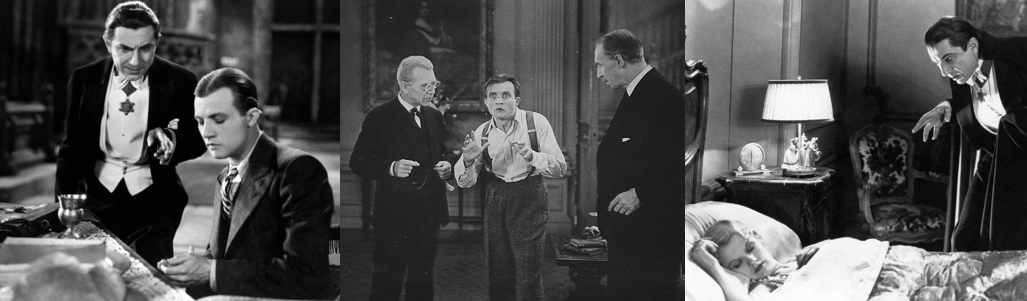
Once Dracula enslaves Renfield, the film juggles between the alluring count and Doctor John Seward (Herbert Bunston) and his inner circle. A renowned physician, Dr. Seward operates the sanatorium that sits alongside Carfax Abbey and where Renfield is committed after being discovered as the crazed sole survivor of the Vesta. Dr. Seward lives with his beautiful daughter, Mina, who’s engaged to his protégé, Jonathan Harker (Manners) and best friends with Lucy Weston (Frances Dade). The four are rarely seen apart, enjoying the opera together when they’re first introduced to Count Dracula, who shuns Harker and takes a shine to Lucy. Captivated by the count’s charisma, Lucy jokes to Mina of her attraction to him but quickly becomes his next victim when he enters her room and feast on her blood. Despite Dr. Seward’s best efforts, Lucy dies and Mina is left devastated, haunted by terrifying nightmares of wolves and bats. As Renfield keeps mysteriously leaving his cell, perplexing bumbling attendant Martin (Charles K. Gerrard), and ranting about all kinds of nonsense, Dr. Seward has his colleague, polymath Professor Abraham Van Helsing (Van Sloan), analyse the madman’s blood. Van Helsing concludes that Renfield has been bitten by a vampire and constantly exposits folklore about Nosferatu, who assume various animal forms, drink blood, and cast no reflection. While Harker is sceptical, Mina takes them to heart and they’re seemingly proven true when Renfield reacts violently to wolfsbane, a vampire repellent. During a tense meeting with Dracula, Van Helsing reveals that the count has no reflection and deduces that he’s their vampire, though Dr. Seward and the others are only convinced to do something other than just stand around discussing the threat after Dracula easily coaxes Mina into the garden for another suck session, eventually leading Van Helsing to give her wolfsbane for her protection.
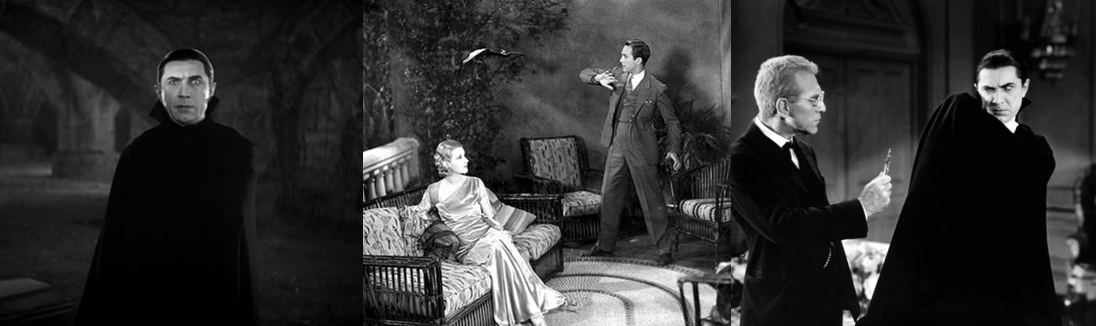
Of course, the main draw of Dracula is the titular count, played masterfully by the magnetic Bela Lugosi. A charming, gracious man with a silver tongue, Dracula oozes charisma but is as unnerving as he is appealing thanks to his raspy accent and peculiar behaviour. Dracula relishes the sound of wolves, the sight and taste of blood, and particularly enjoys getting close to his quarry, captivating with his steely gaze and wooing with his words. Van Helsing instantly distrusts Dracula and they have some tense face-offs, with the professor’s willpower resisting the count’s hypnotism and his knowledge of vampires giving the protagonists the edge. Since Dracula is vulnerable to sunlight and needs Transylvanian soil to maintain his strength, he rests in a coffin of dirt during the day but easily enters Dr. Seward’s residence by becoming the fakest bat you’ve ever seen. Dracula showcases superhuman strength but his greatest assets are his charming personality and alluring gaze, though his brides (Cornelia Thaw, Dorothy Tree, and Geraldine Dvorak) flinch at his command and he clearly instils fear in the locals. This fear isn’t felt by Dr. Seward and the others since they see him as a polite, if eccentric, foreign count, and isn’t felt by Van Helsing, who’s clearly wise to the vampire’s tricks. Unfortunately, many of these are kept offscreen, merely told by Harker and Renfield, because of the limitations of the time. I was also a bit unclear about what Dracula’s endgame was. He buys Carfax Abbey and targets Dr. Seward and his wards, but I’m not sure why? I guess to spread his wings beyond his stuffy old castle but it’s not clear why he targets Mina beyond enjoying torturing Harker and turning something innocent into an abomination, as he did Renfield, who spends the film conflicted and wrestling with his loyalties and his wish to die without blood on his hands. Lugosi plays the role so well that it’s easy to forget these criticisms, but it was frustrating seeing everyone just standing around or him just glaring at people or randomly being inserted into shots to show him lurking on the grounds.
The Nitty-Gritty:
I usually cut black and white films a lot of slack. It was a different time with many limitations compared to today, where almost anything is possible in cinema. Therefore, I can forgive the obvious sets and painted backgrounds, and the slight imperfections in the camera movements and film quality. This extends to the few special effects, such as cutting to Renfield’s reaction rather than showing Dracula pass through the web, having Harker describe the wolf running across their grounds, and Renfield’s mad rant about the “thousands … millions!” of rats promised to him by his master. Dracula’s bat form is silly, for sure, but the effort put into Lugosi’s costume and lighting his eyes is impressive, even if his close-ups often feel awkward and out of place. Dracula gets ambitious by using a passable model ship for the Vesta’s trip (though some water effects over Lugosi would’ve helped sell the sequence) but strangely relies on voice overs to describe the massacre Dracula leaves on the ship. I did like how theatrical the whole production was, which isn’t surprising considering the time period and Lugosi’s experience portraying the role on stage, with the actors (especially Dwight Frye) largely overacting and chewing the scenery. I do feel Dracula suffers from a lack of music, though, as the film basically has no soundtrack and some scenes would’ve greatly benefitted from some ominous tunes. Dracula, especially, needed a haunting theme accompanying him and some ambient music would’ve really helped to liven up the film’s many dull exposition scenes.
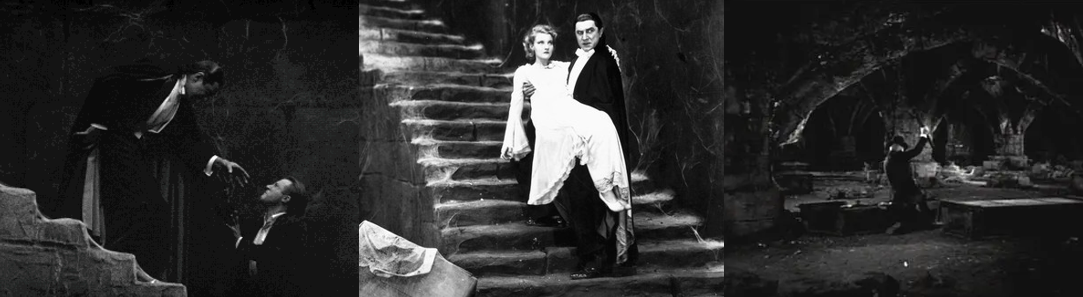
Despite Van Helsing’s best efforts, Mina falls under Dracula’s spell, confessing to Harker that she’s becoming a creature of the night and breaking off their engagement. While Van Helsing is unflinching against Dracula’s threats, Mina’s maid (Joan Standing) is easily coerced into removing the wolfsbane from the entranced girl and spiriting her away. Luckily for her, Harker and Van Helsing spot Renfield fleeing to Carfax Abbey (although, honestly, where else would Dracula be?) and they pursue the crazed lunatic. This leads to a tragic end for Renfield as Dracula is incensed that his witless minion has betrayed his location (though…again…that should be the first place anyone would look!) and, despite Renfield begging to be tortured or punished, the sad fool is nonchalantly tossed down a flight of stairs to his death. While you might expect a tense showdown between Dracula and Harker, or perhaps a battle of wits between the count and Van Helsing, with the two perhaps buying time to expose Dracula to the rising sun and turn him to ash, the finale is far more disappointing. Dracula flees into Carfax Abbey with Mina in his arms and Harker and Van Helsing muddle about in search of him, knowing full well that he must rest in his coffin to avoid the rising sun. Van Helsing also knows that the only way to kill a vampire is with a wooden stake through the heart, so he improvises such an implement from the dilapidated abbey and the two stumble upon a coffin. While Mina isn’t inside, Dracula is, already fast sleep despite mere minutes passing, allowing Van Helsing to easily stake him to death with no resistance or the count’s death even being shown onscreen. Harker then finds Mina, who conveniently returns to normal, and the film abruptly and anticlimactically ends with the firm belief that Count Dracula has been destroyed forever.
The Summary:
Dracula’s never really been a favourite of mine. Out of all the classic gothic horror novels and all the Universal Monsters films, I can think of at least three others I’d rather watch or read than this one. Dracula lives and dies by the allure of its main star, the enigmatic Bela Lugosi, who brings an unmistakable gravitas to the role (and the screen) every time he appears. The man embodied the role so perfectly that it set the standard not just for future portrayals of Dracula, but most vampire characters (especially their leaders). Charming, sophisticated, and with a glare that can chill to the bone, Lugosi’s Dracula commands the screen and effortlessly woos all around him. Except, of course, for Van Helsing, played with stoic confidence by Edward Van Sloan as the natural foil to the malicious count. Honestly, I wish we’d gotten more interactions between these two in a battle of wits and wills as Van Helsing employed his vast knowledge to reveal Dracula’s true nature. Instead, we get a lot of sitting and standing around as characters describe stuff I would’ve loved to see, reiterate the plot or discuss vampire lore, or wonder what’s to do in their quirky, oh-so-British way. Dracula is visually impressive at times, especially the Castle Dracula set, though obviously its effects and techniques are painfully dated these days. The film touches upon the fear of the unknown, of being preyed upon by a conniving and manipulative, lustful predator, and Dracula’s tortured immortality but never fully commits. Similarly, the film’s ending seems to be very different and far less grandiose than the book’s, which definitely hurts it as it just…ends, leaving you unfulfilled. Ultimately, no one (least of all me) is denying the cultural significance of Dracula, but I absolutely feel it’s lacking in ways other Universal Monsters movies aren’t. Watch it to witness history but don’t expect much to hold your attention, especially if Lugosi isn’t on the screen.
My Rating:
Could Be Better
Are you a fan of the 1931 big-screen adaptation of Dracula? If you’ve read the book, what did you think to the changes it made and the elements it brought to life? Do you agree that the film drags in the middle or were you as captivated by the narrative as Mina was by Dracula? What did you think to Bela Lugosi’s performance and would you agree that he’s the standard all Draculas should be compared to? Which adaptation of Dracula, or Universal Monsters movie, is your favourite? How are you celebrating Halloween this year? Let me know your thoughts on Dracula down in the comments, go read my other horror reviews, and donate to my Ko-Fi if you want to see more Dracula content.

 Dr. K's Waiting Room
5 thoughts on “Movie Night: Dracula (1931)”