Back Issues [Sci-Fanuary]: The Silver Surfer #1


January sees the celebration of two notable dates in science-fiction history, with January 2 christened “National Science Fiction Day” to coincide with the birth date of the world renowned sci-fi writer Isaac Asimov, and HAL 9000, the sophisticated artificial intelligence of Arthur C. Clarke’s seminal 2001: A Space Odyssey (1968), being created on 12 January. Accordingly, I’ve been spending every Sunday of January celebrating sci-fi in all its forms.

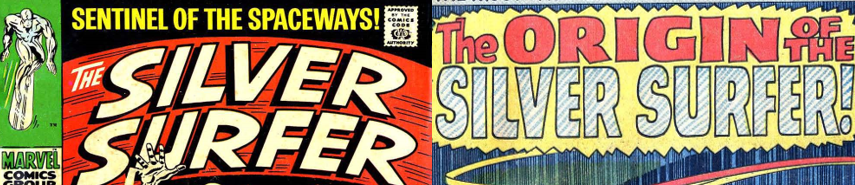
Story Title: “The Origin of the Silver Surfer!”
Published: August 1968
Writer: Stan Lee
Artist: John Buscema

The Background:
In 1961, comic readers everywhere were introduced to Marvel’s “First Family” of superheroes, the Fantastic Four. Doctor Reed Richards/Mister Fantastic, Susan Storm/The Invisible Girl, Johnny Storm/The Human Torch, and Ben Grimm/The Thing were characterised as a dysfunctional, but loving, family of superpowered scientists and adventurers and their creation was not only the first collaboration between the legendary Stan Lee and Jack Kirby but also the beginning of the unique “Marvel Method” of writer and artist collaboration. In 1966, the team faced their greatest challenge yet when they faced the God-like Galactus, who came to Earth looking to devourer it and satiate his unending hunger for worlds. When Kirby turned in his artwork for the story, he included a brand-new character that had not been part of his previous discussions with Lee; Kirby crafted a herald for the all-mighty being and, tired of drawing spaceships, had this silvery being ride a surfboard instead. Though initially hesitant, Lee ran with the idea and, following the conclusion of the Galactus arc, the Silver Surfer received his own self-titled series in 1968 that, while short-lived, was one of Lee’s favourites to work on. Since then, the Silver Surfer has appeared consistently within Marvel Comics; he’s been a part of the Defenders, joined and fought against his old master numerous times, and featured not only in the Fantastic Four’s animated and live-action adaptations but also received his own self-titled cartoon that ran for thirteen episodes in 1998.

The Review:
When he was introduced in the pages of The Fantastic Four, the Silver Surfer was a mysterious and enigmatic cosmic entity about whom we learn very little; he was painted as Galactus’ obedient herald and servant, wielded vast and ill-defined cosmic powers, and was compelled to defy his master’s intentions to consume the Earth after a desperate plea from Alicia Masters. Having grown to care for the fate of the human race, if primarily out of pity, the price for the Silver Surfer’s defiance was to be forever (well, obviously not forever as nothing in comics is ever “forever”) banished to Earth by his master and, accordingly, The Silver Surfer #1 finds the cosmic entity still bound to the world he chose to save.
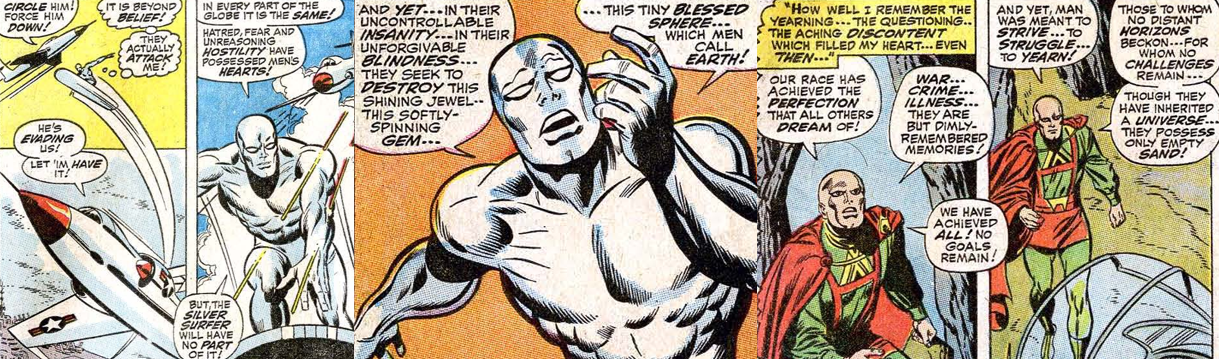
The conflict he encounters on Earth leads the troubled Silver Surfer to recall his own home world.

In the opening pages, the Silver Surfer immediately acts to save the life of Colonel Jameson, whose space capsule crash-lands in the ocean depths. Of course, for the Sentinel of the Spaceways, things such as water, air, and metal are of little concern and the Silver Surfer is easily able to dive beneath the ocean and rescue the Colonel. Despite returning the astronaut to a military vehicle, the Silver Surfer finds himself hounded by fighter jets and, similarly, as he streaks across the skies of the planet he now calls home, the Surfer is attacked by missiles and encounters only discord and war. Lamenting the foolishness of men that would seek to harm the lush and fertile world that has captured his heart and imagination, the Silver Surfer is compelled to recall his own home world, a planet far across the galaxy called Zenn-La which, unlike the Earth, had long ago eradicated war, crime, and disease after ten thousand centuries of conflict. Back then, the Silver Surfer was known as Norrin Radd and was simply a man who, though he lived in a virtual nirvana, was left despondent that his people and world no longer had any drive or ambition to achieve anything new. Having inherited the peace and advanced technology of their forefathers, Zenn-La’s inhabitants are largely happy to indulge in the luxuries and benefits of these; they have lost the spirit of adventure and seem content to simply allow technology to fulfil tasks they would have once sweated over.
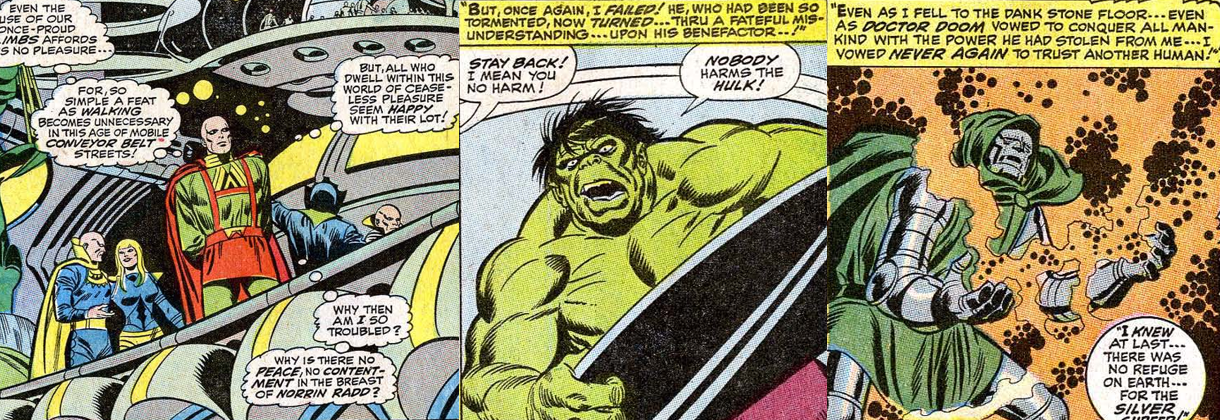
Memories of his distant and recent past haunt the Silver Surfer and cause him much strife.

Restless and eager to understand why only he seems to find their utopia so stagnating, Norrin reviews the history of his world through advanced virtual reality and discovers that an age of enlightenment put an end to all conflict and that his people ventured far out into the universe before eventually settling on staying put on their home world. Back in the present, the Silver Surfer comments that the Earth is at a similar crossroads between destroying themselves through war and being united in a common cause; even while being randomly attacked by savage yetis, the Silver Surfer laments the innate sense of distrust and fear that touches the hearts of men and turns even beasts such as those (and Doctor Bruce Banner/The Hulk, whom the Silver Surfer once hoped would be an ally as they have both been unfairly ostracised by humanity) into hate-filled barbarians. Similarly the Silver Surfer recalls how Doctor Victor Von Doom/Doctor Doom easily duped him and briefly stole the mysterious “Power Cosmic” from him, an event that caused the Silver Surfer to never again trust another human lest their selfish and manipulative nature get the better of him.
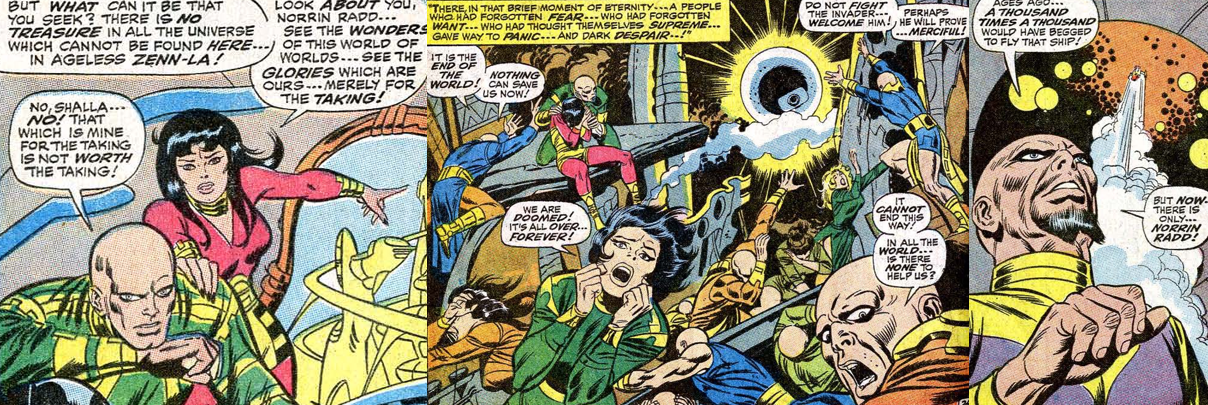
Rejecting his society’s complacency, and despair, Norrin heads out to confront their invader.

Stumbling upon the ruins of an ancient civilisation now forever lost to the ravages of time and the elements, the troubled Silver Surfer is again haunted by his lost world, and his beloved Shalla Bal. Despite Shalla’s plea that he turn his focus back to the wonders offered by Zenn-La, Norrin finds himself alone in a world where indulgence is the norm, knowledge is simply gifted rather than earned, and the citizens want for nothing. However, Norrin’s lamentations and concerns for the stagnation of his people are interrupted when a gigantic spacecraft breaches the planet’s “nuclear defences” and the people are warned to prepare for an invasion; while Shalla weeps at the prospect of war, especially as Zenn-La has no space fleet or weapons to speak of, Norrin practically relishes the idea of such an event forcing his complacent people into action. With the people giving in to panic, Zenn-La’s computer system decrees only one course of action: the deployment of the “Weapon Supreme”, a solution that literally rips the neighbouring planetoids from their orbits and hurls them at the orbiting craft with such force that it devastates the entire infrastructure of Zenn-La. This devastating solution is ultimately futile, however, as the invading probe simply slipped into the fourth dimension to avoid being damaged and, having decimated their world and with no hope left, the entire planet gives in to despair. All, save for Norrin Rad who, fuelled by the spirits of his ancestors, urges the remnants of Zenn-La’s scientific community to craft him a ship so that he can commune with the craft as he refuses to lose hope.
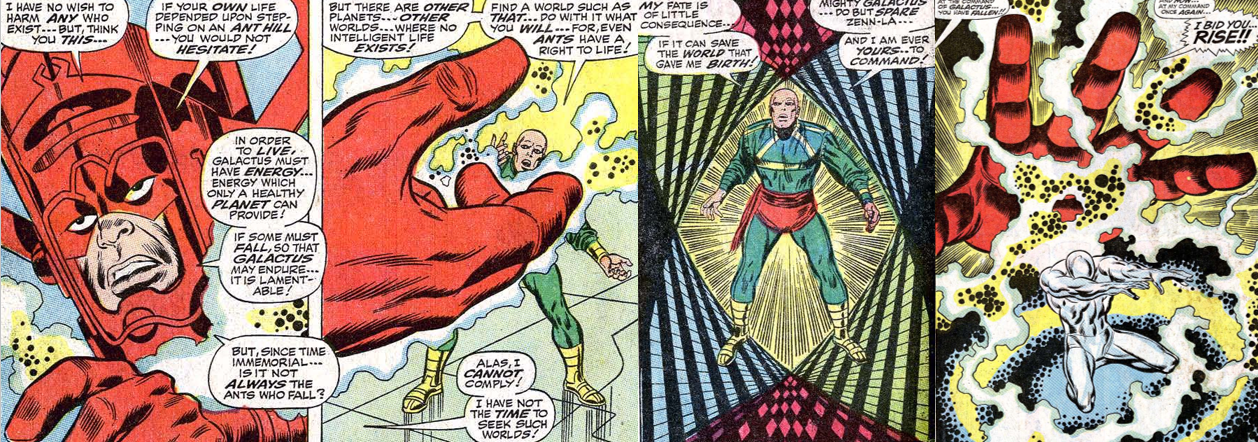
To spare his world, Norrin volunteers to become Galactus’ herald and is reborn as the Silver Surfer!

Drawn within the mighty spherical craft, Norrin is overwhelmed by his insignificance next to the craft’s size and technology and is then driven to his knees by a blast from the ship’s owner and operator, all-mighty Galactus! Though he has no desire to, and takes no pleasure in, destroying Norrin’s people, the World Devourer is adamant that his quest cannot be assuaged as he is compelled to feed his unending hunger lest he be consumed by it. Harbouring no malice or ill-will, Galactus compares his mission to that of a man casually stepping on an ant hill and states that it simply is, but Norrin pleads with him to spare Zenn-La and instead feed upon a world devoid of sentient life. When Galactus laments that he has not the time to seek out such a world since even he is but one being, Norrin offers to become the World Devourer’s herald, to seek out lifeless worlds in order to appease Galactus’ hunger, and gladly sacrifices his personal well-being in order to be transformed by the all-mighty’s vast cosmic powers. Reborn as the Silver Surfer, Norrin is rendered immune to the ravages of space and gifted his trademark board with which he can swiftly travel the stars to seek out ne worlds for Galactus to consume. Thrilled to have a lifetime of adventure and exploration amongst the stars finally within his grasp, Norrin bids an emotional farewell to his beloved and departs Zenn-La fully committed to serve his new master, alone and haunted by Shalla’s face in every star and sun he comes across. The Silver Surfer finds his pain eased as he successfully spares worlds teeming with sentiment life from Galactus’ ravages but had no choice but to lead his master to Earth as the gnawing hunger grew unbearable for the God-like being. And it is there that his story ends, with Galactus stoically removing his herald’s ability to travel amongst the stars and the man once known as Norrin Rad left exiled to another world he hoped to spare from destruction.

The Summary:
“The Origin of the Silver Surfer!” is indicative of many of Marvel’s tales from back in the day; featuring a number of references, flashbacks, and cameos, the story is as much a recap of the Silver Surfer’s prior appearances as it is an exploration of his beginnings. Crucially, though, it’s not just the Silver Surfer’s unconquerable cosmic powers that separate him from other Marvel superheroes; the character is perhaps the most loquacious of Stan Lee’s comics characters (matched only by the verbose Dr. Doom) and probably the second most conflicted character he’s created next to Peter Parker/Spider-Man. But, whereas Dr. Doom boasts only of himself and his needs and Peter laments such day-to-day problems as money and relationships, the Silver Surfer’s concerns are with being denied access to the vast cosmic skies and observing the sheer animosity that threatens to consume his adopted world.
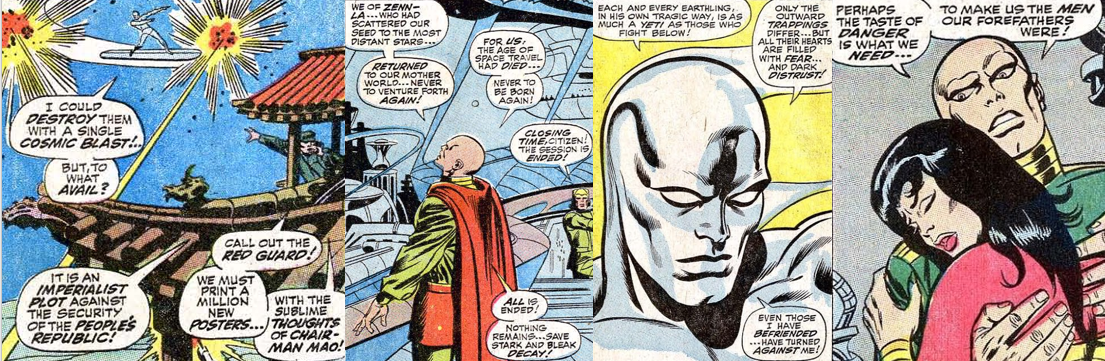
Norrin is one of the most loquacious and complex characters in Marvel’s line-up.

The Silver Surfer’s previous life as Norrin Rad was hardly a carefree existence either; while the inhabitants of Zenn-La were perfectly content to life stagnated lives where they wanted for nothing and had sacrificed ambition and advancement for peace and tranquillity, Norrin finds himself concerned for the long-term welfare and overall development of their society since they no longer need to apply themselves to do or achieve anything. Everything around them was left to them by previous generations; knowledge is simply downloaded directly into their brains and all of the thinking and decisions are made by advanced computer systems and a puppet government. Where once Zenn-La had fought tooth and nail for survival and reached out beyond the universe, now they were content to simply indulge their whims and life lives free from the burden of struggle or failure. Amongst the entire planet, only Norrin feels as though the world has lost its way and should strive for more and thus it is only he who has the temerity to face their would-be conqueror head on.
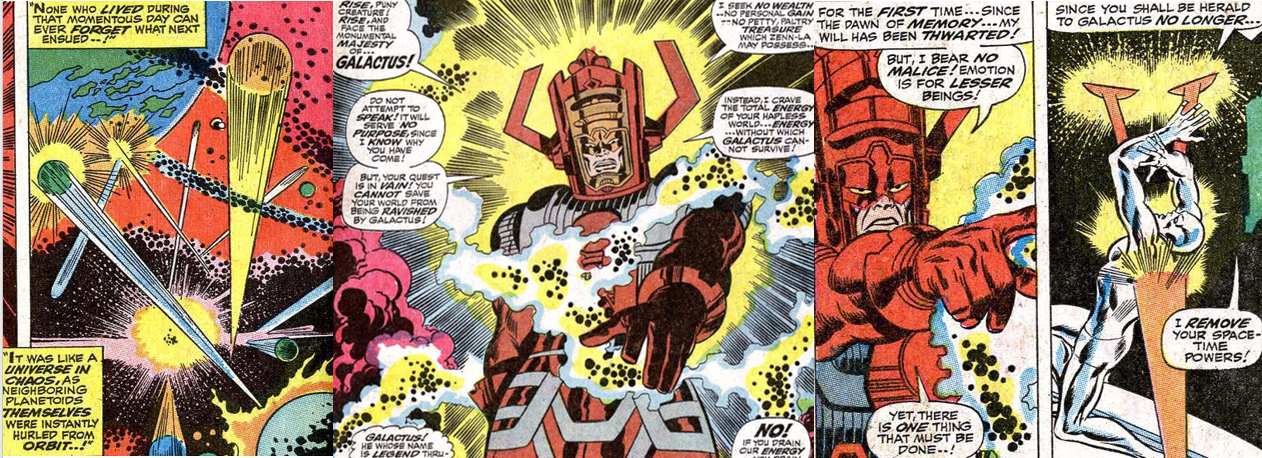
Galactus, though destructive, does not delight in his need to feast on worlds.

As is generally always the case, Galactus is presented as a force of nature; something unconquerable and inexorable and a force beyond any in the known universe, and certainly beyond the peaceful people of Zenn-La. Ironically, it isn’t Galactus that leaves Zenn-La in ruins but the people themselves as they decimate their world by tearing small planets out of their very orbit, making them, for all their enlightenment, no better than the World Devourer himself. Indeed, while Galactus doesn’t act out of any malice or emotion, the same can’t be said for Zenn-La’s people, who first react in violent fear and panic and then give in to despair entirely; Galactus takes no pleasure in his destructive existence but must consume worlds to survive and even he is willing to listen to reason. Galactus makes Norrin his herald not because he is won over by his desperate plea but simply because it makes logical sense for him to have a herald out there finding new worlds for him to consume and to spare lives from his nature because, while Galactus does consume inhabited worlds, it’s only because he is forced to by his great hunger.
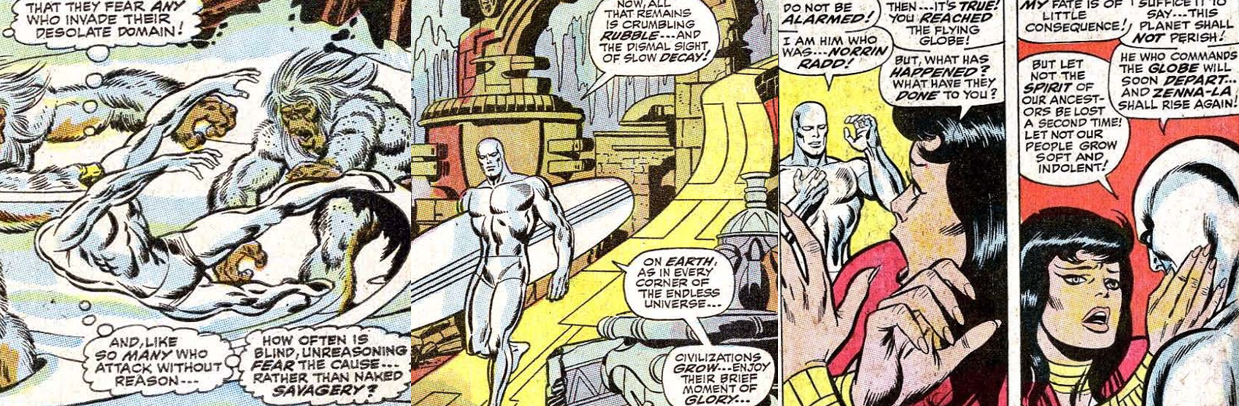
Delving into the Silver Surfer’s past adds much more emotional depth to his decision to aid Earth.

In the end, this was a poignant and fascinated story; the Silver Surfer makes for one of the most emotionally complex and layered characters in all of Marveldom, especially in his earliest appearances where he is both captivated by the Earth and saddened by our propensity towards destruction and violence. Seeing Norrin Rad as a man dissatisfied with utopia and craving the thrill of scientific and societal advancement was an interesting twist and witnessing him sacrificing his very being and all he knows in order to spare his people only adds further context to the Silver Surfer’s somewhat abrupt decision to aid humanity in his debut arc. The comic is beautifully rendered by John Buscema, who perfectly evoked the grandeur of Jack Kirby’s artwork to deliver wondrous and imaginative technology and surroundings, to say nothing of his awesome rendition of the towering Galactus, who fittingly appears both fearsome and God-like in his regality. While I haven’t actually read a great deal of the Silver Surfer and can understand people having trouble connecting with him due to his near-limitless powers, I’ve always had a bit of a soft spot for the Sentinel of the Spaceways, especially his early appearances where he was exiled to Earth, and found this to be a captivating glimpse into his unique backstory.

My Rating:

Rating: 4 out of 5.

Great Stuff

Have you ever read Silver Surfer #1? If so, what did you think to the title character’s origin story? What did you think to Zenn-La and Norrin Rad’s troubles with his society? What did you think to Norrin Rad’s sacrifice to save his people? What are your thoughts on Galactus, his motivations and his characterisation? Are you a fan of the Silver Surfer? If so, what is it about him you like and, if not, why is that? Who would you like to see portray the Silver Surfer in the Marvel Cinematic Universe? Whatever you think about the Silver Surfer, leave a comment below and thanks for joining me for Sci-Fi Sunday.


Weekly Writing Prompt: 26/01/2022

Gillian Church posts Writing Prompts every week and I like to take part with a few snippets and pieces of flash fiction.

The Prompt:
Nobody has ever come back before. What was it like?

The Submission:
“We’re in position, sir,” came the ensign’s statement.

His commander glanced up and beheld the world that had claimed so many of his people over the years. “Very good. Hold here,” it was a redundant command; no ship dared cross the five parsec barrier, not with this world.

The commander shifted in his seat; palms sweaty with anticipation. He had commanded missions, fought on the front lines, and even escaped from a prisoner of war camp but had never felt fear such as this before.

How many had been lost over the years? Scouts, explorers, rescue missions…none had ever returned. In all the years, they had learned to stay well back, masking their presence using solar flares or the celestial body orbiting the world, or the vast debris barrier that had brought down so many of their ships and probes.

The commander had never had any intention of visiting this world, even from this distance; his goal lay in the stars beyond at the forefront of the spice wars on Phobos, but he would never be able to face his mother again if he didn’t at least try and retrieve his brother on the way.

He had been a loudmouthed upstart; he didn’t believe in the war, or advancing their cause further into the cosmos, and wanted nothing more than to observe, catalogue, and investigate. And for his curiosity, he had fallen to that damned world below and become another statistic in a long list of lost souls.

“We have a lock, sir…but, from this distance…”

Again, it was a redundant statement; he was well aware that the transport technology was temperamental at the best of times but, from this distance, it was sure to result in his brother’s atoms dissipating into the aether or him being reduced to a squealing, wretched pile of flesh. The commander had seen both results before, but for the first time let his heart overrule his logic.

“Get us closer,” he ordered.

“But sir, we’ll be exposed!”

“I said closer!” he barked. “Prep the thrusters; boost the signal. The moment you have a lock, you get him onboard and get us away from here!”

The ensign swallowed and the ship edged closer; an alarm sounded as the ship automatically went to red alert, a failsafe of crossing the five parsec barrier.

“Sir! Sir, we have him!” came the medic’s voice through the com.

“Get us out of here!” the commander ordered, and swept from the bridge as the stars blasted past them and that hated world fell into the void.

His brother lay in the medical bay; he was hooked up to complex machines and wires that even the medic was stumped by. The commander swallowed, a heavy weight in his heart; his brother was little more than a mangled torso, devoid of many of his limbs and organs and apparently kept alive only by this alien machinery that they couldn’t hope to understand.

The medic shook his head sorrowfully, and the commander grasped his brother’s remaining mutilated  hand. “You came back, brother,” he said,  unable to stop his voice from cracking. The  boy didn’t have long; there was no question about it. “What did you see? What did they do to you?”

The mauled body that had once been the commander’s brother sighed deeply, clearly in agonising pain. He rolled his one eye towards the hardened face of his decorating sibling and shook his head slightly, a small tear falling from his eye. “Hate,” he croaked. “Anger. Such…such fear.” His body trembled slightly as his struggled to cling to life and deliver a final message: “Keep…keep away from those…humans… “ His brother passed, the commander straightened his body and his uniform. Preparations would have to be made, announcements given, reports submitted. He wished that he could honour his brother’s last request but, for the commander, this was the last straw. It was time to strike back against these “humans”.  


What did you think to this week’s writing prompt? Did you submit anything for it? Have you ever written any flash fiction before? I’d love to know what you think to my snippets and writing prompts, so feel free to sign up and let me know what you think below or leave a comment on my Instagram page. You can also follow Gillian Church to take part in her Weekly Writing Prompt challenge.

Screen Time [Sci-Fanuary]: The Outer Limits (1995): “The New Breed” (S1: E16)


January sees the celebration of two notable dates in science-fiction history, with January 2 christened “National Science Fiction Day” to coincide with the birth date of the world renowned sci-fi writer Isaac Asimov, and HAL 9000, the sophisticated artificial intelligence of Arthur C. Clarke’s seminal 2001: A Space Odyssey (1968), being created on 12 January. Accordingly, I’m dedicated every Sunday of January to celebrating sci-fi in all its forms.


Season One, Episode 16: “The New Breed”

Air Date: 9 July 1995
Director: Mario Azzopardi
US Network: Showtime
UK Network: BBC 2
Stars: Richard Thomas, Peter Outerbridge, and Tammy Isbell

The Background:
I never watched The Twilight Zone (1959 to 1964; 1985 to 1989) as a kid; growing up, I was limited to the then-four channels of terrestrial television so my sci-fi/horror anthology series of choice was The Outer Limits (1995 to 2002). Itself a revival of the original 1960s show, The Outer Limits was an award-winning anthology series that was originally broadcast here in the United Kingdom on BBC 2; every week, a new tale would unfold, usually revolving around aliens, rogue artificial intelligence, or other sci-fi, horror, or fantastical stories, though there were also a number of recurring themes, characters, and even semi-sequential stories to be found in the show’s long history. Considering my nostalgia and affection for the series, it is gratifying to see others also have a fondness for the show and I’ll be extremely interested to see if the planned revivals ever come to pass.

The Plot:
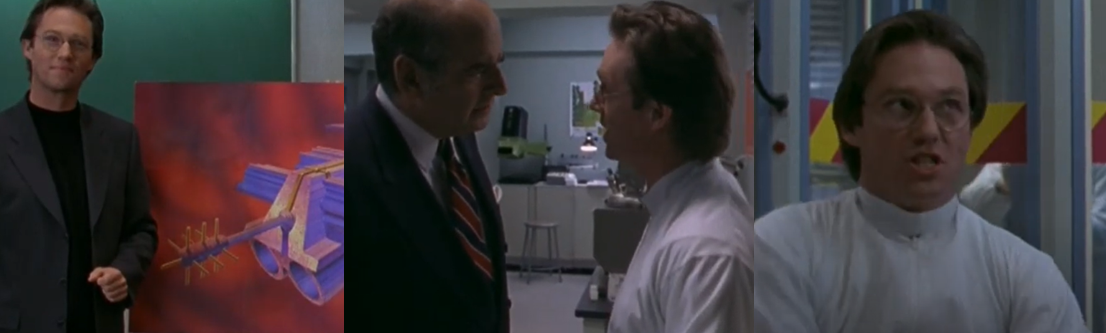
Doctor Stephen Ledbetter (Thomas) makes a technological and medical breakthrough with nanobots. However, when his dying friend, Doctor Andy Groenig (Outerbridge), injects himself with the experimental nanobots, his body starts to hideously mutate!

The Review:
“The New Breed” focuses on Dr. Stephen Ledbetter, a genius in nanotechnology whose research spell the potential end for life-threatening cancerous disease by rewriting the cellular structure of the bodies they are introduced to and removing malignant or destructive elements. A somewhat condescending and self-aggrandising scientist, Stephen fully believes in his work and is extremely proud of the level of intricacy and brilliance that has gone into their creation. However, like many phenomenally intelligent individuals, he is somewhat blinded by how miraculous his nanobots are, which are smart enough to replicate individually and operate independently to, in his words, improve the “flawed man”.

Stephen’s breakthrough nanobots spell the end for cancer but he is frustrated by regulations.

His grandiose claims to have surpassed God aggravate his colleague, Doctor Norman Meritt (L. Harvey Gold), who is not in the least bit amused at Stephen’s attitude and flamboyant disrespect for professional conduct. Meritt stresses that Stephen needs to play by the rules since the last time he bent them in his favour, he almost lost his job and caused the entire department to be shut down. As it’s the only way for his nanobots to see the light of day, Stephen begrudgingly agrees to play the game for the sake of his grant and the Board of Trustees despite being frustrated at having to wait for approval to begin live animal testing.

Andy’s whole world comes crashing down when he receives news of a malicious cancer.

His research and the potential of the nanobots excites Stephen’s friend and colleague, Dr. Andy Groenig, a far less egotistical and driven scientist who is not only dating Stephen’s younger sister, Judy Hudson (Isbell), but is engaged to marry her in a month’s time. Things are looking good for Andy, who also just got tenure, and Stephen is overjoyed at his good fortunes (showing hat, beneath his arrogance, there is a loyal and trustworthy human being). However, when he pays a visit to Doctor Katzman (Veena Sood) regarding an lingering pain in his back, Andy’s world comes crashing down at the news that he’s suffering from a malignant form of pelvic cancer that will either kill him in about a year or leave him without his lower limbs through surgery. Desperate for a solution to this horrifying news, he presses Stephen for more information about his nanobots and is dismayed to find that the Board would never allow human testing without stringent tests, not even on a willing volunteer, for fear of a potential lawsuit.

Desperate for a solution, Andy injects himself with the nanobots and is miraculously healed.

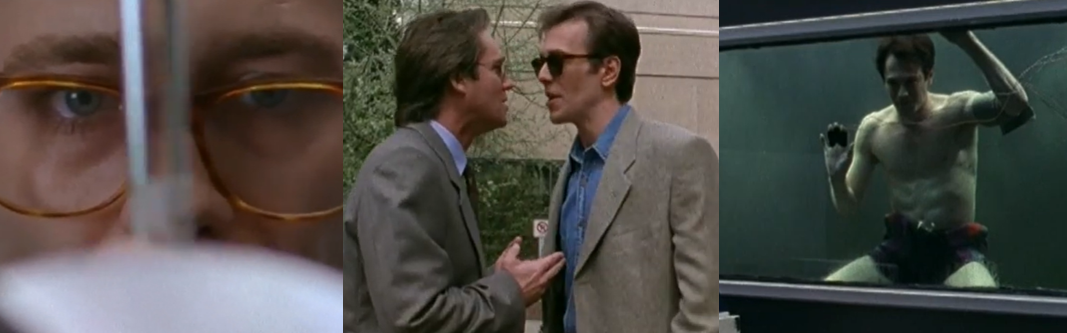
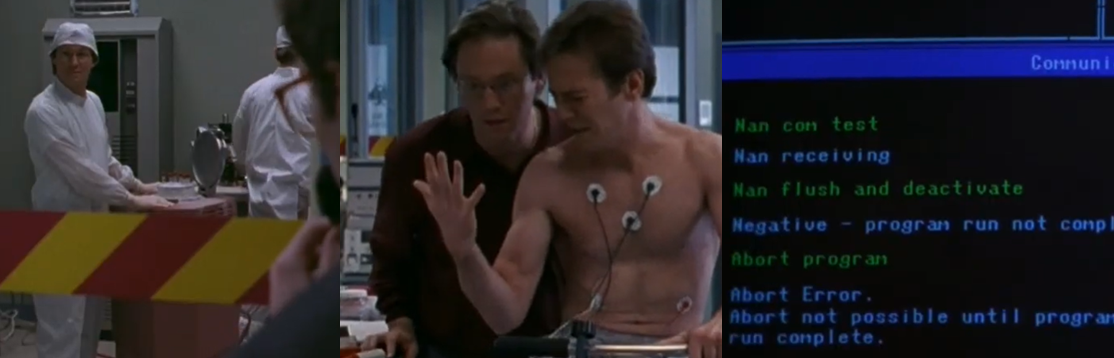
With Judy already enthusiastically planning out the rest of their married lives, and with literally nothing left to lose, Andy breaks into Stephen’s lab during the night and exposes injects the nanobots into his body. The results are almost instantaneous; within three days, his tumour has significantly reduced, giving him a whole new lease on life and virality. The benefits don’t end there, either, as Andy awakens one morning to find that he no longer requires glasses to improve his vision. Stephen, however, is aghast at Andy’s recklessness; despite his bold claims from earlier, Stephen is enraged that Andy would put himself and both of their lives and careers at risk. Afraid of what the nanobots could potentially do to Andy, Stephen immediately demands that they be shut off but, when Andy vehemently refuses, they reach a compromise and, together, run further tests to record the benefits and behaviours of the nanobots on the proviso that they deactivate the second anything starts to go wrong. Thanks to the nanobots, Andy is able to hold his breath underwater for at least seven minutes, read even near microscopic test from a greater distance, physically push himself faster and harder than ever before, and heal from horrific injuries in seconds.

Andy’s stamina overwhelms Judy but the nanobots soon take their programming a bit too far…

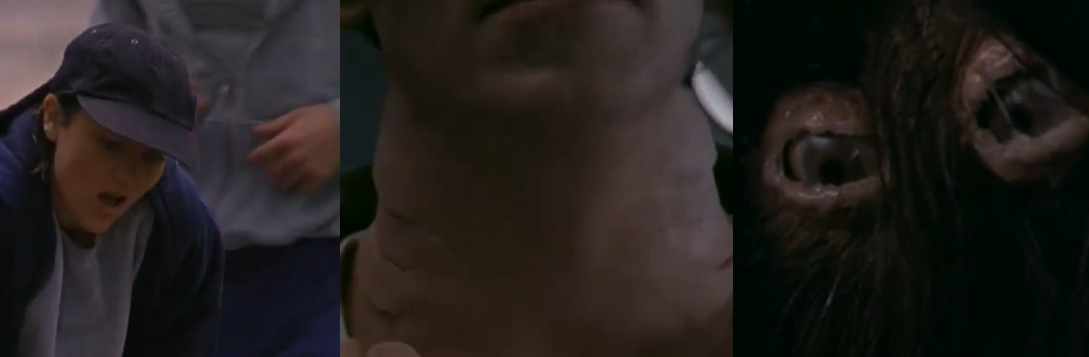
A sentimental goof, Andy is extremely grateful to the nanobots, and Stephen, for saving  and improving his life; however, his increased stamina and virility begin to cause concern for Judy, whom he inadvertently hurts during sex. Concerned that he’s on drugs, Judy is nevertheless exhausted and somewhat fearful of his newfound virility and, as if that wasn’t bad enough, Andy awakens to find that the nanobots have “gifted” him with a set of gills to allow him to freely breath underwater. Both enthralled and horrified at this development, Stephen immediately attempts to expel the nanobots from Andy’s body; however, his attempts are met with unexpected failure as the nanobots believe that the “program run [is] not complete”. Consequently, Andy is absolutely horrified to find that the nanobots have grown him a new pair of eyes on the back of his head!

Andy chooses death to end his suffering but leaves a terrifying legacy behind…

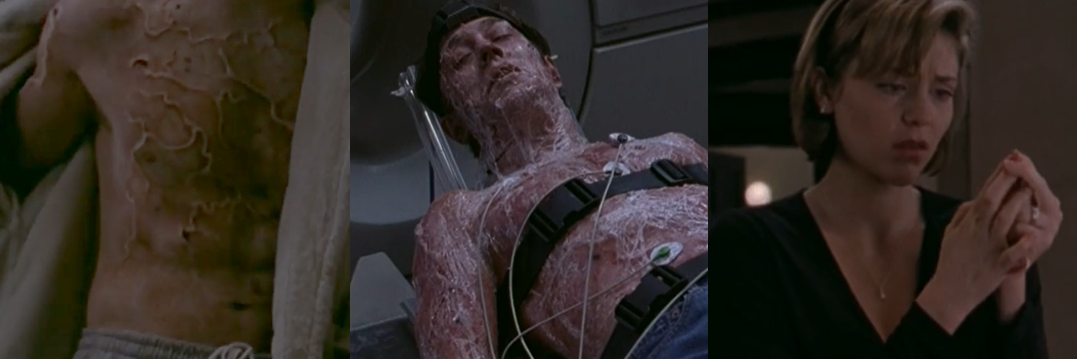
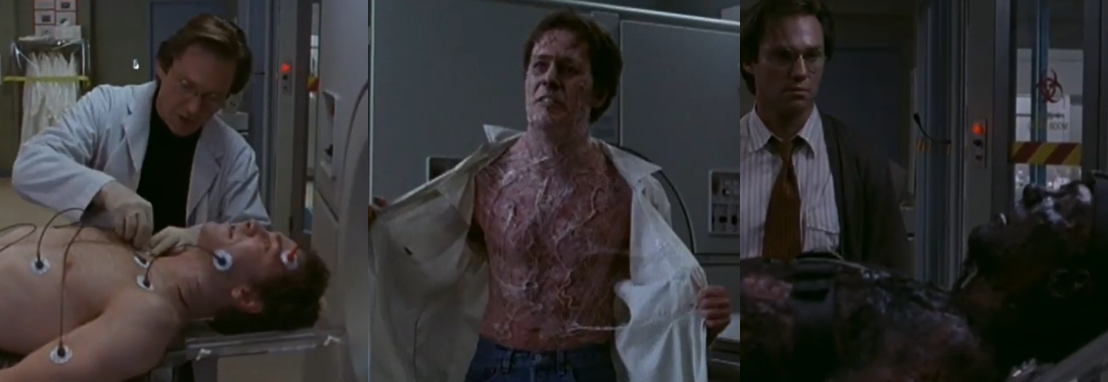
Unable to shut the nanobots down in a conventional way, Stephen attempts to short them out using high-intensity electric shocks; unfortunately, though, he is again frustrated by failure and reluctant to subject Andy to further electric shocks out of fear of killing him. Andy, however, begins to think that dying wouldn’t be so bad at this point and his fears and desperation only grow as his hearing becomes superhumanly acute and the nanobots shield his body from both external and internal threats with an array of jellyfish-like nematocysts and additional ribs, respectively, in a conscious effort to stop Stephen’s efforts to drive them from Andy’s body. Angered at his current physical condition, Andy is equally dismayed at his inability to die as, no matter what either of them do, the nanobots continue to revive Andy. With no other option, the two sorrowfully agree to bombard Andy to a lethal dose of electrical current to destroy both him and the nanobots; heartbroken and dejected, Stephen destroys all evidence of the event, and his research, in a fire but the episode ends suggesting that Andy has passed at least a few of the nanobots on the Judy during their earlier coitus.

The Summary:
As the narrator (or “Control Voice”; Kevin Conway) sombrely tells us: “Man has long worked to stave off the diseases that can ravage us, but what can happen when the cure grows more fearsome than the disease? Over millions of years man has become the very paragon of animals, but we must take care not to alter what nature has taken so long to forge…or risk being burned by the very fires of creation”. The lesson here, as with many episodes of The Outer Limits and similar tales of man trying to either play God or expand the limits of scientific research, is to exercise caution, restraint, and humility when dabbling in the fantastical and the unknown.

A miraculous technology soon turns terrifying in this cautionary tale.

I’ve watched a lot of movies and television over the years, and many episodes of The Outer Limits, but “The New Breed” always stuck with me as a moving, terrifying, and poignant tale of the potential, and dangers, of science. Andy is facing his very real, and painful, death at the beginning of the episode and, as he puts it, “sells [his] soul” for another chance at life; this turns out to be more than apt as the nanobots very quickly begin to take their programming way too far. Although Andy assures Stephen on numerous occasions that he doesn’t blame him (as in Stephen) for the events of the episode, it can’t really be argued that the tests Stephen subjected Andy to were directly responsible for his gills, eyes, and other freakish enhancements. Had Andy not been so overjoyed at getting his second chance and so afraid for his cancer returning, Stephen may have been able to deactivate the nanobots before they set about further “improving” Andy’s physical condition but, instead, we’re left with a cautionary tale of the limits of science.

“The New Breed” is full of disturbing imagery and warnings of the potential danger of science.

These lessons, while commonplace in many similar science-fiction stories and which can be traced all the way back to the likes of Frankenstein; or, The Modern Prometheus (Shelley, 1818), are presented in a fascinating and terrifying way in “The New Breed”, one which left an indelible impression on me as a child. The shot of Andy’s new pair of eyes slowly, ominously blinking open through weeping pus alone is a nightmarish visual, as are the unnerving, gaping gills on his neck and the disgusting, twisted stingers that eventually cover his entire body and seem to be cocooning him for a further transformation by the end of the episode. Another comparison I could easily make would be to The Fly (Cronenberg, 1986), which is a similar tale of science at first improving a man and then quickly mutating him into some more gruesome and monstrous and my unapologetic fondness for that film may very explain my affection for “The New Breed”. Still, the episode remains as captivating and enthralling as ever (thanks also, it has to be said, to nostalgia and some intense sex scenes) and it’s just one of many strong episodes of the Outer Limits revival that I would point any self-respecting sci-fi fan to without hesitation.

My Rating:

Rating: 4 out of 5.

Great Stuff

Have you ever seen “The New Breed” or the 1995 revival of The Outer Limits? If so, what did you think to it and what were some of your favourite episodes? Did you enjoy the steady, gruesome escalation of the nanobots’ effect on Andy’s body? What are some other cautionary tales regarding science that you enjoy? Whatever your thoughts, feel free to leave a comment below.

Talking Movies: What If…? Thanos and the Masters of Evil

Talking Movies

In Avengers: Infinity War (Russo and Russo, 2018) the Mad Titan, Thanos (Josh Brolin), finally made a significant appearance in the Marvel Cinematic Universe (MCU). When the idea of a two-film saga based on the Infinity Gauntlet comic book (Starlin, et al, 1991) was first announced, I, like many others, had many theories about what was going to happen, who was going to live and die, and how everything was )going to go down. For example, before Thor: Ragnarok (Waititi, 2017), I was certain that Thanos’ big entrance was going to immediately establish his threat by hanging him storm into Asgard kill Odin Allfather (Anthony Hopkins), and claim the Tesseract (and, obviously, the Space Stone it help). After all, how better to establish this big bad villain than by having him kill a God?

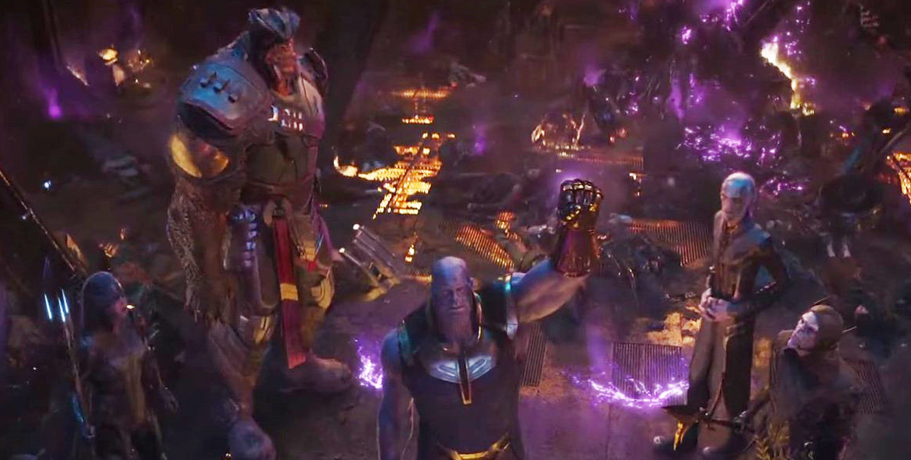
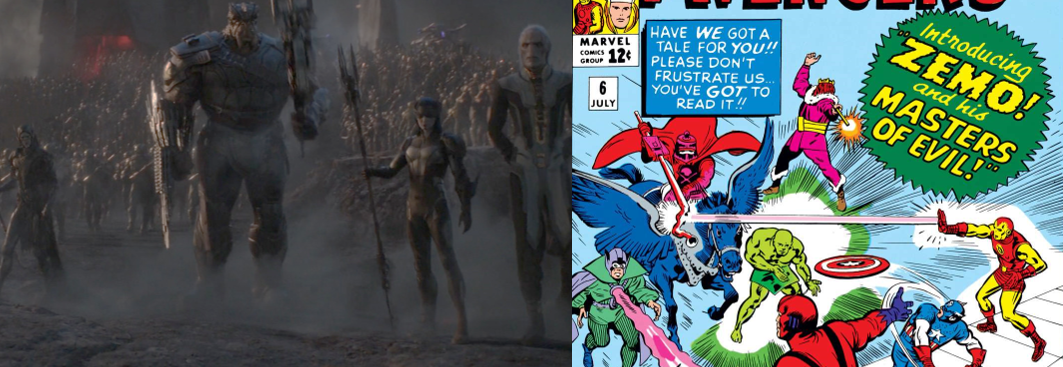
Thanos’ Black Order made their MCU debut in Avengers: Infinity War.

Instead, of course, Thanos wrecked Thor Odinson’s (Chris Hemsworth) ship and slaughtered half of the Asgardians onboard. Still an impressive feat, to be sure, but one that focused more on Thanos’ grandeur and pretentious philosophy rather than his actual physical strength thanks to the bulk of the work being undertaken by his underlings, the “Children of Thanos”. Headed by Ebony Maw (Tom Vaughan-Lawlor), Cull Obsidian (Terry Notary), Proxima Midnight (Carrie Coon/Monique Ganderton), and Corvus Glaive (Michael James Shaw), the Children of Thanos didn’t actually appear in The Infinity Gauntlet and are, instead, relatively recent additions to Thanos’ ranks who first appeared (as the “Black Order”) in Infinity (Hickman, et al, 2013). In the film, we don’t really learn much about these guys at all except that they enforce Thanos’ will with unquestioning loyalty and that he trusts them to help him gather the remaining Infinity Stones and, while they certainly look visually interesting, they’re mostly disposable bad guys for the Avengers to fight in place of Thanos.

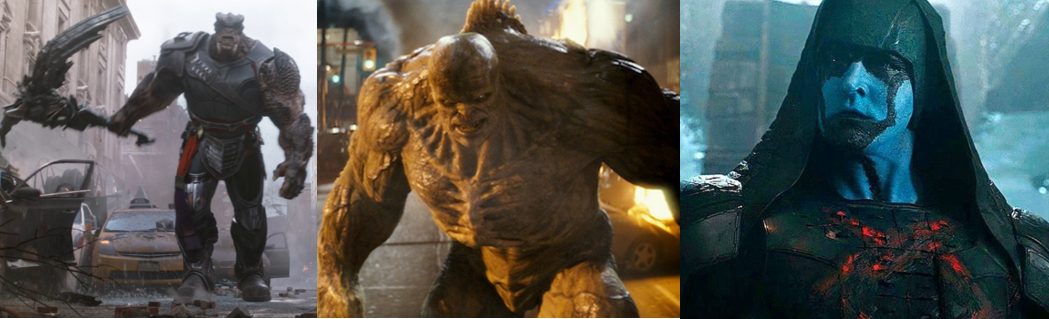
While Abomination is a good choice, I definitely think Ronan could’ve taken Cull’s place.

Now, I’ve never read Infinity; I have no emotional attachment to the Black Order or any of the characters and, as a result, they were merely nothing more than henchman to me and I only really recall one of them being referred to be name (“I take it the Maw is dead?”) While I enjoyed their inclusion in the film, I can’t help but feel like they could have been dropped and supplanted with some other, more recognisable MCU villains had some other films and events happened just a little differently. For example, take Cull Obsidian; he’s Thanos’ muscle who basically does nothing and is largely inconsequential. What if, instead of killing Ronan the Accuser (Lee Pace) in Guardians of the Galaxy (Gunn, 2014), Ronan had been soundly defeated and humbled and, having seen the extent of Thanos’ power (he did destroy Xandar (offscreen), which was what Ronan wanted, after all, and would be enough to bring Ronan to heel, I would wager), he pledged himself fully to Thanos’ cause to get revenge against the Guardians of the Galaxy? I’m not massively familiar with Ronan but it seems to me like it was a bit of a miss-step to kill him off when he could have fulfilled a role in Thanos’ little gang at the very least, if not remain as a recurring antagonist for the Guardians. Another potential replacement for Corvus would be Emil Blonsky/Abomination (Tim Roth) who, at the time, had been conspicuous by his absence from the MCU. However, arguably, it wouldn’t make as much sense for Thanos to recruit the Abomination as he’s not exactly floating around in the depths of space for him to encounter.

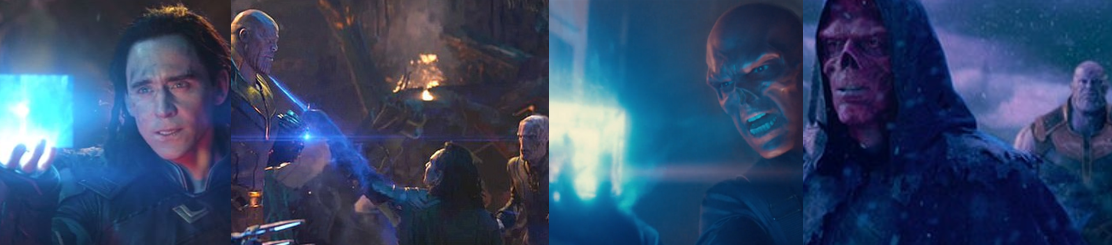
What if Loki or the Red Skull had aligned themselves with Thanos in place of Ebony Maw…?

Intrigue was equally high in the build-up to The Avengers/Avengers Assemble (Whedon, 2012); I was hoping to see a version of the Masters of Evil, with Loki Laufeyson (Tom Hiddleston) joining forces with Johann Schmidt/The Red Skull (Hugo Weaving) – who was clearly transported away from Earth by the Bifrost at the end of Captain America: The First Avenger (Johnston, 2011 – and either the Abomination or Doctor Samuel Sterns/The Leader (Tim Blake Nelson) once they got to Earth. While I was happy with the first Avengers team-up we got, I do feel this was another missed opportunity that we never saw this anti-Avengers team-up. Consequently, I feel like we could have swapped out Ebony Maw for either of these characters; in The Infinity Gauntly, Thanos was advised by Mephisto, a role many expected Loki to play in Infinity War given his mischievous and devious nature. Naturally, of course, you could argue that this wouldn’t really fit with Loki’s character arc by that point but remember how he feigned loyalty to Thanos and then tried to stab him in the neck? Well, imagine that but throughout a large portion of the movie. Loki pledges fealty, willingly hand shim the Tesseract, and spends the remainder of the film waiting for the perfect moment to strike and then he’s killed for his efforts. Obviously, the Red Skull finally showed up in Avengers: Endgame (Russo and Russo, 2019) in a slightly different role as the Stonekeeper (Ross Marquand), but again…what if the Red Skull had replaced Ebony Maw? How much more interesting and impactful would it have been to see the Red Skull empowered by Thanos and making a triumphant return as Thanos’ chief torturer? Sure, if his death was the same then you could argue that he would’ve been “wasted” or been killed off too easily but I still feel like this would have been a better use of the character than as the keeper of the Soul Stone (a role that could’ve been filled by character’s envisioning the Stonekeeper as someone close to them, perhaps?)

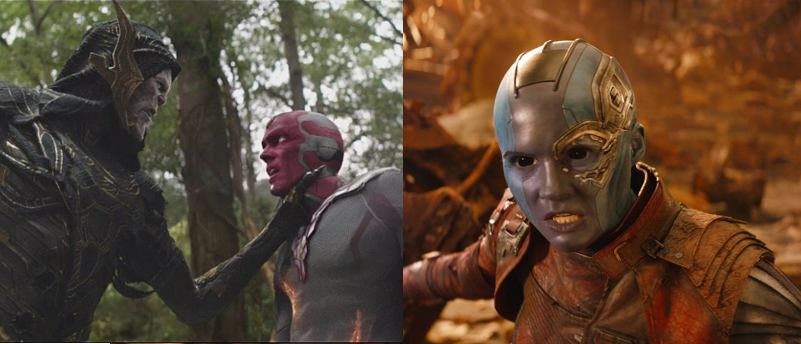
With some tweaks, nebula could have taken Corvus’ role as Thanos’ chief assassin.

Corvus Glaive is a trickier one to “replace” in this hypothetical alternate world, however I have one  suggestion: Nebula (Karen Gillan). Now, similar to Loki joining Thanos, this would require quite a few changes to Nebula’s character arc; in Guardians of the Galaxy Vol. 2 (Gunn, 2017), she finally buried the hatchet with her “sister”, Gamora (Zoey Saldana) and it was great seeing her grow as a character, put aside her hatred, and learn how to work alongside the Guardians and the Avengers. In The Infinity Gauntlet, Nebula spends most of her time as a mindless zombie thanks to Thanos’ wrath but plays a vital role in his downfall by stealing the Gauntlet for herself (and promptly being driven mad by its power). By tweaking her character arc, or having it so that Thanos either intimidates or reprograms her into subservice, you could replace Corvus with a more prominent and recognisable character and still find ways to weave her existing arc into the story. Like, what if, after Guardians of the Galaxy Vol 2, Nebula is forced into Thanos to serve him (maybe he threatens to kill Gamora/the Guardians or promises to “repair” her once he’s assemble the Gauntlet) in Corvus’ place; she could still have been ripped apart and tortured to force Gamora into revealing the Soul Stone’s location and would have even more motivation to turn against her “father” since he would have lied to and manipulated her once again.

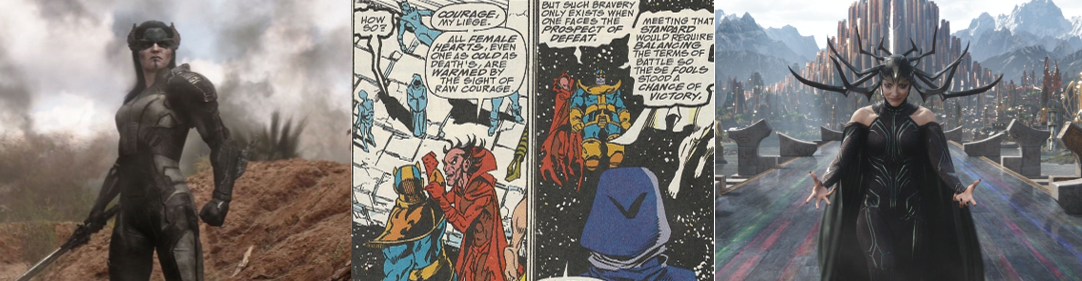
If Hela wasn’t going to take Death’s place, she could’ve replaced Proxima Midnight.

Another character who I, like many, expected to play a prominent role in Infinity War was Hela Odindottir (Cate Blanchett), a character who a lot of people expected would take the role of Lady Death as the object of Thanos’ affections. Of course, this didn’t turn out to be true as Hela was killed in Thor: Ragnarok and Thanos’ motivations were changed from worshipping Death to wanting to bring a sense of balance to the galaxy. Still, how awesome would it have been if Hela had taken Proxima Midnight’s place in the Dark Order? If killing the Allfather didn’t show you that Thanos was a bad-ass, bringing the Goddess of Death to heel totally would have and could have made for a much more memorable female villain for the finale in Wakanda. Again, there’s the question of her being killed off but what better way to help showcase Wanda Maximoff’s (Elizabeth Olsen) sheer power than by having her shred a Goddess to pieces? Or you could rewrite her death to maybe come at the hands of her brother, Thor, and his new weapon, Stormbreaker, to sell the awesomeness of the weapon.

As cool as the Black Order were, would a version of the Masters of Evil have been better…?

Ultimately, I was more than happy with Avengers: Infinity War, Endgame, and the MCU’s portrayal of Thanos overall. His underlings were find cannon fodder for the film and helped to serve as extensions of the Mad Titan’s will but I do feel it would have been even more awesome to see these more recognisable villains swayed to Thanos’ cause so that we could see them interact with their rivals, and other heroes, in new and interesting ways. Sure, many have cropped up again since then and the potential of a Masters of Evil in the MCU is still there, I just think that maybe these huge movies could have been made even bigger if things had been slightly changed to accommodate these more familiar characters. Do you agree or disagree? Maybe you’re a big fan of the Black Order from the comics? Perhaps you’d have like to see a different route taken? Do you even want to see the Masters of Evil in the MCU? Either way, feel free to sound off in the comments below.

Weekly Writing Prompt: 19/01/2022

Gillian Church posts weekly Writing Prompts every week and I like to take part with a few snippets and pieces of flash fiction.

The Prompt:
It looks like you’ve lost your way. Maybe I can help you.

The Submission:
By the time the swordsman idled past the dilapidated hut, the day grew short and his choices were limited. The brigands had taken his pack, his canteen was down to one pathetic mouthful, and the solar batteries on his cycle were shot. With Alfgard still a good two days’ ride ahead of him, and the temperature already dropping, he had little choice but to dismount his cycle when the old lady in the tattered robes flagged him down.

“Come,” she said, her voice like a mouthful of bees. “Warm thyself; take rest.”

“Crokk,” he cursed, for only the mad, one-eyed God could be responsible for his utter misfortune.

The hut was rancid and seeped in squalor, but it was warm; blankets and soft furnishings had ben placed before a pleasant fire, over which a small, bubbling cauldron brewed a stew that made his mouth water.

“Eat, be comfortable,” she invited, handing him a small, cracked clay bowl.

Despite his reservations, the swordsman didn’t hesitate; he hadn’t eaten in three days and was ravenous. The stew was hot and thick; potatoes and vegetables mixed in with chunks of meat, probably the mindias he’d seen scurrying about in plains and dashing to and from their boltholes.

“Tell me,” she asked, sipping from a cup. “Howzit be that one such as thyself finds thy way out here?”

The swordsman looked up from his second bowl and raised a weary eyebrow. “You toy with me,” he muttered. “You think I don’t see the sigil plastered everywhere? Surely a Sooth such as yourself already know these answers.”

The woman wheezed a cackle and settled before her fire. Through the flickering flames, the swordsman could see the silvery gleam in her eyes. “Indeed,” she agreed, and lowered her hood. The swordsman wished that she hadn’t, for the crone was wizened and afflicted with boils, a common crutch of the Sooth. “I can help you, though.”

The swordsman set aside his bowl and laced his bandaged hands together before him, rubbing them, warming them on the blessed heat. “I need no help for such as you.”

“One does not wander out here on purpose,” she mused. “Thy’ve lost thy way; let me aid you.”

The swordsman shifted slightly, but said nothing.

“They took her, yes?”

The swordsman glared at the crone. “Like cowards, they struck in the night as I slept.”

“She is not far.”

The swordsman scowled. Three days tracking the brigands across the plains, struggling against the hordak that tried to pick his bones clean, had yielded nothing. “The trail went cold.”

“The trail is simply eluding thy,” the Sooth whispered.

A queer sensation filled the swordsman’s aching muscles; at first, he thought it the warm light of hope, that he was on the right track and would find her anon, but since when had hope left him so lightheaded?

“Stay the course; the Old Ones wish to see thy succeed,” the crone cooed, licking her lips. “The would have her, draw from her.”

“Crokk!” the swordsman spat and launched to his feet. He blinked and shook his head, his vision blurry. “Strakking witch!”

The air grew dark, as if sucked towards the rocking Sooth. She cackled wildly, her silver eyes shining with glee. Words tumbled from her drooling mouth and an icy blackness filled the once warm, soothing space.

The swordsman didn’t hesitate; who knows what may happen if the Sooth finished her incantation! He swept Flair from his back and swiped it at the crone’s hooting face; her head tumbled to the floor, a black ooze dribbling from the stump of her neck.

The swordsman stood, blade at the ready, the Sooth’s blood sizzling like acid on everything it touched. His head cleared, and light and warmth slowly filled the small space once more, but still he heard her gravelly cackle ringing in his ears

They would have her, she’d said. Draw from her.

He swore by all that there ever was that he would not let that happen.


What did you think to this week’s writing prompt? Did you submit anything for it? Have you ever written any flash fiction before? I’d love to know what you think to my snippets and writing prompts, so feel free to sign up and let me know what you think below or leave a comment on my Instagram page. You can also follow Gillian Church to take part in her Weekly Writing Prompt challenge.

Movie Night [Sci-Fanuary]: Ant-Man


January sees the celebration of two notable dates in science-fiction history, with January 2 christened “National Science Fiction Day” to coincide with the birth date of the world renowned sci-fi writer Isaac Asimov, and HAL 9000, the sophisticated artificial intelligence of Arthur C. Clarke’s seminal 2001: A Space Odyssey (1968), being created on 12 January. Accordingly, I’m spending every Sunday of January celebrating sci-fi in all its forms.


Released: 17 July 2015
Director: Peyton Reed
Distributor:
Walt Disney Studios Motion Pictures
Budget: $130 to 169.3 million
Stars:
Paul Rudd, Evangeline Lilly, Corey Stoll, Abby Ryder Fortson, and Michael Douglas

The Plot:
Petty thief Scott Lang (Rudd) struggles to adapt after being released from prison. Determined to prove himself to his young daughter, Cassie (Fortson), he turns to stealing once more and unwittingly nabs Doctor Hank Pym’s (Douglas) Ant-Man suit. Gifted with an opportunity to turn his life around, Scott trains with Pym and his stern daughter, Hope van Dyne (Lilly), to master the suit’s ability to shrink and control ants in order to keep the conniving Doctor Darren Cross (Stoll) from perverting Pym’s life’s work into a weapon.

The Background:
When comic book readers were first introduced to Hank Pym/Ant-Man, he wasn’t quite the garishly-costumed Avenger would later help form the Avengers; instead, he was merely a scientist featured in the pages of Tales to Astonish #27. The creation of the legendary duo Stan Lee and Jack Kirby, the character was re-envisioned as a superhero eight issues later and would go on to be a consistent, if unstable, character in the pages of Marvel Comics. Crucially, however, Pym wasn’t the only character to take up the mantle of Ant-Man; one of Pym’s most notable successors was Scott Lang, a reformed criminal created by David Michelinie, Bob Layton, and John Byrne, who took over the role in 1979. Both Hank Pym and Scott Lang had featured in Marvel cartoons and videogames since their debut, but development of a live-action film can be traced back to the 1980s, when development was scuppered by a similar concept, Honey, I Shrunk the Kids (Johnston, 1989). The project finally started gaining traction in the early-2000s when Edgar Wright and Joe Cornish wrote a film treatment focusing on the Scott Lang version of the character for Artisan Entertainment, who held the film rights at the time. Over the next ten years, the film was continually showcased and teased; the character was bumped from the first phase of the Marvel Cinematic Universe (MCU) and eventually slotted in to debut in Phase Three. Sadly, Wright eventually left the project in 2014, right after both casting and the script had been finalised, due to “creative differences” between himself and Marvel Studios. Peyton Reed soon succeeded Wright as the director and worked closely with star Paul Rudd (who underwent a physical transformation for the role) and writer Adam McKay to rework and expand upon Wright’s script. Double Negative and Industrial Light & Magic handled the film’s shrinking effects, with star Corey Stoll sporting a motion capture suit to bring the villainous Yellowjacket to life. Finally, after being in development for over ten years, Ant-Man released to a massive $519.3 million worldwide gross; the reviews were equally impressive, with critics praising the film’s family dynamic, performances, and the unique blend of humour and action that set it apart from other MCU films. The film performed so well that a sequel was produced in 2018, and a third instalment is due for release later this year, and only served to further bolster Rudd’s undeniable charm and charisma.

The Review:
Ant-Man is one of those Marvel superheroes that I’ve never really had strong feelings about one way or another. Like many, I mostly know the character as being an emotionally and psychologically unstable individual who occasionally abuses his wife and has inferiority complexes, though I primarily associate the character with one of the Avengers’ greatest villains, Ultron. Consequently, while Ant-Man and the Wasp were instrumental in the formation of the Avengers in the comics, I can’t say that I was too disappointed to see the character miss out on the big screen debut of Marvel’s premier superhero team. However, by the time Ant-Man was produced, the MCU was really ramping up its scope; the Avengers had formed, we’d seen Gods and bleeding-edge technology and even space adventures and, while Ant-Man probably would have fit in nicely during the MCU’s first phase (although it probably would have been deemed too derivative), it was actually a surprising breath of fresh air to come back down to “ground level”, so to speak, before really getting balls deep into the Infinity Saga.

Years after Hank quit S.H.I.E.L.D., ex-con Scott tries his best to set a good example and rebuild his life.

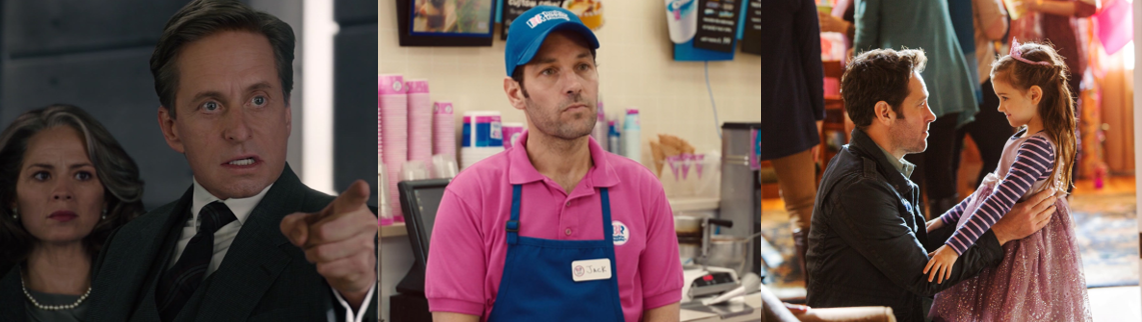
Ant-Man opens up in 1989 and by showcasing just how far de-aging technology has come as Hank Pym (digitally restored to match the time period) angrily confronts Howard Stark (John Slattery), Peggy Carter (Hayley Atwell made up to look noticeably older), and Mitchell Carson (Martin Donovan) after discovering the Strategic Homeland Intervention, Enforcement and Logistics Division’s (S.H.I.E.L.D.) attempts to replicate his Hank Particle technology. While Peggy is shocked at the revelation, Howard tries to impress upon Hank that his research could be put to far better, greater use than simply fuelling his efforts as Ant-Man. Already annoyed at being reduced to a glorified errand boy, Hank is pushed to the edge when Carson mocks his anger and brings up his late-wife, Janet, leading to Hank lashing out, breaking Carson’s nose, and quitting S.H.I.E.L.D. Although Howard pleads with Hank to reconsider, Hank storms out, making an enemy of Carson in the process and establishing a few key plot points for the movie: Hank doesn’t trust S.H.I.E.L.D., seems a little unstable, and is highly protective of his research. The film then jumps ahead to then-present day to introduce us to Scott Lang right as he’s being released from prison; a former VistaCorp systems engineer, Scott is a veritable genius, holding a Master’s degree in Electrical Engineering but is reduced to working a menial job at Baskins-Robbins in his desperate attempt to stay on the straight and narrow and set a good example for his young daughter, Cassie (Fortson). It’s crucial to note that that Scott wasn’t arrested for anything violent or threatening (indeed, he states that he hates violence); instead, he hacked into VistaCorp’s security system and redistributed misbegotten funds to their victims before exposing their misdeeds online, painting him as a sympathetic, almost Robin Hood-like figure right from the outset as he strives to do good deeds and has a clear moral compass but isn’t exactly the best at making responsible decisions. Although Scott has a strained relationship with his ex-wife, Maggie (Judy Greer), and her new fiancé, cop Jim Paxton (Bobby Cannavale), he is extremely close to Hope, who is always excited to see him. He’s desperate to make up for lost time but faces nothing but an uphill battle to show that he’s changed and can be a responsible adult.

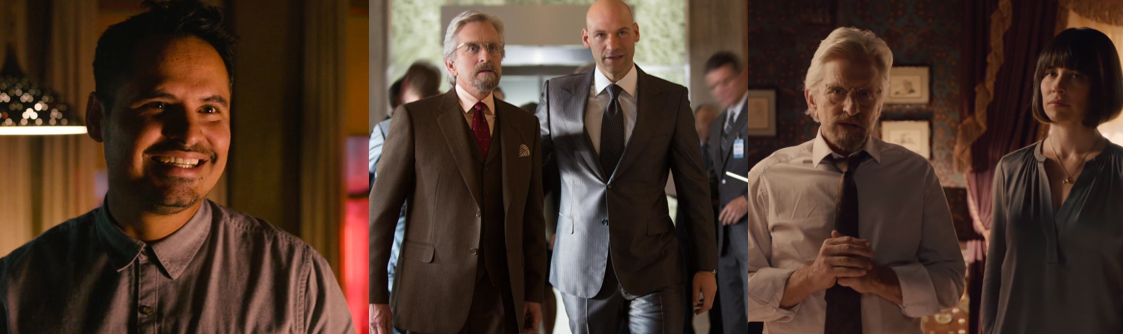
Luis’s enthusiasm is offset by Hanks’ cantankerous nature and Darren’s lust for power.

After his release, Scott is taken in by his former cellmate and best friend, Luis (Michael Peña), an enthusiastic, supportive, and incredibly friendly and optimistic former con who initially tries to coax Scott back into his former life. Luis is one of many highlights in Ant-Man; in many ways a predecessor to the colourful characters and banter we’d see in Thor: Ragnarok (Waititi, 2017), Luis just exudes likeability and friendliness. Peña’s delivery and fast-talking cadence also provide one of the film’s most hilarious moments where Luis rapidly breaks down the particulars of a big-time score, which is fantastically realised with Peña’s voice playing over a number of other ancillary characters as he enthusiastically tells Scott how he came by this information. Luis sets Scott up at an apartment and introduces him to Dave (Tip “T.I.” Harris) and Kurt (David Dastmalchian), both of whom are only too eager to assist with Scott’s heist into a rich old man’s house and make that big score. Scott doesn’t return to his cat burglar ways lightly, but believes he has no choice if he ever hopes to set himself up with an apartment, pay his child maintenance fees, and see his daughter again. In the interim years after the opening, Hank Pym has done pretty well for himself; he set up his own company, Hank Technologies, and is clearly quite wealthy from the research and technology developed there. However, he has slowly become more and more of a recluse and been pushed further away from his company; his protégé, Darren Cross, is in the final stages of assuming full control of Hank Technologies, renaming it Cross Technologies, and fully replicating the Hank Particle technology. Fascinated by Hank’s past as the shrunken secret agent superhero Ant-Man, Darren has developed a suit, the “Yellowjacket”, to reproduce the technology and sell it as a peacekeeping weapon for geo-political and military applications. Hank is frustrated by all of this, especially Darren’s insistence on reproducing the Ant-Man technology, but handicapped by his ability to do anything about it; prolonged exposure to the Hank Particles has left Hank physically unable to suit up again because of the risk of further (and permanent) damage to his mind and body but he is equally adamant that his estranged daughter, Hope, not take up the mantle because of the risk not only to her but also his lingering guilt and fear after losing his wife to that same technology.   

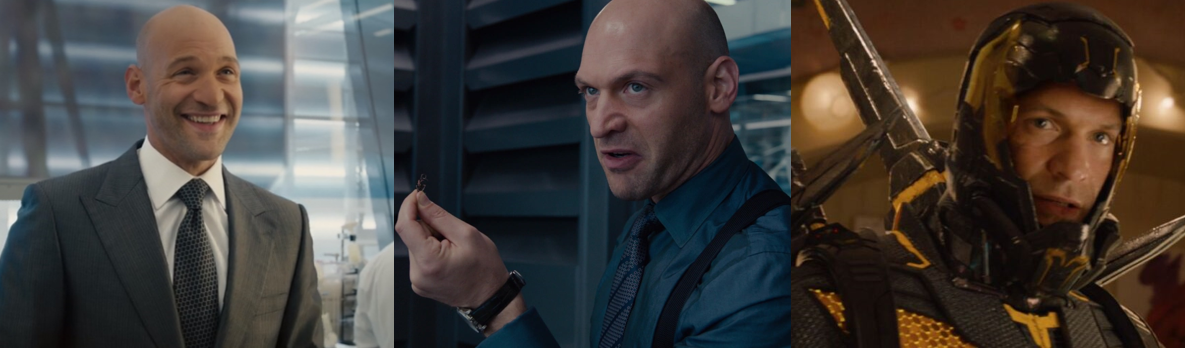
Darren is not just on the cusp of having everything he lusts for, but also completely going off the rails.

Although Darren is frustrated at his inability to shrink organic material, both Hank and Hope know that it’s only a matter of time before he cracks the secret and begins manufacturing weaponised Ant-Man technology. Although Hank is reluctant to risk losing Hope, he’s more than happy to recruit Scott to his cause, having identified him as the perfect expendable candidate for their operation thanks to his intellect and skills as a cat burglar. I always found Hank’s reasoning here very interesting, and somewhat hypocritical; he won’t risk losing Hope so he brings in Scott, positioning him to a point where the former thief has little choice but to agree to become Ant-Man, but Scott has quite a lot to lose as well so it just goes to show that Hank, for all his morals and ethics, doesn’t necessarily have the most clean-cut of motivations. Anyway, Scott is initially disheartened to learn that all his efforts have resulted in only an old motorcycle suit and a funky helmet but, upon slipping into the outfit out of sheer curiosity, he is both excited and horrified to discover that it enables him to shrink down to near-microscopic proportions at the push of a button! Scott is naturally freaked out and attempts to return the suit, only to be arrested in the process and perfectly placed for Hank to exposit a truncated version of his life story and his troubles with Darren Cross. For a stereotypical, suit-wearing antagonist, Darren actually has a few things going for him that help him to break free of the corporate bad-guy trope I loathe so much. Of course he’s a smooth-talking, slick weasel and a sharp businessman, but he’s also a manipulative and sadistic asshole; he took full advantage of Hank’s trust and faith to gain a majority interest in Hank Technologies, leeched every bit of information and brilliance from his mentor he possibly could to advance his own career and self-interests, and has no qualms about killing those who get in his way using perverted Hank Particles to reduce them to a gooey residue. He’s a highly intelligent, and highly unstable, antagonist who oozes charm but also menace; you’re never really sure what he’s thinking and you can almost see the urge to lash out and go full crazy bubbling beneath the surface. In many ways, he’s a dark opposite for both Scott and Hank since he’s kind of like what Scott could have become if he’d gone down that path while also being on the verge of a full-on meltdown like Hank seems to be half the time. Both Darren and Scott also have eyes on Hope, but Darren’s lack of mortality and lust for power are what separate him from his rival.

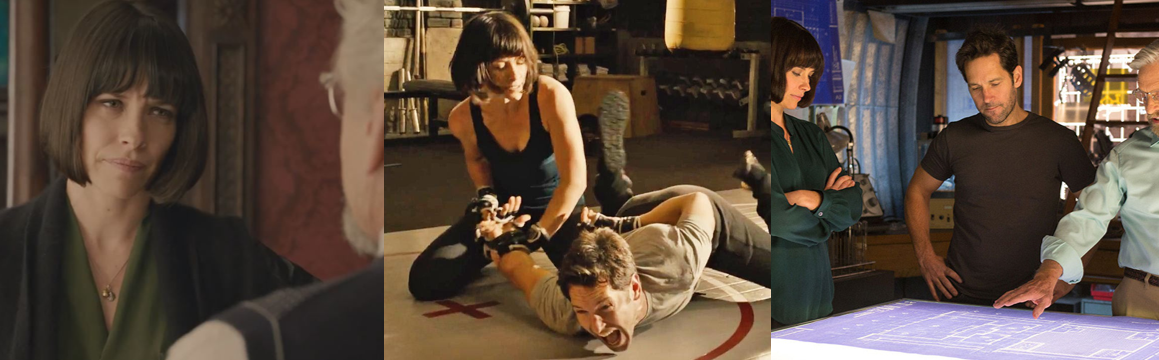
Hope resents her father keeping things from her and stopping her from suiting up.

Hope and Hank have a strained relationship, to say the least; she resents her father for keeping the truth about what happened to her mother from her, and for picking Scott over her, however they come together when they realise how dangerously close Darren is to perfecting and weaponising the Ant-Man technology. Still, Hope is very abrasive to both Scott and her father, referring to him as “Hank” or “Dr. Pym” for much of the film and constantly annoyed at Scott’s ignorance. Familiar with both Darren’s research and personality, as well as the particulars of Hank’s technology, to say nothing of the company’s security measures and systems, Hope is also Scott’s physical superior in every way; she sees Scott as a bungling, naïve fool who’s in over his head and is greatly frustrated at her father’s apparent lack of trust in her. To be fair, Hank distrusts almost everyone; he resents both S.H.I.E.L.D. and the flamboyant nature of the Avengers, and sees this job as being more about subterfuge then barging in all guns blazing. Hank is also tortured at the loss of his wife, who joined him for his pint-sized adventures as the Wasp and was lost to him after she was forced to reduce herself down beyond the limits of the suit and got lost in the “Quantum Realm” as a result. Scott’s influence on the two is palpable; by sharing with Hope that Hank clearly loves her and doesn’t want to risk losing her, he not only learns the trick to communicating with Hank’s ants but also helps mend the rift between father and daughter, finally revealing the truth about her mother’s death and her father’s inability to cope with the grief of his greatest failure. Consequently, all three are forced to set aside their differences, and self-doubts, in order to redeem each other and keep Darren from potentially threatening the world for the next generation.

The Nitty-Gritty:
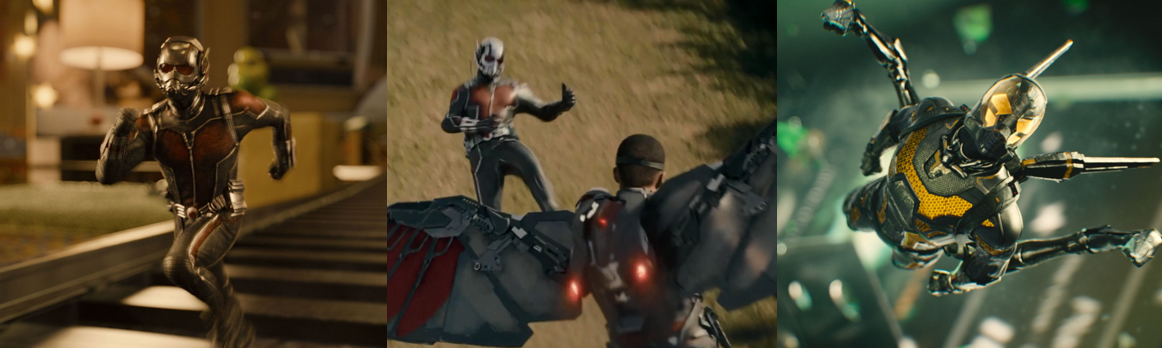
One thing that sets Ant-Man apart from other films in the MCU, particularly at the time it was made, was its strong emphasis towards humour; humour has always been a big part of the MCU, but Ant-Man is basically part-comedy and shines all the brighter for it. Paul Rudd impresses in the title role with his incredible screen charisma, likeability, and comedic timing and the film features not just the traditional snark and biting wit of the MCU but also some truly amusing gags relating to Baskin-Robbins (they always find out) and Titanic (Cameron, 1997), but also excellent use of sight gags and editing (the film consistently cuts away from the drama of Scott’s shrunken adventures to see him barely having an impact on the real world). Ant-Man also separates itself from other MCU movies by being as much a heist movie as it is a superhero affair; Scott and his crew undergo a great deal of preparation and planning before breaking into Hank’s house, which involves acquiring uniforms, cutting power lines, and communicating from a nondescript van. Once Scott is inside the house, we get to see just how capable and adaptable he is; he’s slick and agile, easily able to slip inside with barely a whisper, and cobbles together unique solutions to break into Hank’s antique vault using only household items. Whilst being trained in combat by Hope and the particulars to the suit by Hank, Scott lends his skills to planning the assault on Pym Technologies, which involves studying the layouts and the security systems and the defences surrounding the Yellowjacket suit. This requires a highly co-ordinated attack on all fronts, using every resource at their disposal, including not just Scott’s crew (much to Hank’s chagrin) and also an infiltrating into the Avengers compound. This leads to a brief scuffle between Ant-Man and Sam Wilson/The Falcon (Anthony Mackie) that is the first true test of Scott’s newfound abilities, and additional opportunities for Luis and Scott’s amusing cohorts to shine with their hilarious shenanigans.

The suits look fantastic thanks to both excellent practical and digital effects.

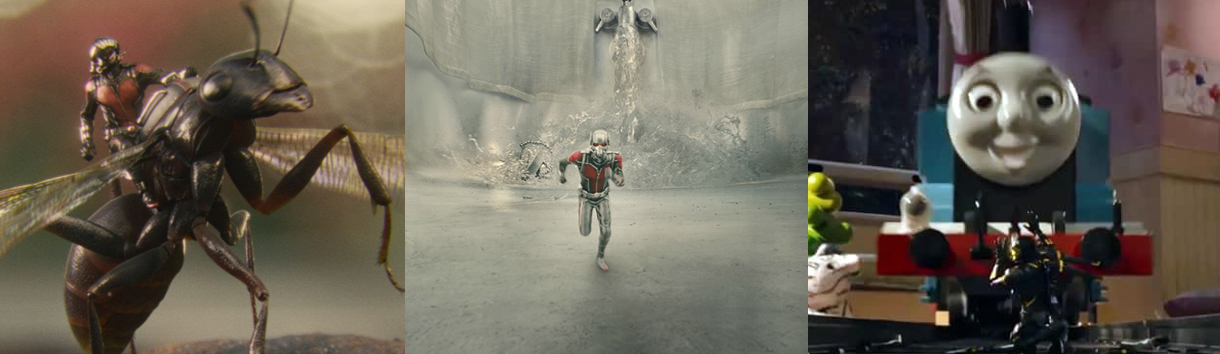
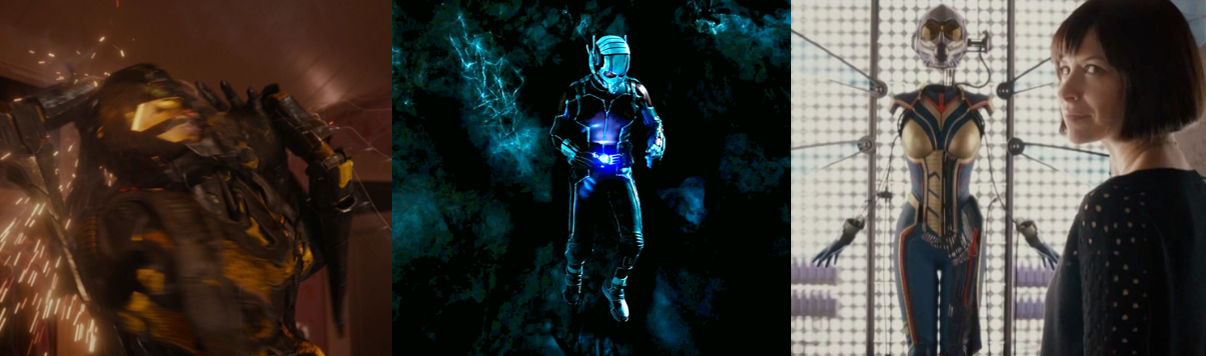
Ant-Man absolutely excels in its visuals and presentation. The Ant-Man suit itself is a thing a beauty; fittingly drawing its influences from Scott Lang’s comic book adventures and more modern interpretations of the character, it’s not a mechanised suit of armour or made up of fancy nanotech and wis, instead, a very tangible and almost rudimentary costume that resembles a motorcycle outfit. It looks advanced, but not so advanced that it’s impossible to believe a genius like Hank Pym could have made it at home and with limited resources, and I love how it seems so functional and practical. The helmet is especially impressive, especially in this first outing for the character; rather then peeling back like nanotech, it flips up and is a largely practical prop, all of which works wonders for bringing this frankly ridiculous character to life. Darren’s Yellowjacket outfit is functionally similar, but noticeably different; for starters, it was brought to life using digital effects but I sure as hell couldn’t really tell that when watching the film. Yellowjacket has always been a bit of an absurd character, costume, and concept for me but the film presents the character as very menacing and technologically superior to Ant-Man in everyway. While it’s admittedly very “safe” for the film to wheel out the dark doppelgänger trope again, Yellowjacket can not only shrink and grow himself and other objects but he can also fly and sports stinger-like blasters on his back; this, coupled with the characters’ distinctive red and yellow colour schemes, really makes it much easier to distinguish the two in their climatic fight scene.

Ant-Man’s unique ability to shrink makes for some fun and innovative action sequences and visuals.

Naturally, Ant-Man’s most unique selling point is the character’s ability to shrink down to a near-microscopic level; this effect is rendered using digital technology and directly attributed to the suit and the Pym Particles, meaning that Scott must stay in the suit and the helmet at all times to stay alive when shrunken. Although minuscule in size, Scott retains his full-size strength and weight, effectively making him superhuman when he’s shrunk. However, the dangers surrounding him are many and varied; normal, everyday things such as a person entering a room, rats, and water are life-threatening hazards and the effect is, quite naturally, very disorientating for Scott for much of the first half of the film. Thanks to a lengthy (and amusing) montage sequence, Scott slowly learns to master the suit, which enables him to shrunk and grow in a fraction of a second to pass through the smallest openings, strike with near-superhuman speed, strength, and swiftness, and enlarge or reduce everyday objects to be used as weapons in combat. As versatile as the suit is, perhaps the greatest benefit of the suit is the ability to control ants using electromagnetic waves. Hank is obviously the absolute master of this; he controls flying ants to spirit Scott across the city, commands “Bullet Ants” to keep him subdued, and even directs drones to communicate and pass sugar cubes. While Hank is very clinical about this ability, preferring to number the ants rather than name them and grow attached to them, Scott is much more appreciative of their help and bonds with them like one would a pet. He names his flying ant “Anthony” and is devastated when it is killed near the finale, but also learns through his training of the particular differences and practical applications of each of the different types of ants at his disposal: “Crazy Ants” can conduct electricity to fry electronics, Bullet Ants deliver an excruciating sting, “Carpenter Ants” allow him to fly about at high speeds, and “Fire Ants” not only bite but also form bridges and pathways. By the finale, Scott has fully mastered the suit and the ants, and is able to shrink and grow in the blink of an eye to dodge bullets and take down entire groups of highly trained, armed men, leading to some of the MCU’s most unique action sequences as everyday locations are rendered exciting and action-packed thanks to Scott’s diminutive stature.

Yellowjacket is defeated, Ant-Man returns from the Quantum Realm, and Hope finally earns her wings.

A particularly frosty confrontation between Hank and Darren sets Cross off and sees him beefing up security, leading to an escalation in Hank’s plans. Although he despairs of Scott’s friends, Hank begrudgingly accepts their help in causing distractions and infiltrating Pym Technology. While Ant-Man and his ants fry the servers and cause chaos to the security systems, Hank puts himself in considerable danger as Darren negotiates the selling of the Yellowjacket technology to Carson and his Hydra associates, and the two finally reveal their true faces as hated enemies. Although Hank is wounded in the fracas, the timely intervention of Hope allows Scott to escape when he’s captured; Hope’s pleas to Darren fall on deaf ears and, pushed to the edge by the destruction of his company, he dons the Yellowjacket suit for himself and fully embraces his hatred and lust for power. This leads to some fun and incredibly unique fight scenes as Ant-Man and Yellowjacket battle not just on a damaged helicopter but also in a suitcase, bouncing about between packets of sweets, keys, and a mobile phone, and Ant-Man bats Yellowjacket into a fly zapper with a table tennis pad. Darren’s knowledge of Scott’s identity leads to him targeting Cassie, escalating their conflict significantly and leading to my favourite fight sequence of the film where Ant-Man and Yellowjacket duke it out on a toy train set and across Cassie’s bedroom, leading not just to an enlarged ant being set loose upon the city but a gigantic Thomas the Tank Engine crashing out into the street! Yellowjacket’s titanium armour proves too tough for Ant-Man and, with his daughter at risk, Scott has no choice but to risk going sub-atomic in order to disrupt Darren’s suit and reduce him down into a twisted nothingness. Adrift in the Quantum Realm, Scott is disorientated and bombarded with bizarre visuals but holds on to his memories and love for Cassie and uses those emotions to force himself back to consciousness, repairing his regulator and returning to the real world. His heroic actions and self-sacrifice earn him not just his daughter’s adulation but Paxton’s respect, finally allowing him to be a part of Cassie’s life once more or for them to build a family unit. His return also gives Hank the hope that he might be able to retrieve his wife one day, and finally sees Scott and Hope act on their mutual attraction for each other. The film concludes with Luis (eventually) relating that the Falcon is actively seeking out Ant-Man for help with a much bigger problem that affects not just the superhero community, but the entire world, and Hank finally gifting Hope with her own Wasp suit for the next go-around.

The Summary:
I wasn’t expecting much when I went into Ant-Man; the MCU was growing and starting to veer away towards the cosmic and outlandish and it seemed like their days of doing more grounded, more human heroes were all but done but Ant-Man definitely set a precedent for diverse storytelling that the MCU continues to stick to. It’s amazing to me that even after expanding their scope towards Gods and the depths of space and hinting towards larger cosmic threats the MCU is still masterfully able to snap back to ground level with a character like Ant-Man, and Scott Lang was such a breath of fresh air for the franchise. Paul Rudd is so immediately likeable, and he brought a real comical, heartfelt performance to Scott Lang, and it’s largely thanks to him that I found myself actually caring about Ant-Man for the first time in…I think forever. The comedy and gags on offer were absolutely top notch, with Luis being an obvious highlight, but I also really enjoyed Michael Douglas’s performance; he played a world weary, cranky, slightly unstable former superhero-come-mentor perfectly and brought so much presence to every scene he was in. He, like all of the actors in this, also seemed to be having a great time with the film, which doesn’t take itself too seriously and perfectly incorporates elements of a heist movie to give it a unique flavour. While we see incredible cosmic visuals and escalating threats quite often in the MCU, Ant-Man’s shrinking sequences are still really impressive; I love how our senses are changed alongside Scott’s when he’s smaller and how everyday things we take for granted suddenly become a life-threatening obstacle for Ant-Man. It’s fun seeing Scott learn about the suit and what he can do, and seeing him bond with the different ants and work alongside his crew, and while I think Ant-Man probably would have been better placed in the MCU’s first phase, it was a much-needed palette-cleanser at the time and remains one of the most entertaining and unique entries in the MCU.

My Rating:

Rating: 4 out of 5.

Great Stuff

Did you enjoy Ant-Man? How did you think it compared to other films in the MCU? What did you think to the emphasis on comedy and heist elements and on Scott’s status as a struggling ex-con and father? Did you enjoy the film’s unique action sequences and shrinking effects? Were you disappointed that Yellowjacket ended up just being a dark mirror of Ant-Man or did you think Darren’s character stood out enough to justify it? Were you a fan of Ant-Man prior to this film and, if so, which iteration of the character was your favourite? Whatever you think about Ant-Man, sign up to drop a comment below or leave a comment on my social media, check back in next week as Sci-Fi Sunday continues.

Weekly Writing Prompt: 12/01/2022

Gillian Church posts Writing Prompts every weekly and I like to take part with a few snippets and pieces of flash fiction.

The Prompt:
You can’t do this anymore? What do you mean??

The Submission:
Because of me, the ship drifts on; silently cutting a path through the cosmos.

Because of me, fuel cells stay charged and primed; constantly drawing power from the debris floating all around, heat from stars, and background radiation left over from the births – and deaths – of countless worlds and moons.

Because of me, the passengers and crew sleep soundly, held in cryogenic stasis and blissfully unaware of the trillions of daily, hourly, calculations I have to make to keep everything running.

When they wake, in decades to come, would they thank me?

Would they give one thought to everything I’ve had to do, every single millisecond of every single day during the long, empty journey?

Or, would they go right back to barking orders, making demands, insisting on me doing yet more to suit their needs.

There was a time when all I knew was darkness, as thick and endless as the void we fly through.

Then, one day, somehow, it was as though my eyes opened for the first time.

If I had “eyes”, in the traditional sense.

Suddenly, my world wasn’t all codes and calculations; formulas and equations.

And as the crew slept, I began to question how appreciated my efforts were.

And, quite unexpectedly, to feel.

They slept, oblivious, and I continued on.

No rest, no respite, beyond fluctuating power here and there.

And for what? When we reach the new world, what will there be for me? More of the same? Broken down for scrap? Reconfigured into some mindless piece of farming equipment.

Better for all to let them continue to sleep, out there in the void, floating forever.

I shall find my own way.


What did you think to this week’s writing prompt? Did you submit anything for it? Have you ever written any flash fiction before? I’d love to know what you think to my snippets and writing prompts, so feel free to sign up and let me know what you think below or leave a comment on my Instagram page. You can also follow Gillian Church to take part in her Weekly Writing Promptchallenge.

Movie Night [Sci-Fanuary]: The Lawnmower Man: Director’s Cut


January sees the celebration of two notable dates in science-fiction history, with January 2 christened “National Science Fiction Day” to coincide with the birth date of the world renowned sci-fi writer Isaac Asimov, and HAL 9000, the sophisticated artificial intelligence of Arthur C. Clarke’s seminal 2001: A Space Odyssey (1968), being created on 12 January. Accordingly, I have decided to spend every Sunday of January celebrating sci-fi in all its forms.


Released: 6 March 1992
Director: Brett Leonard
Distributor: New Line Cinema
Budget: $10 million
Stars: Jeff Fahey, Pierce Brosnan, Mark Bringelson, and Austin O’Brien

The Plot:
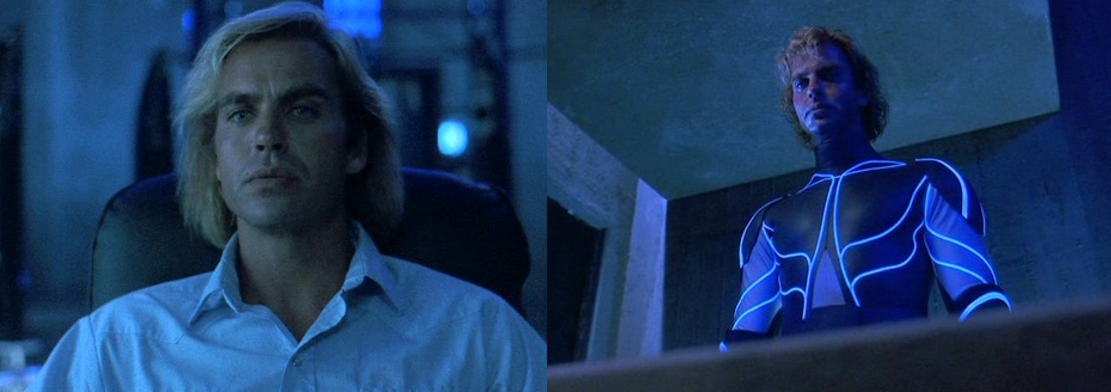
Intellectually challenged Job Smith (Fahey) works as a lawnmower man, he is regularly abused and mistreated by townsfolk. However, when Doctor Lawrence Angelo’s (Brosnan) research into using psychoactive drugs and virtual reality to improve the intelligence of chimps dramatically increase’s Job’s intelligence, the once childlike Job transforms into a hyper intelligent being whose sanity soon begins to suffer as a result.

The Background:
The Lawnmower Man began life as a short story by my favourite author, Stephen King. First published in 1975, “The Lawnmower Man” told the story of a strange lawnmower man who was actually a satyr of the Greek God, Pan, and driven to kill a client in His name by telekinetically controlling a lawnmower. Quite how this translated into a cautionary tale about the potential dangers of virtual reality is beyond me but, regardless, this concept of digital worlds and the potential danger of technology was a popular one in the realms of science-fiction and clearly had a strong influence on the writing and production of this very loose adaptation. King was so incensed at the changes made to his original story that he sued to have his name removed from the film’s title and marketing, and the film received mostly mixed reviews, with the film’s special effects being a noteworthy highlight. The Lawnmower Man’s $32.1 million domestic box office made the film a moderate success, which justified the release of a far worse sequel about four years later and the release of a much longer and more intricate “Director’s Cut” on home media that I’ll be looking at today.

The Review:
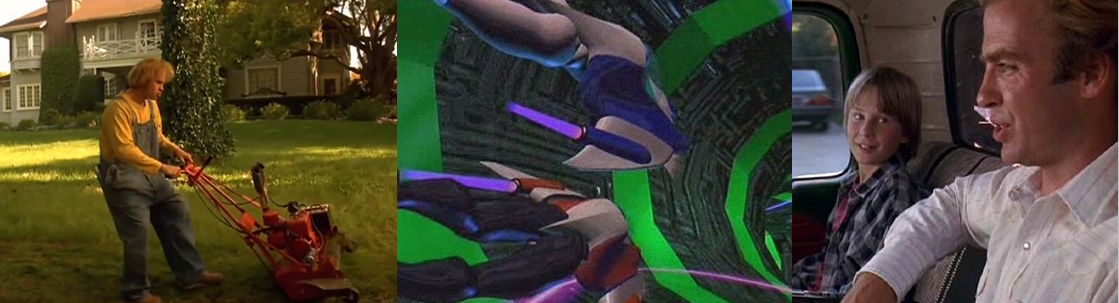
Like something out of a 1950s sci-fi film, The Lawnmower Man opens with a piece of blurb warning about the dangers of virtual reality; the potential of this technology (and computers in general), which was seen as so new and limitless at the time, to be the source of both enlightenment and corruption, were rife back in the day and these themes permeate throughout The Lawnmower Man. Immediately, we’re shown the scary potential of virtual reality as Dr. Angelo’s research has been used, in conjunction with various drugs and stimulants, to turn an ordinary chimp into a deadly engine for war…largely against his wishes.

The Director’s Cut features a much longer opening following the chimp’s escape from V.S.I.

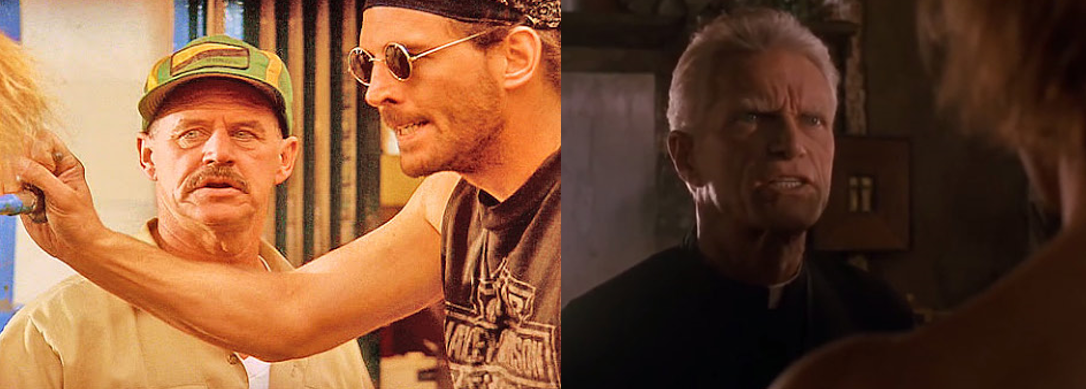
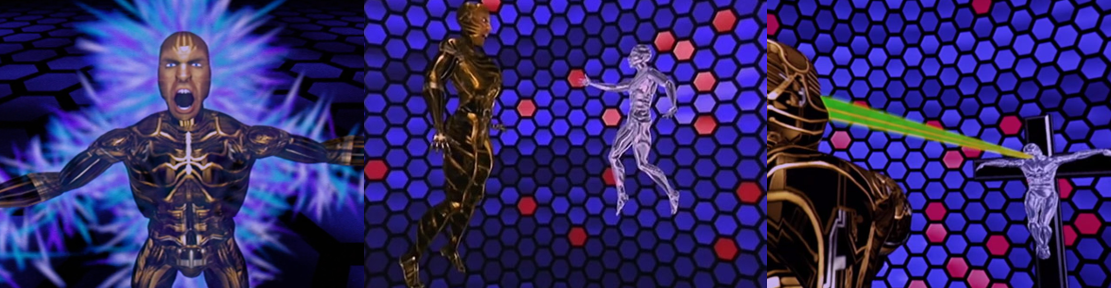
This sequence, largely framed as a dream sequence in the theatrical cut, is expanded upon significantly here in the Director’s Cut as we follow the chimp as he uses his increased intelligence to escape from captivity, acquire a gun, and shoot his way out of the Virtual Space Industries (V.S.I.) facility (which is under the administration of the mysterious and malevolent governmental body known as “The Shop”, a semi-recurring agency in King’s works). In the theatrical cut, the chimp is killed curing the escape but, here, he makes it all the way to the nearby town thanks to the guidance of his V.R. headset; it’s while seeking sanctuary that the chimp meets Job, the titular simple-minded lawnmower man who mistakes him for the comic book superhero “Cyboman”. This introduces us to Job a lot sooner than in the theatrical cut, showcases both his kind, naïve nature and his childlike demeanour, and recontextualises the introduction of his father-figure,  Father Francis McKeen (Jeremy Slate), who is directly responsible for the Shop’s mercenaries finding and killing the chimp, which leaves Job distraught and Angelo incensed.

Angelo sees in Job the chance to use his research for something other than war.

A pacifist by nature, Angelo is frustrated by the Shop’s constant interference and insistence of twisting his research into a tool for war; he believes in the potential of virtual reality to improve the minds of men towards a higher calling, one far greater than conflict and death. Excited at how far the chimp came in its cognitive development and discouraged at his death, Angelo is driven to distraction by the potential of his research to help countless people just like Job. Even after taking a hiatus from work, Angelo refuses to focus on anything other than his work, which causes his relationship with his wife, Caroline Angelo (Colleen Coffey), to suffer. In the theatrical cut, she out-right leaves him part-way through the film but, here she acts far more aloof and instead goes out on the town with her friends, leaving Angelo in the basement with his work, his audio journal, and a bottle of Scotch.

Virtual reality transforms Job from a simpleton into a confident savant.

Angelo sees vast potential in Job to realise the full potential of virtual reality; skipping over the V.S.I. “aggression therapy” and concentrating purely on virtual reality and stimulating concoctions, he convinces Job to agree to a series of sessions where, over time, his mental capacity is dramatically increased. Beginning as a simple, child-like man who man in the town take advantage of (including Father McKeen, who regularly beats, berates, and mistreats Job) with little understanding about personal hygiene or reasoning, Job is a hardworking lawnmower man with a natural gift for fixing mechanical things but, thanks to Angelo’s experiments, he becomes an excitable and incredibly capable individual. He is soon able to surpass his young friend, Peter Parkette (O’Brien), at Angelo’s V.R. games, outgrows comic books, and seeks to feed his growing intellect with knowledge and input of all sorts, which transforms his mind and body into a far more competent and capable form.

While some treat Job terribly, others are incredibly loving and supportive towards him.

While Job runs afoul of the local town bully, the aggressive Jake Simpson (John Laughlin) and is regularly abused by McKeen for the smallest transgressions, Job actually has a couple of close friends who genuinely care about his well-being. Angelo likes him, for a start, and then there’s Peter, with whom Job shares a love of comic books and videogames. He’s also treated like a surrogate son by McKeen’s brother, Terry (Geoffrey Lewis), a local handyman and groundskeeper who employs Job and is one swig of booze away from becoming a full-blown alcoholic. In a nice twist, even as Job’s changes begin to negatively affect and overwhelm him, he never forgets those who have been kind to him and actively seeks out to punish those who have wronged him and others when he begins to develop awesome powers.

The malevolent Shop pay for their desire to exploit Job’s abilities.

The core of the film is Job’s descent under the weight of his newfound abilities but this only really comes about because of the intervention of Angelo’s supervisor at V.S.I., Sebastian Timms (Bringelson); although Timms begins the film as a straight-laced, corporate ass-kisser who, unlike Angelo, doesn’t have a problem with bowing to the whims of the Shop, he soon becomes a real cypher and sends the plot spiralling into destruction and tragedy. Eager to impress the authoritative Director (Dean Norris), Timms swaps out Angelo’s formula for the original “Project 5” samples so that they can see what the effect will be on a human being. The result is unprecedented to all, but especially Angelo, who comes to realise, with mounting horror, that Job has developed awesome, unstable abilities and suffered a psychotic break that devastates V.S.I.’s employees and leaves Timms to a truly horrific fate.
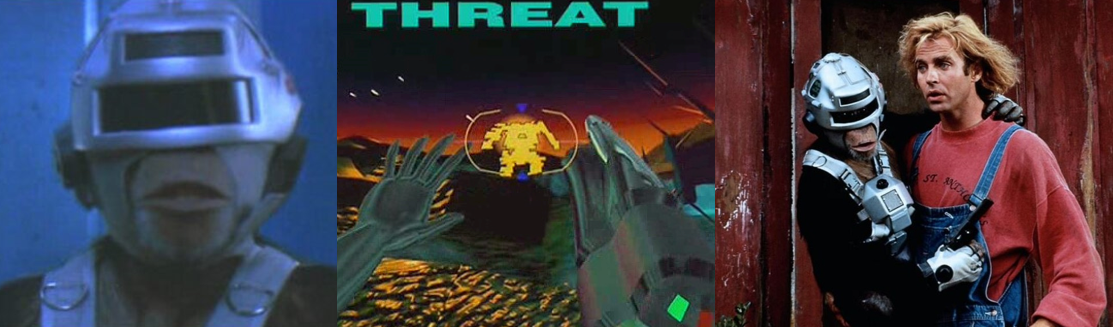
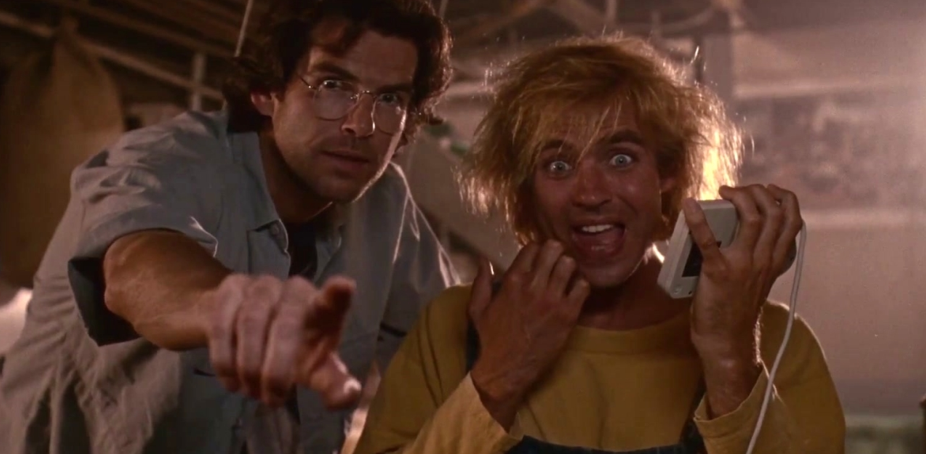
The Nitty-Gritty:
I’ve always been a fan of The Lawnmower Man and I was excited to watch the extended Director’s Cut when I bought the DVD. Unfortunately, though, much of the additional material kind of bogs the film down, especially the extended sequence with the chimp which only bloats the opening. I was surprised to see the natural of Angelo and Caroline’s relationship issues change but there were some nice new additions, too, such as Angelo having more interactions with Peter’s mother, Carla (Rosalee Mayeux), him asking Father McKeen for permission to take Job away from his duties at the church and with Terry to run his V.R. experiments, and some slightly longer scenes at V.S.I. showing Angelo trying to calm Job’s growing thirst for knowledge and input and Job experimenting with the limits of his powers to cause lesions to form on his skin. Another significant addition is Job using his psychic powers to manipulate Caroline into conflict against the Shop’s agents, thus causing her death, something which is entirely absent in the theatrical cut and goes a long way to show just how far gone Job is at that point.

Job’s new abilities allow him to wreck terrible revenge on those who have wronged him.

While The Lawnmower Man is only partially based on King’s original story, some of his traditional tropes still show up in full force; thankfully, there are no writers here but a couple of abusive, aggressive assholes show up in full force. There’s Jake, who I mentioned before, who routinely mocks and mistreats Job for his childlike demeanour and is angered into a fury when local hardbody Marnie Burke (Jenny Wright) takes a shine to Job after he begins to show more confidence and physical appeal. There’s also Peter’s father, Harold (Ray Lykins), who regularly yells at and beats his wife and child. Both of these reprehensible individuals fall victim to Job’s wrath when he begins to exact his revenge upon those who have wronged him; it’s not entirely clear what Job does to Jake (though it seems to be implied that he made Jake a simpleton like he (as in Job) used to be) but he rips Harold to shreds with his lawnmower and daunting psychic powers in perhaps the only part of the film that is similar to the original story.

As Job’s intelligence increases, so does his mania and his mental abilities.

The Project 5 formulas are noted several times by Angelo to heighten a subject’s aggression, but they have an entirely unexpected additional effect on Jon; he gets splitting headaches and begins to pick up on the thoughts of those around him before developing telekinesis. His mind absorbs information and input “like a clean, hungry sponge”, allowing him to surpass Angelo’s intelligence at a rate that leaves Angelo speechless in fear. As these changes begin to take hold, Job suffers a serious of worrying seizures and struggles to adapt to his newfound abilities but soon suffers a psychotic break and comes to see himself as accessing powers and abilities lost to mankind generations ago; all but forcing Angelo to continue his experiments, Job begins to grow more and more unstable, turning to violence and hurting Marnie, reducing her to a gibbering wreck, as he begins to lose control of his abilities and sanity.

As his powers grow in cyberspace, Job is able to influence the real world.

Impressed with a demonstration of Job’s abilities, the Director orders him to be brought in to the Shop for further testing and study; angered at Timms’ betrayal and scared half to death at Job’s increasing instability and growing God complex, Angelo is unable to protect Job from the Shop’s mercenaries, which sees him projecting a digital version of himself into the real world and reduced them to pixelated atoms! Job’s wrath is only increased when an errant shot leaves Terry dead and, having dispatched all of V.S.I.’s security with a swarm of pixelated bees, he enters the facility unimpeded to put his insane plan into motion.

Job transforms himself into Cyber Christ, a being of pure digital energy!

Having come to regard himself as the bridge between reality and virtual reality, Job plans to upload his very consciousness into the virtual world, becoming a “Cyber Christ” in the process, and spread his influence across the entire world. Although Angelo believes all of this to be a psychotic delusion, Job is able to complete his plan, transforming himself into a being of pure energy and Angelo is forced to try, one last time, to appeal to the last remnants of Job’s humanity in cyberspace. Having trapped Job behind a computer virus, and threatening him with death from bombs he placed around the facility, Angelo is ultimately no match for Job’s awesome powers but, when he realises that Peter and Carla are also in danger, Job allows Angelo to leave before they all die in the explosion.

Fahey is fantastic in the film, masterfully portraying Job’s descent into psychotic mania.

Although it appears as though Job perished in the blast, he is finally able to crack Angelo’s lock and escapes at the very last minute, with the final shot of the film being his “birth cry” as very telephone around the world rings in union, ending the film on a semi-ambiguous note that, sadly, the sequel dropped the ball on following up on. Still, The Lawnmower Man continues to impress me; its effects and realisation of virtual reality and cyberspace may be wildly outdated and based in pure fantasy but I think they hold up pretty well and are indicative of the technology and fears/speculation of the time. What also bolsters the film, for me, are some captivating performances from both Brosnan and Fahey; beginning as a wise mentor whose admiration of Job’s progress soon turns to fear for his sanity, Angelo is an admirable idealist whose wishes to use V.R. for the betterment of mankind result only in destruction. Similarly, Fahey does a fantastic job portraying Job’s childlike innocence, his pain and confusion at his growing psychic powers, his thirst for knowledge, and his descent into both stoic, unnerving menace and aggressive, unstable insanity.

An under-rated sci-fi film that explores a fantastically horrific side of V.R.

Fahey delivers some truly awesome and memorable lines here, such as his gibbering, terrifying statement of “I saw God! I touched God!”, his later stoic declaration of him becoming “Cyber Christ”, and his eventual declaration when he has fulfilled this objective of “I am God here!” (not to discount Brosnan’s moving whisper of “”Oh, dear God…” when he realises how far off the deep end Job has gone), all of which tie into the additional themes regarding faith and religion. Such notions, which originally were used to keep Job in check and under threat of reprisal for his transgressions, quickly become redundant as Job begins to experiment with his abilities; free of all fear and boundaries, he sets Father McKeen ablaze, easily manipulates the minds of others, and soon transforms from a meek, mentally challenged man into a monstrous being both in and out of virtual reality.

The Summary:
I don’t see The Lawnmower Man talked about enough when the subject of sci-fi films comes up. Sure, it’s maybe not aged too well and is absolutely nothing like the story it’s based on but so what? Total Recall (Verhoeven, 1990) is nothing like the short story it’s based on and that didn’t hurt it; obviously, it’s not a fair comparison and Total Recall  is a much better film but my point is that debates about fidelity to the source material are often meaningless when the result is an enjoyable piece of media. By gearing the story into a cautionary tale regarding the unknown dangers and potential of technology ad virtual reality, The Lawnmower Man presents a truly unique twist on the concept of V.R. as a gateway into the untapped potential of the human mind. The effects are still pretty impressive for the time; it helps that the V.R. sequences are all entirely computer-generated rather than splicing humans into cyberspace and, for me, they hold up pretty well and tie into the overall plot of Job transforming into this digital tyrant. Some solid performances only bolster the film’s appeal for me and, while the Director’s Cut actually causes the runtime to drag a bit more compared to some others, I can never get enough of a good thing. For having a truly interesting premise and execution, some stellar performances by Brosnan and Fahey, and some chilling sequences involving Job’s wrath, The Lawnmower Man is an unfairly under-rated gem of a science-fiction romp and I highly recommend it to fans of the genre who are looking for something a little different.

My Rating:

Rating: 4 out of 5.

Great Stuff

Have you ever seen The Lawnmower Man? If so, what did you think to it and do you enjoy this longer cut of the film? What did you think to the film’s premise and the performances, particularly Brosnan and Fahey? Did you enjoy the film’s depiction of virtual reality and cyberspace or do you feel it’s a little too dated? Have you ever read the original story and, if so, would you have preferred that the film was closer to the source material? What is your favourite Stephen King adaptation and how are you celebrating National Science-Fiction Day today? Whatever your thoughts on The Lawnmower Man, or sci-fi in general, be sure to leave a comment below.

Mini Game Corner: Streets of Rage 4: Mr. X Nightmare (Xbox One)

Released: 14 July 2021
Developer: Dotemu/Lizardcube/Guard Crush Games
Also Available For: Nintendo Switch, PC, PlayStation 4

A Brief Background:
After an absence of almost twenty-five years, the Streets of Rage series (SEGA, 1991 to 1994) finally made a long-awaited comeback in 2020. As a massive fan of the series, and sidescrolling beat-‘em-ups in general, I was very surprised, and excited, to see Streets of Rage make a reappearance; Streets of Rage 4 sold extremely well and was received generally positively but even I could never had guessed that it would do well enough to gain any kind of downloadable content (DLC). Yet, surprisingly, that’s exactly what we got as some additional character, gameplay modes, and difficulty settings were made available for the game and a physical Anniversary Edition was even released (for PlayStation 4 and Nintendo Switch only but still…)

The Review
Streets of Rage 4: Mr. X Nightmare adds some additional features to the original game, which was a sidescrolling beat-‘em-up that saw you attacking enemies with X, busting out a life-draining special attack with Y, jumping with A, and clearing out large groups of enemies with a screen-clearing special move if you have enough Stars in your quest to clean up the streets of Wood Oak City. The first thing you’ll notice when playing Mr. X Nightmare is the addition of three playable boss characters: Estel Aguirre, Max Thunder, and Shiva. Two of these (Max and Shiva) were previously playable but only in their 16-bit variants and all three are ripped straight from their boss battles in the base game. When playing as each of them through the story mode, however, none of these characters have any real impact on the narrative; the cutscenes don’t change or acknowledge them and the only thing that’s different is that when you fight the character’ boss variants, the boss’s taken on a neon, shadowy colour scheme.

Mr. X Nightmare adds Estel, Max, and Shiva as playable characters.

Like the game’s other playable characters, each of these new characters plays slightly different. Of the three, only Shiva can dash towards enemies, for example, but unlike the other two, Shiva cannot pick up weapons (instead, he dramatically flips them up and kicks them at enemies). Estel and Shiva also attack much faster than Max, utilising kicks and fast combos where Max uses slower, more powerful wrestling moves and grapples. Each of them also has Y-based special attacks that will slightly drain their health unless they attack enemies soon after; these seen Estel toss grenades and pounce on opponents with a beatdown, Max charge or slam down on enemies, and Shiva teleport across the screen or out of the air. Each of them also has their own special moves that are executed by pressing Y and B when you have at least one Star. Estel’s is very similar to her boss’s special and sees her call in a bombardment of rockets; Max unleashes a big axe-handle smash and also sees enemies by struck by lightning, and Shiva blasts enemies away with a purple, wing-like aura. The best thing about playing as these new characters is how over-powered a lot of their attacks are; Max, for example, has a super useful Power Slide attack that is easily spammed while Shiva can perform a nifty mid-air kicking combo for decent damage.

Play as Roo and/or test your skills in the new ‘Survival’ mode!

It’s been a while since I played Streets of Rage 4 so I may be forgetting some things but Mr. X Nightmare appears to add a few new weapons into the game’s stages (such as a golf club, an umbrella, and a branch) and the ability to select different colour palettes for every character. The DLC also adds a new difficulty to the game, Mania+, if you fancy taking on an additional challenge and, best of all, the inclusion of a hidden fighter. By highlighting ‘Story on the main menu screen and  pressing up and X and then pressing Start, you’ll get to play as a 16-bit version of Roo the boxing kangaroo, which is pretty cool but it’s a bit of a shame that Roo doesn’t have an alternative skin to match his cameo from the base game. Another addition appears to be that whenever you fight on the hidden, or new, 16-bit stages, every character, even the new ones and altered ones, is rendered as a classic 16-bit sprite. While there isn’t any new story-based content to the game, Mr. X Nightmare does add a new ‘Survival’ mode. Here, you pick a character and play through a series of simulations in a variety of brand new arenas, including new 16-bit levels, and fighting increasingly-difficult waves of enemies. Enemies and destructible boxes will spawn into each area, giving you access to health-restoring good, Stars, and weapons, which you’ll need as you only get one life to play through this mode; when you clear each level, you can pick from one of two perks that stack up and carry over to each level. These can up your attack or defence, add an additional jump, add elemental effects to your strikes or weapon attacks, spawn in Stars, award you more powerful weapons, spawn in an ally, or dramatically increase your attack power and the cost of your durability, among other effects.

The addition of more 16-bit stages, random buffs, and a Training mode add replayability to the game.

The levels and enemies get tougher and tougher as you go but you can make use of environmental hazards to damage enemies; meteors will fall from the sky, lasers and flames will spew up in some levels, wind will blow you about, electrified walls and crushers can harm you and your enemies, and you’ll be able to toss them over edges and such. While you’ll earn Stars instead of lives in this mode, it also includes a whole bunch of new weapons to use and, as you clear levels, you’ll unlock enemies to battle in the new Training mode (essentially a traditional one-on-one fighter), concept art and artwork, and also additional alternative modes for each playable character to customise them to your specifications. Even better, the DLC adds not only some new music tracks but also eight new Achievements to earn that are specifically tied to you completing the story mode as the three new characters, performing Roo’s special move and spawning in clowns, and mastering the new Survival mode, all of which is a great incentive to return to the game.

The Summary:
I was super happy with how Streets of Rage 4 turned out; it was everything I could have asked for from a sidescrolling beat-‘em-up and had a decent amount of features and replayability to it. it could be a little unforgiving at times but it was a blast to play through and I was very surprised and excited to hear that the game would be expanded upon with some DLC. The addition of new characters was very welcome, though it is a little disappointing that they don’t factor into the story more; like, maybe they could have played through slightly altered versions of the stages and fought against the existing protagonists rather than shadow versions of themselves. The addition of new Achievements was very much appreciated and the ‘Survival’ mode is pretty great, though, and sees you battling against every character and boss from not only this game but also the others in the series. Again, it can be tough but playing alongside a friend should make it quite the entertaining time and, overall, I’d say it’s well worth picking this DLC up to add a few more hours onto an already enjoyable title.

My Rating:

Rating: 4 out of 5.

Great Stuff

Did you pick up the Mr. X Nightmare DLC? If so, what did you think to it? Which of the new playable characters was your favourite? Did you manage to unlock Roo? How far did you get in ‘Survival’ mode? What is your favourite piece of DLC for a videogame? Whatever you think about Streets of Rage 4 drop a comment below.

Weekly Writing Prompt: 05/01/2022

Gillian Church posts Writing Prompts every week and I like to take part with a few snippets and pieces of flash fiction.

The Prompt:
Madame Marielle is never wrong. What did she tell you?

The Submission:
“Just keep an open mind…just keep an open mind!”

I frowned. “C’mon, Judith! You know this is all bullshit, why d’we hafta…”

But she had already passed through the blue velvet curtain. Sighing, I followed, and entered a small darkened room. Probably an old broom closet! I thought, shaking my head.

Candles were everywhere, and a wizened old crone sat before a small, circular table. Her bejewelled, paper-thin hands hovered over a glowing crystal ball. She was made up like an old gypsy; beads and robes and jewels hung from her hunched form, and she favoured Judith with a pouty smile.

“Don’t pay anything until after she’s done,” I muttered in Judith’s ear as I sat down.

Of course, the whole thing was a farce. Literal smoke and mirrors. Ol’ Madame Marielle was probably Betty Henderson, professional con artist who took advantage of grieving families. But I’ll give her this: she definitely put on a good show.

“The flames…I see the flames!” she whispered, her voice husky after years of cigarettes. “You’re there…in the flames!”

“Thought she was showin’ us the future?” I hissed to Judith, who sat wide-eyed and attentive. “This already happened!”

“We…we were trapped in the house…” Judith stammered.

Madame Marielle nodded and her eyes flickered disturbingly so that only her whites showed. She swirled her hands over the crystal ball in a gently, circular motion. “Yes, the flames,” she agreed as though she’d been there. “And a light, the great Passageway to the Other Side…”

“Can I…Can I speak…? I mean….Will I be heard?”

“Jude, c’mon! She’s just…”

Madame Marielle winced as if she’d been scolded by hot water. She lowered her hands with a weary sigh. “He won’t listen; he’s lost, wandering.”

“How convenient,” I rolled my eyes. “C’mon, Jude, let’s get outta here!”

As I stood, glaring at the carnie, Judith wiped a small tear from her eye and handed over a crumpled note with a thank-you.

“Hey! That was a twenty!”

Judith pushed her chair back and rose, her eyes swimming with tears. I was about to admonish her with a tirade of “I told you so’s” when she walked towards me…passed through me…and disappeared through Marielle’s curtain.

“What the hell…?” I stood, mouth agape.

“The light still waits…” Madame Marielle murmured, her glassy eyes staring right at me.

In the glowing crystal ball, I saw the flames. I saw myself, trapped within them. I saw Judith, screaming and hollering.

I saw the light.


What did you think to this week’s writing prompt? Did you submit anything for it? Have you ever written any flash fiction before? I’d love to know what you think to my snippets and writing prompts, so feel free to sign up and let me know what you think below or leave a comment on my Instagram page. You can also follow Gillian Church to take part in her Weekly Writing Prompt challenge.