Game Corner: Crisis Core: Final Fantasy VII Reunion (Xbox Series X)

Released: 13 December 2022
Originally Released: 13 September 2007
Developer: Tose
Original Developer: Square Enix
Also Available For: Nintendo Switch, PC, PlayStation 4, PlayStation 5, Xbox One, Xbox Series S (Reunion); PlayStation Portable (Original)

The Background:
You’ve heard of Final Fantasy VII (Square, 1997), right? Of course you have! The game won numerous awards and sold over ten million copies on the PlayStation alone! But the story of Final Fantasy VII doesn’t end there. Seeking to expand their scope beyond just the gaming world, Square Enix announced Compilation of Final Fantasy VII in 2003, a multimedia venture that included the fantastic computer-generated movie Final Fantasy VII: Advent Children (Nomura, 2005) and numerous spin-off titles that expanded the lore and world of Final Fantasy VII. Crisis Core, a prequel story initially exclusive to the divisive PlayStation Portable, was one such title. Director Hajime Tabata wished to exceed fan expectations with the game, which focused on the younger days of popular characters Zack Fair and Sephiroth and built upon story elements that had been laid out for both by Tetsuya Nomura. Envisioned as an action game first and foremost, the team incorporated role-playing elements to craft something of a hybrid and emphasised an element of luck to the combat through the Digital Mind Wave (DMW) system. Upon release, Crisis Core was met with generally positive reviews; while the combat was praised, critics were divided on the DMW system but praised the game’s narrative and graphics. About fifteen years later, to commemorate Final Fantasy VII’s 25th anniversary, Square Enix developed a remake for then-modern consoles alongside Tose, one that completely overhauled the graphics, soundtrack, and voice acting. Although the story remained the same, the game was tweaked to closely align with the much-anticipated Final Fantasy VII remake project. Producer Mariko Sato advocated for numerous improvements to the original game, such as reducing combat interruptions, adjusting the magic speed, and including a “Hard” mode for returning players. Like the original game, Crisis Core Reunion was largely praised; while critics were divided regarding the characterisations and the DMW system, the improved gameplay was praised and it was one of eleven recipients of an “Award for Excellence” at the 2023 Japan Game Awards.

The Plot:
Before Final Fantasy VII, Zack Fair of the paramilitary organisation SOLDIER is assigned to find his mentor, Angeal Hewley, and fellow SOLDIER Genesis Rhapsodos and discovers a revelation that sets him against the malevolent schemes of his former masters.

Gameplay and Power-Ups:
Crisis Core: Final Fantasy VII Reunion is a HD reimagining of the original action/role-playing PSP title. Unlike the original Final Fantasy VII (and most of the Final Fantasy games I’ve played to this point), it’s less of a turn-based RPG and more of a mission-based, action-orientated title in which players control one character (Zack) rather than a party of diverse fighters. Zack is free to roam around various 3D locations (with many being recreations of environments seen in Final Fantasy VII) and automatically engages in random battles when exploring. When in a conflict situation, Zack can attack with X; successive presses of X unleash combination attacks (with some dealing additional damage from “critical hits”), and you can target enemies by pressing in the right stick and switch to different targets by pressing the Left Bumper and the right stick. A lets you dodge incoming attacks, the Right Bumper puts up a guard to reduce damage, and you can flee from most battles by running against the edge of the barrier that pops up in each combat scenario. You use the Left and Right Triggers to cycle through your available items and use them with B, restoring health points (HP), magic points (MP), and providing certain buffs to Zack or debuffs to enemies. The Left Bumper brings up the Materia command window; eventually, you equip different Materia to the four face buttons and RB and RT, allowing you to perform elemental magic attacks, healing spells, reduce damage, apply buffs, eliminate status effects, and more if you have enough MP. Outside of battle, you can dash with RT and hold it to run (a toggle option would’ve been nice), talk to non-playable characters (NPCs), and bring up the map with X. While there’s no mini map (which also would’ve helped), you can toggle on destination markers to help guide you to your objectives from the settings menu, and set the in-game language and toggle the camera tracking.
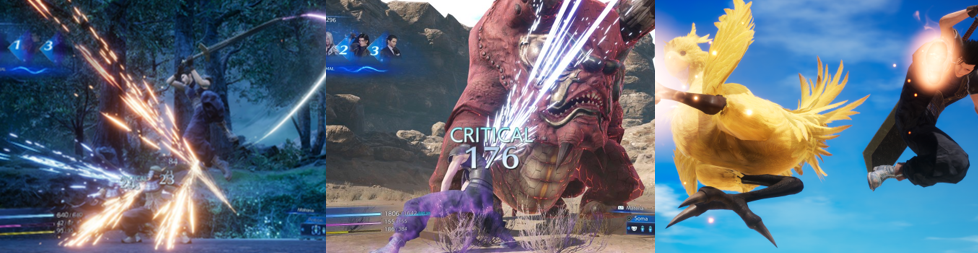
Equip Materia to boost your attacks and use the DMW to unleash Limit Breaks and Summons.

The game’s big unique feature is the DMW system, a slot-based game of chance that automatically plays in every battle and seems to spin faster and build up the more you attack. Each spin consumes Soldier Points (SP), which are gained from winning battles and fusing Materia, and the strength of each DMW image increases as the game progresses. The game says they’re made stronger by Zack’s emotional tie to the characters represented, but your DMW avatars actually level-up in battle just like him. When three of the same images appear in the slots, press Y to perform a Limit Break or press in both analogue sticks to unleash a powerful Summon. These super powerful attacks, often accompanied by an annoying cutscene that’s thankfully skippable, can lay waste to entire foes, completely heal you and bestow buffs, level-up your Materia, and more. Additionally, during combat, you are often granted limited buffs, such as temporary invincibility or infinite MP or Ability Points (AP, consumed when you dodge, block or use Command Materia like Assault Twister or the elemental blade attacks), which is super useful in a tight pinch. Like other Final Fantasy games, you must be mindful of status effects and elemental attacks; enemies can cast Silence to negate your MP or stun you, and some are weak to certain elemental attacks and resist to others so it’s worth exploiting these weaknesses. Although the game autosaves at various points and gives you the option of retrying a battle upon defeat, there are numerous manual save points in each location. These refill your HP, MP, and AP and offer a selection of Missions to play through alongside the main story. Indeed, while you can level-up and get stronger playing the story, the best way to grind, gain new items and Materia, and improve your combat prowess is through these missions. They all have a level grade so you can judge how difficult they are and are usually quite short, consisting of a handful of battles, though others throw you against seemingly endless waves of enemies, or have you rematching bosses or defeating Summons to add them to the DMW.
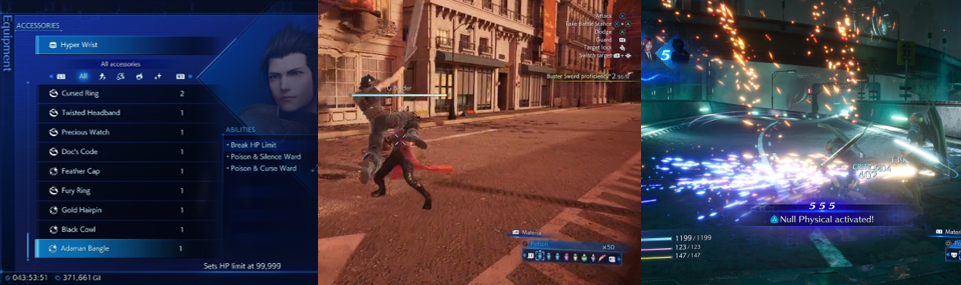
Different equipment, Materia, and battling will bestow buffs and additional items.

Although you don’t acquire new weapons or equip armour, Zack does eventually inherit the iconic Buster Sword. Once you have this, you can hit X and A to enter a “Battle Stance”, increasing your attack power and chances for critical hits, and your proficiency increases as you defeat enemies in this stance. Additionally, after Zack is promoted to SOLDIER 1st Class, you gain extra items and buffs (including refilling your gauges) if you win battles in certain ways (with magic attacks, Summons, or without taking damage, for example). You can customise Zack from the main menu, setting up five equipment presets for your convenience, fusing and selling Materia, and eventually purchasing items from various shops. You’ll do this with the Gil you obtain from battle, though I honestly never bought anything as the game is extremely generous with items (which I also rarely used) and restoring your gauges. Materia is fused together to become stronger, and is also be “mastered” over time, increasing its MP cost and its power. This menu also allows you to review the mail and tutorials characters send you, review your DMW progress, and equip various accessories to Zack. These provide passive buffs, such as increasing his stats, providing resistance to elemental attacks and status effects, and more. Items and Materia are also acquired from various treasure chests lying around, completing missions for NPCs, and as required by the story. There’s a part, for example, where Zack searches for various junk to build a flower cart (and impress) Aerith Gainsborough. Other times, you’re climbing ladders, searching for keys to open doors, defeating enemies for different keys, searching for clues to find a pickpocket, activating consoles and turning wheels to open pathways, and searching for additional lore or helpful pickups.
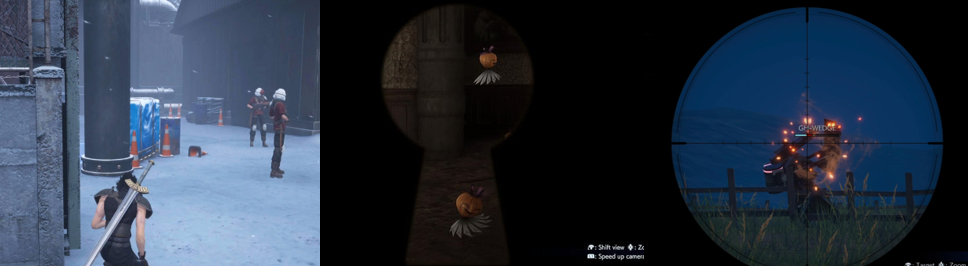
Aggravating mini games and gimmicks compound the strange difficulty curve.

There are numerous mini games and gameplay gimmicks to break up the action, though they’re a bit hit and miss in their execution (despite awarding additional Achievements). Hidden pathways in Wutai lead to enemy troops that must be defeated to impress SOLDIER Director Lazard Deusericus and you can also choose to charge at enemies or take a stealthier approach in this section. Professor Hojo tests your skills in battle and a frustrating squatting challenge, Banora village hides numerous glowing spots that must be interacted with under a time limit, and then the village must be defended from a missile attack using carefully timed strikes. NPCs need rescuing from Shinra headquarters, spies are in Midgar, a Slums vendor challenges you to quickly grab his Materia, perfume can be blended to impress Aerith, and Junon’s perimeter must be defended from incoming enemies. Many side missions are contested under a time limit, which can be a bit stressful, but easily the most aggravating mission with Zack’s infiltration of the Modeoheim Mako Reactor. While you can simply storm in, you get an Achievement for staying out of sight, which is tricky as the guards spot you the moment you pop out from cover and you must rapidly tap Y to keep your body temperature up. There are seven wonders to find in Nibelheim, a mother trapped in a burning building, and keyholes to look through in the Shinra Manor to discover a random safe code. There’s number guessing game to play, fan clubs to join, and an annoying sniper mission where you pick off Shinra forces with an upgradable rifle. While it’s easy to retry the Modeoheim mission thanks to a nearby save point, this sniper mission doesn’t have that so you need to be fast and accurate to get that Achievement. Finally, in the end game, you’ll be battling monstrous monsters from the Lifestream to collect the Goddess Materia and running around a prison, unlocking cages and taking secret tunnels. The game has two difficulty settings, “Normal” and “Hard”. I played on “Normal” and found the difficulty oddly unbalanced. Some bosses were a complete joke, and then other times I’d be one-shotted by a damn Pachyornis! Most enemies are cut down in no time at all, making combat even more tedious and creating a bit of an uphill battle when you randomly face troublesome enemies who’ll decimate you if you don’t break their Boss Ability Gauge.

Presentation:
I briefly played Crisis Core on the PSP many years ago and was mildly impressed with its PlayStation 2-quality graphics on the handheld. Things were a bit clunky and restrictive, particularly Zack’s movement and the mission-based structure of the game, but it seemed decent enough, especially the high quality FMVs. All these visuals have been upgraded here to match the presentation of Final Fantasy VII Remake (Square Enix Business Division 1, 2020). This includes an all-new soundtrack, which features remixes of classic Final Fantasy VII themes to match each location and an awesome new rendition of “One-Winged Angel”, “Vengeance on the World”, and similar rocking riffs like “Black Wing Unfurled”. Zack is given so much more personality here than in his brief, skewed appearances in Final Fantasy VII; we track his entire journey from an enthusiastic protégé to a hero in his own right and watch as he forms relationships with Aerith, Tseng, Cissnei, and his perceptions of Angeal and Sephiroth change as the narrative progresses. There’s little distinction between the FMVs and in-game graphics, though there are few opportunities for Zack’s personality to stand out in battle beyond his quips and voice clips since battles don’t end with a victory pose. Still, battle animations and explosive and varied; the Limit Breaks and Summons, especially, impress, though it can be annoying when the DMW memories interrupt the combat flow. Zack’s character model also changes as the game progresses; he gets a new uniform, takes up Angeal’s Buster Sword, and gains his trademark scar throughout the story, though it’s a shame you can’t alter his appearance further with armour or accessories. The game also includes fun cameos from familiar faces like Yuffie Kisaragi, Vincent Valentine, Cait Sith, Reno, and Rude alongside allusions to Cid Highwind and Red XIII/Nanaki and fully exploring Zack’s friendship with Cloud Strife.
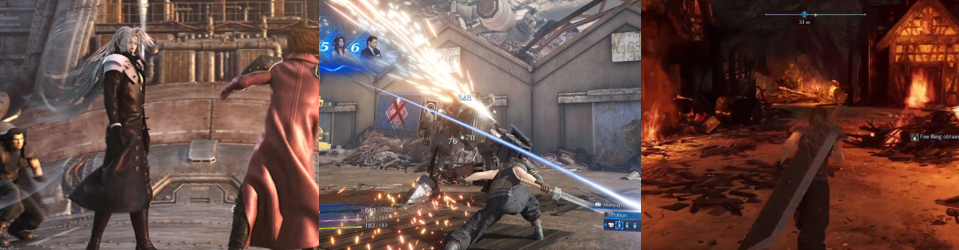
Key Final Fantasy VII locations, characters, and moments are lovingly recreated in impressive detail.

The game’s locations will be immediately familiar to anyone who’s played Final Fantasy VII. Memorable towns like Midgar, Sector 7, and Junon all appear in their steampunk glory, with Zack even naming Seventh Heaven, battling on the highway outside Midgar, and taking the fight to the Wutai. You’ll spend a lot of time exploring Shinra headquarters (home to Hojo’s laboratory, a Materia processing room, and a museum to the company’s achievements) and the bustling town of Midgar, with its iconic train station and desolate Slums, complete with market, playground, and Aerith’s church. You’ll travel to Nibelheim and explore the small town and its peaceful inhabitants, the spooky Shinra Manor and the hideous secrets hidden within, and the looming Mako Reactor that houses Jenova, and then bask in the horror when Sephiroth discovers his true origins and burns the town to the ground! In the endgame, you’ll return to Banora, once Angeal’s peaceful hometown now corrupted by the emerging Lifestream, and descend into the ethereal caverns beneath it where slumbering giants and monstrous enemies await. When tackling missions, you’ll battle in the desert, at the Chocobo Farm, and in steampunk locales that bring the ambitious pre-rendered backgrounds of Final Fantasy VII to life. Things are, however, a bit restricted; you’ll revisit the same caves and enclosed areas again and again, there are few houses to enter, and locations can be surprisingly barren. Handfuls of enemies are encountered at once, with battles against bigger waves restricted to loading each group, and the mission-based structure of the combat betrays the game’s handheld routes. Having said that, though, there’s an emotionally poignant finale where players can control Zack’s last stand against Shinra’s inexhaustible forces, even battling while severely injured and near death.

Enemies and Bosses:
Numerous enemies will dog your progress in Crisis Core Reunion, many of which are returning monsters from Final Fantasy VII. Zack battles various human soldiers, such as Wutai’s forces and even Shinra solders by the end game, each armed with lances, assault rifles, and grenades. More formidable variants also exist, wielding dual blades, casting elemental or restorative spells, and carrying larger weapons, like Wutai’s Crescent Unit. Perhaps the most notable humanoid enemies are the various “G” foes, imperfect and often monstrous copies of main antagonist Genesis who sport their own wings, more powerful magic, and even wield scythes or gunblades. Most of these can be put down without much issue, or by exploiting elemental weaknesses, but the numbers can be overwhelming if you don’t have the right Materia setup or are under-leveled. Naturally, various wild animals and creatures also roam the streets and wilderness of this world. Many have different names and appearances and abilities depending on the region and how far into the game you are. Bat-like Evil Eyes, demonic winged Evilgoyle, and ludicrous Hedgehog Pie are commonplace, as are elemental Bombs, spooky Jack o’ Lanterns, and insectile enemies like the annoying Killer Bees, various worms and beetles, and the lizard-like Sahagin. More bizarre foes like the egg-like Grangalan and spear-beaked Raijincho co-exist with more grotesque creatures, like the demonic Foulanders, strangely deformed Killer Stingers, and hefty Iron Claws. These are joined by mechs and robotic enemies, from disposable pawns like the Bee Saucers and Metal Saucers to more formidable, heavily armed constructs like the various Machines (which come in flying, drill, “death”, and missile variants, among others). While most enemies have an elemental weakness and some cast offensive and healing spells, many are simply there to be cut down by your attacks, meaning it’s easy to underestimate the Machines and G-variant enemies, which can almost act as mini bosses at times and, in some cases, can even be tougher than the likes of Sephiroth!
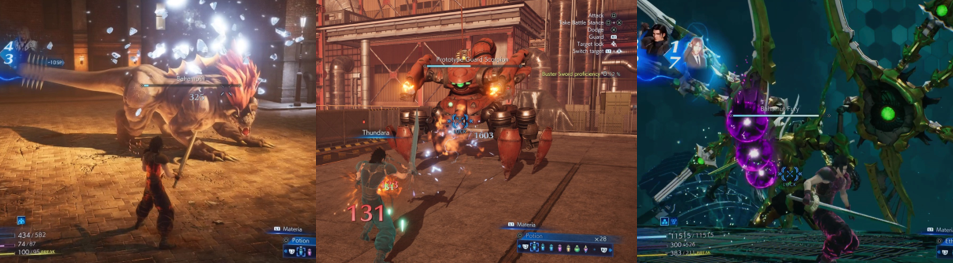
There’s a strange imbalance in the difficulty of some bosses.

Each of the game’s ten chapters but one (Chapter 7) culminates in a boss fight against at least one enemy, though some are variations of others or have multiple phases. Zack’s first test is against the monstrous Behemoth, a dog-like demon that attacks with a tail and claw swipes and serves as a tutorial for the game’s DMW system. Other variations of this creature appear later in the game, with the Behemoth King proving a steep penultimate challenge that I found more troublesome than the final boss thanks to it casting Regen on itself, having no specific weaknesses, and tanking my hits. Your mission in Wutai culminates in a battle against the duo of Vajradhara Wu and Vajradhara Tai, variants of which also crop up in subsequent missions and who are more deadly when teamed up thanks to their Limit Break, large health pool, and devastating physical attacks. After besting them, you’ll test your skills against the fire demon Ifrit, the first of many Summons who must be defeated to add them to your DMW. Ifrit sports formidable fire-based magic and attacks and you’ll need projectile magic to attack him from afar, but he’s weak to ice attacks like Blizzard. Chapter 2 sees you battling the mechanical Guard Spider, while Chapter 6 sees this improved to the more familiar Guard Scorpion. Both attack with cannons, stomps, and a hail of bullets but the latter mech also sports an EM Field attack that must be avoided. Chapter 2 ends with a battle against the dragon king, Bahamut, who can be annoying with his slam attack and Thunder Strike. In Chapter 4, you’ll battle the larger and more impressive Bahamut Fury, though I found this fight far easier as Bahamut Fury spent a lot of time just standing (or floating) around doing nothing and I easily kept it from attacking with Exaflare despite it having no elemental weaknesses.
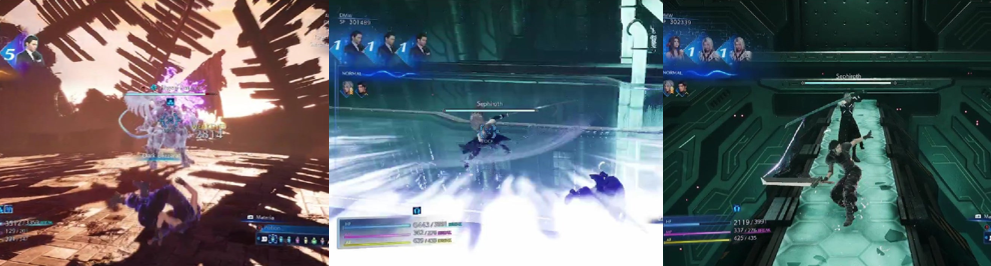
Despite their emotional and historical significance, Angeal and Sephiroth are a bit of a let down.

Things continued to be largely manageable in Chapter 3. Here, you fight the G Eraser copy of Genesis, which is noticeably nimbler and more versatile than the three Machines that guard the chapter’s end, which are bested by bringing along thunder, fire, and ice-based Materia. The same is true for the Support Machines and the General’s Tank in Chapter 6. The drama ramps up when Angeal undergoes a horrific transformation, merging with his monstrous copies to form a centaur-like abomination not unlike Ultima Weapon. Angeal Penance is best attacked from behind since its lance has good reach. It can also magically boost its defence, charge, and unleash a bunch of physical and elemental attacks. However, despite its imposing size, this fight was pretty easy; Zack’s very emotional during it so the DMW is often in your favour, meaning this boss is all bark and no bite. Shinra scientist Hollander undergoes a similar transformation after being corrupted by Genesis’s cells. Constantly healing himself, Hollander distracts you with Land Worms and takes away chunks of HP with his Dimension Missile attack or poisons you with his breath. Being a Final Fantasy VII game, you naturally battle Sephiroth as well, most notably after he goes insane in Nibelheim. This is a two-phase battle, with the first seeing Sephiroth attacking with his impossible long sword, teleporting, and unlashing Heartless Angel and his trademark Octaslash. Sephiroth almost always has his guard up, negating many of your attacks, so just dodge, heal, and wait for an opening. Sephiroth spawns four elemental crystals that restore his health and bolster his attacks with fire, thunder, and blizzard spells. These must be destroyed using the opposing element (Fire against Blizzard, for example), and you might want to cast Dispel to remove his buffs. Though challenging, he’s actually easier than some other, less notable bosses and enemies. Once you’ve depleted his health, you then attack him on a narrow walkway. It’s game over if he pushes you back, so  focus on staying alive and pummelling him with everything you have until he takes his dramatic drop into the Lifestream.
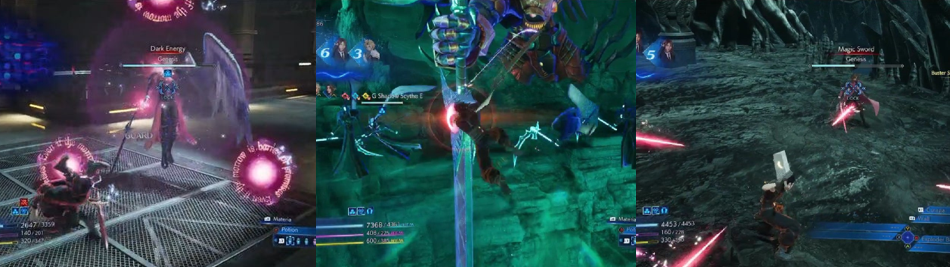
Although a formidable combatant, Genesis is sadly lacking compared to other, lesser bosses.

Edgelord antagonist Genesis, a fan of poetry and the flamboyant, is encountered and fought multiple times throughout the story. You first battle him in Chapter 5, prior to the fight with Angeal Penance, and many of the G-variant battles are tests for your one-on-one encounters with Genesis. In the first encounter, Genesis casts Regen on himself and magically increases his defence; he’s fast and tricky, attacking and Cursing you with Black Flurry and draining your MP with Osmose. Yet, I found this battle surprisingly easy; you can negate Genesis’ status effects with magics and items and simply batter him until he flees. In the finale, Genesis summons a gigantic, grotesque creature to fight on his behalf; Genesis Avatar cannot be harmed by physical attacks as it’s out of reach, so you’ll need projectile Materia like Thundaga or Ultima to chip away at it. You also need to keep your distance from his giant sword; it’ll create a shockwave when it hits and spawn G Shadow variants to distract you from attacking the Materia in the hilt. Similar to Bahamut Fury, though, this battle was a joke, especially compared to the Behemoth King and even the G Regicide that preceded it. Simply cast Wall, keep your distance when it unleashes Purgatorial Wave, keep your HP up, and attack the Materia until its defeated. After that, you’ll go toe-to-toe with Genesis once more. Again, he’s fast and can land combos on you. He can cast Apocalypse for big damage and stun-lock you with the Black Feather barrage, but he’s a ridiculously anti-climatic final boss and easily put down despite his agility, making for a dissatisfying final bout.

Additional Features:
Crisis Core Reunion boasts fifty-one Achievements to earn, with one popping after completing every chapter. You’ll also get Achievements for completing some, and all, of the Missions, winning your first battle, dealing 99,999 damage, obtaining and levelling-up all DMW images, unlocking every shop, and receiving mail from everyone possible. As mentioned, every chapter features a mini game or gameplay gimmick that is tied to the Achievements; it’s worthwhile creating a backup save file as you won’t be able to retry if you miss them, fail them, or progress past that chapter. Other Achievements come from collecting equipment, fusing Materia, clearing the “Hard” difficulty, and defeating the powerful superboss Minerva, something you can only do after unlocking and clearing every previous Mission. Missions are unlocked through story progression and talking with NPCs, so be sure to talk to everyone you see. Their difficulty ranges and some are extremely tedious, forcing you to defeat up to 1000 enemies in a row or battle previous bosses and Summons, but you’re rewarded with better Materia and items and such. After you beat the game, you’ll create a clear save file and can start “New Game+”. This carries over your current level, SP, Gil, play time, items, Materia, equipment, DMW progress, Buster Sword proficiency, and mail but not the Missions you’ve completed. You also still need to unlock a lot of this stuff again, such as the additional Materia slots, shops, and Buster Sword, but I imagine it makes a second playthrough – even on “Hard” mode – much easier. Other than that, there’s not much else here; no new costumes or skins, no chapter select, and no gallery or movie theatre, which is a bit of a shame.

The Summary:
As I mentioned, I played Crisis Core: Final Fantasy VII years ago when I first got a PSP. I didn’t get very far, though, mainly because I had a bunch of PSP games to play at the time and was a little put off by the strict mission-based structure of the game. Having finally played through this Reunion version, I can say that this structure is somewhat hampered at times and a little too quaint for a main console release, but it’s not as bad as I first thought. It is tedious having to go into the Mission menu and tackle each one in turn, but it was a fun way to level-up between the main story and combat was usually simple enough that they only took a few minutes to beat. The DMW system was certainly unique; the randomness wasn’t to my liking, but I enjoyed the variety in the attacks and benefits it gave you. This, along with battles constantly rewarding you, means the game can be pretty easy most of the time. Combat thus becomes quite dull very quickly as you just mash away and win, heal at a save point, and repeat until the chapter ends. There is a strange difficulty curve in Crisis Core Reunion, though; it’s really weird that Sephiroth and Genesis were so simple to defeat compared to the Behemoth King, and that enemies like the Pachyornis line could one-shot me yet I could survive Bahamut Fury with barely a scratch. This made combat a little unpredictable and annoying at times, almost as much as some of the mini games and the requirements to earn the Achievements associated with them. I enjoyed the dramatic dive into Zack’s backstory, his relationships with his mentor and peers, and his interactions with Final Fantasy VII icons like Cloud and Aerith. It was very impactful seeing Sephiroth’s downfall first-hand and playing an active role in the sacking of Nibelheim and Zack’s final stand, and the score and 3D recreations of Final Fantasy VII locations were a joy. In the end, it was an enjoyable enough action-orientated RPG but it a little clunky in its execution, with odd difficulty spikes and strange mechanics that make it fall short of its true potential.

My Rating:

Rating: 3 out of 5.

Pretty Good

Have you played Crisis Core: Final Fantasy VII Reunion? If so, did you enjoy it? How do you think it compares to the original PSP release and did you like the new additions made to the game? What did you think to the DMW system and the mission-based structure? Did you enjoy Zack’s narrative and witnessing Sephiroth’s downfall? Did you ever complete all the side missions and defeat Minerva? Which other Final Fantasy VII side character would you like to see take the spotlight and which game in the Compilation of Final Fantasy VII was your favourite? Whatever your thoughts on Crisis Core, or Final Fantasy VII in general, leave a comment below and be sure to check out my other Final Fantasy content across the site.


Mini Game Corner [Sci-Fanuary]: Mega Man 2: The Power Fighters (Xbox Series X)


January celebrates two notable dates in science-fiction history, “National Science Fiction Day” on January 2 and Arthur C. Clarke’s HAL 9000’s birthday on January 12. Accordingly, I’m dedicating January to celebrating sci-fi with an event I call “Sci-Fanuary”.


Released: 22 July 2022
Originally Released: August 1996
Developer: Capcom
Also Available For: Arcade, GameCube, GameTap, Nintendo Switch, PC, PlayStation 2, PlayStation 4, PlayStation 5, Xbox, Xbox One, Xbox Series S 

A Brief Background:
After ushering in Capcom’s debut in the home console market, the excessively difficult (but no less lauded) Mega Man (Capcom, 1987) eventually spawned enough of a franchise to become a Nintendo staple. Despite this, Capcom remained at the forefront of the popular arcade scene thanks to their blockbuster tournament fighter, Street Fighter II: The World Warrior (1991), which soon spawned numerous imitators to its throne. While Capcom later appeared reluctant to create new Mega Man games, a well-received (if simplistic) spin-off fighter was released to arcades in 1995. The following year, Capcom released a sequel, one that expanded upon the original’s cast and mechanics to produce a more fleshed-out version of the concept. Like its predecessor, Mega Man 2: The Power Fighters was included in various home console ports and featured as part of Capcom Arcade 2nd Stadium, which is the subject of this review.

The Review:
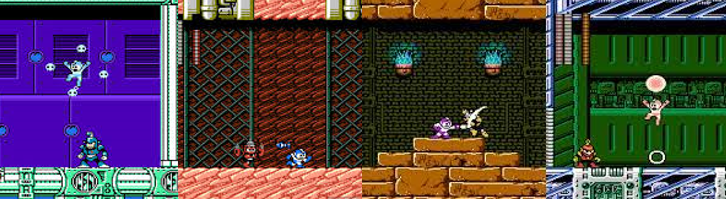
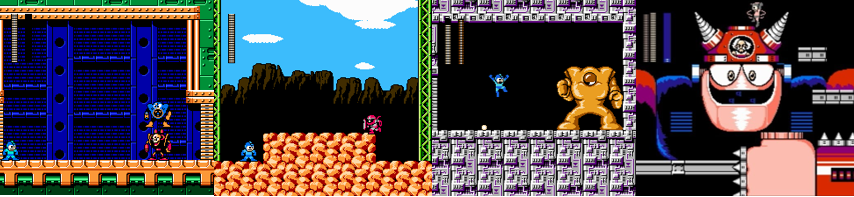
Like its predecessor, Mega Man 2: The Power Fighters is a 2D, largely one-on-one tournament fighter (though two players can team up to dominate their foes). The original playable cast (the titular Mega Man, his loner older “brother” Proto Man, and grim anti-hero Bass) are joined by the mysterious Duo and again pick from three story paths. Although I’ve heard that each of the four characters has different attributes, I noticed only minor differences between them, with the except of Duo. While the others all fire shots from their arm cannons, Duo attacks with an extendable arm and fires out a fist; he’s also a bigger target and potentially a bit slower. The controls remain unchanged, with players attacking with A and holding the button to charge a more powerful shot or using a rapid-fire variant with X. You jump with B (jumping higher the longer you press it), executing either jumping shots or wall jumping off the arena sides to dodge incoming attacks. Pressing down and B sees you dash ahead, while Y switches between your available Special Weapons. As ever, you acquire these by defeating Robot Masters and they’re tied to an energy meter, though this time you must pick up the Special Weapon orb after a victory and your friend can steal it from under you. Finally, you can press in the right-stick to enter a coin and continue fighting where you left off if you’re defeated, selecting a new character if you wish, with your health and weapon energy fully restored. Visually, sprites and attack animations are lifted wholesale from its predecessor. I didn’t find the all-new backgrounds as interesting as the first game’s and it was a little disappointing to not see more detailed environments or additional cameos included. The same can be said of the music, which is more of the same, though more sound bites are included here alongside additional cutscenes. These often feature Roll bestowing you an upgrade or Doctor Thomas Light giving exposition on your enemy and advancing the paper-thin plot, with the more impressive sprite art being saved for the endings, as you’d expect.

New abilities, new allies, and a new character slightly expand the scope of this sequel.

Some other tweaks include the pre- and post-fight text being more animated, characters having victory poses, and enemies dropping health and weapon energy pick-ups as you attack, giving you a bit more leeway in tougher bouts. Enemies can also block your attacks and reflect your shots, two abilities that you’re denied, and will enter a “pinch” mode when their health drops to half, increasing and varying their attacks and putting you on the defensive. To even things up, each character has a special attack they can perform by pressing up and X with a fully charged shot, with Mega Man unleashing a jumping uppercut, Proto Man firing a short-range burst of energy, Bass performing a crescent kick, and Duo hitting an uppercut/slam combination. Furthermore, Eddie appears during fights and bestow a robot helper who temporarily replaces your Special Weapon function until their life bar runs out. Mega Man is aided by Rush, allowing him to spring higher by jumping on the robo-dog’s back and send him flying at foes by charging his primary shot. Proto Man and Duo are aided by Beat, who grants them a temporary invincibility, and Bass is joined by Treble, who fires his own attack when you press X and can also be sent charging at enemies. Additionally, each story path sees you gifted an “upgrade” that either increases your attack power, adds a super jump (performing by pressing up and B), or increases the length of your weapon energy bar. These additions appear alongside the same features as the first game, including customisable borders and filters, a helpful rewind and save state feature, the ability to alter the game’s speed, difficulty, and the length of the one-round fights, and an optional invincibility mode that will disable both Capcom Arcade 2nd Stadium’s Achievements and the in-game “Triumphs” you can earn by playing. Again, you shouldn’t really need this option with the rewind and save state features. No Achievements are tied to beating the game without taking damage, earning a perfect no-damage victory bestows only points, and the game is just as easy as before, with the exception that I noticed enemies seem to take more hits to defeat this time around.

Alongside new Robot Masters, foes gain additional attacks when their health drops.

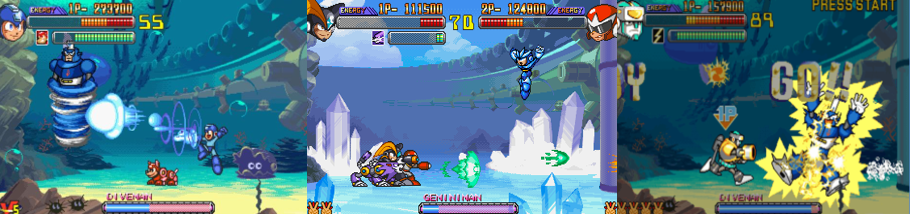
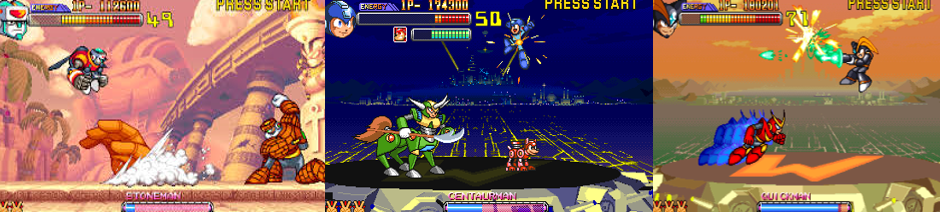
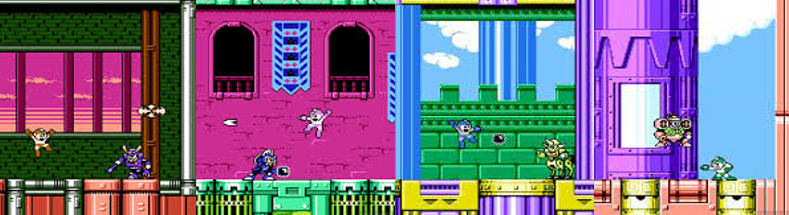
In true Mega Man fashion, you can circumvent this by acquiring specific Special Weapons to target specific Robot Masters. This time, you can freely select which enemy you face, though the damage you take in each fight still carries over to the next, so it pays to think about the order you tackle the Robot Masters. You’ll have an easier time against Plant Man, for example, if you defeat Heat Man and get the Atomic Fire weapon; similarly, Dive Man is weak to the Thunder Beam and Napalm Man is weak to the Gemini Laser. Gameplay is largely unchanged from the last game, with no stage hazards to be concerned about and the backgrounds noticeably changing to different times of day, locations, or other visuals depending on which path you take. There are no chases to worry about this time (though you can fight on stages that appear to spin or bob up and down in water or lava) and battling the Robot Masters still consists of an arcade-style rendition of the main games’ boss battles. Your foe will jump about firing their signature weapon, then add a few extra attacks when their health drops. Those that return from the last game (Heat Man, Plant Man, Gyro Man, Slash Man, Cut Man, Shade Man, Gemini Man, Napalm Man, and Guts Man) remain largely unchanged except for their “pinch” attacks, though I did notice that their health bars increase as you gain victories. New Robot Masters fit in very well with their counterparts, with Air Man blowing you back with his chest fan and firing mini tornados, Bubble Man capturing you in his slow but powerful bubbles, Centaur Man charging you and firing arrows, Dive Man bestowing homing torpedoes, Elec Man blasting three-way Thunder Beam, Pharaoh Man floating around with telekinesis and utilising a two-way wave attack, Quick Man moving with a shadow effect and speeding up your attacks with the Quick Boomerang, Shadow Man bombarding you with Shadow Blades, and Stone Man erecting stone walls and giving you a slow stone hand to fire as a ground shot. With enemies able to block, reflect, and power up, bouts do last a little longer, but the continued absence of combos and other mechanics means you can simply plough through to win as before.

It’s surprising how much of the game is a tease for Mega Man 8

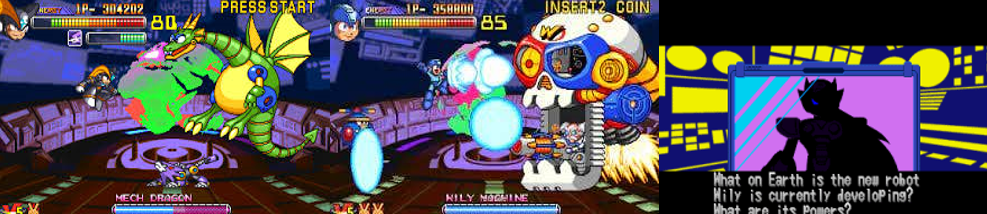
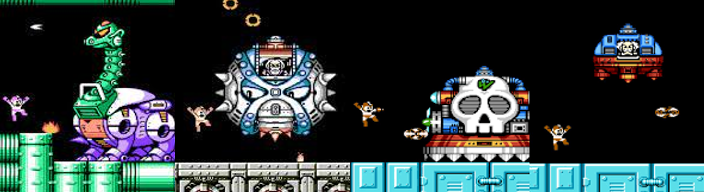
After defeating the six Robot Masters in your chosen path, you’ll enter Dr. Wily’s fortress and fight one of three additional bosses before meeting the mad doctor face-to-face. Returning from the last game is the Yellow Devil; slightly redesigned and far tamer than before, the Yellow Devil jumps more, fires a barrage of cubes and a focused laser blast from its eye, as well as slapping you, firing projectiles, and transforming into a sphere. The Mad Grinder from Mega Man 7 (Capcom, 1995) appears to fire buzzsaws and flatten you with his steamroller appendage, flinging his mohawk and spitting fireballs but being notably weak to the Centaur Arrow, while Mega Man 2’s (ibid, 1988) Mecha Dragon pops up to roast you with large fireballs, deal continuous damage with its flame breath, and spawn smaller minions. Defeat each other these and Dr. Wily will attack in his newest contraption for a three-stage final bout. In the first phase, Dr. Wily summons a robot minion to distract you, fires a robotic fist to punch or flick you, and defends himself with those same hands, firing small projectiles or a larger mouth cannon. In the second phase, he takes to the air as a smaller target, launching bombs, taking shots, and trying to target you with an explosive attack. Take this out and you’ll be given ten seconds to finish him off as he teleports between pods, though you’ll only be denied seeing Dr. Wily beg for mercy if you fail to finish him. You’ll get different endings depending on which character or character combination you play as, with Duo’s being a massive tease for Mega Man 8 (ibid, 1996) and the introduction of Zero, Mega Man briefly questioning his morals, Proto Man refusing Dr. Light’s help, and Bass continuing to disrespect his creator. After viewing these, and the end credits, you can enter your name in the high score table and try a different story path or play again to try and beat your best score.

The Summary:
Although Mega Man 2: The Power Fighters expands on the original game with a few new features, it remains as barebones as the original and thus there isn’t too much to say about it. I definitely think it’s a superior game thanks to the deeper variety in the playable characters, Robot Masters, and in-game action, but it’s not enough to bump the overall score any higher. I wasn’t exactly blown away by what Duo brought to the table and, while I liked the robot helpers, it bugged me that you have to pick between using them or using your Special Weapons. Having health and weapon energy drop in fights made things a touch more interesting, and I like the competitive nature of two players fighting to snag the Special Weapon after defeating a Robot Master, but it remains a colourful, enjoyable, but strangely shallow arcade interpretation of the boss battles from the mainline games. The new story paths weren’t bad, though I could’ve done with more story being included in each, and the addition of upgrades and special attacks helped mix things up, but the combat is still ridiculously simplistic compared to other fighters so there’s not much incentive to come back, especially as Capcom Arcade 2nd Stadium doesn’t include game-specific Achievements. I’ll give it this: the fights lasted longer and were more engaging this time, both because the Robot Masters seem tougher and have that “pinch” mode, and Dr. Wily’s sub-bosses were definitely more impressive this time around. But the uninteresting backgrounds, the lack of a tangible differences between the fighters, and the simplistic nature of the combat keep this from being the glow up it had the potential to be. It’s still a nice bit of cartoonish arcade fun, but you’ll quickly be returning to deeper, more challenging fighters after blasting through this one.

My Rating:

Rating: 3 out of 5.

Pretty Good

Did you ever play Mega Man 2: The Power Fighters in an arcade? What did you think to Duo and the added combat mechanics? Which of the new Robot Masters was your favourite? Did you like the addition of robot helpers? Would you like to see Mega Man tackle the fighting genre again someday? How are you celebrating the science-fiction genre this month? Whatever your thoughts on Mega Man 2: The Power Fighters, share then below and check out my other Mega Man reviews!

Mini Game Corner [Sci-Fanuary]: Mega Man: The Power Battle (Xbox Series X)


January celebrates two notable dates in science-fiction history, “National Science Fiction Day” on January 2 and Arthur C. Clarke’s HAL 9000’s birthday on January 12. Accordingly, I’m dedicating January to celebrating sci-fi in an event I call “Sci-Fanuary”.


Released: 22 July 2022
Originally Released: October 1995
Developer: Capcom
Also Available For: Arcade, GameCube, GameTap, Nintendo Switch, PC, PlayStation 2, PlayStation 4, PlayStation 5, Xbox, Xbox One, Xbox Series S 

A Brief Background:
Created to be Capcom’s big debut in the home console market, Mega Man (Capcom, 1987) was a big hit despite its excessive difficulty and, by 1995, the Blue Bomber was a staple of Nintendo’s consoles, with no less than twelve different titles available. At the same time, the arcade scene was as popular as ever thanks, largely, to Capcom’s game-changing 2D tournament fighter, Street Fighter II: The World Warrior (1991). Before long, fighting games swamped arcades as developers and publishers sought to have a piece of the action, though Capcom remained at the forefront of the genre. Unlike in later years, when Capcom seemed reluctant to make new Mega Man games, we got this relatively obscure fighting game in the mid-nineties, one that garnered largely positive reviews despite its simplistic gameplay. It was followed by a sequel the very next year and enjoyed a healthy post-arcade life as it was ported in numerous home console collections, most notably in Capcom Arcade 2nd Stadium, which is the version I’m reviewing here.

The Review:
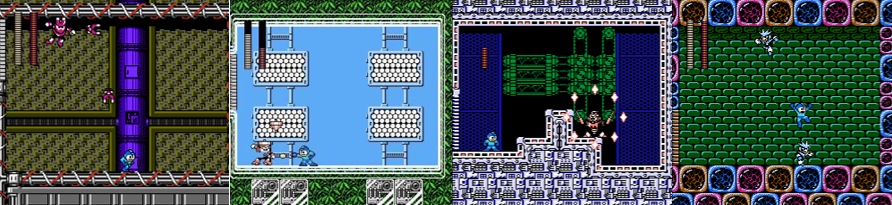
Mega Man: The Power Battle is a 2D, one-on-one tournament fighter in which players pick between the super fighting robot Mega Man, his mysterious “brother” Proto Man, and edgelord anti-hero Bass. Two players can choose to play simultaneously, teaming up against Doctor Albert Wily’s refurbished Robot Masters, and you can pick one of three different story paths to play through, with each one boasting different Robot Masters and therefore different obtainable Special Weapons. Regardless of which character you pick, they all play the same and have the same attacks, though they’re visually very different. Mega Man attacks with his patented Mega Buster, Proto Man carries a useless shield and has a flame effect to his shots, and Bass fires purple energy. As far as I can tell, there are no other differences between them (although Proto Man seemed like he was a touch slower). Your primary attack is unleashed with A; you can hold the button to charge a more powerful shot and fire mid-jump, but there’s no ducking or directional attacks here and you can’t string together combos. X offers a rapid-fire setting to your attacks, the speed of which you can customise from the main menu, while B lets you jump (with you jumping higher the longer the button is pressed) and wall jump off the sides of the arena to avoid damage. You can also press down and B to dash across the screen, and switch between your Special Weapons with Y. Special Weapons are obtained by defeating Robot Masters just like in the mainline games, and just like them they’re tied to an energy meter. If you’re defeated in battle, you can choose to continue (pressing in the right-stick as many times as you like) and even switch characters, returning where you left off with full health and weapon energy.

Players can team up to defeat refurbished Robot Masters and acquire their signature Special Weapons.

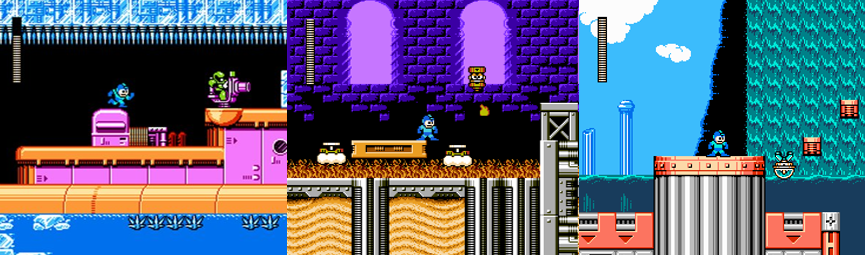
This version of the game offers quite a few options to the player, from adjusting the game’s difficulty (though it’s pretty easy, overall), changing the borders and filters, switching to the Japanese version, rewinding the action with the Right Bumper, creating save states, and even enabling an invincibility. However, Capcom Arcade 2nd Stadium has nineteen Achievements to earn (which are further represented in the game as “Triumphs”) and these will be deactivated if you use the invincibility. Not that you really need it with infinite continues and the rewind, and with the game being so easy. Whichever route you pick, you’ll be taken to a world map and must select which stage and Robot Master to challenge on a roulette wheel. You then have as long as 99 in-game seconds to defeat your foe in a one-round match that basically amounts to an arcade remake of previous Robot Master boss battles. Any damage you take carries over to the next match and you’ll obtain your foe’s Special Weapon, as well as a score tally, upon victory. As in the mainline games, each Special Weapon is effective against a different Robot Master so it can be useful to time your button presses on the world map to make things easier on yourself. Depending on which route you pick (and, potentially, the game’s difficulty), you’ll face different Robot Masters and the stages will even change. The time of day will be different, elements in the background will have changed or, in Gyro Man’s case, you’ll be chasing your foe in a bit of sidescrolling action. There are no stage hazards or in-game power-ups to concern yourself with, with the exception of Magnet Man causing his arena to raise as you fight and the ability to score extra points for avoiding any damage, which will in turn put you higher on the high score table.

Each Robot Master has a specific weakness, though you can just plough through regardless.

Mega Man: The Power Battle sees you battle Robot Masters from the first seven Mega Man games and acquire their signature weapons. Each has a very similar attack pattern consisting largely of jumping, hopping, or stomping about and firing their weapon, though some also charge at you or suck you in. Considering your limited move pool, this means that your overall attack strategy will be to dodge their projectiles and pepper them with shots, either a charged one or a suitable Special Weapon, to make mincemeat of their health bar. Each Robot Master gets a signature intro, both before the stage and before the round starts (such as Cut Man literally cutting his way through the background and Wood Man dropping down in a log), and most are pretty simple. I had little issue powering through Ice Man’s Ice Slasher arrows or Guts Man’s Super Arm that sees him tossing boulders, though Heat Man represented a tougher challenge thanks to him being invulnerable when on fire and immolating you to cause continuous damage. Similarly, Wood Man and Magnet Man erect elemental shields and cause leaves and magnets to rain down, respectively. Gemini Man duplicates himself and fires a ricocheting shot, Plant Man spawns pellet-shooting minions and also has a shield, and Cloud Man summons lightning bolts to electrify the ground. As mentioned, Gyro Man was probably the most unique regular battle as the stage auto scrolls as you fight. Freeze Man peppers the ground with icicles that are all-but impossible to avoid, Turbo Man (not that one) charges as a racing car, and Slash Man is easily the most agile foe, dive-bombing you and slashing when you’re up close. Shade Man stays in the air firing ring blasts and sending out little smoke projectiles, Dust Man spits a cube of trash and draws you in with his cannon, and Crash Man tosses explosive Crash Bombs that can be tricky to dodge.

Your path inevitable leads to Dr. Wily’s fortress and a character-specific ending.

Once you’ve bested the six Robot Masters, you enter Dr. Wily’s fortress and fight either what seems like two versions of the Yellow Devil or this funky pumpkin robot. The Yellow Devil is a gigantic, slow foe who can only be damaged by shooting its eye. It’ll jump about, squash you with is hand, explode into fists or balls, or split itself into three smaller forms. Just target the eye or its exposed core, cycling through your Special Weapons, to cream it. Similarly, the pumpkin robot is invulnerable when closed up and fills the screen with projectiles when open, but it easily bested by pummelling its inner core. Dr. Wily battles you in a three-phase final boss at the end, with players receiving different endings for each character. In the first phase, his robotic fists will fly at you, flick you, or defend or deflect your projectiles. In the second, he floats up high and sends buzzsaws your way, and in the third you have ten seconds to finish him off as he teleports between pods. Successfully finish him and he’ll beg for mercy; but fail and he’ll escape, though you’re victorious nonetheless. Visually, the game looks great; there’s a short introduction that showcases the playable cast, and the different endings all boast big, cartoonish sprite art and ludicrous translation errors. The game’s music features remixes of classic Mega Man themes and character sprites change colour when you have Special Weapons equipped, as you’d expect. Although the stages are quite empty and small, they’re very detailed and change depending on which path you pick. You’ll see a big robot whale coming up through ice, robotic crows, Dr. Wily’s take on Jurassic Park, and even battle in the clouds. The time alters depending on your path and you’ll also be placed at different points: you fight Guts Man on a busy highway of a futuristic city and can see cars racing by in the foreground, but you’re right in the middle of the road when you come back here to fight Turbo Man, and Dr. Wily’s background can either be a rushing tunnel or a weird psychedelic vortex.

The Summary:
There really isn’t a whole lot to Mega Man: The Power Battle, hence the short review. The game looks great, with sprites being big and colourful arcade-style renditions of their 16-bit counterparts and the stages, though simple, changing up depending on which path you take was a nice touch. I also liked that the final bosses slightly changed with each path, though I didn’t notice the difficulty of the Robot Masters altering all that much. The game is very easy overall, to be honest, but I’m not really that bothered by this as sometimes it’s fun to sit down and have a quick gaming session with a fun title. However, those expecting a Street Fighter II-level experience will be disappointed. Gameplay is ridiculously simple, with no combos, counters, or blocking involved. Instead, you’re simply dropped into an arena and face off against a refurbished Robot Master, essentially giving you an arcade rendition of the early games’ boss battles and not much else. It’s cool that you can play as the different characters and team up with a friend, but I barely noticed any differences between them, which was a shame. It’s also weird to me that this wasn’t ported to home consoles at the time as it might’ve been found a home there, especially on the Super Nintendo. Ultimately, while Mega Man: The Power Battle is a fun-but-brief experience, there’s not much else happening here and, oddly, the Capcom Arcade 2nd Stadium doesn’t even include Achievements specific to this game, meaning you can plough through it in about an hour and be done.

My Rating:

Rating: 3 out of 5.

Pretty Good

Have you ever played Mega Man: The Power Battle out in the wild? Which story path was your favourite to take? Were you disappointed that there wasn’t much distinction between the playable characters? Which of the Robot Masters do you think got the best glow up? Do you think the game suffered by not being a more competitive experience? How are you celebrating the science-fiction genre this month? Whatever you think to Mega Man: The Power Battle, share your thoughts below and check out my other Mega Man reviews across the site!

Game Corner [Sci-Fanuary]: Mega Man 6 (Xbox Series X)


January celebrates two notable dates in science-fiction history, “National Science Fiction Day” on January 2 and Arthur C. Clarke’s HAL 9000’s birthday on January 12. Accordingly, I’m dedicating January to celebrating sci-fi in an event I call “Sci-Fanuary”.


Released: 24 August 2015
Originally Released: 5 November 1993
Developer: Digital Eclipse
Original Developer: Capcom
Also Available For: GameCube, Mobile, Nintendo 3DS, Nintendo Entertainment System (NES), Nintendo Switch, Nintendo Wii, Nintendo Wii U, PlayStation, PlayStation 2, PlayStation 4, PlayStation 5, PlayStation Portable, Xbox, Xbox One, Xbox Series S 

The Background:
Capcom made a successful debut on the home console market with the notoriously difficult Mega Man (known as “Rockman” in Japan), a widely praised run-and-gun that spawned numerous, equally celebrated sequels and spin-offs that dominated Nintendo’s consoles. By 1993, Capcom were busy working on bringing Mega Man to the industry-defining Super Nintendo and series artist Keiji Inafune worked hard to come up with new, innovative gameplay mechanics for the Blue Bomber’s sixth 8-bit outing. As before, the game’s Robot Masters were designed by fans, though two were the result of North American submissions and the implementation of the Robot Masters caused some issues for the overworked Inafune. Despite being the last Mega Man title released for the NES, Capcom decided not to publish it outside of Japan, so Nintendo of America handled that aspect. Regarded by some as the best of the original six Mega Man titles, Mega Man 6 has been widely praised despite sticking to the series formula and including some cheesier elements. Mega Man 6 has enjoyed many re-releases over the years and was naturally a part of this Legacy Collection release, which included quality of life features and additional bonuses.

The Plot:
A year after defeating Doctor Albert Wily, the Global Robot Alliance organises the First Annual Robot Tournament to determine the world’s strongest peacekeeping robot. When the mysterious “Mr. X” attacks with eight Robot Masters, the super fighting robot Mega Man to intervenes.

Gameplay and Power-Ups:
For his final NES appearance, Mega Man delivers one last 2D, run-and-gun action/platformer that pits him against another batch of eight Robot Masters. Although you can challenge the bosses stages in any order, it’s best to tackle them according to the cheat sheet provided with the Legacy Collection (or an online guide) as each Robot Master has a specific weakness. Mega Man 6 also includes more branching or alternative paths than any previous Mega Man title, with each of the initial eight stages featuring two paths that lead to their boss. Although you’ll still battle the Robot Master and obtain their Special Weapon upon victory, only one of these two routes gives you one of the four Beat Parts to utilise Beat, Mega Man’s robotic bird helper. You can replay any of the previous stages to acquire ones you’ve missed but will lose this ability once all eight Robot Masters are defeated. Mega Man 6 adds nothing new to Mega Man’s basic controls: you’ll jump with X, sliding under enemies, projectiles, and through narrow corridors with down and X, fire your Mega Muster with A (holding A to charge the shot), and rapidly fire with Y. The Legacy Collection allows you to tweak these controls, if required, rewind the game, create save states, and apply special borders and filters to the game. Although the Mystery Tank is gone, you’ll still grab E-Tanks to refill your health and 1-Ups, health and weapon energy from enemies or scattered about the levels, and be gifted these power-ups whenever your robot ally, Eddie, appears. You’ll find more of these by taking alternative paths or utilising the Flame Blast or Mega Man’s new Rush Power Adapter to melt or destroy certain blocks, respectively, and open new paths.

Mega Man can now merge with Rush to power up, and open new paths using his Special Weapons.

Yes, while Rush does appear whenever you select one of the two Adapter forms, the little robotic canine can no longer be summoned to aid you. Instead, Mega Man fuses with Rush to gain a powerful set of armour that fires a shorter, but far stronger shot. Alternatively, Mega Man also gains a super useful jetpack, perfect to flying to ladders, platforms, or hovering over spikes. These two forms are tied to a meter that limits how much you can use them, but you don’t need to collect energy to fill it (though you lose the ability to slide when using Rush Adapters). Once again, Capcom are hardly thinking outside the box with Mega Man’s Special Weapons, but I appreciated that the Flame Blast and Rush Power Adapter were used to reach new areas and it’s extremely useful to use Centaur Flash to attack all onscreen enemies or Plant Barrier to gain a shield. Personally, I prefer to save the Special Weapons for the boss battles, so I largely relied on the Mega Buster and charged shot, though the speed of the Yamato Spear was appreciated and it’s always useful to hit airborne or oddly placed enemies with the likes of the Silver Tomahawk and Blizzard Attack. Like Mega Man 5’s Water Wave and Charge Kick, the Wind Storm and Flame Burst are great for attacking smaller enemies that rush across the ground, while the Knight Crush’s boomerang-like arc can deal extra hits if shot correctly. Sadly, they’re all way too familiar at this point and still don’t mix up the gameplay mechanics. Rather than expanding upon the Marine Bike and Super Arrows, Mega Man 6 removes them. You do have to hit Pookers with a charged shot to flip them into rideable platforms, but that’s not as fun as the fast-paced sidescrolling shooting offered by the Marine Bike. As mentioned, Beat also returns and is just as difficult to obtain. His ability to battle alongside you explains this, but it was annoying not being able to utilise him without a guide.

What few new gimmicks are included are at least visually engaging.

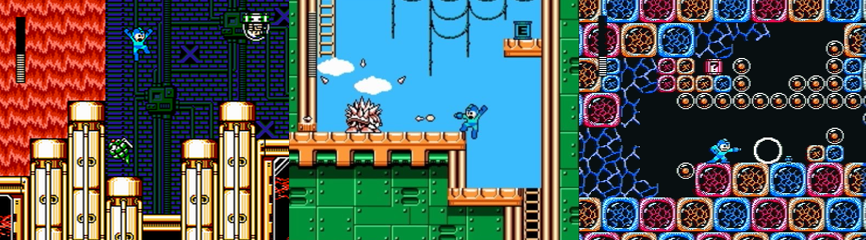
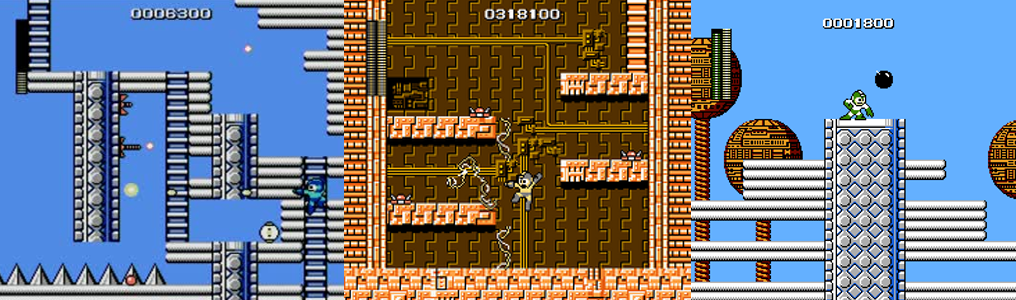
Mega Man 6 also plays it safe when it comes to stage hazards and level design. Sure, the spikes all have a different appearance in each stage and it’s fun to discover new areas, but you’ll encounter the same bottomless pits, disappearing and reappearing blocks, moving platforms, and tricky platforming challenges here (though the Rush Jet makes it much easier to bypass some of these). However, there are some new and clever mechanics to encounter here. Flame Man’s stage is filled with oil that slows you down and bursts into insta-kill flames when ignited by enemy fire. Blizzard Man’s stage also slows you down with snow and sees you skidding about on ice, making jumping to ice columns and platforms a genuine concern. Knight Man’s stage includes a large set of ceiling spikes that threatens to crush or skewer you and bouncy gears that pinball you about, Centaur Man has underwater sections (including a part where you must time your jumps according to the rising/falling water to avoid spikes and pits), and Wind Man’s stage features propellers that enhance your jump and are used to clear gaps and reach ladders and platforms. Many of these gimmicks are recycled for Mr. X (not that one) and Dr. Wily’s stages, with a falling block bridge, reliance on the Rush Jet, flipping spiked platforms, fan enemies that blow you into spikes, hidden drops, and a lack of energy refills making these, fittingly and as usual, the most challenging stages. Each time you clear a stage, you get a password (made redundant by the Legacy Collection), though I found enemies dropped health and weapon energy far less frequently than before, which can make Mega Man 6 tricky at times.

Presentation:
It remains a constant disappointment that, six games in, Mega Man’s sprite remains unchanged since Mega Man 3 (Capcom, 1990), with his sprite simply changing colour whenever he has a Special Weapon equipped, dramatically exploding when killed, and striking a pose when he defeats a Robot Master. I suppose this isn’t entirely true as Mega Man does get a new sprite when using the Rush Adapters, but I would’ve liked to see more detail, a proper idle animation, and a revised sprite to match with the far more detailed backgrounds and environments. As in Mega Man 5, Mega Man 6 uses its resources wisely, limiting the onscreen enemies to reduce (but not eliminate) slowdown and screen tearing and transitioning to a plain black background whenever larger sprites appear. Sadly, Mega Man 6 is a bit of a step back from Mega Man 5 when it comes to narrative; the introduction features large sprite art, but it’s all static and you’ll only see it animate in the game’s ending. However, the stage introductions are vastly improved, now displaying stats for each Robot Master (though not their weaknesses) and a big, animated Mega Man sprite is showcased when you obtain a Special Weapon, with my call for a visual representation of the weapon’s abilities being answered. While Proto Man, Roll, and Doctor Thomas Light are all absent, there is a sprite-based cutscene revealing that Dr. Wily was the true mastermind behind the recent robo rampage and Robot Masters are accompanied by ominous lighting when they drop into their arenas. The more detailed Capcom logo also returns, as do instances of moving foregrounds and backgrounds that appear to be a version of parallax scrolling, though they’re used sparingly (as are instances of flickering lights in the background).

The stages are more colourful and detailed than ever and really showcase the power of the NES.

The music is, again, top-notch, if hardly anything groundbreaking. What did surprise me was just how far the environments have come since the franchise’s basic early days. Again, this is why I feel the series would’ve benefitted from releasing games every two years or so, to give the developers time to figure out the NES hardware limitations and combine some of their ideas to appear more innovative with less games. Flame Man’s stage is a veritable oil field, but with an Oriental flavour to the background; I loved the gimmick of the oil igniting and wish the game had done more with it. Blizzard Man’s stage takes place in the snowy mountain peaks, featuring platforms that’ll explode under you if you’re not careful, meltable walls, and a really fun and impressive section where you carefully platform across a submarine, avoiding the spikes overhead and below. Plant Man’s stage was the most visually impressive for me thanks to the dense forest in the background. Enemies even dropped from the trees and hopped out of grass, which was really surprising, and the stage included some quirky springy parts to mix things up. Tomahawk Man’s stage has a distinctly Wild West theme, featuring cacti and a beautiful sunset in the background, while Yamato Man’s is themed more around Japan, featuring a large mountain and traditional architecture, and Knight Man’s is, as you might guess, themed around a medieval castle and dungeon. Centaur Man’s stage is more inspired by Ancient Greece or Atlantis, featuring columns and ruins and animated water, while Wind Man’s stage sees you traversing a cluttered mechanical tower. Mr. X and Dr. Wily’s stages are the usual mishmash of garish colours and mechanical trappings, though Mr. X’s impressed with a surprisingly detailed futuristic city and moon-lit night sky in the background. Being able to see through windows and Dr. Wily’s mixed and matched enemies and hazards from previous stages create another visually interesting obstacle course, though one boasting alternative paths.

Enemies and Bosses:
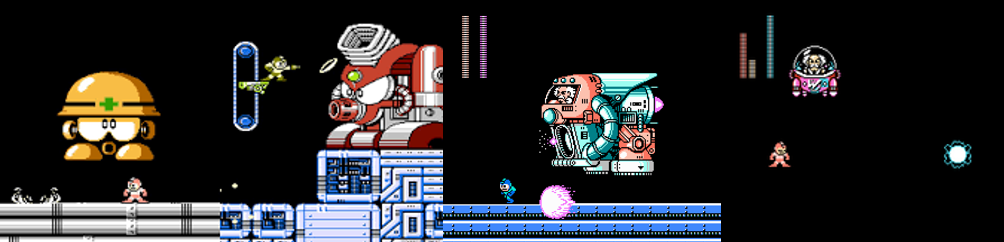
As you might expect, some of Mega Man’s more iconic enemies return in Mega Man 6, such as Sniper Joes now piloting massive cannons, though the Metall’s adopt a disappointingly back to basics approach. You will encounter giant Metall dispensers a few times and one pilots a mech suit in Dr. X’s third stage, but there are now fun new variants and even giant versions here. Slightly tweaked versions of the Dachone, Shield Attacker, shielded Tatepakkan cannon all appear; the Fire Boy is somewhat similar to the Hothead enemies in that they toss fireballs; drill tanks still charge towards you; and you’ll even encounter an evil version of Beat, Peat. Robotic seals, tanukis, pandas, cowboys, fish, bugs, and pelicans (which drop robot fish) make up the quirky list of enemies you’ll face. Skull-faced jumpers, erratic anthropomorphic springs, and speedy curling stones also appear alongside larger enemies. You’ll encounter a few robotic squids that fire homing missiles and ice blocks, brutish Power Slams try to crush you with a boosted jump, clouds transform to submarines, and samurai-like guardians deflect your shot with their spear and toss projectiles. Naturally, the largest enemies act as mini bosses; you’ll destroy a few Metall dispensers, as mentioned, which are more an inconvenience than anything. Gamarn and Gamadayu are a bit tougher in that the large mechanical frog fires lasers from its mouth and his little pilot tosses bombs, but they’re a largely stationary target. Not so for the Gorilla Tanks, which trundle along on tank-like treadmills and spit a spread shot as well as firing their fists at you. All these mini bosses are notably weak to the Flame Blast, though you’ll have to target the Gorilla Tanks’ eyes to take them out.

Robot Masters continue to be weak against specific Special Weapons.

As ever, Mega Man 6’s latest Robot Masters are fought in enclosed arenas and generally jump about firing their Special Weapon. Like in Mega Man 5, Robot Masters seem to take more hits than in previous games, offering a bit more challenge even when hitting them with their weakness. All are fought a second time, in more generic settings, in Dr. Wily’s fortress and, as ever, their difficulty depends on which Special Weapons you have. I went for Flame Man first, who not only causes flame pillars to burst from the ground but also launches a fireball. The Mega Buster works on him very well, though the Wind Storm is obviously even better. His Flame Blast makes short work of Blizzard Man, who’s fought outside for a change and is invulnerable when charging in his ball form. His Blizzard Attack, which summons snowflake projectiles, is the best way to wilt Plant Man, who utilises a very familiar barrier that both protects him and acts as a projectile. You’ll need to time your Blizzard Attack to hit him in the small window when he’s vulnerable, and similarly time your own Plant Barrier when facing Tomahawk Man, who not only tosses his directional Silver Tomahawk but also fires feathers at you. Yamato Man is a bit nimbler and more versatile, defending himself with his lance and flinging his signature Yamato Spear straight ahead or in a spread. This fast-paced attack obliterates Knight Man, who’s mace/boomerang-like Knight Crusher equally crushes the life out of Centaur Man. Possibly the most creative Robot Master up to this point (at least visually), Centaur Man teleports about and fires an easily avoidable spread shot but will briefly freeze you with the Time Stopper-like Centaur Flash. This Special Weapon makes a joke of Wind Man, who desperately tries to suck you in and fires propeller-like projectiles only to fall with a few hits. When fought again in Dr. Wily’s castle, you’ll again have to endure only having your health refilled after each bout, hence why I like to conserve my Special Weapon usage in stages.

Mr. X is obviously Dr. Wily and has some big, dangerous mechs in his castles.

Like Mega Man 5, you’ll have to tackle Dr. X’s four stages, three guardian robots, and the madman himself to unmask the game’s true evil genius. First, you’re pitted against two upgraded Rounders; these spherical craft loop around a track dropping small bombs and are tricky to hit with the Heat Blast. The Power Piston is a much easier target, though you’ll need to position yourself just right so the Silver Tomahawk arcs into it while also avoiding its spread shot and the falling boulders. Although it looks intimidating and fires a big, bouncy shot, the Metonger Z is easily felled by the Blizzard Attack. The X Crusher can be much more challenging as it’s a huge wrecking ball sprite with an equally large hit box; it sways back and forth and drops a purple shot like the one used in Mega Man 5’s finale. However, if you stay in one corner, time your jumps, and attack with the Flame Burst, he’ll be toast soon enough. Dr. Wily’s fortress houses the huge (but entirely stationary) Mechazaurus, perhaps the franchise’s biggest and most impressive boss so far. It’s no slouch, either; you must avoid its fireballs and hop on quick moving platforms fired from its torso to shoot its eyes with the Yamato Spear, which can get quite hectic. The Tank CSII is much easier, despite being a moving target; simply avoid its small and big shots and blast its centre mass with Wind Storm. Your final confrontation with Dr. Wily is a three-phase battle that first seems him trying to crush you in a gigantic skull ship that’s also got a massive hit box. All you need to do is slide to safety and pelt it with the Knight Crusher or Silver Tomahawk, though I’d save that for the third phase. After enough hits, the cockpit is damaged and the ship moves more erratically, relying more on its large spiral shots, but the strategy remains the same. Finally, Dr. Wily again teleports about in his UFO craft and blasting you with four spiral shots. But this is probably the easiest final battle against him as you just pelt him with the Silver Tomahawk and he’ll soon be begging for mercy and finally locked up for good.

Additional Features:
Twenty-four Achievements are up for grabs in the Mega Man Legacy Collection and you’ll snag one for completing this game, and another for beating all six Mega Man games. Alongside the usual display options on offer, you can enable a turbo mode, play the Japanese version of the games, browse a concept and character art museum, and listen to the soundtrack. If you fancy an additional challenge and some more Achievements, you can check out the appropriately named “Challenge Mode”, where remixed stages from all six Mega Man games offer timed challenges. Challenges specific to Mega Man 6 are also included to test your skills, though the only real replay value offered by Mega Man 6 is again in replaying stages to find the secret exits and acquire Beat.

The Summary:
Mega Man certainly finished up his NES days with a bang. While, on the surface, Mega Man 6 is much of the same as before, offering only a few additional features and even missing or not expanding on mechanics from Mega Man 5, it’s astounding how much more detailed the game’s environments have become compared to the first game. While it’s disappointing that Mega Man’s sprite hasn’t evolved all that much, the more detailed sprite art and animations between stages and the new Jet Adapters make up for this. I missed Jet Marine and the Marine Bike, but I loved having a jetpack and the power armour and that they didn’t consume energy when used. As ever, Capcom could’ve done more with these, but it was great seeing them be necessary to access alternative paths and giving you a reason to switch to Special Weapons in stages. While the Robot Masters aren’t all that special, they’re visually very quirky, much like the beautiful stages, and I really enjoyed how big and outrageous some of the boss machines were. It’s a shame we never got a resolution to the Proto Man storyline here, or got to play as him, and that Mega Man 6 focuses more on action than narrative, but the gameplay experience was really solid, with some fun gimmicks. Again, I do think the 8-bit games would’ve been better served releasing further apart and in fewer numbers but Mega Man 6 shows how powerful the NES could be at times and offers a fair bit of innovation compared to some of its predecessors, and even sneakily teases that the series will continue by the end.

My Rating:

Rating: 4 out of 5.

Great Stuff

Do you think Mega Man went out with a bang with Mega Man 6? What did you think to the new Rush Adapter mechanics? Were you disappointed that the game didn’t better expand on Mega Man 5’s gimmicks? Which of the Robot Masters was your favourite to fight against? Did you guess that Dr. Wily was behind everything again? Were you impressed by the greater level of detail in the stages? How are you celebrating the science-fiction genre this month? Whatever you think about Mega Man 6, comment below and go check out my many other Mega Man reviews.

Game Corner [Sci-Fanuary]: Mega Man 5 (Xbox Series X)


January celebrates two notable dates in science-fiction history, “National Science Fiction Day” on January 2 and Arthur C. Clarke’s HAL 9000’s birthday on January 12. Accordingly, I’m dedicating January to celebrating sci-fi with an event I call “Sci-Fanuary”.


Released: 24 August 2015
Originally Released: 4 December 1992
Developer: Digital Eclipse
Original Developer: Capcom
Also Available For: GameCube, Mobile, Nintendo 3DS, Nintendo Entertainment System (NES), Nintendo Switch, Nintendo Wii, Nintendo Wii U, PlayStation, PlayStation 2, PlayStation 4, PlayStation 5, PlayStation Portable, Xbox, Xbox One, Xbox Series S 

The Background:
In 1987, Capcom sought to move away from producing arcade titles and debut on the revitalised home console market with Mega Man (or “Rockman” in Japan), an Astro Boy (Tezuka, 1952 to 1968)-inspired run-and-gun title notorious for its difficulty. Although widely praised and regarded as an NES classic, Mega Man wasn’t successful enough to justify an immediate sequel and, even though Mega Man 2 (Capcom, 1988) vastly improved the gameplay mechanics and was equally lauded, it took two years for the similarly praised (and challenging) Mega Man 3 (ibid, 1990) to drop. This success was seemingly enough to convince Capcom of the franchise’s popularity and Mega Man 4 released just one year later, earning notable praise and setting a new standard for the series. Mega Man 5 was spearheaded by artist Keiji Inafune, who had had major involvement in the previous games and sought to make the game more accessible by lowering the difficulty. In an effort to spice up the gameplay loop, the developers powered Mega Man up considerably, revising development documents from Mega Man 3 to create Beat and again turning to fans to submit designs for the new Robot Masters. Staying on-trend for the franchise, Mega Man 5 was highly praised for its graphics, music, and controls despite continued criticisms of the franchise’s lack of innovation. Like its predecessors, Mega Man 5 has been re-released on multiple consoles, including the Legacy Collection release that bolstered the gameplay with numerous quality of life features and additional bonuses.

The Plot:
Shortly after his last defeat, Doctor Albert Wily strikes back by ordering Proto Man to lead the newest batch of Robot Masters in conquering the world. Aided by his new robotic companion, Beat. the super fighting robot Mega Man heads out to confront his brother and defeat Dr. Wily once more.

Gameplay and Power-Ups:
Mega Man 5 continues in the same spirit as its predecessors, being a 2D, sidescrolling, run-and-gun action/platformer that sees you back in the role of the super fighting robot, Mega Man, and taking on eight new Robot Masters. These await at the end of eight themed stages, which can be tackled in any order. However, since each Robot Master has a specific weakness, it’s better to take them on in the right order to have the correct Special Weapon on hand. While online guides help with this, the Legacy Collection provides a helpful cheat sheet to point you in the right direction, alongside full customisation of the game’s controls. Not that you really need this as Mega Man 5 is nice and simple to play: you fire your Mega Buster or currently equipped Special Weapon with X, holding the button to charge your Mega Buster for additional damage, and utilising a rapid auto-fire function with Y. A is your jump button; holding it lets you jump higher and you’ll also jump higher in Star Man’s stage due to the lower gravity and the second of Dr. Wily’s stages when underwater. Pressing down and A lets you slide under projectiles, jumping enemies, and through tunnels, often to goodies but sometimes to insta-death spikes or bottomless pits. Pressing the ‘Menu’ button pauses the game and lets you select a Special Weapon, Item, or use an E-Tank to fully restore your health or the new Mystery Tank (M-Tank) for one of three helpful bonuses (filling all your energy, granting an extra life, or turning all weak enemies onscreen into 1-Ups). The ‘View’ button brings up the Legacy Collection menu, allowing you to create or load a save state and apply filters, borders, or enable turbo functions, while the Left Bumper lets you rewind the game if you make a mistake.

Mega Man’s new weapons are joined by a new robo-bird companion and an awesome jet ski!

While Mega Man’s Special Weapons are somewhat similar to those found in the previous games, I actually found them to be a little more creative and versatile this time around. The Star Crash surrounds you with stars that act as a shield; you’ll lose one each time you’re attacked and can fling them directly ahead with X. Gravity Hold damages all onscreen enemies then sends them hurtling to the ceiling, while the propeller-like Gyro Attack can be briefly redirected once shot to attack airborne enemies. The Crystal Eye fires a big, slow, powerful shot that explodes on impact; the Napalm Bomb bounces a couple of times before exploding; and the Power Stone has three stones circle out from you, damaging anything that they touch. Easily the most useful Special Weapons were the Charge Kick (which adds an attack to your slide and makes you immune to some hazards) and the Water Wave (which sends waterspouts across the ground) simply because they destroy smaller enemies on the ground, like the Mousubeils and Subeils. Defeating Star Man also gifts the Super Arrow, a plunger-like projectile that sticks to walls and creates temporary platforms for you to clamber up. You also start the game with the Rush Coil, which summons Mega Man’s robotic canine companion, Rush, to spring you to higher areas, and acquire the Rush Jet to fly across gaps (no Rush Marine submarine this time, though). Mega Man’s little helper robot Eddie also pops up in stages to chuck power-ups your way and each stage also hides one of eight letters. Collect them all to spell out MEGAMANV and acquire Beat, a little robot bird that attacks anything in sight. If you miss one of the letters, you can replay the stage from the Stage Select menu to get it and this is highly advisable since Beat is very useful against the game’s bosses. One thing I did enjoy was the Marine Bike in Wave Man’s stage, which finally mixes up the gameplay by turning it into an autoscrolling shooter where you blast at marine enemies and hop over them as they come from left and right.

Stages sport visually fun new gimmicks that push the limited hardware.

Many of the same stage hazards and designs return from the previous games, as you’d expect. Insta-kill spikes are commonplace, both across the ground and down vertical shafts (though each stage sports their unique variant now), as are bottomless pits, meaning you still have to take care when jumping to platforms. Disappearing and reappearing blocks compound these issues, as do moving platforms and narrow columns. Sometimes, you’ll need to use Rush or your Super Arrow to clear gaps and little buzzsaws run along turning gears or small platforms to keep you on your toes. Stages also sport new gimmicks, though, such as a meteor storm in Star Man’s stage, the aforementioned Marine Bike that also sees you battling a giant robot octopus, and a fun gravity gimmick in Gravity Man’s stage that has you running across the ceiling and pressing up to use ladders or your slide. Swinging maces, steam bursts, and rushing water are also present, as are erratic moving platforms that fling you towards spikes and mean you have to think about when to jump. Gyro Man’s stage sees the foreground act as a lift to higher ground, while Proto Man’s fourth stage sees you blasting stone blocks to cause the environment to drop down. Similarly, Dr. Wily’s first stage features a lowering ceiling that will crush you if you’re not careful, while Chase Man’s stage has you running across the rooftop of a speeding train. You’ll also ride bubbles to higher ground and be flung around in tubes in Wave Man’s stage, following snake-like temporary paths in Proto Man’s stage, dodge falling crystals in Crystal Man’s sparkling caves, and take out giant drills in Napalm Man’s underground caves. Overall, while a lot of Mega Man 5’s gimmicks are familiar, there’s finally enough variety and accessibility to make the game challenging but enjoyable and a significant step up from its predecessors.

Presentation:
Mega Man remains unchanged from his last few entries; he still changes colour with each Special Weapon and barely has an idle animation. He does have a dramatic new animation when acquiring each Special Weapon and is showcased spinning around and transforming into his new colour scheme each time (though it would’ve been nice to see an animation demonstrating what the Special Weapon does). Enemy sprites continue to improve, being more outlandish and cartoonish than ever, and the game smartly loads a plain black background for the larger enemies to avoid unnecessary slowdown and screen tearing. These do still crop up but they’re nowhere near as prevalent as previous games; mostly, the game either limits how many sprites appear onscreen at once or renders them far better, though instances will still occur. Mega Man 5 really ups the focus on story, featuring a greater mixture of in-game sprites and larger, anime-style sprite art to tell the story of Proto Man’s attack and Doctor Thoms Light’s abduction. Confrontations between Mega Man and Proto Man, and Dr Wily, are brought to life by the surprisingly expressive in-game sprites and the use of text and text boxes perfectly convey what’s going on, even if Proto Man’s true motives remain a mystery. The developers’ experience with the NES, its hardware, and limitations also saw them craft a more detailed Capcom logo for the opening credits and have some backgrounds move with you in a version of parallax scrolling, as well as blinking lights and flickering effects (most notable in Crystal Man’s stage).

Mega Man 5 is the most visually impressive of the series so far.

Mega Man 5 is a top contender for best music in the series so far, I’d say. Every stage has a jaunty, catchy theme that goes perfectly with the action and rivals even Mega Man 2 for its appeal. Stages also feel much bigger and are noticeably visually superior to the game’s predecessors. Every stage includes multiple areas, changing significantly as you progress, to showcase Dr. Wily’s influence on the natural landscape. Star Man’s stage has the most detailed night-time sky so far, including stars, the Moon, and giant satellite dishes ahead of a more mechanical, colourful interior. Gravity Man’s stage is highly mechanical, with blinking and flickering tech in the background and a garish colour scheme, but also sporting arrows to show where the gravity gimmick takes effect. Gyro Man’s stage is up in the clouds on some kind of airship; propellers appear in the foreground and the pulsating clouds obscure enemies and platforms to keep you on your toes. Crystal Man’s stage is a beautiful crystal and glass mine, Napalm Man’s is a thick, luscious jungle (where the trees and grass sway with a background wind effect), and Stone Man’s stage is a mixture of rock, metal, and scaffolding. Chase Man’s stage is probably the most impressive stage, starting in a train yard and progressing to have to jump across train carriages, battling inside them, hopping over logs and crates, and even sporting a screen jump to simulate the train going over tracks! Wave Man’s station is a dam or pumping station, featuring tubes, bubbles, and waterfalls ahead of your race across the waves, while Proto Man’s fortress is themed after a medieval castle. Dr. Wily’s fortress is much the same as you’d expect, being an ugly mishmash of colours, pipes, and technology, but it’s suitable ominous and the obligatory teleporter pods now shatter after the defeat the Robot Masters within.

Enemies and Bosses:
A few of Mega Man’s most persistent and iconic enemies return in Mega Man 5, again tweaked with fun new attack patterns and variants. The Metalls are here, of course, hiding behind their helmets and firing triple shots at you. They’ll split into smaller minions when destroyed, man giant cannons, swim about with snorkels, fly about in spacesuits and with jetpacks, and even drive mini trains! The “Joe” enemies also return, now tossing crystal projectiles, piloting attack helicopters, and riding their own Marine Bikes. The Shield Attacker enemy also returns, though you still get around behind it to destroy it, and you’ll encounter somewhat familiar robots that throw bombs or rocks at you. New enemies include a fat chicken that constantly spawns little robot chicks, an ape-like variant that fires homing missiles, two variations of a robotic tiger that pounce at you, a little cannon that hides behind a shield, a catapult-like robot that launches rocks, and weird little vacuum-cleaner-like robots that hover over spikes. One of the more common enemies is the Power Muscler, a large pink or green robot that leaps at you and tries to squash you and is usually easier to slide past than battle. You’ll also have to contend with robots that detach their heads, aerial craft that carpet bomb you, little spherical robots that extend their spiked heads, robotic dolphins, and ballistic missiles that send shrapnel flying. Your fun little aside on the Marine Bike is also interrupted by the Octoper OA, a giant robot octopus that fires shots from its cannon-like nose and which can only be destroyed by shooting the cyan oval on its head.

The Robot Masters’ Special Weapons are definitely more diverse this time around.

Mega Man 5’s new Robot Masters are very similar to their predecessors, being fought in enclosed arenas and favouring jumping about and firing their signature weapon, and each are fought again in Dr. Wily’s fortress (though in a more generic setting). The order you battle them determines how difficult the game is as each one is weak to a specific Special Weapon; thus, I challenging Star Man first. Weak to the Water Wave, Star Man protects himself with Star Crash, a spinning shield of stars he launches your way. This Special Weapon is the key to defeating Gravity Man, but you’ll have to time your shots well. Gravity Man constantly switches the gravity around, giving you a small window to fire at him, but only has a standard shot otherwise so he’s not much of a threat beyond his large hit box. His Gravity Hold makes Gyro Man a joke; while this Robot Master hides in the clouds and fires his Gyro Attack, you can decimate him with a few shots of Gravity Hold. Although Crystal Man is weak to the Gyro Attack, he is a slippery devil and his Crystal Eye can split into multiple projectiles. Similarly, the slowness of this Special Weapon can make Napalm Man a little tricky, especially as his missile barrage isn’t the easiest to dodge. The Napalm Bomb is most effective against Stone Man, who just jumps about and spawns floating rocks, but time your shots well as they won’t hurt him when he’s a pile of rubble. His Power Stone whittles down Charge Man’s health bar, but only when he’s not charging at you or raining flaming coal from above. This small window, and the wide range of Power Stone, make Charge Man one of the more frustrating encounters as he’s not easy to jump over. When you battle them again in Dr. Wily’s fortress, they’ll drop a big health refill for you but you won’t get to replenish your Special Weapon energy, so pick your shots well and abuse that rewind feature, if necessary.

Beat will be the difference maker in your battles against Dark Man and Dr. Wily.

Proto Man’s medieval-style castle houses four additional stages boss battles against Dark Man (not that one!), a versatile Robot Master who takes on different forms, all vulnerable to Beat’s attacks as well as specific Special Weapons. Dark Man’s first form is a tank that blasts at you with its cannon and trundles back and forth; the second is humanoid that charges about and is protected by a revolving energy shield; and the third sports a Galvatron-like arm cannon that fires three shots from high in the sky and briefly freezes you with Time Stopper. At the end of the fourth stage, you’ll confront Proto Man in a cutscene where it turns out he was a fake! The real Proto Man saves you, replenishes your health, and then leaves you to battle Dark Man’s fourth, more demonic form that sports a faster version of Dark Man’s electromagnetic barrier, which it fires outward. You’ll have to overcome Dr. Wily’s final defences before facing off with him, with the first being a stationary column that rains enemies onto you. You must hit its spiked body parts with the Mega Buster to hop on them, then attack its head with the Crystal Eye, which can get tedious since you need to keep going in and out of the menu and must time your jumps right. The Circring Q9 is pretty tough, too, since it’s got a big hit box and floats about firing projectiles. You must use the platforms to hop up and fire the Gyro Attack when the central core is exposed. After this, Dr. Wily tries to crush you in his UFO-like craft. Watch out for the insta-kill spikes in the middle and jump out the way, blasting his cockpit with Star Crash or a charged shot to make him flee. You’ll then face him in a two-stage battle where he pilots a massive, skull-faced tank that tries to crush you, fires a bouncing shot from its main cannon and a needle from its lower one. The Super Arrow is great here, but you’ll need Beat or the charged Mega Buster to finish him off when he switches to his capsule. Like in Mega Man 4, he disappears into the darkness so you must anticipate when he appears to attack. He charges up a purple orb that drops and splashes across the ground and circles around the screen, though it’s not too difficult to avoid this and send him fleeing in a panic.

Additional Features:
The Mega Man Legacy Collection includes twenty-four Achievements, with you earning one after completing this game. As with the other titles included in the collection, you can set different display options, enable turbo mode, and even play the Japanese version of the game and listen to the awesome soundtrack. There’s a museum mode, a character database, and production art to view as well, if you fancy it. Additional Achievements await in the “Challenge Mode”, where stages from all six Mega Man games are remixed into timed challenges. There are also challenges specific to Mega Man 4 included here that will test the abilities of even seasoned Mega Man players. Sadly, there’s still no multiplayer options though there is a bit more replay value on offer here with the collectable MEGAMANV letters hidden in the eight main stages.

The Summary:
Mega Man 5 was such a breath of fresh air. Just to clarify, I’ve been playing these games one after the other and, honestly, it’s been frustrating how minor the changes have been to the gameplay formula with each one. To me, it’s almost like Capcom could’ve made only three or four Mega Man titles since the differences between them have been so minor, but Mega Man 5 felt like it was doing a lot more with the hardware. Stages were far more varied, including new gimmicks and hazards that brought the levels to life. The graphics were also far more detailed, allowing for little touches and better management of screen tearing and slowdown. The Special Weapons finally felt unique for the first time since Mega Man 2, having diverse effects and being useful outside of boss battles, though this aspect could still be expanded upon. Where Mega Man 5 really impressed me was with the Marine Bike section, which finally does what Rush Jet and Rush Marine should’ve done from the start and introduce a new gameplay style into the run-and-gun action. I also enjoyed the increased focus on the story, the mystery of the fake Proto Man, and the expansion of the final act into an additional four stages. Given Proto Man’s significance to the story, it’s still a shame you don’t get to play as him through remixed levels, but I really enjoyed Mega Man 5, which expanded upon the stale Mega Man formula in fun and visually engaging ways and impressed me with the way it pushed the limits of the NES hardware.

My Rating:

Rating: 4 out of 5.

Great Stuff

Do you agree that Mega Man 5 was a significant improvement over its predecessors? What did you think to the new Special Weapons and the Marine Bike section? Were you surprised to find that Proto Man was being framed by Dr. Wily? Which Robot Master was your favourite to fight against? What did you think to the new visuals and stage gimmicks? How are you celebrating the science-fiction genre this month? Whatever you think about Mega Man 5, share your thoughts below and check out my other Mega Man reviews.

Game Corner [Sci-Fanuary]: Mega Man 4 (Xbox Series X)


January celebrates two notable dates in science-fiction history, “National Science Fiction Day” on January 2 and Arthur C. Clarke’s HAL 9000’s birthday on January 12. Accordingly, I’m dedicating January to celebrating sci-fi in an event I call “Sci-Fanuary”.


Released: 24 August 2015
Originally Released: 6 December 1991
Developer: Digital Eclipse
Original Developer: Capcom
Also Available For: GameCube, Mobile, Nintendo 3DS, Nintendo Entertainment System (NES), Nintendo Switch, Nintendo Wii, Nintendo Wii U, PlayStation, PlayStation 2, PlayStation 4, PlayStation 5, PlayStation Portable, Xbox, Xbox One, Xbox Series S 

The Background:
In 1987, Capcom wished to move away from producing arcade titles and make their debut on the revived home console market. Thus was born Mega Man (known as “Rockman” in Japan), a notoriously difficult run-and-gun title widely praised as an NES classic, Yet, the developers were only able to produce the vastly improved Mega Man 2 (Capcom, 1988) between other projects and, despite also being a success, it would be two years before the equally praised (and challenging) Mega Man 3 (ibid, 1990) came out. This wasn’t the case for the fourth game, which was quickly pushed into development to capitalise on the franchise’s now-undeniable success. The game’s eight new Robot Masters were the result of fan input; the developers had to narrow over 70,000 submissions down to eight, and the winners all received a special gold edition cartridge of Mega Man 4. The game added a new charge shot to Mega Man’s arsenal and placed additional emphasis on the narrative, elements that were praised and set a new standard for is subsequent sequels, though the repetition of the gameplay formula was criticised. Still, Mega Man 4 has seen multiple re-releases and was naturally a part of the Legacy Collection release, which boasted helpful quality of life features and additional bonuses to introduce new gamers to the long-running franchise.

The Plot:
The fighting robot Mega Man faces a new challenge when Doctor Mikhail Sergeyevich Cossack seeks to succeed where Doctor Albert Wily failed, unleashing eight new Robot masters and striving for world domination.

Gameplay and Power-Ups:
As you’d expect, Mega Man 4 is a 2D, sidescrolling action platformer where you again assume the role of chibi­ fighting robot Mega Man and run-and-gun your way through eight levels to defeat the newest crop of Robot Masters. You’re free to choose the order you challenge these bosses, but your life will be made much easier if you use an online guide (or the handy cheat sheet supplied with the Legacy Collection) and tackle the stages in a specific order as each Robot Master has a specific weakness. As before, the Legacy Collection lets you play the US and Japanese versions of the game, enable a turbo feature, and freely configure the button layout, though the basic setup is perfectly viable. By default, you jump with A, fire your currently equipped weapon with X, utilise an autofire function with Y (more akin to a rapid-fire mode), while B does nothing. The Xbox’s Menu button brings up an in-game menu where you can select different “Special Weapons” to equip to Mega Man’s Mega Buster arm cannon. Finally, you can rewind the game with the Left Bumper and manually save at any time from the main pause menu. Mega Man 4 brings back the slide gimmick, performed by pressing down and A, though it’s still somewhat limited as there aren’t many narrow gaps or tunnels to slide through. I did find more opportunities to slide under enemies and projectiles, to be fair. Rush and his three abilities (a spring, jet, and submarine) also return, allowing you to reach higher areas, traverse gaps, and freely blast through water for as long as your energy meter lasts. Similarly, enemies continue to drop health and energy pick-ups, you can still find the odd 1-Up and Energy Tank, and the password system also makes a return.

In addition to his new (if samey) Special Weapons, Mega Man has a new ability and a new little ally.

Players can finally replay any of the eight base stages once they’ve beaten them (though there’s little incentive to do this), and Mega Man’s arm cannon has received a substantial upgrade. Now, you can charge a shot by holding X, unleashing a more powerful blast to deal additional damage. It’s useful, especially when used with an equipped Special Weapon, but I rarely used it all that much except against the game’s tankier enemies. Although Mega Man gains eight new Special Weapons here, long-time players will notice that, again, his new weapons are simply reimaginings of previous weapons. The Flash Stopper is similar to the Time Stopper, for example, the Skull Barrier to the Leaf Shield, and the Pharaoh Shot to the Shadow Blade. Each Special Weapon has its own energy bar, meaning you’ll need to “farm” enemies to keep them all topped up, which can limit their use outside of boss battles. Generally, there’s no requirement to use any of them, however (though the Drill Bomb can destroy certain otherwise impassable walls), depending on how good a shot you are. It can be easier, though, to fire off a few of the homing Dive Missiles or clear the screen with the Rain Flush, and destroy wall turrets with the diagonal Pharaoh Shot. Still, I remain disappointed that they don’t have more utility, like being used to solve puzzles or having certain enemies be vulnerable to certain weapons. Mega Man also has a new ally, Eddie, who tosses him health or energy power-ups when you spot him wandering about. Still, it’s like Capcom are afraid of experimenting with new abilities; everything feels very safe and samey, despite small tweaks like the Dust Crusher exploding on impact and you being able to remote detonate the Drill Bombs. Hell, this time around there were very few instances where I needed to use Rush. You can spring up to ladders or optional paths for goodies, bypass certain platforming sections using Rush Marine, and cross longer gaps, of course, but it’s still disappointing that there aren’t dedicated sections or even levels utilising these mechanics to break up the action with scrolling shooter sections.

Some fun new gimmicks and hazards add some much-needed spice to the gameplay.

Mega Man 4 is very typical of its predecessors, featuring an abundance of bottomless pits, tricky jumps, instant-kill spikes (of varying design), and floaty underwater sections. You’ll drop down shafts, slide through tunnels, and clamber up ladders; jump to swinging, moving, and temporary platforms and blocks; and occasionally take different paths to reach power-ups hidden in precarious sections. Some ladders now have clamps on them that’ll knock you off, some enemies pop out from the background, and more hazards are liable to drop from above this time around. The blackout feature from Mega Man 3 returns, now tied to the 100 Watton enemy and primarily seen in Bright Man’s stage. Destroy these lightbulb-like robots and the background is plunged into darkness, though destroying the firework-blasting Dompans will illuminate the area once more. Mega Man 4 brings back the annoying disappearing/reappearing blocks from the last two games and also debuts some new platforming hazards, such as platforms that sink the longer you stand on them, blocks the sprout spikes from their sides and force you to better time your jumps, coil and rainbow platforms that create a temporary surface you need to quickly run or jump across, and quicksand and rushing water that’ll suck you in and push you along, respectively. Ridable enemies are also included: you can cross spikes on either the grasshopper-like Battan or the shot-firing Hover, often blasting enemies and hopping to platforms or other rides to progress. Toad Man’s stage includes a bit of wind resistance, trash compactors threaten to crush you if you don’t clear a path and slide to safety, and snow and ice will slow you down and cause you to slide along, respectively, in Dr. Coassck’s dangerous stages. The level design actually felt more forgiving this time around; I encountered less instant-kill hazards than before, though bottomless pits, respawning enemies, tricky jumps, and disastrous knockback can still be your downfall.

Presentation:
At this point, it’s obvious Capcom knew what worked for Mega Man and had very little intention of making massive deviations. Mega Man’s sprite is still exactly the same, changing only when you equip different Special Weapons or charge up your shot, which is honestly a bit of a shame considering the continued overhaul to the in-game menu and the abundance of bigger, more detailed enemy sprites. Mega Man 4 does boast an impressive introductory cutscene, however, that recaps the previous games and introduces the new threat, complete with large, chibi-style pixel art. The title screen is still lacklustre compared to Mega Man 2 but it’s a big step up from Mega Man 3 simply for including Mega Man’s helmet alongside the title. Robot Masters continue to be introduced with a fun pre-stage graphic, new sprite art depicts Mega Man acquiring his weapons, and the music is a step up from the last game, in my opinion, being a bit more memorable and jaunty. Sadly, story takes a backseat until you battle Dr. Cossack. The dangling plot thread regarding Proto Man is completely unresolved and the game still suffers from screen tearing, slowdown, and sprite flickering in certain stages or when too many sprites are onscreen at once.

You can definitely see the developers starting to push the NES hardware.

Mega Man 4 ups the ante a bit in its stages, however. While there’s nothing really that new here, with the same combination of futuristic, mechanical, and industrial areas, backgrounds tend to be livelier than before, with fossils, blinking effects, moving clouds, mountains, and hieroglyphics all included. This makes it all the more disappointing when you’re faced with a plain black or blue background, but stages like Toad Man’s (with its honestly impressive rain effects, waterfalls, and rushing sewer streams), the light/dark effect in Bright Man’s stage, and the veritable snowstorm in Dr. Cossack’s stages show just how far the developers have come since the first game. Electrical currents, bubbling lava, pipes and girders, and splash effects are far more commonplace here, with some stages boasting more forked paths that lead to dead ends, goodies, or more challenging sections. Dive Man’s stage includes a rising water gimmick where you need to watch for spikes and mines, and you’ll need to jump at switches to spawn in ground in Drill Man’s cave-like stage. Dr. Cossack’s third stage includes an autoscrolling section where you need to outrace the screen and hop to hazardous platforms, and you’ll need to continuously jump to avoid being sucked into quicksand in Pharoah Man’s stage. Things get a bit garish when you reach Dr. Wily’s stages, with the colour palette not being the most pleasing to the eye, but I liked the rendition of Dr. Cossack and Dr. Wily’s lairs and the use of in-game sprites to advance the story and reveal Dr. Wily’s newest master plan.

Enemies and Bosses:
Mega Man 4 boasts a new crop of robotic baddies to blast your way past, courtesy of Dr. Cossack, though series fans will recognise the returning, hard hat-wearing Metalls. Now sporting a three-way projectile and the ability to twirl and swim, these little bastards are more annoying than ever. The “Joe” enemy variant also returns, but again completely unrecognisable as Skeleton Joe, a skeleton who tosses bones and will rebuild itself unless you hit it with the right Special Weapons. Robotic fish, rats, manta rays, bats, and bugs are commonplace enemies, as are bizarre gumball machine robots that spit projectiles, flocks of robot penguins, and caterpillars. Robot scorpions burst from the sand in Pharaoh Man’s stage, which also introduces the head-tossing Mummiras (who pop in and out from hidden doors), and you’ll have to slide or jump over the charging Shield Attackers to hit them from behind. Four stages also boast gigantic sub-bosses, similar to those in Mega Man 3. We’ve got a giant whale, a giant hippopotamus, a giant snail, and a giant eye-thing. All of these toss bombs or homing missiles except for the latter, which fires rings and is best held in place with the Flash Stopper. The hippo-like Kabatoncue can be a problem if you’re low on weapon energy as you need to destroy its constantly-regenerating pillar to get it low enough to hit, but the Dive Missile, Pharaoh Shot, and Rain Flush can level the playing field.

The Robot Masters felt much more durable and troublesome this time around.

Of course, you also have to battle the eight new Robot Masters, who challenge you again in Dr. Wily’s fortress at the end of the game, dropping only health and no weapon energy. It might just be me, but I found the Robot Masters much more durable this time around. Only a handful of them were easily bested by their weakness and I had to do a lot of rewinding and reloaded when battling them. First up for me was Dive Man, who’s also weak to the Skull Barrier; he attacks with a torpedo-like charge and by firing destructible homing missiles that can be a pain to dodge. Though Drill Man is weak to the Dive Missile, he avoids damage by burrowing into the ground and launches drills at you. His Drill Bomb makes short work of Toad Man, but you’ll need to be quick as this slippery bugger hops about and can decimate you if he unleashes Rain Flush. This Special Weapon will dampen Bright Man’s day but, again, you can’t take him lightly; there’s a delay when deploying Rain Flush and Bright Man can freeze you in place and pepper you with projectiles. His Bright Flash makes a joke out of Pharaoh Man, freezing him in place before he can even launch a shot and allowing you to destroy him and keep the time stop going, though again it seems to take a lot of shots to destroy this boss. The Pharaoh Shot is great for taking out Ring Man thanks to it firing diagonally to hit him when he leaps high up, but again he’s pretty difficult thanks to his Ring Boomerang travelling far and snapping back to him, curving upwards to hit you when you’re in mid-air. It’s the best way to battle Dust Man, though, but he’s also a tricky customer since he spits trash from (and sucks you in with) his vacuum-like cannon. The Dust Crusher makes mincemeat out of Skull Man, but you have to account for its slow firing speed and him protecting himself with his Skull Barrier (not to mention hopping over his triple shot attack).

Dr. Cossack offers new machines and a new challenge, but turns out to just be an unwitting pawn.

With all the Robot Masters defeated, you’ll storm Dr. Cossack’s frigid fortress, which is home to four additional bosses (including the new big bad of the game). First up is Mothraya, a large robotic moth with a massive hit box that tries to crush you, breaks the stage with its stinger, and fires diagonal projectiles. Its only weak spot is the orb on its chest and you’ll need the Ring Boomerang to have the best chance here. Next up is probably one of the game’s more annoying bosses, the Square Machine. Similar to the Yellow Devil, this appears onscreen in sections. You must hop into the lower section, slide under the middle, and jump to one of the blocks to hit the central eye (avoiding its plasma blast) and attack with the Dust Crusher before it separates again. Its pieces will trick you by flying in faster and the projectile can be difficult to dodge, making this a pretty frustrating boss. After that, you battle the far simpler Cockroach twins. These bulbous, bug-like robots clamber about the walls, ceiling, and floor of a spike-filled arena, firing at you as they go. The Drill Bomb easily rips through them, so your main concern is not slipping to the insta-kill spikes. Once they’re defeated, you’ll battle Dr. Cossack in his Cossack Catcher machine. He floats about, bashing you with his hit box or dropping down on you, keeping you at bay with projectiles from either side. His biggest threat is the claw appendage, which will grab you if you’re underneath, but it’s pretty simple to slide past him, take the high ground, and pummel him with the Dust Crusher. When he’s defeated, Proto Man pops in with Dr. Cossack’s daughter, Kalinka, who reveals that Dr. Wily was behind everything! Shock! Horror!

Dr. Wily offers his toughest challenge yet thanks to some finnicky weak spots.

So, yes, you’re then forced to take on four additional stages in Dr. Wily’s newest fortress, including battling the Robot Masters again and taking on two additional bosses before facing Dr. Wily once more. The first is the Metall Daddy, a giant Metall not unlike the one from Mega Man 3 that hops about, slamming the ground and causing Metalls to rain down. You’ll need to slide under him and attack his big, gormless eyes with the Ring Boomerang or Dust Crusher to defeat him. Next, you take on Tako Trash, a decidedly more troublesome boss. It sits there launching bombs and spitting fireballs, but its weak point is so small and its projectiles so big that it’s pretty tricky to time your shots while riding the moving platforms in the enclosed arena. The same is true of Dr. Wily’s newest machine; the first phase is simple, just stay under the massive fireballs it shoots and hit the skull-like front with the charged Mega Buster or Ring Boomerang. The second phase is much more challenging; Dr. Wily moves erratically, launching fireballs high and low that are extremely hard to avoid due to their huge hit boxes. You also need to perfectly time detonating the Drill Bomb to damage the jewel below his cockpit, which is quite the ask (especially if, like me, you learned far too late about this trick). Dr. Wily doesn’t give up that easy as he flees to a final area, one sadly a simply pitch-black room, and pilots a UFO-like capsule. In this fight, the only way to damage Dr. Wily is with a fully charged Pharaoh Shot and Dr. Wily is only visible when firing his big, charged plasma ball. However, his craft is onscreen even if you can’t see it which, yes, is a hazard but also means you can hit him with your charged shot when it’s overhead or if you can intuit where he’ll be (or abuse the rewind feature to guide your aim).

Additional Features:
There are twenty-four Achievements in Mega Man Legacy Collection and you’ll earn one specifically for beating this game. Alongside different display options (including borders and filters), the Legacy Collection allows you to view a character database and production art and take tough, time-based challenges for additional Achievements in “Challenge Mode”. Here, you’ll be tasked with conquering remixed stages from this game and taking on the bosses once more under specific conditions, with additional challenges unlocked as you complete them. Remixes of Mega Man 4’s stages and gauntlets also appear in this mode, but there’s little else on offer here as there’s still no high score table or multiplayer options.

The Summary:
Mega Man 4 is what Mega Man 3 should’ve been. It not only has the slide and the additional Rush mechanics, it also includes the charged shot at last and expands the narrative to include a new (albeit misguided) antagonist, expanding Mega Man’s lore and cast and attempting (however safely) to expand the player’s arsenal with some new abilities. My only wish is that the developers had combined more elements of the two, such as allowing more use for Rush Jet and Rush Marine like in Mega Man 3 and incorporating rematches against Mega Man 2’s Robot Masters instead of Mega Man 4’s when tackling Dr. Wily’s fortress. It’s disappointing that the lingering question about Proto Man wasn’t addressed here; he only shows up once when realistically I think he should be a playable character or could’ve at least featured in side missions to help mix things up a bit more. That aside, there’s a lot to like in Mega Man 4. The game is about as big as Mega Man 3 but feels like it has a little more variety in the stage designs, enemies, and boss encounters. Bosses were a lot tougher (for me, at least) and stages seemed easier to navigate (again, for me), making for an interesting difficulty curve. The large sprite art used for the opening and throughout the game was impressive, as was the continued use of giant enemies, although it’s a shame Mega Man hasn’t had much of an overhaul. The music and overall more detailed presentation does account for this (I’m seriously impressed by Toad Man’s stage) and I definitely think this was more of an advancement than Mega Man 3. It just feels as though Capcom were afraid to really step out of their comfort zone with Mega Man, which is a shame as there’s some gimmicks and inclusions here with a lot of potential.

My Rating:

Rating: 4 out of 5.

Great Stuff

What did you think to Mega Man 4? Did you enjoy the new charged shot? Were you surprised to find Dr. Wily was the true mastermind? Do you agree that the bosses were tougher this time around? Were you disappointed that the gameplay formula remained relatively unchanged four games in? How are you celebrating the science-fiction genre this month? Whatever your thoughts and memories of Mega Man 4, drop them below and go check out my other Mega Man reviews across the site!

Game Corner [Sci-Fanuary]: Mega Man 3 (Xbox Series X)


January celebrates two notable dates in science-fiction history, “National Science Fiction Day” on January 2 and Arthur C. Clarke’s HAL 9000’s birthday on January 12. Accordingly, I’m dedicating January to celebrating sci-fi in an event I call “Sci-Fanuary”.


Released: 24 August 2015
Originally Released: 28 December 1990
Developer: Digital Eclipse
Original Developer: Capcom
Also Available For: GameCube, Mobile, Nintendo 3DS, Nintendo Entertainment System (NES), Nintendo Switch, Nintendo Wii, Nintendo Wii U, PlayStation, PlayStation 2, PlayStation 4, PlayStation 5, PlayStation Portable, Tiger Electronics, Xbox, Xbox One, Xbox Series S 

The Background:
Capcom was eager to move beyond simply producing arcade titles in 1987, and thus made a dramatic debut on the revived home console market with Mega Man (or “Rockman” in the East), an Astro Boy (Tezuka, 1952 to 1968) inspired run-and-gun notorious for its difficulty. Despite widespread praise and being seen as an NES classic, Mega Man wasn’t successful enough to warrant an immediate sequel and it was only by enduring a great deal of stress that the developers improved upon the original with Mega Man 2 (Capcom, 1988). The sequel was a big hit that many regard as one of the best in the series, but it would again take two years for a third game to emerge. In that time, lead supervisor Akira Kitamura quit Capcom and artist Keiji Inafune noted that Mega Man 3’s development was chaotic as a result. Despite Mega Man’s arsenal, versitality, and lore being expanded upon in the third game, Inafune felt the final product was unpolished and full of begrudging compromises that saw many elements being excised. Yet, Mega Man 3 has continued to be met with praise; reviews noted the continued improvement of the graphics and gameplay and lauded the action and franchise appeal it helped establish. Though criticised for its excessive difficulty, Mega Man 3 sold over one million copies worldwide. Like its predecessors, it was completely remade for the SEGA Mega Drive and ported to several consoles, including this Legacy Collection release that came with quality of life features and additional bonuses to celebrate the long-running franchise.

The Plot:
Shortly after his latest defeat at the hands of Mega Man, Doctor Albert Wily apparently has a change of heart and works with Doctor Thomas Light to build a peace-keeping robot named “Gamma”. However, when eight new Robot Masters go berserk and steal Gamma’s power crystals, Mega Man must team up with his new robotic canine partner, Rush, to retrieve them.

Gameplay and Power-Ups:
Mega Man 3 does little to break the mould of its predecessors. Like the first two games, it’s a 2D, sidescrolling run-and-gun action platformer that tasks you (as Mega Man) with traversing eight levels and defeating a batch of new (and old) Robot Masters. Although you can still pick the order you challenge each stage (something made much easier with the helpful cheat sheet included with this Legacy Collection, which tells you each Robot Master’s weakness), there’s no difficulty settings like in Mega Man 2. Still, you can choose to play either the US or Japanese versions, enable a turbo mode, and customise the button layout. Not that you really need to given how simple the controls remain. A lets you jump, X fires your currently equipped weapon, Y offers an autofire option, and you pause the game to select another weapon with the Xbox’s Menu button. Mega Man 3 introduces a slide action, performed with down and A, to let you slip through narrow gaps and tunnels and beneath jumping enemies and certain projectiles, though it’s not implemented all that much. Each of the eight new Robot Masters gifts a new Special Weapon upon defeat, and Doctor Thomas Light upgrades Rush with new functions as you progress. Like in Mega Man 2, you can’t replay previous stages but there are some optional paths at times, hidden power-ups such as extra lives, Energy Tanks (great for restoring your health in a pinch), and boosts for your health and weapon energy. Mega Man 3 also offers a password system that lets you continue your progress at any time, or gain additional bonuses, though this is largely superfluous thanks to the Legacy Collection’s save state and rewind features.

Mega Man’s arsenal is bigger than ever, yet also paradoxically familiar.

While Mega Man’s trusty Mega Buster will serve you well for the most part, your battles against the eight Robot Masters will be made much simpler by equipping one of the new Special Weapons. Each has an energy meter that depletes as you use them so you’ll need to grab Weapon Energy capsules to keep this topped up, often requiring you to “farm” enemies that conveniently respawn when you move offscreen. Although they’re new weapons, some are again similar to the ones seen before (Shadow Blade, for example, is functionally identical to the Metal Blade as you can fire it upwards, downwards, and diagonally), though only the Hard Knuckle has a use outside of boss battles as it destroys certain blocks. The Magnet Missile travels horizontally unless there’s a target above, then it homes in vertically; the aforementioned Hard Knuckle is slow but deals damage on impact; the Gemini Laser fires a laser that ricochets about, and the Top Spin adds a whirlwind spin to your jump but is finnicky to control. I already mentioned the directional Shadow Blade, the Spark Shot stuns enemies, the Needle Cannon rapidly fires needle projectiles, and the Search Snake sends three small snakes across floors, walls, and ceilings. I had little use for most of these, honestly. I used the Magnet Missile the most, followed by the Shadow Blade (which is great for dispatching enemies on ladders), but had little use for the Snake Search or Spark Shot outside of boss battles so I never worried about these running  out of energy. Mega Man 3 also introduces Mega Man’s robotic canine, Rush, who effectively replaces the Items from previous games. Rush Coil springs you high into the air, Rish Jet flies across gaps for as long as your energy meter lasts, and Rush Marine does the same but when underwater. These latter two turn the action into something of a sidescrolling shooter, which helps break up the gameplay a bit, though you need to snag the energy refills as you go or you’re liable to drop to an untimely end.

The game is bigger and more detailed, and yet doesn’t seem to be innovating much.

Mega Man 3 is much bigger than its predecessors, and therefore much tougher as a result. Ladders, tricky platforming, insta-kill hazards like spikes and bottomless pits, and disappearing/reappearing blocks are commonplace, often over huge gaps. Turrets also crop up a lot, as do tunnels for you to slide through (sometimes with the risk of a drill hazard), and some stages feature a lightbulb enemy that blankets the environment in darkness until they’re destroyed. Some stages have more unique elements built into them; Magnet Man’s stage, for example, incorporates a magnetic gimmick where turbines attract you, causing no damage but putting your jumps at risk. Spark Man’s stage includes a moving electrical hazard that forces you to time your jumps to avoid damage (or a drop down a pit) and rising blocks over a bottomless pit with insta-kill ceiling spikes above, and Snake Man’s stage includes giant snake head turrets that spit massive fireballs and make the ground uneven until they’re destroyed. Gemini Man’s stage features underwater sections where your jump is much higher and your progress is blocked by destructible Pole eggs that spawn in Pole enemies when destroyed. Often, you’re tasked with making tricky jumps to small or moving platforms, usually while enemies or projectiles rain down. Sometimes these platforms are temporary, sometimes they’re moving, and sometimes you’ll need to make your own using Rush’s abilities. Four of the stages are remixed into harder challenges once you’ve defeated the eight Robot Masters, adding small cogs to Spark Man’s stage, upping Rush Coil’s use in Needle Man’s stage, increasing the spikes and Pole eggs in Gemini Man’s stage, and adding more spiked shafts to Shadow Man’s stage.

Presentation:
Mega Man 3 offers same 8-bit stylings of its predecessors, adding only a new sliding animation to Mega Man’s repertoire and little else. Sure, his sprite changes colour when a Special Weapon is equipped but the presentation is starting to feel quite samey at this point. Although bigger sprite art is used when Mega Man acquires a new Special Weapon, and in-game graphics are used for the few story cutscenes near the endgame, the title screen is a dramatic step back, being simply the game logo on a plain black background. While many large enemy sprites appear in the game, and the game is much bigger than the last two, Mega Man 3 still suffers from slowdown, sprite flicker, and screen tearing when too much is happening onscreen. The music is still a highlight, with jaunty tunes accompanying each stage and the iconic Mega Man theme kicking in, but again it’s all very familiar at this point and feels like an extension of Mega Man 2 rather than necessarily improving upon it. There’s possibly even less story here than before, at lest until the endgame. Occasionally, you’ll be challenged by Proto Man, who announces his arrival with a whistling tune and opens new areas upon defeat, but there’s no story text about this until you’re ready to track down Dr. Wily. Indeed, if it wasn’t for Doc Robot’s presence in the four remixed sages, you’d be forgiven for not even realising that Dr. Wily was supposed to have repented his evil ways. Instead, he shows up in his UFO and flees to another impressive castle, forcing you to brave six additional stages to track him down. There are a few additional flourishes to this, to be fair: Mega Man 2’s Robot Masters dramatically fuse with Doc Robot before each bout, Dr. Wily’s revealed to be a puppet at one point, and there’s a lingering mystery about Proto Man by the end.

Sprites and stages are more detailed than ever, but I would’ve liked to see more from the story.

Mega Man 3’s stages are a touch more detailed than before, but again aren’t really offering much new. Exposed wires, pale pastels, and ugly electronics are rife in Magnet Man’s stage, Hard Man’s stage takes place atop and within a rocky mountaintop, Top Man’s stage features a particularly garish blue and green pastel aesthetic that’s barely tolerable with the grass effects in the foreground, and Shadow Man’s stage appears to take place in a sewer, but one filled with red water. Spark Man’s stage is full of gears and conveyors in the background, and Snake Man’s stage has a green scale effect to every surface that makes it seem like a gigantic extension of the titular Robot Master but ends up in the clouds. Gemini Man’s stage is perhaps the most visually striking with its ice crystals, flashing blocks, and underwater coral reefs, and Needle Man’s stage is set in a futuristic city and features girders, drills, and skyscrapers. Dr. Wily’s fortress is your typical mechanical hellhole where you must breach his outer defences before tackling the tight corridors and sewer system within. While most stages have a horizontal progression, it’s not uncommon to find yourself dropping down shafts (often while dodging insta-kill spikes) or platforming across gaps. While the visual identity of the franchise is as strong as ever and the big enemy sprites are impressive, things again feel very safe and very familiar. I applaud Mega Man 3 for avoiding using cliché elemental tropes to differentiate stages, but it would perhaps have helped this title to stand out a little bit more, or maybe if there was more focus placed on the story and the mystery of Proto Man.

Enemies and Bosses:
A gaggle of new robotic foes stands between you and victory in Mega Man 3 but don’t worry, Metall is still here and now they can fly with little propellors and a giant version even acts as a sub-boss. Sniper Joe is not only missing (thankfuller!) but poorly replaced by Hammer Joe, an armoured foe who tosses a ball and chain and can only be damaged when their eyes glow, but are otherwise immobile and easy to attack. For the most part, enemies are stranger and weaker than ever: Poles can surprise you, parachuting Parasyu and annoying Elec’n’s appear at the worst times, and Peterchy’s wander about and drop down from above, but they all die in one hit. Things get a little tougher when Have “Su” Bees drop a swarm of Chibees onto you or the porcupine-like Hari Harry’s come rolling along, or the large, frog-like Bikky springs at you, but by far the most amusing and strangely dangerous for me were the pole-vaulting Bubukans. Large enemies are far more commonplace here with the likes of the Giant Springers, Gyoraibos, Penpen Makers, and the cat-like Tamas appearing often. Like the Giant Metall and Big Snakeys, Tamas act as sub-bosses; though they’re less of a hazard than the likes of Bikky as they’re completely stationary, their projectiles are large and difficult to avoid. Robotic apes, walking bombs, floating orbs, and the spinning top-firing Matasaburo round out the enemies, who appear in multiple stages, and even the Pickelman returns from Mega Man, now driving a cute little digger!

Eight new Robot Masters exist to challenge you and fall by their weaknesses again…

Yet again, you’ll face a Robot Master at the end of every stage and, as ever, the order you challenge them dictates how difficult the battle is since each one is weak to a different Special Weapon. All eight are battled again in Dr. Wily’s fortress, as is tradition, in bland arenas and when you’re at full power, making the rematches much easier. I tackled Magnet Man first, who’s weak to the Spark Shock, Shadow Blade, and even his own Magnet Missile but the Mega Buster will do him in just fine despite his magnetic shield and projectiles. His Magnet Missile makes short work of Hard Man, who blasts you with his Hard Knuckle and stuns you with a screen shaking slam. His Hard Knuckle is the key to besting Top Man, though the weapon is slow and Top Man is invulnerable when spinning; he also fires spinning tops that can be tricky to avoid thanks to Mega Mans large hat box. The Top Spin lets you whittle down Shadow Man, though I found it strangely difficult to use. Shadow Man jumps about tossing his Shadow Blade shuriken and sliding into you, so be sure to attack from the air. The Shadow Blade is great at hitting Spark Man when he leaps high into the air to fire electrical shots in all directions or charge up his big shot. I took on Snake Man next, who’s primarily weak to the Needle Cannon but can be bested with the Mega Buster. It’s a tough fight in this instance though as Snake Man jumps about and fires his little Search Snakes, which are difficult to avoid in the uneven area. The one time I used his Special Weapon was against Gemini Man, a super-fast Robot Master who duplicates himself and fires his ricocheting laser about the room. This Gemini Laser makes Swiss cheese out of Needle Man, despite his rapid-fire projectile and extendable head. As mentioned, you’ll battle all eight of these guys again in Dr. Wily’s fortress, with each dropping some health afterwards (but no energy), but you’ll also battle three Maga Man duplicates. Top Spin is the key here, and targeting the right one (he’ll teleporting the same was as you do).

Old foes return alongside mysterious rivals and Dr. Wily’s biggest creation yet!

After you defeat all eight, you’ll play through four remixed stages and battle the eight Robot Masters from Mega Man 2, two per remixed stage, with each one inhabiting Doc Robot. They sport all their familiar attacks and are vulnerable to your new Special Weapons (use Spark Shot against Air Man, for example, Shadow Blade against Bubble Man, and Top Spin against Heat Man). Occasionally, you’ll battle Proto Man, who doesn’t have a health bar and simply runs and jumps about shooting at you; he’s particularly weak to the Magnet Missile and begrudgingly aids you as the game progresses. Dr. Wily’s fortress is also home to two additional bosses, the Kamegoro Maker (simply destroy the frog-like Kamegoro it spawns) and the Yellow Devil MK-II (which is actually easier than its predecessor as its blocks are easier to void, though you do need to watch for its projectiles and deal with the Hard Knuckle’s slow fire rate). Best all of these threats and you’ll finally battle Dr. Wily once more, this time in two two-phase battles. The first is against one of his trademark machines; simply blast the lower antenna with the Spark Shot and avoid his large spinning projectiles, then watch for his pin-like legs and time your Hard Knuckle shots to hit his cockpit when it lowers. When he’s defeated, Dr. Wily will pilot the gigantic robot Gamma, which fires three projectiles from its big, stupid head in the first phase and adds an energy shot and a big fist attack in the second. Just clobber him with Hard Knuckle shots then finish him off with a Top Spin to win.

Additional Features:
There are twenty-four Achievements in the Mega Man Legacy Collection, with one specifically awarded for beating this game. Alongside different display options (such as borders and filters), the Legacy Collection offers a character database, production art, and a series of tough, time-based challenges for additional Achievements. The more challenges you complete, the more you’ll unlock, including additional remixes of Mega Man 3’s stages and even gauntlets that pity you against multiple Mega Man titles and bosses against stricter time limits. Otherwise, there’s not much else to return to in Mega Man 3 thanks to the continued lack of a high score table or avenues for exploration.

The Summary:
Mega Man 2 improved upon the first title a lot, being bigger and better while still retaining the same charm and appeal despite the increased difficulty. This is true of Mega Man 3; it’s a good two times the size of the first game and is definitely bigger than the second, but I have to say I expected a bit more by the third title. Whether that be more creativity in the weapons, more focus on the narrative, or more interesting gameplay mechanics; just give me something to make me feel its unique experience. As is, I felt Mega Man 3 didn’t quite live up to its potential; it’s still a great game, but no better or worse, overall, than its predecessor. I would’ve liked to see more focus on the Rush mechanic, perhaps even making him a secondary character or offering entire sections or bonus rounds where you play as (or on) him. I would’ve liked to see more of the narrative address Proto Man’s appearances, perhaps even make him playable in the boss rematches or show up for the final battle. The slide was cool but it’s poorly implemented, with few chances to take full advantage of its potential. Mega Man’s Special Weapons also feel increasingly useless as gameplay mechanics thanks to the continued linear direction, and I just think things should have progressed a bit further by the third title. Mega Man 3 definitely expands and adds to the formula, the point where I’d say you could skip the previous two and start here, but it doesn’t truly innovate as much as it like a feels like a stop-gap before the next game, especially in terms of its narrative.

My Rating:

Rating: 3 out of 5.

Pretty Good

Are you a fan of Mega Man 3? What did you think to Rush and the new slide mechanic? Do you agree that the formula was becoming a bit stale by this point? What order did you tackle the game’s stages and which Robot Master gave you the most trouble? Would you have liked to see and learn more about Proto Man? ? How are you celebrating the science-fiction genre this month? Whatever your thoughts and memories of Mega Man 3, please leave them below and be sure to check out my other Mega Man reviews across the site!

Game Corner [Sci-Fanuary]: Mega Man 2 (Xbox Series X)


January celebrates two notable dates in science-fiction history, “National Science Fiction Day” on January 2 and Arthur C. Clarke’s HAL 9000’s birthday on January 12. Accordingly, I’m dedicating January to celebrating sci-fi with an event I call “Sci-Fanuary”.


Released: 24 August 2015
Originally Released: 24 December 1988
Developer: Digital Eclipse
Original Developer: Capcom
Also Available For: GameCube, Mobile, Nintendo 3DS, Nintendo Entertainment System (NES), Nintendo Switch, Nintendo Wii, Nintendo Wii U, PlayStation, PlayStation 2, PlayStation 4, PlayStation 5, PlayStation Portable, Tiger Electronics, Xbox, Xbox One, Xbox Series S 

The Background:
In 1987, Capcom sought to move away from producing arcade titles and make their debut on the revived home console market with Mega Man (known as “Rockman” in Japan), a run-and-gun title inspired by Astro Boy (Tezuka, 1952 to 1968) that became notorious for its difficulty. Although widely praised and now regarded as an NES classic, Mega Man wasn’t successful enough to justify an immediate sequel. The developers were only permitted to work on a follow-up alongside other projects, creating a great deal of stress for all involved. Still, the small team was determined to improve upon the graphics, gameplay, and music of the original. Scrapped ideas from Mega Man made their way into the sequel, which also introduced support items to aid the player and address the difficulty of the first game. Contrary to Mega Man’s low sales, Mega Man 2 was a huge success, selling over 1.5 million copies and being met with unanimous praise. Reviews lauded the improvements to the controls and difficulty curve and the refined graphics and mechanics, and the game is renowned as one of the best in the series. In the years since its release, Mega Man 2 was ported several times, including a remake for the SEGA Mega Drive, before being released alongside the first five titles with this Legacy Collection release, which included quality of life features and additional bonuses to celebrate the long-running series.

The Plot:
After being defeated by Mega Man, the maniacal Doctor Albert Wily creates his own Robot Masters and constructs a new fortress to strike back at his foe, compelling Rock to once again confront the mad scientist.  

Gameplay and Power-Ups:
Like its predecessor, Mega Man 2 is a 2D, sidescrolling run-and-gun action platformer that places you back in control of fighting robot Mega Man, now tasked with blasting through eight levels and defeating a Robot Master in each. As before, the player can pick the order they tackle each stage and boss, meaning Mega Man 2’s difficulty is placed in your hands (luckily, the Legacy Collection includes a helpful cheat sheet) as Robot Masters are vulnerable and resistant to different weapons. Unlike the previous game, the difficulty can be further increased if players select the “Difficult” mode on the title screen, though there is now a password system to save your progress (something negated by the Legacy Collection’s manual save feature). Once again, the Legacy Collection edition offers the US and Japanese versions and options to speed up the gameplay and configure the button layout to your liking, The default setup, though, is perfectly acceptable and exactly the same as before: you jump with A, fire your currently equipped weapon with X and use an autofire function with Y, and bring up the pause menu to select different “Special Weapons” with the Right Bumper. Each Robot Master you defeat grants you a new Special Weapon, and Doctor Thomas Light gifts three additional ones as you progress. Since you can’t replay previously completed stages this time, there’s no need to worry about backtracking for missed items, but certain weapons (such as the Crash Bomber and the Items) will open paths to goodies such as extra lives and the new Energy Tank power-up. You can store up to four of these and they’re great for restoring your health in a tight pinch, though you can still abuse the Legacy Collection’s rewind feature with the Left Bumper. While Mega Man gains some new Special Weapons, his default abilities are unchanged. He still can’t duck or slide, but levels are still created to take advantage of his platforming and shooting skills so this is more of a nit-pick.

Mega Man takes on eight new stages, eight new Robot Masters, with eight new abilities!

As before, Mega Man is equipped with his Mega Buster, but this can be swapped out for a Special Weapon after defeating each of the eight Robot Masters. Each Special Weapon has an ammo meter that depletes with use and you’ll need to collect Weapon Energy capsules to partially or fully refill this, meaning you may need to “farm” the enemies that conveniently respawn right before each boss room. While some Special Weapons are similar to those of the last game (the Crash Bomber isn’t too dissimilar to the Hyper Bomb, for example, and the Quick Boomerang is very much like the Rolling Cutter), they are some of the most iconic in the franchise. Metal Man’s Metal Blade is super useful as you can fire it upwards, downwards, and diagonally, which is great for taking out aerial enemies or when climbing ladders. Wood Man’s Leaf Shield surrounds you in a shield of leaves that blast ahead as soon as you move, Bubble Man’s Bubble Lead drops a heavy bubble that rolls along the floor, and the Air Shooter acquired from Air Man sends mini tornados hurtling upwards. The aforementioned Crash Bomber has a bit of a delay, but its explosion is great for destroying certain blocks and dealing big damage. The Quick Boomerang is a great rapid-fire projectile, and Flash Man’s Time Stopper is essential for getting past the insta-kill lasers in Quick Man’s stage, though you’re left completely defenceless once it’s activated. Of them all, I found Heat Man’s Atomic Fire the most useless; in fact, I don’t recall using it once! The Magnet Beam from the first game is expanded into three additional “Items” gifted by Dr. Light after defeating certain Robot Masters. Used correctly, they’re invaluable for crossing bottomless pits, beds of spikes and rushing water, and scaling tall shafts and Dr. Wily’s tower. Item-1 creates a vertical platform and you can place up to three at once to create temporary bridges, Item-2 carries you horizontally across large expanses on a rocket-powered platform, and Item-3 bounces along until it hits a wall, then it crawls upwards to give you an extra boost.

The game’s difficulty is upped a notch by more insta-death hazards and tricky platforming gimmicks.

If Mega Man was challenging, Mega Man 2 is tough! I probably made things harder for myself by playing on “Difficult”, but this was a hell of a challenge. The score system is gone and you get a few extra lives from enemies or within levels, and I’m sure the password system helped back in the day, but I’m not sure how anyone beat this game without the quick save and rewind features of the Legacy Collection. Bottomless pits, respawning enemies, insta-kill hazards, and projectiles are commonplace obstacles, with Mega Man 2 boasting more sprites than its predecessor. Falling, temporary, or hazard-strewn platforms dog your progress as much as vertical shafts forcing you to scale ladders or make blind jumps, often requiring split-second reflexes to avoid spikes or lasers. Conveyer belts push you along or work against you, slippery blocks send you careening towards hazards, disappearing blocks over bottomless pits will have you on the edge of your seat, and enemies surprise you from the foreground and offscreen. In Bubble Man’s stage and the third Dr. Wily stage, you’ll take a dip in water; this slows your forward momentum but increases your jump height, forcing you to rethink even simple jumps. The fourth Dr. Wily stage includes annoying false floors that are indistinguishable from the rest of the terrain and can drop you down a screen, while Crash Man’s stage features a lot of ladder climbing and alternate routes that can lead to goodies or enemies. Thankfully, the rewind and manual save feature can assist you, but it definitely pays to play the stages in an efficient order so you can make short work of each Robot Master.

Presentation:
At first glance, Mega Man 2 is more of the same 8-bit goodness offered by the original. Mega Man’s sprite is exactly the same, with no new animations or expressions beyond changing colour when a Special Weapon is equipped and some new sprites to represent those abilities. However, the game impresses from the start with its text-based story and dramatic pan up a large skyscraper to find Mega Man brooding on the rooftop alongside a far more impressive title screen. The game still struggles a bit when too much is happening on screen; sprite flickering, slowdown, and screen tearing are commonplace issues but, overall, the stability seems much improved and the very fact the game has eight stages, eleven new abilities, two difficulty settings, and a password feature shows it’s built upon its predecessor. One area where Mega Man 2 really impresses is its music; every stage is accompanied by a jaunty or rocking tune, with Crash Man’s being a particular highlight. There’s a little more story here as well; Dr. Light communicates to you every now and then to bestow a special Item and there are more cutscenes of Dr. Wily escaping in his UFO. There are also a few more graphical touches in some stages: Flash Man’s stage is a touch maze-like at times, offering higher and lower paths to take, and Quick Man’s has a lot of vertical drops where you’ll be biting your bottom lip to avoid the deadly lasers. Bubble Man’s stage has an (admittedly ugly) waterfall in the background of the opening section, and there are even moments where the entire screen goes black save for the character and enemy sprites.

Though still simplistic and handicapped, the visual and graphical variety is much improved.

In fact, while the eight stages aren’t exactly trendsetting for this era of gaming, the levels on offer in Mega Man 2 have far more visual variety than in the first game and better suit their associated Robot Master. Metal Man’s stage is a mess of gears and industrial aesthetics that’s full of drills and weighted spiked obstacles. Wood Man’s stage impresses for the time with its surprisingly detailed forest, which extends underground and to the treetops, as does Bubble Man’s stage (waterfall notwithstanding), which eventually drops you into the sea where you must rethink every jump to avoid death. Air Man’s stage takes place up in the clouds, and even behind them at times, with Mega Man hopping to small, hazardous, and floating platforms to progress, while Crash Man’s stage is a construction site that’s a mess of yellow pipes, ladders, and these little rolling platforms you ride to reach ladders. Heat Man’s stage is either in a sewer or some kind of lava-filled underground cavern, it’s hard to tell the difference, but I enjoyed the rushing liquid and the disappearing block platforms (especially as Item-2 allows you to completely bypass them). Flash Man’s stage has a blue sheen to it and slippery floors, while Quick Man’s stage is more mechanical and almost a prelude to the challenge offered by Dr. Wily’s castle. Yes, after besting the eight Robot Masters, you’ll travel to Dr. Wily’s newest fortress: six additional stages containing recycled and reimagined gimmicks and hazards from the previous levels. These exist alongside new aesthetics, such as the rocky/fortified exterior and lengthy outer wall, the industrial interior with its giant fans, dripping water, and teleport pads, and the final showdown in Dr. Wily’s control room, sadly relegated to the pre-credits cutscene in favour of a bland final battle against the rushing backdrop of space.

Enemies and Bosses:
A whole host of new robotic enemies awaits you in Mega Man 2, though there are a couple of familiar faces here: Neo Metall hides behind its hard hat and fires projectiles like its predecessor but is bold enough to rush you, too. A renewed Sniper Joe also returns, still hiding behind a shield but now staying completely still. However, they make up for this by controlling giant mech walkers that almost act like mini bosses unless you have the Air Shooter or Leaf Shield. Similarly, you’ll encounter gigantic robotic Lantern Fish in Bubble Man’s stage. These perpetually spit out shrimp-like Shrink’s and can only be destroyed by shooting the lure on its head. Another gigantic quasi-mini boss are the Hot Dogs encountered in Wood Man’s stage; while they don’t move, they breathe plumes of fire that are difficult to avoid in the cramped tunnels. Most other enemies can be destroyed in one or two shots and are largely more manageable compared to the first game, though the constant respawning can be a headage. Bubble Bats, crab-like Claws, Tellys, and Springers are all commonplace and good for farming ammo or health, while Crabbots, Robo-Rabbits, and Pierobots can cause some headaches due to their small size, versatile firing range, and suddenness of their appearance, respectively. Enemies like Croaker, Pipi, and Blocky should be taken out quickly to avoid them spewing up smaller enemies or spreading themselves as projectiles. Air Tikkis and Lightning Lords act as platforms in Air Man’s stage, where Fan Fiends blow you back, and Crazy Cannons shoot at you through the environment. I was very impressed by the visual variety and character in Mega Man 2’s enemies, with guys like the speedy Atomic Chicken, Hothead, and Mecha Monkey being fun standouts for their large sprites and toughness.

Tackling the Robot Masters in the right order is still the best option.

As before, every level ends in a battle against one of the eight Robot Masters in a specially prepared arena and is accompanied by an ominous boss theme and a helpful health bar. The Robot Masters will be significantly easier to battle if you have the Special Weapon they’re weak to on hand; without these, even the easiest Robot Master is a challenge, so I tackled Metal Man first. Fought on a conveyer belt floor that switches your direction, Metal Man tosses gear-like projectiles as he hops about the arena; he’s weak to the Quick Boomerang and his own weapon, but easily falls to the Mega Buster with enough patience. Armed with his Metal Blade, I then fought Wood Man (though Atomic Fire works well, too), who is invulnerable when his Leaf Shield is up. You need to carefully jump to avoid both this and the falling leaves to attack when he’s vulnerable, making for a tricky boss if you’re low on health. The Metal Blade also makes short work of Bubble Man, who’s fought underwater. While your jumping is restricted and he swims about dropping Bubble Leads, it’s easy to pick him off with the versatile Metal Blade or Leaf Shield. The Leaf Shield also makes short work of Air Man, though it can be hard to land a direct hit thanks to his mini tornados. Similarly, Heat Man is decimated by the Bubble Lead but only when you land a hit. When he’s enflamed or teleporting or you’re stuck in his flame pillars, the battle can go south pretty quickly. Crash Man may be erratic and dangerous with his timed mines, but the Air Shooter takes care of him pretty quickly. Flash Man is also quite easy, especially with the Metal Blade or Crash Bomber that obliterate him before he can even think of freezing you in place with Time Stopper. But Quick Man…he was a tough one the first time. It’s very helpful to farm ammo for the Time Stopper as a fully charged shot will drain half his health, then it’s just a case of timing your Crash Bomber shots, which can be tough as he hops about and fires a lot of projectiles.

Dr. Wily’s greatest creations, and his true alien form (?), await in his fortress.

When tackling Dr. Wily’s fortified fortress, you’ll rematch all eight Robot Masters before taking on the mad scientist. This time, they’re fought in bland arenas and drop large Health Capsules upon defeat, plus you have all the Special Weapons so they’re much simpler in the rematches. Before you can get to them, you must best four additional boss battles. First up is the Mecha Dragon, which chases you across an empty void, forcing you to hop to small blocks to avoid being one-shotted, then breathes fire plumes and fireballs at you. Fortunately, the Quick Boomerang cuts this beast down, but it’s still easy to fall to your death from knockback. Next, you battle Picopico-kun, which is essentially the walls and floor of a small arena coming to life to attack you, but they’re easily bested with the Bubble Lead. Guts Man returns as the mammoth Guts Tank, a large sprite that tests the game engine’s performance and spits both projectiles and Neo Metalls, as well as attacking with its large fists. By hopping onto its base and making liberal use of the Quick Boomerang, you can bring this foe down without too much trouble, however. The Boobeam Trap is a little tricker, though, especially if you haven’t got full Crash Bomber ammo. You need to destroy the walls protecting the five turrets, so you need all your Crash Bomber ammo for this; you also need to dodge the flurry of projectiles each first, too (though you can rapidly pause to glitch through them). Once you’ve cleared these challenges, you’ll face a two-phase battle against Dr. Wily’s newest machine. In the first phase, he fires projectiles in a low arc; hop over them and target the cockpit with the Crash Bomber or Atomic Fire and he’ll be exposed, adding a more sporadic bouncing shot to his arsenal. After enough hits, Dr. Wily retreats and transforms into an alien that saps your health on contact. The alien flies about firing easy-to-dodge projectiles and is vulnerable only to the Bubble Lead. With patience and well-timed attacks, Dr. Wily’s simulation (and plans for world domination) will be ended and he’ll be left begging for mercy once more.

Additional Features:
The Mega Man Legacy Collection offers twenty-four Achievements, with one being awarded when you complete Mega Man 2. Alongside numerous display options (such as applying borders and filters), the Legacy Collection offers a character database, production art, and sound test for the game. You can also take on tough, time-based challenges for additional Achievements in the game’s “Challenge Mode”, which tasks you beating remixed stages from Mega Man 2, tackling the Robot Masters once more, and taking on challenges set by the developers to prove your mastery of the game. Completing challenges unlocks yet more of these tests, with Mega Man 2’s stages and bosses being remixed into others alongside gauntlets. Otherwise, you may wish to return to Mega Man 2 to tackle the “Difficult” mode, where enemies have altered attack patterns, Mega Man’s attacks deal less damage, and the Robot Masters have more health.

The Summary:
There’s a good reason why Mega Man 2 is considered one of the best of the classic Mega Man games. It takes everything that worked in the previous game and expands upon it, adding new abilities to Mega Man’s arsenal (if not his base moves), more visual variety, and an absolutely kick-ass soundtrack. The difficulty may be cranked up a little, but the game does compensate for this: the password system, for one, and a slightly more linear progression system where the player doesn’t have to worry about backtracking. Unfortunately, you can still hit a wall if you don’t challenge the stages and Robot Masters with the right Special Weapons. My first time through, I couldn’t get past Quick Man and ended up starting over and saving him for last, for example. Insta-death hazards are far more aggravating this time around; those laser beams offer no quarter, forcing you to drain your Time Stopper ammo to survive and then farm mech-riding Sniper Joes to replenish it enough to battle Cut Man. Though the Legacy Collection mitigates a lot of these issues, I do wonder how gamers survived Mega Man 2’s challenge back in the day. While the stages are much richer and more detailed and I appreciate the added emphasis on story and the new enemy sprites, I think Mega Man 2 played things a little too “safe”. Sure, it’s technically bigger and runs a lot better and the visuals are tweaked and improved, but it feels like Mega Man was a proof of concept for this game, and this is simply Mega Man 1.5, adding minor improvements here and there. There are no additional playable characters, for example, and the stages didn’t feel longer or much more than expansions on what came before. I think I’d rather play Mega Man 2 than the original, for sure, though. It feels much more refined and laid the foundation for the games that followed and has earned its reputation. But, by repeating a lot of the same beats of the first game, I feel it doesn’t deserve to be rated any higher than its predecessor, despite being a noticeable improvement.

My Rating:

Rating: 4 out of 5.

Great Stuff

Did you enjoy the improvements made to Mega Man 2 back in the day? Do you also consider it to be one of the best of the classics or do you prefer a different entry? What order did you tackle the game’s stages and which Robot Master gave you the most trouble? What did you think to the game’s difficulty and the new Special Weapons? Were you surprised when you fought an alien in the finale? How are you celebrating the science-fiction genre this month? Whatever your thoughts and memories of Mega Man 2, please leave them below and be sure to check out my other Mega Man reviews across the site!

Game Corner [Sci-Fanuary]: Mega Man (Xbox Series X)


January celebrates two notable dates in science-fiction history, “National Science Fiction Day” on January 2 and Arthur C. Clarke’s HAL 9000’s birthday on January 12. Accordingly, I’m dedicating January to celebrating sci-fi with an event I call “Sci-Fanuary”.


Released: 24 August 2015
Originally Released: 17 December 1987
Developer: Digital Eclipse
Original Developer: Capcom
Also Available For: GameCube, Mobile, Nintendo 3DS, Nintendo Entertainment System (NES), Nintendo Switch, Nintendo Wii, Nintendo Wii U, PlayStation, PlayStation 2, PlayStation 4, PlayStation 5, Xbox, Xbox One, Xbox Series S

The Background:
Prior to 1987, Capcom was primarily known for their arcade titles and Mega Man (or “Rockman” as it was known in Japan) was specifically conceived to be their first venture into the home console market, which was seeing a resurgence thanks to Nintendo’s efforts. Inspired by Astro Boy (Tezuka, 1952 to 1968), artist Keiji Inafune designed Mega Man’s iconic, chibi­-style look that was absolutely butchered when Mega Man released in the United States. Mega Man was developed by a team of only six people and incorporated a “rock, paper, scissors” methodology to its bosses, which would be vulnerable to specific weapons. Despite its reputation as one of the hardest videogames of its era, Mega Man received critical acclaim. It’s widely regarded as one of the all-time NES classics, largely because of the challenge involved, and spawned a popular and sprawling series of videogames, comic books, and cartoons over the following decades. Over the years, Mega Man has been re-released several times: it was completely remade for the SEGA Mega Drive in 1994, rebuilt into a 2.5D PlayStation Portable-exclusive title in 2006, and finally came to modern consoles alongside its first five sequels with this Legacy Collection release, which included quality of life features and additional bonuses to celebrate the long-running series. 

The Plot:
In the year 20XX, the kindly Doctor Thomas Light’s robots are turned into malevolent “Robot Masters” by Dr. Light’s rival, Doctor Albert Wily. In response to this threat, Dr. Light’s assistant, Rock, volunteers to become the fighting robot Mega Man, defeat the Robot Masters, and confront Dr. Wily in his dangerous robot factory. 

Gameplay and Power-Ups:
Mega Man is a 2D, sidescrolling run-and-gun action platformer in which players assume the role of the chibi­ fighting robot Mega Man (despite what the atrocious American box art would have you believe) and blast your way through six levels to track down and defeat the six Robot Masters. You can freely select the order you want to play these levels, but you’ll have a much easier time if you consult an online guide (or the handy cheat sheet that comes with this Legacy Collection version of the game) and tackle the stages in a specific order as Robot Masters are extremely vulnerable to certain weapons so it makes the game a lot easier if you plan out which order you’re going to tackle its levels. The Legacy Collection release lets you pick between the Mega Man and Rockman versions, speed up the gameplay, and freely configure the button layout, but the basic setup is perfectly fine for gameplay. By default, A jumps, X fires your currently equipped weapon, Y enables an autofire function that’s more like a rapid-fire mode, and B does nothing. The Right Bumper brings up the in-game pause menu where you can select different “Special Weapons” to equip to Mega Man’s Mega Buster arm cannon, the Left Bumper allows you to rewind the game if you make a mistake, and you can manually save at any time from the main pause menu. Mega Man is a little limited in his abilities here; you can run, shoot, and jump and shoot and that’s about it. There’s no slide, dash, or wall jumping here, just the basics, but that’s enough to get through most levels if you’re skilled and patient enough. 

Blast and platform through stages using versatile Special Weapons.

However, Mega Man’s abilities increase as you clear stages and defeat the Robot Master. Each victory adds the Robot Master’s signature ability to your Special Weapon list, providing additional means to traverse stages, defeat enemies, and easily dispatch subsequent Robot Masters. Unlike the Mega Buster, the Special Weapons have finite ammo; each has a bar that depletes upon use and you’ll need to pick up blue Weapon Energy capsules to partially or fully refill the meter. Since each Special Weapon has its own ammo, you’ll need to switch between them to fill each up, though smaller Weapon Energy capsules are often dropped by enemies easily defeated with the Mega Buster. Enemies also drop Life Energy cells to refill your health, and you’ll find larger variants of both and the odd extra life hidden in each level, usually near a death trap. Still, six Robot Masters means six Special Weapons: Cut Man’s Rolling Cutter sees you toss out a pair of boomerang-like scissor blades, Elec Man’s Thunder Beam fires electrical bolts above and ahead and is great for clearing large blocks out of your way, and Ice Man’s Ice Slasher fires arrow-shape ice projectiles that can freeze enemies and flame bursts to create temporary platforms. Fire Man’s Fire Storm blasts out a fireball and temporarily protects you with a flaming shield, Bomb Man’s Hyper Bomb sees you throw a large bomb that’s slow and takes a while to explode but deals heavy damage, and Guts Man’s Super Arm allows you to pick up and throw certain blocks. There’s also an additional power-up hidden in Elec Man’s stage; once you have the Thunder Beam or Super Arm, you can clear away the blocks to snag this item, which creates temporary energy platforms. Luckily, you can replay any level at any time to challenge the bosses again or acquire this item if you missed it the first time, and you’ll absolutely need it to clear Dr. Wily’s stages. 

The game is notorious for its punishing difficulty and testing your platforming skills.

Mega Man is not a game to be taken lightly; every stage is full of bottomless pits, tricky jumps, annoying enemies with erratic attack patterns that respawn the moment you edge off the screen, and other hazards designed to sap your health or whittle away your lives. Every enemy you defeat awards you points, though these appear to be completely useless. If you exhaust all your lives, you can choose to continue as often as you like or return to the stage select screen with all your progress saved, which is helpful, though I’m sure it was exhausting back in the day having to replay the tougher stages right from the start. The Legacy Collection’s rewind feature circumvents that but Mega Man is still tough. You’ll be climbing up and down ladders, hopping to blocks that vanish almost immediately, dropping down shafts and avoiding instant death spikes, and taking out flying enemies to buy yourself enough time to make a jump before the next one pops up. Wall and ceiling turrets, slippery ice in Ice Man’s stage, flame bursts in Fire Man’s stage, electrical currents in Elec Man’s stage, flying platforms that also shoot projectiles, and riding broken tracks on platforms that drop under you in Guts Man’s stage can all be difficult challenges to overcome. Pretty much all these gimmicks are then recycled in Dr. Wily’s gauntlet at the end of the game. Here, you’ll have to plough through four additional stages, each with an abundance of instant death pits and hazards and rematches against the Robot Masters (and battles against other bosses) in even more restricted arenas, which all put your skills to the test. Truthfully, I was always intimidated by Mega Man because of its notorious difficulty, but it wasn’t as bad as I thought, though I wholeheartedly put this down to me making liberal use of the rewind feature. 

Presentation:
Obviously, you’re going to need to temper your expectations for Mega Man; it’s an 8-bit title that originally released on the NES, a console not exactly known for its processing power. Still, everything is bright and colourful here; backgrounds aren’t always the most detailed and Mega Man is a pretty simplistic character sprite, but simple often works best in these types of games. Mega Man has a great deal of personality with his exaggerated head and arm cannon, blinking when left idle, wearing a look of agony when hit, and dramatically exploding into a shower of pixelated circles when killed. Every time you equip a Special Weapon, Mega Man’s sprite changes colour so you know what you have equipped (red for Fire Storm, yellow for Thunder Beam, etc) and he hops around with just the right level of control and dexterity, only really being unwieldy when skidding about in Ice Man’s stage. His hit box is quite large, though, as are those of his enemies, so there’s very little margin for error when battling enemies up close. Additionally, the game struggles a bit when there are a lot of sprites on screen. Screen tearing, sprite flickering, and collectibles quickly disappearing are commonplace and the action will slow down if too many sprites appear at once even with the Legacy Collection’s performance boosters.  

Mega Man sports a colourful, if garish, anime-inspired aesthetic.

While each level is aesthetically very similar, primarily being composed of a series of mechanical platforms and surfaces, they do have unique elements and colour palettes to separate them. Elec Man’s stage focused more on vertical progression, for example, with different ladder-based routes offering different enemies and hazards to bypass, while Guts Man’s stage takes place in a mine, with mine tracks and a rocky aesthetic punctuating this. Ice Man’s stage is fittingly covered in slippery snow and ice and even features water-based sections where your movement speed is dramatically hampered, and Bomb Man’s stage features large gold spherical buildings in the background. Dr. Wily’s stages are probably the most impressive, with lots of blinking lights and mechanical trappings emphasising the danger of his lair, while boss battles take place in enclosed arenas fitting for their inhabitants. Mega Man’s story is only related in the ending, which shows Mega Man returning home to Dr. Light and shedding his armour, though it includes some of the catchiest bit-tunes of its era, so it’s nice that the Legacy Collection includes the complete soundtrack on the disc. 

Enemies and Bosses:
A whole host of robotic minions will dog your progress in Mega Man, many of which spit projectiles either right at you, in a spread, or in an explosive burst, and some of which even shield against your attacks or can only be destroyed with specific Special Weapons. Enemies like the Bunby Helis, Kamadomas, Mambus, penguin-like Pepes, and Bullet Bill-like Killer Bombs will fly, float, and rocket across the screen to screw up your jumps, turrets sit on walls and ceilings, and the Adhering Suzies make traversing narrow corridors a massive pain as they wander back and forth and up and down. Mega Man so debuts some of the franchise’s most recognisable enemies, the Metall, a little robot who hides under a construction helmet and peeks out to spit projectiles at you, and Sniper Joe, a pistol-firing marksbot who hides behind a shield and requires the use of the Hyper Bomb to defeat. The Hammer Bros.-like Pickelman also carries a shield but tosses an endless supply of pickaxes at you, often hopping between platforms to up their annoyance factor, while spherical Watchers slowly float up and down, shooting projectiles and knocking you from ladders on Elec Man’s stage. Ice Man’s stage is also home to the wacky Crazy Razy, a robot who can detach its head from its body! Many stages also include a sort of mini boss, the Big Eye, a large robot that jumps about trying to crush you. Multiple versions of this enemy are found in Dr. Wily’s stage and they can take a lot of hits to defeat for very little reward, so it’s easier to simply run underneath them when they do a big hop and avoid them entirely. 

Each Robot Master has a specific weakness and yields a powerful Special Weapon.

Each stage culminates in a battle against one of the six Robot Master’s. Before battling them, you usually have to bypass a Big Eye and a corridor full of enemies, hazards, and a few power-ups before you’re locked into an arena, the awesome boss them kicks in, and the bosses health meter appears onscreen. The difficulty of the Robot Masters is entirely based on what Special Weapons you have on hand. f you don’t have the weapon they’re weak to, they can be quite tough but, with the right weapon equipped, they become a joke. With this in mind, the first Robot Master I fought was Cut Man, who runs and jumps about tossing his boomerang-like scissor blades at you. You can easily avoid this and defeat him with the standard Mega Buster, and then use the Rolling Cutter to decimate Elec Man, whose three-way Thunder Beam is as nothing to this weapon. Similarly, while Ice Man fires three freezing arrow-like projectiles, the Thunder Beam will do him in in no time. His Ice Slasher makes quick work of Fire Man (though he’s still quite tricky thanks to his erratic movements and flaming shield), and the Fire Storm is the best way to take out Bomb Man, who jumps across the arena tossing large bombs. Bomb Man’s Hyper Bomb is the key to taking out Guts Man, who’s probably the most difficult of the six Robot Masters. He causes the screen to shake when he stomps, leaving you stunned, and tosses massive boulders at you, and the Hyper Bomb takes so long to go off that it’s easy to miss your target. All six Robot Masters are fought again in Dr. Wily’s stage, in new arenas with less room to manoeuvre, though you can simply use the same tactics to defeat them. 

Dr. Wily stacks his greatest creations against you in the tough-as-nails finale.

Alongside facing off with the six Robot Masters in Dr. Wily’s stage, you’ll also battle three other boss robots before confronting the mad scientist himself. The first of these is the now iconic Yellow Devil, a massive blob-like monstrosity that can dismantle itself to appear on either side of the arena. These blocks can be difficult to avoid, even with the rewind feature, and you only get a split second to attack its one, small weak spot (the eye, which also fires shots at you) before it dismantles itself again. Thankfully, there’s a brilliant exploit where you equip the Thunder Beam, fire it at the Yellow Devil’s eye, and rapidly pause and unpause the game as the shot hits its target, which will obliterate this boss in record time. Next, you must face an exact duplicate of Mega Man, who copies whatever weapon you have equipped and has all the same abilities as you. I found the best method was to equip the Fire Storm, hop over his attacks, and blast away, whittling down the doppelgänger’s health with the weapon’s shield ability. Finally, you’ll battle a series of CWU-01P robots underwater; these appear from one of three parts of the arena, rotate in a clockwise pattern, and are shielded by a bubble. You’ll need to jump over them and blast at their central cores to destroy them, though they get faster and faster the more you destroy. Once you’ve triumphed, you’ll face off with Dr. Wily, who attaches his flying saucer to a gigantic machine that slowly lumbers side to side firing projectiles in an arc that can be as hard to avoid as the machine’s hit box. Equip Fire Storm again and attack the giant gun arm on the front to expose Dr. Wily and begin the second phase, where the machine fires balls of energy in a spiral pattern. The weak spot is now on the top of the craft, so equip the Thunder Beam and blast away, doing your best to not get boxed into a corner, and you’ll soon have Dr. Wily begging for mercy. 

Additional Features:
There are twenty-four Achievements available in Mega Man Legacy Collection, with one awarded specifically for beating this game. In addition to different display options (including borders and filters), the Legacy Collection allows you to view a character database and production art and take on a series of tough, time-based challenges for additional Achievements. “Challenge Mode” gives you six minutes and thirty seconds to conquer remixed stages from this game, five minutes and thirty seconds to defeat the Yellow Devil, and battle all six Robot Masters in a boss rush without the use of Special Weapons. The more challenges you complete, the more you’ll unlock, including additional remixes of Mega Man’s stages and even gauntlets where you play through multiple Mega Man titles and against the game’s bosses against stricter time limits. Otherwise, there’s not much else to return to in the base game. There’s no high score table so it’s a bit pointless to try and outdo your higher score, though it’s a fun enough game to play through again so you can always come back for that (and for the nostalgia factor). 

The Summary:
I’ve always had a soft spot for the Mega Man series, despite never really playing any of the games. Until I got the Legacy Collection games, I’d only finished one Mega Man title and I’d always wanted to play more but was put off by the difficulty factor. Thankfully, the Legacy Collection includes a rewind and save state feature, making Mega Man much more accessible to someone like me, who grew up playing SEGA’s consoles and largely avoided some of Nintendo’s more infamously difficult titles. I’m happy to say that I really enjoyed Mega Man; I can see how it would be frustrating and tricky to play through without modern quality of life features, though the infinite continues and various hidden checkpoints throughout the stages is a benefit. While the levels are mainly defined by a few gimmicks and their steadily increasing difficulty, I liked the freedom of choice on offer. You can make the game much harder or easier depending on which order to take on the Robot Masters and nothing ever felt spitefully unfair, with hazards and enemies being a question of trial and error more than aggravation. Mega Man is a visually appealing character and I enjoyed utilising his Special Weapons, especially to cut through the Robot Masters, who also exhibit a lot of personality in their little introductory cutscenes. Dr. Wily’s final barrage of stages and bosses is a definite uphill battle but exploits and memorisation definitely swing things in your favour, and I was really enjoying the jaunty tunes that peppered the game’s stages. There’s some additional challenge and replay value added in the Legacy Collection version with the time trials and boss gauntlets, which will test seasoned players, so I’d absolutely recommend picking up this collection to experience the most accessible version of this original game. 

My Rating:

Rating: 3 out of 5.

Pretty Good

Was Mega Man a staple of your NES library back in the day or did you first play it on a different console? Which order did you tackle the game’s stages in and did you also have to replay Elec Man’s stage for the Magnet Beam as I did? Which of the Robot Masters and Mega Man’s Special Weapons was your favourite? What did you think to the difficulty of the game and the quality of life features included in this version? Which Mega Man game is your favourite and would you like to see more titles released in the franchise? How are you celebrating all things science-fiction this month? Whatever your thoughts and memories of Mega Man, feel free to leave them below and be sure to check out my other Mega Man reviews across the site!

Game Corner [00-Heaven]: GoldenEye 007 (Xbox Series X)


To celebrate the release of Dr. No (Young, 1962), the first of the James Bond movies (Various, 1962 to present), October 5th is known as “Global James Bond Day”. This year, I’ve been spending every Saturday commemorating cinema’s longest-running franchise, and one of the most recognised and popular movie icons.


Released: 27 January 2023
Originally Released: 23 August 1997
Developer: Rare
Also Available For: Nintendo 64, Nintendo Switch, Xbox One, Xbox Series X

The Background:
It was tough to get any better than a game of four-player GoldenEye 007 back in the day. The endlessly accessible and enjoyable first-person shooter (FPS) was a staple at many a sleepover in my youth and was directly responsible for making me the James Bond fan I am today. Popularised by Sean Connery’s immortal portrayal, Ian Fleming’s super spy was in a bit of a drought in the late-nineties thanks to legal issues and Timothy Dalton resigning from the role. The iconic British institution came back with a bang, however, with Pierce Brosnan’s critical and commercial debut, which was followed by a tie-in game for the Nintendo 64 some two years later. Developed by British studio Rare under the direction of Martin Hollis, the game was originally conceived of as a 2D platformer for the Super Nintendo Entertainment System and as a rail-shooter before the developers got to grips with the Nintendo 64 hardware. After a year of development, David Doak joined the team and implemented stealth mechanics using a radius test. Successive gunfire would attract nearby enemies and players were encouraged to spy on enemy characters using the game’s two-way mirrors. Six months before the release date, programmer Steve Ellies added the now iconic multiplayer mode, though the likeness of former Bonds and the names of certain weapons were changed for legal reasons. The developers also toned down the violence to appease Nintendo’s concerns and included a number of unlockable cheats. In a world where videogame tie-ins are notorious for being rushed, bugged, and unfulfilling affairs, GoldenEye 007 proved the exception. Not only was it one of the best-selling Nintendo 64 games but the game was met with unanimous (and continuous) praise for its gameplay, mission-based mechanics, and multiplayer. Although Rare soon lost the James Bond license, GoldenEye 007’s legacy continued to be felt not just with its spiritual sequel, Perfect Dark (Rare, 2000), and in other FPS titles, but throughout subsequent James Bond tie-in games. There were rumours and clamouring for a re-release for decades, though rights issues always saw these stall. In 2010, Eurocom released a reimagining of the title to mixed reviews but hopes were raised when leaks of an Xbox One version appeared online. On the eve of the game’s 25th anniversary, these rumours were officially announced to be true when it released exclusively on the Xbox One and Nintendo Switch series of consoles and featuring a number of enhancements. So beloved is the original game that this enhanced version of GoldenEye 007 was equally lauded, especially for its nostalgia factor, though some were disappointed that the Xbox version didn’t include online multiplayer.

The Plot:
Renowned super spy James Bond/007 in drawn into a globe-trotting adventure as he races to stop a rogue 00 agent Alec Trevelyan (now a terrorist known as “Janus”) from causing a global financial meltdown with a satellite weapon known as “GoldenEye”.

Gameplay:
GoldenEye 007 is a first-person shooter in which players are placed into the shoes of world-renowned super spy James Bond and charged with completing various objectives across eighteen stages (referred to as “Missions”) taken from the movie of the same name, and two bonus Missions that loosely adapt elements and events from classic Bond films Live and Let Die (Hamilton, 1973), The Man with the Golden Gun (ibid, 1974), The Spy Who Loved Me (Gilbert, 1977), and Moonraker (ibid, 1979). Unlike FPS classis like Doom (id Software, 1993) and rail-shooters like Time Crisis (Namco, 1995), GoldenEye 007 offers a range of movement and control options, making Bond a far more versatile and capable FPS character compared to some of his counterparts. This new version of the game improves things even more thanks to modern controllers having two control sticks, but there are a range controls available and players can even customise them if they wish. The default controls see you firing Bond’s current weapon with the Right Trigger, activating consoles, opening doors, and disabling alarms and such with A, crouching to avoid incoming fire or enter vents with B, and aiming with the Left Trigger. You can also press Y and the Left and Right Bumpers to cycle through your available weapons, or manually select them by pausing the game, which brings up Bond’s fancy gadget watch. This also allows you to read up on your mission objectives, gives you the option of switching to different control schemes (each named after a different Bond Girl and with one even allowing an awkward two-player mode where only player moves while another one shoots), select gadgets like a key decoder or Bond’s laser watch, and quit the current Mission. On the original Nintendo 64 version, strafing was accomplished with the C-buttons and allowed you to rapidly dart across environments at higher speeds. Here, you can use the left analogue stick to accomplish this same task, and you’ll also find that your aim benefits from a slight auto-aim function.

Take on the role of 007, gun down enemies, and complete various objectives.

Unlike in modern FPS games, Bond is surprisingly vulnerable and will not regenerate health when taking cover from enemy fire. In fact, most things you take cover behind will explode in your face, so it’s better to keep moving and make use of the game’s controls to peek around corners or use silenced weapons or Bond’s handy karate chop to knock enemies unconscious without raising alarm. When taking damage, Bond will react accordingly, which can throw off your aim and see you being bounced about in a crossfire. Explosions are usually an instant death sentence as well so be sure to avoid grenades, rockets, and exploding crates whenever possible. While you can’t replenish Bond’s health, you can pick up body armour strewn across the environment to add an extra bit of protection, but there are no checkpoints in GoldenEye 007 so once you see that blood filling the screen or the “Mission Failed” notification, you’ll have to start over from the beginning. The game offers three difficulty settings (“Agent”, “Secret Agent”, and “00 Agent”), with a fourth being unlocked that allows you to customise various difficulty options, and the difficulty setting you play on directly impacts the behaviour of the game’s enemies, the bonuses you unlock, and the mission objectives you’re given. For example, when playing on “Agent”, you’re generally only given a couple of mission objectives. “Runway” on this mode simply asks you to acquire a key and escape in a plane, but higher difficulties have you destroying anti-aircraft guns first. Later Missions can become extremely complex and difficult because of this. Each Mission is preceded by a number of dossiers in which M, Q, and Miss Moneypenny will explain the specifics of each objective, often with pictures, so you have to be mindful about going in all-guns blazing as you don’t want to accidentally destroy a vital piece of machinery or gun down an ally. Because of this, many 00 Agent Missions require better use of stealth, such as attacking with short bursts of fire or while unarmed, enemies will be noticeably more formidable, and you’ll need to explore more of the environment and have less access to body armour, dramatically increasing the challenge.

Each Mission and difficulty setting offers unique objectives and mechanics.

Mission objectives are quite varied, but also shared across the game;. You’ll be deactivating alarms and consoles (sometimes by interacting with them, other times by blowing them up), acquiring keys, key cards, and documents, and meeting with allies like Doctor Doak, Valentin Zukovsky, and Dimitri Mishkin. Environments are often littered with cameras and alarm systems that will attract enemies to your location or even lock you out of rooms if you’re not quick to disable them, and enemies can sometimes be holding hostages who you’ll need to free without killing the innocent. This can be easier said than done, especially on missions that require you to protect, escort, or work alongside Natalya Simonova. All of the game’s non-playable characters (NPCs) tend to run in front of your bullets but Natalia is the worst, running around in a mad panic amidst a gunfight or leaving herself an open target while messing about with computers. Things quickly become quite obtuse and tricky as you’re tasked with destroying weapons caches, calling for back-up (without destroying the radio equipment), re-aligning an antenna cradle, and wandering around a statue park to meet with the mysterious Janus. Many mission objectives require the acquisition and use of Bond’s gadgets, such as using his laser watch to cut through grates, attracting keys with his magnet, planting tracking devices, and photographing objects, sometimes while racing against a time limit. Gameplay is somewhat broken up in the two instances where you can hop into an armoured tank, with it being mandatory to barrel through the streets of Saint Petersburg in said tank while trying not to run down too many innocent civilians. If you fail even one objective, the entire Mission is a bust, but you can continue playing if you want. This can be a good way to get an idea of the layout of the environment and find other mission objectives for your next playthrough to get a faster completion time, something that’s necessary to unlock all of the game’s cheat options. In addition to your time, your accuracy, shots fired, and kills are all tracked after a Mission is completed, meaning you can always try and improve your approach to a Mission.

Graphics and Sound:  
Even back on the Nintendo 64, GoldenEye 007 did a pretty good job of recreating scenes and characters from the movie. Sure, the character models are blocky and their faces hideous and many environments are a little too bland, polygonal, and swamped with fog, but they managed to capture the essence of the film really well, expanding upon minor elements and areas, especially in the first few Missions, and making them fully-fledged locations. The only issue I had was that the developers included two versions of Surface and Bunker. I would have preferred to see a Casino and Paris stage used instead to add a bit more variety to the early game, but at least there are differences between the two stages to both differentiate them and showcase the passage of time. There are even entirely new environments that weren’t seen in the film, like Silo, Depot, Caverns, and stages based on small parts of the film (like Dam, Runway, Frigate, and Train) are expanded on with additional mission objectives and aesthetic quirks. Of course, the most memorable location remains Facility, which lovingly recreates and expands upon the opening scenes of the film and remains the quintessential map for multiplayer skirmishes. My least favourite stages were always Statue, Jungle, and Cradle as they’re quite difficult to navigate and full of dense fog and hazards, to say nothing of the tougher enemies dwelling within.

While the graphics are dated, nostalgia means the game retains its visual appeal.

Every Mission begins with a bit of an overview of the location before the camera pans around and into Bond’s head, literally placing you in the role of the world’s most famous spy. Cutscenes, in the traditional sense, are few and far between and limited to these opening camera pans and a little animation of Bond looking all cool as he exits the stage, with the majority of the game’s story being relayed through the mission dossiers and onscreen dialogue. There are occasions where you can continue on and this dialogue will still play out, but if you try and rush Janus in Statue or don’t heed his advice to holster your weapon then you’ll fail the Mission. There are some graphical limitations to GoldenEye 007 that definitely date it, as well. There’s no reloading animation (guns simply disappear and reappear with a reloading sound effect), enemies have repetitive animation cycles (though they do kneel down, roll, cross their arms when dual-wielding, and react when shot in the ass), and there can be a bit of slowdown when too many explosions fill the screen. Still, little details like bullet holes, splashes of blood on clothing, and screams of pain help to keep things very immersive. Additionally, the soundtrack is incredible; composed by Rare stalwarts Graeme Norgate, Grant Kirkhope, and Robin Beanland, the soundtrack is both recognisably Bondian and unique, harkening back to Éric Serra’s movie score and the Bond themes made so famous by John Barry.

Enemies and Bosses:
Bond’s mission is impeded by the finest polygonal soldiers and grunts money can buy. While there’s not much to differentiate them in terms of animation, the game’s enemies all don different attire depending on the Mission (sporting parkas in Surface, camo gear in Jungle, and tactical outfits in Caverns) and wield various weapons. Many carry the KF7 Soviet or Klobb, two notoriously inaccurate weapons; others bust out the DD44 Dostovei or dual-wield the ZMG (9mm). The challenge posed by the game’s enemies directly relates to the difficulty setting you’re playing on and the Mission you’re playing. Enemies are pretty clueless in Dam but wander around the Caverns carrying super-powerful US AR33 Assault Rifles and blast at you with Moonraker lasers in Aztec. Janus’s special forces, and some guards aroused by alarms, will also carry shotguns or toss grenades, and you’ll also have to keep an eye out for high-impact turret placements that can shred your life meter in seconds. Enemies are quite vulnerable, even on “Secret Agent”, dropping after a few good torso shots or a headshot, but sometimes their guns can block your bullets and the sheer number of enemy bodies can make it difficult to land decent shots, in which case it’s best to target explosive parts of the environment to send them flying.

In addition to the movie’s baddies, you’ll encounter some classic Bond villains here,

Although boss battles aren’t commonplace in GoldenEye 007, there are a few instances where you’re tasked with killing one of Janus’s henchpeople in a firefight. The first of these you’ll encounter is Colonel Arkady Grigorovich Ourumov, who cannot (easily) be killed in the first few encounters. Ourumov fires at you from a distance in Silo, you pursue him in Streets, and then you finally gun him down at the end of Train, just like in the movie. Shooting Xenia Onatopp in Train will buy you some much-needed extra time with the floor grate, but she puts up a far greater fight when you confront her in Jungle. She’s armed with both a super-powerful RC-P90 and a grenade launcher and can be difficult to hit thanks to the fog, the explosions from her grenades, and her armour-piercing shots. Your best bet is to hang back, firing from a distance, or get up nice and close and fill her face with AR33 fire. This method of staying back serves you well in the final Mission of the main game, Cradle, where you go head-to-head with rogue MI6 agent Alec Trevelyan/Janus. In this Mission, you must realign the antennae, fending off Janus’s elite guard and the sentry guns set up about the place, blasting at Trevelyan as he fires his AR33 and tosses grenades to cover his escape. Trevelyan can absorb a great deal of damage but, once you’ve hurt him enough, he’ll dash to a specific area of the map and drop down to a small platform, just like in the film’s finale, where you’re given precious seconds to reorientate yourself and deliver the final blow. When you unlock the bonus missions, Aztec and Egyptian, you’ll face off with classic Bond villains Jaws and Baron Samedi. The former carries two AR33s and is a veritable bullet sponge, though he’s a big target and shots to the face are recommended. The latter mysteriously resurrects and wields a different weapon each time as you search through the pyramid for Francisco Scaramanga’s fabled Golden Gun, which can kill any enemy, including the supernatural Samedi, in one hit.

Power-Ups and Bonuses:
Naturally, there’s quite a bit you can find throughout each Mission to aid your progress. Body armour allows you to take a few more hits and effectively acts as a secondary health bar and you can pick up any weapons dropped by downed enemies. Green crates can often be found which contain new weapons or ammo, and you’ll also be able to swipe keys and key cards from guards and NPCs alike to acquire mission-specific items or additional toys. Bond can karate chop enemies without expending ammo, but this leaves him extremely vulnerable so it’s best to use this from behind. Similarly, the sniper rifle butt can be used to hit and defeat enemies when up close. He’s also afforded numerous weapons, including his iconic Walther PPK (known as the PP7), which also comes with a silenced variant, and his trusty watch, which cuts through grates and enemies alike with its laser. Bond can also dual-wield for additional damage (and ammo expenditure) and you can even have him hold two different weapons if you’re quick at cycling through them. A variety of machine guns are on offer, from the near-useless Klobb to the simplicity of the D5K Deutsche and the burst fire of the RCP-90. You can also grab high-explosive weapons, such as grenades, grenade and rocket launchers, and three types of mines (remote-activated, proximity triggered, and timed), but be sure to avoid the blast zone. Throwing and hunting knives can also be used for a more personal touch, but I like the power and accuracy offered by the two shotguns and the Couger Magnum. The game’s best weapon is the one-shot Golden Gun and the faster variants unlocked through cheats, but you can also make use of the tanks cannon to blast at soldiers and anti-aircraft guns and zap enemies with lasers when you acquire the Moonraker laser.

Additional Features:
There are fifty-five Achievements on offer in GoldenEye 007, with twenty being awarded simply for clearing each of the game’s Missions on any difficulty setting. You’ll get three separate Achievements for finishing the entire game on each of the three difficulty settings, and 10G each time you finish a Mission in a specific time frame on a specific difficulty and unlock a cheat option. Yes, blasting through Missions as quickly as possible on each of the difficulties will unlock a wide variety of cheats, from invincibility, invisibility, all guns, infinite ammo, and even options for a hilarious “big-head mode” and to speed up or slow down the in-game action. Achievements are also earned by playing the game’s multiplayer mode. Although the Xbox version doesn’t allow for online multiplayer, you and your friends can still get together in person to battle head-to-head, or in teams, across a variety of repurposed maps.

The game’s replay value is bolstered by fun cheats, a banging multiplayer, and various unlockables.

You can battle simply for points, set limits on how many lives and time you have to play, set weapons to be one-hit kill, battle for control over the mythical Golden Gun, and play a capture the flag scenario, with each option named after a classic Bond film. All of the game’s characters, major and minor, are available to pick from alongside two classic Bond villains, Oddjob and Mayday, with the former (and Jaws) offering different challenges based on their height. Completing the game on Secret Agent and 00 Agent will also unlock two bonus Missions: Aztec and Egyptian. In Aztec, you’re placed in a fantastic recreation of Hugo Drax’s missile command centre from Moonraker and must confront Jaws, escape a rocket’s test fire, and then sabotage the Drax shuttle before it takes off. In Egyptian, you’re tasked with navigating a maze-like pyramid in search of the Golden Gun and hounded by Baron Samedi, who returns three times to cause you trouble but the biggest challenge here is remembering the sequence to reach the aforementioned Golden Gun as you’ll be cut down by sentry guns if you step on the wrong tiles. Some additional weapons can also be used when utilising the All Guns cheat, which can make it fun to revisit previous Missions, and you can even tweak the enemy behaviour, strength, and awareness when you unlock 007 Mode to make the game even easier or harder depending on your preference.

The Summary:
Obviously, nostalgia is a huge part of GoldenEye 007’s appeal. Graphically, the game hasn’t aged very well, and it’s definitely been superseded by other Bond games and FPS titles in terms of presentation, gameplay mechanics, and content but there’s something very appealing to GoldenEye 007’s simplicity. It’s nice to be placed in a surprisingly large number of polygonal environments and simply head to a goal, with additional objectives adding relay value and challenge to the game, meaning GoldenEye 007 can be surprisingly complex that more you play on higher difficulties. The game is full of fun little Easter Eggs as well, from character animations and dialogue to oddities placed in each environment, and I enjoyed how NPCs on one difficulty suddenly become vital objectives in the next. There’s a lot to do here as the game challenges you to play on harder difficulties and find the fastest, most efficient way of beating its Missions to unlock everything. There’s also a nice variety of weapons that can all be held at once, meaning you can easily mix and match your gameplay style on the fly, and a fun assortment of objectives that often encourage stealthier gameplay but give you the tools to engage in a manic firefight. The multiplayer is as enjoyable as ever, too; I’m not fussed about the lack of online functionality as I don’t play online and it’s great to be able to jump in and mess about like in the old days. After decades of GoldenEye 007 being restricted to an old console, it’s simply astounding to see it made available once again. It’d be great if more licensed games got the same treatment but I’m happy to say that GoldenEye 007 is just as much of a blast to play through now as it was all those years ago.

My Rating:

Rating: 4 out of 5.

Great Stuff

Was GoldenEye 007 a favourite of your youth? What did you think to this re-release and were you surprised when it was finally announced? How do you think the game holds up today? Did you ever finish it on 00 Agent and unlock everything? Which Mission, weapon, or location was your favourite? Do you have fond memories of playing the multiplayer? What’s your favourite James Bond videogame? I’d love to know your thoughts and memories of GoldenEye 007 so please leave them in the comments and go check out my other Bond reviews.