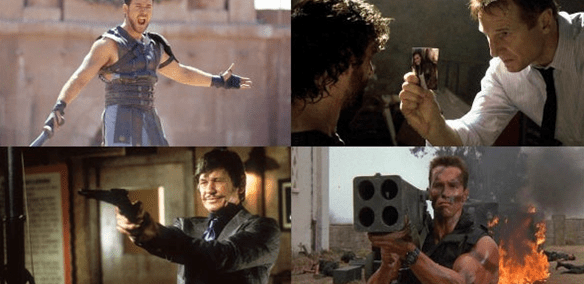
Movie Night: Taken

This review has been supported by Chiara Cooper.
If you’d like to support the site, you can do so at my Ko-Fi page.

Released: 30 February 2009
Director: Pierre Morel
Distributor: 20th Century Fox
Budget: $25 million
Stars: Liam Neeson, Maggie Grace, Arben Bajraktaraj, Olivier Rabourdin, Gérard Watkins, and Famke Janssen

The Plot:
Former CIA operative Bryan Mills (Neeson) employs his unique set of skills to track down his teenage daughter, Kim (Grace), after she is kidnapped by Albanian human traffickers while vacationing in France.

The Background:
Taken began life as the brainchild of filmmakers Luc Besson and Pierre Morel, who had previously collaborated on District 13 (Morel, 2004). Besson pitched the film’s premise to Morel over dinner one night and, after the film was financed and Liam Neeson was cast, Morel jumped at the chance to direct. After Jeff Bridges dropped out of the starring role, Neeson enthusiastically accepted; though he initially expected Taken to be released straight to video, the actor relished the opportunity to take on a more gritty, physically demanding role and his no-nonsense efficiency as Bryan Mills would garner him significant praise. Considering its low budget, Taken proved to be a surprise hit upon release; it received the second highest Super Bowl weekend at the time on its opening weekend and went on to gross nearly $230 million at the box office. Taken largely impressed with critics, who praised the hard-hitting action and thrilling plot, though some criticised it for being somewhat mindless and the Albanian government began a tourism campaign to counteract the film’s negative portrayal of their country. Still, the film’s incredible box office success saw the release of not only two sequels (which failed to live up to the standards of this original film) but also a short-lived prequel television series, and I’m always happy to revisit it and today seems like the perfect opportunity since it’s Liam Neeson’s birthday!

The Review:
Taken is the story of Bryan Mills, a former Green Beret who worked for the CIA as a “Preventor”; we never learn from the film exactly what this means but it’s pretty obvious that he was some kind of black ops specialist, proactively targeting and eliminating threats to national security before they can develop, or tackling them when they do. Though getting on a bit in years, Bryan hasn’t retired from his line of work due to age; instead, he walked away from his violent and secretive job in order to be closer to his teenage daughter, Kim, since his work meant that he missed out on much of her childhood despite his best efforts to be as present as possible. His former lifestyle caused much tension between him and his with, Lenore Mills-St John (Janssen), leading to their divorce and her subsequent remarriage to wealthy business tycoon Stuart St John (Xander Berkeley). A meticulous and fastidious man by nature, Bryan leaves absolutely nothing to chance; he studied and examined a karaoke machine for some time before finally deciding it was the right machine to get his daughter for her birthday to help encourage her dreams of being a pop star, used his former connections to do a thorough background check on Stuart and keep tabs on his business deals in order to ensure that his family was in the safest environment possible, and even tackles the wrapping of gifts with a military precision. A man of strict routine, Bryan doesn’t just believe in being prepared: he lives for it, and applies this philosophy to everything in life, from cooking to keeping his appointments and even the work he does on the side with his former colleagues, Sam Gilroy (Leland Orser), Mark Casey (Jon Gries), and Bernie Harris (David Warshofsky).

Bryan has left behind his violent, secretive former life to reconnect with his daughter.

Although very much retired from his old life, Sam and the others keep in touch with Bryan and they regularly socialise; though Bryan has no wish to talk about the old days and instead focus on rebuilding his relationship with Kim, he is coerced into signing up for a security detail for pop star Sheerah (Holly Valance) to try and help open doors for Kim. Despite Leone resenting Bryan for his absence over the years, he actually has a very close relationship with his daughter; she’s genuinely excited to see him whenever they meet and they have a bond over her dream of wanting to be a singer, something Lenore believes she’s grown out of. Their relationship isn’t as developed as it could be, however, since Kim is clueless about the specifics of Bryan’s former job, is too young to really appreciate what he’s sacrificed to be closer to her, and Lenore’s influence is also clearly a factor, too. Clearly wanting to keep Bryan at arm’s length, Lenore does everything possible to downplay Bryan’s involvement in her life, from trying to keep him from personally gifting his birthday present, to refusing to allow Kim to sleep over at his place, and to supervising their meetings. Unable to compete with Stuart’s excess of wealth, which threatens to turn Kim into a spoiled brat, Bryan nevertheless believes that he finally has a golden ticket to ensuring Kim’s love and gratitude after he defends Sheerah and she repays him by giving the name of her vocalist and manager. Unfortunately, Kim’s passion has shifted towards wanting to take a trip to Paris with her friend, Amanda (Katie Cassidy), something Bryan is initially extremely hesitant to sign off on since he’s not only fiercely protective of his daughter but is only too aware of the dangers posed by the outside world. After a roasting from Lenore, and a great deal of preparation, Bryan eventually agrees to let her go on the proviso that she call him the moment she lands and keep him well informed of her movements and travel plans, which is the best compromise he can reach beyond actually accompanying her. Although he’s clearly apprehensive about the idea of Kim going out into the world essentially by herself and without supervision, he goes along with it in order to keep her happy but is quickly proven to be right when Kim and Amanda are targeted at the airport by Peter (Nicolas Giraud), a mark for an Albanian sex trafficking ring.

Bryan employs his unique stills to track down Kim, whatever the cost.

Bryan’s initial frustration at learning the Kim has lied about her trip (they were actually going to be following U2 around Europe) is replaced by a stoic combination of fear and anger when he listens, first-hand, as the Albanians break into Amanda’s apartment and kidnap them both. Bryan’s nature and training kick in immediately, however; fully aware that Kim is going to be taken by her abductors, he orders her to describe them in as much detail as possible and delivers an ominous threat to her attackers that has since become one of cinema’s most iconic lines. Bryan wastes no time in confronting Lenore and Stuart for more information, using their resources to fly to Paris, and enlisting Sam and the others to provide the horrifying details behind the Albanian sex traffickers who are prominent in France and Europe. Known for targeting naïve teenager girls, the group abducts them, addicts them to heroin, and sells them as sex workers; although Sam is able to identify one of the abductors as mobster Marko Hoxha (Bajraktaraj), he also tells Bryan he statistically only has ninety-six hours before Kim is lost forever, though this is more than enough to set Bryan to work on his brutal investigation. After Peter is left dead as a result of Bryan’s questioning, Bryan turns to old friend and former French intelligence agent Jean-Claude Pitrel (Rabourdin), who points him towards a known Albanian red-light district but strongly advises against causing a mess in France. Having long since left active field work, Pitrel is more concerned about keeping his cushty desk job than tackling organised criminals, a mistake that leaves Bryan with no choice but to violently confront him in his house when he uncovers evidence of corruption in the French police department. Bryan’s investigation sees him making ample use of his time to study his tape recording and go over his notes, posing as an unassuming man and employing a local translator to track the Albanians to a construction yard, where he finds both Kim’s jacket and many of their victims being dosed up on drugs. This leads him to Marko, whom he confronts after appropriating Pitrel’s name and rank; although he’s too late to help Amanda, his subsequent torture of Marko leads him to a sex slave auction behind held by the affluent Patrice Saint-Clair (Watkins) and bringing the action and tension of the film to a dramatic climax as Bryan single-handedly infiltrates the auction and the private yacht of sheikh Raman (Nabil Massad) in order to rescue Kim.

The Nitty-Gritty:
Considering the entire plot of the movie is focused on Bryan’s desperate quest to rescue his daughter, it should be no surprise that family is a prominent theme in Taken. Bryan and Lenore have a frosty relationship after years of what she sees as neglect since he spent most of Kim’s life choosing his job over his family; Bryan and Stuart also struggle to be civil since he (as in Bryan ) is disgusted by their affluent lifestyle and naivety about the dangers of the real world. Bryan is, however, absolutely devoted to Kim, encouraging her dreams, and trying to build his relationship with her. No matter where he was or what he was doing, he always came home for her birthday; he takes pictures of her for his scrap book, and walked away from his job (which he clearly loves) to focus on her. This fatherly devotion is perhaps Bryan’s most poignant and relatable characteristic; he uses all of his resources to quickly get a lead on her and follow her to Paris and continually stays one step ahead of the local police thanks to his unique set of skills. He repeatedly shuns Pitrel’s requests that he obey the local laws and goes to any lengths, routinely torturing and killing men, to work his way towards Kim. His paternal devotion is so strong that he cares for a victim of the sex traffickers (Héléna Soubeyrand) as a proxy to Kim, is clearly devastated to find Amanda dead of a drug overdose, and repeatedly puts himself in harm’s way, going lengthy periods without sleep and taking on multiple armed opponents at once, to rescue his beloved daughter.
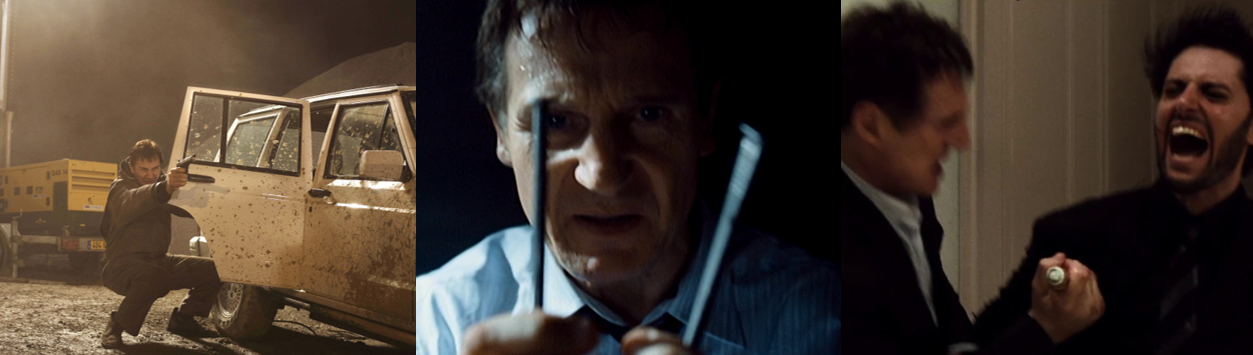
The film’s action is brutal and efficient, with Bryan employing a variety of methods to subdue his enemies.

In this manner, Taken is a very different film for Liam Neeson, one that greatly emphasises the mental and physical intensity of his character. Bryan is an extremely driven and focused man with a keen attention to detail; having travelled all over the world and dealt with the very worst of humanity, he is not only well versed in the ugly side of life but also somewhat jaded by it. Once Kim is kidnapped, however, he snaps immediately into action and uses every resource available to track her down, putting the local police to shame since they turn a blind eye to such atrocities. Bryan is an incredibly resourceful and attentive individual; able to operate without sleep for days and instantly reacting to danger with a quick, efficient brutality, he wastes no motion in being fancy with his blows and instead strikes his opponents in tender spots such as the throat and the ribs in order to incapacitate them. Bryan isn’t some roided up action hero who heads into situations all guns blazing; he meticulously plans and prepares for every confrontation, usually adopting an unassuming guise in order to catch his opponent’s off-guard and is rarely taken by surprise. He’s easily able to outwit Pitrel’s attempts to monitor and contain him, mercilessly beats and guns down multiple opponents with a slick effectiveness, and ends fist fights almost as soon as they begin with a targeted, military precision. This results in some of the most brutal and exciting fight scenes in modern action cinema; while Taken lacks the overly choregraphed pizzazz of other action films, it more than makes up for it with quick, intense scenes of Bryan chopping guys in the neck, dislocating and breaking limbs, and overpowering them with his unmatched efficiency. And, for those who prefer more traditional action, some intense car chases and more explosive moments are peppered throughout, alongside a particularly harrowing scene where Bryan tortures Marko using electrical cables.
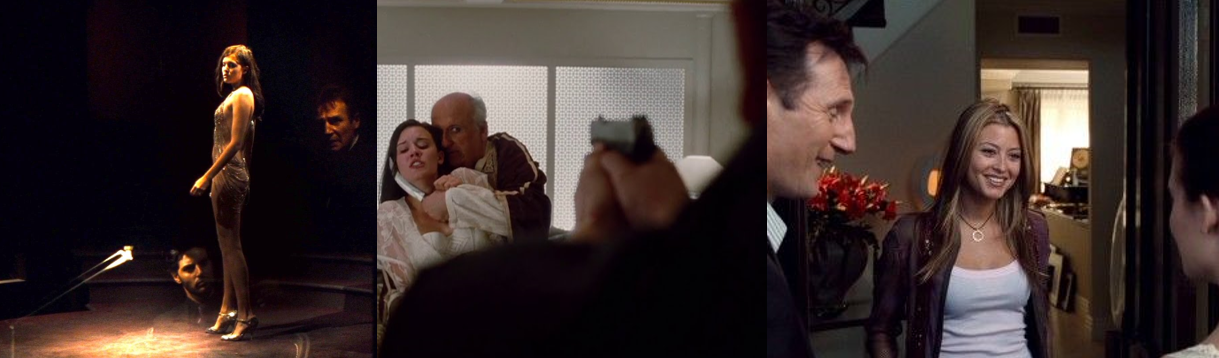
Bryan launches a one-man crusade to bust up the sex trafficking ring and rescue his daughter.

Honestly, this was such a breath of fresh air back when I first watched it and, even now, it’s still a blast to watch through. More of an intense action thriller rather than a traditional action film, Taken is full of memorable moments, such as Bryan’s iconic “I will find you” speech, the brutality of its fight scenes, and even amusing moments such as him posing as Pitrel while confronting Marko and his cohorts. Despite his inexhaustible determination, Bryan grows increasingly fatigued and desperate as the film progresses since he’s fully aware that he’s running out of time and stumbled into a plot that’s far more complicated than thugs selling girls for money. Infiltrating Saint-Clair’s luxurious establishment by posing as a waiter, Bryan learns that the girls are being displayed and sold as little more than meat for the unscrupulous and wealthy. Even when knocked out and strung up by Saint-Clair, Bryan proves more than resourceful and is able to fight his way out of his predicament, leading to a frantic last-minute rush to chase down Kim before she’s spirited off on Raman’s yacht. While still maintaining his brutal efficiency and methodical approach, Bryan is noticeably more vulnerable in the finale, where he receives quite a beating and even a few gunshot wounds as he tackles Raman’s bodyguards. Regardless of his fatigue and the pain of his injuries, Bryan remains an unrivalled force of nature here, dispatching the henchmen and even putting Raman down with a well-timed headshot when the sheikh holds Kim hostage at knifepoint. In the aftermath, no criminal proceedings are brought against Bryan, potentially because of Pitrel’s complicity in the events of the film, and his relationship with Kim (and Lenore and Stuart) is noticeably stronger as a result of his obsessive and thorough nature and violent skills ensuring her safety.
The Summary:
I absolutely love this film; I’ve always been a big fan of Liam Neeson but this really helped to make him a household name and not only marked a career resurgence for the actor but also kickstarted a sub-genre of action/thrillers that focused on older, highly skilled individuals putting their retired talents to good use against overwhelming odds. The depiction of a highly resourceful and dangerous individual putting his skills to work on a deeply personal endeavour is both thrilling and emotionally harrowing; Bryan is a fastidious and devoted father who employs a whole range of skills and means to track down his daughter, shaming the French police in his efficiency and ruthlessly working his way up the food chain chasing leads down to get one step closer to Kim. While not a flashy or overly choregraphed action film, Taken is an intense thriller whose fight, chase, and gunfight scenes are brutal, efficient, and right to the point, all of which help to characterise Bryan as a nigh-unstoppable force of nature. Yet, he’s also vulnerable and flawed; not only is he just a father trying to rebuild a relationship with his daughter, but he’s far from bulletproof and thus makes use of every resource at his disposal, even if it means breaking the law and torturing his victims to get closer to his goal. It’s a shame that the sequels didn’t quite live up to the standard set by this first film, but that doesn’t diminish how good Taken was, and still is, and it makes for an intense experience with every revisit.

My Rating:

Rating: 4 out of 5.

Great Stuff

Did you enjoy Taken? Were you impressed with Liam Neeson’s foray into a more action-orientated role? What did you think to the central plot about sex traffickers? Did you find the film’s brutality and intensity enjoyable? What lengths would you go to to rescue someone you love? Were you a fan of the sequels and the TV show? How are you celebrating Liam Neeson’s birthday and what is your favourite Liam Neeson film? Whatever your thoughts, feel free to leave them below or drop a comment on my social media.


10FTW: Bad-Ass Movie Dads

10FTW

Being a dad in a movie is tough; often, dads are portrayed as slovenly, uncaring, even abusive individuals who care more about drinking beer, watching football, cheating on their spouses, or work than their kids. It’s a bit of a cliché at this point and also quite a bum rap, to be honest, and often seems like a case of lazy writing to have the dad be the cause of all the problems and negativity in a child’s life in a film.

10FTW: Badass Movie Dads

I suppose it makes sense, in a way; many movies involve a story about a child, son, or daughter standing up to adversity or challenging, even confronting, their neglectful parents to say nothing of the myriad of stories out there of fathers more concerned with work than the well-being of their child. Still, good movie dads do exist, even while being flawed characters in their own right, and so, seeing as today is Father’s Day, I’m going to run through ten that I consider to be amongst the most bad-ass of all movie dads…

10 Steven Freeling – Poltergeist (Hooper, 1982)

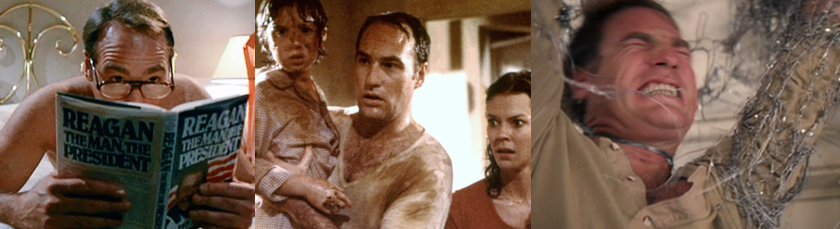
If I’m being completely honest, Poltergeist is more the story of a bad-ass mother as, throughout the film, it is Diane (JoBeth Williams) who eventually steps up after the demonic force inhabiting their house kidnaps her daughter, Carol Anne (Heather O’Rourke). Diane is the one who first feels and alerts her family to the presence in their house, she’s also far more emotionally stable despite her exhaustion and grief, and of course there’s the fact that she leaps into the “other side” to rescue Carol Anne and then has to suffer through a veritable horror show as their house is torn inside and out. Yet Steven (Craig T. Nelson) is the ever-reliable rock of the household; a bit of a goofball and perhaps (even by his own admission) too soft on his kids, he is the one who contacts a group of parapsychologists to assist them (despite his scepticism) and let’s not forget that Diane and Carol Anne never would have made it to back to the real world had Steven not been holding their literal lifeline. Despite his will weakening, Steven steps up even more in the sequel, Poltergeist II: The Other Side (Gibson, 1989), even landing what appears to be a killing blow to the malevolent Reverend Henry Kane (Julian Beck) who has been terrorising them, but, while reliability is an admirable quality, he takes the lowest spot for largely just being a supporting player (and for him and Diane sending Carol Anne away out of fear by the third film).

9 Frank – 28 Days Later (Boyle, 2002)

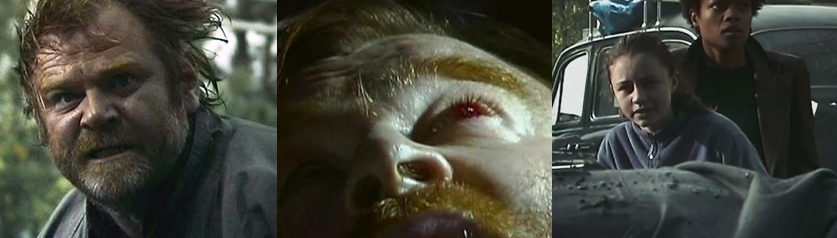
Here’s a shocking revelation for you: I’m not actually that big a fan of 28 Days Later. It starts off with such promise and with all those eerie shots of London but it’s a slow, plodding, miserable little film and the only thing I really like about it is that it made zombies faster, more aggressive, and ferocious as, for me, it otherwise wastes its potential. Still, amidst all of this we have Frank (Brendan Gleeson), a former cab driver and one of the few survivors of the infection. Initially hostile and a largely grouchy character, to say the least, Frank’s sole concern (beyond survival) is the safety of his daughter, Hannah (Megan Burns) but he soon bonds with Jim (Cillian Murphy) and Selena (Naomie Harris). Sadly, though, Frank can’t place much higher as, despite his capability as a father and a combatant, he grows complacent; in a world where the highly contagious Rage plague has turned the majority of the population into ravenous, zombie-like creatures, characters must constantly be on their guard and, for a split second, Frank lowers his. However, even while the Rage quickly overwhelms his body, his first thought is to warn Hannah back for her own safety before he is summarily put down.

8 Rick O’Connell – The Mummy Returns (Sommers, 2001)

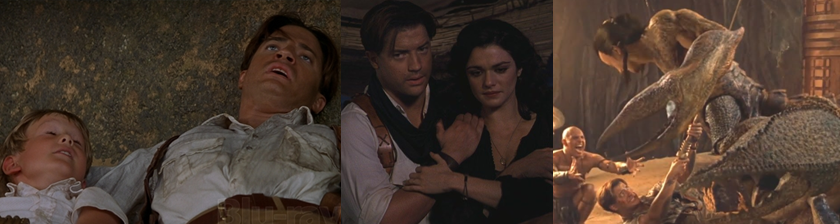
I miss Brendan Fraser; whatever happened to him? Arguably best known for his appearances in the Mummy trilogy (ibid/Cohen, 1999 to 2008), in which he portrayed a quick-witted and capable Indiana Jones-style adventurer, Fraser’s Rick O’Connell undergoes an interesting character arc throughout the trilogy, beginning as a disillusioned soldier and transforming from a reluctant hero motivated only by his libido to a doting father and content family man who was happy to put his adventuring days behind him. In The Mummy Returns, Rick is mortified when Imhotep’s (Arnold Vosloo) minions kidnap his smart-alecky little git of a son, Alex (Freddie Boath), and relentlessly uses every resource at his command to track Imhotep across the globe to rescue his son. Encouraging of the boy’s mischievous nature, one could argue that Alex only gets himself into a position to be kidnapped thanks to his father’s influence and their relationship has soured somewhat by the start of the third movie but that doesn’t take away from the fact that Rick travels across the world braving sea, air, and all manner of mummified atrocities to rescue his boy. When his beloved Evelyn (Rachel Weisz) is temporarily killed, we see a heartbreaking vulnerability to Rick’s usual bravado and his first action is to shield Alex from watching his mother suffer and die. Fuelled by rage and vengeance, he then takes on a now-mortal Imhotep in a fist-fight and rapidly accepts his destiny as a Medjai to deliver a killing blow to the monstrous Scorpion King (The Rock) to not only avenge his fallen wife but also as payback for putting his son in danger.

7 John McClane – Die Hard 4.0 (Wiseman, 2007)

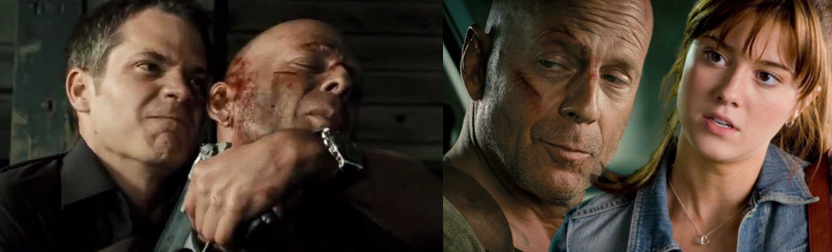
In my experience, Die Hard 4.0 (also known by the far better title, Live Free or Die Hard) is generally not as highly regarded as its predecessors and I will always take issue with this; sure, it’s massively over the top and essentially turns the wise-cracking John McClane (Bruce Willis) into a superhero but that doesn’t make it bad. For me, it’s easily in the top three of the Die Hard films (Various, 1988 to 2013) thanks to Willis’ portrayal of McClane as weary, out of touch, and hiding a lot of his emotions behind a snarky attitude and grouchy demeanour. Now, to be fair, McClane doesn’t start the film as the greatest father; his daughter, Lucy (the always appealing Mary Elizabeth Winstead) is initially hostile towards him, refusing to call him “Dad” and preferring to take her mother’s last name. However, when she is kidnapped by Thomas Gabriel (Timothy Olyphant) as payback for McClane interfering in his “fire sale”, McClane doesn’t hesitate to throw himself into danger to rescue her, accumulating numerous injuries, enduring shots from a F-35B Lightning II, and even shooting himself in the shoulder at point-blank range to kill Gabriel. When taken by Gabriel, Lucy not only fights back at every opportunity but knows full well that her father will stop at nothing to rescue her, defiantly taking his last name and ultimately reconciling with him after seeing the lengths he would go to for her safety.

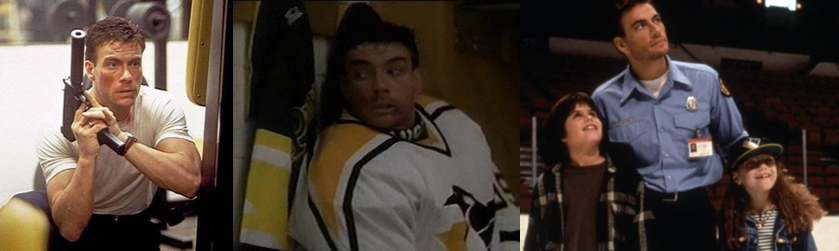
6 Darren McCord – Sudden Death (Hyams, 1995)

I feel like people don’t talk about Sudden Death enough; sure, it’s just “Die Hard on a boat” but it’s pretty decent for the most part, even with Jean-Claude Van Damme’s characteristically awkward acting and line delivery. McCord is very much like McClane, being a normal, average fire-fighter-turned-fire-inspector who has the odds against him. Though he’s much less cynical and grouchy compared to McClane, he is tormented by his failure to save a young girl from a house fire and has an extremely strained relationship with his ex wife. Similar to McClane, McCord’s relationship with his kids is a little shaky at the start of the film; Emily (Whittni Wright) views him with a heroic awe, believing him to still be a fire-fighter, while Tyler (Ross Malinger) is slightly more antagonistic and resentful. Still, he does obediently stay in his seat even as the hockey arena falls into chaos around him and Emily bravely stands up to terrorist Joshua Foss (Powers Boothe) after she is kidnapped, never faltering in her belief that her father will come to rescue her. For his part, McCord is slightly irresponsible as he leaves his young kids alone at the hockey game but more than makes up for it by taking it upon himself to disarm as many of Foss’s bombs as he can and take out the terrorists with little more than his wits, ingenuity, and some impressive kicks.

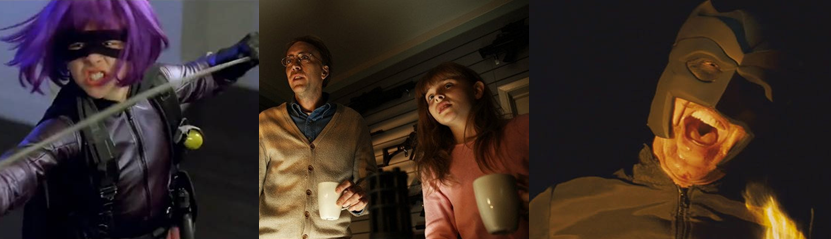
5 Damon Macready / Big Daddy – Kick-Ass (Vaughn, 2010)

Although his look and the specifics of his motivations were wildly different from his comic book counterpart, Nicolas Cage really stole the show for this awesome adaptation of the comic book of the same name (Mark Millar, John Romita Jr, et al, 2008 to 2014). Channelling the spirit of Adam West while wearing a particularly Tim Burton-esque “Bat-Suit”, Cage channelled his usual manic energy into a far more nuanced, complex performance that showed Macready to be both slightly unhinged and eerily logical. To be fair, you could argue that Macready is a pretty awful father since he pulled his daughter, Mindy (Chloë Grace Moretz) out of school and trained her to be his crimefighting partner, Hit-Girl, causing her to be more interested in elaborate knives and skewering criminals than…whatever it is pre-teen girls are into these days. However, you’d be forgetting the fact that Macready is tough but fair on Mindy, always encouraging her and pushing her to test her limits. Thanks to his training, she’s fully capable of taking out entire rooms full of armed men with ease; not only that, he also does cool stuff like purchase a whole bunch of weapons, toys, and even a jetpack. When’s the last time your dad bought you a jet pack!? Plus, there’s the fact that he continues to encourage and help his daughter even while burning to death before her eyes.

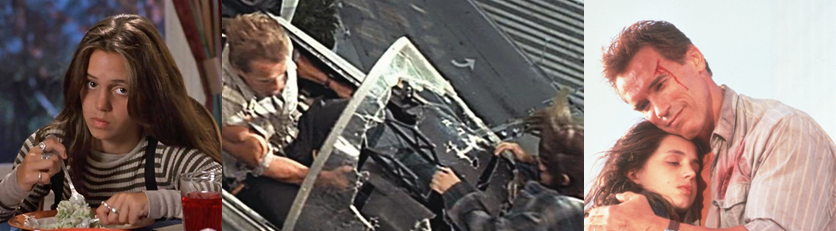
4 Harry Tasker – True Lies (Cameron, 1994)

Arnold Schwarzenegger has a bit of an iffy record when it comes to portraying dads, as we’ll see; sometimes he’s the career-obsessed type, other times he’s the overly protective type. In True Lies, he lies to his wife, Helen (Jamie Lee Curtis) and daughter, Dana (Eliza Dushku), on a daily basis to keep his true identity as a secret agent just that: a secret. As a result, and because she’s in that moody teenage phase of her life, his relationship with Dana is somewhat strained at the start of the film in that she sees him as dull and unreliable, unappreciative of the token gifts he brings her, casually stealing from his partner, Albert Gibson (Tom Arnold), and running off with her boyfriend or to her room to escape from him. However, like her mother, Dana’s entire perception of Harry is changed after she is kidnapped by terrorist Salim Abu Aziz (Art Malik) and it is her unassuming father who comes to her rescue…in a Harrier Jump Jet, no less! What makes Harry a bad-ass dad is that, when the chips are down, he drops all pretenses and shows his family exactly what he is capable of, gunning down countless terrorists and flying through city airspace just to rescue his daughter and shouldering the burden of keeping his true life from them in order to protect them. Once the secret is out, though, his relationships with both alter dramatically and they become a much more stable, contented, and united family.

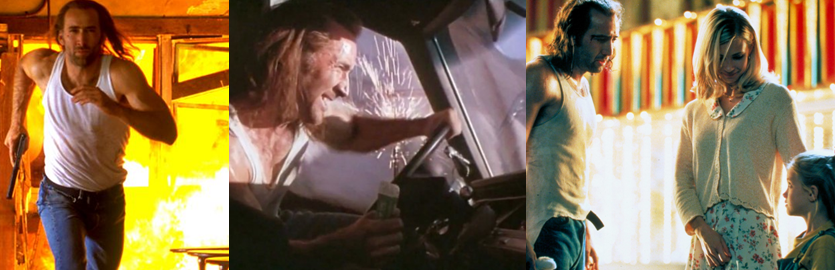
3 Cameron Poe – Con Air (West, 1997)

Aaah, yes, Con Air; a ridiculously over-the-top action film, to be sure, featuring Nicolas Cage not only with an absolutely gorgeous head of hair and henched up to the nines but also sporting possibly the worst Southern draw I’ve ever heard outside of The Fast and the Furious: Tokyo Drift (Morgan, 2006). Still, as ridiculous as Cage sounds (and as ludicrous as it is that his character, a decorated Army Ranger, would be sent to prison for ten years for what amounted to a clear case of self defense, at best, and manslaughter, at worst), the film is full of equally bombastic action and performances, with John Malkovich, especially, stealing the show (and, presumably, all that scenery he chewed) as the malicious Cyrus “The Virus” Grissom. Poe stands out from the other dads on this list as he doesn’t actually meet his daughter, Casey (Landry Allbright), until the film’s conclusion; however, through his numerous correspondences with Casey, he encourages her to stay in school and listen to her mother and builds the best, loving relationship he can given his position. His entire motivation throughout the film is to get back to his daughter and, while he’s tempted to simply let things play out in order to meet that goal, his morals won’t let him stand idly by and he fights through overwhelming odds and explosions galore to not only finally meet Casey but also to teach her valuable lessons about paying for your sins and standing up against injustice.

So, I said early that Schwarzenegger has a bit of an iffy reputation as a movie dad. Well, Commando, in addition to being, perhaps, the quintessential action movie of the eighties, also showcases Arnie as one of the most devoted and bad-ass dads ever put to film. A retired Colonel, Matrix (a gloriously ridiculous name if there ever was one) is perfectly content to have put down his guns and to live peacefully amidst nature with his young daughter, Jenny (Alyssa Milano). However, when Matrix’s past (or, more specifically, the fantastically sadistic Bennett (Vernon Wells)) catches up with him and Jenny is taken as a hostage, Matrix has only around twelve hours to track Bennett down to recover his daughter. Like Poe, Matrix’s entire motivation is geared towards rescuing Jenny but, while Poe (and many of the dads on this list), must use subterfuge to meet this end, Matrix instead literally moves Heaven and Earth to find Jenny, violently dispatching of all of Bennett’s henchmen and literally walking right into a camp full of seemingly-endless, fully armed soldiers, mowing them down with such reckless abandon that he barely needs to aim or reload. Witty, determined, and possessing a razor-sharp focus, Matrix is a veritable one-man army, capable of besting anyone who stands in his way, and yet still vulnerable and human enough to be injured when dramatically appropriate and fully prepared to go to any lengths to rescue her since, as he puts it: “All that matters to [him] now is Jenny”.

I mean, honestly, could it really be any other dad? Who else but Bryan Mills (Liam Neeson) could make the top of a list like this? Like a lot of the other dads I’ve talked about, Mills is a devoted father who has left behind a violent life to focus on building a relationship with his daughter (Kim (Maggie Grace), in this instance) despite having a frosty relationship with his ex-wife, Lenore Mills-St John (Famke Janssen). Having lost his marriage, and many years of bonding with Kim, due to his work as a “preventer” for the government, Mills is a loyal, if somewhat overprotective, father who just wants to be there for Kim and to encourage her dreams of being a singer. However, when she is taken by Albanian sex traffickers, Mills puts his unique set of skills to good use; like Matrix, his entire motivation revolves around finding his daughter but Mills has even less to go on and yet, within twenty-four hours, manages to track down enough of a lead to bring him within arm’s reach of Kim’s location. Along the way, Mills dispatches anyone who opposes him with a cold, calculating efficiency; age, clearly, hasn’t dwindled his skills or resources and, for the most part, he’s still able to function at peak efficiency with very little sleep or food. Of all the dad’s on this list, Mills is the most determined and competent; every movement is premeditated, meticulously thought through, and executed with alarming proficiency and yet Mills is still humble and vulnerable enough to show real pain, fatigue, and to deliver Kim back into the arms of her mother and stepfather.

Do you agree with my list? Perhaps you have another favourite movie dad who you think should have made the cut; if so, who is it and who are some of your favourite (or least favourite) movie dads? What are you doing this year for Father’s Day? Do you have any particularly fond memories of your dad? If so, feel free to share them, and any other comments, below.