
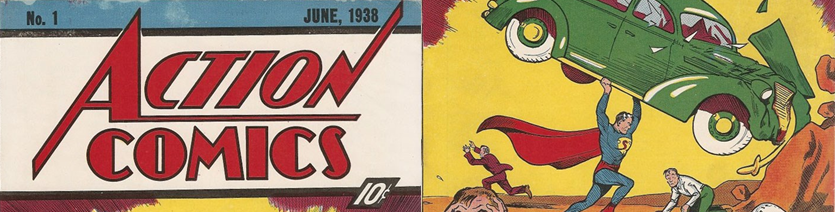
In 2013, DC Comics declared the 12th of June as “Superman Day”, a day for fans of the Man of Steel the world over to celebrate Clark Kent/Kal-El/Superman, the superpowered virtue of “Truth, Justice, and the American Way” who is widely regarded as the first ever costumed superhero. This year, I’ll be spending every Sunday of June celebrating the Man of Steel as I expand Superman Day to “Superman Month“.

Released: 14 December 1978
Director: Richard Donner
Distributor: Warner Bros. / Columbia–EMI–Warner Distributors
Budget: $55 million
Stars: Christopher Reeve, Gene Hackman, Margot Kidder, Valerie Perrine, and Marlon Brando
The Plot:
In the dying moments of the planet Krypton, scientist Jor-El (Brando) rockets his son away to Earth. After learning of his alien origins and discovering the limits of the fantastic superhuman powers afforded him by Earth’s yellow sun, the now-adult Clark Kent (Reeve) assumes the costume identity of “Superman” while disguising himself as a mild-mannered reporter. However, he faces his greatest test when genius criminal mastermind Lex Luthor (Hackman) hatches a plot to cause devastating earthquakes west of the San Andreas Fault.
The Background:
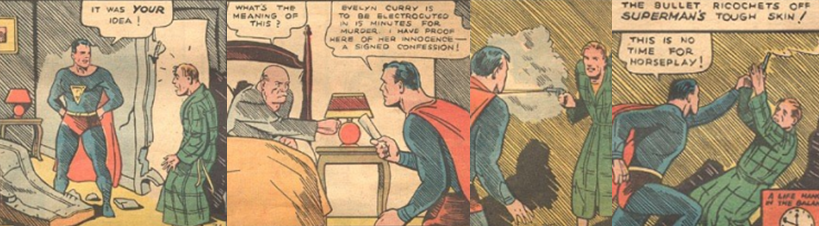
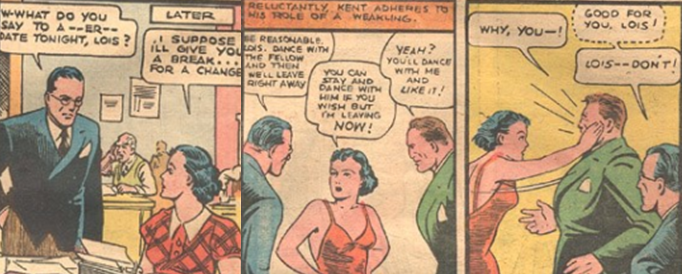
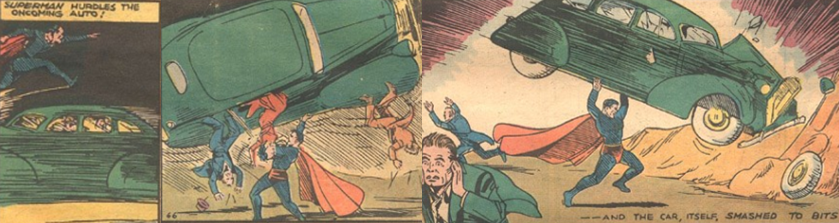
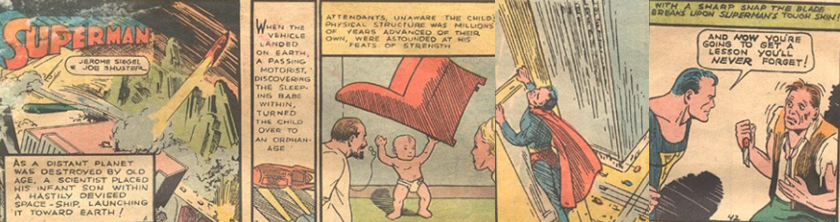
In the years since his dramatic debut, Superman quickly became the subject of numerous adaptations and his 1940 radio drama even introduced many aspects that became synonymous with the character. The idea of a feature-length Superman film was first conceived of by producer Ilya Salkind in 1973; entering into a partnership with his father, Alexander, and Pierre Spengler, the filmmakers were able to convince Warner Bros. to produce a two-film adaptation of the character and paid screenwriter Mario Puzo (of Godfather (ibid, 1969/Coppola, 1972) fame) $600,000 to write the screenplay. Steven Spielberg was courted to direct but was unable to commit and, while Guy Hamilton was attached to the project, the producers eventually settled on Richard Donner, who immediately ditched the campy tone of Puzo’s 400-plus-page script. The first actor signed to the film was Marlon Brando (who had some pretty funny ideas about Jor-El’s appearance and characterisation and had a lackadaisical attitude towards the film) and Oscar winner Gene Hackman soon followed, with the two receiving top billing. Many notable names were considered for the title role before relative-unknown Christopher Reeve was cast after a laborious casting process. Having bulked up for the role, Reeve’s experience as a pilot paid off when performing the film’s complex flying sequences, which were achieved through a combination of green screens, wire work, and other camera tricks while the striking Kryptonian suits were the result of a happy accident with a reflective material. Very quickly, the film’s budget ballooned and filming began to over-run, causing tensions between Donner and the producers; Richard Lester was brought on board as a mediator and work on the sequel halted to concentrate on the first film. After several delays, Superman (also marketed as Superman: The Movie) released to rave reviews and was an incredible financial success, making over $300 million. Although the producers continued production of the sequel immediately, the damage was done and Donner did not return, necessitating a series of expensive reshoots and raising the ire of many of the film’s actors. Still, the first film was an incredible achievement, massively influential on Superman’s comic books, and was eventually preserved in the United States Library of Congress National Film Registry.
The Review:
Superman begins, as most Superman origin stories do, on the far away world of Krypton (or “Krypt’n”, if you’re Marlon Brando), a technologically advanced civilisation that inhabits a largely barren, crystalline world. In a fantastic seed for the sequel, Jor-El sentences three seditious criminals – Non (Jack O’Halloran), Ursa (Sarah Douglas), and their leader, General Zod (Terence Stamp) – to the mysterious “Phantom Zone” for their treasonous and destructive efforts to usurp the Kryptonian council and subjugate the world to Zod’s will. Defiant to the last, Zod vows to avenge himself upon Jor-El and his heirs, no matter how long it takes and against all odds, before the three are cast into the strange mirror prison. Following this, Jor-El is unable to convince the council that Krypton is doomed to be destroyed by its red giant sun within thirty days; indeed, despite being a highly respected and rational member of the council, Jor-El’s claims are so adamantly refuted that he is threatened with being labelled a terrorist himself.
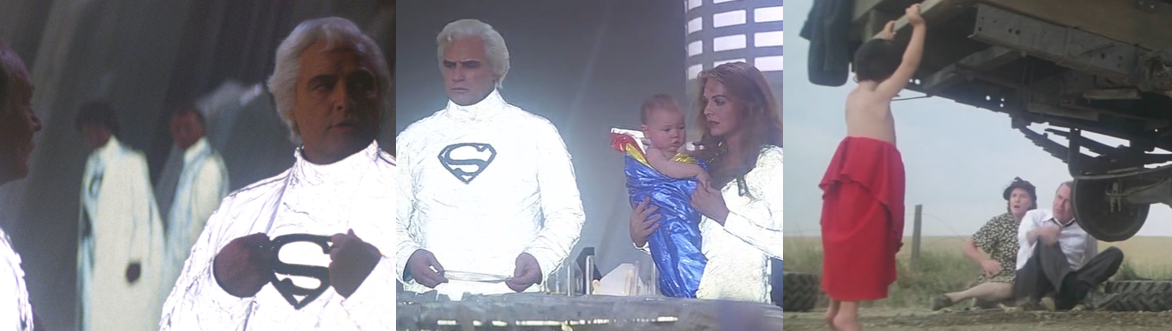
Apparently despondent (it’s hard to tell with Brando…), Jor-El resigns himself to ensuring the survival of his young son, Kal-El; his wife, Lara (Susannah York), laments that their son will forever be an outcast amongst the “primitives” of Earth but Jor-El remains confident that the powers bestowed upon Kal-El by Earth’s yellow sun will make him a symbol of hope and afford him physical advantages beyond all known understanding. As Krypton shatters around them, the baby is rocketed away and, guided by his father’s voice, slowly grows into an infant within his escape craft; Jor-El, who encoded all of his knowledge and wisdom into the crystalline form of the ship, stresses that his son is “forbidden” to interfere in Earth’s history and instead let his example inspire others. In time, many thousands of years after Krypton’s destruction, the ship crash lands on Earth and is stumbled upon by kindly, elderly couple Jonathan (Glenn Ford) and Martha Kent (Phyllis Thaxter) who are awestruck by the child’s super strength and, despite Jonathan’s concerns, take him in as their own.
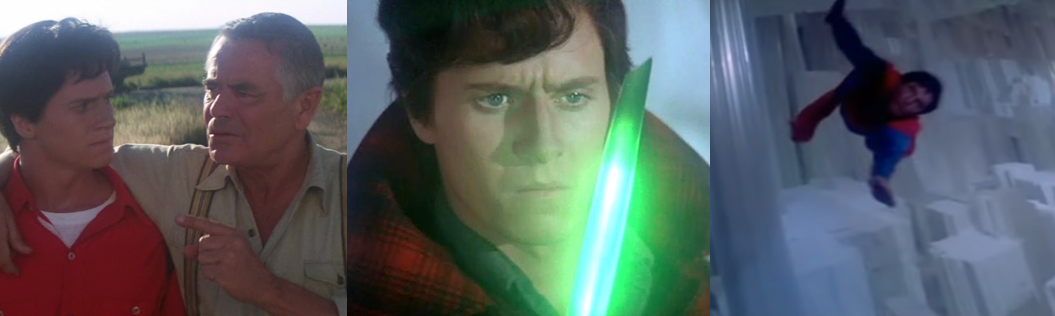
About fifteen years later, the boy has grown into well-meaning teenager Clark Kent (Jeff East, with Christopher Reeve dubbing his voice); though Clark is frustrated that he has to hide his physical capabilities from the world, Jonathan stresses that the boy was sent to them (and the world) for a greater reason than to simply score touchdowns or show off to the other kids. As he just wants to make his parents proud, Clark takes his father’s advice to heart but is left utterly heartbroken when Jonathan suffers a fatal heart attack. At his graveside, a devastated Clark laments that his awesome powers were ultimately useless in saving his father and thus learns a valuable lesson about the limits of his superhuman abilities. Drawn to the remains of his ship (which the Kents kept hidden in their barn), Clark discovers a glowing green crystal that leads him far north, all the way to the Arctic, where the crystal births a piece of his home planet on Earth. In this Fortress of Solitude, Clark communes with the spirit of his father, who lives on as a glorified artificial intelligence, and spends a further twelve years absorbing all of Jor-El’s knowledge and teachings of his newfound abilities. After his training is completed, Clark emerges as Christopher Reeve and garbed in a bright Kryptonian costume and ready to share his abilities with the world as Superman.
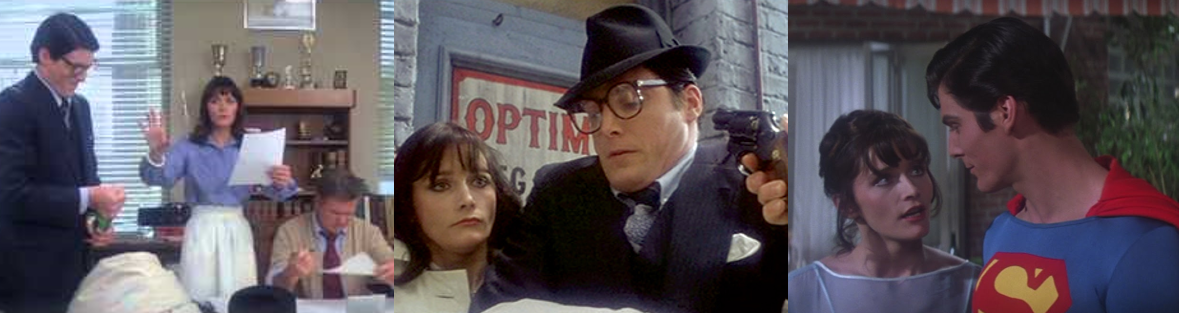
Clark sets himself up as a reporter at the Daily Planet (apparently it’s as easy as being able to type incredibly fast and being overly polite), meeting hot-tempered editor-in-chief Perry White (Jackie Cooper), enthusiastic young photographer Jimmy Olsen (Marc McClure), and feisty reporter Lois Lane (Kidder). Despite her inability to spell, Lois is a lively and fearless journalist and, consequently, she both despairs of Clark’s overly friendly nature and sees him as a bit of a dorky milksop and finds her curiosity sparked by some of his oddities. In comparison, Lois is immediately captivated by Superman when he not only catches her in mid-air as she’s plummeting to her death but also snags the helicopter she was falling from. Enamoured by his mystery, confidence, and the seemingly limitless superhuman abilities he possesses, her normally controlled and forthright demeanour is shattered and she’s left absolutely awestruck during (and following) her exclusive interview with the Man of Steel (where she names him and he also, curiously, divulges a number of secrets about himself that later come back to bite him in the ass).
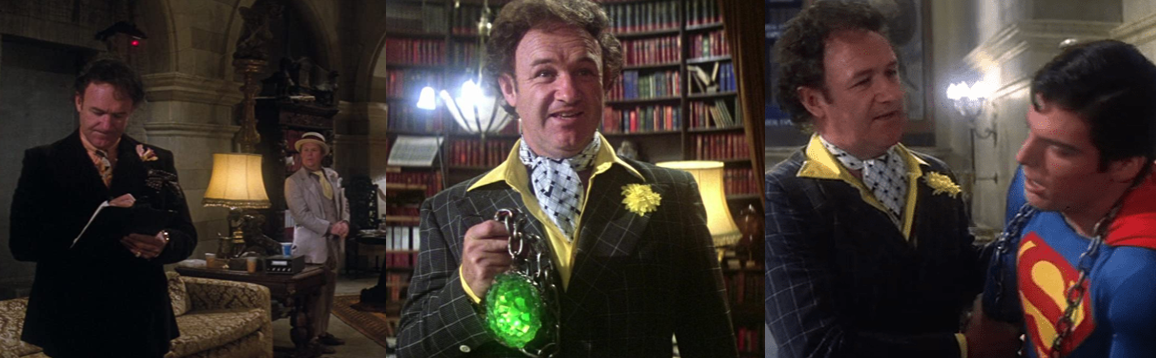
The villain of the piece, the enthralling Lex Luthor, has set up an impressive hideout beneath the city streets; there, protected by a series of cameras and deadly booby traps, he surrounds himself with the dim-witted Otis (Ned Beatty) and sexy but cynical Eve Teschmacher (Valerie Perrine). Egotistical and arrogant in his intellect, Luthor sees himself as the world’s greatest criminal mind and is busy planning the crime of the century, which involves the acquisition of seemingly worthless land and profiting from it by causing a cataclysmic flood, endangering and ending countless lives in the process. Luthor immediately surmises that Superman is not of this Earth and relishes the opportunity to pit himself against the Man of Steel, and to both prove his intellectual superiority over him and destroy the very virtues that Superman stands for, seeing the Man of Steel as the ultimate challenge for his self-proclaimed criminal genius.
The Nitty-Gritty:
Of course, you can’t really talk about Superman without mentioning John Williams’ bombastic and immediately iconic “Superman” theme that is rendered in full glory over the opening credits. While this theme has become so synonymous with the character that no composer or filmmaker since has come close to crafting a more suitable melody for the Man of Steel, I continue to be baffled by the absolutely cringe-worthy “Can You Read my Mind?” sequence. Like, I get it; it’s supposed to be this big romantic moment between the Lois and Superman and to showcase the film’s wirework, but it stands out like a sore thumb and is all kinds of different flavours of cheese.
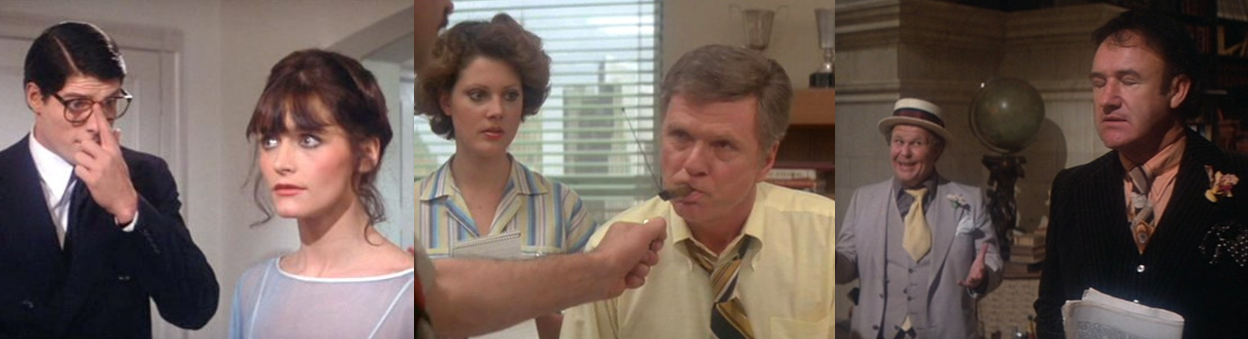
If I’m being brutally honest, the film’s performances are a bit hit and miss; despite being a relative unknown, Reeve provides the quintessential portrayal of Superman and simply exudes confidence and sociability as Superman while masking his true nature as loveable, bumbling fool. Indeed, by simply straightening his posture and slightly altering his voice, Reeve effortlessly depicts the simple differences between his two persona and his performance so explicitly set the standard for the character that it continues to be emulated to this day. Once the story shifts to Metropolis, the film becomes a much more vivid and over-the-top production that emphasises buffoonery and comic book camp; nobody embodies this more than the bumbling Otis, who is mostly here for comic relief, but there’s also the suggestion that Luthor socialises with cretins simply to have someone to lord over. While Beatty and Cooper seem to have stepped out of a pantomime for their roles as the goofy Otis and bombastic Mr. White, respectively, Hackman brings a certain gravitas to the film that perfectly walks a fine line between camp and severe. Hackman seems to be enjoying himself in the role and commands every scene and room that he’s in; though he lacks Luthor’s bald head, he sports a variety of wigs and exudes a sadistic menace in his willingness to kill millions of innocent people in his quest for power, profit, and to have his matchless intelligence recognised by the world.
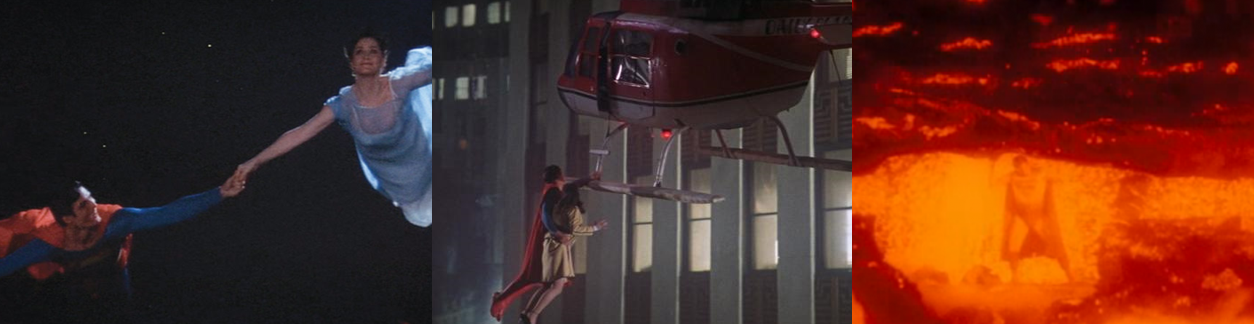
Obviously, you have to expect that some of the effects aren’t as impressive and haven’t aged as well as others, as ambitious as they are; the Arctic is clearly a set like something out of Star Trek (1966 to 1969) and I can only assume that Krypton is so barren and lifeless because it was cheaper and easier (though it also makes it cold and alien and a stark contrast to our lush world). The young Clark’s running effect and a number of the rear-projection and miniature shots leave a lot to be desired and almost every skyline appears to simply be a gigantic matte painting as the film is heavily reliant upon impressive sets the likes of which are akin to a James Bond film. While Clark’s super fast changes to Superman and his little spin down into Luthor’s lair aren’t that great, easily the weakest effects come in the conclusion as the San Andreas Fault is ruptured and painstakingly crafted models are washed away by water and dirt before Superman circles the globe at superspeed. To be fair, though, the film’s effects are still incredibly impressive; the helicopter sequence is an ambitious and remarkable composite of miniatures, rear-projection, and live-action wire work that makes for a suitable debut for the Man of Steel and, overall, the film has largely stood the test of time thanks to its practical effects and undeniable charm. As you might expect, Superman’s powers and abilities are the highlight of the film; Superman’s invulnerability, super strength, and superspeed are all accounted for and realised well enough and Superman’s first night on duty provides a great showcase of what he is capable of. No job is too big or too small for Superman, who does everything from rescuing a cat from a tree to apprehending jewel thieves as they clamber up the outside of buildings using sucker pads.
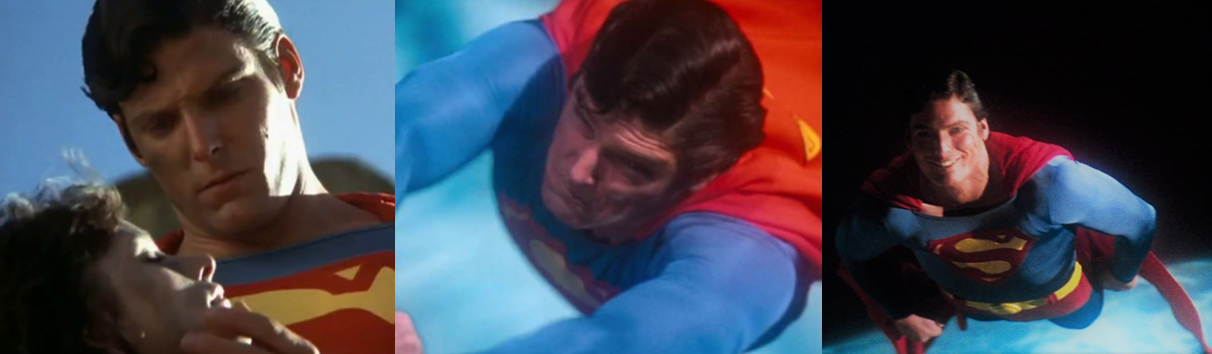
Naturally, it’s the flying sequences that are the true spectacle of the film; even now, the rear-projection holds up pretty well in these scenes but what really sells it is Reeve’s dynamic and believably movements. Reeve banks and turns with an elegant grace and really sells the illusion that we’re seeing a man fly and makes even the most ridiculous aspects of the film (from the 100% comic-accurate suit to using his own body to repair a broken train track to repairing the San Andreas Fault by ploughing through questionable-looking magma) seem entirely plausible thanks to his charming smile and undeniable charisma. Of course, when talking about Superman, you have address the ending. Thanks to acquiring a chunk of Kryptonite, Luthor is able to weaken and cause incredible agony to Superman and it is only thanks to Ms. Teschmacher’s change of heart that he’s able to recoup his strength and intercept Luthor’s missiles. However, while he’s able to stop one, he’s unable to keep the other from striking the San Andreas Fault and is so busy repairing the damage it causes that he’s unable to save Lois from being crushed to death by debris. Devastated and overcome with grief, Superman flies into the upper atmosphere and defies his birth father’s warnings of interfering in human history to favour his adopted father’s advice and is able to literally turn back time by reversing the rotation of the planet. This undoes all of the damage caused by Luthor’s missiles and prevents Lois’s death but remains the most ludicrous aspect of the entire movie and just ends up raising all kinds of questions like…wouldn’t there be two Superman? Why doesn’t he just turn back time all the time? Ultimately, it’s just one of those crazy, over-powered feats that we’ve come to expect from older versions of Superman and I guess it works to show that Superman is capable of overcoming even his limits by pushing hard enough (plus, Reeve’s anguished cry does make for an incredibly intense scene).

The Summary:
I honestly went into Superman ready to give it a lower score of two stars; it’s never really been my favourite superhero, or Superman, film as it’s just got a little too much cheese and cringe in it for my tastes. There’s an undeniable level of camp at work in the film that makes it very cartoony and over-the-top in places, to say nothing of long, oddly paced inclusions that seem decidedly at odds with the rest of the film. However, all of these elements are in perfect balance with the film’s more dramatic and spectacular sequences; this is a film that is, primarily, a showcase of ambitious and trend-setting cinematic techniques as much as it is perhaps the most influential interpretation of Superman ever seen outside of the comic books. While not every effect has aged too well, the majority have stood the test of time remarkably well and there’s just the right balance of goofy comedy, heart-warming charm, and exciting spectacle that simply scream “Superman”, a character who is often characterised as being the world’s biggest Boy Scout and embodying timeless (if slightly antiquated) ideals. There’s no denying that Superman is an absolute classic; while I cannot sanction Marlon Brando’s attitude and I may not be a fan of some of Donner’s choices (Luthor being a real estate maniac, the barren depiction of Krypton, and the time travel ending are all cons of the film for me), Superman remains a delightful and enjoyable little slice of camp goodness that is worth it for Reeve’s incredible and career-making turn in the title role if nothing else.
My Rating:
Pretty Good
Are you a fan of Superman? What did you think to Christopher Reeve’s portrayal of the character and were you a fan of Lex Luthor’s interpretation in the film? How influential was Donner’s film on your perception of Superman and are there any aspects you would prefer to see films and media move away from? What did you think to the film’s campier elements and were you a fan of the ending? What is your favourite Superman story, character, or piece of media? How are you planning to celebrate Superman Day next week? Whatever you think, feel free to share your opinion and thoughts on Superman in the comments below.




You must be logged in to post a comment.