Movie Night [National Anime Day]: Street Fighter II: The Animated Movie


15 April has been designated National Anime Day to celebrate the stylistic genre, which achieved mainstream success thanks to animators like Osamu Tezuka.


Released: 6 August 1994
Director: Gisaburō Sugii
Distributor:
Toei Company
Budget: $6 million
Stars:
Hank Smith, Ted Richards, Mary Briscoe, Donald Lee, Steve Davis, and Phil Matthews

The Plot:
M. Bison (Matthews), the vicious and powerful head of the notorious Shadowlaw syndicate, is brainwashing street fighters across the world to carry out assassinations and has his sights set on Ryu (Smith), a formidable martial artist who bested one of Bison’s lieutenants. When he’s unable to track Ryu down, Bison targets Ryu’s friend and sparring partner, Ken Masters (Richards), and Ryu finds himself joining forces with Captain Guile (Lee) and Interpol agent Chun-Li (Briscoe) in an effort to track down Bison and stop his mad schemes.

The Background:
In 1987, Capcom brought the very first Street Fighter to arcades across the world; conceived of by Takashi Nishiyama, who sought to expand upon the boss fights of Kung-Fu Master (Irem, 1984) and inspired by The Game of Death (Lee, 1972), Street Fighter stood out from other videogames by utilising unique pressure-sensitive pads for its controls but was generally met with widespread criticism for its graphics and gameplay. Undeterred, Capcom chose to develop a sequel that expanded on the alternative, six-button control setup; Street Fighter II: The World Warrior (Capcom, 1991) expanded on everything from its predecessor, from the graphics to the roster of playable characters, and took the world by storm, ushering in an entire sub-genre dedicated to competitive fighting games that only expanded further when the game was bolstered by ports and upgrades. Such was the popularity of Street Fighter II that Capcom began expanding their franchise outside of the videogame industry; Street Fighter II: The Animated Movie was not just the first anime film I ever saw, but also the franchise’s first foray into animation. The slickly animated anime  couldn’t have been more different from the much-maligned live-action adaptation that released in the same year; it became one of the top-grossing films of that year in Japan and is widely regarded as one of the best videogame adaptations ever produced.

The Review:
I have a bit of a confession to make…I’m not actually a massive fan of the Street Fighter franchise. Sure, I researched it and wrote extensively about it for my PhD, but my actual experience with playing the games is quite limited. I grew up playing Street Fighter II on the Amiga, and my version was “cracked” so it had all kinds of helpful cheats to make playing through it a doddle. When I moved on to Super Street Fighter II: The New Challengers (ibid, 1993) and Street Fighter II’: Special Champion Edition (ibid, 1993), I didn’t have the benefit of any cheats so my tactic to just blindly flailing away as Blanka or Ken didn’t really amount to a whole hell of a lot. To this day, I struggle with the franchise, which is so dependent on frame cancels and complex button combos, but I do have an affinity for it and that’s mainly down to the glorious slice of cheese that was the live-action adaptation and this slick, beautiful anime that not only introduced me to the concept of anime but remains, for me, the quintessential Street Fighter II adaptation.

After defeating Sagat, Ryu looks for inner peace while Ken struggles to find a real fight.

Street Fighter II: The Animated Movie begins with a brief prologue, which takes place between the opening credits. Framed very much like the iconic opening of Super Street Fighter II: The New Challengers and bolstered by some rocking electric guitar chords, we are introduced to main character Ryu at conclusion of his violent battle against Muay Thai champion Sagat. Despite Sagat’s mountainous size and incredible speed, Ryu is able to match him blow for blow and even counter his ki-based attacks with one of his own, a devastating  Shōryūken that splits open Sagat’s chest and leaves him with a humiliating scar throughout the remainder of the movie. Driven to a mindless rage by the disgrace and his inability to put Ryu down, Sagat charges head-first into the blast of Ryu’s Hadōken, which puts Sagat down and earns Ryu worldwide respect as one of the world’s most powerful fighters. However, in the time following this fight, Ryu has become a nomad; travelling the world learning to focus his ki and carrying with him the lessons of his master (George Celik) and memories of sparring with his friend, Ken, Ryu makes a point to help others in need but, despite his fantastic abilities and fighting potential, is haunted by his master’s unanswered riddle: “What do you see beyond your fist?” In their youth, Ryu and Ken were like brothers; they constantly trained together, and Ken’s more playful, carefree nature often clashed with Ryu’s more pragmatic and focused mindset. While Ryu dropped off the face of the earth, Ken is a much more public figure who regularly participates in street fights for cash. Not that he really needs the money, judging by his fancy sports car; instead, Ken fights to try and find an opponent worth his time and effort, and is continuously disappointed to find that nobody can give him a fight quite like his old sparring partner. Despite the affections of the beautiful Eliza (Toni Burke), Ken is just as haunted by this lack of competition as Ryu is by his master’s riddle, and vehemently declines to fight glory hounds like T. Hawk (Richard Cardona) since he sees it as a waste of his time and skills. Since Bison’s unable to locate Ryu, he targets Ken, whose fighting potential is theorised to be equal, and personally arrives to “recruit” him into his organisation. Ken’s desire for a real fight is more than met when Bison comes calling and he’s easily overwhelmed and subjected to Bison’s intense and horrific mind control powers, transforming him into a violent and mindless assassin.
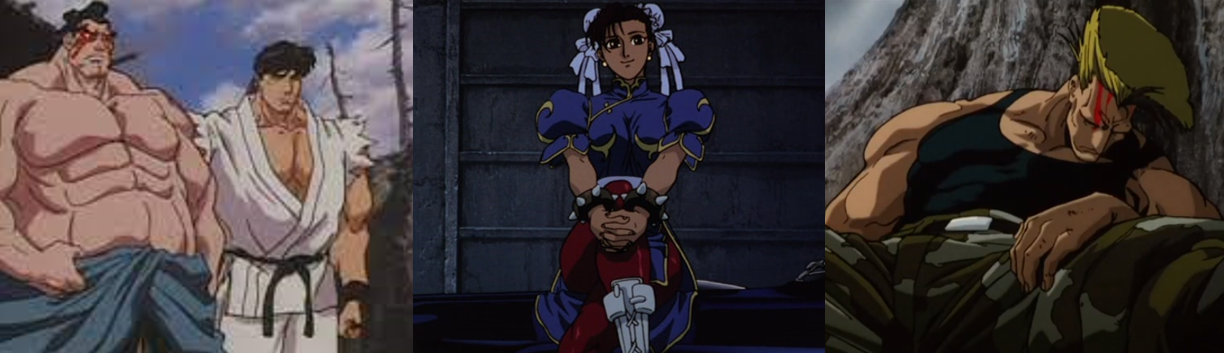
E. Honda adds a bit of levity, but sadly Chun-Li gets sidelined and Guile gets wrecked by M. Bison.

While wandering the world, Ryu is pushed into an underground fight by a raucous crowd, instantly besting his opponent with a headbutt to the nose. This attracts the curiosity of Fei Long (Phil Williams), a champion of the underground fight scene who has since become an arrogant and successful action movie star. Fei Long would much rather get into the ring with Ryu than heed the call of his director (Kevin Seymour) but, while he’s a talented and agile fighter with his own mastery of ki, Fei Long’s ego means he doesn’t know when to quit and results in him being badly beaten and defeated by Ryu. Still, the two find a mutual respect for each other from the fight and Fei Long gives Ryu the rundown on where Sagat headed after his defeated, bringing Shadowlaw to his attention for the first time. Ryu’s travels then take him to Calcutta, where his ki arouses the attention of Dhalsim (Don Carey) and intrigues him so much that he forfeits his fight against E. Honda (Patrick Gilbert). A bombastic and aloof sumo wrestler, E. Honda is the film’s comic relief and he offers both shelter for Ryu out of a sense of brotherhood and amusing commentary on the film’s events. The main plot kicks in right after the opening credits, when government minister Sellers (Peter Brooks) is brutally executed in front of a gaggle of reports and eyewitnesses. The assassin was Cammy White (S. J. Charvin), an MI6 special agent who was brainwashed into becoming a terrorist for Shadowlow, an underground criminal organisation that seeks out street fighters and subjects them to torturous mind control. Heading the investigation into Shadowlaw is Chun-Li, a pragmatic and committed Interpol agent who almost immediately clashes with Guile, who holds a personal vendetta against Shadowlaw’s head honcho, M. Bison, after he killed his best friend. Guile’s abrasive attitude and refusal to cooperate winds Chun-Li up, but they soon reach an understanding after she shares with him that she also has a personal stake in the investigation as Bison killed her father. Unlike the live-action movie, though, neither Chun-Li nor Guile really have that much impact on the plot; despite having the most personal investment in Bison’s schemes, they’re merely supporting characters there to deliver exposition on Shadowlaw, and Chun-Li ends up being hospitalised after a brutal attack. Guile does show up for the finale and gets to engage with Bison, but is pitifully cast aside with very little effort on Bison’s part and left a broken, helpless mess at the bottom of a ravine, leaving the heaving lifting to the real main characters of the franchise Ryu and Ken.

M. Bison is a cruel would-be dictator who bends others to his will with his extraordinary powers.

Bision’s cyborgs constantly monitor the street fighters, giving us a rundown of their fighting potential, strength, reflexes, and other statistics and keeping him a persistent and ominous presence throughout the film despite the fact that he only really appears sporadically. When he’s introduced, Bison is flanked by his three lieutenants (Sagat, Balrog (Joe Michaels), and Vega (Davis)) and cuts quite the intimidating figure; a massive muscle-bound freak garbed in a glorious cape, Bison strides through his hidden facility with purpose and wears both a constant grimace and stoic expression. Tellingly, both Bison and Sagat are completely devoid of pupils, giving them a demonic air; but where Sagat is a mostly silent underling whose only spark of individuality is his lust to settle the score with Ryu, Bison is a malicious individual who demands results and doesn’t tolerate any questions or insubordination. Cold-hearted and cruel, Bison thinks nothing of breaking minds with his “Psycho Power” or discarding his “puppets” once they’ve outlived their usefulness. Bison’s abilities are portrayed as near limitless and incredibly powerful; he exhibits a degree of psychic power, being able to lift and toss people around with his mind and can easily bounce back projectiles and move faster than the eye can track. Essentially superhuman and untouchable, Bison relishes the thought of toying with and punishing his prey, so drops his power down for the finale and yet remains a fearsome opponent even when the odds are stacked against him.

The sadistic Vega lays an unsettlingly and brutal beating on Chun-Li to take her out of action.

Bison’s mercenaries are a strange bunch; despite his big introduction in the anime’s prologue, Sagat is basically a non-factor throughout the film and his vendetta against Ryu has absolutely no impact on the film (he doesn’t even fight Ryu again, or appear in the finale). Similarly, Balrog really doesn’t get much of anything to do except stand around, look good in a tuxedo, and trade blows with E. Honda at the end. Thus, the standout from the group is easily Vega; hiding behind his blank mask and carrying a nasty claw, Vega’s physical threat is matched only by his perverse nature; he and Bison drool over security footage of Chun-Li and Vega takes a sadistic pleasure in targeting her right after she’s finished showering (making for one of the anime’s most memorable moments of full frontal nudity and, of course, a fight sequence where Chun-Li is brutalised while wearing very little). Fast and vicious, with a bloodlust that matches his sick fantasises, Vega mercilessly slices and beats on Chun-Li, licking her blood from her claws and overwhelming her but, of course, his greatest weakness is his narcissism; when Chun-Li attacks his exposed face, he flies into a rage that ultimately proves his undoing, as she’s able to summon the last of her strength to kick him out of a window. Although it’s stated that Sagat chose to work for Bison, presumably to get the power and opportunity to fight Ryu again, Bison subjects his underlings to the full extent of his Psycho Power, in conjunction with a sophisticated machine, to twist and individual’s mind into that of a cold, vicious servant. This easily allows him to prey on Ken’s passion for fighting and relationship with Ryu and fashion him into a replacement for Vega, but he underestimates the depth of the bond between the two friends and unwittingly brings about his own end as a result.

The Nitty-Gritty:
To clarify (and no doubt upset all the anime purists” out there), I am watching (and pretty much always watch) the American dub of Street Fighter II: The Animated Movie. There are, however, some fantastic benefits to this; first and foremost is the inclusion of songs from bands like Korn, Alice in Chains, and Silverchair and, perhaps even more memorably, some fantastically memorable lines from the dubbed script. Sure, Ken’s delivery is a little weird at times and Ryu’s very American for a Japanese guy, and there’s nothing to match or better Raul Julia’s iconic lines from the live-action adaption, there are some brilliant lines here: Ken scoffing at Bison and killing him “buffalo” is hilarious, as is Guile pointlessly and awkwardly flexing his muscles while vowing to avenge Chun-Li. Guile delivers again in the finale, when he promises to “rip [Bison’s] fucking heart out” and Bison wonderfully taunts him with this line soon after; Bison also delivers a brilliant callous “I don’t give a shit; if her jobs finished, she’s finished!” that’s equalled only by E. Honda’s random outburst of “I gotta kill this nut before I kill myself” and he and Balrog hilarious screaming “Oh shiiiiit!” while tumbling off a cliff edge!

The film is very violent and full of some tantalisingly adult content.

Although the lighting in anime is very dark at times, this actually gives it a real mood; the film is surprisingly adult and serious, especially compared to its live-action counterpart, and the fights are slick, fast, brutal, and beautifully animated. Guile is introduced at an airbase that greatly resembles his stage and the characters are all ripped right from the videogame artwork and all wear their game-accurate costumes and even adopt recognisable stances; even better, they all perform their signature moves, and even announce them more often than not, with no other explanation other than the idea of them being skilled fighters with a lot of potential. For a fan of the Street Fighter videogames, this is a dream come true and just goes to show that you don’t need to skirt around the concept of ki or superhuman abilities; you can just showcase them and have that be enough of an explanation because we’ve all played the games and we all expect them to have these abilities. However, it does have to be said that the anime is a little bloated and a little short on character development for a lot of its characters: Guile is little more than a gruff, buff guy with a personal vendetta and a rod up his ass. He develops a camaraderie with Chun-Li, who is revealed to have a far more playful personality than is first evident, simply because the plot demands that they get on the same page and the sidelining of Sagat for the finale is very odd considering how important he is seen to be at the start, but this prologue is mainly about establishing how strong Ryu is rather than placing any significance on the rivalry between him at Sagat.

Although some characters being mere cameos, the finale pitting is a slick and brutal affair.

However, there’s no tournament structure and street fights aren’t really a part of the plot; every character from Super Street Fighter II is included in some way, though many amount to little more than cameos, such as when Guile and Chun-Li ask Dee Jay (John Hammond) to help gather information about Shadowlaw but this is never revisited and serve sonly to alert Bison of Guile and Chun-Li’s presence. Sadly, this also means that characters such as Zangief (William Johnson) and my favourite fighter, Blanka (Tom Carlton), are reduced to bit parts, with these latter two simply showing up for an action-packed brawl in Balrog’s casino that is cut short to get to Chun-LI’s titties. Still, the main focus of the film is the bond between Ryu and Ken; rather than focusing on the politics or a military movement against Shadowlaw, the friendship between these two are their unfinished business is a central part of the anime. We get to see them training together, the brotherly bond between them, and origin of Ryu’s headband (Ken gave it to him after accidentally injuring him), and both have struggled to find an opponent or a purpose as meaningful as what they found in those years training together. This reaches a fantastic culmination in the finale, where Ryu refuses to fight his brainwashed friend despite Ken attacking him with a relentless brutality; Ryu is able to get through to Ken and help him remember their friendship, which breaks Bison’s control over him just in time for them to join forces and destroy Bison. Thanks to Bison lowering his power level, the two are able to double-team him very effectively with their most powerful and iconic signature moves, finally finishing him off with a double Hadōken and the United States/Interpol assault on Shadowlaw effectively ends Bison’s threat once and for all. In the aftermath, Ryu and Ken awkwardly part was and, as Korn’s “Blind” blares up, it’s randomly revealed that Bison actually survived and the anime ends on a massive cliff-hanger as Ryu leaps in to confront the would-be dictator once more.

The Summary:
I still have vague memories of spotting Street Fighter II: The Animated Movie scheduled to run late at night on the Sci-Fi Channel and setting up my VCR to record it. I’m pretty sure that this was my first ever exposure to anime and I was absolutely blown away by his crisp and beautiful the animated was, the memorable soundtrack and lines, and the level of violence, swearing, and nudity on offer. My interest in anime spring-boarded from there, though I’ll admit that I haven’t been exposed a huge variety of movies or shows since I used Street Fighter II: The Animated Movie as the bar of quality for the longest time. While the narrative is pretty bare bones and many of the characters are one-dimensional or inconsequential, Street Fighter II: The Animated Movie remains, for me, the best and most accurate adaptation of the source material ever produced; I’ve seen all of the subsequent cartoons and anime and still consider this to be the most entertaining and faithful of them all. Bison is a fantastically alluring, malevolent villain who exudes menace even when he’s just striding through a hallway or sitting in a chair, to say nothing of him being a fearsome opponent thanks to his Psycho Power. I love that the anime focuses on the relationship between Ryu and Ken and is framed around bringing them together for the first time in years to fight both against, and alongside, each other. While this does unfortunately mean that other characters do get pushed to the side, there’s plenty for series fans to enjoy here thanks to the accurate depiction of the characters’ looks, abilities, and special moves, and that’s not even mentioning Vega’s brutal attack against Chun-Li or the lewd showcase prior to that fight, which I’m sure has a great deal of appeal for horny teenagers. Still, the action and animation quality make Street Fighter II: The Animated Movie an endlessly appealing experience and I always enjoy revisiting it to see the action-packed fight scenes, rock along to the soundtrack, and marvel at the ridiculousness of some of the dubbed lines.

My Rating:

Rating: 5 out of 5.

Fantastic

Are you a fan of Street Fighter II: The Animated Movie? Did you like that it focused on Ryu and Ken or were you disappointed to see the other characters pushed aside? How do you think the anime compares to its live-action counterpart and which of the other Street Fighter cartoons and anime is your favourite? Did you enjoy the soundtrack and the fight scenes in the anime and what did you think to the adult content in the film? Which Street Fighter character or videogame is your favourite? How are you celebrating National Anime Day today? Whatever you think about Street Fighter II: The Animated Movie, or anime in general, please do sign up to comment below.


Game Corner: Super Street Fighter II Turbo HD Remix (Xbox 360)

Released: 26 November 2008
Developer: Backbone Entertainment
Also Available For: PlayStation 3

The Background:
In 1987, Capcom released Street Fighter onto the arcade scene; this oft-forgotten one-on-one brawler may have been criticised for its repetitive gameplay and dodgy controls but it certainly laid the groundwork for probably one of the most recognised fighting games ever created. Thanks to game’s special moves, pulled off using directional inputs in conjunction with button commands, and the introduction of a six-button cabinet, Street Fighter gained a modicum of intrigue on the growing arcade scene that exploded with the release of Street Fighter II: The World Warrior (Capcom, 1991). Expanding the playable roster to eight, Street Fighter II changed the genre forever through the accidental introduction of combo moves and gave Nintendo a much-needed edge in the “Console Wars“ of the nineties with its blockbuster release on the Super Nintendo Entertainment System. Street Fighter II was so universally popular that it revitalised the arcade scene and was bolstered by a number of revisions and expansions that increased the number of playable characters, special moves, and vastly sped up the gameplay. By 2008, there had been at least five of these revisions as Capcom desperately milked their popular title for all its worth, but the idea of giving the title a whole new gloss of HD paint came at the suggestion of Backbone producer David Sirlin, who spearheaded the game’s development, although sacrifices had to be made to keep the digital release small. In addition to a slick graphical aesthetic courtesy of artists at UDON Entertainment, the game also included an overhauled soundtrack by music tribute website OverClocked ReMix and even saw a limited physical release on the Xbox 360. In keeping with the success and popularity of Street Fighter II, Super Street Fighter II Turbo HD Remix was met with largely unanimous praise; reviews lauded the new graphical style and arcade-perfect controls, though the lack of additional options was noted as a downside. While it wouldn’t go down in history as the definitive version of Street Fighter II, this HD re-release ensured that Capcom’s influential fighter lived on through another console generation.

The Plot:
The malevolent M. Bison, ruler of the criminal organisation Shadaloo, is sponsoring a martial arts tournament for the world’s best fighters. Twelve such fighters join the fight, battling each other for the right to face M. Bison’s four Grand Masters, with each of them having their own motivations for personal vendetta against the dictator.

Gameplay:
I should preface this review by pointing out a couple of things; the first is that I first played Super Street Fighter II Turbo HD Remix on the PlayStation 3 after buying it on a whim (I think, or at least hope, it was on sale at the time), most likely because I realised that I didn’t currently only a version of Street Fighter II. The second thing to note is that there’s a very good reason for that and it’s simply that I’m not a fan of the series; I’m much more of a Mortal Kombat (Various, 1992 to present) kinda guy as I prefer the simplicity and brutal nature of that franchise to Street Fighter’s more intricate mechanics. I owned a cracked version of Street Fighter II for the Amiga as a kid, which fooled me into thinking I was somewhat competent at the game (infinite health will do that to you), but this didn’t translate when I played versions on the Mega Drive and PlayStation 2. Hell, I struggled with the later games in the series despite desperately wanting to get into it since they all look so appealing and everyone always raves about them, but for the life of me I just cannot seem to click with the franchise and always end up feeling frustrated and defeated as a result. I only say this because my enjoyment and opinion of this game, and the entire series, is thus inherently soured; I can’t be anything but biased against it despite my best efforts, but I went into this new playthrough of Super Street Fighter II Turbo HD Remix hoping that maybe things would be different as I do have a lot of fondness for the franchise.

Be sure to press your attack with the game’s combo system and to be on your guard at all times.

As any gamer will be able to tell you, Super Street Fighter II Turbo HD Remix is a 2D, one-on-one tournament fighter in which players pick from a roster of sixteen playable fighters and either take on either the computer in a series of battles in a bid to get to M. Bison and his four Grand Masters or go head-to-head with another player, either on or offline. The game’s controls are exactly as you might expect from a Street Fighter II title; you have three types of punch and kick, ranging from a weak, strong, and fierce attack, with each assigned to different buttons. X throws a jab, Y a strong punch, and the Left Bumper a fierce punch while A throws a shot kick, B a roundhouse kick, and the Right Button launches a fierce kick, though all of these controls can be fully customised to your liking. Combining these button inputs, and directional controls, will allow you to pull off various move combinations to dish out greater damage or pull off your character’s special moves, which are helpfully listed in the game’s pause menu. In Street Fighter II, you hold back to block incoming attacks and use up to jump; you can also throw and grab your opponents, sometimes in mid-air, to deal a ridiculous amount of damage. While you can hit buttons to recover from throws, getting stuck in an enemy’s grasp is basically a death sentence and will see your health whittled down in the blink of an eye; you can also be stunned if you take too much successful damage, which can be catastrophic. Fights are decided in rounds, with the default set to best two out of three, though you can change this to as little as one and as many as five (and rights may go to a sudden death final round in the rare instances of a double knock-out). You’re also battling a timer, though you can again disable this option, and can increase the game’s speed on a scale of one to five (with five being the fastest, which also seems to equate to attacks dealing more damage). Finally, you can set player handicaps for player-on-player fighters and choose from four difficult settings to challenge the game’s two arcade modes.

Stagger your foe with special moves or finish them off with a grandiose Super Finish.

For me, these difficulty settings are a joke; I played with the game speed set to five and on the ‘Easy’ difficulty and still struggled to get past even the first few fighters even with the timer disabled. The computer is an absolute unrelenting machine, making use of combos, frame damage, and cancels to land strings of attacks you have little hope of blocking or counterattacking. The computer is somehow able to hit through your moves at times, grab you in the middle of attacks, and even hit you out of mid-air with low attacks and projectiles, making for an uphill battle right off the bat. As mentioned, you can pull off special moves with each character, though I find these difficult to figure out even with the helpful move list as the require complicated half-turns, charging, and diagonal inputs on the control stick. I find even some of the easiest moves, like Ryu and Ken’s Hadoken, inconsistent to pull off, though projectiles such as this will cancel each other out, which is extremely useful when fighting against spam-artists like Sagat and his constant barrage of TIGER! TIGER! TIGER! shots. As you fight, you’ll build up a little Super meter and, when it’s full, you can try and pull off your character’s Super move, but these are even more complicated to execute and the computer is an expert at blocking and negating all incoming damage. I couldn’t tell you the difference between the ‘HD Remix’ and ‘Classic’ arcade modes as I was barely able to scrape through the ‘HD Remix’ arcade on the lowest difficulty; ‘Classic’ thus seems harder but that might also be because I changed the rounds to win to one, which seems to put the computer in a hyper-aggressive “pinch” mode. Consequently, I can’t say if the classic bonus stages are present in this mode; they weren’t in the ‘HD Remix’ arcade mode I played so, from my perspective, the entirety of the game was geared around tournament fighting, fighting with friends, or desperately trying to get to grips with your character in the game’s training mode.

Graphics and Sound:  
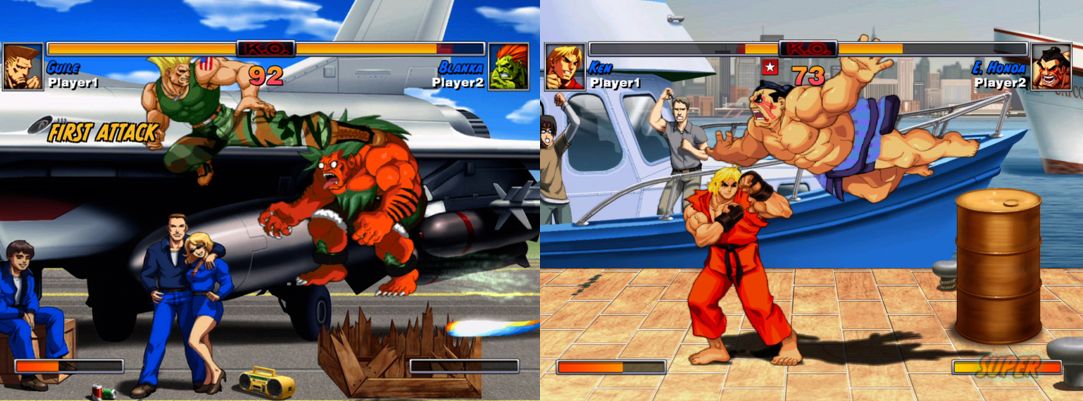
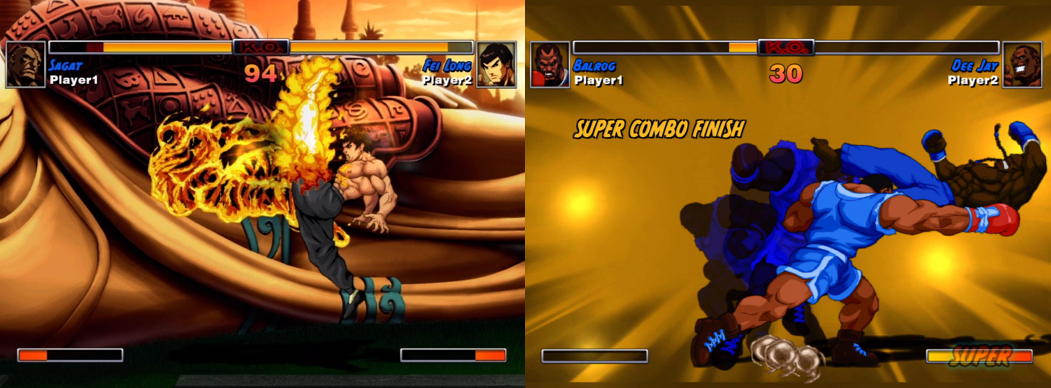
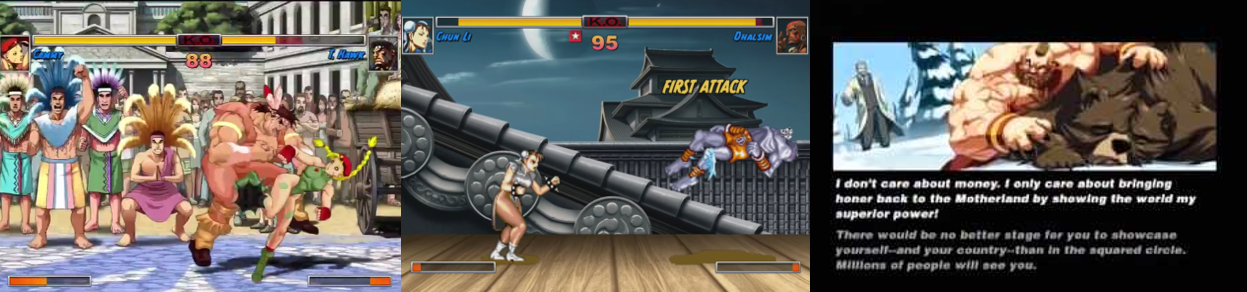
Graphically, I don’t think I’ve ever seen Street Fighter II looking better than it does here; the slick UDON aesthetic really makes all of the fighters and their stages pop out and makes the most of HD overhaul the game has received. Every character has their own eccentricities, loudly announcing their special moves and pulling off a couple of victory poses when the fight goes their way in addition to being followed by a shadowy double whenever they execute a Super move. Little touches such as every character’s unique fighting pose, being able to hit off Vega’s iconic claw, M. Bison tossing aside his cape, and characters like Chun-Li being able to spring off the sides of the screen help to make the game more immersive, and this carries over to the stages as well. Some stages have destructible elements such as crates and barrels to smash your opponent into, and all of them include some kind of animation in the background, from cheering crowds to roaring elephants to fighting cages being lowers and boats rising and falling. The remixed soundtrack is a joy to listen to; memorable tuns such as Ken and Guile’s themes sound great, though the fight announcer remains merely serviceable. Although the game lacks a memorable introductory sequence, each character has their own ending, which you’ll get to see even on the easiest difficulty; rendered using text and static artwork in the style of the UDON comic series, the only thing letting these down is that you can’t unlock them to view anywhere else in the game.

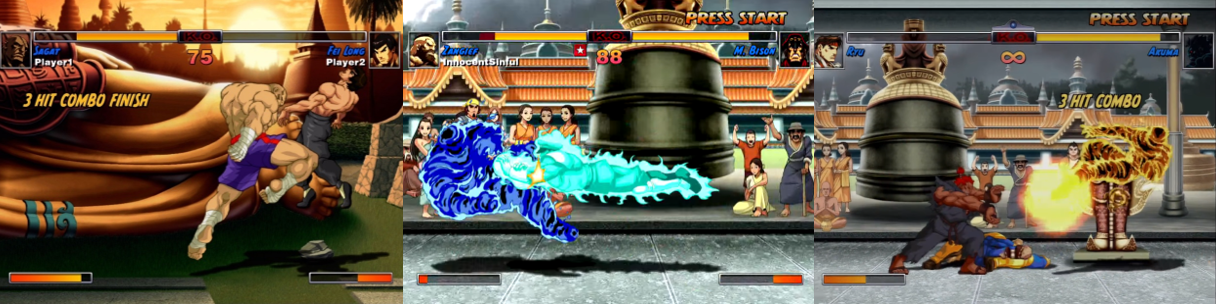
The UDON aesthetic is far more visually engaging than the distorted classic sprites.

If you’re a purist and prefer the classic look of the original games, Super Street Fighter II Turbo HD Remix has you covered; you can enable not just a classic option for the in-game sprites but the music as well. Unfortunately, the sprites really don’t benefit from this; they appear large, garbled messes against an otherwise pristine background and hearing the classic arcade-style move announcements and music doesn’t make this any better to look at. It would’ve been better if the game had the option to switch everything to an optimised pixel-art aesthetic but, as is, it’s a garish reskin that’s probably not going to appeal to fans of the original releases. One area where the game does get some credit, though, is in the inclusion of palette swaps for each character; each button corresponds to a different palette for each character on the character selection screen, which adds a touch of variety to the game as your opponent’s randomly pick different palettes for each bout, though you can’t switch between different styles of fighting like in other Street Fighter games. The game does run as smooth as butter, though; I noticed no input lag or slowdown, even on the highest speed setting, and I’m sure an accomplished Street Fighter II player would appreciate such a smooth presentation to the game’s action. Every bout also ends with with the victory taunting the loser, who’s left a battered mess, and I’ve always found these jabs entertaining; a helpful countdown gives you ten seconds to continue fighting, which will reinvigorate your fighter and return you to the character selection screen to challenge your opponent again.

Enemies and Bosses:
Being a one-on-one fighter with sixteen characters to pick from, every fighter in Super Street Fighter II Turbo HD Remix will inevitably be your enemy at some point and each offers a slightly different, if also similar, level of challenge. It’s not uncommon to have to switch to a different fighter depending on your opponent as it’s some fighters are better geared towards dealing with certain opponents, though I find it better to stick to one fighter (Ken) and power through with an attack that favours fast-paced button mashing and aggression over any kind of actual strategy. Some fighters, like Zangief, E. Honda, and Balrog are slower, much heavier characters who rely more on grapples, powerful punches, and slams; you can sue faster characters, like Chun-Li and Cammy, to negate their power but this isn’t always a guarantee as they’re still able to close the distance despite lacking projectiles thanks to diving headbutts and screen-covering uppercuts, for example. Dhalsim is a pretty unique fighter in that he has super stretchy limbs to attack from afar, can teleport about the screen, and will set you ablaze with his Yoga Fire and Yoga Flame attacks, making him quite the slippery opponent. Similarly, Chun-Li is extremely quick on her feet, able to flip around behind you and send fireballs your way at a higher speed than Ken or Ryu, who are equally formidable thanks to their Shoryuken and throws. Other fighters, like T. Hawk and Fei Long, present their own challenges thanks to their bulk and lightning-fast speed so it’s recommended that you spend a bit of time playing as each fighter and seeing what they can do before you head into a fighter.

Surviving Sagat’s spam and M. Bison is one thing but challenging Akuma is a true test.

Some characters, like my favourite (but not to play as), Blanka, fall back on the unpredictable; not only can Blanka barrel across the screen in a cannonball roll but he can also fry you and chow down on your head if you get up close. Others, like Guile, require more patience to execute their special moves; you’ll need to hold back to charge up before pressing the attack button, for example, but they can catch you unawares because of it as they lure you in for the kill. None exemplify this more than M. Bison and his four Grand Masters, who act as the game’s bosses. Things start off pretty simple against Balrog; while he can deal tremendous damage with his charged-up punches, he’s slow and not too difficult to get around. Vega, on the other hand, is the exact opposite; he flips and whoops about the place, dancing around you and slashing with his claw and easily catching you in a German Suplex or a horrendous rolling throw. Vega can also scale the cage in the background to dive down at you and has a great aerial game, which can make him a tough opponent, but I’ve hit a brick wall with DeeJay just as often as Vega thanks to the former’s aggravating Capoeira style. Things really get serious when you face off against the walking mountain of muscle that is Sagat, the former Street Fighter champion; this absolute spam-artist of a bastard will relentlessly throw projectiles high and low, lure you in to knock you flying wit his TIGER!UPPER-CUT!! and flies across the screen with his TIGER!KNEEEE! attack, all of which make him easily the most formidable of the four Grand Masters on Easy. M. Bison represents the game’s final challenge but is nowhere near as spam-happy as his chief lieutenant, though he’s no less dangerous as a result. M. Bison likes to bounce off your head, land multiple hits with his bicycle kick, and send you careening through the stage statues with his Psycho Crusher attack. On higher difficulties, his challenge only increases with a heightened aggression, but you’ll need to get to M. Bison within twenty minutes if you want the honour of being absolutely obliterated by the game’s secret boss, Akuma, a psychotic variant of Ryu who fills the screen with fireballs and leaves you lying with his destructive Shun Goku Satsu Super move.

Power-Ups and Bonuses:
As it’s a one-on-one fighter, there’s nothing to help you out here except for the Super meter; land hits, blocks, and reversals and you’ll build it up and then it’s just a question of mastering the button inputs and landing the move through your opponent’s block to hopefully score an impressive finish to your fight.

Additional Features:
Super Street Fighter II Turbo HD Remix has twelve Achievements on offer, though I’m not holding out hope in earning any more than the paltry one I got for limping my way through the game’s arcade mode. You’ll snag an Achievement for earning five perfect rounds in a row (achieved by not taking a single hit, so well outside my skill), landing a Super Finish (possible, but most times when I tried it the computer obliterated me as I was trying to input the combo), winning a round in fifteen seconds (I was thoroughly slaughtered on every attempt), and landing ten throws in a single match (also not outside the realm of possibility, though I have trouble executing throws). In addition to a bunch of Achievements being dished out for online play, there’s also Achievements for beating Akuma in arcade mode and for landing Ryu’s Super Finish on Sagat, all of which is probably very doable and appealing for more accomplished Street Fighter II players. Other than that, there’s not much on offer here beyond some run of the mill online modes (including ranked matches and the like) and player-on-player play, though you can input a button code to play as Akuma if you fancy it.

The Summary:
Look, okay, I’m sorry I’m not a more accomplished Street Fighter II player. I’m sorry I haven’t master frame-perfect combos and move cancels and all that nonsense. I’m sorry that it was a constant fight against not only the computer but my desire to rage-quit the game and just relegate this to a Bite-Size review, but I’ve just never got on with Street Fighter II. Having said that, I don’t think I’m wrong to say that the difficulty curve here is pretty unforgiving; you can’t just pick up and play Super Street Fighter II Turbo HD Remix and expect to be good at it; button mashing works, to be sure, but only on occasion and some rounds will fly by in the blink of an eye without you even landing a single hit if you’re not using a bit of skill. Consequently, as always, I struggled with Super Street Fighter II Turbo HD Remix; I was able to make it through the ‘HD Remix’ arcade with Ken after numerous losses, but I couldn’t make a dent in the ‘Classic’ mode and the experience is so draining that I’m not sure when or even if I’ll go back to try and get at least one more Achievement. The fact of the matter is that no game should every require you to go into it as a master, or even a high-intermediate, player; that’s what difficulty settings are supposed to be there for, to incentivise replay and the building of confidence and skill. Super Street Fighter II Turbo HD Remix opts instead to whack you over the head with its unforgiving arcade-style difficulty and force you to earn every win, no matter how cheap. On the plus side, the game looks, sounds, and plays great; I might suck with the combos and special moves, but everything runs super smooth here, it’s just a pity that it’s such a barebones release. It can’t be denied that there are better versions of Street Fighter II out there, and compilations that allow you to sample the length of the series, but this is still a pretty decent conversion and representation of one of gaming’s most successful and influential fighters…I’m just hopelessly bad at it and that apparently will never change.

My Rating:

Rating: 3 out of 5.

Pretty Good

Have you ever played Super Street Fighter II Turbo HD Remix? If so, what did you think to it and how do you think it holds up against other versions of Street Fighter II? Which version of the game is your favourite, or which one did you play the most back in the day? What did you think to the game’s graphical overhaul and lack of additional features? Which fighter was your favourite, or least favourite? Have you ever beaten this game on the hardest difficulty? Are you an accomplished Street Fighter II player and, if so, how much of a noob do you think I am? Which fighting game franchise is your favourite? Whatever your thoughts on Super Street Fighter II Turbo HD Remix, your memories of Street Fighter II, and your opinions on the franchise in general, feel free to share them below or on my social media.

10 FTW: Films That Need Remakes

10FTW

It seems blasphemous to say it but, sometimes, films do deserve a modern remake. The stigma that remakes are “bad” or “unnecessary” is one that I have already contested before, as some of the best films in cinema history are actually remakes. However, whether because they haven’t aged too well, or sequels ruined the original concept or expanded upon it in ways that actually affect the original negatively, or there is the potential that some films could just be done better, I put it to you that there are some movies that totally are in need of a remake and here are just some of them.

10 X-Men

I’ve already discussed, at length, my ideas for the surely-inevitable X-Men reboot that will come once Marvel Studios decides to integrate Mutants into the Marvel Cinematic Universe but it needs repeating here: the X-Men franchise is a mess! 20th Century Fox could have rebooted the franchise with X-Men: First Class (Vaughn, 2011) but, instead, they chose to produce a sloppy mish-mash of sequel, reboot, and retcon because God forbid that they lose the revenue produced every time Hugh Jackman’s Wolverine pops his claws. Similarly, X-Men: Days of Future Past (Singer, 2014) could have straightened things out using time travel but that clearly was asking too much; the focus was on powering through with a nonsensical, confusing timeline, not on any sense of continuity or logic. Therefore, X-Men really needs to have the plug pulled and a whole new retelling to help bring some kind of order and logic to one of Marvel’s biggest and most profitable franchises.

9StreetFighter
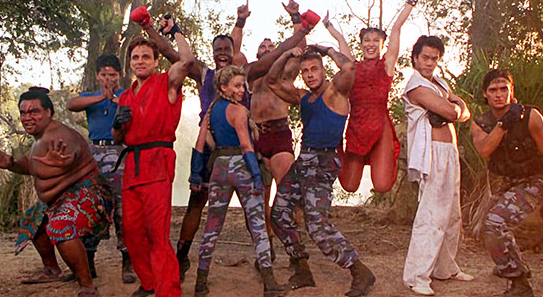
9 Street Fighter

What’s that, you say? “Street Fighter already had a reboot; Street Fighter: The Legend of Chun-Li (Bartkowiak, 2009)!” Really? You’re happy for that atrocity to stand as your Street Fighter adaptation? Jeez, at least Street Fighter (de Souza, 1994) was fun; dumb, yes, but fun. The only things Legend of Chun-Li had going for it were higher production values, Robin Shou, and the use of chi; literally everything else was a slap in the face to any fan of the videogames or action movies in general. Now, you might also be wondering why I didn’t pick Mortal Kombat (Anderson, 1995) and the answer is simple: it is a fantastic film; fun, witty, with some great fight scenes and decent effects. Street Fighter, however, is still waiting for a halfway decent adaptation; go old-school with it, make it a gritty, Kickboxer (DiSalle and Worth, 1989)/Bloodsport (Arnold, 1988)-style action movie; maybe throw in some inspiration from Warrior (O’Connor, 2011). In today’s climate, where MMA and UFC are mainstream and popular, Street Fighter has the potential to be a pretty solid action film if handled correctly.

8TheMask
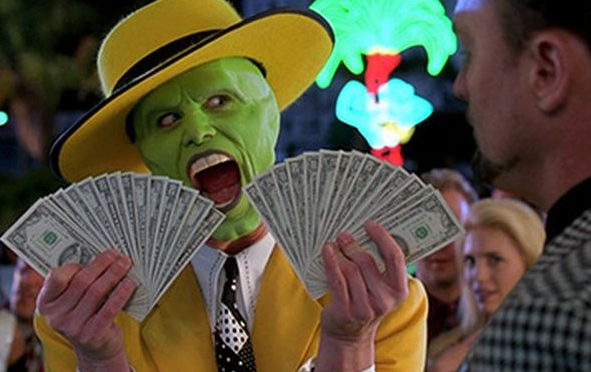
8 The Mask

Our first remake where my overriding advice is simple: “Go back to the source material!” Don’t get me wrong, I love The Mask (Russell, 1994); it’s a great vehicle for Jim Carrey’s talents and looks fantastic as a live-action cartoon but it’s not really a great adaptation of Mike Richardson’s original comic book. In the comics, “Big-Head” was a complete and utter psychopath and the titular Mask was anything but a force for wacky comedy. Therefore, rather than simply trying to ape Carrey’s performance, do a complete 1800 and make a super-stylised, hyper-violent action/horror movie. Honestly, given how successful Deadpool (Miller, 2016) and its sequel were, I am surprised that we haven’t heard rumblings of a new Mask movie as it’s basically the same premise but even more over the top, if you can believe that!

7Resident Evil
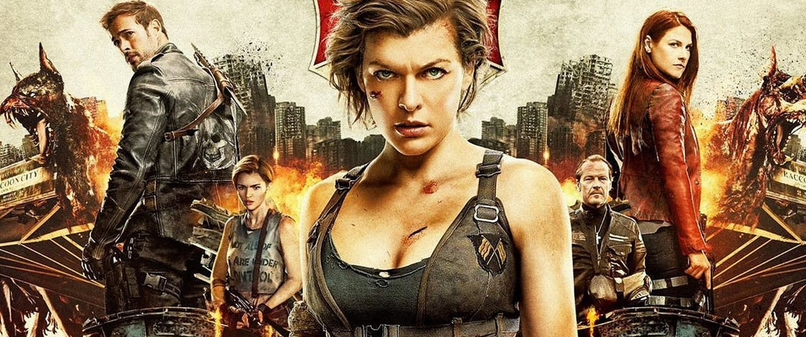
7 Resident Evil

Easily the most inevitable of all of these films given recent news that a director has already been picked, I once again would advise revisiting the source material this time around (or, you know, actually bother to look at the source material at all) as the movies churned out by Paul W. S. Anderson have little to no resemblance to Capcom’s survival-horror series. Seriously, stop trying to copy Aliens (Cameron, 1986) and concentrate on making a dark (literally and figuratively), tense, atmospheric movie where two characters have to survival against some gory, fucked up zombies and gristly, practically-created (CGI just for enhancement, please!) monsters. It’s a bad sign when Doom (Bartkowiak, 2005) is a better Resident Evil movie than any of the actual Resident Evil movies so, come on, bring back the splatter-gore zombies movies of old and make a real Resident Evil adaptation for once!

(Side note: I actually love Doom. Fight me).

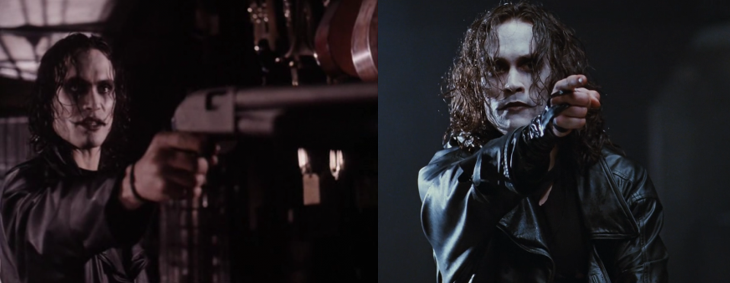
6 The Crow

Here’s one that’s been in and out of development hell for decades now. We have come so close to getting a new Crow movie so many times, with names like Bradley Cooper and Jason Momoa both attached at one point, only to have it snatched away at the last second. Honestly, I am fine with this as The Crow (Proyas, 1994) remains one of the most haunting and beautiful movies (and adaptations) of all time. However, while I am in no hurry to see a remake, if we do ever get one I again urge those behind it to look a little closer at James O’Barr’s original 1989 comic book, if only to differentiate the new film from the original. Go for a moody, stylised, neo-noir piece, taking inspiration from Sin City (Miller and Rodriguez, 2005), and craft a dark, sombre film that has little to do with heroism and more to do with cold, uncompromising vengeance.

5LXG
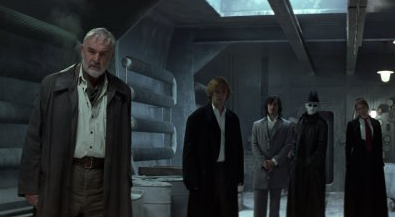
5 The League of Extraordinary Gentlemen

Ah, yes, the film that notoriously caused Sean Connery to retire from Hollywood altogether. Again, I am actually a bit of a fan of The League of Extraordinary Gentlemen (Norrington, 2003); it’s not perfect but I liked seeing all these literary characters come together and the steampunk aesthetic of the movie. However, I would not be against Hollywood giving this one another go as it could definitely be done better. Keep the steampunk aesthetic but really emphasise the gritty, world-weary nature of these characters; you’re bringing together some of the most beloved, nuanced, and interesting fictional characters ever created so don’t belittle them with goofy antics. Go back to Alan Moore’s comic books, maybe take some inspiration from the second volume in which Moore has the League participate in the War of the Worlds (Wells, 1897) and for God’s sake do not promote the movie as “LXG”!

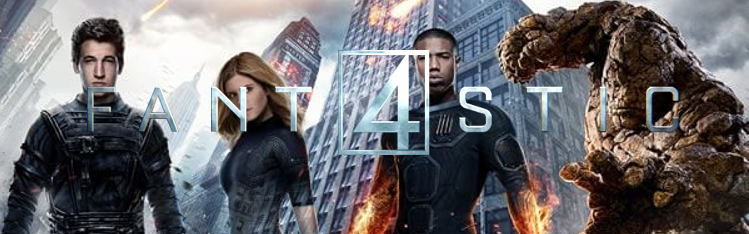
4 Fantastic Four

Another pick that is surely inevitable given Disney’s purchase of 20th Century Fox, I could go into a lot of detail about how the first family of Marvel Comics should be introduced into the Marvel Cinematic Universe (and hey, maybe I still will!) but, suffice it to say, the Fantastic Four really need a movie deserving of their longevity and popularity. There were things I liked about both of Tim Story’s movies, and even the much-maligned reboot by Josh Trank, but all three films failed to capture the essence of the Fantastic Four and really do them justice. This is a chance for Marvel Studios to make a film with actual responsible adults in it; bring in an older cast for Reed Richards and Susan Storm (Bruce Campbell is a great choice for Reed but may be a bit too old; I’d suggest Pierce Brosnan, if he isn’t used for Magneto), get a popular, utterly handsome guy in his mid-twenties-to-late-thirties for Johnny Storm (Zac Efron?), and use that patented Marvel CGI wizardry (preferably in conjunction with practical effects) to create a truly lifelike Thing (voiced by, I dunno, Danny DeVito?). Whatever they do, though, it is crucial (and I mean absolutely crucial) that they get Doctor Doom right (and I mean pitch perfect); Doom should be a premier villain in the MCU and they shouldn’t shy away from his mystical origins. Get someone who isn’t afraid to wear a mask the entire time and who has the presence and gravitas to pull off such an enigmatic role (again, I would go the older route, maybe try and bring in Arnold Vosloo?)

3Spawn
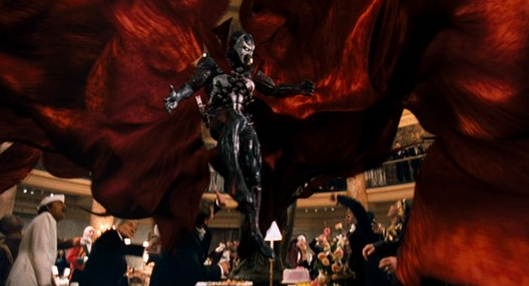
3 Spawn

Oh, Spawn, you’re so very nineties! A Spawn remake/reboot has also been kicking around for decades, with creator Todd McFarlane constantly banging on about how it’s being scripted, in production, coming soon, won’t feature Spawn much (which is insanity!), will be super dark, super scary, and loads of other talk but, until we see a poster, a trailer, and the film in cinemas it’s just that: talk. Spawn (Dippé, 1997) is not a great film; you could argue that it’s not even a good film. It’s rushed, sloppy, disjointed, and some of the effects have aged terribly. This is the reason we need a new movie, one that isn’t afraid to go dark, be super violent, and really do justice to the character and his original run. Take the effects work from Venom (Fleischer, 2018), go balls-deep with the violence and surreal nature of the concept, take notes from the excellent animated series, and bring in Denzel Washington to play the titular hellspawn and you could have a winning formula.

2 Hellraiser

Here’s another remake that’s been doing the rounds for a while. Despite all the talk and anticipation of a remake, however, it seems we’re doomed to getting ashcan sequels and direct-to-DVD releases that keep this franchise limping along on life support (would you believe that there are ten films in this series!?) Hellraiser makes the list because the original 1987 movie and its immediate sequels have not aged well; in fact, they have aged terribly. I applaud them for using practical effects and making the most of their obviously limited budget but it’s clear to see that this movie could be made so much better with modern filmmaking techniques. Indeed, one of the few good points of the later sequels is how much better the effects are and, done right, a Hellraiser remake could really surprise at the box office. So, I say to you: Go back to Hellraiser and Clive Barker’s original novel, look at the lore and legacy of the series, and put some time, effort, and money into making a truly nightmarish, surreal, and atmospheric horror movie. And if you’re not going to cast Doug Bradley as Pinhead, at least have him dub the lines or something.

1Highlander
1 Highlander

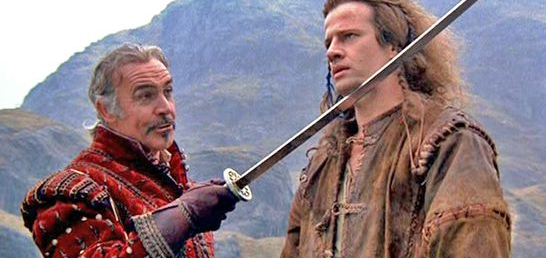
Oooh, boy, this film. Similar to Hellraiser, Highlander (Mulcahy, 1986) makes the list because it just doesn’t hold up; the effects are bad, the fight sequences are shit, and, thanks to all of the nonsense introduced in the sequels, the original movie is a laborious chore to sit through. Yet, the concept is a good one; the franchise clearly had some staying power as well, if the television series is anything to go by. However, we really need to look at the lore and iron out some specifics: what is the Prize? How many Immortals are there and will we address where they come from? What is the exact nature of the Quickening? Seriously, these concepts are so ill-defined in the original and bogged down with retcons and illogical additions in the sequels that I have no idea what’s going on. Either get a clear picture and make a decent fantasy film based on that or ignore some of the sequels and bring back Christopher Lambert in the mentor role; either way, you absolutely must cast Thomas Jane in the title role…and maybe Dave Bautista as the Kurrgan.