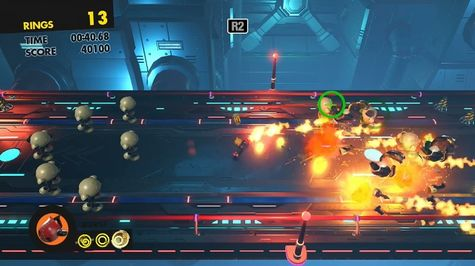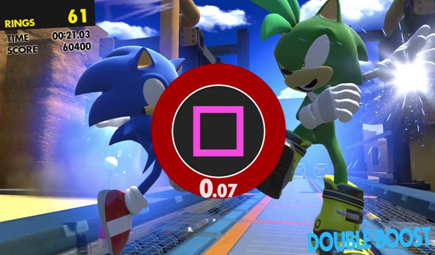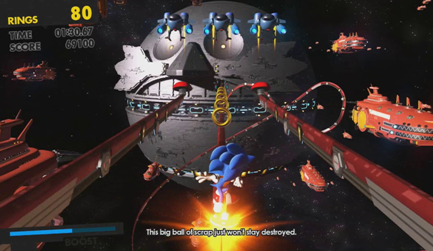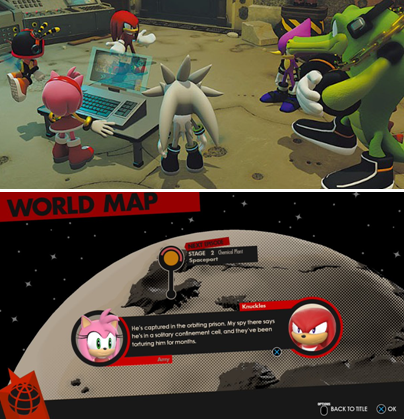
Game Corner: Sonic Adventure (Xbox 360)

GameCorner
SonicAdventureLogo

The year was 1998 and the videogame industry was deep into the newest phase in the Console Wars. Nintendo and SEGA had left behind two-dimensional gameplay and were focusing entirely on polygons and 3D, while Sony provided some surprising competition in the arena with its PlayStation console. In 1996, Super Mario 64 (Nintendo EAD) was released, marking the 3D debut of Nintendo’s portly plumber. With its tight, responsive controls, bright, vivid colours, exciting soundtrack and simple, yet increasingly challenging, gameplay, Super Mario 64 was largely regarded as a successful evolution from 2D to 3D gameplay for Nintendo’s mascot. Meanwhile, Nintendo’s once-high-and-mighty rival, SEGA, was…struggling a bit. Their ill-fated 32X and SEGA Saturn hadn’t exactly set the world on fire and their superspeedy mascot, Sonic the Hedgehog, while still a popular cultural icon, hadn’t been featured in a main series videogame for a long time, finding himself relegated to spin-offs, cancelled titles, cameos, and odd-ball experimental titles.

Super Mario 64 was Mario’s successful foray into 3D.

Determined to reignite Sonic’s success, SEGA set to work crafting a title that would not only compete with Super Mario 64 but also draw gamers away from their competition and firmly towards their powerful new Dreamcast console. In order to facilitate this, Sonic Team decided to craft a title that would mix multiple gameplay styles, completely redesign Sonic and his friends and enemies, and unite Sonic’s formally-competing continuity to softly reboot their once-blockbuster franchise. Given that I wasn’t afforded the luxury of owning every games console back in the day, I opted to jump ship from SEGA to the Nintendo 64 and, as a result, I first played Sonic Adventure when Sonic Adventure DX: Director’s Cut was released for the GameCube in 2003. This means that I didn’t play the game until after playing Sonic Adventure 2: Battle (Sonic Team USA, 2002), an upgraded expansion of Sonic Adventure’s sequel, also on the GameCube. Picking a favourite between the two is difficult as the controls, graphics, voice acting and lip-synching, and gameplay mechanics were vastly improved in Sonic Adventure 2 (ibid, 2001), which also introduced Shadow the Hedgehog to the series, but Sonic Adventure had a lot more gameplay variety, a slightly more interesting story, and had a lot more additional content in its updated ports. Eventually, these GameCube ports were further ported to the PC and these versions then came to PlayStation 3 and Xbox 360. As this latter version was recently on sale on Xbox Arcade, I once again bought Sonic Adventure (though I was too cheap to buy the DX: Director’s Cut add-on) and blasted through it so let’s see if it’s still as good as I remember it.

Sonic’s speed and Homing Attack allowed him to easily traverse and target enemies in his new 3D environment.

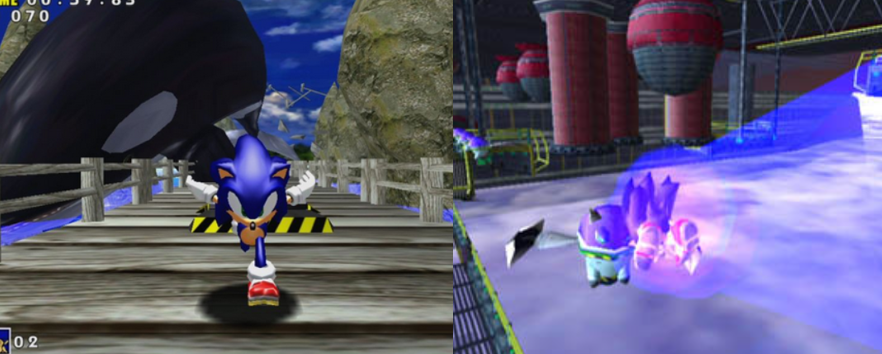
Sonic Adventure (Sonic Team, 1998) saw players take on the role of Sonic the Hedgehog in his first fully 3D adventure. Arriving in Station Square after a long absence, Sonic encounters the mysterious aquatic lifeform Chaos causing…well, chaos…and soon uncovers a plot by his old nemesis, Dr. Eggman, to gather the legendary Chaos Emeralds and use them to empower Chaos to destroy Station Square. Teaming up with friends old and new, Sonic races to keep the Chaos Emeralds out of Eggman’s hands and stop his plans before it’s too late. Right away, Sonic Adventure wipes the slate clean for the Sonic series. Not only is Sonic a fully-realised 3D character, he’s now taller, edgier, portrayed by Ryan Drummond as a heroic thrill-seeker, and living alongside humans in a vaguely-Earth-like setting rather than hailing from an alien world populated entirely by anthropomorphic characters. Rather than speeding through 2D environments, Sonic navigates 3D stages with the camera placed behind him but, to make traversing these new stages easier, Sonic Team implemented what has now become one of the most contentious additions to Sonic’s arsenal, the Homing Attack. Nowadays, gamers take the Homing Attack for granted as it has been tweaked to hold our hands through its auto-lock-on and targeting reticule but, back in the day, it was an innovative gameplay mechanic that boosted Sonic towards the nearest enemy, spring, power-up pod, or simply blindly in the direction he is facing. It wasn’t a vastly over-powered move but, like Z-Targeting in The Legend of Zelda: Ocarina of Time (Nintendo EAD, 1998), was an essential mechanic to blasting Sonic through his sprawling, engaging zones. As in his previous 2D outings, Sonic also has the iconic Spin Dash, which can boost him along with an almost-game-breaking speed or be held down and charged up for one big boost. He can also acquire a few upgrades that allow him to perform the Light Speed Dash; like the Homing Attack, this is now an iconic staple of Sonic’s 3D arsenal but, here, it’s a bit clunky as Sonic must charge up a Spin Dash and then release the button to speed along a set of Golden Rings. This was vastly improved in Sonic Adventure 2 to the format we are now used to, where the Light Speed Dash is assigned to a single button.

SonicAdventureVariety.PNG
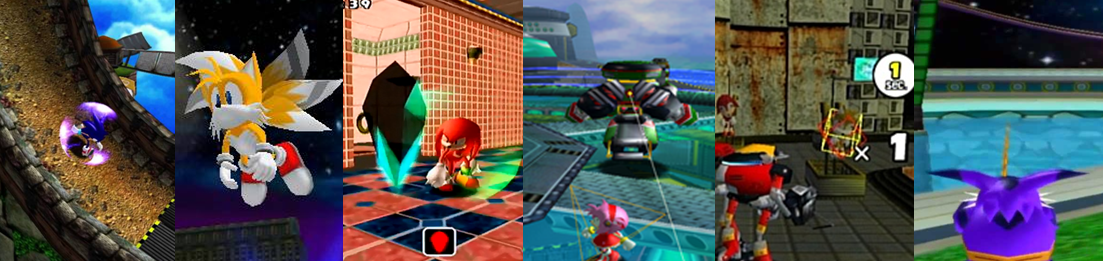
Running, flying, hunting, stealth, shooting, fishing…Sonic Adventure has it all!

For gamers more used to Sonic’s most recent titles, Sonic Adventure may seem a bit of a shock as it also includes a whole host of additional characters to play as. Miles “Tails” Prower must race, usually against Sonic, to reach a goal first, using his twin tails to fly and attack enemies; Knuckles the Echidna must glide, climb, and dig through stages to find fragments of the Master Emerald; and Amy Rose has to use her Piko-Piko Hammer to evade the invincible ZERO. Sonic Adventure also introduced gunplay to the Sonic series for the first time by allowing players to blast through stages as the tragic robot E-102γ (or simply “Gamma”) and one of the most divisive characters of the entire franchise, Big the Cat, a massive, slow-witted cat who has to fish for his elusive friend, Froggy.

Waste hours of your life raising the perfect Chao but don’t forget to take on Perfect Chaos!

Once players have cleared each character’s story from start to finish, they unlock once final chapter where everone comes together to power Sonic up into Super Sonic so that he can end the threat of Chaos’ ultimate form, Perfect Chaos. This started a trend in the 3D Sonic games where players would unlock one final story where they play as Super Sonic, something that is still often seen in modern Sonic titles, which have only recently begun allowing players to play as Super Sonic outside of the Last Story. In addition to these story modes, Sonic Adventure also features the Chao Garden. As Sonic and his friends destroy enemies, they can rescue a variety of little animals that can be taken to three Chao Gardens found in the game’s three Adventure Fields. In here, players can hatch and raise Chao, tiny little versions of Chaos, and power them up with these small animals, buy them food and accessories in the Black Market, and then race and battle against other Chao in the Chao Games. Chao’s stats (run, fly, swim, power, and stamina) will increase (or decrease) with each animal they interact with and the Chao will take on different characteristics and colours as they level-up, eventually evolving into stronger bipedal forms. The Chao Garden is a nice little distraction and an extra incentive to play but I can’t say that I really miss it from modern Sonic games; it’d work as a mobile app, or something like that, though. Story and narrative are a massive part of Sonic Adventure; previously, there was a massive divide between the Sonic narrative in Japan to that seen in the United States and Europe. While Sonic always lived on Earth in Japan and fought against Dr. Eggman, in the U.S. and Europe, he lived on Mobius and battled Dr. Ivo Robotnik; Knuckles lived alone on Angel Island in Japan but was isolated on the Floating Island elsewhere, and there were a few inconsistencies regarding the amount and appearance of the Chaos Emeralds as well.

SonicAdventureEggman.PNG
This was the first time many gamers became aware of the “Eggman” name.
With Sonic Adventure, though, Sonic Team sought to consolidate all these inconsistencies into one brand image for their super-fast mascot. “Eggman” is used by Sonic and his friends as an insult to their egg-shaped adversary, who refers to himself numerous times as Dr. Robotnik; Sonic and his anthropomorphic counterparts are right at home alongside humans, and the previous games are used as a vague basis for the character’s back stories (Amy specifically remembers the events of Sonic the Hedgehog CD (SEGA, 1993), for example) but, at its core, Sonic Adventure, with its anime-inspired aesthetic, serves as a soft reboot for the franchise that would act as a clean slate for the series going forwards. Unfortunately, this didn’t last very long. All-too-soon, Sonic’s narrative began to get more and more convoluted and the idea of one unified worldwide version of Sonic was tainted by further drastic changes to Sonic’s aesthetic, the addition of Classic Sonic and the production of Sonic Boom (Various, 2014 to 2018). Long-time fans of the series struggled a bit with Sonic’s dramatic redesign; fans literally argued themselves into a frenzy over the fact that Sonic now has green eyes, for God’s sake, and debates continue to rage to this very day regarding what is the best design for Sonic.

SonicAdventureBig.PNG
I actually really like Big and found his gameplay simple fun…

While I actually really enjoy each of the character’s stories and gameplay styles, fans also reacted badly to many of Sonic Adventure’s gameplay mechanics. The speed and excitement of Sonic’s gameplay continued into Sonic Adventure 2 and eventually evolved into the sole gameplay style we see in modern Sonic titles, but Tails’ and Amy’s formulas were abandoned entirely by the sequel, with only the shooting and treasure hunting mechanics lasting to Sonic Adventure 2. But it was Big the Cat who suffered the most, with fans seemingly unified in their hatred of his slow movement and fishing gameplay. I, however, really like Big; his stages are short and simple, his gameplay inoffensive and easy to master, and it’s a breeze to cheese his additional missions. Honestly, if I had to pick a character I disliked out of all of those on offer here, it would be Amy, as she’s a bit awkward to control at times (thanks in no small part to Sonic Adventure’s dodgy, jerky camera) but, having said that, her stages are still pretty short and easy to get through and I would much rather than three great characters and stories and three average ones than one single gameplay style. Sonic Adventure was also hampered a bit by its camera, as mentioned, and control schemes; these would be refined in Sonic Adventure 2 but, here, everything is lacking a little bit of polish. It isn’t the glitch-filled, game-breaking end of the world a lot of Sonic fans will scream at you that it is but it can cause some unnecessary deaths at times. The game’s voice acting and lip-synching are also still a source of derision but, honestly, I really don’t care; all the characters sound great, and very appropriate, and, while the lines aren’t always great and their delivery can be hit and miss, that was just how voice acting was back in those days and, for me, it just adds to the quirky charm of the videogame.
SonicAdventureTails.PNG
To say that Tails has regressed in recent years is a bit of an understatement…

Sonic Adventure is also packing quite a bit of content. Alongside the Chao Garden, there’s also the option to replay each character’s stage a couple more times to earn additional Sonic Emblems (which can be found hidden in the Adventure Fields or are awarded after finishing stages and story modes); players can earn further Emblems in the Trial Mode, by finishing sub-games, and by winning Chao events. In the DX: Director’s Cut expansion, there’s also a Mission Mode that tasks players with fulfilling certain objectives for even more Emblems; once you earn all 180, you’ll unlock the ability to play as Metal Sonic in Sonic’s stages. While a simple reskin, this is a fantastic addition to the game and I would honestly love to see Sonic Team do more reskins like this in Sonic titles as it’s so easy to do and just helps add a bit more incentive to play and a little variety. That is what I love the most about Sonic Adventure: the variety; each character experiences events from a different perspective, meaning you might watch the same cutscene two or more times but the dialogue and camera angles will be different depending on who you are playing as. Also, if you get tired of blasting through stages at break-neck speed with Sonic, you can take in the gorgeous visuals at a slower pace with Knuckles or Big or just go in all guns blazing with Gamma. There’s a lot to do, lots of little hidden secrets and Easter Eggs to find, and I always want to play a little more, do a little more, and explore areas with each of the six characters.

Sonic Adventure certainly wasn’t lacking in gameplay variety.

It is honestly very disappointing to me that SEGA slowly began to shift away from Sonic’s extended cast and focus solely on Sonic’s gameplay. In Sonic Adventure, Tails and Amy both learn to be independent characters who aren’t simply one-dimensional bit players in need of rescue. Now, though, you’re lucky to even see Amy in a cutscene in a Sonic game and it seems to take a massive, concentrated effort of willpower for Sonic Team to allow players to play as Tails, to say nothing of poor old Knuckles! Sonic Adventure isn’t entirely to blame for that but the game is a bittersweet experience to play as it’s so much fun and has so much potential but some of its best parts (character variety, the semi-open world, and the level-up system) were omitted entirely in Sonic Adventure 2 and SEGA have never really been able to make a Sonic title that feels as immersive as Sonic Adventure. Sonic the Hedgehog (Sonic Team, 2006) tried to emulate the same feel and expansive nature of Sonic Adventure, but it lacked the gameplay variety and was littered with bugs and issues that made it more of a poor imitation; Sonic Unleashed (ibid, 2008) was perhaps the closest to succeed at emulating Sonic Adventure’s style but, rather than try to expand and refine upon this to reintroduce more of the concepts and mechanics of Sonic Adventure, SEGA and Sonic Team chose to release wildly inconsistent Sonic titles and bog their franchise down with multiple competing iterations of their mascot rather than continue with one unified version of their most popular brand.
SonicAdventureEnd
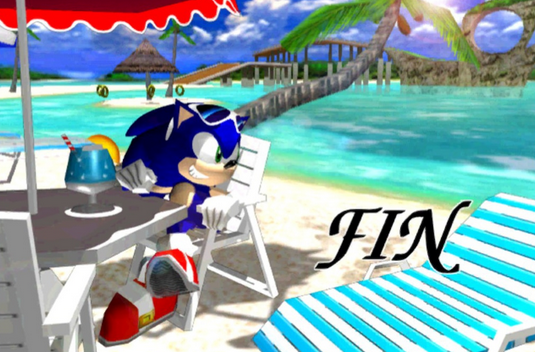
It has its flaws but Sonic Adventure is still great fun to play.

This is a real shame but, for me, does not diminish the impact or enjoyment of Sonic Adventure. Sonic Adventure 2 might be technically better in a lot of ways, but there’s something about racing through Station Square, exploring the Mystic Ruins, taking down the Egg Carrier, exploring the history of Sonic’s world, and battling Chaos’s various forms that I find extremely enjoyable. I like that the redesigns of Sonic, Tails, Knuckles, Amy, and Eggman all look cool and that the playable characters have distinct gameplay styles; I like the aesthetics of the game and its world and the new characters, who are both fun to play as and surprisingly complex; I like that the game is simple but also challenging at times, that the bosses are big and have a lot of variety, that the soundtrack is a mixture of styles (from cool skater rock to nostalgic tunes to mechanical synthesis), and that Eggman is a competent threat and not just some bumbling buffoon. For me, Sonic Adventure was a fantastic way to reintroduce Sonic to a new generation of gamers and a great starting point for a whole new series of Sonic titles; SEGA and Sonic Team may have fumbled the ball at capitalising on some of the game’s great ideas but it doesn’t change the fact that Sonic Adventure is a fun title to invest a few hours on and that it succeeds far more that it fails, no matter what the toxic Sonic fan community might have you believe.

My Rating:

Rating: 5 out of 5.

Fantastic

Game Corner: Mighty and Ray: The Original Triple Threat

GameCorner

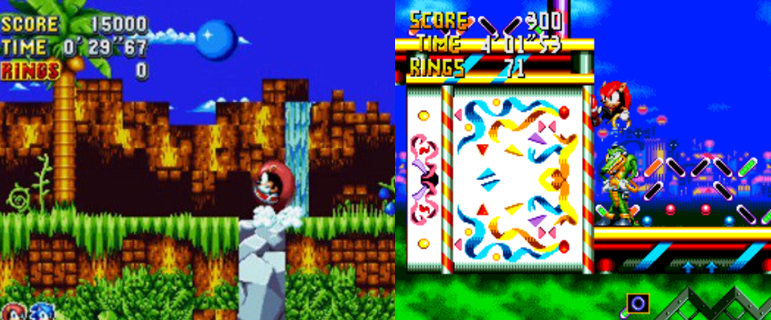
For years now, the Sonic fan community has generally had one thing in common: a desire to see long-forgotten characters from the past return to modern Sonic titles. Characters such as Fang the Sniper/Nack the Weasel, Bean the Dynamite, Bark the Polar Bear, Mighty the Armadillo, and Ray the Flying Squirrel have, for too long, been absent from the Sonic franchise and many, such as myself, have been begging for their return for a long time now. In recent years, SEGA have been fanning this desire and almost trolling the fan community; wanted posters featuring Mighty, Ray, Bean, Bark, and Fang were featured prominently in Sonic Generations (Sonic Team, 2011) yet the characters did not actually appear in the title. Even more recently, Bean, Bark, and Fang all appeared as illusions cast by the Heavy Magician in Sonic Mania (PagodaWest Games/Headcannon/SEGA, 2017), which appeared to be the closest we would ever get to seeing them return to Sonic canon.

Mighty and Ray have made a dramatic return to the franchise, and even have merchandise now!

However, Sonic Mania Plus (ibid, 2018), an expanded and updated version of Sonic Mania, offered a glimmer of hope: for the first time in decades, Mighty and Ray returned to the series as playable characters. Not only that, the two featured prominently in Sonic Mania Adventures (Hesse, 2018), a series of short animated episodes designed to promote the videogame. For me, this was extremely exciting. As a kid, I got the chance to visit SEGA World in London and was lucky enough to be one of the few to actually play SEGASonic The Hedgehog (SEGA AM2/SEGA, 1993); while I don’t recall playing as Mighty or Ray, the fact that this is one of the few Sonic titles to never receive a port of any kind imbues both characters with a sense of mystery and desire. Later, of course, Mighty would make a return in Knuckles’ Chaotix (SEGA, 1995), here as a poorly-veiled substitute for Sonic himself. This is obviously pretty ironic considering that an armadillo was one of the first rejected concepts for the character that would eventually become Sonic and yet, like with SEGASonic The Hedgehog, the fact that Knuckles’ Chaotix has never received a port keeps the character from being openly accessible to modern players. Indeed, when the Chaotix did return for Sonic Heroes (Sonic Team USA, 2003), Mighty was nowhere to be seen and was not acknowledged in any way, despite the fact that he easily could have been incorporated as a victim of kidnapping.

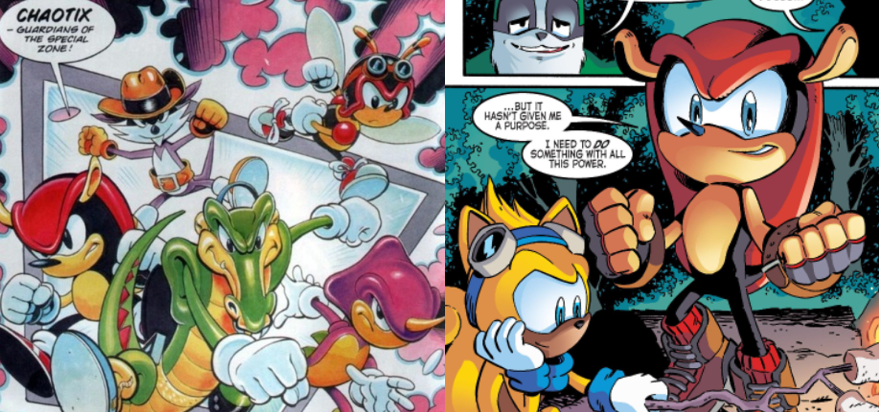
Mighty and Ray were recurring and prominent characters in the Sonic comic books.

However, over the years, both Mighty and Ray were featured regularly in both Sonic the Comic (StC) in the UK and in Sonic the Hedgehog, the long-running comic book series published by Archie Comics in the US. While Ray did not appear in StC, Mighty debuted in issue 52 in the story “Total Chaotix”; in StC, Mighty is the short-tempered muscle of the group, here cast as the designated guardians of the Special Zone. Mighty, who often came to blows with his team mates, was primarily known for his brute strength rather than his speed and agility, as depicted in Knuckles’ Chaotix. Meanwhile, in Archie’s Sonic comics, Mighty first appeared in their loose adaptation of Knuckles’ Chaotix, published in November 1995. This version of Mighty, while also super strong, was more of a pacifist who was originally born into a family of thieves and was deeply devoted to his younger sister (like most Archie Sonic characters, Mighty was lumbered with an extensive family tree) and his best friend, Ray, whom he treated like a younger brother. Speaking of, Ray debuted in issue 26 of Knuckles the Echidna, featuring in a flashback that served as a loose adaptation of SEGASonic the Hedgehog. Lost in a space between dimensions for years, Ray was finally reunited with his friends and joined the Chaotix as a junior member. Ray, a timid youngster who suffered from a stutter, eventually gained a redesign (alongside Mighty) to better fit in with the post-Sonic Adventure (Sonic Team, 1998) designs of the cast and proved to be a tough and resourceful Freedom Fighter. Sonic Mania Adventures, while simplistic in its design and narrative, maintained the strong brotherly bond between Mighty and Ray that was a staple of the Archie comics. In “& Knuckles”, Ray is desperately searching for Mighty, who has gone missing, and the two are reunited in “Mighty and Ray”. Mighty willingly throws himself between Ray and Metal Sonic to defend him and uses his brute strength to hurl a boulder at the robot. When Metal takes Ray hostage, Mighty reluctantly hands over the Chaos Emerald he has in order to spare his friend and the two quickly head out to join Sonic and Tails in regaining their lost jewel. Very quickly, in just one short episode, we very clearly see the friendly bond between the two and their personalities. I’ve always found it interesting that, back when they were building up to the release of Sonic the Hedgehog 3 (SEGA, 1994), SEGA held one of their famous internal competitions to come up with a design for a new character.

With his prehensile tail and gliding abilities, Ray could very well have replaced Tails.

This would, of course, eventually become Knuckles the Echidna but they could just as easily have revived Mighty as the guardian of the floating Angel Island. Similarly, although SEGASonic the Hedgehog released some time after Sonic the Hedgehog 2 (SEGA Technical Institute, 1992), it isn’t exactly inconceivable that the result of their internal design for Sonic’s sidekick would have resulted in Ray’s early debut and his replacing of Tails. Therefore, imagine, if you will, a slightly different turn of events. Instead of Yasushi Yamaguchi dreaming up the plucky two-tailed fox, Manabu Kusunoki’s Ray is submitted and approved for Sonic 2. Remember that, in Sonic 2, Tails never carried Sonic and, instead, controlled exactly the same; therefore, all Ray would be required to do would be to jump, roll, Spin Dash, and glide down from the heavens in two-player mode. Therefore, Ray would fit in really well with Sonic 2’s restrictions. In Sonic 3, though, Tails obviously carried Sonic in two-player modes and for the Marble Garden Zone boss. It’s difficult to imagine Ray being capable of this, so that aspect of the videogame would ultimately have been lost, however it’s very easy to see Ray borrowing Tails’ swimming mechanic, Knuckles’ glide to manoeuvre around stages, and possibly some kind of swinging mechanic using his bushy tail. While the absence of full-on flight would have been lost from the Triple Threat’s moveset in subsequent 3D titles, Ray could easily have adopted the 3D gliding of Knuckles and possibly even a spring-loaded jump of sorts

Mighty can smash like Knuckles, and his wall-jump helps him scale vertical surfaces.

Mighty, meanwhile, is slightly simpler; like Knuckles, he would have bashed through walls and boulders by running or jumping into them and, if possible, incorporated his dropping bash to smash through boulders beneath him. Mighty could also have kept his wall jumping mechanic from Knuckles’ Chaotix, which could have been implemented in ways that compensated for the loss of Tails’ flight, and potentially even have deflected all projectiles when rolled into a ball. In later 3D titles, Mighty could have kept the physical attacks used by Knuckles and, eventually, have evolved into a brawling/hack-and-slash hybrid similar to that seen in the Werehog in Sonic Unleashed (Sonic Team, 2008). Remember that, in both cases, Mighty and Ray would have exactly the same personalities and character traits as Knuckles and Tails, respectively, so much of the characterisation these two have been given in the comics and Sonic Mania Adventures would instead be supplanted with those seen in Tails and Knuckles. Just as it is easy to imagine Tails and Knuckles adopting some of the mechanics now assigned to Sonic (the bounce, the stomp, the wall jumping, some of the other Wisp abilities), so too can I easily see these being adopted by Ray and Mighty. Ultimately, however, this alternative timeline featuring Sonic, Ray, and Mighty as the Triple Threat would have meant the loss of two of the franchise’s more visually striking and engaging characters.

SonicMightyRayPlusBros
The gang’s finally all back together!

In the end, as sad as I am that Amy Rose didn’t make the cut for Sonic Mania Plus, I am absolutely overjoyed to see Mighty and Ray finally return to the series. Their sprites are absolutely gorgeous in the videogame and their animation in Sonic Mania Adventures is truly heart-warming. Going forward, I would be completely on board for their return in future 2D/2.5D Sonic titles and, better yet, the mainstream 3D videogames and, if we can finally have these little guys back as playable characters, there’s still hope that, one shining day, Fang will finally return as, at the very least, a secondary antagonist.

Game Corner: Sonic Forces (Xbox One)

GameCorner
SonicForces Logo

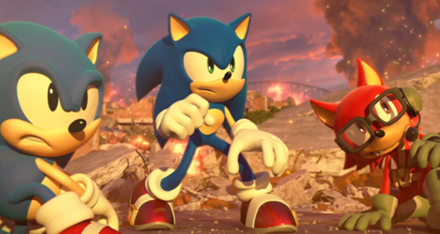
So, as may already be apparent, I am a pretty big fan of the Sonic the Hedgehog franchise. I am, by no means, a “Sonic Apologist” though; I am more than capable of admitting to and pointing out flaws in individual videogames and the franchise as a whole. However, unlike what appears to be the majority of Sonic fans (seriously, is there a more toxic fan community that the one adopted by Sonic fans?), I tend to be quite pleased with most Sonic titles. Maybe it has something to do with the fact that, these days, I generally ask little from my videogames than a fun, engaging, pick-up-and-play experience that has some depth but not an infinite amount of depth. It probably also helps that I rarely, if ever, buy videogames first-hand on launch day and therefore spend less money per purchase so have less to complain about. With that in mind, I recently completed Sonic Forces (Sonic Team, 2017) for the Xbox One and figured I would share my thoughts on it. Created to commemorate Sonic’s twenty-fifth anniversary, Sonic Forces ostensibly positions itself as a loose sequel to Sonic Generations (ibid, 2011) and Sonic: Lost World (ibid, 2013) and was developed and released within the development and launch of the massively successful Sonic Mania (PagodaWest Games/Headcannon, 2017), a videogame that successfully (and finally) returned Sonic to his high-speed 2D roots.

SonicForces Good
It’ll take two Sonic’s and a randomer to save the world!

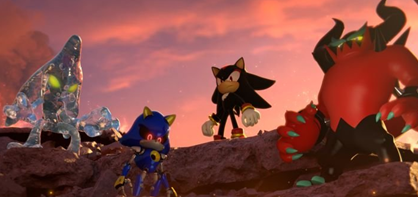
Sonic Forces, in comparison, sees players once again take control of “Modern Sonic” in 3D and 2.5D action stages and “Classic Sonic” (now retconned as being from “Another dimension” rather than being Modern Sonic’s past self) in 2.5D platforming sections. Players can also create their own custom Avatar from a variety of options, a feature that seems to have replaced the arguably more sensible idea of playing as the Sonic Boom iteration of Sonic. Narratively, Sonic Forces attempts to be the darkest in the series since Shadow the Hedgehog (SEGA Studio USA, 2005); during a routine battle against Doctor Eggman, Sonic is attacked and defeated by Eggman’s latest creation/ally (the exact specifics are a little…blurry, to say the least), Infinite, a villain so dark and emo that you’ll went to throw on a dirty black hoody and bust out some Taking Back Sunday while crying over that girl who cheated on you and writing badly composed poetry every time he’s on screen. Infinite appears to possess the Phantom Ruby from Sonic Mania and uses its reality-warping powers to conjure multiple illusions of some of Sonic’s greatest foes (Chaos Zero, Shadow the Hedgehog, Zavok, and Metal Sonic).

SonicForces Evil
Two of these will not feature as bosses…

With Sonic defeated, Eggman and his forces overrun the entire world and take control, leaving the world’s hopes in the hands of a rag-tag resistance led by Miles “Tails” Prower, Knuckles the Echidna, and (most of) Sonic’s other friends and allies. Vastly outnumbered, they recruit a rookie to help the cause (the player’s Avatar) and, randomly, Classic Sonic, and set out to first rescue Sonic from the Death Egg and then put a stop to Eggman’s nefarious regime.

SonicForces Modern
Boost through stages at break-neck speed as Modern Sonic.

If you’ve played Sonic Generations, then you’ll be immediately familiar with Sonic Forces. Ditching the poorly-conceived “run button” of Sonic: Lost World, Sonic Forces once again sees players smash robots, collect Golden Rings, and collect Wisps to fill up a Boost meter as Modern Sonic. When the meter fills up, you can hold down the Boost button and blast through enemies and stages at break-neck speed; Modern Sonic can also utilise the now-classic Homing Attack to target enemies and other objects and team up with the player’s Avatar to perform a Double Boost or allow the Avatar to attack enemies.

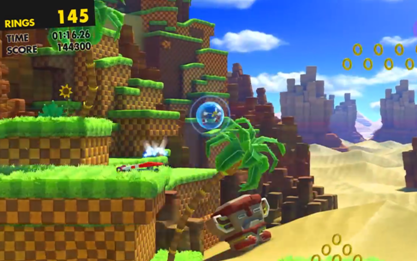
SonicForces GreenHill
Struggle with dodgy controls as Classic Sonic!

Classic Sonic, meanwhile, can no longer collect Elemental Shields or be assigned different abilities like he could in Sonic Generations, but he does have the Drop-Dash from Sonic Mania (which I honestly used even less than in Sonic Mania, if that’s even possible). As in Sonic Generations, Classic Sonic feels very heavy and floaty and sluggish, especially compared to Modern Sonic’s gameplay and the picture-perfect controls of Sonic Mania and his inclusion in the videogame is an odd question mark for me as he doesn’t really factor into the plot that heavily.

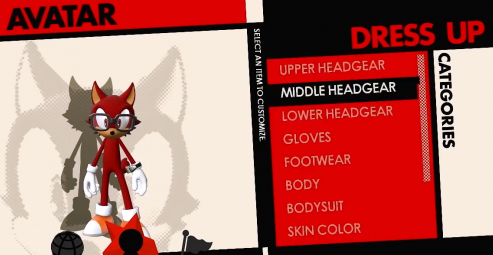
SonicForces Avatar Creation
Create your own fan characters with the Avatar creation tool!

Players can create their own Avatar from seven species: hedgehog, dog, cat, bird, bear, wolf, and rabbit. You can customise the Avatar’s skin colour, fur colour, eye shape and colour, ear type, and pile all sorts of clothing and accessories onto them. For a fan community that loves to create recolours and their own characters, this is a fun opportunity to create your own Sonic character, with quite a few options to choose from, but the function does have a few limitations. Firstly, you can apply hats, gloves, and shoes to your Avatar but you cannot recolour them; secondly, you cannot alter their height or width (so you can’t create fatter Avatars); and, thirdly, most of the clothing and accessories must be unlocked by completing Missions during gameplay.

SonicForces Wispon
Try to not fly off stages using the Avatar’s Wispons!

You can use the Avatar function to create close approximations of Sonic characters, but they’ll never be perfect; for example, clothing for Tails, Knuckles, Shadow, and Amy Rose are available but you can’t really create any of them in picture-perfect detail. The Avatars attack using a whip-like lasso that allows them to do a poor-man’s Homing Attack and can be equipped with a variety of “Wispons”, gun-like devices that are powered by Wisps and allow the Avatar to perform awkward variations of Sonic’s Wisp abilities from Sonic Colours (Sonic Team, 2010). I say “awkward” because many of these abilities can cause the Avatar to go shooting off the stage and to their death or have a slight delay that cause you to take damage; honestly, I don’t really know why Wisps are even still a thing in the Sonic franchise.

SonicForces TeamUp
Mash that button for a Double Boost!

As mentioned earlier, you can complete a variety of Missions to unlock clothing and accessories for your Avatars, additional features for Wispons, and bonus stages. Some Missions are stupidly simple, like switching your Avatar’s footwear, and others are more tricky, like completing stages within a time limit. You’ll also be tasked with completing random SOS Missions; occasionally, a blue, green, or red SOS signal will pop up from a stage you’ve previously completed and you can revisit the stage to complete the Mission. These range from finding and freeing prisoners from familiar-looking prison pods, completing stages with your Avatar, or completing them with a random Avatar. Ironically, considering Sonic Forces continues the annoying trend of modern Sonic titles to hand hold you through every arbitrary function (“Press X to jump!” springs instantly to mind), you only ever get one notification about which colour equates to which SOS Mission, so you’ll have to make sure you know what you have to do or you might blast through a stage in record time only to fail the Mission like an idiot because you forgot what the red signal meant. Both Sonics can still collect Red Rings in stages; collecting these allows you to get Achievements and unlocks bonus stages. Bonus stages consist of annoying tasks like dodging lasers and making it through small stages where platforms randomly vanish beneath you, but collecting the Red Rings can be a fun task as it encourages exploration.

SonicForces Death Egg
The level of graphic detail is quite high.

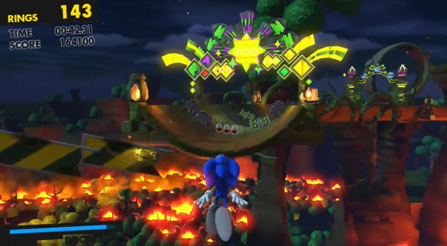
Graphically, Sonic Forces is gorgeous; running on an updated version of the Hedgehog Engine, you’ll marvel at the level of detail and layers in every stage. Blasting through Green Hill as it’s attacked by giant mechs or through a city under attack by Death Egg Robots is a real thrill and there’s clearly been a lot of thought put into the presentation. Gameplay-wise, there are still times when control gives way to automation (dash pads, boost pads, loop-de-loops, and quick-time events all take control away from the player) but, honestly, I didn’t really care because the game is all about speed and going forward so I am happy to be propelled along as long as it’s not into a bottomless pit. Despite my disappointment at having to play through Green Hill and Chemical Plant again, stages are fun and surprisingly layered; players can take multiple paths in many levels, some of them only accessible when you have certain Wispons equipped, others by simply using the Homing Attack, and they’re short enough that they never become tedious or boring. Indeed, the longest stages are saved for later in the game and, by then, it’s a real sign that the difficulty has ramped up a bit. For me, though, having fun stages to play in short-to-medium bursts makes for a far more enjoyable experience and really assists in speed runs.

SonicForces Story
Sonic Forces‘ story is quite weak.

On a slightly related note, acquiring trophies/achievements is a blast in Sonic Forces, largely thanks to the short stages and the ease of their requirements; if you like getting trophies/achievements without much effort then you’ll love Sonic Forces. I know that I was so encouraged by how many I popped in my first playthrough that I was more than happy to try some of the more difficult ones and the game really lends itself to a pick-up-and-play mentality. Narratively though…oh boy. This is perhaps the weakest aspect of Sonic Forces; when the videogame uses CGI cutscenes, its amazing and, as always, Sonic Team excel in this area (graphically, anyway; the script still leaves a lot to be desired). Unfortunately, a great deal of the plot is told through talking heads on the world map or through simple white text on a black background. Quite how Eggman acquired the Phantom Ruby is never really explored and Infinite’s back-story (largely told in the free DLC, “Episode Shadow”) is paper thin; he got beaten up by Shadow and has apparently become some kind of weird cyborg-thing. It’s a neat twist to see Eggman win right from the start but there’s never a real sense of urgency or threat; you blast though stages and Eggman’s underlings with very little fear of failure.

SonicForces Boss
Bosses, at least, are larger, layered, and fun to battle.

As for bosses, there’s a surprising lack of them here. You’ll do battle with Zavok, Eggman, Metal Sonic, and Infinite but Chaos Zero is depressingly taking out in a cutscene…by Classic Sonic…with one move…and you never battle against Shadow. Boss battles take three forms; either you battle on a 2.5D arena, race down an infinite highway towards the opponent, or take them on from a slightly skewed overhead perspective. Bosses have a variety of attacks and forms/stages, which can make them challenging but not too difficult, and sometimes require you to team up with the Avatar to win the day. There’s honestly a lot to like about Sonic Forces if you ignore the writing and the poorly-conceived plot; gameplay is fun, action-packed, and blasts along at a decent speed. It’s fun to create Avatars, unlock new gear for them, and to pop trophies/achievements. I do feel like more could have been done, though; honestly, Sonic Team really should have included Boom-Sonic as the third character (maybe include the Avatar function as well, though) because the Avatar is so blatantly and clearly there in place of him that it just feels weird. I also would have liked to see the ability to more accurately create Avatars of other Sonic characters and greater customisation in the Avatar function; it works but it feels very limited at times.

On the plus side, it’s really easy to get S-ranks if you blast through as fast as possible and don’t die, which is great for me, and I didn’t encounter that many cheap deaths or glitches while playing. Sure, sometimes you blast along so fast (especially as free DLC Super Sonic) that you’ll over shoot jumps, pits, or automated sections and fall to your death but I never glitched through anything or found any oddities and the game also ditches the lives system so you don’t have to worry about running out of tries. As great as Sonic Mania was at bringing Sonic back to his roots, I feel like the universal praise for that game has tainted the reception of Sonic Forces and that people are all-too-ready to tear apart the modern, Boost-heavy emphasis of 3D Sonic titles to focus on the positives. I feel there’s room for both, especially given how little funding and development is needed to make a top-notch 2D Sonic game compared to a Triple A 3D title; I just hope that Sonic Team either introduce more of Sonic’s cast back into the 3D games as playable characters or, at least, work on Classic Sonic’s gameplay as he feels jarringly slow and sluggish compared to his Modern counterpart.

My Rating:

Rating: 3 out of 5.

Pretty Good

Game Corner: Sonic Mania

GameCorner
SonicManiaLogo

Announced at the commemoration of Sonic’s 25th anniversary, Sonic Mania (Headcannon/PagodaWest Games, 2017) is a side-scrolling, two-dimensional platformer in the spirit and style of Sonic’s original 1990s outings. Headed up by Christian “Taxman” Whitehead, in collaboration with notable members of the Sonic fangaming community, Sonic Mania sets out to be the true sequel to Sonic the Hedgehog 3 & Knuckles (Sonic Team, 1994) that Sonic fans have been clamouring for for over a decade. Sonic Mania opens almost exactly the same way as Sonic the Hedgehog 3 (ibid), with Sonic and Tails flying in the Tornado towards Angel Island. Sonic’s bad luck with the floating haven continues as he immediately runs into a group of Eggrobos who unearth a mysterious gemstone (the Phantom Ruby), which blasts them all through space (and, possibly, time) back to the Green Hill Zone, where the Eggrobos have been transformed into more powerful variants, the Hard-Boiled Heavies.

SonicManiaRubyHeavies
The Phantom Ruby empowers the Hard-Boiled Heavies.

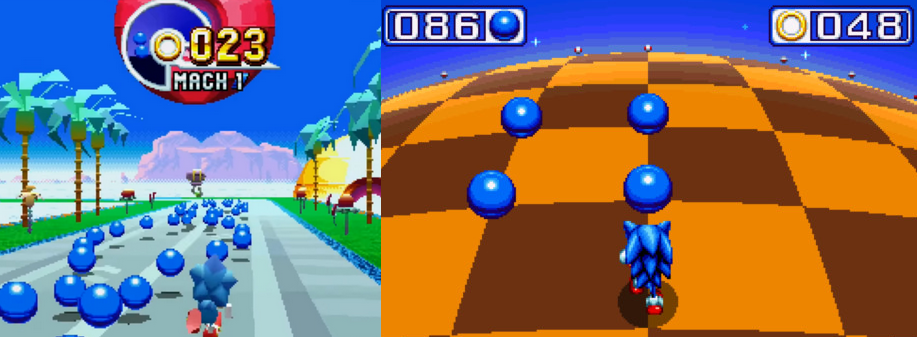
From there, Sonic, Tails, and Knuckles (whose encounter with the Eggrobos takes place as they flee with the Phantom Ruby) must travel through twelve zones in pursuit of Doctor Eggman, battling his Hard-Boiled Heavies, in their quest to obtain the seven Chaos Emeralds and put a stop to them wreaking havoc with the Phantom Ruby. Players can choose to play as Sonic, Tails, or Knuckles in a solo adventure or team-up as Sonic and Tails in two-player simultaneous mode. Each character plays differently but exactly as they did in Sonic 3 & Knuckles; Sonic is the fastest and can perform a Drop-Dash, where he instantly drops into a Spin Dash attack, Tails can fly and swim for a limited time (in a welcome twist, solo players using Sonic and Tails can command Tails to fly and then have him carry Sonic around), while Knuckles has the shortest jump, can glide, and can bash through certain breakable walls that the other two characters can’t. As in Sonic 3 & Knuckles, playing as Knuckles will take players on slightly different paths and even involve battling slightly different bosses. As always, players must collect Golden Rings to survive enemy attacks and hazards, break open monitors to acquire shields (the Water, Fire, and Electricity variants also afford Sonic the ability to bounce, blast, and double-jump, respectively), enter Bonus Stages stylised like Sonic 3 & Knuckles’s Blue Sphere stages by passing checkpoints with over twenty-five Rings, and leap into hidden Giant Rings to enter Sonic the Hedgehog CD (Sonic Team, 1993) style Special Stages.

SonicManiaSpecialBonusStages
Make no mistake, the Special Stages are no push-over!

In these Special Stages, players must collect Blue Spheres to increase their speed but also collect Golden Rings to add to the strict time limit in order to chase down a UFO holding a Chaos Emerald. Mastering these stages is the game’s hardest challenge as turns are tight, time is extremely limited, hazards are plentiful, and the UFOs do not give up their prize easily. If you try to get cute and run in the opposite direction, you’ll find yourself out of luck as the programmers thought of that and it’s basically impossible. The first thing you’ll notice when playing Sonic Mania is that it is simply gorgeous to look at; the attention to detail is staggering. Backgrounds and environments are vibrant and colourful, full of life and little details that long-time fans will delight in spotting. The game features eight zones lovingly recreated from classic Sonic titles but expanded and given additional gameplay twists and mechanics, many derived from other Sonic gameplay mechanics (for example, Stardust Speedway features the pulleys from Marble Garden Zone, Flying Battery Zone is amalgamated with Wing Fortress Zone, and Mirage Saloon Zone features the Tornado as in Sky Chase Zone). In the case of the Mirage Saloon Zone, the programmers derived the aesthetics from cancelled desert levels from Sonic the Hedgehog 2 (Sonic Team/SEGA Technical Institute, 1992) and Sonic CD.

SonicManiaDustDesertMirage
Dust Hill and Desert Dazzle are finally realised.

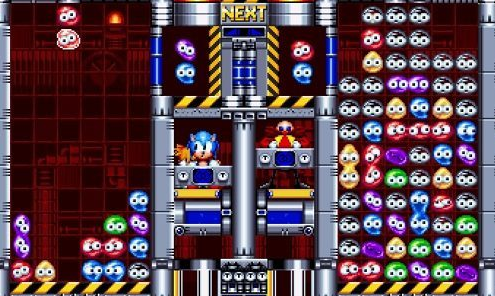
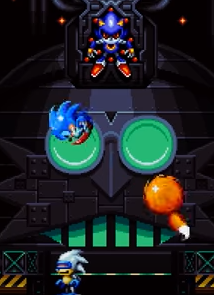
The fan service doesn’t stop there, though. Chemical Plant Zone features a boss battle ripped straight from Dr. Robotnik’s Mean Bean Machine (Compile/SEGA, 1993). Also, Sonic not only races against Metal Sonic in the Stardust Speedway Zone once more, but also has to battle an endless army of Silver Sonic’s from the Master System/Game Gear version of Sonic the Hedgehog 2 (SEGA/Aspect, 1992).

SonicManiaMeanBean
I certainly didn’t expect this inclusion!

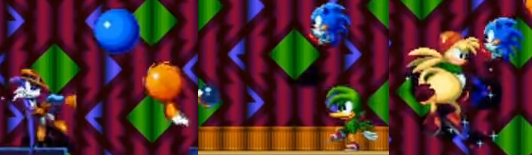
Finally, in perhaps the greatest piece of fan service I have ever witnessed, players will encounter and battle against Fang the Sniper/Nack the Weasel, Bean the Dynamite, and Bark the Polar Bear, three characters long missing from the franchise since 1996. Fans have been literally begging to see these three characters return to the franchise though, up until now, the best we got were some brief homages in Sonic Generations (Sonic Team, 2011). To be fair, their depiction in Sonic Mania looks to be more of an illusion created by the Heavy Magician Hard-Boiled Heavy but the joy I felt upon seeing these three finally return, in glorious sprite form, cannot be understated; the fat little ten-year-old in me was literally geeking out right there.

SonicManiaFangBeanBark
Fang/Nack, Bean, and Bark make their welcome return at last!

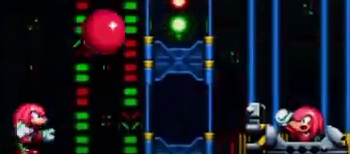
Sonic Mania features numerous endings, with the best ending obviously coming once players have collected all seven Chaos Emeralds. Blue Sphere bonus stages award players with either a silver or a gold medal which unlock additional bonus features (Sonic 3 & Knuckles’s Insta-Shield, Sonic CD’s Super Peel-Out, “& Knuckles Mode” to allow players to play as Sonic and Knuckles, Tails and Knuckles, or even Knuckles and Knuckles(!), a Debug Mode, and a Sound Test). Unfortunately, you are not allowed to save your progress when using these bonus features, which is one of the game’s biggest flaws.

SonicManiaSilverMetalSonic
A love letter to the past.

Another is the plot. Honestly, there isn’t much more plot here than there was in Sonic 3 & Knuckles, with the gist of it being expertly told through in-game animations. However, given that this game takes place a short time after Sonic 3 & Knuckles, it makes no sense for Angel Island to be floating on the ocean again. It was also a bit of a contrivance to see the Phantom Ruby being unearthed on Angel Island, a place already known for being home to the Master Emerald; I would’ve preferred to see it be discovered in one of the new in-game locations.

SonicMania&Knuckles
Play as Knuckles and Knuckles…and be rescued by Knuckles!

Furthermore, not every zone ends with an in-game transition to the next, making for a jarringly inconsistent experience at times as the Hard-Boiled Heavies disappear from the plot mid-way through the game. Finally, I can’t be the only one a bit annoyed to see Green Hill Zone and Chemical Plant Zone so soon after their recreations in Sonic Generations; I would’ve liked to have seen more emphasis on Emerald Hill Zone and maybe Mystic Cave Zone (possible with some Underground Zone and mechanical influences) and, while I loved seeing Lava Reef Zone return, the programmers maybe missed a trick by not incorporating some elements from Marble Zone and Sonic 2’s Hidden Palace Zone here. These really are very minor issues, though, as the game plays flawlessly; the controls are just as tight and reliable as they were in classic Sonic titles. There are no cheap deaths or bottomless pits here (well, very few…I only ever fell down maybe two, actually) and the game is exhilaratingly fast and extremely fun to play, while also being very challenging. The ways in which classic zones are remixed add a new layer to the game as even seasoned veterans like myself cannot be sure of what they’re going to encounter. Every boss battle involves a bit of strategy; there is far more to each encounter that just bouncing on Eggman’s head. Honestly, Sonic Mania is a must-buy not just for long-time Sonic fans but for anyone who enjoys beautiful graphics, crisp controls, and a fun, challenging gameplay. From the Sonic CD-inspired animated introduction to the eye-wateringly exquisite graphics and attention to detail in every single element of the sprites and backgrounds, to the remixed levels and soundtrack, Sonic Mania delivers on every single level. Finally, after over a decade of waiting and enduring lacklustre attempts at recapturing Sonic’s classic gameplay, SEGA have done the smartest thing they ever could and handed the keys to a group of developers with a real love and passion for the franchise and Sonic Mania exudes that from every aspect of its presentation.

My Rating:

Rating: 5 out of 5.

Fantastic

Game Corner: Happy Birthday, Sonic the Hedgehog!

GameCorner

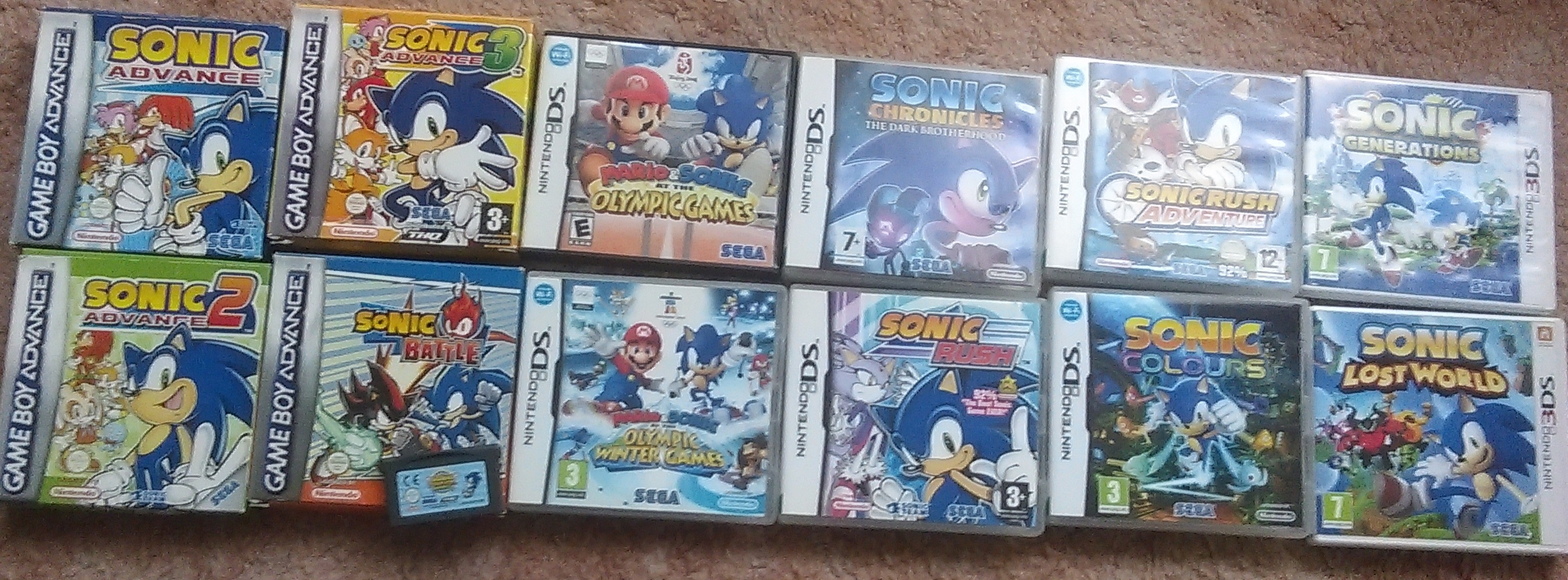
Sonic the Hedgehog turned 26 this week so I figured it was only appropriate for a very special edition of Game Corner to celebrate the legacy of everyone’s favourite supersonic blue hedgehog. I know that Sonic isn’t exactly as relevant or anywhere near as popular as he used to be but, there was a time back in the nineties, when Sonic the Hedgehog was the videogame icon and the character, and his franchise, have significantly impacted my life over the years. Growing up, I went through many phases where I had franchises and characters I gravitated towards; first it was Thomas the Tank Engine, then Teenage Mutant Ninja Turtles, and so on, alongside superheroes from DC Comics (mainly Batman, Superman, and Green Lantern) and Marvel Comics (primarily Spider-Man, the Incredible Hulk, and the Fantastic Four). However, my first real memories of truly latching on to a franchise and taking it as my own were with my first experiences with Sonic the Hedgehog.

Sonic_Games

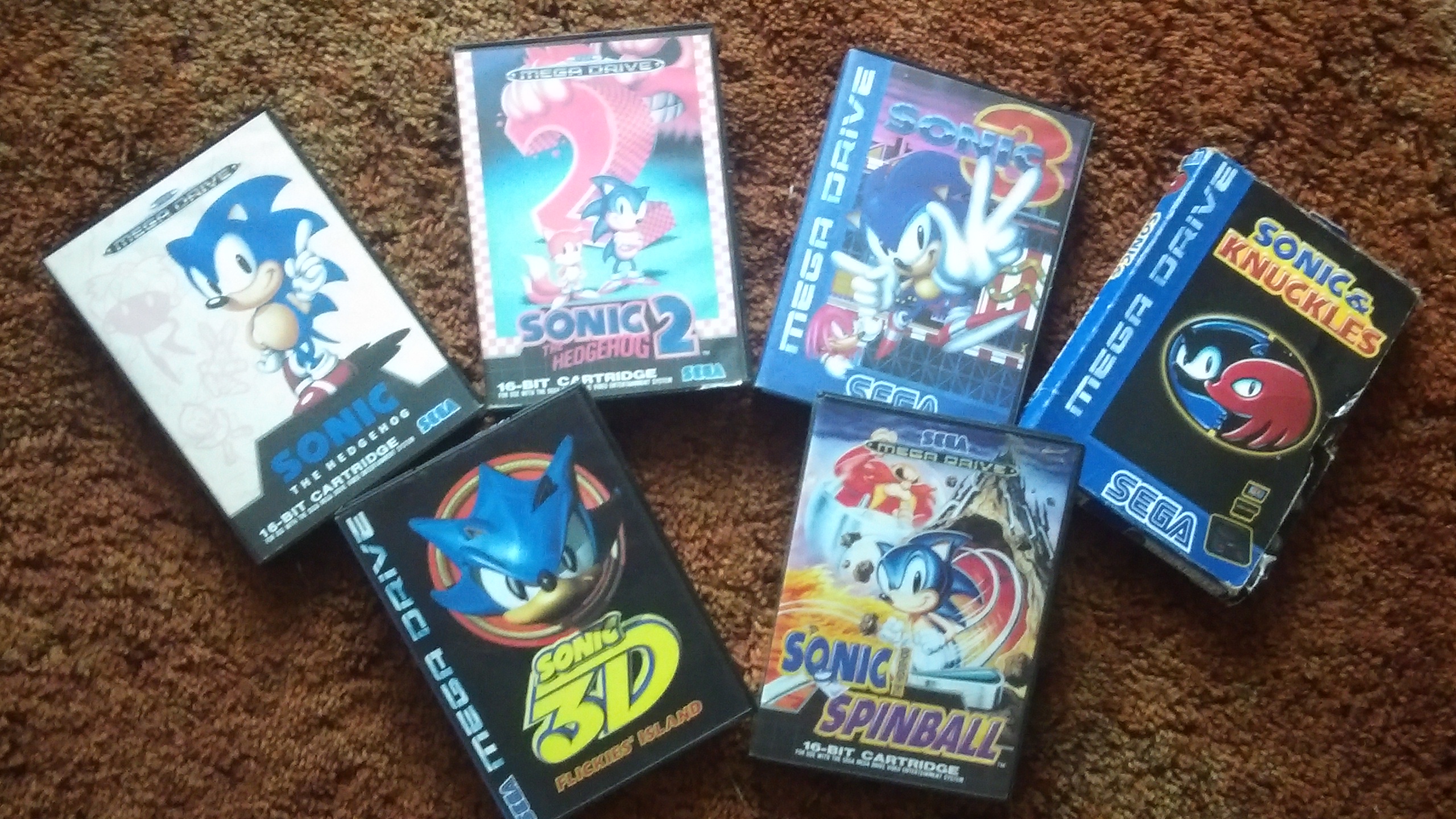
The first Sonic videogame I ever played, and owned, was Sonic the Hedgehog (SEGA/Ancient, 1991) for the SEGA Master System. I remember playing the game for the first time and being struck by the colourful imagery, the addictive tunes, and the simplicity of the gameplay. I used to play that game all the time; one time, my friend came over and struggled to get past the first boss, so I offered to beat it for him and ended up getting further than I ever had before at that point, all the way to the final boss of the game. Sonic on the Master System had many features that were markedly different from its more graphically-impressive counterpart on the Mega Drive; Chaos Emeralds were cleverly hidden throughout the games Zones, for example, and the game also featured three Zones not seen in the Mega Drive version and, with the exception of the first boss, it also had completely different boss battles as well. I didn’t have quite the same experience, or have quite the same love, for Sonic the Hedgehog 2 (SEGA/Aspect, 1992) on the Master System. Sonic 2 was much harder than its predecessor, with Chaos Emeralds hidden in stupidly-difficult places and a gameplay mechanic whereby you had to collect all five before facing the robotic Silver Sonic or else you’d never get to see the good ending. Unlike the first game, though, Sonic 2 had a rather complex cheat code involved the second player’s controller, which I’m not ashamed to say I would utilise to overcome this issue.

Sonic_Fleetway

It was around about this time that I acquired a sample of Fleetway’s Sonic the Comic series, which had one-page teasers of the full issue’s stories. The first issue I got was issue two, which I still have, and I got issues here and there throughout the first year of its run before subscribing to it on a fortnightly basis. A few years ago I was able to fill in the gaps in my collection and have managed to collect every single issue bar the last two, which is good for me as the comic was unfortunately cancelled after a long series of reprints. However, the series is being continued at Sonic the Comic – Online. I don’t remember the exact year (it must have been 1992 or 1993) but, after some cajoling, I was able to convince my parents to upgrade me to the SEGA Mega Drive purely based on pictures and reviews of Sonic the Hedgehog 2 (Sonic Team/SEGA Technical Institute, 1992). I got the game, and the console, as a Christmas present and it tided me over for quite some time; I remember getting into trouble because I’d finally defeated Doctor Robotnik’s Death Egg Robot and wanted to watch the final cutscene and credits of the game rather than go eat dinner.

Sonic_Games2

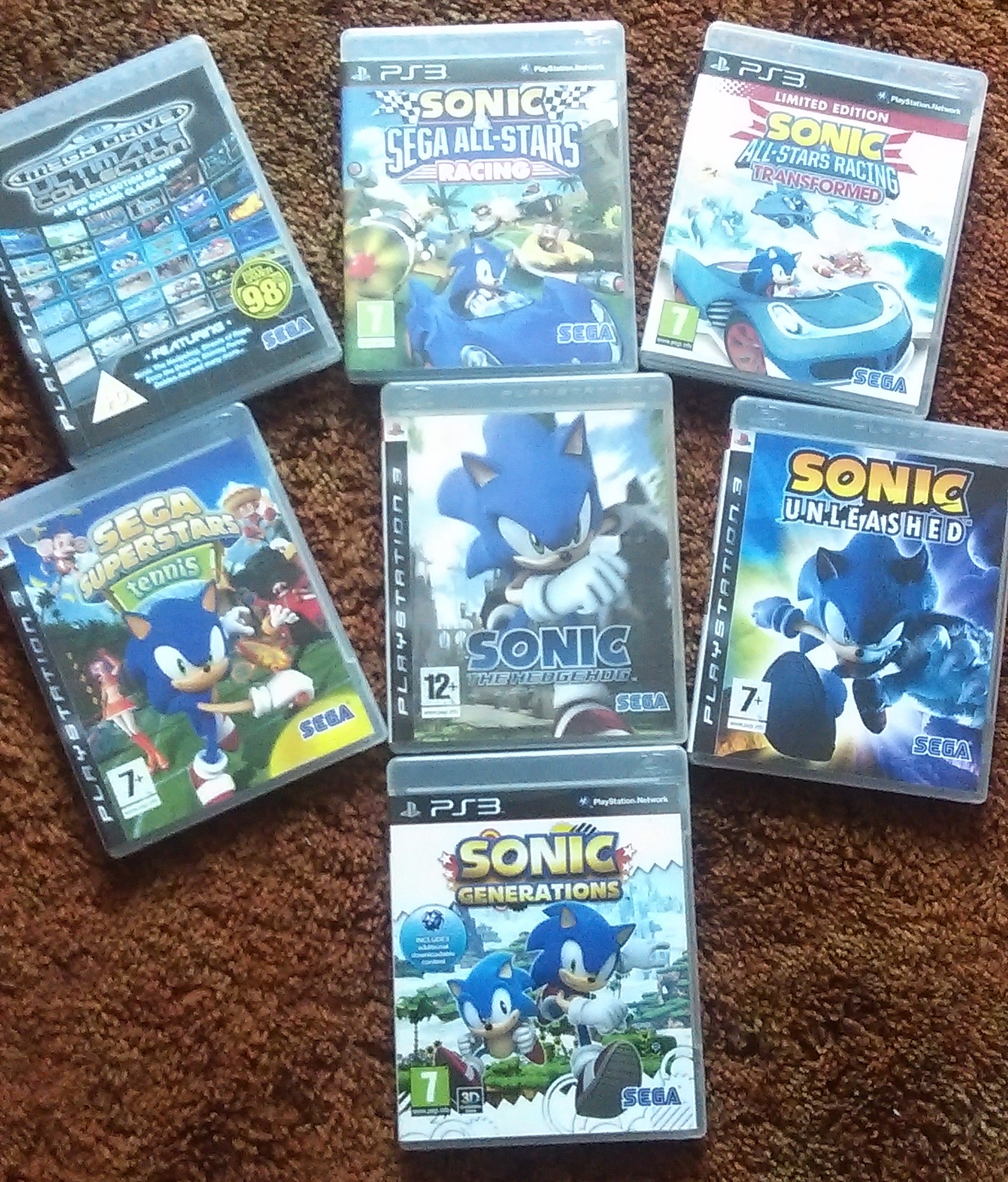
After picking up Sonic the Hedgehog (Sonic Team, 1991) I was set; from that moment on, I bought every Sonic game I could for the consoles I had. I never got a Mega-CD, so I didn’t play Sonic the Hedgehog CD (Sonic Team, 1993) until many years later on PC and, now, PlayStation 3 so, for many years, my absolutely favourite Sonic game was Sonic the Hedgehog 3 & Knuckles (Sonic Team, 1994). We all know the story; Sonic 3 was too big, too complex to be one game so, to save time and make more money, SEGA split it into two, releasing Sonic & Knuckles six months later. The Sonic & Knuckles cartridge would “lock-on” to Sonic 3 (and Sonic 2, or any other Mega Drive cartridge) to unlock the full, complete version of the game. For me, Sonic 3 & Knuckles was a game-changer; it introduced me to my favourite character of the franchise, Knuckles the Echidna, and topped everything its predecessors had done. You could play as Sonic, Miles “Tails” Prower, Knuckles, or Sonic and Tails simultaneously. Each had different paths to take, fought bosses differently, and had a unique ending. The game was bigger, brighter, faster, and more action-packed than its predecessors and had way more options, enemies, power-ups, and replay value. I was absolutely hooked! Then dark times came for SEGA; the failure of the Mega-CD, 32X, and Saturn spelled the beginning of the end of the company. As videogame developers began entering the 32-bit era, I switched to the Nintendo 64 rather than the Dreamcast or Sony’s PlayStation. This was still at a time when parents couldn’t afford to get you every console going; just like back when I used to have to go around to my friend’s house to play the Super Nintendo (SNES) and he would have to come to mine to play the Mega Drive, so to did I opt for the N64 over the Dreamcast or PlayStation. The PlayStation was nothing to me then. It had no iconic characters, no games I was familiar with, and no-one I knew had a Dreamcast so I went with the popular option.

Sonic_Games4

This meant that I didn’t play Sonic Adventure (Sonic Team, 1999) or Sonic Adventure 2 (Sonic Team USA, 2001) until they were re-released on the Nintendo GameCube. Sonic Adventure 2: Battle (ibid) became my new favourite Sonic title, with its crisp 3D graphics, over-lapping narrative, and exciting, fast gameplay variety. Sonic Adventure 2 allowed me to play as Eggman for the first time (by this time I had begrudgingly accepted SEGA’s global acknowledgement or Robotnik’s original Japanese name) and introduced the angst-ridden Shadow the Hedgehog who also became a favourite of mine (he’s like Sonic….but dark!) Sonic Adventure DX: Director’s Cut (Sonic Team, 2003) actually proved even better (it feels like a bigger, more exciting game despite being a bit less pretty to look at and a bit buggier than its sequel) and came with unlockable ports of the Game Gear Sonic titles, allowing me to fill some gaps in my collection. From there, I’d have to say that I actually preferred Shadow the Hedgehog (SEGA Studio USA, 2003) over Sonic Heroes (Sonic Team USA, 2003) simply because it’s a better, more polished videogame. Shadow gets a lot of hatred because Shadow uses guns and vehicles when, to be fair, he doesn’t really need to and the title was, arguably, dark for the sake of being dark. However, I really enjoyed the shooting mechanics; the weapons were varied and ran out of ammo pretty fast (and were also entirely optional) so you can just used the patented Homing Attack instead. The storyline, while a bit convoluted (aliens? Really?) was fun to play through and to see all the many (and many) different endings to the game. The soundtrack and final boss were fantastic, as well, and the game just controls a lot better than Sonic Heroes, which always feels like you’re running on ice!

Sonic_Games3

Of course I also played the various Sonic titles on the Nintendo Gameboy Advance. A personal favourite of mine was Sonic Battle (Sonic Team/THQ, 2004), which featured a really long and decent story with multiple characters and options and a simple, yet addictive, fighting, level-up, and gear system. However, things took a sharp turn for the worst with Sonic the Hedgehog (Sonic Team, 2006). By this point, I had switched over to the PlayStation 3 after everyone raved about how great the PlayStation 2 was (ironically, everyone was now raving about how great the Xbox 360 was…). I bought Sonic ’06 knowing it had gotten bad reviews, having heard all the negative press, but steadfast in my commitment to the franchise. Despite some stumbles along the way (Sonic 3D: Flickie’s Island (Traveller’s Tales/Sonic Team, 1996), for example), Sonic had never steered me wrong and I’d always found something to enjoy in every Sonic title I played.

Sonic_Games6

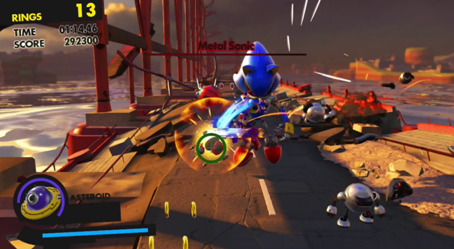
Unfortunately, Sonic ’06 was a pretty dire title; while I don’t hate it as much as some segments of the fandom, the loading times were stupidly long, the sudden, jarring shift to a real-world aesthetic was a strange choice and the camera and controls could hinder you at some really awkward and frustrating moments but there were some good things about the game. It looked amazing, for starters, had a great soundtrack, lots of variety in characters and gameplay, and told a unique and surprisingly deep story for a Sonic title. Probably the worst thing for me were the Mach Speed sections, where Sonic would speed off at a stupidly fast pace and become impossible to control; these were the sections that gave me the most grief and sucked away my lives. The rest was…okay, I guess. I really hate seeing people online bash this game with images and videos of Sonic casually just walking around a loop; when you actually play the game, you’re moving too fast to do stuff like that so you have to be intentionally looking for it. A similar thing irks me when people criticise Sonic the Hedgehog 4: Episode I (Dimps/Sonic Team, 2010); when I played the game, I did so at a fast pace and threw myself into the action. I didn’t just stop and walk to test and bitch about the physics; normal gamers don’t do that (or, at least, they shouldn’t because videogames are made to be played, not bug-tested!)

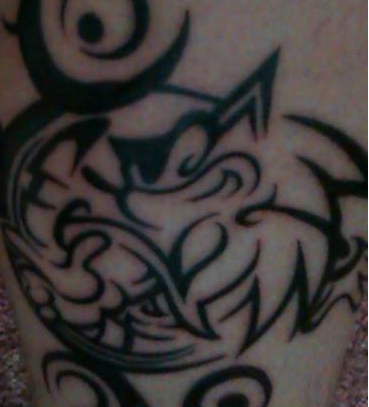
Sonic_Tattoo

Anyway, unfortunately for me, Sonic ’06 made such a negative impact that SEGA decided to strip everything back. While this resulted in some incredible titles, like Sonic Unleashed (Sonic Team, 2008), Sonic Colours (ibid, 2010), and Sonic Generations (ibid, 2011) it came at a price. Sonic videogames were now about Sonic and Sonic alone; you couldn’t play as Tails, Knuckles, Amy Rose, or any of his other cast of characters. We went from Sonic alone, to adding Tails, then adding Knuckles in the first three/four titles, to six playable characters, right back to just one. Even in polished, sleek, incredibly fun titles like Sonic Unleashed and Sonic Generations, you’re limited to playing as Sonic or another version of Sonic (the Werehog, who could’ve just as easily been Knuckles, or Classic Sonic, respectively). Another by-product of this was that abilities and gameplay mechanics afforded to Sonic’s friends now became a part of his move-set. Although this had been happening since Sonic Adventure 2, Sonic Colours (and, later, Sonic: Lost World (ibid, 2015)) made it abundantly clear that you don’t need to play as Tails to fly or swim or as Knuckles to glide, climb, or bash through walls because Sonic now has either default moves or power-ups that let him do all of those things.

Sonic_Games5

The plus side to this is that it seemed like SEGA were finally getting their act together; after being forced to pull out of console manufacturing and focus on software, and the massive screw up that was Sonic ’06 , SEGA, and Sonic Team seemed to have rediscovered the formula that made Sonic such a popular and exciting franchise. Then they shot themselves in the foot with Sonic Boom, which was initially presented itself as a complete rebranding of the Sonic franchise, with all-new character designs and a streamlined, refreshed continuity. Then, SEGA backpedalled and said it wasn’t a reboot but a spin-off series. So instead of having one worldwide brand, they now had Modern Sonic (the taller, older-looking one who used Boost gameplay), Classic Sonic (the chubbier, 2.5D version of the character), and Boom Sonic (with sports tape!) all co-existing at the same time. This was also alongside the Archie Comic series which, until recently, had been publishing consistently for over twenty-five years. Although it began as a strange amalgamation of the Adventures of Sonic the Hedgehog and Sonic the Hedgehog (SatAM) cartoons made by DiC in the nineties, Archie’s Sonic comics had since incorporated aspects of the videogames and become a huge, unwieldy lore all unto their own. Recent lawsuits and shenanigans had seen the comics undergo a dramatic reboot which simplified the continuity and brought the comics closer to the videogames, only for SEGA to suddenly undergo an identity crisis with Sonic Boom.

Sonic_Archie

After Sonic Boom: Rise of Lyric (Big Red Button, 2014) was a critical and commercial flop, rivalling only SONIC for its bugs and issues, the Boom franchise seems too be dead in the water except for the criminally underrated and highly amusing all-CGI cartoon series that accompanied the videogames. throughout the nineties, I used to watch Adventures of Sonic the Hedgehog on Channel 4 on Sunday mornings religiously. It was bright and colourful and fun, even if it was hardly anything like the videogames. Then, one day, I tuned in and it was suddenly all different; the cartoon was darker, populated by all-new characters, and nothing like what I’d been watching before. Initially I was upset and confused, but I quickly grew to love SatAM even more than Adventures. It was darker and more serious, had a truly horrific Doctor Robotnik, and was also smarter and sleeker. Then it ended on a massive cliffhanger and shifted tone once again to Sonic Underground in 1999. By this time, I was a bit older and wasn’t watching cartoon as much and, although I liked the action and animation, Sonic Underground was just way too different for me. So, growing up, I was used to all these different interpretations of Sonic; these days, though, it seems a lot of kids can’t seem to grasp the concept of multiple versions of popular characters. Yet, Sonic Adventure did a great job consolidating Sonic’s conflicting interpretations into one unified brand image only to somehow drop the ball with it.

Sonic_DVDs

To me, Sonic Boom should have been a complete rebranding of the character. People moaned about the redesigns but they actually aren’t that bad; I didn’t mind Knuckles’s redesign at all (though I’d rather he was smarter) and all the characters are exactly the same despite looking different. Plus, the Sonic Boom cartoon is amazing; it’s smart and actually laugh-out-loud funny with its self-referential humour. Plus, the episodes are really short s it’s easy to watch over and over. As for the future, it appears as though SEGA and Sonic Team are getting back on track. While Sonic Boom continues to air, future videogames in the franchise appear to be dead; this has actually negatively affected the upcoming Sonic Forces (Sonic Team, 2017), at least for me. Forces is apparently set in a time when Eggman has finally conquered the world, causing Modern and Classic Sonic to team up once again to stop him. There’s also the option to create your own character which, while exciting, seems to have pushed Boom Sonic out of the title (the custom avatar uses an energy beam similar to the one seen in Sonic Boom, lending credibility to custom character feature having replaced Boom Sonic). However, we’re also finally getting a brand new 2D Sonic title that will hopefully be the true Sonic 4 I’ve been wanting since Sonic 3 & Knuckles. As I said, I enjoyed Sonic 4 (Episode II was the much better experience of the two parts, though) but, for me, a true Sonic sequel should offer more than one playable character. The upcoming Sonic Mania (Headcannon, PagodaWest Games, 2017) finally returns Tails and Knuckles as playable characters and appears to be a lovingly-crafted piece of nostalgia for fans of Sonic 3 & Knuckles with its massive, tiered Zones, huge bosses, and gameplay variety. At the same time, there’s apparently going to be a live-action/CGI hybrid Sonic movie coming out in 2019; I’m a big fan of Sonic the hedgehog: The Movie (Ikegami, 1996) and feel its past time for a new Sonic film (although I’d rather it was all CGI).

Sonic_Summer
Summer of Sonic, 2010

Sonic the Hedgehog has been a part of my life since I was about six years old; that’s nearly twenty-five years now. I went to SEGA World in London when I was a kid and got to play Sonic the Fighters (SEGA AM2, 1996) and SEGASonic the Hedgehog (SEGA AM3, 1993), which ended up being really special as those titles became extremely rare. I went to Summer of Sonic in London in 2010, where I got to play Sonic 4, see Crush 40 perform live, and mingle with many other Sonic fans. Not only did I put together my own series of sprite comics, not only do I even have Sonic tattoos I also wrote over 20,000 words about the development, rise, and fall of both SEGA and Sonic and all about how the cartoons have changed and shaped the videogame canon as part of my PhD. For me, there is no greater videogame icon than Sonic the Hedgehog. He was faster, more expressive, more action-packed than his counterparts; his videogames had more variety and depth, a larger cast of characters, and far more appeal and replay value. He inspired not only a slew of 2D platformers starring attitude-ladened anthropomorphic protagonists, not only one of the fiercest and most competitive marketing wars in the videogame industry, but also me to be more creative and to write and draw about the things I love. So bust out the Mega Drive, blow the dust out of your cartridges, and stick Sonic 3 into Sonic & Knuckles and celebrate the legacy and impact of what I consider to be the greatest videogame icon of all time.