Easily Marvel Comics’ most recognisable and popular superhero, unsuspecting teenage nerd Peter Parker was first bitten by a radioactive spider and learned the true meaning of power and responsibility in Amazing Fantasy #15, which was first published in August 1962. Since then, the Amazing Spider-Man has featured in numerous cartoons, live-action movies, videogames, action figures, and countless comic book titles and, in celebration of his debut and his very own day of celebration, I’ve been dedicating every Wednesday to talk about everyone’s favourite web-head!
Air Date: 14 September 1977 Network: CBS Stars: Nicholas Hammond, Lisa Eilbacher, Thayer David, David White, and Michael Pataki
The Background: Following his debut in the pages of Amazing Fantasy #5, Spider-Man soon graduated to his own solo comic series and, by the mid-1970s, had become an icon of mainstream pop culture thanks to numerous merchandise and adaptations in other media such as the 1960s cartoon. It was during this time that CBS bought the rights to produce a live-action show for prime-time television; however, rather than debuting as an episodic series, The Amazing Spider-Man first aired as a feature-length episode that served as a back-door pilot. The pilot actually received a theatrical release outside of the United States, though I only remember seeing it on TV here in the United Kingdom once as a kid; regardless, the pilot was a success and led to the commission of a thirteen episode series that aired between 1977 and 1979.
Spider-Man’s feature-length pilot led to a thirteen episode TV series.
Despite drawing favourable ratings during its airing, CBS were reluctant to continue the show as it was expensive to produce and underperformed with older audiences. As a result, the show was eventually cancelled and has never seen a re-release outside of a few VHS tapes back in the day. Although the series was lacking in any of Spider-Man’s recognisable rogues gallery, it’s rumoured that there were tentative plans to produce a crossover with the long-running Incredible Hulk series (1977 to 1982) but these, obviously, never came through. Today, the series is largely forgotten, having been long overshadowed by Spider-Man’s big budgetlive-action ventures but Peter’s likeness in the 1994 cartoon always reminded me of Hammond’s.
The Plot: When freelance photographer Peter Parker (Hammond) is bitten by a radioactive spider and gains the proportionate strength, speed, and agility of a spider, he adopts a crime-fighting persona dubbed Spider-Man to oppose the aspirations of the malicious Edward Byron (David), who plans to hold the city to ransom with his mind control technology.
The Review: After the introductory titles (which features both a glimpse of the spectacular stunt work that the pilot and series was known for and the show’s super funky seventies theme music), Spider-Man immediately introduces the central antagonistic force of the plot as a doctor and a lawyer are inexplicably compelled to walk out in the middle of their jobs and perform a bank robbery, with the only thing relating the two being mysterious pins attached to their suits.
Peter struggles to sell photos to, or get assignments from, the grouchy Jameson.
Next, we’re introduced to Peter Parker, a freelance photographer who suffers from allergies and is attempting to work his way through college by selling photographs to J. Jonah Jameson (White), to little avail. While Jameson is far less as explosive and grouchy than his usual iterations, he’s still volatile and a natural cynic at heart, especially when faced with the seeming randomness of the opening crime and the subsequent threat for further crimes to follow.
A lone spider is bathed in radiation during one of Peter’s experiments…
While Peter can’t catch a break with Jameson and is thus constantly low on cash, he’s intrigued by the threat of mass mind control that has been levied against the city and has far more luck in the field of science. Peter works in a laboratory alongside his friend and fellow student Dave (Larry Anderson) and the two of them are conducting experiments on radiation. However, while dealing with some radioactive waste, a lone spider is bathed in over 400 rads’ worth of radiation and, in its last desperate act, bites Peter’s hand.
Peter is exhilarated to find he can cling to walls and surfaces just like a spider!
I’m not entirely certain but I think this is the first time the spider bite was indirectly caused through Peter’s own actions and it’s an interesting change. Rather than going through any kind of adjustment period or troublesome transformation, Peter experiences the effects of the spider bite almost instantaneously, being aware of incoming danger thanks to his spider-sense and racing up a wall with ease and on pure instinct. It’s not until later, after a particularly gruelling night’s sleep, that Peter pieces together the fantastic event and realises that he has been genetically altered; this leads to a montage in which he explores the lengths of his new abilities on the outside of his Aunt May’s (Jeff Donnell) through the use of camera trickery.
After being dubbed “Spider-Man”, Peter throws together a costume to sell pictures to Jameson.
It’s not a great effect, and certainly nothing on the practical wire work seen later in the pilot, but it’s certainly ambitious for the time. Peter first puts his powers to good use while clambering up a wall in the city, which is startling enough to stop a purse snatcher (Barry Cutler) in his tracks. This leads to eyewitnesses dubbing him “Spider-Man”, which piques Jameson’s interest and, in that moment, gives Peter the inspiration to construct a colourful outfit and persona befitting of such a name and to explain Spider-Man’s logistics and capabilities to the pessimistic Jameson (and, in the process, the audience). While Peter acts on instinct to stop a criminal, his primary motivation for becoming Spider-Man is to sell Jameson pictures; there’s no Uncle Ben or lessons about power and responsibility here (which, I’m sure, today’s Spider-Man “fans” would throw a fit over!), just a regular kid trying to do the right thing and make some money out of little more than an ingrained sense of right or wrong.
Captain Barbara’s cantankerous, gruff demeanour was a real highlight for me.
In the course of the pilot, Peter runs afoul of the temperamental Captain Barbara (Pataki), a grouchy, cantankerous, and suspicious police captain who is kind of like the Jack McGee (Jack Colvin) of the show; perhaps because of his jaded nature, he is almost immediately suspicious of Peter and becomes even more so when Peter continues to show up at the scenes of the inexplicable crimes. Barbara is equally unimpressed with Spider-Man’s debut, believing (with little reason) that the wall-crawler is somehow involved in the mysterious events and voicing many of the more aggressive objections to the vigilante that are usually attributed to Jameson, who is skeptical of Spider-Man but never exhibits the hatred normally associated with the character.
Peter and Judy attend one of Byron’s aggressive seminars on the futility of life.
When covering the aftermath of another of the incidents in which Professor Noah Tyler (Ivor Francis) randomly committed a robbery and then crashed head-first into a wall, Peter meets his daughter, Judy (Lisa Eilbacher). Judy confides in Peter that her father has been attending a special group to teach people the “true meaning of themselves” through unusually aggressive lectures. This group, which is more like a cult or twisted church, is led by the pilot’s big bad, Edward Byron; Byron uses specialised radio signals to compel his victims to commit their crimes and is basically able to force anyone wearing one of his pins and subjected to his mind control device to follow his explicit instructions. Specifically, Byron has them commit robberies and then kill themselves and his end goal is extortion, as he threatens to kill several citizens unless he’s paid a ransom of $50 million. Byron exhibits a disdain for those in his group, and humanity in general, and believes himself to be above them both in terms of intelligence and stature; for all his grandiose speeches, though, he’s little more than a madman who wishes to exert and abuse his power and technology purely to satiate his greed.
Peter’s far from the hapless nerd from the comics and his ingenuity is heavily emphasised.
While Peter has some bad luck in the pilot, it’s generally more around trying to make money off the pugnacious Jameson and he’s far from the hapless, down on his luck nerd he is often pigeon-holed as. Instead, he’s a relatively well-adjusted young man who bonds with Judy extremely quickly and a central theme of the pilot is Peter’s intelligence and scientific acumen. Not only does he put together an impressive costume for himself but he quickly cobbles together his patented web-shooters and not only stumbles upon Byron’s hypnotic signal with his microwave emitter but also puts together a gadget to led him to the source of the signal.
Stuntman Fred Waugh took over once Peter donned the suit to perform the pilot’s dangerous stunts.
When in the costume, Spider-Man duties mostly fall to stuntman Fred Waugh, who adopts an agile grace and insectile posture that, possibly, was a conscious decision on Waugh’s part to emphasise the physicality of the character. The pilot features a number of complex and incredibly dangerous stunts achieved through the use of wire work, cables, rigging, and rotating sets; though you can make out some of the wires here and there, that doesn’t take away from the ambition of those involved and it’s because of this practical approach that, for the first time, we get to see a live-action Spider-Man literally climbing up the sides of buildings, leaping to ceilings and walls, and swinging across rooftops (something, even now, which is more likely to be achieved through CGI than traditional filmmaking techniques).
Spidey’s intelligence wins the day as much as his incredible strength and agility.
While these instances showcase Spider-Man’s agility, a protracted fight scene between the web-head and Byron’s three mind-controlled goons does a decent job of showing how formidable Spider-Man is (and, in a follow-up confrontation, his amazing recuperative powers); it’s not an especially thrilling fight scene as it’s a very slow and co-ordinated affair but, nevertheless, he’s easily able to outmanoeuvre and overpower the three. This also gets paid off at the conclusion of the pilot in one of my favourite scenes where Spidey, in the quest to bring Bryon to justice, makes friends with the three. Indeed, in the end, it’s not strength or agility that wins the day but a combination of luck (Peter’s control pin gets dislodged from his jacket) and intelligence as he not only discovers but also decodes Byron’s hypnotic microwave technology. This allows Spider-Man to tear down Byron’s control antenna and turn his technology against him, rendering him little more than a mindless puppet to face Barbara’s not-inconsiderable-wrath.
The Summary: I’m well aware that I’ve used the word “ambitious” a lot in this write-up but it’s the best word I can think of to describe Spider-Man; it’s impressive how much the filmmakers were able to pull off given the limitations of the seventies and I would argue that, despite a lack of recognisable characters and villains, Spider-Man is actually a far more accurate adaptation of the source material, in many ways, than The Incredible Hulk. They’re both relatively grounded and far more realistic takes on Marvel’s colourful heroes but Spider-Man features far more innovative special effects to bring the character to life.
Despite the lack of Uncle Ben and May’s reduced role, Peter still uses his abilities responsibly.
I have to say, even now, that the Spider-Man costume is pretty impressive; it’s kind of like an all-in-one body suit but the colours are suitably bright and vibrant and I love the simplicity of the design, which includes reflective lenses and, in time, mechanical web-shooters of Peter’s own design that allows him to swing between buildings and stop crooks with a variety of webbing. It’s rarely, if ever, Hammond in the suit but the plus side to that is that Spider-Man is pretty much always wearing his mask and fully capable of performing the pilot’s complex and ambitious stunts and fight scenes. Thanks to the alterations to the character’s origin, Uncle Ben is no longer a factor (he’s not even mentioned or even hinted at) and Aunt May has a much smaller, inconsequential role where she’s a doting matriarch rather than a decrepit, fragile figure (something subsequent live-action movies would emulate). Regardless, Peter is still compelled to use his powers for good (…and to make a little money at the same time) simply because he’s a good kid; he may lack the tragedy and pure motivation often associated with the character but he’s nonetheless as determined to help others.
I’ve got a lot of nostalgia for the pilot and I’ve love to see the show made more accessible.
Neither the Amazing Spider-Man or Incredible Hulk TV shows were on when I was a kid so the only exposure I had to either was in their feature-length spin-offs and, for the longest time, Spider-Man was about as good as you could get for a live-action adaptation of the character. I remember preferring the subsequent features that were produced some time after this and were comprised of combined episodes of the show but, revisiting this pilot episode after a good twenty years was an entertaining experience, to say the least. Sure, many of the effects haven’t aged too well and it’s disappointing that it doesn’t adhere more closely to the source material but I am very forgiving of this pilot and have a real fondness for it, and Hammond’s portrayal of the character, so I can only hope that, one day, the entire series gets a much-needed release on DVD so more people can experience this early and ambitious take on the character.
My Rating:
⭐⭐⭐
Rating: 3 out of 5.
Pretty Good
Have you ever seen Spider-Man or the Amazing Spider-Man TV show? What did you think of them at the time and how do you think they hold up today? What did you think to the show’s costume, stunt effects, and Hammond’s performance as Parker? Were you a fan of original characters like Captain Barbara and Edward Byron or would you have preferred to see more comic-accurate characters and villains in the show? Would you like to see a release of the series on home media or Disney+ or do you think it’s best to leave the show to obscurity? Whatever your thoughts on the seventies Spider-Man adaptation, go ahead and leave a comment below and be sure to check in again next Wednesday for more Spider-Man content!
Air Date: 20 October to 15 December 2019 UK Network: Sky Atlantic Original Network: HBO Stars: Regina King, Jean Smart, Jeremy Irons, Yahya Abdul-Mateen II, Tim Blake Nelson, Hong Chau, Jovan Adepo, Louis Gossett Jr, and Don Johnson
The Background: Since its release, Watchmen (Moore, et al, 1986 to 1987) has become a critical and commercial success and is largely regarded as one of the most influential and significant graphic novels ever created. Although at one point considered to be unfilmable, various writers, producers, directors, and other creative types had attempting to spearhead a live-action adaptation since the end of the eighties, all of which fell apart until Warner Brothers approached Zack Snyder to finally bring the project to life in 2005. Say what you will about Watchmen(Snyder, 2009) but it did a pretty good job of translating Moore’s dense, complex text into a cohesive live-action feature; elements were changed, for sure, but that is to be expected from the adaptation process and, for me, the changes made perfect sense and didn’t detract from Watchmen’s themes or main story. After the film’s release, DC Comics really ramped up the Watchmen spin-offs and merchandise (much to Moore’s chagrin, I’m sure) and this included tentative talks with Snyder concerning a live-action Watchmen television series. After Snyder left the project, the HBO network began developing the series with Damon Lindelof. Rather than being a sequel to the movie, however, Lindelof conceived of the series as a continuation of the Watchmen comic that would jump between the 1920s, 1980s, and then-modern-day 2019, dealing with issues of race and the fallout of Watchmen’s iconic ending. Watchmen was met with widespread critical acclaim and won numerous awards, though Lindelof stepped away from the franchise and HBO reclassified Watchmen as a “limited series” with options of additional instalments and stories under a different creative team.
The Plot: Thirty-four years after the world was united against a perceived alien threat, the Seventh Kalvary, a white supremacist group inspired by WalterKovacs/Rorschach, has risen to prominence in Tulsa, Oklahoma. Because of their actions, the Tulsa Police Department have taken to hiding their identities behind masks and code-names like the long-outlawed vigilantes of the 1960s and 1980s. After Police Chief Judd Crawford (Johnson) is murdered, Angela Abar/Sister Night (King) finds herself uncovering uncomfortable truths regarding her past, the state of the world, and a deadly plot to harness the powers of the long-exiled Jon Osterman/Doctor Manhattan (Abdul-Mateen II).
The Review: A central premise to Watchmen is the idea of a deep-rooted conspiracy; obviously, there’s the primary Watchmen conspiracy involving the sudden appearance of a giant, alien squid in New York City shocking the world away from nuclear Armageddon but HBO’s Watchmen juxtaposes this narrative with one involving a nefarious plot by Senator Joe Keene Jr. (James Wolk) to manipulate a series of violent and discriminatory events that will ensure his seat in the White House. As in the original comic book, the cogs are forever turning in Watchmen and nothing is ever quite as it seems; the majority of those in positions of power wear masks, either literal or metaphorical, and, as always, it is the general public that suffers as a result. Central to the series’ themes of conspiracy and violence is our main character, Angela Abar; in the 2019 world of Watchmen, the police are anonymous individuals who hide their identities behind masks and code-names after a series of mass murders perpetrated in 2016 by the Seventh Kalvary that came to be known as the “White Night”. Abar was one of the few survivors of this atrocity, one who steadfastly stuck by her police chief, Judd Crawford, to rebuild the police department and adopting masked identities as per Senator Keene’s groundbreaking decision to bend the rules seemingly to protect those in law enforcement.
Angela wears a number of literal and metaphorical masks.
As a result, Abar lives a life of lies and deception; to the outside world, she works as a struggling, nondescript baker who has been long-retired from police work but, in reality, she is a tortured soul despite her seemingly perfect family life with her husband, Cal (Abdul-Mateen II) and her adopted children. Not only is she hiding her identity behind that of Sister Night, a masked persona that allows her to exercise her violent tendencies (especially against white supremacists and racists), but she is also largely covering up the specifics of her childhood and troublesome upbringing in Vietnam. In addition to this, her actual origins and true lineage are largely hidden from her and discovered throughout the course of the series, forcing her to confront some uncomfortable revelations about not just trusted comrades like Judd but also herself, her parents, and, most significantly, her grandfather and husband. Consequently, racism is a massively important part of Watchmen; all throughout the series, the narrative returns, in some form or another, to the atrocious events of 1921 that saw racist sentiment in Tulsa boil over to breaking point. Even now, in 2019, there is an air of racism across the board as people resent those of colour, and President Robert Redford, for “taking over” their town, putting down roots, and receiving a series of payouts (known as “Redfordations”) as recompense for their suffering. Racism in Watchmen is mostly personified by the Seventh Kalvary, basically an evolved form of the Klu Klux Klan who have adopted and twisted Rorschach’s diary, appearance, and methods to spread anti-racist and anti-authority sentiment throughout Tulsa.
Many of Tulsa’s police use their masks as an excuse for excessive violence.
For decades, Judd has worked to maintain a rocky kind of peace between the Tulsa police and the Seventh Kalvary to keep events from escalating into full-blown violence; as a result, cops are unable to utilise deadly force (or even draw their handguns) without requesting permission and their firearms being remotely activated and it is forbidden for them to reveal their true identities to the public, all to help ensure that they are protected from reprisals and to keep them from sparking all-out war through needless violence and death. However, anti-authority sentiment remains high amongst the public; many resent the police for using their masks as an excuse to indulge in excessive violence and, in a twist on the anti-mask riots seen in the comics, the public now seem to be far more receptive to the idea of actual costumed vigilantes than masked police officers. However, in 2019, costumed heroes are few and far between; with vigilantism still outlawed, law enforcement agencies track them down and arrest them at every opportunity and all the costumed heroes you knew from the original comic are either dead, retired, in jail, exiled, or have conformed to the new world. The most principal of these is, obviously, the all-powerful Dr. Manhattan, whom the public believes has exiled himself to Mars; Manhattan Booths have been placed all over the city (and, potentially, the world) to allow people to call Mars and leave messages for Dr. Manhattan but, like any self-respecting God, Dr. Manhattan never replies to these prayers and is largely believed to have abandoned mankind.
Time, and life, have not been kind to the former Silk Spectre.
The other costumed heroes haven’t fared much better, either; Laurie Juspeczyk/Silk Spectre (Smart) is now a hard-nosed, cynical FBI agent who is apathetic, pessimistic, and callous. She has a personal dislike for masked vigilantes, regarding them as a “joke”, and meets almost every challenge or obstacle with a mocking indifference. Indeed, it says a lot about Laurie’s mindset that she has adopted the surname of her biological father, Edward Blake/The Comedian, a man whom she hated with a passion for being a cruel and sadistic rapist. Clearly changed after the events of the comic and in the time between the comic’s conclusion and present day (and her knowledge of the truth behind the squid incident, which is unsubtly referred to as “11/02”), Blake is a confrontational, no-nonsense, world-weary woman who has no time for bullshit or games and even less time to indulge those who hide behind masks (again, both literal and metaphorical).
Adopting many of Rorschach’s characteristicsmakes Looking Glass one of the stronger characters.
This naturally means that she ruffles a lot of feathers once she is assigned to Judd’s murder case, believing it to have been the result of vigilante action, and causes her to clash with those in the Tulsa police department, such as Wade Tillman/Looking Glass (Nelson). Looking Glass, who adopts many of Rorschach’s characteristics (his blunt, monotone voice, his stature and body language, his paranoid over-preparedness, and even a similar mask), is a highly perceptive and analytical character who is able to tell what someone is really thinking and feeling (or whether they are lying) through his highly tuned reading of body language. After suffering some of the squid’s violent psychic impact, Looking Glass constantly shields his head and face behind a reflective material to keep himself sane and free from nightmares, meaning he is much more comfortable hiding behind his masked identity. However, while he is the closest thing the series has to an actual Rorschach-like character, he is fundamental different from Rorschach in many ways and is, in a lot of ways, Rorschach’s opposite (Looking Glass, for example, lives in a house, has had various (often disastrous) relationships with women, regularly unmasks to reveal, at least, his face, and is a devoted member of the establishment rather than being anti-authority and uncompromising).
Veidt becomes disillusioned with the state of the worlddespite everything he did to save it.
HBO’s Watchmen is a world very similar to ours but fundamentally different and flawed; far from the utopia that the squid’s presence was meant to inspire, the world has largely grown accustomed to the “new normal” and regularly endures sporadic mini squid showers as though they’re an everyday occurrence rather than a startling reminder of the alien menace that lingers overhead. Disillusioned with the state the world has fallen into despite everything he did to save it, Adrian Veidt/Ozymandias (Irons) jumps at the chance to be transported to Europa, where Dr. Manhattan has created an idyllic paradise populated by endless clones living in a stately manor. As jarring as Laurie’s character changes are, they at least have some basis in her comic book counterpart; Laurie was always a bit of a sharp-tongued, blunt instrument in the comics and age and experience have only served to make her even more tiresome but Veidt is so drastically removed from his original depiction that it is almost insulting. Much of the early episodes revolve around Veidt (then known simply as “The Master”) seemingly trapped in a prison, surrounded by endless, disturbingly polite and helpful clones and unable to escape. Eventually, the truth of his situation is revealed (Dr. Manhattan transported him there at Veidt’s enthusiastic suggestion but Veidt became bored with paradise and Manhattan was unable to retrieve him, so Veidt constructed an elaborate plot to keep him challenged and from going insane) and Veidt is able to send a message to affect his rescue.
Both Lady Triey and Senator Keene seek to steal Dr. Manhattan’s God-like powers.
However, flashbacks to earlier years before his imprisonment and subsequent focus on his current mindset show Veidt as being quite the hypocritical and egocentric character; while this was, to be fair, evident in the comic book, here Veidt actually records a message to President Redford admitting to having concocted the squid as an elaborate hoax and is visibly insulted and frustrated at Redford rebuking his attempts to form a partnership and the fact that he receives no credit for having “saved the world”. As a result of this, and having grown jaded and frustrated at the continued production of weapons and nuclear deterrents (which I find odd as obviously the world would want to arm/prepare itself for a possible alien invasion), Veidt retires to Karnak to live in solitude and is dismayed and affronted to find, upon his return, that the world not only believes him dead but has largely forgotten about him. In Veidt’s place is Lady Trieu (Chau), his unwanted biological daughter, who takes Veidt’s vision for a world united by peace and prosperity and further defiles it through a complex plan to find, kidnap, and destroy Dr. Manhattan so that she can assume his abilities and reshape the world. Senator Keene has similar aspirations, wishing to be the first “superman” in the Oval Office, but only Trieu has the resources and knowledge to actually pull off such a plan. Oddly, her aspirations to assume Manhattan’s Godhood are shocking even to Veidt, despite his attempts to destroy Manhattan in the past, forcing Veidt into an uneasy alliance with Blake, Looking Glass, and Angela to keep Trieu from becoming the new Dr. Manhattan.
The glimpses into Hooded Justice’s backstory are some of the show’s more interesting elements.
It is, essentially, the same fundamental plot of the Watchmen comic and many of the same story beats are evident throughout the series (a newsvendor even pops up every now and then to give his views on the state of society), however HBO’s Watchman sheds a lot more light on the effect Dr. Manhattan’s presence had on the Vietnam War (Vietnam becomes an official state of America and Angela hates Manhattan since his actions led to the death of her parents) and the true identity of the very first costumed hero, Will Reeves/Hooded Justice (Jovan Adepo/Louis Gossett Jr). The subject of much speculation in the comic, Hooded Justice turns out to be a young, angry black man who faces unwarranted prejudice and foul treatment in his youth while working as a police officer; after being briefly hanged by his fellow officers, he adopts a hooded guise to dish out corporal punishment and stumbles upon a plot by a group of white supremacists known as “Cyclops” to hypnotise the black community into attacking their own kind. When he is approached by Nelson Gardner/Captain Metropolis (Jake McDorman), Reeves is initially hopefully that the backing of his fellow masked adventurers will held him uncover the conspiracy ever faster but is quickly dismayed and disappointed to find that the Minutemen care more about publicity and catching “supervillains” rather than conspiracies, especially those against black people. This partnership also causes Reeves further turmoil as he enters into a passionate homosexual affair with Gardner, meaning that he is forced to hide behind a myriad of masks (he hides his true identity from the public with his hood, further masks his true identity by applying white face paint so as to be more “accepted” by his fellow Minutemen, hides his sexuality from his wife, his anger from the world, his true intentions from the police…it’s just mask after mask after mask).
Angela is a complex character but one I find more grating than compelling…
Even in his older years, Reeves is still hiding; he hides the truth of his identity (and the truth about Judd) from Angela, setting her on a difficult and violent path of self-discovery, and then also hides the specifics of his relationship with Dr. Manhattan (at various points he even claims to be the God-like superman, though this is openly debunked by many characters). Angela later gets all the answers she could hope for, and more, when she swallows an entire bottle of Reeves’ “Nostalgia” pills, which allow her to relive his memories and experiences in excruciating detail in order to discover her true heritage as Reeves’ granddaughter. Compared to her grandfather, Angela’s masks are considerably fewer but by no means less complex; she hides her true identity, obviously, and is clearly enthusiastic about putting a hurting on white supremacists but is largely open and honest with her husband (while, understandably, keeping her kids in the dark). Her and Cal have no secrets and he is completely supportive of all of her endeavours and actions, even when they are highly questionable, and cares only for her safety and wellbeing. An angry and confrontational character, the events of Watchmen certainly put Angela through the wringer as she discovers her true heritage, finds out her trusted comrade and friend Judd was secretly a member of the Seventh Kalvary, and finds herself at the center of Lady Trieu’s elaborate scheme to steal Dr. Manhattan’s abilities.
Dr. Manhattan is destroyed but, apparently, passes his abilities on to Angela.
All throughout the series, characters debunk the idea that Dr. Manhattan can disguise himself as a human; at first, this seems a bit weird as Manhattan’s powers are virtually limitless and it’s odd that people would just know that he couldn’t do this but, nevertheless, the seeds are planted throughout the series that this is actually what has happened. And, of course, it turns out to be true; the footage of Dr. Manhattan on Mars is simply another lie to placate the public and Manhattan, despite wishing to “leave this world” and create life, quickly grew bored with the utopia he created on Europa and returned to Earth specifically to meet Angela. After relating to her, in his characteristically pragmatic way, his perception of time, Manhattan sought out Veidt to provide him with the means to adopt the closest thing to a human guise in order to be with Angela; Veidt’s specially-constructed implant disrupts Jon’s memories, giving him complete and total amnesia and allowing him to assume a whole new face and identity, Cal Abar, in order to live a normal life. However, after Angela uncovers the plot against him, she’s forced to literally crack Jon’s head open and remove the implant to try and save his life. Ultimately, though, despite Jon’s vast powers and abilities, he is unable to escape his fate; Lady Trieu’s specially designed technology is enough to capture, entrap, and then disintegrate Jon, effectively killing God before the eyes of our main characters, though Trieu’s goal of assuming his abilities is thwarted and the series ends with the suggestion that Jon has passed them on to Angela instead.
Watchmen looks fantastic, for the most part, but Dr. Manhattan looks like bad cosplay!
Watchmen’s visual presentation is quite impressive; clearly inspired by the aesthetic look of Snyder’s film, the series does a wonderful job of not only rendering comic-accurate costumes for the likes of Ozymandias, Hooded Justice, and Captain Metropolis but also at recreating the look and feel of the Watchmen world. I didn’t actually mind the omission of the squid in Snyder’s adaptation but it was pretty fantastic to see the monstrous, grotesque alien beast a bloodied heap in New York and there are some fun call-backs to other recognisable Watchmen elements, too, such as Dan Dreiberg/Nite Owl’s goggles and airship, Archimedes. And yet, despite how impressive much of the costumes and aesthetics of the show look, they completely dropped the ball on Dr. Manhattan; Yahya Abdul-Mateen II is a great actor and certainly has the voice for the role but he never quite exudes that same sense of God-like awe and mystery as in Snyder’s film and is generally, disappointingly, quite nerfed in terms of his powers, motivations, and portrayal. Watchmen works pretty well in terms of its structure; each episode has a quick intro sequence and a fittingly pretentious title, and the series reflects a lot of the structure and narrative flow of the comic book as certain episodes will expand upon one (or more) of the series’ many complex plots while others will focus on specific characters or world-building all while weaving them (however awkwardly) into these aforementioned plots. The series builds its mysteries relatively well; we’re immediately deposited into a world that, for all its similarities to the comic book and the real world, is completely unfamiliar to both, meaning we must re-learn and become re-accommodated with this new Watchmen-esque world where things have changed considerably from what we know but are just familiar enough that we have a vague idea of what characters are talked about and referring to. And then, into this, the series creators inject a whole load of new lore, building upon elements from the comic book, referencing the movie, and then swamping this world (and its narrative) with entirely new, original characters to uncover more of this new world, and the series’ mystery, at the same time as we do,
The Summary: I wasn’t sure what to expect going into Watchmen; I knew it was a sequel series and that obviously meant a lot of the comic characters either wouldn’t be coming back or would be portrayed very differently but I never expected the plot to veer so far off the rails. I thought the series would revolve around a splinter group of vigilantes trying to expose Veidt’s deception but, while the squid is an integral part of the series’ plot and had a profound influence on many characters and events, it may as well have been left out as the series more concerned with telling a story revolving about the atrocities of race hate. This isn’t really a problem in and of itself, as racial tensions and bigotry were quite prominent in the comic, but it kind of overwhelms the plot of the series and doesn’t seem to mesh well with the other competing plots.
The biggest issue for me was that the show just didn’t “feel” like Watchmen that often…
I think the biggest issue I have with Watchmen is that it really doesn’t feel like Watchmen; while you can argue that the series is a lot closer, thematically, to the comic book and much truer to its source material than Snyder’s film, at least the film had characters we recognised and closely followed the events of the comic. Here, we have a whole bunch of new characters, many of whom (including Angela, our main character) just aren’t as interesting as the characters from the comics. Looking Glass is kind of like Rorschach but he’s not Rorschach and neither are the Seventh Kalvary; Sister Night is kind of an amalgamation of Nite Owl and Silk Spectre, I guess, but is her own character, one who I just found to be angry and unrelatable in a way those characters weren’t; and Lady Trieu basically is her father…but is also far less compelling and nuanced. She just comes across as a nutcase whereas Veidt was always scarily logical and sane in his motivations. And then there are the returning characters; Laurie is a thoroughly unlikeable character now (though I did enjoy her calling out everyone around her for their bullshit and for dressing up in masks and costumes), Veidt is little like the highly intelligent and manipulative character he was in the comic, and Nite Owl is conspicuous (and much missed) in his absence.
Watchmen‘s returning characters are all very much worse for wear in the HBO series.
If you’re going to do a follow-up to Watchmen, I’m not sure why you would choose to focus 90% of your story on entirely new characters; a new generation should be included and be a vital part, for sure, but fans of Watchmen were fans of the characters in the book, not a whole bunch of copycats and also-rans who don’t quite match up to the complexities and nuance of their predecessors. Dr. Manhattan is probably the worst of all the returning characters, though; for all his grand-standing and posturing in Watchmen about leaving Earth behind to create life elsewhere, he simply played God, got bored, and then decided to enter into another relationship that was doomed to fail (he even admits this outright to Angela when they first meet) even though he was so far beyond and over such trivialities by the end of Watchmen. Honestly, I’m not entirely sure why HBO’s Watchmen was so critically acclaimed and so well received; while manycriticised Snyder’s Watchmen (and I can understand that given how different it is from the comic’s more subtle approach), it feels, for all its changes and alterations, much more like Watchmen than HBO’s Watchmen, which honestly could have been any old superhero drama. Having the Watchmen title, though, demands a certain level of expectation and, for me, HBO’s Watchmen comes close and is an interesting extension of the lore but fails to really live up to those expectations. It was like I kept waiting for it to kick into a higher gear, to go the extra mile, to tie everything up and really “become” Watchmen and it just never did. As an official continuation of the comic book, I find myself disappointed and apathetic to the world presented by HBO’s Watchmen, which is even more desolate and cynical than the comic (and Moore himself), as if that is even possible.
My Rating:
⭐
Rating: 1 out of 5.
Terrible
What did you think of HBO’s Watchmen? Which of the new characters was your most, or least, favourite and why? What did you think of the show’s mystery and conspiracy elements and the structure it adopted? Do you feel this was a suitable follow-up to Watchmen or, like me, were you disappointed by the show’s treatment of the comic book’s plot and returning characters? Do you think the show would have worked better if it had simply been a new adaptation of the comic book rather than a sequel? What did you think to the show’s exploration of Hooded Justice, its treatment of Dr. Manhattan, and the main plot of the show? Whatever your thoughts about HBO’s Watchmen, feel free to leave a comment below and pop back next Wednesday for one last piece of Watchmen content.
Sonic the Hedgehog was first introduced to gamers worldwide on 23 June 1991 and, since then, has become not only SEGA’s most enduring and popular character but also a beloved videogame icon. The Blue Blur turned thirty this year and, to celebrate, I’ve been dedicating every Friday to SEGA’s supersonic mascot.
Episode 37 to 40: “The Quest for the Chaos Emeralds”
Air Date: 26 October 1993 to 29 October 1993 UK Distributor: Channel 4 OriginalNetwork: ABC Stars: Jaleel White, Christopher Stephen Welch, Long John Baldry, Phil Hayes, Garry Chalk, and Jim Byrnes
The Plot: Doctor Robotnik (Baldry) has forced Professor Caninestein (Chalk) to build him a time machine so that he can acquire four magical Chaos Emeralds that would grant their bearer the powers of Invisibility, Invincibility, Immortality, and Life in a bid to become an all-powerful Demi-God. After escaping, Caninestein supplies Sonic (White) with the means to follow Robotnik across time and space to thwart his diabolical plot.
The Background: Sonic the Hedgehog blasted onto the videogame scene with his debut, self-titled release in 1991. Thanks to being bundled with the Mega Drive and SEGA’s aggressive marketing campaign, Sonic the Hedgehog (Sonic Team, 1991) was a huge success but Sonic’s popularity exploded after the release of Sonic the Hedgehog 2 (SEGA Technical Institute, 1992). Suddenly, Sonic was everywhere: comic books, t-shirts, in the Macy’s Day Parade and, soon enough, on television in the form of not one but two concurrent cartoons. After seeing the success that DiC Entertainment had with producing cartoons that were effectively little more than half-hour advertisements for Nintendo’s videogames, characters, and franchises, SEGA of America contacted DiC to begin developing an animated series for their own super-sonic mascot. Artist Milton Knight set about redesigning Doctor Eggman (widely known at the time as Doctor Ivo Robotnik) into “Animation’s Sexiest Fat Man!” and Long John Baldry was cast in the role, reimagined as an egotistical, narcissistic blowhard. To help sell their pitch to ABC, DiC also roped in Jaleel White for the title role but ABC deemed their original slapstick pitch unsuitable for a Saturday morning slot. Undeterred, producer Robby London made the decision to develop an entirely separateSonic cartoon for the prime Saturday morning slot and develop Adventures of Sonic the Hedgehog for syndication instead. The result was two vastly different Sonic cartoons, each with a differing tone and animation style and far removed from their source material; Adventures was comprised of sixty-five episodes of over-the-top, meme–worthy, slapstick humour while Sonic the Hedgehog (generally referred to as “SatAM”) was a far darker take on the franchise. Though both cartoons awkwardly collided when Archie Comics began publishing Sonic comic books, the majority of Adventures’ influence was eventually stripped away in favour of those from SatAM and Adventures is generally regarded less favourably than its darker counterpart with the notable exception of the four-part “Quest for the Chaos Emeralds” story arc.
The Review: While “Black Bot the Pirate” (Butterworth, 1993) forms the first in a four-part saga and is thus a rare example of continuous, sequential storytelling in what was generally a more fast-paced, comedic cartoon, it still contains many of the same elements that made up what can be loosely described as Adventures’ “charm”: an abundance of sight gags, slapstick, cheesy lines, and jokes. Having grown up with the series, I have a certain affection for some of these elements and Robotnik’s long-suffering, clumsy lackeys Scratch (Hayes) and Grounder (Chalk), who make for some of the most annoying and yet amusing characters in the series. Constantly getting into scrapes and bumbling even the simplest of plans, there’s a pretty funny gag right at the start of the episode where Scratch accidentally activates Robotnik’s time machine (which looks more than a little like H.G. Wells’ famous contraption and which Scratch mistakes for a vacuum cleaner) and returns as a roast chicken. It makes no sense but then that’s pretty much par for the course of Adventures of Sonic the Hedgehog.
Dr. Robotnik’s plot is unusually devious but he’s no less immune to falling for obvious tricks.
Robotnik, easily the most charismatic and appealing part of the cartoon, is unusually focused and determined in this first episode (and the entire saga); having learned of four Chaos Emeralds scattered throughout time and space, he wishes to acquire their individual and collective powers to become “Supreme High Robotnik”, a lofty goal that is far beyond his usual plots to destroy or take over towns, cities, or even the planet. Of course, Robotnik is as much his own worst enemy as Sonic is a hindrance to him; blinded by his egotism and quick temper, he’s quick to throw tantrums, is easily fooled, and makes massively glaring errors in judgement that often lead as much to his downfall as Sonic’s involvement. Long John Baldry really puts his all into portraying Robotnik as a loquacious and comically exaggerated character; in this episode, he is also joined by his pirate counterpart Black Beard (Byrnes), whom Robotnik transforms into a robot dubbed Black Bot. Unlike Scratcher and Grounder, Black Bot is a relatively competent minion as it forces Sonic and Tails off the ship; while Sonic is perfectly capable of swimming and his no fear of water in this cartoon, this does leave him and Tails at the mercy of a gigantic robotic whale.
There’s no situation Adventures-Sonic can’t find a way to escape out of.
While this causes a momentary issue for Sonic, who is unable to cut through the whale’s metallic shell, literally nothing is beyond the ability of Adventures-Sonic; he always has a solution for any situation whether by using his incredible speed, a series of elaborate disguises, or literally pulling a solution out of thin air. Jaleel White pretty much defined Sonic’s characterisation for generations of kids and, while I have a lot of respect for his work, as always it’s Sonic’s constant need to spout quips and one-liners that makes his character as aggravating as he is entertaining. No matter the situation or how bad the odds look, Sonic always finds a way to succeed and make fools of Robotnik and his robots; even when Robotnik has a time machine on hand to get the drop on him, Sonic is able to trick Robotnik into trapping him in the treasure chest with the Chaos Emerald and using its powers to best his foes. Even when Robotnik manages to steal back the Chaos Emerald and strand Sonic and Tails in the past, Sonic simply uses some dodgy time-manipulation to get them out of the jam.
Tails spends most of the episode being used as a hostage and in need of rescue.
Speaking of Tails, as is tradition for most Adventures’ episodes, there’s not really a lot for him to do here except say cringe-worthy stuff, act as a hostage, or provide minimal support for Sonic. He’s the very definition of the kid sidekick, existing mainly for Sonic to have someone to talk and brag to (though, ironically, Sonic is more than capable of simply breaking the fourth wall and addressing the audience directly). “Black Bot the Pirate” is a pretty standard episode of Adventures of Sonic the Hedgehog; as is often the case, there’s some enjoyment and humour to be found between the show’s more aggravating clichés and the influence of films such as the Back to the Future trilogy (Zemeckis, 1985 to 1990) and Bill & Ted’s Excellent Adventure (Herek, 1989) is obvious, making for a quick shorthand to explain the show’s concepts of time travel. The second episode, “Hedgehog of the “Hound” Table” (Butterworth, 1993), begins with Doctor Robotnik, Scratch, and Grounder crash-landing in another time and place and with a recap of Robotnik’s plot to obtain four Chaos Emeralds and become and all-powerful “Supreme High Robotnik”. This is unusual for the series as, generally, episodes were not sequential or consecutive; characters and storylines did reappear and were revisited at times but, as a rule, every episode was a self-contained bit of wacky fun so seeing the cartoon actually attempt a concurrent storyline is a nice breath of fresh air.
This time, simply holding the Chaos Emerald isn’t enough to use its power.
Robotnik quickly finds the laboratory of Merlynx the Magician (Unknown) and, in his quest for the Chaos Emerald of Invincibility, obtains Merlynx’s magic wand and, in short order, the Chaos Emerald. However, unlike with the last Chaos Emerald, simply holding the gem isn’t enough to grant the wearer invincibility; instead, one must also become King of the Hound Table because…well, the episode needs to happen, I guess. Back in the present day, Sonic and Tails are still trying to relax on the beach when their good time is again interrupted by Professor Caninestein, who once again supplies Sonic with his time-travelling Atomic Relativity Boots. Immediately arriving at King Arfur’s (ibid) castle, Sonic and Tails meet the king’s daughter, Princess Gwendolyn (ibid), who plead for Sonic’s help in fending off the “Evil Bloated Knight” (spoilers: it’s Robotnik in a suit of armour). Motivated by the egotism he feels at being declared the “Holy Hedgehog”, Sonic, of course, agrees to help as Robotnik’s technology is surprisingly effective at dispatching the Knights of the Hound Table with minimal effort. I say “surprising” as, generally, Robotnik’s credibility is…sketchy at best especially because of the bungling and incompetent nature of his goons. This is emphasised in a short action scene wherein Sonic (with minimal assistance from Tails) humiliates the three in true Adventures slapstick fashion by tying up Robotnik’s moustache, painting a target on a wall, and tricking Grounder into taking out his own team mates.
Though momentarily distressed at his lack of speed, Sonic is still able to best Scratch and Grounder.
Robotnik then coerces Merlynx into using his magic to turn Sonic’s feet into solid rock, which robs him of his speed and allows Robotnik to steal Arfur’s crown; this is, apparently, enough to render Robotnik invincible, transforming him into a muscle-bound version of himself and locking Sonic and Tails in the castle dungeon. Being robbed of his speed makes Sonic uncharacteristically despondent…for a time. It’s not the first time he’s fallen into despair at the loss of his abilities in this, or other, cartoons and is an interesting wrinkle in his otherwise flawless character but we only see the briefest of glimpses into this aspect of his personality as he immediately perseveres to appeal to Merlynx to undo his spell. Even when Sonic is robbed of his speed, he is more than a match for Scratch and Grounder; you’d think this would be the perfect opportunity for Tails to actually help Sonic but he doesn’t even carry him to Merlynx’s house or help take out the Badniks when they block their path. After they separate Robotnik from the Chaos Emerald, Tails actually lays claim to it and briefly transforms into his own hulking form…but does nothing with that power beyond childish posturing. Still, at least he isn’t constantly used as a hostage this time around.
Even after becoming invincible, Robotnik is as foolish and bungling as ever.
You might also think that being rendered invincible pretty much means Robotnik has claimed victory but of course not; not only does Robotnik not kill Sonic and Tails when he has the chance, he quickly falls into boredom with his kingship, and foolishly agrees to answer Sonic’s challenge for a jousting match. Although the Chaos Emerald renders him unbeatable, he wears the damn thing on his head, under his helmet, for some reason so he loses his powers when he is knocked off his horse by a cactus plant Sonic randomly plants on the battlefield. In the end, it is Robotnik’s own bumbling nature that causes his downfall as he is easily goaded into falling for Sonic’s tricks and winds up being packed off to a Roman coliseum. “Hedgehog of the “Hound” Table” is marginally better than the first episode; for one thing, there’s a bit more action and a few more interesting characters in this episode compared to the last one. There’s not a lot to Merlynx, Princess Gwendolyn, and King Arfur beyond being one-dimensional characters in exactly the roles you’d expect (wacky reclusive magician, stuttering, worrisome princess, and wholesome, honourable king, respectively) but they help to make the episode a bit more lively compared to the more barren and lifeless setting of the last episode. However, of all of the episodes that make up the “Quest for the Chaos Emeralds” saga, the third episode, “Robotnik’s Pyramid Scheme” (Butterworth, 1993), is the only one I actually watched as a kid. Somehow, I missed the previous two episodes, and the final part of the saga, despite religiously watching and/or taping each episode of Adventures of Sonic the Hedgehog every Sunday morning. Still, here in the United Kingdom, the airing of Sonic cartoons was a little in flux; I remember watching Adventures one week and then waking up the next week to find it had inexplicably changed in tone and narrative and was suddenly the far darker SatAM with no explanation as far as I could see.
In trying to stop himself from being erased, Sonic accidentally undoes his own birth!
Again, sequential narratives weren’t really a thing in Adventures of Sonic the Hedgehog so it’s surprisingly unique to find this episode picking up almost immediately where “Hedgehog of the “Hound” Table” left off with Robotnik, Scratch, and Grounder running for their lives in an ancient coliseum. After a brief encounter with his equally rotten ancestor, Julius Robotnikus, Robotnik helpfully brings any new viewers up to speed before heading to Ancient Mobigypt. This opening serves a few purposes; obviously, first and foremost, it’s to continue the story but it also places a bit more emphasis on the characters meeting their ancestors, something that is of particular importance to this episode’s plot. This is further emphasised back at the beach, where Professor Caninestein reveals that Sonic’s bloodline is being systematically erased from history due to Robotnik’s actions in the past. Rather than being provided with his time travelling Atomic Relativity Boots, Sonic is gifted the Time Warp Boogie Board to travel back in time and keep himself from being erased. Unfortunately, while Sonic and Tails manage to rescue Sonic’s ancestor, Masonic (White), from Robotnik, they inadvertently interrupt the meeting between Masonic and his fated future wife, Penelope (Cathy Weseluck), which causes Sonic to be erased from history.
Apparently, it’s easier to use time-bending shenanigans than to break some flimsy chains?
Yeah, it’s basically the plot of Back to the Future (Zemeckis, 1985); however, thanks to the convenient fact that Tails not only remains in the past but also still remembers someone who never existed, being erased from existence is only a minor inconvenience for Sonic as Tails simply forces Masonic and Penelope to meet, instantly returning Sonic to life. Rather than actually removing the infallible Sonic from the plot and having Tails team up with Masonic in an effort to undo their actions, what should be a major plot point is almost immediately undone and, once again, Tails is rendered to a mere sidekick. Similarly, when the Pharaoh of Mobigypt (Chalk) refuses to give up the location of the Chaos Emerald, Robotnik declares himself Pharaoh and forces Sonic, Tails, and Masonic to spend the next twenty or thirty years building pyramids. Oddly, it’s actually easier for Sonic to repeat the same time-bending trick he pulled in “Black Bot the Pirate” and carve a hieroglyphic message for Professor Caininestein to conjure up a saw to cut through their piddling little chains that it is for him to simply buzz saw through them but I guess that wouldn’t be anywhere near as impressive as having Sonic “Mary Stu” his way out of another hopeless situation.
In a morbid twist, Robotnikhotep would rather die than endlessly fight with his version of Sonic.
Still, they’re unable to keep Robotnik from discovering that the Chaos Emerald is hidden deep within the booby-trapped pyramid of Robotnikhotep (Baldry); this is where Scratch and Grounder are at their best as they first squabble over which of them is smart and fast enough to decipher the clues that lead Robotnik to the pyramid and then constantly run afoul of the pyramid’s many traps to keep Robotnik safe from harm. There’s even a surprising nod to the videogames in the pyramid’s final puzzle, which requires a number of Golden Rings to be collected; it’s always nice when the cartoons actually include some of the more obscure gameplay elements of the source material. However, they all wind up in the burial chamber and encounter Robotnikhotep, who is functionally immortal thanks to the Chaos Emerald he wears; after a mummified hedgehog (White) awakens and defeats Robotnikhotep, Robotnik takes the Chaos Emerald from his ancestor and gains immortality. In a surprisingly poignant exchange, Robotnikhotep expresses gratitude for being relieved of not only the curse of immortality but the constant interference of Sonic’s mummified counterpart.
Robotnik’s immortality is quickly bested by Sonic’s own emerald powers.
In the Adventures of Sonic the Hedgehog universe, “immortality” is realised not only as everlasting life but also, apparently, immunity to harm as, once Robotnik has the gem, Sonic’s attacks simply bounce off of him. Although, again, Robotnik has claimed near-unstoppable power, Sonic is easily able to defeat him by being gifted an emerald of his own (whether it’s a Chaos Emerald or not is not made clear but, judging by its blue colouration, it doesn’t appear to be one of the legendary gems) that grants him a “blue energy shield” and the means to take the immortal Robotnik down and secure his future. “Robotnik’s Pyramid Scheme” is probably the best of the “Chaos Emerald” saga so far thanks to the influences and unashamed homages to Back to the Future; unfortunately, it squanders the potential of a largely Sonic-less plot by undoing his erasure within about two minutes of it occurring. This could have been a good chance to have Tails take a more proactive role and still involve a Sonic-like character in Masonic, having Sonic return to life in far more dramatic fashion for the action-packed conclusion but, instead, it’s just another excuse to show how flawless Sonic is. The final episode, “Prehistoric Sonic” (Butterworth, 1993) begins exactly where the last episode left off, with Robotnik, Scratch, and Grounder escaping back into the timestream to hunt down the final Chaos Emerald. However, Professor Caninestein once again supplies Sonic with a new time machine (a time-travelling skateboard, naturally) so that Sonic and Tails can put a stop to Robotnik’s plot once and for all. Robotnik and his Badniks arrive in prehistoric times, soon followed by Sonic and Tails, with the characters quickly encountering the prehistoric Mobians who are guard the volcano where the Chaos Emerald lies waiting.
Robotnik has the power of life in his hands and uses it to its…fullest..? extent…
Robotnik conjures up a gigantic robotic dinosaur to take care of Sonic and Tails; Sonic is, of course, immediately able to tame the Badnik and turn it against Robotnik’s underlings, however, and when Robotnik attempts to obtain the Chaos Emerald he is stopped by the volcano’s monstrous guardian, Magma the Volcano God. Like Stonekeeper (Ross Marquand), the lava creature demands a sacrifice before anyone can claim the Chaos Emerald, so Robotnik willingly and casually tosses Scratch and Grounder to certain doom in order to get his hands on it. Now imbued with the power of life, Robotnik conjures lava minions of his own to finally capture Sonic and Tails; actually learning from his past mistakes, he even ties Tails’ tails together so there’s no chance of them surviving a plummet into the volcano. But, of course, Sonic is easily able to escape his fate and get them to safety, so Robotnik reunites with his Badniks and flees, victorious, back into the timestream.
Robotnik finally becomes a God and immediately sets his sights disappointingly low…
Sonic and Tails immediately give chase, heading back to Ancient Mobigypt, but are too late to stop Robotnik from stealing the Chaos Emerald of Immortality from Robotnikhotep. Next, they head back to medieval times and arrive right as Robotnik claims the Chaos Emerald of Invincibility with minimal effort. Now immune to all of Sonic’s attacks, there’s nothing stopping Robotnik from digging up the final Chaos Emerald, the Chaos Emerald of Invisibility, and finally claiming all four as his own as Robotnik brings a treasure chest to life to cover his escape. Returning to the present day, Robotnik makes a suitably dramatic show of placing all four Chaos Emeralds around his neck (…even though he had already three of them around his neck) and transforming into “Supreme High Robotnik, Master of the Universe”, a gargantuan, God-like version of himself who immediately begins destroying a nearby town in a demonstration of his power. With his limitless powers, Robotnik easily throws Sonic and Tails to the beginning of the universe (of course represented by a gigantic stick of dynamite). However, after managing to escape (with trademark ease), they concoct a plan to defeat Supreme High Robotnik: using their time machine, they travel back through time and recruit a small army of their past selves for help.
Even when he’s a God, Robotnik is toppled with ease as, for some reason, he still feels pain…
After the five Tailses render Robotnik visible, the five Sonics are…somehow…able to damage and hurt Robotnik enough to bring him crashing to the ground with a pathetic amount of ease. Toppled, Sonic easily retrieves the Chaos Emeralds, stripping Robotnik of his God-like abilities, and ending his desires for the gems, and veritable omnipotence, once and for all. Honestly, this is quite a disappointing end to the saga as, even with the combined powers of the Chaos Emeralds, Robotnik is defeated way too easily. There was potential here for a veritable army of Sonics to attack Robotnik but, instead, the episode limits itself to just five. Sonic could also have used the Chaos Emeralds to become Super Sonic but the cartoons never seemed able to actually adapt this element into their stories so, instead, the Sonics simply attack Robotnik until he falls to the ground. There’s never a question that Sonic could fail in facing Robotnik’s ultimate form. Even when he’s thrown to the beginning of time it’s little more than a minor inconvenience; being trapped inside of an anthropomorphised treasure chest is more of an obstacle for him as he actually needs Tails’s help to escape because, again, he never thinks to just spin his way free. Other than that, and dropping flour on Supreme High Robotnik, Tails is next to useless in this episode and is simply along for the ride to screech out the obvious or words of panic or encouragement.
The Summary: It’s rare that Adventures of Sonic the Hedgehog actually uses gameplay mechanics from the videogames; although the series contained more references and nods to its source material than SatAM, these were still few and far between thanks to the cartoon’s focus on slapstick humour and largely original, self-contained episodes. As a result, the concept of the Chaos Emeralds is massively different compared to how they are portrayed in the videogames but it makes for a unique spin on the mechanic to have their powers more explicitly defined and associated with different abilities. In a small example of how low the standards were for the cartoon, though, there are a few instances where the characters say “invisible” or “invisibility” instead of “invincible” and “invincibility”. Still, seeing Robotnik obtain the Chaos Emerald of Invincibility and actually attain its power was a nice, if brief, distraction; had he acquired this power and Merlynx’s wand (which the episode establishes that Robotnik, and anyone for that matter, can easily wield), he arguably could have laid claim to complete victory but, of course, that was never going to happen as Sonic had to emerge victorious by the episode’s end. Nevertheless, actually getting a glimpse of the potential of “Supreme High Robotnik” helps to understand the stakes involved and why it’s so important to keep all of the gems out of his hands.
Robotnik constantly squanders his God-like powers, remaining little more than a bumbling idiot.
Something I do enjoy about these episodes compared to many episodes of Adventures of Sonic the Hedgehog is how many elements it includes from the videogames; obviously, we have the inclusion of a Chaos Emerald but the traps, obstacles, and danger of the pyramid remind me quite a bit of the hazards encountered in Sonic the Hedgehog (in particular the Marble and Labyrinth Zones). Having the Badniks be forced to collect Golden Rings to enter the burial chamber was also a nice touch and we get the briefest glimpse of the threat “Supreme High Robotnik” could pose if he obtained all four Chaos Emeralds thanks to seeing him actually wielding the power of the Chaos Emerald of Immortality…even if he is, again, defeated with comparative ease. In the end, the “Quest for the Chaos Emeralds” saga had so much potential in seeing Robotnik’s dreams of Godhood realised in full form but, instead, the final episode wastes too much of its runtime back in the past and on the acquisition of the Chaos Emerald of Life. For a man of such vaulted intelligence and imagination, Robotnik is surprisingly rubbish at using the powers of the Chaos Emeralds, or his assumed omnipotence, to their full extent, simply conjuring up a few ineffectual goons and growing to gargantuan size. He obtains the Chaos Emerald of Invisibility but remains visible 95% of the time; he has the Chaos Emerald of Invincibility and Immortality but is able to feel pain and be brought to his knees despite being immune to Sonic’s attacks in previous episodes (and even earlier in this episode!), and he has the Chaos Emerald of Life but doesn’t just strip and Sonic and Tails of their lives. Obviously, a lot of these things would render the episode unwatchable but I still think we could have gotten a much better, more interesting saga if Robotnik had dominated Mobius as Supreme High Robotnik and Sonic and Tails had been forced to go to a little more effort to end his threat.
Sonic the Comic did the God/Super-Robotnik story arc far better.
As a four-part saga, the “Quest for the Chaos Emeralds” is pretty good when watched sequentially as a kind of mini movie or television special. Had the saga been presented in this manner, it might have benefited from this format and been able to balance its pacing and structure a little better. Instead, each episode is still largely self-contained and concerned more with being just another fun entry in a largely slapstick cartoon series and, as a result, too much of the runtime is spent lingering and on padding rather than seeing Robotnik being all-powerful and actually dominating his nemesis for a change. Unfortunately though, similar plots have been done far better in Sonic the Comic (1993 to 2002) and, while the saga is a cut above the usual madcap nature of the cartoon and has some interesting ideas, it ultimately wastes a lot of the potential of the multi-part format and its plot.
My Rating:
⭐⭐
Rating: 2 out of 5.
Could Be Better
What did you think to the four-part “Quest for the Chaos Emeralds” and the eventual realisation of “Supreme High Robotnik”? Would you have liked to see more episodes taking a similar multi-part format or revolving around gameplay elements like the Chaos Emeralds or did you prefer the cartoon’s wackier, slapstick tone? Where you surprised to see the Chaos Emeralds playing such a pivotal role in the series or were you, perhaps, annoyed and confused as to why they were depicted so differently? Which character from Adventures of Sonic the Hedgehog did you like, or hate, the most and what did you think about the cartoon’s tone and aesthetic? Whatever your thoughts, feel free to share your memories of Adventures of Sonic the Hedgehog in the comments below.
In April of 1940, about a year after the debut of arguably their most popular character, Bruce Wayne/Batman, DC Comics debuted “the sensational find of [that year]”, Dick Grayson/Robin. Since then, Batman’s pixie-boots-wearing partner has changed outfits and a number of different characters have assumed the mantle as the Dynamic Duo of Batman and Robin have become an iconic staple of DC Comics. Considering my fondness for the character and those who assumed the mantle over the years, what better way to celebrate this dynamic debut than to dedicate an entire month to celebrating the character?
Season One
Air Date: 12 October 2018 to 21 December 2018 UK Network: Netflix OriginalNetwork: DC Universe Stars: Brenton Thwaites, Teagan Croft, Anna Diop, Ryan Potter, Alan Ritchson, Minka Kelly, and Curran Walters
The Background: In July of 1964, the sidekicks of DC Comics’ most powerful superheroes came together under the leadership of Dick Grayson/Robin to form the Teen Titans, a crimefighting group of teenagers who were designed to better appeal to younger readers. Since then, the group has undergone many changes, with runs by the likes of Marv Wolfman and George George Pérez being notably influential, and the team has seen success in a number of animated ventures. Development of a live-action adaption was first announced in 2014; the series, which would have aired on TNT, never came to fruition but the concept was resurrected to produce content for DC Universe, DC’s now-defunct video-on-demand streaming service. Separate from the ongoing “Arrowverse” continuity, Titans got off to a bit of a bad start due to the violent and adult nature of the show and was criticised for its abrupt cliffhanger ending after the true season finale was pulled to become the first episode of the second series. Regardless (and despite the vitriol I often see towards the show on my Twitter feed), Titansimpressed enough to earn subsequent seasons, inspired a spin-off show, and was even acknowledged as being adjacent to the Arrowverse during the Crisis on Infinite Earths crossover event (Various, 2019 to 2020).
The Plot: Dick Grayson/Robin (Thwaites), who is attempting to make a name for himself outside of Bruce Wayne/Batman’s (Alain Moussi/Maxime Savaria) shadow, works as a police detective by day and violent vigilante by night. When the mysterious Rachel Roth/Raven (Croft) comes to him for protection against the dangerous forces pursuing her, Dick finds himself joining forces with not only similarly confused and superpowered misfits but also his former Titans teammates to combat a threat to the entire world.
The Review: Unsurprisingly, much of Titans’ plot revolves around Dick Grayson, who now works as a police detective in Detroit; trying to make a name for himself as a solo act, he is very much against being partnered up with anyone, even within his own department, which makes him somewhat cold and rude towards his new partner, Amy Rohrbach (Lindsey Gort). Dick uses the information and resources of the Detroit police department to track down criminals and bring them to justice as Robin; while the scum he targets immediately dismiss him and are more concerned about Batman, they quickly regret it when faced with Robin’s ferocity and his presence concerns his superior (and the mayor). Dick reveals to Amy that he and his former partner disagreed on the way to go about their work; initially, Dick admired him and saw him as a hero, just like everyone else, but chose to walk away when he saw that he (Dick) was becoming too much like him. Clearly, he’s talking about Batman and this is a recurring theme throughout the show; a much darker and more violent figure, his vicious nature is augmented by his great physical skill and Batman’s training, making him a formidable and well-training combatant who is easily able to take on groups of armed men. Dick isn’t adverse to using knives, guns, and whatever means necessary (even appearing to fatally wound some thugs) to put a beating on lowlifes and seems to both revel in, and be disgusted by, his violent impulses.
Dick uses his position as a cop to track down and bring criminals to justice as Robin.
However, as meticulous and skilled as he is, he’s still vulnerable and carries the results of his actions on his body in the forms of bruises, cuts, and scars; his primary motivation, as Robin and as a police detective, is to help out troubled kids and youngsters targeted by criminals. This naturally leads to him to Rachel, who is clearly framed as the audience surrogate right from the start (her nightmares of Haley’s Circus show her (and us) Dick’s origins as a trapeze artist and the tragic death of his parents) and is our unknown, confused, window into this world of costumes and masks. Such nightmares are a regular occurrence for her that, despite her mother Melissa’s (Sherilyn Fenn) best efforts, continue to torment and frighten Rachel; Rachel, clearly influenced by some dark power, is an empath and can sense a great fear emanating from her deeply religious mother. An outcast at school, Rachel’s fears and confusion lead her to sporadic outbursts of aggression, often accompanied by a dark reflection of herself and a shadowy, ethereal aura. When a mysterious man forces Melissa to reveal that she’s not Rachel’s actual mother and then brutally murders her right in front of Rachel’s eyes, she goes on the run and, driven by her nightmares, heads to Detroit to track down Dick Grayson for help. Though she fears her dark half, which encourages both violence and the need to kill, it acts primarily to protect her from lies and deceit, which allows her to escape from some suspicious types and end up right where she needs to be: police custody. Dick’s relationship with Rachel is a pivotal aspect of Titans; at first, though driven to help her, he plans to leave her in the care of others (with a payoff to sweeten the deal) since he feels that he’s damaged after what Bruce trained him to become.
Kory uncovers evidence that links Rachel and her dark powers to a prophecy.
While his mindset soon changes and he becomes fiercely protective of her, she forms a bond out of necessity with Kory Anders (Diop) when her trust in Dick is shaken. A mysterious and enigmatic young woman suffering from amnesia, Kory’s relationship with Rachel is based as much on necessity as Rachel’s inability to feel anything from Kory, who is inexplicably able to read and speak foreign languages and wields an equally destructive power. Desperate to unlock her memories and find out who she really is, and believing that Rachel is the key to her true identity, Kory uncovers evidence linking Rachel to an apocalyptic prophecy concerning ravens and a vast underworld conspiracy involving the convent where Rachel was raised. However, while Sister Catherine (Meagen Fay) immediately recognises them both and reveals some scant information on Rachel’s childhood and Kory’s mission to track her down, she quickly drugs Rachel and locks her in the convent’s basement in order to hide her from “him”. Rachel’s dark half manifests and, after tormenting her with taunts, empowers her to escape from her confinement and out into the nearby forest. Scared and alone, she crosses paths with Gar Logan/Beast Boy (Potter), a green-haired boy who can transform into a disappointingly rendered CGI tiger. Obsessed with pop culture, movies, videogames, and geek culture, Gar is an awkward, quirky outcast who sees a kindred spirit in Rachel and who desires to explore the outside world and, in an effort to connect with her, brings Rachel to the manor house he shares with his fellow misfits, the Doom Patrol: Cliff Steel/Robotman (Jake Michaels and Brendan Fraser), Larry Trainor/Negative Man (Dwain Murphy and Matt Bomer), and Rita Farr/Elasti-Woman (April Bowlby). Each of them, like Gar, was involved in some kind of hideous accident that left them near death only to be saved (and horrifically changed) through the innovation and genius of the mysterious Niles Caulder/The Chief (Bruno Bichir). Rachel finally feels a sense of belonging amongst these freaks and outcasts, each of whom reflect the complex nature of her own self and dark powers: hidden behind his bandages, Larry is unable to reveal himself because of the destructive nature of his condition, Cliff is robbed of the trivial pleasures we all take for granted, and Rita is barely able to hold herself together to appear normal.
Brought together by tragedy, Hawk and Dove continue to fight crime as costumed vigilantes.
The Chief, however, is angered that Gar threatened their sanctity by leaving the house and bringing an outsider amongst them; despite a glimmer of a threatening, dubious nature, the Doom Patrol are all incredibly thankful and loyal to him for saving their lives and willingly allow the Chief to run his experiments in order to advance the betterment of human lives. The Chief promises that he can also help Rachel and her condition as well but, while she initially allows him to run some tests, she almost immediately changes her mind and grows scared. Although Gar tries to help her, the Chief tranquilises him and, angered by this, Rachel’s dark half manifests as a swirling dark liquid that attacks and paralyses him and frees her. Dick and Kory arrive just in time and Dick is able to talk Rachel down and promises to help her, reuniting them once more. Encouraged by Cliff, Gar goes with them to live a life outside of the mansion, setting the team up for their own strangely unrelated spin-off. Not that Dick is without his allies as well; initially, he plans to leave Rachel with Hank Hall/Hawk (Ritchson) and Dawn Granger/Dove (Kelly) in Washington, two of his former Titans allies who continue to operate as costumed vigilantes. As damaged as Dick is, Hank is equally traumatised by his past when, as a young boy (Tait Blum), he was sexually abused by his football coach to spare his younger half-brother Don (Jayden Marine). As teenagers, Hank and Don (Elliot Knight) became the first Hawk and Dove to specifically target sex offenders and to give Hank an outlet for his anger but Hank’s world was shattered when Don was killed in a random car accident. This same accident also took the life of Dawn’s mother, Marie (Marina Sirtis), and, in time, the two form a bond over their shared grief and need for an outlet for their unresolved issues. After she discovers Hank’s makeshift Hawk gear, Hank finally opens up about the abuse he suffered as a child and, together, they bring justice to his abuser and become the new Hawk and Dove. By the time of Titans, however, Hank is heavily reliant upon painkillers and pills, carries multiple scars, and is in near constant pain from a lifetime of crimefighting in addition to the multiple concussions he suffered during his college football days. The two plan on retiring from their violent double life once they finish breaking up a gang of gunrunners and, though he’s stubborn and pig-headed, Dawn is clearly devoted to Hank and supportive of him despite his injuries and impotence.
Dick is disturbed to find Bruce has replaced him with the arrogant and violent Jason Todd.
Flashbacks cast some light on their time together as Titans, where Dawn had a thing for Dick and Hank, being the arrogant meathead that he is, was rightly jealous and condescending towards Robin. Hank is unimpressed that Dick has come back into their lives and, resentful of Dick’s former relationship with Dawn, also has no faith or trust in Dick at all because of their past in the Titans. However, even Hank is horrified to see how brutal Robin has become as he throws his shurikens into a man’s eye, crushes another man’s balls, and viciously takes out the gun dealers before their shocked eyes, while Dawn sees a correlation between Dick’s relationship with Rachel and how Bruce helped him as a kid. Dick is disturbed, angry, and resentful to discover that Bruce has replaced him with Jason Todd (Walters), who acts as the new Robin, a vicious and arrogant youth who revels in being Batman’s partner, basks in the upgrades in his suit compared to Dick’s, and takes a perverse pleasure in being Robin and part of Batman’s legacy (even while acknowledging that his role is mainly to draw fire away from Batman). A largely annoying and grating character without even really needing to be, Dick is annoyed when Jason reveals that Bruce implanted tracking devices into the both of them and revoked his access to his newer technology. Dick tries to send Jason back to Gotham City and discourages him from continuing his life as Robin; despite trying to convince him that Bruce’s methods and motivations are less than benign, Jason reveals that he was sent there with evidence that his old circus family has been brutally murdered to send a message to him and that someone knows his true identity. Together, they track down the last surviving member of the circus, Clayton Williams (Lester Speight), who was like Dick’s surrogate father back in the day, who is almost immediately abducted by the perpetrator of the murders, the Phantom-like Nick Zucco (Kyle Mac), the “Melting Man” and son of gangster Tony Zucco (Richard Zeppieri), the man who killed Dick’s parents.
Donna advises Dick and helps uncover the truth about Kory and Rachel.
Nick is out for revenge because Dick, as Robin, intercepted Zucco during his transfer, mercilessly beat him and left him to die (watched him, no less) at the hands of the Maroni’s and their acid-firing weapons and then murdered the rest of Nick’s family. Goaded into a trap by Nick, Robin goes to save Clayton and, thanks to Jason, is able to subdue him. When the local cops show up, though, Jason brutalises them and, seeing the darkness he fears in himself mirrored in Jason, Dick is disgusted at Jason’s attitude. Initially, Jason regards Dick with awe and respect and they form a tenuous brotherly bond but, as their relationship sours due to their conflicting methods and attitudes, this is replaced a mixture of contempt and loathing for having walked away from such a sweet gig. Dick struggles with the idea of being replaced so quickly; he doesn’t want to be Robin and is trying to step away from Bruce’s shadow and influence but doesn’t want to see another kid be turned into a weapon like he was and resents the fact that Bruce has been keeping tabs on him while simultaneously keeping him out of the loop. When Dick finally decides to walk away from his Robin persona and burns his uniform, he seeks out another of his former Titans allies, Donna Troy/Wonder Girl (Conor Leslie). Having first met as teenage sidekicks, Dick and Donna formed the Titans back in the day and she’s one of the few people left who Dick feels will properly understand what he’s going through. Donna, now an investigative journalist, has long since walked away from her life as a costumed adventurer, Amazon, and Diana Prince/Wonder Woman’s sidekick, and is able to offer Dick some insight into what it means to redefine oneself outside of the shadow of one’s mentor and to help improve his social skills. Dick, however, finds it difficult to socialise and to keep his mind from wandering back to the “job”; despite being so composed, confident, and controlled when in the field or concentrating on superhero work, he’s a bit of a fish out of water in normal, everyday situations. His paranoia leads to him following Donna as she meets with a game hunter in pursuit of a story and disrupting her attempts to bring down a much bigger operation through his reckless attempt to take one more scumbag off the streets. Although Donna chastises him for his efforts, she encourages him to find a new path, one that isn’t Robin or Batman and is more productive than violent. Donna is also able to offer some insight into the strange text from Kory’s lockup that suggests that Kory’s true mission is actually to kill Rachel.
Adamson sends the disturbing Nuclear Family to track down Rachel.
The intrigue regarding the true nature of Rachel’s power and destiny is a central aspect of Titans; an empath, she’s able to feel and sense the pain of those around her, is frequently tormented by her dark half (which manifests in reflective surfaces and possess her during times of great stress), but also demonstrates the ability to heal the wounds of others. Rachel is targeted by the mysterious Organisation, which is headed by the dubious Dr. Adamson (Reed Birney); Adamson activates the “Nuclear Family” (a group of brainwashed psychopaths comprised of Nuclear Dad (Jeff Clarke), Nuclear Mom (Melody Johnson), Nuclear Sis (Jeni Ross), and Nuclear Biff (Logan Thompson) and, later, Nuclear Stepdad (Zach Smadu)) to track Rachel down so that she can fulfil her destiny to “purify the world”. Disturbingly polite and unnervingly relentless, the Nuclear Family gain formidable abilities from a mysterious vitamin shot, dog the protagonists at every turn, and even put Dawn into a coma during a particularly ferocious attack. Thanks to Dick’s intervention, the team are able to subdue the family but they are killed when Adamson remote detonates the explosives in their heads though, in the process, the team are led to the asylum where Rachel’s real mother, Angela Azarath (Rachel Nichols), is being held captive. This leads to probably the weakest episode of the season, “Asylum” (Kalymnios, 2018), which sees the team captured when they attempt to breach the facility and rescue Angela. The main reason this makes for the weakest episode is the unnecessary drama that sees Rachel and Gar head off on their own foolhardy rescue mission simply because Rachel couldn’t wait ten minutes for Dick to scope out the asylum’s defences and layout. As a result, all of them are captured and subjected to Adamson’s torturous experiments): Dick struggles to counteract Adamson’s serum, which forces him to confront his worst fears about himself and his past; Kory is locked in a dark cell that renders her powers useless and forced to endure an invasive procedure; and Gar is routinely poked with a cattle prod to provoke his transformation.
Dick struggles against his violent impulses and often loses control of himself.
Rachel is left in the disturbing company of Adamson himself, who tries to coerce her into assisting him by forcing her to watch her newfound friends suffer their individual tortures and winds up choking to death on his own blood as a result of Rachel’s unleashed wrath. Rachel then rescues her mother and teammates with a ridiculous amount of ease but Gar is left traumatised after he mauls one of his tormentors to death and this continues to haunt him throughout the remainder of the season. A primary plot point of Titans revolves around Dick’s struggle against his violent nature; believing that Batman’s training turned him into little more than a living weapon, he reveals to Rachel that he began to fear the violence he was forced to inflict to help others and to Kory that he had to walk away from his past because he was growing dangerously close to the edge. While he hasn’t operated as Robin for at least a year by the start of the season, he vehemently opposes any machinations to turn innocent kids into weapons and, even when not in his Robin costume, Dick often struggles with his violent nature; desperate to find Rachel after she goes missing, he briefly loses control and viciously beats a hunter who spotted her in the forest in front of his child, much to Kory’s shock, and absolutely brutalises the asylum’s guards during their escape from the facility and even instructs Kory burn the entire building to the ground (presumably killing everyone left inside). His rage stems from his traumatic childhood after first witnessing the murder of his parents and then having his rage and grief turned towards costumed crimefighting by Batman. However, as violent as Dick can be, Bruce’s training also made him a competent and capable leader; when Dick, Kory, Gar, and Rachel make their new alliance official, Dick begins a training regime to teach them how to master their individual abilities and work together as a cohesive team. All of these plot threads culminate in the season’s final episode, “Dick Grayson” (Winter, 2018); by this time, Kory’s true identity as Koriand’r of the alien world Tamaran is revealed and, with it, the knowledge that Rachel is doomed to bring her demonic father, Trigon (Seamus Dever), into being so that he can devour both of their worlds.
Dick is drawn into a confrontation with Batman after his mentor goes on a killing spree.
Betrayed by Angela, who was in league with Trigon all along, Rachel is manipulated into summoning her father to save Gar’s life and, after restoring Gar, Trigon sets in motion a plot to break Rachel’s heart in order to facilitate his master plan. He does this by thrusting Dick into a dreamworld where he is happily retired and settled down with Dawn; however, his idyllic life is shattered when Jason, now confined to a wheelchair after a botched mission against Edward Nygma/The Riddler, arrives to tell him that Batman has become obsessed with killing Joker in retaliation for his torture and killing of Commissioner James Gordon. Thanks to Trigon’s influence, Dick is compelled to return to Gotham (a dreary and rainswept hellhole where crime, debauchery, and violence are rife, turning the very streets into a desolate warzone) to try and talk Bruce away from the edge. However, despite Dick’s best efforts, Batman murders the Joker in cold blood and then goes on a killing spree throughout Arkham Asylum, killing the Riddler, Harvey Dent/Two-Face, Arnold Wesker/The Ventriloquist and many of the other guards and patients. After revealing Bruce’s identity to the authorities, Dick directs a SWAT team on an all-out assault on Wayne Manor that leaves them all slaughtered at Batman’s hands (including Kory, thanks to Batman busting out Doctor Victor Fries/Mister Freeze’s cold gun). Enraged, Dick orders the entire mansion to be destroyed by C4 explosives and, amongst the rubble and the wreckage, he finds Batman pinned helplessly beneath the debris; driven to the edge, Dick succumbs to the darkness and, with one swift boot, murders his mentor and father figure and, in the process, falls under Trigon’s spell to end the season on a massive cliff-hanger made all the more intriguing by the brief tease of Kon-El/Superboy (Brooker Muir) in a post credits scene.
The Summary: As much as I enjoy Titans (and, honestly, I really do, being a big fan of Robin and happy to see him actually get some acknowledgement and spotlight in live-action for a change), there are a couple of things that I find more than a little disappointing about it. Like many, I was a bit perturbed by Robin’s “Fuck Batman!” line and, while the violence and swearing was entertaining and brutal throughout the show, I do question if it’s really necessary in superhero adaptations that aren’t traditionally violent characters, like Frank Castle/The Punisher or Wade Wilson/Deadpool. Next is the fact that it exists in its own continuity separate from both the DC movies and television shows and this is a shame as it could easily have bridged to the Arrowverse by including Wally West/Kid Flash (Keiynan Lonsdale) or even been adjacent to the DC Extended Universe by including a cameo by Jeremy Irons as Alfred. Titans’ position as a separate, unrelated continuity was solidified in the second season, which upgraded Bruce Wayne from a mere cameo and into a fully realised (and surprisingly old) character played by Iain Glen.
Both Robin suits are impressive and Batman cuts a monstrous figure.
However, Titans excels in both casting and costume design; Brenton Thwaites is great as Dick Grayson and made for a pretty fantastic Robin and his costume, especially, is absolutely top notch in Titans. Both Robin suits look amazing and have probably the best and most practical look of any superhero show; clearly inspired by the awesome and sadly doomed suit that appeared all-too-briefly in Batman v Superman: Dawn of Justice(Snyder, 2016) and Tim Drake’s Robin costume, their dark, gritty, armoured look enables both Robins to not only appear imposing but also move unimpeded and look like they would hold up perfectly well in a big budget film. Similarly, although he only appears very briefly in the final episode, Batman also looks particularly impressive, especially compared to his depictions in Gotham (2014 to 2019) and Batwoman (2019 to present). Referenced continuously throughout the season, Batman is built up as this elusive, near mythological figure and his brief appearance leans heavily into that; frantic editing makes him appear as a monstrous, inhuman figure and the nightmarish appearance of his suit only serves to emphasis this further.
Sadly, the special effects don’t always do justice to the characters or the practical suits.
Hawk and Dove also benefit from Titans’ high-quality costume design; though very different from my limited experience with their comic book counterparts, their heavily armoured suits look both practical and ridiculous at the same time, appearing well-worn and dangerous thanks to their sharp appendages. However, it goes a bit downhill once we get to Kory; for the most part, she’s serviceable enough despite being a far more promiscuous and forthright character than in most interpretations, but her outfits are limited to tight fitting dresses that only somewhat recall her traditional costume. Similarly, Rachel’s not quite the sour, serious and withdrawn goth she’s usually characterised as and is, generally, portrayed as more of a confused and troubled teenager garbed in a vaguely raven-like hoody. Sadly, it’s Gar that suffers the most in Titans; of all the characters, he’s the one that sticks out the most to me as he doesn’t seem to really fit with the rest of the team and ends up being more of an afterthought most of the time. While the special effects used to bring Kory’s powers work, largely due to how infrequent and grounded they are depicted, Gar’s are pretty dreadful, making his animal forms resemble little more than cartoony creatures, which is a bit disappointing considering the quality of the special effects in the likes of Swamp Thing (2019), how impressive the CGI is in shows like The Flash (2014 to present), and the effort Titans went to the faithfully recreate the other members of the Doom Patrol.
Trigon manipulates Dick into succumbing to his influence in order to devour the world.
References to the larger DC universe are prominent throughout Titans thanks to Gar, who fawns over the likes of Batman and Wonder Woman, and the fact that many characters wear Superman t-shirts. For the most part, though, Titans is concerned only with its own gritty, grounded narrative that becomes increasingly more supernatural and elaborate as the plot progresses. The show builds towards these moments over time, with both Rachel and Kory discovering the full extent of their otherworldly abilities as the season progresses, but never shying away from the more flamboyant aspects of the source material with characters like the Doom Patrol and interdimensional beings such as Trigon. Largely based on Marv Wolfman’s initial run on The New Teen Titans, Titans primarily deals with Trigon’s impending arrival through Rachel and the formation of a new version of the Titans but, for the most part, is just as much a journey of self-discovery for Dick as he struggles to define himself outside of his role as Robin. Personally, I found this the most appealing part of Titans and would have happily ditched all the other side plots and storylines to focus entirely on this one plot point but, thanks to each episode focusing on different characters and their sub-plots and building intrigue around this world and the former iteration of the Titans, I found Titans to be incredibly enjoyable and was chomping at the bit for the second season to release to see how things turned out.
My Rating:
⭐⭐⭐⭐
Rating: 4 out of 5.
Great Stuff
What did you think to season one of Titans? Were you a fan of the season, and the show, or did its gritty, violent take on the traditionally plucky and colourful characters turn you off? Which character was your favourite and what did you think to the plots involving Dick’s struggle against his violent impulses and the mystery about Kory and Rachel? Did you enjoy the cameo appearance from the Doom Patrol and other references to DC heroes and properties? Did the climax of the season leave you wanting more or were you turned off by the concept? What did you think to the show’s portrayal of Robin, the inclusion of Jason Todd, and their costumes? Whatever your thoughts on Titans season one, feel free to leave a comment down below.
In April 1985, the first issue of the ground-breaking Crisis on Infinite Earths(Wolfman, et al, 1986) released and saw the temporary destruction of the “Multiverse”. To celebrate this momentous event, I’ve spent every Sunday this month discussing multiversal crossovers in an event I dubbed “Crossover Crisis”.
Air Date: 8 December 2019 to 14 January 2020 UK Network: Sky One and (eventually) E4 Original Network: The CW Stars: Stephen Amell, Grant Gustin, Melissa Benoist, Ruby Rose, LaMonica Garrett, Tyler Hoechlin, David Ramsey, Carlos Valdes, Chyler Leigh, Caity Lotz, Brandon Routh, Tom Cavanagh, and Jon Cryer
The Background: Crisis on Infinite Earths was, easily, the biggest and most influential crossover in DC Comics history back when it was first published; even now, the reality-changing events of the twelve issue series can be felt in DC and cosmic events and crossovers are an important part of the comics industry. Still, such an event seemed irrevocably tied to the comics books; even DC’s animated ventures rarely attempted to tackle an event of such magnitude so to say that I never expected Arrow (2012 to 2020), of all things, to led to, and end with, a massive crossover between not just the “Arrowverse” but also the wide spectrum of live-action DC adaptations would be an understatement, to say the least. Crisis on Infinite Earths was first hinted at in the first episode of The Flash (2014 to present) but was explicitly referenced throughout the Elseworlds(Various, 2018) crossover and revealed in the conclusion of that event. The Crisis then become the focal point of the entire Arrowverse, with almost the entirety of Arrow’s eighth season and The Flash’s sixth season specifically preparing characters for the oncoming Crisis, visiting and destroying parallel worlds, featuring Mar Novu/The Monitor (Garrett) as a frequent guest star, and setting the stage for the biggest comic book crossover in television history as the writers and showrunners crammed in cameos and references galore to pay homage to DC’s many live-action adaptations. The result was some of the best-received and highly-praised episodes in all of the Arrowverse and a significant change in the presentation of the Arrowverse going forward as worlds lived, died, and were forever changed by the event, which saw both Supergirl (2015 to present) and Black Lightning (2018 to present) merged into a new version of the Arrowverse Earth.
The Plot: When a wave of destructive anti-matter threatens all life in the multiverse, the Monitor gathers seven heroes – Oliver Queen/Green Arrow (Amell), Barry Allen/The Flash (Gustin), Kara Danvers/Supergirl (Benoist), Sara Lance/White Canary (Lotz), Kate Kane/Batwoman (Rose), Doctor Ray Palmer/The Atom (Routh), and Clark Kent/Superman (Hoechlin) – to face the crisis. Facing overwhelming odds, the team must journey across time, space, and the expanse of the remaining multiverse to find seven “Paragons” who will decide the fate of all reality!
The Review: Crisis on Infinite Earths hits the ground running and kicks off with a massive bang in “Part One” (Warn, 2019), which was the ninth episode of Supergirl’s fifth season and saw the devastating wave of anti-matter obliterate Argo City and threaten the very fabric of Supergirl’s world, Earth-38. In a change for these crossovers, Supergirl and her supporting cast are given a prominent role right off the bat as she is forced to watch her home and family be destroyed by the mysterious, unstoppable wave of energy. She is overjoyed to see that Superman and Lois Lane (Elizabeth Tulloch) survived the destruction but deeply affected by the death of her mother, Alura Zor-El (Erica Durance), and the loss of her home, and the fact that the entire first episode actually takes place on her Earth allows her supporting characters to actually contribute in a meaningful way towards the Crisis.
Supergirl is heartbroken when Argo City is destroyed and is tempted to rewrite reality.
Faced with the impending destruction of their world, Alex Danvers (Leigh), J’onn J’onnz/Martian Manhunter (David Harewood), and Querl Dox/Brainiac 5 (Jesse Rath) are forced to call in every debt they are owed, and even turn to the unscrupulous Lena Luthor (Katie McGrath) for help evacuating as many people as possible to Earth-1. Interestingly, it is Superman who has the crisis of conscience in this first episode and finds his resolve faltering after failing to save Argo City and out of concern for his baby son, Jonathan; despite the losses she has suffered in such a short space of time, it is Supergirl who lifts his spirits and encourages him to remain hopeful in their ability to succeed. After discovering that the Book of Destiny has been recovered, Kara, as the Paragon of Hope, makes every effort she can, despite the incredible risk, to use the Book to restore her Earth, bringing her into a moral conflict with Kate.
Oliver has spent the last season preparing for the Crisis and to make the ultimate sacrifice.
The anti-matter wave spreads throughout all of time and space, however; throughout the most recent seasons of Arrow and The Flash, Oliver and Barry have been struggling with their impending deaths since the Monitor foretold that each of them would die in the coming Crisis. This has been particularly trying for Oliver, who, like Barry, has been trying to prepare for the coming event and get his team ready to operate without him once he’s gone but has been struggling with time travel shenanigans, which saw him meet his future daughter, Mia Smoak (Katherine McNamara). Normally the more grounded and pragmatic of the Arrowverse heroes, Oliver has had extensive experience not just with multiversal events by this point but also with the anti-matter’s effects thanks to his travels with the Monitor in preparation for the Crisis.
Even in death, Oliver finds a way to continue fighting and decide the fate of all reality.
Despite his lack of superpowers and being more of a tactician, Oliver plays a vital role throughout the Crisis as we seen his disillusioned Earth-16 counterpart run through some of this greatest hits (again…), and see that he is less than impressed to find that the deal he made with the Monitor to sacrifice his life in exchange for Barry and Kara’s is no longer valid. Though Oliver is angered at the deception, the Monitor purposely arranged for this to ensure that Oliver would be at his most prepared by planning for every eventuality; as if seeing multiple worlds be destroyed in short order wasn’t proof that the stakes for Crisis on Infinite Earths was unimaginably high, Oliver’s untimely sacrifice to cover the evacuation of Earth-38 certainly is. Of course, Oliver’s story doesn’t end there as he ultimately sacrifices himself again, first by taking on the role of the Spectre and then by giving his life once more to end the Anti-Montor’s threat.
Kate is horrified to see the disillusioned wreck Bruce has become on Earth-99.
Since Oliver is now well-versed in multiversal crossovers and events, and unexpectedly killed before his time, it is Batwoman who brings the pragmatic cynicism and is the fish out of water in Crisis on Infinite Earths. “Part Two” (Belsey, 2019), which was the ninth episode of Batwoman’s (2019 to present) first season (although it was the last episode here in the United Kingdom), explores her attempts to adapt to the unusual situation she finds herself in. Failing to see how her abilities, as vast as they are, can measure up to cosmic threats, Kate is distrustful of her colourful associates and begrudgingly agrees to tag along purely on Kara’s word and in the face of a clear and present threat. The revelation of the Paragons drives Kate into an unexpected voyage of self-discovery; initially, she believes her destiny is to recruit the Bruce Wayne of Earth-99 (Kevin Conroy) and, in the process, comes across a jaded and broken version of her cousin who has descended into a murderous and disillusioned crusade. Rattled by this incarnation of Bruce, and her actions in contributing to his death (to keep him from killing Supergirl), Kate is somewhat sceptical to learn that she is the Paragon of Courage.
Tired of killing Superman, Luthor compels the Earth-96 Kal to kill his Earth-38 counterpart.
The quest for the Paragons takes Superman, Lois, and Iris West-Allen (Candice Patton) to first Earth-167, where they briefly encounter a depowered version of Clark (Tom Welling), and then to Earth-96 and an older, far more troubled incarnation of the Man of Steel (Routh). In possession of the Book of Destiny, Lex Luthor (Cryer), who was returned to life to play a vital role in the Crisis, travels throughout the multiverse killing Superman and, ultimately, forces Superman to fight his Earth-96 counterpart in a brief, exhilarating moment before Lois and Iris wake up and realise that they can just punch Lex out. Lex, however, gets the last laugh by manipulating the Book of Destiny to replace the Earth-96 Superman with himself as the Paragon of Courage
Although fully prepared to meet his destiny, Barry’s Earth-90 counterpart takes his place.
As mentioned, Barry has also been trying to prepare for his untimely end; he’s been aware that he disappears, most likely due to his death, in a red-sky Crisis and he is so angered at Oliver’s death and the Monitor’s manipulations that he is driven to using the restorative nature of the Lazarus Pits to bring Oliver back to life in a crazed state with the help of John Constantine (Matt Ryan). “Part Three” (McWhirter, 2019), which aired as episode nine of season six of The Flash (2014 to present), leads Barry to facing his fate in the worst way possible when he is forced to watch the Earth-90 Flash (John Wesley Shipp) sacrifice himself to destroy an anti-matter cannon. Although Barry is more than willing to fulfil what he believes is his destiny, his counterpart takes his place willingly and, in the process, allows Barry to live on for his friends and family while also providing a fantastic excuse to showcase some highlights from Shipp’s turn as the Flash back in the nineties.
Both Luthor and Harbinger become brief secondary threats amidst the Crisis.
Of course, the intangible threat of the destructive anti-matter wave and the ominous fate that awaits Oliver and Barry isn’t the only threat facing the Arrowverse characters; throughout their journey across the multiverse to defend the Monitor’s Quantum Towers, they must battle against fittingly Grim Reaper-like “Shadow Demons” that, despite being easily destroyed, have the advantage through sheer numbers and their threat is escalated by the fact that Oliver was practically torn apart by them offscreen. Additionally, thanks to messing around with the Book of Destiny, Luthor manages to position himself as a man of incredible metahuman powers who first attempts to kill Supergirl in an effort to usurp the Monitor’s destiny and then, reluctantly and unwillingly, to join forces with the heroes. Lyla Michaels/Harbinger (Audrey Marie Anderson) also takes on a brief antagonistic role when she ends up falling under the influence of the crossover’s primary, physical antagonist, Mobius/The Anti-Monitor (Garrett), which causes her to betray and murder the Monitor against her will and set in motion the final days of all reality.
As secretive as the Monitor is, the Anti-Monitor craves nothing but complete annihilation.
The Monitor himself is a deceptive and mysterious character; thanks to Luthor’s manipulations, we learn in “Part Four” (Winter, 2020) that it was he, in his far more mortal form, who birthed the Anti-Monitor in a desperate and misguided attempt to view the creation of the universe. Of course, while the Monitor inspires much distrust and anger from the heroes (especially Barry), the Anti-Monitor is a form of pure, unadulterated evil; similar to other crossover threats, the Anti-Monitor is an elusive and ominous being who isn’t revealed in full until the conclusion of “Part 2”. His motivations are nothing less than pure destruction, making for a decidedly one-dimensional villain but, in truth, the Anti-Monitor has always been that way; he simply exists as a singular, cosmic force of evil for the heroes to unite against.
The stakes have never been higher or dourer than in Crisis on Infinite Earths.
Fittingly, for an adaptation of the greatest and most devastating storyline in DC Comics history, the stakes couldn’t be higher in Crisis on Infinite Earths; though a prevailing concept throughout the crossover is the idea of hope conquering above all, the odds are constantly against our heroes as entire worlds are wiped from existence, killing many of the supporting characters, and leaving the handful of remaining characters trapped at the Vanishing Point with no hope of escape and alongside Luthor, of all people. In their darkest hour, Oliver, as the Spectre, comes to them with a vague shot in the dark at reversing their fortunes but, even then, the cost is high. This, again, gives the crossover another excuse to run through some of Arrow’s greatest hits so that the disparate parts of his personality can be reunited in the speed force and empower him to transport them to the anti-matter universe and the inevitable showdown with the Anti-Monitor. I won’t lie; I can’t say that I’m a massive fan of the grim, gritty, grounded vigilante ultimately being to one to save and restore the entire multiverse and being the saviour of all humanity but even I have to admit that it’s an almost peerless heroic end for the character.
At great cost, reality is saved and the Arrowverse’s Justice League officially forms.
In the end, with all seven Paragons gathered and united (however reluctantly, in Luthor’s case) and the Spectre locked in a dual with the Anti-Monitor, the heroes are able to light the spark that reignites a new version of not just Earth-1 but the entire multiverse. Though he dies in the process, Oliver is finally at peace and leaves the future to his friends and family who, in “Part Five” (Smith, 2020), find their world has radically changed as a result; for one thing, many characters and locations are now on an amalgamated world dubbed “Earth-Prime” and, for another, Luthor is a world-renowned hero, and no one has any memory of what happened except the seven Paragons. Thanks to J’onn’s psychic powers, they are able to piece together what happened but, while they are able to ultimately banish the Anti-Monitor to the microverse, they are heart-broken to discover that Oliver is not among those restored by the entire process. In celebration of Oliver’s sacrifice, the Flash, Supergirl, J’onn, Batwoman, and Black Lightning hold a memorial service for their fallen comrade and officially give birth to the Arrowverse incarnation of the Justice League that, sadly, will look decidedly different in the near future.
The Summary: For such a large and ambitious crossover, Crisis on Infinite Earths does pretty well when it comes to its special effects; again, as we’ve seen in the other Arrowverse crossovers, some of these hold up better than others (Ray Terrill/The Ray (Russell Tovey) still looks terrible even in his brief appearance, as does Lyla’s teleporting effects and the “temporal zone”, but the destruction of the infinite worlds is disturbingly effective) but I’d say the CW did really well, especially when you consider that Marvel Studios spent billions of dollars on its big screencrossovers and it’s frankly ludicrous that they ever decided to greenlight an adaptation of Crisis on Infinite Earths. As you might expect, costume design is absolutely spot on; Nash Wells/Pariah (Cavanagh), the Monitor, and Anti-Monitor look a little goofy but I can’t fault the fidelity to the source material and the crossover delivers an absolutely fantastic adaptation of Bruce’s exoskeleton armour and the Kingdom Come(Waid, et al, 1996) Super-suit.
It probably should have been called Cameos on Infinite Earths…No? Just me?… Okay…
Of course, one of the most appealing and entertaining aspects of Crisis on Infinite Earths is the sheer abundance of cameos and references to other live-action adaptations of DC Comics; most of these are fleeting, appearing onscreen simply to be destroyed in seconds, but some are prominent aspects to the crossover’s massive narrative. Accordingly, we get much-appreciated and surprising appearances by Dick Grayson (Burt Ward) from the Batman sixties show, Alexander Knox (Robert Wuhl) from Batman (Burton, 1989), Hank Hall/Hawk (Alan Ritchson) and Jason Todd/Robin (Curran Walters) from Titans (2018 to present), Helena Kyle/The Huntress (Ashley Scott) and Barbara Gordon/Oracle (Dina Meyer) from Birds of Prey (2002 to 2003), Alec Holland/Swamp Thing (Derek Mears) from Swamp Thing (2019) and the cast of both Stargirl (2020 to present) and Doom Patrol (2019 to present). The crossover also splices in surprise appearances by Wil Wheaton, Wentworth Miller, comic creator Marv Wolfman, and even Ezra Miller alongside numerous references and allusions to comic book arcs such as the Death of Superman (Jurgens, et al, 1992 to 1993), and even setting up a potential spin-off for John Diggle (David Ramsey) after he appears to find a Green Lantern ring.
Sadly, not every character gets a large role in the massive crossover…
Interestingly, despite all these cameos (and more) and the myriad of characters from across the Arrowverse, Crisis on Infinite Earths does a surprisingly good job of balancing its pace, action, and cast; in the beginning, things are very rushed and frantic but, once everyone is gathered together, the story focuses up quite nicely. The stakes stay high and ominous throughout as we’re constantly reminded of the impending doom but there’s still time for a few amusing character moments, such as Mick Rory/Heat Wave (Dominic Purcell) realising his paternal instincts. Of course, with so many characters included and so much at stake, Crisis on Infinite Earths features a wide array of action and fight scenes; to make the best use of the many powers and characters in the crossover, these are largely ensemble pieces that truly unite the Arrowverse in a way we haven’t seen before. Even those who are largely side-lined throughout the crossover, like Diggle, for example, get something to do (he is incensed at Oliver’s death and joins Constantine, and Mia in journeying to Purgatory to retrieve Oliver’s soul) and many of the supporting characters contribute to the overarching plot even though their efforts are ultimately in vain. Some cameos, however, are all-too-brief; many of the Legends and Team Arrow get short-changed this time around, Lucifer Morningstar (Tom Ellis) was a welcome and unexpected inclusion but, sadly, the crossover chose not to bring Emmett J. Scanlan back as Jim Corrigan and, despite Ryan Choi (Osric Chau) and Black Lightning’s pivotal roles in the larger narrative, they’re not as heavily showcased as the more recognisable and established Arrowverse characters.
Such an elaborate crossover would never have been possible without time and dedication.
I said at the start that I never expected to see Crisis on Infinite Earths ever be the basis for an adaptation, much less a live-action adaptation; it barely works in the comics, to be honest, as it requires quite a lot of knowledge about DC Comics and outlandish concepts like the multiverse. Thankfully, the Arrowverse version of events focuses its adaptation by concentrating on the main Arrowverse characters, surrounding them with a myriad of cameos and references, and buildings its concept around these familiar aspects. If you’ve never watched an Arrowverse show before then of course it’ll be quite a daunting first start but, like its comic book namesake, it is clearly not intended for casual fans or newcomers. It’s interesting watching these Arrowverse crossovers back-to-back as Invasion! (Various, 2016) feels so rushed and frantic in comparison and Crisis on Infinite Earths does a much better job of balancing a far bigger and more diverse cast, which I honestly wouldn’t expect considering how daunting its concept is. Of course, this crossover would never have been possible without the long-running, episodic nature of the CW shows and that’s exactly why it works in a way that DC’s cinematic films often fail; rather than trying to crameverything into a couple of films, or tossing it all into a four-hour long epic, the Arrowverse was able to naturally build towards this crossover and deliver from start to finish and it’s honestly a shame that the films couldn’t have followed suit and that the Arrowverse is basically coming to an end now.
My Rating:
⭐⭐⭐⭐⭐
Rating: 5 out of 5.
Fantastic
What are your thoughts on Crisis on Infinite Earths? Did you ever expect to see the Arrowverse culminate in an adaptation of one of comics’ biggest crossover events? How do you feel the adaptation was handled? Which cameo was your favourite and which would you have preferred to see be featured more prominently? How did Oliver’s death affect you, if at all, and which of the CW Arrowverse shows is/was your favourite? Are you sad to see that the Arrowverse has changed following this event or do you feel it’s time for it to move on? Do you agree that building towards such an elaborate crossover is a matter of time, patience, and character development or were you not bothered by Zack Snyder’s attempts to cram it all into a couple of movies? Which of the many multiversal crossover events was your favourite, whether in comics, videogames, TV, or movies? Whatever your thoughts, go ahead and drop a comment down below and check back in again for more superhero content throughout the year.
In April 1985, the first issue of the ground-breaking Crisis on Infinite Earths(Wolfman, et al, 1986) released and saw the temporary destruction of the “Multiverse”. To celebrate this momentous event, I’m discussing multiversal crossovers all throughout April in an event I dubbed “Crossover Crisis”.
Air Date: 9 December 2018 to 11 December 2018 UK Network: Sky One Original Network: The CW Stars:Stephen Amell, Grant Gustin, Melissa Benoist, Jeremy Davies, Tyler Hoechlin, David Ramsey, Carlos Valdes, Chyler Leigh, and Ruby Rose
The Background: The “Arrowverse” may have started as a grim, gritty reimagining of the life and times of Oliver Queen/Green Arrow (Amell) but it soon expanded to include all kinds of elaborate, comic book plotlines: time travel, metahumans, and parallel worlds were now all par for the course and annual crossovers with other superhero shows on the CW were a regular occurrence. After executive producer Marc Guggenheim noted that the cast and crew were pretty burned out by these massive crossover events, the CW relented thatDC’s Legends of Tomorrow (2016 to present) would not have to be included in the next crossover. Elseworlds was heavily inspired by a comic book concept from the mid-to-late-nineties which, in the absence of the usual infinite parallel worlds, allowed writers and artists to tell out of continuity tales of popular DC characters. The event was also primarily constructed to finally introduce Gotham City, and Bruce Wayne/Batman, to the Arrowverse and setup a new Arrowverse show, Batwoman (2019 to present) through the introduction of Rubt Rose as Kate Kane/Batwoman. Each of Elseworlds’ three episodes were received very positively and the production of the crossover not only saw a Batwoman spin-off take off not long afterwards but also brought the entire Arrowverse, and most of DC’s live-action adaptations, together for perhaps the biggest superhero crossover ever attempted the following year.
The Plot: When psychiatrist John Deegan is gifted the Book of Destiny by a mysterious individual and begins rewriting reality to his every whim, Oliver Queen and Barry Allen/The Flash (Gustin) inexplicably switch bodies! After seeking help from Kara Danvers/Supergirl (Benoist), the three travel to Gotham City to track down Deegan, who plans to use the Book’s power to assume the powers and abilities of Clark Kent/Superman (Hoechlin).
The Review: Elseworlds begins in earnest with, appropriately enough, “Part 1” (Tancharoen, 2018), which was the ninth episode of season five of The Flash (2014 to present). At that time, The Flash was knee-deep in the confusion and drama of Barry and Iris West-Allen’s (Candice Patton) daughter, Nora West-Allen/XS (Jessica Parker Kennedy), coming back in time to meet her father before his fated disappearance during a mysterious “Crisis” and to help Team Flash track down the big bad of the season, Orlin Dwyer/Cicada (Chris Klein). The central concept, and humour, of the crossover begins immediately after John Deegan is gifted the Book of Destiny by the mysterious Mar Novu/The Monitor (LaMonica Garrett) and Oliver Queen wakes up in the body of Barry Allen. Confused and disorientated, Oliver attempts to adapt to the confusing situation on the fly but, while he does blag his way through breakfast with Iris, he struggles to adjust to Barry’s superspeed and metahuman abilities. It’s amusing and entertaining to see Oliver struggling for a change; for all his training and preparation and adaptability, he’s totally out of his depth hanging around with Team Flash and having to be more open and honest with his feelings.
Barry is ecstatic to be in Oliver’s body and his enthusiasm rubs Ollie the wrong way.
Similarly, Barry finds himself without his superspeed and at the mercy of a beating from John Diggle/Spartan (Ramsey) and suddenly involved in Team Arrow’s campaign against Ricardo Diaz/Dragon (Kirk Acevedo). While Oliver struggles with his newfound powers and the bright, chippy nature of Barry’s team and city, Barry revels in having Oliver’s physical abilities; he only becomes motivated to get to the bottom of it all when Iris exhibits no recognition or belief in him. Normally, I’m not a massive fan of body swap storylines but seeing Barry and Oliver having to adapt to each other’s specific abilities and attitudes was an amusing twist for both; Barry has to dislocate his joints and adopt a far darker approach to his actions since Oliver’s focus and determination come from all of the anger and torment he’s been through. Conversely, Oliver must try and master (or, at least, stumble through) picking up Barry’s metahuman abilities and learn to act out of his feelings of love and positivity from his team and family. To try and get to the bottom of the body swap, which has also caused disconcerting red skies to cover the city, Oliver and Barry manage to escape and travel to Earth-38, where Kara is reconnecting with her cousin, Clark, and his partner, Lois Lane (Elizabeth Tulloch). This includes not only a fantastic little homage to Smallville (2001 to 2011) but also an amusing scene where Barry is in awe of Clark and Oliver puffs his chest out, and in which Oliver attempts to teach Barry how to actually use his abilities rather than relying on his powers and his team.
Even with Superman’s presence, it takes the entire team to defeat A.M.A.Z.O.
Annoyed at Barry’s pranks, Olivier tries to get a rise out of him but finds that he’s equally handicapped by Barry’s superspeed; in the end, the two are forced to admit that they are two very different people, with different motivations and experiences, which literally places each one in the other’s shoes. This forms the main conflict of the first episode and the crossover, leading to a lot of digs and points of contention between the two. Luckily, the two are able to focus their issues on a common enemy: the Anti-Metahuman Adaptive Zootomic Organism (A.M.A.Z.O.). Even better, Supergirl and Superman accompany them back to Earth-1 to battle the android, which can adapt to and counter their attacks and has absorbed a multitude of metahuman abilities. This means that Superman and Supergirl aren’t enough, by themselves, to defeat the android, which helps to emphasise the new teamwork dynamic of the crossover, and that actually gets to play a vital role in a crossover for the first time, a role that only increases in prominence and danger when Deegan takes over his body in “Part 3” (Warn, 2018).
Elseworlds finally brought Gotham City into the Arrowverse.
Deegan is largely absent for a great deal of Elseworlds buthis ominous presence is felt through Cisco Ramon/Vibe’s (Valdes) visions and the chaotic events of the crossover. For the majority of Elseworlds, the heroes are on the backfoot, forced to adapt to new situations and constantly chasing tangential leads about the source of their body swap. “Part 2” (Bamford, 2018), which was episode nine of season seven of Arrow (2012 to 2020), leads Barry, Oliver, and Kara to Gotham City, a location often hinted at in the Arrowverse but never seen or explicitly referenced beyond cheeky allusions. A great deal of focus in the second episode is placed on the urban legend of the Batman; similar to how he felt emasculated in Clark’s presence, Oliver is annoyed and frustrated at the idea that he isn’t the “original vigilante”. Barry, however, continues to exhibit his crossover-characteristic enthusiasm for visiting Gotham and potentially meeting the Batman, whom Oliver is convinced is merely a myth used to scare criminals.
With Batman having been gone for three years, Gotham’s streets are haunted by a Batwoman.
After a run-in with some muggers (including one of my favourite characters and stuntmen, Daniel Bernhardt), the three are arrested (mainly because Oliver’s identity as the Green Arrow is public knowledge by this point) on the corner of “Burton and Nolan” but are bailed out by Kate Kane. Stoic and unimpressed with their presence, Kate is only interested in getting the three out of Gotham as quickly as possible; it’s through their interactions that we are brought up to speed with the state of Gotham, which is noticeably different compared to what we see in Batwoman. Bruce Wayne is gone, having been missing for three years, and with him the Batman; the Crows are nowhere to be seen and the Gotham City Police Department are still in full force; the Bat-Cave looks entirely different; and Kate is already Batwoman, making this episode’s placement in Batwoman’s continuity a bit difficult to judge. Supergirl mainly acts as peacemaker between Barry and Oliver throughout the crossover, painting her in a noticeably different role than in other crossovers, where she’s generally the optimistic and polite ace in the hole (one thing I continuously find odd is that Kara insists on wearing her glasses when on Earth-1, which may be out of habit more than anything). However, Kara gets a chance to shine by connecting with Kate, mainly due to Clark and Bruce being friends on her Earth, and is able to learn a little more about both Kate and Bruce and get a more definitive lead on Deegan at Arkham Asylum (which includes a number of references to famous Bat-foes and even Guggenheim himself). Despite Batwoman’s callous attitude and no-nonsense approach, she is won over by Kara and the two end the second episode having taken the first steps towards what would, unfortunately, be a friendship fated not to last thanks to behind the scenes drama and shenanigans.
Deegan wrecks havoc with the Book of Destiny as part of the Monitor’s plan to test Earth’s heroes.
While Barry and Oliver deal with their identity crisis and, alongside Supergirl, attempt to track down Deegan, Team Arrow and Team Flash join forces to try and get to the bottom of the chaotic red skies that seem to follow Barry and Oliver everywhere they go. Team Flash, especially, are more of a hindrance than a help in the first episode as they lock Barry and Oliver up and refuse to even consider the possibility that they have switched bodies; Team Arrow are, surprisingly, more open to this suggestion, meaning the three get far more co-operation from the likes of Diggle, Felicity Smoak (Emily Bett Rickards), and Curtis Holt/Mister Terrific (Echo Kellum) than they do from Ralph Dibny/Elongated Man (Hartley Sawyer). Eventually, however, the teams are able to pool their resources, which leads to them making contact with the Flash of Earth- 90 (John Wesley Shipp) and discovering the source of Deegan’s powers: another, far more powerful and manipulative individual, the Monitor, a mysterious, enigmatic figure that appears to be behind not only the Book of Destiny and Deegan’s actions but also the disconcerting tumultuous red skies. Despite appearing to be a threatening, antagonistic force, the Monitor is eventually revealed to be simply “testing” Earth’s heroes for an oncoming, far greater Crisis by putting them up against overwhelming odds in preparation for a far more powerful threat.
Deegan becomes a corrupted version of Superman whose defeat requires strategy…and sacrifice.
The ninth episode of Supergirl’s (2015 to present) fourth season sees the culmination of this storyline and the shift to another altered timeline where both Barry and Oliver, lacking their abilities, are wanted criminals and Deegan has cast himself in the role of a hero as a black-suited version of Superman. Already an unhinged character even before he acquired the Book, having performed immoral experiments on the inmates of Arkham Asylum, Deegan is driven to near insanity by the Book’s magics and revels in Superman’s unmatched power. Deegan perverts not just Superman’s image and symbol but also the Team Arrow/Team Flash dynamic by usurping their friends and resources; although he paints himself as a hero, he’s a near-tyrannical despot but is, ultimately, handicapped by his lack of control, arrogance, and turbulent emotions that make him an aggressive and unpredictable, but easily out-witted, foe. One of the downsides to the previous crossovers was how easily the big bads were defeated and Elseworlds changes that, somewhat, thanks to Superman’s incredible powers being put to evil and the reality-changing powers of the Book of Destiny requiring a little more than just an anti-climatic fist fight this time around.
The Summary: Elseworlds, despite dealing with shifting realities and timelines, is a much less crowded and elaborate crossover than Crisis on Earth-X (Various, 2017) and, although the body swap storyline is a central focus of the crossover, action is still frantic and varied throughout Elseworlds; we get comically over the top fight scenes involving the likes of A.M.A.Z.O. and Superman but also gritty, down to Earth scuffles during the breakout in Arkham Asylum. Thanks to effects of Doctor Johnathan Crane/The Scarecrow’s fear gas, we also get brief cameos by Eobard Thawne/The Reverse-Flash (Cavanagh) and Malcolm Merlyn/The Dark Archer (John Barrowman) when Barry and Oliver believe that they are their greatest foes.
Elseworlds offers a differentspin on the Arrowverse characters and relationships.
Elseworlds is also a far more amusing and entertaining crossover thanks to its central focus on the identity crisis between Oliver and Barry; this dynamically changes their understanding of each other and the nature of their teamwork and allows them to understand each other a little more intimately. The fact that they spend pretty much the entire crossover either struggling with each other’s powers, abilities, and supporting cast, or depowered entirely, means that there is no easy solution to anything this time around. They are constantly on the backfoot, having to adapt on the fly and find new ways to figure out what’s going on, which makes for a decidedly unique dynamic for each character and those around him. Once again, Supergirl gets shafted quite a bit, with only Alex Danvers (Leigh) really having a significant role outside of Supergirl and Superman; while Supergirl doesn’t really get a whole lot to do besides be the straight woman in the bickering banter between Oliver and Barry, she finally comes into her own, appropriately enough, in the final part when she is able to reach her rewritten sister and stand up to a corrupted version of her cousin.
Though a more grounded crossover, Elseworlds set the stage for an even bigger Arrowverse event!
One thing I enjoyed about Elseworlds, and the majority of the Arrowverse crossovers, is how each of the heroes has a significant role to play no matter how powerful they are; Superman and Supergirl may have incredible powers and abilities far beyond those of mortal men but they alone are not enough to turn the tide against Deegan or to stand up to the Monitor’s power. Oliver, faced with incredible situations and God-like beings far beyond his comprehension and experience, struggles to adapt and, yet, still finds ways to not only be relevant but also forever affect not only this Crisis but the coming Crisis as well by bargaining with the Monitor. In the end, Elseworlds was an enjoyable crossover that was both amusing and action-packed, gritty and elaborate, and managing to both be an interpersonal drama in a unique way while also setting up a far bigger, more insane crossover than I, for one, never expected to see.
My Rating:
⭐⭐⭐⭐⭐
Rating: 5 out of 5.
Fantastic
What did you think to Elseworlds? Did you enjoy the body swap plot and the introduction of Batwoman? Were you disappointed that Supergirl didn’t have a slightly bigger role or were you happy to see her and Superman showing different sides to their personalities? What did you think to John Deegan and the ominous presence of the Monitor? Did Elseworlds leave you excited for its far bigger crossover? What are some of your favourite Elseworlds stories from DC Comics? Whatever your thoughts, drop a comment below and check out my review of the final Arrowverse crossover and the last week of Crossover Crisis!
15 April has been designated National Anime Day to celebrate the stylistic genre, which achieved mainstream success thanks to animators like Osamu Tezuka.
Season One
Air Date: 7 April 2013 to present UK Distributor: Netflix, et al OriginalNetwork: MBS/NHK General TV Stars: Bryce Papenbrook, Josh Grelle, Trina Nishimura, Jessica Calvello, Lauren Landa, Matthew Mercer, and R Bruce Elliott
The Background: Attack on Titan began life as a Japanese manga written and illustrated by Hajime Isayama and has been published in Bessatsu Shōnen Magazine since September 2009. Drawing from personal experiences regarding the fear of strangers you cannot communicate with, the isolated and enclosed nature of Japanese culture, and the Muv-Luv visual novel series (âge/5pb, 2003 to 2016), Attack on Titan was very well received, selling over 100 million copies by the end of 2019 and quickly etching itself into worldwide popular culture. As a result of the manga’s popularity, Attack on Titan has been adapted into videogames, live-action movies, and an ongoing anime. The anime was produced by Wit Studio and Production I.G, directed by Tetsurō Araki, and dubbed into English by FUNimation Entertainment. Like the manga, the anime was received generally positively, with critics praising the storyline, animation, and music but criticising the crudeness or the titular Titans and the bleakness of the story’s tone.
The Plot: For a hundred years, the last vestiges of humanity has lived in cities surrounded by enormous walls that protect them from gigantic man-eating humanoids referred to as Titans. After his mother is devoured by a Titan before his eyes, Eren Yeager (Papenbrook) vows to join the Titan-hunting Scout Regiment alongside his friends Mikasa Ackerman (Nishimura) and Armin Arlert (Grelle) and rid the world of the Titans once and for all.
The Review: In a world where we are literally swamped with all kinds of bat-shit crazy ideas for manga, anime, and videogames, Attack on Titan offers what can only be described as a “unique” premise: one day, about a hundred years ago, the gigantic cannibalistic Titans simply showed up and started eating humans left, right, and centre. They appeared seemingly out of nowhere and decimated humanity, driving them behind fifty-foot high walls and to the point of near extinction. Since then, humanity has lived in relative peace, training generations of soldiers to battle the nigh-indestructible Titans and scout out new areas for expansion and the acquisition of resources. The titular Titans are gruesome, disturbing creatures; ranging in height from around three to fifteen meters tall, they vary in appearance from constantly-grinning or alarmingly stoic-faced naked humanoids, to twisted, frenetic freaks and skinless, steam-emitting monstrosities. Deceptively fast and light despite their enormous size, the Titans are superhumanly strong and constantly regenerate from any injury unless attacked at their one weak point at the base of the neck. The Titans generally attack without reason or mercy, devouring humans not for sustenance but, apparently, simply out of some kind of base instinct (though more intelligent Titans do exist).
Horrific, intelligent Titan variants pose a real threat to humanity’s survival.
The Colossal Titan (which is so huge that it can peer over the walls that keep humanity safe from the Titans) systematically destroys the weakest part of Wall Maria to allow its brethren to enter the outer area of the city. This act alone earns the Colossal Titan (and the Titans in general) Eren’s hatred as it directly leads to the death of his mother and kick-starts his entire crusade to hunt down and destroy all of the Titans. Later in the season, Eren and Squad Levi encounter a skinless Female Titan that specifically targets Eren and is capable of hardening its skin at will and is smart enough to cover its neck when under attack. Similarly, the Armoured Titan is not only highly resistant to the army’s anti-Titan cannons but methodically picks and choose its targets, unlike the horrific Abnormals, which run and skitter around in an unhinged frenzy.
The Titans are practically unstoppable and have driven humanity to near extinction.
Honestly, one of the best parts of Attack on Titan is the Titans themselves; they are horrific creatures that are cold, unmoved, and seemingly unstoppable. Just one Titan is capable of swatting attackers right out of the air, stomping on them, or chomping down on them in the apparent blink of an eye. Often, two or three Titans are seen as a significant threat to the populace and those trained to protect them but, other times, soldiers (specifically the army’s more highly-skilled individuals) will be able to cut Titans down almost effortlessly and, yet, the Titans continue on regardless and it is stated at one point that humanity has never, in a hundred years, scored anything close to a significant victory until the episode “Primal Desire: The Struggle for Trost, Part 9” (Koizuka, 2013).
The O.D.M. allows the characters to perform superhuman feats.
Opposing the Titans are the city’s military; trained in the use of Omni-Directional Mobility Gear (O.D.M.), these guys are able to fly all over the place thanks to the O.D.M.’s gas-powered grapple hooks. Once mastered, the O.D.M. pretty much turns every character into Peter Parker/Spider-Man as they swing, fly, and rappel all over the place with superhuman skill and ease, attacking Titans with their swords and yet, despite all their skill and extraordinary physical prowess, they are still splattered into mush or devoured by the hundreds in seemingly every campaign, willingly throwing their lives away even when escape would be a far better proposition. Attack on Titan centres around three human characters: Eren (the hot-headed, idealistic protagonist), Mikasa (Eren’s stoic, but highly skilled adopted sister and self-appointed bodyguard), and Armin (their childhood friend who is more of an academic than a fighter). Of the three, Eren is easily the most relatable and interesting; wracked with guilt after never appreciating his mother and haunted by fragmented memories of his father, he is driven by an unrelenting desire to succeed in the military, join the Scout Regiment, and experience life beyond the walls of the city to hunt down and destroy every Titan he finds. Eren is quite the flawed character; despite his bravado and commitment to his mission, he struggles to master the O.D.M. gear, is far less capable at battling the Titans than Mikasa or Captain Levi (Mercer), the military’s most decorated and powerful soldier, and isn’t as well-read as Armin.
Somehow, Eren is able to transform into the Attack Titan to take the fight to the Titans.
However, his heart cannot be denied; in the face of a Titan assault in “First Battle: The Struggle for Trost, Part 1” (Ezaki, 2013), Eren immediately takes command and leads the charge against the Titans. Briefly paralyzed with fear in the face of the Titans’ awesome power, he barely hesitates to sacrifice himself to save Armin from being swallowed by the Bearded Titan, apparently dying in the process. Luckily, however, Eren later resurfaces in his own Titan form, the Attack Titan, apparently mysteriously having the innate ability to transform into a Titan when injured and with a clear, defined goal. At first, and sporadically throughout the season, Eren cannot fully control this transformation and struggles to understand it; understandably, it causes a lot of fear and mistrust amongst his fellow soldiers, who constantly treat him either with respect and awe or terror and hatred, and his superiors constantly flip-flop on whether to use his powers to aid them or simply execute him.
Levi is the army’s most formidable soldier and a decorated Titan killer.
Eventually, Eren is assigned to Squad Levi and the direct scrutiny of Captain Levi, a stoic but superhumanly capable soldier who is equal to the strength of a hundred fully-trained soldiers. Levi is the anime’s standard detached, bad-ass character, slicing up even the near-unstoppable Female Titan in a whirlwind of blades and fully prepared to sacrifice his entire regiment (comprised of the army’s best and longest-living Titan hunters, it must be said) to protect Eren.
Though stoic, Mikasa has a natural aptitude for combat.
Levi’s demeanour is largely mirrored by Mikasa, a damaged young girl whose entire family was slaughtered before her eyes until she was saved by Eren, the two of them killing her attackers in a mindless fury. Since then, Mikasa has attached herself to Eren, following him everywhere, even to military school and out into the 104th Regiment. Though not quite as stoic as Levi, Mikasa is nevertheless capable of killing entire swarms of Titans all by herself through some innate physical prowess that is never really explained. It’s hinted numerous times throughout the season that Mikasa’s feelings towards Eren border on something more than friends and family but both are quick to either brush off this suggestion or are far too focused on the far more prominent threat of destroying the Titans.
Armin is the weakest and most annoying of the three protagonists.
Finally, there’s Armin, easily the weakest and most annoying character of the three. Many episodes either grind to a halt or entirely focus on one of the three debating the merits of teamwork, humanity, or reliving their memories and feelings through long-winded internal (or external) monologues or flashbacks but never is this more annoying when the focus is placed on Armin. The weakest link of his regiment, Armin’s prowess lies more in academics, strategy, philosophy, and introspective analysis; he’s quick to give in to despair (though, to be fair, so are a large number of the anime’s soldiers and characters in the face of the Titans’ inexorable threat) and to stand useless and in fearful awe in the midst of a heated battle where untold numbers of his friends and peers are decimated by the Titans to incessantly monologue about his shortcomings or the bravery of others.
Hange Zoë is easily the worst and most annoying character of the season.
Still, as annoying as Armin is, he’s got nothing on Hange Zoë (Calvello), a military scientist who is so incredibly obsessed with the Titans that she has been driven to what appears to be near insanity. Loud, obnoxious, and exploding into a crazed frenzy at the drop of a hat, Zoë wants nothing more than to study and investigate the Titans, growing uncomfortably close to captive Titans and disconcertingly obsessed with Eren and his unique physiology. Though her experiments and studies have uncovered numerous helpful insights into the Titan’s composition and nature (and has led to the creation of numerous weapons to bring them down or kill them), her character is largely both uncomfortable and annoying at the same time as she often cares more for the well-being of the Titans than her fellow humans.
Many of the supporting characters are easily forgotten until they suddenly die.
Rounding out the cast are a number of expendable soldiers and civilians; sure, most of them have names and character traits but it’s largely pointless to remember them or grow too attached as they are liable to either get splattered into a bloody mess, eaten alive, horribly dismembered, or found as little more than a bloodied and mutilated corpse. Often, another character would lament their comrade’s fate and I would find myself struggling to remember who they were, what they did, or when they last appeared. Interestingly, the city is made up of varying classes, each of which experience life within the walls differently and views the military, and the Titans, in different ways: many criticise the need for expensive military ventures and pursuits, others are living comfortably deep within Wall Sina, while those in the outer areas live relatively underprivileged lives. Like a lot of post-apocalyptic narratives, I have many questions regarding the world of Attack on Titan; I’ve looked into the series and researched it a little bit to get some answers regarding the history of this world and how the walls and city were erected but, in the context of season one, we get very little information regarding how the city was built and how they survive.
I have many questions about the city, its society, and the lore of this world.
For some reason, currency and wealth is still a thing within the city; many of the wealthier citizens are frustrated at their “taxes” paying for what amount to little more than suicide missions against the Titans and the Royal Family live in opulence within Wall Sina. Equally, there is a lot of mention of rations and finite resources; every time Titans breach the walls and cause a mass evacuation, food and supplies are strained so badly that it is often seen as a good thing when hundreds of soldiers are killed by Titans so that the city’s resources can last a bit longer. I have many questions regarding this: shouldn’t the city just be entirely focused on training soldiers, fortifying their defences, and building a military society rather than giving people the option of living passive lives? Why is money and wealth a thing? How can money really mean anything in this type of world? Where do the resources come from? How were all these houses built, to say nothing of the walls that protect the city? How do the citizens even have the means to build anything with such finite resources? Why aren’t the soldiers, especially the veterans, better at killing Titans when the creatures are largely predictable, have a well-known weak spot, and seem so cumbersome and slow despite their surprising speed and daunting strength?
Eren isn’t the only one who can transform into a Titan, raising many questions for season two.
These questions are generally disregarded in season one and, for the most part, it works; despite characters knowing a lot about the Titans’ physiology, the creatures and their origins are a complete mystery to the characters and they are constantly forced to learn as they go and endure horrific losses to gain slivers of new information about them. How Eren, and others, are able to spontaneously produce Titan bodies is left obscure and the motivations of the Titans’ cannibalistic ways are up for debate at this point. The season ends, however, not only with the knowledge that Eren is not unique as Annie Leonhart (Landa) is revealed to not only be a traitor to the humans but also capable of transforming into a Titan herself, but also that gigantic Titans are encased within the walls of the city, ending the season on a massive cliff-hanger as we’re faced with the knowledge that human-to-Titan individuals are more commonplace than first thought and that there is more to the history of this world than we, and the characters, are aware.
The Summary: I had heard a lot about Attack on Titan for quite some time; I am not, by my own admission, the most well-read anime fan as I find a lot of the most popular anime films and series to be dense almost to the point of being impenetrable and with so many episodes (most of them being filler or padding) that I just don’t have the time or patience to fully invest my energy and effort.
There are so many monologues! It really grinds the pace and action to a halt.
However, when I saw Attack on Titan was on Netflix, I figured I’d watch a few episodes and see if it hooked me. Within three episodes, I was interested enough to carry on but, by around episode fifteen, the series had started to lose me. I quite liked Eren’s flawed character and the constant life and war lessons he was forced to learn through numerous encounters with the Titans and characters like Mikasa and Levi helped make the anime exciting and engaging when it was actually focused on action rather than constantly slowing the plot down with endless monologues and prattling on and on (often, inexplicably, when characters are moving at high speeds) about teamwork, friendship, and the futility (or glory) of war.
Attack on Titan excels whenever Titans are onscreen or the action picks up.
Attack on Titan excels when it focuses on the Titans and the action-packed assaults against them; seeing Eren and his fellow soldiers swing and fly all over the place, either being crushed, devoured, or successfully cutting down the creatures is exciting and gorgeous to behold and really showcases the detail and intricacies of the anime’s smooth and slick animation. Sadly, though, entire episodes can go by without the merest hint of action or appearances by the titular Titans; while this can lead to some interesting character development, more often than not episodes drag their runtime out focusing on characters who quickly die, strategies that immediately fail, or retreading the same ground about Eren, Mikasa, and Armin’s characters and backstory.
Some flashbacks and slower moments help flesh out the main characters.
Occasionally, our protagonists will learn and grow as characters, which is nice to see, but often they’ll learn a lesson or some self-confidence in one episode only to immediately have to relearn this again in the next (or subsequent) episode. It makes for a disjointed pace and gives me far too much time to think about the rules of this world and questioning how their society even works much less proves so unreliably effective against the Titans even with years of experience in fighting them. As a result, despite the massive cliff-hanger at the end of the season and what I’ve read of how the plot develops later on, I can’t see myself coming back to Attack on Titan again. At least, not the anime, anyway.
My Rating:
⭐⭐
Rating: 2 out of 5.
Could Be Better
What are your thoughts on Attack on Titan? Did you enjoy the series or, like me, did you have issues with its plot, pacing, and content despite its interesting premise, creatures, and characters? Did you ever read the manga; if so, do you prefer it to the anime? Perhaps you prefer the live-action films, or the Attack on Titan videogames; if so, which is your favourite and why? Which character, or Titan, is your favourite? Do you also find Zoë and Armin annoying characters? How are you celebrating National Anime Day today? Whatever you think about Attack on Titan, or anime in general, please do leave a comment below.
In April 1985, the first issue of the ground-breaking Crisis on Infinite Earths(Wolfman, et al, 1986) released and saw the temporary destruction of the “Multiverse”. To celebrate this momentous event, I’m discussing multiversal crossovers all throughout April in an event I dubbed “Crossover Crisis”.
Air Date: 27 November 2017 to 28 November 2017 UK Network: Sky One Original Network: The CW Stars: Stephen Amell, Grant Gustin, Melissa Benoist, Caity Lotz, Carlos Valdes, Dominic Purcell, Chyler Leigh, Brandon Routh, Franz Drameh, Victor Garber, and Tom Cavanagh
The Background: After the success of Invasion! (Various, 2016), the scope and interconnectivity of the “Arrowverse” began to steadily grow; The Flash (2014 to present), in particular, began to explore more and more of the multiverse while DC’s Legends of Tomorrow (2016 to present) exclusively dealt with concepts of time travel and alternate timelines. Invasion! ended up being the first of many annual crossovers between the CW shows and, accordingly, development of the next big crossover began in 2016. This time around, the showrunners were able to better plan and prepare for the crossover; however, while this allowed for Supergirl (2015 to present) to be included in the line-up, Black Lightning (2018 to present) was notably absent from the event, which drew inspiration from the annual crossovers between the Justice Society and Justice League of America in the Silver Age of DC Comics.
The Plot: When the long-awaited wedding between Barry Allen/The Flash (Gustin) and Iris West (Candice Patton) is interrupted by evil doppelgängers from Earth-X, a dystopian world populated by Nazi versions of the Arrowverse heroes, they must call upon Oliver Queen/Green Arrow (Amell), Kara Danvers/Supergirl (Benoist), and the time-travelling Legends in a desperate battle to save their world from becoming over-run by their totalitarian doubles.
The Review: Crisis on Earth-X begins, appropriately enough, in “Part 1” (Teng, 2017), which was the eighth episode of the third season of Supergirl and introduces us to Earth-X, a parallel world that is under the iron grip of a Nazi regime. Oliver Queen/Dark Arrow (Amell) is the Führer and leader of the ruling cabal, the New Reichsmen, who use brute force and murderous tactics to spread fear amongst the populace and rule largely unopposed except for a band of plucky Freedom Fighters who are hopelessly outmatched. Hungry for new worlds to spread their regime to, they seize a temporal gateway and travel to Earth-1 in search of further conquests.
The large majority of the Arrowverse gathers together for Barry and Iris’s long-awaited wedding.
Most of our heroes from Earth-1 are concerned primarily with the impending marriage of Barry and Iris; the daily routine of our multiversal time travelling heroes is given a comedic background as Green Arrow, the Legends (Sara Lance/White Canary (Lotz), Mick Rory/Heat Wave (Purcell), Jefferson Jackson (Drameh) and Doctor Martin Stein (Garber)/Firestorm, Ray Palmer/The Atom (Routh), Nate Heywood/Steel (Nick Zano), Zari Tomaz (Tala Ashe), and Amaya Jiwe/Vixen (Maisie Richardson-Sellers)), and Supergirl (Benoist) put their individual issues and missions on hold to travel to present day Earth-1 for the wedding, bringing these characters together for a happier, more social event rather than an impending crisis. Amidst this, Kara is still reeling from the return of Mike Matthews/Mon-El (Chris Wood) and her sister, Alex (Leigh), is struggling with a recent breakup. The revelation that Mon-El is not only alive but also already married has shaken Kara’s usually positive outlook; like any good CW/TV lesbian, Alex decides to throw herself at the nearest bisexual character (Sara); and Oliver is motivated by Barry’s plunge into marriage to (unsuccessfully) re-propose to long-term love interest Felicity Smoak (Emily Bett Rickards). Additionally, Stein and Jackson are facing the sudden realisation that their time as Firestorm may be coming to an end thanks to a cure developed by Cisco Ramon/Vibe (Valdes) and the Earth-2 Harrison Wells (Cavanagh).
Evil Nazi doppelgängersinterrupt the wedding and plot to attack Earth-1.
Although Stein is overjoyed at the prospect of returning to his family and a normal life, Jefferson is struggling with the idea of losing their partnership, friendship, and the bond that Firestorm brings the two. Characteristically, Stein misinterprets Jefferson’s feelings regarding the situation and attempts to fashion a way for Jax to continue being a super-powered Legend without him or Firestorm. With all this drama hanging in the air, tensions are a little highly strung on the morning of the wedding and it’s something of a relief (for everyone but Barry and Iris, that is) when Kara Zor-El/Overgirl (Benoist), Dark Arrow, and Tommy Merlyn/Prometheus (Colin Donnell) gate crash the ceremony with their troops. Of course, a massive fight scene breaks out (it’s super lucky and convenient that guys like Oliver and Mick brought their weapons to the church…), the main focus of which pits Overgirl against Supergirl, Oliver against Dark Arrow, and Sara and Alex against Prometheus in a bit of a mirror match, of sorts. Of course, it isn’t until the fight is concluded and Prometheus is captured that the true identities of their opponents are revealed since all the Earth-Xers are sporting bad-ass masks.
Oliver is shaken when the Earth-X Prometheus turns out to be an evil version of his dead best friend.
“Part 2” (Bamford, 2017), which took place in season six, episode eight of Arrow, delves into the consequences of this; as always when he comes face to face with Tommy Merlyn, Oliver is shaken by the appearance of his long dead best friend. Harry also offers a quick bit of exposition into the background of Earth-X, a 53rd Earth that is so horrific that it lacks the usual numerical designation; unlike in Invasion!, Oliver is now far more adjusted to the concept of the multiverse and metahumans but his emotional attachment to Tommy (which is fuelled by his own feelings of grief and guilt at his Tommy’s death) blind him to Prometheus’s uncompromisingly cruel nature. Oliver’s already dramatic and brooding life is further complicated by Felicity’s unexpected rejection of his proposal, which kind of just exists simply to add to the character’s aggro; it’s a common thing in Arrow that seemingly every time Oliver tries to grow as a character and a person, normally dependable people suddenly let him down and then he’s the one who has to learn a lesson to adjust to this before things just work out anyway, which is kind of how the Arrowverse likes to handle its dramatic moments: needless conflict amidst actual, tangible conflict.
In a crossover full of cameos, Wally and Diggle are unfortunately given the shaft.
Crisis on Earth-X also features an appearance by Jessica Parker Kennedy, who would later be revealed to be Barry and Iris’ time-travelling daughter, Nora; once again, though, in a crossover featuring a slew of cameos and characters, Wally West/Kid Flash (Keiynan Lonsdale), John Diggle/Spartan (David Ramsey), J’onn J’onnz/Martian Manhunter (David Harewood), and Mon-El are completely side-lined but the event has time for appearances by Ray Terrill/The Ray (Russell Tovey), the Earth-X Leonard Snart/Citizen Cold (Wentworth Miller), Metallo (Frederick Schmidt), Red Tornado, and even a much welcome appearance by Paul Blackthorne as SS Sturmbannführer Quentin Lance. Perhaps the best thing about Crisis on Earth-X’s large cast of characters is the return of Cavanagh as the Reverse-Flash, still the most charismatic and memorable of all the Flash’s villains. Thawne is, it turns out, the actual Thawne from Earth-1, having cheated death thanks to complex (and convenient) time travel shenanigans. While Green Arrow and Supergirl are naturally disturbed and disgusted with their evil counterparts, Barry’s fight against Thawne is far rawer and emotionally charged given their history and Thawne’s sadistic vendetta against him.
Good or evil, Oliver finds a way to be relevant and keep up with his superpowered allies.
Once again, despite neither him or his Earth-X doppelgänger sporting superpowers, Oliver manages to find a way to make himself relevant and useful in the explosive conflict; his Kryptonite arrow, however, is far less useful than one might expect but Dark Arrow ends up being skilled and competent enough to take on Heat Wave, Doctor Caitlin Snow/Killer Frost (Danielle Panabaker), Curtis Holt/Mister Terrific (Echo Kellum), Rene Ramirez/Wild Dog (Rick Gonzalez), and Dinah Drake/Black Canary (Juliana Harkavy) all at the same time. This is especially evident in “Part 3” (Helbing, 2017), which aired as the eight episode of the fourth season of The Flash), when, trapped on Earth-X alongside Barry, Sara, Alex, Stein, and Jefferson, Oliver is the only one able to break free of their power-dampening restraints thanks to his ability to freely dislocate his thumb. While this quickly becomes a moot point as they are soon rescued by the Earth-X Snart, who introduces them to the pitiful Earth-X resistance movement, Oliver is able to (briefly) successfully impersonate his doppelgänger to infiltrate a convenient, if well-guarded, facility that offers their only chance of returning home. Concurrently, their Earth-1 allies are trapped in the anti-metahuman cells at Scientific and Technological Advanced Research Laboratories (S.T.A.R. Labs) and Kara is held captive under power-dampening red sunlight. For all the power, greed, and conviction of the Earth-Xers, their motivations come down to a desperate need to save Overgirl from dying through a heart transplant with Supergirl with only Felicity and Iris left behind to help her. It’s interesting, and surprising, for a crossover between the Arrowverse’s greatest heroes that two non-powered supporting characters end up being the key to turning the tide against the Earth-Xers as they rescue Kara using little more than their grit and ingenuity and the foresight to summon the remaining Legends.
With the defeat and death of their generals, the Earth-X invasion is averted.
The finale, “Part 4” (Smith, 2017), was the eighth episode of the third season of DC’s Legends of Tomorrow; similar to the final episode of Invasion!, saving the Legends episode to last causes a sudden and noticeable flood of characters to join the already inflated cast. The timely intervention of the Atom saves Kara but, unfortunately, even Gideon (Amy Louise Pemberton) is not capable of saving Stein’s life from a fatal bullet and he dies having sacrificed himself to return everyone to Earth-1 and to keep Jefferson alive. It’s an emotional and dramatic moment for the entire team but, especially, for those two, whose relationship has developed into a fantastic father/son dynamic amidst the dysfunctional family of the Waverider and would forever change the Legends dynamic going forward. Though hurt and grieving following Stein’s death, Oliver and Sara’s pragmatic attitude galvanises the heroes into uniting against the Earth-Xers and their own version of the Waverider, the Wellenreiter, which they use to launch a devastating attack on Earth-1 unless Kara turns herself over to them. Rather than go gallivanting off through time and space, the Legends join their fellow heroes for an all-out counterattack against the Earth-Xers, resulting in a massive brawl in the streets. In the end, the day is won through a combination of teamwork and co-ordination to disable the Wellenreiter and Overgirl succumbing to her solar poisoning. Her explosive death directly leads to Oliver executing his counterpart and, thanks to Barry suitably scaring off Thawne, the crisis is averted, and Barry and Iris are finally married. Invasion! was a very rushed and lacklustre excuse to bring together the Arrowverse against a simple extra-terrestrial threat; while the spirit of each show was evoked as best as possible and each episode did its best to focus on a core group of characters amidst a bloated cast, the crossover was let down by a frantic pace and some dodgy CGI. Crisis on Earth-X, in comparison, is a far more well balanced affair and, in many ways, seems like a much easier and more simpler concept to bring together the CW shows as it doesn’t require fully CGI characters or entirely new ideas; it’s simply a fight between the heroes of the Arrowverse and their violent and sadistic doppelgängers. Of course, it’s not the first time many of these heroes (especially Green Arrow and the Flash) have fought against dark versions of themselves but it’s a pretty simple and effective narrative device; plus, not only does it allow characters to literally fight against their own dark nature, it’s fun to see the actors portraying such radically different versions of themselves. While Dark Arrow isn’t that much different from Green Arrow, Overgirl is the exact opposite of Kara’s normally optimistic and enthusiastic nature, allowing Benoist to flex her range into sadistic bitch territory.
The Summary: There’s a definite sense in Crisis on Earth-X that the Arrowverse was really beginning to hit is stride and becoming much more ambitious with its characters, concepts, and crossovers; the shows have come a long way from the relatively grounded Arrow (2012 to 2020), almost being unrecognisable with their fragrant and frequent use of obscure and complex sci-fi concepts such as time travel, aliens, and the multiverse. Thanks to having the time to properly focus on these concepts in shows like The Flash and Legends of Tomorrow, crossovers such as these were not only able to occur in the first place but actually felt like a natural and inevitable inclusion rather than being a rushed and desperate attempt to catch up to the competition like in the movies. Of course, dodgy CGI does raise its head once again in Crisis on Earth-X, particularly in the scene where Green Arrow helps Flash and Supergirl reinforce a collapsing superstructure by firing a load of CGI arrows and lines across the girders and whenever the Ray’s powers are on show. Still, these moments are far less intrusive and noticeable than in Invasion!, which is surprising considering Crisis on Earth-X features far more super-powered individuals and a much bigger scope. Once again, the costume design is absolutely spot on; the Earth-X Schutzstaffel-inspired uniforms give the normally bright and colourful heroes a dark and menacing look that is only exacerbated when the narrative switches to Earth-X and we see just how different the totalitarian parallel world is to Earth-1 and the rest of the multiverse.
Crisis on Earth-X certainly outdid its predecessor in terms of stakes, standards, and scope.
Something I really enjoyed about this second crossover was that there was a lot more for everyone to do this time around and far more dynamic and varied character interactions, largely thanks to the fact that the pacing and focus of the crossover is much better this time around; each episode feels like a part of a larger, unified narrative that is the geared towards serving the purpose of the crossover rather than being a regular episode of its main show with the crossover plot shoe-horned in. The ramifications of the crossover had lasting effects on the Arrowverse as a whole as well; not only did it end with the long-awaited marriage of Barry and Iris, and open the doors for bigger and better multiversal events in the future, but it forever changed the dynamic of Legends of Tomorrow, and Jefferson’s character, through the sudden and dramatic death of Stein. Invasion! had the suggestion of high stakes but the plot was so concerned with focusing on the interpersonal drama rather than actually depicting the Dominators as a meaningful threat that there was never really the suggestion that the heroes could fail or lose in any way. This time around, the loss of Stein and the depiction of a dystopian alternative world where many have either died or are pure evil raised the stakes for future crossovers, allowing for a degree of unpredictability to permeate subsequent events.
My Rating:
⭐⭐⭐⭐
Rating: 4 out of 5.
Great Stuff
How did you find Crisis on Earth-X? Did you prefer it to Invasion! and where would you rank it compared to the other Arrowverse crossovers? What did you think to the concept of evil, Nazi versions of the Arrowverse heroes? Were there any characters you would have liked to see have more focus in the crossover or were you, like me, far more impressed with the pacing and balance this time around? How did you feel about Stein’s death and which of the four shows is your favourite? Whatever your thoughts on Crisis on Earth-X, be sure to leave a comment below and check back in next Sunday as Crossover Crisis continues!
In April 1985, the first issue of the ground-breaking Crisis on Infinite Earths(Wolfman, et al, 1986) released and saw the temporary destruction of the “Multiverse”. To celebrate this momentous event, I’m discussing multiversal crossovers all throughout April in an event I dubbed “Crossover Crisis”.
Air Date: 29 November 2016 to 1 December 2016 UK Network: Sky One Original Network: The CW Stars: Stephen Amell, Grant Gustin, Melissa Benoist, Caity Lotz, Carlos Valdes, Dominic Purcell, David Ramsey, Brandon Routh, Willa Holland, and Victor Garber
The Background: In October 2012, Arrow (2012 to 2020) premiered on the CW; a successful first season saw the show not only continued for another eight years but also herald the start of the “Arrowverse”, a series of interconnected superhero shows that kicked off with The Flash (2014 to present), explored time and space in DC’s Legends of Tomorrow (2016 to present), and delved into the multiverse with the advent of Supergirl (2015 to present). Characters and concepts from each show would often cross over and, in time, the Arrowverse became a surprisingly complex continuity that, inevitably, led to a massive three-episode crossover. The event, titled Invasion!, was heavily inspired by a DC Comics event of the same name from the late-eighties, united the Arrowverse heroes against an external, extra-terrestrial threat. The three episodes were shot concurrently and gave the CW its most-watched week in six years. Invasion! was met with largely favourably reviews, with each series’ episodes ranked amongst the highest for their respective seasons. The success of Invasion! led to further, increasingly elaborate crossovers between the CW shows, all of which I’ll be covering throughout April.
The Plot: When an aggressive extra-terrestrial race known as the Dominators (Micah Fitzgerald) arrive on Earth looking to conquer the planet, Barry Allen/The Flash (Gustin) and his team at Scientific and Technological Advanced Research Laboratories (S.T.A.R. Labs) team up with Oliver Queen/Green Arrow and his allies, Kara Danvers/Supergirl (Benoist), and the Legends, led by Sara Lance/White Canary (Lotz), to combat the threat of invasion!
The Review: Each of the three parts of Invasion! are, quite helpfully and naturally, titled “Invasion!”. The crossover begins in media res with season three, episode eight of The Flash (Downs, 2016) before flashing back to ten hours earlier, where Team Flash are in the middle of testing out Wally West’s (Keiynan Lonsdale) recently acquired super speed. Though he shows a great deal of potential and promise, his sister, Iris (Candice Patton), urges the team not to encourage his dreams of following in Barry’s footsteps out of worry for his safety. The team is in a bit of a fractured state as Cisco/Vibe (Valdes) is having trust issues with Barry after his time travel shenanigans in the “Flashpoint” episode (Warn, 2016); Barry’s main arc in the crossover was trying to live with the ramifications of his selfish actions, which caused numerous alterations to the timeline and affected his confidence and relationships. In the midst of this, the Dominators suddenly arrive on Earth, which surprises even Barry, who by this point has already travelled to other parallel worlds. Thanks to information provided by Advanced Research Group United Support (A.R.G.U.S.) director Lyla Michaels (Audrey Marie Anderson), the team learns that the Dominators have been arriving on Earth since the 1950s, attacking and abducting humans and then disappearing seemingly at random. Lyla asks the team to stand down, believing they would be no match for the Dominators so, obviously, Barry immediately ignores that decision and goes to Oliver for help.
Invasion! balances its large cast by focusing each episode of a certain number of characters.
Against Oliver’s wishes and Felicity Smoak’s (Emily Bett Rickards) objections, his sister, Thea/Speedy (Holland), and John Diggle/Spartan (Ramsey) agree to help rendezvous with the Legends at an abandon S.T.A.R.S. warehouse. Barry then immediately jumps over to Earth-38 to recruit Supergirl and the first tentative meeting of the Arrowverse super friends takes place. Thanks to the inclusion of the Legends, Invasion! immediately becomes compounded by an influx of characters: there’s team leader Sara, Mick Rory/Heat Wave (Dominic Purcell), Doctor Martin Stein (Garber) and Jefferson Jackson/Firestorm (Franz Drameh), and Ray Palmer/The Atom (Routh), amidst all the supporting characters from both The Flash and Arrow. While this threatens to bog the narrative down a bit and can be overwhelming for newcomers, each episode smartly places much of its focus on the main cast of their main series. Accordingly, much of the Flash part of the crossover focuses on Wally’s resentment of the team’s distrust in his abilities, Cisco’s issues with Barry, and Doctor Caitlin Snow’s (Danielle Panabaker) struggles with adjusting to her newly discovered ice powers, which Stein helps her reconcile.
Despite her power and optimism, Kara is met with some scepticism for being an alien visitor.
Supergirl brings a modicum of background knowledge of the Dominators from her Earth but, by virtue of Oliver’s suggestion, Barry is named the team leader; Oliver, however, is largely distrustful of Kara upon first meeting and, as the more serious and grim of the entire group, pushes her, and the entire team, not to hold back in order to fight with peak efficiency in the coming battle. Because of her unmatched superpowers, she is made the guinea pig for the team to test their skills and teamwork out on and this (and the frosty reception she later receives in crossover) causes some notable friction between her and Oliver since she isn’t impressed at being treated like an alien. A cautious, distrustful character by nature, Oliver characteristically take some time to warm to others as it is but his relationship with Kara is particularly unique as, just as he was forced to adapt to and accept “metahumans” (DC’s name for superpowered individuals), he initially struggles to trust and accept aliens and the idea of a multiverse. Because of this, and her status as an outsider to the remainder of the cast, Supergirl’s optimism and enthusiasm is tested during Invasion! as she must work to prove herself in the eyes of her new team mates but, thankfully, her drive and abilities are enough to win over even her most ardent doubters.
Barry and Ollie must subdue their friends when they fall under the Dominators’ control.
The tension is only exacerbated when Cisco pressures Barry to reveal the implications of Flashpoint to the team, which drives a wedge between them; while Kara still trusts Barry regardless, it’s only through a tough love pep talk from Oliver that Barry snaps out of his self-doubt and realises that he can still make a positive difference despite the mistakes of the past. Ultimately, these plot points converge somewhat when the Dominators force Oliver and Barry to fight their mind-controlled friends, wherein the unique and surprisingly effective teamwork of the two is enough to free them from the control of the Dominators. The second part of the crossover, which takes part in season five, episode eight of Arrow (Bamford, 2016), is probably the weakest of the three since it doubles as an anniversary episode of Arrow; with Oliver trapped in a virtual reality dreamland, Team Arrow (Curtis Holt/Mister Terrific (Echo Kellum), Rene Ramirez/Wild Dog (Rick Gonzalez), and Rory Regan/Ragman (Joe Dinicol)) work with Cisco and Felicity to figure out how to locate and free Oliver from his prison. Fittingly, given the largely more grounded and practical nature of Arrow, Rene echoes Oliver’s scepticism and distrust of metahumans but, nevertheless, agrees to pool their resources for the greater good just like Oliver.
Oliver is trapped in, and tempted by, the Dominators’ dream world.
Normally a grim, pragmatic, and focused individual, Oliver is overwhelmed by the fantasy world the Dominators have placed him into but, because of the horrors of his past and the trauma he has lived through, is quickly able to sense and recognise that he is living in a dream world. Despite being reunited with his mother (Susanna Thompson), father (Jamey Sheridan), and deceased former love, Laurel Lance (Katie Cassidy), Oliver ultimately chooses to reject the promise of a peaceful, “normal” life in favour of returning to his never-ending fight because he is driven to atone for both his sins and those of his father through his work as Green Arrow. Sadly, as heart-breaking as the Arrow-centric episode is (and as fun as it is to get cameos from Malcolm Merlyn (John Barrowman) and Damien Darhk (Neal McDonough)), the focus on this dream world is a jarring left turn for Invasion! and seems more like a regular, standalone episode of Arrow rather than a continuation of a big crossover event. As a result, the Dominators and the larger plot basically disappear from the crossover until the very end of the episode in favour of focusing on reliving all of Arrow’s greatest moments and characters in celebration of the show’s 100th episode. While I’ve never been the biggest fan of Legends of Tomorrow, the final episode of Invasion! (Smith, 2016), which takes part in the seventh episode of Legends’ second series, at least gets the crossover back on track towards the larger Dominator plot.
Each character brings a different approach and skillset to the fight.
After regrouping with the rest of the super friends, and returning to Lyla’s intel from the first episode, the team splits into groups, with one group travelling back to 1951 in the Waverider to interrogate a Dominator and another group staying behind to work on a way to defeat the Dominators with the resources they have. Interestingly, none of the primary superheroes travel with the Legends; this allows Heat Wave, Nate Heywood/Steel (Nick Zano), and Amaya Jiwe/Vixen (Maisie Richardson-Sellers) a chance to shine in battle with the Dominators while Cisco works through his aggro with Felicity and, back in the present, Stein attempts to adjust to the sudden appearance of a daughter (Christina Brucato) in his life after the events of “Pilot: Part 2” (Winter, 2016). This time-travel jaunt, and these concurrent plot threads, converge in the revelation of the Dominators’ physiology, capabilities, and true mission: the destruction of all metahuman life because the aliens have deemed them a threat. A couple of things that are generally quite consistent about the Arrowverse are the interactions between characters (which usually strikes just the right balance between humour and drama but, quite often, steps a bit far into one side or the other as the narrative demands) and the action and fight scenes. Each character fights and approaches battles in a different way, with the Flash being very innovative, Green Arrow utilising his hard-hitting and efficient martial arts, Supergirl ploughing ahead with her peerless strength, and each of the Legends showcasing equally unique strategies in battle (Atom uses his robotic suit, Canary her weapons and martial arts, Firestorm their nuclear powers, and so on). The result is a wide variety of individual personalities and abilities who, while often clashing, work really well together; the actors have a great rapport with one another (some more than others, like Barry, Oliver, and Kara, for example), which allows for some great moments of levity and drama, and it’s a thrill to see these colourful and distinct superheroes all coming together in the face of a greater threat.
The Dominators are a formidable, if questionably rendered, force to be reckoned with.
I also really like that the conflicting dichotomies of each show is held intact; accordingly, Arrow’s Star City is ominous, dangerous, and constantly shown at night-time and characters like Oliver and Rene are stoic and distrustful, especially of metahumans since they (as in Team Arrow) are comprised, largely, of normal, non-powered individuals and somewhat resent the abilities of those with superpowers. Although none of Supergirl’s supporting cast make an appearance in this particular crossover, she brings an almost naïve and near-boundless enthusiasm and positivity despite the rough welcome she receives from some members of the cast. This is echoed in Barry and the more vibrant, colourful world of Central City, all of which are presented as a thematic parallel to Arrow throughout the Arrowverse. The controlled chaos of Legends of Tomorrow is similarly evoked; Legends has always focused more on the dysfunctional family dichotomy that the crew of the Waverider share as, while they’re all very distinct and opposing personalities, they are able to function as a time-travelling team and take their mission to police and protect time very seriously (even if they don’t necessarily act serious 100% of the time). However, one of the main things holding back Invasion!, much like many of the CW’s shows, are the special effects; for a television budget, the shows have always been ambitious and done pretty well, especially when it comes to costume design. Unfortunately, Invasion! decides to use CGI to render the Dominators rather than practical or more traditional effects, which does knock the quality of the crossover down quite a bit since they don’t hold up too well. The Dominators, for all their obscurity, make for a relatively formidable threat to bring the Arrowverse together; sporting advanced technology, mental capabilities, super strength, and a vicious, bloodthirsty nature, they are as cruel as they are fearsome, the Dominators are able to turn friends and allies against each other and place their victims into a virtual reality dream world in order to manipulate their thoughts and steal their knowledge.
The Summary: For the first proper crossover between the Arrowverse shows, Invasion! is decent enough but a far cry from the crossover events that would follow; I think the main issue with the crossover is that it feels very rushed and clearly takes place in the middle of a number of unrelated and conflicting storylines for each character and show in the Arrowverse. As if the Arrow-centric episode wasn’t proof enough of this, the fact that Supergirl isn’t included with the crossover is and it all comes down to the simple problem of time. Later crossovers handled the placement and build-up of their crossovers a lot better, either purposely writing them to be standalone events or spending a great deal of time building up to them; Invasion!, though, is tonally all over the place, moving at a near breakneck pace and yet also being jarringly slow when it should be far more action-packed.
There’s not much to the Dominators but it’s a good enough excuse to unite the Arrowverse.
Still, it’s not bad for a first attempt; the Dominators may not be a particularly well-known threat in the DC universe but they serve their purpose here. Their design, while suffering from dodgy CGI, is ambitious, impressive, and suitably horrific and they are depicted as a significant threat. While we never really get a sense of their actual limits or power, they are certainly perceived as a force formidable enough to bring all these heroes together and even have Barry volunteer to sacrifice himself to end their threat. Their danger comes, mainly, from their intricate and advanced technology, their unique approach to warfare, and their sheer numbers, all of which hang over the crossover like an ominous cloud, making the Dominators as much an existential threat as an extra-terrestrial one. Essentially, they exist as the perfect excuse to bring together the Arrowverse super friends, so they’re mainly there just to be defeated (with an anti-climactic amount of ease, it has to be said) but at least they don’t operate on a hive mind, which is a refreshing change of pace.
Invasion! brought together the Arrowverse and cemented its version of the DC Trinity.
I’ve complained a bit about Invasion!’s conflicting focus and pace and, while that is an issue, it does allow the crossover to focus on something that is a big part of the Arrowverse: interpersonal drama. Despite the powers, abilities, and experience of each hero, these are all flawed and vulnerable characters and, if there’s one thing regular watching of the Arrowverse will teach you, it’s that our protagonists must learn new lessons about themselves, the world, and their team as much as they must battle against more tangible, often overwhelming, odds. The best thing about the crossover, beyond seeing all of these superheroes coming together for the first time, is the development of the Arrowverse Trinity (Kara, Barry, and Oliver), which would be the tentpole of further Arrowverse crossovers going forward and opened the door for so many new stories, characters, and possibilities which, as we’ll see in the coming weeks, the Arrowverse explored far deeper than I ever expected at the time.
My Rating:
⭐⭐⭐
Rating: 3 out of 5.
Pretty Good
How did you find Invasion!? Which character, cameo, and part was your favourite? Which of the CW Arrowverse shows was your favourite and why? What did you think to the Dominators as a threat? Are there any DC characters you’d like to see used in the Arrowverse or, perhaps, get their own show? Did you ever read the comic book Invasion! is based upon and, if so, how do you feel the crossover handled the story? Which of the Arrowverse crossovers was your favourite? Whatever your thoughts on Invasion!, and the Arrowverse in general, feel free to leave a comment below and check in again next Sunday as Crossover Crisis continues!
Air Date: 2 October 2013 WorldwideNetwork: Pokémon TV Original Network: TV Tokyo Stars: Bryce Papenbrook, Lucien Dodge, Jamieson Price, Kirk Thornton, and Kyle Hebert
The Background: The brainchild of executive director Satoshi Tajiri, Pokémon began life as Capsule Monsters (later changed to Pocket Monsters and rebranded as Pokémon for the games’ worldwide release), a role-playing game inspired by Tajiri’s childhood days wandering through forests and collecting bugs. Thanks largely to the decision to produce two versions of the game, each with different Pokémon to collect and encouraging gamers to battle and trade with their friends to catch every Pokémon, the games sold very well in Japan and were soon localised for a worldwide audience. Fearing that American audiences would struggle to connect with the game’s cute concepts and creatures, Nintendo apparently spent well over $50 million localising, rebranding, and marketing the games for their international release. It turns out, however, that Nintendo were wrong to doubt Pokémon’s appeal; still, when Pokémon: Blue Version and Pokémon: RedVersion released in 1998, they were accompanied by an anime, a trading card game, and more advertisements and media coverage than you could shake a stick it. Of course, history shows us that this aggressive strategy paid off; Blue and Red sold over 30 million copies worldwide, birthing one of Nintendo’s most popular and enduring videogame franchises ever, and the anime continues to air to this day, with feature-lengthmovies and television specials being regularly produced.
Thanks to a co-ordinated marketing campaign, Pokémon dominated an entire generation.
In short, Pokémon was not just some short-lived fad of one generation but a multimedia blockbuster franchise that has spanned multiple generations and shows no signs of stopping. By 2013, there were over 720 Pokémon to be found, battled, and traded in comparison to the 150 regularly-obtainable Pokémon of the original videogames. The anime was well into its sixteenth season, having aired over 780 episodes, the sixteenth feature-length movie had just been released, the excellent ongoing Pokémon Adventures manga (Various, 1997 to present) was entering its eleventh chapter, and Pokémon was celebrating its fifteenth anniversary that year. This was also the year that Production I.G, Xebec, and OLM, Inc. produced a ninety-minute animated special, split into four parts, which retold the events of the original games in a way that was more faithful to the source material than the regular, ongoing anime. First broadcast on TV Tokyo ten days before the release of Pokémon X and Pokémon Y (Game Freak, 2013), the episodes were dubbed into English with a new voice cast and made available both on home media (in some countries) and to watch on various online platforms, including Pokémon TV.
The Plot: Red (Papenbrook) and his childhood friend and rival, Blue (Dodge), have been chosen to select their first Pokémon from Professor Oak (Hebert). Tasked with completing Oak’s lifelong dream of capturing and recording data on all Pokémon, they set out into the region of Kanto, battling both Gym Leaders and the nefarious Team Rocket in a quest to not only capture every Pokémon but also become Pokémon League Champion.
The Review: Pokémon: Origins is split into four parts, “File 1: Red” (Kawasaki, 2013), “File 2: Cubone” (Kuroda, ibid), “File 3: Giovanni (Takahashi, ibid), and “File 4: Charizard” (Tomiyasu, ibid). The animation style is quite different to that of the existing Pokémon series; for one thing, Origins looks much more professionally rendered and of a higher quality than even some of the Pokémon feature films. For another, many episodes feature music inspired directly from the videogames, with the classic Pokémon battle theme playing during Pokémon battles and the iconic, creepy Lavender Town theme playing when the story reaches the haunted Pokémon Tower. Of course, the anime did feature remixed versions of some recognisable Pokémon themes but nowhere to the degree of Origins; Origins also opens and closes each episode with a game save/load screen and includes dialogue boxes ripped right from the videogame.
Origins includes many aspects and mechanics from the videogames.
This closer fidelity to the source material brings Origins more in-line with Pokémon Adventures, which recreated many of the gameplay mechanics of the videogames with a surprising amount of detail and loyalty compared to the anime but also took the source material a bit more seriously as well, featuring blood, much higher stakes, and even Pokémon dying. While Origins doesn’t go fully down this path, it does go out of its way to stay closer to the source material than the anime: Red receives Technical Machines (TMs) and Hidden Machines (HMs) in the form of floppy discs, just like in the game; Pokémon battles (while generally much faster and glossed over thanks to Origins’ short runtime) are much more intense and closer to how they go down in the games (there’s no bullshit strategies like sprinkling water on an Onix to make it weak to electric attacks); and many of the items (such as the PokéFlute, the fishing rods, and the Silph Scope) from the videogame make an appearance, albeit a brief one.
Sadly, Origins glosses over many of the game’s important battles and plot points.
Something that lets Origins down, though, is the brevity of its narrative and the way it devotes the focus of each of its four episodes. “File 1: Red” begins in standard fashion, with Red and Blue beginning their Pokémon journey, establishing their rivalry (which is much friendlier than portrayed in the games or the early days of the anime), and Red learning the basics of Pokémon battling and capturing from Brock (Johnny Yong Bosch). However, from “File 2: Cubone”, each subsequent episode begins, and includes, a recap and a montage of sorts that glosses over what I consider to be some very important story beats: Red tells us about, and we briefly see, how he defeats the majority of the Gym Leaders (we only see him battle two in full throughout the course of the series), acquires the aforementioned fishing rods, captures the majority of his Pokémon (again, we only really see him capture a handful in any kind of detail), the evolution of his Charmander (Shin’ichirō Miki), and even his battles against the Elite Four and, most egregious of all, some of his most important encounters with the villainous Team Rocket.
Red and Blue begrudingly team up but Team Rocket are easily defeated despite their reputation.
Obviously, there are only four episodes of this mini series so the story cannot cover everything from the videogames but, for me, glossing over Red’s first meeting with Team Rocket and his eventual vendetta against them is a bit of a mistake. Take “File 2: Cubone”, for example; sure, it features Team Rocket having overtaken the Pokémon Tower, but it’s far more concerned with the trauma the group caused Cubone (Cristina Vee) and the ghost that haunts the tower. Red and Blue begrudgingly team up to solve both problems but Team Rocket is easily defeated first off-screen by Blue and then with a ridiculous amount of ease by Red, who successfully scares them off after defeating one of their Pokémon. Considering how the townsfolk were so afraid of Team Rocket’s power and threat earlier in this episode, this is more than a little disappointing and I would have preferred to see Red’s journey through Mt. Moon and his battle against Lieutenant Surge to help properly establish Team Rocket’s threat in this world. On the plus side, at least the group isn’t portrayed as largely ineffectual bunch of goofballs and Red takes his opposition to their plot a lot more seriously than Ash Ketchum (Veronica Taylor/Sarah Natochenny).
Although he stumbles in the first episode, Red quickly becomes a competent and capable trainer.
When comparing Red to Ash, it’s like comparing night to day or apples to oranges. There are some similarities but these are generally due to the fact that both characters are based on the avatar from the games and therefore follow the same path the player forges in the source material. While both are big Pokémon fans and excited to become Pokémon trainers and both start out knowing very little about the actual mechanics of Pokémon battling, capturing, and the scope of their journey, it takes Red a bit more time to learn that a close bond with his Pokémon is required to grow stronger and succeed in battle. While Brock does help to teach him these lessons, Red’s bond with Charmander is nowhere near as intense as Ash’s with Pikachu (Ikue Ōtani) yet he quickly becomes a far more competent trainer than Ash; in a surprising amount of restraint, Pikachu only appears in a brief cameo and, to separate Red from Ash even more, Red not only uses a far more competent Electric-Type Pokémon in Jolteon (Unknown) but only captures a Pikachu after he has become the Pokémon League Champion! Granted, most of this is implied, seen in montages, or takes place between episodes but Red captures way more Pokémon (mainly because he’s much more committed to completing the PokéDex than Ash), easily defeats pretty much every trainer and Gym Leader he comes up against, and has a far more well-balanced and well-trained team than Ash has ever had. Hell, Red even ends up with Articuno (ibid) in his squad and, generally speaking, has much more in common with his counterpart from Pokémon Adventures, who was also a far more competent and capable trainer compared to Ash.
Blue is humbled in defeat, realising Red’s bond with his Pokémonhas made him superior.
One thing that helps separate Origins from the anime is the relationship between Red and Blue; in the games, and the anime, these two had a largely antagonistic relationship throughout the story until facing off in the Pokémon League. Here, though, while Blue is arrogant and a blowhard and determined to complete the PokéDex before Red and become a more powerful and capable trainer than him (he picks Squirtle (ibid) not because it matches his name but specifically because it will give him the type advantage over Red’s Charmander), he and Red have a much more friendly rivalry than one based on actual animosity. Blue sees himself as Red’s superior and seems to both be motivated to beat Red to the punch wherever possible and happy to walk away from confronting the likes of Team Rocket when it doesn’t suit him but the two are generally more about ribbing on each other and winding each other up about their progress and abilities than actually hating each other. Sadly, though, because of the brevity of the mini series, Red and Blue only battle head to head twice in this story; the first time, Red is soundly defeated as his strategy of mindlessly attacking without having properly developed trust and partnership with his Charmander prove his downfall. Brock specifically uses Blue as an example of a trainer who has established this bond and it is from both of them that Red learns to put his love and trust into his Pokémon, which are treated as his beloved partners and allies rather than mere tools. However, when they face-off again in “File 4: Charizard”, the tables have turned; though Blue has already become the Pokémon League Champion, he falls to Red despite having amassed a team powerful and diverse enough to conquer any and all opponents not because of his lack of strength but because he had failed to maintain the bonds of trust and friendship between himself and his partners. Humbled by his defeat, Blue nevertheless congratulates Red on his victory and accomplishments and the two retain a friendly rivalry for the final episode of the anime, one based on Blue’s desire to one-up Red at any opportunity while still acknowledging his skill and capability.
Battling with Red awakens a passion that Giovanni had long forgotten.
Despite much of Origins being reduced to quick montages, there is still a strong sense of Red’s capability throughout the anime; after learning valuable lessons from Blue and Brock, Red goes from strength to strength, easily defeating other trainers and Gym Leaders even when he has a massive type disadvantage. Not counting that initial battle against Blue, Red only runs into two roadblocks throughout his journey, the first being his showdown against Giovanni (Price). Though Red’s first meeting with the Team Rocket boss is glossed over in a recap, his battle against him for the Earth Badge is a significant part of the aptly-named “File 3: Giovanni”. The strength of Giovanni’s Rhyhorn (Unknown) alone is enough to wipe out all of Red’s team even when Red has the type advantage but Red’s determination and passion for both battling and towards his Pokémon awakens something in Giovanni he had long forgotten. Exhilarated by the thrill of the battle (even though it’s ridiculously one-sided in his favour for the majority of the time), Giovanni is impressed, humbled, and even grateful to have been defeated by such a zealous trainer. So touched is Giovanni that he disbands Team Rocket and wishes Red well on the remainder of his journey, urging Red to follow the path that he (Giovanni) strayed from long ago and pledging to carve a new path for himself going forward.
Mewtwo represents Red’s final, and greatest, challenge.
The second obstacle Red encounters is hinted at in “File 2: Cubone” and forms the central focus of “File 4: Charizard” and it is, of course, Mewtwo (ibid). Mewtwo’s threat is immediately established by how badly, and easily, it overwhelms Blue, leaving him badly injured and putting the wind up the usually arrogant trainer. Nevertheless, motivated by the desire to finally complete Oak’s PokéDex, Red heads to Cerulean Cave to confront the creature, which is still a genetic copy of the mythical Pokémon Mew (Christine Marie Cabanos) but, unlike in the anime and manga, it never speaks or communicates in any way other than brutal, aggressive battle. Far from the nuanced, tortured character in other media, Mewtwo is portrayed more as simply an extremely powerful Pokémon to be captured like any other, which is much more in-line with its position in the games as a “super boss” of sorts rather than a pivotal plot point. However, even Red is unable to match Mewtwo’s monstrous power; luckily, though, he was gifted two Mega Stones by the mysterious Mr. Fuji (Kirk Thornton) in “File 2: Cubone” and, even more helpfully, they just so happen to react to the close bond between Red and Charizard (Shin’ichirō Miki) and allow Charizard to mega evolve into Mega Charizard X (did I mention that Origins came out around the same time as Pokémon X and Y?) This is enough of a power boost to allow Red to overwhelm Mewtwo faster than it can react and capture it with a ridiculous amount of ease; seriously, Red throws two Ultra Balls and captures Mewtwo with the second, which is some serious bullshit when you think about how many damn balls it can take to snag Mewtwo in the games. I would have liked to see Red use a Master Ball but, sadly, he never acquires one in Origins as it’s merely an unfinished prototype in this story.
Origins ends with Red eager to find morePokémon, starting with the mythical Mew.
Regardless, Red is successful and captures all 150 Pokémon but his mission is far from over as, while celebrating with Oak and Blue, he remembers that Mewtwo was created from Mew and rushes out a bundle of excitement and anticipation at the prospect of encountering and capturing still more Pokémon. It’s here, and in Red’s steadfast determination in battle, that we see the closest links between Red and Ash: both are stubborn in battle and endlessly excited about capturing and finding new Pokémon. However, Red ends Origins a far more accomplished and experienced trainer; he’s the Pokémon League Champion, for one thing, and now has numerous Legendary and incredibly powerful Pokémon in his possession. In this regard, Origins ends exactly as a standard game of Blue or Red would end, with the character having numerous Pokémon at their disposal and ridiculously overpowered. While Ash does also grow and become more accomplished as a trainer, this takes…what? A hundred episodes? Two hundred? And even then he still makes rookie mistakes; no such foibles befall Red but, to be fair, much of his growth as a trainer and a character is implied, rushed through in montages, or takes place between episodes and relies heavily on the viewer’s familiarity with the videogames to fill in the blanks whereas the anime is able to use many (many) episodes to show Ash’s numerous lessons and growth.
The Summary: Pokémon: Origins is an extremely enjoyable, gorgeously-animated anime; everything from the character designs, Pokémon battles, and sounds is fantastic to look at and closely reminiscent of the source material. Unlike the anime (and a lot of Pokémon media), Pokémon do not constantly speak their names and instead have more realistic, animal sounds like in the games; Japanese text is also left unaltered, which is refreshing, and while many elements, mechanics, and important plot points from the games are glossed over, at least they’re actually included here rather than either being ignored or significantly altered. As much as I enjoy the anime (specifically the films because of their focus on Legendary Pokémon), it can be grating at times to follow a character as annoying and unreliable as Ash and, because of that, Red is a breath of fresh air. Like his manga counterpart, Red is competent, brave, and determined; he starts out as a rookie, knowing very little about the basics and nuances of Pokémon battling, and quickly matures to the point where he can defeat Gym Leaders with ease, single-handedly brings down Team Rocket (something Ash is still struggling to do), and not only captures Legendary Pokémon but casually uses them as part of his team just like the player would. His fidelity to the player’s character and journey is commendable; he learns the same lessons that the player does throughout the game while still being his own distinct character separate from the player’s avatar, Ash, and even his manga counterpart.
Origins‘s fidelity is impressive, though it rushes through many usually-important plot points.
It’s this fidelity to the source material that elevates Pokémon: Origins and makes up the majority of its appeal; the anime strayed too far from the gameplay mechanics and spirit of the games for my taste, as much as I enjoy it, so it’s refreshing to see such a well-crafted and well-animated series tell a very similar story to the anime but in a way that is so much closer to the source material. The only thing that lets Pokémon: Origins down is the brevity of its narrative; limiting its story to just four episodes means so much of the game’s story gets glossed over and the focus can be a bit skewed at times. While, at its core, it focuses on Red’s journey and his mission to complete the PokéDex and his ongoing rivalry with Blue and Team Rocket, I can’t help but feel like this would have benefitted from being more like ten episodes to spend a bit more time on Team Rocket, Red’s battles against the Kanto Gym Leaders, and, specifically, his battles against the Elite Four.
My Rating:
⭐⭐⭐⭐
Rating: 4 out of 5.
Great Stuff
What did you think about Pokémon: Origins? How do you think it holds up when compared to the anime and numerous feature films? Did you enjoy how faithful it was to the source material or do you feel that it was weighed down by focusing on fidelity over telling a more unique story? Do you agree that certain parts were rushed or were you happy with the story it told? Which character, or Pokémon, is your favourite and why? How did you capture Mewtwo when you first played Pokémon? Whatever you think, do please leave a comment below and join me next Saturday for National Pokémon Day!



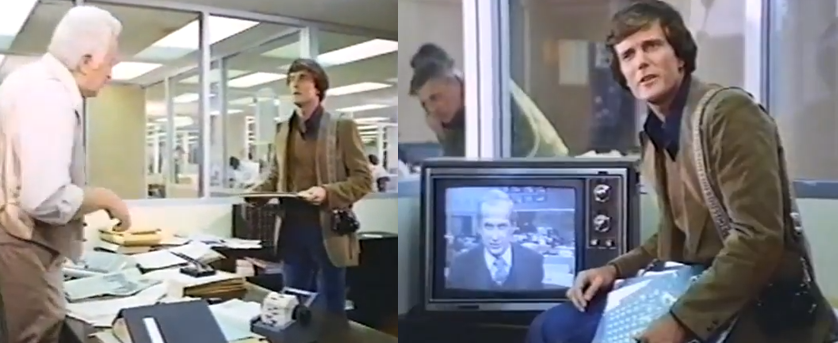
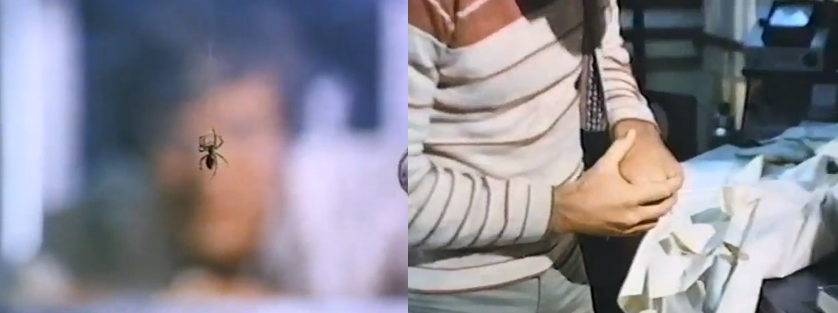




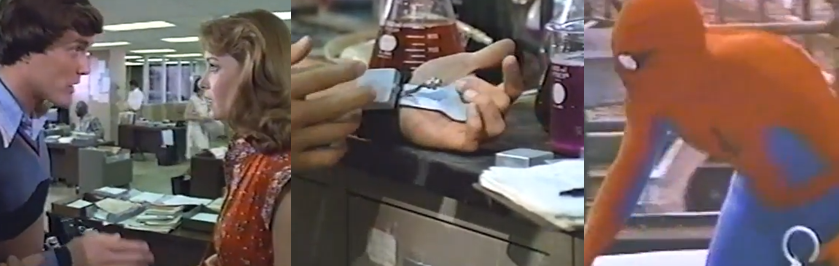

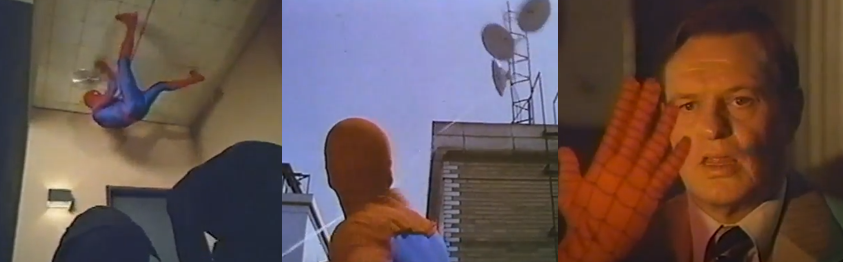
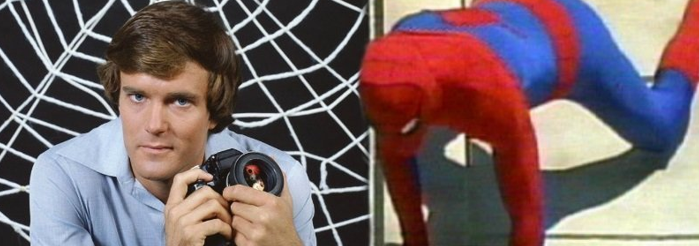
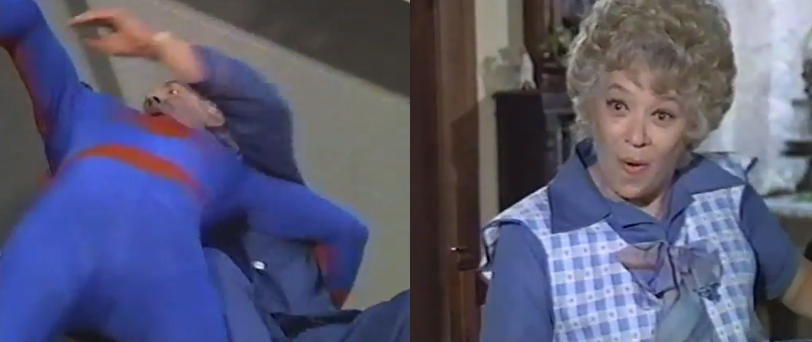



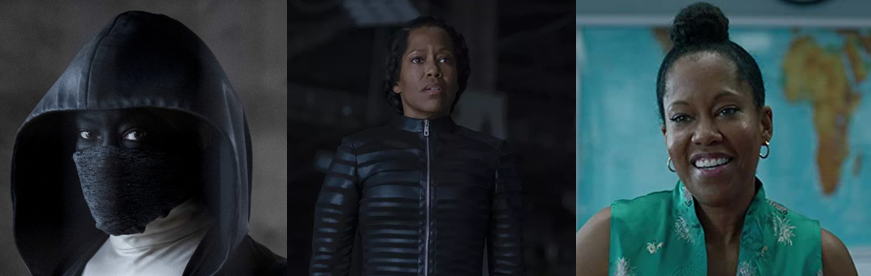
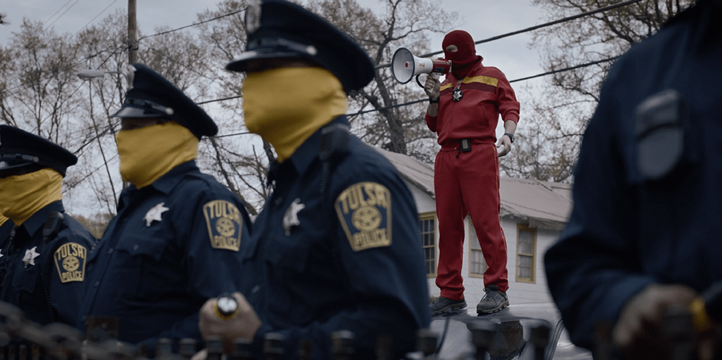
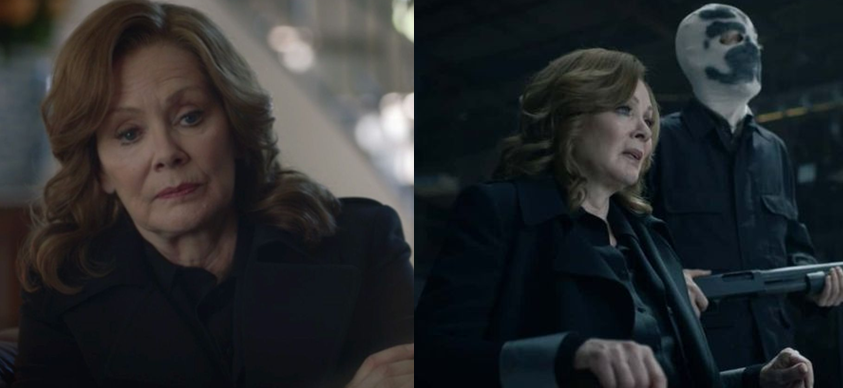
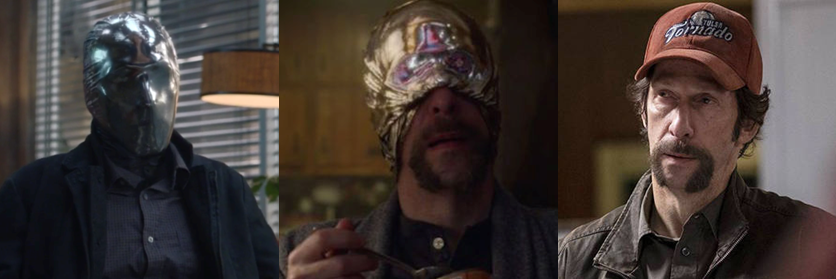
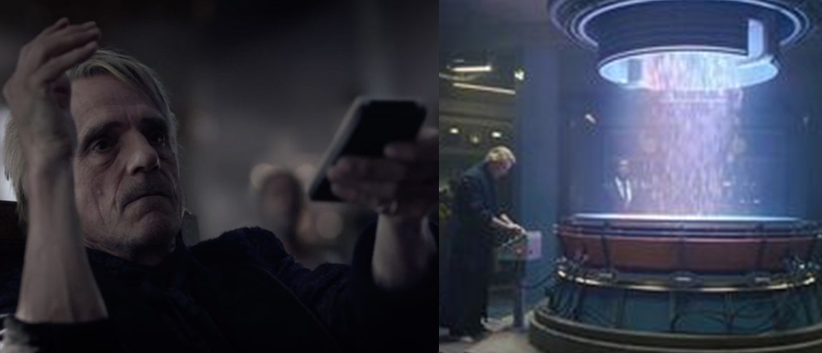
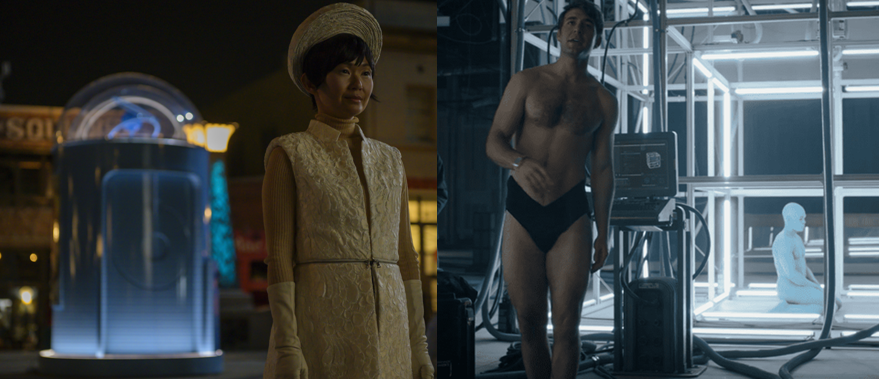
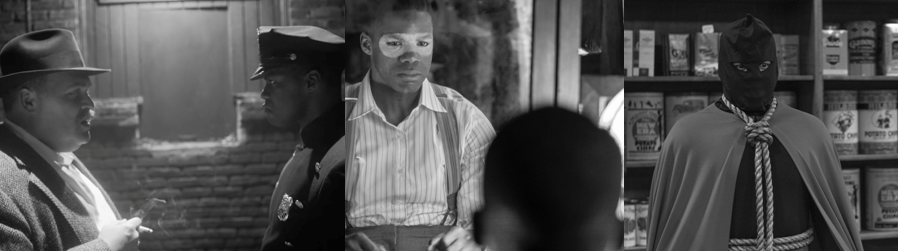
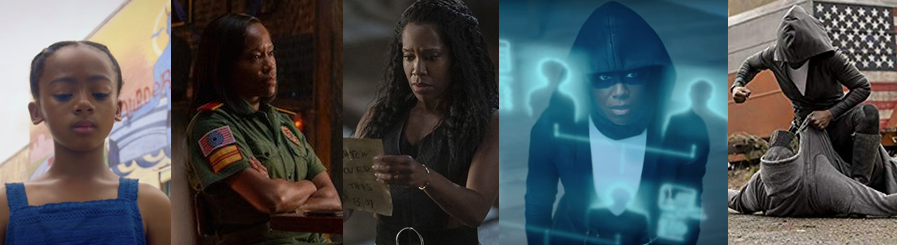
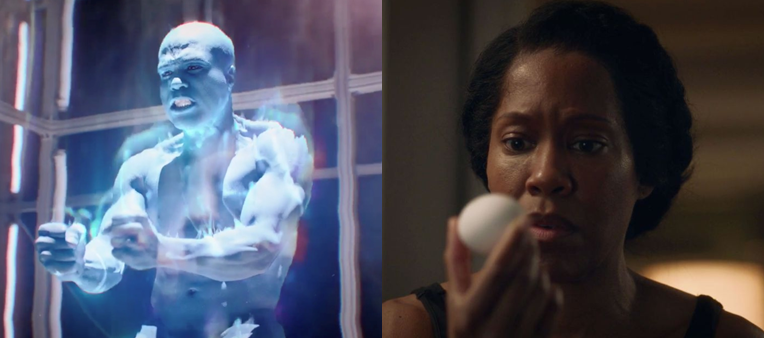
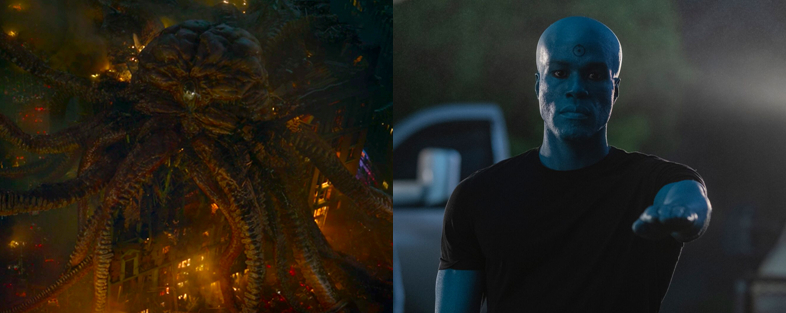
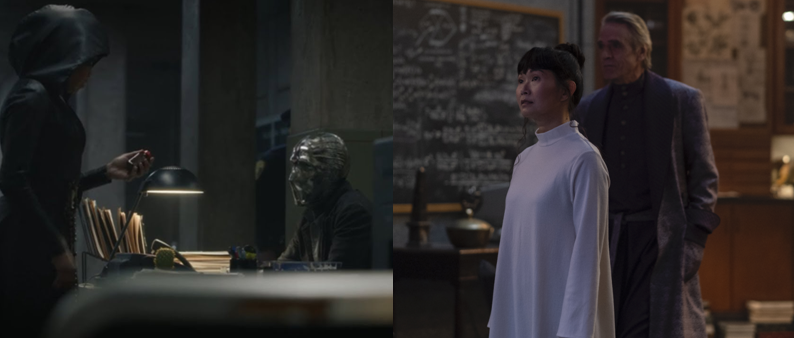
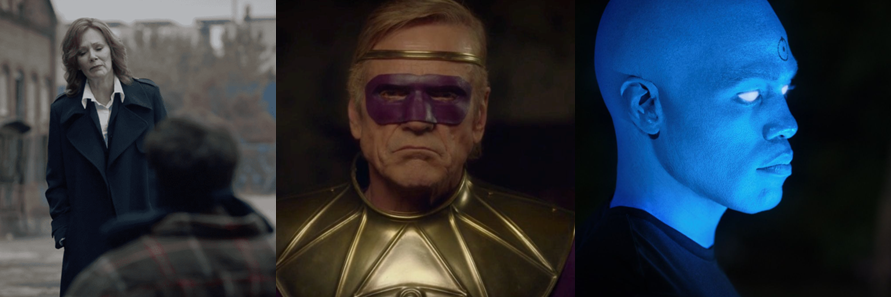


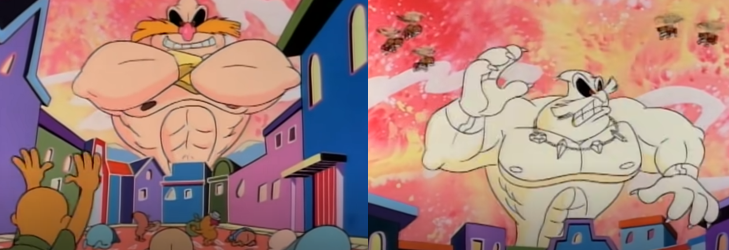


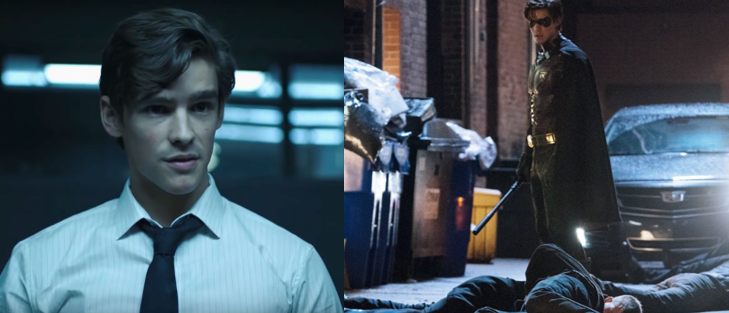
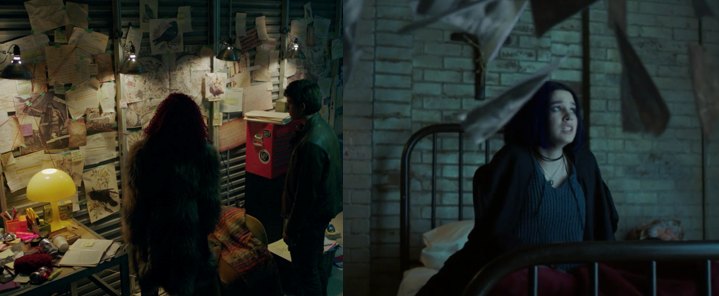
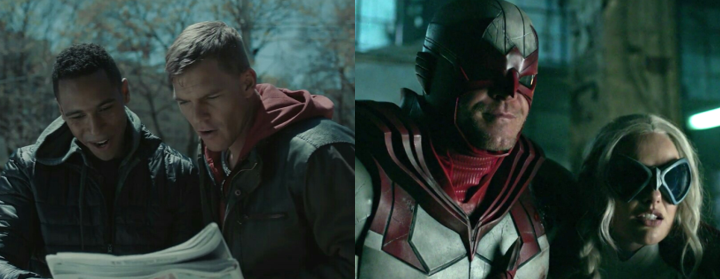
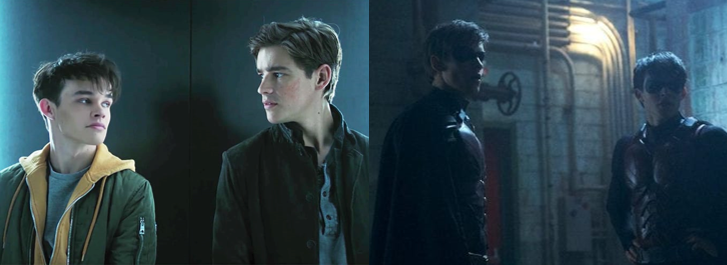
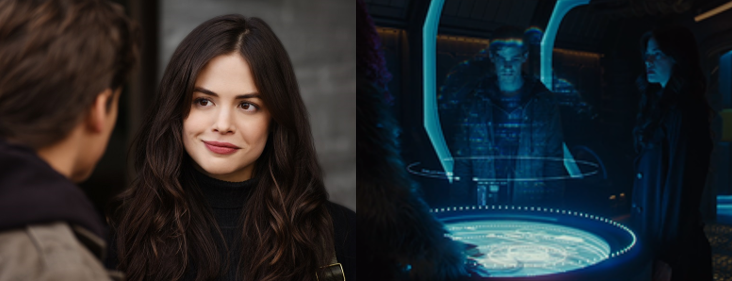
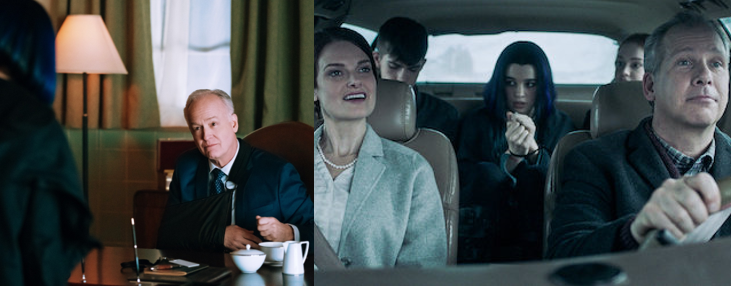
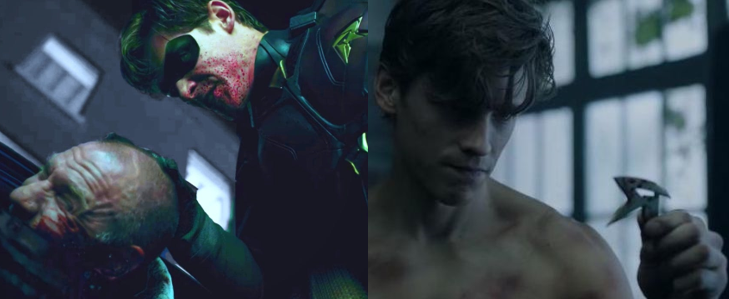
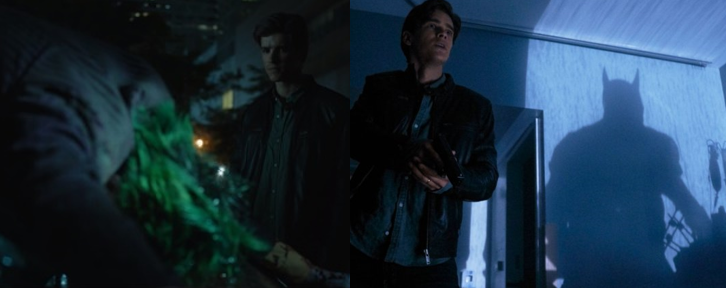
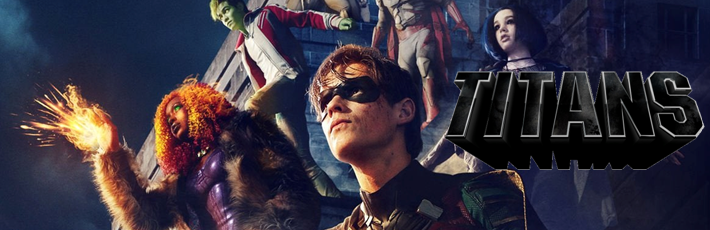
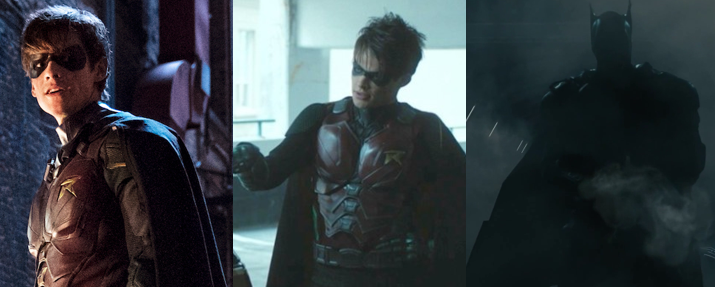
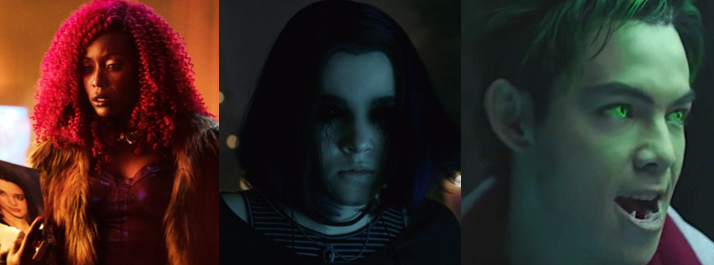
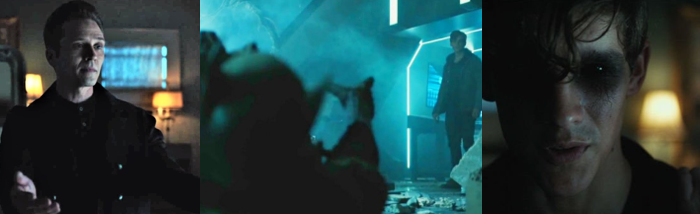





























You must be logged in to post a comment.