Released: December 2019 Director: J. J. Abrams Distributor: Walt Disney Studios Motion Pictures Budget: $275 million Stars: Daisy Ridley, Adam Driver, Oscar Isaac, John Boyega, and Ian McDiarmid
The Plot: When a threat of revenge is issued by the long-dead Emperor Palpatine (McDiarmid), Rey (Ridley) is drawn into another confrontation with Kylo Ren (Driver) in the search for an ancient Sith device that will reveal the location of the resurrected emperor and decide the fate of the entire galaxy,
The Background: So, this is it; for better or worse, the “Sequel Trilogy” of Star Wars movies (Various, 1977 to present) comes to an end. For me, this has been a disappointment since Star Wars: Episode VII: The Force Awakens(ibid, 2015), which was little more than a retelling of better Star Wars stories but with better effects and writing, and only exacerbated by the dreadfulStar Wars: Episode VIII: The Last Jedi(Johnson, 2017).Rather than show us a galaxy thriving under the leadership of Leia Organa’s (Carrie Fisher) New Republic alongside Han Solo (Harrison Ford) and Jedi Master Luke Skywalker’s (Mark Hamill) reconstituted Jedi Order, we inexplicably have a galaxy threatened by the First Order (who are somehow, consistently, more powerful than the Galactic Empire ever were despite all the losses from the Death Star and Starkiller base…) and being opposed, once again, by a rag-tag resistance group.The Last Jedi then pissed a lot of people off by dropping the ball on Rey’s origins, killing off Supreme Leader Snoke (Andy Serkis) without any fuss or fanfare, and doing away with Luke purely so that Rey could shine as the titular “last Jedi”. Somewhat spooked by reactions to The Last Jedi (and the two spin-off movies, despite the fact that I actually preferred both of them to the entire Sequel Trilogy), Disney roped J. J. Abrams back into the fold to get the Star Wars franchise back on course and, what we’re left with, is a hodgepodge of fan service, damage control, and desperation as he frantically tries to wrap up not just the Sequel Trilogy but the entire Skywalker Saga itself!
The Review: The Rise of Skywalker kicks off with Ren immediately locating one of only two Sith wayfinders and travelling to the forgotten Sith planet Exegol where he encounters Palpatine, who wastes no time in providing half-assed explanations regarding his resurrection/survival, Snoke’s origins, and motivations for Ren reconstructing his helmet and getting back out their to kill Rey.The implication seems to be that Palpatine transferred his spirit into a clone body and was controlling Snoke like a puppet to convert Ren but…it’s not dwelled upon much at all, which really makes you feel like you’ve wasted your time watching any of the previous movies.
Despite it all, Driver brilliantly showcases Ren’s duelling nature.
Plus, like, the emperor surviving really undermines the Rebellion’s victory and takes a lot of power and urgency away from Ren, who is otherwise portrayed fantastically by Adam Driver. Imagine if Anakin Skywalker (Hayden Christensen) had been as wonderfully torn between rage, indecision, and love; Ren is constantly on the edge, flipping between extreme focus, exploding in anger, and struggling with committing to the Light or Dark Side.
Thankfully, the chemistry between these guys is a highlight of the film.
As for Rey, she’s been spending her time training with Leia and studying the Jedi texts she obtained from Luke while Finn (Boyega) and Poe Dameron (Isaac) return with news of the emperor’s return. Thankfully, this leads to the three of them heading out to Pasaana to try and find the other wayfinder and end the emperor before he can launch his master plan (called “The Final Order”…which really should have been the title of the movie as the title is dogshit…). One of the strengths of Abrams’ Sequel Trilogy has been the writing and dialogue and Finn, Poe, and Rey have great chemistry together; they bicker and talk like real people and real friends, which is always refreshing after sitting through George Lucas’ stilted, robotic writing.
It’s always a pleasure to see Billy Dee Williams.
In all honesty, the plot of The Rise of Skywalker boils down to a glorified fetch-quest; the heroes bounce around the galaxy trying to track down the wayfinder and, eventually, find themselves teaming up with Star Wars staple Lando Calrissian (Billy Dee Williams) and exploring the remains of the second Death Star, where Rey’s super-duper true origins are finally revealed.Alongside such blatant fan service, The Rise of Skywalker is also gloriously peppered with epic space battles and some of the best lightsaber battles we’ve ever seen, all bolstered by some of John Williams’ best work. Unfortunately, I cannot get over the missteps the franchise has taken since The Force Awakens and the film feels a bit rushed and slapped together in places as Abrams desperately performs damage control to rush the film, the sequels, and, stupidly, the entire saga to a conclusive finish…and still ends with the door left so blatantly open for future films in the series.
The Nitty-Gritty: So, if you hated Rey before, you’re probably going to hate her even more when it’s now revealed that her parents weren’t nobodies; instead, Rey is inexplicably Palpatine’s granddaughter…which raises so many questions like: when did Palpatine have a son? Who was his mother? Why would he ever left his progeny live? Why has it taken him so long to track them down and kill them?These questions are trumped by a far more pressing one, though, which is literally the question of why Palpatine is even alive at all. Obviously, this is a cheap move to ensure that audiences will flock in droves to see the film out of nostalgia but it really takes away from the victory on the second Death Star and Abrams did very little to justify it. I really feel like we needed a more blatant explanation of his survival and the nature of his relationship with Snoke but, instead, it’s hand-waved away in the laziest way possible.
The emperor’s threat is issued and destiny awaits…
Also, while he’s been rebuilding himself and his power, the emperor also build an entire fleet of Star Destroyers, all fully manned and armed with planet-killing weapons. Where did he get the resources and manpower for such an endeavour? Fucked if I know, but he did. Not only that, but Richard E. Grant is randomly in charge of the fleet as General Pryde, because I guess Colonel Sandurz was busy that day and I guess Adrian Edmonson was unavailable and Abrams saw how Johnson reduced the already pathetic General Hux (Domhnall Gleeson) into a whiny little cry baby. But it’s okay because it turns out Hux is so jelly of Ren that he’s been leaking information to the Resistance and, right when you think that means he’s going to do something interesting, he’s just shot dead by Pryde.Speaking of uninteresting, the fabled Knights of Ren finally make an appearance in this movie; they’re a handful of black-clad, anime-sword-wielding enforcers who…stand around doing nothing, beat up Ren for a bit, and then get killed like a bunch of punks!The big story here is the continued turmoil that Kyle Ren is going through; although he aligns with the emperor, he secretly (well….it’s not really a secret; he yells about it at almost every opportunity) seeks to turn Rey so they can team up, bump uglies, and usurp the emperor together. When Leia gives her life to distract Ren, he ends up having a heart-to-heart with a vision/memory/something of his father and rejecting his lightsaber. Reclaiming the name of Ben Solo, he helps Rey to defeat the emperor (and, by extension, the entirety of the Sith, it seems) but dies to bring Rey back to life, becoming one with the Force in the process.It’s a bit of a weak ending as it means the entire Organa/Solo/Skywalker bloodline is dead but Abrams tried to make up for it by having Rey travel to Tatooine (because God forbid we don’t go back there again!) and dramatically declare herself to be “Rey Skywalker”…despite having no claims to the name.
The Summary: Star Wars: Episode IX: The Rise of Skywalker is clearly the best entry in the Sequel Trilogy but, as a finale to the entire Skywalker Saga, it fails in quite a few ways. Also, it’s hard to watch without the sour taste of its predecessors tainting the film, no matter how engaging the action is or how meaningful some of the film’s heartfelt moments are.Abrams throws all the fan service he possibly can at the film and you can almost see him plastering over the cracks in the film but it’s all at the detriment of telling an original story and nowhere is this more evident than in the credits of the movie. I get that Carrie Fisher and Mark Hamill are legends to this franchise but their roles are so minimal in this film yet they get top billing over Ridley, Driver, Isaac, and Boyega and that’s a bit of a joke, to be honest.In the end, I’m glad that this film has brought the main saga to an end. Hopefully, Star Wars can focus on its Disney+ shows, regroup, and, the next time someone decides to make a film trilogy, they will sit down and map out an actual plan rather than just picking out their favourite Star Wars moments and slapping them into a space/action drama and calling it a day.
Released: October 2019 Director: Tim Miller Distributor: 20th Century Fox Budget: $185 Million Stars: Natalia Reyes, Mackenzie Davis, Gabriel Luna, Linda Hamilton, and Arnold Schwarzenegger
The Plot: Three years after ensuring that malevolent artificial intelligence Skynet never comes into existence, jaded and emotionally repressed Terminator-hunter Sarah Connor (Hamilton) is brought back into the fight and forced to team up with the cybernetically-enhanced Grace (Davis), and confront her past once more, when an advanced Rev-9 model (Luna) is sent back through time to terminate the seemingly-innocuous Daniella Ramos (Reyes).
The Background: The Terminator (Various, 1984 to present) franchise has had a hard time of it in recent years. It seems like every time a film studio acquires the rights (or some of the rights) to the series, they scramble about trying to find new ways to shoe-horn in the classic T-800 (Schwarzenegger) and desperately kick-start a new trilogy of films, only to fail time and time again.James Cameron scored a cult classic with the original 1984 Terminator film and then caught lightning in a bottle with one of the greatest sequels ever made, Terminator 2: Judgment Day(ibid, 1991). Since then, only the criminally underrated Terminator Salvation (McG, 2009) has dared to try something new to the franchise as both the laughable Terminator 3: Rise of the Machines(Mostow, 2003) and the mediocre Terminator Genisys (Taylor, 2015) simply chose to retell exactly the same story as T2 with only minor changes.Now, though, after Genisys failed to make the required box office impression, Cameron has been looped back into the production of yet another reboot to the franchise. Despite previously advocating Genisys as the “true”Terminator 3, Terminator: Dark Fate ignores every film in the franchise except for T2 and, with stars Hamilton and Schwarzenegger also involved, aims to be the true, definitive Terminator 3.
The Review: Terminator: Dark Fate ignores the massive cliffhanger from the end of Genisys and chooses to open three years after the end of T2 where Sarah Connor and her teenage son, John (Jude Collie, with Edward Furlong’s facial likeness) are relaxing in Guatemala.We then jump to 2020 where Grace and the Rev-9 arrive in Mexico City; Grace, who is cybernetically enhanced (a concept not unlike what we saw in Salvation’s Marcus Wright (Sam Worthington), has been sent back to protect the new saviour of the future, Daniella “Dani” Reyes, who is just a lowly factory worker at this point.
Dani finds herself the target of the newest Terminator…
They soon run into the Rev-9, perhaps the most charismatic of all the future machines we’ve seen so far; the Rev-9 is able to simulate clothing, emotions, and appears far more human than any of its predecessors. It is also comprised of both a metallic endoskeleton and a liquid metal exterior not unlike Terminator 3’s T-X (Kristanna Loken) and Genisys’ T-3000 (Jason Clarke), though the Rev-9 favours shape-shifting and stabbing weapons like the T-1000 (Robert Patrick).While evading the Rev-9, Grace and Dani are saved by Sarah, now a world-weary, war-torn woman who has spent her years hunting down and eliminating Terminators thanks to tip-offs from a mysterious source. Facing the threat of a similar, yet fundamentally different, apocalyptic future and with nowhere left to turn, Grace brings the group to the source of Sarah’s intel, an aged T-800 and, together, the four formulate a plan to destroy the Rev-9 and maintain hope for the future.From the very beginning (and I mean this absolutely literally), Dark Fate is an immediate and egotistical punch to the gut. If, like me, you enjoyed Salvation (or, at least, wanted to see more of the future war in subsequent Terminator movies) or you were desperately hoping to see Genisys’ loose ends tied up, you’re going to be immediately disappointed. Hell, the few fans and defenders of Terminator 3 will likely to be disappointed, to say nothing of fans of The Terminator and Terminator 2.
Grace’s augments make her more than capable of fighting the Rev-9.
Once you desperately try to process Dark Fate’s maddening opening, you’ll be treated some fast-paced, frenetic action scenes; honestly, these are the best parts of the film beyond the actors’ performances and Dark Fate has some intense car chase sequences and confrontations with the Rev-9.I wasn’t too impressed with Gabriel Luna’s appearance when I first saw the trailers for Dark Fate but he does a great job of being cold and calculating but also eerily sinister and human; he’s like a chattier T-1000 at times, which conveys just the right degree of menace. Davis fits the mould of a battle-scarred soldier extremely well as well; her cybernetic enhancements ensure that she is a formidable protector but, thanks to her human physiology, she is also vulnerable as she must take regular does of medicine to stop her metabolism from burning up (…somewhat similar to the Uni-Sols from Universal Soldier (Emmerich, 1992)).Like last year’s poorly-titled and poorly-conceived Halloween(Green, 2018), one of the big selling points of Dark Fate is the surprising return of Linda Hamilton to her most famous role. Controversially killed off between T2 and Terminator 3 and all-but-absent from the franchise outside of the short-lived television show and Emilia Clarke’s portrayal in Genisys, seeing Hamilton lace up her boots again is a nice treat and her character takes some sudden and unexpected twists throughout the course of the movie. Jaded and emotionally stunted, she cares on about destroying every last trace of Skynet, causing her and Grace to have a frosty relationship upon first meeting.
Sarah’s obsession leads her to protecting Dani from the Rev-9…
Dani is a likable and serviceable character as well; she has a fighting streak in her but, rather than being the completely useless damsel-in-distress Sarah was in The Terminator or the bad-ass soldier Sarah was in T2, ends up as a slightly-more-capable version of Terminator 3’s Kate Brewster (Claire Danes)…only with way better writing and characterisation. Finally, there is the T-800; like in Genisys, the T-800 (who is known as “Carl”) is aged and has been preparing for Sarah’s inevitable arrival. The T-800 adds some muscle to the group and it never fails to impress how easily Arnold slips back into his most iconic role but, in the end, due to Grace’s presence, it doesn’t really feel like there’s a lot for the T-800 to do and even less reason to truly justify its inclusion beyond Terminator being synonymous with Arnold.
While it’s great to see Arnold back, there isn’t much for him to do…
Instead, the T-800 sticks out a bit, especially given that Dark Fate is driven so strongly by three women who are very strong and capable in their own ways. Suddenly adding a male figure, even a machine one, to the mix seems to add a displeasing anti-feminist message that I’m sure will be the subject of many feminist essays, readings, and reviews for years to come.Unfortunately, a few fancy visuals and strong performances don’t change the fact that Dark Fate is the definition of “derivative”. Outside of one major change, there is literally nothing to see here that you can’t get from other Terminator movies. Apparently, Cameron and his writers watched all the other Terminator sequels before they hashed out the plot for Dark Fate but it seems that, rather than deliver something fresh and new, they instead jotted down all their favourites parts of the other movies and decided to do them all over again but now with “James Cameron’s seal of approval (as if that means anything given he was all for Genisys back in the day).
Despite some good action, Dark Fate is just too derivative…
As a result, while Dark Fate is exciting and does a good job of recreating the same kind of tone as The Terminator and T2, it seems a bit pointless to watch it as it’s extremely unlikely that the film will perform well enough to allow for any sequels (it’s currently only made $12.6 million and Genisys didn’t get a sequel despite making over $400 million against a budget similar to Dark Fate’s). add to that that we’ve literally seen everything Dark Fate has to offer in other Terminator films and I’m seriously struggling with a lot of the decisions Cameron and his team chose to make. I’ve been saying for years that the Terminator franchise needs to stop playing it so safe, stop recreating T2, and try and do something new and fresh but, every time they do, the films never really take off; every time they lean heavily into nostalgia, it leads to disappointing box offices and, now, whenever they try everything else they can to keep things similar but ever-so-slightly different, it still seems as though people just aren’t into the Terminator anymore and that there’s just nothing left for the franchise to do.
The Nitty-Gritty: So, if you’ve been paying attention to the trailers and managed to read between the lines of my review, you’ll notice that John Connor is conspicuous by his absence. This is because Cameron’s bright idea to really hammer home that Dark Fate has nothing to do with any of the Terminator films but the first two is to have a T-800 walk up to John and shoot him with a shotgun within the first five minutes of the movie.Who would have thought that, after everything Sarah and John went through, it would literally be as easy as walking up to him and shooting him?Honestly, I cannot get over this asinine decision. I get why they did it but it’s so unnecessary and literally just the easy way out. Now it feels completely pointless to watch The Terminator and T2 as John just gets blown away with no fuss or fanfare; all that drama and emotional investment just pissed away. Honestly, you’d think Cameron would have learned from the fan outrage to the off-screen deaths of Hicks (Michael Biehn) and Newt (Carrie Henn) in Alien3(Fincher, 1992) but apparently not.
The future still needs protecting from killer machines.
With John dead, Sarah is an emotional wreck; her own release comes from alcohol (though this isn’t shown onscreen) and destroying Terminators. She is cold and emotionally closed off and her character is learning to let go of her anger and reconnect with her humanity by taking Dani under her wing. She does this by forging an alliance with the same T-800 that murdered John; having completed its mission, “Carl” ended up living with a woman and her child and, through raising a son and being a family “man”, somehow developed something resembling a conscience and a degree of free will (so much for not feeling “pity, or remorse”…I guess). Wanting to give Sarah purpose, it relates to her specific dates, times, and locations of future Terminators (how and exactly why Skynet would program it with this knowledge is anyone’s guess…) and jumps at the chance to make amends for its actions by assisting Sarah.This is a pretty big problem, though. Because we’re all familiar with Arnold and the T-800 as a self-sacrificing protector, you want to feel empathy for the T-800 and, when it ultimately sacrifices itself to destroy the rev-9 “for John”, it should be an emotional moment. Sarah’s reaction even indicates that she has forgiven the T-800 and let go of her hate…but her hate is what drove her and gave her purpose and it’s very difficult to truly sympathise with “Carl” because it murdered a teenage boy right in front of his mother! And not just any teenage boy; future saviour John Connor, who we were equally attached to after following his and Sarah’s story in the first two movies!
The Rev-9 separates into a liquid metal and endoskeleton for twice the danger!
As I said above, Arnold really feels completely unnecessary to this movie. He’s literally only there because of Cameron and because of the assumption that a Terminator movie cannot be successful without him, but he doesn’t add anything to it. They could have just as easily made the same movie with Sarah and John being Terminators hunters and stumbling into this new dystopian future; Grace is more than capable of fighting the Rev-9 and Sarah could have given her life so that John could mentor Dani on how to be the world’s saviour. Hell, they could have just had Sarah say John is off the grid and safe in Mexico but reveal that she was so paranoid and afraid that the future might still go to shit that she cut him off and devoted herself to hunting Terminators.Instead, like I said, they took the easy way out, killing John like he meant nothing and then tossing a load of stuff we’ve already seen onscreen and acting like it’s “new” or somehow “better”. I have news for you, James Cameron: it’s not. In the end, Dark Fate was about as good as Genisys but loses so many points not just for killing John but also for being so derivative: liquid metal and an endoskeleton? Seen it. Old T-880 with paternal instincts? Seen it. Skynet now a slightly different A.I? Seen in. cybernetically-enhanced human? Seen it. Nothing in this movie is “different” or “new” except that they killed John and even that happened in the future in Terminator 3 and, even if it didn’t or you don’t count that, it’s still a terrible decision to make.
The Summary: In the end, Terminator: Dark Fate is just too derivative and feels completely unnecessary. It has some decent action scenes and a bold, uncompromising feminist agenda but makes some truly deplorable decisions and isn’t given you anything you haven’t seen before. Honestly, it’s a massive disappointment as I was expecting James Cameron to bring some order and prestige back to the franchise; instead, they cut corners at every turn, took the easy way out at every opportunity, and have once again failed to live up to the lofty standards set by Terminator 2: Judgment Day.Here’s an idea for the future, though: try making something new rather than constantly recreating your biggest hit and, if you’re reading this, try actually liking something new. If more audiences had backed Terminator Salvation, we could have gotten one or two more gritty, science-fiction action/war movies that led naturally into The Terminator.Instead, we get derivative, disappointing, insulting stuff like this and I could not be more unimpressed.
Released: September 2019 Director: Adrian Grunberg Distributor: Lionsgate Budget: $50 million Stars: Sylvester Stallone, Yvette Monreal, Paz Vega, Sergio Peris-Mencheta, and Óscar Jaenada
The Plot: Eleven years after finally returning to America, Vietnam veteran John Rambo (Stallone) has devoted his life to his adopted daughter, Gabriela (Monreal). However, when Gabriela is kidnapped by human traffickers while in Mexico, Rambo must take up arms once more to bring her home.
The Background: Unquestionably, Rambo is one of cinema’s all-time iconic action heroes; introduced in First Blood (Kotcheff, 1982) as a psychologically damaged soldier, the character has evolved into a hulking war machine to a disillusioned old man, all while carrying a haunting presence as he struggles to run from, or confront, his inner demons.The poorly-titled Rambo (Stallone, 2008) seemed to tie the franchise up nicely, with Rambo massacring basically the entire Burmese army and then finally returning home after a lifetime of war, drifting, and toiling away from the United States. However, Stallone appears to be in the middle of a kind of renaissance (or, perhaps, undergoing a farewell tour) as he revisits and retires his iconic characters and, as a result, we now have one more chapter in the life of old man Rambo.
The Review: Going into Rambo: Last Blood, I was expecting something that was more like the (comparative) subtlety of First Blood mixed with the gritty, bloody violence of Rambo and, while that is generally the case, it also feels as though Stallone saw some modern action/thrillers like Taken (Morel, 2008) and the John Wick (Stahelski, 2014 to present) films and said: “What if that…but with Rambo?”
Rambo has found peace with his family…but nothing lasts forever…
As a result, Rambo: Last Blood is, stylistically, a very different film to its predecessors and Rambo is, overall, a very different character. Having bonded with Gabriela and being close to her grandmother, Maria (Adriana Barraza), Rambo is at peace in a way he never has been in the past as he’s finally back with his family and away from conflict. However, Rambo has also filled his time with building an immense network on caves beneath his father’s ranch, which makes for an impressive and bloody finale to the movie, and is swallowing pills of some description to help curb his post-traumatic stress.
Rambo’s mortality is a central theme throughout Last Blood…
However, when Gabriela takes off to Mexico to find her estranged father and doesn’t return, Rambo immediately jumps into his truck and heads down there without a second’s thought to find her and bring her home. Quickly locating the Martinez Brothers, Hugo and Victor (Peris-Mencheta and Jaenada, respectively), Rambo is viciously attacked and has his face scarred by the brothers and their gang of human traffickers. Nursed back to health by journalist Carmen Delgado (Vega), who also has a personal vendetta against the Martinez Brothers, Rambo soon finds himself preparing for war once more, this time to fight for his family first and foremost.
Rambo prepares a series of gruesome traps for his victims…
Rambo: Last Blood is, honestly, a bit of a mish-mash of ideas; it ends with a fantastically brutal sequence where Rambo hunts down his prey one by one and murders them in unique and brutal ways, and there’s some intense scenes of him prowling the streets of Mexico chasing down leads and roughing people up for information, and there’s a heart and a tragedy at its core that are reminiscent of other Rambo movies. Yet, throughout it all, I couldn’t help but ask why this movie was deemed necessary; Rambo’s story was largely concluded in Rambo and this extended epilogue, of sorts, only serves to emphasise that this character will never be free from conflict and never be able to truly lay down his guns, which is a sombre and depressing post-script for a character that has, more so than many other action heroes, earned a rest from war.
The Nitty-Gritty: So, I mentioned Taken above and this is perhaps the most fitting analogy as this film is basically Taken but with Rambo and with one other crucial, gut-punch of a twist…Rambo’s adopted daughter, Gabriela, succumbs to her wounds and drug intake and dies shortly after being rescued by her uncle. This leaves Rambo obsessed with bloody revenge, which he soon obtains when he brutally decapitates Victor off-screen and lures Hugo (alongside a whole slew of nameless, faceless cannon fodder) to his heavily-booby-trapped ranch in order to blow their fuckin’ heads off and literally pull Hugo’s heart from his chest.
Rambo is still struggling with his inner demons.
This over-the-top action and killing is a delicious coda to the film but, during the conflict, Rambo suffers a few gun shot wounds which threatened to leave him dead but, instead, he simply reflects on his fate in a rocking chair and then (literally) rides off into the sunset.So, at the end of Rambo, it seemed like Rambo was going to finally go home and leave war behind and reconnect with his father. Here, though, his father is nowhere to be seen (and, presumably, long dead) and Rambo suddenly, randomly, has an estranged brother (who’s a complete asshole), a gorgeous young niece/stepdaughter, and a Maria, all of whom help to humanise and settle Rambo’s demons. But, now, with Gabriela dead, Maria gone, and his childhood home decimated, Rambo is left as a drifter once again, riding off into an uncertain future.
Rambo is still a crack shot with a bow and arrow!
Personally, I feel like Gabriela should have survived, perhaps been left in a coma, and Rambo should he satiated this thirst for vengeance but perished in the process, having died fighting for something worthwhile for a change (basically, recreating the end of Logan(Mangold, 2017)…but with Rambo!) Instead, Rambo is left with literally no family to fall back on and no clear end to his story, which may set up for a future instalment later down the line but, in a way, kind of ruins the somewhat-happy ending that Rambo suggested for the character.
The Summary: Rambo: Last Blood has a few flaws, mainly in trying to justify why it even exists, but it is undeniably a thrill to see the character back onscreen and just as brutal as ever; age may have caused Rambo to become more methodical but it has done nothing to dull his edge or his pit-bull-like fighting spirit, which is as strong as ever. Its just a bit of a shame that he’s been placed in a movie that isn’t really offering the character much more growth or offering anything new to the action/thriller genre, relying more on nostalgia and gruesome violence to prop up its unoriginal narrative.
Released: August 2019 Director: Ric Roman Waugh Distributor: Lionsgate Budget: $40 million Stars: Gerard Butler, Morgan Freeman, Jada Pinkett Smith, Tim Blake Nelson, Danny Huston, and Nick Nolte
The Plot: After United States President Allan Trumbull (Freeman) is attacked and nearly killed in an assassination attempt, decorated Secret Service agent Mike Banning (Butler) is framed for the plot and forced to go on the run in an attempt to clear his name and uncover a plot to usurp the interests of the US government.
The Background: Olympus Has Fallen (Fuqua, 2013) was a surprising hit when it came out, make over $170 million worldwide against a $70 million budget; in it, Butler picked up the torch from John McClane (Bruce Willis) and became this generations new (or, perhaps, newest) “Everyman” action hero in what was, almost unashamedly, “Die Hard (McTiernan, 1988) in the White House”. London Has Fallen (Najafi, 2016) followed, upping the states by throwing Banning into a massive city-wide attack; London has Fallen also proved a financial success, making over $200 million on a $60 million budget so, by now, we’ve established that this Fallen franchise makes money by revisiting all the best, over-the-tope narratives and action tropes of the early-to-mid-nineties action movies.
The Review: Angel Has Fallen scales the narrative and its over-the-top elements back for the most part to focus more on a character study of Banning, the man, rather than the stereotypical, invincible action hero. Banning, suffering from neck and spinal injuries and the onset of age, is confronted with his own mortality and the very real possibility that his time may soon be over as he trades field work for a desk job. Hiding the truth of his condition from his wife, Leah (now played by Piper Perabo), Banning opens the film struggling with giving up his action-orientated lifestyle, an issue exacerbated by his reunion with Wade Jennings (Huston), a former Ranger friend who has long since been relegated to the side due to age.
Amidst these issues, a devastating drone attack wipes out Banning’s entire security detail and leaves President Trumbull in a coma; when he awakens in hospital, banning finds himself in handcuffs and being grilled by FBI agent Helen Thompson (Smith). Evidence found at the scene implicates Banning for the attack so he is summarily arrested and disgraced; however, when the true culprits attempt to kill him, Banning manages to escape and is forced to turn to his long-estranged father, Clay (Nolte) for shelter while he tries to figure out who has framed him and how to stop further attempts on Trumbull’s life.
Banning is struggling with the wear and tear of age.
As I said, for the most part, this is a far cry from the bombastic action of the last two Fallen movies, trading over-the-top spectacle for a more sombre, grounded story; the focus is squarely on Banning and we see a more human, vulnerable side to him and explore his past and childhood far more than I was expecting. Of course, that’s not to say there aren’t a whole bunch of explosions and big action sequences it’s just, if you’re a fan of that sort of thing, you’ll have to wait for the last act of the movie for Banning to rediscover his place as an action hero as, after the initial assassination attempt, it’s more of a character deconstruction than a non-stop action thrill ride. This isn’t a bad thing; in fact it’s a pleasant surprise to flesh out Banning’s otherwise-stereotypical action hero persona and show him to be as vulnerable to the wear and tear of time and the job he does, rather than simply immune to it or ignoring it.
Nolte is a fantatsic addition, though a bit underused by the finale.
Nolte is an interesting addition to the cast; he’s obviously quite old at this point, which makes it difficult to understand him, but he has some fantastic banter with Butler and he’s a really fun addition to the story, though he doesn’t really factor into the finale of the film too much, to the point where I nearly forgot he was in the movie for a moment. Another criticism I had revolved around the shaky, close-ups that featured prominently not just in action sequences but also in regular dialogue scenes; Butler’s face literally fills the screen at some points and it’s a bit jarring and unnecessary. Thankfully, this does take a backseat when drones are exploding and guns are firing but it returns for a lot of the close combat action sequences, which makes these scenes unfortunately difficult to follow.
The Nitty-Gritty: If you’ve ever seen Danny Huston in a movie before, you know that he is the mastermind behind the attempt on the President’s life; annoyed that he’s no longer young and fit enough to be on the front line, he joins forces with Vice-President Martin Kirby (Nelson) to take out Trumbull, and Banning, in a misguided and arrogant attempt to restore strength and order to the United States. Having said that, Huston is a fantastic dark mirror to Butler and I bought them as former comrades and dug the twisted code of honour that Jennings has, as he would rather die in battle than wither away through old age, but it definitely would have meant a lot more if we had seen or heard of Jennings prior to this movie. Oddly, President Benjamin Asher (Aaron Eckhart) doesn’t feature in this movie and isn’t mentioned at all, which I found very jarring after two massive, over-the-top action pieces that specifically revolved around saving his life and ensuring his safety. It would have been nice to see him get a mention, be woven into the story, or maybe even have Trumbull take Kirby’s role and be the one trying to reignite war with the Russians.
The Summary: Angel Has Fallen isn’t as big and stupid as its predecessors; for the most part, it’s a grittier, more grounded action affair. However, when the traditional bombastic Fallen elements do crop up, it compliments the film’s more introspective moments, making for a decent and enjoyable film. It might be a non-stop, over-the-top action spectacle like its predecessors (or even other action movies), but it’s puts a neat twist on the invincible action hero trope and was serviceable enough as a fitting end to this franchise.
Released: July 2019 Director: Jon Watts Distributor: Sony Pictures Releasing Budget: $160 million Stars: Tom Holland, Jake Gyllenhaal, Zendaya, Jacob Batalon, Samuel L. Jackson, and Jon Favreau
The Plot: Following Avengers: Endgame(Russo Brothers, 2019), Peter Parker/Spider-Man (Holland) is struggling with the death of his friend, mentor, and father-figure, Iron Man/Tony Stark (Robert Downey, Jnr). However, he is once again forced to choose between living his life as a normal high school student and saving the world when he is recruited by Nick Fury (Jackson) to battle monstrous elemental creatures alongside the charismatic Quentin Beck/Mysterio (Gyllenhaal).
The Background: Spider-Man: Homecoming(Watts, 2017) fleshed out Spider-Man’s role in the Marvel Cinematic Universe as a quirky, inexperienced-but-enthusiastic young superhero who longed to be an Avenger but, eventually, learned to keep his feet on the ground as a friendly neighbourhood Spider-Man. However, after his excursion into outer space and his efforts in standing against Thanos (Josh Bolin), it’s safe to say that a lot of things have changed for Spider-Man. As the first MCU movie post-Endgame, Far From Home serves not only as the final movie in Marvel’s third phase of movies but also the first step in an uncertain future for the MCU, where, seemingly, anything can happen.
The Review: Spider-Man: Far From Home is, once again, a high school comedy first with a high-octane superhero film threaded through it; as a result, the film’s primary focus is on comedy and awkward moments, particularly involving Peter and his attempts to express his feelings for MJ (Zedanya) and his ongoing friendship with Ned Leeds (Batalon). While it could be argued that the MCU’s increasing focus on comedy undermines some of the more dramatic moments in their bigger, more cosmic-focused movies, it’s perfectly at home in a Spider-Man film as the character has always been about his snarky sense of humour.
At its core, Far From Home is a high school comedy first.
That’s not to say that Far From Home doesn’t have its fair share of impressive action sequences, though. As in Homecoming, Marvel have taken one of Spidey’s lesser foes and not only cast a spectacular actor in the role but also improved the character by leaps and bounds by casting him as a potential replacement for Iron Man. Mysterio, who is decked out in a fantastically realised version of the character’s classic costume, is at the heart of the film’s action sequences as he goes toe-to-toe with the gigantic Elementals, creatures made of earth, wind, fire, and water that threaten to destroy entire cities. Additionally, Beck acts as a mentor and confidante to Peter, offering advice and understanding at a time when he is struggling with his identity and responsibility.
The Elementals threaten to destroy entire cities!
Seeking a brief hiatus from his duties as Spider-Man and the pressure of living up to Iron Man’s legacy, Peter jumps at the chance to go on a trip to Europe with his class. However, soon after landing, he is approached by Nick Fury and reluctantly recruited to help battle the Elementals. This brings the MCU Spidey much closer to his classic comic book portrayal as he is now forced to constantly choose between his desires and dreams and living a normal life and using his powers to do good while also struggling with the idea that he cannot live up to Stark’s expectations.
The Nitty-Gritty: The moment I saw that Mysterio was the villain in this movie, I knew that he would turn out to be the bad guy; I mean, we all did, right? Beck claims to be from a parallel world, confirming a multiverse in the MCU, and appears to be a charismatic, confident, and well-honed superhero in his own right. Beck ticks every box for Fury and, especially, Peter, who is struggling to assume the role of Iron Man, and Peter is only too happy to hand over control of Stark’s A.I. to Beck…only for Beck to reveal his true nature as a complete and utter fraud.
Peter is still reeling from Stark’s death.
A former Stark employee, Beck created the virtual reality technology we previously saw Stark showcase in Captain America: Civil War (Russo Brothers, 2016) and grew embittered when he was fired by Stark. Feeling used and undervalued, he teamed up with other resentful Stark employees to use drones and virtual reality tech to create a superhero so universally loved that he would not only become an Avenger but also get his hands on Stark’s limitless technology.
Only the MCU could take something as lame as this and make it awesome.
As I said, I knew this twist would come but even I was starting to get fooled by the character, so great is Gyllenhaal’s performance; Beck not only defends and befriends Peter, he seems to have all the motivation and experience necessary to be a trusted and reliable hero. Once the turn is revealed, though, the character’s darker side starts to come through wonderfully, making for some fantastically nightmarish fight scenes. This is where the idea to use a lame villain like Mysterio is totally justified as the best part about using Mysterio is the potentially limitless visuals his illusion-tech offers, and Far From Home definitely delivered on that front. So far, I am really happy with the portrayal of Spider-Man’s villains in the MCU; if they can make his lesser villains this interesting and dangerous, imagine what they will do with his heavy-hitters!
Who will be the next Iron Man…?
As per the trailer, it is revealed that MJ has figured out that Peter is Spider-Man; MJ is featured pretty strongly before this but actually has something to do and plays a small role in the finale once she reveals this knowledge. This also culminates in Peter and MJ officially hooking up, though the film’s first post credits scene may put some strain on that relationship going forward. So, with his illusions revealed and Spider-Man wading through an army of drones, Mysterio takes a stray bullet and dies, self-righteous to the end. Fury has accepted Spider-Man and given him props, Peter is finally with MJ, and everything seems to be tied up in a nice little bow…and then J.K. Simmons returns as J. Jonah Jameson to reveal that Beck used doctored footage to frame Spider-Man for his death and the drone attacks and to reveal Peter’s true identity to the world! It was amazing to see Simmons back in the role, though I am curious to see another actor’s take on Jameson, but the revelation of Spidey’s identity will no doubt cause him some serious issues in future Spider-Man movies.
The Summary: Spider-Man: Far From Home is a rollercoaster ride of action, comedy, and heart as Peter struggles with his relationships, the expectations placed upon him, and some potentially world-ending situations. Gyllenhaal shines as Beck and raises Mysterio’s profile wonderfully, providing a perfect substitute for Iron Man in Spidey’s life, and the dialogue, action scenes, and tone of the film are an exhilarating ride that takes everything that was good in Spider-Man: Homecoming and dials it up to eleven while still laying some interesting foundations for the future of the MCU.
Released: June 2019 Director: Simon Kinberg Distributor: Walt Disney Studios Motion Pictures Budget: $200 million Stars: James McAvoy, Sophie Turner, Jessica Chastain, Tye Sheridan, Nicholas Hoult, Michael Fassbender, and Jennifer Lawrence
Plot: Ten years after the events of X-Men: Apocalypse(Singer, 2016), the X-Men have become celebrated superheroes. After answering a distress call from NASA, Jean Grey (Turner) is exposed to cosmic energies that send her powers rampant. With their teammate confused, conflicted, and being corrupted, the X-Men find their loyalties and friendships tested as they race to keep Jean from harming others with her newfound powers.
Background: The X-Men franchise (Various, 2000 to present) has had a tumultuous history in recent years; after X-Men (Singer, 2000) helped audiences to take superheroes films seriously and popularise the genre as a money-making endeavour, the series has taken a bit of a downturn since 20th Century Fox decided to produce a series of films stupidly marketed as prequels that were actually soft reboots that have done nothing but screw up the franchise’s continuity and timeline with each instalment. X-Men: Apocalypse is largely regarded as being a disappointment, despite making a load of money at the box office, and, in the years since its release, 20th Century Fox has been acquired by Disney, meaning that the X-Men will soon be integrated into the Marvel Cinematic Universe in some way, shape, or form. However, X-Men: Dark Phoenix, was already in production before this purchase, meaning that this is the last gasp for this franchise in its current form.
The Review: Considering that Disney will one day bring the X-Men into the MCU, Dark Phoenix seems largely redundant; the timeline and continuity of the films, and this franchise, is too messed up to sustain itself much less be integrated into the MCU without a complete recast and reboot, meaning that it really doesn’t matter how good, or bad, this film is, what it does, or how it ends. As a result, there’s a distinct lack of agency and investment when watching Dark Phoenix and all you can really hope for is that it does a better job of adapting the much-lauded Dark Phoenix Saga (Claremont, Bryne, et al, 1976 to 1977) than X-Men: The Last Stand(Ratner, 2006). The answer is that it does, in some ways, and doesn’t in other ways; for example, making the Phoenix a dark, suppressed aspect of Jean Grey’s (Famke Janssen) personality was actually a much neater, relatable way of realising the character in the grounded, semi-realistic context of the first X-Men movies. Dark Phoenix, however, uses the space element by having Jean bombarded with a destructive cosmic force that simply enhances her powers to dangerous levels.
Vuk seeks to obtain or control to Phoenix Force.
If this is more comic accurate then I guess that’s fine but Dark Phoenix also introduces a bunch of shapeshifting aliens, the D’Bari, who come to Earth seeking to obtain or control the cosmic force. Their primary agent, Vuk (Chastain), manages to help twist Jean against her team mates to facilitate her turn into the titular Dark Phoenix but there’s something off-putting about aliens suddenly and so awkwardly being thrust into this franchise that I found a little jarring. I think the D’Bari could have just as easily been a radical group of Mutants who see Jean as their saviour or they could even been replaced completely by Erik Lehnsherr/Magneto (Fassbender) and his Brotherhood of Mutants, similar to how Magneto (Ian McKellen) helped to corrupt Jean in The Last Stand.
The X-Men are decked out in matching, comic-accurate costumes.
There are some other questionable choices at work here as well; for example, at the end of X-Men: Apocalypse, the X-Men were decked out in some very swanky, mid-nineties comics-accurate costumes that they have promptly ditched in favour of uniform suits to help emphasise that they are a team to the media and society, while these are also comic accurate, it’s a shame we never got to see Scott Summers/Cyclops (Sheridan) rocking that outfit from the end of X-Men: Apocalypse. Also, Professor Charles Xavier (McAvoy) undergoes a bit of an odd character twist in this movie; despite apparently reuniting with Moira McTaggert (Rose Byrne) in X-Men: Apocalypse, Moira is nowhere to be seen and, instead, Xavier is basking in the adulation of the media and the relationship he has with the US government (which includes a hot line directly to the Oval Office and public commendations from the President (Brian d’Arcy James)). This changes Xavier’s entire motivations from the preservation of Mutantkind and the protection of humanity to an ego trip and skews his entire drive to forming the X-Men into wanting fame and respect, which is very jarring and out of character. At the same time, Xavier is also portrayed as being less than noble due to tampering with Jean’s mind, which raises the ire of Hank McCoy/Beast (Hoult) so much that he brands Xavier a monster and joins forces with Magneto. Yet, Xavier’s tampering is nowhere near the level seen in The Last Stand and you would think that one of his closest friends and allies, who stuck with him through addiction and the deaths of their team mates, would see that he was just trying to protect Jean.
Grief forges some unlikely alliances.
Instead, both Hank and Jean turn to Magneto in their time of need, which is a very odd way to push the character into the plot. Magneto has formed a community of Mutants of the island of Genosha and has no desire to be involved in the outside world any more. Personally, I am glad that Dark Phoenix is the end of this series of movies as I am so sick of seeing each of these films jump forward another ten years and find yet another preposterous way of neutering Magneto; at the end of X-Men: First Class(Singer, 2011), Magneto had evolved into a fully-costumed version of the character who was actively recruiting Mutants for his Brotherhood and seeking to attack humanity but, in X-Men: Days of Future Past (ibid, 2014) he was in jail and portrayed as an anti-hero who was trying to protect Mutants until the end when he became a fully-costumed version of the character seeking to attack humanity. Then, in X-Men: Apocalypse, he inexplicably had a family and had retired from his “war” until he became a fully-costumed version of the character seeking to attack humanity…and then redeemed himself at the end and now, once again, he’s back to simply being another dark shade of grey in a film largely comprised of characters who are struggling between good and evil. As for the other X-Men, Sheridan actually has a decent amount to do as Cyclops but every quickly takes a backseat as Xavier leads the X-Men into battle to try and save Jean. He, like Kurt Wagner/Nightcrawler (Kodi Smit-McPhee) and Ororo Munroe/Storm (Alexandra Shipp) simply follows Xavier’s leads and orders without question and each of them are simply…there…because they are X-Men.
Sophie Turner is absolutely stunning…
Cyclops gets a bit more to do given that he’s emotionally and physically involved with Jean but, once again, this adaptation of the Dark Phoenix Saga is less about Scott and Jean’s relationship than it really should be. Luckily, as I mentioned before, Sophie Turner is absolutely gorgeous; she portrays Jean’s conflict and emotion very well, seems to relish the opportunity to do more and showcase more range, and is absolutely stunning. I live for the day when she and Amber Heard can be onscreen together; I may actually die! Given that the main plot of the movie revolves around Jean struggling with her increasingly out of control powers, X-Men: Dark Phoenix is more about characters and deconstruction their relationships than it is about action sequences. Jean’s powers and abilities increase and become more destructive as the film goes on, which makes her a real threat to the other characters, and there is a pretty good action scene that takes place on a train but the film is more about the emotional rollercoaster of Jean’s turn and struggle with her morality. Unfortunately, given that we know that this is the last film for this interpretations of these characters, it’s difficult to care about that, especially as Jean was only introduced in the last X-Men movie and it’s hard to be that invested in her sudden emotional struggle when she’s not a very well fleshed out character. Hell, we’ve followed Xavier, Magneto, Beast, and Raven Darkhölme/Mystique (Lawrence) this whole time and it’s hard to really be that invested in them as they undergo exactly the same character arcs in each movie, never age despite being in their sixties at this point, and have some questionable character arcs in this movie that basically make them either bland (in the case of Mystique), completely different (Xavier), or one-note (Magneto) despite strong performances by McAvoy and Fassbender.
The Nitty-Gritty: If you’ve watched the trailers for this movie, you may have guessed that Jean kills Mystique in this film and, honestly, I could not be happier about that. I am not a fan of Jennifer Lawrence and her performance as Mystique leaves a lot to be desired, especially in this film, where she basically sleepwalks through every scene she’s in. I really don’t like Mystique being the field leader of the X-Men and every line she says is so stilted and forced that it’s a pain to watch. Luckily, though, she tried to appeal to Jean’s good nature and, unable to control her new powers, jeans blasts her away and impales her on some debris, finally ridding us of the character once and for all.
Once again, we’re forced to question Xavier’s morality.
I mean, obviously that completely destroys the timeline, but the X-Men timeline is completely fucked at this point anyway. Peter Maximoff/Quicksilver (Evan Peters) is back and now part of the X-Men team but, as always, he’s basically there for one slow-motion action sequence before he is blasted by Jean and hospitalised for the entire movie until the epilogue because, as always, his super-speed would allow him to end things to quickly and, rather than try and use the character in a decent way or tie up the lingering plot thread regarding his parentage, lazy writing took precedence and he was relegated to little more than a cameo. As mentioned, Xavier tampers with Jean’s mind a bit in this movie; this time, he blocks out traumatic memories of when she caused her parents’ car to flip and accidentally killed her mother. The cosmic forces causes some of these memories tor eturn and she flips out, turning against Xavier almost instantly despite the truth being that her father was afraid of her and Xavier took her in to raise as his own in a protected environment, which you would think she would know simply by virtue of being….raised by Xavier in a protected environment. Instead, Beast, grieving for Mystique, rages at Xavier for his actions, Jean tries to kill him, and Magneto treats Xavier as the “real bad guy” simply because he tried to spare a young girl from relieving a traumatic memory.
A cosmic force corrupts Jean’s powers.
Jean going to Genosha is such a weird scene; she has no reason to really go there and asking Magneto how he stopped killing is a pretty flimsy reason to go. She’s literally there just so the X-Men cane find out where she is and also go and all get captured by the government; it would have made much more sense to have Magneto take Vuk’s place and offer Jean sanctuary, only to turn on her in the same way once he realised/found out that she killed Mystique. Beast teaming up with Magneto was equally weird, given their history, but I guess makes a bit of sense given that he knows Magneto will want Jean dead after she killed Mystique, though the X-Men turned on and fought against each other pretty quickly and easily when you think about it. Similar to The Last Stand, the actual Dark Phoenix stuff ends up being quite lacklustre and rushed; again, since we haven’t really been following Jean’s story for that long, it’s hard to be that invested in her turn to the dark side. I really think these movies would have benefitted from being complete, obvious reboots set entirely in the mid-sixties to late-seventies rather than bouncing forward ten years each time to desperately try and chase the first X-Men movie despite obviously not being a precursor to the film any more. In the end, Jean comes to her senses and sacrifices herself to destroy Vuk, which seems like a hollow sacrifice and a move made simply because the Dark Phoenix Saga always ends with Jean dying. This also screws up the timeline as we already saw Jean alive and well in the Good Future at the end of X-Men: Days of Future Past but, again, nobody cares about continuity in these movies anyway.
The Summary: X-Men: Dark Phoenix is…okay. It’s not the worst X-Men movie ever made but, as a final swansong for these characters and this cast, it’s very mediocre and feels more like a by-the-numbers sequel rather than a conclusive finale. It was better than I thought it would be but far from the epic saga the source material deserves, and that’s coming from someone who views the Dark Phoenix Saga as an overrated story that didn’t need another adaptation.
Released: June 2019 Director: Michael Dougherty Distributor: Warner Bros. Pictures Budget: $170 to 200 million Stars: Kyle Chandler, Vera Farmiga, Millie Bobby Brown, Charles Dance, and Ken Watanabe
The Plot: Five years after Godzilla first revealed himself, the covert organisation Monarch has been studying other “Titans” around the world. However, when rogue MI6 agent Alan Jonah (Dance) plots to unleash the Titans to reshape the world, Monarch must fight alongside Godzilla to defend the planet.
The Background: After a watered down showing in Godzilla (Emmerich, 1998), Godzilla (Edwards, 2014) reintroduced Toho’s classic kaijūcreature to a worldwide audience but was far from the fast-paced, action-orientated giant monster movie I was expecting. Rather than take inspiration from some of the later Godzilla films or even from Pacific Rim(del Toro, 2013), Godzilla drew more from Cloverfield(Reeves, 2008) and Edwards’ own Monsters (2010), preferring subtly and atmospheric build up rather than full-on monster action. After making over $500 million from a $160 million budget, a sequel was inevitable and, after King: Skull Island (Vogt-Roberts, 2017) set the stage for the introduction of more of the classic Toho kaijū creatures, the stage is set for Legendary Pictures’ Monsterverse.
The Review: Godzilla: King of the Monsters is a massive film (no pun intended); without wasting any time at all, we are immediately thrown into a world where giant creatures (known as “Titans”) are lying dormant throughout the world under the supervision of Monarch. The world is waiting anxiously for the next Titan emergence, unsure which are here to protect us and which are there to destroy us; this is tied in closely to one of the many protagonists that features in this movie, Dr. Mark Russell (Chandler), whose son died during a battle between Godzilla and an unnamed Titan.
Charles Dance steals every scene he’s in.
While Russell is therefore very much against Godzilla and all Titans, his estranged wife, Dr. Emma Russell (Farmiga), who has developed a machine (known as the ORCA) that can analyse and emit Titan sound patterns. Alongside their daughter, Madison (Brown), Emma uses the ORCA to awaken and calm the mythical Mothra but they are abducted by the renegade eco-terrorist Alan Jonah (Dance), who wants to use the ORCA to awaken all of the Titans and destroy the world so that the scourge of humanity can be cured.
As always, humans detract from the monster action.
Like all Godzilla movies, King of the Monsters is let down by its human characters; there are a lot of human characters in this film and I can’t say that I was massively interested in any of them apart from Jonah and the returning Dr. Ishirō Serizawa (Watanabe), both of whom could have easily been featured more prominently in the movie. The family drama between the Russells is nothing you haven’t seen before and contains some truly baffling twists that leave you scratching your head every time the characters stop to spout their exposition.
Rodan makes a triumphant return to cinema screens.
However, Godzilla movies are always really about one thing: massive monsters wrecking shit and fighting each other. While Godzilla featured the titular character sparingly, which was frustrating for me as a big Godzilla fan but a pretty good introduction to the character for audiences who had never experienced him before, King of the Monsters features him very heavily; now, though, Godzilla has to share screen time with three other Titans that will be familiar to any fan of the franchise: Mothra, Rodan, and King Ghidorah. King of the Monsters also features a truly epic soundtrack; the classic Godzilla theme is back, bringing a real ominous menace to Godzilla (despite him being a purely heroic character in the Monsterverse), and the classic Mothra theme and song gets featured as well, and the sound and music really helps ramp up the tension and the action in the movie.
King Ghidorah isn’t here to play games!
Seeing Mothra, Rodan, and King Ghidorah onscreen is amazing and their effects look spectacular; it would just be nice to see them in either full day light, as in Kong: Skull Island, or at least lit up by anything other than a film tint or lightning. King of the Monsters also features a truly epic soundtrack; the classic Godzilla theme is back, bringing a real ominous menace to Godzilla (despite him being a purely heroic character in the Monsterverse), and the classic Mothra theme and song gets featured as well, and the sound and music really helps ramp up the tension and the action in the movie. While the film features far more monster-on-monster battles than its predecessor, it still falls back on the tired trope of these battles taking place at night, in the rain, in the sea, or otherwise somewhat obscured by other plot elements. One nice change, though, is that the human characters are usually right there in the middle of the action so it makes sense to cut back to them and the film never awkwardly and abruptly cuts away from its kaijū action like its predecessor.
The Nitty-Gritty: It’s a Godzilla movie, so you know he’s going to wreck some serious shit and the trailers already showed that he battles Mothra, Rodan, and King Ghidorah. What wasn’t really shown, though, was that there are apparently seventeen Titans across the world, all of which get awakened in this movie but we only really focus on a handful of them. The movie makes many mentions of King Kong and Skull Island to set up the upcoming Godzilla vs. King Kong movie but Kong doesn’t actually appear in any meaningful way here; the other Titans we do see appeared to be original creations to me (one seems to be another MUTO, one is a giant woolly mammoth, one is a giant crab…), which was a little disappointing but then I guess it makes sense to not showcase all of the classic kaijū without a proper introduction. King of the Monsters has some nice throwbacks to previous Godzilla movies; for the bulk of the movie, King Ghidorah is referred to as “Monster Zero”, the Navy uses an Oxygen Destroyer missile to try and kill Godzilla and King Ghidorah, Godzilla ends up needing to be resurrected by a nuclear bomb and takes on a version of his “Burning Godzilla” form (like in Godzilla vs. King Ghidorah (Ōmori, 1991) and Godzilla vs. Destoroyah (Okawara, 1995), respectively), and the movie is basically a remake of Ghidorah, the Three-Headed Monster (Honda, 1964).
Titans are lying dormant across the globe.
Emma turns out to actually be allied with Jonah, which started as a surprising betrayal and then very quickly descended into a nonsensical decision. Like Jonah, she believes that humanity needs to be culled by the Titans so the that world can flourish and recover from pollution and overpopulation and all that usual stuff but, unlike Jonah, you never really feel that she has the same conviction or basis for this belief. I honestly believe the movie would have worked better if Jonah had killed Emma to obtain the ORCA and simply taken Madison hostage, then we could have delved a bit more into Jonah’s twisted world view without having Emma there to make the whole thing seem crazier than it actually is. Aside from this, the Oxygen Destroyer fails to kills King Ghidorah because he’s actually an alien life form and not of the Earth’s natural order; it does, however, appear to kill Godzilla, which allows King Ghidorah to awaken all of the Titans at once and compel them to rampage across the globe. Monarch tracks Godzilla to his radioactive undersea refuge, planning to use a nuke to kick-start his recovery, and Serizawa willingly sacrifices himself to set off the bomb and bring Godzilla back to full power. Godzilla’s emergence following this is truly epic and, for a moment, seems like he may have turned against humanity but, no, he instead uses his newfound strength to team up with Mothra against King Ghidorah and Rodan for a massive final battle.
Though obscured by nigth and rain, Godzilla is still impressive to look at.
If you know anything about Godzilla movies and Mothra, you already know that Mothra dies in this battle; seriously, Mothra always dies, generally to transfer her power to Godzilla or to inspire Godzilla to battle and it’s no different here. Godzilla is able to destroy King Ghidorah using its out of control nuclear power (which looked, for a moment, like he was going to meltdown as in Godzilla vs. Destoroyah) and is hailed as the new king of the monsters by the remaining Titans. Over the credits, we get many mentions of another Mothra egg, earthquakes and disturbances on Skull Island, Jonah purchasing one of Ghidorah’s heads, and more Titans awakening across the globe to set up Godzilla vs. King Kong and future Monsterverse movies. Interestingly, the one criticism I have about this movie is that it might have made more sense to do Godzilla vs. King Kong here to help bridge the gap between Godzilla and Kong: Skull Island and do the big Godzilla, Mothra, Rodan, King Ghidorah showdown as the third movie as I find the idea that Kong can stand against Godzilla laughable, to be honest. I imagine that the movie will be more about a scuffle between the two Titans before they team up against more monsters escaping from the hollow earth but, my main concern, is that it’s hard to top King Ghidorah, who is Godzilla’s biggest foe….maybe they’ll do Destoroyah though…
The Summary: If you were disappointed by the lack of monster action in Godzilla, then Godzilla: King of the Monsters is the movie for you. If you dislike human protagonists taking away from giant monster battles, then Godzilla: King of the Monsters may still disappoint but it is inevitable and unavoidable for movies like this to have human plots alongside their monster action. For a movie like Godzilla: King of the Monsters, it’s best to switch your brain off and go along for the ride as, in the end, all that matters is that giant monsters are waking up and Godzilla has to fight them to defend the world and, when it comes to monster-on-monster battles, Godzilla: King of the Monsters has you covered.
Released: May 2019 Director: Chad Stahelski Distributor: Summit Entertainment Budget: $55 million Stars: Keanu Reeves, Ian McShane, Laurence Fishburne, Halle Berry, Mark Dacascos, and Asia Kate Dillon
Plot: On the run with a $14 million bounty on his head, former hitman John Wick (Reeves) must fight for his life against not only a city full of assassins looking to cash in but also his former masters, who will stop at nothing to kill him.
The Background: John Wick(Stahelski, 2014) was a surprise hit that both reinvigorated Keanu Reeves’ career and showcased, with brutal glee, that violent action movies can still be popular and profitable. In a world where action movies are often watered down affairs, John Wick opted for a smorgasbord of head shots, tightly choreographed fight scenes, and high-octane, no-nonsense brutality that was only further escalated in John Wick: Chapter 2 (ibid, 2017). While Chapter 2 had a few narrative flaws, it still upped the action and the fight scenes and anticipation was high when, at the end, Wick committed the ultimate sin by killing a member of the High Table on hallowed Continental grounds.
The Review: John Wick: Chapter 3 – Parabellum (which, if we’re honest, is one hell of a mouthful of a title) picks up only a few minutes after the end of Chapter 2, with John Wick desperately battling through his wounds and scores of assassins looking to collect the $14 million bounty in order to retrieve a few personal items to help him get the bounty off of his head. With few friends left and few avenues to go down, Wick finds his life made all the more miserable when an Adjudicator (Dillon) visits his allies Winston (McShane) and the Bowery King (Fishburne) to punish them for helping Wick in Chapter 2. As part of this, she recruits the help of Zero (Dacascos) and his students to further compound the highly trained killers looking to collect on Wick’s bounty.
Wick is forced to call in some old favours…
As with a lot of sequels, Parabellum chooses to expand its scope internationally; after battling through New York, Wick manages to secure passage to Casablanca and Wick also ends up traversing a harsh desert, helping to give the film (and its multi-layered world) a unique visual flair. Wick is forced to turn to Sofia (Berry) for help in trying to appeal to the Elder of the High Table and get his bounty lifted but, along the way, he must fight scores of assassins and killers in increasingly brutal fight scenes and action sequences. This is where the strength of Parabellum, and the John Wick franchise, lies; like its predecessors, Parabellum’s plot is incredibly simple, allowing the world and intricate network of assassins to be expanded even further while Wick uses any means necessary to stay alive.
Wick is more than capable of handling mutliple foes…
Wick is a character who doesn’t mess around; if he has a means to kill someone, he’ll use it, and he’s more than capable of engaging bigger, or multiple, foes, even with his bare hands. Once he gets a firearm in his hands, though, he doesn’t hesitate to unload his trademark gut shot/head shot combination at every opportunity. Parabellum is largely padded out by lengthy fight scenes, some of which you could argue go on a little too long, but it honestly never gets old seeing Wick find new ways to bludgeon his enemies to death or adapt to new situations. I am a massive fan of Keanu Reeves; I’ve enjoyed a lot of his movies and he’s an incredibly inspirational guy in real life too. Wick is a perfect character for his particular acting style, being soft spoken and direct; he doesn’t say too much and, when he does, generally opts for simple, short statements. Wick is generally cold and calculating in battle but is quick to rage and has a truly heartbreaking reason to stay alive. While it seems like he is set to undergo a dramatic character change mid-way through the movie, however, this plot point is suddenly and strangely dropped but the reward for this is some of the most brutal and exciting fight scenes put to film.
The Nitty-Gritty: There isn’t too much to spoil here; John Wick beats a guy to death with a book, stabs another guy in the eye, and kills his way out of pretty much every situation he is in; however, the central plot revolves around Wick trying to appeal to the Elder of the High Table to have the bounty lifted and this is where some of Parabellum’s issues lie. Wick goes to great lengths, pushing himself to the point of death, to gain an audience with the Elder (Saïd Taghmaoui) and, in the end, is asked to do two things to get his bounty lifted: sever his ring finger and give up his wedding ring (and “his weakness”) and kill Winston, a man he considers a close friend. Wick, desperate to stay alive to remember his wife, doesn’t hesitate to do the former and it seems as though he is set to become the emotionless, remorseless Baba Yaga of legend but, when the time comes to kill Winston, Wick instead decides to spare his friend and fight alongside Charon (Lance Reddick) to defend the Continental.However, while they are able to route the Adjudicator’s army and Wick defeats Zero, Wick is seemingly betrayed by Winston in order for him to stay in the employ and favour of the High Table. Winston shoots Wick off the rooftop but Wick survives (thanks to his bulletproof suit and being John fuckin’ Wick) and is taken to the Bowery King, who was badly scarred by Zero earlier in the film, apparently setting the two up to fight against the High Table in a fourth movie. While it seems as though Winston knew Wick would survive and that his betrayal seems to have been planned, this turn right at the end of the film left me a little more confused than I expected to be. it seems that the conclusion is setting up Wick, Charon, Winston, and the Bowery King to join forces against the High Table and go to actual war but, instead of that or Wick degenerating into the ruthless killer he is said to have been, we’re left with an uncertain future for the inevitable fourth film, which is good for building anticipation but I think it might have landed better if it had been a bit more obvious that Winston hadn’t truly betrayed Wick.
The Summary: If there’s one word you could use to sum up the John Wick franchise, it’s consistency (well, “brutality” would also work…); each movie is tightly choreographed and filmed, has some spectacular action scenes, and ups the ante in an effortless way. It’s quickly become a film franchise where it’s hard to pick a favourite, as each entry is just as good as the last; though John Wick: Chapter 3 – Parabellum has some issues with its narrative choices, it more than makes up for it with its rich world and vicious fight sequences that make it a must-see for anyone who is a fan of action movies or wants to get into the genre.
Released: April 2019 Director: Anthony Russo and Joe Russo Distributor: Walt Disney Studios Motion Pictures Budget: $356 million Stars: Robert Downey Jr., Chris Evans, Mark Ruffalo, Chris Hemsworth, Scarlett Johansson, Jeremy Renner, Don Cheadle, Paul Rudd, Karen Gillan, Bradley Cooper, and Josh Brolin
The Plot: Three weeks after the Mad Titan, Thanos (Brolin), acquired the six Infinity Stones and snapped his fingers, the Avengers are desperate to set the world right after watching their friends (and half the universe’s population) disintegrate from reality. When Tony Stark/Iron Man (Downey Jr.) and Nebula (Gillan) return to Earth and Scott Lang/Ant-Man (Rudd) returns from the Quantum Realm, the Avengers pull together every resource available to bring Thanos to justice.
The Review: Avengers: Infinity War was certainly a hell of an experience. Even I wasn’t sure if it would actually go through with Thanos snapping his fingers, and the emotional fallout from that bleak, dramatic ending had everyone reeling and speculation running rampant about how this would be resolved. I was under the impression that this would come through an exploration of Doctor Stephen Strange’s (Benedict Cumberbatch) willingness to give up the Time Stone. I was expecting we’d see him lead a team of heroes trapped within the Soul Dimension (an aspect that isn’t explored or even raised here) in tandem with the heroes spared by the Snap (or “Blip” as it would later be termed). When the first rumours of time travel appeared, speculation only increased as fans scrambled to explain why this would be necessary, but Endgame establishes early on that Thanos’s second act after achieving his goal was to destroy the Infinity Stones to ensure his victory. Ultimately, I was quite satisfied with the narrative Endgame provided. I always thought that it was fitting that the original six Avengers were spared erasure to help bring things full circle, but I’m still surprised that the film not only jumped ahead five years to show a world devastated by change and loss but that the MCU chose not to undo this. It probably would’ve cleared up a lot of issues and constant explanations and references to the Blip if Endgame had seen Doctor Bruce Banner/The Hulk (Ruffalo) use the Infinity Gauntlet to wind time back, restored the lives lost but also keeping the lives gained in the process. Or if Tony had perhaps willingly sacrificed his young daughter, Morgan (Lexi Rabe), for the sake of the entire universe. But I think it definitely indicated a massive change in the status quo of the MCU…even if things got back to normally pretty quickly, all things considered.
Haunted by defeat, Tony’s priorities shift towards safeguarding his daughter by any means necessary.
Endgame immediately explores the devastating fallout of the Avengers’ defeat and foreshadows its dramatic and emotional finale by finding Tony drift in space alongside Nebula. Although she’s still stoic and aggressive, it’s clear Nebula is deeply affected by the loss of her sister, Gamora (Zoe Saldaña), and her reluctant adopted family, the Guardians of the Galaxy. While Nebula naturally bottles these feelings up, Tony sees his end coming. Realistic and ready to die after being worn down by his survivor’s guilt and desperate need to defend the Earth at all costs, he records a farewell message to Virginia “Pepper” Potts (Gwyneth Paltrow) and prepares to meet his end….only for them to be rescued and returned to Earth by Captain Carol Danvers/Captain Marvel (Brie Larson). However, returning to Earth brings little solace for Tony; deeply traumatised at witnessing his protégé, Peter Parker/Spider-Man (Tom Holland), disintegrate before his eyes (to say nothing of his other teammates and the crushing weight of defeat), Tony lashes out at former ally Captain Steve Rogers/Captain America (Evans) and refuses to join the expedition to confront Thanos, having lost the will to fight. Not that it would’ve made much difference given that Thanos guarantees his actions cannot be undone, but Tony instead chooses to focus on his family. In the five year gap, he has a daughter and settles down with Pepper, his priorities shifting from the lives of everyone else to the lives of his family. Thus, when Cap, Scott, and Natasha Romanoff/Black Widow (Johansson) come calling looking for Tony’s scientific input on their bonkers “time heist” idea, Tony initially scoffs at the suggestion, though he has let go of his animosity towards Steve in the interim. Still, ever the scientist, Tony can’t help but be intrigued and, upon running a few simulations based on Scott’s Quantum Realm data, quickly devises a means to navigate the dimensional vortex and effectively allow travel through time and space. Realising that they now have a very real shot at regaining the Infinity Stones and undoing Thanos’s devastating actions, Tony agrees to re-form the Avengers and don his iconic armour once more but on the very specific proviso that Morgan’s safety and existence is ensured. It’s a dramatic culmination of Tony’s character arc; he went from a selfish, womanising arms manufacturer to a snarky, egotistical superhero, to risking losing everything to safeguard the Earth from otherworldly threats, to literally sacrificing himself to not only bring back those lost, but ensure his daughter grows up in a world that hasn’t been crippled by loss.
Cap’s fighting spirit galvanises the team and sees him standing against incredible odds.
While Tony falls into despair and then devotes himself to his family to cope with the tragedy, Cap is initially adamant to make Thanos pay for his actions. When Carol and Rocket Racoon (Cooper) pinpoint Thanos’s location, Cap’s first thought is, appropriately, to avenge their losses. Unfortunately, Cap’s forced to face a heavy reality: there’s no way to undo what’s happened so, instead, he devotes himself to offering counselling and trying to help everyday folk pick up the pieces of their lives. With most of the world’s governments apparently gone, Natasha and the remnants of the Avengers apparently still fight to maintain order across the world, but there’s a clear sense that they’re just desperately holding on to what little they have left. However, Scott offers them hope through a clunky form of time travel. Despite outlandish science being outside his wheelhouse, Cap eagerly reassembles the Avengers and galvanises them to travel back to key moments in their past to reacquire the Infinity Stones and set things right. Steve teams with Tony, Scott, and Banner and revisits the battle for New York. Although Banner convinces the Ancient One (Tilda Swinton) to lend them the Time Stone, they’re unable to secure the Space Stone when Loki Laufeyson (Tom Hiddleston) steals it, forcing Cap and Tony to pay a further visit to 1970 to restock on Pym Particles and reacquire the Space Stone. Here, not only does Tony finally reconcile with his father, Howard Stark (John Slattery), in an amusing and poignant way, but Cap finally lays eyes on his old flame, Peggy Carter (Hayley Atwell) for the first time in a hundred years. Cap is devastated when the team returns to find Natasha was lost in the pursuit of the Soul Stone, but continues to soldier on with the plan, focusing solely on the restoration of the world. Despite this being far from a traditional fight, Cap stands against nature – and time – itself, betting everything on the slim chance that they can succeed. Although clearly burdened by defeat, he continues fighting and encourages everyone around him to do the same no matter how bleak the odds. This is, of course, explicitly demonstrated in the climactic finale. When the younger Thanos violently attacks the Avengers and lays waste to his allies, Cap grits his teeth and stands tall in in the face of what appears to be an inevitable end and his faith is rewarded not only in the dramatic arrival of his much-needed backup and proving himself worthy to wield Mjölnir, but in finally walking away from the fight and have a life of his own.
Hulk is smart now, while Thor has succumbed to self-despair and desperately seeks redemption.
Two characters fundamentally altered between Infinity War and Endgame are the Hulk and Thor Odinson (Hemsworth). While I do agree that it’s a shame we never get to see Banner and the Hulk finally reconcile their differences and come together as one united entity (a “Smart Hulk”, if you will) and I definitely would’ve preferred to see this in the finale of Infinity War as originally intended (though tweaked with the united Banner/Hulk being portrayed as grey), I’m satisfied with the explanation we got and both film are already so stuffed with characters and plots that it could have bogged things down. Now a far calmer and intelligent being, the Hulk sees his brutish ways as “gratuitous” and instead puts his mind to work trying to figure out time travel in Tony’s absence. He’s primarily here as exposition and a bit of comedy relief but I liked how everyone just accepted his new normal, that he proved pivotal in reversing the Blip by being the only one strong and capable enough to handle the destructive power of the Infinity Stones (retroactively suggesting that the Hulk was fated to exist for that very reason), and he’s a key factor in convincing Thor to rejoin the Avengers. No one shoulders the burden of failure more than Thor; this once proud and arrogant warrior is reduced to a depressed, out of shape, drunken king of New Asgard all because he failed to land a killing blow on Thanos. Even decapitating Thanos brings him little catharsis as it changes nothing, and Thor clearly struggles with both survivor’s guilt and costing the lives of untold billions. He sees the time heist at a shot at redemption, a personal mission to prove that he’s still worthy of being the Mighty Thor, but is largely seen as a hinderance since he’s so wracked by grief and guilt that he struggles to keep his emotions in check. It’s only after a pep talk from his beloved mother, Frigga (Rene Russo), and the knowledge that he can still wield Mjölnir, that bolsters his self-worth, though Thor is so desperate to undo his mistake that he practically begs to bring everyone back with Tony’s gauntlet, despite the fact that the effort would probably kill him. Ultimately, Thor’s redemption comes in the most fitting way: on the battlefield. I liked how Thor doesn’t snap back to being a super-buff warrior in the finale; I think it was important to show that he was still carrying the burden of his failures even as he cut down foes with both Mjölnir and Stormbreaker, and there’s a definite sense that he rediscovers himself in battle with Thanos and through the loyal support of his friends and allies.
Each of the Avengers has an emotional and personal stake in the desperate time heist.
Although they either didn’t get too much to do or missed out entirely on the events of Infinity War, Endgame allows fellow Avengers Natasha, Ant-Man, Clint Barton/Hawkeye (Renner), and Colonel James “Rhodey” Rhodes/War Machine (Cheadle) play key roles in the time heist. Indeed, without Scott (and that one-in-a-billion rat), the Avengers would never have reacquired the Infinity Stones since it was only his knowledge and insight into the Quantum Realm that allowed Tony to crack time travel. Scott continues to be in awe of working alongside his idols, but even his chirpy demeanour is tested by the Blip. He arrives in a world where millions have perished and his daughter, Cassie (Emma Fuhrmann), is now a teenager but he remains as optimistic as ever about their chances of success, even if you can tell that he’s clinging to hope as desperately as the others. The same can’t be said of Hawkeye; after witnessing his wife and children disintegrate before his eyes, Barton spends the next five years going on a killing spree, murdering crime bosses and those he deems unworthy of being spared with a cold-blooded precision as “Ronin”. Although he’s clearly scarred by his losses, his loyalty to Natasha sees him join the time heist in a last-ditch effort to restore the world, but his character has been given an obvious edge. Now sporting a frankly ridiculous mohawk and an array of tattoos, Hawkeye is more than willing to sacrifice his life for the Soul Stone when directed by the enigmatic Johann Schmidt/The Red Skull/The Stonekeeper (Ross Marquand). What follows is a test of the two’s loyalty and friendship and a desperate and emotional battle to save the other while restoring countless lives. The two literally fight to give up their lives for the Soul Stone, willing to die for their friends and family, but ultimately Barton is left carrying the burden of Natasha’s selfless sacrifice and finding a way to live with his dark deeds. Rhodey finds himself teamed up with Nebula; as reliant upon his armour as she is on her cybernetics, the two find some surprising common ground and working with the Avengers definitely helps to soften both her and Rocket and make them more open to co-operation. Their jaunt to retrieve the Power Stone from Peter Quill/Star-Lord (Chris Pratt) has dire consequences, however, when a past version of Thanos is alerted to their presence. This not only sees Nebula face off against her less morally inclined past self and brings a past version of Gamora into the main timeline, but sees Thanos renew his campaign for the Infinity Stones using knowledge of the future!
Despite being killed, Thanos comes across time to plague the heroes once again.
Indeed, Endgame is largely unique among MCU films in that the battle is already lost at the start and the heroes are mostly fighting against intangible foes: grief, loss, guilt, and time being chief among them. While Carol leads them in confronting Thanos at the start, he’s no longer a threat and doesn’t even try to fight them. Injured from his actions and content with his victory, he simply mocks their attempts at revenge and meets his end victorious. While in New York, Cap, Scott, Banner, and Tony are mainly tasked with avoiding their past selves in true Back to the Future Part II(Zemeckis, 1989) fashion, though Cap does have a brief scuffle with his past self that sees even him exasperated by his can-do attitude. The Stonekeeper could be classified as a threat but he’s simply a messenger for the Soul Stone; the real threat comes from having to sacrifice a loved one to acquire the Stone, similar to the Ancient One’s warnings that the Avengers must return the Infinity Stones or risk the destruction and collapse of other, alternate timelines. However, when that past version of Thanos learns of his fate and orders the evil version of Nebula to travel to the future, the Avengers’ compound decimated by Thanos’s ship, Sanctuary II, the return of his monstrous army and his “children”, the Black Order, and Thanos himself back on Earth with victory within his grasp. I’ve seen it suggested that there’s less emotional catharsis in seeing the Avengers battle this version of Thanos since he technically isn’t the one who wronged them, but I don’t think this really matters all that much. There’s little difference between the two Titans except one died knowing he had achieved his goal and the other was determined to expedite his goal after learning of his victory. Perhaps because of this foresight, Thanos is far more aggressive and less honourable than his counterpart. Rather than offering to spare those he respects or aiming to wipe out half of life so that people can learn to appreciate what they have, Thanos now aims to completely rewrite history in his image. To that end, this Thanos takes to the battlefield in a way his counterpart avoided. Garbed in gleaming armour and wielding a massive double-bladed sword, Thanos is positioned as the ultimate threat, regardless of which timeline he’s from, since the Avengers know full well how destructive he is. Indeed, Thanos’ threat truly shines in the finale, where he not only goes toe-to-toe with Cap, Iron Man, and Thor but also shows his wiles and raw strength by matching blows with Captain Marvel, fuelled the entire time by his obsession for victory and unrivalled power.
The Nitty-Gritty: As mentioned, grief, loss, and time are key themes in Avengers: Endgame. While the film doesn’t linger or go into massive amounts of depth exploring how the Blip has affected the world, it effectively conveys the desolation and loss through some eerily silent aerial shots, Cassie’s overgrown and dishevelled neighbourhood, the monument erected to those lost, and through the way each character deals with their failure. At the time, it definitely shook things up to jump ahead to a world left in ruins by Thanos, and even though even I will admit that the potential of this was largely undone and sadly played for laughs in subsequent films, it really works in the context of this movie to hammer home just how devastated everyone is, which in turn drives their mission to defy the laws of physics and set things right. Endgame makes sure to lay the rules for time travel out as plainly as possible. Thanks to Scott and Tony, characters can navigate the Quantum Realm and travel to the past using Pym Particles, but anything they do in the past will not change the present because time isn’t a straight line, but a multiverse of different pathways. Yet, removing the Infinity Stones will cause the collapse of those branches, meaning the Avengers have a moral obligation to return them when they’re done. Like most time travel stories, it’s not perfect and has some holes in it but I think it works to sell the idea that you can’t just go back in time and kill Thanos to set things right. Banner very emphatically explains that time just doesn’t work that way and it’s a great way to place importance of the “main” timeline and add some additional tension to the heist since they risk other timelines while saving theirs.
Endgame explores new levels of these characters and then goes all-out with an action-packed finale.
In many ways, Endgame is a far more grounded, subdued character study compared to Infinity War. Thus, bombastic, action-packed scenes give way to exploring the emotional fallout from the Blip and how each character has been changed by their defeat. That isn’t to say that action and big CGI sequences aren’t here, though; it’s just more a fight for redemption and against those intangibles I mentioned than against a singular foe, for the most part. You would never know it but the Avengers’ time suits are all entirely CGI; their stark white and uniformity unites the team in a way we haven’t seen before and allows them to safely navigate the chaotic Quantum Realm and avoid being physically altered by the timestream like Scott is during Banner’s test run. While in the past, the team revisit the Battle of New York, now expanded to show that the Ancient One and the Sanctum Santorum were also fending off the Chitari and what happened after the Avengers defeated Loki, where Cap uses his knowledge of Hydra’s infiltration of the Strategic Homeland Intervention, Enforcement and Logistics Division (S.H.I.E.L.D.) to his advantage. This, and their later trip to 1970, allows for some fun cameos from Alexander Pierce (Robert Redford), Brock Rumlow (Frank Grillo), and even a de-aged Doctor Henry “Hank” Pym/Ant-Man (Michael Douglas), complete with retro helmet. The rest of the time heist is spent revisiting key moments from previous MCU films, recreating and reframing certain events from a new perspective, before the massive climactic battle at the end. One thing I enjoyed about the time heists, and the film in general, was seeing characters like Rocket and Nebula interact with the Avengers and become part of the team. In the spirit of pooling all available resources, Natasha directs a joint effort of every remaining superhero to try and maintain order, but her focus is squarely on the Earth. The rest of the universe is dealt with by Captain Marvel, who sadly misses out on joining the time heist but more than makes up for it with her dramatic entrance during the finale. Since she’s the most powerful hero in MCU, she easily wipes out Sanctuary II and ploughs through the aliens before going one-on-one with the Mad Titan himself. Although a bit arrogant in her abilities, Carol more than backs this up with her incredible power. Indeed, it’s shown that she probably could’ve wrestled the Infinity Gauntlet from Thanos had he not had the wherewithal to use the Stone’s individual powers to fend her off, meaning that even Captain Marvel’s might required the support of her teammates to wrestle the gauntlet from the Mad Titan.
Cap’s resolve is bolstered by the emotional and dramatic return of his restored allies.
The remnants of the Avengers come together with a simple goal: to retrieve the Infinity Stones from the past, insert them into a nanotech gauntlet, and undo the Snap with a snap of their fingers. Although Thor pleads to perform this, the Hulk is the only one capable of surviving the act, and the film really sells the reveal of his success as a strange anti-climatic event…at first. Cap, Iron Man, and Thor are too busy fighting for their lives against Thanos and his army to focus on much else. Each one has a personal and emotional stake in the battle and each one falls to Thanos’s power, regardless of how hard they fight. Thor, especially, leaps head-first into the bout and ends up at the mercy of Thanos, desperately calling to Mjölnir…only for the hammer to fly into Cap’s waiting hand! Seeing Cap wield Mjölnir and attack Thanos with renewed vigour drew a rare cheer from the audience when I saw Endgame and is easily one of the most memorable moments in the entire MCU, but it’s quickly followed by one of the most emotional. Left as the last man standing and ready to go down fighting, Cap is suddenly stopped when he hears his friend, Sam Wilson/The Falcon (Anthony Mackie) in his ear. Relief and emotion sweep through Cap as he beholds a series of magic portals. Through them step his allies, friends, and teammates old and new, restored and ready to fight. It’s a sweeping, cinematic, incredibly powerful sequence jam-packed with cameos, from the Ravagers to Howard the Duck (Seth Green), and little moments, like Scott reuniting with Hope van Dyne/The Wasp (Evangeline Lilly), Wanda Maximoff (Elizabeth Olsen) angrily confronting and nearly killing Thanos, Star-Lord’s ill-fated reunion with Gamora, Tony unashamedly embracing Spider-Man, and a fun scene where the various female heroes of the MCU come together to clear a path for Captain Marvel. This climatic battle is an absolute wet dream for any Marvel fan. It’s the literal culmination of a ten-year journey for the MCU and I always spot different things each time I watch it, but the entire battle is made even sweeter by Cap finally uttering that rallying war cry: “Avengers Assemble!” While I would argue that we definitely should’ve heard this before this moment, this doesn’t take away from how powerful that moment was or just how amazing it was (and still is) to hear it and see all the MCU’s heroes battling alongside each other.
Tony’s sacrifice defeats Thanos and clears the path for a new generation of heroes.
Despite all these heroes, and Captain Marvel’s last second save, Thanos proves true to his word; no matter what’s thrown at him, he seizes the gauntlet and appears to be truly “inevitable”. However, just as he’s about to snap his fingers again, Iron Man leaps in for one last attack and steals the Stones away from Thanos! His body wracked with cosmic energy, struggling to contain the immense power, Stark utters his famous line once more – “I am Iron Man!” – and obliterates Thanos’s army with a snap of his fingers. Thanos, startled to see his army disintegrate around him, can only watch on and slump down with quiet defeat, accepting his end as nobly as possible. Sadly, this victory is bittersweet as the effort fries Tony’s body and mind and leaves him a babbling, near-lifeless wreck. Peter, Rhodey, and Pepper gather around him to say their goodbyes and Pepper tearfully gives him permission to finally rest, and death finally catches up to Tony amidst his friends and family. While I would’ve loved to see the scene where his comrades all take a knee kept in the film, the emotional weight of Tony’s sombre funeral delivers as strong a message. Everyone that was close to him gathers in quiet gratitude and respect to honour his sacrifice and take comfort in each other, and it’s a hell of a way to close the book on the character that kickstarted the emotional rollercoaster that is the MCU. Of course, it doesn’t end there; as the heroes go their separate ways and prepare for their next steps, Cap steps back into the Quantum Realm to make good on Banner’s promise to return the Infinity Stones. After sharing a heartfelt farewell to his old friend, James Buchanan “Bucky” Barnes/The Winter Soldier (Sebastian Stan), it initially seems like Steve has gotten lost in the timestream. However, Bucky and Sam spot a old man (Evans/ Patrick Gorman) sitting nearby who’s revealed to be Cap, age finally having caught up with him, who chose to take a leaf out of Tony’s book and settle down with Peggy. He gifts his shield and Captain America identity to Sam and reflects happily on his life, finally at peace with the world. While there’s a lot of debate and disagreement about the specifics of this, I really don’t care. Whether Cap lived in an alternate time or the main timeline, it makes no difference and the entire point was to finally give him some peace and happiness, which I think is conveyed beautifully, and to pass the torch to a new generation of heroes.
The Summary: It’s amazing to think how massive Avengers Assemble was and how incredibly the MCU built upon it with Avengers: Infinity War. It’s so rare to see a film franchise have such longevity and build such intrigue for its next entry, but the buzz surrounding Avengers: Endgame was so real that I was practically frothing at the mouth to see how the story would be wrapped up. Rather than going bigger and more explosive, Avengers: Endgame focuses on the original six Avengers and the remnants of their group and explores new depths to their characters. Each is affected by their defeat in different ways and embodies that failure in ways that make them so much more vulnerable and relatable. I loved how they all came together, united in grief and in their determination to put things right, “whatever it takes”, and how the time heist gave us fresh new interactions between them. Sure, time travel is a bit of a cliché solution and some of its aspects are a bit wonky under close supervision, but I’m okay with that as the purpose was to celebrate what came before and sow the seeds for the MCU’s future, which was set to be very different based on the new status quo established here. Honestly, Avengers: Endgame is worth a watch for the emotional and action-packed finale alone. Even now, it never fails to give me goosebumps and bring a tear to my eye since it’s such a fantastic culmination of everything that came before and a satisfying, if bittersweet, end to these beloved characters. Avengers: Endgame could have easily collapsed under its own narrative, the weight of expectation, and the high standards set by its predecessor and the MCU in general. Instead, with a poignant heart at its core, riveting action, and some genuinely moving moments amidst its big action set pieces, Avengers: Endgame is a fantastic endnote for the first ten/eleven years of Marvel movies.
My Rating:
⭐⭐⭐⭐⭐
Rating: 5 out of 5.
Fantastic
What did you think to Avengers: Endgame? Were you satisfied with how it wrapped up the ending of Infinity War or would you have liked to see it take a different direction? What did you think to the five-year time jump and the way this was handled in subsequent films? Did you like the depiction of time travel here? What was your reaction when those portals opened, when Cap picked up Mjölnir, and to Tony’s dramatic death? Have you been happy with the MCU film we’ve seen since Endgame or do you think it peaked here? What are some of your favourite Avengers stories, characters, and villains? Whatever your thoughts about Avengers: Endgame, and the Avengers in general, leave a comment below or on my social media and be sure to check out my other Marvel content across the site.
Released: April 2019 Director: Neil Marshall Distributor: Lionsgate Budget: $50 million Stars: David Harbour, Milla Jovovich, Ian McShane, Sasha Lane, and Daniel Dae Kim
The Plot: Hellboy (Harbour), a demonic paranormal investigator for the Bureau for Paranormal Research and Defence (B.P.R.D.), is the only thing standing between the ancient sorceress, Nimue (Jovovich), being resurrected and leading the forces of darkness into all-out conquest over the human world.
The Background: Created in 1993 by noted writer/artist Mike Mignola, Hellboy is quite a unique and intriguing comic book character; a demon entity with a giant stone hand, filed-down horns, and a big-ass hand cannon, he is noted as being the world’s greatest paranormal detective and investigates, and fights against, the forces of evil. Of course, we’ve seen the character adapted by Guillermo del Toro and portrayed to fantastic effect by Ron Perlman back in 2004. Although we got a sequel in 2008, talks on a third instalment stalled and, eventually, died out, leading to this grittier, bloodier reboot.
The Review: Hellboy is a chaotic, frenetic movie that blasts along at a mile a minute, rarely taking any time to catch its breath or take a moment to think about what is going on. While this does make for a loud (very loud; at times, the music drowned out the dialogue), action-packed slug-fest, it does make the movie far more exhausting than its 2004 counterpart. However, this version separates itself by being full of gore, violent action, and foul language, which definitely ups the movie’s fun factor. The movie opens with some narration from Professor Trevor Bruttenholm (McShane), who quickly runs through the story of the Blood Queen Nimue while we see it happening onscreen; this is one of those cases where a a prologue exists simply to spell out the plot for the audience as, later in the film, Hellboy obviously has to be told the same story so he knows what’s going on and I end up just asking why we couldn’t skip the opening narrative and just splice that footage in to the later exposition.
Hellboy wisely introduces some new character’s from the comic lore.
After that, we jump-cut to Tijuana, where Hellboy is unable to save a friend of his (a fellow B.P.R.D. agent) and, just as he’s trying to deal with the guilt of that, we jump-cut to Colorado, where Professor Bruttenholm sends Hellboy on an assignment to help out the Osiris Club with an outbreak of giants in England. So then we jump-cut to England for an exciting action scene where Hellboy fights giants; it’s around here that the actual plot starts to come together as, at every turn, Hellboy is told rumours of an approaching evil, his role in the apocalypse, twists, turns, betrayals, and so many sudden location shifts as Hellboy prepares for the resurrection of the Blood Queen. As perfect as Ron Perlman was as Hellboy, David Harbour is a fantastic replacement; gruff, sarcastic, and conveying a lot of conflicting emotions, he is less of a child-like goof but still portrays the character as enjoying his violent job and beating up bad guys. The make-up and effects on Hellboy are top notch, and clearly have had the most effort put into them; compared to Perlman, Harbour is bigger, more battle-hardened (scars pattern his face and body) but just as poor a shot and quick to enter a fight. I don’t really know the Hellboy comics very well at all but we still don’t see much evidence to support Hellboy’s status as the world’s greatest paranormal investigator; he’s more a hit-first-ask-questions-later kind of demon and, though there are some wrinkles in his portrayal, he’s pretty much the same character from del Toro’s films.
Once again, Milla Jovovich is little more than a plank of wood.
Supporting him are the always-great Ian McShane, who is a far more gruff and pragmatic version of Professor Broom, Alice Monaghan (Lane), a telepath of sorts who can talk to and summon spirits, and Ben Daimio (Kim), a UK-based B.P.R.D. agent who, despite hiding a big secret, hates all the world’s monsters and is prepared to eliminate Hellboy if he proves to be a threat. They’re okay; there’s far more friction between Broom and Hellboy given that Hellboy discovers his true origins for the first time in this movie; Alice is serviceable enough and helps to humanise Hellboy, while Daimio undergoes the most character development as he begrudgingly learns to tolerate Hellboy’s existence during the course of the movie. Nimue is quite the antagonistic force; in addition to being effectively immortal, she can command the forces of darkness and bring about plagues through sheer force of will. She’s a constant shadow hanging over the film and actual shows up quite a bit, too; she’s also willing to concede her throne to Hellboy, given his destiny to be the destroyer of worlds. However, a lot of her threat and menace is diluted by Jovovich’s trademark wooden acting; as always, she is an emotional void, despite moments of emotion, and she just seems like a puppet dancing around onscreen.
Gruagach is a fun antagonist who needed more screen time.
Nimue’s desires are facilitated mainly through her right-hand…man…Gruagach (Stephen Graham and Douglas Tait), a half-man, half-pig who pretty much steals the show whenever he shows up thanks, in large part, not only to his gruff voice (which is full of personality) and his sympathetic motivations, but also due to him mostly being portrayal through practical effects. When he is onscreen with Nimue, she suddenly seems a lot more interesting and my only regret is that there isn’t more interaction between him and Hellboy as the film constantly throws other threats and obstacles in Hellboy’s path. Hellboy also features a booming soundtrack, though it does drown a lot of the dialogue out, as I mentioned earlier; this is something to note as Hellboy is a gruff-spoken character, Harbour has a gruff voice, and the make-up is obviously difficult to act through so it can be he hard to hear Hellboy’s snappy dialogue when the soundtrack is in full force. The effects are good, for the most part; the creature effects are clearly inspired by del Toro and the practical effects all look great. Some of the CGI lets the film down though, particularly around Nimue, her powers, her minions, and when Daimio reveals his true nature. The shots of hell seen in the trailer are very well done, though, and Hellboy looks great, and it’s helped that the movie blasts along way too quickly for you to really take in how good, or bad, a lot of the effects can be.
The Nitty-Gritty: If you’ve seen the trailers, or Hellboy (del Toro, 2004) then you already know one of the film’s biggest spoilers, which is that Hellboy embraces his role as Anung Un Rama and, also, that he ultimately rejects his fate as the bringer of the apocalypse by breaking his horns. He is forced into doing this by the death of a loved one (this time it’s Broom) and talked out of it by being reminded of his humanity (also by Broom, as a spirit, in this film). It’s a bit too samey, unfortunately, as was the flashback to Hellboy’s origin, which differed only in that Broom was at Hellboy’s summoning in order to kill him and decided to raise him as a son and weapon against evil instead…which was somewhat implied in del Toro’s movie. The trailers did do a decent job of hiding Daimio’s true nature, however; it was heavily implied that he was a werewolf of some kind and it turns out that he can turn into a beast that resembles a sabretooth tiger. This doesn’t fully happen until the film’s climax, however; probably because the effects are not very good at all and he’s not onscreen in this form for very long.
Hellboy is betrayed and stabbed in the back, literally, at almost every turn, adding to the film’s chaotic nature. Yet, amidst all of this, Hellboy presents the idea that Hellboy is half-human, half-demon and that his human lineage stretches all the way back to King Arthur. This means that Hellboy is the true ruler of England, for one thing, and (conveniently) the only one capable of wielding the legendary Excalibur (the one blade that can kill Nimue). I don’t know if this is a thing in the comics but it felt a bit contrived and convoluted for me; the entire movie is this mish-mash of exposition and senseless action and then, suddenly, Hellboy is destined to be the descendant of King Arthur while also being destined to bring about the apocalypse. O much prefer Hellboy being a down-to-Earth kinda guy who rejects his demonic heritage to do good out of his own volition and not because “fate” says he will. Like any good comic book movie, Hellboy features a few post-credits scene; two set-up a potential sequel, especially with Baba Yaga (Emma Tate and Troy James) swearing revenge against Hellboy and Hellboy, Alice, and Daimio discovering Abe Sapien’s water tank; in another, Hellboy is randomly consoled by the ghost of the legendary Nazi killer Lobster Johnson (Thomas Haden Church).
The Summary: Hellboy is a bombastic mess of a movie, to be honest. It’s loud, jumps all over the place, and never stops to let you catch up. The movie is full of foul-language and gratuitous violence, which really adds to its chaotic nature; unlike del Toro’s movies, this Hellboy doesn’t hold back and goes balls-deep with the violent nature of Hellboy’s work and life. While you can argue that the violence and gore is simply there just to be there, it really makes the film’s over-the-top premise and action far more enjoyable and allows this film to distance itself from its predecessors. I enjoy a mindless action movie as much as the next guy and am al for switching my brain off and watching some mindless violence, but Hellboy’s rapid editing and frantic pace soured me at the start. Similar to Suicide Squad (Ayer, 2016), Hellboy tries to cram way too much in at the start and then has multiple flashbacks to each character’s origin as they are introduced that interrupts the plot and makes things more convoluted than it needed to be; I think a cold-open and dialogue concerning Hellboy’s origin would have been enough. However, there is something to like about Hellboy; the effects are good, Harbour is great as the titular character, and the action and violence are loud and fun. Unfortunately, the film doesn’t seem to be tracking well and doesn’t look like it’ll turn much of a profit, if any, so we may never get to see a sequel iron out some of the film’s issues but, to its credit, Hellboy goes for the jugular right from the start and doesn’t let go even after the credits have rolled.


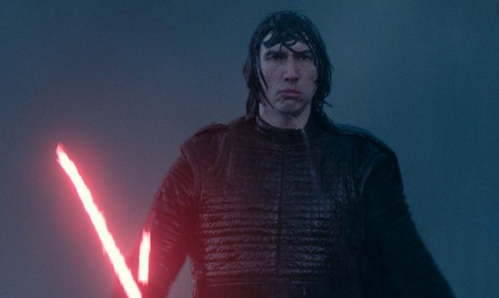
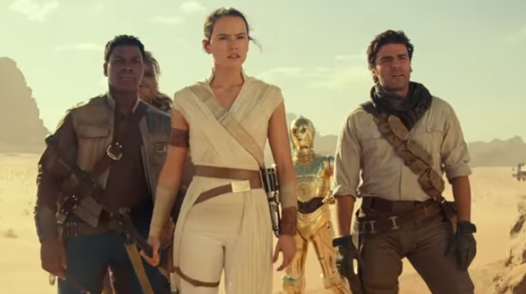

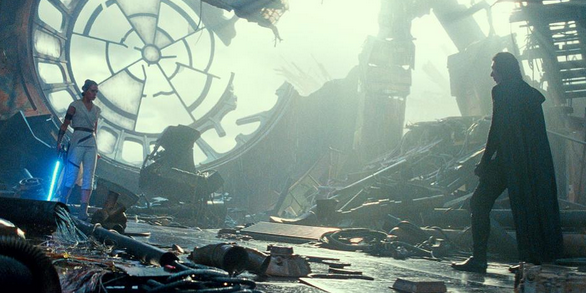



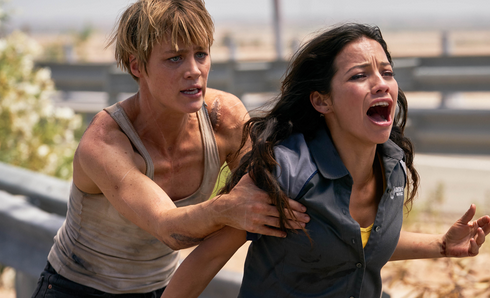




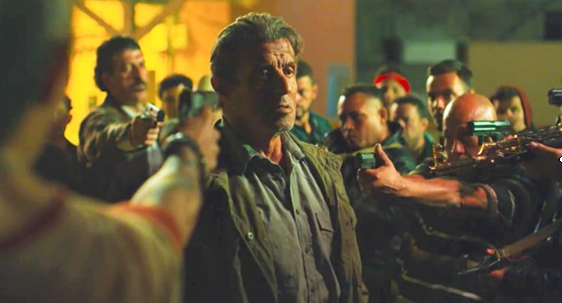
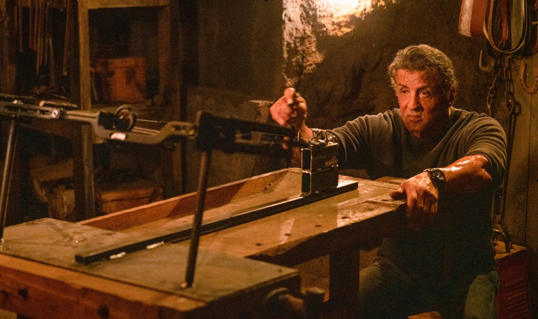
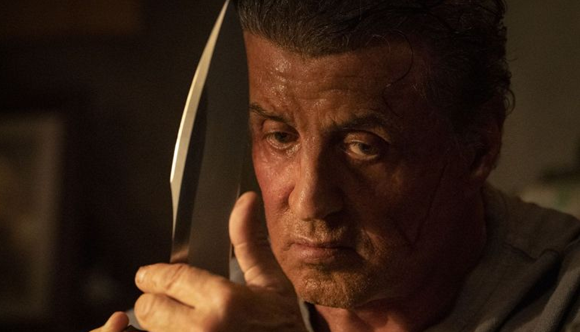
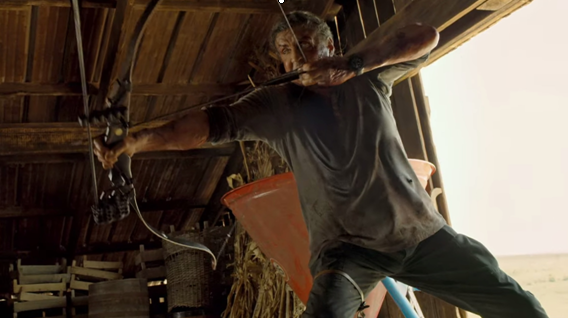



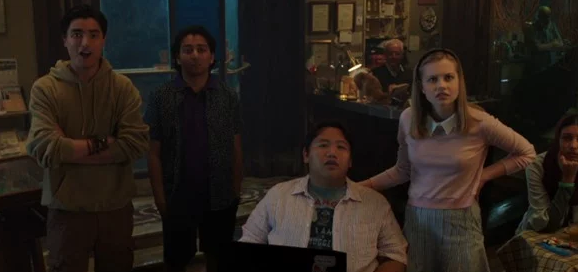
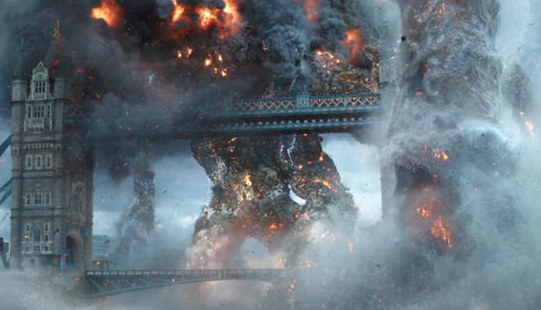
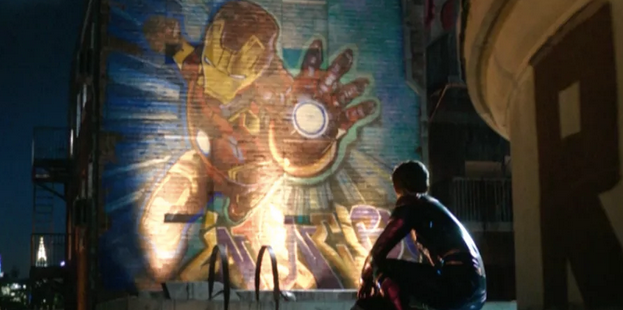
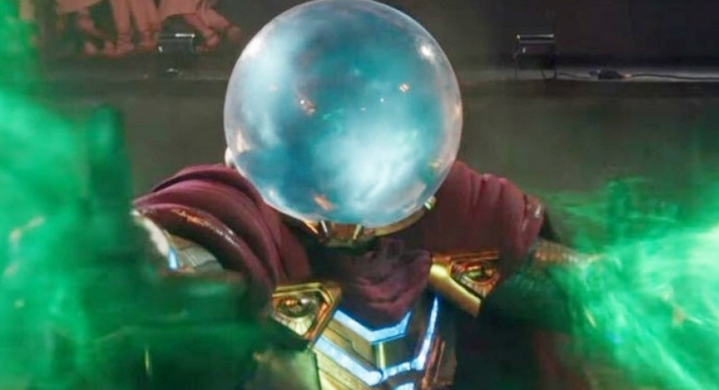
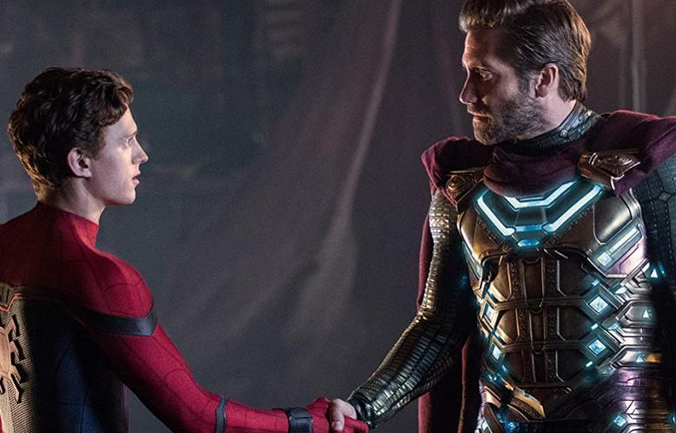



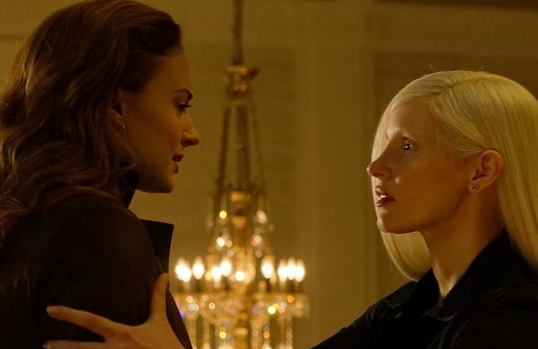
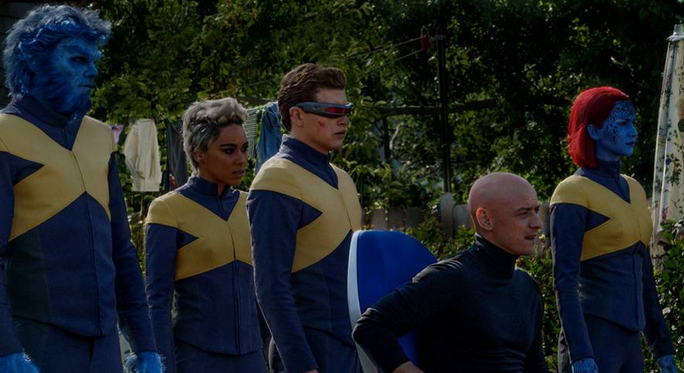
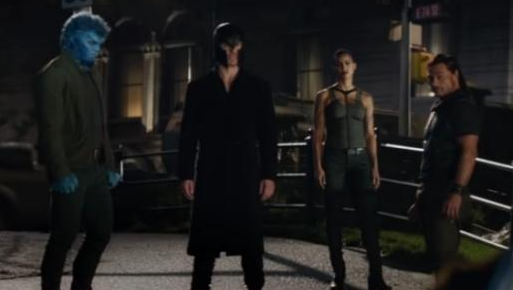
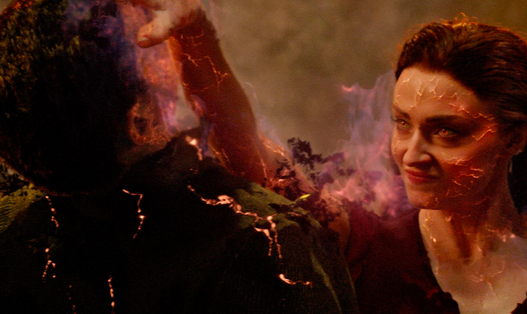
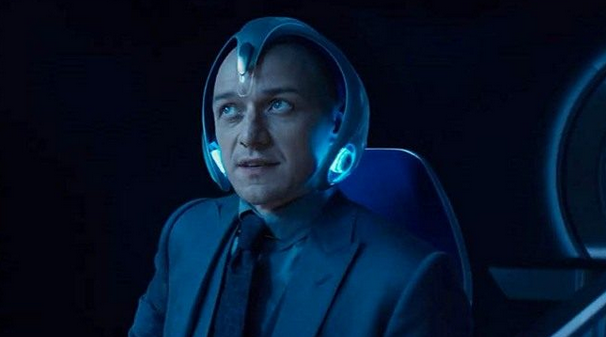
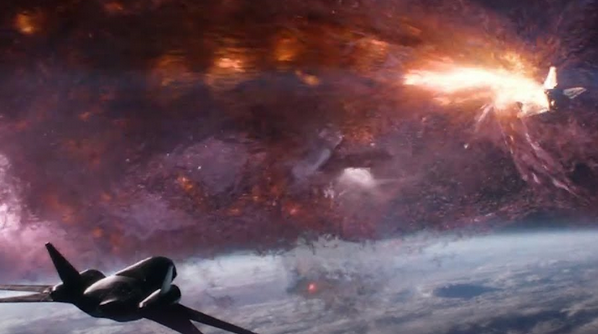



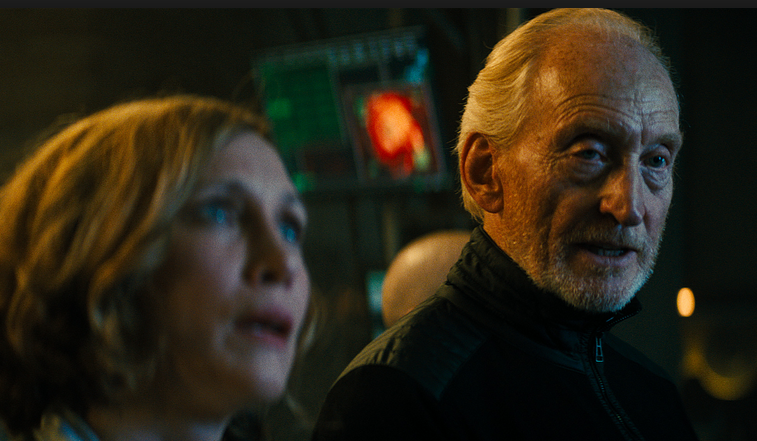
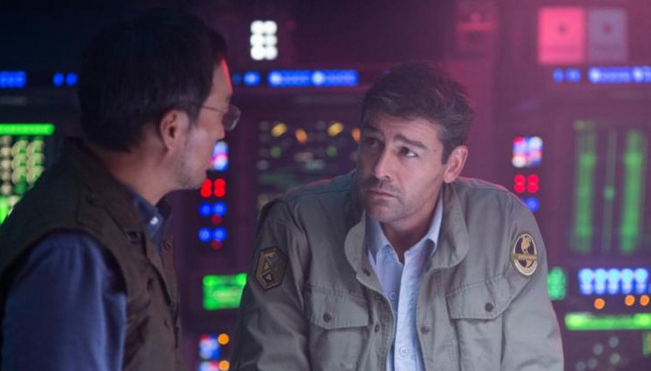
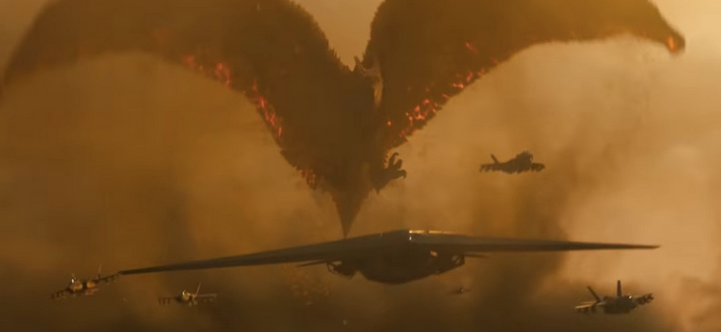
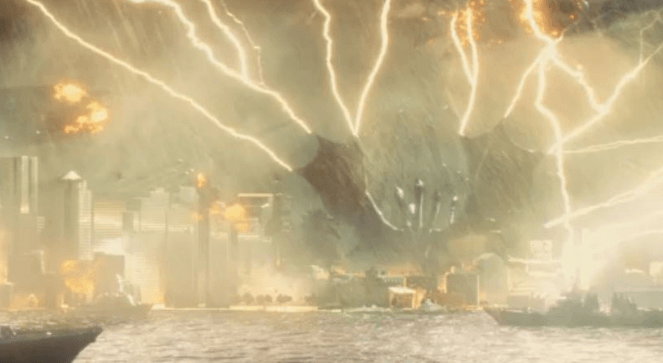
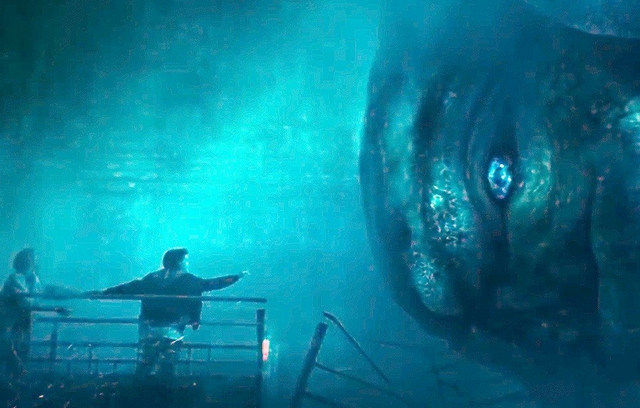
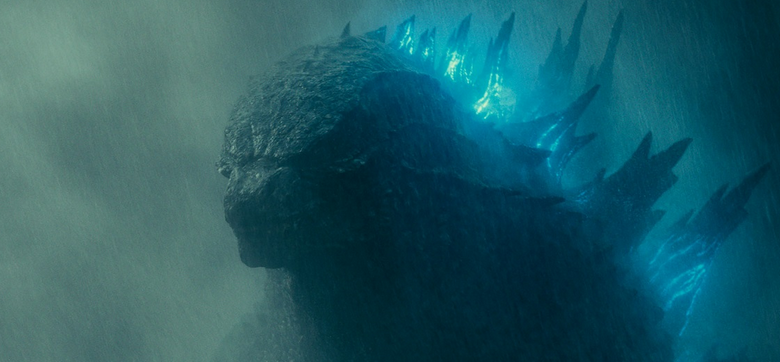



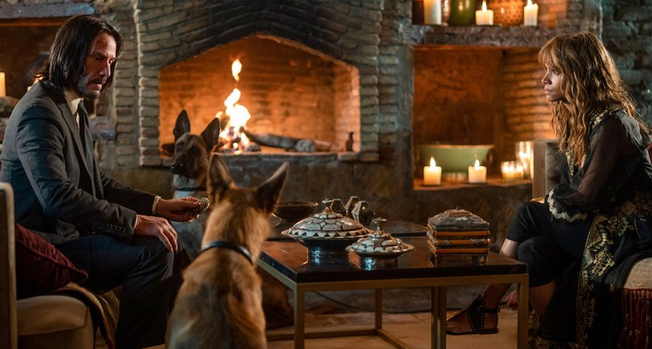
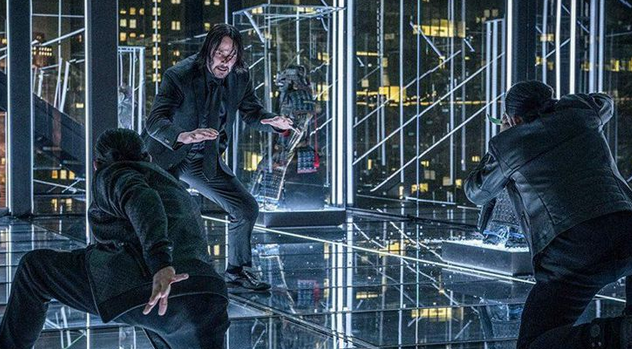



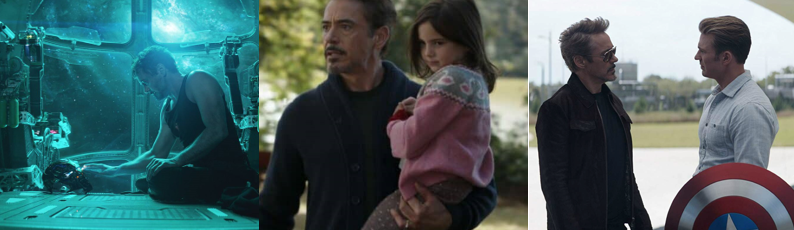
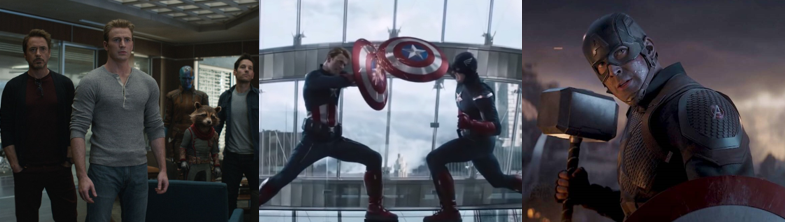
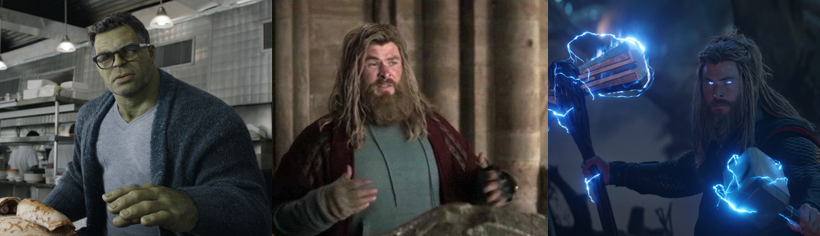
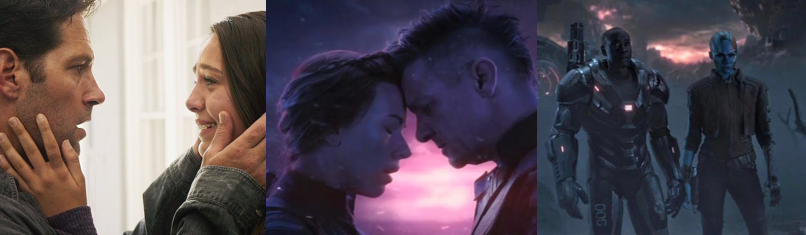
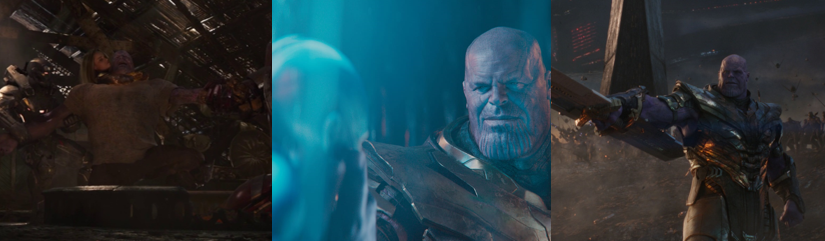
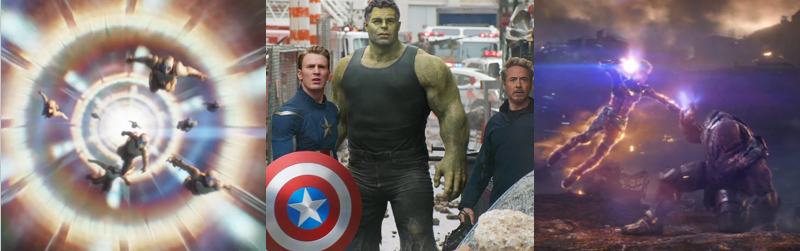
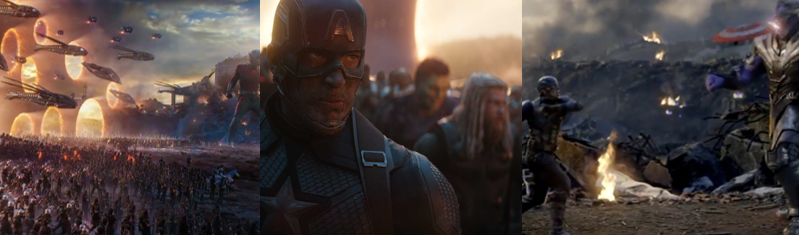


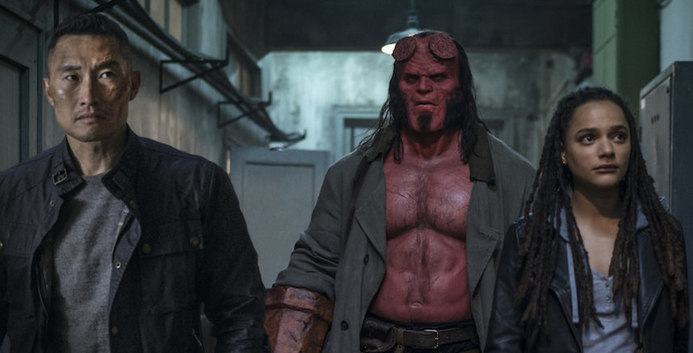
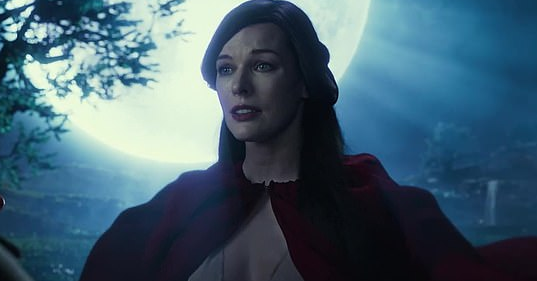
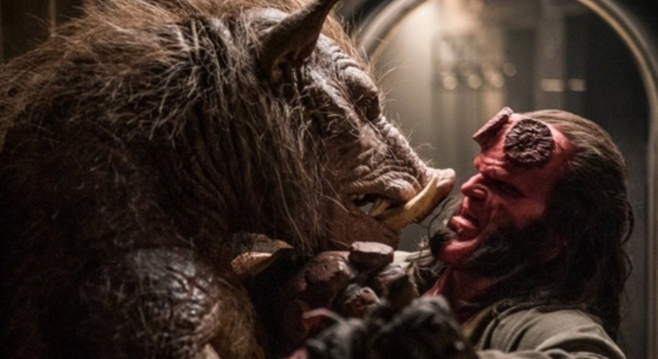
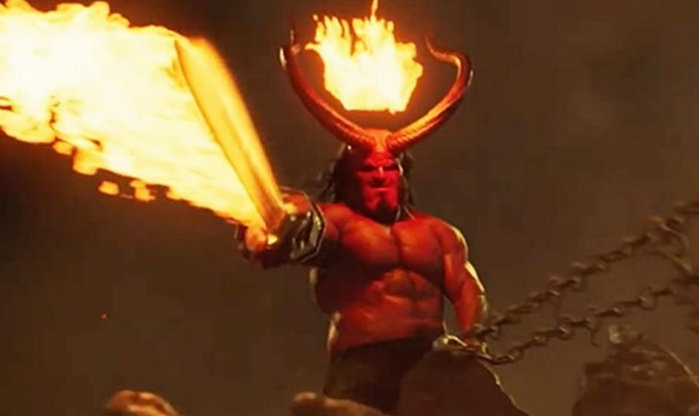

 Dr. K's Waiting Room
You must be logged in to post a comment.