Released: July 2000 Director: Bryan Singer Distributor: 20th Century Fox Budget: $75 million Stars: Patrick Stewart, Ian McKellen, Hugh Jackman, Anna Paquin, James Marsden, Rebecca Romijn-Stamos, Famke Janssen, Ray Park, Halle Berry, and Bruce Davison
The Plot: After discovering her potentially-lethal Mutant powers, Marie D’Ancanto/Rogue (Paquin) goes on the run and crosses path with James “Logan” Howlett/Wolverine (Jackman). When they are attacked by the henchmen of Erik Lehnsherr/Magneto (McKellen), they are rescued by Professor Charles Xavier’s (Stewart) “X-Men” and introduced to a nigh-inevitable conflict between Man and Mutant.
The Background: The X-Men have been a staple of Marvel Comics since their introduction way back in 1963. Alongside long-time collaborator Jack Kirby, Stan Lee created a team of hip, young teens who had a built-in excuse for having their various and fantastic powers; they were Mutants, born with a latent “X-Gene” that activated at the onset of puberty, since their debut, more and more Mutants have appeared and, in some cases, dominated Marvel Comics, with the superhuman offshoot of humanity standing in for a variety of social issues including oppressed creeds, genders, and minorities everywhere through their deep and complex stories. Perhaps the greatest impact of the X-Men outside of comics was the popular and much-renowned animated series produced between 1992 and 1997 but development of an X-Men movie began as far back as 1984 and struggled to get off the ground for quite some time. After the success of the X-Men animated series, however, 20th Century Fox purchased the film rights and development of a live-action movie truly began to take shape. At the time, superhero movies were a bit dead in the water; Batman & Robin(Schumacher, 1997) had been a devastating critical failure and, while Blade(Norrington, 1998) had proven successful and lit the fuse for the explosion of superhero movies that were to come, it was far too dark and violent to capture a wider audience and we were still a couple of years away from Spider-Man(Raimi, 2002) truly capturing that intended audience. So, to say X-Men was a risk is not an understatement; featuring a cast of relative unknowns, bolstered by Stewart and McKellen’s classical training and professionalism, X-Men was a risky venture that paid off dividends, earning over $290 million, catapulting breakout star Hugh Jackman to superstardom, and kicking off one of the most profitable film franchises ever seen that brought comic book movies into undeniable prominence.
The Review: X-Men begins with one of the most striking and affecting scenes in a superhero movie, one that instantly grounds and legitimises the film and its intentions. It’s 1944 in Nazi-occupied Poland and a young Erik Lehnsherr (Brett Morris) is being marched into an Auschwitz concentration camp and, most likely, his cruel death. Separated from his parents, the pain and trauma activate his Mutant ability to control metals and immediately you know everything you need to know about the future Magneto’s motivations: he has seen first-hand the atrocities of humankind and the oppression of his people and he has vowed to never again allow himself or his people to suffer at the hands of “Homo sapiens and their guns”.
Senator Kelly advocates for Mutant registration to keep them regulated and under control.
Director Bryan Singer’s approach to Marvel’s colourful and bombastic comics characters is to ground them in a realistic world, one set in the “not too distant future” and strikingly similar to ours. That means relatable characters, realistic costumes, and an abundance of science-fiction over the more fantastical elements of the comics. As a result, when the film jumps ahead in time, we’re thrust immediately into the ongoing political debate regarding Mutants. Senator Robert Kelly (Davison) is adamant that Mutants need to register with the American government so that their abilities and level of threat can be established for the safety and security of all Americans, however his motivations are so pig-headed and blinkered that they can only be from a place of extreme fear and prejudice.
Jackman makes an immediate impression in the role of Wolverine.
With the threat of Mutant registration hanging in the air, the now adult Lehnsherr decides to finally put into motion a plan to level the playing field. He has assembled a group of like-minded Mutants, the Brotherhood, and constructed a machine that…somehow…uses his magnetic powers to generate an energy field that will trigger unexpected mutations in ordinary humans. As this machine drains Magneto’s powers almost to the point of death, he sends Sabretooth (Mane) to capture Rogue, whose mutation allows her to absorb the powers of other Mutants, so that he can sacrifice her life to make his point. However, thanks to the way the narrative is framed, it initially appears as though Magneto’s target is Logan, a Mutant with a superhumanly fast healing factor, heightened animalistic senses, and an indestructible metal called Adamantium surgically bonded to his skeleton (and claws). Suffering from amnesia and content to fight for money, Logan is unwittingly brought into the world of the X-Men when he and Rogue are saved by Xavier’s pupils; initially, he is a loner with no interest in their cause or the coming war but he develops a soft spot for Rogue and comes to begrudgingly team up with the X-Men in order to save her.
The complex relationship between Xavier and Magneto forms a central focus of the film.
Once Logan is brought to Xavier’s School for the Gifted, the movie really blows open; suddenly, Stewart’s dulcet, soothing tones are expositing information in easy to digest bites as the lore and scope of this world are related to us, the audience, through our two surrogates (Logan and Rogue). The school is built into Xavier’s childhood mansion and is a public front for the massively elaborate tools and resources of the X-Men; they even have a military-style jet under the basketball court. It’s a bit crazy when you stop and think about it but it’s probably best not to and just accept that, somehow, Xavier was able to build all his X-related stuff either without arousing suspicion or by wiping the minds of countless contractors. Central to the film, and Xavier’s exposition, is the relationship between Xavier and Magneto; though they share very little screen time together, Stewart and McKellen’s presence and gravitas instantly elevate the film above many of its peers. Xavier’s dialogue and the way he talks to and about Magneto really develops the sense of a fractured relationship, a long brotherly friendship destroyed by their clashing ideals. There’s a respect and an admiration there and it’s clear that they both appreciate how powerful the other is and have no real desire to fight with each other but will do so, if necessary.
The other X-Men sadly don’t get much to do or much in the way of character development.
Despite being an ensemble piece, the film’s breakout character was, of course, Wolverine. Jackman’s natural charisma and impressive physique and commitment to the role saw him return to the character again and again, dominating Fox’s X-Men movies and largely accounting for the success of the franchise. Despite being far taller than the character is usually portrayed, Jackman certainly looks the part and captures the tortured, animalistic spirit of the role. Haunted by nightmares and struggling with his true origins and identity, Wolverine is initially dismissive and antagonistic towards Xavier’s ideals and his pupils; he laughs at their Mutant code-names, mocks the idea of training and preparing Mutants to defend and live alongside humanity, and immediately clashes with the X-Men’s field leader, Scott Summers/Cyclops (Marsden). Sadly, Cyclops, the characteristically straight-laced and officious leader of the X-Men, doesn’t really get a lot to do here. He mainly stands around, looks cute, and bickers with Wolverine over his unpredictability and the fact that he obviously has the hots for Cyclops’ wife, Jean Grey (Janssen). And did you know that Halle Berry is in this film? She plays Ororo Munroe/Storm, a Mutant who can control the weather and whose main purpose is to guilt-trip Logan into picking a side, providing fog cover to mask the approach of the X-Jet (which doesn’t even work as Magneto knows it’s them…), and deliver one of the worst lines in movie history.
As visually impressive as the Brotherhood is, they’re largely silent and underdeveloped antagonists.
Truthfully, the main X-Men team gets quite shafted by the film’s bloated cast but the Brotherhood suffer even more. Sabretooth is little more than a growling bruiser; nothing is made of his connection to Wolverine, reducing him to Magneto’s muscle rather than the sadistic and murderous character he is in the comics. Toad (Park) is generally a silent character with little going for him other than his little character/body quirks and impressive martial arts abilities. And then there’s Raven Darkhölme/Mystique (Romijn-Stamos), Mangeto’s chief blue-tinted, shape-changing, super sexy henchman who would also go on to be a breakout character of the films. Sadly, however, we learn almost nothing about these characters, their motivations, or their origins and they’re all largely silent. They work as parallels to the X-Men and allow for some tame, but pretty engaging fight scenes but who are they? What drove them to join Magneto? We’re not told as there’s just so many characters and the script and runtime cannot accommodate them all.
The Nitty-Gritty: I think one of the issues with X-Men is the presence of two audience surrogates; the dynamic between Logan and Rogue is interesting, though, and it almost feels as though the film would have worked better if it was them on the run from the Brotherhood and being assisted by, like, two of the X-Men and only being brought to the school at the end of the film. At the time, though, this narrative choice worked really well for introducing audiences to the world of the X-Men and setting the blueprint for the sequels and spin-offs that were to follow.
The colourful costumes are dropped for a uniform look that emphasises style over practicality.
Unfortunately, X-Men came out at a time when Hollywood was still cashing in on, and aping the success of, the action and stylistic aesthetic of The Matrix(The Wachowski Brothers, 1999). As a result, rather than the colourful costumes of the comics, the X-Men are decked out in impractical (but cool-looking) leather suits. I actually didn’t mind this at the time and still don’t now; the uniformity of the X-costumes actually works to show their unity and ties into Logan’s narrative arc: he starts off as a dissociated loner but, by the end, suits up and fights alongside the X-Men as one of the team. I’d still like to see more comic accurate costumes in the eventual X-Men reboot but I grew up with Michael Keaton’s Batman and an abundance of black, cool-but-impractical leather costumes so I’m largely okay with that choice.
Many of the film’s effects look a little dated these days.
Some of the effects, however, haven’t aged too well; the weird shimmering field Magneto uses to create Mutants looks quite janky, as does Mystique’s shape-shifting effects but they held up quite well when the film was first released and other effects, like Wolverine’s claws and Cyclops’ optic blast, still hold up really well thanks to an abundance of wire work and practical, on-set effects. The film’s themes still resonate, as well. As I said, Magneto’s motivations are very real and relatable and the disturbingly fitting end of Senator Kelly is surprisingly affecting. Altered by Magneto’s machine, Kelly mutates into a fish-like quasi-Mutant but, as his cells begin to deteriorate, he horrifically half-drowns before degenerating into liquid right before Storm’s eyes. It’s a terrifying visual, one that seems far too harsh a punishment even considering Kelly’s prejudices but there is some solace to be gained from seeing Kelly humbled at his end and turning to a Mutant for comfort.
The Summary: X-Men works really well as an introduction to the world of Mutants; it grounds its narrative and action in a world not too far removed from our own, which allows it to be grounded and based in some kind of reality so that its more flamboyant, “comic book” elements can be introduced in a way that makes sense. Yet, it’s not a perfect film; there’s a lot of characters here, many of which are left completely one dimensional or underdeveloped. Further sequels would fail to address this for many of these characters, retroactively casting a shadow on X-Men for not doing a better job of dividing its time amongst its large cast a little better. Yet, Stewart, McKellen, and Jackman shine all the brighter as a result of this; the other characters are almost inconsequential compared to their charisma, screen presence, and individual and connected stories. X-Men establishes the rules of its world quite well and definitely laid the foundation for expansion but I can’t help but think that, with the benefit of hindsight and taking into account the lessons of the many X-Men sequels and spin-offs that we’ve had since, that we could the same concept done better in the near future.
My Rating:
⭐⭐⭐
Rating: 3 out of 5.
Pretty Good
What are your thoughts on the first X-Men movie? Were you excited for it when it first released? Do you feel it still holds up or do you agree that it’s seen better days? Which X-character was your favourite? How would you like to see a reboot of the franchise go down? How are you celebrating X-Men Day this month? Whatever you think, feel free to leave your thoughts and opinions on X-Men below and check out my other X-Men articles on the site.
When the Great Demon King Piccolo was released upon the world, he broadcasted a message on television declaring May 9th as “Piccolo Day”…and promptly celebrated by announcing his ownership over the planet. Since then, May 9th has been officially recognised as “Goku Day” but, to make things simpler, I’m using this as a good excuse to celebrate all things Dragon Ball and spend this month taking a look back at one of the franchise’s most popular villains: Broly.
Released: March 1993 Director: Shigeyasu Yamauchi Distributor: Toei Company Budget: ¥713.7 million Stars: Sean Schemmel, Vic Mignogna, Christopher R. Sabat, Stephanie Nadolny, Eric Vale, Sonny Strait, Mike McFarland, and Dartanian Nickelback
The Plot: A rare moment of peace for Son Goku (Schemmel) and his friends is interrupted when Paragus (Nickelback) lures them to New Vegeta by appealing to the vanity and ego of Vegeta (Sabat), prince of the Saiyan race. Their curiosity is piqued by stories of the “Legendary Super Saiyan” running amok but things soon take a turn for the worst when they encounter Paragus’s unhinged son, Broly (Mignogna), who desires nothing more than death and destruction.
The Background: Debuting in the pages of Weekly Shōnen Jump back in 1984 as Dragon Ball, Dragonball Z is the much-loved and popular creation of writer and artist Akira Toriyama. Originally borrowing many of its plot and characters from Journey to the West(Cheng’en, 1592), Dragon Ball followed Goku, a young boy with a monkey’s tail and exceptional martial arts skills, as he travelled the world growing stronger and often searching for the seven magical Dragon Balls. In Dragonball Z, Goku was depicted as an adult and a member of the exceptionally powerful Saiyan race. Dragonball Z took a far more science-fiction-orientated approach to the narrative, introducing several new characters and concepts that would come to define the entire franchise in popular, mainstream media. Dragonball Z was a massively popular anime in the West and was first licensed by Funimation back in 1996, who set about cutting or otherwise altering the often graphic and violent content of the original anime for its less desensitised audience. Nevertheless, the anime was popular enough in both the East and the West to inspire the creation of several feature-length films, seven of which had been produced prior to this one for Dragonball Z alone. Generally produced without the direct involvement of Toriyama, these films told a truncated version of the “Sagas” depicted in the anime and often failed to align with established canon as a result. As is often the case, though, Toriyama was invited to conceive of the design for an all-new antagonist, creating one of the most recognisable characters in Dragon Ball canon as a result, one who was so popular that he featured in three more movies (two of which were direct sequels to this one) and numerous videogames and ancillary media.
The Review: Broly – The Legendary Super Saiyan sets the stage for the threat the titular Super Saiyan poses right from the off as it opens with the South Galaxy being “shattered by a Super Saiyan”; the level of destruction is so fearsome that it puts the wind up King Kai (Schemmel). While that may seem impressive, though, you have to remember that every threat that comes along in the Dragon Ball franchise tends to give King Kai the shivers; it’s such a common theme that it doesn’t really carry the same weight, especially when viewed retroactively. We then jump to series protagonist Goku, who has been forced into a fancy suit and is being badgered, as always, by his highly strung wife, Chi-Chi (Cynthia Cranz). Desperate to make a good impression so that their son, Son Gohan (Nadolny), can get into a fancy private school, Chi-Chi is even more overbearing and demanding than usual (if that’s even possible) and Goku is just as awkward and dumb-headed as ever, thinking only about fighting and food, and only serving to aggravate his wife even more.
Paragus and his troops pay reverence to their prince, Vegeta.
Goku is restless not only because he’s bored and hungry but also because he’s missing out on a nice little picnic for his closest friends and family; in many ways, though, I envy Goku as he doesn’t have to put up with Krillin’s (Strait) God-awful singing, which is so bad that Vegeta looks ready to kill him. Thankfully, this ear-splitting screeching is interrupted by the arrival of Paragus, who drops down in a massive spaceship full of alien soldiers, all of whom immediately bow and pay reverence to Vegeta. While Vegeta isn’t massively impressed with Paragus’s desires to rebuild the Saiyan army, his curiosity is piqued when Paragus mentions that the “Legendary Super Saiyan” is wreaking havoc across the galaxy. Sure that it’s some kind of trick, Future Trunks (Vale) moves to stop his father from leaving and stows away on the spaceship with Krillin, Master Roshi (McFarland), and Oolong (Bradford Jackson), of all people. These latter two character exist simply to act as our comedy relief for the remainder of the film, which is generally their role in most of the Dragon Ball movies and anime but it’s somewhat out of place here; Roshi’s intoxicated state is good for a few laughs but I can’t help but feel like Krillin could have handled the awkward comedy relief parts perfectly well all by himself.
Both Goku and Vegeta are excited at the prospect of battling the Legendary Super Saiyan.
Goku, having learned of the “Legendary Super Saiyan” from King Kai, is just as excited at the prospect of facing such a powerful opponent. While Vegeta views the presence of the mythical warrior as a worthy challenge, arrogant in his belief that he will be able to overcome such a foe, Goku is as giddy as a schoolkid at facing someone that is potentially more powerful than him and immediately heads to the South Galaxy to track the Super Saiyan down. Neither character, or any of the others for that matter, seems to think about the fact that Super Saiyans already exist (Goku, Trunks, and Vegeta are already Super Saiyans by this point) but there is clearly a distinction between their power-ups and the “Legendary Super Saiyan” that inspired their golden forms. Equally odd is how easily impressed Goku is with the destruction left by the Legendary Super Saiyan; considering Frieza (Linda Young) did far worse to both Planet Vegeta and Planet Namek compared to what Goku sees, it’s a bit strange to see him so concerned about this new being’s power when all he’s seen is a wrecked city. Still, once the others reach New Vegeta, Vegeta is hailed as a king and takes an instant liking to Paragus’s Saiyan son, Broly. Vegeta even chooses Broly to accompany him in confronting the Legendary Super Saiyan over his son, which is a bit odd considering everyone goes out of their way to say how weak, timid, and unassuming Broly is. Clearly affected by his father’s choice, and concerned about Paragus’s true motives, Trunks investigates the planet with Krillan and Gohan and discovers that New Vegeta is little more than a barren wasteland filled with the skeleton of a civilisation to give the illusion of a vastly populated world. They also discover an alien race being enslaved by Paragus’s troops to power his citadel but, after Goku arrives via Instant Transmission, their concerns about Paragus are almost immediately and stupidly put to ease. However, we the audience are then subsequently shown that Paragus is, in fact, plotting to have a comet destroy the planet.
Broly was an immensely powerful and violent child.
Vegeta and Broly return empty-handed soon after; Vegeta is characteristically frustrated not just because they failed to track down the Legendary Super Saiyan but also because of Goku’s presence. And he’s not the only one annoyed by Goku as, upon meeting him, Broly gets extremely agitated, is barely able to contain himself, and must be subdued by his father and his handy-dandy remote control. The very next scene reveals that the remote is starting to have less and less effect on Broly’s power due to Goku’s presence and we get the first of a number of flashbacks to help flesh out the backstory of Paragus and Broly. Broly was a super destructive feral child and Paragus, unable to control him, was forced to fit him with a suppressing device out of fear for Broly’s violent and ever-growing powers, which almost caused Broly to kill his father, and in a bid to use that same power to dominate the universe. Critically, Broly was also born with a power level of ten thousand and on the same day as Goku; baby Goku’s constant wailing and crying disturbed Broly, traumatising him and causing him to grow up with a dead-seated hatred for Goku. Unable to contain this hatred, Broly attacks Goku in a mindless rage, proving a formidable opponent whose power appears to be almost limitless, until Paragus is able to calm him once more. The fight is enough to convince Goku that Broly is the Legendary Super Saiyan they have been searching for, a fact he shares with Vegeta just as he is about to leave and which is corroborated when the alien slaves identify Broly as the one who ransacked their world. With the truth revealed, Paragus immediately reveals his true intentions: he orchestrated the entire charade in order to use the oncoming comet to remove the only ones capable of keeping him from invading and colonising Earth with a new Saiyan army (quite how he intends to do that without any Saiyan women is beyond me…).
Thanks to Piccolo’s timely intervention, and the energy of his allies, Goku emerges victorious.
Paragus also reveals that he desires revenge against Vegeta since it was his father, King Vegeta (Sabat) who, fearing Broly’s power, banished the two of them and tried to have them killed. Unable to contain himself any longer, Broly disobeys his father, begins to power up, and engages with the Saiyans. Even as a Super Saiyan, Vegeta’s attacks don’t even faze Broly, who relentlessly targets Goku, shattering his restraining headband and finally transforming into the hulking Legendary Super Saiyan in an explosion of power so immense that it threatens to split the planet in half. Now little more than a mindless, ravenous beast, Broly’s awesome power is enough to bring Vegeta to his knees in fear; seeing that Broly truly is the Legendary Super Saiyan, Vegeta refuses to fight, believing that they (and even he) are powerless in the face of such awesome might. Broly makes short work of all those who oppose him, his power actually increasing the longer the fight progresses, and lays waste to the entire planet in a burst of rage. So total is his mindless, insane fury that he callously murders his father, freeing him of all restrictions and allowing him to truly let loose his full power. True to form, Piccolo (ibid) eventually arrives to lend a hand, healing the protagonists with some Senzu Beans and setting the stage for the film’s ultimate climactic battle and eventually convincing Vegeta to join the fight. Of course, Vegeta’s fears are true and they are no match for Broly’s power, even fighting as a group, forcing the protagonists to pool their energy into Goku for one last blow, defeating Broly and leaving him to die as the comet strikes New Vegeta.
The Nitty-Gritty: Broly is a nigh-unstoppable force of nature not unlike DC Comics’ Doomsday, who debuted a few months earlier, and attacks do little to faze him even before he powers up to his “Legendary Super Saiyan” form. He has the same distinct footsteps as Cell (Dameon Clarke) but, despite having an interesting backstory that directly ties him to Goku and being far chattier here than in other appearances, he is a far cry from more loquacious and charismatic villains like Frieza or Cell. Instead, Broly is all about sheer, mindless power and unbridled destruction; he is the Saiyan lust for battle incarnate and dialled up to eleven, revelling in death, devastation, and driven only to kill Goku and all those who stand before him So awesome is Broly’s power that he destroys an entire world with one energy blast; this puts him at a level above Frieza, who took forever and a day to charge enough energy to destroy Planet Namek. His sheer indestructibility and ability to absorb and no-sell hits also puts him on a similar level to Cell, though he favours raw, unbridled strength over absorbing or adapting to the abilities of his opponents. In just a few blows, Broly is able to blast Gohan and Trunks out of their Super Saiyan forms and, even after Piccolo’s Senzu Beans restore their vitality, Goku is, of course, soon left to tackle the Legendary Super Saiyan alone with only his strength and matchless tenacity.
Vegeta is uncharacteristically paralysed with fear in the face of Broly’s awesome power.
Vegeta is so horrified by Broly’s power that he refuses to fight; never before has Vegeta been so crippled by fear and awe. Even in the face of Frieza and Cell’s final forms, he would rise to fight, refusing to admit that he was outmatched but, here, he can’t even bring himself to defend himself much less try to oppose Broly. He cannot understand why Goku and the others even attempt to match fists with Broly, so total is his despair at the futility of their situation; even when completely out-matched by Kid Buu (Josh Martin), Vegeta at least attempted to fight but, against Broly, it’s all he can do to begrudgingly lend Goku the power to defeat the Legendary Super Saiyan. It’s an interesting new twist on Vegeta’s stubborn, prideful nature; seeing him shaken to the core and paralysed by dread is a sobering moment and really helps sell the level of Broly’s threat just as much as seeing him make mincemeat of Goku and the other Super Saiyans.
A physically impressive, if somewhat one-note antagonist, Broly decimates our heroes with ease.
Yet, as impressive as Broly is, he is little more than a mindless beast and this film essentially boils down to an extended fight scene. The plot moves along briskly, never stopping to dwell or elaborate on things and characters more than it has to, which is something I always liked about the Dragon Ball feature films: they distil the generally prolonged fight scenes and endless power up sequences of the anime down to the basics and get right to the action as quickly as possible. Broly has an interesting backstory and certainly makes an impression…right up until his anticlimactic defeat. In the end, after all the ki blasts, power-ups, and blows he has absorbed, Broly goes down relatively easily from a super-powered blow to the abdomen. At least it makes a change from Goku defeating his opponent with a Spirit Bomb but it’s a disappointing way to defeat what is an otherwise very impressive villain; luckily, though, the next movie retroactively shows that Broly actually survived this attack (and rightfully so) but Broly’s unbeatable aura would be diminished in his subsequent appearances.
The Summary: The Dragon Ball feature films have always been quick snapshots of the generally long-winded anime and Broly – The Legendary Super Saiyan is no different; flying through the simple plot and getting right to the action, Broly – The Legendary Super Saiyan stands out from its predecessors through the sheer impressive presence of Broly. A sadistic, merciless, hulking monster of a Saiyan, Broly is fascinating for the questions he raises about the Super Saiyan form alone: is he truly the Legendary Super Saiyan whom Vegeta had heard stories of as a child or is he simply an enormously powerful Saiyan who has tapped into a raw form of the same energy the other Saiyans use? While little more than one massive fight scene, Broly – The Legendary Super Saiyan is worth a watch for the titular Super Saiyan, if nothing else, and definitely to see Vegeta so wracked by horror that he flat out refuses to fight.
My Rating:
⭐⭐⭐⭐
Rating: 4 out of 5.
Great Stuff
What did you think of Dragonball Z: Broly – The Legendary Super Saiyan? Where does it rank for you against the other Dragonball Z feature films? What did you think of Broly’s introduction and how would you rate him as a character and antagonist? Would you have liked to see Broly integrated into the main series canon sooner or do you feel he’s over-rated and, perhaps, a relatively underwhelming character? What Dragon Ball character (hero, villain, or otherwise), saga, or movie is your favourite and why? How are you celebrating Piccolo/Goku Day this year? Whatever your thoughts on Dragon Ball, please leave a comment below.
While May 4th is known the world over as Star Wars Day, many also choose to extend the celebrations of the course of three days, with one of them being the “Evil Star Wars Day” of May 6th (as in “Sith”). This year, I’ve been using the three Star Wars Days as the perfect excuse to go back over the Original Trilogy.
Released: 22 September 2019 Originally Released: 25 May 1983 Director: Richard Marquand Distributor: Walt Disney Studios Home Entertainment Original Distributor: 20th Century Fox Budget: $32.5 million Stars: Mark Hamill, Harrison Ford, Carrie Fisher, Anthony Daniels, Kenny Baker, Peter Mayhew, David Prowse/James Earl Jones, Billy Dee Williams, and Ian McDiarmid
The Plot: After rescuing Han Solo (Ford) from the clutches of Jabba the Hutt (Scott Schumann), Jedi Knight Luke Skywalker (Hamill) prepares himself for a showdown with his father, Darth Vader (Prowse/Jones) while Princess Leia Organa (Fisher) and the Rebel Alliance prepare for one final, all-or-nothing assault on the partially-constructed Death Star II in the hopes of ridding the galaxy of the Emperor (McDiarmid) once and for all.
The Background: By 1983, George Lucas’s science-fiction “space opera” had developed into an extremely successful series of films and multimedia merchandise; yet, though the wave of books, action figures, and videogames that were released back then was prominent, it merely only hinted at the nigh-unstoppable reach of the franchise. After Star Wars: Episode V: The Empire Strikes Back (Kershner, 1980) proved an incredible, if divisive, box office success, Lucas began financing a third film and looking at potential directors (including Steven Spielberg). Eventually, he settled on Richard Marquand but was frequently on set offering advice and assistance. Originally produced under the title Revenge of the Jedi, Lucas eventually altered the title and would clash somewhat with star Harrison Ford over the fate of Han Solo: Ford wanted Solo to die but Lucas was vehemently against it and, eventually, talked the former carpenter around. Although Return of the Jedi didn’t make quite as much at the box office as its predecessor, it was still an incredible financial success, making over $475 millionat the box office and finishing first at the box office for six of its first seven weeks of release. The film’s critical reception appears to have been the opposite of Empire’s, with critics of the time largelypraising the film and modern audiences generally regarding the film as the weakest of the Original Trilogy for its more child-friendly inclusions and derivative elements. As with the other films in the Original Trilogy, Lucas later revisited and augmented the film using modern technologies which has resulted in one of the most derided inclusions of all the alterations Lucas has made to his influential trilogy.
The Review: I touched upon this in my review of Empire but when I was a kid, I knew about Star Wars and I liked what I saw but I hadn’t really ever had the opportunity to watch any of the films from start to finish; they never seemed to be on television (we only had the basic four channels back then) and the VHS tapes were quite hard to come by until the 1997 Special Editions were released. As a result, while I can recall snapshots and snippets of each film, the first one I remember sitting down and watching from start to finish (or, at least, enjoying all the way through) was Return of the Jedi and, for a long time, it was my favourite of the Original Trilogy until I came to find a deeper appreciation for The Empire Strikes Back’s bleak brilliance. Still, there is a lot to like about Return of the Jedi; the effects, for one thing, are at their peak in the Original Trilogy and it represents the culmination of each character’s journey and arc since we were first introduced to them.
Leia puts her love for Han ahead of her commitment to the Rebellionand fights by his side.
Unfortunately, a lot of it is a bit redundant as we’ve already seen a fully operational Death Star before so returning to that well was a bit derivative and it lacks both the gritty, “lived-in” feel of Star Wars: Episode IV: A New Hope(Lucas, 1977) and the large scale impact of Empire but what we’re left with is still a pretty decent rollicking space adventure when you focus on Luke’s journey and the desperate battle against the partially-constructed Death Star II. When Jedi begins, the Rebel Alliance are in a bit of disarray; though the threat of a new Death Star lingers ominously in the background, Princess Leia risks everything to deviate from concocting an assault on the space station to infiltrate the sordid palace of the disgusting and nefarious slug-like crime lord Jabba the Hutt in order to rescue her beloved Han. I mentioned when reviewing Empire how, in the previous film, Leia’s militaristic and pragmatic façade was slowly and methodically stripped away as her more human, vulnerable, and emotional side came to the forefront through her burgeoning feelings for Han and nowhere is that best expressed than in her putting aside her commitment to the Rebel Alliance to rescue Han. Once he is safely back amidst the Rebel Alliance, she then steps away from her more diplomatic role as a co-ordinator and commander to join Han in the mission to knock out the Death Star II’s shield generator, now fully embracing both her proactive, action-orientated abilities and her softer, more empathetic side.
Luke’s powers and confidence have grown significantly but he’s far from a flawless character.
Leia’s infiltration is just a mere part of the grand plan to rescue Solo, however, and it’s all been devised by Luke Skywalker. Now a far cry from the wide-eyed, naïve farmboy of A New Hope, Luke is garbed head to toe in black and Jedi robes, confidant in his ability to use the Force and sure that he has the power and ability to rescue Solo with a minimum of fuss. As impressive as Luke’s newfound abilities are, however, he’s not without flaws; he doesn’t bank on Jabba resisting his Jedi mind tricks or Han emerging from the slab of carbonite with temporary blindness. His concern for the well-being of his friend, particularly his treasured Leia, also causes him to receive a blaster shot to his cybernetic hand during the rescue though they are, nevertheless, successful. Somewhere between movies, Luke has grown considerably and, despite receiving only a crash course in Jedi training, is all-but a Jedi Knight when Jedi begins. However, upon returning to his wizened master Yoda (Oz), Luke learns that he must confront and defeat Darth Vader if he is ever to become a true Jedi. Luke is aghast at the suggestion, sure that he is unable to kill his father, and his doubts are further compounded when the spirit of his first mentor, Obi-Wan Kenobi (Alec Guinness), reveals that Leia is actually his twin sister. Rather than dwell on the romantic and sexual feelings and moments they shared in the previous films, Luke resolves to instead attempt to turn his father from the Dark Side and redeem him rather than kill him and is so convinced that Vader is in conflict between his good and bad feelings that he’s even willing to die in this attempt.
Though still a loveable rogue, Han has matured into a full-blown team leader.
After being freed from the carbonite and recovering from his vision loss, Han fully commits to the Rebel Alliance and their desperate crusade against the Death Star II; to show just how far his character has grown over the years, rather than simply laughing off or walking away from the Rebel cause, he voluntarily agrees to lead the ground assault against the shield generator and takes up a commanding position with ease and grace. He’s still the most charismatic of the characters and actors, however, and maintains that gruff, rugged edge that made him so likeable but he’s also clearly developed as a character, showing layers of vulnerability and leadership, respectively, where he previously only showed selfishness. Han reluctantly hands the keys to the Millennium Falcon over to his former smuggling buddy Lando Calrissian (Williams); it’s not addressed onscreen why Han immediately trusts Lando considering he was betraying him to Vader and the bungling bounty hunter Boba Fett (Jeremy Bulloch) in the previous film but, regardless, Lando is now an accepted and integral part of the Rebellion and trusted enough with leading the head-on assault against the second Death Star. Still emitting a cool, smooth charm, Lando fulfils the role of a principal figure in the Rebellion as easily as Han, as though he was merely hiding from his greater destiny all this time. Once again, our heroes are supported by the droids C-3PO (Daniels), R2-D2 (Baker), and the Wookie, Chewbacca (Mayhew); this time around, Threepio gets a bit more of the spotlight as he is revered as a God by the tribal-like teddy bears known as Ewoks and shines in his comedic contributions and an abridged, adorable retelling of the saga so far. Artoo, meanwhile, doesn’t really get a whole lot to do beyond being Luke’s unquestioning confidant and getting the Rebels into the shield generator stronghold and, similarly, Chewbacca is taken away from the space action to join Han’s ground party where he humourously bonds with the Ewoks and commandeers an All-Terrain Scout Transport (AT-ST) walker during the big forest battle.
Either Luke kills the Emperor or he kills Vader; either way, the Emperor wins.
Although the Emperor was retroactively inserted into Empire, he was first introduced in the flesh here in Jedi. After the Force and their kind were openly mocked and treated with scorn in A New Hope, its humbling and affecting to see that the Imperials fear the Emperor almost as much, if not more so, than Vader himself. A cackling, manipulative, wizened crone in a dark robe, the Emperor’s words are full of confidence and poison and he is so convinced of his victory that he willingly leaks information about the Death Star II to the Rebels in order to lure them into a trap. Seated in his enigmatic throne aboard the second Death Star, the Emperor taunts and cajoles Luke in order to fuel his anger and affect his turn towards the Dark Side; everything the Emperor says is designed to push Luke further and further and he even leaves himself completely defenceless, seemingly ready to die so that Luke can turn to the Dark Side and succeed him. His true motivation, of course, can be read through subtext; the Emperor wants Luke to battle, kill, and ultimately replace Vader as his apprentice and he (the Emperor) doesn’t really try to hide this motivation. As for Darth Vader, he is at his most conflicted in Jedi; in A New Hope, he was a mere puppet, almost bored with the mundane routine of his life, but he was a driven, focused force of nature in Empire. In Jedi, we see just how committed and devoted to his Emperor Vader is; he willingly bows in the Emperor’s presence, speaks for him to the Imperial subordinates, and seems in awe (or fear) of the Emperor’s power and ability in the Dark Side of the Force. In Empire, Vader offered Luke the chance to join him so that they could overthrow the Emperor and you can tell, even with the featureless helmet and after shunning Luke’s assertions of his inner conflict, that Vader truly desires to unite with his son to displace the Emperor’s authority.
The Nitty-Gritty: Return of the Jedi really ups the ante when it comes to practical and special effects; it’s truly a shame to see what a mess Lucas made of the Prequel Trilogy by relying so heavily on computer-generated characters and effects when the standards for the suits and puppets and stop motion work were so high in Jedi. Jabba makes an immediate impression thanks to being a huge, tangible puppet; slimy and disgusting, he’s little more than a lackadaisical slug but is so expressive and lifelike that you really buy into his presence and menace.
Return of the Jedi‘s puppets and practical effects were the best in the series at that point.
Similarly, the effects on the Rancor are still commendably impressive; a large, bipedal, nightmarish monster, we’ve never seen a character engage with a monster like the Rancor in the Star Wars films before and it’s very impressive the way the filmmakers pulled it off. Similarly, the integration of the Imperial Walkers into the more complex environment of the forest moon of Endor is equally impressive, marred only by the poor effects seen in the speeder bike chase. Return of the Jedi also features the best space battle of the saga so far as the entire Rebel fleet converges on the second Death Star and the second biggest twist of the series is revealed when the Death Star starts blowing up their frigates with its super laser. What follows is an intense, suicidal mission as the outnumbered and outgunned Rebels desperately engage with countless TIE Fighters and numerous gigantic Star Destroyers until Han’s group manages to bring down the shield and allow Lando to lead the assault into the space station’s superstructure. It’s a big, visually impressive space battle and leagues beyond the more gritty skirmish we saw in A New Hope; because of the sheer amount of ships and destruction happening onscreen at any one time, you really get a sense of the urgency and overwhelming odds that the Rebels are up against and that ths is their last chance at defeating the Empire for good.
Vader is overwhelmed and overpowered when Luke explodes into a relentless rage.
Ultimately, though, Vader willingly engages his son in the most brutal and emotionally charged lightsaber battle of the saga so far; like the Emperor, Vader taunts Luke, threatening his friends and sister to goad him into giving in to his hatred and anger. This works a little too well, however, as Luke flies into a rage and relentlessly pummels Vader, severing his cybernetic arm and rendering him beaten and helpless. Now held at the mercy of Luke’s lightsaber in a thematic reversal of the conclusion to their last battle, Vader wheezes helplessly on the floor, even holding a hand up as if to ward off Luke’s wrath and it is only when Luke compares his own cybernetic hand to Vader’s prosthetics that he realises how alike they truly are and he dramatically casts aside his lightsaber and refuses to kill his father. Insulted and angered, the Emperor unleashes his full power on Luke and reveals a peak at the true destructive potential of the Force; prior to Jedi, the Force was an abstract concept with a multitude of uses but never truly tangibly seen onscreen but the Emperor’s devastating Force Lightning changes that and it’s extremely unsettling to see him cackling away and taking such pleasure in roasting Luke alive.
One act is apparently enough to atone for a lifetime of genocide…
Darth Vader is deeply perturbed by these events; literally turning his head to his suffering son and his all-powerful master, physically evoking the conflict deep within his dark heart. Ultimately, Vader chooses to turn on his master, hoisting the Emperor up and casting him down a vast chasm to his death and absorbing the full, lethal force of his master’s lightning at the same time. Many like to argue that this one act redeems Vader (and Jedi goes out of its way to show this as the case as Vader, now restored to the form of Anakin Skywalker (Hayden Christensen), appears alongside Obi-Wan and Yoda as a Force ghost at the film’s conclusion, now content and happy) but I actually take issue with this. It’s a poignant and moving seen seeing Vader’s scarred and vulnerable true face as he has one last heartfelt moment with his son but does one act, no matter how pivotal, truly make up for the years of torture and genocide that Vader personally revelled in? I would argue that it doesn’t and that it takes the focus off of Luke who, for me, is the true “Chosen One” of the saga and that Anakin’s destiny was to sire the Chosen One rather than be it himself.
The Summary: Many people like to rag on Star Wars: Episode VI: Return of the Jedi and I can understand why: the plot is largely derivative, the inclusion of the cute and cuddly Ewoks was a bit jarring, and it seems like a much shorter, far less intense film of the most part. For me, personally, I have no real issue with the Ewoks as they help to expand the Star Wars universe and tell a decent story of primitive cultures triumphing over superior forces (acting as a pretty on the nose allegory for the Rebellion itself in many ways) and the film’s intensity ramps up considerably once the big space battle and the culmination of Luke’s journey begins. No, for me, Return of the Jedi’s flaws lie in the disappointing trend it set for further Star Wars films to focus more on call-backs and redundant elements than trying something new; not only does the Death Star return, the first portion of the film returns to the bleak, barren, boring landscape of Tatooine and, while it does something new with this environment, it’s disappointing to me how many subsequent Star Wars films re-used this desert landscape or returned to the idea of a planet-killing super weapon. Still, that aside, there’s a lot to like in Return of the Jedi, particularly if you focus on the assault against the Death Star II and Luke’s emotional confrontation with his father and it’s easily the second best film in the Original Trilogy for me.
My Rating:
⭐⭐⭐⭐
Rating: 4 out of 5.
Great Stuff
Where do you rank Star Wars: Episode VI: Return of the Jedi against the Original Trilogy, and the other films in the Star Wars saga? What did you think to the inclusion of the Ewoks and bringing the Death Star back into the story? How about the Emperor; what did you think of him and of Darth Vader’s sacrifice in the film’s finale? Do you feel that one act redeemed Vader or do you agree that one act cannot be weighed against a lifetime of evil deeds? What did you think to the revelation that Leia is Luke’s sister? How are you celebrating May the Sith today? Whatever you think, drop a comment below and let me know and thanks for joining me in revisiting the Original Trilogy over the last three days.
Although May 4th is known the world over as Star Wars Day, many also choose to celebrate the popular, generation-spanning science-fiction saga on May 5th as a play on the word “Sith”. This can extend Star Wars Day into three day celebration of the influential science-fiction series and, as a result, I am using each of these days to look back at the Original Trilogy!
Released: 22 September 2019 Originally Released: 17 May 1980 Director: Irvin Kershner Distributor: Walt Disney Studios Home Entertainment Original Distributor: 20th Century Fox Budget: $33 million Stars: Mark Hamill, Harrison Ford, Carrie Fisher, Anthony Daniels, Kenny Baker, Peter Mayhew, David Prowse/James Earl Jones, Billy Dee Williams, and Frank Oz
The Plot: Three years after destroying the Death Star, Luke Skywalker (Hamill), Han Solo (Ford), and Princess Leia Organa (Fisher) and the Rebel Alliance have been constantly hounded by the Galactic Empire. Having been driven from their hidden base, the Rebellion is scattered, with Luke journeying to refine his Jedi sills and Han and Leia relentlessly pursued by Darth Vader (Prowse/Jones).
The Background: George Lucas’s science-fiction “space opera” was a near-immediate hit upon release and, almost immediately, talks began of producing a sequel. Despite the filming of Star Wars: Episode IV: A New Hope (ibid, 1977) proving a harrowing experience, Lucas wasn’t finished with his story and soon relented to the demand for a follow-up but had to navigate the minefield of sci-fi films and media that Star Wars had subsequently inspired. Having financed much of the film himself in order to maintain creative control, creating his own film studio in the process, Lucas turned directing duties over to Irvin Kershner, and filming began on 5 March 1979. Filming ran into a few snags when star Mark Hamill was injured in a car accident and Harrison Ford first voiced his desire for his character, Han Solo, to be killed off, both of which necessitated a number of rewrites. Conversely, the film’s now-iconic twist was kept a closely-regarded secret, with only a handful of cast and crew being in on the dramatic revelation, ensuring that audiences were shocked at the reveal. For me, even now, The Empire Strikes Back is the best Star Wars film in the entire saga, with Rogue One: A Star Wars Story(Edwards, 2016) a close second. Fittingly, the film was massively profitable, making over $550 millionat the box office but, interestingly, opinions on the film were divided when it first released, with many critics dismissing it outright. Since then, the film’s reputation was increased and it has, rightfully, been lauded as one of the greatest films ever made. Although Lucas would return to the film, restoring, augmenting, and remastering it, of the three films in the Original Trilogy it has received the least amount of alterations and changes, which, to me, says a lot about the standard to which The Empire Strikes Back was made.
The Review: So I said in my review of A New Hope that, while I like Star Wars, I don’t really think that much of the first film Lucas released; it’s far simpler, narratively, and lot of its characters and concepts seem jarringly out of place with the rest of the saga. Today, I have another confession: I actually preferred A New Hope over The Empire Strikes Back as a child. If I’m being totally honest, Star Wars: Episode VI: Return of the Jedi(Marquand, 1983) was my favourite as a kid and was, as I recall, the first Star Wars movie I actually watched from start to finish (or, at least, the first one I remember enjoying). Over the years, however, my opinion has changed and I have come to regard Empire as the greatest Star Wars film of them all for its bleaker tone and the way it raised the stakes against our heroes.
Luke undergoes gruelling training in anticipation for his revenge against Darth Vader.
Luke Skywalker is back, a little older and a little less naïve than in the last film; now a Commander in the Rebel Alliance, he has attained a degree of notoriety amongst his peers (and the Empire) for destroying the Death Star and is no longer the wide-eyed, inexperienced farmboy we knew. That’s not to say that he’s become this battle-hardened soldier, though; Luke remains this adventurous, optimistic character through whom we are introduced to the complexities of the Force. Guided by the spirit of his deceased mentor, Obi-Wan Kenobi (Alec Guinness), Luke splits off from the Rebellion to travel to Dagobah and seek out another Jedi Master to further refine his skills. On the desolate swamp planet, he encounters the wizened Yoda (Oz), a curious little hermit of a creature who speaks in riddles and vagaries regarding the true nature of the Force and what it means to be a Jedi. Luke’s training is physically and mentally gruelling as he is forced to learn harsh lessons about his distracted ways and the anger boiling inside of him. Still, he learns much from Yoda and in a comparatively short length of time, certainly enough to motivate him to interrupt his training to rush to the aid of his friends. This, it turns out, proves to be his harshest lesson so far but, again, Luke’s motivations are clouded by his desire to help the ones he loves and to get a measure of revenge against the man who killed his father and his mentor: Darth Vader.
Through her growing feelings for Han, Leia’s pragmatic façadestarts to slip.
Having undergone perhaps the most significant character arc in the last film, Han Solo’s arc in Empire is intertwined with that of Leia’s as both characters are now in denial of their true feelings towards one another. Luke throws a spanner into the works as he is still infatuated with Leia but, luckily (especially in retrospect…), the film doesn’t dwell on or descend into a bitter love triangle thanks, largely, to our main characters being separated for the majority of the film. Accordingly, though now a Captain in the Rebellion and actively aiding their cause, Han is anxious to leave to pay off his debts but finds himself fleeing the Rebel base on the ice planet Hoth with Leia in tow and forced into a dramatic cat-and-mouse game with the pursuing Empire thanks to damages to his ship, the Millennium Falcon. This will-they-won’t-they attraction between Han and Leia helps to flesh her character out a bit more, too; still a competent and devoted leader in the Rebellion, Leia’s outspoken nature and forthrightness is revealed to be a front for her true feelings. Having denied or suppressed her personal desires due to her complete focus on bringing down the Empire, her interactions with Han allow her façade to slip and show her as a more vulnerable and layered character. Ultimately, when faced with what could be Han’s death, she is unable to hold back her true feelings and expresses them with a passionate kiss and cry of “I love you” to which Han, ever the loveable rogue, simply replies: “I know”, indicating that they were both in love for a long time, perhaps forever, but unable to properly express it due to their nature and commitment to playing a certain role (the competent, unemotional leader and the daredevil smuggler, respectively).
While Artoo assists Luke, Chewie tries to repair Threepio and the Falcon…with mixed results.
Once again, our heroes are supported by the bickering droids C-3PO (Daniels) and R2-D2 (Baker) as well as the loveable Wookie, Chewbacca (Mayhew). Each play a pivotal role in supporting the main narrative and the arcs of the main characters: C-3PO is the awkward comic relief always ruining potentially romantic moments between Han and Leia and ultimately learns of a betrayal against his companions, R2-D2 is the blank slate Luke can convey his concerns and doubts to on Dagobah and later finally repairs the Millennium Falcon’s hyperdrive so the character’s can beat a hasty retreat, and Chewbacca is shown to be much more than a brutish, growling bodyguard as he desperately tries to repair the Falcon, puts his mechanical ability to better (and more comedic) use trying to repair the damaged Threepio, and explodes into anger and anguish when they are betrayed and Han meets a bitter fate.
A smooth talking charmer, Lando is in cahoots with, and screwed over by, the Empire.
This latter plot point is due to the film’s other new addition, Lando Calrissian (Williams), a smooth talking former smuggler turned respectable businessman whom Han is forced to turn to for repairs and shelter. Williams excels in the role, exuding a slick and flawless charisma while still appearing somewhat disreputable and shady due to the nature of his past and his business. Ultimately, of course, he is forced to betray Han and the others to the Empire to keep the Empire from interfering with his business but this immediately backfires on him when Darth Vader continuously alters the terms of their agreement. Similar to Han in the last film, Lando is then forced to re-align himself with the Rebellion and join their cause in order to remove the Empire from Cloud City and try to rescue his old smuggling buddy. That proves much harder than first anticipated thanks to Darth Vader employing the services of a number of unnamed bounty hunters, chief among them an individual who would go on to become one of the franchise’s most popular characters: Boba Fett (Jeremy Bulloch/Temuera Morrison). Now, I like Boba Fett, don’t get me wrong; he has a cool look, a cool voice, and is a very mysterious and enigmatic character but I’ve never really understand why he is so popular amongst Star Wars fans. Taken in a bubble, using only the two films he appears in as a reference, he is only ever portrayed as competent once and that’s in this film and largely because Darth Vader allows him that chance. Otherwise, he’s just a nameless, faceless grunt who pursues the Millennium Falcon and takes possession of Han’s frozen corpse by the film’s finale.
Vader is driven, focused, obsessed with getting his hands on Luke Skywalker!
Thankfully, however, Darth Vader is greatly expanded upon in Empire; no longer a mere puppet of the Empire, Vader is proactively leading the Imperials seen in the film and even has his own Super Star Destroyer, the Executor, which is, like, three times the size of other Star Destroyers. The obsession with finding the one responsible for destroying the Death Star has, apparently, reawakened Vader’s passion and he is a far more intimidating and threatening presence in this film. Quick to anger at the incompetence of his subordinates (and no longer on the leash of other high-ranking Imperials), Vader doesn’t hesitate to kill those who fail him (he even utters a dry quip while doing so at one point). However, Vader isn’t just a cold, merciless machine; he promotes Captain Piett (Kenneth Colley) and entrusts him with hunting down the Millennium Falcon and makes a point to order his bounty hunters (in particular Boba Fett) that he desires his prisoners, especially Luke, to be captured alive. When meeting with the Emperor (Ian McDiarmid),Vader is even able to subtly steer his master towards attempting to turn Luke to the Dark Side of the Force rather than kill him and all of this comes to a head when the film’s big twist is revealed. During his dramatic and engaging lightsaber duel with Luke, Vader is far more aggressive and competent as a swordsman than before and, in revealing the truth to Luke, reveals yet more layers to his personality; you get a sense that he is absolutely overwhelmed, almost addicted, to the power of the Dark Side and he appears visibly shaken when Luke escapes his clutches at the lasts second, all of which does wonders for expanding on what was previously little more than a one-dimensional character with a cool look and an intriguing past.
The Nitty-Gritty: The Empire Strikes Back takes everything that worked about A New Hope and expands upon it masterfully; the galaxy is opened up much wider to include such locations as the desolate ice world of Hoth, the putrid swamps of Dagobah, and the beautiful copper-red skies of Bespin. Thanks to a far larger array of memorable characters and locations, we finally get a sense of the scope of Lucas’ galaxy; strange alien creatures don’t just walk the streets, they inhabit entire asteroids and take up such lucrative professions as bounty hunters, all of which only adds to the “lived-in” feeling of the world Lucas established in A New Hope. Furthermore, the film’s special effects and action sequences are easily 100% better than those in A New Hope; the Millennium Falcon doesn’t just lazily list to the left during space scenes, it spins and darts and flies all over the place to outmanoeuvre not just the smaller, faster TIE Fighters but the massive Star Destroyers as well. Space battles are actually few and far between in Empire in favour of more character-building moments, lightsaber combat, and ground-based action, meaning that the Falcon is left to carry the entirety of the film’s space battles and, thanks to its improved manoeuvrability and the tension-building sequences in the asteroid belt, it does so wonderfully.
Yoda has some harsh lessons to teach Luke about patience and the Force.
I mentioned the ground battles earlier and I would be remiss to not spend some time talking about easily one of the film’s most impressive effects sequences, the battle of Hoth, in which the Rebel Alliance is set upon by gigantic All-Terrain Armoured Transport (AT-AT) and All-Terrain Scout Transport (AT-ST) walkers; these incredibly well-constructed machines are brought to life through a combination of models and traditional stop motion techniques and really make an impact, decimating the Rebel base and forcing them to flee into the vastness of space. Aside from Lando and Boba Fett, Empire also introduces another pivotal character to the saga in Yoda; a wizened old crone, Yoda reveals more about the intricacies of the Force and guides Luke’s training, however reluctantly. Like Obi-Wan, Yoda is clearly haunted by the mistakes and events of a vaguely-defined past and is continually disappointed by Luke’s impatience and conflicting feelings of attachment, fear, and anger. This comes to a head when Luke battles a vision of Darth Vader and, reacting out of instinct and emotion, sees himself literally reflected in Vader’s gruesome visage and, after Luke rushes off to help his friends, Yoda is left despondent but secure in the knowledge of “another” who could be trained to take Luke’s place.
Vader casually drops one of cinema’s all-time greatest plot twists!
Similarly, as mentioned, lightsaber combat is significantly improved in Empire; although we only really get one actual lightsaber battle, it is leagues above the plodding, awkward affair seen in A New Hope thanks to Luke’s youthful exuberance and desire for revenge. The fight has many layers to it, too, with Vader clearly toying with Luke in the early going and somewhat taken aback by Luke’s tenacity; in the end, though, while Luke is able to land a glancing blow on Vader, experience and ruthlessness allow Vader to easily (and literally) disarm Luke with a mere swing of his red-tinted lightsaber. It is in this moment, while Luke is in agony and overwhelmed by fear and anger, that Vader drops perhaps the biggest twist in movie history: not only did Obi-Wan lie about the fate of Luke’s father, Anakin, but Vader himself is Luke’s father! It’s a startling, shocking revelation given so much poignancy thanks to John William’s booming, iconic score (the unforgettable “Imperial March” debuts in this film, which elevates it even more in my opinion) and Luke’s agonising reaction. Shaken by this revelation, Luke willingly plummets to an unknown fate, apparently perfectly willing to die and only saved by luck or the will of the Force and the film ends with Luke’s hand being replaced with a cybernetic prosthetic, Han a prison of Boba Fett and encased in carbonite, and the Rebel Alliance in tatters. Luke’s faith in everything he was told is shaken and he and his friends gaze out into an unknown future, ending the film on an incredibly bleak cliff-hanger that masterfully sets the stage for the final showdown with both Vader and the Empire.
The Summary: Star Wars: Episode V: The Empire Strikes Back is still the best Star Wars film ever made. It just is and that’s all there is to it but, if you want to get technical, just look at what it offers: the effects are bigger and better, the score is more iconic and bombastic, the characters are more nuanced and layered, and the lore is greatly expanded upon to show that there is so much more than even the titbits we were fed in A New Hope. With its far grittier, more mature, and bleak atmosphere and ending, some of the saga’s most memorable characters and, of course. one of the greatest reveals in movie history, The Empire Strikes Back stands head and shoulders above its predecessor, offering exciting space and sci-fi action, an emotionally charged and engaging lightsaber battle, and far more intriguing themes regarding destiny and portrayals of the futility of battling against a superior force. Empire very much sets the tone for the remainder of the Star Wars saga and many of the subsequent films and spin-off media would take their cue from its revelations and direction, for better or worse, and its influence to the franchise cannot be understated.
My Rating:
⭐⭐⭐⭐⭐
Rating: 5 out of 5.
Fantastic
Where does Star Wars: Episode V: The Empire Strikes Back rank against the Original Trilogy, and the other films in the Star Wars saga, for you? Do agree that it is the best film in the Original Trilogy and the saga or do you, perhaps, prefer a different Star Wars film? Are you a fan of Boba Fett? If so, what is it about his character as portrayed in this movie that you find so appealing? What did you think of the other characters introduced in this film, like Lando and Yoda, and the way existing characters were developed? What was your reaction upon hearing Darth Vader’s revelation for the first time? How are you celebrating Revenge of the 5th today? Whatever you think, comment below and let me know, and be sure to check out my review of the final part of the Original Trilogy.
May 4th is known the world over as Star Wars Day thanks to it acting as perhaps one of the most fitting and amusing puns ever devised (“May the Fourth be with you” in place of the traditional “May the Force be with you”). The first and most popular of what can easily become a three day celebration of the influential science-fiction series, the day stands as the perfect excuse for Star Wars fans to celebrate the beloved franchise in a variety of ways and, this year, I’ll be celebrating with a three day review of the Original Trilogy!
Released: 22 September 2019 Originally Released: 25 May 1977 Director: George Lucas Distributor: Walt Disney Studios Home Entertainment Original Distributor: 20th Century Fox Budget: $11 million Stars: Mark Hamill, Harrison Ford, Carrie Fisher, Anthony Daniels, Kenny Baker, Peter Mayhew, David Prowse/James Earl Jones, Peter Cushing, and Alec Guinness
The Plot: For twenty years, the galaxy has been held in the grip of the malevolent Galactic Empire. Although captured by the wicked Darth Vader (Prowse/Jones), Princess Leia Organa (Fisher) manages to spirit away the plans for the Empire’s superweapon. When unassuming farm boy Luke Skywalker (Hamill) unwittingly acquires these, he is suddenly swept into a conflict against the Empire and their all-powerful, planet-destroying battle station: the Death Star!
The Background: Nowadays, everyone knows about Star Wars; the science-fiction “space opera” film has become a near-unstoppable multimedia juggernaut, branching off into numerous sequels, prequels, spin-offs, novels, videogames, comic books, and more. But, back in 1977, it was merely the brainchild of a very young director called George Lucas, who was just coming off of the commercial failure of his debut feature, THX 1138 (ibid, 1971). Inspired by pulp science-fiction serials like Flash Gordon (Stephani, 1936), Lucas’s initial drafts for The Star Wars held the nucleus for what would become a generation-spanning franchise but was, at the time, a low-budget, risky venture for film studios to bank on. After refining the script into something more closely resembling the film we actually got, Lucas formed his own visual effects company to bring to life his vision for an ambitious galactic conflict and managed to secure veteran actors Peter Cushing and Alec Guinness (who, paradoxically, so believed in the film that he signed on to receive 2.25% of the royalties but also disliked the undue attention the film’s success brought him), and filled out the cast with a bunch of relative unknowns (and some carpenter who I’ve never heard of…) Despite the pressure and stress of filming negatively affecting Lucas’s health, Star Wars made over $10 million at the box office and became a cultural phenomenon almost immediately upon release. The critical reception was overwhelminglypositive and the film won numerous Academy Awards. Star Wars would go on to have numerous sequels, prequels, and spin-offs but Lucas returned to the film numerous times over the years to use modern computer-generated imagery and special effects to expand, improve, and remaster his classic film. While these changes have been debated by long-term series fans, many of these changes have been for the better, such as restoring long-lost scenes and improving the film’s noticeably-dated effects.
The Review: I’m going to kick this one off with a controversial statement: as much as I like Star Wars, I am not really the biggest fan of A New Hope. Of the three films in the Original Trilogy, it ranks the lowest for me because, as visually impressive and exciting as it is, it doesn’t quite feel like it “fits” in the overall saga because of the concessions Lucas made to consolidate his original ideas. Things like Darth Vader acting so neutered and out of character really stick out for me; I never get the sense that he’s supposed to be the “hero” of the franchise or really anything more than an intimidating, mysterious henchman of Grand Moff Tarkin and a lot of the film’s effects and lore are sub-par compared to what we see in later sequels. Crucial, for me, is the fact that the Death Star is destroyed at the end; this is the Empire’s greatest weapon, capable of destroying planets, no doubt staffed with thousands of their people, and it’s hard to really top that or believe that their forces are as formidable after it’s destroyed. Still, it is an appealing space/fantasy film and it works really well in a bubble; its themes and world were greatly expanded and improved upon in subsequent films, though, meaning that whenever I watch A New Hope (particularly in a Star Wars marathon) I can’t help but notice that it just sticks out a bit from the others and it doesn’t surprise me at all that Lucas added and expanded so much of the film in subsequent re-releases to try and better align it with existing continuity.
Though largely motivated by his libido, Luke eventually becomes a hero of the Rebellion.
Anyway, A New Hope is basically the story of Luke Skywalker, a wide-eyed farm boy from a back-water, desert world who longs to escape the monotony of his everyday life and find adventure and excitement out in the big, wide galaxy just like his long-dead father, whom he idolises with a naïve hero’s worship. Luke acts as the audience surrogate for the most part; cut off from the rest of the galaxy and ignorant to many of the greater conflicts and nuances of life, we learn bits and pieces of this world as he does and are drawn into the conflict alongside him, and view the majority of the film’s events through the eyes of this unassuming farm hand. Luke is primarily motivated by his libido; after stumbling across Leia’s holographic plea for help, he becomes immediately infatuated with her and, though torn between his desire to meet and help her and to explore the galaxy and his duties to his uncle, Owen Lars (Phil Brown), he jumps at the chance to accompany Obi-Wan Kenobi (Guinness) on his journey to assist the Rebel Alliance after the Empire slaughters the only family he has ever known, turning his motivation also into one of hatred and revenge for the Empire and everyone in it. Accordingly, the minute he infiltrates the Death Star alongside his newfound friends and gets a blaster in his hand, he is more than happy to blast away at the myriad of nameless, faceless Stormtroopers and the first one to jump into the cockpit of an X-Wing to take on and destroy the Death Star to deal a crippling blow against the Empire he hates so much.
Obi-Wan’s sacrifice pushes Luke towards his greater destiny.
Obi-Wan (posing as an old hermit with the ridiculously paper thin pseudonym of “Old Ben Kenobi”) acts as Luke’s wise old mentor and father-figure; having fought alongside Luke’s father, Anakin, in the “Clone Wars”, Obi-Wan is Luke’s sole remaining (and strongest) link to the father he never knew. Obi-Wan talks of Anakin with reverence and respect, passes his lightsaber down to Luke, and is extremely enthusiastic about training Luke as a Jedi so that he can follow in his father’s footsteps. Though old and clearly haunted by events from the past, Obi-Wan is a patient and sage character, able to use the Force (the mystical energy that binds the galaxy together and can be manipulated by Jedi and Force-sensitive individuals) to influence (or manipulate, I guess) the minds of the “weak minded” (which, arguably, also includes Luke…) and resorting to conflict only when absolutely necessary. Obi-Wan also adds to Luke’s motivation not only by fostering and encouraging his desires for adventure but by fuelling his personal vendetta against the Empire through his self-sacrifice; aboard the Death Star, Obi-Wan has a confrontation with Darth Vader, a former pupil of his who he claims betrayed and murdered Anakin, and the two have a…lacklustre duel that is absolutely devoid of the hatred and animosity that there is supposed to be between these characters, which is disappointing when you consider the calibre of later lightsaber battles in the saga. Still, the point of this duel is to kill off Obi-Wan so that he can ascend to a higher state of existence and to push Luke further towards his destiny and it remains a surprisingly affecting scene as Obi-Wan is one of the most compelling and interesting characters thanks to the backstory he hints at and Guinness’s quiet, veteran screen presence.
Leia assumes many roles and is more than capable of holding her own in a fight.
As the only prominent female character in the film beyond Luke’s Aunt Beru (Shelagh Fraser), it falls to Leia to carry the film as a strong-willed, independent female character. Though she appears to be a mere helpless damsel in distress who is dependant on a gaggle of misfit men to rescue her, she immediately takes charge of their escape from the Death Star, berating Han Solo’s (Ford) recklessness and immaturity and throwing snark at him, Luke, and even the mighty Chewbacca (Mayhew). Fully capable of holding her own in a firefight, she’s also human and sympathetic enough to console Luke after Obi-Wan’s death and respected and influential enough to be a commanding figure in the Rebel Alliance once they finally reach the Rebel base on Yavin 4. We don’t really learn a huge amount about her (truthfully, we don’t about any character save Luke and vague hints of life prior to the film from Obi-Wan) but her actions speak louder than words; she’s clearly a very complex and layered character as she has deceived the Empire (and Darth Vader) into thinking she is a loyal supporter of their cause while actually being a principal figurehead in the Rebellion and her commitment to bringing down the Empire drives her character through and through.
Star Wars is populated by a variety of memorable characters.
The linchpins for the film’s entire plot are, of course, probably the most famous droid duo in cinema history, C-3PO (Daniels) and R2-D2 (Baker); Threepio is an overly polite and helpful protocol droid who has no time for drama or adventures but is swept up into perhaps the biggest space adventure ever, whittling and complaining and despairing the entire way, and Artoo is the unsung hero of the film (and the entire saga) whose entire personality is brought to life very effectively despite the fact that he can only communicate through “beeps” and “boops” and at Threepio’s discretion. For the most part, they exist as mere supporting characters and the film’s comic relief but, without them, the movie couldn’t happen; similarly, Chewbacca, despite his great size and communicating only through growls or Han’s translation, isn’t much more than a supporting character but makes an immediate impact thanks to his unique design and screen presence.
Han is easily the film’s most appealing protagonist thanks to his loveable, rugged charm.
Speaking of which, easily the film’s most likeable character is, of course, Han Solo. World-weary and cynical, Han is a loveable, self-serving rogue who is only motivated by the money and has little time for the Rebellion’s futile efforts against the Empire or “hokey religions” like the Jedi and disparate concepts like the Force. Where Luke is young and naïve, Han is well travelled and has experienced the very worst that the galaxy has to offer; it helps that Ford brings a natural, relatable, and likeable charisma to the role and that, as a result, Han is the most “normal” of the film’s heroes and his “Everyman” persona is immediately appealing. His character arc is, obviously, that he comes to sympathise with the Rebellion’s plight and you really get the sense that he comes to care for Luke as a surrogate younger brother and it’s still a fantastic moment when he dramatically swoops in in the Millennium Falcon to clear Luke’s path in the film’s finale, proving that he has a moral compass and a heart of gold after all.
Though a threatening, impressive presence, Vader is little more than Tarkin’s puppet.
Finally, there is the film’s antagonistic force, the Empire, represented by Tarkin and, of course Dark Vader. Tarkin is the voice of “the Emperor”, an unseen figurehead who is behind the Empire and their iron grip on the galaxy; with his straight-laced, officious tones, Tarkin immediately commands and demands respect and attention from all of his peers…and that includes Darth Vader. Of course it helps that Tarkin is masterfully portrayed by the late, great Peter Cushing, whose screen presence and veteran ability commands attention; when Tarkin walks into a room or speaks, you pay attention and the film does a great job of showing how disconcertingly quiet and sadistic he is through his unwavering decision to torture Leia and destroy her home planet without hesitation. In the end, though, pride is Tarkin’s downfall; like many of the other Imperial officers, he believes so completely in the Death Star’s power and impenetrability that he refuses to heed the warnings and is killed alongside countless others when the Death Star is destroyed. Which brings us, at last, to Darth Vader…and this isn’t the complex, terrifying character we would come to know in subsequent sequels. Though he cuts an intimidating figure with his cold, emotionless suit and booming voice and wields mysterious powers that the ignorant cannot comprehend, Vader is little more than Tarkin’s puppet in this film. There are attempts to show him as a threatening presence and a malevolent force through the way Obi-Wan talks about him and his callous murdering and terrorising of those around him but it seems as though Vader is overwhelmed by apathy and boredom in this film (perhaps understandably so, in retrospect). He seems to lack the passion and drive we would see in later films and is a hollow character for it; thankfully, his personality, characterisation, and backstory are expanded upon significantly as the saga goes on but, for me, Vader sticks out the most as the film’s most out of place personality.
The Nitty-Gritty: For a sci-fi fantasy that deals with a conflict that spans galaxies, A New Hope is surprisingly limited in terms of its locations; thanks to the film’s small budget, we only really spend any significant time on one alien world and it is, for me, the worst kind of environment to see in a film as it is little more than a dry, arid, boring desert. As soon as our heroes dramatically escape from Tatooine and head towards the Death Star, the film really picks up and gets interesting and that’s a bit of an odd thing to say considering how bland and uniform the Death Star’s grey and black corridors look. Still, it’s way more visually appealing than a desert and we get to see a lot of different locations on the Death Star before joining Luke and Rogue Squadron for their thrilling assault on the space station.
Star Wars has some of the most iconic starships in cinema history.
Although the effects in A New Hope are probably the most dated of all of those in the Original Trilogy, even after all of Lucas’s re-edits and digital tweaks, it’s still commendable and impressive how detailed and visually interesting all of the film’s models and ships and such are. Everything has a very practical, “lived-in” feel to it, as though it’s been around for some time and characters have had to make do or the focus has been placed on purely practical, military equipment. The standouts are, obviously, the Millennium Falcon and the Death Star; probably one of the most, if not the most, iconic ship in sci-fi history, the Millennium Falcon is as rugged and crude as Han and you really get the sense that it is just barely holding together despite Han’s boasts and its impressive capabilities. Compare that to the sleek, quiet ominous Death Star, which hovers against a blanket of darkness and stars like a foreboding eye. The Death Star’s planet-destroying power is a terrifyingly immediate threat and one that, I feel, was perhaps too great for the first (or fourth, whatever) film in a series but that is, again, the benefit of hindsight; if you watch A New Hope as a standalone feature, it works really well and the film even ends with the suggestion that the Empire has been irrevocably crippled. As part of a saga, it then works as the first real, decisive blow against the Empire but the Death Star’s threat was never really topped in subsequent films, only duplicated and expanded, such is the influence of that impressive battle station.
A New Hope takes the first steps into a much wider and more complex world.
Finally, we have the film’s more disparate elements and world-building; it is primarily through Obi-Wan that we learn of the Force but both Tarkin and Vader also provide a few snippets of insight into this abstract concept. The suggestion is that those who can truly harness the power of the Force were once known as Jedi Knights and that the Force’s power renders even the capabilities of the Death Star obsolete; we don’t really see any of that in the film (or any Star Wars film, to be honest) but that’s mainly because the Jedi are all-but-extinct and the Force is largely perceived as an “ancient religion” that has died out, become a folk talk, or is a source of derision. Far more proactive and useful than simple blind faith, the Force allows Obi-Wan to manipulate the minds of others, move objects with his mind, feel the death of Leia’s home world, and ascend to a higher plane of existence from where he can continue to advise and direct Luke. Trusting in the Force over his targeting computer and more tangible senses allows Luke to make the all-but-impossible shot that destroys the Death Star, thus putting him on the path towards his destiny of following in his father’s footsteps and becoming a Jedi Knight.
The Summary: There is a lot to like about Star Wars: Episode IV: A New Hope; the world-building and concepts introduced and hinted at are intriguing and Lucas presents just enough to both wet our appetite for expansion of this lore and tell a simple sci-fi fantasy with a beginning, middle, and end. The characters are all distinct and likeable in their own way, with each one hinting at having a particularly interesting and exciting life prior to the film except for Luke, who longs to be a part of an interesting and exciting life and, through the will of the Force, gets his wish in more ways than he could have bargained for. And, yet, for all the respect and praise I have for A New Hope, it remains, for me, the weakest of the Original Trilogy and one of the weaker entries in the entire Star Wars saga. It’s just too simple, is the thing, too limited in its scope and so at odds with the films that come after it. As a standalone movie, it absolutely works but it’s as though Lucas struggled to fit A New Hope into his wider narrative in retrospect as the film’s portrayal of Darth Vader, the Force, and the groundwork it lays for the Clone Wars are all decidedly at odds with what we later experience and was unsatisfactorily waved away by a throwaway line from Obi-Wan in the third (sixth? Whatever!) film. It may be a classic piece of cinema but the sequel takes everything that worked about A New Hope and expands upon it in ways that make it, and even subsequent follow-ups, superior in many ways as the narrative has been clearly established rather than being distilled into one single film.
My Rating:
⭐⭐⭐
Rating: 3 out of 5.
Pretty Good
What do you think about Star Wars: Episode IV: A New Hope? Where do you rank it in the Original Trilogy and against the other films in the Star Wars saga? Do you think I’ve committed a cardinal sin by expressing my dislike of the film over others in the saga or do you, perhaps, agree that it’s a weaker entry compared to its sequels? What do you think about Darth Vader’s portrayal in this film and the way the Force and the Clone Wars are presented? Which character was your favourite and why? How are you celebrating Star Wars Day today? Whatever your thoughts, good or bad, feel free to leave a comment below and be sure to check out my review of the far-superior sequel!
In 1995, Marvel Comics created “National Superhero Day” and, in the process, provided comics and superhero fans the world over with a great excuse to celebrate their favourite characters and publications.
Released: 4 May 2012 Director: Joss Whedon Distributor: Walt Disney Studios Motion Pictures Budget: $220 million Stars: Robert Downey Jr, Chris Evans, Mark Ruffalo, Chris Hemsworth, Scarlett Johansson, Jeremy Renner, Tom Hiddleston, Clark Gregg, Stellan Skarsgård, and Samuel L. Jackson
The Plot: When Loki Laufeyson (Hiddleston) arrives on Earth wielding a mind-controlling spear and in search of the Tesseract, Nick Fury (Jackson), director of the Strategic Homeland Intervention, Enforcement and Logistics Division (S.H.I.E.L.D.) activates the “Avenger Initiative”. Tony Stark/Iron Man (Downey Jr), Steve Rogers/Captain America (Evans), Doctor Bruce Banner/The Hulk (Ruffalo), Thor Odinson (Hemsworth), Natasha Romanoff/Black Widow (Johansson), and Clint Barton/Hawkeye (Renner) are called into service and must find a way to co-exist before they can combat this otherworldly threat.
The Background: The development of an Avengers film began in 2003 with an outrageous plan to release a series of solo films for each character before having them all meet up, similar to how the Avengers formed in the comics back in 1963 courtesy of Martin Goodman, Stan Lee, Jack Kirby, and Dick Ayers. It was an unprecedented move, one which saw fledging studio Marvel Studios roll the dice on lower-tier heroes such as Iron Man and win big time with a slew of massively successful and popular superhero films, each one hinting towards a much larger, shared cinematic universe. When the time came for Earth’s Mightiest Heroes to finally meet onscreen, Marvel Studios turned to Joss Whedon to rewrite the script and direct the film and included Iron Man(Favreau, 2008) and Iron Man 2 (ibid, 2010) director Jon Favreau as an executive producer. After some differences of opinion, Marvel Studios chief Kevin Feige chose to recast Edward Norton in the role of Banner/Hulk and easily the biggest superhero film of all time was officially underway. The Avengers (known as Avengers Assemble here in the United Kingdom) was an absolutely phenomenal success, making over $1.500 billionat the box office, receiving ravereviews, and kicking off the extraordinary blockbuster success we know of today as the Marvel Cinematic Universe (MCU).
The Review: Avengers Assemble was the first time we had ever seen superheroes come together in a big screen, big budget movie. Before the MCU, before Iron Man, superheroes always existed in isolated bubbles and never interacted and, as a big fan of the interconnected world of the comics (not just in Marvel but in DC Comics and pretty much ever comic publication), I was excited to see these characters come together onscreen for the first-time and will always lean towards an interconnected, shared continuity. It was a risky venture taking admittedly B to D-tier characters like Iron Man and Captain America and shaping a series of movies around them but Avengers Assemble totally justified that risk, allowing these volatile egos and characters to share the same screen and mixing fantasy, science-fiction, magic, and technology all together in one action-packed adventure.
Loki comes to invade Earth and realise his grandiose desires for power and servitude.
Loki’s threat is immediately established when he suddenly arrives on Earth and makes short work of Fury’s men and then uses his spear to take control of Professor Erik Selvig (Stellan Skarsgård) and Barton. Though only a singular villain, one whom Thor has been able to best in combat before, Loki is a significant threat to the world since he is, effectively, a God and he has the entire Chitauri army at his command. Before the Chitauri arrive, though, Loki is formidable enough to justify bringing in Iron Man (despite Fury’s earlier reservations) and Cap since Thor wasn’t supposed to be able to get back to Earth. When Thor does arrive, his mission to capture Loki and bring him back to Asgard is hampered by Earth politics (since Fury wants to hold Loki accountable for the death and destruction he’s already caused) and as a result Loki manages to manipulate the fledgling Avengers into bickering and fighting with each other rather than him, allowing him to take possession of the Tesseract and bring the Chitauri to Earth. While he avoids active, physical combat, Loki is a daunting opponent when he does engage in battle, able to go toe-to-toe with Thor (thanks, largely, to Thor holding back out of love for his brother), easily catching Hawkeye’s arrow, and tossing Stark out of a window with just one hand. His downfall comes not only through the unification of the Avengers but is spelt out by Stark, who monologues about how, win or lose, they would hunt down and hold Loki personally responsible to ensure that he never truly wins, and, of course, more explicitly through the sudden and hilarious beat down he receives at the hands of the Hulk.
It’s a rough experience for Cap, who has awoken to a world that has radically changed.
Essentially, the film is a significant chapter in Cap’s story; since Captain America: The First Avenger(Johnston, 2011) ended with Cap being dethawed in the modern day, this was only the second time we had seen him in action; unfortunately, because of the nature of the film, Cap’s reintegration into society is largely glossed over and, rather than being dwelled upon, is replaced with Cap wishing to be given a mission, a focus, a reason to fight in the modern world. As a result, he unquestioningly follows Fury’s directions primarily out of instinct, duty, and a need to have a reason to go on in a world that has largely passed him by; he clashes with Stark’s rebellious attitude, believing that they should follow orders like soldiers, but is convinced enough to investigate further and is disgusted to find Fury in possession of Chitauri technology and with contingencies in place to combat the Avengers since they have the potential to be a threat to humanity. Cap is all business when in battle, instinctively taking command and exuding leadership even though he is the most out of touch and out of place of all the characters; his initial antagonism with Stark is eventually put aside to lead the team during the Chitauri invasion and Cap fights to the bitter end even when he is vastly overpowered by the alien forces, taking the most damage of any of his team mates (including the “weaker” members like Natasha and Barton).
Stark joins the team with his own agenda but eventually comes to respect and defer to his peers.
Stark is just as stubborn and snarky as ever; he’s clearly insulted by Agent Phil Colson (Gregg) and Fury’s decision to relegate him to a “consulting” role in the Avengers Initiate despite his claims to not want to be part of the team and believes himself to be the only one smart and capable enough of combating Loki’s impending threat. He comes aboard with the program purely out of a selfish desire to lord himself over Fury and the other Avengers and to learn more of S.H.I.E.L.D.s secrets, using them to call Fury out on his hypocrisy, and constantly goading his team mates (particularly Banner) into being themselves and rejecting Fury’s orders and control. While the prevailing arc for the entire team is learning to work together, Stark personifies this as he is the most antagonistic and reluctant to work as a team; he’s the most affected by Coulson’s death due to him knowing the agent the best, his experiences witnessing death and suffering first-hand in Iron Man, and his inability to properly cope with death and loss. Coulson’s death galvanises Stark, turning his incredulity to vengeance and giving him the motivation to not only put aside his ego to work with the team but also acknowledge Cap’s superior leadership skills.
The naturally apprehensive Banner has attained a measure of tenuous control over the Hulk.
Banner appears very differently to where we left him in The Incredible Hulk (Leterrier, 2008); fearing the unpredictability and ferocious nature of the Hulk, he has stayed in hiding, suppressing the Hulk with some success, but is unable to deny his innate wish to help others in need with his scientific and medical expertise. Banner has managed to keep the Hulk at bay not only through a risky and unique technique (he’s “always angry”, indicating that he constantly keeps his emotions at a level where the Hulk is satiated but doesn’t actually emerge) and a vehement refusal to acknowledge or speak the Hulk’s name. Banner is convinced to help advise on Loki’s spear by Natasha’s beauty and simply her asking him nicely, rather than forcing him to comply, but, while he is clearly excited to be working with S.H.I.E.L.D. and the Tesseract and forms a fast, budding friendship with Stark (with Stark goading Banner and acting like an annoying brother to him), he quickly comes to realise that Fury’s intentions aren’t entirely noble and questions the validity and ability of a team that is little more than a “timebomb” of ego and emotions. When the Hulk is forcibly unleashed as part of Loki’s plan, he is unbridled rage and fury, lashing out at everything and everyone around him in a mindless rage since the transformation was against Banner’s will. Later, during the Battle of New York, Banner initiates the transformation willingly and the Hulk is much more…maybe not “docile” but let’s say willing to cooperate, taking Cap’s orders and specifically targeting to Chitauri threat while protecting and aiding his teammates. A measure of Banner’s influence and the Hulk’s intelligence is seen as the Hulk makes the effort to save Iron Man from his fatal fall and his dismissive grunt of “Puny God!” after beating the piss out of Loki.
Thor’s complex relationship with Loki is a pivotal plot point throughout the film.
Thor’s arrival on Earth comes out of nowhere and is quickly waved away with a brief line about “dark energy”; personally, I never liked this or understood why the filmmakers had the Bifrost be destroyed in Thor(Branagh, 2011) when they knew very well that Thor would be back in Avengers Assemble but it is what it is and Thor is there. Thor is handicapped by his emotions towards his brother; he is elated and heartbroken to see Loki alive after believing him dead and just wants his brother to abandon his crusade and come home. Loki, however, is too full of jealously, rage, and resentment and constantly taunts, defies, and dismisses his brother, who finds himself unable to simply wade in, muscles bulging, and retrieve Loki thanks to opposition from Iron Man, Cap, and Fury and the greater issue concerning the Tesseract. Thor offers knowledge of another world, another level of understanding, that is unique amongst his teammates and spends much of the film believing his brother still has good in him and wishing to return him home. After Loki kills Coulson before Thor’s eyes and tries to kill him with a trap intended for the Hulk, Thor reluctantly gears up and enters the fray, so determined to stop his brother’s mad schemes that he’s willing to fight alongside the Avengers and submit to Cap’s orders since he, like Cap, is a stranger in this world and still learning how to navigate modern, human society.
Natasha remains a mystery despite the showcase of her skills and hints towards her past.
Natasha is still relatively new in this film since audiences only saw a fraction of her true character and abilities in Iron Man 2 so it’s good that she gets a solo action scene at the start of the film to showcase her physical and manipulative abilities. We learn bits and pieces of her character and backstory through her interactions with Banner, Loki, and Barton but she remains very much a mystery even by the end of the film. This would, of course, continue over the years since Black Widow was one of the last of the original Avengers to get a solo film, meaning an air of mystery constantly surrounds her, but much of her arc is focused on her relationship with Barton (which is one of duty, gratitude, and mutual, platonic respect) and her commitment to Fury and S.H.I.E.L.D. Like Cap, she follows orders unquestioningly but it also feels like she has her own agenda and reasons for going along with S.H.I.E.L.D.; while she, like Barton, is one of the weakest links in the Avengers, she’s still capable enough to hold her own against the Chitauri…for a time, at least.
Though he spends the majority of the film under Loki’s spell, Barton proves a formidable opponent.
Barton, who is only referred to as Hawkeye once in the film, spends most of the movie under Loki’s command (though this does harken back to his comic book beginnings as a villain); as a result, all we know about him is the few bits and pieces Natasha reveals about their relationship and their background. However, we do get to see him in action on more than one occasion; he’s a crack shot, almost to superhuman levels, and is able to bring down an entire Helicarrier with a single, well-placed arrow. He is an essential soldier in Loki’s army, offering him insight into Fury’s operation and resources, but is also able to provide the Avengers with key information regarding Loki after Natasha literally knocks some sense into him. He proves himself capable enough in the finale by providing much needed and peerless cover from a high vantage point, from which he is able to take out multiple Chitauri with a few well-aimed shots. He’s easily the least developed of all the characters thanks to the role he plays in the film but it works for the plot and means we’re left wanting to know more about him and his backstory. Fury plays a much larger role in this film than in the previous MCU movies since he’s a pivotal supporting character rather than a mere cameo; he believes that Loki represents a very real threat to humanity but also believes wholeheartedly in the concept of heroes and the ability of the Avengers Initiative to combat Loki’s threat.
Coulson is the glue that connects Fury’s Avengers and his death galvanises the team into action.
Fury opposes the World Security Council when they dismiss the Avengers as a legitimate solution and when they order a nuclear strike on New York which, along with his own brand of snark and dry wit, makes him a rebellious and layered character in his own right. However, he’s also a secretive and manipulative individual, constantly telling everyone only as much as they need to know and a handful of half-truths (as Stark says: “Fury’s secrets have secrets!”) and believes in having contingencies against any and all possible threats, both foreign and domestic. While he doesn’t fight alongside the Avengers in the final battle, he’s crucial to their formation and is a charismatic and alluring figurehead for their group. Sadly, this was as prominent as Fury would be for some time, with him quickly going back to being either a cameo or supporting character over the years, which is a shame as it’s always great to see Samuel L. Jackson in the role and interacting with these characters. Similarly, Coulson also gets much more screen time and development this time around; still acting as Fury’s go-to and the liaison between S.H.I.E.L.D. and the Avengers, Coulson (whose first name is revealed to be “Phil” rather than just “Agent”) is the relatable man among Gods, the common thread that links all of these volatile personalities together. Initially, all they really have in common beyond their heroic tendencies is their relationship with Coulson, with Stark having the closest link to him and Coulson being especially in awe of Cap, his hero and idol, and Coulson’s death is both sudden and heartbreakingly brutal. It’s a fantastic moment that serves to galvanise and motivate the them and, as much as I’ve enjoyed some episodes and seasons of Agents of S.H.I.E.L.D. (2013 to 2020), it did annoy me that his dramatic death was undone so soon after the film’s release. Thankfully, the MCU movies don’t acknowledge Coulson’s resurrection so his tragic death remains the principal motivating factor behind the coming together of Earth’s Mightiest Heroes.
The Nitty-Gritty: Considering the large cast of bombastic, unique characters and actors, Avengers Assemble is fantastically well paced; sure, Natasha and, especially, Barton don’t get anywhere near as much screen time or development as established guys like Cap or Stark but they get several character defining moments and character beats that help to keep them relevant and integral to the plot. The film isn’t full of non-stop action but it never feels slow or like it’s wasting time; any time there isn’t some kind of physical conflict, there’s a conflict of character, beliefs, or ideologies as each of the characters interacts with each other in different ways. The central conflict in the film is between the individual Avengers as much as it is with Loki as each one must learn how to interact and co-operate with the other, which leads to some friction between Rogers and Stark, disdain from the God-like Thor, and distrust from the understandably agitated Banner. This all comes to a head in one of the film’s most intense moments where the fledgling Avengers argue over Fury’s manipulations, the threat each of them oppose, and their conflicting egos in a scene that is easily as powerful as any of the film’s fight scenes. Here, each character talks and argues over each other; lots of fingers are pointed, egos are bruised, and accusations are made thanks to the influence of Loki’s spear, which exacerbates their most negative aspects and fuels the distrust and tension between the group. It’s an amazingly realised scene, with lots of dynamic camera work on offer and allows the characters to vent their frustrations and concerns about each other, the mission, and the inevitable escalation of conflict that threatens Earth now that it has experienced otherworldly threats and, in it, these conflicting personalities actually grow stronger as a result of their brutal honesty.
Seeing these colourful and volatile individuals interact is every fan’s dream come true!
However, amidst this, there are also numerous amusing little moments that help to add to the film’s levity and develop each character: Rogers handing Fury a $10 bill after being awe-struck by the Helicarrier, Stark pointing out that one of the S.H.I.E.L.D. agents is playing Galaga (Namco, 1981), Thor’s humiliation regarding Loki’s actions and heritage, and Banner’s flashes of anger all help to make the characters real and relatable. One of the best examples of this is Cap’s confrontation with Loki in which he, despite being “out of time”, recognises Loki’s evil and potential threat and openly opposes him just as he did a similar dictator in World War Two and engages him in combat despite Loki’s clear physical advantage over him. Cap’s whole character is that he continues to fight no matter the odds and that is continuously seen in Avengers Assemble as, even when outclassed or outnumbered, he continues to get back up and go on with the fight until it’s done, one way or another, and fails to give in to intimidation from concepts beyond his time such as Gods, aliens, and advanced technology. Their interactions with each other are equally impressive, with the heroes just as likely to come to blows as they are to work together; this means we get to see these bright, colourful costumed characters fighting with each other as much as alongside each other. Iron Man fights with Thor, Cap joins in to make it a triple threat, Black Widow fights with Hawkeye, and Thor memorably goes toe-to-toe with the Hulk to set up a friendly rivalry that would be fantastically revisited in Thor: Ragnarok (Waititi, 2017). It’s a staple of superhero team-ups that the heroes simply must fight at least once and Avengers Assemble delivers on this in spades; we’ve watched each of these characters in their own films, or be involved in other MCU films, over the years so to see them match wits, trade blows, and fight together is a true fanboy’s delight.
The Chitauri are, admittedly, underwhelming antagonists but they serve their purpose.
The finale is little more than a battle against mindless, indistinguishable alien hoards who, conveniently, operate in a hive mind and are “easily” shut down by Stark tossing a nuclear weapon at their mothership. I honestly expected a version of the Masters of Evil for the first Avengers movie, with Loki joining forces with Johann Schmidt/The Red Skull (Hugo Weaving) outside of the Realms and then teaming up with Emil Blonsky/The Abomination (Tim Roth) and/or Samuel Sterns/The Leader (Tim Blake Nelson) once they reach Earth for a smaller scale, six on six style team vs. team movie and, in some ways, it is a bit disappointing that the Avengers only went up against one villain and an army of drones but it really works in the film since the entire point of the movie is to bring these volatile characters together. The actual antagonist could have be anyone or anything and it wouldn’t really matter but it being Loki works wonders thanks to Tom Hiddleston’s iconic performance; he’s truly a snake in the grass, a wily, manipulative, vindictive villain who is intelligent and cruel enough to match wits with each of the Avengers both physically and vocally and the only previous villain I could see being able to do anywhere hear as good a job would be Hugo Weaving.
The Avengers win the day but a greater, far more powerful threat looms in the background…
One issue I have though is that, as much as I loved the “Avengers Assemble!” scene we eventually got, I still don’t get why we couldn’t have heard that iconic cry during that awesome panning shot of the team standing back-to-back. I think we definitely could have heard this cry in each of the team-up films and appearances of the group and it wouldn’t have taken away from that impactful scene; if anything, it would have added to it since it would be a rallying cry for the reunited heroes. Still, the Battle for New York is amazing in its scope; the Chitauri may be interchangeable alien drones but they are relentless. The Avengers are able to combat them and easily defeat them but their numbers are legion and, apparently, inexhaustible and it isn’t long before they are overwhelmed even with the might of Thor and the Hulk. The Chitauri’s larger reinforcements and advanced weaponry and sheer numbers mean that it is simply a matter of time before the Avengers, for all their power, are overwhelmed and Loki is successful, meaning that the Avengers’ main concern is holding the line and keeping the invasion at bay while their team mates confront Loki and cut off the source of the invasion. All throughout the film, Loki converses with “The Other” (Alexis Denisof) and is clearly being given power and resources from an unseen third party, revealed at the very end of the film to be none other than Thanos (Damion Poitier). At the time, we could never have anticipated the extent to Thanos’s threat and importance to the MCU but the bringing together of cosmic characters like Asgardians and threats like the Chitauri and Thanos only hinted at how large and varied the MCU was destined to become.
The Summary: Avengers Assemble is still one of the biggest and most entertaining movies in the MCU and, perhaps, ever made. Of all the movies in the MCU’s first phase, it’s easily my favourite and, for me, set the standard not just for subsequent MCU team-up movies but for every film in the MCU going forward. No longer were these characters going to exist in their own isolated bubble; they would interact with their fellow characters, reference the larger world we finally saw in all its glory, and be part of something much bigger and greater than a series of self-contained films. For me, this is the greatest appeal of the MCU; before Iron Man, superhero films were always solo affairs and we never saw heroes interact with each other. Thanks to the MCU, all of that changed and, finally, the movies came to resemble the comics by having a shared universe that has a tight continuity and an actual tangible, long-term plan. The film is alive with character moments, an amusing dry wit, and action-packed sequences but, as thrilling as the bombastic fight scenes can be, it’s all the little interactions and interpersonal conflicts that really make this film so entertaining and appealing to me even to this day.
My Rating:
⭐⭐⭐⭐⭐
Rating: 5 out of 5.
Fantastic
What are your thoughts on Avengers Assemble? How do you feel it holds up now that the MCU has become this massive, multimedia juggernaut? Were you disappointed that the film focused solely on the one villain and side-lined Hawkeye with a mind control sub-plot or were you satisfied with Hiddleston’s performance and the interpersonal conflicts between the characters? Which of the Avengers is your favourite and which of the comic’s characters are you excited to learn more about or see join the team? Which of the MCU movies, shows, or characters is your favourite and why? How are you celebrating National Superhero Day today? Whatever your thoughts, leave a comment below and be sure to stick around for more superhero and comic book content throughout the year.
In April of 1940, about a year after the debut of arguably their most popular character, Bruce Wayne/Batman, DC Comics debuted “the sensational find of [that year]”, Dick Grayson/Robin. Since then, Batman’s pixie-boots-wearing partner has changed outfits and a number of different characters have assumed the mantle as the Dynamic Duo of Batman and Robin have become an iconic staple of DC Comics. Considering my fondness for the character and those who assumed the mantle over the years, what better way to celebrate this dynamic debut than to dedicate an entire month to celebrating the character?
Released: 12 June 1997 Director: Joel Schumacher Distributor: Warner Bros. Pictures Budget: $160 million Stars: George Clooney, Chris O’Donnell, Arnold Schwarzenegger, Uma Thurman, Alicia Silverstone, Jeep Swenson, and Michael Gough
The Plot: Gotham City is under siege from Doctor Victor Fries/Mister Freeze (Schwarzenegger), who is intent on freezing the city in order to save his critically-ill wife, Nora (Vendela Kirsebom). At the same time, Pamela Isley/Poison Ivy (Thurman) finds herself endowed with a poison kiss and irresistible pheromones, which she uses to turn Bruce Wayne/Batman (Clooney) and Dick Grayson/Robin (O’Donnell) against each other and distract them from her plot to turn nature against humanity.
The Background: With the release of Batman (Burton, 1989), “Batmania” swept across the world as part of Batman’s much-needed reinvention into a far darker and grittier interpretation. When the sequel, Batman Returns(ibid, 1992), upset parents and sponsors with its macabre content, Warner Bros. turned to Joel Schumacher to lighten up their live-action Bat-franchise with the often under-ratedBatman Forever (Schumacher, 1995), the success of which spurred them to immediately greenlight a sequel. When Warner Bros. again shot down Schumacher’s plans for a darker, more cerebral follow-up, the director begrudgingly acquiesced to their desire for a lighter, more kid-friendly movie by leaning into the campy styling of the classic 1960s television show and comic books. With the troublesome Val Kilmer absent from the title role due to “scheduling conflicts”, the up-and-coming and popular George Clooney was picked as his replacement specifically to portray a lighter version of the character and Arnold Schwarzenegger was convinced by a hefty $25 million salary to portray the film’s primary antagonist. Thanks to the sequel’s rushed production and deadline, shooting was a chaotic time for the cast and crew, with Schumacher repeatedly urging the actors to treat the film as little more than a live-action cartoon and toy companies being heavily involved in the look and content of the film. All of this came to be reflected in the film’s dismal box office and scathingcriticalreception, which derailed plans for a potential follow-up. In the years since, Clooney has never been shy about voicing his disdain for the film and the late Joel Schumacher would (perhaps unfairly, due to him being under immense pressure at the time from Warner Bros. to deliver a specific interpretation of Batman) shoulder much of the blame for the film’s failings.
The Review: Although it’s easy to pretend that Schumacher’s films are in their own bubble, that they’re not related to Tim Burton’s early, far darker efforts, Batman & Robin is clearly a sequel to Batman Forever and still in the same (loose) continuity as the Burton films. Think of these older Batman films like the James Bond franchise; some actors change, some stay the same, but there are enough references and allusions to the previous films to keep them in the same wonky timeline. For example, because Edward Nygma/The Riddler (Jim Carrey) destroyed the Batcave and the Batmobile in Batman Forever, it makes sense for there to be new toys suits and vehicles and such. The Riddler and Harvey Dent/Two-Face’s (Tommy Lee Jones) costumes can even be seen in Arkham Asylum, further tying the films together, though there’s strangely no mention of Doctor Chase Meridian (Nicole Kidman); Bruce is, instead, dating Julie Madison (Elle Macpherson) and has been for a long time. It’s a minor inclusion in the film that really serves no narrative purpose and it would have been much simpler to not have a woman on Bruce’s arm at all, to be honest.
The only distinction between Clooney’s Batman and Bruce is the anatomically correct rubber suit.
Val Kilmer might not be everyone’s cup of tea in Hollywood but he was a far more fitting choice for the dual role of Batman and Bruce Wayne than Doctor Doug Ross. Clooney’s Batman can be seen as an evolution of Kilmer’s since, in Batman Forever, Bruce came to terms with his pain and grief but he’s at the extreme other end of the spectrum, basically having transformed into the Adam West Batman; he’s chatty, polite, makes numerous public appearances, and is a revered superhero through and through. Despite being the only Batman to truly have a “no kill” policy in place (and even that is debatable when you factor in the big chase sequence between Batman, Robin, and Mr. Freeze), Clooney is pretty much the worst Batman ever in a lot of ways; he lacks the physical stature of Kilmer and the raw intensity of Keaton. He’s also pretty short and uninspiring in the role, despite the work of his stunt man, and there’s no real distinction between his Bruce Wayne voice and his Batman one except that, as Batman, he’s a little more…I don’t know, professional, maybe? Either way, the lines between the two are marginal, at best, and the only thing he brings to the role is an impressive emulation of Adam West’s iconic portrayal of the character. You can really see this in all the little nuances and inflections he utilises as Batman but, what makes his portrayal stand out is the unique narrative he gets in his building tension with Dick and his emotional arc with his father-figure, Alfred Pennyworth (Gough).
The film explores Bruce’s partnership with Dick and relationship with Alfred.
Dialogue between Bruce and Alfred reveals that Bruce doesn’t trust Dick to not get hurt and the crux of Bruce’s arc in this film; he’s afraid to trust, afraid to love, and afraid of the concept of them being a true family and partnership. He initially balks at this since he trusts Alfred but Alfred gently advise that he “shan’t be [there] forever”. He desperately tries to talk sense into Dick, whose resentment is fuelled by Poison Ivy’s influence, and his arc is about recognising the family dynamic they all have and trusting Dick to be responsible in his own way. Similar to Kilmer’s arc in Forever, though, the resolution to this is somewhat anti-climatic as Bruce is eventually able to get Dick back on side by repeating his own words about trust and family back to him in an exchange that includes a standout line (“She wants to kill you, Dick”) that never fails to get a snort of laughter out of me. Ultimately, though, there are a lot of Clooney apologists out there who will swear blind that he is capable of putting in a good performance as the character with a better script or direction; well, I would counter argue that these beliefs are based on Clooney’s abilities today; back in 1997, he was a goofy, bland choice (even he admitted that he was miscast in the role) clearly motivated by the actor’s popularity on ER (1994 to 2009) and, while his inclusion isn’t the worst part of the film, it’s certainly a significantly disruptive cog that left the franchise dead in the water and no amount of accolades or improvements in his ability can ever shake my dislike for Clooney as an actor.
Poison Ivy’s influence exacerbates Robin’s feelings of resentment towards Batman.
Luckily, though, Stephen Amell Chris O’Donnell returned as Dick Grayson, now portraying Nightwing in everything but name and sporting a fantastic red-themed replica of his suit and all his own gadgets and such. Far from the angst-filled biker boy of the previous film, Dick has matured into a respectable young man and hero in his own right and much of his conflict with Bruce stems from the fact that he is on the cusp of breaking away from Batman’s shadow and becoming his own man. While they work well together as partners, Batman is shown to be overly critical and condescending towards Robin, admonishing him for nearly breaking a priceless vase, leaving him to tackle Mr. Freeze’s thugs, and even reprimanding him when he comes to save him from Freeze’s ridiculous rocket ship. Ultimately, the first real signs of tension between the two come after Robin is frozen by Mr. Freeze after acting on his reckless impulses. Bruce punishes him by ordering him to spend “ten hours in the simulation training” (though it’s unclear if this is a virtual reality simulation or a real-life simulator of sorts), which frustrates Dick since he believes that he’s being unfairly punished for making a simple mistake and that Bruce doesn’t trust him. In Bruce’s defence, Bruce would mostly likely take a small mistake just as seriously and train himself to do better both to improve and as a form of punishment. Still, Poison Ivy’s subsequent influence over both of them (but especially Robin) exacerbates Robin’s feelings of resentment towards Bruce into aggression; in these heated exchanges, we see that Dick feels that Bruce is holding him back and keeping him from being all he can be and being overly protective. All he wants is Bruce trust and respect and for them to work together on equal ground but his hot-headedness, intensified by Ivy’s manipulations, brings all these deep-rooted feelings to the surface and results in a series of arguments and even the two coming to blows.
Mr. Freeze is, thematically, all over the place, switching from mania to pathos on a dime.
All of this serves as additional drama amidst the unrelenting crime spree of Mr. Freeze, a character largely more concerned with making every ice-pun in the book and revelling in destruction rather than exuding the intelligence and pathos audiences came to expect from the character after the excellent “Heart of Ice” (Timm, 1992) episode of Batman: The Animated Series (1992 to 1999). Instead, Freeze is a bombastic cartoon villain for kids and Arnold is clearly having a good time in the role but it’s difficult to believe that this man was ever a Noble Prize-winner scientist or a doting, loving husband. It’s similar to Two-Face, who was so maniacal and over the top and introduced already as a crazed supervillain so we never got a chance to see or truly appreciate the true tragedy of the character. Instead, we’re left with a Saturday morning cartoon villain garbed in fantastical intricate and well-crafted suit of armour. Still, Mr. Freeze is such a weird dichotomy of extremes; he’s this cringey supervillain, forces his minions to sing in his frozen lair, is a relatively eloquent and sophisticated man at times (especially when puffing on a big fat cigar and relating his plans to steal diamonds and hold the city to ransom with his giant freezing cannon), and also a tragic figure haunted by his past and his wife’s condition. One minute he’ll be yelling and acting like a petulant child but the next he’s weeping icy tears and pining for his cryogenically frozen wife. It’s a chaotic mess of conflicting emotions and makes any sympathy we might feel completely redundant because he’s so over the top! The film even tries to pull at the same heartstrings as “Heart of Ice” but it fails miserably even as an imitation of that ground-breaking episode, which really should have been the template for Freeze’s characterisation and motivation. Again, like in Batman Forever, the film would have worked much better if everything had been played completely straight (but especially Freeze), with only Ivy as the zany, madcap villain to allow the comedic elements to come naturally out of the straight-faced camp.
Rather than being killed by toxins, Isley becomes a sultry femme fatale with a deadly kiss.
Getting on to Poison Ivy, like the Riddler in the last film she is actually afforded an origin story and first introduced as Pamela Isley, a kooky and awkward scientist obsessed with genetically crossbreeding plants with animals so that they can fight back against the “thoughtless ravages of man”. She seals her fate when she happens upon her boss, Doctor Jason Woodrue (John Glover), using a bastardised version of her research to transform the deranged serial killer Antonio Diego (Michael Reid MacKay) into a mindless super-soldier Woodrue christens as “Bane” (Swenson). The idea that Woodrue had this whole evil lair right beneath Isley’s laboratory is ridiculous and it’s insane that she never stumbled across it until Woodrue was in the middle of showcasing his formula and auctioning Bane off to a group of terrorists and other unscrupulous individuals. Still, Woodrue’s subsequent attempt to kill Isley results in the poisons and toxins genetically altering her into Poison Ivy, a pheromone-induced supervillainess with a deadly kiss who begins a crusade against Bruce Wayne since he once funded their work. Whereas Nygma was already a bit of a nutjob before being spurned by Bruce Wayne and exposed to his “Box”, this transformation instantly alters Isley into an alluring, confident, half-crazed femme fatale who is obsessed with using her newfound abilities to manipulate men into aiding her cause to allow plants to overtake the world. Ivy’s “pheromone dust” is an effective way of stoking the tension between Batman and Robin and she’s not quite as maniacal as Freeze, Two-Face, or the Riddler but she’s still a massively over-dramatic, cartoony villain who monologues at every opportunity, cackles with glee, and even throws in an elaborate cry of “Curses!” when she’s defeated. Ivy is willing to kill millions of people to allow the planet, and plants, to thrive once more; like with Nygma, Bruce is patient and sympathetic to her cause but cannot sanction any action that causes such a death toll and, although Pamela’s presence appears to have an alluring effect on him, it’s at the auction where she, as Poison Ivy, truly begins to influence both him (as Batman) and Robin with her pheromones.
Bane, a neutered shadow of his usual self, was little more than a glorified henchman.
So smitten by her allure are they that they begin a very public, very childish bidding war for her services, resulting in one of the most cringe-worthy moments in not just a Batman movie but all of cinema…yet, in a bubble that sees this as an extension of the bright, campy sixties Batman, you can see this as a fun (as in “daft”) scene. When Mr. Freeze crashes the party, Ivy is immediately in awe of his strength, conviction, and direct approach; when her pheromones have no influence on him, she becomes even more interested in him as a potential partner and, just as Robin is infatuated by her, she comes to be enamoured with Freeze. To that end, she and Bane break Freeze out of the ridiculously elaborate Arkham Asylum (literally a gothic castle on a storm-swept island!) and, when he continually shoots down her advances, she kills off his wife out of jealousy and to sway him into an alliance to freeze first Gotham, and then the world, and have her animal/plant hybrids rule what’s left alongside them. Far from the intellectual mastermind of the comics, Bane is a hulking, mindless brute who follows Ivy’s commands simply…because (she’s never shown using her pheromones on him so it’s unclear exactly why he submits to her). As in many interpretations, Venom is both his strength and weakness, making him simultaneously superhuman but also reducing him to a quivering, helpless wreck when his tubes are severed. He exists simply because Bane was popular at the time thanks to the influential Knightfallstoryline (Dixon, et al, 1993 to 1994) but could easily have been any other Bat-brute; I’m thinking Waylon Jones/Killer Croc would have been a far better fit.
She’s not much more than eye candy but Alicia was servicable enough as Batgirl.
To help even the odds a bit, Batman & Robin brings a version of Batgirl into the fold; traditionally, it is Commissioner Jim Gordon’s daughter, Barbara Gordon, under the cape and cowl of Batgirl but, here, it’s Barbara Wilson (Alicia Silverstone), Alfred’s hitherto-unknown niece. A minor change, to be sure, but one that I’m actually onboard with since Gordon (Pat Hingle) is so inconsequential in this film and it helps to both make her slightly more relevant to the story and reveal hidden layers to Alfred’s character and backstory since he’s never mentioned her or his extended family before because of his stringent commitment to decorum. While the experience was quite harrowing, to say the least, for Silverstone, it can’t be denied that she doesn’t exactly impress with her acting chops and is easily the weakest link in the film, but she’s fantastic as eye-candy and plays the part of both flighty, innocent schoolgirl and bad girl racer well enough, Barbara’s intentions are also quite interesting in that she arrives at Wayne Manor to liberate Alfred from what she sees as a life of servitude; she initially doesn’t understand or appreciate the family dynamic Alfred has with Bruce and Dick and takes part in dangerous, illegal street races to win the money she needs to take him away from his life. Naturally, Dick is immediately attracted to her; she mostly deflects his advances and obvious flirting, preferring to focus first on racing for money and her love for Alfred and then her commitment to helping Batman and Robin as Batgirl. Essentially, Batgirl exists to sell more toys and to allow for a fight scene with Poison Ivy; Batman and Robin are never seen even throwing a punch Ivy’s way so this allows for a more “even” fight to occur between the two females.
Alfred’s emotional side-plot really belongs in a better Batman movie…
Finally, there is the whole sub-plot regarding Alfred’s advancing age, illness, and mortality; although we see Alfred flinching in obvious pain and discomfort during the film’s bombastic opening, it’s only after Barbara arrives that the true extent of his illness is brought to light. This sub-plot is the true heart of the film as Bruce, Dick, and Alfred himself must come to terms with Alfred’s mortality; seriously ill, he makes preparations to have his brother takeover his duties but is unable to reach him and (similar to his actions with Dick in Batman Forever) surreptitiously puts Barbara on the path to becoming Batgirl. The film’s standout moments come in the heart-warming (and heart-breaking) exchanges between Alfred and Bruce about the merits of family and trust, with the two sharing a truly emotional scene where they profess their love and admiration for each other. It’s a fantastic side plot that really belongs in a better movie and there’s a twist, and nuance, to this side story as Bruce is haunted by flashbacks of his childhood with Alfred rather than the traumatic deaths of his parents, which is a refreshing change.
The Nitty-Gritty: Essentially, Batman & Robin is almost beat-for-beat the same movie as Batman Forever: the score is largely unchanged; there’s a suit-up scene at the start with a cringey one-liner; a big, explosive fight with the new supervillain; a cliché villain team-up, a falling out between Bruce and Dick; and a new Bat-character is introduced, learns of their identities, before joining them for a big, climatic showdown featuring new suits and vehicles. Honestly, I actually dig the film’s costume design; the Batsuit isn’t that great but I actually like that it’s lacking any yellow colouring, Robin’s Nightwing suit is picture perfect, and Batgirl’s tight outfit is great for showing off her curves. Yes, the suits have nipples and clearly resemble rubber more than armour but I kind of get what Schumacher was going for with the design and it’s honestly not as distracting as some people make out. Frankly, if you’re spending your time fixated solely on Batman and Robin’s nipples then I think you might have a bit of a problem since there’s a lot of worse stuff in the film (the zany, madcap presentation, for example, is far worse since it’s just a hyperactive kids’ movie and little more than an expensive advertisement for a new line of Batman toys).
The film’s action sequences are completely cartoony and over the top!
Each of the film’s action sequences is like some kind of chaotic acid trip! Take the opening sequence, for example: Batman and Robin intercept Mr. Freeze at the Gotham Museum, contending with “the hockey team from hell”, performing all manner of physics-defying stunts and tricks, and conveniently sporting ice skates in their boots! Mr. Freeze freezes a dinosaur statue to cover his escape in a rocket that fires from his absolutely ridiculous Freezemobile! Batman follows and is left to freeze to death in space before Robin rescues him and they surf through the night sky on doors of the rockets to pursue Freeze, who sprouts wings from his armour! Having said that, though, the Batmobile/Redbird chase against the Freezemobile and Mr. Freeze’s goons is pretty good but would be even better if they weren’t racing across the building, iron biceps of a gigantic statue!
Mr. Freeze puts Gotham on ice but Batman eventually defeats him and appeals to his better nature.
However, as bombastic and over the top as Batman Forever’s finale was, Batman & Robin’s really takes the cake with Mr. Freeze using his diamond-powered gizmo to transform Bruce’s massive new telescope into a giant freezing cannon and cover the city in ice. Batman, Robin, and Batgirl race across the frozen city streets in their fancy new toys vehicles, scale the mountainous telescope, and then battle both Bane and Mr. Freeze over control of the telescope, maddeningly using satellites to…somehow…reflect sunlight from across the globe (why was satellite control even programmed into the telescope’s controls? Mr. Freeze wouldn’t have needed it for his plan and I don’t see how moving satellites would help with observing stars and planets…) to thaw out the city and put an end to Mr. Freeze’s mad designs. In the end, though, Batman takes pity on Mr. Freeze and appeals to his better nature, securing both a cure for Alfred and arranging for Freeze to continue his research at Arkham Asylum. I find it very interesting that the filmmakers utilised Mr. Freeze, of all of Batman’s rogue’s gallery, and can’t help but think that Doctor Jonathan Crane/The Scarecrow would have made for a far better villain (why is he even called “Mr. Freeze” anyway? The guy’s got a PhD! He’s underselling himself! He should be “Dr. Freeze!”). They could have consolidated Freeze and Ivy’s storylines into one villain, since both of their goals are easily adapted to suit Scarecrow, and told a far more grounded, intricate story about fear and overcoming it but that probably wouldn’t sell anywhere near as many toys now would it? While Batman doesn’t partake in any direct instances of murder in this film, Mr. Freeze is quite dark at times, declaring at one point his intention to “pull Batman’s heart from his body and watch it freeze in [his] hands” and there’s a lot of double entendre sand innuendo involving Poison Ivy that I find amusing was deemed acceptable by all those soccer moms who complained about how dark and inappropriate Burton’s films were.
Fight scenes are often spoiled by their cartoony nature and zany sound effects.
Gotham City is more neon-drenched and outrageous than ever, filled with even more giant statues, cramped streets, ornate skyscrapers, and other impractical architecture (even Bruce Wayne’s observatory is a garish, steampunk-like construction built into a mountain!) Fight scenes, though comical, are fast and frenetic and full of unfeasible physical stunts and actions but, again, at least we’re seeing a physically capable Batman and Robin. Sadly, fights are often spoiled by their cartoony nature, which includes accompanying zany sound effects wherever possible. Gotham is populated by a garish variety of street thugs; the neon-clad gang for Batman Forever return and a variety of undesirables are present at the underground race, from Clockwork Orange (Kubrick, 1971) lookalikes to punks and biker gangs. While the public, and police, are massively dependant upon Batman and Robin, more so than ever before, and revere the two as protectors and heroes (they are called in at the first sign of trouble and even make highly publicised appearances at things like auctions and police crime scenes), these types of gangs and criminals don’t get much focus in this film. Like in Batman Forever, street criminals are no longer Batman’s focus since he’s too busy fighting supervillains as a “superhero” rather than being the scourge of criminals across the city. The implication is that criminals are afraid of Batman enough that they no longer cause violent crimes but the gang was clearly planning to rape that girl in Batman Forever and the bike race is extremely dangerous in this film so you’d think Batman would put some effort into curtailing these criminal elements but…apparently not. This is kind of why I dislike the idea of Batman as a “superhero”; his focus should always be street level and against corruption and organised crime first. Sure, supervillains exist in Gotham but I feel like they’ve overshadowed Bruce’s original mission, which was to protect others from random acts of violence like the one he witnessed as a kid; Batman & Robin is a glaring example of the extreme other end of the spectrum and I wish I could say modern Batman stories aren’t routinely obsessed with large-scale, supervillain threats to Gotham but the sad truth is that they often are. Give me a dark, gritty tale focusing on corruption, street crime, and maybe the machinations of a colourful/maniacal rogue over city/world-dominated plots any day.
It’s clearly a product of a different time but its themes of family and trust are surprisingly poignant.
Annoyingly, the Bat-Cave still opens up and activates when there’s an intruder only now it’s even worse since a Max Headroom (Matt Frewer) version of Alfred politely greets any intruders. Though only a brief inclusion, the very idea that Alfred was somehow able to “program his brain algorithms into the Batcomputer” is both ludicrous and startling in its implications. I also love that Robin renders Ivy’s poison kiss mute with rubber lips when, arguably, it’s the saliva from her kiss that is venomous rather than just skin-on-skin contact but, to be fair, the film does present it as this latter way rather than the former so I guess it’s okay…? Finally, Batman is far more accepting of Barbara as Batgirl than he was of Dick as Robin, potentially because they are heading into the cartoony finale of the film so there’s no real time to focus on his reaction to her dynamite debut, instead accepting it right away and with a couple of one-liners. If I’m Robin, I’d be a bit annoyed at this since Barbara has far less training and experience and is something of a liability for all her enthusiasm (she clearly flounders in her fight with Ivy before winning with ridiculous ease because the script says she must). Still, she takes to her new role amazingly well and is easily able to use all of her suit’s gadgets, and to hold her own in fights against Poison Ivy and Bane. She then shows the unique talent she brings to the role in her computer skills, though I find it hard to believe that Batman, of all people, wouldn’t be able to handle such a task. The scene, however, is framed in a way to show Batman accepting of the help of others and the two of them as his partners and family.
The Summary: As a kid, I remember seeing this film at the cinema and absolutely loving it; I was firmly of the belief that the Batman movies just got better and better with each new film, adding more and more characters, villains, and recognisable elements from the comics I so enjoyed. I watched all the live-action films, the sixties movie, and was reading Batman stories from the sixties to nineties at the time and never had any trouble distinguishing between them. It was just Batman in different forms, and I was excited to see more of him, especially with Robin by his side. As an adult, it’s much harder to excuse the film since it’s a far cry from the dark, brooding Batman that is generally favoured but, when you view it as a love letter to the sixties Batman television series and bright, campy comics of that same era, you can kind of excuse a lot of its more glaring faults. It’s supposed to be a fun, mindless kids’ film; a live-action cartoon intended to sell toys and reap the rewards of its many and varied merchandise opportunities. It’s far from the guilty pleasure that Batman Forever is and it’s not the Batman I would prefer to see and I don’t like to hate on it because, for all its faults, at least it had the balls to use Robin and to tell an interesting story with both him trying to become his own man and hero and the side plot involving Bruce and Alfred.
My Rating:
⭐
Rating: 1 out of 5.
Terrible
Whew, well, that’s Batman & Robin, a divisive film, to say the least. What is your opinion on the film, its cast, and Schumacher’s unique direction for the character and franchise? Do you think George Clooney was a poor choice for Batman or do you also believe he could do the role justice with a different script? What did you think of the film’s portrayal of Mr. Freeze, interpretation of Batgirl, and Robin’s character arc? Would you have liked to see another Batman film under Schumacher’s direction? Whatever your thoughts, good, bad, or indifferent, please feel free to leave a comment below and come back next Tuesday for the last entry in Robin Month.
In April of 1940, about a year after the debut of arguably their most popular character, Bruce Wayne/Batman, DC Comics debuted “the sensational find of [that year]”, Dick Grayson/Robin. Since then, Batman’s pixie-boots-wearing partner has changed outfits and a number of different characters have assumed the mantle as the Dynamic Duo of Batman and Robin have become an iconic staple of DC Comics. Considering my fondness for the character and those who assumed the mantle over the years, what better way to celebrate this dynamic debut than to dedicate an entire month to celebrating the character?
Released: 9 June 1995 Director: Joel Schumacher Distributor: Warner Bros. Pictures Budget: $100 million Stars: Val Kilmer, Tommy Lee Jones, Jim Carrey, Nicole Kidman, Chris O’Donnell, Michael Gough, and Pat Hingle
The Plot: As Gotham City is terrorised by former district attorney turned acid-scarred supervillain Harvey Dent/Two-Face (Lee Jones) and Edward Nygma/The Riddler (Carrey), Bruce Wayne/Batman (Kilmer) struggles with his life’s mission and to discourage Dick Grayson (O’Donnell) from following the same dark path.
The Background: Batman (Burton, 1989) was a massivelysuccessful adaptation of the DC Comics character, whose popularity had been somewhat waning and was in the midst of a dark, gritty reinvention. Although director Tim Burton was initially not interested (to say the least) in returning for a sequel, he was persuaded when Warner Bros. afforded him substantial creative control over the film’s production. However, while Batman Returns(ibid, 1992) brought in over $280 million in worldwide revenue against a $65 to 80 million budget, the film was criticised for its far darker presentation. While the film enjoyed mostly positive reviews, Warner Bros. were dissatisfied with its box office compared to the first film, parents were outraged by the film’s dark, macabre content, and McDonald’s were equally upset at being associated with such a gruesome movie. In response to this, Warner Bros. made the decision to replace Burton with a new director, eventually settling on the late Joel Schumacher, while keeping Burton on in a token producer role.
Returns‘ more ghastly aspects frightened investors, leading to a more light-hearted Bat-romp.
Although Schumacher initially wanted to produce an adaptation of Batman: Year One (Miller, et al, 1987), Warner Bros’ weren’t too keen on this idea and pushed, instead, for a more light-hearted affair that would sell toys and be more akin to the popular Batman television show of the sixties. This approach held little appeal for Michael Keaton, the star of the previous two Batman movies, and the role was recast with the notoriously-difficult, but far more physically-imposing, Val Kilmer assuming the mantle. Despite the wildly different tone of the film, Batman Forever contained a number of allusions, call-backs, and references to the previous films to set it in roughly the same continuity (save for recasting Harvey Dent from smooth-talking Billy Dee Williams to the maniacal Tommy Lee Jones). Warner Bros’ new approach appeared to be successful, with the film making over $330 million at the box office and pleasing parents and corporate sponsors, though the film garnered a somewhat divided critical reception. Much has been made of Schumacher’s aesthetic choices and direction, though the film but has earned a cult following compared to its grandiose sequel, with many calling for the release of an extended version to restore many of the excised scenes that added a darker subtext and scenes to the film.
The Review: Right from the moment Batman Forever begins, you can tell it’s a very different film to its predecessors; gone is Danny Elfman’s iconic theme, the Gothic, enclosed sets, and the vast majority of the cast, replaced by an admittedly heroic and boisterous (if a bit over-played) score, a vast, near-incomprehensible Gotham City filled with neon, towering skyscrapers, and impractical architecture, a host of new faces, and, of course, a whole load of new toys. First, there’s the new Batsuit; though no longer as armour-plated as the Burton-era suits, this suit seems much more form-fitting and famously included nipples to give it a more anatomically-correct look. Unlike in the previous films, where Keaton was forced to be very stiff and was heavily restricted by this suit, Kilmer (and his stunt and fight double) move much more freely. He’s still not able to move his head, sure, but he’s far more agile and capable in his fight scenes, delivering easily the best live-action Batman fights at that point in time. With a new suit comes new gadgets, a new Batcave, and a new Batmobile, all of which are far more stylised and elaborate than in Burton’s movies and are introduced in a pretty cool “suiting up” scene during the opening credits. However, as much as I defend this movie, I do feel this scene is tarnished a bit by that cringey “I’ll get drive thru” line which, while amusing and I’m sure made McDonald’s happy, is a bit out of place. A simple “Don’t wait up” would have sufficed.
Kilmer was a pretty decent, physically imposing Batman and haunted Bruce Wayne.
I haven’t had much exposure to Val Kilmer in my life but, as much as I love Keaton’s intensity and the dark edge he brought to the role, Kilmer is actually pretty good as Batman. In Batman Returns, we saw that Gotham City was starting to become acclimatised to Batman but, in Forever, he’s very much in the public spotlight as a widely celebrated “superhero”. To clarify, I feel there’s a difference between a superpowered superhero like Clark Kent/Superman and a street level vigilante like Batman or Oliver Queen/Green Arrow. They are, technically, superheroes but I feel they shouldn’t be publically celebrated or acknowledged in-world like a Superman; in these Batman movies, though, Batman is pretty much the only masked crimefighter out there and, here, we see that he openly works with Commissioner Jim Gordon (Hingle) and appears in public, when necessary. Like Keaton, Kilmer assumes a deeper, gravelly “Bat Voice” for the role that is somewhere between a growl and a whisper. He tries to emulate Keaton’s intense glare but, where he fails in that regard, he succeeds in his imposing physical stature, appearing far more physically fit for the role than the slighter, shorter Keaton. Kilmer’s Batman is also much chattier than his predecessor, sporting a dry wit and a pragmatic drollness that would be amusing if not for the film’s excessive, over-the-top and cartoonish humour elsewhere. Kilmer is also pretty decent as Bruce Wayne; he doesn’t betray much emotion but he’s both awkward and charming when interacting with Doctor Chase Meridian (Kidman), arranges for full benefits for Fred Stickley (Ed Begley Jr) and his family after his apparent suicide, and is very patient with the fanatical Nygma when they first meet.
Carrey channels Gorshin’s spirit for his zany turn as the Riddler.
Speaking of Nygma, if you’re not a fan of Jim Carrey than a) What’s wrong with you? and b) This really isn’t the film for you. This was peak Carrey, with the actor riding a wave of well-received comedies, and he really gives it his all here, stealing every scene he’s in with a madcap, zany performance that is part Frank Gorshin and part classic Carrey. As Nygma, Carrey is a hyperactive and overly-enthusiastic employee who is completely obsessed with Bruce Wayne. Carrey brings a natural manic energy to the role, hogging the spotlight and stealing every scene he’s in with his rubber-faced antics and you really get that this guy is a fanatical individual who is infatuated with Bruce Wayne and desperate to showcase his mind-manipulating invention. This proves to be his downfall, however, as Bruce cannot in good conscience approve Nygma’s brain-altering invention, which crushes Nygma’s spirit and turns his heroic worship of Bruce into a sadistic mania. Nygma takes to sending Bruce threatening riddles (though Bruce is able to solve each one almost immediately, he spends the majority of the film completely stumped as to who sent them and what they really mean) but doesn’t descend into full-blown supervillain territory until seeing Two-Face in action. As the Riddler, Nygma is a completely unhinged maniac, teaming up with Two-Face to put his 3D “Box” in every house in the city to increase his intelligence and wealth. Amusingly, as Nygma transforms into a successful businessman and bachelor, he begins to borrow Bruce’s look and mannerisms but becomes increasingly unhinged as the Riddler, eventually setting himself up on a ridiculously elaborate island and freely partaking of the knowledge of all those connect to his Box.
For a guy who “couldn’t sanction” Carrey’s buffoonery, Jones sure does ham it up!
While the Riddler gets much of the film’s focus, Two-Face’s tragic origins and complex relationship with Bruce and Batman is almost completely glossed over; we’re introduced to Two-Face (annoyingly and constantly referred to as “Harvey Two-Face” for no discernable reason) after he’s already suffered his horrific scarring (here rendered in a far less disturbing manner, with a ridiculous straight line literally splitting Harvey’s face in two) and there’s only ever the briefest hint towards the character’s nuance and fall from grace. Instead, we’re left with a frenzied clown, a character far removed from the dark, tragic supervillain of the source material and more akin to the Joker, for lack of a better comparison. Ruled by his obsession with duality, his double-headed coin (which he is perfectly happy to flip over and over again until he gets the result he wants), and killing Batman (since he blames Batman for his condition), Two-Face is a ludicrous, flamboyant carton of a villain who would make Cesar Romero blush. I can only assume that it was Schumacher’s decision to make Two-Face this overexcited buffoon since Tommy Lee Jones, apparently, detested Carrey’s ostentatious antics and yet seems to be going out of his way to try and match Carrey’s far more amusing and far less grating physical humour.
Dick grows from an angry bad boy with an attitude to a selfless costumed hero.
Two-Face’s inclusion, though, allows Batman Forever to do something I will forever hold it in high regard for and that is introducing Dick Grayson/Robin. As a kid, I grew up watching the sixties Batman TV show and reading a number of different Batman comics, many of which included Robin in various forms and I remember being super excited about Robin’s inclusion here. In a fantastic example of adaptation, Robin is a combination of Dick (name/origin), Jason Todd (bad boy attitude), and Tim Drake (costume); garbed in motorcycle gear, with a piercing in his ear, he’s clearly an angst-ridden rogue who has no time for the luxury of Bruce’s lifestyle and wishes only to avenge the death of his family. Even better, the film does a great job of retelling Batman’s origin through the parallel of the deaths of Grayson’s family, which triggers Bruce’s flashbacks of his own parents’ deaths and delivers a haunting scene where, in relating the parallels between the two events to Alfred Pennyworth (Gough), Bruce slips on his wording and mutters “I killed them”, providing a glimpse into the survivor’s guilt and responsibility he feels. Bruce sympathises with Dick and takes him in; though he is angry and hungry for revenge, Dick is convinced to stay through a combination of Bruce appealing to Dick’s love for motorcycles and Alfred guilt-tripping the troubled acrobat with hospitality. Alfred plays quite the sly role this time around, offering Dick understanding and comfort but also subtly influencing his discovery of the Batcave and transformation into his own masked persona. Dick’s first instinct, though, is obviously to steal the Batmobile and take it on a joy ride; after taking his anger and pain out on some colourful street thugs, Dick directs these same emotions towards Batman when he arrives to confront him, blaming him for his family’s murder but, having vented his emotions, becomes insistent on Bruce training him to be his partner to give him the means to bring Two-Face to justice. Bruce is angered at the very idea and discourages him at every turn, not wishing Dick to go down the same path as he, much less commit murder.
Chase is the horniest psychologist you’ll ever meet. It’s fantastic!
Finally, there’s Chase Meridian; Kidman is absolutely gorgeous, of course, but man is her character one horny bitch! Chase is immediately fascinated, sexually and psychological, by Batman; she, like pretty much all of the public, isn’t deterred by Batman’s appearance and is, instead, in awe of his presence and attracted to his mystery and physique and even goes so far as to use the Bat-Signal as a “beeper” to tell him things about Two-Face that he already knows and are painfully obvious and to explicitly voice her interest in Batman in her attempt to seduce him right there on the rooftop! She is overwhelmed by the sexual magnetism and allure of Batman as the “wrong kind of man” and the mystery about what drives him to do what he does but is just a enamoured by Bruce, seeing him as something of an enigma who is haunted and hiding more than he lets on. It’s not the same as her attraction to Batman, which is very primal and sexual, but it eventually grows into the more “grown up” choice on her part and she is clearly elated to find that the two are one and the same.
The Nitty-Gritty: Batman Forever is a loud, bombastic action film; essentially, it’s a live-action cartoon, with every set and action sequence having a garish, over-the-top presentation. The film starts off, as Two-Face says, with a bang; the sequence of Batman hanging from Two-Face’s helicopter looks pretty shit but I can appreciate the blending of practical stunts, early-CGI, miniature sets, and the age of the film, to let it go and the entire set piece of Batman’s chase after him is explosive and frantic and really helps open the film with a huge amount of energy, albeit energy that screams “live-action cartoon featuring a lauded superhero” rather than a dark, broody piece about an urban vigilante. Also, people think that Schumacher’s Batman films were all light-hearted and campy and, yes, they are but while Batman isn’t as vicious or brutal as before and is much more of a “superhero” than a brooding vigilante, he still directly and indirectly causes a lot of death and destruction, including the death of Two-Face (something he specifically ordered Dick not to pursue).
There’s maybe a little too much bombastic slapstick and cartoony elements, to be sure.
Easily the star of the show, for me, is Jim Carrey as the Riddler. While I think Batman Forever would have benefitted all the more if Nygma had been the only elaborate comedic element in a film full of straight men, I am a massive fan of Carrey and his work in the nineties and the way he hogs every scene is just fabulous to me. I just love his many garish costumes, his elaborate movements, the way he emulates Bruce Wayne, and how he switches between manic energy and a sinister glee on a dime. Ultimately, neither Riddler or Two-Face are much of a physical threat to Batman and, far from the master of puzzles and conundrums of his comic counterpart, Riddler opts to force batman into making the now-cliché “choice” between the love of Bruce’s life and his crimefighting partner. Having faced his demons throughout the film and been reminded of why he became Batman, Bruce chooses to save both, reducing Nygma to a gibbering, crazed wreck in the process and finally putting to rest the demons that have haunted him all his life. Of course, it’s naïve to pretend like Batman Forever is perfect; it’s mindless entertainment for kids, to be sure, but is maybe a little too loud, bombastic, and slapstick for parents or hardcore Batman fans. There are a few narrative inconsistencies as well, such as Bruce inexplicably deciding to retire Batman and settle down with Chase. I never quite got the logic here; Bruce seems to think Batman is no longer needed but it also seems like he’s willing to give up his crusade to be with Chase since he can’t justify being Batman anymore (despite the fact that, as Dick says, “there’s monsters out there” like Two-Face and the Riddler). Then there’s the ridiculously cartoony security guard from the start of the film, the garish new Batmobile, the way in which the Batcave opens up and comes alive every time there’s an intruder, the ludicrous moment where the Batmobile drives up a wall to safety (how the hell did it get down from there?), the sheer ineffectiveness of Gotham’s police department (seriously, the cops are completely useless and call for Batman at the first sign of any trouble), and the overly cartoony sound effects that punctuate a lot of Carrey’s scenes and the fight sequences.
Two-Face is easily the weakest and most annoying part of the film.
For me, though, the weakest part of Batman Forever is clearly Two-Face; he’s just a grating, annoying villain who goes way, way over the top at every moment. He’s also an absolute idiot; he holds the circus hostage under the belief that Batman is present or that someone there knows who Batman is, which is a bit of a reach, constantly goes against his modus operandi, and ends up being tricked to his death in the simplest way possible. The only positive to his inclusion is that it fuels Dick’s need for vengeance; Bruce lectures Dick about how killing Two-Face won’t take away his pain, how he’ll end up becoming an obsessed vigilante taking his anger and pain out on countless others if he kills Two-Face, but Dick’s only wish is to kill Two-Face for what he did and it’s only in sparing Two-Face’s life that he (Dick) comes to evolve into the same selfless hero we saw him to be when he risked his life to save the circus from Two-Face’s bomb.
It’s fantastic to see Robin done in live-action and used as a thematic parallel to Batman.
Make no mistake about it, this is a great film if you’re a fan of Robin and Stephen Amell O’Donnell perfectly encapsulates the “mad, broody youth” vibe they were going for. After Dick forces himself into Batman’s business, Bruce is livid at Dick’s recklessness and continually attempts to talk him out of pursing the same life as him. In the end, though, with Chase in need of rescue and his motivations resolved (Bruce remembered that he promised his parents that no one would ever have to suffer like he would, that he would take his revenge upon all criminals to safeguard others no matter the cost), Batman throws on his “sonar” suit and is in the middle of choosing between his Batwing and Batboat (all new toys for kids to buy/pine for) when Dick, now Robin, arrives and the two reconcile. Personally, I love this moment; the two basically acknowledge that each other were right, that each of them has their own path, and that they have converged into one destiny. Robin even admits that he can’t promise he won’t kill Harvey but Batman accepts this, and that Dick must walk his own path, and they solidify their partnership with a firm handshake…only to immediately be separated upon reaching Nygma’s island. Regardless, I’m continually entertaining by film’s smart use of Robin as a thematic parallel to Bruce. I’d love to see this concept revisited in a new Batman movie one day; skip retelling Batman’s origin again and, instead, have a darker, more jaded Batman begin to stray from his path but be brought back from the brink by adopting Dick, whose origin can be used as a direct analogy for Batman’s. Sadly, it doesn’t look like we’ll be seeing that in a film any time soon but Titans(2018 to present) has done a really good job, in my opinion, of exploring similar ground with an even better version of Dick/Robin and taking that to its logical conclusion (the debut of Nightwing).
The Summary: Batman Forever is a hugely entertaining kids’ movie which has a lot of potential that is sadly squandered by its execution. A lot of time is spent exploring Bruce’s psyche and motivations; not as much as was originally intended but far more than we had seen in live-action up until that point. The film suggests that Bruce has become so lost, so blinded by his pain, anger, and guilt, that he’s forgotten why he became Batman in the first place (to protect the innocent) and is, instead, lashing out at criminals out of habit. Dick is expertly used as a parallel to Bruce’s life and background; his anger is raw and in need of guidance. Bruce was guided by the bat he encountered as a child but Dick simply wants to kill Two-Face and has no clear focus beyond that. Bruce knows first-hand that killing the man responsible won’t bring Dick the peace or closure he so desperately seeks and that he’ll end up exactly like him, “Running out into the night to find another face. And another. And another!” It’s not massively dwelled upon but the film suggests that Bruce can use his experience to guide Dick in such a way to focus his rage and pain in a more productive way, one that sees him walk the same path but not so tainted by darkness and heartache. This turns out to be the case as Dick refuses to kill Two-Face, turning away from becoming a mindless killer and towards being an agent of true justice, which is something Bruce also learns to do through his relationship with Dick and Chase, which finally sets him towards a more productive path. Sadly, though, the film’s themes and explorations are hampered somewhat by the madcap nature of Schumacher’s world; thanks to several subtle references, this is clearly the same world as Burton’s Batman movies but much bigger, grander, and more…operatic. Gotham City is awash in garish neon and giant, impractical statues and skyscrapers and the film has a manic energy thanks not only to Carrey’s scene-stealing antics but the infantile characterisation of Two-Face and his goons. Cartoonish sound effects permeate many of the film’s action sequences and I can’t help but think the film would have been more appealing if everyone played it entirely straight except for Carrey. Clearly, Schumacher is leaning heavily towards the sixties television show, which is fine since that is a classic in every way and a guilty pleasure, but what made that show work was that everyone played it straight, which only served to make the ridiculousness more entertaining. Here, it’s ridiculous for the sake of being ridiculous so when there are moments or genuine humour (mainly from Batman and Alfred and Carrey’s less zany moments) they get drowned out by the overabundance of cartoonyness and Tommy Lee Jones’ grating performance as Two-Face.
My Rating:
⭐⭐⭐⭐
Rating: 4 out of 5.
Great Stuff
What are your thoughts on Batman Forever? Where does it rank against the other Batman movies of its era, or even now? What did you think of the cast, particularly Kilmer, Carrey, and Jones? Were you excited to see Robin brought into the franchise or do you prefer Batman to “work alone”? What did you think of Schumacher’s version of Batman, his world, and his rogues? Would you like to see an extended cut of the film or do you think it’s best left as it is? Whatever your thoughts, go ahead and drop a comment below and be sure to come back next Tuesday for my review of the much-maligned sequel!
Released: 22 November 1996 Director: Jonathan Frakes Distributor: Paramount Pictures Budget: $45 million Stars: Patrick Stewart, Jonathan Frakes, Brent Spiner, Alfre Woodard, James Cromwell, and Alice Krige
The Plot: After intercepting an attempted invasion of Federation space by the Borg, Captain Jean-Luc Picard (Stewart) and the crew of the U.S.S. Enterprise-E pursue their foes back in time to the mid-21st century where the Borg, represented by their alluring Queen (Krige), intend to use their nanotechnology to assimilate the Earth and change the course of not just human history, but the history of the entire known galaxy by disrupting the fated first contact between humans and extraterrestrials on this day, 5 April, in 2063.
The Background: It’s the age old question, isn’t? Which do you prefer; Star Trek (1966 to 1969) or Star Trek: The Next Generation (1987 to 1994)? Captain James T. Kirk (William Shatner) or Captain Picard? Personally, since I grew up with the original series movies rather than the television show, I’ve always been more of a Next Generation and beyond kinda guy. Regardless, after Star Trek wrapped up, the original cast reunited for a series of movie spin-offs and executive and producers were able to coerce creator Gene Roddenberry to spearhead an all-new Star Trek television show to breathe new life into the franchise. Star Trek: The Next Generation became so popular that it too branched out into feature films, with the first being the appropriately-titled Star Trek Generations(Carson, 1994), which brought Kirk and Picard together but failed to impress critics despite performing relatively well at the box office. For the next film in the franchise, writers Brannon Braga and Ronald D. Moore decided to merge together their two most popular ideas for the franchise’s thirtieth anniversary: time travel and the Borg, with the two kicking around different ideas for the time period the movie would be set in and many different drafts of what would become the film’s final incarnation. Long-time cast member Jonathan Frakes, who had directed a number of episodes of the show, was chosen to helm the film, which delved into the Borg hierarchy, expanded upon their memorable appearance in the “Best of Both Worlds” (Bole, 1990) two-parter, and allowed the usually diplomatic and authoritarian Picard to become more of an action hero archetype. Star Trek: First Contact received widespreadacclaim, particularly directed towards its gruesome special effects, and, filmed on what now seems like a paltry budget of $45 million (for comparison’s sake, Star Trek (Abrams, 2009) boasted a hefty $150 million budget), the film did very well at the box office, beating its predecessor by some $30 million.
The Review: One of the things I’ve always respected about the Star Trek movies is how they don’t really waste a lot of time pandering to audiences who are unfamiliar with the concept or the television series; this generally allows the films to, largely, stand alone and work as products attached to, but also independent from, the show. Star Trek: First Contact differs from this formula in that it directly references, and is built off of, one of the most celebratedNext Generation episodes ever. Accordingly, the film opens with a brief revisitation of Picard trapped on the Borg Cube; if you didn’t know that he was transformed by the Borg, this is a quick and effective way to show that he is still haunted by memories of those experiences. Of course, if you’re not a fan of eye horror, this isn’t a scene for you but it also shows off the amazing updates to Borg technology and how their implants work going forward.
Star Trek: First Contact showcases a number of new sides of Picard’s character.
Of course, this opening sequence is just one of what is implied to be many recurring nightmares on Picard’s behalf and it is interrupted by the report of the Borg’s impending invasion. Despite the all-new, all-powerful Enterprise-E being the “most advanced ship in the fleet”, Picard is annoyed to inform his crew that they’re being kept out of the battle against the Borg; I love how the Romulan threat is so neutered by this point that even Counsellor Deanna Troi (Marina Sirtis) is incredulous as to their assignment to patrol the Neutral Zone and that the Borg are considered such a threat that all it takes is one of their ships to be classified as an “invasion of the Federation”. This all sets up Picard’s tone, character arc, and conflict as Starfleet believes (rightly so, as it turns out) that he shouldn’t face the Borg again given the trauma he faced at their hands. While Commander William Riker (Frakes) disagrees, who gives a shit what he thinks? That guy couldn’t make a decision to save his life! Still, he’s right to an extent as Picard disobeys their orders and is then able to turn the tide against the Borg Cube using his knowledge of their defences and technology; however, as the film progresses and Picard launches guerrilla tactics against the Borg, it’s clear that he is driven by his rage, vengeance, and hatred of the cyborgs rather than his usual calm, measured demeanour.
The Borg Queen brings Data closer to humanity than he ever thought possible.
Just as the Original Series was often framed around Kirk, Commander Spock (Leonard Nimoy), and Doctor Leonard “Bones” McCoy (DeForest Kelley), the Next Generation movies primarily revolved around Picard and Lieutenant Commander Data (Spiner), who, as an android struggling to understand and become more human, was very much The Next Generation’s version of Spock. Data still has his emotion chip installed, which was his big plot point in Star Trek Generations, and is manipulated here by the Borg Queen, who plays upon Data’s wish to be more human by appealing to his emotions, stimulating his sensations, and even grafting organic skin onto his outer shell. This forms Data’s character arc as he appears to give in to the Borg Queen’s temptation and allows them to turn him into something more akin to a cyborg. It is, of course, all a ruse on Data’s part to allow him the perfect opportunity to scupper the Borg Queen’s plans but, given what we saw of him in the “Descent” (Singer, 1993) two-parter, the way the film is framed, and that this is the closest to Data’s dream of becoming human, it’s very easy to believe that he has turned against his friends and crewmates.
Cochrane is a far cry from the near-mythical figure of Starfleet teachings.
Far from the legendary, near-mythical figure of Starfleet teachings, Zefram Cochrane (Cromwell) is a disillusioned, selfish, greedy drunkard; he plays along with the crew’s predictions of the future and assists them in completing the Phoenix but is scared of the fate they readily inform him off and angered that he becomes such an influential figure when his intentions were less than noble. He tries to literally run away from this fate and is convinced to see it all through but not by lectures about how the Phoenix ushers in this new, golden age for humanity, and, instead, partially off-screen and partially through the “don’t be a man” quote from Riker. Either way, in the end, he accepts his role as the figurehead for inter-species relationships.
Lily acts as the audience surrogate and Picard’s conscience.
Cochrane’s assistant, Lily Sloane (Woodard), starts out as an angry, confrontational revolutionary who initially believes she has been kidnapped by opposing forces but is quickly convinced of the Borg’s threat by Picard. For me, she’s probably the weakest part of the film; it’s not enough to drag it down in my estimation but I’ve never been a fan of the actress or her portrayal of the character, who comes across as annoying and a liability at some points. Still, she acts as both an audience surrogate through which the uninitiated are taught about the Borg, the ship, and the future world Picard is from. If there’s one downside to the film, it’s that the remainder of the crew don’t really get a lot to do since so much of the plot revolves around Picard overcoming his trauma and Data’s temptation by the Borg Queen. Beyond her amusing drunk scene, there’s not a lot for Deanna to do here, unfortunately; similarly, Doctor Beverly Crusher (Gates McFadden) exhausts most of her importance after fleeing the Borg attack, though she does later personify the crew’s general blind obedience to Picard’s orders. Riker, also, is largely inconsequential to the away team mission, with Lieutenant Commander Geordi La Forge (LeVar Burton) getting most of the focus, though this is most likely because of Frakes pulling double duty behind the scenes as well. It’s therefore all the more obvious that the never-before-seen Lieutenant Hawk (Neal McDonough) is going to suffer the fate of most Star Trek “redshirts” since he gets a lot of screen time and focus for a guy who isn’t a part of the main cast so you know he’s doomed even without a deep knowledge of Star Trek. Similarly, Geordi leaves Porter (Eric Steinberg) in charge of Engineering and he and his female co-worker are summarily assimilated but cameos by the Doctor (Robert Picardo) and Lieutenant Reginald Barclay (Dwight Schultz) help to add to the film’s charm and expand the Star Trek world.
The Borg are treated as a gruesome, terrifying, and formidable force.
The film only has one space battle, which is disappointing, but it’s a fantastic way to showcase the slaughter that the Borg, even a single Cube, is capable of inflicting. The Borg are, apparently, now so advanced that they can just casually manifest a “temporal vortex” through unknown means to travel through time; it’s very convenient and not really explained much but it gets the plot moving quickly and is a much faster way to get everyone back to past. When the Borg are attacking and assimilating the crew, the film resembles a horror movie; the Borg are kept in shadows, attacking off-screen, and are not seen in full view until Picard leads a team to try and stop them before they can spread beyond Deck 16. It’s a very effective way to introduce some tension and horror and the stakes of the film since Picard emphatically orders his team to fire at will rather than leave any assimilated crew members alive despite the fact that de-assimilation is a thing and he knows that. The Borg are treated as a zombie-like, relentless force, one that will not attack unless provoked or they perceive a threat; once they do attack, there are slow and persistent, stoically allowing their numbers to fall until they learn to adapt and continuing their assault regardless, assimilating crew members without conscience or mercy.
The Borg Queen was an alluring, ghastly presence that altered the Borg dynamic.
The Borg Queen introduced a dynamic to the Borg “collective”; until this moment, the Borg were a unified voice, with no hierarchy or individuals. The closest they came to having such a central voice was Locutus and when Lore (Spiner) manipulated that rogue contingent in the aforementioned “Descent” episodes. Here, though, the exact nature of the Queen’s relationship is left somewhat vague; it appears as though she is merely a physical manifestation of the collective but she also orders the drones about and they adhere to her commands (and she refers to herself as “I”, indicating that she is their “leader”, as Data suggests). It’s clearly a filmmaking technique to allow audiences to have a clear antagonistic figurehead to focus on and, while it does work since it expands the nature of the Borg society, it does somewhat diminish the horror of their collective consciousness. Regardless, the Borg Queen is a charismatic, seductive, and manipulative presence; oozing confidence, sex appeal, and a gruesome body horror, she represents Data’s desires for humanity and Picard’s fears of the Borg since it is heavily implied that the Borg Queen personally supervised his assimilation, perhaps even sexually abused him, and that the Borg Queen has assumed numerous physical forms over the years. Her introduction is also one of the most horrific and impressive special effects shots in all of Star Trek and her make-up design looks both incredibly uncomfortable for the actress and ghastly in its execution.
The Nitty-Gritty: There are a few conveniences, instances of hand-waving, and missed opportunities in the film, if I’m being brutally honest: there’s the aforementioned ease of time travel, the massively convenient explanation for getting Lieutenant Commander Worf (Dorn) back on the Enterprise, and I would have liked to see a little more exposition about how, why, and when Geordi decided to swap out his trademark visor. Still, one of the (many) things I enjoy about Star Trek: First Contact is the vastly improved uniforms for the cast and crew, despite how hot and uncomfortable they appear regardless of their high quality. Everything about the film is so much more cinematic and of a much higher quality than all of those that came before it; the Enterprise-E bridge is massive and far more detailed and the ship itself is much more like the traditional Enterprise but meaner and more capable of combat. Like the Klingons before them, the Borg benefitted greatly from the cinematic redesign; no longer appearing like pale men in black leotards with plastic attachments and hands in clear prosthetics, they appear as disgusting zombies with their cybernetic implants crafted into, or entirely replacing, their limbs in sequences that are extremely horrific for a 12-rated film and easily the most gruesome of any Star Trek production.
Picard’s obsession threatens to destroy him, his ship, and his crew and causes much conflict.
The film mainly switches between the away team, led by Riker (who must work with Cochrane and convince him to help them and where the bulk of the film’s humour and levity is seen), and the main ship where Data is tempted by the Borg Queen and Picard becomes a far more pro-active and action-orientated individual in this film. Picard adopts a sleeveless variant of his uniform, showing off his physique for the first real time, and he is portrayed as an almost John McClane (Bruce Willis) type of action hero, hiding in engineering vents and striking against overwhelming odds. One of the film’s most engaging sequences is the space walk Picard, Hawk, and Worf are forced to take to keep the Borg from calling for reinforcements; it’s a rare instance of weakness for Worf, who dislikes the disorientation caused by zero-g environments, and unique in that the whole scene technically takes place upside down on the underside of the ship. Another memorable scene is, of course, the blazing confrontations between first Picard and Worf and then Lily and Picard. While the rest of the crew may disagree with Picard’s unwavering belief that they must fight the Borg no matter the cost, Worf is the only member of the crew to object to Picard’s orders, believing (rightly so) that Picard is letting his personal feelings influence his judgement. It’s an extremely tense moment as the two close allies and comrades almost come to blows, it seems, and leads to an awkward moment of reconciliation between the two after Picard reluctantly agrees to set the Enterprise-E to self-destruct.
Picard not only ensures the future of humanity but also confronts and overcomes his demons.
Lily (who acts as Picard’s conscience throughout the film, questioning his motivations and notes, with dry criticism, how aggressive and uncompromising his actions have become) also unashamedly criticises Picard’s decision and confronts him, leading to a dramatic and heated exchange between the two in which the extent of Picard’s obsession and pain is revealed. It’s a very humanising moment for Picard, usually so authoritarian and composed, and here stripped down to a tormented victim of unspeakable abuse. In the end, Picard mounts a solo effort to rescue Data and is willing to sacrifice himself, his ship, and Data to distract the Borg Queen and end her threat. Paralysed with fear and confusion regarding the Queen’s appearance, Picard is only able to win the day thanks to Data’s deception and subsequent release of plasma coolant to liquefy the Queen’s organic components and end her threat. Picard finds some closure in snapping the Queen’s neck and the two of them actually mourn her for her force of will and uniqueness amongst the generally zombie-like Borg. It’s a cathartic end to the trauma that has haunted Picard since his assimilation and allows him the chance to step away from the brink of self destruction and take proactive, measured action against one of the franchise’s most formidable foes.
The Summary: Star Trek: First Contacts a fantastic Star Trek film (and a great science-fiction movie in general) that showcases a completely different side to Star Trek and, especially, Picard; ever since “The Best of Both Worlds”, Picard has been haunted by his experiences with the Borg but, while some episodes of The Next Generation dabbled in how his assimilation affected him, it was never explored as deeply as it is here. Picard is literally haunted by the Borg, able to sense their presence and hear the mutterings of the collective and is driven to animalistic rage whenever he battles them head-to-head. It drives him to an obsession that blinds him to the losses he is suffering; all he cares about is opposing the Borg rather than compromising as they have on so many other occasions. He wants them dead, to make them pay, and to take his revenge upon them no matter if it costs him his ship, his crew, or his life. It’s a powerful character arc, and series of scenes and moments, that humanises Picard and makes him a far more relatable character and a stronger man for it after he realises what his fixation with the Borg has turned him in to. In many ways, it’s a very small-scale film, much more concerned with such interpersonal deconstructions; the away team are simply constructing a warp-capable ship, Data faces temptation from the Borg Queen, and Picard is engaged in guerrilla warfare with the Borg. There’s only one space battle and no real star trekking, with even less diplomacy, making the film both grounded but also outlandish thanks to its time travel plot and the use of one of the franchise’s most horrific and persistent antagonists. It remains easily my favourite of the Next Generation films and, potentially, my favourite Star Trek movie because of its themes, presentation, and intensity of the plot.
My Rating:
⭐⭐⭐⭐⭐
Rating: 5 out of 5.
Fantastic
Are you a fan of Star Trek: First Contact? Where does it rank for you compared to the other Star Trek movies? What did you think to the film’s time travel plot or the use of the Borg? What about Picard’s characterisation and Data’s character arc? Are you a fan of the Borg? If so, what are some of your favourite episodes and, if not, why is that and which enemy would you have preferred to see in the film? Where do you stand on the Kirk vs. Picard, Original Series vs. Next Generation debate? Whatever your thoughts on Star Trek: First Contact, or Star Trek in general, feel free to leave a comment below and be sure to check out my other Star Trek content.
Released: 3 July 2015 Director: Benni Diez Distributor: IFC Midnight Budget: $2,500 (estimated) Stars: Matt O’Leary, Jessica Cook, Clifton Collins Jr, Cecilia Pillado, Eve Slatner, and Lance Henriksen
The Plot: Paul (O’Leary) and Julia (Cook) cater for Mrs. Perch (Slatner) when the elaborate affair is attacked by genetically mutated wasps!
The Background: If there are two genres of horror movies I always have time for it’s the body horror and horror/comedy sub-genres; I grew up watching classic films of this kind like John Carpenter’s The Thing(Carpenter, 1982), The Fly(Cronenberg, 1986), and Tremors (Underwood, 1990) so I was naturally intrigued when I came across Stung a while ago while browsing through Bloody Disgusting. Helmed by German director Benni Diez, Stung was a crowd funded independent horror/comedy that began life as the winning script for a screenwriting contest hosted by German production company Rat Pack. With such a low budget, the filmmakers had to be careful when casting the film but, with little more than a whim and just for the fun of it, opted to ask Lance Henriksen to join the production and, to their surprise, he agreed. Stung premiered at the 2015 Tribeca Film festival, where it was a noted highlight, before receiving a wider theatrical release later that year snd earning mixed reviews that focused on the quality of the special effects or the film’s ridiculous concept and tone. Because of its limited release, Stung only made $75,000 in worldwide gross but it did win the Best International Film award at the 2015 Fantaspoa International Fantastic Film Festival.
The Review: Like any good horror film worth its salt, Stung sets itself in a largely familiar environment with a variety of normal, everyday characters; while the unfamiliar is a perfectly good setting for horror, I find some of the best takes place in places where you could conceivably, believably, and easily find yourself. Stung’s narrative primarily revolves around Julia, a caterer, and Paul, her assistant; Julia, having inherited the company from her father, is somewhat highly strung and has little time for Paul’s clumsy flirting and buffoonery. Paul, meanwhile, is clearly attracted to Julia and feels somewhat underappreciated for his efforts; he may play the fool at times but it’s mainly for levity and to help encourage Julia to relax since he puts a lot of work and effort into setting the venue up and tending the bar despite his tomfoolery.
While the well-to-do fall victim to the wasps, the working class have the moxie to survive.
Mrs. Perch’s shindig may be an intimate affair but all kinds of guests are in attendance, including her quirky son Sydney (Collins Jr), Larry the piano player (Daniele Rizzo), the cook and an old family friend of Julia’s, Flora (Pillado), and Mayor Caruthers (Henriksen). When Larry, Mrs. Perch, and Flora quickly become victims of the giant wasps, the remaining survivors are forced into Mrs. Perch’s vast estate where they attempt to barricade themselves within while being stalked by the giant wasps that were once their friends, family, and acquaintances. While hiding out in the estate’s fortified basement, the survivors get a bit of breathing time to interact and flesh out their characters a bit: we learn about Paul’s instinct towards saving lives from his time as a lifeguard and he begins to bond with Julia, who clearly exhibits a fondness and attraction for him but is only really driven to expressing those feelings because of the astonishing situation they find themselves in.
Caruthers provesto be a cool-headed and supportive character.
Sydney, meanwhile, already an eccentric and awkward character, descends into irrational fear and paranoia after witnessing his mother’s brutal transformation and reveals resentment towards his family. However, it’s thanks to him that the wasps have undergone their dramatic mutation since he mixed growth hormones with imported plant fertilize. Conversely, Mayor Caruthers is largely presented as the pragmatic voice of reason and a seasoned, rational presence; he compliments Paul and Julia for their ability and adaptability to the situation and approaches the horrific circumstances with a rational calm thanks to his experiences as an infantryman. He also exhibits a dry sense of humour and a gruff approach to both Sydney’s attitude and the growing intelligence of the wasp creatures.
Sydney becomes a brief secondary antagonist thanks to the wasps’ influence.
While the film features a few additional cast members such as these and numerous guests, they all quickly fall victim to the wasps and Stung, first and foremost, revolves around Paul and Julia; they end up the sole survivors and we learn the most about them and watch their relationship evolve throughout the course of the film. Unexpectedly, Stung mixes things up a bit by featuring an articulate antagonist; when Sydney is stung, his transformation is radically different as he’s influenced by (if not out-right controlled by) the smaller wasp parasite that emerges from his shoulder that forces to do the bidding of his “mother”, the giant queen wasp that burst out of Mrs. Perch.
The Nitty-Gritty: There are several themes at work in Stung amidst its ridiculous horror/comedy presence; the brutality and adaptability of nature, for one thing, and the lethargy of the capitalist elite (it’s notable that it’s the working class characters who are the most capable and forced to save the day), for another. Another prevalent sub-plot concerns Paul’s attraction to Julia, which is initially played for laughs and generally a vehicle to showcase Paul’s relatable awkwardness but also shows the differences between their social classes. Julia, while mostly not a complete bitch, is desperately trying to be professional and to make a good impression on Mrs. Perch and her high class guests in the hopes of increasing her business profile but she’s clearly Paul’s boss first and above him in the pecking order as he’s left doing all the heavy lifting and manual labour.
Stung‘s practical effects are as gruesome and top-notch as they are ludicrous.
Of course, any good monster movie lives and dies on the strength of its creature design and Stung is certainly unique in its approach to this; whenever a character is stung by one of the giant, mutated wasps, a parasite soon hatches from within them, bursting out in truly gruesome fashion. The first time we see this happen, it is honestly an impressive and ghastly effect achieved though a clear combination of practical and special effects that is both shocking and disconcerting as the unfortunate victim is literally split in half and the resulting creature stalks further victims with the girl’s head still impaled on one of its arms! The second time, poor old Mrs. Perch literally explodes in a shower of gore and viscera!
There are many different variants of monstrous wasp for our heroes to contend with.
After the initial emergence of the wasps, the film slows down and becomes a much more intense, atmospheric experience as the survivors hide in the estate’s basement and attempt to come up with a plan to escape. This gives the film time to breathe, allows for some commendable character development and moments (particularly from Paul and Mayor Caruthers, the two most appealing characters in the film), and builds a creepy sense of dread and atmosphere. There’s a sense that the wasps could break in at any moment and, indeed, several are already stalking through the mansion thanks to Mrs. Perch, creating an ominous ambience that only escalates when Sydney undergoes his unique transformation. The effect of seeing the wasp parasite emerge from his shoulder is as grisly as it is amusing and, alongside the wasp that emerges from the little dog, helps to keep the creature effects varied and interesting. It’s not just a swarm of mutated wasps or giant, man-sized creatures coming after the survivors, so they’re forced to constantly adapt and meet each new threat as it emerges while, thankfully, never descending into in-fighting or class warfare.
The CGI is pretty commendableconsidering the budget and used sparingly, and to decent effect.
Thanks to the tension built up in the film’s slower, more atmospheric scenes, Stung’s creature effects and gore become so much more visceral when they are onscreen; sure, the CGI effects aren’t as polished as most big budget affairs but, for a low budget, independent horror film, they’re decent enough and the filmmakers more than make up for it with some impressive practical effects. The giant wasps are dripping in blood and guts and are, for most of the film, kept in darkness to both hide the effects and augment their horror. By the time Paul and Julia escape the estate, day has dawned and we get to see a fully CGI giant wasp in all its glory and it works, for the most part, since there’s a blending of practical and special effects, and the result is a creature that is both threatening but absurd in its appearance (which, to be fair, is a large part of the point and appeal of the film).
The Summary: I really enjoyed Stung, to be honest. It was a wacky, over the top horror/comedy with a truly outlandish concept but I found it incredibly enjoyable. The creature effects and practical work is amazing considering the budget and the special effects and CGI are serviceable and forgivable enough for me (I’ve certainly seen worse, even in big budget movies!) Beyond the gore and the visceral brutality of the film’s unique creatures, I also found the leads very appealing; I totally bought Paul and Julia as believable, everyday people just trying to get by and being flawed, relatable characters and Lance Henricksen is always a pleasure to see (I really got the sense that he was just enjoying himself in the role and being on set). Not every film, certainly not every horror film, needs to be this deep, thought-provoking masterpiece; sometimes it’s perfectly fine and fun to just switch off and enjoy a good, old-fashioned creature feature and Stung certainly delivers in that regard, balancing its horror with an easy and believable humour and moments of surprising dread through clever pacing and filmmaking techniques. It’s obviously not going to be for everyone but, for fans of similar horror/comedies like Tremors and Slither (Gunn, 2006) there’s a lot to like here and it’s worth a watch for gore hounds and the absolutely outrageous ending that would make for an even more ludicrous concept were a follow-up ever produced!
My Rating:
⭐⭐⭐
Rating: 3 out of 5.
Pretty Good
Have you ever seen Stung? If so, what did you think of it? What did you think to the concept, execution, and special effects and how did you find the characters and more amusing elements? Are you a fan of old school creature feature horrors or do you prefer a different horror sub-genre; if so, what is it? Is there a creature feature concept you haven’t seen yet and would like to? What’s your favourite giant monster movie? No matter what you think, feel free to leave a comment down below and be sure to check back in for more horror content throughout the year!


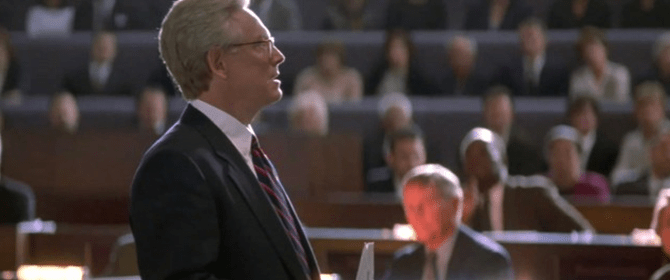

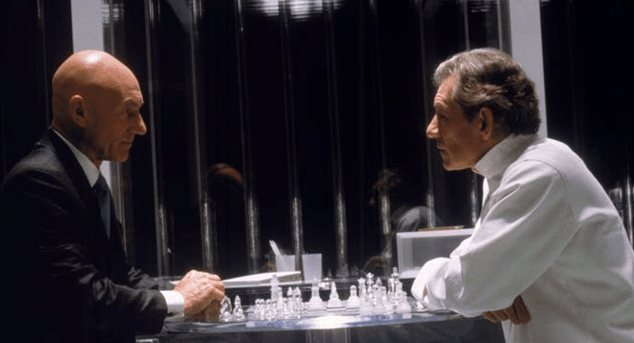
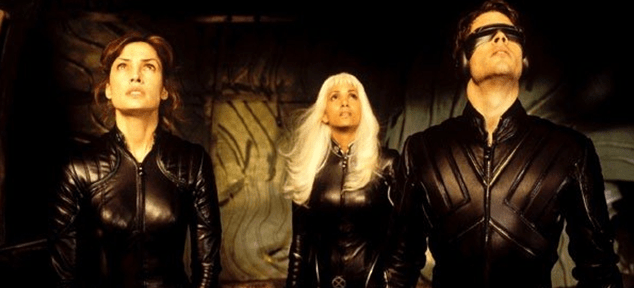
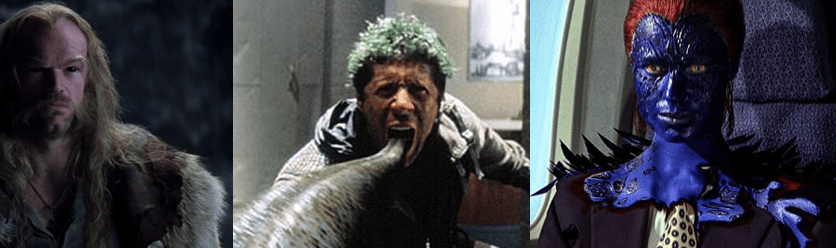
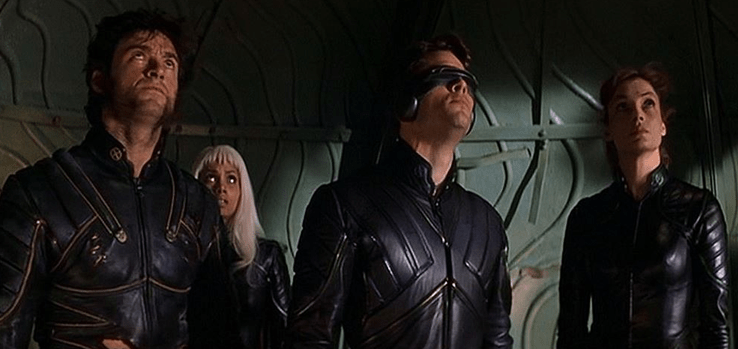
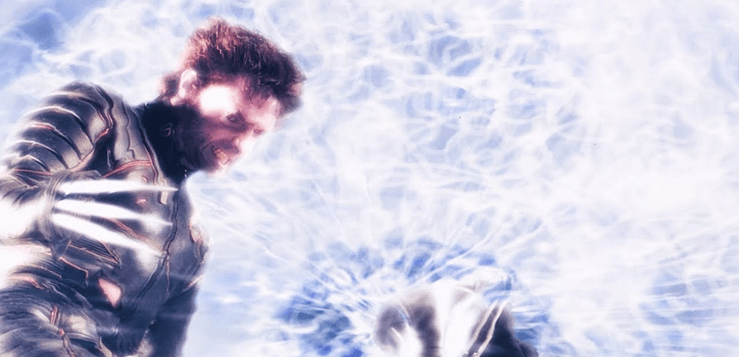



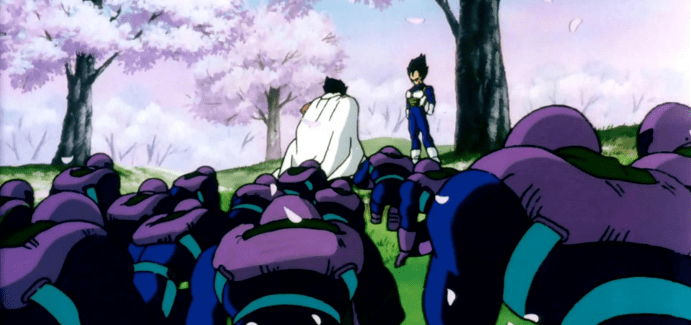
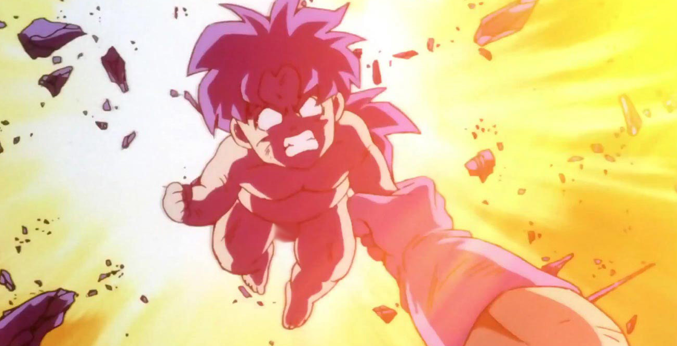
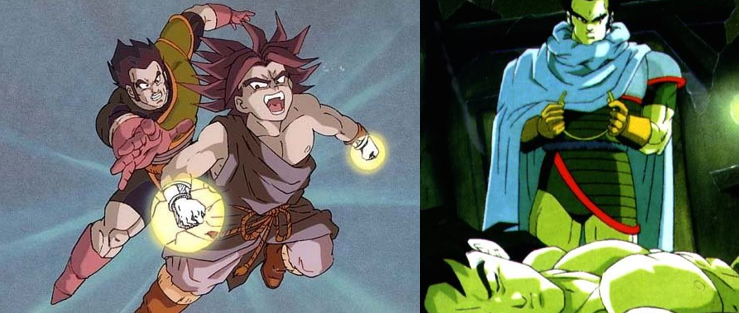
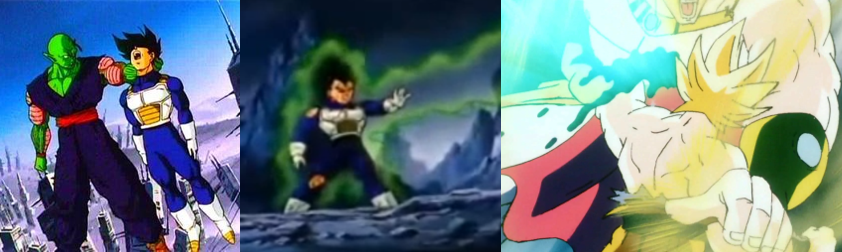
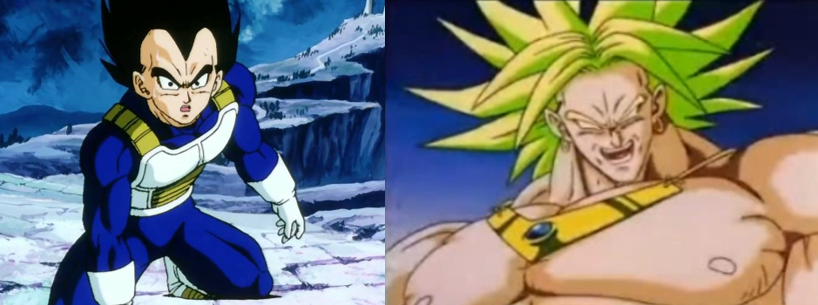
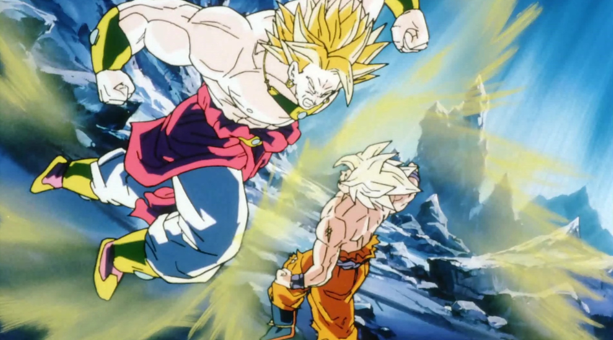





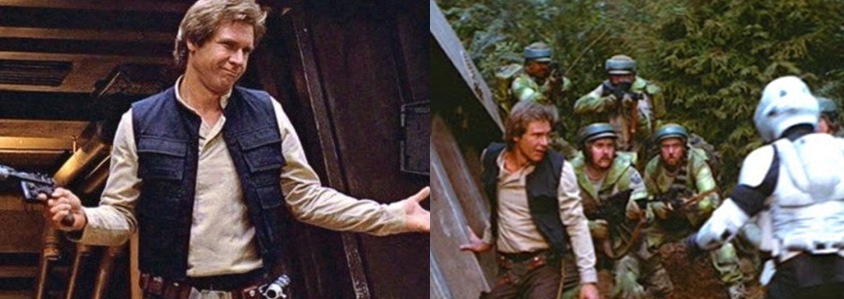
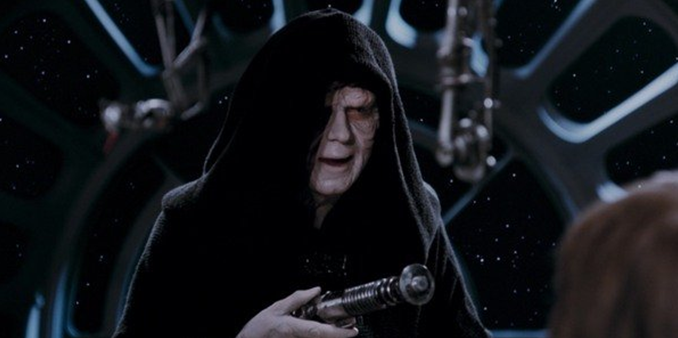
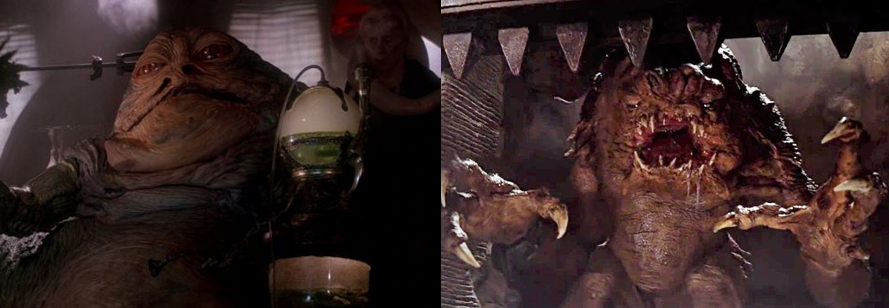
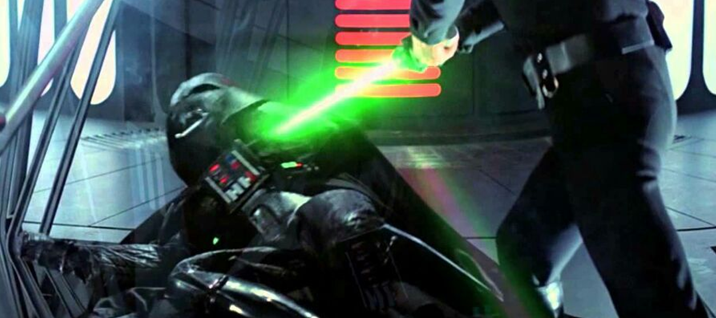



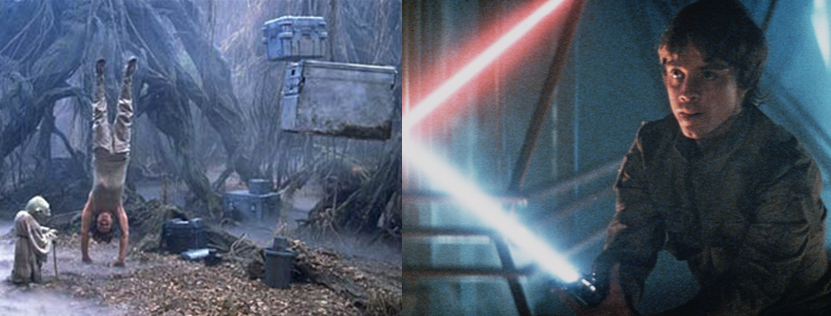
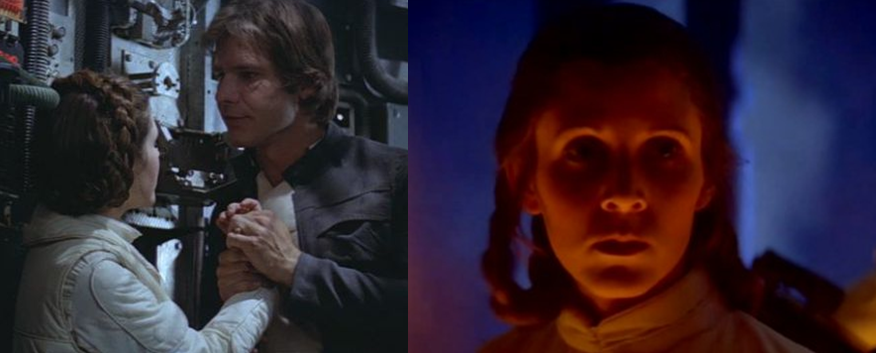

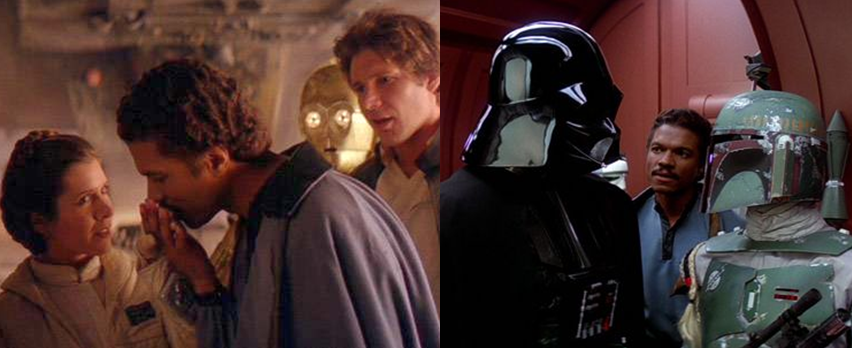

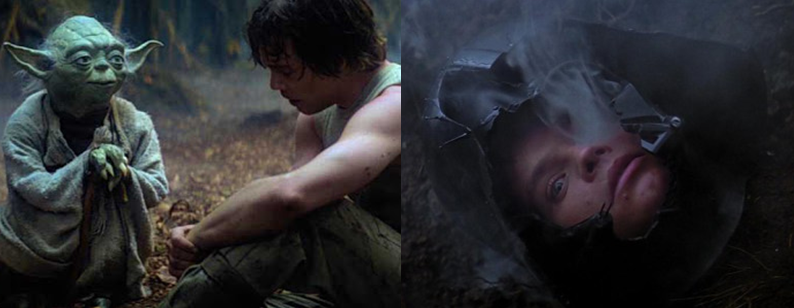




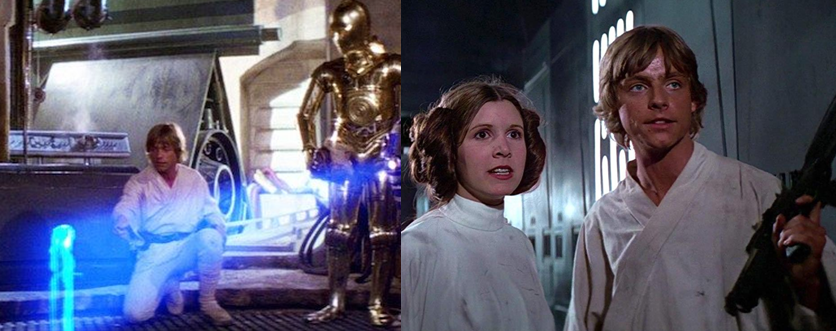
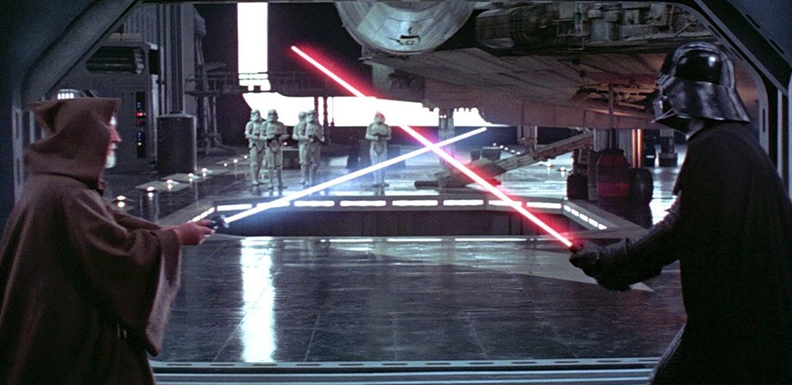
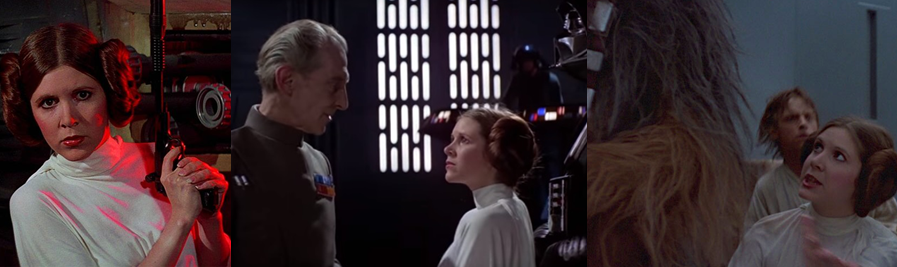
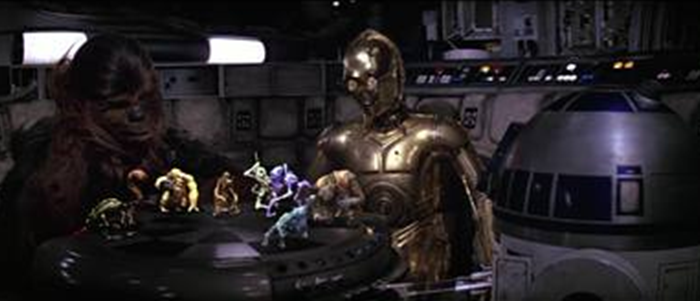
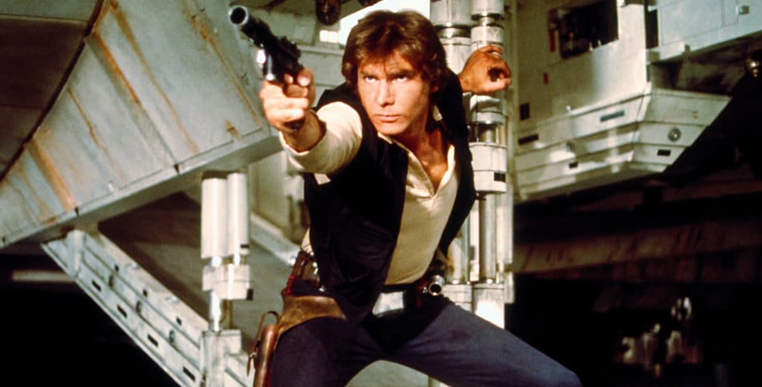














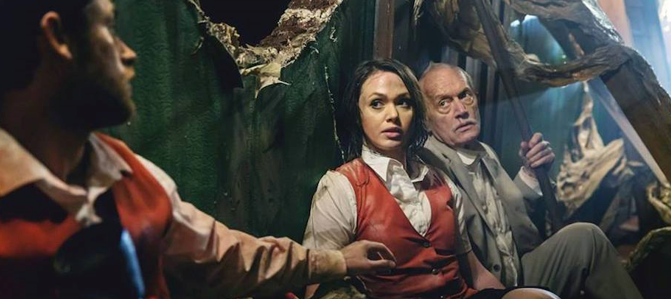



 Dr. K's Waiting Room
You must be logged in to post a comment.