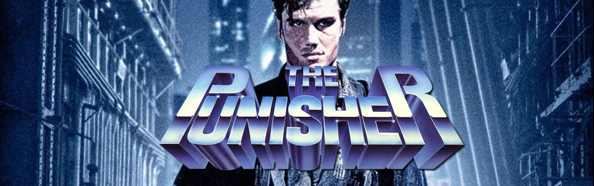
Movie Night [Punisher Month]: The Punisher: Extended Cut (2004)


Back in February 1974, Spider-Man/Peter Parker faced a new enemy in the form of Frank Castle, the Punisher, a veteran of the Vietnam War turned bloodthirsty vigilante. The Punisher separated himself from other, traditional costumed heroes by his willingness to kill and uncompromising, suicidal one-man war on crime and what better way to celebrate the debut of this nuanced and complex character by dedicating every Tuesday of this month shining a spotlight on Marvel’s most notorious anti-hero?


Released: 21 November 2006
Originally Released: 16 April 2004
Director: Jonathan Hensleigh
Distributor: Lions Gate Films
Budget: $33 million
Stars: Thomas Jane (also billed as “Tom Jane”), John Travolta, Will Patton, James Carpinello, Laura Harring, and Russell Andrews

The Plot:
Frank Castle (Jane), an undercover agent for the Federal Bureau of Investigation (F.B.I.) and former Delta Force veteran, is left devastated and believed dead after crime boss Howard Saint (Travolta) orders the death of his entire family following Frank’s part in the death of his son, Bobby (Carpinello). Turning to alcohol and fuelled by rage, Frank embarks on a suicidal plan to destroy the Saint’s operation from within to punish them for their deeds.

The Background:
While Marvel Comics has its fair share of bright-coloured do-gooders swinging or flying around and dispensing justice, they are also have their fair share of anti-heroes and one of their first, and most notorious, was the Punisher. As one of Marvel’s more “realistic” and low-key characters, it’s perhaps not surprising that the Punisher has seen his fair share of live-action adaptations over the years. While the first attempt at adapting the character was received rather poorly, by 2004 things had changed; superhero movies were now increasingly popular and profitable, with films like Spider-Man (Raimi, 2002) and X-Men (Singer, 2000) paving the way for the juggernaut that is the Marvel Cinematic Universe. Development of a new Punisher movie can be traced back to 2000, when Marvel made a long-term agreement with Artisan Entertainment to adapt fifteen of their characters into films and TV shows, and writer/director Jonathan Hensleigh came onboard with the specific intention to draw inspiration from seminal Punisher writers like Garth Ennis and Dan Abnett. Thomas Jane was producer Avi Arad’s first and only choice for the role and, though not a comic book fan, Jane soon threw himself into meticulous physical and mental preparation for the role. Unfortunately, Hensleigh was not afforded the same budget as other superhero films at the time, meaning he was forced to excise certain scenes from the film, which was an unfortunate financial and critical failure. This stalled plans for a direct sequel and Jane left the role after waiting three years for news of the follow-up, only for a completely unrelated reboot to be produced soon after! Still, I feel The Punisher’s negative reception is unwarranted; it was an instant favourite of mine upon first viewing and I went out of my way to purchase this “Extended Cut”, which added an animated prologue and an additional subplot, both of which add a great deal to what is, in my opinion, already a pretty poignant and bad-ass film.

The Review:
After a short but incredibly effective title sequence set to Carlo Siliotto’s fantastic Punisher theme, “The Skull”, which is like a dirge of military horns, The Punisher immediately sets the stage for its events by opening not in New York City like in the comic books, but in the gorgeously alluring city of Tampa Bay, Florida. While I’m sure some purists lamented this choice at the time, I actually always really enjoyed it; it’s nice to see comic book movies mix the locations up a bit so that they’re not all set in the same damn high-rise cities and the film ends with Frank clearly heading off the New York to continue his work so it’s pretty clear to me that the intention was always to get to the big city in a follow-up movie.
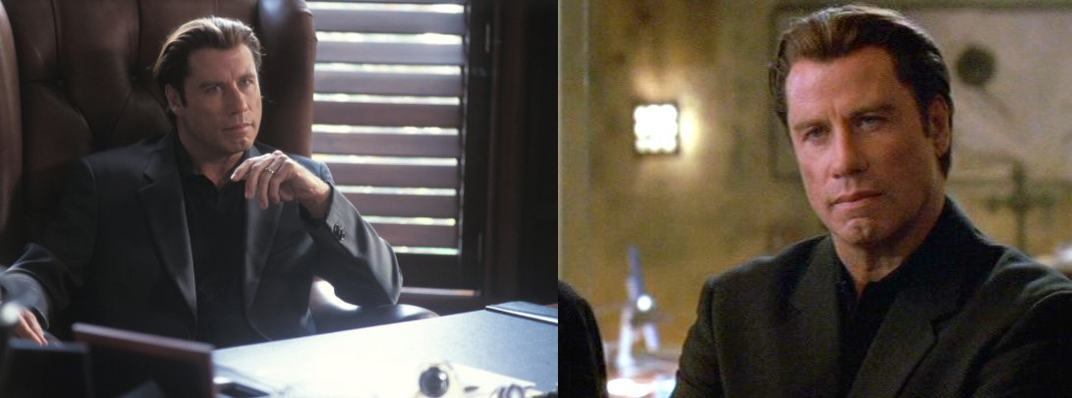
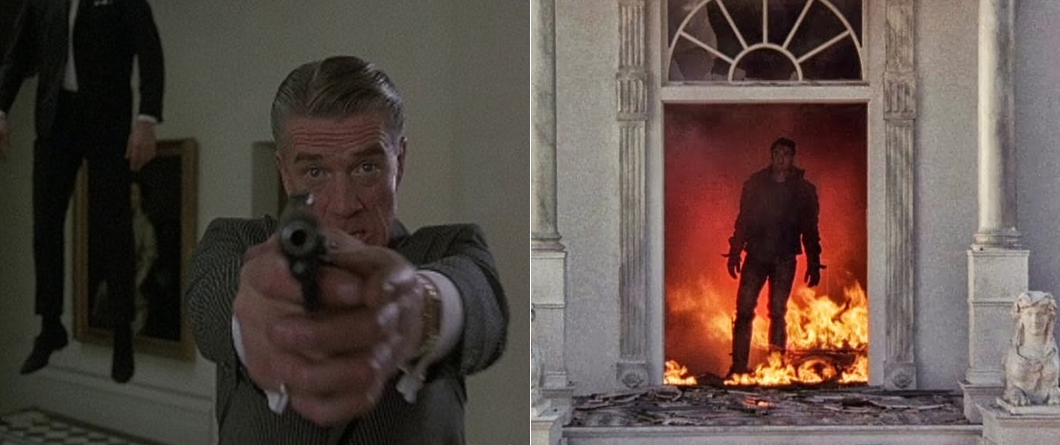
Ruthless mobster Howard Saint is driven to near madness by Castle’s vengeance.

As far as I am aware, Howard Saint has no basis in the source material but, for me, he’s an extremely effective antagonist in this interpretation of the Punisher. While I’m not a fan of John Travolta, he makes for a captivating and enigmatic villain; exuding confidence and authority, Howard clearly believes himself to be the most powerful man in the room and he lords his position as a money launderer and high-ranking mobster. Sharply dressed and living in luxury, it’s implied that he has worked his way up the ladder of success from nothing and he is clearly living his best life with expensive suits, jewellery, opulence, and accessories. In many way, even his wife, Livia (Harring), is another trophy to hang from his arm and he has kept himself in power by being both extremely reliable and extremely protective about his business, personal life, and family. Howard’s empire is vast and wealthy thanks to him funnelling Mike (Eduardo Yáñez and Joe Toro’s (Omar Avila) misbegotten funds through his legitimate business, such as his incredibly successful club, Saints & Sinners (whose unfortunately garish-looking sign looks like it was whipped up using WordArt). In an effort to impress his father with his business acumen and proactivity, Howard’s son, Bobby, agrees to finance an arms deal with the Saint’s lackey, Mickey Duka (Eddie Jemison), only for it to be part of an undercover bust in which Frank has been posing as Mickey’s contact. Frank’s assumed identity is killed in the ensuing conflict, thereby protecting him and his family from reprisals, but, unfortunately, Bobby is also killed by an errant shot, which greatly disappoints Frank as he was hoping for a bloodless end to the operation.
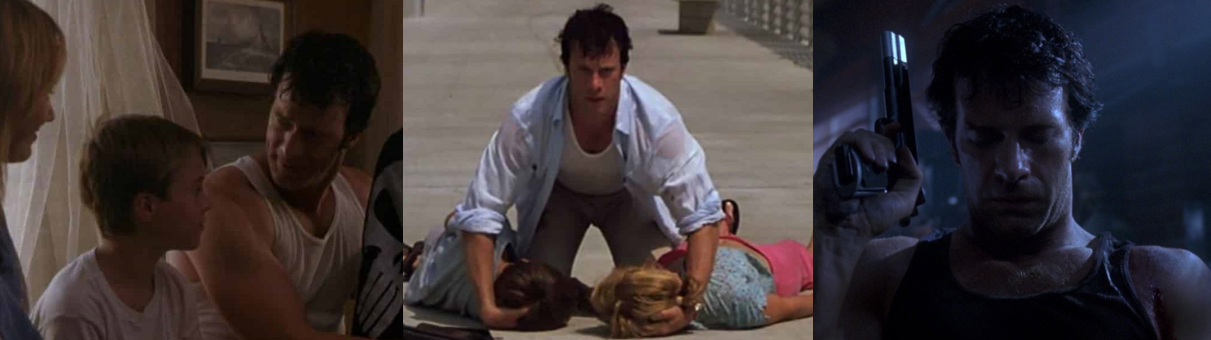
After his entire family is murdered, Frank becomes a hardened vigilante.

Frank, a former Marine, is heralded by his friends and colleagues as the “finest undercover op” in the F.B.I. However, as capable as he is and as legendary as his reputation is, Frank has grown weary of his time in conflict and around death and, with the conclusion of this particular bust, is planning on moving himself and his wife Maria (Samantha Mathis), and son Will (Marcus Johns) to London so he can take a much safer desk job and never have to worry about his identity or their safety being compromised. Unfortunately for Frank, Bobby’s death comes back to haunt him as both Howard and Livia are heartbroken to the point of fury; although Howard spares Mickey’s life, despite his part in Bobby’s death, he actively uses every resource at his disposal to learn Frank’s identity and, upon learning that Frank and his entire family are at a family reunion in Puerto Rico, Livia demands that the entire Castle line is executed as recompense. Accordingly, although Frank and his father, Frank Castle Sr. (the excellent Roy Scheider in one of his last roles) try to hold off Saint’s hitmen with their weapon proficiency, Frank is forced to watch every single member of his family be gunned down in cold blood. Maria and Will try to escape and are run down and killed, leaving Frank wounded and completely at the mercy of Bobby’s twin brother, John (also Carpinello), and Howard’s right-hand man, Quentin Glass (Patton), who beat him, shoot him, and leave him to die in an explosion.
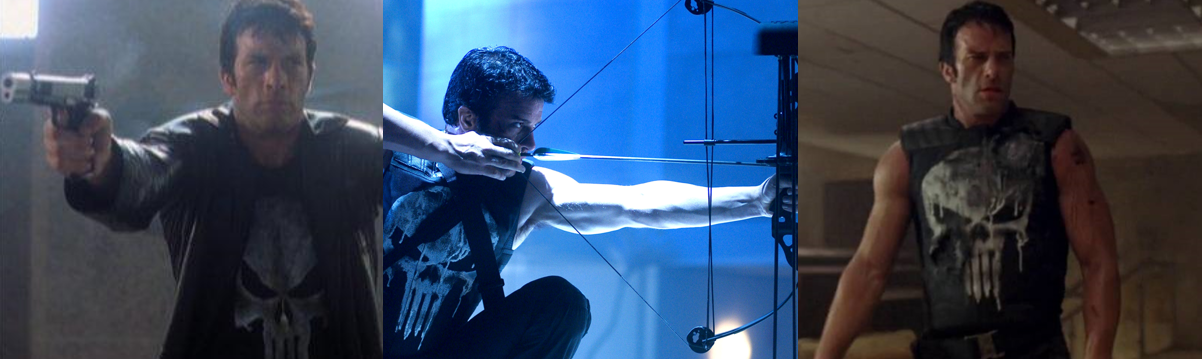
Thomas Jane is the Punisher and captures the character’s spirit amazingly.

While the Saints toast their victory, Frank somehow survives this onslaught; after being nursed back to health by a local medicine man, he returns to the scene of the massacre to acquire his father’s guns and a shirt baring a gruesome skull visage gifted to him by his son the day that he died and, with a grim glare and a stoic utterance (“God’s gonna sit this one out”), vows to have his revenge. He moves into a dilapidated apartment block and begins busying himself sprucing and armouring up an American muscle car, boobytrapping his apartment, cleaning and preparing his guns and drinking himself into a stupor with glass after glass of whiskey. Haunted by his family’s murder and suffering the weight of survivor’s guilt, something flips in Frank’s head and he enters into a cold-blooded, merciless vendetta not just to kill the Saints but to punish them. Although he doesn’t take the name “The Punisher” until the final moments of the film, Frank looks very much the part; unlike Dolph Lundgren, Thomas Jane spends the majority of the film decked out in his iconic skull-branded shirt and sporting a bad-ass leather trench coat and looks like Tim Bradstreet’s impressive artwork come to life. Add to that his physical stature and stern commitment to the role and you have probably one of the best, if not the best, portrayals of the character ever put to film and it still annoys me that Jane never got the chance to feature in a second feature-length Punisher film.
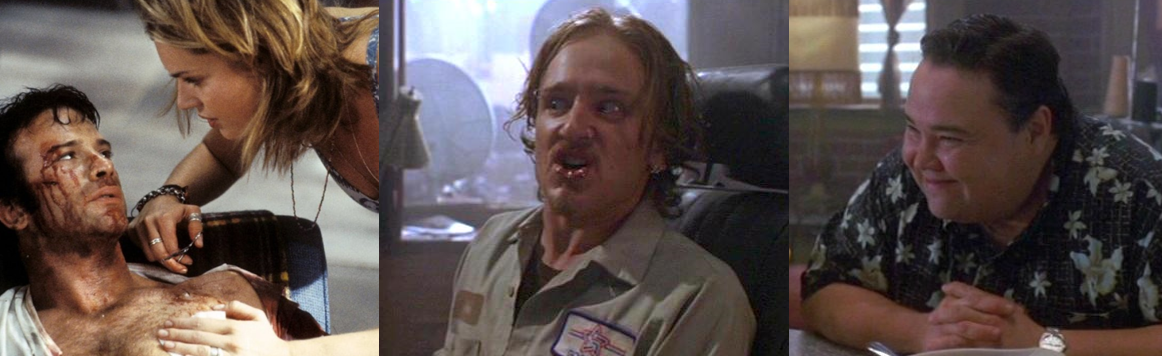
Frank attracts the attention of his misfit, but good-natured, neighbours.

While in the building, he attracts the interest and attention of his neighbours: Joan (Rebecca Romijn), Spacker Dave (Ben Foster), and Nathaniel Bumpo (John Pinette). While Dave and Bumpo basically act as the film’s comic relief (which they both perform admirably through great use of comedic timing, line delivery, and physical performance), Joan feels a great swell of pity and attraction towards Frank, especially after they learn about what happened to his family. Having suffered from a number of abusive relationships and alcohol problems, she is naturally attracted towards damaged people and has formed a kind of oddball surrogate family with Dave and Bumpo. Nevertheless, she attempts to reach what little remains of Frank’s humanity; seeing that he is on a self-destructive, potentially suicidal path, she stresses the importance of clinging on to good memories rather than letting the bad or dark ones tear him apart. While Frank is initially dismissive of his neighbours, he cannot in good conscience ignore their plight when they’re in danger and is mortified when Dave is tortured and mutilated by Quentin simply to hide Frank from Saint’s men. In that moment, Frank realises that there is life after tragedy and is touched by their loyalty to him, a veritable stranger, and thus gifts them with the Saint’s ill-begotten gains when he moves on at the end of the film out of his appreciation for their affection.

The Nitty-Gritty:
Those who have seen the original theatrical cut of The Punisher will immediately notice the differences made to this extended version of the film as the opening is proceeded by an animated prologue that details Frank and Jimmy Weeks’ (Andrews) time as soldiers in Kuwait. While the original version of the film works without this and does allude to Frank’s time as a solider, it only adds to the emotional depth and complexity of the character to see some of the horrors he witnessed in combat. Specifically, we see how Frank openly defied his commanding officer, who wanted to execute some terrorist prisoners, and watched him die when one of the captives pulled a grenade for a suicide blast. This brief animated sequence also does a great job not only of showing that Frank was a veritable one-man army even back in those days but also of lending just a little more depth to Frank and Jimmy’s relationship as we see how Frank saved Jimmy’s life by single-handedly taking out a group of snipers and how Jimmy saved him, in turn, from an RPG attack.
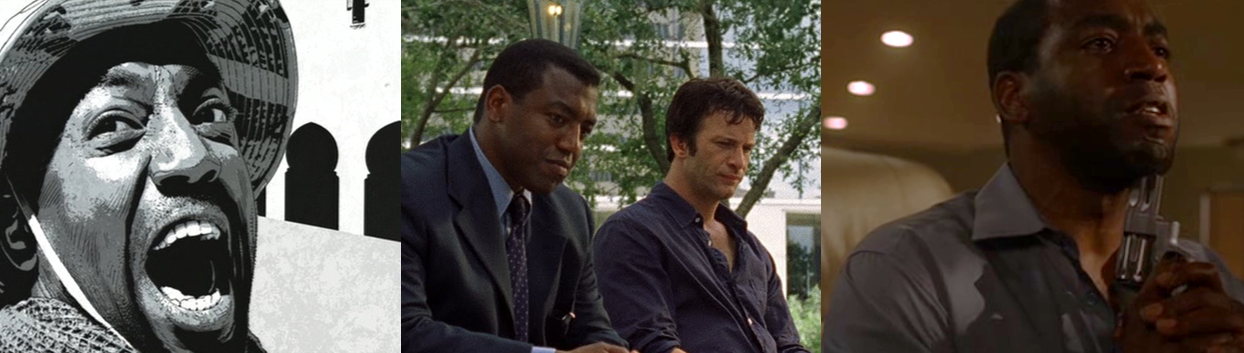
Jimmy’s character is greatly expanded upon in this Extended Cut.

Also added to the film is a new sequence at the start where we see that John tries, unsuccessfully, to talk Bobby out of going along with Mickey’s arms deal, and a scene in the Toro’s casino where they detail some of their past and history with Howard and help him to get leverage on Jimmy by fixing the odds against him. Indeed, Jimmy benefits the most from the Extended Cut by virtue of a number of his excised scenes being restored to the film; this shows how Jimmy has a known and destructive gambling habit and makes it explicitly clear that Howard Saint was able to get the lead on Frank’s name and location by capitalising on Jimmy’s vices. Jimmy is understandably disturbed when Frank returns from the “dead” not just because his old friend turns out to be alive, as in the original cut, but also because he knows that he will eventually fall into Frank’s crosshairs. Indeed, while Frank is too preoccupied with his vendetta against the Saint’s to really socialise with Jimmy all that much, he immediately becomes suspicious of Jimmy’s involvement in his family’s murder when he notices that his friend has traded away his fancy new car and is missing the watch Frank gifted him after Kuwait. As a result, we get an extremely tense, volatile, and heart-wrenching confrontation between the two where Frank gives his old friend and comrade the chance to end his life by his own hand rather than be “punished”.
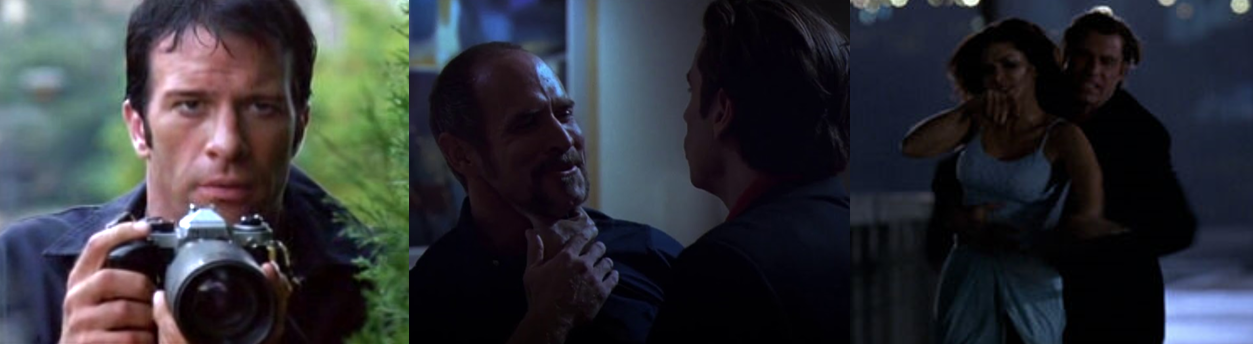
Castle enacts his revenge by manipulating Saint into killing his friend and wife.

For such a small, low budget film, The Punisher certainly packs a lot into its run time. I said when reviewed The Punisher (Goldblatt, 1989) that, compared to many colourful superheroes, the Punisher is probably one of the easiest to adapt as you simply give a decent actor a gun and a grim visage and do an eighties-style action film. This version of The Punisher, though, both escalates the stakes involved (killing Frank’s entire family rather than “just” his wife and kid/s) and really runs with the implications of Frank’s pseudonym: he’s not just clinically punishing the guilty by murdering them indiscriminately, he’s literally punishing the three people most directly responsible for his family’s murder by turning them against each other and destroying Howard’s operation from the inside out. He does this by coercing Mickey into divulging the Saint’s entire schedule (which is, admittedly conveniently, very predictable and routine), which allows him to make it seem as Livia and Quentin are having an affair and thus manipulates Howard into murdering his wife and his best friend.
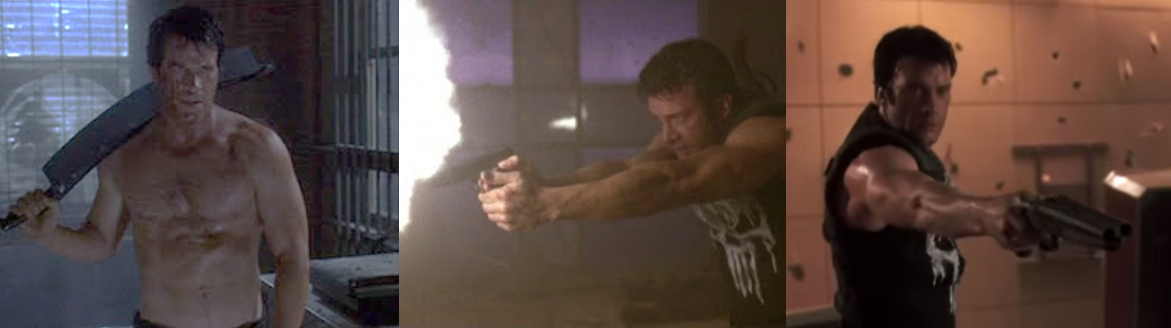
Castle is an extremely adaptable and capable foe and expertly wields a range of firearms.

Of course, that’s not to say that The Punisher doesn’t have its fair share of fight fights and action/fighting scenes. The slaughter of the Castle’s is basically a prolonged execution full of big explosions, squibs, and guns going off all over the place that reminds me very much of a tamer version of the sort of gratuitous violence seen in RoboCop (Verhoeven, 1987). When Frank infiltrates Howard’s bank to disrupt his money laundering activities, the film takes on aspects of a traditional Western, with tense, prolonged shots of Frank and his adversaries getting ready to draw and shoot, and Frank’s final assault on Saints & Sinners sees him take on an entire room full of goons and mobsters with a variety of firearms while decked out in skull-stained body armour.

Hitmen Harry Heck and the Russian try, and fail, to stop Castle’s disruptive rampage.

Of course, there are two standout action sequences in The Punisher. Driven to frustration by Frank’s disruptive actions, Howard grows increasingly desperate to track down and stamp out the Punisher; to do this, he hires a couple of hitmen to do the job for him, both of whom unsuccessfully attempt put a stop to Frank’s vendetta. The first of these is Harry Heck (Mark Collie), a Memphis hitman who moonlights as a musician. After trying, fruitlessly, to intimidate Frank (who, by this point, as adopted a permanent “thousand-yard stare”) with a chilling song, Heck runs Frank off the road (sadly totally the proto-Battle Van before it really gets a chance to do anything, which may have been a budgetary thing) and taunts him while holding him at gunpoint only to wind up with a ballistic knife in his throat! Next, Howard brings in the Russian (Kevin Nash), a mute giant who is superhumanly strong and seemingly impervious to pain. This fight, which is almost an exact adaptation of a fight between the two from the 2001 “Welcome Back, Frank” (Ennis, et al) arc, is mostly played for laughs thanks to Bumpo’s opera playing over it and is much more comical compared to the otherwise gritty and grim tone of the film. Still, it’s incredibly enjoyable to see the Russian absolute decimate Frank and a great showcase of Frank’s tenacity, endurance, and adaptability as, although stabbed and brutalised from the assault, he continually finds new ways to try and hurt the behemoth before finally charging him on the stairs and breaking the giant’s neck.
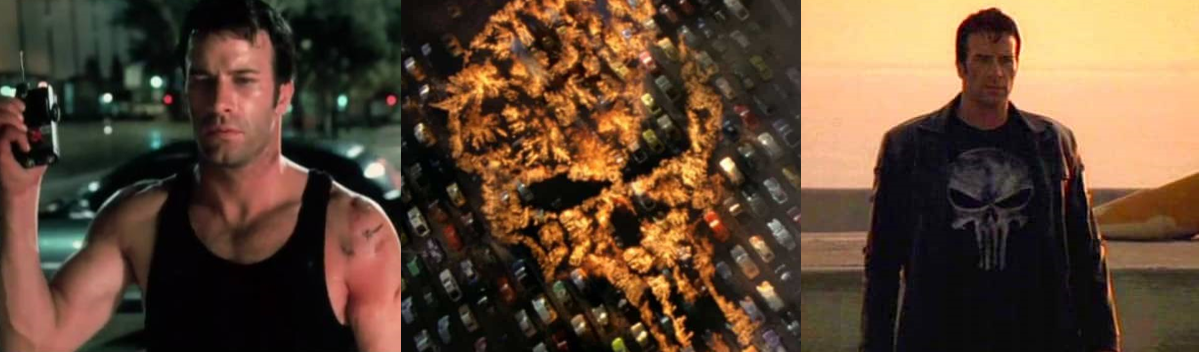
After completing his mission, Frank heads out to hunt more criminals as the Punisher.

Still, a central aspect of the film is Frank’s emotional detachment and grim commitment to enacting his revenge. To pull off his complex plan, he feigns torturing Mickey and specifically targets Livia and Quintin; by following them and compiling a list of their habits, routines, and dirty little secrets, he’s easily able to predict where they’ll be and how best to turn Howard against them. Once he has manipulated Howard into giving in to his jealousy, rage, and the enraged monster dwelling just beneath his façade of respectability, Frank launches a direct assault against the remnants of Howard’s empire. Having lived his entire life by a strict code of honour and within the bounds of a lawfully just system, Frank sees his newfound vigilantism not as a simple matter of revenge but rather as a necessary action to ensure that those who do evil are punished for their misdeeds. As a result, he shows no mercy to John, whom he leaves helpless and holding an anti-personnel mine, and takes absolutely no pleasure in revealing what he has done to Howard. With Howard grovelling and bleeding at his feet, Frank nonchalantly ties him to a car and has him driven into a massive (and, sadly, poorly rendered) series of explosions to finally put an end to those who wronged him. With his mission complete, Frank prepares to end his own life but, at the last minute, stops when recalling a “good memory” of Maria. Although this scene is a bit confusing in the way it’s shot, the intention is made explicit with Frank’s closing narration: realising that there are more scumbags out there who need to be punished, he vows to wage war against them all as “The Punisher” until the day he dies.
The Summary:
I’ve always been a fan of the Punisher. I love the concept of the Punisher as this merciless, unrelenting force fully committed to killing as many criminals as he can until he inevitably dies. It’s an incredibly simple, incredibly bleak, and incredibly realistic concept that Marvel Comics really need to put more effort into pushing as a stark contrast to other, more colourful and law-abiding superheroes. When I first watched The Punisher, I was immediately impressed by just how raw and emotional the film was; it wasn’t just another superhero film or even a bombastic action movie like its predecessor. It was a heart-breaking examination of a man who has literally lost everything, driven to the very brink of death, and come back with only one thought in mind: punishment. You could substitute the word “vengeance” or “punishment” there if you like but it doesn’t change the fact that The Punisher, to me, perfectly captures the uncompromising and gritty spirit of the source material and presents it in a fresh, new way by setting the film in Tampa rather than the traditional New York City. As I said, I’m not a Travolta fan but he really impressed me in this film; exuding power and total authority one moment and then descending into a maniacal rage the next, he gave a performance just shy of scenery chewing and was a perfect foil. The film is, honestly, full of great performances: Will Patton was fantastic as the subdued, sadistic Quentin Glass, Rebecca Romjin and Samantha Mathis did a great job as the film’s emotional anchors, even the guys playing the Toro brothers and guys like Mark Collie and Kevin Nash were clearly having a great time on set. Thomas Jane remains probably my favourite actor to portray the Punisher; not only does he look just like the comic book character, he has exactly the right level of physicality and acting ability to really own the role. It is, as I’ve said, a simple character in many ways but it does require a great deal of emotional range to properly portray the gamut of Frank’s turmoil and Jane did a spectacular job as this grim, haunted avenger who will stop at nothing to punish those responsible for his pain and The Punisher, especially this Extended Cut, remains probably my go-to recommendation for anyone looking to get an idea of what the character is all about.

My Rating:

Rating: 5 out of 5.

Fantastic

What did you think to the Extended Cut of The Punisher? Did you prefer to the theatrical version and how do you think it works as an adaptation of the character? What did you think to Thomas Jane’s performance in the film? Did you like the changes the film made to the source material or do you think it maybe changed a little too much? What did you think to the film’s action scenes and soundtrack? Did you enjoy the slapstick nature of the fight between the Punisher and the Russian or do you think it kind of went against the otherwise grim tone of the film? Which live-action portrayal of the Punisher is your favourite and why? How are you celebrating the Punisher’s debut this month? Whatever you think about The Punisher, feel free to write a comment below and be sure to check out for my review of the videogame tie-in to this film.

Movie Night: Pokémon: Mewtwo Returns

Released: 30 December 2000
Director: Kunihiko Yuyama and Masamitsu Hidaka
Distributor: Warner Bros. Home Video
Budget: Unknown
Stars: Veronica Taylor, Dan Green, Rachael Lillis, Eric Stuart, Kerry Williams, Ikue Ōtani, Maddie Blaustein, and Ed Paul

The Plot:
Having erased all traces of its origins and settled in a remote area of the Johto region, Mewtwo (Green) lives in peace with its fellow clones. However, when its creator, Giovanni (Paul), discovers its location, it’s up to Ash Ketchum (Taylor) and his friends to once again defend the troubled Psychic Pokémon and the mysterious healing properties of Mount Quena.

The Background:
I’ve talked at length about the incredible influence Pokémon (Nintendo/Creatures/Game Freak, 1995 to present) had when it was first released and, indeed, the videogames were only a part of the brands appeal as kids became engrossed in every piece of Pokémon merchandise available, including the still-ongoing anime series (1997 to present). The brand reached a fever pitch with the release of the aptly-titled Pokémon: The First Movie: Mewtwo Strikes Back (Yuyama, 1998), which (perhaps unsurprisingly) proved to be a massive financial success despite the many changes made in the translation process. With Mewtwo being one of the franchise’s most popular characters, and considering Mewtwo Strikes Back’s success, it’s also perhaps unsurprising that Mewtwo received an hour-long special to tie up some loose ends from the first film. Released direct to video overseas, Mewtwo Returns was notable for including the “Uncut Story of Mewtwo’s Origin”, which was cut from the first film, and for attracting generally underwhelming reviews.
The Review:
Mewtwo Returns begins with Mewtwo providing a recap of its origins and the events of Mewtwo Strikes Back, which establishes its character, the events of that film, and that it wiped the events of all characters present on its island at the film’s conclusion. Unfortunately, Mewtwo neglected to expand the reach of its mindwipe further afield and, as a result, Giovanni not only still remembers Mewtwo but has been actively hunting it ever since it escaped from him. Giovanni’s aide, 009/Domino (Williams), earns her master’s favour when she shows him satellite imagery of Mewtwo hiding out in a remote area of the Johto region. There, Mewtwo lives alongside the clones it produced in the first movie; although having learned a valuable lesson about the sanctity of all life, human and Pokémon alike, Mewtwo continues to question not just its place in the world but the place of its fellow Pokémon. Believing that they are outcasts, it firmly believes that they must live in secret if they are ever to live in peace and questions how it can judge concepts such as “beauty” given that it is a product of science.

After Pikachu is captured by Team Rocket, Ash and friends stumble upon Mewtwo’s sanctuary.

Coincidentally, as always, Ash, Brock (Stuart), Misty (Lillis), and Pikachu (Ōtani) just happen to be passing through that region of Johto on their way to Purity Canyon, a sight known for its refreshing and reinvigorating properties and tumultuous weather. Rushing to catch the last bus up the mountain pass (which allows for a funny gag where Brock uses his frying pain as a “drying pan”), the three catch the eye of their constant pursuers, Jesse (Lillis), James (Stuart), and Meowth (Green) of Team Rocket. After missing the bus and being kept from proceeding because of the weather, the three protagonists take shelter with Luna Carson (Amy Birnbaum), who blows their minds with how refreshing and delicious the water from Purity Canyon is (although, amusingly, Ash is unimpressed). In lieu of the bus (and since Misty is afraid of the Bug-type Pokémon the clear waters attract), the three plan to climb up Mt. Quena to proceed and, despite Luna’s reservations, they are only spurred to go through with the plan after being told of Clarity Lake and the specially-adapted Pokémon that live on the mountaintop. They’re unable to immediately proceed, however, thanks to the sudden arrival of naturalist Cullen Calix (Scottie Ray) and his assistant, Domino (the same Domino from Team Rocket who is in disguise); Luna is disheartened to hear that Cullen plans to investigate the lake’s regenerative properties, as this would potentially ruin the natural environment, but Team Rocket strike and kidnap Pikachu with an electricity-absorbing cable before any of this can come to pass. In their attempt to rescue Pikachu, the group are buffeted about by the violent storms and end up at Clarity Lake; Mewtwo is shocked to cross paths with them all again but, rather than being welcoming, demands that they all leave the area. Interestingly, although the clones appear to wish to rejoin the wider world, clone-Pikachu’s first instinct is to oppose Pikachu and force it out. While this would seem to align with Mewtwo’s overall wish for solitude, Mewtwo directly intercedes and prevents them from battling since they’ve already proven themselves to be equals, and everyone (especially Team Rocket) are confused by the presence of Mewtwo and its clones since they have no memory of the events of the first movie.

Mewtwo’s decision to submit to Giovanni to protect its clones almost costs it its life.

When Giovanni and his forces arrive, Mewtwo believes it’s better to simply flee Clarity Lake rather than engage in battle; clone-Pikachu rallies many of the clones in its absence (resulting in a ludicrous scene where Team Rocket, the protagonists, and all of their Pokémon are locked up in a cell) to go to war and Mewtwo struggles to reconcile its desire to protect them with the clones’ wish to be free. Thankfully, Giovanni’s arrival and subsequent attack against them galvanises not only Mewtwo’s resolve and its relationship with its clones but also forges an unlikely alliance between Team Rocket and the protagonists to fend off Giovanni and defend Clarity Lake. Although Mewtwo doesn’t wish to fight, clone-Pikachu and many of the other clones are only too eager to go to all-out war to defend their home, and their right to a peace existence. Clone-Pikachu, especially, believes that it is unfair for them to be forced to live like shadows when there’s a whole wide world out there and, since many of the other clones agree with this, a divide is created between them and Mewtwo since it simply wishes to be left and alone and they wish to be equals in the world. Mewtwo is adamant that they remain hidden so that they can live peacefully and, even in the face of Giovanni’s invasion, refuses to fight, a decision which very nearly costs it its life.

The Nitty-Gritty:
It’s come up a few times but not only is Mewtwo my favourite Pokémon but Johto is my favourite Pokémon region so Mewtwo Returns automatically gets a bonus point or two from me before it even begins. Add to that the fact the film reuses the excellent musical score from the English dub of Mewtwo Strikes Back and I’m in my element. While the animation and presentation isn’t quite up to the same high-quality standards as the movie, for obvious reasons, Mewtwo Returns is still a cut above most regular episodes of the anime thanks to featuring music from the first movie and Mewtwo’s presence. Mewtwo’s demeanour is very similar to that from Mewtwo Strikes Back; although it is no longer actively seeking conflict, it steadfastly goes to extreme lengths to protect itself and its clones. The clones of Pikachu and Meowth question why Mewtwo went to the effort of saving a bus load of humans from a potential fatal crash off the cliff, believing that it felt compassion for the passengers, but Mewtwo reasonably asserts that it was simply trying to avoid more humans coming to the area and potentially disturbing their peace. Mewtwo feels as though it, and they, do not belong or deserve to belong anywhere in the world, despite clone-Meowth asserting that all creatures see the same moon and are thus equal.

Domino is a capable and pivotal member of Team Rocket and instrumental in Giovanni’s plan.

Unlike Jesse, James, and Meowth, Domino is portrayed as a capable and conniving member of Team Rocket; not only does she identify Mewtwo’s location, she successful fools all of the characters with her disguise as Cullen’s assistant and she commands the Team Rocket Combat Unit, a feat that Jesse, James, and Meowth are incredibly impressed by. Her reputation as the “Black Tulip” and authority make her a pivotal agent of Team Rocket; she’s embarrassed by the trio’s slapstick antics, is instrumental in Giovanni’s campaign against Mewtwo, and is absolutely reprehensible in her capture of the clones using her electricity-spitting tulips. It’s refreshing to see Giovanni playing such an integral role as the overall antagonist; a scheming, manipulative mastermind, Giovanni wields incredible power from behind the Team Rocket Combat Unit. He’s easily able to disable the clone Pokémon with red energy bolts, briefly capture them in special Team Rocket-branded PokéBalls, and is even able to force Mewtwo into submission by threatening the safety (and lives, in a surprising inclusion) of its clone Pokémon and the sanctity of Clarity Lake. Giovanni’s machinery threatens to bend Mewtwo to Giovanni’s will and almost kills it but, thanks to the intervention of a horde of Bug-type Pokémon (who show up to oppose the ridiculously fast construction of Giovanni’s base and his polluting of the lake) and the protagonists, and the restorative properties of Purity Lake, Mewtwo is saved from brainwashing and death and returns full force to enact its revenge.

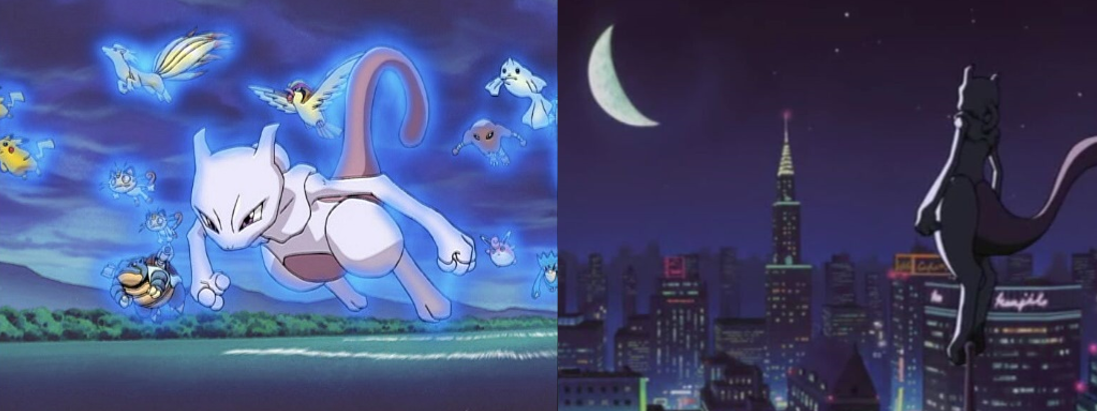
Revitalised by the water, Mewtwo defends his home and roams the world by moonlight.

In the end, Brock and Misty join forces with the clones and Bug-type Pokémon to cover Ash as he takes Mewtwo to safety; in the process, Mewtwo learns additional lessons about self-sacrifice and a being’s uniqueness. After recovering in the lake, Mewtwo sees a vision of Mew (Kōichi Yamadera) and finally realises that it is just as “real” as any other creature since the water’s properties have the same effect on it as they would any other creature. Using its incredible psychic powers, Mewtwo instantly puts an end to the conflict by transporting the entire lake underground and out of sight; it also erases the memories of Giovanni, Domino, and their forces but, at the insistence of the main characters, spares the others from the same treatment this time around so that they can remain friends and to ensure the legacy of its clone Pokémon. Having learned to embrace its identity and no longer ashamed of its past, Mewtwo allows its clones to go and find their rightful place in the world while it wanders alone (and wearing a bad-ass anime scarf) and always by moonlight.

The film also finally explores Mewtwo’s tragic origin.

Of course, it doesn’t end there as “The Uncut Story of Mewtwo’s Origin” is also included on the disc; this short prelude to Mewtwo Strikes Back follows Doctor Fuji (Jay Goede) and his team on an expedition to a dense jungle. Since the expedition is funded by Giovanni, Fuji has no choice but to create an all-powerful clone of Mew using a “fossil” recovered from some ancient ruins in order to learn the secret of restoring life. Fuji’s efforts result in the creation not only of a young Mewtwo (Stuart) but also clones of Bulbasaur (Tara Sands), Charmander (Michael Haigney), and Squirtle (Stuart). Communicating via telepathy as they sleep, Mewtwo, Bulbasaurtwo, Charmandertwo, and Squirtletwo meet Ambertwo (Williams), a young girl who was once Fuji’s daughter and who he is trying to resurrect through his cloning experiments. Obsessed with his desire to see Amber smile, and live, once again, Fuji is desperate to create a clone strong enough to survive the process so that he can recreate life; through Ambertwo, Mewtwo and the others experience a few of the basic beauties of life (the sun, wind, passage of time, and the moon) but, all too soon, the clones begin to degrade. Charmandertwo, Squirtletwo, and Bulbasaurtwo all disintegrate before their eyes; Mewtwo’s confusion turns to despair as the only friend it’s eve known turns to sparkling dust right in front of it as Ambertwo dies. Left alone and heartbroken, Mewtwo has only its tears (which Ambertwo says contain “life”). When its emotions threaten to destroy the lab, Fuji has no choice but to wipe its memories to subdue it and, in the empty void of its mind, Mewtwo is left with only its confusion and vague memories of feelings it doesn’t understand.

The Summary:
Pokémon: Mewtwo Returns is a brisk and entertaining enough watch; clocking in at just over an hour, it’s obviously not going to measure up to the efforts of its feature-length cousins but it’s decent enough for fans of Mewtwo Strikes Back. By addressing the loose ends from the first movie, Mewtwo Returns allows us to see what happened to Mewtwo and its clones after they flew off to an uncertain future and, while it’s hardly full of action or a showcase of Mewtwo’s destructive potential, it’s a heart-warming enough tale about identity and our place in the world. The anime’s focus on having Mewtwo be this introspective character who questions its identity and right to exist is fascinating, in many ways, though it has to be said that maybe many of the character’s other aspects were downplayed in service of this goal. Sadly, the next time Mewtwo appeared it would be in a decidedly different form and we never followed up on its moonlight journey but, as a coda to Mewtwo Strikes Back, Mewtwo Returns  is inoffensive enough. The fact that the DVD also contains Mewtwo’s heartbreakingly tragic origin story only adds to the film’s appeal and, were both of these to be included in re-releases of Mewtwo Strikes Back, you’d basically be left with the complete package for Mewtwo’s story in the anime. As it is, I guess it’s worth seeking out if you’re a die-hard Mewtwo and Pokémon fan but it’s not as accessible as other Pokémon media and probably not really worth going out of your way to get your hands on.

My Rating:

Rating: 2 out of 5.

Could Be Better

What did you think of Pokémon: Mewtwo Returns? Did you enjoy seeing Mewtwo in action again or did you feel the feature was a missed opportunity to do more with the character? What did you think to Domino and Giovanni taking a more active role as a villain in the feature? How are you celebrating Mewtwo’s birthday this year? Whatever you think about Pokémon: Mewtwo Returns, Mewtwo, and Pokémon in general, leave your thoughts in the comments below.

Movie Night [Punisher Month]: The Punisher (1989)


Back in February 1974, Spider-Man/Peter Parker faced a new enemy in the form of Frank Castle, the Punisher, a veteran of the Vietnam War turned bloodthirsty vigilante. The Punisher separated himself from other, traditional costumed heroes by his willingness to kill and uncompromising, suicidal one-man war on crime and what better way to celebrate the debut of this nuanced and complex character by dedicating every Tuesday of this month shining a spotlight on Marvel’s most notorious anti-hero?


Released: 25 April 1991
Director: Mark Goldblatt
Distributor: New World International
Budget: $9 million
Stars: Dolph Lundgren, Louis Gossett Jr., Nancy Everhard, Barry Otto, Jeroen Krabbé, and Kim Miyori

The Plot:
After his family are killed by a mafia-planted car bomb intended for him, former ex-Marine Frank Castle (Lundgren) has taken to a life of vigilantism as “The Punisher”; killing criminals and mobsters with special skull-engraved knives and operating from the sewers, he has become New York’s most wanted man. However, when crime boss Gianni Franco (Krabbé) comes out of retirement and butts heads with Lady Tanaka (Miyori) of the Yakuza, the Punisher is the only man capable of stopping all-out war in the streets.

The Background:
Having made an impressive debut in the pages of The Amazing Spider-Man #129, the Punisher quickly became one of Marvel’s most popular anti-heroes thanks to his tragic backstory and unwavering commitment to the eradication of crime. This, in turn, led to him appearing in videogames, cartoons, and a surprising amount of live-action adaptations of the source material. The first of these was produced in 1989 at the end of the action movie renaissance of the 1980s; muscle-bound stars like Arnold Schwarzenegger and Sylvester Stallone had redefined the criteria for the action genre but Dolph Lundgren was no slouch in that department either. The Swedish strongman made quite a name for himself in his own right, even if he was often overshadowed by Schwarzenegger, and adapting the Punisher character into the trappings of an eighties action film made perfect sense at the time. Sadly, the bizarre decision was made to not have Lundgren don the character’s iconic skull shirt and The Punisher was denied a widespread theatrical release in favour of being released straight to video. While most reviews agreed that the film was unimpressive, to say the least, and criticised its presentation and content, others praised Lundgren’s performance and the dark and gritty nature of the movie, though it would be nearly fifteen years before the character would receive another live-action adaptation.

The Review:
The Punisher opens with a depressingly low budget title sequence that’s like something out of a sixties James Bond film; rather than getting you pumped up for a high-octane action film, it’s more like the opening to a bog standard television cop show from the seventies, despite the brief shots of the Punisher gearing up or randomly unloading his machine gun. In many ways, this sets up the tone for the film but, at the same time, misrepresents The Punisher; while it’s not quite the same over-the-top spectacle as the likes of Commando (Lester, 1985) or Rambo III (MacDonald, 1988), it’s a decent enough representation of its genre that is, perhaps, unfairly overlooked against its other, more popular counterparts.

After five years killing mobsters, the Punisher goes public to enact his revenge.

Frank’s tragic background is initially reduced to a brief news report (we later get a proper flashback that shows it but, again, this is more of a snippet rather than an extended sequence) that informs us that the man responsible for the death of Frank’s family, Dino Moretti (Bryan Marshall), has been acquitted for the charges. Moretti arrogantly laughs off concerns about the Punisher seeking retribution against him, despite the fact that Frank has become a notorious underworld vigilante and has at least 125 kills to his name. As you might expect, Moretti’s arrogance is misplaced and Frank not only murders his armed bodyguards one by one but also blows up the mobster’s stately home in a very public display.

While there’s not much for Leary to do, Berkowitz has an emotional connection to the Punisher.

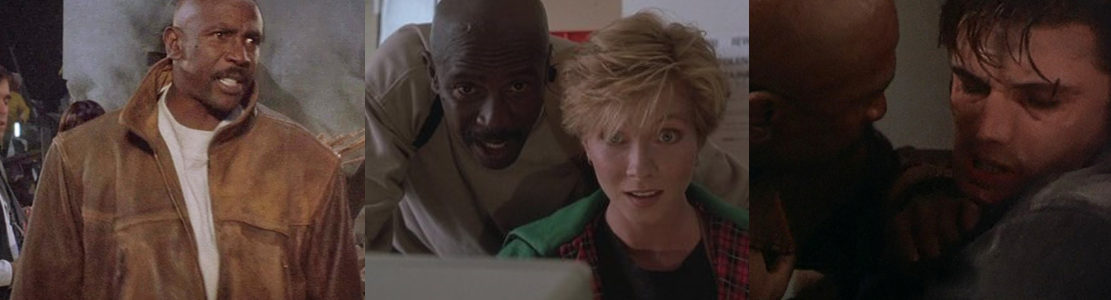
The Punisher is a hot news item; though they are unaware of his true identity, reporters are desperate to cover him and milk his violent actions but the police, and the mayor, would prefer to downplay his actions. After the Punisher appears to die in the explosion at Moretti’s house, the official line is that he is dead but his former partner, Detective Jake Berkowitz (Gossett Jr.), refuses to let the subject lie. Although he has no interest in working with a partner, and has become quite jaded since Frank’s apparent death in a mob hit, Berkowitz is convinced to work with Detective Samantha Leary (Everhard) when she shares his suspicion that Frank is the Punisher. Leary uses what is sold to us as a state-of-the-art computer algorithm to pinpoint the Punisher’s location, which is pretty much her sole contribution to the film other than being a very basic audience surrogate. Berkowitz, however, is a constant highlight of the film; his relatable, no-nonsense attitude stands out amidst a few mediocre performances, with his escape from Mafia custody stands out as a notably amusing sequence. His emotionally-charged reunion with Frank is another standout moment; Berkowitz desperately tries tor each Frank, screaming and manhandling him and clearly heartbroken at the state Frank has found himself in, while Frank remains impassive and unapologetic for his actions.

Already weakened from the Punisher’s actions, Franco wages all-out war with the Yakuza.

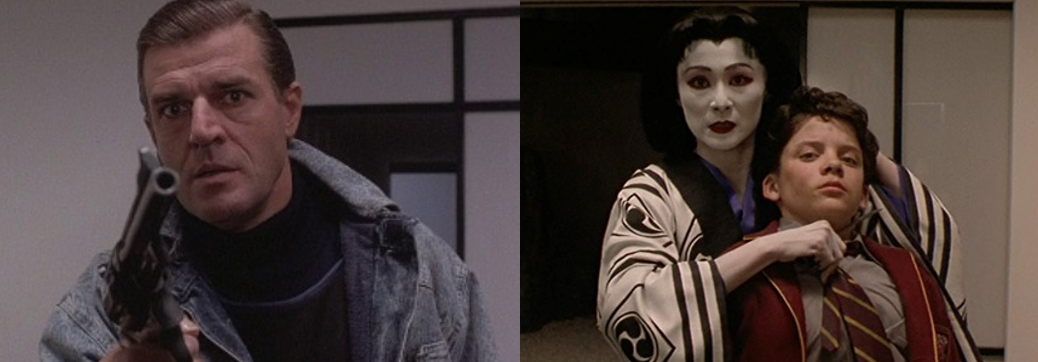
The traditional, mostly Italian-American world of organised crime is shaken up by the arrival of the Yakuza. Led by Lady Tanaka, the Yakuza strikes with silent, surgical precision and effectiveness and are easily able to consolidate a stranglehold on the criminal underworld thanks to the Punisher thinning out the competition. Their presence, and the Punisher’s actions, force former kingpin Gianni Franco (Krabbé), a well-dressed and eloquent mobster, out of retirement; to sway him and the remaining Mafia family members into agreeing to a lop-sided alliance with her, Lady Tanaka arranges to have the mobster’s children kidnapped. Tanaka is portrayed as a cold, calculating, merciless foe who willingly slaughtered her own brother and employs any means necessary to get her way while still being confident and cultured and exuding a quiet menace and authority. This is in stark contrast to the hot-headed Mafia Dons, who are driven to the point of desperation by recent events and find themselves easily outmatched at every turn by both the Punisher and the Yakuza.

Frank is convinced to expand his focus from vengeance to rescuing the kids.

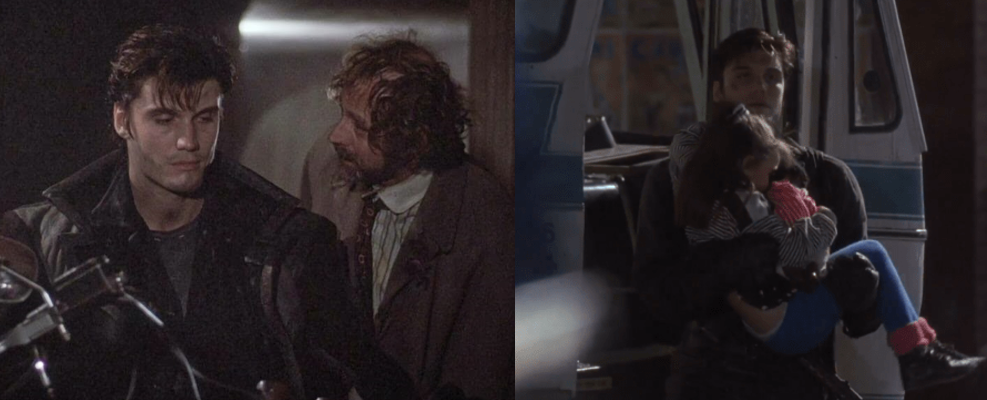
One of the kids taken by Tanaka is Franco’s son, Tommy (Brian Rooney), who, unlike the other hostages, is completely unaware of his father’s criminal activities. Having successfully culled much of the Mafia’s numbers in the five years since he became the Punisher, Frank is content to let the remnants fight and kill themselves and has no interest in saving the children or getting involved in the brewing war between the Mafia and the Yakuza. However, he is swayed into action after a guilt-trip from one of his few allies, “Shake” (Otto), a former stage actor turned vagrant who informs Frank of underworld activities and gives him leads in exchange for alcohol.

The Nitty-Gritty:
When talking about the big action stars of the eighties, I can’t help but feel like Dolph Lundgren often gets overlooked; this isn’t massively surprising in a lot of ways as he was largely overshadowed by the bigger and more charismatic Arnold Schwarzenegger and lacked the big-hit franchises associated with Arnold or Sylvester Stallone. Still, he was a pretty decent choice to portray the Punisher at the time despite never wearing the iconic skull-branded outfit of his comic book counterpart. Lundgren’s strained narration also peppers the film as he laments his lot in life and God’s apparent refusal to do anything to protect the innocent and punish the guilty and he throws himself into the action and fight scenes and exudes just the right level of stoicism, vulnerability, conviction, and capability that are so crucial to the Punisher’s characterisation (he even tosses in a bit of snark here and there when faced with agonising torture).

While not as bombastic as its peers, The Punisher still contains a decent amount of action.

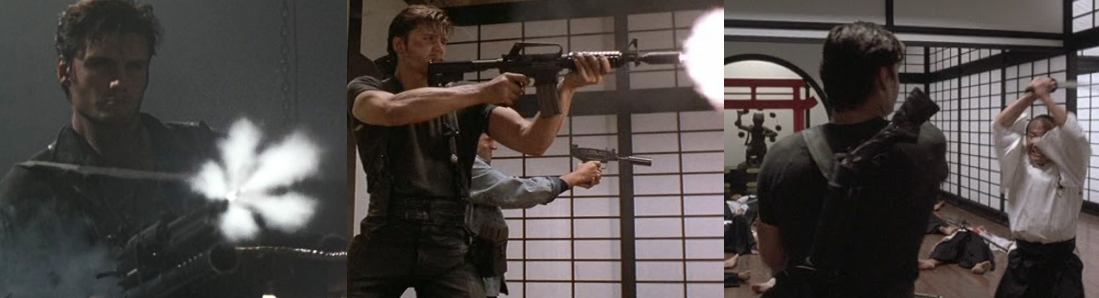
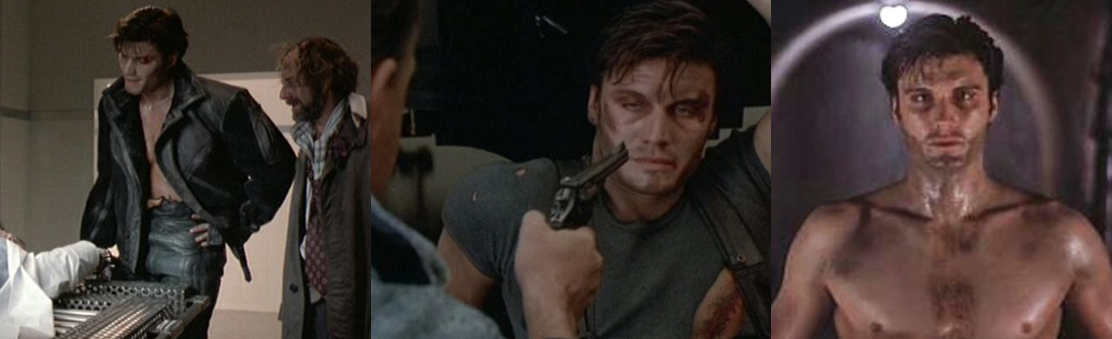
As such, Lundgren’s portrayal of the Punisher is as a weary, disassociated man who has lived a life of such extreme violence and hardship that he has become numb to anything and everything around him. While you could argue that Lundgren simply comes across as bored, he excels in the film’s many action scenes, which are surprisingly varied, exciting, and full of gratuitous eighties-style gun fights, a ridiculous amount of explosions, blood squibs, and even some sword-based combat. Here, the Punisher is in his element and has a purpose but, when not in combat, he is a morose and sombre figure to be pitied, which is perfectly in keeping with the Punisher’s character. Best of all, unlike other eighties action heroes, the Punisher is not infallible; he gets hurt, feels pain, and regularly has to perform extreme surgery on himself to stem his wounds.

The Punisher remains a complex and layered character.

Again, this speaks to the Punisher’s roots as an anti-hero; he does good things by association but doesn’t head out into the night expecting to be heralded a hero. Instead, he is completely focused on the brutal eradication or organised crime; he walks (or rides) head-first into gun fights and rooms and crowds of armed opponents with no fear and protected only by his heavy arsenal and his force of will. When captured and tortured by Lady Tanaka, Frank refuses to give in to the pain and expertly breaks free of his bonds to save Shake when he is subjected to the same torture and, when Berkowitz’s life is threatened by Franco, he agrees to an alliance with the remnants of the Mafia, which was a great way to emphasise the character’s adaptability and loyalty to his few allies.

Though lacking the iconic skull, Lundgren embodies the spirit of the character admirably.

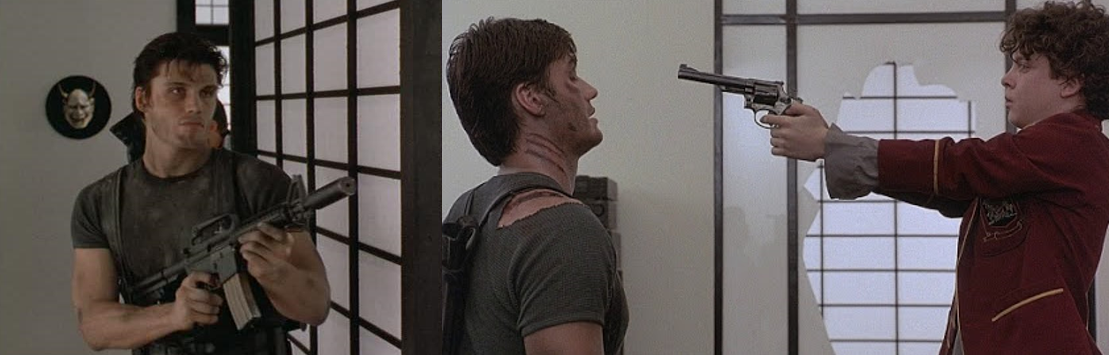
The Punisher’s softer side also gets some play when he successfully rescues the kids from their captivity; it seems to be a constant truth that Frank’s hardened exterior cracks somewhat when kids are involved, which is understandable given that he was a father at one time, and it goes a long way to showing that there is still some humanity left in the character. Furthermore, Frank’s suicidal tendencies are also a notable factor in the film; as I mentioned, he makes very little effort to protect himself from damage (he literally refuses body armour for the finale) and walks into firefights without a second’s hesitation and is haunted by nightmares of his family’s murder but this attitude is made heart-wrenchingly explicit at the film’s conclusion. After entering into a frosty alliance with Franco, the Punisher wages all-out war against Lady Tanaka to rescue Tommy; this results in the once efficient Yakuza being reduced to little more than cannon fodder, Lady Tanaka receiving a skull-branded knife to the head, and Frank murdering Franco before Tommy’s eyes. When Tommy holds Frank at gunpoint,  Frank submits to his mercy, welcoming death but when the boy chooses not to pull the trigger, Frank briefly comforts him before warning Tommy not to follow in his father’s footsteps lest he have to punish the boy in the future and returns to his never-ending war against the guilty.

The Summary:
The Punisher is quite a brisk and inoffensive little action movie. It might not really measure up to some of its competition, and there are definitely better eighties action films out there, but you could do a lot worse than this. For me, the Punisher is a ridiculously easy character to adapt compared to his other more colourful and fantastical superhero counterparts; you simply get a rugged actor who can portray the character’s complex emotions, give him a gun and some knives, and put a lot of bodies in his path and, in that respect, The Punisher succeeds very well. Sure, other iterations of the character has done a better job of handling the character’s pathos and complex ideology and attitude but those aspects are still present in The Punisher. Frank Castle isn’t just some muscled up meathead who care barely string two words together and the film tries its best to explore the character’s fading humanity and mental instability; obviously, the typical bombastic eighties action mostly drowns a lot of these elements out but, again, that’s a good thing because who doesn’t like a bit of over-the-top eighties action? I’d even go as far as to say that it doesn’t really matter that Lundgren doesn’t wear the skull-shirt since he does a pretty good job of embodying the character regardless and, while it might be the worst of the three Punisher movies and lacking the star power of Commando and Rambo III, The Punisher is worth your time if you’re a fan of the character and the genre.

My Rating:

Rating: 3 out of 5.

Pretty Good

Have you ever seen The Punisher? If so, what did you think of it? Were you disappointed that Dolph Lundgren didn’t wear the skull-shirt or were you not really all that bothered? What did you think to the film’s action scenes and gratuitous violence? Were you a fan of Lundgren’s casting; if not, which eighties star would you have cast in the role? What did you think to the film’s portrayal of the Punisher and the overall plot and where would you rank this film against others in the genre and the other Punisher adaptations? What is your favourite eighties action movie? Which Punisher videogame, story, or adaptation is your favourite? How are you celebrating the Punisher’s debut this month? Whatever you think about The Punisher, feel free to write a comment below and be sure to check out my other Punisher content!

Movie Night [Sci-Fanuary]: Ant-Man


January sees the celebration of two notable dates in science-fiction history, with January 2 christened “National Science Fiction Day” to coincide with the birth date of the world renowned sci-fi writer Isaac Asimov, and HAL 9000, the sophisticated artificial intelligence of Arthur C. Clarke’s seminal 2001: A Space Odyssey (1968), being created on 12 January. Accordingly, I’m spending every Sunday of January celebrating sci-fi in all its forms.


Released: 17 July 2015
Director: Peyton Reed
Distributor:
Walt Disney Studios Motion Pictures
Budget: $130 to 169.3 million
Stars:
Paul Rudd, Evangeline Lilly, Corey Stoll, Abby Ryder Fortson, and Michael Douglas

The Plot:
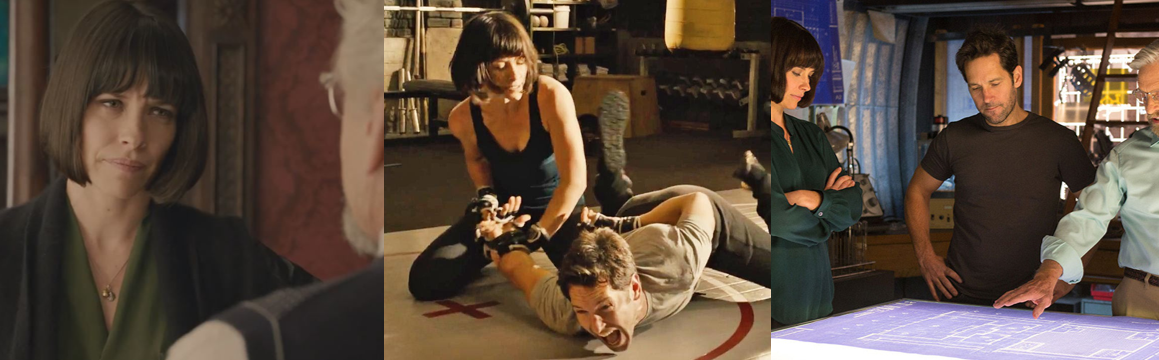
Petty thief Scott Lang (Rudd) struggles to adapt after being released from prison. Determined to prove himself to his young daughter, Cassie (Fortson), he turns to stealing once more and unwittingly nabs Doctor Hank Pym’s (Douglas) Ant-Man suit. Gifted with an opportunity to turn his life around, Scott trains with Pym and his stern daughter, Hope van Dyne (Lilly), to master the suit’s ability to shrink and control ants in order to keep the conniving Doctor Darren Cross (Stoll) from perverting Pym’s life’s work into a weapon.

The Background:
When comic book readers were first introduced to Hank Pym/Ant-Man, he wasn’t quite the garishly-costumed Avenger would later help form the Avengers; instead, he was merely a scientist featured in the pages of Tales to Astonish #27. The creation of the legendary duo Stan Lee and Jack Kirby, the character was re-envisioned as a superhero eight issues later and would go on to be a consistent, if unstable, character in the pages of Marvel Comics. Crucially, however, Pym wasn’t the only character to take up the mantle of Ant-Man; one of Pym’s most notable successors was Scott Lang, a reformed criminal created by David Michelinie, Bob Layton, and John Byrne, who took over the role in 1979. Both Hank Pym and Scott Lang had featured in Marvel cartoons and videogames since their debut, but development of a live-action film can be traced back to the 1980s, when development was scuppered by a similar concept, Honey, I Shrunk the Kids (Johnston, 1989). The project finally started gaining traction in the early-2000s when Edgar Wright and Joe Cornish wrote a film treatment focusing on the Scott Lang version of the character for Artisan Entertainment, who held the film rights at the time. Over the next ten years, the film was continually showcased and teased; the character was bumped from the first phase of the Marvel Cinematic Universe (MCU) and eventually slotted in to debut in Phase Three. Sadly, Wright eventually left the project in 2014, right after both casting and the script had been finalised, due to “creative differences” between himself and Marvel Studios. Peyton Reed soon succeeded Wright as the director and worked closely with star Paul Rudd (who underwent a physical transformation for the role) and writer Adam McKay to rework and expand upon Wright’s script. Double Negative and Industrial Light & Magic handled the film’s shrinking effects, with star Corey Stoll sporting a motion capture suit to bring the villainous Yellowjacket to life. Finally, after being in development for over ten years, Ant-Man released to a massive $519.3 million worldwide gross; the reviews were equally impressive, with critics praising the film’s family dynamic, performances, and the unique blend of humour and action that set it apart from other MCU films. The film performed so well that a sequel was produced in 2018, and a third instalment is due for release later this year, and only served to further bolster Rudd’s undeniable charm and charisma.

The Review:
Ant-Man is one of those Marvel superheroes that I’ve never really had strong feelings about one way or another. Like many, I mostly know the character as being an emotionally and psychologically unstable individual who occasionally abuses his wife and has inferiority complexes, though I primarily associate the character with one of the Avengers’ greatest villains, Ultron. Consequently, while Ant-Man and the Wasp were instrumental in the formation of the Avengers in the comics, I can’t say that I was too disappointed to see the character miss out on the big screen debut of Marvel’s premier superhero team. However, by the time Ant-Man was produced, the MCU was really ramping up its scope; the Avengers had formed, we’d seen Gods and bleeding-edge technology and even space adventures and, while Ant-Man probably would have fit in nicely during the MCU’s first phase (although it probably would have been deemed too derivative), it was actually a surprising breath of fresh air to come back down to “ground level”, so to speak, before really getting balls deep into the Infinity Saga.

Years after Hank quit S.H.I.E.L.D., ex-con Scott tries his best to set a good example and rebuild his life.

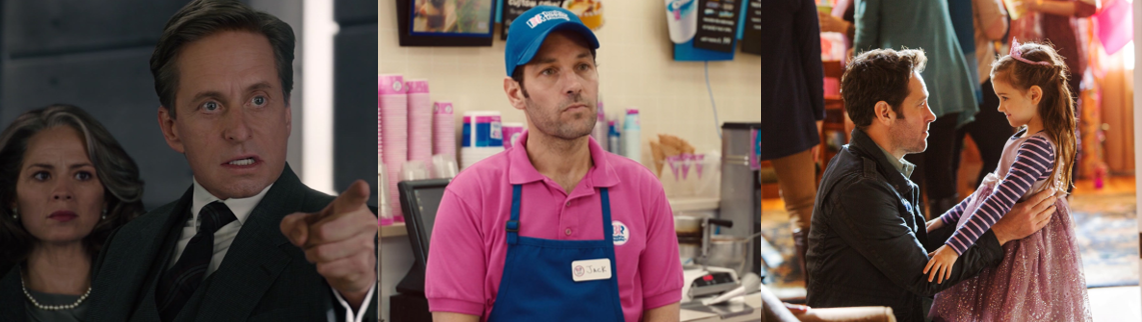
Ant-Man opens up in 1989 and by showcasing just how far de-aging technology has come as Hank Pym (digitally restored to match the time period) angrily confronts Howard Stark (John Slattery), Peggy Carter (Hayley Atwell made up to look noticeably older), and Mitchell Carson (Martin Donovan) after discovering the Strategic Homeland Intervention, Enforcement and Logistics Division’s (S.H.I.E.L.D.) attempts to replicate his Hank Particle technology. While Peggy is shocked at the revelation, Howard tries to impress upon Hank that his research could be put to far better, greater use than simply fuelling his efforts as Ant-Man. Already annoyed at being reduced to a glorified errand boy, Hank is pushed to the edge when Carson mocks his anger and brings up his late-wife, Janet, leading to Hank lashing out, breaking Carson’s nose, and quitting S.H.I.E.L.D. Although Howard pleads with Hank to reconsider, Hank storms out, making an enemy of Carson in the process and establishing a few key plot points for the movie: Hank doesn’t trust S.H.I.E.L.D., seems a little unstable, and is highly protective of his research. The film then jumps ahead to then-present day to introduce us to Scott Lang right as he’s being released from prison; a former VistaCorp systems engineer, Scott is a veritable genius, holding a Master’s degree in Electrical Engineering but is reduced to working a menial job at Baskins-Robbins in his desperate attempt to stay on the straight and narrow and set a good example for his young daughter, Cassie (Fortson). It’s crucial to note that that Scott wasn’t arrested for anything violent or threatening (indeed, he states that he hates violence); instead, he hacked into VistaCorp’s security system and redistributed misbegotten funds to their victims before exposing their misdeeds online, painting him as a sympathetic, almost Robin Hood-like figure right from the outset as he strives to do good deeds and has a clear moral compass but isn’t exactly the best at making responsible decisions. Although Scott has a strained relationship with his ex-wife, Maggie (Judy Greer), and her new fiancé, cop Jim Paxton (Bobby Cannavale), he is extremely close to Hope, who is always excited to see him. He’s desperate to make up for lost time but faces nothing but an uphill battle to show that he’s changed and can be a responsible adult.

Luis’s enthusiasm is offset by Hanks’ cantankerous nature and Darren’s lust for power.

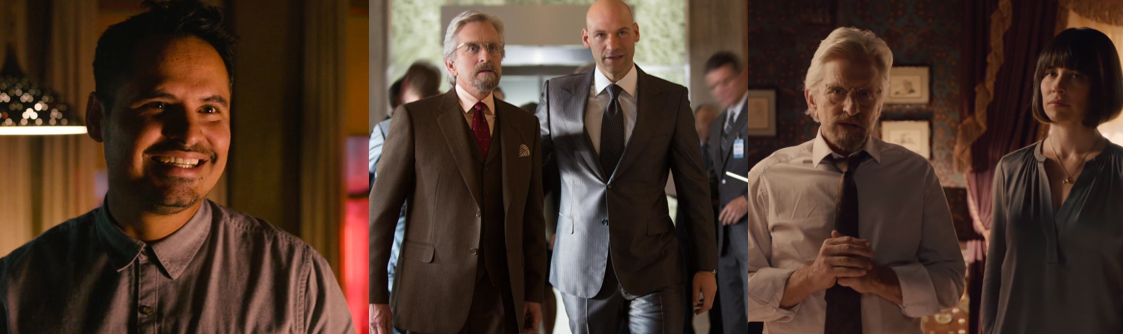
After his release, Scott is taken in by his former cellmate and best friend, Luis (Michael Peña), an enthusiastic, supportive, and incredibly friendly and optimistic former con who initially tries to coax Scott back into his former life. Luis is one of many highlights in Ant-Man; in many ways a predecessor to the colourful characters and banter we’d see in Thor: Ragnarok (Waititi, 2017), Luis just exudes likeability and friendliness. Peña’s delivery and fast-talking cadence also provide one of the film’s most hilarious moments where Luis rapidly breaks down the particulars of a big-time score, which is fantastically realised with Peña’s voice playing over a number of other ancillary characters as he enthusiastically tells Scott how he came by this information. Luis sets Scott up at an apartment and introduces him to Dave (Tip “T.I.” Harris) and Kurt (David Dastmalchian), both of whom are only too eager to assist with Scott’s heist into a rich old man’s house and make that big score. Scott doesn’t return to his cat burglar ways lightly, but believes he has no choice if he ever hopes to set himself up with an apartment, pay his child maintenance fees, and see his daughter again. In the interim years after the opening, Hank Pym has done pretty well for himself; he set up his own company, Hank Technologies, and is clearly quite wealthy from the research and technology developed there. However, he has slowly become more and more of a recluse and been pushed further away from his company; his protégé, Darren Cross, is in the final stages of assuming full control of Hank Technologies, renaming it Cross Technologies, and fully replicating the Hank Particle technology. Fascinated by Hank’s past as the shrunken secret agent superhero Ant-Man, Darren has developed a suit, the “Yellowjacket”, to reproduce the technology and sell it as a peacekeeping weapon for geo-political and military applications. Hank is frustrated by all of this, especially Darren’s insistence on reproducing the Ant-Man technology, but handicapped by his ability to do anything about it; prolonged exposure to the Hank Particles has left Hank physically unable to suit up again because of the risk of further (and permanent) damage to his mind and body but he is equally adamant that his estranged daughter, Hope, not take up the mantle because of the risk not only to her but also his lingering guilt and fear after losing his wife to that same technology.   

Darren is not just on the cusp of having everything he lusts for, but also completely going off the rails.

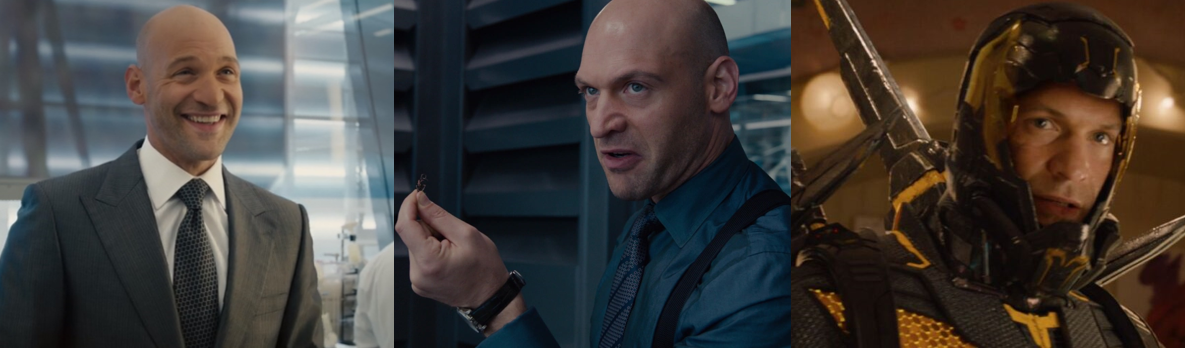
Although Darren is frustrated at his inability to shrink organic material, both Hank and Hope know that it’s only a matter of time before he cracks the secret and begins manufacturing weaponised Ant-Man technology. Although Hank is reluctant to risk losing Hope, he’s more than happy to recruit Scott to his cause, having identified him as the perfect expendable candidate for their operation thanks to his intellect and skills as a cat burglar. I always found Hank’s reasoning here very interesting, and somewhat hypocritical; he won’t risk losing Hope so he brings in Scott, positioning him to a point where the former thief has little choice but to agree to become Ant-Man, but Scott has quite a lot to lose as well so it just goes to show that Hank, for all his morals and ethics, doesn’t necessarily have the most clean-cut of motivations. Anyway, Scott is initially disheartened to learn that all his efforts have resulted in only an old motorcycle suit and a funky helmet but, upon slipping into the outfit out of sheer curiosity, he is both excited and horrified to discover that it enables him to shrink down to near-microscopic proportions at the push of a button! Scott is naturally freaked out and attempts to return the suit, only to be arrested in the process and perfectly placed for Hank to exposit a truncated version of his life story and his troubles with Darren Cross. For a stereotypical, suit-wearing antagonist, Darren actually has a few things going for him that help him to break free of the corporate bad-guy trope I loathe so much. Of course he’s a smooth-talking, slick weasel and a sharp businessman, but he’s also a manipulative and sadistic asshole; he took full advantage of Hank’s trust and faith to gain a majority interest in Hank Technologies, leeched every bit of information and brilliance from his mentor he possibly could to advance his own career and self-interests, and has no qualms about killing those who get in his way using perverted Hank Particles to reduce them to a gooey residue. He’s a highly intelligent, and highly unstable, antagonist who oozes charm but also menace; you’re never really sure what he’s thinking and you can almost see the urge to lash out and go full crazy bubbling beneath the surface. In many ways, he’s a dark opposite for both Scott and Hank since he’s kind of like what Scott could have become if he’d gone down that path while also being on the verge of a full-on meltdown like Hank seems to be half the time. Both Darren and Scott also have eyes on Hope, but Darren’s lack of mortality and lust for power are what separate him from his rival.

Hope resents her father keeping things from her and stopping her from suiting up.

Hope and Hank have a strained relationship, to say the least; she resents her father for keeping the truth about what happened to her mother from her, and for picking Scott over her, however they come together when they realise how dangerously close Darren is to perfecting and weaponising the Ant-Man technology. Still, Hope is very abrasive to both Scott and her father, referring to him as “Hank” or “Dr. Pym” for much of the film and constantly annoyed at Scott’s ignorance. Familiar with both Darren’s research and personality, as well as the particulars of Hank’s technology, to say nothing of the company’s security measures and systems, Hope is also Scott’s physical superior in every way; she sees Scott as a bungling, naïve fool who’s in over his head and is greatly frustrated at her father’s apparent lack of trust in her. To be fair, Hank distrusts almost everyone; he resents both S.H.I.E.L.D. and the flamboyant nature of the Avengers, and sees this job as being more about subterfuge then barging in all guns blazing. Hank is also tortured at the loss of his wife, who joined him for his pint-sized adventures as the Wasp and was lost to him after she was forced to reduce herself down beyond the limits of the suit and got lost in the “Quantum Realm” as a result. Scott’s influence on the two is palpable; by sharing with Hope that Hank clearly loves her and doesn’t want to risk losing her, he not only learns the trick to communicating with Hank’s ants but also helps mend the rift between father and daughter, finally revealing the truth about her mother’s death and her father’s inability to cope with the grief of his greatest failure. Consequently, all three are forced to set aside their differences, and self-doubts, in order to redeem each other and keep Darren from potentially threatening the world for the next generation.

The Nitty-Gritty:
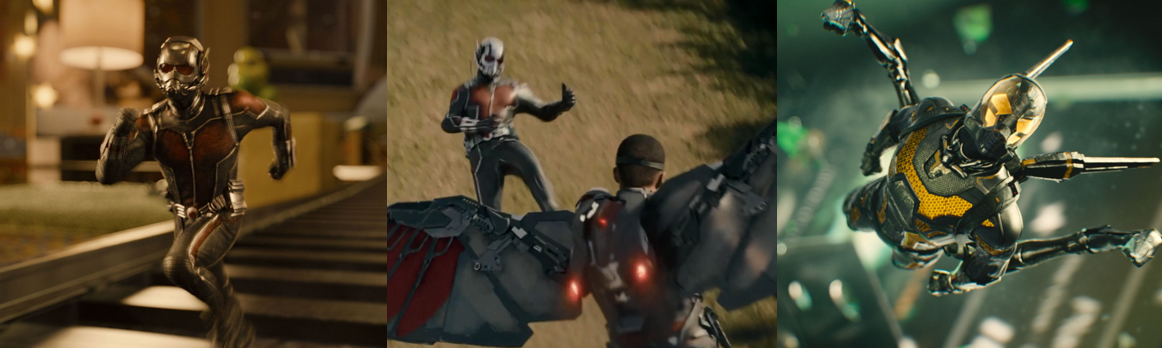
One thing that sets Ant-Man apart from other films in the MCU, particularly at the time it was made, was its strong emphasis towards humour; humour has always been a big part of the MCU, but Ant-Man is basically part-comedy and shines all the brighter for it. Paul Rudd impresses in the title role with his incredible screen charisma, likeability, and comedic timing and the film features not just the traditional snark and biting wit of the MCU but also some truly amusing gags relating to Baskin-Robbins (they always find out) and Titanic (Cameron, 1997), but also excellent use of sight gags and editing (the film consistently cuts away from the drama of Scott’s shrunken adventures to see him barely having an impact on the real world). Ant-Man also separates itself from other MCU movies by being as much a heist movie as it is a superhero affair; Scott and his crew undergo a great deal of preparation and planning before breaking into Hank’s house, which involves acquiring uniforms, cutting power lines, and communicating from a nondescript van. Once Scott is inside the house, we get to see just how capable and adaptable he is; he’s slick and agile, easily able to slip inside with barely a whisper, and cobbles together unique solutions to break into Hank’s antique vault using only household items. Whilst being trained in combat by Hope and the particulars to the suit by Hank, Scott lends his skills to planning the assault on Pym Technologies, which involves studying the layouts and the security systems and the defences surrounding the Yellowjacket suit. This requires a highly co-ordinated attack on all fronts, using every resource at their disposal, including not just Scott’s crew (much to Hank’s chagrin) and also an infiltrating into the Avengers compound. This leads to a brief scuffle between Ant-Man and Sam Wilson/The Falcon (Anthony Mackie) that is the first true test of Scott’s newfound abilities, and additional opportunities for Luis and Scott’s amusing cohorts to shine with their hilarious shenanigans.

The suits look fantastic thanks to both excellent practical and digital effects.

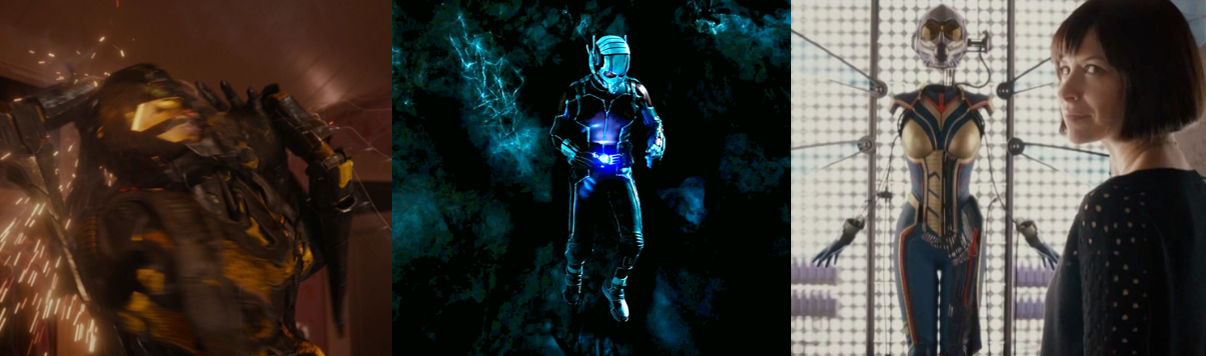
Ant-Man absolutely excels in its visuals and presentation. The Ant-Man suit itself is a thing a beauty; fittingly drawing its influences from Scott Lang’s comic book adventures and more modern interpretations of the character, it’s not a mechanised suit of armour or made up of fancy nanotech and wis, instead, a very tangible and almost rudimentary costume that resembles a motorcycle outfit. It looks advanced, but not so advanced that it’s impossible to believe a genius like Hank Pym could have made it at home and with limited resources, and I love how it seems so functional and practical. The helmet is especially impressive, especially in this first outing for the character; rather then peeling back like nanotech, it flips up and is a largely practical prop, all of which works wonders for bringing this frankly ridiculous character to life. Darren’s Yellowjacket outfit is functionally similar, but noticeably different; for starters, it was brought to life using digital effects but I sure as hell couldn’t really tell that when watching the film. Yellowjacket has always been a bit of an absurd character, costume, and concept for me but the film presents the character as very menacing and technologically superior to Ant-Man in everyway. While it’s admittedly very “safe” for the film to wheel out the dark doppelgänger trope again, Yellowjacket can not only shrink and grow himself and other objects but he can also fly and sports stinger-like blasters on his back; this, coupled with the characters’ distinctive red and yellow colour schemes, really makes it much easier to distinguish the two in their climatic fight scene.
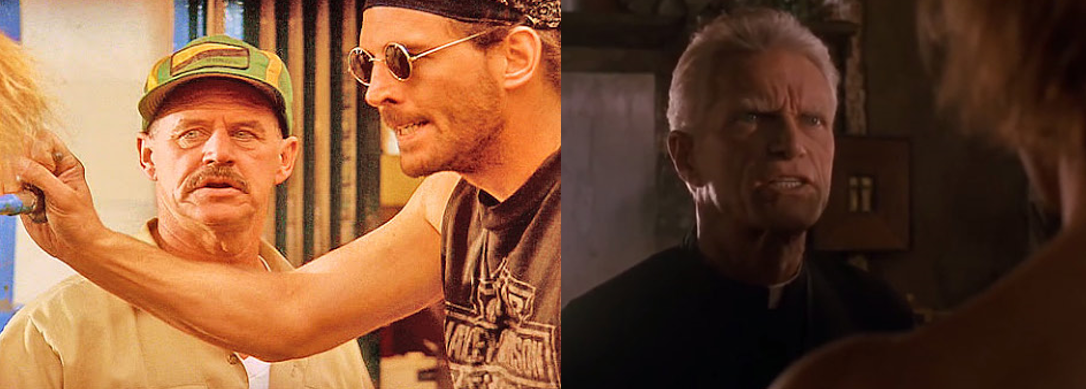
Ant-Man’s unique ability to shrink makes for some fun and innovative action sequences and visuals.

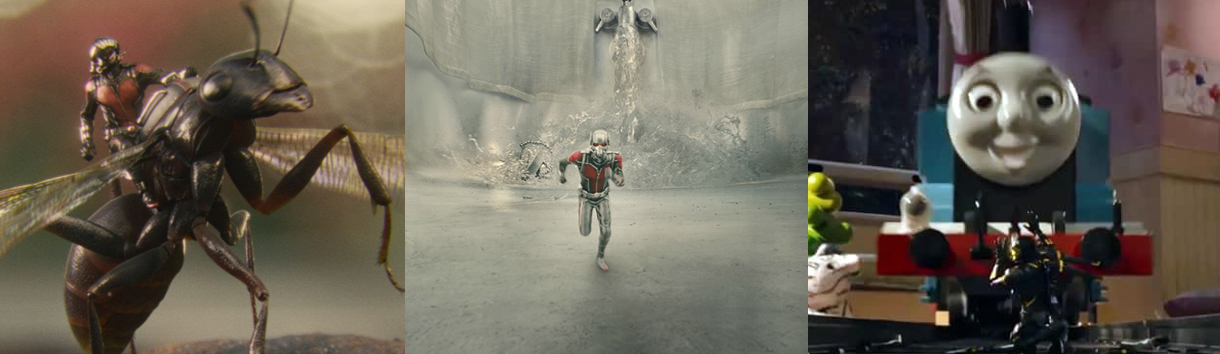
Naturally, Ant-Man’s most unique selling point is the character’s ability to shrink down to a near-microscopic level; this effect is rendered using digital technology and directly attributed to the suit and the Pym Particles, meaning that Scott must stay in the suit and the helmet at all times to stay alive when shrunken. Although minuscule in size, Scott retains his full-size strength and weight, effectively making him superhuman when he’s shrunk. However, the dangers surrounding him are many and varied; normal, everyday things such as a person entering a room, rats, and water are life-threatening hazards and the effect is, quite naturally, very disorientating for Scott for much of the first half of the film. Thanks to a lengthy (and amusing) montage sequence, Scott slowly learns to master the suit, which enables him to shrunk and grow in a fraction of a second to pass through the smallest openings, strike with near-superhuman speed, strength, and swiftness, and enlarge or reduce everyday objects to be used as weapons in combat. As versatile as the suit is, perhaps the greatest benefit of the suit is the ability to control ants using electromagnetic waves. Hank is obviously the absolute master of this; he controls flying ants to spirit Scott across the city, commands “Bullet Ants” to keep him subdued, and even directs drones to communicate and pass sugar cubes. While Hank is very clinical about this ability, preferring to number the ants rather than name them and grow attached to them, Scott is much more appreciative of their help and bonds with them like one would a pet. He names his flying ant “Anthony” and is devastated when it is killed near the finale, but also learns through his training of the particular differences and practical applications of each of the different types of ants at his disposal: “Crazy Ants” can conduct electricity to fry electronics, Bullet Ants deliver an excruciating sting, “Carpenter Ants” allow him to fly about at high speeds, and “Fire Ants” not only bite but also form bridges and pathways. By the finale, Scott has fully mastered the suit and the ants, and is able to shrink and grow in the blink of an eye to dodge bullets and take down entire groups of highly trained, armed men, leading to some of the MCU’s most unique action sequences as everyday locations are rendered exciting and action-packed thanks to Scott’s diminutive stature.
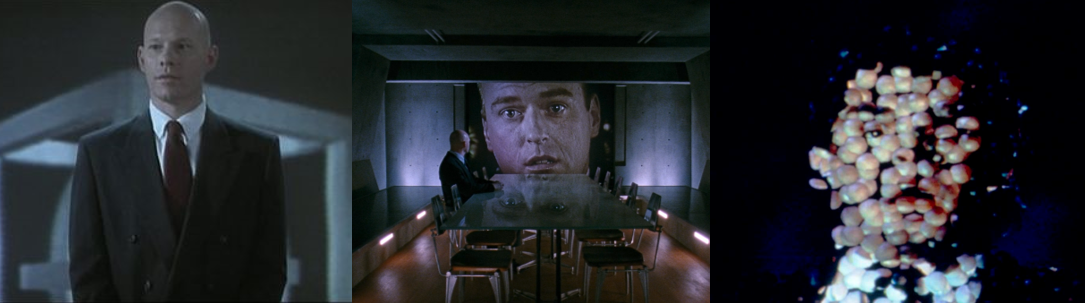
Yellowjacket is defeated, Ant-Man returns from the Quantum Realm, and Hope finally earns her wings.

A particularly frosty confrontation between Hank and Darren sets Cross off and sees him beefing up security, leading to an escalation in Hank’s plans. Although he despairs of Scott’s friends, Hank begrudgingly accepts their help in causing distractions and infiltrating Pym Technology. While Ant-Man and his ants fry the servers and cause chaos to the security systems, Hank puts himself in considerable danger as Darren negotiates the selling of the Yellowjacket technology to Carson and his Hydra associates, and the two finally reveal their true faces as hated enemies. Although Hank is wounded in the fracas, the timely intervention of Hope allows Scott to escape when he’s captured; Hope’s pleas to Darren fall on deaf ears and, pushed to the edge by the destruction of his company, he dons the Yellowjacket suit for himself and fully embraces his hatred and lust for power. This leads to some fun and incredibly unique fight scenes as Ant-Man and Yellowjacket battle not just on a damaged helicopter but also in a suitcase, bouncing about between packets of sweets, keys, and a mobile phone, and Ant-Man bats Yellowjacket into a fly zapper with a table tennis pad. Darren’s knowledge of Scott’s identity leads to him targeting Cassie, escalating their conflict significantly and leading to my favourite fight sequence of the film where Ant-Man and Yellowjacket duke it out on a toy train set and across Cassie’s bedroom, leading not just to an enlarged ant being set loose upon the city but a gigantic Thomas the Tank Engine crashing out into the street! Yellowjacket’s titanium armour proves too tough for Ant-Man and, with his daughter at risk, Scott has no choice but to risk going sub-atomic in order to disrupt Darren’s suit and reduce him down into a twisted nothingness. Adrift in the Quantum Realm, Scott is disorientated and bombarded with bizarre visuals but holds on to his memories and love for Cassie and uses those emotions to force himself back to consciousness, repairing his regulator and returning to the real world. His heroic actions and self-sacrifice earn him not just his daughter’s adulation but Paxton’s respect, finally allowing him to be a part of Cassie’s life once more or for them to build a family unit. His return also gives Hank the hope that he might be able to retrieve his wife one day, and finally sees Scott and Hope act on their mutual attraction for each other. The film concludes with Luis (eventually) relating that the Falcon is actively seeking out Ant-Man for help with a much bigger problem that affects not just the superhero community, but the entire world, and Hank finally gifting Hope with her own Wasp suit for the next go-around.

The Summary:
I wasn’t expecting much when I went into Ant-Man; the MCU was growing and starting to veer away towards the cosmic and outlandish and it seemed like their days of doing more grounded, more human heroes were all but done but Ant-Man definitely set a precedent for diverse storytelling that the MCU continues to stick to. It’s amazing to me that even after expanding their scope towards Gods and the depths of space and hinting towards larger cosmic threats the MCU is still masterfully able to snap back to ground level with a character like Ant-Man, and Scott Lang was such a breath of fresh air for the franchise. Paul Rudd is so immediately likeable, and he brought a real comical, heartfelt performance to Scott Lang, and it’s largely thanks to him that I found myself actually caring about Ant-Man for the first time in…I think forever. The comedy and gags on offer were absolutely top notch, with Luis being an obvious highlight, but I also really enjoyed Michael Douglas’s performance; he played a world weary, cranky, slightly unstable former superhero-come-mentor perfectly and brought so much presence to every scene he was in. He, like all of the actors in this, also seemed to be having a great time with the film, which doesn’t take itself too seriously and perfectly incorporates elements of a heist movie to give it a unique flavour. While we see incredible cosmic visuals and escalating threats quite often in the MCU, Ant-Man’s shrinking sequences are still really impressive; I love how our senses are changed alongside Scott’s when he’s smaller and how everyday things we take for granted suddenly become a life-threatening obstacle for Ant-Man. It’s fun seeing Scott learn about the suit and what he can do, and seeing him bond with the different ants and work alongside his crew, and while I think Ant-Man probably would have been better placed in the MCU’s first phase, it was a much-needed palette-cleanser at the time and remains one of the most entertaining and unique entries in the MCU.

My Rating:

Rating: 4 out of 5.

Great Stuff

Did you enjoy Ant-Man? How did you think it compared to other films in the MCU? What did you think to the emphasis on comedy and heist elements and on Scott’s status as a struggling ex-con and father? Did you enjoy the film’s unique action sequences and shrinking effects? Were you disappointed that Yellowjacket ended up just being a dark mirror of Ant-Man or did you think Darren’s character stood out enough to justify it? Were you a fan of Ant-Man prior to this film and, if so, which iteration of the character was your favourite? Whatever you think about Ant-Man, sign up to drop a comment below or leave a comment on my social media, check back in next week as Sci-Fi Sunday continues.

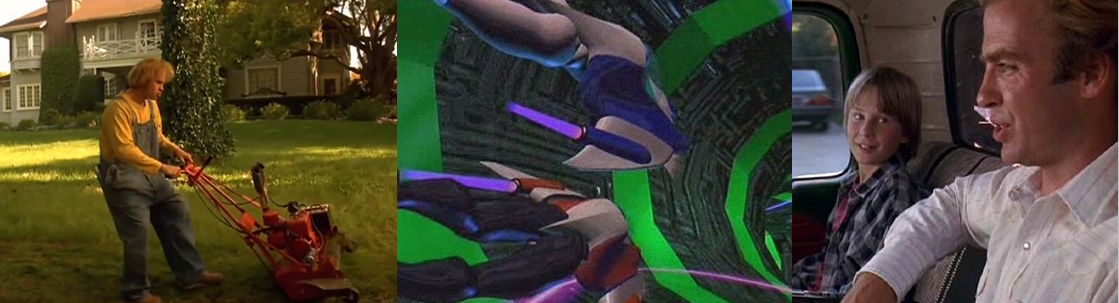
Movie Night [Sci-Fanuary]: The Lawnmower Man: Director’s Cut


January sees the celebration of two notable dates in science-fiction history, with January 2 christened “National Science Fiction Day” to coincide with the birth date of the world renowned sci-fi writer Isaac Asimov, and HAL 9000, the sophisticated artificial intelligence of Arthur C. Clarke’s seminal 2001: A Space Odyssey (1968), being created on 12 January. Accordingly, I have decided to spend every Sunday of January celebrating sci-fi in all its forms.


Released: 6 March 1992
Director: Brett Leonard
Distributor: New Line Cinema
Budget: $10 million
Stars: Jeff Fahey, Pierce Brosnan, Mark Bringelson, and Austin O’Brien

The Plot:
Intellectually challenged Job Smith (Fahey) works as a lawnmower man, he is regularly abused and mistreated by townsfolk. However, when Doctor Lawrence Angelo’s (Brosnan) research into using psychoactive drugs and virtual reality to improve the intelligence of chimps dramatically increase’s Job’s intelligence, the once childlike Job transforms into a hyper intelligent being whose sanity soon begins to suffer as a result.

The Background:
The Lawnmower Man began life as a short story by my favourite author, Stephen King. First published in 1975, “The Lawnmower Man” told the story of a strange lawnmower man who was actually a satyr of the Greek God, Pan, and driven to kill a client in His name by telekinetically controlling a lawnmower. Quite how this translated into a cautionary tale about the potential dangers of virtual reality is beyond me but, regardless, this concept of digital worlds and the potential danger of technology was a popular one in the realms of science-fiction and clearly had a strong influence on the writing and production of this very loose adaptation. King was so incensed at the changes made to his original story that he sued to have his name removed from the film’s title and marketing, and the film received mostly mixed reviews, with the film’s special effects being a noteworthy highlight. The Lawnmower Man’s $32.1 million domestic box office made the film a moderate success, which justified the release of a far worse sequel about four years later and the release of a much longer and more intricate “Director’s Cut” on home media that I’ll be looking at today.

The Review:
Like something out of a 1950s sci-fi film, The Lawnmower Man opens with a piece of blurb warning about the dangers of virtual reality; the potential of this technology (and computers in general), which was seen as so new and limitless at the time, to be the source of both enlightenment and corruption, were rife back in the day and these themes permeate throughout The Lawnmower Man. Immediately, we’re shown the scary potential of virtual reality as Dr. Angelo’s research has been used, in conjunction with various drugs and stimulants, to turn an ordinary chimp into a deadly engine for war…largely against his wishes.

The Director’s Cut features a much longer opening following the chimp’s escape from V.S.I.

This sequence, largely framed as a dream sequence in the theatrical cut, is expanded upon significantly here in the Director’s Cut as we follow the chimp as he uses his increased intelligence to escape from captivity, acquire a gun, and shoot his way out of the Virtual Space Industries (V.S.I.) facility (which is under the administration of the mysterious and malevolent governmental body known as “The Shop”, a semi-recurring agency in King’s works). In the theatrical cut, the chimp is killed curing the escape but, here, he makes it all the way to the nearby town thanks to the guidance of his V.R. headset; it’s while seeking sanctuary that the chimp meets Job, the titular simple-minded lawnmower man who mistakes him for the comic book superhero “Cyboman”. This introduces us to Job a lot sooner than in the theatrical cut, showcases both his kind, naïve nature and his childlike demeanour, and recontextualises the introduction of his father-figure,  Father Francis McKeen (Jeremy Slate), who is directly responsible for the Shop’s mercenaries finding and killing the chimp, which leaves Job distraught and Angelo incensed.

Angelo sees in Job the chance to use his research for something other than war.

A pacifist by nature, Angelo is frustrated by the Shop’s constant interference and insistence of twisting his research into a tool for war; he believes in the potential of virtual reality to improve the minds of men towards a higher calling, one far greater than conflict and death. Excited at how far the chimp came in its cognitive development and discouraged at his death, Angelo is driven to distraction by the potential of his research to help countless people just like Job. Even after taking a hiatus from work, Angelo refuses to focus on anything other than his work, which causes his relationship with his wife, Caroline Angelo (Colleen Coffey), to suffer. In the theatrical cut, she out-right leaves him part-way through the film but, here she acts far more aloof and instead goes out on the town with her friends, leaving Angelo in the basement with his work, his audio journal, and a bottle of Scotch.

Virtual reality transforms Job from a simpleton into a confident savant.

Angelo sees vast potential in Job to realise the full potential of virtual reality; skipping over the V.S.I. “aggression therapy” and concentrating purely on virtual reality and stimulating concoctions, he convinces Job to agree to a series of sessions where, over time, his mental capacity is dramatically increased. Beginning as a simple, child-like man who man in the town take advantage of (including Father McKeen, who regularly beats, berates, and mistreats Job) with little understanding about personal hygiene or reasoning, Job is a hardworking lawnmower man with a natural gift for fixing mechanical things but, thanks to Angelo’s experiments, he becomes an excitable and incredibly capable individual. He is soon able to surpass his young friend, Peter Parkette (O’Brien), at Angelo’s V.R. games, outgrows comic books, and seeks to feed his growing intellect with knowledge and input of all sorts, which transforms his mind and body into a far more competent and capable form.

While some treat Job terribly, others are incredibly loving and supportive towards him.

While Job runs afoul of the local town bully, the aggressive Jake Simpson (John Laughlin) and is regularly abused by McKeen for the smallest transgressions, Job actually has a couple of close friends who genuinely care about his well-being. Angelo likes him, for a start, and then there’s Peter, with whom Job shares a love of comic books and videogames. He’s also treated like a surrogate son by McKeen’s brother, Terry (Geoffrey Lewis), a local handyman and groundskeeper who employs Job and is one swig of booze away from becoming a full-blown alcoholic. In a nice twist, even as Job’s changes begin to negatively affect and overwhelm him, he never forgets those who have been kind to him and actively seeks out to punish those who have wronged him and others when he begins to develop awesome powers.

The malevolent Shop pay for their desire to exploit Job’s abilities.

The core of the film is Job’s descent under the weight of his newfound abilities but this only really comes about because of the intervention of Angelo’s supervisor at V.S.I., Sebastian Timms (Bringelson); although Timms begins the film as a straight-laced, corporate ass-kisser who, unlike Angelo, doesn’t have a problem with bowing to the whims of the Shop, he soon becomes a real cypher and sends the plot spiralling into destruction and tragedy. Eager to impress the authoritative Director (Dean Norris), Timms swaps out Angelo’s formula for the original “Project 5” samples so that they can see what the effect will be on a human being. The result is unprecedented to all, but especially Angelo, who comes to realise, with mounting horror, that Job has developed awesome, unstable abilities and suffered a psychotic break that devastates V.S.I.’s employees and leaves Timms to a truly horrific fate.

The Nitty-Gritty:
I’ve always been a fan of The Lawnmower Man and I was excited to watch the extended Director’s Cut when I bought the DVD. Unfortunately, though, much of the additional material kind of bogs the film down, especially the extended sequence with the chimp which only bloats the opening. I was surprised to see the natural of Angelo and Caroline’s relationship issues change but there were some nice new additions, too, such as Angelo having more interactions with Peter’s mother, Carla (Rosalee Mayeux), him asking Father McKeen for permission to take Job away from his duties at the church and with Terry to run his V.R. experiments, and some slightly longer scenes at V.S.I. showing Angelo trying to calm Job’s growing thirst for knowledge and input and Job experimenting with the limits of his powers to cause lesions to form on his skin. Another significant addition is Job using his psychic powers to manipulate Caroline into conflict against the Shop’s agents, thus causing her death, something which is entirely absent in the theatrical cut and goes a long way to show just how far gone Job is at that point.

Job’s new abilities allow him to wreck terrible revenge on those who have wronged him.

While The Lawnmower Man is only partially based on King’s original story, some of his traditional tropes still show up in full force; thankfully, there are no writers here but a couple of abusive, aggressive assholes show up in full force. There’s Jake, who I mentioned before, who routinely mocks and mistreats Job for his childlike demeanour and is angered into a fury when local hardbody Marnie Burke (Jenny Wright) takes a shine to Job after he begins to show more confidence and physical appeal. There’s also Peter’s father, Harold (Ray Lykins), who regularly yells at and beats his wife and child. Both of these reprehensible individuals fall victim to Job’s wrath when he begins to exact his revenge upon those who have wronged him; it’s not entirely clear what Job does to Jake (though it seems to be implied that he made Jake a simpleton like he (as in Job) used to be) but he rips Harold to shreds with his lawnmower and daunting psychic powers in perhaps the only part of the film that is similar to the original story.

As Job’s intelligence increases, so does his mania and his mental abilities.

The Project 5 formulas are noted several times by Angelo to heighten a subject’s aggression, but they have an entirely unexpected additional effect on Jon; he gets splitting headaches and begins to pick up on the thoughts of those around him before developing telekinesis. His mind absorbs information and input “like a clean, hungry sponge”, allowing him to surpass Angelo’s intelligence at a rate that leaves Angelo speechless in fear. As these changes begin to take hold, Job suffers a serious of worrying seizures and struggles to adapt to his newfound abilities but soon suffers a psychotic break and comes to see himself as accessing powers and abilities lost to mankind generations ago; all but forcing Angelo to continue his experiments, Job begins to grow more and more unstable, turning to violence and hurting Marnie, reducing her to a gibbering wreck, as he begins to lose control of his abilities and sanity.

As his powers grow in cyberspace, Job is able to influence the real world.

Impressed with a demonstration of Job’s abilities, the Director orders him to be brought in to the Shop for further testing and study; angered at Timms’ betrayal and scared half to death at Job’s increasing instability and growing God complex, Angelo is unable to protect Job from the Shop’s mercenaries, which sees him projecting a digital version of himself into the real world and reduced them to pixelated atoms! Job’s wrath is only increased when an errant shot leaves Terry dead and, having dispatched all of V.S.I.’s security with a swarm of pixelated bees, he enters the facility unimpeded to put his insane plan into motion.

Job transforms himself into Cyber Christ, a being of pure digital energy!

Having come to regard himself as the bridge between reality and virtual reality, Job plans to upload his very consciousness into the virtual world, becoming a “Cyber Christ” in the process, and spread his influence across the entire world. Although Angelo believes all of this to be a psychotic delusion, Job is able to complete his plan, transforming himself into a being of pure energy and Angelo is forced to try, one last time, to appeal to the last remnants of Job’s humanity in cyberspace. Having trapped Job behind a computer virus, and threatening him with death from bombs he placed around the facility, Angelo is ultimately no match for Job’s awesome powers but, when he realises that Peter and Carla are also in danger, Job allows Angelo to leave before they all die in the explosion.

Fahey is fantastic in the film, masterfully portraying Job’s descent into psychotic mania.

Although it appears as though Job perished in the blast, he is finally able to crack Angelo’s lock and escapes at the very last minute, with the final shot of the film being his “birth cry” as very telephone around the world rings in union, ending the film on a semi-ambiguous note that, sadly, the sequel dropped the ball on following up on. Still, The Lawnmower Man continues to impress me; its effects and realisation of virtual reality and cyberspace may be wildly outdated and based in pure fantasy but I think they hold up pretty well and are indicative of the technology and fears/speculation of the time. What also bolsters the film, for me, are some captivating performances from both Brosnan and Fahey; beginning as a wise mentor whose admiration of Job’s progress soon turns to fear for his sanity, Angelo is an admirable idealist whose wishes to use V.R. for the betterment of mankind result only in destruction. Similarly, Fahey does a fantastic job portraying Job’s childlike innocence, his pain and confusion at his growing psychic powers, his thirst for knowledge, and his descent into both stoic, unnerving menace and aggressive, unstable insanity.

An under-rated sci-fi film that explores a fantastically horrific side of V.R.

Fahey delivers some truly awesome and memorable lines here, such as his gibbering, terrifying statement of “I saw God! I touched God!”, his later stoic declaration of him becoming “Cyber Christ”, and his eventual declaration when he has fulfilled this objective of “I am God here!” (not to discount Brosnan’s moving whisper of “”Oh, dear God…” when he realises how far off the deep end Job has gone), all of which tie into the additional themes regarding faith and religion. Such notions, which originally were used to keep Job in check and under threat of reprisal for his transgressions, quickly become redundant as Job begins to experiment with his abilities; free of all fear and boundaries, he sets Father McKeen ablaze, easily manipulates the minds of others, and soon transforms from a meek, mentally challenged man into a monstrous being both in and out of virtual reality.

The Summary:
I don’t see The Lawnmower Man talked about enough when the subject of sci-fi films comes up. Sure, it’s maybe not aged too well and is absolutely nothing like the story it’s based on but so what? Total Recall (Verhoeven, 1990) is nothing like the short story it’s based on and that didn’t hurt it; obviously, it’s not a fair comparison and Total Recall  is a much better film but my point is that debates about fidelity to the source material are often meaningless when the result is an enjoyable piece of media. By gearing the story into a cautionary tale regarding the unknown dangers and potential of technology ad virtual reality, The Lawnmower Man presents a truly unique twist on the concept of V.R. as a gateway into the untapped potential of the human mind. The effects are still pretty impressive for the time; it helps that the V.R. sequences are all entirely computer-generated rather than splicing humans into cyberspace and, for me, they hold up pretty well and tie into the overall plot of Job transforming into this digital tyrant. Some solid performances only bolster the film’s appeal for me and, while the Director’s Cut actually causes the runtime to drag a bit more compared to some others, I can never get enough of a good thing. For having a truly interesting premise and execution, some stellar performances by Brosnan and Fahey, and some chilling sequences involving Job’s wrath, The Lawnmower Man is an unfairly under-rated gem of a science-fiction romp and I highly recommend it to fans of the genre who are looking for something a little different.

My Rating:

Rating: 4 out of 5.

Great Stuff

Have you ever seen The Lawnmower Man? If so, what did you think to it and do you enjoy this longer cut of the film? What did you think to the film’s premise and the performances, particularly Brosnan and Fahey? Did you enjoy the film’s depiction of virtual reality and cyberspace or do you feel it’s a little too dated? Have you ever read the original story and, if so, would you have preferred that the film was closer to the source material? What is your favourite Stephen King adaptation and how are you celebrating National Science-Fiction Day today? Whatever your thoughts on The Lawnmower Man, or sci-fi in general, be sure to leave a comment below.

Movie Night [Sci-Fanuary]: The Matrix Resurrections


January sees the celebration of two notable dates in science-fiction history, with January 2 christened “National Science Fiction Day” to coincide with the birth date of the world renowned sci-fi writer Isaac Asimov, and HAL 9000, the sophisticated artificial intelligence of Arthur C. Clarke’s seminal 2001: A Space Odyssey (1968), being created on 12 January. Accordingly, I have decided to spend every Sunday of January celebrating sci-fi in all its forms.


Released: 22 December 2021
Director: Lana Wachowski
Distributor: Warner Bros. Pictures
Budget: $190 million
Stars: Keanu Reeves, Jessica Henwick, Yahya Abdul-Mateen II, Carrie-Anne Moss, Jonathan Groff, and Neil Patrick Harris

The Plot:
Twenty years after the events of The Matrix Revolutions (Wachowski Brothers, 2003) Neo (Reeves) lives a seemingly ordinary life as Thomas A. Anderson in San Francisco where his therapist prescribes him blue pills. However, when Morpheus (Abdul-Mateen II) offers him a red pill, Neo finds his mind reopened to the world of the Matrix.

The Background:
Andy and Larry Wachowski (as they were known then) hit upon their greatest and most notable success when they were able to sell Warner Brothers on The Matrix, a science-fiction film that was heavily influenced by manga and anime and made an instant and lasting impression on cinema by popularising “bullet time” and “wire-fu”. Produced for a paltry $63 million, The Matrix was a massive hit that is spawned not only two sequels but a whole slew of multimedia merchandise. However, neither of the sequels garnered quite the same critical reaction as the quasi-cult hit original; while the directors were content to allow the story to be continued, and ended, in The Matrix Online (Monolith Productions, 2005 to 2009), rumours continued to persist that a fourth film was being considered, with stars Reeves and Hugo Weaving both expressing interest in revisiting the franchise. Development of a continuation finally gained traction in 2017, when writer Zack Penn was confirmed to be working on a fourth instalment of some kind; although Lily Wachowski chose not to commit to such a large scale production, she gave her blessing and her sister, Lana, officially returned to direct the fourth film alongside returning stars Reeves and Cary-Anne Moss. Framed as a direct continuation of where the third film left off, fans were left confused when the first trailer dropped and Lawrence Fishburne announced that he was the only member of the original cast not asked to return. The movie also attracted undue criticism when filming damaged buildings and street lights in San Francisco, and was delayed due to the COVID-19 pandemic, but The Matrix Resurrections finally released and accrued a disappointing $15738 million at the box office. It was also met with largely mixed reviews; critics praised the film’s sentimental value and the return of its familiar characters while also criticising it as a redundant revisitation suffering from muddled execution.

The Review:
If you’ve read my review of the original film, you’ll know that The Matrix is one of my all-time favourite films and franchises; I was obsessed with the first film when it came out and watched it religiously on sleepovers with friends. The film was ground-breaking and endlessly alluring at the time and, while some elements haven’t aged too well, it remains a firm favourite of mine. I even really enjoy the blending of philosophy and high-octane action featured in the second film and, though I was disappointed by the third, I felt like the trilogy had been wrapped up decently enough and was somewhat annoyed to find that the franchise was going to be dusted off some twenty years later (twenty years! Man, do I feel old!) as I felt like the story had been told and it seemed like a cheap cash grab to me. But…it’s the Matrix, and I do love me some Keanu Reeves, so I was obligated to check it out if only to satisfy my own morbid curiosity and having been intrigued by the vague trailers and marketing.

Thing are not all they seem for Anderson, whose perception is skewed by fragmented memories.

It’s a good job that I am such a fan of Keanu’s and the Matrix franchise as those elements ended up being some of the best parts of The Matrix Resurrections. Framed as a kind of re-quel, which treads over familiar ground (and even splices in footage of the original trilogy as flashbacks and dream sequences) while advanced the story twenty years after the last film. Despite apparently sacrificing his life to bring about peace between the machines and the humans of Zion, the man once known as Neo is alive and well in a new version of the Matrix, one without the green tint and grungy filter. Back in his original identity of Thomas A. Anderson, he is a successful videogame designer who found fame and fortune by creating an incredibly successful trilogy of (presumably virtual reality) videogames based on his disparate memories of the first three films. However, just as Anderson’s dreams and fragmented memories have created a virtual world for millions of players, so too have them plagued his sense of reality, and even drove him to try and leap off a rooftop in order to “fly away”. Following this apparent suicide attempt, his business partner, Smith (Groff), requests that he attend regular therapy sessions with the ominously named Analyst (Harris) and, thanks to a constant prescription of blue pills, Anderson is able to keep himself from suffering a psychotic break.
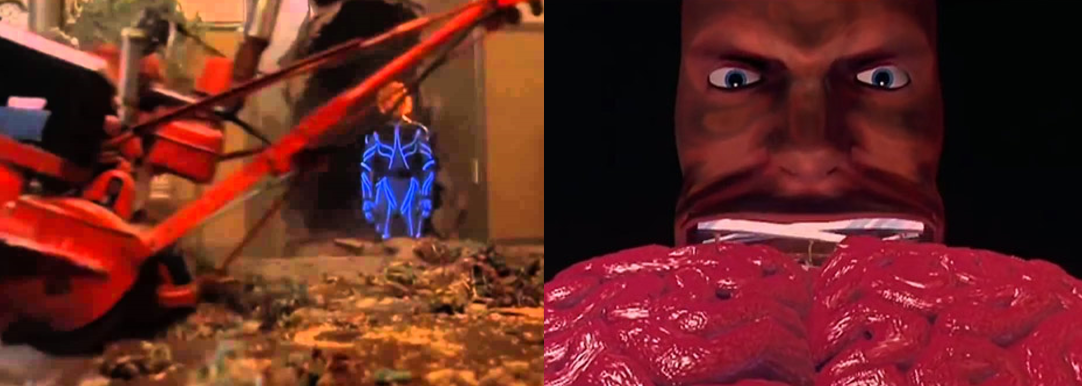
Anderson is captivated by Tiffany, whose visage stirs up memories of Trinity .

Despite being deep into the production of a new videogame, Binary, for is company, Deus Ex Machina, Anderson is disturbed by Smith’s insistence that they work on a new Matrix videogame, leading to a montage sequence wherein Smith, Anderson, and his fellow programmers and stuff wax lyrical with some metatextual, on the nose commentary about big corporations mining familiar franchises just to make more money off previous successes. Sadly, this kind of fourth-wall-breaking discussion permeates a great deal of The Matrix Resurrections, with even Anderson himself being saddened to be taking a creative step backwards rather than trying something new and innovative. His only reprieve is his infatuation with Tiffany (Moss), a beautiful woman he sees on a consistent basis in a coffee house and who reminds him of Trinity, a woman from his dreams and whom he programmed into his videogame. When not struggling to strike up a conversation with her, or debating his sanity, or working on Binary, Anderson is running a singular module of The Matrix that recreates the iconic opening of the original film, but with a few alterations to mix things up, but for the most part is fairly convinced that he’s just a videogame designer with mental issues and a skewed sense of identity.

Allies old, new, and fundamentally changed work to bring Neo back to the real world.

All of that changes when he is suddenly met by a new incarnation of Morpheus, one seemingly pulled from his videogame world, who offers him a familiar choice: stay in his reality, or return to the real world. If you were wondering whether Lawrence Fishburne makes an appearance in this film, or his perhaps adopting a new avatar, you’ll be disappointed to find that Morpheus is long dead and only appears in archival footage; instead, where get this new version of Morpheus, one apparently spliced with elements of Neo’s old nemesis, Agent Smith (Hugo Weaving), to act as an agent within that loop. A far more mischievous version of the character, this new Morpheus is actually a sentient program, of sorts, who is able to communicate with and assist the heroes in the real world thanks to an advanced kind of nanotechnology, but he’s far from the wise mentor figure of his predecessor. Instead, he ‘s more like a necessary component to help convince Anderson to leave the Matrix and reclaim his identity as Neo, something he is largely reluctant to do thanks to the Analyst’s influence on his perception of the world. Still, Neo’s curiosity and familiarity with the words and images presented to him by Morpheus override his hesitation, and he’s soon joining Captain Bugs (Henwick) and the rest of her crew aboard the Mnemosyne hovercraft, sixty years after sacrificing himself to save Zion. Neo is disorientated and melancholy to find that his sacrifice didn’t appear to change much about the world, but Bugs takes him to the new Zion, Io, and reunites him with an elderly, cynical Niobe (Jada Pinkett Smith) and learns that a peace does exist between man and machine. Shortly after the end of the war, the Matrix was purged of all former anomalies and blue-tinted machines helped the remnants of humanity to build a new haven and worked with them to grow fresh fruit and vegetables, while staving off attacks from the red-tinted, squid-like Sentinels that refused to abide by the peace treaty. The original Morpheus refused to believe that Neo’s sacrifice would fail, which led to Zion’s destruction, and a contingent of people have grown up idolising and even deifying Neo and Trinity for their actions, but Niobe’s primary concern is keeping her people safe, which leads to her reluctantly locking Neo up and pushing Bugs to defy her commander’s direct order and help spring Neo so that he can lead a desperate reinsertion into the Matrix to try and rescue Trinity.

The Nitty-Gritty:
If you’re a fan of the original film but haven’t really seen it in a while, then The Matrix Resurrections really has you covered, for the most part. It opens almost exactly like the original film, and the majority of its call-backs and references are to the ground-breaking original while repurposing some of the stronger elements of the sequels in new ways. One thing that is sadly largely absent from the film, however, is the kung-fu (or “wire-fu”, to be more accurate) fight scenes that so heavily influenced action cinema right up to present day. The first half of the film is a slow, introspective reintroduction to the world of the Matrix, one both familiar and disconcertingly different, as we follow Neo and try to figure out what’s real and what isn’t. Thanks to his fragmented memories and a skewed avatar, his sense of reality is more shot than ever, but he starts to piece his identity back together once he reawakens in the real world and is put through his paces by Morpheus. However, this isn’t really the all-powerful, full capable Neo we knew and loved; instead, he’s plagued by self-doubt and has no interest in fighting any more, especially after giving everything he had seemingly for nothing. While the world is noticeably better than the one he remembers, humanity is still somewhat divided; less and less people have been freed from the Matrix thanks to Niobe’s focus on keeping those who are free safe and the system of control he fought so hard against has simply been repurposed by a contingent of malevolent machines.

The new Smith offers little in the way of challenge for Neo, or interest to me as a viewer.

After his sacrifice, Neo’s body was taken away by the Analyst, who is revealed to basically have replaced the Architect (Helmut Bakaitis) and is behind the stability of the Matrix’s new iteration and the resurrection of Neo and Trinity. Initially looking to study them, he patched them back together using a combination of the cloning technology used to grow humans and additional mechanic parts, only to find that their incredible bond threatened the very Matrix itself. However, when kept safely apart, their very presence in the Matrix vastly improved the energy output and acceptance of those plugged in, thus largely negating the peace Neo so desperately fought for. With Neo unplugged, the machines are on the brink and a new reboot of the system, something which Smith is adamant to prevent as it would mean he would once again be absorbed into the Matrix code. However, this is not my Smith; I’m sure Jonathan Groff is a great actor, and he’s clearly doing his best to channel Hugo Weaving at points, but he’s a faint shadow of Waving/Smith’s former greatness and I actually question including him at all. Had the filmmakers brought Weaving back and had Smith, like Neo, also suffer from fragmented memories and a new life, then maybe his inclusion would have been worthwhile but, instead, Smith feels very tacked on and largely inconsequential. There’s a moment where it seems like he and Neo would join forces this time around (and that does crop up again in the finale, with very little explanation), but it quickly gives way to a bust-up between the two that is one of the few highlights of the film, recalls their subway fight from the first film, and is spoiled only by the inexplicable and completely pointless insertion of the Merovingian (Lambert Wilson) and his exiles.

Despite some good moments, it’s an unnecessary retread of things done better in the previous films.

A great deal of the film’s emphasis is, instead, on reuniting Neo with Trinity; while their romance was severely lacking in chemistry in the original trilogy, save for a few choice moments, they seem much more comfortable at ease with each other here, arguably because of the Analyst’s efforts to bestow them with new lives and personalities. While still a troubled and largely stoic reluctant saviour, Neo has a few more moments of levity here than in the original films, where he rarely showed much emotion at all, but is still as blinded by his love for Trinity as ever as he risks the fragile peace between Io and the machines by leading a risk attempt to convince her to return to him and the real world. This involves Bugs and Morpheus infiltrating the machine city, where Trinity’s body is held, with the help of their machine allies and Neo bartering with the Analyst with everyone’s future on the line. This proves to be a risky proposition as Neo’s God-like powers are both neutered and noticeably different this time around; although he still knows kung-fu, he cannot yet fly and his more acrobatic feats come in bursts, but he can still stop bullets and even has much more emphasis on creating shields and blasting foes away. The Analyst, however, proves to be a formidable foe as he’s ability to manipulate the Matrix’s famed “bullet time” technique to slow even the One to a crawl, but in the end he’s undone thanks to a tricky plot that sees Neo get through to Trinity, Bugs swap out with her physical body, and Trinity randomly revealed to be a new incarnation of the One as she and Neo fend off the Analyst’s swarm of ‘bots and fly off with a promise (more like a threat) to rebuild the world free from the Analyst’s influence.

The Summary:
I was hesitant about The Matrix Resurrections; the trailers were questionably vague and trying a little too hard to be mysterious for my liking, something which has only led to disappointment where the Matrix is concerned in the past. They also made the film seem to be a retread of the original, but over twenty years later and with some cast members inexplicably returning or absent. I feel like I could have maybe understood the need for a new Matrix movie if we’d had an entirely new cast, with maybe only Keanu returning, or seen the One reborn within the Matrix but in Keanu’s body once again (confirming a long-held theory of mine that the One always looks like Neo) rather than finding a pretty weak excuse to bring both Neo and Trinity back. It was pretty great seeing Neo back onscreen and revisiting the Matrix lore after the third movie to see where things had progressed, but I think the film played things a little too safe; not much has really changed thanks to the contingent of machines still warring against humanity, and I would have preferred to see humans and machines living and working together without any major discord and maybe have some the rogue faction be a more prominent plot point. So much of the film is focused on reintroducing Neo and the Matrix to us, which would probably be interesting for anyone who hasn’t seen the original films, but I’d wager that the vast majority of the audience has so I kind of wanted to get things moving, or maybe spend more time seeing how the Analyst was screwing with Neo’s mind rather than retreading the same old ground again but with different actors. In the end, it was an interesting enough epilogue to one of cinema’s most influential trilogies, but I honestly dread to think where the story will go when Warner Bros. greenlight an inevitable follow-up.

My Rating:

Rating: 2 out of 5.

Could Be Better

Have you seen The Matrix Resurrections? If so, what did you think to it? Did you enjoy the direction the story took Neo and how it handled his and Trinity’s resurrections or would you have preferred to see the franchise stay dormant? Which of the new was your favourite and did you like seeing how the relationship between humanity and the machines had progressed? Were you disappointed by the lack of Lawrence Fishburne, Hugo Weaving, and proper fight scenes? Which of the other Matrix sequels or spin-offs was your favourite? How are you celebrating National Science-Fiction Day today? Whatever you think about The Matrix Resurrections, sign up to leave your thoughts below or drop a comment on my social media, and be sure to check in next Sunday for more sci-fi content!

Movie Night [Christmas Day]: The Muppet Christmas Carol

Released: 11 December 1992
Director: Brian Henson
Distributor: Buena Vista Pictures Distribution
Budget: $12 million
Stars: Michael Caine, Dave Goelz, Steve Whitmire, Jerry Nelson, Frank Oz, Jessica Fox, and Meredith Braun

The Plot:
On Christmas Eve in 19th century London, the cantankerous and cold-hearted moneylender, Ebenezer Scrooge (Caine), is visited by three spirits in a desperate attempt by his deceased former partners, Jacob and Robert Marley (Nelson and Goelz), to teach him the true spirit of Christmas and save his soul from eternal damnation.

The Background
So…spoiler alert but The Muppet Christmas Carol is my absolute favourite Christmas movie of all time. Ever since I was a kid, it’s become a Christmas tradition to watch this film on Christmas Day and it’s a custom that I have absolutely no intention of ever changing. The Muppet Christmas Carol was the first Muppets movie to be made following the death of the legendary Jim Henson and the directorial debut of his son, Brian, which adapted Charles Dickins’ classic 1843 novella A Christmas Carol into a musical featuring the classic Muppet puppets in major and supporting roles. The Muppet Christmas Carol was the fourth theatrical Muppets movie and Jim Henson’s colourful and influential puppets had been consistently popular thanks to The Muppet Show (1976 to 1981). Filming took place right here in the United Kingdom (at the famous Shepperton Studios), where an elaborate set was constructed to allow the Muppets and the human actors to appear on equal footing and renowned actor Michael Caine was cast in the iconic role of Ebenezer Scrooge and made the genius decision to play the entire thing completely serious and straight. Upon release, The Muppets Christmas Carol received mostly positive reviews and, despite not quite living up to Disney’s expectations at the box office (it made just over $27 million) thanks to stiff holiday competition, it has gone on to be regarded as one of the quintessential Christmas movies…and rightfully so since, for me, it’s easily the best Christmas movie ever made.

The Review:
The Muppet Christmas Carol is told to us through the presence of physically omniscient narrators, in this case Charles Dickens (Goelz as the Great Gonzo) and Rizzo the Rat (Whitmire); the two introduce the film and guide us through Scrooge’s journey, in most cases acting as both comedic relief and paraphrasing lines of Dickens’ literary classic. Although you could make the argument that their roles are largely superfluous since it’s pretty obvious what is going on and what characters are thinking and feeling without it being spelled out to us, they add so much charm and whimsy to the film that their inclusion is genuinely one of the highlights, from Dickens’ mischievous and adventurous spirit to Rizzo’s cynicism and goofball antics, their involvement perfectly encapsulates the film’s truly fantastic balance of humour and pathos.

Caine plays the part completely serious, resulting in one of the best onscreen portrayals of Scrooge.

Of course, any adaptation of A Christmas Carol lives and dies with its interpretation of Scrooge and Caine delivers a phenomenal performance as the grouchy old miser. Despised and vilified by the whole city, Scrooge is a cold, pessimistic, greedy and down-right vile moneylender who cares little for the frivolities of others or the condition of the less fortunate (“Scrooge”). The best part about this, as alluded to above, is that Caine plays the part completely straight; it’s like watching a dramatic play or theatrical production of the story with the conviction and gravitas Caine brings to the role. At the same time, he’s able to showcase a variety of conflicting emotions throughout Scrooge’s journey, showing that the character, for all his wickedness, is a bumbling old fool at heart and a tragic, haunted figure.

Despite hardly making ends meet, Cratchit does whatever he can to provide for his family.

Surrounding Caine are, as you might expect, a smorgasbord of incredibly talented and charismatic Muppet characters, chief among them Kermit the Frog as Scrooge’s head bookkeeper, Bob Cratchit (Whitmire). Cratchit is a destitute and somewhat timid fellow when at work but retains both his Christmas spirit (“One More Sleep ‘Till Christmas”) and commands a great deal of respect from his co-workers for his position as Scrooge’s right-hand man (frog?), essentially acting as a go-between between the two parties. Though Scrooge is largely indifferent towards all of his employees, Cratchit is able to convince him to close the business for the entirety of Christmas Day by talking to him in a language he understands (i.e. money). During Scrooge’s journey through the past, present, and future, we learn more about Cratchit’s home life; he lives in a poor part of town in a tiny house filled with his large, loving family. The patriarch of the family, Cratchit is loved and appreciated by his children and wife, Emily (Oz as Miss Piggy), and even though they are paid a pittance by Scrooge and his children and wife vehemently despise his employer, Cratchit is still good enough of a man frog to raise a glass to his boss and to keep the spirit of Christmas alive even though they are basically slowing starving. Emily is a bombastic and out-spoken woman in both her affections and her opinion of Scrooge, making her brief appearances a constant highlight as she jumps at the chance to give Scrooge a piece of her mind only to be flabbergasted by his generous change of heart.

Tiny Tim’s unfortunate condition melts Scrooge’s ice-cold heart.

Of course, the most significant member of the Cratchit family apart from him and his wife is poor old Tiny Tim (Nelson as Robin); lame and deathly sick, Tim retains his enthusiasm and positivity, and basically embodies the spirit of Christmas as much as the actual spirits we see in the film. While Scrooge previously treated such poor children with disgust and apathy, his heart is visibly broken by Tim’s bleak condition and the knowledge that the boy is doomed to die unless their fortunes turn around is the first real step towards Scrooge’s redemption. This is, as is tradition, the entire point of the film; after dying, Scrooge’s old partner Marley and Marley visit Scrooge as gruesome, haunting visions and warn him of the impending visits of the three Christmas spirits (“Marley and Marley”). This is, honestly, one of the more haunting (no pun intended) parts of the film as Statler and Waldorf are shown weighed down by hideous chains and doomed to pay for all eternity for their sins of avarice and greed.
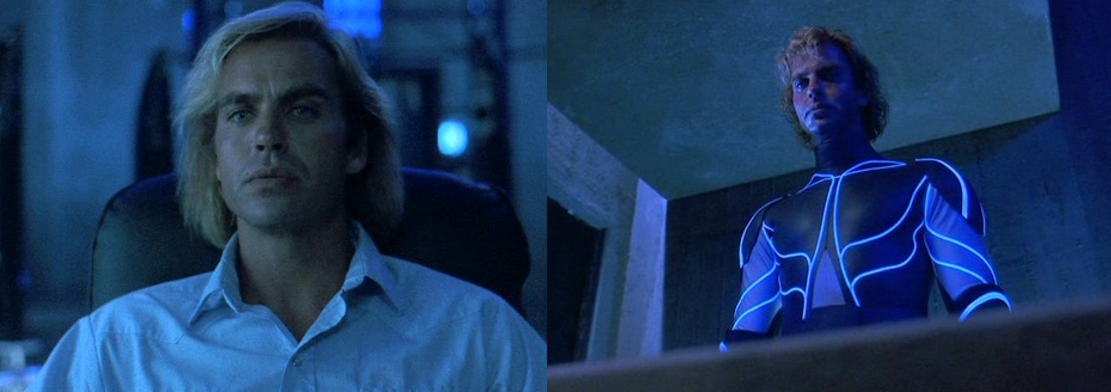
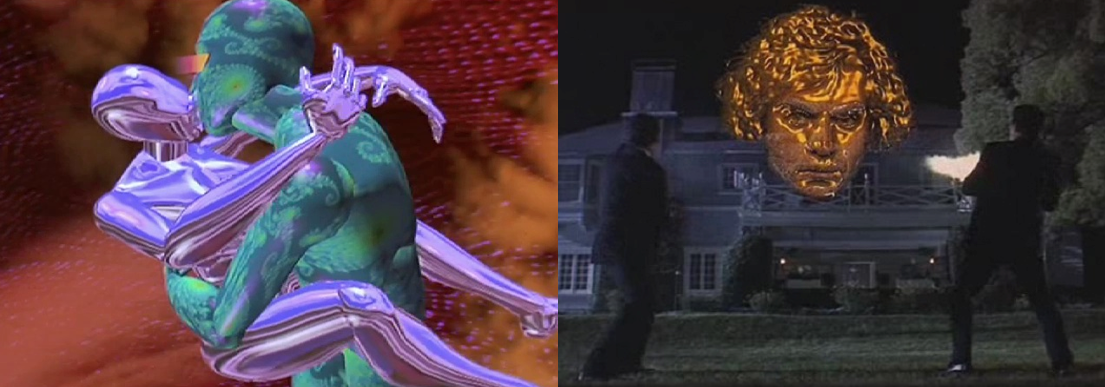
Scrooge’s heart-breaking memories haunt him almost as much as the actual ghosts!

Although Scrooge is characteristically dismissive and sceptical of his friends’ warnings, he is equally horrified when the three spirits do actually appear; even the child-like appearance of the Ghost of Christmas Past (Jessica Fox) puts him on edge and he is overwhelmed by the spirit’s ability to make him literally fly into his long forgotten past. The pain of reliving his childhood and subsequent heartbreak as a young man agonises Scrooge and the events witnessed go a long way to explaining why Scrooge became the man he is; he spent all his time at study, without the influence of a loving family, and was realised to believe that one’s time should be spent being productive and profitable, which cost him both friends and the love of a woman, Belle (Braun). Scrooge’s subsequent journey towards redemption comes to be about reconciling the metaphorical ghosts of his past and learning to appreciate the present whilst living for the future rather than dwelling on heartache and cantankerous greed.

The Nitty-Gritty:
Obviously, what sets The Muppet Christmas Carol apart from other adaptations of the book are the inclusion of Muppet characters and puppets; a good, what? 97% of the cast is made up of Muppets and puppets? And all of your favourite characters get, at least, a cameo role if not play a significant part in the film (Fozzie Bear makes an amusing appearance as the younger Scrooge’s (Raymond Coulthard) employer, Fozziwig (Oz), and Sam Eagle does a delightfully amusing turn as Scrooge’s schoolmaster (ibid). the city is also populated by all kinds of amusing puppet co-stars, from singing fruit and donkeys to shivering, staring little mice, all of whom have a role to play in breaking London to life, contributing to the ensemble songs, and emphasising how hard life is for those less fortunate.

Scrooge is taught the meaning of Christmas by the affable spirit of the present.

The city really comes to life when Scrooge encounters the boisterous and magnetic Ghost of Christmas Present (Nelson/Don Austen), a full-size Muppet who resembles Father Christmas and teaches Scrooge the wondrous joy of the Christmas season; Scrooge is uncharacteristically and immediately taken by the spirit’s infectious good-nature and whimsy, laughing and even having a bit of a dance as the spirit conveys to him the true nature of the season (“It Feels Like Christmas”). This sudden rush of exhilaration for Scrooge is quickly tempered by his dismay that his nephew, Fred (Steven Mackintosh), mocks him behind his back for his cold and belligerent ways and when the spirit throws his own words back at him when he sees the condition of Tiny Tim. Still, it’s through the Ghost of Christmas Present that Scrooge realises how marvellous the season can be and he’s pretty much convinced at the appeal of Christmas and to change his ways through that interaction alone, such is the influence of the spirit’s unabashedly good nature.

The reaper-like spirit shows Scrooge a disturbing vision of his near future.

The lesson doesn’t end there for Scrooge, though, who is forced to accompany the third and final spirit, the most gruesome and terrifying of them all, the Ghost of Christmas-Yet-to-Come (Austen), on a truly disturbing journey into the near future. Here, Scrooge sees that he has died hated and alone, with the citizens callously selling off his possessions, regarding themselves as better off without him and, most devastating of all, that Tiny Tim has died and the Cratchit’s normally vivacious good nature has been noticeably subdued. Scrooge approaches the majority of this last journey with a desperate denial and it isn’t until he sees his own ominous tombstone that he truly repents for his wicked ways and vows to turn his life around, to life in the past, present, and the future, to avoid meeting such a unsympathetic and desolate end.

Everyone (well, mainly Scrooge) learns the true value of Christmas.

Accordingly, Scrooge awakens the next day and begins to make good on his word; he’s pleasant, polite, and generous, greeting others amiably, donating to charities, and leaving gifts for those closest to him (“Thankful Heart”). In the film’s finale, Scrooge resolves to pay off Cratchit’s mortgage, raise his salary, and fully commits himself to amending his damaged reputation by being the most generous and caring man the city has ever known, thus salvaging his soul, ensuring that he is remembered as a kind and loving man, and sparing Tiny Tim from death. It’s an amusing and heart-warming end to the film, especially because of the bemused and shocked expressions on everyone’s faces at Scrooge’s change of heart, and Caine, bless him, gives it his all when he is required to sing.

The Summary:
As I’ve already mentioned, The Muppet Christmas Carol is easily my favourite Christmas movie of all time; it’s a tradition for me to watch the film every Christmas day while eating Christmas lunch and opening presents, joyfully singing along and wondering if Scrooge will learn the same lessons year after year. It’s remarkable how faithful the film is to the source material, especially considering it’s a Muppets film, and the beautifully constructed sets and whimsical puppets only add to the film’s charm and appeal. Add to that the gravitas and magnetism of Michael Caine, who treats the film as seriously as anything produced by the Royal Shakespeare Company, and you have an adaptation that is truly special, full of allure, humour, and some unsettling moments as Scrooge learns his traditional lessons about letting go of the pain of his past and applying himself towards the greater good to ensure a better life for everyone, including himself.

My Rating:

Rating: 5 out of 5.

Fantastic

What do you think about The Muppet Christmas Carol? Where does it rank for you against other Christmas and/or Muppet movies? What did you think to Michael Caine’s performance, the puppets, and the sets featured in the film? Which song from the movie is your favourite? Have you read A Christmas Carol and which adaptation is your favourite? What are your plans for Christmas Day today? Whatever your thoughts, feel free to comment down and have a great Christmas!

Movie Night [Doomsday]: Armageddon


Over the years, there have been many theories about when the world will end but one of the more prevalent was the mistaken belief that doomsday would befall us on December 21st 2012 based on the Mayan calendar ending on this day. Of course, not only did this not happen but it wasn’t even based on any actual fact to begin with but, nevertheless, doomsday scenarios and depictions of the end of the world have been an enduring genre in fiction so I figured today was a good day to dedicate some time to this popular concept.


Released: 1 July 1998
Director: Michael Bay
Distributor:
Buena Vista Pictures
Budget:
$140 million
Stars:
Bruce Willis, Ben Affleck, Will Patton, Steve Buscemi, William Fichtner, Liv Tyler, and Billy Bob Thornton

The Plot:
When an asteroid the size of Texas hurtles towards Earth on a collision course set to wipe out all life on the planet in a mere eighteen days, National Aeronautics and Space Administration (NASA) Project Director Dan Truman (Thornton) has no choice but to draft the world’s best deep-core drilling team, led by Harry Stamper (Willis), and send them into space to split the rock in half before it ends life as we know it.

The Background:
By 1998, director Michael Bay had started to make a bit of a name for himself in Hollywood following a successful collaborative relationship with producer Jerry Bruckheimer. Bad Boys (ibid, 1995) had been a massive box office success and he was just coming off The Rock (ibid, 1996), the success of which landed him a two-picture deal with Disney’s Buena Vista arm. The first of these films was Armageddon, which was coincidentally one of two asteroid-based disaster movies released in 1998; Armageddon proved to be the more successful of the two, however, earning over $550 million compared to Deep Impact’s (Leder, 1998) $349.5 million box office. However, Armageddon as met with largely negative reviews; it’s famously one of legendary movie critic Roger Ebert’s most hated films of all time and audiences and critics alike found the film’s frenetic editing and more ridiculous moments as egregious as Bay’s bombastic action scenes. Even stars Ben Affleck and Billy Bob Thornton thought very little of the film and numerous scientific minds have attacked the film’s lack of scientific accuracy.

The Review:
Armageddon’s concept is, admittedly, massively over the top; not only is the Earth threatened with total destruction and mankind with complete extinction by the biggest and most improbable piece of rock ever conceived but NASA deems it easier and faster to train a bunch of oil drillers to fly into space rather than training astronauts to drill. Interestingly, much of the movie could have been the same had the script been tweaked slightly to have, maybe, one or two of the oil drillers join the space expedition as consultants and experts but, regardless, complaints of this nature miss the entire point of the film: It’s supposed to be that a group of all-American, ordinary, everyday blue collar men are called upon to do the impossible and save the world and that’s precisely what makes it such an appealing concept. The primary representative from NASA is Dan Truman, a man who always dreamed of going into space and being an astronaut but was grounded by what looks to be a debilitating knee injury. Still, he’s the unquestioning authority at NASA; when the space shuttle Atlantis explodes at the start of the film and meteorites start raining down across New York City, he immediately organises response teams to figure out the source of the problem.

Harry might be an immature father but he’s a consummate professional at drilling holes.

Horrified by the looming presence of “Dottie”, the incoming asteroid, like all NASA characters in movies he quickly focuses on solutions rather than problems; this means entertaining and demanding any and all possible solutions to the issue in a very short window of time. With no other contingencies in place, he calls upon the expertise of Harry Stamper, initially to train his astronauts but find sit perfectly acceptable to send Harry and his team up in their place in order to get the job done properly. The star of the film is, unquestionably, Bruce Willis; while long before he simply phoned in his performances and offered only the bare minimum of effort, Armageddon doesn’t really call for him to be much more than a semi-snarky, overprotective father who is the best at what he does and, despite being childish and immature at times, is a consummate professional when on the job. No one knows more about drilling (which he regards as a science and an art) than him, and no one is better at it than him; he tolerates no insubordination on his oil rigs. Harry takes Truman’s request and the impending danger very seriously and, unimpressed and insulted by NASA stealing his oil rig design and having “only” trained their team for eight months, he immediately demands that he has to take up his team, men he can trust to do the job properly, and maintains order even when the team overshoots their landing mark and is forced to drill through “iron ferrite”.

Somewhat reckless and impulsive, A.J. just wants Harry’s respect and trust.

Harry’s conviction and focus are total when on a job but are somewhat distracted; he is estranged from his daughter, Grace (Tyler), and disapproving of her relationship with A.J. Frost (Affleck), the youngest member of his team and to whom Harry is basically a surrogate father. Harry is so incensed to discover their relationship that he hilariously chases A.J. across his oil rig with a shotgun but, discounting his personal feelings, doesn’t hesitate to fire A.J. when his arrogance almost causes a drilling operation to be botched and endanger his crew. Still, when called upon to pick members for the drilling teams, he reluctantly  drafts in A.J. A.J. just wants Harry’s trust and approval in his ability and instincts, which Harry is reluctant to bestow out of his overprotectiveness and belief that A.J. isn’t quite as experienced as he believe she is. Despite being surrounded by “roughnecks”, many of whom are his close friends and trusted colleagues, Harry is insulted and enraged to find that Grace has “settled” for A.J., believing that she deserves more than to be tied to a roughneck her whole life. Grace, however, vehemently stands by her choice, accepting A.J.’s proposal and stating that she is a grown woman who can make her own choices. Her issues with her father and almost immediately resolved when she learns of Dottie, however, and she is forced to watch the two men she loves the most head off on the most vital and dangerous mission ever conceived. When General Kimsey (Keith David) stubbornly follows the President of the United States’ (Stanley Anderson) orders to remote detonate the nuclear weapon on the asteroid when it’s not ready, Grace aggressively protests and demands that Truman do something since he was the one responsible for involving them in the mission.

In a sea of colourful characters, these three stand out as the most developed, interesting, and entertaining.

The rest of Harry’s team are a bunch of misfits, ex-cons, perverts, and muscleheads…and I absolutely love it! It’s an ensemble cast, with some given more screen time and development than others, who are just there to die. Charles “Chick” Chappel (Patton), a compulsive gambler and estranged from his wife and son, is Harry’s closest friend and conscience; he trusts Harry with his life and follows him to the ends of the Earth, and beyond. “Rockhound” (Buscemi) is a genius on the level of NASA’s very best but chooses to indulge in his love of explosives by lowering himself to oil drilling; he frequently points out that they are way out of their depth on the mission and ends up succumbing to “space dementia” and becoming something of a liability to the team. Another member of the team who stands out is, of course, “Bear” (the late, great Michael Clarke Duncan); Armageddon was one of Duncan’s first, big time roles in Hollywood and he shine snot just through his imposing physical stature but the gamut of emotions he displays, from playfulness to fear and panic, to sombre reflection by the film’s end. Certainly, he’s much more well-rounded than guys like Max Lennert (Ken Campbell), who is mainly the comic relief of the film, and Oscar Choi (Owen Wilson) and Freddie Noonan (Clark Brolly), who basically get a handful of lines between them and are killed when their shuttle crashes on Dottie to emphasise how dangerous the mission is.

Dottie takes on a life of its own and seems to have malevolent intentions for the Earth.

Harry and his team are joined by a handful of actual astronauts, the most prominent of which is Colonel Willie Sharp (Fichtner); Sharp is unimpressed with the drillers and personally makes it his mission to subject them to the harshest crash course in astronautics in order to properly prepare them for the rigours and dangers of space travel. Calm and composed, Sharp loses his cool somewhat when the shuttle overshoots its landing mark and grows increasingly concerned that the mission is headed to failure. When the order comes through to detonate the bomb before the hole is ready, he unlocks a gun and becomes almost a secondary antagonist; driven by the fear of the asteroid’s threat, he is prepared to kill to follow his orders to the letter but is convinced by Harry’s strength of conviction to allow the mission to proceed as planned. I say “secondary antagonist” because, if there’s one thing Michael bay was sure to do throughout Armageddon, it’s paint Dottie as almost a sentiment, malevolent force of nature; the asteroid is revealed in stages, bit by bit, almost like a slasher villain. At first, we see only wisps of dust and an ethereal cosmic aura, with the rock’s potential devastation shown to us through a comparatively harmless meteor shower. However, once the two shuttles slingshot around the Moon and approach the asteroid, it looms onscreen like an ominous, malicious entity purposely looking to destroy the Earth. When the teams land, they are beset by geysers of air, quakes, showers of rock, and constant explosions; Chick even suggests that the asteroid is purposely trying to shake them loose and keep them form “[killing] it”, as though it’s a living thing, and it even seems to roar and scream at times thanks to its tumultuous environment.

The Nitty-Gritty:
One of the most impactful aspects of Armageddon is the score; Trevor Rabin’s score is both bombastic and heroic but also haunting, ominous, and emotional. It’s perfectly used to highlight the amusing nature of the drillers’ training montage at NASA and adds just the extra exclamation point during the film’s more poignant and emotional moments. It’s a ridiculous film that plays its concept almost completely straight, which only emphasises the blue collar nature of the idea and adds to its appeal, in my opinion, and the score is a large part of that. It’s interesting to think about the fact that, technically, the plan to blow up the asteroid from the inside out was expected to go off without any real problems; after the shuttle Independence is taken out during the approach to Dottie, Freedom is thrown off by the unexpected gravitational forces from the asteroid and the Moon and lands way past the optimal landing spot. Had they landed in the intended area, it’s possible that much of the deaths and drama wouldn’t have unfolded as they did; similarly, a freak electrical accident causes the Mir space station to explode, almost as though the mission was doomed to failure from the start.

Meteors rain down across the world as Dottie draws inexorably closer by the hour.

The botched approach sees the teams split into two; while Harry continue son with the mission and believes A.J. and the others are dead, A.J. and Bear work alongside the Russian cosmonaut Lev Andropov (Peter Stormare) on a bit of a side quest to reunite with their friends, which leads to some intense sequences involving the armoured Armadillo vehicle and its efforts to plough through and float over the asteroid’s dangerous surface. With drilling slowed and the mission threatened by the rock-hard iron ferrite, which chews up the drill heads and causes the rig’s transmissions to overload, time becomes a significant factor; the asteroid was projected to hit in eighteen days but the team is given only eleven hours to complete the mission and remote detonate before Dottie passes “zero barrier” since an explosion after this threshold would still result in the Earth’s destruction. The action isn’t simply confined to the asteroid either as the film continues to show that the planet (especially poor old Paris and Shanghai) continues to be bombarded by meteor strikes. This makes the general public aware of the impending “global killer” but, despite Truman’s belief that this knowledge would causes “mass religious hysteria [and] the worst parts of the Bible”, people are generally seen to be united in hope and belief in America’s desperate mission to save the world (at least until the mission appears to have failed, anyway, though the film never really dwells on the worldwide impact of the asteroid’s impending approach). Of course, people will harp on for days about how inaccurate and ridiculous the film is but, honestly, I really couldn’t care less. Armageddon goes to some lengths to cover its inaccuracies as well; the asteroid is described as having a minor atmosphere, somewhat explaining how the guys can just toss poles and equipment around, and the focus is clearly on spectacle and excess rather than scientific accuracy (it’s more exciting to see two space shuttles launch right next to each other, for example, no matter who dangerous and ludicrous that idea might be).

Harry bids a tearful farewell and sacrifices himself to save the entire planet.

Additionally, the film’s attention to detail and attempts to recreate the inner workings of NASA are impressive; the shuttles aren’t some futuristic ships kitted out with touch screens or absurd technology, for example. They’re cramped and full of the same switches, lights, and efficient use of space that real-life shuttles are known for and, while the team wear quasi-futuristic space suits, they’re still grounded in realism and nowhere near as extravagant as in other films. For me, the real appeal of Armageddon is the central concept of a group of normal, everyday men answering the call to lend their unique expertise to a desperate mission to save all of humanity as well as the appeal of there actually being some kind of solution to a potential, fatal meteor strike on the Earth. The film’s message is one of hope and unity, that all nations and people can set aside their differences and work together for our mutual survival; this is emphasised more explicitly at the film’s emotional conclusion when, following a devastating rock storm on Dottie, the one remaining nuclear weapon is damaged and one of our blue collar heroes must stay behind to complete the mission. After reluctantly drawing straws, A.J. finds himself faced with this ultimate responsibility and, putting aside his reservations and deciding to ensure the future for his daughter, Harry dramatically takes A.J.’s place. Even now, it’s one of the most emotional and devastating scenes I’ve ever seen as A.J. collapses in hysteria and, after tearfully saying goodbye to Grace, Harry overcomes the last of Dottie’s resistance to press the button and save the Earth form destruction. You can harpoon all you want about how stupid and inaccurate the Armageddon is but very few films reduce me to tears more than this one, and this scene, thanks to the surprisingly moving performance from Willis (to say nothing of Affleck and the one-two gut punch of Sharp’s respectful “Thank you, Harry” and Bear’s gravelly, reverential farewell: “Yo Harry…you dah man”).

The Summary:
Now, I’m not really much of a fan of Michael Bay (or Ben Affleck, for that matter…) but I make an exception for Armageddon; this was another of those films that was a formative part of my teenage years and I distinctly remember renting the VHS tape and watching, transfixed, with my friends and being completely invested and using every ounce of my self-control to not burst into tears at the film’s dramatic conclusion. Yes, it’s ridiculous and over the top. Yes, it’s absolutely mental and takes numerous liberties. And, yes, it’s not the most scientifically accurate and realistic move ever made but let’s say, for sake of argument, that it had been. How fucking boring would that have been? I paid to see Bruce Willis drill a hole into an asteroid and save the world and that’s exactly what I got! Armageddon delivers top notch action, explosions, drama, and entertainment from start to finish thanks to its impressive practical effects, sets, and some great use of special effects to give life to an inanimate object. It’s an intense rollercoaster of a disaster film, one geared around hope and unity and normal people overcoming insurmountable odds to destroy the greatest threat the world has ever faced. Yet, it’s also an extremely emotional film and remains, to this day, one of my favourite disaster movies and is always guaranteed to get the man tears flowing.

My Rating:

Rating: 5 out of 5.

Fantastic

Are you a fan of Armageddon? How do you feel it compares to Deep Impact and other disaster films? Were you a fan of the concept or did you find the idea of oil drillers being shot into space too over the top? Which of the characters was your favourite and what did you think to Bruce Willis’ performance? Did you like that Michael Bay imbued Dottie with a form of malevolence or did you think that was one of the film’s more ridiculous concepts? How important is scientific accuracy and realism to you in disaster films like this? How are you celebrating the end of the world today? Whatever you think about Armageddon, disaster films, and overblown predictions of the end of the world, go ahead and drop a comment down below.

Movie Night [Christmas Countdown]: Tim Burton’s A Nightmare Before Christmas

Released: 29 October 1993
Director: Henry Selick
Distributor: Buena Vista Pictures Distribution
Budget: $26 million
Stars: Chris Sarandon/Danny Elfman, Catherine O’Hara, Glenn Shadix, Ken Page, Ed Ivory, and William Hickey

The Plot:
Jack Skellington (Sarandon, with Elfman singing), the Pumpkin King of Halloween Town, has grown weary of embodying the same macabre holiday year after year. When he stumbles upon Christmas Town, he is enamoured, reinvigorated, and compelled to replace Santa Claus (Ivory) but, when psychic ragdoll Sally’s (O’Hara) premonitions of disaster comes true and the villainous Oogie Booie (Page) kidnaps Santa for his own diabolical plot, Jack must attempt to salvage not only the spirit of Christmas but of Halloween as well!

The Background:
As a child, writer and director Tim Burton, known for his macabre and gothic sensibilities, was fascinated by the grandiose nature of holiday celebrations and, inspired by classic Christmas movies, wrote a three-page poem titled “The Nightmare Before Christmas” while working for Disney in the early eighties. Burton initially envisioned the poem being a Christmas special narrated by his childhood idol, Vincent Price, and spent nearly ten years developing storyboards, artwork, and the concept while he worked on some of his most successful feature films.

Burton’s twisted vision for Halloween took years and many painstaking hours to bring to life.

This success caught the attention of Disney chairman Jeffrey Katzenberg and led to the concept being developed into a feature-length, stop motion musical to be released under Disney’s adult label, Touchstone Pictures, to avoid scaring child audiences. Burton, however, was busy working on Batman Returns (ibid, 1992) at the time (and didn’t wish to be involved in the painstakingly slow and meticulous stop-motion process) but remained heavily influential in the production of the ambitious venture, which took over one hundred people three years and nearly 110,000 frames of animation to accomplish. All of that scrupulous hard work paid off, however, as, when the film released, it received largely positive reviews, eventually (after re-releases and re-uses) earned over $90 million in worldwide gross, and the film has had a lasting impact not just on cinema and pop culture but on the animation industry as well.

The Review:
The Nightmare Before Christmas begins on the night of another successfully terrifying Halloween; the citizens of Halloween Town are in joyous rapture at having once again scared people out of their wits (“This is Halloween”) and much of the credit for their success, as always, is attributed to the “Pumpkin King”, Jack Skellington, a literal skeleton who is basically the embodiment of the season. Although Halloween Town has a Mayor (Shadix), Jack is the true hero and authority in the town, revered as a celebrity and a genius when it comes to frights and Halloween trickery.

Jack’s melancholy demeanour is reinvigorated by the wonders of Christmas Town.

Jack, though, while he appreciates the adulation, has become despondent and depressed at the monotony of the routine of it all; while his creativity and imagination remains at their peak, he’s lost his zest and passion for it all and longs for something, anything, new to inspire him once more (“Jack’s Lament”). When he wanders off from the town and finds the magical nexus between seasons, he is literally sucked into Christmas Town and is immediately besotted; having never experienced such sights, sounds, and wonders, he finds his enthusiasm and curiosity piqued by the appeal of it all (“What’s This?”) and longs to bring the spirit of Christmas to Halloween Town.

Jack struggles to explain Christmas to the citizens of Halloween Town.

The citizens of Halloween Town, however, struggle with the concept of Christmas and Jack, to be fair, struggles to quantify the things he’s seen and meaning of the season (primarily because, at that point, he doesn’t yet realise what Christmas is all about). His attempts are met with confusion and misunderstanding and the only way he can explain it all is to put it in terms they will understand (“Town Meeting Song”). Since no one in Halloween Town shares Jack’s imagination and longing for change, the resulting towns and gifts they create are far from the fun, heart-warming gifts of Christmas Town and are, instead, horrific and terrifying Halloween monsters and creatures that attack and eat people “(Making Christmas”).

The Mayor and Dr. Finklestein are two of my favourite supporting characters in the film.
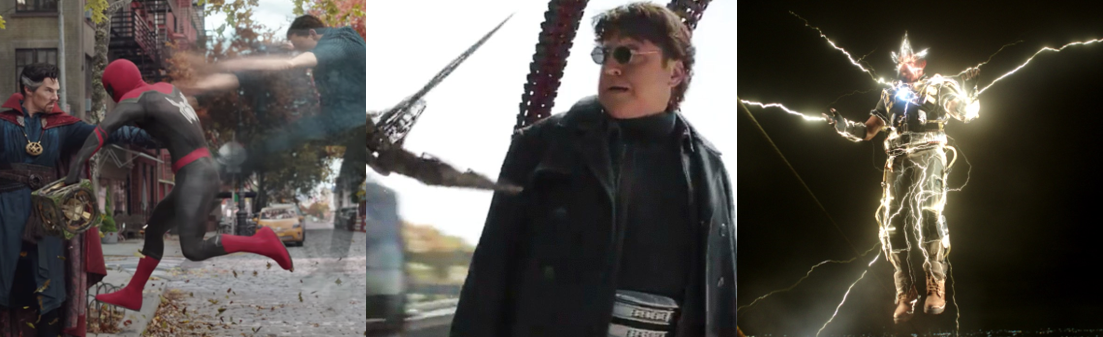
I mentioned the Mayor earlier and he really is one of the highlights of the film for me; he has two moods: loud and positive (happy face) and panicked and scared (anxious face). He’s clearly a respected and influential figure, for sure, but, when it comes to actual decision making, even he admits that he’s useless and needs Jack’s guidance and influence to get anything done. While sceptical of Jack’s fondness for Christmas, he goes along with it out of belief in Jack’s abilities and is hopelessly despondent when it appears that Jack has been killed while posing as Santa Claus. Another standout character is Doctor Finklestein (Hickey), a crippled and half-addled mad scientist whose macabre technology brings many of Jack’s designs and ideas to life; while Finklestein appears to be a doting old codger, he is met with resentment by his “daughter”, Sally, a ragdoll girl he created who desires only to escape from the confines of his dilapidated gothic abode.

Sally feels she can relate to Jack’s lament but foresees disaster for his Christmas venture.

Jack, who feels he can no longer relate to his peers in Halloween Town, is so wrapped up in his depression and subsequent obsession with Christmas that he fails to truly notice Sally, the one soul in all of Halloween Town who can relate to Jack’s torment. Like everyone in Halloween Town, Sally is besotted with Jack but, rather than merely idolising him, she pines for him with all of her heart and genuinely believes that they would be able to fill the emptiness in both of their lives (“Sally’s Song”). Sally also (somehow…) possesses some limited precognitive abilities; she foresees disaster for Jack’s Christmas venture but he’s too blinded by his fixation on the holiday to even consider failure (after all, he’s never failed at anything before so why should this be any different?)

Oogie Boogie is the bombastic antagonist with his own malicious plans for Santa and Christmas.

Of course, Jack’s state of mind and fixation on Christmas is the only thing working against him; despite specifically ordering Lock (Paul Reubens), Shock (O’Hara), and Barrel (Elfman) not to involve “that no-account Oogie Boogie” in his plot to kidnap Santa Claus (“Kidnap the Sandy Claws”), the three, of course, deceive Jack and take Santa to Oogie Boogie the moment Jack has usurped Santa’s position. Oogie, who is a colony of disgusting bugs within a burlap sack, is a malicious bogeyman who lives outside of Halloween Town and makes for a boisterous and diabolical villain who has a bit of a gambling addiction and wishes to cook up Santa and, it is implied, take over Jack’s role as the spirit of Halloween (“Oogie Boogie”).

The Nitty-Gritty:
Of course, the most striking and memorable aspect of The Nightmare Before Christmas is the painstakingly detailed stop-motion animation used to bring Burton’s twisted, gothic imagination to life; every frame is full of little details, many of which no doubt took hours or even days to complete, and needlessly complex creatures such as a melting sludge man, Oogie Boogie’s bugs, and the elaborate sequences where Jack is delivering his horrific gifts as Santa. It’s impressive, to say the least, and make the film a must-watch venture even if only from a purely technological standpoint. Of course, The Nightmare Before Christmas has much more to it than the remarkable and ambitious animation work on show; it also has an extremely catchy and unforgettable number of songs, all of which perfectly convey a variety of emotions and characterisation for each of the film’s characters to help bring Burton’s world to life.

Jack’s attempt to usurp Christmas is a failure but his passion is reawakened regardless.

There are several poignant themes at work in The Nightmare Before Christmas as well: alienation, loneliness, the desire for change, and obsession being chief among them. Jack is so disillusioned with Halloween and so tantalised by Christmas that he rejects his former position as the Pumpkin King and fully believes that he will be able to take Santa’s place and claim Christmas as his own. He is astonished when the human world opens fire on him and blasts his sleigh from the sky and, in his defeat, realises that he has ruined the once pure-hearted holiday. However, he still feels his stagnated passion reignited and reclaims his position, vowing to apply himself even harder to making Halloween as memorable and terrifying as possible (“Poor Jack”).
Jack defeats his rival, saves Santa, and he and Sally finally admit their feelings to each other.

Sally’s frantic attempts to reach Jack fall on deaf ears and nothing she does to sabotage his attempts work; in her desperation  to save Jack and get things back to normal, she proactively tries to rescue Santa but ends up being kidnapped as well. Seeing Sally and Santa held at Oogie Boogie’s mercy enrages Jack and, after defeating Oogie Boogie, he finally realises that what he’s been searching for all this time has been standing right in front of him from the start (not just the spirit of Halloween but Sally, with the two of them finally admitting their feelings and appreciation for each other in the film’s heart-warming conclusion (“Finale/Reprise”)).

The Summary:
It’s extremely difficult to put into words how much I enjoy The Nightmare Before Christmas; it’s not only a technical marvel but also a pretty flawless achievement in filmmaking. “Unique” doesn’t seem like a good enough adjective to describe the film, which is both macabre and terrifying while also being heart-warming and genuinely touching. It perfectly encapsulates the feeling the Christmas isn’t something that can simply be appropriated or distilled; it’s a spirit of giving and joyous celebration that requires a certain level of belief and understanding to pull off. Jack’s mistake was thinking that he would be able to usurp Christmas as his own without really understanding it; he just wanted to experience something new for a change and could have just as easily become as equally besotted by Easter or Thanksgiving or any other holiday had he entered a different door.

Nightmare Before Christmas is a technical wonder and a fantastic Christmas film to boot.

What makes The Nightmare Before Christmas truly unique is Burton’s ingenious idea of what these holidays are; disparate fantasies embodied in a magical, fantasy world separated form ours only by the veil of imagination, the holiday seasons are depicted as being the work of largely benevolent mythical denizens of these worlds who are fully committed to delivering the spirit of each holiday. With his twisted, gothic imagery and distinctive depiction of such a dream-like fantasy world, Burton’s imagination makes for an entertaining and enthralling film that is more than suitable for Christmas or Halloween viewing and is a timeless classic through and through.

My Rating:

Rating: 5 out of 5.

Fantastic

Are you a fan of The Nightmare Before Christmas? If not…seriously, dude, what the hell’s the matter with you? If you are a fan of the film, do you watch it at Christmas or at Halloween and which do you think is more befitting? Are you a fan of stop-motion animation and Burton’s gothic sensibilities? Which character was your favourite and what did you think to Jack’s surprisingly complex characterisation? Have you got a favourite song from the movie (or one of the many remix albums) and, if so, what is it? Would you like to see a sequel produced some day or do you think it’s best left as a stand-alone, cult classic? Whatever your thoughts on The Nightmare Before Christmas, leave a comment down below and join me next Saturday for Christmas Day!

Movie Night: Spider-Man: No Way Home

Released: 17 December 2021
Director: Jon Watts
Distributor: Sony Pictures Releasing
Budget: $200 million
Stars: Tom Holland, Zendaya, Jacob Batalon, Willem Dafoe, Alfred Molina, Jamie Foxx, and Benedict Cumberbatch

The Plot:
After having his secret identity publicly outed, Peter Parker/Spider-Man (Holland) finds himself branded a murderer and requests Doctor Stephen Strange (Cumberbatch) cast a spell to make everyone forget his identity. However, when the spell is corrupted, reality is fractured and Peter is beset by foes from across the multiverse seeking to avenge themselves against Spider-Man, no matter what world he’s from!

The Background:
Following the massive success of the original Spider-Man trilogy (Raimi, 2000 to 2007) and the largely mediocre reception of the poorly-timed reboot films, Marvel Studios were finally able to achieve the impossible when they reached an agreement to include a new version of the iconic web-slinger in their interconnected Marvel Cinematic Universe (MCU). Tom Holland took on the role of a young, fresh-faced take on the character and debuted in spectacular fashion in Captain America: Civil War (Russo and Russo, 2016) before spinning off (no pun intended) into the incredibly successful Spider-Man: Homecoming (Watts, 2017). Spider-Man: Far From Home’s (ibid, 2019) impressive $1.132 million box office proved that the MCU could sustain the success it had amassed even after the cataclysmic events of Avengers: Endgame (Russo and Russo, 2019) but development of a third outing for the character was initially stalled when financial disputes threatened to see the character once again pulled from Marvel’s control. After these issues were resolved, and following a delay due to the Covid-19 pandemic, production finally got underway in late-2020 and, almost immediately, rumours began circulating regarding the possible return of actors from the previous Spider-Man franchises. These were only exacerbated when Benedict Cumberbatch was confirmed to reprise his role as Dr. Strange, a character who was already scheduled to have his own multiversal adventure, and when the long-awaited trailer was finally released following a leak, confirming that Alfred Molina would be returning as Doctor Otto Octavius/Doctor Octopus thanks to digital de-aging. Finally, after months of speculation and wild fan rumours, the film’s final trailers confirmed that this story would tackle Spider-Man’s varied cinematic multiverse and the film received an official release date. Thanks to bringing together elements from across Spider-Man’s cinematic legacy, Spider-Man: No Way Home was met by unanimous praise; critics lauded the performances and heart of the film, in addition to atmosphere and chemistry between the actors, and the film made a mammoth $1.916 billion at the box office.

The Review:
I feel it’s only fair to emphasise here that I simply cannot find the language to talk about this film without using spoilers. If the title and various warnings aren’t enough for you, then this text should be: here be spoilers, and I’m not planning on holding back as I feel the movie deserves to be discussed in detail and the only way to do that is to talk about spoilers. Also, I was initially torn when it came to this film; the build up to it saw some really toxic opinions and members of the fandom rear their ugly heads, and the marketing has been a bit all over the place. Sony showed a surprising amount of restraint with their trailers, and maybe held them off a little too long, but it definitely built up a great deal of hype and intrigue surrounding it and it felt good to be excited and curious about a movie for a change. Having said that, though…be better, people, come on. If you have a favourite Spider-Man, that’s great, but don’t rag on people for having a different opinion. Spider-Man is really lucky as he has had so many adaptations and so much representation, so many live-action portrayals, and all of them have been extremely accurate to the source material and exciting outings in their own right, so maybe just be thankful that the web-head gets so much love and is so popular rather than being ungrateful or attacking others for their opinions?

Jameson’s smear campaign spells personal trouble for Spider-Man and his friends.

Spider-Man: No Way Home picks up immediately where Spider-Man: Far From Home left off, with blustering, loud-mouthing online personality J. Jonah Jameson (J. K. Simmons) gleefully broadcasting edited footage sent to him by Quentin Beck/Mysterio (Jake Gyllenhaal) that not only implicates Peter as a murderer but also outs his secret identity to the entire world. Naturally, this sends New York City into a bit of an uproar and, pretty much immediately, both Spider-Man and his new girlfriend Michelle Jones-Watson/M. J. (Zendaya) are swamped by a mob that is split between worshipping and condemning Spider-Man, paparazzi looking to get a sound bite, and cops seeking to question Peter’s involvement in Beck’s death. Despite his best efforts to escape the chaos, and to break the news to his beloved Aunt May (Marisa Tomei) and his begrudging friend and handler, Harold “Happy” Hogan (Jon Favreau), Peter and his friends and family are soon apprehended by the Department of Damage Control (DODC), which has now extended its scope into being a federal agency responsible for such matters. Although M. J. and May remain tight-lipped on the matter, Peter’s bungling but loyal friend Ned Leeds (Batalon) and Peter himself don’t exactly help his case, and Peter is left overwhelmed by the barrage of accusations and the public’s awareness of his true identity. Any legal ramifications concerning these matters are quickly swept under the table, however; although Happy and May recently ended their fling (much to Happy’s dismay), the Parkers are given sanctuary at Happy’s secure apartment and an especially good blind lawyer is able to ensure that the charges against Peter are dropped. However, public opinion remains divided; since the world considers Mysterio a hero, many people condemn Spider-Man (which isn’t helped by Jameson’s continuing smear campaign against Peter) and Peter is treated with both awe, fear, and adulation by his fellow pupils. Thankfully, he has M. J. and Ned there to support him through it; despite the revelation uprooting their lives and thrusting them into the spotlight as well, they remain his loyal and understanding companions, which is always sweet to see. While Peter appreciates this, and could probably have adjusted to the major changes in his life with their support, his guilt and shame are magnified when neither her, Ned, or M. J. are able to successfully get into college.

Peter turns to Dr. Strange for help, but muddles the spell and causes reality to fracture as a result.

Because of the media storm and controversy surrounding Peter, no college wants to risk being associated with any of them, and Peter is guilt-ridden at having cost his loved ones the chance of realising their dreams. Yet, even though this has happened, M. J. and Ned still take it on the chin and remain optimistic (or, at least, put on a brave face, in M. J.’s case) and neither of them blame Peter for this, but it does little to alleviate his guilt. Desperate for a solution, Peter seeks out the council of Dr. Strange (who, it is amusingly revealed, is no longer the Sorcerer Supreme thanks to being snapped away for five years; Wong (Benedict Wong) has assumed the position instead, which could potentially be explored to greater humourous effect in Strange’s upcoming movie). Although Wong cautions against it, Dr. Strange offers to cast a complicated and dangerous spell that will erase the knowledge of Peter’s secret identity from everyone in the world; however, Peter starts to panic mid-way through the spell and requests that May, M. J., Ned, and Happy be exempt from the erasure, which causes Strange to lose control of the spell and contain it within a jewel least it wreak havoc upon the world…and the multiverse. The relationship between Dr. Strange and Peter is notably different to what we saw between Peter and Tony Stark/Iron Man (Robert Downey, Jr); Strange isn’t a mentor to Peter, he’s more like a work associate, and he’s willing to help the kid out because of his efforts at restoring half the population, but he’s easily frustrated by Peter’s naivety and ignorance, especially when it comes to the world of magic, and angered that Peter risked tampering with the fabric of reality before properly exploring all of the real-world options available to him or learning to adapt to the changes in his life.

Molina makes a triumphant return as the crazed Doc Ock, who’s intrigued by the MCU.

Determined to make up for this, Peter tracks down a college professor to plead M. J. and Ned’s case, only to suddenly be attacked by a face very familiar to us but completely alien to him as Dr. Octopus attacks the Queensboro Bridge in a confused rage, ranting at Peter and demanding to know what happened to his “machine”. Though confused by the villain’s sudden appearance, Spider-Man holds his own in impressive fashion thanks to the advanced technology and gadgets built into his Iron Spider costume, saving lives while fending off Doc Ock’s mechanical arms; his genius mind addled by the corrupting influence of his mechanical tentacles, Doc Ock is intrigued by the Iron Spider’s nanotechnology but startled to find a very different face behind the mask. His confusion soon turns to manic frustration when Peter is able to use the suit’s nanotech to take control of Doc Ock’s arms and render him helpless, and Octavius’s rage is only incensed further when he suddenly finds himself a prisoner in a dark catacomb beneath Dr. Strange’s Sanctum Sanctorum. Although dismissive of the idea of magic and vehemently rejecting the idea that he needs help or to be fixed, Doc Ock is intrigued to see the evidence of a multiverse surrounding him; not only has he met the MCU version of Peter and M. J., but he shares his prison with Doctor Curt Connors/The Lizard (Rhys Ifans), a monstrous creature Dr. Strange was able to subdue offscreen and who is very clearly from another reality. Ock’s curiosity is only piqued further when he and Peter catch a fleeting glimpse of another Spider-foe Octavius knows all-too-well, Doctor Norman Osbourn/The Green Goblin (Dafoe), before being imprisoned.

Peter finds a number of monstrous, and maniacal, villains have crossed over into the MCU.

Angered at the incursions that have slipped into their world because of Peter’s ignorance, Dr. Strange demands that he and his friends “Scooby-Doo this shit!” and round up the visitors so they can be sent home; he grants Peter a magically-charged gadget that allows him to shoot a web that instantly teleports the villains to the prison, and Peter is forced to turn his suit inside-out after it gets ruined by paint thrown by a mob. Although he initially heads out to track down the Green Goblin, Peter instead finds Max Dillon/Electro (Foxx), who draws power from electricity lines to regain his physical form and alter the nature of his powers. Disorientated at having being violently ripped from his reality, Electro lashes out in anger, and Peter is only saved by the timely intervention of Flint Marko/The Sandman (Thomas Hayden Church), who helps Peter subdue and capture Electro. However, upon realising that he’s trapped on another world, the Sandman also grows antagonistic and winds up confined as a result, and Peter learns from each of them the nature of their personalities, their worlds, and their fates: Green Goblin, Doc Ock, and Electro are all fated to die in battle with Spider-Man, and returning them home would seal that fate, and that’s something Peter cannot, in good conscience, allow.

The Green Goblin quickly re-establishes himself as Peter’s greatest threat.

This brings him into conflict with Dr. Strange, who is determined to activate the jewel and send the visitors back home regardless since he’s weighing the fate and stability of the entire multiverse rather than the lives of a few villains. When Peter tries to take the jewel from him, a bit of a scuffle ensues in which we see Peter is able to control his body even while forced into his astral force thanks to this spider-sense, and his knowledge of geometry also allows him to figure out the mirror dimensions, web up Strange, and leave him stranded there while he works to cure the villains. While he has good intentions, and his friends and family support his efforts, and he is even able to convince the villains to trust him to help keep them alive, Peter underestimates the depths of Norman’s psychosis. Rendered a meek, bewildered scientist who is lost and in pain, Norman willingly works alongside Peter to help fix Doc Ock, returning the tentacled menace to his more good-natured self, but Norman’s dark half, the Green Goblin, soon resurfaces to throw Peter’s entire plan out the window. I got a real kick out of seeing Norman and Otto being familiar with each other, and the Lizard and Electro also having a familiarity with each other, it really helped to flesh out their respective worlds and deliver exposition regarding the characters to those who might not be familiar with them. While it’s disappointing that the Sandman was rendered entirely in his sand form for 90% of the movie, and the Lizard was basically a non-factor (there’s even a moment where he is simply confined to a van and forgotten about until the film’s big climax needs to happen), both Doc Ock and the Green Goblin play significant roles in the story. The Goblin wraps the remains of his God-awful suit in a tatter cloak and Dafoe’s demented facial expressions get to shine trough as he operates entirely unmasked throughout the film; he’s also far more vicious and deadly than ever before, cackling in Peter’s face and taunting him at every turn. While all of these returning actors slipped back into their roles perfectly (and even got a chance at redemption, in Electro’s case), Dafoe steals the show ones again as a maniacal and vicious villain who simply wants to cause Peter pain, no matter which Peter it is!

The Nitty-Gritty :
When I first heard that Tom Holland’s third solo movie was going to delve into the multiverse, I have to admit that I was disappointed and annoyed; I enjoyed Spider-Man: Into the Spider-Verse (Persichetti, Ramsey, and Rothman, 2018) but even with that film I questioned the logic of confusing matters with multidimensional shenanigans. The MCU definitely seems to be gearing towards exploring the multiverse, but I expected this to be confined to Dr. Strange’s solo films and worried that bringing in faces from the Sam Raimi and Marc Webb films would just be pandering and confusing. Not only that, but I’m of the firm belief that every role can be recast: Dafoe, Simmons, and Molina were all fantastic in their previous iterations but who’s to say that another actor wouldn’t be just as good, if not better? I expected this third Spider-Man movie would be the perfect excuse to finally bring the Sinister Six to life using the villains already established in the MCU: Adrian Toomes/The Vulture (Michael Keaton), Herman Schultz/The Shocker (Bokeem Woodbine), Mac Gargan/The Scorpion (Michael Mando), and even Mysterio (he was the master of illusions, after all) could all have returned and joined forces with two new villains (ideally an all-new Doc Ock) to collect a bounty on Spider-Man. Hell, I was more excited at the prospect of Charlie Cox returning as Matt Murdock/Daredevil or Spider-Man being forced to go on the run and teaming up with the Netflix Defenders than complicating things with multiverse hijinks, and I still maintain that it makes zero sense to have Eddie Brock/Venom (Tom Hardy) exist in a separate universe when it would have been far simpler to have him be based in San Francisco but still exist in the MCU (like how other MCU heroes and movies take place in different cities but those characters don’t have to be transported through time and space to interact).

Spider-Man butts heads with Dr. Strange regarding how to deal with the villains.

And yet….man, was it a thrill to see Alfred Molina return in the role! Bringing back these iconic actors in their most famous villain roles might be unapologetic fan service but it was fan service executed almost to perfection. I say “almost” as we were one villain short from an iteration of the Sinister Six; Eddie doesn’t show up into the mid-credits scene and he is teleported back where he came from without having any impact on the movie (though he does leave a part of himself behind…) and there was no secret sixth villain added to the roster. However, that’s not to say that the five villains we did get were disappointing…far from it! Since the MCU is different to where he came from, Electro is able to not only reconstitute his body, but also alters his powers; the addition of an Arc Reactor only pushes his powers even further, allowing him to resemble his traditional comic book appearance far closer than in his original iteration. The Sandman may be in sand form for the majority of the film, but he remains an emotionally conflicted character; at first, he helps Peter, and even tries to talk sense into some of the villains, but the idea of being kept from his home world and his daughter pushes him against the web-slinger out of pure self-preservation. This motivation is the driving force behind many of the villains, as they have either accepted their monstrous new powers or have no wish to be sent away to die. In the case of Doc Ock and the Lizard, this is due to technology or mutation clouding their judgement; when Peter repairs the inhibitor chip on Ock’s neck, he becomes much more agreeable and even helps Peter to hold off the villains in the finale, and when the Lizard ingests the cure and returns to his human form, he returns to his more docile personality.

Peter is devastated by loss and pushed to the edge by the Green Goblin.

The same is also true of the Green Goblin, however Norman’s psychosis is far more manipulative, calculating, and violent. He has no desire to return home to meet his end and absolutely brutalises Peter to keep him from trying to cure him; the Goblin quickly re-establishes himself as Peter’s most dangerous and notorious foe not only by swaying the other villains into turning on Peter, but delivering a massive beatdown on him that leaves him helpless to keep his Aunt May from harm. Although Peter manages to shield May from the Goblin’s pumpkin bomb, the glider blindsides her and leaves her with a fatal wound, and she tragically dies in his arms, leaving him heartbroken and with her final words of encouragement ringing in his ears: “With great power, there must also come great responsibility.” May’s death devastates Peter, and drives him into a quest for revenge against the Goblin; no longer merely satisfied to cure or help the villains, he wishes nothing less than the Goblin’s death at his hands, and it’s a true moment of despair for the young Avenger. No Way Home really puts Peter through the wringer, pushing his morals and optimistic outlook to breaking point, and really burdens him with the guilt of having indirectly caused his mother-figure’s death by trying to help the villains rather than allowing them to return home and potentially die as fated.

Spider-Man gets some unexpected help to fend off the combined threat of these multiversal villains.

Desperate to find Peter and give their support, M. J. and Ned mess about with one of Dr. Strange’s sling-rings and discover the presence of two more familiar faces who slipped through the dimensional barriers and are determined to help and let me tell you…I have never seen a cinema explode into rapturous applause before but my screening blew the roof off when Andrew Garfield and Tobey Maguire made their long-awaited, and long-rumoured, return to their famous roles. Both arrived due to Strange’s spell and have been trying to track down MCU-Peter, and both have arrived from later in their careers, finally giving us a coda to their stories: Webb-Peter reveals that he struggled to cope after failing to save Gwen Stacy (Emma Stone), and almost lost himself to his rage at one point, and that he has thrown himself into his duties as Spider-Man to cope. Raimi-Peter is noticeably older, but still in good shape, and, though haunted by his failures and losses, maintains that he and M. J. (Kirsten Dunst) found a way to carry on). The scenes with the three Peters are an obvious highlight and they share some fantastic line sand banter together; Webb-Peter is elated to have found “brothers” and they work together to synthesise cures for the villains based on their previous experiences and scientific acumen. They also share stories of their adventures and powers, with Webb-Peter and MCU-Peter both being astounded (and a little disturbed) by Raimi-Peter’s organic webbing, Raimi-Peter extending a much-needed pep talk to Webb-Peter, and both Webb- and Raimi-Peter being impressed by MCU-Peter’s space adventures. Seeing them work together, offering MCU-Peter support and understanding, is fantastic as Webb-Peter delivers an emotional soliloquy about his failures (and gets to make amends for it by catching M. J. in a truly emotional moment) and Raimi-Peter relates the messages passed on to him by his beloved Uncle Ben (Cliff Robertson), and MCU-Peter is even able to help them get past being solo heroes and work together using his experiences of teamwork as an Avenger.

The multiversal breach rages out of control, leading to Peter making a selfless sacrifice…

With three Spider-Man working together, the Lizard, the Sandman, and Electro are all subdued and returned to their human forms, presumably alleviating them of their madness and violent tendencies, in a mind-blowing final confrontation around the Statue of Liberty (which is being refurbished to hold Captain America’s shield aloft). Despite the best efforts of his alternative counterparts, though, MCU-Peter is driven into a rage and attacks the Green Goblin mercilessly and even prepares to deliver a fatal blow with his own glider, only for Raimi-Peter to intervene (and get stabbed in the back for his efforts). Ultimately, MCU-Peter delivers a cure, rather than a kill, to his newest foe and Norman is left an emotional and remorseful wreck, though this pales in comparison to the threat unleashed by one of his pumpkin bombs as Strange’s spell is blown free and miscellaneous, vaguely-defined villains and intruders from all across the multiverse threaten to converge on the MCU. Dr. Strange struggles to contain the spell and, determined to make amends for his previous mistake, MCU-Peter decides to make the ultimate sacrifice and has Strange cast a new spell that will make everyone, everywhere, forget all about Peter Parker. He thanks his counterparts for their help and bids an emotional farewell to M. J. and Ned, promising to find them and rekindle their friendship/relationship after the spell is cast, but hesitates upon seeing how happy and better off M. J. and Ned are without him in their lives. Ultimately, Peter chooses to leave them be and fashions a new, 100% comic accurate costume for himself using his counterparts’ suits as inspiration and finally gets his big, triumphant final swing as he begins a new life safe in the knowledge that no one knows his true identity any more…and that he’s not alone in the vast, dangerous multiverse.

The Summary:
After viewing that first trailer and seeing Doc Ock show up once again, my mind was pretty much blown when it came to this movie. It raised so many questions, many of them being concerns that Tom’s third solo outing would get overwhelmed or bogged down by multiverse shenanigans and blatant fan service. Subsequent trailers helped shed a bit more light on the film, and I began to calm down a bit and predict that these returning characters wouldn’t be as integral to the narrative as many were making out. This turned out to be true, to a degree; the villains are definitely a big part of the film, but Spider-Man: No Way Home still does a fantastic job of focusing on Peter, his relationships, his growth, and his identity crisis. Could we have seen a grittier, more grounded film that dealt with him being on the run and learning to adapt to his tumultuous new public life? For sure, yes, and I would also argue that many of these villains could have been recast and reimagined as MCU characters and it would have worked just as well, but again there is such a thrill to be had at seeing these actors return to their iconic roles and, in many cases, reinvigorate their characters with the benefit of hindsight. I loved that Peter’s focus was on others the entire time; his selflessness is a driving force of his character, and every decision he makes is to try and benefit either his friends or family or to save lives. This is motivated by his guilt, of course, as they would only be in danger because of him, and he remains a flawed character trying to make amends for his mistakes, which is the quintessential essence of Spider-Man for me. More than any other Spider-Man, MCU-Peter tries to help even the most villainous characters rather than condemn them to death, it was truly heart-breaking to see him o devastated by Aunt May’s death that he was willing to cross that line. Of course, the undisputable highlight is seeing Tom Holland share the screen with Tobey Maguire and Andrew Garfield; while it’s painfully obvious that all three actors weren’t on set or in the studio at the same time for every shot (whether due to Covid or scheduling), it’s still a blast to see them interacting, hearing those iconic themes, and seeing them in action. Once I accepted that No Way Home was going to be a multiverse adventure, my hope was that the film would go all-out to deliver on its potential…and I’m happy to say that it went above and beyond! Action-packed, emotional, and amusing throughout, Spider-Man: No Way Home may very well be in the top-tier of Spider-Man adventures and I am very excited to see where Peter’s journey takes him now that his status quo has been so dramatically changed.

My Rating:

Rating: 5 out of 5.

Fantastic

Have you seen Spider-Man: No Way Home? Were you excited at the idea of iconic Spider-Man villains making their return or do you think that the multiverse stuff should stay in the Dr. Strange movies? What did you think to the way the film handled the public’s knowledge of Spider-Man’s identity and would you have preferred to see this explored a little more in-depth? Which of the returning villains was your favourite, and how excited were you to see Tobey Maguire and Andrew Garfield return (and Charlie Cox finally be incorporated into the movies)? Were you disappointed that we came so close to the Sinister Six and that Venom didn’t have a role in the film? Where do you see the MCU-Spider-Man’s story going from here? Whatever your thoughts on Spider-Man: No Way Home, leave a comment below.