Movie Night: Army of Darkness

Released: 19 February 1993
Director: Sam Raimi
Distributor: Universal Pictures
Budget: $11 million
Stars: Bruce Campbell, Embeth Davidtz, Marcus Gilbert, Richard Grove, and Ian Abercrombie

The Plot:
Thrust back to medieval times by the Necronomicon Ex-Mortis, Ashley “Ash” Williams (Campbell) finds himself the only hope of fending off a veritable army of Deadites, led by his own demonic doppelgänger (also Campbell).

The Background:
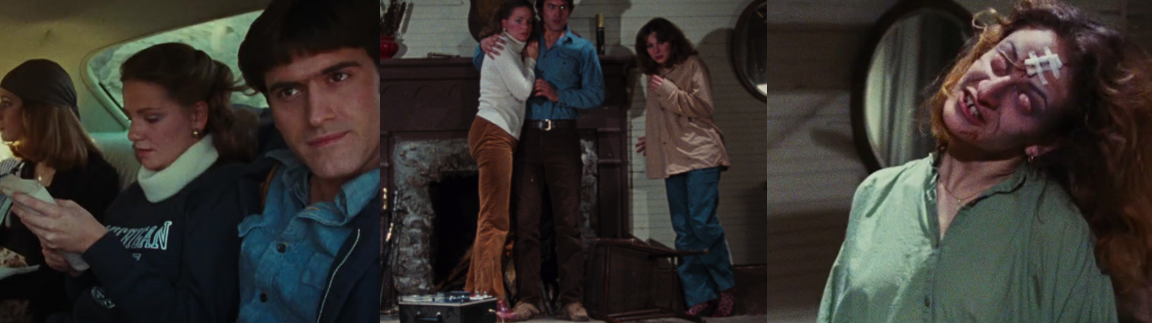
In 1981, up-and-coming director Sam Raimi and long-time collaborator Bruce Campbell brought together friends and family alike to produce one of the most controversial splatter-horror films of all time, The Evil Dead. Despite regular on-set mishaps and tensions, the film was surprisingly well-received and, after his mainstream career failed to take off, Raimi returned to the concept six years later for a sequel. Evil Dead II: Dead by Dawn (Raimi, 1987) might have been part-remake due to rights issues but it was met with largely positive reviews; its over the top gore led to it becoming a cult horror classic, though it would take another six years before a third instalment would see the light of day. After Darkman (ibid, 1990) proved a modest critical and commercial success, Raimi began developing ideas he’d had for the third film while shooting Evil Dead II, primarily a large-scale medieval piece with a time-displaced Ash. Producer Dino De Laurentiis was still onboard to provide financing for the film, though Raimi and his cohorts still had to fight to get the funds they needed for this larger venture. As ever, production was troubled by difficult conditions; the sweltering heat and Raimi’s penchant for abusing his life-long friend Bruce Campbell, and the gruelling shoot caused issues during the production, to say nothing of the painstaking practical effects work needed to bring the much larger concept to life. Having struggled with the ratings board with his previous Evil Dead films, Raimi purposely set out to make Army of Darkness more a slapstick horror/comedy and toned the gore way down, only to be hit with an unfairly high rating as penance for releasing the previous films independently. Additionally, studio interference saw Raimi’s original vision for a bleak cliff-hanger ending changed to a more hopeful one, and it’s often not clear which version you’re going to be watching when you purchase a copy of the movie. Finally, while Army of Darkness$21.5 million box office gross made it a relative success, many have been divided in their opinions on the film; some praised the presentation and effects work, others criticised the slapstick approach. While the film went a long way to further cement Ash as a horror icon and is often seen as a cult classic, it remains a contentious entry in the franchise and its events are often overlooked or outright ignored in subsequent entries (though this is also due to licensing issues).

The Review:
In my reviews of The Evil Dead and Evil Dead II: Dead by Dawn, I made it pretty clear that my bias is firmly towards Evil Dead II on being the best of Sam Raimi’s original trilogy. For me, it’s the perfect balance of horror and comedy and really cemented Ash’s character as a reluctant hero who transforms into a horror icon after being put through the wringer by a malevolent force. Evil Dead II set Ash up nicely as a cursed victim forced to see those he loves and cares about either turned into zombie-like Deadites or brutally murdered before his eyes, and constantly haunted by the evil force no matter how hard he fights, and Army of Darkness immediately sets about reminding viewers of this with yet another recap of the previous movie in the opening. This time, it’s narrated by Ash, firmly placing him as the main character and focus of the franchise and this movie, and quickly skims through the events that saw Ash lose his hand and end up being sucked through a vortex to medieval times.
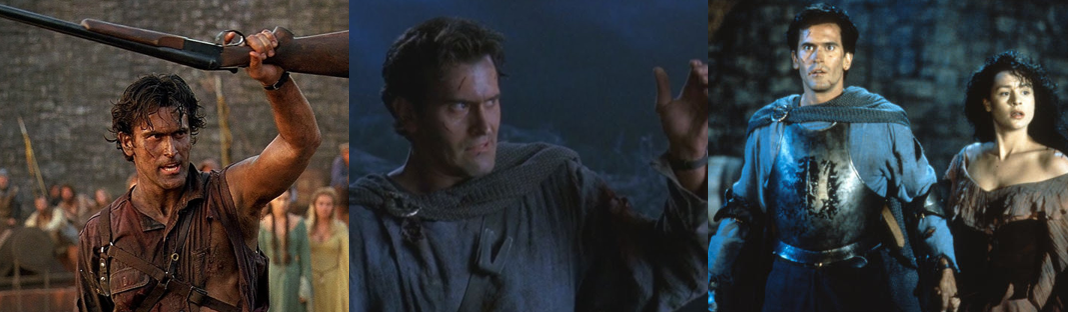
A frustrated Ash must set aside his ego and assume a heroic role to clean up his mess.

Understandably, given the horror and the trauma that he’s gone through, Ash is pretty tetchy in this film. While it’s nice to get a sense of his life before the horrors of the cabin, seeing him as a dedicated and knowledgeable S-Mart employee, any vestiges of his original bookish demeanour have been completely swept away and replaced with a bitter, antagonistic bravado that sees him openly mouth off to anyone, regardless of their authority or stature. He has, officially, had enough of this shit, basically, and his only concern is finding a way back home; he doesn’t want to be some prophesised hero, he doesn’t want to get involved in the issues between Lord Arthur (Gilbert) and Duke Henry the Red (Grove), and he certainly has no intention of battling the Deadites any more than he has to. Thus, he makes a deal with the Wise Man (Abercrombie) to retrieve the Necronomicon Ex-Mortis to help them turn the tide in their war against the Deadites but on the proviso that the Wise Man uses the book to send him back home, no questions asked. Unfortunately for Ash, life is never that simple; the evil force constantly conspires against him but is only part of the problem in Army of Darkness. Ash’s ego and sense of superiority means he not only expresses his frustration to the masses but also fails to heed the Wise Man’s words; despite being little more than a retail employee, Ash sees himself as their physical and intellectual superior, a façade he maintains even as he’s blundering his way through the movie. This same bravado, brought on after the trauma he’s experienced, causes him just as much grief as any reanimated skeletons as he refuses to listen to proper instructions and ends up raising the titular army of darkness in his haste and selfishness to get back home.

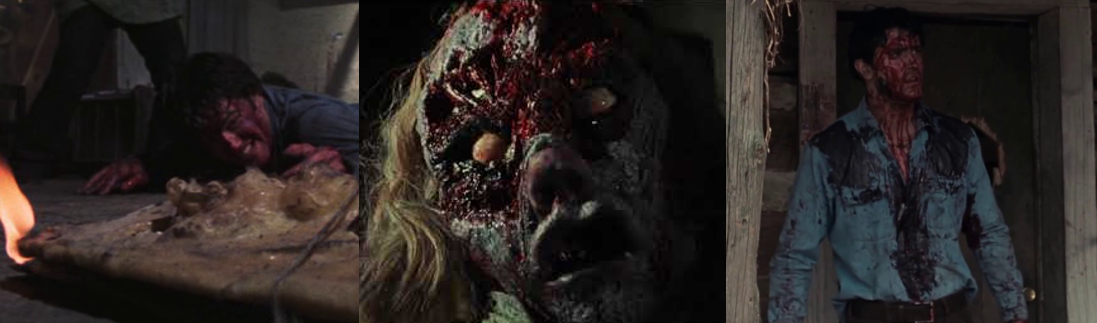
A spurned Sheila finds herself transformed into a spiteful witch by the evil’s power.

The opening recap once again shows Ash at the cabin with Linda (Bridget Fonda) but skims past her relevance pretty quickly this time around (and even completely omits Annie Knowby (Sarah Berry) from the narrative) to instead focus on Sheila (Davidtz). Since Arthur captured Ash alongside Henry and his men, who killed her brother in battle, Sheila is initially instrumental in condemning Ash to the Deadite pit since he’s assumed to be one of them. Like all of the “primates” in Arthur’s kingdom, Sheila is suitably impressed by Ash’s prowess in battle and his “boomstick” and quickly reverses her ill will towards him, which he initially callously dismisses since he’s busy living up the rewards of being hailed a hero. Although he’s as gruff and flippant towards her as he is to the other “primitives”, Ash finally gets the chance to get laid after being impressed by her spirited nature, but bashfully spurns her when given the choice between returning home or helping her and her people fight off the evil he’s unleashed, with even Sheila branding Ash a coward for this choice. Although it seems as though Sheila is doomed to become little more than a damsel in distress when she’s swept away by a Deadite gargoyle, she actually assumes the role of secondary antagonist after being brought to “Evil Ash” and transformed into a Bride of Frankenstein-esque (Elsa Lanchester) witch by his kiss. Her kidnapping proves to be just the kick up the ass Ash needs to get his shit together, but her demonic visage almost proves his undoing in the finale when she causes his supped-up Oldsmobile to crash and delights in tormenting his body and his heart.

Ash has no time for the Wise Man’s riddles or the rivalry between Arthur and Henry.

This is the first Evil Dead production to have a large cast of characters, and all of them react to Ash in different ways. Initially, Ash is met with suspicion by Arthur, though Ash is far from impressed by either Arthur or Henry and, once he escapes the pit, Ash immediately punches Arthur out and humiliates him. Although flippant towards Henry, especially as he was in chains when they met, Ash earns the duke’s respect after allowing him and his men to go free, which pays off dividends in the finale. It’s thanks to the Wise Man, who has knowledge of Ash’s greater destiny from his familiarity with the Necronomicon, that Ash is able to win the awe of the crowd and begrudgingly quest for the book. However, he loses the respect of the masses after dooming them all to death and destruction through his ineptitude and, while Arthur and the Wise Man are honour-bound to uphold their end of the bargain, they condemn him for his foolishness, but are soon relying on his surprising scientific acumen and military tactics to defend the castle. Ash’s eventual leadership skills and engineering abilities are so impressive that even Arthur is forced to offer his begrudging respect. Though a proud and seemingly cruel king, one who’s not only ore than happy to toss his prisoners into his Deadite pit to the amusement of the braying crowd but also freely executes any escapees with a crossbow, Arthur’s first priority is the safety of his people. He’s waged bitter war against Henry the Red for some time but is driven to find and protect the Necronomicon not to use it against his enemy, but to put an end to the Deadites that have infested his land. Still, the rivalry between Arthur and Henry runs so deep that, at first, it seems as though the duke has condemned his enemies to their fate; however, thanks to Ash’s rallying cry in a deleted scene, Henry and his men arrive just in the nick of time to help turn the tide against the invading Deadites and peace is finally fostered between the two as a result.
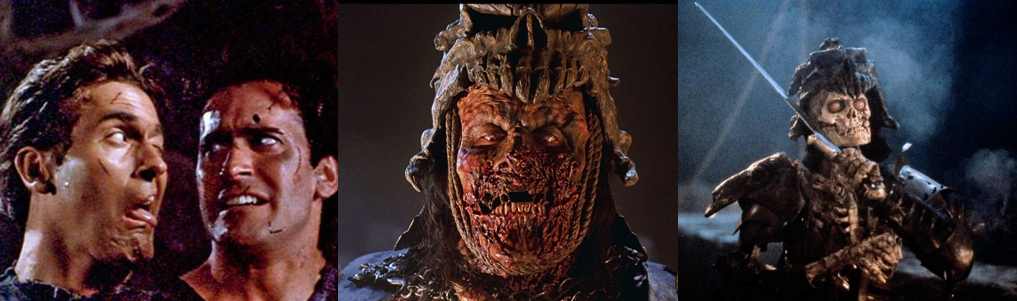
Ash sprouts an evil double who raises an undead and seeks to conquer the land!

Naturally, the evil force is back at work in Army of Darkness; somehow, it’s already been unleashed across the land, despite the Necronomicon being hidden in an ominous cemetery. The demonic forces it unleashes and possesses are now freely referred to as Deadites and attack people openly, causing much fear and panic in the lands, and the evil force continues to be both possessed individuals and an invisible, roaring spirit that relentlessly pursues Ash. However, Ash is wise to its tricks this time around; he knows when it’s playing possum, when to fight, and when to flee when it’s nearby, though he’s far more capable in a one-on-one situation than when chased by the invisible force. For the first time, the evil force is given stable and consistent physical form in this movie; previously, it was simply limited to cackling, monstrous possessed bodies but Army of Darkness sees Ash once again battle against himself when the force manifests through his reflection in scenes that recall his experiences at the cabin in the second film. The result of this is Ash literally (and bloodlessly) splitting into two after his evil twin sprouts from his body; despite being a morally grey character, the more recognisably “Good” Ash triumphs over his evil twin and leaves him for dead, only for “Evil Ash” to return to life as a rotting, skeletal corpse that acts as the embodiment of the evil force and seeks to conquer the living through the titular army of darkness. Evil Ash gives Campbell more chances to showcase his range, being a maniacal and raving, pirate-like figure that ramps all of Ash’s arrogance and hot-headed bluster up to eleven, taking a possessed Sheila as his bride and digging up an army of the dead to ravage the land. The Necronomicon also gains more personification this time around; there are three books, each capable of biting and attacking Ash when he screws up the magic words, and the Deadites take a number of forms, from gibbering zombies to screeching witches, but is primarily represented by an army of skeletons. The evil force is also far more playful this time around; it’s still spiteful and malicious, but its loquacious and quirky skeletal troops are just as likely to get into slapstick scrapes as they are the skewer their victims.

The Nitty-Gritty:
The Evil Dead films had always been fairly comedic up to this point; even the first, which is easily the grittiest and splatter-horror of the bunch, had its ridiculous moments, but Army of Darkness takes the comedy/horror atmosphere of Evil Dead II and runs with it! Some of this is a little lost on me; the Three Stooges were a bit before my time and I’m not really a fan of their slapstick comedy or repetitive routine, so seeing Ash fend off skeletal limbs as they bonk his nose and box his ears is a little too childish for me. A lot of the comedy is focused on Ash’s 20th century sensibilities, slang, and technology and the fear, awe, and confusion it inspires in the natives; to these people, Ash’s rudimentary science and bog-standard weaponry are like magic and his bravado is able to impress all the more since they are so enthralled at his ability to defeat the Deadites with his strange weapons. His grouchy demeanour is also a fun source of comedy; he’s far more selfish and outspoken this time around and only undertakes the Wise Man’s quest because he has no other choice to get home. The film also boosts his action hero status up to eleven, gifting him even more memorable one-liners and moments, as well as using his engineering abilities and 20th century science books to not only fortify the castle defences and turn his beloved Oldsmobile into a bad-ass fighting machine, but also somehow construct a working artificial hand using an armoured gauntlet and the gift of a montage!

Ash is now an arrogant fool who’s only separated from his evil double by a fine, grey morality.

Indeed, for me, much of the film is again carried by Bruce Campbell; I may not agree with every decision made to blow Ash’s characterisation so ridiculously out of proportion but there’s no question that, again, this is his show (as evident in the opening titles, which actually call the film Bruce Campbell vs. Army of Darkness). If you enjoyed Ash’s fight against his severed hand in Evil Dead II, Army of Darkness takes that horse and well and truly flogs it to death by having Ash be set upon by cackling, miniature versions of himself using some ambitious, if dodgy, composite effects. These diminutive little gremlins torment Ash, stabbing and tripping and mocking him at every turn and forcing him into more and more comical extremes as he tries to stamp and drown them out. Ash’s character is also expanded upon in ways that would continue to be featured in subsequent adaptations and continuations of the franchise; now a much more self-serving anti-hero, Ash primarily fights for himself and makes no bones about it. He basks in the adulation of the people only to feed his ego and is more than happy to leave them to their fate after unleashing the book’s evil since he’s fed up with all the fighting and everything it’s cost him and just wants to go home. He has a change of heart, of course, but Ash’s hesitant nature literally manifests itself into a separate being in this film and it’s a grey morality that separates “Good” Ash from “Evil” Ash. Evil Ash is more obviously the personification of the evil force that’s been hunting Ash all this time and is bent on the wholesale slaughter and possession of the living, painting him as more obviously “bad”, but it takes a great deal of motivation for Ash to get his shit together and start fighting for something other than his own self-preservation, turning him from a reluctant but bad-ass hero to a flawed braggart who needs to be pushed into defending others.
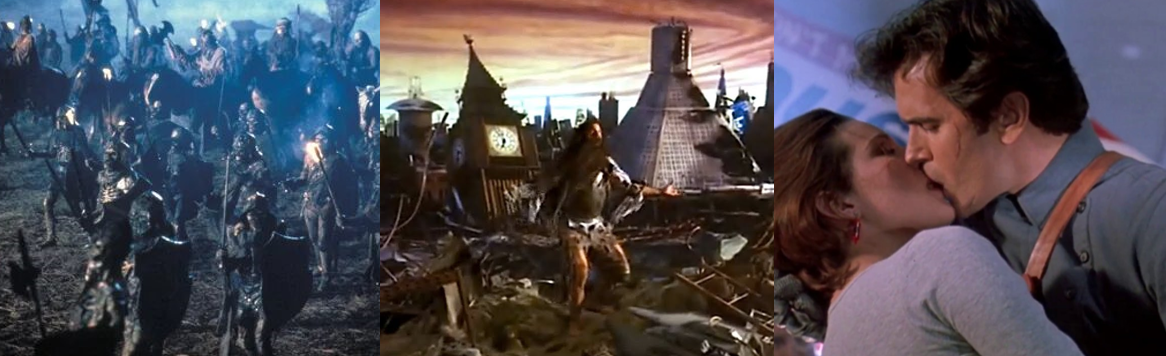
Some impressive effects feature in the finale, which sees Ash either stranded or returned to his normal life.

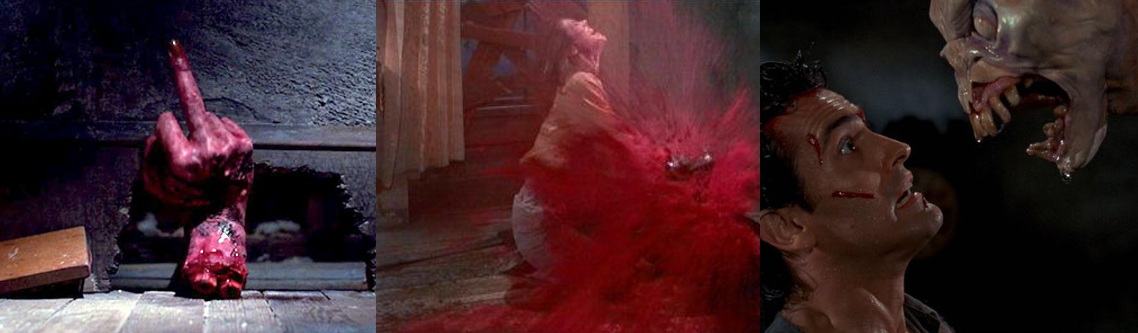
Thanks to focusing more on bombastic action and wacky, slapstick comedy, blood and gore is all-but-absent from Army of Darkness. While there is an impressive geyser of blood when one of Henry’s men is tossed into Arthur’s Deadite pit, there’s none at all when the recap shows Ash chopping off his hand and even the Deadites are less intimidating, save for the decaying visage of Evil Ash, and more likely to rattle off quips and play fight than tear flesh from bone. However, Army of Darkness raises the titular army from the grave with some remarkable practical effects, puppets, and old school camera techniques in the explosive and overly ambitious finale, which sees Ash forging gunpowder and becoming a symbol for the people to rally behind in the battle against the stop-motion effects, corpse-like costumes, and gibbering puppets used to bring the army of the dead to life. Ash uses his steam-powered Oldsmobile to mow them down using a bladed attachment and, despite being physically outmatched, proves an adaptable, if desperate, brawler, when he clashes swords with Evil Ash. Ash manages to hold both Evil Ash and a Deadite soldier at bay with a surprising deftness before setting him on fire, reducing Evil Ash to another babbling skeleton, and blowing him up using a bag of gunpowder. This restores Sheila to normal and results in victory, but Ash finds himself conflicted; he briefly considers staying in the past, where he can continue to be hailed a hero and even live like a king, but ultimately he decides that he belongs in his own time. The Wise Man finally repays his bravery with a solution to his time displacement; depending on which version of the film you watch, Ash either has to drink five droplets of a special potion or repeat another magic phrase to enter a deep sleep. Either way, he screws up this process once again and either ends up sleeping too long and waking up in a post-apocalyptic future or returns to his mediocre life as an S-Mart employee where he wows his co-workers with his tall tales and continues to fend off the vengeful Deadites (which, incidentally, has always been my preferred ending).
The Summary:
To this day, I struggle with Army of Darkness. It’s certainly the biggest and most ambitious of the original Evil Dead trilogy, with a much larger scope and cast of characters and it really expands upon the lore of the franchise in its own way, but it’s such a jarring genre shift from the last two movies that it just doesn’t always land for me. Ash’s bravado has been ramped up to such an extreme that he’s gone from a quirky and unlikely action/horror hero to a selfish wise-ass who’s both too arrogant and blockheaded to remember some simple words and yet adaptable and knowledgeable enough to craft an artificial hand and a steam-powered quasi-tank using medieval technology. Ash is at his most unlikable here at times, which works in the sense of him setting aside his ego and fighting for something other than himself, and I totally get that he’d be frustrated after everything he’s been through, but it makes him more of a cliché than someone to root for. The film is super toned down compared to the last two, relying on slapstick comedy and over the top action rather than gore and horror, and sadly rehashing a lot of the entertaining aspects of Evil Dead II through a watered-down presentation. There are some good aspects, such as the impressive (if overly ambitious) special effects and Bruce Campbell’s charisma, but I’d argue they’re not enough to give this much consideration. While I prefer the “good ending”, it really doesn’t matter which version you watch as the film is barely ever referenced and I can’t say I’m sorry about that. You’re much better off sticking with the cliff-hanger of the last movie and assuming that Ash found his way back using the book rather than sitting through this, unless you have little kids who want to get into horror but aren’t quite ready to see the gory content of the first two movies.

My Rating:

Rating: 2 out of 5.

Could Be Better

Are you a fan of Army of Darkness? Which ending do you prefer? What did you think to Ash’s characterisation as an arrogant blowhard? Did you enjoy the shift towards slapstick comedy or do you prefer the gory content of the other films? What did you think to Evil Ash and the Deadite army? Did you enjoy the special effects used in the film or do you find it too dated and cringe-worthy? Would you like to see Army of Darkness get more recognition or do you think it’s better off ignored? Whatever your thoughts on Army of Darkness and the Evil Dead franchise, drop a comment below and be sure to check out my other Evil Dead content.


Movie Night: Leprechaun

Released: 8 January 1993
Director: Mark Jones
Distributor:
Trimark Pictures
Budget: $1 million
Stars:
Warwick Davis, Jennifer Aniston, Ken Olandt, Mark Holton, Robert Hy Gorman, and Shay Duffin

The Plot:
After stealing one hundred gold coins from a mischievous and vicious leprechaun (Davis), Dan O’Grady (Duffin) manages to subdue to creature with a four-leaf clover. However, ten years later, a young family rent O’Grady’s property for the summer and accidentally release the leprechaun, who embarks on a murderous rampage to reclaim his gold.

The Background:
Leprechaun was the brain child of writer/director Mark Jones, who decided that a low-budget horror film was his best bet to break away from television. Inspired by adverts for Lucky Charms cereal and the science-fiction creature feature Critters (Herek, 1986), he decided to make a leprechaun the antagonist for his feature. Leprechauns are diminutive supernatural figures from Irish folklore closely associated with shoes, rainbows, and pots of gold but also known for playing pranks and even menacing people. Although largely caricatured in popular culture, star Warwick Davis jumped at the chance to play against type even though it meant spending up to three hours in the make-up chair. Jones brought the proposal to Trimark, who agreed to finance the film, and infused more comedic moments into the script at Davis’s suggestion. Trimark engaged in an aggressive marketing campaign that saw the film making $8.6 million at the box office, although critical reception was largely negative; reviews slated the film’s attempts at humour and horror alike, though Davis’s performance was largely praised. The film was profitable enough to inspire five sequels, a reboot, and then a direct sequel in 2018 that ignored all the other films, none of which were particularly well regarded critically but which have gained something of a cult following over the years.

The Review:
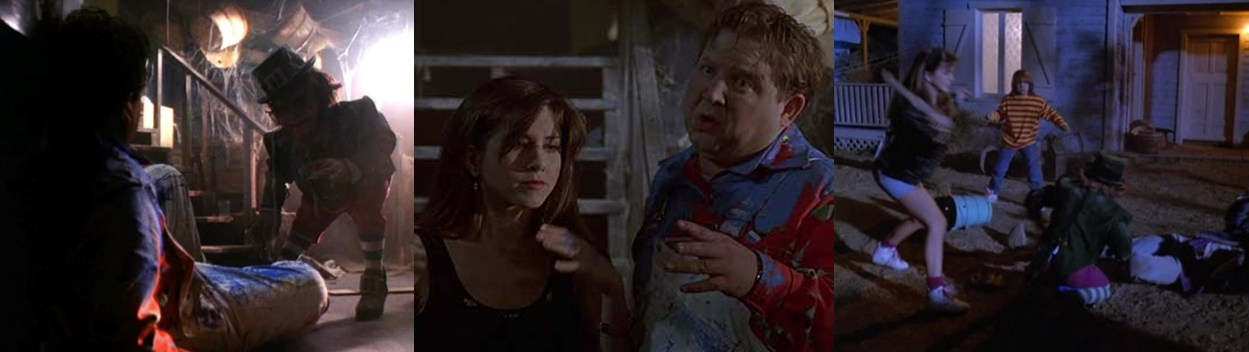
In the vast pantheon of horror movies and icons, it’s easy to dismiss or forget the leprechaun; like many horror villains, he quickly descended into parody and cartoonish violence and a string of low-budget, low-effort sequels saw this ridiculous concept run out of steam far faster than other more complex or alluring horror monsters. The core idea is ridiculous by its very nature and the film definitely doesn’t shy away from that, which I think is a positive, but I can’t say that I’ve ever been much of a fan of the film, the character, or this franchise as a whole. Granted, I’ve only seen about four of the eight films in the series, but none of them were as memorable or terrifying as the squat creature’s more influential peers. However, the 17th of March is St. Patrick’s Day and, since I make a habit of celebrating other holidays like Halloween and Christmas, it only seems fair to mark the occasion with a review of the first film in this often overlooked horror-comedy franchise. Unlike in the vast majority of horror films, the first character we even see onscreen is the villain of the piece, the titular leprechaun. Normally, there’s at least some kind of build up to the reveal of the killer or monster of a horror film but the monstrous little troll comes shambling onto the screen within the first minute of the movie. A squat, curious little fellow, the leprechaun is almost disarming in how absurd he seems; dressed in a bright green suit topped off with a fancy little hat, he seems like a figure of ridicule and his predisposition for talking in rhymes certainly ties into his ridiculousness. However, closer inspection reveals that he’s quite the disturbing little creature; with his deformed face, fangs, and claw-like hands, he’s more of a stout gremlin than a fanciful figure of folklore and he immediately asserts not only his avarice for his beloved pot of gold but his willingness to murder anyone who dares steal from him.

Tory‘s unimpressed with her rural surroundings and refuses to believe stories of a leprechaun.

The bombastic and painfully stereotypically Irish Dan O’Grady believes his financial woes have been solved when, while visiting Ireland to take care of his mother’s funeral, he comes across the leprechaun and manages to not only capture the creature but get his hands on his gold. He promptly brings the cursed coins back to the United States, much to the chagrin and annoyance of his wife, Leah (Pamela Mant), who learns the hard way that O’Grady’s tall tales of a gold-hoarding leprechaun are all too true when the vicious little sprite stows away in O’Grady’s luggage, lures her in by mimicking a child’s voice, and scares her into taking a fatal fall down the cellar stairs. Although O’Grady’s able to get the better of the leprechaun and trap him in a crate thanks to a four-leaf clover, he suffers a near-fatal stroke before he can set the creature on fire, meaning the leprechaun’s curse carries over to the next people to come onto O’Grady’s property. This ends up being J. D. Redding (John Sanderford) and his bratty teenage daughter Tory (Aniston), who rent the O’Grady house for the summer, much to Tory’s displeasure; she’s far from happy at being out of Los Angeles and in the middle of nowhere, and even more unimpressed with the state of the farmhouse, which has been left to go to ruin over the last ten years. While J. D. is excited to be away from the hustle and bustle of city life, Tory bemoans the lack of shopping malls and just wants to get back to civilisation, and to a hotel, and away from the dilapidated house. Tory’s solution to any problem is to throw money at it; as such, she doesn’t even think to apologise when she accidentally bumps into Nathan Murphy (Olandt) and spills his paint thinner, instead offering cold hard cash for the inconvenience. A vegetarian and a pacifist, Tory sees herself as an independent and forceful woman of the nineties, but she easily takes Nathan’s bait when he insinuates that she’s afraid of the house like some flustered female and decides to stay after all and even ends up helping him out with the chores because of an obvious attraction to the young painter.

Thanks to his child-like demeanour, Ozzie’s warnings of an evil leprechaun go unheeded.

Nathan has been hired to do some much-needed renovations around the house; while he’s a strapping young chap, he obviously can’t do all the work by himself so he brings along his little brother, Alex (Gorman), and their simple-minded but kind-hearted friend Ozzie Jones (Holton). The childlike Ozzie is obsessed with tall tales; he spins a yarn about aliens and UFOs that is dismissed by Alex, meaning no one believes him when he tries to tell them that he unwittingly freed the leprechaun from his trap. Ozzie’s maybe not the most politically correct character ever put to film; he’s dim-witted and clumsy and Tory loses patience with him on more than one occasion, but he’s fully accepted by Alex, Nathan, and J. D. despite him basically having the demeanour of a child. In comparison, Alex is startlingly grown-up for his age; he’s somewhat cynical, dismissive of Ozzie’s fairy tales, and watches over Ozzie the way an older brother might look after a younger sibling. Alex isn’t above playing pranks on his simple friend, however, which directly leads to Ozzie being lured into the cellar and freeing the leprechaun after being duped by the creature mimicking a child’s cries for help. Alex goes to make sure Ozzie doesn’t hurt himself when he chases a rainbow in search of the leprechaun and quickly takes the leprechaun’s bag of gold coins for himself, chastising Ozzie when he swallows one and formulating a plan to hide the gold in the well near the house so they can later exchange it for real money in order to pay for an operation to “fix [Ozzie’s] brain” out of a sweet, but misguided, concern for his friend’s welfare. Although Ozzie’s obsession with the devious little troll grates on the others, J. D. is the first of the group to suffer from the leprechaun’s wrath as the sprite takes a bite out of his hand; while this isn’t a life-threatening injury, it’s enough to see the patriarch sitting the rest of the film out at the local hospital. This leaves the youngsters to fend off the leprechaun’s assault alone, especially after he cuts the phone line, wounds Nathan’s leg, and Ozzie places a frantic call to Sheriff Roy Cronin (William Newman) that’s naturally laughed off for its ludicrousness, forcing them to tackle the malicious little sprite by themselves.

The Nitty-Gritty:
Unlike later films in the franchise, Leprechaun actually tackles its subject matter and titular monster with a modicum of seriousness; if I had to make a comparison, it’s very similar to how Charles Lee Ray/Chucky (Brad Dourif) was portrayed in the first Child’s Play (Holland, 1988) as a brutal, spiteful, and dangerous killer despite his diminutive size and ridiculous appearance, and how that film leaned more into semi-psychological horror than comedic shenanigans like its successors. In the spirit of this, despite the whimsical score and fanciful appearance of the leprechaun, the creature is kept largely in shadow in his first appearances; we don’t even get a good look at his face until about twenty minutes into the film and he’s portrayed as being a twisted little troll, mimicking the voices of his victims and toying with his prey with his childish rhymes and quips while cruelly taunting them. However, the film is unashamedly a horror-comedy rather than a straightforward horror movie and it tentatively walks the line between both genres in a way its sequels didn’t; it’s not as ludicrous as the two Hood films (Spera 2000; Ayromlooi, 2003) or a generic monster film like Leprechaun: Origins (Lipovsky, 2014) as it features scenes with the leprechaun gleefully chasing after his victims on a child’s tricycle and pounding a pawn shop owner (John Voldstad) to death with a pogo stick! Moreover, the leprechaun is functionally immortal (claiming to be six-hundred years old) and invulnerable; although bullets and blunt objects can hurt and slow him, he’ll “keep coming back” until he’s retrieved his gold.

The leprechaun is the star of this ridiculously bizarre horror-comedy.

While the leprechaun’s outfit is a bit much (it’s like something out of a pantomime or a costume shop and could’ve done with looking a bit more worn and faded in some places), Warwick Davis is completely unrecognisable beneath the creature’s malformed visage; sporting a permanent leering smile and a mouthful of rotten fangs, the leprechaun is a disgusting little troll who showcases an array of magical powers. Initially weakened from ten years of the four-leaf clover’s influence and barely able to cause a door to shut with his magic, the leprechaun rekindles his strength naturally over time but the film also implies that terrorising and killing others restores his power as much as being in possession of his magical gold. To that end, he delivers some of the most bizarre kills in horror cinema; because of his short stature, it’s easy to dismiss the leprechaun’s threat but he sports razor sharp nails, has a tendency to bite chunks out of people, and exhibits a strength beyond his size that borders on the superhuman. As mentioned, he crushes a man to death with a pogo stick; he claws at Deputy Tripet’s (David Permenter) face and then uses his teleportation powers to toy with him before snapping his neck with his bare hands; he also threatens to cut Nathan’s foot off with a rusty hatchet after injuring him with a bear trap and even exhibis control over his severed hand after it’s cut off by a door. The leprechaun’s only real weaknesses is his obsessive compulsion to stop and shine shoes when he spots them and the magical powers of a four-leaf clover, which is enough to keep him trapped in a crate for ten years and ultimately cause him to melt into a skeleton (and even then he just keeps coming). While some horror monsters and slasher villains have reasonably vague motivations, the leprechaun is fixated on finding his crock of gold; while he delights in tormenting and killing others, that’s really more for fun and in pursuit of his goal and there’s definitely a suggestion that he’d be placated if his gold were simply returned to him.

The leprechaun’s tenacity is finally put to an end with a four-leaf clover and a load of gasoline.

Indeed, this turns out to be the case when Ozzie and Alex let slip about the gold they hid in the well; Tory manages to retrieve it and return it to the leprechaun, but he pursues them with a vengeance when he finds one coin missing (since Ozzie swallowed it earlier) and assumes he’d been tricked. While trying to get some help at the hospital, Tory takes a detour to a nursing home to consult with O’Grady, only to find that the leprechaun has attacked him, taken his place, and to be chased by him in a wheelchair. O’Grady manages to cling to life long enough to reveal that the leprechaun can be subdued with a four-leaf clover and, despite the leprechaun hounding her at every turn and even ripping out and eating Tripet’s eye, and the insurmountable odds of finding the rare flower, Tory’s able to pick out from a patch of clovers. When the leprechaun tries to shove Alex’s head into a bear trap, Ozzie bravely endures the creature’s wrath after revealed that he’s got the missing coin in his stomach; Alex is then able to deliver a decent quip (“Fuck you, Lucky Charms!”) before firing the clover into the leprechaun’s mouth when he’s slashing at Ozzie’s face. This causes the leprechaun to melt from the inside out, reducing him to a putrid, melting, skeletal visage that stubbornly continues to go for them until Nathan finishes him off in disappointingly unspectacular fashion by simply pushing him down a well and blowing him up. While the film ends with the leprechaun’s disembodied voice vowing to curse the well and rebuild his magic to recover his gold (and certainly he would return on more than one occasion in future sequels), I can’t help but feel his end would’ve been more impactful if it’d been more like Child’s Play and Gremlins (Dante, 1984) and focused more on the leprechaun’s flesh dissolving and his charred skeleton crawling after his victims before he went up in a burst of flames but the more important thing about the ending, whatever it’s form, is that it meant this weird little film was finally over.

The Summary:
As I’ve heavily alluded to, I’m not really a big fan of Leprechaun or its sequels; they’re not really scary and just a bit too ridiculous for me in concept and execution, so it’s perhaps no surprise that I don’t rate this first film very highly. I’ve watched a lot of horror films and am very familiar with the horror icons of the nineties, but the leprechaun has to be one of the weakest of the bunch, seconded only by Chucky. For me, it’s simply because they’re too short and too ineffectual to really be all that much of a threat, however they manage to hold their own through their cackling demeanours and creativity. Certainly, Warwick Davis shines in the title role and throughout the film; every time he’s onscreen, whether shrouded in shadow or galivanting around in his little go-kart, he seems to be having the time of his life and absolutely devours the scenery whenever he’s shuffling about and taunting his prey. While we don’t really get to see the extent of his powers, he’s certainly a persistent and imaginative little monster, though this first film doesn’t really do justice to his particularly cruel brand of brutality. The other actors do a decent enough job; Alex and Ozzie are the standouts of the group, surprisingly considering children usually aren’t that impressive in films and the potentially insensitive nature of Ozzie’s character. Thankfully, Leprechaun doesn’t take itself too seriously; it’s more of a grim, whimsical modern fairy tale than a dark, gory slasher, and while that works for the film I just feel like the entire execution and concept is lacking somewhat. You’re not really missing all that much if you’ve never seen Leprechaun and I can’t really recommend it or the franchise beyond sheer morbid curiosity, but I guess there are worse ways to spend St. Patrick’s Day.

My Rating:

Rating: 2 out of 5.

Could Be Better

Are you a fan of Leprechaun? What did you think to the character and concept? Were you impressed with Jennifer Aniston and Robert Hy Gorman and do you think Ozzie’s characterisation has aged poorly? Which kill was your favourite and what did you think to the leprechaun’s make-up effects? Which film in the franchise was your favourite and would you like to see a more serious take on the concept? How are you celebrating St. Patrick’s Day today? Whatever you think about Leprechaun, feel free to leave a comment below.

Movie Night: Evil Dead II: Dead by Dawn

Released: 13 March 1987
Director: Sam Raimi
Distributor: Rosebud Releasing Corporation
Budget: $3.5 million
Stars: Bruce Campbell, Sarah Berry, Dan Hicks, Kassie Wesley, Lou Hancock/Ted Raimi, and Denise Bixler

The Plot:
After discovering a recorded incantation that unleashes a demonic spirit from the nearby woods and possesses his girlfriend, Ashley “Ash” Williams (Campbell) is tormented and partially possessed by the evil force. Things escalate when locals and scientist Annie Knowby (Berry) arrive at the cabin, only to be set upon by a monstrous, zombie-like demon dwelling in the basement…

The Background:
Back in 1981, long-time friends and collaborators Sam Raimi, Bruce Campbell, and Robert Tapert begged and borrowed to turn a simple horror concept into the ambitious, if hazardous, The Evil Dead , a low-budget horror that established Raimi’s directorial style but failed to propel him into the mainstream despite surprisingly positive reviews and being a sleeper hit. After his follow-up projects bombed, Raimi returned to his horror roots for an Evil Dead sequel, but production was immediately upended by rights issues; since Raimi didn’t own the rights to his original film, the opening sequence of the sequel served as a partial recap/remake of The Evil Dead, though now streamlined to focus on only Ash and his girlfriend. While shooting the first film, Raimi had conceived of a sequel in which Ash would be transported back to medieval times, an idea that the studios passed on; however, despite The Evil Dead’s financial success, producer Dino De Laurentiis wouldn’t approve of Raimi’s more outlandish ideas, necessitating a return trip to the cabin. Although the script had been conceptualised for some time, Raimi brought in another long-time friend, Scott Spiegel, to make adjustments and it was Spiegel who took the franchise in a more horror/comedy direction, with him and Raimi both drawing inspiration from their love of the Three Stooges. This was especially evident in Campbell’s slapstick fights against both the evil force and his own possessed hand; Evil Dead II dramatically increased Campbell’s abuse and stunt work, and the set remained notably hazardous for the cast and crew. As before, the film’s special effects and horror were achieved in-camera using a series of dollies, animatronics, and traditional filmmaking techniques; footage was run in reverse, large and uncomfortable suits were worn, and shots often tracked the actors from the rafters and through the walls of the set. Over 880 gallons of fake blood were used during filming, a custom-built prop chainsaw was built to be attached Ash’s severed hand, and the KNB EFX Group had to use every trick in the book, from miniatures to matte paintings, to deliver the film’s far gorier and more ambitious make-up and special effects. This meant that the film again had trouble with the ratings board; when they proposed cuts that would severely cripple the film’s runtime, it went unrated upon release, a gamble which may account for its much lower box office gross of $5.9 million. However, Evil Dead II was met with largely positive reviews; critics praised the direction and performances, especially Campbell’s work, as much as the over the top gore and blend of horror, comedy, and action. Of all the Evil Dead films, Evil Dead II is the most influential; it’s regarded as a cult horror classic and its characterisation of Ash and shift towards horror/comedy was replicated in subsequent comic books, videogames, and the unfortunately short-lived television series.

The Review:
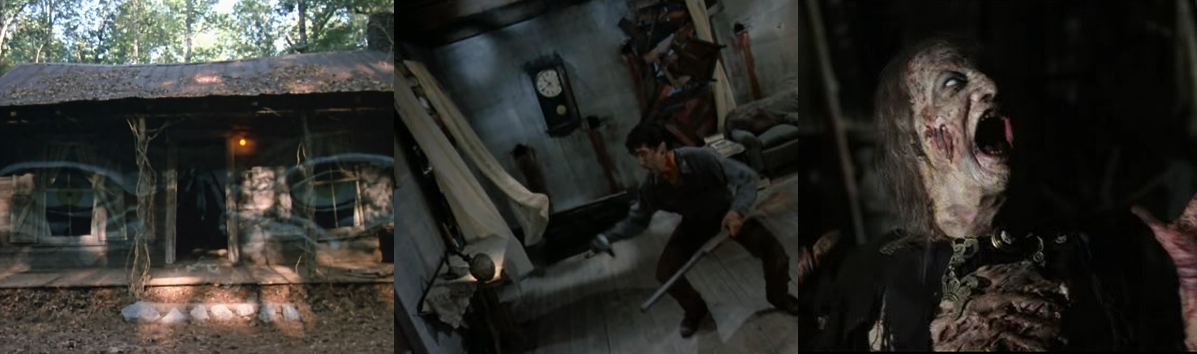
If you’ve seen The Evil Dead then you might initially be put off by Evil Dead II simply because it immediately retcons a great deal of that film; gone are Ash’s friends and sibling, reducing the cast of the initial cabin experience to a vastly different version of Ash and his doting girlfriend, Linda (Bixler). However, I do believe this is to the film’s benefit; the reshot opening sequence, which effectively retells and replaces the first movie, features all of the best parts of The Evil Dead but with higher production values across the board, meaning you can easily skip the original movie and be all the better for it since Evil Dead II establishes so much of the lore, atmosphere, and characterisations that would continue throughout the remainder of the series. The movie opens with Professor Knowby’s (John Peaks) ominous narration regarding the semi-intelligent book, now rechristened “Necronomicon Ex-Mortis” but still referred to as the “Book of the Dead” and containing the same rituals as before, but now with a far more animated face and a great deal more power and influence seeped into its gory pages. From there, the film very much mirrors the first movie; this time, it’s just Ash taking his girlfriend to a secluded, abandoned cabin for a romantic getaway and elements of Scott’s (Richard DeManincor) character are weaved into him.

Ash is far more well-rounded and made dangerously unpredictable by the evil’s influence.

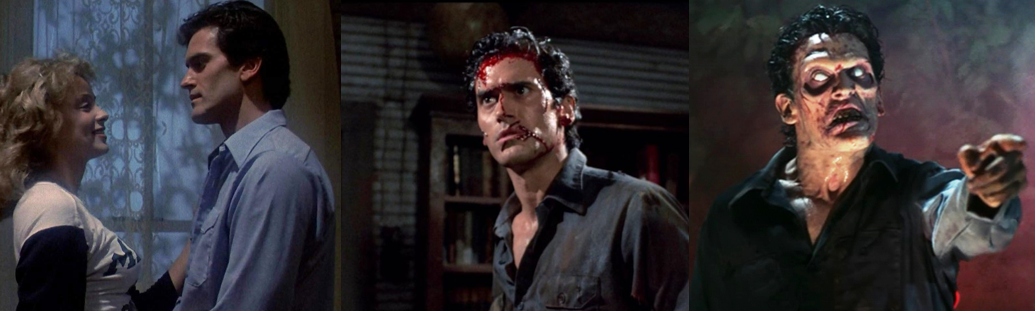
Consequently, in contrast to the first movie, Ash is no longer bookish or some geek who struggles to be assertive; by borrowing Scott’s bravado, Ash is bolstered and given deeper characterisation by a snarky confidence that translates far better once he assumes the role of unlikely horror hero. He still thinks gifting an awful magnifying glass necklace to his girlfriend is a good idea and still exhibits the same likable charisma and tortured conflict seen in the first film, but he’s much more competent and less wishy-washy here, though all his sexual confidence can’t keep him from giving into curiosity and playing Professor Knowby’s tape and bringing forth the evil lying dormant in the forest. Although he doesn’t have to suffer the pain of watching his sister and friends get possessed and picked off by the evil force they unleash, he’s still tormented when Linda is overtaken by the titular evil dead and becomes a gibbering, maniacal zombie-like creature. Ash’s concern and love for a large group of friends is focused all on Linda, making her a much more prominent character in his life and she returns again and again to spitefully mock him or cause him further harm. He’s also the sole focus of the evil force itself; similar to the last film, the evil possesses Linda and even the house itself to taunt Ash, driving him to near madness in a far shorter and more brutal space of time, but it also infects him more than once. Most prominently, it enters his hand, compelling it to attack him and forcing him to sever it at the wrist with a chainsaw, but it also overtakes him completely on a couple of occasions, something that was strangely missing from the first film and works in tandem with Ash’s fractured mindset to make him a dangerous and unpredictable character this time around since you’re never sure when he’s going to suddenly become a flesh-hungry Deadite.

Ash’s love for Linda keeps him sane, while Annie is the key to banishing the evil.

Although Linda’s role is again quite small, the absence of Ash’s other friends means she takes on a more prominent role in a number of ways. First, as mentioned, all of his attention is focused on her, giving her more to do and more agency in the cabin and allowing Ash’s grief to be largely focused on her. Second, she becomes something of a secondary antagonist after being possessed; Linda proves to be Ash’s Achille’s heel time and again and the evil force doesn’t hesitate to exploit that. While he’s far faster at chopping off her possessed head to defend himself, he remains heartbroken at the loss and even when her headless corpse mocks him and attacks him with a chainsaw, he remains conflicted and reluctant to harm her until he’s pushed to breaking point. Finally, Ash is definitely a much more confident character when it comes to women in this film, but he’s absolutely portrayed as a one-woman man; Linda’s memory is one of the few things that keeps Ash sane and allows him to resist the influence of the evil force, and her necklace has very much the same impact on him as the rising sun, banishing the evil from his body and bringing him to his senses, which allows her to be far more important to the overall plot, and to Ash, than simply being another cackling demon in the corner. Ash also eventually bonds with Annie; while she initially believes that he’s murdered her father and mother, Henrietta Knowby (Hancock/Rami, respectively), her research into the Necronomicon Ex-Mortis means that she’s soon relying on Ash to help them survive until the dawn and recover the missing pages of the book to put a stop to the rampant evil. Like her father, Annie has been researching the book for some time and is excited to get to the cabin so she can bring the book’s missing pages to her father, only to find a deranged man covered in blood and wielding a shotgun. It’s only after hearing about what happened to her parents that Annie starts to realise that the real danger lurks in the cellar and the pages of the Necronomicon and that her ability to read from the book is their only hoping of stopping the evil force.

The supporting cast largely causes problems and get themselves offed in gory fashion.

While Ash’s friends might be gone, Evil Dead II still features an extended cast; Annie comes to the cabin with her research partner, Professor Ed Getley (Domeier), and they enlist the help of two locals, repairman Jake (Hicks) and his girlfriend, Bobby Joe (Wesley), easily the two most annoying characters in the entire film. Thanks to Ash having been tormented by the evil force and jumping at every shadow (not to mention being covered in blood and having a stump for a hand!), Annie and the others instantly distrust and attack him, locking him in the cellar without heeding his warnings. Much like Cheryl Williams (Ellen Sandweiss), sneering redneck Bobby Joe is driven out into the malevolent woods and attacked, though with far less disturbing methods, and Jake becomes so consumed with concern for her that he tosses the Necronomicon’s pages into the foreboding cellar and forces Ash and Annie to go into the woods at gunpoint and find her. Mean, stupid, and cynical, Jake doesn’t believe any of the supernatural mumbo-jumbo Ash and even Annie tries to convince him of, needlessly extending the film and endangering the group and ending up dead as a result. Since Ash is infused with some of Scott’s bluster this time around, it’s poor, unassuming Ed who mirrors Ash from the first film; he’s basically a blank slate there to make up the numbers and add to the body count and give Ash a heroic moment when he puts the possessed academic down with an axe. Professor Knowby takes on a far greater role here as well; not only is he responsible for bringing the Necronomicon  to the cabin and first unleashing its demons, he essentially dooms the characters by burying his possessed wife in the fruit cellar. In a desperate attempt to find redemption, his tormented spirit appears before them to provide the key to dispelling the evil and acting as something of a counter to the malevolent force.

The evil force delights in tormenting Ash and attacking through demonic possession.

Of course, the primary antagonistic force in the film is the disembodied “evil dead”. Unlike in the first movie, where it’s pretty clear that the evil force is lurking in the forest and waiting to strike at its prey, the evil is dormant and quiet until Ash plays the tape recording but no less ruthless than before. Indeed, this time around, the evil force is far more diverse; in addition to urging its victims to “Join us!” with a booming whisper (William Preston Robertson) and wrecking the main bridge back to civilisation, it creepily transforms the front of the cabin into a glaring face and delights in torturing Ash by possessing furniture, lights, and stuffed animals inside the cabin for one of the most amusing and disturbing scenes in the film. The evil force repeats many of the same tricks from the first film, sweeping around with erratic and unsettling movements, bashing through doors, wrecking the only bridge to safety, and infecting its victims through possession and bloodletting, but also has many more options for physical manifestation; it turns Linda into a cackling Deadite and even transforms Ash into a hideous demon, but derives much pleasure from possessing his hand and causing him direct physical harm. Even when it’s cut off, Ash’s hand continues to torment him, even stabbing Annie in the back by the finale, but the evil dead’s most prominent manifestation is the bloated, demonic Henrietta (Raimi) who dwells in the cellar. Both Linda and Henrietta are much more vocal than the Deadites from the last film, issuing threats and torturing their victims verbally as well as physically, with the swollen Henrietta swinging Annie around while levitating overhead. As before, there are ways to conquer the evil force; it’s banished by daylight and strong emotional ties, for example, but those possessed can only be stopped by total bodily dismemberment, something that again proves difficult for the likes of Ash given how much he loves Linda. A new wrinkle introduced here, though, is that the Necronomicon itself also holds the secret to stopping the evil force; since Annie is the only one who can read it and the pages she needs are lost in Henrietta’s cellar, this gives the characters more options and motivation for venturing deeper into the cabin, and the book, for a solution, and the book even contains some prophetic passages concerning Ash’s future adventures and greater destiny within the series.

The Nitty-Gritty:
There’s no doubt in my mind that Evil Dead II is the superior of the first two movies; the film looks so much better and benefits from a better quality of film grain and lighting, higher production values, and the seasoning of Raimi and Campbell as director and actor. It’s still full of the same sweeping, erratic camera work as the first movie but everything looks like it’s of a much higher quality; this extends to the puppets and practical effects, which shine all the brighter here thanks to the greater budget, and to Campbell’s performance. Before, he was a little quiet and understated but he’s really put through the wringer here, quickly forced to endure horrendous torture from the evil force in the first fifteen minutes of the film and spending a lot of it seemingly on the knife’s edge of insanity after flailing about with his girlfriend’s severed head chomping on his hand, being tormented by laughing furniture, being driven through the windscreen of his car, and having been forced to fight and then chop off his own hand! However, while Bruce Campbell’s performances are far better than in the first film, Evil Dead II is really let down by Jake and Bobby Joe. The former, in particular, is exceptionally grating; I get that that’s the point, he’s meant to be a sweaty, unlikeable, self-serving redneck, but damn is he a pig-headed pain in the ass and the most glaringly unwatchable aspect of the film, which is saying a lot considering all the gore involved!

Ash is put through the wringer but comes out of it as one of horror’s most iconic heroes.

Luckily, Ash is here to counterbalance this. Ash has to go from cocksure college student to horror hero in far less time than in the first film, but it’s pulled off well thanks to Campbell’s refined charisma and the early going being able to directly focus on Ash’s relationship with Linda while still piling on the madness and abuse towards the character. Ash really goes through a gauntlet in this film; not only is he forced to chop up, bury, and continuously fight against his Deadite girlfriend, he fights himself in some of the most memorable sequences in the entire franchise that really showcase Campbell’s comedic chops and physical performance. While I’m no fan of the Three Stooges, it’s hard to deny Campbell’s physical commitment to the movie, which saw him getting beaten up, repeatedly hit over the head, and almost drown in a puddle. Nowhere is this more memorable than during Ash’s battle against his severed hand, which also doubles as an external representation of the battle that rages within himself; thanks to being infected by the evil force, he’s also susceptible to it and must fight to overcome it by remembering his lost love. Ash is also far more forthright and proactive in this film; having been driven to the brink by the spiteful evil force, he openly stands up to Jake even when he’s armed and constantly tries to warn Annie and the others of the evil at the cabin, only to be met with disbelief and aggression. When Annie and Ash are forced to venture into the cellar to retrieve the pages, Ash completes his transformation into one of horror’s most memorable action icons by reconfiguring a chainsaw into an attachment for his bloody stump, arming himself with a sawn-off shotgun, and spouting his most memorable catchphrase: “Groovy!”

The film perfectly balances its cartoonish humour with copious gore and horrifying demons.

Naturally, given it’s of the same splatter-horror subgenre as its predecessor, Evil Dead II still features copious amounts of blood, violence, and gore, though things are definitely much more skewed towards comedy this time around. As unsettling as it is when Ash’s reflection comes to life, deer heads and lamps giggle at his misfortune, and when his hand is twisted into an infectious claw, it’s all much more over the top and campy, with the evil force’s spiteful demeanour now taking a more playful edge, demonstrated when his severed hand flips him the bird and Linda’s decaying corpse does a little dance for him before smashing his head into the boarded up window with skeletal hands that are clearly being moved by Bruce Campbell. Still, there’s a great deal of gore on show here; Ash spends the whole movie sporting a series of weeping cuts on his face, the cabin tries to drown him in all kinds of viscera, and Ash gets a face full of the red stuff when he first chainsaws Linda’s head in two and then lops his hand off at the wrist. Stop motion effects are still employed here, particularly when Henrietta emerges from the cellar floor and her corpse-like face transforms into a more demonic visage, as are traditional, cheap tricks like running the footage of Kassie Wesley in reverse to make it seem like Bobby Joe has swallowed the witch’s eyeball! Similar techniques are again used to bring the trees to life to attack Bobby Joe, though this time they settle for taking root in her flesh, dragging her through the woods, and smashing her against a tree trunk rather than sexually violating her. Like Cheryl, Ed is transformed into a demonic creature through which the evil speaks, becoming a monstrous ghoul that swallows a chunk of Bobby Joe’s hair and ends up chopped into bloody pieces, though his blood takes on a green hue. Easily the best Deadite effect is saved for Ash, who becomes a monstrous version of himself at a couple of points, while Henrietta fulfils the role of the principal physical manifestation of the evil, dragging Jake down into the cellar and leaving him little more than a torrent of blood.

Although Annie dispels the evil, Ash is sucked through a portal and trapped in medieval times!

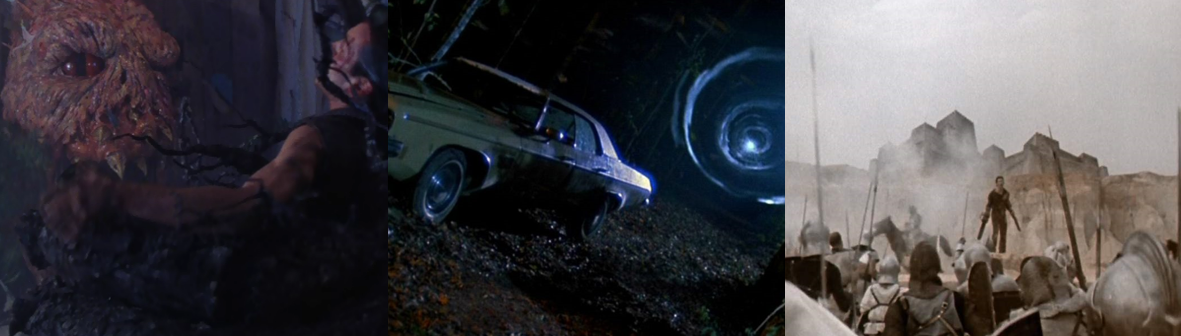
After shaking off the evil’s influence, Ash tools himself up in his now iconic look and ventures into the cellar to retrieve the expanded pages of the Necronomicon, which hold the key to dispelling the evil: one passage forces it to take on a physical form and another opens a rift through which the spirit can be banished. After successfully retrieving the pages from the flooded, rat-infested cellar, Ash is attacked by Henrietta, who bursts from the cellar with a maniacal glee, transforming into a squealing, demonic mass that would make Ray Harryhausen proud! Thanks to a timely distraction from Annie, Ash is able to chop the witch up and finally finish her off with a shotgun blast to the face and a witty one-liner (“Swallow this!”) However, the evil force attacks the cabin in full force, emerging as a gigantic, terrifying tree-like demon with a face so horrifying that a plant instantly withers and it sends a white streak through Ash’s hair! Although Ash’s bastard limb delivers a mortal wound to Annie, she’s able to finish the incantation with her dying breath, banishing the evil to the void but, sadly, taking Ash and his Oldsmobile as well since she never gets to close the portal. Previously, while examining the pages of the Necronomicon, Ash was overwhelmed by a sudden energy when he saw a depiction of the “Hero from the Sky”, a prophesised saviour who defeated the evil back in ancient times. Keen-eyed viewers will note the figure’s similarity to Ash and this brief picture is no coincidence as, in the finale, Ash finds himself unceremoniously deposited back in medieval times. There, he’s initially greeted with hostility by the armour-clad natives but proves himself to be the prophesised hero when he instinctively shoots down an incoming winged Deadite. However, while he’s subsequently hailed as a hero, Ash is left distraught as he realises he’s trapped in ancient times and his long night is still far from over

The Summary:
I mentioned in my review of the first movie that my first Evil Dead experience was Evil Dead II and, even now, I would always point a newcomer to this movie over any of the original three since it really is the most complete version of the story with the perfect blend of horror, action, and comedy. Thanks to opening with a recreation of the first film, one that reduces the cast down to simply Ash and his girlfriend, you get all the best parts of The Evil Dead with higher production values, better performances, and better effects told in a nice concise twenty-odd minutes. From there, the film expands on the original concept and then ends with Ash being trapped in medieval times for a bleak cliff-hanger ending that’s still more enjoyable than most of the third film even though it’s just a short tease at the end. While it lacks a lot of the raw grittiness of the super low-budget original, Evil Dead II more than makes up for it with higher production values and a much more enjoyable presentation; the gore and ambitious effects are much higher quality and shine so much brighter because of it. There are times when it’s a little cartoonish in its execution but, for me, Evil Dead II has always been the perfect balance of the dirty splatter-horror of the first and the ludicrously comedic action of the third film. Ash is a far more well-rounded character, one who transforms from a meek survivor into an action icon with his chainsaw for a hand and one-liners. Crucially, he remains a flawed and vulnerable character; driven half-mad by the evil and overcome by it more than once, Ash becomes as dangerous as the evil he’s fighting and is given far greater characterisation thanks to the film focusing more on him than bland supporting characters. In the end, if you’ve never seen an Evil Dead movie and don’t know where to start, don’t be intimidated by the II in the title and make sure you start here, with what is, for me, still the quintessential classic Evil Dead experience.

My Rating:

Rating: 4 out of 5.

Great Stuff

What do you think to Evil Dead II? Do you prefer it to the original film and how would you rate it compared to the other films? What did you think to how Ash’s new characterisation and transformation into a more competent action hero? Were you a fan of his battle against his severed hand and chainsaw appendage? Did Jake and Bobby Joe also grate on your nerves? What did you think to the film’s presentation, gore, and the marriage of horror and comedy? Would you cut your hand off so readily if it got possessed? Whatever your thoughts on Evil Dead II and the franchise, feel free to leave a comment below or on my social media.

Movie Night [Mario Month]: Super Mario Bros.


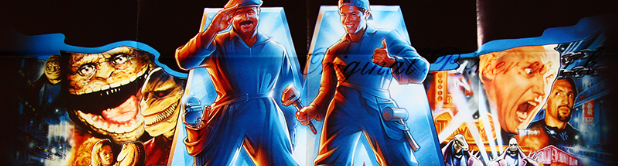
So, for no better reason than “Mar.10” resembling Mario’s name, March 10th is widely regarded as being “Mario Day”, a day to celebrate Nintendo’s portly plumber, an overalls-wearing mascot who literally changed the videogame industry forever and shaped the home console market of the nineties.


Released: 28 May 1993
Director: Rocky Morton and Annabel Jankel
Distributor: Buena Vista Pictures
Budget: $42 to 48 million
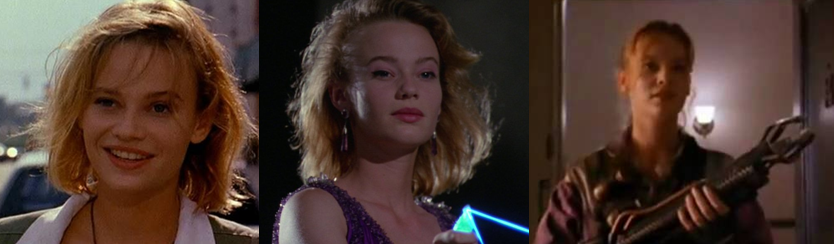
Stars: Bob Hoskins, John Leguizamo, Samantha Mathis, Fiona Shaw, Fisher Stevens, Richard Edson, and Dennis Hopper

The Plot:
Mario (Hoskins) and his younger brother, Luigi (Leguizamo), are out-of-luck plumbers who, upon meeting Daisy (Mathis), are suddenly transported to a parallel world where dinosaurs, rather than primates, evolved into the dominant lifeform and are immediately caught up in King Koopa’s (Hopper) diabolical plans to merge this “Dinohattan” with the real world.

The Background:
By 1993, Nintendo’s portly plumber Mario was well-established as a successful videogame and pop culture icon; over sixty videogames had been released that either included Mario or featured him and his brother, Luigi, in a starring role. Super Mario All-Stars (Nintendo EAD, 1993) was released that same year and the characters had featured in numerous animated and live-action productions. Mario’s popularity had captured the mainstream; a 1990 survey revealed that the character’s popularity and eclipsed that of Mickey Mouse and, perhaps inevitably, the idea of a live-action feature film began to take shape thanks to Nintendo’s then-director of advertising and public relations, Bill White. Despite bringing in Blade Runner (Scott, 1982) co-writer Barry Morrow and attracting such superstar names as Dustin Hoffman, Danny DeVito, and Tom Hanks, production of the film almost immediately ran into troubles when pages of the script were “rewritten on a daily basis” so the “actors didn’t bother reading the new pages, knowing full well that more would likely follow” (Russell, 2012: 140). Despite some reservations about the script and being typecast, Bob Hoskins eventually signed on for the lead role and ultimately came to regret the experience; reportedly, he and co-star Leguizamo were so frustrated and unhappy on set that they spent the majority of their working days drunk and Hoskins later claimed that the film was the “worst thing” he had ever done and a “nightmare” as the general onset atmosphere was “anarchic”, with Nintendo being “nowhere to be seen [and without] a representative present during the shoot” and the directors being “out of their depth, pulled between the demands of the producers, their attempts to rewrite on-the-hoof and the logistical enormity of the production” (ibid: 140). Budgeted at $42 million and grossing just over $20 million, Super Mario Bros. was met with almost universal derision; everyone from critics, to cast and crew, and even Mario creator Shigeru Miyamoto distanced themselves from the film because of its troubled production and removal from the source material. I, however, loved this movie as a kid; my friends loved this movie back in the day, too, because it was a bright, goofy, fun-packed adventure that was entertaining as hell. As I grew up and moved into studying videogame adaptations for my PhD thesis, I also came to appreciate the film as a movie rather than an adaptation, which I think is where a lot of its criticism falls down as people seemed to have been expecting a one-to-one transliteration of the source material and adaptation just doesn’t (or rarely ever) works that way, resulting an a light-hearted, kid-friendly action/adventure romp rather than a 100% recreation of the game’s more obscure fantasy elements (although the later computer-animated movie absolute blew this one out of the water).

The Review:
Although Super Mario Bros. was not the only videogame adaptation to be a critical and commercial failure, by virtue of being “the first” it exists as a perpetual reminder that videogame adaptation is difficult and often disappointing. Despite its failure at the box office, movie studios quickly exploited videogame adaptations to entice videogame players into cinemas and allowed the videogame industry the opportunity to license their franchises out with little to lose (Picard: 2008: 295). As a result, Hollywood continues to attract reasonable budgets and high-profile actors and production stuff to videogame adaptations despite the genre “[failing] to receive much in the way of critical or commercial success” and Uwe Boll’s ill-received contributions (ibid). However, while it’s true that the film has many differences from its source material and isn’t much more than a fun kids adventure, that doesn’t necessarily make it “bad”; it’s like a live-action cartoon and, when your source material is a chubby plumber bouncing on the heads of malevolent mushrooms, what else do you really expect?

Though dysfunctional, both brothers have strengths and weaknesses that make them a team.

Bob Hoskins may have spoken out against the film in the years since it released but, whatever his demeanour and mindset on set, he is absolutely fantastic in the role of Mario; the plumber brothers are introduced as normal, everyday working men who are behind on their rent, drive a clapped-out van, and are constantly being scuppered by Anthony Scapelli (Gianni Russo). While Luigi is the young, lazy, overly enthusiastic and imaginative of the two, Mario is the older, more cynical and jaded brother; Luigi is a day dreamer, who is open to all possibilities and probabilities while Mario is realistic and grouchy, concerned about their lack in income and their sustainability. Due to the absence of their parents, Mario has had to fulfil the role of mother, father, and brother to Luigi, raising him since he was a kid and his priority, above all other concerns, is Luigi’s welfare; this manifests itself in a number of ways, from berating his younger brother for his reckless ways and daydreaming, encouraging him to keep his feet on the ground and be realistic and serious for a change, to literally holding Luigi in check physically and emotionally. While Luigi somewhat resents Mario’s constant over-protectiveness and influence on his life, he is also heavily reliant upon his brother; Luigi isn’t much of a plumber and is more like Mario’s apprentice and assistant (he knows the tools and the trade but lacks confidence in tackling big plumbing jobs by himself) and is far my awkward around women compared to his older, far more confident brother. Still, the chemistry between both actors is immediately believable; I totally buy that these two are brothers who wind each other up and get on each other’s nerves in other ways but, nevertheless, share a real bond, their banter is amusing and realistic and, best of all, while they argue and disagree a lot, they never have a big, cliché falling out or anything like that and Mario is always extremely supportive of his younger brother even while he despairs over Luigi’s immaturity.

Though she undergoes a bit of a transformation, Daisy is little more than a damsel in distress.

Furthermore, Mario is given a crippling fear of heights (kind of ironic, you could argue, given the amount of jumping his videogame counter parts takes part in), meaning that he relies on his fearless younger brother when it comes to taking literal leaps of faith; additionally, Mario learns to adopt many of Luigi’s more open-minded characteristics by the conclusion of the film and grows from a reluctant hero to a willing hero, immediately jumping into action to assist Daisy when she pops up for the film’s conclusion. Speaking of which, Daisy is a serviceable enough character for the most part. Like Luigi, she’s an orphan but, unlike him, she’s been driven by an insatiable enthusiasm for dinosaurs and bones and struggled with her identity after she was abandoned as a child (…well, egg, to be more precise). Luigi is instantly enamoured by her based on her beauty and, later, her commitment to this cause and she seems taken by his enthusiasm and awkwardness. While she is able to speak up for herself and is largely calm and emotionally stable, she’s little more than a damsel in distress and doesn’t transform into a proactive heroine until the film’s sequel-bait ending. She directs the brothers when they come to rescue her and sets Yoshi free from his bindings but she doesn’t really factor into the finale in a meaningful way beyond being the only one physically capable of interacting with the meteorite (why, though, is never really explained).

He doesn’t resemble his counterpart but Koopa is a zany, scenery-chewing villain.

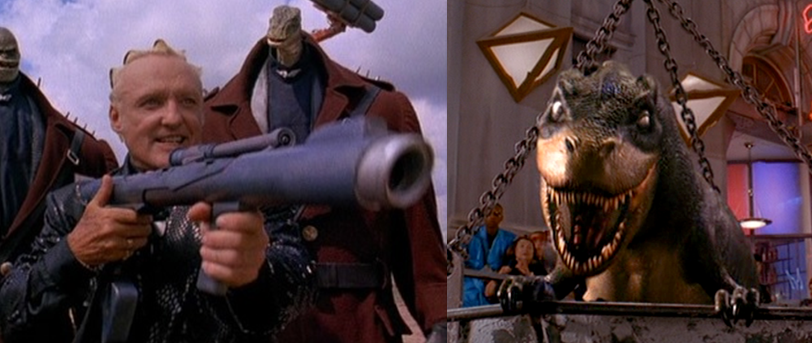
And then there’s King Koopa himself, Dennis Hopper. Again, Hopper might have distanced himself from the film but he delivers a glorious over the top, scenery chewing performance. For all their buffoonery, the Mario Brothers play mostly as the film’s straight men and, in comparison, Koopa is a cartoon villain; he’s bombastic, melodramatic, and packed full of weird little character quirks while still being cold, ruthless, sadistic, and the more serious of his many underlings. Koopa’s plot is ridiculous in the best way (he wants to take Daisy as his own and use the meteorite piece (the “Rock”) she wears around her next to complete the meteor that split their worlds into separate dimensions and merge Dinohattan with New York, with him as the ruling dictator) and every decision he makes is equally ludicrous: when he’s told the Rock is in the hands of two plumbers, he calls for a “Plumber alert!”; when his underlings defy him (or he faces defiance of any kind), he subjects them to his De-Evolution machine and turns them into incompetent Goombas; and, when he acquires the Rock, his first course of action is the order a pizza!

While Iggy and Spike are bumbling fools, Lena conspires to rule alongside Koopa.

Koopa’s primary minions are his cousins, Iggy (Stevens) and Spike (Edson); while the Mario Brothers are bumbling at times due to their status as unlikely heroes, Iggy and Spike are bumbling full stop; incompetent in every respect, the two act as the film’s comic relief and are thematic parallels to the titular brothers, echoing the Mario’s love/hate relationship through their verbal and physical banter. In an effort to make them more competent, Koopa opts to subject them to a spell of cranial evolution; however, this does little to improve their competency and actually serves to make them smarter than Koopa in many ways, certainly smart enough to cut a deal with the Mario Brothers and, ultimately, turn against their cousin to ensure their own survival. Koopa does have at least one reliable subordinate, however, in the form of Lena (Shaw); however, Lena is intensely jealous of Daisy, since Koopa favours her, so conspires to remove Daisy from the equation while positioning herself as the only woman capable and willing enough to rule by Koopa’s side. Bat shit crazy, she is also a cartoonish villain, literally cackling like a witch when she tries to merge the Rock with the meteorite and pays the ultimate price for her pride and hubris. Before that, though, she demonstrates far more focus in her sadistic desire to off Daisy and even usurp Koopa’s ambitions as she believes that she can rule without him but is blinded by her mad desires just as Koopa is blinded by his ego and libido.

Dinohattan has a very tangible, “lived-in” feel it its dystopian dressings.

At its core, Super Mario Bros. is little more than a fun kid’s movie; an action/adventure piece that needs to be big, bright, and bombastic and, for the most part, it takes all of these boxes. Dinohattan evokes the murky, gritty, industrial aesthetic of Blade Runner, being this desolate dystopian city that (thanks to an elaborate, practical set) feels real and lived in. Covered with a disgusting fungus, the city is full of little background elements and references (the Hammer Bros, Thwomp, Bullet Bill, and Wriggler all get little cameos as brightly-coloured neon signs, advertisements, and businesses but perhaps the most accurate inclusion is that of the much-feared Bob-omb); sparks, flames, and explosions are aplenty in this gloomy dystopia and the film has a very tangible sense of kinetic energy (things are always moving and bustling and the Mario’s are constantly being herded or pushed forward). Furthermore, there are a lot of amusing scenes and moments in the film; the elevator sequence, for example, where Luigi teaches the Goombas to dance is a stand out, the Mario’s bickering in the desert is gold, and there’s an humorous little side plot later in the film regarding Koopa’s pizza and Toad (Mojo Nixon) bringing Daisy a plate of steamed vegetable amidst her dramatic escape from Koopa’s tower. Not every joke lands, obviously, largely those involving Iggy and Spike (who are a bit too cartoonish) but, again, this is a film designed to appeal to kids so, for the most part, the humour really works, in my opinion, thanks, again, largely to the banter and bickering between the titular brothers.

The Nitty-Gritty:
Super Mario Bros. is intrinsically linked with the perceived notion of the film as being a failure and being the first of many big-budget cinematic failings for videogame adaptations. It doesn’t help that the film is largely disregarded by academics (some, like Brookey (2010: 4), who exhibit a blatant misunderstanding about the film’s source material) and critics. Yet, positive reviews of the film can be found, with Thomas Leitch (2007: 263) admirably emphasising the film’s contribution to the field of adaptation by detailing how film-making techniques substitute for the layout of, and interaction with, the videogame world: “[Super Mario Bros.] not only retains but constantly emphasizes the title characters’ absurd names[,] their professional status as plumbers, their unlikely credentials as heroes, and their quest to rescue a kidnapped princess”. I know what you’re probably thinking, though; you’re thinking that the movie is trash because it’s nothing like the videogame. But you’re talking to the wrong person there because, honestly, I don’t care. The only way a Mario movie can hope to recreate the aesthetics of the videogames is to go the all CGI route, in my opinion, and we’ll be seeing that soon enough (hopefully) so, for me, the film does a pretty decent job of translating many of the source material’s more outlandish aspects to live-action.

The film incorporates dionsaurs elements from the videogames in a variety of ways.

The focus on dinosaurs is a bit odd, I guess, but remember that Super Mario World (Nintendo EAD, 1990) was still very fresh in people’s minds at the time and featured a dinosaur setting but also a little film called Jurassic Park (Spielberg, 1993) was due out the very next month and would go on to inspire a brief dinosaur craze so Super Mario Bros. was potentially influenced by that. It also really emphasises the Mario’s profession as plumbers; while pipes and plumber iconography was rife in the Mario videogames at the time, it was most more heavily emphasised in the various Mario cartoons (and, perhaps even more obscurely, Super Mario Bros.: Peach-Hime Kyushutsu Dai Sakusen! (Hata, 1986), a Japanese-exclusive anime that exhbits a number of narrative similarities to its live-action counterpart) that released before the film (which popularised the notion of the Mario Brothers as both plumbers from Brooklyn and everyday, unlikely heroes). Additionally, there are many aspects from the videogames included in the film; the iconic Mario theme opens the movie (and even plays on the DVD menu, despite never appearing in a prominent way in the film), Daisy ends up in a purple dress reminiscent of the pink attire worn by Princess Toadstool (who was largely interchangeable with Daisy at the time), and the film has a heavy emphasis on jumping and running; the production design features “strong verticals [that] provide many reminders of its heroes’ relative freedom from gravity” (Leitch, 2007: 270) and the Mario Brothers are “constantly jumping, falling, and swinging through a series of unusually vertical sets” to reinforce “the ability of video game heroes to surmount obstacles and enemies by [simply] jumping over them” (ibid: 264). Much of this is thanks to the “Stompers”, gas-powered futuristic boots that allow characters to make superhuman leaps and hover in the air to recreate the jumping mechanics of the videogames.

Toad might have gotten a raw deal but Yoshi and the Mario’s outfits turned out pretty good…

Sure, you can cry about the film’s depiction of Toad and even Koopa as much as you want but do you really believe that early-nineties effects would have been able to render a kingdom full of anthropomorphic mushrooms and a fire-breathing dragon/turtle hybrid? Of course, the counterpoint to that is to simply produce an animated movie but they didn’t and that’s ignoring the fact that many of the film’s effects hold up extremely well. Sure, the computer effects are quite janky but they’re used sparingly; as I said, Dinohattan is this huge, bustling set, for one thing, and the film is full of elaborate locations that evoke their source material in more ways than you might thing (there’s an arid desert, for one thing, and Koopa’s tower is full of ominous spikes, much like Bowser’s many castles). Add to this a pretty exciting and action-packed car chase that is full of practical effects and some nice puppetry and effects work (Yoshi, in particular, stands out but the Goomba’s aren’t half bad either) and you have an extremely visually interesting and exciting movie for my money. Also, while their outfits aren’t overalls and it makes little sense for them to wear them (Mario seems to think wearing them will help them get up Koopa’s tower without suspicion but none of Koopa’s minions are dressed that way…), I absolutely love the Mario’s brightly-coloured outfits and there’s a real sense of thematic significance given to the scene where they acquire them as it represents them embracing their roles as heroes. Furthermore, there’s some fun little Easter Eggs in the film, too, such as Koopa’s portable de-evolution guns being Super Scopes and Mario using a piece of fungus to shield himself from the gun’s effects (like in the games, he uses a mushroom allows him to take a free hit).

The Summary:
Even now, there is a lot to like about Super Mario Bros.; it’s a fun, bombastic live-action cartoon that is geared towards being adventurous and whimsical. What few elements it does take from its source material are incorporated subtly and slavish devotion to fidelity is secondary to telling a quirky story that will appeal, primarily, to kids and be amusing enough for their parents to sit through. In many respects, the film isn’t really geared towards fans of the videogames at all, at least not those who expect an exact recreation of the source material (something no adaptation, live-action or otherwise, has ever done; no matter how accurate an adaptation may be, it will never be 100% faithful as films are a completely different medium to videogames, being passive entertainment over which the viewer has no control). Sadly, though, Super Mario Bros. is perhaps destined to go down in infamy not just for differing so wildly from its source material but also for being the most often-cited example of why videogame adaptations are doomed to fail again and again. It was the first of its kind, however; no one knew how to translate a videogame into a live-action film and, it can be argued, few have really learned how to refine this process since then. Regardless, however, I think it’s best to view Super Mario Bros. in terms of its genre rather than as an adaptation; it’s so far removed from its source material that you kind of have to and, as a result, you’re left with a pretty decent kids movie that isn’t designed to appeal to everybody but is nowhere near as bad a movie as the majority of people like to make it out to be.

My Rating:

Rating: 3 out of 5.

Pretty Good

How do you feel about Super Mario Bros.? Did you see it as a kid? If so, what are your memories of it and how do you feel it holds up today? What did you think to the casting and the performances in the film? Do you agree with the majority consensus that it’s a terrible film because it’s nothing like the videogames or do you, perhaps, enjoy it as an entertaining adventure film and nothing more? Do you think a live-action Mario movie could work with today’s technology? Which Nintendo franchise would you most like to see get a live-action adaptation? Whatever you think, leave a comment below and come back next Thursday for more Mario content.
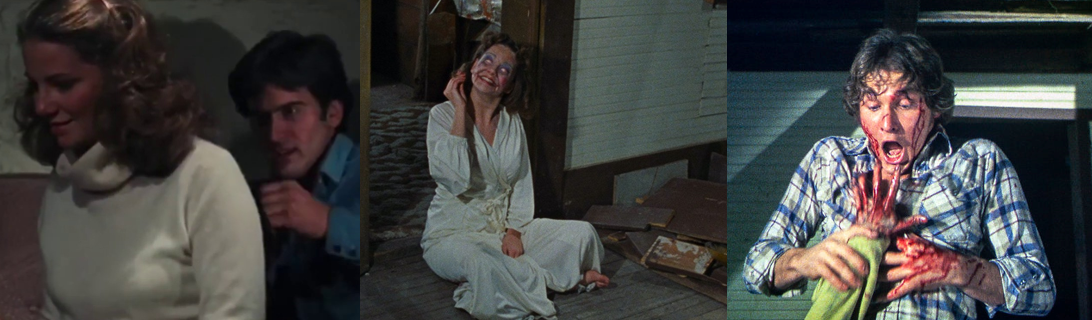
Movie Night: The Evil Dead

Released: 15 April 1981
Director: Sam Raimi
Distributor: New Line Cinema
Budget: $375,000
Stars: Bruce Campbell, Ellen Sandweiss, Richard DeManincor, Betsy Baker, and Theresa Tilly

The Plot:
Ashley “Ash” Williams (Campbell) and his friends, including his girlfriend Linda (Baker) and sister Cheryl (Sandweiss), drive to a remote cabin in the woods for a vacation. There, they find an audio tape that, when played, unleashes a legion of demonic spirits that possess and torment the group, leaving Ash to defend himself from his zombified friends.

The Background:
The Evil Dead was the brainchild of now-legendary horror director Sam Raimi, who had collaborated with his long-time friend Bruce Campbell on several low-budget Super 8mm film projects in the past. When they hit upon the idea of venturing into horror, Raimi produced a proof of concept on a measly $1,600 that served as the prototype for The Evil Dead and sought financing for a larger project by begging friends and family alike to amass the funds he required. With a cast and crew made up of locals, friends, and family, the film was shot entirely on Kodak 16mm film stock and fraught with mishaps: there were many minor injuries, including Betsy Baker accidentally getting her eyelashes ripped off, the contact lenses used to give the cast demonic eyes were extremely uncomfortable to wear, arguments frequently broke out because of the cramped conditions, and Raimi delighted in tormenting his cast, especially Campbell, to capture more realistic emotions on set. The Evil Dead popularised Raimi’s penchant for unsettling gore and sweeping camera movements; Dutch angles, camera dollies, and use of a cobbled together shaky cam all added to the unique visual presentation of the film. The film was also bolstered by some ambitious low-budget gore; Raimi relied entirely on make-up, prosthetics, and painstaking stop motion to create his gory effects, which included copious amounts of animal meat and live cockroaches. Perhaps the most controversial scene in the film saw Cheryl sexually assaulted by a demonic tree, a sequence with Raimi himself later admitted was unnecessarily gratuitous. Raimi went all in for the film’s theatrical premiere by hiring ambulances to wait outside Detroit’s Redford Theatre to build a sense of atmosphere around the film, which was beloved by legendary horror writer Stephen King and became one of the genre’s most infamous splatter-horror movies. Despite being slapped with a dreaded NC-17 rating or outright banned in some countries, The Evil Dead was surprisingly well-received for a horror film; the film was a sleeper hit, making between $2.7 and $29.4 million at the box office, and critics have praised The Evil Dead’s unnerving atmosphere and camera work and its unique twist on the genre, though its low-budget and obvious flaws were highlighted as failings. Despite its praise and financial success, The Evil Dead failed to launch Raimi’s directing career; he was forced to begin work on a follow-up that was part-remake, part-sequel due to rights issues, and this low-budget splatter-horror soon became a cult franchise that made a horror icon out of Bruce Campbell, allowed Sam Raimi to experiment with other genres before achieving mainstream success, and came to encompass comedy/horror sequels, videogames, and even a stage show!

The Review:
As a big horror fan, I became aware of the Evil Dead films largely through reputation; Ash was as much a recognisable horror icon as any of the top slashers when I was a kid, though my first real exposure to the series came with a completely out of context viewing of the second movie back in my youth that obviously impressed me enough to keep an eye on the franchise. When I finally switched from VHS to DVD, either the first or the second boxset I bought was the Evil Dead trilogy; back then, I would religiously watch all the special features and commentaries and it was amazing seeing this low-budget horror franchise being brought to life and becoming a cult phenomenon. I think it’s only fair to say, though, that it’s always been easy for me to rank the original trilogy; the second is clearly the best for me, with the first and third kind of tied at the bottom for different reasons. Still, it’s a horror staple and has been a part of my home movie collection for decades now and it’s always enjoyable to throw on one of these outrageous splatter-horrors and remember a time when the genre had some serious balls.

Ash and his friends are tormented by an evil force that first claims his sister, Cheryl.

The film centres on five college friends – Ash, his girlfriend Linda and sister Cheryl, Scott (DeManincor) and his girlfriend, Shelly (Lilly) – who decide to vacation at an old cabin in the woods that they rented on the cheap because it’s so secluded, rundown, and preceeded by a dilapidated bridge. It’s always weird rewatching the original Evil Dead and seeing Ash portrayed as a decidedly uncool and dorky college student; compared to Scott, who’s aggressively assertive and cynical at times, Ash is contemplative and bookish, far more likely to fumble his way through Latin than he is to spout one-liners. Indeed, it’s Scott who first investigates the basement and is more inclined towards being brash and outspoken, even pointing a loaded gun in Ash’s face just for a laugh and willing to take his chances out in the haunted woods than wait around in the cabin. In comparison, Ash is more empathetic; while he enjoys a gag, he knows when to stop, unlike Scott, and is more concerned with the welfare of others and figuring a way out of their predicament, though his curiosity concerning the Naturom Demonto directly leads to the evil force being unleashed when he plays Raymond Knowby’s (Bob Dorian) tape. Of all the characters, it’s Cheryl who senses the unsettling nature of the cabin and the surrounding woods right from the start; she’s clearly uncomfortable in the cabin, with its creepy decorations and atmosphere, compelled to draw a picture of the Naturom Demonto, and so creeped out by the haunting voice (Sam Raimi) whispering from the woods that she stupidly goes out to investigate and gets disturbingly abused for her curiosity.

While the romance between Ash and Linda is barebones, the tension and horror are palpable.

The attack leaves Cheryl understandably traumatised, so much so that she demands to leave the area right away, despite the disbelief of her friends and brother. Still, Ash agrees to take her to safety, only to discover that the bridge has been destroyed and they are now trapped in the cabin, much to Cheryl’s dismay as she fully gives in to despair following the shock and horror of her attack. Of course, Cheryl isn’t the only one who shares Ash’s affections; The Evil Dead makes an attempt to explore the romance between Ash and Linda when he gifts her probably the ugliest magnifying glass necklace-thing in a fun romantic gesture, but they don’t get many chances to interact with each other. Linda and Shelly are so bland and interchangeable that I often get the two mixed up or forget about whichever one isn’t wearing the necklace and they only really become interesting to the plot after being infected by the evil. The possessed Cheryl essentially becomes the primary antagonist, growling and watching from the basement, while Shelly violently attacks Scott after being claimed by the evil force and Linda becomes a spiteful, child-like demon who delights in mocking and tormenting her former friends. The entire experience rattles Ash and Scott in different ways; Ash refuses to leave behind his injured girlfriend, and later cannot bring himself to dismember her after she becomes possessed, whereas Scott its perfectly happy to save his own skin, only to end up cut to ribbons offscreen, thus leaving Ash as the sole survivor forced to step into a more proactive role to try and save his friends and destroy the evil force torturing them.

The spiteful, evil force lurking is the woods is unleashed with violent and bloody results.

Contrary to later films and entries in the franchise, the titular “evil dead” is somewhat vaguely defined here. Represented as a disembodied, malevolent force that lurks in the woods, the evil is already present even before Raymond Knowby’s tape is played but is fully unleashed upon the recitation of passages from the fabled Naturom Demonto. A Sumerian text containing ancient burial rituals and incantations, this book of the dead is inked in human blood and bound in human flesh and brings forth an intangible evil that possesses not only the main characters, but the surrounding area. It briefly jerks the wheel of Ash’s prized (if unreliable) Oldsmobile, almost causing a head-on collision, and an ominous voice calls for the characters to “Join us!” all before the book is even discovered, so strong is its influence. Of course, perhaps the most memorable incarnation of the evil force is when it possesses the surrounding trees to attack Cheryl. Cheryl then becomes the principal embodiment of the evil force, levitating and barking threats and being hideously transformed into a demonic, zombie-like being. From there, the horror only escalates; Cheryl attacks her friends, demonstrating incredible physical strength by manhandling them and the evil force is easily able to possess anyone injured while in the cabin following her transformation. Cheryl further degenerates into an ashen, cackling, crone-like monstrosity while trapped in the basement, leaving Shelly to attack Scott, her skin cracked and boiling, clawing at him even as her face splits and melts away.

The Nitty-Gritty:
While far from the first horror film to employ the “cabin in the woods” cliché, The Evil Dead may very well be the most mainstream and infamous example of it. Personally, I’ve always been a little ambivalent and ignorant towards it; I’m not very outdoorsy and spending a weekend in a secluded, creepy cabin isn’t really something we do here in the UK, so it can be a bit of a hit and miss premise since, much like the idea of summer camp, I can’t readily imagine ever being in such a position. Still, despite the questionable performances of the main actors (it’s clear that this is new territory for them, resulting in some clunky and awkward line deliveries), The Evil Dead does a really good job of making the cabin itself as much a character as the actors. Rusty tools, creaking floorboards, an aggravating ticking clock, and unsettling stuffed animals adorn the interior, creating an ominous atmosphere even before the evil force sweeps through the group. I’m a big fan of Sam Raimi’s unique camera work in this film; the evil force is represented through a series of sweeping first-person shots that fly through the woods, barge through the cabin, and is completely unbound by its surroundings, creating a menacing, unseen force that cannot be fought or escaped no matter how hard the characters try.

The film leaves an impression thanks to its gore and controversial content.
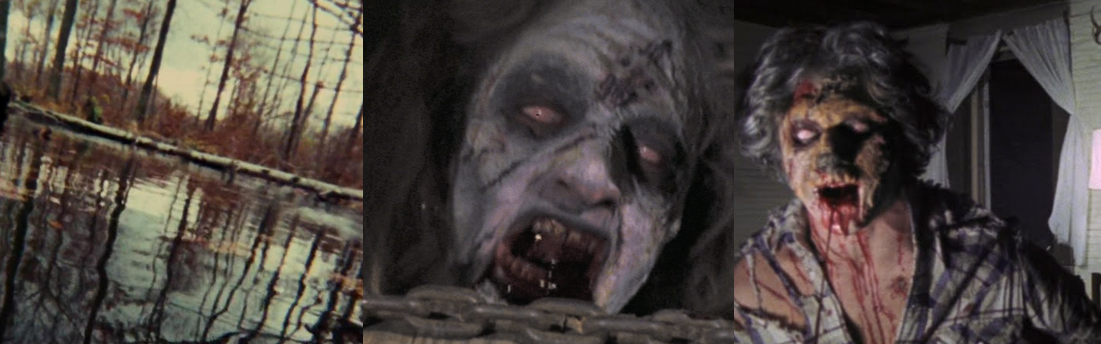
The Evil Dead deserves a lot of credit for doing as much as it can with a shoestring budget; yes, the effects haven’t aged too well and are questionable these days, easily being the worst of the franchise, but its commitment to violent gore is commendable. Still, the make-up effects are a bit hit and miss at times; those possessed resemble a combination of the possessed Regan MacNeil (Linda Blair/Mercedes McCambridge) and a zombie, featuring creamy-white eyes, slashes and gouges, a pale complexion, and an abundance of viscera and veins, and they jerk around like puppets with bone-crunching rigidity. The real meat of the horror is in the sickening depiction of gore; pencils are stabbed into ankles and the possessed Shelly is not only half melting but chews her own hand off at the wrist and ends up chopped into quivering, bloody limbs! Later, when Ash is attacked by his possessed friends in full force, he gouges out Scott’s eyes with nauseating brutality and the remains of his friends bubble and melt away as only the finest and most gruesome stop motion can depict. Of course, easily the most outrageous an unsettling part of the film comes within the first thirty minutes when, beckoned by the evil force, Cheryl wanders into the pitch-black woods where the force barrels through the trees and then possesses them, tangling her up in their branches and stripping her naked. The branches then thrash her, choke her, and force her down to be sexually assaulted by them through a combination of reverse footage and in-camera wire work which, while impressive, is maybe taking things a little too far just for the sake of shock value.

After enduring horrendous torture, Ash appears to win the day but the evil seemingly never dies…

If you’re more familiar with Ash as a chainsaw-wielding, shotgun-toting bad-ass then The Evil Dead will be a bit of a shock to you. Ash does use a shotgun in the film, though sporadically and with little effect, and he only fires up a chainsaw one time, though he’s unable to bring himself to chop up his beloved Linda’s body. Instead, he simply tries to bury her alive, resulting in her reanimating and attacking him out in the woods. Although Bruce Campbell would suffer far worse abuse in the later films, he certainly gets a hard time of it here; he’s tossed about by his possessed friends, crashing through furniture each time, beaten with a poker, and ends up caked in blood when Linda’s headless corpse tries to rape him and when he ventures into the basement for more ammo! Still, while he’s more an exhausted survivor than a wisecracking action hero, further study of Knowby’s recording reveals to Ash that the only way to stop the possessed is by bodily dismemberment; though they can fight off their possessed friends and even cause them pain, even causing violent, gory seizures with the Sumerian dagger, they will continue to reanimate unless they’re chopped up. Although Ash is initially hesitant compared to Scott, he’s soon decapitating and beating Linda’s possessed corpse with a shovel and fending off the cackling, mocking games of the evil force. Somehow, he’s even able to remain himself after his leg is gouged by Linda and later chewed on by Scott, potentially because the evil force delights in torturing him, and is forced to find new reserves of resolve to endure the torment. The cabin itself comes to life as the force stalks him, driving him to near madness through fear and exhaustion, and his demonic friends attack in a frenzy for the gore-drenched finale. In the chaos, Ash is able to use the ugly necklace to toss the Naturom Demonto into the fireplace, which causes the possessed to freeze, be torn to bloody ribbons by demonic claws, and then rapidly, sickeningly decompose before his eyes. However, as the blood-soaked and dishevelled Ash stumbles out into the light of dawn, the unseen force charges through the house and seemingly swallows him for one last jump scare!

The Summary:
As suggested earlier, The Evil Dead is far from my favourite entry in the splatter-horror franchise; as a horror movie, it’s pretty by the numbers in a lot of ways and more of a standard, low-budget gorefest that seeks to shock through its violent, bloody, and questionable content rather than provide something with real substance. The characters are all very bland and forgettable, even Ash, who exhibits none of his later bravado and impresses only because he’s the most good looking and he happens to be lucky enough to survive. I suppose you can argue that he balances the traits of the other characters – he’s not as brash as Scott or anxious as Cheryl or as forgettable as Linda or Shelly – and there is a tragedy and charisma to him, but I much prefer the tweaks made to his character from the second film onwards. That basically just leaves the gore, horror, and effects which, while ambitious and impressive, pale in comparison to other horror films and even the Evil Dead sequels. The Evil Dead feels like an extended proof of concept; the ideas are there, there’s some potential here, and it certainly shocks in its outrageous gore and content, but it’s definitely inferior compared to its sequel. I would still recommend it as a cult horror film and an example of how to stretch a limited budget and produce shocking content, and I commend the effort that went into it, but it’s hard to rate it much higher when there are better horror films from this era and the second movie so massively outpaces this one and set the standard for the rest of the franchise.

My Rating:

Rating: 2 out of 5.

Could Be Better

Are you a fan of The Evil Dead? Where would you rate it compared to other entries in the franchise? Which of the characters was your favourite and what did you think to how Ash was portrayed here? What did you think to the evil force and its spiteful, playful nature? Were you impressed by the film’s gore and effects or is it a little too low-budget for you? What did you think to the performances and Sam Raimi’s directorial style? Would you read from a book bound in human flesh and inked in human blood? Whatever your thoughts on The Evil Dead and its franchise, feel free to leave a comment below or on my social media.

Movie Night [PokéMonth]: Pokémon 3: The Movie: Spell of the Unown


Upon the release of Pokémon: Blue Version and Pokémon: Red Version (Game Freak, 1996), a new craze swept through playgrounds across the world. An entire generation grew up either playing Pokémon, watching the anime, playing the trading card game, and watching the feature-length movies as clever marketing and a co-ordinated release and multimedia strategy saw Nintendo’s newest franchise become not just a successful videogame franchise but a massively lucrative and popular multimedia powerhouse that endures to this day. Accordingly, February 27th is now internationally recognised as “National Pokémon Day”, which I expanded to an entire month of Pokémon this February.


Released: 8 July 2000
Director: Kunihiko Yuyama
Distributor: Toho
Budget: $3 to 16 million
Stars: Veronica Taylor, Eric Stuart, Rachael Lillis, Amy Birnbaum, Dan Green, and Ikue Ōtani

The Plot:
Professor Spencer Hale (Green) is transported to a chaotic dimension by the mysterious Unown (Various), leaving his young daughter, Molly (Birnbaum), devastated and alone. Her grief causes the Unown’s power to rage out of control, manifesting an illusionary Entei (Green) and transforming her home into a crystal-like palace. When Entei kidnaps Ash Ketchum’s (Taylor) mother, Delia (ibid) to appease Molly’s wish for a mother, Ash and friends must brave the danger to break the Unown’s unruly spell.

The Background:
Pokémon (Nintendo/Creatures/Game Freak, 1995 to present) was an absolute phenomenon when it came over from Japan: it swept through playgrounds as kids played the videogames, collected the trading cards, and were mesmerised by the still-ongoing anime series (1997 to present). This fantastic marketing strategy was all it took for the aptly-titled Pokémon: The First Movie: Mewtwo Strikes Back (Yuyama, 1998) to become a box office success and kick-started a whole series of feature films designed to expand upon the anime and promote both the newest Pokémon videogames and showcase the franchise’s most powerful and elusive beasts. Although it earned less than the blockbuster first movie, Pokémon the Movie 2000: The Power of One (Yuyama, 1999) still made over $130 million against a $30 million budget and Pokémon was arguably at its peak thanks to the anticipation around the newest games in the series. The third feature-film was afforded a much smaller budget than its predecessors and was the first Pokémon movie to premier in IMAX cinemas. Unfortunately, the film’s $68.5 million box office meant that it was the least successful of the first three Pokémon movies and it was met with largely negative critical reviews; however, it has amassed something of a cult following and is regarded by some to be one of the best Pokémon movies.

The Review:
Pokémon 3: The Movie opens in the beautiful town of Greenfield, a lush and verdant town in the Johto region that is knowing for is sweeping hills, windmills, and fields of flowers. It’s also home to the Spencer Hale and his daughter, Molly, who live in a luxurious mansion that overlooks the entire town. Every evening, Spencer reads to his inquisitive and loving young daughter from a picture book that imagines what some Legendary Pokémon look like; although she’s particularly taken with Entei, she also highlights the mysterious Unown, a group of interdimensional, Psychic-type Pokémon who have long been the subject of Spencer’s extensive research. However, while Spencer and Molly have a very close, loving relationship, it’s clear that there’s a void in the lives and their household due to the disappearance of the Spencer matriarch, who mysteriously vanished one day while helping Spencer with his research, leaving Molly without a mother and Spencer to carry the burden of guilt.

Molly is devastated when her father disappears, and overjoyed when he “returns” as Entei.

Spencer has doubled down on his research; aided by his assistant, Schuyler (Ted Lewis), Spencer has been conducting an in-depth investigation into a site of ruins where the stone walls are covered in carvings that resemble the Unown. Unfortunately, after discovering a chest full of small stone tablets engraved with the different alphabetical shapes of the Unown, Spencer is also whisked away to the cosmic void of the Unown Dimension, a swirling place of mystery while the Unown constantly rotate around and sing their names. Schuyler is left dumbfounded at Spencer’s sudden disappearance, and Molly is left absolutely heart-broken and alone; with both of her parents gone, she’s left only with the Unown puzzle pieces and the heartfelt wish to have her father returned to her. Her tearful plea summons the Unown and, while she is delighted that they’ve come to “play with [her]”, their true intention is slightly more malicious as they apparently feed off of her grief-stricken wishes in order to become stronger. Fuelled by her dreams of a crystalline home, the Unown transform the mansion a piece at a time until it represents pictures from Spencer’s book, and their power is so great that they’re able to answer her desire for the return of her father by conjuring an illusion of Entei, whom Molly believes is her father’s spirit returned to her.

Ash risks everything to rescue his mother, who is captured and brainwashed to be Molly’s “Mama”.

Quite coincidentally, Ash, Pikachu (Ōtani), and former gym leaders Misty (Lillis) and Brock (Stuart) just happen to be passing by and run across a trainer native to the area, Lisa (Lisa Ortiz). After Brock strikes out with her (with one of the film’s most amusing lines, “I’m Brock, from Pewter City! And I want to be your boyfriend!”) and Ash is able to beat her in a surprisingly evenly matched Pokémon battle during the film’s opening credits, Lisa guides them to Greenfield so that they can rest up at the Pokémon Center and take in the town’s much-lauded beauty. Suffice it to say that Ash is unimpressed, and the group is horrified, to find that the once stunning landscape has been almost completely overtaken with the Unown’s bizarre crystalline wasteland. Even perennial bothers Jessie (Lillis), James (Stuart), and wise-cracking Meowth (Maddie Blaustein) of Team Rocket are stunned to find Greenfield in such a state, and it’s not long before a news crew (Kathy Pilon and Roger Kay) arrive to try and restore order and report on the strange events. Back in Pallet Town, Delia Ketchum, Ash’s mother, sees the news report and is distraught at the continued suffering of her old friend, Spencer Hale, and she and Professor Samuel Oak (Stuart Zagnit) resolve to travel to Greenfield to get to the bottom of the what’s happening, and to check on Molly. While others are alarmed by the startling transformation of Greenfield, Molly revels in her crystal palace; she delights in playing with her “Papa” and seeing her wishes literally spring to life before her eyes, but her longing for her mother remains. Seeing Delia on the news broadcast reminds her not only of her own mother, but also of the times when Delia and Ash would visit her and her family in years past, and she wishes for Entei to bring her a “Mama” to complete their little family. This adds an interesting personal wrinkle to the film’s plot that has been absent from the previous two films as Entei boldly introduces itself to our heroes by subduing and kidnapping Delia right before Ash’s eyes and holding her captive in Molly’s crystalline palace. Ash is horrified when his mother is kidnapped, and immediately leads his friends on a rescue mission to get her back, literally putting his life at risk to brave the crystal wasteland and scale the tower and reach her.

Entei is the Unown’s avatar and determined to protect Molly, regardless of the morality.

Although Entei’s powers are formidable enough to render Delia a mindless drone who fully believes that she’s Molly’s “Mama”, its spell is broken when Delia sees Ash in danger, but she’s smart enough to quickly realise what’s been going on and to play along with the deception in order to try and reach Molly. Delia recognises that Molly has been very alone for a long time, even before Spencer went missing, and sympathises with her pain, but cannot condone Entei’s enabling and the disruptive influence of the Unown. It’s important to note for Poké-enthusiasts out there that the Entei seen is this film is not the Legendary Pokémon whom it resembles. Rather than being a reincarnated Pokémon known for its blazing Fire-type attacks, Entei is a creation of the Unown and more akin to a Psychic-type Pokémon. At the time, I considered this an odd decision as it kind of wastes the natural characterisation of this creature as one of a trio of Legendary Pokémon, but it actually goes a long way to supporting the deeper themes of the film surrounding grief and a child’s desire for love and affection. Born from Molly’s memories of her father, her love for him, and her idolisation of his strength and loyalty, Entei is granted incredibly powers by the Unown that are contrary to those it has in the games; it can teleport, control the minds of others, create crystalline structures at will, and spit out a powerful aura blast in addition to its durability and strength being theoretically inexhaustible. It is as strong and as capable as Molly wishes it to be, and as long as she believes in it, it can accomplish almost any feat, regardless of whether that action is morally right or wrong. A constant companion and guardian to Molly, Entei fully accepts her belief that it is her beloved “Papa” and goes to any lengths to keep her happy and to protect her, even battling against its out of control masters.

The Unown’s power is virtually limitless, and directly fuelled by Molly’s innermost desires.

So devoted is Entei to Molly that it not only bows to her every wish, but also encourages her to wish for more and to believe that she can anything she desires. When the authorities try to breach the crystal formation, Molly throws a temper tantrum and demands that they be kept out but, when she spots that Ash and the others are Pokémon trainers, she quickly wishes to engage them in Pokémon battles. Thanks to the Unown’s near-limitless power, the interior and environment of the palace constantly changes, and also allows Molly to conjure unbeatable illusionary Pokémon and even age herself up to be a more competent Pokémon trainer. Of course, thanks to the Unown’s power, she’s easily able to best her more experienced opponents with the likes of Teddiursa (Erica Schroeder) and Phanpy (Megumi Hayashibara) even when she should be hopelessly outmatched. She’s even able to flood the area with water, and allow her and Misty to breath underwater, so great are her powers, are she becomes so lost in her fantasy that Entei is empowered enough to battle even Ash’s stubborn and formidable Charizard (Shin-ichiro Miki), which arrives not only to help its former trainer but also to pit its strength against an opponent such as Entei. However, the battle proves destructive, wrecking much of Molly’s new home and leaving the heroes’ Pokémon hurt, and Charizard in danger of being killed by the furious Entei; the only hope for the heroes is for Delia, Ash, and the others to help remind Molly of her real family, both those who are gone and the family she could have by forming a bond with real Pokémon, which causes her to finally snap free from her fantasy and demand an end to the fighting.

The Nitty-Gritty:
One of issues I had with Pokémon the Movie 2000 was that it tried a little too hard to raise the stakes in comparison to the first film; while Pokémon: The First Movie was reconfigured into more of a worldwide threat in the English dub, the second film explicitly put the entire world at risk, so it’s a nice change of pace to see the third film tell a far more grounded, more personal story. This is most obvious in Delia’s larger role; up until now, she’s merely been a cameo or a bit-player in the films, but she’s a pivotal inclusion in this film and the driving force behind Ash’s excursion into the crystallised Greenfield. Indeed, he is driven to an uncharacteristic anger at her abduction, which is focused entirely on Entei and transforms into a battle of wills as Ash regards the beast as a mere illusion and Entei adamantly seeks to prove its reality and defend Molly by any means necessary.

Molly’s desire to have her family back means she dreams up her own fantasy world free from sadness.

Of course, it’s Molly’s sadness and grief that is at the heart of the movie’s story; already struggling after the loss of her mother, she was left despondent when Spencer disappeared as well and unable to properly process her anguish. When the Unown respond to her dreams and wishes, she finally feels that hole in her heart has been filled and is easily convinced that everything she is seeing is “real” and that she can be and have whatever she wants “as long as that is her wish”. It’s a powerful, emotional aspect of the film, and easy to forget that Molly isn’t some malevolent or mean-spirited antagonist. She’s just a frightened, lonely little girl who desperately wants her beloved “Papa” and “Mama” back, and is overjoyed to see her father returned in the form of Entei and her every wish brought to life by the Unown’s power. Similarly, Entei is not a necessarily vindictive entity; it’s simply acting out Molly’s wishes, whatever they may be, but bolstered by such vicious and formidable power that it transforms the once beautiful crystal tower into a hazardous landscape of spikes and battles Charizard with such an unmatched ferocity that it’s even posed to kill the helpless and outmatched creature. While Entei seems to fill the void in Molly’s life and heart, Delia and Ash and the others try to convince her that it’s merely another aspect of the Unown’s illusionary power; a false reality she’s conjured to shield her from facing the real world. Through them, she sees that real relationships can be forged through friends, partners, and make-shift families that can be just as fulfilling as having her every wish granted.

Probably the darkest and most personal Pokémon movie despite the odd changes to the source material.

I have to say that, given the trajectory of the Pokémon movies, I was surprised that a Pokémon as unremarkable and weak as Unown be such a focal point of this film, especially considering the next most obvious choice would have been to focus on Ho-Oh and the Legendary Beasts. Instead, though, Entei, Raikou (Katsuyuki Konishi), and Suicune (Masahiko Tanaka) were split up across specials and movies and it would take quite some time for Ho-Oh to actually make a real movie appearance. I guess this helped to make the movies a bit more unpredictable, and it certainly helped to make the Unown a surprising threat in this film, but I can’t help but feel like it was a missed opportunity. Still, the Unown are given an unexpectedly malicious edge in this film; while ostensibly appearing to be somewhat mischievous and aloof, their ability to read people’s minds and alter reality based on their wishes and dreams quickly makes them a threat to all of Greenfield. Not only do they transform the landscape, but they but many lives in danger through their quasi-avatar, Entei, and the strength of Molly’s tumultuous emotions soon sends their Psychic powers into overdrive. By the time she’s ready to leave behind her dreamworld and return to reality, the Unown have exerted so much power and thrown into such chaos by Molly’s emotional state that they’ve lost control of the illusion and the crystalline formations threaten to trap, or kill, everyone within. Their only hope is Entei, whom Molly pours all of her hopes and dreams and belief into to break through the Unown’s protective barrier and undo their magic, dispelling itself in the process. Although distraught to see her father-figure unmade, Molly has learned the value of friendship, co-operation, and family from Ash’s example and her story ends on a happy not when the Unown return not only Spencer but also his wife from their dimension. Thus, Greenfield is restored, Molly regains her true family, Delia is rescued, and Ash and the others continue on their Pokémon journey.

The Summary:
As much as the first two Pokémon films were a spectacle that released right as the franchise was at its peak, Pokémon 3: The Movie opts to tell a far more personal and emotionally-charged story by focusing on a little girl’s loneliness and despair and having Ash’s mother be caught up in a chaotic situation. This is easily the best part of the movie’s appeal, beyond the brutal and unrelenting battle between Entei and Charizard, and definitely makes it a worthwhile watch and worthy follow-up to its predecessors. It’s a very different movie from the last two, which placed the most powerful, mysterious, and elusive Pokémon at the centre of their stories and kind of slapped action set pieces around them, such was the allure of the Legendary Pokémon they featured, whereas Pokémon 3: The Movie fundamentally alters the characterisation, abilities, and role of Entei and the Unown in service of its story. As much as I appreciate the effort put into crafting a more poignant story that tackles the grief felt be the loss of a loved one and reinforces Pokémon’s overall themes of friendship and partnership, I still can’t help be disappointed by the depiction of Entei in this film. For me, splitting the Legendary Beasts up for so long as a major misstep and deprived us of seeing them make a proper, big screen impact. Still, this doesn’t dilute the story we’re given here and Pokémon 3: The Movie remains a unique entry in the Pokémon movie series since it keeps the stakes grounded and personal; while the literal world isn’t at risk, Molly’s dreamworld is and so is Ash and Delia’s (since they mean the world to each other), which really helps to make for a much more relatable and focused narrative. The Unown’s limitless and unpredictable powers, coupled with Entei’s mounting ferocity, make for a surprising threat against the heroes, who are constantly outmatched at every turn and only triumph by appealing to a frightened and hurt little girl’s heart, which definitely helps the film to make an impact even if I would have preferred more focus on the actual Legendary Pokémon.

My Rating:

Rating: 3 out of 5.

Pretty Good

Are you a fan of Pokémon 3: The Movie? What did you think to the more personal grounded focus? Did you like the depiction of Entei and the Unown or would you have preferred to see them portrayed closer to the source material? What did you think to Delia’s larger role and the focus on Molly’s grief? Which Pokémon game, generation, and creature is your favourite and why? How are you celebrating National Pokémon Day today? Whatever your thoughts, sign up to drop them in the comments below or feel free to leave a reply on my social media.

Movie Night: Ant-Man and the Wasp: Quantumania

Released: 17 February 2023
Director: Peyton Reed
Distributor:
Walt Disney Studios Motion Pictures
Budget: $200 million
Stars:
Paul Rudd, Evangeline Lilly, Jonathan Majors, Kathryn Newton, Michelle Pfeiffer, and Michael Douglas

The Plot:
After aiding the Avengers in saving the world, Scott Lang/Ant-Man (Rudd) has become a beloved celebrity now focused on making up for lost time with his daughter, Cassie (Newton). However, when Cassie inadvertently sucks Scott and his family into the mysterious Quantum Realm, Ant-Man faces his greatest challenge when he comes face-to-face with the maniacal Kang the Conqueror (Majors), a tyrannical despot from beyond time!

The Background:
In his first comic book appearance, Doctor Hank Pym/Ant-Man wasn’t the unstable, garishly-costumed hero who would form the Avengers, nor was he the only character to take up the Ant-Man mantle. Perhaps his most notable successor was Scott Lang, a reformed criminal created by David Michelinie, Bob Layton, and John Byrne, who assumed the role in 1979, and both characters eventually featured in the first live-action Ant-Man (Reed, 2015) film. Ant-Man’s impressive $519.3 million gross and largely positive reviews led to a sequel, Ant-Man and the Wasp (ibid, 2018), which outperformed the first at the box office but was met with more mixed reviews. Although the core cast returned to the film, Emma Fuhrmann was disappointed to learn she’d been recast; Kathryn Newton replaced her as Cassie in a decision apparently motivated to better highlight Cassie’s coming-of-age story. Having been established as one a pivotal hero of the Marvel Cinematic Universe (MCU) in Avengers: Endgame (Russo and Russo, 2019), the third film sought to further explore the Quantum Realm and the complexities of time travel through the inclusion of Kang the Conqueror. Returning director Peyton Reed was excited to pit Ant-Man against such a villain as part of his wish to produce a pivotal entry in the MCU rather than a simple palette cleanser, and Majors was equally excited about exploring the multiple facets and iterations of Kang in this film and beyond after previously portraying an alternative version of the character in Loki (Various, 2021 to present). Following numerous delays, Ant-Man and the Wasp: Quantumania finally released to a nearly $450 million worldwide box office and mixed reviews; critics expressed disappointment with the pacing and content of the film, though Jonathan Majors’ performance was met with unanimous praise and that there were some visually impressive sequences to be found amidst the jumbled plot.

The Review:
I was surprised by how much I enjoyed Ant-Man; I’ve never been the biggest fan of the character, especially as his characterisation and relationships can be a bit dated, hokey, and inconsistent, but framing it as a superhero heist film and focusing on Scott Lang as this flawed, but loveable, reluctant hero, a dad just trying to make amends, was a really refreshing idea and helped contrast the MCU’s cosmic scope with a nice grounded adventure. I remember not really being too impressed by Ant-Man and the Wasp; I really should revisit it sometime, especially as it laid a lot of the foundation not just for a major plot point in Avengers: Endgame but also for this film, which takes Ant-Man so far away from a quirky, sci-fi action comedy and into the absolutely batshit realm of other dimensions and timelines. Scott is a great character to thrust into these situations; despite all of the abilities the Pym Particles give him, he’s still just a regular guy, someone who reacts realistically to the crazy events happening around him, so he makes for a charismatic and relatable character to help focus these mind-bending concepts through.

While there’s surprisingly little for Hope to do, Scott and Cassie’s relationship is a focal point of the film.

This is immediately emphasised in the opening scene of Ant-Man and the Wasp: Quantumania; Scott is now a recognised and celebrated personality who remains awestruck at the fantastical things he’s seen in his adventures. However, as much as he enjoys the limelight, the abilities afforded to him by the Pym Particles, and the experiences he’s had alongside his fellow Avengers, Scott is now content to focus on promoting his inspirational memoirs and making up for lost time with his family. Hope van Dyne/The Wasp (Lilly) has now taken control of her father’s company, renaming and restructuring it in her image and to help displaced families following the Blip. She and Scott are seen to have a loving relationship and are no longer at odds with each other like in the previous film, but the two spend a surprising amount of time apart considering both of their names are in the title of the movie, so Quantumania is less a story about these two pint-sized heroes/lovers saving the Quantum Realm and more focused on developing the relationship between Scott and his daughter, Cassie. Cassie is now a somewhat rebellious teenager; she’s getting arresting and causing Scott headaches because she wants to follow in his example, “look out for the little guy”, and help others, and is disappointed in him giving up his superhero duties when there are still people that need help. Her arc throughout the film is both learning the value of patience and how to control her own shrinking/growing abilities, and understanding that the life she is so enamoured by is dangerous. While Scott is proud of her moral compass, her ingenuity, and her moxie, he also wants to protect her first and foremost; thankfully, while this is a point of contention between the two, the film doesn’t portray her as a cliché sulky teenager who acts without thinking or unreasonably lashes out at her father and they still have an adorable bond, she just wants his respect.

Janet’s stubbornness and fear cost the characters valuable time.

As part of this, Cassie has secretly been spending her time working with Hank (Douglas) to research and map the mysterious Quantum Realm. Despite Hope’s repeated efforts to find out more about the time her mother spent trapped there, Janet (Pfeiffer) remains stubbornly tight-lipped and this was a real issue for me in the early going of the film. Because Janet refused to talk about the Quantum Realm, the characters had no idea of the dangers that lurked there; her warnings came too late to prevent them all being sucked down there and, once they are stranded in the Quantum Realm, she continues to refuse to tell them anything for no real reason at all when that knowledge really would have helped them be better prepared once the source of her fears, Kang, inevitably showed up. Instead, Janet leads Hank and Hope on a merry tour of the Quantum Realm, now expanded into a strange alien environment full of colourful beings and bizarre creatures, most of whom, like the enigmatic Lord Krylar (Bill Murray), know Janet from her time as a freedom fighter. Hank, who has spent his entire life researching the Quantum Realm, is understandably fascinated by the ecosystem and society that dwells there, and equally stunned to get a glimpse of his wife’s tumultuous life amongst these beings. Both characters receive more screen time this time around and are certainly more of a focal point to the plot than Hope, and Hank’s demeanour is now noticeably far more relaxed; he’s lost a lot of his edge and is now portrayed as a quirky scientist with an unhealthy obsession with ants, whereas Janet is shown to be unreasonably cagey and to have fought against the all-powerful Kang during her time trapped in the Quantum Realm

With his nuance performance and incredible power, Kang was the undeniable highlight of the movie.

Although we get a glimpse of his arrival in the Quantum Realm in the film’s opening moments, Kang is a mystery throughout most of the film; he’s talked about with a mixture of awe and fear by the colourful freedom fighters Scott and Cassie hook up with and Janet is so terrified of him that she goes out of her way to keep her family in the dark just to try and avoid catching his attention. This is a shame as, once Kang arrives onscreen, he is unquestionably the most interesting and charismatic character, eclipsing even Scott with his nuanced performance. A cold, calculating, driven individual, Kang is a man from beyond time who was betrayed by his own alternate selves (or “variants”) and banished to the Quantum Realm because of his destructive nature. I know a little bit about Kang from the comics but am by no means a Kang expert, and Quantumania decides to keep his exact backstory and motivations a bit vague, presumably to explain them in further productions. It’s not really explained how or why he has the powers he exhibits or what his limits are; at first, he’s weak and helpless and needs Janet’s help to repair his ship, then he regains his fantastically comic accurate suit and shows an ability to stop characters in their tracks with a thought and swat his pint-sized adversaries out of the air. Yet, though he appears unstoppable and has built an empire comprised of (literal) faceless stormtroopers and advanced technology, Kang can still get down and dirty in a fist fight. Yet, for all his imposing menace and the captivating allure of his unhinged psyche, Kang is very much a desperate man; he’s clearly been broken by some unknown tragedy and is fuelled not just be a need to conquer and avenge himself, but a desperate desire to bring a twisted order to the multiverse, regardless of who he has to torture, enslave, or kill along the way. He’s not just some maniacal villain, though; he seems to genuinely value Janet’s friendship and is driven to violence only as a means to facilitate his escape and seems to regard himself as a necessary evil n the face of some unknown future threat.

The Nitty-Gritty:
There are a few themes at work in Quantumania; you might think that it’s a movie about Scott and Hope as surrogate parents and the dynamic of the Pyms and van Dynes co-existing as this superhero family, but it’s sadly not. You might also think that it’s geared towards showcasing Cassie’s journey into her own superhero persona and, while that certainly is a development in the movie, the focus is more on Scott learning to accept that her daughter wants in the life (which he’s happy to do, he just worries about her) and her learning to walk before she runs (perfectly exampled when Scott has to teach her how to properly make use of the Pym Particles in a fight). The film does shed a bit more light on Janet, a largely mysterious character who clearly has been through some stuff and seen some things down in the Quantum Realm, but it, like her, is unnecessarily coy about the specifics and we’re left with only the briefest, vaguest mentions of her as an inspirational fighter in the war against Kang. Like the other Ant-Man movies, Quantumania leans heavily on the comedy; mostly, this is demonstrated through character’s being awestruck by their surroundings, struggling to adapt to the Quantum Realm’s bizarre society and characters, and riffing off each other. For the most part it works, though the absence of Scott’s more comedic supporting cast is felt in the movie and there’s one scene in particular where the dramatic tension is completely undercut by unnecessary forced comedy.

While the visuals generally impress, others are a bit cartoonish and disappointingly realised.

This would be the death of Darren Cross (Corey Stoll), who’s revealed to have survived the ending of Ant-Man but been left a misshapen and embittered troll of a man; rebuilt by Kang’s technology into the ultimate cybernetic killing machine, he chases down Scott and his family with a vengeance as the MCU version of George Tarleton/ Mechanised Organism Designed Only for Killing (M.O.D.O.K.) M.O.D.O.K. is one of the most bizarre villains of Marvel Comics and one I never thought we’d ever see translated to screen, so it’s pretty amazing to see him flying about shooting lasers and missiles and sprouting buzzsaws, but then the face plate lifts up and we’re forced to look at this really unsettling, cheap-looking CGI face and listen to Darren spouting pithy declarations and the character loses a lot of his menace. It’s a shame but, for the most part, Quantumania looks really good; it’s naturally a very CGI-heavy film and as far removed from its more grounded predecessors as you could get and goes to great lengths to expand upon the Quantum realm, while also handwaving a lot of the specifics. Humanoid characters like Jentorra (Katy O’Brian) and telepath Quaz (William Jackson Harper) exist alongside anthropomorphic houses and surreal alien creatures like the protoplasmic Veb (David Dastmalchian) and a robot with a laser for a head! These characters, while visually interesting, aren’t very well developed, though; I barely caught most of their names and their single characteristic is wanting to oppose and dethrone Kang, but they do help to show how versatile the Quantum Realm is. Before, characters couldn’t survive in the Quantum realm without special suits or suffering severe time dilation; that is now no longer a problem as they’ve conveniently travelled to a part of the dimension where they don’t need their helmets to breath and suffer no consequences of lost time once they return. The world is colourful and alive, but also feels strangely restricted; I also can’t help but feel like exploring the Quantum realm should’ve been a sub-plot in Ant-Man and the Wasp and that maybe it would’ve been better if Quantumania had take place entirely in Kang’s city, Chronopolis, to avoid the slow start to this movie. Everything also just feels a bit too cartoonish and intangible, and it’s again far too obvious that many actors aren’t actually in the same shots in some scenes, which really took me out of it.

There’s an intriguing conflict and looming menace lurking amidst the bombardment of spotty CGI.

Yet, there are still some exciting and bonkers action scenes on offer here; any time M.O.D.O.K. shows up the screen I filled with explosions and frantic action, and seeing Scott, Hope, and Cassie come together in their small and giant forms for the finale was exhilarating, though it was difficult to appreciate Giant-Man’s scale from the framing. One really inventive scene in the film sees Scott shrink further down to reach the core of Kang’s ship; there, he splits into an infinite number of variants and they must work together to get him closer to the core, literally evoking the image of an ant colony working together. Cassie later has a cool coming-of-age moment where she inspires the people of the Quantum Realm to rise up against Kang, and even Hank gets to have a moment to shine by leading his army of technologically advanced ants into battle, though the same unfortunately can’t be said for Hope, who spends most of the film sporting a ridiculous haircut and being understandably annoyed at her mother’s stubbornness before swooping in to aid Ant-Man in reaching the core and in defeating Kang. After Scott retrieves his ship’s core, Kang sets about escaping his confinement using an elaborate set of spinning rings, which will bring him and his army out of the Quantum Realm and allow him to get back to conquering the multiverse. Giant-Man storms his citadel and, despite all of Kang’s vaulted and incomprehensible time powers, a fist fight breaks out between Scott and the conqueror that sees Ant-Man absolutely decimated. Scott frantically gets his family to safety and chooses to stay behind and sacrifice his freedom to prevent Kang’s escape, only for Hope to show up and help fend Kang off, presumably killing him or banishing him to a further sub-sub-atomic dimension. The film then teases that Scott and Hope will be trapped in the Quantum Realm but the Cassie just immediately saves them and everything’s fine…save for Kang’s troubling warning of an oncoming danger and an entire legion of his variants turning their attentions towards the MCU following Kang’s defeat. Personally, I think it would’ve made more sense for someone in the core cast to die or even have it be Hank and Janet who make the last-minute save and end up trapped in the Quantum Realm. That would’ve been quite fitting given Hank’s obsession with it and small things and Janet’s past there but, instead, things wrap up in a nice little bow despite Kang’s Variants still posing a threat.

The Summary:
I had high expectations for Ant-Man and the Wasp: Quantumania; knowing full well that Kang was set to be an Avengers-level threat in the future and having had some knowledge of the character, I expected this to be a little darker, a little more high stakes, and to have serious repercussions for the MCU going forward. Hell, there was the suggestion that Ant-Man might not live through the tale, let alone be victorious, and it seemed like this could be the shake-up the MCU needed to start seriously working towards their next big team-up movie. Instead, it was just lacking in a lot of ways; I get the idea of exploring and expanding upon the Quantum Realm, but it felt like it took way too much time and I just wasn’t that interested in what was happening there as it felt somewhat inconsequential. It tied in nicely to Cassie’s arc of wanting to help people no matter where or who they are, but a lot of the new characters were forgettable, despite being visually interesting. There was next to no onscreen chemistry or development for Scott and Hope; she could’ve been entirely absent and it wouldn’t have mattered all that much as Cassie could’ve easily done everything she did. Paul Rudd continues to shine as Ant-Man but he’s bogged down by all this CGI mess and protracted world-building, and the environment really didn’t give his unique powers a chance to stand out. The sole saving grace was Kang; Jonathan Majors did an excellent job of portraying a nuanced villain, one who is filled with regret for the evils he must do, and he stole every scene he was in. sadly, though, we really don’t learn anything about him; I have no idea where he’s from or why he’s compelled to be the way he is, meaning a lot of the connection I felt to him came from inference, which is fine but I would’ve liked to see some of the early runtime focused more on him so we get a better sense of his motivations. I think Ant-Man and the Wasp: Quantumania will land better on repeat viewings, especially once Kang returns to the MCU in future productions but, for now, it was a bit of a let-down for me and definitely a case of style over substance.

My Rating:

Rating: 2 out of 5.

Could Be Better

Did you enjoy Ant-Man and the Wasp: Quantumania? How did you think it compared to the other Ant-Man films? What did you think to the exploration and expansion of the Quantum Realm? Did you enjoy seeing Cassie develop into her own heroic role and the relationship between her and Scott? Were you disappointed by M.O.D.O.K.’s portrayal and the effects used to bring him to life? What did you think to Kang and his motivations, and are you excited to see him return in the MCU? Whatever you think about Ant-Man and the Wasp: Quantumania, drop your thoughts below and be sure to check out my other Ant-Man content.
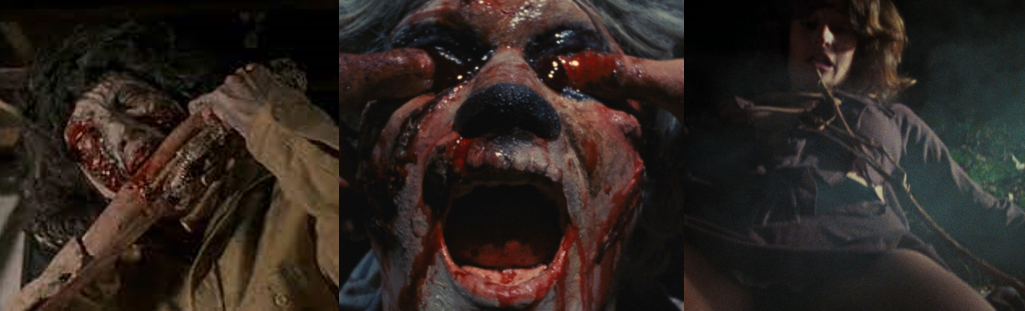
Movie Night: Avengers Confidential: Black Widow & Punisher

Released: 25 March 2014
Director: Kenichi Shimizu
Distributor: Sony Pictures Home Entertainment
Budget: Unknown
Stars: Jennifer Carpenter, Brian Bloom, Grant George, JB Blanc, Eric Bauza, and John Eric Bentley

The Plot:
After interfering with a top secret mission, Frank Castle/The Punisher (Bloom) is apprehended by Strategic Hazard Intervention Espionage Logistics Directorate (S.H.I.E.L.D.) agent and Avenger Natasha Romanoff/Black Widow(Carpenter) and the two are ordered by director Nick Fury (Bentley) to stop the terrorist organisation known as Leviathan selling stolen S.H.I.E.L.D. technology.

The Background:
After his impressive debut in the pages of The Amazing Spider-Man #129, the Punisher quickly became one of Marvel’s most popular anti-heroes thanks to his tragic backstory and unwavering commitment to the eradication of crime. His popularity has led to the character appearing in a number of multimedia projects outside of the comics, including videogames and both live-action and animated portrayals. Between 2010 and 2011, Marvel Entertainment teamed up with Japanese animation studio Madhouse to produce four anime projects, known as Marvel Anime, to little success. Avengers Confidential: Black Widow & Punisher was the follow-up to those projects; released mid-way through “Phase Two” of the massively successful Marvel Cinematic Universe (MCU), the anime drew a mixed reception despite making over $1 million in domestic home video sales.

The Review:
The movie opens to find the Punisher monitoring a rise in criminal and gang activities, as well as newspaper reports on himself, from his apartment (which, as is tradition, doubles as his armoury) while Black Widow expresses frustration at the Punisher’s mounting reputation as a vigilante. The opening credits play over a very quick montage of stills and images that give a quick recap of each character’s background and origin, showing Frank’s time as a family man and the deaths of his family in a mob hit and Natasha’s time training as a spy and assassin and association with S.H.I.E.L.D.

The Punisher and Black Widow appear to be physical equals but their fights are constantly interrupted.

The Punisher makes short, brutal work of some black-market weapons dealers, filling them with bullet holes and easily taking them apart by himself (despite them having more weapons and the numbers advantage) until only one man, Cain (Hebert) is left. Though disturbed at the high-tech weaponry Cain was selling, his efforts to torture more information out of the perp are interrupted by the arrival of Black Widow. Unimpressed with Fury’s operation and Widow’s criticism of his methods, a fight between the two ensues; though the Punisher demonstrates greater physical ability and immediately goes for his pistols, Widow is easily able to match him blow for blow with her superior acrobatic skill until Fury (modelled after his Ultimate and MCU counterpart) and his soldiers interrupt and Frank is subdued by one of Widow’s tranquiliser darts. However, during all the commotion, Cain manages to slip away unnoticed.

Fury manages to coerce Frank into teaming with Black Widow to infiltrate a Leviathan base.

Aboard the S.H.I.E.L.D. Helicarrier, Fury attempts to reconnect with Frank, whom he has a shared history with, and to impress upon him that his methods, while effective, are disrupting the bigger picture since he has started to interrupt S.H.I.E.L.D.’s procedures. Frank, however, is disgusted at the potential lives Fury’s methods have cost and it’s very quickly established that he and S.H.I.E.L.D., while working towards the same goal, are diametrically opposite. Still, Fury is able to inform Frank that the terrorist organisation Leviathan is selling stolen S.H.I.E.L.D. technology and the two are able to reach an agreement since the Punisher sees that the only reason he has been brought into custody is so that he can be unleashed upon Leviathan. Teamed with Black Widow, the Punisher shares the information Cain gave him and, begrudgingly, the two head to a Leviathan base in the frozen wastes of Slovenia; Widow exposits some background on Leviathan, who have grown into a sophisticated and deadly terrorist organisation that, it is soon revealed, has begun to experiment in created super soldiers and bioweapons. Thanks to their unique skills and training, the two are easily able to infiltrate the base and dispatch of the handful of guards with lethal effectiveness, but the Punisher immediately goes off script as soon as he spots Cain and another fight between the two breaks out.

Amadeus accidentally sends the Punisher on a rampage with Leviathan’s mind control technology.

This time, however, it’s much briefer and Frank simply storms out and leaves Widow to blindly follow Fury’s orders. Although he captures Cain, his efforts to torture him for more information are once again thwarted when Cain blinds him with a flash of light and slips away once more. Continuing on mission alone, Black Widow subdues the Leviathan scientists non-lethally before being attacked by her former lover, and ex-S.H.I.E.L.D. agent, Elihas Starr (George), who faked his death and has joined Leviathan. Angered at his betrayal, Widow is no match for Elihas, who easily avoids, counters, and matches her frantic attacks while expositing that he chose to develop super soldiers for Leviathan to prove himself worthy of being Natasha’s equal and partner. Elihas attempts to convince Widow into joining him in Leviathan but, though heartbroken at his betrayal, she vehemently rejects him and fights him with renewed vigour and purpose; the Punisher aids her and destroys the facility and the two bring Cain’s cell phone to S.H.I.E.L.D.’s resident kid super genius, Amadeus Cho (Bauza). Though slovenly, excitable, and a teenager pervert, Amadeus is able to decrypt the phone but inadvertently sets the flash function off once again, which puts the Punisher into a bloodthirsty trance that sees him killing numerous S.H.I.E.L.D. agents before he is brought back to his senses. However, while Widow advocates for the Punisher’s state of mind, he is shaken at his actions and willingly submits himself to S.H.I.E.L.D. incarceration after killing innocent men.

United by a common goal, the Punisher and Black Widow eventually form a mutual respect.

Natasha is left feeling further betrayed when Fury reveals that he not only knew about Elihas but was also fully aware that leviathan possessed mind control technology and that he had stolen the Avengers’ blood in order to create his super soldiers. This is, of course, perfectly in keeping with portrayals of Fury as the ultimate spy whose “secrets have secrets” but his willingness to sacrifice both her and the Punisher spurs Black Widow into defying Fury’s orders and convince the Punisher to help her bring down Elihas and Leviathan. This takes the two to an underworld auction in Mandripoor where Elihas’ super soldiers are being sold off to a number of Marvel’s notorious supervillains and, ultimately, forces the two to pool their resources as a more effective team rather than being at odds with each other. In the end, though the two have opposing methods and beliefs, they are able to find some common ground and build a mutual respect for each other’s methods that culminate sin Widow willingly letting Frank return to his never-ending, one man war on crime rather than arrest him as per Fury’s orders.

The Nitty-Gritty:
Of course, every anime lives and dies by the quality of its animation and Avengers Confidential is a pretty slick and smoothly animated feature. Blood and gore fly in the air with a beautiful grace and characters move with either grace and poise or a heavy, weighty physicality when not standing around like statues. Amadeus is probably the most over the top character in terms of his animation, which plays into his quirky and impulsive personality, and the film does a decent job of emphasising the differences between its two main characters through their movements and physicality as much as their personalities.

While the Punisher is a blunt, brutal instrument, Black Widow is sleek and efficient.

The Punisher is cold, blunt force while Black Widow is slick efficiency; the Punisher seems disconnected from humanity and focused only on solving problems in the most direct way possibly, while Widow (and Fury) are concerned with the bigger picture and a strategic approach to secured the safety of millions. The Punisher’s presence turns a lot of heads around S.H.I.E.L.D., who view him with a mixture of awe and fear, and he earns this reputation thanks to his vicious efficiency; when under the influence of Leviathan’s mind control, he resembles little more than an emotionless killing machine. In comparison, Widow is effortlessly smooth and sexy in her movements, moving like liquid and with a serene grace that allows her to easily incapacitate even larger foes. Initially, Elihas is positioned as the primary antagonist of the feature and, thanks to his rushed connection to Black Widow, ensures that Natasha has a more personal stake in the film’s events beyond simply doing her duty to safeguard the world from Leviathan’s technology. Elihas exposed himself to his own super soldier serum, augmenting his strength and abilities in an effort to prove himself worthy of Widow’s love; though he believe that she loved him in the past, he was spurred by her always choosing missions with the Avengers and her life as a superhero over him and resolved to find a way to truly be her equal. Elihas truly believes that S.H.I.E.L.D. is actually oppressing people rather than saving them and that war and conflict are inevitable; as a result, he is perfectly fine with escalating and even starting wars with Leviathan’s technology and resources and sees his super soldiers as the next logic step towards consolidating their influence on the world.

Both the Avengers and Orion show up too late to do much of anything.

Although the Avengers get top billing in the film’s title and feature prominently on the DVD artwork, they don’t actually play a big role in the film and only show up right at the end. Despite having defied Fury’s orders, Black Widow and the Punisher’s mission to stop Leviathan is provided much-needed support when Tony Stark/Iron Man (Matthew Mercer), Doctor Bruce Banner/The Hulk (Fred Tatasciore), Thor Odinson (Unknown), Clint Barton/Hawkeye (Mercer), James Rhodes/War Machine (Unknown), and Carol Danvers/Captain Marvel (ibid) all arrive to help fight off Leviathan’s super soldiers. This leads to some high-octane action but never really overshadows the more grounded and gritty storyline featuring the two leads, who remain at the forefront of the narrative thanks to Natasha’s arc with Elihas and the Punisher’s vendetta against Cain. This is made even more explicit with how unimpressed the Punisher is by Stark’s bravado and the Avengers’ powers and abilities; he’s there with a mission to fulfil and merely tolerates their presence rather than jumping at the chance to join forces with Earth’s Mightiest Heroes. The true head honcho of Leviathan is the mysterious Orion (Blanc), a semi-cybernetic, cloaked madman who doesn’t even physically appear until the last moments of the film. However, despite Orion’s influence and power, we learn basically nothing about him and he is ultimately unable to hold sway over Elihas; during his climatic and emotionally charged showdown with Black Widow, Elihas finally comes to his senses and realises that the love they two of them shared is still there. This proves to be his undoing, however, as he sacrifices himself to save Natasha’s life after Orion shoots at her and dies in her arms. The film does a decent, if rushed job, of trying to place some emotional significance on Elihas’s character and sacrifice but I find myself oddly apathetic since I have no idea who he is; all of their backstory is conveyed through flashbacks and is told to us. We never get to see them as a proper couple or in action together, which I feel hurts the emotional core of their story; he an extra five or ten minutes been included at the start of the film to show their relationship before his downfall, this might have gone a long way to addressing that issue.

The Summary:
Avengers Confidential: Black Widow & Punisher is a really weird production, to be honest; the animation is great and it has that slick, silky smooth quality that you expect from an anime and some brutal, bloody fight scenes but I’m not really sure what the purpose of it is. As far as I can tell, it’s not supposed to tie into any other Marvel production, which makes characters such as Elihas, Orion, and Leviathan very underdeveloped and inconsequential since I have no real personal stake in their story or motivations, and they exist solely to give the title characters someone to fight against and force an emotional conflict for Black Widow. I feel like Punisher is a strong enough character to have carried the anime by himself but, while it is interesting to juxtapose his more extreme measures with the likes of the Avengers and S.H.I.E.L.D., this doesn’t really work when partnering him with Black Widow. Sure, her methods and motivations are different enough but she’s still a spy, a former assassin, with plenty of “red in her ledger” so I can only imagine that she’s partnered with the Punisher to give the anime some sex appeal. In the end, it’s a short and decent enough story; it doesn’t really add anything new to the Punisher or show you anything you can’t see in other Marvel animations or productions but it manages to be just entertaining and action-packed enough to stay afloat despite its mediocre plot and characterisations.

My Rating:

Rating: 2 out of 5.

Could Be Better

Have you ever seen Avengers Confidential: Black Widow & Punisher; if so, what did you think to it and how do you think it holds up against Marvel’s other anime and animated depictions of these characters? What did you think to the concept of teaming these two up and the animation style? Do you think it would have been better to see a solo Punisher feature or to emphasise the more popular Avengers more or were you happy with the story it told? Do you know who Elihas Starr is and, if so, can you tell me why I should care? What is your favourite Punisher story, character, and adaptation (whether it be a movie or videogame)? How are you celebrating the Punisher’s debut this month? Whatever your thoughts on Avengers Confidential: Black Widow & Punisher, and the Punisher in general, drop a comment down below.

Movie Night [PokéMonth]: Pokémon: The Mastermind of Mirage Pokémon


Upon the release of Pokémon: Blue Version and Pokémon: Red Version (Game Freak, 1996), a new craze swept through playgrounds across the world. Entire generations have grown up with Pokémon as clever marketing saw Nintendo’s newest franchise become a massively lucrative and popular multimedia powerhouse that endures to this day. Accordingly, February 27th is now internationally recognised as “National Pokémon Day”, which I’m expanding to an entire month of Pokémon every Tuesday in February, which is even more fitting given that February 6 is the day that Mew successfully gave birth to my favourite Pokémon, Mewtwo!


Released: 29 April 2006
Director: Kunihiko Yuyama and Masamitsu Hidaka
Distributor: Shogakukan Productions / Pokémon USA, Inc.
Budget: Unknown
Stars: Sarah Natochenny, Bill Rogers, Michele Knotz, Jamie Peacock, Billy Regan, Katsuyuki Konishi, and Ikue Ōtani

The Plot:
Ash Ketchum (Natochenny) and his friends are invited to the mansion of Doctor Yung (Regan), a Pokémon scientist who has developed a machine to create holographic mirage Pokémon. However, he is kidnapped by the mysterious “Mirage Master” who wishes to use the system to produce Pokémon with absolutely no weaknesses, and it’s up to Ash and friends to preserve the natural balance of the Pokémon world.

The Background:
I’ve discussed in detail before about how influential Pokémon (Nintendo/Creatures/Game Freak, 1995 to present) was when it was first released, though the videogames were only one part of the multimedia franchise as kids became engrossed in every piece of Pokémon merchandise available, including the still-ongoing anime series (1997 to present). Accordingly, the aptly-titled Pokémon: The First Movie: Mewtwo Strikes Back (Yuyama, 1998) proved to be a massive financial success despite the many changes made in the translation process. With Mewtwo being one of Pokémon’s most popular characters, and considering the movie’s success, it was perhaps inevitable that Mewtwo became the focal point of the anime’s tenth anniversary special, which chief director Kunihiko Yuyama aimed to be a celebration of the evolution of Pokémon over the last ten years. Premiering on Kids’ WB and made widely available as a DVD extra, the one-hour special received crticism for replacing the long-running English language voice cast and is generally regard as the worst Pokémon special ever made.

The Review:
The tenth anniversary special opens with Ash, Pikachu (Ōtani), May (Knotz) and her little brother Max (Peacock), and former Pewter City gym leader Brock (Rogers) travelling through a forest in Ash’s home region of Kanto. Ash is feeling particularly smug because he has received an invitation from Dr. Yung to test his “amazing Pokémon training skills” against the doctor’s new battle system, and the group quickly arrived at Dr. Yung’s laboratory, which is housed within an elaborate castle known as the Mirage Mansion. There, Ash is surprised to find that his mentor and neighbour, Professor Samuel Oak (Billy Beach), and his old travelling companion and former Cerulean City gym leader, Misty (Knotz), have also been invited to attend; Ash is disappointed to find that his invitation wasn’t unique and that Dr. Yung has been passing his compliments out to other notably Pokémon trainers. Their mysterious host soon arrives, and the group do that blood annoying thing where they waste time introducing themselves to him, as though anyone really needs such an introduction, but it’s notable that Dr. Yung and Professor Oak are already familiar with each and have a previous professional relationship.

Ash and his friends are excited at pitting their skills against Dr. Yung’s Mirage Pokémon.

Ever the eager beaver, Ash asks to see the doctor’s vaulted new battle system and the group are stunned to find that the entire floor of the Mirage Mansion has been converted into a “mirage field”. Using this holographic technology, Dr. Yung is able to conjure up a variety of Pokémon based on their Pokémon data; Dr. Yung’s Mirage Pokémon are realistic down to the smallest detail, save for an obvious glow, and Dr. Yung is extremely proud of having perfected his technology, which is even capable of recreating extinct and Legendary Pokémon in order to better understand their capabilities. Naturally, Ash immediately volunteers to pit his skills against these Mirage Pokémon, but Misty overrules him on the basis of chivalry. Misty and Dr. Yung engage in a simple, one-on-one, knockout battle that pits his Mirage Aggron (Unknown) against Misty’s Staryu (Shin-ichiro Miki). This is another of those horrible mismatches that could only take place in the anime; seriously I have no idea why Misty, a former gym leader, wouldn’t send her Starmie (Ōtani) out against an Aggron, and we’ll never know if Staryu’s more powerful and competent form would have stood a better chance against the Mirage Aggron. Still, the point of the battle is to showcase not only how powerful and fast Dr. Yung’s Mirage Pokémon are, but also that he’s fully capable of programming them to use any movies he wishes; in this case, the Mirage Aggron was given an additional edge because it was able to use Bullet Seed and Thunder Wave, two moves that are super effective against Water-types like Staryu.

While Team Rocket are no threat, Mirage Master is a heinous villain who cares little for Pokémon.

Despite this, Ash remains as excited as ever (if not more excited) to pit his Pikachu against the Mirage Aggron, but their battle is interrupted before it can begin when the Mirage System is suddenly hijacked by the malevolent Mirage Master, who turns Dr. Yung’s Mirage Pokémon against the heroes. Unfortunately for the mysterious, masked villain, all of the heroes are able to escape from the Mirage Mansion by running away, leaving only Professor Oak behind, and the Mirage Pokémon are unable to leave the confines of the mansion due to the limitations of the Mirage System. The Mirage Master holds Professor Oak hostage deep within Dr. Yung’s laboratory and demands to know the access password for the professor’s laboratory database so that the masked villain can put Oak’s research towards creating better, and even more powerful Mirage Pokémon that will be super effective against all types of Pokémon. Professor Oak is disgusted at the villain’s disrespect for the strengths, weaknesses, and individuality that comes from natural Pokémon. Determined to rescue Professor Oak, the heroes decide to split up: May and Max watch over the Mirage Mansion, Brock goes to contact Officer Jenny (Peacock) for help, and Ash, Pikachu, and Misty sneak into the Mirage Mansion using their Water-type Pokémon. As if the Mirage Pokémon wasn’t bad enough, Ash and Misty soon bump into regular buffoons and would-be Poké-nappers Jessie (Knotz), James (Billy Beach), and wise-cracking Meowth (ibid) of Team Rocket have followed our heroes to the Mirage Mansion with designs to finally get their hands on Ash’s Pikachu. However, their goals immediately shift to stealing or repurposing Dr. Yung’s technology for their own nefarious ends to create powerful Pokémon for themselves, win the favour of their boss, and become rich either through using or selling the Mirage System. However, Team Rocket are hopelessly outmatched by the Mirage Pokémon and quickly sent packing before they can influence the plot in any meaningful way, and Ash and Misty are separated while battling Mirage Pokémon. Cut off from his friends, Ash is assisted by a Mirage Mew (Satomi Koorogi), a gentle Mirage Pokémon and the victim of constant attacks and ridicule from the Mirage Master, who considers it a “flawed specimen”. Mirage Mew leads Ash to where Professor Oak and Pikachu are being held captive, but he’s too late to stop the Mirage Master from forcibly downloading data of all the Legendary Pokémon Pikachu has encountered from its memories.

Thanks to having access to near-unlimited power, the Mirage Mewtwo proves to be a ruthless foe.

Horrified at Pikachu’s suffering, Oak reluctantly gives over his password, allowing the Mirage Master to hijack every Pokémon database around the world and giving birth to his ultimate Mirage Pokémon: Mirage Mewtwo (Katsuyuki Konishi). Rather than being the same Pokémon Ash encountered before, Mirage Mewtwo is an all-powerful creation of the Mirage System, one incapable of telepathic communication but boasting every Pokémon attack available. Not only is the Mirage Master revealed to be Dr. Yung in disguise and out for revenge after his research was disregarded due to his immoral attitude towards Pokémon, he also extends the Mirage System outside of the Mirage Mansion using a series of missiles and recreates Mirage versions of Entei, Articuno, Zapdos, and Moltres. Naturally, the heroes’ Pokémon are no match for the Mirage Legendary Pokémon, much less Mirage Mewtwo; not only can it destroy other Mirage Pokémon in a single attack, it makes short work of even Professor Oak’s Dragonite (Unknown) by unleashing powerful attacks such as Flamethrower and Hyper Beam. Mirage Mew comes to their aid, shielding them from Mirage Mewtwo’s attack, but is ultimately overwhelmed and disintegrated by Mirage Mewtwo’s attack. Dr. Yung then downloads all of the Mirage Pokémon data into his Mirage Mewtwo, causing tumorous lumps to pop up all over its body and a range of powerful attacks to be unleashed all at once. Right as Mirage Mewtwo is poised to finish off the heroes, Mirage Mew remerges from the Mirage System (and within Mirage Mewtwo’s body) and exerts its control over Mirage Mewtwo, holding it in place so that Pikachu can destroy it with a Volt Tackle. Sadly, Mirage Mew is also destroyed along with its malevolent counterpart, and the entire Mirage System; Dr. Yung refuses to surrender, however, and disappears into the flaming rubble and explosions of his Mirage Mansion and is presumed to have perished alongside his research. In the aftermath, Ash and his friends thank the efforts of the Mirage Mew and condemn Dr. Yung’s immoral nature, before resolving to continue on their journeys.

The Nitty-Gritty:
One thing I’ll give The Master of Mirage Pokémon is that it sure doesn’t waste any time; the opening title sequence is painfully short, even shorter than the one in a regular Pokémon episode, and the credits play over the group’s arrival at the Mirage Mansion. There’s also little to no real build-up and no big Pokémon battle sequence to open the special; it simply begins with Ash re-reading Dr. Yung’s letter for the umpteenth time and then boom, they’re at the Mirage Mansion right away. Being that it’s only an hour long, this is necessary to get us to the main plot of the Mirage Pokémon as quickly as possible, but it’s not as if the special is full of non-stop action, returning faces, or Legendary Pokémon from there. In fact, it actually slows down for quite a chunk and more time is spent showcasing the Mirage Aggron than any of the more powerful, popular, and alluring creations Dr. Yung brings forth. It was great seeing Misty make a comeback and briefly revisiting her friendly rivalry with Ash, but you could have easily taken her out of the special and it wouldn’t have made any difference at all. May, Max, and Brock were all notably side-lined as well, acting as mere support characters going through their usual motions rather than actually having an impact on the plot, and as a celebration of the first ten years of Pokémon ends up falling a little flat as it just doesn’t do enough with the potential of its premise.

A fun enough, poignant special that sadly doesn’t realise the full potential of its premise.

There’s a great deal of anticipation surrounding the reveal of Dr. Yung’s ultimate Mirage Pokémon, which of course turns out to by Mirage Mewtwo and ultimately ends up falling very flat because, by the time Mirage Mewtwo finally shows up, the special is almost over and we don’t really get to see much from it. To make matters worse, Dr. Yung is awestruck at the amount of Legendary Pokémon contained within Pikachu’s memory and yet he doesn’t create Mirage versions of Pokémon like Lugia; instead, he limits himself to the Legendary Birds and Entei, who mostly just stand around and overpower the heroes’ Pokémon before they are absorbed into Mirage Mewtwo (something that didn’t really need to happen as Mirage Mewtwo could already utilise all of their attacks and abilities, and more). This means that the one time we get to see Mewtwo and the Legendary Birds onscreen in an actual episode amounts to a whole lot of nothing, and we don’t get to see Lugia, Latias, and Latios flying alongside the Legendary Birds or Ho-Oh or anything. Instead, the focus is all on Mirage Mewtwo being this dominating holographic Pokémon, which is certainly is, but without the morality and personality of the original Mewtwo, it’s little more than just a mindless beast or machine to put the heroes in peril. Things are even more confused by the fact that Mirage Mew inexplicably exhibits an independent personality; there’s an attempt to explain that this is because even Dr. Yung can’t destroy the natural spirit of Pokémon and that Mew is an aberration compared to the other Mirage Pokémon, but this doesn’t really hold up under close scrutiny. Indeed, if any Mirage Pokémon were to break free from Dr. Yung’s control, I’d expect it to be Mewtwo, and I wonder if the story might have been better serviced by Mirage Mewtwo going berserk and Dr. Yung being forced to team up with the heroes and turn the Legendary Mirage Pokémon against it in order to shut it down and realise the error of his ways.

The Summary:
I don’t think that I would agree that The Mastermind of Mirage Pokémon is necessarily the worst Pokémon special I’ve ever seen, or even the worst product to come out of the anime, but it can’t be denied that it is quite disappointing. I am a big fan of Mew, Mewtwo, and the other Legendary Pokémon and I love seeing them crop up in the anime, specials, and movies, but a major gripe I have about their appearances is that they have to count for something. Here, they really don’t count for anything; Dr. Yung observes footage of some of the other Pokémon movies through Pikachu’s memories, reminding us of better times and more accurate representations of these creatures, and makes a big production of showcasing his Mirage Mewtwo and condemning his Mirage Mew, but simply having versions of these creatures appear onscreen doesn’t necessarily equate to them actually being meaningful or interesting. It’s great seeing Mirage Mewtwo busting out all these wacky attacks and overwhelming the heroes, and it was suitably heart-breaking to witness the Mirage Mew sacrifice itself to destroy its ruthless counterpart, but there was so much more potential to be had here. Why not merge the Legendary Birds into one being? Why not team Mirage Mewtwo with a Mirage Lugia? Why not have Mirage Mewtwo break free and go on a rampage and see it battle against Mirage versions of the other Legendary Pokémon? None of that happens, and it results in The Mastermind of Mirage Pokémon playing things very safe and dull, and only saving itself from a one-star rating because of the nostalgia surrounding the tenth anniversary and the Pokémon anime and the fact that I am a sucker for Mewtwo and the Legendary Pokémon, even when they barely do anything remotely interesting or entertaining.

My Rating:

Rating: 2 out of 5.

Could Be Better

What did you think of Pokémon: The Mastermind of Mirage Pokémon? Did you enjoy seeing Mewtwo in action again or did you feel the feature was a missed opportunity to do more with the character? What did you think to Dr. Yung and the concept of Mirage Pokémon? Did you enjoy seeing Misty make a return and the cameos from the other Legendary Pokémon? How are you celebrating Mewtwo’s birthday this year? Whatever you think about Pokémon: The Mastermind of Mirage Pokémon, Mewtwo, and Pokémon in general, sign up to leave your thoughts in the comments below or leave a reply on my social media.

Movie Night [Sci-Fanuary]: Guardians of the Galaxy Vol. 2


January sees the celebration of two notable dates in science-fiction history, with January 2 christened “National Science Fiction Day” to coincide with the birth date of the world renowned sci-fi writer Isaac Asimov, and HAL 9000, the sophisticated artificial intelligence of Arthur C. Clarke’s seminal 2001: A Space Odyssey (1968), being created on 12 January. Accordingly, I’m spending every Sunday of January celebrating sci-fi in all its forms.


Released: 5 May 2017
Director: James Gunn
Distributor: Walt Disney Studios Motion Pictures
Budget: $200 million
Stars: Chris Pratt, Zoe Saldaña, Dave Bautista, Vin Diesel, Bradley Cooper, Karen Gillan, Kurt Russell, and Michael Rooker

The Plot:
After angering the Sovereign, the Guardians of the Galaxy are saved by Ego (Russell), a Celestial being who takes the form of a sentient planet. Claiming to be Peter Quill/Star-Lord’s (Pratt) true father, Ego promises to open Quill’s mind to the vast power and knowledge of the universe, but Quill’s adopted father-figure, Yondu Udonta (Rooker), reveals a far more sinister motive behind Ego’s seemingly benign nature.

The Background:
Despite being one of Marvel’s more obscure properties, and having undergone many changes over the years, the Guardians of the Galaxy proved to be a massive financial success after making their live-action debut in the Marvel Cinematic Universe (MCU). Since the property was deemed to have strong franchise potential, and to even become as integral to the MCU as the Avengers, it’s perhaps unsurprising that the director and cast of the first film were soon revealed to be returning for a sequel. While determined to expand on the cast and lore of the first film, Gunn was mindful about overloading the sequel with a slew of new characters; Gunn went solo on the film’s story, which he planned to focus on exploring a new version of Star-Lord’s heritage, and was afforded a great deal of creative control regarding the direction of the story and its place in the wider MCU. Gunn also continued to push the importance of practical effects and set wherever possible, especially as the film would make far more liberal use of computer-generated effects to bring Ego (one of the most complex CGI creations ever) to life. Guardians of the Galaxy Vol. 2’s box office gross of over $863 million surpassed that of its predecessor, but reviews were generally more mixed; while the film was praised for being visually impressive and telling a surprisingly touching story, the pace and tone received some criticism. Still, the film cemented the team’s importance to the MCU and its success easily justified not only a third move but also a holiday-themed special.

The Review:
I was pleasantly surprised by Guardians of the Galaxy; despite knowing next to nothing about the team or the concept heading into it when it first came out, the trailers and marketing had won me over and appealed to my love of science-fiction romps and bizarre comedic superhero adventuring. The film was a real breath of fresh air for the MCU at a time when things were just starting to really gear up towards full-on cosmic shenanigans and it remains one of my favourite entries not just in Phase Two, but in the entire franchise. So, to say my anticipation was high for the sequel would be an understatement; once again Marvel had outdone themselves by somehow getting Kurt Russell onboard and just the idea that they would even consider doing a concept like Ego, a literal sentiment planet, really told you all you needed to know about the scope of the MCU going forward: nothing was off limits, not even the most bizarre cosmic element of the source material.

The team may function a lot better now but they’re still a dysfunctional and argumentative bunch.

Some time has passed since the events of the first film, and the Guardians of the Galaxy have become somewhat renowned as a freelance peacekeeping force, of source and are happy to help those in need…for a price. Thanks to having saved the galaxy, they can afford to charge higher rates for their services, but it’s undeniable that they’re a much more well-oiled team than the band of misfits and outcasts we saw in the last film. The family dynamic has been dialled up to eleven, with Quill and Gamora (Saldaña) acting as the parental figures of the group, Drax the Destroyer (Bautista) and Rocket Raccoon (Cooper/Sean Gunn) acting as petulant teenagers, and Baby Groot (Diesel) as the curious and mischievous child. However, while they have clearly grown as a team and a surrogate family, the Guardians remain flawed and troublesome characters: hired by the Sovereign to destroy the inter-dimensional Abilisk, the team struggle to get their shit together and attack the beast between bickering with each other over their priorities and weapon choices and expressing concern for Baby Groot, whom they are all fiercely protective of. Although far from his larger, more capable self from the first film, Baby Groot proves instrumental in helping Rocket escape from the Ravagers, but is primarily here to cute appeal and comic relief; young and childish, he has trouble understanding things sometimes, which leads to a number of amusing instances where he struggles to retrieve items or follow instructions.

Rocket angers the Sovereign and pushes away his friends with his abrasive attitude, something Yondu can relate to.

As before, the one member of the team with the most sense remains Gamora, who is the only one capable and clear-headed enough to deliver the killing blow to the Abilisk. To be fair, Quill was the one who recognised that the creature had a pre-existing wound on its neck for Gamora to exploit, but Drax’s best plan was to foolishly try and attack the beast from the inside. While their methods are often haphazard and lacking in finesse, they get the job done and it’s Quill who takes point in speaking for the team to Ayesha (Elizabeth Debicki), the enigmatic and alluring High Priestess of the Sovereign race. While Quill flirts with Ayesha and attempts to keep relations with the proud race amicable, they incur her wrath when Rocket steals a bag full of their incredible rare and Anulax Batteries; of all the members of the team, it’s Rocket who struggles the most to let go of his selfish and underhanded ways, which brings him into continued conflict with the team and Quill’s leadership. A grouchy and antagonistic character, he actively pushes people away, even those closest to him, to avoid being hurt by them; he finds an unlikely confidante in Yondu Udonta (Rooker), an embittered space pirate who has spent his life doing the same thing and urges Rocket to recognise that he has people who actually care about him and help repair his relationship with Quill and his misfit family.

An ages-old Celestial, Ego wishes to spread his influence across the galaxy to consume all life.

Overwhelmed by the Sovereign fleet, the Guardians are mere moments away from being blown to smithereens thanks to Quill and Rocket wasting time and energy bickering over their piloting skills. Although they are saved by the timely intervention of Ego, the Milano is crippled, but Quill finds something he has long been missing in his life: his father. A sentient planet, Ego reveals himself to be an ages-old Celestial, a being who has known nothing but loneliness for the longest time; his only companion is Mantis (Pom Klementieff), a naïve and sheltered character who strikes up an odd relationship with Drax and uses her empathic powers to help Ego sleep…and to ease his conscience. Thanks to some extremely impressive de-aging effects and a facial double (Aaron Schwartz), the film opens with Kurt Russell appearing in his prime years back in the eighties to woo Meredith Quill (Laura Haddock) and sows the seeds (literally and figuratively) for Ego’s true plot to spread his consciousness across the entire galaxy using seeds planted on distant worlds. To do this, he needed to sire a part-Celestial heir but was continuously met with failure; the bodies of his rejected children are literally piled up and hidden away on his planet, and his joy at finding Quill can harness his cosmic powers soon turns to anger when his son chooses to turn that very power against him to oppose his dreams of galaxy-wide conversion.

The Guardians face threats from all sides as enemies old and new conspire to enact their revenge.

The Sovereign turn Nebula’s semi-cybernetic stepsister, Nebula (Gillan), over to the Guardians. Nebula’s hatred and resentment of Gamora has only grown between films; as children, their adopted father, Thanos (Josh Brolin), had them fight for supremacy over and over, and Gamora won every single time, reaping in Thanos’s praise while Nebula was replaced a piece at a time with mechanical parts. Gamora is happy to return Nebula to Xandar to collect her bounty and rid herself of her brutal stepsister once and for all, but Nebula is driven by rage and bitterness and takes every opportunity she can get to break free and hunt her sister down. This leads her to forming a brief, mutually beneficial alliance with the Sovereign and Taserface (Chris Sullivan), a mutilated member of Yondu’s crew who might be a laughable threat with a ridiculous name but he incites a mutiny and flushes those who stand against him and his followers out into space. This only further complicates matters for Yondu, who raised Quill as a space pirate and thief after learning of Ego’s true nature and intentions for the young Quill, but his part in child trafficking left him and his crew dishonoured and ostracised from the wider Ravager community by prominent Ravager figurehead Stakar Ogord (Sylvester Stallone). Betrayed by many of his crew, Yondu is forced to team up with Rocket to enact a merciless revenge with his fancy tricky arrow and rush to Quill’s aid when Ego’s true intentions are revealed, and an intense and brutal battle between Nebula and Gamora sees the two sisters reaching a mutual understanding and gaining the Guardians an additional unlikely ally for the finale.

The Nitty-Gritty:
As before, music and pop culture play an important part not just in Guardians of the Galaxy Vol. 2’s soundtrack but in defining Quill’s character, especially in relation to his mother. The flashback at the start of the film shows how Ego assumed the form of an irresistible 1980s rogue: he’s got the mullet, the car, and the tunes to go along with it and easily wins over Meredith with his good looks and silver tongue. Ego’s undeniable charisma and ability to manipulate his form are made more explicit when he pours vocal honey into Quill’s ears with stories of his love for Meredith and even assumes the form of his childhood hero, David Hasselhoff (Himself), showing that Ego knows exactly how to manipulate people by playing to (and preying on) their likes, hopes, and dreams. Quill’s love for music stems from his mother, who put together mixtapes for him that he listens to endlessly on his Walkman and onboard the Milano; so great is his love for music that Rocket even prioritises setting up a loud speaker for them to listen to Quill’s tune during their battle with the Abilisk and Quills still firmly drawing his pop culture reference from his childhood and the seventies and eighties. Just as these elements help him to remember and feel closer to his mother (and bond him closer with his newfound family), so too do they help to quickly build up a trust between him and his father when Ego expresses a liking for the same music and pop culture that was so integral to Quill’s childhood.

Space combat and action might be fleeting but are beautifully brought to life with some stunning visuals.

I remember being a little disappointed by Guardians of the Galaxy Vol. 2 when I first saw it as I was expecting the film to be bigger and better than the first but, similar to Avengers: Age of Ultron (Whedon, 2015), it struck me as being just as enjoyable as the original, which actually knocked my rating of it. I have no problem with it telling a story more focused on the tea dynamic and exploring these characters further, I just hadn’t expected it when I first saw it, so I definitely appreciated it more on repeat viewings. However, there is still a decent amount of onscreen action and visual spectacle to keep viewers entertained: the Sovereign are a minor antagonistic force in the film existing mainly to drive the plot forwards and get our heroes to Ego, but they have a unique armada comprised of thousands (maybe even millions) of remote drones that are piloted very much like arcade machines and lead to some frantic space battles and an intense chase through a “quantum asteroid field” that’s like the asteroid chase from Star Wars: Episode V: The Empire Strikes Back (Kershner, 1980) on steroids! The hexagonal jump points help to add to the mysterious nature of the galaxy and result in an amusing scene where Rocket and Yondu are warped in bizarre ways by multiple jumps, and Ego pilots a sleek, egg-like ship that is unlike any other in the galaxy, but the true visual spectacle of the film is realised when the characters arrive on Ego’s planet. A lush, verdant alien world home to some bizarre, vegetation and an elaborate palace housing Ego’s memories and plans, Ego’s world is just like him: beautiful and alluring at first glance but hiding a dark secret beneath the surface that comes to fruition when Ego’s very face warps the planet’s crust.

Family is even more pivotal this time around as bonds are reforged or rejected in favour of true family.

The dysfunctional family dynamic between the titular team is a pivotal element of the sequel; although they’re far more trusting and accepting of each other, they still wind each other up and get on each other’s nerves. While much of this is embodied by Rocket, Drax’s blunt and literal perspective doesn’t help matters much and Quill is continuously distracted by his attraction to Gamora. Despite Drax’s assertions that Gamora isn’t interested in him in that way, she’s incredibly supportive of Quill and is touched by his stories of his childhood pining for a father who wasn’t there, which confuses and angers him when she suspects that something isn’t quite right about Ego’s planet and raises questions about what counts as true family, blood or those you are closest to. Naturally, the question of Quill’s parentage is a huge plot point of the film; after being left as a blatant dangling plot thread and piece of sequel bait in the first film, Guardians of the Galaxy Vol. 2 goes to great lengths to establish that Quill isn’t fully human, like his comic book counterpart, and is instead part-Celestial thanks to being one of Ego’s many progeny seeded across the galaxy. This afford him many fantastic abilities when present on Ego’s plant form, and potentially opens up the vats secrets of the universe to him, but his human nature and the nurturing of his mother, his oddball family, and his father figure, Yondu, prove to be strong enough influences on Quill’s morals and character and force him to reject Ego. Quill is further driven to this decision when Ego drops the bombshell that it was he who caused Meredith’s fatal brain tumour, thus dooming her and pushing Quill into an enraged defiance that sees him pull out all the stops to oppose Ego’s plan to terraform the worlds he’s seeded.

Ego is destroyed at great cost but an even greater threat looms in the Guardians’ future…

This means not only turning down the ability to construct greater things, and even life, using Ego’s cosmic power but also the virtual immortality offered by Ego’s planet; disappointed by sentient life across the galaxy, Ego realised that his destiny wasn’t to simply walk among men, but to dominate and consume them through “The Expansion”. His façade as a loveable, charismatic figure quickly gives way to a cold-hearted, self-centred parasite befitting of his name and capable of great love (for he truly loved Meredith and was tempted to give up his enterprise for her) but also intense anger. Fully capable of manipulating every element of his planet-form to his will, Ego is a monstrous, nigh-unstoppable God-like being comprised of pure energy but capable of bending matter as he sees fit to protect his brain at the core of his planet. Thanks to being part-Celestial, Quill is also able to manipulate the planet to a degree, leading to a visually impressive sequence where Rocket drills through Ego’s crust using lasers and Quill constructs a massive version of Pac-Man to go head-to-head with his father. With the Sovereign closing in and adding to the melee, Mantis strains her powers to the limit to put Ego to sleep while Rocket cobbles together a bomb to destroy Ego’s core. Although the threat is ended and Gamora and Nebula finally reconcile (and Quill and Gamora finally admit their true feelings to each other), Quill forever loses his immortality and Celestial powers…and also his true father when Yondu sacrifices himself to save Quill from Ego’s destruction and the vacuum of space for a surprisingly emotional and heart-breaking finale. However, Yondu is finally honoured by the Ravagers in death, and Kraglin Obfonteri (Sean Gunn) assumes command of his arrow and his crew; while the Guardians find dealing with a moody adolescent Groot to be a challenge in the post-credits scene, they remain unaware that Ayesha has vowed to destroy them by breeding a perfect instrument of destruction dubbed “Adam”.

The Summary:
It’s definitely true that Guardians of the Galaxy Vol. 2 holds up much better with each subsequent viewing; in many ways, it’s more of the same from the last film, but with a far greater focus on the characterisations of the titular team and the dysfunctional family dynamic they have. While it doesn’t necessarily match or expand upon the space-faring action and excitement of the first film, and may disappoint some viewers in that respect, the grounded, more personal story told here is a poignant and affecting one. Seeing Quill struggle with his heritage, his feelings for Gamora, and to hold the team together is what makes these outlandish characters so surprisingly relatable, and the banter and relationship between each member of the team is some of the most entertaining produced by the MCU. What we have here is a film that peels back the layers of one of the most obscure properties in Marvel, and the MCU, and makes even their most alien members human and vulnerable; expanding on Yondu’s character and showing how complex Rocket is as a character was a surprising highlight, as was the heart-breaking final reconciliation between Yondu and Quill. There’s plenty of amusing elements throughout the film thanks to Drax’s blunt nature and Baby Groot’s childish antics, and Kurt Russell seems to be having the time of his life being part of his big-budget production. The cosmic scope of the MCU was expanded even further with the introduction of the Celestials and laying the groundwork for the future dynamic and troubles coming to the Guardians and, while I don’t rate it as highly as the first film, that’s not to say that there isn’t a great deal to enjoy here and I’d say it’s well worth your time, especially for those who might not have been convinced by the Guardians’ characterisation in the last film and wanted to get to know these characters better.

My Rating:

Rating: 3 out of 5.

Pretty Good

What did you think to Guardians of the Galaxy Vol. 2? Were you disappointed that the film wasn’t as action-packed as the first or did you enjoy the more character-focused story? What did you think to the added emphasis on the team as a dysfunctional family? Which of the new characters introduced was your favourite? What did you think to Ego’s plot and the changes made to his character? Would you have liked to see Quill retain his cosmic powers or did you dislike that he was made part-Celestial? Which members of the team would you like to see included in the MCU later down the line? I’d love to know your opinion on Guardians of the Galaxy Vol. 2, so sign up to share them below or leave a comment on my social media, and be sure to check in next Sunday as Sci-Fi Sunday continues!