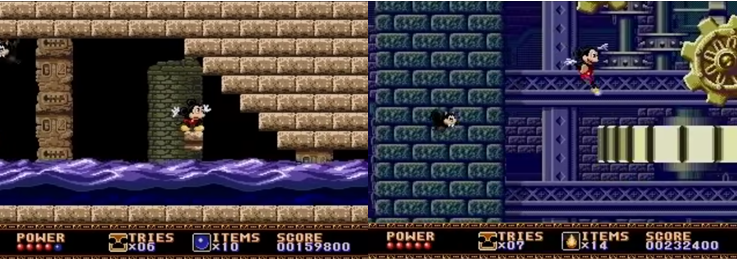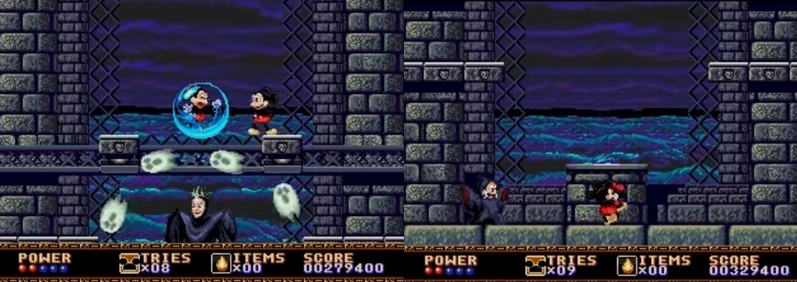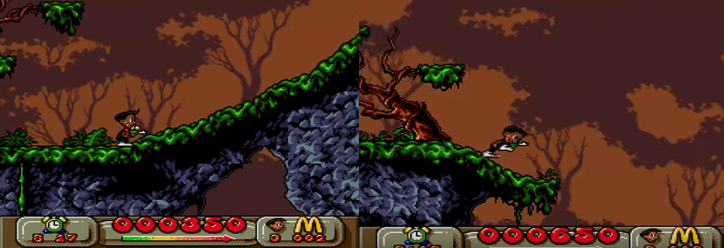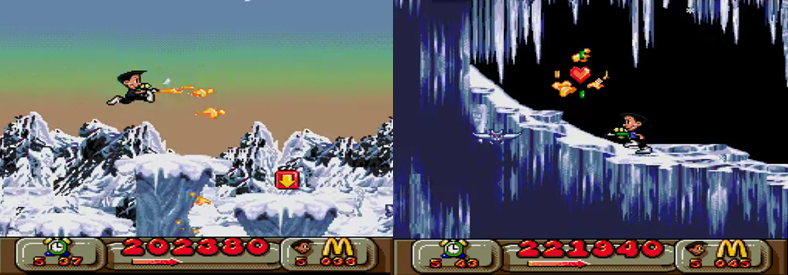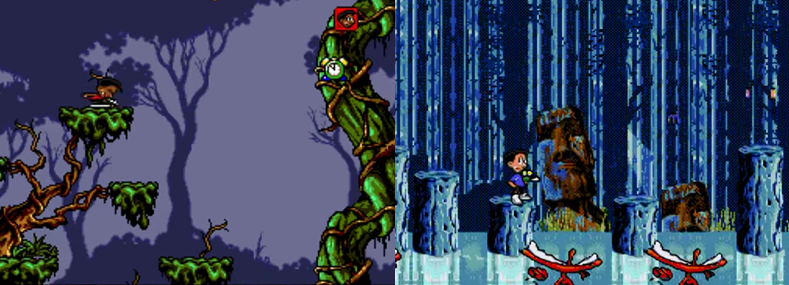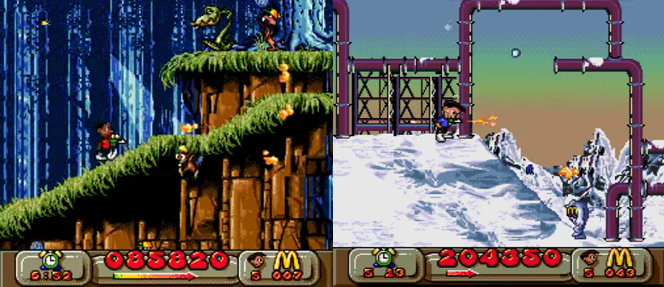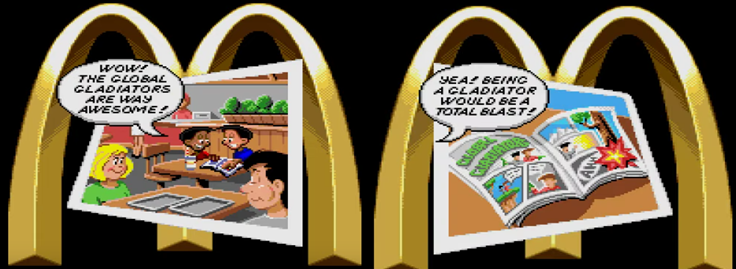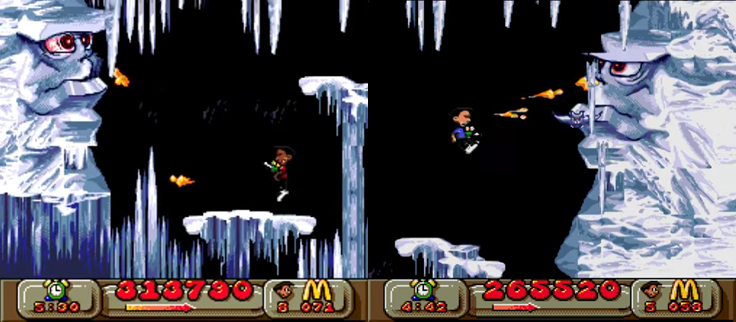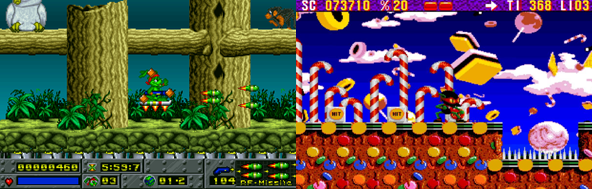
Game Corner: Taz-Mania (Mega Drive)

Released: July 1992
Developer: Recreational Brainware
Also Available For: Game Boy, Game Gear, Master System, Super Nintendo Entertainment System (SNES)

The Background:
My absolute favourite Looney Tunes (1930 to present) character, the Tasmanian Devil (or simply “Taz”) first debuted in “Devil May Hare” (McKimson, 1954) as a dim-witted and voracious foil to Bugs Bunny (Mel Blanc). In the early- to mid-nineties, the Warner Bros. cartoons were undergoing something of a renaissance thanks to shows like Tiny Toon Adventures (1990 to 1992) and Animaniacs (1995 to 1998) and Taz became part of this resurgence in popularity when he graduated to his very own cartoon, Taz-Mania (1991 to 1995). To tie into this, several videogame adaptations of the show were produced; while the SNES version, which was more of a pseudo-3D endless runner, was unfavourably received, the Mega Drive title (which, like the others, was a traditional 2D sidescroller) was received very well. Since the Master System version (Technical Wave, 1992) was one of the first videogame cartridges I ever owned and one of my favourite action/platformers, I decided to pick up the Mega Drive version and see how the technically superior title holds up against others of its genre.

The Plot:
After being told a tale of a giant seabird that laid massive eggs capable of feeding an entire family for over a year, the ravenous and greedy Taz sets out in search of the Lost Valley and its legendary giant bird in hopes of satisfying his endless appetite.

Gameplay:
Taz-Mania is a 2D, sidescrolling action/platformer which has you guiding Taz across a number of locations (though, primarily, through jungles and Aztec ruins). While a variety of enemies populate Taz-Mania’s levels, your biggest enemies will be the controls and the numerous bottomless pits and instant death traps. Taz, though big and colourful and occasionally full of life, is a slow and clumsy character to play as; his jump is awkward, he can’t crouch or look up or down, and his hit box is ridiculously large at times.
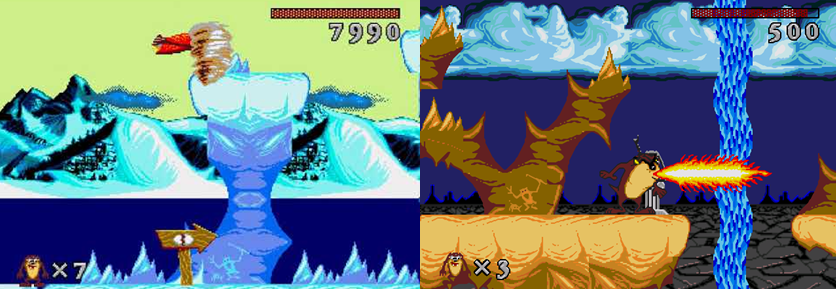
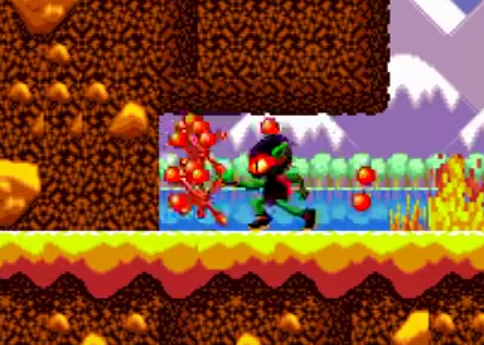
Taz spins like a tornado and spits fire but has a large hit box and tends to destroy his own power-ups.

Thankfully, you can get Taz to move his big, useless butt by sending him into his trademark tornado spin; however, while this is great for blasting away most enemies, it also knocks away health and other power-ups when they’re onscreen. You can use the spin in mid-air for a boost but it’s a bit finicky and the game is structured less around letting you blast ahead at full speed and more around awkwardly jumping to platforms, working your way up or across, and making blind jumps across bottomless pits. Taz also has an “Action” button that will let you carry certain items to reach higher areas, activate switches, and breathe fire after eating chilli pepeprs, and can also defeat some enemies and damage bosses by jumping on their heads. Unfortunately, you’ll be spending most of your time struggling with the game’s sluggish controls and annoying platforming elements; in the Badlands, for example, you have to jump from jets of water to reach the exit but, if your jump is a little off (which happens more often than not thanks to Taz’s jumping being a bit stilted and floaty), you’ll get damaged by the water and the knockback will most likely send you falling to your death. Similarly, when you reach the Jungle, you’ll have to make blind jumps to platforms you can’t even see in order to progress and either fall to your death or jump right onto an enemy for your trouble.
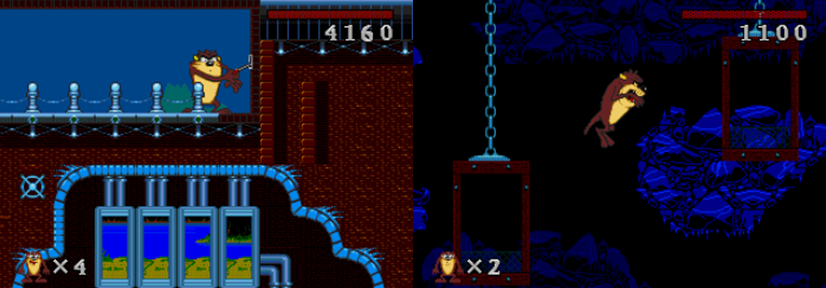
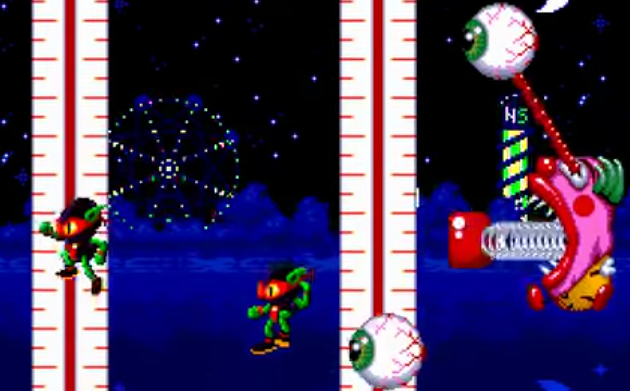
Gameplay is slowed to a crawl as you pull levers and try to figure out annoying lift puzzles.

Taz-Mania is much more of a thinking game than the Master System version, which I remember being more of a standard, cutesy platformer; in the Acme Factory, you have to jump up conveyor belts and dodge lasers to pull a series of switches and keep a deadly robot from being assembled. Pull the wrong switches, though, and you’ll be chargrilled as punishment, which is a pretty fast way to burn through your lives. Later, in the Mines, you’ll need to use similar levers to activate lifts to reach new areas; unfortunately, some of these are booby trapped and will send you falling to your death while others are suspended precariously over a bed of instant death spikes or missing entirely (which will also cause you to die immediately). In the Ruins level, you’ll have to make some very tricky and awkward jumps between platforms and if you’re not absolutely pixel-perfect, you’ll simply pass right through your intended target as though it were intangible!

While hopping from logs isn’t too bad, the mine cart section is an absolute nightmare!

More than once, you’ll be tasked with jumping from log to log to cross some rapids; thankfully, you won’t instantly die if you fall or land in the water but you will be bounced out at the cost of some health. These aren’t particularly difficult sections but they become more troublesome when you have to move Taz up and down to the foreground and background, which makes positioning his exact landing point difficult to judge, and when you have to struggle upstream and avoid flying over the edge of a waterfall. By far the most frustrating and unfair section of the game, though, is when you must jump into a runaway mine cart; you can speed up and slow down by pressing left or right and press A to raise the cart up and avoid crashing headfirst into a bumper, but you also have to be careful not to collide with the ceiling, enemies, or to fall off the broken tracks. One mistake and you instantly lose a life, which is ridiculously unreasonable and makes the presence of a life bar almost completely redundant.

Graphics and Sound:
If there’s one thing Taz-Mania has going for it, it’s the graphics; sprites are big, cartoony, and colourful and the entire game evokes the look and feel of the cartoon. While the music and sound effects are extremely grating and poorly realised, it’s fun seeing Taz fly into an impatient rage when left idle and the little quirks he has here and there, such as eating the “S” in the opening SEGA logo.

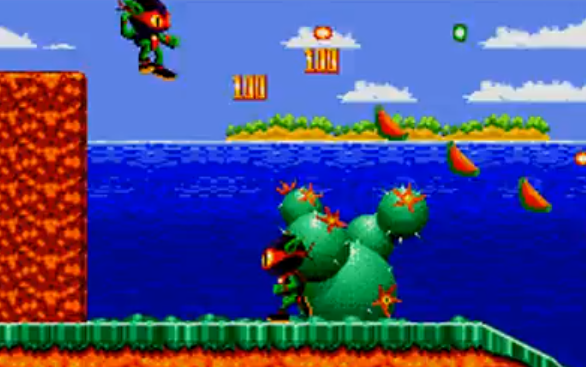
Levels are colourful but not very varied and lacking in depth and complexity.

Sadly, this doesn’t really shine through all of the time and, for the most part, Taz is a very static and awkward character sprite. Similarly, the game’s backgrounds and levels aren’t all that interesting to look at; this game released almost a year after Sonic the Hedgehog (Sonic Team, 1991) and in the same year as Sonic the Hedgehog 2 (SEGA Technical Institute, 1992) so there’s really no excuse for the environments being so bland and basic. Occasionally, you’ll see some foreground effects and have to pass through certain walls to reach new or secret areas but, for the most part, there’s not really a lot on offer in terms of variety as the game spends way too much time in barren wastelands and jungles.
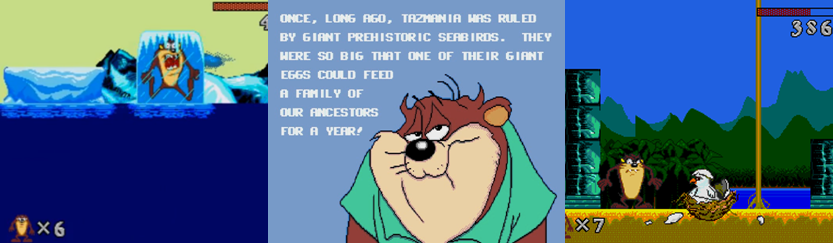
Taz-Mania really should have relied on in-game sprites for its story and cutscenes.

By far the most visually interesting levels are the Acme Warehouse and the Iceland, a stage you only visit once yet you’re forced to endure the drab, dark mine and confusing mess of the Jungle for what feels like an eternity. Taz-Mania employs some very simple motion comic-like cutscenes and text to tell its story that, while featuring bigger sprites and including a handful of cameos from the show, featured extremely limited animation and it feels like they could have been swapped out for in-game graphics and sprites like the game’s ending.

Enemies and Bosses:
Taz’s journey is obstructed by a handful of enemies, such as bats, frogs, crabs, and anthropomorphic stone heads and man-eating plants that try to take a bite out of you. Your most persistent and annoying obstacle (apart from the controls) will be the abundance of instant death traps and hazards such as pistols, fans, jets of flame, and bombs that dog you at every turn. In Iceland, you’ll also want to avoid landing in the freezing water as you’ll be frozen into a block of ice that will slowly drain your health unless you mash buttons to escape.

A couple of Taz’s adversaries from the cartoon show up as bosses, which is nice to see.

Fans of the cartoon may be slightly disappointed by how few characters carry over into the videogame and, yet, a handful of them do appear. In many levels, you’ll encounter a number of spear-wielding Bushrats, for example, and the first boss you battle is against Bull Gator and Axl in their trademark jeep. If you’ve played Sonic 2, it’s basically the same thing as the Emerald Hill Zone boss; simply hop over it to avoid being crushed and bounce or spin into the truck a few times and they’ll be done. Similarly, at the end of the Jungle level, you’ll encounter Francis X. Bushlad, a red-headed archer who simply shoots arrows at you in a predictable pattern and is easily bested by hopping on his head or spinning into him after jumping over his projectiles.

Taz also battles a giant plant and a stone version of himself.

You’ll also battle against a giant, man-eating plant that the instruction manual encourages you to throw a bag of “No Weed” at but I’m pretty certain I defeated it by simply spinning into it without much trouble at all. In the Ruins stage, one of the many Taz statues will come to life and you’ll have to fight a stone doppelgänger of Taz, who has all the same moves and abilities as you and is thus ridiculously easy to take out by jumping over his spin attacks and hitting him with your own when he’s standing still.
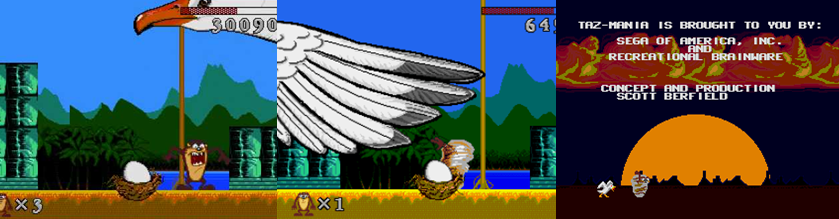
A giant seabird fiercely protects her egg in the finale but a few smacks to the head will dissuade her.

The finale of the game sees you navigating through a stone maze of sorts and then walking, almost completely unopposed, to the giant egg that is Taz’s goal. The egg is, of course, guarded by a giant seabird that attacks you with its humongous wings and talons, both of which are surprisingly easy to avoid. When the bird’s head pops into frame, simply spin into it a few times and you’ll win the day…only to be denied your dinner as the egg hatches and the hatchling mistakes Taz for its mother and amusingly chases him back home.

Power-Ups and Bonuses:
One thing Taz is known for is his insatiable appetite and, as a result, he’ll automatically pick up and eat objects and enemies that he comes across. This, however, can be detrimental to your health as Taz will swallow bombs if you’re not careful and get blown up in classic Looney Tunes fashion.

Aside from the bombs, you should eat everything you come across for health, points, and power-ups.

However, the rest of the time, Taz will eat all kinds of food, such as roast chicken, fruit, and water bottles but he’ll also eat smaller enemies to refill his health; you can also eat Taz icons for an extra life and a Star for a brief period of invincibility, though I found very few of these in my playthrough. Furthermore, as mentioned, you can eat chilli peppers to spit fire by pressing A for a short time.

Additional Features:
Taz-Mania comes with three different difficulty settings, Practice, Easy, and Hard but you won’t get to experience the full game on Practice and will receive the greatest challenge on Hard. If the game is too easy for you (which, honestly, it probably won’t be given how frustrating and unfair some parts of the game are), you can activate a number of…somewhat useful cheats by holding A, B, and C on both controllers on the title screen and pressing Start. After that, you can pause the game at any time and press A to refill your health, B to become permanently invincible, and A, B, and C to skip to the next level. The invincibility isn’t actually that helpful, though, as you need to activate it every time you die or start a new level and certain hazards (such as ingesting bombs and landing in water) will still damage you and all the invincibility in the world won’t protect you from an instant death trap.

The Summary:
I really enjoyed the Master System version of Taz-Mania; it was bright, simple fun and I was excited to finally get my hands on the Mega Drive version after being won over by screenshots of the game for most of my life. Unfortunately, Taz-Mania definitely looks a lot better than it plays and shines much more in still shots than it does in motion. The sprites, especially Taz, are great, very fitting, and cartoony but are noticeably lacking in animation frames and just a sense of character. Taz is one of animation, and Looney Tunes’, most expressive and bombastic characters but he’s depressingly pedestrian here. The emphasis on platforming, blind jumps, and unfair deaths instead of fast-paced action and adventure in the style of Sonic also seems to have been a mistake and, for all its colourful, cartoony appeal, Taz-Mania was an underwhelming and disappointing experience for me, especially compared to the technically inferior Master System version.

My Rating:

Rating: 2 out of 5.

Could Be Better

Were you a fan of Taz-Mania? How do you think it holds up today? Did the game’s controls, difficulty, and more finicky moments turn you off or is it one of your favourite 16-bit titles? Are you a fan of Taz and his cartoon? If not, which Looney Tunes character is your favourite and, by the same token, which Looney Tunes videogame is your favourite? Whatever your thoughts on Taz-Mania, feel free to leave a comment down below and be sure to check out my review of the follow-up!

Game Corner: Castlevania: Bloodlines / Castlevania: The New Generation (Xbox One)

CVBLogo

Released: May 2019
Originally Released: December 1993
Developer: Konami Digital Entertainment/Konami Industry Co. Ltd
Original Developer: Konami
Also Available For: Mega Drive, Nintendo Switch, PC, and PlayStation 4

The Background:
For the longest time, Castlevania was a series synonymous with Nintendo’s home consoles; handheld or otherwise, Castlevania was generally played on a Nintendo-branded product, meaning those of us (like me) who were playing SEGA consoles missed out on the chance to slay Dracula like those Nintendorks. Castlevania: Bloodlines (also titled Castlevania: The New Generation) changed that…or, at least, it would have except for the fact that Castlevania: Bloodlines is still one of the rarest and most expensive videogames these days. Luckily, the title was not only included as part of the Mega Drive Mini but is also available on the Castlevania Anniversary Collection, being only one of two 16-bit titles available in that collection following Super Castlevania IV (ibid, 1991).

The Plot:
It’s 1917 and the dark countess Elizabeth Bartley seeks to resurrect her uncle, none other than the evil Count Dracula. To facilitate his resurrection, she sends her minions across Europe to cause chaos and bloodshed, only to be opposed by two young vampire hunters: John Morris and Eric Lecarde.

Gameplay:
Castlevania: Bloodlines is a 2D, sidescrolling action/platformer and the first game in the Castlevania Anniversary Collection to not include one of the legendary Belmont family. Instead, players can choose to control either John Morris or Eric Lecarde right off the bat, making it only the second game in the collection to include another playable character and the only one where this character can be selected from the main menu rather than switched to mid-game as in Castlevania III: Dracula’s Curse (ibid, 1989). Choose John Morris and you’ll be in for a traditional Castlevania experience; like his forefathers, Morris wields the Vampire Killer to fend off the forces of evil. Morris isn’t quite as adept with the whip as Simon in Super Castlevania IV, though; he can only attack diagonally and upwards when jumping and can’t let the whip hang loose to freely aim it or block incoming projectiles. Similar to Simon, Morris can use his whip to swing across gaps but the mechanic is noticeably more clumsy and tricky to pull off here as, rather than swinging from hooks or metal rings, Morris dangles from ceilings and, while you can alter the length and speed of his swing, it’s far easier to just drop to your death than clear the gap.

CVBUltimate
Each character has their own screen-clearing attack.

Pick Eric Lecarde, though, and you’ll get a fresh, new Castlevania experience; Lecarde wields the Alucard Spear, giving him a greater attack range (if slightly reduced attack power). Lecarde can also attack in all eight directions, swinging his spear in a flourish to quickly attack enemies both in front and behind. Lecarde is also slightly faster and can leap higher thanks to his super jump, allowing him to reach platforms and levels Morris can’t, though I actually found him a bit clunkier and his attacks to be slower than Morris’s. Both characters have access to all the classic Castlevania sub-weapons (and even a few new ones), which are now used thanks to the acquisition of jewels rather than hearts. You have no idea how happy this makes me; like the hearts replenishing health in Castlevania: The Adventure (ibid, 1989), having jewels rather than hearts just makes so much more sense. Unlike Super Castlevania IV, there’s only one piece of meat available to replenish your health, but you can still upgrade each characters’ weapon by collecting orbs and even perform an “Item Crash” manoeuvre; this unleashes a more powerful super attack for each sub-weapon at the cost of a substantial number of jewels.

CVBPlatforming
Platforming is still a risky, tricky business…

Both characters are noticeably faster and more manoeuvrable than their predecessors but still fly backwards upon receiving damage, often to their doom. Thankfully, Castlevania: Bloodlines finally ditches the limit limit of the previous games and is light on the instant-death traps and spikes; often, when you jump or fall into water, your health will be slowly drained as you take damage (presumably to represent the character drowning) rather than immediately dying. That’s not to say that bottomless pits and instant-death spots aren’t present, or that you won’t find yourself just slipping or walking off a ledge when you meant to jump thanks to a slight (but glaring) delay in the game registering your button presses, or that you won’t be tasked with making some difficult jumps or awkwardly swinging across gaps while fending off projectiles or enemies. After two games focused more on rope climbing, the staircases are back! And, what’s more, it’s super easy to climb up and down them, and to stop and attack enemies while on them; there’s no sudden dropping to your doom here…unless you’re stupid enough to jump through the staircases. Like Super Castlevania IV, Castlevania: Bloodlines also uses the power of its 16-bit hardware to render some impressive graphical mechanics; you’ll jump up rotating platforms, traverse the Leaning Tower of Pisa as it sways alarmingly, and hop across floating platforms as the screen auto-rises and auto-scrolls.
CVBPlatforming2
Auto-scrolling is far less punishing than in other Castlevania titles.

Yes, auto-scrolling is a thing in Castlevania: Bloodlines but, for the most part, its far less stressful or annoying than in previous Castlevania titles; not only are there are more opportunities to save yourself from death and far less enemies to contend with, you also don’t die from touching the top of the screen, which is always useful. Castlevania: Bloodlines operates using a simple six-stage formula; you progress across Europe via an automated map screen and, in each unique area, you’ll face different platforming requirements, obstacles, enemies, and, of course, a boss. Of all the Castlevania games I’ve played for this marathon, Bloodlines has the most variety in terms of its graphics, stages, and enemies; rather than simply ploughing your way towards, or through, a gothic castle, you’re exploring a munitions factory or exploring the ruins of Atlantis. Some of these locations have been hinted at before, or served as inspiration for the aesthetic and atmosphere of the Collection’s other games, but nowhere have they been more fully-realised than in Castlevania: Bloodlines. That’s not to say that the game is flawless though (but then again, few games are). Sometimes, the game takes its new mechanics and features a bit too far, asking you to jump across platforms while upside down or your vision is distorted by mirrors. While this wouldn’t be too bad, the developers also threw in erratic Medusa Heads and constantly-respawning skeletal demons to make these sections more frustrating. It doesn’t help that I found myself just as likely to simply walk off a platform to my death or pointlessly hop in place rather than make a successful jump, or that you’re seemingly destined to jump right into the path of an enemy or projectile if they’re onscreen but, thankfully, these sections are few and far between and, for the most part, Castlevania: Bloodlines is a crisp and visually impressive experience.

Graphics and Sound:
Super Castlevania IV set a high standard for the series, dragging it out of the 8-bit era and into the glory of full-colour, arcade-style 16-bit graphics and Castlevania: Bloodlines only builds upon that foundation. Sprites aren’t as big as in Super Castlevania IV but they’re no less detailed for it; both Morris and Lecarde stand out from the game’s many and varied detailed backgrounds, popping out at you thanks to their unique colour palette and sprite art, and enemies are easily spotted and fantastically animated thanks to the game’s 16-bit engine. Simply put: there is a lot going on in this game’s stages. Not only do they slant or flip upside down, they’re also filled with some fantastic blood and gore as corpses and hanged victims litter the background of a lot of the stages.

CVBGraphics
Platforms crumble beneath your feet and spiral around you with detail and depth.

You’re also required to pull off some tricky jumps from rotating platforms, gears, and moving platforms and stages are filled with variety and teeming with life and danger alike. Konami borrowed a trick from another of their fantastic titles, the criminally under-rated Rocket Knight Adventures (ibid, 1993), for the water reflection effects seen in stage two, where (as in Rocket Knight Adventures) you’ll use the reflections in the rising and falling water to jump safely across the ruins of Atlantis. You’re also tasked with attacking the crumbling, ancient pillars to create new platforms and jump from others as they collapse beneath your feet and jumping from platform to platform up the swaying Leaning Tower of Pisa, which is a cakewalk compared to having to negotiate the small, annoying, rotating platforms in stage five. Given its more modern setting, you’ll also have to content with conveyor belts, pistons, massive gears, and razor-sharp circular saws in stage four, all of which only add to the game’s more steampunk-inspired aesthetic.

CVBGraphics3
The game mixes the traditional Castlevania gothic with a steampunk aesthetic.

The danger in the stages is compounded further by the way Bloodlines incorporates enemies into each stage; Minotaurs break parts of the marble pillars off and attack you with them in stage three, Fish Men leap from the depths below, Medusa Heads swarm around you as you hop from wooden platforms while the water level lowers, skeletons throw bones at you from behind a chain-link fence in stage four (they also jump over the fence and pop out of barrels without warning) and form (and re-form) from a bloodied water fountain in stage five, where skeletal monkeys wing at you from vines, tossing explosives at you and trying to cut you in half. The game returns to its gothic roots by the time you storm Castle Proserpina, the game’s final stage, which sheds the more steampunk-driven aesthetic for a traditional, stone castle familiar with anyone who has ever played a Castlevania before. All of these graphical and gameplay elements, while impressive, do lead to some noticeable slow-down in many areas of the game, however, which can (literally) drag down the otherwise thrilling experience Castlevania: Bloodlines has to offer. This is accentuated further by the game’s impressive and atmospheric soundtrack; the 16-bit games really did put all their power and benefits to the best use possible, allow this game to not only look fantastic but, thanks to Michiru Yamane’s fittingly gloomy soundtrack, sound amazing as well.

Enemies and Bosses:
Castlevania: Bloodlines offers one of the more diverse and varied bestiaries in the Castlevania Anniversary Collection; unlike many of the other titles, which simply recycled the same enemies with some minor tweaks or alterations, I felt like Bloodlines actually put some effort into really giving even the most basic enemies some life and vigour. Sure, all the usual suspects are here (skeletons, bats, ravens, the Pillar of Bones, etc) but even some of these have been spruced up to offer more of a threat. Skeletons wield swords, shields, and whips and there’s a variant that swings a massive axe and another massively annoying one that swings at you from vines. You’ll also encounter Harpies (who attack unevenly from the sky with spears), Mummies (who both float their bandages at you and try to whip you with them), man-eating plants, plants that screw up your controls (which is always annoying), mace-wielding barbarians who leap right in your face, and charging Minotaurs.

CVBSubBosses
You’ll have to get past some monstrous sub-bosses to progress.

In keeping with the game’s more steampunk-inspired aesthetic, you’ll also face a wide variety of knights; there’s knights that sprint at you, ones that brandish swords (as well as that old favourite, the Axe Knight), ones that fire arrows at you in an arc, and even ones with giant mallets, gatling guns(!), and on wheels! The level of detail in each enemy is impressive and even the most small and seemingly-insignificant enemy can be a threat thanks to their placement, attack patterns, and the limitations of Morris’s whip. Castlevania: Bloodlines also stands out by its use of sub-bosses; you’ll face the likes of Hellbound (a bloodied, half-skeletal beast that haunts the ruins of Dracula’s Castle), two large, armour-plated heavies (one with an axe, one with a mace), sentient faces brought to life by some kind of poltergeist and even a Castlevania custom, Frankenstein’s Monster. Some of these are, honestly, a bit more creative and visually interesting than the stage’s actual bosses, such as the giant suit of armour that barely poses much of a threat at the end of the first stage.

CVBBosses
Some bosses are better than others but they’re all visually impressive.

Things pick up considerably once you reach stage two’s Golem, however; in this fight, you have to first whittle away chunks of the creature’s mid-section before you can attack its vulnerable head and actually do some real damage, all while dodging falling rocks from the ceiling. Stage three’s Gargoyle can also be a bit of a pain without the right sub-weapon (…unless you use Lecarde) as it buzzes around your head, trying to whip at you with its rock-like tail, all while the top of the tower you’re on (and the background) excitingly rotates. The mess of gears and cogs that acts as stage four’s boss is probably the wildest and most ill-fitting of all the Castlevania bosses I’ve fought so far; don’t get me wrong, I love a good bit of steampunk but this…thing…was not only kind of boring to fight (despite its multiple forms and attacks) but also needlessly frustrating. The Princess of Moss from stage five is marginally better but ridiculously easy even after she transforms into a giant…moth…?

CVBReaper
You’ll have to defeat all the previous bosses again before you can face Death.

Once you get to Castle Proserpina, the shit really hits the fan as you have to face a gauntlet of sub-bosses and bosses, each with different forms and attacks at their disposal. First, you’ll battle the Grim Reaper once again; this time, Death surrounds himself with tarot cards and, as you attack, you’ll either spawn a whole mess of health-restoring food, get attacked by a fireball, or be warped to one of the game’s previous bosses. Luckily, these guys are much weaker the second time around but, once you’ve defeated them again, you’ll have to face Death himself once again. Fortunately, Death isn’t anywhere near as formidable or daunting as in previous titles; he glides around above you throwing sickles at you, tries to rush you with his scythe, and sits in the corner throwing his scythe like a razor-sharp frisbee but all of these attacks are easily dodged or avoided and he’ll go down pretty easily (especially if you have the axe). After that, you’ll battle Medusa; this isn’t like the floating, snake-haired head from previous titles, though. This Medusa is a horrific, snake-like creature that blasts at you with two different types of fireball, tries to whack you with its tail, and then awkwardly crawls towards you to try and throttle you. Each attack is predictable and relatively slow, meaning you can deal massive damage even while the Medusa is attacking, to say nothing of when she shuffles towards you like a slug. Once she’s dealt with, you’ll have to fight Elizabeth Bartley herself; ol’ Liz likes to teleport from one side of the screen to the other and throw a fireball at your head and, if you don’t damage her enough times (the number of hits is determined by the different elemental orbs she summons, though these can’t hurt you), she’ll unleash a powerful attack upon you. This shouldn’t happen, though, as it’s ridiculously easy to duck under her one projectile and hit her no matter which side she choose to spawn on, meaning she will fall without much bother at all.

CVBDracula3
Dracula’s final form is intimidating but his attacks are predictable and easy to dodge.

Finally, you’ll face Dracula himself who, despite your efforts, once again awakens from his coffin. Initially, Dracula attacks very similar to Super Castlevania IV, teleporting in through a column of light and tossing fireballs at you with a sweep of his cape. However, his teleport cannot damage you and, while you only have a small window to hit his head, it’s pretty easy to land a hit and still dispose of his projectiles without taking a hit. After you’ve drained his health, Dracula transforms into a floating, cloaked sorcerer form and darts around the screen above your head in an inconsistent pattern. Being as he’s often just out of reach, this can be tricky with Morris as jumping to hit Dracula may cause you to make contact with him and take damage, so it’s best to keep a safe distance and use the axe. Dracula blasts two fireballs at both sides of the screen in this form (these travel down the screen and across the floor and can be tricky to avoid thanks to the game’s janky jumping physics) and drops columns of energy into the arena that can deal massive damage if you’re not standing in a safe area. Still, this form isn’t especially difficult and I found it more than doable to destroy him before he could unleash this more devastating attack. Once bested, Dracula transforms into his largest and more horrific form yet: a massive, Devil-like creature with a fanged stomach, huge devil horns, wings, and claws. As intimidating as it looks, though, this final form isn’t much of a threat; it lumbers around in a clear and identifiable pattern, first throwing sickles at you in a spray, then trying to roast you with fireballs that are easily ducked (in the far corner) or jumped over, and, finally, spewing bones at you. These can be tricky to avoid if you’re caught on the wrong side but there’s a clear gap between them you can dart into and, even with Morris’s difficulty in attacking upwards and diagonally, it isn’t long before Dracula is done in once more. What makes Dracula so difficult this time around is the fact that you have to face all three forms in a gauntlet, with no healing in between and only the health, ammo, and weapons you have on you.

Power-Ups and Bonuses:
All is standard in Castlevania titles, you can upgrade the Vampire Killer and the Alucard Spear to increase their reach and damage output. When you fully upgrade the Vampire Killer, it takes on a glowing, plasma-like appearance that looks more like energy or lightning than the usual fire, while the Alucard Spear glows with an ethereal magical power. Sadly, though, you’ll lose an upgrade when you take damage, meaning that you may be left with you bog-standard weapon by the time you reach the stage boss. As always, this means relying on the game’s items to help turn the tide when things get rough; you can grab 1-Ups on the rare occasions that they appear, briefly become invincible, and wipe out all onscreen enemies and grab one of the three sub-weapons: the axe (which travels in a high arc and is perfect for aerial enemies and bosses whose weak points are out of reach), the Holy Water (which travels along the ground in a fiery path), and the boomerang (here an actual boomerang rather than clearly being a cross, this time being razor sharp and travelling high and low to return to you, which is perfect for dealing additional damage). Additionally, as noted, you can perform an “Item Crash” with each of these weapons and each character has a specific “Ultimate Item” they can pick up: Morris has the Water Dragon (which fills the screen with a powerful, homing orb) and Lecarde has the Thunderbolt Spear, which unleashes a torrent of thunderbolts and lightning.

Additional Features:
Castlevania: Bloodlines features thee difficulty levels (Easy, Normal, and Expert) and the ending you get depends on which character you use and which difficulty setting you pick. Finishing the game on Easy takes you straight to the credits, while Normal only gives you a brief glimpse of your character’s ending and challenges you to try the game on Expert in order to earn a more complete ending. The game also employs a password system to allow you to return to the stage where you left of, jump to different stages with different characters, or start the game with extra lives. Castlevania: Bloodlines has two Achievements tied to it; you get one for beating the game as Morris and another for beating it as Lecarde. With the features available in the Castlevania Anniversary Collection you can also save your progress at any time, apply different display filters and effects, and play with one of three different frames around the game screen as with the other titles available in the collection.

The Summary:
Castlevania: Bloodlines is easily one of the top three titles available in the Castlevania Anniversary Collection; you should purchase this collection for this game alone and see the others as a bonus as it really is a tight and well-crafted videogame. Despite some issues with slipping off platforms and mastering Morris’s awkward whip-swing mechanic, the controls are smooth and generally responsive; Morris and Lecarde both move at a far faster pace than their predecessors and, between the two of them, offer as much versatility as seen in Super Castlevania IV. Bolstered by its incredibly detailed graphics and atmospheric soundtrack, Castlevania: Bloodlines is probably the darkest and most foreboding title collection thanks to the inclusion of blood and gore. This really lends to the game’s atmosphere and the franchise’s tendency towards macabre horror that it is so often stunted by the localisation and restriction these early Castlevania titles had to endure. The steampunk aesthetic is married with the series’ trademark gothic styling which, while it does include in some weird and ill-fitting enemy designs, results in some amazingly detailed sprites and environments and makes Castlevania: Bloodlines a solid successor to Super Castlevania IV.

My Rating:

Rating: 5 out of 5.

Fantastic

What did you think of Castlevania: Bloodlines? How do you think it compares to Super Castlevania IV? Were you lucky enough to own an original copy of this game back in the day or did you pay out through the nose to get a copy of it only to find it much more affordable in this collection? Whatever your thoughts on this title, and other Castlevania videogames, leave a comment below and check out my other Castlevania reviews.

Game Corner: Castle of Illusion Starring Mickey Mouse (Mega Drive)

GameCorner
CastleOfIllusionMDLogo

Released: November 1990
Developer: SEGA AM7
Also Available For: Game Gear and Master System

The Background:
As I’ve mentioned before, Disney had quite the reputation for licensing their characters for top quality videogames back in the nineties. These days, licensed videogames are often frowned upon but, back then, Disney’s movies and characters made for some of the most enjoyable action/adventure platformers on the SEGA Mega Drive and Super Nintendo. Mickey Mouse, Disney’s beloved mascot, received quite a few videogames for the Mega Drive, each one an enjoyable 2D romp capturing the whimsy and aesthetic charm of Mickey’s character and animated adventures. Castle of Illusion Starring Mickey Mouse paved the way for Mickey’s subsequent adventures, both solo and alongside Donald Duck, who also had his fair share of adventures on 8- and 16-bit hardware back in the day. So influential is Castle of Illusion’s reputation that a remake was released in 2013 for PlayStation 3, Xbox 360, PC, and various mobile platforms. Until now, this was the only version of Castle of Illusion I had played; while that was quite a while ago, I remember it being a fun little 2.5D romp so, when I started planning on expanding my Mega Drive library, I knew that Castle of Illusion would have to be on the list to see how the title holds up.

The Plot:
Mickey and Minnie Mouse live peacefully in Vera City but when Minnie is suddenly abducted by the evil witch Mizrabel, Mickey must journey into the witch’s Castle of Illusion to recover the seven Gems necessary to defeating Mizrabel and stopping her from switching bodies with Minnie.

Gameplay:
Castle of Illusion is a 2D, sidescrolling action/platformer in which players must guide Mickey through six Levels, each hidden behind doors within the titular Castle of Illusion. Rather than using a traditional map screen or a hub world, or simply transitioning from one level to the next, Mickey travels to each of the game’s Levels by passing through enchanted doorways in Mizrabel’s castle, which is a nice change of pace from simply navigating a basic map or automatically dropping into a Level.

CastleOfIllusionMDAttacks
Bounce off enemies with Mickey’s butt or toss items at them.

Mickey has two main forms of attack to defend himself against Mizrabel’s many and varied minions; he can either grab an apple or a marble and throw them at his enemies or bounce on their heads with his rump. Throw projectiles can be useful but, as a lot of enemies are shorter than the projectiles travel, you’ll most likely be making use of Mickey’s butt to defeat your enemies. However, if you don’t hold down the jump button, Mickey will take damage, which is annoying, so it’s worth holding it down every time you make a jump in case an enemy swoops beneath you. When you land on an enemy’s head, you can bounce from one to another to make short work of multiple enemies, clear larger gaps, or reach higher platforms. While Mickey’s arsenal of moves isn’t exactly the deepest, he makes up for it by controlling extremely well for the most part. There are times, however, when either he feels a little slippery or the surfaces he is standing on are oddly slippery and you’ll find yourself sliding off an edge and to your death or accidentally slipping into an enemy or down a bottomless pit. While instant death traps and obstacles aren’t too obtrusive, they are present in some of the worst areas, such as a section where Mickey must jump from small platforms while waterfalls threaten to drag him down a bottomless pit and to his death.

CastleOfIllusionMDSwing
Swinging from ropes can be a tricky mechanic.

As standard, Mickey has a fairly decent, semi-floaty jump that takes him quite far and far the longer you hold the jump button down and depending on how much momentum you have. His walk is quite sluggish, though, and he doesn’t really speed up beyond much of a gentle stride so the game’s emphasis is more on platforming and mild exploration and puzzles rather than fast-paced, high-speed action. Mickey can duck to avoid projectiles and enemies as they jump but, while he can swim without fear of drowning, he can’t actually attack any enemies whilst underwater, leaving him vulnerable. Certain Levels task Mickey with grabbing on to ropes, vines, and other hanging apparel; I found grabbing these to be troublesome, at best, as more often than not Mickey simply leap through the rope but, once you grab on, you can swing from rope to rope with the added bonus of automatically dispatching any airborne enemies as you swing along.

CastleOfIllusionMDExplore
Explore Levels to find items and bonus areas.

Mickey’s health is represented by a five-point power bar; Mickey loses a point every time he takes damage and loses a life every time his health is fully depleted by can replenish a health point by grabbing a Star item. He can earn an extra try by either grabbing some Mouse Ears or collecting first 40,000 points and then 50,000, awarded by defeating enemies, grabbing gems, and tallied up after you complete each Level. Some Levels require Mickey to do a bit of exploration; in Toyland, for example, you need to find a key in order to progress while in the Storm, you have to contend with a maze-like cycle of water jets and find the right path to the Level’s exit. While exploring the Library, you can jump into tea cups and swim through a few small bonus areas to grab extra projectiles or gems, and you’ll sometimes have to run away from a large rolling obstacle or try to not be swept away by rushing water.

Graphics and Sound:
Though later surpassed by its later 16-bit successors, Castle of Illusion is still a gorgeous little title; all the sprites and backgrounds pop with bright, colourful art and feature some interesting animations and elements. When left idle, Mickey has a charming little animation where he sways his hips to the game’s various whimsical tunes and he always looks full of life and vigour as he strolls, hops, and bounces along. His enemies aren’t quite as dynamically rendered but they’re interesting and wacky enough to fit the themes of the game’s various Levels.

CastleOfIllusionMDGraphics
Levels are varied and full of life and obstacles to overcome.

As you travel through the castle’s enchanted worlds, you’ll journey through a forest, a toy box, a giant library, and the castle itself. Each Level has various other layers to it, meaning you’ll hop across leaves and through spider’s webs, leap through a sweet and chocolate world, get stuck in sticky jelly, and even traverse a pyramid-like structure where damaging water threatens to wash you away. Once you reach Mizrabel’s castle proper, you’ll have to contend with far more obstacles and face your greatest challenge as giant boulders try to crush you, bridges crumble beneath you, and Mickey must leap from cogs and gears and swinging pendulum’s in the castle’s clock tower.

Enemies and Bosses:
Being that the game is, essentially, a jaunt through a magical, fairytale-like setting, Mickey comes up against a whole host of enemies in his journey that vary from the painfully generic to the bizarre. You’ll go from butt-bouncing on sentient mushrooms, spiders, toy soldiers, bats, and chubby little bookworms to contending with juggling clowns on unicycles (which race at you once they’re riders are defeated), skeletal fish, and extremely annoying, bouncing letters of the alphabet.

CastleOfIllusionMDBosses
The game’s bosses aren’t much of a threat.

At the end of each Level, Mickey has to face a large boss, known as a Master of Illusion. These range from an angry tree that tries to drop acorns on your head, a jack-in-the-box that tries to punch you with boxing glove, a totem pole that can only be knocked down by butt-bouncing on the enemies it spews out, and a giant sweet dragon.

CastleOfIllusionMDWitch
Stay away from Mizrabel’s attacks and you’ll soon have Minnie back safe and sound.

After defeating the Masters of Illusion and getting through Mizrabel’s castle, Mickey has to face off with the witch herself at the top of her castle, with Minnie held captive in a magical balloon. Fittingly, Mizrabel assumes the form of a youthful sorceress for the battle, which sees Mickey having to keep to the high ground to avoid the witch’s swirling spirits and butt-bounce on her head in the small window of vulnerability she has. While none of these boss battles are particularly difficult, as they all stick to a very predictable attack pattern, there’s not a lot of call for Mickey’s projectiles during these fights and even Mizrabel is bested with relative ease simply by staying on the upper platforms.

Power-Ups and Bonuses:
There’s not a lot on offer here apart from the standard trope of being awarded an extra life when you collect enough points. You can, however, pick up bags that will gift you with a whole bunch of projectiles to throw and use your butt-bounce to reach higher and out of reach areas to find additional health, gems, and ammo but, apart from that, there’s no much else available to expand your health or arsenal.

Additional Features:
The game has three difficulty modes: Practice, Normal, and Hard. In Practice mode, you start with full health and won’t have to face any bosses and only need to collect three Gems and can continue four times after you exhaust all your tries but you won’t get the game’s true ending; in Normal and Hard, you start with three or two health points, respectively, and have to find all seven Gems and can continue two times in Normal but have no opportunity to continue in Hard mode; you also lose all items you’re carrying after losing a try, adding a level of difficulty to the game and requiring you to exhibit more skill than in its 8-bit successor.

CastleOfIllusionMDConclusion2

The Summary:
It’s easy to see why Castle of Illusion is so beloved; it’s a fun, charming little adventure that looks and feels just like you’re playing a cartoon. Mickey has always been dropped into this bright, colourful fairytale adventures, even when he made the transition to 3D titles, and these worlds are surprisingly fitting for Disney’s cheeky little mascot. Offering just the right level of challenge to keep you coming back for more, Castle of Illusion set the standard for Mickey’s subsequent 8- and 16-bit adventures, most of which deviated very little from this game’s core gameplay and mechanics. It might not be the best action/adventure platformer on the Mega Drive, or the fastest or most action-packed title, but it’s still a charming, whimsical romp that looks, plays, and sounds fantastic and is well worth your time.

My Rating:

Rating: 4 out of 5.

Great Stuff

What did you think about Castle of Illusion? Where does it sit in your hierarchy of 16-bit Disney games? Did you ever play the remake from a few years ago? How do you think it compares to the original? Whatever your thoughts on Castle of Illusion, and Disney and Mickey games in general, drop a comment below and share your thoughts.

Game Corner: Global Gladiators (Mega Drive)

GameCorner
GlobalGladiatorsLogo

Released: 1992
Developer: Virgin Games USA
Also Available For: Amiga, Game Gear, and Master System

The Background:
You…you’ve heard of McDonald’s, right? The highly commercialised fast food chain founded in 1940 that, despite having the best milkshakes around, is (in my opinion) subpar to Burger King. Oh, sure, the Happy Meals are fun (especially back in my day, when they had far better toys and treats) but Burger King does this fantastic cheese and bacon burger that has the crispiest bacon, the gooiest cheese, and their meat actually tastes like it’s real meat and not some mass produced, watered down piece of off cuts. Anyway, McDonald’s was such a powerhouse back in the day that they ended up being behind a handful of videogames, including the unsubtly titled M.C. Kids (Various, 1992), a shameless rip-off of Super Mario Bros. 3 (Nintendo EAD, 1990), introduced gamers to the titular “M.C. Kids” themselves, Mick and Mack, who had to travel around a magical McDonaldland collecting the restaurant’s iconic Golden Arches and helping out their now long-retired mascot, Ronald McDonald. Although released in the same year, the M.C. Kids saw a dramatic redesign in Global Gladiators, a pseudo-sequel that I actually first played on the Amiga and which carried a heavy emphasis on recycling and environmental responsibility. Both characters slimmed down, stuffed chewing gum into their mouths, armed themselves with Super Soakers goo-shooters, and, since “attitude” and being “cool” was all the range for platformers after the release of Sonic the Hedgehog (Sonic Team, 1991), were reinterpreted as hip pre-teens who cared for nothing more than comic books, McDonald’s, and…protecting the environment. Because, yeah, sure, me and my friends were all about environmental awareness…especially when we ate at McDonald’s…

The Plot:
One day, while reading a Global Gladiators comic book in McDonald’s, Mick and Mack are magically transported into the comic’s pages by Ronald McDonald. Armed with goo-shooters, they journey across four worlds fighting against pollution and to protect the environment, all while collecting McDonald’s arches.

Gameplay:
Global Gladiators is a 2D, sidescrolling action/platformer with strong run-and-gun elements. From the “Options” menu, you can select one of three difficulties and also choose to play as either Mick or Mack. Functionally, they are exactly the same, but palette swapped (Mack is the Caucasian kid…), so it really doesn’t matter which one you pick; the game is only made for one player as well, which is really weird considering even Michael Jackson’s Moonwalker (SEGA, 1990) had a turn-based two player mode…and that only had one playable character!

GlobalGladiatorsControls
Global Gladiators has two speeds: clunky and slow and uncontrollably fast!

Anyway, despite being young kids in the prime of their lives (and probably hyped up on McDonald’s food), Mick and Mack seem to have some difficulty in deciding whether they want to be fast, loose, and slippery or slow, heavy, and clunky. They start off at a painfully slow walk that soon turns to a trot and, eventually, a full-on sprint the longer you hold the direction; the faster you go, the more momentum you carry when you jump and the more likely it is that you’re going to crash head-on into an enemy. Luckily, the game’s jump is very useful; your character leaps quite high and you can control their direction in mid-air, but the game’s fast-paced, shoot-‘em-up action is mired in the fact that the titular Gladiators either plod clumsily forward and slip off of platforms or go rocketing away straight into a bottomless pit or a bed of spikes.

GlobalGladiatorsAttack
Blast enemies with goo but watch out for that recoil…

Each character wields a goo-shooter, which sprays some unidentified substance that generally eliminates enemies in one hit. The goo travels in a slight arc and you can only shoot in the direction you’re facing, meaning you’ll have to jump and shoot to hit higher enemies and duck and shoot to hit lower enemies. Considering the screen immediately scrolls down when you duck, this can make it difficult to properly aim at your target but, for the most part, the goo is quite a useful tool in your limited arsenal…provided you’re not standing too close to an edge. When you fire the goo-shooter, your character is knocked ever so slightly backwards thanks to the weapon’s…recoil, I guess?…which can be enough to nudge you into a pool of water or toxic waste, and to your death. If you shoot whilst running, this same recoil will stunt your momentum, which can be useful for avoiding damage but, more often than not, simply killed my momentum when I actually wanted to sprint ahead.

GlobalGladiatorsPoints
The more Golden Arches you collect, the more bonus points you can score at the stage’s end.

As you battle your way through the game’s handful of levels, you’ll collect different coloured Golden Arches; if you’re thinking that you need to collect a certain number of these to beat the game’s worlds, well, you’re in luck because you don’t. You are free to jump, sprint, and blast your way to each world’s goal (literally Ronald waving a flag) without collecting any Golden Arches, but you’ll miss out on the points they provide and the bonuses you get from collecting them at the end of the stage. If you collect seventy-five Golden Arches, you get to take on a Bonus Stage (which you can also practise from the game’s “Options”), which sees you avoiding anvils and recycling materials for bonus points.

GlobalGladiatorsItems
Grab a Continue Arrow or a Heart to increase your odds.

Global Gladiators only has four worlds but, like Sonic, each world has three stages, each of which is surprisingly big. There are many paths to take in each world; the higher path is usually fraught with more enemies while the lower path has pits and other instant-death traps (spikes, water, toxic waste, and bottomless pits). Continue Arrows are dotted around each world’s map, allowing you to respawn further into the stage when you die and, even better, you won’t lose the Golden Arches and points you’ve collected and the enemies you’ve destroyed stay dead; no respawning enemies here! Mick and Mack have a health meter at the bottom of the screen, which is represented as an arrow (conveniently, this arrow is also pointing right, which is the direction the goal is located). If you run into an enemy, they’ll be destroyed (which is good) but you’ll take damage (which is bad); most enemies spit or throw projectiles at you, meaning you’ll have to work around the game’s clunky controls to avoid being hit, and some stage hazards can result in instant death. Luckily, though, you can pick up a Heart to replenish your health and, like the Continue Arrows, these aren’t exactly plentiful but also aren’t exactly rare, either.

GlobalGladiatorsItems2
You’ll need those 1-Ups thanks to the abundance of instant-death hazards.

As with seemingly every single videogame of the time, you’re also working against a clock; when the timer reaches zero, you lose a life, but you can extend your time by picking up a Clock and, if you’re really lucky, you can grab a 1-Up or  earn an extra life by accumilating a high enough score. You can also find Continue Coins that will allow you to continue playing after all of your lives are exhausted, which is easily done considering the amount of enemies and hazards packed into the game’s worlds. Mick and Mack travel to three worlds in Global Gladiators: Slime World, Mystical Forest, Toxi-Town, and Arctic World. Each is themed around some kind of environmental message; the first, obviously, deals with pollution and the cleaning up of toxic waste, the second is deforestation, the third is centred around industrialisation and industrial pollution (kind of ironic given that McDonald’s restaurants wouldn’t be the powerhouse they are without industry…), and the fourth is, I guess, commenting on global warming? Honestly, it kind of falls apart the further you get away from Slime World, where you’ll battle slimy monsters and even destroy polluting machines; you might think these machines are crucial to clearing the world’s stages but they’re not and similar mechanisms don’t seem to appear in other worlds and, by the end, it just seems like you’re blasting generic enemies with your goo while hankering for a second-rate cheeseburger.

Graphics and Sound:
Global Gladiators is a visual treat; the game immediately blasts you right in the face with bright, colourful, well-animated graphics and sprites when you teleport into Slime World. While the game’s other stages aren’t quite as visually appealing in their presentation, Slime World does a great job setting the tone for this game; stages are dense, packed with colours, and different layers that can make other worlds, like Toxi-Town, a bit difficult to navigate as, not only can you take multiple paths, your way is often obstructed by foreground elements. Stages do change it up by changing season or colour palette as you progress, and there are often hidden paths or invisible blocks to jump across to reach more Golden Arches, Clocks, Hearts, or 1-Ups, which encourages exploration and experimentation.

GlobalGladiatorsGraphics
The game is bright and colourful, if a bit cluttered at times.

Sprites are large and full of life; Mick and Mack both incessantly chew on gum when left idle and sprint and hop around with a fluidity that makes it feel as though you’re playing a cartoon or comic book. The game’s enemies are equally large and well-animated but often blend in with their surrounding; Slime World, for example, is largely covered in green slime that is the same colour as the stage’s enemies and many of Mystical Forest’s stationary creatures tend to merge with their backgrounds.

GlobalGladiatorsCool
When a character describes themselves as “Awesome”, you know they’re awesome!

As soon as you shove in the cartridge, Global Gladiators blasts your ears with a loud, rap-inspired main theme that also doubles as a stage theme by the time you reach Arctic World. Luckily, the other worlds have themes that fit their aesthetic rather than being a distorted mess of synthesised sound bites and “hip” music. As you collect points and bonuses, your character will also spew out exclamations such as “Awesome!” and “Cool!” just to remind you that these environmentalists are radical and have attitude. Remember how Sonic just was cool and hip without having to literally shout about it (in the videogames, at least)? That is how you know a character is cool, not yelling it out while sporting a knock-off Super Soaker and saving the environment on behalf of McDonald’s.

Enemies and Bosses:
Each of Global Gladiators’ worlds is filled with enemies unique to their theme; there’s no recurring enemies here, which is nice, and each world has slightly different obstacles to overcome. In Slime World, for example, most of the enemies are globs of toxic waste that spit projectiles at you but, in Arctic World, you’ll contend with more aerial enemies and be navigating more platforms rather than dodging projectiles. However, Global Gladiators loses some of the distinctiveness of its enemy design once you get to Mystical Forest. From then on, you’re battling the likes of sentient axes, man-eating plants, living fireballs, and (of course) bats. Luckily, these appear alongside such weird creatures as garbage-throwing anthropomorphic trashcans, log-throwing beavers, and sliding polar bears.

GlobalGladiatorsBoss
Global Gladiators features a grand total of…one boss…

What isn’t so great, however, is the fact that Global Gladiators features a grand total of one boss. Yep, four worlds, with three stages each, and you’ll only battle a boss at the end of Arctic World…and it’s two angry faces set into blocks of ice, one on the left-side of the screen and one on the right. Each only attacks you when it’s on screen, and even then all they do is spit bats at you or cause icicles to fall from the ceiling. The most difficult part of this boss is not falling into the instant-death spikes and actually hitting their weak spot, which is their just in-reach eyes; you also have to defeat each face in turn and you’ll know when you’ve done it because the game abruptly ends and wraps up its paper-thin story.

Power-Ups and Bonuses:
Disappointingly, Global Gladiators doesn’t feature any power-ups at all. There’s no speed up, no invincibility, no way to improve your goo-shooter, and no smart bomb to clear out all onscreen enemies. Honestly, I find this very surprising considering when it was released but, when you’re playing Global Gladiators, the best you’ll get are extra lives, extra points, extra time, and the chance to play the Bonus Stage if you collect enough Golden Arches…where you can earn more points and extra lives.

Additional Features:
There aren’t any. Oh, sure, you could play through the game as Mack instead of Mick, or take on one of the other difficulty settings but there’s very little incentive to do this beyond attaining a better high score and, I guess, bragging rights. You can input a few button combinations from the pause menu to gain one extra life or skip the stage you’re on, but I wasn’t able to access the supposed cheat menu so I can’t say if there’s more to be gained from blasting through Global Gladiators with cheats enabled.

GlobalGladiatorsConclusion

The Summary:
Global Gladiators is quite a cumbersome little title; the controls are very stiff and awkward but, once you get used to them and the way the game handles its momentum and physics, it’s a lot of fun. The game is gorgeous to look at, well animated, full of life and vigour, and has a very catchy and upbeat soundtrack but it can’t be denied that there are better colourful run-and-gun platformers from that time available. It’s easily the best of the McDonald’s-branded videogames, though, thanks to its more action-orientated approach; perhaps if it were longer, had more bosses, and allowed (at least) a turn-based two-player mode it would have been better but, as it is, it’s a decent enough way to waste an hour or two and nothing more.

My Rating:

Rating: 2 out of 5.

Could Be Better

Did you ever play Global Gladiators? Which of the two titular characters was your favourite? Where do you rate it in the surprisingly long history of McDonald’s videogames? When you visit McDonald’s, what do you tend to order? Do you also prefer Burger King? What is your favourite Mega Drive title? No matter what, drop a comment below.

Game Corner: RoboCop Versus The Terminator (Mega Drive)

GameCorner
RCvTLogo

Released: May 1994
Developer: Virgin Games USA
Also Available For: Game Gear, Master System, Super Nintendo Entertainment System, and Game Boy

The Background:
One of the greatest things about comic books published in the nineties was that the sky was, seemingly, the limit for plots, crossovers, and all kinds of stories to be told. Thanks to Dark Horse Comics snapping up the rights to some of the biggest science-fiction/horror franchises of the time, we got to see not only the likes of Aliens vs. Predator but also the cybernetic clash you always wanted to see in a movie but never got, RoboCop Versus The Terminator (Miller, et al, 1992). Given that the comic was written some time before Frank Miller flushed his reputation down the toilet with The Dark Knight Strikes Back (2001 to 2002), the RoboCop Versus The Terminator was relatively well-written, action-packed fun. The general premise was that RoboCop’s artificial intelligence (A.I.) formed the basis of the world-killing Skynet, which sent Terminators back through time to protect him and ensure its survival. Cue a time-line hopping, reality-bending story that sees RoboCop reduced to his digital consciousness, construct a fully robotic body, and travel back in time to destroy Skynet once and for all. It’s a pretty mental comic but, like Aliens vs. Predator, a fantastic concept that, apparently, had enough legs to warrant a videogame released on a number of consoles. I had owned and played the Master System version for years but, once I set my literal come corner up in my cabin, I knew that I had to track down the superior Mega Drive version.

The Plot:
Unwittingly responsible for the creation of Skynet, RoboCop must battle from the streets of Detroit, to the offices of Cyberdyne, to a war-ravaged future eradicating the Terminator threat and freeing hostages as he goes to ensure a future free from Skynet’s influence.

Gameplay:
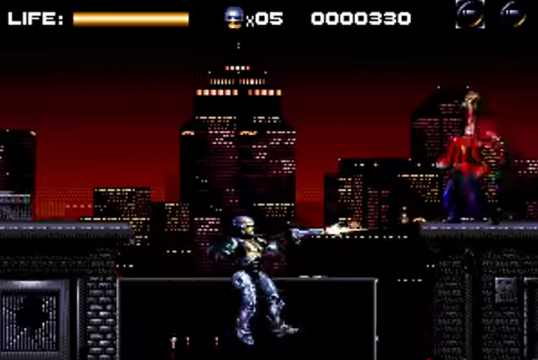
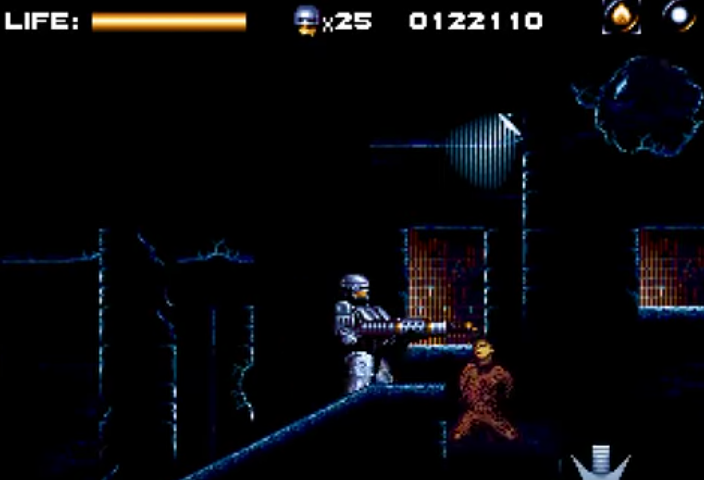
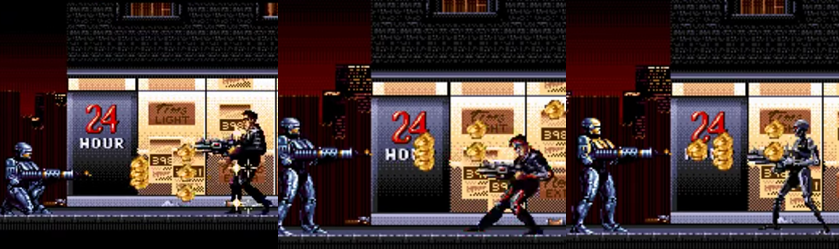
Like the majority of videogames based on the RoboCop (Various, 1987 to present) and Terminator (Various, 1984 to present) movies, RoboCop Versus The Terminator is a side-scrolling action shooter with light platforming elements. Unlike the Alien vs. Predator (Capcom, 1994) arcade game, this is a strictly one-player experience that sees the player control RoboCop, who must blast his way through about ten levels taking out the likes of regular street thugs and Terminator alike. As much as I love RoboCop, he’s always a terrible character to control and play as; even in the excellent RoboCop (Data East, 1987) arcade game he was a slow, plodding hunk of metal and it’s more of the same here. RoboCop lumbers his way through levels at a steady pace, hopping half-heartedly to platforms (and, amusingly, monkeying his way across lines and pipes) and struggling to dodge incoming fire. While this is obviously a realistic way to portray RoboCop (who, despite being a massive efficient combat shooter, has never been the most versatile of sci-fi cyborgs), it does mean you can’t just plough ahead guns blazing.

RCvTJump
RoboCop has a real weight to him.

Instead, it’s best to hang back and keep an eye on enemy projectiles, ducking and hopping out of the way as best you can considering RoboCop’s massive hit box. Thankfully, many of the game’s environments are destructible and will yield all kinds of goodies, from baby food that will restore Robo’s health to extra lives and weapons. There are also loads of secret rooms to be found that hold similar rewards, encouraging exploration. RoboCop is armed with his trademark Auto-9 handgun and can fire in multiple directions; this alone is more than enough to take out most of the enemies he’ll come up against but, if you get up close to enemies, you can also punch them, and you can acquire bigger, better weapons as you make your way through the game’s levels. You can switch between these with a button press but, once your health is drained and you lose a life, you’ll lose one of your weapons until you return to the default Auto-9. the good news is that RoboCop can take a fair amount of damage and will return to action right on the spot where he fell, but the bad news is that it doesn’t take much to drain Robo’s health and there are a few occasions where environmental hazards (like vats of toxic waste or flaming pits) will instantly kill RoboCop.

RCvTHostages
Rescue hostages to refill health and score points.

While RoboCop is generally given simple objectives (like cleaning up the streets or destroying the Terminator threat), some levels will see him having to rescue a number of hostages. Upon being rescued, a portion of Robo’s health will be restored, which is helpful; also helpful is that it doesn’t appear to be a requirement to clearing the level to rescue these hostages; when you see them, you can touch them to rescue them but I never reached the end of a level and was told I’d failed or was forced to go back and save any hostages I’d missed, so it’s more about gaining health and points than a level-clearing obligation. Yes, like pretty much every videogame ever made, there’s a nice little score tally at the bottom of the screen that’ll increase as you take out enemies, rescue hostages, and collect items. Earn enough points and you’ll gain an extra life, which you’ll need as the game ramps up in difficulty as you progress from the thug-infested streets of Detroit to the robot-infested headquarters of the killer A.I. known as Skynet. It’s around this point that you’ll struggle a bit with RoboCop’s controls, hit box, and clunkiness; Terminators of all shapes and sizes (from the traditional T-800s, to the robotic endoskeletons, to spider-like drones and wall-and-ceiling-mounted cannons) will unleash a hailstorm of projectiles your way and you’ll need all of your best weapons and skills to make it through the game’s bullet sponge of a final boss.

Graphics and Sound:
Coming off of the Master System version (which, honestly, isn’t too and compared to some Master System ports), RoboCop Versus The Terminator boasts some gorgeous in-game graphics. RoboCop and his various enemies are big, fantastically-detailed sprites; while this does mean they have large hit boxes, it makes for some impressive, arcade-quality graphics.

RCvTBlood
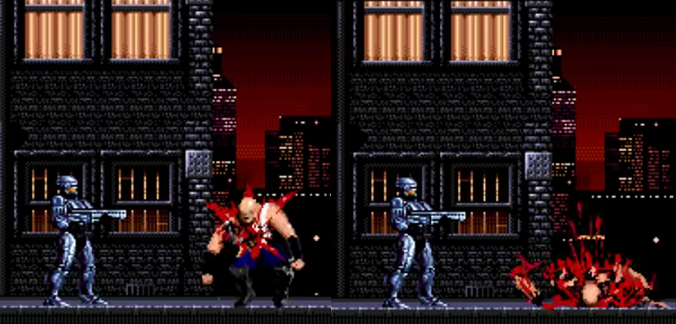
Come for the cyborgs, stay for the gore!

One of the most enjoyable things about RoboCop Versus The Terminator is the copious amounts of gore it contains; when you blast away thugs, they explode in a bloody mess and it’s absolutely glorious. You’ll miss these effects once the Terminators begin to take precedence as the game’s primary enemies but, even then, you’ll see the T-800’s skin degenerate until only the endoskeleton is left, which is a nice addition. Alongside a few choice sound bites from the first RoboCop movie, the game features a techno-inspired soundtrack with a lot of beats and rocking bass; there’s some odd choices, like a sultry voice blurting out “Terminator!” every ten seconds or so but, while the game doesn’t feature either of the iconic themes from the two franchises, its techno-inspired beats seem heavily inspired by both.

Enemies and Bosses:
RoboCop will initially face little resistance from the street thugs of Detroit; they’ll shoot at him, sometimes from behind windows, and get in his way but they’re small fry and easily dispatched with a single shot.

RCvTRCvT
The T-800’s façade can be destroyed, revealing the robotic endoskeleton.

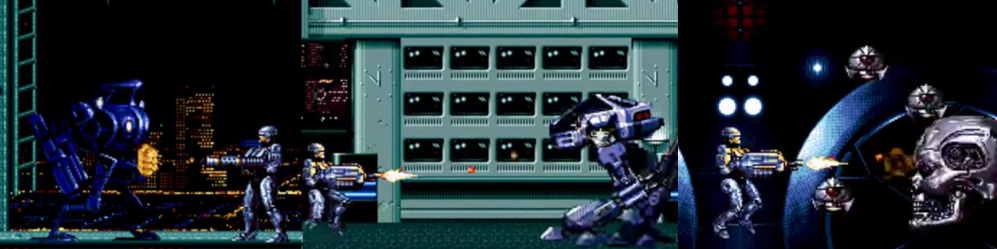
At the end of the second level, though, RoboCop comes face-to-face with a T-800 Terminator modelled closely on Arnold Schwarzenegger’s appearance from the end of the first film and the majority of the second. As a boss, this guy obviously takes more hits, degenerating from a fully clothed and skinned appearance to the iconic Terminator endoskeleton as the battle progresses. After this, similar Terminators will begin to appear as regular enemies; the Arnold models will take around three hits to put down (one to blast away the façade and two to destroy the endoskeleton) while the endoskeletons will take around two. Smaller Terminator drones also show up to spew projectiles at you as you journey deeper into the future and Skynet, but you’ll also encounter red Terminators, which are endoskeletons that take even more hits to put down.

You’ll also battle some classic RoboCop enemies, though Skynet is a giant floating skull…

You’ll also battle some iconic RoboCop bosses, such as ED-209 and (rather inexplicably) RoboCop 2 (or “RoboCain”), each of which are guarding the facilities and offices or RoboCop’s megalomaniacal creators, Omni Consumer Products (OCP). Once RoboCop travels to the war-torn future, he’ll battle bosses such as Terminator-controlled gatling guns, super-powered endoskeletons, and Skynet itself. Skynet is represented as a giant floating endoskeleton head that tosses small drones and projectiles at you while endoskeletons march in from either the left or the right side of the screen. This final battle is, honestly, a little underwhelming (though, honestly, most of the game’s bosses are after the first few and you’ve finished with RoboCain and Ed-209); you’ll have your work cut out for you to dodge all of the projectiles it throws at you and to unload enough bullets to finally do it in but I can’t help but feel the game missed out by not including a T-1000 battle or a final boss more reminiscent of the giant liquid metal T-1000000 spider from T2-3D: Battle Across Time (Cameron, Bruno, and Winston, 1996).

Power-Ups and Bonuses:
As mentioned, there are a variety of power-ups RoboCop can collect as he explores (and destroys) each level; baby food will replenish his health, little RoboCop heads will grant an extra life, and shields will grant RoboCop a generous period of invincibility. Most notably, though, RoboCop can acquire a variety of bigger, better guns which will dramatically increase his odds of survival; we’ve got everything from a traditional three-way spread to a grenade launcher, to homing missiles and a laser pistol. You can also grab one of ED-209’s arm cannons from a rapid fire burst, which is a pretty great little bonus; you can grab one of these during the boss battle with ED-209 but they do crop up in secret rooms and other areas of the game, too,

Additional Features:
There are three difficulty settings to pick from, each one carries a different set of lives, continues, and affects the amount of damage RoboCop can take. If you play on the hardest setting, enemies will be much more aggressive and the arrows that show you the way to go will also be missing. Aside from that, the only real incentive to replay again is to find all the secret rooms. As with all great old school games like this, there are a variety of cheats you can input that will grant you a whole bunch of lives and let you pick from all the available weapons. Unfortunately, though, you can only play as RoboCop; the narrative is geared in a way where Robo is the hero and the Terminators are the enemy but it might have been nice to see a mode where you play as a reprogrammed T-800.

RCvTBanner

The Summary:
RoboCop Versus The Terminator is a blast to play; while RoboCop is a clunky and cumbersome videogame protagonist at the best of times, you really get the sense that you’re playing as RoboCop and his quick-firing weapon and variety of additional armaments more than makes up for his heavy, stilted control. It also helps that there’s not many cheap deaths here; projectiles can come at you quickly but each enemy has a specific pattern that you can learn and exploit and, given the generous amount of health and power-ups on offer, there are instances when it’s okay to plough ahead guns blazing. Some levels can be a bit of a maze but, other than that, it’s worth it for the gore and the joy of seeing RoboCop punch a Terminator right in the face.

My Rating:

Rating: 3 out of 5.

Pretty Good

What did you think of RoboCop Versus The Terminator? What is your favourite RoboCop or Terminator videogame? What did you think of Frank Miller’s comic book? Do you think we missed out on seeing these two sci-fi icons clash on the big screen? Whatever you think, feel free to leave a comment below.

Game Corner: Zool: Ninja of the “Nth” Dimension (Mega Drive)

GameCorner
ZoolLogo

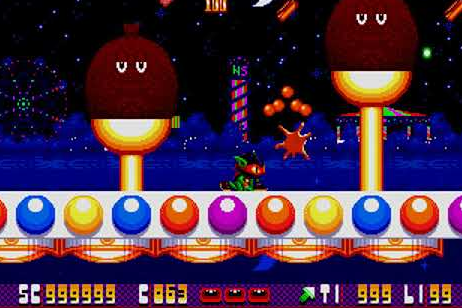
That’s right; we’re back in the nineties with another bright, colourful action/platformer. This time we’re looking at one of many attempts by the Amiga to copy SEGA’s success with Sonic the Hedgehog (Sonic Team, 1991), Zool: Ninja of the “Nth” Dimension (Gremlin Graphics, 1992), which was ported to the Mega Drive by Electronic Arts. Given that it released about a year after Sonic, and about a month before Sonic the Hedgehog 2 (Sonic Team, 1992), Zool was one of the first videogames to ape Sonic’s success and even beat the franchise to the punch in some ways. Hell, just look at his eyes; they’re almost exactly the same style as Sonic’s!

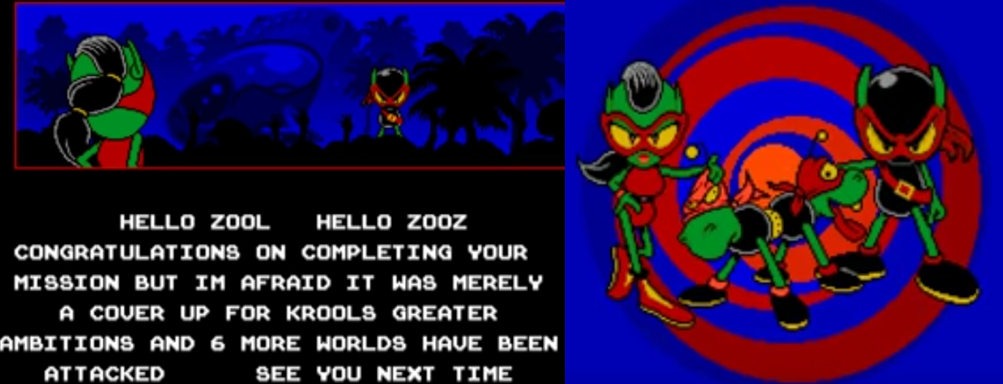
ZoolStory
Zool used cutscenes and comics to tell its story.

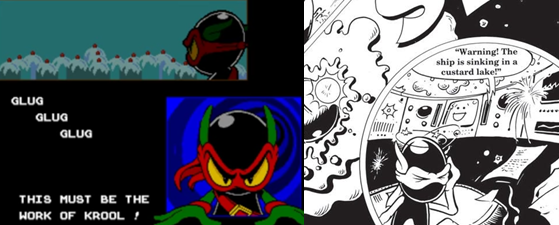
One of the main things that sets Zool apart from Sonic is its use of text-and-picture cutscenes in the game’s opening and ending to tell its story; this story was also elaborated on through a charming little comic included in the game’s manual. It would be some years before Sonic videogames even used in-game sprite animations to convey their story, much less text-and-picture cutscenes.

ZoolChupa
I’d rather have a packet of Love Hearts…

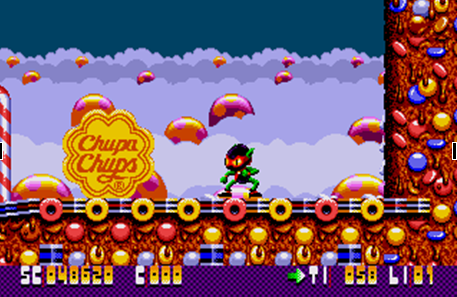
As we saw in Cool Spot (Virgin Games, 1993), Zool also includes some rather unsubtle product placement; the entire first World is littered with Chupa Chups, quite possibly the most generic lollipop sweet there is. Quite how Zool contributed to the sale and advertisement of Chupa Chups is beyond me but perhaps it was this advertising revenue that allowed the videogame to be ported not only to the Mega Drive but also to MS-DOS (where it would later be surpassed by the far superior Jazz Jackrabbit (Epic MegaGames, 1994)), Game Boy, Game Gear, Master System, SNES, and even the Atari ST.

ZoolWorlds
Zool‘s Levels are certainly vibrant.

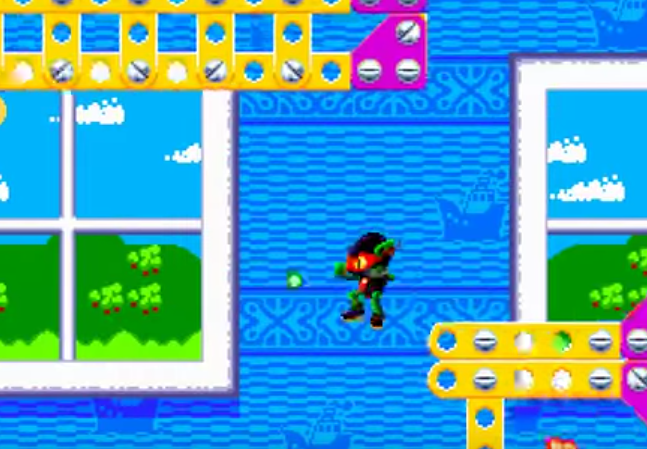
But let’s start from the top; upon beginning the game, players are immediately tossed into an absolute blast of bright, vibrant colours and catchy, rock/electronic music. Zool, a little gremlin ninja thing from the “Nth dimension”, must jump, blast, and spin his way across seven equally animated and colourful Worlds (each with four Levels), defeating the minions of Krool in an effort to return to his home dimension.

ZoolAttacks
Blast, spin, and slide your way to victory.

Despite wielding energy sticks on the game’s box art, Zool’s primary form of attack is to blast enemies with energy projectiles; however, unlike other sidescrolling shooters, Zool can only fire projectiles in the direction he is facing. Zool can also perform a spinning top attack when jumping to attack airborne enemies or break certain level obstacles or, thankfully, simply jump on enemies to defeat them. Zool can also scale walls by either climbing or jumping up them, slide under spikes and through narrow gaps, and fire projectiles whilst ducking.

ZoolMaze
Zool darts around maze-like Levels at break-neck speed!

Arguably, Zool plays a lot faster that Sonic, however the game lacks some of the polish of SEGA’s iconic platformer; controlling Zool is like skating on ice on the Moon as Zool darts across Levels and soars through the air seemingly in defiance of gravity. While this doesn’t stop the game from being extremely fun to play or make navigating Levels that difficult, it can make some of the game’s attempts at precision platforming trickier.

ZoolGoal
You have to collect items and find a coin to clear Levels.

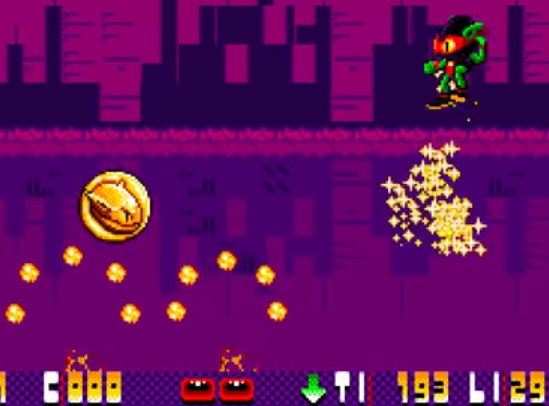
What does get in the way of navigation is the game’s primary gameplay mechanic; in order to clear a Level, Zool must collect a certain number of items. These change as Zool visits new Worlds (being anything from various fruits to CDs and bath toys) and the number you must collect depends on the difficulty you set the game to. Once Zool has collected enough items, he must follow an extremely vague arrow in the game’s HUD to reach a coin and be spirited away to the next Level or World.

ZoolHidden
Blast walls to reach hidden routes.

Zool must do all of this while battling against not only respawning enemies and level obstacles such as spikes and disappearing platforms but also while traversing the game’s maze-like Levels. Some Levels are considerably more labyrinthine than others, to be fair, and sometimes the game cheekily hides your route behind a wall that must be blasted open…though, as there’s no visual distinction between walls, it’s easy to miss these routes entirely.

ZoolBosses
Truly the stuff of nightmares!

Zool’s enemies are as wacky and outrageous as the game’s Worlds; Zool must contend with the likes of anthropomorphic jelly, killer violins, floating screws, projectile-spitting liquorice treats, and evil fruit (the implication being that sweets are good and veggies are bad…which I can get behind). To clear each World, Zool must also battle equally weird and wild bosses, such as a giant cactus and a screaming pink head with a spring-loaded boxing glove for a tongue!

ZoolPowerUp
Double Zool’s shot with power-ups!

Luckily, Zool has plenty of things to assist him in his mission; Zool has an energy bar and can take three hits before losing a life, can blast various checkpoints to respawn at a number of different points throughout a Level, and can collect numerous power-ups that increase his jump height, give him a shadow to double his firepower, increase his time, destroy all onscreen enemies, or make him invincible.

ZoolSecret
Some hidden mini games add some spice.

There are a few hidden secrets to be found in Zool as well; when I played the Master System version, I distinctly remember accidentally finding a warp point that simply took me straight to the game’s ending. There’s also some mini games and arcade games that can be played by doing certain actions in some Levels to add a little intrigue and variety to the proceedings.

ZoolControls
Platforming can get tricky.

Zool isn’t especially difficult, even on its hardest difficulty setting; 1 Ups are scattered across Levels (sometimes extremely liberally) to increase your chances, enemies often drop health, and the bosses have very simple attack patterns. However, there are some frustrating elements; the time limit, for one, and having to collect enough items to access the exit point, for another. While there are no bottomless pits, there are some frustrating platforming sections that require Zool to jump to very small, disappearing platforms and, if you fall, it can be a chore to get back up, especially as the enemies will respawn.

ZoolEnding
Turns out it was all for nothing and the REAL battle is still going on!

Perhaps the biggest letdown of Zool, though, is the ending; after defeating the final boss, Zool successful escapes back to the Nth dimension where he is greeted by Zooz, his female companion. Although she congratulates Zool, she reveals that Krool has invaded another handful of worlds, essentially making the ending a giant tease for its sequel, Zool 2 (The Warp Factory, 1993). This might be fine but, unfortunately, Zool 2 never received a port to the Mega Drive, all but forcing players to invest in an Amiga or other such console to play the sequel. I did own Zool 2 back when I had an Amiga and remember it being a pretty fine little game in its own right; this time, players can select between Zool and Zooz, with each character playing slightly differently (Zooz had a whip…) and being able to take alternative routes through Levels. It’s a shame that Zool 2 didn’t get the same cross-platform release but I guess that does go some way to making Zool the unofficial mascot of the Amiga. Unfortunately, despite these two titles, the myriad number of ports Zool received, and even a couple of young adult novels, Zool has pretty much faded into obscurity. Quickly surpassed by Sonic 2 and other similar action/platformers, Zool never quite managed to outshine Sonic like the Amiga probably hoped he would. Zool’s time in the sun was very brief and it’s a shame, really, as, despite the game’s slippery controls, the character has a unique design and his games were extremely bright, energetic fun with some nice levels of animation. When it comes to a re-release, port, or HD remaster, I’d like to say “never say never” as even the similarly-themed, arguable more obscure Superfrog (Team17, 1993) got a nifty HD version in 2016 but it does seem like Zool’s brief flirtation with fame has long since passed.

My Rating:

Rating: 4 out of 5.

Great Stuff

Do you remember Zool? If so, which version did you play? If you haven’t, I urge you to track down a copy and give it a whirl but, either way, let me know your thoughts in the comments below.

Mini Game Corner: Mighty Morphin Power Rangers (Mega Drive)

MMPRLogo

Released: 1994
Developer: Banpresto/Nova
Also Available For: Super Nintendo Entertainment System, Game Boy, Game Gear, and Mega CD

The Background:
If you were a kid back in the early nineties, right after you finished up being obsessed with what we in the UK know as Teenage Mutant Hero Turtles (1987 to 1996), and before Pokémon (1997 to present) took my generation by storm, you were all about Mighty Morphin Power Rangers (1993 to 1996). Cobbled together from stock footage from the Japanese tokusatsu series Gosei Sentai Dairanger (1993 to 1994) and Ninja Sentai Kakuranger (1994 to 1995), Power Rangers focused on five teens “with attitude” (despite the fact they were a bunch of geeky do-gooders who couldn’t break a rule if they were held at gunpoint) imbued with superhuman powers and abilities. Harnessing the power of the dinosaurs, they could transform into martial arts superheroes and conjure giant mechs to battle against the forces of evil. To say Power Rangers was a cultural phenomenon would be an understatement; parents were outraged at the glorification of violence but we headed out in our droves to buy every bit of Power Rangers merchandise we could, from t-shirts to action figures. Given its dominion over the playground and the airwaves, you know that this also meant the franchise received its own multi-platform videogame that I’m sure hapless kids everywhere begged their parents to buy for them.

The Review:
Mighty Morphin Power Rangers is a simple 2D fighting game; you can choose to battle head-to-head with a friend or take on the game’s Scenario Mode, where you’ll battle one of Rita’s minions in a format that will be more than familiar to anyone who has played a Street Fighter (Capcom, 1987 to present) videogame. However, Street Fighter II: The World Warrior (ibid, 1991) this is not; first of all, you’re (unsurprisingly) limited to only six playable characters (the titular Power Rangers). Each plays largely the same and the variations come only in their special attacks and weapons; the Red Ranger wields a sword but the Black Ranger has an axe, for example. After you face, and defeat, the evil Green Ranger (in my opinion, the greatest Power Ranger of all time), he becomes a playable character as well. There’s one main difference between playing as the Green Ranger compared to the other Rangers, though, and that’s in the game’s other battle mode. Once you defeat Rita’s monster, she’ll make it grow (as she is wont to do…) and the Rangers summon the Megazord to battle it. The Green Ranger, however, summons the Dragonzord but it basically amounts to the same thing: smash the buttons until you whittle away the enemy’s health bar and win.

MMPRFinal
The game’s literally over in less than an hour. It’s sad.

If you’re looking for depth…well, there isn’t any. Power Rangers the game has about as much depth and variety as Power Rangers the television show. I literally sat there, mashing buttons and hardly even trying, and never lost a single round. When I fought the Green Ranger as the Black Ranger, I did one whirlwind attack with Zack’s blade and won without Tommy landing a single hit! The game is also pathetically short; you always battle the monster on the same stage for the first fight but, once you’ve battled all five of Rita’s minions, the game is over and you’ve pretty much done everything Power Rangers has to offer in less than an hour. Unless you suck at videogames, but I’d wager even if that is the case you could beat Power Rangers without a great deal of difficulty.

MMPRGreen
Once you go Green you never go back…


Graphically, there’s not much to write home about; the sprites themselves are colourful and large and surprisingly detailed but not very animated. The backgrounds are even worse, being largely barren and devoid of life or character, and severely lacking in variety. It’s pretty much the same story for the game’s sound, too; there’s a noticeably bad rendition of the iconic Power Rangers theme and some shitty voice samples but the in-game sounds are muted and dull. Characters grunt and yelp a bit and Zords thud about but it all sounds so half-assed and a far cry from the loud, impactful sounds the Mega Drive is capable of producing. There are some nice cutscenes between battles that tell the story and evoke the same spirit as the television show but they don’t really contain much in the way of animation, meaning the game is outclassed by even some Master System titles in that regard.

MMPREnemies
Get used to seeing this same stage over and over…

As I mentioned above, the game has only five enemies to battle against. Sure, you face each one in two different types of battle but, if you’ve ever seen Power Rangers, you’ll know that doesn’t really mean much as the monster’s second form is literally just a bigger version of its first form. Goldar makes an appearance (he was the only monster I actually recognised…) but there’s no Putty Patrol to wade through and no Lord Zedd as the game is only pulling its inspiration from the first series of the show. Similarly, there aren’t any beyond the different weapons and abilities of the Power Rangers. The only thing to unlock here is the Green Ranger, which is the second battle and, once you have him, you’ll never pick another character because Tommy is the best character. Finally, you can battle against a friend but, honestly, I can’t see why you’d even bother.

MMPRSummary

The Summary:
Mighty Morphin Power Rangers may have been a cultural phenomenon but this videogame outing is a dreadful experience; the controls are sluggish, the battles are ridiculously easy, and the game is just boring from start to finish. I wouldn’t even recommend this to die-hard Power Rangers fans as there are far better Power Rangers videogames available; the game’s counterpart on the SNES, for example, or the one based on the movie. Either way, just don’t even give this the light of day and stick to playing Street Fighter II because the only thing “mighty” about this game is how bad it is.

My Rating:

Rating: 1 out of 5.

Terrible

Did you watch Power Rangers when it first aired? Who was your favourite Ranger and why was it the Green/White Ranger? Do you think I was too harsh on the Mega Drive videogame, or have a favourite Power Rangers videogame? Let me know in the comments.

Game Corner: Cool Spot (Mega Drive)

GameCorner
CoolSpotLogo

Aah, the nineties. A time when, thanks to the escalating battle between SEGA and Nintendo for console supremacy, everyone and their mother was desperate to have a cute, action/platformer mascot. These mascots had to be cool; they had to be fun; and, most of all, they had to have attitude. Because of this, we got such fantastic Sonic the Hedgehog knock-offs as Aero the Acro-Bat, Soccer Kid, and Awesome Possum and, in some of the most bizarre and obscure examples, food brands represented by guys like Chester the Cheetah and Cool Spot.

CoolSpotFido.PNG
7 Up was so cool they had TWO extreme mascots!

Cool Spot was the mascot for the fizzy drink 7 Up, but this reference largely went over the heads of Brits such as myself as, in the UK, 7 Up was represented by the equally radical Fido Dido so, when I played Cool Spot (Virgin Games, 1993) for the first time on the Amiga, I assumed it was the same kind of product placement as the Penguins in James Pond 2: Codename: Robocod (Vectordean/Millennium Interactive, 1991).

CoolSpot7Up.PNG
Personally, I prefer Sprite…

Regardless, the red spot featured in the logo of 7 Up’s trademark drink got his own videogame…because of course! You could tell that Cool Spot was both cool and had attitude because he wore shades and sneakers and was portrayed as a radical, laidback surfer dude. Spot actually featured in a couple of titles prior to this videogame; Spot: The Video Game (Virgin Mastertronic, 1990), which was little more than a puzzle game that resembled Connect 4, and Spot: The Cool Adventure (Visual Concepts, 1992), which was simply a reskinned version of McDonaldland (ibid).

CoolSpotPlot.PNG
Cool Spot has quite the in-depth plot…

However, when Spot’s fellow Spots are randomly locked up in cages in Cool Spot, he doesn’t hesitate to leap into action and journey across eleven levels collecting “Cool Points” (small red spots). Once Spot collects enough Cool Points, he must find the cage containing his fellow Spot and blast them free, all within a time limit and while battling a variety of enemies (everything from giant grabs to toy robots).

CoolSpotAttack.PNG
Blast your foes with soda bubbles!

While Spot is hindered by a handicap that befalls far too many of his platforming brethren (in that he cannot damage or defeat enemies by jumping on them, which I always feel should be rule one of any action/platformer), he can blast his foes with soda bubbles flicked from his awesome gloves. Using the D-pad, you can even change the direction of these bubbles to blast enemies out of the air, though some will take multiple shots or defend themselves using shells.

CoolSpotHazards.PNG
Don’t be so cool that you forget to look where you’re going!

Spot seems far more concerned with looking cool than having much in the way of a versatile moveset; he can walk and leap about the place and that’s about it. If you hold the direction you’re going in, Spot will, eventually, speed up and be able to leap further, holding the jump button seems to help him reach higher places, and he is able to clamber up ledges but there’s no spindashes or power-ups available here beyond some ridiculously sparse health items, time increases, and one-ups.

CoolSpotBonus.PNG
Enter a bonus stage to try for an extra life!

You can also try and collect letters in each level to earn a continue and, once you complete a level, your remaining time and total Cool Points are tallied up; if Spot has enough, he’ll be awarded with an extra life. If you collect enough Cool Points in any level, Spot will be able to enter a Bonus Stage where, under a strict time limit, he must bounce around on soda bubbles collecting even more Cool Points and try for another extra life.

CoolSpotCage.PNG
You’ll have to search everywhere for these cages.

And you’re going to need those extra lives, my friend, because Cool Spot is quite a tough game. It starts out relatively easy, with Spot jumping around a sandy beach and blasting enemies without much issue, but levels quickly adopt a maze-like structure, forcing you to search high and low for both Cool Points and the cage that is your goal all while being bashed about by enemies or hit by obstacles like spikes and mousetraps. Spot’s health is indicated by a humerous face sticker at the top of the screen; as Spot takes damage the face reacts and comes more and more unpeeled. When the face falls off, Spot dramatically whirls around and collapses and you’ll have to start the level over, either from the beginning or from your last checkpoint.

CoolSpotEnd
Spoilers: The ending isn’t much to shout about.

On the plus side, Spot doesn’t have to contend with any boss battles but, on the downside….Spot doesn’t have to contend with any boss battles. He simply swaggers from one level to the next, with little variety (there’s a beach, a dock, what appears to be inside some dry wall, a bath tub, and a toy shop and that’s about it….oh, and there’s a train level…), freeing his fellow Spots and, once he clears the final level, he celebrates with all his mates and you get given a high score.

CoolSpotTricky.PNG
Tricky platforming will test your wits.

Cool Spot is one of those videogames that is fantastic to look at but tricky to play; the backgrounds, graphics, and sprite animations are all gorgeous, vivid, and full of life and character. The music and voice samples are charming and up-beat and Spot has some of the best walking, idle, and celebration animations this side of Sonic and Earthworm Jim. It’s unfortunate, then, that his game calls for some tricky and precise platforming that the controls make very difficult.

CoolSpotTricky2.PNG
You never really know what waits at the bottom of a jump…

More than once, Spot must make blind leaps, hop from one precarious (often temporary) platform to the next, and hope that he doesn’t plummet back down to a lower level and waste his time having to hop back up or fall into a bottomless pit and die. Honestly, I often found it easier to just die and respawn at a checkpoint higher up rather than having to fight with the game’s stiff-yet-floaty jumping mechanics.

CoolSpotCompetition.PNG
Honestly, anything Cool Spot did, its competitors did better.

As a rival to Sonic the Hedgehog (Sonic Team, 1991), Cool Spot is lacking in a few areas; the game has the graphics and the look and Spot is a very animated and funky character, but without the fast-paced action and the challenge presented by Sonic’s boss battles and bonus stages, Cool Spot simply can’t compete. And you have to remember that this game came out in 1993 so, while it beat Sonic the Hedgehog 3 (SEGA Technical Institute, 1993) by a year or so, it came out after Sonic the Hedgehog 2 (ibid, 1992). Cool Spot also released across a variety of platforms, meaning it had to compete with Mario’s far superior offerings as well as those of its other third-party competitors, like Earthworm Jim (Shiny Entertainment, 1994).

CoolSpotCompetition2.PNG
Colourful and wacky action/platformers were ten a penny back then.

Even on the Amiga, Spot faced stiff competition from the likes of Zool: Ninja of the Nth Dimension (Gremlin Graphics, 1992) and its sequel, Zool 2 (The Warp Factory, 1993). He even had to compete with the two Jazz Jackrabbit (Epic MegaGames, 1994; 1998) games on the MS-DOS and these four titles all did everything Cool Spot did but better: the run-and-gun-like gameplay, floaty jumps, colourful graphics, funky music and sprite animations, and even the product placement were all better in any one of these four titles. Yet, Cool Spot wasn’t the end for 7 Up’s odd little mascot; Spot Goes to Hollywood (Eurocom/Burst Studios, 1995) saw the surfin’ spot switch to the isometric style that was popular amongst many 2D platformers that didn’t quite know how to adapt to 3D (I’m looking at you, Sonic 3D: Flickies’ Island (Traveller’s Tales/Sonic Team, 1996)). Like Cool Spot, Spot Goes to Hollywood came out on multiple consoles, including the PlayStation and SEGA Saturn, but once again had to settle for being nothing more than an average little platformer in a world full of competitors trying to stand out. In the end, while it’s nothing compared to most of its peers, Cool Spot is a fun little action/platformer. The music and graphics do just enough to make the tricky gameplay endurable and the game is tough, but fair in many ways (at least the enemies don’t respawn once you leave the screen…), meaning that it’s up to the player to make informed decisions about when to jump and how to navigate Spot’s vibrant world.

My Rating:

Rating: 4 out of 5.

Great Stuff

Do you remember Cool Spot? If so, what was your first experience? If not, why not go give a play? Either way, sound off below and let me know what you think.