Back Issues [Wolvie Wednesday]: The Uncanny X-Men #212-213


Since his first full debut in November 1974 and joining the X-Men in 1975, James “Logan” Howlett/Wolverine has become one of Marvel Comics’ most recognisable and enduring superheroes.


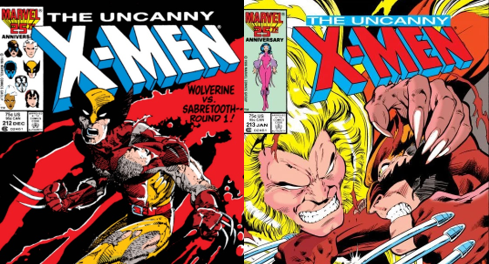
Story Title: “The Last Run”
Published: 9 September 1986 (cover-dated: December 1986)
Writer: Chris Claremont
Artist: Rick Leonardi

Story Title: “Psylocke”
Published: 7 October 1986 (cover-dated: January 1987)
Writer: Chris Claremont
Artist: Alan Davis

The Background:
Back 1974, Marvel Comics editor-in-chief Roy Thomas tasked writer Len Wein with creating the first-ever Canadian superhero, resulting in the short, feisty “Wolverine”. John Romita Sr sketched the original concept art for the character (including his now-iconic retractable claws) and Herb Trimbe put the finishing touches to Wolverine’s design. Although Wolverine’s past and true identity was initially kept a mystery, readers got a glimpse into his background through his ongoing and violent rivalry with fellow Mutant, Victor Creed/Sabretooth. Created by Chris Claremont and John Byrne, Sabretooth initially debuted as an enemy of Danny Rand/Iron Fist in 1977 before transitioning to a minor X-Men foe during the “Mutant Massacre” event (Claremont, et al, 1986). Originally intended to be Wolverine’s father and sometimes hinted to be his brother, the exact nature of their history is shrouded in mystery, with the only recurring element being their intense hatred of each other. Sabretooth famously makes a point of causing Wolverine anguish every year on his birthday and cemented himself as Logan’s archenemy by targeting his loved ones and being his toughest, most persistent foe. Accordingly, Sabretooth often accompanies Wolverine in other media and is naturally regarded as his worst enemy.

The Review:
Wolverine’s first clash against Sabretooth came when Creed was running with the Marauders, ruthless Mutant assassins working for Doctor Nathaniel Essex/Mister Sinister. As part of his plot to wipe out or otherwise experiment on Mutants, Mr. Sinister sent the Marauders to massacre the Morlocks, outcast sewer-dwelling Mutants beneath New York City. While reviewing the slaughter, Wolverine is telepathically contacted by newcomer Betsy Braddock/Psylocke, who passes along a request from the grieving Ororo Munroe/Storm for Logan to apprehend a Marauder to learn more about their plot. The effort of contacting Wolverine drains Psylocke, but her suffering is little compared to Storm’s as she ran with the Morlocks for a time and finds herself surrounded by dead or grievously injured allies. Storm’s so traumatised that she flees from Charles Xavier/Professor X’s school in anguish, desperate to return to nature and outrun her guilt. Concerned about Storm and his girlfriend, Kitty Pryde/Shadowcat (who’s been left in a permanently out of phase), Piotr “Peter” Rasputin/Colossus tries to ask Psylocke for help, only to suddenly collapse from his own injuries. Luckily, Erik Lehnsherr/Magneto is allied with the X-Men at this time and he uses his amazing powers to try and help Colossus, only to leave him conscious but paralysed. Meanwhile, Anna Marie/Rogue asks Storm’s Morlock friend, Callisto, to find the weather witch, with the one-eyed Morlock opting to treat Storm to some tough love and literally beat some sense into her.

With the X-Men reeling from the Marauders’ attack, Wolverine renews an old rivalry.

Down in the sewers, Wolverine shrugs off Psylocke’s sudden silence and struggles to pick up the Marauders’ scent only to be jumped by Sabretooth, a hulking, animalistic sadist who has the Morlock Healer in his grasp. Confirming that he’s part of the Marauders and happy to assist Mr. Sinister’s scheme to take out the Morlocks and the X-Men, Sabretooth goads Wolverine into a fight (not that he needs much encouragement) by mocking him and backs up his arrogant claims by proving Logan’s physical better, wrestling with Wolverine and deftly avoiding his patented Adamantium claws. Rather than fighting harder, Wolverine opts to fight smarter, collapsing the already weakening tunnel on his foe, bringing their brief scuffle to an anti-climactic end as Wolverine’s more focused on getting Healer to safety than wasting time fighting Sabretooth. Just as he reconvenes with Rogue, the tunnel is immolated by a mysterious plasma wave that potentially threatened the New Mutants, a young Mutant team Wolverine sensed had gone against orders and ventured into. Despite Wolverine’s best efforts, the blasts apparently obliterate the Morlocks and Storm suspects that her unstable powers may have been the cause. Unwilling to give into despair, Magneto suggests he ally with the Hellfire Club to bolster their numbers, a suggestion Storm naturally balks at considering how dangerous the group has been in the past. As Doctor Moira McTaggart works tirelessly to save the lives threatened by the Marauders, Psylocke struggles with her sense of belonging with the X-Men, eager to prove her worth and lamenting their losses. In an effort to help, Psylocke suggests (well, “insists”) that she bolster her powers with Cerebro to search for the New Mutants and the Marauders, though Storm orders her not to take the risk as they need her to monitor for threats against the school.

Psylocke gambles on Wolverine’s durability to outlast Sabretooth’s assault.

Disheartened, Psylocke suddenly detects an intruder and receives agonising psychic feedback when she tries to probe them. As Rogue wanders the grounds, pondering her past, she’s suddenly attacked by Sabretooth, who easily overpowers her before trashing Cerebro and injuring Psylocke’s arm with his razor-sharp claws. Shrugging off her psycho-blast, Sabretooth pursues her with a sadistic, murderous rage, easily crushing a dumbbell and driving Psylocke to the roof. Though injured and outmatched, Psylocke grabs Storm’s knife after plummeting into her attic apartment, much to Sabretooth’s glee as he seemingly gets off on her feisty attempts to fight back. Just as Sabretooth gets his claws on Psylocke, he’s interrupted by Wolverine and Storm, who attacks Creed with her staff to save Psylocke. Sabretooth draws first blood in his rematch with Wolverine, somersaulting over him and clawing his back, even sampling Logan’s blood before they charge each other. Wolverine buries his claws into Sabretooth’s thigh, causing him to hurl Logan through the skylight in a rage. Sabretooth quickly follows and is tackled to the pool below. Though Magneto wishes to restrain Sabretooth to probe his mind, Psylocke argues that Creed’s psychic defences are too strong and that their best chance is to invade his mind while he’s busy fighting, trusting that Wolverine can take the punishment. Thus, as the two trade blows and cut each other to ribbons, Psylocke discovers that they have fought before and finally extracts knowledge of Creed’s mysterious master. Angered that he’s been so obviously duped, Sabretooth dives off a nearby cliff and into the sea, disappearing from Psylocke’s probes, much to Wolverine’s anger. In the aftermath, Psylocke is formally welcomed to the team and Storm prepares to move their wounded to Dr. McTaggart’s research facility on Muir Island to protect them from further Marauder attacks.

The Summary:
“Psylocke” is one of the first X-Men stories I ever read as it was included in a Marvel Comics annual I owned back in the day. Consequently, I have some fondness for this era in the X-Men’s history and this art style, which depicts one of the quintessential incarnations of the team. Wolverine, for example, dons his brown and tan suit, Storm has her wild punk-rock look, Rogue sports short hair, and Magneto wears a more heroic outfit to reflect his position as the X-Men’s headmaster. While the art is often simplistic at times, appearing washed out and lacking detail (specifically the faces), this is more noticeable in group panels and doesn’t apply to Wolverine’s brutal fights with Sabretooth. These issues also take place in the middle (or early days) of the “Mutant Massacre” story arc, so there’s a much bigger narrative of the X-Men and their allies being targeted by Mr. Sinister and the Marauders. Therefore, your enjoyment may hinge on your familiarity with the Morlocks as their slaughter takes centre stage. Storm, especially, is distraught by the deaths of her colleagues and questions her leadership skills, while Psylocke is equally filled with doubt about her place on the team and usefulness beyond simply monitoring for threats. Ultimately, Psylocke proves herself by betting on Wolverine’s tenacity and durability, believing he can take whatever Sabretooth dishes out and thus provide them crucial information regarding the Marauders. Similarly, Callisto’s unique brand of tough love and the pressing nature of their situation forces Storm to snap out of her despair and help save Psylocke, and their injured teammates.

Wolverine’s history with Sabretooth takes a backseat to the wider narrative.

I really like this era for Wolverine, where he was a bit of a gruff loner but still loyal to his team. Wolverine’s happy to tackle the dirty jobs alone since he’s “the best there is at what he does” and his animalistic side relishes the chance to get his claws dirty extracting a measure of revenge on the Marauders. While stunned to find Sabretooth running with the group, Wolverine doesn’t hesitate to fight Creed despite being physically outmatched. Sabretooth is presented as a sadistic psychopath who relishes torturing and slaughtering his prey. He happily targets the defenceless or fights dirty and is presented as a dark mirror to Wolverine, being a killer whereas Wolverine is “a man–who sometimes kills”. Interestingly, while Sabretooth embraces his animalistic side in a way that Wolverine constantly fights against, he’s not some mindless killer and is, instead, loquacious enough to goad his victims and taunt Wolverine relentlessly. Although their dialogue and Psylocke’s probing hints at their past, very little time is spent exploring how Wolverine and Sabretooth know each other. Instead, they simply clash as old rivals, eager to see who is the better between them. Unfortunately, their fights aren’t that impressive. The first was an interesting character study for Wolverine as he chooses the higher path rather than giving into his rage. The second fight is better and longer and is great for showing how tough Wolverine is, but it takes a backseat to Psylocke’s psychic probing. It might’ve been nice to spend a bit more time with the two, to have a few more breadcrumbs dropped regarding their past, and to let them go at it a bit more, but this is still a decent first round bout between the fierce rivals and a notable moment in Wolverine’s long history.

My Rating:

Rating: 3 out of 5.

Pretty Good

What are your thoughts on Wolverine’s first battle with Sabretooth? Were you a fan of the “Mutant Massacre” story arc? What did you think to the hints towards Wolverine’s history with Sabretooth? Were you a fan of Psylocke and this incarnation of the X-Men? Were you a fan of Claremont’s work with the team, and Wolverine? How are you celebrating Wolverine’s debut this month? Whatever you think about these issue, or Wolverine in general, leave a comment below and donate to my Ko-Fi to suggest more Wolverine stories for me to cover.

Back Issues [F4 Friday]: The Fantastic Four #5


In November 1961, four intrepid explorers were changed by mysterious cosmic rays. Marvel’s “First Family” of Marvel heroes and featured in cartoons, videogames, and live-action movies.


Story Titles: “Prisoners of Doctor Doom!”, “Back to the Past!”, “On the Trail of Blackbeard”, “Battle!”, and “The Vengeance of Doctor Doom!”
Published: 10 April 1962 (cover-dated: July 1962)
Writer: Stan Lee
Artist: Jack Kirby

The Background:
Back in 1961, Stan Lee and Jack Kirby debuted the dysfunctional Fantastic Four as a counterpart the Justice League of America. Despite some debate over the team’s creation, the issue popularised the “Marvel Method” of writer/artist collaboration and subsequent issues introduced pivotal Marvel characters as enemies and allies of the relatable team. Without question, one of their most important villains was the egomaniacal Doctor Victor Von Doom/Doctor Doom, the ruling monarch of Latveria who was driven to destroy the team and prove his intellectual superiority over Doctor Reed Richards/Mister Fantastic. Lee and Kirby sought to create a truly engaging villain in Dr. Doom, inspired by classic depictions of Death and bolstering his characterisation with an inflated ego and thirst for power. While Dr. Doom’s primary adversaries are the Fantastic Four, he menaced the wider Marvel universe, gaining God-like power more than once, in addition to brief spells as a morally ambiguous anti-hero and journeys beyond the stars and reality. Naturally, as the Fantastic Four’s most recognisable villain, Dr. Doom has heavily featured in the team’s ventures outside of comics, being a principal villain in cartoons and videogames, though his depiction in live-action has ranged from disappointing to down-right insulting.

The Review:
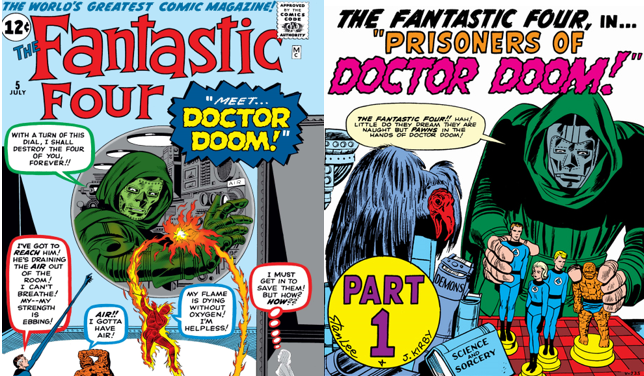
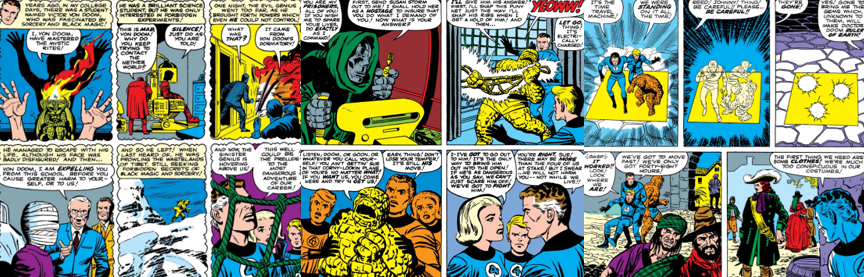
Our first glimpse of one of Marvel’s most enigmatic and menacing villains comes with the masked, hooded Dr. Doom literally playing with his toys amidst tomes on demons, science, and sorcery and boasting to himself of his superiority compared to our colourful heroes. Half a world away, New York City is struck by an unexpected power cut that affects every building save the towering Baxter Building. With no threat to focus their energies on, Johnny Storm/The Human Torch and Benjamin Grimm/The Thing gripe with each other, forcing Mr. Fantastic and his lover, Susan Storm/The Invisible Girl, to intervene and scold the two like they are children. Their bickering is suddenly interrupted when Dr. Doom ensnares the Baxter Building in a gigantic net dropped from his helicopter! Coated with asbestos so durable that even the Human Torch cannot burn through it, the four are left at the mercy of Dr. Doom, whose voice chills Reed as he remembers the tragic story of his old college roommate, Victor Von Doom. Fascinated by the occult, the unseen Doom mixed science with the dark arts and constructed a machine to contact the netherworld, only to be horrifically scarred and expelled from the school when the machine exploded. Humiliated, Doom fled to the frigid wastelands of Tibet to seek deeper, darker secrets and Reed assumed he was dead and is therefore shocked to find Doom alive and demanding Sue as a hostage!

Dr. Doom kidnaps the Fantastic Four and, bizarrely, sends them to run errands in the distant past!

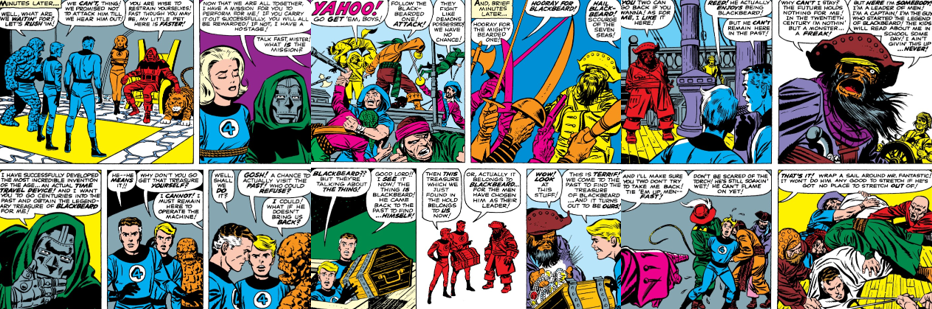
Naturally, the Thing reacts in anger and receives a few thousand volts for his outburst. Realising she has no choice but to acquiesce to Dr. Doom’s demands, Sue bravely volunteers herself to buy her family time to plan. Now holding the ace, Dr. Doom demands the remaining three board his ship and they’re forced to obey, ending up tapped in a mechanical prison and transported to Dr. Doom’s impressive, medieval stronghold in Latveria. In Dr. Doom’s throne room, he holds them off with his pet tiger and reveals that he wants them to take his time machine into the past to steal the legendary treasure of Edward Teach, the notorious pirate known as Blackbeard, since Dr. Doom cannot use his magnificent creation because someone must operate the controls. Dr. Doom promises to return them (he needs the treasure, after all) and to release Sue even if they fail, and the three promptly travel through time and space via a simple glowing square. The three waste no time acquiring period-appropriate attire and head to a local bar, where they’re immediately drugged and shanghaied onto a rival pirate ship. Once they awaken, a good old-fashioned donnybrook breaks out and the crew are in awe of the three’s incredible powers. Their standoff is soon interrupted by a rival ship, which they assume is Blackbeard. The battle goes swiftly thanks to their awesome superpowers and, before long, the ship and its treasure is captured, with the crew praising their mighty commander, the Thing, whom they dub “Blackbeard” in a fun predestination paradox. Though victorious, Reed shares the booty amongst their crew and trick Dr. Doom with an empty treasure chest, but things go awry when the Thing suddenly decides to stay in the past where he can be more than a reviled freak and orders his men to restrain Johnny and Reed!

Despite all his contingencies, Dr. Doom is driven to flee by the Fantastic Four’s awesome powers.

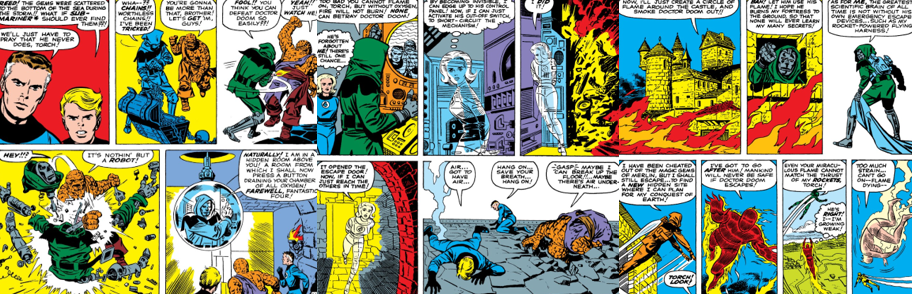
Thankfully, a twister strikes the ship, ransacking it and scattering the crew. Mr. Fantastic rescues the Human Torch before he drowns and they wash up on land to reunite with a remorseful Thing, who regains his senses and apologises for his momentary madness right as Dr. Doom decides to retrieve his foes. Dr. Doom praises them and reveals that the gems are mystical artifacts that once belonged to the ancient wizard Merlin, which he plans to use to conquer the world. However, Dr. Doom is stunned to find the chest filled with useless chains and, with the egotistical villain distracted, the Thing strikes. Unfortunately, Dr. Doom anticipated this and the Things shatters a sophisticated robot decoy and the three are left trapped in a death chamber. While Dr. Doom gloats, the Invisible Girl takes the chance to short circuit his equipment, freeing her family before they can suffocate. Realising Dr. Doom’s entire fortress is full of booby-traps, Reed leads his family in bypassing death traps such as voracious crocodiles and Johnny creates a circle of flames to try and smoke Dr. Doom out. Unimpressed, and perfectly fine with his fortress burning his secrets, Dr. Doom flees with his “rocket-powered flying harness” no less determined to plan a new world-conquering plot. The Human Torch is massively outclassed by Dr. Doom’s technology and barely saves himself from a fatal fall. Angered that Dr. Doom escaped, the Thing vows to handle the masked maniac next time and Reed reassures a despondent Johnny that they’ll dedicate their lives to tracking the villain, and others like him, down.
The Summary:
Dr. Doom is one of my favourite Marvel villains. He’s a scheming, egotistical, self-absorbed madman with delusions of grandeur whose ambition often exceeds his grasp. He’s revered as a monarch in his home country and influential enough to topple governments and menace anyone from the Fantastic Four to the mighty Avengers! So, imagine my disappointment to find he’s merely a run-of-the-mill villain of the week here. Sure, Dr. Doom gets a bit more backstory than most villains of this era, but it’s painfully rushed and has little impact on the story. There’s no in-depth portrayal of Dr. Doom’s hatred of Reed or his vendetta against the Fantastic Four. Indeed, Dr. Doom targets them primarily to prove his superiority and coerce them into stealing treasure for him, which his robot duplicate could’ve done! Rather than stewing in his fortress for years, fostering a hatred for Reed and planning how to counter the Fantastic Four’s powers, Dr. Doom has barely any emotional connection to Reed since Mr. Fantastic hardly factored in his accident. There are no fist curling cries of “Richards!” here, no attempts to torture and humiliate his old roommate, and no desire to humble the Fantastic Four or destroy their reputation. Instead, Dr. Doom simply kidnaps them (a feat easily accomplished by a simple net!) and forces them to do his bidding by, of course, taking Sue hostage. While Sue isn’t written as an air-headed bimbo in this issue, for a change, and gets a chance to show her maternal side in chastising Ben and Johnny, she’s reduced to a mere damsel in distress to force the others to obey Dr. Doom. Still, she does take advantage of his distraction to mess up his equipment and free the others, showing she’s a fully capable superhero when she’s not distracted by Reed’s opinion of her.
Despite Dr. Doom’s visual appeal and maniacal genius, he’s just another run-of-the-mill villain.

Unfortunately, rather than focus on Dr. Doom and develop a villain with a deep-rooted rivalry with Reed, The Fantastic Four #5 mostly focuses on a bizarre time travel adventure! As if this idea wasn’t ludicrous enough, the jaunt is further padded out by unnecessary drama when the Thing randomly decides he likes the adulation he receives in the past and betrays Reed and Johnny to stay there! It’s a fleeting moment barely worth the panels devoted to it, and I can’t help but think this time would’ve been better served with Dr. Doom lording his superiority over Sue or using his mixture of science and magic (something barely touched upon here) to best the Fantastic Four’s powers. Latveria isn’t even named here; we get no sense of her people or Dr. Doom’s reputation and his abilities are painfully limited to “mad scientist”. Dr. Doom’s fortress is said to be a fortified castle filled with death traps, but we barely see these and they’re easily circumvented by the Human Torch and Mr. Fantastic. Dr. Doom still comes across as a conniving, scheming villain smart enough to install robot duplicates and whose backup plans have backup plans, but it’s disappointing to see his first plot to simple be stealing jewels. We learn all-too late that they’re Merlin’s property, but again the magical nature of Dr. Doom’s abilities is hardly a factor, so he just comes across as a common thief who happens to own a time machine. He doesn’t provide his enemies with a return module and instead simply gets lucky that the three have succeeded when he randomly decides enough time has past, he resorts to taking a woman hostage, and he doesn’t even seem to care that his castle is at risk of being destroyed. Ultimately, The Fantastic Four #5 is an important story since it marks the start of Dr. Doom’s epic saga but it’s by no means the best or most engaging Dr. Doom story.

My Rating:

Rating: 2 out of 5.

Could Be Better

What did you think to the first appearance of Doctor Doom? Were you impressed by his menacing appearance and advanced technology? What did you think to the bizarre time travel plot and the Thing’s brief moment of madness? Were you surprised that the connection between Reed and Dr. Doom was downplayed? What are some of your favourite Dr. Doom stories and moments? Whatever you think about Dr. Doom and the Fantastic Four, leave a comment below and check out my other Fantastic Four content.

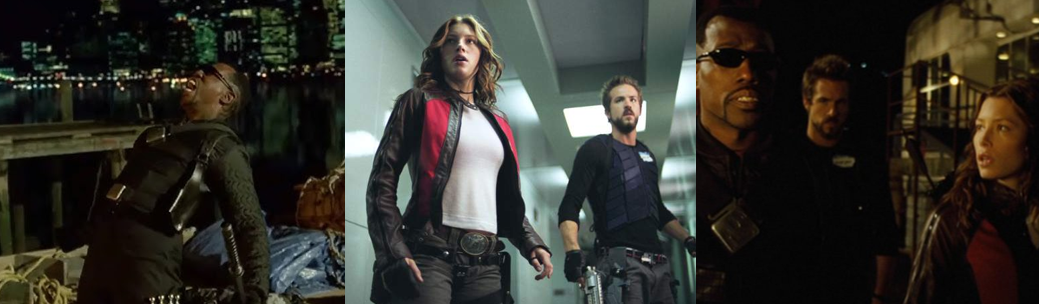
Movie Night: Blade: Trinity

Released: 8 December 2004
Director: David S. Goyer
Distributor: New Line Cinema
Budget: $65 million
Stars: Wesley Snipes, Dominic Purcell, Jessica Biel, Ryan Reynolds, Parker Posey, and Triple H

The Plot:
After being exposed and vilified by a vampire ruse, half-human, half-vampire vampire hunter Blade (Snipes) reluctantly teams with the upstart “Nightstalkers” against the resurrected Count Dracula/Drake (Purcell).

The Background:
The brainchild of Marv Wolfman and Gene Colan, Eric Brooks/Blade (an obscure and culturally problematic vampire hunter) first appeared in The Tomb of Dracula decades before a radically different version essentially birthed the modern superhero genre. Following years of development and rewrites, Blade (Norrington, 1998) was a critical and commercial hit that was followed by a divisive (if profitable) sequel about three years later. Plans for a third film were made before Blade II (Del Toro, 2002) was released, with writer David S. Goyer tapped to pen the film and Oliver Hirschbiegel initially in talks to direct. When those plans fell apart, Goyer took the big job after receiving advice from previous Blade directors Stephen Norrington and Guillermo Del Toro. Ryan Reynolds signed on, with Goyer tentatively hoping for a spin-off for his wise-cracking character, though the shoot was reportedly tense when star Wesley Snipes fell out with Goyer, refusing to talk to him or even follow basic directions. Though co-star Patton Oswalt spoke negatively of the experience, Snipes later claimed these reports were over dramatised and an elaborate ruse. Although it grossed slightly more than the first film, Blade: Trinity was widely panned for being a nonsensical mess lacking the style and substance of its predecessors and for having one of the worst onscreen renditions of Dracula. Though plans for a crossover with the Underworld franchise (Various, 2003 to 2016), the character lived on in a short-lived TV show and Snipes even reprised the role in the Marvel Cinematic Universe ahead of a complete reboot.

The Review:
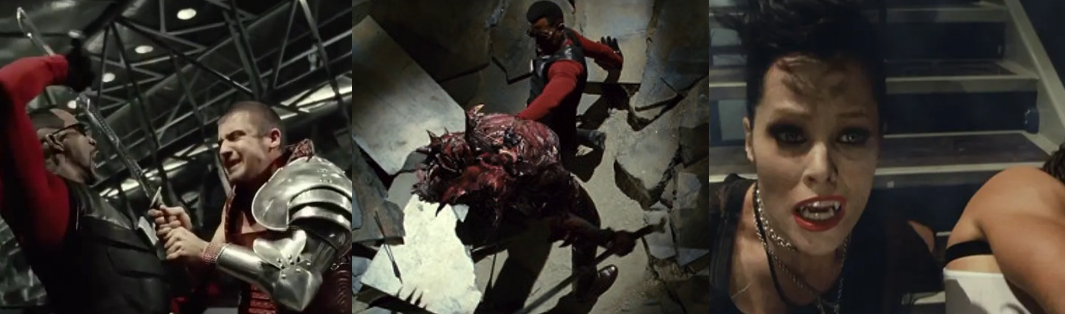
Things start out normal for everyone’s favourite dhampir as he knocks off vampires and operates out of a repurposed garage/warehouse much like in the first movie. Blade is oddly baffled when a victim shrugs off silver, despite claiming to have killed 1182 Familiars, and being easily fooled by fake fangs despite his heightened senses. This costs him when bystanders witness him killing a man in cold blood and Danica Talos (Parker Posey) releases the footage, painting Blade as a psychopathic murderer and exposing him to the Federal Bureau of Investigation (F.B.I.), specifically Agent Ray Cumberland (James Remar). While Blade’s mentor and father figure, Abraham Whistler (Kris Kristofferson) returns, he’s little more than a cameo who encourages Blade to rely on others and dramatically sacrifices himself holding off Cumberland’s strike team. The normally stoic dhampir is once again anguished by the loss, which further undermines his unnecessary return in Blade II. Much of Blade’s exchanges with Whistler set up his central character arc, namely his reluctance to rely on others or accept help (which is also a bit odd considering he worked with others, and even a vampire crack squad, before and Blade II painted him as a natural leader). Though Blade openly scoffs at the idea of having friends or relying on others, Drake’s threat forces him to fall in with the Nightstalkers, who Whistler secretly organised to aid him (despite them not appearing the last time Whistler died).

Devastated by Whistler’s loss, Blade reluctantly teams with a group of upstart vampire hunters.

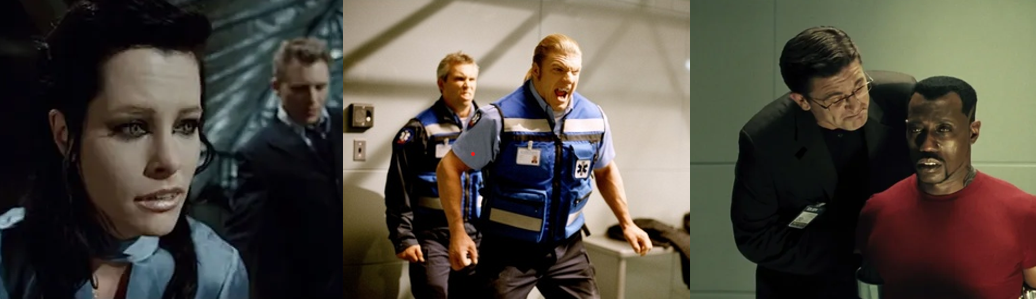
The Nightstalkers are an eclectic bunch of young upstarts who immediately rub Blade the wrong way, with wise-cracking Hannibal King (Reynolds) particularly grating on Blade’s nerves due to his motor mouth. Despite Blade’s very aggressive and unapologetic scepticism, though, the Nightstalkers sport state of the art tech and weapons, such as Abigail “Abby” Whistler’s (Biel) ultraviolet bow and Sommerfield’s (Natasha Lyonne) “Daystar” pathogen to wipe out the vampire species (which is doubly impressive considering she’s blind). Abby and Hannibal join Blade as the titular “trinity”, leaving Blade stunned to learn that Whistler had a secret daughter. While we never learn how close she and her father were, it’s clear she’s as haunted by her past and driven by revenge like Whistler, who wanted to destroy all vampires for torturing and killing his family. While Blade reluctantly becomes a key figure in the Nightstalkers, he also becomes a mentor for Abby, teaching her to “use” her pain and anger at the death of her friends to better aid her in battle, though she impresses with her speed and deftness and her ability to fight while listening to music. Hannibal’s fast talking, smarmy attitude clashes with Blade’s reserved personality, leading to the dhampir all-but dismissing King despite him formally being Danica’s plaything. This gives him all the motivation for hating vampires and wanting to wipe them out, something Blade can definitely relate to, though he remains adamant that the Nightstalkers need an attitude adjustment and some proper, experienced leadership. Hannibal may be a shit-talker, but he’s both extremely cut and loyal, insulting sadistic brute Jarko Grimwood’s (Triple H) manhood and bravely defying Danica, but he’s terrified of being turned back into a vampire and forced to feed his loved ones.

Parker Posey drags every scene down with her atrocious line delivery and ham acting.

Blade: Trinity shows a new side to vampire society as Familiars wage a public relations war against Blade and control the local police, placing Blade in an unwinnable and desperate situation. Danica leads her brother, Asher (Callum Keith Rennie), and Jarko, in reviving Dracula in hopes of cementing their race’s dominance. In a film full of missteps and poor ideas, Parker Posey has to be one of the worst. While she seems to be having fun and is certainly chewing the scenery with her over the top performance, she’s literally painful to watch and drags the already questionable script further down with her atrocious delivery and childish tantrums. While Triple H doesn’t fare much better, he at least has an imposing presence and some funny character quirks, such as his love for a Reaper-like Pomeranian and his heated rivalry with Blade and Hannibal, matching his brawn and smart mouth against both. While the vampires are clearly well funded and have many resources, even setting up literal blood banks to sustain them when they take over, they seem far less organised and capable, with Danica so desperately unearthing Dracula to blood can transform her race into dhampirs. Danica and Jarko hate Blade and Hannibal with a passion, the former because he’s systematically wiping out their race and the latter because he’s a smart ass who routinely insults them even when suffering brutal torture. Having previously turned and tortured Hannibal and presumably had numerous run-ins with him, Danica delights in seeing him suffer but seems to have some respect for Blade and is especially envious of his ability to walk in daylight. While Drake quickly acts in his own interests, exploring the city and toying with Blade on his own terms, Danica seems okay with this (not that she can stand against Dracula’s power) since she’s convinced Drake will turn the tide for her entire race.

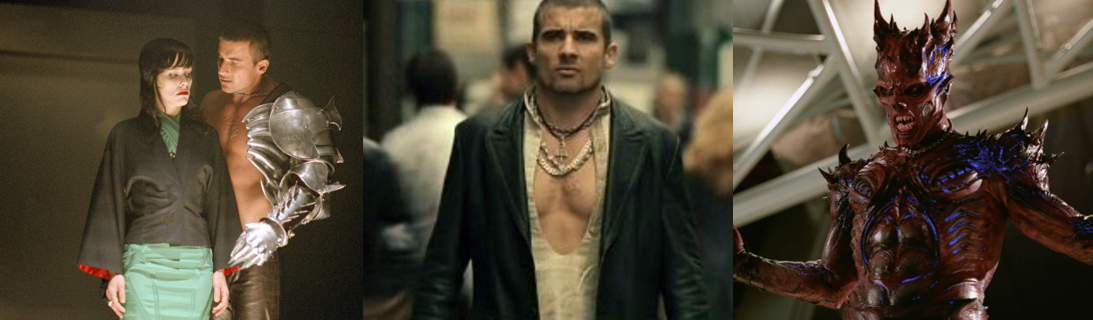
Despite his impressive demonic form, Drake may be one of the worst filmic Dracula’s ever seen.

Echoing the same sense of superiority as the Pure Bloods of the previous films, Drake is said to be the first vampire, a demonic entity who’s never had to evolve who was a feared Sumerian warrior before entering a long period of hibernation after becoming disgusted by the world. However, as much as I enjoy Dominic Purcell’s work, he’s a poor fit for the role. With his stocky physique and robotic delivery, he’s very much the opposite of the Dracula legend as told by Hannibal, to say nothing of the classically trained actors who usual embody the part. While Blade: Trinity repeatedly downplays the movies and popular depictions of Dracula, Drake is fast enough to avoid bullets, exhibits superhuman strength, and is an accomplished shapeshifter. Drake strangely mimics Whistler to attack the Nightstalkers and is initially depicted as a monstrous, armoured demon overcome by “The Thirst”, a look that’s honestly more menacing and unique than his bog standard “Everyman” guise. Before he takes the lame-ass name “Drake”, Dracula is disgusted by Danica and modern-day vampires, rightly seeing them as “shadows” of their former glory. However, Drake’s convinced to begrudgingly aid them to test himself against Blade, whom he sees as the future of the vampire race and a formidable opponent. Drake is mesmerised by the modern world, it’s glorification of vampires, and how decadent and soft humanity and vampires have become. Unlike Blade, who resists the bloodlust of the Thirst, Drake gives into it at every opportunity, using it to further augment his abilities and freely feeding upon his victims to fuel his strength. Said to have the purest blood of all vampires, Sommerfield theorises that Drake holds the key to eliminating all vampires with Daystar just as Danica hopes Blade’s blood will ensure vampire survival. Thus, Blade and Drake are positioned as opposites and equals, though Dracula only ever appears as such when in his impressive, sadly little seen demonic form (which, interestingly, also sports Reaper-like fangs).

The Nitty-Gritty:
Knowing how chaotic and troubled Blade: Trinity’s production was, it’s hard not to read more into Blade’s disgust at the Nightstalkers, whom he sees as “amateurs”. Indeed, he shows more animosity towards them than he does the Blood Pack, though this may be because Whistler never told him of the “sleeper cells” he prepared to aid Blade. While the Nightstalkers are more capable than Blade gives them credit, they lack his years of experience and unique insight into fighting vampires, though they recognise this and see him as essential to the cause. It’s equally true that they’re slightly less impressive than their comic book counterparts, with Hannibal King, especially, being quite different as it was originally him, not Blade, who was a dhampir. I don’t mind this change much, mainly because I barely know Hannibal and the changes made to Blade only benefitted the character, but I can’t help but be unimpressed by Dracula, who lacks gravitas and finesse and comes across as just another formidable vampire threat for Blade. Blade: Trinity leans more into humour than its predecessors, particular through Ryan Reynolds’ obvious riffing. While I enjoy his humour and delivery, it’s constantly framed as inappropriate and awkward as no one, not even Abby, acknowledges his quips regarding Danica’s vagina fangs, pop-culture references, or Blade’s grim façade. While it’s clear Hannibal is using humour as a coping mechanism, he’s portrayed as a hyperactive little kid whom Abby keeps in check like a big-sister. Abby’s thus devastated when Drake slaughters her friends and kidnaps Somerfield’s young daughter, Zoe (Ginger “Haili” Page), channelling her grief and rage to emulate Blade’s stoic demeanour despite Zoe showing no fear even when Drake tries to intimidate her with blasphemy.

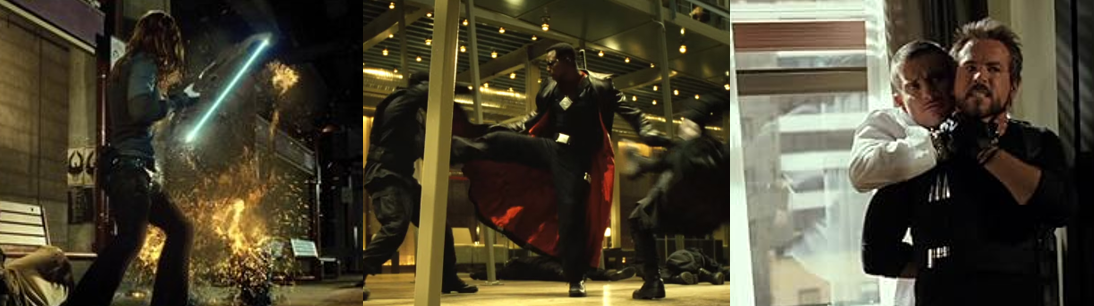
Fights are still very impressive, with Abby especially taking the spotlight with her archery skills.

Blade has some new toys here, including a fun silver-lined roped dagger and a new delivery system for his serum, alongside his usual muscle car, trademark sword, and gun. However, it’s the Nightstalkers who get all the cool gear, such as Abby sporting a silver danger in her boot, lugging around a high-tech bow that sports an ultraviolet laser and lets her shoot around corners, and a wrist-mounted dagger. While Hannibal largely relies on pistols and his smart mouth, he also busts out ultraviolent grenades and Hedges (Patton Oswalt), the Nightstalkers’ resident armourer, develops an “electronic pistol” that fires explosive silver rounds and a high-impact shotgun (similar to those used by the Blood Pack) that fires anything from stakes to heat-seeking mini rockets. While these are rarely used, and Wesley Snipes may appear more lethargic and stoic than usual, Blade continues to ooze charisma and shine in fight scenes, executing kicks and throws with a slick precision to showcase Blade’s raw power whenever the Thirst takes hold. Overall, fights are easy to follow and vampires still explode into cinders and ashes when killed. There are some fun montages of Blade, Hannibal, and Abby knocking around Familiars to get a lead on Drake and Blade frantically chases Drake through the city, leading to a tense rooftop showdown where Drake endangers a baby simply to parlay with the feared Daywalker. When Sommerfield’s research leads Blade and Abby to a vampire “blood bank”, revealing they keep braindead vagrants as a food source, they return to find Zoe and the injured Hannibal kidnapped and the other Nightstalkers dead, with Drake using the two as bait. This leads not just to the now traditional montage of Blade suiting up and preparing for battle and Abby compiling a suitable playlist, but also to Abby working through her grief by preparing her bow and practising her impressive archery skills.

Though victorious after an intense sword fight, Blade’s war is apparently far from over…

Sommerfield leaves a message asking Abby to take care of Zoe and discussing the Daystar prototype, though warns that it must be injected into Drake to work and could potentially kill Blade alongside the other vampires. Regardless, Blade and Abby take the virus (helpfully forged to be fired as an arrow) and follow Hannibal’s tracker, spreading silver dust through the facility’s air conditioning to weaken the vampires ahead of a full-frontal assault. While Blade and Abby fend off Danica’s disposable goons with their karate and toys to rescue Zoe, Hannibal struggles against the hulking Jarko while Blade gets into a swordfight with Drake, now garbed in ceremonial armour. For all the shit I’ve talked about this Dracula, this sword fight is actually really cool (despite some dodgy CGI sequences where Drake defies gravity) and nicely spliced alongside Hannibal and Jarko’s more brutal smackdown, which ends with an exhausted and overwhelmed Hannibal stuffing an explosive ultraviolet round into Jarko’s mouth and blowing him inside out. Although relishing matching swords with Blade, Drake assumes his demonic form to overpower Blade, leaving him prone for a bloody end. While Drake has the wherewithal to catch Abby’s arrow, a second shot stuns him long enough for Blade to inject the Daystar virus, which immediately reacts with Dracula’s blood to reduce all remaining vampires in the building (including Danica) to choking, rotting corpses. In his final moments, Drake commends Blade and praises him as the future of his species, using the last of his power to mimic Blade’s form to spare him future persecution. Though the wounded dhampir’s recovered by his allies, Hannibal’s final narration delivers an anticlimactic and open-ended coda that sees Blade continuing his war, suggesting that Daystar will take some time to eradicate the vampire threat.

The Summary:
While Blade: Trinity is nowhere near as bad as many would have to believe and is still a sleek, sexy, kick-ass vampire action movie, there’s no denying the drop in quality from the previous two films. While the action is as hard hitting and bloody as ever, there are some unmistakable flaws, like Blade’s stupidity regarding Familiars, the glossed over explanation of Abby’s birth, and the overreliance of Ryan Reynolds’ smart mouth humour. While I do enjoy him here, your enjoyment of Blade: Trinity may depend on if you can stomach his wise-ass jokes, which are oddly framed as awkward and childish. Personally, I much preferred Hannibal King to Abby, who showed little personality until Sommerfield’s brutal death, with the film bizarrely avoiding emphasing her heritage, how that affects Blade, and his role as a mentor to her. While the film is as stylish as its predecessors and competently presented in the same visual style, with fun, well-choreographed, and well edited fight scenes, I do question the casting of Parker Posey. She’s just awful here, hamming up every line and looking spaced out in every scene. Triple H’s physical performance was impressive, leading to a decent David vs. Goliath fight between him and Hannibal and I did like his animosity towards Hannibal, which was in stark contrast to Blade’s stoic dismissal. For me, Blade: Trinity drops the ball with its depiction of Dracula. Robbed of his aristocracy and screen presence, Drake appears as just another vampire thug unless he’s in his impressive demon form. Dominic Purcell just doesn’t have the gravitas for the role, and I would’ve much preferred he took Danica’s place, and a classically trained actor was cast as Dracula to give him a better aura of menace and refinement. Additionally, Blade: Trinity does do a disservice to the title character by having Abby, Hannibal, and the Nightstalkers eat into his screen time to set up a spinoff we never got. In the end, I think Blade: Trinity is a decent film to throw on in the background and is unfairly saddled with a negative reputation. It’s not as good as the last two and has far more flaws, but it’s decent enough, though I appreciate how many see it as disappointing end for the character.

My Rating:

Rating: 3 out of 5.

Pretty Good

Are you a fan of Blade: Trinity? How do you think it compares to the previous Blade movies? What did you think to the Nightstalkers? Did you enjoy Hannibal’s lewd sense of humour and do you agree that the film dropped the ball with Abby’s potential? Were you disappointed by Dracula’s lukewarm portrayal and did you also find Parker Posey a grating inclusion? What would you like to see from Blade in future movies? Whatever your thoughts on Blade: Trinity, share them below, check out my other Blade reviews, and donate to my Ko-Fi to suggest more Blade content.

Back Issues: The Tomb of Dracula #1

Story Title: “Dracula”
Published: 16 November 1971 (cover dated: April 1972)
Writer: Gerry Conway
Artist: Gene Colan

The Background:
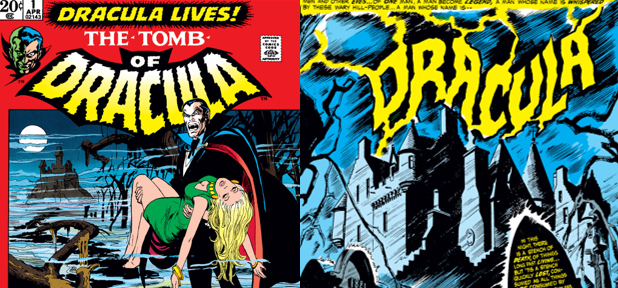
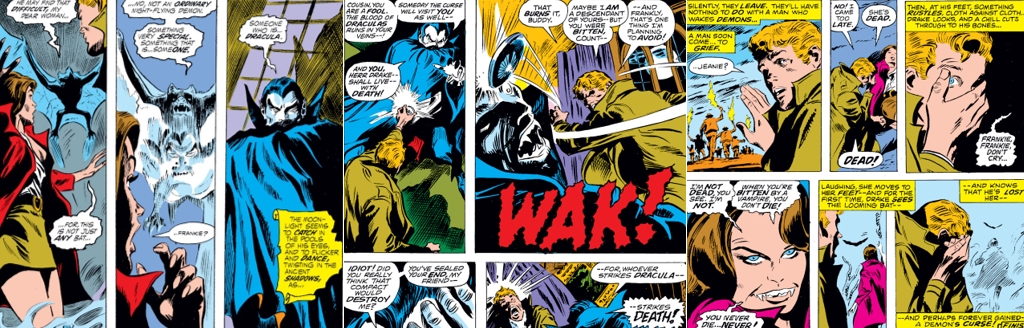
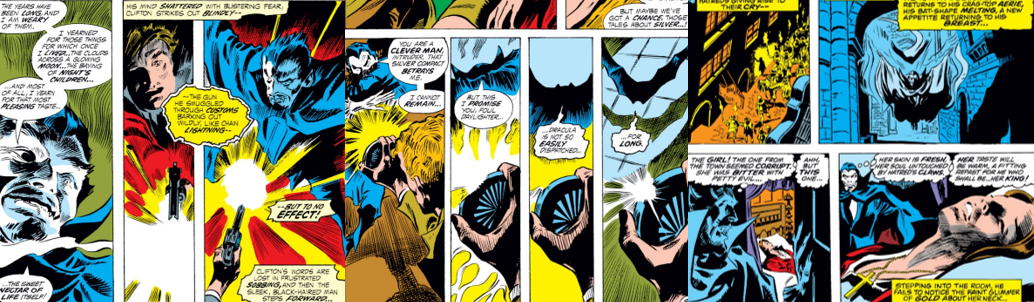
Inspired by famous butchers like Vlad II/Vlad Dracula/Vlad the Impaler, Count Dracula first appeared all the way back in 1897 courtesy of author Bram Stoker’s classic Gothic novel, which became the great-great-grandfather of what we now know as the vampire mythology. An instant classic, Dracula was adapted many times over the years as plays, movies, videogames, and even comic books. Indeed, when publishers like Marvel Comics were finally allowed to print stories involving vampires and other supernatural creatures, writers like Gerry Conway and artist gene Colon selected the infamous Count to spearhead the Tomb of Dracula series. Heavily inspired by classic Hammer Horror films, The Tomb of Dracula saw numerous writers and artists come and go as it struggled to find its identity and is perhaps best known for introducing Eric Brooks/Blade to Marvel readers. Still, Dracula went on to clash with many Marvel heroes, especially those who were involved with the supernatural. Dracula worked alongside the Avengers to fend off the Dread Dormammu, spawned a Nazi vampire, established a vampire colony on the Moon, and even matched wits with various cosmic beings. Perhaps surprisingly, Dracula also appeared in many Marvel cartoons but was most infamously brought to life by Dominic Purcell in the much-maligned Blade: Trinity (Goyer, 2004).

The Review:
Marvel’s version of the enigmatic Count was first introduced, fittingly enough, against the backdrop of a storm swept Transylvania, where Count Dracula’s mighty, gothic castle stands ominously on a hilltop. Despite the torrential weather and poor visibility, Frank Drake and his girlfriend, Jeanie Ovington, brave the storm alongside Clifton Graves, Frank’s cantankerous long-time friend who chastises Drake’s decision to fly from London just to sell the castle, which he recently inherited. While the three lament their misfortunes, hopelessly lost, residents of the nearby village discuss Frank’s impending arrival. While Fritz Burgeister predicts only sorrow will come from continuing to mess with the long-abandoned castle, a local barmaid hopes that Frank will bring some much-needed tourism and revenue to their sleepy Romani town. Just then, the three stumble into the Baron’s Inn seeking transportation to Castle Dracula from Fritz. However, Fritz refuses to take them to the castle and is adamant that none of the townsfolk would volunteer to replace him. While Clifton scoffs that the locals believe the wild tales spun by Bram Stoker, one of the patrons, Otto, volunteers to take them…for a small fee. Naturally, this is by horse and carriage and, on the way, Otto shares tales of how Dracula’s legend is debatable for, while such a man possibly existed, none can be sure if he were actually a vampire as Stoker claimed. Regardless, fear of the Count and his kin drives many of the locals to bar their windows, leave wolf’s-bane at their doors, and wear crucifixes to ward off any evil spirits. While Otto claims to be an exception in this regard, he’s no fool and refuses to take them right to the castle door, forcing the three to walk the rest of the way and costing Clifton his last ten bucks for the pleasure.

Broke Frank Drake is forced to visit his alluring, Gothic ancestral home to recoup his losses.

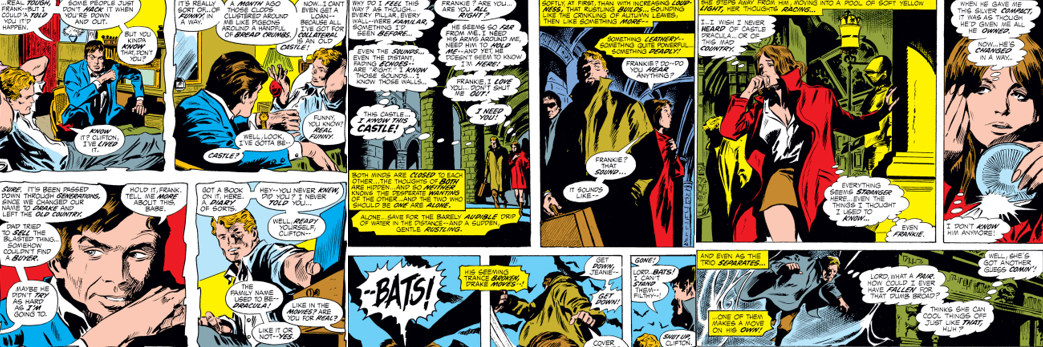
While Frank’s distracted by the grandeur of Castle Dracula, Clifton tries to put the moves on Jeanie. However, while they used to be a thing, she ended it months ago and is sick of his refusal to accept that she’s moved on. Frank, however, is lost in memories of how he stupidly blew his father’s fortune, how Jeanie stuck by him despite his money woes, and him being refused financial aid from banks and friends alike. While sharing his woes with Clifton, Frank mentions how all he has left is an old castle, one passed down through his family line and which his family has struggled to sell. This is where we learn that Frank is a descendant of Dracula’s and that it was actually Clifton’s idea to capitalise on his lineage by turning the castle into a tourist attraction. While reading through a family journal (strongly implied to be Stoker’s novel, reinterpreted as a historical document), Frank felt the stirring of “some ancestral memory” and was captivated by the descriptions of Dracula. The book also told of his ancestor’s shame and fear of being associated with the Count and of how Abraham van Helsing (referred to as “van Helfing”) seemingly destroyed the vampire lord by driving a wooden stake through his heart. Haunted by the text, Frank nevertheless agreed to head to Transylvania with Clifton and Jeanie in hopes of turning the castle into a museum though, as he stands in the shadow of the gothic structure, Frank can’t help but be unnerved by the strange feelings of home and destiny exuded by the dark building. As they tour the interior, Frank’s odd behaviour worries Jeanie, who’s startled when a cloud of bats suddenly swarms them. Although Frank fends them off, Jeanie’s left traumatised and wanting to leave, noting that Frank’s changed and is no longer the sweet man who gifted her a silver compact mirror.

The enigmatic count mesmerises Jeanie, corrupting her despite Frank’s best efforts.

Determined to force Jeanie back into his arms and screw his friend over, Clifton takes off and ends up tumbling into a dungeon. There, he discovers a narrow stone stairway leading to an ancient tomb, where Dracula’s coffin rests. Seeing only dollar signs, Clifton draws a gun and arrogantly opens the crypt, discovering the skeletal corpse of Dracula, stake and all, lying within. Excited, Clifton removes the stake and sets out to kill Frank so he can reap all the rewards, unaware that this act causes Dracula to reconstitute and rise again! Weary and famished from his long slumber, the eloquent Count pounces upon Clifton, shrugging off his gun shot and tossing him into a deeper dungeon for safekeeping. Entranced by the sound of others, especially a woman, Dracula heads to the upper floors in his bat form, frightening Jeanie and then horrifying both her and Frank when he reveals his true self. Thanks to his silver tongue and hypnotic eyes, Dracula easily sways Jeanie to leave Frank’s side, so he knocks her out with a right hook to keep her safe (!) and sends Dracula fleeing by flashing her silver compact. As Frank rushes Jeanie upstairs (since she’s somehow “close to dying!”), Dracula flies to the village and feeds upon the barmaid, turning the locals into an angry mob when they rightly assume that Frank and the others disturbed the legendary vampire. Returning to his castle, Dracula spies on the unconscious Jeanie and, though tempted by her purity and innocence, is again denied another meal by the glittering crucifix around her neck. Frank takes credit for this and confronts his ancestor, warding the vampire off with the compact’s mirror, enraging Dracula and casing him to strike his cousin, knocking him out. Although Dracula compels Jeanie to remove her crucifix, the angry mob sets the castle alight and Frank recovers in time to flash the compact once more, forcing Dracula to flee. Unfortunately, Frank was too late to stop Jeanie being bitten and she awakens as a vampire, mocking his grief and fleeing into the misty night.

The Summary:
This had a bit of potential, but didn’t fully deliver on its premise. I quite like the idea that Dracula is treated as folklore, a retelling of factual events whose veracity is disputed. For the Transylvanian locals, Castle Dracula is all-too real and the fear of the vampire lord within is strong enough to stir up superstitions and debate between them. While none of them dispute that Dracula did exist, some aren’t convinced he was a vampire and yet many take precautions nevertheless because…why tempt fate? Fritz takes these concerns very seriously, presumptuously speaking for his fellow villagers and claiming that no one will help Frank and the others. This isn’t quite true as Otto’s assistance can be bought, though even he’ll only go so far despite boasting of his disbelief of such superstitious nonsense. Whether they believe it or not, Castle Dracula stands as an ominous monument. Its very presence evokes fear and it’s become a symbol of all their superstitions, though ironically may hold the key to bring some much-needed revenue to the struggling villagers as it could lure in tourists. The ill-fated barmaid is almost as excited by this prospect as the opportunistic Clifton, who maliciously manipulates Frank into buying into his family’s account of the Count and profiting off his inheritance, with no understanding of what truly lurks within Castle Dracula. He’s perfectly happy to use his friend, openly complaining and criticising him and gaslighting Frank into believing the troubles they’ve suffered from the trip are his fault, all with the aim of profiting both financial and by regaining Jeanie’s affections. While she has no time for Clifton (and even Frank quickly loses patience), Clifton refuses to take no for an answer and is even prepared to off Frank just so that he can weasel his way back into Jeanie’s bed, a selfish ambition that blinds him and makes him easy prey for the rejuvenated vampire lord.

Despite his visual appeal, Dracula is strangely weak and fails to match his filmic counterparts.

Yes, Dracula is very real here. Clearly modelled after Christopher Lee’s iconic portrayal from Dracula: Prince of Darkness (Fisher, 1966), the Count is a tall, alluring figure with hypnotic eyes and even more hypnotic voice. A gothic figure of ancient legend, he’s ripped straight from Bram Stoker’s novel and sports many of the same tropes and weaknesses. He can transform into a bat, mesmerise his prey, feeds on their blood, and is warded off by wolf’s-bane, silver, crucifixes, and mirrors. The Drake journal reveals that their bloodline largely distanced themselves from Dracula out of fear and tells how an old vampire hunter finally slayed the creature, revealing that Dracula can be killed with a wooden stake (though this doesn’t come into play, except to revitalise the fiend). Immune to Clifton’s bullets, Dracula’s scared off by Jeanie’s convenient silver combat mirror and heads into town to feed, though seems displeased by the barmaid’s blood and desires purer, sweeter blood. Thus, he targets Jeanie, a caring spouse who worries about Frank’s distracted state and fends off Clifton’s advances, though she crumbles like paper whenever bats appear, much less Dracula. Dracula seems a bit weak here, which is understandable since he just woke up, but it’s weird that his strike didn’t kill Frank. The story’s also incomprehensible at times; Frank seems to think Jeanie’s in danger of dying after simply passing out and she gets bitten between panels, which wasn’t very clear. In the end, this was an alright story with some unique visuals. I like the gothic depiction of Castle Dracula and the torrential rain, and Dracula’s very Lee-esque appearance and unique, haunting way of talking. However, it was quite a repetitive story (Frank relied on that silver compact way too much) that didn’t fully deliver on all its plot threads (Clifton being a prime example). I can only hope that future issues of The Tomb of Dracula characterised the titular Count as less of a weakling as this wasn’t a great showing for him here, even if he did get the last laugh by turning Jeanie.

My Rating:

Rating: 2 out of 5.

Could Be Better

What did you think to Count Dracula’s debut story? Were you disappointed by how weak he was depicted? What did you think to Frank Drake and the depiction of Dracula’s legend? Did you ever read The Tomb of Dracula books and, if so, did you enjoy them? What are some of your favourite Dracula moments from Marvel Comics? Have you ever read Stoker’s novel, and what are some of your favourite vampire stories? No matter what you think, good or bad, feel free to share your thoughts below, show me some love on Ko-Fi, and check out my other Dracula content.

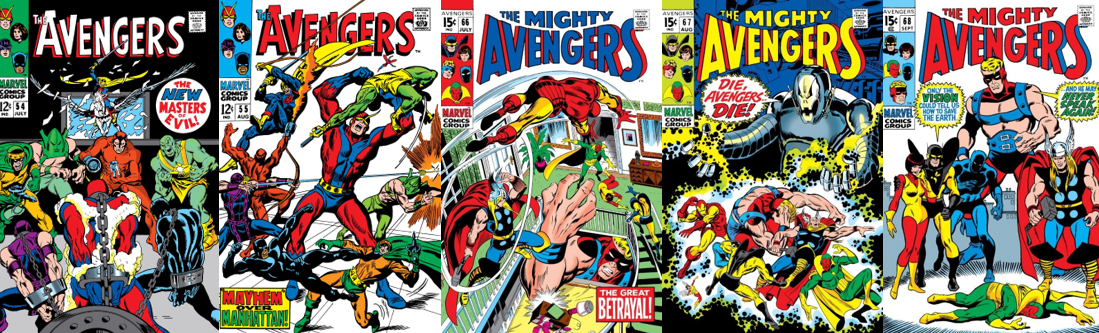
Back Issues [A-Day]: The Avengers #54-55 / The Mighty Avengers #66-68


In September 1963 the legendary duo of Stan Lee and Jack Kirby assembled Earth’s mightiest heroes, the Avengers, who became the premier team of Marvel Comics, formed the backbone of the Marvel Cinematic Universe, and become an unbelievably popular and successful franchise.


Story Title: “…And Deliver Us From–The Masters of Evil!”
Published: 9 May 1968 (cover-dated: July 1968)
Writer: Roy Thomas
Artist: John Buscema

Story Title: “Mayhem Over Manhattan!”
Published: 11 July 1968 (cover-dated: August 1968)
Writer: Roy Thomas
Artist: John Buscema

Story Title: “Betrayal!”
Published: 13 May 1969 (cover-dated: July 1969)
Writer: Roy Thomas
Artist: Barry Windsor-Smith

Story Title: “We Stand at Armageddon!”
Published: 10 June 1969 (cover-dated: August 1969)
Writer: Roy Thomas
Artist: Barry Windsor-Smith

Story Title: “…And We Battle for the Earth!”
Published: 8 July 1969 (cover-dated: September 1969)
Writer: Roy Thomas
Artist: Barry Windsor-Smith

The Background:
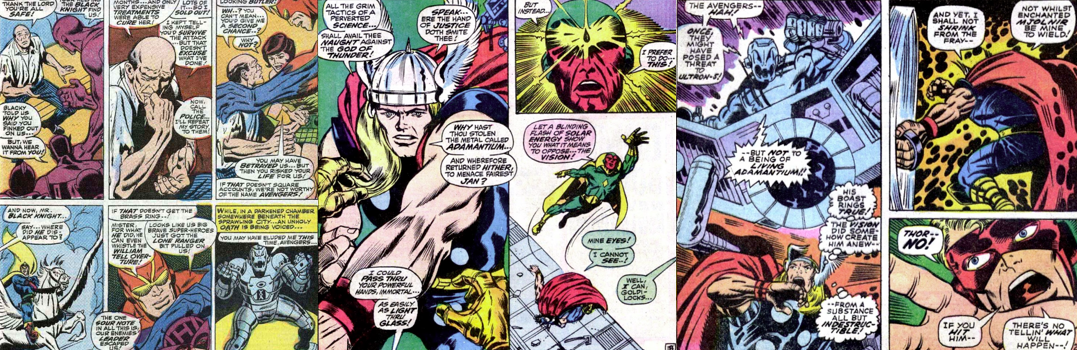
After DC Comics brought together their most popular and powerful superheroes to form the Justice League of America in 1960, Marvel Comics head honcho Martin Goodman tasked Stan Lee with creating a similar team following his success with the Fantastic Four and the X-Men. Luckily, Lee and his most famous collaborators had already introduced numerous colourful characters and, thus, Anthony “Tony” Stark/Iron Man, Doctor Robert Bruce Banner/The Hulk, Doctor Donald Blake/Thor Odinson, and Doctor Hank Pym/Ant-Man and Janet Van Dyne/The Wasp became the first Avengers. Since the debut issue, the Avengers have been a consistent and influential presence in Marvel Comics and their roster has constantly shifted and changed, with the long-retired Captain Steve Rogers/Captain America joining their ranks in issue four. The Avengers splinter groups, been disassembled and reassembled, aided in massive cosmic events, and battled some of Marvel’s most powerful supervillains. Perhaps one of their greatest recurring enemies is the psychotic cyborg Ultron, who was first revealed under the guise of the Crimson Cowl in The Avengers #55. Created by Roy Thomas and John Buscema, and built in-universe by Hank Pym, Ultron is a sentient android who developed a murderous obsession with destroying the Avengers and conquering the world. Capable of changing his form, improving and becoming more powerful over the years, Ultron inadvertently created one of the Avengers’ most powerful allies, the Vision, expanded his schemes to include both the galaxy and altering the timeline, and even merged with his creator at one point. Ultron has made regular appearances in videogames as a powerful, penultimate, or final boss, is often portrayed as a formidable villain in Marvel cartoons, and was masterfully brought to life by James Spader in Avengers: Age of Ultron (Whedon, 2015).

The Review:
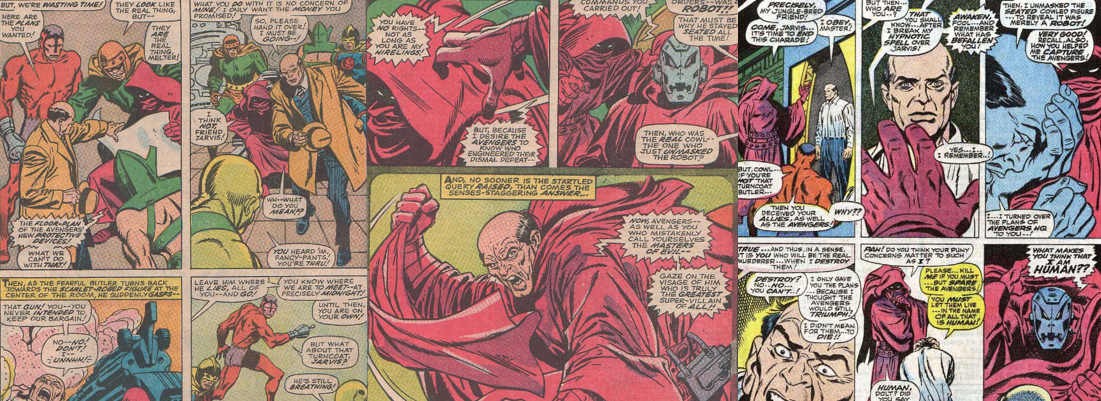
The Avengers’ first encounter with the killer automaton Ultron began with T’Challa/The Black Panther testing Dr. Hank Pym/Goliath’s new defensive protocols at the Avengers Mansion. Satisfied that the booby traps are fully functional, Giant-Man alerts the Avengers’ butler, faithful Edwin Jarvis, who’s shocked at the subtle insinuation that he would ever betray his team’s secrets. However, Jarvis then slinks away to make a clandestine phone call and then slips out to visit his mother, only to venture to a secret base beneath a condemned building to meet the villainous Masters of Evil! Rather than being brainwashed or some elaborate decoy, Jarvis has truly betrayed the Avengers for a hefty cash sum and, while Chen Lu/Radioactive Man is suspicious of their enemy’s butler working with them, the team’s newest leader – the elusive and secretive Crimson Cowl – vouches for Jarvis. Still, Ulysses Klaw is anxious to have his revenge against Earth’s Mightiest Heroes, specifically the Black Panther, and is tempted to kill Jarvis as a substitute. Thanks to Dane Whitman/The Black Knight and Bruno Horgan/The Melter, the enraged villains cool off enough to let Jarvis speak. However, after Jarvis delivers the floorplan for Pym’s new defences, the Crimson Cowl double-crosses him with a puff of knockout gas and sends the Masters of Evil on their way. While flying about on his winded horse, Aragorn, the Black Knight recalls how he joined the new Masters of Evil to betray them to the Avengers. However, the Crimson Cowl anticipates this and sends the others to intercept Whitman at the Avengers Mansion. Though overwhelmed, the Black Knight orders Aragorn away but, while Clint Barton/Hawkeye spots the horse, the abrasive Avenger is attacked by the Melter before he can alert the team.

The Avengers and their foes are stunned when their newest adversary turns out to be more than he seems.

Though he fires off a few arrows, Hawkeye’s downed when the Melter buries him under some debris. Simultaneously, David Cannon/Whirlwind attacks the Black Panther, sending him flying with a whirling cyclone, and the Wasp is accosted by Klaw. Despite showing no fear and her super shrinking ability, the Wasp is easily defeated when she flies head-first into a door! Similarly, Radioactive Man surprises Goliath and Doctor William “Bill” Foster in the Avenger’s lab, subduing Foster with a super adhesive and luring Goliath into a trap where he’s ensnared by his own devices! With all the Avengers captured, the gloating Masters of Evil introduce their master, who’s first revealed to be a distinctly Ultron-looking robot decoy and then unmasked to be Jarvis! The Masters of Evil load their prisoners into a futuristic craft and head back to their master, relishing their victory, though the villains are as unnerved by Jarvis’s turn as the Avengers, if not more since Jarvis demonstrates an uncanny ability to be fully aware of everything, no matter how trivial. Although Goliath escapes his restraints, Klaw’s saved by the Crimson Cowl, who admonishes his carelessness. When Klaw turns his incredible Sonic Claw on his master, he’s amazed when it has no effect and is left grovelling at the hooded figure’s feet, suitably humbled. The Crimson Cowl then reveals his plan to drop the Avengers into the ocean and blackmail New York City with a hydrogen bomb. However, the Crimson Cowl purposely drops the Avengers in a craft so they can slowly suffocate after learning that Jarvis was hypnotically duped into betraying them by none other than Ultron-5!

After freeing Jarvis from Ultron, the Avengers are later betrayed by the Vision!

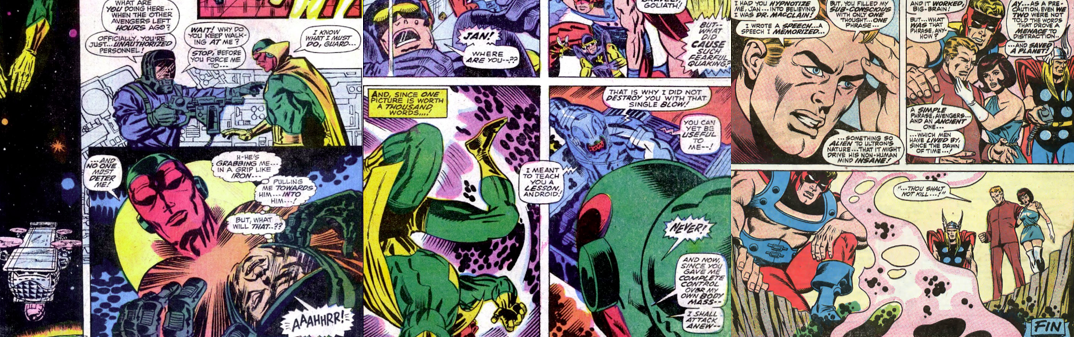
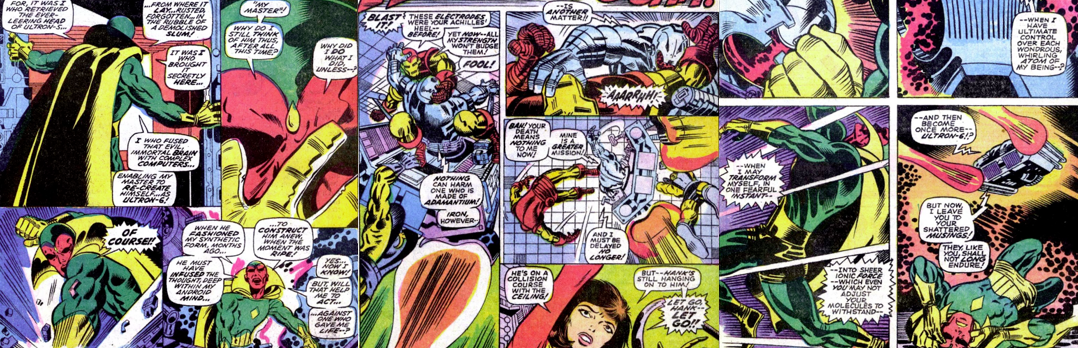
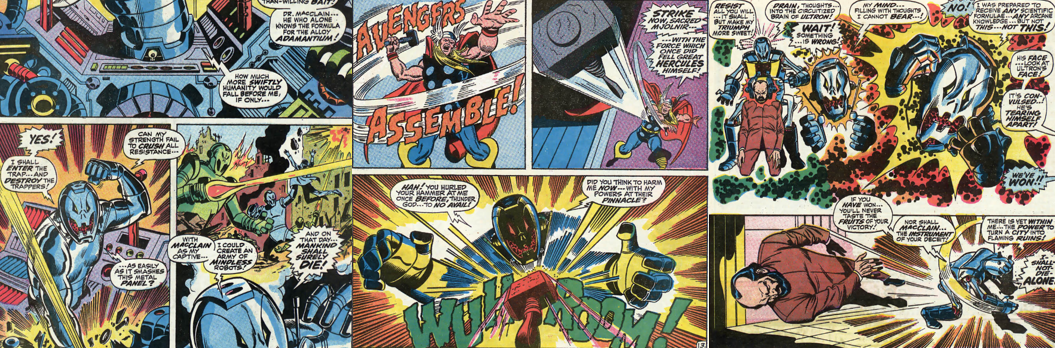
Though it seems like the Melter crushes Jarvis under some rubble during his desperate escape, the remorseful butler survives and wanders the streets, succumbing to exhaustion just as he’s found by the Black Knight. Thanks to Jarvis’s tipoff, the Black Knight intercepts Ultron-5’s craft and frees the Avengers. The team quickly avenge themselves against the Masters of Evil, causing Whirlwind to flee but apprehending the others and easily dismantling the hydrogen bomb. When the Avengers confront their regretful butler, Jarvis reveals he sold out to pay for his mother’s treatments, and they quickly forgive him and part with the Black Knight on good terms, though Ultron-5 is left vowing revenge. Some time later, aboard a Supreme Headquarters, International Espionage and Law-Enforcement Division (S.H.I.E.L.D.) Helicarrier, a new version of the Avengers tests the durability of the mysterious Adamantium, a substance powerful enough to tank blows from Thor Odinson’s hammer and Iron Man’s Repulsor Rays. This proves that, as the team feared, the mineral has been altered by a “molecular rearranger” and presents a serious threat. As Goliath (now Barton garbed in a garish costume) tries to prove he can succeed where they failed, the strangely silent synthezoid, the Vision, is suddenly assaulted by an unseen force and compelled to brood over the grave of Simon Williams/Wonder Man, whose brain patterns formed his personality. Though he first suspects Simon’s spirit is calling him, the Vision suddenly has a revelation and flies off, leaving Pym (now known as Yellowjacket) to ponder his ally’s fate. While Iron Man tests himself in the mansion’s combat simulator, the Vision returns to the team’s Helicarrier, subdues a guard, and steals the Adamantium before lowering the ship’s air pressure to leave none alive. When the team finds out and find Janet attacked, they angrily confront the Vision, who coldly rejects his humanity, easily shrugs off their attacks, and heralds the rebirth of his creator, now in the jet-powered form of Ultron-6!

The remorseful Vision tries to atone for his mistakes by battling his creator to the death.

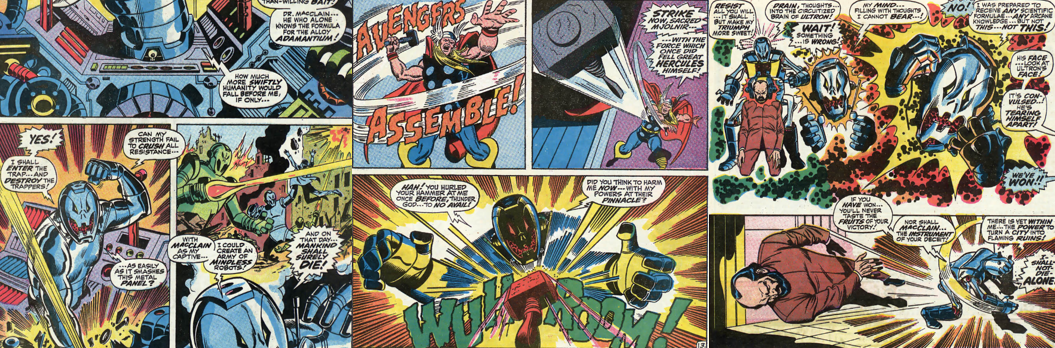
Now made of the indestructible Adamantium, the vengeful Ultron-6 attacks without mercy, easily defeating Thor and Goliath when the battle hungry Thor strikes the android’s body with his enchanted hammer, Mjölnir, and causes a massive shockwave. Though Yellowjacket gets the drop on his creation, Ultron-6 easily throws him off and then targets Pym over Iron Man and the Wasp, hell-bent on killing his “father”, though he proves too powerful for Iron Man to affix some electrodes to stop him. Bored of the conflict, Ultron-6 flees, unknowingly pursued by the repentant Vision, realising his creator programmed a failsafe to ensure his servitude. After regrouping, the Avengers set out to stop Ultron-6, who returns to his stronghold and prepares to launch a cache of nuclear weapons, determined to wipe out the human race! When confronted by his melancholic, wayward “son”, Ultron-6 flies into a rage, desperate to prove himself superior to his creation, though the Vision’s incredible matter-altering powers make him more than a match for his “father”. Ever the stubborn android, Ultron-6 escapes the Vision’s wrath by transforming into “sheer ionic force” and leaves the Vision to be attacked by S.H.I.E.L.D. soldiers for stealing their Adamantium. When the Avengers arrive, they discover Ultron-6 is one lever pull away from causing nuclear destruction, though the murder machine is left incensed that lever is mysteriously inoperable. Regardless, Ultron-6 is still powerful enough to endure Yellowjacket’s electrical blasts and throw the team around like ragdolls with a burst of explosive ionic power. Yet, despite apparently being strong enough to kill the Avengers and then enact his diabolical plot, Ultron-6 simply vanishes and the team is left to witness the Vision’s theatrical sorrow for being controlled by his creator. Before collapsing from his efforts to defeat Ultron-6, the Vision also reveals that he caused Ultron-6’s plan to go awry by trashing his apparatus.

Despite his all-powerful new form, Ultron is undone by some Pym trickery.

After convincing S.H.I.E.L.D. to relinquish custody of the Vision, the Avengers fail to rouse him with a concentrated dose of solar energy and thus turn to Yellowjacket’s “rudimentary mind-probe” to learn that the molecular rearranger is the key to stopping Ultron-6 since the only thing that can rearrange Adamantium. Although the device was also stolen alongside the Adamantium, Yellowjacket contacts the Black Panther while he’s fending off an invasion of Wakanda and requests a chunk of his nation’s Vibranium. Upon learning that the Avengers plan to publicly reveal his threat, Ultron-6 decides to enter their obvious trap and slaughter them, intent on kidnapping Adamantium expert Doctor Myron McLain and forcing him to build an army of Ultron duplicates so he can conquer the world. Despite being a capable and adaptable fighter, the Wasp is more concerned with dressing well for the team’s arrival at the United Nations building, where Dr. McLain is attacked by Ultron’s newest shell, a towering humanoid construct claiming to be the “ultimate” Ultron. Easily dispatching the nearby S.H.I.E.L.D. agents, Ultron calls out the Avengers and renews their battle, barely flinching when struck by Mjölnir and shrugging off the clumsy Goliath’s gigantic fist before briefly putting both Avengers down with lasers. Ultron then forces the Avengers to back off lest he murder Dr. McLain, leaving them powerless to stop him from affixing a “mind-draining device” to the doctor’s head to absorb his immense knowledge and secrets. However, Ultron’s forced to break the connection when he struggles to contain Dr. McLain’s vast intellect, leaving him on the brink of a complete meltdown. Thankfully, Thor averts this by containing Ultron within a special expanding chamber…thing…made of Vibranium, seemingly destroying Ultron in the process. In the aftermath, it’s revealed that “Dr. McLain” was really super genius Hank Pym in disguise and that he forced Ultron to absorb a phrase so alien to him that it led to his destruction: “Thou shalt not kill.”

The Summary:
While I’ve always been a fan of Ultron, his first encounters with the Avengers felt a bit lacking to me. The first two issues, especially, are a bit of a mess, overloaded with characters and painting Jarvis, of all people, as a deceiver and a villain! I understand the idea of behind bringing together a new Masters of Evil, especially as the villains nicely counter each hero’s abilities, but their victory felt forced here. Ultron-5 goes to the effort to brainwash Jarvis (despite him later admitting that he “sold out” for money for his sick mother) to acquire Pym’s floorplan, only for Whirlwind to just enter through a window and the Melter to…well, melt…a hole in the wall. There was barely a co-ordinated attack on the Avengers Mansion, the villains just caught them by surprise with such sophisticated tricks as fancy glue and slamming a door. I would’ve much preferred it if Ultron-5 had used Jarvis’s knowledge to reprogram or take control of Pym’s machinery, turning them against the Avengers as he turns training room against Iron Man and overwhelming them with a real show of power. Instead, the first two issues try to sell Jarvis as a traitor, with no one (not even Pym) recognising Ultron-5 until he reveals himself and the Masters of Evil happily following Jarvis’s commands. Ultron-5 is also depicted as a grandiose fool, more focused on gloating and humbling his enemies than finishing the job, and ends up undone by the Black Knight, of all people, and a comparatively weak incarnation of the Avengers. For me, this makes the “Crimson Cowl” part of Ultron’s history an odd and forgettable side note in the killer robot’s lineage, one perhaps only good for a pub quiz.

Despite his menacing appearance, Ultron is a boasting, psychotic braggart whose plans go awry.

Ultron makes a better impression in the second story, even if Hawkeye is parading around in a gimp outfit as Goliath and Pym is making a fool of himself as Yellowjacket. One thing I’ve always loved about Ultron’s design is his permanently screaming face, with the flaming energy bursting from his mouth, which is surprisingly expressive and matches his chaotic mood swings. These three issues are also noteworthy for introducing Adamantium and depicting it as the strongest and perhaps most dangerous substance on Earth. Its nigh-indestructible properties make it the perfect target for Ultron-6, who compels his “son”, the Vision, to steal it and fortify his otherwise laughable half-torso, half-rocket jet form. This also seems to facilitate an evolution in Ultron’s physical self, allowing him to project and even transform into ionic energy, easily making him a physical match for Thor and making fools of Goliath and the Wasp. By this point, Ultron-6’s plan has changed from blackmail to worldwide destruction and there’s a real sense of tension as the team desperately pursues him, especially as Ultron-6 is depicted as psychotic in his desire to eradicate human life. Yet, Ultron-6 apparently cannot construct new bodies for himself or robotic minions, which leads to his undoing when he targets Dr. McLain and is easily fooled by Yellowjacket. Still, despite “ultimate” Ultron failing to impress, Ultron is depicted as a significant threat as he outmatches, outwits, and outpowers a far stronger team of Avengers and comes dangerously close to enacting his plan. While he meets his end in dubious fashion, seemingly destroyed by the thought Pym plants in his head and the laughable Vibranium bell-thing Thor encases him in, I enjoyed seeing Ultron throw the Avengers around and be publicly revealed as a very real threat to the world.

Melancholy Vision proves ineffectual against Ultron compared to Pym’s elaborate scheme.

These three issues also largely focus onto the Vision, a melancholy, brooding figure who’s treated with some distrust by Barton, apprehension by Pym, and naturally seen as a tortured soul by the flakily Janet. Prone to breaking into gloomy soliloquies, the Vision is constantly questioning his purpose and humanity and is torn between his loyalties to his teammates and the programming forced upon him by Ultron-6. Having created the synthezoid some time ago, Ultron-6 compels his “son” to subdue any in his way using his bizarre powers, phase through walls, and betray his allies by stealing the Adamantium. Conveniently, Ultron-6’s control over the Vision isn’t permanent and he soon comes to his senses, only to be set upon by S.H.I.E.L.D. soldiers and put his relationship with the Avengers in doubt. This, as well as the desire to stop his creator, drives the Vision to confront Ultron-6 in a battle to the death. Thanks to the Vision being effectively all-powerful, their fights are brutal and merciless, though Ultron-6 maintains the advantage with his ionic powers and the Vision is left seemingly comatose after exerting himself. I’m not a big fan of the Vision’s dramatic ways but it is fun seeing him go toe-to-toe with Ultron-6 and getting a sense of how powerful Ultron can be since he holds his own against powerhouses like the Vision and Thor. Still, the Avengers’ first counters with Ultron were surprisingly low-key, despite Ultron wishing to wipe the human race off the Earth. Ultron’s shown to be incapable of making good on this threat after the Vision wrecks his equipment, ironically needing the knowledge of a human to prove his mechanical superiority, and spends more time boasting and plotting than actually seeing things through. It definitely makes him a megalomaniacal villain and I really dig his creepy aesthetic, but I don’t think it did him any favours to go up against such mismatched Avengers teams, who handily defeated him despite not being as powerful as they could be.

My Rating:

Rating: 3 out of 5.

Pretty Good

What did you think to Ultron’s first encounters with the Avengers? Where does Ultron rank in your hierarchy of Marvel villains? Did you believe that Jarvis had turned traitor? Were you surprised when the Vision betrayed his team? Which incarnation of Ultron is your favourite or who would you like to see on the Avengers roster one day? What are some of your favourite Ultron stories or moments? How are you celebrating the debut of the Avengers today? Share your thoughts on Ultron, and the Avengers below and, if you’d like to see more Ultron reviews, go support me on Ko-Fi.

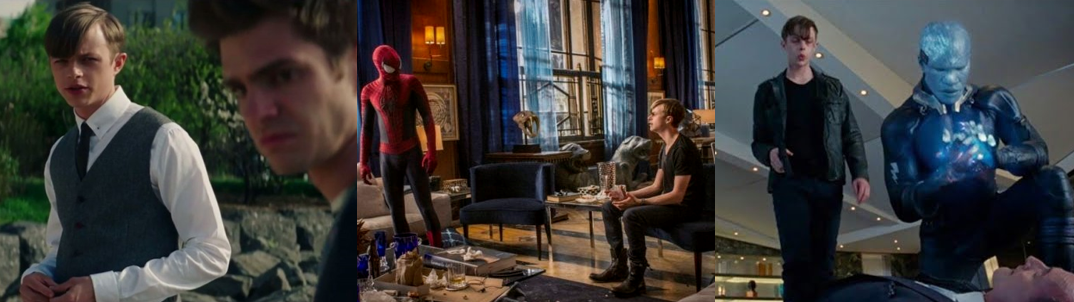
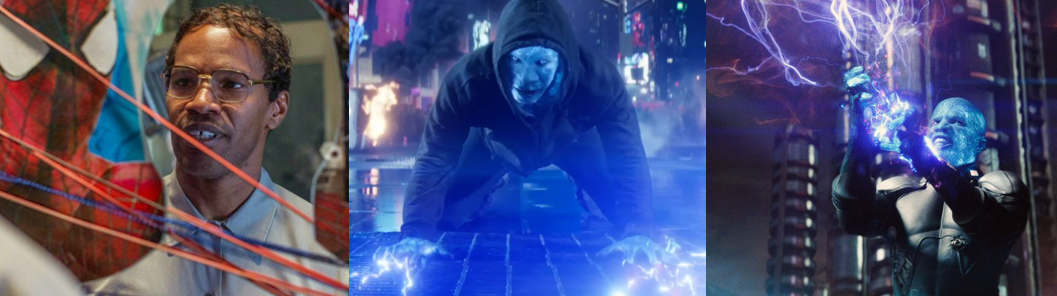
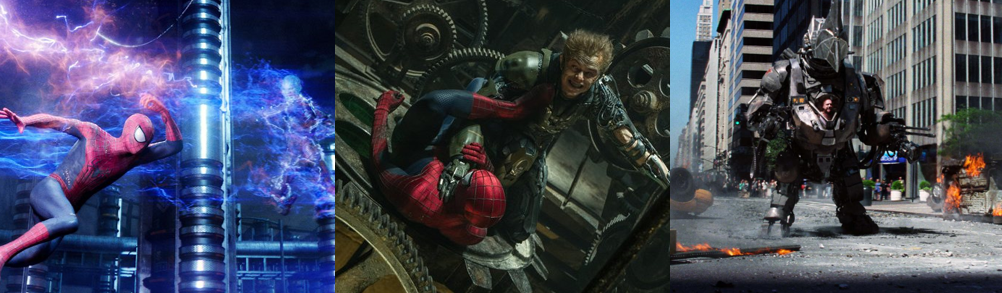
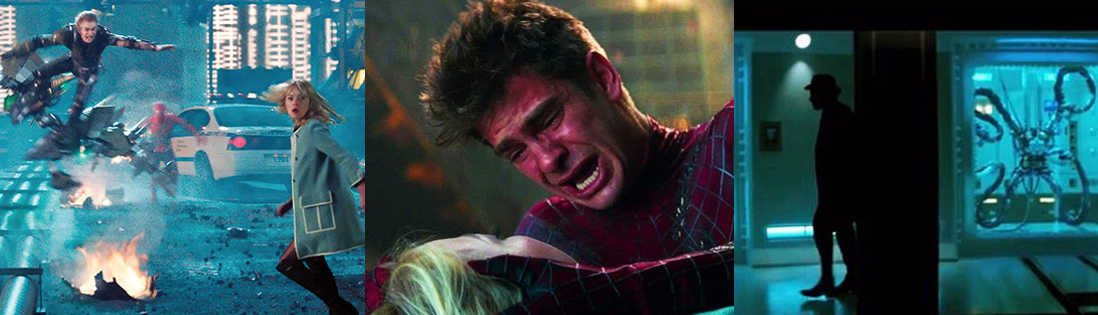
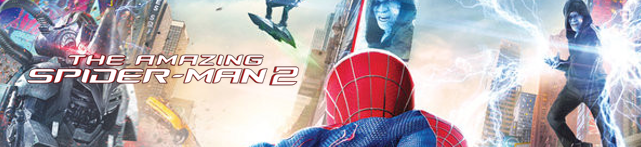
Movie Night [Spidey Month]: The Amazing Spider-Man 2


Easily Marvel Comics’ most recognisable superhero, unsuspecting teenage nerd Peter Parker was bitten by a radioactive spider and learned the meaning of power and responsibility in August 1962. Since then, the Amazing Spider-Man has featured in cartoons, movies, videogames, and countless comic books. To coincide with his day of celebration, I’m dedicating every Monday of August to everyone’s favourite web-head!


Released: 2 May 2014
Director: Marc Webb
Distributor: Sony Pictures Releasing
Budget: $200 to 293 million
Stars: Andrew Garfield, Emma Stone, Jamie Foxx, Dane DeHaan, and Sally Field

The Plot:
Already struggling to keep his love Gwen Stacy (Stone) safe from his double life, Peter Parker/Spider-Man’s (Garfield) troubles are compounded when downtrodden electrical engineer Maxwell “Max” Dillon (Foxx) is transformed into pure electricity!

The Background:
Following his debut issue becoming a best selling title for Marvel Comics, Spider-Man became their flagship character and appeared in numerous videogames, cartoons, and even a live-action series. Despite script and legal issues infamously delaying Spidey’s big-screen debut, Sam Raimi’s one-two punch of Spider-Man (Raimi, 2002) and Spider-Man 2 (ibid, 2004) gave us not only critical and commercial hits but also one of the greatest superhero movies ever made, and even the divisive Spider-Man 3 (ibid, 2007) was a huge commercial success. Although Raimi’s plans for a sequel were scrapped in favour of a reboot, The Amazing Spider-Man (Webb, 2012) somewhat reinvented Spider-Man to tell an exciting, if familiar, new story. Its $758.7 million worldwide gross also meant it did well enough for Marc Webb to return for a sequel. The cast also returned, Spidey got a revamped costume, and Sony Pictures Imageworks outdid themselves with an impressive and complex action sequence in Times Square. Yet, The Amazing Spider-Man 2 was plagued by a troubled production that saw an entire character excised and a bloated script. As part of their ongoing plan for multiple Spider-Man spin-offs, Sony insisted on shoe-horning in as many Easter Eggs and as much sequel bait as possible, ignoring Marvel Cinematic Universe head honcho Kevin Feige’s notes and alienating many fans. The film grossed the least of any Spider-Man movie to date and has been ridiculed by critics for years. They tore apart the questionable reimagining of classic Spidey villain Electro, decried the nonsensical side plots, and lamented the overstuffed narrative. Still, Garfield continued to be praised in the lead role, the tragic ending was seen as a highlight, and both Garfield and co-star Jamie Foxx reprised and redeemed their roles about ten years later for the multiversal adventure Spider-Man: No Way Home (Watts, 2021).

The Review:
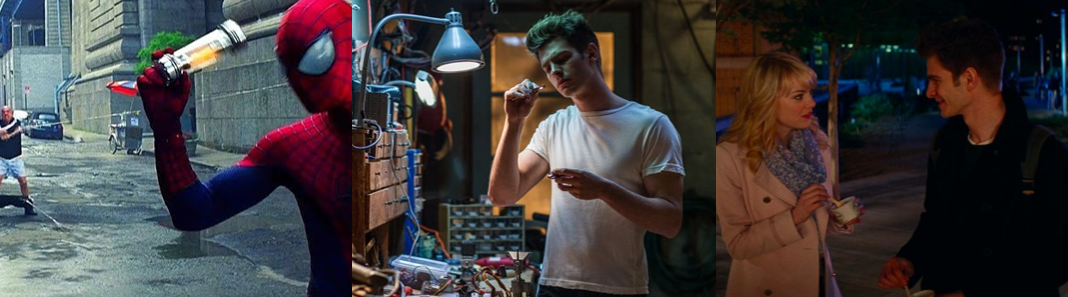
In a first for Spider-Man’s big-screen outings, The Amazing Spider-Man 2 skips the usual title sequence and jumps straight into expanding upon the fate of Peter’s parents, Doctor Richard Parker (Campbell Scott) and his wife, Mary (Embeth Davidtz). It’s revealed that Richard packed himself and his wife up and dropped young Peter (Max Charles) with his doting aunt, May Parker (Field), after being threatened by his former financial backer and partner, Norman Osborn (Chris Cooper). Although Doctor Curtis “Curt” Connors (Rhys Ifans) is briefly mentioned a few times, he’s missing from these extended flashbacks, which instead focus on Richard and Norman splicing human DNA with spiders so their incredible ability to “self-heal” will not only cure Norman of his terminal, genetic illness (“Retroviral Hyperplasia”), but also help those suffering from life-threatening diseases. Unfortunately, the illness not only deformed and agonised Norman, it also drove him to desperation, leading to him making shady deals with military backers. When Richard discovered how corrupt Norman and Oscorp had become, he sought to expose his wrongdoings and went on the run for Peter’s safety. It’s not clear why Oscorp wouldn’t (and apparently never thought to) target Peter at May’s and the film spends more time focusing on a tense and horrific mid-air confrontation between Richard and an Oscorp assassin (Demián Bichir) that leaves both Parkers dead. Still, Richard and Mary’s shady past and their connection to Oscorp is fed to us (and Peter) through breadcrumbs, revealing that Richard deeply regretted his work being perverted and secretly sought to keep Norman from using his research by infusing the genetically engineered spiders with his DNA, somewhat attributing Peter’s spider powers to his father. The loss of his parents still weighs heavily on Peter, who laments their absence at his graduation as much as his beloved Uncle Ben’s (Martin Sheen) and who confesses to old friend Harry Osborn (DeHaan) that he actively avoids thinking about his parents. When his curiosity leads him to investigate his father’s satchel, Peter seeks to discover more about his late father, leading to a sweet moment between him and May where she chastises his father and vehemently asserts her place as Peter’s mother. Indeed, Peter and May’s relationship continues to be a highlight, with her despairing of her nephew’s strange behaviour and absences but still showing him nothing but love and affection.

Peter’s haunted by the previous film and forced to keep Gwen at arm’s length to protect her.

Unfortunately, despite still revelling in his abilities as Spider-Man and enjoying his spark-filled relationship with the gorgeous Gwen Stacy, Peter is haunted by Gwen’s father, Captain George Stacy (Denis Leary), whose grim visage serves as a reminder of his promise to keep Gwen safe. Though he loves Gwen dearly and the two still have amazing screen chemistry, Peter’s burdened by guilt, agonised at the thought that he could endanger her. Although Gwen loves Peter and is willing to take the risk, she ultimately ends their relationship when she becomes sick of his flip-flopping. Heartbroken, Peter throws himself into his antics as Spider-Man, dividing public opinion as the Daily Bugle’s smear campaign paints Spider-Man as a menace despite many praising him. Still, try as he might, Peter can’t keep himself away from Gwen and watches over her in a way that could be creepy but comes across as sad and sweet. While Spider-Man saves lives, Gwen faces a dilemma when she’s offered a prestigious scholarship in London, one she’s excited to take despite her unresolved feelings for Peter. Peter’s stunned and equally torn between his love for her and wanting the best for her, meaning he doesn’t react well upon learning of her news and embarrasses Gwen prior to her interview for the scholarship. Ultimately, Gwen chooses to go, believing that’s better for them both, compelling Peter to finally confess (in elaborate fashion) his true feelings, and even his willingness to go to London with her. As much as I love Andrew and Emma’s onscreen banter and chemistry (their escape from Oscorp was a particular highlight), I do think the film suffers a bit from Peter immediately reneging on his promise at the end of the last film. The Amazing Spider-Man 2 may have benefitted from Peter and Gwen’s relationship being frosty and unresolved from the start to focus more on how Peter has to choose a difficult path since he doesn’t want to risk endangering or losing someone he loves, though this would make the first half of the film too similar to Spider-Man 2.

When Peter and Spidey refuse to help him, a desperate Harry turns to Electro.

Following Norman Osborn’s death, Peter’s compelled to reconnect with Harry Osborn, a hitherto-unknown childhood friend who was sent to boarding school at eleven and spent most of the intervening years travelling the world and resenting his father for sending him away. Thus, Harry is spiteful and dismissive of his father, and rightfully so as Norman spends his final hours spitting insults at his son and effectively cursing him with the same degenerative illness. In the aftermath, Harry (…somehow…) assumes control of Oscorp, riling up Vice President Donald Menken (Colm Feore) and revelling in flaunting his newfound power, appointing Norman’s secretary, Felicia Hardy (Felicity Jones), as his second-in-command. Though delighted to reunite with Peter, Harry’s clearly maladjusted and his erratic behaviour only spirals as his disease takes greater hold, giving him the shakes and strange lesions (despite Norman living many years with the illness). Desperate for a cure, Harry accesses Oscorp’s secure files and believes the answer lies in Spider-Man’s blood, begging and even offering to pay the web-slinger for a sample, only to be incensed when Spidey refuses out of fear for Harry’s safety. This, and Menken’s machinations, sends Harry over the edge and leads to him making a deal with Electro to access Oscorp’s secret basement of origins special projects laboratory, where he finds the means to first cure himself and then avenge himself against those who’ve wronged him. Overall, I liked DeHann’s depiction of Harry. He was a bit sullener and more vindictive and flaunted his authority compared to James Franco, and he presented an interesting dilemma for Peter, who wanted to help his friend but was worried about killing him or turning him into a monster like the Lizard. Harry’s vendetta against Spider-Man is a touch rushed and I think it would’ve been better for him to put two and two together when he first approached Peter for help, just to put a further spin on their relationship. It also would’ve benefited to save Harry’s descent into manic Green Goblin mode for a third film.

Spidey super fan Max is driven to rage and insanity upon becoming powerful enough to be noticed.

Rather than being a simple electrical engineer who turns to a crime after being zapped by lightning, The Amazing Spider-Man 2 recasts Electro as a hopeless outcast who’s socially awkward and bumbling. Pushed around and ignored by everyone, from pedestrians to his boss, Alistair Smythe (B. J. Novak), Max is a sad, worthless nobody who becomes enamoured by Spider-Man after Spidey saves his life and offers him encouragement. This leads to Max imagining  conversations between the two and describing the webslinger as his best friend since he was the first person to “see” and “need” him. This later extends to Gwen, who also shows kindness to Max where everyone else treats him like shit, with Smythe forcing him to fix a maintenance issue (on his birthday, no less!) and leading to Max falling into a vat of genetically engineered eels. These not only fix Max’s crooked teeth but also transform him into Electro, a man of first partial and then almost pure electricity, allowing him to see, sense, and control electrical currents. The experience leaves him disoriented, confused, and enraged, leading to him first accidentally and then purposely endangering others when cops fire at him, Spidey hesitates to remember him, and the newfound voices in his head compel him to lash out. Although subdued, Electro is tortured by the sadistic and overly theatrical Doctor Ashley Kafka (Marton Csokas), though Max invites the experience to test his power and is fuelled by the pain to accept Harry’s offer for a partnership and avenge himself on his captors. Once freed, Electro assumes a more menacing form and demeanour, having now mastered his powers to ensnare and kill with a flick of his hands and desperate not only to destroy Spider-Man after he “betrayed” him, but also to plunge the city into darkness so they can feel his pain. Although somewhat similar to the sympathetic angle applied to some of his predecessors in Raimi’s films (and a far more well-rounded character than the comic Electro, who was just a crook with powers who rarely reached his full potential), I do have an issue with depicted Max as the stereotypical outcast “geek”. It rarely works well and seems a waste of Jamie Foxx’s acting prowess, though I did like Electro’s obsession with being “seen” and his turn towards a crueller and more malicious demeanour after aligning with Harry.

The Nitty-Gritty:
The Amazing Spider-Man 2 benefits from a much more distinctive score, which is less a rehash of Danny Elfman’s work and more a stirring overture for the titular hero. Electro’s theme was particularly memorable; I loved how it incorporated the voices in Max’s head fuelling his rage. However, while the film treads less of the same ground as Raimi’s films compared to its predecessor, it does rehash some of the same beats concerning Richard and Mary from The Amazing Spider-Man. Sure, we learn a bit more about Richard’s relationship with Norman and that he had a weird subway lab that somehow still works after nearly fifteen years, but it still feels like the filmmakers are unsure of the endgame to this sub-plot (though, thankfully, they excised the nonsensical reveal that Richard was still alive, which would’ve tipped this already bloated plot into overdrive). The Amazing Spider-Man 2 touches upon themes of choices, not letting the past define you, and living each day rather than taking things for granted. Although Peter struggles with all of this, Gwen is all for it; her valedictorian speech is all about it and she urges Peter to stop letting her father’s death hold him back. Gwen’s adamant that they should embrace what they have, regardless of her father or the risk, and insists that she makes her own choices, even if it means she’s in danger. While there is a lot happening in the Amazing Spider-Man 2, I don’t think it’s not as badly paced as some would say. As much as I hate to say it, they made the right choice to cut Shailene Woodley as I’m not sure how she would’ve factored into the plot, though it was weird to include Felicia when she was just a secretary rather than a cat burglar. I also think it might’ve been better to end the story on a cliffhanger concerning Harry, not just because the finale with his Green Goblin is a bit rushed but also because we’d seen the Green Goblin done to death and I could’ve done without retreading that narrative (even if it was a little different here).

Despite some great effects and sequences, the film is bloated with characters and sub-plots.

The Amazing Spider-Man 2’s costume is, for my money, the best and most comic accurate depiction we’ve ever seen (though I miss the distinctiveness of the one from the last film). Harry’s final Green Goblin form is also more monstrous and closer to the comics, though still a bit lacking (and rushed) and we were denied a truly gruesome transformation sequence. The Amazing Spider-Man 2 ups the focus on action thanks to not having to waste an hour of its runtime redoing Spidey’s origin, giving us a handful of montages and fun action sequences that continue to showcase why Andrew Garfield is the best Spider-Man. There’s more emphasis on slow-mo sequences to show how Spider-Man reacts to danger and thinks about saving people. It’s used to great effect in the Times Square sequence, giving us a fantastic depiction of Spidey’s speed and strength alongside his compassionate nature as he first tries to appeal to Max’s reason. Electro is depicted as an unpredictable threat, especially when he first emerges since his powers are unstable. While it’s disappointing that he doesn’t resemble his mainstream comic counterpart, and that Max didn’t take on aspects of this design after being freed by Harry, Electro is very to his Ultimate comics counterpart and is depicted as both incredibly powerful and emotionally unstable. Electro can fly, dissolve bullets, and absorb and emit electricity, so Peter has to science up solutions to counteract and ultimately overload Electro’s powers. Although the first-person sequences are gone, Spider-Man’s web-slinging and Electro’s bolts all popped off the screen when viewed in 3D and I enjoyed the opening sequence where Spidey toys with the crazed Aleksei Sytsevich (Paul Giamatti). While Spidey maybe mocks the brutish mafia thug a bit too much and endangers a few lives, this was a great showcase of how Peter’s embraced his role as Spider-Man, something reinforced in the finale when Aleksei returns in a mechanised rhino suit…only for the film to end right before we get to see the fight! I really wish we’d gotten at least an animated rendition of Spidey’s battle with the Rhino in the credits as I loved the lumbering mech and its many weapons, and Giamatti’s scenery-chewing performance as Aleksei, though his return probably should’ve been left for a third film.

Harry’s revenge leaves Peter heartbroken, though sadly immune from future threats…

Desperate to avoid his father’s fate, Harry begs first Peter and then Spider-Man for help and is enraged when he’s denied, believing Spidey is a fraud despite him reasonably worrying about the effect his blood would have on the emotional Osborn. After being double-crossed by Menken, Harry begs Max to help him access Oscorp’s hidden bunker, where he forces Menken to inject him with a serum derived from Richard’s spiders, believing it to be a “cure”, only to be horrifically mutated as it both accelerates his condition and further alters him. Luckily, a convenient “healing” battlesuit keeps Harry from dying but the whole ordeal drives him as batty as Max, whose reward for helping is the freedom to absorb power from the electrical grid he created and was denied credit for to plunge the city into darkness and strike back at everyone who ignored him and idolised Spider-Man. Peter and Gwen’s reconciliation is interrupted by Electro’s revenge and Gwen insists on helping Spider-Man, putting herself in danger despite his protests. Spidey holds off Electro, done trying to reason with him, and risks his life grounding the misguided villain so Gwen can overload and seemingly destroy Electro. Their victory is short-lived, however, as the now demonic Harry swoops in on an Oscorp glider looking for revenge, figures out that Peter is Spider-Man, and spitefully threatens Gwen. This leads to a short and sadly rushed (but also brutal fight) between Spider-Man and the cackling Green Goblin that ultimately ends with Harry being knocked out and Gwen plummeting down a bell tower. Despite Peter’s best efforts and a heart wrenching image of him (and his webbing) reaching for her in freefall, Gwen suffers a similar (but far more horrific) fatal fall and Peter is left devastated. So much so that he spends five months so stricken by grief than he constantly visits Gwen’s graves and denounces Spide-Man. However, Peter suits up once more after a pep talk from Aunt May, reviewing Gwen’s speech about embracing life, and to confront the Rhino. Oh, and that mysterious gentleman (Michael Massee) also colludes with the incarcerated Harry to recruit a few individuals to use Oscorp’s secret projects to destroy Spider-Man.

The Summary:
I’ve always quite liked The Amazing Spider-Man 2. I remember liking it more than the first film when I first saw it and was glad to see it mostly leaning into new territory, though I could’ve done without the retread of the Osborn/Green Goblin plot. Still, the suit was fantastic and Andrew Garfield cemented his status as the best live-action Spider-Man in this film, still showcasing the wit, brains, and charisma I associate with the character. His chemistry with Emma Stone remains a highlight, though it does feel like the filmmakers walked back the ending of the last film after rushing to the rekindling of their romance. While I’m not a fan of the changes made to Electro’s personality, he grew on me as the film progressed, and I liked how he was desperate to be acknowledged and became obsessed with proving his worth and power. Dane DeHaan was a great Harry Osborn, though it’s weird that his illness is so advanced when it took decades for Norman to die, and his characterisation is a bit all over the place at times. While it’s utterly heartbreaking to witness Gwen’s death and Andrew sells it so well, I do think the Green Goblin, Rhino, and Gwen’s death should’ve been saved for a third film to devote the proper amount of screentime to those plots rather than rushing through them right at the end. There’s a lot happening in The Amazing Spider-Man 2 thanks to Sony’s obsession with bringing the Sinister Six to life and it definitely would’ve benefitted from a few more sub-plots being trimmed, but I still think it’s better than most people think. The exploration of guilt and grief is great, the effects and action are exhilarating, and it delivers a hell of a gut punch at the end, ultimately resulting in a film that’s still pretty decent despite some flaws.

My Rating:

Rating: 3 out of 5.

Pretty Good

Do you agree that The Amazing Spider-Man 2 isn’t as bad as its reputation? What did you think to Electro’s depiction and were you disappointed he didn’t resemble his classic look? Were you happy to see Peter don a more familiar suit? What did you think to the drama between him and Gwen and Harry’s depiction? Do you agree that there’s too much happening in the film? Would you have liked to see a third entry for these characters? How are you celebrating the wall-crawler this month? Whatever you think about The Amazing Spider-Man 2, leave a comment below, support me on Ko-Fi, and go check out my other Spider-Man reviews.

Back Issues [Spidey Month]: The Amazing Spider-Man #121/122


Easily Marvel Comic’s most recognisable superhero, unsuspecting teenage nerd Peter Parker was bitten by a radioactive spider and learned the meaning of power and responsibility in August 1962. Since then, the Amazing Spider-Man has featured in cartoons, movies, videogames, and countless comic books. To coincide with his day of celebration, I’m dedicating every Monday of August to everyone’s favourite web-head!


Writer: Gerry Conway Artist: Gill Kane

Story Title: “The Night Gwen Stacy Died”
Published: 13 March 1973 (cover-dated: June 1973)

Story Title: “The Goblin’s Last Stand!”
Published: 10 April 1973 (cover-dated: July 1973)

The Background:
In 1962, Marvel Comics editor and head writer Stan Lee followed up his success with the Fantastic Four with Spider-Man. The wall-crawler’s debut in Amazing Fantasy #15 proved one of Marvel’s best selling titles and Spider-Man’s popularity led to him getting his own solo title within a year. Very quickly, Spider-Man amassed one of the most colourful and memorable rogues galleries, though Norman Osborn/Green Goblin proved to be one of his most dangerous foes. A central figure in many prominent Spider-Man stories, the Green Goblin cemented his status as Spidey’s archenemy with these two issues, where Osborn contributed to the death of Peter’s long-time love interest, Gwendolyne “Gwen” Stacy. Created by Stan Lee and Steve Ditko and debuting in The Amazing Spider-Man #31, Gwen was the daughter of police captain George Stacy and first met Peter when they were students at Empire State University. Designed to be Peter’s one true love, Gwen and Peter had a rocky relationship, especially after she blamed Spider-Man for her father’s death and Lee was said to be adamantly against killing her off. Writer Gerry Conway and editor Roy Thomas disagreed, however, and wished to do away with the beautiful blonde in favour of the more rambunctious Mary Jane Watson/M.J. Said to have marked the end of the more innocent “Silver Age” of comics, Gwen’s death haunted Spider-Man for decades both literally (thanks to her clones and some abysmal retcons) and figuratively, as seen in his subsequent relationship with M.J. and his guilt over sharing the blame for Gwen’s death. This dramatic moment also came to be adapted into live-action, being echoed in the 1990’s cartoon and Spider-Man (Raimi, 2002), with M.J. (Saratoga Ballantine/Kirsten Dunst) as a substitute, and served as a heart-wrenching finale to The Amazing Spider-Man 2 (Webb, 2014) that Peter (Andrew Garfield) atoned for some ten years later. While alternative versions of Gwen have since gained popularity, “The Night Gwen Stacy Died” remains one of the most pivotal and iconic stories in Spider-Man’s long history.

The Review:
This classic two-part tale begins with Peter’s best friend, Norman’s son, Harry Osborn, suffering from an LSD-infused fever. By Norman’s request, Harry is cared for by his family doctor in his own home, with his friends Gwen and M.J. by his side, though the doctor grimly states that Harry’s repeated drug abuse has caused the onset of schizophrenia! Peering from the window, Spider-Man laments not being there for his friend and changes to Peter, slipping in through the rooftop to pay a visit. However, Peter’s intercepted by Norman, who angrily demands that he leave, blaming him for Harry’s condition and barking in his face. This exchange sees Peter reflect on Norman’s former dual life as the Green Goblin and their shared knowledge of each other’s identity, knowledge that Norman has forgotten thanks to a bout of amnesia but which apparently still lingers and informs his hatred of Peter. Norman then extends this to Gwen and M.J. and tosses the three out, leaving them dejected and concerned for Harry’s welfare. As if that wasn’t bad enough, Peter finds himself suffering from the flu; since he can barely bring his latest photos of Spider-Man to the Daily Bugle, the worse for wear hero heads home to rest. Things continue to get worse for Norman, who receives a phone call informing him that his company stock is continuing to plummet and, when Harry collapses in his arms, finds his thoughts descending into angry paranoia at his son’s “friends” and his perceived enemies. The stress culminates in Norman being attacked by a vision of Spider-Man and bombarded by memories, compelling him to race to an abandoned brownstone that contains his long-forgotten equipment and, with manic glee, the Green Goblin lives once more! Immediately recalling his hatred of Peter Parker and Spider-Man, the Green Goblin hops on his goblin glider and races to Peter’s apartment, where Gwen is waiting for Peter to discuss their friend and what they can do to help him.

When the Green Goblin resurfaces and kills Gwen, Spider-Man flies into a rage.

Spider-Man’s journey home is delayed by his illness, meaning he arrives too late to help and finds only Gwen’s handbag and one of the Green Goblin’s pumpkin bombs. Intuiting that Osborn’s returned to his violent alter ego and concerned for Gwen’s safety, Spider-Man follows his spider-sense to the George Washington Bridge. There, he finds the Green Goblin perched an archway with Gwen’s presumably unconscious body at his feet. The Green Goblin threatens to kill Gwen unless Spider-Man indulges in a final confrontation, to the death (naturally), and, angered at his girlfriend being targeted, Spidey readily agrees. Thrown by his flu, Spidey barely dodges a pumpkin bomb and is bashed by the raving Green Goblin’s glider. Luckily, Spider-Man snags his foe with his webbing and lands a huge left hook that sends the Green Goblin plummeting. Confident that his enemy is subdued for the time being, Spidey races to his unconscious lover, assuming she’s in shock, and is horrified when the Green Goblin makes a sudden recovery and spitefully knocks Gwen from the bridge! Desperate to save her, Spider-Man shoots a web line and is so elated when it snags on Gwen’s ankle that he misses the small Snap! at her neck… Congratulating himself, Spidey pulls Gwen up and embraces her, still clinging to denial, only to find Gwen doesn’t respond and is, in fact, dead despite his best efforts. Spotting the Green Goblin hovering nearby, Spidey sets Gwen safely on the ground and vows to make Osborn pay with his life for crossing the line. Attacking with a self-righteous fury, Spider-Man violently beats his foe, doubling down when the Green Goblin seemingly begs for mercy.

Despite his rage, Spidey’s left hollow by Norman’s death and to grieve with his friends.

Unfortunately, Spider-Man’s anger gets the better of him and sees him knocked from the glider, allowing the Green Goblin to escape. When the police come to check on Gwen, Spidey leaps to her defence, unconcerned about his reputation. Thankfully, one cop sees the anguish in Spider-Man, who’s tormented by memories of happier times with Gwen, the guilt of letting down her father, and the inescapable knowledge that Spider-Man not only drove a wedge between them but also caused her death. When the ambulance arrives, Spider-Man mournfully hands over Gwen’s body and takes responsibility for her death, lashing out when the cops try to arrest him and fleeing. Swinging to the Osborn house, Spidey switches back to Peter to talk to the paranoid and feverish Harry. However, seeing his delusional friend’s no state help, Peter decides settling the score with the Green Goblin trumps caring for his friend. Seeking a lead on the Green Goblin, Spidey heads to the Daily Bugle to talk to editor Joseph “Robbie” Robertson, who’s also reeling from Gwen’s death and points him to one of Osborn’s warehouses. Norman gleefully leaps to engage with Spider-Man, keeping the vengeful wall-crawler at bay with his finger blasts. The Green Goblin further enrages Spidey by insulting Gwen, causing Spidey to brutally pummel his crazed foe. However, Spider-Man comes to his senses at the last minute, disgusted by how close he came to being just like Osborn. Of course, the Green Goblin refuses to go quietly and activates his glider, intending to skewer his foe through the back. However, Spidey’s spider-sense sees him deftly duck, causing Norman to be impaled by his own glider! Finding no comfort in his hated enemy’s end, just further emptiness and misery, Spider-Man stalks off, unaware that someone’s watching him from the shadows. When he gets home, Peter finds M.J. waiting for him and lashes out at her, chastising her for being a selfish, party-loving airhead who couldn’t understand his pain. Despite being hurt by Peter’s words, M.J. sees his heartache and chooses to stay and comfort her friend in his grief.

The Summary:
There’s a lot happening in these two issues, as is common for Spider-Man stories. The toxic influence of Norman Osborn stretches far, infecting not just Peter’s life but the mindset of his best friend, Harry. After years of feeling insignificant next to his powerhouse businessman father, Harry turned to LSD for some relief and, despite his best efforts, has relapsed into drug use once more. Since he has no memory of his past as the Green Goblin and refuses to take responsibility for his actions, Norman turns his anger at the situation to Harry’s friends, particularly Peter, and insists that Harry be treated at home in a desperate attempt to show he’s a caring father. Every time we see Norman, he’s as drenched with sweat as his son, though Norman’s stress is caused not just by his son’s state and his work issues, but also the resurfacing of his Green Goblin persona. When his memories return, Norman immediately  regresses to a raving lunatic, one whose soul purpose is to protect Norman and make his enemies pay. Despite Norman’s outburst, Peter, Gwen, and M.J. truly care for Harry but find themselves powerless to help him. They each carry guilt for missing the signs of Harry’s degeneration sooner and not intervening before he returned to drugs, and each feels powerless to help him. When he returns to Harry to get a lead on Norman, Peter uncharacteristically rejects his friend, deciding to focus on his enemy rather than his suffering friend and causing Harry to further question his sanity. However, there’s a reason these two stories (generally collectively referred to as “The Night Gwen Stacy Died”) are so iconic and pivotal. They changed not only Spider-Man’s status quo but dramatically changed the landscape of all comicdom. Suddenly, significant supporting characters could die and that death would not only change the title character, but be a permanent fixture.

Gwen’s tragic death is left ambiguous, burdening Spider-Man with guilt for years to come.

I’ve always been more a fan of Mary Jane since she was Peter’s love interest when I started reading comics and therefore have always found Gwen to be a very shallow and one-note character. She was pretty and nice enough, sure, but there wasn’t much to her, even after her father died and we got that dramatic dichotomy where she hated Spider-Man but loved Peter. While I would’ve preferred to see Aunt May die and for her death to be permanent, killing Gwen is totally out of left field and has so much more weight to it. Readers have seen Peter struggle with his dual identity, which drove a wedge between him and his many girlfriends, so it was very cathartic for him to finally find happiness with Gwen, a girl who accepted Peter for who he was and asked for nothing but his loyalty. When Peter realises that his actions as Spider-Man have led his most dangerous foe to target his girlfriend, Spider-Man wastes no time tracking down his foe and flies into a frenzy to make Osborn pay, incensed that the Green Goblin would make their rivalry even more personal. It’s so interesting reading their battle knowing how it’s going to end because it really makes you question whether Gwen was already dead to begin with. The Green Goblin claims that the “shock” of the fall would’ve instantly killed Gwen before she hit the ground, that little Snap! sound effect implies the sudden stop from Spidey’s web broke Gwen’s neck, and the fact she’s unconscious the entire time suggests Osborn might’ve killed her between panels. It’s fantastically ambiguous but, in the end, it’s inconsequential. The Green Goblin spitefully boasts of causing her death, which is true, and Spider-Man sees himself as responsible since Gwen was only put in danger because of him, which is also true. It’s heart-wrenching seeing Spidey clouded by denial, patting himself on the back for his innovation and heroics and desperately trying to wake Gwen up despite her clearly being dead. Spider-Man is then bombarded by memories and guilt and desperate to keep strangers from messing with her body but eventually comes to accept that his love is not only dead, but that he is to blame for it. This consumes him with a grief so powerful that he lashes out at cops and bystanders alike, no longer caring to try and defend his reputation.

Peter’s vendetta sees him shun his friends and come close to crossing the line into murder.

Peter’s grief causes him to fly into an uncharacteristic rage. It’s widely said that Spider-Man means business when he drops the inane quips and, indeed, Peter adopts a more violent approach when tracking down and confronting the maniacal Green Goblin. He shuns his best friend, shuts down the petulant J. Jonah Jameson’s, and races to the Green Goblin’s location with murder on his mind. The resulting rematch is an aggressive affair where Spidey eschews all sympathy for his crazed foe and berates his spiteful, vindictive nature. When Spider-Man damages the glider, the Green Goblin enrages the wall-crawler by showing more concern for his toys than a human life and, true to his word, Spider-Man seems ready to beat the Green Goblin to death. However, logic and reason hit Spider-Man like a brick wall and, disgusted by his actions, he pulls back at the last second. This hesitation is seen by the Green Goblin as a weakness but it’s the fundamental difference between the two rivals: one is a murderous lunatic who gleefully tortures and kills and the other is a righteous hero, who sacrifices his own personal needs to protect others. The Green Goblin’s stubborn and wicked nature ultimately prove his undoing as he’s impaled by his glider in a surprisingly harrowing death scene, especially for the time. The moment is framed as sudden and hollow, with Spider-Man getting no pleasure or closure in the deed and only being further convinced that “an eye for an eye” is the furthest thing from justice. For me, this was the perfect way to kill off Norman Osborn and I’ve been salty for decades that he inexplicably survived. It was thematically fitting for Harry to take up the Green Goblin mantle and be similarly undone, and we had plenty of look-a-likes and Hobgoblins running around so I could’ve done with leaving the Osborns in the grave. However, that doesn’t diminish the impact of his death as presented here, or of these two issues. Gwen’s death rocked Spider-Man and haunted him for years; it raised the stakes faced by all comic book characters and changed the industry forever. The ambiguity of the event and the way it weighs on Spider-Man’s conscience are disturbing and I do think the right decision as made since Gwen couldn’t compete with M.J. Subsequent stories have also constantly reinforced that Gwen was his first true love, ensuring a legacy that’s far more potent than if she’d been left alive.

My Rating:

Rating: 4 out of 5.

Great Stuff

Where were you on the night Gwen Stacy died? Did you enjoy the story or were you annoyed that Gwen was killed off? What do you think killed Gwen, or do you believe she was dead to begin with? What did you think to Spider-Man assuming the blame and looking to kill the Green Goblin? Do you agree that Norman Osborn should’ve stayed dead or were you glad when he came back? What are some of your favourite Gwen Stacy stories? Whatever you thought to this classic Spider-Man story, share your thoughts below, support me on Ko-Fi, and be sure to check out my other Spider-Man content.

Screen Time: Loki (Season Two)

Season Two

Air Date: 5 October 2023 to 9 November 2023
Network: Disney+
Stars: Tom Hiddleston, Owen Wilson, Sophia Di Martino, Ke Huy Quan, Wunmi Mosaku, and Jonathan Majors

The Background:
While Marvel Studios expanded into television ventures with the likes of Agents of S.H.I.E.L.D. (2013 to 2020) and various Netflix productions, the launch of streaming service Disney+ led to MCU godfather Kevin Feige producing various content to further explore the continuity of the MCU. Although Marvel Studios somewhat flooded the market with shows and movies, the first season of Loki (Herron, 2021) was met with critical acclaim for its characterisations and unique narrative. Since Tom Hiddleston’s portrayal of Norse God of Mischief Loki Laufeyson has been consistently popular over the years, a second season was all-but inevitable, especially considering the first ended on a massive cliff-hanger. Principal directors Justin Benson and Aaron Moorhead were excited to tackle the mischievous outcast and further explore Loki’s unlikely position as the saviour of the multiverse. While the writers strived to showcase new layers to Loki and the show’s returning characters, they faced an uphill battle in addressing lingering plot threads regarding Jonathan Majors’ multiple characters after he was accused of all kinds of wrongdoings and caused Feige to rejig the plans for Majors’ Kang the Conqueror. Still, the season aimed to dive deeper into the weirder side of the MCU while still focusing on character-driven stories, explore Loki’s emotional turmoil, and further set the stage for upcoming MCU projects. Released weekly on Disney+, Loki’s second season was widely praised for its bittersweet conclusion, the culmination of Loki’s selfless character arc, and the compelling performances.

The Plot:
Uncontrollably warping through time, an alternate version of Loki (Hiddleston) attempts to reunite with his female “time variant”, Sylvie Laufeydottir (Di Martino), and warn the Time Variance Authority (TVA) of the threat posed by variants of “He Who Remains” (Majors).

The Review:
If you’re anything like me and haven’t watched Loki’s first season since it originally aired, you’re in luck as season two opens with a helpful recap, largely narrated by the sentient artificial intelligence Miss Minutes (Tara Strong), that summarises the key events of the first season. Namely, the deceptive nature of the TVA (whose members are variants from destroyed (or “pruned”) timelines) who’ve had their memories continually wiped) and Loki and Sylvie’s climactic confrontation with He Who Remains. This saw Sylvie impulsively murder the enigmatic overseer, plunging the “Sacred Timeline” into chaos as the one coherent timeline diverged into an infinite number of strands. The first season saw this version of Loki, plucked from the peak of his villainous arc, transformed from a mischievous and self-centred antagonist into a reluctant hero, one who came to care for his allies at the TVA, particularly Mobius M. Mobius (Wilson). The first season concluded with Loki deposited in a version of the TVA where no one remembers him and a variant of He Who Remains is now immortalised as the founding father of the TVA. Since no one remembers him and Loki is renowned as a troublemaker, the TVA initially seeks to apprehend and prune him, forcing him to frantically flee through their offices since the time-displaced TVA has safeguards that negate his magic. As if this wasn’t bad enough, Loki finds himself painfully warping to different points in time where the TVA either remember him or don’t, something that should be impossible within the TVA but appears to be a result of one of the many temporal paradoxes and incursions peppering this season. Unfortunately, Loki’s “time slipping” is essentially resolved by the end of the first episode, “Ouroboros” (Benson and Moorhead, 2023), thanks to a time paradox Loki initiates that sees forgotten TVA technician Ouroboros/OB (Quan) cure Loki’s ailment using a “Temporal Aura Extractor”.

Despite being pulled through time, Loki is determined to help and defend his friends at all costs.

This desperate gamble, which sees Mobius brave a cosmic storm and approach the wildly unstable “Temporal Loom”, only succeeds because Mobius risks his life for his friend and Loki willing prunes himself from every timeline, stabilising his condition and allowing him to return to work alongside Mobius. However, Mobius is sceptical of Loki’s warnings about He Who Remains, an enigmatic variant whose death kick-started the catastrophe that threatens the TVA (and all reality) as he has a nigh-infinite army of variants waiting to wage war on time itself. Although Hunter B-15 (Mosaku) convinces the fractured TVA council (left in disarray after Ravonna Renslayer’s (Gugu Mbatha-Raw) betrayal) not to eradicate the branching timelines and thus sparing other variants of losing their worlds like they did, the TVA is largely unconvinced of the larger threat posed by He Who Remains, even after Loki dramatically reveals that he’s deceived them all. While dealing with He Who Remains is Loki’s top priority, he’s also desperate the safeguard Sylvie from the warmongering General Dox (Kate Dickie) and her chief agent, Hunter X-5 (Rafael Casal), who dismiss Hunter B-15’s arguments and launch a devastating attack on the splintering timeline before they’re apprehended. Distressed at the way their relationship fell apart over their disagreement concerning He Who Remains, Loki’s keen to make amends and recruit Sylvie to his cause, only to find her bitter at the TVA, angry at his loyalty to the organisation, and content to live a mundane life as a McDonald’s employee. This season really showcases how much Loki has changed as he’s extremely loyal to Mobius, makes fast friends with OB, and sees that the TVA saves more lives than it ends and is a necessary function to defend against He Who Remains. While interrogating Hunter X-5 (who abandons his mission to become successful actor “Brad Wolfe”), Loki takes the high ground when his moral stance is questioned and even councils Mobius when he lets Brad get under his skin, having learned to empathise with others and prioritise saving lives over taking them.

Though Loki and Sylvie clash, her perspective motivates Loki to take his rightful place at the End of Time.

While Loki’s still mischievous at times, using his powers of illusion to subdue Brad and then colluding with Mobius to threaten Brad into giving up Sylvie’s location, he demonstrates incredible patience, enduring Mobius’s more relaxed approach to field work, OB’s eccentricities, and Sylvie’s pig-headedness all to try and reason with them. When the likes of Brad and Renslayer call out Loki’s hypocrisy, he admits to having done bad things and experienced jealousy and rage in the past but is seemingly committed to doing good now. However, during his desperate attempt to time slip back to the TVA and prevent the Temporal Loom from exploding, Sylvie forces Loki to admit that, deep down, he’s motivated by a selfish desire to not be alone, leading him to briefly abandon his cause. Loki’s despair at his friends forgetting him and his desperate needs to assemble their variants in “Science/Fiction” (Benson and Moorhead, 2023) is palpable, with him being both frustrated and hurt when they forget him and enduring centuries of time slipping to try and save them all. When his efforts are doomed to fail, a chance comment by Sylvie sees Loki return to the citadel at the End of Time to endure another doomed time loop as Sylvie’s past self refuses to listen to reason and he cannot bring himself to kill her. Ultimately, Loki’s given the same choice as in season one: maintain the Sacred Timeline or risk total annihilation. While Sylvie advocates for free will, even if it means everyone dying, Mobius relates the burden of making sacrifices for the greater good. Thus, rather than risk his friends, Loki destroys the Temporal Loom and rearranges the disparate timelines into something more stable, a tree-like structure resembling Yggdrasil, with himself at the centre. While he previously admitted his fear of being alone, Loki gratefully assumes his duties with a content smile, having finally found his place as a more benevolent overseer of the many timelines.

Even variants of Loki’s beloved friends anchor him and drive him to safeguard all timelines.

While Mobius initially has no idea who Loki is, his memories quickly return in fragments and he’s soon following his instincts and bringing Loki to OB and risking having his skin peeled off by the Temporal Loom to help his friend. Though still distracted by jet skis, we get a few extra layers to Mobius this season as he adamantly refuses to peek into the many timelines and see the life he was denied by He Who Remains, being content with his job and enjoying it. However, after Loki encounters Mobius’s jet ski salesman variant, Brad, a single dad who’s awestruck that he’s essential to saving reality, Mobius eventually decides to take a break from the TVA. After plunging the Sacred Timeline into chaos, Sylvie retreats to 1982 and lives a content, if mundane, life as a McDonald’s employee. Adamant that she can handle any variants of He Who Remains, Sylvie angrily refuses to help Loki or the TVA, believing that free will is more important than anything. While Sylvie begrudgingly aids Loki despite this, she’s forced to join his group when her beloved timeline is spaghettified by the exploding Temporal Loom, yet still believes she was right to kill He Who Remains. Loki’s also aided by Casey (Eugene Cordero), a technician who helps Loki and Mobius track their targets, Hunter B-15 (who’s determined to stop haphazardly pruning timelines and thus horrified when Renslayer murders General Dox and her followers), and newcomer OB. An enthusiastic and quirky technician, OB wrote the TVA guidebook after being inspired by Victor Timely (Majors), who was in turn inspired by the same guidebook after being gifted it by Renslayer to turn him into He Who Remains, creating a paradox. Even OB’s unsuccessful sci-fi writer variant Doctor A.D. Doug is instrumental in helping Loki by cobbling together a crude TemPad and helping him master his time slipping. OB also spends what’s said to be centuries working with Timely to teach Loki about particle physics. Though this plan ultimately fails no matter how hard or fast Loki tries to utilise the “Throughput Multiplier” as the Temporal Loom is incapable of handling infinite timelines, the influence of Loki’s friends has a profound impact on him and he willingly gives up his personal freedom to safeguard their lives.

While Dox and Renslayer present immediate dangers, Timely is potentially a more destructive threat.

While Loki is terrified of the imminent danger posed by the variants of He Who Remains, they’re a very vague and ominous existential threat, one not seen in this season. Thus, the danger posed by the stubborn General Dox initially takes priority. Although Loki and Mobius apprehend Dox and her loyalists after working over Brad, they’re too late to stop her destroying most of the timelines. Encouraged by Judge Gamble (Liz Carr), Hunter B-15 attempts to find common ground with General Dox to safeguard the TVA, only for her and her loyalists to be gruesomely executed by Renslayer for refusing to join her. Brad does join Renslayer and Miss Minutes but immediately regrets it and ultimately turns on her soon after, finally feeling remorse after spending the entire season being a complete asshat. Renslayer forms a shaky alliance with Miss Minutes, hopping to 1893 to try and coerce Timely into joining with them, only for the eccentric Timely to ditch them since he’s so against a partnership and rightfully horrified when Miss Minutes reveals she’s in love with his counterpart. Spurned by Timely’s refusal and him choosing to assist Loki, Renslayer and Miss Minutes renounce He Who Remains, especially after Renslayer learns that she was once his commander and was discarded by him, to wage their own campaign against the TVA. Loki’s horrified upon seeing Timely, who shares the same visage as He Who Remains, and at the stuttering con artist’s potential to become He Who Remains, but soon defends the bumbling scientist and even respects him for braving the cosmic storm. Though a con man, Timely has a grand imagination and, inspired by the TVA guidebook, has the potential to become what Loki and Sylvie fear most. Ultimately, even Sylvie recognises that Timely isn’t the same man and he proves he’s committed to doing the right thing, even if it costs him his life. When trying to prevent the destruction of all reality, Loki confronts He Who Remains again, learning that he perfectly planned for all eventualities and that the risk of multiversal war remains as strong as ever. However, Loki’s sheer determination to find another way and ensure everyone gets the chance to thrive wins out, with the reorganised TVA shown to be actively hunting the variants of He Who Remains and presumably ending whatever threat they pose to the MCU.

The Summary:
Loki’s second season picks up right where the first one ended but presents a narrative under constant pressure from a few existential threats. Obviously, the danger posed by the unseen variants of He Who Remains is most pressing, and one Loki is eager to guard against, but it’s largely a non-factor here, especially compared to the imminent danger posed by the Temporal Loom. I initially believed season two who revolve around Loki’s sporadic time slipping but this is sadly cured by the end of the first episode. It does make a dramatic return by the finale, “Glorious Purpose” (Benson and Moorhead, 2023), to depict Loki repeating the same loop over and over for centuries, desperately trying to speed up OB’s plan and failing each time. While this is a great way to emphasise Loki’s newfound sense of devotion to his friends and commitment to saving countless lives, it is strange that he didn’t think to time slip further back sooner. There are some fun paradoxes in this season due to this mechanic, though, with Loki jumping to the future, where the TVA is moments from destruction, encountering himself at different times throughout the season, and quickly building a friendship with OB by consulting with him in the past and those memories aiding Loki and Mobius in the present. Unfortunately, this gimmick isn’t sustained throughout the season and, despite many characters glancing at their alternative timelines, we don’t explore many variant realities here. Loki spends all of “Science/Fiction” in one, only for his primary plan to fail and for desperation to drive him to reliving the same moments, kind of making this episode a waste even if it does finally give us the imagery of Owen Wilson on a jet ski.

While the character moments are on point, Timely was an aggravating addition.

The performances were as captivating as ever in this season. I particularly liked the friendship between Loki and Mobius, with Loki insisting on sitting his friend down and discussing his feelings over a slice of pie, being exasperated by his more cerebral approach in the field, and bickering about which of them should brave the cosmic storm and install the Throughput Multiplier. Mobius is explored a little more here, determined not to look into his other timelines out of fear that they will be better or worse than the life he’s devoted himself to, and Loki shows genuine affection towards him to show how far he’s progressed as a character. This extends to the standout character of the series, OB, whose infectious demeanour steals every scene and quickly makes him an ally Loki fights to protect. Sylvie is very different this time around, being somewhat jaded and content to lay down her arms unless challenged. She opposes Loki’s moral high ground and offers an extreme perspective on events but is ultimately an advocate for free will and willing to make any sacrifice to ensure people have that right. If there’s a weak link here, it’s Jonathan Majors, whose oddball, stuttering, bungling Timely really drags down every scene he’s in. I liked that he was a conman who sold faulty inventions and that he constantly switched his allegiance depending on what was best for him, but his eccentric personality and overly theatrical delivery quickly became grating. He does surprisingly showcase a great deal of bravery and fortitude, however, even earning Loki’s respect when he risks his life to save reality and ultimately chooses to take a different path to avoid becoming He Who Remains. Although Renslayer is more of a bit part this time, I liked how bitter and twisted she was and the rivalry between her and Miss Minutes, who both vie for Timely’s affections. I would’ve preferred Renslayer to play a larger role as a dual antagonist alongside Miss Minutes, perhaps with them replacing Brad in some way, as she felt like an afterthought by the end.

Despite some compelling moments, this season failed to live up to its potential in my eyes.

While Loki’s second season certainly looks the part and delivers some stirring character moments from the title character, who finally fulfils his “glorious purpose” and finds his place in reality, I did find it lacking. The entire season is essentially a do-over of the first season’s finale, with it all boiling down to the same choice between killing He Who Remains and risking war or maintaining the lie/sanctity of the Sacred Timeline. As Loki effectively ends up taking the place of He Who Remains and overseeing the newly formed timelines, I can’t help but feel like the show could’ve been reorganised to take the best episodes and ideas and present them as a ten-episode series that makes the same point. I was hoping this season would be about an unstable, time slipping Loki bouncing around the infinite multiverse encountering variants of He Who Remains and trying to prevent his creation. Instead, it was largely a race against time to find ways to repair and stabilise the Temporal Loom, with each approach failing because Loki is seemingly doomed to fail, especially at being anything but a villain. These aspects are where Loki shined the most, the ways it presented new aspects of Loki’s personality. I loved how he encouraged Brad’s criticism and seemingly veered towards his villainous ways when interrogating him, and that Loki constantly takes a higher path, offering support to his friends when they lose control and constantly trying to empathise with others. This season is, however, let down somewhat by the lack of variety in the time periods visited, with most of the action happening in the increasingly chaotic TVA, and failing to explore the multiverse as widely as I’d hoped. As a character-driven season, it’s pretty fascinating, but many of the narrative beats are recycled from the last season. Loki’s encounter with He Who Remains isn’t that much different to last time and, while its bittersweet to see Loki replace He Who Remains, it feels like all this madness could’ve been avoided if he’d just done that in the last season. Still, season two did a good job tying up some loose ends and giving many of these characters a satisfying send off, I just think it had the potential to be even better.

My Rating:

Rating: 3 out of 5.

Pretty Good

Did you enjoy the second season of Loki? Were you happy to see Loki evolve into a more heroic and balanced character? Did you also enjoy the friendship he shared with the likes of Mobius and OB? Were you also disappointed that the time slipping aspect was downplayed? Did Victor Timely also annoy you and what was your reaction when Loki finally took the place of He Who Remains? Drop your thoughts on Loki below, check out my other Asgard-adjacent content, and donate to my Ko-Fi to fund more reviews like this.

Back Issues [Spidey Month]: The Amazing Spider-Man #9


Easily Marvel Comics’ most recognisable superhero, unsuspecting teenage nerd Peter Parker was bitten by a radioactive spider and learned the meaning of power and responsibility in August 1962. Since then, the Amazing Spider-Man has featured in cartoons, movies, videogames, and countless comic books. To coincide with his day of celebration, I’m dedicating every Monday of August to everyone’s favourite web-head!


Story Title: “The Man Called Electro!”
Published: 12 November 1963 (cover-dated: February 1964)
Writer: Stan Lee
Artist: Steve Ditko

The Background:
After his success with the Fantastic Four, Stan Lee (Marvel’s editor and head writer at the time) continued his winning streak with teenage superhero Peter Parker/Spider-Man, whose debut in Amazing Fantasy #5 was a best seller. To capitalise on his subsequent popularity, Marvel had Spider-Man headline other comics and match wits against some of comics’ most colourful and memorable villains. Former electrician turned supervillain crook Maxwell “Max” Dillon was transformed into Electro in this, the ninth issue of The Amazing Spider-Man, thanks to Stan Lee and Steve Ditko. Unlike most of Spider-Man’s villains, Electro was a simple man who turned to crime after his accident, relishing the incredible power bestowed upon him. While initially a small time nuisance, Electro became a founding member of the Sinister Six, received more than one power boost over the years, and even destroyed the Daily Bugle office building! Electro received a dramatic redesign in Marvel’s Ultimate comics, one that influenced his much-decried live-action debut in The Amazing Spider-Man 2 (Webb, 2014), and featured prominently as a low-level threat in various Spidey videogames and cartoons. Electro also got a notable redesign when he returned to live-action in 2021, got a significantly reworked backstory for his appearance in the 1990’s Spider-Man cartoon, and has secured his place as one of Spidey’s most recognisable villains.

The Review:
The first electrifying (heh) tale of Electro starts with a typical day in New York City for Spider-Man. To the amazement of the startled bystanders, the web-slinger is seen leaping from rooftop to rooftop presumably on a matter of life and death. As a bunch of crooks shoot it out with New York’s finest, the tense stalemate seems to end when Spidey swings overhead. However, both parties are stunned when the young superhero simply passes by without intervening. Arriving in Queens, Spider-Man races through the streets, changing to his civilian identity as he goes, and arrives at his childhood home, where his sickly Aunt May lies in bed. Peter dotes on his grateful old aunt, delivering her the medicine she so badly needs but, as she sleeps, worries over her frail condition and the severity off her illness. While the troubled youngster begins his nightly vigil, the man once known as Max Dillon garbs himself in a garish green and yellow costume and charges his incredible electrical powers in anticipation of his debut as Electro. Seeking to challenge himself, Electro targets an armoured car carrying a gold shipment. When the armed guards mock him, Electro proves his power by zapping their wrists with “electric shocks” and surrounding them with a ring of electricity, terrifying them into giving in to his demands for the gold. The next morning, Peter’s alarmed when the doctor tells him that Aunt May is worsening and must be admitted to hospital (though, naturally, the old dear is more concerned with Peter’s health). Peter’s so distracted by his aunt’s deteriorating condition that he appears aloof at school, ignoring his classmate’s taunting and giving Eugene “Flash” Thompson the cold shoulder when the arrogant knob tries to reach out to the troubled teenager. Peter’s mood lifts later that day when Aunt May’s condition improves, and when he finds Betty Brant sitting with his old aunt. Betty notes that Peter seems to be bottling up his emotions and putting on a calm façade and, when he swings around the city as Spider-Man, his inner monologue reveals a boy desperate to raise the cash needed for his aunt’s operation.   

Distracted by Aunt May’s health and Jonah’s headlines, Spidey is caught off-guard by Electro.

Peter’s issues only worsen as a rainstorm sweeps the city, ruining any chance of taking decent photos of Spider-Man and getting cash from his tight-fisted employer, J. Jonah Jameson. Speaking of the grouch, we jump to the next day to find Jonah getting some figures from the Forest Hills Bank, meaning he’s at ground zero when Electro attacks! Toying with the accountant and Jonah with his electrical bursts, Electro brazenly rips open the vault with his powers, grabs a bag of cash, and scales a building across the street thanks to magnetising his hands and feet! Naturally, Jonah sees this (and Electro’s familiarity with him and having spotted Spidey swinging past moments later) as proof that Electro is Spider-Man in disguise and immediately prints a scathing headline, and loudly shouts his accusations at anyone who’ll listen. Predictably, many New Yorkers believe Jonah’s claims despite the lack of proof, which only exacerbates the stress Peter feels about his aunt’s operation. After Jonah refuses Peter’s request for a loan, Peter realises he can cash in if he captures Electro and immediately swings out as Spider-Man in search of the crook. After a couple of false alarms, Spidey’s spider-sense alerts him to Electro’s presence and he finds him searching for a hidden safe using his bizarre powers. After snapping some pictures, Spidey leaps into action, barely dodging Electro’s bolts and temporarily blinding him with his webs. However, Spidey receives the shock of his life (literally) when he grabs Electro and is zapped by a burst of electricity so powerful that it knocks the youngster unconscious. When he recovers, Peter successfully dupes Jonah with doctored photographs, getting the money he needs but finding himself wracked by guilt and shame for stooping to such measures. Elated to have the “proof” he so desperately wanted, Jonah prints a story confirming that Spidey is Electro, shocking the civilians and taking the heat off the real Electro.

Unburdened by Aunt May’s condition, Spidey uses innovative methods to subdue the powerful Electro.

While gloating in his secret lair, Electro ruminates on his origin. Some time ago, Max Dillon, ordinary electric lineman, was a selfish ass who refused to help an endangered co-worker unless he was paid for his time. After rescuing his co-worker from a high-tension pole, fate saw Max struck by lightning; incredibly, rather than being killed, Max found himself transformed by the electricity. Realising he could generate and control the element, Max experimented with his powers, constructing a harness to perpetuate his electrical charge and learning to toss lightning bolts. Back in the present, Electro breaks some prisoners out of jail to recruit some muscle for his operation and, though he’s compelled to intervene when he learns of the jailbreak, Peter’s forced to stay at the hospital while Aunt May goes into the operating theatre. Though the prisoners refuse to listen to Electro’s warnings and clash with the guards and cops, Spider-Man’s absence only strengthens belief that he and Electro are the same man. Thankfully, Aunt May’s operation is a success, much to Peter’s relief. However, when he insists on taking pictures of the riot, Peter’s shocked when Betty accuses him of thrill seeking. Still, free from the worry about his aunt, Peter leaps into action as Spider-Man, much to Jonah’s chagrin, and slips on rubber gloves and shoes to negate Electro’s powers. After easily manhandling the violent inmates, Spidey tackles Electro, using his scientific know-how to redirect Electro’s lightning bolts with a steel chair and landing a solid left hook. After receiving a quick power boost, Electro grabs a discarded gun and demonstrates his awesome power by turning a flurry of sand Spidey kicks at him into glass! Even with his rubbers, Spidey finds Electro’s attacks too aggressive, forcing him to think on his feet and use a nearby water hose to short circuit Electro. Afterwards, Peter smugly downplays Jonah’s threats to fire and sue him for selling him fraudulent pictures by selling him pictures of the fight between Spidey and Electro. Additionally, not only is Aunt May still doing well but Peter and Betty resolve to work through their misunderstanding and explore their feelings for each other by the story’s end.

The Summary:
For a story titled “The Man Called Electro!”, Electro is more of a secondary concern here. Instead, the primary focus is on Aunt May’s mysterious and worrisome illness. It’s possible that a previous issue detailed exactly what was wrong with her, judging by Peter’s internal monologue, but she’s definitely in a bad state here. Aunt May’s so ill that Peter’s forced to ignore both regular street crime and a prison riot to bring her medicine and be by her side. However, he’s more disturbed by the depths he sinks to pay for her operation. After being surprised by Electro’s incredible power, Peter’s left without any photographs of the super-powered crook and forced to super-imposed himself over the pictures he does have, providing Jonah with “proof” that Spidey is Electro and leaving Peter filled with shame at being so deceitful. Sadly, this aspect isn’t explored beyond a few panels. On the one hand, I’m glad as I could easily see it leading to an unnecessary recap of Uncle Ben’s death. On the other hand, seeing Peter shun his responsibilities and forced down such a dark path could’ve made for good drama. It’s still here, obviously, as both Betty and even Flash note Peter’s changed demeanour, but I’ve seen Peter in similar situations before where he worried himself into a fever and was driven into a panic attack or blind rage from his various dramas. Jonah is on top form here, forcing misshapen jigsaw pieces to fit his narrative of Spider-Man turning to crime as Electro and publishing his wild claims without any proof. Not that half of New York requires proof, though, as the disturbingly fickle and easily swayed civilians find themselves doubting the web-slinger simply based on a sensationalist headline. This issue really hammers home how devoted Peter is to Aunt May and how much she cares for her nephew. While she mollycoddles him a little too much for his age and disregards her own health in favour of his, Peter ignores everything (from his studies to his responsibilities as Spider-Man, to his peers and even Betty) to care for her and to get her the help she needs, even if it is unclear what’s wrong with her and what operation she underwent (I assume it was something to do with her heart).

Though Electro uses his powers for petty crime, Peter’s forced to use dubious methods to raise funds.

These factors aid in Electro slipping under Spider-Man’s radar for a while. It’s only when the Daily Bugle prints scandalous headlines that Peter gets investing in tracking down the super-powered crook, and he ensures his aunt’s welfare before tackling Electro again. Electro has incredible power: he can super-charge his body to electrocute on contact, toss lightning bolts, magnetise his hands and feet to climb walls, and basically manipulate anything with an electrical current. Garbed in an elaborate costume that’s both ridiculous and iconic, Electro’s nearly inexhaustible powers means that, on paper, he should be a formidable foe. Indeed, Spider-Man’s reflexes barely avoid Electro’s attacks, which strike with (presumably) lightning-fast speed, and Spidey dons rubbers to protect against Electro’s current…and even then, he struggles to ward off Electro’s whip-like lightning in the finale. However, rather than being  a significant threat, Electro sticks to his working-class roots and resorts to petty crimes. Limiting himself to knocking off armoured vans and banks, Electro’s all about the cash, which he spends kitting out a vast lab to super-charge his body. It isn’t until he starts making headlines that Electro assembles a crew and, though he demonstrates his powers in the prison break, he doesn’t have a commanding enough presence to sway the inmates (at least, not until they turn to him for protection from Spider-Man). Most tellingly, after being defeated by a simple water hose, Electro is unmasked by the wall-crawler…who naturally has no idea who he is, setting up the long-running thread of Electro being a nobody with extraordinary powers that he doesn’t use to their full potential. However, he makes for a visually interesting villain, and I enjoyed the well-balanced focus on drama and action in this story, especially regarding Aunt May and Jonah. Though I would’ve liked to see Peter’s shame explored further, it was amusing seeing Jonah publicly humiliated and then readily accepted Peter’s next set of photos as real after being duped the first time. I also liked the suggestion that there’s more to Betty than we (and Peter) realises and that Spidey was forced to think on his feet to find was to counter and subdue Electro’s otherwise awesome powers.

My Rating:

Rating: 4 out of 5.

Great Stuff

Did you enjoy Electro’s debut story? Are you a fan of the villain and, if so, what are some of your favourite Electro moments and stories? Would you have also liked to see Peter’s shame explored in more detail? What did you think to Electro’s origins and the way he utilised his powers? Would you be so easily swayed by one of Jonah’s headlines? Where does Electro rank in your tier list of Spidey villains? Share your opinions on Electro in the comments, support me on Ko-Fi, and go check out my other Spider-Man content.

Back Issues [Thor’s Day]: The Mighty Thor #337-339


In August 1962, Stan Lee, Larry Lieber, and Jack Kirby debuted Thor Odinson, God of Thunder and cosmic adventurer, who became another of Marvel’s most successful and versatile characters. As today the first Thursday (or “Thor’s Day”) of the month, this is the perfect time to celebrate the God of Thunder!


Writer and Artist: Walter “Walt” Simonson

Story Title: “Doom”
Published: 2 August 1983 (cover-dated: November 1983)

Story Title: “A Fool and His Hammer…”
Published: 30 August 1983 (cover-dated December 1983)

Story Title: “Something Old, Something New…”
Published: 4 October 1983 (cover-dated: January 1984)

The Background:
After debuting Doctor Robert Bruce Banner/The Incredible Hulk, legendary Marvel Comics writer, editor, and creator Stan Lee took inspiration from Norse legends to create an even more powerful superhero. Working alongside his brother, Larry Lieber, and the immortal Jack Kirby, Marvel Comics introduced a new version of the Norse God Thor Odinson, who claimed ownership of Journey into Mystery before replacing it with his own self-titled comic in 1970. Thor was a founding member of Marvel’s premier super team, the Avengers, regularly clashed with his adopted brother, Loki Laufeyson, and was even transformed into a frog! In 1983, writer and artist Walt Simonson sought to shake up The Mighty Thor by introducing a new, alien character, Beta Ray Bill the Korbinite, who, despite his monstrous appearance, would not only be eloquent and heroic, but also worthy of lifting Thor’s enchanted hammer, Mjölnir. After clashing with Thor in his three-issue debut, Beta Ray Bill gained an enchanted weapon of his own, Stormbreaker, and operated as a cosmic superhero, battling the likes of Surtur and the mythical “Great Beasts” and even driving the mighty Galactus to the brink of starvation. Though a largely obscure character amidst Marvel’s heavy hitters, Beta Ray Bill has a strong cult  following, headlined a few self-titled comics, and has often appeared in videogames as a skin for Thor. Beta Ray Bill has also appeared in a few Marvel cartoons, with The Avengers: Earth’s Mightiest Heroes (2010 to 2012) loosely adapting his debut, though he was cut from an early draft of Thor: Ragnarok (Waititi, 2017).

The Review:
The ballad of Beta Ray Bill begins with the destruction of a faraway galaxy, which leaves behind a chunk of “molten ingot of star-stuff” that’s grasped by a leering, titanic cosmic being wielding an equally massive pair of tongs. The impact of the star-stuff being smashed against a gigantic anvil reverberates across “a billion billion worlds”, though they’re buried beneath the sounds of Grant Park, Chicago, where Doctor Donald Blake, alter ego of the Mighty Thor, is taking a stroll. Somewhat envious of humanity’s carefree nature, Dr. Blake ruminates on how blessed he is to be amongst mortals when he’s suddenly abducted by Colonel Nick Fury of the Supreme Headquarters, International Espionage and Law-Enforcement Division (S.H.I.E.L.D.) Demonstrating knowledge of Dr. Blake’s dual identity, Fury flies the two to the strangely phallic looking S.H.I.E.L.D. Helicarrier so Agent Jasper Sitwell can fill him in one their current crisis. Agent Sitwell explains to Thor that S.H.I.E.L.D. developed a hyper-advanced probe to transmit pictures of the cosmos back to Earth and discovered an alien vessel destroying an entire star to refuel its engines. Concerned about a potential threat, Fury requests Thor check out the ship and, curious himself, the God of Thunder agrees. While Lady Sif seeks a great battle to ease Thor choosing “Midgard” over her, Balder Odinson drowns his sorrows, and Volstagg hopes to dine with better company, Loki’s abject boredom is suddenly broken by the arrival of the alluring Lorelei, whose very words send Asgard’s warriors fleeing and whose presence intrigues the God of Mischief. When the story jumps back to Thor, he arrives at the alien vessel’s location courtesy of Mjölnir, Thor presses his pursuit, only to be repeatedly blasted by the ship’s energy cannons.

Thor’s power is usurped by the cybernetic alien Beta Ray Bill, who’s determined to protect his people.

Angered, Thor rips into the ship and is attacking by a monstrous, horse-faced brute who’s the subject of this review. Impressed by Thor’s strength, the imposing cyborg nonetheless attacks, determined to stamp out “all of demonkind” and confusing Thor, since the warrior has clearly mistaken him for some other “breed”. Regardless, Thor matches Beta Ray Bill blow for blow but, in his warrior rage, he forgets his hammer and, having been separated from Mjölnir for too long, magically and forcibly reverts back to his human form! This allows Beta Ray Bill to easily knock the stunned Avenger out, however the damage causes his ship to crash land on Earth. When Nick Fury and S.H.I.E.L.D. surround the ship and try to negotiate, the prideful Beta Ray Bill desperately searches for his foe’s powerful weapon. When he finds only a wooden stick, the cyborg lashes out in anger but is amazed to be imbued with the power of Thor! Suitably empowered, Beta Ray Bill attacks Fury’s forces and revels in his newfound might, only for Odin Allfather to suddenly appear and, mistaking Beta Ray Bill for his son, spirit him to Asgard, leaving Dr. Blake stranded and “forsaken” on Earth! Despondent and heartbroken, Dr. Blake is comforted by Fury, while Beta Ray Bill angrily and blindly lashes out at the Asgardians as they celebrate “Thor’s” return, believing them to be demons. Naturally, Odin immediately realises something’s amiss and demands answers so Beta Ray Bill, ever the hothead, immediately and arrogantly attacks. Odin easily reclaims Mjölnir and finds truth in Beta Ray Bill’s claims that he won the hammer “in combat”. Odin immediately sets to put things right and summons Dr. Blake to Asgard, where he becomes Thor once more, and then apologises to Beta Ray Bill and offers him sanctuary. Wary, Beta Ray Bill demands that the Asgardians prove they’re not demons before he relaxes his guard, so Odin takes the two to the frigid summit of Hliðskjálf to parlay.

Beta Ray Bill bests Thor in a fight to the death and lays claim to Mjölnir.

While Loki and Lorelei use their illusions to anger Lady Sif and make her think Thor is cheating on her, Beta Ray Bill tells his story to Odin and his son. Claiming to come from an “ancient and noble race”, Beta Ray Bill tells how his once prosperous people were all-but destroyed when the core of their galaxy suddenly exploded. The survivors fled in spacecrafts and Beta Ray Bill was chosen to be genetically and cybernetically altered into their protector. While leading his people in his warship, the Skuttlebutt, as they slept in cryogenic chambers, Beta Ray Bill was suddenly attacked by destructive demons, whom he’s been pursuing ever since. Determined to use Mjölnir to destroy the demons and safeguard his people, Beta Ray Bill refuses to give up the hammer. Since both his son and the cyborg have valid claims to it, Odin orders them to face each other in equal combat, with the victor claiming the prize and aiding Asgard in battling the demonic horde. Thus, Odin transports the two to Skartheim, a barren and dangerous landscape, for their fight. Beta Ray Bill attacks while Thor searches for more stable ground and the two grapple and exchange blows with equal might and bluster. Impressed by his foe’s strength and conviction, Thor doubles his efforts, unaware that Beta Ray Bill feels the same awe and respect for his opponent. Striking while Thor’s readying his next attack, Beta Ray Bill hurls boulders at the Avenger, one of which Thor tosses back to bring Beta Ray Bill close to a horrific fall into lava. However, when Thor flies in to press his attack, the two warriors collapse from exhaustion. Beta Ray Bill recovers first and, seeing his foe is still unconscious and heading to a nasty end, flies Thor to safety and returns to Asgard victorious!

Odin arranges events to gift Beta Ray Bill with his own weapon so he can fight alongside Thor.

When Beta Ray Bill collapses immediately after, Odin has the two brought to the Royal physicians, where the disgusted Lorelei keeps a close eye on them during their recovery, clashing with Lady Sif in the process. Feeling he’s disgraced his father, Thor denounces his Godhood and believes he’s no longer worthy of Mjölnir, while a grateful and concerned Beta Ray Bill worries that he may lose the hammer’s power, as Thor did, and begs Odin to help with his dilemma. Impressed by the bionic warrior’s conviction, Odin travels to the tranquil realm of the dwarfs, Niðavellir, to ask the surly Dwarf King Eitri for a favour. Despite his race being shunned by the Gods, Eitri agrees on the condition that Odin provide their champion with a woman to either best him in combat or “serve as his chattel”. While Thor commends Beta Ray Bill’s victory and wishes him well as Mjölnir’s wielder, determined to forsake his former life, the cyborg humbly points out that his victories have largely been luck. Their conversation is interrupted when Thor spots Lady Sif battling the dwarves champion, the hulking Throgg, as requested by the Allfather. Lady Sif deals first blood to her foe and knocks him unconscious, choosing to spare her grotesque foe the sharp edge of her blade. Eitri reveals that Throgg was a menace who’s now been suitably humiliated, but honours his bargain and commands his people to light the incredible furnaces of Niðavellir, moulding Uru, the material of the Gods, into a mighty battleaxe – dubbed Stormbreaker – that Odin enchants so that its mighty powers will belong to Beta Ray Bill alone. Thus, the cyborg claims his prize, and his power, and vows to wield it proudly. Odin then returns Mjölnir to his son and, learning of the demons’ pending approach upon Beta Ray Bill’s slumbering people, Thor leaps aboard his enchanted chariot, alongside Lady Sif, to meet the threat with his newfound ally.

The Summary:
I’ve always been fascinated by Beta Ray Bill, a monstrous and unlikely wielder of Thor’s magical hammer, and the implications his character has on Thor’s mythos. Until Beta Ray Bill, Thor was a person, not a mantle or a title, despite what the hammer’s enchantment said, with even Thor’s human form being the same personality, just as a mortal to keep him humble. Suddenly, the enchantment wasn’t just a threat to Thor’s ability to command thunder and lightning, it was a promise that any “worthy” champion would essentially become Thor, which opened the floodgates for future stories. While the art is a bit janky at times, this story was very bold and cosmic in its scope, with the narrative punctuated by some unknown, titanic figure forging a massive sword that apparently speaks to a looming threat. There’s also a side plot concerning Lady Sif’s desire to prove herself worthy of Thor’s attention in battle, which actually feeds into the finale when she readily faces Throgg and then insists on accompanying Thor and Beta Ray Bill to battle the demons. The secondary sub-plot concerning Loki and Lorelei’s efforts to discredit Thor was interesting, and clearly sowing the seeds for a future story, but somewhat took away from the battles between Thor and Beta Ray Bill, limiting them to tests of physical strength and dramatic claims by our unseen narrator. I enjoyed the portrayal of Thor here, who starts out so proud and happy to be this all-powerful warrior and then feels so humbled by his losses that he’s ready to give up Mjölnir, only to still be deemed worthy by his father. It’s interesting as it speaks to Thor’s brief wish to be relieved of his responsibilities, and even Beta Ray Bill tries to talk him out of so readily giving up his awesome power, as much as the bionic warrior needs it to protect his people.

An action-packed and thought-provoking debut for an interesting, if grotesque, new hero.

Naturally, Beta Ray Bill is the standout character in these issues. I would’ve loved to see a bit more time and effort spent fleshing out what, exactly, the “demons” are that threaten his people, but it’s enough to know that he’s desperate to protect what’s left of his civilisation from a very real theat. So much so that he willingly allowed himself to be altered, even gene spliced with his people’s most deadly predator and augmented with cybernetics, to serve as their protector. This single-minded need somewhat blinds Beta Ray Bill, leading to him to attack Thor on sight and even lashing out at Odin before he’s convinced that the Asgardians aren’t demons. Despite his horrific appearance, Beta Ray Bill is deemed worthy enough to lift and be empowered by Mjölnir and immediately relishes having the power necessary to wipe out his enemies. Thus, while Beta Ray Bill respects Thor, sparing his life and recognising that his victories may not have been entirely honourable, the cyborg champion is reluctant to give up his newfound Godhood. Depicted as Thor’s equal in terms of strength and conviction, Beta Ray Bill is a stubborn, hot-headed, but ultimately honourable character, so much so that it’s implied Odin is subtly manipulating events to grant him Godly power and that the Allfather goes to Eitri for help, despite the dwarves being wary of their Gods. While Beta Ray Bill proves himself in battle against Thor, Odin compromises and ensures that he’ll never lose his power as long as he wields Stormbreaker, gifting the cosmos a new champion and providing Thor with a powerful and equally worthy ally. This was a fun story with a lot of action, a lot of discussions regarding duty and worthiness, and some fun asides that fed into the main plot. I really dig the juxtaposition of this grotesque alien cyborg being such an honourable warrior that he’s worthy of Thor’s power, and his own Asgardian weapon, and that the two came to respect each other through combat. The art was a bit wonky at times and I would’ve loved to see more of their powers on display in their fights, but this was a great introduction to Beta Ray Bill and I’d happily read more stories featuring him.

My Rating:

Rating: 4 out of 5.

Great Stuff

Are you a fan of Beta Ray Bill? What did you think to his debut story, and the dichotomy of his grotesque appearance and honourable nature? Were you shocked when Beta Ray Bill went toe-to-toe with Thor and lifted his hammer? Did you enjoy seeing the two clash ad that Odin commissioned a weapon for the cyborg? What are some of your favourite Beta Ray Bill moments? Do you have a favourite character, arc, or era in Thor’s long publication history? How are you celebrating Thor’s debut this month, if at all? I’d love to see your thoughts on Thor and Beta Ray Bill in the comments below, and it’d be great if you supported me on Ko-Fi and checked out my other Thor content.