Back Issues [K-Month]: Skull Island: The Birth of Kong


In the absolutely bonkers science-fiction film Pacific Rim (del Toro, 2013), the monstrous Kaiju first attacked humanity on 10th August 2013, which was subsequently branded “K-DAY”. To celebrate this event, and giant monster movies, I dedicated every Sunday in August to one of cinema’s most prolific monsters: King Kong!


Writer: Arvid Nelson – Artist: Mohammad “Zid” Yazid

Story Title: “Part One: The People Who Came from the Sky”
Published: 12 April 2017

Story Title: “Part Two: The Mountain Who Thunders Death”
Published: 21 June 2017

Story Title: “Part Three: Valley of the Fallen Gods”
Published: 27 September 2017

Story Title: “Part Four: Over the Rainbow”
Published: 21 November 2017

The Background:
As difficult as it may be to believe now, it was about a hundred years ago that former World War I aviator turned filmmaker Merian C. Cooper thought up the iconic visual of a giant gorilla being shot from the Empire State Building by planes. Though one of the most influential movies of all time, King Kong (Cooper and Schoedsack, 1933) was followed by a comedic sequel, a profitable but polarising clash with Godzilla, a “Suitmationblunder that ended Toho’s brief stint with the license, an ambitious remake and its muchmaligned, blockbuster before the almighty Kong once again rubbing shoulders with Godzilla in the “MonsterVerse”. The foundation for this was laid with Kong: Skull Island (Vogt-Roberts, 2017), a critical and financial success that redesigned and recast Kong as a cantankerous, but benevolent, protector. The film’s success paved the way for future MonsterVerse projects but left many questions about this new Kong unanswered, questions this four-issue miniseries sought to partially address. While far from the first literary adaptation of the famous ape (or even the first comic book in the MonsterVerse library), Skull Island: The Birth of Kong aimed to bridge the gap between the film’s period setting and the modern day. The result was a miniseries lauded for its artwork and deeper exploration of Kong’s backstory, as well as expanding upon the MonsterVerse, while also being criticised for its short length and barebones plot.

The Review:
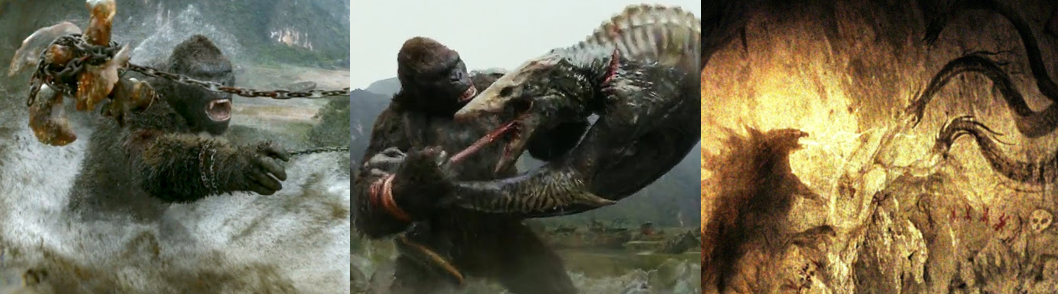
This tie-in comic series begins in 2012 with the Australian Navy finding a bizarre package bearing the Monarch logo floating in the waters of the South Pacific. Two weeks later, Houston Brooks is brought the item by an old friend and it’s revealed to be a recording device belonging to Aaron, Houston’s son who mysteriously disappeared some time ago. After cracking the device’s password, Houston thinks back to seventeen years prior when he and Aaron got into a heated argument regarding Skull Island. Angered that his father would leave an unpredictable wild animal like Kong to keep the Massive Unidentified Terrestrial Organisms (MUTOs) that have migrated there in check, Aaron stormed out to lead a team of crack monster hunters on an expedition to Skull Island. Knowing full well that his father would be pissed, Aaron compiled a complete record of the venture, which saw him team up with cantankerous cryptobiologist Evgenij Medov, enthusiastic Doctor Evelyn Matemavi, sarcastic survival instructor Helen Karsten, and the mysterious mythographer Walter R. Riccio. Determined to find evidence of Skull Island to expose Monarch’s operation, Aaron led the team through the raging storm that protects the island (with far less difficulty than in Kong: Skull Island) and parachuted to the prehistoric paradise after their plane was downed by Psychovultures. After briefly being awed by the beauty, wonder, and danger of the island, the team prepped to retrieve their pilot, Cejudo, secure their supplies, and make contact with the isolated locals, the Iwi tribe. After a pack of Death Jackals tear Karsten to pieces and critically inure Medov, they’re suddenly saved by Kong, allowing them to take cover in a cave. After stabilising Medov, the group are stunned when a handful of Iwi, led by Ato, greet them in English and bring them to their humble village.

Sceptical Aaron leads a team to Skull Island and finds himself on a sacred pilgrimage.

Confused and realising that Skull Island is full of secrets, Aaron learns that the tribe was taught English by Lieutenant Henry “Hank” Marlow during his tenure trapped there. Aaron is as impressed by this as he is by the Iwi’s construction skills, the healing properties of their various medicines, and the speed that Riccio learns their language and culture. Riccio reveals that their coming was foretold in Iwi legend and then dramatically shares a sudden vision of Kong’s family battling the Skull Crawlers to not only defend the island but also assert themselves as the dominant species. Riccio states that they’re to join the Iwi in Atenatua, a pilgrimage to learn the secrets of Kong. Though Aaron is sceptical of the mysticism, he’s determined to ensure Kong’s capable of keeping the “gateway to hell” shut so the island’s monsters don’t threaten civilisation. Riccio embraces the island’s culture for the pilgrimage, Medov makes a full recovery, and Ato leads them on, with the team amazed by a shipwreck that depicts Kong welcoming the Iwi to the island. They also learn that the “Devils of the island” from Riccio’s visions killed Kong’s parents, the last of their kind by the time the tribe arrived. When the gigantic, crocodile-like Sirenjaw suddenly attacks, the group is chased through the jungle. Luckily, they find the supplies left by Houston’s expedition many years prior, allowing the group to arm themselves. This is avoided, however, by the thunderous roar of Kong and, by the time the team races to the source, they find only the Sirenjaw’s dismembered corpse and a flock of hungry, opportunistic Psychovultures. Although they escape the voracious dinosaurs, they run right into a monstrous Swamp Locust and barely escape into the nearby valley. There, Aaron is horrified to learn that the creatures will probably take a week to finish feasting on the Sirenjaw’s remains, though his spirits lift when Cejudo radios in for help. Despite the damage to the plane, Cejudo reveals he’s flight worthy and offers to evacuate the team. However, Ato states that the only safe landing spot is beyond the bone yard, the home of the Skull Crawlers.

Kong foils Riccio’s mad scheme and makes a believer out of Aaron.

Despite Riccio insisting they complete their pilgrimage, the team head to the bone yard, discovering the skeletal remains of Kong’s family, and are promptly ambushed by Skull Crawlers. Ato leads them to another cave, where Riccio is assaulted by visions of Kong’s birth, which occurred in the heat of battle and saw the newborn Kong witness his parents’ brutal last stand against the creatures and left him the last of his kind. Though touched by Kong’s tragedy, Aaron urges them to press on and ultimately leaves Riccio behind when he insists on completing his “communion” with Kong. Thus, when Cejudo arrives to pick them up, Riccio blasts him from the sky with a rocket launcher, shoots Matemavi dead, and holds them at gunpoint to witness Kong’s divine glory. Riccio even attacks Ato, believing the village must fall for them to truly know whether Kong is an ambivalent, benevolent, or malevolent God. When Death Jackels attack, Aaron leads the others in escaping and realises the Riccio plans to use the explosives left behind by his father’s venture to enact his plan. Between panels, Ato leads them back to the village, too late to stop Riccio, whose actions allow a cluster of Mother Longlegs to rampage through the village. This leaves many dead, including Medov, though Riccio’s mad belief in Kong pays off when the great ape rips the giant spider-things apart. Riccio rejoices and praises Kong, proclaiming the ape the “savior of humankind”, only to be dismissively crushed by Kong’s giant fist. When Kong turns to Aaron, the sceptic becomes a believer when the cantankerous beast simply stares him down and Aaron sees that Kong isn’t some mindless beast, but a force of nature set on defending human life. Thus, Aaron makes his recording and sends it to his father on a makeshift sailboat, staying behind to help the Iwi rebuild and making amends with his dad. Having listened to the recording, Houston prepares to return to Skull Island and reunite with his son and the remainder of the book lists some information on all the beasts seen in the story.

The Summary:
Well, this was a lot of nothing. While Zid’s art is very close to Kong: Skull Island and perfectly captures the island, Kong, and the recognisable monsters that dwell there, the story leaves a lot to be desired, and it feels more like a partial retread of what we saw in the movie. While it’s nice to see the older Houston Brooks again, he basically bookends the paper-thin main plot, which revolves around his son and his vague, childish desire to prove his father wrong and paint Kong as a threat. This motivation doesn’t have much basis given Aaron seems to have no experience with Titans beyond Monarch’s records and his dad’s first-hand account, so it seems to come from simple fear rather than any tangible evidence. Aaron’s belief that Kong isn’t to be trusted and his motives and outburst seem like the actions of a disobedient teenager rather than a grown man, completely fracturing the backbone of the entire plot. It would’ve been so much easier to simply have Houston volunteer or encourage his son to join a routine expedition to Skull Island to witness its wonders and settle his scepticism first-hand, or even have Aaron be kidnapped by cutthroat mercenaries looking to somehow profit from Skull Island, or just have Aaron be a keen scientist like his dad. Forcing a conflict between them added little to the story beyond Aaron’s realisation that his father was right about Kong and learning to respect the delicate balance between the Titans, humanity, and nature, things that could easily have been hammered home just as effectively with my suggested changes.
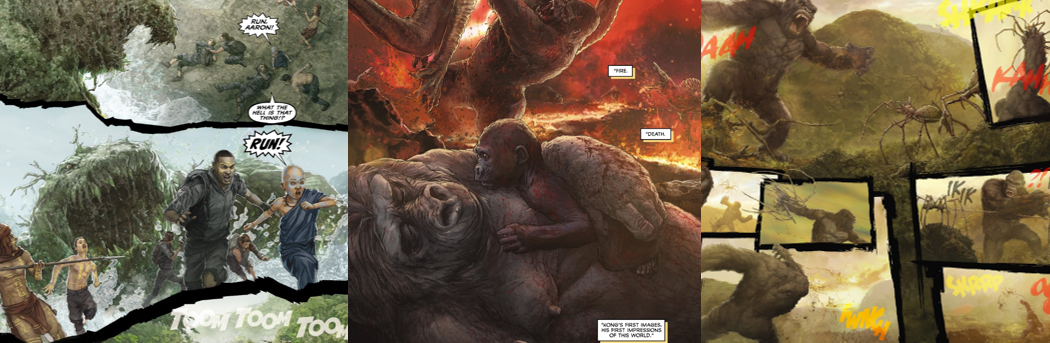
It’s the impressive monsters and Kong’s tragic backstory that carries this lacklustre story.

If you’re hoping there’s some fun Kong action to make up for this, you’d be sadly mistaken. Kong barely appears here though, to be fair, it’s always an event when he does show up. Fittingly, The Birth of Kong focuses more on teasing the backstory of Kong’s species and how they were annihilated by the Skull Crawlers, effectively visualising the legends that were told in the movie. While this makes for some dramatic and bloody reading and casts Kong in a deeply sympathetic light, it is a shame to not have more of the story revolve around the titular ape as he steals the show whenever he appears. Skull Island’s monstrous natives somewhat make up for this, with some familiar faces (particularly the Mother Longlegs) making quite the visual impact. When Kong battles these creatures, the action is rendered in full, brutal glory, with few to no dialogue boxes to obscure or dilute the spectacle. Everyone is in awe of Kong and sees him as a divine figure, even Aaron, who can’t help but be amazed by the ape. It’s weird that the Iwis suddenly speak English, and somewhat unnecessary since sign language and even the master language expert Riccio could’ve filled in the blanks. Speaking of whom, Riccio really eats up the pages and quickly got on my nerves. While I enjoyed his visions of Kong’s family and violent, tragic birth, it’s weird that he’s the only one hit by these considering the others drank the special Iwi juice and his turn towards madness seemed like a vague repeat of Lieutenant Colonel Preston Packard’s insane obsession with bringing Kong down. Sure, Riccio’s more about proving Kong’s divine nature but it’s a similar, self-destructive downward spiral that didn’t really need to be here as we could’ve just as easily had Ato or even Kong’s dreams show the same information and then spent more time seeing the characters fighting monsters. Ultimately, you’re not missing much if you’ve never read The Birth of Kong. It adds little to the MonsterVerse lore and is probably non-canon these days anyway, so you’re better off sticking with IDW’s Godzilla comics, in my opinion.

My Rating:

Rating: 2 out of 5.

Could Be Better

Have you ever read Skull Island: The Birth of Kong? If so, what do you think to it and were you also disappointed by how barebones it was? Did you enjoy seeing some familiar faces return for some scares? What did you think to the depiction of Kong’s birth? Would you like to see more King Kong comics fleshing out his mysterious island? What’s your favourite version of Kong and how are you celebrating K-Day this month? Whatever your thoughts on King Kong and other Kaiju, please leave a comment below, support me on Ko-Fi, and check out my other King Kong and Kaiju content!

Movie Night [K-Month]: Kong: Skull Island


In the absolutely bonkers science-fiction film Pacific Rim (del Toro, 2013), the monstrous Kaiju first attacked humanity on 10th August 2013, which was subsequently branded “K-DAY”. To celebrate this event, and giant monster movies, I dedicated every Sunday in August to one of cinema’s most prolific monsters: King Kong!


Released: 10 March 2017
Director: Jordan Vogt-Roberts
Distributor: Warner Bros. Pictures
Budget: $185 million
Stars: Tom Hiddleston, Brie Larson, Samuel L. Jackson, Terry Notary/Toby Kebbell, John Goodman, and John C. Reilly

The Plot:
Hired by the super-secretive Monarch, ex-British Special Air Service (S.A.S.) Captain Joseph Conrad (Hiddleston) and photographer Mason Weaver (Larson) accompany an Army unit to the mysterious Skull Island, where Lieutenant Colonel Preston Packard (Jackson) becomes obsessed with challenging the rule of the island’s guardian, Kong (Notary/Kebbell).

The Background:
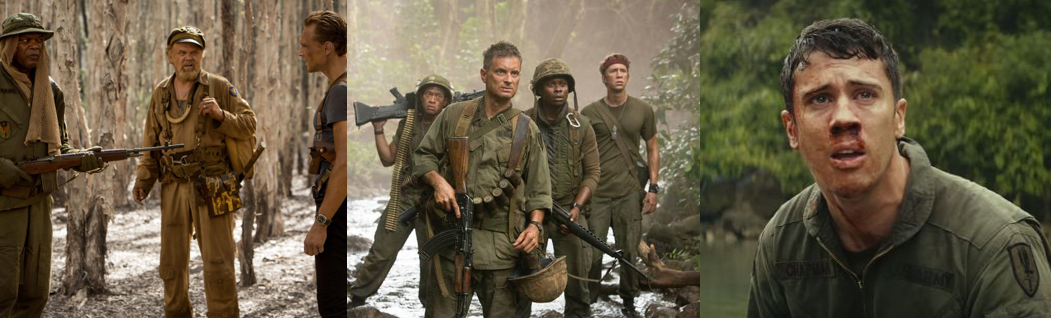
Amazingly, former World War I aviator turned filmmaker Merian C. Cooper’s vision of a giant gorilla climbing the Empire State Building first appeared over 100 years ago, resulting in one of the most influential movies ever made, However, King Kong (Cooper and Schoedsack, 1933) was followed by a comedic sequel, a questionableSuitmation” film that ended Toho’s short stint with the character, and remakes ranging from ambitious to big-budget showcases. Somewhere in there, the mighty Kong even clashed with Godzilla in a profitable (if polarising) affair, and took a giant step towards renewing this rivalry as part of Legendary’s “MonsterVerse” following the critical and commercial success of Godzilla (Edwards, 2014). Initially, Adam Wingard and Guillermo del Toro were tapped to direct a sequel to Peter Jackson’s 2005 remake before the project was reconfigured into a MonsterVerse film. Writers Max Borenstein and John Gatins specifically avoided the traditional King Kong narrative in favour of a wartime setting inspired by Apocalypse Now (Coppola, 1979). Visual effects supervisor Stephen Rosenbaum and conceptual artist Carlos Huante redesigned Kong to return to his roots and act as a cantankerous, but benevolent, protector, and turned to anime to design Skull Island’s other monstrous inhabitants. After Tom Hiddleston took the lead role, John C. Reilly joined the project after scheduling conflicts saw Michael Keaton drop out and Toby Kebbell pulled double duty by providing motion capture for Kong’s facial expressions. Accompanied by a tie-in comic book designed to flesh out Kong’s backstory, Kong: Skull Island was a smash hit at the box office and with critics, who praised it as a fun, action-packed adventure, though many of the performances were criticised. Although a spin-off and direct sequel never materialised, the MonsterVerse Kong went on to co-star with Godzilla in some big, if mindless, blockbuster team ups.

The Review:
Set in 1973, amidst the backdrop of the end of America’s disastrous campaign into Vietnam, Kong: Skull Island tells a very different King Kong story, one not about the giant ape’s obsession with a pretty girl and one greedy opportunists attempt to profit off his stature. Instead, Kong: Skull Island is more of a war movie, taking very obvious inspiration from Apocalypse Now for many shots, characters, and the depiction of the United States military. At first, the story is framed as a scientific expedition, spearheaded by the eccentric William “Bill” Randa (Goodman), a former World War I sailor whose life was changed when he was left the sole survivor following an attack on his vessel by a titanic creature. Randa took this experience with him throughout his career at Monarch, a government research team created specifically to track and investigate such “Titans”, snapping up geologist Houston Brooks (Corey Hawkins) after he wrote a paper suggesting the presence of a “Hollow Earth” where such monsters dwell. However, with Monarch’s funding at risk following the end of the Vietnam War, Randa must beg Senator Al Willis (Richard Jenkins) to let them join an expedition to a recently discovered, uncharted island in hopes of finding precious minerals, medicines, and other notable discoveries before those pesky Russkies. Amazingly, Randa gets his wish, and his demand for a military escort, and enthusiastically braves Skull Island’s torrential, perpetual storm to finally feel vindicated after years of being branded a crackpot for his wild theories regarding Titans and the lost, prehistoric island. This means that the mission is less a geological, scientific voyage and more a personal vendetta for Randa, who hopes to both warn and inform the world that monsters exist by bringing back irrefutable proof. Yet, even he realises the dangers of Skull Island and the folly of man trying to battle against its monstrous inhabitants.

Conrad takes Marlow’s expertise to heart to lead the survivors through Skull Island’s dangers.

Since Randa, Brooks, and largely insignificant biologist San Lin (Jing Tian) are ill equipped to navigate Skull Island’s hazardous jungles, they recruit S.A.S. serviceman turned mercenary/tracker Joseph Conrad to lend his experience to the mission. Though initially sceptical due to the unforeseen dangers awaiting them, Conrad’s convinced by the promise of cold, hard cash and is intrigued by Skull Island, and the mystery surrounding Monarch’s true intentions. Striking up a subtle, but unmistakable attraction with anti-war photographer Mason Weaver, Conrad immediately adapts to the alien terrain and leads the survivors of Packard’s team though the jungle, taking charge of one group and prioritising reaching a preset rendezvous point while Packard directs another group in an increasingly insane attempt to avenge their losses against Kong. Though respectful of Packard’s command and experience, Conrad soon finds himself as the voice of reason when Packard threatens to risk his life (and the lives of his men) in a futile assault against Kong, consistently managing to appease the crazed Colonel into letting the civilians trek to safety rather than join his vendetta. Adaptable and a keen marksman and swordsman, Conrad is a dashing, enigmatic hero with an affable personality, constantly keeping a cool head and being respectful to those he meets. While the soldiers have itchy trigger fingers, Conrad peacefully greets the mysterious and silent Iwi tribe and is both sympathetic towards and intrigued by marooned U.S. Army Air Forces Lieutenant Hank Marlow’s (Reilly) plight and insight into Kong and his island. While Weaver is worthy of attracting even a giant ape’s lust and attention, Kong: Skull Island avoids having the ape become fixated on her and she instead documents the trip, snapping shots of the island, its inhabitants, and echoing Conrad’s call for peace and extraction rather than fighting an unwinnable war. She ends up in the thick of the action when Packard riles up the vicious “Skullcrawlers” that threaten Kong’s rule but plays a role in distracting the creatures to aid Kong and, like her predecessors in previous Kong movies, requires the Titan’s aid when he battles to curb the Skullcrawler threat.

Packard’s men are unprepared for Skull Island’s monsters and burned out from futile war.

Having been shot down in World War II alongside Japanese pilot Gunpei Ikari (Miyavi), Marlow has been stranded on Skull Island for nearly thirty years and left a little kooky as a result. While the Iwi are far more benevolent than previous Skull Island natives, they’re largely mute and he’s been left to his own thoughts ever since Gunpei was killed by a Skullcrawler. He’s thus ecstatic when Conrad and the others arrive and enthusiastically warns of the island’s dangers while delivering exposition regarding Kong, who’s recast as a bad tempered but ultimately benign God to the locals. While Marlow’s been unable to escape, warrant officer Reg Slivko (Thomas Mann) cobbles together the remains of his plane and a rudimentary raft to carry them to the rendezvous point, leading Marlow to bid an emotional farewell to his saviours, learn how the world has changed during his absence, and anxiously contemplate returning to his wife and son (Beth Kennedy and Will Brittain). Though Conrad defers to Marlow’s expertise, Packard isn’t as convinced and largely dismisses the pilot, refusing to heed his warnings about venturing into Skullcrawler territory and challenging Kong. Packard’s men, though exhausted from the futility of the Vietnam War and eager to return home, attack their new mission with gusto, convinced they can brave any threat. While many are one-dimensional characters, they provide enough charisma to make an impression, from warrant officer Glenn Mills (Jason Mitchell) being obsessed with his beloved mother, Silvo being torn between his duty and his morals, and Captain Earl Cole (Shea Whigham) maintaining a stoic calm no matter how many monsters he encounters. Even Cole reaches his limit, however, after everything he’s witnessed and Packard’s lunacy, leading to him attempting a dramatic sacrifice only to be undone when the Skullcrawler simply swipes him into a cliff. Major Jack Chapman (Kebbell) may as well be wearing a bullseye the entire film with all his pining for his son, Billy, which predictably leads to his gruesome death at the jaws of a Skullcrawler, adding further fuel to Packard’s obsession.

Packard’s obsession with killing Kong sees his men devoured and killed by some horrific monsters.

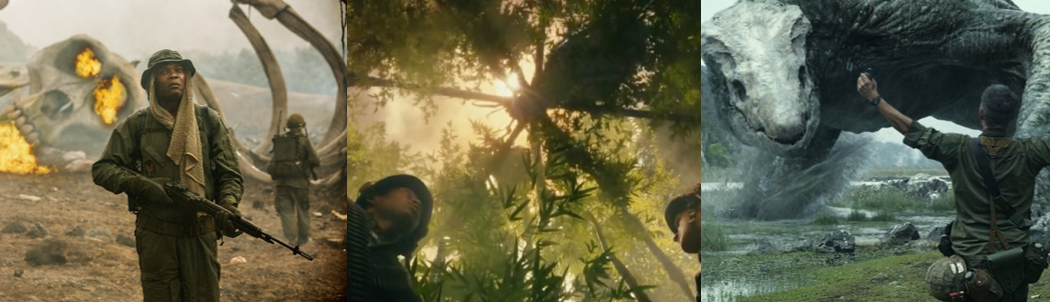
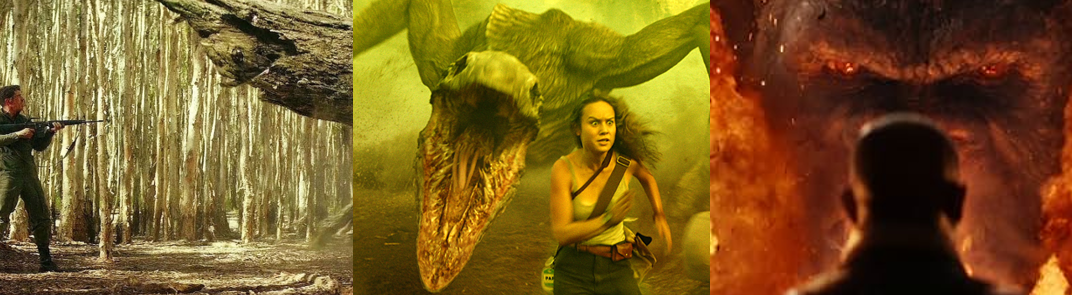
Portrayed as a grizzled war veteran who’s reached his limit, Packard has more than a few similarities to the likes of Colonel Walter Kurtz (Marlon Brando) and Captain Ahab. Feeling disillusioned and cheated out of victory in Vietnam, Packard jumps at the assignment to breach Skull Island’s storm front and venture into a new land, seemingly determined to assert his dominance rather than be humiliated by underequipped natives. Packard is personally affronted when Kong lashes out at his men when they drop Monarch’s seismic charges, becoming deadset on avenging his losses and continuing his war, no matter what it costs. Since his men are loyal to him, Packard’s fixation of reaching a weapons cache is only questioned by the likes of Conrad and Marlow, who emphasise safety and retreat over conflict. Packard, however, has none of this, threatening his allies at gunpoint when they disagree with him and being determined to kill Kong, despite the greater threat of the Skullcrawlers. As you’d expect, this obsession becomes Packard’s undoing as he refuses to set aside his grievances and only causes more death as even his seasoned troops are no match for Skull Island. Rather than being populated by dinosaurs, this Skull Island is full of unique, gigantic insects and other creatures that expertly camouflage into the jungle and easily get the drop on the unsuspecting grunts. While the Sker Buffalo is mostly harmless, the gigantic and frankly unsettling Mother Longlegs masquerades as mambo trees and skewers or webs up many of Packard’s men and Chapman is briefly spooked when a giant log turns out to be a Spore Mantis! Packard’s causal sniping of ugly “birds” unsettles a slew of voracious, bat-like Psychovultures who rip poor Victor Nieves (John Ortiz) to pieces and give Conrad a chance to show off his sick sword skills. Kong tangles with and partially devours a Mire Squid in a call-back to King Kong vs. Godzilla (Honda, 1962) but even his mighty strength and dominance is tested by the ferocious Skullcrawlers, who pop up from natural vents to devour everything in sight.

The fiercely territorial Kong is now a cranky but benevolent protector who defends his land.

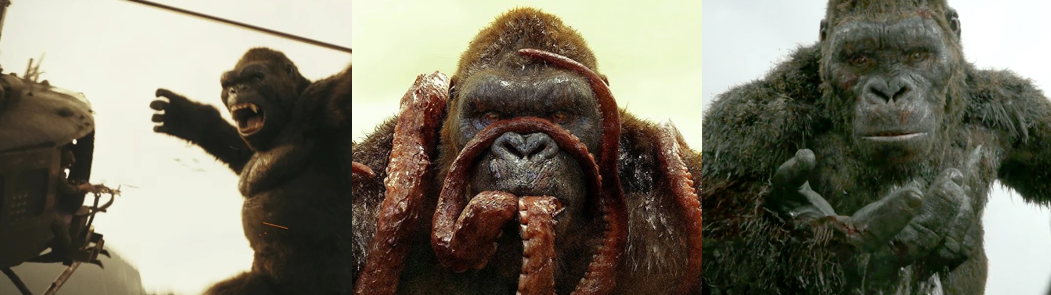
Since Skullcrawlers wiped out Kong’s species, Kong has a natural vendetta against them and is duty bound to wipe them out lest their gigantic alpha re-emerge. This drives him to attack Packard’s helicopters as their seismic charges awaken the Skullcrawlers, who chow down on Chapman and Randa, spewing up their bones and clothing in surprisingly gruesome scenes and snagging prey with their frog-like tongues. In keeping with the MonsterVerse portraying Godzilla as a benevolent force, the large (but still growing) Kong is seen as a protector figure. The Iwi’s wall isn’t to keep Kong out, but to deter the Skullcrawlers, who terrorised their people for a thousand years before the Apus Giganticus defended them. Depicted as “king” of Skull Island, Kong again carries many scars and wounds from his constant battling to maintain his position as the land’s alpha. Marlow relates some of Kong’s backstory, depicting him as the last of his kind and we again the skeletal remains of his people, this time littering the Skullwalker’s turf and that the Iwi revere Kong’s protection through paintings (though they seemingly don’t offer him female sacrifices). Kong is largely disinterested in humans, ignoring them until they become a threat and barely interested in even the alluring Weaver. No longer simply an enlarged ape, Kong is depicted as an unknowable, unique entity, standing upright and having anthropomorphic tendencies while also emphasising his intelligence. Kong utilises makeshift weapons, such as an uprooted tree or the propeller of a scuttled ship, when battling Skullcrawlers alongside his usual brute strength, with him again favouring snapping his foe’s jaws. Kong becomes the embodiment of Packard’s obsession, a dangerous an alien “other” he can vent his insanity and frustration on, and is seen as a threat to the world despite him simply defending his territory. While Kong largely dismisses Packard, the irrational Colonel earns the Titan’s wrath through a napalm attack, leading to the enraged Kong simply crushing his would-be adversary like a gnat.

The Nitty-Gritty:
Kong: Skull Island makes the bold decision to focus basically its entire runtime on Skull Island, stranding its characters there and giving them a ticking clock to get to a rendezvous point before they’re potentially trapped like Marlow was. Unlike previous Kong movies, however, Kong: Skull Island emphasises action and a constant battle for survival, with the burned out and overwhelmed soldiers adding a touch of flavour to the proceedings as they’re slightly better equipped than the usual film crews and sailors who venture to the island. The film also cleverly limits their  encounters with the island’s inhabitants, emphasising quality over quantity to offer horrific insectile creatures and ensure that the CGI holds up far better than in Peter Jackson’s overstuffed remake. The film’s pacing also benefits from this, with the action moving at a steady pace and a sense of urgency in both teams as they battle to their objectives, while still giving poignant moments with Marlow and allowing Hiddleston and Larson to sizzle with their subtle chemistry. Not only does Kong not become protective of Weaver, he’s also one of the few Kongs to not only survive but also remain on the island, dramatically presenting Kong as a key player in the MonsterVerse. This is further emphasised in the post-credit scene, where Conrad and Weaver (who sadly never appear again) are given a taste of Kong’s true destiny, which is to defend the Earth from other, less benevolent Titans. The film also changes the Iwi to be far more altruistic than previous natives, with them welcoming outcasts while also being a deeply prideful people. They offer shelter and exposition and are said to have moved past concepts of war and personal possessions, providing a stark contrast to the “Oorah!” gusto of Packard’s soldiers, who cannot deny the call to take up arms even if they’re tired of the futility of war. Indeed, Packard’s men were looking forward to going home when the call came in, though their burned-out Colonel is consumed by the need to not be denied a victory of a native, seemingly primitive force like in Vietnam.  

A quality over quantity approach allows the film’s monsters to be more impressive and horrifying.

Rather than being hidden by an impenetrable fog, Skull Island is now protected by a violent storm that deters ships and planes from venturing further but is easily bypassed by Packard’s helicopters. The island is still a prehistoric lost world, home to many unique, gigantic, and dangerous creatures, but is also seemingly ground zero for the Hollow Earth, immense underground tunnels where Titans and unknowable monsters dwell. Fiercely territorial, Kong fights off any incursions from the Hollow Earth, primarily the voracious Skullcrawlers, but isn’t against asserting his dominance over the likes of the Mire Squid. Each is brought to life through some startlingly detailed CGI, with Kong being the obvious standout. The biggest he’s ever been (at that time), Kong dominates the horizon, rendered as an ape/man hybrid of sorts who leaps and crashes about rather than swinging through the trees. With thick, impressively rendered fur, a war-torn body, and a deeply expressive face, Kong exudes both a cantankerous attitude (like he’s sick of Packard’s shit) and a gruff intelligence, especially in his determination to battle the “Big One” and take up makeshift arms. While the Mire Squid looks a little dodgy, the water and blood effects on Kong are otherwise remarkable, with this easily being the most impressive version to date and him often appearing in daylight. The Skullcrawlers are effective nightmare fuel, being strange, lizard-like mutates with a voracious appetite and unnerving exposed skull. It’s the other insectile inhabitants that really caught my eye, though, as Kong: Skull Island presents new monsters rather than dinosaur variants, giving us horrific creatures like the Mother Longlegs to force us (and the characters) to question everything about their surroundings. Although the soldiers pack some serious firepower and later upgrade to napalm, they’re constantly depicted as out of their depth on Skull Island and it takes every resource they have to battle even one Skullcrawler, forcing them to flee just like they withdrew from Vietnam as their weapons are ultimately useless against the prehistoric land’s occupants.

Kong’s strength and intelligence see him victorious and ready to face now Titan threats…

Upon first seeing Kong, Packard’s already fragile mind snaps like a twig. While he initially frames his vendetta as a search party for Chapman, Packard’s true intention is to find the weapons cache and gain the means to kill Kong. When Marlow balks at this, Packard turns violent, lashing out and threatening him and Conrad at gunpoint before being convinced to pursue his vendetta with his few loyal men. However, as Kong is the only thing keeping the Skullcrawlers from running rampant and potentially threatening the world, Marlow convinces Conrad to intervene when Packard sets a trap not laced with chloroform, but with napalm, luring Kong with seismic charges and thus unleashing the alpha Skullcrawler. After fending off multiple smaller beasts, Kong battles the Titan-sized threat, which Marlow warned could be more than the ape’s match since it previously killed his parents. Indeed, while Kong easily dispatches of the smaller creatures, the Big One is a far greater threat, sending Kong hurtling across the swamp. While Kong is briefly tangled up in a scuttled ship’s chains, he uses this to his advantage, wrapping it around his arm and swinging the rusted propeller to gain the upper hand. When Weaver gets a little too close to the action, she ends up in Kong’s massive fist when he dramatically and gruesomely wrenches the Big One’s insides out tongue first to establish himself as the dominant Titan of Skull Island. Exhausted, overwhelmed, and in awe of Kong’s feat, Conrad leads the survivors to the rendezvous point and leaves Kong to roar his victory across the land. In the aftermath, a nervous, freshly shaved, and decorated Marlow finally returns home, embraced by his wife and stunned son while Conrad and Weaver are warned that other Titans are still to be discovered and their experiences have only justified Monarch’s existence…

The Summary:
I’ve always been a big fan of Kong: Skull Island. On paper, there are some elements that I wasn’t sure would work as it changes the concept of King Kong quite a bit, but it all comes together really nicely and presents a new, if familiar, version of the world’s most famous ape. Setting the film against the background of the Vietnam War and making allusions of Apocalypse Now was a great way to present a new spin on the Kong concept and Samuel L. Jackson gave a terrific, scenery chewing performance as the crazed Packard. While many of his soldiers weren’t as fleshed out, they shined enough through their identifiable traits and Tom Hiddleston and John C. Reilly went a long way to making up for any of their shortcomings. Hiddleston makes for a convincing action hero and I remain disappointed that he never got to reprise this role in the MonsterVerse films. I also loved Marlow’s blend of comic relief, wackiness, and poignant emotion. Kong: Skull Island equally impresses with its action-packed narrative, which breaks the tradition of presenting dull, boring boat and island sequences in Kong films, and by offering unique and well-crafted monsters to provide some tension. Kong was beautifully brought to life as a fantastic throwback to his origins and recast as a curmudgeonly protector, one as intelligent as he is fierce, and it was great to see him portrayed as something more than just a tragic beast. Kong: Skull Island also stands the test of time as a more grounded, intense entry in the increasingly over-the-top MonsterVerse films, laying the foundation of big, world-shaking blockbusters with a gritty, captivating discussion on the trauma of war and man’s obsession with conquering both nature and perceived primitive forces.

My Rating:

Rating: 4 out of 5.

Great Stuff

Were you a fan of he MonsterVerse version of King Kong? What did you think to him being presented as a protector figure? Which of Skull Island’s monsters was your favourite? Did you like the allusions to Apocalypse Now and Packard’s obsession with killing Kong? Would you have liked to see a Kong solo sequel and which MonsterVerse movie is your favourite version? How are you celebrating Kaiju this month? let me know what you think about the MonsterVerse in the comments, donate to my Ko-Fi if you want to see more MonsterVerse content, and go check out my other King Kong and Kaiju reviews!

Game Corner [K-Month]: Peter Jackson’s King Kong: The Official Game of the Movie (Xbox 360)


In the absolutely bonkers science-fiction film Pacific Rim (del Toro, 2013), the monstrous Kaiju first attacked humanity on 10th August 2013, which was subsequently branded “K-DAY”. To celebrate this event, and giant monster movies, I dedicated every Sunday in August to one of cinema’s most prolific monsters: King Kong!


Released: 22 November 2005
Developer: Ubisoft Montpellier
Also Available For: Game Boy Advance, GameCube, Mobile, Nintendo DS, PC, PlayStation 2, PlayStation Portable, Xbox

The Background:
Considering his status as one of the titans of the monster movie genre, it’s kind of surprising that King Kong hasn’t featured in more videogames. Between his debut in 1933 and the release of Peter Jackson’s blockbuster remake of the influential original, King Kong had only featured in three videogames and was perhaps best represented by unsubtle knock-offs like Donkey Kong and the Rampage series (Various, 1986 to 2018). After a long period of dormancy following a slew of questionable sequels and the impressive 1976 remake, King Kong returned with a bang when life-long King Kong fan Peter Jackson reimagined the original into a critical success. Though plans for a sequel were scrapped in favour of a later reboot, the 2005 King Kong was accompanied by this videogame, whose Xbox 360 drew initial criticism for being unsuitable for standard-definition televisions. Heralded as an innovative title due to its cinematic presentation and minimal use of onscreen text, Peter Jackson’s King Kong: The Official Game of the Movie allowed players to explore Skull Island as a first-person shooter or as the titular ape, though the visuals were criticised compared to the elaborate environments. A commercial success, the game was praised for being ahead of its time and one of the rare, more competent tie-in games, though the simplistic gameplay was noted.

The Plot:
In 1933, film director Carl Denham coerces playwright Jack Driscoll and struggling actress Ann Darrow into accompanying him to Skull Island, a treacherous, forgotten land populated by dinosaurs, savage natives, and a gigantic ape who becomes besotted by Ann and the focus of Carl’s excursion.

Gameplay and Power-Ups:
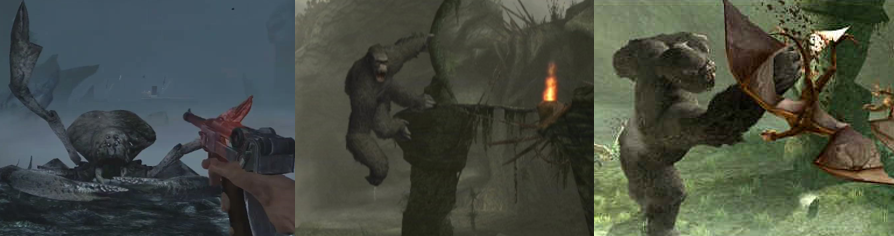
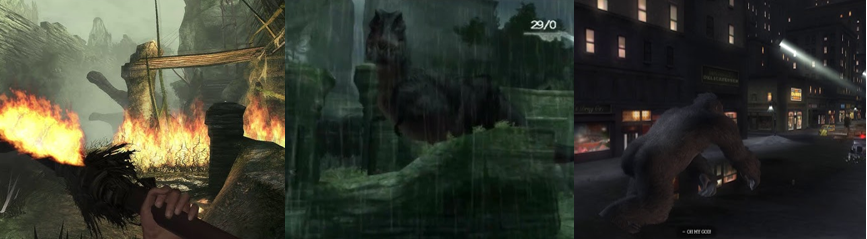
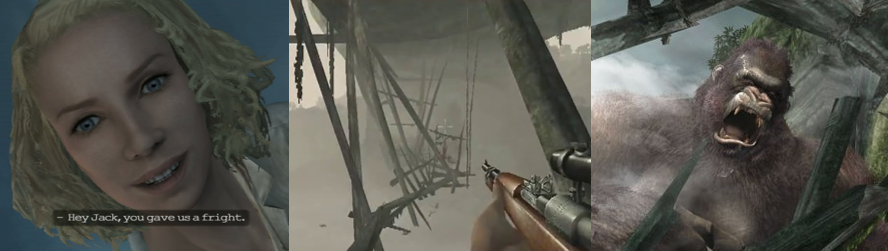
Peter Jackson’s King Kong: The Official Game of the Movie (which I’ll simply be referring to as King Kong going forward because that is a ridiculously long and convoluted title) is a hybrid first-person shooter (FPS) and action game based, obviously, on the big-budget, long-winded remake of the same name. The game is split into a number of chapters that vary in length and primarily takes place entirely on Skull Island, with the bulk of the action seeing you controlling screenwriter Jack Driscoll, who turns out to be very handy with a variety of firearms (though he can always rely on his fists or one of the many spears). You get a pistol, a shotgun, a sniper rifle, and a Thompson machine gun, with this latter being the best weapon in my opinion. When playing as Jack, you’ll use the Left Trigger to aim your weapon, the Right Trigger to shoot, and (oddly) the Left Bumper to reload. RT also allows you to grab new weapons, swapping out your current one (Jack can only hold one firearm and one torch at a time), “repel” with a melee attack, or use levers. Y drops any spears you’re carrying, B checks your ammo (which is simply Jack commenting on how many rounds or magazines he has left), A lets you talk to nearby non-playable characters (NPCs), and X does nothing. Jack can crouch when you press in the left stick (though I found minimal use for this), zoom in by pressing in the right stick, and can bash open wooden barricades and push rotating locks with RT. If he runs out of ammo, Jack can use his fists or any spears nearby, or can smash ammo crates that drop from planes or even grab more ammo or a weapon from helpful NPCs. He can also light spears using any fire sources to solve puzzles or burn down thorny bushes to clear a path. Fire can deal additional damage, and take out some of the game’s smaller enemies, but don’t get too close as it’ll quickly sap your health, too.

Kong uses his size and strength to make short work of the monstrous enemies that prey on Jack,

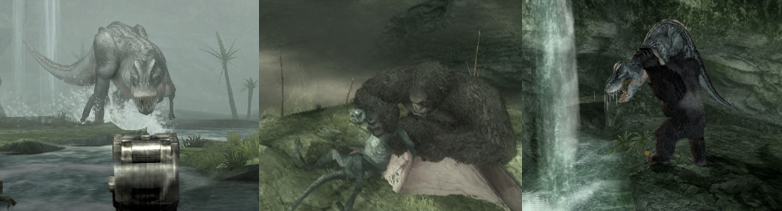
Neither Jack or Kong need to worry about grabbing health kits as they’ll automatically regenerate health if you avoid damage for a bit, but there are also no power-ups to find beyond ammo crates and Kong’s “Fury Mode”, meaning there’s no real incentive to explore beyond trying to find a lever. If you’re hoping for some fun King Kong action, then you’ll be left disappointed. The titular ape is only playable a few times, and each is little more than chasing and mindless combat sequences that somewhat break up the monotony of the FPS sections. Kong is a massive, lumbering beast able to swing from branches and leap to handholds, cliffs, and vine-encrusted walls to chase his quarry. These actions are performed with X and see Kong rampage through the jungle and primitive settlements like a heavy, unstoppable beast. Kong can also push enemies, bite them or enter “Fury Mode” if you rapidly tap Y. This slows time and seems to empower Kong to easily dispatch the island’s biggest predators. He does this with A, which sees Kong hit enemies with clubbing blows or simply break their jaw if you tap the button like a madman. Kong can also grab Ann with B to carry her or put her down, and Ann will helpfully open doors or burn down obstacles so Kong to progress, though you’ll need to protect her by fending off any incoming attacks. Kong can also muscle obstacles out of the way, bash down doors, and clamber up buildings in downtown New York. However, he’s as vulnerable to harm as Jack. Both automatically regain health if you avoid danger for a short time, but Kong tends to jump from perfectly fine to near death with just a few attacks, meaning you’re best off activating Fury Mode before you tackle the game’s larger, more aggressive enemies. When in the city streets at the end of the game, Kong must avoid the military’s heavy cannons and take out spotlights on rooftops as artillery fire will quickly cut him down. He can also grab and pound the island’s monstrous inhabitants with relatively ease but you’ll be more concerned about being hit mid-jump and plummeting to your death.

Jack’s gameplay loop is sadly as repetitive as Kong’s, with little variety on offer.

Just as the movie plodded along and quickly outstayed its welcome, so too does King Kong very quickly fall into a repetitive series of simple tasks and annoying hazards. The gimmick of having no or very minimal information onscreen is interesting, but hardly anything game-changing and actually makes it more annoying to navigate or locate levers and keep track of your ammo. Jack repeats the same basic puzzles again and again, blasting monstrous creatures, finding levers, and pushing doors with NPCs. Sometimes you must defend Ann and your other allies (and you’ll be met with failure if they die); others, you must carefully cross narrow wooden platforms that collapse under your feet. One of the most common tasks is using fire to burn thorns to uncover new areas, find levers, or reach a goal. You can do this either by lighting your spear or breaking flaming skull symbols around the environment, and you must light multiple torches, with one enjoyable moment seeing you avoiding a herd of Brontosaurus’. Occasionally, you’ll be chased by the ravenous Vastatosaurus rex or King Kong himself and must  use flaming spears, stone buildings for cover, and distract the beasts util doorways open. One key way of achieving this is using the game’s “food chain” system, where enemies are distracted by your kills or various bait (large worms and flies) to allow you to escape or ambush them, which is essential for clearing spiders from levers. As for Kong, he has an even simpler gameplay loop; you just swing and jump and chase Ann as she’s carried away, and battle V. rexes and the bat-like Terapusmordax obscenus. It is fun playing as Kong, but his sections are far too brief. However, I did enjoy ploughing through the native’s village, clambering about avoiding a lava pit, and the parts where Kong’s massive hands and face burst through the scenery as he follows Ann when she’s rescued by Jack.

Presentation:
King Kong uses clips and footage from the movie its based on very sparingly. So sparingly, in fact, that they only really appear in the game’s opening, which tells an incredibly truncated version of the events that bring these characters to Skull Island. I don’t necessarily mind this as the movie spent what felt like an age set on the Venture, but there were plenty of times where film footage could’ve been used as cutscenes or to bolster the in-game action, but the game chooses to use its in-game graphics instead. Luckily, these aren’t too bad…for the most part. While characters have the voices and likenesses of their movie actors, they resemble marionettes more than anything; however, they are a little more lively than regular NPCs. Carl will continuously stop to bust out his camera and chastise you for obstructing his shot, Ann is actually very helpful and will burn thorns or open paths, and NPCs are always gifting you weapons or chiming in on the bizarre events around them. The game’s environments are quite impressive, too. While it gets repetitive exploring the thick jungle of Skull Island, rain and thunderstorm effects are used very effectively and the island is very alive thanks to the food chain system and a great deal of care has been put into creating the aesthetic of the movie, it’s just a shame there’s no collectibles or interesting Easter Eggs to find.

Although it faithfully echoes the movie, the game is quite bland and visually uninspired at times.

While the game runs fairly smoothly, I noticed some graphical pop-up, slow down, and fogging that’s used to obscure more complex models (however appropriate the fog is to the setting). You’ll venture into a number of dank, dark caves, so you might want to turn up the brightness settings. I’d also advise saving often as I had a few instances where the game wouldn’t load in a scripted sequence, forcing me to reload and do the section again to progress. There are some fun moments that break up the gameplay, such as when you’re forced onto makeshift rafts in tumultuous rapids or when Kong or the V. rex are chasing you, and it’s quite exhilarating playing as Kong. Kong feels large and sluggish but also nimble and powerful, exactly as I expect he would, and there are some impressive sections involving him, such as when you creep through his bone-littered lair to rescue Ann or when he first appears as you’re tied to a stake. Kong also hounds you, dropping you into a cave filled with giant insects, and there are times when you can set large parts of the jungle ablaze and explore some interesting ruins, but these are merely stop-gaps in the endless gameplay cycle. The finale sees Kong rampaging through downtown New York City, which should be an epic and thrilling experience but it’s actually quite claustrophobic and restrictive. The game doesn’t immediately tell you to clamber up buildings to use the rooftops, meaning you’re left wandering around and getting shot at, and it’s really more of an extended, interactive cutscene as there’s nothing to do except plough through obstructions and climb the Empire State Building.

Enemies and Bosses:
Jack and Kong will be set upon by the numerous prehistoric creatures that inhabit Skull Island, from giant bats and insects to more formidable dinosaurs. Even the island’s natives get in on the action, hurling spears and causing the environment to catch fire as they either chase you or desperately fend off your rampage. Typically, you’ll contend with giant insects and giant bats, which slither from every dark corner and swamp the skies at times but are easily put down with your basic pistol. If you don’t have any ammo, a spear will do the trick, or you can distract them using the food chain system, which is true of all the game’s enemies. Although Jack can’t kill or even damage to V. rex, he can put down the smaller Venatosaurs, which regularly attack in voracious packs. He also has to contend with scorpion-like creatures, blast at lizard-like beasties when his allies are crossing banks of water, and make sure that he’s keeping his friends alive whenever hordes of creatures close in. While Jack is limited in his means of fending these off, King is not. He doesn’t have to worry about ammo, only the game’s janky camera, his inability to lock-on to a target, and his inconsistent durability.

While Jack is spared fighting the bigger dinosaurs, Kong must wrestle them alongside the controls.

Kong simply pummels enemies that Jack has to pick off either strategically or in a frenzy. Kong can grab Megapedes and pound them into the dirt or toss them about, swat Terapusmordaxes out of the air, and flatten the natives, and offers players a fighting chance against the larger Queen Terapusmordaxes and the V. rexes. These are essentially the game’s boss battes; while Jack has to run and hide from these creatures, Kong tackles them head-on, to varying degrees of enjoyability. The Queen Terapusmordax is flanked by any of her smaller minions; she’ll dive at you, whereupon the game prompts you to hit X and A together to tackle her out of the sky, which can be tricky to master. When battling the V. rexes, you must avoid their tail swipes, bites, and claw attacks. The V. rexes will try and bite Kong’s neck, so you must mash buttons to escape, and you’ll often fight two or three at once. Your best bet when faced with Kong’s monstrous enemies is to quickly enter Fury Mode and swipe at them a few times. This quickly allows Kong to perform his jaw snap finishing move, allowing you to make short work of them, which is preferable as these can be frustrating sections. In the finale, Kong swats at biplanes from atop the Empire State Building, but there’s obviously no way to win this fight as Kong simply plummets to his death as always.

Additional Features:
If there’s one benefit to King Kong it’s that the game is short and the Achievements are simple to attain. Just play through the game and all nine Achievements will pop as you complete each chapter. It’s good in the sense you can rush through for an easy 1000G but disappointing that there aren’t any fun Achievements here. There are no collectibles to find, no Easter Eggs that net you extra Achievements, and not even basic stuff like “Kill 100 Enemies” or “Clear a Chapter Without Taking Damage”. Some extra content unlocks in the game’s gallery as you play, but it’s nothing but images and videos and such. There is no two-player mode where you and a friend work together as Jack and Hayes (or one of the other NPCs), no battle mode where you fight as Kong against the game’s bosses, no skins, and no real incentive to play the game again once you’ve beaten it as its so unremarkable and easy. There are push-button codes that’ll grant you unlimited spears, questionable invincibility (you have to enter the cheat every chapter and I found it often didn’t work), or gift you specific weapons but the game’s so easy that you shouldn’t need them and they don’t exactly make it more fun anyway.

The Summary:
Peter Jackson’s King Kong: The Official Game of the Movie tries to go for a unique, cinematic presentation to stand out from the many terrible videogame adaptations and, in some ways, it achieves this. The game lovingly and faithfully recreates the visual aesthetic and atmosphere of Jackson’s overblown remake and you definitely feel immersed when exploring the dense jungles and ruins of Skull Island. It’s interesting incorporating a food chain system and giving Jack such limited ammunition to increase the tension felt when enemies attack, but the repetitive gameplay cycle soon wears thin. While King Kong should offer some entertaining alternatives to this system, he doesn’t feature enough for it to be anything other than a glorified mini game and a boss battle system. I definitely would’ve preferred to see Kong’s gameplay fleshed out more, perhaps telling a prequel to the film’s events and then showing his perspective on what happens in the game. Rather than switching between characters, you could’ve had two story modes: one with ten longer, more unique missions as Jack and one with ten, more action-packed missions as Kong. Instead, we get an overall bland experience that suffers from pacing issues. Some chapters are over in a minute or so, others drag on needlessly, and none of them offer any variations on the gameplay beyond mixing up the enemies you fight. Ultimately, this is a game only worth playing to quickly add 1000G to your Gamer Score and is far from the definitive, immersive King Kong videogame I’d like to see.

My Rating:

Rating: 1 out of 5.

Terrible

What did you think to Peter Jackson’s King Kong: The Official Game of the Movie? Were you disappointed by how repetitive it became and the odd pacing of the chapters? Did you enjoy utilising the food chain system? What did you think to Kong’s gameplay, and would you have liked to see him included more? What’s your favourite videogame featuring giant monsters? Would you like to see a new King Kong videogame someday? Whatever you think, comment below, support me on Ko-Fi, and check out my other King Kong content.

Movie Night [K-Month]: Peter Jackson’s King Kong


In the absolutely bonkers science-fiction film Pacific Rim (del Toro, 2013), the monstrous Kaiju first attacked humanity on 10th August 2013, which was subsequently branded “K-DAY”. To celebrate this event, and giant monster movies, I’m dedicating every Sunday in August to one of cinema’s most prolific monsters: King Kong!


Released: 14 December 2005
Director: Peter Jackson
Distributor: Universal Pictures
Budget: $207 million
Stars: Adrien Brody, Naomi Watts, Jack Black, Andy Serkis, Kyle Chandler, and Thomas Kretschmann

The Plot:
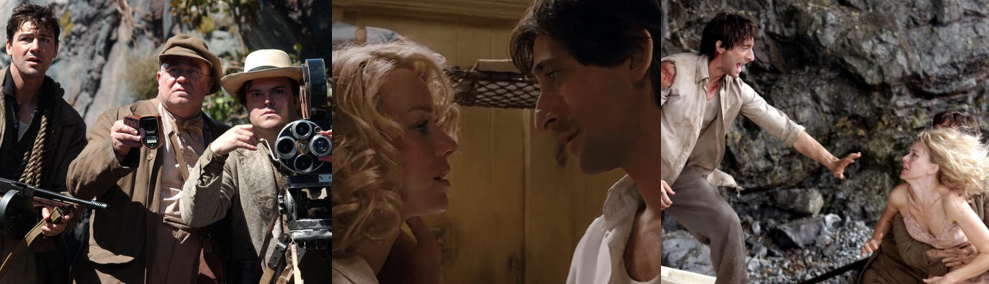
Vaudeville performer Ann Darrow (Watts) joins struggling filmmaker Carl Denham (Black) on a venture to Skull Island, only to be kidnapped by the might giant ape “Kong” (Serkis), prompting playwright Jack Driscoll (Brody) to lead a rescue.

The Background:
About a hundred years ago, filmmaker, adventurer, and former World War I aviator Merian C. Cooper brought his vision of a giant gorilla ascending the Empire State Building to life with King Kong (Cooper and Schoedsack, 1933), one of the most influential movies ever made. Followed by a comedic and divisive sequel that same year, a profitable but polarising clash with Godzilla, and a “Suitmationblunder that ended Toho’s brief stint with the creature, an ambitious remake impressed critics and turned a profit in 1976. Although the 1986 sequel was critically and commercially panned, Universal Pictures pursued life-long King Kong fan Peter Jackson about a remake during the mid-nineties. Though initially hesitant, Jackson eventually agreed to the project, though production stalled due to studio concerns and wouldn’t pick up again until Jackson’s Lord of the Rings films (ibid, 2001 to 2003) proved box office hits. Though this gave Jackson carte blanche to revive King Kong, the budget ballooned during pre-production, which included the restoration of a lost scene of the original. The filmmakers spent hours reviewing footage of real-world gorillas and star Andy Serkis threw himself into the role, playing an integral part in the character’s motion capture process. Weta Digital supervised the visual effects, which reimagined Kong as a less anthropomorphised creature and pitted him against various dinosaur-like creatures. On the human side of things, Jack Black played against type as the opportunistic Denham, Adrien Brody enjoyed the challenge of such an effects-heavy film, and Jackson kept and released comprehensive production dairies during filming. The result was a nearly-$600 million blockbuster that was accompanied by an innovative videogame and wowed audiences with its visuals, Serkis’s captivating performance, and impressive reimagining of the original. Although some criticised the runtime and bloated script, there were plans for a sequel, and then a prequel, before both were scrapped in favour of a “MonsterVerse” reboot in 2017.

The Review:
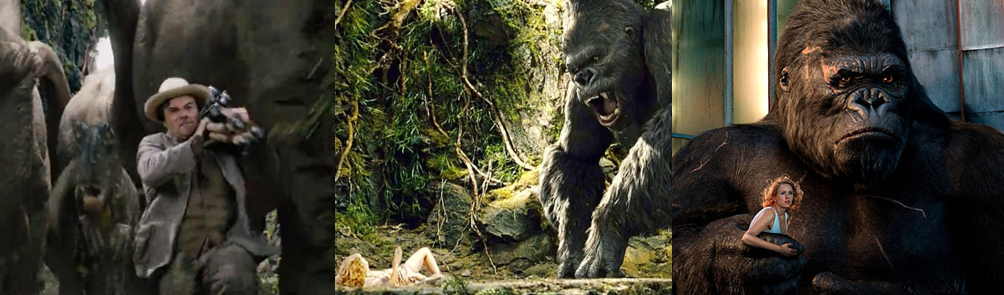
While some visuals and shots appear to have been inspired by the 1976 remake of King Kong, Peter Jackson’s big-budget, CGI-stuffed epic is a love letter to the 1933 original at its core. Thus, King Kong is a period piece taking place in the middle of the Great Depression, when times are so hard that theatres are largely empty, working class people struggle to make ends meet, and the streets are filled with the destitute and homeless. Naturally, the 1% are still thriving and there’s still money to be thrown around and made, but it’s all firmly in the hands of the upper class and the rich, meaning aspirational filmmaker Carl Denham must beg for funding for his projects and struggling stage actress Ann Darrow resorts to stealing and being sorely tempted by to the burlesque scene. Whereas the original King Kong moved at a brisk pace, quickly spiriting characters between scenes, Peter Jackson’s movie takes its sweet time, building atmosphere and giving audiences ample time to become familiar with its bloated cast. Thus, we spend the first twenty minutes following Denham and Ann as their divergent paths cross due to happenstance. Hoping to film a romantic adventure in the jungle, Carl (…somehow…) acquires a map to the mysterious and uncharted Skull Island, where he plans to wow audiences with sights and sounds they’ve never experienced. Unfortunately, his producers are unconvinced by his bold claims and impulsive nature and eventually issue a warrant for his arrest, to say nothing of his lead actress quitting and forcing him to trawl the burlesque scene for a quick replacement. This is where he spots Ann, who he’s immediately entranced by and whom he woos with talk of high adventure and romance, convinced she’s the perfect fit not just physically but also emotionally since she’s the “saddest girl [he’s] ever seen”. Known more for her comedy, Ann is sceptical of Denham and, despite being close to starvation, initially rejects his offer before finally acquiescing since his project’s being penned by her idol, Jack Driscoll.

Duped by Denham, Driscoll and Ann find love and brave the dangers of Skull Island.

Thanks to Denham being a natural showman with a silver tongue and his fearless, convincing nature, the filmmaker convinces everyone of his vision even though they all seem to know that he’s bullshitting and they’ll never get paid. Cameraman Herb (John Sumner) and Denham’s personal assistant Preston (Colin Hanks) are touchingly loyal but the mysteriously gruff and confrontational Captain Englehorn (Kretschmann) is extremely sceptical and only convinced to cast off by promises of more money. This is exactly how Denham stalls Driscoll when he turns in his rough fifteen-page draft and tries to leave, only to be trapped onboard the ship and forced to work on the script in the animal pen (because Englehorn conveniently specialises in live animal captures). Despite this, Driscoll seems happy to join the venture, inspired by the mysterious allure of Skull Island and captivated by Ann, who admires his work and is equally attracted to him (despite a rocky start). Ann changes once on the ship, seemingly putting on the façade of a Hollywood starlet, and throws herself into the gig, delivering cheesy lines alongside arrogant film star Bruce Baxter (Chandler) and inspiring Driscoll to write a stage comedy tailored to her strengths. By the time they reach Skull Island, the two are unquestionably lovers and Driscoll shows a surprising amount of guts, desperately trying to shield Ann from the wild natives and partially leading the rescue attempt when she’s taken by Kong. While it takes time for Bruce to live up to his reputation as a screen hero, Driscoll eagerly arms himself and heads into the jungle, fighting giant bugs, outpacing rampaging dinosaurs, and even going alone when separated. Luckily, Driscoll encounters no further obstacles and goes right to where Kong has Ann captive and even returns to the native village in record time. However, the experience changes him (and all the survivors) and he distances himself from Denham’s Kong circus, sharing Ann’s shame in separating the giant beast from his homeland. Driscoll’s then inspired by his own writing to reunite with Ann and recaptures the fire he showed on Skull Island to brave Kong’s rampage and lure him away from civilians.

While Carl’s obsessed with fortune, Ann comes to bond and care for the lonely, misunderstood Kong.

This is true of Ann as well. Although she’s initially horrified by Kong, Ann keeps her head and tries numerous ways to disinterest the beast, from playing dead, to running away, and finally performing her comedy routine. While the film heavily implies that Kong has toyed with and devoured his previous offerings, Ann’s dancing and buffoonery amuses him and spares her. Even when she admonishes him for pushing her around, Kong throws a tantrum and sulks rather than simply squashing or eating her, and Ann comes to be taken by not only him, but the beauty of Skull Island. This is matched only by the dangers living there and Ann is tossed about, firmly held in Kong’s grasp as he battles ferocious Vastatosaurus rexes, leading to her not only sympathising with his great loneliness and constant strife but also being indebted to him. While almost reluctant to leave Kong’s side, Ann is grateful to be saved but horrified when Kong is wounded and knocked unconscious by chloroform. She’s so guilt-ridden that she refuses to star in Denhem’s Kong show but seemingly senses Kong’s anguish, willing approaching him on the frigid streets of Broadway and sharing a few tender moments before the National Guard attack. While Driscoll echoes this sympathy, Denham does not; he misleads the crew from the start and is obsessed with making his picture, no matter the danger. Even when his crew are killed, he spins it into a positive and urges the survivors to rally, his enthusiasm turning to a malicious spite when his footage is wrecked. This sees him pivot towards capturing the beast, challenging Captain Englehorn’s reputation and being the one to KO Kong. Denham then fully transforms into a conniving showman under the bright lights of New York City, despite the survivors judging him for his actions, and never receives any comeuppance aside from his show and reputation being left in tatters.

A lot of screen time is spent on characters who either die horribly or disappear once Kong is captured.

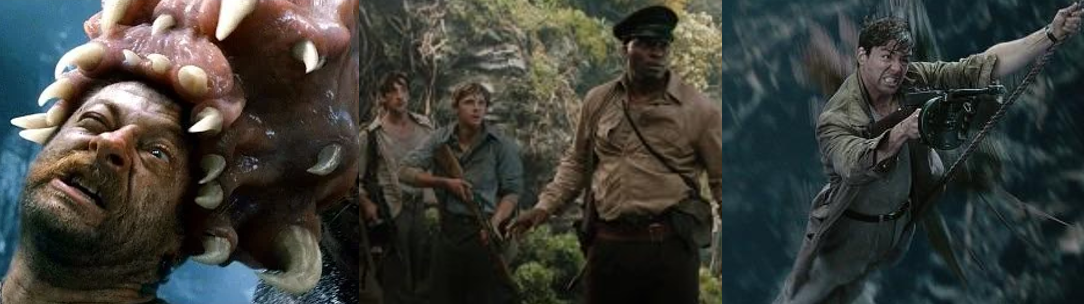
Had King Kong focused on these three and the way their experiences change them, it might’ve benefitted the run time. Ann is stunned by how hardened Denham is when she’s rescued from Kong and it’s clear all three are traumatised by their near-death experience, but the film focuses its runtime on the Venture’s motley crew. First, there’s Lumpy (Serkis), the gruff and disgusting chef who shares stories about Skull Island and its mysterious beast and who meets a gruesome end courtesy of some monstrous (if cartoonish) worms. Then there’s Ben Hayes (Evan Parke), a natural leader thanks to his days in the military who acts as a mentor to young Jimmy (Jamie Bell), whom he found as a savage stowaway some years ago. These two eat up a lot of screen time on the lengthy journey to Skull Island, with Jimmy eager to impress his mentor, strangely determined to rescue Ann despite them never sharing any screen time, and making not-so-subtle allusions to Heart of Darkness (Conrad, 1899) to emphasise the dangers of Skull Island. I do feel this dialogue and these allusions could’ve easily been given to Driscoll (he is a writer, after all) to reduce or even remove these two from the film as they don’t add anything and stick out like a sore thumb. Jimmy’s forced to step up after Hayes suffers a surprisingly violent death at Kong’s hands, comically saving Driscoll from some giant bugs, but he vanishes once they get to New York. Similarly, while I enjoyed Captain Englehorn’s strangely confrontational nature, he also vanishes after Kong’s subdued. He plays a vital role in rescuing the group when they’re trapped in the bug pit, however, and conveniently has enough chloroform to knock out a giant ape since he coincidentally deals in live animal capture, something that doesn’t come up until Denham decides to capture Kong. Finally, screen star Bruce turns out to be a complete coward but, considering none of them were prepared for Skull Island’s dangers, he’s absolutely right to be. Though he steps up to encourage Englehorn’s rescue, Bruce reverts to type when he’s cast as the “hero” in Denham’s Kong circus and then flees during the ape’s rampage, his sole focus on saving his own skin.

The savage natives live alongside a bunch of monstrous, prehistoric predators.

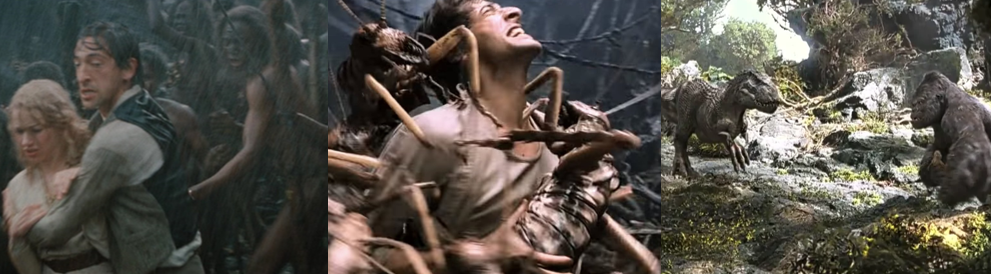
While it’s never made clear how Denham got the map to Skull Island, the Venture discovers it easily, only struggling with the thick fog, rough seas, and jagged rocks. Though the island appears deserted, it casts a distinctly ominous and malevolent appearance with its Kong-like rocks and the gigantic wall adorned with skeletons of previous sacrifices. The native tribe are more vicious and animalistic than ever, resembling Orcs from Jackson’s Lord of the Rings movies and often shot with shaky cam to highlight how savage they are. A primitive tribe who both worship and fear Kong, the natives assume more ape-like characteristics, appear to be cannibals, and are shockingly violent, murdering some of the crew with spears and skull bashing. Though scared off by gun fire, they comically pole vault to the Venture to abduct Ann, subjecting her to a ritual that is far more ghastly than usual thanks to torrential rain and their wild movements. Even the wall and its massive door is so much more elaborate here, with Ann suspended over a gorge filled with flames and magma like something out of Indiana Jones and the Temple of Doom (Spielberg, 1984). However, like the Venture’s crew, the natives disappear after Kong abducts Ann, never interfering with Denham’s capture plan or suffering Kong’s wrath when he chases her. Skull Island’s jungle is equally hostile, being a veritable lost world populated by giant, disgusting bugs and dinosaurs. Although there’s a palpable danger, isolation, and unpredictability and I appreciate that it’s populated by prehistoric creatures, they don’t always look good and there’s a definite sense of quantity over quality. The stampeding Brontosaurus baxteri are particularly cartoonish, especially when they fall and pile up, and I’m not sure we needed the bug pit scene. It’s great that Jackson revived it but it goes on way too long and it would’ve been much faster to have some of the crew perish from the fall or be picked off by a few giant bugs as they explore.

The fierce jungle king is reduced to a mere spectacle in the U.S.

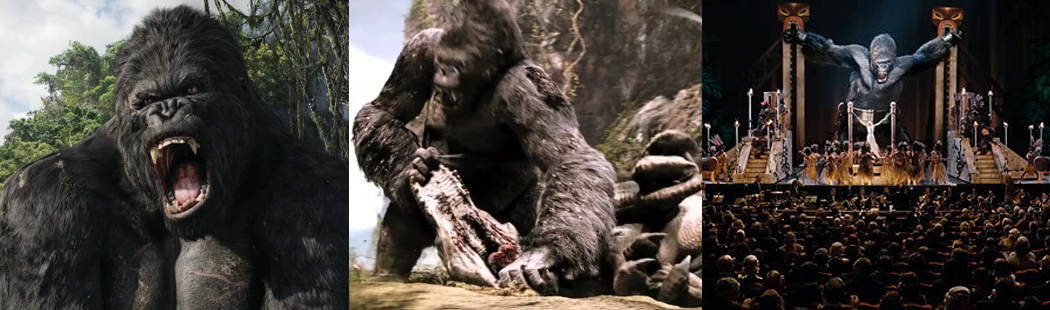
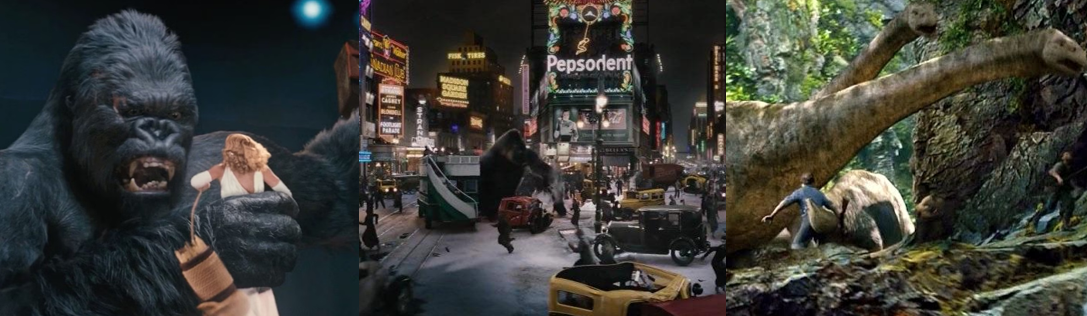
Unlike in previous King Kong movies, Kong is unmistakably a gigantic ape, with mannerisms and influences from various primates and Homo sapiens thanks to Serkis’s experience with portraying these creatures. Kong leaps, swings, clambers, and moves on all four limbs rather than being anthropomorphised. While this certainly makes him more realistic, he does lose some allure as he appears to be a unique and undiscovered prehistoric ape rather than some mythical beast. Still, there’s a lot of intrigue around Kong as the giant ape bones hint that he’s the last of his kind and he’s a very lonely creature who constantly fights for his position as “king” of the island. While Kong toys with his prey and is clearly an ancient being, he throws tantrums, reacts violently to trespassers, and flies into such a rage when Driscoll rescues Ann that he blunders into an obvious trap. Kong is a savage fighter, brutalising opponents and even devouring people, but is also capable of great sadness and emotion. He fiercely protects Ann from the V. Rexes and scoops her onto his shoulder, sharing his quiet place with her and being so captivated by her that he flies into a rage when Denham presents him with a substitute (Julia Walshaw). Strangely, despite nearly an hour on the Venture, we never see how Kong is brought aboard the ship or the conditions he’s kept in on the (presumably long) journey home. However, when Denham unveils Kong, he’s weak, possibly malnourished, and completely defeated. He’s enraged by the substitute and the flash bulbs, tearing through Broadway and scooping up any screaming blonde he comes across. Kong is as out of his depth in the concrete jungle as Denham’s party were on the island, struggling to navigate the cramped streets and being drawn to the highest point on pure instinct. Kong is probably his most impressive and nuanced here and a great deal of time and effort has gone into him, but I can’t help but be a little disappointed by how familiar he is. Like how many critics attacked Godzilla (Emmerich, 1998) for being an enlarging an iguana, I remain disappointed that Kong wasn’t more unknowable and bestial.

The Nitty-Gritty:
King Kong is an adventure into the unknown, with Denham selling his entire crew on the fortune and glory of the mysterious Skull Island. It’s honestly strange that more characters don’t call him out on this, with even the gruff Captain Englehorn going along despite not being paid and orders to turn Carl in. I really enjoyed the references to Fay Wray and Merian C. Cooper, the lines spoken by Ann and Bruce aboard the Venture mirroring the clunky dialogue of the original film, and even the photographers clambering on Kong’s corpse like in the 1976 film. While I appreciate the film fleshing out its characters, it really should’ve focused on Ann, Carl, and Jack. It takes twenty minutes for the Venture to cast off, almost an hour to reach Skull Island, over an hour for Kong to appear, and over two hours to get back to New York! Every aspect of the original is bigger, longer, and more grandiose but that doesn’t necessarily make it “better” as Jackson takes twice as long to make the same points. The pacing is also really strange as we spend so much time blundering though the jungle and yet Ann and Driscoll get back to the village in record time (even with the Terapusmordax obscenus’ assist). We have time to waste with a slow-motion reveal of the island’s name but not showing how Kong gets on the ship, or any of the return trip. Similarly, we get to see Ann and Kong slipping about on a frozen pool (an admittedly sweet scene) but interactions between her and Kong on the ship that could’ve achieved the same goal and been less cheesy. Finally, it’s bizarre that so many characters we’ve been forced to follow vanish once the film returns to New York. There’s no real payoff to Jimmy’s sub-plot and even Bruce reverts to type, with only Preston reappearing to cast judgement on Denham during his circus.

While Kong and the period aesthetic look great, some effects suffer and are too cartoonish.

Still, King Kong’s greatest strengths are its visuals. The film emphasises that this is the 1930s with the accents, attitudes, and society of the time. I would’ve liked Ann to be more motivated by her desperate hunger and desire to avoid stripping off for money, but I liked how tactile and gritty the Venture was. Skull Island makes an immediate impression thanks not only to how menacing it’s portrayed but how real-world locations are used alongside practical effects, miniatures, and CGI. This makes the many pitfalls the crew suffer more believable, but sadly also makes obvious green screen moments stand out more. To be fair, Jackson may be evoking old school rear projection techniques, but that’s a generous excuse as the Brontosaurus baxteri stampede, Ann fleeing the V. Rex, and her and Hayes being manhandled by Kong are all times instances where the effects take a hit. The dinosaurs, especially, are far too cartoonish and I think Jackson was being far too ambitious here. Like, pick between the bug pit and the dinosaur stampede and put more time, effort, and money into one big effects scene rather than two. Jackson’s desire to outdo the original is most apparent when Kong fights three V. Rexes while clutching Ann, tumbling over a cliff, and being entangled in vines! Still, this is a big, heroic moment for Kong and he’s easily the best effect here, even in full light, with detailed fur and facial expressions conveying many emotions. Covered in scars from constant battle and sporting a cracked tooth, there’s a real sense of power, speed, and size when Kong’s crashing through the jungle and leaping about. These sequences cleverly focus on Ann to make them more harrowing, but Kong still lacks the true impact of a physical effect. There’s nothing practical about him, which is a shame as he really does look great, and I give the film credit for staging its finale in broad daylight to fully showcase Kong’s effects and dramatic end.

Despite Ann’s best efforts and his valiant fight, Kong’s rampage ends with his tragic death.

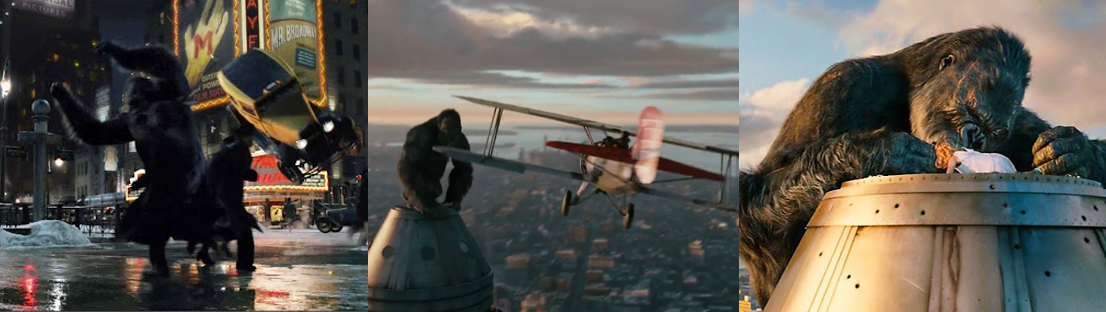
Even when his most loyal followers are killed, Denham persists with his obsession, only pivoting towards capturing Kong after he loses his precious footage. To his credit, Denham does mention the lives lost in capturing the “Eighth Wonder of the World” but goes full P.T. Barnum when introducing Kong, revelling in the accolades and spotlight and never once showing any remorse, even after Kong dies. Though weak, Kong flies into a rage during the show and easily breaks his heavy chains, rampaging through the theatre and charging through the slippery New York streets, desperate to reunite with Ann and causing destruction and death in his wild pursuit. Indeed, Kong Kong is surprisingly violent and bloody at times, with people impaled by spears, having their skulls crushed, being tossed aside or eaten by Kong, and Kong tearing apart the V. Rexes. Ann seems to sense Kong’s distress and goes to him to calm him after Driscoll valiantly tries to lure him away from people. Sadly, their sweet reunion is interrupted by the National Guard and Kong is soon scaling the Empire State Building, attracted by its lights and height. Ann goes with him willingly, no longer afraid and seeking only to calm Kong’s anger, and the two share another moment basking in the beauty of the city before the biplanes close in. As ever, Kong protects Ann first and foremost, even saving her from a plummet even as he’s bleeding to death from bullet wounds, but he’s noticeably more aggressive in the finale. Kong challenges the planes, swatting them from the sky when they fly too close, but ultimately succumbs to his wounds when they relentlessly fire upon him. Though Ann desperately pleads for them to stop, they attack when Kong’s back is turned and he collapses, sharing his final breaths with Ann on the top of the Empire State Building before plummeting to the street below. Though powerless to assist in this tragic end, Driscoll does push past the military to comfort Ann after the fall, which sees Kong reduced to a sad spectacle once again as the discredited Denham looks on.

The Summary:
As a big Kong Kong fan, and someone who loved Peter Jackson’s Lord of the Rings movies, you better believe I was hyped for this remake at the time. I remember going to see it at the cinema and being so disappointed and bored that I never bothered to pick it up on DVD and have largely avoided it whenever it’s on television. Visually, this King Kong is unparalleled even to this day. Skull Island has never been so terrifying and alive as it is here, with the natives giving off Cannibal Holocaust (Deodato, 1980) energy and the many dinosaurs evoking the Jurassic films (Various, 1993 to present). Oddly, though they’re unprepared for Skull Island’s dangers, Denham’s crew adapts remarkably well to the environment, braving the unknown to rescue Ann simply to be crushed or devoured by the wildlife. Sadly, though, “bigger” doesn’t always mean “better” and Jackson seems to have been far too ambitious here, cramming so much into the film that it takes away from Kong’s spectacle. And it’s a shame because Kong is spectacular here, despite essentially just being a giant ape rather than some otherworldly beast, showcasing a range of emotions and being a brutal, savage fighter who openly mocks his prey. Jackson’s efforts to pay homage to the film that inspired his career leads to a bloated, tedious film whose pacing is all over the place. While it’s nice to have more three-dimensional characters, it’s bizarre that so much screen time goes to characters who either die or disappear rather than to the three leads, who would’ve benefitted from this extra exposure. The film oddly glosses over some key points and seems strangely rushed at the end, with little emphasis placed on the juxtaposition of Kong in the concrete jungle versus the real jungle. I did like how Kong was more aggressive and fought so valiantly in the finale as it matched his fighting spirit on Skull Island, and his death remains as tragically hollow as ever, but it all lacks a lot of punch because the film is just way too long. The runtime would’ve greatly benefited from trimming or cutting some scenes because, as it is, King Kong is an undeniable visual spectacle and an amazing modern take on the concept, but too self-indulgent, too ambitious, and crippled by its lengthy runtime that does nothing but make it an obnoxious and tedious chore to sit through.

My Rating:

Rating: 3 out of 5.

Pretty Good

Did you enjoy Peter Jackson’s version of King Kong? Do you agree that it’s far too long and focuses on too many side characters or did you appreciate the characterisations? Were you surprised at how violent the natives were and the viciousness of Skull Island’s inhabitants? What did you think to Kong, his appearance, and his more animalistic portrayal? Which version of Kong is your favourite how are you celebrating K-Day today? Whatever your thoughts on this big-budget King Kong remake, or other monster movies, drop a comment below, support me on Ko-Fi, and check out my other King Kong and Kaiju content!

Movie Night [K-Month]: King Kong (1976)


In the absolutely bonkers science-fiction film Pacific Rim (del Toro, 2013), the monstrous Kaiju first attacked humanity on 10th August 2013, which was subsequently branded “K-DAY”. To celebrate this event, and giant monster movies, I’m dedicating every Sunday in August to one of cinema’s most prolific monsters: King Kong!


Released: 17 December 1976
Director: John Guillermin
Distributor: Paramount Pictures
Budget: $23 to 24 million
Stars: Jeff Bridges, Jessica Lange, Charles Grodin, Rick Baker/William Shepard/Peter Cullen, and René Auberjonois

The Plot:
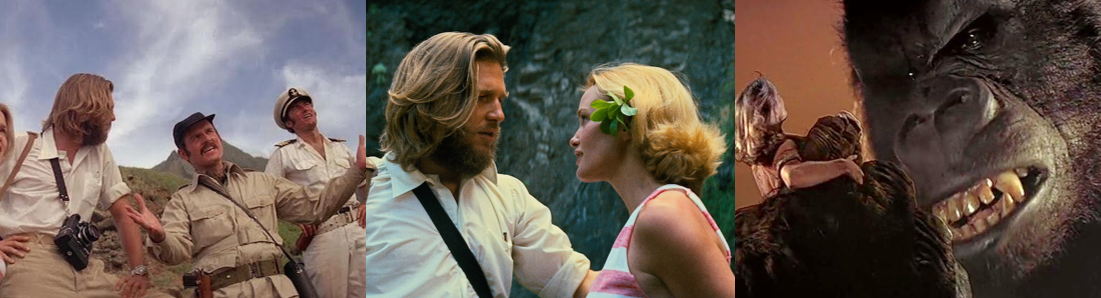
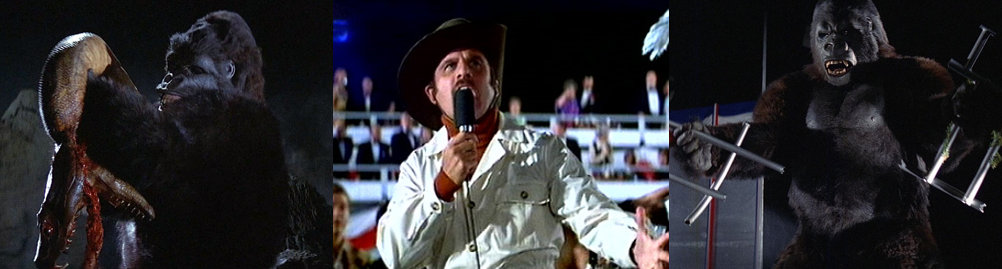
Ruthless oil executive Fred S. Wilson (Grodin) discovers a primitive world ruled by the giant ape “Kong” (Baker/Cullen/Shepard). When the beast kidnaps beautiful castaway Dwan (Lange), stowaway primate palaeontologist Jack Prescott, (Bridges) tries to save her amidst Wilson’s plot to commercialise the creature.

The Background:
As hard as it may be to believe, it was nearly a hundred years ago that filmmaker, adventurer, and former World War I aviator Merian C. Cooper dreamed up the iconic visual of a giant gorilla ascending the Empire State Building and wowed audiences with King Kong (Cooper and Schoedsack, 1933), largely regarded as one of the most influential movies of all time. Amazingly, King Kong was followed by a sequel that very same year, though Son of Kong (Schoedsack, 1933) leaned more into comedy and largely divided critics. After a planned revival fell through in the 1960s, the concept and character were repurposed into a battle against Godzilla, much to Cooper’s displeasure, resulting in a profitable but divisive clash. After a stint in animation, King Kong returned to cinema screens for a loose tie-in, King Kong Escapes (Honda, 1967), a much-maligned entry that ended Toho’s brief stint with the legendary ape monster. About ten years later, the idea of a then-modern remake was pitched, though there are conflicting reports about who we have to thank for this: some say it was Michael Eisner and veteran producer Dino De Laurentiis, while De Laurentiis claims it was all his idea. Regardless, Paramount Pictures financed the project and De Laurentiis worked with screenwriter Lorenzo Semple Jr. to update the story to focus on the energy crisis and culminate at the World Trade Center. To save on costs, all dinosaurs were omitted and an elaborate suit, animatronic, and puppets were used in place of laborious stop-motion techniques. Special effect artist Carlo Rambaldi constructed an impressive £500,000 mechanical Kong that infamously failed to work when the cameras rolled, forcing the production to rely on what Rick Baker saw as an inferior suit. Thousands of onlookers flocked to the World Trade Center for the dramatic finale, many being paid to be extras, and an extended cut of the film was assembled for home media. King Kong was largely praised for revamping the original unorthodox love story and for its impressive practical effects, though it’s also been criticised for its janky editing and composition and its strange balance of humour and drama. Though De Laurentiis was disappointed by the film’s $90.6 million box office, a critically and commercially panned sequel followed ten years later and the franchise remained dormant until Peter Jackson’s big-budget remake in 2005.

The Review:
Though it’s narratively very similar to the classic 1933 original, this King Kong separates itself in a few ways to put a different spin on the formula. I don’t mind this so much as I’ve always argued that remakes should try to do something new with their properties rather than being shot-for-shot or beat-for-beat recreations. In this case, we’re not following an adventurous film crew and their misadventures on Skull Island, but instead Fred Wilson, executive of the childishly named Petrox Oil Company, who assembles a crew to sail to an uncharted island. Since Petrox has been in a slump and the world is facing an energy crisis – and competition from other oil and petrol sellers is high – Wilson is banking everything on claiming a hitherto-undiscovered oil reserve on the mysterious Skull Island. Thanks to paying off an unnamed official in Washington, D.C., Wilson obtains top secret satellite imagery of the island which, as his resident science expert Roy Bagley (Auberjonois) explains, reveals the landmass hidden by a thick and mysterious fog. Their data indicates that the island is rich in oil and other minerals and Wilson is determined to get his hands on it to turn Petrox’s fortunes around, though stowaway associate professor Jack Prescott offers another, far more sinister perspective on the island. Prescott talks of journals and other evidence indicating that the island is not only inhabited, but ruled over by some gigantic, unknowable beast and attempts to persuade Wilson of Skull Island’s dangers and to let him join the expedition out of sheer scientific curiosity. Believing he has the inside track on Skull Island, Wilson is naturally sceptical and accuses Prescott of being a spy from a rival oil company, ordering Captain Ross (John Randolph) to lock the troublemaker up and doing a deep dive into Prescott’s background to figure out who he is. When this only corroborates Jack’s story, Wilson reluctantly allows him to join the crew as their official photographer but, for a good while, the two seemingly reach a mutual respect, especially when leading their later rescue mission.

Wilson’s search for oil and Jack’s awkward romance are scuppered by a giant, horny ape!

This comes about when Wilson’s ship happens upon a stray life raft carrying beautiful aspiring actress Dwan, who was left adrift when her yacht  suddenly exploded. Dwan joins the crew as something of a mascot and a fancy, immediately catching Prescott’s eye and flirting with him, sharing her dreams of being a big star. While the romance angle was extremely rushed in the original film, I understood it as the film was much shorter and that was in keeping with the style at the time. Here, I’m not sure why Jack is so smitten with Dwan beyond her looks as she’s a bit of an airhead who wanders around with big doe eyes, chattering about her dreams, blabbering about how beautiful things are, completely oblivious to obvious dangers and being painfully naïve. Though she’s more likely to babble about her star sign than anything meaningful, it seems Prescott is captivated by her whimsical, carefree nature and he becomes very protective of her, as does the rest of the crew since she’s initially ordered to stay behind when they reach Skull Island. Instead, she accompanies the group and, predictably, observes the native’s rituals with a naïve wonder compared to Prescott’s more measured caution. When the tribe’s shaman (Keny Long) spots her, he immediately orders (in his native tongue) for her to be handed over as a sacrifice to their God, even offering six of the native women in return for Dwan, though both Prescott and Wilson naturally decline. This sees the natives kidnap Dwan in the dead of night and force her to be strung up as Kong’s latest bride and, like Prescott, Kong is immediately taken by the blonde-haired maiden. Dwan is helpless in Kong’s grasp, resorting to screaming and begging and then lashing out in fear and anger since she’s afraid of heights. Not wishing to anger the beast, whom she and Wilson believe intends to eat her, Dwan tries to soothe him with kind words, though her attempts to flee fail and she’s reduced to a mere damsel in distress. This gives Jack the chance to step up as he leads the rescue mission, exasperated by Wilson being more concerned with his oil (which turns out to still be gestating and thus unsuitable for mining), though he’s ultimately left to rescue Dwan alone when Kong kills most of the rescue party.

Though a king in his native land, Kong’s reduced to a wild animal by Wilson’s theatrics.

Since his plan has gone awry, Wilson comes up with a new plot to capture Kong and parade him around the United States as Petrox’s mascot. After calling in some supplies, he orders Captain Ross and his men to prepare an elaborate trap rather than send out a search party, digging a huge pit to chloroform the giant ape. While Kong’s busy battling a giant snake, Prescott grabs Dwan and bring her back to the native’s village. However, when the angered Kong pursues, he falls into Wilson’s trap and is soon being transported to America. The gas and lack of food and water take their toll on Kong, who sits heartbroken and throws a tantrum as they near the mainland, with his rage only soothed by Dwan. Once they reach America, Wilson turns from a greedy but otherwise reasonable man into a full-blown megalomaniac as he wins over Dwan by casting her in the lead role in Petrox’s new advertising campaign to recreate her time on Skull Island before the braying masses as Kong is held in chains. While Prescott initially signs on for this, his moral compass sees him reject the offer and urge Dwan to leave with him, but she’s so obsessed with being a star that she can’t turn Wilson down. While Dwan is terrified of Kong, she feels a great deal of sympathy for him and puts her life on the line to calm him when he threatens to sink the boat. Similarly, she begs Kong not to let her go in the finale so he’ll be spared death and even Jack is cheering Kong by the end after he’s double-crossed. Thanks to his extremely expressive face, Kong is more human and emotive than ever, showing great affection, pain, and anger as required. Though revered as a God by the natives, Prescott sees Kong as a unique species that needs to be preserved. He’s aware of the beast’s danger and desperate to get Dwan away from him, but constantly advocates for Kong to be left unharmed and is deeply disturbed when Wilson takes Kong from his homeland.

The Nitty-Gritty:
One of the things I love about the original King Kong is how it moves at a brisk pace and yet still showcases a lot of amazing effects and action. The romance subplot is hammy, for sure, but it’s all in good fun. Sadly, this King Kong suffers from a bloated runtime. It’s not as bad as the next remake, but the film chugs along at a snail’s pace, spending way too much time on the boat and trying to make us care about the blossoming attraction between Jack and Dwan. While Bridges and Lange have chemistry, Dwan’s portrayed as such a fickle and flighty bimbo that I find it hard to believe Jack could stand being with her beyond a quick bunk up. Hell, he even says to her (after she interrupts their desperate escape from Kong’s rampage for a drink) that she’d quickly grow bored of him since he can’t afford to keep her in the lifestyle she’s accustomed to. While she seems to genuinely deny this, I’m on Jack’s side here; Dwan would be seeking the next thrill after a month or two, for sure. I enjoyed Grodin’s bombastic performance as Wilson, who becomes quite affable during the second act but quickly descends into a spiteful villain who cares only about making a theatrical showcase of Kong. Having sacrificed many lives and shown a complete disregard for others, and Kong’s welfare (seriously, how did the big ape survive the trip back to America?), it’s only fitting that Wilson goes out in the stupidest way possible: running right into Kong and being crushed under his foot, despite him literally being able to flee in any direction! The natives don’t get much play here and disappear after sacrificing Dwan, but they’re portrayed as a stereotypical, primitive tribe who seek only to appease their God. They regularly repair the great wall to keep Kong out and send him women to satisfy his needs and Jack states that the tribe will most likely be disillusioned and downcast after they kidnap their deity.

While Kong is impressive, the effects don’t land or age as well as the ambitious original.

Though comprised of various real-world locations and elaborate sets, Skull Island isn’t as impressive as in the original film as this King Kong chooses not to have dinosaurs and other prehistoric creatures on the island. Indeed, the only other giant creature is a massive snake that Kong awkwardly wrestles with, which is a shame as I would’ve much rather seen more time spent exploring the island’s dangers than trapped on the boat with these assholes. Skull Island’s threat is thus in its landscape, which is comprised of a thick jungle and deep chasms and Kong who, despite his obnoxiously loud roar and thundering footsteps, can apparently sneak up out of nowhere and send Jack’s rescue party plummeting from their log bridge. As you’d expect, Kong is the film’s most impressive aspect and the suit really does look amazing. Kong towers over the miniatures and has a far greater range of movement than stop motion can provide, though he looks janky and awkward when briefly substituted for a robotic duplicate or filmed against rear projection. There’s obviously a lot of that (and forced perspective) here and it hasn’t aged as well as the black and white original, which gets more slack due to being limited by the technology of the time. Here, it’s painfully obvious when a giant Kong hand is holding Dwan before a projection of Kong and when Kong is smashing through miniatures. To be fair, these look far more impressive during Kong’s rampage through New York City, where he overturns a train and terrorises the public, though he looks extremely ungainly when climbing the World Trade Center. Kong’s most impressive feature is his highly expressive face, which sees him gaze upon Dwan with lovesick eyes, glare at people when they shoot him, and illicit a great deal of sympathy when trapped on the ship or suffering mortal wounds. Kong’s definitely more human than in the original, standing upright and lumbering about like a man, though the little head tilts and constant roaring tie into his animal side, as does his confusion and rage when surrounded by the unfamiliar sights and sounds of New York City.

Kong’s rampage is tragically ended in spectacularly gory fashion!

Remarkably, despite being unprepared for Skull Island’s true danger and having lost the chance to rape its oil deposits, Wilson snatches victory from the jaws of defeat by hastily trapping Kong. Being drugged, malnourished, and separated from his land and new love seems to physically drain Kong, allowing him to be chained up in a seemingly inescapable cage and paraded before the masses amidst Petrox’s massive billboards. However, Kong’s rage is stoked when reporters rush Dwan and push her about, giving him the strength to break free and rum amok, crushing people under his feet and terrorising the streets in his pursuit of her. While Jack gets Dwan to safety, she randomly demands a drink, sure that the river will deter the ape, and is naturally snatched by Kong when he simply wades through the water without issue. Luckily for Dwan, Prescott intuits that Kong will be drawn to the World Trade Center since the Twin Towers resemble a rock formation on Skull Island. Though Jack barters with the city officials to take Kong alive, he’s immediately double-crossed when soldiers shoot flamethrowers at Kong. Though unable to reach the roof of the South Tower, Jack’s even more helpless when Kong leaps to the North Tower, kills his assailants, and is approached by three attack choppers. Though the pilot (George Whiteman) orders his men not to fire with Dwan in the ape’s hand, Kong seemingly recognises the threat and accepts his fate, placing the aghast Dwan on the roof and prepares to face his attackers. While Kong does take a couple of the choppers down when they fly a little too close, he’s basically dead meat the moment they fire their massive chain guns. It’s honestly disturbing seeing bloody chunks and spray fly from Kong’s chest, neck, and belly and seeing his fur matted by gore, his breathing becoming more laboured and his screams more anguished as he’s riddled by seemingly explosive bullets. In the end, the assault is too much and Kong collapses first to the roof and then to the ground below. As reporters clamber on his prone body and Dwan desperately tries to comfort him, Kong’s heart slowly beats to a stop. The masses celebrate, jostling Dwan about and trying to snap her picture, all while a despondent Jack looks on, unable (and seemingly unwilling) to reach her.

The Summary:
This is the King Kong I grew up with. As a kid, I remember being awestruck by the Kong suit, which still holds up really well and is a fantastic way to give Kong more movement and expression than stop-motion or animatronics. While he lacks a lot of the charm of the original and doing a man-in-a-suit might seem a bit cheap, Kong is still incredibly impressive, especially his emotions and face, and he’s only let down by some dodgy rear projection and questionable performances. I didn’t mind Jeff Bridges here, he took the lead pretty well and seemed very charismatic, but he had more chemistry with Charles Grodin than Jessica Lange. Dwan is one of the weakest aspects of the film, being a shallow and wholly uninteresting character who seems too fickle and flighty for Jack to waste his time on. Wilson was great as a bombastic, greedy antagonist who takes any opportunity to turn his fortunes around. Sadly, King Kong is a slog to watch, with the film dragging on and offering little but a dull romance sub-plot and actors fumbling about on a jungle set. Things pick up in the finale but, by then, I wouldn’t blame you if you’d tapped out from boredom as the film lacks the magic of the original and doesn’t pace out its set pieces well. It’s a shame as I have fond memories of this one from my childhood but this King Kong is tough to rewatch, despite how unsettling the ending is and its ambitious suit effects.

My Rating:

Rating: 2 out of 5.

Could Be Better

Have you ever seen the this 1976 remake of King Kong? If so, did you like it and how do you think it compares against the original and other King Kongs? What did you think to the suit effects and animatronics? Were you disappointed we didn’t get more giant monsters on Skull Island? Did you also find the film boring at times? What did you think to the changes it made to the original? Which version of Kong is your favourite and how are you celebrating K-Day this month? Whatever your thoughts on King Kong, Kaiju, or monster movies in general, leave a comment below, support me on Ko-Fi, and go check out my other King Kong and Kaiju content!
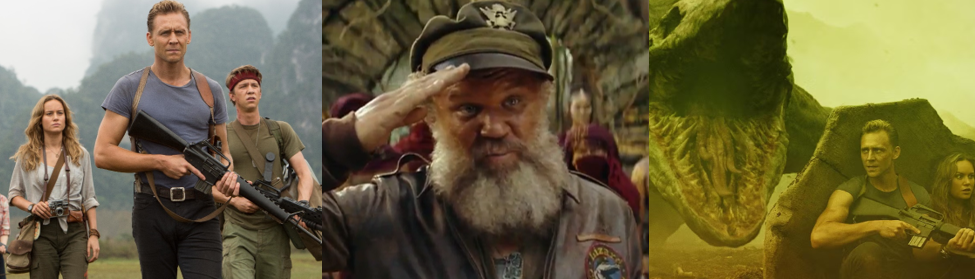
Movie Night [K-DAY]: King Kong (1933)


In the absolutely bonkers science-fiction film Pacific Rim (del Toro, 2013), the monstrous Kaiju first attacked humanity on 10th August 2013. The attack ended a few days later on August 15th but, in that time, San Francisco, Sacramento, and Oakland were completely devastated and the Kaiju War officially began. Accordingly, August 10th became known as “K-DAY” and is, for me, a fantastic excuse to talk about some giant monster movies!
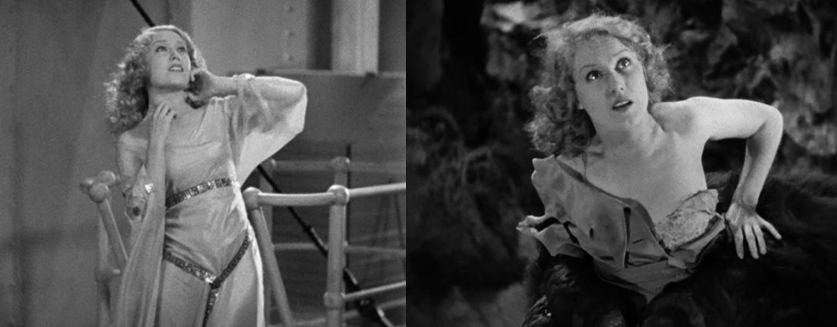

Released: 7 April 1933
Director: Merian C. Cooper and Ernest B. Schoedsack
Distributor: Radio Pictures
Budget: $672,254.75
Stars: Fay Wray, Robert Armstrong, Bruce Cabot, and Frank Reicher

The Plot:
Renowned filmmaker Carl Denham (Armstrong) charters a ship to Skull Island in search of an elusive, prehistoric creature known as “Kong”. When Ann Darrow (Wray) is captured by the creature, Denham and first-mate Jack Driscoll (Cabot) resolve to rescue her and capture the beast to showcase it as a Broadway attraction.

The Background:
It’s hard to believe now but it was nearly a hundred years ago that filmmaker, adventurer, and former World War I aviator Merian C. Cooper first conceived of the iconic visual of a giant gorilla climbing to the top of the Empire State Building and being felled by modern technology. Initially wishing to produce a semi-documentary piece depicting a fight between actual gorillas and Komodo dragons, Cooper was inspired by the cost-cutting appeal of stop-motion technology to retool his concept using existing sets, props, and filmmaking techniques. The various dinosaurs of Skull Island, and King Kong himself, were designed by Marcel Delgado and brought to life using painstaking stop-motion techniques under the supervision of Willis O’Brien. A revolutionary filmmaking technique known as the “Dunning process” was employed to combine stop-motion and miniature shots with live-action actors and a huge animatronic bust of Kong’s head and body was constructed to capture close-ups of the creature. Audiences were in awe of the film and its ground-breaking effects, lining up to see the film upon its release, which was both staggered and somewhat limited but still brought in a profit of $650,000, with subsequent re-releases bringing King Kong’s total gross closer to $5.3 million. King Kong’s legacy, of course, speaks for itself, as it is widely regarded as one of the most influential movies of all time, has been preserved in the United States National Film Registry for its cultural and historical significance. It also spawned a few remakes and was one of the first and most prominent of the giant monster movies that would later be popularised by the Kaiju films of Japan.

The Review:
The first thing to note about King Kong is that, yes, it is filmed in black and white; while colourised versions of the film do exist, I recommend sticking to the original monochrome version for the true authentic experience. I understand, however, that black and white films can be off-putting for some but you’re simply robbing yourself of a true piece of cinematic history. 1933 was also a very different time in human history, to say nothing of cinema; as a result, dialogue is often loud, full of clunky exposition, and largely a product of its time. This means there’s a great deal of conveniences, contrivances, and sexist comments levelled in the film towards Ann; as the only female on the Venture, Denham’s chartered ship, she’s seen as a fragile and desirable object by many and little more than a prop for Denham, who needs a “pretty face” for the public to look at.

A gruff and cynical first-mate, Driscoll’s love for Ann comes against his better nature.

Denham is an unscrupulous and demanding egotist whose obsession with creating spellbinding films and content drives him to launch an expedition into the dangerous unknown; seemingly blind to the risks that the journey may bring, he cares only for capturing amazing sights on film and purposely misleads his cast and crew regarding their destination. Upon seeing Kong, Denham’s curiosity and greed are inspired and, regardless of the lives that have already been lost and the immense danger to Ann, he is driven to a crazed obsession at capturing the beast simply to string it up for the amusement of the paying public. Annoyed at backlash from the critics and the public for never featuring a girl in his films before, Denham is determined to silence his detractors but isn’t happy about it; he, like many of the Venture’s crew, see women as little more than a distraction. Driscoll echoes many of these sentiments, believing women to be a nuisance, especially out at sea. Despite his gruff demeanour and cynicism and believing her mere presence troublesome to the attentions of himself and the other men, he can’t help but be attracted to her and concerned for her well-being considering Denham is being disconcertingly secretive about their destination and intentions for them all. This, as much as anything, makes him incredibly protective of Ann and compels him to, begrudgingly and awkwardly, admit his love for her after her safety is threatened by the island’s natives.

Ann is the original damsel in distress, though she does exude a modicum of personality at times.

Ann, for her part, is a gorgeous and fiery girl but does little to really assuage such preconceptions; driven to stealing to survive, she’s overwhelmed by Denham’s proposal for “money, adventure, and fame” and with little other choice, she signs on to the Venture out of desperation as much as the thrill. Her demeanour, however, is something of a handicap at best and a distraction at worst as she’s prone to swooning, screaming, and flights of emotional fancy. When captured by Kong, she’s, obviously, largely defenceless and helpless against his might and, yet, despite her traumatic experience with the creature, is truly heartbroken when he is killed at the film’s conclusion. Indeed, the savagery and primal nature of the beast may be frightening to Ann but she still has a respect and admiration for Kong’s uniqueness and the ferocity with which he fought to protect her. The remainder of the Venture’s crew is largely expendable and inconsequential; of them all, only Captain Englehorn (Reicher) plays a notable role since he’s…well, the captain of the ship and acting as an interpreter to the island natives. The other crew members are simply bodies to cast lewd aspersions towards Ann, question their mission, and to fall victim to Skull Island’s many hazards and dinosaurs. Speaking of which, Skull Island is home to a primitive tribe who live in fear and awe of Kong, offering him sacrifices and keeping him at bay with a gigantic wall, and, enamoured by Ann’s stark contrast to their women, kidnap her in attempt to appease the God-like creature.

Skull Island is home to many monstrous creatures that have escaped the ravages of time.

Kong’s presence hangs in the air like an ominous cloud; his mere name piques Denham’s curiosity and he and the crew are puzzled by the constant chanting of his name when they reach the island. This builds the tension to the creature’s eventual, memorable reveal to a crescendo since the size of the walls imply a gigantic creature but the result is somewhat almost unimaginable: a monstrous, twenty-foot-tall ape who becomes besotted by his latest prize and flees deep into the jungle with Ann as his “bride”. As protective and smitten by Ann as Jack, Kong exhibits a playful curiosity towards her and is especially taken by her golden hair; so infatuated with Ann is Kong that he rampages through the natives’ village after she is taken from him, destroying their homes, crushing them beneath his massive feet, and biting them in two and also engages in brutal combat with the dinosaurs of Skull Island to both keep her safe and to assert his unmatched dominance. Indeed, as impressive as Kong is, he’s not the only giant on Skull Island; dinosaurs still walk the Earth on its hidden lands, challenging Kong’s position as “King” and killing many of Englehorn’s crew. Even traditionally omnivorous creatures like the Stegosaurus and Brontosaurus are monstrous, dangerous killing machines on Skull Island but, of course, none are more formidable than the Tyrannosaurus rex. The battle with the T-Rex is especially brutal and impressive and shows off not only the film’s impressive stop-motion effects but also Kong’s versatility and unnatural capability as a fighter by overpowering the T-Rex and snapping its jaw. Clearly, Kong is not just a giant gorilla as his dimensions, form, and movements indicate he’s something truly unique even on an island of giant monsters!

The Nitty-Gritty:
One of the things I enjoy about King Kong is that it, like the old Universal Monsters films from back in the thirties, is a brisk and entertaining film; clocking in about around one hundred minutes, the film wastes little time in getting to the meat and potatoes of its concept (Skull Island). This is in stark contrast to Peter Jackson’s 2005 remake, which spent what felt like two ice ages aboard the ship (I still feel like they’re travelling there even now…), and which convoluted the simple premise of the original by trying to be bigger and better. In truth, this had already been accomplished by the impressive John Guillermin’s 1976 remake, which sported an incredibly extraordinary animatronic version of Kong, but even that has its slower, more laborious moments. The same can’t be said about the classic original, which establishes the suggestion of personality for its three leads and then promptly focuses on the remarkable creatures of Skull Island.

Impressive filmmaking techniques merge stop-motion effects with live-action shots.

Naturally, King Kong’s biggest appeal is in the painstakingly realised stop-motion effects that are used to bring these to life; thanks to arduous time, effort, and clever filmmaking techniques, the film is able to blend together stop-motion models with live-action shots or depict battles between monstrous creatures while characters look on in awe and fear. Obviously, some of these aren’t as impressive as they once were and it’s easy to see how the shots have been blended or merged together; the stop-motion is also noticeably jerked and somewhat crude at times, especially when depicting Kong’s facial expressions and emotions, and yet it’s still an incredible achievement for the time, impressive to behold, and extremely ambitious considering the restrictions and that the techniques were still new and being developed during this era. It would have been easy to simply focus on one beast, the titular Kong, but the filmmakers opted to go all-in and showcase a variety of complex dinosaurs on Skull Island, which really adds to the mystery and otherworldliness of the location, and the film does a pretty decent job of showing Denham, Driscoll, and the Venture’s expendable crew members battling with the various monsters of the island.

Though a king in his native land, Kong is overwhelmed by the ferocity of man.

Of course, it’s one thing to see Kong in the deep jungles of a fantasy island that time forgot but it’s another thing entirely to see him first bound and then tearing through the streets of downtown New York City! Once a king, now reduced to a mere spectacle to be ogled at, Kong’s escape and subsequent rampage is a stark reminder of the brutality and fierceness of nature as Kong steps on pedestrians, crushes cars, destroys trains, and even devours humans in his relentless pursuit of the object of his affections. Love, tragedy, and the brutality of nature are prominent themes throughout the film; Driscoll is driven to read head-first into the unknown to rescue Ann, just as Kong is when he ends up in New York. As iconic and timeless as King Kong is for its effects it is, perhaps, equally as memorable for its tragic ending; so obsessed with holding on to Ann is Kong that he is forced into climbing the Empire State Building in an attempt to get up high and in a position of dominance. Unfortunately, while the human characters are able to adapt to and conquer Skull Island with their weapons and fortitude, Kong is ultimately overwhelmed by the modern world and unable to probably navigate, respond to, or combat it and, as a result, he is gunned down and meets an inauspicious, tragic, and unforgettable end in his efforts to protect his “bride”.

The Summary:
Undeniably, King Kong is an absolute classic and near-timeless movie; it’s one of those films that everyone should take the time to watch simply for its contribution to cinema through its ground-breaking and incredibly ambitious special effects. Obviously, there are elements of the film that haven’t aged too well thanks to how society has changed and the effects look rather primitive compared to what Hollywood is capable of today but many of those techniques would not have been possible without King Kong, which still holds up remarkably well thanks to the impressive way that it blends live-action shots, sets, and stop-motion techniques together to create a truly moving and emotional tragedy about a misunderstood and savage beast being smitten by a gorgeous and emotional beauty. As creative as subsequent Kong films as been, and for all the monster movies that have followed, few have the spectacle and timelessness of King Kong, which continues to impress through its ambition and is well recommended not just for fans of monster movies but for fans of cinema in general.

My Rating:

Rating: 4 out of 5.

Great Stuff

Have you ever seen the original 1933 version of King Kong? If so, what do you think to it and how do you think it holds up today, especially compared to other monster films and subsequent remake sand interpretations of Kong? What did you think to the stop-motion effects? Do you think they were the best option available or would you have preferred to see a man in a suit or some other technique used? What’s your favourite version of Kong, or your favourite Kaiju movie, and how are you celebrating K-Day today? Whatever your thoughts on King Kong, Kaiju, or monster movies in general, please do leave a comment below and be sure to check back in for more giant monster content in the near future!