
Being a dad in a movie is tough; often, dads are portrayed as slovenly, uncaring, even abusive individuals who care more about drinking beer, watching football, cheating on their spouses, or work than their kids. It’s a bit of a cliché at this point and also quite a bum rap, to be honest, and often seems like a case of lazy writing to have the dad be the cause of all the problems and negativity in a child’s life in a film.
I suppose it makes sense, in a way; many movies involve a story about a child, son, or daughter standing up to adversity or challenging, even confronting, their neglectful parents to say nothing of the myriad of stories out there of fathers more concerned with work than the well-being of their child. Still, good movie dads do exist, even while being flawed characters in their own right, and so, seeing as today is Father’s Day, I’m going to run through ten that I consider to be amongst the most bad-ass of all movie dads…
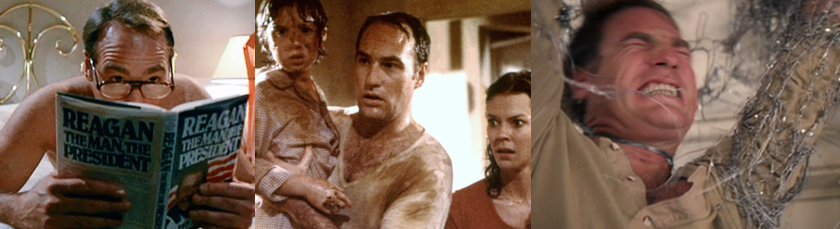
If I’m being completely honest, Poltergeist is more the story of a bad-ass mother as, throughout the film, it is Diane (JoBeth Williams) who eventually steps up after the demonic force inhabiting their house kidnaps her daughter, Carol Anne (Heather O’Rourke). Diane is the one who first feels and alerts her family to the presence in their house, she’s also far more emotionally stable despite her exhaustion and grief, and of course there’s the fact that she leaps into the “other side” to rescue Carol Anne and then has to suffer through a veritable horror show as their house is torn inside and out. Yet Steven (Craig T. Nelson) is the ever-reliable rock of the household; a bit of a goofball and perhaps (even by his own admission) too soft on his kids, he is the one who contacts a group of parapsychologists to assist them (despite his scepticism) and let’s not forget that Diane and Carol Anne never would have made it to back to the real world had Steven not been holding their literal lifeline. Despite his will weakening, Steven steps up even more in the sequel, Poltergeist II: The Other Side (Gibson, 1989), even landing what appears to be a killing blow to the malevolent Reverend Henry Kane (Julian Beck) who has been terrorising them, but, while reliability is an admirable quality, he takes the lowest spot for largely just being a supporting player (and for him and Diane sending Carol Anne away out of fear by the third film).
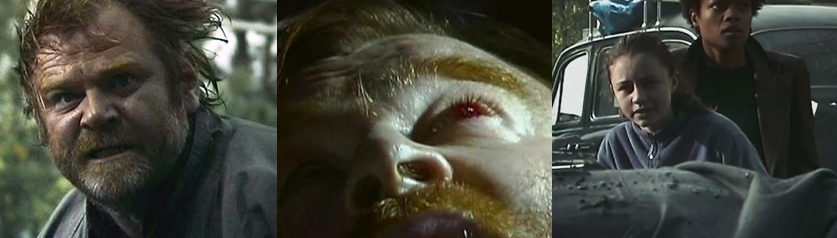
Here’s a shocking revelation for you: I’m not actually that big a fan of 28 Days Later. It starts off with such promise and with all those eerie shots of London but it’s a slow, plodding, miserable little film and the only thing I really like about it is that it made zombies faster, more aggressive, and ferocious as, for me, it otherwise wastes its potential. Still, amidst all of this we have Frank (Brendan Gleeson), a former cab driver and one of the few survivors of the infection. Initially hostile and a largely grouchy character, to say the least, Frank’s sole concern (beyond survival) is the safety of his daughter, Hannah (Megan Burns) but he soon bonds with Jim (Cillian Murphy) and Selena (Naomie Harris). Sadly, though, Frank can’t place much higher as, despite his capability as a father and a combatant, he grows complacent; in a world where the highly contagious Rage plague has turned the majority of the population into ravenous, zombie-like creatures, characters must constantly be on their guard and, for a split second, Frank lowers his. However, even while the Rage quickly overwhelms his body, his first thought is to warn Hannah back for her own safety before he is summarily put down.
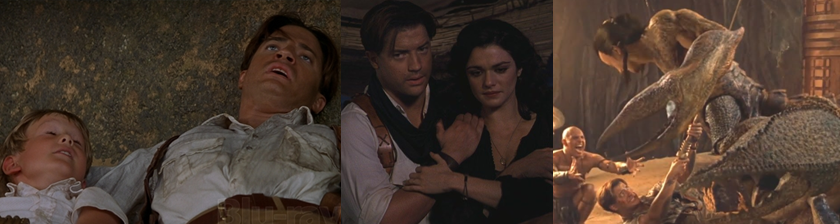
I miss Brendan Fraser; whatever happened to him? Arguably best known for his appearances in the Mummy trilogy (ibid/Cohen, 1999 to 2008), in which he portrayed a quick-witted and capable Indiana Jones-style adventurer, Fraser’s Rick O’Connell undergoes an interesting character arc throughout the trilogy, beginning as a disillusioned soldier and transforming from a reluctant hero motivated only by his libido to a doting father and content family man who was happy to put his adventuring days behind him. In The Mummy Returns, Rick is mortified when Imhotep’s (Arnold Vosloo) minions kidnap his smart-alecky little git of a son, Alex (Freddie Boath), and relentlessly uses every resource at his command to track Imhotep across the globe to rescue his son. Encouraging of the boy’s mischievous nature, one could argue that Alex only gets himself into a position to be kidnapped thanks to his father’s influence and their relationship has soured somewhat by the start of the third movie but that doesn’t take away from the fact that Rick travels across the world braving sea, air, and all manner of mummified atrocities to rescue his boy. When his beloved Evelyn (Rachel Weisz) is temporarily killed, we see a heartbreaking vulnerability to Rick’s usual bravado and his first action is to shield Alex from watching his mother suffer and die. Fuelled by rage and vengeance, he then takes on a now-mortal Imhotep in a fist-fight and rapidly accepts his destiny as a Medjai to deliver a killing blow to the monstrous Scorpion King (The Rock) to not only avenge his fallen wife but also as payback for putting his son in danger.
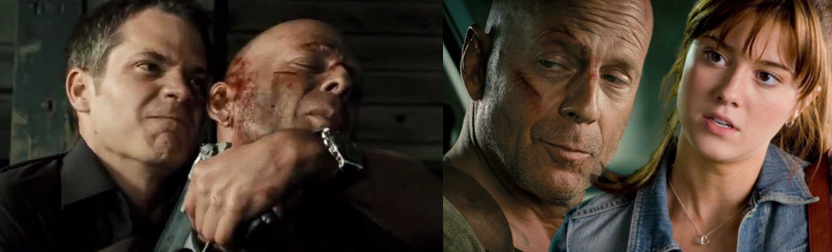
In my experience, Die Hard 4.0 (also known by the far better title, Live Free or Die Hard) is generally not as highly regarded as its predecessors and I will always take issue with this; sure, it’s massively over the top and essentially turns the wise-cracking John McClane (Bruce Willis) into a superhero but that doesn’t make it bad. For me, it’s easily in the top three of the Die Hard films (Various, 1988 to 2013) thanks to Willis’ portrayal of McClane as weary, out of touch, and hiding a lot of his emotions behind a snarky attitude and grouchy demeanour. Now, to be fair, McClane doesn’t start the film as the greatest father; his daughter, Lucy (the always appealing Mary Elizabeth Winstead) is initially hostile towards him, refusing to call him “Dad” and preferring to take her mother’s last name. However, when she is kidnapped by Thomas Gabriel (Timothy Olyphant) as payback for McClane interfering in his “fire sale”, McClane doesn’t hesitate to throw himself into danger to rescue her, accumulating numerous injuries, enduring shots from a F-35B Lightning II, and even shooting himself in the shoulder at point-blank range to kill Gabriel. When taken by Gabriel, Lucy not only fights back at every opportunity but knows full well that her father will stop at nothing to rescue her, defiantly taking his last name and ultimately reconciling with him after seeing the lengths he would go to for her safety.
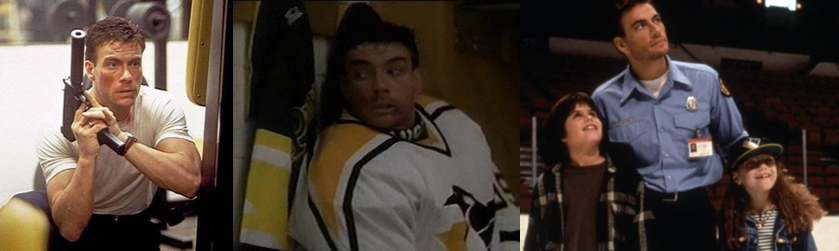
I feel like people don’t talk about Sudden Death enough; sure, it’s just “Die Hard on a boat” but it’s pretty decent for the most part, even with Jean-Claude Van Damme’s characteristically awkward acting and line delivery. McCord is very much like McClane, being a normal, average fire-fighter-turned-fire-inspector who has the odds against him. Though he’s much less cynical and grouchy compared to McClane, he is tormented by his failure to save a young girl from a house fire and has an extremely strained relationship with his ex wife. Similar to McClane, McCord’s relationship with his kids is a little shaky at the start of the film; Emily (Whittni Wright) views him with a heroic awe, believing him to still be a fire-fighter, while Tyler (Ross Malinger) is slightly more antagonistic and resentful. Still, he does obediently stay in his seat even as the hockey arena falls into chaos around him and Emily bravely stands up to terrorist Joshua Foss (Powers Boothe) after she is kidnapped, never faltering in her belief that her father will come to rescue her. For his part, McCord is slightly irresponsible as he leaves his young kids alone at the hockey game but more than makes up for it by taking it upon himself to disarm as many of Foss’s bombs as he can and take out the terrorists with little more than his wits, ingenuity, and some impressive kicks.
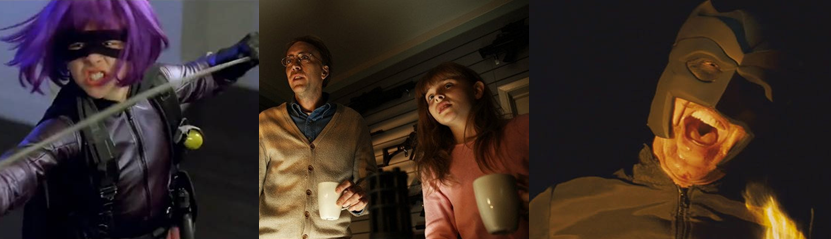
Although his look and the specifics of his motivations were wildly different from his comic book counterpart, Nicolas Cage really stole the show for this awesome adaptation of the comic book of the same name (Mark Millar, John Romita Jr, et al, 2008 to 2014). Channelling the spirit of Adam West while wearing a particularly Tim Burton-esque “Bat-Suit”, Cage channelled his usual manic energy into a far more nuanced, complex performance that showed Macready to be both slightly unhinged and eerily logical. To be fair, you could argue that Macready is a pretty awful father since he pulled his daughter, Mindy (Chloë Grace Moretz) out of school and trained her to be his crimefighting partner, Hit-Girl, causing her to be more interested in elaborate knives and skewering criminals than…whatever it is pre-teen girls are into these days. However, you’d be forgetting the fact that Macready is tough but fair on Mindy, always encouraging her and pushing her to test her limits. Thanks to his training, she’s fully capable of taking out entire rooms full of armed men with ease; not only that, he also does cool stuff like purchase a whole bunch of weapons, toys, and even a jetpack. When’s the last time your dad bought you a jet pack!? Plus, there’s the fact that he continues to encourage and help his daughter even while burning to death before her eyes.
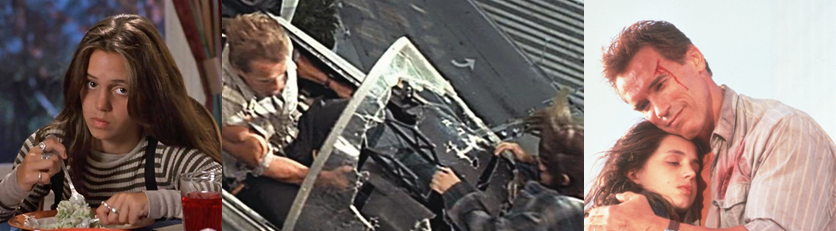
Arnold Schwarzenegger has a bit of an iffy record when it comes to portraying dads, as we’ll see; sometimes he’s the career-obsessed type, other times he’s the overly protective type. In True Lies, he lies to his wife, Helen (Jamie Lee Curtis) and daughter, Dana (Eliza Dushku), on a daily basis to keep his true identity as a secret agent just that: a secret. As a result, and because she’s in that moody teenage phase of her life, his relationship with Dana is somewhat strained at the start of the film in that she sees him as dull and unreliable, unappreciative of the token gifts he brings her, casually stealing from his partner, Albert Gibson (Tom Arnold), and running off with her boyfriend or to her room to escape from him. However, like her mother, Dana’s entire perception of Harry is changed after she is kidnapped by terrorist Salim Abu Aziz (Art Malik) and it is her unassuming father who comes to her rescue…in a Harrier Jump Jet, no less! What makes Harry a bad-ass dad is that, when the chips are down, he drops all pretenses and shows his family exactly what he is capable of, gunning down countless terrorists and flying through city airspace just to rescue his daughter and shouldering the burden of keeping his true life from them in order to protect them. Once the secret is out, though, his relationships with both alter dramatically and they become a much more stable, contented, and united family.
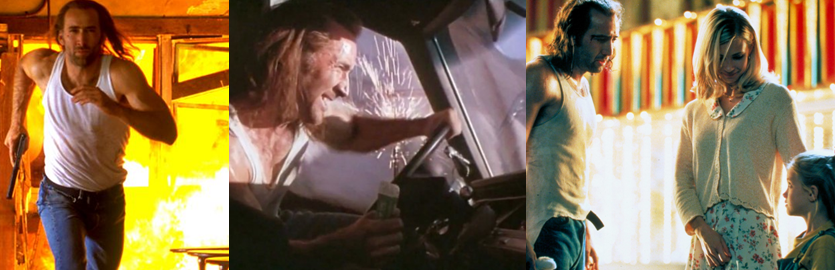
Aaah, yes, Con Air; a ridiculously over-the-top action film, to be sure, featuring Nicolas Cage not only with an absolutely gorgeous head of hair and henched up to the nines but also sporting possibly the worst Southern draw I’ve ever heard outside of The Fast and the Furious: Tokyo Drift (Morgan, 2006). Still, as ridiculous as Cage sounds (and as ludicrous as it is that his character, a decorated Army Ranger, would be sent to prison for ten years for what amounted to a clear case of self defense, at best, and manslaughter, at worst), the film is full of equally bombastic action and performances, with John Malkovich, especially, stealing the show (and, presumably, all that scenery he chewed) as the malicious Cyrus “The Virus” Grissom. Poe stands out from the other dads on this list as he doesn’t actually meet his daughter, Casey (Landry Allbright), until the film’s conclusion; however, through his numerous correspondences with Casey, he encourages her to stay in school and listen to her mother and builds the best, loving relationship he can given his position. His entire motivation throughout the film is to get back to his daughter and, while he’s tempted to simply let things play out in order to meet that goal, his morals won’t let him stand idly by and he fights through overwhelming odds and explosions galore to not only finally meet Casey but also to teach her valuable lessons about paying for your sins and standing up against injustice.

So, I said early that Schwarzenegger has a bit of an iffy reputation as a movie dad. Well, Commando, in addition to being, perhaps, the quintessential action movie of the eighties, also showcases Arnie as one of the most devoted and bad-ass dads ever put to film. A retired Colonel, Matrix (a gloriously ridiculous name if there ever was one) is perfectly content to have put down his guns and to live peacefully amidst nature with his young daughter, Jenny (Alyssa Milano). However, when Matrix’s past (or, more specifically, the fantastically sadistic Bennett (Vernon Wells)) catches up with him and Jenny is taken as a hostage, Matrix has only around twelve hours to track Bennett down to recover his daughter. Like Poe, Matrix’s entire motivation is geared towards rescuing Jenny but, while Poe (and many of the dads on this list), must use subterfuge to meet this end, Matrix instead literally moves Heaven and Earth to find Jenny, violently dispatching of all of Bennett’s henchmen and literally walking right into a camp full of seemingly-endless, fully armed soldiers, mowing them down with such reckless abandon that he barely needs to aim or reload. Witty, determined, and possessing a razor-sharp focus, Matrix is a veritable one-man army, capable of besting anyone who stands in his way, and yet still vulnerable and human enough to be injured when dramatically appropriate and fully prepared to go to any lengths to rescue her since, as he puts it: “All that matters to [him] now is Jenny”.
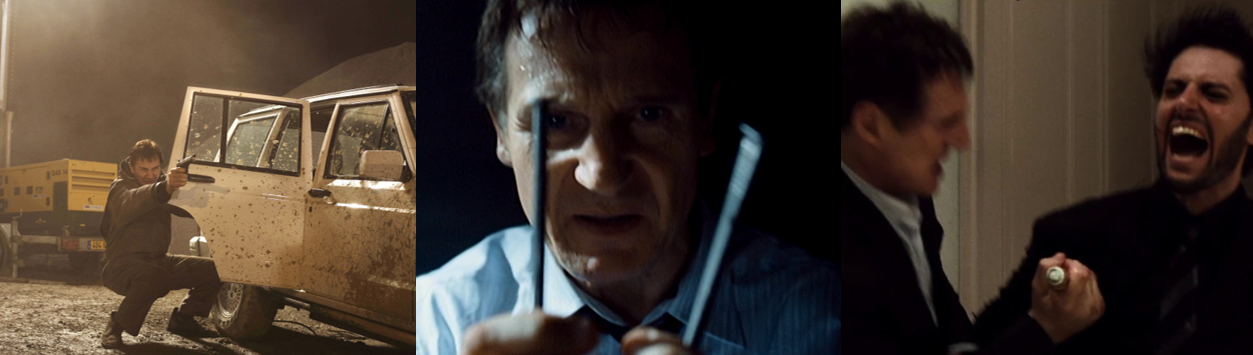
I mean, honestly, could it really be any other dad? Who else but Bryan Mills (Liam Neeson) could make the top of a list like this? Like a lot of the other dads I’ve talked about, Mills is a devoted father who has left behind a violent life to focus on building a relationship with his daughter (Kim (Maggie Grace), in this instance) despite having a frosty relationship with his ex-wife, Lenore Mills-St John (Famke Janssen). Having lost his marriage, and many years of bonding with Kim, due to his work as a “preventer” for the government, Mills is a loyal, if somewhat overprotective, father who just wants to be there for Kim and to encourage her dreams of being a singer. However, when she is taken by Albanian sex traffickers, Mills puts his unique set of skills to good use; like Matrix, his entire motivation revolves around finding his daughter but Mills has even less to go on and yet, within twenty-four hours, manages to track down enough of a lead to bring him within arm’s reach of Kim’s location. Along the way, Mills dispatches anyone who opposes him with a cold, calculating efficiency; age, clearly, hasn’t dwindled his skills or resources and, for the most part, he’s still able to function at peak efficiency with very little sleep or food. Of all the dad’s on this list, Mills is the most determined and competent; every movement is premeditated, meticulously thought through, and executed with alarming proficiency and yet Mills is still humble and vulnerable enough to show real pain, fatigue, and to deliver Kim back into the arms of her mother and stepfather.
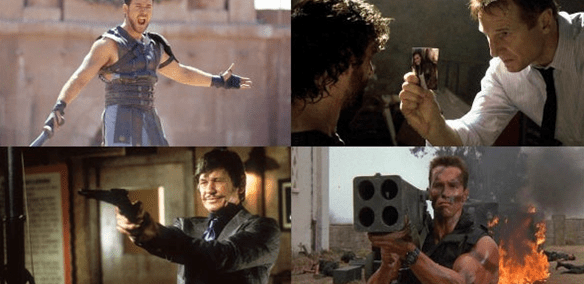
Do you agree with my list? Perhaps you have another favourite movie dad who you think should have made the cut; if so, who is it and who are some of your favourite (or least favourite) movie dads? What are you doing this year for Father’s Day? Do you have any particularly fond memories of your dad? If so, feel free to share them, and any other comments, below.









 Dr. K's Waiting Room
You must be logged in to post a comment.