Movie Night: Iron Man 2

Released: 7 May 2010
Director: Jon Favreau
Distributor:
Paramount Pictures
Budget:
$170 to 200 million
Stars:
Robert Downey Jr., Mickey Rourke, Sam Rockwell, Don Cheadle, Gwyneth Paltrow, Scarlett Johansson, and Samuel L. Jackson

The Plot:
After publicly outing himself as Iron Man, Tony Stark (Downey Jr.) arrogantly refuses to hand his technology over to the United States government. Suffering from palladium poisoning, Stark is also targeted by Ivan Vanko (Rourke) who, bankrolled by Stark’s rival Justin Hammer (Rockwell), builds his own Arc Reactor to pursue a vendetta against Stark’s family.

The Background:
Although the production of Iron Man (Favreau, 2008) and the casting of troubled actor Robert Downey Jr. was a huge risk for fledgling studio Marvel Studios, it ultimately paid off dividends. Development of a sequel began immediately after the first film’s release; actor/director Jon Favreau always envisioned the film as the first in a trilogy and chose to skip over some of the source material’s more fantastical elements and draw inspiration from the iconic “Demon in a Bottle” arc (Michelinie, et al, 1979). A big focus of Iron Man 2 was on setting up the larger Marvel Cinematic Universe (MCU), which caused some friction between Favreau and the film’s producers; compounding matters was the recasting of Terrence Howard with Don Cheadle and the cutting of many of Rourke’s scenes. This came to be reflected in the film’s critical response but, despite this, Iron Man 2 was still incredibly successful and made over $620 million at the box office.

The Review:
Iron Man 2 sees Tony Stark more renowned than ever; his admission to being the superhero Iron Man has made him even more of a beloved celebrity and he relishes in the unparalleled freedom his technology has provided to him. Stark uses his increased celebrity status to help bring more eyes to his Stark Expo, which was originally dreamed up by his father, Howard (John Slattery), as a place for the world’s greatest scientific minds too pool their resources.

Tony’s characteristic bravado masks his debilitating sickness.

Stark, however, faces pressure from the United States government, particularly Senator Stern (Garry Shandling), to hand over his Iron Man technology so that it can be taken out of Stark’s irresponsible hands. Though Stark easily shoots down Stern’s demands and retains the same egotistical arrogance that was such a big part of his public life in Iron Man, it’s immediately clear that this is all an elaborate façade. Not only is Stark still struggling with unresolved issues with his father and living up to Howard’s vast legacy, he’s also being slowly poisoned by the Arc Reactor imbedded in his chest, which is flooding his bloodstream with palladium. Burning through his Arc Reactors faster and faster every day, and running out of options, Stark grows more and more impulsive and reckless; while this starts off rather innocently, with him promoting Virginia “Pepper” Potts (Paltrow) to CEO of Star Industries, he soon makes a very public display of himself when he gets drunk while wearing his armour.

Ivan is adept at Arc Reactor tech and has a personal vendetta against the Stark family.

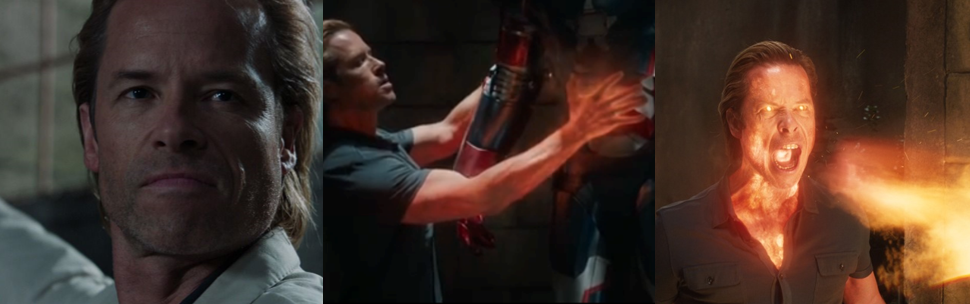
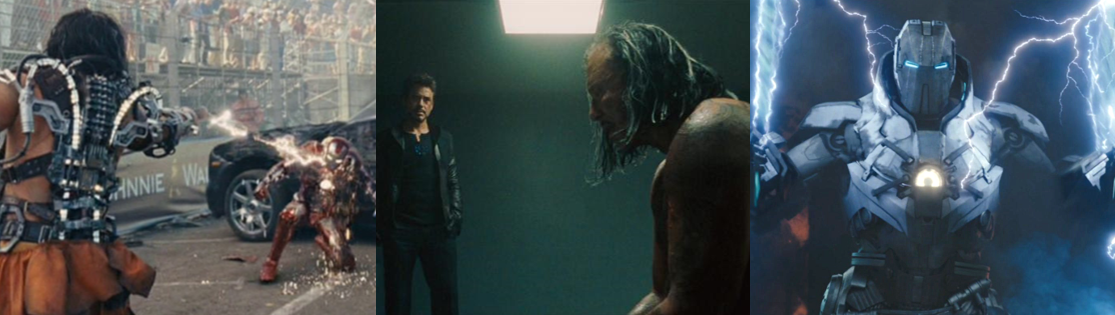
Stark’s primary physical threat in the film is Ivan Vanko, a variation of the comic book Anton Vanko (who was known as both Whiplash and Crimson Dynamo), a hardened Russian technician whose father, Anton (Yevgeni Lazarev), worked with Stark’s father on the Arc Reactor that powers Stark’s heart and armour. Having watched his father die penniless and forgotten, Ivan vows revenge against Stark for stealing all of the credit to the technology and, in scenes that directly parallel Stark’s forging of his Mark I armour, builds his own Arc Reactor and a limited exoskeleton. While Stark primarily fights using projectiles and Repulsor Rays, Ivan favours Repulsor-charged whips that can cut through steel and concrete. Though shown to be just as ingenious and versatile as Stark when it comes to building armours and weapons, Ivan is so focused on humbling Stark in front of the world and driven to near madness by his vendetta that, initially, he forgoes protecting himself (especially his head) and, while he strikes a very public and aggressive first blow against Stark, his campaign is quickly cut short by Stark’s superior technology.

Hammer is so determined to out-do Stark that he forms an alliance with Ivan.

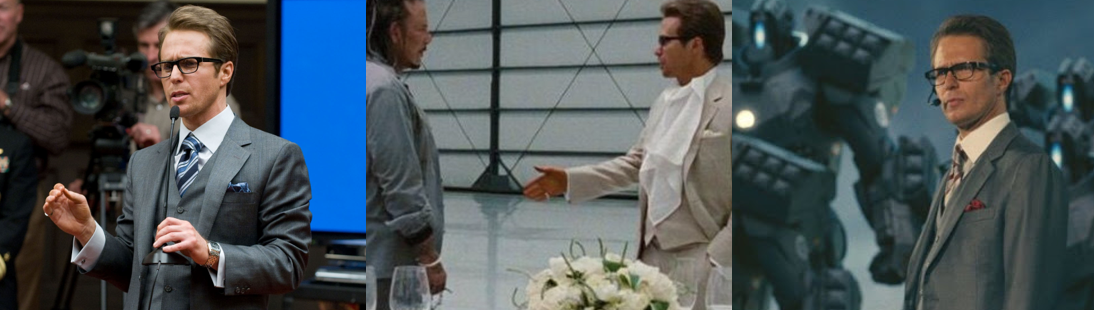
Ivan finds an ally, however, in Stark’s business rival, Justin Hammer. Hammer, who is constantly one step behind Stark in every way, is another mirror of Stark; he’s just as condescending and self-righteous as Stark and enjoys the limelight as much as his rival but is perfectly willing to take any advantage and underhanded tactic he can to get a leg up on Stark. To this end, he liberates Ivan from imprisonment and puts him to work constructing an army of mechanical drones, with which he hopes to make Iron Man obsolete. However, Ivan has little interest in Hammer’s ambitions or money; as long as he has his beloved cockatoo and the resources to destroy Stark, Ivan is prepared to cause as much death and destruction as he possible can to enact his revenge.

Rhodey has a new face, a shiny suit of armour of his own, and a far bigger role this time around.

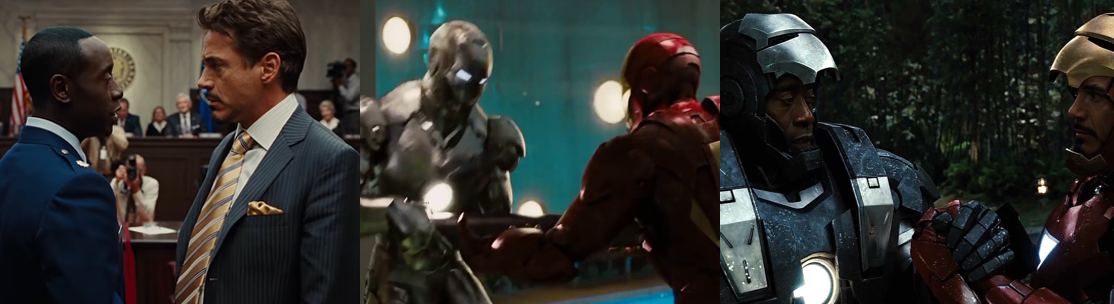
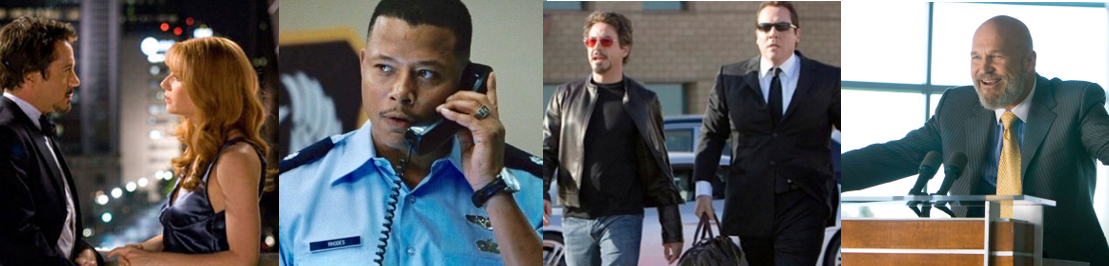
As before, Stark isn’t alone in his fights against these enemies; however, James “Rhodey” Rhodes (Cheadle), now promoted to a Lieutenant Colonel, identifies that there is a potential threat in third parties attempting to replicate Stark’s technology and, though he stands by Stark and wishes to officially involve Iron Man in the existing military structure, he is forced to oppose his friend when Stark begins to succumb to both his palladium poisoning and one-too-many cocktails. Personally, the switch to Cheadle was nothing but a benefit from my point of view; he’s far better suited to the role and much more believable as a straight-laced military man while still sharing a fun brotherly chemistry with Stark and he has come to own the role in a way that Terrance Howard could only dream of. While it is a bit odd that Rhodey would deem himself more worthy to wear the armour than Stark, and how adept he is at wearing it despite the fact that it seems like he’s never worn it before, he emerges the victor from their scuffle and commandeers the Mark II armour for himself. Bringing it under the jurisdiction of the American government, and being outfitted with Hammer’s technology, Rhodey takes on the identity of War Machine and is fully prepared to lead Ivan’s automated drones into battle for the good ol’ U. S. of A only to find that he has been outfitted with useless weapons and susceptible to Ivan’s control.

Allies old and new assist Stark as S.H.I.E.L.D. continues to monitor his activities.

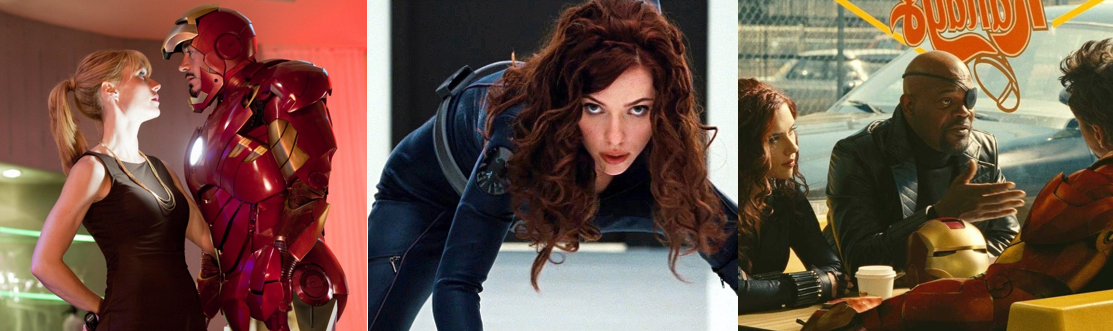
Though driven to exasperation by Stark’s continued antics and eccentricities, Pepper takes her role as CEO very seriously and begins to make real headway in turning Stark Industries around. Facing the cold reality that he could die, the budding romance between her and Stark blossoms over the course of the film despite Stark’s eye being caught by Natalie Rushman (Johansson). Initially appearing to be little more than a notary and Pepper’s very capable assistant, Rushman turns out to be Natasha Romanoff/Black Widow, sent by Strategic Homeland Intervention, Enforcement and Logistics Division (S.H.I.E.L.D.) director Nick Fury (Jackson) to assess Stark’s for the Avenger Initiative. This leads to some kick-ass fight scenes where Romanoff’s acrobatic versatility is on full display and serves as an alluring introduction to this mysterious character and also ties into the greater MCU by having Fury be so invested in Stark’s suitability.

The Nitty-Gritty:
Like any good sequel worth its time, Iron Man 2 is bigger (and, in many ways, better) than the first film. Without having to spend copious amounts of its runtime establishing Stark’s character and journey towards becoming Iron Man, the film can jump right into the action and picks up about a year after the end of the last movie. While many lamented how much world-building and sequel/spin-off bait was put into the film, I loved it and didn’t feel like the inclusion of Black Widow and Fury or Agent Coulson’s (Clark Gregg) allusions to other superheroic events got in the way of the story at all. If anything, they helped build my anticipation for seeing more from the MCU and the then-upcoming Avengers crossover and I’ve always considered Iron Man 2 to be a far stronger sequel than the third film in the series. As in the last film, Tony’s journey and growth as a character is a central aspect of the film; clearly still haunted by his experiences in the cave and desperate to hide how critical his condition has become, Stark is, seemingly, more reckless and egocentric than ever. However, this is all merely a front to hide his fear at his impending demise and to cover up the insecurities instilled in him by his father’s harsh upbringing.

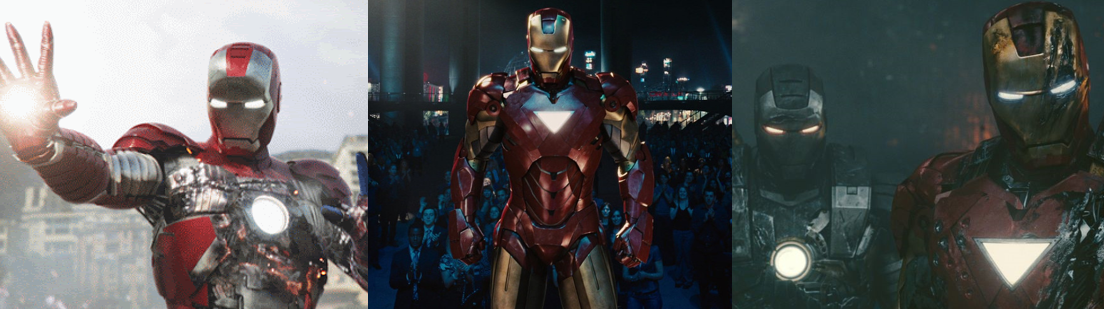
Iron Man 2 features some of my favourite armours, with the Silver Centurion being a personal highlight.

In the end, though, thanks to Fury, Star sees that Howard did have his best interests at heart in his own way. Indeed, thanks to Howard’s designs for the Stark Expo, Stark discovers the key to his survival and is able (quite ridiculously, I’ll admit) to cure himself by creating a “new element”, which ends the threat of palladium poisoning. In service of outdoing its predecessor as much as possible, Iron Man 2 features a new array of armours and toys for Stark to use; my favourite of these is the Silver Centurion armour, which Stark dons via a suitcase just like in the 1990s cartoon I used to enjoy on a regular basis. While the red and gold armour is very similar to the one from the first film, there are subtle changes and improvements and the special effects are just as good at rendering Iron Man’s actions as before. Add to that an absolutely fantastic adaptation of War Machine, one of my all-time favourite armours from the comics, and Iron Man 2 does a fantastic job of stepping things up a few notches and laying the foundation for the big MCU crossovers that would follow.

Ivan’s conviction, rage, and genius make him a formidable opponent and dark mirror of Stark.

In comparison, Ivan Vanko’s armour is, initially, much more improvised and yet he’s no less capable than his rival. Ivan’s exoskeleton is more than capable of withstanding a head-on car crash and Iron Man’s blasts and his electrified whips are surprisingly effective at damaging Stark’s armour and draining his power. Thanks to Hammer’s resources, Ivan is able to construct a far more menacing and formidable suit of armour for himself for the finale; while this does, admittedly, greatly resemble the finale of the first film, which pitted Stark against a hulking grey counterpart, Ivan stands out just enough thanks to being backed up by Hammer’s drones and still incorporating those same whipping tentacles into the design. Mickey Rourke is an actor who has always been a bit before my time but this film was released right around the time of his big comeback and I have to say he regularly smashed every role he had around this time. His performance here is muted and subdued but threatening; he can say more with a glare and a grunt than many actors can with pages of dialogue and he makes an immediate visual impression with all his tattoos and imposing physique. Hammer, by comparison, is Stark’s business and intellectual opposite and, while Rockwell is no Jeff Bridges and Hammer is visually nothing like his comic book counterpart, Rockwell plays the role of a seedy mirror of Stark to perfection (which is only fitting given that he was considered for the role of Stark in Iron Man). However, Hammer’s ambition to crush and overtake Stark in business and his enthusiasm for Ivan’s genius quickly lead him to getting in over his head and he ends up watching helplessly as his drones are hijacked by Ivan and I am greatly anticipating the character’s eventual return to the wider MCU since he ends the film in jail rather than dead. Speaking of endings, Iron Man 2 concludes with Tony in a much better place, physically and mentally, thanks to having solved his palladium poisoning and officially hooking up with Pepper, but is deemed unfit to be a part of the Avengers due to his many personality defects. Instead, Fury positions Stark as a liaison to help build the team, which is looking in good stead when Coulson leaves to investigate a mysterious hammer in New Mexico.

The Summary:
I often see a lot of people online, especially on my social medias, bad-mouthing Iron Man 2 and, even now, I really don’t understand why; the first film was fantastic, almost lightning in a bottle, but the sequel is a pretty damn decent follow-up. Sure, you can argue that it’s awfully convenient that Fury just dropped the key to Stark’s survival into his lap but I just saw this as world-building and setting the stage for a greater purpose. None of it takes away from Stark’s growth as a character, or his character arc in this film which, we now know, was all part of a much bigger and longer arc of redemption. Facing a different but no less challenging odds and delivering a taste of the extent to Stark’s imagination when it comes to his armours, Iron Man 2 is an intense story of Stark facing the ghosts of his past and setting himself on the path to a greater future while also effectively sowing the seeds for the rest of MCU’s first phase of movies in an entertaining and action-packed spectacle that I feel deserves more credit than it gets.

My Rating:

Rating: 4 out of 5.

Great Stuff

What are your thoughts on Iron Man 2? Do you think it deserves the hate it gets or, like me, were you a fan of how it built upon the themes and action of the first film? What did you think to the sub-plot of Tony being slowly poisoned and the solution to that problem? Did you enjoy the introduction of Black Widow and the hints towards the larger MCU? What did you think to the film’s villains, specifically Rourke and Rockwell’s performances, and Rhodey’s promotion to War Machine? Which of the film’s armours was your favourite and why? What are some of your favourite Iron Man characters or stories? Where does Iron Man rank in your hierarchy of comic book characters? Are you doing anything to commemorate Iron Man’s debut appearance and, if so, what is it? Feel free to drop a comment down below and be sure to check back in next week for the final part of Iron Man Month!
Movie Night: Iron Man

Released: 2 May 2008
Director: Jon Favreau
Distributor:
Paramount Pictures
Budget:
$140 million
Stars:
Robert Downey Jr., Jeff Bridges, Terrence Howard, Gwyneth Paltrow, and Shaun Toub

The Plot:
Billionaire industrialist and arms manufacturer Anthony “Tony” Stark (Downey Jr.) finds himself humbled after his own weaponry leaves him near death. Captured and forced to make weapons for the terrorist group the Ten Rings, Stark instead constructs a suit of armour and, upon escaping, resolves to put his genius intellect and resources to good use as Iron Man.

The Background:
The development of a live-action Iron Man movie can be traced back to 1990, with stars Nicholas Cage and Tom Cruise both once attached to the titular superhero, but the various scripts and film rights languished in development hell for nearly fifteen years with nothing to show for it. Once the film rights reverted to Marvel, the publisher created Marvel Studios and, encouraged by their success at licensing their more popular characters, began developing movies based on their remaining properties. The first of these was Iron Man; the film’s armours were created by legendary special effects maestro Stan Winston and actor/director Jon Favreau was drafted to direct the film and immediately saw the story as being one of redemption and reinvention. Nowhere was this emphasised more than in the casting of Robert Downey Jr. in the title role; Downey, whose career and life had been in a downward spiral, shot to superstardom after being cast and almost immediately became the linchpin of the Marvel Cinematic Universe (MCU) that Iron Man kicked off. Against all expectations, Iron Man was an unprecedented success; it made nearly $590 million at the box office and received rave reviews. Its success led not only to a two sequels but also a slew of other MCU movies and easily the most successful series of superhero movies in modern times as the MCU dominated cinemas over the next ten years and beyond.

The Review:
Iron Man opens in the war-torn deserts of Afghanistan to the tunes of “Back in Black” by AC/DC; here, we find billionaire industrialist, investor, and consummate playboy Tony Stark sharing some bants with some American soldiers. Stark’s jovial, boastful mood is rudely interrupted when the convey is suddenly attacked, all of his detail killed, and he is caught in the blast from one of his own Stark Industries missiles while trying to message for help. Tony finds himself injured and held hostage by Raza (Faran Tahir), the leader of the terrorist organisation known as the “Ten Rings”, and, from here, we flash back in time some thirty-six hours for a quick recap on Tony’s life. Heralded as a genius, philanthropist, and American patriot, Stark was orphaned as a teenager and, at age twenty-one, took the reigns of his father’s company.

Focused on his new mission, Stark works to perfect his armour and right his wrongs.

Stark is touted as an acclaimed keeper of the peace though his advanced and innovative weapons technology but, for all his genius, he is aloof and bored with such trivialities as receiving awards or really stopping to think about the moral implications of his actions and would much rather be playing craps at Caesar’s Palace and picking up random woman, even reporters who brand him the “Merchant of Death”. Tony is an impulsive and easily distracted individual who simply does rather than thinking since he is so smart that he is often a few steps ahead of everyone else and prefers to be tinkering with his vast collection of cars and in his personal workshop in his grandiose house rather than remembering things like birthdays and keeping his appointments, all while putting himself, his father, and his company on a pedestal for the world-changing technologies his weapons manufacturing has produced and funded.

Stark’s nearest and dearest react to his impulsive attitude in different ways.

Tony’s lackadaisical, self-centred attitude may win over the general public and be a hit with the women but it grates against his closest friends, such as his chauffeur, Howard “Happy” Hogan (Favreau), Obadiah Stane (Bridges), and Colonel James “Rhodey” Rhodes (Howard), who are left to make excuses in his stead. None are left with more trash to clean up, however, than Stark’s personal assistant, Virginia “Pepper” Potts (Paltrow), who constantly finds herself having to chase after him for decisions, signatures, and directions relating to Stark Industries. Each of these characters deals with Tony’s childish ways differently; Happy is happy to indulge Stark’s whims and play along on the sly, Rhodey chews Stark out for disrespecting himself (and Rhodey) with his attitude, Pepper is exasperated by his ways but endures them out of loyalty and a mutual attraction between the two, and Stane is seemingly perfectly happy for Tony to do as he wishes since his brilliant mind helps keep him, and the company, extremely profitable. The attack in Afghanistan forces Stark to witness first-hand the consequences of his actions; trapped in a dingy cave and kept alive by a car battery and some cables, Stark is about as far from his faithful artificial intelligence, Just A Rather Very Intelligent System (J.A.R.V.I.S; Paul Bettany), as he can possibly get.

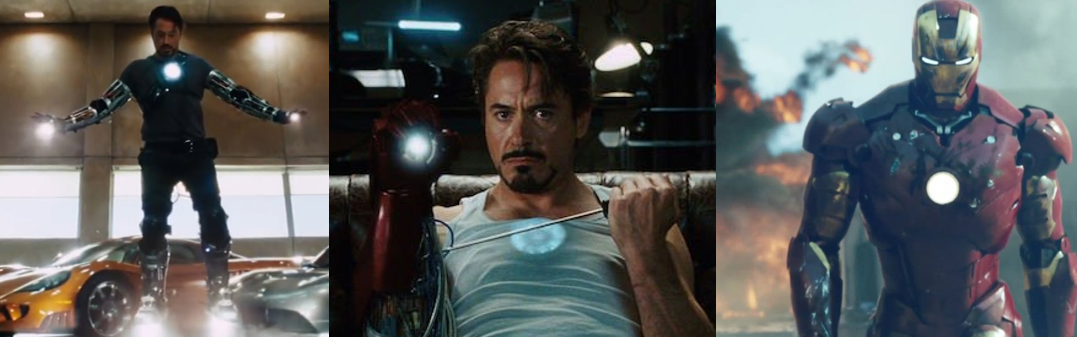
With limited resources, Stark builds his first suit of armour to fight his way to freedom.

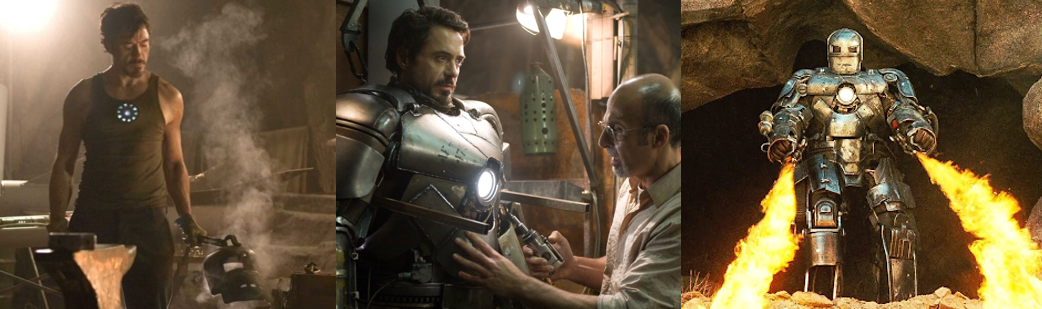
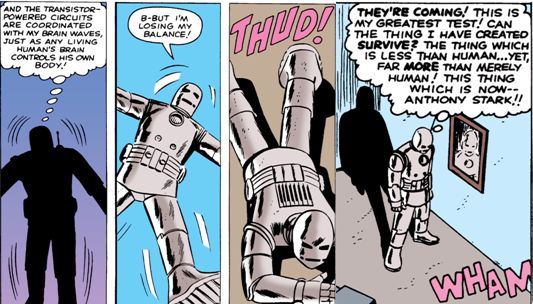
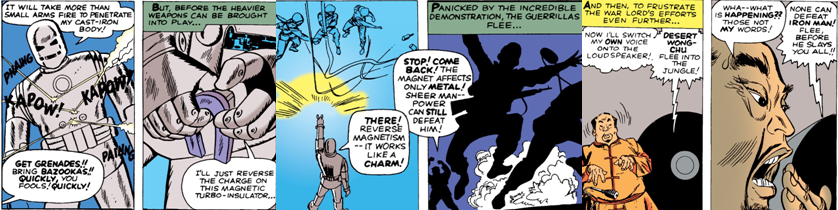
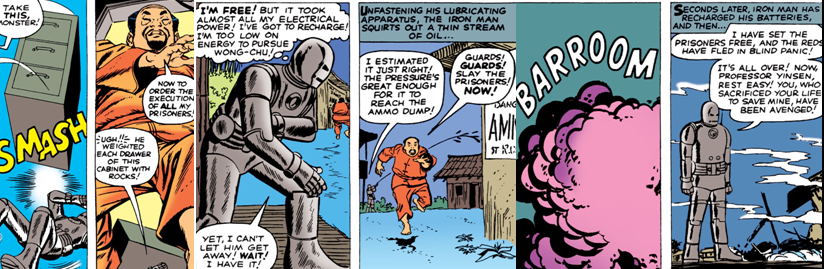
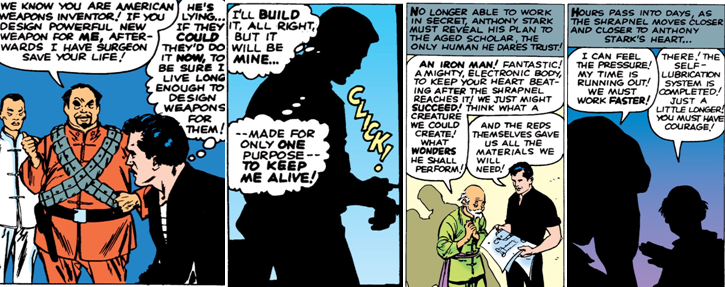
His cellmate, Ho Yinsen (Toub), brings him up to speed with his predicament; shrapnel from the missile is lodged dangerously close to Stark’s heart and only the electromagnet imbedded in his chest is keeping him alive. The Ten Rings demand that Stark construct for them an arsenal of his famed “Jericho Missile” and he is subjected to constant torture when he refuses. Horrified to see the terrorists are wielding his weaponry, Stark resolves instead to build a miniature version of his famed “Arc Reactor”, a clean energy device that will more effectively stave off death and plot their escape. What follows is an incredible sequence where, torn away from his luxuries and faced with the cold reality that he has been causing death and destruction across the world, Stark sets to work constructing a powerful exoskeletal suit of armour to fight his way out of the terrorist camp. This is a fantastic scene that shows Stark’s adaptability and ingenuity and that he is a formidable foe even without the benefits of modern technology; with a few scraps, his unmatched intellect, and some old-fashioned welding techniques, Stark is able to fool his captors long enough to complete the suit, a clunky, grey monstrosity with just enough power to fight past the guards and blast away to safety. Sadly, Yinsen sacrifices himself to cover Stark when the suit is powering up; with his dying breath, he begs Stark not to waste his life and, humbled by his experiences and Yisnen’s sacrifice, Stark takes his revenge on his captors and resolves to end all weapons manufacturing once he is recovered by Rhodey.

Stane turns on Stark in order to steal his Arc Reactor and armour technology for himself.

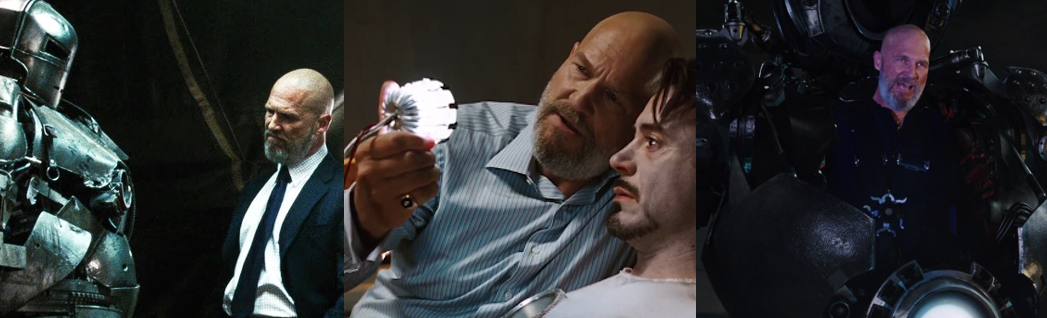
Haunted by his experiences in Afghanistan, Stark is angered at his weapons and technology being misused by terrorists and, after a few trials and working out some kinks, finally perfects his armour design into a sleek red-and-gold suit that rockets through the sky, fires missiles and Repulsor Rays, and is fully connected to all available networks and communication devices thanks to J.A.R.V.I.S. Stark wastes no time in attacking Ten Rings sites, freeing those subjugated to their terrorism with extreme prejudice and, in the process, attracts the attention not just from the U.S. military but also Agent Coulson (Clark Gregg) of the mysterious Strategic Homeland Intervention, Enforcement, and Logistics Division (S.H.I.E.L.D.), who wishes very much to “debrief” Stark on the particulars of his escape and extra-curricular activities. Although having shifted his focus onto a more honourable goal Stark remains as arrogant and obnoxious as ever after becoming the “Iron Man”; both Pepper and Rhodey despair at him when they discover what he’s been up to and believe that he is self-destructing but the truth is that his experiences have finally given him something worth living and working for. His actions, however, have far-reaching consequences; Stark is devastated to discover that Stane ordered the hit on him as the two were depicted as being firm friends up until that point. When Stane then steals Stark’s Iron Man technology and garbs himself in a bigger, more menacing exosuit as the Iron Monger, the stage is set for an epic showdown full of personal animosity between the two armoured men.

The Nitty-Gritty:
Even now, Iron Man remains almost timeless in its presentation; thanks to a fantastically old-school method of blending live-action suits with high-quality CGI, the film holds up incredibly well and is just as good now as it was the first time I saw it in cinemas. A rocking soundtrack full of classic heavy metal tracks and a rousing, industrial theme only serve to punctuate the special effects and the whole film seems to have been made with the actors given free reign to ad-lib their dialogue as interactions and banter are all incredibly natural and amusing. Indeed, Stark’s sudden declaration of “I am Iron Man” was an ad-lib and, with that one line, largely dictated the course for the MCU, which generally treats it superheroes like celebrities rather than falling back on the “secret identity” cliché. While I am perfectly happy to see secret identities in superhero films, it was massively refreshing to see a comic book movie buck that trend and made Iron Man even more memorable in the long run.

I was shocked to see Bridges as part of the cast and he steals every scene he’s in!
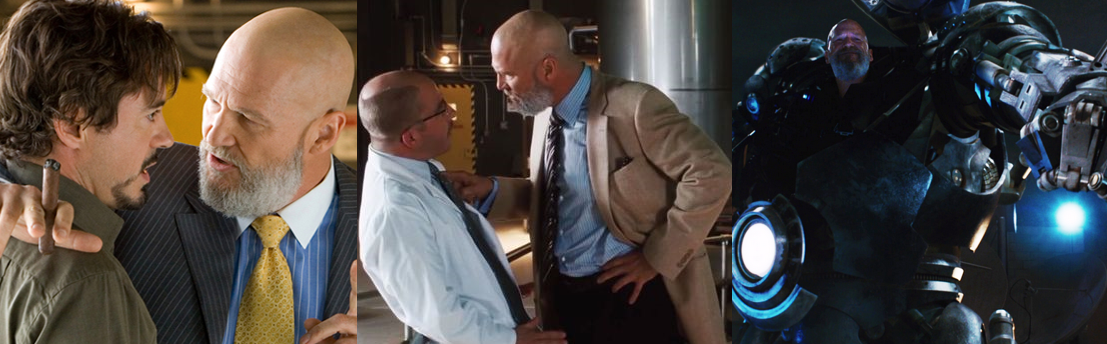
One thing that makes Iron Man stand out is the quality of the actors; both Iron Man and Batman Begins (Nolan, 2005) changed the game, as far as I am concerned, by featuring high-quality actors like Morgan Freeman and Michael Caine. I remember being incredibly surprised that Jeff Bridges was a part of this film; almost unrecognisable as Obadiah Stane, Bridges is a charismatic, bombastic father-figure who both nurtures and tries to temper Stark’s genius and impulsive nature. His delivery and magnetism steal every scene he’s in and, yes, it’s probably a littler derivative that Stark’s first adversary was basically a dark mirror of himself but Bridges is such a gem that it’s effortlessly entertaining even if it is at the expense of Iron Man’s more famous foes. Stane constantly exudes an odd sense of menace even before he’s incapacitating people with his little ear gadget; when one of his technicians is unable to miniaturise the Arc Reactor technology, Stane simply disables Stark and rips it right from his chest in order to power his own massive suit. Upon donning the Iron Monger armour, Stane immediately becomes obsessed with its power and as drunk on the feeling of freedom and empowerment as Stark is on his own self-adulation (and alcohol, half the time), which ultimately becomes his downfall as he becomes irrationally fixated on taking his frustrations out on a weakened Iron Man. Seeing Stane suited up in the massive Iron Monger armour was pretty fantastic and it serves a stub-plot of the film, and the entire MCU, of Stark confronting his past and overcoming it and his unresolved issues with his father.

Thanks to a combination of practical and special effects, the armours look incredible.

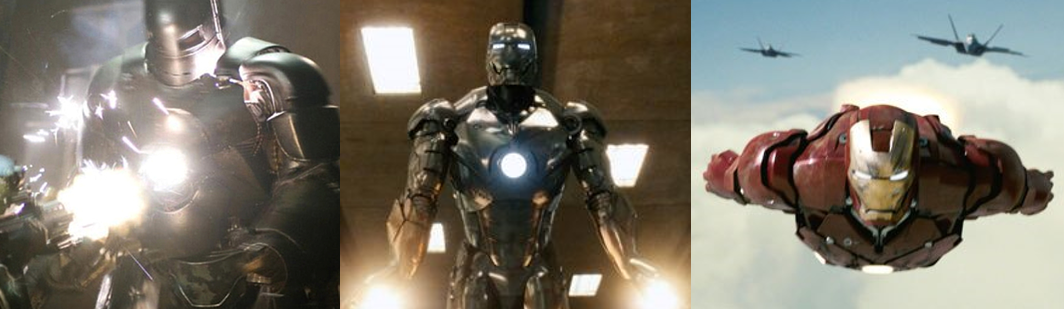
All of this leads me to the biggest draw of the film: the suits themselves. Even now, it is absolutely bad-ass to see the original Mark I clunker of a suit in action which is made all the more visually impressive by just how much of it was actually a practical suit of armour. Stark follows this up with the all-silver Mark II suit, which he wears to test out the limits and capabilities of his Arc Reactor technology (and, in the process, discovers the suit’s tendency to ice up when breaching the upper atmosphere). The final red-and-gold suit is as close to a live-action Iron Man armour you could ask for and looks like one of Adi Granov’s illustrations has literally sprung to life. Iron Man even solves the problem faced by a lot of masked superheroes by switched to a view from inside of the Iron Man helmet so that we can still see Stark’s face and stay emotionally connected to the character even when he’s in full armour and Iron Man is made all the more interesting since we see Stark building, testing, and perfecting the armour and because he constantly remains adaptable and flawed throughout the film. Finally, there are the hints towards a much larger world. I remember watching Iron Man for the first time and never twigging that Coulson worked for S.H.I.E.L.D. since the acronym isn’t used until right at the end of the film and feeling like an idiot when they finally dropped the organisation’s name. Look closely in the background of one scene and you’ll see that Stark has Captain America’s shield in his workshop, Rhodey very nearly jumps into the Mark II suit for himself at one point, and the film ends not just with Stark’s impulsive declaration that he is Iron Man but also a visit from Nick Fury (Samuel L. Jackson), director of S.H.I.E.L.D. Again, I remember hearing rumours of this cameo back in the day and specifically waiting for the credits to finish to see if it was true and being absolutely blown away by the implications of the “Avenger Initiative” but I could never imagine what Iron Man would set in motion for superhero cinema (and cinema in general).

The Summary:
My experiences of Iron Man were extremely limited when the film first came out; I enjoyed watching his cartoons and saw him pop up in a few comics from time to time but, for me, he was definitely a low-tier Marvel superhero and I think it’s fair to say that’s true for a lot of people and the general audience at the time. Iron Man, however, changed all of that; more than that, it changed the superhero genre forever and brought some big names, big money, and big audiences to see these films in a way that no one could have predicted and which certainly hasn’t been replicated since. Even without the larger MCU to help bolster it, Iron Man is a hugely enjoyable science-fiction/superhero romp full of charismatic actors, impressive performances, amusing banter and dialogue, and top-notch special effects. Iron Man may have been a massive gamble for Marvel Studios, and may have been eclipsed by other, bigger films in the MCU, but it’s not to be underestimated. Even at the time, I remember sensing that I was witnessing something very special, something very different from other superhero films, and I’m happy to say that neither time nor repeated viewing has diminished Iron Man’s appeal in any way.

My Rating:

Rating: 5 out of 5.

Fantastic

What do you think about Iron Man? How did you find it as a story and as an origin for ol’ shellhead? Do you think it still holds up to this day? What did you think to the cast and the performances in the film? Were you a fan of the film’s special effects and soundtrack? What did you think to the use of Obadiah Stane as the film’s villain? What was your reaction when Nick Fury walked out of the shadows and when Stark admitted to his dual identity? What are some of your favourite Iron Man characters or stories? Where does Iron Man rank in your hierarchy of comic book characters? Are you doing anything to commemorate Iron Man’s debut appearance and, if so, what is it? Either way, I’d love to hear your thoughts on Iron Man so leave a comment below.

Movie Night: The Invincible Iron Man

Released: 23 January 2007
Director: Patrick Archibald, Jay Oliva, and Frank Paur
Distributor:
Lionsgate
Budget:
Unknown
Stars:
Marc Worden, Gwendolyne Yeo, Fred Tatasciore, Rodney Saulsberry, and Elisa Gabrielli

The Plot:
When cocky industrialist Anthony “Tony” Stark’s (Worden) efforts to raise an ancient Chinese temple leads him to be seriously wounded and captured by enemy forces, he builds a mechanised suit of armour to escape and ends up embroiled in an ancient prophecy regarding a supernatural despot known as “The Mandarin” (Tatasciore).

The Background:
Before the Marvel Cinematic Universe (MCU) took cinemas by storm, Marvel had some notable success in the field of animation. While the X-Men animated series (1992 to 1997) remains one of their most celebrated efforts, other Marvel properties came to be adapted into cartoons, including ol’ shellhead himself, Iron Man. I used to watch the Iron Man cartoon (1994 to 1996) as a kid and, for the most part, this was my primary window into the character as I was more into Peter Parker/Spider-Man at the time. In 2004, perhaps as preparation for their upcoming series of live-action adaptations, Marvel entered into an agreement with Lions Gate Entertainment to produce ten direct-to-video animated features. The success of the Ultimate Avengers (Richardson, et al, 2006) features led to a solo feature for Iron Man and, while this film made notably less than its predecessors and was met with mixed reviews, this did little to deter Marvel from producing more animated features or their live-action efforts.

The Review:
The Invincible Iron Man is an interesting twist on the Iron Man formula that many may be accustomed to in that it’s perfectly happy to mix the supernatural and mystical with the character’s more technological aspects. While these elements have often been intertwined in the comics and led to many a story pitting science against magic, I have to say that I was a bit surprised to find the film having such an oriental flavour right from the get-go and intertwining Iron Man’s origin in with that of the mystical and prophecy regarding an “Iron Knight” opposing the entity known as the Mandarin.

Tony’s brazen attitude is a serious point of contention amongst his friends and family.

In China, James “Rhodey” Rhodes (Saulsberry) is overseeing the work on unearthing an ancient city. As if superstitions weren’t bad enough, the work is threatened by potential geological issues, and Tony Stark constantly letting Rhodey down in regards to supplies and resources for the project. Even worse is the constant threat of a terrorist group known as the Jade Dragons, who attack the site with bazookas. Frustrated, Rhodey tries to force Tony into action; Tony is aghast at the idea of sending munitions to help defend the site since he doesn’t want any bloodshed but, despite promising to fly out to support him, Tony finds himself more distracted by a gorgeous redhead. Tony’s cavalier attitude and arrogance aggravates his Board of Directors, who disagree with his excavation of the temple and have grown tired of his egotism and the secrecy regarding his scientific endeavours and even his father, Howard (John McCook), reluctantly agrees to cut Tony’s funding and influence off.

Tony is critically injured but kept alive to undo the raising of the Mandarin’s resting place.

At the site, a bombardment of sonic vibrations expand “liquid steel” to safely raise the entire lost city up to ground level. The Jade Dragons’ leader, Wong Chu (James Sie), adamantly opposes this and vows to kill anyone who gets in their way; though Li Mei (Yeo) openly defies this order, the attack is successful and Rhodey is taken prisoner, which is finally the kick up the ass Tony needs to get over there and get involved. However, this is all part of the plan for the Jade Dragons to ambush Tony’s convoy and, in the attack, he is not only also captured but critically injured as well. This presents another interesting twist on Iron Man’s origin where Tony is held captive alongside Rhodey as well as Ho Yin (Unknown/Unclear), and also that his entire capture was by a group of extremists trying to return the Mandarin’s tomb to the ground.

Tony’s armour comes in handy in battling the supernatural Elementals.

Unlike traditional depictions of the character, The Invincible Iron Man’s Mandarin is a purely mystical and supernatural entity of myth and magic; he is protected by the four Demon Elementals, which take the form of armoured, Samurai warriors. Thanks to Ho Yin and Rhodey’s background as an army medic, Tony’s life is saved by a crude iron lung, of sorts. After Ho Yin informs them of the legend of the Mandarin and is executed by Wong Chu, they construct an elaborate suit of armour to stop the Elementals, who are causing destruction all over the world in search of the ten rings that will resurrect the Mandarin.

The Nitty-Gritty:
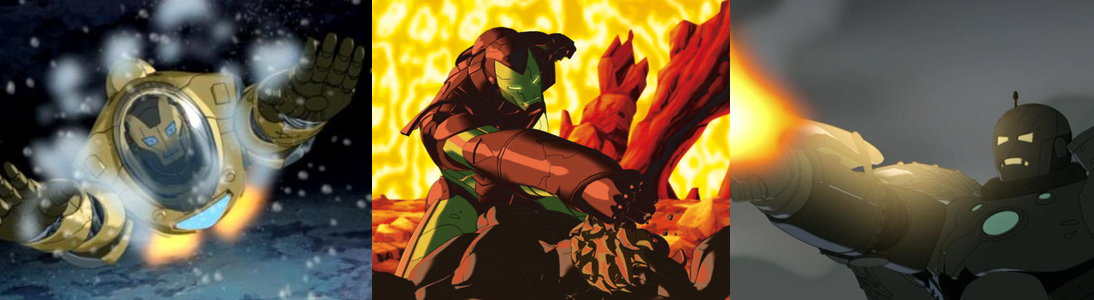
If there’s one thing holding The Invincible Iron Man back, it’s the quality of the animation; while it’s okay, for the most part, and has a bit of a pseudo-anime flavour going on, it’s all very rigid and basic and a bit blurry around the edges. Similar to the Iron Man cartoon of the nineties, it also features an abundance of CGI animation, particularly in the depiction of the Demon Elementals, which lends them an otherworldly quality and helps realise them as creatures of magic. Rhodey is initially incensed to find out that Tony has secretly been constructing various armours behind his back; believing that Tony has betrayed his anti-weapons ideals, his concerns are set aside as all of those armours come in handy not only for tracking down the Mandarin’s rings but battling the Elementals. The CGI work on the armours is good, if maybe a little too “fluid” at times, and there are a decent array on show here, from the bulky grey armour to the submarine suit and the familiar red-and-gold armour that’s become Iron Man’s standard.

The armours look pretty good and are quite varied but aren’t featured that much.

Unlike other depictions of Iron Man, the actual construction and capabilities of the armours is of little consequence here; we don’t really learn anything about the Arc Reactor technology or the Repulsor blasts and there’s no allegorical scenes of Tony building the armour. They simply exist because he built them prior to the film, which is good on the one hand as it lets the film get to the fights a lot faster but also a little disappointing as seeing the construction and evolution of the armours is always a fun aspect of the character. Still, thanks to the Mandarin’s rings being hidden all over the world, Iron Man’s battles against the Demon Elements get to take place in such animated locations as the bottom of the ocean and inside a raging volcano. While the CGI in these fights can be a little jerky and wonky at times, they’re decent enough, for the most part, and add some visual variety to the proceedings (a fact helped by the inclusion of actual dragons for Iron Man to fight!) There’s also a couple of competing sub-plots at work in the film, including a bit of corporate intrigue surrounding Stark Industries and Howard’s insistence on directing the company (and Tony’s genius) towards weaponry. This leads to him running afoul of Strategic Hazard Intervention Espionage Logistics Directorate (S.H.I.E.L.D.) Agent Drake (John DeMita), who is potentially a prototype for Agent Coulson (Clark Gregg), and him and Rhodey finding themselves fugitives. It is also the cause of a great deal of animosity between Tony and his father as Howard is indirectly responsible for Tony and Rhodey’s capture and Ho Yin’s death since it was he (as in Howard) who supplied weapons to the site and thus armed the Jade Dragons.

Li Mei ends up being used as a pawn in the Mandarin’s resurrection.

While there isn’t a great deal for Virginia “Pepper” Potts (Gabrielli) to do other than offer dry witticisms and cover Tony’s escape and actions in her own way, Li Mei is a pivotal part of a crucial sub-plot in the film; initially depicted as a reluctant follower of Wong Chu, she is burdened by having been born a woman and thus judged as being insufficient to opposing the Mandarin in a strictly patriarchal society. There’s a bit of a brief romantic angle teased between her and Tony but, rather than being reduced to a mere prize for Tony to earn or a damsel to save, Li Mei strikes back against her oppressor when she shoots Wong Chu dead to help Tony and Rhodey escape and even travels to America to help Tony track down the last of the rings. Li Mei’s story turns out to be one of deception as, after Iron Man retrieves all of the rings, she claims them for herself and reveals that she tried to keep him away since she is destined to be the vessel for the Mandarin’s resurrection. Although despondent at her fate, and Tony’s decision to stand by her and thus fulfil the prophecy of the Iron Knight battling the Mandarin to the death, she nevertheless willingly allows the Mandarin’s malevolent spirit to posses her body for the finale. Thus, in another twist on the traditional depiction of the Mandarin as a Fu Manchu-type, the sorcerer is instead rendered as an ethereal force that inhabits and surrounds Li Mei’s naked body and wields incredible elemental powers. Ultimately, though, Iron Man is able to dispel the Mandarin not through brute force or technology but by appealing to Li Mei’s humanity, though she dies in the process. Having learned the value of responsibility and self-sacrifice, Tony returns to America makes amends with his father by buying a controlling interest in Stark Industries and giving ownership to Howard (who immediately fires the entire Board).

The Summary:
The Invincible Iron Man is a decent enough animated feature; it’s not exactly the most action-packed cartoon I’ve ever seen but there’s some interesting twists on the classic Iron Man formula that make it an entertaining watch, at times. The decision to tie Iron Man’s origin in with the Mandarin is a fascinating one; the two have always had a violent and storied history and represented the dichotomy of technology versus the supernatural and, to me, the Mandarin has always been Iron Man’s greatest foe. It’s disappointing, then, that the Mandarin doesn’t really show up until the final few minutes of the feature and in a greatly altered form; while the Demon Elementals fill the void on his behalf, a lot of the film seems like needless filler. The Invincible Iron Man seems to primarily function as a prequel to the Ultimate Avengers animated movie and, in that regard, it does help shed a little light on the character but there’s not really much Iron Man action for my liking and Marvel definitely did a better job representing the character in the nineties cartoon and the subsequent live-action films.

My Rating:

Rating: 2 out of 5.

Could Be Better

What did you think to The Invincible Iron Man? How do you think it compares to the other Iron Man cartoons, Marvel’s other animated efforts, and the character’s live-action movies? Did you like the twists presented in the film, specifically regarding Iron Man’s origin and the depiction of the Mandarin? Would you have liked to see more animated films in this style or were you never a fan of Marvel’s feature-length cartoons? Whatever your thoughts on The Invincible Iron Man, leave a comment below and check in next Monday for more Iron Man content.

Back Issues [A-Day]: The Avengers #1


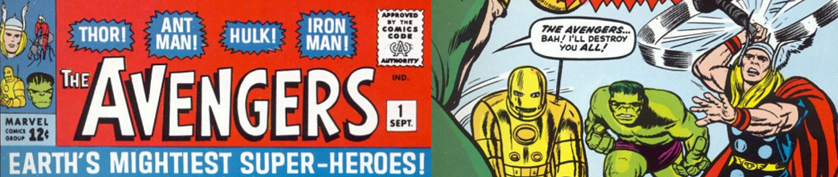
Having introduced comic readers to a whole host of colourful characters, in September of 1963 the legendary duo of Stan Lee and Jack Kirby brought together six of Earth’s mightiest heroes to form the Avengers. A super team like no other, with a constantly rotating roster, the Avengers has become the premier team of Marvel Comics and, thanks to the team and its individual members forming the backbone of the Marvel Cinematic Universe, have become an unbelievably popular and successful franchise in their own right.


Story Title: The Coming of the Avengers!
Published: September 1963
Writer: Stan Lee
Artist: Jack Kirby

The Background:
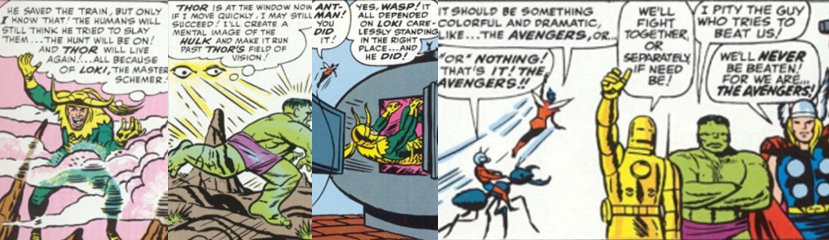
In 1960, DC Comics brought together their most popular and powerful characters to form the Justice League of America. Never ones to let the competition get a leg up on them, and having seen successful with the Fantastic Four and the debut of the X-Men in that very same month, Marvel Comics head honcho Martin Goodman asked Stan Lee to create a similar team of superheroes. Helpfully, Lee and a number of his most famous collaborators had already established a number of colourful characters to bring together: Tony Stark/Iron Man, Doctor Bruce Banner/The Hulk, Doctor Donald Blake/Thor Odinson, and Doctor Hank Pym/Ant-Man and Janet van Dyne/The Wasp. Since the debut issue, the Avengers have been a consistent and influential presence in Marvel Comics; the roster constantly shifted and changed, with the Hulk leaving the team in the second issue and Lee memorably dusting off the long-retired character of Steve Rogers/Captain America in issue four. Since then, the team has expanded and changed many times, seen spin-offs and splinter groups, been disassembled and reassembled, and taken part in all manner of massive cosmic events in the decades since their introduction.

The Review:
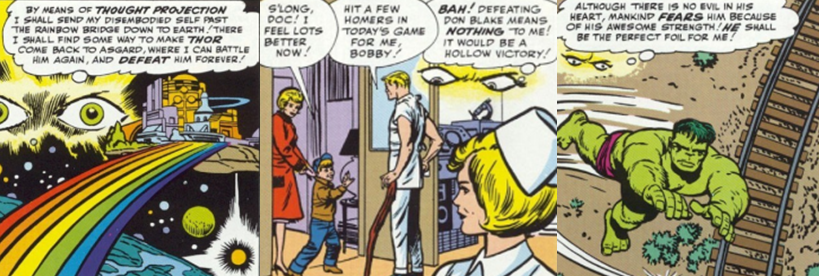
“The Coming of the Avengers” begins with Thor’s brother, Loki Laufeyson, the God of Mischief, imprisoned on the “dreaded Isle of Silence” in the mythical realm of Asgard. This is, of course, back when Loki was a despicable, irredemable villain whose previous mad schemes for power and conquest were thwarted by his brother; consequently, Loki is incensed at being exiled to the barren wasteland by Odin Allfather and plots a devious scheme for revenge.

Loki burns with a desire to destroy Thor, not Blake, and sees the Hulk as his chance to do so!

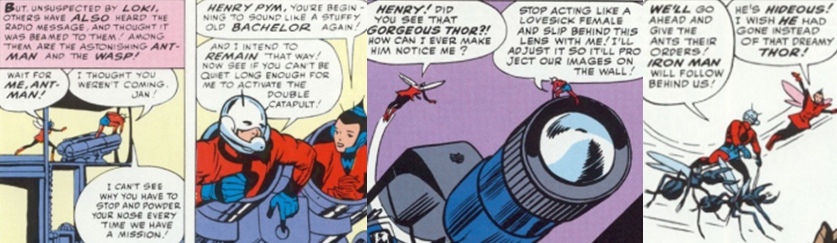
Though his physical self is trapped, Loki is able to use his vast magical abilities to project his disembodied self across the length of he dimension-spanning Bifrost and down to Earth, the planet Thor loves so dearly. He spies in on Donald Blake but dismisses him as a lame and insignificant mortal; he is acutely aware that Blake and Thor are one and the same but desires victory over Thor, not his crippled mortal shell. After many long hours, Loki comes upon the Incredible Hulk and is instantly intrigued by the creature’s brute strength and disdain for humanity. Thanks to Loki’s manipulations, the Hulk is blamed by the media when a train almost derails (despite the fact that the Hulk went out of his way to keep the train on track after Loki’s tricked him into damaging the tracks). Concerned for the well-being of his friend, Rick Jones desperately attempts to contact the Fantastic Four for help but Loki intercepts the broadcast and successfully coerces Blake to transform into Thor.

Words almost can’t express how much I despise Janet’s characterisation in these early comics!

However, Rick’s broadcast is also intercepted by Ant-Man and the Wasp and Tony Stark, who eagerly leap into action to stop what they perceive to be one of the Hulk’s trademark rampages. Though he’s now decked out in his slightly more streamlined gold plated armour (which can also charge through solar power), Stark is still entirely reliant upon his iron plated chest device to keep him alive but, nevertheless, he’s eager to test the strength of his armour against the Hulk’s much-vaulted power. The Fantastic Four eventually pick up the transmission regardless of Loki’s interference but are unable to assist since they’re already busy on another case but Rick and his fellow “Teen Bridge” are star-struck when Thor, Iron Man, Ant-Man, and the Wasp all show up to answer their summons. This is probably as good a time as any to talk about how much I loathe Janet van Dyne, especially in her earlier appearances in the sixties and seventies! She’s such a ditzy, scatterbrained little tart; all she ever does is think about her hair, make-up, and appearance and constantly fawn over other men right in front of her partner/husband, Hank. Sure, Hank is generally much more focused on his work, the mission, or being professional and is largely neglectful and ignorant of Janet but that doesn’t excuse her God-awful characterisation. Similar to Susan Storm/Invisible Girl, Jean Grey/Marvel Girl, and many of Marvel’s supporting female characters at the time, Janet is constantly patronised and spoken down to by men but, unlike many of them, she actually deserves such harsh treatment since she’s more of a glorified model or brainless celebrity than a capable superheroine, much less an individual worthy of their respect since all she wants to do is drool over Thor’s muscles!

Loki is apprehended but the battle between Iron Man and the Hulk continues to rage!

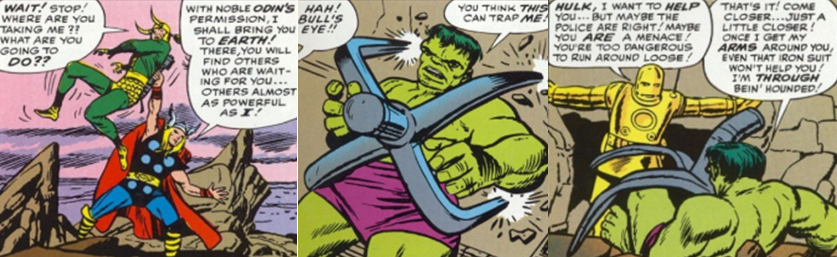
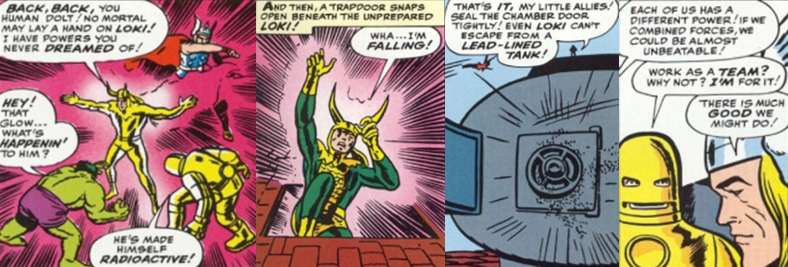
Anyway, having inadvertently brought together some of Earth’s mightiest heroes, Loki changes tactics and uses his powers to trick Thor into thinking the Hulk is right outside their door! Acting without thought or logic, Thor immediately heads out to battle the Green Goliath and immediately heads to Asgard when he realises that the “Hulk” is merely one of Loki’s visions…just as Loki planned all along! Meanwhile, the Hulk, now free from Loki’s control, has…disguised himself as Mechano the Mechanical Man and hidden himself away at a circus? Thanks to Ant-Man’s uncanny helmet, which allows him to control and communicate with ants, Pym is able to first locate the Hulk and then use countless numbers of ants to cause a cave-in beneath the beast’s feet. Unimpressed and irritated, the Hulk easily bursts free of the trap and reacts with anger when Ant-Man attempts first to calm him and then to trap him. As in his debut appearance, the Hulk is far more than the mindless, rampaging beast he is generally known as; he’s eloquent and intelligent, using words like “masquerade” and being smart enough to disguise himself as a circus performer and use weapons to blow the Wasp out of the air and render her helpless. The Hulk is kept from crushed the Wasp into a fine paste by the timely arrival of Iron Man; after Iron Man’s attempts to lure the Hulk into a trap fail, he gives chase but the Hulk is wily enough to allow Iron Man to pass harmless overheard so that he (as in the Hulk) can deliver a crippling blow to Stark’s “propulsion battery”. Over in Asgard, Odin grants Thor permission to travel to the Isle of Silence to confront Loki and he has to overcome numerous traps and hazards conjured by Loki’s black magic along the way. Thor perseveres and shatters Loki’s magical barrier using his enchanted hammer, Mjölnir, in his mission to “avenge” Loki’s foul deed. However, Thor is kept from attacking Loki first by the sudden arrival of a monstrous troll, a nature of the isle, and then by Loki’s deceitful illusions.

Loki is defeated with ridiculous ease and a new super team is born!

Regardless, Thor triumphs again by summoning lightning to drive the creature away and then dispels Loki’s duplicates with an implausible twirling of his hammer. Though Thor has Loki in his grasp and intends to bring him to Earth to answer for his deception, there’s still the little problem of the Hulk to contend with; Iron Man, having repaired his battery, continues his pursuit of the Hulk to an automobile factory, where the Hulk is able to endure and outwit Iron Man’s attempts to subdue him. Thor interrupts the battle and reveals that Loki was behind everything; Hulk’s desire to make Loki pay for framing him is momentarily avoided when Loki breaks free of Thor’s grasp and prepares to resume his battle with his hated brother…only for a hoard of ants to open a trapdoor beneath his feet and cause him to fall into an lead-lined chamber. With the threat ended, Ant-Man suggests that the six of them join forces as a team, which the others (including the Hulk, despite everything he went through during the issue) readily agree to and it is the Wasp who suggests the team’s name: The Avengers!

The Summary:
“The Coming of the Avengers!” is a breath of fresh air after the year I’ve had looking back at early origin stories and comic books; even compared to standalone stories of the time, it’s refreshing to not have the plot be endlessly bogged down with recaps of the characters’ origins and to not have every other piece of dialogue by a description of that character’s ability. Characters do still have an annoying tendency to monologue and describe what they’re doing as they’re doing it but it’s a far more action-packed issue than some other comics I’ve read this year, that’s for sure.

The brisk pace means some characters get more focus than others but there’s still time for cameos…

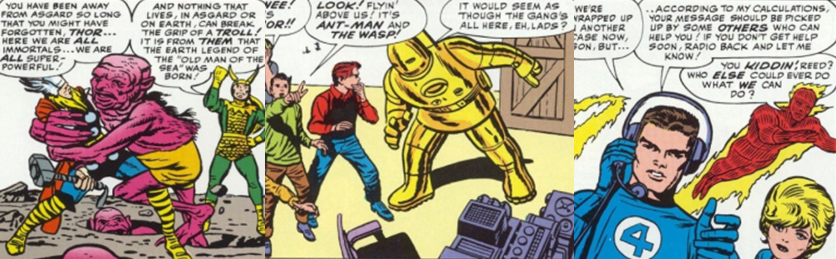
If you’re a newcomer to Marvel, this is obviously a bit of a disadvantage since you’d have no idea who any of these characters are; the only characters who really get any extended backstory and focus are Thor and Loki, which is only natural considering it is Loki who drives the main plot of the issue. However, we never see an appearance from the Hulk’ alter ego (Banner isn’t even mentioned in the issue), Ant-Man and the Wasp are never seen outside of their costumed identities, and the comic even has time to waste panels on a cameo by the Fantastic Four. The intention, however, is pretty clear: Rick’s first thought is to call the Fantastic Four since there are only a couple of superhero teams in existence at that time and the implication is that Loki is a threat worthy of the Fantastic Four’s involvement, which thus makes the Avengers appear just as capable and formidable by proxy. Not that the Avengers really need any help in that regard; each character has already had numerous chances to shine and show how capable they are in their solo issues but what better way to showcase that to its fullest than by pitting them against the Hulk, the most powerful mortal in Marvel Comics at the time?

For all his power and scheming, Loki is incredibly ineffectual and his plan massively backfires!

Iron Man, especially, is eager to pit his skills and augmented strength against the Hulk’s (who sadly never gets to tussle with Thor to see which of the two truly is mightier) and it’s certainly unique seeing Ant-Man and the Wasp futilely try to subdue the beast with traps and trickery. It’s not a perfect story by any means; I could talk for days about Janet’s characterisation and she basically does nothing except buzz around, pine after Thor, and name the team and Loki never thinks to use his powers to send the Hulk into a mindless rampage to help tip the balance in his favour. Indeed, though Loki’s powers are vast and have the potential to be extremely dangerous, he’s pretty ineffectual as Thor easily fights off his illusions, he’s anti-climatically defeated by Ant-Man and the Wasp (of all people), and all he succeeds in doing is uniting Earth’s Mightiest Heroes as a team. He might have had more success if he’d tried to manipulate them into fighting each other or used his powers to better effect but, as an excuse to bring together six of Marvel’s most formidable superheroes into a super team, “The Coming of the Avengers!” succeeds far more than it fails…it just needed to be a bit longer and have a bit more interaction between the characters.

My Rating:

Rating: 3 out of 5.

Pretty Good

How do you feel about “The Coming of the Avengers!”? Do you feel it was an effective introduction to Marvel’s newest and greatest team or do you, perhaps, find it a little weak and light on content? Which of the original line-up is your favourite? What did you think to the Wasp’s characterisation and the treatment of females during this time? Which version of the team is your favourite or who would you like to see on an Avengers roster one day? Do you think the singular threat of Loki was suitable enough justification for bringing together these heroes or would you have preferred a bigger threat? How are you celebrating the debut of the Avengers today and what are some of your favourite Avengers storylines, characters, or adaptations? Feel free to share your thoughts and opinions on the Avengers in the comments below.

Movie Night [National Superhero Day]: Avengers Assemble


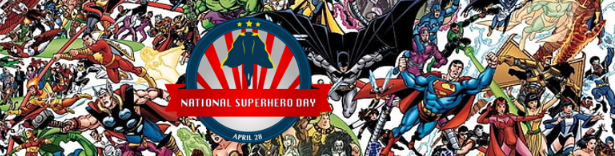
In 1995, Marvel Comics created “National Superhero Day” and, in the process, provided comics and superhero fans the world over with a great excuse to celebrate their favourite characters and publications.


Released: 4 May 2012
Director: Joss Whedon
Distributor: Walt Disney Studios Motion Pictures
Budget: $220 million
Stars: Robert Downey Jr, Chris Evans, Mark Ruffalo, Chris Hemsworth, Scarlett Johansson, Jeremy Renner, Tom Hiddleston, Clark Gregg, Stellan Skarsgård, and Samuel L. Jackson

The Plot:
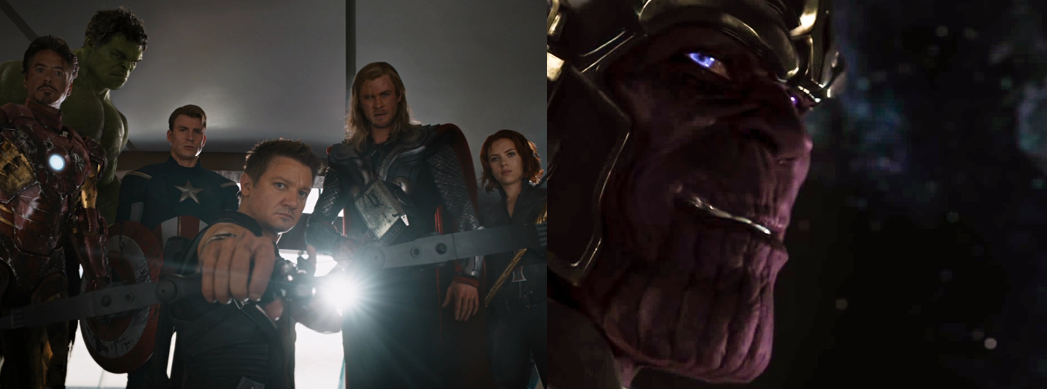
When Loki Laufeyson (Hiddleston) arrives on Earth wielding a mind-controlling spear and in search of the Tesseract, Nick Fury (Jackson), director of the Strategic Homeland Intervention, Enforcement and Logistics Division (S.H.I.E.L.D.) activates the “Avenger Initiative”. Tony Stark/Iron Man (Downey Jr), Steve Rogers/Captain America (Evans), Doctor Bruce Banner/The Hulk (Ruffalo), Thor Odinson (Hemsworth), Natasha Romanoff/Black Widow (Johansson), and Clint Barton/Hawkeye (Renner) are called into service and must find a way to co-exist before they can combat this otherworldly threat.

The Background:
The development of an Avengers film began in 2003 with an outrageous plan to release a series of solo films for each character before having them all meet up, similar to how the Avengers formed in the comics back in 1963 courtesy of Martin Goodman, Stan Lee, Jack Kirby, and Dick Ayers. It was an unprecedented move, one which saw fledging studio Marvel Studios roll the dice on lower-tier heroes such as Iron Man and win big time with a slew of massively successful and popular superhero films, each one hinting towards a much larger, shared cinematic universe. When the time came for Earth’s Mightiest Heroes to finally meet onscreen, Marvel Studios turned to Joss Whedon to rewrite the script and direct the film and included Iron Man (Favreau, 2008) and Iron Man 2 (ibid, 2010) director Jon Favreau as an executive producer. After some differences of opinion, Marvel Studios chief Kevin Feige chose to recast Edward Norton in the role of Banner/Hulk and easily the biggest superhero film of all time was officially underway. The Avengers (known as Avengers Assemble here in the United Kingdom) was an absolutely phenomenal success, making over $1.500 billion at the box office, receiving rave reviews, and kicking off the extraordinary blockbuster success we know of today as the Marvel Cinematic Universe (MCU).

The Review:
Avengers Assemble was the first time we had ever seen superheroes come together in a big screen, big budget movie. Before the MCU, before Iron Man, superheroes always existed in isolated bubbles and never interacted and, as a big fan of the interconnected world of the comics (not just in Marvel but in DC Comics and pretty much ever comic publication), I was excited to see these characters come together onscreen for the first-time and will always lean towards an interconnected, shared continuity. It was a risky venture taking admittedly B to D-tier characters like Iron Man and Captain America and shaping a series of movies around them but Avengers Assemble totally justified that risk, allowing these volatile egos and characters to share the same screen and mixing fantasy, science-fiction, magic, and technology all together in one action-packed adventure.

Loki comes to invade Earth and realise his grandiose desires for power and servitude.

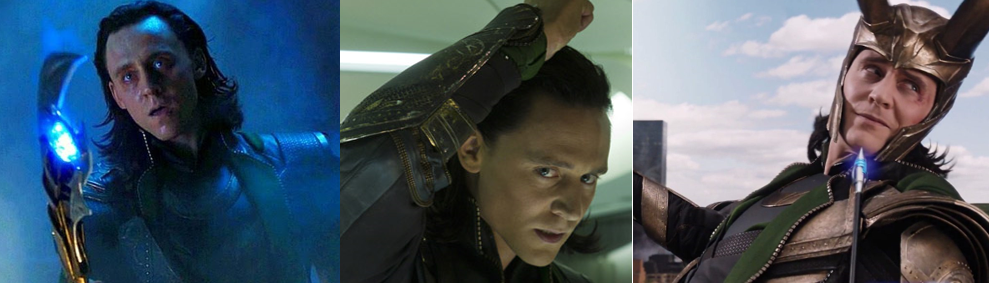
Loki’s threat is immediately established when he suddenly arrives on Earth and makes short work of Fury’s men and then uses his spear to take control of Professor Erik Selvig (Stellan Skarsgård) and Barton. Though only a singular villain, one whom Thor has been able to best in combat before, Loki is a significant threat to the world since he is, effectively, a God and he has the entire Chitauri army at his command. Before the Chitauri arrive, though, Loki is formidable enough to justify bringing in Iron Man (despite Fury’s earlier reservations) and Cap since Thor wasn’t supposed to be able to get back to Earth. When Thor does arrive, his mission to capture Loki and bring him back to Asgard is hampered by Earth politics (since Fury wants to hold Loki accountable for the death and destruction he’s already caused) and as a result Loki manages to manipulate the fledgling Avengers into bickering and fighting with each other rather than him, allowing him to take possession of the Tesseract and bring the Chitauri to Earth. While he avoids active, physical combat, Loki is a daunting opponent when he does engage in battle, able to go toe-to-toe with Thor (thanks, largely, to Thor holding back out of love for his brother), easily catching Hawkeye’s arrow, and tossing Stark out of a window with just one hand. His downfall comes not only through the unification of the Avengers but is spelt out by Stark, who monologues about how, win or lose, they would hunt down and hold Loki personally responsible to ensure that he never truly wins, and, of course, more explicitly through the sudden and hilarious beat down he receives at the hands of the Hulk.

It’s a rough experience for Cap, who has awoken to a world that has radically changed.

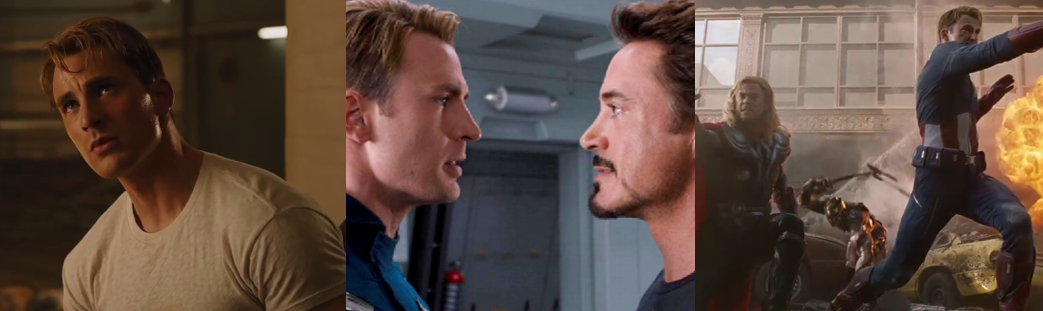
Essentially, the film is a significant chapter in Cap’s story; since Captain America: The First Avenger (Johnston, 2011) ended with Cap being dethawed in the modern day, this was only the second time we had seen him in action; unfortunately, because of the nature of the film, Cap’s reintegration into society is largely glossed over and, rather than being dwelled upon, is replaced with Cap wishing to be given a mission, a focus, a reason to fight in the modern world. As a result, he unquestioningly follows Fury’s directions primarily out of instinct, duty, and a need to have a reason to go on in a world that has largely passed him by; he clashes with Stark’s rebellious attitude, believing that they should follow orders like soldiers, but is convinced enough to investigate further and is disgusted to find Fury in possession of Chitauri technology and with contingencies in place to combat the Avengers since they have the potential to be a threat to humanity. Cap is all business when in battle, instinctively taking command and exuding leadership even though he is the most out of touch and out of place of all the characters; his initial antagonism with Stark is eventually put aside to lead the team during the Chitauri invasion and Cap fights to the bitter end even when he is vastly overpowered by the alien forces, taking the most damage of any of his team mates (including the “weaker” members like Natasha and Barton).

Stark joins the team with his own agenda but eventually comes to respect and defer to his peers.

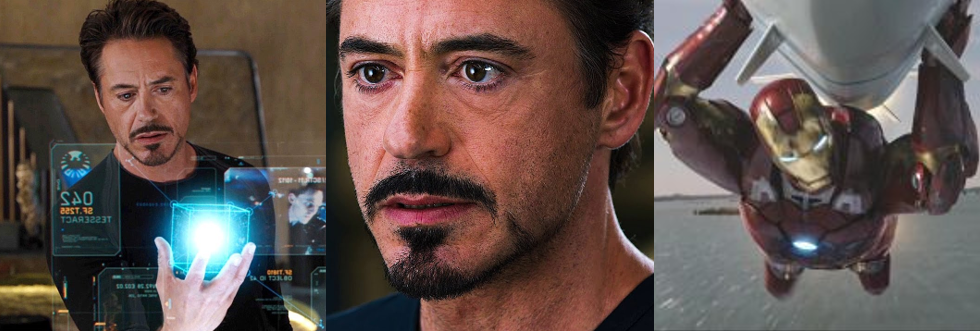
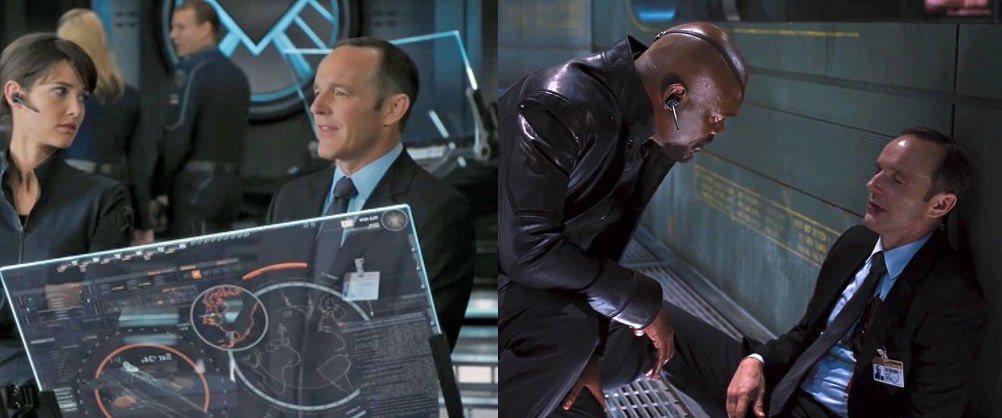
Stark is just as stubborn and snarky as ever; he’s clearly insulted by Agent Phil Colson (Gregg) and Fury’s decision to relegate him to a “consulting” role in the Avengers Initiate despite his claims to not want to be part of the team and believes himself to be the only one smart and capable enough of combating Loki’s impending threat. He comes aboard with the program purely out of a selfish desire to lord himself over Fury and the other Avengers and to learn more of S.H.I.E.L.D.s secrets, using them to call Fury out on his hypocrisy, and constantly goading his team mates (particularly Banner) into being themselves and rejecting Fury’s orders and control. While the prevailing arc for the entire team is learning to work together, Stark personifies this as he is the most antagonistic and reluctant to work as a team; he’s the most affected by Coulson’s death due to him knowing the agent the best, his experiences witnessing death and suffering first-hand in Iron Man, and his inability to properly cope with death and loss. Coulson’s death galvanises Stark, turning his incredulity to vengeance and giving him the motivation to not only put aside his ego to work with the team but also acknowledge Cap’s superior leadership skills.

The naturally apprehensive Banner has attained a measure of tenuous control over the Hulk.

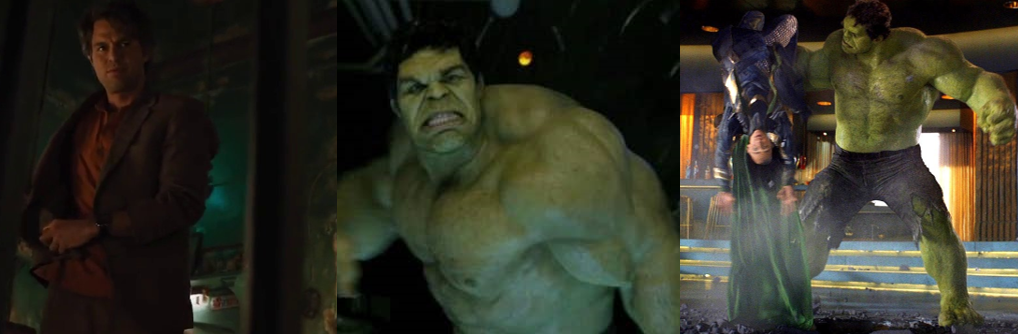
Banner appears very differently to where we left him in The Incredible Hulk (Leterrier, 2008); fearing the unpredictability and ferocious nature of the Hulk, he has stayed in hiding, suppressing the Hulk with some success, but is unable to deny his innate wish to help others in need with his scientific and medical expertise. Banner has managed to keep the Hulk at bay not only through a risky and unique technique (he’s “always angry”, indicating that he constantly keeps his emotions at a level where the Hulk is satiated but doesn’t actually emerge) and a vehement refusal to acknowledge or speak the Hulk’s name. Banner is convinced to help advise on Loki’s spear by Natasha’s beauty and simply her asking him nicely, rather than forcing him to comply, but, while he is clearly excited to be working with S.H.I.E.L.D. and the Tesseract and forms a fast, budding friendship with Stark (with Stark goading Banner and acting like an annoying brother to him), he quickly comes to realise that Fury’s intentions aren’t entirely noble and questions the validity and ability of a team that is little more than a “timebomb” of ego and emotions. When the Hulk is forcibly unleashed as part of Loki’s plan, he is unbridled rage and fury, lashing out at everything and everyone around him in a mindless rage since the transformation was against Banner’s will. Later, during the Battle of New York, Banner initiates the transformation willingly and the Hulk is much more…maybe not “docile” but let’s say willing to cooperate, taking Cap’s orders and specifically targeting to Chitauri threat while protecting and aiding his teammates. A measure of Banner’s influence and the Hulk’s intelligence is seen as the Hulk makes the effort to save Iron Man from his fatal fall and his dismissive grunt of “Puny God!” after beating the piss out of Loki.

Thor’s complex relationship with Loki is a pivotal plot point throughout the film.

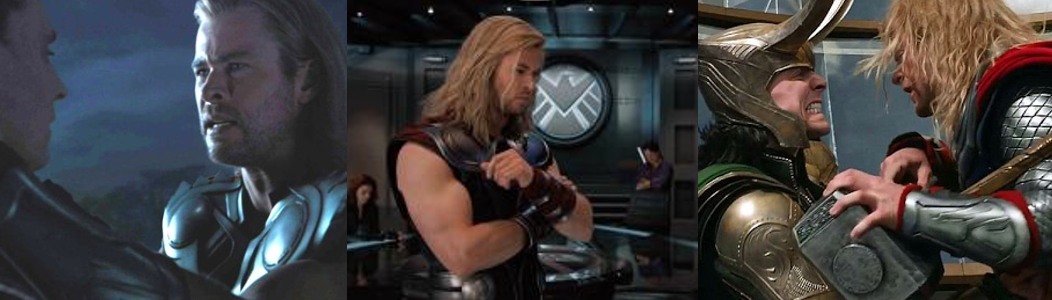
Thor’s arrival on Earth comes out of nowhere and is quickly waved away with a brief line about “dark energy”; personally, I never liked this or understood why the filmmakers had the Bifrost be destroyed in Thor (Branagh, 2011) when they knew very well that Thor would be back in Avengers Assemble but it is what it is and Thor is there. Thor is handicapped by his emotions towards his brother; he is elated and heartbroken to see Loki alive after believing him dead and just wants his brother to abandon his crusade and come home. Loki, however, is too full of jealously, rage, and resentment and constantly taunts, defies, and dismisses his brother, who finds himself unable to simply wade in, muscles bulging, and retrieve Loki thanks to opposition from Iron Man, Cap, and Fury and the greater issue concerning the Tesseract. Thor offers knowledge of another world, another level of understanding, that is unique amongst his teammates and spends much of the film believing his brother still has good in him and wishing to return him home. After Loki kills Coulson before Thor’s eyes and tries to kill him with a trap intended for the Hulk, Thor reluctantly gears up and enters the fray, so determined to stop his brother’s mad schemes that he’s willing to fight alongside the Avengers and submit to Cap’s orders since he, like Cap, is a stranger in this world and still learning how to navigate modern, human society.

Natasha remains a mystery despite the showcase of her skills and hints towards her past.

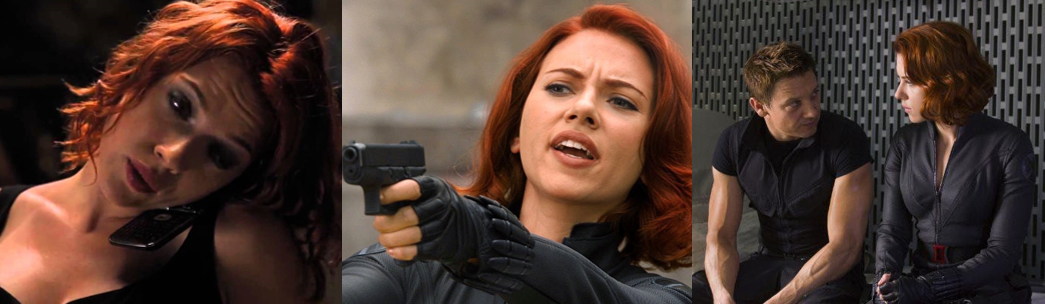
Natasha is still relatively new in this film since audiences only saw a fraction of her true character and abilities in Iron Man 2 so it’s good that she gets a solo action scene at the start of the film to showcase her physical and manipulative abilities. We learn bits and pieces of her character and backstory through her interactions with Banner, Loki, and Barton but she remains very much a mystery even by the end of the film. This would, of course, continue over the years since Black Widow was one of the last of the original Avengers to get a solo film, meaning an air of mystery constantly surrounds her, but much of her arc is focused on her relationship with Barton (which is one of duty, gratitude, and mutual, platonic respect) and her commitment to Fury and S.H.I.E.L.D. Like Cap, she follows orders unquestioningly but it also feels like she has her own agenda and reasons for going along with S.H.I.E.L.D.; while she, like Barton, is one of the weakest links in the Avengers, she’s still capable enough to hold her own against the Chitauri…for a time, at least.

Though he spends the majority of the film under Loki’s spell, Barton proves a formidable opponent.

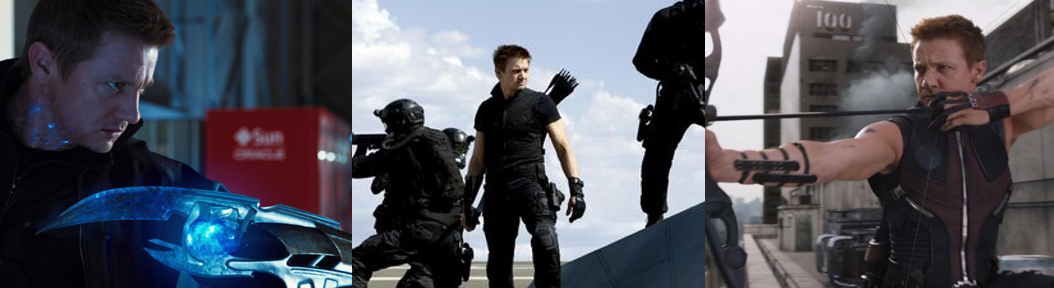
Barton, who is only referred to as Hawkeye once in the film, spends most of the movie under Loki’s command (though this does harken back to his comic book beginnings as a villain); as a result, all we know about him is the few bits and pieces Natasha reveals about their relationship and their background. However, we do get to see him in action on more than one occasion; he’s a crack shot, almost to superhuman levels, and is able to bring down an entire Helicarrier with a single, well-placed arrow. He is an essential soldier in Loki’s army, offering him insight into Fury’s operation and resources, but is also able to provide the Avengers with key information regarding Loki after Natasha literally knocks some sense into him. He proves himself capable enough in the finale by providing much needed and peerless cover from a high vantage point, from which he is able to take out multiple Chitauri with a few well-aimed shots. He’s easily the least developed of all the characters thanks to the role he plays in the film but it works for the plot and means we’re left wanting to know more about him and his backstory. Fury plays a much larger role in this film than in the previous MCU movies since he’s a pivotal supporting character rather than a mere cameo; he believes that Loki represents a very real threat to humanity but also believes wholeheartedly in the concept of heroes and the ability of the Avengers Initiative to combat Loki’s threat.

Coulson is the glue that connects Fury’s Avengers and his death galvanises the team into action.

Fury opposes the World Security Council when they dismiss the Avengers as a legitimate solution and when they order a nuclear strike on New York which, along with his own brand of snark and dry wit, makes him a rebellious and layered character in his own right. However, he’s also a secretive and manipulative individual, constantly telling everyone only as much as they need to know and a handful of half-truths (as Stark says: “Fury’s secrets have secrets!”) and believes in having contingencies against any and all possible threats, both foreign and domestic. While he doesn’t fight alongside the Avengers in the final battle, he’s crucial to their formation and is a charismatic and alluring figurehead for their group. Sadly, this was as prominent as Fury would be for some time, with him quickly going back to being either a cameo or supporting character over the years, which is a shame as it’s always great to see Samuel L. Jackson in the role and interacting with these characters. Similarly, Coulson also gets much more screen time and development this time around; still acting as Fury’s go-to and the liaison between S.H.I.E.L.D. and the Avengers, Coulson (whose first name is revealed to be “Phil” rather than just “Agent”) is the relatable man among Gods, the common thread that links all of these volatile personalities together. Initially, all they really have in common beyond their heroic tendencies is their relationship with Coulson, with Stark having the closest link to him and Coulson being especially in awe of Cap, his hero and idol, and Coulson’s death is both sudden and heartbreakingly brutal. It’s a fantastic moment that serves to galvanise and motivate the them and, as much as I’ve enjoyed some episodes and seasons of Agents of S.H.I.E.L.D. (2013 to 2020), it did annoy me that his dramatic death was undone so soon after the film’s release. Thankfully, the MCU movies don’t acknowledge Coulson’s resurrection so his tragic death remains the principal motivating factor behind the coming together of Earth’s Mightiest Heroes.

The Nitty-Gritty:
Considering the large cast of bombastic, unique characters and actors, Avengers Assemble is fantastically well paced; sure, Natasha and, especially, Barton don’t get anywhere near as much screen time or development as established guys like Cap or Stark but they get several character defining moments and character beats that help to keep them relevant and integral to the plot. The film isn’t full of non-stop action but it never feels slow or like it’s wasting time; any time there isn’t some kind of physical conflict, there’s a conflict of character, beliefs, or ideologies as each of the characters interacts with each other in different ways. The central conflict in the film is between the individual Avengers as much as it is with Loki as each one must learn how to interact and co-operate with the other, which leads to some friction between Rogers and Stark, disdain from the God-like Thor, and distrust from the understandably agitated Banner. This all comes to a head in one of the film’s most intense moments where the fledgling Avengers argue over Fury’s manipulations, the threat each of them oppose, and their conflicting egos in a scene that is easily as powerful as any of the film’s fight scenes. Here, each character talks and argues over each other; lots of fingers are pointed, egos are bruised, and accusations are made thanks to the influence of Loki’s spear, which exacerbates their most negative aspects and fuels the distrust and tension between the group. It’s an amazingly realised scene, with lots of dynamic camera work on offer and allows the characters to vent their frustrations and concerns about each other, the mission, and the inevitable escalation of conflict that threatens Earth now that it has experienced otherworldly threats and, in it, these conflicting personalities actually grow stronger as a result of their brutal honesty.

Seeing these colourful and volatile individuals interact is every fan’s dream come true!

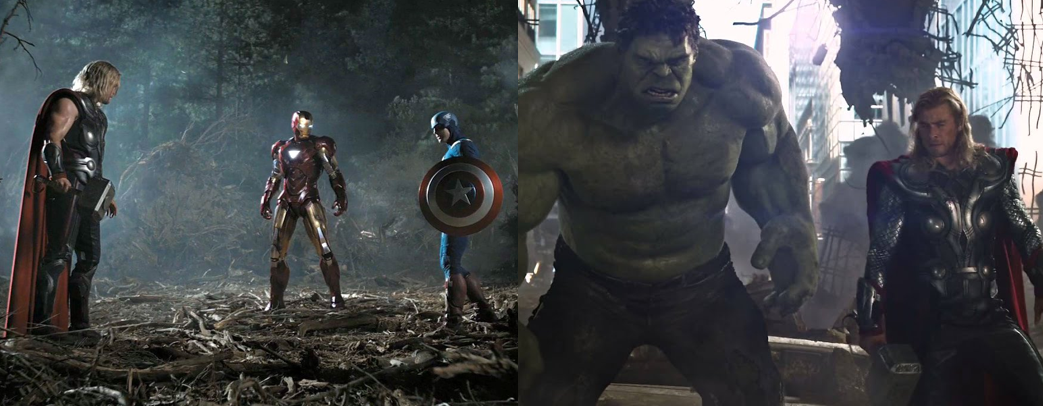
However, amidst this, there are also numerous amusing little moments that help to add to the film’s levity and develop each character: Rogers handing Fury a $10 bill after being awe-struck by the Helicarrier, Stark pointing out that one of the S.H.I.E.L.D. agents is playing Galaga (Namco, 1981), Thor’s humiliation regarding Loki’s actions and heritage, and Banner’s flashes of anger all help to make the characters real and relatable. One of the best examples of this is Cap’s confrontation with Loki in which he, despite being “out of time”, recognises Loki’s evil and potential threat and openly opposes him just as he did a similar dictator in World War Two and engages him in combat despite Loki’s clear physical advantage over him. Cap’s whole character is that he continues to fight no matter the odds and that is continuously seen in Avengers Assemble as, even when outclassed or outnumbered, he continues to get back up and go on with the fight until it’s done, one way or another, and fails to give in to intimidation from concepts beyond his time such as Gods, aliens, and advanced technology. Their interactions with each other are equally impressive, with the heroes just as likely to come to blows as they are to work together; this means we get to see these bright, colourful costumed characters fighting with each other as much as alongside each other. Iron Man fights with Thor, Cap joins in to make it a triple threat, Black Widow fights with Hawkeye, and Thor memorably goes toe-to-toe with the Hulk to set up a friendly rivalry that would be fantastically revisited in Thor: Ragnarok (Waititi, 2017). It’s a staple of superhero team-ups that the heroes simply must fight at least once and Avengers Assemble delivers on this in spades; we’ve watched each of these characters in their own films, or be involved in other MCU films, over the years so to see them match wits, trade blows, and fight together is a true fanboy’s delight.

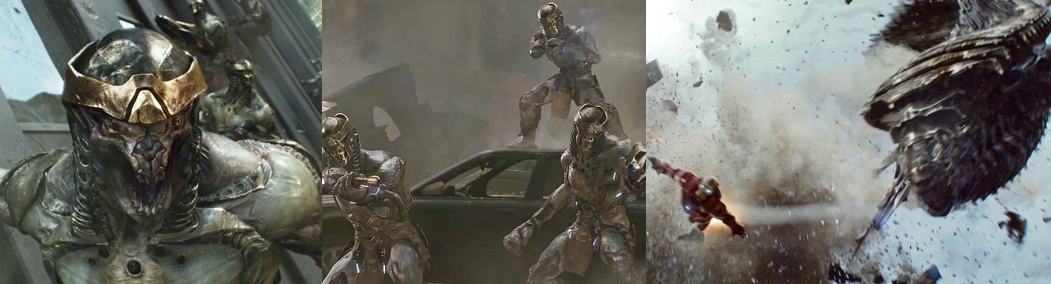
The Chitauri are, admittedly, underwhelming antagonists but they serve their purpose.

The finale is little more than a battle against mindless, indistinguishable alien hoards who, conveniently, operate in a hive mind and are “easily” shut down by Stark tossing a nuclear weapon at their mothership. I honestly expected a version of the Masters of Evil for the first Avengers movie, with Loki joining forces with Johann Schmidt/The Red Skull (Hugo Weaving) outside of the Realms and then teaming up with Emil Blonsky/The Abomination (Tim Roth) and/or Samuel Sterns/The Leader (Tim Blake Nelson) once they reach Earth for a smaller scale, six on six style team vs. team movie and, in some ways, it is a bit disappointing that the Avengers only went up against one villain and an army of drones but it really works in the film since the entire point of the movie is to bring these volatile characters together. The actual antagonist could have be anyone or anything and it wouldn’t really matter but it being Loki works wonders thanks to Tom Hiddleston’s iconic performance; he’s truly a snake in the grass, a wily, manipulative, vindictive villain who is intelligent and cruel enough to match wits with each of the Avengers both physically and vocally and the only previous villain I could see being able to do anywhere hear as good a job would be Hugo Weaving.

The Avengers win the day but a greater, far more powerful threat looms in the background…

One issue I have though is that, as much as I loved the “Avengers Assemble!” scene we eventually got, I still don’t get why we couldn’t have heard that iconic cry during that awesome panning shot of the team standing back-to-back. I think we definitely could have heard this cry in each of the team-up films and appearances of the group and it wouldn’t have taken away from that impactful scene; if anything, it would have added to it since it would be a rallying cry for the reunited heroes. Still, the Battle for New York is amazing in its scope; the Chitauri may be interchangeable alien drones but they are relentless. The Avengers are able to combat them and easily defeat them but their numbers are legion and, apparently, inexhaustible and it isn’t long before they are overwhelmed even with the might of Thor and the Hulk. The Chitauri’s larger reinforcements and advanced weaponry and sheer numbers mean that it is simply a matter of time before the Avengers, for all their power, are overwhelmed and Loki is successful, meaning that the Avengers’ main concern is holding the line and keeping the invasion at bay while their team mates confront Loki and cut off the source of the invasion. All throughout the film, Loki converses with “The Other” (Alexis Denisof) and is clearly being given power and resources from an unseen third party, revealed at the very end of the film to be none other than Thanos (Damion Poitier). At the time, we could never have anticipated the extent to Thanos’s threat and importance to the MCU but the bringing together of cosmic characters like Asgardians and threats like the Chitauri and Thanos only hinted at how large and varied the MCU was destined to become.

The Summary:
Avengers Assemble is still one of the biggest and most entertaining movies in the MCU and, perhaps, ever made. Of all the movies in the MCU’s first phase, it’s easily my favourite and, for me, set the standard not just for subsequent MCU team-up movies but for every film in the MCU going forward. No longer were these characters going to exist in their own isolated bubble; they would interact with their fellow characters, reference the larger world we finally saw in all its glory, and be part of something much bigger and greater than a series of self-contained films. For me, this is the greatest appeal of the MCU; before Iron Man, superhero films were always solo affairs and we never saw heroes interact with each other. Thanks to the MCU, all of that changed and, finally, the movies came to resemble the comics by having a shared universe that has a tight continuity and an actual tangible, long-term plan. The film is alive with character moments, an amusing dry wit, and action-packed sequences but, as thrilling as the bombastic fight scenes can be, it’s all the little interactions and interpersonal conflicts that really make this film so entertaining and appealing to me even to this day.

My Rating:

Rating: 5 out of 5.

Fantastic

What are your thoughts on Avengers Assemble? How do you feel it holds up now that the MCU has become this massive, multimedia juggernaut? Were you disappointed that the film focused solely on the one villain and side-lined Hawkeye with a mind control sub-plot or were you satisfied with Hiddleston’s performance and the interpersonal conflicts between the characters? Which of the Avengers is your favourite and which of the comic’s characters are you excited to learn more about or see join the team? Which of the MCU movies, shows, or characters is your favourite and why? How are you celebrating National Superhero Day today? Whatever your thoughts, leave a comment below and be sure to stick around for more superhero and comic book content throughout the year.

Game Corner: Captain America and the Avengers (Arcade)

Released: 1991
Developer: Data East
Also Available For: Game Boy, Game Gear, Mega Drive, Nintendo Entertainment System (NES), Super Nintendo Entertainment System (SNES)

The Background:
First created in 1940 by Joe Simon and Jack Kirby, Steve Rogers/Captain America was an icon of the Second World War, embodying America’s obsession with patriotism and pride by taking the fight directly to the Axis Forces. Superhero comics went on a bit of a decline after the war and Captain America wouldn’t return to prominence until 1964, when he was famously revived to join Marvel Comics’ all-star team, the Avengers. Since then, the character has been largely synonymous with Earth’s Mightiest Mortals, often acting as the team’s moral compass and leader. In 1991, both comics and arcades were undergoing something of a renaissance; Marvel published the influential Infinity Gauntlet (Starlin, et al, 1991) during this time and sidescrolling beat-‘em-ups like Final Fight (Capcom, 1989) and The Simpsons (Konami, 1991) were proving popular coin munchers. It is perhaps these factors that led to Data East developing a four-player beat-‘em-up game centred around Marvel’s popular super team, a game that is often forgotten because of genre-defining titles like X-Men (Konami, 1992) and a title I first played on the SEGA Mega Drive in all its inauspicious glory.

The Plot:
Johann Schmidt/The Red Skull has assembled an army of the world’s most dangerous supervillains in order to take over the world using a gigantic, Moon-based laser! Answering the call to action and adventure are Captain America, Tony Stark/Iron Man, Clint Barton/Hawkeye, and the Vision – the Avengers – who are the only ones capable of putting a stop to the Red Skull’s nefarious plans for world domination!

Gameplay:
Captain America and the Avengers is a 2D, sidescrolling beat-‘em-up in which you, and another player if you have a friend, control one of the four Avengers and mindlessly pummel a bunch of robots, cyborgs, and iconic Marvel bad guys across five different stages (referred to as “Scenes”). No matter which character you choose to play as, the game pretty much plays exactly the same with only some minor aesthetic differences separating the characters.

Each Avenger has their own special attack but, otherwise, controls exactly the same.

Despite this, though, I found Cap the most enjoyable character to play as, with Iron Man a close second. The controls are as simple as you could want: you can beat down your enemies with some simple punches and kicks, charge through them with a dash attack, block by holding down the punch button, and perform two different jumping attacks depending on how high you’re jumping. You can also grab and throw enemies (and objects) and unleash a unique ranged attack by pressing down the attack and jump button simultaneously: Captain America hurls his mighty shield, Iron Man fires his repulsor rays, Hawkeye fires arrows, and Vision fires laser blasts from his forehead. I found there to be a bit of a delay in activating these special attacks, however, which can leave you vulnerable but at least they don’t drain your health. Speaking of which, your health is measured in hundreds; you begin each Scene/life with 100 health but can increase it by grabbed the rarely-seen small blue orbs or the power-ups dropped by other Avengers like Prince Namor McKenzie/The Sub-Mariner and Pietro Maximoff/Quicksilver.

Autoscrolling shooting sections help to add some variety to the gameplay.

You can also increase your health, all the way up to “Max”, by entering coins to keep you alive and kicking, effectively sacrificing your pocket money and extra lives for more health. Thankfully, emulation means you don’t need to worry about wasting your hard-earned pocket money so you never have to worry about running out of lives or health. Unlike a lot of arcade games, Captain America and the Avengers doesn’t feature a time limit; however, if you stand around idle for too long, an explosion randomly drains your health until you either die or get moving, which is a cruel but unique inclusion. It’s not all mindless right-to-left fighting, either; Scene 2, Scene 3, and Scene 5 feature autoscrolling shooting sections that take place in the skies of a wrecked city, deep underwater, and in the cold vastness of outer space. If you’re playing as Cap or Hawkeye, you’ll get to pilot a Sky-Cycle in the first of these stages, but for the others you’ll throw on some scuba gear and a rudimentary space suit. Either way, you must blast enemies with your ranged attack (which is now just a simple button press), avoiding their projectiles and holding down punch to block. These sections are only short but they held to mix things up a bit and, when it comes to sidescrolling beat-‘em-ups, variety is hard to find so it’s appreciated.

Graphics and Sound:
I remember Captain America and the Avengers looking very unimpressive on the Mega Drive, with small sprites in large areas and lacking a lot of the detail and quality of other games of the time. In that regard, the arcade game is better since the sprites are much bigger and more distinct and detailed but you’ll notice that they’re not as large, colourful, or intricate as those seen in games like X-Men, for example. Still, it does a decent enough job; the camera is zoomed out quite far compared to other beat-‘em-ups, though, giving you a much larger battlefield which would be a positive but, while areas can get swamped with enemies and do feature interactive elements (mainly barrels and other objects to throw or explode), they are quite empty and there’s little benefit to exploring or attacking your surroundings.

The game is colourful and varied but not as impressive as others in its genre.

You will find some interesting elements, though, such as enemies bursting out of windows and the background, an Avengers mural, burning cars, wrecked buildings, and both a sprawling city in the background and water rushing beneath you as you fly, with comic book sound effects punctuating the onscreen violence. As you might expect, comic book-like panels and text are used to convey the bulk of the story; each character is given a brief demonstration of their in-game abilities and a biography, which is a nice touch, and the game is peppered with some in-game cutscenes that feature dialogue between the Avengers and their enemies. These are some of the most ludicrous examples of mistranslation ever, which hilarious exchanges such as “Seeeeee my powerrr!”, “Where is the laser?”/“Ask the police!”, “You can’t escape!”/“You will be the one escaping!”, and “Why should it goes well!?” It’s cheesy and ridiculous in a “Welcome to die!!” kind of way that adds some unintentional entertainment value to the game, which also features a suitably heroic soundtrack; you’ll hear the main theme quite a bit, since it kicks in once bosses are close to defeat, and while it’s nothing special it’s very catchy and rousing and gives the game a stirring, stimulating gallant feel.

Enemies and Bosses:
For the most part, you’ll battle seemingly endless wave upon wave of robots or cybernetic enemies; the most common of these incessantly shoot at you with lasers, sometimes while jumping, while others carry shields or can grab and hold you with retractable arms. You’ll also battle enemies that hover in jetpacks, bigger, more muscle-bound variants that squeeze the life out of you with a bear hug, and hopping bug-like robots. Underwater, enemies will fire harpoons at you while you try to dodge mines and, in the air, they’ll circle around firing lasers in a simple formation. Most of these are destroyed in just a few hits, and both increase in number and become tougher to defeat as you progress, exploding upon defeat, making me believe them to be cyborgs and mechanical rather than flesh and blood.

In Scene 1, you’ll battle some minor Marvel foes after they rob a bank.

One thing Captain America and the Avengers does really well, though, is its expansive use of Marvel’s rouges gallery; in each Scene, you’ll have to contend with a main boss and a series of sub-bosses, many of whom will be recognisable to fans of the source material (and even the movies, to a degree). In Scene 1, you’ll have to contend with the duo of Arthur Parks/The Living Laser and Ulysses Klaw/Klaw mid-way through the stage as they cover David Cannon/Whirlwind’s escape following a bank robbery. Laser and Klaw are best faced with a partner since they hop around the screen, blasting lasers and projectiles at you, but, like all of the game’s sub-bosses and bosses, can be easily pummelled solo as well. When you do go toe-to-toe with Whirlwind, it’s dead easy to just wail away on him, with his only threat being his ability to transform into a literal whirlwind to dash about the screen and whip up nearby objects to rain them down on you.

After disposing of a Sentinel, you’ll fight the Grim Reaper, though the Wizard or the Mech. Taco are a threat.

Scene 2 sees you having to relentlessly blast away at a Hydra aircraft on your way to the wrecked city and a confrontation with the gigantic, screen-filling “Giant Robot” (clearly a Sentinel). The Sentinel is a slow, plodding sub-boss who tries to smack you out of the sky, fires lasers, and grabs you in its near-endless supply of robot hands. After blowing it to pieces, you’ll battle through the ruins of the city and into a confrontation with Eric Williams/The Grim Reaper, one of the game’s tougher bosses. Grim Reaper can block your projectile attack with his spinning scythe, rush across the screen with lightning speed to slash and strike you, hover in the air, and fires explosive projectiles as the fight progresses. In Scene 3, you’ll battle Bentley Wittman/The Wizard on the deck of a wrecked battleship; the Wizard favours diving punches, throwing discs, and quick-firing laser bolts but is, otherwise, a minor inconvenience at best. After exploring the depths of the ocean, you’ll encounter a giant mechanical octopus referred to as “Mech. Taco”; this is functionally the same fight as against the Sentinel, requiring you to avoid the Taco’s tentacles, swim beneath its lasers, and simply fire at it relentlessly until it explodes.

Even some of Marvel’s most recognisable villains end up being a bit of a pushover.

After emerging victorious, you’ll battle through a submarine and into a confrontation with the Mandarin; the Mandarin is a bit of a trickster, floating around the arena, rocketing into the air, firing at you with lasers, encasing you in ice, and even duplicating himself for double the threat. The Mandarin can command his duplicate to charge at you, send you flying with his floaty movements, and loves to bash you senseless when he gets up close. Like all the other bosses, though, he might have a lot of flair but he’s got a glass jaw and it’s easy to land a few combos and whittle his health down in seconds. Scene 4 sees you infiltrating the Red Skull’s Moon base, where you’ll have to contend with Cain Marko/Juggernaut (who is, ironically, actually smaller than the game’s bruiser enemies…). Juggy likes to roll around the arena in a ball, land big uppercuts, charge at you with a shoulder barge, and trying to cave your skull in with a big double axehandle smash. Oddly, the most difficult thing about fighting him isn’t his much-vaulted strength but actually his speed, since he cannot be damaged in his ball form and likes to speed around the arena like a whippet. After defeating Juggernaut, you’ll eventually battle Ultron, who fires electrical beams from his face, dashes across the screen in a fireball-like form, fires lasers blasts from his hands, pummels you with punches, and causes lasers to rain down across the arena once his health gets low. It’s not an especially difficult fight but, thanks to Ultron’s array of abilities and speedy, damage-dealing moves, it’s comparable to the ones against the Grim Reaper and the Mandarin in that it can be frustrating navigating through Ultron’s attacks but, once you get some hits in, he goes down as easily as any other boss.

Surprisingly, Crossbones is pretty tough, but the final confrontation with the Red Skull couldn’t be simpler.

Having destroyed the Red Skull’s giant laser in Scene 5, you’ll again battle two sub-bosses at once; in this case, “Control” (who is possibly supposed to be Basil Sandhurst/The Controller). This fight is made more troublesome by the buzzsaws that travel across the grid on the ground but is still easier than the first fight against the Living Laser and Klaw since Control just tries to grab you and land flying kicks. Once they’re dealt with, your penultimate boss is against Brock Rumlow/Crossbones, of all people. Not gonna lie but Crossbones is a bit disappointing as a penultimate boss in terms of his character and stature but he’s no pushover; Crossbones leaps, bounds, and tumbles across the arena leaving a shadow in his wake and raining explosive mines (which home in on you) down around you. He also pulls out a pistol to fire at you from a distance and isn’t afraid to either rush at you with his trusty knife or toss the blade your way in rapid succession. Because of his speed and relentless attacks, Crossbones is no pushover but you can tip the tide in your favour by throwing his explosives back at him. Once you corner the Red Skull (who is seen smoking a cigarette in his introduction idle animation!), you’ll go head-to-head with the Nazi superman in a good, old-fashioned slugfest. If you’re wondering where the cliché elevator stage is, it’s right here in this simple fight that turns out to be a trap! Once you drain the Red Skull’s health, he grows into a massive mechanical form and it’s revealed you’ve been fighting a decoy all along. The real Red Skull watches, safely protected within a glass tube, as you battle the formidable “Mech. Skull”, which boasts such devastating attacks as twin gatling guns, energy bolts, massive melee attacks, rockets, a big slam attack, and can summon whirlwinds to mess you up. Still, it’s a big, largely stationary target so it’s pretty simple to get close to it to avoid the majority of its attacks and just pummel away until it explodes, seemingly taking out the Red Skull with it and destroying the Red Skull’s entire Moon base in the process.

Power-Ups and Bonuses:
Unlike most sidescrolling beat-‘em-ups, there aren’t many power-ups to be found in Captain America and the Avengers. Very rarely, in the autoscrolling stages, you’ll find small blue orbs to restore your health and there are a variety of objects to pick up and throw but there are none of the traditional health power-ups, invincibilities, or melee weapons to be found. At certain, predefined points in a lot of Scenes, another Avenger will make a brief cameo and toss out a big health-restoring power-up, which is a fun inclusion. In the autoscrolling sections, you can also pick up a “W” icon and gain the help of Janet van Dyne/Wasp, who encircles your character and can be shot forwards to deal additional damage for a limited time. It’s a shame that more of the other non-playable Avengers don’t aid you in the same way (though Namor does provide some brief assistance in Scene 3).

Additional Features:
It’s an old arcade beat-‘em-up so, of course, there’s really nothing else on offer here except for obtaining or beating the high score or playing alongside a friend. Apparently, some versions of the arcade cabinet supported four-player co-op, which seems like a missed opportunity, but I do know that the consoles versions included different difficulty settings and a “Training” mode that allows you to pit each playable character against each other in a pale imitation of games like Street Fighter II: The World Warrior (Capcom, 1991).

The Summary:
If you’re looking for a classic, sidescrolling arcade beat-‘em-up, you can do a lot better than Captain America and the Avengers. It’s a decent way to waste about half an hour or so and is big, colourful, mindless fun but there are far better arcade beat-‘em-ups out there, whether carrying the Marvel license or not. The game is fun with a second player and for the completely off-the-wall voice acting and dialogue but it’s very empty and basic, even for an early-nineties beat-‘em-up title. I will say, though, having previously owned the Mega Drive version, that the arcade version of the game is the superior of the two so I would recommend playing this version over any of the others…and then jump back into X-Men right after.

My Rating:

Rating: 2 out of 5.

Could Be Better

Have you ever played Captain America and the Avengers? If so, which version did you play and which do you feel was the superior iteration? Which of the four Avengers was your go-to character and which of the unplayable Avengers would you have liked to see made playable characters? What did you think to the game’s many sub-bosses and bosses and cheesy, terribly translated dialogue? Have you got a favourite arcade beat-‘em-up or Marvel videogame; if so, what is it? Either way, I’d love to hear your thoughts so drop a comment below.

Back Issues: Tales of Suspense #39

Story Title: Iron Man is Born!
Published: March 1963
Writers: Stan Lee and Larry Lieber
Artist: Don Heck

The Background:
Long before Robert Downey Jr. uttered that unforgettable line, “I am Iron Man”, Stan Lee’s original idea behind creating Iron Man was to take a concept his readers would hate (a rich, military industrialist), throw in a little inspiration from Howard Hughes, toss in a little vulnerability and personal tragedy, and make him a character they would root for. Although Lee intended to write Iron Man’s debut, mounting deadlines saw him turn to his younger brother, Larry Lieber, to flesh out this concept. Though artist Don Heck drew the interior artwork, the cover art (which posits the question “Who? Who? Who?” and depicts Iron Man’s awesome, super chunky grey armour) was done by the legendary Jack Kirby. Stark and his armoured alter-ego was initially a whimsical, Errol Flynn-type anti-communist who existed, largely, for Lee to comment on both industrialism and the Cold War, and debuted in the pages of Tales of Suspense, a title known for including science-fiction mystery and (fittingly) suspense stories.

The Review:
“Iron Man is Born!” begins in “a secluded area somewhere in the U.S. perimeter” where Anthony Stark is demonstrating the power and awesome potential of his “tiny transistors”. Though the General is initially unimpressed with Stark’s grandstanding, with just a flick of a switch, Stark’s transistor technology increases the power of even the smallest magnet a thousandfold to tear open even a heavily-sealed vault door in an impressive demonstration of the technology he believes to be “capable of solving [the] problem in Vietnam”.

Stark impresses both military officials and ladies alike with his many talents.

Having introduced us to Stark’s impressive technological genius, the story then spends the next couple of panels giving us a glimpse into the type of character Stark is. A rich, handsome, glamorous playboy, Stark is seemingly lusted after by every woman who lays eyes on him and is both a sophisticate, millionaire bachelor and a scientist who wants for nothing, is capable of getting, making, or having anything he wants, and who is one of the premier hot-shotters in the U.S.

Wong-Chu has been terrorising South Vietnam, trouncing all who dare oppose him.

We’re then introduced to the tyrannical Wong-Chu , a stereotypical “Yellow Peril” menace who has mercilessly dominated the majority of South Vietnam, bringing village after village to its knees and besting all who dare challenge him in single combat and plundering without compassion. Wong-Chu and his “Red Guerrillas” vastly outnumber the stationed U.S. forces and have the advantage of being able to navigate through the dense jungle, which keeps the U.S. military’s heavy weapons and armaments at bay. Considering it’s Vietnam and we all know how messed up that particular conflict was, it’s a bit odd that the army would rather employ Stark’s transistor technology (as groundbreaking as it apparently is) to solve this problem rather than, I dunno, simply burning the jungle.

A booby trap causes sharpnel to become lodged near Stark’s heart, giving him just days to live!

However, while wandering around in the jungle for apparently little other reason than to deliver exposition, Stark triggers an unseen booby trap and is captured by the Red Guerrillas while he lies wounded. At the Guerrilla chief’s headquarters, their physician reveals that Stark is in critical condition; shrapnel near his heart makes it impossible for them to operate and Stark will be dead within about a week. Undeterred, Wong-Chu decides to coerce Stark into using what little time he has left to make weapons for them instead. Immediately sensing Wong-Chu’s deception, Stark agrees to their terms if only to use their resources in one last, desperate attempt to keep himself from dying. Considering he has untold pieces of shrapnel lodged in his chest and is, apparently, in critical condition and mere days away from death, Stark is rather spirited, able to stand, walk around, and work himself around the clock with only the looming threat of his impending demise working against him rather than, you know, agonising pain.

Yinsen helped Stark, and sacrifices himself, to create a powerful suit of armour to save his life.

On the second day, Wong-Chu bring Stark an assistant, the aged Professor Yinsen, a man whom Stark recognises and seems to idolise after studying Yinsen’s texts while in college. Stark shares his plans with Yinsen and they work together to complete Stark’s imaginative solution to his problem: a mighty electronic body powered by Stark’s transistor technology. This massive iron frame is specifically crafted to replicate all the natural movements of a man and to work in conjunct with Stark’s transistors to both keep him alive and grant him freedom of movement. With Stark’s conditioning worsening as time goes on, Yinsen presents him with the iron chest-plate to applies it, and the remainder of the suit, to Stark’s body. However, after powering up the generator, Yinsen selflessly rushes out to keep Wong-Chu’s forces at bay while Stark lies motionless and helpless.

The suit saves Tony’s life but it takes him some to adjust and adapt to it.

As the transistors charge up Stark’s suit, he is devastated to hear the sound of his friend being shot and killed and swears vengeance for him. Once the suit is fully charged, Stark’s life is saved; the transistors imbedded in the chest plate are vaguely depicted as being something akin to a life support machine that keeps Stark’s heart beating but we know, from the demonstration of the transistor’s magnetic powers that we saw earlier and from subsequent stories, that the suit is actually keeping the shrapnel at bay to keep Stark from dying. Surprisingly, and somewhat hilariously, Stark struggles to adjust to his new armoured suit, falling and having to take a panel or two to master the awesome power of the suit. Even more surprisingly, as Wong-Chu’s men head towards his cell, Stark has a moment of despair; he sees the oncoming battle as his “greatest test” and wonders if his suit will be up to the task while simultaneously doubting his own humanity and the unknown future that lays ahead of him as he must remain reliant upon, and encased within, his iron suit. It’s a startlingly affecting couple of panels and really shows just how much the experience has affected the formally carefree Stark.

Iron Man’s armour affords Stark many abilities and allows him to easily best Wong-Chu in combat.

Pragmatic as ever, Stark utilises his “transistor-powered air-pressure jets” to perform a great vertical leap and hides from Wong-Chu’s forces using “suction cups” to cling to the ceiling. After hearing clarification of Yinsen’s death, Stark again swears to make the Red Guerrilla’s pay for killing an innocent, harmless old man as Iron Man. Out in the courtyard, Wong-Chu is celebrating another victory over a hapless villager when Here Comes a New Challenger!! Iron Man approaches Wong-Chu and challenges him to single combat, easily besting him with his transistor-powered strength.

Iron Man uses his many gadgets and gizmos to deter and and demoralise Wong-Chu’s forces.

Iron Man’s reinforced metallic shell is even capable of deflecting bullets and, when Wong-Chu orders the use of grenades, Iron Man simply “[reverses] the charge in [a] magnetic turbo-insulator” and “[uses] a top-hat transistor to increase its repelling power a thousandfold” to deflect the incoming projectiles. Wong-Chu is incensed when his men flee from Iron Man’s power and uses a loudspeaker to offer a thousand yen reward to the man who can destroy the metallic menace who threatens his rule; however, Iron Man uses “electrical interference” to drown out Wong-Chu’s words and replace them with an order for the Red Guerrillas to flee in panic.

Though stunned by a rock-filled filing cabinet, Iron Man brings an end to Wong-Chu’s threat.

Though he easily uses his miniature buzz saw to cut through the locked door that hides Wong-Chu, Iron Man is briefly incapacitated when Wong-Chi is able to topple a rock-filled filing cabinet on top of him. Okay…first of all: where did Wong-Chu get the rocks to fill the filing cabinet and, secondly, how was is it he had the strength to push it down the stairs but Iron Man, with all his transistor-powered strength, struggled to lift it off of him? Regardless, Iron Man soon lifts the weight off of him but finds that he has exerted his power levels far too much and cannot pursue Wong-Chu. However, determined to keep the tyrant from slaughtering all of the prisoners in the camp, Iron Man squirts a thin stream of oil towards the ammunition storage building Wong-Chu is running past and ignites it, blowing Wong-Chu to smithereens without hesitation and leaving Stark to ponder his unknown future that lies before him as Iron Man.

Tony does not initially appear to be made out of traditional hero material…

The Summary:
“Iron Man is Born!” is quite the snappy little story; Tony Stark is indeed a very different character compared to some of Marvel’s other heroes in that he is a womanising philanthropist. While he’s not shown to be aloof or carefree, the panels depicting him as a billionaire playboy certainly indicate that this is the case; sure, he’s clearly a patriot but he seems to assist the military effort more out of personal pride and to show off his technology rather than out of any real inherent duty to his homeland.

A prisoner with only days to live, Stark falls back on his intellect to save his life.

Yet, when captured by the Red Guerrilla’s, Stark comes face-to-face not only with the true extent of the brutality of the Vietnam conflict but also his own mortality; where other Marvel heroes may have faced this threat with a witty remark or a patriotic resolve, Stark instead invests himself in the only thing he really knows: his science and genius. He works tirelessly to construct the Iron Man armour, crafting a sophisticated, life-saving machine out of a smattering of resources and technology, not just to save his own life but also to take Wong-Chu down with him.

Stark faces an uncertain future as he is initially bound to the armour in order to survive.

Indeed, initially, Stark seems to accept that this will be a suicide mission and that he may very well fail before he can even complete the armour; his motivations turn to revenge after the death of Yinsen, however, and he becomes quite the unlikely hero thanks to the experience of being held prisoner, coming to terms with his mortality, and the unlimited potential of his transistor-powered Iron Man persona. In the end, I actually felt like Stark had a lot in common with Doctor Bruce Banner/The Hulk in that he is somewhat horrified by the monster he has made himself into; he is not only overwhelmed by the implications of being trapped within the armour but ends the story satisfied with his vengeance but uncertain how the man once known as Tony Stark can continue to live in the world as an Iron Man.

My Rating:

Rating: 3 out of 5.

Pretty Good

Have you ever read “Iron Man is Born!”? How did you find it as a story and as an origin for ol’ shellhead? What did you think of Tony Stark compared to other Marvel superheroes at the time? What are some of your favourite Iron Man characters or stories? Where does Iron Man rank in your hierarchy of comic book characters? Are you doing anything to commemorate Iron Man’s debut appearance and, if so, what is it? Either way, I’d love to hear your thoughts on Iron Man so leave a comment below.

Movie Night: Avengers: Endgame

Released: April 2019
Director: Anthony Russo and Joe Russo
Distributor: Walt Disney Studios Motion Pictures
Budget: $356 million
Stars: Robert Downey Jr., Chris Evans, Mark Ruffalo, Chris Hemsworth, Scarlett Johansson, Jeremy Renner, Don Cheadle, Paul Rudd, Karen Gillan, Bradley Cooper, and Josh Brolin

The Plot:
Three weeks after the Mad Titan, Thanos (Brolin), acquired the six Infinity Stones and snapped his fingers, the Avengers are desperate to set the world right after watching their friends (and half the universe’s population) disintegrate from reality. When Tony Stark/Iron Man (Downey Jr.) and Nebula (Gillan) return to Earth and Scott Lang/Ant-Man (Rudd) returns from the Quantum Realm, the Avengers pull together every resource available to bring Thanos to justice.

The Background:
After decades of superhero films existing in self-contained bubbles, Iron Man (Favreau, 2008) set the stage for the incredible success of Avengers Assemble/The Avengers (Whedon, 2012) and the MCU becoming an unstoppable multimedia juggernaut. The MCU’s flagship characters then reunited in Avengers: Age of Ultron (ibid, 2015), which received mixed reviews despite being a box office success. Marvel embarked on their most ambitious venture yet, a two-part Avengers film heavily inspired by from the classic Infinity Gauntlet (Starlin, et al, 1991) story arc. Avengers: Infinity War (Russo and Russo, 2018) was an astronomical financial success, critically and commercially, and filming of the follow-up began immediately. With the title initially kept under wraps, a multitude of complex CGI shots and visuals from numerous effects studios were employed for this the biggest and most emotionally MCU movie yet. Rumours ran rampant about the production, which was kept tightly under wraps, even down to the marketing campaign. This paid off gang busters when Avengers: Endgame released and briefly became the highest-grossing movie of all time with a worldwide box office gross of just shy of $2.800 billion! Like its predecessor, Avengers: Endgame was met with universal acclaim; critics lauded the emotional journey of the film, the performances and character arcs, and the climatic conclusion to the first ten years of the MCU. The release of Avengers: Endgame heralded a new direction for the MCU, one that dealt with the fallout of the film and expanded the MCU into new directions with new characters, though some have questioned whether the MCU can ever match the hype and success of this period.

The Review:
Avengers: Infinity War was certainly a hell of an experience. Even I wasn’t sure if it would actually go through with Thanos snapping his fingers, and the emotional fallout from that bleak, dramatic ending had everyone reeling and speculation running rampant about how this would be resolved. I was under the impression that this would come through an exploration of Doctor Stephen Strange’s (Benedict Cumberbatch) willingness to give up the Time Stone. I was expecting we’d see him lead a team of heroes trapped within the Soul Dimension (an aspect that isn’t explored or even raised here) in tandem with the heroes spared by the Snap (or “Blip” as it would later be termed). When the first rumours of time travel appeared, speculation only increased as fans scrambled to explain why this would be necessary, but Endgame establishes early on that Thanos’s second act after achieving his goal was to destroy the Infinity Stones to ensure his victory. Ultimately, I was quite satisfied with the narrative Endgame provided. I always thought that it was fitting that the original six Avengers were spared erasure to help bring things full circle, but I’m still surprised that the film not only jumped ahead five years to show a world devastated by change and loss but that the MCU chose not to undo this. It probably would’ve cleared up a lot of issues and constant explanations and references to the Blip if Endgame had seen Doctor Bruce Banner/The Hulk (Ruffalo) use the Infinity Gauntlet to wind time back, restored the lives lost but also keeping the lives gained in the process. Or if Tony had perhaps willingly sacrificed his young daughter, Morgan (Lexi Rabe), for the sake of the entire universe. But I think it definitely indicated a massive change in the status quo of the MCU…even if things got back to normally pretty quickly, all things considered.

Haunted by defeat, Tony’s priorities shift towards safeguarding his daughter by any means necessary.

Endgame immediately explores the devastating fallout of the Avengers’ defeat and foreshadows its dramatic and emotional finale by finding Tony drift in space alongside Nebula. Although she’s still stoic and aggressive, it’s clear Nebula is deeply affected by the loss of her sister, Gamora (Zoe Saldaña), and her reluctant adopted family, the Guardians of the Galaxy. While Nebula naturally bottles these feelings up, Tony sees his end coming. Realistic and ready to die after being worn down by his survivor’s guilt and desperate need to defend the Earth at all costs, he records a farewell message to Virginia “Pepper” Potts (Gwyneth Paltrow) and prepares to meet his end….only for them to be rescued and returned to Earth by Captain Carol Danvers/Captain Marvel (Brie Larson). However, returning to Earth brings little solace for Tony; deeply traumatised at witnessing his protégé, Peter Parker/Spider-Man (Tom Holland), disintegrate before his eyes (to say nothing of his other teammates and the crushing weight of defeat), Tony lashes out at former ally Captain Steve Rogers/Captain America (Evans) and refuses to join the expedition to confront Thanos, having lost the will to fight. Not that it would’ve made much difference given that Thanos guarantees his actions cannot be undone, but Tony instead chooses to focus on his family. In the five year gap, he has a daughter and settles down with Pepper, his priorities shifting from the lives of everyone else to the lives of his family. Thus, when Cap, Scott, and Natasha Romanoff/Black Widow (Johansson) come calling looking for Tony’s scientific input on their bonkers “time heist” idea, Tony initially scoffs at the suggestion, though he has let go of his animosity towards Steve in the interim. Still, ever the scientist, Tony can’t help but be intrigued and, upon running a few simulations based on Scott’s Quantum Realm data, quickly devises a means to navigate the dimensional vortex and effectively allow travel through time and space. Realising that they now have a very real shot at regaining the Infinity Stones and undoing Thanos’s devastating actions, Tony agrees to re-form the Avengers and don his iconic armour once more but on the very specific proviso that Morgan’s safety and existence is ensured. It’s a dramatic culmination of Tony’s character arc; he went from a selfish, womanising arms manufacturer to a snarky, egotistical superhero, to risking losing everything to safeguard the Earth from otherworldly threats, to literally sacrificing himself to not only bring back those lost, but ensure his daughter grows up in a world that hasn’t been crippled by loss.

Cap’s fighting spirit galvanises the team and sees him standing against incredible odds.

While Tony falls into despair and then devotes himself to his family to cope with the tragedy, Cap is initially adamant to make Thanos pay for his actions. When Carol and Rocket Racoon (Cooper) pinpoint Thanos’s location, Cap’s first thought is, appropriately, to avenge their losses. Unfortunately, Cap’s forced to face a heavy reality: there’s no way to undo what’s happened so, instead, he devotes himself to offering counselling and trying to help everyday folk pick up the pieces of their lives. With most of the world’s governments apparently gone, Natasha and the remnants of the Avengers apparently still fight to maintain order across the world, but there’s a clear sense that they’re just desperately holding on to what little they have left. However, Scott offers them hope through a clunky form of time travel. Despite outlandish science being outside his wheelhouse, Cap eagerly reassembles the Avengers and galvanises them to travel back to key moments in their past to reacquire the Infinity Stones and set things right. Steve teams with Tony, Scott, and Banner and revisits the battle for New York. Although Banner convinces the Ancient One (Tilda Swinton) to lend them the Time Stone, they’re unable to secure the Space Stone when Loki Laufeyson (Tom Hiddleston) steals it, forcing Cap and Tony to pay a further visit to 1970 to restock on Pym Particles and reacquire the Space Stone. Here, not only does Tony finally reconcile with his father, Howard Stark (John Slattery), in an amusing and poignant way, but Cap finally lays eyes on his old flame, Peggy Carter (Hayley Atwell) for the first time in a hundred years. Cap is devastated when the team returns to find Natasha was lost in the pursuit of the Soul Stone, but continues to soldier on with the plan, focusing solely on the restoration of the world. Despite this being far from a traditional fight, Cap stands against nature – and time – itself, betting everything on the slim chance that they can succeed. Although clearly burdened by defeat, he continues fighting and encourages everyone around him to do the same no matter how bleak the odds. This is, of course, explicitly demonstrated in the climactic finale. When the younger Thanos violently attacks the Avengers and lays waste to his allies, Cap grits his teeth and stands tall in in the face of what appears to be an inevitable end and his faith is rewarded not only in the dramatic arrival of his much-needed backup and proving himself worthy to wield Mjölnir, but in finally walking away from the fight and have a life of his own.

Hulk is smart now, while Thor has succumbed to self-despair and desperately seeks redemption.

Two characters fundamentally altered between Infinity War and Endgame are the Hulk and Thor Odinson (Hemsworth). While I do agree that it’s a shame we never get to see Banner and the Hulk finally reconcile their differences and come together as one united entity (a “Smart Hulk”, if you will) and I definitely would’ve preferred to see this in the finale of Infinity War as originally intended (though tweaked with the united Banner/Hulk being portrayed as grey), I’m satisfied with the explanation we got and both film are already so stuffed with characters and plots that it could have bogged things down. Now a far calmer and intelligent being, the Hulk sees his brutish ways as “gratuitous” and instead puts his mind to work trying to figure out time travel in Tony’s absence. He’s primarily here as exposition and a bit of comedy relief but I liked how everyone just accepted his new normal, that he proved pivotal in reversing the Blip by being the only one strong and capable enough to handle the destructive power of the Infinity Stones (retroactively suggesting that the Hulk was fated to exist for that very reason), and he’s a key factor in convincing Thor to rejoin the Avengers. No one shoulders the burden of failure more than Thor; this once proud and arrogant warrior is reduced to a depressed, out of shape, drunken king of New Asgard all because he failed to land a killing blow on Thanos. Even decapitating Thanos brings him little catharsis as it changes nothing, and Thor clearly struggles with both survivor’s guilt and costing the lives of untold billions. He sees the time heist at a shot at redemption, a personal mission to prove that he’s still worthy of being the Mighty Thor, but is largely seen as a hinderance since he’s so wracked by grief and guilt that he struggles to keep his emotions in check. It’s only after a pep talk from his beloved mother, Frigga (Rene Russo), and the knowledge that he can still wield Mjölnir, that bolsters his self-worth, though Thor is so desperate to undo his mistake that he practically begs to bring everyone back with Tony’s gauntlet, despite the fact that the effort would probably kill him. Ultimately, Thor’s redemption comes in the most fitting way: on the battlefield. I liked how Thor doesn’t snap back to being a super-buff warrior in the finale; I think it was important to show that he was still carrying the burden of his failures even as he cut down foes with both Mjölnir and Stormbreaker, and there’s a definite sense that he rediscovers himself in battle with Thanos and through the loyal support of his friends and allies.

Each of the Avengers has an emotional and personal stake in the desperate time heist.

Although they either didn’t get too much to do or missed out entirely on the events of Infinity War, Endgame allows fellow Avengers Natasha, Ant-Man, Clint Barton/Hawkeye (Renner), and Colonel James “Rhodey” Rhodes/War Machine (Cheadle) play key roles in the time heist. Indeed, without Scott (and that one-in-a-billion rat), the Avengers would never have reacquired the Infinity Stones since it was only his knowledge and insight into the Quantum Realm that allowed Tony to crack time travel. Scott continues to be in awe of working alongside his idols, but even his chirpy demeanour is tested by the Blip. He arrives in a world where millions have perished and his daughter, Cassie (Emma Fuhrmann), is now a teenager but he remains as optimistic as ever about their chances of success, even if you can tell that he’s clinging to hope as desperately as the others. The same can’t be said of Hawkeye; after witnessing his wife and children disintegrate before his eyes, Barton spends the next five years going on a killing spree, murdering crime bosses and those he deems unworthy of being spared with a cold-blooded precision as “Ronin”. Although he’s clearly scarred by his losses, his loyalty to Natasha sees him join the time heist in a last-ditch effort to restore the world, but his character has been given an obvious edge. Now sporting a frankly ridiculous mohawk and an array of tattoos, Hawkeye is more than willing to sacrifice his life for the Soul Stone when directed by the enigmatic Johann Schmidt/The Red Skull/The Stonekeeper (Ross Marquand). What follows is a test of the two’s loyalty and friendship and a desperate and emotional battle to save the other while restoring countless lives. The two literally fight to give up their lives for the Soul Stone, willing to die for their friends and family, but ultimately Barton is left carrying the burden of Natasha’s selfless sacrifice and finding a way to live with his dark deeds. Rhodey finds himself teamed up with Nebula; as reliant upon his armour as she is on her cybernetics, the two find some surprising common ground and working with the Avengers definitely helps to soften both her and Rocket and make them more open to co-operation. Their jaunt to retrieve the Power Stone from Peter Quill/Star-Lord (Chris Pratt) has dire consequences, however, when a past version of Thanos is alerted to their presence. This not only sees Nebula face off against her less morally inclined past self and brings a past version of Gamora into the main timeline, but sees Thanos renew his campaign for the Infinity Stones using knowledge of the future!

Despite being killed, Thanos comes across time to plague the heroes once again.

Indeed, Endgame is largely unique among MCU films in that the battle is already lost at the start and the heroes are mostly fighting against intangible foes: grief, loss, guilt, and time being chief among them. While Carol leads them in confronting Thanos at the start, he’s no longer a threat and doesn’t even try to fight them. Injured from his actions and content with his victory, he simply mocks their attempts at revenge and meets his end victorious. While in New York, Cap, Scott, Banner, and Tony are mainly tasked with avoiding their past selves in true Back to the Future Part II (Zemeckis, 1989) fashion, though Cap does have a brief scuffle with his past self that sees even him exasperated by his can-do attitude. The Stonekeeper could be classified as a threat but he’s simply a messenger for the Soul Stone; the real threat comes from having to sacrifice a loved one to acquire the Stone, similar to the Ancient One’s warnings that the Avengers must return the Infinity Stones or risk the destruction and collapse of other, alternate timelines. However, when that past version of Thanos learns of his fate and orders the evil version of Nebula to travel to the future, the Avengers’ compound decimated by Thanos’s ship, Sanctuary II, the return of his monstrous army and his “children”, the Black Order, and Thanos himself back on Earth with victory within his grasp. I’ve seen it suggested that there’s less emotional catharsis in seeing the Avengers battle this version of Thanos since he technically isn’t the one who wronged them, but I don’t think this really matters all that much. There’s little difference between the two Titans except one died knowing he had achieved his goal and the other was determined to expedite his goal after learning of his victory. Perhaps because of this foresight, Thanos is far more aggressive and less honourable than his counterpart. Rather than offering to spare those he respects or aiming to wipe out half of life so that people can learn to appreciate what they have, Thanos now aims to completely rewrite history in his image. To that end, this Thanos takes to the battlefield in a way his counterpart avoided. Garbed in gleaming armour and wielding a massive double-bladed sword, Thanos is positioned as the ultimate threat, regardless of which timeline he’s from, since the Avengers know full well how destructive he is. Indeed, Thanos’ threat truly shines in the finale, where he not only goes toe-to-toe with Cap, Iron Man, and Thor but also shows his wiles and raw strength by matching blows with Captain Marvel, fuelled the entire time by his obsession for victory and unrivalled power.

The Nitty-Gritty:
As mentioned, grief, loss, and time are key themes in Avengers: Endgame. While the film doesn’t linger or go into massive amounts of depth exploring how the Blip has affected the world, it effectively conveys the desolation and loss through some eerily silent aerial shots, Cassie’s overgrown and dishevelled neighbourhood, the monument erected to those lost, and through the way each character deals with their failure. At the time, it definitely shook things up to jump ahead to a world left in ruins by Thanos, and even though even I will admit that the potential of this was largely undone and sadly played for laughs in subsequent films, it really works in the context of this movie to hammer home just how devastated everyone is, which in turn drives their mission to defy the laws of physics and set things right. Endgame makes sure to lay the rules for time travel out as plainly as possible. Thanks to Scott and Tony, characters can navigate the Quantum Realm and travel to the past using Pym Particles, but anything they do in the past will not change the present because time isn’t a straight line, but a multiverse of different pathways. Yet, removing the Infinity Stones will cause the collapse of those branches, meaning the Avengers have a moral obligation to return them when they’re done. Like most time travel stories, it’s not perfect and has some holes in it but I think it works to sell the idea that you can’t just go back in time and kill Thanos to set things right. Banner very emphatically explains that time just doesn’t work that way and it’s a great way to place importance of the “main” timeline and add some additional tension to the heist since they risk other timelines while saving theirs.

Endgame explores new levels of these characters and then goes all-out with an action-packed finale.

In many ways, Endgame is a far more grounded, subdued character study compared to Infinity War. Thus, bombastic, action-packed scenes give way to exploring the emotional fallout from the Blip and how each character has been changed by their defeat. That isn’t to say that action and big CGI sequences aren’t here, though; it’s just more a fight for redemption and against those intangibles I mentioned than against a singular foe, for the most part. You would never know it but the Avengers’ time suits are all entirely CGI; their stark white and uniformity unites the team in a way we haven’t seen before and allows them to safely navigate the chaotic Quantum Realm and avoid being physically altered by the timestream like Scott is during Banner’s test run. While in the past, the team revisit the Battle of New York, now expanded to show that the Ancient One and the Sanctum Santorum were also fending off the Chitari and what happened after the Avengers defeated Loki, where Cap uses his knowledge of Hydra’s infiltration of the Strategic Homeland Intervention, Enforcement and Logistics Division (S.H.I.E.L.D.) to his advantage. This, and their later trip to 1970, allows for some fun cameos from Alexander Pierce (Robert Redford), Brock Rumlow (Frank Grillo), and even a de-aged Doctor Henry “Hank” Pym/Ant-Man (Michael Douglas), complete with retro helmet. The rest of the time heist is spent revisiting key moments from previous MCU films, recreating and reframing certain events from a new perspective, before the massive climactic battle at the end. One thing I enjoyed about the time heists, and the film in general, was seeing characters like Rocket and Nebula interact with the Avengers and become part of the team. In the spirit of pooling all available resources, Natasha directs a joint effort of every remaining superhero to try and maintain order, but her focus is squarely on the Earth. The rest of the universe is dealt with by Captain Marvel, who sadly misses out on joining the time heist but more than makes up for it with her dramatic entrance during the finale. Since she’s the most powerful hero in MCU, she easily wipes out Sanctuary II and ploughs through the aliens before going one-on-one with the Mad Titan himself. Although a bit arrogant in her abilities, Carol more than backs this up with her incredible power. Indeed, it’s shown that she probably could’ve wrestled the Infinity Gauntlet from Thanos had he not had the wherewithal to use the Stone’s individual powers to fend her off, meaning that even Captain Marvel’s might required the support of her teammates to wrestle the gauntlet from the Mad Titan.

Cap’s resolve is bolstered by the emotional and dramatic return of his restored allies.

The remnants of the Avengers come together with a simple goal: to retrieve the Infinity Stones from the past, insert them into a nanotech gauntlet, and undo the Snap with a snap of their fingers. Although Thor pleads to perform this, the Hulk is the only one capable of surviving the act, and the film really sells the reveal of his success as a strange anti-climatic event…at first. Cap, Iron Man, and Thor are too busy fighting for their lives against Thanos and his army to focus on much else. Each one has a personal and emotional stake in the battle and each one falls to Thanos’s power, regardless of how hard they fight. Thor, especially, leaps head-first into the bout and ends up at the mercy of Thanos, desperately calling to Mjölnir…only for the hammer to fly into Cap’s waiting hand! Seeing Cap wield Mjölnir and attack Thanos with renewed vigour drew a rare cheer from the audience when I saw Endgame and is easily one of the most memorable moments in the entire MCU, but it’s quickly followed by one of the most emotional. Left as the last man standing and ready to go down fighting, Cap is suddenly stopped when he hears his friend, Sam Wilson/The Falcon (Anthony Mackie) in his ear. Relief and emotion sweep through Cap as he beholds a series of magic portals. Through them step his allies, friends, and teammates old and new, restored and ready to fight. It’s a sweeping, cinematic, incredibly powerful sequence jam-packed with cameos, from the Ravagers to Howard the Duck (Seth Green), and little moments, like Scott reuniting with Hope van Dyne/The Wasp (Evangeline Lilly), Wanda Maximoff (Elizabeth Olsen) angrily confronting and nearly killing Thanos, Star-Lord’s ill-fated reunion with Gamora, Tony unashamedly embracing Spider-Man, and a fun scene where the various female heroes of the MCU come together to clear a path for Captain Marvel. This climatic battle is an absolute wet dream for any Marvel fan. It’s the literal culmination of a ten-year journey for the MCU and I always spot different things each time I watch it, but the entire battle is made even sweeter by Cap finally uttering that rallying war cry: “Avengers Assemble!” While I would argue that we definitely should’ve heard this before this moment, this doesn’t take away from how powerful that moment was or just how amazing it was (and still is) to hear it and see all the MCU’s heroes battling alongside each other.

Tony’s sacrifice defeats Thanos and clears the path for a new generation of heroes.

Despite all these heroes, and Captain Marvel’s last second save, Thanos proves true to his word; no matter what’s thrown at him, he seizes the gauntlet and appears to be truly “inevitable”. However, just as he’s about to snap his fingers again, Iron Man leaps in for one last attack and steals the Stones away from Thanos! His body wracked with cosmic energy, struggling to contain the immense power, Stark utters his famous line once more – “I am Iron Man!” – and obliterates Thanos’s army with a snap of his fingers. Thanos, startled to see his army disintegrate around him, can only watch on and slump down with quiet defeat, accepting his end as nobly as possible. Sadly, this victory is bittersweet as the effort fries Tony’s body and mind and leaves him a babbling, near-lifeless wreck. Peter, Rhodey, and Pepper gather around him to say their goodbyes and Pepper tearfully gives him permission to finally rest, and death finally catches up to Tony amidst his friends and family. While I would’ve loved to see the scene where his comrades all take a knee kept in the film, the emotional weight of Tony’s sombre funeral delivers as strong a message. Everyone that was close to him gathers in quiet gratitude and respect to honour his sacrifice and take comfort in each other, and it’s a hell of a way to close the book on the character that kickstarted the emotional rollercoaster that is the MCU. Of course, it doesn’t end there; as the heroes go their separate ways and prepare for their next steps, Cap steps back into the Quantum Realm to make good on Banner’s promise to return the Infinity Stones. After sharing a heartfelt farewell to his old friend, James Buchanan “Bucky” Barnes/The Winter Soldier (Sebastian Stan), it initially seems like Steve has gotten lost in the timestream. However, Bucky and Sam spot a old man (Evans/ Patrick Gorman) sitting nearby who’s revealed to be Cap, age finally having caught up with him, who chose to take a leaf out of Tony’s book and settle down with Peggy. He gifts his shield and Captain America identity to Sam and reflects happily on his life, finally at peace with the world. While there’s a lot of debate and disagreement about the specifics of this, I really don’t care. Whether Cap lived in an alternate time or the main timeline, it makes no difference and the entire point was to finally give him some peace and happiness, which I think is conveyed beautifully, and to pass the torch to a new generation of heroes.

The Summary:
It’s amazing to think how massive Avengers Assemble was and how incredibly the MCU built upon it with Avengers: Infinity War. It’s so rare to see a film franchise have such longevity and build such intrigue for its next entry, but the buzz surrounding Avengers: Endgame was so real that I was practically frothing at the mouth to see how the story would be wrapped up. Rather than going bigger and more explosive, Avengers: Endgame focuses on the original six Avengers and the remnants of their group and explores new depths to their characters. Each is affected by their defeat in different ways and embodies that failure in ways that make them so much more vulnerable and relatable. I loved how they all came together, united in grief and in their determination to put things right, “whatever it takes”, and how the time heist gave us fresh new interactions between them. Sure, time travel is a bit of a cliché solution and some of its aspects are a bit wonky under close supervision, but I’m okay with that as the purpose was to celebrate what came before and sow the seeds for the MCU’s future, which was set to be very different based on the new status quo established here. Honestly, Avengers: Endgame is worth a watch for the emotional and action-packed finale alone. Even now, it never fails to give me goosebumps and bring a tear to my eye since it’s such a fantastic culmination of everything that came before and a satisfying, if bittersweet, end to these beloved characters. Avengers: Endgame could have easily collapsed under its own narrative, the weight of expectation, and the high standards set by its predecessor and the MCU in general. Instead, with a poignant heart at its core, riveting action, and some genuinely moving moments amidst its big action set pieces, Avengers: Endgame is a fantastic endnote for the first ten/eleven years of Marvel movies.

My Rating:

Rating: 5 out of 5.

Fantastic

What did you think to Avengers: Endgame? Were you satisfied with how it wrapped up the ending of Infinity War or would you have liked to see it take a different direction? What did you think to the five-year time jump and the way this was handled in subsequent films? Did you like the depiction of time travel here? What was your reaction when those portals opened, when Cap picked up Mjölnir, and to Tony’s dramatic death? Have you been happy with the MCU film we’ve seen since Endgame or do you think it peaked here? What are some of your favourite Avengers stories, characters, and villains? Whatever your thoughts about Avengers: Endgame, and the Avengers in general, leave a comment below or on my social media and be sure to check out my other Marvel content across the site.

Movie Night: Avengers: Infinity War

AvengersInfinityWarLogo

Released: 27 April 2018
Director: Anthony Russo and Joe Russo
Distributor: Walt Disney Studios Motion Pictures
Budget: $325 to 400 million
Stars: Josh Brolin, Robert Downey Jr., Chris Evans, Chris Hemsworth, Mark Ruffalo, Chris Pratt, Scarlett Johansson, Benedict Cumberbatch, Tom Holland, Chadwick Boseman, Paul Bettany, Elizabeth Olsen, and Zoe Saldaña

The Plot:
Thanos (Brolin) carves a path of self-righteous destruction across the universe in search of six all-powerful cosmic gems that will allow him to erase half of all sentient life with a snap of his fingers. Though fractured from recent events, the Avengers scramble to oppose the Mad Titan’s plot, and join forces with the Guardians of the Galaxy to seek out and protect the remining Infinity Stones and acquire the means to combat Thanos and his vast army.

The Background:
“There was an idea […] to bring together a group of remarkable people to see if they could become something more. To see if they could work together when we needed them to, to fight the battles that we never could”. For decades, superhero films existed in self-contained bubbles; sure, there would be sly hints towards other heroes, but costumed avengers primarily fought alone on the big screen. That all changed with Iron Man (Favreau, 2008), the first tentative step towards the largest interconnected series of movies ever created, but the unprecedented success of Avengers Assemble/The Avengers (Whedon, 2012) saw the MCU make massive strides towards becoming an unstoppable multimedia juggernaut. After success with characters both known and obscure, the MCU’s flagship characters came together once more; although Avengers: Age of Ultron (ibid, 2015) saw writer/director Joss Wheden part ways with the studio and critical reception was mixed compared to the first film, Age of Ultron still grossed $1,404 billion at the box office and Marvel pushed forward with their biggest venture yet, a two-part Avengers film shot back-to-back by established MCU directors Anthony and Joe Russo. Although Whedon initially had no plans for Thanos when he included the Mad Titan in a post-credits scene at the end of Avengers Assemble, Marvel head honcho Kevin Feige quickly began planting the seeds for Thanos’s quest for the mysterious Infinity Stones throughout the MCU for this massive production, which drew significant inspiration from the memorable Infinity Gauntlet (Starlin, et al, 1991) and Infinity (Hickman, et al, 2013) stories.

Multiple characters, comic inspiration, and complex CGI brought to life the MCU’s biggest film to date.

After explaining away a blink-and-miss it inconsistency regarding the all-power Infinity Gauntlet, writers Christopher Markus and Stephen McFeely set to work deciding which characters they would use, in which combinations, and gearing the first movie towards a series of unique interactions and set pieces. The Russos worked closely with other MCU directors, like James Gunn, to ensure that the tone and characterisation of the individual films could be retained, although characters from the popular Netflix shows unfortunately did not appear in the massive line-up. Central to the film was, of course, Thanos himself; though his obsession with Lady Death was removed from his motivation, Thanos was cast as the hero of the film and brought to life as a complex digital character thanks to the work of Digital Domain. Featuring nearly every character in the MCU and spanning the galaxy, Avengers: Infinity War boasted over 253 shots from animation studio Framestore alone, to say nothing of 200 digital shots of Thanos produced by Weta Digital, and over 3000 overall digital shots from a variety of studios to bring to life the Russo’s ambitious and complex plan for the unprecedented team-up. Avengers: Infinity War was the very definition of hype, with the first trailer alone becoming the most viewed trailer of the time; this, naturally, translated into astronomical financial success as the film made nearly $2.050 billion at the box office and became the fourth-highest-grossing film of all time. Reviews gushed over the film’s perfect balance between drama, action, and humour, the characterisation of Thanos, and the sudden gut-punch of its ending. After a year of agonising hype, speculation, and anticipation, the story continued in Avengers: Endgame (Russo and Russo, 2019), which was actually more critically and commercially successful and the MCU continued on into its fourth phase with more momentum than ever before.

The Review:
If you’d told me all those years ago when Tony Stark/Iron Man (Downey Jr.) graduated from a C-list Marvel hero to the face of the largest, most successful superhero franchise ever conceived, that we’d see him not only team up with some of Marvel’s most iconic superheroes but also end up rocketing into space to fight alongside obscure characters like the Guardians of the Galaxy and punching a massive purple alien in the face to safeguard half of all sentient life from the misuse of six cosmic space gems…well, I would’ve called you mad. Superhero films just didn’t do this sort of thing; they were always “grounded”, based in some kind of reality, even when they dealt with cosmic subject matter. And they never, ever interconnected. The closest we ever got were some sly references, or teams of characters who already existed together, but we never got to see an interconnected universe like in the comics. And, quite frankly, I couldn’t be happier. Go and pick up The Amazing Spider-Man Annual #1 (Lee, et al, 1964) and see how many gratuitous cameos are wedged into the Sinister Six’s first appearance alone! Marvel, DC, hell almost every comic publisher has a shared universe of heroes and, as much as I’ve enjoyed the solo superhero movie efforts of the last forty-odd years of my life, I couldn’t be happier that the MCU actually has the balls, and the skill, to pull of such a vast, interconnected series of movies that is both respectful of the source material rather than ashamed by it and offers a fresh, new take on these beloved characters.

Thanos, and his mad desire to bring a twisted “balance” to the universe, is the focus of the movie.

However, with all that said, Avengers: Infinity War isn’t about Iron Man; it’s not the story of the titular Avengers, or a celebration of Earth’s Mightiest Heroes coming together to oppose a maniacal despot. No, this is the story of Thanos, the hulking, conquering Mad Titan himself. Previously cameoing at the end of the last two Avengers films, and popping up in Guardians of the Galaxy (Gunn, 2014), Thanos was more of an ominous, looming force throughout the galaxy. Unless you’d read the comics, you probably had no idea why he was such a big deal but Infinity War establishes his threat immediately by having him ransack the Statesman alongside his “children”, the Black Order, in search of the Space Stone. In the build up to this film, I always assumed Thanos would be introduced by slaughtering Odin Allfather (Anthony Hopkins); after all, what better way to establish the biggest bad in the MCU than having him kill an actual God? However, since Odin is already dead, Infinity War establishes Thanos’s power by having him already be in possession of not only the Infinity Gauntlet, but also the Power Stone, having sacked Xandar off-screen. Thanos then has his henchman kill half of the remaining Asgardians, puts a sound beating on Doctor Bruce Banner/The Hulk (Ruffalo), and chokes the life out of beloved anti-hero Loki Laufeyson (Tom Hiddleston). Unlike in the comics, were Thanos was driven by a desperate desire to win the affection of Mistress Death, the MCU Thanos has a twisted take on the destructive and wasteful nature of the universe; since his warnings failed to save his home world, Thanos made it his life’s mission to purge half of all life on every world so that billions more will be saved in the long run. After realising that the six Infinity Stones can make his dreams come true with a literal snap of his fingers, Thanos sets his minions out into the cosmos to acquire them while he tracks down his adopted daughter, Gamora (Saldaña), the only person who knows the location of the Soul Stone.

Blasted into space, Iron Man is determined to bring the fight to Thanos before he can threaten the Earth.

Since Thanos brings death in his wake, the arrival of his minions, Ebony Maw (Tom Vaughan-Lawlor) and Cull Obsidian (Terry Notary), on Earth naturally causes quite a stir. Forewarned of Thanos’s impending arrival by the shellshocked Banner, Doctor Steven Strange (Cumberbatch) and Wong (Benedict Wong) quickly recruit Stark to help them prepare a defence. Despite having retired (…again…) from the superhero life and ready to start a family with Virginia “Pepper” Potts (Gwyneth Paltrow) Stark doesn’t hesitate to show off his brand new nanotech armour and stand against the alien invaders, though his arrogance and recklessness causes him to quickly butt heads with Dr. Strange. Still in possession of the Time Stone, housed within the Eye of Agamotto, Dr. Strange is as focused on the big picture as Thanos, in many ways; while Stark wants to commandeer the alien spacecraft and bring the fight to Thanos in a pre-emptive strike, Dr. Strange is more concerned with keeping the Time Stone from being misused and, despite his Hippocratic Oath, is fully prepared to let Stark and even Peter Parker/Spider-Man (Holland) die if it means protecting the greater good from the Time Stone. Having sensed the Black Order’s arrival, Spider-Man jumps in to help with his usual blend of heroism, enthusiasm, and desire to impress his mentor, but soon ends up blasting through the cosmos in an alien vessel and garbed in his “Iron Spider” outfit. Although Stark is pissed that Spidey tagged along for the ride, he dubs him an Avenger (much to Peter’s immense pride) and prepares his make-shift allies for the coming battle. While Dr. Strange is right that Stark is bolstered by his overinflated ego and sense of superiority, Stark’s reasoning for wanting to confront Thanos is fully understandable considering that he’s been taking the direct (if reckless) approach ever since he escaped from that cave. Traumatised by his brief glimpse of the vast danger that awaits in the universe, Stark wishes to protect the world in a suit of armour and has constantly been working to find ways to prepare the planet for greater threats. His methods, however, have been highly questionable; not only did they lead to the creation of Ultron (James Spader), but his willingness to sign the Sokovia Accords directly led to the disassembling of the Avengers right when they’re needed the most, and yet he’s determined to power through and to prove he was right by ending Thanos’s threat before it can begin.

Cap and Natasha turn to Wakanda for help, but Wanda’s forced to make the ultimate sacrifice.

Since the Avengers are splintered, Steve Rogers/Captain America (Evans) has been on the run; having grown out a delicious beard and donning a modified version of his famous suit, one that casts him more as a nomad than a representative of the United States or Earth’s Mightiest Heroes, Steve and Natasha Romanoff/Black Widow (Johansson) have been forced off the grid to avoid being arrested by Senator Thaddeus “Thunderbolt” Ross (William Hurt) for opposing the Accords. His main concern at the start of the film is locating Wanda Maximoff (Olsen) and the Vision (Bettany), who took off for some alone time and ended up being viciously attacked by Proxima Midnight (Carrie Coon) and Corvus Glaive (Michael James Shaw) of the Black Order; since the Vision has the Mind Stone imbedded in his forehead, he receives the brunt of the attack and is left in critical condition, leaving Steve no choice but to take him to Wakanda so that Shuri (Letitia Wright) can help separate him from the stone. There, they’re reunited with T’Challa/Black Panther (Boseman) and James Buchanan “Bucky” Barnes/The Winter Soldier (Sebastian Stan), who offer them safe refuge and some much-needed allies for the coming battle. Thanks to Wakanda’s advanced technology, the heroes are effectively shielded from Thanos’s army, but his alien monstrosities are relentless and think nothing of tearing through the energy shield even as it shreds them to pieces, forcing Cap to lead a battle into war once more. Despite being on bad terms with Stark, Cap’s dedication to his friends and the safety of the world remains his top priority; he’s largely clueless to the magnitude of the greater threat at hand, and yet doesn’t hesitate to oppose Thanos when he comes to claim the remaining Infinity Stones, literally throwing himself in front of his friends to try and buy them time. Sadly, it’s Wanda who suffers the most; despite Shuri’s best efforts, the heroes run out of time and Wanda’s forced to use her unmatched powers, born from the Reality Stone, to destroy her lover to keep the Mind Stone out of Thanos’s hands…only for the Mad Titan to turn back time, wrench it from the Vision’s head, and force Wanda to see her beloved rendered inert before her eyes.

Rocket and Groot aid Thor in creating a new weapon, while Gamora is captured by her mad foster father.

Thanos is able to accomplish this goal despite the best efforts of the MCU’s greatest heroes thanks to an ill-timed emotional outburst from Peter Quill/Star-Lord (Pratt). Touring the galaxy alongside his friends and fellow Guardians, Gamora, Drax the Destroyer (Dave Bautista), Rocket Raccoon (Bradley Cooper), Groot (Vin Diesel), and Mantis (Pom Klementieff), Quill’s masculinity is tested when the group stumble upon the beaten body of Thor Odinson (Hemsworth) out in the endless void. Already traumatised after the death of his father and the destruction of his home world, Thor buries his grief and anguish beneath a determination to re-arm himself with a Thanos-killing weapon courtesy of weaponsmith Eitri (Peter Dinklage) at Nidavellir, a titanic forge orbiting a dying star. After furnishing him with an artificial eye, Rocket tries to console Thor, whose losses have been absolutely devastating, but, though the God of Thunder brushes off any concerns for his welfare with his usual bravado and is determined to kill Thanos as recompense for his actions, it’s clear that Thor is wracked by denial and despair at the loss of his brother and people. He finds new allies with the Guardians, despite Peter feeling threatened by him, and Rocket and Groot help him to reignite Nidavellir’s forge to craft his new weapon, Stormbreaker, a mighty axe capable of summoning the Bifrost and unbound by Odin’s enchantment. Meanwhile, Gamora, shaken by how close her adopted father is to completing his life’s goal, begs Peter to kill her if it comes to it to keep the Soul Stone out of Thanos’s hands. Although he’s reluctant, he actually shows a willingness to go through with this, only to be thwarted when Thanos manipulates reality in his favour. Gamora’s repeated attempts to kill herself and defy Thanos are similarly deflected by the Mad Titan, who forces her to divulge her knowledge to spare her sister, Nebula (Karen Gillan), from a macabre torture. This sees Gamora accompany Thanos to Vormir, where the ethereal presence of “The Stonekeeper” (Johann Schmidt/The Red Skull (Ross Marquand) making a much-welcome return to the MCU) details that the stone can only be claimed if one sacrifices someone they love. While Gamora is initially amused by this, believing Thanos is too twisted to ever love anything, she (and audiences everywhere) is soon aghast to find that Thanos truly did love his adopted daughter, and thus he casts her to her death on the rocks below to get one step closer to achieving his goal. The knowledge of her lover’s death drives Peter into a rage, ruining the carefully laid out plan he and the others concocted to subdue Thanos with a multi-stage attack and Mantis’s sleep-inducing abilities. However, while many may rage at Peter for being so stupid and costing them their best chance at removing Thanos from the source of his power, his outburst is fully understandable given how deeply he cared for Gamora, and ultimately plays into his overall characterisation as a flawed human being rather than some infallible hero.

The Nitty-Gritty:
Since Avengers: Infinity War features so many characters, you might think that some are more developed than others, but that’s not really the case here. Thanks to the core cast featuring in their own movies and team ups prior to this, Infinity War easily jumps right into the central conflict without having to worry too much about establishing origins or motivations. While this is great for long-time followers of the MCU, newcomers might be a bit bewildered but if this was your first MCU film then that’s really on you more than anything else. While not every character gets a significant sub-plot or side mission, they still find some way to make an impression, even it’s something as simple as being funny or having an action scene. Despite having his own vendetta against Thanos, Drax is basically a non-factor in the entire proceedings; his one attempt to kill the murderer of his family leaves him crippled by the power of the Reality Stone, but he makes up for this with some hilarious moments such as his attempts to be “invisible” and his ridiculous “Why is Gamora?!” line. As ever with an MCU production, it’s the little things that make the most impression; things like Spider-Man not being able to remember everyone’s names, Star-Lord flipping Thanos the bird, and Eitri and Thor’s “Only if I die” exchange are great moments of levity and characterisation, especially in a film where the stakes are so high. The Russos do a fantastic job of recreating the look and feel of each separate character and franchise so it all feels seamless. While some seemed confused as to why Thor needed to create a new weapon after harnessing his lightening powers in Thor: Ragnarok (Waititi, 2017), the point is to have something tangible to focus his energies through, to craft a weapon specifically to negate the Infinity Stones and kill Thanos, and to give Thor a goal to work towards so he can feel useful and not give in to his utter despair. On the flip side, it’s true that we never really get (or got) much time to invest in the Wanda/Vision romance; their connection is undoubtable and a pivotal part of the film, but we very much pick up with them trying to figure it out rather than discovering it.

While there’s not much Hulk action and the Black Order are a bit random, we do learn a lot about Thanos.

Similarly, there’s a sub-plot regarding the Hulk’s refusal to emerge after his thrashing at Thanos’s hands; while this is amusingly played as an allegory for sexual performance, it’s never actually stated why Hulk won’t come out. It’s assumed that he’s scared and humbled, but we’re told (outside of the movies, so it doesn’t really count) that the Hulk was just sick of fighting Banner’s battles. Personally, I do feel the excised scenes of the Hulk bursting from the Hulkbuster armour would’ve only added to the action-packed finale (and I would’ve loved if he’d been the Grey Hulk as well), so Hulk fans might be a little disappointed by how small a role the Jade Giant plays in the proceedings. Additionally, we really don’t learn anything about the Black Order except their absolutely loyal to Thanos and pretty sadistic villains in their own right; introduced and offed over the course of this film, the foursome is really only here to act as Thanos’s proxies, and I still think it would’ve been cool if guys like Ronan the Accuser (Lee Pace) and even Loki had filled these roles. Still, it’s honestly nothing short of a miracle that Infinity War manages to juggle all its characters and interweaving plot lines so well; I’ve seen team-based movies that have struggled with less than half the amount of content of this film, though it helps that the MCU has a competent plan, enthusiastic directors and actors, and so many films behind it to lay all the foundations. Some characters are notable in their absence, like Clint Barton/Hawkeye (Jeremy Renner) and Scott Lang/Ant-Man (Paul Rudd), but these characters got their due in the follow-up so it all works out. Infinity War had easily the highest stakes of any MCU film at the time, with the fate of literally half the universe in the balance, and the whole film is framed as a frantic chase to prepare for, and stop, Thanos from reaching his goal. Fittingly, we do learn quite a bit about Thanos; easily the most complex and layered villain in the entire MCU at that point, Thanos believes himself the hero of the story. He longs to save billions of lives and to balance the universe through the culling of millions and is more than willing to kill anyone who stands in the way of that goal, but also shows respect, compassion, and genuine affection for both his foes and his adopted family. Through Thanos, we also learn a bit more about Gamora and Nebula’s chaotic and violent upbringing, and the film definitely goes out of its way to present Thanos as both a maniacal despot bent on genocide and a reasonable, well-meaning individual who actually has some solid arguments…even if he goes about enacting his plot in the most diabolical way imaginable.

The film’s visual style is absolutely top notch and bolstered by loads of fun, unique action and interactions.

The scope of Avengers: Infinity War is simply off the charts. The narrative is constantly jumping between the outer reaches of space and here on Earth, and characters travel to several different, visually interesting worlds and locations during the course of the film. Many of these are established places in the MCU, like Wakanda and Knowhere, but even these locations are given a new perspective thanks to Thanos’s influence; the sight of his monstrosities tearing across the Wakandan plains makes for one hell of an epic shot and fight sequence with a grander scale than anything we’d seen in the MCU up to that point. Indeed, the CGI and visual effects are fantastic all throughout Infinity War, with Thanos being the obvious standout. A fully realised, flesh and blood character, his creation is so intricate that you’d barely even realise he was a computer creation so detailed are his physical quirks and emotive qualities. While the CGI on Iron Man’s nanosuit is a little spotty, and Spider-Man’s mask vanishes a little too smoothly for me, all the visual effects are undeniably top-notch on both characters, and it’s frankly astounding that everything looks and feels like it’s actually real despite how much of it is all digitally created. Thanks to the Reality Stone, Thanos is free to bend reality and physics to his will, reducing Drax and Mantis to cubes and ribbons with a thought, leaving Taneleer Tivan/The Collector’s (Benicio del Toro) museum a flaming shambles, and even projecting a lush, verdant recreation of Titan to parallel the desolate wasteland it has become since his people ignored his warnings. This sets the stage for the climatic battle between Thanos and Iron Man’s makeshift team, in which Dr. Strange puzzles the Mad Titan with his incantations and the maniacal despot implodes a moon and curls its fragments at his foes! There’s so much happening in each of these battles that you can spot new things every time you watch the film, and every character gets a little something to do, whether it’s Spidey frantically webbing up his new friends as they’re tossed about, Bucky spinning Rocket around so they can blast at Thanos’s creatures, or Colonel James “Rhodey” Rhodes/War Machine (Don Cheadle) carpet bombing the invading army around the Wakandan perimeter.

In a shocking twist, Thanos succeeds in his goal and snaps away half of all life in the universe!

Obviously, the thing that separates Infinity War from the rest of the MCU (and most comic book movies) is the fact that the villain actually wins in the end. Stark and the others were able to keep him off balance long enough to largely avoid him using the Infinity Gauntlet, but Star-Lord’s outburst costs them the chance to get the gauntlet off him and results in the team being soundly defeated. Skewered and left gravely wounded, Iron Man is unable to keep Dr. Strange from bargaining for their lives with the Time Stone; while it seems as though this goes against his earlier declaration to sacrifice them in favour of the stone, it’s actually all part of a larger endgame as Dr. Strange had looked into the future and found only one outcome where the heroes were victorious out of billions of possible scenarios, and that outcome was predicated on Thanos being victorious. Thus, armed with the collective powers of Reality, Time, Power, Space, and Soul, Thanos is easily able to teleport to Wakanda, swat aside Cap’s fledgling opposition, and tear the final Infinity Stone from the Vision’s head. Thankfully, Thor is on hand to enact his revenge, driving Stormbreaker right into Thanos’s chest and seemingly saving the day but, sadly, he didn’t go for the head and, just like in the comics, Thanos snaps his fingers and the worst possible scenario plays out before our eyes. All noise, whether ambient or otherwise, is sucked from the film and we’re forced to watch as these iconic characters literally turn to dust before our very eyes! Bucky, Groot (hell, all of the Guardians except Rocket and Nebula!), Sam Wilson/The Falcon (Anthony Mackie), and even Black Panther disintegrate into nothingness but easily the most harrowing loss is that of the young Spider-Man. Clinging to his existence with a tenacious desperation, he fades away in the arms of his stunned mentor, and Stark is left hurt and injured with the weight of his monumental failure. Similarly, those left alive are barely able to comprehend the scope of what has happened and end the film in a dazed confusion, the realisation that they have lost (and lost badly) just sinking in. Even now, many years removed, this remains a haunting and deeply impactful ending; never before had the MCU witnessed such instant and total failure and the shock of seeing some of its most iconic characters simply sniffed out with but a thought remains a disturbing visual to end on. As for our “hero”, Thanos makes good on his promise to retire following his victory, happy in the knowledge that the universe will be better off with half its population dead, and unaware that a small glimmer of hope for those left has been signalled to assist.

The Summary:
As someone who had waited his entire life to see a group superheroes finally come together in one movie, to share an interconnected universe just like in the comics, and to interact with each other in unique and fun ways, I was super excited for Avengers Assemble. I remember watching the MCU unfold back in the day and still not quite being able to believe that this was actually happening, and then being blown away when it actually did and the MCU exploded into a massive success. Now, take all that and multiply it by a hundred and you have Avengers: Infinity War! Not once would I have ever guessed that we’d see Thanos, or an adaptation of The Infinity Gauntlet, make it to cinema screens. Hell, I was surprised the Avengers came together to fight Loki and the Chitauri rather than a gaggle of their solo villains, and the idea of this tyrannical dictator carving a path of destruction throughout the universe (not just Earth), besting the MCU’s strongest characters and even succeeding in his diabolical goal was just unprecedented. And even if I could have guessed that we’d see that, I never would have imagined that such a villain would be presented as a complex and, yes, relatable character. Even setting aside the MCU’s “villain problem”, it really wasn’t the normal thing to frame a superhero film’s bad guy as the lead character, one with lofty dreams and understandable motivations, especially one created entirely out of CGI! The idea was laughable, but damn…Marvel Studios did it; and not only did they do it, but they absolutely smashed it! Avengers: Infinity War was a near-perfect culmination of the MCU’s long ten-year journey. All those solo films, team ups, the risks taken on obscure characters all paid off in the biggest superhero crossover ever conceived at the time. An astonishing blend of action, humour, heart, and visual effects flawlessly captured the look, feel, atmosphere, and characterisations of these different franchises and they all felt perfectly at home co-existing in this vast fictional universe. I say “near-perfect” only because Angers: Infinity War isn’t one movie; it’s two. I don’t say this as a detriment, though; what I mean is, Infinity War is bumped up to perfection when viewed alongside Avengers: Endgame, which completes the story in a way that fundamentally changed the landscape of the MCU going forward. It all started here, though, with the Avengers’ greatest failure, an ending that never fails to leave an impression in its raw morbidity that just leaves you salivating to throw in the next film and see this tragedy undone through the noblest of sacrifices. And yet, Avengers: Infinity War still works incredibly well when viewed by itself; it’s packed with spectacle and more superhero action than you could ever imagine and is a fitting love letter not just to fans of these movies, but lifelong comic book fans such as myself who dreamt of the day when the sprawling, interconnected tales we grew up with would make it to the big screen.

My Rating:

Rating: 5 out of 5.

Fantastic

What did you think to Avengers: Infinity War? Were you impressed by the scope and spectacle of the film or were there a few too many characters for your liking? Were you disappointed that the Hulk didn’t play a larger role in the film and which characters were missing from the film for you? What did you think to Thanos, his revised motivations, and his depiction in the film? Were you annoyed that Star-Lord cost the heroes their best chance at stopping Thanos? How did the ending affect you at the time, and how do you think it holds up today in hindsight? What did you think to it as an adaptation of The Infinity Gauntlet? How are you celebrating the debut of the Avengers today and what are some of your favourite Avengers storylines, characters, or adaptations? Feel free to share your thoughts and opinions on the Avengers in the comments below.

Talking Movies: Spider-Man: Homecoming

Talking Movies
Spiderman

Following the unfortunate critical and commercial failure of the underrated Amazing Spider-Man 2 (Webb, 2014), Sony and Columbia Pictures decided to cancel their plans for a third film and numerous related spin-offs that would form their own shared cinematic universe. The plus side to this was that negotiations and talks opened up between Disney/Marvel Studios and Sony Pictures which saw Spider-Man be recast and incorporated into the massive, unstoppable media juggernaut that is the Marvel Cinematic Universe in Captain America: Civil War (Russo and Russo, 2016). To capitalise on the success of Civil War and the popular reaction of Tom Holland’s youthful, wise-cracking portrayal of the character, Marvel Studios rearranged their scheduled list of films to allow for a solo movie to truly integrate the character into their shared universe.

Spider-Man: Homecoming (Watts, 2017) opens moments after the conclusion of The Avengers/Avengers Assemble (Whedon, 2012) where salvage expert Adrian Toomes (Michael Keaton…I’ll say that again, Michael Keaton!) and his crew are screwed out of their contract to salvage the remains of the battle between the Avengers and the Chitauri by Tony Stark’s (Robert Downey Junior) newly-formed clean-up team, Damage Control. Out of pocket and against the wall, Toomes and his crew reverse-engineer Chitauri tech to construct an elaborate flying harness and wing rig and create weaponry they can sell on the black market. Eight years later, Peter Parker (Tom Holland) is taken to Berlin by Happy Hogan (Jon Favreau) after being recruited by Tony Stark; once there, he is given his spiffy new Spider-Man costume and participates in the new-iconic airport battle seen in Civil War. Being dropped off at home by Stark, Parker is promised that the team will be in touch with him soon with a new mission. However, eight months later, he has heard no word from Stark or Hogan, despite leaving them numerous messages, and is getting frustrated with being nothing more than a “friendly neighbourhood Spider-Man”.

A chance encounter with Toomes’ gang, who wield advanced, retrofitted Chitauri weaponry, brings Toomes’ activities to the attention of Spider-Man. Angered that his eight-year operation, which has remained under the radar of the Avengers and the police, Toomes kills Jackson Brice (Logan Marshall-Green) and passes his signature weapon, and self-appointed alias of “the Shocker”, on to Herman Schultz (Bokeem Woodbine) and vows to kill Spider-Man for interfering in his work. When Peter’s attempts to bring Toomes’ nefarious activities to Stark’s attention apparently fall on deaf ears, he and his incredibly enthusiastic friend friend, Ned (Jacob Batalon) unlock the full potential of Peter’s spider-suit and he takes matters into his own hands. However, when his over-eagerness causes catastrophe, Stark takes the suit back and reprimands his reckless actions. Humbled and disheartened, Peter attempts to focus on the school’s annual homecoming dance and his date, long-time love interest Liz Allen (Laura Harrier) only to once again forced into a deadly confrontation with Toomes in his Vulture persona.

Spider-Man: Homecoming, much like Ant-Man (Reed, 2015) is a welcome breath of fresh air in the Marvel Cinematic Universe primarily because of its dramatic shift in focus from worldwide, earth-shattering, universe-spanning events to simple, yet still dramatic, issues at a more grounded level. The film cleverly showcases that the actions of the Avengers have far-reaching consequences; every time they battle an advanced enemy, they leave behind chaos and remnants that, in this case, birth an entire gang of criminals in possession of advanced weapons. With the Avengers focused on bigger threats and fighting each other, it’s up to street-level superheroes like Spider-Man to stand up for the everyman in the street. Unlike other depictions of Spider-Man, Holland is young and fresh; he rarely takes the mask off, never shuts up once the suit is on, and embodies the youth and enthusiasm of the character’s Ultimate incarnation in spectacular fashion. Additionally, he is young enough to still be in high school and realistically dealing with the problems that come with this situation: constant berating from the loud-mouth Eugene “Flash” Thomson (Tony Revolori), trying to fit in with the more popular kids, and living up to his responsibilities to the academic decathlon team he is a part of. Add to this the fact that he is hiding his duel identity from his Aunt May (Marisa Tomei) and desperately trying to prove that he has what it takes to be an Avenger and you have a very nuanced performance full of heart and humour.

Spidey goes up against one of his traditionally lamer villains; the Vulture has always just been an old guy with wings who robs banks and does very little else. The same goes for the Shocker, who was turned into a walking recurring joke in the Ultimate Spider-Man comics. Here, though, teamed up, they present a formidable threat to the fledgling Spider-Man; within the first ten minutes of the film, Toomes is made relatable and his motivations are completely understandable. He may well be one of the most layered and ruthless villains not only that a live-action Spider-Man has faced but also in the Marvel Cinematic Universe. The best part is that the film not only features Phineas “The Tinkerer” Mason (Michael Chernus) but, more interestingly, introduces an associate of Toomes, Mac “The Scorpion” Gargan (Michael Mando), who alludes to a team-up of the villains in the future. This promises that Spider-Man will, hopefully, face new onscreen enemies in future films rather than rehashing the same villains we’ve seen before. The film does have some negative points, though; I get that Marvel don’t want to go through Peter’s whole origin again as it’s been done to death by now but I would’ve liked to have seen a quick recap of it over the opening titles just so we can see how this version of Peter dealt with that time of his life. An unfortunate by-product of this is that there’s only subtle allusions of Uncle Ben and the great mentor figure in Peter’s life is Tony Stark (however, Stark and Iron Man feature sparingly throughout the film and in no way take the spotlight away from Spider-Man).

Also, I’m not sure why they chose to have Toomes figure out Spider-Man’s secret identity as it didn’t really factor into the film in a meaningful way. Finally, Spidey’s super high-tech suit stretches believability quite a bit as his suit is skin-tight and form-fitting, so it’s hard to believe that it’s packed full of Iron Man-esque tech (I would’ve liked to have seen the Iron Spider-Man suit used as an alternative to this). However, these are extremely small, minor nitpicks; the film is incredibly funny, packed full of action, and never falls into unnecessary drama. As a coming-of-age story that teaches Peter his place in the wider scope of the Marvel Cinematic Universe, Spider-Man: Homecoming succeeded spectacularly and I fully expect any minor issues to addressed in his future appearances.

My Rating:

Rating: 5 out of 5.

Fantastic

Recommended: Highly, it’s Spider-Man in the Marvel Cinematic Universe!
Best moment: A fantastic recreation of a sequence from The Amazing Spider-Man issue thirty-three, in which Peter is trapped beneath some wreckage and must will his way out through sheer brute strength.
Worst moment: The lack of exposition into the origins and motivations of this new interpretation of Spider-Man.