Movie Night: Creepshow

Click here to listen to my guest spot on the Anthological podcast discussing this film


Released: 10 November 1982
Director: George A. Romero
Distributor: Warner Bros. Pictures
Budget: $8 million
Stars: Carrie Nye, Jon Lormer, Stephen King, Leslie Nielsen, Ted Danson, Hal Holbrook, Fritz Weaver, E. G. Marshall, and Joe King

The Plot:
Abused Billy Hopkins (Joe King) takes solace in Creepshow, a horror anthology comic with tales of a cursed family’s Father’s Day, a simple-minded yokel’s encounter with a meteorite, a heartless millionaire’s spiteful vengeance, a mysterious crate, and a germaphobe’s battle against cockroaches.

The Background:
Horror has a long and successful association with anthologies for many decades. Books, comics, and television shows have benefitted from telling episodic or short-hand horror tales over the years, with celebrated horror author Stephen King using the medium to deliver some of his finest works. In 1982, King collaborated with the grandfather of the zombie genre, George A. Romero, on this cult classic horror anthology movie. While two of King’s existing short stories were adapted for the film, the remaining shorts were written specifically for the movie, with King and his young son appearing as actors. Star Ted Danson endured a gruelling experience shooting in a specially prepared pit to simulate being drowned while co-star Leslie Nielsen (then known as a dramatic actor) kept things light on set with a hidden fart machine. Additionally, although 20,000 live cockroaches were utilised for the “They’re Creeping Up on You” segment, horror legend Tom Savini bolstered their numbers with nuts and raisins. With a box office gross of over $21 million, Creepshow was a surprise success that proved popular with critics for its quirky blend of comedy and horror and became a horror classic. However, while Creepshow led to a comic book and two sequels of varying quality, distribution issues led to a planned television spin-off being reworked into the thematically similar Tales from the Darkside (1983 to 1988), though a well-regarded TV series revival did eventually emerge in 2019.

The Reviews:
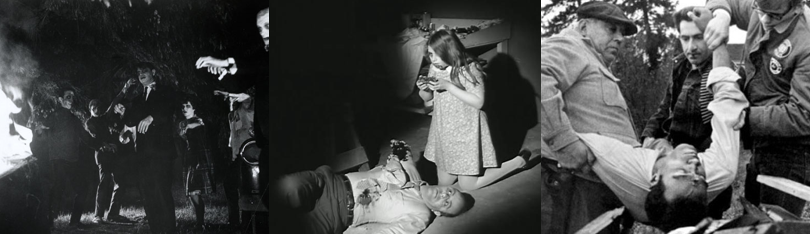
As Creepshow is an anthology film comprised of five short stories and a framing narrative to tangentially link them together, it’s just logical that I go over each one individually and then discuss the overall film. The prologue and epilogue reveal that Creepshow is a horror anthology comic with pulp horror stories and advertisements for prank toys like x-ray glasses and voodoo dolls. Billy Hopkins (an avid horror fan judging by his bedroom) loves the comic but is berated by his cruel and strict father, Stan (Tom Atkins), for wasting his time on such trash. When Billy dares to speak back to his father, he gets a smack for his troubles, much to the chagrin of his loving but ultimately helpless mother (Iva Jean Saraceni). When Billy tries to appease his father and apologise, Tom sees through the trick and demands that he give up his comics and horror, forcing him to go to bed and tossing Creepshow in the trash. Unbeknownst to him, there is inexplicable supernatural power in those pages as the comic’s skeletal host, the Creep, lingers outside Billy’s window as he wishes death upon his father. The segments that follow are then presented as adaptations of the comic stories, complete with the occasional comic book panelling and colour effects to tie everything together. Once they’re all finished, two garbagemen (Marty Schiff and Tom Savini) retrieve the comic from the Hopkins’ trash and find the voucher for an “authentic” voodoo doll removed. Inside the Hopkins residence, the still grouchy and aggressive Tom complains of neck pain before experiencing stabbing pains all over. As Tom collapses in agony, Billy cackles gleefully in his bedroom as he repeatedly stabs at the voodoo doll, the image turning into the cover art for the next issue of Creepshow.
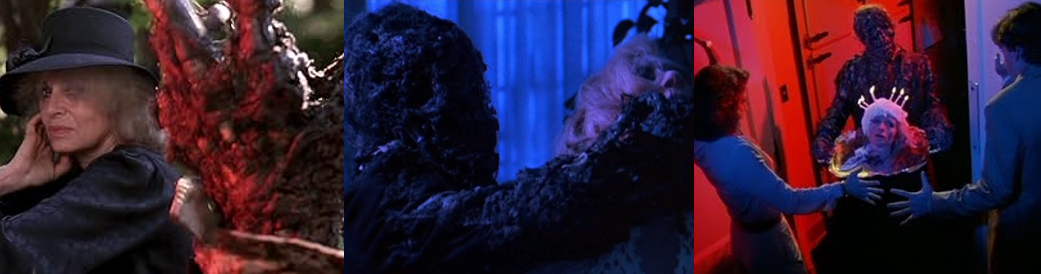
The wealthy Granthams are horrified when their patriarch reanimates and avenges himself upon them.

The first full-length story to spring to life is “Father’s Day”, which revolves around the filthy rich Grantham family. Every year, Sylvia (Carrie Nye), gathers the family for a special dinner. This year, her niece, Cass Blaine (Elizabeth Regan), brings her husband, Hank (Ed Harris), to meet her condescending aunt, her self-absorbed cousin, Richard (Warner Shook), and her great aunt, Bedelia (Viveca Lindfors). Between criticising Cass’s healthy appetite, Sylvia nonchalantly tells Hank that Bedelia, the family matriarch, once murdered the disgustingly wealthy and miserly Nathan Grantham (Lormer). Having accumulated vast wealth through unscrupulous and criminal means, the aged patriarch became aggressive, demanding, and paranoid, believing everyone was using him for his fortune and making constant, abusive demands of Bedelia, who was forced to care for him and endure his belittlement. Bedelia finally snapped after her father orchestrated the death of her fiancé, the only man who’d shown her any kindness, to keep her in check. Unable to take her father’s barrage of insults and childish demands for his Father’s Day cake, Bedelia cracked him in the head with an ash tray. Though free of Nathan’s abuse, Bedelia remained scarred and traumatised, placing a flower at his gravesite every Father’s Day. While drunkenly reminiscing about the murder, (which Sylvia helped cover up to profit from her inheritance), Bedelia is horrified when her father’s gaunt, gruesome corpse suddenly bursts from his grave and throttles her to death, still slurring demands for his cake. While having a smoke, Hank wanders into the family cemetery and ends up crushed when the zombified Nathan telekinetically drops a gravestone on him. When Cass expresses concern for her husband, Sylvia begrudgingly volunteers to look for him (hinting at her desire to seduce him), only to end up with her head twisted backwards by Nathan. Impatient and frustrated, Cass demands the lackadaisical and half-cut Richard help search for their missing party, only to be appalled when Nathan’s ghastly, maggot-ridden corpse bursts from the kitchen and proudly presents his cake: Sylvia’s severed head on a silver platter, covered with frosting and candles!
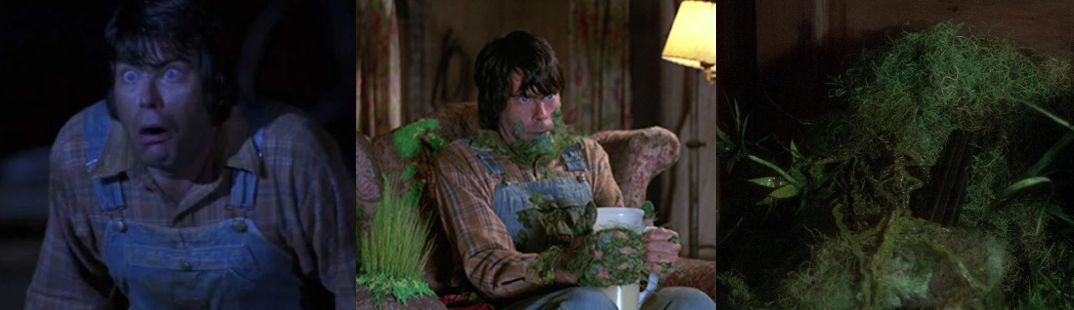
Unlucky halfwit Jordy is transformed by alien vegetation due to his stupidity.

Stephen King takes centre stage in “The Lonesome Death of Jordy Verrill” as the titular, dim-witted, hillbilly farmer. After being amazed by a falling meteorite, Jordy investigates and, dreaming of collecting a cool $200 from the “Department of Meteors” at the local college, touches the red-hot rock without thinking. Jordy’s dismayed at his characteristic bad luck and thinks he’s cost himself a payday when he tries to cool the meteorite and it cracks and is so preoccupied by his overactive imagination that he misses the strange goo that spills from the rock and touches his skin. Retreating home, hoping to repair the meteorite in the morning, Jordy enjoys a beer and some wrestling, sucking his fingers out of habit, but is perplexed and horrified to find a strange, green vegetation growing there. Though he immediately thinks to call a doctor, he stops himself when he imagines it leading to a painful amputation and resolves to simply ignore the problem. As the night continues, the vegetation rapidly spreads across his land, his house, and his body, causing him dreadful itching and to drink himself into a stupor after seeing the vegetation consume his face. Unable to take the itching, Jordy tries to relieve his discomfort with a bath, only to be inexplicably warned against it by his deceased father (Bingo O’Malley), who warns that water will only feed his condition. Realising that he’s beyond help anyway, Jordy gratefully plunges into the bath for some momentary relief but, by the morning, his entire farm, house, and body are consumed by the alien vegetation. Despite the short opting for bizarre, dumbfounded comedy, the finale is unexpectedly grim and emotional as the transformed Jordy cocks his gun, prays for some good luck for once in his life, and blows off what used to be his head. While this ends his torment, the alien vegetation continues to spread beyond Jordy’s land, potentially spelling doom for humanity.
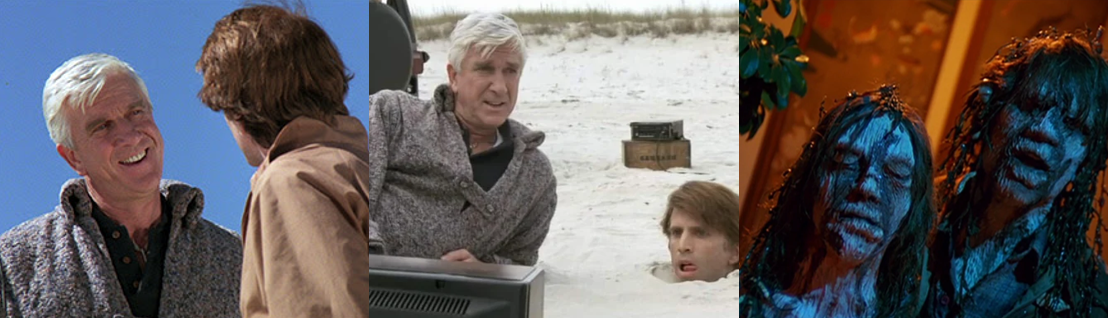
Psychotic spurned husband Richards finds his revenge revisiting him in the form of drowned ghouls!

If you’re anything like me, you’ll be surprised to see the late, great comedy actor Leslie Nielsen delivering a seemingly uncharacteristic performance as maniacal, spurned millionaire Richard Vickers in “Something to Tide You Over”. In actuality, Nielsen started his career in more dramatic roles, though his comedic flair seeps through here as Richard is disturbingly jovial and avuncular in his vengeance. After learning that his wife, Becky (Gaylen Ross), is having an affair with square-jawed Harry Wentworth (Danson), Richard visits Harry, coldly dismissing his feelings and simply looking to assert his right over his property. Unimpressed by Harry’s threats, Richard lures his rival to Comfort Point, a private beach he owns, where he implies Becky is in danger. Since he has no choice, Harry makes the trip, only to find a shallow grave in the sand, which he’s forced into at gunpoint by the menacingly aloof millionaire. Harry’s forced to bury himself neck-deep in sand and to watch a live feed of Becky in the same position, slowly succumbing to the tide as it washes over her. Dismissing Harry’s pleas and bribes, Richard simply drives off, watching with glee from his high-tech home as the two struggle to hold their breath. While a glimmer of sanity seems to suggest Richard has some remorse for his actions, a stiff cocktail quickly alleviates such emotions and he dispassionately returns to tidy up the crime scene hours later, sure that his victims were washed out to sea. However, Richard is stunned when Becky and Harry return as drenched, shuffling revenants bent on revenge. Though initially nonplussed and confident his pistol can hold off the ghouls, Richard’s reduced to a cackling, terrified wretch as the two shrug off his assault and use their supernatural powers to grab him, subjecting him to the same fate they suffered and leaving the raving lunatic to see just how long he can hold his breath.
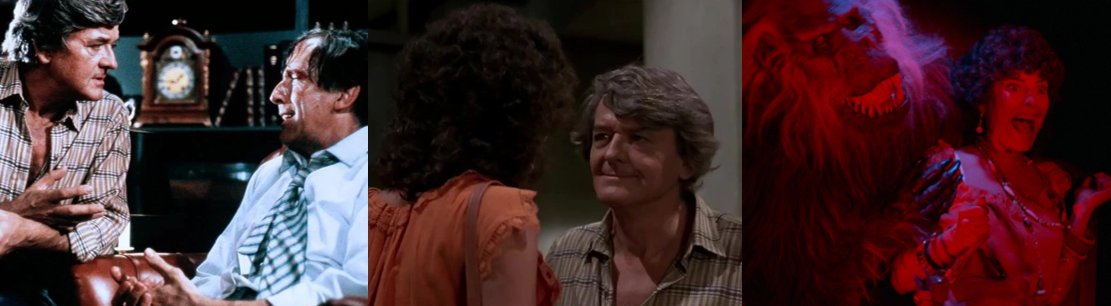
The crate’s ravenous inhabitant represents the perfect chance for Henry to off his abusive wife.

“The Crate” is easily the longest segment and centres on good friends Dexter Stanley (Weaver) and Henry Northrup (Holbrook), professors at Horlicks University. Meek and mild-mannered, Henry daydreams of murdering his emotionally abusive, borderline alcoholic wife, Wilma/Billy (Adrienne Barbeau), who frequently belittles and embarrasses him in front of his friends. Though Dexter feels for his timid friend’s predicament, he’s powerless to intervene, but this drama is superseded when university janitor Mike Latimer (Don Keefer) discovers a mysterious crate hidden under a basement staircase. Though apparently originating from an Arctic expedition, the crate is a mystery to Dexter, who forces it open and is horrified when the bizarre, voracious ape-like “Fluffy” (Darryl Ferrucci) bursts out and devours Mike’s hand (and then the rest of him!) Fleeing, the shellshocked Dexter babbles of the horror to a passing graduate student (Robert Harper) who, first sceptical and then curious of the creature, is promptly mauled and dragged off by Fluffy, which returns to its crate after each kill. The half-mad Dexter shares the gory story with Henry, begging him to help dispose of the creature in a nearby quarry. Though loyal to his clearly traumatised friend, Henry sees this as the ideal way to dispose of his abusive wife and promptly drugs Dexter, clears up the crime scene, and lures Billy to the university on the pretence of helping a young girl who’s been assaulted by Dexter. Eager to both mock the girl’s ordeal and further demean Henry, the tanked-up Billy races over and, suspecting nothing from her meek husband, willingly enters the creature’s hovel without fear. Seizing his opportunity, Henry finally enacts his fantasies and desperately calls for the monster to awaken and kill his wife, only to be met with silence and a barrage of insults from Billy. Just as she’s done criticising his manhood, Fluffy pops out to feed. Though disgusted, Henry finds the courage to reseal the crate and dump it (and the bodies) in the quarry as Dexter suggested. Despite some apprehension, both men agree to stay quiet, though henry’s insistence that the ravenous creature has drowned turns out to be false when we see Fluffy tearing through the submerged crate.
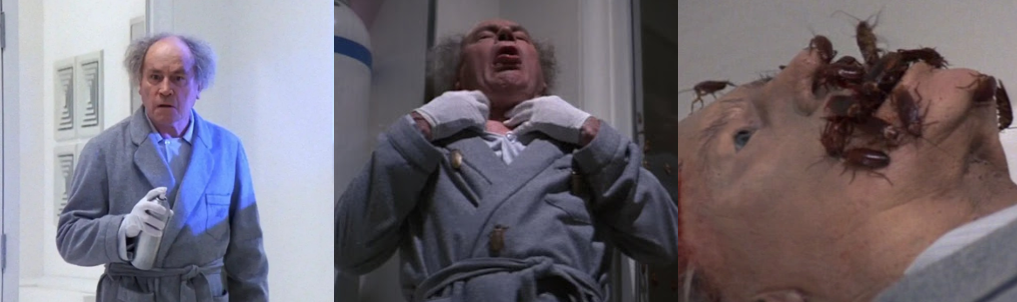
Cruel germaphobe Pratt gets his comeuppance when he’s set upon by a swarm of cockroaches.

The final story, “They’re Creeping Up on You!”, forces us to share about twenty minutes with uncompromising, belligerent, and extremely wealthy businessman Upson Pratt (Marshall), a germaphobe who lives in a sparse, air-tight penthouse apartment and conducts all his business via telephone and computers. Pratt begins the story battling a cockroach infestation, spraying and stamping the bugs, demanding an exterminator, and threatening to rob people of their livelihoods if his demands are not met. Pratt is delighted to learn that his company’s recent successful corporate takeover resulted in the suicide of his business rival, Norman Castonmeyer, and dismissive towards Norman’s grieving widow, Lenora (Ann Muffly). When Lenora blames him for her husband’s death and wishes all kinds of pain upon the cruel entrepreneur, Pratt simply laughs, having fended off such insults all his life just as effectively as he’s stamped out bugs. Still, Pratt is increasingly disgusted and troubled by the cockroaches, which appear in his food, his equipment, and soon swarm throughout his apartment during a blackout. Having insulted an alienated anyone who could help him, Pratt never wavers in his desire to avenge himself on those who have subjected him to the infestation but is soon overrun by persistent bugs. In his panic, Pratt flees to a more secure panic room only to be mocked by another call from Lenora, who wishes death upon him, and promptly suffers a fatal heart attack upon seeing cockroaches scuttling around his bed. When the blackout lifts, the aggrieved, unsympathetic building handyman (David Early) stops by to check on the unresponsive Pratt. While the cockroaches seem to have disappeared, perhaps vanished now Norman’s death has been avenged or being manifestations of Pratt’s isolation and paranoia, they soon burst from his corpse, tearing through his skin and enveloping his shredded remains.

The Nitty-Gritty:
Although Creepshow offers a unique premise, with its segments being stories in a comic book, the comic book hook isn’t used much. Sure, some shots are framed by comic book panels, actors are rendered against colourful backdrops, and each story fades into an artist’s depiction of the ending, but it’s a tangential link, at best. While the Creep is a questionable animatronic creation, he has a fun, creepy design and it would’ve been nice to see him (and/or Billy) thumbing through the pages of Creepshow and reacting to the stories between segments. The film is an interesting, if occasionally awkward, blend of horror and comedy, with “The Lonesome Death of Jordy Verrill” being the worst offender. I’d like to say King is doing his best but Jordy is such a cartoonish buffoon that it’s hard to take his plight seriously, what with his bizarre fantasises about college professors and doctors. This seems to be a bait and switch, however, as the segment has an unexpected and emotional conclusion where Jordy blows what can loosely be described as his head off, but it doesn’t land quite as well since he’s such a bizarre moron prior. Creepshow really has an issue with pacing, to be honest, as the film is way too long at just over two hours and some stories drag on needlessly. I can’t help but think “The Crate” could’ve easily skipped right to Mike and Dexter examining the titular crate and cut out much of the dull build up. Sure, it effectively paints Billy as an abusive bitch and Henry as a timid, put upon husband, but we clearly see that in every interaction they have and dwelling upon how awful Billy is takes too much focus away from the monstrous Fluffy. While it’s likely it was intentional to paint Fluffy as an afterthought as the true horror was Billy’s belittling and vindictive ways, this segment outstayed its welcome by tacking on an odd final exchange between Henry and Dexter.
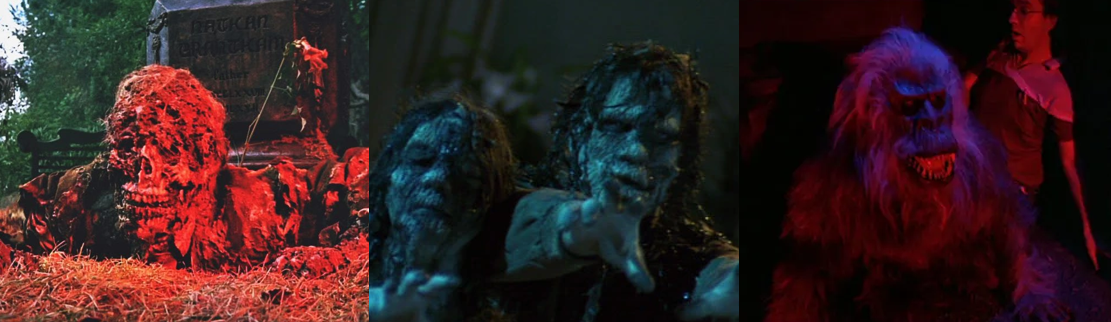
Though occasionally questionable, the practical effects are mostly gruesome highlights.

Even my favourite segment, “Something to Tide You Over”, suffers from uneven pacing. Richard’s threat and Harry’s awful predicament are well conveyed but things linger a little too long rather than focusing on Harry’s desperation and slow, painful death. It’s fun seeing Leslie Nielsen be such a despicable, crazed lunatic and there’s a fair bit of nuance to Richard as he shows glimmers of regret and madness throughout. The same can’t be said for Sylvia or any of the Grantham family, who were all obnoxious and thoroughly unlikable characters, or Pratt, who we delight in seeing tortured by the relentless cockroaches. While there’s not much gore in Creepshow and many of the scares are played for laughs, the practical effects are impressive. The squelching, zombified Nathan Grantham sets an early standard, rendering him as a grinning, rotting corpse who strangely exhibits telekinetic powers alongside superhuman strength, all while demanding his special cake. Harry and Becky’s waterlogged corpses are equally impressive, sporting sunken eyes, shrivelled features, and gushing bloody seawater when shot. Equally, the alien vegetation was really good in “The Lonesome Death of Jordy Verrill”, with grass, moss, and vines rapidly overtaking the simple-minded goon’s land, house and, most terrifyingly, his body. This is a slow process more akin to an infection than body horror, though the depiction of the fungus gradually consuming him and eventually transforming him into a vaguely humanoid grass man nicely tied into his desperation for relief from his suffering. Fluffy may be one of the most obvious hand puppets but it’s certainly a unique creature, being some kind of rabid monkey. It’s a little weird and incredibly convenient that it always returns to its crate and only attacks when it’s most dramatic, but Fluffy delivers the most gruesome gore of the movie as it claws, gouges, and bites at its victims.
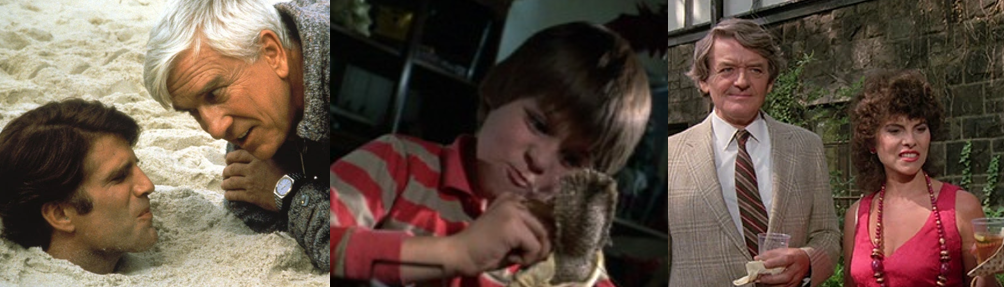
Despite some intriguing performances, the wraparound is bland and the pacing drags the film down.

“They’re Creeping Up on You!” was probably my second favourite of the segments (“The Crate” is just too long for me to rate it at number two), but it still felt lacking at times. Pratt is a suitably deplorable excuse for a human being and I enjoyed seeing him squirm and get increasingly agitated as cockroaches swarm his germ-proof apartment. There definitely seems to be a suggestion of the supernatural here, even knowing how quickly cockroaches can infest buildings, as they increase the more he belittles others and delights in the death and grief he’s caused. Lenora’s calls, especially her ominous final message, suggest she is putting a death curse upon him, or that her husband is enacting a gruesome and fitting revenge for all the pain Pratt’s caused. Although Pratt’s corpse is also quite obviously a highly detailed dummy, it was quite unnerving to see the cockroaches burst through his skin and envelop him, with this final segment certainly bringing more of a creepy vibe to the proceedings as opposed to the black comedy and unsettling atmosphere of its predecessors. There’s something deeply disturbing about the usually jovial Leslie Nielsen coldly describing what he plans to do to Sam Malone, forcing Harry to bury himself in sand at gunpoint and watch his lover struggle against the tide. Richard has a madcap nature to him that makes him extremely unpredictable, with him coolly commanding every situation with a few curt words and threats rather than physical violence. It’s tough to pick whether Nathan Grantham was more cruel and vindictive than Billy as both are aggressive, patronising, and demanding individuals who push their victims to breaking point, meeting fitting ends as a result (though Nathan’s so stubborn and malicious that he literally returns from the dead to get his Father’s Day cake!)
The Summary:
Although I’m a big fan of horror, horror comedies, comedies, and comic books, Creepshow missed the mark for me in many ways. It’s always to be expected that some segments in an anthology film will be stronger than others. Creepshow certainly offers a variety of stories, but the film is just too long and some segments really outstay their welcome rather than telling fun, gory horror tales. I liked that each one had a different flavour, from bickering families faced with a spiteful zombie patriarch to a spurned husband enacting a chilling revenge and a bizarre monster living in a box and ready to eat an abusive wife. The practical effects were an obvious highlight, with the rare instances of gore being quite shocking, the undead appearing very tactile and disturbing, and even the unconvincing Fluffy making an impression since it’s so weird and wild. I enjoyed seeing some famous faces pop up here, especially Ted Danson and Leslie Nielsen, though it might’ve been a mistake to give Stephen King such a prominent role. Jordy is so dim-witted he makes Tom Cullen seem like a genius (M-O-O-N, that spells “genius”!) and I felt the comedic buffoonery of the character really lessened the emotional impact of his transformation and suicide. Similarly, while it helps to build sympathy to see just how put upon Henry is, “The Crate” is crippled by its overly long run time, which is doubly disappointing considering most of the other stories deliver on their premise in an acceptable length of time. I enjoyed seeing the likes of Pratt and Richard get their comeuppance, and how different each story was, but the wraparound segments felt lacking to me as they didn’t capitalise on the unique aspect of the Creepshow comic book. Ultimately, I can’t help but feel a little dissatisfied with Creepshow, which maybe crams too much into its runtime to be as effective as other horror anthologies and definitely has a format that’s more suited to an anthology television show than the big screen.

My Rating:

Rating: 3 out of 5.

Pretty Good

How offended are you by my disappointment with Creepshow? Which of its short stories was your favourite? Do you agree that the pacing is off and it runs too long or were you satisfying by the length? What did you think to the special effects and sparing use of gore? Were you surprised to learn that Leslie Nielsen used to be a dramatic actor? Which of Creepshow’s sequels and counterparts is your favourite? Whatever you think about Creepshow, leave a comment, go check out my other horror anthology reviews and my guest spot on the Anthological podcast, and donate to my Ko-Fi to fund more reviews like this.

Movie Night [Day of the Dead]: Night of the Living Dead (1968)


The Day of the Dead (or Dia de los Muertos) is a traditional Latin American holiday on which, every November 1st, the lives of deceased loved ones are celebrated with food, drink, parties, and a great deal of masquerade involving the calacas and calaveras (skeletons and skulls). For me, this seems like the perfect excuse to look back on the long-running and ever-changing zombie genre that was largely popularised by director George A. Romero, which I devoted a great deal of my PhD thesis towards and which has often been used as a parallel to various aspects of society and culture.  


Released: 1 October 1968
Director: George A. Romero
Distributor: Continental Distributing
Budget: $114,000 to 125,000
Stars: Duane Jones, Judith O’Dea, Karl Hardman, Marilyn Eastman, and Kyra Schon

The Plot:
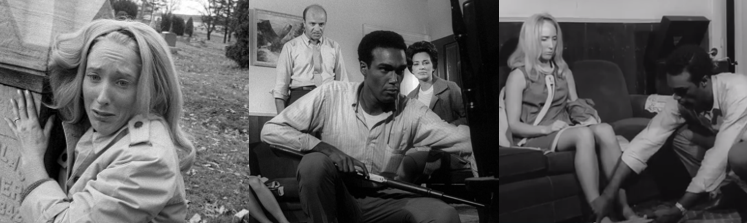
When the recently deceased suddenly return to life, traumatised Barbra (O’Dea) takes shelter in a farmhouse alongside pragmatic Ben (Jones) and antagonistic Harry Cooper (Hardman). With tensions rising and the walking dead closing in, the group struggles to survive, co-exist, and make sense of this strange phenomenon..

The Background:
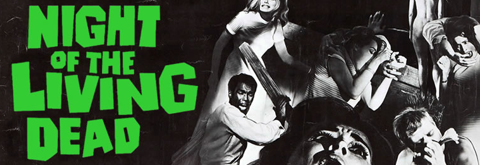
Ever since the 1930s, zombies have appeared in movies in one form or another, either as mindless slaves, voracious cannibals, or in their most famous form: the shambling undead. After growing bored with directing television commercials, George A. Romero and his friends, John Russo and Russell Steiner, decided to capitalise on growing trends for more bizarre content and produce a horror movie. Initially conceived of as a horror comedy about adolescent aliens, it was Russo who decided the creatures being flesh-eating reanimated corpses, which Romero infused with heavy inspiration from the macabre revolutionary themes of I Am Legend (Matheson, 1954) and its first screen adaptation, The Last Man on Earth (Salkow and Ragona, 1964). Although the role of Ben was written as a Caucasian, Duane Jones impressed Romero in his audition and the script was revised based on his input; his casting and portrayal inspired numerous racial readings and made the film surprisingly progressive for the time. The low-budget impacted the options available to the filmmakers; chocolate syrup, entrails from butcher shops, and simple make-up effects brought the gore and ghouls to gruesome life and, while simplistic by today’s standards, proved shocking and outrageous at the time. Despite the controversy it caused, Night of the Living Dead was a massive hit with its box office gross of over $30 million; although critics dismissed it at the time, Night of the Living Dead has since been regarded as a horror classic, one of the best of its era, and it was preserved in the National Film Registry in 1999. The film was not only followed by subsequent sequels (both official and unofficial) and (thanks to an agreement between Romero and Russo) a similarly-named adjacent series) that expanded and refined the zombie concept, but heavily influenced the portrayal of zombies for decades. Remade in 1990 to recoup some profit after legal issues saw the original become public domain, Night of the Living Dead is also the most remade film in history.

The Review:
When I decided to spend a year of my PhD discussing the original Resident Evil movies (Various, 2002 to 2016), I found myself deeply entrenched in the rich and lengthy lore of zombie cinema, tracking their origins as voodoo slaves in White Zombie (Halperin, 1932), their vampire-like depiction in I Am Legend and the first of its many adaptations, The Last Man on Earth, and, of course, charting the history of Romero’s genre-defining depiction of the living dead. I found that zombies are one of the most enduring horror creatures not just in cinema, but in mainstream media; they’ve been as persistent as they appear in movies, changing from shambling ghouls to rage-filled savages, and continue to be popular inclusions in horror media thanks to how versatile they are. Honestly, though, this kind of research and in-depth exposure to zombie cinema kind of ruined my appreciation for zombie movies; many are low-budget, derivative affairs or simply repeat the same lessons established by Romero decades ago, meaning it can be hard to find quality zombie movies. Although well renowned as the grandfather of this sub-genre of horror, Romero’s first effort in bringing zombies to un-life is fraught with issues, ranging from the obvious low budget and stilted performances to inconsistences in the portrayal and behaviour of the titular living dead as these aspects wouldn’t be refined until the far more visually and philosophically interesting (but, blasphemously, still quite tedious, in my opinion) sequel. I also feel compelled to specify here that I’m looking at the black and white original rather than the many different re-releases or the bastardised colour version, simply to give my thoughts on Romero’s original vision as depicted so controversially decades ago.

Unlike Ben, who takes charge as a resourceful leader, Barbra is little more than a traumatised mouse.

We open with Barbra and her brother, Johnny (Russell Streiner), reaching the end of a regular 200-mile round trip to place a wreath on their father’s grave at the behest of their mother. Johnny, exasperated at regularly having to waste his days commemorating a man he barely even remembers, just wants to get back home and stop throwing away good money for sentiment. While Barbra is happy to make the trip and thinks fondly of her father, Johnny has no time for lingering and amuses himself by teasing Barbra since she’s still scared by cemeteries. Indeed, Barbra’s previous resolve in chastising Johnny’s attitude falters when he starts bullying her, but they’re both horrified when a strange, shambling man (Bill Hinzman) suddenly attacks them. Although Johnny bravely (if awkwardly) tries to fight the man off, he ends up bashed into a gravestone, leaving Barbra fleeing in terror. After…somehow…crashing her car, Barbra is forced to take refuge in a nearby farmhouse; though she arms herself with a knife, she’s unable to call for help due to mysterious interference on the line but, luckily, Ben shows up and immediately takes charge. If you’re hoping for a strong, capable female lead then you’re out of luck, Barbra is so crippled by fear that’s practically catatonic, sleepwalking through the rest of the film and completely giving into despair while Ben is forthright and bravely tackles the ghouls with a tyre iron. Although he’s just as scared as her, his thoughts are on practical matters such as food, lights, and arming himself with a rifle; Barbra’s distressed state aggravates him, but he keeps his cool and puts her to work helping to secure the house against further attacks to await rescue. Eloquent, intelligent, and charismatic, Ben hides his fear and confusion behind productive tasks and narrating his observations and the horrors he’s seen aloud, something he’s forced to do since Barbra too shocked to be much conversation. When Barbra descends into hysteria, so desperate to save Johnny that she almost runs out into further danger, Ben’s forced to physically subdue her to keep her calm, allowing him to finish fortifying the house and glean insight into the crisis from a radio broadcast.

Tensions rise between the survivors, who are faced with a clash of ego and the undead.

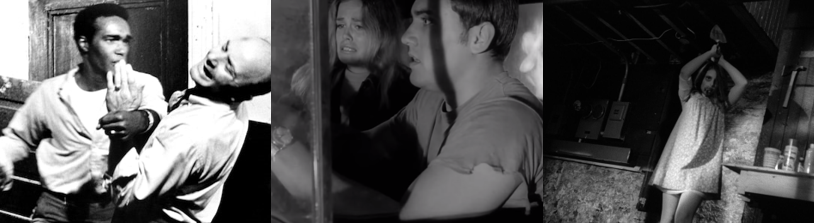
Considering it takes Ben some time (presumably a couple of hours) to finish fortifying the house, it comes as a surprise to both them and the audience when other survivors emerge from the cellar. Naturally, Ben is incensed to learn that Harry, his wife and daughter, Helen (Eastman) and Karen (Schon), and lovers Tom (Keith Wayne) and Judy (Judith Ridley), chose to hide rather than investigate the screaming and commotion. Ben’s natural instinct is to help people, no matter the danger, whereas Harry reasoned it wasn’t worth risking their lives and their safety helping others. Having witnessed the strength and tenacity of the ghouls, Harry is adamant that they’re all safer in the cellar, regardless of the fortifications, and both make valid arguments since the cellar allows them to better fend off attacks, but the house gives them a fighting chance and more escape routes. Tom does his best to play peacekeeper, but Harry stubbornly refuses to listen to reason, primarily due to fear, his shame at feeling said fear, and a deep-seated need to protect his family. Although the ghouls briefly breaking through the windows seems to prove Harry’s point, he’s aggrieved when Ben refuses to share any of the upstairs food or resources; it seems Harry wants it both ways, but Ben firmly draws a line and delivers a stern ultimatum: “You can be the boss down there. I’m boss up here”, enraging the overprotective and stubborn father. Taking his chances upstairs, Tom has the anxious and caring Judy join them while Harry barricades himself and his family downstairs out of a pig-headed fixation on being “right”. Weary of his bullish ways, Helen echoes Ben’s remarks about Harry’s shortsightedness, which cuts them and their sick daughter off from information and potential rescue. Like Tom, she emphasises co-operation and compromise, allowing them to trade places with Judy to learn more about the crisis, though he continues to rile Ben up with his antagonistic and cynical attitude. Helen is encouraged by news of rescue centres nearby and Ben devises a plan to hold off the ghouls with flaming torches so they can refuel his truck and get medical help for Karen, but the plan goes horribly awry, resulting in Tom and Judy’s fiery deaths, and Ben unloads his rage onto Harry when he refuses to let him back into the house, leading to the two tussling for the rifle.

Night established and popularised many of the characteristics of zombie media.

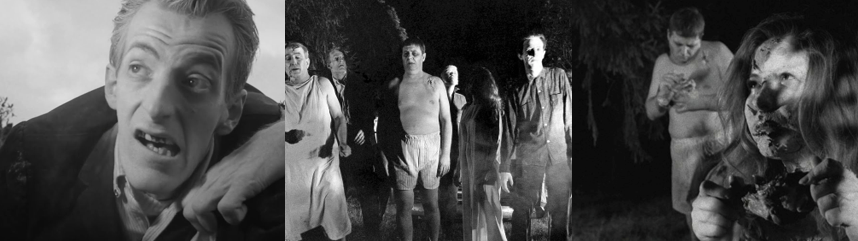
In their first appearance, Romero’s living dead are noticeably different to what we’d see in his sequels and subsequent zombie media. The first thing to note, of course, is that the living dead are never referred to as “zombies”; this term would be as fastidiously avoided and mocked as Romero’s opinions on running zombie variants, meaning the living dead have more in common with Matheson’s interpretation of vampires than the brain-devouring zombie of mainstream imagination. Consequently, the living dead are referred to as anything but zombies; described as “ghouls”, “things”, “them”, and “assassins”, the living dead are also noticeably less gruesome than in later movies, potentially because the zombie outbreak is so recent and the undead so freshly turned. Similarly, Romero avoids explaining the sudden return of the living dead; a news report speculates radiation from an exploding space probe, but divine will is also implied (Johnny mocks Barbra’s prayer and admits to no longer attending church, and is the first to die). The zombie outbreak is treated as a sudden and confusing attack, almost like an epidemic; at first, characters ignore or mock the signs but they’re soon relying on radio broadcasts for scant information and how to combat the voracious ghouls. Night of the Living Dead establishes the basic rules of the undead: for whatever reason, the recently-deceased return in a near-mindless state, driven only by the need to consume human flesh. Rather than infecting people, their bites simply expedite the deaths of their victims; because of radiation from the Venus prove, anyone who dies will then reanimate with a taste for murder and cannibalism. Though slow and shambling and driven back by fire, the ghouls are incredibly persistent and dangerous in large groups; they can only be permanently put down with a blow to the head, destroying their brain, or removing the head entirely, and people are encouraged to forgo proper funeral procedures and immolate the corpses as soon as possible. Unlike most iterations of zombies, however, the ghouls are decidedly less monstrous here; many are more like entranced slaves or crazed maniacs, meaning they can use tools or rocks where brute strength fails and young Karen even uses a trowel to stab her mother to death rather than going for the jugular as you might expect.

The Nitty-Gritty:
There’s a certain classic charm to revisiting the old black and white horrors of yesteryear; everything has a distinctly old-timey and almost gothic atmosphere, which is only extenuated by the greyscale visuals. Yes, it does make some of the night-time action difficult to make out and it’s not for everyone, but I always appreciate this era of cinema as it evokes feelings of nostalgia and appreciation for these filmmakers, who did the best they could on a limited budget and with the technology of the time and, in many cases, pioneered filmmaking effects that we still see in cinema to this day. Even in this first tentative outing for the living dead, Romero positions the ghouls as social commentary; their mindless, savage, almost primal nature explicitly reflects the dichotomy between the survivors, particularly Ben and Harry, who constantly butt heads. There’s a startling message related to this through the simple depiction of the ghouls co-existing and even working together, despite being incapable of communication, to problem solve and better devour their prey; in contrast, the survivors are equally unable to communicate due to fear, tension, and ego and absolutely incapable of working together for these same reasons. It’s these emotional responses that see other survivors uniting against their monstrous foes as a paranoid, trigger-happy mob that’s as inhuman as the ghouls they target, creating a thematic parallel that begs the question who the real monsters are, us or “them”? Naturally, you can read into this even further thanks to Ben being a Black man; though the most level-headed and practical, he’s met with suspicion (even from Barbra, initially) and hostility, which opens itself up to racial prejudice due to his skin colour and Harry’s overly aggressive demeanour, and the ghouls are also framed as being this unknowable threat not unlike  foreign invader that “normal” folk struggle to understand and fight back against with extreme prejudice.

Despite surviving the horrifying night, Ben is callously shot dead as humanity blindly fights back.

Although Johnny’s death is disappointingly lame and bloodless, the suddenness and brutality of is where the true horror lies; still, Night of the Living Dead contains a fair amount of gore, including a partially mangled (presumably eaten) corpse in the farmhouse, some rudimentary decomposition effects, a surprising amount of flaming bodes, and sickening scenes of ghouls feasting on Tom and Judy’s entrails and chargrilled flesh. Still, Night of the Living Dead focuses more on tension and both internal and external threats. Although Harry covers their exit with Molotov cocktails, he takes advantage of the situation to claim dominion over the entire house. Unsurprisingly, given they’ve been measuring dicks the entire time, Ben fights him for control of the only gun, resulting in Harry being fatally shot due to his hubris. Having succumbed to her injuries, Karen reanimates and feasts on her father’s body before stabbing her mother to death. As she and the other ghouls close in, Barbra finally snaps out of her stupor, only to be dragged into the writhing masses by Johnny, and this irony is quickly followed by Ben, the sole survivor, being forced to take refuge in the cellar when his barricades fail. After putting down the reanimated Harry (which seems as much out of spite as it for survival) and Helen, Ben waits it out and survives the night; since the ghouls go down pretty easily when you have the right weapons, the danger seems to be mostly contained by the authorities and gun-toting locals, who pick the living dead off with ease. When they come to dispatch the ghouls near the farmhouse, Ben emerges from the cellar, attracted to the gunfire, but his caution proves his undoing; since he’s skulking around in the darkness, he’s mistaken for a ghoul and promptly executed on the spot. As the credits play, his body (and those of all the characters, ghouls and human alike) is dispassionately dumped onto a bonfire and burned in one of the bleakest endings in all of horror cinema.

The Summary:
There’s a reason Night of the Living Dead is considered a horror classic and the forefather of zombie media. A low-budget affair that made the most of its resources, the film is a bleak mediation on humanity; simple ideas such as co-operating, coming together in a crisis, and working together to overcome an aggressive foe are present and resonate even to this day, where we’re more likely to turn against each other than set aside our differences. Although not as explicit as in his later movies, the ghouls are clearly utilised as an allegory for these matters, and various others; the fear and inevitability of death, the danger of the unknown, the savage nature of man are all valid readings of Night of the Living Dead.  It’s also incredibly progressive in terms of Black representation; Ben is a keen, intelligent, and proactive survivor haunted by what he’s seen but determined to help others and make a fighting stand until rescue comes. While he can be as abrasive as Harry, his stubborn demeanour comes from a place of logic and reason and he’s constantly trying to increase their chances of survival, only to be met with pig-headed resistance. Harry might be an asshole, but you can see where he’s coming from; he’s scared and wants to protect his family, even if it means sacrificing others. Sadly, Helen (and women in general) don’t fare quite as well; portrayed as meek and generally useless, women just kind of get in the way or are oppressed and bossed about rather than contributing anything meaningful, though this does allow discussions about gender equality and machismo. Night of the Living Dead also established many of the “rules” for zombie cinema; although its ghouls aren’t as monstrous as later zombies and are more like entranced slaves, there’s a mystery and a danger to them when they gather in large numbers against vulnerable victims. However, it’s true that the film hasn’t aged very well; the performances and some themes are questionable, and there have been better zombie movies made since (by Romero himself, no less) that both overshadow this one and expose its flaws, though it remains recommended viewing for any fans of the genre, for sure,

My Rating:

Rating: 3 out of 5.

Pretty Good

Do you consider Night of the Living Dead a classic of the genre? Were you surprised to see a Black man take such a proactive role? What did you think to the tension and rivalry between Ben and Harry? How did you interpret the ghouls and what did you think to their characterisation here? What do you think caused the zombie outbreak and how do you think you would react in such a scenario? What is your favourite zombie film and what do you think of the genre in general? How are you celebrating the Day of the Dead today? Whatever your thoughts on Night of the Living Dead, and zombie films in general, feel free to leave a comment below or leave your thoughts on my social media, and check out my other zombie content across the site.

Talking Movies: George A. Romero’s Resident Evil

Talking Movies
RomeroEvilLogo

As part of my PhD thesis, which revolved entirely around live-action and animated adaptations of videogames, I decided to dedicate an entire chapter to the Resident Evil films. Helmed by director Paul W.S. Anderson, these six movies largely veered quite far from the source material, only including popular franchise characters and situations when it was deemed necessary and financially lucrative. While I, personally, have come to loathe the series (with the exception of Resident Evil: Apocalypse (Witt, 2004), purely because it’s the closest adaptation of any of the Resident Evil videogames) because of Anderson’s insistence on pushing star and wife Mila Jovovich over recognisable videogame elements and his blatant disregard for the shitty continuity he created, they nevertheless reaped over $1,233million in worldwide gross over six movies. This, whether I or any one else wants to admit it or not, makes the Resident Evil films the most successful live-action adaptation of a videogame franchise to date.

While researching Anderson’s Resident Evil franchise, I discovered that the first movie was mired in a tumultuous period of development hell. Before Anderson was given the reigns to the survivor-horror videogame franchise, legendary grandfather of the zombie genre, George A. Romero, was offered the chance to direct a feature film adaptation. Although not a videogame fan, Romero’s 1998 script, available to read here, was produced from a screen story by himself and Peter Grunwald and is surprisingly closer to the aesthetic style and atmosphere of the original Resident Evil videogame than Paul W.S. Anderson’s eventual 2002 film. However, the script contains many issues that, rather than being addressed in subsequent re-drafts, were ignored in favour of a complete overhaul. These range from clichés often closely associated with Romero, to a close, almost uninspired fidelity to the source material. In this article I’ll go through the script and describe some of the plot points and characters and talk a little bit about how Romero’s efforts differed from those seen in Resident Evil.

RomeroEvilChrisJill2
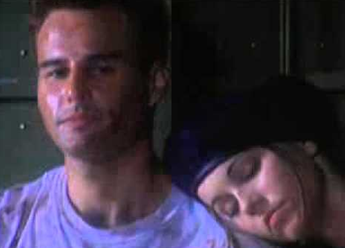
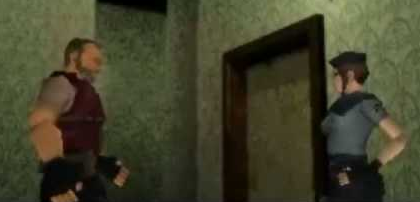
Chris and Jill are at it in Romero’s script.

Like the videogame, Romero’s script features Jill Valentine and Chris Redfield as the central protagonists. Jill is largely similar to her videogame counterpart, being somewhat overwhelmed by the events surrounding her, rather insubordinate to her superiors, yet militaristic and direct in her actions and capabilities. Chris, however, undergoes a significant alteration; rather than being a member of Special Tactics and Rescue Service (S.T.A.R.S.; here a military organisation rather than being associated with the Raccoon Police Department), Chris is depicted as a “part Mohawk” Native American who has strong ties to the Arklay land and a close association with nature. As part of her cover story, Jill initiates a sexual relationship with Chris in order to gather intelligence on the Arklay Mountains and the mansion where the Tyrant-Virus (T-Virus) outbreak occurs; Chris is swept along due to his need to find answers concerning both the infected and Jill’s betrayal. These alterations are apparently intended to make Chris the voice of reason among the other S.T.A.R.S. members, who mostly follow orders or are concerned with their own survival rather than the implications the T-Virus has on natural life. Chris’s capabilities are severely downgraded from his videogame counterpart and he spends the majority of the script brandishing “an old Winchester rifle” in contrast to the well-armed S.T.A.R.S. members.

RomeroEvilSTARSMansion
The entire S.T.A.R.S. team is represented in Romero’s script.

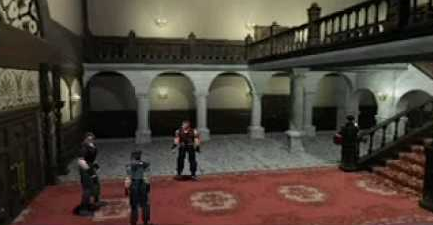
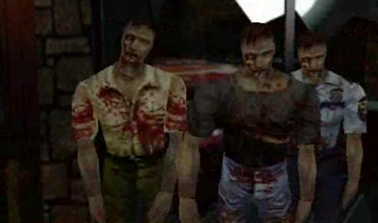
Jill’s Alpha Team, made up of Russo, Williams, and Disimone, is quickly massacred, leaving Jill the only survivor. Albert Wesker leads Bravo Team, twelve additional commandos (including Barry Burton, Brad Vickers, Rebecca Chambers, Richard Aiken, Kenneth Sullivan, Rosie Rodriguez, Forest Speyer, and Laguardia) to assist, and they are immediately beset by zombie dogs and forced into the mansion, as in Resident Evil (Capcom, 1996). Wesker and Barry are portrayed as old friends, almost like brothers; Rodriguez, ironically much like Michelle Rodriquez’s Rain from Anderson’s film, is a trash-talking tough girl, while Rebecca is a nearly non-existent and inconsequential medical officer. Nevertheless, they closely resemble Resident Evil’s S.T.A.R.S. members rather than being entirely original characters as in Anderson’s film, yet Anderson’s Umbrella Special Forces Commandos fill a very similar role.

RomeroEvilPuzzle
The characters still have to solve Resident Evil‘s trademark puzzles.

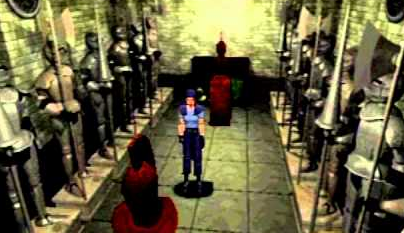
Wesker also serves as Romero’s principal source of exposition as he relates the mansion’s history, the experiments being performed there, and their mission to rescue Dr. John Marcus and recover key research data. Much of this dialogue is mirrored by the Red Queen (Michaela Dicker) and serves as blatant exposition, sandwiched between moments of gore-filled action, reading very much like the videogame’s passive cutscenes. The team also navigates the mansion using various coloured key cards, solving some familiar puzzles involving grandfather clocks and crests, and utilising a map similar to the computerised system seen in Anderson’s adaptation. These aspects, excised completely from Anderson’s films, are depicted as security measures built in by the mansion’s eccentric architect, yet they make the mansion much bigger than usually depicted in order to encompass the script’s large, shifting labyrinth-like rooms and puzzles, and the decision to replace these with Anderson’s more practical key card/password system seems a wise and realistic aesthetic decision, especially considering the majority of Resident Evil’s puzzles simply provide keys to open new areas.

RomeroEvilChrisWesker
Chris really hates Wesker in this script!

Depending on the avatar, either Jill or Chris can go missing after S.T.A.R.S. take refuge in Resident Evil; in Romero’s script, both Jill and Chris rendezvous with S.T.A.R.S. at different points to reference this, with both eliminating multiple zombies along the way. Though Jill and Chris both exhibit an uncharacteristically aggressive disrespect for Wesker (Resident Evil depicted both as frustrated by Wesker’s secrecy but nonetheless trusting him until the finale), Chris is far more vocal, turning his confusion into anger at the events which have left his homeland a bloody mess. He directly blames Wesker for these events, and Jill for her betrayal, and he continues to butt heads with both throughout their investigation. Romero’s script draws principally from Resident Evil alone –Resident Evil 2’s (Capcom, 1998) only influences are the mysterious, bloodcurdling, roar echoing throughout the mansion similar to G’s and Ada Wong (albeit as a scientist who assisted in developing the T-Virus and delivering yet more superfluous exposition, rather than being a double agent).

RomeroEvilBOWs
All of the game’s BOWs appear!

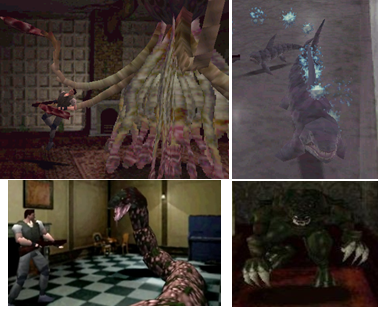
The mansion is beset by Plant 42’s destructive growth, infected sharks, a giant snake, and even the murderous Hunters, all lifted directly from the original videogame, and showcasing the scale of Umbrella’s research and the impact of the T-Virus beyond “simply” reanimating dead tissue. Whereas the exact implications of the T-Virus in Anderson’s films is left mostly unclear, Romero’s script openly lifts its purpose – to create nigh-indestructible bio-organic weapons (BOWs) for use in warfare – from the videogame, while this only become relevant in Anderson’s films after the T-Virus was released in the Hive.

RomeroEvilTyrant
The Tyrant is the big bad of Romero’s script.

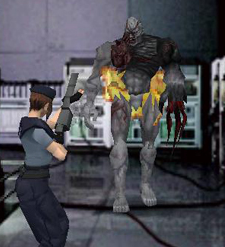
This research culminates in, like the videogame, the Tyrant, and its subsequent rampage mirrors the closing moments of the videogame very closely. By including these creatures, most of which are rather large, complicated, and cumbersome entities, the budget for Romero’s vision would conceivably far exceed that of Anderson’s originally far more low-key, fixed approach; in Resident Evil: Apocalypse’s director’s commentary, he claims that the Licker was only included in the final stages of the first film’s development, implying that the film lacked even that lacklustre “final boss”. Additionally, the script’s extremely graphic depictions of zombie and creature attacks, with victims being ripped apart and torn open and copious gore that mirrors Dawn of the Dead (Romero, 1978) and Day of the Dead (ibid, 1985), takes it far from an R-rating. Although these comparisons are not only fitting due to the influence Romero had on the creation of Resident Evil but also his involvement in the script, they were clearly at odds with the film studio and Capcom, who desired a more manageable budget and wider audience range, which is also at odds with Romero’s surprising faithful adaptation.

RomeroEvilWeskerOne
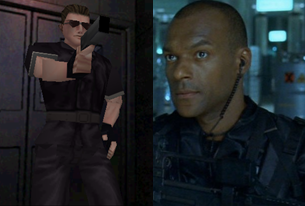
One takes on the script’s characterisation of Wesker.

In addition to incorporating more recognisable Resident Evil elements, Romero is not shy about self-gratification: characters draw comparisons to Night of the Living Dead (ibid, 1968) and call zombies “ghouls”, and the increased emphasis on both military presence and Umbrella’s surreptitious nature is extremely similar to the military’s depiction in The Crazies (ibid, 1973). Romero’s cynicism regarding government and corporate power is reflected in Wesker’s superiors being devoid of personality and appearance: “We see no faces. But expensive watches, sleeves with high-ranking stripes, indicate wealth, power, and a military presence”. Wesker’s depiction is much more military-orientated; his focus on the mission and barking orders reflects this, and it is easy to see how his characterisation could have evolved into One (Colin Salmon). Seemingly the only line of Romero’s to reach Anderson’s is “we live here now”, originally delivered by Rodriguez throughout the script in extraneous reference to her childhood. While the line becomes over-emphasised and is far from relevant in Romero’s script, when delivered by Rain it highlights the dire situation that she and the others are in. Romero’s closer adherence to gameplay mechanics is again evident in the conservation of resources; having been beset by enemies and rendered expendable, Wesker orders the division of ammo and supplies, mentioning that they came unprepared for the odds they face. While Anderson’s Commandos are similarly unprepared, they nevertheless enter the Hive fully equipped and fully armed; such resources allow the protagonists to gun down their zombie attackers without the fear of running out of ammunition, though their armaments are inevitably useless against the Red Queen’s defences. These, specifically the laser grid system, surprisingly appear in Romero’s script, though only as a quick jump-scare, with the true danger coming from the acidic steam the lasers trigger, which causes a gruesome death.

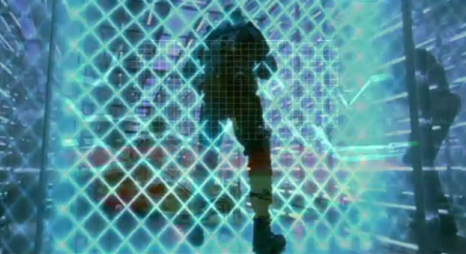
RomeroEvilLaser
Surprisingly, the famous “laser grid” is in this script.

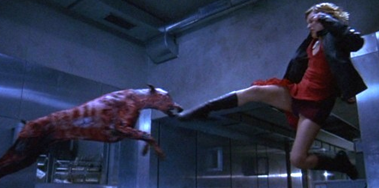
Thus, both Romero’s mutated creatures and Anderson’s laser grid serve the same ends – the deaths of minor characters, though Romero’s approach to this is much closer to the videogame than Anderson, who has often openly voiced his appreciation for the source material, as opposed to Romero, who largely dislikes videogames. Whereas in Anderson’s film, the lasers are significant, in Romero’s script they are glossed over in favour of an overly complex battle against Plant 42 and a mutated copperhead snake, both more suitable inclusions to a Resident Evil adaptation given their prominence in the videogame, yet clearly more expensive to incorporate than Anderson’s more subdued lasers. As S.T.A.R.S. navigates Umbrella’s laboratory, they are beset by Hunters, which are given an extreme durability upgrade. In Resident Evil, the Hunters were far stronger, faster, and more aggressive than zombies, providing an effective difficulty spike, yet they could still be dispatched using small arms fire (though close-range weapons like the shotgun were more effective). Romero’s Hunters are practically indestructible as their skeletal structure is protected by a metallic coating – the only effective tactic is to aim for their joints (an action that Resident Evil’s stiff, restrictive controls would not allow), and even then they continue their relentless pursuit, crawling and dragging themselves along the floor.

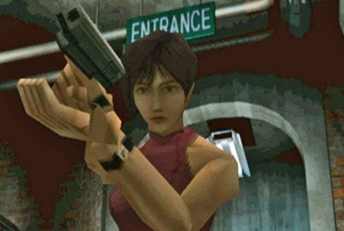
RomeroEvilAda
Ada also makes an appearance.

The survivors take refuge with Ada, who wishes to atone for her part in creating the T-Virus. Her videogame counterpart’s lost love, John, is amalgamated with Professor James Marcus, the videogame creator of the T-Virus, to become Dr. John Marcus, a markedly different character whose work Ada describes as being “for humanitarian purposes”, rather than specifically creating the T-Virus for military applications. This is pinned directly onto Umbrella, who corrupted Marcus’ research, and this concept was later explored through Resident Evil: Apocalypse’s Dr. Charles Ashford. Ada, far from her deceitful, untrustworthy, and sultry videogame counterpart, awkwardly explains the film’s events directly to the audience and the characters before the finale, rather than this information coming naturally. Ada’s attempts to keep Wesker out of D Lab are unsuccessful, as Wesker’s true motivations are revealed and he activates the Tyrant, confiding in Barry his intentions to retrieve the creature’s data, sell it to Umbrella, and split the money between himself and Barry as payback for Barry’s loyalty and friendship. Once Romero’s script enters D Lab, it closely follows the videogame’s finale, with Chris, Jill, and Barry openly opposing Wesker’s schemes and the Tyrant escaping and going on a rampage.

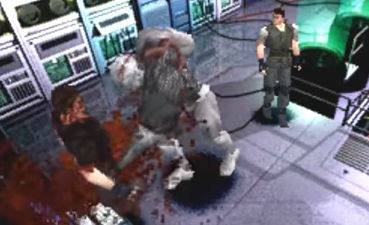
RomeroEvilTyrantWesker
This ended about as well as you might expect.

By not resorting to a mid-level enemy like the Licker for his finale, Romero’s conclusion is considerably augmented as the Tyrant is practically unstoppable. Its physical threat, imposing stature, unrelenting nature, and iconography as the classic Resident Evil final boss give the finale a danger and tension that we must be convinced of in Anderson’s finale as his Licker has to undergo a significant mutation into a less-recognisable version of itself in order to match the Tyrant. As in the videogame, the Tyrant tears Wesker apart during its rampage, although Romero’s script describes this death as being so total and horrific that it seems unlikely that Wesker could have revived himself as in the videogames. However, as this was retroactively introduced in Resident Evil – Code: Veronica (Capcom, 2000), Wesker’s gruesome death can be understood as being his much-deserved and overdue fate, rather than a deviation from the source material, as Wesker’s death seemed to be total and final in Resident Evil. As the final countdown to the destruction and eradication of all the evidence of the T-Virus takes place, the survivors are beset by zombies and infected crows, and forced to solve contrived puzzles to access a secret passage. The tension is somewhat numbed by these distractions; typically, Resident Evil players face relatively few enemies and some rudimentary but necessary puzzles while an ominous countdown flickers onscreen (like in Resident Evil 2 when players must activate an underground train to allow the survivors to escape) but few distractions that slow progress to a crawl, as in Romero’s script. Like the videogame, though, the final confrontation between the Tyrant and the survivors is short-lived, as a single Stinger missile is enough destroy it. This ending is more predictable than Anderson’s, which mirrored Resident Evil 2’s ending, but the specifics and fundamental impact deviated quite considerably due to Anderson’s belief that to simply copy the videogame eliminated any suspense or tension for Resident Evil veterans.

RomeroEvilJillSandwich
The script’s clunky dialogue can be worse than the original voice acting, if you can believe that!

Instead, Romero adheres closely to the source material’s finale, with the Tyrant dispatched almost identically and the final survivors escaping just as and the mansion explodes. Romero deviates by making this explosion powerful enough to eradicate Raccoon City, which has been overrun with zombies, effectively encompassing the ending of Resident Evil 3: Nemesis (Capcom, 1999) and seemingly eliminating the possibility of a direct sequel. Quite how the protagonists survive this is left unresolved, but the imagery suggests Romero intended on a big, gory, explosive finale, one that reads as being very abrupt and total rather than Anderson’s cliffhanger or the videogame’s various endings. Overall, there is very little doubt that Romero’s script is a very (very!) rough first draft; there are clear elements, such as dialogue and characterisation, which require re-drafts to make them less contrived, and the characters more three-dimensional. Largely, it ironically reads very much like the original Resident Evil videogame, with cheesy dialogue and awkward, flat characterisations. These issues were addressed in subsequent sequels and remakes, with the localisation improving over time and characters becoming more detailed and intricate. Thus, it is not too unbelievable that Romero’s script could have been improved and the constant repetition of “we live here now” and Chris’s cringe-inducing speech about evil “[residing] in all of us”, in a contrived justification of the film’s title beyond the simple and obvious fact that evil literally resides in the mansion, could have been eliminated altogether.

RomeroEvilZombies
The movies love to use those zombies.

Additionally, rewrites could possibly eliminate the larger creatures and emphasise zombies, as in Anderson’s first film, which avoided BOWs completely. The Licker was the obvious exception, serving as the big effects finale, but Romero’s script is littered with BOWs – virtually every Resident Evil enemy is present. While enemy variation is important in videogames to maintain player interest and increase difficulty, on film the appearance of so many different creatures could potentially overwhelm it with underexplored monstrosities. Anderson’s films, after all, rely heavily on traditional zombies and utilise BOWs for the finale, rather than focusing on them, ironically making Anderson’s films more zombie films than Resident Evil movies, as the videogames are generally concerned with addressing the T-Virus’s communicability, and zombies are simply a by-product of this rather than the main objective, and this is very much reflected in Romero’s script. The result is that, oddly, Romero’s Resident Evil is less a Romero film infused with videogame elements, and rather more like a slavish videogame adaptation, with certain elements and characters altered in order to create, or force, friction between the characters and unpredictability. Rather than critiquing society, consumerism, or even videogame culture, Romero delivered a banal gore-fest, one that attempts to cram as much from its source material as possible to showcase its fidelity, rather than attempting to adapt gameplay elements and characters in smarter, more sophisticated ways.

RomeroEvilAlice
At least Romero’s script doesn’t include shit like this…

While Anderson failed to produce direct adaptations, he nevertheless strived to include a fresh, perspective; beyond Anderson’s quickly-redacted claims that his first film was a prequel to the first videogame, his films have always been more inspired by the videogames than adapted from. Romero’s script, however, is the opposite; even though he utilises videogame characters, they all read very similar, especially supporting characters, and utilising the videogame’s puzzles seems unrealistic within the mansion’s confines, whose architecture, on film, promotes realism rather than fantasy. Finally, while videogame purists and fans may yearn for absolute fidelity, there is a considerable difference between adapting smartly and adapting directly, and Romero appears to have produced the latter. For all Anderson’s faults, particularly in his first Resident Evil, Romero’s script reveals how attempting to incorporate every aspect of Resident Evil into a single movie causes characterisation to suffer and the impact of the various creatures to be lessened. Where Anderson infuses a sci-fi, action-horror aesthetic, pulling visual inspiration from various other successful action movie archetypes, Romero relies solely on gore. By creating a more marketable, accessible, and audience-friendly film, Anderson was able to improve upon any faults in sequels and introduce other videogame elements, even though they clash with their source material. As this aligned with the intentions of the multiple production companies behind the Resident Evil films, it is hardly surprising that Anderson’s vision won out over Romero’s, whose adaptation reads, for all its attempts at slavish fidelity, as unimaginative and lacklustre, literally as though he was given crib notes concerning the general aspects of the videogame and worked from them, rather than attempting to incorporate these elements in a smarter, more inspired way.