Movie Night [Superman Month]: Man of Steel


In 2013, DC Comics declared the 12th of June as “Superman Day”, a day for fans of the Man of Steel the world over to celebrate Clark Kent/Kal-El/Superman, the superpowered virtue of “Truth, Justice, and the American Way” who is widely regarded as the first ever costumed superhero. This year, I expanded Superman Day to “Superman Month“ and have been spending every Monday of June celebrating the Man of Steel.


This review has been supported by Chiara Cooper.
If you’d like to support the site, you can do so at my Ko-Fi page.


Released: 14 June 2013
Director: Zack Snyder
Distributor:
Warner Bros. Pictures
Budget:
$255 to 258 million
Stars:
Henry Cavill, Amy Adams, Michael Shannon, Antje Traue, and Russell Crowe and Kevin Costner

The Plot:
Just before the planet Krypton is destroyed, scientist Jor-El (Crowe) sends his young son to Earth. Raised by a kindly couple, Clark Kent (Cavill) hides his superhuman powers from the world but, when he discovers the truth of his alien heritage, he finally assumes the mantle of Earth’s greatest protector, Superman, just in time to defend his adopted home world from the maniacal General Zod (Shannon), a Kryptonian warrior seeking to terraform Earth into a new Krypton!

The Background:
For Superman’s big-screen feature back in 1978, producers Ilya and Alexander Salkind and Pierre Spengler initially convinced Warner Bros. to produce a two-part film, a decision which led to both financial and creative issues as director Richard Donner frequently clashed with the producers. Still, Superman (Donner, 1978) was a critical and commercial success and, despite all the behind the scenes drama, Superman II (Lester, 1980) was equally successful, but things quickly took a nose dive, despite Christopher Reeve’s iconic portrayal of the character, and Superman was absent from cinema screens for nearly twenty years. After numerous abortive and attempts to bring the Man of Steel back, director Bryan Singer attempt to recapture the magic of Richard Donner’s original film with Superman Returns (Singer, 2006) but, despite making $391.1 million at the box office, the film was maligned by critics and derailed plans for a sequel. Two years later, Warner Bros turned to notable Superman writers like Grant Morrison and Mark Waid to consider options for a reboot and, after settling a lawsuit, brought in writer David S. Goyer and director/producer Christopher Nolan to collaborate on a new Superman movie following their success with the Dark Knight trilogy (Nolan, 2005 to 2012). After Nolan won the studio over with his pitch to completely reboot the franchise in a similarly grounded way, director Zack Snyder was brought in to helm the project, and he immediately set about redesigning the character’s iconic costume with a slick, modern aesthetic that owed a lot to his Kryptonian heritage. British actor Henry Cavill finally won the chance to take on the role after having lost out to it before and underwent rigorous physical training to prepare for the role, while veteran actors Kevin Costner and Russell Crowe were cast to portray Superman’s two fathers who would raise the ethical and moral quandaries faced by the character. Weta Digital, MPC, and Double Negative created the film’s extensive visual effects, which were bolstered by documentary-style filmmaking techniques, infused Krypton with a whole new liquid geometry and alien landscape, and aimed to bring a real physical weight to the flying and fight scenes. Man of Steel was a massive success at the box office, where it made nearly $670 million, but reviews were somewhat mixed; while the action and performances were praised, critics questioned Superman’s characterisation, the widespread death and destruction, the Superman’s execution of General Zod. Regardless, Man of Steel was the start to the rocky and needlessly complicated DC Extended Universe (DCEU); it was followed by the divisive (to say the least) Batman v Superman: Dawn of Justice (Snyder, 2016) and a Justice League team-up that was fraught with its own issues, and both fans and Cavill were left salivating for another solo film for the titular superhero.

The Review:
Those who’ve read my reviews of the Richard Donner/Christopher Reeve films, and Superman Returns, will know that my relationship with those movies is a contentious one. While Reeve was undoubtably iconic in the role, and the first two films not only helped establish Superman in the eyes of the general audience but influenced comic books and their adaptations for decades, I also grew up reading the Post-Crisis version of Superman as written by John Byrne and firmly believed that the character had significantly changed since his wacky Pre-Crisis days. In the comics I read, Clark Kent wasn’t some bumbling reporter, Lois Lane wasn’t an obsessed stalker, and Superman was a relatable and at times vulnerable character; he got married, died and came back, and, crucially, had a humanity at the heart of his character and was far less God-like than in the sixties and seventies. Consequently, I was quite excited to see a new version of the character brought to the big screen, with a revised origin and no ties to the films that had come before it. I believe this is the route Warner Bros. should have taken with Superman Returns and, if they had, the nature of the DCEU could be quite different today. I was doubly excited since the studio not only had Christopher Nolan onboard as a producer but brought in Zack Snyder, who had impressed me with his visuals and brutal action-orientated storytelling in 300 (Snyder, 2006) and Watchmen (ibid, 2009), and even roped in Kevin Costner and Russell Crowe in pivotal roles.

Amidst a chaotic opening, Jor-El is able to spirit his infant son to safety before Krypton is destroyed.

As is tradition at this point, Man of Steel opens on Krypton, a world decidedly different from what we’ve seen onscreen and in the comics before. While many interpretations of Krypton like to draw upon Donner’s cold, crystalline wasteland, Man of Steel presents a vast alien world whose technology is based around a sort of fluid nanotech, genetic engineering, and artificial intelligence. The landscape is also much more alive and vibrant, with massive creatures roaming the ground and the skies, other planets dominating the horizon, and a tint of copper red/orange applied to the world, whose architecture is a curious mixture of almost Aztec-like structures and advanced anti-gravity technology. In this version of events, Krypton is quite the lackadaisical race; having grown weary of colonising other worlds, they’ve allowed themselves to become somewhat stagnant on their home world. Their society is comprised of genetically engineered individuals pre-programmed into specific roles, such as warriors, scientists, and politicians, and thus the infant Kal-El is the first natural birth in centauries. However, their hubris remains as steadfast as ever and they ignore Jor-El’s warnings that the planet’s core is quickly destabilising after (presumably) decades of mining it following an energy crisis. Realising the planet is doomed, Jor-El pleads with the Kryptonian Council to allow him access to the “Codex”, a complete record of their society and genetic history, in order to ensure that a new generation of Kryptonians survives the calamity, but his demands are quickly interrupted by a coup d’état led by General Zod, who disposes the council and causes the planet to erupt in all-out war despite the looming danger. Consequently, Man of Steel has an extremely chaotic opening where we’re bombarded with information and explosive visuals; Kal-El is born, Krypton is said to be close to destruction, war breaks out!, Kal-El is imbued with the vaguely-defined Codex and rocketed to safety, Zod kills Jor-El before his insurrection is quashed and is banished to the Phantom Zone alongside his cohorts, and then the planet explodes all within the first twenty minutes! While this is clearly important to give us a glimpse of Kryptonian society and the sacrifices his parents made, and absolutely a narrative device used in Superman media time and time again, I can’t help but feel like the opening could have been trimmed down a little and scattered throughout the film, especially as Jor-El’s holographic interface later gives Clark the rundown on these events, and Zod also relates things from his perspective, meaning we essentially learn the same information twice.

Having struggled with his powers, and guilt over his father’s death, Clark with his place in the world.

This bombastic and visual cacophony then gives way to a much more nuanced, grounded, and undeniably Nolan-influenced portion of the film where we jump ahead some thirty years to find the now grown-up Kal-El travelling Earth as Clark Kent and trying to get a better understanding of himself and the nature of humanity in order to figure out how best to utilise the fantastic abilities afforded him by our yellow sun. This narrative device makes far better use of the film’s run time to parallel Clark’s journey as an adult with his childhood growing up in Smallville, Kansas, where young Clark (Cooper Timberline and Dylan Sprayberry) was initially overwhelmed with his developing abilities, which cause him pain, discomfort, and fear and are framed very much as an allegory for puberty. Clark’s superhearing and x-ray vision are depicted as being harrowing for the young boy, who has a full-blown panic before his kindly adopted mother, Martha Kent (Diane Lane), helps him to focus himself, to block out the noise and the visions that plague him, and to master his abilities. As he grows older, he comes to resent having to hold himself back and to hide his powers, which very much sets up an ongoing moral conflict within the film. Indeed, his adopted father, Jonathan Kent (Costner), even suggests that he should have let a busload of his classmates drown rather than risk revealing himself since he’s of the firm belief that the world isn’t ready to accept the truth of what he is. However, Jonathan and Jor-El both believe that Clark, and his gifts, have world-changing implications; his presence will inspire both fear and hope, reverence and hostility, as humankind realises that they’re not alone in the universe and that their world has been forever changed. Jonathan recognises that this is not only a huge burden but will result in Clark being viewed as something other than human, whether for good or ill, and just wants his son to be prepared to either face up to this great destiny or to walk away from it without regret. Clark’s fear and confusion eventually turn into resentment and adolescent rage as he grows older and becomes tired of having to hide himself and lashes out at Jonathan without thinking, only to have to watch, helplessly, as his adopted father is swept away by a tornado since he was forbidden to act and expose himself before he was ready. While this death is overly dramatic and lacks the subtle nuance of Jonathan succumbing to a simple heart attack thus teaching Clark that even he cannot stop nature, it does result in him being so guilt-ridden that he travels the world to try and find himself and learn how best to honour his father.
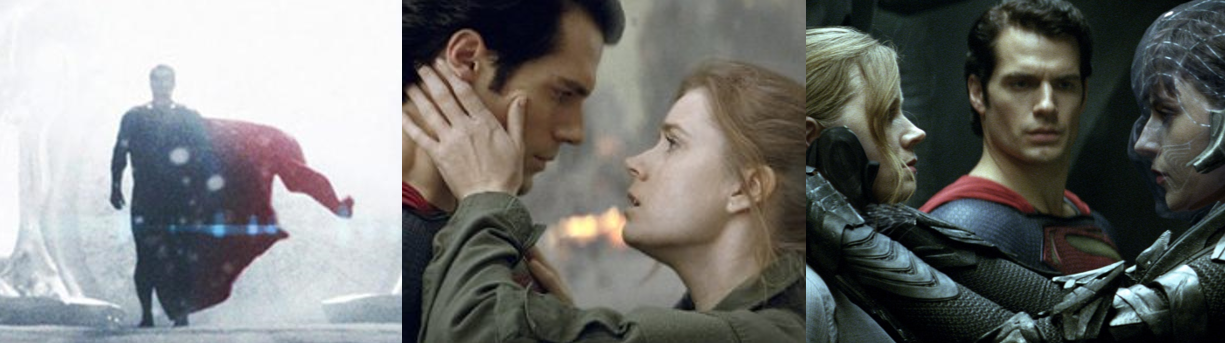
Lois is integral to Clark’s decision to reveal himself as Superman and is at the forefront of the chaos.

By the time he’s an adult, Clark has experienced much of the conflicting nature of humanity; there are bullies and assholes but also those who will go out of their way to save others, proving that humankind has a spark of decency buried deep beneath the conflict. When he discovers the Kryptonian scout ship and meets the holographic representation of his birth father, Clark learns of his true heritage and the reason for his existence and finally discovers the means to reconcile the conflict within him. Donning an absolutely glorious alien suit and flowing cape, and inspired by both his fathers, Clark finds he has only begun to realise the true extent of his abilities as he defies Earth’s gravity, clearly basking in the feelings of liberation brought not only from flying through the air but from finally accepting his birthright. Clark is shown to have always had a strong relationship with Martha, who only ever showed him love and affection and tried to help him to focus his abilities. While both her and Jonathan loved him unconditionally, their methods at helping him through his adolescence and his burgeoning powers differed somewhat, as she was perfectly happy to just let him grow up, fully confident that he’d make the right decisions, whereas Jonathan continually went out of his way to stress that Clark is there for a reason and has a greater destiny. After Jonathan’s death, Clark’s bond with Martha grows even stronger, partially due to his guilt but also because she’s all that he has left and he flies into a rage when her life is threatened by Zod and his cronies later in the film. Of course, intrepid reporter Lois Lane (Adams) remains a central influence in Clark’s decision to embrace his destiny and put his powers to good use; depicted as a strong-willed, curious, and empathetic woman, Lois is a fearless reporter who doesn’t hesitate to put herself in harm’s way, or the most extreme environments, in order to get a good story. When she learns that a centuries-old Kryptonian scout ship has been located in the Canadian Arctic, she doesn’t hesitate to head out there, immediately establish herself as a woman of some fortitude before the somewhat disapproving Colonel Nathan Hardy/Guardian (Meloni), and even brave the frigid environment to get up close and personal with the ship. After she’s attacked by the Kryptonian security droids and Clark saves her life, she throws herself into trying to track down her mysterious saviour, much to the chagrin of her editor, Perry White (Lawrence Fishburne), and is intrigued by the many and varied reports of a superpowered do-gooder helping others before disappearing.
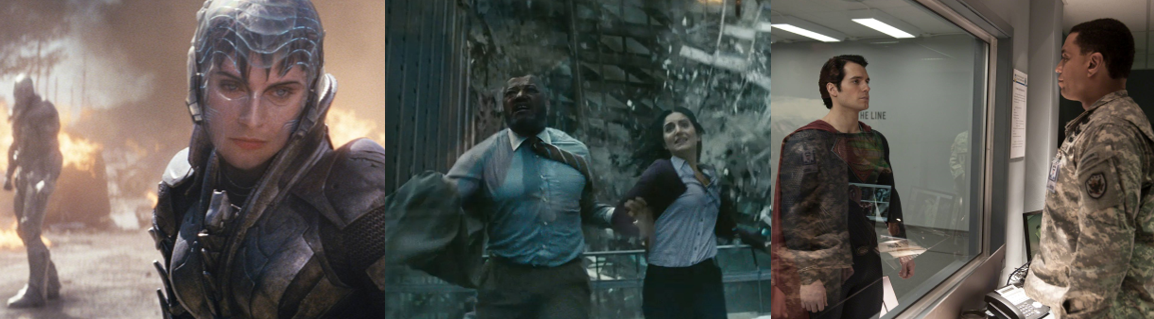
Strong supporting characters flesh out the world and ask new questions about Superman’s presence.

In a fantastic change of pace, Lois experiences Clark’s abilities and is privy to his identity right away, doing away with the need for him to assume the guise of a bumbling fool. Lois not only gives him the name Superman (in a roundabout way), but also plays an important role as an audience surrogate as she uses her reputation as a celebrated reporter to accompany and talk to him after he surrenders himself to the distrustful Lieutenant General Calvin Swanwick (Harry Lennix) and even goes with him to Zod’s ship after Superman willingly agrees to give himself up to spare his world. Cavill and Adams have a real tangible onscreen chemistry and Lois very much acts as a mediator between Clark’s somewhat sheltered upbringing, the awe that his presence (and unparalleled physicality) inspires, the suspicion of Swanwick and some others, and the demands of Zod. General Zod announces his arrival by broadcasting an ominous message across all media platforms and in all languages to deliver Clark with an ultimatum, thereby giving him another moral quandary over whether to surrender himself to the Kryptonians or to humanity, neither of which are particularly trustworthy. Zod isn’t alone in his mission, of course. He’s joined by a number of Kryptonian followers, the most prominent of which are Faora-Ul (Traue) and an unnamed towering brute who ransack Smallville to draw Superman out for a conflict. Much like Ursa (Sarah Douglas), Faora-Ul is absolutely devoted to General Zod and follows his every order without question. Interestingly, she sparks up a rivalry (and, apparently, a mutual attraction and respect) with Colonel Hardy during the conflict between the military and the Kryptonians that eventually drives them to go out in a burst of glory during the finale. Perry White also has quite a prominent role here; not only does he bust Lois’s balls over daring to suggest the Daily Planet print a story about aliens, but he’s also less than impressed that she protects Superman’s identity and actually takes an active role in helping his staff (and others) during the cataclysmic finale. Lieutenant General Swanwick takes the lead in the military’s investigation of Superman; legitimately concerned and thrown off by the revelation that an alien has been living amongst them for thirty-three years, he treats Superman with a great deal of apprehension since he has such incredible power but acts independently of anyone’s interests, to say nothing of those of the United States government.

Zod is a cruel and malicious warrior who is dedicated to ensuring the survival of the Kryptonian race.

I do think that the film would have benefitted from a slight restructuring to allow for a time jump between Clark discovering his suit and Zod’s arrival; Clark is Superman for barely a day before the Kryptonians arrive to cause havoc, meaning his first real test is right in the deep end against a bunch of fanatical warriors and I think it would have benefitted the film (and the sequel) to have had a bit of a montage that showed him performing superheroic feats across the world and lay the seeds for the hope and fear his presence inspired in people. Kryptonian society is a little different to what we saw in the old films; genetic engineering is the norm, so everyone has a predefined role; while Clark, as the first natural-born Kryptonian in centuries, is the exception to this rule, General Zod is a warrior through and through whose desire to ensure Krypton’s survival drives him to extreme and devastating actions that he couldn’t stop even if he wanted to. Having spent a great deal of time in exile and spurred by the perceived betrayal of his fellow Kryptonians, Zod is an interesting dichotomy; he’s both one-dimensional and multi-dimensional since he is fixated on ensuring Krypton’s survival and yet he’s genuinely hurt when Jor-El refuses to join forces with him in meeting this goal, and at being forced to fight against his old friend. Rather than being a criminal and a conqueror simply for personal glory, Zod seeks to terraform Earth and extract the Codex from Clark in order to rebuild Kryptonian society and is disgusted that Clark shares the same compassion and weakness as his father. As much as I was glad to see that Man of Steel avoided using typical Superman villains and devices like Lex Luthor and Kryptonite, I was a little disappointed that Zod was used as the main antagonist; Michael Shannon is amazing in the role, don’t get me wrong, exuding an intelligence and a malice that help him be as distinct from Terence Stamp’s memorable rendition of the character as Cavill is from Reeve, but I do think the film could’ve been largely the same, and actually somewhat superior, if Zod had been replaced with Brainiac. By taking influences from Superman: The Animated Series (1996 to 2000) and elements of the Eradicator and Zod’s fanatical fixation on rebuilding Kryptonian society, Brainiac could have helped the film stand out even more from its predecessors, and Michael Shannon could have brought the same calculating intensity to that role as he does to Zod, but I very much enjoyed how Zod was such a devious, manipulative, and brutal foe here.

The Nitty-Gritty:
Man of Steel owes more than a little to Nolan’s grounded and gritty take on Bruce Wayne/Batman in the Dark Knight trilogy; like those films, Man of Steel is a very serious and thought-provoking deconstruction of easily the most iconic superhero in all of comicdom. The film is front-loaded with themes regarding destiny, nature/nurture, and realising oneself in a world that’s not as black and white as we’d like. More than ever, Superman and General Zod are presented as thematic opposites; while Zod is pained to have killed his friend and is acting only in the interest of preserving his long-dead society, Superman is determined to safeguard his world and others but has struggled for his entire life with finding the means to do so. Both Jor-El and Jonathan see him as a world-changing symbol of hope and the capacity to achieve something greater, and he even wears his family crest (the symbol of hope) as Superman, but a prevailing concern throughout the film (which later turns out to be true) is that humanity will stumble, to say the least, in their efforts to keep pace with him. As ever, Superman is accompanied by strong religious themes; one of Jonathan’s many worries about him exposing himself is how it will change humanity’s perception of their beliefs in both scientific and religious teachings, when Zod arrives Clark communes with a priest (Coburn Goss) before surrendering himself (fitting, considering his dialogue with Jor-El clearly evokes a conversation with the Creator), and of course Superman adopts the image of the crucifix before dashing off to rescue Lois’s escape pod.

Superman, his enemies, the tech, and the entire film shines thanks to a strong visual identity.

One of the benefits of bringing in Zack Snyder is his strengths as a visual storyteller; Man of Steel is beautifully shot, utilising a subdued colour scheme that gives the film a very tangible, grounded aesthetic. Shots of Krypton, and Superman, are given a suitably grandiose sheen, making for some of the most impressive flying sequences in a Superman film yet and ensuring that Superman makes a lasting impact every time he’s onscreen. Snyder is far from a subtle storyteller, however, though, here, his tendencies are clearly tempered by Nolan’s more measured and intellectual approach. Still, Snyder’s propensity towards spectacle and engaging visuals results in some harrowing sequences; one of the standouts is a dream-like confrontation between Superman and Zod where the Man of Steel sinks beneath the skeletal remains of billions of murdered humans. Superman’s powers are somewhat subdued here, potentially to maintain the grounded tone of the film; Superman exhibits superhearing, vision, and strength but he and the other Kryptonians primarily rely on their heat vision, superspeed, and flight rather than freezing breath. Thanks to fully utilising modern technology, Man of Steel has the best flying sequences of any Superman movie, taking the lessons learned in Superman Returns and cranking them up to eleven. Snyder loves him some dramatic camera zoom; it’s a little overused but actually makes it feel as though the camera is tracking the action and flying in real-time. Of course, I have to gush about Cavill’s super-suit; yes, debates will rage seemingly for all eternity about whether he should have trunks or not but this is, for me, the best Superman costume we’ve ever seen in live-action. The symbol is alien, and yet familiar, and the texture work is sublime. His cape is nice and long and flowing, making for some dramatic shots as it billows out behind him, and the colour grading allows it to be both colourful and realistic without being overly comic book-y. While the Kryptonian suits are all CGI, you’d never know it since they never appear to be fake; I love how they’re all garbed in this functional dark armour, which is a brilliant thematic and visual parallel between their dark designs for Earth and Superman’s heroism. Krypton and its technology are far more alien than is the norm, comprised of squid-like robotic aides, a sort of nanotechnology used for communication, and a life-like holographic projection of Jor-El that guides Superman and helps Lois. When Superman arrives on the Kryptonian ship and learns about his society, there’s a distinct visual contrast between himself and the world he knows on Earth and this unknown alien society, which is similar to ours but fundamentally different and far more advanced in so many ways.
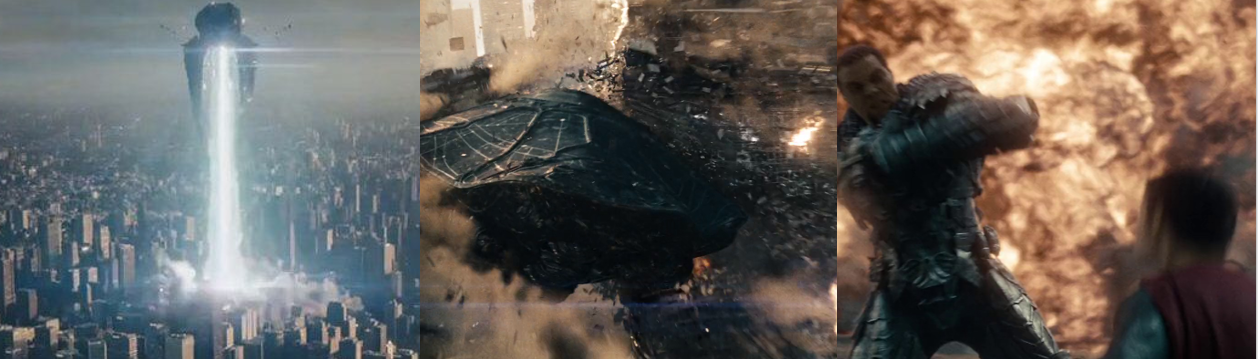
Metropolis is wrecked by the destructive conflict in scenes analogous to a disaster movie.

Superman ultimately embraces aspects of both worlds by donning a Kryptonian suit and his father’s crest and using his powers to benefit his adopted world while also being mindful of his adopted father’s fears that society will never fully trust, or embrace, him due to how different he is. Thanks to having lived on Earth for his entire life, Clark has fully mastered all of the sensory bombardment that comes from his powers, however he’s still learning and is untested in operating in public. Onboard Zod’s ship, Superman is rendered powerless and as vulnerable as they are when exposed to Earth’s atmosphere, which initially causes them crippling pain. However, the Kryptonians are born and bred warriors, trained to master their senses and their environment, so quickly adapt to the atmosphere and the powers that come with it; they’re also far more adept at fighting than Clark, and not only outnumber him but have devastating terraforming technology at their disposal, meaning Superman faces a very real and formidable physical threat throughout the film. This results in Man of Steel being almost the exact opposite of Superman Returns, and its other predecessors, as it features more action, fight scenes, and depictions of gratuitous destruction than you could ever hope for…and it’s pretty freakin’ glorious! Even Jor-El gets in on the action, donning both the Superman suit and Kryptonian armour, blasting at Zod’s forces, flying through the battle that rages in Krypton’s sky, and even going toe-to-toe with Zod himself to help establish that Superman’s fighting spirit and defiance is potentially inherited from his father. The action is intense and brutal, with a huge area of Metropolis and Smallville being destroyed as Superman ploughs his opponents through buildings and Zod’s World Engine machine devastating the city with its energy cannon. This Superman is an extremely emotional and reactive character who flies into a rage and is determined to tackle his enemies using brute force, meaning untold collateral damage in the process that received a lot of backlash but is clearly evoking the imagery of cataclysmic events such as 9/11 to show how these God-like beings pose a real danger to the world. While I can’t deny that Snyder definitely went way overboard with the destruction caused during the finale (Metropolis literally looks like it’s been entirely wiped out at one point, and Superman sends Zod’s ship crashing right into the heart of the city, which absolutely killed thousands of people), Clark’s just become Superman and is being threatened by a formidable force who won’t listen to reason, so he’s not as experienced as his predecessor or comic book counterpart. Plus, I think it’s important to remember that Superman does make an effort, wherever possible, to save lives; hell, the entire reason Colonel Hardy learns to trust Superman is because he saved his life, and he pushes himself to the absolute limit to destroy the World Engine in the Indian Ocean, thus saving the entire world from destruction.
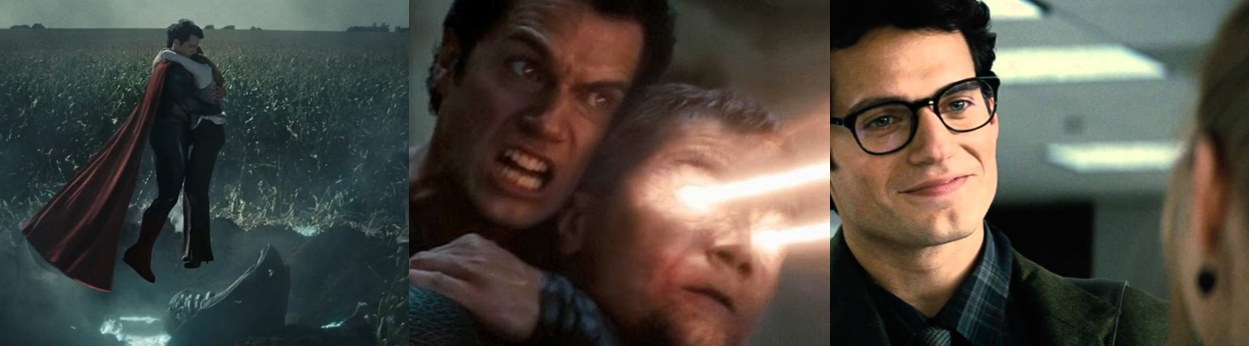
Superman takes drastic action to end Zod’s threat and settles into his new life as an unassuming reporter.

With his ship downed, his World Engine destroyed thanks to Superman and Hardy’s sacrifice, and his followers all dead, General Zod is left utterly devastated; he’s lost his world, the last remnants of his people, and his entire reason for living (nay, being) has been brought to ruins all because Superman, the son of his former friend and hated enemy, chose his adopted world over his birth planet. Fuelled by his rage, and his commitment to ensuring the greater good of his people, Zod flies into a brutal and merciless assault, resulting in a vicious battle between him and Superman through the remains of Metropolis. Thanks to the benefits of modern day effects, this fight isn’t restricted in the same way as the finale of Superman II was, allowing Superman and Zod to plough through buildings, tear through walls, smash through a Wayne Enterprises satellite in the upper atmosphere, and finally gives us the violent and exciting airborne fist fight we’ve wanted from a Superman film since seeing The Matrix Revolutions (Wachowski Brothers, 2003). Although the battle has already cost the lives of God-knows how many, Superman is ultimately faced with an impossible decision; trapped in a headlock, General Zod refuses to ever stop his destructive vendetta and threatens to immolate a nearby family with his heat vision, leaving Superman no choice but to break the fanatical Kryptonian’s neck to end his threat once and for all. Again, this sparked a great deal of controversy and I can fully understand that, but it’s not as if Superman hasn’t killed Zod before (he did it in Superman II (twice, actually) and famously did executed him the comics, too) and I would much rather have Superman forced to make that decision and then learn to deal with it rather than just sweep it under the rug because he’s supposed to “be better”. In the aftermath, Superman maintains that Swanwick will just have to trust that he’s there to help and isn’t a threat to humanity (something that, sadly, is a focal point of the sequel) and, in a move that I was genuinely surprised to see, goes to work with Lois at the Daily Planet. Considering how fast and loose Man of Steel played Superman’s identity, I was almost sure that Snyder would avoid using this trope but it is tradition, after all, and the film ends with the hope that the world will change for the better following Superman’s arrival (which, again, would be dashed in the sequel…)

The Summary:
After years of Superman being pigeon-holed into this outdated Silver Age characterisation as a God-like being forever embodied by Christopher Reeve, Man of Steel was a real breath of fresh air for the character and really changed the perception and portrayal of the character in interesting ways. I’ve said it before but playing Superman is no mean feat because Reeve cast a very long, dark shadow and comparisons will always be made between him and every actor to take on the tights and cape, but Cavill really brought a physicality and charisma that hadn’t been seen for some time. It helps that he’s an absolute beefcake, but his suit is incredible, and I enjoyed the deeper insight into his relationship with humanity and the burden of living up to the responsibility of his incredible powers. It’s maybe a bit too grounded and gritty and dour for a Superman film, especially as he’s meant to be a paragon of truth, justice, and the American Way, but I think it did a great job of introducing a new version of Superman to a new generation of audiences. The visual presentation and explosive action is an absolute spectacle; there’s a real sense of danger and consequence when Superman throws hands with his Kryptonian foes that may not be the most subtlest approach to take when it comes to disastrous events but absolutely makes for the most action-packed Superman film yet. Man of Steel is only bolstered by strong performances across the board; there’s a fantastic chemistry between Lois and Clark, Zod is a malicious and spiteful despot, and even the supporting actors all do a wonderful job of grounding this world and setting the stage for the coming DCEU. It’s a shame that so many people couldn’t get past the wanton destruction and more controversial aspects as there’s a lot to like here, and even more of a shame that Snyder (and Warner Bros.) squandered all the potential of this world with the follow-up by presenting Superman as a contentious figure and then killing him. While I have grown to despise die-hard Snyder fans and their antagonistic behaviour, I still really enjoy Man of Steel and am incredible happy with how it all came together to deliver a Superman much more in line with what I wanted to see onscreen.

My Rating:

Rating: 4 out of 5.

Great Stuff

Did you enjoy Man of Steel? What did you think to Henry Cavill’s performance as Superman and how do you think he compares to other live-action Superman? Did you enjoy the new interpretation of Krypton? What did you think to the extended discussion regarding Clark’s powers and place in the world? Did you enjoy the way the film handled his secret identity and the new suit? What did you think to this version of General Zod? Were you put off by the destruction and Zod’s execution or did you enjoy the more violent aspects of the film? What is your favourite Superman story, character, or piece of media? How did you celebrate Superman Day this month? Whatever your thoughts, feel free to share them below or leave a comment on my social media.

Movie Night [Superman Month]: Superman II: The Richard Donner Cut


In 2013, DC Comics declared the 12th of June as “Superman Day”, a day for fans of the Man of Steel the world over to celebrate Clark Kent/Kal-El/Superman, the superpowered virtue of “Truth, Justice, and the American Way” who is widely regarded as the first ever costumed superhero. This year, I’m spending every Monday of June celebrating the Man of Steel as I expand Superman Day to “Superman Month“.


This review has been supported by Chiara Cooper.
If you’d like to support the site, you can do so at my Ko-Fi page.

Released: 28 November 2006
Originally Released: 9 April 1981
Director: Richard Donner
Distributor:
Warner Bros.
Budget:
$54 million
Stars:
Christopher Reeve, Margot Kidder, Terence Stamp, Sarah Douglas, Jack O’Halloran, and Gene Hackman

The Plot:
Having thwarted Lex Luthor’s (Hackman) maniacal plans, Clark Kent/Superman (Reeve) faces a new challenge when intrepid reporter Lois Lane (Kidder) deduces his secret identity. While Clark prepares to give up his incredible powers to be with Lois, General Zod (Stamp) and his cohorts escape from the Phantom Zone and terrorise the planet, forcing Clark to choose between his happiness and his responsibilities to mankind.

The Background:
As detailed previously, producers Ilya and Alexander Salkind and Pierre Spengler convinced Warner Bros. to produce a two-part Superman adaptation back in the late seventies. However, the production of Superman (Donner, 1978) was fraught with financial and creative issues; director Richard Donner frequently clashed with the producers and Richard Lester was brought in as a mediator to allow the filmmakers to focus on the first film, which was a financial and critical success. Despite having shot 75% of the sequel, Donner was ultimately replaced by Richard Lester, a decision that irked star Gene Hackman so much that he refused to return for the necessary reshoots; Lester shot an entirely new opening for Superman II in addition to making numerous changes to emphasise slapstick silliness. Star Christopher Reeve returned after negotiating a better deal for himself but Marlon Brando was excised completely due to his unrealistic financial demands. Despite all the behind the scenes turmoil, Superman II was a critical and commercial success but fans campaigned for years to see Donner’s original vision restored. Donner was understandably reluctant to return to the film but came onboard after Warner Bros’ reached a deal with Brando’s estate as part of the production for Superman Returns (Singer, 2008). Working from the original negatives, Donner oversaw the assembly of a version that best represented his original vision for the film, and even incorporated screen test footage for additional scenes to fundamentally alter the tone and context of the theatrical cut. Following a limited theatrical release, Superman II: The Richard Donner Cut released on home media and was received far better than its theatrical counterpart; the film was praised as a love-letter to the fans and a superior version of the film, while some found the re-cut jarring and little more than a curio.

The Review:
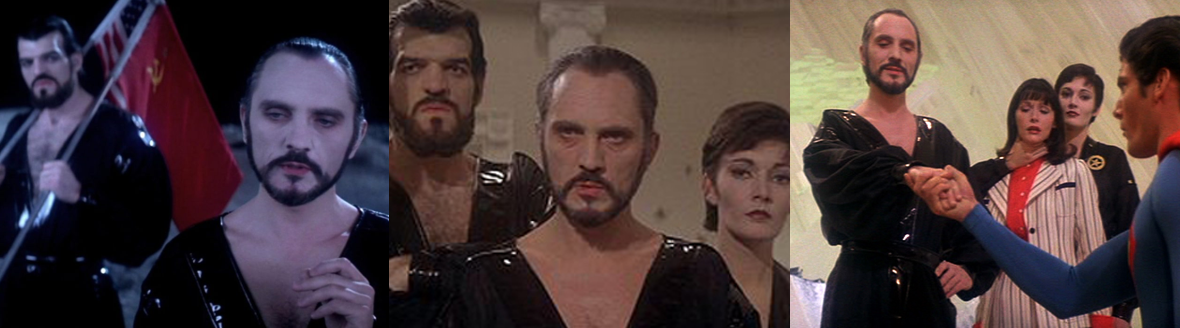
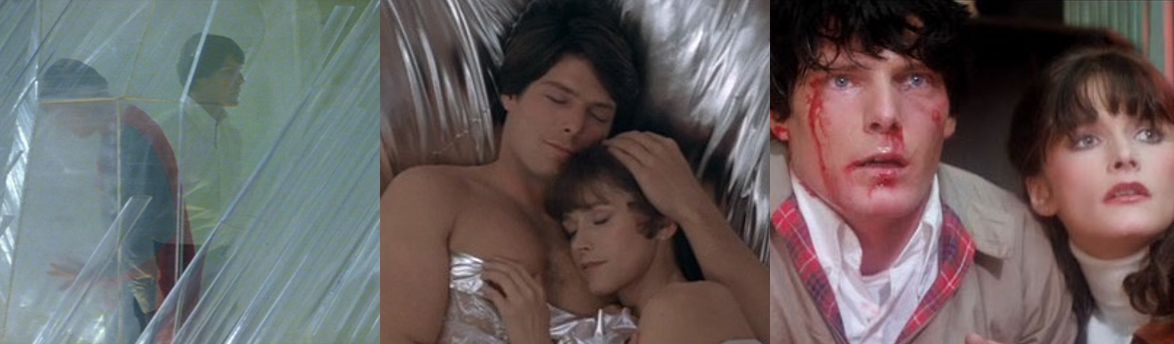
As a kid, Superman II was easily my favourite of the original four Superman movies; it was far more of a spectacle than its slower, more deliberate predecessor and hadn’t yet devolved into outright buffoonery or ridiculousness like its successors. However, I don’t recall having any knowledge that so much material had been cut from the film until around about the time that Superman Returns released; suddenly, some of the odd decisions in Superman II made a bit more sense, though I was actually fine with the first film’s focus being on Jor-El (Marlon Brando) and the second one having more emphasis on Lara (Susannah York) and, as we’ve seen countless times, Superman exhibited loads of bizarre additional superpowers back in the Golden and Silver Age so why not a memory wiping kiss? Still, my philosophy is generally that a great film can only be made better by an extended or director’s cut (usually…) so I was eager to see what the original version of Superman II would turn out like. After a disclaimer alerting viewers that the film contains test footage, and a touching dedication to Christopher Reeve, The Richard Donner Cut opens very similarly to the theatrical cut; however, the scene of General Zod, Ursa (Douglas), and Non (O’Halloran) breaking into one of the Kryptonian council’s crystal chambers and destroying one of their crystals has been excised and we’re instead treated to a reused scene from Superman that re-establishes that Jor-El acted as the trio’s chief prosecutor. Because of this, Zod holds Jor-El directly responsible for their imprisonment in the Phantom Zone and swears that the Kryptonian scientist, and his heirs, will bow down before him.

Lois is so sure that Clark is Superman that she puts her, and his, life at risk to force him to reveal the truth.

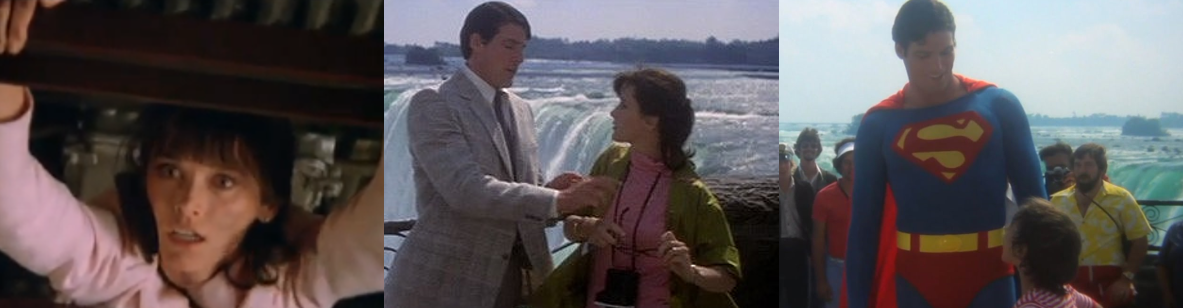
After Superman diverted Luthor’s missiles and put an end to his maniacal plot to set off the San Andreas Fault, daring reporter Lois Lane receives the front-page exclusive on the story and is praised by her boss, Perry White (Jackie Cooper). When budding Daily Planet photographer Jimmy Olsen (Marc McClure) offhandedly points out that Clark Kent and Superman are never around at the same time, the gears start turning in Lois’s head and, after crudely drawing a pair of spectacles and a hat on a picture of Superman, she begins to suspect that her timid co-worker isn’t all that he seems. Similar to the theatrical cut, Lois is so sure that she’s figured out Superman’s true identity that she literally puts her life on the line; however, rather than leaping into Niagara Falls, she takes the much more sensible option of leaping out the window of a high-rise office building to force Clark into action, though he’s again able to subtlety use his powers to slow and cushion her fall, thus throwing her off the scent. Interestingly, in this version of the film, it’s made much more explicit that Clark is trying to romance Lois; I honestly never really got the impression that he was actively pursuing her in the original film or its sequel, but here he gives an impassioned, stammering plea that she stop comparing him to Superman and accept him for who he really is, but she’s so adamant that her theory is correct that she fires a gun at Clark to force him to reveal his true self to her. Just like in the Richard Lester version, Superman wastes no time in spiriting Lois off to the Fortress of Solitude so that they can have some privacy; this time, though, they consummate their relationship before Clark decides to give up his powers. Much to the despair of his father’s holographic spirit, Clark chooses his love for Lois over his duties to humankind, and the new footage of Brando really emphasises that Clark’s calling is to serve a higher purpose, one far beyond any one person, even himself. Jor-El even goes so far as to call Clark selfish, and shoot a glaring condemnation at Lois as Clark bathes in the red sunlight that renders him human, and vulnerable. The context of this narrative element remains largely the same, and just as confusing; for me, it always seemed to exist simply as a dramatic device to add additional grief to Clark, and was mostly lost on me since Clark and Lois were a married couple in DC Comics in the mid-nineties when I was watching the theatrical cut so it never made much sense to me that Clark would have to pick one life or the other.

Backed by his loyal followers, General Zod is hungry to rule, and avenge himself on Jor-El and his progeny.

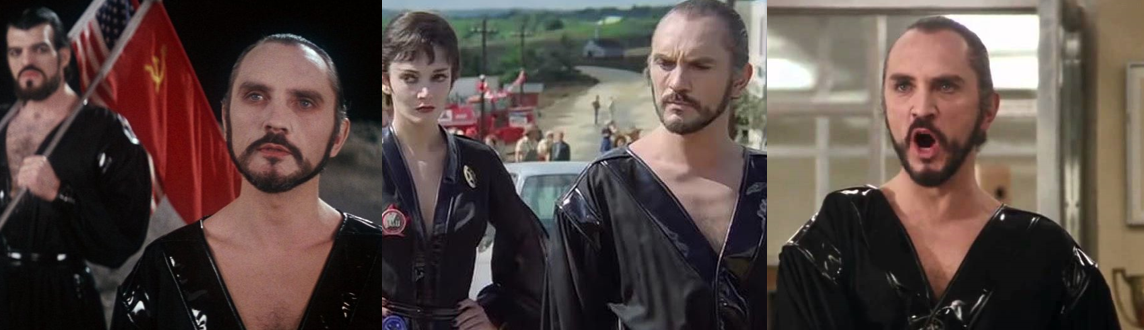
Like before, Clark almost immediately comes to regret this decision not just when he has the crap kicked out of him by abrasive trucker Rocky (Pepper Martin) but when Zod calls out Superman on live television from the White House, forcing the depowered Kryptonian to make the dangerous trek back to the Fortress of Solitude and humbly beg his father for forgiveness. Having been condemned to a lifetime of imprisonment in the Phantom Zone, Zod has sworn vengeance against Jor-El and his bloodline; a megalomaniacal despot who feels it’s his birthright to rule over others, Zod stewed in the Phantom Zone, alongside his followers, for the better part of thirty years, his anger and lust for power and revenge only growing more potent as they drifted the endless void of space. Luckily for them, the Phantom Zone spirals towards Earth and the three are freed from an explosion caused by one of Luthor’s missiles, which Superman diverted to save countless lives on Earth. Upon release, the three are immediately bestowed with the same powers as Superman since, in this original film continuity, Kryptonians require no time at all to gain the superhuman befits of Earth’s yellow sun. The three explore their powers, maliciously killing three astronauts without a second’s thought, with Zod’s followers unquestionably following his enigmatic leadership and every command; Ursa remains fixated by patches, badges, and symbols and a loyal advocate of her General, while Non is still little more than a childish brute easily distracted by flashing lights. Just as Zod quickly tires of the ease with which he destroys a small town in Houston, Texas, the renegade Kryptonian grows equally bored after assuming control of the United States, and the entire world, following his attack on the White House; he is reinvigorated, however, when Lex Luthor tells him that Kal-El, the son of his hated jailer, is on Earth and finds new motivation in breaking his hated enemy’s progeny to prove, once and for all, his physical and mental superiority of his long-dead foe.

Luthor schemes to avenge himself on Superman by manipulating the Kryptonian villains.

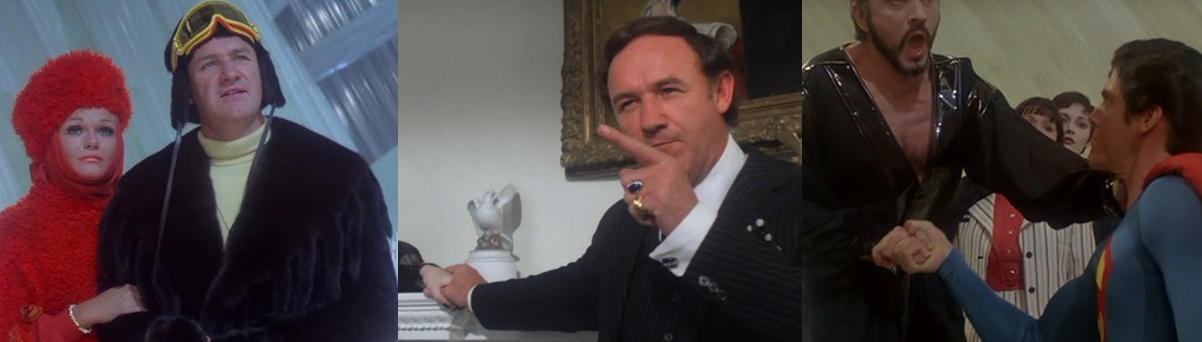
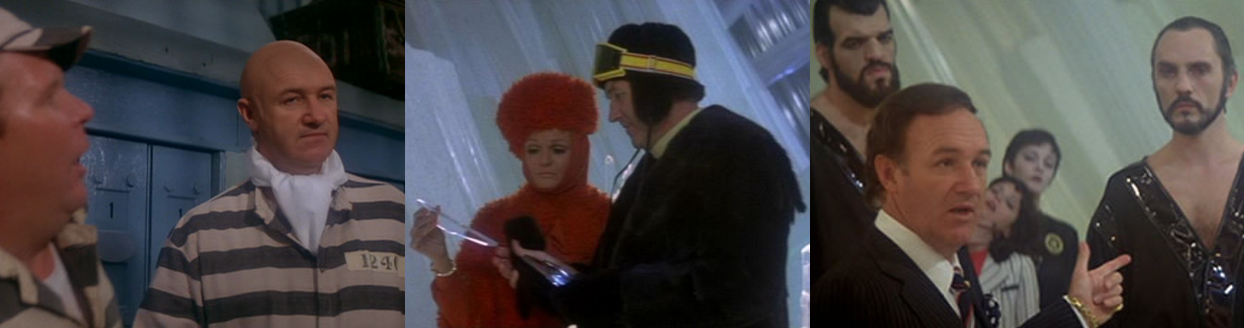
As in the theatrical cut, Lex Luthor (finally sporting his signature bald head) is locked up in a common prison with his bungling henchman, Otis (Ned Beatty), who indirectly assists Luthor in realising that Superman has a secret up north. Despite the fact that Luthor’s previous plot threatened to kill her beloved mother, Eve Teschmacher (Valerie Perrine) returns to assist Luthor’s escape from prison with a hot-air balloon (though Otis is left behind in the attempt), and the two again discover the Fortress of Solitude amidst the frozen wastes. There, the irritable and self-conceited criminal mastermind communicates with a holographic representation of Jor-El and learns about the three Kryptonian criminals and is immediately giddy at the prospect of adding their might and lust for chaos to his own devious ends. Although Zod and the others are already master of all they survey, Luthor is able to win them over with his knowledge of Jor-El and the revelation that the mysterious “Superman” who they’ve heard of is actually their foe’s son, and the criminal mastermind is quickly able to earn their trust in return for sovereignty over Australia (and, later, Cuba). Luthor is so consumed with avenging his loss to Superman in the first film that he manipulates the Kryptonians into attacking the Daily Planet and threatening Lois in order to draw Superman out, but quickly comes to realise that the three are far too dangerous and violent to be properly trusted, much less controlled. Superman is, of course, able to exploit Luthor’s deceptive nature to get the better of his superpowered foes and, in this version of the film, makes the odd decision to destroy the Fortress of Solitude to keep Luthor from invading his privacy again…despite the fact that he turns back time and thus undoes this act.

The Nitty-Gritty:
Although John Williams was unable to return to work on this new cut, Donner reused much of his work on Superman to largely replace Ken Thorne’s original score. Some characters also lose their original dubbing (notably Luthor, since Hackman’s original lines and scenes have been restored, and Non, who’s childish squeals are replaced by more monstrous roars). It’s interesting to learn that Richard Donner wasn’t responsible for so many of the scenes that I consider to be integral to the narrative of Superman II. Without actually witnessing a sample of what made three antagonists so reprehensible on their native Krypton, we’re left simply with Jor-El’s vague descriptions of their heinous ways and acts. Simplicity such as this is rife in The Richard Donner Cut, which shows that the three saw Krypton’s destruction from their prison and even spotted the infant Kal-El’s birthing chamber as they spiralled throughout the galaxy; furthermore, the entirely new opening sequence of Lois’s escapades in Paris is completely replaced with footage from Superman’s efforts to stop Luthor’s missiles intercut with scenes of the three tumbling towards Earth. Similar to the theatrical cut, this makes Superman the unwitting saviour of the criminals but directly ties their accidental escape from the Phantom Zone into the events of the first film, thus indirectly making Luthor responsible for their freedom as well.

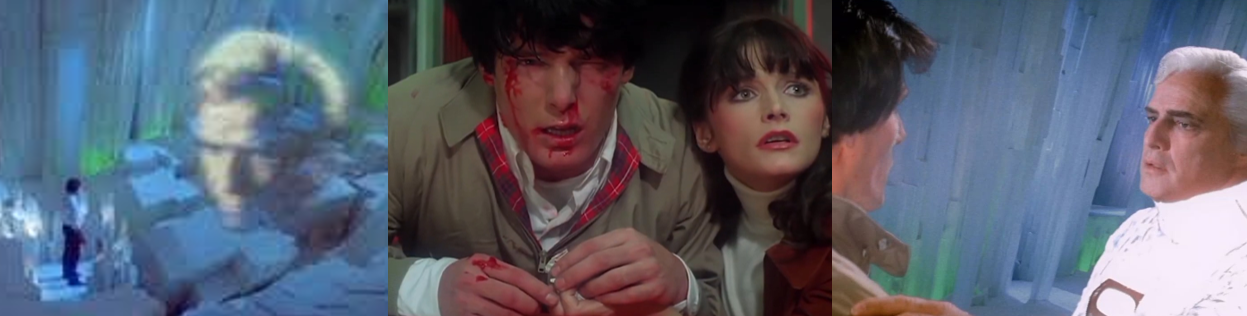
Jor-El disapproves of Clark’s decision, and then sacrifices himself to re-power his son to full strength.

Conspicuous in their inclusion is the use of test footage of Reeves and Kidder for scenes in Niagara Falls where Lois tries to help Clark be more assertive and self-confident and then shoots at Clark to prove he’s Superman! While the revelation that she was firing blanks makes this a little less disturbing, and it’s a little jarring that Reeves’ hair and glasses change throughout, it’s a much more effective way to force his dramatic unmasking than him simply tripping on a bear-skin rug. Naturally, it’s Brando who’s the most notable reinsertion into the film. Oddly, Brando’s restored footage is rendered in wildly inconsistent ways, appearing both translucent and in an odd, distorted, holographic effect, and his presence completely removes Lara from the film’s narrative to continue the father/son themes and relationship from the first film. While I liked that Superman II gave Lara the chance to be there for her son, here it’s Jor-El who Clark again turns to regarding his love for Lois and the conflict he faces between choosing her or his responsibilities to the world. Jor-El pleads (with about as much enthusiasm as Brando can muster, which is to say not much at all) with Clark to reconsider giving up his destiny, and grieves at having to forever disappear in order to restore Clark’s powers. Although Clark is obviously devastated at having let down his father, and the thought of losing his last remaining link to a family and people he never knew, Jor-El’s sacrifice allows Superman to return to the service of truth, justice, and the American Way and this sequence also gives us the only physical onscreen interaction between Reeves and Brando, fulfilling the Kryptonian prophecy that “The son becomes the father, and the father becomes the son”. Although General Zod still displays the odd ability to levitate objects, many of the bizarre superpowers showcased by the Kryptonians are thankfully missing from this version of the film, meaning we don’t have to suffer through Superman’s weird plastic S-shield attack he did in the theatrical cut or the characters randomly duplicating and teleporting throughout the Fortress of Solitude. On the downside, this means we miss out on the scene of the three rapidly defacing Mount Rushmore, which is replaced by a brief shot of them destroying the Washington Monument, but the trio’s assault on the White House is far more violent and brutal, and even includes an amusing scene where Zod gleefully fires an assault rifle.

The ending is wildly different, with Superman again reversing time to undo Zod’s destruction.

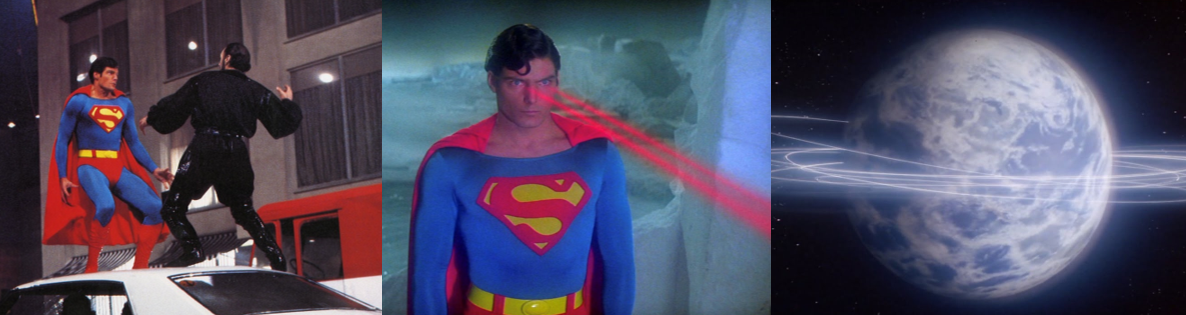
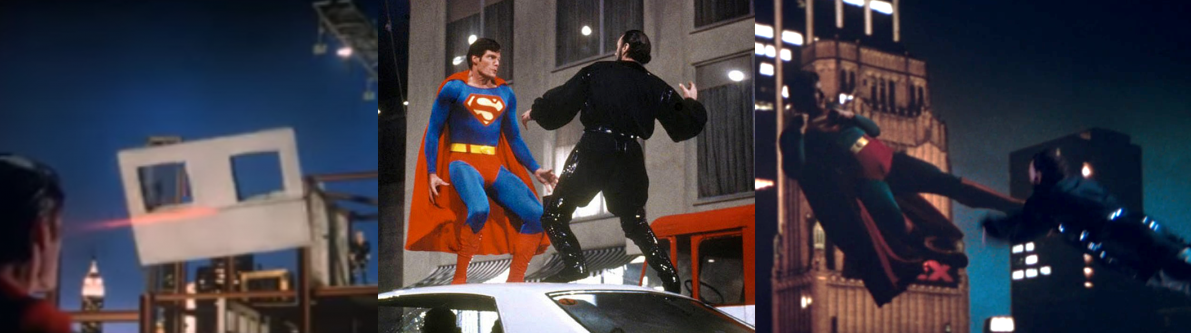
Following their attack on the Daily Planet (which is far less impactful without Thorne’s score, and even replaces the iconic “General, would you care to step outside?” line), Superman again battles his three foes in the skies and streets of Metropolis. You’ll notice a few additional shots here, which are sadly let down by the fact that this project clearly didn’t have much of a budget as the shot composition is even more obviously dodgy than it was in the original film, which was already extremely ambitious in its superpowered brawl. All of the slapstick nonsense is missing from this scene, replaced with a foreboding menace as Superman matches his foes blow for blow until he’s forced to flee to the Fortress of Solitude to keep the three from causing further damage and harm to the city and its inhabitants. Rather than engaging in a battle of strength and skill in the Fortress, Superman uses his wits to outsmart the maniacal Zod; Zod demands that Superman submits to him, becoming his slave for eternity, in exchange for the lives of others and, thanks to Luthor’s deceitful nature, Superman is again able to turn Luthor’s edict of “mind over muscle” against his enemies to render them powerless using the Fortress’s red sunlight. Superman and Lois dispose of the three using lethal means, but the moral quandary of these actions is arguably rendered mute when Superman once again reverses the rotation of the planet to turn back time. This returns Luthor to prison, and the three Kryptonians to the Phantom Zone, but also undoes the relationship he forged with Lois over the course of the film; ultimately, the result is the same, that Superman couldn’t bring himself to put Lois through the pain of knowing the truth and chose to continue living a lie. As I understand it, the original idea was to have the time travel element only in this film, which really makes you wonder how Superman would have undone Lois’s death in the last film, but either way it’s just as much of a cheap trick as the memory-wiping kiss and kind of shows Superman to be a bit of a hypocrite as he takes these extreme actions but doesn’t really learn anything from it as he goes right back to awkwardly flirting with Lois as the bungling Clark Kent (and even pays Rocky back for the beating he gave him earlier, despite the fact that this didn’t actually happen).

The Summary:
I think the main question anyone wants to know about Superman II: The Richard Donner Cut is: is it better than the theatrical version? And, I guess, it technically is; the removal of the more slapstick scenes and continuing the themes from the first movie makes it more cohesive and helps it to act as a more fitting follow-up, but I can’t honestly say that it really trumps the original in a fundamental way. This isn’t an extended version of the film, but rather an alternative cut, one that is the closest we’ll ever get to what Donner originally intended and, had we seen this (or something very much like it), we probably would have had a better overall experience that felt likes two parts of a greater whole but I really can’t say that there’s any scenes or inclusions here that make the film objectively better. A lot of this is due to my nostalgia for the original, which I’m very fond of, and my bias against Brando and his abrasive, difficult attitude which impacted his performance as Jor-El and tainted my perception of him. It’s definitely very poignant to see Jor-El reinserted into the film, and his inclusion offers a little more explanation about how Superman regains his powers, but I liked seeing Lara comfort her son in the sequel and was happy with the implication that the green crystal simply restored Superman offscreen. I’m glad that some of the weirder elements are gone, but there isn’t too much in their place to make up for their removal. I enjoy the extra scenes involving Zod and his crew, but the ending is just as head-scratching as in the theatrical cut (seriously, why destroy the Fortress if you’re going to turn back time?!), so, for me, you can just kind of flip a coin and watch either version and pretty much get the same story, just with a few different scenes and contexts between the two.

My Rating:

Rating: 3 out of 5.

Pretty Good

What are your thoughts on Richard Donner’s version of Superman II? Did you feel like it’s superior to the theatrical cut or were you put off by the newly inserted scenes? What did you think to the alterations made by re-inserting Marlon Brando’s lost footage? Were you a fan of the altered ending? What is your favourite Superman story, character, or piece of media? How are you planning to celebrate Superman Day this month? Whatever you think, feel free to sign up to share your opinion below or leave a comment on my social media.

Movie Night [Superman Month]: Superman II


In 2013, DC Comics declared the 12th of June as “Superman Day”, a day for fans of the Man of Steel the world over to celebrate Clark Kent/Kal-El/Superman, the superpowered virtue of “Truth, Justice, and the American Way” who is widely regarded as the first ever costumed superhero. This year, I’m spending every Sunday of June celebrating the Man of Steel as I expand Superman Day to “Superman Month“.


Released: 9 April 1981
Director: Richard Lester
Distributor:
Warner Bros. / Columbia–EMI–Warner Distributors
Budget:
$54 million
Stars:
Christopher Reeve, Margot Kidder, Terence Stamp, Sarah Douglas, Jack O’Halloran, and Gene Hackman

The Plot:
Having thwarted Lex Luthor’s (Hackman) maniacal plans, Clark Kent/Superman (Reeve) faces a new challenge when intrepid reporter Lois Lane (Kidder) manages to deduce his secret identity. While Clark prepares to give up his incredible powers to be with Lois, General Zod (Stamp) and his two followers escape from the Phantom Zone and begin terrorising the planet, leading Clark to choose between his happiness and his responsibilities to mankind.

The Background:
As I detailed in my review of Superman (Donner, 1978), producers Ilya and Alexander Salkind and Pierre Spengler convinced Warner Bros. to produce a two-film adaptation of the character back in the late seventies. However, the production was fraught with issues, both financially and creatively; director Richard Donner frequently clashed with the producers and Richard Lester was brought in as a mediator to allow the filmmakers to focus on the first film, which was a financial and critical success. Despite having shot 75% of the sequel, Donner was replaced as director with Richard Lester, a decision that irked star Gene Hackman so much that he refused to return for the necessary reshoots. Lester shot an entirely new opening for Superman II in addition to making numerous changes to the tone of Donner’s original version to place more emphasis on slapstick silliness. Star Christopher Reeve returned to the project after negotiating a better deal with more artistic control for himself but Marlon Brando was excised completely from the film due to his unrealistic financial demands. Despite all the behind the scenes turmoil, Superman II was still a financial success; its worldwide box office gross of just over $190 million might’ve been less than its predecessor but it was still highly praised, with Stamp’s turn as Zod drawing particular acclaim. Many years later, of course, in the build-up to Superman Returns (Singer, 2008), Donner would finally return to the film to assemble a version that closely resembled his original vision of the film.

The Review:
As far as I can remember, Superman II is another of those instances where I actually saw the sequel before the original; consequently, the film had much more of an impact on my childhood and I remember being more entertained by it thanks to it having a far brisker, more action-orientated flow and featuring villains who could actually match Superman in combat rather than simply just outwitting him. Not that I have a problem with the “mind over muscle” concept, it’s just far more gratifying to me to see Superman getting into a superpowered scrap as Superman II definitely delivers in that regard. Thankfully, for those who haven’t seen the first film, the movie opens with both a quick recap of the first movie over the opening credits and a return to Krypton to show exactly how General Zod, Ursa (Douglas), and Non (O’Halloran) got themselves banished to the mysterious “Phantom Zone”. Basically, they broke into one of the Kryptonian council’s crystal chambers and destroyed one of their fancy little crystals; since Jor-El (Marlon Brando) is entirely absent from this film, the three are sentenced and imprisoned by the nameless Kryptonian council yet, as they’re being thrust into the void of space in their mirror prison, Zod vows revenge upon Superman’s birth father regardless.

Lois begins to suspect that mild-mannered Clark Kent isn’t all that he seems…

The film then picks up shortly after the events of the last film to find the Eiffel Tower overtaken by terrorists who are holding a bunch of people hostage and threatening to detonate a hydrogen bomb if their demands aren’t met. Being the feisty, fearless reporter that she is, obviously Lois Lane is right in the middle of the story and her boldness leaves her in danger of being killed; thankfully, Superman is again on hand to save her and disposes of the bomb-filled elevator by tossing it into space and unknowingly releasing the three Kryptonian criminals form their prison. Still playing the part of the lovable, bumbling goofball, Clark stumbles his way through his assignment with Lois in Niagara Falls but, after springing into action to save a young boy from a fatal fall into the waters, Lois’ suspicions are raised to the point where she willingly puts herself in danger in order to prove that the two are one and the same.

Luthor escapes from prisons, learns Superman’s secrets, and forges a fragile alliance with Zod.

Despite being arrested and locked up at the end of the first film, Lex Luthor (Hackman), the self-proclaimed greatest criminal mind of all time, quickly breaks his way out of prison with the help of a holographic projector of his own making and the assistance of Eve Teschmacher (Valerie Perrine), thankfully leaving the bumbling Otis (Ned Beatty) behind. Not only does Luthor now largely sport his traditional bald head, he also has a far better plan than simple real estate; having deduced that Superman has a tendency to travel north, he tracks the Man of Steel and discovers his Fortress of Solitude, boning up on the three Kryptonian criminals and using this knowledge to charm his way into General Zod’s good graces. There’s something disconcerting about seeing Luthor in the Fortress of Solitude and poking around in his private archives and materials; although Luthor doesn’t learn that Clark Kent is Superman from this excursion, he learns more than enough to be able to barter with General Zod and spare him from the Kryptonian’s unending wrath in exchange for being able to rule over Australia after the three Kryptonians consolidate their control over the entire world.

Led by power-hungry Zod, the Kryptonian criminals quickly claim dominion over the world.

Still, even Luthor is fearful of his new tentative allies; Zod, a verbose egomaniac who craves power and acknowledgement, strikes fear into the hearts of those around him with not only his sadistic and cold-hearted demeanour but also his inclination to fly into an intense rage when his power is defied. The alluring and callous Ursa revels in causing destruction and acquiring new badges and trinkets for her uniform, while the imposing brute Non is as childlike as he is silent and literally follows his General’s orders without question. The three quickly discover and reveal in the superhuman powers afforded by the Earth’s yellow sun, which immediately grants them all of Superman’s powers but with none of his moral compass. They start small, toying with a group of astronauts on the Moon and terrorising a small town in the United States before identifying where the true power of the U.S. lies and laying seize on the White House in a harrowing scene where he forces the President of the United States (E.G. Marshall) to transfer all control to their General.

The Nitty-Gritty:
Of course, it’s difficult to talk about Superman II without addressing some of the film’s more ridiculous aspects; Otis might not be around but his status as the comic relief is usurped by Non’s infantile nature. While things quickly take a turn for the dramatic when Zod steps in out of boredom, it’s initially played for laughs when the three are causing trouble in Houston; similarly, when the three are terrorising Metropolis to goad Superman into a conflict, there’s an awful lot of slapstick and tomfoolery for what is meant to be an imposing scene. And let’s not forget the outrageous superpowers introduced in the film; while traditional Kryptonian powers like heat vision, super breath, and freeze breath are all on display to great effect when the three are causing destruction and fighting with Superman, there’s all kinds of crazy stuff added to the film. Zod is somehow able to levitate objects with a point of his finger, the three of them deface Mount Rushmore by simply blasting it, all four Kryptonians are all able to duplicate themselves in the finale (which I can only assume was originally supposed to be some kind of depiction of superspeed that was limited by the technology of the time), and don’t even get me started on Superman’s weird s-shield attack-thing! Yet, as mental as all of this, it’s actually nowhere near as insane as some of the stuff Superman was doing in the comic books at the time!

Superman willing gives up his powers to be with Lois.

While a romantic element was present in the first film (and gave us the God awful cringey scene of Superman and Lois flying together), it’s far more prominent here. Although Clark is able to momentarily quash Lois’s suspicions about him, his dual nature is ultimately revealed after an accidental stumble. Of course, bearing in mind that Clark is clearly besotted with Lois and was tempted to reveal himself to her in the first film, both Clark and Lois suggest that this was anything but an accident and that Clark subconsciously wanted Lois to learn the truth and made sure that it happened. Regardless, the two embark on a romantic tryst that sees Clark focus on her above all other concerns. Busy wooing her with flowers and food from the far corners of the world at his Fortress, Superman ignores the chaos caused by General Zod and his subordinates and makes the ultimate sacrifice when the consciousness/artificial intelligence of is mother, Lara (Susannah York), dictates that to live with a mortal, he must live as a mortal. This wrinkle, which results in the destruction of the main control console in the Fortress, goes a long way to showing just how serious Clark is about his love for Lois; indeed, he willingly gives up all of his superpowers just to be with her despite the fact he can hear that people are pleading for his intervention. Clark’s adjustment to mortal life is a tough one; almost immediately, he feels the fatigue and pains of us normal folk and runs afoul of mouthy trucker Rocky (Pepper Martin). Humbled and humiliated, Clark is horrified to find that Zod has taken control of the world and immediately journeys back to the Fortress (from what looks like Canada…because I guess there’s a direct road from Canada to the Arctic now?) in a desperate bid to regain his powers. Although the Fortress appears dead and his father Jor-El doesn’t answer his son’s desperate plea, Clark finds the green crystal that birthed the Fortress and this, somehow, restores his powers. Although this whole sequence is a little sloppy, mainly thanks to the way the film was cut up and re-edited from Donner’s original version, I can’t say that I was ever really a fan of it; we’ve seen in the comics, and other adaptations, that Superman is fully capable of being in a relationship with Lois without having to give up his powers and it seems like this aspect was only included to give some humanity to the all-power Man of Steel. One part of it that does work for me was the emphasis on Lara; since Jor-El is entirely absent, Lara’s importance is greatly increased and makes Superman II an interesting companion piece to the first film by placing the focus on his mother rather than his father.

It’s clear the budget was stretched to its limit to depict the superpowered brawl.

Armed with Luthor’s knowledge of Superman’s true heritage and affinity for Lois Lane, Zod, who quickly grows bored of having absolute power, relishes the opportunity to exact his revenge upon Jor-El’s progeny. To this end, the three ransack the Daily Planet and then cause destruction in downtown Metropolis in entertaining scenes of devastation that were certainly ambitious and in stark contrast to the first film’s slower, more subdued tone. It’s clear that the budget is being pushed to its limits to show all four characters flying and fighting in the skies and streets of Metropolis and, while the special effects and the quality of the fight does suffer a bit as a result (there’s a lot of awkward standing around, posturing, and slow, easily telegraphed attacks on show), it’s still a commendable effort for the time. Crucially, Superman goes out of his way to draw the fight away from the city and to save lives rather than mindlessly ploughing his opponents through buildings and causing as much damage as the film’s villains, which goes a long way to emphasising Superman’s selfless and heroic nature (something that arguably needed to be reinforced after he seemed to abandon his responsibilities in favour of getting laid).

Superman turns the tide on his foes but is forced to erased Lois’s memory of his dual nature.

Although the three have the numbers advantage, and are clearly better fighters than he, Superman manages to hold his own but, realising that continuing the fight would only endanger further lives (despite the commendable spirit of the Metropolis citizens in their willingness to stand up to the three after Superman appears to be killed), he flees from the city and lures them to his Fortress for a final showdown. The three are led their by Luthor with Lois as their hostage; when Zod declares that Luthor has outlived his usefulness, the criminal mastermind attempts to double-cross Superman in order to regain favour with the General and, in the process, unwittingly plays right into Superman’s plan. Having reversed the molecule chamber so that Krypton’s red sun rays erase the three’s powers, Superman and Lois are easily able to best their foes and send them hurtling to their deaths. However, in the aftermath, Clark and Lois split up since Superman can’t prioritise one life over the lives of the world and, to spare his love further pain from the burden of knowledge, Superman busts out another new power: the ability to erase minds with a kiss. With Luthor back in prison, the Earth saved, and the status quo restored, Superman promises the President that he’ll never abandon his responsibilities again and heads off for his victory lap.

The Summary:
When I was a kid, I absolutely loved this film; it was probably the closest and most accurate depiction of a live-action Superman I had seen and definitely set a high standard for superhero movies in general for its mixture of heart, action, and comedy. Even now, thanks to the ambitious and impressive special effects, the film holds up surprisingly well; once again, it’s the performances that help bolster the film, with Terrence Stamp putting in a scene-stealing turn as General Zod. The inclusion of three evil Kryptonians to match Superman blow-for-blow was a great way to raise the stakes from the first film and Superman II definitely builds upon the themes and standards of the first film. While I still have a lot of affection for Superman II and definitely prefer it to the first movie, it’s difficult for me to rate it much higher as there are a number of aspects of Superman II that don’t sit too well with me. The same can be said of the first film, and the rest in the series, but I’m still a little baffled by the idea of stripping Superman of his powers and then immediately restoring them and the absurd memory erasing kiss that is almost as preposterous as Superman turning back time at the finale of the first film. Still, it’s easily the best film out of the original four for me and, crazy superpowers aside, deserves to be rated as being at least on par with the influential original and is well worth a watch of only for Stamp’s iconic performance and the battle between Superman and his Kryptonian adversaries.

My Rating:

Rating: 3 out of 5.

Pretty Good

What are your thoughts on Superman II? Did you feel like it measured up to the first film or do you perhaps consider it to be superior, or inferior? What did you think to the introduction of more physically capable villains for Superman to fight and were you a fan of Terrence Stamp’s performance as General Zod? What did you think to Superman sacrificing his powers for Lois and then erasing her mind with a kiss? Do you prefer the theatrical cut of the film or do you think the Donner Cut is the superior version? What is your favourite Superman story, character, or piece of media? How are you planning to celebrate Superman Day today? Whatever you think, feel free to share your opinion and thoughts on Superman in the comments below.