That’s right; we’re back in the nineties with another bright, colourful action/platformer. This time we’re looking at one of many attempts by the Amiga to copy SEGA’s success with Sonic the Hedgehog(Sonic Team, 1991), Zool: Ninja of the “Nth” Dimension (Gremlin Graphics, 1992), which was ported to the Mega Drive by Electronic Arts. Given that it released about a year after Sonic, and about a month before Sonic the Hedgehog 2(Sonic Team, 1992), Zool was one of the first videogames to ape Sonic’s success and even beat the franchise to the punch in some ways. Hell, just look at his eyes; they’re almost exactly the same style as Sonic’s!
Zool used cutscenes and comics to tell its story.
One of the main things that sets Zool apart from Sonic is its use of text-and-picture cutscenes in the game’s opening and ending to tell its story; this story was also elaborated on through a charming little comic included in the game’s manual. It would be some years before Sonic videogames even used in-game sprite animations to convey their story, much less text-and-picture cutscenes.
I’d rather have a packet of Love Hearts…
As we saw in Cool Spot (Virgin Games, 1993), Zool also includes some rather unsubtle product placement; the entire first World is littered with Chupa Chups, quite possibly the most generic lollipop sweet there is. Quite how Zool contributed to the sale and advertisement of Chupa Chups is beyond me but perhaps it was this advertising revenue that allowed the videogame to be ported not only to the Mega Drive but also to MS-DOS (where it would later be surpassed by the far superior Jazz Jackrabbit (Epic MegaGames, 1994)), Game Boy, Game Gear, Master System, SNES, and even the Atari ST.
Zool‘s Levels are certainly vibrant.
But let’s start from the top; upon beginning the game, players are immediately tossed into an absolute blast of bright, vibrant colours and catchy, rock/electronic music. Zool, a little gremlin ninja thing from the “Nth dimension”, must jump, blast, and spin his way across seven equally animated and colourful Worlds (each with four Levels), defeating the minions of Krool in an effort to return to his home dimension.
Blast, spin, and slide your way to victory.
Despite wielding energy sticks on the game’s box art, Zool’s primary form of attack is to blast enemies with energy projectiles; however, unlike other sidescrolling shooters, Zool can only fire projectiles in the direction he is facing. Zool can also perform a spinning top attack when jumping to attack airborne enemies or break certain level obstacles or, thankfully, simply jump on enemies to defeat them. Zool can also scale walls by either climbing or jumping up them, slide under spikes and through narrow gaps, and fire projectiles whilst ducking.
Zool darts around maze-like Levels at break-neck speed!
Arguably, Zool plays a lot faster that Sonic, however the game lacks some of the polish of SEGA’s iconic platformer; controlling Zool is like skating on ice on the Moon as Zool darts across Levels and soars through the air seemingly in defiance of gravity. While this doesn’t stop the game from being extremely fun to play or make navigating Levels that difficult, it can make some of the game’s attempts at precision platforming trickier.
You have to collect items and find a coin to clear Levels.
What does get in the way of navigation is the game’s primary gameplay mechanic; in order to clear a Level, Zool must collect a certain number of items. These change as Zool visits new Worlds (being anything from various fruits to CDs and bath toys) and the number you must collect depends on the difficulty you set the game to. Once Zool has collected enough items, he must follow an extremely vague arrow in the game’s HUD to reach a coin and be spirited away to the next Level or World.
Blast walls to reach hidden routes.
Zool must do all of this while battling against not only respawning enemies and level obstacles such as spikes and disappearing platforms but also while traversing the game’s maze-like Levels. Some Levels are considerably more labyrinthine than others, to be fair, and sometimes the game cheekily hides your route behind a wall that must be blasted open…though, as there’s no visual distinction between walls, it’s easy to miss these routes entirely.
Truly the stuff of nightmares!
Zool’s enemies are as wacky and outrageous as the game’s Worlds; Zool must contend with the likes of anthropomorphic jelly, killer violins, floating screws, projectile-spitting liquorice treats, and evil fruit (the implication being that sweets are good and veggies are bad…which I can get behind). To clear each World, Zool must also battle equally weird and wild bosses, such as a giant cactus and a screaming pink head with a spring-loaded boxing glove for a tongue!
Double Zool’s shot with power-ups!
Luckily, Zool has plenty of things to assist him in his mission; Zool has an energy bar and can take three hits before losing a life, can blast various checkpoints to respawn at a number of different points throughout a Level, and can collect numerous power-ups that increase his jump height, give him a shadow to double his firepower, increase his time, destroy all onscreen enemies, or make him invincible.
Some hidden mini games add some spice.
There are a few hidden secrets to be found in Zool as well; when I played the Master System version, I distinctly remember accidentally finding a warp point that simply took me straight to the game’s ending. There’s also some mini games and arcade games that can be played by doing certain actions in some Levels to add a little intrigue and variety to the proceedings.
Platforming can get tricky.
Zool isn’t especially difficult, even on its hardest difficulty setting; 1 Ups are scattered across Levels (sometimes extremely liberally) to increase your chances, enemies often drop health, and the bosses have very simple attack patterns. However, there are some frustrating elements; the time limit, for one, and having to collect enough items to access the exit point, for another. While there are no bottomless pits, there are some frustrating platforming sections that require Zool to jump to very small, disappearing platforms and, if you fall, it can be a chore to get back up, especially as the enemies will respawn.
Turns out it was all for nothing and the REAL battle is still going on!
Perhaps the biggest letdown of Zool, though, is the ending; after defeating the final boss, Zool successful escapes back to the Nth dimension where he is greeted by Zooz, his female companion. Although she congratulates Zool, she reveals that Krool has invaded another handful of worlds, essentially making the ending a giant tease for its sequel, Zool 2 (The Warp Factory, 1993). This might be fine but, unfortunately, Zool 2 never received a port to the Mega Drive, all but forcing players to invest in an Amiga or other such console to play the sequel. I did own Zool 2 back when I had an Amiga and remember it being a pretty fine little game in its own right; this time, players can select between Zool and Zooz, with each character playing slightly differently (Zooz had a whip…) and being able to take alternative routes through Levels. It’s a shame that Zool 2 didn’t get the same cross-platform release but I guess that does go some way to making Zool the unofficial mascot of the Amiga. Unfortunately, despite these two titles, the myriad number of ports Zool received, and even a couple of young adult novels, Zool has pretty much faded into obscurity. Quickly surpassed by Sonic 2 and other similar action/platformers, Zool never quite managed to outshine Sonic like the Amiga probably hoped he would. Zool’s time in the sun was very brief and it’s a shame, really, as, despite the game’s slippery controls, the character has a unique design and his games were extremely bright, energetic fun with some nice levels of animation. When it comes to a re-release, port, or HD remaster, I’d like to say “never say never” as even the similarly-themed, arguable more obscure Superfrog (Team17, 1993) got a nifty HD version in 2016 but it does seem like Zool’s brief flirtation with fame has long since passed.
My Rating:
⭐⭐⭐⭐
Rating: 4 out of 5.
Great Stuff
Do you remember Zool? If so, which version did you play? If you haven’t, I urge you to track down a copy and give it a whirl but, either way, let me know your thoughts in the comments below.
Sonic Mania (PagodaWest Games/Headcannon, 2017) was a hit, there’s no doubt about it; within a year, the game sold over one million copies. A physical edition, Sonic Mania Plus, was later released in 2018 featuring all the updates and downloadable content (DLC), and some nifty extras like a reversible sleeve that featured classic nineties-inspired artwork. In addition, Sonic Mania Adventures (2018) had a nice little five episode run online alongside a few bonus episodes along the way to keep the game alive in the minds of fans and the general public. However, since Sonic Mania released, we’ve heard very little about a sequel; in 2018, Takashi Iizuka stated that a sequel was not likely to happen as “it feels like we did everything we could for the Sonic Mania project”. With 2020 being touted as the “Year of Sonic” and some major announcements planned to take place in the run up to Sonic’s 30th anniversary, I think it’s only fair to hope that Sonic Mania 2 is on the cards for a 2021 release.
With that in mind, or just for a laugh, today I’m going to talk about a few key features I’d like to see in a potential Sonic Mania sequel…
Less Classic Zones
Don’t get me wrong, I love a good HD reimaging of Sonic’s classic Zones as much as the next person but, if SEGA have proven anything about their understanding of Sonic it’s recent years, it’s that they rely way too much on the same familiar Zones. Sonic Mania, admittedly, mixed it up a bit with the likes of Flying Battery Zone and Oil Ocean Zone but we still saw yet another rendition of both Green Hill and Chemical Plant Zone, which both featured heavily in Sonic Forces (Sonic Team, 2017) and that released in the same year! Regardless, I would still like to see some classic Zones make a comeback but SEGA really need to start taking some chances; why not use Emerald Hill Zone, or combine it with Hill Top or Aquatic Ruin Zone, for the traditional grassy-fun opening level? Why not use Scrap Brain Zone instead of Chemical Plant, or bring back Ice Cap and Marble Garden Zone? One of the things I did like about Sonic Mania, which also cropped up in Sonic Generations(ibid, 2011), was the use of gameplay gimmicks being incorporated into other Sonic Zones and I feel like this would be a great way to go in Sonic Mania 2. If you’re going to do Scrap Brain Zone, for example, throw in some of the steam-based mechanics from Metropolis Zone; if you’re bringing back Spring Yard Zone, toss in some of the pinball mechanics from Toxic Caves; if you’re making new Zones (and you absolutely should), splice in the dreaded barrel from Casino Night or the light-based mechanics from Sandopolis Zone. There are so many great levels and gimmicks from the last thirty-five years of Sonic’s life and returning again and again to Green Hill and Chemical Plant would be very disappointing, even if those Zones were mixed up with new mechanics. Go new, or outside the box, to show some real narrative and aesthetic growth.
Don’t Drop DLC Characters
Okay, I know I’m in the minority with this one but I like Sonic’s extended cast of characters; they’re fun and colourful and each one has a unique gimmick that has been either poorly utilised, undervalued, or simply slapped onto Sonic either through his base moveset or through the use of Wisps. Why include Tails as a playable character when Sonic can “Hover!!” Sonic Mania did a great thing by finally (finally) bringing back Mighty the Armadillo and Ray the Flying Squirrel; not only did they come back but they were far more than Sonic reskins and their individual abilities and personalities really came through thanks to their unique gameplay mechanics and Sonic Mania’s gorgeous sprite animation. For Sonic Mania 2, they absolutely should include both of these characters right off the bat. It really irks me when DLC characters are still DLC in a sequel. Maybe have them unlocked along the way after defeating bosses, like in Sonic Advance 2(Dimps/Sonic Team, 2002). In fact, I would look to the Sonic Advanceseries (ibid, 2001 to 2004) for a lot of inspiration for a Sonic Mania sequel in two very specific ways. First of all, Amy Rose should definitely be a playable character. She apparently missed out on being included in the first game because “she’s the only one without a kind of gameplay-oriented “power”” but she did show up in Sonic Mania Adventures and, honestly, it is a crime that she wasn’t included in Sonic Mania not just because six playable characters makes a lot more sense than five but also because she’s just as much a part of Sonic’s history as Metal Sonic and he was included.
Team moves have promise that Sonic Mania 2 could expand upon.
Amy should feature in much the same way she played in Sonic Advance but tweaked slightly; have her hop by default and twirl around in a Spin Attack with her Piko-PIko Hammer when you press the button again, similar to Sonic’s Insta-Shield. Holding down and X would see her rev up on the spot, like in Sonic Advance but, when the button is released, she should blast away swinging her hammer to attack enemies. I’d like to see Amy be a bit more floaty, kind of like Princess Peach in Super Mario Bros. 2(Nintendo EAD, 1988), to basically make her an “easy mode” character for younger players and to compensate for her moving slower and jumping lower. Secondly, Sonic Mania 2 should really capitalise on its expanded roster to build upon the team-based gameplay seen in Knuckles’ Chaotix(SEGA, 1995), Sonic Advance 3(specifically), and Sonic the Hedgehog 4: Episode II (Dimps/Sonic Team, 2012). This means that not only would we finally be able to play as Sonic and Knuckles, or Knuckles and Tails, but we’d also be able to team up any two characters for co-operative play and to utilise some unique co-op mechanics. For example, playing co-op with Tails would be pretty much the same for every character (Tails can carry his partner while flying or swimming) but teaming with Knuckles would see characters jump onto his back to glide across gaps and use his immense strength to bash through walls. Teaming with Sonic could involve the use of a faster speed dash or a general increase in speed and jumping power, which would be great for Knuckles and Amy. Mighty, meanwhile, could jump ahead of his partner to shield them with his shell and use his slam to break through areas of the ground, while Ray could use his bushy tail to swat his partner up in the air and help them swing across vines and ledges. Given that multiple different character variations were included as part of Sonic Mania Plus’s “Encore Mode”, I would definitely include this co-op gameplay right from the off, if only to add some variety to the gameplay and to, hopefully, refine and perfect this mechanic, which has always had a lot of potential but never quite been that great in execution.
Add MORE Playable Characters
So I think I’ve made a convincing argument that Amy, at the very least, needs to be a playable character in Sonic Mania 2 but why stop there? The one thing SEGA should not take away from Sonic Mania is that players only want to play as Sonic; the developers definitely should totally use the sequel as a means to bring in some more classic Sonic characters like Metal Sonic (most likely only available until after completing the main story mode), Espio the Chameleon, and Vector the Crocodile as DLC. Espio and Vector looked so wacky and had some unique twists to their gameplay in Knuckles’ Chaotix that I would love to see turn up again, like Epsio’s Spinning Top Attack and Vector’s weird cartwheel-spin-thing. Let’s take this further, though, and have Espio incorporate the wall-jumps from Knuckles’ Chaotix and, by holding X alone, turn invisible/translucent for a brief period while Vector could gobble up enemies and spit them out as a projectile like Yoshi, perhaps. Teaming with Vector would see him launch the player in an arc, while Espio would toss them upwards, in a variation of the “Hold!” team-ups from Knuckles’ Chaotix.
Charmy’s tiny size makes him perfect as a Cheese-like projectile.
You could make a case for also including Charmy Bee but I always found is tiny (miniscule, even) size in Knuckles’ Chaotix a bit of an issue; I would either redesign him to be about the size of Tails or relegate him to a power-up that can be obtained by breaking a Monitor. He could then buzz around the player and automatically attack nearby enemies, similar to Cheese in the Sonic Advance games, until the player takes a hit. As for Metal Sonic, I would have him be a faster, slippery variation of Sonic but with a couple of changes; pressing A to jump and then A again could see him blast off a magnetic pulse that attracts nearby Golden Rings and destroys any Badniks onscreen (it would be useless against bosses, however). Pressing down and A would see him charge up his booster and blast forward in a variation of the modern Boost mechanic, smashing through enemies as he goes, and teaming with Metal could see him form a brief barrier that protects the player and deflects projectiles. As a bonus, I would also like to see SEGA delve into the obscure and resurrect the Feel, the rabbit character that was the original concept for Sonic. Feel would basically play exactly like Ristar only he’d use his stretchy ears to grab and attack enemies rather than his hands; he could also use his ears as a kind of charged pounce when teaming with him.
Bigger, Better Boss Battles
One thing I liked about Sonic Mania was the variety in the boss battles; similar to those seen in Sonic the Hedgehog CD(SEGA, 1993), boss battles were generally big, varied, and with specific tricks being required to beat them. I mean, we even had a mini game borrowed from Dr. Robotnik’s Mean Bean Machine (Compile/SEGA, 1993), which I really did not expect! In Sonic Mania 2, I’d like to see more of the same but with a greater focus on Doctor Eggman; the Hard-Boiled Heavies were fun but it didn’t really feel like we battled against Eggman enough in the first game. Given that the Heavies seem to have been a one-and-done deal, I don’t expect to see them return in the sequel; instead, I’m hoping we’ll see Eggman hop into some massive, mental mechas. Without one exception, however; I’d like to see Sonic Mania 2 take some more inspiration from Sonic the Hedgehog: Triple Trouble(Aspect, 1994) and feature Bean, Bark, and Nack/Fang as sub-bosses who hound the player constantly throughout the game. It was great to see them appear in the first game but, this time, I’d like to see them get a bigger spotlight for a change (if not as sub-bosses then, at the very least, as rivals to contend with in Special Stages for the Chaos Emeralds).
Mix Up the Special Stages
Speaking of Special Stages, and Triple Trouble, I’d like to see Sonic Mania 2 mix up the format for each Special Stage; the half-pipe, rotating maze, and races against UFOs are great but, sometimes, it feels like SEGA fall back on these classic tropes way too often rather than try something new. No two Special Stages were the same in Sonic’s Game Gear outings and I’d like to see that format return; perhaps one stage is a rotating maze, another is a variation of the half-pipe in a race against Fang, another is the Blue Sphere stage, or Sonic is racing on Rocket Boots. This is also a great opportunity to weave in gameplay mechanics form other Zones and spin-off games, like snowboarding or, perhaps, even a mini game inspired by the Sonic Drift (SEGA/Arc System Works, 1994 to 1995) videogames. Either way, I feel that including Bean, Bark, and Fang as a team of mercenaries either working for Eggman or as wild cards after the Chaos Emeralds means that they should be involved in Special Stages, at the very least, and not sticking to one standard for the Special Stages would add a bit more variety and challenge to acquiring Chaos Emeralds.
Incorporate Animation
One of the biggest disappointments of Sonic Mania Plus for me was that the Sonic Mania Adventures shorts weren’t included in the bonus features; to be fair, they hadn’t finished making them when the game released but, still, it felt like a missed opportunity to not include them and like the definitive collection of all Sonic Mania materials wasn’t quite as “definitive” as it could have been. Going forward, I’d really like to see the developers use this animation style to tell the game’s story in the same way Sonic CD used anime sequences. As much as I love Sonic Mania’s sprite animations, the opening, ending, act transitions (which should be included after every Zone right off the bat this time), and interludes should all use animated cutscenes. I wouldn’t use any voice acting, though; just rely on music, sound effects, and grunts rather than ruin the mystique.
More Content
I loved Sonic Mania and the extra features included in Plus really added to the experience but it definitely felt like the developers could do even more; “Encore Mode” was great, for example, but there weren’t any Achievements tied to it, which kind of takes away some of the incentive to play the mode. Obviously they’ll want to keep something back for DLC but, for starters, Sonic Mania needs to be, at least, twice as big as its predecessor; that might mean adding more Zones, or more Acts to Zones, and including features like day, night, and seasonal cycles/variants to the Zones. Maybe they game will utilise a similar time/space hopping mechanic to Sonic CD and allow us to travel to different time point sin certain Zones so we could finally play Wood Zone while playing Metropolis Zone. The Time Trials are an obvious inclusion and allowing us to replay the Special Stages and mini games was great but maybe the developers could include a Challenge Mode that has players play Zones in reverse, or forced to collect a certain number of Rings or destroy a number of enemies; perhaps take inspiration from the bonus missions in Sonic Generations where other characters challenge the player to a race or something as simple as a boss rush mode. Either way, this would add a nice extra layer of replayability to the game and open up the options for some more Achievements to be added.
Personally, I feel like if SEGA don’t produce a Sonic Mania sequel then they’re fools; the first game was everything long-time fans have been clamouring and begging for for years and it did really well. To not capitalise on that success is crazy to me; we should have seen similar follow-ups to other iconic SEGA franchises, and a Sonic Mania 2, long before now but, instead, we’re left with Sonic’s mobile titles while we wait for the inevitable next 2.5/3D Sonic game to cause division within the fanbase.
Leave a comment below with your thoughts on Sonic Mania? Would you like to see a sequel? Do you think we’ll even ever get a sequel? And what else do you think SEGA have in store for Sonic 2021?
As always, I am opening this review by asking you to cast your minds back to the 1990s. This time, we’re specifically winding the clock back to 1994, a time when Xenomorphs had been off cinema screens since Alien3(Fincher, 1992) and we hadn’t seen a Predator onscreen since Predator 2 (Hopkins, 1990). Both franchises were in a state of flux not entirely unlike where they are now; these latter sequels had resulted in divisive audience reactions, to say the least, and 20th Century Fox had made the genius decision to allow Dark Horse Comics to mash their two science-fiction/action/horror franchise together into a series of comic books, action figures, novels, and other media. Basically every type of media that wasn’t onscreen. This was also a time when the arcade was still going strong; sidescrolling 2D beat-‘em-ups were staples in arcades everywhere thanks to titles like Final Fight(Capcom, 1989), The Punisher(Capcom, 1993), The Simpsons(Konami, 1991), and X-Men(ibid, 1992) and violent videogames were suddenly massively popular thanks to the controversy surrounding Mortal Kombat (Midway, 1992). This was also around the time when adult films like Aliens(Cameron, 1986) and RoboCop(Verhoeven, 1987) were being turned into comic books, action figures, cartoons, and videogames. Mash all of these factors together and you get the topic of today’s discussion: Alien vs. Predator (Capcom, 1994).
The story is simple but effective.
Far from the disappointingly neutered down mess we got in AVP: Alien vs. Predator(Anderson, 2004), the arcade game of the same (well…similar) name is a straight-up combination of the balls-to-the-wall action embodied by the Colonial Marines and the Xenomorphs in Aliens and the brutal efficiency of the Predators. Rather than lumbering the story in the present day, Alien vs. Predator takes place in a far more futuristic setting more befitting the Alien franchise (Various, 1979 to present), immediately making it look and feel like an actual entry in the franchise rather than a toned down cash grab. It is in this setting that the game shows a whole horde of Xenomorphs descending onto Earth and ravage the city of San Drad; although the cybernetic soldiers Major Dutch Schaefer (fittingly with the likeness of Arnold Schwarzenegger) and Lieutenant Linn Kurosawa try to fight them off, they are quickly overwhelmed but, surprisingly, saved by a group of Predators. The Predators, seeking to curb the infestation of their prey, ally themselves with the humans and the four set out to eradicate the Xenomorph swarm. If you think the idea of the Predators conversing (in English) with the humans is madness, it might also blow your mind to know that this plot was, apparently, based on an early draft for a potential Alien vs. Predator movie…let that settle in for a second.
Just keep killing aliens until the stage ends!
If you’ve played any sidescrolling 2D beat-‘em-up, you’ve played Alien vs. Predator; you select a character and battle from the left of the screen to the right, bashing enemies with simple combos, grapples, and a variety of weapons until you defeat a massive boss and clear the game’s seven stages. Up to four players can play simultaneously and each character has certain strengths and weaknesses over the others; the Predator Warrior is quite well-balanced, for example, while Dutch is a slow powerhouse. As you traverse each stage, you can pick up a variety of items and power ups; some, like gems and jewels, exist only to add to your high score while others, like pizza, soda, and chicken, replenish your health. You can grab pipes to bash in Xenomorph heads, grenades to blast them apart, and even the iconic Smart and Pulse Guns from Aliens to mow their numbers down.
You’ll encounter some new Xenomorph forms as you progress.
Each character also has their own weaponry and special attacks; the two Predators start with unique alien bladed weapons to increase their range while the two humans boast better range through their firepower. You can even use the Predator’s plasma cannon; while it is prone to overheating through repeated use, the “Super” power-up allows repeated use to decimate entire screens of enemies. At the cost of some health, you can also perform powerful special attacks, as is the norm for sidescrolling 2D beat-‘em-ups. Each stage is swarming with enemies, to the point where it’s genuinely tough to find your character much less plough through your opponents. Luckily, if you’re playing this on Mame or other arcade emulators, you can continue with as many lives and chances as you like until you clear each stage. To break up the monotony of the button-mashing and fighting, you’ll mount an M577 vehicle and blast away endless hordes of Xenomorphs and be tasked with destroying various objects under a time limit. Taking its cue from Aliens, most of the enemies you’ll encounter are various Xenomorph types, most of which were made famous as action figures and never seen in the movies. You’ll be blasting away at recognisable Xenomorphs such as Warriors (who resemble the Xenomorphs from Aliens), Stalkers (who are more like the Xenomorph seen in Alien), and Chestbursters but also encounter Alien Arachnoids, Smashers, and the Queen’s Royal Guard. Oddly, you’ll also come across zombie-like humans and cut your way through the Weyland-Yutani Corporation’s personal army as they seek to use the Xenomorphs as biological weapons.
The game’s fidelity to the source material is impressive.
Of course, it wouldn’t be a 2D sidescroller without some big boss battles; you’ll battle the hulking Alien Chrysalis, the deadly Raor Claws, a couple of infected Predators, some Power Loaders, and, of course, the gigantic Xenomorph Queen…twice. Most of these bosses will also spawn a bunch of lesser enemies to distract you can whittle you down, meaning that it’s best to partner up with at least one other player to take on these big guys. While the gameplay and premise of Alien vs. Predator is nothing new or exciting, what sets it apart is its aesthetic fidelity to the look and feel of both franchise but, in particular, Aliens; the sprites and backgrounds are big, colourful, and full of energy, making you feel as though the iconic Predator has been dropped right into the middle of Cameron’s action/horror sci-fi classic, which is exactly what Alien vs. Predator should be.
Team up with a friend to cut through the alien hordes.
It is extremely satisfying to punch and skewer your way through the seemingly-endless swarms of Xenomorphs and seeing a Predator wield the classic Aliens weaponry, as well as their own iconic weapons, never gets old. It’s repetitive at times, of course (it is a sidescrolling beat-‘em-up, after all) but it’s a fantastic way to waste an hour or so with a friend (or alone). While a similar title was also released for the SNES a year before, this classic arcade title has been lost to the mists of time and complicated rights and legal issues. Thankfully, thanks to the release of the Capcom Home Arcade, you can relive this timeless classic in the (relative) comfort of your own home (as long as you have the cash). Of you can just emulate the game on a Raspberry Pi or similar console and get to slaughtering those Xenomorph scum right away, and I highly recommend that you do.
My Rating:
⭐⭐⭐⭐
Rating: 4 out of 5.
Great Stuff
Did you ever play Alien vs. Predator in an arcade? If so, what did you think? If not, why not go give a play? Either way, leave your memories and impressions below and let me know what you think.
Aah, the nineties. A time when, thanks to the escalating battle between SEGA and Nintendo for console supremacy, everyone and their mother was desperate to have a cute, action/platformer mascot. These mascots had to be cool; they had to be fun; and, most of all, they had to have attitude. Because of this, we got such fantastic Sonic the Hedgehog knock-offs as Aero the Acro-Bat, Soccer Kid, and Awesome Possum and, in some of the most bizarre and obscure examples, food brands represented by guys like Chester the Cheetah and Cool Spot.
7 Up was so cool they had TWO extreme mascots!
Cool Spot was the mascot for the fizzy drink 7 Up, but this reference largely went over the heads of Brits such as myself as, in the UK, 7 Up was represented by the equally radical Fido Dido so, when I played Cool Spot (Virgin Games, 1993) for the first time on the Amiga, I assumed it was the same kind of product placement as the Penguins in James Pond 2: Codename: Robocod (Vectordean/Millennium Interactive, 1991).
Personally, I prefer Sprite…
Regardless, the red spot featured in the logo of 7 Up’s trademark drink got his own videogame…because of course! You could tell that Cool Spot was both cool and had attitude because he wore shades and sneakers and was portrayed as a radical, laidback surfer dude. Spot actually featured in a couple of titles prior to this videogame; Spot: The Video Game (Virgin Mastertronic, 1990), which was little more than a puzzle game that resembled Connect 4, and Spot: The Cool Adventure (Visual Concepts, 1992), which was simply a reskinned version of McDonaldland (ibid).
Cool Spot has quite the in-depth plot…
However, when Spot’s fellow Spots are randomly locked up in cages in Cool Spot, he doesn’t hesitate to leap into action and journey across eleven levels collecting “Cool Points” (small red spots). Once Spot collects enough Cool Points, he must find the cage containing his fellow Spot and blast them free, all within a time limit and while battling a variety of enemies (everything from giant grabs to toy robots).
Blast your foes with soda bubbles!
While Spot is hindered by a handicap that befalls far too many of his platforming brethren (in that he cannot damage or defeat enemies by jumping on them, which I always feel should be rule one of any action/platformer), he can blast his foes with soda bubbles flicked from his awesome gloves. Using the D-pad, you can even change the direction of these bubbles to blast enemies out of the air, though some will take multiple shots or defend themselves using shells.
Don’t be so cool that you forget to look where you’re going!
Spot seems far more concerned with looking cool than having much in the way of a versatile moveset; he can walk and leap about the place and that’s about it. If you hold the direction you’re going in, Spot will, eventually, speed up and be able to leap further, holding the jump button seems to help him reach higher places, and he is able to clamber up ledges but there’s no spindashes or power-ups available here beyond some ridiculously sparse health items, time increases, and one-ups.
Enter a bonus stage to try for an extra life!
You can also try and collect letters in each level to earn a continue and, once you complete a level, your remaining time and total Cool Points are tallied up; if Spot has enough, he’ll be awarded with an extra life. If you collect enough Cool Points in any level, Spot will be able to enter a Bonus Stage where, under a strict time limit, he must bounce around on soda bubbles collecting even more Cool Points and try for another extra life.
You’ll have to search everywhere for these cages.
And you’re going to need those extra lives, my friend, because Cool Spot is quite a tough game. It starts out relatively easy, with Spot jumping around a sandy beach and blasting enemies without much issue, but levels quickly adopt a maze-like structure, forcing you to search high and low for both Cool Points and the cage that is your goal all while being bashed about by enemies or hit by obstacles like spikes and mousetraps. Spot’s health is indicated by a humerous face sticker at the top of the screen; as Spot takes damage the face reacts and comes more and more unpeeled. When the face falls off, Spot dramatically whirls around and collapses and you’ll have to start the level over, either from the beginning or from your last checkpoint.
Spoilers: The ending isn’t much to shout about.
On the plus side, Spot doesn’t have to contend with any boss battles but, on the downside….Spot doesn’t have to contend with any boss battles. He simply swaggers from one level to the next, with little variety (there’s a beach, a dock, what appears to be inside some dry wall, a bath tub, and a toy shop and that’s about it….oh, and there’s a train level…), freeing his fellow Spots and, once he clears the final level, he celebrates with all his mates and you get given a high score.
Tricky platforming will test your wits.
Cool Spot is one of those videogames that is fantastic to look at but tricky to play; the backgrounds, graphics, and sprite animations are all gorgeous, vivid, and full of life and character. The music and voice samples are charming and up-beat and Spot has some of the best walking, idle, and celebration animations this side of Sonic and Earthworm Jim. It’s unfortunate, then, that his game calls for some tricky and precise platforming that the controls make very difficult.
You never really know what waits at the bottom of a jump…
More than once, Spot must make blind leaps, hop from one precarious (often temporary) platform to the next, and hope that he doesn’t plummet back down to a lower level and waste his time having to hop back up or fall into a bottomless pit and die. Honestly, I often found it easier to just die and respawn at a checkpoint higher up rather than having to fight with the game’s stiff-yet-floaty jumping mechanics.
Honestly, anything Cool Spot did, its competitors did better.
As a rival to Sonic the Hedgehog (Sonic Team, 1991), Cool Spot is lacking in a few areas; the game has the graphics and the look and Spot is a very animated and funky character, but without the fast-paced action and the challenge presented by Sonic’s boss battles and bonus stages, Cool Spot simply can’t compete. And you have to remember that this game came out in 1993 so, while it beat Sonic the Hedgehog 3(SEGA Technical Institute, 1993) by a year or so, it came out after Sonic the Hedgehog 2(ibid, 1992). Cool Spot also released across a variety of platforms, meaning it had to compete with Mario’s far superior offerings as well as those of its other third-party competitors, like Earthworm Jim(Shiny Entertainment, 1994).
Colourful and wacky action/platformers were ten a penny back then.
Even on the Amiga, Spot faced stiff competition from the likes of Zool: Ninja of the Nth Dimension(Gremlin Graphics, 1992) and its sequel, Zool 2 (The Warp Factory, 1993). He even had to compete with the two Jazz Jackrabbit (Epic MegaGames, 1994; 1998) games on the MS-DOS and these four titles all did everything Cool Spot did but better: the run-and-gun-like gameplay, floaty jumps, colourful graphics, funky music and sprite animations, and even the product placement were all better in any one of these four titles. Yet, Cool Spot wasn’t the end for 7 Up’s odd little mascot; Spot Goes to Hollywood (Eurocom/Burst Studios, 1995) saw the surfin’ spot switch to the isometric style that was popular amongst many 2D platformers that didn’t quite know how to adapt to 3D (I’m looking at you, Sonic 3D: Flickies’ Island (Traveller’s Tales/Sonic Team, 1996)). Like Cool Spot, Spot Goes to Hollywood came out on multiple consoles, including the PlayStation and SEGA Saturn, but once again had to settle for being nothing more than an average little platformer in a world full of competitors trying to stand out. In the end, while it’s nothing compared to most of its peers, Cool Spot is a fun little action/platformer. The music and graphics do just enough to make the tricky gameplay endurable and the game is tough, but fair in many ways (at least the enemies don’t respawn once you leave the screen…), meaning that it’s up to the player to make informed decisions about when to jump and how to navigate Spot’s vibrant world.
My Rating:
⭐⭐⭐⭐
Rating: 4 out of 5.
Great Stuff
Do you remember Cool Spot? If so, what was your first experience? If not, why not go give a play? Either way, sound off below and let me know what you think.
Sonic the Hedgehog has a long history with spin-off titles; I have been putting off an article going into the multiple adaptations of Sonic the Hedgehog: Spinball (SEGA Technical Institute, 1993), which really emphasised the pinball-like gameplay mechanics of Sonic the Hedgehog (Sonic Team, 1991) and its sequel, Sonic the Hedgehog 2(SEGA Technical Institute, 1992). However, the most frequently revisited sub-genre for SEGA’s speedy mascot has to be racing games; Sonic first took to racing against his friend and rivals in Sonic Drift (SEGA/Arc System Works, 1994), a kart racer exclusive to both SEGA’s handheld Game Gear and the Japan and clearly created as an alternative to Super Mario Kart (Nintendo EAD, 1992). Perhaps the most well-known Sonic racing title, however, was Sonic R (Sonic Team/Traveller’s Tales, 1997), Sonic’s first foray in 3D videogames and something of a cult classic to this day thanks, largely, to its iconic and cheesy soundtrack.
The All-Stars racers were a lot of fun to mess around with.
Sonic R stands out amongst other Sonic racers because it was the first title of its kind to have all characters (with the exception of Amy Rose and Doctor Eggman) racing on foot. While they briefly revisited this gameplay troupe in the Sonic Rivals videogames (Backbone Entertainment/SEGA Studio USA, 2006 to 2007), SEGA have since abandoned this gameplay feature entirely in favour of attempting to reap some of the success of Nintendo’s Mario Kart series (Nintendo EAD, et al, 1992 to present). Indeed, so influential was the original Mario Kart that virtually every videogame mascot (and those from other media) have featured in go-kart racers but, of them all, the most consistent rival to Nintendo’s portly plumber has, as always, been Sonic the Hedgehog. After a brief stint experimenting with airboards in the Sonic Riders series (Sonic Team/Now Production, 2006 to 2010), SEGA, most likely inspired by the success of Mario Kart Wii (Nintendo EAD, 2008), released Sonic & Sega All-Stars Racing (Sumo Digital, 2010), which saw Sonic and his friends race against other iconic SEGA mascots in what was, for me, quite an enjoyable little title.
Fans expected Sonic R 2 and who could blame them after this?
The follow-up, Sonic & All-Stars Racing Transformed (ibid, 2012) introduced a unique gameplay mechanic where the karts would transform into planes or boats, which mixed things up a bit, but locking additional characters and content behind stars rather than allowing players to buy them with points made this entry lag a little behind its predecessor, for me. Then, SEGA brought out their finest marketing trolls when it came to advertising their newest racing title, dusting off the old font style to tease the release of Team Sonic Racing (ibid, 2019), which did away with all of the other SEGA characters and additional bonus racers like Danica Patrick and focused solely on fifteen members of Sonic’s expansive cast. Team Sonic Racing also did away with the transforming gimmick so, immediately, seems like quite a step back from its predecessors; however, there are some other options available in the title that help to make it an enjoyable romp.
Pick your character, pick your team.
First of all, Team Sonic Racing is built entirely around the concept of racing as a (you guessed it) team; the team-focused gameplay and storyline is thrust so much to the forefront that it almost feels like a quasi follow-up to Sonic Heroes (Sonic Team USA, 2003). Anyway, the basic idea is that you get to pick from one of five teams (Team Sonic, Team Rose, Team Vector, Team Dark, and Team Eggman), each of which is made up of a ‘speed’, ‘technique’, and ‘power’ character; each racing class has different advantages that affect the way you race (‘technique’ karts can drive off the course without slowing down, for example). You’ll race as the character and racing class you selected but, as you race, must be mindful of the progress of your teammates; if they’re lagging behind, you can create a slipstream for them to coast along for a boost or send them weapons or items (SEGA once again revisits the concepts of Wisps for this) to help get them to the front. The goal is to finish the race as a team, which will increase your score, awarded points, and standing in GP races.
Skim along a teammate’s slipstream for a quick boost.
Before going into Team Sonic Racing, this team-based mechanic bothered me; I thought you’d have to swap between racers or would be forced to always race as a team or would be unfairly judged if your teammates ended up too fair behind. Luckily, these fears were largely abated once I started racing; not only is there an option outside of the Team Adventure story mode to race solo like in the All-Star racers, it isn’t massively difficult to boost your teammates up to your level, especially if you send any Wisps you don’t need or accept any item boxes when they’re sent to you.
Team Ultimates have nothing on the old All-Star moves…
Doing so, and performing successfully drifts and tricks, will fill up your ‘Ultimate’ meter; once full, you can execute ‘Ultimate Power’ at the push of a button to gain a massive speed boost and invincibility. This is very similar to the All-Star moves of the game’s predecessors but with one massive downgrade; all Ultimate moves look and feel the same, with the only real difference being the music the plays as you perform them. No longer does Sonic transform into Super Sonic or anything cool like that. While this was massively disappointing, the game slightly makes up for it with the variety in the weapons available. Previously, the All-Star racing games used quite generic items like missiles and the like; while I’m not fan of the Wisps (they really feel like they’ve outstayed their welcome at this point), their inclusion does help add some visual variety and a unique spin on traditional kart racing weapons.
Race as a Chao…everyone loves Chao…
Also in Team Sonic Racing’s favour is the ability to customise each kart; you can pick from different paint jobs, stickers, and horns in addition to attaching different Performance Parts that will modify the kart’s handling, acceleration, and top speed, amongst other attributes. Unfortunately, the best of these parts are the ‘Legendary’ Performance Parts, which turn your kart into a sexy all-gold style…meaning any paint jobs and aesthetic changes you made will be over-ridden. Another downside to the title is the lack of characters; Sonic & All-Stars Racing Transformed featured over twenty characters from across the entirety of SEGA’s legacy so stepping that down to just fifteen (one of which is, oddly, four Chaos stuffed into a massive Chao-themed kart rather than, oh, I don’t know, Cream the Rabbit!) is quite the downgrade. In addition, you cannot mix up the teams; you can’t pick Sonic as your speed racer, Rouge the Bat as your technique racer, and Vector the Crocodile as your power racer. If you pick Sonic, you’re stuck with Team Sonic, which seems like a massive missed opportunity that only really makes sense from a narrative perspective.
Watch some static cutscenes in the story mode…
Speaking of which, one thing Team Sonic Racing has over the majority of Sonic racers is a full-on story mode; Sonic and his friends are drawn into an elaborate racing tournament organised by Dodon Pa, whom many of them suspect being Eggman in disguise. Through a series of races and working together ( not just within their teams but with the other teams in the spirit of friendly competition), they eventually uncover a plot by Eggman to manipulate the racer’s ‘power of teamwork’ into a doomsday weapon. Okay, so it’s not really the most original or well-told or engaging narrative and it’s told largely through obnoxious dialogue in barely-animated story sequences (I’m not going to call them cutscenes because…well, they’re not) but Team Adventure does provide just enough incentive to get you playing and earning points to buy Mod Pods and upgrade your karts.
Delight in having just enough time to complete these missions!
While Team Adventure does offer a lot of gameplay variety, this is also to its detriment; you won’t just be racing against other characters, you’ll also have to break targets, collect Golden Rings, destroy Eggpawns, compete in GPs, and perform a variety of other in-race tasks to earn stars and keys that will both progress the story, unlock more of each map, allow access to other and better Performance Parts and, of course, earn you some Achievements. The problem is, however, that the error margin in some of these missions is extremely tight; you’re given just enough time to hit the required goal (a Silver medal) and I found myself having to play some missions over and over and over again trying to get reach the minimum requirement. I don’t think I’ve managed to get a single Platinum medal yet (and have no plans to attempt this, least of all for every damn mission!) and only lucked into a handful of Gold medals. Maybe I just suck (and that s most likely the case) but Sumo gave very little leeway when creating these missions; time just runs out way to fast, forcing you to start all over again, and there’s no indication when you’ve completed in-race objectives (like destroying five Eggpawns in a race; there’s no notification to let you know you’ve done this until after the race is over).
Oh good, Ocean Palace is back…again…
Outside of the story mode, there’s the usual racing affair; you can complete against others either locally or online (I’ve yet to do either) across a variety of game modes. There are also some really nice race tracks on offer here; once again, they’re largely pulled or inspired from Sonic Heroes (I’ll never fully understand why Sumo can’t seem to get past adapting levels from that game into race tracks…) but there’s some catchy tunes accompanying each race (featuring a title song by Crush 40 and tunes inspired by Sonic R), tracks can be mirrored to add a new twist and, while karts don’t transform, there are some alternative paths you can take by performing tricks off of ramps.
A fun enough game but lacking in content and replayability.
In the end, Team Sonic Racing is a decent racing title and certainly in the same spirit as its predecessors but, with a lacklustre roster, too few gameplay options, and very little incentive to play once you’ve blasted the story mode and unlocked a decent amount of Performance Parts, I struggle to really recommend this over the All-Star racing titles. I enjoyed it as it was simple to play, for the most part, and was a Sonic title but some frustrating mission requirements, the lack of real All-Star moves, and no additional characters to unlock or purchase really brought the whole experience down for me. I’d say it’s fun enough to waste a few hours on but it’s not going to keep you engaged much beyond that, which is a bit of a shame.
The year was 1998 and the videogame industry was deep into the newest phase in the Console Wars. Nintendo and SEGA had left behind two-dimensional gameplay and were focusing entirely on polygons and 3D, while Sony provided some surprising competition in the arena with its PlayStation console. In 1996, Super Mario 64 (Nintendo EAD) was released, marking the 3D debut of Nintendo’s portly plumber. With its tight, responsive controls, bright, vivid colours, exciting soundtrack and simple, yet increasingly challenging, gameplay, Super Mario 64 was largely regarded as a successful evolution from 2D to 3D gameplay for Nintendo’s mascot. Meanwhile, Nintendo’s once-high-and-mighty rival, SEGA, was…struggling a bit. Their ill-fated 32X and SEGA Saturn hadn’t exactly set the world on fire and their superspeedy mascot, Sonic the Hedgehog, while still a popular cultural icon, hadn’t been featured in a main series videogame for a long time, finding himself relegated to spin-offs, cancelled titles, cameos, and odd-ball experimental titles.
Super Mario 64 was Mario’s successful foray into 3D.
Determined to reignite Sonic’s success, SEGA set to work crafting a title that would not only compete with Super Mario 64 but also draw gamers away from their competition and firmly towards their powerful new Dreamcast console. In order to facilitate this, Sonic Team decided to craft a title that would mix multiple gameplay styles, completely redesign Sonic and his friends and enemies, and unite Sonic’s formally-competing continuity to softly reboot their once-blockbuster franchise. Given that I wasn’t afforded the luxury of owning every games console back in the day, I opted to jump ship from SEGA to the Nintendo 64 and, as a result, I first played Sonic Adventure when Sonic Adventure DX: Director’s Cut was released for the GameCube in 2003. This means that I didn’t play the game until after playing Sonic Adventure 2: Battle (Sonic Team USA, 2002), an upgraded expansion of Sonic Adventure’s sequel, also on the GameCube. Picking a favourite between the two is difficult as the controls, graphics, voice acting and lip-synching, and gameplay mechanics were vastly improved in Sonic Adventure 2 (ibid, 2001), which also introduced Shadow the Hedgehog to the series, but Sonic Adventure had a lot more gameplay variety, a slightly more interesting story, and had a lot more additional content in its updated ports. Eventually, these GameCube ports were further ported to the PC and these versions then came to PlayStation 3 and Xbox 360. As this latter version was recently on sale on Xbox Arcade, I once again bought Sonic Adventure (though I was too cheap to buy the DX: Director’s Cut add-on) and blasted through it so let’s see if it’s still as good as I remember it.
Sonic’s speed and Homing Attack allowed him to easily traverse and target enemies in his new 3D environment.
Sonic Adventure (Sonic Team, 1998) saw players take on the role of Sonic the Hedgehog in his first fully 3D adventure. Arriving in Station Square after a long absence, Sonic encounters the mysterious aquatic lifeform Chaos causing…well, chaos…and soon uncovers a plot by his old nemesis, Dr. Eggman, to gather the legendary Chaos Emeralds and use them to empower Chaos to destroy Station Square. Teaming up with friends old and new, Sonic races to keep the Chaos Emeralds out of Eggman’s hands and stop his plans before it’s too late. Right away, Sonic Adventure wipes the slate clean for the Sonic series. Not only is Sonic a fully-realised 3D character, he’s now taller, edgier, portrayed by Ryan Drummond as a heroic thrill-seeker, and living alongside humans in a vaguely-Earth-like setting rather than hailing from an alien world populated entirely by anthropomorphic characters. Rather than speeding through 2D environments, Sonic navigates 3D stages with the camera placed behind him but, to make traversing these new stages easier, Sonic Team implemented what has now become one of the most contentious additions to Sonic’s arsenal, the Homing Attack. Nowadays, gamers take the Homing Attack for granted as it has been tweaked to hold our hands through its auto-lock-on and targeting reticule but, back in the day, it was an innovative gameplay mechanic that boosted Sonic towards the nearest enemy, spring, power-up pod, or simply blindly in the direction he is facing. It wasn’t a vastly over-powered move but, like Z-Targeting in The Legend of Zelda: Ocarina of Time(Nintendo EAD, 1998), was an essential mechanic to blasting Sonic through his sprawling, engaging zones. As in his previous 2D outings, Sonic also has the iconic Spin Dash, which can boost him along with an almost-game-breaking speed or be held down and charged up for one big boost. He can also acquire a few upgrades that allow him to perform the Light Speed Dash; like the Homing Attack, this is now an iconic staple of Sonic’s 3D arsenal but, here, it’s a bit clunky as Sonic must charge up a Spin Dash and then release the button to speed along a set of Golden Rings. This was vastly improved in Sonic Adventure 2 to the format we are now used to, where the Light Speed Dash is assigned to a single button.
Running, flying, hunting, stealth, shooting, fishing…Sonic Adventure has it all!
For gamers more used to Sonic’s most recent titles, Sonic Adventure may seem a bit of a shock as it also includes a whole host of additional characters to play as. Miles “Tails” Prower must race, usually against Sonic, to reach a goal first, using his twin tails to fly and attack enemies; Knuckles the Echidna must glide, climb, and dig through stages to find fragments of the Master Emerald; and Amy Rose has to use her Piko-Piko Hammer to evade the invincible ZERO. Sonic Adventure also introduced gunplay to the Sonic series for the first time by allowing players to blast through stages as the tragic robot E-102γ (or simply “Gamma”) and one of the most divisive characters of the entire franchise, Big the Cat, a massive, slow-witted cat who has to fish for his elusive friend, Froggy.
Waste hours of your life raising the perfect Chao but don’t forget to take on Perfect Chaos!
Once players have cleared each character’s story from start to finish, they unlock once final chapter where everone comes together to power Sonic up into Super Sonic so that he can end the threat of Chaos’ ultimate form, Perfect Chaos. This started a trend in the 3D Sonic games where players would unlock one final story where they play as Super Sonic, something that is still often seen in modern Sonic titles, which have only recently begun allowing players to play as Super Sonic outside of the Last Story. In addition to these story modes, Sonic Adventure also features the Chao Garden. As Sonic and his friends destroy enemies, they can rescue a variety of little animals that can be taken to three Chao Gardens found in the game’s three Adventure Fields. In here, players can hatch and raise Chao, tiny little versions of Chaos, and power them up with these small animals, buy them food and accessories in the Black Market, and then race and battle against other Chao in the Chao Games. Chao’s stats (run, fly, swim, power, and stamina) will increase (or decrease) with each animal they interact with and the Chao will take on different characteristics and colours as they level-up, eventually evolving into stronger bipedal forms. The Chao Garden is a nice little distraction and an extra incentive to play but I can’t say that I really miss it from modern Sonic games; it’d work as a mobile app, or something like that, though. Story and narrative are a massive part of Sonic Adventure; previously, there was a massive divide between the Sonic narrative in Japan to that seen in the United States and Europe. While Sonic always lived on Earth in Japan and fought against Dr. Eggman, in the U.S. and Europe, he lived on Mobius and battled Dr. Ivo Robotnik; Knuckles lived alone on Angel Island in Japan but was isolated on the Floating Island elsewhere, and there were a few inconsistencies regarding the amount and appearance of the Chaos Emeralds as well.
This was the first time many gamers became aware of the “Eggman” name.
With Sonic Adventure, though, Sonic Team sought to consolidate all these inconsistencies into one brand image for their super-fast mascot. “Eggman” is used by Sonic and his friends as an insult to their egg-shaped adversary, who refers to himself numerous times as Dr. Robotnik; Sonic and his anthropomorphic counterparts are right at home alongside humans, and the previous games are used as a vague basis for the character’s back stories (Amy specifically remembers the events of Sonic the Hedgehog CD(SEGA, 1993), for example) but, at its core, Sonic Adventure, with its anime-inspired aesthetic, serves as a soft reboot for the franchise that would act as a clean slate for the series going forwards. Unfortunately, this didn’t last very long. All-too-soon, Sonic’s narrative began to get more and more convoluted and the idea of one unified worldwide version of Sonic was tainted by further drastic changes to Sonic’s aesthetic, the addition of Classic Sonic and the production of Sonic Boom (Various, 2014 to 2018). Long-time fans of the series struggled a bit with Sonic’s dramatic redesign; fans literally argued themselves into a frenzy over the fact that Sonic now has green eyes, for God’s sake, and debates continue to rage to this very day regarding what is the best design for Sonic.
I actually really like Big and found his gameplay simple fun…
While I actually really enjoy each of the character’s stories and gameplay styles, fans also reacted badly to many of Sonic Adventure’s gameplay mechanics. The speed and excitement of Sonic’s gameplay continued into Sonic Adventure 2 and eventually evolved into the sole gameplay style we see in modern Sonic titles, but Tails’ and Amy’s formulas were abandoned entirely by the sequel, with only the shooting and treasure hunting mechanics lasting to Sonic Adventure 2. But it was Big the Cat who suffered the most, with fans seemingly unified in their hatred of his slow movement and fishing gameplay. I, however, really like Big; his stages are short and simple, his gameplay inoffensive and easy to master, and it’s a breeze to cheese his additional missions. Honestly, if I had to pick a character I disliked out of all of those on offer here, it would be Amy, as she’s a bit awkward to control at times (thanks in no small part to Sonic Adventure’s dodgy, jerky camera) but, having said that, her stages are still pretty short and easy to get through and I would much rather than three great characters and stories and three average ones than one single gameplay style. Sonic Adventure was also hampered a bit by its camera, as mentioned, and control schemes; these would be refined in Sonic Adventure 2 but, here, everything is lacking a little bit of polish. It isn’t the glitch-filled, game-breaking end of the world a lot of Sonic fans will scream at you that it is but it can cause some unnecessary deaths at times. The game’s voice acting and lip-synching are also still a source of derision but, honestly, I really don’t care; all the characters sound great, and very appropriate, and, while the lines aren’t always great and their delivery can be hit and miss, that was just how voice acting was back in those days and, for me, it just adds to the quirky charm of the videogame.
To say that Tails has regressed in recent years is a bit of an understatement…
Sonic Adventure is also packing quite a bit of content. Alongside the Chao Garden, there’s also the option to replay each character’s stage a couple more times to earn additional Sonic Emblems (which can be found hidden in the Adventure Fields or are awarded after finishing stages and story modes); players can earn further Emblems in the Trial Mode, by finishing sub-games, and by winning Chao events. In the DX: Director’s Cut expansion, there’s also a Mission Mode that tasks players with fulfilling certain objectives for even more Emblems; once you earn all 180, you’ll unlock the ability to play as Metal Sonic in Sonic’s stages. While a simple reskin, this is a fantastic addition to the game and I would honestly love to see Sonic Team do more reskins like this in Sonic titles as it’s so easy to do and just helps add a bit more incentive to play and a little variety. That is what I love the most about Sonic Adventure: the variety; each character experiences events from a different perspective, meaning you might watch the same cutscene two or more times but the dialogue and camera angles will be different depending on who you are playing as. Also, if you get tired of blasting through stages at break-neck speed with Sonic, you can take in the gorgeous visuals at a slower pace with Knuckles or Big or just go in all guns blazing with Gamma. There’s a lot to do, lots of little hidden secrets and Easter Eggs to find, and I always want to play a little more, do a little more, and explore areas with each of the six characters.
Sonic Adventure certainly wasn’t lacking in gameplay variety.
It is honestly very disappointing to me that SEGA slowly began to shift away from Sonic’s extended cast and focus solely on Sonic’s gameplay. In Sonic Adventure, Tails and Amy both learn to be independent characters who aren’t simply one-dimensional bit players in need of rescue. Now, though, you’re lucky to even see Amy in a cutscene in a Sonic game and it seems to take a massive, concentrated effort of willpower for Sonic Team to allow players to play as Tails, to say nothing of poor old Knuckles! Sonic Adventure isn’t entirely to blame for that but the game is a bittersweet experience to play as it’s so much fun and has so much potential but some of its best parts (character variety, the semi-open world, and the level-up system) were omitted entirely in Sonic Adventure 2 and SEGA have never really been able to make a Sonic title that feels as immersive as Sonic Adventure. Sonic the Hedgehog(Sonic Team, 2006) tried to emulate the same feel and expansive nature of Sonic Adventure, but it lacked the gameplay variety and was littered with bugs and issues that made it more of a poor imitation; Sonic Unleashed (ibid, 2008) was perhaps the closest to succeed at emulating Sonic Adventure’s style but, rather than try to expand and refine upon this to reintroduce more of the concepts and mechanics of Sonic Adventure, SEGA and Sonic Team chose to release wildly inconsistent Sonic titles and bog their franchise down with multiple competing iterations of their mascot rather than continue with one unified version of their most popular brand.
It has its flaws but Sonic Adventure is still great fun to play.
This is a real shame but, for me, does not diminish the impact or enjoyment of Sonic Adventure. Sonic Adventure 2 might be technically better in a lot of ways, but there’s something about racing through Station Square, exploring the Mystic Ruins, taking down the Egg Carrier, exploring the history of Sonic’s world, and battling Chaos’s various forms that I find extremely enjoyable. I like that the redesigns of Sonic, Tails, Knuckles, Amy, and Eggman all look cool and that the playable characters have distinct gameplay styles; I like the aesthetics of the game and its world and the new characters, who are both fun to play as and surprisingly complex; I like that the game is simple but also challenging at times, that the bosses are big and have a lot of variety, that the soundtrack is a mixture of styles (from cool skater rock to nostalgic tunes to mechanical synthesis), and that Eggman is a competent threat and not just some bumbling buffoon. For me, Sonic Adventure was a fantastic way to reintroduce Sonic to a new generation of gamers and a great starting point for a whole new series of Sonic titles; SEGA and Sonic Team may have fumbled the ball at capitalising on some of the game’s great ideas but it doesn’t change the fact that Sonic Adventure is a fun title to invest a few hours on and that it succeeds far more that it fails, no matter what the toxic Sonic fan community might have you believe.
One of the things I love about Xbox Game Pass is that it allows me to play videogames I’ve either always wanted to play, haven’t played in a long time and can just farm for Achievements, or games I’ve always wanted to play, like Castlevania: Symphony of the Night (Konami Computer Entertainment Tokyo, 1997). Now, I’m not an especially well-versed player of the Castlevania series (Konami, 1986 to present); I’ve only ever owned one game in the franchise, the abysmal Castlevania (Konami Computer Entertainment Kobe, 1999) for the Nintendo 64, and I’ve only ever completed one title in the franchise, Super Castlevania IV(Konami, 1991), courtesy of the Super SNES Classic Edition. This, as I may have mentioned a few times before, is mainly due to growing up without the income necessary to allow me to own both a Nintendo and a SEGA console; however, I have been a fan of the franchise regardless and have always wanted to play more games from the series. After having a great time with Bloodstained: Curse of the Moon (Inti Creates, 2018), a fantastically well-crafted homage to the Castlevania franchise, I jumped at the chance to give Symphony of the Night a spin.
Alucard is on a mission to confront his father.
As I understand it, Symphony of the Night is a direct sequel to Castlevania: Rondo of Blood (Konami, 1993) and the game opens with the final events of its predecessor, with acclaimed vampire hunter Richter Belmont taking on and defeating Count Dracula. Despite this supposedly forcing Dracula into a one-hundred-year slumber, the Count’s castle, Castlevania, reappears four years later and, with Richter missing, Dracula’s dhampir son, Alucard (who had previously battled his father in Castlevania III: Dracula’s Curse (ibid, 1989), alongside Richter’s ancestor, Trevor Belmont), heads into the monster-infested castle to destroy his father. I remember Super Castlevania IV being a fun little romp; you explore a vibrant gothic landscape, upgrade your whip with easily-found power-ups, and battle enemies and bosses that naturally increase in difficulty. Symphony of the Night, however, is a steep learning curve to the uninitiated; it doesn’t take long to get a handle on the basics but you really need to be paying attention to your surroundings and what every weapon and skill does so you can proceed further and further into Castlevania. The voice acting is classic cheese but the music is atmospheric and fitting to the environment; more importantly, the gameplay and controls are tight and responsive. There are very few cheap deaths in this game; no bottomless pits or instant kill traps here. If you get killed, it’s probably your own damn fault as you waded in unprepared or took on a boss or swarm of enemies with low health or the wrong items equipped, making the game a test of your actual gaming skills rather than an exercise in frustration.
Alucard can become a bat, wolf, or mist to reach new areas.
Alucard begins the game fully powered up and ready to take on the forces of evil but quickly encounters Dracula’s chief underling, the Grim Reaper, who strips Alucard of all his items and reduces the player down to simple punches. Alucard breaks from the franchise’s tradition of featuring a whip-wielding protagonist and, instead, favours a sword and shield, which can be equipped to different hands (and buttons), though other weapons (including rods, which are similar to the whip) and items can be acquired and equipped as Alucard makes his way through Castlevania. Alucard can also pick up sub-weapons by breaking pots, vases, lamps, and other items; these range from throwing knives, to Holy Water, to protective Bibles, and even fancy lightning. Alucard can only hold one sub-weapon at a time, though, but, whenever he picks up a new sub-weapon, his existing sub-weapon drops to the floor for a short time so you can pick it back up if you don’t fancy trading out. Also similar to other Castlevania titles, Alucard can pick up money, hearts (which, in a move I’ve never understood, allow him to use his sub-weapon rather than replenish his health) and restore his health by picking up pot roasts and potions. Power-ups to increase Alucard’s health and heart count can also be found scattered throughout Castlevania, as can better weapons and equipment, though these are often protected by bosses or hidden away in areas that will require Alucard to obtain other abilities or transformations. Being a dhampir, Alucard has some nifty abilities that other series characters were probably lacking; he can dash away from enemies with a press of a button (but not forwards, which is a bit annoying), cast magic, double jump, breath underwater, and transform into a wolf, bat, or mist to reach new areas. However, most of these abilities will need to be found by use of copious amounts of back-tracking; for example, you may spot a new area up on the ceiling that you cannot reach with Alucard’s standard jump, so you’ll have to acquire the bat or mist transformation to get up there and explore new areas.
Be prepared to face some messed-up enemies…
Symphony of the Night features a lot of RPG elements to its action-orientated gameplay; defeating enemies and bosses gains Alucard experience points and, with enough points, he will level up and his stats (attack, defence, and so forth) will improve. In addition to equipping weapons and shields to do more damage or reduce enemy attacks, Alucard can also equip armour, jewellery, and other items to boost his stats or for other perks. Item management is key here as some weapons require two hands to wield, some deal or defend against specific element attacks and will thus be better suited to certain bosses, and some weapon and shield combinations confer Alucard with very helpful buffs (such as the shield delivering massive damage while simultaneously restoring Alucard’s health). Alongside saving (which can only be done in designated save rooms scattered through Castlevania), exploring Castlevania is a chore in itself; the castle is massive, stretching vertically and horizontally, and the game never holds your hand once in trying to navigate through its maze-like rooms. You can visit a librarian to purchase items and a map but you’ll still need to visit every room and squeeze through every nook and cranny if you want to find the best items, skills, and weapons. As Alucard explores Castlevania, he encounters many nightmarish foes, from zombies and skeletons to monstrous gargoyles, possessed books, and broom-riding witches, all of which can pose a significant threat as the player must equip a healing item in place of a weapon in order to use it and such items are scarce.
Symphony of the Night has some massive boss battles.
Luckily, Alucard can also acquire familiars who will follow him around and provide assistance; the faerie will heal Alucard without the need to assign an item (though it can be easy to burn through your inventory this way) and the demon will attack enemies and press switches you cannot reach. These are extremely useful but also quite limited; it might be because I wasn’t quite sure how to use the familiars but it seemed like they wouldn’t attack every enemy or heal me as often as I would like, making them a little unreliable. Alucard also has to face some massive bosses, including a minotaur, a mummy, and a succubus, the gigantic, lightning-wielding Galamoth, and even evil doppelgängers of himself and characters from Castlevania III. Some of the bosses, like the Gaibon, Slogra, and Werewolf, even appear later in the game as regular enemies (though Alucard should be strong enough to wipe the floor with them by that point) and the majority of the boss battles require some level of strategy in order to get around their attack patterns.
Richter’s turned to the dark side…or has he?
While exploring Castlevania, Alucard comes across Maria Renard, who is searching the castle for Richter; however, when Alucard finds Richter, he is revealed to be plotting Dracula’s return in order to give his life meaning. The battle against Richter can quickly go sideways unless Alucard obtains the Holy Glasses from Maria (which can only be found by getting the Gold and Silver Rings from opposite ends of the castle and using a sub-weapon to activate a clock…because of course); the glasses allow the player to see a mysterious orb controlling Richter and destroying this will free him from the evil influence of the wizard Shaft. Shaft then taunts Alucard and goads him into following him further and it was at this point that I prepared myself for the final confrontation…only to be transported to an exact replica of Castlevania…only upside-down and filled with tougher enemies! The Reverse Castle caught me completely off-guard and added maybe another weekend to my playthrough; it seemed as though every time I seemed to be making progress and getting closer to the end, Symphony of the Night threw another curve ball at me that expanded the map and the narrative further and the Reverse Castle was no exception. It was simultaneously exhilarating and frustrating, especially as the Reverse Castle’s enemies often appear in large groups and strange combinations that force the player to flee more often than not.
Play as Richter for a more traditional Castlevania experience.
Alucard must battle five sub-bosses in the Reverse Castle to acquire Dracula’s body parts, which is the only way to unlock the final confrontation against both Shaft and the Count himself. However, the Reverse Castle is also home to some false sub-bosses, who instead drop power-ups for Alucard that you will need in order to succeed. If, like me, you missed a bunch of ability power-ups and transformations before entering the Reverse Castle, you’ll also have to backtrack to the standard castle in order to be able to swim in the upside-down water or damage enemies with your mist attack, two skills that are essential to safely navigating the Reverse Castle. In terms of replay value, Symphony of the Night features a huge map to explore and the chances are high that, even when you reach the final battle with Dracula, you won’t have explored all 200.6% of the game. If you’re playing the Xbox 360 version, there are obviously a few Achievements to get along the way (the 200.6% thing is one of them) and you can even play as Richter if you enter “RICHTER” as your player name, which makes the game both harder and more like Super Castlevania IV as you now control a whip-wielding vampire hunter. There’s also a bestiary to complete by encountering every enemy and boss in the game but the game favours extending its playtime considerably through the Reverse Castle, rather than any significant post-game features.
Dracula presents a tough challenge…unless you know what you’re doing.
In the end, I really enjoyed Symphony of the Night; it was tough but in a way that challenged me to be a better player. It’s annoying that Alucard’s shield doesn’t seem to block every enemy attack and that he can’t dash forwards but these are minor complaints (honestly, I hardly ever even used the shield so it’s a mute point, really). The music is great, the graphics, sprites, and backgrounds are all really well-drawn and heavily detailed, and the gameplay mechanics are solid. The RPG elements are just right for me; you don’t have to do a lot of arduous bullshit to upgrade specific stats or whatever. Alucard simply gets stronger and stronger as he levels-up and equipping the right items and equipment will buff him up further. As only the second Castlevania title I’ve ever played from start to finish, Symphony of the Night was a great experience and actually has me hungering for more from Konami’s franchise. Luckily, they have me covered as the Castlevania Anniversary Collection (ibid, 2019) is now available on Xbox One so I guess I know what I’ll be aiming to take on next…
With Resident Evil VII: Biohazard (Capcom, 2017), I’ve finally reached the end of the big pile of Resident Evil ibid, 1996 to present) titles I got for Christmas. I was making decent progress in the game but kept getting distracted with life, work, and other games but, now that I’ve finally finished one of the most lauded Resident Evil titles ever made, the question is: does the game live up to the hype? After the absolute, balls-to-the-wall action-heavy approach they turned the franchise into in Resident Evil 6 (ibid, 2012), Capcom decided to answer their critics and bring the survival-horror aspects of Resident Evil back to the series but with a twist: this time, it’s in first-person!
Not gonna lie but I struggle with first-person perspective…
This was a bit of a hurdle for me right off the bat as, traditionally, I don’t really get on too well with first-person videogames, primarily because I don’t like being attacked from behind and I find them to be uncomfortable to play at times. Like, I enjoy the dread and constant tension the perspective offers here and in other, similar games but, when you’re just trying to have a bit of a casual play, it can be draining to be constantly on edge and first-person perspective can hamper controls, combat, and camera angles at times.
The charming Baker family invite you to dinner…
However, Resident Evil VII: Biohazard utilises its new perspective to great effect as players take on the role of Ethan Winters; unlike other Resident Evil protagonists, Ethan’s just…a guy…nothing special. He’s been drawn to an abandoned house in search of his wife, Mia, who has apparently taken a bit of a turn for the worst. After he’s attacked and has his hand cut off, Ethan is left at the mercy of the mental Baker family, a bunch of messed up back-water hillbillies who make the Texas Chain Saw Massacre’s (Hooper, 1974) family look normal. With his hand reattached by staples (…just go with it) and forced to cobble together items to survive and find a way out of the booby-trapped house, Ethan is relentlessly pursued by Jack Baker, who smashes through walls and attacks without mercy, repeatedly coming back from severe trauma and injury to torment you again and again as he absorbs blows, shrugs off bullets, and your supplies dwindle away to nothing.
The Molded are viscious buggers, far from your typical zombie fodder!
As Ethan progresses, solving puzzles, battling the bullet-sponge monstrosities known as the “Molded”, and exploring the Baker’s estate, he comes across Zoe Baker, who offers to help cure Mia by developing a serum to combat the infection that has warped her family. The source of the infection turns out to be a young girl, Eveline, who can control the minds of others, and Ethan is eventually forced to battle her in her monstrous final form. Resident Evil VII: Biohazard is unlike every other Resident Evil title before it. Sure, some tropes remain (Item Boxes, herbs, having to manually save (though using a cassette player rather than a typewriter), limited supplies, and a claustrophobic atmosphere) but, aside from some brief last minute (literally the very last minute) references to the previous titles, this looks and plays like an entirely different game. It’s a shocking departure, even more so than when the series switched to an over-the-shoulder, slightly more action-orientated approach in Resident Evil 4 (Capcom Production Studio 4, 2005); it seems that, every time Capcom wants to spice up their survival-horror franchise, a dramatic shift into another genre generally does the trick as long as there’s some restraint placed on the player to emphasise the survival aspects.
Things get very large and very ugly by Resident Evil VII‘s end…
Resident Evil VII: Biohazard definitely emphasises this aspect as supplies are criminally low; it’s not really enough to have a herb anymore as it’s far more beneficial to also pick up some Chem Fluid to restore more health (as in other recent Resident Evil titles, this can be done with the touch of a button). This extends to ammo as well, as Ethan can combine different objects to create more, or new, ammo combinations. However, there’s never enough to truly feel comfortable in combat; the Molded take multiple shots (even from a good, old fashioned shotgun blast), forcing you to think strategically about when to fight, when to flee, and how to plan your route around enemies when a swarm turns up. Resident Evil VII: Biohazard’s bosses have quite a bit of variety; you start off desperately battling to survive as Jack Baker relentlessly attacks you with an axe or a chainsaw, progress to blasting a giant, slimy creature with the traditional giant red eyes, and end up blasting an enormous, pissed off woman right in the face. The first-person perspective makes these boss battles particularly intense as it doesn’t lend itself to the game’s limited combat; it’s tough to see where a boss is when its scurrying around you, even tougher to get a good shot off, and tricky to pull off sudden, quick-time event-like moments when you’re busy trying to get your vision lined up.
Trust nothing when it comes to Lucas’ escape rooms…
Once you’re made it through the main campaign, you can take on a variety of additional modes. Not A Hero follows series staple Chris Redfield (once again completely redesigned and working for the now-benevolent Umbrella Corporation) as he battles through the game’s last area to (what else!) a secret laboratory while End of Zoe follows Joe Baker, a slightly more hinged member of the Baker family who uses his apparently-superhuman strength to smash apart Molded and find a cure for Zoe. You can also race against the clock and blast the Molded to feed Jack in Jack’s 55th Birthday, face death again and again in the impossibly-difficult Ethan Must Die, and take on a few other similar survival modes. Despite its dramatically new approach, Resident Evil VII: Biohazard feels a lot like the original Resident Evil in many ways, mainly in its atmosphere and aesthetics. Like the original title, doors are arbitrarily locked by themed keys, Ethan must solve puzzles to open new areas (or to escape death traps set-up by Lucas Baker that more than resemble the Saw (Various, 2004 to present) films), and combat is an intense, strategic action.
You’re never short on horror in Resident Evil VII.
It was an interesting experiment by Capcom to use the restrictive first-person perspective to enforce the survival-horror aspect in a new, exciting way; it’s not exactly unique, as there’s lots of first-person games that take a similar approach, but it definitely worked to shift the franchise back towards survival-horror. Having played this before and after Resident Evil 2 (Capcom R&D Division 1, 2019), it’s clear that Capcom took a lot of the lessons they learned in developing Resident Evil VII: Biohazard and applied them to their remake. While I doubt that Capcom would ever use them in a full game again, I actually wouldn’t be averse to seeing first-person sequences return in future Resident Evil titles (maybe as side quests similar to the videotape flashbacks seen in this game); however, the important thing here is that the tense, atmospheric horror is retained and, given how well Capcom did in applying this atmosphere to Resident Evil 2, we should hopefully be in for some gory, engaging, terrifying Resident Evil titles once more thanks, largely, to Resident Evil VII: Biohazard.
I’m going to kick this off with a revelation: I’ve never actually played a Tomb Raider (Core Design/Eidos Interactive/Square Enix, 1996 to present) videogame from start to finish. As I’ve alluded to in the past, I didn’t have the luxury of being able to afford every videogame console as a kid so I picked the Nintendo 64 while others were playing PlayStation; I did play the original Tomb Raider (Core Design/Eidos Interactive, 1996) for about twenty minutes (and wasn’t massively impressed by its controls, sparse environments, or graphics) and I think I have either Tomb Raider: Legend (Crystal Dynamics/Eidos Interactive, 2006) or Tomb Raider: Underworld (ibid, 2008) downloaded on my PlayStation 3 but I instantly lost interest in it moments after first playing it. However, when my friend gifted me Tomb Raider: Definitive Edition (Crystal Dynamics/Square Enix, 2014) for the Xbox One, I was intrigued not just because I felt I had skipped an important franchise in videogame history but also because I had heard good things about it and that it played similar to the Batman: Arkham (Rocksteady Studios/WB Games Montréal/Warner Bros. Interactive Entertainment, 2009 to 2015) franchise (I guess the Assassin’s’ Creed (Ubisoft, 2007 to 2018) series is a better comparison but I haven’t played them either…).
Lara’s lost and alone in the wilderness…
Tomb Raider is, if you couldn’t guess from the title, a complete reboot of the franchise in which Lara Croft (and her fellow explorers) journeys to Yamatai, a lost island off the coast of Japan, to find evidence of the mythical Sun Queen, Himiko. Unfortunately, Yamatai is protected by violent supernatural storms, which sinks Lara’s ship and separates the survivors across the island. Isolated and hunted by the island natives, Lara is forced to adapt to her surroundings to find food, shelter, and warmth and then take up arms against the violent Solarii Brotherhood, who wish to make a sacrifice to the Sun Queen. Gameplay takes the form of a third-person perspective as players guide Lara throughout her diverse and varied environments; initially, Lara is relatively incapable and struggles to get through the jungles, cliffs, and shanty towns dotted around the island but, once she obtains a pickaxe and a make-shift bow, she soon becomes an accomplished rock climber, forager, and survivor.
Lara overcomes her aversion to killing pretty quickly…
Lara is forced to fashion a bow and arrows in order to hunt wildlife for food (though this is merely a plot mechanic; Lara’s health automatically regenerates when she finds cover or avoids damage) but a huge dramatic moment is made of the first time she picks up and fires a gun in self defence. Shaken by the ordeal of having to kill to survive, you’ll soon find yourself blasting fools in the face with a shotgun and stabbing guys through the neck with arrows without mercy. Lara is able to explore her environments to find various helpful items to improve her progress: salvage and weapon parts can be used to upgrade and enhance her weapons, completing various trials and performing certain objectives and actions will award Lara experience points that she can spend on upgrades to improve her hunting and survival skills, and she can find various treasures and documents scattered across the island to unlock Achievements.
There are tombs to raid but they’re more of a distraction.
There are also some hidden tombs to be found, which reap greater treasures and experience points; you’ll get a notification when one is near and they’re usually easily identified by nearby markings and drawings. Each tomb tests Lara’s abilities with a few simple puzzles, which involve lighting things, jumping across gaps, and manipulating the environment with her various tools. While they are a fun diversion they are just that, a diversion, and the game’s title is actually somewhat misleading as the actual raiding of tomb’s is not even secondary to the game’s plot; it’s a side-mission, one barely given any prominence or relevance at all. Instead, the game pushes the plot revolving around the Sun Queen; when one of Lara’s ship-mates is captured by the Solarii, Lara has to go and rescue her to stop her being possessed by Himiko’s spirit and bring and end to the storms that prevent anyone from leaving the island. She faces betrayal and further trials along the way but, by the time you reach the final area of the game, you’ll be more than levelled up and ready to face the waves of enemies that come at you.
Lara’s “instincts” give her the edge over her enemies.
Like Batman, Lara is able to use her “instincts” to scan her environment for treasures, intractable objects, and locate enemies that she can combat in a variety of ways: the bow is good for stealth but Lara can also sneak up on enemies for stealth kills. She only has access to one gun throughout the game until the very end, when she acquires a second and ends up as the battle-hardened, experienced hunter/survivor we know as Lara Croft, but this can be upgraded into a rapid fire Magnum. She also obtains a shotgun and an assault rifle (which can somehow also be upgraded into a grenade launcher…) to mow down enemies and use her pickaxe for melee attacks and instant kills. Enemies are reasonably varied; some will attack with machetes and dynamite, others use assault rifles, while bigger enemies are shielded by Samurai armour, meaning Lara must dodge their attacks to strike from behind. This is facilitated via quick-time events, which also appear at various moments when Lara must run to escape flooding areas, collapsing areas, or her many (many) tumbles down hills and cliffs. It was a little difficult getting the timing right for a lot of these quick-time events as the button doesn’t appear onscreen right away but you soon get the hang of it and will be dodging enemies and blasting them with a clip full of bullets before long.
Quick-time events help keep things engaging.
Lara is also adept at jumping, climbing, and swinging; she can leap pretty far and climb up roped surfaces, jump from rock face to rock face with her pickaxe, and even end up shooting roped arrows to ride her pickaxe down to new areas. Jumping across rocks can be tricky due to the camera angle being just slightly off but, as long as you press X and time it right, you can make most jumps without any issues. You can bring up the map at any time to see what goodies you’re missing in each area; every area of the island has a bunch of stuff to find that will help you out and unlock Achievements. Lara can also make camp at various points; this will save the game, allows her to fast travel around the map (how, exactly, is never explained…). Upgrade her abilities and weapons, and write in her journal like a geek. You can also switch her outfit here, though none of them are that great to be honest and there’s no option for her classic green vest and hot pants outfit.
Yeah…I won’t be unlocking her any time soon…
Tomb Raider also comes with a multi-player component, though I’m not entirely sure why. In it, players can select one of the many characters featured in the story mode (though, ironically, Lara can only be unlocked after you level-up enough) and take part in deathmatches, rescuing survivors, or retrieving batteries whilst being hunted. As with all online modes, I found this to be chaotic and confusing; I was constantly picked off with frustrating ease, barely ever saw who was killing me, and contributed very little to the match but this is more due to me not really liking online deathmatches and I’m sure if you’re actually good at these modes then there’s enjoyment to be had here. The entire point of this game appears to be to bring Lara to rock bottom and build her up; some of this is dampened by a lot of her ship-mates constantly telling her that she “can do this” because she “is a Croft”, as though having that last name automatically means she can scale a cliff side and kill a God…but she can, and she does, after enduring some harsh trials and learning to do whatever it takes to survive. Along the way, she becomes comfortable with killing to stay alive and looting treasure for her own benefit and, by the end, is noted to have changed a lot and committed to the life of a scavenger and survivor rather than a simple naïve explorer.
Lara’s experience shapes her into the character we all know.
This makes Tomb Raider quite an engaging experience; you really feel like you are becoming this survivor as you learn new tactics and figure out the best ways of clearing out rooms of enemies and solving puzzles. Every area teaches you something new, introduces new elements, and asks you to adapt and, by the time you’re done and you’re back-tracking to other locations to find stuff you missed, no obstacle will be too great for your fully-upgraded weapons and abilities. Overall, I enjoyed Tomb Raider; it wasn’t necessarily difficult to play through and complete and getting all the upgrades was pretty easy, with only a bit of back-tracking required at the end of the game. There is some replayability in the multiplayer and in the challenges you’ll find in each area but no real post-game story or additional modes that require a further playthrough. Nevertheless, for the first Tomb Raider game I’ve ever played from start to finish, this was a great experience, though I suspect this is largely due to the tight, polished gameplay of this particular title compared t its predecessors.
So there’s been a bit of a delay in my playing and completing of the Xbox One Resident Evil (Capcom, 1996 to present) titles due to life and the release of Resident Evil 2 (Capcom R&D Division 1, 2019) but I finally played through and completed Resident Evil 6 (Capcom, 2012). Resident Evil 6 is the culmination of the more action-orientated approach the series took from Resident Evil 4 (Capcom Production Studio 4, 2005); while Leon S. Kennedy went solo in that title and played babysitter to the otherwise-useless Ashley Graham, players were forced to constantly play in co-op, either with a friend or with a questionable AI, in Resident Evil 5(Capcom, 2009), a title which also upped the action-centric focus of the franchise.
Chris and Leon get into a bit of a dick-measuring contest…
Resident Evil 6 continues down this route but expands upon it in numerous ways; the most obvious is the amount of playable characters available. Players can choose from four campaign modes, three of which follow the same mechanic of the Resident Evil: Revelations(ibid, 2012; 2015) games and lumber classic Resident Evil characters with a new companion. Players can pick between playing as Leon and Helena Harper of the Secret Service agent, Chris Redfield and BSAA grunt Piers Nivans, Albert Wesker’s son, Jake Muller, who teams up with the returning Sherry Birkin, now a member of the Division of Security Operations, or go it (mostly) alone as Ada Wong. Each character has their own narrative to follow and, as you play through each campaign, you will visit the same locations as other characters, though sometimes at different times, encounter some of the same enemies, and interact with the other character’s stories at various points. This results in perhaps the most complex and connected Resident Evil story ever; you’ll play a lot of the story events out of order so it’s only by playing through each campaign will you truly get a sense of what’s going down.
Things go to hell when another virus is unleashed…
Essentially, though, it’s the same Resident Evil storyline you’re familiar with only with everything ramped up to eleven and taken to the extreme; a terrorist group known as Neo-Umbrella, apparently under the direction of Ada, develops a brand new virus, the C-virus, and unleashes it at various locations across the globe, causing people to turn into zombies, grotesque mutations, or enter a chrysalis and become these weird, insect-like creatures. Each of the characters pursues different goals in service of ending this threat: Leon and Helena find themselves framed for the murder of the President (who had become a zombie) by Neo-Umbrella affiliate (and National Security Advisor) Derek Simmons and fight to reveal Simmons’ role in the whole conspiracy; Chris and Piers relentlessly pursue Ada after she wiped out their platoon; Jake finds himself recruited by Sherry to bring down Neo-Umbrella because he happens to be carrying the anti-virus to the C-Virus in his blood and they are pursed by Neo-Umbrella’s Usantank; and Ada sneaks around aiding the other characters at various points, obtaining data and information, and uncovering the origins of her imposter.
It’s quite the twisting narrative, to be sure. To differentiate each campaign, the characters all receive slightly different HUDs, weapons, and melee attacks; Leon can duel wield pistols, for example, while Jake can switch to an unarmed mode to pummel enemies. Every character can use melee attacks, however, to stun enemies and set them up for instant kill moves or knock downs but these all drain a stamina meter that can only be filled by standing still. Disappointingly, and somewhat strangely, Jake has this meter and I didn’t really notice it refilling faster than any other characters; I kind of expected Wesker’s son, who is portrayed as this tough, semi-superhuman badass, to have an unlimited stamina meter, especially as he has less weapons to begin with. Another slightly annoying aspect of the weaponry is that the knife is back to being an equippable weapon, so you can’t shoot enemies and then switch to slashing and stabbing with a simple shoulder button press like in Resident Evil 4 and 5, which seems like a step backwards to me.
The HUDs look different but the gameplay is mostly identical.
Also a step backwards is the inventory interface; while other Resident Evil titles favour a grid-like system that clearly displays all your items and weapons, Resident Evil 6 opts for a linear interface that makes selecting a weapon far more time consuming, switching to a sub-weapon (like a grenade) feel very rushed, and forces you to combine herbs into pills and then store them in a pill case. While this means you can recover health at the push of a button, the entire interface makes it very difficult to juggle your inventory; I was playing for most of Leon’s story before I realised that the inventory isn’t unlimited, which it appeared to be, so you have to be constantly reloading every weapon and combining those herbs, which gets especially complicated when your pill case can only hold so much. All this serves to slow the gameplay down quite a bit, at points, or make combat very stressful as you’ll be desperately scrolling through the inventory to select a different weapon or combine your herbs so you can heal. This is also quite complicated and time consuming as, when you press the button to eat a herb pill, your characters will enter into a short animation where they pop the pill out and swallow it and you’ll only regain health once this animation is complete; I was killed quite a few times during this animation, which was very frustrating. Also frustrating is that pressing the button only restores one block of health; you’ll need to press it multiple times to recover enough health to actually have an impact on your gameplay.
Your partner is actually quite useful for taking out enemies.
Luckily, your partner is always on hand to aid you in these times of crisis; while you can’t swap and change items like in Resident Evil 5, the partner AI will still come over and help you if you get knocked down and are near death and their ammo appears to be unlimited, which can be useful in tough battles. What isn’t useful, though, is how unbelievably weak all of the characters are; it’ll only take a few bites from a zombie to sap all of your health to one measly block; enemy gunfire and attacks also have a really annoying habit of knocking you to the floor, forcing you to crawl around on your back trying to unload a shot and get to safety. The enemies are quite varied, which is nice; you’ll get the usual zombies, of course, but some of the weirder mutations, similar to those seen in the Revelations games, have deadly weaponry merged into their anatomy, like a particularly nasty chainsaw-armed asshole. Similar to Revelations 2, though, a lot of the intermediate and advanced enemies have seemingly unblockable one-shot kill attacks (I say “seemingly” as it may depend on how much health you have; if you have more than one block, you might be able to fight back in a quick-time event), which is made more annoying by the unskippable and overly long death scenes that accompany these enemies.
Resident Evil 6 loves a good quick-time event…
There are some new enemy variations at work here, too; there’s one enemy that will burst from its chrysalis as a swarm of insects, which is one of the more annoying and tougher enemies as you have to either chuck an incendiary grenade at it or wait until the big bug appears and hope you can kill it before the smaller bugs swarm over you and drain all your health. Comparatively, the boss battles are much less of an annoyance; they are long and consist of multiple stages and elements, but they generally boil down to a simple tactic of keeping your distance, shooting at the big glowing eyes/boils/similar weak spots, and let your partner do a lot of the shooting. Unfortunately, the enemies all tend to be bullet sponges; in Resident Evil 5, I found I could blast away with reckless abandon and there would always be more than enough ammo to find to keep going but Resident Evil 6 really cuts down on the resources. While I appreciate this as a fan of the classic Resident Evil videogames, it does kind of run contrary to the game’s heavily action-orientated approach; how are you expected to blast through hoards of enemies when your ammo drains away like nothing and the drop-rate is so low? Resident Evil 6 tries to compensate for this not only with the aforementioned melee attacks, which can be useful for conserving your ammo, knocking down enemies, and landing an instant kill, but also in its overabundant use of quick-time events (QTEs). Literally anything could be a QTE in this game; while I don’t recall too many happening in cutscenes like in Resident Evil 4, there are plenty at work in the videogame proper here. Grabbed by an enemy? Waggle the control stick! Being chased by a boss on a mine cart? You better press X and A together to duck under those low-hanging planks of wood! Tackled by a bigger enemy or brought another boss to its knees? Better hit that A, X, or R-trigger and then mash away at X to pummel them! It’s kind of fun in some cases, like when Leon is desperately trying to pilot a helicopter through China, but it’s a lot more fun to do a similar mission with Ada, where she can fire the helicopter’s weaponry.
A story this big and complex needs a lot of cutscenes…apparently…
Resident Evil 6 also really loves its cutscenes; you’ll sit and watch a cutscene filled with some suitably-dramatic tension or an impossible situation and then maybe take two steps forwards and another cutscene will happen. Similarly, you’ll be tasked with defeating a boss and struggling to take aim with the game’s janky sniper rifle controls and then suddenly a cutscene will interrupt you and you’ll realise that you wasted your ammo on the first couple of stages of the battle as all you really need to do is trigger the cutscene and survive to the final stage of the fight. Don’t get me wrong, I found the story interesting and complicated but it got very annoying to be constantly interrupted with the explosive arrival or return of a massive enemy or another twist in the tale. Also, call me crazy, but I don’t see the gameplay benefit of forcing me to walk sl-low-ly from one point to a door just to trigger another cutscene; just show Chris entering the building in the damn FMV! As in Resident Evil 4 and 5, Resident Evil 6 features numerous autosave points and adopts a chapter-based structure; each character’s story is split into five chapters and each chapter is maybe the length of two of Resident Evil 5’s, making casual play a bit more of a chore this time around. At the end of each chapter, you’ll get a medal based on how well you performed, maybe earn a dog tag (which can be customised and used as your gamer profile banner, I assume), and will be able to use the points you earn to buy new skills to equip. Again, though, this is a limited system; unlike previous Resident Evil titles, you can’t upgrade, improve, or buy new weapons between chapters and can only assign three skills at a time.
There’s a lot of online modes in Resident Evil 6.
There are bunch of skill slots available, though, and you can switch between them in-game, but being able to equip only three at a time does make the entire skill tree a bit pointless. I would have much preferred being able to upgrade certain things, like weapon accuracy or melee effectiveness, for each character rather than being forced to equip better ammo pick-ups or infinite ammo as a skill. Like many of the other Resident Evil titles of this era, there are some additional modes available; the “Mercenaries” mode returns, where players to survive as long as possible against waves of enemies across the game’s various maps. In “Onslaught” mode, two players battle against waves of enemies while “Predator” pits up to six players against the Ustanak and “Survivors” is more of a classic death match set-up. I’ve only really played a bit of the Mercenaries mode as I have no desire to be depressingly owned by twelve-year-olds over the internet but I can’t say any of these extra modes hold much appeal for me. Unlike other Resident Evil titles, there aren’t really many incentives for completing the single-player campaign. You’ll get an extra scene at the end of everyone’s credit rolls, unlock New Game+ to play with the weapons and items you’ve previously acquired, and eventually unlock the ability to equip infinite ammo for various weapons but there are no additional costumes to unlock except for in the online modes. There are Serpent tokens hidden throughout each location that you can shatter to unlock concept art and the like, and you can play through each campaign again as the partner character, if you really want to play as Sherry again, and there are obviously a lot of Achievements to unlock, but I really missed unlocking extra costumes and weapons after a playthrough. I heard a lot of crap about Resident Evil 6 but I didn’t really believe it; I figured I would be happy to be playing as Leon once again and returning to his Resident Evil 4 style of gameplay but, ironically, Leon plays very differently to how he did in that game. Instead, every character feels and plays like they’re from Resident Evil 5; much more tactile, combat-focused, and relying on a bunch of over-the-top, QTE-heavy melee attacks to dispatch enemies. I was a bit confused, to be honest, as I figured Resident Evil 6 was going to mash together the Resident Evil 4 and 5 playstyle, the more first-person-shooter approach taken by Resident Evil: Operation Raccoon City(Slant Six Games/Capcom, 2012), and an entirely new, melee-centric playstyle.
Don’t even get me started on this fucking thing!
This seemed like the perfect time to mash together the older, more popular style of gameplay with Capcom’s newer, faster, FPS approach but…that’s not what has happened here. Instead, every character is essentially exactly the same, which doesn’t offer a lot in the way of variety; obviously, the Resident Evil characters were never that different in the original titles but that was more due to hardware limitations. Resident Evil 6 can’t really use that excuse, though, and really should have tried to make the characters more distinct in the way they play. In the end, I did enjoy Resident Evil 6 but it was much more of a slog to get through than any of the other titles; as annoying as I found the Revelations games, at least their chapters and missions were short and could be played in a casual burst. Here, everything is an annoyance; you’ll constantly be sent flying, knocked to the floor, run out of ammo and resources, wrestle with QTEs, die a lot, and probably get sick of seeing the same boss enemies crop up again and again and again. I found it much more enjoyable to focus on one campaign at a time and leave a little gap between starting the next campaign, which is a bit of a shame as I didn’t feel as fatigued playing through the campaigns in the previous games.


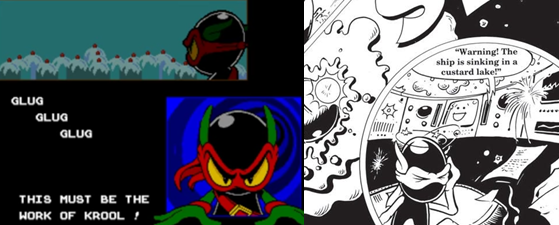
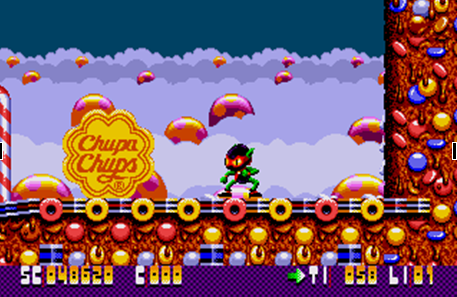
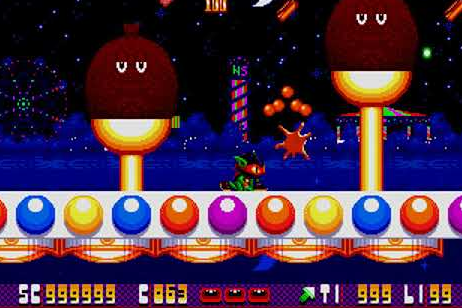
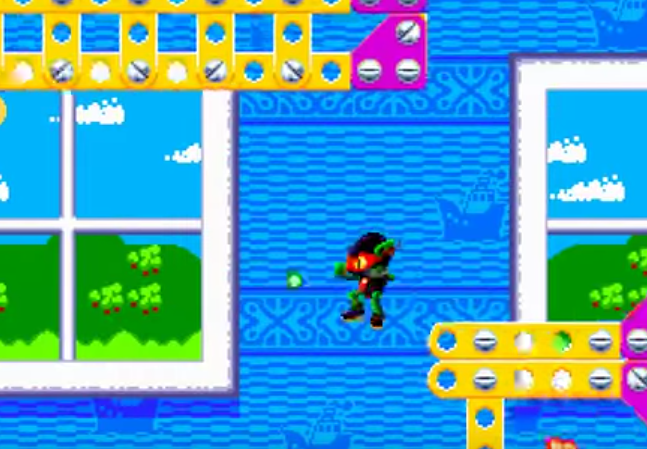
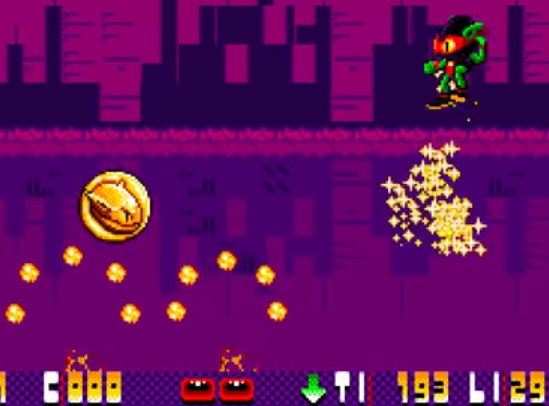
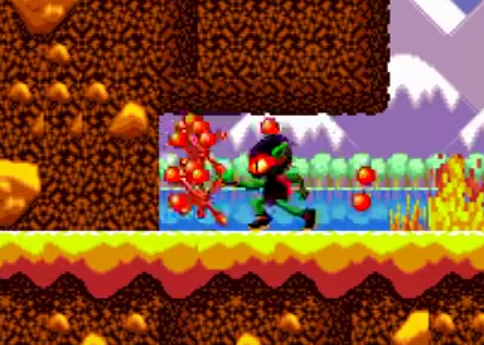
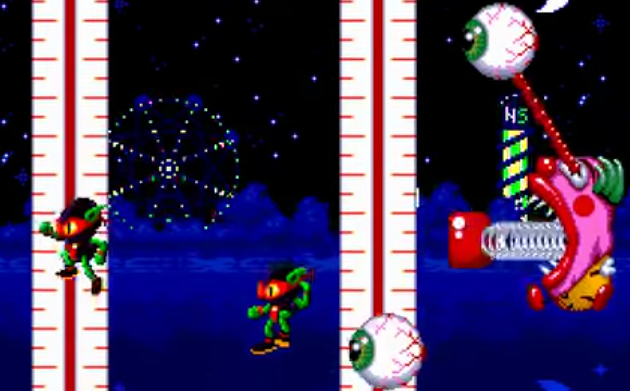
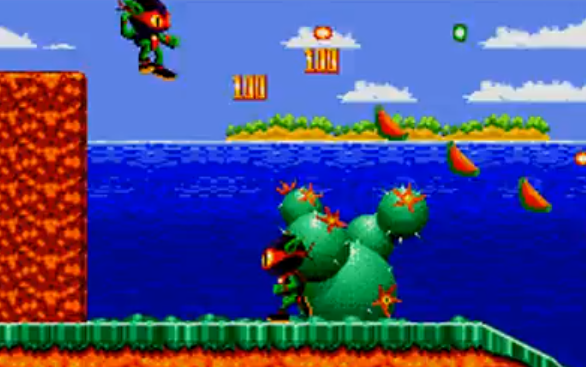
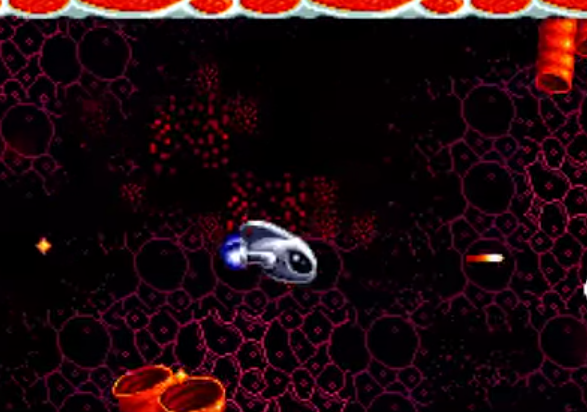
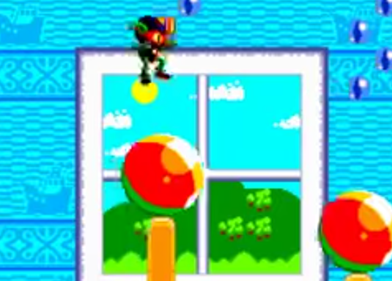
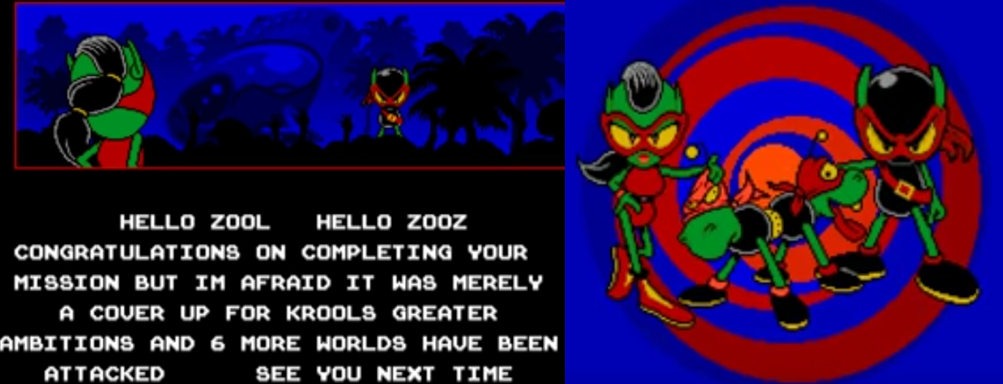

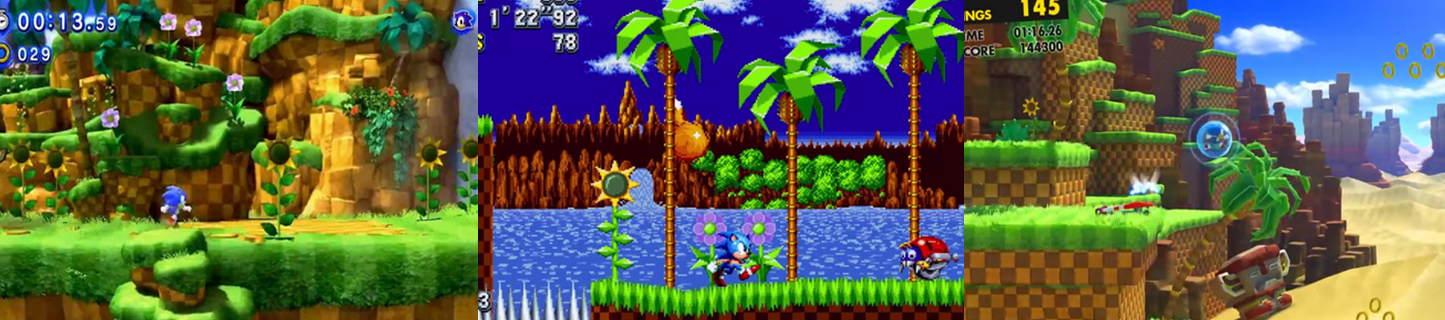
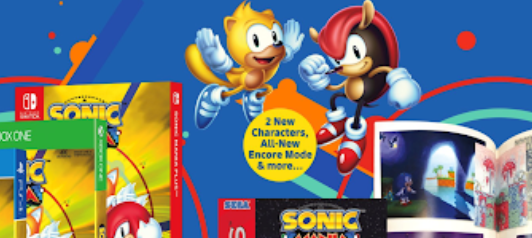


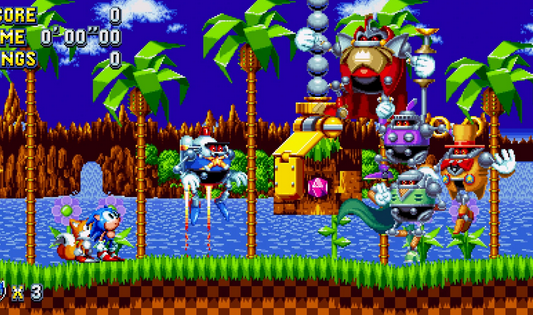


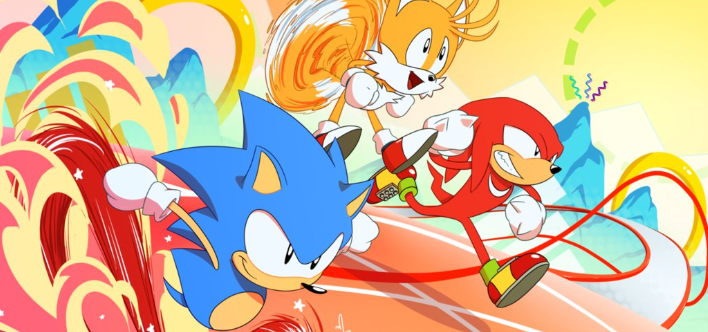


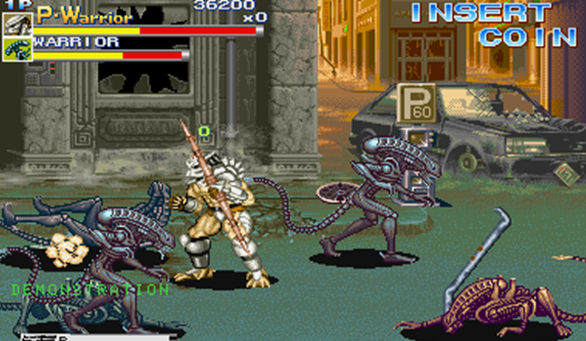
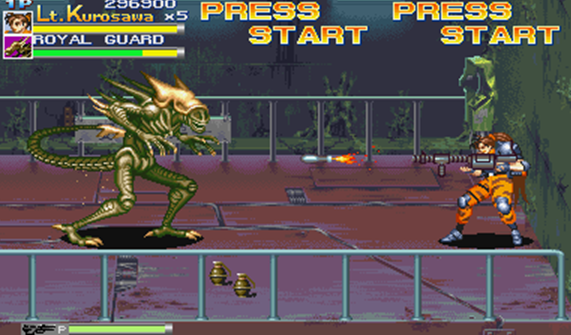
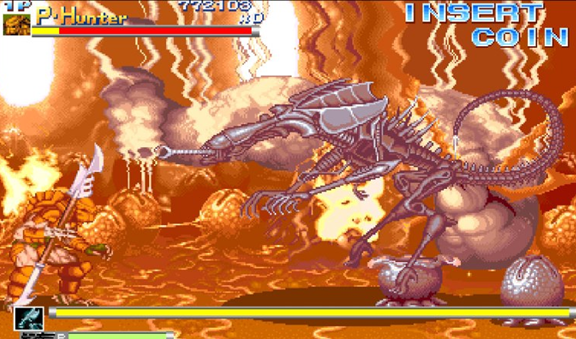
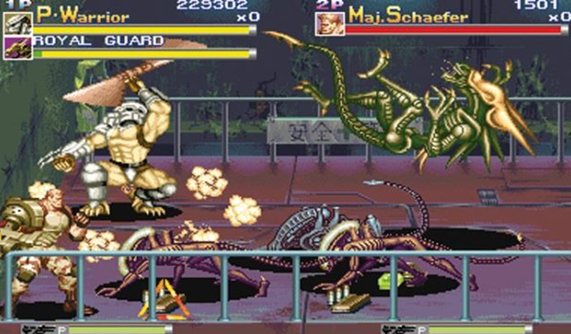




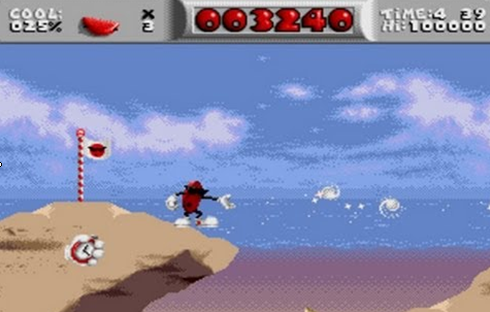
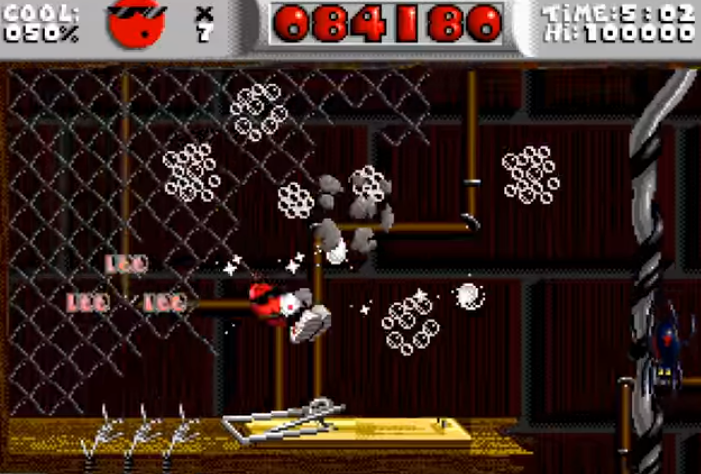
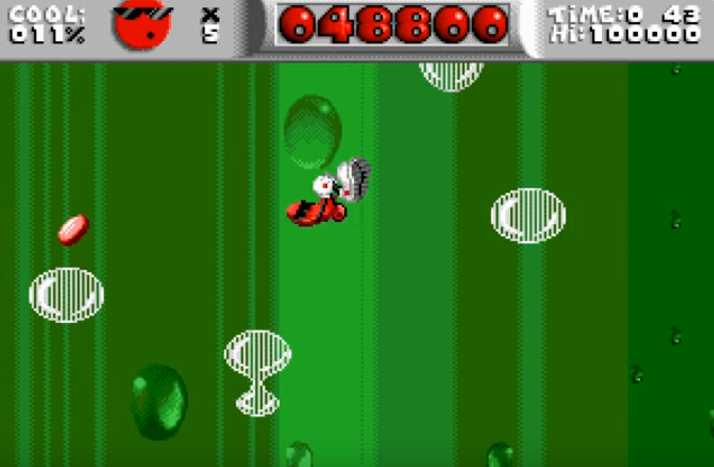
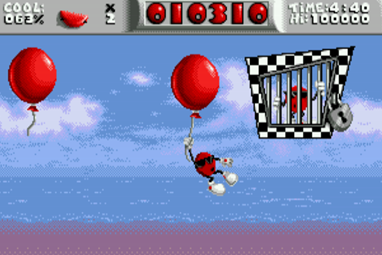
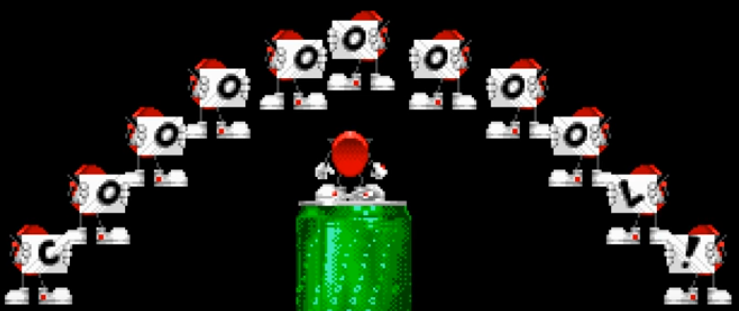


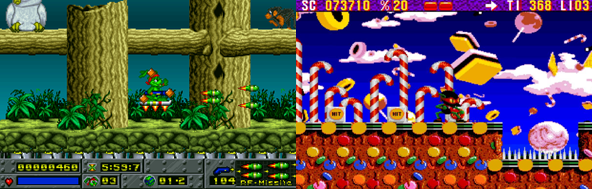

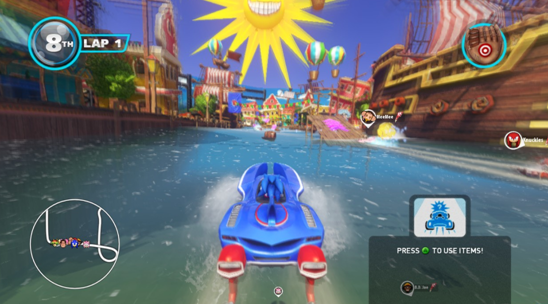


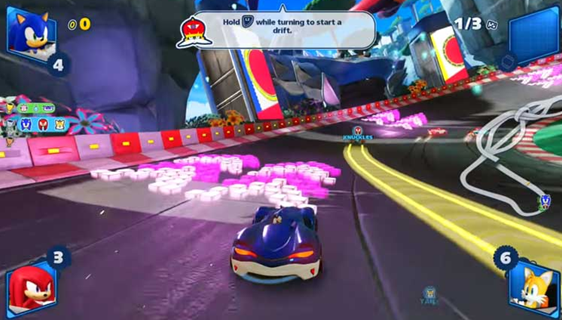

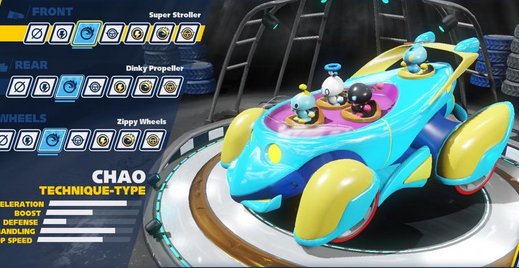
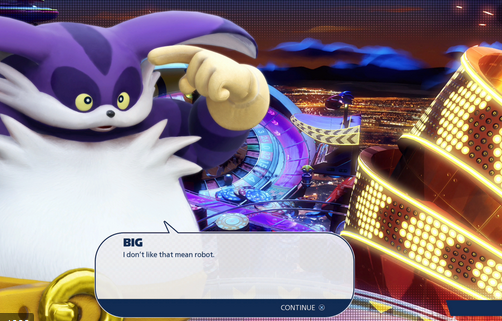


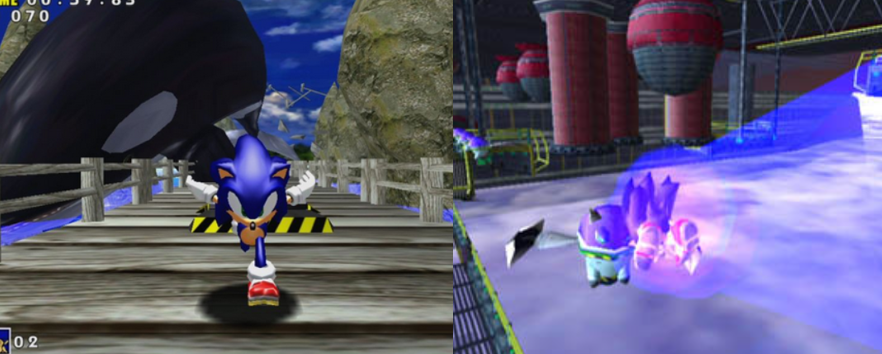
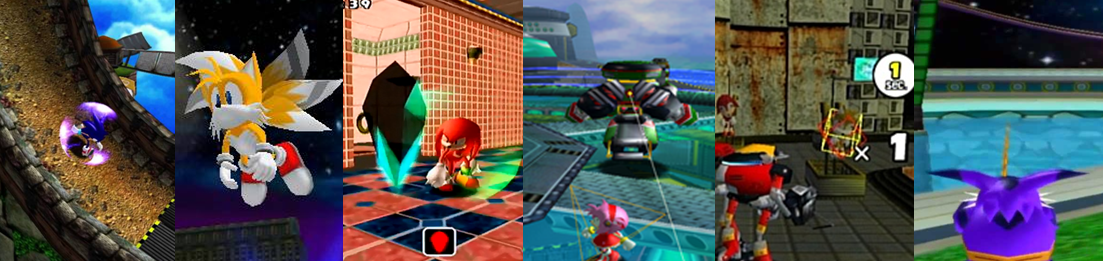


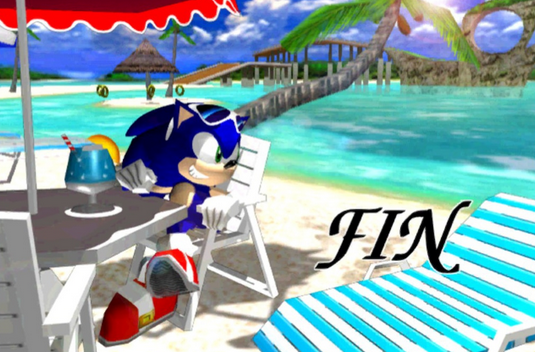


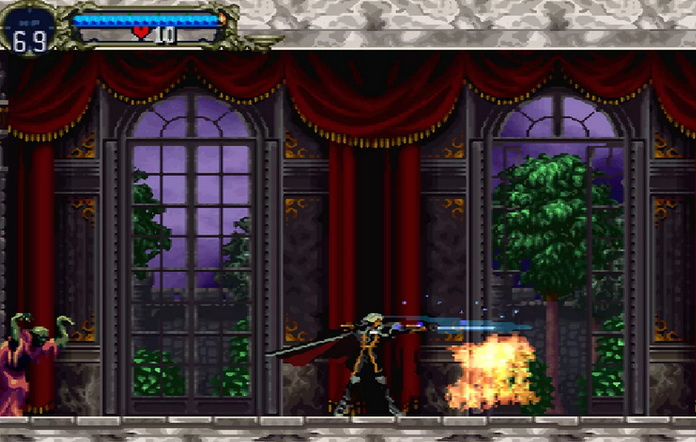
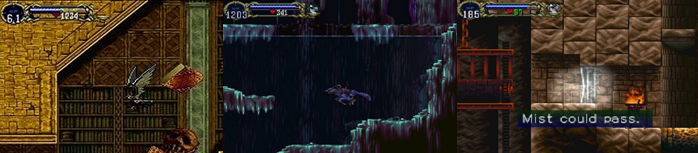
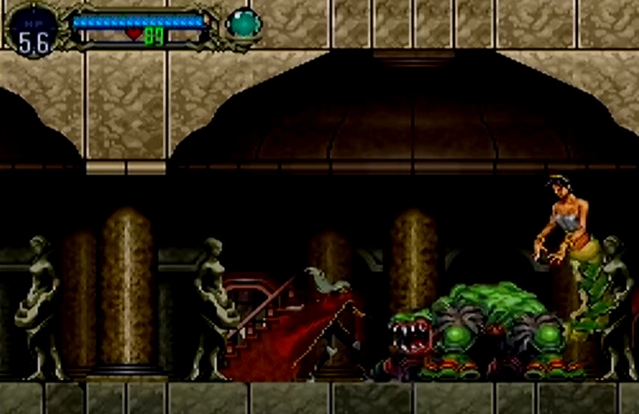
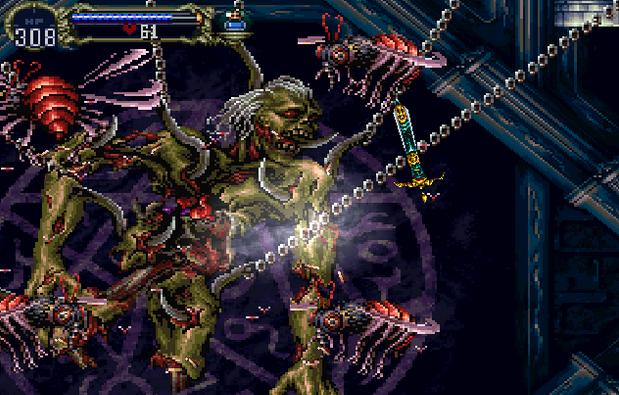
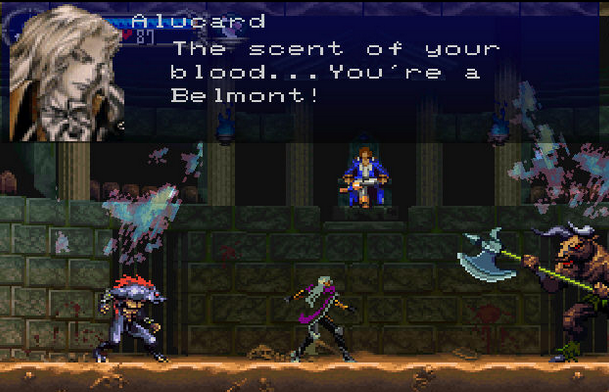
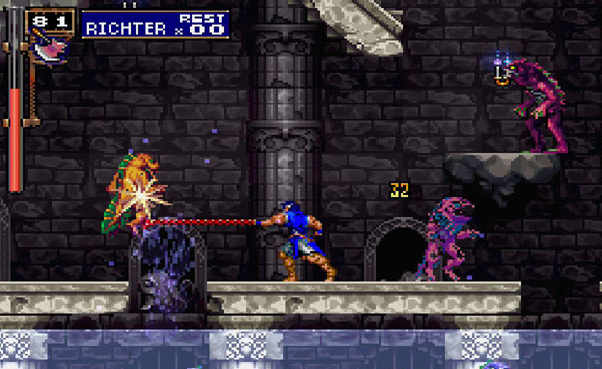
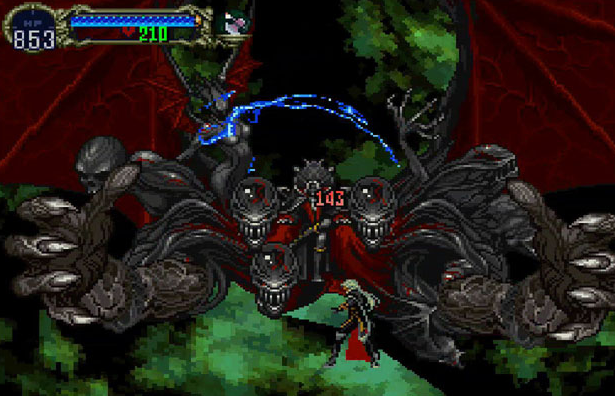


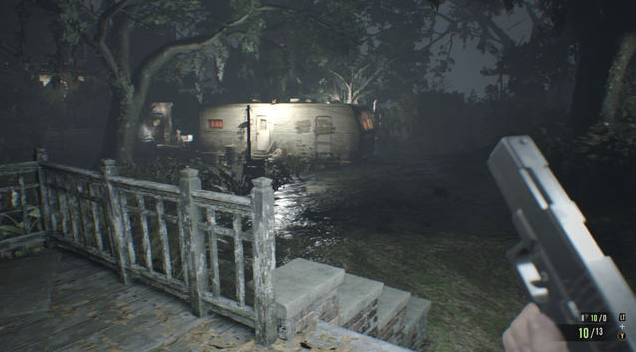


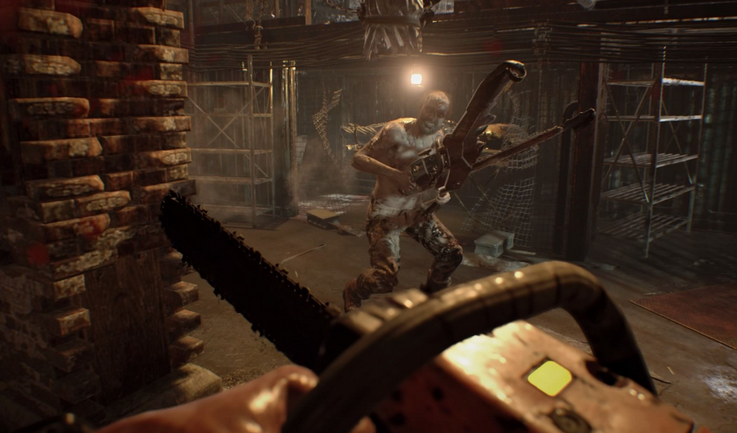


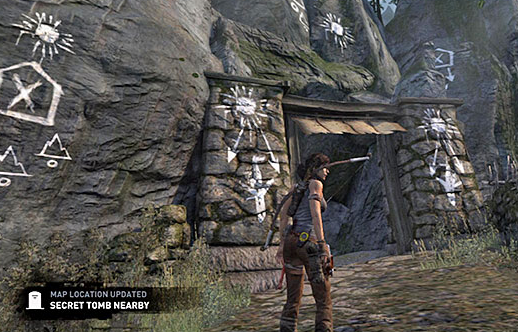


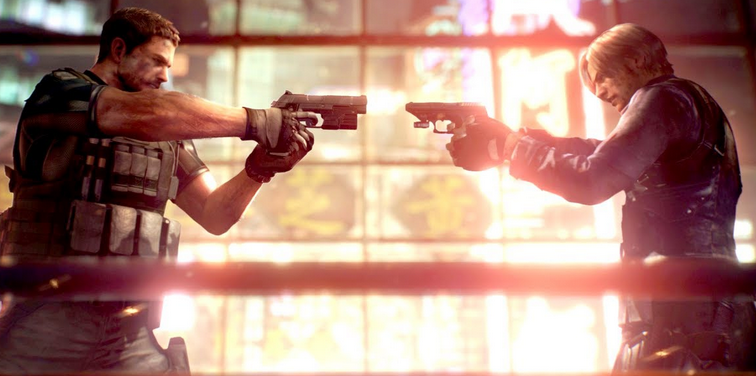
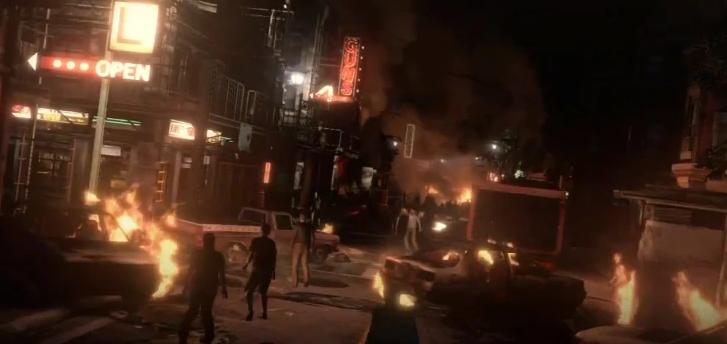
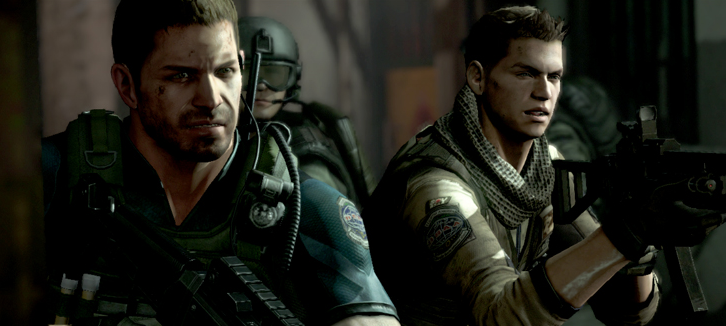

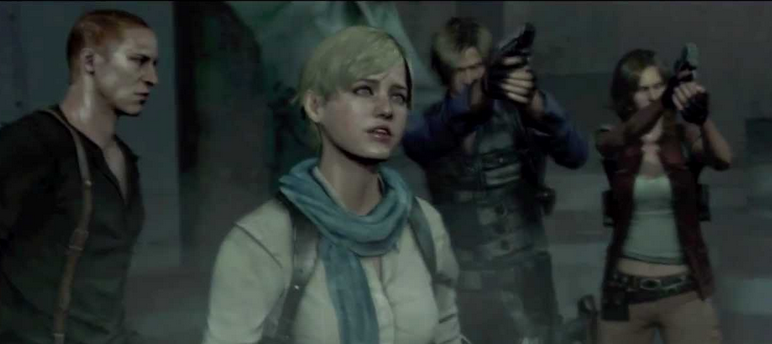
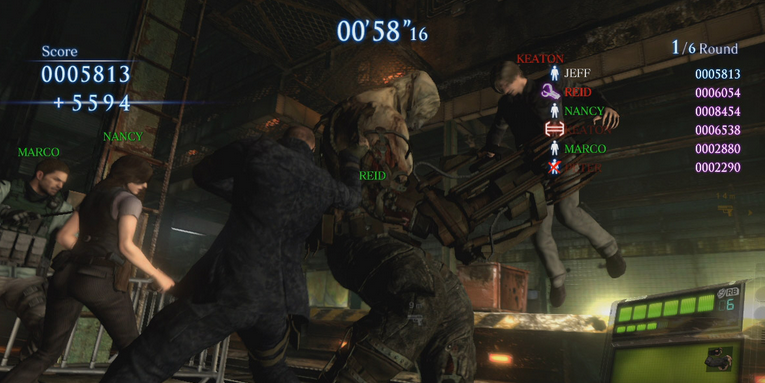


You must be logged in to post a comment.